Disclosure of Invention
The invention aims to overcome the defects of the prior art, and provides a glycyrrhizic acid based slow-release porous foam material which is prepared by freeze-drying a foam gel induced by natural micromolecule glycyrrhizic acid composite cellulose and can embed hydrophilic functional factors, and a preparation method thereof.
The invention also aims to provide the application of the glycyrrhizic acid based slow-release porous foam material capable of embedding the hydrophilic functional factors in loading the riboflavin or riboflavin sodium phosphate hydrophilic functional factors.
In order to solve the problem, the invention prepares foam hydrogel which can withstand freeze drying by adding cellulose and compounding with micromolecule gel, and the slow-release porous foam material embedded with hydrophilic functional factors can be obtained after drying. The cellulose can strengthen hydrogen bonds in the micromolecular gel agent due to the hydroxyl of the cellulose, and the cellulose is combined with the micromolecular gel agent to form gel under certain conditions. The preparation method of the wet foam template is simple and quick, and has good foamability and foam stability.
The wet foam template capable of stabilizing bubbles is prepared by combining cellulose and a non-edible surfactant by a simple and rapid Pickering method. Such wet foams, which are lyophilized to form a dense porous network, are currently used mainly in the mechanical field, whereas the application in the biopharmaceutical field is relatively rare. However, the three-dimensional network dense porous structure has potential application value in the aspect of controllable release of the functional factor, and the functional factor has a plurality of diffusion paths due to the existence of the dense pores, so that the release characteristic of the functional factor is changed. The dense meshes and pores in the porous foam enable the foam to generate buoyancy in liquid, so that the bubbles are embedded by a dense network structure for a long time, the foam is not easy to dissolve in the liquid, and the slow release of functional factors is facilitated. Because the release speed of the functional factors is influenced by the foam network structure, the three-dimensional reticular porous structure of the foam can be changed by controlling the preparation conditions of the foam and the proportion of the cellulose, thereby achieving the purpose of controlling the slow release of the functional factors. The micromolecular glycyrrhizic acid and hydroxyethyl cellulose composite foam material has the advantages of good pressure resistance, hydrophilic functional factor load capacity and the like, so that the micromolecular glycyrrhizic acid and hydroxyethyl cellulose composite foam material has potential application value in the aspects of controllable drug release and the like.
The invention is based on the molecular structure and nutrition and health, utilizes the self-assembly and gel ability of natural micromolecule glycyrrhizic acid, prepares the foam gel with solid shape by compounding hydroxyethyl cellulose and controlling simple process conditions, has stable gel property, and can carry out freeze drying treatment, thereby preparing the porous foam material with enough mechanical property and mechanical adaptability. Compared with most of the porous foam materials prepared by utilizing cellulose and other high molecules at present, the porous foam material prepared by food-grade glycyrrhizic acid has the advantages that: the preparation method of the wet foam template is simple and rapid, the foamability and the foam stability are good, the foam material prepared after drying has a complete structure, small pore size and high porosity, has a spatial three-dimensional network structure with good mechanical properties, can embed hydrophilic functional factors, and has highly controllable release characteristics.
Glycyrrhizic acid is a natural micromolecule, is the main component of liquorice, and has high sweetness, low heat energy, safety, no toxicity and strong medical care function. The glycyrrhizic acid molecule consists of a hydrophobic triterpene aglycone (18 beta-glycyrrhetinic acid) and two hydrophilic gluconic acids. Due to the fact that the glycyrrhizic acid has both hydrophilic and hydrophobic parts, the glycyrrhizic acid has amphipathy, and complex self-assembly behaviors exist in water. It has been found that glycyrrhizic acid self-assembly is concentration dependent and that hydrogels are formed progressively with increasing glycyrrhizic acid concentration. Therefore, the glycyrrhizic acid of natural food grade can be used as a novel foaming agent for preparing a foam system. At present, in domestic and foreign researches in the field, a hydrogel foam material prepared from glycyrrhizic acid is stable and can have wide application prospects in the fields of foods, medicines, cosmetics and the like, but research reports that the foam material prepared from natural glycyrrhizic acid can be molded after freeze drying treatment and is applied to the fields of functional factor conveying and the like are not found. The invention researches and develops a porous foam composite material prepared based on micromolecular glycyrrhizic acid, and hydroxyethyl cellulose is used as a reinforcing phase to improve the network structure and the comprehensive performance of glycyrrhizic acid foam and widen the application field of glycyrrhizic acid porous foam. The glycyrrhizic acid foam material with strong composite strength and cellulose has great application prospect in the fields of medical treatment, biological materials and the like.
Hydroxyethyl cellulose belongs to one of cellulose derivatives, and is white, tasteless and nontoxic fibrous or powdery nonionic water-soluble cellulose ether which is prepared by performing etherification reaction on cellulose and ethylene oxide, and substituting hydroxyl groups on 2,3 and 6 carbon atoms of each glucose group of the cellulose into hydroxyethyl groups through alkalization and etherification reaction. Hydroxyethyl cellulose currently on the market has a viscosity in the range of 10-100000 mpa.s. Because the hydroxyethyl cellulose has good water solubility and thickening property, the hydroxyethyl cellulose is prepared into a composite membrane, nano-fiber and sponge and is applied to the field of biomedicine, but the application of the hydroxyethyl cellulose in the field of biomedicine is just started at present, so that the hydroxyethyl cellulose is worthy of being vigorously developed.
The purpose of the invention is realized by the following technical scheme:
the preparation method of the glycyrrhiza acid based slow-release porous foam material capable of embedding the hydrophilic functional factors is characterized by comprising the following steps:
1) uniformly dispersing glycyrrhizic acid in water, heating and stirring to obtain transparent glycyrrhizic acid solution;
2) uniformly dispersing hydroxyethyl cellulose in water, and heating and stirring to obtain a transparent hydroxyethyl cellulose solution;
3) adding a hydroxyethyl cellulose solution into a glycyrrhizic acid solution, carrying out homogenization treatment, and standing in an ice water bath to obtain a foamed gel; controlling the glycyrrhizic acid final concentration in the foam gel to be 1-8 wt%, and the hydroxyethyl cellulose final concentration in the foam gel to be 0.5-8 wt%;
4) and (3) carrying out freeze drying treatment on the foamed gel to prepare the slow-release porous foam material capable of embedding the hydrophilic functional factors.
To further achieve the object of the present invention, preferably, in step 1), the concentration of the glycyrrhizic acid solution is 0.5-8 wt%; heating and stirring for 5-30 min.
Preferably, in step 2), the concentration of the hydroxyethyl cellulose solution is 0.5 to 8 wt%.
Preferably, in the step 2), the heating and stirring time is 5-30 min.
Preferably, in step 3), after the hydroxyethyl cellulose is added to the glycyrrhizic acid solution, before the homogenization treatment, the method further comprises the step of heating the mixed solution in a water bath, wherein the treatment temperature is 60-100 ℃, and the treatment time is 5-30 min.
Preferably, in the step 3), the homogenization speed of the mixed solution of glycyrrhizic acid and hydroxyethyl cellulose is 5000-30000rpm, and the time is 1-5 min; the standing temperature of the ice water bath is-4 ℃ to 4 ℃, and the standing time of the ice water bath is 2min to 30 min.
Preferably, in the step 4), the freezing temperature is-20 to-200 ℃.
Preferably, in step 4), the freeze-drying time is 12-72 h.
The glycyrrhetinic acid based slow-release porous foam material capable of embedding the hydrophilic functional factors, which is prepared by the preparation method, has a complete porous foam structure, is milky white, and can be placed at normal temperature for 180 days and keep stable.
The application of the glycyrrhiza acid-based slow-release porous foam material capable of embedding the hydrophilic functional factor in loading the riboflavin or riboflavin sodium phosphate hydrophilic functional factor, wherein the loading amount of the riboflavin or riboflavin sodium phosphate is 1-40 wt%; the release amount is controllable.
The porous foam material prepared by the invention has good pressure resistance and high active substance loading capacity due to the three-dimensional network structure constructed by taking the glycyrrhizic acid composite hydroxyethyl cellulose as the support. The pressure resistance and the slow release rate of the hydrophilic functional factors of the porous foam material can be controlled by different hydroxyethyl cellulose concentrations and preparation conditions.
The principle of the invention is as follows: the key point of the invention is that the self-assembly characteristic and the gelling capability of the natural micromolecule glycyrrhizic acid and the physical crosslinking of the hydroxyl of the hydroxyethyl cellulose are ingeniously utilized to strengthen the network structure, and the prepared foam gel can withstand freeze drying so as to prepare the slow-release porous foam embedded with the hydrophilic functional factors. Firstly, under the condition that the glycyrrhizic acid concentration is greater than the critical gelling concentration (about 0.5 wt%), glycyrrhizic acid molecules are spontaneously adsorbed on an air-water interface through homogenization, the surface tension is reduced, and a foam gel is formed; along with the reduction of the temperature, glycyrrhizic acid on a bulk phase and a gas-water interface can generate ordered self-assembly through intermolecular non-covalent interaction force (hydrophobic interaction and hydrogen bonds) to form long fiber-shaped microstructures, the microstructures are further assembled into a space three-dimensional network, the composite hydroxyethyl cellulose has a large number of hydroxyl groups, the hydroxyl groups interact with glycyrrhizic acid molecules to enhance the intermolecular non-covalent interaction force, so that the three-dimensional network structure formed by glycyrrhizic acid assembly is enhanced, and therefore air is orderly fixed in the formed three-dimensional network structure, and finally the foam gel is formed. After the hydroxyethyl cellulose is compounded, the three-dimensional network structure of the foam gel is enhanced, so that the foam gel forms the slow-release porous foam material which has good pressure resistance, highly controllable release characteristic and can embed hydrophilic functional factors after freeze drying.
Compared with the prior art, the invention has the following advantages and beneficial effects:
1. the invention provides a novel glycyrrhiza acid-based slow-release porous foam material embedded with a hydrophilic functional factor, wherein the self-assembly property and the gelling capacity of micromolecular glycyrrhizic acid are skillfully utilized to structure air, and the network structure of the micromolecular glycyrrhizic acid is enhanced by compounding hydroxyethyl cellulose, so that the prepared foam gel can be subjected to freeze drying, the porous foam with good compression resistance and capable of loading the hydrophilic functional factor is prepared, and the practical application of the porous foam material in the field of functional factor release is enlarged.
2. Compared with the prior porous foam material prepared by most of high polymers such as cellulose, the porous foam material prepared by the glycyrrhizic acid has the advantages that the preparation method of the wet foam template is simple and quick, the foamability and the foam stability are good, the dried foam material has a complete structure, small pore size and high porosity, and has high active substance loading capacity and highly controllable release characteristic.
2. The method has the advantages of simple and mild process conditions, no toxic and harmful reagents, greenness and safety; the porous foam material applied to different medicines and tissue scaffolds can be prepared by simply controlling the process conditions and the concentration of the hydroxyethyl cellulose, and the method has industrial and large-scale application values.
3. The porous foam product prepared by the invention has the characteristics of solid shape, sufficient mechanical property, stability and the like, can be used for loading hydrophilic functional factors such as riboflavin, riboflavin sodium phosphate and the like, and can be further applied to the fields of medicines, controllable drug release and the like.
Detailed Description
For better understanding of the present invention, the present invention will be further described with reference to the following drawings and examples, but the present invention is not limited thereto.
In the following examples, the foam release performance was determined as follows:
cutting 0.5g of porous foam material, placing into dialysis bag, placing into PBS buffer solution, respectively releasing riboflavin sodium phosphate at 25 deg.C and 37 deg.C under constant temperature oscillation at 100r/min, and sucking 50 μ L of release solution every 1 h. The same volume of PBS buffer was added to keep the volume constant. And (3) measuring the light absorption value of the release solution at 446nm by taking PBS buffer solution as a blank control, and calculating the cumulative release rate of the porous foam material according to the change of the concentration of riboflavin sodium phosphate in the release system.
Example 1
Respectively and uniformly dispersing 4 parts of glycyrrhizic acid in 4 parts of deionized water by mass fraction, and heating and stirring at 80 ℃ to obtain a transparent glycyrrhizic acid solution with the concentration of 4 wt%.
Respectively and uniformly dispersing 4 parts of hydroxyethyl cellulose with different masses in deionized water by mass fraction, and heating and stirring at 80 ℃ to obtain transparent hydroxyethyl cellulose solutions with the concentrations of 1 wt%, 4 wt% and 8 wt%.
Respectively adding 3 parts of hydroxyethyl cellulose transparent solution with different concentrations into 3 parts of glycyrrhizic acid solution with the same concentration, and controlling the final concentration of hydroxyethyl cellulose to be 0.5 wt%, 2 wt% and 4 wt% respectively; heated in a water bath at 80 ℃ and stirred.
The remaining 1 part of the glycyrrhizic acid solution was compared with the remaining hydroxyethylcellulose solution as a blank, heated in a water bath at 80 ℃ and stirred.
The mixture was homogenized at 20000rpm for 2 min. Placing the foam gel in an ice water bath to obtain foam gel, placing the foam gel in a refrigerator at the temperature of-40 ℃ for 24 hours, and then freezing and drying to obtain the porous foam material.
As can be seen from the preparation method of the embodiment 1, the raw materials and the reagents used in the invention are natural, green and safe, and the processing process is simple and convenient to operate and is convenient for rapid continuous production.
Crush resistance is one of the basic properties of cellular foam materials. The pore size, distribution, strength of solid framework and other factors in the porous foam material determine the pressure resistance of the porous foam material, and in the invention, glycyrrhizic acid micromolecules are used as an inducer to compound hydroxyethyl cellulose with different concentrations to structure air, so that the content of the hydroxyethyl cellulose in a formed porous foam system determines the pressure resistance of the product.
In example 1, fig. 1 is an appearance diagram of a porous foam material prepared from hydroxyethyl cellulose having glycyrrhizic acid composite concentrations of 0.5 wt%, 2 wt%, and 4 wt%, respectively, and an appearance diagram obtained by homogeneously drying glycyrrhizic acid alone and the hydroxyethyl cellulose alone. As can be seen, glycyrrhizic acid alone and hydroxyethyl cellulose alone are not able to form a structurally complete foam after drying. The composite foam material has a complete structure, the height of the prepared foam is reduced with the increase of the concentration of the hydroxyethyl cellulose, and the foam is milky white and is odorless. The foam has small pore size (the diameter of wet foam is 60-150nm, and the diameter of dry foam is 15-25 μm), is fine and uniform, shows good stability in the placement process, and can be placed at normal temperature for 180 days and keep stable. Whereas porous foams made from cellulose or polymers have large pore sizes (foam diameters of 50-200 μm) and non-uniform foam pore sizes.
The functional and processing properties of cellular foams are mainly reflected in their mechanical properties, where the compression resistance is manifested by the tendency of the foam forces to change with relative displacement. The determination of the mechanical properties of the foams is carried out as follows: adopt universal material testing machine to carry out compression test to porous foam material, it is 20mm to cut into the foam diameter with the foam, highly is 30 mm's cylinder, chooses the probe that the diameter is 25mm for use, and before the test, back speed is 1mm/s, and test speed is 0.2mm/s, and the foam compression degree is 80%, and trigger force 0.1g records the trend that the power changes along with relative displacement. As shown in the force-relative displacement graph of glycyrrhizic acid compounded with hydroxyethyl cellulose with different concentrations in fig. 2, as the concentration of hydroxyethyl cellulose increases, the compressive capacity of the porous material increases, which indicates that the strength of the foam is continuously enhanced, and when the concentration of hydroxyethyl cellulose is lower (0.5-2 wt%), the degree of compression of the foam reaches the set 80%, which indicates that the foam has good ductility. The strength of the dry foam increases sharply with increasing hydroxyethyl cellulose content, and the degree of compression fails to reach the set value of 80% at an increased applied force of 90N (i.e., a pressure of 144Kpa), indicating that the foam has better mechanical and compressive properties. Whereas dry foams made by chemical crosslinking of vinyl acetate copolymers, pressures below 30Kpa can compress the foam to 80% { Lu, j, Xu, d, Wei, j, Yan, s, & Xiao, R. (2017), Superoleophilic and flexible thermoplastic polymer nanofiber aerogels for removal of oils and organic solvents, acs applied materials & interfaces,9(30), 25533-. Foams prepared from cellulose or polymers (such as hydroxypropyl chitosan) have poor foam performance, and weak foam mechanical properties and mechanical properties are poor, so that the foams are easy to crack and break when contacting with water media, and active substances and slow release thereof cannot be effectively embedded (Zhang Qifeng, physicochemical properties of hydroxypropyl chitosan and hydrogel thereof and drug slow release application research [ D ] China oceanic university, 2003 ].
Example 2
Respectively and uniformly dispersing 3 parts of glycyrrhizic acid in deionized water by mass fraction, and heating and stirring at 80 ℃ to obtain a transparent glycyrrhizic acid solution with the concentration of 4 wt%. 3 parts of hydroxyethyl cellulose with different masses are respectively and uniformly dispersed in deionized water, and are heated and stirred at 80 ℃ to obtain transparent solutions with different concentrations. Respectively adding 3 parts of hydroxyethyl cellulose solution with different concentrations into 3 parts of glycyrrhizic acid solution with the same concentration, controlling the final concentration of hydroxyethyl cellulose to be 0.5 wt%, 2 wt% and 4 wt%, heating in water bath at 80 ℃ and stirring. The mixture was homogenized at 20000rpm for 2 min. Placing in ice water bath to obtain foam gel, placing the foam gel in liquid nitrogen for 5min, and freeze drying to obtain porous foam material.
In example 2, FIG. 3 is an appearance diagram of a porous foam material prepared from hydroxyethyl cellulose having glycyrrhizic acid composite concentrations of 0.5 wt%, 2 wt%, and 4 wt%, respectively. The compressive property is further controlled by changing the concentration of the hydroxyethyl cellulose and the freezing gradient, thereby controlling the pore size of the foam. As can be seen from FIG. 3, as the concentration of hydroxyethylcellulose increased, the height of the prepared foam was reduced, the foam was milky and odorless, and the foam prepared by liquid nitrogen lyophilization had smaller and finer pores than the foam prepared by lyophilization after being placed in a refrigerator at-40 ℃. By changing the freezing temperature, the shape and size of ice crystals formed during freezing are changed, so that the final pore diameter of the foam after freeze-drying is different, the mechanical property of the foam is influenced, and the total amount and the release rate of the functional factors are controlled.
Adopt universal material testing machine to carry out compression test to porous foam material, it is 20mm to cut into the foam diameter with the foam, highly is 30 mm's cylinder, chooses the probe that the diameter is 25mm for use, and before the test, back speed is 1mm/s, and test speed is 0.2mm/s, and the foam compression degree is 80%, and trigger force 0.1g records the trend that the power changes along with relative displacement. As seen from the force-relative displacement curve of the glycyrrhizic acid compounded with the hydroxyethyl cellulose with different concentrations in fig. 4, as the concentration of the hydroxyethyl cellulose increases, the compressive capacity of the porous material increases, indicating that the strength of the foam is continuously enhanced. Compared with the foam prepared by freeze-drying after being placed in a refrigerator at the temperature of minus 40 ℃, the foam prepared by freeze-drying of the liquid nitrogen has better three-dimensional network structure characteristics under the same concentration of the hydroxyethyl cellulose due to the difference of the freezing temperature, the pressure resistance of the porous material prepared by freeze-drying of the liquid nitrogen is greatly improved, the foam strength is stronger, and even if the hydroxyethyl cellulose with low concentration (0.5 wt%) is compounded, 70N force (namely the pressure is 112Kpa) is required to compress the foam to 80%, while the foam prepared by freeze-drying after being placed in the refrigerator at the temperature of minus 40 ℃ can compress the foam with the same concentration to 80% under the force of less than 10N. When the concentration of the composite hydroxyethyl cellulose is 4 wt%, even if the applied pressure reaches the maximum range of 100N (namely, the pressure is 160Kpa), only the foam pressure processed by liquid nitrogen can be appliedTo 10% shows strong compression resistance, while the-40 ℃ treated foam was compressed to 60%. By changing the concentration of the hydroxyethyl cellulose and the freezing temperature, the microstructure of the foam is changed, and the physical properties of the foam are further changed. The foam prepared by crosslinking amyloid protein fiber is lyophilized with liquid nitrogen, and can be compressed to 40% tone only under 25-50Kpa
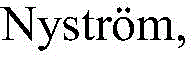
G.,Fong,W.K.,&Mezzenga, R. (2017), Ice-mapped and cross-linked analog software samples for cell growth, biomacromolecules,18(9),2858-2865 }. The glycyrrhizic acid and the hydroxyethyl cellulose are combined to form a space three-dimensional network structure with good mechanical property, so that the foam which can withstand freeze drying, has a space three-dimensional network, and has good compressive property and good mechanics is prepared.
Example 3
Respectively and uniformly dispersing 3 parts of glycyrrhizic acid in deionized water by mass fraction, and heating and stirring at 80 ℃ to obtain a transparent glycyrrhizic acid solution with the concentration of 4 wt%.
Respectively adding a certain amount of riboflavin sodium phosphate into 3 parts of glycyrrhizic acid solution, and heating and stirring at 80 ℃ to obtain a yellow mixed solution containing 20% riboflavin sodium phosphate.
Respectively and uniformly dispersing 3 parts of hydroxyethyl cellulose with different masses in deionized water by mass fraction, and heating and stirring at 80 ℃ to obtain transparent solutions with the concentrations of 1 wt%, 4 wt% and 8 wt%.
Respectively adding 3 parts of hydroxyethyl cellulose solution with different concentrations into 3 parts of glycyrrhizic acid solution loaded with riboflavin sodium phosphate, controlling the final concentration of the hydroxyethyl cellulose to be 0.5 wt%, 2 wt% and 4 wt%, and heating and stirring in a water bath at 80 ℃. Homogenizing the three mixed solutions with different concentrations at 20000rpm for 2min, and placing in ice water bath to obtain foam gel.
And (3) placing the foamed gel in a refrigerator at the temperature of-40 ℃ for 24h, and then carrying out freeze drying to obtain the riboflavin sodium phosphate loaded porous foam material induced by micromolecular glycyrrhizic acid and hydroxyethyl cellulose.
FIG. 5 is an appearance graph of the porous foam loaded with riboflavin sodium phosphate in example 3 with hydroxyethyl cellulose concentrations of 0.5 wt%, 2 wt%, 4 wt%, respectively. As can be seen from FIG. 5, as the concentration of hydroxyethylcellulose increased, the height of the resulting foam decreased, and the foam was orange-yellow, odorless.
The riboflavin phosphate is also called as riboflavin B2 sodium phosphate, is orange yellow powder, is a water-soluble preparation of riboflavin, has higher water solubility than the riboflavin, is one of important nutrient elements of human bodies, can be used as a vitamin medicament for the riboflavin sodium phosphate for injection because of being soluble in water, plays a key role in the energy metabolism of the human bodies, and is orange yellow after the foam is loaded with the riboflavin sodium phosphate. After the hydroxyethyl cellulose is compounded, the non-covalent interaction between the continuous phase and the foaming surface fibers is enhanced, a stronger fibrous network structure is formed, and the foam is better fixed, so that the compounded wet foam can withstand freeze drying. In the functional factor release system, if the time and concentration of the functional factor release can be maintained and controlled, the generation of bacterial drug resistance can be reduced, so that the realization of the adjustable release of the functional substance is of great significance to the system change. However, a functional factor slow release system prepared from cellulose or a polymer (such as chitosan) has a small drug loading amount and is easy to generate phenomena such as drug burst release, and the release of the functional active factor cannot be effectively controlled { menglong. In the invention, the release rate of riboflavin sodium phosphate is controlled by controlling the concentration of the hydroxyethyl cellulose, and the method has the advantages of highly controllable release behavior of functional factors, long release time and the like.
Example 4
3 parts of glycyrrhizic acid is uniformly dispersed in deionized water, and is heated and stirred at 80 ℃ to obtain a transparent glycyrrhizic acid solution with the concentration of 4 wt%. Respectively adding a certain amount of riboflavin sodium phosphate into 3 parts of glycyrrhizic acid solution, and heating and stirring at 80 ℃ to obtain a yellow mixed solution containing 20% riboflavin sodium phosphate. 3 parts of hydroxyethyl cellulose with different masses are respectively and uniformly dispersed in deionized water, and are heated and stirred at 80 ℃ to obtain transparent solutions with the concentrations of 1 wt%, 4 wt% and 8 wt%. Respectively adding 3 parts of hydroxyethyl cellulose solution with different concentrations into 3 parts of glycyrrhizic acid solution loaded with riboflavin sodium phosphate, controlling the final concentration of the hydroxyethyl cellulose to be 0.5 wt%, 2 wt% and 4 wt%, and heating and stirring in a water bath at 80 ℃. Homogenizing the mixed solution at 20000rpm for 2min, and placing in ice water bath to obtain foamed gel. And (3) placing the foamed gel in liquid nitrogen for 5min, and then carrying out freeze drying to obtain the riboflavin sodium phosphate loaded porous foam material induced by micromolecular glycyrrhizic acid and hydroxyethyl cellulose.
In example 4, FIG. 6 is an appearance chart of a porous foam material loaded with riboflavin sodium phosphate, and the hydroxyethyl cellulose concentrations are 0.5 wt%, 2 wt% and 4 wt%, respectively. As can be seen from FIG. 6, as the concentration of hydroxyethylcellulose increased, the height of the resulting foam decreased, and the foam was orange-yellow, odorless. The foam is orange yellow after being loaded with riboflavin sodium phosphate, compared with the foam prepared by freeze drying after being placed in a refrigerator at the temperature of-40 ℃, the foam prepared by freeze drying of the liquid nitrogen has smaller pore size and is more exquisite and uniform, which is consistent with the result that no riboflavin sodium phosphate is loaded in the embodiments 1 and 2, and the foam prepared by freeze drying of the liquid nitrogen is more exquisite because the size and the shape of ice crystals formed during freezing are different due to different freezing temperatures.
Table 1 comparison of riboflavin-loaded sodium phosphate Release rates of examples 3 and 4
As can be seen from Table 1, the foam prepared by freeze-drying in a refrigerator at-40 ℃ in example 3 can achieve a higher release rate when placed at different temperatures for controlled release, and the release rate of the syntactic foam increases with the rise of the ambient temperature. Compared with the freeze-drying in a refrigerator at the temperature of-40 ℃ in the embodiment 3, the freeze-drying in liquid nitrogen in the embodiment 4 has the advantages that the release rate of riboflavin sodium phosphate of all the composite porous materials is greatly improved, and after the composite porous materials are released for 48 hours, the release rate of the riboflavin sodium phosphate is as high as 99.93 percent, so that the porous foam slow-release system prepared by the method has the advantages of high utilization rate of active substances, long release time of the active substances and the like. The foam is prepared by compounding polyethyleneimine and bacterial cellulose and freeze-drying, the release rate after embedding acetylsalicylic acid is 45-80%, and the release time is 25h { Chen, X, Xu, X, Li, W, Sun, B, Yan, J, Chen, C., & Sun, D. (2018) Effective driver based on polyethylene-fermented bacterial cell with controllable release properties.applied biological Materials,1(1),42-50 }. At present, in the aspect of preparing a controlled release carrier of bioactive factors, gel is mostly adopted as a carrier. The release rate of the soybean 11S protein-LBG blended cold-induced gel after embedding riboflavin is 5-35%, and the release time is 400min { Zhujianhua, Yangxuangquan. study on the performance of the soybean 11S protein-locust bean gum cold-induced blended gel for controlling the release of the riboflavin [ J ]. modern food technology, 2012,28(11): 1429-. The invention controls the release speed and release rate (60.11-99.93%) of the functional factor by changing the concentration of the hydroxyethyl cellulose, the freezing temperature during freeze drying and the temperature during the release of the functional factor, and has the advantages of high utilization rate of active substances, long release time and the like. The foam which can be formed after freeze drying is prepared by combining the glycyrrhizic acid and the hydroxyethyl cellulose, and the porous foam material has small pore size, high porosity, good space three-dimensional network structure, mechanical property and compression resistance, can embed hydrophilic functional factors, and has good active substance loading capacity and highly controllable release characteristic.
The above-described embodiments are intended to be illustrative, rather than restrictive, and all such changes, modifications, substitutions, combinations, and simplifications that may be made without departing from the spirit and principles of the invention are intended to be included within the scope of the invention.


