CN111833424A - Transfer and control streaming interactive media including rendered geometry, texture and lighting data - Google Patents
Transfer and control streaming interactive media including rendered geometry, texture and lighting data Download PDFInfo
- Publication number
- CN111833424A CN111833424A CN202010662407.6A CN202010662407A CN111833424A CN 111833424 A CN111833424 A CN 111833424A CN 202010662407 A CN202010662407 A CN 202010662407A CN 111833424 A CN111833424 A CN 111833424A
- Authority
- CN
- China
- Prior art keywords
- viewcell
- polygon
- mesh
- silhouette
- edge
- Prior art date
- Legal status (The legal status is an assumption and is not a legal conclusion. Google has not performed a legal analysis and makes no representation as to the accuracy of the status listed.)
- Pending
Links
Images










Classifications
-
- G—PHYSICS
- G06—COMPUTING OR CALCULATING; COUNTING
- G06T—IMAGE DATA PROCESSING OR GENERATION, IN GENERAL
- G06T15/00—3D [Three Dimensional] image rendering
-
- G—PHYSICS
- G06—COMPUTING OR CALCULATING; COUNTING
- G06T—IMAGE DATA PROCESSING OR GENERATION, IN GENERAL
- G06T15/00—3D [Three Dimensional] image rendering
- G06T15/10—Geometric effects
- G06T15/20—Perspective computation
-
- G—PHYSICS
- G06—COMPUTING OR CALCULATING; COUNTING
- G06F—ELECTRIC DIGITAL DATA PROCESSING
- G06F16/00—Information retrieval; Database structures therefor; File system structures therefor
- G06F16/50—Information retrieval; Database structures therefor; File system structures therefor of still image data
- G06F16/56—Information retrieval; Database structures therefor; File system structures therefor of still image data having vectorial format
-
- G—PHYSICS
- G06—COMPUTING OR CALCULATING; COUNTING
- G06T—IMAGE DATA PROCESSING OR GENERATION, IN GENERAL
- G06T19/00—Manipulating 3D models or images for computer graphics
- G06T19/003—Navigation within 3D models or images
-
- G—PHYSICS
- G06—COMPUTING OR CALCULATING; COUNTING
- G06T—IMAGE DATA PROCESSING OR GENERATION, IN GENERAL
- G06T2200/00—Indexing scheme for image data processing or generation, in general
- G06T2200/16—Indexing scheme for image data processing or generation, in general involving adaptation to the client's capabilities
-
- H—ELECTRICITY
- H04—ELECTRIC COMMUNICATION TECHNIQUE
- H04N—PICTORIAL COMMUNICATION, e.g. TELEVISION
- H04N21/00—Selective content distribution, e.g. interactive television or video on demand [VOD]
- H04N21/80—Generation or processing of content or additional data by content creator independently of the distribution process; Content per se
- H04N21/81—Monomedia components thereof
- H04N21/8146—Monomedia components thereof involving graphical data, e.g. 3D object, 2D graphics
Landscapes
- Engineering & Computer Science (AREA)
- Theoretical Computer Science (AREA)
- Physics & Mathematics (AREA)
- General Physics & Mathematics (AREA)
- Computer Graphics (AREA)
- Software Systems (AREA)
- General Engineering & Computer Science (AREA)
- Remote Sensing (AREA)
- Radar, Positioning & Navigation (AREA)
- Geometry (AREA)
- Computer Hardware Design (AREA)
- Computing Systems (AREA)
- Data Mining & Analysis (AREA)
- Databases & Information Systems (AREA)
- Processing Or Creating Images (AREA)
- Image Generation (AREA)
- User Interface Of Digital Computer (AREA)
- Information Transfer Between Computers (AREA)
Abstract
本发明涉及传输和控制包括渲染的几何、纹理和光照数据的流交互媒体。在示例性实施方式中,根据本发明的一种在服务器上执行的方法用于向客户端设备发送可渲染的图形信息,所述图形信息包括从第一视区看不见而从第二视区可看见的至少一个图形信息集合。该方法包括:确定视点经历从所述第一视区到所述第二视区的移动的可能性。该方法还包括当确定视点经历从所述第一视区到所述第二视区的移动的可能性大于预定阈值时发送所述至少一个图形信息集合,所述移动是根据预定运动路径来确定的。

The present invention relates to transmitting and controlling streaming interactive media including rendered geometry, texture and lighting data. In an exemplary embodiment, a method executed on a server according to the present invention is used to send renderable graphics information to a client device, the graphics information including at least one set of graphics information that is not visible from a first view area and visible from a second view area. The method includes: determining a likelihood that a viewpoint undergoes movement from the first view area to the second view area. The method also includes sending the at least one set of graphics information when it is determined that the likelihood that the viewpoint undergoes movement from the first view area to the second view area is greater than a predetermined threshold, the movement being determined according to a predetermined motion path.
Description
本发明申请是于2016年11月15日提交的申请号为“201611005881.1”、发明名称为“传输和控制包括渲染的几何、纹理和光照数据的流交互媒体”的发明专利申请的分案申请。此外,上述发明专利申请是申请日期为2011年9月13日、申请号为“201180054647.7”、发明名称为“传输和控制包括渲染的几何、纹理和光照数据的流交互媒体”的发明专利申请的分案申请。The present invention application is a divisional application of the invention patent application with the application number "201611005881.1" and the invention title "Transmission and Control of Streaming Interactive Media including Rendered Geometry, Texture and Lighting Data" filed on November 15, 2016. In addition, the above-mentioned invention patent application is an invention patent application with an application date of September 13, 2011, an application number of "201180054647.7", and an invention title of "transmission and control of streaming interactive media including rendered geometry, texture and lighting data". Divisional application.
相关申请的交叉引用CROSS-REFERENCE TO RELATED APPLICATIONS
本申请要求于2011年6月29日提交的题为“System and Method of From-RegionVisibility Determination and Delta-PVS Based Content Streaming UsingConservative Linearized Umbral Event Surfaces”、申请号为PCT/US2011/042309的PCT专利申请的在前申请日的权益,该申请又要求于2010年6月30日提交的美国临时申请61/360,283的在前申请日的权益,上述两个申请中的每一个申请的全部内容通过引用合并到本申请中。本申请还要求于2010年9月13日提交的题为“System and Method ofDelivering and Controlling Streaming Interactive Media ComprisingPredetermined Packets of Geometric,Texture,Lighting and Other Data Which areRendered on a Receiving Device”的美国临时申请第61/382,056号的在前申请日的权益,该申请的全部内容通过引用合并到本申请中。本申请还要求于2010年9月19日提交的题为“System and Method of Recording and Using Clickable AdvertisementsDelivered as Streaming Interactive Media”的美国临时申请第61/384,284号的在前申请日的权益,该申请的全部内容通过引用合并到本申请中。本申请还要求于2011年3月14日提交的题为“System and Method of Controlling Visibility-Based Geometry andTexture Streaming for Interactive Content Delivery”的美国临时申请第61/452,330号的在前申请日的权益,该申请的全部内容通过引用合并到本申请中。本申请还要求于2011年4月12日提交的题为“System and Method of protecting game engine dataformats and Visibility Event Codec Formats Employing an ApplicationProgramming Interface Between the Game Engine and the Codec”的美国临时申请第61/474,491号的在前申请日的权益,该申请的全部内容通过引用合并到本申请中。本申请还要求于2011年4月19日提交的题为“System and Method of Delivering Targeted,Clickable,Opt-Out or Opt-in Advertising as a Unique,Visibility Event Streamfor Games and Streaming Interactive Media”的美国临时申请第61/476,819号的在前申请日的权益,该申请的全部内容通过引用合并到本申请中。This application claims PCT Patent Application No. PCT/US2011/042309, entitled "System and Method of From-RegionVisibility Determination and Delta-PVS Based Content Streaming Using Conservative Linearized Umbral Event Surfaces", filed on June 29, 2011 The benefit of the earlier filing date, which in turn claimed the benefit of the earlier filing date of US Provisional Application 61/360,283, filed June 30, 2010, the entire contents of each of which are incorporated by reference into in this application. This application also requires U.S. Provisional Application No. 61/filed on September 13, 2010, entitled "System and Method of Delivering and Controlling Streaming Interactive Media ComprisingPredetermined Packets of Geometric, Texture, Lighting and Other Data Which are Rendered on a Receiving Device" The benefit of the prior filing date of No. 382,056, the entire contents of which are incorporated herein by reference. This application also claims the benefit of an earlier filing date of U.S. Provisional Application No. 61/384,284, filed September 19, 2010, entitled "System and Method of Recording and Using Clickable AdvertisementsDelivered as Streaming Interactive Media," The entire contents of this application are incorporated by reference. This application also claims the benefit of the prior filing date of U.S. Provisional Application No. 61/452,330, filed March 14, 2011, entitled "System and Method of Controlling Visibility-Based Geometry and Texture Streaming for Interactive Content Delivery," which The entire contents of the application are incorporated herein by reference. This application also requires U.S. Provisional Application No. 61/474,491, filed April 12, 2011, entitled "System and Method of protecting game engine dataformats and Visibility Event Codec Formats Employing an Application Programming Interface Between the Game Engine and the Codec" of the prior filing date, the entire contents of which are incorporated herein by reference. This application also requires a U.S. provisional application entitled "System and Method of Delivering Targeted, Clickable, Opt-Out or Opt-in Advertising as a Unique, Visibility Event Stream for Games and Streaming Interactive Media," filed April 19, 2011 The benefit of the prior filing date of Serial No. 61/476,819, the entire contents of which are incorporated herein by reference.
技术领域technical field
本发明涉及一种用于对包括由接收设备渲染的几何、光照和其它信息的预取分组的流交互内容进行发送与控制的方法及系统。The present invention relates to a method and system for transmitting and controlling streaming interactive content including prefetched packets of geometry, lighting and other information rendered by a receiving device.
背景技术Background technique
在美国专利6,057,847和6,111,582中描述了对作为在客户端或接收器设备上实时渲染的几何、纹理、光照和其它数据的单帧分组的交互性内容进行传输的方法。在这些方法中,使用原始重投影来实时地生成单帧分组。Methods of transmitting interactive content as single-frame packets of geometry, texture, lighting and other data rendered in real-time on a client or receiver device are described in US Pat. Nos. 6,057,847 and 6,111,582. In these methods, raw reprojection is used to generate single-frame packets in real-time.
在PCT专利申请第PCT/US2011/042309(其全部内容通过引用合并到本申请中)号中描述了对作为几何、纹理和其它信息的预取分组的交互内容进行传输的方法,其中与PVS增量(可见实体集合)对应的预取分组也称为可见性事件信息。在该方法中,上述分组包括代表新近可见的图形元素的信息以及表示新近被遮挡的图形元素的信息。该信息被组织成PVS增量或可见性事件分组,其中每个分组包括用于反映图形元素由于视点从一个视单元移动到另一个视单元而变得潜在地新近可见或新近不可见的信息。在该方法中,不实时地生成分组,而是使用从视单元看去的可见性预计算和对分组进行编码的相关压缩方法对分组进行预计算。在运行时,使用基于导航的推测预取来将分组预取到客户端渲染设备,该基于导航的推测预取由表示模型的可导航区的视单元集合中观察者的当前和预测视点位置来驱动。同时,PCT专利申请第PCT/US2011/042309号的方法包括用于诸如视频游戏的交互内容的流传递的高效编解码器。A method of transmitting interactive content as prefetch packets of geometry, texture and other information is described in PCT Patent Application No. PCT/US2011/042309 (the entire contents of which are incorporated herein by reference), wherein the The prefetch grouping corresponding to the amount (visible entity set) is also called visibility event information. In this method, the grouping includes information representing newly visible graphical elements and information representing newly occluded graphical elements. This information is organized into PVS delta or visibility event groupings, where each grouping includes information reflecting that a graphical element has potentially become newly visible or newly invisible as a result of the viewpoint moving from one viewcell to another. In this method, the packets are not generated in real-time, but are pre-computed using from-viewcell visibility pre-computing and an associated compression method that encodes the packets. At runtime, packets are prefetched to the client rendering device using navigation-based speculative prefetching from the observer's current and predicted viewpoint positions in the set of viewcells representing the navigable area of the model drive. Meanwhile, the method of PCT Patent Application No. PCT/US2011/042309 includes an efficient codec for streaming of interactive content such as video games.
PCT专利申请第PCT/US2011/042309号的编解码器还能够传递不是必需为交互性的内容。在该编解码器的使用中,相机位置和方向不是由用户交互地控制的,而是由一个或更多个脚本化的相机运动路径来确定。该方法使得编解码器能够传递脚本化的非交互内容,其当然可以包括动画特征和其它脚本化的动态效果。以此方式来应用,该编解码器对有效地与常规的、非交互动画序列对应的内容进行流处理。按照在PCT专利申请第PCT/US2011/042309中所详述的,该编解码器能够使用较小的带宽来传递用于生成具有非常高的分辨率的对应图像序列的信息,以使用基于图像的编解码器(如MPEG-4或OnLive公司使用的实时图像压缩方法)来直接传输该图像序列。The codec of PCT Patent Application No. PCT/US2011/042309 is also capable of delivering content that is not necessarily interactive. In the use of this codec, camera position and orientation are not controlled interactively by the user, but rather are determined by one or more scripted camera motion paths. This approach enables the codec to deliver scripted non-interactive content, which may of course include animated features and other scripted dynamic effects. Applied in this manner, the codec streams content that effectively corresponds to a regular, non-interactive animation sequence. As detailed in PCT Patent Application No. PCT/US2011/042309, the codec is able to use a smaller bandwidth to pass information for generating a corresponding sequence of images with very high resolution to use image-based codec (such as MPEG-4 or the real-time image compression method used by OnLive) to directly transmit the image sequence.
诸如有线和卫星电视公司的宽带数字服务供应商一直在寻求用于增加能够使用可用宽带传递的内容量的方法。当传递由先前所描述的脚本化的相机运动路径驱动的单向数据流时,PCT专利申请第PCT/US2011/042309号的编解码器能够用于传递与常规高清晰度视频相同的引人入胜的故事、视觉和听觉体验,并且是以比视频的带宽小的带宽传递的。Broadband digital service providers such as cable and satellite television companies are always looking for ways to increase the amount of content that can be delivered using available broadband. The codec of PCT Patent Application No. PCT/US2011/042309 can be used to deliver the same compelling story as regular high-definition video when delivering a unidirectional data stream driven by the previously described scripted camera motion paths , visual and auditory experience, and delivered at a smaller bandwidth than video.
大多数成人不玩诸如使命召唤-现代战争2(Call of Duty Modern Warfare 2)、刺客信条(Assassin’s Creed)、孤岛危机(Crysis)、生化奇兵2(Bioshock 2)的现代射击或动作游戏。但是这些类型的游戏经常能够提供引人入胜的故事、视觉和听觉体验,这吸引一大群年长的成年人享受观看。但是在他们的纯游戏形式中,该内容经常需要太多的交互并且玩完游戏或甚至是进入到游戏的下一个“等级”或情节可能变得疲劳。Most adults don't play modern shooters or action games like Call of Duty Modern Warfare 2, Assassin's Creed, Crysis, Bioshock 2. But these types of games are often able to offer engaging stories, visual and auditory experiences that attract a large group of older adults to enjoy watching. But in their pure game form, the content often requires too much interaction and finishing the game or even advancing to the next "level" or episode of the game can become tiring.
因此,需要提供以下有效的内容传递方法:该方法提供常规的、非交互性或被动的高清晰度视频体验,同时为观察者提供按照需要在类似视频的被动体验与类似游戏的交互体验之间的切换的选项。Therefore, there is a need to provide an efficient content delivery method that provides a conventional, non-interactive or passive high-definition video experience, while providing the viewer with an on-demand transition between a passive video-like experience and a game-like interactive experience toggle option.
预取是数据传递的一般方法,其通过在客户端单元实际需要数据之前将上述数据预发送到该客户端单元来隐藏延迟或提高命中率。按照在共同未决申请PCT专利申请第PCT/US2011/042309号在可见性事件数据流中指出的,使用特定的预取方法来减小分组到达延迟的概率,这相反会在流处理可视化期间造成显著的可见性错误。Prefetching is a general method of data delivery that hides latency or improves hit rates by pre-sending data to a client unit before it actually needs it. As pointed out in co-pending application PCT Patent Application No. PCT/US2011/042309 in Visibility Event Data Streams, the use of specific prefetching methods to reduce the probability of packet arrival delays, which in turn would cause stream processing visualizations Significant visibility errors.
一般地,由于与实际使用的数据相比,不可避免地将更多的数据传递到客户端单元中,因此,无论是什么应用,预取都将增加流处理的数据量。Pei Cao(Cao,P,Application-Controlled File Caching and Prefectching.PhD Dissertation,Princeton University,1996.1,其全部内容通过引用合并到本申请中)给出了用于一般应用中的最佳预取及高速缓存的规则及算法。Cao的主动和保守预取算法提供了用于最小化已知参考序列的历经时间的方法。In general, prefetching will increase the amount of data streamed, regardless of the application, as more data is inevitably delivered to the client unit than is actually used. Pei Cao (Cao, P, Application-Controlled File Caching and Prefectching. PhD Dissertation, Princeton University, 1996.1, which is incorporated by reference in its entirety) gives the best prefetching and caching for general applications rules and algorithms. Cao's aggressive and conservative prefetching algorithms provide methods for minimizing the elapsed time of known reference sequences.
Wu等人(Wu,B.,Kshemkalyani,D.,Object-Greedy Algorithms for Long-TermWeb Prefectching,Proceedings of the IEEE Conference on Network Computing andApplications,2004pp.61-68,其全部内容通过引用合并到本申请中)研发了用于提供预取的局部解的算法,其使用由长期通用网页内容的预取引起的增加的带宽消耗成本来对预取的增加的命中率益处进行平衡。Wu et al. (Wu, B., Kshemkalyani, D., Object-Greedy Algorithms for Long-Term Web Prefectching, Proceedings of the IEEE Conference on Network Computing and Applications, 2004 pp. 61-68, the entire contents of which are incorporated herein by reference ) developed an algorithm for providing a local solution to prefetching that balances the increased hit rate benefit of prefetching with the increased bandwidth consumption cost caused by prefetching of long-term generic web content.
在2003年,Chim等人(Jimmy Chim,Rynson W.H.Lau,Hong Va Leong,and AntonioSi,CyberWalk:A Web-Based Distributed Virtual Walkthrough Environment,iEEETRANSACTIONS ON MULTIMEDIA,VOL.5,NO.4,2003.12,其全部内容通过引用合并到本申请中)描述了在演练应用期间预取图形元素的基本方法。Chim等人的Cyberwalk系统基于观察者与对象的接近程度来预取图形对象。Chim等人描述了在给出过去的当前位置的情况下预测用户未来位置的三种方法。这三种方法基于过去位置的移动平均,包括过去的运动向量的平均值、窗口和指数加权移动平均。这些运动预测方法没有明确地将观察者运动的速度或加速度的限制考虑在内,也没有解决环境内的导航限制。可以采用这两种类型的限制来增加导航的可预测性,从而增加命中率和/或减小基于导航的预取的带宽需求。In 2003, Chim et al. (Jimmy Chim, Rynson W.H.Lau, Hong Va Leong, and Antonio Si, CyberWalk: A Web-Based Distributed Virtual Walkthrough Environment, iEEETRANSACTIONS ON MULTIMEDIA, VOL.5, NO.4, 2003.12, in its entirety Incorporated into this application by reference) describes a basic method of prefetching graphical elements during a walkthrough application. The Cyberwalk system of Chim et al. prefetches graphical objects based on the proximity of the observer to the object. Chim et al. describe three methods for predicting a user's future location given the past current location. These three methods are based on moving averages of past positions, including the average of past motion vectors, windowed, and exponentially weighted moving averages. These motion prediction methods do not explicitly take into account constraints on the speed or acceleration of the observer's motion, nor do they address navigational constraints within the environment. Both types of constraints can be employed to increase the predictability of navigation, thereby increasing the hit rate and/or reducing the bandwidth requirements of navigation-based prefetching.
Chim等人的预取方法基于观察者与图形对象的接近程度。按照在共同未决的PCT专利申请第PCT/US2011/042309号中示出的,可见性是比接近程度更加有效的基于导航的预取的基础。这是因为离观察者较近的对象实际上可能被该观察者遮挡,并且相反地,远离观察者的对象实际上可能未被遮挡。使用可见性替代接近程度作为预取的基础需要从区域看的可见性预计算的实际和精确方法,在共同待决的PCT专利申请第PCT/US2011/042309号中规定了该方法。The prefetching method of Chim et al. is based on the proximity of the observer to the graphics object. As shown in co-pending PCT Patent Application No. PCT/US2011/042309, visibility is the basis for more efficient navigation-based prefetching than proximity. This is because objects closer to the viewer may actually be occluded by the viewer, and conversely, objects further away from the viewer may actually be unoccluded. Using visibility instead of proximity as a basis for prefetching requires a practical and precise method of from-region visibility precomputing, which is specified in co-pending PCT Patent Application No. PCT/US2011/042309.
发明内容SUMMARY OF THE INVENTION
在示例性实施方式中,一种在服务器上执行的方法,用于向客户端设备发送可渲染的图形信息,该图形信息包括从第二视区可看见而从第一视区看不见的至少一个图形信息集合。该方法确定视点经历从所述第一视区到所述第二视区的移动的可能性。该方法还包括当确定视点经历从所述第一视区到所述第二视区移动的可能性大于预定阈值时发送所述至少一个图形信息集合,所述移动是根据预定运动路径确定的。In an exemplary embodiment, a method performed on a server for sending renderable graphics information to a client device, the graphics information including at least a second viewport visible from a first viewport A collection of graphic information. The method determines the likelihood that a viewpoint will experience movement from the first viewport to the second viewport. The method also includes transmitting the at least one set of graphics information when it is determined that the likelihood of a viewpoint experiencing movement from the first viewing zone to the second viewing zone is greater than a predetermined threshold, the movement being determined according to a predetermined motion path.
在示例性实施方式中,系统向客户端设备发送可渲染的图形信息,所述图形信息包括从第二视区可看见而从第一视区看不见的至少一个图形信息集合。该系统包括具有处理器的服务器,该处理器被配置成确定视点经历从所述第一视区到所述第二视区的移动的可能性。该处理器还被配置成当确定视点经历从所述第一视区到所述第二视区的移动的可能性大于预定阈值时发送所述至少一个图形信息集合,所述移动是根据预定运动路径确定的。该系统还包括用于显示所述至少一个图形信息集合的所述客户端设备。In an exemplary embodiment, the system sends renderable graphics information to the client device, the graphics information including at least one set of graphics information that is visible from the second viewport and invisible from the first viewport. The system includes a server having a processor configured to determine a likelihood that a viewpoint undergoes movement from the first viewport to the second viewport. The processor is further configured to transmit the at least one set of graphics information when it is determined that the likelihood of a viewpoint experiencing movement from the first viewing zone to the second viewing zone is greater than a predetermined threshold, the movement being in accordance with a predetermined motion path is determined. The system also includes the client device for displaying the at least one set of graphical information.
在示例性实施方式中,一种其上存储有可执行指令的非瞬态计算机可读存储介质,当通过服务器中的处理器执行上述可执行指令时,使得该处理器执行用于向客户端设备发送可渲染的图形信息的方法,所述图形信息包括从第二视区可看见而从第一视区看不见的至少一个图形信息集合。该方法包括确定视点经历从所述第一视区到所述第二视区的移动的可能性。该方法还包括当确定视点经历从所述第一视区到所述第二视区的移动的可能性大于预定阈值时发送所述至少一个图形信息集合,所述移动是根据预定运动路径确定的。In an exemplary embodiment, a non-transitory computer-readable storage medium having executable instructions stored thereon that, when executed by a processor in a server, causes the processor to execute instructions for sending a message to a client A method for a device to transmit renderable graphics information, the graphics information including at least one set of graphics information visible from a second viewport and invisible from a first viewport. The method includes determining a likelihood that a viewpoint will experience movement from the first viewport to the second viewport. The method also includes transmitting the at least one set of graphics information when it is determined that the likelihood of a viewpoint experiencing movement from the first viewing zone to the second viewing zone is greater than a predetermined threshold, the movement being determined according to a predetermined motion path .
在示例性实施方式中,一种在服务器上执行的方法,该方法用于向客户端设备发送可渲染的图形信息,所述图形信息包括从第二视区可看见而从第一视区看不见的至少一个图形信息集合。该方法包括确定视点经历从所述第一视区到所述第二视区的移动的可能性。该方法还包括当确定视点经历从所述第一视区到所述第二视区的移动的可能性大于预定阈值时发送所述至少一个图形信息集合,所述移动是根据所述客户端设备的用户输入确定的。In an exemplary embodiment, a method, performed on a server, for sending renderable graphics information to a client device, the graphics information comprising what is visible from a second viewport and is viewable from a first viewport A collection of at least one graphic information that is missing. The method includes determining a likelihood that a viewpoint will experience movement from the first viewport to the second viewport. The method also includes transmitting the at least one set of graphics information when it is determined that the likelihood of a viewpoint experiencing movement from the first viewport to the second viewport is greater than a predetermined threshold, the movement being based on the client device The user input is OK.
在示例性实施方式中,一种向客户端设备发送可渲染的图形信息的系统,所述图形信息包括从第二视区可看见而从第一视区看不见的至少一个图形信息集合。该系统包括具有处理器的服务器,所述处理器配置成确定视点经历从所述第一视区到所述第二视区的移动的可能性。该处理器还被配置成当确定视点经历从所述第一视区到所述第二视区的移动的可能性大于预定阈值时发送所述至少一个图形信息集合,所述移动是根据所述客户端设备的用户输入确定的。该系统还包括用于显示所述至少一个图形信息集合的所述客户端设备。In an exemplary embodiment, a system sends renderable graphics information to a client device, the graphics information including at least one set of graphics information that is visible from a second viewport and invisible from a first viewport. The system includes a server having a processor configured to determine a likelihood that a viewpoint undergoes movement from the first viewport to the second viewport. The processor is further configured to transmit the at least one set of graphics information when it is determined that the likelihood of a viewpoint experiencing movement from the first viewport to the second viewport is greater than a predetermined threshold, the movement being based on the User input from the client device is determined. The system also includes the client device for displaying the at least one set of graphical information.
在示例性实施方式中,一种其上存储有可执行指令的非瞬态计算机可读存储介质,当通过服务器中的处理器执行上述可执行指令时,使得所述处理器执行用于向客户端设备发送可渲染的图形信息的方法,所述图形信息包括从第二视区可看见而从第一视区看不见的至少一个图形信息集合。该方法包括确定视点经历从所述第一视区到所述第二视区的移动的可能性。该方法还包括当确定视点经历从所述第一视区到所述第二视区的移动的可能性大于预定阈值时发送所述至少一个图形信息集合,所述移动是根据所述客户端设备的用户输入确定的。In an exemplary embodiment, a non-transitory computer-readable storage medium having executable instructions stored thereon that, when executed by a processor in a server, cause the processor to execute instructions for sending a message to a client. A method for an end device to send renderable graphics information, the graphics information including at least one set of graphics information that is visible from a second viewing area and invisible from a first viewing area. The method includes determining a likelihood that a viewpoint will experience movement from the first viewport to the second viewport. The method also includes transmitting the at least one set of graphics information when it is determined that the likelihood of a viewpoint experiencing movement from the first viewport to the second viewport is greater than a predetermined threshold, the movement being based on the client device The user input is OK.
在示例性实施方式中,一种在服务器上执行的用于向客户端设备发送可渲染的图形信息的方法,所述图形信息包括从第二视区可看见而从第一视区看不见的第一图形信息集合,并且所述图形信息包括从所述第二视区可看见而从所述第一视区看不见的第二图形信息集合,所述第二图形信息集合包括表示广告的图形信息。该方法包括当确定视点从所述第一视区到所述第二视区的移动的可能性大于预定移动阈值时发送所述第一图形信息集合,所述移动是根据预定运动路径确定的。该方法还包括当确定视点从所述第一视区到所述第二视区的移动的可能性大于该预定移动阈值并且当确定所述服务器到所述客户端设备的最大可用传输带宽超过预定带宽阈值时,发送所述第二图形信息集合,所述移动是根据该预定运动路径确定的。In an exemplary embodiment, a method executed on a server for sending renderable graphics information to a client device, the graphics information including graphics information that is visible from a second viewport but not visible from a first viewport a first set of graphical information, and the graphical information includes a second set of graphical information visible from the second viewport but not visible from the first viewport, the second set of graphical information including graphics representing an advertisement information. The method includes transmitting the first set of graphics information when it is determined that a probability of a movement of a viewpoint from the first viewing zone to the second viewing zone is greater than a predetermined movement threshold, the movement being determined according to a predetermined motion path. The method also includes when it is determined that the probability of movement of the viewpoint from the first viewport to the second viewport is greater than the predetermined motion threshold and when it is determined that the maximum available transmission bandwidth from the server to the client device exceeds a predetermined When the bandwidth threshold is reached, the second graphic information set is sent, and the movement is determined according to the predetermined motion path.
在示例性实施方式中,一种向客户端设备发送可渲染的图形信息的系统,所述图形信息包括从第二视区可看见而从第一视区看不见的第一图形信息集合,并且所述图形信息包括从所述第二视区可看见而从所述第一视区看不见的第二图形信息集合,所述第二图形信息集合包括表示广告的图形信息。该系统包括具有处理器的服务器,所述处理器被配置成当确定视点从所述第一视区移动到所述第二视区的可能性大于预定移动阈值时发送所述第一图形信息集合,所述移动是根据预定运动路径确定的。该处理器还被配置成当确定视点从所述第一视区移动所述第二视区的可能性大于该预定移动阈值并且当确定从所述服务器到所述客户端设备的最大可用传输带宽超过预定带宽阈值时,发送所述第二图形信息集合,所述移动是根据该预定运动路径确定的。该系统还包括被配置成显示所述第一图形信息集合或所述第二图形信息集合的所述客户端设备。In an exemplary embodiment, a system for sending renderable graphics information to a client device, the graphics information including a first set of graphics information that is visible from a second viewport and invisible from a first viewport, and The graphical information includes a second set of graphical information that is visible from the second viewing zone and invisible from the first viewing zone, the second set of graphical information including graphical information representing an advertisement. The system includes a server having a processor configured to send the first set of graphics information when it is determined that the likelihood of a viewpoint moving from the first viewing zone to the second viewing zone is greater than a predetermined movement threshold , the movement is determined according to a predetermined motion path. The processor is further configured to, when determining that the probability of a viewpoint moving from the first viewing zone to the second viewing zone is greater than the predetermined movement threshold and when determining the maximum available transmission bandwidth from the server to the client device When a predetermined bandwidth threshold is exceeded, the second set of graphics information is sent, and the movement is determined according to the predetermined motion path. The system also includes the client device configured to display the first set of graphical information or the second set of graphical information.
在示例性实施方式中,一种在其上存储有可执行指令的非瞬态计算机可读存储介质,当通过服务器中的处理器执行上述可执行指令时,使得所述处理器执行用于向客户端设备发送可渲染的图形信息的方法,所述图形信息包括从第二视区可看见而从第一视区看不见的第一图形信息集合,并且所述图形信息包括从所述第二视区可看见而从所述第一视区看不见的第二图形信息集合,所述第二图形信息集合包括表示广告的图形信息。该方法包括当确定视点从所述第一视区移动到所述第二视区的可能性大于预定移动阈值时发送所述第一图形信息集合,所述移动是根据预定运动路径确定的。该方法还包括当确定视点从所述第一视区移动到所述第二视区的可能性大于该预定移动阈值并且当确定从所述服务器到所述客户端设备的最大可用传输带宽超过预定带宽阈值时,发送所述第二图形信息集合,所述移动是根据该预定运动路径确定的。In an exemplary embodiment, a non-transitory computer-readable storage medium having executable instructions stored thereon that, when executed by a processor in a server, causes the processor to execute instructions to A method for a client device to send renderable graphics information, the graphics information including a first set of graphics information visible from a second viewport but invisible from a first viewport, and the graphics information including a set of graphics information from the second viewport A second set of graphical information visible to a viewport but not visible from the first viewport, the second set of graphical information including graphical information representing an advertisement. The method includes transmitting the first set of graphics information when it is determined that the probability of a viewpoint moving from the first viewing zone to the second viewing zone is greater than a predetermined movement threshold, the movement being determined according to a predetermined motion path. The method also includes when it is determined that the probability of a viewpoint moving from the first viewport to the second viewport is greater than the predetermined movement threshold and when it is determined that the maximum available transmission bandwidth from the server to the client device exceeds a predetermined When the bandwidth threshold is reached, the second graphic information set is sent, and the movement is determined according to the predetermined motion path.
在示例性实施方式中,一种在服务器上执行的用于向客户端设备发送表示作为建模环境的实际环境的可渲染的图形信息的方法,所述图形信息包括从第二视区可看见而从第一视区看不见的至少一个第一图形信息集合。该方法包括接收数据,所述数据包括用于传达所述客户端设备的位置或速度的信息。该方法还包括当确定所述位置从所述第一视区改变到所述第二视区的可能性大于预定移动阈值时发送所述至少一个第一图形信息集合。In an exemplary embodiment, a method executed on a server for sending to a client device renderable graphical information representing an actual environment as a modeled environment, the graphical information comprising what is visible from a second viewport And at least one first set of graphics information that is not visible from the first viewing area. The method includes receiving data including information conveying the position or velocity of the client device. The method also includes transmitting the at least one first set of graphics information when it is determined that the likelihood of the position changing from the first viewport to the second viewport is greater than a predetermined movement threshold.
在示例性实施方式中,一种向客户端设备发送表示作为建模环境的实际环境的可渲染的图形信息的系统,所述图形信息包括从第二视区可看见而从第一视区看不见的至少一个第一图形信息集合。该系统包括具有被配置成接收数据的处理器的服务器,所述数据包括传达所述客户端设备的位置或速度的信息。该处理器还被配置成当确定所述位置从所述第一视区改变到所述第二视区的可能性大于预定移动阈值时向客户端设备发送所述至少一个第一图形信息集合。该系统还包括被配置成显示所述至少一个第一图形信息集合的所述客户端设备。In an exemplary embodiment, a system transmits to a client device renderable graphical information representing an actual environment as a modeled environment, the graphical information including what is visible from a second viewport and what is viewed from a first viewport At least one first set of graphics information that is missing. The system includes a server having a processor configured to receive data including information conveying the position or velocity of the client device. The processor is also configured to send the at least one first set of graphics information to the client device when it is determined that the likelihood of the position changing from the first viewport to the second viewport is greater than a predetermined movement threshold. The system also includes the client device configured to display the at least one first set of graphical information.
在示例性实施方式中,一种其上存储有可执行指令的非瞬态计算机可读存储介质,当通过服务器中的处理器执行上述可执行指令时,使得所述处理器执行用于向客户端设备发送表示作为建模环境的实际环境的可渲染的图形信息的方法,所述图形信息包括从第二视区可看见而从第一视区看不见的至少一个第一图形信息集合。该方法包括接收数据,所述数据包括用于传达所述客户端设备的位置或速度的信息。该方法还包括当确定所述位置从所述第一视区变化到所述第二视区的可能性大于预定移动阈值时向客户端设备发送所述至少一个第一图形信息集合。In an exemplary embodiment, a non-transitory computer-readable storage medium having executable instructions stored thereon that, when executed by a processor in a server, cause the processor to execute instructions for sending a message to a client. A method for an end device to transmit renderable graphics information representing an actual environment as a modeled environment, the graphics information including at least one first set of graphics information visible from a second viewport and invisible from a first viewport. The method includes receiving data including information conveying the position or velocity of the client device. The method also includes sending the at least one first set of graphics information to a client device when it is determined that the likelihood of the position changing from the first viewport to the second viewport is greater than a predetermined movement threshold.
在示例性实施方式中,一种在服务器上执行的用于向客户端设备发送可渲染的图形信息的方法,所述图形信息包括从第二视区可看见而从第一视区看不见的至少一个第一图形信息集合,和从第四视区可看见而从第三视区看不见的至少一个第二图形信息集合。该方法包括使用从所述客户端设备接收的数据确定视点从所述第一视区变化到所述第二视区的第一概率,所述接收的数据包括所述客户端设备的用户输入,所述用户输入用于控制所述客户端设备的视点位置。该方法还包括使用从所述客户端设备接收的数据确定视点从所述第三视区变化到所述第四视区的第二概率,所述接收的数据包括所述客户端设备的用户输入,所述用户输入用于控制所述客户端设备的视点位置。该方法还包括以第一速率发送所述至少一个第一图形信息集合,所述第一速率是根据所述第一概率的函数确定的。该方法还包括以第二速率来发送所述至少一个第二图形信息集合,所述第二速率是根据所述第二概率的函数确定的。In an exemplary embodiment, a method executed on a server for sending renderable graphics information to a client device, the graphics information including graphics information that is visible from a second viewport but not visible from a first viewport At least one first set of graphics information, and at least one second set of graphics information visible from the fourth viewing area and invisible from the third viewing area. The method includes determining a first probability of a viewpoint change from the first viewport to the second viewport using data received from the client device, the received data including user input of the client device, The user input is used to control a viewpoint position of the client device. The method also includes determining a second probability of a viewpoint change from the third viewport to the fourth viewport using data received from the client device, the received data including user input of the client device , the user input is used to control the viewpoint position of the client device. The method also includes transmitting the at least one first set of graphics information at a first rate, the first rate being determined as a function of the first probability. The method also includes transmitting the at least one second set of graphics information at a second rate, the second rate being determined as a function of the second probability.
在示例性实施方式中,一种向客户端设备发送可渲染的图形信息的系统,所述图形信息包括从第二视区可看见而从第一视区看不见的至少一个第一图形信息集合,和从第四视区可看见而从第三视区看不见的至少一个第二图形信息集合。该系统包括具有处理器的服务器,所述处理器被配置成使用从所述客户端设备接收的数据确定视点位置从第一视区变化到所述第二视区的第一概率,所述接收的数据包括所述客户端设备的用户输入,所述用户输入用于控制所述客户端设备的视点位置。该处理器还被配置成使用从所述客户端设备接收的数据确定视点位置从所述第三视区变化到所述第四视区的第二概率,所述接收的数据包括所述客户端设备的用户输入,所述用户输入用于控制所述客户端设备的视点位置。该处理器还被配置成以第一速率发送所述至少一个第一图形信息集合,所述第一速率是根据所述第一概率的函数确定的。该处理器还被配置成以第二速率发送所述至少一个第二图形信息集合,所述第二速率是根据所述第二概率的函数确定的。该系统还包括被配置成显示所述至少一个第一图形信息集合或所述至少一个第二图形信息集合的所述客户端设备。In an exemplary embodiment, a system for sending renderable graphics information to a client device, the graphics information including at least one first set of graphics information visible from a second viewport and invisible from a first viewport , and at least one second set of graphics information visible from the fourth viewing area and invisible from the third viewing area. The system includes a server having a processor configured to use data received from the client device to determine a first probability of a viewpoint position changing from a first viewport to the second viewport, the receiving The data includes user input of the client device for controlling the viewpoint position of the client device. The processor is further configured to determine a second probability of a viewpoint position changing from the third viewport to the fourth viewport using data received from the client device, the received data comprising the client User input to the device that controls the viewpoint position of the client device. The processor is also configured to transmit the at least one first set of graphics information at a first rate, the first rate being determined as a function of the first probability. The processor is also configured to transmit the at least one second set of graphics information at a second rate, the second rate being determined as a function of the second probability. The system also includes the client device configured to display the at least one first set of graphical information or the at least one second set of graphical information.
一种其上存储有指令的非瞬态计算机可读存储介质,当通过服务器中的处理器执行上述指令时,使得该处理器进行用于向客户端设备发送可渲染的图形信息的方法,所述图形信息包括从第二视区可看见而从第一视区看不见的至少一个第一图形信息集合、和从第四视区可看见而从第三视区看不见的至少一个第二图形信息集合。该方法包括使用从所述客户端设备接收的数据来确定视点位置从所述第一视区变化到所述第二视区的第一概率,所述接收的数据包括所述客户端设备的用户输入,所述用户输入用于控制所述客户端设备的视点位置。该方法还包括使用从所述客户端设备接收的数据确定视点位置从所述第三视区变化到所述第四视区的第二概率,所述接收的数据包括所述客户端设备的用户输入,所述用户输入用于控制所述客户端设备的视点位置。该方法还包括以第一速率发送所述至少一个第一图形信息集合,根据所述第一概率的函数确定所述第一速率。该方法还包括以第二速率来发送所述至少一个第二图形信息集合,所述第二速率是根据所述第二概率的函数确定的。A non-transitory computer-readable storage medium having instructions stored thereon, when the above-mentioned instructions are executed by a processor in a server, the processor is caused to perform a method for sending renderable graphics information to a client device, so The graphic information includes at least one first graphic information set visible from the second viewing area but invisible from the first viewing area, and at least one second graphic visible from the fourth viewing area but invisible from the third viewing area. collection of information. The method includes determining a first probability of a viewpoint position changing from the first viewport to the second viewport using data received from the client device, the received data including a user of the client device input, the user input for controlling a viewpoint position of the client device. The method also includes determining a second probability of a viewpoint position changing from the third viewing zone to the fourth viewing zone using data received from the client device, the received data including a user of the client device input, the user input for controlling a viewpoint position of the client device. The method also includes transmitting the at least one first set of graphics information at a first rate, the first rate being determined as a function of the first probability. The method also includes transmitting the at least one second set of graphics information at a second rate, the second rate being determined as a function of the second probability.
在示例性实施方式中,一种在服务器上执行的用于向客户端设备发送表示作为建模环境的实际环境的图形信息的方法,所述图形信息包括从第二视区可看见而从第一视区看不见的至少一个第一图形信息集合。该方法包括接收包括传达所述客户端设备的位置或速度的信息的数据,所述接收的数据是使用三维地图匹配确定的,使用表示所述实际环境的所述图形信息作为所述建模环境来进行所述三维地图匹配。该方法还包括当确定所述位置从所述第一视区变化到所述第二视区的可能性大于预定移动阈值时向客户端设备发送所述至少一个第一图形信息集合。In an exemplary embodiment, a method executed on a server for sending to a client device graphical information representing an actual environment as a modeled environment, the graphical information comprising visible from a second viewport and from a first At least one first set of graphics information that is invisible to a viewing area. The method includes receiving data including information conveying the position or velocity of the client device, the received data being determined using three-dimensional map matching, using the graphical information representing the actual environment as the modeled environment to perform the three-dimensional map matching. The method also includes sending the at least one first set of graphics information to a client device when it is determined that the likelihood of the position changing from the first viewport to the second viewport is greater than a predetermined movement threshold.
在示例性实施方式中,一种向客户端设备发送表示作为建模环境的实际环境的图形信息的系统,所述图形信息包括从第二视区可看见而从第一视区看不见的至少一个第一图形信息集合。该系统包括具有被配置成接收包括传达所述客户端设备的位置或速度的信息的数据的处理器的服务器,使用三维地图匹配来确定所述接收的数据,使用表示实际环境的所述图形信息作为所述建模环境来进行所述三维地图匹配。该处理器还被配置成当确定所述位置从所述第一视区变化到所述第二视区的可能性大于预定移动阈值时向客户端设备发送所述至少一个第一图形信息集合。该系统还包括被配置成显示所述至少一个第一图形信息集合的所述客户端设备。In an exemplary embodiment, a system transmits to a client device graphical information representing an actual environment as a modeled environment, the graphical information including at least a A first set of graphic information. The system includes a server having a processor configured to receive data including information conveying the position or velocity of the client device, using three-dimensional map matching to determine the received data, using the graphical information representing the actual environment The three-dimensional map matching is performed as the modeling environment. The processor is also configured to send the at least one first set of graphics information to the client device when it is determined that the probability of the position changing from the first viewport to the second viewport is greater than a predetermined movement threshold. The system also includes the client device configured to display the at least one first set of graphical information.
在示例性实施方式中,一种其上存储有可执行指令的非瞬态计算机可读存储介质,当通过服务器中的处理器执行上述可执行指令时,使得该处理器执行用于向客户端设备发送表示作为建模环境的实际环境的图形信息的方法,所述图形信息包括从第二视区可看见而从第一视区看不见的至少一个第一图形信息集合。该方法包括接收数据,所述数据包括传达所述客户端设备的位置或速度的信息,使用三维地图匹配来确定所述接收的数据,使用表示所述实际环境的所述图形信息作为所述建模环境来进行所述三维地图匹配。该方法还包括当确定所述位置从所述第一视区变化到所述第二视区的可能性大于预定移动阈值时向客户端设备发送所述至少一个第一图形信息集合。In an exemplary embodiment, a non-transitory computer-readable storage medium having executable instructions stored thereon that, when executed by a processor in a server, causes the processor to execute instructions for sending a message to a client A method for a device to transmit graphical information representing an actual environment as a modeled environment, the graphical information including at least one first set of graphical information visible from a second viewport and invisible from a first viewport. The method includes receiving data including information conveying the position or velocity of the client device, using three-dimensional map matching to determine the received data, using the graphical information representing the actual environment as the model model environment to perform the three-dimensional map matching. The method also includes sending the at least one first set of graphics information to a client device when it is determined that the likelihood of the position changing from the first viewport to the second viewport is greater than a predetermined movement threshold.
在示例性实施方式中,一种在服务器上执行的用于对到客户端设备的图形信息的基于导航的预取发送进行控制的方法,所述图形信息包括从第二视区可看见而从第一视区看不见的至少一个第图形信息集合。该方法包括确定第一时间段,在所述客户端设备被调度为访问所述客户端设备上的所述第一图形信息集合之后,所述第一图形信息集合将要在所述第一时间段期间到达。该方法还包括向在所述第一时间段期间所述客户端设备发送用于防止导航到所述第二视区中的指令。In an exemplary embodiment, a method performed on a server for controlling navigation-based prefetch sending of graphics information to a client device, the graphics information including graphics information visible from a second viewport from At least one first graphics information set that is invisible to the first viewing area. The method includes determining a first time period in which the first set of graphics information is to be used after the client device is scheduled to access the first set of graphics information on the client device Arrival during. The method also includes sending instructions to the client device to prevent navigation into the second viewport during the first time period.
在示例性实施方式中,一种对到客户端设备的图形信息的基于导航的预取发送进行控制的系统,所述图形信息包括从第二视区可看见而从第一视区看不见的至少一个第一图形信息集合。该系统包括具有处理器的服务器,所述处理器被配置成用于确定第一时间段,在所述客户端设备被调度为访问所述客户端设备上的所述第一图形信息集合之后,所述第一图形信息集合将要在所述第一时间段期间到达。该处理器还被配置成向所述客户端设备发送用于防止在所述第一时间段期间导航到所述第二视区中的指令。该系统还包括用于接收所述指令的所述客户端设备。In an exemplary embodiment, a system controls navigation-based prefetch sending of graphics information to a client device, the graphics information including graphics information that is visible from a second viewport but not visible from a first viewport At least one first set of graphics information. The system includes a server having a processor configured to determine a first time period after the client device is scheduled to access the first set of graphics information on the client device, The first set of graphics information is to arrive during the first time period. The processor is also configured to send instructions to the client device to prevent navigating into the second viewport during the first time period. The system also includes the client device for receiving the instructions.
在示例性实施方式中,一种其上存储有可执行指令的非瞬态计算机可读存储介质,当通过服务器中的处理器执行上述可执行指令时,使得该处理器进行用于对到客户端设备的图形信息的基于导航的预取发送进行控制的方法,所述图形信息包括从第二视区可看见而从第一视区看不可见的至少一个第一图形信息集合。该方法包括确定第一时间段,在所述客户端设备被调度为访问所述客户端设备上的所述第一图形信息集合之后,所述第一图形信息集合将要在所述第一时间段期间到达。该方法还包括向所述客户端设备发送用于防止在所述第一时间段期间导航到所述第二视区中的指令。In an exemplary embodiment, a non-transitory computer-readable storage medium having executable instructions stored thereon that, when executed by a processor in a server, causes the processor to perform operations for performing a peer-to-peer transaction to a client. A method for controlling graphics information of a terminal device based on navigation-based prefetching and sending, the graphics information including at least one first graphics information set that is visible from the second viewing area but invisible from the first viewing area. The method includes determining a first time period in which the first set of graphics information is to be used after the client device is scheduled to access the first set of graphics information on the client device Arrival during. The method also includes sending instructions to the client device to prevent navigating into the second viewport during the first time period.
在示例性实施方式中,一种在服务器上执行的用于对到客户端设备的图形信息的基于导航的预取发送进行控制的方法,所述图形信息包括从第二视区可看见而从第一视区看不见的第一图形信息集合,并且所述图形信息包括从第二视区可看见而从第一视区看不见的第二图形信息集合,所述第二图形信息集合的细节层次低于所述第一图形信息集合的细节层次。该方法包括确定第一时间段,在所述客户端设备被调度为访问所述客户端设备上的所述第一图形信息集合之后,所述第一图形信息集合将要在所述第一时间段期间到达。该方法还包括在所述第一时间段发送所述第二图形信息集合。该方法还包括在所述第一时间段期间向所述客户端设备发送指令,所述指令包括用于引起包括所述第二图形信息集合的投影的视口区中的至少一个模糊对象的渲染的指令。In an exemplary embodiment, a method performed on a server for controlling navigation-based prefetch sending of graphics information to a client device, the graphics information including graphics information visible from a second viewport from a first set of graphics information that is not visible from the first viewport, and the graphics information includes a second set of graphics information that is visible from the second viewport and invisible from the first viewport, details of the second set of graphics information The level is lower than the level of detail of the first set of graphics information. The method includes determining a first time period in which the first set of graphics information is to be used after the client device is scheduled to access the first set of graphics information on the client device Arrival during. The method also includes sending the second set of graphics information during the first time period. The method also includes sending instructions to the client device during the first time period, the instructions including for causing rendering of at least one blurred object in a viewport region including the projection of the second set of graphics information instruction.
在示例性实施方式中,一种对到客户端设备的图形信息的基于导航的预取发送进行控制的系统,所述图形信息包括从第二视区可看见而从第一视区看不见的第一图形信息集合,并且所述图形信息包括从所述第二视区可看见而从所述第一视区看不见的第二图形信息集合,所述第二图形信息集合的细节层次低于所述第一图形信息集合的细节层次。该系统还包括具有处理器的服务器,所述处理器被配置成确定第一时间段,在所述客户端设备被调度为访问所述客户端设备上的所述第一图形信息集合之后,所述第一图形信息集合将要在所述第一时间段期间到达。该处理器还被配置成在所述第一时间段期间发送所述第二图形信息集合。该处理器还被配置成在所述第一时间段期间向所述客户端设备发送指令,所述指令包括用于引起对包括所述第二图形信息集合的投影的视口区中的至少一个模糊对象的渲染的指令。该系统还包括被配置成显示所述第二图形信息集合并接收所述指令的所述客户端设备。In an exemplary embodiment, a system controls navigation-based prefetch sending of graphics information to a client device, the graphics information including graphics information that is visible from a second viewport but not visible from a first viewport a first set of graphics information, and the graphics information includes a second set of graphics information visible from the second viewport and invisible from the first viewport, the second set of graphics information having a level of detail lower than The level of detail of the first set of graphics information. The system also includes a server having a processor configured to determine a first period of time after the client device is scheduled to access the first set of graphics information on the client device. The first set of graphics information is to arrive during the first time period. The processor is also configured to send the second set of graphics information during the first time period. The processor is also configured to send instructions to the client device during the first time period, the instructions including at least one of the viewport regions for causing projection of the second set of graphics information Instructions for rendering of blurred objects. The system also includes the client device configured to display the second set of graphical information and receive the instructions.
在示例性实施方式中,一种其上存储有可执行指令的非瞬态计算机可读存储介质,当通过服务器中的处理器执行上述可执行指令时,使得该处理器执行用于对到客户端设备的图形信息的基于导航的预取发送进行控制的方法,所述图形信息包括从第二视区可看见而从第一视区不可见的第一图形信息集合,并且所述图形信息包括从第二视区可看见而从第一视区不可见的第二图形信息集合,所述第二图形信息集合的细节层次低于所述第一图形信息集合的细节层次。该方法包括确定第一时间段,在所述客户端设备被调度为访问所述客户端设备上的所述第一图形信息集合之后,所述第一图形信息集合将要在所述第一时间段期间到达。该方法还包括在所述第一时间段期间发送所述第二图形信息集合。该方法还包括在所述第一时间段期间向所述客户端设备发送指令,所述指令包括用于引起对包括所述第二图形信息集合的投影的视口区中的至少一个模糊对象的渲染的指令。In an exemplary embodiment, a non-transitory computer-readable storage medium having executable instructions stored thereon that, when executed by a processor in a server, causes the processor to execute instructions for performing an operation on a client A method for controlling graphics information of a terminal device based on navigation-based prefetch sending, the graphics information includes a first graphics information set visible from a second viewport but invisible from the first viewport, and the graphics information includes A second set of graphics information visible from the second viewport but not visible from the first viewport, said second set of graphics information having a lower level of detail than said first set of graphics information. The method includes determining a first time period in which the first set of graphics information is to be used after the client device is scheduled to access the first set of graphics information on the client device Arrival during. The method also includes transmitting the second set of graphics information during the first time period. The method also includes sending instructions to the client device during the first time period, the instructions including causing a blurring of at least one blurred object in a viewport region including the projection of the second set of graphics information Rendering instructions.
在示例性实施方式中,一种在服务器上执行的用于向客户端设备发送可渲染的图形信息的方法,所述图形信息包括从第二视区可看见而从第一视区不可见的至少第一图形信息集合、和从第三视区可见而从第一视区不可见的至少一个第二图形信息集合。该方法包括使用从所述客户端设备接收的数据来确定视点位置从所述第一视区变化到所述第二视区的第一概率,所述接收的数据包括用于控制视点位置的用户输入。该方法还包括使用从所述客户端设备接收的数据来确定视点位置从所述第一视区变化到所述第三视区的第二概率,所述接收的数据包括用于控制视点位置的用户输入。该方法还包括根据所述第二视区到限定的导航路径的距离的函数来增加所述第一概率。该方法还包括根据所述第三视区到限定的导航路径的距离的函数来增加所述第二概率。该方法还包括以第一速率发送所述至少一个第一图形信息集合,所述第一速率是根据所述第一概率的函数确定的。该方法还包括以第二速率发送所述至少第二图形信息集合,所述第二速率是根据所述第二概率的函数确定的。In an exemplary embodiment, a method executed on a server for sending renderable graphics information to a client device, the graphics information including graphics information that is visible from a second viewport but not visible from a first viewport At least a first set of graphics information, and at least one second set of graphics information visible from the third viewport but not visible from the first viewport. The method includes determining a first probability of a viewpoint position changing from the first viewing zone to the second viewing zone using data received from the client device, the received data including a user for controlling the viewpoint position enter. The method also includes determining a second probability of a viewpoint position changing from the first viewing zone to the third viewing zone using data received from the client device, the received data including a data used to control the viewpoint position User input. The method also includes increasing the first probability as a function of a distance of the second viewport to a defined navigation path. The method also includes increasing the second probability as a function of the distance of the third viewport to the defined navigation path. The method also includes transmitting the at least one first set of graphics information at a first rate, the first rate being determined as a function of the first probability. The method also includes transmitting the at least second set of graphics information at a second rate, the second rate being determined as a function of the second probability.
在示例性实施方式中,一种向客户端设备发送可渲染的图形信息的系统,所述图形信息包括从第二视区可看见而从第一视区看不见的至少一个第一图形信息集合、和从第三视区可看见而从第一视区看不见的至少一个第二图形信息集合。该系统包括具有处理器的服务器,所述处理器被配置成使用从所述客户端设备接收的数据来确定视点位置从所述第一视区变化到所述第二视区的第一概率,所述接收的数据包括用于控制视点位置的用户输入。该处理器还被配置成使用从所述客户端设备接收的数据来确定视点位置从所述第一视区变化到所述第三视区的第二概率,所述接收的数据包括用于控制视点位置的用户输入。该处理还被配置成根据所述第二视区到限定的导航路径的距离的函数来增加所述第一概率。该处理器还被配置成根据所述第三视区到限定的导航路径的距离的函数来增加所述第二概率。该处理器还被配置成以第一速率发送所述至少一个第一图形信息集合,所述第一速率是根据所述第一概率的函数确定的。该处理器还被配置成以第二速率发送所述至少一个第二图形信息集合,所述第二速率是根据所述第二概率的函数确定的。该系统还包括被配置成显示所述至少一个第一图形信息集合和所述至少一个第二图形信息集合的所述客户端设备。In an exemplary embodiment, a system for sending renderable graphics information to a client device, the graphics information including at least one first set of graphics information visible from a second viewport and invisible from a first viewport , and at least one second set of graphics information visible from the third viewing area but invisible from the first viewing area. The system includes a server having a processor configured to use data received from the client device to determine a first probability of a viewpoint position changing from the first viewport to the second viewport, The received data includes user input for controlling the position of the viewpoint. The processor is further configured to use data received from the client device to determine a second probability of a viewpoint position changing from the first viewport to the third viewport, the received data including data for controlling User input for the viewpoint location. The process is further configured to increase the first probability as a function of the distance of the second viewport to the defined navigation path. The processor is further configured to increase the second probability as a function of the distance of the third viewport to the defined navigation path. The processor is also configured to transmit the at least one first set of graphics information at a first rate, the first rate being determined as a function of the first probability. The processor is also configured to transmit the at least one second set of graphics information at a second rate, the second rate being determined as a function of the second probability. The system also includes the client device configured to display the at least one first set of graphical information and the at least one second set of graphical information.
在示例性实施方式中,一种其上存储有可执行指令的非瞬态计算机可读存储介质,当通过服务器中的处理器执行上述可执行指令时,使得该处理器执行用于向客户端设备发送可渲染的图形信息的方法,所述图形信息包括从第二视区可看见而从第一视区看不见的至少一个第一图形信息集合、和从第三视区可看见而从所述第一视区看不见的至少一个第二图形信息集合。该方法包括使用从所述客户端设备接收的数据确定视点位置从所述第一视区变化到所述第二视区的第一概率,所述接收的数据包括用于控制视点位置的用户输入。该方法还包括使用从所述客户端设备接收的数据确定视点位置从所述第一视区变化到所述第三视区的第二概率,所述接收的数据包括用于控制视点位置的用户输入。该方法还包括根据所述第二视区到限定的导航路径的距离的函数来增加所述第一概率。该方法还包括根据所述第三视区到限定的导航路径的距离的函数来增加所述第二概率。该方法还包括以第一速率发送所述至少一个第一图形信息集合,所述第一速率是根据所述第一概率的函数确定的。该方法还包括以第二速率发送所述至少一个第二图形信息集合,所述第二速率是根据所述第二概率的函数确定的。In an exemplary embodiment, a non-transitory computer-readable storage medium having executable instructions stored thereon that, when executed by a processor in a server, causes the processor to execute instructions for sending a message to a client A method for a device to send renderable graphics information, the graphics information comprising at least one set of first graphics information visible from a second viewport but invisible from the first viewport, and a set of at least one first graphics information visible from a third viewport but not visible from the third viewport at least one second set of graphics information invisible to the first viewing area. The method includes determining a first probability of a viewpoint position changing from the first viewing zone to the second viewing zone using data received from the client device, the received data including user input for controlling the viewpoint position . The method also includes determining a second probability of a viewpoint position changing from the first viewing zone to the third viewing zone using data received from the client device, the received data including a user for controlling the viewpoint position enter. The method also includes increasing the first probability as a function of a distance of the second viewport to a defined navigation path. The method also includes increasing the second probability as a function of the distance of the third viewport to the defined navigation path. The method also includes transmitting the at least one first set of graphics information at a first rate, the first rate being determined as a function of the first probability. The method also includes transmitting the at least one second set of graphics information at a second rate, the second rate being determined as a function of the second probability.
附图说明Description of drawings
图1是示出了使用枢转和扫描方法通过多边形网格对象和凸状视单元形成的一阶楔形的一般组织构造的示例性流程图。FIG. 1 is an exemplary flow diagram illustrating the general organizational configuration of a first-order wedge formed by a polygon mesh object and a convex viewcell using a pivot and sweep method.
图2是示出了视单元和两个简单的多边形网格A和B以及从视单元看的两个一阶轮廓边(边A1和边B1(其被分割成段B10和段B1V))的示例性立体图。Figure 2 is a diagram showing a viewcell and two simple polygon meshes A and B and two first-order silhouette edges (edge A1 and edge B1 (which are split into segment B10 and segment B1V) from the viewcell) Exemplary perspective view.
图3是示出了用于识别从区看(在该情况下从视单元看)的一阶轮廓边的方法的示例性流程图。图3示出了图1中的步骤110的细节。3 is an exemplary flowchart illustrating a method for identifying from-region (from-viewcell in this case) first-order silhouette edges. FIG. 3 shows details of
图4A是示出了用于构造入射在网格轮廓边上的SV-ME支撑多边形的方法的示例性流程图。图4A给出了在图1的步骤116中示出的处理的附加细节。4A is an exemplary flowchart illustrating a method for constructing SV-ME supporting polygons incident on mesh silhouette edges. Figure 4A presents additional details of the process shown in
图4B示出了网格对象M1、视单元和具有它们各自的枢转角的两个候选支撑多边形。Figure 4B shows mesh object Ml, a viewcell, and two candidate supporting polygons with their respective pivot angles.
图4C示出了用于确定形成在一阶轮廓边和视单元顶点之间的多边形是否为支撑多边形的测试的示例性流程图。4C illustrates an exemplary flow diagram of a test for determining whether a polygon formed between a first-order silhouette edge and a viewcell vertex is a supporting polygon.
图4D是示出了具有一致的顶点排序的两个网格多边形的示例性图。4D is an exemplary diagram showing two mesh polygons with consistent vertex ordering.
图4E是示出了具有不一致的顶点排序的两个网格多边形的示例性图。4E is an exemplary diagram showing two mesh polygons with inconsistent vertex ordering.
图5A是示出了用于构造入射在内部角网格轮廓顶点上的SE-MV扫描三角形的方法的示例性流程图。5A is an exemplary flowchart illustrating a method for constructing SE-MV scan triangles incident on interior corner mesh silhouette vertices.
图5B是图5A的继续。Figure 5B is a continuation of Figure 5A.
图5C是示出了用于确定形成在内部角一阶轮廓顶点和视单元边之间的多边形是否为支撑多边形的测试的示例性流程图。5C is an exemplary flowchart illustrating a test for determining whether a polygon formed between an interior corner first-order silhouette vertex and a viewcell edge is a supporting polygon.
图6A是示出了用于根据对应的SV-ME和SE-ME支撑多边形来构造SV-ME和SE-ME楔形的方法的示例性流程图。6A is an exemplary flowchart illustrating a method for constructing SV-ME and SE-ME wedges from corresponding SV-ME and SE-ME supporting polygons.
图6B是示出了用于根据对应的SE-MV支撑多边形构造SE-MV楔形的方法的示例性流程图。6B is an exemplary flowchart illustrating a method for constructing SE-MV wedges from corresponding SE-MV supporting polygons.
图7A是示出了凸状视单元和非凸状多边形网格的示例性图,其中,网格的从视单元看的一阶轮廓边以粗实线示出,本图是沿着从视单元朝向多边形网格的总体方向来看的透视图。7A is an exemplary diagram showing a convex viewcell and a non-convex polygon mesh, wherein the from-viewcell first-order silhouette edges of the mesh are shown in bold solid lines along the from-view A perspective view of the cell looking in the general direction of the polygon mesh.
图7B是示出了与图7A中的对象相同的对象的示例性图,但是其为沿着从多边形网格朝向视单元的总体方向来看的透视图。Figure 7B is an exemplary diagram showing the same object as in Figure 7A, but in a perspective view looking in a general direction from the polygon mesh towards the viewcell.
图7C示出了与图7B所示的多边形网格不同的多边形网格,并且示出了网格的不是一阶轮廓边的内部角边。Figure 7C shows a polygon mesh that is different from the polygon mesh shown in Figure 7B, and shows interior corner edges of the mesh that are not first-order silhouette edges.
图7D是示出了一阶轮廓边A和B的支撑多边形的示例性图,其为沿着从视单元朝向网格对象的总体方向来看的透视图。7D is an exemplary diagram showing the supporting polygons of first-order silhouette edges A and B, in a perspective view along the general direction from the viewcell toward the mesh object.
图7E是示出了一阶轮廓边A和B的支撑多边形以及对应的源-顶点网格边(SV-ME)楔形的示例性图,其为沿着从视单元朝向网格对象的总体方向来看的透视图。7E is an exemplary diagram showing the supporting polygons of first-order silhouette edges A and B and the corresponding source-vertex mesh edge (SV-ME) wedges, along the general direction from the viewcell toward the mesh object Look at the perspective view.
图7F是仅示出了根据对应的支撑多边形的边的延伸来形成的SV-ME楔形的示例性图。7F is an exemplary diagram showing only the SV-ME wedges formed from the extension of the sides of the corresponding supporting polygons.
图7G是示出了与图7C相同的对象的示例性图,但是本图是沿着从网格对象朝向视单元的总体方向来看的透视图。Figure 7G is an exemplary diagram showing the same objects as Figure 7C, but in a perspective view looking in the general direction from the mesh object towards the viewcell.
图7H是示出了与图7D相同的对象的示例性图,但是本图是沿着从网格对象朝向视单元的总体方向来看的透视图。Figure 7H is an exemplary diagram showing the same objects as Figure 7D, but in a perspective view looking in the general direction from the mesh object towards the viewcell.
图7I是示出了与图7E相同的对象的示例性图,但是本图是沿着从网格对象朝向视单元的总体方向来看的透视图。Figure 7I is an exemplary diagram showing the same objects as Figure 7E, but in a perspective view looking in the general direction from the mesh object towards the viewcell.
图7J是示出了与图7I相同的多边形网格和视单元并且示出了在一阶轮廓周线的外部角顶点处相交的两个枢转楔形的隐藏图。7J is a hidden view showing the same polygon mesh and viewcell as FIG. 7I and showing two pivoting wedges intersecting at the outer corner vertices of the first-order silhouette contour.
图7K是示出了与图7J相同的多边形网格和视单元以及限制的枢转楔形的隐藏图,但是是以不同的视角。Figure 7K is a hidden view showing the same polygon mesh and viewcell and constrained pivoting wedge as Figure 7J, but from a different perspective.
图8A是示出了由标记为A和B的一阶轮廓边共有的内部角顶点上的扫描三角形(SE-MV支撑多边形)的示例性图。本图是是沿着从视单元朝向多边形网格对象的总体方向来看的透视图。8A is an exemplary diagram showing a swept triangle (SE-MV supporting polygon) on interior corner vertices shared by first-order silhouette edges labeled A and B. FIG. This figure is a perspective view looking in the general direction from the viewcell towards the polygon mesh object.
图8B是示出了由标记为A和B的一阶轮廓边共有的内部角顶点上的扫描三角形(SE-MV支撑多边形)和对应的SE-MV楔形的示例性图。本图是沿着从视单元朝向多边形网格对象的总体方向来看的透视图。8B is an exemplary diagram showing a swept triangle (SE-MV supporting polygon) on an interior corner vertex shared by first-order silhouette edges labeled A and B and the corresponding SE-MV wedge. This figure is a perspective view looking in the general direction from the viewcell towards the polygon mesh object.
图8C是示出了由标记为A和B的一阶轮廓边共有的内部角顶点以及对应的SE-MV楔形的示例性图。本图是沿着从视单元到多边形网格对象的总体方向来看的透视图。8C is an exemplary diagram showing interior corner vertices shared by first-order silhouette edges labeled A and B and corresponding SE-MV wedges. This figure is a perspective view looking in the general direction from the viewcell to the polygon mesh object.
图8D是示出了入射在轮廓边A和B上的一阶楔形(包括两个SV-ME楔形和单个SE-MV楔形)的示例性图,所有楔形在标记为ICSV的内部角轮廓顶点处相交。本图是沿着从视单元到多边形网格对象的总体方向来看的透视图。8D is an exemplary diagram showing first-order wedges (including two SV-ME wedges and a single SE-MV wedge) incident on silhouette edges A and B, all wedges at interior corner silhouette vertices labeled ICSV intersect. This figure is a perspective view looking in the general direction from the viewcell to the polygon mesh object.
图8E是示出了与图8A相同的对象的示例性图,但其是沿着从网格对象朝向视单元的总体方向来看的透视图。Figure 8E is an exemplary diagram showing the same objects as Figure 8A, but in a perspective view looking in a general direction from the mesh object towards the viewcell.
图8F是示出了与图8B相同的对象的示例性图,但其是沿着从网格对象朝向视单元的总体方向来看的透视图。Figure 8F is an exemplary diagram showing the same objects as Figure 8B, but in a perspective view looking in the general direction from the mesh object towards the viewcell.
图8G是示出了与图8C相同的对象的示例性图,但其是沿着从网格对象朝向视单元的总体方向来看的透视图。Figure 8G is an exemplary diagram showing the same objects as Figure 8C, but in a perspective view looking in a general direction from the mesh object towards the viewcell.
图8H示出了入射在轮廓边A和B上的一阶楔形(包括两个SV-ME楔形和单个SE-MV楔形)的示例性图,所有这些楔形在标记为ICSV的内部角轮廓顶点处相交。本图是沿着从多边形网格朝向视单元的总体方向来看的透视图。Figure 8H shows an exemplary graph of first-order wedges (including two SV-ME wedges and a single SE-MV wedge) incident on silhouette edges A and B, all at interior corner silhouette vertices labeled ICSV intersect. This figure is a perspective view looking in the general direction from the polygon mesh towards the viewcell.
图8I是示出了入射在轮廓边A和B上的一阶阴影边界的示例性图,其是沿着从视单元朝向网格对象的总体方向来看的透视图。8I is an exemplary diagram showing a first-order shadow boundary incident on silhouette edges A and B, which is a perspective view along the general direction from the viewcell toward the mesh object.
图9A是示出了由现有技术的Teller(1992)方法构造的入射在轮廓边A和B上的一阶阴影边界的示例性图,其是沿着从视单元朝向网格对象的总体方向来看的透视图。Figure 9A is an exemplary diagram showing first-order shadow boundaries incident on silhouette edges A and B constructed by the prior art Teller (1992) method, along the general direction from the viewcell towards the mesh object Look at the perspective view.
图9B是示出了与图9A相同的对象的示例性图,其是沿着从网格对象朝向视单元的总体方向来看的透视图。FIG. 9B is an exemplary diagram showing the same objects as FIG. 9A , in a perspective view looking in a general direction from the mesh object toward the viewcell.
图9C是示出了由本方法产生的比通过现有技术的Teller方法产生的阴影边界更加完全阴影边界的示例性图,本图是沿着从视单元朝向网格对象的总体方向来看的透视图。Figure 9C is an exemplary diagram showing a more fully shadowed boundary produced by the present method than that produced by the prior art Teller method, in perspective along the general direction from the viewcell towards the mesh object picture.
图9D是示出了与图9C相同的对象的示例性图,但是其是沿着从网格对象朝向视单元的总体方向来看的透视图。Figure 9D is an exemplary diagram showing the same objects as Figure 9C, but in a perspective view looking in a general direction from the mesh object towards the viewcell.
图10A是示出了由对于若干相邻的一阶轮廓边的UBP的相交形成的阴影边界面的一些附加UBP的示例性图,本图是沿着从视单元朝向网格对象的总体方向来看的透视图。10A is an exemplary diagram showing some additional UBPs of shadow boundary surfaces formed by the intersection of UBPs for several adjacent first-order silhouette edges, this diagram is along the general direction from the viewcell towards the mesh object Perspective view.
图10B是与图10A相同的多边形网格和视单元的视图,但是示出了形成PAU的UBP集合。Figure 10B is a view of the same polygon mesh and viewcell as Figure 10A, but showing the set of UBPs forming the PAU.
图11A是示出了在复合轮廓周线的情况下由本枢转与扫描方法生成的一阶可见性事件表面(楔形)的示例性图。FIG. 11A is an exemplary graph showing a first-order visibility event surface (wedge) generated by the present pivot and sweep method in the case of a compound silhouette contour.
图11B是与图11A所示的结构相同的结构的不同视图。FIG. 11B is a different view of the same structure as that shown in FIG. 11A .
图12A是示出了用于识别可见性图中具有高有效静态遮挡(ESO)的从视单元看被遮挡的区域的方法以及保守地简化被遮挡的边界和对应的网格轮廓边两者的处理的示例性流程图。12A is a diagram illustrating a method for identifying from-viewcell occluded regions with highly effective static occlusion (ESO) in a visibility map and conservatively simplifying both occluded boundaries and corresponding mesh silhouette edges Exemplary flow diagram of the process.
图12B是图12A的继续。Figure 12B is a continuation of Figure 12A.
图12C是图12B的继续。Figure 12C is a continuation of Figure 12B.
图12D是示出了视单元和两个多边形网格的3D隐藏线图。Figure 12D is a 3D hidden line diagram showing a viewcell and two polygon meshes.
图12E是示出了与图12D的立体图相同的立体图并且包括遮挡区和对应的遮挡边界的3D隐藏线图。12E is a 3D hidden line diagram showing the same perspective view as that of FIG. 12D and including occlusion regions and corresponding occlusion boundaries.
图13A示出了标记轮廓边方法所采用的示例性数据结构。Figure 13A shows an exemplary data structure employed by the method of marking silhouette edges.
图13B是图13A的继续。Figure 13B is a continuation of Figure 13A.
图13C是图13B的继续。Figure 13C is a continuation of Figure 13B.
图13D是图13C的继续。Figure 13D is a continuation of Figure 13C.
图14A示出了示例性简单遮挡物。Figure 14A shows an exemplary simple cover.
图14B示出了当从连接的视单元A和视单元B看时由(图14A的)简单遮挡物形成的示例性遮挡增量区(DR)。14B shows an example occlusion delta region (DR) formed by a simple occluder (of FIG. 14A ) when viewed from connected viewcell A and viewcell B. FIG.
图15示出了除了以下所述之外与图14B所示的统一从区域看的可见性图相同的统一从区域看的可见性图:“遮挡区视单元A”的位于“遮挡区视单元B”外部的部分被标记为DROBA(从B到A的遮挡的增量区)和DREAB(从A到B的暴露的增量区)。Figure 15 shows a unified from-region visibility map identical to the unified from-region visibility map shown in Figure 14B, except that the "occluded region viewcell A" is located in the "occluded region viewcell" The parts outside of B" are marked as DRO BA (obscured delta from B to A ) and DRE AB (exposed delta from A to B).
图16A是示出了使用标记轮廓周线的数据结构来识别轮廓周线的边和顶点的方法的示例性流程图。16A is an exemplary flow diagram illustrating a method of identifying edges and vertices of a silhouette contour using a data structure marking silhouette contours.
图16B是图16A的继续。Figure 16B is a continuation of Figure 16A.
图17A是示出了用于对从视单元A到视单元B的过渡的可见性差增量区进行识别的方法的示例性流程图。17A is an exemplary flowchart illustrating a method for identifying delta regions of visibility difference for a transition from viewcell A to viewcell B. FIG.
图17B是图17A的示例性继续。Figure 17B is an exemplary continuation of Figure 17A.
图17C是图17B的示例性继续。Figure 17C is an exemplary continuation of Figure 17B.
图17D是图17C的示例性继续。Figure 17D is an exemplary continuation of Figure 17C.
图18A是示出了使用单个周线的标记轮廓周线信息来快速地在运行时构造可见性图遮挡边界段的方法的示例性流程图。18A is an exemplary flowchart illustrating a method of rapidly constructing a visibility map occlusion boundary segment at runtime using labeled silhouette contour information for a single contour.
图18B是图18A的继续。Figure 18B is a continuation of Figure 18A.
图19A是示出了构造从标记轮廓周线的单个轮廓边导出的可见性图遮挡边界段的方法的示例性流程图。19A is an exemplary flowchart illustrating a method of constructing a visibility map occlusion boundary segment derived from a single silhouette edge marking a silhouette contour.
图19B是图19A的继续。Figure 19B is a continuation of Figure 19A.
图20是示出了对使用根据预存储的标记轮廓周线构造的ROI边界来构造可见性图ROI的运行时处理进行控制的处理的示例性流程图,其中ROI边界限定划界遍历ROI的简化的、暗示的、运行时3D网格遍历处理。20 is an exemplary flow diagram illustrating a process for controlling the runtime process of constructing a visibility map ROI using ROI boundaries constructed from pre-stored marker silhouette contours, wherein the ROI boundaries define a simplification of delimiting traversal ROIs implicit, runtime 3D mesh traversal processing.
图21是使用简化的、暗示的、运行时3D网格遍历处理来根据预存储的标记轮廓周线信息和ROI的连接组件的种子三角形列表来构造ROI的主处理。21 is a main process that uses a simplified, implied, run-time 3D mesh traversal process to construct an ROI from pre-stored labeled silhouette contour information and a list of seed triangles for the connected components of the ROI.
图22是示出了将与特定视单元过渡的新近露出的网格元素对应的增量G+子网格附接至对应的标记轮廓周线的起始边界的方法的示例性流程图。22 is an exemplary flowchart illustrating a method of attaching a delta G+ sub-mesh corresponding to a newly exposed mesh element of a particular viewcell transition to the starting boundary of the corresponding marked silhouette contour.
图23是示出了露出时间对人类主体分辨空间细节的能力的影响的示例性图。23 is an exemplary graph showing the effect of exposure time on the ability of a human subject to resolve spatial detail.
图24A是示出了对包括可渲染的数据的可见性事件数据分组的内容流进行控制的方法的示例性流程图。24A is an exemplary flowchart illustrating a method of controlling content flow of visibility event data packets including renderable data.
图24B是示出了使用客户端单元与服务器单元之间的双向通信来控制可见性事件数据流的方法的进一步的细节的示例性框图/流程图。24B is an exemplary block/flow diagram illustrating further details of a method of controlling visibility event data flow using bidirectional communication between a client unit and a server unit.
图25A是示出了包括摩托和广告牌两个建筑物的建模环境的俯视正投影图的示例性图,其为隐藏线图。25A is an exemplary diagram showing a top orthographic view of a modeled environment including two buildings, a motorcycle and a billboard, which is a hidden line diagram.
图25B是示出了与图25A所示相同的建模环境的示例性图,但是为透视图。Figure 25B is an exemplary diagram showing the same modeling environment as shown in Figure 25A, but in perspective.
图26A是示出了与图25A和图25B所示相同的建模环境的俯视正投影图并且包括视单元阵列的示例性图。26A is an exemplary diagram showing a top orthographic view of the same modeling environment as shown in FIGS. 25A and 25B and including an array of viewcells.
图26B是示出了与图26A相同的建模环境的示例性图,但是为透视图。Figure 26B is an exemplary diagram showing the same modeling environment as Figure 26A, but in perspective.
图26C是示出了与图26A相同的建模环境的俯视正投影图并且包括两个示例性相机/视点运动路径的示例性图,其中在客户端用户的交互控制之下将一个脚本化的相机/视点运动路径变化到相机/视点运动路径。FIG. 26C is an exemplary diagram showing a top orthographic view of the same modeling environment as FIG. 26A and including two exemplary camera/viewpoint motion paths, with one scripted under interactive control of the client user The camera/viewpoint motion path changes to the camera/viewpoint motion path.
图26D是示出了与图26C相同的建模环境的透视图并且包括两个示例性相机/视点运动路径的示例性图,其中在客户端用户的交互控制之下将一个脚本化的相机/视点运动路径变化到相机/视点运动路径。26D is an exemplary diagram showing a perspective view of the same modeling environment as FIG. 26C and including two exemplary camera/viewpoint motion paths, where one scripted camera/ Viewpoint motion path changes to camera/viewpoint motion path.
图26E是示出了与图26D相同的建模环境的相同透视图并且包括三个示例性相机/视点运动路径的示例性图,其中在客户端用户的交互控制之下将一个脚本化的相机/视点运动路径变化到相机/视点运动路径,并且第三相机/视点运动路径实现从交互运动路径到预脚本运动路径的再同步。26E is an exemplary diagram showing the same perspective view of the same modeling environment as FIG. 26D and including three exemplary camera/viewpoint motion paths, where one scripted camera is placed under interactive control of the client user The /viewpoint motion path changes to the camera/viewpoint motion path, and a third camera/viewpoint motion path enables resynchronization from the interactive motion path to the pre-scripted motion path.
图27A是示出了用于传递为未编码数据的交互内容并且对客户端单元进行可见性事件编码的方法的示例性框图/流程图。27A is an exemplary block/flow diagram illustrating a method for delivering interactive content as unencoded data and encoding a visibility event to a client unit.
图27B是示出了包括用于要由客户端单元完成的可见性事件预计算工作的工作指令的数据结构的示例性实施方式的图。27B is a diagram illustrating an exemplary embodiment of a data structure that includes work instructions for visibility event precomputing work to be done by a client unit.
图27C是示出了包括用于由客户端单元完成并且发送至服务器单元的可见性事件预计算的完成工作数据的数据结构的示例性实施方式的图。27C is a diagram illustrating an exemplary embodiment of a data structure including precomputed completion work data for visibility events completed by the client unit and sent to the server unit.
图27D是示出了包括对与由客户端单元完成的可见性事件预计算的具体完成的工作分组对应的工作证明令牌进行描述的信息的数据结构的示例性实施方式的图。27D is a diagram illustrating an exemplary embodiment of a data structure including information describing a proof-of-work token corresponding to a specific completed work grouping precomputed by a client unit for visibility events.
图28A是示出了在作为服务器与客户端单元之间的可用传输带宽的函数的相对的细节层次上对可见性事件分组进行编码的方法的示例性流程图。28A is an exemplary flowchart illustrating a method of encoding visibility event packets at a relative level of detail as a function of available transmission bandwidth between a server and a client unit.
图28B是示出了在作为客户端单元的渲染性能的函数的相对的细节层次上对可见性事件分组进行编码的方法的示例性流程图。28B is an exemplary flow diagram illustrating a method of encoding visibility event packets at relative levels of detail as a function of rendering performance of a client unit.
图28C是示出了取决于服务器与客户端单元之间的可用传输带宽对作为直接几何表示或参数表示的可见性事件分组进行编码的的方法的示例性流程图。28C is an exemplary flowchart illustrating a method of encoding visibility event packets as direct geometric representations or parametric representations depending on the available transmission bandwidth between a server and a client unit.
图29是示出了对所高速缓存的可见性事件和可以存储在客户端单元上的PVS数据的量进行控制的方法的示例性流程图。29 is an exemplary flowchart illustrating a method of controlling cached visibility events and the amount of PVS data that may be stored on a client unit.
图30是示出了对包括几何信息、纹理信息或生成几何或纹理信息的指令的可见性事件分组进行流处理的方法的示例性流程图,其中可见性事件信息表示在广播流处理交互媒体数据流的低带宽请求时间段期间的广告和目标广告。30 is an exemplary flowchart illustrating a method of streaming visibility event packets including geometry information, texture information, or instructions to generate geometry or texture information, wherein the visibility event information represents processing interactive media data in a broadcast stream Ads and targeted ads during low-bandwidth request periods of the stream.
图31是示出了对包括几何信息、纹理信息或生成几何或纹理信息的指令的可见性事件分组进行流处理的方法的示例性流程图,其中可见性事件信息表示完全交互可见性事件数据流的低带宽请求时间段期间的广告和目标广告。31 is an exemplary flowchart illustrating a method of streaming visibility event packets including geometry information, texture information, or instructions to generate geometry or texture information, where the visibility event information represents a full interactive visibility event data stream ads and targeted ads during periods of low bandwidth request.
图32A是示出了对几何或纹理信息或生成几何或纹理信息的指令进行流处理的方法,其中上述信息或指令表示在对交互媒体数据流进行流处理的低带宽请求时间段期间广告和目标广告,并且示出了进出单独的网站服务器的广告/高速缓存仓库信息的示例性双向传输的示例性框图/流程图。32A is a diagram illustrating a method of streaming geometry or texture information or instructions to generate geometry or texture information representing advertisements and targets during low bandwidth request periods for streaming interactive media data streams advertisements, and an exemplary block diagram/flow diagram showing an exemplary two-way transfer of advertisement/cache repository information to and from separate web servers.
图32B是图32A的继续。Figure 32B is a continuation of Figure 32A.
图33A是对几何或纹理信息或生成几何或纹理信息的指令进行流处理的方法的示例性框图/流程图,其中上述信息或指令表示在使用基于由处于客户端用户的交互控制下的视点运动驱动的可见性事件数据的基于导航的预取来对可见性事件数据进行流处理的低带宽请求时间段期间的广告或目标广告。33A is an exemplary block diagram/flow diagram of a method of streaming geometry or texture information or instructions to generate geometry or texture information, wherein the information or instructions represent the use of motion based on a viewpoint that is under interactive control by a client user The navigation-based prefetching of visibility event data drives the advertisements or targeted advertisements during low bandwidth request time periods to stream the visibility event data.
图33B是图33A的继续。Figure 33B is a continuation of Figure 33A.
图34是示出了集成到游戏引擎软件模块的可见性事件编解码器的一种实施方式的示例性框图/流程图。Figure 34 is an exemplary block/flow diagram illustrating one embodiment of a visibility event codec integrated into a game engine software module.
图35A是示出了可见性事件内容服务器和单独的可见性事件广告或将广播SIM内容和唯一目标广告或高速缓存仓库对象传递到多个客户端单元的示例性框图/流程图。35A is an exemplary block diagram/flow diagram illustrating a visibility event content server and individual visibility event advertisements or delivery of broadcast SIM content and uniquely targeted advertisements or cache repository objects to multiple client units.
图35B是示出了图35A所示的相同可见性事件内容服务器的示例性框图/流程图,但是是以不同的操作状态,其中选择了客户端单元之一来接收完全交互内容流并且仍然接收目标广告对象或高速缓存仓库对象。Figure 35B is an exemplary block diagram/flow diagram illustrating the same visibility event content server shown in Figure 35A, but in a different operational state, with one of the client units selected to receive a fully interactive content stream and still receiving Target ad object or cache repository object.
图35C是示出了针对从可见性事件解码器-服务器接收唯一完全交互性可见性事件内容流来对可见性事件客户端[1]的用户进行收费的方法并且化示出了针对传递高速缓存仓库对象来对客户端用户收取附加费用的方法的示例性框图/流程图。Figure 35C is a diagram illustrating a method of charging a user of a visibility event client [1] for receiving a unique full interactivity visibility event content stream from a visibility event decoder-server and showing caching for delivery Exemplary block diagram/flow diagram of a method for a warehouse object to charge a client user an additional fee.
图36A是示出了在给定当前视点位置以及速度和加速度向量的当前状态的情况下确定要穿透视单元的概率的技术的示例性流程图。36A is an exemplary flowchart illustrating a technique for determining a probability to penetrate a viewcell given a current viewpoint position and current states of velocity and acceleration vectors.
图36B是表示对于相对视点速度向量的有限集合的视单元的相邻面连接的视单元的穿透概率的查找表的示例性子表。36B is an exemplary sub-table of a look-up table representing penetration probabilities for viewcells connected by adjacent faces of viewcells relative to a finite set of viewpoint velocity vectors.
图37是示出了在可能的延迟到达期间自适应地施加导航限制的方法的示例性流程图。37 is an exemplary flow diagram illustrating a method of adaptively applying navigation constraints during possible delayed arrivals.
图38是示出了当实际视点位于车行道或其它路径上或附近时通过优选地预取与位于上述路径上的视单元/导航单元对应的VE分组来减小可见性事件(VE)分组流处理的带宽需求的替代方法的示例性流程图。Figure 38 is a diagram illustrating the reduction of visibility event (VE) packets when the actual viewpoint is on or near a roadway or other path by preferably prefetching VE packets corresponding to viewcells/navigation cells located on the above path Exemplary flow diagram of an alternative method of bandwidth requirements for streaming.
图39A是示出了施加导航限制以防止延迟分组到达的示例性流程图,其中,所施加的导航限制伴随有隐形损失的虚拟表示并且导航限制是由该隐形损失而导致的。39A is an exemplary flow diagram illustrating the imposition of navigation constraints to prevent delayed packet arrivals, where the imposed navigation constraints are accompanied by and caused by a virtual representation of a stealth loss.
图39B是相应地示出了给客户端用户延迟可见性事件分组到达的概率表示的隐形仪表的示例性图。FIG. 39B is an exemplary diagram of an invisible meter correspondingly showing a probabilistic representation of delayed visibility event packet arrival to a client user.
图39C是示出了给客户端用户延迟可见性事件分组到达的概率表示的使用连贯性仪表的示例性图。39C is an exemplary diagram showing a usage coherence meter for a client user of a probabilistic representation of delayed visibility event packet arrivals.
图40A是示出了与第一当前相机/视点位置的所高速缓存的可见性事件分组对应的视单元的示例性建模环境俯视正投影图。40A is a top orthographic view of an exemplary modeling environment showing viewcells corresponding to the cached visibility event grouping for the first current camera/viewpoint position.
图40B是示出了与第二当前相机/视点位置的所高速缓存的可见性事件分组对应的视单元的示例性建模环境俯视正投影图。40B is a top orthographic view of an exemplary modeling environment showing viewcells corresponding to the cached visibility event grouping for the second current camera/viewpoint position.
图40C是示出了图40A的相同对象的示例性立体图。Figure 40C is an exemplary perspective view showing the same object of Figure 40A.
图40D是示出了图40B的相同对象的示例性立体图。Figure 40D is an exemplary perspective view illustrating the same object of Figure 40B.
图40E是图40D所示的相同立体图,并且包括表示减小了的可导航性的阴影线地面区。Figure 40E is the same perspective view shown in Figure 40D and includes hatched ground areas representing reduced navigability.
图40F是图40E所示的相同的建模环境的相同立体图,但是没有图40E所示的阻碍可航性的区并且示出了不同的可见性事件高速缓存仓库。40F is the same perspective view of the same modeling environment shown in FIG. 40E, but without the navigability-impeding regions shown in FIG. 40E and showing a different visibility event cache repository.
图41是示出了使用DeltaGplussubmesh示例性数据结构来存储可见性事件子分组的数据结构的示例性图。41 is an exemplary diagram illustrating a data structure for storing visibility event subpackets using the DeltaGplussubmesh exemplary data structure.
图42A是示出了将每个可见性事件分组分成子分组的该方法的变型的示例性流程图,其中每个子分组包括在对应的视单元过渡期间变得可见的图形元素(例如,多边形和纹理元素)的特定子集。42A is an exemplary flowchart illustrating a variation of this method of dividing each visibility event grouping into subgroups, wherein each subgroup includes graphical elements (eg, polygons and a specific subset of texels).
图42B是示出了通过将所有可用的可见性事件流与处理资源用于在最短的可能时间内完成当前视单元的PVS的方法的示例性流程图。42B is an exemplary flowchart illustrating a method for completing the PVS of the current viewcell in the shortest possible time by using all available visibility event streams and processing resources.
图43是示出了在预测延迟分组到达当前情况下发送降低了的细节层次的可见性事件信息的服务器处理和使用模糊滤波器或模糊对象来渲染该降低了的细节层次的图形信息的客户端处理的示例性框图/流程图。Figure 43 is a diagram illustrating server processing of sending reduced level of detail visibility event information and client rendering of the reduced level of detail graphics information using blur filters or blur objects in the current situation where delayed packets are predicted to arrive Exemplary block diagram/flow diagram of the process.
图44是示出了可见性事件服务器在预取模式下发送与父-父视单元过渡对应并且包括标记轮廓周线(或所存储的遮挡边界信息)的由客户端处理使用的可见性事件分组以生成子PVS数据;以及相同的可见性事件服务器在需求模式下使用标记轮廓周线信息(或遮挡边界信息)来生成较小的子PVS或PVS增量分组并且传输上述较小分组的示例性框图/流程图。Figure 44 is a graph showing the visibility event server in prefetch mode sending a visibility event packet for use by client processing that corresponds to a parent-to-parent viewcell transition and includes a marker silhouette contour (or stored occlusion boundary information) to generate sub-PVS data; and the same visibility event server in demand mode using marker silhouette contour information (or occlusion boundary information) to generate smaller sub-PVS or PVS delta packets and transmit an example of the smaller packets described above Block diagram/flowchart.
图45A是示出了在图44中示出的解码器-服务器处理的附加细节的示例性框图/流程图。FIG. 45A is an exemplary block diagram/flow diagram illustrating additional details of the decoder-server processing shown in FIG. 44 .
图45B是示出了在图44中示出解码器-客户端处理的附加细节的示例性框图/流程图。FIG. 45B is an exemplary block diagram/flow diagram illustrating additional details of the decoder-client processing shown in FIG. 44 .
图46是示出了可见性事件数据的基于导航的预取方法的示例性框图/流程图,其中预取是由真实环境中的客户端单元位置来驱动的,该位置由GPS(或其它定位形式)确定或由3D地图匹配方法来计算。46 is an exemplary block diagram/flow diagram illustrating a method of navigation-based prefetching of visibility event data, where prefetching is driven by client unit location in the real environment, as determined by GPS (or other positioning) form) determined or calculated by a 3D map matching method.
图47是示出了即使当与主服务器的通信链接丢失时通过其来维护可见性事件数据流的处理的示例性流程图。47 is an exemplary flowchart illustrating a process by which the visibility event data stream is maintained even when the communication link with the primary server is lost.
图48是示出了前向部署的侦察资产车辆在实际环境中获取3D数据,将该数据传输至可见性事件编码器以及基于攻击资产在实际环境中的移动来将所编码的可见性事件数据流处理至交战或攻击资产的示例性框图/流程图。Figure 48 is a diagram showing a forward deployed reconnaissance asset vehicle acquiring 3D data in the real environment, transmitting this data to a visibility event encoder and converting the encoded visibility event data based on the movement of the attacking asset in the real environment Exemplary block diagram/flow diagram of stream processing to engaging or attacking assets.
图49A是示出了获取实际环境的三维表示并且将该表示作为可见性事件数据发送至编码器以进行编码的两个侦察资产的示例性立体图。49A is an exemplary perspective view showing two reconnaissance assets acquiring a three-dimensional representation of the actual environment and sending the representation as visibility event data to an encoder for encoding.
图49B是示出了接收表示实际环境的可见性事件数据流并且在用于自治导航的高效3D地图匹配SLAM解决方案中使用该可见性事件数据的自治导航/攻击资产的示例性立体图。49B is an exemplary perspective view illustrating an autonomous navigation/attack asset that receives a stream of visibility event data representing the actual environment and uses this visibility event data in an efficient 3D map matching SLAM solution for autonomous navigation.
图50示出了示例性处理器图。Figure 50 shows an example processor diagram.
具体实施方式Detailed ways
本说明书公开了对包括PVS增量或可见性事件数据分组(包含几何、纹理和其它可渲染图形信息)的内容流进行控制及利用的方法。该可见性事件数据由解码器-服务器处理来传递并且由解码器-客户端接收并将其处理为精度控制的PVS(可见实体集合)。所得到的PVS数据由与客户端单元相关联的渲染处理来有效地渲染。在本说明书的环境中,可渲染的图形信息包括3D图形基元,其包括多边形和其它面,渲染处理根据这些多边形和其它面生成图像信息。The present specification discloses methods for controlling and utilizing content streams including PVS delta or visibility event data packets, including geometry, texture, and other renderable graphics information. This visibility event data is passed by the decoder-server processing and received by the decoder-client and processed as a precision-controlled PVS (set of visible entities). The resulting PVS data is efficiently rendered by the rendering process associated with the client unit. In the context of this specification, renderable graphics information includes 3D graphics primitives, including polygons and other faces, from which the rendering process generates image information.
在一些实施方式中,使用如在以下文献中所公开的保守线性化阴影事件表面:题为“System and Method of From-Region Visibility Determination and Delta-PVSBased Content Streaming Using Conservative Linearized Umbral Event Surfaces”的PCT专利申请第PCT/US2011/042309号(其全部内容通过应用合并到本申请中),在从区域看的可见性预计算的方法的编码处理中生成所采用的可见性事件分组。In some embodiments, conservative linearized shadow event surfaces are used as disclosed in: PCT patent entitled "System and Method of From-Region Visibility Determination and Delta-PVSBased Content Streaming Using Conservative Linearized Umbral Event Surfaces" Application No. PCT/US2011/042309, the entire contents of which are incorporated into this application by application, generates the employed visibility event packets in the encoding process of the method of from-area visibility precomputing.
在示例性实施方式中,术语视单元或视区指可以表示为多边形网格的多面体,其描述了限制视点的区域。除非另外指出,否则在本说明书中假设视单元和视区为凸状。可以将视单元限制为平行六面体,而没有必要对视区进行如此限制。In an exemplary embodiment, the term viewcell or viewport refers to a polyhedron, which may be represented as a polygonal mesh, that describes a region bounding a viewpoint. Unless otherwise indicated, viewcells and viewports are assumed to be convex in this specification. It is possible to constrain the viewcell to a parallelepiped, and it is not necessary to constrain the viewport to do so.
在示例性实施方式中,术语PVS(可见实体集合)是指从视单元可看见的多边形或多边形的分段的集合。一般地,将PVS计算为保守的,包括可看见的全部多边形或多边形分段以及一些不可见的多边形或多边形分段。In an exemplary embodiment, the term PVS (Visible Entity Set) refers to a set of polygons or fragments of polygons that are visible from a viewcell. In general, PVS is calculated conservatively, including all polygons or polygon segments that are visible and some polygons or polygon segments that are not visible.
在示例性实施方式中,术语楔形(还参见CLUES)是指由视单元的特征(顶点或边)和网格多边形的顶点或边来形成的可见性事件表面。一般地,楔形限定从视单元的特征看的可见性,并且穿过网格多边形的顶点或边。In an exemplary embodiment, the term wedge (see also CLUES) refers to a visibility event surface formed by features (vertices or edges) of viewcells and vertices or edges of mesh polygons. In general, wedges define visibility from features of the viewcell and pass through vertices or edges of mesh polygons.
不连续性网格化的现有技术所采用的楔形是精确的。这些边可以是平面或二次曲面。不连续性网格文献中所描述的平面楔形具有两种类型,重名如下:The wedge shape employed by the prior art discontinuity meshing is accurate. These edges can be planar or quadric. There are two types of planar wedges described in the discontinuity mesh literature, with the same names:
1)SV-ME楔形—由视单元(或“源”)的顶点和网格的边构成。也称为枢转楔形或支撑顶点楔形。1) SV-ME Wedge - Consists of the vertices of the viewcell (or "source") and the edges of the mesh. Also known as pivot wedge or support vertex wedge.
2)SE-MV楔形—由视单元的边和多边形网格的顶点构成。也称为扫描楔形或支撑边楔形。2) SE-MV Wedge - Consists of the edges of the viewcell and the vertices of the polygon mesh. Also known as sweep wedge or support edge wedge.
3)SE-MV楔形—在网格轮廓边与支撑视单元轮廓边平行的特定情况下形成。3) SE-MV wedges—formed in the specific case where the mesh silhouette edge is parallel to the supporting viewcell silhouette edge.
这些定义假设正投影(即,使用视单元作为光源)。在背投影方法中,使用轮廓边或轮廓边的段作为“源”,并且源边与视单元之间的轴中的各轮廓边支撑背投影事件表面。除此之外,上述定义对于背投影情况是相同的。These definitions assume orthographic projection (ie, using the viewcell as the light source). In the backprojection method, a silhouette edge or segment of a silhouette edge is used as a "source", and each silhouette edge in the axis between the source edge and the viewcell supports the backprojection event surface. Other than that, the above definitions are the same for the backprojection case.
由于在不连续性网格化中采用的楔形通常用于识别源半影的组件,因而它们构造在被称为从视单元看的轮廓边的相对大量的多边形网格边上。Since the wedges employed in discontinuity meshing are typically used to identify components of the source penumbra, they are constructed on a relatively large number of polygon mesh edges called from-viewcell silhouette edges.
由于在不连续性网格化中使用的平面楔形是精确的事件表面,因而在从楔形的多边形网格特征看去楔形的视单元特征(顶点或边)被遮挡的区域上没有限定它们。楔形的该限定在平面事件表面中产生了“间隙”,使得表面不连续。在完全不连续性网格化方法中,使用可以为二次曲面楔形的高阶可见性事件表面来填充上述间隙。利用这些高阶事件表面填充上述间隙,从而获得通常连续的可见性事件表面。Since the planar wedges used in discontinuity meshing are exact event surfaces, they are not bounded on the areas where the wedge's viewcell features (vertices or edges) are occluded from the wedge's polygon mesh features. This definition of the wedge shape creates a "gap" in the planar event surface, making the surface discontinuous. In the full discontinuity meshing method, the above gaps are filled with a higher order visibility event surface, which can be a quadric wedge. These higher-order event surfaces are used to fill the gaps described above, resulting in a generally continuous visibility event surface.
实施方式还采用平面从特征看(planar from-feature)的事件表面及保守线性化阴影事件表面(CLUES),CLUES与在不连续性网格化中采用的平面楔形类似但是在重要的方面与这些楔形不同。Embodiments also employ planar from-feature event surfaces and conservatively linearized shadow event surfaces (CLUES), which are similar to the planar wedges employed in discontinuity meshing but differ in important respects from these. Wedges are different.
在不连续性网格化中使用的平面楔形与CLUES(在本说明书中也称为一阶楔形,或简单地称为楔形)之间的一个差别是:本方法所采用的楔形仅是可以形成从视单元看的阴影事件表面的那些楔形,在从视单元看的可见性中不考虑半影事件本身。本方法的楔形构造在较少的多边形网格边(称为一阶轮廓边)上,并且使用仅生成潜在的阴影事件楔形的枢转和扫描技术来构造这些楔形。这意味着在本方法中构造的楔形的数量远远少于在不连续网格化中生成的楔形的数量。One difference between the planar wedges used in discontinuity meshing and CLUES (also referred to in this specification as first-order wedges, or simply wedges) is that the wedges employed by this method are only those that can form Those wedges of the from-viewcell shadow event surface do not account for the penumbra event itself in the from-viewcell visibility. The wedges of the present method are constructed on fewer polygon mesh edges (referred to as first-order silhouette edges), and these wedges are constructed using a pivot and sweep technique that generates only potential shadow event wedges. This means that the number of wedges constructed in the present method is much less than the number of wedges generated in discontinuous meshing.
不连续性网格化楔形与本方法的楔形之间的另一差别是:仅使用楔形的视单元特征和楔形的多边形网格特征来限定和构造本发明的楔形。省略这两个特征之间的任何居间几何图形。Another difference between the discontinuous meshed wedge and the wedge of the present method is that only the wedge's viewcell feature and the wedge's polygon mesh feature are used to define and construct the wedge of the present invention. Any intervening geometry between these two features is omitted.
该楔形构造方法基于确保构造保守、连续阴影边界的多面体环境中的可见性传播的一阶模型。This wedge construction method is based on a first-order model that ensures visibility propagation in polyhedral environments where conservative, continuously shadowed boundaries are constructed.
实际上,居间几何图形可能引起如下区域:对于该区域,视单元特征从多边形网格特征看被遮挡。这些区域是以下楔形区域:其中,不限定对应的不连续性网格楔形(从而,在通常由高阶楔形或二次曲面填充的事件表面中产生间隙或不连续性)。通过省略该居间几何图形,本方法构造用于限定没有间隙的连续事件表面的楔形。由于本方法的楔形是通过省略该类型的高阶遮挡来构造的,所以它们保守地表示实际的从特征看的阴影事件表面。对于其中没有居间几何图形的楔形区域,由本方法构造的楔形是精确的。In fact, the intervening geometry may give rise to regions for which the viewcell feature is occluded from the polygon mesh feature. These regions are wedge-shaped regions in which the corresponding discontinuity mesh wedges are not defined (thus creating gaps or discontinuities in the event surface, which are typically filled by higher-order wedges or quadrics). By omitting this intervening geometry, the present method constructs a wedge that defines a continuous event surface without gaps. Since the wedges of the present method are constructed by omitting higher-order occlusions of this type, they conservatively represent the actual from-feature shadow event surface. Wedges constructed by this method are accurate for wedge-shaped regions in which there are no intervening geometries.
在楔形不精确的区域中,可选地,该楔形可以由使用改进的楔形构造方法构造的其它楔形来取代,其解决了由居间几何图形引起的高阶遮挡。In regions where the wedge is imprecise, the wedge can optionally be replaced by other wedges constructed using an improved wedge construction method that addresses higher-order occlusions caused by intervening geometries.
本方法包括三种类型的(一阶)楔形:This method includes three types of (first-order) wedges:
1)SV-ME楔形—通过延伸对应的枢转支撑多边形的边来形成。对应的枢转支撑多边形通过从多边形网格的一阶轮廓边至视单元的枢转过程由视单元的支撑顶点(SVV)和边形网格的一阶轮廓边形成。枢转支撑多边形也称为SV-ME支撑多边形或顶点支撑多边形。该类型的可见性事件表面反映了在视单元上的点处的封闭物且被网格的(轮廓)边遮挡。也称为枢转楔形。枢转处理(pivoting process)被描述成以下处理:对一阶轮廓边与视单元之间的支撑平面进行识别。虽然该过程在人来看起来是围绕轮廓边对平面的实际持续枢转直到其接触到视单元为止,但是实际上,实施方式可以对由每个候选支撑平面(由对应的视单元顶点形成)和另一多边形形成的具体的离散角进行测量。与这些角测量相比,在一种实施方式中能够从大量的候选支撑多边形中确定实际的支撑多边形。1) SV-ME wedges - formed by extending the sides of the corresponding pivot support polygons. The corresponding pivot supporting polygon is formed by the support vertex (SVV) of the viewcell and the first-order silhouette edge of the edge mesh by a pivoting process from the first-order silhouette edge of the polygon mesh to the viewcell. Pivot supporting polygons are also known as SV-ME supporting polygons or vertex supporting polygons. Visibility event surfaces of this type reflect occlusions at points on the viewcell and are occluded by the (silhouette) edges of the mesh. Also known as a pivoting wedge. The pivoting process is described as the process of identifying the supporting plane between the first-order silhouette edge and the viewcell. While the process appears to humans to be the actual continuous pivoting of the plane around the silhouette edge until it touches the viewcell, in practice, implementations may A specific discrete angle formed with another polygon is measured. In contrast to these angle measurements, in one embodiment the actual supporting polygon can be determined from a large number of candidate supporting polygons.
2)SE-MV楔形—通过延伸对应的扫描支撑多边形(也简称为扫描多边形或边支撑多边形)的边来形成,扫描支撑多边形是通过沿着支撑相邻SV-ME楔形的SVV之间的支撑视单元轮廓周线(SVSC)的扫描处理由视单元的支撑边和内部角网格轮廓顶点形成的支撑多边形。该类型的可见性事件表面反映限制在(内部角)网格轮廓顶点处的视单元的(边界)边上的封闭物。SE-MV楔形也称为扫描楔形。2) SE-MV wedges—formed by extending the sides of the corresponding swept supporting polygons (also simply referred to as swept polygons or edge-supporting polygons), which are formed by extending along the supports between the SVVs that support adjacent SV-ME wedges Viewcell silhouette contour (SVSC) scans process supporting polygons formed by the viewcell's supporting edges and interior corner mesh silhouette vertices. Visibility event surfaces of this type reflect closures constrained to (boundary) edges of the viewcell at (interior corners) mesh silhouette vertices. SE-MV wedges are also known as scanning wedges.
3)SE-MV楔形—仅在支撑视单元边与所支撑的网格轮廓边平行的特殊情况下形成。通过延伸形成于平行的支撑视单元边与所支撑的网格轮廓边之间的对应的SE-ME支撑多边形的边来形成。不同于其它类型的平面楔形,对SE-ME楔形的楔形上可见性的确定是一个从区域看而不是从点看的可见性问题。该类型的可见性事件表面反映视单元的(边界)边处的封闭物和网格的(轮廓)边的遮挡。3) SE-MV wedges - formed only in the special case where the supporting viewcell edge is parallel to the supported mesh silhouette edge. Formed by extending the edges of the corresponding SE-ME supporting polygons formed between the parallel supporting viewcell edges and the supported mesh silhouette edges. Unlike other types of planar wedges, the determination of on-wedge visibility for SE-ME wedges is a from-area, not from-point, visibility issue. Visibility event surfaces of this type reflect occlusions at the (boundary) edges of the viewcell and occlusions at the (silhouette) edges of the mesh.
在现有技术的不连续性网格化中使用的楔形与在本发明中使用的楔形之间的另一重要差别是:在本方法中,使用将楔形上的轮廓顶点限制为出现在从视单元看的一阶轮廓边上的保守方法,来确定楔形上的可见性。这确保了每个楔形上的轮廓顶点是复合轮廓顶点(CSV),两个楔形(一个对应于当前楔形)的交点。相反,在现有技术的不连续性网格化方法中,通常使用如Weiler-Atherton算法的从点看的实体空间可见性方法来精确地确定楔形上的可见性。Another important difference between the wedges used in the discontinuity meshing of the prior art and the wedges used in the present invention is that in the present method, the use of constraining the silhouette vertices on the wedge to appear from the view Conservative method on first-order silhouette edges seen by the element to determine visibility on wedges. This ensures that the silhouette vertex on each wedge is a compound silhouette vertex (CSV), the intersection of two wedges (one corresponding to the current wedge). In contrast, in prior art discontinuity meshing methods, from-point solid space visibility methods such as the Weiler-Atherton algorithm are typically used to accurately determine the visibility on the wedge.
在示例性实施方式中,术语枢转楔形是指通过延伸枢转支撑多边形的边来形成的SV-ME楔形。In an exemplary embodiment, the term pivoting wedge refers to an SV-ME wedge formed by extending the sides of a pivoting support polygon.
在示例性实施方式中,术语CLUES(保守线性化阴影事件表面)(参见楔形)是指使用本发明的枢转和扫描方法来构造的一阶阴影楔形的另一名称。可以重新定义这些楔形以使用本发明的背投影方法来反映高阶可见性交互。In an exemplary embodiment, the term CLUES (Conservative Linearized Shadow Event Surface) (see Wedge) refers to another name for a first-order shadow wedge constructed using the pivot and sweep method of the present invention. These wedges can be redefined to reflect higher-order visibility interactions using the backprojection method of the present invention.
在示例性实施方式中,术语阴影边界多边形(UBP)是指作为从视单元看的阴影体积的一部分的多边形。在本方法中,可以使用根据对应的(一阶)楔形导出的保守的UBP来构造从视单元看的阴影体积(称为多面体聚合阴影,或PAU)。In an exemplary embodiment, the term shadow bounding polygon (UBP) refers to a polygon that is part of the from-viewcell shadow volume. In the present method, a from-viewcell shadow volume (called polyhedral aggregated shadows, or PAU) can be constructed using conservative UBPs derived from corresponding (first-order) wedges.
本方法所采用的楔形是从视单元特征看的阴影事件表面,其保证是仅位于支撑该楔形的网格轮廓边的紧附近中的从视单元看的阴影事件表面(从整个视单元看)。这是因为该楔形可以以将从视单元看的阴影边界限制在楔形上的方式来与超出支撑轮廓边的另一楔形相交。换言之,从所支撑的视单元特征看成切线地可看见的楔形自身可以变得从该视单元的其它部分可看见。The wedge used by this method is a from-viewcell feature shadow event surface, which is guaranteed to be a from-viewcell shadow event surface (from the entire viewcell) located only in the immediate vicinity of the mesh silhouette edge supporting the wedge. . This is because the wedge can intersect another wedge beyond the supporting silhouette edge in such a way that the shadow boundary from the viewcell is bound to the wedge. In other words, a wedge that is tangentially visible from a supported viewcell feature can itself become visible from other parts of the viewcell.
可以根据对应的高阶楔形来构造高阶UBP。Higher-order UBPs can be constructed from corresponding higher-order wedges.
在示例性实施方式中,术语多边形网格是指连接的顶点、边以及由顶点和边形成的面(也称为多边形)的有限集。如果网格的两个多边形相交,则相交部的边或顶点必然是该网格的组件。不允许面互相穿透。也称为多边形网格对象、三角形网格或简称为网格。如果网格的每个边由至多两个多边形共有,则该网格是流形多边形网格。如果每个边恰好由两个面共有,则该网格是遮挡流形多边形网格。除非另外指出,在本说明书中,假设多边形网格为遮挡流形网格。In an exemplary embodiment, the term polygon mesh refers to a finite set of connected vertices, edges, and faces (also called polygons) formed by vertices and edges. If two polygons of a mesh intersect, the edges or vertices of the intersection must be components of the mesh. Faces are not allowed to penetrate each other. Also known as polygon mesh objects, triangular meshes, or simply meshes. A mesh is a manifold polygon mesh if each edge of the mesh is shared by at most two polygons. If each edge is shared by exactly two faces, the mesh is an occluding manifold polygon mesh. Unless otherwise indicated, in this specification, polygon meshes are assumed to be occluding manifold meshes.
在示例性实施方式中,术语从区域看的轮廓边(通常也称为从区域看的轮廓边)是相对于诸如用作光源的视单元(或背投影情况下的多边形网格边)的区域来定义的。如果该位置是视单元,则从区域看的轮廓边可以被称为从视单元看的轮廓边。如果该区域是边,则从区域看的轮廓边可以被称为从边看的轮廓边。在本说明书中,可以将任何类型(从点看、从视单元看、从边看)的轮廓边简称为轮廓边,其中轮廓边的类型由上下文来暗示。In an exemplary embodiment, the term from-region silhouette edge (also commonly referred to as from-region silhouette edge) is relative to a region such as a viewcell used as a light source (or polygon mesh edge in the case of backprojection) to define. If the location is a viewcell, the from-region silhouette edge may be referred to as a from-viewcell silhouette edge. If the region is an edge, the from-region silhouette edge may be referred to as a from-edge silhouette edge. In this specification, any type of silhouette edge (from point, from viewcell, from edge) may be referred to simply as silhouette edge, where the type of silhouette edge is implied by the context.
从视单元看的一般轮廓边是多边形网格的、作为对于视单元(或面光源)上的任何点的从点看的轮廓边的任何边。这是Nierenstein等人2005年以及Drettakis等人1994年的完全不连续性网格化方法中采用从视单元看的轮廓边的定义。A general from-viewcell silhouette edge is any edge of a polygon mesh that is a from-point silhouette edge for any point on the viewcell (or area light source). This is the definition used for from-viewcell silhouette edges in the full discontinuity meshing method of Nierenstein et al. 2005 and Drettakis et al. 1994.
一般而言,这样的边支撑从区域看的半影事件表面,但是子集实际上支撑通常为二次曲面的从区域看的阴影事件表面。In general, such edges support the from-region penumbra event surface, but a subset actually supports the from-region shadow event surface, which is usually quadric.
当考虑边三元组的高阶可见性交互时,可以精确地限定从区域看的轮廓边。可替代地,如在本方法中,可以通过仅考虑由于边配对之间的交互而产生的可见性事件表面来保守地限定从区域看的轮廓边;如在可见性传播的一阶可见性模型中。When considering higher-order visibility interactions of edge triples, silhouette edges from a region can be precisely defined. Alternatively, as in the present method, from-region silhouette edges can be conservatively defined by considering only the visibility event surfaces due to interactions between edge pairs; as in the first-order visibility model of visibility propagation middle.
在示例性实施方式中,术语一阶轮廓边是指从视单元看的一阶轮廓边(也可以简称为一阶轮廓边),其是如下多边形网格的边:该多边形网格具有背面面对整个视单元的一个构成多边形以及正面面对该视单元的至少一个顶点的其它构成多边形,其中构成多边形相对于彼此背面面对。In an exemplary embodiment, the term first-order silhouette edge refers to a from-viewcell first-order silhouette edge (also referred to simply as a first-order silhouette edge), which is an edge of a polygon mesh that has a backface One constituent polygon for the entire viewcell and other constituent polygons that are front-facing to at least one vertex of the viewcell, wherein the constituent polygons are back-facing relative to each other.
该定义基于多面体环境中称为一阶可见性的可见性传播的简单保守模型,其仅考虑由于边配对之间的交互而引起的可见性事件表面。This definition is based on a simple conservative model of visibility propagation called first-order visibility in a polyhedral environment, which only considers visibility event surfaces due to interactions between edge pairs.
本发明的一种实施方式采用作为流形三角形网格的多边形网格。在流形三角形网格中,每个边恰好完全由两个三角形共有。通过使用流形三角形网格来简化一阶轮廓边的说明。One embodiment of the present invention employs a polygon mesh that is a manifold triangular mesh. In a manifold triangle mesh, each edge is exactly shared by two triangles. Simplifies the description of first-order silhouette edges by using a manifold triangle mesh.
多边形网格的相对于视单元的一阶轮廓边是多边形网格的相对于视单元的局部支撑边。如果在支撑测试中仅考虑视单元和共有局部支撑边的两个构成多边形(三角形),则该边支撑该视单元与该边之间的多边形(参见支撑测试的定义)。The viewcell-relative first-order silhouette edge of the polygon mesh is the viewcell-relative local supporting edge of the polygon mesh. If only a viewcell and two constituent polygons (triangles) that share a local supporting edge are considered in the support test, then the edge supports the polygon between the viewcell and the edge (see the definition of support test).
一般地,一阶从区域看的轮廓边是任何多边形网格的从区域看的轮廓边的精确小子集。In general, a first-order from-region silhouette edge is an exact small subset of the from-region silhouette edge of any polygon mesh.
在本说明书中,可以将任何类型(从视单元看、从边看)的一阶轮廓边简称为一阶轮廓边,或简称为轮廓边,而轮廓边的类型则通过上下文来暗示。In this specification, a first-order silhouette edge of any type (from-viewcell, from-edge) may be referred to simply as a first-order silhouette edge, or simply as a silhouette edge, and the type of silhouette edge is implied by context.
在示例性实施方式中,术语一阶可见性(也称为可见性传播的一阶模型)是指从区域看的可见性传播的模型,在该模型中,从区域看的阴影事件表面入射在(一阶)可见的一阶轮廓边上并且(使用枢转和扫描方法)构造从区域看的阴影事件表面,其假设整个视区(例如,视单元)从该一阶轮廓边可看见。In an exemplary embodiment, the term first-order visibility (also referred to as a first-order model of visibility propagation) refers to a model of from-region visibility propagation in which from-region shadow event surfaces are incident on A from-region shadow event surface is constructed on a (first-order) visible first-order silhouette edge and (using a pivot and sweep method) assuming that the entire viewport (eg, viewcell) is visible from this first-order silhouette edge.
可见性传播的一阶模型基于对以下保守假设的简化:如果轮廓边从视单元可看见,则该轮廓边从该视单元的所有部分可看见。该假设引出一阶轮廓边的简化定义,将其定义为以下边:对于这些边而言,一个构成三角形背面面对视单元上的所有点,并且其它构成三角形正面面对该视单元上的至少一个点,另外这些构成三角形彼此不面对。该定义实际上与从点看的轮廓边的定义相同并且反映了以下事实:一阶模型在某些重要方面实际上将视单元视为视点。The first-order model of visibility propagation is based on a simplification of the conservative assumption that if a silhouette edge is visible from a viewcell, then the silhouette edge is visible from all parts of that viewcell. This assumption leads to a simplified definition of first-order silhouette edges, which are defined as edges for which one constituent triangle backface faces all points on the viewcell, and the other constituent triangle faces at least A point, additionally these constituent triangles do not face each other. This definition is actually the same as that of from-point silhouette edges and reflects the fact that first-order models actually treat viewcells as viewpoints in some important ways.
在示例性实施方式中,术语支撑多边形是指由两个结构“支撑”的支撑多边形。在本方法中,在一种情况下,多边形网格的一阶轮廓边与视单元之间的支撑多边形是由一阶轮廓边和视单元的顶点形成(SV-ME支撑多边形)。视单元的支撑该多边形的顶点被称为支撑视单元顶点(SVV)。可以通过枢转轮廓边的背面面对构成多边形的平面来识别支撑视单元顶点,其中围绕该轮廓边沿着该边的背面面对构成多边形的法线方向朝向视单元枢转直到支撑多边形的平面与视单元相交为止。一般情况下,该相交会出现在支撑视单元顶点处,支撑视单元顶点与一阶轮廓边一起形成三角形的支撑多边形。如果支撑视单元顶点是视单元的、与网格的轮廓边平行的边的顶点,则枢转平面会与视单元的该边相交而不仅是与单个顶点相交,并且支撑多边形将为由网格轮廓边和相交的视单元边形成的四边形。该第二类型的支撑多边形称为SE-ME支撑多边形。In an exemplary embodiment, the term supporting polygon refers to a supporting polygon that is "supported" by two structures. In the present method, in one case, the supporting polygon between the first-order silhouette edge of the polygon mesh and the viewcell is formed by the first-order silhouette edge and the vertices of the viewcell (SV-ME supporting polygon). The vertices of the viewcell that support the polygon are called supporting viewcell vertices (SVV). A supporting viewcell vertex can be identified by pivoting the back face of the silhouette edge to face the plane of the constituent polygon, where the back face of the silhouette edge around the edge faces the normal of the constituent polygon and pivoted toward the viewcell until the plane of the supporting polygon is the same as the plane of the constituent polygon. until the viewcells intersect. Typically, this intersection occurs at the supporting viewcell vertex, which together with the first-order silhouette edge forms the triangular supporting polygon. If the supporting viewcell vertex is the vertex of a viewcell's edge that is parallel to the mesh's silhouette edge, the pivot plane will intersect that edge of the viewcell rather than just a single vertex, and the supporting polygon will be defined by the mesh A quadrilateral formed by silhouette edges and intersecting viewcell edges. This second type of supporting polygon is called SE-ME supporting polygon.
在本方法的另一情况下,在一阶轮廓边的内部角顶点与视单元的边之间形成不同类型的支撑多边形(SE-MV支撑多边形,也称为支撑三角形)。In another aspect of the method, different types of supporting polygons (SE-MV supporting polygons, also referred to as supporting triangles) are formed between the interior corner vertices of the first-order silhouette edges and the edges of the viewcell.
在本发明的上下文中,将支撑多边形保守地限定为由一阶轮廓边(也称为局部支撑边)、或其顶点以及对应的视单元来支撑,忽略一阶轮廓边与视单元之间的任何遮挡或干扰。按照本发明所限定的,如果支撑多边形与一阶边和视单元之间的几何图形相交,则按照现有技术中的定义(如果这样的干扰存在,则其一般不允许定义支撑多边形),该支撑多边形不是支撑多边形。In the context of the present invention, a supporting polygon is conservatively defined as being supported by a first-order silhouette edge (also known as a local supporting edge), or its vertices, and a corresponding viewcell, ignoring the connection between the first-order silhouette edge and the viewcell. any occlusion or interference. As defined by the present invention, if the supporting polygon intersects the geometry between the first-order edge and the viewcell, then as defined in the prior art (if such interference exists, it generally does not allow the supporting polygon to be defined), the A supporting polygon is not a supporting polygon.
按照现有技术中的定义,如果多边形由一个结构的顶点或边以及另一结构的顶点或边支撑而不与任何结构相交,则该多边形会通过两个结构之间的“支撑测试”(即,是支撑多边形)。该支撑测试还要求被支撑多边形在远离第一被支撑对象(例如,视单元)的方向上的延伸(例如,该延伸是“楔形”)也不以如下方式与该另一被支撑结构(例如,多边形网格)相交:该延伸位于另一被支撑结构的“内侧”(例如,位于流形网格的拓扑“内侧”上)。该支撑测试有效地要求支撑边为结构(例如,多边形网格)的“外侧”边,与诸如多边形网格的结构的、不与该结构成切线地支撑支撑多边形的“内侧”边或反射边相反,该结构的“外侧”边将与该结构成切线地支撑支撑多边形。As defined in the prior art, a polygon passes the "support test" between the two structures if it is supported by a vertex or edge of one structure and a vertex or edge of another structure without intersecting any structure (i.e. , is the supporting polygon). The support test also requires that the extension of the supported polygon in a direction away from the first supported object (eg, the viewcell) (eg, the extension is a "wedge") also does not interact with the other supported structure (eg, the viewcell) in a manner , polygon mesh) intersection: the extension is on the "inside" of another supported structure (eg, on the topological "inside" of the manifold mesh). This support test effectively requires that the supporting edge be the "outside" edge of a structure (eg, a polygon mesh), and the "inside" edge or reflective edge of a structure such as a polygon mesh that supports the supporting polygon not tangentially to the structure Instead, the "outside" edges of the structure will support the supporting polygon tangentially to the structure.
在本方法中,通过在确定网格的由多边形共有的边是否支撑视单元与网格之间的保守支撑多边形(即,该边是否是“局部支撑”边或一阶轮廓边,参见一阶轮廓边和局部支撑边的定义)时仅将共有该边的多边形包括在内来以更加受限的方式来使用该支撑测试。In this method, by determining whether an edge of the mesh shared by the polygons supports a conservatively supporting polygon between the viewcell and the mesh (ie, whether the edge is a "locally supported" edge or a first-order silhouette edge, see first-order Definition of silhouette edges and local support edges) to use the support test in a more restricted way by including only polygons that share the edge.
在强调支撑多边形的本保守定义区分与支撑多边形的现有技术定义之间的差别的情况下,可以将按照本发明定义的支撑多边形称为保守支撑多边形。否则,将在本发明中定义的保守支撑多边形简称为支撑多边形。Supporting polygons defined in accordance with the present invention may be referred to as conservative supporting polygons with emphasis on the differences between this conservative definition distinction of supporting polygons and the prior art definition of supporting polygons. Otherwise, the conservative supporting polygons defined in the present invention are simply referred to as supporting polygons.
按照在本发明中的定义,根据(保守)支撑多边形导出的楔形总是形成能够与网格多边形相交的连续保守线性化阴影事件表面,以保守地确定从视单元可看见的网格多边形(或其片段)的集合,而不需要通常主导精确解(和使精确解复杂化)的二次曲面。As defined in the present invention, wedges derived from (conservatively) supporting polygons always form a continuous conservative linearized shadow event surface that can intersect mesh polygons to conservatively determine the mesh polygons visible from the viewcell (or its fragments) without the need for the quadrics that typically dominate (and complicate) the exact solution.
在示例性实施方式中,关于术语保守支撑多边形,参见上述术语支撑多边形。In an exemplary embodiment, with respect to the term conservative supporting polygon, see the term supporting polygon above.
在示例性实施方式中,术语支撑测试是指:如果多边形由一个多边形结构的顶点或边和另一多边形结构的顶点或边支撑而不与任何其它结构相交,则该多边形会通过这两个结构之间的“支撑测试”(即,是支撑多边形)。支撑测试还要求支撑多边形在远离第一被支撑对象(例如,视单元)的方向上的延伸(例如,该延伸是“楔形”)也不以如下方式与另一个被支撑结构(例如,多边形网格)相交:该延伸位于另一被支撑结构的“内侧”(例如,位于流形网格的拓扑“内侧”上)。该支撑测试有效地要求支撑边为结构(例如,多边形网格)的“外侧”边,与诸如多边形网格的结构的、不与该结构成切线地支撑支撑多边形的“内侧”边或反射边相反,该结构的“外侧”边将与该结构成切线地支撑支撑多边形。In an exemplary embodiment, the term support test means that if a polygon is supported by the vertices or edges of one polygonal structure and the vertices or edges of another polygonal structure without intersecting with any other structure, the polygon will pass both structures between "support tests" (ie, are supporting polygons). The support test also requires that the extension of the supporting polygon in a direction away from the first supported object (eg, a viewcell) (eg, the extension is a "wedge") also does not interact with another supported structure (eg, a polygon mesh) in a manner grid) intersection: The extension is on the "inside" of another supported structure (eg, on the topological "inside" of the manifold mesh). This support test effectively requires that the supporting edge be the "outside" edge of a structure (eg, a polygon mesh), and the "inside" edge or reflective edge of a structure such as a polygon mesh that supports the supporting polygon not tangentially to the structure Instead, the "outside" edges of the structure will support the supporting polygon tangentially to the structure.
在本方法中,通过在确定网格的由多边形共有的边是否支撑视单元与网格之间的保守支撑多边形(即,该边是否是“局部支撑”边或一阶轮廓边,参见一阶轮廓边和局部支撑边的定义)时仅将共有该边的多边形包括在内来以更加受限的方式来使用该支撑测试。In this method, by determining whether an edge of the mesh shared by the polygons supports a conservatively supporting polygon between the viewcell and the mesh (ie, whether the edge is a "locally supported" edge or a first-order silhouette edge, see first-order Definition of silhouette edges and local support edges) to use the support test in a more restricted way by including only polygons that share the edge.
在强调支撑多边形的本保守定义区分与支撑多边形的现有技术定义之间的差别的情况下,可以将按照本发明定义的支撑多边形称为保守支撑多边形。否则,将在本发明中定义的保守支撑多边形简称为支撑多边形。Supporting polygons defined in accordance with the present invention may be referred to as conservative supporting polygons with emphasis on the differences between this conservative definition distinction of supporting polygons and the prior art definition of supporting polygons. Otherwise, the conservative supporting polygons defined in the present invention are simply referred to as supporting polygons.
在示例性实施方式中,术语支撑视单元轮廓周线(SVSC)是指从网格轮廓边的内部角顶点看的、视单元轮廓周线的产生最极端阴影边界的部分。SVSC是从视单元轮廓透过内部角网格轮廓顶点看时视单元轮廓周线的产生最少遮挡的部分。SVSC还是当经受扫描操作时产生SE_MV楔形的周线,SE_MV楔形与所连接的SV-ME楔形具有一致取向并且形成连续表面。支撑视单元轮廓周线在与产生内部角顶点的网格轮廓边对应的两个SVV之间延伸。In an exemplary embodiment, the term supporting viewcell silhouette contour (SVSC) refers to the portion of the viewcell silhouette contour that produces the most extreme shadow boundary, as seen from the inner corner vertex of a mesh silhouette edge. SVSC is the portion of the viewcell silhouette contour that produces the least occlusion when viewed from the viewcell silhouette through the interior corner mesh silhouette vertices. The SVSC is also the contour of the SE_MV wedges that, when subjected to scanning operations, have a consistent orientation with the attached SV-ME wedges and form a continuous surface. The supporting viewcell silhouette contour extends between the two SVVs corresponding to the mesh silhouette edges that produce the interior corner vertices.
SE-MV楔形是借助视单元面上的包含(containment)来反映网格轮廓顶点处的可见性限制的定向可见性事件表面。SE-MV wedges are directional visibility event surfaces that reflect visibility constraints at mesh silhouette vertices with containment on viewcell faces.
相反,SV-ME楔形是借助于由网格多边形在轮廓边处引起的(从视单元看)遮挡来反映网格轮廓边处的可见性限制的取向可见性事件表面。In contrast, SV-ME wedges are oriented visibility event surfaces that reflect visibility constraints at mesh silhouette edges by means of (from viewcell) occlusions caused by mesh polygons at silhouette edges.
SVSC是产生具有与相邻SV-ME楔形的取向一致的取向的对应SE-MV楔形的(从网格轮廓边看的)视单元轮廓边的集合;从而在网格轮廓顶点处产生连续保守一致取向的阴影事件表面。SVSC is the set of viewcell silhouette edges (as seen from mesh silhouette edges) that produce corresponding SE-MV wedges with orientations that are consistent with the orientations of adjacent SV-ME wedges; thus yielding continuous conservative consistency at mesh silhouette vertices Oriented shadow event surface.
对于术语扫描三角形,参见扫描多边形。For the term swept triangle, see swept polygon.
在示例性实施方式中,术语扫描多边形(也称为扫描支撑多边形或扫描三角形)是指位于多边形网格的一阶轮廓边的非凸出角(或“内侧”)处的可见性事件边界,其不仅通过延伸由构成内部角的轮廓边支撑的那些支撑多边形来形成,而且还可以由作为不同类型的支撑多边形的一个或更多个扫描多边形形成,其中,这些支撑多边形形成在网格轮廓边的内部角顶点与视单元的作为从网格对象的内部角轮廓顶点的视角来看为从点看去的轮廓边的某些边之间。视单元的这些从点看去的轮廓边在与网格对象的内部角边对应的SVV之间形成周线链(极端或支撑视单元轮廓周线)。针对该链的每个边“扫描”多边形(三角形),从而形成扫描多边形。对这些扫描多边形的边进行延伸以形成SE-MV或扫描楔形,SE-MV或扫描楔形还促成网格轮廓周线的内部角处的一阶可见性事件表面。In an exemplary embodiment, the term swept polygon (also known as swept supporting polygon or swept triangle) refers to the visibility event boundary located at the non-convex corner (or "inside") of a first-order silhouette edge of a polygon mesh, It is formed not only by extending those supporting polygons supported by the silhouette edges that make up the interior corners, but also by one or more swept polygons as different types of supporting polygons, where these supporting polygons are formed on mesh silhouette edges. Between the interior corner vertices of the viewcell and some edges of the viewcell that are from-point silhouette edges from the perspective of the mesh object's interior corner silhouette vertices. These from-point silhouette edges of the viewcell form contour chains (extreme or supporting viewcell silhouette contours) between the SVVs corresponding to the inner corner edges of the mesh object. The polygons (triangles) are "scanned" for each edge of the chain, forming a swept polygon. The edges of these swept polygons are extended to form SE-MVs or swept wedges, which also contribute to first-order visibility event surfaces at the inner corners of the mesh silhouette contour.
在示例性实施方式中,术语扫描楔形是指通过延伸扫描支撑多边形的边形成的SE-MV楔形。In an exemplary embodiment, the term swept wedge refers to an SE-MV wedge formed by extending an edge of a swept supporting polygon.
在示例性实施方式中,术语简单轮廓周线是指由属于单个网格对象的共有顶点连接的轮廓边链。也称为简单周线。In an exemplary embodiment, the term simple silhouette contour refers to a chain of silhouette edges connected by common vertices belonging to a single mesh object. Also known as a simple contour.
在示例性实施方式中,术语复合轮廓周线是指包括由共有顶点连接的或由如下顶点连接的轮廓边的轮廓边链:这些顶点由来自一个周线的楔形/UBP与非相邻的轮廓边的相交形成。在对平滑流形的研究中,将这种相交称为t接头(参见Durand、Fredo在格勒诺布尔大学的博士毕业论文)。In an exemplary embodiment, the term compound silhouette contour refers to a silhouette edge chain comprising silhouette edges connected by common vertices or by vertices that are connected by a wedge/UBP from one contour to a non-adjacent silhouette The intersection of edges is formed. In the study of smooth manifolds, such intersections are called t-junctions (see Durand, Fredo's PhD thesis at the University of Grenoble).
在示例性实施方式中,也将术语T接头称为复合轮廓顶点(CSV),参见复合轮廓周线。In an exemplary embodiment, the term T-joint is also referred to as a compound silhouette vertex (CSV), see compound silhouette contour.
在示例性实施方式中,术语CSV(复合轮廓顶点)是指楔形与轮廓边的交点。针对一阶实施,楔形是一阶楔形并且轮廓边是一阶轮廓边。从拓扑方面来讲,CSV与从区域看的复合轮廓周线的保守限定的t顶点对应。通常,复合轮廓周线的内部角出现在CSV处。In an exemplary embodiment, the term CSV (Compound Silhouette Vertex) refers to the intersection of a wedge and a silhouette edge. For a first-order implementation, the wedge is a first-order wedge and the silhouette edge is a first-order silhouette edge. Topologically speaking, the CSV corresponds to the conservatively defined t-vertex of the compound silhouette contour from the region. Typically, the interior corners of compound silhouette contours appear at the CSV.
在示例性实施方式中,术语ESO(有效静态遮挡)是指与位于可见性图的被遮挡区域内的多边形(原始网格)的数量和/或这些网格多边形的表面积成一定正比的度量。ESO还与在围绕该被遮挡区域的可见区域中所引入的新多边形的数量成一定反比,该新的多边形是由于遮挡边界边引起的重新三角化而导致的。在对VM或统一VM的保守简化中使用该度量。In an exemplary embodiment, the term ESO (Effective Static Occlusion) refers to a measure proportional to the number of polygons (original meshes) located within the occluded area of the visibility map and/or the surface area of these mesh polygons. ESO is also inversely proportional to the number of new polygons introduced in the visible area surrounding the occluded area due to retriangulation caused by occluded boundary edges. This metric is used in conservative simplifications to VMs or unified VMs.
在示例性实施方式中,术语EDO(有效动态遮挡)是指与遮挡增量区域(DR)中被遮挡的多边形的数量和/或这些多边形的表面积成一定正比的度量,其中DR表示在特定的视单元过渡期间所产生的遮挡区域。ESO还与在围绕DR的可见区域中引入的新多边形的数量成一定反比,该新的多边形是由于遮挡边界的边引起的重新三角化而导致的。In an exemplary embodiment, the term EDO (Effective Dynamic Occlusion) refers to a measure proportional to the number of occluded polygons and/or the surface area of those polygons in an occlusion delta region (DR), where DR represents the The occlusion area that occurs during viewcell transitions. ESO is also inversely proportional to the number of new polygons introduced in the visible area around the DR due to re-triangulation caused by the edges of the occlusion boundary.
在示例性实施方式中,术语EDV(有效动态可见性)是指统一的可见性图的增量区域(DR)的有效性的测量。如果DR是针对特定视单元过渡的DRO(遮挡的增量区域),则EDV对应于DR的EDO。In an exemplary embodiment, the term EDV (Effective Dynamic Visibility) refers to a measure of the effectiveness of the delta region (DR) of a unified visibility map. If DR is DR O (incremental region of occlusion) for a particular viewcell transition, then EDV corresponds to DR's EDO.
如果DR是DRE(露出的增量区域),则通过检查围绕遮挡的区域的ESO来确定EDV。通过简化围绕OR以及将DRE的多边形延伸到OR或DRO中来进行DRE的简化。If the DR is DRE (incremental area exposed), then the EDV is determined by examining the ESO surrounding the occluded area. The simplification of DRE is done by simplifying the polygon around OR and extending DRE 's polygon into OR or DRO.
在示例性实施方式中,术语统一可见性图是指包括根据两个视单元(例如,A和B)生成的、从视单元看去的遮挡边界的可见性图,其中上述视单元以下面两种方式之一相关:1)一个视单元完全被包含在另一视单元中,或2)上述视单元完全共有公共面。统一可见性图是VM区的布置,以使得针对从视单元A到视单元B的过渡,一些区域包括新近被遮挡的网格三角形/片段而其它区域包括新近露出的网格三角形/片段。使用统一可见性图来构造用于直接存储的PVS数据增量。可替代地,统一可见性图可以用于识别明显遮挡或明显轮廓周线,其能够被标记并且随后用于生成G增量/PVS增量数据。In an exemplary embodiment, the term unified visibility map refers to a visibility map that includes from-viewcell occlusion boundaries generated from two viewcells (eg, A and B), where the viewcells are represented by the following two One of the ways is related: 1) one viewcell is completely contained in another viewcell, or 2) the viewcells share a common plane entirely. The unified visibility map is the arrangement of the VM regions such that for the transition from viewcell A to viewcell B, some regions include newly occluded mesh triangles/fragments and other areas include newly exposed mesh triangles/fragments. Use a unified visibility graph to construct PVS data deltas for direct storage. Alternatively, the unified visibility map can be used to identify significant occlusions or significant silhouette contours, which can be marked and subsequently used to generate G-delta/PVS-delta data.
在一些实施方式中,术语可见性事件分组是指在一些实施方式中包括如下项的数据分组:PVS数据增量、被标记的明显遮挡轮廓周线信息、所存储的遮挡边界信息和/或PVS数据。In some embodiments, the term visibility event packet refers to a data packet that, in some embodiments, includes: PVS data delta, marked apparent occlusion silhouette contour information, stored occlusion boundary information, and/or PVS data.
在一些实施方式中,可见性事件分组包括其它可见性事件信息。在一些实施方式中,可见性事件分组包括可见性事件信息。在本说明书中,可见性事件信息也称为可见性事件数据。In some implementations, the visibility event grouping includes other visibility event information. In some implementations, the visibility event packet includes visibility event information. In this specification, visibility event information is also referred to as visibility event data.
在一些实施方式中,术语移动阈值是指实际或预测的相机/视点位置从一个视区变化到另一视区的概率的特定预定阈值。例如,当视点从第一视点变化到第二视点的概率(即,可能性)超过移动阈值时,可以向客户端设备发送附加信息。In some embodiments, the term movement threshold refers to a specific predetermined threshold of the probability that the actual or predicted camera/viewpoint position changes from one viewport to another. For example, additional information may be sent to the client device when the probability (ie, likelihood) of the viewpoint changing from the first viewpoint to the second viewpoint exceeds a movement threshold.
在一些实施方式中,术语带宽阈值是指服务器与客户端单元之间的可用传输带宽的预定阈值。例如,当可用带宽小于带宽阈值时,可以向客户端设备发送较低细节层次的信息。In some embodiments, the term bandwidth threshold refers to a predetermined threshold of available transmission bandwidth between the server and the client unit. For example, lower level of detail information may be sent to the client device when the available bandwidth is less than a bandwidth threshold.
图2示出了可见性传播的一阶模型的基本方面。在本说明书的具体实施方式部分给出了后续的细节。Figure 2 shows the basic aspects of a first-order model of visibility propagation. Subsequent details are given in the detailed description section of this specification.
图2是示出了视单元和两个简单多边形网格A和B的图。Figure 2 is a diagram showing a viewcell and two simple polygon meshes A and B.
图2还示出了两个从视单元看去的一阶轮廓边:边A1和边B1(其被细分成段B10和B1V)。Figure 2 also shows two from-viewcell first-order silhouette edges: edge A1 and edge B1 (which are subdivided into segments B10 and B1V).
现在对入射在这些一阶轮廓边上的保守线性化阴影事件表面(CLUES)的构造进行描述。在下面的讨论中,从限定从视单元的单个特征(一般为支撑视单元顶点或边)看去的可见性的意义上来讲,所构造的阴影事件表面与不连续性网格楔形类似。在本说明书的后续部分中,示出了可以使用这些楔形来构造保守线性化从视单元看去的可见性图(VM),其中,根据VM能够导出PVS。The construction of conservative linearized shadow event surfaces (CLUES) incident on these first-order silhouette edges is now described. In the following discussion, the constructed shadow event surface is similar to a discontinuity mesh wedge in the sense that it defines visibility from a single feature of the viewcell (typically a supporting viewcell vertex or edge). In the remainder of this specification, it is shown that these wedges can be used to construct a conservatively linearized from-viewcell visibility map (VM), from which the PVS can be derived.
图2示出了视单元以及网格对象A和网格对象B。在一些实施方式中,视单元是具有八个顶点的三维(3D)立方体。例如,图2中的视单元是具有顶点V1-V8的立方体。在其它实施方式中,视单元是任何期望的凸多面体。网格A的边被标记为具有顶点A1_0和顶点A1_1的A1。网格B的边被标记为两个段:B1O和B1V。相对于一阶轮廓边A1,由于B1V位于事件表面“楔形1”的未遮挡侧,因而段B1V从支撑视单元顶点SVV1可看见,其中,楔形1形成在边A1与对应于视单元V8的对应支撑视单元顶点SVV1之间。关于这一点,由于入射在一阶轮廓边A1上的背面平面沿着顺时针方向朝向视单元V8枢转以确定对应的支撑视单元顶点,因而B1V位于“楔形1”的未遮挡侧上。从而,在一些实施方式中,入射在一阶轮廓边上的背面平面朝向视单元顶点枢转的方向指示由视单元顶点支撑的事件表面的未遮挡侧。背面平面枢转的相反方向指示由视单元顶点支撑的事件表面的遮挡侧。Figure 2 shows a viewcell and mesh object A and mesh object B. In some embodiments, the viewcell is a three-dimensional (3D) cube with eight vertices. For example, the viewcell in Figure 2 is a cube with vertices V1 - V8. In other embodiments, the viewcell is any desired convex polyhedron. The edges of mesh A are marked as A1 with vertex A 1_0 and vertex A 1_1 . The edges of mesh B are marked as two segments: B1O and B1V. Segment B1V is visible from the supporting viewcell vertex SVV1 because B1V is on the unoccluded side of the event surface "
相对于一阶轮廓边A1,由于B1O位于事件表面“楔形1”的被遮挡侧上,因而段B1O从支撑视单元顶点SVV1看去被遮挡,其中,楔形1形成在边A1与对应的支撑视单元顶点SVV1之间。Relative to first-order silhouette edge A1, segment B1O is occluded from the supporting viewcell vertex SVV1 because B1O is on the occluded side of the event surface "
标记为“楔形1”的一阶可见性事件表面位于边A1与视单元之间的支撑平面中。边A1与视单元之间的支撑多边形SP1是由边A1的顶点A1_0和顶点A1_1以及标记为SVV1的视单元顶点形成的三角形(标记为SP1)。The first-order visibility event surface labeled "
根据一些实施方式,如下形成入射在边A1上的一阶可见性事件表面“楔形1”:对于对应支撑多边形(SP1)的、入射在边A1的顶点A1_0和顶点A1_1上的两条边进行延伸。该延伸以A1的顶点A1_0和顶点A1_1为起点,沿着远离视单元的方向半无限地进行。两条延伸的射线被连接至边A1的顶点A1_0和顶点A1_1以形成标记为“楔形1”的半无限的阴影可见性事件表面。由于“楔形1”实际上远离视单元半无限地延伸,因而在图2中仅示出了“楔形1”的一部分。在一些实施方式中,事件表面的平面由诸如ax+by+cz.=0的3D平面等式表示。According to some embodiments, the first-order visibility event surface "
因此,在一些实施方式中,为了形成入射在一阶轮廓边和视单元顶点上的(从视单元看去的)一阶可见性事件表面,首先构造轮廓边与视单元之间的支撑多边形。该构造与对轮廓边进行的如下枢转操作类似:该枢转操作沿着远离背面面对构成多边形并且朝向视单元的方向进行,直至碰到支撑视单元特征(边或顶点)为止。在一些实施方式中,通过远离视单元延伸该支撑多边形的非轮廓边来形成楔形。Thus, in some embodiments, to form a first-order (from-viewcell) visibility event surface incident on first-order silhouette edges and viewcell vertices, the supporting polygons between the silhouette edges and the viewcell are first constructed. This construction is similar to pivoting a silhouette edge in a direction away from the back face of the constituent polygon and towards the viewcell, until it hits the supporting viewcell feature (edge or vertex). In some implementations, the wedge is formed by extending the non-silhouette edges of the supporting polygon away from the viewcell.
如在图2中示出的,事件表面“楔形1”与边B1相交,将B1分成两段B1V和B1O,B1V相对于一阶轮廓边A1从视单元特征(视单元顶点SVV1)看去一阶可见,B1O相对于一阶轮廓边A1从SVV1看去一阶不可见。“楔形1”与一阶轮廓边B1(由段B1O和B1V组成)在标记为CSV的点处相交。该点为复合轮廓顶点。As shown in Figure 2, the event surface "
出于说明的目的,现假设段B1V位于由网格A的边和“视单元”的特征所形成的所有一阶可见性事件表面的未被遮挡侧。在这种情况下,B1V位于由一阶楔形与网格多边形以及彼此之间的相交部形成的一阶多面体聚合阴影(PAU)的外部(在未被遮挡侧)。在这些条件下,段B1V从视单元看去为一阶可见。For illustration purposes, segment B1V is now assumed to be on the unoccluded side of all first-order visibility event surfaces formed by the edges of mesh A and the features of the "viewcell". In this case, B1V is located outside (on the unoccluded side) the first-order polyhedral aggregated shading (PAU) formed by the intersection of the first-order wedge with the mesh polygons and each other. Under these conditions, segment B1V is first-order visible from the viewcell.
如果段B1V从视单元看去为一阶可见,则在一阶可见性模型的保守假设下,假定段B1V从视单元的任何部分看去可见。因此,通过前述的枢转操作构造入射在段B1V上的一阶可见性事件表面,该枢转操作在段B1V与标记为SVV2的支撑视单元顶点之间生成支撑多边形(SP2)。如在图2中示出的,支撑多边形SP2由段B1V的顶点和视单元顶点V3(SVV2)限定。再次采用前述的延伸支撑多边形的方法。所得到的入射在BV1上的一阶可见性事件表面被标记为“楔形2”。If segment B1V is first-order visible from the viewcell, then under the conservative assumptions of the first-order visibility model, segment B1V is assumed to be visible from any part of the viewcell. Thus, a first-order visibility event surface incident on segment B1V is constructed by the aforementioned pivot operation that generates a supporting polygon (SP2) between segment B1V and the supporting viewcell vertex labeled SVV2. As shown in Figure 2, supporting polygon SP2 is defined by the vertices of segment B1V and viewcell vertex V3 (SVV2). Again, the aforementioned method of extending the supporting polygon is used. The resulting first-order visibility event surface incident on BV1 is labeled "
因为在这种情况下对应的支撑视单元顶点SVV1实际上从被支撑的一阶轮廓边A1可看见,因此“楔形1”是入射在边A1上的完全可见性事件表面。Because the corresponding supporting viewcell vertex SVV1 is actually visible from the supported first-order silhouette edge A1 in this case, "
“楔形2”不是通过B1V的完全可见性平面,这是因为以非常特殊的方式违反了一阶可见性模型的保守假设:对应的支撑视单元顶点SVV2从所支撑的一阶轮廓边B1V看去实际上是不可见的,当从该边观察时,SVV2被遮挡。"
使用对支撑视单元顶点的从轮廓边看去的可见性进行测试的2D可见性测试,可以确定入射在该轮廓边上的任何一阶可见性事件表面(例如,楔形)的精确度(exactness)。在一些实施方式中,如果支撑视单元特征是顶点,则这是从点看去的可见性测试,其与对一阶轮廓边的从对应的支撑视单元顶点(SVV)看去的可见性进行的测试等同。根据一些实施方式,一阶轮廓边的从对应的SVV看去可见的段支撑完全可见性事件表面,并且一阶轮廓边的从对应的SVV看去被遮挡的段支撑不完全/保守的可见性事件表面。Using a 2D visibility test that tests the from-silhouette edge visibility of supporting viewcell vertices, the exactness of any first-order visibility event surfaces (eg, wedges) incident on that silhouette edge can be determined . In some embodiments, if the supporting viewcell feature is a vertex, this is a from-point visibility test, which is compared to the from-corresponding supporting viewcell vertex (SVV) visibility for a first-order silhouette edge test is equivalent. According to some embodiments, segments of a first-order silhouette edge that are visible from the corresponding SVV support full visibility event surfaces, and segments of the first-order silhouette edge that are occluded from the corresponding SVV support incomplete/conservative visibility event surface.
在轮廓边平行于支撑视单元边的特殊情况下,需要特殊的从边看去的可见性测试。In the special case where the silhouette edge is parallel to the supporting viewcell edge, a special from-edge visibility test is required.
实施方式还包括用于增加不完全可见性事件表面的精度的方法。在该方法中,对于支撑不完全楔形的一阶轮廓边的每个段,将视单元的面上的点识别为对于该段的可见支撑视单元顶点(VSVV)。VSVV实际上从对应的轮廓边看去可见并且与该段形成支撑多边形。这些方法采用一阶模型的高阶自适应渐进细化,其在在PCT专利申请第PCT/US2011/042309号中进行了描述。Embodiments also include methods for increasing the precision of the incomplete visibility event surface. In this method, for each segment supporting a first-order silhouette edge of an incomplete wedge, a point on the face of the viewcell is identified as the visible supporting viewcell vertex (VSVV) for that segment. The VSVV is actually visible from the corresponding silhouette edge and forms a supporting polygon with the segment. These methods employ higher-order adaptive progressive refinement of a first-order model, which is described in PCT Patent Application No. PCT/US2011/042309.
现参考附图,其中贯穿若干视图,类似的附图标记指代相同或对应的部分。Referring now to the drawings, wherein like reference numerals refer to the same or corresponding parts throughout the several views.
图1至图6B详细描述:采用使用枢转和扫描方法构造的保守线性化阴影事件表面的第一实施方式。Figures 1-6B detail: a first embodiment employing a conservatively linearized shadow event surface constructed using a pivot and sweep approach.
一种实施方式包括基于多面体环境中的可见性传播的简化的一阶模型来构造保守线性化可见性图的方法。如前面在实施方式中所描述的,一阶可见性模型基于以下保守的假设:如果多边形网格的轮廓边从视单元的任意部分看去可见,则该轮廓边从视单元的所有部分看去可见。根据该模型的实施方式,轮廓边(称为一阶轮廓边)限于如下三角形网格边:这些三角形网格边具有背面面对视单元的所有顶点的一个构成多边形以及正面面对视单元的至少一个顶点的另一构成多边形。此外,作为一阶轮廓边,构成多边形彼此背面面对面对。One embodiment includes a method of constructing a conservatively linearized visibility map based on a simplified first-order model of visibility propagation in a polyhedral environment. As previously described in the embodiment, the first-order visibility model is based on the conservative assumption that if a silhouette edge of a polygon mesh is visible from any part of the viewcell, then the silhouette edge is seen from all parts of the viewcell visible. According to an embodiment of the model, silhouette edges (referred to as first-order silhouette edges) are limited to triangular mesh edges that have one constituent polygon of all vertices of the back-facing viewcell and at least one of the front-facing viewcell vertices. One vertex of the other constitutes a polygon. In addition, as the first-order silhouette edges, the constituent polygons face each other backsides.
该模型还导致以下方法:通过从(一阶)轮廓边到视单元的顶点的枢转(从枢转的支撑多边形导出SV-ME楔形)或通过从(一阶)内部角轮廓顶点遍及视单元轮廓边进行扫描(从扫描的支撑三角形导出SE-MV楔形),来形成一阶保守的线性化阴影事件表面(称为CLUES,或称为一阶楔形或简称为楔形)。该方法还使用在被支撑的轮廓边与支撑视单元边平行的特殊情况下生成的SE-ME楔形。该一阶实施方式总是产生保守的阴影边界,并且在一些情况下,其是完全阴影边界。The model also leads to methods either by pivoting from (first-order) silhouette edges to vertices of the viewcell (deriving SV-ME wedges from pivoted supporting polygons) or by using (first-order) interior corner silhouette vertices throughout the viewcell The silhouette edges are swept (SE-MV wedges are derived from the swept supporting triangles) to form first-order conservative linearized shadow event surfaces (called CLUES, or first-order wedges or simply wedges). The method also uses the SE-ME wedge generated in the special case where the supported silhouette edge is parallel to the supporting viewcell edge. This first-order implementation always produces a conservative shadow boundary, and in some cases it is a fully shadow boundary.
其它实施方式基于多面体环境中可见性传播的高阶模型。高阶模型没有假设如果轮廓边从视单元的任何部分看去可见则其从视单元的所有部分看去可见。更确切地,该模型解释了视单元的从轮廓边看去被遮挡的部分。高阶模型构成替代实施方式的基础,其可以在一阶方法不精确的情况下可以产生对完全阴影边界更加精确的近似。在PCT专利申请第PCT/US2011/042309号中公开了该高阶细化方法。Other embodiments are based on higher-order models of visibility propagation in polyhedral environments. Higher order models make no assumption that if a silhouette edge is visible from any part of the viewcell then it is visible from all parts of the viewcell. More precisely, the model accounts for the portion of the viewcell that is occluded from the silhouette edge. Higher-order models form the basis of alternative embodiments that can yield more accurate approximations to fully shadowed boundaries where first-order methods are inaccurate. This high-order refinement method is disclosed in PCT Patent Application No. PCT/US2011/042309.
图1:一阶楔形的构造Figure 1: Construction of a first-order wedge
图1示出公开了使用枢转和扫描方法由多边形网格对象和凸状视单元形成的一阶楔形的构造的总体组织的流程图。根据一些实施方式,处理流程从步骤110开始,其中针对一阶轮廓边分别检查多边形网格对象的多边形。在图3中详细公开了识别一阶轮廓边的方法。在PCT专利申请第PCT/US2011/042309号的图20中示出了公开了检查多边形的次序的实施方式,其示出了实施严格的从前到后的次序的算法。Figure 1 shows a flow chart disclosing the general organization of the construction of a first-order wedge formed from polygon mesh objects and convex viewcells using the pivot and sweep method. According to some embodiments, process flow begins at
处理流程行进至步骤112以确定在步骤110中碰到的一阶轮廓边是否与支撑视单元边平行。Process flow proceeds to step 112 to determine whether the first-order silhouette edge encountered in
如果在判决步骤112中确定一阶轮廓边不与支撑视单元顶点平行,则处理流程行进至步骤114,以构造轮廓边与视单元之间的支撑多边形。图4A示出了该构造的细节。If it is determined in
处理流程行进至步骤116,以通过对对应枢转支撑多边形的、入射在一阶轮廓边的顶点上的特定边进行延伸,来构造入射在一阶轮廓边上的SV-ME楔形。在图6A中公开了步骤120的额外细节。Process flow proceeds to step 116 to construct an SV-ME wedge incident on a first-order silhouette edge by extending specific edges of the corresponding pivot supporting polygons that are incident on the vertices of the first-order silhouette edge. Additional details of
如果一阶轮廓边与支撑轮廓平行,则处理流程从步骤112行进至步骤118。If the first-order silhouette edge is parallel to the support silhouette, process flow proceeds from
在步骤118中,如前所述,通过从视单元边到视单元的枢转来构造被称为SE-ME四边形(源边-网格边)的支撑四边形。In
处理流程行进至步骤120,以通过对由SE-ME支撑四边形的对角线顶点形成的线段进行延伸来构造与SE-ME支撑四边形对应的SE-ME楔形。SE-ME楔形的边由被支撑的轮廓边以及通过远离视单元延伸连通轮廓边顶点的对角线线段所形成的两条线组成。Process flow proceeds to step 120 to construct an SE-ME wedge corresponding to the SE-ME supporting quadrilateral by extending the line segments formed by the diagonal vertices of the SE-ME supporting quadrilateral. The edge of the SE-ME wedge consists of a supported silhouette edge and two lines formed by diagonal line segments connecting the vertices of the silhouette edge extending away from the viewcell.
处理流程从步骤116或步骤120行进至判决步骤125,以确定相邻的轮廓边是否形成一阶轮廓周线的外部角。在一些实施方式中,使用针对相邻轮廓边的相对方向的简单测试来做出该确定。位于多边形网格的边界上的每个边具有以下自然方向:该边的一条法线正面面对多面体外侧(外向法线)并且相对的法线正面面对多面体内部。如果相邻轮廓边的两个外向法线彼此转向别处,则共有的轮廓顶点是该轮廓周线的内部角。否则,共有的轮廓顶点形成外部角。Process flow proceeds from
如果在步骤125中确定相邻轮廓边形成了轮廓周线的外部角,则处理流程行进至步骤140,使得入射在相邻轮廓边上的楔形彼此相交。在一些实施方式中,如果相邻的SV-ME楔形是通过枢转至相同的支撑视单元顶点(SVV)来生成的,则它们在公共边处完全相交。否则,相邻的SV-ME楔形在它们的多边形内部彼此相交并且做出明确的多边形-多边形相交部确定。在任一种情况下,相交的SV-ME楔形产生跨越由两个被支撑的轮廓边形成的一阶轮廓周线的一部分的连续的阴影事件表面。在一些实施方式中,相邻的SV-ME楔形不相交。在这些实施方式中,步骤140是可选的。不与相邻的SV-ME楔形相交的SV-ME楔形仍然可以与网格多边形相交,并且对所得到的楔形-网格多边形相交部进行测试以确定其是否是从视单元看去的遮挡边界。结合图7J和图7K给出了相交的相邻SV-ME楔形的另外讨论。If it is determined in
如果在判决步骤125中确定相邻的轮廓边不形成轮廓周线的外部角,则处理流程从步骤125行进至步骤130。这种情况与一阶轮廓周线的内部角对应。If it is determined in
在一些实施方式中,这样的由通过顶点连接的两个轮廓边形成的内部角是简单的轮廓顶点。使用可见性传播的一阶模型,也可以在组件轮廓边不共有原始流形网格中的顶点的复合轮廓周线上形成内部角。这些顶点被称为复合轮廓顶点(CSV),它们对应于流形的从区域看的t顶点,并且在本说明书的随后部分对其进行详细讨论。In some embodiments, such an interior angle formed by two silhouette edges connected by a vertex is a simple silhouette vertex. Using the first-order model of visibility propagation, it is also possible to form interior corners on compound silhouette contours where component silhouette edges do not share vertices in the original manifold mesh. These vertices are called compound silhouette vertices (CSV), they correspond to the from-region t-vertices of the manifold, and are discussed in detail later in this specification.
在步骤130中,在内部角网格轮廓顶点与视单元的特定边之间形成一个或多个支撑扫描三角形,该特定边相对于内部角网格轮廓顶点为从点看去的轮廓边。在图5A和图5B中公开了该处理的额外细节。In
处理流程行进至步骤135,通过穿过内部角网格轮廓顶点延伸扫描三角形的边,来根据扫描三角形生成对应的SE-MV楔形。在图6B中公开了该处理的详细细节。Process flow proceeds to step 135 to generate a corresponding SE-MV wedge from the swept triangle by extending the edges of the swept triangle through the interior corner mesh silhouette vertices. Details of this process are disclosed in Figure 6B.
使用不同方法构造一阶楔形的集合的替代实施方式也是可以的。例如,在一种替代实施方式中,可以构造视单元与多边形网格对象之间的整个保守支撑包(conservativesupporting hull),并且将一阶楔形选为保守支撑包多边形的子集。Alternative implementations of constructing sets of first-order wedges using different methods are also possible. For example, in an alternative embodiment, the entire conservative supporting hull between the viewcell and the polygon mesh object may be constructed, and the first-order wedges selected as a subset of the conservative supporting hull polygons.
图3示出了图1中的步骤110的细节,一阶轮廓边的识别。根据一些实施方式,在图1的步骤110处进入图3所示的处理。在一些实施方式中,识别一阶轮廓边的处理开始于步骤310,以识别该边的构成多边形。在一些实施方式中,通过将多边形网格存储为诸如翼边数据结构的链式数据结构来便于该处理,在上述数据结构中存储有针对每个边的构成多边形的参考。在其它实施方式中,使用任何期望的数据结构来表示多边形网格。在一种实施中,多边形网格是遮挡的流形,其中每个边完全由两个构成多边形共有。Figure 3 shows details of
处理流程行进至判决步骤315,对被称为多边形B或PB的一个构成多边形进行测试,以确定该构成多边形是否背面面对视单元的所有顶点。在这种情况下,视单元的所有顶点将位于包括该构成多边形的平面的背面侧上。Process flow proceeds to
如果在判决步骤315中确定PB不是背面面对所有视单元顶点,则处理从步骤315行进至步骤320,以对被称为PA的另一构成多边形进行测试,如在步骤315中所描述的。If it is determined in
如果在判决步骤320中确定PA背面面对视单元的所有顶点,则处理流程行进至步骤325,以确定构成三角形PB是否正面面对至少一个视单元顶点。If in
如果在判决步骤325中确定PB正面面对至少一个视单元顶点,则处理行进至判决步骤330对PA和PB进行测试以确定它们是否彼此背面面对。If it is determined in
如果在判决步骤330中确定PA和PB相对于彼此背面面对,则处理流程行进至步骤335,其中正在测试的边为一阶轮廓边。If it is determined in
如果在判决步骤330中确定PA和PB不是相对于彼此背面面对,则处理流程行进至步骤355,其返回正在测试的边不是一阶轮廓边的结果。If it is determined in
如果在步骤315中确定PB背面面对视单元的所有顶点,则处理流程行进至步骤340以确定PA是否正面面对至少一个视单元顶点。如果PA正面面对至少一个视单元顶点,则处理流程行进至步骤345以确定PA和PB是否彼此背面面对,如在步骤330中功能上所描述的。If it is determined in
如果PA和PB彼此背面面对,则处理流程行进至步骤350,其返回正在测试的边是一阶轮廓边的结果。如果PA和PB不是彼此背面面对,则处理流程从步骤345行进至步骤355。如果PA不是正面面对至少一个视单元顶点,则处理流程行从步骤340行进至355。如果步骤320、325、330、340、或345中的任何测试失败,则该网格边不是一阶轮廓边,如在步骤355中所指示的。If PA and PB are back facing each other, then process flow proceeds to step 350, which returns the result that the edge being tested is a first-order silhouette edge. If PA and PB are not back facing each other, then process flow proceeds from
图4A:SV-ME和SE-ME支撑多边形的构造方法Figure 4A: Construction method of SV-ME and SE-ME supporting polygons
图4A是示出了用于构造入射在(一阶)网格轮廓边上的SV-ME支撑多边形的方法的流程图。图4A给出了在步骤116中示出的处理的额外细节。根据一些实施方式,从图1的步骤116进入图4A所示的处理。Figure 4A is a flow chart illustrating a method for constructing SV-ME supporting polygons incident on a (first-order) mesh silhouette edge. Figure 4A presents additional details of the process shown in
在一些实施方式中,当碰到多边形网格的轮廓边时,在步骤410开始用于构造支撑多边形的处理。尽管其它实施方式可能潜在地使用高阶轮廓边,但是在本实施方式中其为一阶轮廓边。In some embodiments, the process for constructing the supporting polygon begins at
处理流程行进至步骤415以将一阶轮廓边与视单元之间的“支撑_角”设置为“最大(MAX)”值(例如,180度)。根据一些实施方式,将如下形成的角定义为支撑角:从背面面对构成多边形的平面开始枢转通过一阶轮廓边的平面并朝向视单元枢转(沿着背面面对构成多边形的法线的总体方向)直至碰到视单元的第一顶点或边时所形成的角。枢转平面与视单元接触的位置是轮廓边与视单元之间的支撑多边形的平面。在该枢转期间所经过的角被称为支撑角或枢转角,并且在支撑平面与轮廓边的背面面对构成多边形的平面之间对该角进行测量。引起最小枢转角的视单元顶点或边(如果支撑多边形是SE-ME类型)是支撑顶点或支撑边。Process flow proceeds to step 415 to set the "support_angle" between the first-order silhouette edge and the viewcell to the "MAX" value (eg, 180 degrees). According to some implementations, a supporting angle is defined as an angle formed by pivoting from the back face to the plane of the constituent polygon through the plane of the first-order silhouette edge and pivoted toward the viewcell (along the back face to the normal of the constituent polygon the general direction of ) until it hits the first vertex or edge of the viewcell. The location where the pivot plane contacts the viewcell is the plane of the supporting polygon between the silhouette edge and the viewcell. The angle traversed during this pivot is called the support angle or pivot angle, and is measured between the support plane and the back face of the silhouette edge facing the plane forming the polygon. The viewcell vertex or edge (if the supporting polygon is of type SE-ME) that causes the smallest pivot angle is the supporting vertex or supporting edge.
图4A的剩余部分示出了用于识别支撑视单元顶点和构造支撑多边形的处理。处理流程行进至步骤420以将“VERTEX”设置为视单元的第一顶点。在实施方式中,“VERTEX”是用于测试的候选顶点,用于确定该候选顶点是否为支撑顶点。处理流程行进至步骤425以构造网格轮廓边“边”与“VERTEX”之间的三角形。处理流程行进至步骤430以使用用于在平面的交线处测量平面之间的角的标准方法来测量“三角形”的平面和该轮廓边的背面面对构成多边形的平面的可见侧之间的角。处理流程行进至步骤435以将该“角”与“支撑_角”的当前值进行比较。如果该“角”小于“支撑_角”的当前值,则处理流程行进至步骤440以将“支撑_角”设置为“角”。处理流程行进至步骤445以将“支撑_顶点”设置为当前的“VERTEX”。The remainder of FIG. 4A shows the process for identifying supporting viewcell vertices and constructing supporting polygons. Process flow proceeds to step 420 to set "VERTEX" as the first vertex of the viewcell. In an embodiment, "VERTEX" is a candidate vertex for a test to determine if the candidate vertex is a supporting vertex. Process flow proceeds to step 425 to construct triangles between mesh silhouette edges "edge" and "VERTEX". Process flow proceeds to step 430 to measure the distance between the plane of the "triangle" and the back face of the silhouette edge facing the visible side of the plane making up the polygon using standard methods for measuring the angle between the planes at the intersection of the planes. horn. Process flow proceeds to step 435 to compare the "Angle" with the current value of "Support_Angle". If the "angle" is less than the current value of "support_angle", then process flow proceeds to step 440 to set "support_angle" to "angle". Process flow proceeds to step 445 to set "support_vertex" to the current "VERTEX".
处理流程行进至步骤450,其中支撑多边形被设置为由轮廓边和支撑顶点形成的三角形。Process flow proceeds to step 450, where the supporting polygons are set as triangles formed by silhouette edges and supporting vertices.
处理流程行进至步骤455以确定是否剩余有未处理的视单元顶点。如果在判决步骤455确定没有剩余未处理的视单元顶点,则处理流程行进至步骤460,其中输出支撑多边形。Process flow proceeds to step 455 to determine whether unprocessed viewcell vertices remain. If it is determined at
如果在判决步骤455确定剩余有未处理视单元顶点,则处理流程行进至步骤475,其中选择要处理的下一个视单元顶点。If at
如果在判决步骤435中确定所测量的“角”(枢转角)不小于当前的“支撑_角”,则处理流程行进至步骤465以确定枢转角(“角”)是否等于“支撑_角”的当前值。如果该条件成立,则视单元的两个顶点与对应于与SE-ME支撑多边形的轮廓边形成相同的枢转角,并且处理流程行进至步骤470以在两个视单元顶点与视单元边之间设置四边形(SE-ME支撑多边形)。If it is determined in
仅在轮廓边与两个视单元顶点之间的支撑角相等的特殊情况下才在步骤470中构造四边形支撑多边形。对于在本实施方式中假定的凸状视单元,这仅出现在当两个支撑视单元顶点位于视单元的与网格轮廓边平行的边上时。在这种情况下,从视单元看去的“跨越”轮廓边的可见性不是由通常的从点看去的可见性三角形来确定而是替代地由从段看去的可见性四边形来确定。A quadrilateral supporting polygon is constructed in
不同地处理该特殊情况的其它实施方式也是可以的,例如,通过构造入射在平行的支撑视单元边上的两个支撑三角形和扫描三角形。使用该方法,所得到的对应的相邻UBP不只在边处相交,而是替代地,它们会在它们的平面上重叠,从而导致包围的多面体阴影体积的局部退化。识别四边形支撑多边形的本方法避免了随后步骤中的这种退化。Other implementations that handle this special case differently are also possible, for example, by constructing two supporting triangles and scanning triangles incident on parallel supporting viewcell sides. Using this method, the resulting corresponding adjacent UBPs do not only intersect at edges, but instead, they overlap on their planes, resulting in local degradation of the enclosing polyhedral shadow volume. The present method of identifying quadrilateral supporting polygons avoids this degradation in subsequent steps.
不管候选支撑多边形是三角形还是四边形,处理流程都从步骤470行进至步骤455,以如上所述确定是否剩余任何未处理的顶点。如果剩余视单元顶点,则处理流程返回至步骤475,其中选择下一个视单元顶点。接下来,处理遵循前述步骤。Regardless of whether the candidate supporting polygon is a triangle or a quad, process flow proceeds from
在最终步骤460处,处理输出支撑多边形,其是由网格轮廓边和视单元的顶点形成的三角形,或是形成在网格轮廓边和视单元边之间的四边形。At a
用于构造SV-ME支撑多边形的方法可以有替代实施方式。在一种替代实施方式中,与一个一阶轮廓边对应的“支撑_顶点”限于直接与对于相邻的一阶轮廓边的“支撑_顶点”相连的那些视单元顶点,其中相邻的边形成网格的外部角(凸特征)。该方法与在3D中构造凸包的分治方法的经典的现有技术方法中使用的方法类似。在本申请中,视单元是非常简单的多面体并且该方法所负担得起的加速是非常有限的。Alternative implementations of the method for constructing the SV-ME supporting polygon are possible. In an alternative embodiment, the "support_vertices" corresponding to a first-order silhouette edge are limited to those viewcell vertices that are directly connected to the "support_vertices" for an adjacent first-order silhouette edge, where the adjacent edge Forms the outer corners of the mesh (convex features). The method is similar to that used in the classic prior art method of constructing the convex hull's divide and conquer method in 3D. In this application, the viewcell is a very simple polyhedron and the speedup that this method can afford is very limited.
图4B示出了网格对象M1和视单元。视单元和多边形网格M1与图7A和图7B示出的对象相同。在图4B中,视点位于图7A和图7B的视点之间。标记为B的一阶轮廓边也出现在这三幅图中。图4B的观察方向非常接近于与边B平行。因此,边B侧向(edge-on)几乎被看做点。在图4B和图7B中,将多边形网格M1的顶点视为顶点V3。Figure 4B shows the mesh object M1 and the viewcell. The viewcell and polygon mesh M1 are the same as the objects shown in Figures 7A and 7B. In Fig. 4B, the viewpoint is located between the viewpoints of Figs. 7A and 7B. A first-order silhouette edge labeled B also appears in these three figures. The viewing direction of FIG. 4B is very close to being parallel to side B. Therefore, edge B is almost seen as a point edge-on. In FIGS. 4B and 7B , the vertex of the polygon mesh M1 is regarded as the vertex V3 .
将两个候选支撑多边形示为“候选SP1”和“候选SP2”。通过构造由边B和视单元的顶点形成的三角形来针对一阶轮廓边B识别候选支撑多边形。对该支撑多边形的平面与共有边B的背面面对构成多边形的平面形成的角进行测量。该角对应于在图4A的步骤425中确定并且在同一图中的步骤435和步骤465中使用的变量“支撑_角”。在图4B所示的示例中,一阶轮廓边B的背面面对构成多边形是由边B和顶点V3形成的三角形。The two candidate supporting polygons are shown as "Candidate SP1" and "Candidate SP2". Candidate supporting polygons are identified for first-order silhouette edge B by constructing a triangle formed by edge B and the vertices of the viewcell. The angle formed by the plane of the supporting polygon and the back surface of the shared side B facing the plane constituting the polygon is measured. This angle corresponds to the variable "support_angle" determined in
在该示例中,由“候选SP1”形成的角(对应于视单元顶点V4)用标记为“角-1”的虚线弧来表示。In this example, the corner formed by "candidate SP1" (corresponding to viewcell vertex V4) is represented by a dashed arc labeled "corner-1".
在该示例中,由“候选SP2”形成的角(对应于视单元顶点V8)用标记为“角-2”的虚线弧来表示。In this example, the corner formed by "candidate SP2" (corresponding to viewcell vertex V8) is represented by a dashed arc labeled "corner-2".
从这两个弧明显看出,“角-1”小于“角-2”。根据图4A的示例性流程图,将候选SP1保持为一阶轮廓上的实际支撑多边形的候选。如果通过图4A中的示例性流程图示出的处理对“视单元”的所有顶点进行测试,将会发现顶点V4产生给出最小支撑角的支撑多边形(“候选SP1”)。在图7D中将“候选SP1”示为实际的支撑多边形SPB。It is evident from these two arcs that "Angle-1" is smaller than "Angle-2". According to the exemplary flowchart of FIG. 4A, candidate SP1 is kept as a candidate for the actual supporting polygon on the first-order contour. If all vertices of the "viewcell" are tested by the process shown in the exemplary flowchart in Figure 4A, it will be found that vertex V4 produces the supporting polygon ("candidate SP1") that gives the smallest supporting angle. "Candidate SP1" is shown in Figure 7D as the actual supporting polygon SPB.
可以采用标准的角测量,来确定包括背面多边形的平面的法线向量与候选支撑多边形之间的叉积的角。Standard angle measurements can be employed to determine the angle of the cross product between the normal vector of the plane including the backface polygon and the candidate supporting polygon.
图4C是示出了用于确定形成在一阶轮廓边与视单元顶点之间的多边形是否是支撑多边形的测试的流程图。4C is a flowchart illustrating a test for determining whether a polygon formed between a first-order silhouette edge and a viewcell vertex is a supporting polygon.
可以有以下替代实施方式:通过考虑候选支撑多边形的“侧性(sidedness)取向”(相对于多边形网格的内部)和候选支撑多边形的相对于视单元顶点的取向两者来识别SV-ME支撑多边形。An alternative implementation is possible: SV-ME supports are identified by considering both the "sidedness orientation" (relative to the interior of the polygon mesh) of the candidate supporting polygons and the orientation of the candidate supporting polygons with respect to the viewcell vertices polygon.
在一种实施方式中,网格多边形都被假定成具有以下法线向量的“外部”多边形:法线向量局部地被定向成远离多边形网格所包括的区域的“内部”。在这样的实施方式中,多边形网格的所有网格多边形一致地具有该相同的“侧性”取向。In one embodiment, mesh polygons are all assumed to be "outside" polygons with normal vectors oriented locally away from the "inside" of the area encompassed by the polygon mesh. In such an embodiment, all mesh polygons of the polygon mesh consistently have this same "lateral" orientation.
多边形是平面结构,其可以具有对应于包括该多边形的平面的两边的两条边。示例性实施方式包括为流形或遮挡的多边形网格。流形网格将其所嵌入的空间体积分成内部和外部。在计算图形学中,使用以下流形网格是非常有用的:该网格中的每个多边形的法线向量被局部地定向成正面面对远离该封闭体积的内部。这可以被称为多边形的“外部”侧。相反侧可以被称为多边形的“内部”侧。如果在网格中所有的多边形都具有该一致的侧性取向,则多边形的内部侧从外侧不可见。A polygon is a planar structure that can have two sides that correspond to two sides of the plane that includes the polygon. Exemplary embodiments include polygon meshes that are manifold or occluded. A manifold mesh divides the volume of space in which it is embedded into an interior and an exterior. In computational graphics, it is very useful to use a manifold grid where the normal vector of each polygon in the grid is locally oriented so that the front faces away from the interior of the enclosed volume. This can be referred to as the "outer" side of the polygon. The opposite side may be referred to as the "inner" side of the polygon. If all polygons in the mesh have this consistent lateral orientation, the interior sides of the polygons are not visible from the outside.
在示例性实施方式中,能够通过检查相邻多边形(即共有边的多边形)的顶点次序来确立网格的多边形具有相同的侧性取向。(参见Schneider(2003)Schneider,Philip J.,Eberely,David H.,“Geometric Tools for Computer Graphics”Morgan Kaufmann2003pp.342-345,其全部内容通过引用合并到本申请中)。设F0和F1是共有由两个顶点V1和V3组成的边的两个相邻多边形。对于多边形F0,如果顶点V1和V3是以V3接着V1的排序来出现,则它们在多边形F1中必须以V1接着V3的排序来出现。共有的边具有该排序的相邻多边形被可以称为具有一致的顶点排序。具有一致的顶点排序的多边形具有相同的侧性取向。顶点排序反映了针对每个三角形存储顶点的次序。对于三角形以该相同的次序访问的顶点定义了其叉积是平面等式的系数A、B、C的向量(三角形边)或该三角形的法线向量。在一些实施方式中,所有的网格三角形具有一致的顶点排序并且所有的网格三角形会具有指向远离网格的内部的方向的法线向量,即,它们都是正面面对外部的三角形。实施方式可以在处理之前采用已知的算法来识别和修复多边形网格中的不一致的顶点排序(参见MakeConsistentprocedure of Schneider(2003),pp345)。In an exemplary embodiment, it can be established that polygons of a mesh have the same laterality orientation by examining the vertex order of adjacent polygons (ie, polygons that share edges). (See Schneider (2003) Schneider, Philip J., Eberely, David H., "Geometric Tools for Computer Graphics" Morgan Kaufmann 2003 pp. 342-345, the entire contents of which are incorporated herein by reference). Let F0 and F1 be two adjacent polygons that share an edge consisting of two vertices V1 and V3 . For polygon F 0 , if vertices V 1 and V 3 appear in the order of V 3 then V 1 , they must appear in the order of V 1 then V 3 in polygon F 1 . Adjacent polygons whose edges share this ordering may be said to have a consistent vertex ordering. Polygons with consistent vertex ordering have the same laterality orientation. Vertex ordering reflects the order in which vertices are stored for each triangle. The vertices visited in this same order for a triangle define the vector whose cross product is the coefficients A, B, C of the plane equation (triangle sides) or the normal vector of the triangle. In some embodiments, all mesh triangles have a consistent vertex ordering and all mesh triangles will have normal vectors pointing in a direction away from the interior of the mesh, ie, they are all front-facing triangles. Embodiments may employ known algorithms to identify and fix inconsistent vertex ordering in polygon meshes prior to processing (see MakeConsistent procedure of Schneider (2003), pp345).
图4D是示出了两个相邻多边形F0和F1的示例性图,其中,这两个多边形具有一致的顶点排序。注意,对于多边形F0,以V1至V3的次序来访问共有边,而对于相邻的多边形F1,以V3至V1的次序来访问该相同的共有边,因此满足一致排序的定义。采用右手规则传统,两个多边形的法线指向图像平面的外部。FIG. 4D is an exemplary diagram showing two adjacent polygons F 0 and F 1 , where the two polygons have a consistent ordering of vertices. Note that for polygon F 0 , the common edge is accessed in the order V 1 to V 3 , while for the
图4E是示出了两个相邻多边形F0和F1的示例性图,其中这两个多边形不具有一致的顶点排序。4E is an exemplary diagram showing two adjacent polygons F 0 and F 1 , where the two polygons do not have a consistent vertex ordering.
在一种实施方式中,对于一阶轮廓边的候选SV-ME支撑多边形形成在视单元顶点和一阶轮廓边之间。给出了具有与共有一阶轮廓边的背面网格多边形的侧性取向相同的侧性取向的候选支撑多边形。(使用该一致的侧性取向,例如,穿越背面网格多边形的“外部”面上的一阶轮廓边行走的人会碰到候选支撑多边形的“外部”面)。然后,相对于视单元顶点对每个候选支撑多边形的平面的取向进行检查。如果候选支撑多边形的平面相对于每个视单元顶点不是正面面对,则形成候选支撑多边形的视单元顶点是支撑视单元顶点,并且候选支撑多边形是支撑多边形。In one embodiment, candidate SV-ME supporting polygons for first-order silhouette edges are formed between viewcell vertices and first-order silhouette edges. Candidate supporting polygons are given that have the same laterality orientation as that of backface mesh polygons that share a first-order silhouette edge. (Using this consistent laterality orientation, for example, a person walking across a first-order silhouette edge on the "outside" face of the back mesh polygon would encounter the "outside" face of the candidate supporting polygon). The orientation of the plane of each candidate supporting polygon is then checked relative to the viewcell vertex. If the plane of the candidate supporting polygon is not front facing with respect to each viewcell vertex, then the viewcell vertex forming the candidate supporting polygon is the supporting viewcell vertex, and the candidate supporting polygon is the supporting polygon.
根据一些实施方式,所采用的相对于视单元顶点正面面对的定义排除了位于候选支撑多边形的平面中的视单元顶点(即,承认支撑视单元顶点为非正面面对)。替代的实施方式可以采用背面面对和正面面对的定义的变型,以确定候选支撑多边形相对于每个视单元顶点不是正面面对。在至少一种示例性实施方式中,该测试包括确认候选支撑多边形相对于每个视单元顶点背面面对,其中相对于顶点背面面对的平面的定义包括位于该平面中的顶点(即,承认支撑视单元顶点相对于支撑多边形背面面对)。According to some embodiments, the adopted definition of front-facing relative to a viewcell vertex excludes viewcell vertices that lie in the plane of the candidate supporting polygon (ie, admits that supporting viewcell vertices are not front-facing). Alternative embodiments may employ variations on the definitions of back-facing and front-facing to determine that candidate supporting polygons are not front-facing with respect to each viewcell vertex. In at least one exemplary embodiment, the test includes confirming that candidate supporting polygons are back-facing with respect to each viewcell vertex, wherein the definition of a plane that is back-facing with respect to a vertex includes vertices that lie in that plane (ie, admitting The supporting viewcell vertices are back-facing with respect to the supporting polygon).
根据一些实施方式,从步骤480中进入图4C所示的处理。在步骤408中,在一阶轮廓边与视单元顶点(V)之间形成候选支撑多边形。From
处理流程行进至步骤485以将在步骤480中形成的候选支撑多边形的侧性取向设置成与共有一阶轮廓边的背面面对构成多边形的侧性取向相同。Process flow proceeds to step 485 to set the sidedness orientation of the candidate supporting polygon formed in
处理流程行进至步骤487以确定候选支撑多边形相对于视单元顶点中的每个顶点是否正面面对。如果在判决步骤487中确定候选支撑多边形相对于每个视单元顶点不是正面面对,则处理流程行进至步骤491以将视单元顶点(V)识别为支撑视单元顶点并且将候选支撑多边形识别为支撑多边形。Process flow proceeds to step 487 to determine whether the candidate supporting polygon is front facing with respect to each of the viewcell vertices. If in
如果在判决步骤487中确定候选支撑多边形相对于任何视单元顶点正面面对,则处理流程行进至步骤489以将视单元顶点(V)识别为不是支撑视单元顶点并且将该候选支撑多边形识别为不是支撑多边形。If in
由图4C的示例性流程图示出的测试还能够用于识别SE-ME型支撑多边形。The test illustrated by the exemplary flowchart of FIG. 4C can also be used to identify SE-ME type supporting polygons.
图5A和图5B:示出了用于构造SE-MV支撑(扫描)三角形的方法的流程图Figures 5A and 5B: Flow charts showing methods for constructing SE-MV supporting (scanning) triangles
图5A和图5B包括示出了用于构造入射在内部角网格轮廓顶点上的SE-MV支撑扫描三角形的方法的流程图。这是图1的步骤130的附加细节。根据一些实施方式,从图1中的步骤130进入图5A和图5B所示的处理。5A and 5B include flowcharts illustrating methods for constructing SE-MV support scan triangles incident on interior corner mesh silhouette vertices. This is an additional detail of
在一些实施方式中,当碰到多边形网格的一阶轮廓周线的内部角时,在步骤510处开始用于构造SE-MV支撑扫描三角形的处理。该内部角可以由两个一阶轮廓边共有顶点的简单的一阶轮廓周线形成。如果形成该相交部的轮廓边的法线(假定法线方向正面面对构成多边形的内部方向远离)彼此面对,则该相交部是内部角顶点。In some embodiments, the process for constructing the SE-MV support scan triangle begins at
可替代地,内部角顶点可以是由楔形与一阶轮廓边的相交形成的复合轮廓周线的顶点。在后一种情况下,将内部角轮廓网格轮廓顶点称为复合轮廓顶点(CSV)。Alternatively, the interior corner vertices may be vertices of a compound silhouette contour formed by the intersection of the wedge with a first-order silhouette edge. In the latter case, the interior corner silhouette mesh silhouette vertices are referred to as compound silhouette vertices (CSV).
处理流程行进至步骤515以使用例如图4A所公开的处理来识别针对形成顶点的轮廓边之一的支撑视单元顶点(SVV)。将该顶点的标识存储为变量“SVV_START”。处理流程行进至步骤520,其中针对内部角的另一条边重复步骤515的处理并且将结果存储为变量“SVV_END”。Process flow proceeds to step 515 to identify a supporting viewcell vertex (SVV) for one of the silhouette edges forming the vertex using, for example, the process disclosed in FIG. 4A . The identity of this vertex is stored in the variable "SVV_START". Process flow proceeds to step 520, where the process of
如果内部角的任一支撑多边形是四边形(在图4A的步骤470中生成),则支撑多边形具有两个SVV。在这种特殊情况下,必须在步骤515和520中小心选择该链中的起始视单元顶点(“SVV_START”)或终止视单元顶点(SVV_END),这是因为该顶点是从该链的另一端最远移除的。If any of the supporting polygons of the interior corners are quadrilaterals (generated in
处理流程行进至步骤525,其中变量“CURRENT_POLYGON”被设置为识别视单元顶点“SVV_START”与多边形网格的对应的被支撑边之间的支撑多边形。Process flow proceeds to step 525, where the variable "CURRENT_POLYGON" is set to identify the supporting polygon between the viewcell vertex "SVV_START" and the corresponding supported edge of the polygon mesh.
处理流程行进至步骤530,其中将对于最终发生在视单元顶点“SVV_START”与“SVV_END”之间的视单元轮廓周线扫描的起始点设置成视单元顶点“SVV_START”并且存储为变量CVV,其保存了扫描的当前顶点。Process flow proceeds to step 530, where the starting point for the viewcell silhouette contour scan that eventually occurs between viewcell vertices "SVV_START" and "SVV_END" is set to viewcell vertex "SVV_START" and stored as variable CVV, which is Saves the current vertex of the scan.
处理流程行进至判决步骤535对CVV与“SVV_END”进行比较以确定是否应该终止扫描。Process flow proceeds to
如果在判决步骤535中确定正在处理的当前视单元顶点(CVV)与扫描中的最后一个顶点(“SVV_END”)相同,则处理流程行进至步骤540并且终止。如果内部角的两个边在视单元上具有相同的点,则对应的SV-ME楔形沿着公共边相交并且不存在与内部角顶点对应的扫描三角形。在步骤535的初始执行中会识别这种情况并且会终止扫描而不产生扫描三角形。If it is determined in
如果在判决步骤535中确定CVV不是“SVV_END”,则处理流程行进至步骤545,以将变量“CURRENT_ANGLE”设置成最大值。If it is determined in
处理流程行进至步骤550,其中选择共有视单元顶点CVV的第一视单元边并且用变量“EDGE”来标记。Process flow proceeds to step 550, where the first viewcell edge that shares a viewcell vertex CVV is selected and marked with the variable "EDGE".
处理流程行进至判决步骤555,以确定边“EDGE”是否是相对于内部角网格轮廓顶点MV的(从点看去的)轮廓边。Process flow proceeds to
如果在判决步骤555中确定“EDGE”是从MV看去的轮廓边,则处理流程行进至步骤560以在点MV与边“EDGE”之间形成三角形。该三角形是MV与视单元之间的候选扫描三角形,但是必须将其与共有相同视单元边的其它扫描三角形候选相比。If it is determined in
处理流程行进至565,其中开始比较这些其它扫描三角形候选。对此,对入射在MV上的当前扫描三角形候选“三角形”与“CURRENT_POLYGON”(支撑多边形)之间的角进行测量。将该值存储在变量“ANGLE”中。因为“三角形”和“CURRENT_POLYGON”共有公共边,所以采用该角为每个多边形的被遮挡边之间的角的惯例来可以在该边处测量该角。支撑多边形的被遮挡边是在轮廓边处连接至网格多边形的内部的边。候选扫描三角形的被遮挡边是在顶点MV处连接至网格多边形的内部的边。将该角存储在变量“ANGLE”中。Process flow proceeds to 565, where comparison of these other scan triangle candidates begins. For this, the angle between the current scan triangle candidate "triangle" incident on the MV and "CURRENT_POLYGON" (supporting polygon) is measured. Store this value in the variable "ANGLE". Because Triangle and CURRENT_POLYGON share a common edge, the angle can be measured at that edge using the convention that the corner is the corner between the occluded edges of each polygon. An occluded edge of a supporting polygon is an edge that connects to the interior of the mesh polygon at the silhouette edge. The occluded edge of a candidate scan triangle is the edge that connects to the interior of the mesh polygon at vertex MV. Store the angle in the variable "ANGLE".
可以有以下替代实施方式:对扫描三角形和对应的SE-MV楔形的相对于相邻楔形形的取向进行检查。所有的楔形都是具有“可见”侧和“不可见”侧的定向面。对于SE-MV楔形,可见侧是未被遮挡侧(由于不被超出对应的一阶轮廓边的网格多边形遮挡,所以在该侧是可见的)。对于SV-ME楔形,可见侧是“被包含”侧(由于当穿过和超出对应的内部角一阶轮廓顶点观察时被包含在视单元中,所以是可见的)。The following alternative implementation is possible: The orientation of the scan triangles and the corresponding SE-MV wedges with respect to the adjacent wedges is checked. All wedges are oriented faces with "visible" and "invisible" sides. For SE-MV wedges, the visible side is the unoccluded side (visible on this side since it is not occluded by mesh polygons beyond the corresponding first-order silhouette edge). For SV-ME wedges, the visible side is the "contained" side (visible because it is contained in the viewcell when viewed through and beyond the corresponding interior corner first-order silhouette vertex).
在一种实施方式中,根据MV视单元边来构造“SWEPT_TRIANGLE”,MV视单元边产生具有与相邻的SV-ME楔形的遮挡方向一致并且与相邻SV-ME楔形的包含方向一致的包含方向的“SWEPT_TRIANGLE”。不具有该一致方向的SV-ME楔形不促成连续的、保守的线性化阴影事件表面。In one embodiment, "SWEPT_TRIANGLE" is constructed from MV viewcell edges that produce containments with occlusion directions consistent with adjacent SV-ME wedges' occlusion directions and with adjacent SV-ME wedge containment directions "SWEPT_TRIANGLE" for the direction. SV-ME wedges that do not have this consistent orientation do not contribute to a continuous, conservatively linearized shadow event surface.
SV-ME楔形的取向与对应的SV-ME支撑多边形的取向相反。该相反的发生是因为SV-ME支撑多边形的边有效地投影穿过内部角一阶轮廓顶点而形成对应的SV-ME楔形。(例如,具有视单元与沿着负Y方向“低于”特定的SE-MV支撑多边形的内部角一阶轮廓顶点之间的包含轴的该SE-MV支撑多边形会产生具有其沿着正Y方向的“被包含”或可见侧的对应的SE-MV楔形)。The orientation of the SV-ME wedges is opposite to that of the corresponding SV-ME supporting polygons. This inverse occurs because the edges of the SV-ME supporting polygons are effectively projected through the interior corner first-order silhouette vertices to form the corresponding SV-ME wedges. (For example, an SE-MV supporting polygon with a containing axis between the viewcell and a first-order silhouette vertex of an interior corner "below" a particular SE-MV supporting polygon along the negative Y direction would result in a SE-MV supporting polygon with its axis along the positive Y direction The corresponding SE-MV wedge of the orientation or visible side).
处理流程行进至判决步骤570,以确定该角(“ANGLE”)是否小于“CURRENT_ANGLE”的当前值。Process flow proceeds to
如果在判决步骤570确定“ANGLE”的当前值小于“CURRENT_ANGLE”的值,则“TRIANGLE”是候选扫描三角形并且处理流程行进至处理5-1,其在图5B中的步骤580处开始。If it is determined at
在步骤580中,将变量“CURRENT_ANGLE”设置为“ANGLE”的值。In
处理流程行进至步骤585以将变量“SWEPT_EDGE”设置成指代边“EDGE”。Process flow proceeds to step 585 to set the variable "SWEPT_EDGE" to refer to edge "EDGE".
处理流程行进至步骤590以将变量“SWEPT_TRIANGLE”设置成指代三角形“TRIANGLE”。Process flow proceeds to step 590 to set the variable "SWEPT_TRIANGLE" to refer to the triangle "TRIANGLE".
处理流程行进至判决步骤591以确定是否还有任何其它共有当前视单元顶点CVV的边未被处理。Process flow proceeds to
如果在判决步骤591中确定剩余未处理的共有视单元顶点的边,则处理流程行进至处理5-3,其将处理流程返回步骤575(图5A),其中变量“EDGE”被设置成指代共有顶点CVV的下一视单元边。然后,处理流程行进至步骤555以生成下一个候选扫描三角形并且对其进行测试。If in
如果在判决步骤591中确定没有其它未处理的共有顶点视单元的边,则处理流程行进至步骤592,其中将“CURRENT_POLYGON”变量设置为指代三角形“SWEPT_TRIANGLE”。If it is determined in
处理流程行进至步骤593以输出扫描三角形“SWEPT_TRIANGLE”。Process flow proceeds to step 593 to output the sweep triangle "SWEPT_TRIANGLE".
处理流程行进至步骤594以根据扫描三角形构造SE-MV楔形。在图6B中公开了该步骤的另外细节。Process flow proceeds to step 594 to construct SE-MV wedges from the scan triangles. Additional details of this step are disclosed in Figure 6B.
然后,处理流程行进至处理5-4,其在步骤594(图5A)开始前进至下一个连接的视单元顶点。然后处理流程返回步骤535。Process flow then proceeds to process 5-4, which proceeds to the next connected viewcell vertex starting at step 594 (FIG. 5A). Process flow then returns to step 535.
如果在判决步骤555中确定视单元边不是从点MV的从点看去的轮廓边,则处理流程行进至处理5-2,其从步骤591(图5B)开始选择要处理的剩余视单元边。If it is determined in
图5C是示出了用于确定形成在内部角一阶轮廓顶点与视单元边之间的多边形是否是支撑多边形的测试的流程图。5C is a flowchart illustrating a test for determining whether a polygon formed between an interior corner first-order silhouette vertex and a viewcell edge is a supporting polygon.
可以有以下替代实施方式:通过考虑候选支撑多边形的“侧性取向”(相对于多边形网格的内部)和候选支撑多边形的相对于视单元顶点的取向两者来识别SE-MV支撑多边形。Alternative embodiments are possible: SE-MV supporting polygons are identified by considering both the candidate supporting polygon's "lateral orientation" (relative to the interior of the polygon mesh) and the candidate supporting polygon's orientation relative to the viewcell vertices.
在一种实施方式中,将网格多边形都假定为“外部”多边形,其具有局部地定向成远离多边形网格所包含的区域的“内部”的法线向量。在这样的实施方式中,多边形网格的所有网格多边形一致地具有该相同的“侧性”取向。In one embodiment, mesh polygons are all assumed to be "outer" polygons, with normal vectors oriented locally away from the "interior" of the area contained by the polygon mesh. In such an embodiment, all mesh polygons of the polygon mesh consistently have this same "lateral" orientation.
如前所述,多边形是平面结构,其可以具有对应于包括该多边形的平面的两边的两条边。示例性实施方式包括为流形或遮挡的多边形网格。流形网格将其所嵌入的空间体积分成内部和外部。在计算图形学中,使用以下流形网格是非常有用的:该网格中的每个多边形的法线向量被局部地定向成正面面对远离该封闭体积的内部。这可以被称为多边形的“外部”侧。相反侧可以被称为多边形的“内部”侧。如果在网格中所有的多边形都具有该一致的侧性取向,则多边形的内部侧从外侧不可见。As previously mentioned, a polygon is a planar structure that can have two sides that correspond to two sides of the plane that includes the polygon. Exemplary embodiments include polygon meshes that are manifold or occluded. A manifold mesh divides the volume of space in which it is embedded into an interior and an exterior. In computational graphics, it is very useful to use a manifold grid where the normal vector of each polygon in the grid is locally oriented so that the front faces away from the interior of the enclosed volume. This can be referred to as the "outer" side of the polygon. The opposite side may be referred to as the "inner" side of the polygon. If all polygons in the mesh have this consistent lateral orientation, the interior sides of the polygons are not visible from the outside.
在示例性实施方式中,能够通过检查相邻多边形(即共有边的多边形)的顶点次序来确立网格的多边形具有相同的侧性取向。(参见Schneider,Philip J.,Eberely,DavidH.,“Geometric Tools for Computer Graphics”Morgan Kaufmann 2003pp.342-345,其全部内容通过引用合并到本申请中)。设F0和F1是共有由两个顶点V1和V2组成的边的两个相邻多边形。对于多边形F0,如果顶点V1和V2是以V2接着V1的排序来出现,则它们在多边形F1中必须以V1接着V2的排序来出现。共有的边具有该排序的相邻多边形被可以称为具有一致的顶点排序。具有一致的顶点排序的多边形具有相同的侧性取向。In an exemplary embodiment, it can be established that polygons of a mesh have the same laterality orientation by examining the vertex order of adjacent polygons (ie, polygons that share edges). (See Schneider, Philip J., Eberely, David H., "Geometric Tools for Computer Graphics" Morgan Kaufmann 2003 pp. 342-345, the entire contents of which are incorporated herein by reference). Let F0 and F1 be two adjacent polygons that share an edge consisting of two vertices V1 and V2. For polygon F 0 , if vertices V 1 and V 2 appear in the order of V 2 then V 1 , they must appear in the order of V 1 then V 2 in polygon F 1 . Adjacent polygons whose edges share this ordering may be said to have a consistent vertex ordering. Polygons with consistent vertex ordering have the same laterality orientation.
在一种实施方式中,对于内部角一阶轮廓顶点的候选SV-ME支撑多边形形成在视单元形和内部角一阶轮廓顶点之间。给出候选支撑多边形与共有内部角一阶轮廓顶点的一阶轮廓边的背面面对网格多边形的侧性取向相同的侧性取向。(使用该一致的侧性取向,例如,穿过背面网格多边形的“外部”面上的一阶轮廓边行走的人会碰到候选支撑多边形的“外部”面)。然后相对于视单元顶点对每个候选支撑多边形的平面的取向进行检查。如果候选支撑多边形的平面相对于每个视单元顶点不是正面面对,则形成候选支撑多边形的视单元边是支撑视单元边并且该候选支撑多边形是支撑多边形。In one embodiment, candidate SV-ME supporting polygons for interior corner first-order silhouette vertices are formed between the viewcell and interior-corner first-order silhouette vertices. The candidate supporting polygons are given the same laterality orientations as the backface-facing mesh polygons of the first-order silhouette edges that share interior corner first-order silhouette vertices. (Using this consistent laterality orientation, for example, a person walking across a first-order silhouette edge on the "outside" face of the back mesh polygon would encounter the "outside" face of the candidate supporting polygon). The orientation of the plane of each candidate supporting polygon is then checked relative to the viewcell vertex. If the plane of the candidate supporting polygon is not front facing with respect to each viewcell vertex, then the viewcell edge forming the candidate supporting polygon is a supporting viewcell edge and the candidate supporting polygon is a supporting polygon.
根据一些实施方式,从步骤595进入到图5C所示的处理中。在步骤595中,在内部角一阶轮廓顶点与视单元边(E)之间形成候选支撑多边形。处理流程行进至步骤596以将在步骤595中形成的候选支撑多边形的侧性取向设置成与共有内部角一阶轮廓顶点的一阶轮廓边的背面面对构成多边形的侧性取向相同。在示例性实施方式中,可以将SE-MV支撑多边形的侧性取向设置成与先前确定的相邻SV-ME或SE-MV支撑多边形的侧性取向一致。因为SE-MV支撑多边形与这些相邻的多边形共有边,所以可以通过确保相邻的多边形具有一致的顶点排序来设置侧性取向。According to some embodiments, the process shown in FIG. 5C is entered from
处理流程行进至步骤597以确定候选支撑多边形相对于视单元顶点中的每个顶点是否正面面对。如果在判决步骤597确定候选支撑多边形相对于每个视单元顶点不是正面面对,则处理流程行进至步骤599以将视单元边(E)识别为支撑视单元边并且将该候选支撑多边形识别为支撑多边形。Process flow proceeds to step 597 to determine whether the candidate supporting polygon is front-facing with respect to each of the viewcell vertices. If at
如果在判决步骤597确定候选支撑多边形相对于任意视单元顶点正面面对,则处理流程行进至步骤598以将视单元边(E)识别为不是支撑视单元边并且将候选支撑多边形识别为不是支撑多边形。If at
图6A:示出了用于根据对应的SV-ME和SE-ME支撑多边形构造SV-ME和SE-ME楔形的方法的流程图Figure 6A: A flowchart showing a method for constructing SV-ME and SE-ME wedges from corresponding SV-ME and SE-ME supporting polygons
图6A是示出了用于根据对应的支撑多边形构造SV-ME楔形的处理的流程图。这提供了关于图1中的步骤116的附加细节。根据一些实施方式,从图1的步骤116进入图6A所示的处理。6A is a flowchart illustrating a process for constructing SV-ME wedges from corresponding supporting polygons. This provides additional
在一些实施方式中,在步骤610开始用于根据对应的SV-ME和SE-ME支撑多边形构造SV-ME和SE-ME楔形的处理,其中将支撑多边形的连接边识别为一个顶点为视单元的顶点、另一顶点为多边形网格的顶点的那些边。In some embodiments, a process for constructing SV-ME and SE-ME wedges from corresponding SV-ME and SE-ME supporting polygons begins at
处理流程行进至步骤615,通过以半无限的方式从所支撑的轮廓边的对应顶点起远离视单元延伸连接边,来构造自连接边起的射线。如果支撑多边形是三角形,则延伸连接视单元和轮廓边的两条边。如果支撑多边形是四边形(根据图4A的步骤470),则可以延伸连接视单元边和轮廓边的对角线。延伸对角线产生较大的楔形,其实际上反映了穿过视单元边从视单元边看去的可见性。Process flow proceeds to step 615 to construct a ray from the connecting edge by extending the connecting edge in a semi-infinite manner from the corresponding vertex of the supported silhouette edge away from the viewcell. If the supporting polygon is a triangle, extends the two edges connecting the viewcell and the silhouette edge. If the supporting polygon is a quadrilateral (according to step 470 of FIG. 4A ), the diagonal line connecting the viewcell edge and the silhouette edge may be extended. Extending the diagonal produces a larger wedge, which actually reflects the visibility from the viewcell edge across the viewcell edge.
处理流程行进至步骤620以将延伸的边连接至对应的(所支撑的)多边形网格轮廓边,从而形成半无限的SV-ME(或SE-ME)楔形。Process flow proceeds to step 620 to connect the extended edges to the corresponding (supported) polygon mesh silhouette edges, thereby forming a semi-infinite SV-ME (or SE-ME) wedge.
图6B:示出了用于根据对应的SE-MV支撑多边形构造SE-MV楔形的方法的流程图Figure 6B: A flowchart showing a method for constructing SE-MV wedges from corresponding SE-MV supporting polygons
图6B是示出了用于根据对应的扫描三角形构造SE-MV楔形的处理的流程图。这提供了图1中的步骤135的额外细节。根据一些实施方式,从图1中的步骤135进入图6B所示的处理。6B is a flowchart illustrating a process for constructing SE-MV wedges from corresponding scan triangles. This provides additional details of
在一些实施方式中,在步骤630开始用于根据对应的扫描三角形构造SE-MV楔形的处理,其中将扫描三角形的连接边识别为一个顶点为视单元顶点、另一顶点为多边形网格的顶点的那些边。In some embodiments, a process for constructing SE-MV wedges from corresponding swept triangles begins at
处理流程行进至步骤635,以通过将这些边以半无限的方式从对应的网格轮廓顶点起远离视单元延伸,来构造自连接边起的射线。Process flow proceeds to step 635 to construct rays from connecting edges by extending the edges in a semi-infinite manner from the corresponding mesh silhouette vertex away from the viewcell.
处理流程行进至步骤640以将延伸的边连接至对应的多边形网格内部角轮廓顶点来形成半无限楔形。Process flow proceeds to step 640 to form a semi-infinite wedge by connecting the extended edges to the corresponding polygon mesh interior corner silhouette vertices.
图6A和图6B的处理描述了以下一阶楔形的构造:该一阶楔形仅限于它们与轮廓周线上的相邻楔形的相交部。可以将这些楔形称为初始楔形。The processes of FIGS. 6A and 6B describe the construction of first-order wedges that are limited to their intersections with adjacent wedges on the silhouette contour. These wedges may be referred to as initial wedges.
根据一些实施方式,在后续处理中,例如在一阶可见性图的构造中,这些初始楔形随后可以与网格多边形以及其它楔形相交。初始楔形还可以明确地与其它楔形相交以形成阴影边界多边形(UBP),其包围保守的从视单元看去的多面体聚合阴影体积,多面体聚合阴影体积包括(保守地)被遮挡区域。According to some embodiments, these initial wedges may then be intersected with mesh polygons as well as other wedges in subsequent processing, such as the construction of a first-order visibility map. The initial wedge may also explicitly intersect other wedges to form a shadow bounding polygon (UBP) that encloses a conservative from-viewcell polyhedral aggregated shadow volume that includes (conservatively) occluded regions.
图7A-图11B:对第一实施方式的输出的详细描述Figures 7A-11B: Detailed description of the output of the first embodiment
图7A是示出了具有顶点V1至V8的凸状视单元和非凸多边形网格M1的图。用粗线示出网格的从视单元看去的一阶轮廓边。将一阶轮廓边中的两个边标记为A和B。这是沿着从视单元朝向多边形网格的总体方向看的透视图。7A is a diagram showing a convex viewcell with vertices V1 through V8 and a non-convex polygon mesh M1. The from-viewcell silhouette edges of the mesh are shown with bold lines. Label two of the first-order silhouette edges as A and B. This is a perspective view looking in the general direction from the viewcell towards the polygon mesh.
一阶轮廓边A具有正面面对至少一个视单元顶点的一个构成多边形。该构成多边形是由边A和标记为MV1的网格顶点形成的三角形。边A的另一构成多边形是由边A和图7B示出的网格顶点MV2形成的三角形。该构成多边形背面面对视单元的所有顶点V1至V8。注意,共有边A的这两个构成多边形彼此背面面对,使得边A是多边形网格M1的局部支撑边和一阶轮廓边。可以如下确定共有边A的两个构成多边形背面面对:选择第一构成多边形(例如,由边A和顶点MV2形成的三角形),并且确定另一构成多边形的不是共有边的一部分的顶点(例如,在该情况下是顶点MV1)位于包括第一多边形的平面的正面侧还是后侧。如果不共有的顶点位于另一构成多边形的平面的后侧,则两个构成多边形背面面对,如在这种情况下。可以使用如在从词汇表中提供的“背面面对”的定义中描述的平面方程来做出该确定。在一些实施方式中,针对多边形网格M1中包括的每个边重复图3所示的处理,以识别多边形网格M1的每个一阶轮廓边。A first-order silhouette edge A has a constituent polygon that faces at least one viewcell vertex. The constituent polygon is the triangle formed by edge A and the mesh vertex labeled MV1. Another constituent polygon of side A is a triangle formed by side A and mesh vertex MV2 shown in FIG. 7B . The constituent polygon is backfaced to all vertices V1 to V8 of the viewcell . Note that the two constituent polygons that share edge A are back facing each other, such that edge A is a local supporting edge and a first-order silhouette edge of polygon mesh M1. Two constituent polygons that share edge A can be determined to be back-facing by selecting the first constituent polygon (e.g., the triangle formed by edge A and vertex MV2), and determining the vertex of the other constituent polygon that is not part of the shared edge (e.g., the triangle formed by edge A and vertex MV2). , in this case whether the vertex MV1) is located on the front side or the back side of the plane including the first polygon. Two constituent polygons are back-facing if a vertex that does not share lies behind the plane of the other constituent polygon, as in this case. This determination can be made using a plane equation as described in the definition of "back facing" provided from the Glossary. In some embodiments, the process shown in FIG. 3 is repeated for each edge included in polygon mesh Ml to identify each first-order silhouette edge of polygon mesh Ml.
图7B是示出了与图7A所述的多边形网格对象M1相同的多边形网格对象的图,但是为沿着从多边形网格朝向视单元的总体方向来看的透视图。根据该图,边B具有背面面对视单元的所有顶点V1至V8的一个构成三角形(由边B和网格顶点M3形成)。如图7A所示,边B具有由边B和网格顶点MV1形成的另一构成三角形,该构成三角形正面面对至少一个视单元顶点。此外,共有边B的这两个构成多边形彼此背面面对,使得边B是多边形网格M1的局部支撑边和一阶轮廓边。Figure 7B is a diagram showing the same polygon mesh object as the polygon mesh object Ml described in Figure 7A, but in a perspective view looking in a general direction from the polygon mesh towards the viewcell. According to the figure, edge B has one constituent triangle (formed by edge B and mesh vertex M3) of all vertices V 1 to V 8 of the back-facing viewcell. As shown in FIG. 7A, edge B has another constituent triangle formed by edge B and mesh vertex MV1, which is front-facing at least one viewcell vertex. Furthermore, the two constituent polygons that share edge B face each other back-facing, so that edge B is a local supporting edge and a first-order silhouette edge of polygon mesh M1.
图7C示出了与在图7B中绘出的多边形网格不同的多边形网格。将该多边形网格标记为M3。多边形网格M3的一条边用粗线示出并被标记为I。该边具有作为被标记为T1的三角形的一个构成多边形和作为被标记为T2的三角形的另一构成多边形。Figure 7C shows a different polygon mesh than the one depicted in Figure 7B. Label that polygon mesh as M3. One edge of the polygonal mesh M3 is shown with a bold line and labeled I. The edge has one constituent polygon as a triangle labeled T1 and another constituent polygon as a triangle labeled T2.
构成多边形T1背面面对标记为“视单元”的视单元的所有顶点,这是因为所有的视单元顶点位于包括三角形T1的平面的背面侧上。The constituent polygon T1 is backfaced to all vertices of the viewcell labeled "viewcell" because all viewcell vertices lie on the backside of the plane that includes triangle T1.
构成三角形T2具有位于包括三角形T2的平面的正面侧上的至少一个视单元顶点,即T2正面面对至少一个视单元顶点。Constituent triangle T2 has at least one viewcell vertex on the front side of the plane that includes triangle T2, ie T2 front faces at least one viewcell vertex.
因此,构成三角形T1和T2满足使得它们所共有的边为相对于视单元的一阶轮廓边所需的准则中的两个准则。Thus, the constituent triangles T1 and T2 satisfy two of the criteria required to make the edge they share a first-order silhouette edge relative to the viewcell.
然而,由于这两个构成三角形不是彼此背面面对,所以共有的边I不是一阶轮廓边。这可以通过选择三角形T1并识别另一构成三角形(T2)的不是共有边的顶点的顶点来确定。在这种情况下该顶点是P2。顶点P2位于包括另一构成三角形T1的平面的正面侧上。可以使用如在针对“背面面对”的词汇表描述中所描述的三角形T1的平面方程式来确立这一事实。However, since the two constituent triangles are not back facing each other, the shared edge I is not a first-order silhouette edge. This can be determined by selecting triangle T1 and identifying the other vertices that make up the triangle (T2) that are not vertices of a shared edge. In this case the vertex is P2. The vertex P2 is located on the front side including the other plane constituting the triangle T1. This fact can be established using the plane equation for triangle T1 as described in the glossary description for "back facing".
因为T1和T2彼此不背面面对,所以在一种实施方式中,未能通过图3的示例性流程图的步骤345或330处示出的判决测试。Because T1 and T2 do not face each other, in one embodiment, the decision test shown at
图7D是示出了针对一阶轮廓边A和B的支撑多边形的图。针对一阶轮廓边A的支撑多边形被标记为SPA,并且针对一阶轮廓边B的支撑多边形被标记为SPB。对应的支撑视单元顶点(SVV)被分别标记为SVVA和SVVB,其分别对应于视单元顶点V4和V8。这是沿着从视单元朝向网格对象的总体方向看去的透视图。FIG. 7D is a diagram showing supporting polygons for first-order silhouette edges A and B. FIG. The supporting polygon for first-order silhouette edge A is labeled SPA, and the supporting polygon for first-order silhouette edge B is labeled SPB. The corresponding supporting viewcell vertices (SVV) are labeled SVVA and SVVB, respectively, which correspond to viewcell vertices V4 and V8, respectively . This is a perspective view in the general direction from the viewcell towards the mesh object.
图7E是分别示出了针对一阶轮廓边A和B的支撑多边形SPA和SPB以及对应的源顶点-网格边(SV-ME)楔形的图。针对一阶轮廓边A的支撑多边形被标记为SPA,并且针对一阶轮廓边B的支撑多边形被标记为SPB。对应的支撑视单元顶点(SVV)分别被标记为SVVA和SVVB。通过延伸支撑多边形SPA形成的SV-ME楔形被标记为SV-ME WA。通过延伸支撑多边形SPB形成的SV-ME楔形被标记为SV-ME WB。根据一些实施方式,根据图1、图4A-4E和图6A所示的处理来构造SV-ME楔形WA和WB。这是沿着从视单元朝向网格对象的总体方向看去的透视图。7E is a diagram showing supporting polygons SPA and SPB and corresponding source vertex-mesh edge (SV-ME) wedges for first-order silhouette edges A and B, respectively. The supporting polygon for first-order silhouette edge A is labeled SPA, and the supporting polygon for first-order silhouette edge B is labeled SPB. The corresponding supporting viewcell vertices (SVV) are labeled SVVA and SVVB, respectively. The SV-ME wedge formed by extending the supporting polygon SPA is labeled SV-ME WA. The SV-ME wedge formed by extending the supporting polygon SPB is labeled SV-ME WB. According to some embodiments, the SV-ME wedges WA and WB are constructed according to the processes shown in FIGS. 1 , 4A-4E, and 6A. This is a perspective view in the general direction from the viewcell towards the mesh object.
图7F是仅示出了通过延伸对应的支撑多边形的边来形成的SV-ME楔形的图。通过延伸支撑多边形SPA形成的SV-ME楔形被标记为SV-ME WA。通过延伸支撑多边形SPB形成的SV-ME楔形被标记为SV-ME WB。对应的支撑视单元顶点(SVV)分别被标记为SVVA和SVVB。这是沿着从视单元朝向网格对象的总体方向看去的透视图。Figure 7F is a diagram showing only the SV-ME wedges formed by extending the sides of the corresponding supporting polygons. The SV-ME wedge formed by extending the supporting polygon SPA is labeled SV-ME WA. The SV-ME wedge formed by extending the supporting polygon SPB is labeled SV-ME WB. The corresponding supporting viewcell vertices (SVV) are labeled SVVA and SVVB, respectively. This is a perspective view in the general direction from the viewcell towards the mesh object.
尽管图7D-图7F示出了入射在一阶轮廓边A和B上的楔形,另外的实施方式根据图1、图3至图6B所示的处理来构造针对网格M1中所包括的一阶轮廓周线所包含的每个一阶轮廓边的楔形。While FIGS. 7D-7F show wedges incident on first-order silhouette edges A and B, further embodiments construct a The wedge of each first-order silhouette edge contained by the first-order silhouette contour.
图7G是示出了与图7D所示对象相同的对象的图,但是为沿着从网格对象M1朝向视单元的总体方向看去的透视图。Figure 7G is a diagram showing the same object as shown in Figure 7D, but in a perspective view looking in a general direction from mesh object Ml towards the viewcell.
图7H是示出了与图7E所示对象相同的对象的图,但是为沿着从网格对象M1朝向视单元的总体方向看去的透视图。Figure 7H is a diagram showing the same object as shown in Figure 7E, but in a perspective view looking in a general direction from mesh object Ml towards the viewcell.
图7I是示出了与图7E所示对象相同的对象的图,但是为沿着从网格对象M1朝向视单元的总体方向看去的透视图。Figure 7I is a diagram showing the same objects as shown in Figure 7E, but in a perspective view looking in a general direction from mesh object Ml towards the viewcell.
图7J以相同的视角示出了与图7I所示的多边形网格和视单元相同的多边形网格和视单元。图7J示出了在一阶轮廓周线的外部角顶点处相交的两个枢转楔形。Figure 7J shows the same polygon mesh and viewcell as shown in Figure 7I from the same perspective. Figure 7J shows two pivoting wedges intersecting at the outer corner vertices of a first-order silhouette contour.
枢转楔形之一被标记为SV-ME WA,其也可以在图7I中看到。在图7J中示出了另外的枢转楔形SV-ME WC。该楔形由标记为C的一阶轮廓边和标记为SVVC的支撑视单元顶点来支撑。One of the pivoting wedges is labeled SV-ME WA, which can also be seen in Figure 7I. An additional pivoting wedge SV-ME WC is shown in Figure 7J. The wedge is supported by a first-order silhouette edge labeled C and a supporting viewcell vertex labeled SVVC.
两个枢转楔形SV-ME WA和SV-ME WC共有一阶轮廓边的外部角顶点。该顶点被标记为OCV。如在图1的示例性流程图的步骤125和140中所规定的,在一种实施方式中,共有外部角顶点的枢转多边形彼此相交。The two pivoted wedges SV-ME WA and SV-ME WC share the outer corner vertices of the first-order silhouette edges. This vertex is marked as OCV. As specified in
共有外部角轮廓顶点并且枢转至相同支撑视单元顶点的枢转多边形在共有边处彼此完全相交。在这种情况下,共有边是从所共有的顶点延伸的射线且位于由支撑视单元顶点和所共有的外部角顶点形成的线上。在这种特殊情况下,这两个枢转楔形在所共有的边上彼此限制。Pivoting polygons that share exterior corner silhouette vertices and are pivoted to the same supporting viewcell vertex completely intersect each other at shared edges. In this case, shared edges are rays that extend from shared vertices and lie on the line formed by the supporting viewcell vertex and the shared outer corner vertices. In this particular case, the two pivoting wedges confine each other on a common edge.
(共有内部角轮廓顶点并且枢转至相同支撑视单元顶点的枢转多边形还在所共有的边处彼此完全相交。在该情况下,不存在扫描支撑多边形并且不生成对应的扫描楔形。)(Pivoted polygons that share interior corner silhouette vertices and are pivoted to the same supporting viewcell vertex also completely intersect each other at the shared edges. In this case, there is no swept supporting polygon and no corresponding swept wedge is generated.)
在一般情况下,共有外部角顶点的枢转楔形可以枢转至不同的支撑视单元顶点。在图7J中,楔形SV-ME WA由视单元顶点V4支撑,而SV-ME WC由SVVC支撑。在该情况下,楔形SV-ME WA与楔形SV-ME WC的相交部是被标记为I的线段。线段I将楔形SV-ME WC分成两部分。所细分的楔形SV-ME WC的近端部分被线段I和标记为VE的顶点界定。该近端部分的一部分在该图中被遮挡。In general, pivoting wedges that share outer corner vertices can pivot to different supporting viewcell vertices. In Figure 7J, the wedge-shaped SV-ME WA is supported by the viewcell vertex V4 , while the SV-ME WC is supported by the SVVC. In this case, the intersection of the wedge SV-ME WA and the wedge SV-ME WC is the line segment marked I. Line segment I divides the wedge-shaped SV-ME WC into two parts. The proximal portion of the subdivided wedge-shaped SV-ME WC is bounded by the line segment I and the vertex labeled VE. A portion of the proximal portion is occluded in this figure.
楔形SV-ME WC的该近端部分在图7K完全可见,其以不同的视角示出了与图7J的对象相同的对象。该近端部分在图7K中被标记为SV-ME WCR。This proximal portion of the wedge-shaped SV-ME WC is fully visible in Figure 7K, which shows the same object as that of Figure 7J from a different perspective. This proximal portion is labeled SV-ME WCR in Figure 7K.
一般地,共有外部角顶点并且枢转至不同的支撑视单元顶点的两个枢转楔形的相交会导致上述楔形之一被限制成近端部分(例如,SV-ME WCR(指示所限制的楔形C))和远端部分。只有这种局部地受限的楔形近端部分实际上是从视单元看去的阴影事件表面。(只有该近端部分是对应的多面体聚合阴影(PAU)的多边形)。由于该超出限制并且沿着远离视单元的方向的远端部分全部位于相邻楔形的未被遮挡侧,因而该远端部分不表示从视单元看去的阴影事件表面。在图7J和图7K中示出的示例中,位于SV-ME WC的远端部分的未被遮挡侧和被遮挡侧两者上的网格多边形实际上从视单元顶点SVVA看去未被遮挡,因此,从视单元看去未被遮挡。In general, the intersection of two pivoting wedges that share an outer corner vertex and are pivoted to different supporting viewcell vertices will result in one of the above wedges being constrained to the proximal portion (eg, SV-ME WCR (indicating a constrained wedge). C)) and the distal part. Only this locally restricted proximal portion of the wedge is actually a from-viewcell shadow event surface. (Only the proximal portion is the corresponding Polyhedral Aggregate Shading (PAU) polygon). Since the distal portion that is beyond the limit and along the direction away from the viewcell is all on the unoccluded side of the adjacent wedge, the distal portion does not represent a from-viewcell shadow event surface. In the example shown in Figures 7J and 7K, the mesh polygons on both the unoccluded and occluded sides of the distal portion of the SV-ME WC are actually unoccluded from the viewcell vertex SVVA , therefore, is not occluded from the viewcell.
由共有外部角轮廓顶点的相邻枢转楔形导致的枢转楔形的局部限制在某些情形下产生充分小的楔形。因为该较小的、局部受限的楔形具有限制处理的附加的封闭边界,所以当该楔形被提交以进行关于楔形的可见性的确定时,该楔形可能需要充分少的处理(例如,在使用图15的示例性流程图所示的2D网格遍历处理的一种实施方式中的步骤1515处)。The local confinement of the pivoting wedges caused by adjacent pivoting wedges that share an outer corner profile apex results in a sufficiently small wedge in some cases. Because the smaller, locally constrained wedge has additional closed boundaries that limit processing, the wedge may require substantially less processing when it is submitted for determination of the wedge's visibility (eg, when using Step 1515) in one embodiment of the 2D mesh traversal process shown in the exemplary flowchart of FIG. 15).
因此,局部限制处理能够加速关于楔形的可见性的确定。也可以采用不使用该局部限制处理的替代实施方式。没有被其它楔形限制的任何楔形仍然与网格多边形相交以产生不连续的网格段。然后,使用在图25A-25B的示例性流程图中所描述的修改的多面体的点包容性测试,来做出关于该不连续的段实际上是否为从视单元看去的阴影边界的确定。该测试适合局部受限和不受限的楔形两者。Therefore, the local confinement process can speed up the determination of the visibility of the wedge. Alternative embodiments that do not use this local confinement process may also be employed. Any wedges not bounded by other wedges still intersect the mesh polygons to produce discontinuous mesh segments. A determination is then made as to whether the discontinuous segment is actually a from-viewcell shadow boundary using the modified polyhedron's point containment test described in the example flow diagrams of Figures 25A-25B. This test is suitable for both locally restricted and unrestricted wedges.
前面的讨论假设所采用的楔形都是一阶楔形。高阶楔形经受如在一种实施方式中所描述的楔形-楔形相交(受其它楔形限制),例如,在示出了用于确定DM_SEG是否是实际的从视单元看去的遮挡边界段的方法的示例性流程图的步骤2155中。The preceding discussion assumes that the wedges employed are all first-order wedges. Higher-order wedges are subject to wedge-wedge intersections (limited by other wedges) as described in one embodiment, e.g., a method for determining whether a DM_SEG is an actual from-viewcell occlusion boundary segment is shown in in step 2155 of the exemplary flowchart.
图8A是示出了位于由网格对象M1的标记为A和B的一阶网格轮廓边共有的内部角顶点上的扫描三角形(SE-MV支撑三角形)的图。该扫描三角形被标记为ST_AB。在一些实施方式中,使用图5A和图5B所示的扫描处理来生成扫描三角形ST_AB,扫描被锚定在被标记为ICSV并且从SVVA(V4)至SVVB(V8)来发生。在这种情况下,内部角网格轮廓顶点是一阶轮廓周线(即,由网格对象M1的所有一阶轮廓边形成的周线)的、形成在两个共有顶点的一阶轮廓边处的简单的内部角。这是沿着从视单元朝向网格对象的总体方向来看的透视图,其与图7A和图7D所示的图相似。FIG. 8A is a diagram showing scan triangles (SE-MV supporting triangles) located on interior corner vertices shared by the first-order mesh silhouette edges labeled A and B of mesh object M1 . This scan triangle is labeled ST_AB. In some embodiments, the scan triangle ST_AB is generated using the scan process shown in FIGS. 5A and 5B , the scan is anchored at labeled ICSV and occurs from SVVA( V4 ) to SVVB (V8). In this case, the interior corner mesh silhouette vertex is a first-order silhouette contour (ie, the contour formed by all first-order silhouette edges of mesh object M1), a first-order silhouette edge formed at two common vertices Simple interior corners at . This is a perspective view looking in the general direction from the viewcell towards the mesh object, which is similar to the views shown in Figures 7A and 7D.
图8B是示出了由被标记为A和B的一阶轮廓边共有的内部角顶点上的扫描三角形(SE-MV支撑多边形)的图。扫描三角形被标记为ST_AB,根据一些实施方式,使用在图5A和图5B中示出的扫描处理来生成扫描三角形ST_AB,该扫描被锚定在标记为ICSV的内部角轮廓顶点处并且从SVVA(V4)至SVVB(V8)进行。在这种情况下,内部角网格轮廓顶点是一阶轮廓周线的、形成在共有顶点的两个一阶轮廓边处的简单的内部角。通过延伸扫描三角形形成的对应的SE-MV楔形被标记为SE-MV WAB。根据一些实施方式,根据图6B所示的处理来形成SE-MV楔形WAB。对此,穿过内部角顶点而延伸多边形ST_AB的边以形成SE-MV WAB。这是沿着视单元朝向网格对象的总体方向来看的透视图,其与图7A和图7E所示的图类似。8B is a diagram showing a swept triangle (SE-MV supporting polygon) on interior corner vertices shared by first-order silhouette edges labeled A and B. FIG. The scan triangles, labeled ST_AB, are generated using the scan process shown in FIGS. 5A and 5B, anchored at the interior corner silhouette vertices labeled ICSV and from SVVA ( V 4 ) to SVVB (V 8 ). In this case, the interior corner mesh silhouette vertices are simple interior corners of a first-order silhouette contour formed at two first-order silhouette edges that share a vertex. The corresponding SE-MV wedge formed by extending the scanning triangle is labeled SE-MV WAB. According to some embodiments, the SE-MV wedge WAB is formed according to the process shown in Figure 6B. For this, the edges of the polygon ST_AB are extended through the interior corner vertices to form SE-MV WAB. This is a perspective view looking in the general direction of the viewcell towards the mesh object, similar to the views shown in Figures 7A and 7E.
图8C是示出了被标记为ICSV的内部角轮廓顶点的图。通过延伸扫描三角形形成的对应的SE-MV楔形被标记为SE-MV WAB。这是沿着从视单元朝向网格对象的总体方向来看的透视图,其与图7A和图7F所示的图相似。Figure 8C is a diagram showing interior corner silhouette vertices labeled ICSV. The corresponding SE-MV wedge formed by extending the scanning triangle is labeled SE-MV WAB. This is a perspective view looking in the general direction from the viewcell towards the mesh object, which is similar to the views shown in Figures 7A and 7F.
图8D是示出了入射在轮廓边A和B上的一阶保守线性化阴影事件表面(CLUES)的图。如在图8D中所示的,连续的阴影事件表面包括两个SV-ME楔形(被标记为SV-ME WA和SV-ME WB),并且在这种情况下包括单个SE-MV楔形(标记为SE_MV WAB)。对应的支撑视单元顶点被标记为SVVA和SVVB,内部角一阶轮廓顶点被标记为ICSV。这是沿着视单元朝向网格对象的总体方向看去的透视图。如在图8D中示出的,由SV-ME WA、SE-MV WAB和SV-ME WB组成的CLUES形成遮挡边界,其中该边界的未被遮挡侧沿着箭头U1的方向,并且被遮挡侧沿着箭头O1的方向。8D is a diagram showing a first-order conservative linearized shadow event surface (CLUES) incident on silhouette edges A and B. FIG. As shown in Figure 8D, the continuous shadow event surface includes two SV-ME wedges (labeled SV-ME WA and SV-ME WB), and in this case a single SE-MV wedge (labeled SV-ME WB) is SE_MV WAB). The corresponding supporting viewcell vertices are labeled SVVA and SVVB, and the interior corner first-order silhouette vertices are labeled ICSV. This is a perspective view looking in the general direction of the viewcell towards the mesh object. As shown in Figure 8D, the CLUES consisting of SV-ME WA, SE-MV WAB and SV-ME WB form an occlusion boundary, where the unoccluded side of the boundary is in the direction of arrow U1, and the occluded side Follow the direction of arrow O1.
图8E是示出了与图8A所示的对象相同的对象的图,但是来自沿着从网格对象M1朝向视单元的总体方向看去的透视图。Figure 8E is a diagram showing the same object as shown in Figure 8A, but from a perspective view looking in the general direction from mesh object Ml towards the viewcell.
图8F是示出了与图8B所示的对象相同的对象的图,但是来自沿着从网格对象M1朝向视单元的总体方向看去的透视图。Figure 8F is a diagram showing the same object as shown in Figure 8B, but from a perspective view looking in the general direction from mesh object Ml towards the viewcell.
图8G是示出了与图8C所示的对象相同的对象的图,但是来自沿着从网格对象M1朝向视单元的总体方向看去的透视图。Figure 8G is a diagram showing the same objects as shown in Figure 8C, but from a perspective view looking in the general direction from mesh object Ml towards the viewcell.
图8H是示出了与图8D所示的对象相同的对象的图,但是来自沿着从网格对象M1朝向视单元的总体方向看去的透视图。Figure 8H is a diagram showing the same objects as those shown in Figure 8D, but from a perspective view looking in the general direction from mesh object Ml towards the viewcell.
与图8D相同,图8I是示出了入射在轮廓边A和B上的一阶保守线性化阴影事件表面(CLUES)的图。该连续的阴影事件表面包括两个SV-ME楔形(标记为SV-ME WA和SV-ME WB),并且在这种情况下包括单个SE-MV楔形(被标记为SE-MV WAB)。这是沿着视单元朝向网格对象的总体方向看去的透视图。Like FIG. 8D , FIG. 8I is a diagram showing a first-order conservative linearized shadow event surface (CLUES) incident on silhouette edges A and B. FIG. The continuous shadow event surface includes two SV-ME wedges (labeled SV-ME WA and SV-ME WB), and in this case a single SE-MV wedge (labeled SE-MV WAB). This is a perspective view looking in the general direction of the viewcell towards the mesh object.
图9A是示出了通过Teller(1992)描述的线性化非半影现有技术方法来构造的、入射在轮廓边A和B上的阴影事件表面的图。在仅用于入口序列可见性的有限问题的该现有技术方法中,完全根据支撑多边形的平面来构造阴影事件表面。入射在轮廓边A和B上的这些支撑平面的部分被示出并标记为“WPLANE_A”和“WPLANE_B”。这些平面在线L1处相交以形成入射在轮廓边A和B上的连续的可见性事件表面。9A is a graph showing shadow event surfaces incident on silhouette edges A and B constructed by the linearized non-penumbra prior art method described by Teller (1992). In this prior art method, which is only used for the limited problem of entry sequence visibility, the shadow event surface is constructed entirely from the planes of the supporting polygons. Portions of these support planes incident on silhouette edges A and B are shown and labeled "WPLANE_A" and "WPLANE_B". These planes intersect at line L1 to form a continuous visibility event surface incident on silhouette edges A and B.
在Teller的线性化非半影现有技术方法中,Teller(1992),通过仅将入射在入口边和由源视点支撑的支撑多边形的平面相交来近似可见性事件表面,其中源是入口序列中的在前入口。这些支撑多边形对应于SV-ME支撑多边形(使用本实施方式的命名法)。Teller的方法在阴影事件表面的构造中不采用对应的SE-MV支撑多边形,而是采用这些多边形的平面。In Teller's linearized non-penumbra prior-art method, Teller (1992), the visibility event surface is approximated by intersecting only the incident edge and the plane of the supporting polygon supported by the source viewpoint, where the source is in the entry sequence. at the front entrance. These supporting polygons correspond to SV-ME supporting polygons (using the nomenclature of this embodiment). Teller's method does not employ corresponding SE-MV supporting polygons in the construction of shadow event surfaces, but rather the planes of these polygons.
相反,按照本实施方式所构造的SV-ME楔形是通过支撑多边形的为射线的半无限延伸横向地限制的半无限多边形。SV-ME楔形还被限制在对应的一阶轮廓边上。Teller“楔形”实际上是没有横向限制的平面。构造“Teller楔形”的本实施方式是延伸在内部角处的相邻SV-ME楔形的平面直至上述平面相交。In contrast, an SV-ME wedge constructed in accordance with this embodiment is a semi-infinite polygon laterally bounded by a semi-infinite extension of the supporting polygon that is a ray. SV-ME wedges are also constrained to the corresponding first-order silhouette edges. Teller "wedges" are actually flat surfaces with no lateral constraints. This embodiment of the construction of a "Teller wedge" is to extend the planes of adjacent SV-ME wedges at the interior corners until the planes intersect.
在下面的分析中,示出了:与使用Teller的仅一种类型的支撑多边形的平面相交的方法相比,通过使用根据SV-ME和SE-MV支撑多边形两者构造的可见性事件表面,本方法能够提供明显地更加精确的从区域看的可见性方案。In the analysis below, it is shown that by using a visibility event surface constructed from both SV-ME and SE-MV supporting polygons, compared to Teller's method of using plane intersection of only one type of supporting polygon, The present method can provide a significantly more accurate from-area visibility scheme.
必须强调,Teller(1992在加利福尼亚伯克利分校的博士毕业论文)的方法被仅被设计成提供穿过多边形入口序列的有限可见性问题的方案。因为在Teller的方法中,支撑可见性事件表面的边限于入口的边,所以Teller的方法不识别在其上构造可见性事件表面的轮廓边。因为Teller的方法不应用相交平面方法来构造一般多边形网格的轮廓边上的可见性事件表面;下面的分析相当于Teller的相交平面方法(假设将其应用于多面体环境中的从区域看的可见性的一般问题)与枢转和扫描可见性事件表面构造的本方法(其实际上用于更一般的可见性问题)的理论比较。It must be emphasized that the method of Teller (PhD dissertation at Berkeley, California, 1992) was designed only to provide a solution to the problem of limited visibility through a sequence of polygonal portals. Because in Teller's method the edges supporting the visibility event surface are limited to the edges of the portal, Teller's method does not identify silhouette edges on which the visibility event surface is constructed. Because Teller's method does not apply the intersecting plane method to construct visibility event surfaces on silhouette edges of general polygon meshes; the following analysis is equivalent to Teller's intersecting plane method (assuming it is applied to from-region visibility in a polyhedron environment) general problem of visibility) with the present method of pivoting and sweeping visibility event surface construction (which is actually used for more general visibility problems).
图9B是示出了与图9A的对象相同的对象的图,但是从沿着网格对象朝向视单元的视角。FIG. 9B is a diagram showing the same object as that of FIG. 9A , but from a perspective along the mesh object towards the viewcell.
图9C和图9D是示出了与要由现有技术的相交支撑平面方法产生的阴影事件表面相比的、由本方法产生的更加精确的阴影事件表面的图。在图9C和图9D中,由本方法的楔形枢转和扫描构造形成的阴影事件表面被示出为叠加在由现有技术方法的相交支撑平面形成的阴影事件表面上。根据图9D的透视图,沿着从视单元朝向网格对象的总体方向看去,可以看出相比现有技术方法,本方法产生了较大的、更加精确的阴影体积。相比仅使用支撑平面的相交部,增加根据扫描三角形(SE-MV支撑多边形)生成的SE-MV楔形产生了较大的保守阴影体积(因此是更加精确的可见实体集合)。不同于相交平面的现有技术方法,扫描视单元轮廓周线的本方法能够解释视单元表面上的关于内部角轮廓顶点处的可见性的包含效果。从而,对于相邻支撑多边形枢转至视单元的不同顶点的具有内部角顶点的任何轮廓周线,本方法会产生比相交平面方法更加精确的结果。Figures 9C and 9D are diagrams illustrating more accurate shadow event surfaces produced by the present method as compared to shadow event surfaces to be produced by the prior art intersecting support plane method. In Figures 9C and 9D, the shadow event surface formed by the wedge pivot and sweep configuration of the present method is shown superimposed on the shadow event surface formed by the intersecting support planes of the prior art method. From the perspective view of Figure 9D, looking in the general direction from the viewcell towards the mesh object, it can be seen that the present method produces a larger, more accurate shadow volume than the prior art method. Adding SE-MV wedges generated from swept triangles (SE-MV supporting polygons) yields a larger conservative shadow volume (and thus a more accurate set of visible entities) than using only the intersection of the supporting planes. Unlike prior art methods of intersecting planes, the present method of scanning the viewcell silhouette contour is able to account for containment effects on the viewcell surface with respect to visibility at interior corner silhouette vertices. Thus, for any silhouette contour with interior corner vertices where adjacent supporting polygons pivot to different vertices of the viewcell, the present method produces more accurate results than the intersecting plane method.
图9D还示出了:由本枢转和扫描方法产生的阴影事件表面与由现有技术的相交平面方法产生的阴影事件表面之间的偏差倾向于随着距被支撑的轮廓边和顶点的距离增加而增加。因此,对于大多数内部角轮廓顶点,本方法的精度能够远高于使用相交平面的现有技术方法的精度。Figure 9D also shows that the deviation between the shadow event surfaces produced by the present pivot and sweep method and the shadow event surfaces produced by the prior art intersect plane method tends to vary with distance from supported silhouette edges and vertices increase and increase. Therefore, for most interior corner silhouette vertices, the accuracy of the present method can be much higher than that of prior art methods using intersecting planes.
图9D是示出了与图9C所示的对象相同的对象的图,但是沿着从网格对象朝向视单元的总体方向看去的视角。FIG. 9D is a diagram showing the same object as that shown in FIG. 9C , but in a view from the general direction of the mesh object toward the viewcell.
用于识别保守支撑多边形以及构造对应的楔形的图像序列视图(flipbook)Image sequence view (flipbook) for identifying conserved supporting polygons and constructing corresponding wedges
当以特定的顺序来观察时,图7A至图9D的子集提供了用于识别保守支撑多边形以及构造对应的楔形的方法的图像序列视图。下面列举这些顺序:When viewed in a particular order, the subsets of FIGS. 7A-9D provide image sequence views of methods for identifying conservative supporting polygons and constructing corresponding wedges. Here's a list of these sequences:
枢转支撑多边形&楔形:总体上从视单元后面来观察:7A、7C、7D、7E。Pivot Support Polygons & Wedges: Viewed generally from behind the viewcell: 7A, 7C, 7D, 7E.
枢转支撑多边形&楔形:总体上从视单元前面来观察:7B、7D、7G、7H。Pivot Support Polygons & Wedges: Viewed generally from the front of the viewcell: 7B, 7D, 7G, 7H.
扫描支撑多边形&楔形:总体上从视单元后面来观察:7A、8A、8B(示出了枢转楔形和扫描楔形的组合的8C)。Scanning Supporting Polygons & Wedges: Viewed generally from behind the viewcell: 7A, 8A, 8B (8C showing a combination of pivoting and scanning wedges).
扫描支撑多边形&楔形:总体上从视单元的前面来观察:7B、8B、8E、8F(示出了枢转楔形和扫描楔形的组合的8G)。Scanning Supporting Polygons & Wedges: Viewed generally from the front of the viewcell: 7B, 8B, 8E, 8F (8G showing a combination of pivot and scan wedges).
图10A是示出了与图9A和图9B所示的网格多边形和视单元相同的网格多边形和视单元的图,但是以沿着从网格多边形的下方观察的总体方向的透视图。图10A示出了与图9C所示的一阶可见性事件表面(楔形)相同的一阶可见性事件表面。具体地,示出了入射在一阶轮廓边A上的SV-ME WA、入射在一阶轮廓边B上的SV-ME WB、和SE-MV WAB。10A is a diagram showing the same mesh polygons and viewcells as those shown in FIGS. 9A and 9B , but in a perspective view along the general direction from below the mesh polygons. Figure 10A shows the same first-order visibility event surface (wedge) shown in Figure 9C. Specifically, SV-ME WA incident on first-order silhouette edge A, SV-ME WB incident on first-order silhouette edge B, and SE-MV WAB are shown.
还示出了两个另外的一阶SV-ME楔形W4和W5。楔形W4和W5的支撑视单元顶点是V3。示出了这些楔形的相交部。楔形彼此相交并且楔形与其它网格多边形相交,以形成阴影边界多边形(UBP)。这些UBP形成一阶聚合阴影(PAU)面。由PAU围住的空间体积从对应的视单元看去为一阶被遮挡。在图10A中没有明确地示出对应于楔形的相交部的UBP,但是其可以从示出交线的推断出。忽略楔形中的形成完整的PAU的一些楔形,使得能够看见一阶PAU的部分的内部结构(例如,楔形W4、W5、SV-ME WA、SE-MV WAB和SV-ME WB的相交部)。Two additional first-order SV-ME wedges W4 and W5 are also shown. The supporting viewcell vertex of wedges W4 and W5 is V3 . The intersection of these wedges is shown. Wedges intersect each other and wedges intersect other mesh polygons to form Shadow Bounding Polygons (UBPs). These UBPs form first-order aggregated shadow (PAU) surfaces. The spatial volume enclosed by the PAU is first-order occluded from the corresponding viewcell. The UBP corresponding to the intersection of the wedges is not explicitly shown in Figure 10A, but it can be inferred from showing the intersection line. Some of the wedges in the wedges that form the complete PAU are ignored so that the internal structure of parts of the first-order PAU can be seen (eg, the intersection of wedges W4, W5, SV-ME WA, SE-MV WAB, and SV-ME WB).
图10B是与图10A所示的多边形网格(M1)相同的多边形网格(M1)的视图。在图10B中,网格M1和视单元是从与图8I的视角类似的视角来观察的,总体上在网格M1的包括内部角网格边的“顶部”侧处观察。该视图与在图10A中给出的M1和视单元的视图有很大的不同。注意,在这两幅图中,M1的相同边被标记为E并且位于网格M1的“底部”。在这两幅图中还标记了边A和边B。FIG. 10B is a view of the same polygonal mesh (M1) as the polygonal mesh (M1) shown in FIG. 10A. In Figure 10B, mesh Ml and viewcell are viewed from a similar perspective to that of Figure 8I, generally at the "top" side of mesh Ml that includes interior corner mesh edges. This view is very different from the view of M1 and viewcells presented in Figure 10A. Note that in both figures, the same edge of M1 is labeled E and is at the "bottom" of mesh M1. Edge A and Edge B are also labeled in these two figures.
在图10A中示出了楔形的被遮挡侧。The shaded side of the wedge is shown in Figure 10A.
在图10B中示出了对应UPB的未被遮挡侧。The unobstructed side of the corresponding UPB is shown in Figure 10B.
图10B示出了通过使对应的楔形与其它楔形相交而形成的五个UBP。Figure 10B shows five UBPs formed by intersecting corresponding wedges with other wedges.
UBP-A由对应的楔形(SV-ME WA)与楔形W5(在图10A中示出)的相交部形成。UBP-A还受SV-ME WA与在图10A中示出的楔形W4的相交部的限制。在图10B中完全隐藏了W4,但是在图10B中将W4与SV-ME WA的相交部示出为标记成F的边。边F是UBP-A的边。另外地,UBP-A与UBP-AB共有公共边(其根据在图10A中示出的SE-MV WAB来导出)。UBP-A is formed by the intersection of the corresponding wedge (SV-ME WA) and wedge W5 (shown in FIG. 10A ). UBP-A is also limited by the intersection of SV-ME WA with wedge W4 shown in Figure 10A. W4 is completely hidden in Fig. 10B, but the intersection of W4 and SV-ME WA is shown as the edge marked F in Fig. 10B. Edge F is the edge of UBP-A. Additionally, UBP-A shares a common edge with UBP-AB (which is derived from the SE-MV WAB shown in Figure 10A).
UBP-AB是由SE-MV WAB与楔形W4以及与UBP-D的楔形的相交部形成。由于对应的楔形SE-ME WAB的扫描构造,所以UBP-AB与UBP-A和UBP-B两者共有公共边。UBP-AB还受到其与对应于UBP-D的枢转楔形(由网格边D支撑)的相交部的限制。UBP-AB is formed by the intersection of SE-MV WAB with wedge W4 and with the wedge of UBP-D. UBP-AB shares a common edge with both UBP-A and UBP-B due to the scan construction of the corresponding wedge-shaped SE-ME WAB. UBP-AB is also constrained by its intersection with the pivoting wedge (supported by mesh edge D) corresponding to UBP-D.
UBP-5是由对应的枢转楔形(在图10A中示出的W5,其具有对应的支撑视单元顶点V3)与W4以及与SV-ME WA的相交部形成。UBP-5 is formed by the intersection of the corresponding pivoting wedge (W5 shown in Figure 10A, which has a corresponding supporting viewcell vertex V3 ) with W4 and with SV-ME WA.
UPB-D是由入射在一阶轮廓边D的楔形(未示出楔形,但是具有支撑视单元顶点V8)与楔形SV-ME B、SE-MV AB和W4以及由边E支撑的楔形(未示出楔形)的相交部形成。UPB-D is composed of a wedge incident on a first-order silhouette edge D (wedge not shown, but with supporting viewcell vertex V 8 ) with wedges SV-ME B, SE-MV AB and W4 and a wedge supported by edge E ( Wedge-shaped (not shown) intersections are formed.
UBP形成针对M1的PAU的边界。不是所有的形成M1的PAU的UBP都能在图10B中给出的视图中看见。UBP forms the boundary for the PAU of M1. Not all UBPs forming the PAU of M1 can be seen in the view given in Figure 10B.
图10B示出了被其它楔形完全限制的楔形。使用完全受限的楔形(例如,图26A-26E的示例性流程图中的PAU的输出敏感构造)的实施方式是可能的。另外地,使用部分受限的楔形(例如,在外部角一阶轮廓边处彼此相交的SV-ME楔形)的实施方式例如可以可选地用在PCT专利申请第PCT/US2011/042309号的图20A的示例性流程图中示出的可见性图的输出敏感构造中,该输出敏感构造使用了可以可选地受在图1中示出的示例性流程图的步骤140中所描述的相交相邻的SV-ME楔形限制的SV-ME楔形。另外地,因为所描述的确定楔形与网格多边形的相交部实际上是否为遮挡边界的方法(采用修改的多面体的点包容性测试)在做出该确定之前不需要楔形与其它楔形的先验的局部或全局限制,所以可以在没有这样的局部楔形-楔形限制的情况下使用这些楔形。Figure 10B shows a wedge that is completely bounded by other wedges. Implementations using a fully constrained wedge shape (eg, the output-sensitive configuration of the PAU in the exemplary flowcharts of FIGS. 26A-26E ) are possible. Additionally, embodiments using partially constrained wedges (eg, SV-ME wedges that intersect each other at outer corner first-order silhouette edges) may alternatively be used, for example, in the diagram of PCT Patent Application No. PCT/US2011/042309 In the output-sensitive construction of the visibility map shown in the example flow diagram of 20A, the output-sensitive construction uses an intersecting phase that may optionally be described in
图11A是示出了在复合轮廓周线的情况下通过本方法生成的一阶可见性事件表面(楔形)的图。在该情况下,SV-ME楔形(“楔形1”)入射在一阶轮廓边A1上(受一阶轮廓边A1支撑)。“楔形1”与标记为B1的一阶轮廓边相交。如在图2中所讨论的,“楔形1”将一阶轮廓边B1分成被遮挡侧(B1O)和未被遮挡侧(B1V)。该图与图2的图相同。FIG. 11A is a diagram showing a first-order visibility event surface (wedge) generated by the present method in the case of a compound silhouette contour. In this case, the SV-ME wedge ("
一阶楔形“楔形1”与一阶轮廓边的相交部是标记为CSV的复合轮廓顶点。复合轮廓顶点对应于复合轮廓周线的内部角。使用突变论的术语,CSV对应于所得到的流形的t顶点。突变论包括对流形面(例如,流形网格)上的点奇异性(例如,CSV或T顶点)以及周线奇异性(例如,一阶轮廓边)的研究。The intersection of the first-order wedge "
“楔形2”是一阶可见性事件表面(SV-ME楔形),其由为一阶轮廓边B1的可见部分的段B1V支撑或入射在段B1V上。"
因此,“楔形1”和“楔形2”是在点CSV处相交的两个SV-ME楔形。因为“楔形1”和“楔形2”是通过使用不同的支撑视单元顶点(分别是SVV1和SVV2)利用枢转和扫描方法的枢转处理(图4A和图6A)来构造的,所以这两个楔形没有在边上接合以形成连续的阴影可见性事件表面。So "
本枢转和扫描方法的扫描处理(图5A和图5B以及图6B)用于构造将“楔形1”和“楔形2”接合成连续的阴影可见性事件表面的SE-MV楔形(SE-MV WA和SE-MV WB)。楔形SE-MVWA是根据生成于CSV、SVV1和支撑视单元轮廓周线(SVSC)上的居间顶点IVV1之间的支撑SE-MV三角形来形成的。该支撑三角形的两条边穿过点CSV的延伸形成了半无限楔形SE-MV WA。类似地,楔形SE-MV WB根据形成于CSV、SVV2和支持视单元轮廓周线(SVSC)上的居间顶点IVV1之间的支撑SE-MV(扫描)三角形来形成的。该支撑三角形的两条边穿过点CSV的延伸形成了半无限楔形SE-MV WB。The scan process of the present pivot and scan method (FIGS. 5A and 5B and 6B) is used to construct SE-MV wedges (SE-MVs) that join "
SE-MV WA和SE-MV WB在公共边处连接。SE-MV WA与“楔形1”共有公共边。SE-MV WB与“楔形2”共有公共边。这四个连接的楔形构成入射在轮廓边A1和B1V上的连续的一阶阴影可见性事件表面的一部分。图11A的视图示出了“楔形1”的被遮挡侧(箭头O1)和“楔形2”的(从视单元看去、一阶可见)未被遮挡侧(箭头U1和U2)。图11A的视图示出了SE-MV WA和SE-MV WB的“被包含”(从视单元看去、一阶可见)侧。如在图11A中示出的,楔形“楔形1”、SE-MVWA、SE-MV WB和“楔形2”的相交部形成了连续的事件表面,箭头U1和箭头U2表示该事件表面的未被遮挡侧。图11B是与图11A所示的结构相同的不同视图。在图11B中,该视图是向上朝向“楔形1”的被遮挡侧和“楔形2”的未被遮挡侧看去。图11B还示出了SE-MV WA和SE-MV WB的“被包含”(从视单元看去、一阶可见)侧。SE-MV WA and SE-MV WB are connected at the common side. SE-MV WA shares common edges with "
这总结了第一实施方式的描述。在本说明书中,提出了用于生成一阶可见性事件面的处理。另外的实施方式指定了处理网格的多边形和边以生成一阶可见性事件表面的次序。再另外的实施方式精确地详述了如何使用可见性事件表面来确定被遮挡的多边形和多边形片段。在下面的替代实施方式的详细描述中,公开了以下网格遍历算法:在倾向于具有输出敏感性能的从前到后的可见性图构造算法中,有效地交错一阶楔形构造和从视单元看去的可见性确定。This concludes the description of the first embodiment. In this specification, a process for generating a first-order visibility event surface is presented. Additional embodiments specify the order in which the polygons and edges of the mesh are processed to generate a first-order visibility event surface. Still further embodiments detail exactly how to use a visibility event surface to determine occluded polygons and polygon fragments. In the following detailed description of an alternative embodiment, the following mesh traversal algorithm is disclosed: in a front-to-back visibility graph construction algorithm that tends to have output-sensitive performance, effectively interleaving first-order wedge construction and from-viewcell Go visibility ok.
图11A示出了被标记为“楔形2”的入射在B1V上的一阶枢转楔形。图11A示出了由都在复合轮廓顶点(CSV)处相交的一阶枢转楔形和扫描楔形构成的连续阴影事件表面。Figure 11A shows a first order pivoting wedge incident on B1V, labeled "
图12A至图12C是示出了用于识别可见性图中的具有高效静态遮挡(ESO)的从视单元看去被遮挡的区域方法以及用于对被遮挡的区域边界和对应的网格轮廓周线进行保守简化的处理的示例性流程图。Figures 12A-12C are diagrams illustrating a method for identifying from-viewcell occluded regions with efficient static occlusion (ESO) in a visibility map and for occluded region boundaries and corresponding mesh outlines Exemplary flow diagram for conservatively simplified processing of contours.
在一些实施方式中,使用现有技术的不连续性网格化方法或在PCT专利申请第PCT/US2011/042309号的图20和有关的图中描述的输出敏感性构造方法,采用利用示例性图1到图6B的方法构造的一阶保守线性化阴影事件表面来生成保守的从区域看的可见性图。In some embodiments, using prior art discontinuity meshing methods or the output sensitivity construction method described in FIG. 20 and related figures of PCT Patent Application No. PCT/US2011/042309, the use of exemplary The method of FIGS. 1-6B constructs a first-order conservative linearized shadow event surface to generate a conservative from-area visibility map.
一般地,由于识别和移除了更多的被遮挡的多边形面积,因此从以高精度计算的可见性图中导出的PVS导致运行时间渲染期间较小的透支。In general, PVS derived from a visibility map computed with high precision results in smaller overdraw during runtime rendering as more occluded polygon area is identified and removed.
但是,遮挡图的每个OB段还产生了附加的被添加至可见性图/PVS的多边形,这是因为与该OB段相交的原始三角形的重新三角化。(对于一种重新三角化方法,参见M.deBerg,M.van Dreveld et.al in“Computational Geometry Algorithms andApplications,Springer c.1997,第45页,其全部内容通过引用合并到本申请中)。该附加的几何图形易于简单地通过增加提交至图形流水线的初始几何图形阶段的基元数量来减慢运行时间渲染。However, each OB segment of the occlusion map also produces additional polygons that are added to the visibility map/PVS because of the retriangulation of the original triangles that intersected the OB segment. (For a retriangulation method, see M. deBerg, M. van Dreveld et. al in "Computational Geometry Algorithms and Applications, Springer c. 1997, p. 45, which is incorporated by reference in its entirety into this application). The Additional geometry tends to slow down runtime rendering simply by increasing the number of primitives submitted to the initial geometry stage of the graphics pipeline.
为了减少运行时间渲染的总体成本,实施方式包括用于对由被遮挡的区域产生的栅格化减少的成本与因为被遮挡区域引入的附加几何图形引起的几何图形处理的增加的成本进行平衡的方法。To reduce the overall cost of run-time rendering, embodiments include a method for balancing the reduced cost of rasterization due to occluded regions with the increased cost of geometry processing due to additional geometry introduced by occluded regions method.
该方法采用被称为有效静态遮挡(ESO)的启发法来消除与小面积的被遮挡区域对应的被遮挡的区域,尤其是它们引入了较大量的附加三角形的情况。The method employs a heuristic called Effective Static Occlusion (ESO) to eliminate occluded regions corresponding to small occluded regions, especially if they introduce a larger number of additional triangles.
在有关的方法中,ESO还用于指导遮挡边界的保守简化,同时尝试最大化被遮挡区的表面积。In related methods, ESO is also used to guide conservative simplification of occlusion boundaries while trying to maximize the surface area of the occluded region.
在一些实施方式中,将图12A至图12C的处理作为离线可见性预计算来进行。该结果是最佳化的从区域看的可见性图及有关的PVS。结合图13A-13D、图34和有关的图提出了:通过将网格多边形的特定边周线标记为与具有高效遮挡的被遮挡区相关联的轮廓边来有效地存储可见性图的结构的有关方法。在该方法中,能够使用预标记的轮廓边在运行时间根据相邻(包含)视单元的可见性图/PVS来有效地计算对于视单元的可见性图/PVS。图12A至图12C的方法包括不仅简化可见性图的遮挡边界而且将该信息存储为原始网格对象的对应的简化了的轮廓周线的步骤。作为预计算来进行该处理以使用图20及有关图的运行时间方法准备可见性图/PVS数据的实际增量构造。In some embodiments, the processing of FIGS. 12A-12C is performed as an offline visibility pre-computation. The result is an optimized from-area visibility map and associated PVS. 13A-13D, FIG. 34, and related diagrams propose a structure for efficiently storing visibility maps by marking specific edge perimeters of mesh polygons as silhouette edges associated with occluded regions with efficient occlusion. about the method. In this method, the visibility map/PVS for a viewcell can be efficiently computed at runtime from the visibility maps/PVS of neighboring (containing) viewcells using pre-labeled silhouette edges. The method of FIGS. 12A-12C includes the steps of not only simplifying the occlusion boundaries of the visibility map but also storing this information as the corresponding simplified silhouette contours of the original mesh objects. This process is done as a pre-computation to prepare the actual incremental construction of the visibility map/PVS data using the runtime method of Figure 20 and related graphs.
在一些实施方式中,当碰到可见性图的被遮挡区(OR)时,处理流程从步骤1205处开始。In some embodiments, process flow begins at
处理流程行进至步骤1207,以确定在该OR中完全被遮挡的原始网格三角形的数量。在替代的实施方式中,确定部分被遮挡的原始网格三角形的数量。也是在步骤1207中,使用位于对其构造可见性图的视单元内的视点,来对该OR中部分被遮挡的原始网格三角形和完全被遮挡的原始网格三角形的图像-空间面积进行估计。Process flow proceeds to step 1207 to determine the number of original mesh triangles that are fully occluded in the OR. In an alternative embodiment, the number of original mesh triangles that are partially occluded is determined. Also in
处理流程行进至步骤1210以确定由OR边界处的原始网格三角形的重新三角化产生的附加三角形(位于毗连当前OR的未被遮挡区)的数量。Process flow proceeds to step 1210 to determine the number of additional triangles (located in unoccluded regions adjacent to the current OR) resulting from retriangulation of the original mesh triangles at the OR boundaries.
处理流程行进至步骤1213,其中采用在步骤1207和1210中确定的测量值来确定针对整个OR的被称为有效静态遮挡(ESO)的启发式变量。Process flow proceeds to step 1213, where the measurements determined in
在一些实施方式中,ESO是被确定为与OR中被遮挡的三角形/三角形片段的图像空间面积(ISA)成一定比例的变量。在另外的实施方式中,ESO启发还包括反映栅格化的运行时间成本的该项的系数。In some embodiments, ESO is a variable determined to be proportional to the Image Space Area (ISA) of the occluded triangles/triangle segments in the OR. In further embodiments, the ESO heuristic also includes a coefficient of the term reflecting the runtime cost of rasterization.
根据一些实施方式,ESO被确定为与由于OR边界处的重新三角化而在网格中产生的附加的未被遮挡的三角形的数量成一定反比。在另外的实施方式中,ESO启发还包括反映几何处理的运行时间成本的项的系数以及反映附加三角形的存储和传输成本的其它系数。尽管使用了图20及有关图的增量运行时间PVS构造方法,但是可以通过在运行时间进行重新三角化来消除这些附加的三角形的存储/传输成本。According to some embodiments, the ESO is determined to be inversely proportional to the number of additional unoccluded triangles generated in the mesh due to retriangulation at the OR boundary. In further embodiments, the ESO heuristic also includes coefficients for terms reflecting the runtime cost of geometry processing and other coefficients reflecting the storage and transmission cost of additional triangles. Although the incremental run-time PVS construction method of Figure 20 and related graphs is used, the storage/transmission cost of these additional triangles can be eliminated by re-triangulating at run-time.
根据一些实施方式,通过以下公式来表示ESO:ESO=F(被遮挡多边形的数量,被遮挡多边形的图像空间面积,1/在遮挡边界处添加的新可见多边形的数量)。在另外的实施方式中,可以用任何期望的函数来表示ESO。According to some embodiments, ESO is represented by the following formula: ESO=F(number of occluded polygons, image space area of occluded polygons, 1/number of new visible polygons added at the occlusion boundary). In further embodiments, ESO can be represented by any desired function.
本方法的其它实施方式是可能的:其包括特定OR的在生成实际上产生提升了的运行时间渲染性能的遮挡的“有效性”确定中的附加变量。Other implementations of the method are possible that include additional variables of the specific OR in generating "effectiveness" determinations of occlusions that actually result in improved runtime rendering performance.
处理流程从1213行进至判决步骤1215以确定ESO是否大于或等于指定值“值1”。如果在判决步骤3015中确定ESO不大于或等于值“值1”,则处理流程行进至步骤1217,其中从VM中移除整个OR并且存储多边形网格的原始的、未重新三角化的三角形。对此,在实施方式中,如果与OR相关联的ESO不大于或等于“值1”,则OR不是有效的遮挡边界。例如,ESO值随着由重新三角化处理创建的新三角形的数量增加而减小,表示可能没有有效地保持OR,这引起重新三角化处理。处理流程在1217处终止。Process flow proceeds from 1213 to
以下替代实施方式是可能的:仅重新存储部分被遮挡的那些原始的网格三角形而保持OR。部分被遮挡的三角形是通过OR边界(OB)处的重新三角化来产生附加三角形的那些三角形。通过仅存储这些三角形,减少了VM中的三角形数量而且仍然从VM/PVS中移除了完全被遮挡的三角形。The following alternative implementation is possible: only those original mesh triangles that are partially occluded are restored while keeping the OR. Partially occluded triangles are those for which additional triangles are produced by re-triangulation at the OR boundary (OB). By storing only these triangles, the number of triangles in the VM is reduced and still completely occluded triangles are removed from the VM/PVS.
另一方面,如果在判决步骤1215中确定ESO大于或等于值“值1”,则处理流程行进至步骤1219,以确定在毗连当前OR的被遮挡区中被构造为OR边界的三角形的附加数量是否超过“值2”。On the other hand, if it is determined in
如果在判决步骤1219中确定所构造的三角形的附加数量不大于或等于“值2”,则处理流程行进至步骤1218,其中当前OR(和通过当前OR的边界上的重新三角化产生的三角形)保持不修改。对此,如果附加三角形的数量很小,则可以更加有效地保持OR。If it is determined in
另一方面,如果在步骤1219中确定所构造的三角形的附加数量大于或等于“值2”,则处理流程行进至步骤1220。On the other hand, if it is determined in
步骤1220至1226实施以下方法:尝试通过保守地移除OR和VM的与OR的遮挡边界相交的相邻露出区中的三角形,来减少在相邻的未被遮挡的区域上引起的附加三角形的数量。使用该方法,现在认为相邻的未被遮挡区中的、先前被限制在OR遮挡边界处的三角形完全未被遮挡,并且使用原始的网格三角形来取代这些受限的三角形。这通过消除遮挡边界处的重新三角化而保守地增加了从对应视单元看去未被遮挡的面积并且减少了三角形的数量。
处理流程行进至步骤1220,其中将“边界_三角形(BOUNDARY_TRIANGLES)”识别为与VM遮挡区的遮挡边界相交/毗连的那些三角形。Process flow proceeds to step 1220, where BOUNDARY_TRIANGLES are identified as those triangles that intersect/adjoin the occlusion boundaries of the VM occlusion region.
处理流程行进至步骤1221,其中将“边界_三角形”从OR中移除并且将对应的(重新三角化的)边界三角形从VM的相邻露出区移除,并且使用原始的、较大的未重新三角化的网格三角形来取代。这些较大的三角形包括原始地仅被包括在被遮挡区中的一些表面积,但是在未重新三角化步骤1221后,认为较大的原始三角形完全被遮挡,即使只有上述三角形的部分可能位于被遮挡区中。Process flow proceeds to step 1221, where "boundary_triangles" are removed from the OR and the corresponding (retriangulated) bounding triangles are removed from the adjacent exposed areas of the VM, and the original, larger untriangle is used. Retriangulated mesh triangles to replace. These larger triangles include some surface area that was originally only included in the occluded area, but after the
处理流程行进至步骤1222,其中将OR与相邻的露出区之间的新边界设置成由OR的与在步骤1221中识别的原始的网格三角形相邻的三角形形成的多边形边界。该步骤保守地将OR的边界重新限定为位于原始计算的OR内。通过保守地重新限定OR边界还潜在地减小了边界的复杂度并且减少了OR中的三角形的数量。Process flow proceeds to step 1222, where the new boundary between the OR and the adjacent exposed area is set to the polygonal boundary formed by the triangles of the OR adjacent to the original mesh triangles identified in
后续的判决步骤1223与判决步骤1215类似,并且在该情况下确定如在步骤1220至1222中确定的、沿着原始网格三角形的边的遮挡边界的保守的重新限定是否产生了遮挡足够数量的三角形和/或遮挡具有足够的图像空间面积的三角形的遮挡区。
如果在判决步骤1223中确定被遮挡的三角形的数量和/或图像空间面积超过了预定值(例如,“值44(VALUE 44)”),则处理流程行进至步骤1224,其中将遮挡区和相邻的露出区保持在它们的当前状态。If it is determined in
另一方面,如果确定OR中三角形的数量或ISA(图像空间表面积)没有超过预定值,则处理流程行进至处理5-1,其从确定OR中的三角形细分水平是否超过了特定值(例如,“值4(VALUE 4)”)的判决步骤1225(图12B)开始。On the other hand, if it is determined that the number of triangles in the OR or the ISA (image space surface area) does not exceed a predetermined value, the process flow proceeds to process 5-1, which starts with determining whether the triangular subdivision level in the OR exceeds a certain value (eg, , "
如果在判决步骤1225中确定OR中的三角形细分水平没有超过预定值,则处理流程行进至步骤1226,其中对OR的三角形进行进一步的细分(例如,使用中点-边细分来根据1个三角形创建4个三角形)。伴随1225的测试的该过程使得OR中的还延伸至相邻的露出区的极大的三角形被逐渐细分成较小的三角形,直到被遮挡区中的三角形的数量和/或三角形的ISA超过“值44”(步骤1223)或直到细分的水平超过“值4”为止。处理流程从1226行进至处理12-2,其将处理流程返回至步骤1220(图12A)。If it is determined in
如果在判决步骤1225中确定OR中的三角形的细分水平超过了预定值,则处理流程行进至步骤1227以保守地简化OR遮挡边界。执行这些简化以增加OR的ESO。If it is determined in
在步骤1227中,将形成轮廓周线(根据其来构造包括当前OR的边界的遮挡边界(OB)段)的轮廓边的按次序的列表存储为数组“SIL_LIST”。对于任何内部角轮廓顶点(无论简单或复合),VSVSC的相关联的视单元轮廓边也被存储在“SIL_LIST”中,这是因为它们也具有用于OR边界的对应楔形。In
处理流程行进至步骤1228以将数组的初始段存储在变量SIL中。Process flow proceeds to step 1228 to store the initial segment of the array in variable SIL.
处理流程行进至步骤1229以将“SIL_LIST”中的下一个段存储在变量“NEXT_SIL”中。Process flow proceeds to step 1229 to store the next segment in "SIL_LIST" in variable "NEXT_SIL".
处理流程行进至判决步骤1231以确定SIL和“NEXT_SIL”是否形成轮廓周线的外部角(凸角)。Process flow proceeds to
如果在判决步骤1231中确定SIL和“NEXT_SIL”形成轮廓周线(和对应的OR边界)的外部角(凸角),则处理流程行进至处理12-4,其从步骤1240处开始,以在连接SIL和“NEXT_SIL”的非共有顶点的线段上构造SV-ME楔形。使用先前指定的VM图构造方法,将楔形与网格多边形相交以形成DM_SEG,针对从视单元看去的可见性对上述DM_SEG进行测试以确定上述DM_SEG是否是VM的有效OB_SEG。这些新的保守的OB_SEG可以与网格三角形相交并且其它的OB_SEG不与原始的OR边界相交。If it is determined in
处理流程行进至步骤1242,确定新的OB与原始的OB之间的区域的ESO并且将其存储在变量D_ESO(表示新旧OB之间的差区域的ESO)中。该ESO对刚通过OB的保守换位已经被移除了的遮挡区的“有效性”进行估计。Process flow proceeds to step 1242, where the ESO of the region between the new OB and the original OB is determined and stored in the variable D_ESO (the ESO representing the difference region between the old and new OB). The ESO estimates the "effectiveness" of the occlusion region that has just been removed by the conservative transposition of the OB.
处理流程行进至步骤1250以确定D_ESO是否小于预定值“值3(VALUE 3)”。Process flow proceeds to step 1250 to determine if D_ESO is less than a predetermined value "
如果在判决步骤1250中确定D_ESO小于预定的“值3”,则处理流程行进至步骤1260。如果差区域的D_ESO很低,则在差区域中被遮挡的三角形的数量很小和/或它们具有相对小的表面积。此外,低的D_ESO值可以指示在差区域中存在通过重新三角化会引起附加的几何图形的许多部分地被遮挡的网格三角形。If it is determined in
在步骤1260中,因为差区域具有相对低的D_ESO值,所以将OR的在步骤1240中重新计算的保守边界存储为对于该图的区的新OR边界。In
处理流程行进至步骤1270,其中可选地,可选地存储通过新OR边界引入的重新三角化的三角形。再一次可以将部分被遮挡的网格三角形保守地认为是未被遮挡,从而减少了会通过重新三角化产生的新几何图形的量。Process flow proceeds to step 1270 where, optionally, the retriangulated triangles introduced by the new OR boundary are optionally stored. Once again, partially occluded mesh triangles can be conservatively considered unoccluded, reducing the amount of new geometry that would be generated by retriangulation.
处理流程行进至步骤1280,其中将对于已经被有效地折叠(collapse)成单条保守的轮廓边的两条轮廓边SIL和“NEXT_SIL”的数据从表示网格对象的被标记的从视单元看去的轮廓周线的链式列表中移除。如结合图13A-13D及实施方式的有关图所详细讨论的,将被标记的轮廓数据存储为与简单的轮廓顶点和CSV对应的数据结构的链式列表。在步骤1280中,对链式列表的单个节点(“CONTOUR_NODE”)进行修改以反映边的折叠。Process flow proceeds to step 1280, where the data for the two silhouette edges SIL and "NEXT_SIL" that have been effectively collapsed into a single conservative silhouette edge are viewed from the marked from-viewcell representing the mesh object removed from the chained list of silhouette contours. As discussed in detail in conjunction with Figures 13A-13D and related figures of the embodiment, the marked contour data is stored as a chained list of data structures corresponding to simple contour vertices and CSV. In
如果在判决步骤1250中确定差区域的D_ESO不小于预定值,则处理流程行进至步骤1284,其中保持原始的OB,这是因为:由于OR边界处的重新三角化,差区域易于有效地遮挡相对大数量的网格三角形或网格三角形的具有相对大表面积的部分,而不引入太多附加三角形。If in
处理流程行进至步骤1290,其中将SIL设置成“NEXT_SIL”并且处理流程行进至处理12-5,其将处理流程返回至步骤1229,其中通过将“NEXT_SIL”设置成“SIL_LIST”中的下一个未处理的边来有效地增大“SIL_LIST”。Process flow proceeds to step 1290, where SIL is set to "NEXT_SIL" and process flow proceeds to process 12-5, which returns process flow to step 1229, where by setting "NEXT_SIL" to the next unspecified in "SIL_LIST" Processed edges to effectively increase "SIL_LIST".
如果在判决步骤1231中确定SIL和“NEXT_LIST”形成与OR的边界对应的轮廓周线的内部角,则处理流程行进至处理12-3,其从步骤1235开始(图12C),确定与“SIL_LIST”对应的、正在处理的当前周线是被遮挡区(OR)的外周线还是该区的内周线。If it is determined in
如果在判决步骤1235中确定当前周线是外周线,则处理流程行进至步骤1237以将变量“最佳侧(BESTSIDE)”设置成值“内侧(INSIDE)”。If it is determined in
如果在判决步骤1235中确定当前周线不是外周线,则当前周线是内周线并且处理流程行进至步骤1239,以将变量“最佳侧”设置成“外侧(OUTSIDE)”。If it is determined in
处理流程行进至步骤1245,其中识别位于SIL或“SIL_NEXT”的两侧的两个轮廓边,使得上述边尽可能近地位于周线上(在周线数组“SIL_LIST”)以及使得上述边的对应楔形平面相交以形成在周线的“最佳侧”上相交的线;其中,对于外周线,“最佳侧”是周线的“内侧”,而对于内周线,“最佳侧”是周线的“外侧”。这确保了内部角轮廓顶点(简单或复合)的区域中的周线的保守简化。该处理可以以由变量N指定跨度一次“折叠”不止一个边。Process flow proceeds to step 1245, where two silhouette edges are identified that lie on either side of the SIL or "SIL_NEXT" such that the edges lie as close as possible to the contour (on the contour array "SIL_LIST") and such that the corresponding edges of the edges are The wedge-shaped planes intersect to form a line that intersects on the "best side" of the contour; where for the outer contour the "best side" is the "inside" of the contour, and for the inner contour the "best side" is The "outside" of the contour. This ensures conservative simplification of contours in the region of interior corner silhouette vertices (simple or compound). The process may "collapse" more than one edge at a time with the span specified by the variable N.
处理流程行进至步骤1255,其中确定新OB与原始OB之间的区域的ESO并且存储在变量D_ESO(表示旧OB与新OB之间的差区域的ESO)中。该ESO对已经通过对OB的保守换位移除了的遮挡区的“有效性”进行估计。Process flow proceeds to step 1255, where the ESO of the area between the new OB and the original OB is determined and stored in the variable D_ESO (the ESO representing the difference area between the old OB and the new OB). The ESO estimates the "effectiveness" of the occlusion regions that have been removed by conservative transposition of the OB.
处理流程行进至判决步骤1265以确定D_ESO是否小于预定值“值3(VALUE 3)”。Process flow proceeds to
如果在判决步骤1265中确定D_ESO是否小于预定的“值3”,则处理流程行进至步骤1275。如果差区域中的D_ESO很低,则差区域中被遮挡的三角形的数量很小和/或它们具有相对小的表面积。此外,低的D_ESO值可以表示在差区域中有许多部分被遮挡的网格三角形,其会通过重新三角化引起附加的几何图形。If it is determined in
在步骤1275中,因为差区域具有相对低的D_ESO值,所以将OR的在步骤1245中重新计算的保守边界作为对于图的区域的新OR边界来存储并且由新的OR边界引入的重新三角化的三角形还可选地被存储。再次,可以将部分被遮挡的网格三角形认为是未被遮挡,从而减少了将会通过重新三角化产生的新几何图形的量。In
处理流程行进至步骤1289,将被有效地折叠成了包括延伸的轮廓边的保守宽度的、针对N个轮廓边的数据从表示网格对象的标记的从视单元看去的轮廓周线的链式列表中移除以及从“SIL_LIST”中移除。如结合图13A-13D及有关图的讨论中,将所标记的轮廓边存储为与简单的轮廓顶点和CSV对应的数据结构链表。随后在处理流程中,在步骤1280中,可以对链式列表的节点(“CONTOUR_NODE”)进行修改以表示折叠的边。Process flow proceeds to step 1289 where the data for the N silhouette edges is effectively collapsed into a chain of from-viewcell silhouette contours from the marker representing the mesh object that includes the conservative width of the extended silhouette edge. removed from the list of formulas and removed from "SIL_LIST". As discussed in connection with Figures 13A-13D and related figures, the marked silhouette edges are stored as a linked list of data structures corresponding to simple silhouette vertices and CSV. Later in the process flow, in
如果在判决步骤1265中确定差区域的D_ESO不小于预定值,则处理流程行进至步骤1291,其中由于差区域往往实际上遮挡相对大数量的网格三角形或网格三角形的具有相对大的表面积的部分,而不会因OB边界处的重新三角形化引入太多附加的三角形,因而保持原始的OB。If it is determined in
处理流程行进至步骤1295,其中将SIL设置成“NEXT_SIL+N”,N表示由步骤1245的保守简化处理取代或折叠的边的跨度。处理流程行进至处理12-5,其将处理流程返回至步骤1229,其中实通过将“NEXT_SIL”设置成“SIL_LIST”中下一个未处理的边来有效地增加“SIL_LIST”。Process flow proceeds to step 1295, where SIL is set to "NEXT_SIL+N", where N represents the span of the edge replaced or collapsed by the conservative simplification process of
图12A-12C的方法适用于简单轮廓周线和复合轮廓周线两者。对于复合轮廓周线,内部角轮廓顶点可以是CSV。将该方法作为后处理应用至已完成的可见性图。从而,对与OB_SEG对应的轮廓边进行标记。如前面所描述的,在从视单元看去的可见性图的构造期间,最终可以将三角形网格上的单个一阶轮廓边细分成多个可见的子分段。另外,这些分段的每一个分段可以支撑与另一轮廓边相交以生成与SE-MV扫描楔形相关联的CSV的SV-ME楔形。在本方法中,“SIL_LIST”由反映简单或复合的轮廓周线的可见复杂度的各个子分段组成。The methods of Figures 12A-12C are applicable to both simple silhouette contours and compound silhouette contours. For compound silhouette contours, interior corner silhouette vertices can be CSV. Apply this method as a post-processing to the completed visibility map. Thus, the silhouette edge corresponding to OB_SEG is marked. As previously described, during the construction of the from-viewcell visibility map, a single first-order silhouette edge on the triangular mesh can eventually be subdivided into multiple visible sub-segments. Additionally, each of these segments may support an SV-ME wedge that intersects another silhouette edge to generate a CSV associated with the SE-MV scan wedge. In the present method, "SIL_LIST" consists of individual sub-segments reflecting the visible complexity of the simple or compound silhouette contour.
图12D是示出了视单元和标记为“网格F”和“网格G”的两个多边形网格的3D隐藏线图。该图是网格对象总体上布置在观察者与视单元之间的透视图。Figure 12D is a 3D hidden line diagram showing a viewcell and two polygon meshes labeled "Mesh F" and "Mesh G". This figure is a perspective view of mesh objects generally arranged between the viewer and the viewcell.
“网格F”是表示具有六个边的盒状对象的三角形网格。“网格F”的每个矩形面被建模为两个三角形。在“网格F”中存在12个三角形,仅示出了6个,其它6个被遮挡从而未示出。“网格F”的一个三角形由标记为V1、V2和V3的顶点来形成。"Mesh F" is a triangular mesh representing a box-like object with six sides. Each rectangular face of "Mesh F" is modeled as two triangles. There are 12 triangles in "Mesh F", only 6 are shown, the other 6 are occluded and not shown. One triangle of "Mesh F" is formed by the vertices labeled V1, V2, and V3.
“网格G”是具有21个多边形的多边形网格,这些多边形中的一些用三角形来表示,而其它多边形则用矩形来表示。在视图中,这些多边形的中的一些多边形被遮挡。"Mesh G" is a polygonal mesh with 21 polygons, some of which are represented by triangles and others by rectangles. In view, some of these polygons are occluded.
图12E是示出了与图12D的透视图相同的透视图的3D隐藏线图。在图12E中,示出了使用视单元作为作源的、从视单元看去的可见性图的一部分。构造在“网格G”的一阶轮廓边上的楔形与“网格F”相交以产生标记为OR-G的遮挡区。在此不示出上述楔形。遮挡区OR-G被由7个遮挡边界分段组成的遮挡边界包围。OR-G完全位于由顶点V1、V2和V3形成的原始网格三角形内。Figure 12E is a 3D hidden line diagram showing the same perspective view as that of Figure 12D. In Figure 12E, a portion of a from-viewcell visibility map using a viewcell as a source is shown. A wedge constructed on the first-order silhouette edge of "Mesh G" intersects "Mesh F" to produce an occlusion region labeled OR-G. The above-mentioned wedge shape is not shown here. The occlusion region OR-G is surrounded by an occlusion boundary consisting of 7 occlusion boundary segments. OR-G is completely within the original mesh triangle formed by vertices V1, V2 and V3.
在一种实施方式中,根据图20及有关的图的3D网格遍历处理来构造包围OR-F的遮挡边界分段的构造。具体地,在图20所示的示例性流程图中的步骤中将这些遮挡边界分段添加至相交的多边形。In one embodiment, the construction of the occlusion boundary segment surrounding the OR-F is constructed according to the 3D mesh traversal process of FIG. 20 and related figures. Specifically, these occlusion boundary segments are added to intersecting polygons in steps in the exemplary flowchart shown in FIG. 20 .
在如图20的示例性流程图的步骤中所描绘的3D网格遍历处理的另一步骤中,将与遮挡边界分段相交或包含遮挡边界分段的三角形重新三角化成被遮挡区和未被遮挡区。图12E示出了使用OR-G的遮挡边界分段对原始的网格三角形V1-V2-V3进行该示例性重新三角化的结果。在该重新三角化期间,原始的三角形V1-V2-V3被重新划分成10个新的三角形,其中7个与OR-G的7个遮挡边界边一一对应,3个另外的三角形是因为OR-G进一步将三角形V1-V2-V3细分成由OR-G的顶点限定的3个区域而产生的。In another step of the 3D mesh traversal process as depicted in the steps of the exemplary flowchart of FIG. 20 , triangles that intersect or contain occlusion boundary segments are retriangulated into occluded and unoccluded regions. Blocked area. Figure 12E shows the result of this exemplary retriangulation of the original mesh triangles V1-V2-V3 using OR-G's occlusion boundary segmentation. During this re-triangulation, the original triangles V1-V2-V3 are re-divided into 10 new triangles, of which 7 correspond one-to-one with the 7 occlusion boundary edges of OR-G, and 3 additional triangles are due to OR -G is generated by further subdividing triangle V1-V2-V3 into 3 regions bounded by the vertices of OR-G.
因为遮挡区OR-G完全位于“网格F”的单个原始三角形(V1-V2-V3)内,所以它不包含完全的三角形。即,引入“网格F”上的OR-G的遮挡边界的多边形网格(“网格G”)不完全遮挡甚至是将“视单元”作为源的“网格F”的单个网格多边形。因此,被OR-G完全遮挡的网格三角形的数量为0。Because the occlusion region OR-G lies entirely within a single primitive triangle (V1-V2-V3) of "Mesh F", it does not contain complete triangles. That is, a polygon mesh ("Mesh G") that introduces an occlusion boundary of an OR-G on "Mesh F" does not completely occlude even a single mesh polygon of "Mesh F" with "Viewcell" as the source . Therefore, the number of mesh triangles completely occluded by OR-G is 0.
三角形V1-V2-V3部分地由“网格G”遮挡。该部分遮挡的区域是OR-G区域。在该示例中,OR-G的表面积相对于包含三角形V1-V2-V3的表面积很小。Triangles V1-V2-V3 are partially occluded by "Mesh G". This partially occluded area is the OR-G area. In this example, the surface area of OR-G is small relative to the surface area comprising the triangles V1-V2-V3.
在该示例中,OR-G没有完全遮挡任何网格多边形,并且遮挡仅单个多边形的相对地小的表面积。因为遮挡区的有效静态遮挡(ESO)与被遮挡区完全遮挡的多边形的数量和完全或部分地被遮挡的多边形的表面积成一定正比,所有通过这些因子不充分地增加OR-G的ESO。In this example, OR-G does not completely occlude any mesh polygons, and only a relatively small surface area of a single polygon is occluded. Because the effective static occlusion (ESO) of an occluded region is proportional to the number of polygons fully occluded by the occluded region and the surface area of the fully or partially occluded polygons, all of these factors do not adequately increase the ESO of OR-G.
遮挡区的ESO与由在对应的遮挡边界处的重新三角化创建的新多边形的数量成一定正比地变化。在OR-G的示例中,遮挡边界处的重新三角化产生了被划分成10个新三角形的单个原始三角形。The ESO of an occlusion region varies in some proportion to the number of new polygons created by re-triangulation at the corresponding occlusion boundaries. In the OR-G example, the retriangulation at the occlusion boundary produces a single original triangle that is divided into 10 new triangles.
因此,在该示例中,ESO的正比因子(被完全遮挡的多边形的数量和被遮挡的多边形的表面积)以及反比因子(例如,由遮挡边界处的重新三角化生成的新多边形的数量)两者往往会产生对于OR-G的ESO相对小的值。Thus, in this example, both the proportional factor for ESO (the number of fully occluded polygons and the surface area of the occluded polygons) and the inverse factor (eg, the number of new polygons generated by retriangulation at the occlusion boundary) This tends to yield relatively small values of ESO for OR-G.
如在图12A至图12C的示例性流程图中所描述的,在一种实施方式中,可以将具有低ESO的OR-G完全从可见性图中移除(步骤1217)。可替代地,根据图12A至图12C的示例性流程图可以简化OR-G的遮挡边界并且重新确定对于简化了的遮挡边界的ESO。在一种简化方法中,通过将遮挡边界等同于遮挡区内的完全被遮挡的原始网格三角形的连接集的边界来使得遮挡边界较小(步骤1220至步骤1222)。这导致对如露出的任何部分地被遮挡的多边形进行重新限定。在该情况下,从从视单元看去的可见性图和显影的PVS消除仅完全地被遮挡的多边形。在另一种简化实施方式中,保守地简化遮挡区的实际遮挡边界(步骤1223至1295)。As described in the exemplary flow diagrams of Figures 12A-12C, in one embodiment, OR-Gs with low ESO may be removed from the visibility map entirely (step 1217). Alternatively, the occlusion boundary of OR-G may be simplified and the ESO for the simplified occlusion boundary re-determined according to the exemplary flowcharts of FIGS. 12A-12C . In one simplified approach, the occlusion boundary is made smaller by equating the occlusion boundary with the boundary of the connected set of fully occluded original mesh triangles within the occlusion region (
根据在所描述的一种实施方式中的用于确定ESO的方法采用测量遮挡的因子。在一种实施方式中,ESO的确定还包括反映通过在对应的遮挡边界处的重划分生成的新多边形的数量的因子。该方法适合以下实施方式:可以基于复合每个因子权重的系数来调节各个因子的相对重要性。According to the method for determining ESO in one of the described embodiments, a factor for measuring occlusion is employed. In one embodiment, the determination of the ESO also includes a factor reflecting the number of new polygons generated by remanding at corresponding occlusion boundaries. This method is suitable for embodiments where the relative importance of each factor can be adjusted based on the coefficients that compound each factor's weight.
操作原理:使用标记的轮廓边的PVS增量信息的有效存储以及可见性图/PVS的增量运行时间构造。Principle of operation: Efficient storage of PVS delta information using marked silhouette edges and incremental runtime construction of visibility graph/PVS.
PVS数据,尤其如果从高精度可见性图推导出的PVS数据可以具有高的存储成本。如前所述,PVS增量是通过仅存储相邻视单元的PVS之间的差来减少PVS数据的存储成本的现有技术方法。在Chhugani等人(2005)的PVS增量方法中,PVS增量是针对每个视单元边界存储的多边形基元ID(称为增量I)的列表。使用行程编码来存储由两个组件:增量G+(新近可见的基元)和增量G-(新近被遮挡的基元)组成的增量I。即使使用该压缩,但是,PVS数据增量很大。对于具有1300万个三角形和500,000个视单元的动力模型,需要7GB来存储PVS增量对象ID。PVS data, especially if derived from high precision visibility maps, can have high storage costs. As previously mentioned, PVS delta is a prior art method to reduce the storage cost of PVS data by storing only the difference between the PVSs of adjacent viewcells. In the PVS delta method of Chhugani et al. (2005), the PVS delta is a list of polygon primitive IDs (called delta I) stored for each viewcell boundary. Run-length encoding is used to store delta I consisting of two components: delta G+ (recently visible primitives) and delta G- (recently occluded primitives). Even with this compression, however, the PVS data delta is large. For a kinetic model with 13 million triangles and 500,000 viewcells, 7GB is required to store the PVS delta object ID.
实施方式包括使用隐式方案来有效地存储PVS增量的方法,其中通过比较对应的可见性图来对模型的产生几何图形的针对具体的视单元-视单元过渡的明显露出或明显遮挡的轮廓边进行识别。在离线可见性预处理中识别并且表姐这些动态地遮挡或动态地露出的轮廓周线。该标记采用利用一阶轮廓边的定义来实现明显的算法压缩的有效的行程编码。结合图13A-13D及有关的图详细地给出了该行程标记方法。Embodiments include methods for efficiently storing PVS deltas using an implicit scheme, where a model's resulting geometry is explicitly exposed or occluded for a particular viewcell-viewcell transition by comparing the corresponding visibility maps. edge to identify. Identify and cousin these dynamically occluded or dynamically exposed silhouette contours in offline visibility preprocessing. This marker employs efficient run-length coding that utilizes the definition of first-order silhouette edges to achieve significant algorithmic compression. The run-marking method is given in detail in conjunction with Figures 13A-13D and related figures.
在运行时间,通过以下处理根据相邻视单元的可见性图/PVS来构造用于视单元的可见性图/PVS:At runtime, the visibility map/PVS for a viewcell is constructed from the adjacent viewcell's visibility map/PVS by the following processing:
1)进行相邻视单元的可见性图的修改的3D网格遍历。该快速遍历使用标记的明显地遮挡或明显地露出的轮廓周线来迅速地构造新近构造的可见性图上新的遮挡边界。结合图20、图21、图22和有关的图给出细节。1) Perform a modified 3D mesh traversal of the visibility map of adjacent viewcells. This fast traversal uses marked occluded or visibly exposed silhouette contours to rapidly construct new occlusion boundaries on the newly constructed visibility map. Details are given in conjunction with Figures 20, 21, 22 and related figures.
使用这些新的遮挡边界,在运行时间遍历处理期间不对新近被遮挡的三角形进行遍历。因为在新的PVS中仅表示出了遍历的三角形,所以该方法实际上使得能够生成移除了新近被遮挡的三角形的PVS。结合图19A-19B、图20及有关的图给出了细节。通过消除了在大多数情况下对明确地存储增量G-信息(例如,新近被遮挡的三角形的大的列表)的需要来减少了增量数据存储和传输的成本。Using these new occlusion boundaries, newly occluded triangles are not traversed during runtime traversal processing. Since only the traversed triangles are represented in the new PVS, this method actually enables the generation of a PVS with newly occluded triangles removed. Details are given in conjunction with Figures 19A-19B, Figure 20 and related figures. The cost of incremental data storage and transmission is reduced by eliminating the need to store delta G-information explicitly (eg, a large list of newly occluded triangles) in most cases.
2)将新近露出的几何图形作为可以包括与具体的视单元过渡相关联的ID和/或实际的几何图形的增量G+分组来添加,其中新近露出的几何图形“附接”至与VM的与新露出相关联的边界。因为可以以视单元-三角形-分段精度来计算从区域看的可见性图,所以新近可见的三角形中的许多三角形可以是原始网格三角形的分段。根据相邻VM的VM增量构造的本方法适合在运行时间遍历/VM构造期间对三角形进行重新三角化的技术,其避免了必须将三角形分段存储在增量G+分组中。2) Add the newly exposed geometry as a delta G+ grouping that can include the ID and/or the actual geometry associated with a specific viewcell transition, where the newly exposed geometry is "attached" to the VM's The boundary associated with the new exposure. Because the from-region visibility map can be computed with viewcell-triangle-segment precision, many of the newly visible triangles can be segments of the original mesh triangles. The present method of incremental construction of VMs from neighboring VMs lends itself to the technique of re-triangulating triangles during runtime traversal/VM construction, which avoids having to store triangle segments in incremental G+ packets.
在一些实施方式中,本方法使用层次地布置的视单元。相对大的父视单元包含较小的子视单元。使用先前描述的增量构造方法根据对于相邻的大的视单元和另外的增量G+数据来构造用于大的视单元的VM/PVS。因为对于大的视单元之间的视单元过渡之间的增量G+数据往往很大,所以自然地聚集上述数据,从而减小了加载增量G+所需的磁盘访问次数。In some implementations, the method uses viewcells that are arranged hierarchically. Relatively large parent viewcells contain smaller child viewcells. The VM/PVS for the large viewcell is constructed from the adjacent large viewcell and additional delta G+ data using the previously described delta construction method. Because the delta G+ data between viewcell transitions between viewcells tends to be large for large inter-viewcell transitions, the above data is naturally aggregated, thereby reducing the number of disk accesses required to load the delta G+.
通过在运行时间进行修改的3D网格遍历来根据父(包含)视单元的VM/PVS导出对于子(被包含的)视单元的VM/PVS。因为子视单元的VM/PVS是父视单元的VM/PVS的子集,所以用于根据父VM构造子VM的运行时间3D网格遍历方法仅使用标记的动态地遮挡的轮廓周线来构造遮挡边界,其绕过在从父到子的过渡中被遮挡的几何图形。这使得在不需要附加的增量G+数据的情况下构造用于运行时间显示的更加精确的VM/PVS。The VM/PVS for the child (contained) viewcell is derived from the VM/PVS of the parent (contained) viewcell by a 3D mesh traversal modified at runtime. Because the VM/PVS of the child viewcell is a subset of the VM/PVS of the parent viewcell, the runtime 3D mesh traversal method for constructing the child VM from the parent VM uses only marked dynamically occluded silhouette contours for construction An occlusion boundary that bypasses geometry that is occluded in the transition from parent to child. This enables the construction of a more accurate VM/PVS for runtime display without the need for additional delta G+ data.
视单元的层次组织还有利于PVS数据增量的有效流处理。在一些实施方式中,仅需要传输与相对大的父视单元之间的过渡对应的增量G+数据分组。仅使用增量G-信息(在运行时间根据标记的轮廓信息来生成)来根据父视单元的VM/PVS来构造对应的子视单元的VM/PVS。因为通常寻找、访问和传输数据单元所需的总体时间随着分组的大小的增加而减小,所以仅处理父增量G+信息是更加有效的。The hierarchical organization of viewcells also facilitates efficient stream processing of PVS data increments. In some embodiments, only delta G+ data packets corresponding to transitions between relatively large parent viewcells need to be transmitted. The corresponding child viewcell's VM/PVS is constructed from the parent viewcell's VM/PVS using only delta G-information (generated at runtime from the marked outline information). Since the overall time required to find, access, and transmit a data unit generally decreases as the size of the packet increases, it is more efficient to process only the parent delta G+ information.
使用所体现的标记的轮廓信息和相关联的PVS数据增量分组,根据相邻(同胞)视单元的VM/PVS来有效地构造精度受控的VM/PVS(使用增量G+分组和运行时间3D网格遍历来绕过新近被遮挡的三角形)。对于父视单元至子视单元过渡,因为使用绕过新近被被遮挡的三角形的标记的轮廓边暗示信息通过对父视单元的VM的重新遍历可导出对于子视单元的整个VMS/PVS,所以不需要增量G+分组。Using the embodied marked contour information and associated PVS data delta grouping, precision-controlled VM/PVS is efficiently constructed from the VM/PVS of adjacent (sibling) viewcells (using delta G+ grouping and runtime 3D mesh traversal to bypass newly occluded triangles). For parent viewcell to child viewcell transitions, since the entire VMS/PVS for the child viewcell can be derived through a re-traversal of the parent viewcell's VM using the silhouette edge hint information that bypasses the marker of the newly occluded triangle, Incremental G+ grouping is not required.
根据一些实施方式,将运行时间处理作为预取操作来进行。在交互性漫游中,将当前视点的位置用于基于视单元(其还是模型的导航单元)的连接性以及当视点速度和其它因子来预测可能的未来视单元位置。使用该知情推测预取,增量地构造并且维持在当前视单元(即,包含当前实际的或预测的视点的视单元)可到达附近处的父视单元的VM/PVS。在指定的时间段内从当前视单元可到达的视单元的集合可以是包括观察者的移动的固有导航约束的受约束因子,包括如最大实际或预测的视点速度和加速度以及调节速度和加速度等因子。建模环境的包括障碍物和其它冲突限制的局部结构还能够影响可以访问视点的可到达附近处的相邻视单元的速度,这是因为构造一般不需要对增量G+数据进行流处理。According to some embodiments, the runtime processing is performed as a prefetch operation. In an interactive walkthrough, the current viewpoint position is used to predict possible future viewcell positions based on the connectivity of the viewcell (which is also the navigation unit of the model) and current viewpoint velocity and other factors. Using this informed speculative prefetching, the VM/PVS of the parent viewcell in the vicinity of the current viewcell (ie, the viewcell containing the current actual or predicted viewpoint) is incrementally constructed and maintained. The set of viewcells reachable from the current viewcell within a specified time period may be a constrained factor including inherent navigation constraints of the observer's movement, including factors such as maximum actual or predicted viewpoint velocity and acceleration, and adjusted velocity and acceleration, etc. factor. The local structure of the modeling environment, including obstacles and other conflicting constraints, can also affect the speed at which neighboring viewcells in the reachable vicinity of a viewpoint can be accessed, since construction generally does not require streaming of delta G+ data.
本方法实现了用于经由本地或远端服务器的交互性内容的流传输的有效的基于可见性的编解码器。该编解码器利用交互性漫游的固有的动态或临时的可见连贯性来最小化所请求的流处理所需的带宽。The present method implements an efficient visibility-based codec for streaming of interactive content via local or remote servers. The codec exploits the inherent dynamic or temporary visible coherence of interactive roaming to minimize the bandwidth required for the requested stream processing.
不同于基于图像的流处理方法,对可见性事件几何图形和纹理信息进行流处理所需的带宽相对地独立于显示器分辨率。实际上本方法倾向于以高分辨率来增加运行时间渲染性能,这是因为以在运行时间增量地构造VM的相对地小的CPU成本,维持提升几何图形和栅格化CPU性能两者的非常精确的PVS。此外,因为该编解码器可以实施为推测预取;所以它不同于基于图像的流处理方法,它的性能相对地独立于客户端-服务器连接延迟。Unlike image-based streaming methods, the bandwidth required to stream visibility event geometry and texture information is relatively independent of display resolution. In practice the present approach tends to increase runtime rendering performance at high resolutions, because at the relatively small CPU cost of constructing the VM incrementally at runtime, maintaining both improved geometry and rasterization CPU performance Very accurate PVS. Furthermore, because the codec can be implemented as speculative prefetching; unlike image-based streaming methods, its performance is relatively independent of client-server connection latency.
图13A、图13B和图13C示出了标记轮廓边的方法所采用的数据结构Figures 13A, 13B, and 13C show the data structure used by the method of marking silhouette edges
如在前面的章节中所描述的,实施方式包括以下方法:识别动态地遮挡或动态地露出的网格轮廓边并且在离线的后处理中对它们进行标记;随后使用标记轮廓边来在运行时间实现增量的VM/PVS。As described in previous sections, embodiments include methods for identifying dynamically occluded or dynamically exposed mesh silhouette edges and labeling them in off-line post-processing; Implement incremental VM/PVS.
如结合图12A-12E所描述的,还可以基于VM中对应的遮挡边界分段的有效静态遮挡来对从区域看的轮廓周线进行简化。如在图12A-12E中示出的,可以将简化了VM边界存储为简化了标记轮廓周线(随后会根据其在运行时间构造简化的VM边界)。From-region silhouette contours may also be simplified based on the effective static occlusion of the corresponding occlusion boundary segments in the VM, as described in conjunction with Figures 12A-12E. As shown in Figures 12A-12E, the reduced VM boundaries can be stored as reduced marked silhouette contours (from which the reduced VM boundaries are then constructed at runtime).
图13A包括用于标记简单和复合轮廓周线的数据结构。Figure 13A includes data structures for marking simple and compound silhouette contours.
在一些实施方式中,三角形流形网格的简单的轮廓周线是包括多边形的边的连接序列。多边形可以或不可以形成循环。In some embodiments, a simple silhouette contour of a triangular manifold mesh is a connected sequence of edges comprising polygons. Polygons may or may not form loops.
假设简单的轮廓周线未被遮挡,则仅使用从视单元看去的轮廓边的一阶定义;可以通过标记周线的单条边来有效地标记整个简单的轮廓周线。给定单个标记的开始边(或指向该边的数据结构),可以通过简单地寻找连接边以及确定哪条连接边是一阶轮廓边来识别整个连接的一阶轮廓周线。在本方法中采用该事实以通过在运行时间识别大多数轮廓周线边来减少存储标记轮廓周线的成本。Assuming that the simple silhouette contour is not occluded, only the first-order definition of the from-viewcell silhouette edge is used; the entire simple silhouette contour can be effectively labeled by labeling a single edge of the contour. Given a single labeled starting edge (or a data structure pointing to that edge), an entire connected first-order silhouette contour can be identified by simply finding the connecting edge and determining which connecting edge is a first-order silhouette edge. This fact is exploited in the present method to reduce the cost of storing marked silhouette contours by identifying most silhouette contour edges at run time.
从视单元看去的轮廓周线可以是复合轮廓周线。如果从区域看的可见性事件表面(例如,UBP)与(不同的)轮廓边相交,则产生复合的轮廓周线。该相交部是复合轮廓顶点或CSV。The from-viewcell silhouette contour can be a compound silhouette contour. If a from-region visibility event surface (eg, UBP) intersects a (different) silhouette edge, a compound silhouette contour is produced. The intersection is a compound silhouette vertex or CSV.
周线的每个内部角顶点,不管是简单的还是复合的,都可以因扫描处理而导致不止一个的从区域看的SE-MV阴影事件表面(楔形/UBP)。从而,可以有比周线中的边或顶点的数量更多的入射在周线上的事件表面。Each interior corner vertex of a contour, whether simple or compound, can result in more than one from-area SE-MV shadow event surface (wedge/UBP) due to the scanning process. Thus, there may be more event surfaces incident on the contour than the number of edges or vertices in the contour.
在一些实施方式中,将用于标记轮廓周线的数据结构组织为与入射在实际的轮廓边和顶点的实际事件表面对应的数据结构数组。因为在运行时间能够迅速地识别相邻轮廓边以及在运行时间能够生成UBP(和可见性图的对应的OB_SEG),所以实际上不需要存储数组元素中的许多元素。In some implementations, the data structures used to mark silhouette contours are organized as an array of data structures corresponding to actual event surfaces incident on actual silhouette edges and vertices. Because adjacent silhouette edges can be quickly identified at run time and UBPs (and corresponding OB_SEGs for visibility maps) can be generated at run time, there is actually no need to store many of the array elements.
通过在运行时间识别/生成周线元素来实现固有的算法压缩而产生的减少了的存储成本能够相对于直接使用所讨论的图13A的周线节点信息生成该信息的运行时间成本被平衡。该信息用于在运行时间加速生成未存储的数据。图13A和图13B示出了用于标记轮廓周线的数据结构的实施方式。The reduced storage cost of implementing the inherent algorithmic compression by identifying/generating contour elements at runtime can be balanced against the runtime cost of generating the information directly using the discussed contour node information of Figure 13A. This information is used to accelerate the generation of unstored data at runtime. 13A and 13B illustrate an embodiment of a data structure for marking silhouette contours.
在一些实施方式中,针对每条周线来存储数据结构“Contour”。该数据结构包括分别指特定的网格对象、网格的边和边的顶点的三个字段。在存储形式中,所有的参考是对于特定的元素数组的整型索引,尽管这些引用可能变成指针。结构“Contour”还包含字段intnode_array,其是对类型Contour_Node的具体的数据结构数组的索引。“struct Contour”还包含给出了对于周线的node_array的长度的整型字段num_nodes。In some implementations, the data structure "Contour" is stored for each contour. The data structure includes three fields that refer to a particular mesh object, an edge of the mesh, and a vertex of the edge, respectively. In stored form, all references are integer indices to specific element arrays, although these references may become pointers. The structure "Contour" also contains the field intnode_array, which is an index into an array of concrete data structures of type Contour_Node. "struct Contour" also contains an integer field num_nodes giving the length of the node_array for the contour.
数据结构“Contour”还包含整型字段VMinfo,其是对于类型VM_Info的数据结构数组中的特定元素的索引。VM_info(在本说明书的随后部分对其进行详细的描述)包含提供特定网格的信息并且与UBP相交的网格三角形与Contour_Node相关联。通过预计算该信息并且将其与跨度的初始轮廓元素存储在一起,如果相关联的UBP与相同的三角形网格相交,则能够在运行时间迅速地构造与由Contour_Node编码的轮廓元素的整个跨度相关联的所有可见性图OB_SEG。(结合图19A-19B及有关的图来对采用相交多面体流形的固有连贯性的该处理进行详细的描述)。The data structure "Contour" also contains an integer field VMinfo which is an index to a particular element in the array of data structures of type VM_Info. VM_info (which is described in detail later in this specification) contains information that provides a particular mesh and mesh triangles that intersect the UBP are associated with Contour_Nodes. By precomputing this information and storing it with the initial contour elements of the span, the entire span associated with the contour elements encoded by the Contour_Node can be quickly constructed at runtime if the associated UBP intersects the same triangular mesh All visibility graphs linked to OB_SEG. (This process, which exploits the inherent coherence of intersecting polyhedral manifolds, is described in detail in conjunction with Figures 19A-19B and related figures).
数据结构“Contour”还包含整型字段“last_contour”,其是“Contour”结构数组中的表示当前“Contour”连接在其尾端的特定“Contour”的索引。数据结构“Contour”还包含整型字段“next_contour”,其是“Contour”结构数组中表示当前“Contour”连接在其头端的特定“Contour”的索引。The data structure "Contour" also contains an integer field "last_contour", which is an index in the array of "Contour" structures representing the particular "Contour" at the end of which the current "Contour" is connected. The data structure "Contour" also contains an integer field "next_contour", which is an index in the array of "Contour" structures representing the particular "Contour" whose head end the current "Contour" is connected to.
数据结构“Contour_Node”存储关于周线的各个元素的信息。如前面所表示的,因为可以算法地生成入射在周线上的事件表面中的许多事件表面,所以不需要明确地存储它们。从而,相比实际的轮廓周线具有的边和阴影事件表面,Contour所指的Contour_Node阵列通常具有较少的元素。The data structure "Contour_Node" stores information about the individual elements of the contour. As indicated previously, since many of the event surfaces incident on the contour can be generated algorithmically, they do not need to be stored explicitly. Thus, the Contour_Node array referred to by Contour typically has fewer elements than the actual silhouette contour has edges and shadow event surfaces.
数据结构“Contour_Node”包含字符型字段“node_type”,其表示在该节点中包含什么类型的轮廓周线信息。如果节点对应于轮廓周线的外部角,则将该字段的值设置为1。如果节点对应与轮廓周线的简单的内部角,则将该字段的值设置为2。如果节点对应于复合轮廓顶点(CSV),则将该字段的值设置为3。The data structure "Contour_Node" contains a character field "node_type" which indicates what type of contour contour information is contained in this node. Set the value of this field to 1 if the node corresponds to the outer corner of the silhouette contour. Set the value of this field to 2 if the node corresponds to a simple interior angle to the silhouette contour. If the node corresponds to a compound silhouette vertex (CSV), set the value of this field to 3.
数据结构“Contour_Node”还包含字符型字段span_type,其表示与节点对应的跨度类型。如果节点表示对于周线的外部角轮廓边的跨度,则将值设置为1。如果节点表示可以包括外部角和内部角两者的跨度,则将值设置为2。如果节点表示要被“跳过”以简化周线的轮廓边的跨度(如结合图12C中的步骤1280和1289所描述的)。The data structure "Contour_Node" also contains a character field span_type, which represents the span type corresponding to the node. Set the value to 1 if the node represents the span of the outer corner silhouette edge for the contour. Set the value to 2 if the node represents a span that can include both outer and inner corners. If the node representation is to be "skipped" to simplify the span of the silhouette edge of the contour (as described in conjunction with
数据结构“Contour_Node”还包括表示所代表的跨度的长度的整型字段。一般地,这对应于生成在该跨度中碰到的轮廓边和顶点上生成的阴影事件表面的数量,从而,可以大于跨度中的轮廓顶点的数量。The data structure "Contour_Node" also includes an integer field representing the length of the represented span. In general, this corresponds to generating the number of shadow event surfaces generated on silhouette edges and vertices encountered in the span, and thus may be greater than the number of silhouette vertices in the span.
数据结构“Contour_Node”还包含整数字段ninfo,其是对于数据结构数组的存储了对于节点的附加信息的特定元素的索引,取决于字段node_type的值。The data structure "Contour_Node" also contains an integer field ninfo, which is an index to a particular element of the data structure array where additional information for the node is stored, depending on the value of the field node_type.
数据结构“OC_Info”可以存储由具有等于1的node_type的Contour_Node所指的附加数据。字符字段svsc存储对于视单元的支撑对应于跨度中一阶轮廓边的阴影事件表面(UBP)的特定顶点的索引的参考。该可选信息可以加速UBP的运行时间生成但是增加了存储大小。因为可以使用单条周线来在运行时间生成与多个视单元对应的多个UBP,该附加数据可以在运行时间一次构造而不是作为标记轮廓周线信息用数据库来存储。The data structure "OC_Info" may store additional data referred to by Contour_Node having node_type equal to 1. The character field svsc stores a reference to the index of the particular vertex of the shadow event surface (UBP) of the viewcell's support corresponding to the first-order silhouette edge in the span. This optional information can speed up the runtime generation of UBP but increases the storage size. Because a single contour can be used to generate multiple UBPs corresponding to multiple viewcells at run time, this additional data can be constructed once at run time rather than stored in a database as marker silhouette contour information.
数据结构“IC_Info”可以存储由具有等于2的node_type的Contour_Node所指代的附加数据。可选的字符字段ic_type是表示说应该采用哪种类型的构造策略(相邻SV-ME平面的枢转和扫描或相交)来在运行时间生成入射在内部角声的SE-MV事件表面的暗示。尽管可以在运行时间使用先前描述的启发法来做出该判决,但是可以使用预先存储的数据来避免运行时间测试。注意,还能够通过存储对于Contour_Node的span_type(值4表示对于跨度中的所有内部角轮廓顶点的枢转和扫描vs值5表示针对跨度中所有的内部角轮廓顶点的相邻SV-ME平面的相交)的不同值来针对轮廓顶点的整个跨度来存储该暗示数据。The data structure "IC_Info" may store additional data referred to by a Contour_Node having a node_type equal to 2. The optional character field ic_type is a hint to say what type of construction strategy (pivoting and sweeping or intersecting adjacent SV-ME planes) should be used to generate SE-MV event surfaces incident on interior angular sounds at runtime . While this decision can be made at runtime using the heuristics described earlier, pre-stored data can be used to avoid runtime testing. Note that it is also possible to represent the intersection of adjacent SV-ME planes for all interior corner silhouette vertices in the span by storing span_type for Contour_Node (
数据结构“IC_Info”可以包含可选的字符数组字段SVSC[4],其表示形成在其上构造内部角轮廓顶点的SE-MV事件表面的支撑视单元轮廓周线的特定视单元的暗示。The data structure "IC_Info" may contain an optional character array field SVSC[4] that represents an indication of the particular viewcell supporting the viewcell silhouette contour forming the SE-MV event surface on which the interior corner silhouette vertices are constructed.
IC_Info数据结构中所包含的所有信息在运行时间生成,从而实际上不需要用网格数据库来存储。All the information contained in the IC_Info data structure is generated at runtime so that there is virtually no need for a grid database to be stored.
数据结构CSV_Info可以存储由具有等于3的Contour_Node指代的附加数据。整型字段“mesh”存储对于与周线中的当前UBP相交的特定三角形网格的索引。整型字段“edge”存储对于相交的三角形网格的特定边的索引。这两个字段用于限定形成在由轮廓周线的当前元素所支撑的UBP与另一条轮廓边的相交部处的CSV。再一次,因为在半数情况下(沿着使得相关联的UBP/VM周线“离开”更远的网格的方向处理当前周线的情况下)很容易确定与UBP相交来形成CSV的轮廓边,所以字段“网格”和“边”是可选的。在沿着使UBP和对应的VMOB_SEG被构造成碰到新网格的方向来在运行处理周线的其它情况下The data structure CSV_Info can store additional data referred to by Contour_Node with equal to 3. The integer field "mesh" stores the index to the particular triangle mesh that intersects the current UBP in the contour. The integer field "edge" stores the index to a particular edge of the intersecting triangle mesh. These two fields are used to define the CSV formed at the intersection of the UBP supported by the current element of the silhouette contour and another silhouette edge. Again, since in half the cases (where the current contour is processed in a direction that makes the associated UBP/VM contour "away" from the mesh further away) it is easy to determine the silhouette edge that intersects the UBP to form the CSV , so the fields "mesh" and "edge" are optional. In other cases where the processing contours are run in the direction that the UBP and corresponding VMOB_SEG are constructed to hit the new mesh
“mesh”和“edge”字段可以充分地减少新的VM周线的增量构造的运行时间成本。The "mesh" and "edge" fields can substantially reduce the runtime cost of incremental construction of new VM contours.
数据结构CSV_Info还可以可选地将CSV的x、y、z值存储在双数组字段point[3]中。CSV_Info结构还可以包含可选字段char ic_type和char SVSC[4],如结合数据结构IC_Info所描述的。The data structure CSV_Info can also optionally store the x, y, z values of the CSV in the double array field point[3]. The CSV_Info structure may also contain optional fields char ic_type and char SVSC[4], as described in conjunction with the data structure IC_Info.
因为CSV_Info的所有字段都是可选的,所以不是每个Contour_Node都可以链接至CSV_Info数据结构,再一次减少了存储成本。Because all fields of CSV_Info are optional, not every Contour_Node can be linked to the CSV_Info data structure, again reducing storage costs.
数据结构VM_Info存储关于Contour数据结构的初始轮廓元素相关联的可见性图遮挡边界分段的信息。可以使用网格和边两者的与这些轮廓元素相关联的UBP与VM相交的存储来在运行时间计算VM的对应OB_SEG。当确定了OB_SEG时,则在运行时间迅速地生成与轮廓周线对应的VM遮挡边界多义线的后续OB_SEG。这与CSV_Info数据结构中的用于加速VM数据的运行时间构造的网格和边参考的存储类似。The data structure VM_Info stores information about the visibility map occlusion boundary segment associated with the initial contour element of the Contour data structure. The VM's corresponding OB_SEG can be computed at runtime using both mesh and edge storage of UBPs associated with these outline elements intersected by the VM. When the OB_SEG is determined, the subsequent OB_SEG of the VM occlusion boundary polyline corresponding to the silhouette contour is rapidly generated at runtime. This is similar to the storage of mesh and edge references in the CSV_Info data structure to accelerate runtime construction of VM data.
下面还再现了在图13A和图13B以及图13C中示出的针对标记轮廓周线的数据结构。Also reproduced below are the data structures for marker silhouette contours shown in Figures 13A and 13B and Figure 13C.


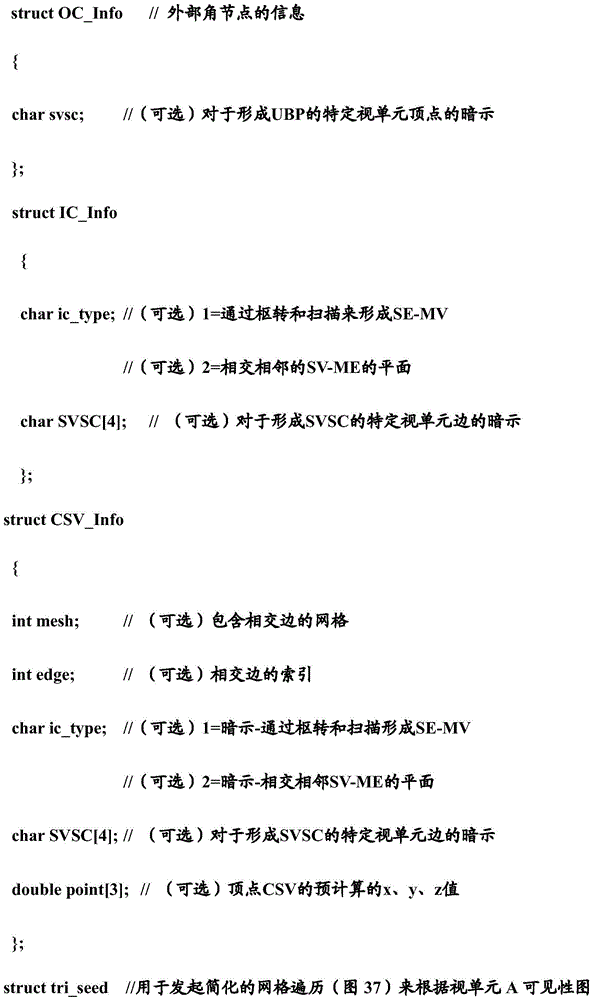


图13D是示出了采用增量G+数据的示例性实施方式的数据结构的图。13D is a diagram illustrating a data structure of an exemplary embodiment employing incremental G+ data.
在一种实施方式中,信息的增量G+分组可以与每个视单元-视单元过渡相关联。示例性数据结构DeltaGplus_Header包括表示针对相关联的过渡的开始视单元(view_start)和结束视单元(viewcell_end)以及特定面(transition_face)的字段。另一个数据元素DeltaGplus_array是对实际上包含或指代网格几何图形的DeltaGplus数据结构数组的指代。在将DeltaGplus_array存储在主存储器中的一些实施方式中,可以通过指针来访问DeltaGplus_array。在其它情况下,DeltaGplus_array变量可以是数组阵列的索引,例如,对由增量G+数据形成的磁盘存储。另一个字段DeltaGplus_count在DeltaGplus_array中存储DeltaGplus数据结构的数量。附加的packet_size表示相关联信息的存储与传输字节大小。In one embodiment, an incremental G+ grouping of information may be associated with each viewcell-viewcell transition. The exemplary data structure DeltaGplus_Header includes fields representing the start viewcell (view_start) and end viewcell (viewcell_end) and a specific face (transition_face) for the associated transition. Another data element, DeltaGplus_array, is a reference to an array of DeltaGplus data structures that actually contain or refer to the mesh geometry. In some embodiments where the DeltaGplus_array is stored in main memory, the DeltaGplus_array may be accessed through a pointer. In other cases, the DeltaGplus_array variable may be an index into an array of arrays, eg, to disk storage formed from delta G+ data. Another field DeltaGplus_count stores the number of DeltaGplus data structures in DeltaGplus_array. The additional packet_size indicates the storage and transfer byte size of the associated information.
DeltaGplus_Header指代一个或多个DeltaGplus数据结构,其又指代对于对应的多边形网格的几何图形、材料、纹理信息。对于该信息的示例性数据结构被示为数据结构三角形、边、顶点。DeltaGplus_Header refers to one or more DeltaGplus data structures, which in turn refer to geometry, material, texture information for the corresponding polygon mesh. Exemplary data structures for this information are shown as data structures triangle, edge, vertex.
图14A、图14B分别示出了当从连接的视单元A和视单元B观察时的示例遮挡物和由该简单遮挡物形成的遮挡的增量区(DR)。图17A和图17B的流程图示出了对流形三角形网格的当从视单元B观察时被遮挡而从视单元A观察时不被遮挡的连接的区进行识别的方法。该过程提供了对确定流形三角形网格的当从视单元A观察时露出而当从视单元B观察时不露出的连接的区的问题的解决方案。14A, 14B show an example occluder and the delta region (DR) of occlusion formed by the simple occluder when viewed from connected viewcell A and viewcell B, respectively. 17A and 17B are flowcharts illustrating a method of identifying connected regions of a manifold triangle mesh that are occluded when viewed from viewcell B but not occluded when viewed from viewcell A. This process provides a solution to the problem of determining connected regions of a manifold triangle mesh that are exposed when viewed from viewcell A but not when viewed from viewcell B.
在一些实施方式中,将流形三角形网格的从一个视单元看去露出而从另一个邻接(或被包含的)视单元看去被遮挡的连接的区称为增量区(DR)。In some embodiments, the connected regions of the manifold triangle mesh that are exposed from one viewcell and occluded from another adjoining (or contained) viewcell are referred to as delta regions (DR).
将与流形三角形网格的当从视单元B观察时被遮挡而从视单元A观察时不被遮挡(即,位于视单元A的可见性图)的连接的区对应的增量区指定为DRoAB(从A到B的遮挡增量区)。Specify the delta region corresponding to the connected region of the manifold triangle mesh that is occluded when viewed from viewcell B but not occluded when viewed from viewcell A (i.e., located in viewcell A's visibility map) as DRoAB (Occlusion Incremental Region from A to B).
这与流形三角形网格的当从视单元A观察时露出(即,位于视单元A的可见性图)而当从视单元B观察时被遮挡的连接的区对应的增量区相同。这样的增量区被指定为DReBA(从B到A的露出增量区)。This is the same as the incremental regions of the manifold triangle mesh that are exposed when viewed from viewcell A (ie, located in viewcell A's visibility map) but occluded when viewed from viewcell B. Such incremental area is designated as DReBA (Exposed incremental area from B to A).
当然DRoAB=DReBA。Of course DRoAB=DReBA.
因此,尽管图17A和图17B的方法示出对DRoAB的确定(从视单元A到视单元B的遮挡增量区的确定),但是通过反转所处理的视单元的次序来将该方法应用于确定露出增量区。Thus, although the method of FIGS. 17A and 17B shows the determination of DRoAB (determination of occlusion delta regions from viewcell A to viewcell B), the method is applied by reversing the order of the viewcells processed to determine the exposed incremental area.
图14A示出了用作遮挡图14B中的较大的多边形网格的遮挡物的示例多边形网格O。FIG. 14A shows an example polygon mesh O used as a occluder to block the larger polygon mesh of FIG. 14B.
图14B示出了在标记为1410的简单网格的面上引起的可见性图。1410是由两个三角形形成的矩形多边形网格,没有示出上述三角形以简化该图。Figure 14B shows the resulting visibility map on the face of a simple mesh labeled 1410. 1410 is a rectangular polygon mesh formed by two triangles, which are not shown to simplify the figure.
在一些实施方式中,标记为“遮挡区视单元A”的阴影六边形图是在图14A中示出的简单遮挡物的使用视单元A作为源并且使用一阶可见性图构造方法来生成的从视单元看去的遮挡区。注意,由于SE-MV楔形仅生成在原始的5边遮挡物O的内部角,所以遮挡区的边比遮挡物O的边多一个。In some embodiments, the shaded hexagon map labeled "Occlusion Region Viewcell A" is generated using viewcell A as the source and a first-order visibility map construction method for the simple occluder shown in Figure 14A. The from-viewcell occlusion area. Note that since the SE-MV wedge is only generated at the inner corners of the original 5-sided occluder O, the occlusion region has one more edge than the occluder O.
类似地,标记为“遮挡区视单元B”的无阴影六边形图是在图14A示出的简单遮挡物的使用视单元B作为源以及使用以及一阶可见性图构造方法生成的从视单元看去的遮挡区。Similarly, the unshaded hexagon map labeled "Occlusion Region Viewcell B" is generated from the viewcell B as the source and the first-order visibility map construction method for the simple occluder shown in Figure 14A. The occlusion area seen by the unit.
将“遮挡区视单元B”的位于“遮挡区视单元A”外的部分标记为DROAB(从A到B的遮挡增量区)和DREBA(从B到A的露出增量区)。Label the portion of Occlusion Viewcell B outside of Occlusion Viewcell A as DR O AB (Occlusion delta from A to B) and DR E BA (Exposed delta from B to A ).
标记为1420的区位于这两个遮挡区外面,并且因为它位于从视单元A和视单元B可看见的区域1410内,所以区域1420从视单元A和视单元B可看见并且不是增量区。The region labeled 1420 is outside these two occlusion regions, and because it is within
图15示出了除了“遮挡区视单元A”的位于“遮挡区视单元B”外面的被标记为DROBA(从B到A的遮挡增量区)和DREAB(从A到B的露出增量区)的部分以外与图14B所示的统一的从区域看的可见性图相同的可见性图。此处,将在其上内接可见性图边界的网格标记为1510,其与图14中的1410相同。“遮挡区视单元A”的黑色部分表示“遮挡区视单元A”的与“遮挡区视单元B”公共的部分。标记为1520的区位于这两个遮挡区的外部,并且因为它位于从视单元A和视单元B可看见的区1510内,所以区1520基于视单元A和视单元B两者可见并且不是增量区。Figure 15 shows the regions labeled DRO BA (occlusion delta from B to A) and DRE AB (from A to B) outside "occlusion viewcell B" in addition to "occlusion viewcell A" The same visibility map as the unified from-area visibility map shown in FIG. 14B except for the part of the exposed incremental area). Here, the grid on which the visibility map boundary is inscribed is labeled 1510, which is the same as 1410 in FIG. 14 . The black part of "Occlusion Viewcell A" represents the part of "Occlusion Viewcell A" that is common to "Occlusion Viewcell B". The region labeled 1520 is outside these two occlusion regions, and because it is within
因此,在一些实施方式中,当从视区B向视区A移动时,增量分组可以包括视区B与视区A之间的可见部分的差DREAB(即,增量区)。因此,通过传输仅包括增量区的增量分组,由于不需要重新传输对于每个视单元的可见图形元素的整个集合,所以减少了传输图形信息的带宽需求。Thus, in some embodiments, when moving from viewport B to viewport A , the delta grouping may include the difference DRE AB in the visible portion between viewport B and viewport A (ie, the delta region). Thus, by transmitting delta packets that include only delta regions, the bandwidth requirements for transmitting graphics information are reduced since the entire set of visible graphics elements for each viewcell does not need to be retransmitted.
图16A和图16B是示出了使用标记轮廓周线的数据结构来识别轮廓周线的边和顶点的方法。16A and 16B are diagrams illustrating a method of identifying edges and vertices of a silhouette contour using a data structure that labels the silhouette contour.
图16A-16B的流程图示出了在给定已经被标记的、简单或复合的从视单元看去的周线的一些边的情况下使用图13A-13D的数据结构来快速地识别该周线的所有边的方法。Figures 16A-16B are flowcharts illustrating the use of the data structures of Figures 13A-13D to quickly identify a from-viewcell contour that has been labeled, simple or composite, given some edges of the contour method for all sides of the line.
图16A-16B的方法利用了轮廓周线一般在流形网格上形成多义线的事实。由于将网格表示为与连接性信息相关联的有向图(使用翼边数据结构或类似的数据结构),所以简化了对连接至另一个边的边的识别。The method of Figures 16A-16B takes advantage of the fact that silhouette contours generally form polylines on manifold meshes. Since the mesh is represented as a directed graph (using a winged edge data structure or similar data structure) associated with connectivity information, the identification of edges connected to another edge is simplified.
现又参考图16A并且使用图13A-13D的数据结构,其中将数据元素存储为数组并且通过这些数组的索引(替代实施方式可以这些参考符投射为指针)来访问这些数据元素。在一些实施方式中,处理流程从步骤1605处开始,其中使用来自当前周线的数据结构的索引contour.verte来识别当前顶点c_vertex。这是网格contour.mesh的边数量。Referring now again to Figure 16A and using the data structures of Figures 13A-13D, data elements are stored as arrays and accessed by their indices (alternative embodiments may cast these references as pointers). In some embodiments, process flow begins at
处理流程行进至步骤1607,其中类似地使用实际的contour.edge来访问当前边。也是在步骤1607中,将用于更新Contour_Node类型的数组中的索引的整数ni设置为0。Process flow proceeds to step 1607 where the current edge is similarly accessed using the actual contour.edge. Also in
处理流程行进至步骤1609以使用索引contour.node_array[ni]来访问当前周线节点c_node。Process flow proceeds to step 1609 to access the current contour node c_node using the index contour.node_array[ni].
处理流程行进至判决步骤1611以确定c_node.type是否为3。如果该类型是3,则当前节点表示简单周线节点的数据并且处理流程行进至步骤1613以将计数器segi设置为0。Process flow proceeds to
处理流程行进至判决步骤1617以确定c_node.span_type是否等于2。如果c_node.span_type等于2,则当前周线跨度的段可以包括外部角从视单元看去的轮廓顶点和内部角从视单元看去的轮廓顶点并且处理流程行进至步骤1620。Process flow proceeds to
在判决步骤1620中,使用先前指定的用于识别内部角简单轮廓顶点的方法来确定由c_edge和next_edge共有的顶点是否为内部角轮廓顶点。In
如果在判决步骤1620中确定两个轮廓边形成内部角,则处理流程行进至步骤1624。If it is determined in
在步骤1624中,将整数值p设置成等于入射在如通过应用SE-MV楔形的扫描构造(步骤1628)确定的内部角顶点上的SE-MV楔形的数量。In
处理流程行进至步骤1632,其中将表示针对周线跨度构造的可见性事件表面的数量的计数器segi增加入射在CSV上的SE-MV事件表面的数量。Process flow proceeds to step 1632 where a counter segi representing the number of visibility event surfaces constructed for the contour span is incremented by the number of SE-MV event surfaces incident on the CSV.
处理流程行进至判决步骤1629以确定segi的值是否等于当前周线节点的跨度长度。Process flow proceeds to
如果在判决步骤1629中确定segi的值等于宽度长度,则已经处理了跨度并且处理流程行进至判决步骤1633。If it is determined in
在判决步骤1633中,确定作为周线的当前周线节点的索引的整数变量ni的值是否等于周线中节点的数量。In
如果在判决步骤1633中确定当前节点是轴线的最后一个节点,则处理流程行进至处理下一个周线的步骤1637。处理流程在步骤1637处终止。If it is determined in
另一方面,如果在判决步骤1633中确定当前节点不是周线的最后一个节点,则处理流程行进至步骤1645。On the other hand, if it is determined in
在步骤1645中,将用在步骤1609中的节点周线提前以访问下一个节点。In
如果在判决步骤1617中确定当前节点的span_type表示在跨度上不存在内部角节点,则处理流程行进至步骤1621。If it is determined in
同样地,如果在判决步骤1620中确定当前轮廓边和下一个轮廓边没有形成内部角,则处理流程行进至步骤1621。Likewise, if it is determined in
在步骤1621中,形成与入射在当前边上的单个SV-ME UBP对应的VM段(使用图20、图21及有关的图的方法)。处理流程行进至步骤1625以变量segi增加1,与构造在轮廓边上的单个阴影可见性事件表面一致。In
处理流程从步骤1625行进至已经描述了的判决步骤1629。Process flow proceeds from
如果在判决步骤1621中确定节点的类型是3,与复合轮廓顶点(CSV)一致,则处理流程继续至从步骤1650(图16B)处开始的处理16-1。If it is determined in
处理流程行进至步骤1650以使用存储在cnode.ninfo中的数组索引来引用CSV_info节点中的附加数据。该信息给出了包含CSV的更远的网格的网格数量。Process flow proceeds to step 1650 to reference additional data in the CSV_info node using the array index stored in cnode.ninfo. This information gives the number of grids for the further grids containing the CSV.
处理流程行进至步骤1655以存取与当前UBP相交(其中相交部是当前CSV)的边的边数量,这是通过CSV_info来存取的。Process flow proceeds to step 1655 to access the edge count of the edge that intersects the current UBP (where the intersection is the current CSV), which is accessed via CSV_info.
处理流程行进至1660以按照当前UBP和C_EDGE的相交部来计算CSV。可替代地,可以预计算该值并且将该值存储在对应的CSV_Info结构的浮点CSV_Info.point[3]字段中。Process flow proceeds to 1660 to compute the CSV according to the intersection of the current UBP and C_EDGE. Alternatively, the value may be precomputed and stored in the floating point CSV_Info.point[3] field of the corresponding CSV_Info structure.
处理流程行进至步骤1665,将C_Vertex设置为CSV(未被遮挡侧上)后的下一个顶点的索引,并且处理流程行进至处理16-2,其将处理流程返回至布置1615。Process flow proceeds to step 1665, C_Vertex is set to the index of the next vertex after CSV (on the unoccluded side), and process flow proceeds to process 16-2, which returns process flow to
总体上,图16A的方法使得能够使用仅一些标记边来识别轮廓周线的多个边。从而,该标记方案使用非常少的存储。该方法利用了轮廓周线的自然连贯性,从而有利于根据一些标记轮廓边和关联暗示信息来在运行时快速地生成VM段。结合图20和图21来详细地讨论使用标记轮廓边的VM/PVS的运行时增量构造。In general, the method of FIG. 16A enables the identification of multiple edges of a silhouette contour using only a few marked edges. Thus, this tagging scheme uses very little storage. This method exploits the natural coherence of silhouette contours, which facilitates the rapid generation of VM segments at runtime from some labeled silhouette edges and associated hints. Run-time incremental construction of VM/PVS using marked silhouette edges is discussed in detail in conjunction with FIGS. 20 and 21 .
图17A、图17B、图17C和图17D包括对示出了表示从一个视单元到有关的视单元的过渡的统一可见性图中的VM感兴趣区(ROI)进行识别的方法和用于对与具有高效遮挡的那些ROI的遮挡边界对应的轮廓边进行标记的方法的流程图。17A, 17B, 17C, and 17D include methods for identifying VM regions of interest (ROIs) in unified visibility maps showing transitions from one viewcell to related viewcells and for Flow diagram of a method for labeling silhouette edges corresponding to occlusion boundaries of those ROIs with efficient occlusion.
图17A、图17B、图17C和图17D的流程图示出了对流形三角形网格的连接的区进行识别的方法,上述连接的区称为感兴趣区或ROI,其反映了视单元过渡(例如,从VC A到VCB)期间的可见性变化。17A, 17B, 17C, and 17D are flowcharts illustrating a method for identifying connected regions of a manifold triangular mesh, referred to as regions of interest or ROIs, which reflect viewcell transitions ( For example, the visibility change from VC A to VCB).
该流程图还示出了用于识别与限定ROI的遮挡边界(OB)或边界对应的轮廓周线的方法。此外,该流程图示出了用于标记这些轮廓周线(使用图13A-13D的Contour数据结构和关联数据结构)并且存储与周线相关联的附加信息(例如,图13A的VM_Info数据)。The flowchart also shows a method for identifying silhouette contours corresponding to an occlusion boundary (OB) or boundary that defines an ROI. In addition, the flow diagram illustrates the use of labeling these silhouette contours (using the Contour data structures and associated data structures of FIGS. 13A-13D ) and storing additional information associated with the contours (eg, the VM_Info data of FIG. 13A ).
根据一些实施方式,将图17A至图17D的方法作为离线或预计算处理来进行。本方法能够识别PVS数据增量的增量G+和增量G-组件,可以在根据现有的PVS增量地构造新的PVS的运行时间处理期间使用上述组件。可替代地,图17A至图17D的方法能够识别和标记与ROI的边界对应的轮廓周线。随后可以使用该标记轮廓周线信息来在运行时间构造增量G+和增量G-。相比明确地存储/传输增量G+和增量G-分组,该方法可以显著地需要较少的存储/传输资源。According to some embodiments, the method of FIGS. 17A-17D is performed as an offline or precomputed process. The present method is capable of identifying the delta G+ and delta G- components of a PVS data delta, which can be used during the runtime process of incrementally constructing a new PVS from an existing PVS. Alternatively, the method of FIGS. 17A-17D can identify and label silhouette contours corresponding to the boundaries of the ROI. This marker silhouette contour information can then be used to construct delta G+ and delta G- at runtime. This approach may require significantly less storage/transmission resources than explicitly storing/transmitting delta G+ and delta G- packets.
如果视单元之一被完全包含在另一视单元中,则ROI对应于仅从被包含的视单元可看见的区域。在一些实施方式中,使用与这些类型的ROI对应的标记轮廓周线来在运行时间根据父视单元的VM来构造子视单元VM(使用暗示的、简化的3D网格遍历),从而避免了在特定情况下对增量G-信息的明确存储。If one of the viewcells is completely contained in the other viewcell, the ROI corresponds to an area that is only visible from the contained viewcell. In some implementations, child viewcell VMs are constructed at runtime from parent viewcell VMs using labeled silhouette contours corresponding to these types of ROIs (using an implied, simplified 3D mesh traversal), thereby avoiding Explicit storage of incremental G-information in specific cases.
如果两个视单元共有面并且一个视单元没有被包含在另一个视单元内(称为“邻接”的关系),则ROI对应于增量区(DR)。对于从VC A到VC B的视单元过渡(称为AB过渡),DR具有两种类型。一种类型的增量区DROAB(从A到B的遮挡增量区)包含从视单元A可看见而从视单元B看不见的网格三角形片段。DROAB也是DREBA(从B到A的露出增量区)。同样地,DROAB=DREBA。DROAB对应于针对AB过渡的增量G-数据,而DREBA对应于针对AB过渡的增量G+数据。可以使用与这些ROI的边界对应的标记轮廓周线来在运行时间构造增量G+和或增量G-数据(还使用暗示的、简化的3D网格遍历),从而避免了在特定情况下对增量G+和增量G-多边形分段信息的明确存储。A ROI corresponds to a delta region (DR) if two viewcells share faces and one viewcell is not contained within the other (a relationship called "adjacency"). For viewcell transitions from VC A to VC B (called AB transitions), there are two types of DR. One type of delta region DR O AB (Occlusion delta region from A to B) contains mesh triangle segments that are visible from viewcell A but not viewcell B. DRO AB is also DRE BA (exposed incremental area from B to A ). Likewise, DR O AB = DR E BA. DR O AB corresponds to delta G- data for AB transitions, while DR E BA corresponds to delta G+ data for AB transitions. The delta-G+ and or delta-G- data can be constructed at runtime using labeled silhouette contours corresponding to the boundaries of these ROIs (also using an implied, simplified 3D mesh traversal), avoiding the Explicit storage of delta G+ and delta G- polygon segmentation information.
现转向图17A至图17D,在处理的第一阶段,指定针对具体视单元过渡要识别的ROI的类型。ROI是具体的统一可见性图的表示视单元过渡的特定区域。对于AB过渡的统一可见性图是包含从视单元A和视单元B可看见的网格三角形片段和对于视单元中的每一个的从视单元看去的VM的OB_SEG的可见性图。Turning now to Figures 17A-17D, in a first stage of processing, the type of ROI to be identified for a particular viewcell transition is specified. ROIs are specific regions of a specific unified visibility map that represent viewcell transitions. The unified visibility map for AB transitions is a visibility map containing mesh triangle fragments visible from viewcell A and viewcell B and the OB_SEG of the from-viewcell VM for each of the viewcells.
在一些实施方式中,处理流程从步骤1705开始,在该步骤中确定以下视单元是否具有父子(包含-被包含)关系:要针对其确定特定视单元过渡的增量可见性信息。In some implementations, process flow begins at
如果在判决步骤1705中确定要针对其确定增量可见性信息的视单元具有父子关系,则处理流程行进至步骤1707。If it is determined in
在步骤1707中,要识别的ROI是从针对具体的视单元过渡的被包含(子)视单元可看见的区域。因为对于子视单元的VM总是父视单元的子集,所以在一些实施方式中使用针对过渡计算的明确的增量G-信息来构造子VM。但是,如果子视单元明显地小于父视单元,则对应的增量G-信息会相对大。可替代地,在本方法中,可以将对于这样的过渡的感兴趣区(ROI)设置成仅从子视单元可看见的那些区域。通过识别这些区域的种子三角形和边界,通常能够通过对统一可见性图进行以种子三角形开始的简化的、暗示的3D网格遍历使用更少的信息根据父视单元的VM来确定子视单元的VM/PVS。In
如果在判决步骤1705中确定要针对其确定增量可见性信息的视单元不具有父子关系,则处理流程行进至步骤1709。If it is determined in
步骤1709表示两个视单元是邻接的(视单元共有面并且一个视单元不被包含在另一个视单元内)。父子和邻接关系是两个视单元的两种特殊布置,其中从一个视单元到另一个视单元的过渡出现在完全被包含在两个视单元的联合中的空间体积。使用视单元的这两种布置,保证了如随后在处理中构造的ROI完全和保守地反映了新近可见和新近露出的区域(例如,因为在有关的视单元之间没有“间隙”,所以错过了短暂可见的几何图形)。
处理流程行进至步骤1711以表示ROI是可见性增量区(DR)。Process flow proceeds to step 1711 to indicate that the ROI is a visibility delta region (DR).
处理流程行进至判决步骤1713以枚举DR的各种类型。如果在判决步骤1713中确定要识别的DR从VC A可看见并且从视单元B看不见,则处理流程行进至步骤1715。Process flow proceeds to
在步骤1715中,要识别的ROI是DROAB和DREBA。In
如果在判决步骤1713中确定要识别的DR从VC B可看见而从视单元A看不见,则处理流程行进至步骤1717。If in
在步骤1717中,要识别的ROI是DREAB和DROBA。In
在一些实施方式中,步骤1705至步骤1717取决于过渡视单元之间的关系以及增量可见性信息的期望用途仅枚举出针对具体的视单元过渡要识别的ROI的类型。对于邻接视单元A和B之间的沿着AB方向的具体过渡,通常识别这两类ROI,DREAB和DROBA。这两类ROI一起完全描述了对于视单元过渡的可见性变化(增量VM/PVS增量)。In some implementations, steps 1705 to 1717 enumerate only the types of ROIs to be identified for a particular viewcell transition, depending on the relationship between the transition viewcells and the intended use of the incremental visibility information. For specific transitions along the AB direction between adjacent viewcells A and B, two types of ROIs are typically identified, DRE AB and DRO BA. Together, these two types of ROI fully describe the visibility change (delta VM/PVS delta) for viewcell transitions.
从步骤1719中开始,开始统一可见性图中的这些ROI区域的实际识别。Beginning in
在步骤1719中,确定对于包括视单元A和视单元B的联合的视单元的VM(例如,使用先前描述的从视单元看去的VM构造方法中的任何方法)。还可以使用该VM的任何超集作为随后构造与针对过渡的两个视单元的从视单元可看见性图对应的OB_SEG(步骤1721)的开始VM。该事实使得能够使用从区域看的可见性问题的有效的层次分解来解决增量可见性信息(明确的增量G分组或对应的标记的周线数据)的确定。在该层次方法中,可以将从包含视单元A和视单元B两者的任何视单元可看见的三角形分段用作构造用于视单元A和视单元B的统一的VM的VM。(还可以使用该事实来减少PVS增量存储需求,这是因为对于许多视单元过渡的PVS增量最终可以根据与包含其它视单元的视单元对应的单个统一可见性图的数据来生成)。In
处理流程行进至步骤1721,其中在从视单元(A+B)可看见的三角形分段上构造与根据视单元A确定的从视单元看去的可见性图对应的OB_SEG、和与根据视单元B确定的从视单元看去的可见性图对应的OB_SEG。将从视单元(A+B)可看见的三角形分段连同从视单元A看去的OB_SEG和从视单元B看去的OB_SEG的集合被称为针对视单元A和视单元B的统一可见性图。在一些实施方式中,这些OB_SEG的构造采用先前描述的对于从视单元看去的VM构造3D/2D网格遍历方法(图20和有关的图)。Process flow proceeds to step 1721, where an OB_SEG corresponding to the from-viewcell visibility map determined from viewcell A, and an OB_SEG corresponding to the from-viewcell visibility map determined from viewcell A, and a The OB_SEG corresponding to the from-viewcell visibility map determined by B. The set of triangle segments visible from viewcell (A+B) together with the OB_SEG from viewcell A and the OB_SEG from viewcell B is called unified visibility for viewcell A and viewcell B picture. In some embodiments, these OB_SEGs are constructed using the previously described 3D/2D mesh traversal method for from-viewcell VM construction (FIG. 20 and related figures).
当然,如果视单元A是视单元B的父,在步骤1719中构造的从视单元(A+B)看去的可见性图已经包含从视单元A可看见的所有网格三角形分段以及与从视单元A看去的轮廓周线对应的OB_SEG。在步骤1721中添加与视单元B对应的OB_SEG。在两个视单元邻接和/或所使用的开始VM是VM(A+B)的超集的情况下,在步骤1721中一般必须构造两个OB_SEG集合。Of course, if viewcell A is the parent of viewcell B, the from-viewcell(A+B) visibility map constructed in
处理流程从步骤1721行进至处理17-1,其从步骤1723(图17B)开始。在步骤1723中,对统一可见性图进行遍历以限定由从视单元A和视单元B两者看去的OB_SEG布置形成的VM区。在该遍历中,选择三角形并且遍历行进至由OB_SEG形成的边界。在该步骤中,3D网格遍历作为已经构造的统一可见性图的宽度优先遍历来进行。遍历行进至遍历受限的轮廓周线及对应的遮挡边界。该简单的遍历方法确保了对具体的ROI的所有三角形/分段遍历至ROI的边界,即使ROI具有内部孔或跨越多个单独的三角形网格。(VM的前面的构造最终可以将三角形网格的部分“融合”成具有内部孔的单一ROI,上述ROI对应于更远的网格三角形的、穿过由内轮廓周线包围的较近的三角形网格中的孔可见的未被遮挡区)。Process flow proceeds from
处理流程行进至步骤1725以确定在当前遍历/VM区是否剩余任何未遍历的三角形(即,连接至当前三角形的未遍历的三角形,其中连接不需要穿过遮挡边界)。如在步骤1725中确定在当前遍历中存在未遍历的三角形,则处理流程行进至步骤1727,遍历中的下一个三角形。Process flow proceeds to step 1725 to determine if any untraversed triangles remain in the current traversal/VM region (ie, untraversed triangles connected to the current triangle, where the connection does not need to cross an occlusion boundary). If it is determined in
另一方面,如果在判决步骤1725中确定在当前遍历中没有剩余三角形,则处理流程行进至步骤1728,因为已经遍历完当前VM的所有三角形。On the other hand, if it is determined in
在步骤1728中确定在遍历步骤1723和1725中识别的统一VM区是从视单元A可看见,还是从视单元B可看见,还是从两者均可看见。在一些实施方式中,使用图25A-25B的简化了的多面体的点包容性测试来对此进行确定。在父子有关的视单元过渡的情况下,因为所有的遍历的区域从父视单元可看见所以可以对该测试进行一些简化。In
以下替代实施方式是可能的:在VM区中发起遍历(步骤1723)以前首先对VM区中的单个点进行确定(步骤1728和1731)。该方法使得能够在不对VM区进行全遍历的情况下识别不是ROI的VM区域。The following alternative implementation is possible: a single point in the VM region is first determined (
处理流程行进至判决步骤1731以确定VM的遍历的区域是否对应与先前针对特定的视单元过渡在早先的步骤1705至1717中确立的感兴趣的区域(ROI)。这是通过对步骤1728的结果(例如,从A可看见、从B可看见、或从两者可看见、或从两者都看不见;后者仅当所使用的VM是VM(A+B)的超集时才有可能)与在早先的步骤1705至1717中确定的ROI的限定进行比较来确定。Process flow proceeds to
如果在判决步骤1731中确定统一VM的遍历的区域不是ROI,则处理流程行进至判决步骤1749以确定在VM中是否有任何未遍历的三角形。If it is determined in
如果在判决步骤1749中确定在统一可见性图中剩余任何未遍历的三角形,则处理流程行进至步骤1737,其中选择统一VM中的下一个三角形(属于新的VM区)以用于处理。If it is determined in
如果在判决步骤1749中确定在统一VM中没有剩余未遍历的三角形(不再有要处理的统一VM区),则处理流程行进至步骤1752。处理流程在1752处终止。If it is determined in
如果在判决步骤1731中确定VM的遍历的区域是ROI,则处理流程行进至步骤1732。If in
在判决步骤1732中确定当前ROI是否是对于视单元过渡的遮挡增量区(DR_O)。如果ROI是DRO,则处理流程行进至步骤1734。In
在步骤1734中,使用先前针对被遮挡区描述的度量来确定ROI的有效静态遮挡。将称为有效动态可见性(EDV)的变量的值设置成ROI的ESO。In
如果在判决步骤1732中确定当前ROI不是DRO,则处理流程行进至步骤1733。If it is determined in
在判决步骤1733中确定当前ROI是否是针对视单元过渡的遮挡增量区(DR_E),如果ROI是DRE,则处理流程行进至步骤1736。In
在步骤1736中,使用先前针对被遮挡区描述的度量来确定围绕当前ROI的被遮挡区(称为围绕被遮挡区或SOR)的有效静态遮挡(ESO)。将称为有效动态可见性的变量的值设置为SOR的聚合ESO。In
如果在判决步骤1733中确定ROI不是露出增量区,则处理流程行进至步骤1735。If it is determined in
在判决步骤1735中确定当前ROI是否对应于从针对特定的父子视单元过渡的子视单元可看见的区域。如果ROI是子区,则处理流程行进至步骤1738。It is determined in
在步骤1738中,使用先前针对被遮挡区描述的度量来确定围绕当前ROI的被遮挡区(称为围绕被遮挡区或SOR)的有效静态遮挡(ESO)。将称为有效动态可见性的变量的值设置成SOR的聚合ESO。注意,对于DRE和子ROI的情况进行相同的处理,但是为了说明,在此处它们是不同的。In
接着步骤1734、1736或1738,处理流程行进至步骤1746。Following
在判决步骤1746中确定对于ROI的EDV(当前ROI在表示对于特定视单元的增量可见性上的“有效性”或效率的测量)是否大于预定值(例如,“值2”)。It is determined in
如果在判决步骤1746中确定对于ROI的EDV不大于预定值(“值2”),则处理流程行进至步骤1740。If it is determined in
如果在判决步骤1740中确定当前感兴趣区域的边界(以及对应的轮廓周线)是否能够被明显地简化(例如,使用图12A-12C的方法,其中将ESO用作指导边界的保守简化的度量)。如果ROI是DRO,则图12A-12C的方法可以直接应用至该区域。如果ROI是DRE或子区,则将图12A-12C的方法应用于围绕当前ROI的被遮挡区(SOR)。SOR可以被限定为紧邻ROI的遮挡区。可选地,SOR可以包括连接至该SOR集合的其它遮挡区。该方法使得保守的简化处理能够扩展到相邻区域以最终实现充分地简化了的ROI。If it is determined in
如果在判决步骤1740中确定边界能够被简化,则在判决步骤1746中对由简化了的遮挡边界包围的区的新的保守表示的EDV进行确定。If it is determined in
另一方面,如果确定当前ROI的边界不能被简化来实现目标EDV值,则处理流程行进至步骤1743。On the other hand, if it is determined that the boundaries of the current ROI cannot be simplified to achieve the target EDV value, then process flow proceeds to step 1743 .
在步骤1743中,当前ROI被确定为具有低的EDV,从而被作为针对当前视单元过渡的增量可见性的显著组件而被忽略。在该步骤中,如果ROI对应于DREAB,则位于区域内的对应的网格三角形被保守地包括在对于视单元A的VM中。在没有通过DR的边界分段引入新的三角形的情况下将原始三角形包括在内。如果当前ROI对应于DROAB,则区域的对应的网格三角形保守地被包括在对于视单元B的VM中。在没有通过DR的边界分段引入新三角形的情况下将原始三角形包括在内。In
如果统一可见性图ROI对应于父子视单元过渡并且区域的EDV为低,则围绕被遮挡区的几何图形保守地被包括在ROI中,并且可以重新计算扩展区的EDV。对于DRE的情况,可选地,可以延伸SOR区至相邻的区以超出紧毗连的SOR。该方法能够识别以下极端情况:父VM和子VM没有明显地不同。在这种情况下完全地将子ROI移除。If the unified visibility map ROI corresponds to a parent-child viewcell transition and the region's EDV is low, the geometry surrounding the occluded region is conservatively included in the ROI, and the extended region's EDV can be recalculated. For the DRE case, optionally, the SOR region can be extended to an adjacent region beyond the immediately adjacent SOR. The method is able to identify the corner cases where the parent and child VMs are not significantly different. In this case the sub-ROI is completely removed.
步骤1746、1740和1743一起使得能够确定区域的ESV,并且如果ESV的值太低,则可以尝试保守地简化边界从而增加ESV。如果ESV仍然低于预定值,则不认为ROI对应与针对视单元过渡的增量可见性的明显区,并且可以忽略视单元过渡。
使用ESV(根据ESO获得)作为ROI的有效性的度量明显地减少了该方法所需的存储和计算时间。因为在许多情况下,小的遮挡或露出区会由于ROI边界的重新三角化而引入大量的围绕ROI的新三角形,所以这是成立的。这些区往往具有低的ESO,从而使用本方法不会将其认为是有效的遮挡(或露出)区。替代地,例如,将针对特定AB过渡的基元的新近可见集简单保守地认为是对于视单元A的VM/PVS。Using the ESV (obtained from the ESO) as a measure of the effectiveness of the ROI significantly reduces the storage and computation time required by the method. This is true because in many cases a small occlusion or exposure area introduces a large number of new triangles around the ROI due to retriangulation of the ROI boundary. These regions tend to have low ESO and thus would not be considered effective occluded (or exposed) regions using this method. Alternatively, for example, the newly visible set of primitives for a particular AB transition is simply and conservatively considered the VM/PVS for viewcell A.
如果在判决步骤1746确定当前的ROI的EDO超过了预定值(例如,“值2”),则处理流程行进至处理17-2,其开始于步骤1755。If it is determined at
在步骤1755中,对增量G+和/或增量G-(其可以是包括指代实际的新近被遮挡的多边形的指针或索引信息的增量I-信息)或子视单元数据(如果视单元过渡是父-子)的存储大小进行估计,并且将变量SS的值设置成与该存储大小成一定正比。包含许多三角形/三角形分段的ROI往往具有对于对应的增量G+或增量G-分组的高存储成本。方法所使用的替代的存储格式用对限定对应的ROI的轮廓周线/VM边界的标记来取代增量G分组的明确存储。仅当需要使用简化的3D网格遍历来生成实际的增量G信息,上述简化的3D网格遍历采用根据针对具体的视单元过渡的标记轮廓周线信息来生成的统一VM区边界。In
处理流程行进至步骤1758,其中对SS的值与预定值(例如,“值3”)进行比较。如果在判决步骤1758中确定SS的值不大于“值3”,则处理流程行进至步骤1761。Process flow proceeds to step 1758, where the value of SS is compared to a predetermined value (eg, "
在步骤1761中,直接存储对于ROI的增量G数据并且处理流程行进至判决步骤1788。In
判决步骤1788与先前描述的步骤1749相同。
如果在判决步骤1758中确定SS的值大于预定值“值3”,则处理流程行进至步骤1764。If it is determined in
步骤1764至1785是识别与形成ROI的边界(因为ROI可以包含孔,所以是外边界和内边界两者)的OB_SEG对应的轮廓周线的步骤。在这些步骤中,标记对应的轮廓周线(其是原始三角形网格的边和顶点加与内部角简单和复合轮廓顶点处的SE-MV楔形对应的一些附加边),并且识别和存储与ROI的连接组件一对一的种子三角形。
从步骤1764开始,对形成与从视单元A看去的OB_SEG和从视单元B看去的OB_SEG对应的ROI的外边界和轮廓周线的这些OB_SEG进行识别。Beginning at
处理流程行进至步骤1767,其中包围ROI的OB_SEG彼此相交并且将相交部指定为IP并且使用对于对应的轮廓周线的对应VM_INFO数据结构(在图13A中给出的数据结构)来存储。Process flow proceeds to step 1767 where the OB_SEGs surrounding the ROI intersect each other and the intersection is designated as IP and stored using the corresponding VM_INFO data structure (data structure given in Figure 13A) for the corresponding silhouette contour.
处理流程行进至步骤1770,其中对于ROI的外边界对应的轮廓周线进行标记并且用先前结合图13A、图13B和图13C描述的数据结构(可选地包括DeltaGplus_attach_polyline info)来存储。Process flow proceeds to step 1770, where the silhouette contour corresponding to the outer boundary of the ROI is marked and stored with the data structure (optionally including DeltaGplus_attach_polyline info) previously described in connection with Figures 13A, 13B, and 13C.
处理流程行进至步骤1773,其中对形成与从视单元A看去的OB_SEG和从视单元B看去的OB_SEG对应的ROI的内边界和轮廓周线的这些OB_SEG进行识别。Process flow proceeds to step 1773, where the OB_SEGs forming the inner boundary and silhouette contour of the ROI corresponding to the from-viewcell A OB_SEG and the from-viewcell B OB_SEG are identified.
处理流程行进至步骤1776,其中形成ROI的内边界的OB_SEG彼此相交并且相交部被指定为IP并且使用对于对应轮廓周线的对应VM_INFO数据结构(图13A中给出的数据结构)来存储。Process flow proceeds to step 1776, where the OB_SEGs forming the inner boundaries of the ROI intersect each other and the intersection is designated as IP and stored using the corresponding VM_INFO data structure (data structure given in Figure 13A) for the corresponding silhouette contour.
处理流程行进至步骤1779,其中对与ROI的内边界对应的轮廓周线进行标记并且使用先前结合图13A、图13B和图13C描述的数据结构来存储。Process flow proceeds to step 1779, where the silhouette contour corresponding to the inner boundary of the ROI is marked and stored using the data structures previously described in connection with Figures 13A, 13B, and 13C.
处理流程从步骤1779行进至处理17-4,其从步骤1782开始(图17D)。在步骤1782中,对与针对具体的视单元过渡的ROI对应的所有(可能简化了的)外轮廓周线和内轮廓周线进行标记并且与具体的视单元过渡相关联。Process flow proceeds from
处理流程行进步骤1785,其中,将对于ROI的每个连接的组件的一个三角形存储在针对具体的视单元过渡的“TRI_SEED_LIST”中。Process flow proceeds to step 1785, where one triangle for each connected component of the ROI is stored in "TRI_SEED_LIST" for the particular viewcell transition.
接着,处理流程行进至步骤1788和1790(如果在VM中不存在未遍历的三角形)。在一些实施方式中,这些步骤分别与先前描述的步骤1749和步骤1752相同。如果在VM中存在未遍历的三角形,则处理流程行进至处理17-3,其开始于步骤。Next, process flow proceeds to
与父-子视单元过渡对应的ROI从以下意义上来讲不是增量区:对于该类型的ROI的种子三角形从针对父-子视单元过渡的两个视单元可看见。使用该类型的ROI,可以使用根据ROI的对应的标记轮廓周线构造的外边界和内边界来根据父VM有效地构造子视单元的VM/PVS。该构造使用图20和图21的暗示的、简化的3D网格遍历方法。An ROI corresponding to a parent-child viewcell transition is not a delta region in the sense that the seed triangle for that type of ROI is visible from both viewcells for the parent-child viewcell transition. Using this type of ROI, the VM/PVS of the child viewcell can be efficiently constructed from the parent VM using the outer and inner boundaries constructed from the corresponding labeled silhouette contours of the ROI. This construction uses the suggested, simplified 3D mesh traversal method of FIGS. 20 and 21 .
相反,与邻接视单元之间的过渡对应的ROI是可见性增量区(DR)。使用该类型的ROI,可以根据从视单元A+B可看见的网格三角形/分段连同ROI的根据对应的标记轮廓周线来构造的外边界和内边界来有效地构造增量G+和增量G-。该构造也使用图20和图21的暗示的、简化的3D网格遍历方法。Instead, ROIs corresponding to transitions between adjoining viewcells are visibility delta regions (DRs). Using this type of ROI, deltas G+ and deltas can be efficiently constructed from mesh triangles/segments visible from viewcell A+B along with the outer and inner boundaries of the ROI constructed from the corresponding marked silhouette contours. Quantity G-. This construction also uses the implied, simplified 3D mesh traversal method of FIGS. 20 and 21 .
图18A和图18B:使用单条周线的标记轮廓周线信息来在运行时间迅速地构造可见性图遮挡边界分段的方法。Figures 18A and 18B: Method for rapidly constructing visibility map occlusion boundary segments at runtime using labeled silhouette contour information for a single contour.
如前面所描述的,识别对于视单元过渡(例如,从A到B)的有效增量区(DR),确立(使用图17A-17D的方法)生成DR遮挡边界的对应的轮廓周线以及使用图13A和图13B的数据结构来标记上述轮廓周线。将该标记作为离线处理来进行。As previously described, a valid delta region (DR) for a viewcell transition (eg, from A to B) is identified, established (using the method of FIGS. 17A-17D ) to generate the corresponding silhouette contour of the DR occlusion boundary and use The data structures of FIGS. 13A and 13B are used to label the silhouette contours described above. This marking is performed as an offline process.
当存储标记轮廓周线信息(如与三角形网格相关联的数据)时,能够在运行时间使用该数据根据连接的或包含视单元的已知可见性图构造与特定的视单元对应的可见性图。When storing marker silhouette contour information, such as data associated with a triangular mesh, this data can be used at runtime to construct the visibility corresponding to a particular viewcell from a known visibility map that is connected or contains the viewcell picture.
图18A和图18B是示出了使用先前存储针对特定的视单元过渡的标记轮廓周线信息根据与连接的或包含视单元对应的已知可见性图来构造与特定视单元对应的可见性图的方法的流程图。18A and 18B are diagrams illustrating the construction of a visibility map corresponding to a particular viewcell from known visibility maps corresponding to connected or containing viewcells using previously stored marker silhouette contour information for the particular viewcell transition The flow chart of the method.
在一些实施方式中,处理流程从步骤1805处开始,使用与网格相关联的用于采用图12A-12C和图17A以及图17B的标记方法来存储标记轮廓周线信息的数据结构(图13A和图13B)来识别标记轮廓周线(先前针对所考虑的特定视单元过渡生成和存储的)。In some embodiments, process flow begins at
处理流程行进至步骤1810以及将当前流形三角形网格(“网格”)设置成由图13A的Contour数据结构的Contour.mesh字段指代的具体网格。Process flow proceeds to step 1810 and sets the current manifold triangle mesh ("mesh") to the specific mesh referred to by the Contour.mesh field of the Contour data structure of Figure 13A.
处理流程行进至步骤1815以将“CURRENT_EDGE”(流形三角形网格边)设置成由图13A的Contour数据结构的Contour.edge字段指代的具体边。Process flow proceeds to step 1815 to set "CURRENT_EDGE" (manifold triangle mesh edge) to the specific edge referred to by the Contour.edge field of the Contour data structure of Figure 13A.
处理流程行进至步骤1820以将“VERTEX(顶点)”(流形三角形网格顶点)设置成由图13A的Contour数据结构的Contour.vertex字段指代的具体顶点。Process flow proceeds to step 1820 to set "VERTEX (vertex)" (manifold triangle mesh vertex) to the specific vertex referred to by the Contour.vertex field of the Contour data structure of Figure 13A.
处理流程行进至步骤1825以将变量“NODECOUNT(节点计数)”设置成0。Process flow proceeds to step 1825 to set the variable "NODECOUNT" to zero.
处理流程行进至步骤1830,其中构造与“CURRENT_EDGE”对应的所有可见性图遮挡边界分段(VM OB_SEG)。使用图19A-19B所示并且结合该图详细讨论的处理来构造这些VMOB_SEG。Process flow proceeds to step 1830, where all visibility map occlusion boundary segments (VM OB_SEG) corresponding to "CURRENT_EDGE" are constructed. These VMOB_SEGs are constructed using the processes shown in Figures 19A-19B and discussed in detail in connection with this figure.
处理流程行进至步骤1835以将变量“NODE(节点)”设置成指代由当前周线的第一个节点指代的具体的Contour_Node数据结构。Process flow proceeds to step 1835 to set the variable "NODE" to refer to the specific Contour_Node data structure referred to by the first node of the current contour.
处理流程行进至步骤1850以确定当前Contour_Node数据结构(图13A)的NODE.node_type是类型3。如果node_type是类型3,则节点对应于复合轮廓顶点并且处理流程行进至处理18-1,其从图18B中的步骤1855处开始。Process flow proceeds to step 1850 to determine that the NODE.node_type of the current Contour_Node data structure (FIG. 13A) is
在步骤1855中,现将“MESH(网格)”变量(在步骤1810中被初始化)设置成由当前节点指代的CSV_INFO[NODE.NINFO].mesh指代的具体网格,node_type为3的当前节点是复合轮廓顶点(CSV)节点。In
处理流程行进至步骤1860,其中将变量“NEXT_EDGE”(表示轮廓周线多义线中的下一个边)设置成由当前周线节点指代的CSV_Info数据结构的CSV_INFO[NODE.NINIFO].edge字段指代的边。Process flow proceeds to step 1860 where the variable "NEXT_EDGE" (representing the next edge in the silhouette contour polyline) is set to the CSV_INFO[NODE.NINIFO].edge field of the CSV_Info data structure referred to by the current contour node refers to the edge.
处理流程行进至步骤1865以将变量“VERTEX”设置成由当前周线节点指代的CSV_Info数据结构的CSV_INFO[NODE.NINFO].point字段指代的顶点。Process flow proceeds to step 1865 to set the variable "VERTEX" to the vertex referred to by the CSV_INFO[NODE.NINFO].point field of the CSV_Info data structure referred to by the current contour node.
步骤1855、1860和1865的效果是在单个点(复合轮廓顶点)处将一个或多个流形三角形网格的面上的两个多义线连接在一起。在设置了当前“MESH”、“NEXT_EDGE”和“VERTEX”变量以反映至复合轮廓周线的该融合后,处理流程行进至处理18-2,其将处理流程返回至步骤1880(图18A)。The effect of
如果在判决步骤1850中确定“NODE_TYPE”不是3(即,该节点不对应于复合轮廓顶点),则处理流程行进至步骤1870。If it is determined in
在步骤1870中,将变量“EDGECOUNT”的值初始化成0。In
处理流程行进至步骤1875以将变量“NEXT_EDGE”设置成指代流形三角形网格的连接至当前边并且还是(一阶、从视单元看去的)轮廓边的边。可以基于流形网格的连接性和一阶轮廓边的定义(参见图3)来容易地对该边进行识别。可替代地,将“NEXT_EDGE”识别为连接至当前边的边,其中连接的边已经被标记为标记轮廓周线边。“NEXT_EDGE”的该定义用在以下情况中:轮廓周线没有充分地偏移或迁移(因为前面所描述的轮廓边的“回缩”)。在情形是在预处理期间确立的并且存储在struct Contour数据结构的next_edge_type字段中。如果next_edge_type具有0值,则“NEXT_EDGE”被识别为先前已经标记了的下一个连接的边。另一方面,如果next_edge_type值为1,则“NEXT_EDGE”被识别为是(一阶)轮廓边的下一个连接的边。Process flow proceeds to step 1875 to set the variable "NEXT_EDGE" to refer to the edge of the manifold triangle mesh that is connected to the current edge and that is also a (first-order, from-viewcell) silhouette edge. This edge can be easily identified based on the connectivity of the manifold mesh and the definition of first-order silhouette edges (see Figure 3). Alternatively, "NEXT_EDGE" is identified as an edge connected to the current edge, where the connected edge has been marked as a marked silhouette contour edge. This definition of "NEXT_EDGE" is used when the silhouette contour is not sufficiently offset or migrated (because of the previously described "retraction" of the silhouette edge). The context is established during preprocessing and stored in the next_edge_type field of the struct Contour data structure. If next_edge_type has a value of 0, "NEXT_EDGE" is identified as the next connected edge that has been previously marked. On the other hand, if the value of next_edge_type is 1, then "NEXT_EDGE" is identified as the next connected edge to the (first order) silhouette edge.
处理流程行进至步骤1880以将“CURRENT_EDGE”设置成“NEXT_EDGE”。Process flow proceeds to step 1880 to set "CURRENT_EDGE" to "NEXT_EDGE".
处理流程行进至步骤1880,其中可见性图遮挡边界分段(VM OB_SEG)由受当前楔形支撑的阴影可见性事件表面与流形三角形网格的相交部产生。可见性图的从标记轮廓周线的当前边导出的这些元素是使用在图19A-19B的流程图并且结合该图详细讨论的方法来构造的。Process flow proceeds to step 1880, where a visibility map occlusion boundary segment (VM OB_SEG) is generated from the intersection of the shadow visibility event surface supported by the current wedge and the manifold triangle mesh. The elements of the visibility map derived from the current edge of the marked silhouette contour are constructed using the methods discussed in detail in the flowcharts of FIGS. 19A-19B in connection with the figures.
当构造由当前轮廓边生成的VM OB_SEG时(使用在图19A-19B的流程图中示出的方法),处理流程行进至步骤1885。When the VM OB_SEG generated from the current silhouette edge is constructed (using the method shown in the flowcharts of FIGS. 19A-19B ), process flow proceeds to step 1885 .
在步骤1885中,增大变量“EDGECOUNT”。In
处理流程行进至步骤1888以确定“EDGECOUNT”是否小于在图13A的Contour_Node数据结构中指定的对于当前节点的span_length(NODE.span_length)。Process flow proceeds to step 1888 to determine if "EDGECOUNT" is less than span_length (NODE.span_length) for the current node specified in the Contour_Node data structure of Figure 13A.
如果在判决步骤1888中确定“EDGECOUNT”小于span_length,则处理流程返回至步骤1875,其中识别下一个边。If it is determined in
另一方面,如果在判决步骤1888中确定“EDGECOUNT”不小于span_length,则处理流程行进至判决步骤1890。On the other hand, if it is determined in
在判决步骤1890中确定“NODECOUNT”是否小于周线中由数据字段CONTOUR.num_nodes给出的节点数量,其中CONTOUR是对正在被处理的当前标记轮廓周线的指代并且采用图13A所示的数据结构Contour。In
如果在判决步骤1890中确定“NODECOUNT”小于CONTOUR.num_nodes,则处理流程行进至步骤1892。If it is determined in
在步骤1892中,增大“NODECOUNT”并且处理返回至步骤1835,其中选择下一个节点并且处理继续。In
另一方面,如果在判决步骤1890中确定“NODECOUNT”不小于CONTOUR.num_nodes,则处理流程行进至步骤1895。On the other hand, if it is determined in
步骤1895表示已经处理了标记轮廓周线并且处理应该行进至下一个标记轮廓周线。处理流程在步骤1895处终止。
通过图20所示并且结合该图详细讨论的处理来对针对特定视单元的所有标记轮廓周线的处理进行总体控制。The processing of all marked silhouette contours for a particular viewcell is generally controlled by the processing shown in Figure 20 and discussed in detail in connection with that figure.
图19A和图19B:示出了构造从标记轮廓周线的单条轮廓边导出的可见性图遮挡边界分段的方法的流程图。19A and 19B: Flow diagrams illustrating a method of constructing a visibility map occlusion boundary segment derived from a single silhouette edge marking a silhouette contour.
图18A-18B是在给定使用图13A的数据结构针对整个周线存储的少量数据的情况下用于识别标记轮廓周线的各个边的流程图。图19A-19B是构造从标记轮廓周线的单条边导出的VM OB_SEG的处理的流程图。18A-18B are flowcharts for identifying individual edges of a marked silhouette contour given a small amount of data stored for the entire contour using the data structure of FIG. 13A. 19A-19B are flowcharts of a process of constructing a VM OB_SEG derived from a single edge of a marked silhouette contour.
通过在对轮廓周线的处理(图18的步骤3482)期间调用图19A-19B的处理,图18A-18B的处理有效地导致了针对整个标记轮廓周线的所有VM_OBSEGD的构造。By invoking the processing of Figures 19A-19B during the processing of the silhouette contour (step 3482 of Figure 18), the processing of Figures 18A-18B effectively results in the construction of all VM_OBSEGDs for the entire marked silhouette contour.
在一些实施方式中,当碰到标记的轮廓边时,处理流程从步骤1910开始。这对应于调用图18A的处理的步骤1882。In some embodiments, process flow begins at
处理流程行进至判决步骤1920以确定当前标记轮廓周线节点(“节点”,从调用处理传递)并且在图13A所指定的Contour_Node.node_type数据字段中指定的span_type是否等于值1。Process flow proceeds to
如果在判决步骤1920中确定当前标记轮廓周线节点的span_type等于值1(表示在使用图13A的Contour_Node.node_type数据字段的标记轮廓周线上形成外部角),则处理流程行进至步骤1940。If it is determined in
在步骤1940中,使用先前结合图4A-4C描述的枢转处理来构造SV-ME楔形。In
处理流程行进至步骤1980以确定已经构造了楔形的当前轮廓边是否是周线中的第一条边。Process flow proceeds to step 1980 to determine whether the current silhouette edge for which the wedge has been constructed is the first edge in the contour.
如果在判决步骤1980中确定轮廓边是周线中的第一条边,则处理流程行进至步骤1992。If it is determined in
在步骤1992中,根据在图13A的数据结构中指定的CONTOUR.VMinfo.point、CONTOUR.VMinfo.mesh和CONTOUR.VMinfo.tri数据字段来获得预存储的楔形-网格三角形相交信息。该点对应于楔形与特定网格三角形的预计算和预存储的相交部,其中该相交部是包括与标记轮廓周线相关联的VM边界的VM OB_SEG链的初始OB_SEG。在识别对于特定视单元过渡的轮廓周线的、产生具有最小有效动态遮挡值的离线处理期间预先预计算并且存储该信息(图17C的步骤1770)。因此,如果该边是标记轮廓周线中的第一条边,则步骤1992生成对应的VM边界第一OB_SEG。In
另一方面,如果在判决步骤1980中确定正在处理的轮廓边不是周线中的第一条边,则处理流程行进至步骤1985。On the other hand, if it is determined in
在判决步骤1985中,确定当前节点是否具有与其相关联的CSV_Info,即,当前轮廓边是否支撑与另一个可见轮廓边相交的楔形。如果是,则Contour_Node.node_type值会等于3(图13A)并且Contour_Node.ninfo值会是CSV_Info数据结构数组(图13B)中的索引。在一种实施方式中,不用标记轮廓周线存储CSV_Info数据而是替代地将每条周线的初始点限定在CSV处,从而将对应的数据存储在Contour.mesh、Contour.triangle和Contour.vertex字段中。In
如果在判决步骤1985中确定当前节点与CSV_Info数据相关联,则处理流程行进至步骤1990。If it is determined in
在步骤1990中,从CSV_Info[Contour_Node.inifo].mesh、CSV_Info[Contour_Node.inifo].edge和CSV_Info[Contour_Node.inifo].point数据结构中读取初始的VMOB_SEG数据。In
另一方面,如果在判决步骤1985中确定当前节点不与CSV_Info相关联,则处理流程行进至步骤1995。On the other hand, if it is determined in
在步骤1995中,使用来自周线中的最后一个轮廓边的VM OB_SEG网格、三角形和点相交数据来构造与当前轮廓边对应的VM OB_SEG。因为VM OB_SEG形成流形三角形网格的面上的多义线,所以来自相邻边的OB_SEG的构造是多面体上的多义线的直接分段构造。In
接着步骤1990或步骤1995,处理流程行进至处理19-1和处理19-2,其从图19B的判决步骤1996开始。在判决步骤1996中,确定VM_INFO.RETRIANGULATE_HINT字段是否不等于0。这是图13A的VM_INFO数据结构的字段,并且如果确定毗连可见性图区的有效动态遮挡会通过遮挡边界处的重新三角化而增加,则在可见性图的运行时间构造期间将该字段设置成值1。Following
如果在判决步骤1996中确定VM_INFO.RETRIANGULATION_HINT的值不等于0,则处理流程行进至步骤1997。If it is determined in
在步骤1997中,在边界处对毗连对应的遮挡边界的三角形进行重新三角化。In
另一方面,如果在判决步骤1996中确定VM_INFO.RETRIANGULATION_HINT等于0,则处理流程行进至步骤1999。On the other hand, if it is determined in
在步骤1999中,没有在边界处对毗连对应的遮挡边界的三角形进行重新三角化。在该情况下,将包括轮廓周线的三角形“链接”至部分地被遮挡三角形而不进行重新三角化。处理流程在步骤1999处终止。In
如果在判决步骤1920中确定NODE.span_type不等于值1,则处理流程行进至步骤1925。If it is determined in
在判决步骤1925中确定NODE.span_type是否等于值2,如果等于值2,则处理流程行进至步骤1945。如果node_type等于值2,则周线可以包括外部角轮廓顶点和内部角轮廓顶点。从而,处理流程顺序地继续至1945以确定当前轮廓边是否涉及在与周线的下一条轮廓边的外部角或内部角中。It is determined in
如果在判决步骤1945中确定轮廓周线的当前边和下一条边形成外部角,则处理流程行进至步骤1940,如前面所描述的。If it is determined in
另一方面,如果在判决步骤1945中确定轮廓周线的当前边和下一条边的形成内部角,则处理流程行进至步骤1955。On the other hand, if it is determined in
在步骤1955中,使用先前结合图5A和图5B描述的扫描处理来形成入射在内部角轮廓顶点上的SE-MV楔形。从而,处理流程行进至步骤1980,如前所述。In
如果在判决步骤1925中确定NODE.span_type不等于值2,则处理流程行进至步骤1930。If it is determined in
在判决步骤1930中确定NODE.span_type的值是否等于3。如果在判决步骤1930中确定NODE.span_type的值等于3,则处理流程行进至步骤1960。在这种情况下,span_type表示应该通过在阴影楔形/VMOB_SEG构造期间跳过周线的边的子集来简化周线。如在图12C的步骤1275和1289中的识别DR的差别有效静态遮挡(也称作有效动态遮挡)和简化轮廓周线期间对该信息进行预计算并且将该信息预存储在对应的Contour_Node.span_type和Contour_Node.span_length数据结构中。In
在步骤1960中,将NODE.span_length与变量SPAN_COUNTER(在碰到周线以前被初始化为0)进行比较以确定应该在轮廓周线的那些顶点之间构造简化的阴影可见性事件表面和对应的VM OB_SEG。如果在判决步骤1960中确定SPAN_COUNTER小于NODE.span_length,则处理流程行进至步骤1965,其表示没有在当前边上形成楔形。In
处理流程然后行进至步骤1970,其中将当前轮廓边直接链接至针对整个轮廓周线的单个OB_SEG,其当判决步骤1960指导处理朝向步骤1945或步骤1940时最终在步骤1940或1945中构造。Process flow then proceeds to step 1970, where the current silhouette edge is directly linked to a single OB_SEG for the entire silhouette contour, which is ultimately constructed in
如果在判决步骤1930中确定NODE.span_type不等于值3,则处理流程行进至步骤1935。If it is determined in
在判决步骤1935中确定NODE.span_type是否等于值3。In
如果在判决步骤1935中确定NODE.span_type等于值3,则处理流程行进至步骤1975。在该情况下,span_type表示不应该使用扫描处理来构造入射在周线的内部角轮廓顶点上的阴影事件表面,而是应该使用将相邻SV-ME楔形的平面相交的较简单的方法来构造。If it is determined in
从而,在步骤1975中,使用相邻SV-ME楔形的的平面的相交来构造SE-MV楔形(以及对应的VM OB_SEG)并且处理流程行进至先前所描述的步骤1980。Thus, in
图20是示出了对使用根据预存储的标记轮廓周线构造的ROI边界来构造可见性图ROI的运行时间处理进行控制的处理的流程图,其中ROI边界限定/定界了对ROI进行遍历的简化的、暗示的、运行时间3D网格遍历处理。Figure 20 is a flow diagram illustrating the process of controlling the runtime process of constructing a visibility map ROI using ROI boundaries constructed from pre-stored marker silhouette contours, where the ROI boundaries define/delimit the traversal of the ROI Simplified, implied, run-time 3D mesh traversal processing.
如先前结合图17A至图17D所描述的,可以将针对特定视单元过渡的增量可见性数据描述为统一可见性图中包含从两个视单元可看见的网格三角形分段并且还包含与两个视单元对应的从视单元看去的遮挡边界的感兴趣区域(ROI)。As previously described in connection with Figures 17A-17D, incremental visibility data for a particular viewcell transition can be described as a unified visibility map containing mesh triangle segments visible from both viewcells and also containing The region of interest (ROI) of the from-viewcell occlusion boundary corresponding to the two viewcells.
增量可见性数据的类型取决于对应的ROI的构造,其取决于两个视单元的描述视单元过渡的关系。The type of incremental visibility data depends on the construction of the corresponding ROI, which depends on the relationship of the two viewcells describing the viewcell transition.
如果视单元之一完全被包含在另一个视单元中,则ROI可以对应于仅从被包含的视单元可看见的区。可以将与这些类型的ROI对应的标记轮廓周线用于在运行时间根据父视单元的VM来构造子视单元的VM(使用暗示的、简化的3D网格遍历),从而避免了在特定情况下对增量G-信息的明确存储。If one of the viewcells is completely contained within the other, the ROI may correspond to a region that is only visible from the contained viewcell. Labeled silhouette contours corresponding to these types of ROIs can be used to construct a child viewcell's VM from the parent viewcell's VM at runtime (using an implied, simplified 3D mesh traversal), avoiding the need for specific cases Explicit storage of incremental G-information.
如果两个视单元共有面并且一个视单元没有被包含在另一个视单元内(称为“邻接”的关系),则ROI对应于增量区(DR)。对于从VC A到VC B的视单元过渡(称为AB过渡),DR有两种类型。一种类型的增量区DROAB(从A到B的遮挡增量区)包含从视单元A可看见而从视单元B看不见的网格三角形分段。DROAB也是DREBA(从B到A的露出增量区)。同样地,DREAB=DROBA。DROAB对应于针对AB过渡的增量G-数据而DREAB对应于针对AB过渡的增量G+数据。可以将对应于这些ROI的边界的标记轮廓周线用于在运行是构造增量G+和/或增量G-数据(也使用暗示的、简化的3D网格遍历),从而避免在特定情况下对增量G+和增量G-多边形分段信息的明确存储。A ROI corresponds to a delta region (DR) if two viewcells share faces and one viewcell is not contained within the other (a relationship called "adjacency"). For viewcell transitions from VC A to VC B (called AB transitions), there are two types of DR. One type of delta region DR O AB (Occlusion delta region from A to B) contains mesh triangle segments that are visible from viewcell A but not viewcell B. DRO AB is also DRE BA (exposed incremental area from B to A ). Likewise, DR E AB = DR O BA. DRO AB corresponds to delta G- data for AB transition and DRE AB corresponds to delta G + data for AB transition. Labeled silhouette contours corresponding to the boundaries of these ROIs can be used to construct delta G+ and/or delta G- data on the fly (also using an implied, simplified 3D mesh traversal), thus avoiding the Explicit storage of delta G+ and delta G- polygon segmentation information.
在一些实施方式中,处理流程从步骤2005中开始,其中将针对特定的视单元过渡的所有标记轮廓周线的列表作为数组“LAB_CON_LIST”来访问。In some implementations, process flow begins in
处理流程行进至步骤2010,其中“LAB_CON_LIST”中的标记的周线中的每一个都经受进一步的处理。Process flow proceeds to step 2010, where each of the marked contours in "LAB_CON_LIST" is subjected to further processing.
在对“LAB_CON_LIST”中的标记轮廓周线进行处理的第一个步骤中,处理流程行进至步骤2015,其中使用图18A-18B的流程图所示的处理来识别标记轮廓周线的边,并且将上述边存储在“LAB_SIL_EDGE_LIST”中。In the first step of processing the marked silhouette contours in "LAB_CON_LIST", process flow proceeds to step 2015, where the edges of the marked silhouette contours are identified using the processing shown in the flowcharts of Figures 18A-18B, and Store the above edges in "LAB_SIL_EDGE_LIST".
处理流程行进至步骤2020,其中“LAB_SIL_EDGE_LIST”的边经受进一步的处理。Process flow proceeds to step 2020, where the edges of "LAB_SIL_EDGE_LIST" undergo further processing.
在对“LAB_SIL_EDGE_LIST”中的边进行处理的第一步骤中,处理流程行进至步骤2025,其中使用图19A-19B的流程图中所示的处理来构造与“LAB_SIL_EDGE_LIST”的边对应的VM OB_SEG。In the first step of processing the edges in "LAB_SIL_EDGE_LIST", process flow proceeds to step 2025, where a VM OB_SEG corresponding to the edges of "LAB_SIL_EDGE_LIST" is constructed using the processing shown in the flowcharts of Figures 19A-19B.
处理流程行进至判决步骤2030以确定“LAB_SIL_EDGE_LIST”是否为空。如果在“LAB_SIL_EDGE_LIST”中有更多的边要处理,则选择下一个未处理的边并且并且处理返回至步骤2020。Process flow proceeds to
如果在判决步骤2030中确定在“LAB_SIL_EDGE_LIST”中没有更多的边要处理,则处理流程行进至步骤2035。If it is determined in
在判决步骤2035中确定在“LAB_CON_LIST”中是否有任意更多的标记的周线要处理。如果在判决步骤2035中确定在“LAB_CON_LIST”中有更多的标记的周线要处理,则选择下一个未处理的周线并且处理流程返回至步骤2010。In
另一方面,如果在判决步骤2035中确定在“LAB_CON_LIST”中没有更多的标记的周线要处理,则处理流程行进至步骤2040。On the other hand, if it is determined in
在步骤2040中,将作为对于与特定的视单元过渡对应的每一个增量区的一个三角形的指代的预计算的列表的三角形种子列表(在图17D中的步骤1785中预计算和预存储)设置成称为“TRI_SEED_LIST”的数组。在该情况下,三角形种子列表包含来从视单元A(包含视单元)看去未被遮挡并且从视单元B看去未被遮挡的每个VM区的一个三角形。从VM A的从视单元A和视单元B可看见的每个VM区选择一个种子三角形以使得发起对种子三角形的集合的遍历确保在图21的运行时间简化的3D网格遍历期间碰到针对AB过渡的相关的(标记的)轮廓周线。种子三角形的该选择确保使用以下遍历处理根据视单元A的VM来构造视单元B的VM:使用标记轮廓周线信息在AB过渡中在几何图形周围“避开”。In
处理流程行进至步骤2045,其中“TRI_SEED_LIST”的三角形经受处理。Process flow proceeds to step 2045, where the triangles of "TRI_SEED_LIST" are subjected to processing.
处理流程行进至步骤2050,其中使用“TRI_SEED_LIST”的三角形来发起如在图21的流程图所示并且结合该图详细地讨论的简化的流形网格遍历。该遍历通过对从视单元A可看见的三角形(那些在“TRI_SEED_LIST”中的三角形)的小子集的遍历来识别从视单元B可看见的所有三角形。Process flow proceeds to step 2050, where the triangles of "TRI_SEED_LIST" are used to initiate a simplified manifold mesh traversal as shown in the flowchart of FIG. 21 and discussed in detail in connection with this figure. This traversal identifies all triangles visible from viewcell B by traversing a small subset of triangles visible from viewcell A (those in "TRI_SEED_LIST").
处理流程行进至判决步骤2060以确定在“TRI_SEED_LIST”中是否有任何更多未处理的三角形。Process flow proceeds to
如果在判决步骤2060中确定在“TRI_SEED_LIST”中有未处理的三角形,则选择“TRI_SEED_LIST”中的下一个未处理的三角形并且处理流程返回至步骤2045。If in
另一方面,如果在判决步骤2060中确定在“TRI_SEED_LIST”中没有更多未处理的三角形,则处理流程行进至步骤2065。On the other hand, if it is determined in
步骤2065表示已经通过简化的运行时间遍历构造了与所需的增量可见性信息对应的特定ROI。如前面所讨论的,当对应的视单元过渡是父到子的过渡时,该增量可见性信息实际上可以是从子视单元可看见的三角形/分段的集合。可替代地,该ROI信息可以对应于针对邻接的视单元之间的视单元过渡的增量G+和增量G-数据,从而使得当需要时可以选择生成增量G分组而不是存储针对每次视单元过渡的所有增量G分组。处理流程在步骤2055处终止。Step 2065 indicates that a specific ROI corresponding to the desired incremental visibility information has been constructed by a simplified runtime walk. As discussed earlier, when the corresponding viewcell transition is a parent-to-child transition, the incremental visibility information may actually be the set of triangles/segments visible from the child viewcell. Alternatively, the ROI information may correspond to delta G+ and delta G- data for viewcell transitions between adjacent viewcells, making it possible to choose to generate delta G packets when needed instead of storing data for each viewcell transition. All delta G groupings of viewcell transitions. Process flow terminates at
图21是使用简化的、暗示的运行时间3D网格遍历处理来根据预存储的标记轮廓周线信息构造ROI并且构造针对该ROI的连接的组件的种子三角形列表的主处理。21 is a main process using a simplified, implied run-time 3D mesh traversal process to construct an ROI from pre-stored marker silhouette contour information and to construct a list of seed triangles for connected components of the ROI.
图21是示出了在图20示出的控制处理的步骤2050中调用的受指导的运行时间3D遍历处理的实施方式的流程图。FIG. 21 is a flowchart illustrating an embodiment of a directed runtime 3D traversal process invoked in
图21的流程图所示的处理与PCT专利申请第PCT/US2011/042309号的图20A的一般3D网格遍历处理相似。图20A的处理一般作为离线预处理来进行以处于预计算并存储PVS和标记轮廓周线数据的目的来构造可见性图。The process shown in the flowchart of Figure 21 is similar to the general 3D mesh traversal process of Figure 20A of PCT Patent Application No. PCT/US2011/042309. The process of Figure 20A is generally performed as offline preprocessing to construct a visibility map for the purpose of precomputing and storing PVS and marker silhouette contour data.
相反,图21的3D网格遍历处理是在运行时间进行并且用于生成针对特定视单元过渡的统一可见性图的ROI。这些ROI对因为这些特定的视单元过渡而引起的可见性的变化进行描述。In contrast, the 3D mesh traversal process of FIG. 21 is performed at runtime and used to generate ROIs of unified visibility maps for specific viewcell transitions. These ROIs describe changes in visibility due to these particular viewcell transitions.
在一种类型的视单元过渡中,从父视单元到被包含的子视单元,ROI仅包含从子视单元可看见的那些三角形/分段。当所提供的种子三角形是包括来自包含从子视单元可看见的三角形的那些ROI的每个连接的组件的一个三角形的三角形集合时,可以根据图21的简化的、暗示的3D网格遍历处理来生成该类型的ROI。In one type of viewcell transition, from the parent viewcell to the contained child viewcell, the ROI contains only those triangles/segments that are visible from the child viewcell. When the seed triangle provided is a triangle set including one triangle from each connected component of those ROIs containing triangles visible from the child viewcell, the simplified, implied 3D mesh traversal process of FIG. 21 can be used to Generate that type of ROI.
使用这些种子三角形以及根据标记轮廓周线生成的有关ROI边界,使得简化的、暗示的3D网格遍历处理绕过或“避开”在特定的视单元过渡期间(例如,从视单元A到视单元B,其中视单元B被包含在视单元A内)变得新近被遮挡的多边形或多边形分段。这使得能够在不明确地存储要移除的多边形列表的情况下移除新近被遮挡的多边形和/或多边形分段。如果要移除的多边形列表相对于可见多边形的数量很大,则相比使用明确的要移除的多边形的列表,这可以是更加有效。Using these seed triangles, along with the associated ROI boundaries generated from the marker silhouette contours, allows the simplified, implied 3D mesh traversal process to bypass or "avoid" during certain viewcell transitions (e.g., from viewcell A to viewport). Cell B, where viewcell B is contained within viewcell A) becomes newly occluded polygon or polygon segment. This enables newly occluded polygons and/or polygon segments to be removed without explicitly storing a list of polygons to be removed. If the list of polygons to remove is large relative to the number of visible polygons, this can be more efficient than using an explicit list of polygons to remove.
还可以使用暗示的遍历方法来直接生成针对两个邻接的视单元之间的视单元过渡的增量G-和增量G+分组两者,其中一个视单元没有被包含在另一个视单元内而是两个视单元具有公共的面。在这种情况下,开始的VM必须包含从组合视单元A+B可看见的所有多边形或多边形分段。此外,开始VM必须包含对于视单元A和视单元B的有关遮挡边界(这些遮挡边界都是根据标记的轮廓边来生成的)。将这样的可见性图称为统一可见性图。对于两个连接的视单元的统一可见性图包含从视单元A可看见并且从视单元B可看见的(或从布尔加视单元A+B可看见)的所有多边形分段。此外,统一可见性图包含与视单元A和视单元B两者对应的从视单元看去的遮挡边界。It is also possible to use the implied traversal method to directly generate both delta-G- and delta-G+ groupings for viewcell transitions between two adjoining viewcells, where one viewcell is not contained within the other viewcell. is that both viewcells have faces in common. In this case, the starting VM must contain all polygons or polygon fragments visible from the combined viewcell A+B. Furthermore, the starting VM must contain the relevant occlusion boundaries for both viewcell A and viewcell B (these occlusion boundaries are generated from the marked silhouette edges). Such a visibility map is called a unified visibility map. The unified visibility map for two connected viewcells contains all polygon segments that are visible from viewcell A and visible from viewcell B (or visible from Boolean viewcell A+B). Furthermore, the unified visibility map contains from-viewcell occlusion boundaries corresponding to both viewcell A and viewcell B.
为了生成针对A到B的过渡(也称为AB过渡)的增量G+分组,使用针对从A看去被遮挡而从B可看见的VM区的每个连接的组件的种子三角形来对对应的统一VM进行遍历。该类型的区称为DREAB。使用这些种子三角形发起遍历并且遍历行进至与视单元A或视单元B对应的遮挡边界。视单元A边界在被遮挡侧上碰到而视单元A边界在露出侧上碰到。这对应于在图40A-40F中以浅灰色示出的DReAB区。To generate delta G+ groupings for transitions from A to B (also known as AB transitions), the corresponding Unified VM for traversal. This type of region is called DRE AB. A traversal is initiated using these seed triangles and the traversal travels to the occlusion boundary corresponding to viewcell A or viewcell B. Viewcell A boundaries meet on the occluded side and viewcell A boundaries meet on the exposed side. This corresponds to the DReAB region shown in light grey in Figures 40A-40F.
表I总结了发起用于生成对于邻接视单元的增量G+和增量G-分组的暗示的运行时间遍历所需的种子三角形的集合并且示出了所碰到的遮挡边界的侧。Table 1 summarizes the set of seed triangles required to initiate a run-time traversal for generating hints for delta-G+ and delta-G- groupings for adjacent viewcells and shows the sides of the occlusion boundary encountered.
表ITable I
使用图20和图21的方法来根据视单元A和视单元B的统一可见性图来生成增量G+和增量G-子网格数据Use the methods of Figures 20 and 21 to generate delta-G+ and delta-G- subgrid data from the unified visibility map of viewcell A and viewcell B

该方法使得能够根据针对视单元过渡的统一VM和对应的VM遮挡边界周线(其可以根据标记轮廓周线来生成)生成增量G+和增量G-分组两者。使用该方法,不需要针对每次视单元过渡明确地存储对于每次视单元过渡的增量G+和增量G-分组。更具体地,可以在需要分组以前的任何时间通过暗示的遍历方法来生成分组。This method enables both delta G+ and delta G- groupings to be generated from the unified VM for viewcell transitions and the corresponding VM occlusion boundary contours (which can be generated from labeled silhouette contours). Using this approach, the delta G+ and delta G- groupings for each viewcell transition need not be stored explicitly for each viewcell transition. More specifically, packets can be generated by the implied traversal method at any time before a packet is required.
此外,在分布式客户端-服务器实施中,生成增量可见性信息的运行时间3D遍历方法可以更加有效。在高的时空可见相关性的区中,可以针对相同区中的若干特定的视单元频繁地使用相同的标记的周线信息。因此,对基于标记的轮廓信息的运行时间3D网格遍历能够以相比针对每次视单元过渡使用要移除的直接的多边形增量G-列表所需的传输数据而言较少的传输数据来计算增量的可见性图/PVS。Furthermore, in a distributed client-server implementation, a runtime 3D traversal approach that generates incremental visibility information can be more efficient. In regions of high spatiotemporal visibility correlation, the same labeled contour information may be frequently used for several specific viewcells in the same region. Thus, run-time 3D mesh traversal of marker-based contour information can be performed with less transfer data than would be required for each viewcell transition using a direct polygon delta G-list to be removed. to calculate the incremental visibility map/PVS.
现转向图21,在简化的运行时间遍历的第一个步骤中,处理流程从步骤2105开始,其中针对特定的视单元过渡在“TRI_SEED_LIST”中的特定三角形处发起遍历。Turning now to Figure 21, in the first step of the simplified runtime traversal, process flow begins at
处理流程行进至判决步骤2115以确定所遍历的三角形是否包含从视单元看去的遮挡边界。在图20的步骤2020中构造这些边界。Process flow proceeds to
如果在判决步骤2115中确定所遍历的三角形包含从视单元看去的遮挡边界,则处理流程行进至步骤2135。If it is determined in
处理流程行进至步骤2135,其中在遮挡边界处中断遍历。在另外的实施方式中,处理流程从2135行进至处理21-1,其将处理流程返回至步骤2125。Process flow proceeds to step 2135, where the traversal is interrupted at the occlusion boundary. In further embodiments, process flow proceeds from 2135 to process 21-1, which returns process flow to step 2125.
另一方面,如果在判决步骤2115中确定当前所遍历的三角形不包含遮挡边界,则处理流程行进至步骤2120。On the other hand, if it is determined in
在判决步骤2120中确定当前所遍历的三角形是否具有与对于所正在考虑的特定视单元过渡的标记的轮廓边对应的轮廓边。这些标记的轮廓边对应于统一VM的对应ROI的内边界。In
如果在判决步骤2120中确定当前所遍历的三角形是否具有轮廓边,则处理流程行进至步骤2125。If it is determined in
在步骤2125中,选择网格中下一个(连接的)未遍历的三角形并且将其提交至步骤2115和后续步骤以用于处理。In
另一方面,如果在判决步骤2120中确定当前三角形不包含针对当前视单元过渡的标记的轮廓边,则处理流程行进至步骤2180。On the other hand, if it is determined in
在判决步骤2180中确定在当前“遍历”中是否存在任何未处理(未遍历的)三角形,其中在此处将遍历定义为通过非标记的轮廓边连接并且位于如在图20的步骤2025中构造的针对特定视单元过渡的遮挡边界的未被遮挡侧上的网格多边形的集合。It is determined in
如果在判决步骤2180中确定在当前遍历有未遍历的三角形,则处理流程行进至步骤2125,其中选择遍历的下一个三角形以用于如前述的数据。If in
另一方面,如果在判决步骤2180确定在当前遍历中没有未遍历的三角形,则处理流程行进至步骤2188。On the other hand, if it is determined at
在步骤2188中,在图20的步骤2025中所构造的遮挡边界分段的未被遮挡侧上继续遍历;其中所述遮挡边界对应于在步骤2120中碰到的标记的轮廓边。该继续可以涉及在被重新三角化(即,在遮挡边界处精确地被修剪)的三角形上继续遍历,或可以涉及没有在边界处被重新三角化的三角形的未被遮挡侧上继续遍历。处理流程在步骤2188处终止。In
图22:将与针对特定视单元过渡的新近露出的网格元素对应的增量G+子网格附接至对应的标记轮廓周线的开始边界的方法。Figure 22: Method of attaching the delta G+ sub-mesh corresponding to the newly exposed mesh element for a particular viewcell transition to the start boundary of the corresponding marked silhouette contour.
对于任何视单元过渡,可以在构造从视单元看去的可见性图和对应的可见性增量区的离线处理(图17A-17D)期间确定并存储与新近露出的子网格的附接曲线对应的多义线。可以使用图13B的DeltaGplussummesh_attach_polyline数据结构来存储这些多义线。可以存储在该数据并且随后在图20和图21所述的增量可见性图/PVS构造的运行时间处理期间使用该数据。具体地,为了使用在运行时间3D网格遍历期间通过“避开”来确定新近被遮挡的网格元素的运行时间方法,在附接多义线处将任何新近露出的网格元素连接至先前露出的元素以确保将连接的流形呈现给运行时间遍历。For any viewcell transition, the attachment curve to the newly exposed sub-mesh can be determined and stored during an offline process (FIGS. 17A-17D) that constructs the from-viewcell visibility map and corresponding visibility delta regions Corresponding polyline. These polylines can be stored using the DeltaGplussummesh_attach_polyline data structure of Figure 13B. This data can be stored and subsequently used during runtime processing of the incremental visibility map/PVS construction described in FIGS. 20 and 21 . Specifically, in order to use a run-time method of determining newly occluded mesh elements by "steering away" during run-time 3D mesh traversal, any newly exposed mesh elements are connected to previously occluded mesh elements at the attachment polyline Exposed elements to ensure connected manifolds are rendered to runtime traversal.
注意,在一些实施方式中,当将图20和图21的方法用于通过绕开在运行时间计算新近被遮挡的几何图形时,使用图22的方法。Note that in some embodiments, the method of Figure 22 is used when the methods of Figures 20 and 21 are used to compute newly occluded geometry at runtime by bypassing.
在一些实施方式中,处理流程行进至步骤2205,其中对于针对特定视单元过渡的标记的轮廓边(开始的)相关联的DeltaGplussummesh_attach_polyline数据结构进行访问并且用变量AP来指代该数据结构。In some embodiments, process flow proceeds to step 2205, where the DeltaGplussummesh_attach_polyline data structure associated with the marked silhouette edge (beginning) for a particular viewcell transition is accessed and referred to by the variable AP.
处理流程行进至判决步骤2210,其中确定附接类型是否对应于0。如果在判决步骤2210中确定附接类型对应于0,则处理流程行进至步骤2215。Process flow proceeds to
在步骤2215中,将增量G+子网格(此处简称为子网格)的边直接连接至主网格的对应边。从AP.submesh_edgelist和AP.mainmesh_edgelist中列出的单一边开始沿着对应的网格的自由边(仅具有一个构成多边形的边)行进在AP.edgenumber个边之间做出该连接。在该模式下,针对每个edgelist仅需要预存储单个边。In
处理流程行进至判决步骤2220以确定附接类型是否对应于1。如果在判决步骤2220中确定附接类型对应于1,则处理流程行进至步骤2225。Process flow proceeds to
在步骤2225中,将增量G+子网格(此处简称为子网格)的边直接连接至主网格的对应的边。从AP.submesh_edgelist和AP.mainmesh_edgelist中列出的第一边开始顺序地贯穿整个边列表在AP.edgenumber个边之间做出该连接。In
处理流程行进至判决步骤2230以确定附接类型是否对应于2。如果在判决步骤2230中确定附接类型是等于2,则处理流程行进至步骤2235。Process flow proceeds to
在步骤2235中,将增量G+子网格(此处简称为子网格)的边“链接”至主网格的对应边,其中链接可以是从一个多义线段到另一个多义线的一到多的映射。在预处理期间对这些链接进行识别以使得它们在运行时间3D遍历期间呈现对应的网格的保守表示。从AP.submesh_edgelist和AP.mainmesh_edgelist中列出的单一边开始沿着对应网格的自由边(仅具有一个构成多边形的边)行进在AP.edgenumberge个边之间做出该链接。在该模式下,对于每个edgelist仅需要存储与存储单个边。In
处理流程行进至判决步骤2240以确定附接类型是否为3。如果在判决步骤2230中确定附接类型对应于3,则处理流程行进至步骤2245。Process flow proceeds to
在步骤2245中,将增量G+子网格(此处简称为子网格)的边“链接”至主网格的对应的边,其中链接可以是从一个多义线段到另一个多义线的一到多的映射。在预处理期间对这些链接进行识别使它们在运行时间3D遍历期间呈现对应的网格的保守表示。从AP.submesh_edgelist和AP.mainmesh_edgelist中列出的第一边处开始并且顺序地贯穿整个边列表行进在AP.edgenumber个边之间做出该链接。In
在任何情况下,处理流程针对下一此视单元过渡行进至步骤2250。在步骤2250中,可以根据当前视单元过渡的结束边界导出下一个视单元边界的开始边界,并且处理针对下一次视单元过渡行进至判决步骤2210。处理流程在步骤2250处终止。In any event, process flow proceeds to step 2250 for the next such viewcell transition. In
在一些实施方式中,除了使用对于新近露出的多边形的增量G+几何图形分组,在不需要明确的增量G+多边形的情况下,在运行时间程序地重构一些新近露出的面。在一些实施方式中,采用该方法在新近露出的增量区中生成单个大的多边形(或棋盘格状面)例如地板或天花板的新近可见部分。在该情况下,具体地使用指导运行时间处理程序地在整个增量区中生成面的新近露出的部分的标记来标记轮廓周线。In some embodiments, in addition to using deltaG+geometry grouping for newly exposed polygons, some newly exposed faces are reconstructed procedurally at runtime without requiring explicit deltaG+polygons. In some embodiments, this method is employed to generate a single large polygon (or checkerboard-like surface) in a newly exposed incremental region, such as a newly visible portion of a floor or ceiling. In this case, the silhouette contour is marked specifically using a marker that directs the runtime process to generate the newly exposed portion of the face in the entire incremental region.
图23是示出了露出时间对人类分辨空间细节的能力的影响的图。Figure 23 is a graph showing the effect of exposure time on a human's ability to resolve spatial detail.
图23是有人类视觉性能研究所再现的数据(Luntinen,O.,et.al.(1995).Modeling the Increase of Contrast Sensitivity with Gating Area and Exposuretime.Vision Res.Vol.35,No.16,pp.2339-2346.Elsevier Science Ltd.)。Figure 23 is the data reproduced by the Human Visual Performance Research (Luntinen, O., et.al. (1995). Modeling the Increase of Contrast Sensitivity with Gating Area and Exposuretime. Vision Res. Vol.35, No.16, pp .2339-2346. Elsevier Science Ltd.).
该研究显示了露出时间对于对比灵敏度的显著效果,尤其是对于直至1000ms的高空间频率。This study shows a significant effect of exposure time on contrast sensitivity, especially for high spatial frequencies up to 1000 ms.
图23示出了4幅图(A至C),其中对比灵敏度被绘制成从0秒到10秒的露出时间的函数。在每幅图中,关系是针对所观察的面(栅格图案)的不同的总露出面积来绘制的。每幅图表示对于所表示的四个空间频率之一的关系。该研究显示少的露出时间和小的露出面积减小了对比灵敏度。注意,在该情况下对比灵敏度随着空间频率的增加而增加是因为所测量的低频率低于关于在所采用的实验条件下的空间对比灵敏度曲线的“峰值”空间频率。根据该数据明显的是,人类视觉系统分辨高的空间频率数据的能力是甚至超过1000ms的露出时间的函数。这会使得的低细节层次增量可见性信息的用途被初始地使用并且后续用作为增加的对应的增量G+子网格数据的露出时间的相对较高的细节层次的增量可见性信息来替代上述低细节层次增量可见性信息。Figure 23 shows 4 graphs (A to C) in which contrast sensitivity is plotted as a function of exposure time from 0 to 10 seconds. In each figure, the relationship is plotted for a different total exposed area of the face (grid pattern) viewed. Each graph represents the relationship for one of the four spatial frequencies represented. This study shows that less exposure time and small exposure area reduces contrast sensitivity. Note that contrast sensitivity increases with increasing spatial frequency in this case because the measured low frequencies are lower than the "peak" spatial frequency for the spatial contrast sensitivity curve under the experimental conditions employed. It is evident from this data that the ability of the human visual system to resolve high spatial frequency data is a function of exposure times even in excess of 1000 ms. This would enable the use of the low level of detail delta visibility information to be used initially and subsequently to the relatively higher level of detail delta visibility information as the increased exposure time of the corresponding delta G+ sub-mesh data. Overrides the low-level-of-detail incremental visibility information described above.
图24A是示出了控制包括可渲染数据的可见性事件数据分组的内容流的方法的示例性流程图。在一些实施方式中,这些数据分组包括从服务器单元发送的数据,如在共同待决的PCT专利申请第PCT/US2011/042309中所详述的。在该方法中,预计算和与存储的数据分组包括可渲染数据的PVS增量分组(可见性事件分组)。在该方法中,客户端单元可以位于相同的物理设备如服务器单元上(例如,在共同待决的PCT专利申请第PCT/US2011/042309号的图46中)。可替代地,该方法还支持以下配置:客户端单元位于服务器单元不同的物理设备上并且位于不同的位置(例如,在共同待决的PCT专利申请第PCT/US2011/042309号的图46中)。24A is an exemplary flow diagram illustrating a method of controlling content flow including visibility event data packets of renderable data. In some embodiments, these data packets include data sent from the server unit, as detailed in co-pending PCT patent application No. PCT/US2011/042309. In this method, the precomputed and stored data packets include PVS delta packets of renderable data (visibility event packets). In this approach, the client unit may be located on the same physical device as the server unit (eg, in Figure 46 of co-pending PCT Patent Application No. PCT/US2011/042309). Alternatively, the method also supports a configuration in which the client unit is located on a different physical device than the server unit and at a different location (eg, in Figure 46 of co-pending PCT Patent Application No. PCT/US2011/042309) .
现转向图24A,根据一些实施方式,标记为2405的数据包括PVS数据增量的单一数据,该单一数据也称为可见性事件数据,表示在游戏建模环境中在视单元-视单元边界处或过渡时的图形元素的可见实体集合的变化。该数据仓库可以包括使用在共同待决的PCT专利申请第PCT/US2011/042309中指定的从区域看的可见性预计算方法处理了的数据。该数据仓库可以包括使用也是在共同待决的PCT专利申请第PCT/US2011/042309中详述的对数压缩算法处理了的数据。Turning now to FIG. 24A, according to some embodiments, the data labeled 2405 includes a single piece of data for PVS data deltas, also known as visibility event data, representing in a game modeling environment at a viewcell-viewcell boundary Or a change in the visible entity set of a graphic element on transition. The data warehouse may include data processed using the from-area visibility precomputing method specified in co-pending PCT patent application No. PCT/US2011/042309. The data warehouse may include data processed using a logarithmic compression algorithm also detailed in co-pending PCT patent application No. PCT/US2011/042309.
在判决步骤2410中,确定用户是否请求了交互性数据流。该请求可以通过用户与客户端单元的交互来输入到系统中。在一种实施方式中,在步骤2410中将与控制设备(例如,有线或无线游戏控制器)的任何交互作用解释为对交互性分组数据流的请求。其它实施方案可以包括使用特定的按键组合来请求初始化交互性数据流。在一些实施方式中,数据流是双向的,其中将数据从服务器传输到客户端并且从客户端传输到服务器。In
如果在判决步骤2410中确定用户请求了交互性体验,则处理流程行进至步骤2420。If it is determined in
在步骤2420中,使用由处于用户的交互性控制之下的相机位置控制的基于导航的预取来将可见性事件数据流从数据仓库2405提供给客户端单元。如在共同待决的PCT专利申请第PCT/US2011/042309中所详述的该预取处理中,使用相机视点的当前位置来预测该视点的未来位置,并且从数据仓库2405中对与在未来的预定时间段内很有可能被该视点穿透的视单元边界对应的PVS数据增量进行预取。例如,基于当前视单元和视单元过渡的历史来预测未来视单元过渡。在给出当前位置的情况下,可以利用航位推测法的现有技术方法或导航预测的其它现有技术方法来预测未来的视点或相机位置,上述方法包括Chim等人的方法(Jimmy Chim,Rynson W.H.Lau,Hong Va Leong,and Antonio Si,CyberWalk:A Web-Based Distributed Virtual Walkthrough Environment,iEEE TRANSACTIONS ONMULTIMEDIA,VOL.5,NO.4,DECEMBER 2003,其全部内容通过引用合并到本申请中)。可替代地,导航预取可以采用在图28A-28C中示出并且结合该图所讨论的示例性流程图的方法。In
在步骤2420中,通过用户输入来确定用于控制基于导航的预取处理的视点位置。该视点可以是用户在建模环境中的视点、在建模环境中跟随用户的移动的相机视点、或在建模环境中跟随某一其它用户或非玩家人物的相机视点。在这种情况下,数据流向客户单单元的用户传递了完全地交互性类游戏体验。例如,当用户玩交互性游戏并且向左或向右移动游戏控制器时,在监视器/屏幕上显示的用户当前视点相应地向左或向右平移。In
实际上由位于与客户端显示单元相同的物理设备上的解码器处理来从数据仓库读取所预取的数据(例如,如果从本地磁盘预取数据流)。可替代地,实际上可以由位于与客户端单元不同的物理设备上的解码器处理来从PVS数据增量的数据仓库读取预取的数据(例如,预取处理可以位于还包括数据仓库2405的远端服务器单元上)。Reading the prefetched data from the data warehouse is actually handled by a decoder located on the same physical device as the client display unit (eg, if the data stream is prefetched from local disk). Alternatively, the prefetched data may actually be read from the PVS data delta's data warehouse by a decoder process located on a different physical device than the client unit (eg, the prefetch process may be located in a data warehouse that also includes data warehouse 2405). on the remote server unit).
在步骤2420中,在一些实施方式中所预取的数据表示双向数据流,该双向数据流包括从服务器处理预取到客户端处理的PVS增量可渲染数据和提供给服务器处理来控制数据预取的用户输入数据。In
如果在判决步骤2410中确定用户没有请求交互性双向数据流,则处理流程行进至步骤2460。If it is determined in
在步骤2460中,使用预定相机运动路径来控制用于控制基于导航的预取处理的视点位置。在这种情况下,提供给客户端单元的数据流传递了不需要客户端单元的用户的主动交互性输入的类视频体验。In
在本说明书的上下文中,相机运动路径包括指定了虚拟相机的位置序列。在计算机图形学中,相机实际上是一般由视点位置(与相机位置和投影中心对应)以及视点指定并且通常为视向向量的虚拟相机。在建模环境中相机可以布置在用户的虚拟出射点位置处,其中相机被说成是提供第一人称视角。在该情况下,相机视点与用户视点相同。In the context of this specification, a camera motion path includes a sequence of positions specifying a virtual camera. In computer graphics, a camera is actually a virtual camera generally specified by the viewpoint position (corresponding to the camera position and projection center) and the viewpoint, and usually the direction vector. A camera may be placed at the user's virtual exit point location in the modeled environment, where the camera is said to provide a first-person perspective. In this case, the camera viewpoint is the same as the user viewpoint.
可替代地,相机可以位于与用户的视点不同的点处。相机可以限定视体,其包括表示人物的化身或由用户控制的车辆。在该情况下,相机提供第三人称视角。Alternatively, the camera may be located at a different point than the user's viewpoint. The camera may define a viewing volume, which includes an avatar representing a person or a vehicle controlled by the user. In this case, the camera provides a third-person perspective.
虽然该预定流可以使用来自相同数据仓库的数据如完全交互性双向数据流,但是可选地,该预定流可以采用利用了流的确定性结构分组优化。在美国专利6,057,847中描述了对于表示固定相机路径的可渲染数据分组的传输的这些优化,通过引用将该专利的全部内容合并到本申请中。使用预定相机路径及方向和交互地控制的相机两者的对可见性事件数据的基于导航的预取的其它优化在本说明书的随后部分进行描述。Although the predetermined flow may use data from the same data warehouse such as a fully interactive bi-directional data flow, alternatively, the predetermined flow may employ a deterministic structure grouping optimization utilizing flow. These optimizations for the transmission of renderable data packets representing fixed camera paths are described in US Patent 6,057,847, the entire contents of which are incorporated herein by reference. Additional optimizations for navigation-based prefetching of visibility event data using both predetermined camera paths and orientations and interactively controlled cameras are described in subsequent sections of this specification.
使用由固定的预定相机路径控制的确定性数据流的主要优点在于可以向多个用户同时广播同样精确的流。如果大的数字网络(例如,宽带电缆、卫星或其它网络)中的用户提供有唯一的双向完全交互性数据流,则这使用相当小的带宽。在一些实施方式中,确定性数据流包括与视单元对过渡对应的预定的数据分组顺序。The main advantage of using a deterministic data stream controlled by a fixed predetermined camera path is that the same precise stream can be broadcast to multiple users simultaneously. If users in a large digital network (eg broadband cable, satellite or other network) are provided with a unique bi-directional fully interactive data stream, this uses considerably less bandwidth. In some implementations, the deterministic data stream includes a predetermined order of data packetization corresponding to viewcell pair transitions.
根据一些实施方式,即使能够有效地向支持网络的多个用户同时广播受指定的相机位置控制的单向确定性数据流,确定性单向数据流仍然能够来自每个用户的明显的、假如不完全的交互性输入。According to some embodiments, even though it is possible to effectively broadcast a unidirectional deterministic data stream controlled by a designated camera position simultaneously to multiple users of the supporting network, the deterministic unidirectional data stream can still come from each user's apparent, if not obvious, unidirectional data stream. Fully interactive input.
有确定性数据流交互地提供的该限制是可见性事件流处理方法的多个特征的原因。首先,每个确定的数据流包括表示穿过建模数据库内由体现在模型中具体连接的视单元序列形成的空间区的相机运动路径。相比之下,常规的相机运动路径(例如,针对计算机动画视频)由体现在模型中的空间曲线形成。从而,只要将用户导航限制到由限定运动路径的连接视单元序列限定的的区,则用户可以随意交互性地改变建模环境的已经流处理至客户端单元的部分内的视点位置,即在这部分内随意导航。该航向可以由客户端单元的限制能够存储在客户端的高速缓存数据量的任何存储限制来限制。该导航还可以有意地由服务器供应商或内容拥有者对客户端单元施加的高速缓存限制来限制。该类型的受限交互性相机运动可以从单向确定性数据流中获得,即使它被同步地提供(广播)给多个用户。This limitation, provided interactively by deterministic data streams, is the reason for several features of the visibility event stream processing method. First, each determined data stream includes a path representing camera motion through a spatial region within the modeling database formed by the sequence of specifically connected viewcells embodied in the model. In contrast, conventional camera motion paths (eg, for computer animation video) are formed by spatial curves embodied in the model. Thus, as long as the user's navigation is restricted to the region defined by the sequence of connected viewcells that define the motion path, the user is free to interactively change the viewpoint position within the portion of the modeling environment that has been streamed to the client cell, i.e. in the Feel free to navigate within this section. The heading may be limited by any storage limitations of the client unit that limit the amount of cached data that can be stored on the client side. The navigation may also be intentionally limited by cache limitations imposed on the client unit by the server provider or content owner. This type of limited interactivity camera motion can be derived from a unidirectional deterministic data stream even though it is provided (broadcasted) synchronously to multiple users.
此外,使用PCT专利申请第PCT/US2011/042309号的方法来预计算的可见性事件分组使得能够对表示从具体视单元可看见的所有图形元素的PVS数据进行增量和渐进构造,其中视单元内的观察方向不受限制(即,全方向的)。即,结果的可见实体集合使得能够在对应的视单元内进行全方向观察。当使用预定相机路径采用这样的可见性事件分组时,即使接收由预定相机路径确定的广播确定性可见性事件数据流,用户仍然能够保持对观察方向的完全控制。Furthermore, precomputing visibility event groupings using the method of PCT Patent Application No. PCT/US2011/042309 enables incremental and progressive construction of PVS data representing all graphical elements visible from a particular viewcell, where the viewcell The viewing direction within is unrestricted (ie, omnidirectional). That is, the resulting set of visible entities enables omnidirectional viewing within the corresponding viewcell. When employing such visibility event groupings using predetermined camera paths, the user can retain full control over the viewing direction even when receiving a stream of broadcast deterministic visibility event data determined by the predetermined camera paths.
能够使用单向确定性数据流传递的另一类型的用户交互性涉及对位于模型的从已经将对应的PVS数据增量传输至客户端单元并且高速缓存的连接视单元可看见的区内的化身、人物、车辆和其它对象进行控制。Another type of user interactivity that can be delivered using unidirectional deterministic data flow involves interaction with avatars located within regions of the model that are visible from connected viewcells that have incrementally transmitted the corresponding PVS data to the client unit and are cached. , people, vehicles, and other objects.
其中用户随意贯穿建模环境移动的完全交互性使用了如在步骤2410和步骤2420中示出的完全双向数据流。在该情况下,用户请求了不同于确定性广播流的唯一数据流。当做出该选择时,数字服务供应商能够选择添加反映以下项的附加费用:所请求的对预取唯一流的服务器资源的使用、和请求传递该唯一数据流到用户的专用带宽。此外,内容拥有者可以针对完全交互性流收取附加费用,该完全交互性流反映了当内容被用作游戏体验而不是更加被动的类视频产品时内容的增加了的功能性。在一些实施方式中,对用户的与将内容传递给用户的客户端单元的服务器相关联的注册账户进行收费。Full interactivity in which the user moves at will through the modeling environment uses full bidirectional data flow as shown in
步骤2430示出了当用户在步骤2410中选择双向流时增加费用的方法。该增加了的费用可以是固定的按次收费(pay-per-play)或小时费率。可替代地,数字服务供应商和或内容拥有者能够使得用户按照每月或其它周期费用来访问交互性内容。
处理流程行进至判决步骤2440,其中确定用户是否继续请求由双向数据流提供的交互性。如果在步骤2440中仍然需要完全的交互性,则处理返回至其中非确定性的、PVS增量分组的基于导航的预取由用户位置来控制的步骤2420并继续。在一些实施方式中,每当用户请求完全交互性时就执行后续步骤2430。在替代实施方式中,仅针对第一次交互性请求或针对特定的交互性请求收取附加的费用,如由服务供应商和/或内容拥有者所确定的。Process flow proceeds to
在一些实施方式中,如果用户在预定时间段内未能提供输入,或如果用户发送有效信号来结束完全交互性双向流,则流复原到一个或更多个确定性数据流。In some embodiments, if the user fails to provide input within a predetermined period of time, or if the user sends a valid signal to end the fully interactive bidirectional flow, the flow reverts to one or more deterministic data flows.
如果在判决步骤2440中确定用户没有请求或请求完全交互性,则处理流程行进至步骤2465。在步骤2465中,将数据流转变为确定性的单向数据流。If it is determined in
该过度可以通过以下来发生:使得服务器或客户端处理控制相机视点并且移动相机视点使得其向着属于与确定性数据流对应的视单元路径的视单元的视单元。在一些实施方式中,可以由服务器发送与一个或更多个确定性视单元路径中的某些视单元的完整PVS对应的预计算和预存储的PVS数据以精确地将先前双向数据流重新同步为与不同的“故事情节”或流处理内容的输出路径对应的一个或更多个确定性单向数据流。This transition can occur by having the server or client process control the camera viewpoint and move the camera viewpoint so that it is towards a viewcell belonging to the viewcell of the viewcell path corresponding to the deterministic data stream. In some embodiments, pre-computed and pre-stored PVS data corresponding to the complete PVS of certain viewcells in one or more deterministic viewcell paths may be sent by the server to precisely resynchronize the previous bidirectional data stream One or more deterministic unidirectional data streams corresponding to output paths of content are processed for different "storylines" or streams.
可选地,可以进行该重新同步以创造从完全交互性体验到实际上被服务供应商广播到多个其它客户端单元的一个或更多个确定性数据流(与“故事情节”对应)的无缝过渡。该方法使得能够通过将唯一流仅给予实际期望唯一流的那些用户来有效地利用可用带宽。此外,对可用带宽的该有效利用降低了网络拥塞。确定性数据流或非确定性数据流两者中任何一个都可以存储在例如硬盘上以待随后使用。按照前面的描述,在一些实施方式中,该方法包括以下技术:有意地对高速缓存在客户端单元上的PVS数据增量的量进行限制来防止所使用的内容的盗版和转售。Optionally, this resynchronization can be done to create a transition from a fully interactive experience to one or more deterministic data streams (corresponding to "storylines") that are actually broadcast by the service provider to multiple other client units. Seamless transition. This approach enables efficient use of available bandwidth by giving unique streams to only those users who actually expect unique streams. Furthermore, this efficient use of available bandwidth reduces network congestion. Either a deterministic data stream or a non-deterministic data stream can be stored, eg, on a hard disk, for subsequent use. In accordance with the foregoing description, in some embodiments, the method includes techniques for intentionally limiting the amount of PVS data increments cached on the client unit to prevent piracy and resale of the content used.
图24B是进一步示出了使用客户端单元(标记为2490)和服务器单元(标记为2492)之间的双向通信来控制可见性事件数据流的方法的细节的示例性流程图。24B is an exemplary flow diagram further illustrating details of a method of controlling visibility event data flow using bidirectional communication between a client unit (labeled 2490) and a server unit (labeled 2492).
在一种示例性实施方式中,循环处理从判决步骤2468开始。在判决步骤2468中确定用户是否已经将输入提供给客户端单元,该输入产生控制或视点位置和/或速度(例如,控制杆输入)或提供这样的控制的意图(例如,按键按下用信号通知意图以开始导航的用户控制)。In an exemplary embodiment, loop processing begins at
如果在判决步骤2468中确定用户没有对控制器做出表示视点/相机导航的用户控制的输入,则处理流程行进至步骤2470。If it is determined in
在步骤2470中,没有控制视点位置/速度的数据被发送给服务器。在替代实施方式中,用户可以使用用户希望放弃对视点/相机导航的控制的正向指示。In
处理流程行进至执行在服务器单元上的判决步骤2472。在判决步骤2472中确定是否已经接收了表示视点/相机导航的用户控制的数据。在一些实施方式中,由于在特定的时间段上没有输入,所以用于确定没有来自客户端的输入数据的准则包括这样的参数。此外,如先前所指示的,在一些实施方式中,用户对放弃视点/相机导航的控制的期望由正向信号(例如,特定的控制器按键按下)来指示。Process flow proceeds to
如果在判决步骤2472中确定没有接收到来自客户端单元的输入数据(或表示终止视点/相机导航的控制的期望的输入数据),则处理流程行进至步骤2474。If it is determined in
在步骤2474中,由预定相机运动路径来驱动视点/相机的导航并且使用由预定视点/相机运动路径驱动的基于导航的预取来将可见性事件数据分组(数据仓库2476)读取到客户端单元。在该情况下,结果的可见性事件数据流2478可以给客户端单元提供图形信息,当渲染该图形信息时,该图形信息产生不支持观察期间的完全交互性的脚本图像序列(例如,会不允许未受限的视点/相机运动,但可以允许更加规定的交互性,例如,视向向量的完全或有限控制)。在替代实施方式中,替代所提供的确定流,当前视点保持静止直到检测到用户输入。In
将可见性事件分组发送到客户端单元并且在步骤2480中对其进行解码以产生PVS数据,然后将PVS数据存储在数据仓库2482中。在示例性实施方式中,使用在共同待决的PCT专利申请第PCT/US2011/042309号中指定的方法来进行解码。Visibility event packets are sent to the client unit and decoded in
如果在判决步骤2468中确定用户输入了表示视点/相机导航的用户控制的输入,则处理流程行进至步骤2484。If, in
在步骤2484中,将该输入数据发送给服务器单元。例如,输入数据包括用户的当前位置和速度。In
如果在判决步骤2472中确定接收到来自客户端单元的输入数据,则处理流程行进至步骤2486。If in
在步骤2486中,通过用户输入来确定视点/相机的导航并且使用由用户控制的视点/相机驱动的基于导航的预取来将可见性时间数据分组(数据仓库2476)读取到客户端单元。在该情况下,结果的可见性事件数据流2478向客户单单元提供图形信息,当渲染该图形信息时,该图形信息产生了支持建模环境的可导航空间的限定内以及由服务器单元对存储在客户端单元上的可见性事件和PVS数据的高速缓存大小施加的任何限制内的完全的观察者运动的未脚本化的图形序列。In
使用图24A和图24B的先前在共同待决的PCT专利申请第PCT/US2011/042309中指定的方法来控制PVS增量分组的流处理,可以使用确定性广播PVS数据增量流来有效地广播看起来像是高分辨率计算机动画程序的内容,但是具有重要的优点:在任何时候,观察者都能够选择使用与解码器设备链接的游戏控制器并且变成故事中的人物。当用户选择参与时,分组流从确定性广播流切换到与服务器供应商的完全交互性双向连接,其可以作为奖品或必须类型内容来提供。由在共同待决的PCT专利申请第PCT/US2011/042309中指定的PVS增量编解码器传递的流处理交互性媒体(SIM)无缝地从电视节目切换到游戏。在任何时候,在一些实施方式中,用户可以选择与节目的被动脚本化故事情节重新同步,其增强了用户对内容的体验。Using the methods previously specified in co-pending PCT patent application No. PCT/US2011/042309 of FIGS. 24A and 24B to control the streaming of PVS delta packets, deterministic broadcast PVS data delta streams can be used to efficiently broadcast It looks like the content of a high-resolution computer animation program, but has an important advantage: at any time, the viewer can choose to use a game controller linked to the decoder device and become a character in the story. When the user chooses to participate, the packet flow switches from a deterministic broadcast stream to a fully interactive two-way connection with the server provider, which can be offered as a prize or must-type content. Streaming Interactive Media (SIM) delivered by the PVS delta codec specified in co-pending PCT patent application No. PCT/US2011/042309 seamlessly switches from television programming to gaming. At any time, in some embodiments, the user may choose to resynchronize with the passively scripted storyline of the program, which enhances the user's experience of the content.
在共同待决的PCT专利申请第PCT/US2011/042309中描述的对基于可见性事件的PVS数据增量分组进行编码的方法使得现有的游戏内容能够转换为能够支持灵活的流处理交互性媒体(SIM)的数据。当然,还可以使用针对目标游戏引擎的现有的游戏开发工具连同在共同待决的PCT专利申请第PCT/US2011/042309号中描述的对由这些开发工具产生的信息进行编码的方法来开发自然的SIM内容。如结合图26A-26E所讨论的,客户端单元能够结合集成到游戏引擎中的客户端-解码器处理。The method of encoding incremental packetization of PVS data based on visibility events, described in co-pending PCT patent application No. PCT/US2011/042309, enables the conversion of existing game content into interactive media capable of supporting flexible streaming (SIM) data. Of course, it is also possible to use existing game development tools for the target game engine along with the methods described in co-pending PCT Patent Application No. PCT/US2011/042309 for encoding the information produced by these development tools to develop natural SIM content. As discussed in connection with Figures 26A-26E, the client unit can incorporate client-decoder processing integrated into the game engine.
内容传递的该SIM方法使得出版商能够影响内容传递的“免费增益”模型,其中使用单向广播数据流将脚本化确定性SIM内容免费传递给广大观众。这将内容暴露给广大观众并且使得观察者能够通过购买加价的双向完全交互性内容来立即变成玩家。This SIM approach to content delivery enables publishers to influence a "gain for free" model of content delivery, where scripted deterministic SIM content is delivered to a broad audience for free using a one-way broadcast data stream. This exposes the content to a broad audience and enables viewers to instantly become players by purchasing premium two-way fully interactive content.
可选地,可以在客户端单元上对使用在共同待决的PCT专利申请第PCT/US2011/042309号中详述的方法来流处理的内容进行渲染并且在常规的视频上进行复合。Alternatively, content streamed using the methods detailed in co-pending PCT patent application No. PCT/US2011/042309 can be rendered on the client unit and composited over conventional video.
按照结合图46所更加完全地开发的,在图24B步骤2420或图24B步骤2486的示例性流程图中,用户的位置可以是用户在建模环境中的虚拟位置,或用户/客户端单元在建模环境所基于的真实环境中的实际位置。基于实际环境的建模环境可以根据使用LIDAR(光探测和测距)或其它测距方式来获取的数据,根据常规的3D建模或获取和手工建模两者的组合。在出版物“Airborne and Terrestrial Laser Scanning,Vosselman,G.,Hans-Gerd,M.,Eds.CRC Press 2010,ISBN 9781439827987”(其全部内容通过引用合并到本申请中)中公开了该LIDAR方法。在一些实施方式中,如果建模环境基于实际的环境,则流处理的可见性事件信息包括真实环境的基于真实环境中客户端单元的位置来流处理至客户端单元的虚拟交互性表示。As developed more fully in connection with FIG. 46, in the exemplary flowchart of FIG.
图25A是示出了包括两个建筑物摩托车和广告牌的俯视正投影图、隐藏线图的图。25A is a diagram showing a top orthographic, hidden line diagram including two buildings motorcycles and a billboard.
图25A示出了建模的3D环境。在该图中示出了隐藏线图。在一些实施方式中,使用先进的遮蔽和照明方法来渲染模型。图25A示出了房屋(2501)、小教堂(2502)、摩托车(2503)和广告牌(2504)。图25B是以立体视图在图25A示出的相同建模环境的俯视正投影图的图。Figure 25A shows the modeled 3D environment. A hidden line graph is shown in this figure. In some embodiments, the model is rendered using advanced shading and lighting methods. Figure 25A shows a house (2501), a chapel (2502), a motorcycle (2503) and a billboard (2504). 25B is a diagram of a top orthographic view of the same modeling environment shown in FIG. 25A in perspective view.
图26A是示出了图25A和图25B的相同建模环境并且包括视单元数组的俯视正投影图的图。Figure 26A is a diagram showing a top orthographic view of the same modeling environment of Figures 25A and 25B and including a viewcell array.
图26B是示出了图26A的相同建模环境但是以立体视图示出的图。Figure 26B is a diagram showing the same modeling environment of Figure 26A but in a perspective view.
图26C是示出了图26A的相同建模环境的俯视正投影图并且包括两个示例性相机/视点运动路径的图,其中一个脚本花相机/视点运动路径变化到处于客户端用户的控制之下相机/视点运动路径。26C is a diagram showing a top orthographic view of the same modeling environment of FIG. 26A and including two exemplary camera/viewpoint motion paths, one of which is scripted with the camera/viewpoint motion path changing to be under the control of the client user Down Camera/Viewpoint Motion Path.
图26C示出了图26A的相同视图并且包括两个相机/视点运动路径。将相机/视点运动路径示为弯曲线内侧,但是非常靠近视单元的顶部边界。将第一相机/视点运动路径标记为“路径A”,并且在一种实施方式中,其对应于规定的相机/视点运动路径。将第二相机/视点运动路径标记为“路径I”,并且其对应于处于客户端用户的交互性控制之下的相机/视点运动路径。Figure 26C shows the same view of Figure 26A and includes two camera/viewpoint motion paths. The camera/viewpoint motion path is shown inside the curved line, but very close to the top boundary of the viewcell. The first camera/viewpoint motion path is labeled "Path A" and, in one embodiment, corresponds to a prescribed camera/viewpoint motion path. The second camera/viewpoint motion path is labeled "Path I" and corresponds to the camera/viewpoint motion path under the interactive control of the client user.
使用由示例性规定的相机/视点运动路径“路径A”驱动的基于导航的预取的可见性事件解码器-服务器处理产生与以下视单元之间的视单元-视单元过渡边界对应的7个可见性事件分组的流处理:Visibility event decoder-server processing using navigation-based prefetching driven by the exemplary prescribed camera/viewpoint motion path "Path A" produces 7 corresponding to the following viewcell-to-viewcell transition boundaries between viewcells Stream Processing of Visibility Event Grouping:
视单元[1,1,1]和视单元[1,1,2]viewcell[1,1,1] and viewcell[1,1,2]
视单元[1,1,2]和视单元[1,1,3,]Viewcell[1,1,2] and Viewcell[1,1,3,]
视单元[1,1,3]和视单元[1,1,4]Viewcell[1,1,3] and Viewcell[1,1,4]
视单元[1,1,4]和视单元[1,1,5]Viewcell[1,1,4] and Viewcell[1,1,5]
视单元[1,1,5]和视单元[1,1,6]Viewcell[1,1,5] and Viewcell[1,1,6]
视单元[1,1,6]和视单元[1,1,7]Viewcell[1,1,6] and Viewcell[1,1,7]
视单元[1,1,7]和视单元[1,1,8]Viewcell[1,1,7] and Viewcell[1,1,8]
在示例性实施方式中,针对规定的相机/视点运动路径如“路径A”,仅传递与实际上被该运动路径穿透的视单元-视单元边界对应可见性事件分组。在图26C中,仅示出了具有与在可见性事件内容流期间传递的可见性事件分组对应的边界的视单元。从而,由于规定的相机/视点运动路径“路径A”不穿透这些视单元,所以在图26C中未示出视单元[1,2,1]和视单元[1,2,2](如在图26A中示出的)。In an exemplary embodiment, for a specified camera/viewpoint motion path such as "Path A", only visibility event packets corresponding to viewcell-viewcell boundaries actually penetrated by the motion path are passed. In Figure 26C, only viewcells with boundaries corresponding to visibility event packets passed during the visibility event content stream are shown. Thus, since the specified camera/viewpoint motion path "Path A" does not penetrate these viewcells, viewcell[1,2,1] and viewcell[1,2,2] are not shown in Figure 26C (as shown in Figure 26A).
在图26C的示例性实施方式中,标记为“路径I”的相机/视点运动路径对应于受到标记为“点D”的点处的客户端用户的交互性控制的相机/视点运动路径。在26C的示例中,客户端用户使用的解码器-客户端处理正在接收的可见性事件内容流对应于通过穿越被“路径A”穿透的视单元边界直到碰到“点D”来预取的可见性事件分组。在该示例中,在“点D”处,客户端用户选择接收基于输入到控制设备如鼠标或游戏控制器中的客户端用户输入来预取的交互可见性事件分组流。如结合图24A和图24B(以及随后的图35A和图35B)的方法所描述的,在一些实施方式中,将可见性事件分组传递到特定的解码器-客户端处理的解码器-服务器处理从对与规定的相机/视点运动路径对应的可见性事件分组的预取迅速地过渡到对与正在受客户端用户控制的相机/视点运动路径对应的可见性事件分组的预取。In the exemplary embodiment of Figure 26C, the camera/viewpoint motion path labeled "Path I" corresponds to the camera/viewpoint motion path under interactive control by the client user at the point labeled "Point D". In the example of 26C, the decoder used by the client-side user - client-side processing of the visibility event content stream being received corresponds to prefetching by traversing the viewcell boundary penetrated by "path A" until "point D" is encountered grouping of visibility events. In this example, at "point D", the client user selects to receive a stream of interactive visibility event packets that are prefetched based on client user input into a control device such as a mouse or game controller. As described in conjunction with the method of FIGS. 24A and 24B (and subsequently FIGS. 35A and 35B ), in some embodiments, the visibility event packets are passed to a specific decoder-client process decoder-server process There is a rapid transition from prefetching visibility event packets corresponding to prescribed camera/viewpoint motion paths to prefetching visibility event packets corresponding to camera/viewpoint motion paths being controlled by the client user.
在图26A、图26B、图26C和图26D的示例中,视单元对应于导航视单元,图26A和图26B所示的视单元仅是存在于图26C和图26D所示的两个相机/视点运动路径的区中的视单元。在该示例中,建模对象附近的视单元数组对应于预定路径(例如,狭窄的街道)或航向相对受限的区。In the example of Figures 26A, 26B, 26C and 26D, the viewcell corresponds to the navigation viewcell, and the viewcell shown in Figures 26A and 26B is only present in the two cameras shown in Figures 26C and 26D/ The viewcell in the region of the viewpoint motion path. In this example, the array of viewcells near the modeled object corresponds to a predetermined path (eg, a narrow street) or an area of relatively restricted heading.
从而,在图26C所示的示例中,针对客户端用户所采用的交互性相机/视点运动路径“路径I”,在一些实施方式中,在与“路径I”对应的交互可见性事件数据流期间会仅预取与以下视单元集合之间的边界:视单元[1,1,5];视单元[1,1,6];视单元[1,1,7];视单元[1,1,8];以及与该视单元集合和它们的邻居之间的边界:[1,2,5];视单元[1,2,6];视单元[1,2,7];视单元[1,2,8]对应的附加可见性事件分组。Thus, in the example shown in Figure 26C, for the interactive camera/viewpoint motion path "
图26D是示出了图26C的相同建模环境的立体视图并且包括两个示例性相机/视点运动路径的图,其中一个脚本化相机/视点运动路径变化到处于客户端用户的交互性控制之下的相机/视点运动路径。26D is a diagram showing a stereoscopic view of the same modeling environment of FIG. 26C and including two exemplary camera/viewpoint motion paths, one of which is scripted camera/viewpoint motion path changes to be under interactive control by a client user camera/viewpoint motion path under.
图26D示出了与图26C的对象相同的对象,但是是以立体视图。Figure 26D shows the same object as that of Figure 26C, but in a perspective view.
图26E是示出了图26D的相同建模环境的相同立体图并且包括三个示例性相机/视点运动路径的图,其中一个脚本化相机/视点运动路径变化到受客户端用户的交互性控制之下的相机/视点运动路径,并且第三相机/视点运动路径实现了从交互运动路径到规定的运动路径的重新同步。Figure 26E is a diagram showing the same perspective view of the same modeling environment of Figure 26D and including three exemplary camera/viewpoint motion paths, one of which is scripted camera/viewpoint motion paths that change to one under interactive control by the client user The lower camera/viewpoint motion path, and the third camera/viewpoint motion path enables resynchronization from the interactive motion path to the prescribed motion path.
图26E示出了与图26D的对象相同的对象并且增加了标记为“路径R”的第三相机/视点运动路径,“点Q”对应于客户端用户导航“路径I”选择放弃对相机/视点的交互控制并且重新接合规定的相机/视点运动路径的空间和时间中的点。如结合图15A和图15B所描述的,如果在特定的时间段后没有从相应的解码器-客户端处理接收到交互性控制,则可以将该解码器-客户端-用户决定作为有效信号或默认行为用信号通知给解码器-服务器处理。Figure 26E shows the same object as that of Figure 26D with the addition of a third camera/viewpoint motion path labeled "Path R", "Point Q" corresponding to the client user navigation "Path I" selection to abandon the camera/ Interactive control of viewpoints and rejoining of points in space and time specifying the camera/viewpoint motion path. As described in conjunction with Figures 15A and 15B, if no interactivity control is received from the corresponding decoder-client process after a certain period of time, the decoder-client-user decision may be used as a valid signal or The default behavior is signaled to decoder-server processing.
在一些实施方式中,在运行时将相机/视点运动“路径R”确定为当规定的相机/视点位于规定相机/视点运动路径的交点处时的一瞬间与规定的相机/视点运动路径相交的轨迹。在图26E的示例中,与“路径A”的重新同步点出现在标记点“点S”处。在这样的实施方式中,所确定的轨迹实现与包括基于广播可见性事件的流交互媒体(SIM)编程的一个或更多个规定的相机/视点运动路径。如在图26E中示出的,在一些实施方式中,当用户决定从交互流切换至确定流时(即,点Q),“路径R”随着自然行进返回至确定流。例如,在点Q处,用户当前位于视单元[1,2,6]中,并且确定流的最近部分位于视单元[1,1,6]。替代直接从视单元[1,2,6]跳转至视单元[1,1,6],用户经由视单元[1,2,7]重新接合视单元[1,1,2]处的确定流。In some embodiments, the camera/viewpoint motion "path R" is determined at runtime as the moment when the specified camera/viewpoint is located at the intersection of the specified camera/viewpoint motion path and the specified camera/viewpoint motion path intersects the specified camera/viewpoint motion path trajectory. In the example of Figure 26E, the resynchronization point with "Path A" occurs at the marker point "Point S". In such embodiments, the determined trajectory implements one or more prescribed camera/viewpoint motion paths that include streaming interactive media (SIM) programming based on broadcast visibility events. As shown in Figure 26E, in some embodiments, when the user decides to switch from the interactive flow to the deterministic flow (ie, point Q), "path R" follows a natural progression back to the deterministic flow. For example, at point Q, the user is currently in viewcell [1,2,6] and it is determined that the closest part of the stream is in viewcell [1,1,6]. Instead of jumping directly from viewcell[1,2,6] to viewcell[1,1,6], the user rejoins the determination at viewcell[1,1,2] via viewcell[1,2,7] flow.
连接完全交互性运动路径与规定的运动路径的标记为“路径R”的运动路径自身是脚本化的运动路径(例如,在一些实施方式中,在运行时确定)。在图26E的示例中,脚本化的运动路径“路径R”不会穿透视单元[1,2,8]。从而,没有在图26E中示出该视单元。这与以下工作原理一致:从交互性相机/视点运动路径到规定的路径的过渡减小了所必须预取和高速缓存的可见性事件数据,因此使得能够有较快的导航、较少的带宽消耗或两者。The motion path labeled "Path R" that connects the fully interactive motion path with the prescribed motion path is itself a scripted motion path (eg, determined at runtime in some embodiments). In the example of Figure 26E, the scripted motion path "Path R" does not penetrate the viewcell [1, 2, 8]. Thus, the viewcell is not shown in Figure 26E. This is consistent with how the transition from the interactive camera/viewpoint motion path to the prescribed path reduces the visibility event data that must be prefetched and cached, thus enabling faster navigation with less bandwidth consumption or both.
传递作为未编码数据的交互性内容并且在使用内容前在客户端单元上进行编码Deliver interactive content as unencoded data and encode it on the client unit before using the content 的方法以及使用分布式计算来在客户端工作单元上计算可见性事件数据的方法and method for computing visibility event data on client units of work using distributed computing
图27A是示出了传递作为未编码数据的交互性内容并且在使用内容前在客户端单元上进行编码的方法的示例性流程图。27A is an exemplary flow diagram illustrating a method of delivering interactive content as unencoded data and encoding on a client unit before using the content.
数据仓库2705是可以包括表示建模环境的几何、纹理、材料、光照和其它数据的未编码的游戏内容。在步骤2710中,未编码的游戏数据经历在共同待决的PCT专利申请第PCT/US2011/042309中描述的编码方法。该编码产生了也称为可见性事件分组的PVS增量分组。在一些实施方式中,该编码的数据存储在数据仓库2720中。
在一些实施方式中,这些分组包括在具有邻接或包含关系的视单元之间的对应的视单元过渡期间保守地变得新近可见的几何和/或纹理信息。根据一些实施方式,短语“保守地变得可见”包括针对视单元过渡变得可见的所有图形元素,并且还可以包括针对视单元过渡实际上不变得可见的图形元素(取决于PVS/PVS增量确定的精度)。在共同待决的PCT专利申请第PCT/US2011/042309中描述的方法(还在本说明书的图1至图14B中描述了该方法的子集)使能了PVS/PVS增量的精度受控确定。可替代地,在一些实施方式中,按照在共同待决的PCT专利申请第PCT/US2011/042309中描述的,将可见性事件数据以对数压缩格式存储为使用标记轮廓边的中间表示。还可以将新近被遮挡的几何和纹理信息存储在2720中。In some embodiments, these groupings include geometric and/or texture information that conservatively becomes newly visible during corresponding viewcell transitions between viewcells with adjacency or containment relationships. According to some embodiments, the phrase "conservatively becomes visible" includes all graphical elements that become visible for viewcell transitions, and may also include graphical elements that do not actually become visible for viewcell transitions (depending on the PVS/PVS increase the accuracy of the quantity determination). The method described in co-pending PCT patent application No. PCT/US2011/042309 (a subset of which is also described in Figures 1 to 14B of this specification) enables precision-controlled PVS/PVS increments Sure. Alternatively, in some embodiments, the visibility event data is stored in a log-compressed format as an intermediate representation using marked silhouette edges as described in co-pending PCT patent application No. PCT/US2011/042309. The newly occluded geometry and texture information may also be stored in 2720.
在一些实施方式中,在客户端单元上执行步骤2710。该实施使得能够在需要所有或部分的PVS数据增量以前在客户端单元上直接生成上述所有或部分的PVS数据增量。当客户端单元具有至服务器单元的有限连接或没有连接时,该实施可能是有用的。当在共同待决的PCT专利申请第PCT/US2011/042309的编码处理期间采用了高精度可见性预计算时也可以采用该实施。在该情况下,存储在数据仓库2720中的PVS数据增量的大小可能太大以至于实际上不能存储在可分配的媒体上而直接加载到客户端单元上。In some implementations,
在一种实施方式中,将在客户端单元上计算的PVS增量可见性事件分组发送到服务器单元以供其它用户随后使用。在图27A的示例性流程图中,将对确定在客户端单元上的可见性事件分组的该可选传输到服务器单元的传输示为步骤2725。In one embodiment, the PVS incremental visibility event packets computed on the client unit are sent to the server unit for subsequent use by other users. Transmission of this optional transmission of the determined visibility event packets on the client unit to the server unit is shown as
在执行在服务器单元上的步骤2730中,由服务器单元接收可见性事件分组/工作单元并且将数据存储在数据仓库2735中。在一些实施方式中,步骤2730还发送工作证明数据令牌到确定了对应的PVS数据增量分组并且将其发送到客户端的客户端单元上。将该数据标记为2743。该工作证明信息用作对用于计算特定的可见性事件(PVS增量)分组的客户端单元的操作者-拥有者的补偿。该工作证明信息分组随后可以以比特币(bitcoins)类似的方式用作货币(在该情况下使得客户端的用户能够使用工作证明货币来购买基于可见性事件的内容或其它物品或服务)。在示例性实施方式中,给予每个游戏或SIM应用的每个可见性事件分组一个序列号,该序列号简化了工作单元在服务器与客户端之间的分配。In
例如,在游戏在市场上发布以前(或在测试第二版发布期间),可能不存在新近发布的游戏的建模环境中的每个可能的视单元到视单元的过渡的预计算的PVS数据增量。从而,在一些实施方式中,在预发布或预购买时间段期间向用户发送工作分组并且可以在用户的客户端设备上计算PVS数据增量并且传输给服务器。作为用于计算PVS数据增量的补偿,用户接收可兑换关于游戏的折扣或可兑换其它产品或服务的工作证明令牌。因此,用户具有预购买游戏的动机而接收工作分组。For example, precomputed PVS data for every possible viewcell-to-viewcell transition in the modeled environment of the newly released game may not exist before the game is released on the market (or during a beta 2nd release) Increment. Thus, in some embodiments, the work packet is sent to the user during the pre-release or pre-purchase period and the PVS data delta can be calculated on the user's client device and transmitted to the server. As compensation for calculating the PVS data delta, the user receives proof-of-work tokens that can be redeemed for discounts on games or other products or services. Therefore, the user receives the work packet with an incentive to pre-purchase the game.
在后续步骤2740中,服务器单元确定所必须计算的附加PVS增量分组,并且向客户端单元发送确定这些分组的指令。在一些实施方式中,客户端为了计算可见性事件分组数据所需的数据与工作单元指令包括在一起,该工作单元指令被作为标记为2742的数据发送到客户端单元而不是由整个游戏数据库2705来提供。在一些实施方式中,直到与游戏的每个可导航视单元边界/过渡对应的可见性事件分组是完整时工作分组才变得可用。In a
图27B是示出了包括用于要由客户端单元来完成的可见性事件预计算的工作指令的数据结构的示例性实施方式的图。FIG. 27B is a diagram illustrating an exemplary embodiment of a data structure including work instructions for visibility event precomputation to be done by a client unit.
图27B是示出了包括用于要由客户端单元来完成的可见性事件预计算的工作指令的数据结构的示例性实施方式的图。在一些实施方式中,将图27B的数据结构用于传送由在图27A中标记为2742的数据表示的可见性预计算工作。FIG. 27B is a diagram illustrating an exemplary embodiment of a data structure including work instructions for visibility event precomputation to be done by a client unit. In some embodiments, the data structure of FIG. 27B is used to convey the visibility precompute work represented by the data labeled 2742 in FIG. 27A.
图27B的数据结构包括表示客户端用户的标识符或用户ID的字段。由于每个客户端用户控制不止一个客户端设备,所以还包括唯一客户端设备字段。在一些实施方式中,该设备标识符可以包括识别客户端单元或IP地址的IP数据或其它唯一设备数据。在一些实施方式中,第三字段识别要进行可见性预计算的游戏或SIM内容。在一些实施方式中,另一个字段包括游戏或SIM的可导航空间中的唯一标识符或特定的视单元。在一些实施方式中,根据建模环境中三维视单元数组的索引来确定视单元标识符。在一些实施方式中,另一个字段包括针对视单元的特定边界的唯一标识符。在一些实施方式中,该视单元边界信息包括视单元的与特定可见性分组对应的特定面的参考符号。另一个字段包括视单元的参数。在一些实施方式中,这些参数包括视单元的维度和视单元的位置。在一些实施方式中,另一个字段包括视单元边界参数。在一些实施方式中,视单元边界参数包括表示视单元的每个面上的相邻视单元的信息。The data structure of FIG. 27B includes a field representing an identifier or user ID of the client user. Since each client user controls more than one client device, the Unique Client Device field is also included. In some embodiments, the device identifier may include IP data or other unique device data that identifies the client unit or IP address. In some implementations, the third field identifies the game or SIM content for which visibility precomputation is to be performed. In some embodiments, another field includes a unique identifier in the game or SIM's navigable space or a specific viewcell. In some implementations, the viewcell identifier is determined from an index into a three-dimensional viewcell array in the modeling environment. In some implementations, another field includes a unique identifier for a particular boundary of the viewcell. In some implementations, the viewcell boundary information includes a reference symbol for a particular face of the viewcell that corresponds to a particular visibility grouping. Another field contains the parameters of the viewcell. In some implementations, these parameters include the dimensions of the viewcell and the position of the viewcell. In some implementations, another field includes viewcell boundary parameters. In some implementations, the viewcell boundary parameters include information representing neighboring viewcells on each facet of the viewcell.
在一些实施方式中,可见性事件预计算工作指令包括执行从视单元看去的可见性预计算所需的图形对象信息(例如,多边形和多边形网格连接性信息)。在一些实施方式中,该信息包括纹理顶点信息。In some implementations, the visibility event precomputation work instruction includes graphics object information (eg, polygon and polygon mesh connectivity information) required to perform from-viewcell visibility precomputation. In some embodiments, the information includes texture vertex information.
图27C是示出了包括由客户端单元完成并且发送到服务器单元的对于可见性事件预计算的完成工作数据的数据结构的示例性实施方式的图。FIG. 27C is a diagram illustrating an exemplary embodiment of a data structure including precomputed completion work data for visibility events completed by a client unit and sent to a server unit.
图27C是示出了包括由客户端单元完成并且发送到服务器单元的对于可见性事件预计算的完成工作数据的数据结构的示例性实施方式的图。在一些实施方式中,图27C的数据结构用于将完成的可见性预计算工作从客户端单元传达给服务器单元,如由图27A的处理2725发送并且由处理2730来接收并且存储在图27A的数据仓库2735中。FIG. 27C is a diagram illustrating an exemplary embodiment of a data structure including precomputed completion work data for visibility events completed by a client unit and sent to a server unit. In some embodiments, the data structure of FIG. 27C is used to communicate completed visibility precomputing work from the client unit to the server unit, as sent by
图27C的数据结构包括表示客户端用户的标识符或用户ID的字段。由于每个客户端用户可以控制不止一个客户端设备,所以还包括唯一客户端设备字段。在一些实施方式中,该设备标识符可以包括标识客户端单元或IP地址的IP数据或其它唯一设备数据。在一些实施方式中,第三字段表示要执行可见性预计算的游戏或SIM内容。在一些实施方式中,另一个字段包含游戏或SIM的可导航空间中的特定视单元的唯一标识符。在一些实施方式中,根据建模环境中的视单元三维数组的索引来确定视单元标识符。在一些实施方式中,另一个字段包括视单元的特定边界的唯一标识符。在一些实施方式中,该视单元边界信息包括视单元的与特定可见性分组对应的特定面的参考符。The data structure of FIG. 27C includes a field representing an identifier or user ID of the client user. Since each client user can control more than one client device, the Unique Client Device field is also included. In some embodiments, the device identifier may include IP data or other unique device data that identifies the client unit or IP address. In some implementations, the third field represents the game or SIM content for which visibility pre-calculation is to be performed. In some implementations, another field contains a unique identifier for a particular viewcell in the game's or SIM's navigable space. In some implementations, the viewcell identifier is determined from an index into a three-dimensional array of viewcells in the modeling environment. In some implementations, another field includes a unique identifier for a particular boundary of the viewcell. In some implementations, the viewcell boundary information includes a reference to a particular face of the viewcell that corresponds to a particular visibility grouping.
在一些实施方式中,完成的工作分组包括PVS或可见性事件信息,其可以包括在图13中描述的增量G+子网格信息。In some embodiments, the completed work grouping includes PVS or visibility event information, which may include the delta G+ sub-grid information described in FIG. 13 .
图27D是示出了包括描述与由客户端单元完成的可见性事件预计算的特定的完成的工作分组对应的工作证明令牌的信息的数据结构的示例性实施方式的图。27D is a diagram illustrating an exemplary embodiment of a data structure including information describing a proof-of-work token corresponding to a particular completed work grouping precomputed by a client unit for visibility events.
图27D是示出了包括描述与由客户端单元完成的可见性事件预计算的特定的完成的工作分组对应的工作证明令牌的信息的数据结构的示例性实施方式的图。在一些实施方式中,使用图27C的数据结构来传达由客户端单元执行的完成的可见性预计算工作的证明的令牌。在一些实施方式中,在图27A的步骤2730中通过服务器单元将该工作证明令牌发送至客户端单元并且由客户端单元存储在数据仓库2743中。27D is a diagram illustrating an exemplary embodiment of a data structure including information describing a proof-of-work token corresponding to a particular completed work grouping precomputed by a client unit for visibility events. In some embodiments, the data structure of FIG. 27C is used to convey a token for proof of visibility precomputed work performed by the client unit. In some embodiments, the proof-of-work token is sent by the server unit to the client unit and stored in the
图27D的数据结构包括表示客户端用户的标识符或用户ID的字段。由于每个客户端用户可以控制不止一个客户端设备,所以还包括唯一客户端设备字段。在一些实施方式中,该设备标识符可以包括标识客户端单元或IP地址的IP数据或其它唯一设备数据。在一些实施方式中,第三字段标识要执行可见性预计算的游戏或SIM内容。在一些实施方式中,另一个字段包括游戏或SIM的可导航空间中的特定视单元的唯一标识符。在一些实施方式中,根据建模环境中的视单元的三维数组的索引来确定视单元标识符。在一些实施方式中,另一个字段包括视单元的特定边界的唯一标识符。在一些实施方式中,该视单元边界信息包括视单元的与特定可见性分组对应的特定面的参考符。The data structure of Figure 27D includes a field representing the client user's identifier or user ID. Since each client user can control more than one client device, the Unique Client Device field is also included. In some embodiments, the device identifier may include IP data or other unique device data that identifies the client unit or IP address. In some implementations, the third field identifies the game or SIM content for which visibility precomputation is to be performed. In some implementations, another field includes a unique identifier for a particular viewcell in the game or SIM's navigable space. In some implementations, the viewcell identifier is determined from an index into a three-dimensional array of viewcells in the modeling environment. In some implementations, another field includes a unique identifier for a particular boundary of the viewcell. In some implementations, the viewcell boundary information includes a reference to a particular face of the viewcell that corresponds to a particular visibility grouping.
在一些实施方式中,将工作的完成日期和时间存储在另一个字段。在一些实施方式中,存储令牌的货币值。In some implementations, the completion date and time of the work is stored in another field. In some embodiments, the monetary value of the token is stored.
上述字段限定了与特定可见性事件预计算对应的唯一工作证明令牌。如结合图27A所描述的,客户端用户可以将这些令牌用作换取所提供的可见性预计算工作的物品和服务。The above fields define a unique proof-of-work token corresponding to a specific visibility event pre-computation. As described in conjunction with Figure 27A, client users can use these tokens as goods and services in exchange for the visibility precomputed work provided.
在一些实施方式中,工作证明令牌是可重复使用的工作证明货币如比特币,其可以交换由许多厂家提供的物品和服务。In some embodiments, the proof-of-work token is a reusable proof-of-work currency such as bitcoin, which can be exchanged for goods and services provided by many manufacturers.
基于可用传输带宽和客户端图形性能来以不同的细节层次来对交互性内容进行Render interactive content at different levels of detail based on available transmission bandwidth and client graphics performance 编码的方法method of encoding
图28A、图28B和图28C是示出了在共同待决的PCT专利申请第PCT/US2011/042309中描述的编码处理如何以利用处于特定细节层次上的几何和/或纹理信息,其中层次细节与最大可用传输带宽和/或客户端单元的可用渲染性能成一定比例。Figures 28A, 28B and 28C are diagrams illustrating how the encoding process described in co-pending PCT patent application No. PCT/US2011/042309 can utilize geometric and/or texture information at a particular level of detail, where the level of detail In proportion to the maximum available transfer bandwidth and/or the available rendering performance of the client unit.
共同待决的PCT专利申请第PCT/US2011/042309号的方法指定了以下技术:在可能出现延迟分组到的时间段期间动态地选择传输相对地较低的细节层次的可见性事件分组。图28A、图28B和图28C的方法是对处于相对的细节层次的可见性事件分组进行编码的静态方法,该相对的细节层次反映了最大可用传输带宽或最大客户端渲染性能。在一些实施方式中,采用了先前描述的对具有较低细节层次的可见性事件分组进行编码并且在潜在的延迟分组到达时间段期间选择发送这些分组的方法,连同图28A至图28C的方法。The method of co-pending PCT Patent Application No. PCT/US2011/042309 specifies a technique for dynamically selecting visibility event packets to transmit a relatively lower level of detail during time periods when delayed packet arrivals may occur. The methods of Figures 28A, 28B, and 28C are static methods of encoding visibility event packets at a relative level of detail that reflects the maximum available transmission bandwidth or maximum client rendering performance. In some embodiments, the previously described method of encoding visibility event packets with a lower level of detail and selectively sending these packets during potentially delayed packet arrival time periods is employed, along with the methods of FIGS. 28A-28C.
在图28A的示例性流程图的判决步骤2810中,确定最大可用传输带宽是否大于预定值(在该情况下,为VAR1)。如果在判决步骤2810中确定可用的最大传输带宽超过预定值,则处理流程行进至步骤2820。在步骤2820中,使用高细节层次模型来执行编码。在一些实施方式中,该模型的细节层次由包括几何细节层次、纹理分辨率和光照细节的因子来确定。In
另一方面,如果在判决步骤2810中确定可用的传输带宽不大于预定值,则处理流程行进至步骤2815。在步骤2815中,使用模型的较低细节层次来执行在共同待决的PCT专利申请第PCT/US2011/042309号中描述的编码处理。On the other hand, if it is determined in
在图28B的示例性流程图中,在判决步骤2830中,确定最大可用客户端渲染性能是否超过了预定值(在该情况下为VAR2)。如果在判决步骤2830中确定最大可用客户端渲染性能大于预定值VAR2,则处理流程行进至布置2840,其中在高细节层次对可见性事件分组进行编码。另一方面,如果在判决步骤2830中确定可用的客户端渲染性能不大于预定值VAR2,则处理流程行进至步骤2835。在步骤2835中,使用模型的较低细节层次执行在共同待决的PCT专利申请第PCT/US2011/042309号中描述的编码处理。再一次,在一些实施方式中,模型的细节层次由可以包括几何细节层次、纹理分辨率和光照细节的因子来确定。In the exemplary flowchart of FIG. 28B, in
根据一些实施方式,针对相同的建模环境执行并且存储多次编码。可以基于最大可用传输带宽和/或客户端渲染性能来针对实时预取解码动态地选择适当地编码的可见性事件数据。此外,在一些实施方式中,还基于在共同待决的PCT专利申请第PCT/US2011/042309号中描述的方法来自适应地选择细节层次以防止延迟分组到达。According to some embodiments, multiple encodings are performed and stored for the same modeling environment. Appropriately encoded visibility event data may be dynamically selected for real-time prefetch decoding based on maximum available transmission bandwidth and/or client rendering performance. Furthermore, in some embodiments, the level of detail is also adaptively selected to prevent delayed packet arrivals based on the methods described in co-pending PCT Patent Application No. PCT/US2011/042309.
几何模型的各种参数化表示在一些实施方式中是可能的。这些参数表示包括由Bezier和其它高阶面表示的曲面。参数化曲面是程序性面(procedural surface)类型。在一些实施方式中,程序性面还包括程序地定义的模型如挤压(具有或没有倾斜)、枢转面和其更加复杂的程序模型。Various parametric representations of the geometric model are possible in some embodiments. These parametric representations include surfaces represented by Bezier and other higher-order surfaces. Parametric surfaces are of the procedural surface type. In some embodiments, procedural surfaces also include procedurally defined models such as extrusion (with or without tilt), pivot surfaces, and more complex procedural models thereof.
一般可以使用包括程序参数的少量信息来对这些程序地限定的模型进行描述。在运行时,可以根据少量的参数化信息和对应的程序性生成处理来生成包括例如多边形等面几何图形的相对大量的信息。例如,参数化信息可以包括有理b样条曲面,根据其可以在运行时生成许多多边形。(被有效地存储为参数化模型的图形信息的示例包括Autodesk公司的3D Studio Max产品和Parametric Technology公司的Pro-Enginner产品,如所在出版物“Geometric Modeling with Splines,Cohen,E.,Riesenfeld,R.,Elber,G.2001,A.K.Peters”中的基于样条的面的情况下描述的,该出版物的全部内容通过引用合并到本申请中)。These procedurally defined models can generally be described using a small amount of information including program parameters. At runtime, a relatively large amount of information, including facet geometry such as polygons, can be generated from a small amount of parametric information and a corresponding procedural generation process. For example, parametric information can include rational b-spline surfaces from which many polygons can be generated at runtime. (Examples of graphical information that are efficiently stored as parametric models include Autodesk's 3D Studio Max product and Parametric Technology's Pro-Engineer product, as described in the publication "Geometric Modeling with Splines, Cohen, E., Riesenfeld, R. ., Elber, G. 2001, A.K. Peters" in the context of spline-based faces, the entire content of which is incorporated by reference into this application).
在图28C的示例性流程图的判决步骤2850中,确定最大可用传输带宽是否大于预定值(在该情况下为VAR3)。如果在判决步骤2810中确定可用的传输带宽超过了预定值,则处理流程行进至步骤2860。在步骤2860中,使用原始非程序表示来执行编码。In
另一方面,如果在判决步骤2850中确定可用传输带宽不大于预定值,则处理流程行进至步骤2855。在步骤2855中,使用参数化表示来执行在共同待决的PCT专利申请第PCT/US2011/042309号中描述的编码处理。On the other hand, if it is determined in
此外,在一些实施方式中,在运行时自适应地在使用原始几何图形编码的可见性事件分组与使用几何图形的参数化表示编码的可见性事件分组之间做出选择以基于在共同待决的PCT专利申请第PCT/US2011/042309号中描述的方法以及结合本说明书的图42A和图42B所讨论的方法来防止延迟分组到达。Furthermore, in some embodiments, a choice is made at runtime adaptively between visibility event groupings encoded using the original geometry and visibility event groupings encoded using a parametric representation of the geometry to be based on the co-pending The method described in PCT Patent Application No. PCT/US2011/042309 and the method discussed in conjunction with Figures 42A and 42B of this specification prevents delayed packet arrivals.
图29:如果所高速缓存的可见性事件数据超过了预定值则将所高速缓存的数据从Figure 29: If the cached visibility event data exceeds a predetermined value then the cached data is removed from 客户端单元上移除的方法Methods for removal on client units
图29的示例性流程图示出了对可以存储在客户端单元上的高速缓存的可见性事件和PVS数据的量进行控制的方法。在图29的示例性流程图中,在判决步骤2910中确定客户端单元上的高速缓存数据的大小是否超过了预定值(在该情况下为“PERMITTED_SIZE(许可_大小)”)。该高速缓存数据可以是未解码的可见性事件数据、解码的可见性事件数据(即,PVS数据增量)、PVS数据或所有这三种数据的组合。The exemplary flowchart of FIG. 29 illustrates a method of controlling the amount of cached visibility events and PVS data that may be stored on a client unit. In the exemplary flowchart of Figure 29, it is determined in
如果在判决步骤2910中确定客户端单元上所高速缓存的数据的大小超过“PERMITTED_SIZE”,则处理流程行进至步骤2920。If it is determined in
在步骤2920中,将表示从用户的视点附近看不见的PVS数据或从用户的当前视点看去不容易达到PVS数据增量(例如,与不位于包括用户当前视点位置的视单元附近的视单元过渡边界对应)的高速缓存数据从高速缓存中移除。In
该移除处理导致了在任何时候一般都远小于整个模型的高速缓存。由于在任一时刻仅有一小部分数据存储在客户端上,所以这防止了对内容的未授权复制(例如,拷贝或盗版)。如果在步骤2910中确定高速缓存大小不大于“PERMITTED_SIZE”,则处理流程行进至步骤2915,其中没有高速缓存元素被移除。This removal process results in a cache that is generally much smaller than the entire model at any time. This prevents unauthorized duplication (eg, copying or piracy) of the content since only a small fraction of the data is stored on the client at any one time. If it is determined in
在流处理交互性媒体数据流的低带宽需求时间段期间对广告或目标广告进行流Streaming advertisements or targeted advertisements during low bandwidth demand periods of streaming interactive media data streams 处理的方法method of processing
图30是示出了对包括几何信息、纹理信息或生成几何或纹理信息的指令的可见性事件分组进行流处理的方法的示例性流程图,其中可见性事件信息表示流处理交互性媒体数据流的低带宽需求时间段期间广告或目标广告。30 is an exemplary flow diagram illustrating a method of streaming visibility event packets including geometry information, texture information, or instructions to generate geometry or texture information, wherein the visibility event information represents a stream of streaming interactive media data advertising or targeted advertising during periods of low bandwidth demand.
服务器单元被标记为3005。特定的客户端单元被标记为3010。在一些实施方式中,将服务器单元连接至多个客户端单元。The server unit is labeled 3005. The specific client unit is marked 3010. In some embodiments, the server unit is connected to a plurality of client units.
在一些实施方式中,非可变可见性事件数据包括建模环境的内容的绝大部分,上述建模环境包括建筑、车辆、化身和其不表示对具体客户端用户为唯一的广告、高速缓存仓库或电报对象的其它内容。In some embodiments, the non-variable visibility event data includes a substantial portion of the content of a modeled environment including buildings, vehicles, avatars, and advertisements, caches, and caches that do not represent unique to a particular client user. Other contents of the repository or telegram object.
相反,可变可见性事件数据(存储在该示例性实施方式的数据仓库3025中)表示对具体的客户端用户为唯一的广告、高速缓存仓库、电报或其它对象。Rather, the variable visibility event data (stored in the
基于可能由规定的相机运动路径确定或可能由相机/视点运动的交互性用户控制驱动的相机/视点移动来将非可变可见性事件数据和可变可见性事件数据两者预取至客户端单元。Both non-variable visibility event data and variable visibility event data are prefetched to the client based on camera/viewpoint movement that may be determined by prescribed camera motion paths or may be driven by interactive user control of camera/viewpoint motion unit.
高速缓存仓库对象包括建模环境中可以由客户端用户选择的对象或对象的表示,其中对高速缓存仓库对象的选择使得对象可以由客户端用户使用。在一些实施方式中,高速缓存仓库对象的选择导致向客户端用户的货币收费。高速缓存仓库项的示例包括建模的衣服、武器、附件、车辆、不动产和可以在建模环境中表示的任何其它类型的对象。A cache repository object includes an object or representation of an object in the modeling environment that can be selected by a client user, wherein the selection of the cache repository object makes the object available for use by the client user. In some embodiments, selection of a cache repository object results in a monetary charge to the client user. Examples of cache warehouse items include modeled clothing, weapons, accessories, vehicles, real estate, and any other type of object that can be represented in a modeled environment.
电报对象在建模环境中的将消息传送客户端用户的对象或对象的表示。电报对象的示例包括广告牌、对化身、车辆或衣服的版画或标记、飞行标识或可以在建模环境中表示的任何其它类型的对象。在一些实施方式中,电报对象可以与客户端用户进行交互以发送返回消息。Telegram Object An object or representation of an object in the modeling environment that transmits a message to a client user. Examples of telegram objects include billboards, engravings or markings of avatars, vehicles or clothing, flying logos, or any other type of object that can be represented in a modeled environment. In some implementations, the Telegram object can interact with the client user to send return messages.
广告对象还包括在建模环境中将广告传送至客户端用户的对象或对象的表示。广告对象的示例包括广告牌、对化身、车辆或衣服的版画或标记、飞行标识或可以在建模环境中表示的任何其类型的对象。在一些实施方式中电报对象可以与客户端用户进行交互并且将该交互记录为对可点击广告的用户点击。Advertisement objects also include objects or representations of objects that deliver advertisements to client users in the modeling environment. Examples of advertising objects include billboards, prints or markings of avatars, vehicles or clothing, flying logos, or any object of its type that can be represented in a modeled environment. In some implementations a Telegram object can interact with a client user and record the interaction as a user click on a clickable advertisement.
在图30的示例性实施方式中,基于脚本化预定相机路径来对可见性事件分组进行流处理,在该情况下,将相同的非可变可见性事件数据流广播到多个连接的客户端单元。数据仓库3015存储非可变PVS增量或可见性事件分组。在该示例性实施方式中,非可变可见性事件分组包括基于规定的相机路径而预取的几何和纹理信息。将结果的可见性事件数据流称为流交互媒体(SIM)数据流。在示例性实施方式中,在名义操作模式下传递作为由规定的相机运动路径驱动的可见性事件数据流的SIM数据流(如在图24A和图24B以及图35A和图35B的示例性实施方式中所示的,非交互SIM流可以在用户控制之下过渡到完全交互SIM流)。在另外的实施方式中,该非可变可见性事件数据流由预定的脚本化的相机运动路径来驱动,在该情况下,结果的SIM允许有限的交互性,如前面结合图24A和图24B所描述的。在该情况下,根据一些实施方式,将非可变可见性事件分组的脚本化序列同步广播至多个客户端单元。In the exemplary embodiment of Figure 30, visibility event packets are streamed based on scripted predetermined camera paths, in which case the same non-variable visibility event data stream is broadcast to multiple connected clients unit.
在步骤3020中,将包括流交互编程的非可变分组作为非可变可见性事件分组传递至客户端单元。在图30实施方式的示例性实施方式中,基于脚本化预定相机路径来对非可变可见性事件分组进行处理,在该情况下,将相同的非可变可见性事件数据流广播至多个连接的客户端单元。在替代实施方式中,使用基于导航的预取将非可变可见性事件分组动态地预取至特定的客户端单元,在基于导航的预取中,相机/观察者运动由客户端用户使用鼠标、游戏控制器或其它设备来交互地进行控制。In
在一些实施方式中,第二数据仓库3025存储了表示定向广告消息的可变数据,在非可变可见性事件数据的广播传递或非广播传递期间将该定向广告消息流处理至各个特定的客户端单元。根据一些实施方式,将定向广告数据作为可变分组来发送,当发送非可变数据的带宽需求很低的时间段期间将该上述可变分组添加至数据流。In some embodiments, the
在步骤3030中,表示对于用户将是可见的特定广告消息的对象的几何或纹理信息被放置在在步骤3033中与广播非可变分组进行组合的一个或更多个可变分组中。In
在步骤3030中方法的替代实施方式插入可变分组数据,其中可变分组数据表示可渲染的图形对象或用于生成包括从一个用户发送到另一个用户的即时消息的可渲染的图形对象的指令。An alternate embodiment of the method inserts variable packet data in
在一些实施方式中,3025的该可见性事件数据是实际的几何和/或纹理信息。在替代实施方式中,该数据是用于在客户端单元上生成实际的几何和/或纹理信息的指令。在一种实施方式中,3025的该数据包括用于表示几何和/或纹理信息的作为表示广告消息的对象的对象的参数化构造的参数。在一种实施方式中,该参数化信息包括特定图示符以及描述生成表示广告消息的3D标识或版画的图示符外形的挤压和/或倾斜的参数的参考符。在另外的实施方式中,采用其它参数化构造技术来生成广告牌、霓虹灯标牌、计分板或关于客户广告消息的其它表示。In some embodiments, the visibility event data of 3025 is actual geometry and/or texture information. In an alternative embodiment, the data are instructions for generating the actual geometry and/or texture information on the client unit. In one embodiment, the data of 3025 includes parameters used to represent geometric and/or texture information as a parametric construct of an object representing an object of the advertisement message. In one embodiment, the parametric information includes a specific glyph and a reference glyph describing parameters for generating the extrusion and/or tilt of the glyph shape representing the 3D logo or engraving of the advertising message. In further embodiments, other parametric construction techniques are employed to generate billboards, neon signage, scoreboards, or other representations of customer advertising messages.
在一些实施方式中,在步骤3030中使用在共同待决的PCT专利申请第PCT/US2011/042309号中描述的基于导航的预取方法将仓库3015的数据与几何转换矩阵相关联,该矩阵将关联对象布置在很有可能在预定量的时间中对用户变得可见的位置中。在一种实施方式中,转换矩阵将可变对象转换至从当前视单元看不见而从很快将要被相机/视点穿透的视单元可看见的位置。使用在出版物“Introduction to Computer Graphics,Foley,J.,VanDam,Addison Wesley,1990”(其全部内容通过引用合并到本申请中)中所描述的矩阵级联的现有技术方法来导出该转换矩阵,其中转换矩阵定位对于用户还不可见并且是可见性事件高速缓存的一部分的视单元或导航单元中可变对象。In some embodiments, the data of
在步骤3030中,按照当所正在发送的可变分组的数量和大小很小时的时间段期间可变分组来对表示广告对象的数据进行流处理。在该示例性实施方式中,在当流处理非可变分组的带宽需求很低时的时间段期间发送可变分组。在一些实施方式中,即使诸如此的示例性实施中,其中非可变分组表示被同时广播至多个客户端的规定的可见性事件分组,在低带宽需求的这些时间段期间将每个可变分组仅发送至特定的接收/客户端单元。使用分组寻址协议如TCP/IP或任何期望的路由方案来将可变分组发送至一个或更多个明确地目标的接收单元。In
在对非可变广播分组的低带宽需求的时间段期间将可变非广播分组添加至数据流的方法最佳地利用了可用带宽并且易于最小化以下情况:可见性事件数据的客户端高速缓存被相机/视点位置耗尽,否则在客户端渲染期间该情况会对应于延迟分组到达和可见性错误。The method of adding variable non-broadcast packets to a data stream during periods of low bandwidth demand for non-variable broadcast packets optimally utilizes available bandwidth and tends to minimize client-side caching of visibility event data Depleted by camera/viewpoint positions, which would otherwise correspond to delayed packet arrivals and visibility errors during client-side rendering.
在步骤3030中,将表示广告消息的对象明确地放置在建模环境的一部分中使得上述对象很肯能在预定量时间内对于用户是可见的。此外,在步骤3030中,对可变分组传输做出调度使得可变分组基本上在其变得可见以前就到达了,从而防止因延迟分组到达而导致的可见性错误。In
示例性实施方式还可以包括自适应地使用较低细节层次的可见性事件分组来防止预期的延迟分组到达的方法,结合图42A和图42B的方法对该方法进行一步的讨论。例如,如果对象预期在时刻t1变得可见,则调度处于当前细节层次的分组在时刻t1的时刻(例如,时刻t0)处到达客户端设备处。但是,如果确定处于当前细节层次的分组不能在时刻t0处到达,则将处于较低细节层次的分组在时刻t0处发送至客户端设备。Exemplary embodiments may also include methods for adaptively using lower level of detail visibility event packets to prevent expected delayed packet arrivals, which are further discussed in conjunction with the methods of Figures 42A and 42B. For example, if the object is expected to become visible at time tl, a packet at the current level of detail is scheduled to arrive at the client device at the time at time tl (eg, time t0). However, if it is determined that the packet at the current level of detail cannot arrive at time t0, then the packet at the lower level of detail is sent to the client device at time t0.
在后续步骤3033中,将非可变可见性事件分组与可变可见性事件分组组合成用数据3050表示的组合数据流。In a
数据流3050是发往用矩形3010表示的特定客户端单元的可变分组和广播(非可变)分组的组合数据流。
在执行在特定客户端单元上的步骤3055中,用户可以选择与标识广告消息的特定对象进行交互。将表示时间和位置(以及表示所交互的对象的其它信息)从特定接收器发往服务器单元。传输回服务器单元的该数据被示出成标记为3057的数据。In
在执行在服务器单元上的步骤3040中,从用于3057表示的客户端单元数据流中接收的用户点击数据用于触发对表示与所点击的广告(AD)相关联的对象的特定几何或纹理(或参数化)数据的读取。在该情况下,在一些实施方式中,所表示的对象包括关于所点击的广告的附加信息,该附加信息包括所广告的产品的表示或附加的产品文字或定购信息。在替代实施方式中,在建模环境中的对象上显示有点击-定购图标。当选择点击-定购图标时,来自订货单突然出现使得用户能够定购与所选对象对应的产品。如果所广告的对象是在流交互节目的剩余部分期间由用户的化身穿戴、驾驶、飞行、导航或携带的虚拟对象,则点击可能导致对用户收费,如在步骤3056所示的。In
在完全交互性双向数据流的低带宽需求时间段期间对广告或目标广告进行流处Streaming advertisements or targeted advertisements during periods of low bandwidth demand for fully interactive bidirectional data streams 理的方法method of reasoning
如前面所描述的,图30示出了将可变可见性事件数据分组插入到非可变可见性事件分组的数据流中的方法的示例性实施方式,其中非可变可见性事件数据分组表示大多数建模对象并且可变可见性事件分组表示广告、高速缓存仓库或电报对象。在图30的示例性实施方式中,非可变可见性事件数据分组和可变性事件数据分组是基于相机/视点移动来标称预取的,该相机/视点移动是由与具有有限交互性的动画编程对应的规定相机路径确定的。As previously described, FIG. 30 illustrates an exemplary embodiment of a method of inserting variable visibility event data packets into a data stream of non-variable visibility event packets, where the non-variable visibility event data packets represent Most modeled objects and variable visibility event groupings represent advertisements, cache repositories, or telegram objects. In the exemplary embodiment of FIG. 30, the non-variable visibility event data packets and the variability event data packets are nominally prefetched based on camera/viewpoint movement that is caused by a limited interactivity with The animation programming corresponding to the specified camera path is determined.
在一些实施方式中,在基于处于客户端用户的交互控制之下的相机/视点移动来对可见性事件数据进行流处理期间应用图30的方法。在图31的示例性流程图中示出了这样的示例性实施方式。在数据仓库3115中,在一些实施方式中表示整个环境的PVS增量或可见性事件数据。在步骤3120中,基于处于用户的交互性控制使用在共同待决的PCT专利申请第PCT/US2011042309号中所描述的基于导航的预取方法来预取非可变可见性事件分组。In some embodiments, the method of FIG. 30 is applied during streaming of visibility event data based on camera/viewpoint movement under interactive control of a client user. Such an exemplary embodiment is shown in the exemplary flowchart of FIG. 31 . In the
在步骤3120中,将包括流交互编程的非可变分组作为非可变可见性事件分组传递至客户端单元。在该情况下,使用基于导航的预取将非可变可见性事件分组动态地预取至特定的客户端单元,在该基于导航的预取中,客户端用户使用鼠标、游戏控制或其它设备来交互地控制相机/观察者运动。在该情况下,将非可变可见性事件数据分组作为唯一数据流流处理至特定的客户端/用户(例如,具有明显交互性的类游戏的内容)。In
根据一些实施方式,第二数据仓库3125存储了表示在非可变可见性事件数据的非广播传递期间被流处理至各个特定的客户端单元的定向广告消息(或高速缓存仓库项、或电报对象)。将定向广告数据作为当发送非可变数据的带宽需求很低时的时间段期间添加至数据流中的可变分组来发送。使用包括要预取的可见性事件分组的大小和视点速度的信息来确定相对于可用带宽的当前及预测带宽需求。因此,例如,如果在给定的时间内被调度用于预取传递的可见性事件分组的数量低于预定阈值,则预测用户的带宽需求小于能够将广告数据传输至用户的带宽需求。在一个示例性实施方式中,在步骤3130中,把表示将对用户可见的具体广告消息的对象的几何或纹理信息放置在在步骤3133中与非可变分组进行组合的一个或更多个可变分组中。According to some embodiments, the
在一些实施方式中,3125的可见性事件数据是实际的几何和/或纹理信息。在替代实施方式中,数据是用于在客户端单元上生成实际几何和/或纹理信息的指令。在一种实施方式中,第二数据仓库3125中的数据包括用于对表示几何和/或纹理信息的对象进行参数化构造的参数,该对象是表示广告消息的对象。在一种实施方式中,该参数化信息包括特定图示符的参考符以及描述图示符外形的挤压和/或倾斜的参数以生成表示广告消息的3D标识或版画。在另外的实施方式中,采用其它参数化构造技术来生成广告牌、霓虹灯标牌、计分板或关于客户广告消息的其它表示。In some embodiments, the visibility event data of 3125 is actual geometry and/or texture information. In an alternative embodiment, the data are instructions for generating the actual geometry and/or texture information on the client unit. In one embodiment, the data in the
在一些实施方式中,使用在共同待决的PCT专利申请第PCT/US2011/042309号中指定的以及在本说明书的另外实施方式中进一步描述的基于导航的预取方法将仓库3130的数据与几何转换矩阵相关联,该矩阵将关联对象布置在很有可能在预定量的时间中对用户变得可见的位置中。In some embodiments, the data of
在步骤3130中,将表示广告对象的数据作为当正在发送的可变分组的数量和大小很小时的时间段期间的可变分组来流处理。即使是在非可变分组表示同时广播至多个客户端的规定的可见性事件分组的实施(例如,图30的示例性实施方式)中,每个可变分组也可以在这些低带宽需求时间段期间潜在地发送至特定的接收/客户端单元。在一些实施方式中,使用分组寻址协议如TCP/IP或任何期望的路由方案来将可变分组发送至一个或更多个明确地目标的接收单元。In
在非可变分组的低带宽需求的时间段期间将可变非广播分组添加至数据流的方法最佳地使用了可用带宽并且易于最小化以下情况:可见性事件数据的客户端高速缓存被相机位置耗尽,否则该情况在客户端渲染期间对应于延迟分组到达和可见性错误。The method of adding variable non-broadcast packets to a data stream during periods of low bandwidth demand for non-variable packets optimally uses the available bandwidth and tends to minimize situations where client-side caching of visibility event data is blocked by the camera Location exhaustion, otherwise the situation corresponds to delayed packet arrivals and visibility errors during client-side rendering.
在步骤3130中,在一些实施方式中,表示广告消息的对象具体地位于建模环境的预定区内以使得对象在预定量的时间内对于用户是可见的。此外,在步骤3130中,对可变分组传输做出调度以使得对象基本上在要变得可见以前就到达了,从而防止了因延迟分组到达而导致的可见性错误。In
在后续步骤3133中,将非可变可见性事件分组与可变可见性事件分组组合成表示为数据3150的组合数据流。In a
数据流3150是发送至用矩形3110表示的特定客户端单元的非可变分组和可变分组的组合数据流。
在执行在特定客户端单元上的步骤3155中,用户可以选择与表示广告消息的特定对象进行交互。将表示时间和位置的数据(即,所交互的对象)从特定的接收器发往服务器单元。所传输回服务器单元的该数据被示出称为用3157表示的数据。In
在执行在服务器单元上的步骤3140中,在一些实施方式中,使用从用3157表示的客户端单元数据流接收的用户点击数据来触发对表示与所点击的广告(AD)相关联的对象的特定几何或纹理(或参数化)数据的读取。在该情况下,在一些实施方式中,所表示的对象包括关于所点击的广告的附加信息,该附加信息包括所广告的产品的表示或附加产品文字或定购信息。在替代实施方式中,所表示的对象是点击-定购图标。In
如果所广告的对象是在流交互程序的剩余部分期间由用户的化身穿戴、驾驶、飞行、导航或携带的虚拟对象,则点击可能产生对用户的收费,如在步骤3156所示的。If the advertised object is a virtual object that is worn, driven, flown, navigated, or carried by the user's avatar during the remainder of the streaming interaction program, the click may result in a charge to the user, as shown at
记录可见性事件服务器上的广告对象的用户点击并且将点击记录发送到使得当Records user clicks on ad objects on the visibility event server and sends the click record to 用户后续进入网站时显示广告url的网站服务器的方法The method of the website server that displays the advertisement url when the user subsequently enters the website
图32A和图32B是示出了对几何或纹理信息、或者生成几何或纹理信息的指令进行流处理的方法的框图/流程图,其中上述信息或指令表示在流处理交互性媒体数据流的低带宽需求时间段期间的广告和目标广告。Figures 32A and 32B are block diagrams/flow diagrams illustrating a method of streaming geometry or texture information, or instructions to generate geometry or texture information, wherein the information or instructions represent low levels of streaming interactive media data streams Ads and targeted ads during bandwidth demand time periods.
将服务器单元标记为3205。将特定的客户端单元标记为3210。在一些实施方式中,将服务器单元连接至多个客户端单元。根据一些实施方式,将表示流交互媒体流的数据作为非可变分组广播至所有连接的客户端单元。Tag the server unit as 3205. Tag a specific client unit as 3210. In some embodiments, the server unit is connected to a plurality of client units. According to some embodiments, the data representing the streaming interactive media stream is broadcast to all connected client units as non-variable packets.
数据仓库3215存储包括流交互媒体(SIM)的非可变PVS增量或可见性事件分组,其中可见性事件分组的基于导航的预取由规定的相机路径驱动。第二数据仓库3225存储表示可以在非可变数据的广播期间流处理至各个特定的客户端单元的定向广告消息的可变数据。将该定向广告数据作为添加至在发送非可变数据的带宽需求很低时的时间段期间的数据流的可变分组来发送。The
该数据仓库3225还可以存储由用户购买的对象或赠送给用户以换取对与广告对象相关联的广告url的点击的对象的可变数据。在一些实施方式中,从图32B中的标记为3260的网站服务器发送广告对象、购买对象或赠送对象。可替代地,表示这些对象的数据可以预存储在服务器单元3205上,其中从网站服务器(3260)至服务器单元(3205)的数据用于触发使用步骤3230将存储在3225中的特定可变分组插入到可见性事件流中。The
可替代地,从网站服务器3260至服务器单元3205的数据可以表示用于赠送对象、购买对象或广告对象的构造的参数;其中参数化数据用于实际上使用在服务器单元3205上执行的参数化建模方法来构造对象。Alternatively, the data from
在一些实施方式中,如随后描述的,从网站服务器3260接收的数据最终由先前与广告对象的交互来触发,在步骤3242中由服务器单元3205对该交互进行记录,并且将该交互记录发送到将交互记录存储在数据仓库3263中的网站服务器3260。In some embodiments, as described later, the data received from the
在步骤3220中,将表示流处理交互编程的非可变分组广播至所有的接收/客户端单元。In
在步骤3230中,将表示要对于用户可见的特定广告消息、赠送对象或购买对象的几何或纹理信息放置在在步骤3233中与广播非可变分组进行组合的一个或更多个可变分组中。In
在一些实施方式中,3225的数据是实际的几何纹理信息。在替代实施方式中,数据包括用于在客户端单元上生成实际的几何和/或纹理信息的指令。在一种实施中,3225的数据包括用于表示几何和/或纹理信息的对象的参数化构造的参数,该对象是表示广告消息的对象。在一种实施中,该参数信息包括特定图示符的参考符以及描述图示符外形的挤压的参数以生成3D标识或表示广告信息的版画。在另外的实施方式中,采用其它参数化构造技术来生成广告牌、霓虹灯标志、计分板和关于客户广告消息、购买对象或赠送对象的其它表示。In some embodiments, the data of 3225 is the actual geometric texture information. In an alternative embodiment, the data includes instructions for generating the actual geometry and/or texture information on the client unit. In one implementation, the data of 3225 includes parameters for a parametric construction of an object representing geometric and/or texture information, the object being an object representing an advertising message. In one implementation, the parameter information includes a reference to a particular glyph and parameters describing the extrusion of the glyph's shape to generate a 3D logo or print representing advertising information. In additional embodiments, other parametric construction techniques are employed to generate billboards, neon signs, scoreboards, and other representations of customer advertising messages, purchases, or gift objects.
在一些实施方式中,仓库3230的数据与几何转换矩阵相关联,该几何转换矩阵基于先前描述的和共同待决的PCT专利申请第PCT/US2011/042309号中的可导航预取反馈方案来将关联对象放置在很有可能会在预定量时间内对用户变得可见的位置中。In some embodiments, the data of
在步骤3230中,将表示广告、赠送或购买的对象(在下文中称为可变对象)的数据放置在可变分组中,通过在当正在发送可变分组的数量和大小很小时的时间段期间发送该可变分组来将该可变分组与非可变分组进行组合。在一些实施方式中,在这些衰退时间段期间将每个可变分组仅发送至特定的接收/客户端单元。使用分组寻址协议如TCP/IP或其它路由方案将可变分组发送至一个或更多个具体地目标的接收单元。In
在非可变广播分组的低带宽需求的时间段期间将可变的非广播分组添加至数据流的方法最佳地利用了可用带宽并且最小化了可见性事件数据的客户端高速缓存由相机位置耗尽的情况。The method of adding variable non-broadcast packets to a data stream during periods of low bandwidth demand for non-variable broadcast packets optimally utilizes available bandwidth and minimizes client-side caching of visibility event data by camera location depleted situation.
在步骤3230中,将可变对象具体地安置在建模环境的一部分中使得这些对象在预定量时间内很有可能对于用户可见。此外,在步骤3230中,对可变分组传输进行调度以使得对象基本上在要变得可见以前就到达了,从而防止可见性错误。In
数据流3250是发往用矩形3210表示的特定客户端单元的广播(非可变)分组和可变分组的组合数据流。
在执行在特定接收器或客户端单元(标记为3210)上的步骤3255中,用户可以选择与表示广告消息的特定可变对象进行交互。将表示时间和位置(例如,所交互的对象)的数据从特定的接收器发送到服务器单元。In
在一种实施中,针对一个时间段强调可变对象(例如,通过照明或其它手段)。将在该时间段期间与流的用户交互(例如,通过单个按键的用户点击)注册为与特定可变对象(例如,广告对象)的交互。因为不需要各个用户控制相机路径,所以这使得多个用户能够在单个广播可见性事件流期间与这样的广告对象进行交互。一旦用户控制了视单元外与客户端侧可见性事件高速缓存对应的SIM相机路径,则用户会仅需要不再与广播流对应的唯一双向可见性事件数据流。In one implementation, variable objects are emphasized (eg, by lighting or other means) for a period of time. User interactions with the stream (eg, user clicks via a single key) during the time period are registered as interactions with a specific variable object (eg, an advertisement object). This enables multiple users to interact with such advertising objects during a single stream of broadcast visibility events, since individual users are not required to control the camera path. Once the user controls the SIM camera path outside the viewcell corresponding to the client-side visibility event cache, the user would only need a unique bidirectional visibility event data stream that no longer corresponds to the broadcast stream.
在步骤3256中,在一些实施方式中,对于在步骤3255中点击的可点击广告对象相关联的广告客户赞助进行货币收费。In
在步骤3240中,将从用3257表示的客户端单元数据流接收的用户点击数据用于触发对表示与所点击的广告(AD)相关联的对象的特定几何或纹理(或参数化)数据的读取。在该情况下,所表示的对象可以包括关于所点击的广告的附加信息,该附加信息包括广告的产品的表示或附加的产品文字或定购信息。在替代实施方式中,所表示的对象可以是点击-定购图标。In
在后续步骤3242中,处理流程行进至图32B中的处理32-1,其中将表示对应于用户与广告对象的交互的特定点击事件的数据发送至在图32B中标记为3260的网站服务器单元。In a
网站服务器单元3260将特定用户与广告对象的交互的记录存储在数据仓库3263中。The
在由网站服务器3260执行的后续步骤3269中,当对应用户访问如在判决步骤中所示的网站服务器的网站时对与先前在可见性事件数据流期间所交互的广告对象(该先前交互的记录已经存储在3263中)对应的url链接进行显示。In a
总体效果是针对每个用户记录并且保存在SIM/游戏可见性事件数据流期间用户与广告或其它可变对象的交互,并且当访问网站时使上述交互变得可用。The overall effect is that user interactions with advertisements or other variable objects during the SIM/game visibility event data stream are recorded and saved for each user, and made available when the website is visited.
在判决步骤3272中,用户可以选择点击在步骤3269中显示的一个或更多个url链接。这可以导致以货币方式对广告客户进行货币收费。In
在一种实施中,在步骤3272中对广告客户的url进行点击可以使得用户在随后对具体的SIM/游戏可见性事件数据流期间获得对特定可变对象的访问。如果在判决步骤3275中确定用户获得访问的可变对象是“免费礼物”,则处理流程行进至步骤3281。In one implementation, clicking on the advertiser's url in
在步骤3281中,将与用户已经通过点击步骤3272获得访问的特定可变对象对应的数据发送至可见性事件服务器单元3205。在一些实施方式中,该数据可以包括用于构造特定可变对象的参数和识别已经预先存储在服务器单元3205上的可变对象的数据、或表示可变对象的实际数据、或所有三种类型的信息的组合。处理流程从3281行进至处理32-1,其将处理流程返回至图32A中的步骤3225。In
如果在判决步骤3275中确定与在步骤3269中显示并且在步骤3272中点击的url链接对应的对象不是免费的礼物而是一个收费项,则处理流程行进至步骤3278,其中针对该“高速缓存仓库”可变对象的购买来向用户收费。If it is determined in
在完全交互双向数据流的低带宽需求时间段期间对广告和目标广告进行流处理的方法。A method of streaming advertisements and targeted advertisements during periods of low bandwidth demand for fully interactive bidirectional data streams.
图32A和图32B指定了将可变数据分组插入到非可变可见性事件分组上的数据流中的方法,其中非可变可见性事件分组表示可见性事件分组的由规定的相机路径驱动的基于导航的预取,该规定的相机路径与具有有限交互性的动画编程对应。Figures 32A and 32B specify a method of inserting variable data packets into a data stream over non-variable visibility event packets, where the non-variable visibility event packets represent the specified camera path-driven camera paths of the visibility event packets. Navigation-based prefetching, this prescribed camera path corresponds to animation programming with limited interactivity.
根据一些实施方式,还将图32A和图32B的方法应用于如图2所示的完全交互性可见性事件数据流。在数据仓库215中,表示整个环境的PVS增量或可见性事件数据。在步骤220中,基于处于用户的交互性控制之下的用户视点位置使用在共同待决的PCT专利申请第PCT/US2011/042309号中描述的基于导航的预取方法来预取可见性事件分组。According to some embodiments, the method of FIGS. 32A and 32B is also applied to the full interactivity visibility event data stream as shown in FIG. 2 . In the data warehouse 215, PVS delta or visibility event data for the entire environment is represented. In step 220, the visibility event packets are prefetched using the navigation-based prefetching method described in co-pending PCT Patent Application No. PCT/US2011/042309 based on the user's viewpoint position under the user's interactivity control .
在步骤233中,将基于导航预取的数据流以结合图32A和图32B描述的方式来与标识目标的、可点击广告对象和其它可变对象的数据分组进行组合。In step 233, the navigational prefetch-based data stream is combined with data packets identifying targets, clickable advertising objects, and other variable objects in the manner described in conjunction with Figures 32A and 32B.
图33A和图33B是示出了对几何或纹理信息、或生成几何或纹理信息的指令进行流处理的方法的框图/流程图,其中上述信息或指令表示在使用可见性事件数据的基于导航的预取来对可见性事件数据进行流处理的低带宽需求时间段期间的广告和目标广告,该可见性事件数据的预取是由处于客户端用户的交互性控制之下的视点运动来驱动的。Figures 33A and 33B are block diagrams/flow diagrams illustrating a method of streaming geometry or texture information, or instructions to generate geometry or texture information, representing navigation-based navigation using visibility event data Prefetch ads and targeted ads during low bandwidth demand time periods to stream visibility event data driven by viewpoint motion under the interactive control of the client user .
将服务器单元标记为3305。将特定客户端单元标记为3310。在一些实施方式中,将服务器单元连接至多个客户端单元。将表示流交互性媒体流的数据作为非可变分组广播至所有连接的客户端单元。Tag the server unit as 3305. Tag a specific client unit as 3310. In some embodiments, the server unit is connected to a plurality of client units. The data representing the streaming interactive media stream is broadcast to all connected client units as non-variable packets.
数据仓库3315存储包括流交互媒体(SIM)的非可变PVS增量或可见性事件分组,其流交互媒体中可见性事件分组的基于导航的预取由规定的相机路径来驱动。第二数据仓库3325存储了表示可以在非可变数据的广播期间流处理至各个特定的客户端单元的定向广告消息的可变数据。将定向广告数据作为可变分组来发送,当用于发送非可变数据的带宽需求很低时的时间段期间将可变分组添加至数据流。The
在一些实施方式中,该数据仓库3325还存储表示由用户购买或赠送给用户以换取对与广告对象相关联的广告url的点击的对象的可变数据。在一些实施方式中,将广告对象、购买对象或赠送对象从在图33B中标记为3360的网站服务器来发送。在替代实施方式中,将表示这些对象的数据预存储在服务器单元3305上,其中从网站服务器(3360)至服务器单元(3305)的数据用于触发使用步骤3330将存储在3325中的特定可变分组插入到可见性事件流中。In some implementations, the
在替代实施方式中,从网站服务器260至服务器单元3305的数据表示用于构造赠送对象、购买对象或广告对象的参数;上述参数化数据通常用于使用执行在服务器单元3305上的参数化建模方法来实际地构造对象。In an alternative embodiment, the data from the web server 260 to the
如下面所公开的,从网站服务器3360接收的数据最终由早先与广告对象的交互来触发,在步骤3342中由服务器单元3305记录早先与广告对象的交互,并且将交互记录发送至将交互记录存储在数据仓库3363中的网站服务器3360。As disclosed below, data received from the
在步骤3320中,将表示流交互编程的非可变分组广播至所有的接收器/客户端单元。In
在步骤3330中,将要对用户可见的表示特定广告消息的对象、赠送对象或购买对象的几何或纹理信息放置在在步骤3333中与广播非可变分组组合的一个或更多个可变分组中。In step 3330, the geometry or texture information of the object representing the particular advertisement message, gift object or purchased object to be visible to the user is placed in one or more variable packets combined with the broadcast non-variable packet in
在一些实施方式中,3325的数据是实际的几何纹理信息。在替代实施方式中,数据可以是用于在客户端单元上生成实际几何和/或纹理信息的指令。在一种实施中,3325的数据包括用于对表示几何和/或纹理信息的对象进行参数化构造的参数,上述对象是表示广告信息的对象。在一种实施中,该参数信息包括特定图示符的参考符号以及描述图示符外形的挤压的参数以生成3D标识或表示广告消息的版画。在另外的实施方式中,采用参数化构造技术来生成广告牌、霓虹灯标志、计分板和关于客户广告消息、购买对象或赠送对象的其它表示。In some embodiments, the data of 3325 is the actual geometric texture information. In alternative embodiments, the data may be instructions for generating actual geometry and/or texture information on the client unit. In one implementation, the data of 3325 includes parameters for parametric construction of objects representing geometric and/or texture information, such as objects representing advertising information. In one implementation, the parameter information includes a reference symbol for a particular glyph and parameters describing the extrusion of the glyph's shape to generate a 3D logo or print representing an advertising message. In further embodiments, parametric construction techniques are employed to generate billboards, neon signs, scoreboards, and other representations of customer advertising messages, purchased or gifted objects.
在一些实施方式中,仓库3330的数据与几何转换矩阵相关联,该几何转换矩阵基于先前描述的并且在共同待决的PCT专利申请第PCT/US2011/042309号中的可导航预取反馈方案来将关联对象放置在预定量时间内很有可能变得对用户可见的位置中。In some embodiments, the data of repository 3330 is associated with a geometric transformation matrix based on a navigable prefetch feedback scheme previously described and in co-pending PCT patent application No. PCT/US2011/042309 The associated object is placed in a location where it is likely to become visible to the user for a predetermined amount of time.
在步骤3330中,将表示广告对象、赠送对象或购买对象(下文称为可变对象)的数据放置在所正在发送的可变分组的数量和大小很低时的时间段期间通过发送上述可变分组来与非可变分组进行组合的上述可变分组中。在这点上,在可变时间段的地带宽时间段期间发送可变分组。在一些实施方式中,可以将每个可变分组在这些衰退时间段期间仅发送至特定的接收器/客户端单元。使用分组寻址协议如TCP/IP或其它路由方案来将可变分组发送至一个或更多个具体地目标的接收单元。In step 3330, data representing advertising objects, gift objects, or purchase objects (hereinafter referred to as variable objects) are placed during a time period when the number and size of variable packets being sent are low by sending the variable The groupings come from the above-mentioned variable groupings that are combined with non-variable groupings. In this regard, variable packets are sent during the bandwidth time period of the variable time period. In some implementations, each variable packet may be sent only to specific receiver/client units during these decay time periods. Variable packets are sent to one or more specifically targeted receiving units using a packet addressing protocol such as TCP/IP or other routing schemes.
在非可变广播分组的低带宽需求的时间段期间将可变的非广播分组添加至数据流的方法最佳地利用了可用带宽并且易于最小化以下情况:可见性事件数据的客户端高速缓存由相机位置耗尽。The method of adding variable non-broadcast packets to a data stream during periods of low bandwidth demand for non-variable broadcast packets optimally utilizes the available bandwidth and tends to minimize client-side caching of visibility event data Depleted by camera position.
在步骤3330中,将可变对象具体地安置在建模环境的一部分中以使得对象在预定量时间内很有可能对于用户可见。此外,在步骤3330中,做出对可变分组传输的调度以使得基本上变得可见以前对象就到达了,从而防止可见性错误。In step 3330, the mutable object is specifically positioned in a portion of the modeling environment such that the object is likely to be visible to the user for a predetermined amount of time. Additionally, in step 3330, scheduling of variable packet transmissions is made such that objects arrive substantially before they become visible, thereby preventing visibility errors.
数据流3350是发送至用矩形3310表示的特定客户端单元的广播(非可变)和可变分组的组合数据流。
在执行在特定服务器或客户端单元(标记为3310)上的步骤3355中,用户可以选择与表示广告消息的特定可变对象进行交互。将表示时间和位置(例如,所交互的对象)的数据从特定的服务器发送至服务器单元。In step 3355 performed on a particular server or client unit (labeled 3310), the user may choose to interact with a particular variable object representing an advertisement message. Data representing time and location (eg, objects interacted with) are sent from a specific server to the server unit.
在一种实施中,在一个时间段期间强调(例如,通过照明或其它手段)可变对象。将在该时间段期间的与流的用户交互(例如,通过单个按键的用户点击)注册为与特定可变对象(例如,广告对象)的交互。因为不需要各个用户控制相机路径,所以这使得多个用户能够在单个广播可见性事件流期间与这样的广告对象进行交互。一旦用户控制了视单元外与客户端侧可见性事件高速缓存对应的SIM相机路径,则用户会仅需要不再与广播流对应的唯一双向可见性事件数据流。In one implementation, variable objects are emphasized (eg, by lighting or other means) during a period of time. User interactions with the stream (eg, user clicks via a single key) during the time period are registered as interactions with a specific variable object (eg, an advertisement object). This enables multiple users to interact with such advertising objects during a single stream of broadcast visibility events, since individual users are not required to control the camera path. Once the user controls the SIM camera path outside the viewcell corresponding to the client-side visibility event cache, the user would only need a unique bidirectional visibility event data stream that no longer corresponds to the broadcast stream.
在步骤3356中,可以对赞助在步骤3355中点击的可点击广告对象的广告客户进行货币收费。In
在步骤3340中,将从用3357表示的客户端单元数据流接收的用户点击数据用于触发对表示与所点击的广告(AD)相关联的对象的特定几何或纹理(或参数化)数据的读取。在该情况下,所表示的对象可以包括关于所点击的广告的附加信息,该附加信息包括所广告的产品的表示或附加的产品文字或定购信息。在替代实施方式中,所表示的对象是点击-定购图标。In
在后续步骤3343中,通过图33B中的处理33-2来将表示与用户和广告对象的交互对应的特定点击事件的数据发送至标记为3360的网站服务器。In a subsequent step 3343, data representing the particular click event corresponding to the interaction of the user and the advertisement object is sent to the web server labeled 3360 by process 33-2 in FIG. 33B.
在一些实施方式中,网站服务器单元3360将特定用户与广告对象的交互的记录存储在数据仓库3363中。In some embodiments, the
在由网站服务器3360执行的后续步骤3369中,当对应的用户访问如在判决步骤示出的网站服务器的网站时,对与早先在可见性事件数据流期间所交互的广告对象对应的url链接(该先前交互的记录已经存储在3363中)进行显示。In a
总体效果是针对每个用户记录存储用户在SIM/游戏可见性事件数据流的观察期间与广告或其它可变对象的交互并且当访问网站时使得上述交互对用户可用。The overall effect is that the user's interactions with advertisements or other variable objects during viewing of the SIM/game visibility event data stream are stored for each user record and made available to the user when visiting the website.
在判决步骤3372中,用户可以选择点击显示在步骤3369中的一个或更多个url链接。这可以使得对广告者进行货币收费(例如,每点击支付模式)。In
在一些实施方式中,在步骤3372中对广告客户的url的点击使得用户在随后对具体SIM/游戏可见性事件数据流的观察期间获得对特定可变的对象的访问。如果在判决步骤3375中确定用户的要获得访问的可变对象是“免费礼物”,则处理流程行进至步骤3381。In some implementations, a click on the advertiser's url in
在步骤3381中,将与用户的已经通过点击步骤3372来获得访问的特定可变对象对应的数据经由图33A的处理33-1来发送至可见性事件服务器3305。在一些实施方式中,该数据包括用于构造特定可变对象的参数或识别已经预先存储在服务器单元3305上的可变对象的数据、或表示可变的对象的实际数据、或所有这三种类型信息的组合。In
如果在判决步骤3375中确定与在步骤3369中显示并且在步骤3372中点击的url链接对应的对象不是免费礼物而是可支付项,则处理流程行进至步骤3378,其中针对该“高速缓存仓库”可变对象的购买对用户收费。If it is determined in
具有使用结合到游戏引擎模块的解码器-服务器和解码器-客户端模块来传递可Has the use of decoder-server and decoder-client modules integrated into the game engine module to deliver the 见性事件数据流的单独服务器和客户端组件的实施方式Implementation of separate server and client components for visibility event data streams
图34是示出了可见性事件编解码器的一种实施方式的示例性流程图。在步骤3410中,由编码器步骤3410来处理表示几何、纹理、材料、光照、动画和包括声音的其它数据的常规游戏数据库。34 is an exemplary flow diagram illustrating one embodiment of a visibility event codec. In
在一种实施方式中,编码处理运行离线预计算并且生成可见性事件数据。在一种实施方式中,在图34中标记为“编码器单元”的单独计算设备上执行编码处理。将可见性事件分组存储在数据仓库3415中,可以使用如在共同待决的PCT专利申请第PCT/US2011/042309中描述的标记轮廓周线的中间表示来表示上述可见性事件分组。在一种实施方式中,将数据仓库3415存储在与标记为“服务器单元”的可见性事件解码器/服务器单元的相同物理设备上。该设备将可见性事件数据分组提供给标记为“客户端单元”。附加的实施方式包括位于多个物理地分布的服务器单元上的数据仓库3415。In one embodiment, the encoding process runs offline precomputations and generates visibility event data. In one embodiment, the encoding process is performed on a separate computing device labeled "Encoder Unit" in Figure 34. Visibility event groupings are stored in
在一些实施方式中,在运行时处理标记为3420的服务器处理读取存储在数据仓库3415中的可见性事件分组。该读取采用采用可见性事件分组的基于导航的预取,该可见性事件分组的基于导航的预取基于规定(例如,预定)的相机运动或基于使用如鼠标、操纵杆或游戏控制由客户端/用户输入来控制的相机运动。In some implementations, the server process labeled 3420 reads the visibility event packets stored in the
基于导航的预取采用如在共同待决的PCT专利申请第PCT/US2011/04239号中指定的方法以及在本申请中指定的方法。Navigation-based prefetching employs methods as specified in co-pending PCT patent application No. PCT/US2011/04239, as well as the methods specified in this application.
在示例性实施方式中,取决于可见性事件客户端处理(标记为3430)的运行时状态,根据随着在U.S.6,028,608(其全部内容通过引用合并到本申请中)中描述的露出时间和在共同待决的PCT专利申请第PCT/US2011/042309中描述的周线而变化层次细节的方法,可见性事件客户端处理可以从仓库3415中以不同的几何细节层次来读取可见性事件数据。In an exemplary embodiment, depending on the runtime state of the visibility event client processing (labeled 3430 ), according to the exposure time and The method described in co-pending PCT patent application No. PCT/US2011/042309, visibility event client processing can read visibility event data from
此外,取决于客户端单元的可见性事件解码器与服务器单元的可见性事件解码器之间的连接延迟,服务器单元的可见性事件解码器实际上可以执行分组的全部或部分对数解压缩(即,通过根据如在共同待决的专利申请第PCT/US2011/042309号中描述的标记轮廓周线来生成PVS数据增量来进行)。这导致了具有至服务器客户端单元的较快的到达时间的较小分组。Furthermore, depending on the connection delay between the visibility event decoder of the client unit and the visibility event decoder of the server unit, the visibility event decoder of the server unit may actually perform full or partial logarithmic decompression of the packet ( That is, by generating PVS data deltas from marked silhouette contours as described in co-pending patent application No. PCT/US2011/042309). This results in smaller packets with faster arrival times to the server client units.
将可见性事件解码器-客户端处理模块标记为3430。在示例性实施方式中,在图34中标记为“客户端单元”的客户端单元上实施解码器-客户端处理模块。该处理模块从可见性事件解码器-服务器处理通过标记为3425的双向数据流接收可见性事件数据流。该双向数据流包括建模环境中从客户端发送至服务器单元的用户的当前视点位置以支持可见性事件数据的基于导航的预取(3415)。在替代实施方式中,可见性事件数据流3425是来自服务器单元的双向数据流,其将由脚本化的相机运动驱动的流交互媒体传送至客户端单元。Mark Visibility Event Decoder - Client Handling Module as 3430. In an exemplary embodiment, the decoder-client processing module is implemented on a client unit labeled "Client Unit" in FIG. 34 . The processing module receives the visibility event data stream via the bidirectional data stream labeled 3425 from the visibility event decoder-server process. The bidirectional data flow includes the current viewpoint position of the user in the modeling environment sent from the client to the server unit to support navigation-based prefetching of visibility event data (3415). In an alternative embodiment, the visibility
在一些实施方式中,将可见性事件解码器-客户端实施为输出存储在仓库3440中的高速缓存可见性事件数据的软件。该数据可以是压缩的可见性事件分组和或解压缩的PVS增量或直接PVS/可见性图数据。在另外的实施方式中,将可见性事件解码器-客户端实施为硬件或硬件/软件组合。In some implementations, the visibility event decoder-client is implemented as software that outputs cached visibility event data stored in
在一些实施方式中,图34示出了将解码器-客户端软件处理结合到用于图形、导航及碰撞检测、组网、物理的现有游戏引擎组件和其它现有的游戏引擎组件。在实施方式中,将游戏引擎组件实施为硬件、软件或硬软与软件的组合。In some embodiments, Figure 34 illustrates the incorporation of decoder-client software processing into existing game engine components for graphics, navigation and collision detection, networking, physics, and other existing game engine components. In an embodiment, the game engine components are implemented as hardware, software, or a combination of hardware and software.
关于现有的游戏引擎,图形硬件的接口是通过如directx或OpenGL等标准API来与图形驱动器连接。在一些实施方式中,图形硬件是图形处理器如NVIDIA的GeForce模型。Regarding existing game engines, the interface to the graphics hardware is through standard APIs such as directx or OpenGL to interface with the graphics driver. In some embodiments, the graphics hardware is a graphics processor such as NVIDIA's GeForce model.
图35A是示出了将规定的可见性事件内容传递至多个客户端单元的可见性事件内容服务器和通过同时将唯一广告、高速缓存仓库或电报内容传递至每一个客户端单元的单独的可见性事件广告服务器的示例性实施方式。Figure 35A is a view showing a visibility event content server delivering prescribed visibility event content to multiple client units and individual visibility by simultaneously delivering unique advertisement, cache repository or telegram content to each client unit Example implementation of an event ad server.
图35A是示出了可见性事件内容服务器和单独的可见性广告或高速缓存仓库服务器的示例性框图/流程图。将可见性事件内容服务器标记为3505。35A is an exemplary block diagram/flow diagram illustrating a viewability event content server and a separate viewability advertisement or cache repository server. Mark the visibility event content server as 3505.
数据仓库3518存储了表示建模环境中大多数对象的可见性事件数据。这对应于使用基于导航的预取传递至客户端单元的非可变可见性事件分组。
在图35A的示例性实施方式中,通过标记为3520的可见性事件解码器-服务器处理将存储在数据仓库3518中的可见性事件内容数据预取至三个客户端单元。在本实施方式中,由规定的相机运动路径来驱动预取并且将可见性事件数据流广播至这三个客户端单元。In the exemplary embodiment of Figure 35A, visibility event content data stored in
因此,图35A的示例性实施方式中,可见性事件服务器传递SIM内容(例如,通过处理3520预取的SIM程序A),上述SIM内容具有有效的交互性并且被同时广播至这三个客户端单元。Thus, in the exemplary embodiment of Figure 35A, the visibility event server delivers SIM content (eg, by processing 3520 prefetched SIM program A) that is effectively interactive and broadcast to the three clients simultaneously unit.
将单独的可见性事件广告服务器/高速缓存仓库服务器标记为3510。在一些实施方式中,广告服务器还可以传递基于可见性事件的电报对象如文本消息。Tag separate viewability event ad server/cache warehouse server as 3510. In some implementations, the ad server may also deliver telegram objects such as text messages based on visibility events.
可见性事件广告服务器的数据仓库3522存储可变的可见性事件数据。在图35A的示例性实施方式中,标记为3510的可见性事件广告服务器将表示广告对象的唯一可变可见性事件分组流处理至这三个客户端单元中的每一个客户端单元。在该示例性实施方式中,每个客户端单元接收相同的基于可见性事件的SIM程序,而且每个客户端单元还接收作为可变可见性事件分组无缝地结合至SIM内容中的唯一广告对象。用于确定预取至各个客户端用户的特定广告对象的准则可以包括客户端用户年龄、性别、优先广告点击以及用于驱动目标广告的其它人口统计学准则。通过广告服务器解码器-服务器处理3536将传递至标记为3531的可见性事件客户端[1]的广告可见性事件分组流处理至解码器-客户端处理3535。The
将解码器处理3538示出为通过双向通信连接连接至解码器-客户端处理3535。在一些实施方式中,仅将基于可见性事件的唯一广告对象通过该连接传递。在一些实施方式中,使用客户端单元3531与服务器处理3538之间的网络连接来传递表示客户端用户已经与可点击的广告对象或高速缓存仓库对象交互的信息。在该示例中,将从客户端传输至服务器的信息用解码器-客户端和解码器-服务器之间的双箭头通信来表示。The decoder process 3538 is shown connected to the decoder-
在一些实施方式中,基于描述特定客户端用户的已知人口统计学信息来选择唯一地传递至可见性事件客户端[1]的广告对象。在一些实施方式中,针对至特定客户端用户的传递而选择的广告对象是基于对先前发送至客户端用户的其它广告对象的选择点击来确定的。In some implementations, advertising objects that are uniquely delivered to the visibility event client [1] are selected based on known demographic information describing a particular client user. In some implementations, the advertisement object selected for delivery to a particular client user is determined based on selected clicks on other advertisement objects previously sent to the client user.
为了在唯一可变广告可见性事件分组要对客户端用户变得可见以前将它们传递到建模环境中,广告解码器-服务器处理已经具有当前相机/视点位置的知识。在图35A的示例性实施方式中,将该信息从可见性事件内容解码器-服务器(处理3520)通过用从内容服务器到广告解码器服务器的相应的点画连接线表示的通信连接传递至可见性事件广告解码器-服务器处理3538、3539和3540。在一些实施方式中,将描述相机/视点的位置的信息通过直接连接直接从解码器客户端单元传递至对应的广告解码器-服务器。In order to pass unique variable ad visibility event packets into the modeling environment before they become visible to the client user, the ad decoder-server process already has knowledge of the current camera/viewpoint position. In the exemplary embodiment of FIG. 35A, this information is passed from the visibility event content decoder-server (process 3520) to the visibility through a communication connection represented by a corresponding dotted connecting line from the content server to the ad decoder server Event Ad Decoder - Server handles 3538, 3539 and 3540. In some embodiments, the information describing the position of the camera/viewpoint is passed directly from the decoder client unit to the corresponding ad decoder-server via a direct connection.
在图35A的示例性实施方式中,虽然所有这三个可见性客户端都从服务器3505中接收基于精确的相同可见性事件的SIM内容,但是每个在SIM程序期间从可见性事件广告服务器3510接收唯一的广告对象集合。将由解码器-客户端3535接收的广告对象通过解码器-服务器处理3538来发送。将由解码器-客户端3536接收的广告对象通过解码器-服务器处理3539来发送。将由解码器-客户端3537接收的广告对象通过解码器-服务器处理3540来发送。在一些实施方式中,基于单个可见性事件的广告服务器可以将唯一广告高速缓存仓库或电报内容传递至接收相同的广播可见性事件内容的若干客户端单元。In the exemplary embodiment of FIG. 35A, while all three visibility clients receive SIM content from the
图35B是示出了将规定的可见性事件内容传递至多个客户端单元的集合并且使得上述客户端单元之一能够选择完全交互性可见性事件流的可见性内容服务器并且还示出了将唯一广告、高速缓存仓库或电报内容同时传递至每个客户端单元的单独的可见性广告服务器的示例性实施方式。Figure 35B is a visibility content server showing delivery of specified visibility event content to a set of multiple client units and enabling one of the client units to select a full interactivity visibility event stream and also showing that a unique Exemplary implementation of advertisements, cache repository or telegram content delivered simultaneously to a separate viewable advertisement server for each client unit.
图35B是示出了在图35A中表示的相同可见性事件内容服务器并且还示出了表示在图35A中的相同的单独可见性事件广告或高速缓存仓库服务器的示例性框图/流程图。在图35B中,将可见性事件内容服务器标记为3545。它与图35A中的服务器相同,但是处于不同的操作状态。35B is an exemplary block diagram/flow diagram showing the same visibility event content server represented in FIG. 35A and also showing the same separate visibility event advertisement or cache repository server represented in FIG. 35A. In Figure 35B, the visibility event content server is labeled 3545. It is the same as the server in Figure 35A, but in a different state of operation.
数据仓库3558存储表示建模环境中大多数对象的可见性事件数据。这与使用基于导航的预取传递至客户端单元的非可变可见性事件分组对应。
在图35B的示例性实施方式中,将存储在数据仓库3558中的可见性事件内容数据预取至可见性事件客户端[2](标记为3572并且与图35A中标记为3532的可见性事件客户端[2]相同)并且同时预取至可见性事件客户端[3](标记为3573并且与在图35A中标记为3533的可见性事件客户端[3]相同)。在图35B的示例性实施方式中,同时广播至可见性事件客户端[2]可见性事件客户端[3]的可见性事件数据流是由规定的相机运动路径驱动并且由标记为3560的可见性事件解码器-服务器处理传递的可见性事件数据流。In the exemplary embodiment of Figure 35B, the visibility event content data stored in the
在图35B的示例性实施方式中,先前(在图35A中)与可见性事件客户端[2]和可见性事件客户端[3]接收相同的规定的可见性事件流的可见性事件客户端[1](标记为3571并且与图35A中标记为3531的客户端单元相同,但是处于不同的操作状态)现在不从标记为3561的新服务器处理接收唯一可见性事件内容流。In the exemplary embodiment of FIG. 35B , the visibility event client that previously (in FIG. 35A ) received the same specified stream of visibility events as visibility event client [2] and visibility event client [3] [1] (marked 3571 and identical to the client unit marked 3531 in Figure 35A, but in a different operational state) now does not receive unique visibility event content streams from the new server process marked 3561.
现在正由如在图35B中示出的可见性事件客户端[1]接收的可见性事件流是完全交互性可见性事件流,其中基于导航的预取由控制器输入来驱动,该控制器输入由可见性事件客户端[1]的客户端用户来提供,其发送至标记为3561的可见性事件解码器-处理器U[1]。The visibility event stream now being received by the visibility event client [1] as shown in Figure 35B is a fully interactive visibility event stream with navigation based prefetch driven by controller input which Input is provided by the client user of the visibility event client[1], which is sent to the visibility event decoder-processor U[1] labeled 3561.
标记为3550(并且与图35A中标记为3510的可见性事件高速缓存仓库/广告服务器相同,但是处于不同的操作状态)的可见性事件高速缓存仓库/广告服务器继续将包括广告(或高速缓存仓库或电报信息)的唯一可变可见性事件数据传递至每个客户端单元。The visibility event cache/ad server labeled 3550 (and the same as the visibility event cache/ad server labeled 3510 in Figure 35A, but in a different operational state) will continue to include advertisements (or cache stores) or telegram messages) unique variable visibility event data is delivered to each client unit.
在图35B中,通过图12B中标记为3578的可见性事件解码器-服务器处理U[1]来发送传递至可见性事件客户端[1]的唯一可见性事件广告数据流。对于任何给定的客户端单元,使用相同的相机/视点运动来预取来自可见性事件内容服务器的可见性数据流和来自可见性广告服务器的可见性事件数据流两者。在图35B中,对于可见性客户端[1]的相机/视点已经从由规定的运动路径驱动改变到由控制相机/视点运动的交互性客户端用户输入来驱动。从而,在图35B中,将唯一内容传递至可见性事件客户端[1]的可见性事件广告服务器处理(处理解码器-服务器处理U[1])接收由对于可见性事件客户端[1]的客户端用户生成的控制器输入信息。在一些实施方式中,该信息由广告服务器-解码器处理(例如,图35B的3561)从对应的内容服务器-解码器处理(例如,图35B的3578),如由这两个处理之间的单向虚线连接器所示。在其它实施方式中,将导航的输入信息从客户端单元直接发送至可见性事件广告服务器,例如,使用解码器-客户端处理3575与解码器-服务器处理3578之间的双向通信链接。In Figure 35B, the unique visibility event advertisement data stream delivered to the visibility event client [1] is sent by the visibility event decoder-server process U[1] labeled 3578 in Figure 12B. For any given client unit, the same camera/viewpoint motion is used to prefetch both the visibility event data stream from the visibility event content server and the visibility event data stream from the visibility ad server. In Figure 35B, the camera/viewpoint for the visibility client [1] has changed from being driven by a prescribed motion path to being driven by an interactive client user input that controls camera/viewpoint motion. Thus, in Figure 35B, the visibility event ad server process (process decoder-server process U[1]) that delivers the unique content to the visibility event client [1] receives the data received by the visibility event client [1] The client user generated controller input information. In some implementations, this information is processed by the ad server-decoder (eg, 3561 of FIG. 35B ) from the corresponding content server-decoder (eg, 3578 of FIG. 35B ), as by the communication between the two processes One-way dashed connectors are shown. In other embodiments, the input information for the navigation is sent directly from the client unit to the viewability event ad server, eg, using a two-way communication link between the decoder-
因此,可见性事件客户端[1]的状态从接收广播SIM流(图35A中)改变到接收唯一交互性可见性事件流(在图35B中)。同时,基于对应的可见性事件的广告流还通过接收交互性相机/视点位置无缝地过渡到新的交互性可见性事件流,交互性相机/视点运动驱动新的交互性可见性事件流替代先前所传递的SIM流的规定的相机/视点运动数据。Thus, the state of the visibility event client [1] changes from receiving the broadcast SIM stream (in Figure 35A) to receiving the unique interactivity visibility event stream (in Figure 35B). At the same time, the ad stream based on the corresponding visibility event also seamlessly transitions to the new interactive visibility event stream by receiving the interactive camera/viewpoint position, and the interactive camera/viewpoint motion drives the new interactive visibility event stream instead Prescribed camera/viewpoint motion data for previously delivered SIM streams.
在一些实施方式中,如果客户端用户向内容服务器发送以下指示:客户端用户选择从接收广播非唯一SIM可见性事件流(由规定的相机运动来驱动)过渡到完全交互性可见性事件流(由客户端用户导航输入),则可见性事件内容服务器记录该指示并且使得对客户端用户做出过渡的结果进行货币收费。In some embodiments, if the client user sends an indication to the content server that the client user chooses to transition from receiving a broadcast non-unique SIM visibility event stream (driven by prescribed camera motion) to a full interactivity visibility event stream ( navigation input by the client user), the visibility event content server records the indication and causes a monetary charge for the client user to make the transition as a result.
因为内容服务器必须给调配附加的连接带宽和计算资源(即,唯一内容可见性事件解码器-服务器处理)供正在接收唯一可见性事件流的每个解码器-客户端处理使用,可以使用针对唯一交互性可见性事件内容流做出的货币收费来支付这些另外资源。在这样的实施方式中,客户端用户为增强的交互性的附加特征付费。Because the content server must provision additional connection bandwidth and computing resources (ie, unique content visibility event decoder-server processing) for use by each decoder-client processing that is receiving a unique visibility event stream, you can use Monetary charges made by the interactivity visibility event content stream to pay for these additional resources. In such embodiments, the client user pays for additional features of enhanced interactivity.
图35C是示出了图35B所示的可见性事件内容服务器、图35B所示的单独的可见性事件高速缓存仓库/广告服务器和图35B所示的可见性事件解码器-客户端处理之二。Figure 35C is a diagram showing the visibility event content server shown in Figure 35B, the separate visibility event cache repository/ad server shown in Figure 35B, and the visibility event decoder-client process two shown in Figure 35B .
图35C示出的可见性事件内容服务器和单独的可见性事件高速缓存仓库/广告服务器与图35B的相同。图35C还包括图35B所示的可见性事件客户端单元之二,但是处于清楚而不包括可见性事件客户端[2]。Figure 35C shows the same visibility event content server and separate visibility event cache repository/ad server as Figure 35B. Figure 35C also includes the second of the visibility event client elements shown in Figure 35B, but in the clear without the visibility event client [2].
图35C示出了对可见性事件客户端[1](标记为3571)的用户收取从在示例性实施方式中执行在标记为3545的可见性事件内容服务器上的可见性事件解码器-服务器处理U[1]接收唯一交互性可见性事件内容流的附加或增加的费用的方法。将针对该附加交互性对用户收费的步骤标记为2482。如图24A所描述的(步骤2430),该收费是货币收费或应用于请求预取是由客户端用户提供的导航输入驱动的唯一可见性事件数据流的特定客户端-用户的其它评估。按照所述,在一些实施方式中,相比当接收预取是由规定的相机/视点运动路径驱动的广播可见性事件分组流时的情况,唯一可见性事件分组流允许建模环境的更加不太受限的导航。在一些实施方式中,由接收唯一可见性事件流而引起的增加收费反映了唯一流所允许的附加导航自由度的价值。Figure 35C shows the user charging of the visibility event client [1] (labeled 3571) from the visibility event decoder-server processing performed on the visibility event content server labeled 3545 in an exemplary embodiment U[1] A method of receiving an additional or increased fee for a unique interactivity visibility event content stream. The step of charging the user for this additional interactivity is labeled 2482. As depicted in Figure 24A (step 2430), the charge is a monetary charge or other assessment applied to a particular client-user requesting that prefetching is a unique visibility event data stream driven by navigational input provided by the client user. As stated, in some embodiments, the unique visibility event packet stream allows for a more inconsistency of the modeling environment than is the case when receive prefetching is a broadcast visibility event packet stream driven by prescribed camera/viewpoint motion paths Navigation too restricted. In some implementations, the increased charge resulting from receiving the unique visibility event stream reflects the value of the additional navigational freedom allowed by the unique stream.
图35C还示出了向用户收取传递高速缓存仓库对象的附加费用的方法,可以在随后在广播可见性事件流(例如,由如在图35C的示例性实施方式中解码器-服务器处理所传递的以及解码器-客户端处理3577所接收的规定相机/视点驱动的SIM内容A)期间或唯一可见性事件内容流(由如在图35C的示例性实施方式中标记为3561的解码器-服务器处理U[1]所传递的并且解码器-客户端处理3575所接收的客户端用户控制的相机/视点运动控制来驱动)期间使用上述高速缓存仓库对象。将针对高速缓存仓库对象的传递收费附加费用的步骤标记为3582并且可以在被动SIM或完全交互性唯一可见性事件数据流的情况下实施该步骤。Figure 35C also shows a method of charging the user an additional fee for delivering the cached repository object, which can then be delivered in the broadcast visibility event stream (eg, as delivered by the decoder-server process in the exemplary embodiment of Figure 35C). and the decoder-
可见性事件数据的基于导航的预取方法Navigation-based prefetching method for visibility event data
如在共同待决的PCT专利申请第PCT/US2011/042309号以及在本申请中另外指定的将可见性数据从服务器单元流处理至客户端单元的方法采用基于导航的预取和集成的高速缓存以防止可见性事件分组的延迟到达。The method of streaming visibility data from a server unit to a client unit as specified in co-pending PCT patent application No. PCT/US2011/042309 and otherwise specified in this application employs navigation-based prefetching and integrated caching to prevent late arrival of visibility event packets.
在共同待决的PCT专利申请第PCT/US2011/042309号中指定了自适应地选择用于在预测的延迟分组到达和/或高视点速度的时间段期间传递的较低细节层次分组(较小大小分组)的方法。这些方法结合由建模环境中规定的相机运动或相机/视点移动的客户端/用户交互控制来驱动的基于导航的预取来工作。Adaptive selection of lower level-of-detail packets (less size grouping). These methods work in conjunction with navigation-based prefetching driven by client/user interactive control of camera motion or camera/viewpoint movement specified in the modeling environment.
实施方式包括用于基于建模环境中的视点导航来预取可见性事件分组的特定技术。Embodiments include specific techniques for prefetching visibility event groupings based on viewpoint navigation in a modeling environment.
如在共同待决的PCT专利申请第PCT/US2011/042309号中所描述的,可见性事件数据的流处理的带宽需求是可视化的时空可见性连贯性的函数。通过建模环境的空间可见性连贯性(例如,每单位距离的可见性变化的速率的倒数)以及视点的速度来确定时空可见性连贯性。带宽需求还与几何和纹理信息在所发送的可见性事件分组中进行表示的细节层次有关。如在PCT专利申请第PCT/US2011/042309号的方法中指定的,可以动态地选择所选择用于传输的可见性事件分组的细节层次来防止如在共同待决的PCT专利申请第PCT/US2011/042309号中指定的延迟到达。As described in co-pending PCT Patent Application No. PCT/US2011/042309, the bandwidth requirements for stream processing of visibility event data are a function of the spatiotemporal visibility coherence of the visualization. Spatiotemporal visibility coherence is determined by modeling the spatial visibility coherence of the environment (eg, the inverse of the rate of visibility change per unit distance) and the velocity of the viewpoint. Bandwidth requirements are also related to the level of detail at which geometry and texture information is represented in the sent visibility event packets. As specified in the method of PCT Patent Application No. PCT/US2011/042309, the level of detail of the visibility event packet selected for transmission can be dynamically selected to prevent as described in co-pending PCT Patent Application No. PCT/US2011 Arrival with delay specified in /042309.
在一些实施方式中,预取是通过在客户端单元实际需要数据以前就将数据预先发送至客户端单元来隐藏延迟或提高命中率的数据传递的一般方法。在可见性事件数据流处理的情况下,预取固有地减小了延迟分组到达的概率,否则其会在流处理的视觉化期间导致显著的可见性错误,In some embodiments, prefetching is a general method of hiding delayed or improved hit rate data delivery by pre-sending data to a client unit before the client unit actually needs the data. In the case of visibility event data stream processing, prefetching inherently reduces the probability of delayed packet arrivals that would otherwise cause significant visibility errors during visualization of stream processing,
一般地,因为相比实际所使用的数据不可避免地有更多的数据传递至客户端单元,所以不论应用如何,预取实际上增加了流处理的数据量。In general, prefetching actually increases the amount of data streamed, regardless of the application, because inevitably more data is delivered to the client unit than is actually used.
由预取实施进行流处理的附加数据的量(即,预取实施的带宽需求)部分地通过预取算法预测未来数据访问的精度来确定。未来数据访问的精度(即,命中率)是在给定正在访问的当前数据的知识的情况下对未来数据访问的固有的可预测性的函数。The amount of additional data that is streamed by the prefetch implementation (ie, the bandwidth requirements of the prefetch implementation) is determined in part by how accurately the prefetch algorithm predicts future data accesses. The accuracy (ie, hit rate) of future data accesses is a function of the inherent predictability of future data accesses given knowledge of the current data being accessed.
下面的示例性等式示出了操作的基本原理并且提供了用于对由基于导航的预取来驱动的可见性事件流处理的方法的一种实施方式的带宽需求进行估计的工具。在另外的实施方式中,其它理论性模型和等式支配操作和带宽需求估计的基本远离。The following exemplary equations illustrate the rationale for operation and provide a tool for estimating the bandwidth requirements of one embodiment of a method for stream processing of visibility events driven by navigation-based prefetching. In further embodiments, other theoretical models and equations govern the substantial separation of operations and bandwidth requirement estimates.
在一些实施方式中,可见性事件数据的基于导航的预取的带宽需求是由在等式1中指定的一般参数来确定的。In some embodiments, the bandwidth requirements for navigation-based prefetching of visibility event data are determined by the general parameters specified in
等式1:Equation 1:
带宽需求=B=v*GV Bandwidth requirement=B=v*G V
其中in
v=视点速度v = viewpoint velocity
GV=可见性梯度(每单位距离的可见性变化)G V = Visibility Gradient (visibility change per unit distance)
视点速度和可见性梯度的乘积的倒数反映了随时间的可见性的连贯性并且称为时间可见性连贯性,如等式2所示。The inverse of the product of the viewpoint velocity and the visibility gradient reflects the coherence of visibility over time and is called the temporal visibility coherence, as shown in
等式2:Equation 2:
时间可见性连贯性=VTC=1/(v*GV)Time Visibility Continuity = V TC =1/(v*G V )
时间可见性连贯性(Temporal Visibility Coherence)反映了在可视化期间的图形元素的平均可见寿命并且可以用时间单位来表达。Temporal Visibility Coherence reflects the average visible lifetime of graphical elements during visualization and can be expressed in time units.
带宽需求(Bandwidth Requirement)还与正在传递的可见性事件数据的细节层次成比例,如等式3所示。Bandwidth Requirement is also proportional to the level of detail of the visibility event data being delivered, as shown in
等式3:Equation 3:
B=Dp/VTC B=D p /V TC
其中in
DP=可见性事件分组数据的细节层次D P = level of detail for visibility event grouping data
如在PCT专利申请第PCT/US2011/042309号的图42A和图42B以及图48A和图50A的方法中所描述的,可以在低的时间可见性连贯性期间自适应地降低细节层次以减小带宽需求并且防止延迟分组到达同时维持感知地无损的可见性事件数据流,其中用户的视觉系统不能容易地感知到低的细节层次替换。结合本申请的图23来讨论人类视觉系统对具有短露出时间的面的降低了的性能。另外地,结合PCT专利申请第PCT/US2011/042309号的图51来讨论人类视觉系统对迅速移动的目标的降低了的性能。在低的时间可见性连贯性的时间段期间碰到视觉目标的短的露出时间和迅速的图形空间速度两者。As described in the methods of Figures 42A and 42B and Figures 48A and 50A of PCT Patent Application No. PCT/US2011/042309, the level of detail can be adaptively reduced to reduce the level of detail during periods of low temporal visibility coherence Bandwidth requirements and prevent delayed packet arrivals while maintaining a perceptually lossless stream of visibility event data where the user's visual system cannot readily perceive low level of detail replacements. The reduced performance of the human visual system for faces with short exposure times is discussed in conjunction with Figure 23 of this application. Additionally, the reduced performance of the human visual system for rapidly moving objects is discussed in conjunction with Figure 51 of PCT Patent Application No. PCT/US2011/042309. Both the short exposure time and the rapid graphics spatial velocity of the visual target are encountered during periods of low temporal visibility coherence.
针对任何集成的预取高速缓存方案,所发送的数据量一般大于要访问的量。平均高速缓存大小受缩放所发送的数据量与以给定高速缓存命中率访问的数据量的比率的影响。该比率强烈地受到数据访问的可预测性的影响,对于数据访问的可预测性,基于导航的预取是由导航的可预测性来确定的。从而,高度可预测的导航会减小带宽需求,如等式4所示。For any integrated prefetch caching scheme, the amount of data sent is generally greater than the amount to be accessed. The average cache size is affected by scaling the ratio of the amount of data sent to the amount of data accessed at a given cache hit ratio. This ratio is strongly influenced by the predictability of data access for which navigation-based prefetching is determined. Thus, highly predictable navigation reduces bandwidth requirements, as shown in
等式4:Equation 4:
B=Dp/(VTC*PN)B=D p /(V TC * PN )
其中in
B=带宽需求B = bandwidth requirement
DP=可见性事件分组数据的细节层次D P = level of detail for visibility event grouping data
VTC=时间可见性连贯性V TC = time visibility coherence
PN=导航的可预测性P N = predictability of navigation
可以通过对导航施加限制来增加导航的可预测性,例如,将导航限制到建模环境中预先限定的或在导航期间施加的路径。The predictability of navigation can be increased by imposing constraints on navigation, eg, limiting navigation to paths that are predefined in the modeled environment or imposed during navigation.
注意,导航的可预测性还固有地受作为游戏或SIM的基础导航模型的部分的最大速度和加速度的影响。从而,PN和VTC不是严格地独立,尽管像导航限制的因子可以影响PN而不直接影响VTC。Note that the predictability of navigation is also inherently affected by the maximum speed and acceleration that are part of the game's or SIM's underlying navigation model. Thus, PN and VTC are not strictly independent, although factors like navigational constraints can affect PN without directly affecting VTC .
在下一章节,公开了通过基于导航的预取来传递可见性事件分组的特定方法。这些方法通过使用反映与分组对应的视单元会是下一个被观察者穿透的视单元的概率的分组优先级或分组流处理速度通过预取可见性事件数据来增加高速缓存命中率并且最小化了带宽需求。In the next section, specific methods for delivering visibility event groupings through navigation-based prefetching are disclosed. These methods increase cache hit rates and minimize by prefetching visibility event data using packet priority or packet flow processing speed that reflects the probability that the viewcell corresponding to the packet will be the next viewcell to be penetrated by the observer bandwidth requirements.
图36A是示出了基于最大可能移动(MPM)来确定视单元要被观察者穿透的概率的方法的示例性流程图。36A is an exemplary flowchart illustrating a method of determining the probability that a viewcell is to be penetrated by an observer based on maximum possible motion (MPM).
图36A是示出了调节可见性事件分组的数据流处理的速率的方法示例性流程图,上述数据流处理的速率反映了与分组对应的视单元会是被观察者穿透的下一个视单元的概率。36A is an exemplary flow diagram illustrating a method of adjusting the rate of data flow processing of visibility event packets reflecting that the viewcell corresponding to the packet would be the next viewcell to be penetrated by the observer The probability.
图36A:使用最大可能移动来确定视单元要被观察者穿透的概率的方法Figure 36A: Method of using maximum possible movement to determine the probability that a viewcell will be penetrated by an observer
在一些实施方式中,通过视点的沿着三维空间中的每根轴的速度和加速度来确定三维空间中的视点的运动。In some embodiments, the motion of the viewpoint in three-dimensional space is determined by the viewpoint's velocity and acceleration along each axis in the three-dimensional space.
在一些实施方式中,在游戏和其它漫游类型应用的运动模型中采用下面的等式:In some embodiments, the following equations are employed in the motion model for games and other walkthrough type applications:
(5)X=X0+VX*dT//X位置(5) X=X 0 +V X *dT//X position
(6)VX=VX0+AX*dT//VX=X速度(6) V X =V X0 +A X *dT//V X =X speed
(7)AX=AX0+JX*dT//AX=X加速度(7) A X =A X0 +J X *dT//A X =X acceleration
(8)Y=Y0+VY*dT//Y位置(8) Y=Y 0 +V Y *dT//Y position
(9)VY=VY0+AY*dT//VY=Y速度(9) V Y =V Y0 +A Y *dT//V Y =Y speed
(10)AY=AY0+JY*dT//AY=Y加速度(10) A Y =A Y0 +J Y *dT//A Y = Y acceleration
(11)Z=Z0+VZ*dT//Z位置(11) Z=Z 0 +V Z *dT//Z position
(12)VZ=VZ0+AZ*dT//VZ=Z速度(12) V Z =V Z0 +A Z *dT//V Z =Z speed
(13)AZ=AZ0+JZ*dT//AZ=Z加速度(13) A Z =A Z0 +J Z *dT//A Z =Z acceleration
其中,JN是沿着方向N的加速度的“加速度”或一阶导数。where J N is the "acceleration" or first derivative of the acceleration along the direction N.
在大多数游戏应用中,速度、加速度以及甚至加加速度限于限制视点的值的特定范围。In most gaming applications, velocity, acceleration, and even jerk are limited to a specific range of values that limit the viewpoint.
值dT是在计算中使用的时间戳。可见性事件服务器与客户端单元之间的查验(ping)时间(即,来回旅程时间)有效地表示可以实际地用于根据当前值估计导航参数的未来值的时间戳的最小值。这是因为如果服务器单元正在使用从客户端单元接收的“当前”值来确定导航参数的未来值,则当前值是旧的至少dT时间单位,其中dT是服务器与客户端之间的查验时间。在替代实施方式中,如果由客户端确定了导航参数并且发送至服务器,则服务器单元所使用的结果仍然是比客户端的实际值大的随后的至少dT值。The value dT is the timestamp used in the calculation. The ping time (ie the round trip time) between the visibility event server and the client unit effectively represents the minimum value of the timestamps that can actually be used to estimate future values of the navigation parameter from current values. This is because if the "current" value received from the client unit is being used by the server unit to determine the future value of the navigation parameter, the current value is at least dT time units old, where dT is the ping time between server and client. In an alternative embodiment, if the navigation parameters are determined by the client and sent to the server, the result used by the server unit is still a subsequent at least dT value greater than the actual value of the client.
因此,客户端与服务器之间的查验时间或延迟产生了位置、速度以及加速度的不确定性,其降低了导航预测算法的准确性。Therefore, the ping time or delay between client and server creates uncertainty in position, velocity, and acceleration, which reduces the accuracy of the navigation prediction algorithm.
在一些实施方式中,给定位置、速度和加速度的当前值,假设速度和/或加速度保持恒定,可以计算位置的未来值。这是在多玩家游戏中用于根据先前已知的位置来预测玩家的未来位置的航位推测法导航预测的基础。在这样的应用中,使用预测来减小穿过网络传输实际玩家状态的频率,从而减小了网络流量。在出版物“Simplified AerialNavigation by Dead Reckoning,McMullen,J.Charles Griffin&Co.1933”中描述了通过航位推测法来进行简单的导航预测的基本方法,通过引用将该出版物引用到本文中。In some embodiments, given current values of position, velocity, and acceleration, future values of position may be calculated, assuming that velocity and/or acceleration remain constant. This is the basis for dead reckoning navigation predictions used in multi-player games to predict a player's future position based on previously known positions. In such applications, prediction is used to reduce the frequency with which actual player states are transmitted across the network, thereby reducing network traffic. A basic method of making simple navigation predictions by dead reckoning is described in the publication "Simplified Aerial Navigation by Dead Reckoning, McMullen, J. Charles Griffin & Co. 1933", which is incorporated herein by reference.
在涉及基于导航的预测的本实施方式中,不单独将导航预测用作从客户端单元接收位置、速度和加速度数据的替换方案(其通常消耗少量的带宽),而是主要用于在给定导航参数的当前值的情况下预测未来穿透视单元的概率。增加该预测精度减少所预取的数据量,这是因为高度可预测的导航一般使用较小的高速缓存来确保高的命中率(低的延迟分组到达发生率)。In this embodiment involving navigation-based predictions, navigation predictions are not used alone as an alternative to receiving position, velocity and acceleration data from client units (which typically consume a small amount of bandwidth), but are primarily used in a given Predicts the probability of penetrating the viewcell in the future given the current values of the navigation parameters. Increasing this prediction accuracy reduces the amount of data prefetched, since highly predictable navigation generally uses smaller caches to ensure a high hit rate (low incidence of delayed packet arrivals).
图36A是示出了用于在给定当前视点位置和速度和加速度向量的当前状态的情况下确定视单元要被穿透的概率的技术的示例性流程图。36A is an exemplary flowchart illustrating a technique for determining the probability that a viewcell is to be penetrated given a current viewpoint position and current states of velocity and acceleration vectors.
在下面的讨论中,在一些实施方式中,假设视单元位于建模环境的可导航空间中。该方法适应视单元等同于导航单元的实施方式。该方法还适应视单元包含在导航单元内以及导航单元包含在视单元内的实施方式。In the following discussion, in some embodiments, it is assumed that the viewcell is located in the navigable space of the modeled environment. The method accommodates implementations where viewcells are equivalent to navigation cells. The method also accommodates embodiments where the viewcell is contained within a navigation cell and where the navigation cell is contained within a viewcell.
在一些实施方式中,视单元限于环境的空的可导航空间(即,不包含对象的区)。在其它实施方式中,视单元可以包含建模对象,在该情况下,包含在视单元中的建模对象被认为是对于对应的视单元的可见实体集合的一部分。在一些实施方式中,导航单元位于环境的可导航空间中。在一些实施方式如碰撞检测采用体素表示的那些实施方式中,导航单元还限于建模环境的空可导航空间或可以包括空或被占据的空间之间的边界。在一些实施方式中,导航单元可以包含建模对象并且导航单元内的碰撞检测算法使用导航单元内建模对象。In some implementations, the viewcell is limited to the empty navigable space of the environment (ie, the region that does not contain objects). In other embodiments, a viewcell may contain modeled objects, in which case the modeled objects contained in the viewcell are considered to be part of the set of visible entities for the corresponding viewcell. In some embodiments, the navigation unit is located in the navigable space of the environment. In some embodiments, such as those in which collision detection employs voxel representation, the navigation unit is also limited to the empty navigable space of the modeled environment or may include boundaries between empty or occupied spaces. In some embodiments, the navigation unit may contain modeled objects and a collision detection algorithm within the navigation unit uses the in-navigation unit modeled objects.
从而,在一些实施方式中,视单元和导航单元是等同的。Thus, in some embodiments, the viewcell and the navigation cell are equivalent.
在步骤3605中,确定包含观察者的当前视点的视单元。使用参考变量“C_视单元”来表示包含当前视点的视单元。In
在步骤3610中,识别与“C_视单元”相邻的视单元。在示例性实施方式中,视单元是具有6个面的平行六面体。平行六面体是可以具有立方或矩形形状的盒形结构。其它凸状视单元布置也是可以的。在一些实施方式中,相邻视单元包括与“C_VIEWCELL”共有面的那些视单元。例如,由所有尺寸与“C_VIEWCELL”相同的视单元围绕的“C_VIEWCELL”具有6个相邻的面连接的相邻视单元。如果相邻视单元较小,则该数量还可以大于6。使用包含单元相邻信息的视单元数据结构集来识别相邻的视单元。替代实施方式认为如果视单元共有面或边的一部分则认为它们是相邻的。使用相邻性的该定义,例如,由相同大小的视单元围绕的视单元具有18个相邻的相邻视单元。如果顶点连接相邻视单元共有顶点而认为它们是连接的,则由相同大小的视单元围绕的视单元具有26个相邻的相视单元。In
在后续的判决步骤3615中,是否针对相邻的视单元确定已经取得与“C_VIEWCELL”与相邻视单元之间的视单元到视单元的过渡对应的可见性事件分组。如果在判决步骤3615中确定已经取得相邻视单元的可见性事件分组,则处理流程行进至步骤3620,其中处理下一个相邻视单元。In a
如果在判决步骤3615中确定还没有取得与“C_VIEWCELL”和相邻视单元之间的视单元到视单元过渡对应的可见性事件分组,则处理流程行进至步骤3625。If it is determined in
在步骤3625中,对当前视点穿透“C_VIEWCELL”与相邻视单元之间的边界之前的时间进行估计。该时间段是基于当前视点位置、速度和可能的加速度向量的预测。在一些实施方式中,该预测采用具有不同的计算成本并且导致具有不同精准度的方案的各种方法。In
在一种实施方式中,假设随着时间的恒定速度向量,在步骤3625中对所确定的视点穿透时间进行估计。这是简单的航位推测线性方案。替代实施方式采用恒定加速度假设,其中通过二次空间曲线或对该空间曲线的分段线性近似来描述视点运动路径。In one embodiment, the determined viewpoint penetration time is estimated in
其中假设恒定速度或加速度的前述技术导致用于估计穿透时间的单个解决方案。替代实施方式采用更加细化的预测,其不假设在预测时间段期间速度或加速度是恒定的。在一种实施方式中,预测采用在预测时间段期间可能的初始视点位置、速度和加速度的一组值。在该技术中,所使用的该组值遵循反映了预测时间段期间出现初始位置、速度和加速的特定值的概率的分布曲线。该分布反映了由速度和加速度的最大值和最小值所施加的运动限制。另外地,该分布可以通过如用户的基于从许多用户的相同视单元收集的统计数据的预测的意向等因子来加权。The aforementioned techniques in which constant velocity or acceleration is assumed results in a single solution for estimating penetration time. Alternative embodiments employ more refined predictions that do not assume that velocity or acceleration is constant during the prediction period. In one embodiment, the prediction employs a set of values for possible initial viewpoint position, velocity and acceleration during the prediction time period. In this technique, the set of values used follows a distribution curve reflecting the probability of occurrence of specific values of initial position, velocity and acceleration during the predicted time period. The distribution reflects the motion constraints imposed by the maximum and minimum values of velocity and acceleration. Additionally, the distribution may be weighted by factors such as the user's predicted intention based on statistics collected from the same viewcell for many users.
使用在可能的视点运动的蒙特卡洛(Monte Carlo)模拟中的预测期间的可能的导航参数的分布产生了针对“C_VIEWCELL”与相邻视单元之间的预测穿透时间的各种结果。Using the distribution of possible navigation parameters during prediction in a Monte Carlo simulation of possible viewpoint motion yielded various results for the predicted penetration time between "C_VIEWCELL" and neighboring viewcells.
在步骤3620中,穿透与“C_VIEWCELL”相邻的特定视单元的相对概率是使用与该相邻视单元相交的视点运动曲线的数量和这些空间曲线的穿透的估计时间来确定的。在一些实施方式中,针对还没有取得对应的可见性事件分组的每个相邻视单元来计算该概率并且对这些概率进行比较以确定特定的相邻视单元会是被穿透的下一个视单元的相对概率。在运行时执行视点运动的蒙特卡洛型预测可以引起高的计算成本。本方法包括以下实施方式:离线地确定这些预测并且将结果存储在初始位置、速度和加速度值的给定集合的查找表中。在图36B中给出了这种对于单个视单元/导航单元的查找表的一种实施方式的示例性数据并且结合该图对其进行讨论。该表反映了在给定开始视单元和初始参数值的情况下相邻视单元的穿透概率。因为围绕开始视单元的相邻视单元的步骤限定了在模型的视单元相邻性图形中频繁地重现的图案的有限数量,所以需要预先计算并且预先存储有限数量的表。在后续步骤3625中,使用与要穿透对应的相邻视单元的估计概率成比例的优先级或流处理速率来取得与相邻视单元穿透对应的可见性事件分组。In
该方法通过以下处理来适应于与非相邻视单元过渡对应的可见性事件分组的预取:将特定的视单元用作开始点,确定穿透与特定相邻视单元相邻的视单元的相对概率,然后将这些概率相乘。The method accommodates the prefetching of visibility event groupings corresponding to non-adjacent viewcell transitions by using a particular viewcell as a starting point, determining a viewcell that penetrates viewcells adjacent to a particular adjacent viewcell relative probabilities, and then multiply those probabilities.
在一种实施方式中,将每可见性事件分组完全地流处理至客户端,而选择所流处理的分组的顺序使其与分组的相对的穿透概率成比例。在一些实施方式中,对所流处理的分组的优先级或顺序进行加权以使其与各个分组的大小成比例。In one embodiment, each visibility event packet is completely streamed to the client, and the order in which the packets are streamed is chosen to be proportional to the relative penetration probability of the packets. In some embodiments, the priority or order of the streamed packets is weighted to be proportional to the size of the individual packets.
以下其它实施方式是可能的:通过选在来自每个分组的子分组或字节并且给每个子流分配与对应视单元的相对穿透概率成比例的流处理速率来对同时对来自多个分组的数据进行流处理。在一些实施方式中,对可见性事件分组的流处理速率进行加权使其与可见性事件分组的大小成比例。例如,确定将要为流处理子分组分配的带宽的等式是等式14:Other implementations are possible by selecting subpackets or bytes from each packet and assigning each substream a stream processing rate proportional to the relative penetration probability of the corresponding viewcell. data is streamed. In some implementations, the stream processing rate of the visibility event packets is weighted proportional to the size of the visibility event packets. For example, the equation to determine the bandwidth to be allocated for stream processing subpackets is Equation 14:
等式14:Equation 14:
BS=PS(SS+IS)+HB S = P S (S S +I S )+H
其中in
BS=用于流处理子分组S的带宽B S = bandwidth for stream processing subpacket S
PS=子分组s的视单元边界的穿透的概率Ps = probability of penetration of the viewcell boundary of subgroup s
SS=子分组S的大小S S = size of subpacket S
IS=子分组S的视觉重要性(突出性)I S = visual importance (salience) of subgroup S
H=子分组头的大小H = size of subpacket header
在步骤3630中,如果请求缓替换来控制高速缓存大小,则针对替换选择与具有小的穿透概率的视单元对应的高速缓存可见性事件分组和对应的PVS数据。In
图36B是表示视单元的对于相对视点速度的有限集合的相邻面连接视单元的穿透概率的查找表的示例性子表。36B is an exemplary sub-table of a look-up table representing the penetration probability of a viewcell for a finite set of relative viewpoint velocities of adjacent face-connected viewcells.
如前面所指出的,要穿透包含实际或预测视点位置的视单元的特定的相邻视单元的概率是若干参数的函数。相邻视单元的穿透概率(POP)是由以下因子确定的,上述因子包括开始视单元中实际或预测视点的当前位置、速度向量、视单元边界处的导航的固有限制、由相同用户或导航开始视单元的多个其它用户做出的导航决定以及许多其它因子。As noted earlier, the probability of penetrating a particular neighboring viewcell of the viewcell containing the actual or predicted viewpoint position is a function of several parameters. The probability of penetration (POP) of adjacent viewcells is determined by factors including the current position of the actual or predicted viewpoint in the starting viewcell, the velocity vector, the inherent limitations of navigation at Navigational decisions made by various other users of the viewcell and many other factors.
在一种实施方式中,确定这些因子的聚合效果(在一些实施方式中,包括如从许多客户端用户的许多导航体验中挖掘的数据)并且将其编译到多维度查找表中。In one embodiment, the aggregated effects of these factors are determined (in some embodiments, including data as mined from many navigation experiences of many client users) and compiled into a multi-dimensional lookup table.
按照图36B来显示这样的基于导航预测的表的示例性子表。在图36B中,将视单元VC[0][223][22]的6个面的相对POP表达为视单元VC[0][223][22]的入口上的实际或预测的相机/视点的速度向量的函数。在一些实施方式中,还包括相机/视点位置的子表。An exemplary sub-table of such a navigation prediction-based table is shown in accordance with FIG. 36B. In Figure 36B, the relative POP of the 6 faces of viewcell VC[0][223][22] is expressed as the actual or predicted camera/viewpoint on the entry of viewcell VC[0][223][22] function of the velocity vector. In some embodiments, a sub-table of camera/viewpoint positions is also included.
在一些实施方式中,相比其它导航预测方法,查找表的使用要求较少的CPU资源,但是可能具有更多的存储需求。In some embodiments, the use of lookup tables requires less CPU resources, but may have more storage requirements, than other navigation prediction methods.
自适应地施加导航限制以防止延迟分组到达的方法Approach to adaptively impose navigation constraints to prevent delayed packet arrivals
等式4的参数PN,导航的预测性反映了以下事实:从任何给定的视单元看去,可到达的相邻视单元的数量可能是有限的。这些导航限制可以由环境中基于例如与墙壁、路缘、护栏等的碰撞来限制导航的对象引起。The parameter P N of
图37是示出了在可能的延迟分组到达的时间段期间自适应地施加导航限制的方法的示例性流程图。37 is an exemplary flow diagram illustrating a method of adaptively imposing navigation restrictions during periods of possible delayed packet arrival.
在判决步骤3705中,在给定客户端可见性时间高速缓存和当前视点位置、速度和加速度向量以及当前占据的视单元的视单元相邻性图形的布置的情况下确定延迟分组到达是否是可能的。In
如果使用航位推测法(等式5-13)或概率航位推测法的概率加权和分组大小加权导航模型(等式14)表示可见性分组将在视点穿过与该可见性事件分组对应的视单元边界之后到达客户端单元处,则预测有延迟分组到达。If dead reckoning (Equation 5-13) or the probability weighted and packet size weighted navigation model of probabilistic dead reckoning (Equation 14) is used, the visibility packet will arriving at the client cell after the viewcell boundary, delayed packet arrivals are predicted.
如果在判决步骤3705中确定延迟分组到达不可能,则处理流程行进至步骤3710,其中继续标称的预取模式。If in
如果在判决步骤3705中确定预测到延迟分组到达,则处理流程行进至步骤3715。If in
在步骤3715中,系统在当前视单元与相邻视单元的一个或更多个边界处施加导航限制。在一种实施方式中,该限制使得一个或更多个视单元边界用作防止视点穿透相邻视单元的碰撞对象。In
根据等式1,使得这样的导航限制降低了预取的带宽需求。通过关闭当前视单元与一个或更多个相邻视单元之间的导航,可以将可用传输带宽用于与剩余的非受限视单元边界对应的非受限分组。这提供了减小带宽需求的优点并且易于防止未受限视单元边界的延迟分组到达。According to
在一些实施方式中,针对限制所选择的视单元边界是以下视单元边界:对于上述视单元边界的限制产生了延迟分组到达的概率的最大减小,并且还易于引起预期导航的最少中断。In some embodiments, the viewcell boundaries selected for the constraints are those viewcell boundaries for which the constraints yield the greatest reduction in the probability of delayed packet arrivals, and are also prone to cause the least disruption to the intended navigation.
在一些实施方式中,具有下面特点的边界是用于自适应地施加导航限制的良好候选:In some embodiments, boundaries with the following characteristics are good candidates for adaptively imposing navigation constraints:
1.对应的可见性事件分组具有很大的分组大小并且仅相对少量的分组信息已经被发送。这对应于完成分组传输的恰好时机。1. The corresponding visibility event packets have a large packet size and only a relatively small amount of packet information has been sent. This corresponds to an opportune moment to complete the packet transmission.
2.对应的可见性事件分组具有完成分组传输的恰好时机但是具有相对低的穿透概率。2. The corresponding visibility event packet has the right opportunity to complete the packet transmission but with a relatively low probability of penetration.
在不与建模环境中的自然碰撞面对应的视单元边界处的导航限制施加易于增加导航预测算法的精度,从而增加了基于导航的预取算法的精度,其防止了延迟分组到达。但是,这样的导航限制的施加还可以减小客户端用户的移动的自由度,其降低了建模环境中的交互性和沉浸的水平。以导航限制的低的相对穿透概率选择边界的方法易于减小观察者往往碰到这些表面上任意的导航限制之一的频率。The imposition of navigation constraints at viewcell boundaries that do not correspond to natural collision surfaces in the modeled environment tends to increase the accuracy of the navigation prediction algorithm, and thus the accuracy of the navigation-based prefetch algorithm, which prevents delayed packet arrivals. However, the imposition of such navigational constraints may also reduce the freedom of movement of the client user, which reduces the level of interactivity and immersion in the modeled environment. Selecting the boundaries with a low relative probability of penetration of the navigational constraints tends to reduce the frequency with which the observer tends to encounter one of these seemingly arbitrary navigational constraints.
最小化所施加的导航限制的随意性而使得导航对于客户端用户更加地可预测的可选技术使得所施加的导航限制表示给用户。在一些实施方式中,该表示包括指示导航限制的半透明边界。将该可选步骤示为步骤3720。An optional technique that minimizes the arbitrariness of the imposed navigational constraints and makes the navigation more predictable to the client user allows the imposed navigational constraints to be represented to the user. In some implementations, the representation includes a translucent border indicating navigational limitations. This optional step is shown as
可见性事件数据的基于导航的预取方法,其中在给定相比不在路径上单元的较高穿透概率的情况下给位于限定的车行道或其它路径上的视单元/导航单元分配权重。Navigation-based prefetching method for visibility event data, where weights are assigned to viewcells/navigation cells located on a defined roadway or other path given a higher probability of penetration than cells not on the path .
在一些实施方式中,通过包括可见性事件分组的大小的若干因子来确定可见性事件(VE)分组的基于导航的预取的带宽需求。可见性事件分组的大小是对应的可见性边界处的可见性连贯性以及对应的PVS的精度的函数。如前面所描述的,还以多个细节层次对VE分组或子分组进行编码,其中较低的细节层次具有较小的大小。In some embodiments, the bandwidth requirements for navigation-based prefetching of visibility event (VE) packets are determined by several factors including the size of the visibility event packets. The size of the visibility event grouping is a function of the visibility coherence at the corresponding visibility boundary and the precision of the corresponding PVS. As previously described, VE packets or sub-packets are also encoded at multiple levels of detail, with lower levels of detail having smaller sizes.
除了VE分组的大小以外,还通过导航速度(即,在给定时间段内,视点/相机位置实际上所穿过的可见性事件边界的数量)以及导航的可预测性来确定VE分组的带宽需求。In addition to the size of the VE packet, the bandwidth of the VE packet is determined by the navigation speed (ie, the number of visibility event boundaries that the viewpoint/camera position actually crosses in a given time period) and the predictability of the navigation need.
更加可预测的、受限的导航路径(例如,限制到车行道或人行道的导航)会需要维护较小的可见性事件高速缓存,这是因为在特定时间段内潜在地可到达的VE边界的数量受到这样的导航限制。More predictable, restricted navigation paths (eg, restricted navigation to roadways or sidewalks) may require maintaining a smaller cache of visibility events due to potentially reachable VE boundaries during certain time periods The number is limited by such navigation.
如前面所讨论的,图37是示出了通过对导航施加限制的来自适应地减小带宽需求的方法的流程图。As previously discussed, FIG. 37 is a flow diagram illustrating a method of adaptively reducing bandwidth requirements by imposing constraints on navigation.
图38是示出了当实际视点位于人行道或其它路径上时通过优先预取与位于上述路径上的视单元/导航单元对应的VE分组来减少VE分组流处理的带宽需求的替代方法的示例性流程图。38 is an exemplary illustration showing an alternative method of reducing the bandwidth requirements of VE packet stream processing by preferentially prefetching VE packets corresponding to viewcells/navigation cells located on a sidewalk or other path when the actual viewpoint is located on the above path flow chart.
现转向图38,在判决步骤3805中确定视点(其还可以包括预测的视点位置)是否位于道路或其它限定路径上或其附近。其中路径是人行道、飞行路线、水路或其它导航路径的示例性实施方式是可能的。Turning now to Figure 38, in
如果在判决步骤3805中确定视点位于限定路径上或其附近,则处理行进至步骤3815。在步骤3815中,为当前视点附件并且位于与当前视点的路径相同的路径上的视单元分配了相比没有位于相同路径上的视单元而言的相对较高的穿透概率。通过增加位于该路径上的视单元的相对穿透概率,图36的预取方法,步骤3625会易于通过使用相比与非路径视单元对应的VE分组而言较高的流处理速率或优先级次序来优先预取路径视单元的VE分组。If in
通过优先预取与路径视单元对应的VE分组,图38的方法允许当视点导航限于路径时有较高的视点速度,这是因为以任何给定的可用流处理带宽,将更多的可用流处理用于传递与路径视单元对应的VE分组。By preferentially prefetching VE packets corresponding to path viewcells, the method of FIG. 38 allows for higher view speeds when view navigation is limited to paths, because with any given available stream processing bandwidth, more available streams are processed Processing is used to deliver VE packets corresponding to path viewcells.
在许多常见情况下,用户自然倾向于遵循贯穿建模环境的限定路径。图38的方法会易于允许这样的路径上的较高导航速度。In many common situations, users naturally tend to follow a defined path through the modeling environment. The method of Figure 38 would readily allow for higher navigation speeds on such paths.
如果在判决步骤3805中确定视点没有位于限定路径上,则处理行进至步骤3820。在该情况下,因为在向相邻视单元移动的自由度增加,所以导航的可预测性较低。该情形一般要求对较大VE高速缓存的维护,该维护又需要更多的带宽。如果所要求的带宽超过了可用带宽,则由于实际的视点位置已经超出了与所高速缓存的VE分组对应的视单元的范围,所以可能出现延迟分组到达。在该情况下,视点运动的速度可以减小(如结合在上述共同待决的申请的示例性流程图48B中示出的方法所描述的)。If it is determined in
在可选步骤3820中,将偏离路径区的视觉指示显示给用户,该视觉指示表示在这些区中可能出现较低的最大视点速度。在一种示例性实施方式中,偏离路径区包含自然地易于减小导航速度的灌木或其对象。对偏离路径区中的这些类型的对象的显示会用信号通知用户在这些区中速度可能受到限制。In
施加导航限制以防止延迟分组到达的方法,其中导航限制伴随有隐形损失的A视觉表示。A method for imposing navigational constraints to prevent delayed packet arrivals, where the navigational constraints are accompanied by a visual representation of the loss of stealth.
在图10A-10B的示例性流程图中描述的施加导航限制以防止延迟分组到达的方法承认对导航的任何限制,包括由碰撞或对导航进程的其它妨碍所引起的那些限制。The method of imposing navigation constraints to prevent delayed packet arrivals described in the exemplary flow diagrams of FIGS. 10A-10B acknowledges any constraints on navigation, including those caused by collisions or other obstructions to the navigation process.
在隐形损失状态与减小的可见性连贯性一致期间限制导航的方法Methods to limit navigation during stealth loss states consistent with reduced visibility coherence
图39A是示出了施加导航限制以防止延迟分组到达的方法的示例性流程图,其中所施加的导航限制伴随有隐形损失的视觉表示并且导航限制是由该隐形损失引起的。根据一些实施方式,隐形是指车辆或化身的在建模环境中没有检测到的行进能力。施加导航限制的该方法最适合出于娱乐目的的游戏或SIM流处理。但是,还可以在针对真实世界战术视觉化和自治导航的可见性事件流处理期间使用该导航限制施加。39A is an exemplary flow diagram illustrating a method of imposing a navigational restriction to prevent delayed packet arrivals, where the imposed navigational restriction is accompanied by a visual representation of a loss of invisibility and is caused by the loss of invisibility. According to some embodiments, stealth refers to a vehicle or avatar's ability to travel that is not detected in the modeled environment. This method of imposing navigation restrictions is best suited for gaming or SIM streaming for entertainment purposes. However, this navigation restriction can also be imposed during visibility event stream processing for real-world tactical visualization and autonomous navigation.
所施加的导航限制不应打断由可见性事件数据流以任意或不可预测的方式传递的体验的连续性或交互性。示例性流程图的方法使得用户能够预测导航速度可能受到限制的位置(例如,通过在图38的步骤3820中对这样的导航限制的显示,其可以在导航限制之前出现)。The imposed navigational constraints should not interrupt the continuity or interactivity of the experience delivered by the visibility event data stream in an arbitrary or unpredictable manner. The method of the example flowchart enables a user to predict locations where navigation speed may be limited (eg, by display of such navigation restrictions in
在一些实施方式中,示例性流程图图39A的方法,导航限制的可预测性不束缚于先前在环境中显示的现有限制,而是用户的隐形状态或用户操作的车辆或化身束缚于用户在环境中的移动的导航模型。In some embodiments, the method of the exemplary flowchart of Figure 39A, the predictability of navigational constraints is not bound to existing constraints previously displayed in the environment, but rather the user's invisibility or user-operated vehicle or avatar is bound to the user Navigation model for movement in the environment.
在一种示例性实施方式中,隐形与环境中的持续的迅速移动相妥协。关于此,由于与车辆或化身相关联的客户端设备所需的带宽增加了,所以持续的迅速移动增加了延迟到达的可能性。In one exemplary embodiment, stealth is compromised with constant rapid movement in the environment. In this regard, continued rapid movement increases the likelihood of delayed arrivals due to increased bandwidth required by client devices associated with vehicles or avatars.
以下其它示例是可能的:当观察者移动到区而使得观察者变得暴露于来自环境中的面的更多反射光时还被折中的隐形。因为暴露给观察者的表面面积的量是PVS的大小的函数,所以露出表面面积的变化率成反比地与模型的局部连贯性相关。Other examples are possible: Invisibility also compromised when the observer moves to a zone such that the observer becomes exposed to more reflected light from faces in the environment. Because the amount of surface area exposed to the observer is a function of the size of the PVS, the rate of change in exposed surface area is inversely related to the local coherence of the model.
迅速运动和新面的高露出率都可以造成低的时间可见性连贯性,其能够威胁可见性事件分组的延迟到达。通过在这些条件下使用链接至隐形的导航模型来限制导航,可以以对用户而言为合理并且可预测的方式来防止延迟分组到达。Both rapid motion and high exposure rates of new faces can cause low temporal visibility coherence, which can threaten the delayed arrival of visibility event packets. By restricting navigation using a link-to-stealth navigation model under these conditions, delayed packet arrivals can be prevented in a manner that is reasonable and predictable to the user.
现转向图39A,在判决步骤3905中确定是否预测延迟分组到达。如果不预测延迟分组到达,则处理流程行进至步骤3910。在步骤3910中,不显示没有折中显示的指示。在示例性实施方式中,该隐形指示可以包括将化身或车辆显示为半透明、透明或难以看见。还可以显示指示隐形水平的指示计。采用折中的隐形的其它显示的指示的实施方式是可能的。Turning now to Figure 39A, in
如果在判决步骤3905中确定预测延迟分组到达,则处理流程行进至步骤3913。在步骤3913中,显示隐形状态被折中的指示。如前面所描述的,在各种实施方式中,该指示可以包括半透明度、透明度、隐形计或对用户而言隐形状态被折中的其它表示的变化。If in
在步骤3915中,限制导航。该限制可以包括例如由敌人或对手的探测所导致的所施加的导航限制。在一种示例性实施方式中,隐形的损失产生通过使玩家参加攻击或其它妨害来迅速地限制导航的探测结果。例如,隐形的损失可以触发阻止向前行进的AI攻击。以下其它实施方式是可能的:自动地降低用户的化身或车辆的速度以防止探测。In
在步骤3920中,显示导航限制的起因。在示例性实施方式中,该起因可以包括使得敌人、陷阱、凝滞场链接至隐形模型或其它可能限制。In
图39B和图39C是分别示出了隐形仪表和时空连贯性仪表的示例性图,时空连贯性仪表给出了客户端用户延迟可见性事件分组到达的概率的指示。39B and 39C are exemplary diagrams showing a stealth meter and a spatiotemporal coherence meter, respectively, that give an indication of the probability that a client user delays the arrival of a visibility event packet.
在一些实施方式中,图37、图38、图39A和图43的方法导致在低的时空可见性连贯性时间段期间的客户端用户体验受限的导航。该受限的导航可以采取减小了的速度的形式(例如,图38和图39A)和/或防止移动到建模环境的某些区(例如,图37和图39A)中的实际限制。根据所描述的方法,对用户导航的预定和自适应的限制施加减小了延迟可见性事件分组到达的概率。通过防止延迟分组到达,这些方法防止了错过图形对象的视觉干扰效果,上述图形对象能够在当它们实际应该已经变得露出时的一段时间后突然“弹出”或出现在场景中。In some embodiments, the methods of Figures 37, 38, 39A, and 43 result in a client-side user experience-limited navigation during periods of low spatiotemporal visibility coherence. This restricted navigation may take the form of reduced speed (eg, Figures 38 and 39A) and/or practical limitations preventing movement into certain areas of the modeled environment (eg, Figures 37 and 39A). According to the described method, imposing predetermined and adaptive constraints on user navigation reduces the probability of delayed visibility event packets arriving. By preventing delayed packet arrivals, these methods prevent the visually distracting effect of missing graphical objects that can suddenly "pop" or appear in the scene after a period of time when they should actually have become exposed.
在一些实施方式中,自适应地施加导航限制的这些方法仅当发送低的细节层次分组(例如,图42A和图43)或小的可见性事件分组(例如,图44)没有防止延迟分组到达时才实施。尽管施加导航限制的这些方法可以防止由延迟分组到达引起的视觉干扰,但是用户相机/控制的结果限制可以干扰客户端用户的控制和沉浸感觉。In some embodiments, these methods of adaptively imposing navigation constraints only occur when sending low level of detail packets (eg, Figures 42A and 43) or small visibility event packets (eg, Figure 44) does not prevent delayed packet arrivals implemented when. While these methods of imposing navigation constraints may prevent visual distractions caused by delayed packet arrivals, the resulting limitations of the user's camera/control can interfere with the client-side user's sense of control and immersion.
一种在对导航施加限制期间防护控制和可预测性的感觉的方法是对客户端用户显示这样的限制由或很快会由用户来体验的指示器。One way to guard against the feeling of control and predictability during imposing restrictions on navigation is to display to the client user an indicator that such restrictions are or will soon be experienced by the user.
如在步骤3910中所描述的,针对图39A,其中合理地施加了导航限制的一个环境是隐形游戏或训练应用程序,其中建模环境的某些区(例如,当行进时产生噪声或由运动检测器占据的地形)中的高度度导致了隐形的损失。在一些实施方式中,该隐形的损失导致了产生限制导航的结果(例如,攻击)的检测。As described in
在一些实施方式中,将用户化身或车辆的隐形水平设置为延迟分组到达的概率的函数,在一些实施方式中,将延迟分组到达的概率确定为可见性事件数据流的时空可见性连贯性和/或解码器-客户端处理的可见性事件高速缓存的状态的函数。反映延迟分组达到的概率的仪表被显示为隐形状态的仪表或其它指示器。In some embodiments, the stealth level of the user avatar or vehicle is set as a function of the probability of delayed packet arrival, in some embodiments, the probability of delayed packet arrival is determined as the spatiotemporal visibility coherence of the visibility event data stream and /or Decoder - A function of the state of the cache of visibility events handled by the client. A meter reflecting the probability of delayed packet arrival is displayed as an invisible state meter or other indicator.
图39B是示出了隐形状态的指示器的示例性图。39B is an exemplary diagram showing an indicator of a stealth state.
在其它类型的游戏如刺客信条(Ubisoft有限公司)中,用户的相机/视点在替代的空间-时间中移动,其中用户化身的导航经受维护一种类型的“同步”,其使得该空间-时间迁移继续。In other types of games such as Assassin's Creed (Ubisoft Ltd.), the user's camera/viewpoint moves in alternate space-time, where the navigation of the user's avatar is subject to maintaining a type of "synchronization" that allows the space-time migration continue.
在图39A的方法的一种实施方式中,用户无限制地导航的能力取决于导航模型而被设置成建模环境中的对化身或车辆的新表面的露出率的逆函数。在该导航模型中,低的空间可见性连贯性的区中的高用户速度固有地折中了“同步”或描述在空间-时间区中未受限制地导航的能力的其它参数。在该实施方式中,将基础的导航模型为设置成与可见性事件传递编解码器具有相同的性能特点,即,两者的性能是可视化的时空可见性连贯性函数。In one embodiment of the method of Figure 39A, the user's ability to navigate indefinitely is set as an inverse function of the exposure rate to new surfaces of the avatar or vehicle in the modeled environment, depending on the navigation model. In this navigation model, high user velocity in regions of low spatial visibility coherence inherently compromises "synchronization" or other parameters that describe the ability to navigate unconstrained in space-time regions. In this embodiment, the underlying navigation model is set to have the same performance characteristics as the visibility event delivery codec, ie, the performance of both is a function of the visualization's spatiotemporal visibility coherence.
图39C是示出了“时空连贯性”仪表的示例性图,用户可以使用该仪表通过以防止该“时空连贯性”仪表的低度数(即,防止实际的低的时空可见性连贯性)的方式来手动地控制速度以预测或防止延迟分组到达和/或所施加的导航限制。使用该视觉指示器,用户可以以避免延迟分组到达并且还避免所施加的导航限制的方式来在环境中可预测地导航。Figure 39C is an exemplary diagram illustrating a "space-time coherence" meter that a user may use to pass to prevent low degrees of the "space-time coherence" meter (ie, preventing actual low space-time visibility coherence). way to manually control the speed to predict or prevent delayed packet arrivals and/or imposed navigation constraints. Using this visual indicator, the user can predictably navigate the environment in a manner that avoids delayed packet arrivals and also avoids imposed navigation constraints.
图40A是示出了与第一当前相机/视点位置的所高速缓存的可见性事件分组对应的视单元的建模环境的俯视正投影图。40A is a top orthographic view of the modeled environment showing viewcells corresponding to the cached visibility event grouping for the first current camera/viewpoint position.
图40A示出了建模环境中的从标记为VP1的第一当期相机/视点位置看去潜在地可见的对象。VP1是位于处于客户端用户的交互性控制之下的相机/视点运动轨迹上的相机/视点位置。标记为“向量1”的深色箭头是与VP1对应的相机/视点速度向量。Figure 40A shows a potentially visible object in a modeled environment from a first current camera/viewpoint position labeled VP1. VP1 is the camera/viewpoint position on the camera/viewpoint motion trajectory that is under the interactive control of the client user. The dark arrow labeled "
针对标记为VP1的相机/视点位置,在图40A中示出了包括与由解码器-客户端处理当前高速缓存的可见性事件分组对应的视单元-视单元过渡的视单元。可见性事件分组的预取是由当前相机/视点位置并且在一些实施方式中为加速度向量使用导航预测的简单航位推测法或在一些实施方式中使用结合图36A和图36B描述的导航预测方法来确定的。在图40所示的示例性情况下,视单元矩阵中的第二列中除了视单元[1,2,1]和视单元[1,2,2]以外的视单元没有示出,这是因为在该示例中使用的导航预测已经确定未来特定的时间内超过穿透视单元[1,2,3]的概率很小。与未显示的视单元对应的可见性事件分组还没有被解码器-服务器发送,从而没有在与客户端视点位置VP1对应的可见性事件高速缓存中表示。For the camera/viewpoint position labeled VP1, a viewcell including a viewcell-to-viewcell transition corresponding to the currently cached visibility event packet being processed by the decoder-client is shown in FIG. 40A. The prefetching of visibility event groupings is simple dead reckoning using navigation prediction by the current camera/viewpoint position and in some embodiments for the acceleration vector or in some embodiments using the navigation prediction method described in connection with Figures 36A and 36B to be sure. In the exemplary case shown in Figure 40, viewcells other than viewcell[1,2,1] and viewcell[1,2,2] in the second column of the viewcell matrix are not shown, which is Because the navigation predictions used in this example have determined that the probability of passing through the viewcell [1, 2, 3] at a specific time in the future is small. Visibility event packets corresponding to undisplayed viewcells have not been sent by the decoder-server and thus are not represented in the visibility event cache corresponding to client viewpoint position VP1.
在给出能够根据针对示例性相机/视点位置VP1高速缓存的可见性事件分组(包括PVS数据增量并且在一些实施方式中包括标记轮廓周线信息)汇编的可见实体集合(PVS)的情况下,仅图形对象4001和4002是潜在可见的。即,对于图40A所示的视单元,仅对象4001和4002是潜在可见的。Given a set of visible entities (PVS) that can be assembled from visibility event groupings (including PVS data deltas and in some embodiments marker silhouette contour information) cached for the exemplary camera/viewpoint position VP1 , only
图40C是图40A所示的相同对象的立体图。Figure 40C is a perspective view of the same object shown in Figure 40A.
图40B是示出了与针对第二当前相机/视点位置所高速缓存的可见性事件分组对应的视单元的建模环境的俯视正投影图。40B is a top orthographic view showing the modeled environment of the viewcell corresponding to the cached visibility event grouping for the second current camera/viewpoint position.
图40B是示出了建模环境的从标记为VP2第二当前相机/视点位置看去潜在地可见的对象。VP2是位于处于客户端用户的交互性控制之下的相机/视点运动轨迹上的相机/视点位置。标记为“向量2”的深色箭头是与VP2对应的相机/视点速度向量。FIG. 40B is an object potentially visible from a second current camera/viewpoint position labeled VP2 showing the modeled environment. VP2 is the camera/viewpoint position on the camera/viewpoint motion trajectory that is under the interactive control of the client user. The dark arrow labeled "
针对标记为VP2的相机/视点位置,在图40B中示出了包括与由解码器-客户端处理当前所高速缓存的可见性事件分组对应的视单元-视单元过渡的视单元。可见性事件分组的预取由当前相机/视点位置以及速度和在一些实施方式中为加速度向量使用导航预测的简单航位推测法或在一些实施方式中使用结合图36A和图36B描述的导航预测方法来确定。在图40B的所示的示例性情况下,视单元矩阵的第二列中除了视单元[1,2,4]和视单元[1,2,5]以外的视单元没有示出,这是因为在该示例中使用的导航预测确定在未来特定时间内会超过穿透视单元[1,2,6]的概率很低。此外,与针对早先的相机/视点位置VP1所高速缓存的与视单元[1,2,1]和视单元[1,2,2]相关联的可见性事件分组不再出现在针对VP2的高速缓存中。在该示例性情况下,已经使用高速缓存替换方法将先前所高速缓存的可见性事件分组视单元[1,2,1]和视单元[1,2,2]替换。在一些实施方式中,高速缓存替换方法如LRU(最近最少使用法)或其它替换方法,上述方法在给出当前相机/视点位置的位置和速度向量的情况下确定具有在特定时间内最不可能被穿透的对应视单元过渡的当前所高速缓存的可见性事件分组。在一些实施方式中,该方法采用高速缓存替换的现有技术,如在示例性出版物“Web Caching and its Applications,Nagaraj,S.2004Kluwer AcademicPublishers,ISBN 1-420-8050-6”中所描述的,通过引用将该出版物合并到本文中。与VP2对应的所高速缓存的可见性事件分组包括在一些实施方式中用于构造如图40B所示的一个或更多个视单元的PVS的信息。与VP2的可见性事件高速缓存对应的这些PVS包括对象4003和4004。如由图40A中它们的缺失所示出的,对象4003和4004不包括在与VP1的可见性事件高速缓存对应的PVS中。For the camera/viewpoint position labeled VP2, a viewcell including a viewcell-to-viewcell transition corresponding to the currently cached visibility event packet processed by the decoder-client is shown in FIG. 40B. The prefetching of visibility event packets consists of the current camera/viewpoint position and velocity and in some embodiments simple dead reckoning using navigation prediction for the acceleration vector or in some embodiments using the navigation prediction described in connection with Figures 36A and 36B method to determine. In the illustrated example case of Figure 40B, viewcells other than viewcell[1,2,4] and viewcell[1,2,5] in the second column of the viewcell matrix are not shown, which is Because the navigation prediction used in this example determines that the probability of passing through the viewcell [1, 2, 6] is low at a certain time in the future. Additionally, the visibility event packets associated with viewcell[1,2,1] and viewcell[1,2,2] that were cached for the earlier camera/viewpoint position VP1 no longer appear in the high-speed for VP2 in cache. In this exemplary case, the previously cached visibility event groupings viewcell[1,2,1] and viewcell[1,2,2] have been replaced using the cache replacement method. In some implementations, a cache replacement method such as LRU (Least Recently Used) or other replacement method, which, given the position and velocity vectors of the current camera/viewpoint position, determines that it has the least recently used The currently cached group of visibility events for the penetrated corresponding viewcell transition. In some embodiments, the method employs the prior art of cache replacement, as described in the exemplary publication "Web Caching and its Applications, Nagaraj, S. 2004 Kluwer Academic Publishers, ISBN 1-420-8050-6" , which publication is incorporated herein by reference. The cached visibility event packet corresponding to VP2 includes information used in some embodiments to construct the PVS of one or more viewcells as shown in Figure 40B. These PVSs, corresponding to VP2's visibility event cache, include
对象4003是在一些实施方式中与可以由客户端用户购买并且使用的高速缓存仓库对象对应的摩托车。在一些实施方式中,通过使用光标或十字准线点击对象或选择另外地选择该对象来购买示例性摩托车对象4003。在一些实施方式中,然后使得所购买的高速缓存仓库对象在游戏或SIM程序期间可用(例如,摩托车变得可以用于骑行)。
由于摩托车对象4003从与视点位置VP1的可见性事件高速缓存对应的视单元看不见,而变得从与随后的视点位置VP2的可见性事件高速缓存对应的视单元可看见,所以在与VP1对应的时间之后并且在与VP2对应的时间处或之前通过客户端-服务器处理将图形对象4003传递至客户端-服务器处理。传递该高速缓存仓库项的客户端-服务器处理在一些实施方式中相比正在传递非高速缓存仓库项(例如,4001和4002)的对应的解码器-服务器处理是操作在单独的服务器设备上的解码器-服务器处理。如图35A所示,单独的解码器-服务器处理(3538、3539、3540)将唯一高速缓存仓库可变可见性事件分组在将从单独的解码器-服务器处理3520传递的相同可见性事件内容广播到所有的解码器-客户端处理期间传递至对应的解码器-客户端处理。Since
对象4004是包括在一些实施方式中与能够由客户端用户选择的广告对象对应的可变消息的广告牌。在一些实施方式中,通过使用光标或十字准线来点击该对象或另外选择该对象来选择示例性广告牌对象4004。在一些实施方式中,选择广告对象还使得所购买的供在游戏或SIM程序期间使用的高速缓存仓库对高速缓存仓库对象可用。
由于广告牌对象4004从与视点位置VP1的可见性事件高速缓存对应的视单元看不见而变得从随后的视点位置VP2的可见性事件高速缓存对应的视单元可看见,所以在与VP1对应的时间之后并且在与VP2对应的时间处或之前通过客户端-服务器处理将图形对象4004传递至客户端-解码器处理。传递该广告对象的客户端-服务器处理在一些实施方式中相比正在传递非广告内容对象(例如,4001和4002)的解码器-服务器处理是操作在单独的服务器设备上的解码器-服务器处理。如图35A所示,单独的解码器-服务器处理(3538、3539、3540)将唯一广告可变可见性事件分组在将来自单独的解码器-服务器处理3520的相同的可见性事件内容广播至所有解码器-客户端处理期间传递至对应的解码器-客户端处理。Since
可变、广告、高速缓存仓库或电报对象作为可见性事件分组的传递能够非常高效地使用传输带宽和渲染资源,这是因为在一些实施方式中这些可变对象仅在他们要变得对特定的客户端用户可见紧之前被传递到特定解码器-客户端单元。这相比游戏中广告传递的现有方法是更加有效,在现有方法中,不针对各个客户端单元定制化或目标各个客户端用户的广告对象被预先贯穿建模环境来分布并且在没有由可见性事件流处理维护的高精度PVS的益处的情况下被渲染。The delivery of mutable, ad, cache store or telegram objects as visibility event packets can use transmission bandwidth and rendering resources very efficiently because in some embodiments these mutable objects are only available when they are about to become specific to a particular Client user visibility is passed to a specific decoder-client unit immediately before. This is more efficient than existing methods of in-game ad delivery where ad objects that are not customized for individual client units or target individual client users are pre-distributed throughout the modeling environment and are Visibility event stream processing is rendered without the benefit of maintaining the high accuracy PVS.
图40D是图40B所示的相同对象的立体图。Figure 40D is a perspective view of the same object shown in Figure 40B.
图40E是图40D所示的相同的立体图,图40E包括表示降低了的可导航性的区的阴影线地面区。Figure 40E is the same perspective view shown in Figure 40D, which includes hatched ground areas representing areas of reduced navigability.
如结合图37、图38、和图39A-39C所描述的,在一些实施方式中,在不位于特定导航路径(也称作优选导航路径)上的某些视单元/导航单元中导航的最大速度受到限制。参见图38的步骤3810。As described in conjunction with Figures 37, 38, and 39A-39C, in some implementations, the maximum value for navigating in certain viewcells/navigation cells that are not on a particular navigation path (also referred to as a preferred navigation path) Speed is limited. See
在图40E中,将建模环境的可导航空间的减小最大导航速度的区示为标记为4005的阴影线区。In FIG. 40E , the regions of the navigable space of the modeled environment that reduce the maximum navigation speed are shown as hatched regions labeled 4005 .
在一些实施方式中,这样的区可以对应于地面区,地面区在一些实施方式中包括会符合逻辑地减小最大导航速度的灌木、泥或其它建模妨碍。在图38所示的处理的步骤3820中描述了这些建模妨碍的显示。In some embodiments, such zones may correspond to ground zones, which in some embodiments include shrubs, mud, or other modeling obstructions that would logically reduce maximum navigation speed. The display of these modeling obstructions is described in
如在图40E所示的,高速缓存可见性事件数据的视单元的数量在视单元的不包括标记为4005的阴影线妨碍区的列中是较大的。例如,高速缓存视单元[1,1,7]的可见性事件数据,而没有高速缓存视单元[1,2,6]的可见性事件数据即使视单元[1,2,6]相比视单元[1,1,7]距VP2较近。该示例性高速缓存状态在一些实施方式中是通过图38的步骤3815中示出的处理来实现的,其中,在执行导航预测算法期间,如果视单元位于优选路径上,则给视单元预测穿透分配较高的概率。在图40E的示例中,不包括妨碍区的那些视单元包括在优选路径中。As shown in Figure 40E, the number of viewcells caching visibility event data is larger in the column of viewcells that does not include the hatched obstructing region labeled 4005. For example, the visibility event data for viewcell [1,1,7] is cached, but the visibility event data for viewcell [1,2,6] is not cached even though viewcell [1,2,6] Unit [1,1,7] is closer to VP2. This exemplary cache state is achieved in some embodiments by the process shown in
图40F是图40E所示的相同建模环境的相同立体图,但是没有图40E所示的妨碍可导航性的区。Figure 40F is the same perspective view of the same modeled environment shown in Figure 40E, but without the navigability-impeding areas shown in Figure 40E.
如在图40E所示的示例性方式中示出的并且根据图38的方法;如在图40E的显示视单元中所反映的当前视点VP2的可见性事件高速缓存的状态示出了:相比受限导航区,在未受限的导航区中有更多个高速缓存的视单元。(参见步骤3815)As shown in the exemplary manner shown in FIG. 40E and in accordance with the method of FIG. 38 ; the state of the visibility event cache for the current view point VP2 as reflected in the display viewcell of FIG. 40E shows: compared to Constrained Navigation Zone, there are more cached viewcells in the Unconstrained Navigation Zone. (see step 3815)
图40F示出了其中没有对导航的相对妨碍或阻碍的高速缓存状态。在该示例中,用于确定每个视单元的穿透概率的固有的相对概率权重是相同的,并且任一单元的穿透概率仅由当前视点位置和速度向量来确定。Figure 40F shows a cache state in which there is no relative hindrance or impediment to navigation. In this example, the inherent relative probability weights used to determine the penetration probability for each viewcell are the same, and the penetration probability for any cell is determined only by the current viewpoint position and velocity vector.
相比针对图40E示出的首先导航示例,与列视单元[1,2,N]中的视单元对应的可见性事件分组的数量增加,这反映了在该列中缺乏导航阻碍。Compared to the first navigation example shown for Figure 40E, the number of visibility event groupings corresponding to viewcells in column viewcells [1,2,N] is increased, reflecting the lack of navigational obstruction in this column.
相反地,与列视单元[1,1,N]中的视单元对应的可见性事件分组的数量减少,这反映了添加至列视单元[1,2,N]的附加分组。清楚地,导航阻碍的移除以及列视单元[1,2,N]的穿透概率的权重的伴随的减小能够增加当在列视单元[1,1,N]中导航时的延迟分组到达概率。当然,可以通过在如结合图30描述的这些条件下调节细节层次的先前描述的方法来防止预测的延迟分组到达(和/或缓和实际的延迟分组到达)。Conversely, the number of visibility event groupings corresponding to viewcells in column viewcell[1,1,N] is reduced, reflecting the additional groupings added to column viewcell[1,2,N]. Clearly, the removal of the navigation obstruction and the concomitant reduction in the weight of the penetration probability of the column viewcell [1,2,N] can increase the delayed grouping when navigating in the column viewcell [1,1,N] probability of arrival. Of course, predicted delayed packet arrivals (and/or actual delayed packet arrivals) can be prevented by the previously described method of adjusting the level of detail under these conditions as described in connection with FIG. 30 .
在一些实施方式中,在预测的延迟分组到达的情况下可以在运行时应用将较低的权重分配给视单元边界的相对穿透概率;如在图42A和图43的示例性流程图中的步骤1515中示出的。在一个示例中,运行时的导航的相对限制可以对应于在从图40F移动回图40E的图序列中示出的高速缓存状态的变化,其示出了:优选路径列视单元[1,1,N]中的导航是通过对列视单元[1,2,N]施加导航限制来增强的。从而,在列视单元[1,1,N]中减小了延迟分组到达的机会和/或增加了该优选路径区中的可允许的最大速度。In some embodiments, the relative penetration probability assigning lower weights to viewcell boundaries may be applied at runtime in the case of predicted delayed packet arrivals; as in the example flow diagrams of FIGS. 42A and 43 . shown in step 1515. In one example, the relative constraints of navigation at runtime may correspond to the change in cache state shown in the sequence of graphs moving back from Figure 40F to Figure 40E, which shows: the preferred path column viewcell [1,1 , N] is enhanced by imposing navigation constraints on column viewcells [1, 2, N]. Thus, the chance of delayed packet arrivals in column viewcell [1,1,N] is reduced and/or the maximum allowable speed in the preferred path region is increased.
图41示出了以下数据结构:使用在PCT专利申请第PCT/US2011/042309号中指定的和在该申请的图31C中描述的以及在本申请的图41中所示出的DeltaGplussubmesh示例性数据结构来存储可见性事件子分组。在该示例性实施方式中,DeltaGplussubmesh数据结构引用在对应期间变得可见的三角形集合。Figure 41 shows a data structure using the DeltaGplussubmesh example data specified in PCT Patent Application No. PCT/US2011/042309 and described in Figure 31C of that application and shown in Figure 41 of the present application Structure to store visibility event subgroups. In this exemplary embodiment, the DeltaGplussubmesh data structure references the set of triangles that became visible during the correspondence.
在图41中将特定视单元过渡(即,特定的可见性事件)的DeltaGplussubmesh数据结构的数组的索引的二维数组表示为DeltaGplussubmesh_subpackets[M][N](在该示例中M=10并且N=5)。在该二维数组中,第一索引维度是指包括可见性事件分组的10个子分组之一。第二索引维度引用每个子分组的特定版本,其中在该示例性实施方式中将该版本以5个细节层次之一来编码。在图41的子分组数据存储方案中,具有相同M索引的所有子分组表示相同的几何对象。具有相同的N索引的所有子分组表示可见性事件分组的处于细节层次N的版本。The two-dimensional array of indices of the array of DeltaGplussubmesh data structures for a particular viewcell transition (ie, a particular visibility event) is represented in Figure 41 as DeltaGplussubmesh_subpackets[M][N] (in this example M=10 and N= 5). In this two-dimensional array, the first index dimension refers to one of the 10 subgroups that include the visibility event grouping. The second index dimension refers to the specific version of each subpacket, which in this exemplary embodiment is encoded in one of 5 levels of detail. In the subpacket data storage scheme of Figure 41, all subpackets with the same M index represent the same geometric object. All subpackets with the same N index represent the version at level of detail N of the visibility event packet.
使用多个细节层次处的子分组来防止延迟分组到达的方法。A method to prevent delayed packet arrivals using subpackets at multiple levels of detail.
共同待决的PCT专利申请第PCT/US2011/042309号指定了以下一组方法:以多个细节层次来编码可见性事件分组并且在所威胁到的延迟分组到达的时间段期间发送低细节层次分组。Co-pending PCT Patent Application No. PCT/US2011/042309 specifies the following set of methods: encoding visibility event packets at multiple levels of detail and sending low-level-of-detail packets during periods of threatened delayed packet arrival .
在该方法中,每个可见性事件分组包括对应视单元过渡的处于特定细节层次的所有数据。对于每个视单元过渡,使用多个可见性事件分组,每个可见性事件分组对应于该视单元过渡的以特定的细节层次编码的完整数据。In this method, each visibility event packet includes all data at a particular level of detail for the corresponding viewcell transition. For each viewcell transition, multiple visibility event groupings are used, each visibility event grouping corresponding to the complete data encoded at a particular level of detail for that viewcell transition.
图42A是示出了该方法的将每个可见性事件分组分成子分组的变型的示例性流程图,其中每个子分组包括在对应视单元过渡期间变得可见的图形元素(例如,多边形和纹理元素)的特定子集。在本方法中,根据一些实施方式以多个细节层次对子分组进行编码。使用以多个细节层次编码的子分组使得能够在投影的延迟分组到达时间段期间的细节层次与可见性事件分组的预取和按需获取期间的细节层次之间进行较快的自适应切换。42A is an exemplary flowchart illustrating a variation of the method that divides each visibility event group into subgroups, where each subgroup includes graphical elements (eg, polygons and textures) that become visible during the corresponding viewcell transition elements) specific subsets. In the present method, subpackets are encoded at multiple levels of detail according to some embodiments. Using subpackets encoded at multiple LODs enables faster adaptive switching between LODs during projected delayed packet arrival time periods and LODs during prefetching and on-demand fetching of visibility event packets.
现在转向图42A,在判决步骤4205中确定可见性事件数据的流处理是否采用子分组。如果在判决步骤4205中确定可见性事件分组的流处理不采用子分组,则处理流程行进至步骤4207。在步骤4207中,可见性事件分组的细节层次的自适应调节采用在共同待决的PCT专利申请第PCT/US2011/042309号的图48、图49、图50和图51的方法,其中所选择的用于发送的下一个可见性分组是具有较低细节层次的可见性分组。Turning now to FIG. 42A, in
如果在判决步骤4205中确定可见性事件数据的流处理采用子分组,则处理流程行进至步骤4210。If it is determined in
在可见性事件分组的使用子分组的预取流处理方法的一种实施方式中,将每个子分组在下一个子分组处理之前完全流处理至客户端,并且选择子分组流处理的次序以反映要穿透对应可见性事件边界的概率。在该实施方式中,还可以选择子分组的次序以反映总体可见性事件分组的大小,其中对来自较大可见性事件分组的子分组进行加权以使其更加频繁地被选择。In one embodiment of a method of prefetching streaming of visibility event packets using subpackets, each subpacket is fully streamed to the client before the next subpacket is processed, and the order of subpacket streaming is chosen to reflect the desired The probability of penetrating the boundary of the corresponding visibility event. In this embodiment, the order of the subgroups may also be chosen to reflect the size of the overall visibility event grouping, with subgroups from larger visibility event groupings weighted to be selected more frequently.
在另一种实施方式中,同时对来自若干子分组的数据进行流处理,其中将特定子分组的流处理速率选择成与要穿透对应的可见性事件边界的概率成比例。在该实施方式中,选择子分组流处理的数据速率使其与对应的可见性事件分组的总体大小成比例(例如,子分组是可见性事件分组的50%)。In another embodiment, data from several subpackets is streamed simultaneously, wherein the rate of stream processing for a particular subpacket is selected to be proportional to the probability of penetrating the corresponding visibility event boundary. In this embodiment, the data rate of the subpacket stream processing is chosen to be proportional to the overall size of the corresponding visibility event packets (eg, the subpackets are 50% of the visibility event packets).
在判决步骤4210中确定是否预测延迟到达。如果在判决步骤4210中确定不预测延迟到达,则处理流程行进至步骤4220。In
在步骤4220中,以当前选择的细节层次来处理子分组。In
如果在判决步骤4210中确定预测延迟分组到达,则处理流程行进至步骤4215。If in
在步骤4215中,选择所传输的下一个子分组使其具有以下细节层次版本(例如,图41的二维索引数组中的N值),相比当前选择的细节层次,该版本具有较低细节层次。In
对子分组的使用时的能够更加迅速地切换至由于减小延迟分组到达的发生的较低细节层次分组。此外,由于在该方法中先前以较高细节层次传输的子分组可以由客户端来使用,所以用于传输给定的可见性事件分组的子分组的完整集合的总体时间减小。这还减小了延迟分组到达的概率。The use of subpackets enables more rapid switching to lower level of detail packets due to reduced occurrence of delayed packet arrivals. Furthermore, since subpackets previously transmitted at a higher level of detail can be used by the client in this method, the overall time for transmitting the complete set of subpackets for a given visibility event packet is reduced. This also reduces the probability of delayed packet arrivals.
在步骤4215中,可以针对正在传输的当前子分组或针对要传输的下一个子分组来做出至较低细节层次分组的切换。如果完成处于当前细节层次的当前子分组的传输的时间小于传输处于较低细节层次的全部对应子分组所需的时间,则应该继续处于当前细节层次的当前子分组的传输;并且针对要传输的所调度的下一个子分组做出至较低细节层次子分组的切换。否则,应该放弃当前子分组的传输并且立即开始对应的较低细节层次分组的传输。采用可见性事件子分组和/或另外以与穿透概率成比例的速率同时对来自多个可见事件分组的数据进行流处理的另一个优点是:由于视点贯穿视单元/导航单元的集合移动,所以视单元边界的穿透概率改变。这些变化通常能够使得先前确定的预取解决方案不太精确。使用较小子分组或较小粒度的其它较精细的分组使得较早的不太精确的预取解决方案能够基于更加当前的导航状态数据来更加迅速地调节。这些调节的较精细的粒度允许对更加准确地反映当前导航参数的可见性事件高速缓存进行动态维护。该更加完全可见性事件高速缓存减小了延迟分组到达的变换并且易于减小维护高速缓存所需的带宽。In
通过确定视单元边界的序列和具有用于传输的最小总时间的对应可见性事件分组来完成PVS的方法。The method of PVS is accomplished by determining a sequence of viewcell boundaries and corresponding visibility event packets with a minimum total time for transmission.
图42B是示出了通过将所有可用的可见性事件流和处理资源用于在最短可能时间内完成当前视单元的PVS来减缓实际的延迟分组到达的方法的示例性流程图。42B is an exemplary flowchart illustrating a method of mitigating actual delayed packet arrivals by using all available visibility event streams and processing resources to complete the PVS of the current viewcell in the shortest possible time.
在共同待决的PCT专利申请第PCT/US2011/042309号和本实施方式中所描述的可见性事件数据预取和高速缓存的方法使用减小延迟分组到达的发生率的预测方法,当构造视单元的完整PVS所需的可见性事件分组到达之前视点进入该视单元时出现延迟分组到达。The methods of visibility event data prefetching and caching described in co-pending PCT patent application No. PCT/US2011/042309 and this embodiment use a predictive approach that reduces the incidence of delayed packet arrivals when constructing a view Delayed packet arrival occurs when the view enters the viewcell before the visibility event packet required for the complete PVS of the cell arrives.
如果预测方法导致延迟分组到达,则在完成视单元的PVS所需的所有可见性事件数据到达以前视点就进入了该视单元。这与实际的延迟分组到达的情况对应。在该情况下,将当前视单元的相对穿透概率设置为表示特定穿透的1.0。在该情况下,在一些实施方式中,当前方法通过完全转移至按需获取模式并且将所有可用的可见性事件流带宽用于完成当前视单元PVS来适应于实际的延迟分组到达。如果至少一个相邻视单元(例如,由该视点占据的最后一个视单元)的PVS是完整的,则该按需流处理对应于完成与所占据的最后一个视单元与当前视单元之间的边界对应的可见性事件分组。If the prediction method results in delayed packet arrivals, the viewpoint enters the viewcell before all the visibility event data required to complete the PVS of the viewcell arrives. This corresponds to the actual delayed packet arrival situation. In this case, the relative penetration probability of the current viewcell is set to 1.0 representing a specific penetration. In this case, in some embodiments, the current method accommodates actual delayed packet arrivals by moving entirely to an on-demand fetch mode and using all available visibility event stream bandwidth to complete the current viewcell PVS. If the PVS of at least one neighboring viewcell (eg, the last viewcell occupied by the view) is complete, then the on-demand streaming corresponds to the completion of the PVS between the last occupied viewcell and the current viewcell Visibility event grouping corresponding to the boundary.
但是,在低的时空可见性连贯性的条件下,以下是可能的:所占据的最后一个视单元的PVS也是不完整的。在这些环境下,为了完成当前视单元的PVS,还必须完成所占据的最后一个视单元的PVS。However, under conditions of low spatiotemporal visibility coherence, it is possible that the PVS of the last occupied viewcell is also incomplete. In these circumstances, in order to complete the PVS of the current viewcell, the PVS of the last occupied viewcell must also be completed.
在一些情况下,可以较快速地完成除了所占据的最后一个视单元以外的相邻视单元的PVS,然后将从将可见性事件分组从该相邻视单元传输至当前视单元。这是可以发生的,这是因为早先将可见性事件分组或子分组数据同时(例如,复用)流处理至多个相邻视单元导致了以下情形:与相邻和当前视单元PVS完整性组合的可见性事件分组传输完整性的状态能够使得较快速地使用来自相邻视单元而不是来自视点所占据的最后一个视单元的可见性事件分组。In some cases, PVS of neighboring viewcells other than the last occupied viewcell may be completed relatively quickly, and then the visibility event packets will be transmitted from the neighboring viewcell to the current viewcell. This can happen because earlier simultaneous (eg, multiplexing) streaming of visibility event packets or sub-packet data to multiple neighboring viewcells results in a situation where combined with neighboring and current viewcell PVS integrity The state of the visibility event packet transmission integrity of , enables faster use of visibility event packets from neighboring viewcells rather than from the last viewcell occupied by a viewpoint.
在一种技术中,处理确定哪个相邻单元应该用于产生当前视单元PVS的最迅速的完成。该确定是通过对相邻视单元的PVS的完整性状态和与它们与当前视单元的边界对应的可见性事件分组的未传输部分的大小进行检查来做出的。In one technique, the process determines which neighbor cell should be used to generate the fastest completion of the current viewcell PVS. This determination is made by examining the integrity status of the PVS of neighboring viewcells and the size of the untransmitted portion of the visibility event packets corresponding to their boundaries with the current viewcell.
在非常低的时空可见性连贯性的条件下,以下是可能的:留下具有不完整的PVS的先前所占据的许多视单元。在该情况下,递归地使用前一技术,从当前视单元向后工作以确定必须传输以形成完成的PVS链的可见性事件分组序列,并且可见性事件分组具有传输的最低总时间,其使得能够最快速地完成当前视单元的PVS。Under conditions of very low spatiotemporal visibility coherence, it is possible to leave many previously occupied viewcells with incomplete PVS. In this case, the previous technique is used recursively, working backwards from the current viewcell to determine the sequence of visibility event packets that must be transmitted to form a completed PVS chain, and the visibility event packets have the lowest total time to transmit such that The fastest way to complete the PVS of the current viewcell.
现转向图42B,在判决步骤4230中确定如果已经将实际的延迟分组到达限定为当前由视点占据的视单元的不完整的PVS。Turning now to Figure 42B, in
如果在判决步骤4230中确定实际的延迟分组到达还没有出现,则处理流程行进至步骤4260。在步骤420中,对以与要穿透视单元的概率成比例的速率来对相邻视单元的可见性事件数据进行流处理的先前描述的方法进行保持。If it is determined in
如果在判决步骤4230中确定针对当前所占据的视单元已经出现实际的延迟分组到达,则处理流程行进至步骤4235。If it is determined in
在步骤4235中,将所有可用传输带宽和处理用于完成当前视单元的PVS。中止在未来可能穿透的视单元的可见性事件数据的流处理。In
在步骤4240中,对相邻视单元的未传输的可见性事件分组的大小进行确定。In
在步骤4245中,确定相邻视单元的PVS的完整性状态。如先前所描述的,在低的时空可见性连贯性的情形中,先前所占据的视单元和其它相邻视单元的PVS也可能是不完整的。In
在步骤4250中,将PVS完整性状态和相邻视单元的未传输的可见性事件分组的大小用于对传输可以完成视点当前所占据的视单元的PVS的可见性事件分组的时间进行估计。In
在图40C和图40D中示出了该方法的应用说明。例如,在相机/视点位置从图40C所示的VP1到图40D所示的VP2移动期间,构造视单元[1,2,5]的完整PVS所需的可见性事件分组还没有被解码器-客户端处理完全接受。从而,相机/视点进入到对于当前高速缓存状态的该单元的任何移动可以产生由延迟可见性事件分组到达引起的可见性错误。如果相机/视点在该不完整的高速缓存状态期间突然穿透视单元[1,2,5],则使用图42B,步骤4240的方法、相邻视单元的可见性事件分组的未传输部分(对应于从视单元[1,1,5]至视单元[1,2,5]的过渡的VE分组;以及对应于从视单元[1,2,4]到视单元[1,2,5]的过渡的VE分组)的大小和这些相邻视单元(在该示例中为视单元[1,1,5]和视单元[1,2,4])的PVS的完整性来(在步骤4245中)确定使用哪一个可见性事件分组来完成未完成的PVS(例如,视单元[1,2,5])。在图40C至图40D的示例中,视点运动向量“向量2”连同视单元[1,1,5]位于未阻碍的导航区中(因此,在一些实施方式中,为穿透概率分配较高权重)的事实在一些实施方式中会易于产生相比视单元[1,2,4]的PVS而言更加完整的视单元[1,1,5]的PVS。在该情况下,如果与从视单元[1,1,5]到视单元[1,2,5]的过渡对应的可见性事件分组的未传输部分不太大,则图42B的步骤4250会确定该VE分组应该用于完成不完整的视单元[1,2,5]的PVS。An application illustration of this method is shown in Figures 40C and 40D. For example, during the movement of the camera/viewpoint position from VP1 shown in Figure 40C to VP2 shown in Figure 40D, the visibility event packets required to construct the complete PVS of viewcell [1,2,5] have not been decoded by the decoder - Client-side processing is fully accepted. Thus, any movement of the camera/viewpoint into the cell for the current cache state can generate visibility errors caused by delayed visibility event packet arrivals. If the camera/viewpoint suddenly penetrates the viewcell [1, 2, 5] during this incomplete cache state, then using the method of FIG. 42B,
根据一些实施方式,在相邻视单元的PVS不完整的情况下递归地应用图42B的处理。According to some embodiments, the process of FIG. 42B is applied recursively in the case of incomplete PVS of adjacent viewcells.
在一种替代实施方式中,可见性事件编码包括编码的视单元集合中的一些视单元的完整PVS分组。可以对这些完整PVS集合进行流处理,如果将完整PVS用作完成当前所占据的视单元的PVS的开始集合,则使用有关的可见性事件分组传输完整PVS的时间快于使用部分完整的PVS的现有集合。In an alternative embodiment, the visibility event encoding includes complete PVS groupings for some of the viewcells in the encoded set of viewcells. These complete PVS sets can be streamed, and if the complete PVS is used as the starting set for completing the PVS of the currently occupied viewcell, the complete PVS is transmitted faster with the relevant visibility event packets than with the partially complete PVS. existing collection.
图43是示出了在预测的延迟分到达情况下发送降低了层次的详细的增量可见性信息并且使用模糊滤波器或模糊对象来渲染这样的降低了层次的详细信息的服务器处理的框图/流程图。43 is a block diagram illustrating server processing of sending reduced-level detailed incremental visibility information and rendering such reduced-level detail information using a blur filter or blur object in the event of predicted delayed minute arrivals/ flow chart.
图43的框图/流程图示出了在另一种实施方式中传递增量可见性信息的客户端-服务器处理的附加细节。在一些实施方式中,这些步骤是客户端和服务器是否实施在由网络连接连接的不同物理设备上,或客户端和服务器处理是否实施在相同的物理设备上。Figure 43 is a block diagram/flow diagram showing additional details of the client-server process of delivering incremental visibility information in another embodiment. In some embodiments, the steps are whether the client and server are implemented on different physical devices connected by a network connection, or whether the client and server processing are implemented on the same physical device.
在图43中,该框图将客户端和服务器功能分离成不同的处理,而不考虑这些处理是否在不同的物理设备上执行。In Figure 43, the block diagram separates the client and server functions into distinct processes, regardless of whether those processes are executed on distinct physical devices.
标记为4302的框包括客户端处理并且标记为4355的框包括服务器处理。The box labeled 4302 includes client processing and the box labeled 4355 includes server processing.
在第一步骤中,客户端处理获得当前视点并且将其存储在数据位置4305中。可以通过连接至包括鼠标、操纵杆、游戏控制器垫或其它输入设备的客户端处理的输入设备来修改给出当前视点位置的数据以修改当前视点位置。在替代实施方式中,可以通过规定的相机路径来确定视点位置。In a first step, the client process obtains the current viewpoint and stores it in data location 4305. Data giving the current viewpoint position may be modified by connecting to client-processed input devices including a mouse, joystick, game controller pad, or other input device to modify the current viewpoint position. In alternative embodiments, the viewpoint position may be determined by a prescribed camera path.
客户端处理向服务器处理提供对数据位置4305的访问,服务器处理将该数据拷贝到数据位置4310中。该拷贝可以发生在本地存储器或贯穿网络来发生。The client process provides access to the data location 4305 to the server process, which copies the data into the data location 4310. The copying can take place in local storage or across the network.
在步骤4315中,服务器处理使用当前视点数据来预测视点的未来位置。在一些实施方式中,该预测采用航位推测法和碰撞限制、速度和加速度极限和根据当前视点位置预测未来视点位置的其它方法如通常用于在计算机游戏或其它模拟中确定非玩家战士或人工智能代理的导航的现有技术的寻路方法等。(参见“Tactical Pathfinding Using A*”,Van Der Sterren,William in Game Programming Gems 3,Charles River Media 2002”,其全部内容通过引用合并到本文中)。In step 4315, the server process uses the current viewpoint data to predict the future position of the viewpoint. In some embodiments, the prediction employs dead reckoning and collision limits, speed and acceleration limits, and other methods of predicting future viewpoint positions from current viewpoint positions such as are commonly used to determine non-player warriors or human players in computer games or other simulations State of the art wayfinding methods for navigation of intelligent agents, etc. (See "Tactical Pathfinding Using A*", Van Der Sterren, William in
在步骤4320中,使用所预测的未来视点位置来确定预测的视单元过渡,视单元过渡是对视单元边界的穿越。该步骤采用了来自步骤4315的数据和对于该模型的已知视单元布置两者。可以在随后的步骤中通过服务器处理来读取与每个穿过的视单元边界(即,每个视单元过渡)对应的增量可见性数据(也称作可见性事件信息)。In step 4320, the predicted future viewpoint position is used to determine a predicted viewcell transition, which is a crossing of a viewcell boundary. This step employs both the data from step 4315 and the known viewcell placement for the model. Incremental visibility data (also referred to as visibility event information) corresponding to each viewcell boundary traversed (ie, each viewcell transition) may be read by server processing in a subsequent step.
在步骤4325中,对当前视点到达与正在处理的预测视单元过渡对应的视单元边界的最少时间进行确定。该时间是当前视点位置和速度、最大可能的加速度和速度以及局部碰撞和其它导航限制的函数。将该值存储在变量“穿透时间”中。In step 4325, a determination is made as to the minimum time for the current view to reach the viewcell boundary corresponding to the predicted viewcell transition being processed. This time is a function of the current viewpoint position and velocity, the maximum possible acceleration and velocity, and local collisions and other navigation constraints. Store this value in the variable "breakthrough time".
在步骤4330中,对读取并且传输与正在处理的未来视单元过渡对应的增量可见性信息的最大时间进行确定。该时间是基于对应的增量可见性分组的大小、至客户端的可变传输带宽和可能的其它因子来确定的。将该值存储在变量“传输时间”中。In step 4330, a determination is made as to the maximum time to read and transmit incremental visibility information corresponding to the future viewcell transition being processed. This time is determined based on the size of the corresponding incremental visibility packet, variable transmission bandwidth to the client, and possibly other factors. Store this value in the variable "Transmission time".
在后续的判决步骤4335,确定变量“传输时间”是否大于变量“穿透时间”。如果在判决步骤4335中确定变量“穿透时间”大于“传输时间”,则处理流程行进至步骤4338。In a subsequent decision step 4335, it is determined whether the variable "transmission time" is greater than the variable "penetration time". If it is determined in decision step 4335 that the variable "breakthrough time" is greater than "transmission time", then process flow proceeds to step 4338.
在步骤4338中,向客户端单元发送指令,其指示客户端单元应该使用使得低层次的几何、纹理或阴影细节对观察者不太视觉地明显或令人讨厌的滤波器来渲染低细节层次对象(在后续步骤4340中发送)。在一种实施方式中,使用模糊滤波器。在替代实施方式中,在步骤4338中发送的指令使得客户端渲染单元对在步骤4338中发送的低细节层次对象的前方的模糊对象和/或由在步骤4338中发送的低细节层次对象占据的视口区中的对象进行渲染。以下实施方式是可能的:这些模糊对象包括位于挡风玻璃上的液体或固体(例如,水、油、泥、冰、雾)或位于建模环境中视点与对象之间的护目镜。以下其它实施方式是可能的:客户端单元4302使用滤波器和/或模糊对象自动地渲染降低了细节层次的对象,而不需要接收专门的指令来进行该处理。In step 4338, instructions are sent to the client unit indicating that the client unit should render low-level-of-detail objects using filters that make low-level geometry, texture, or shadow detail less visually apparent or objectionable to the viewer (sent in subsequent step 4340). In one embodiment, a blur filter is used. In an alternative embodiment, the instructions sent in step 4338 cause the client rendering unit to render blurred objects in front of the low level of detail object sent in step 4338 and/or occupied by the low level of detail object sent in step 4338 Objects in the viewport area are rendered. The following embodiments are possible: These blurred objects include liquids or solids (eg, water, oil, mud, ice, fog) located on the windshield or goggles located between the viewpoint and the object in the modeled environment. Other implementations are possible in which the client unit 4302 uses filters and/or blurred objects to automatically render the reduced level of detail objects without the need to receive special instructions to do so.
在步骤4340中,从外核存储器读取增量可见性数据(例如,增量G+子网格数据)的低细节层次(LOD)版本,并且使得其可用于客户端处理,客户端处理使用该数据来更新与视单元对应的并且存储在标记为4350的数据位置中的可见性图/PVS数据。在实施方式中,该相对低的细节层次增量可见性数据包括具有相对较低的几何细节、较低层次的纹理分辨率或减小了细节的其它方法的数据。例如,规则模型可以包括由超过1百万个网格三角形组成的多边形网格。在一些实施方式中,规则图像的低细节层次版本可以包括网格三角形的仅10%。对于生成处于多个细节层次的模型的现有方法,参见Leubke,David;Reddy,Martinet.al,“Level of Detail for 3D Graphics”Morgan Kauffman 2003,ISBN:1-55860-838-9,其全部内容通过应用合并到本文中。In step 4340, a low level of detail (LOD) version of the delta visibility data (eg, delta G+subgrid data) is read from the outer core memory and made available to client processing using the data to update the visibility map/PVS data corresponding to the viewcell and stored in the data location labeled 4350. In an embodiment, the relatively low level of detail incremental visibility data includes data with relatively low geometric detail, lower level texture resolution, or other methods of reducing detail. For example, a regular model may include a polygonal mesh consisting of more than 1 million mesh triangles. In some implementations, the low level of detail version of the regular image may include only 10% of the mesh triangles. For existing methods of generating models at multiple levels of detail, see Leubke, David; Reddy, Martinet.al, "Level of Detail for 3D Graphics" Morgan Kauffman 2003, ISBN: 1-55860-838-9, in its entirety Incorporated into this article by applying.
如果在判决步骤4335中确定变量“传输时间”不大于变量“穿透时间”,则处理流程行进至步骤4345。If it is determined in decision step 4335 that the variable "transmission time" is not greater than the variable "penetration time", then process flow proceeds to step 4345.
在步骤4345中,从外核存储器中读取增量可见性数据(例如,增量G+子网格数据)的较高细节层次的版本,并且使得其可以用于客户端处理,客户端处理使用该数据来更新与视单元对应的并且存储在标记为4350的数据位置中的可见性图/PVS数据。In step 4345, a higher level of detail version of the delta visibility data (eg, delta G+subgrid data) is read from the outer core memory and made available for client processing using This data updates the visibility map/PVS data corresponding to the viewcell and stored in the data location labeled 4350.
步骤4315至4340确保了当当前视点很有可能在更新视单元的PVS所需的增量可见性信息已经由客户端处理接收之前就进入该视单元时才采用增量可见性分组中相对低细节层次的几何和/或纹理信息。Steps 4315 to 4340 ensure that the relatively low detail in the incremental visibility grouping is only taken when the current viewpoint is likely to enter the viewcell before the incremental visibility information needed to update the viewcell's PVS has been received by the client process. Hierarchical geometric and/or texture information.
在该情形中使用较低细节层次信息减小了将增量可见性信息读取并且发送至客户端处理所需的时间;从而,减小了视点会在增量地构造视单元的PVS所需的所有增量可见性信息已经被读取/传输之前进入该视单元的可能性。Using lower level of detail information in this case reduces the time required to read and send incremental visibility information to client processing; thus, reduces the time required for the viewpoint to incrementally construct the PVS of the viewcell The possibility that all incremental visibility information has been read/transmitted before entering this viewcell.
此外,在该情形下使用该较低细节层次的信息不太会被用户检测到。这是因为所提供的增量可见性信息(例如,增量G+子网格信息)与新近露出的面对应,新近露出的面在该情形下已经露出非常短的时间;并且公知人类视觉系统对于已经露出短暂时间的面具有低的视觉灵敏度。Furthermore, using this lower level of detail information is less likely to be detected by the user in this situation. This is because the delta visibility information provided (eg, delta G+subgrid information) corresponds to newly exposed faces, which in this case have been exposed for a very short time; and the human visual system is well known Has low visual acuity for faces that have been exposed for a short time.
因此,本方法是以下方法:初始地使用相对低的细节层次的增量可见性信息来更新当前视点很有可能在可以提供对应的较高细节层次以前穿透的视单元的PVS。在实施方式中,随着增量G+子网格面的露出时间的增加,在随后时间处发送相对较高的细节层次的增量可见性信息,该露出时间对应于以下露出时间:用户视觉系统的时变空间灵敏度可以使得用于能够理解较高细节层次的几何和/或纹理信息。在一些实施方式中,发送较高细节层次的可见性信息的时间受到人类感知对象的能力的限制。Thus, the present method is one that initially uses relatively low level of detail incremental visibility information to update the PVS of viewcells that the current viewpoint is likely to penetrate before a corresponding higher level of detail can be provided. In an embodiment, incremental visibility information for a relatively higher level of detail is sent at a subsequent time as the exposure time of the delta G+ sub-mesh face increases, the exposure time corresponding to the following exposure times: User Vision System The time-varying spatial sensitivity of can enable geometric and/or texture information to be understood at higher levels of detail. In some embodiments, the time at which higher level of detail visibility information is sent is limited by a human's ability to perceive objects.
相比较高细节层次的信息,低细节层次的图形信息被更快地传递至客户端单元。通过在当图形信息至客户端的延迟到达受到威胁时的过渡时间段期间传递相对低细节层次的信息,本方法充分地防止了图形信息的延迟到达。Graphical information at a lower level of detail is delivered to the client unit faster than information at a higher level of detail. The present method substantially prevents delayed arrival of graphics information by passing relatively low level of detail information during transition periods when the delayed arrival of graphics information to the client is threatened.
因为缺失的图形元素(或它们在随后突然重现)容易地被观察者感知并且是视觉上令人讨厌的,所以可以认为图形信息的延迟到达是基于可见性预取系统的感知地非期望的失败。Because missing graphical elements (or their abrupt subsequent reappearance) are easily perceived by the observer and are visually objectionable, the delayed arrival of graphical information can be considered perceptually undesirable based on the visibility prefetch system fail.
通过在这些时间段期间初始地传递低细节层次的图形信息并且后续发送可以用于增加初始图形信息的细节层次的附加图形信息,该方法可以防止图形信息的延迟到达并且当该替换调度匹配或超过针对人类动态视觉灵敏度的视觉灵敏度vs露出时间曲线时仍然能够实现感知上无损的性能恶化。By initially passing low level of detail graphics information during these time periods and subsequently sending additional graphics information that can be used to increase the level of detail of the initial graphics information, the method can prevent delayed arrival of graphics information and when the replacement schedule matches or exceeds Visual acuity vs exposure time curve for human dynamic visual acuity still achieves perceptually lossless performance degradation.
如果该替换调度近似与针对人类动态视觉灵敏度的视觉灵敏度vs露出时间曲线,则可以由用户来体验感知上优美的性能恶化。在用较高细节层次的图形信息替换较低细节层次的图形信息期间会将该性能恶化体验为分离替换事件。随着替换调度接近针对人类视觉灵敏度的视觉灵敏度vs露出时间曲线,该替换事件会变得对用户而言更加难以感知。在任何情况下,该替换事件优于可以图形信息的延迟到达引起的图形信息的延迟到达(以及后续的突然出现)。If this alternative schedule approximates the visual acuity vs exposure time curve for human dynamic visual acuity, a perceptually graceful performance penalty can be experienced by the user. This performance penalty is experienced as a separate replacement event during the replacement of lower level of detail graphics information with higher level of detail graphics information. As the replacement schedule approaches the visual acuity vs exposure time curve for human visual acuity, the replacement event can become more difficult for the user to perceive. In any event, the replacement event is superior to the delayed arrival (and subsequent sudden appearance) of the graphics information which may be caused by the delayed arrival of the graphics information.
从而,该方法在可视化期间的过渡地低的时空可见性连贯性的情况下产生了感知上无损或感知上优美的性能恶化。该可视化的过渡地低的时空可见性连贯性可以由模型的其中可见性往往高速变化的区(例如,靠近从室内移动到户外的门的区)中的过渡地高的视点速度或局部地低可见性连贯性导致。该方法对于处理以下情形也是有用的:可用传输带宽是过渡性地减小或服务器性能过渡性地降低。Thus, the method produces a perceptually lossless or perceptually graceful performance penalty in the case of transiently low spatiotemporal visibility coherence during visualization. The transitional low spatiotemporal visibility coherence of the visualization can be determined by transitional high viewpoint velocities or locally low viewpoint velocities in regions of the model where visibility tends to change at high speed (eg, regions near doors moving from indoors to outdoors) Visibility coherence leads. The method is also useful for handling situations where available transmission bandwidth is transiently reduced or server performance is transiently reduced.
在一种重要的情形中,高视点速度的情形中,增量G+子网格面的露出时间可以不增加至使得用户能够完全分辨新近露出面的持续时间。这是因为以高视点速度,新近露出的面保持在视口期间的时间可以是短暂的。In an important situation, with high viewpoint speeds, the exposure time of the incremental G+ sub-grid faces may not be increased to a duration that enables the user to fully resolve newly exposed faces. This is because at high viewpoint speeds, the time during which newly exposed faces remain in the viewport can be brief.
图44是示出了在预取模式下发送与父-父视单元过渡对应的并且包括由客户端处理用来生成子PVS数据的标记轮廓周线(或所存储的遮挡边界信息)的可见性事件分组的可见性事件服务器;以及在需求模式下的使用标记轮廓周线信息(或遮挡边界信息)并且传输较小分组来生成较小子PVS或PVS增量分组的相同的可见性事件服务器的示例性框图/流程图。Figure 44 is a graph illustrating sending visibility in prefetch mode corresponding to parent-parent viewcell transitions and including marker silhouette contours (or stored occlusion boundary information) used by client-side processing to generate child PVS data A visibility event server for event packets; and the same visibility event server in demand mode that uses marked silhouette contour information (or occlusion boundary information) and transmits smaller packets to generate smaller sub-PVS or PVS delta packets Exemplary block diagram/flow diagram.
如在早先在本说明书中并且在PCT专利申请第PCT/US2011/042309号中另外详细地描述的,在一些实施方式中,使用利用本申请的图1至图15中详细描述的楔形构造和可见性图简化来构造的一阶楔形来生成包括当视点从一个视单元移动相邻视单元时变的潜在可见的多边形或多边形分段的PVS增量或可见性事件数据。该PVS增量包括增量G+子网格和增量G-数据,当将上述数据从相应地添加到一个视单元的PVS或将其从该视单元的PVS减去时可以产生另一个视单元的PVS,例如,对于邻接的视单元。As described earlier in this specification and in additional detail in PCT Patent Application No. PCT/US2011/042309, in some embodiments, a wedge-shaped configuration as detailed in FIGS. 1-15 of the present application is utilized and the visible A first-order wedge constructed from a sex graph simplification to generate PVS delta or visibility event data that includes potentially visible polygons or polygon segments that vary as the viewpoint moves from one viewcell to an adjacent viewcell. The PVS delta includes delta G+ subgrid and delta G- data, which when added to or subtracted from a viewcell's PVS, respectively, can result in another viewcell PVS, for example, for adjoining viewcells.
在本申请的图13A至图22中所描述的方法描述了通过标记包括在父视单元的PVS中的多边形网格的某些种子三角形和轮廓边来对包含在父视单元中的许多子视单元的PVS增量进行有效的编码的方法示例性实施方式。这些标记的种子三角形用于发起父视单元的PVS的某些子区的运行时宽度优先遍历,该遍历在还在运行时根据标记轮廓周线生成的遮挡边界处终止(图20和图21)。可以使用该遍历来生成与从父视单元到子视单元的过渡对应的PVS增量(增量G-数据),或者直接根据父视单元PVS来生成子视单元的PVS。The method described in FIGS. 13A-22 of this application describes the processing of many child views contained in a parent viewcell by marking certain seed triangles and silhouette edges of the polygon meshes contained in the parent viewcell's PVS An exemplary embodiment of a method for efficiently encoding the PVS delta of a unit. These marked seed triangles are used to initiate a runtime breadth-first traversal of certain subregions of the parent viewcell's PVS that terminates at occlusion boundaries that are also generated at runtime from marked silhouette contours (Figures 20 and 21) . This traversal can be used to generate PVS deltas (delta G-data) corresponding to transitions from parent viewcells to child viewcells, or to generate child viewcell PVSs directly from parent viewcell PVSs.
因为标记轮廓周线信息(或所存储的遮挡边界信息)具有非常低的存储需求,所以在一些实施方式中,该编码处理减少了PVS数据增量的存储需求。Because the marked silhouette contour information (or stored occlusion boundary information) has very low storage requirements, in some embodiments, this encoding process reduces storage requirements for PVS data deltas.
此外,因为相比子视单元的整个集合的增量的所有PVS数据,标记轮廓周线(或所存储的遮挡边界信息)一般需要更少的传输带宽,该编码通过传输可以用于通过仅发送对应父视单元的PVS数据增量加标记轮廓周线(或所存储的遮挡边界)数据来生成大量子视单元的PVS增量和/或PVS数据的信息,来减小可见性事件流处理的传输带宽需求。Furthermore, because marking silhouette contours (or stored occlusion boundary information) generally requires less transmission bandwidth than all PVS data in increments of the entire set of sub-viewcells, this encoding by transmission can be used by sending only The PVS data increment corresponding to the parent viewcell adds the marked silhouette contour (or stored occlusion boundary) data to generate a large number of child viewcell PVS increments and/or PVS data information to reduce visibility event stream processing. Transmission bandwidth requirements.
在示例性实施方式中,以下讨论假设父1和父2是仅在视单元边界处相交的两个邻接视单元并且子2视单元包含在视单元2中。In an exemplary embodiment, the following discussion assumes that Parent1 and Parent2 are two adjoining viewcells that only intersect at viewcell boundaries and that the Child2 viewcell is contained in Viewcell2.
该编码的使用一般导致发送相对大的增量G+子网格数据分组(例如,对于父1到父2的视单元过渡)以及用于在客户端单元上生成大量子视单元(例如,父2的子)的多个PVS增量或PVS的更少量的标记轮廓周线(或所存储的遮挡边界)数据。当传递这些分组(使用基于导航的预取)的解码器-服务器处理操作在标称预取模式下时,以此方式发送所编码的分组是非常困难的。这是因为在预取模式下,如果导航的可预测性相对地低,则与需要维护与当前视点的区中的视单元对应的相对地大的高速缓存PVS数据。使用与大的父视单元之间的视单元过渡对应的可见性事件分组来有效地维护该大的高速缓存(例如,大的父1-大的父2PVS数据增量+父2的子视单元的标记轮廓周线元数据)。The use of this encoding typically results in sending relatively large delta G+ child grid data packets (eg, for
相反地,如果可见性事件信息的传输操作在需求模式下,例如在预测的或实际的延迟分组到达(例如,根据到达没有对应的可见性事件数据已经被客户端接收的视单元处的实际用户视点而导致的)的情况下,则大的父-父视单元分组(加上标记轮廓周线或遮挡边界)能够实际上造成延迟分组到达,这是因为大的分组具有长的传输时间。Conversely, if the transmission of visibility event information operates in demand mode, such as upon predicted or actual delayed packet arrivals (eg, based on arriving at actual users at viewcells for which no corresponding visibility event data has been received by the client) view), then large parent-parent viewcell packets (plus marked silhouette contours or occlusion boundaries) can actually cause delayed packet arrivals because large packets have long transmission times.
在一些实施方式中,在需求模式下,实际上是在服务器单元上执行根据父PVS和标记轮廓周线信息(或所存储的遮挡边界信息)来生成小的子PVS(或PVS增量)分组的解码器处理。这导致了在需求模式下(例如,预测的延迟分组到达的条件)需要较少传输时间的较小分组(相比较大的父-父分组),从而更加有效地防止或最小化延迟分组到达。In some embodiments, in demand mode, the generation of small child PVS (or PVS delta) groupings from parent PVS and marker silhouette contour information (or stored occlusion boundary information) is actually performed on the server unit decoder processing. This results in smaller packets (compared to larger parent-parent packets) that require less transmission time in demand mode (eg, predicted conditions for delayed packet arrival), thereby preventing or minimizing delayed packet arrivals more effectively.
现转向图44,将服务器单元标记为“服务器”。该服务器单元传输可见性事件信息(包括PVS增量信息)。在一些实施方式中,该传输基于客户端用户的输入控制视点运动来与基于导航的预取来驱动。在一些实施方式中,该传输由基于导航的预取来驱动,基于导航的预取由预定的相机/视点运动路径来驱动。在任一情况下,预取可以引起预测或实际的延迟分组到达,例如,由相对于服务器与客户端之间的可用传输带宽的可视化的低的时空可见性连贯性而导致的。Turning now to Figure 44, the server unit is labeled "Server". The server unit transmits visibility event information (including PVS delta information). In some embodiments, the transfer is driven with navigation-based prefetching based on client user input to control viewpoint motion. In some embodiments, the transfer is driven by navigation-based prefetching driven by predetermined camera/viewpoint motion paths. In either case, prefetching may cause predicted or actual delayed packet arrivals, eg, caused by low spatiotemporal visibility coherence relative to visualization of available transmission bandwidth between server and client.
在判决步骤4405中确定是否针对与从视单元父1到邻接的视单元父2的过渡对应的具体可见性事件分组来预测延迟分组到达。In
如果在判决步骤4405中确定预测延迟到达,则处理流程行进至步骤4415。If in
在步骤4415中,使用在一种实施方式中在图18A至图22的示例性流程图中示出的解码处理来生成比父1-父2可见性事件分组小的可见性事件分组。该编码可以产生远小于父1-父2VE分组的可见性事件分组,较小的分组在一些实施方式中对应于被预测要由用户视点穿透的子2视单元的PVS。在一些实施方式中,可以通过图18A至图22所示出的解码方法根据父2视单元的较大PVS来生成该PVS,该解码方法以对父2PVS的限定子2PVS的连接组件的迅速遍历(例如,采用图21的处理)而结束。该方法利用以下事实:父2视单元的子视单元的PVS是父2的PVS的子集。In
在一些实施方式中,所生成的分组是父1视单元与邻接的父2的子2视单元之间的PVS增量。在一些实施方式中,后者分组是通过执行图18A至图22所示的包括图21的迅速的暗示遍历处理的处理根据增量G+子网格(父1-父2视单元过渡的可见性事件分组)来生成的。该方法利用以下事实:父1与父2的子2视单元之间视单元过渡的PVS增量是父1与父2视单元之间的视单元过渡的PVS增量的子集。In some implementations, the generated grouping is the PVS delta between the
在步骤4420中,将该较小的分组传输至客户端。相比较大的父1-父2分组,较小的分组需要较少的传输时间,从而相比较大的分组可以更加有效地防止或最小化延迟分组到达。虽然解码步骤4415可以添加至较小分组的传输延迟,但是在需求模式下,传输带宽而不是服务器处理一般是分组传递的瓶颈。此外,如果在编码(如在步骤4425的预取模式下)之前传输分组,则解码步骤在一些实施方式中在处理之前执行在客户端单元上。(在一些实施方式中,可以在受威胁的延迟分组到达期间延缓较大父-父分组的该解码;减少在可以渲染之前所经过的时间,但是增加了帧渲染时间,即,减小了帧速率,这是因为必须渲染整个父PVS而不是较小的子PVS)。In
在图44中,将可见性事件客户端单元标记为“客户端”。在判决步骤4435中确定是否针对父1-父2视单元过渡来预测延迟分组到达。如果在判决步骤4435中确定预测延迟分组到达,则处理流程行进至步骤4435。In Figure 44, the visibility event client element is labeled "Client". In
在步骤4445中,由客户端单元接收子2PVS(或在一些实施方式中为父1-子2PVS增量)。In
在一些实施方式中,在步骤4450中直接使用该小PVS。在替代实施方式中,将小父1-子2PVS增量用于生成子2PVS。In some embodiments, the small PVS is used directly in
如果在判决步骤4435中确定没有预测延迟分组到达并且已经将包括示例性的父1-父2视单元过渡的可见性事件信息加上标记轮廓周线信息(或遮挡边界信息)传输至客户端单元,则处理流程行进至接收该信息的步骤4455。If in
在后续步骤4460中,接着使用(由在一些实施方式中为包括图18A至图22的方法的方法)随着父1-父2视单元过渡的PVS数据增量传输的标记轮廓周线信息(或在一些实施方式中为所存储的遮挡边界信息)取决于这些子视单元的视点的预测穿透来生成视单元2的子视单元的PVS。In a
图45A是图44所示的解码器-服务器处理的附加细节的示例性框图/流程图。45A is an exemplary block/flow diagram of additional details of the decoder-server process shown in FIG. 44. FIG.
在一些实施方式中,图45A所示的处理发生在图45A中标记为“服务器”的服务器单元上。In some embodiments, the processing shown in Figure 45A occurs on a server unit labeled "Server" in Figure 45A.
在判决步骤4505中确定是否针对与从视单元父1到邻接的视单元父2的过渡对应的具体可见性事件分组来预测延迟分组到达。In
如果在判决步骤4505中确定预测延迟分组到达,则处理流程行进至步骤4515。If in
在步骤4515中,选择示例性父1-父2视单元过渡的增量G+子网格数据(PVS增量信息)用于处理。在一些实施方式中,该选择包括从数据仓库读取包括预存储的可见性事件信息的数据,该信息包括增量G+子网格数据和标记轮廓周线信息(和/或,在一些实施方式中为所存储的遮挡边界信息)。将该数据仓库标记为4510。In
在后续步骤4520中,使用在步骤4515中读取的可见性事件信息来生成来自标记轮廓周线的遮挡边界段(在一些实施方式中,使用图18A-18B和图19A-19B的示例性流程图所示的处理)。在其它实施方式中,将遮挡边界信息直接存储为视单元过渡的可见性事件信息的一部分,并且可以在不需要图18A-18B和图19A-19B的处理的情况下使用上述遮挡边界信息。在步骤4520中,所使用的标记轮廓周线信息和/或所存储的遮挡边界数据特定于具体的视单元-视单元过渡,在该示例中为视单元父1与子2之间的过渡。In a
在后续步骤4525中,对表示属于与特定视单元-视单元过渡对应的可见性事件分组的种子三角形(例如,在该情况下属于父1-子2视单元过渡的增量G+子网格)的信息进行选择。该数据是标记为4510的所存储的可见性信息一部分。In
在一些实施方式中,在后续步骤4530中使用结果的遮挡边界信息连同标记轮廓周线信息来生成可以以较小的延迟传输至客户端的较小增量G+子网格集合,在步骤4530中对较大的集合(例如,在该示例性情况下为父1-父2视单元过渡的增量G+子网格)进行遍历。在一些实施方式中,步骤4530的遍历采用在图20、图22及有关的图的示例性流程图中示出的快速暗示遍历处理。In some implementations, the resulting occlusion boundary information, along with the labeled silhouette contour information, is used in a
在后续步骤中,将所遍历的多边形以及在一些实施方式中在步骤4530中遍历的多边形分段组装成父1-子2视单元过渡的较小增量G+子网格。将该集合标记为TT。In subsequent steps, the traversed polygons, and in some embodiments the polygon segments traversed in
在后续步骤中,将该较小可见性事件分组传输至客户端单元。服务器-解码器处理的处理流程在步骤4540处终止。处理流程从4540经由处理45-1行进至4560(图45B)。In a subsequent step, the smaller visibility event packets are transmitted to the client unit. Process flow for server-decoder processing terminates at
如果在判决步骤4505中确定不预测延迟分组到达,则处理流程行进至步骤4550。在步骤4550中,从数据仓库4510中读取父1-父2视单元过渡的较大的增量G+子网格并且进行传输。在一些实施方式中,在步骤4550中所读取并传输的信息还包括与父2和父2的子视单元之间的一个或更多个视单元过渡对应的标记轮廓周线信息(和/或,在一些实施方式中为所存储的遮挡边界信息)。处理流程从4550经由处理45-2行进至4575(图45B)。If it is determined in
图45B是示出了图44所示的解码器-客户端处理的附加细节的示例性框图/流程图。FIG. 45B is an exemplary block diagram/flow diagram illustrating additional details of the decoder-client process shown in FIG. 44 .
在一些实施方式中,图45A所示的处理发生于在图45B中标记为“客户端单元”的客户端单元上。In some embodiments, the processing shown in Figure 45A occurs on a client unit labeled "Client Unit" in Figure 45B.
在判决步骤4555中确定是否针对与从视单元父1到邻接视单元父2的过渡对应的具体可见性事件分组来预测延迟分组到达。In
如果在判决步骤4555中确定预测延迟分组到达,则处理流程行进至步骤4560。If in
在步骤4560中,解码器-客户端处理接收在步骤4540中发送较小可见性事件分组TT(父1-子2视单元过渡的较小增量G+子网格),该处理由服务器来执行。In
在步骤4570中,通过将所接收的TT数据添加到先前所高速缓存的父1PVS数据来生成示例性子2视单元的PVS。在一些实施方式中,该添加包括示例性流程图图22的处理,其中将新子网格(父1-子2过渡的增量G+子网格)附加至父1PVS的现有子网格。In
这完成了标记为“CHILD2PVS”的子2PVS,其可用于由客户端单元的渲染子处理所进行的渲染。This completes the child 2PVS labeled "CHILD2PVS", which is available for rendering by the client unit's rendering subprocessing.
该解码器-客户端处理在步骤4570处终止。The decoder-client process terminates at
如果在判决步骤4555中确定没有预测延迟分组,则处理流程行进至步骤4575。If it is determined in
在步骤4575中,解码器-客户端处理接收在由解码器-服务器处理执行的步骤4550中发送的较大的示例性父1-父2增量G+子网格数据连同标记轮廓周线信息(和/或,在一些实施方式中为所存储的遮挡边界信息)。该标记轮廓周线信息或所存储的遮挡边界信息在一些实施方中包括与从父2至父2的一个或更多个子视单元的一个或更多个视单元过渡对应的明显地遮挡的轮廓周线(或所存储的遮挡边界)。In
在后续步骤4580中,接着使用(在一些实施方式中由包括图18A至图22的方法的方法)随着父1-父2视单元过渡的PVS数据增量传输的标记轮廓周线信息(或在一些实施方式中为所存储的遮挡边界信息)取决于这些子视单元的视点的预测穿透来生成视单元2的子视单元的PVS。In
处理流程终止后续步骤4580。Process flow terminates at
采用可见性事件数据的基于导航的预取的方法,其中预取由客户端单元的实际位置来控制。Approach using navigation-based prefetching of visibility event data, where prefetching is controlled by the actual location of the client unit.
图46的示例性流程图示出了可见性事件数据的基于导航的预取方法,其中预取是由真实环境中客户端单元的位置来驱动的,该位置如由GPS(或其它定位形式)来确定或如由三维地图匹配方法来计算。46 is an exemplary flow diagram illustrating a navigation-based prefetching method for visibility event data, where the prefetching is driven by the location of the client unit in the real environment, such as by GPS (or other form of positioning) to be determined or as calculated by 3D map matching methods.
在一些实施方式中,基于实际环境的建模环境是根据使用LIDAR或其它测距形式、根据常规的三维建模或获取与手工建模两者的组合。In some embodiments, the modeling environment based on the actual environment is based on the use of LIDAR or other forms of ranging, based on conventional three-dimensional modeling, or a combination of both acquisition and manual modeling.
越来越多地,将使用LIDAR或其它测距技术所获取的三维数据用于生成复杂的密集地被遮挡的实际任务环境如城市剧院的高度详细的3D图形模型。可以使用包括游戏引擎技术的实时图形显示技术来出于分析、任务计划、任务排练的目的而显示这些模型,并且实时地显示真实任务的演化。Increasingly, 3D data acquired using LIDAR or other ranging techniques is used to generate complex, highly detailed 3D graphical models of densely occluded real-world mission environments such as urban theaters. These models can be displayed for analysis, mission planning, mission rehearsal purposes, and the evolution of real missions in real time, using real-time graphics display technology including game engine technology.
遗憾地,这些3D模型一般具有非常大的文件大小。从而,使用现有文件下载方法,会花费非常长的时间来将这些文件从中心命令与控制服务器传输至组网的客户端单元,尤其是在可用传输带宽经常受限的战场环境中。在一些实施方式中使用现有的游戏引擎软件模块(例如,图34)实施的可见性事件编码(图1至图17D)、传输(图36A至图40F)和解码(图18A至图22)的方法使得能够将大量3D数据集渐进地、增量地传输至网络客户端单元而不需要很长的下载时间段。Unfortunately, these 3D models typically have very large file sizes. Thus, using existing file download methods, it can take a very long time to transfer these files from the central command and control server to the networked client units, especially in battlefield environments where available transmission bandwidth is often limited. Visibility event encoding (FIG. 1-17D), transmission (FIG. 36A-40F), and decoding (FIG. 18A-22) implemented in some embodiments using existing game engine software modules (eg, FIG. 34) The method enables the progressive, incremental transfer of large 3D datasets to network client units without long download periods.
此外,由于这些模型一般表示复杂的密集被遮挡的环境,所以很难使用通常可以用于前向部署的资产的有限图形硬件来以交互性帧速率来渲染它们。可见性事件编码、传输和解码的本方法渐进地并且增量地传递如可见性事件数据等大量的模型,其中不传输并且不渲染大多数被遮挡几何图形(对于当前有关的视单元)。如结合图12A至图13C所描述的以及在PCT专利申请第PCT/US2011/042309中所另外详细描述的,在一些实施方式中,图形透支的该减小使得能够使用在前向部署的客户端单元上可用的廉价图形硬件来以交互性帧速率来对这样的大量3D模型进行渲染。Furthermore, since these models typically represent complex densely occluded environments, it is difficult to render them at interactive frame rates using the limited graphics hardware typically available for forward-deployed assets. The present method of visibility event encoding, transmission and decoding progressively and incrementally delivers a large amount of models, such as visibility event data, with no transmission and no rendering of most occluded geometry (for the currently relevant viewcell). As described in connection with Figures 12A-13C and described in additional detail in PCT Patent Application No. PCT/US2011/042309, in some embodiments, this reduction in graphics overdraft enables the use of clients in forward deployment Inexpensive graphics hardware is available on the unit to render such large numbers of 3D models at interactive frame rates.
以此方式,在一些实施方式中执行图1至图7K、图36A至图40F、图18A至图22的方法的可见性事件编解码器使得能够用针对战术可视化的目的非常可用的的格式来迅速地传递战术信息。In this manner, visibility event codecs that, in some embodiments, perform the methods of FIGS. 1-7K, 36A-40F, 18A-22, enable the creation of data in a format that is very useful for tactical visualization purposes. Quickly deliver tactical information.
在由前一段落中列举的示例性图描述的可见性事件编码、传输-控制和解码方法的另一种用途是将表示真实环境的3D数据传递至移动客户端单元,该移动客户端单元在车辆的人类操作者的控制之下导航,或在自治导航算法的控制之下自治地导航。Another use of the visibility event encoding, transmission-control and decoding method described by the example figures listed in the preceding paragraph is to deliver 3D data representing the real environment to a mobile client unit that is in the vehicle Navigate under the control of a human operator, or navigate autonomously under the control of an autonomous navigation algorithm.
如果建模环境基于实际的环境,则流处理的可见性事件信息包括基于真实环境中客户端用户的位置与移动流处理至客户端单元的真实环境的视觉交互性表示。可以使用LIDAR获取、多视点几何方法、根据照片的手动建模以及这些和/或其它方法的组合来根据实际的环境来重新构造建模环境。可以使用如GPS、惯性导航和其它定位方法等形式来确定真实环境中客户端的实际位置。此外,还可以通过解决同步定位与建图(SLAM)问题来确定建模环境中客户端的实际位置,该同步定位与建图问题包括自治导航领域的各种重要方法。(参见Montermerlo,M.,Thrun,S.,FastSLAM,AScalable Method for theSimultaneous Localization and Mapping Problem in Robotics,Springer Verlag,2007.ISBN-10-3-540-46399-2)。If the modeled environment is based on the actual environment, the streamed visibility event information includes a visual interactive representation of the real environment based on the location of the client user in the real environment and the movement of the stream processing to the client unit. The modeled environment can be reconfigured from the actual environment using LIDAR acquisition, multi-view geometric methods, manual modeling from photographs, and combinations of these and/or other methods. Forms such as GPS, inertial navigation, and other positioning methods can be used to determine the actual location of the client in the real environment. In addition, the actual location of the client in the modeling environment can be determined by solving the simultaneous localization and mapping (SLAM) problem, which includes various important methods in the field of autonomous navigation. (See Montermerlo, M., Thrun, S., FastSLAM, AScalable Method for the Simultaneous Localization and Mapping Problem in Robotics, Springer Verlag, 2007. ISBN-10-3-540-46399-2).
SLAM问题是自治或机器人导航中的重要问题。自治地导航的机器人车辆经常使用来自外部传感器(例如,LIDAR)的数据来构造周围环境的表示(例如,3D地图)。在一些情况下,例如,当在GPS限定的环境中或确定位置的单独方法不可用的任何环境中操作时,机器人车辆的自治导航算法必须使用根据传感器开发的环境表示来确定机器人在环境内的位置。在这些情况下,将自治导航算法说成是计算SLAM问题的解,这是因为该算法同时构造表示(例如,3D地图)并且使用该构造的表示连同传感器数据来确定机器人在实际环境中的位置。The SLAM problem is an important problem in autonomous or robotic navigation. Autonomously navigating robotic vehicles often use data from external sensors (eg, LIDAR) to construct a representation (eg, a 3D map) of the surrounding environment. In some cases, such as when operating in a GPS-defined environment or any environment where a separate method of determining position is not available, the autonomous navigation algorithm of the robotic vehicle must use a representation of the environment developed from the sensors to determine the robot's position within the environment Location. In these cases, an autonomous navigation algorithm is said to compute a solution to the SLAM problem because the algorithm simultaneously constructs a representation (eg, a 3D map) and uses the constructed representation along with sensor data to determine the robot's position in the actual environment .
按照下面所讨论的,如果自治导航算法具有对实际环境的预存储的3D表示的访问,则加速对位置问题的解决,这是因为该算法不必实时地构造整个3D地图。地图匹配是用于确定实际环境中的位置的算法的一般归类,其使用已经预计算到所扫描环境的表示中的并且对自治导航算法可用的预获取的传感器数据。As discussed below, if the autonomous navigation algorithm has access to a pre-stored 3D representation of the actual environment, the solution to the location problem is accelerated since the algorithm does not have to construct the entire 3D map in real-time. Map matching is a general category of algorithms for determining position in an actual environment that uses pre-acquired sensor data that has been pre-computed into a representation of the scanned environment and is available to autonomous navigation algorithms.
在一种示例性实施方式中,客户端单元是操作在GPS限定的环境中的自治(即,无人驾驶)车辆或航空器。在该实施方式中,客户端单元的实际位置是通过使用3D地图匹配算法来解决SLAM问题而确定的。地图匹配算法将所存储的环境模型(3D地图或所表示的模型)与在车辆的局部环境中实时获取的数据(例如,LIDAR)进行比较。(参见See Olesk,A.,Wang,J.Geometric and Error Analysis for 3D Map Matching,International GlobalNavigation Satellite Systems Society,Symposium 2009.Holiday Inn SurfersParadise,Qld,Australia.December 1-3,2009,其全部内容通过应用合并到本文中)。地图匹配算法将所存储的表示环境的数据与实时获取的数据进行比较以确定车辆在环境中的位置。因为所存储的地图数据可以与实时获取的数据进行比较,所以地图匹配算法允许对SLAM问题的特别有效的解。相比由许多其它SLAM算法使用的涉及对实时地构造环境的有用的3D地图(即,3D模型)所需的所有数据进行获取并处理的方法,地图匹配算法固有地更加有效。在一些情况下,可以使用快速的SLAM解来提高或增加具有有限精度(例如,由于造成“精度稀释(dilution of precision)”的因素)的GPS解的精度。In one exemplary embodiment, the client unit is an autonomous (ie, unmanned) vehicle or aircraft operating in a GPS-defined environment. In this embodiment, the actual location of the client unit is determined by solving the SLAM problem using a 3D map matching algorithm. Map-matching algorithms compare stored models of the environment (3D maps or represented models) with data acquired in real-time (eg, LIDAR) in the vehicle's local environment. (See See Olesk, A., Wang, J. Geometric and Error Analysis for 3D Map Matching, International GlobalNavigation Satellite Systems Society, Symposium 2009.Holiday Inn SurfersParadise,Qld,Australia.December 1-3,2009, the entire contents of which are available through the application incorporated into this article). The map-matching algorithm compares stored data representing the environment with data acquired in real time to determine the vehicle's position in the environment. Because the stored map data can be compared with data acquired in real time, map matching algorithms allow for a particularly efficient solution to the SLAM problem. Map-matching algorithms are inherently more efficient than methods used by many other SLAM algorithms that involve acquiring and processing all of the data needed to construct a useful 3D map (ie, a 3D model) of the environment in real-time. In some cases, fast SLAM solutions may be used to improve or increase the precision of GPS solutions with limited precision (eg, due to factors that cause "dilution of precision").
结合图24A的示例性流程图的方法所使用的可见性事件编码(图1-图17D)、传输(图36A至图40F)和解码(图18A至图22)的方法提供了将有用的地图数据传递至自治车辆的有效方法,在图24A的示例性流程图的方法中,步骤2420中的“用户位置”是使用地图匹配确定的自治车辆的位置。该有效性部分地是由于使用在共同待决的PCT专利申请第PCT/US2011/042309号中指定并且在本申请中进一步指定的流预取和高速缓存方法所导致,可以通过经常出现在战场环境中的间歇和有限网络(Tactical Edge CharacterizationFramework”Volume 3,Evolution and Application of the Framework.MITRE TechincalReport 080310,September 2008)来传递可见性事件分组。因为将可见性事件分组解码成PVS数据,所以产生使用数据的附加效率。像渲染算法,地图匹配算法仅需要使用地图的从车辆看去潜在地可见的部分来与实时地获取的测距数据进行比较。由于PVS数据为地图匹配算法提供总体建模环境的精确子集(其通常远大于任何单个PVS),所以地图匹配算法需要处理更少的数据。The methods of visibility event encoding (FIGS. 1-17D), transmission (FIGS. 36A-40F), and decoding (FIGS. 18A-22) used in conjunction with the method of the exemplary flowchart of FIG. 24A provide maps that will be useful An efficient method of data transfer to an autonomous vehicle, in the method of the exemplary flowchart of FIG. 24A, the "user location" in
现转向图46,将服务器单元标记为4610而将客户端单元标记为4615。在涉及客户端单元与服务器单元之间的双向通信链接的固有循环处理中,处于说明的目的,处理从判决步骤4620处开始。Turning now to FIG. 46, the server unit is labeled 4610 and the client unit is labeled 4615. In an inherently looping process involving a two-way communication link between a client unit and a server unit, processing begins at
在示例性实施方式中,客户端单元可以是有人驾驶车辆(包括航空器)。在这样的实施方式中,流处理至客户端单元的可见性事件数据使得能够将所表示的环境的高保真3D表示显示给人类用户。In an exemplary embodiment, the client unit may be a manned vehicle (including an aircraft). In such embodiments, streaming visibility event data to the client unit enables a high-fidelity 3D representation of the represented environment to be displayed to a human user.
在其它示例性实施方式中,客户端单元可以是无人驾驶车辆,对于该无人驾驶车辆,导航完全或部分地由包括地图匹配的自治导航算法来控制。In other exemplary embodiments, the client unit may be an unmanned vehicle for which navigation is fully or partially controlled by autonomous navigation algorithms including map matching.
在判决步骤4620中,确定客户端单元的位置/速度是否通过GPS或不需要3D地图匹配解的其它形式来获取的。如果在判决步骤4620中确定客户端单元的位置和/或速度是通过GPS或不需要3D地图匹配解的其它形式来获取的,则处理流程行进至步骤4625。In
在步骤4625中,将由GPS或不需要3D地图匹配解确定的实际位置和或速度传输至服务器单元。In
在步骤4630中,服务器单元接收并且使用由客户端单元在步骤4625中传输的信息来在服务器单元上驱动存储在标记为4605的数据仓库中的可见性事件数据的基于导航的预取。该基于导航的预取采用在共同待决的PCT专利申请第PCT/US2011/042309号中指出的方法并且还可以采用本说明书的图34、图36A、图36B、图37、图38、图42A和图42B的方法。In
步骤4630的基于导航的预取使得能够读取存储在数据仓库4605中的可见性事件数据或PVS数据增量并且将上述数据作为标记为4635的可见性事件数据流发送至客户端单元。The navigation-based prefetching of
在步骤4635中,使用从服务器单元传输至客户端单元的可见性事件分组来维护与客户端的当前位置附近的视区对应的一个或更多个PVS。In
如果客户端单元是有人驾驶的车辆,则可以对该数据进行渲染并且将该数据显示给操作车辆的人。该显示数据可以提供光、热、LIDAR或其它成像受限条件下的环境的3D表示。If the client unit is a manned vehicle, this data can be rendered and displayed to the person operating the vehicle. The display data can provide a 3D representation of the environment under light, thermal, LIDAR or other imaging-constrained conditions.
如果在判决步骤4620中确定客户端单元的位置和/或速度是由受益于3D环境的预获取的模型或地图的地图匹配或其它SLAM解来确定,则处理流程行进至4655。If in
在步骤4655中,使用在步骤4640中根据可见性事件数据组装的PVS数据(标记为4645)连同由客户端获取并且存储在数据仓库4650中的LIDAR、多视点几何图形或其它测距数据来使用地图匹配或将表示周围环境的存储数据(数据仓库4645)与通过客户端单元实时地或接近实时地获取的测距数据进行比较的其它方法来确定客户端单元的位置。In
在步骤4660中,将通过地图匹配算法确定的客户端位置和/或速度数据发送至服务器单元。In
步骤4665采用在步骤4655中确定的位置和/或速度数据来驱动结合步骤4630描述的基于导航的预取。在图46的方法的一种示例性实施方式中,使用LIDAR或其它测距数据来根据通过侦察资产获取的数据开发所存储的可见性事件数据4605。使用多边形将该数据从点云表示转换到边界表示,并且使用在共同待决的PCT专利申请第PCT/US2011/042309号中指出的从区域看的可见性预计算方法来确定并编码可见性事件分组。
该示例性实施方式使得能够在会使用不太可消耗的攻击资产的交战任务之前立刻部署大量的相对廉价的侦察资产。该侦察资产可以远程地操作或可以采用非地图匹配导航算法,其不太计算地高效并且可以限制侦察车辆的速度。This exemplary embodiment enables large numbers of relatively inexpensive reconnaissance assets to be deployed immediately in advance of engagement missions that would use less expendable attack assets. The reconnaissance asset may be operated remotely or may employ non-map matching navigation algorithms, which are less computationally efficient and may limit the speed of the reconnaissance vehicle.
将侦察资产所获取的数据传输至编码器,该编码器使用在共同待决的PCT专利申请第PCT/US2011/042309号中指出的从区域看的可见性预计算方法来生成存储在数据仓库4605中的可见性事件数据。The data acquired by the reconnaissance asset is transmitted to the encoder, which uses the from-area visibility pre-computation method identified in co-pending PCT patent application No. PCT/US2011/042309 to generate data stored in the
在一些实施方式中,使用从区域看的可见性确定的方法来确定4605的可见性事件数据仓库,该从区域看的可见性确定采用如结合图1至图12E描述的保守线性化阴影事件表面(CLUES)。在一些实施方式中,将CLUES数据用于生成包括PVS数据增量的可见性事件数据和包用于在客户端单元上运行时生成PVS数据的附加元数据(标记为明显遮挡的轮廓周线)。如在图16A-16B和图17A-17D的编码处理以及在图18A至图22的解码处理中所描述的包括标记轮廓周线数据的方法降低了可见性事件分组传输的带宽需求。该提高了的带宽效率在高带宽连接通常不可用的战场环境中是非常有用的。In some embodiments, the visibility event data warehouse is determined 4605 using a method of from-area visibility determination employing a conservatively linearized shadow event surface as described in connection with FIGS. 1-12E (CLUES). In some implementations, CLUES data is used to generate visibility event data including PVS data deltas and additional metadata (marked as significantly occluded silhouette contours) that is packaged for generating PVS data when run on client units . The method of including marker silhouette contour data as described in the encoding process of FIGS. 16A-16B and FIGS. 17A-17D and the decoding process of FIGS. 18A-22 reduces the bandwidth requirements for the transmission of visibility event packets. This improved bandwidth efficiency is very useful in battlefield environments where high bandwidth connections are typically unavailable.
该可见性事件数据可以高效地流处理至攻击资产,正当攻击资产在通往任务区的途中时。如前面所描述的,由于仅需要3D地图(PVS)的小子集来与攻击资产区中实时获取的数据进行比较,所以根据流处理的可见性事件数据(在步骤4640中)构造的PVS数据可以加速由攻击资产执行的地图匹配算法。自治导航解决方案的加速能够使得攻击资产以比受人类操作者的控制下的那些可能速度大的速度准确地航向复杂的密集被遮挡的环境。This visibility event data can be efficiently streamed to the attacking asset as the attacking asset is en route to the mission area. As previously described, since only a small subset of the 3D map (PVS) is required to compare with data acquired in real-time in the attack asset area, the PVS data constructed from the stream-processed visibility event data (in step 4640) can be Accelerates map-matching algorithms performed by attacking assets. The acceleration of autonomous navigation solutions can enable attack assets to accurately navigate complex densely occluded environments at speeds greater than those possible under the control of a human operator.
当来自主服务器的可见性事件流不可访问时访问来自本地单元上的高速缓存数The number of caches accessed from the local unit when the visibility event stream from the master is not accessible 据的可见性事件流的方法method of visibility event stream
当以图24A所示的方式来利用可见性事件编解码器时,其中在步骤2420中指出的用户位置是真实环境中客户端单元的实际位置,则该编解码器实现基于客户端的位置来更新的流交互3D虚拟地图。When utilizing the visibility event codec in the manner shown in Figure 24A, where the user's location indicated in
在该情况下,在一些实施方式中由位于距客户端一定距离处的主服务器来提供可见性事件数据。例如,该主服务器与客户端单元之间的连接采用卫星通信。In this case, visibility event data is provided in some embodiments by a host server located at a distance from the client. For example, the connection between the main server and the client unit employs satellite communication.
图47是示出了即使当与主服务器的通信链接丢失时通过其维护可见性事件数据的处理的示例性流程图。47 is an exemplary flowchart illustrating a process by which visibility event data is maintained even when the communication link with the primary server is lost.
在判决步骤4710中,确定与主服务器的可见性事件流是否完整。如果在判决步骤4710中确定可见性事件流从主服务器不访问,则处理流程行进至步骤4715。In
在步骤4715中,当前客户端访问来自其它客户端的高速缓存的可见性事件数据。位于当前客户端的地理学附近的其它客户端单元很可能具有存储在高速缓存中由当前客户端使用的可见性事件信息。将客户端单元用作辅助服务器的该方法实施了完全连接的网络拓扑结构,该网络拓扑结构提高了与主服务器的通信丢失的情况下的传输的可靠性。In
如果在判决步骤4710中确定可从主服务器访问可见性事件分组,则处理流程行进至步骤4720,其中客户端继续从主服务器接收可见性事件分组。If it is determined in
图48是示出了获取实际环境中的3D数据,将该数据传输至可见性事件编码器以及基于实际环境中的攻击资产移动来将编码的可见性事件数据流处理至交战或攻击资产的前向部署的侦察资产车辆的示例性框图/流程图。Figure 48 is a diagram showing the acquisition of 3D data in the actual environment, transmission of this data to a visibility event encoder, and processing of the encoded visibility event data stream to an engaging or attacking asset based on movement of the attacking asset in the actual environment Exemplary block diagram/flow diagram of a deployed reconnaissance asset vehicle.
图48是示出了图46所示的方法一种示例性实施方式的示例性框图/流程图。FIG. 48 is an exemplary block/flow diagram illustrating an exemplary implementation of the method shown in FIG. 46 .
在一些实施方式中,标记为4805至4808的单元表示获取关于实际环境的3D数据的侦察资产或车辆。在一些实施方式中,使用LIDAR、多视点几何图形(例如,Multiple ViewGeometry in Computer Vision Second Edition,Hartley,R.,Zisserman A.CambridgeUniversity Press 2003.ISBN 0521 54051 8,其全部内容通过引用合并到本文中)或可以获得可以用于构造实际环境的三维表示的数据的其它方法来获取由侦察资产4805至4808获取的3D数据。在一些实施方式中将结果的3D数据存储为点云数据。在一些实施方式中,还将点云数据处理成多边形或多边形网格表示。In some embodiments, cells labeled 4805-4808 represent reconnaissance assets or vehicles that acquire 3D data about the actual environment. In some embodiments, LIDAR, multi-view geometry (eg, Multiple ViewGeometry in Computer Vision Second Edition, Hartley, R., Zisserman A. Cambridge University Press 2003. ISBN 0521 54051 8, the entire contents of which are incorporated herein by reference) are used ) or other methods of acquiring data that can be used to construct a three-dimensional representation of the actual environment to acquire the 3D data acquired by reconnaissance assets 4805-4808. The resulting 3D data is stored as point cloud data in some embodiments. In some embodiments, the point cloud data is also processed into a polygon or polygon mesh representation.
相比使用单个侦察资产时的可能情况,使用多个侦察单元使得能够更加迅速地获取3D数据,可以将该3D数据组装成更完整的3D表示(也称为3D重构)。3D表示的完整性取决于从多个相机/传感器位置获取3D数据,使用多个侦察单元有利于该获取。在一些实施方式中,侦察单元包括相对廉价可消耗的资产,其包括远程操作或自治的可以操作在包括建筑物内和其它密集遮挡环境的受限空间中的小型航空器或地面车辆。在图48的示例性框图/流程图中,将作为侦察主体(例如,出于执行交战或攻击任务的目的)的实际环境标记为4850。Using multiple reconnaissance units enables more rapid acquisition of 3D data that can be assembled into a more complete 3D representation (also known as 3D reconstruction) than would be possible with a single reconnaissance asset. The integrity of the 3D representation depends on acquiring 3D data from multiple camera/sensor locations, which is facilitated by the use of multiple reconnaissance units. In some embodiments, reconnaissance units include relatively inexpensive expendable assets including remotely operated or autonomous small aircraft or ground vehicles that can operate in confined spaces including inside buildings and other densely occluded environments. In the exemplary block diagram/flow diagram of FIG. 48 , the actual environment that is the subject of reconnaissance (eg, for the purpose of performing an engagement or attack mission) is labeled 4850 .
在一些实施方式中,将侦察单元4805至4808所获取的数据发送至在图48中标记为4810的可见性事件编码器处理。在一些实施方式中,从侦察资产流处理至可见性事件编码单元的3D数据是实时或接近实时地处理的,因此侦察车辆的丢失不造成明显的数据丢失。In some embodiments, the data acquired by the reconnaissance units 4805-4808 is sent to the visibility event encoder, labeled 4810 in FIG. 48, for processing. In some embodiments, the 3D data from the reconnaissance asset stream processing to the visibility event encoding unit is processed in real-time or near real-time so that the loss of the reconnaissance vehicle does not cause significant data loss.
在一些实施方式中,首先将从侦察资产接收的原始点云数据或多边形数据转换成多边形网格或流形多边形网格数据。可以获得用于将点云数据转换成多边形网格数据的商品软件,例如,来自华盛顿贝尔维尤市的VirtualGrid公司的VRMesh软件应用程序。在一些实施方式中,可见性事件编码器采用图1至图14B的的方法(以及在一些实施方式中为在美国临时申请61/382,056中描述的其它可见性事件编码和压缩方法)来创建经由可见性事件服务器流处理至攻击资产的可见性事件分组。In some embodiments, raw point cloud data or polygon data received from a reconnaissance asset is first converted to polygon mesh or manifold polygon mesh data. Commercial software is available for converting point cloud data to polygon mesh data, eg, the VRMesh software application from VirtualGrid, Inc. of Bellevue, Washington. In some embodiments, the visibility event encoder employs the methods of FIGS. 1-14B (and in some embodiments other visibility event encoding and compression methods described in US Provisional Application 61/382,056) to create a The visibility event server streams visibility event packets to attacking assets.
将所得到的可见性事件数据存储在图48的数据仓库4812中。该可见性事件数据在一些实施方式中与存储在图33A的数据仓库3305和图25A-25B的数据仓库中的PVS增量/可见性事件数据相同。The resulting visibility event data is stored in the
在一些实施方式中,使用标记为4820的命令中心资源的计算资源来实施可见性事件编码器处理4810,可见性事件解码器-服务器处理,上述命令中心资源包括命令和控制单元,其中将来自多个侦察资产和不同类型的侦察资产的数据结合到所侦察的实际环境的统一3D重构中。在一些实施方式中,可见性事件编码器处理4810和可见性事件解码器-服务器处理托管在不同的设备上。In some embodiments, the visibility
存储在数据仓库中的可见性事件数据由标记为4815的可见性事件解码器-服务器使用基于导航的预取来读取,该基于导航的预取在一些实施方式中由标记为4830的攻击或交战资产的移动来驱动。在一些实施方式中,实际的交战资产是自治的并且采用GPS、3D地图匹配或确定位置的其它方法。将交战资产位置数据从交战资产发送至可见性事件解码器-服务器处理4815中,如由虚连接线4835示出的。如果该位置或其它导航数据是使用地图匹配来确定的,则通信信道4835在一些实施方式中等同于由将图33B的处理3360(客户端单元)连接至处理3365(服务器单元)的单向连接线表示的通信信道。如果使用除了地图匹配以外的方法来确定该位置或其它导航数据,则通信信道4835在一些实施方式中等同于由将图33A的处理3325(客户端单元)连接至处理3330(服务器单元)的单向连接线表示的通信信道。Visibility event data stored in the data warehouse is read by the Visibility Event Decoder-Server labeled 4815 using navigation-based prefetching, which in some Driven by the movement of warring assets. In some embodiments, the actual combat assets are autonomous and employ GPS, 3D map matching, or other methods of determining location. Engagement asset location data is sent from the engagement asset to the Visibility Event Decoder-
在一些实施方式中,将由可见性事件解码器-服务器处理4815接收的位置和其它导航数据用于驱动可见性事件数据4812的从标记为4815的可见性事件解码器-服务器处理到标记为4840的可见性事件解码器-客户端处理的基于导航的预取,其中在交战资产4830上实施处理4840。在图48的示例性框图/流程图中,将该可见性事件数据的传递示为标记为4845的通信信道。In some embodiments, the location and other navigation data received by the visibility event decoder-
如结合图46的描述所描述的,对于使用对SLAM问题的3D地图匹配解来确定解码器-客户端单元位置的实施方式,因为以消除了处理无关数据(即,不属于对应视单元的PVS)的需要的形式来传递结果的3D地图,所以提供作为可见性事件数据的3D地图的方法考虑到特别高效的解。通过使用3D地图匹配中的PVS数据而获得计算效率使得能够在自治导航期间有较高的速度,其可以使得交战任务更加有效。As described in conjunction with the description of FIG. 46, for implementations that use a 3D map-matching solution to the SLAM problem to determine decoder-client cell location, since the processing of extraneous data (ie, PVSs that do not belong to the corresponding viewcell) is eliminated ) to deliver the resulting 3D map in the required form, so the method of providing the 3D map as visibility event data allows for a particularly efficient solution. Computational efficiency obtained by using PVS data in 3D map matching enables higher speeds during autonomous navigation, which can make engagement missions more effective.
图46和图48所示的示例性实施方式不仅使得在自治导航任务期间有较高的速度,而且能够通过允许当交战资产正在途中时在客观目标附近获取的3D地图数据的实时传递来增加这样的任务的分派。此外,在一些实施方式中,将任何附加或更新的侦察数据流处理至解码器-客户端单元4840,上述侦察数据是由侦察资产(4805至4808)获取的并且在交战任务期间由可见性事件编码器(4810)传输并存储。该附加数据可以用于提高所传输的3D地图的精度,从而增强交战资产任务的准确性。The exemplary embodiments shown in Figures 46 and 48 not only enable higher speeds during autonomous navigation missions, but can increase this by allowing real-time delivery of 3D map data acquired near objective targets while engaging assets are en route assignment of tasks. Additionally, in some embodiments, any additional or updated reconnaissance data, acquired by the reconnaissance assets (4805-4808) and by visibility events during engagement missions, is streamed to the decoder-
存储在数据仓库4812中的可见性事件数据在一些实施方式中还用于分析、客观目标区的战术可视化以及任务计划。在一些实施方式中,任务计划包括机器人路径计划。在人物的该阶段,选择自治导航交战资产的优选导航路径。在一些实施方式中,传递至解码器-客户端单元的可见性事件数据流是由在该任务计划阶段期间决定的优选的主或辅助导航路径确定的。在一些实施方式中,路径计划取决于侦察阶段期间在目标环境的特定区中所获取的3D数据的量。Visibility event data stored in
在一些实施方式中,出于训练和娱乐的目的,可见性事件数据包括用于控制虚拟相机的相机/视点运动数据。例如,在图24A的示例性SIM实施方式中,将描述规定的相机运动路径的数据从可见性事件解码器-服务器单元发送至可见性事件解码器-客户端单元,其中,该数据在对具有受限交互性的可见性事件内容流进行显示期间驱动虚拟相机。在图48的示例性实施方式中,在一些实施方式中使用用于实现交战资产沿着期望路径的导航的车辆位置/速度控制指令来取代相机运动控制。在这样的实施方式中,单元4820用作集成的命令和控制系统,该系统支持战术可视化、分析、机器人任务计划和通过由可见性事件分组的基于导航的预取驱动的双向可见性事件流的任务执行。In some embodiments, for training and entertainment purposes, the visibility event data includes camera/viewpoint motion data used to control the virtual camera. For example, in the exemplary SIM implementation of Figure 24A, data describing the specified camera motion path is sent from the visibility event decoder-server unit to the visibility event decoder-client unit, where the data is The limited interactivity visibility event content stream drives the virtual camera during display. In the exemplary embodiment of FIG. 48 , camera motion control is replaced in some embodiments with vehicle position/velocity control instructions for enabling navigation of the engaging asset along a desired path. In such embodiments,
图49A是示出了两个侦察资产的立体图,上述侦察资产获取实际环境的三维表示并且将该表示作为可见性事件数据发送至编码器进行编码。49A is a perspective view showing two reconnaissance assets that obtain a three-dimensional representation of the actual environment and send that representation to an encoder for encoding as visibility event data.
标记为4905和4906的对象是在一些实施方式中获取关于实际环境的3D数据的侦查资产。在一些实施方式中,侦察资产4905和4906是小的相对廉价的航空器,使用采用没有地图匹配的SLAM的自治导航解决方案来远程操作或导航该航空器,因此,相比地图匹配的可能情况,其以较低的速度操作。该较低速度使得目标更加容易受到攻击。Objects labeled 4905 and 4906 are reconnaissance assets that, in some embodiments, acquire 3D data about the actual environment. In some embodiments,
在图49A中示出了包括建筑物4901和4902以及目标车辆4950的实际环境。在该示例中,车辆4950是作为侦察资产4905和4906的目标/主体的敌方车辆(以及在图49B中描述的攻击资产4908的目标)。An actual
在图49A的示例中,侦察资产将关于实际环境的3D数据(例如,使用LIDAR、多视点几何图形或其它方法获得)作为可见性事件数据使用结合图48描述的编码器处理4810发送至命令中心单元以用于编码。在一些实施方式中,编码器处理远离侦察区,例如在命令和控制单元中。将数据通过在图49A标记为“至编码器的3D数据”的通信信道来传递至可见性事件编码器。In the example of Figure 49A, the reconnaissance asset sends 3D data about the actual environment (eg, obtained using LIDAR, multi-view geometry, or other methods) as visibility event data to the command center using the
此外,在图49A示出的是与已经对可见性事件数据进行了编码(例如,通过图48的处理4810)的视单元对应的一组视单元。Additionally, shown in Figure 49A is a set of viewcells corresponding to viewcells for which visibility event data has been encoded (eg, by
图49B是示出了接收表示实际环境的可见性事件数据流并且在自治导航的高效3D地图匹配SLAM解决方案中使用该可见性事件数据的自治交战/攻击资产的立体图。49B is a perspective view illustrating an autonomous engagement/attack asset that receives a stream of visibility event data representing the actual environment and uses this visibility event data in an efficient 3D map matching SLAM solution for autonomous navigation.
标记为4901、4902和4905的对象是基于实际环境中的对象的建模对象,上述建模对象是使用由图49A的侦察资产4905和4906获取的3D数据通过3D重构来建模的,并且由图48的4810的处理来编码。The objects labeled 4901, 4902, and 4905 are modeled objects based on objects in the actual environment that were modeled by 3D reconstruction using 3D data acquired by
对象4908是攻击资产的描绘。在一些实施方式中,攻击资产是自治车辆如诺斯罗普-格鲁曼公司的MQ-8火力侦察兵枢转翼航空器。
在图49B中,攻击资产对象4908被示为接收可见性事件数据流并且使用来自该可见性事件数据流的解码的PVS数据来利用地图匹配计算高效的SLAM解。这使得攻击资产能够进行高速自治导航。该高操作速度使得攻击资产不太容易受到进攻性或防卫性客观目标的攻击,例如,在图49B中标记为4950的对象。In Figure 49B, an
图49B还示出了具有与作为攻击资产的解码器-客户端处理的可见性事件高速缓存的一部分的可见性事件分组对应的视单元边界的一组视单元。Figure 49B also shows a set of viewcells with viewcell boundaries corresponding to visibility event packets that are part of the attack asset's decoder-client processed visibility event cache.
使用在图1至图17D中描述的高效可见性事件编码处理,在一些实施方式中将在图49A中描绘的侦察任务期间获取的3D数据迅速地转换成以很小的延迟处理至图49B所描绘的攻击资产,即使当该攻击资产正在通往客观目标的途中。高效的可见性事件编码还能够将在正在进行的侦察获取期间获得数据迅速地传递至攻击资产,以提供在客观目标的区中的战术情形的频繁更新的表示。因此,来自该3D数据的攻击资产能够确定环境中的实际位置和摆在攻击资产面前的其它危险,即使在GPS限定的环境中。Using the efficient visibility event encoding process described in FIGS. 1-17D , in some embodiments the 3D data acquired during the reconnaissance mission depicted in FIG. Depicted attack assets, even when the attack asset is en route to an objective target. Efficient visibility event coding also enables rapid delivery of data acquired during ongoing reconnaissance acquisitions to attacking assets to provide a frequently updated representation of the tactical situation in the objective target's zone. Thus, the attacking asset from this 3D data can determine the actual location in the environment and other dangers presenting the attacking asset, even in a GPS-defined environment.
在一些实施方式中,通过位于物理交战资产(图48的4830)上的处理装置来执行可见性编码处理(例如,图48的处理4815)以及解码器-服务器处理(图48的4815)和解码器-客户端处理(图48的4840)。In some embodiments, the visibility encoding process (eg,
图50是处理器5000的框图。在一些实施方式中,处理器5000实施在可见性事件服务器中并且被配置成执行由服务器执行的任一上述方法。在另外的实施方式中,处理器5000实施在客户端中并且被配置成执行由客户端设备执行的任一上述方法。50 is a block diagram of a
在一种实施方式中,处理器5000包括CPU 5080,其对存储在主存储器5040和/或ROM 5050中的数据和指令进行处理。CPU 5080还处理存储在磁盘5010或CD-ROM 5020上的信息。例如,CPU 5080是来自美国IBM的IBM系统X,其采用了至少一个来自美国英特尔Xenon处理器或来自美国AMD的Opteron处理器。因此,与移动设备中的处理对应的指令存储在磁盘500、CD-ROM 5020、主存储器5040或ROM 5050中的任何一个上。In one embodiment,
在一种实施方式中,处理器5000还包括如来自美国英特尔公司的英特尔以太网PRO网络接口卡的网络接口5075、如来自美国NVIDIA公司的NVIDIA GeForce GTX图形适配器等用于显示器5002连接的显示控制器5030,显示器5002如Hewlett Packar HP L2445wLCD监视器。处理器5000还包括与键盘5095和如滚动球或鼠标等定点设备5085连接的I/O接口5090。根据一些实施方式,磁盘控制器5060与磁盘5010互连,如闪存设备的硬盘驱动和具有总线5070驱动的CD-ROM 5020或DVD驱动,该总线是ISA、EISA、VESA、PCI或将服务器5000的所有组件互连的类似物。出于简要,省略了对显示器5002、键盘5095和定点设备5085以及显示器控制5030、磁盘控制器5060、网络接口5075和I/O接口5090的一般的特征和功能的描述,因为这些特征都是公知的。当然,其它处理器和硬件厂商和类型在本领域中是已知的,如Freescale ColdFire,即,来自美国Freescale公司的ARM处理器。In one embodiment, the
图50的示例处理器5000是如PC的计算设备的硬件平台,并且CPU 5080是因特尔奔腾处理器或本领域中已知的其它所期望的处理器。将存储在主存储器5040、ROM 5050、磁盘5010或CD-ROM 5020中任何一个上的计算机可读指令提供为实用应用程序、背景端口监控程序或操作系统的组件或者其组合,结合CPU 5080和如微软VISTA、UNIX、Solaris、LINUX、苹果MAC-OS以及本领域技术人员已知的其它系统来执行上述指令。The
主存储器5040是随机存取存储器(RAM)、闪存、EEPROM存储器等,而ROM 5050是只读存储器,如PROM。处于简要,省略对主存储器5040和ROM 5050的进一步描述,因为这样的存储器都是已知的。
在另外的实施方式中,客户端设备是智能电话如iPhone,其被配置成执行由客户端设备执行的任何上述方法。在另外的实施方式中,客户端设备是平板电脑如iPad,其被配置成执行由客户端设备执行的任一上述方法、。例如,可以将应用程序下载至iPhone或iPad中,其中该应用程序使得iPhone或iPad与可见性事件服务器进行通信并且执行由客户端设备执行的任一上述方法。In further embodiments, the client device is a smartphone, such as an iPhone, configured to perform any of the above methods performed by the client device. In further embodiments, the client device is a tablet computer, such as an iPad, configured to perform any of the above-described methods performed by the client device. For example, an application may be downloaded to an iPhone or iPad, wherein the application causes the iPhone or iPad to communicate with a visibility event server and perform any of the above-described methods performed by the client device.
根据上述描述可知,本发明的技术方案包括但不限于下列:According to the above description, the technical solutions of the present invention include but are not limited to the following:
方案1.一种在服务器上执行的用于将可渲染的图形信息发送至客户端设备的方法,所述图形信息包括从第二视区可看见而从第一视区看不见的至少一个图形信息集合,所述方法包括:
确定视点经历从所述第一视区到所述第二视区的移动的可能性;以及determining the likelihood that a viewpoint will experience movement from the first viewport to the second viewport; and
当确定所述视点经历从所述第一视区到所述第二视区的移动的可能性大于预定阈值时,发送所述至少一个图形信息集合,所述移动是根据预定运动路径来确定的。Sending the at least one set of graphics information when it is determined that the point of view undergoes movement from the first viewing zone to the second viewing zone is greater than a predetermined threshold, the movement being determined according to a predetermined motion path .
方案2.根据方案1所述的方法,其中,发送所述至少一个图形信息集合包括:将所述至少一个图形信息集合广播至多个客户端设备。
方案3.根据方案1所述的方法,其中,所述至少一个图形信息集合包括从所述第二视区可看见而从所述第一视区看不见的网格多边形或所述网格多边形的片段的集合,所述第一视区和所述第二视区具有多个视区顶点,所述网格多边形形成多边形网格,所述至少一个图形信息集合是根据从所述第二视区可看见的所述网格多边形或所述网格多边形的片段来确定的,并且通过以下步骤来确定从所述第二视区可看见的所述网格多边形或所述网格多边形的片段:
c1)确定所述多边形网格的至少一个一阶轮廓边,所述至少一个一阶轮廓边为所述多边形网格的具有以下项的边:c1) Determine at least one first-order silhouette edge of the polygon mesh, the at least one first-order silhouette edge being an edge of the polygon mesh with the following terms:
共有所述至少一个一阶轮廓边的第一多边形和第二多边形,a first polygon and a second polygon that share the at least one first-order silhouette edge,
所述第一多边形背面面对所述第二视区的所述多个视区顶点中的每个视区顶点,the first polygon backface faces each of the viewport vertices of the plurality of viewport vertices of the second viewport,
所述第二多边形正面面对所述第二视区的所述多个视区顶点中的至少一个视区顶点,以及the second polygon front faces at least one viewport vertex of the plurality of viewport vertices of the second viewport, and
所述第一多边形和所述第二多边形相对于彼此具有背面面对取向,the first polygon and the second polygon have a rear facing orientation relative to each other,
c2)确定所述第二视区与所述多边形网格之间的至少一个支撑多边形,所述至少一个支撑多边形是在所述第二视区与所述至少一个一阶轮廓边的至少一个顶点之间确定的;c2) Determine at least one supporting polygon between the second view area and the polygon mesh, where the at least one supporting polygon is at least one vertex between the second view area and the at least one first-order silhouette edge determined between;
c3)根据所述至少一个支撑多边形来构造至少一个楔形,所述至少一个楔形远离所述第二视区延伸至少超出所述多边形网格;c3) constructing at least one wedge from the at least one supporting polygon, the at least one wedge extending away from the second viewing area at least beyond the polygon mesh;
c4)确定所述至少一个楔形与所述网格多边形的一个或更多个相交部;以及c4) determining one or more intersections of the at least one wedge with the mesh polygon; and
c5)使用所述至少一个楔形与所述多边形网格的所述确定的一个或更多个相交部,确定从所述第二视区可看见的所述网格多边形或所述网格多边形的片段的集合。c5) using the determined one or more intersections of the at least one wedge and the polygon mesh, determining the mesh polygon or the mesh polygon visible from the second viewport A collection of fragments.
方案4.根据方案3所述的方法,其中所述可渲染的图形信息包括表示程序性表面的信息,根据所述表示程序性表面的信息能够生成多边形。
方案5.一种在服务器上执行的用于将可渲染的图形信息发送至客户端设备的方法,所述图形信息包括从第二视区可看见而从第一视区看不见的至少一个图形信息集合,所述方法包括:
确定视点经历从所述第一视区至所述第二视区的移动的可能性;determining a likelihood that a viewpoint will experience movement from the first viewport to the second viewport;
当确定所述视点经历从所述第一视区至所述第二视区的移动的可能性大于预定的阈值时发送所述至少一个图形信息集合,所述移动是根据对于所述客户端设备的用户输入来确定的。The at least one set of graphics information is sent when it is determined that a probability that the viewpoint undergoes movement from the first viewport to the second viewport is greater than a predetermined threshold, the movement being based on the client device determined by user input.
方案6.根据方案5所述的方法,其中,所述至少一个图形信息集合包括从所述第二视区可看见而从所述第一视区看不见的网格多边形或所述网格多边形的片段的集合,所述第一视区和所述第二视区具有多个视区顶点,所述网格多边形形成多边形网格,所述至少一个图形信息集合是根据从所述第二视区可看见的所述网格多边形或所述网格多边形的片段来确定的,并且通过以下步骤来确定从所述第二视区可看见的所述网格多边形或所述网格多边形的片段:
c1)确定所述多边形网格的至少一个一阶轮廓边,所述至少一个一阶轮廓边为所述多边形网格的具有以下项的边:c1) Determine at least one first-order silhouette edge of the polygon mesh, the at least one first-order silhouette edge being an edge of the polygon mesh with the following terms:
共有所述至少一个一阶轮廓边的第一多边形和第二多边形,a first polygon and a second polygon that share the at least one first-order silhouette edge,
所述第一多边形背面面对所述第二视区的所述多个视区顶点中的每个视区顶点,the first polygon backface faces each of the viewport vertices of the plurality of viewport vertices of the second viewport,
所述第二多边形正面面对所述第二视区的所述多个视区顶点中的至少一个视区顶点,以及the second polygon front faces at least one viewport vertex of the plurality of viewport vertices of the second viewport, and
所述第一多边形和所述第二多边形相对于彼此具有背面面对取向,the first polygon and the second polygon have a rear facing orientation relative to each other,
c2)确定所述第二视区与所述多边形网格之间的至少一个支撑多边形,所述至少一个支撑多边形是在所述第二视区与所述至少一个一阶轮廓边的至少一个顶点之间确定的;c2) Determine at least one supporting polygon between the second view area and the polygon mesh, where the at least one supporting polygon is at least one vertex between the second view area and the at least one first-order silhouette edge determined between;
c3)根据所述至少一个支撑多边形来构造至少一个楔形,所述至少一个楔形远离所述第二视区延伸至少超出所述多边形网格;c3) constructing at least one wedge from the at least one supporting polygon, the at least one wedge extending away from the second viewing area at least beyond the polygon mesh;
c4)确定所述至少一个楔形与所述网格多边形的一个或更多个相交部;以及c4) determining one or more intersections of the at least one wedge with the mesh polygon; and
c5)使用所述至少一个楔形与所述多边形网格的所述确定的一个或更多个相交部,来确定从所述第二视区可看见的所述网格多边形或所述网格多边形的片段的集合。c5) using the determined one or more intersections of the at least one wedge with the polygon mesh to determine the mesh polygon or the mesh polygon visible from the second viewport collection of fragments.
方案7.根据方案6所述的方法,其中所述可渲染的图形信息包括表示程序性表面的信息,根据所述表示程序性表面的信息能够生成多边形。
方案8.一种在服务器上执行的用于将可渲染的图形信息发送至客户端设备的方法,所述图形信息包括从第二视区可看见而从第一视区看不见的至少一个第一图形信息集合,以及从第四视区可看见而从第三视区看不见的至少一个第二图形信息集合,所述方法包括以下步骤:
a)当确定视点从所述第一视区移动至所述第二视区的可能性大于第一预定阈值时,发送所述至少一个第一图形信息集合,从所述第一视区至所述第二视区的移动是根据预定运动路径来确定的;a) when it is determined that the possibility of the viewpoint moving from the first viewing area to the second viewing area is greater than a first predetermined threshold, sending the at least one first graphics information set, from the first viewing area to the second viewing area The movement of the second viewing area is determined according to a predetermined motion path;
b)当确定视点从所述第三视区移动至所述第四视区的可能性大于第二预定阈值时,发送所述至少一个第二图形信息集合,从所述第三视区至所述第四视区的移动是根据对于所述客户端设备的用户输入来确定的。b) when it is determined that the possibility of the viewpoint moving from the third viewing area to the fourth viewing area is greater than a second predetermined threshold, sending the at least one second graphics information set, from the third viewing area to the fourth viewing area The movement of the fourth viewing area is determined based on user input to the client device.
方案9.根据方案8所述的方法,其中所述至少一个第一图形信息集合包括从所述第二视区可看见而从所述第一视区看不见的网格多边形或所述网格多边形的片段的集合,所述第一视区和所述第二视区具有多个视区顶点,所述网格多边形形成多边形网格,所述至少一个图形信息集合是根据从所述第二视区可看见的所述网格多边形或所述网格多边形的片段来确定的,并且通过以下步骤来确定从所述第二视区可看见的所述网格多边形或所述网格多边形的片段:
c1)确定所述多边形网格的至少一个一阶轮廓边,所述至少一个一阶轮廓边为所述多边形网格的具有以下项的边:c1) Determine at least one first-order silhouette edge of the polygon mesh, the at least one first-order silhouette edge being an edge of the polygon mesh with the following terms:
共有所述至少一个一阶轮廓边的第一多边形和第二多边形,a first polygon and a second polygon that share the at least one first-order silhouette edge,
所述第一多边形背面面对所述第二视区的所述多个视区顶点中的每个视区顶点,the first polygon backface faces each of the viewport vertices of the plurality of viewport vertices of the second viewport,
所述第二多边形正面面对所述第二视区的所述多个视区顶点中的至少一个视区顶点,以及the second polygon front faces at least one viewport vertex of the plurality of viewport vertices of the second viewport, and
所述第一多边形和所述第二多边形相对于彼此具有背面面对取向,the first polygon and the second polygon have a rear facing orientation relative to each other,
c2)确定所述第二视区与所述多边形网格之间的至少一个支撑多边形,所述至少一个支撑多边形是在所述第二视区与所述至少一个一阶轮廓边的至少一个顶点之间确定的;c2) Determine at least one supporting polygon between the second view area and the polygon mesh, where the at least one supporting polygon is at least one vertex between the second view area and the at least one first-order silhouette edge determined between;
c3)根据所述至少一个支撑多边形来构造至少一个楔形,所述至少一个楔形远离所述第二视区延伸至少超出所述多边形网格;c3) constructing at least one wedge from the at least one supporting polygon, the at least one wedge extending away from the second viewing area at least beyond the polygon mesh;
c4)确定所述至少一个楔形与所述网格多边形的一个或更多个相交部;以及c4) determining one or more intersections of the at least one wedge with the mesh polygon; and
c5)使用所述至少一个楔形与所述多边形网格的所述确定的一个或更多个相交部,来确定从所述第二视区可看见的所述网格多边形或所述网格多边形的片段的集合。c5) using the determined one or more intersections of the at least one wedge with the polygon mesh to determine the mesh polygon or the mesh polygon visible from the second viewport collection of fragments.
方案10.根据方案8所述的方法,其中,当确定所述服务器接收到对于所述客户端设备的所述用户输入时,执行用于将所述至少一个第二图形信息集合发送至所述客户端设备的步骤b)。
方案11.根据方案8所述的方法,其中,当确定所述服务器在预定时间段内没有接收到对于所述客户端设备的所述用户输入时,执行用于将所述至少一个第一图形信息集合发送至所述客户端设备的步骤a)。Scheme 11. The method of
方案12.根据方案8所述的方法,还包括:Scheme 12. The method according to
c)当接收到对于所述客户端设备的所述用户输入时,对与所述客户端设备相关联的账户收取增值费。c) When the user input to the client device is received, a value-added fee is charged to an account associated with the client device.
方案13.根据方案9所述的方法,还包括:Scheme 13. The method according to
c)当检测到接收了对于所述客户端设备的所述用户输入时,对与所述客户端设备相关联的账户收取增值费。c) When it is detected that the user input to the client device is received, a value-added fee is charged to an account associated with the client device.
方案14.根据方案9所述的方法,其中所述可渲染的图形信息包括人物或车辆运动数据。Embodiment 14. The method of
方案15.根据方案9所述的方法,其中,所述可渲染的图形信息包括人物或车辆运动数据。
方案16.一种用于确定从第二视区可看见而从第一视区看不见的网格多边形或网格多边形的片段的集合的方法,所述第一视区与所述第二视区具有多个视区顶点,所述网格多边形形成多边形网格,所述方法包括以下步骤:
a)将包括所述多边形网格的、表示建模环境的信息从服务器发送至至少一个客户端单元;a) sending information from the server to at least one client unit, comprising the polygon mesh, representing the modeling environment;
b)在所述至少一个客户端单元上确定从所述第一视区可看见的网格多边形或网格多边形的片段的第一集合;b) determining on the at least one client unit a first set of mesh polygons or fragments of mesh polygons visible from the first viewport;
c)在所述至少一个客户端单元上确定从所述第二视区可看见的网格多边形或网格多边形的片段的第二集合;c) determining on the at least one client unit a second set of mesh polygons or fragments of mesh polygons visible from the second viewport;
d)在所述至少一个客户端单元上使用网格多边形或网格多边形的片段的所述第一集合和所述第二集合来确定差集合,所述差集合包括包含从所述第二视区可看见而从所述第一视区看不见的网格多边形或片段的集合的信息;d) using said first set and said second set of mesh polygons or fragments of mesh polygons on said at least one client unit to determine a difference set, said difference set comprising a information on sets of mesh polygons or fragments that are visible to the region but not visible from the first view region;
e)将表示所述差集合的信息从所述客户端单元发送至所述服务器;以及e) sending information representing the difference set from the client unit to the server; and
f)将包括工作证明令牌的信息从所述服务器发送至所述客户端单元。f) Sending information including a proof-of-work token from the server to the client unit.
方案17.根据方案16所述的方法,其中,通过以下步骤来确定从所述第二视区可看见的网格多边形或片段的所述第二集合:Embodiment 17. The method of
c1)确定所述多边形网格的至少一个一阶轮廓边,所述至少一个一阶轮廓边为所述多边形网格的具有以下项的边:c1) Determine at least one first-order silhouette edge of the polygon mesh, the at least one first-order silhouette edge being an edge of the polygon mesh with the following terms:
共有所述至少一个一阶轮廓边的第一多边形和第二多边形,a first polygon and a second polygon that share the at least one first-order silhouette edge,
所述第一多边形背面面对所述第二视区的所述多个视区顶点中的每个视区顶点,the first polygon backface faces each of the viewport vertices of the plurality of viewport vertices of the second viewport,
所述第二多边形正面面对所述第二视区的所述多个视区顶点中的至少一个视区顶点,以及the second polygon front faces at least one viewport vertex of the plurality of viewport vertices of the second viewport, and
所述第一多边形和所述第二多边形相对于彼此具有背面面对取向,the first polygon and the second polygon have a rear facing orientation relative to each other,
c2)确定所述第二视区与所述多边形网格之间的至少一个支撑多边形,所述至少一个支撑多边形是在所述第二视区与所述至少一个一阶轮廓边的至少一个顶点之间确定的;c2) Determine at least one supporting polygon between the second view area and the polygon mesh, where the at least one supporting polygon is at least one vertex between the second view area and the at least one first-order silhouette edge determined between;
c3)根据所述至少一个支撑多边形来构造至少一个楔形,所述至少一个楔形远离所述第二视区延伸至少超出所述多边形网格;c3) constructing at least one wedge from the at least one supporting polygon, the at least one wedge extending away from the second viewing area at least beyond the polygon mesh;
c4)确定所述至少一个楔形与所述网格多边形的一个或更多个相交部;以及c4) determining one or more intersections of the at least one wedge with the mesh polygon; and
c5)使用所述至少一个楔形与所述多边形网格的所述确定的一个或更多个相交部,来确定从所述第二视区可看见的所述网格多边形或所述网格多边形的片段的集合。c5) using the determined one or more intersections of the at least one wedge with the polygon mesh to determine the mesh polygon or the mesh polygon visible from the second viewport collection of fragments.
方案18.根据方案16所述的方法,其中,所述工作证明令牌包括对于在确定步骤d)中确定的所述差集合唯一的标识符,在发送步骤e)中将所述工作证明令牌发送至所述服务器,所述工作证明令牌能够交换物品或服务。Scheme 18. The method of
方案19.根据方案17所述的方法,其中,所述工作证明令牌包括对于在确定步骤d)中确定的所述差集合唯一的标识符,在发送步骤e)中将所述工作证明令牌发送至所述服务器,所述工作证明令牌能够交换物品或服务。Scheme 19. The method of scheme 17, wherein the proof-of-work token includes an identifier unique to the difference set determined in determining step d), the proof-of-work token being sent in sending step e). The cards are sent to the server, and the proof-of-work tokens can be exchanged for goods or services.
方案20.根据方案1所述的方法,还包括以下步骤:Scheme 20. The method according to
将高速缓存限制信息发送至所述客户端设备,所述高速缓存限制信息包括对所述客户端设备上能够存储的所述图形信息的量进行限制的指令。Cache limit information is sent to the client device, the cache limit information including instructions to limit the amount of the graphics information that can be stored on the client device.
方案21.根据方案5所述的方法,还包括以下步骤:
将高速缓存限制信息发送至所述客户端设备,所述高速缓存限制信息包括对所述客户端设备上能够存储的所述图形信息的量进行限制的指令。Cache limit information is sent to the client device, the cache limit information including instructions to limit the amount of the graphics information that can be stored on the client device.
方案22.根据方案8所述的方法,还包括以下步骤:
将高速缓存限制信息发送至所述客户端设备,所述高速缓存限制信息包括对所述客户端设备上能够存储的所述图形信息的量进行限制的指令。Cache limit information is sent to the client device, the cache limit information including instructions to limit the amount of the graphics information that can be stored on the client device.
方案23.根据方案9所述的方法,还包括以下步骤:
将高速缓存限制信息发送至所述客户端设备,所述高速缓存限制信息包括对所述客户端设备上能够存储的所述图形信息的量进行限制的指令。Cache limit information is sent to the client device, the cache limit information including instructions to limit the amount of the graphics information that can be stored on the client device.
方案24.根据方案3所述的方法,还包括以下步骤:Scheme 24. The method according to
c)渲染所述可渲染的图形信息;以及c) rendering the renderable graphics information; and
d)将所述渲染与视频进行合成。d) Compositing the rendering with the video.
方案25.一种在服务器上执行的用于将可渲染的图形信息发送至客户端设备的方法,所述图形信息包括从第二视区可看见而从第一视区看不见的第一图形信息集合,并且所述图形信息包括从所述第二视区可看见而从第一视区看不见的第二图形信息集合,所述第二图形信息集合的细节层次低于所述第一图形信息集合的细节层次,所述方法包括以下步骤:
a)当确定视点从所述第一视区移动至所述第二视区的可能性大于预定移动阈值并且当确定从所述服务器至所述客户端设备的最大可用传输带宽超过预定带宽阈值时,发送所述第一图形信息集合;a) when it is determined that the probability of a viewpoint moving from the first viewport to the second viewport is greater than a predetermined movement threshold and when it is determined that the maximum available transmission bandwidth from the server to the client device exceeds a predetermined bandwidth threshold , sending the first graphic information set;
b)当确定所述视点从所述第一视区移动至所述第二视区的可能性大于所述预定移动阈值并且当从所述服务器至所述客户端设备的最大可用传输带宽不超过所述预定带宽阈值时,发送所述第二图形信息集合。b) when it is determined that the probability of the viewpoint moving from the first viewing area to the second viewing area is greater than the predetermined movement threshold and when the maximum available transmission bandwidth from the server to the client device does not exceed When the predetermined bandwidth threshold is reached, the second graphics information set is sent.
方案26.根据方案25所述的方法,其中,从所述第一视区至所述第二视区的移动是根据预定运动路径来确定的。Embodiment 26. The method of
方案27.根据方案25所述的方法,其中,从所述第一视区至所述第二视区的移动是根据对于所述客户端设备的用户输入来确定的。Embodiment 27. The method of
方案28.一种在服务器上执行的用于将可渲染的图形信息发送至客户端设备的方法,所述图形信息包括从第二视区可看见而从第一视区看不见的第一图形信息集合,并且所述图形信息包括从所述第二视区可看见而从第一视区看不见的第二图形信息集合,所述第二图形信息集合的细节层次低于所述第一图形信息集合的细节层次,所述方法包括以下步骤:
a)当确定视点从所述第一视区移动至所述第二视区的可能性大于预定移动阈值并且当确定所述客户端设备的渲染性能超过预定性能值时,发送所述第一图形信息集合;a) sending the first graphic when it is determined that the probability of a viewpoint moving from the first viewport to the second viewport is greater than a predetermined movement threshold and when it is determined that the rendering performance of the client device exceeds a predetermined performance value collection of information;
b)当确定所述视点从所述第一视区移动至所述第二视区的可能性大于所述预定移动阈值并且当确定所述客户端设备的渲染性能不超过所述预定性能值时,发送所述第二图形信息集合。b) when it is determined that the probability of the viewpoint moving from the first viewport to the second viewport is greater than the predetermined movement threshold and when it is determined that the rendering performance of the client device does not exceed the predetermined performance value , and send the second graphic information set.
方案29.根据方案28所述的方法,其中,从所述第一视区至所述第二视区的所述移动是根据预定运动路径来确定的。
方案30.根据方案29所述的方法,其中从所述第一视区至所述第二视区的所述移动是根据对于所述客户端设备的用户输入来确定的。Embodiment 30. The method of
方案31.一种在服务器上执行的用于将可渲染的图形信息发送至客户端设备的方法,所述图形信息包括从第二视区可看见而从第一视区看不见的第一图形信息集合,所述第一图形信息集合包括多边形网格;并且所述图形信息包括从所述第二视区可看见而从所述第一视区看不见的第二图形信息集合,所述第二图形信息集合包括用于生成所述多边形网格的指令,所述方法包括以下步骤:Scheme 31. A method executed on a server for sending renderable graphics information to a client device, the graphics information comprising a first graphics visible from a second viewport and invisible from a first viewport a set of information, the first set of graphics information including a polygon mesh; and the graphics information including a second set of graphics information visible from the second viewport and invisible from the first viewport, the first The second set of graphics information includes instructions for generating the polygon mesh, and the method includes the steps of:
a)当确定视点从所述第一视区移动至所述第二区的可能性大于预定移动阈值并且当确定从服务器至所述客户端设备的最大可用传输带宽超过预定带宽值时,发送所述第一图形信息集合;a) when it is determined that the probability of the viewpoint moving from the first view zone to the second zone is greater than a predetermined movement threshold and when it is determined that the maximum available transmission bandwidth from the server to the client device exceeds a predetermined bandwidth value, sending the the first graphic information set;
b)当确定所述视点从所述第一视区移动至所述第二区的可能性大于所述预定移动阈值并且当确定从所述服务器至所述客户端设备的最大可用传输带宽不超过所述预定带宽阈值时,发送所述第二图形信息集合。b) when it is determined that the probability of the viewpoint moving from the first view zone to the second zone is greater than the predetermined movement threshold and when it is determined that the maximum available transmission bandwidth from the server to the client device does not exceed When the predetermined bandwidth threshold is reached, the second graphics information set is sent.
方案32.根据方案31所述的方法,其中,从所述第一视区至所述第二视区的移动是根据预定运动路径来确定的。Embodiment 32. The method of Embodiment 31, wherein the movement from the first viewing area to the second viewing area is determined according to a predetermined motion path.
方案33.根据方案31所述的方法,其中,从所述第一视区至所述第二视区的移动是根据对于所述客户端设备的用户输入来确定的。
方案34.根据方案31所述的方法,其中,所述用于生成所述多边形网格的指令包括用于构造参数化几何模型的参数。Embodiment 34. The method of embodiment 31, wherein the instructions for generating the polygon mesh include parameters for constructing a parametric geometric model.
方案35.根据方案32所述的方法,其中,所述用于生成所述多边形网格的指令包括用于构造参数化几何模型的参数。Embodiment 35. The method of embodiment 32, wherein the instructions for generating the polygon mesh include parameters for constructing a parametric geometric model.
方案36.根据方案31所述的方法,其中,所述用于生成所述多边形网格的指令包括用于构造棋盘格状表面的参数。Embodiment 36. The method of embodiment 31, wherein the instructions for generating the polygon mesh include parameters for constructing a checkerboard-like surface.
方案37.根据方案32所述的方法,其中,所述用于生成所述多边形网格的指令包括用于构造棋盘格状表面的参数。Embodiment 37. The method of embodiment 32, wherein the instructions for generating the polygon mesh include parameters for constructing a checkerboard-like surface.
方案38.一种在服务器上执行的用于将可渲染的图形信息发送至客户端设备的方法,所述图形信息包括从第二视区可看见而从第一视区看不见的第一图形信息集合,并且所述图形信息包括从所述第二视区可看见而从所述第一视区看不见的第二图形信息集合,所述第二图形信息集合包括表示广告的图形信息,所述方法包括以下步骤:Scheme 38. A method executed on a server for sending renderable graphics information to a client device, the graphics information comprising a first graphics visible from a second viewport and invisible from a first viewport a set of graphics information, and the graphics information includes a second set of graphics information that is visible from the second viewport and invisible from the first viewport, the second set of graphics information includes graphics information representing an advertisement, the The method includes the following steps:
a)当确定视点从所述第一视区移动至所述第二视区的可能性大于预定移动阈值时,发送所述第一图形信息集合,所述移动是根据预定运动路径来确定的;a) when it is determined that the possibility of the viewpoint moving from the first viewing area to the second viewing area is greater than a predetermined movement threshold, sending the first graphic information set, and the movement is determined according to a predetermined motion path;
b)当确定所述视点从所述第一视区移动至所述第二视区的可能性大于所述预定移动阈值并且当确定从所述服务器至所述客户端设备的最大可用传输带宽超过预定宽带阈值时,发送所述第二图形信息集合,所述移动是根据所述预定运动路径来确定的。b) when it is determined that the probability of the viewpoint moving from the first viewport to the second viewport is greater than the predetermined motion threshold and when it is determined that the maximum available transmission bandwidth from the server to the client device exceeds The second set of graphics information is sent when a predetermined broadband threshold is set, and the movement is determined according to the predetermined motion path.
方案39.根据方案38所述的方法,其中,发送所述第一图形信息集合的步骤a)包括将所述图形信息广播至多个客户端单元。Embodiment 39. The method of embodiment 38, wherein step a) of transmitting the first set of graphics information comprises broadcasting the graphics information to a plurality of client units.
方案40.根据方案38所述的方法,其中,发送表示广告的所述第二图形信息集合的步骤b)包括:仅在确定数据库包括表示所述广告应该将目标对准客户端设备的用户的目标信息时,将所述第二图形信息集合发送至所述客户端设备。Embodiment 40. The method of embodiment 38, wherein the step b) of transmitting the second set of graphical information representing an advertisement comprises only determining that the database includes information representing that the advertisement should be targeted to a user of a client device. When target information is present, the second set of graphics information is sent to the client device.
方案41.根据方案40所述的方法,其中,所述目标信息包括与所述客户端设备的所述用户的年龄或性别有关的信息。Embodiment 41. The method of embodiment 40, wherein the target information includes information related to the age or gender of the user of the client device.
方案42.根据方案40所述的方法,其中,所述目标信息包括表示所述客户端设备的所述用户对广告做出的先前响应的信息。Embodiment 42. The method of embodiment 40, wherein the targeting information includes information representing a previous response to an advertisement by the user of the client device.
方案43.根据方案38所述的方法,其中,所述第一图形信息集合包括从所述第二视区可看见而从所述第一视区看不见的网格多边形或所述网格多边形的片段的集合,所述第一视区和所述第二视区具有多个视区顶点,所述网格多边形形成多边形网格,所述第一图形信息集合是根据从所述第二视区可看见的所述网格多边形或所述网格多边形的片段来确定的,并且通过以下步骤来确定从所述第二视区可看见的所述网格多边形或所述网格多边形的片段:Embodiment 43. The method of embodiment 38, wherein the first set of graphics information comprises mesh polygons or the mesh polygons that are visible from the second viewport and invisible from the first viewport A collection of fragments, the first viewport and the second viewport have a plurality of viewport vertices, the mesh polygons form a polygon mesh, and the first set of graphics information is based on the second viewport from the second viewport. the mesh polygons or fragments of the mesh polygons visible from the second viewing zone, and the mesh polygons or fragments of the mesh polygons visible from the second viewing zone are determined by the following steps :
c1)确定所述多边形网格的至少一个一阶轮廓边,所述至少一个一阶轮廓边为所述多边形网格的具有以下项的边:c1) Determine at least one first-order silhouette edge of the polygon mesh, the at least one first-order silhouette edge being an edge of the polygon mesh with the following terms:
共有所述至少一个一阶轮廓边的第一多边形和第二多边形,a first polygon and a second polygon that share the at least one first-order silhouette edge,
所述第一多边形背面面对所述第二视区的所述多个视区顶点中的每个视区顶点,the first polygon backface faces each of the viewport vertices of the plurality of viewport vertices of the second viewport,
所述第二多边形正面面对所述第二视区的所述多个视区顶点中的至少一个视区顶点,以及the second polygon front faces at least one viewport vertex of the plurality of viewport vertices of the second viewport, and
所述第一多边形和所述第二多边形相对于彼此具有背面面对取向,the first polygon and the second polygon have a rear facing orientation relative to each other,
c2)确定所述第二视区与所述多边形网格之间的至少一个支撑多边形,所述至少一个支撑多边形是在所述第二视区与所述至少一个一阶轮廓边的至少一个顶点之间确定的;c2) Determine at least one supporting polygon between the second view area and the polygon mesh, where the at least one supporting polygon is at least one vertex between the second view area and the at least one first-order silhouette edge determined between;
c3)根据所述至少一个支撑多边形来构造至少一个楔形,所述至少一个楔形远离所述第二视区延伸至少超出所述多边形网格;c3) constructing at least one wedge from the at least one supporting polygon, the at least one wedge extending away from the second viewing area at least beyond the polygon mesh;
c4)确定所述至少一个楔形与所述网格多边形的一个或更多个相交部;以及c4) determining one or more intersections of the at least one wedge with the mesh polygon; and
c5)使用所述至少一个楔形与所述多边形网格的所述确定的一个或更多个相交部,来确定从所述第二视区可看见的所述网格多边形或所述网格多边形的片段的集合。c5) using the determined one or more intersections of the at least one wedge with the polygon mesh to determine the mesh polygon or the mesh polygon visible from the second viewport collection of fragments.
方案44.一种在服务器上执行的用于将可渲染的图形信息发送至客户端设备的方法,所述图形信息包括从第二视区可看见而从第一视区看不见的第一图形信息集合,并且所述图形信息包括从所述第二视区可看见而从所述第一视区看不见的第二图形信息集合,所述第二图形信息集合包括表示广告的图形信息,所述方法包括以下步骤:Scheme 44. A method performed on a server for sending renderable graphics information to a client device, the graphics information comprising a first graphics visible from a second viewport and invisible from a first viewport a set of graphics information, and the graphics information includes a second set of graphics information that is visible from the second viewport and invisible from the first viewport, the second set of graphics information includes graphics information representing an advertisement, the The method includes the following steps:
a)当确定视点从所述第一视区移动至所述第二视区的可能性大于预定移动阈值时,发送所述第一图形信息集合,所述移动是根据对于所述客户端设备的用户输入来确定的;a) sending the first set of graphics information when it is determined that the probability of a viewpoint moving from the first viewport to the second viewport is greater than a predetermined movement threshold, the movement being determined by user input;
b)当确定所述视点从所述第一视区移动至所述第二视区的可能性并且当从所述服务器至所述客户端设备的可用传输带宽超过预定带宽阈值时,发送所述第二图形信息集合,所述移动是根据对于所述客户端设备的用户输入来确定的。b) when the likelihood of the viewpoint moving from the first viewport to the second viewport is determined and when the available transmission bandwidth from the server to the client device exceeds a predetermined bandwidth threshold, sending the A second set of graphical information, the movement is determined from user input to the client device.
方案45.根据方案44所述的方法,其中,所述目标信息包括与所述客户端设备的所述用户的年龄或性别有关的信息。
方案46.根据方案44所述的方法,其中,所述目标信息包括表示所述客户端设备的所述用户对广告做出的先前响应的信息。Embodiment 46. The method of embodiment 44, wherein the targeting information includes information representing a previous response to an advertisement by the user of the client device.
方案47.根据方案38所述的方法,其中,发送表示广告的所述第二图形信息集合的步骤b)包括:仅在确定数据库包括表示所述广告应该将目标对准客户端设备的用户的目标信息时,将所述第二图形信息集合发送至所述客户端设备。Embodiment 47. The method of embodiment 38, wherein the step b) of sending the second set of graphical information representing an advertisement comprises only determining that the database includes information representing that the advertisement should be targeted to a user of a client device. When target information is present, the second set of graphics information is sent to the client device.
方案48.根据方案47所述的方法,其中,所述目标信息包括与所述客户端设备的所述用户的年龄或性别有关的信息。
方案49.根据方案47所述的方法,其中,所述目标信息包括表示所述客户端设备的所述用户对广告做出的先前响应的信息。Embodiment 49. The method of embodiment 47, wherein the targeting information includes information representing a previous response to an advertisement by the user of the client device.
方案50.根据方案44所述的方法,其中,所述第一图形信息集合包括从所述第二视区可看见而从所述第一视区看不见的网格多边形或所述网格多边形的片段的集合,所述第一视区和所述第二视区具有多个视区顶点,所述网格多边形形成多边形网格,所述第一图形信息集合是根据从所述第二视区可看见的所述网格多边形或所述网格多边形的片段来确定的,并且通过以下步骤来确定从所述第二视区可看见的所述网格多边形或所述网格多边形的片段:
c1)确定所述多边形网格的至少一个一阶轮廓边,所述至少一个一阶轮廓边为所述多边形网格的具有以下项的边:c1) Determine at least one first-order silhouette edge of the polygon mesh, the at least one first-order silhouette edge being an edge of the polygon mesh with the following terms:
共有所述至少一个一阶轮廓边的第一多边形和第二多边形,a first polygon and a second polygon that share the at least one first-order silhouette edge,
所述第一多边形背面面对所述第二视区的所述多个视区顶点中的每个视区顶点,the first polygon backface faces each of the viewport vertices of the plurality of viewport vertices of the second viewport,
所述第二多边形正面面对所述第二视区的所述多个视区顶点中的至少一个视区顶点,以及the second polygon front faces at least one viewport vertex of the plurality of viewport vertices of the second viewport, and
所述第一多边形和所述第二多边形相对于彼此具有背面面对取向,the first polygon and the second polygon have a rear facing orientation relative to each other,
c2)确定所述第二视区与所述多边形网格之间的至少一个支撑多边形,所述至少一个支撑多边形是在所述第二视区与所述至少一个一阶轮廓边的至少一个顶点之间确定的;c2) Determine at least one supporting polygon between the second view area and the polygon mesh, where the at least one supporting polygon is at least one vertex between the second view area and the at least one first-order silhouette edge determined between;
c3)根据所述至少一个支撑多边形来构造至少一个楔形,所述至少一个楔形远离所述第二视区延伸至少超出所述多边形网格;c3) constructing at least one wedge from the at least one supporting polygon, the at least one wedge extending away from the second viewing area at least beyond the polygon mesh;
c4)确定所述至少一个楔形与所述网格多边形的一个或更多个相交部;以及c4) determining one or more intersections of the at least one wedge with the mesh polygon; and
c5)使用所述至少一个楔形与所述多边形网格的所述确定的一个或更多个相交部,来确定从所述第二视区可看见的所述网格多边形或所述网格多边形的片段的集合。c5) using the determined one or more intersections of the at least one wedge with the polygon mesh to determine the mesh polygon or the mesh polygon visible from the second viewport collection of fragments.
方案51.根据方案38所述的方法,其中表示广告的所述第二图形信息集合包括用于生成所述多边形网格的指令。Embodiment 51. The method of embodiment 38, wherein the second set of graphical information representing an advertisement includes instructions for generating the polygon mesh.
方案52.根据方案38所述的方法,其中,表示广告的所述第二图形信息集合包括用于构造参数化几何模型的参数。Embodiment 52. The method of embodiment 38, wherein the second set of graphical information representing the advertisement includes parameters for constructing a parametric geometric model.
方案53.根据方案38所述的方法,其中,表示广告的所述第二图形信息集合包括图示符信息和用于根据所述图示符信息构造三维符号的参数。
方案54.根据方案44所述的方法,其中,表示广告的所述第二图形信息集合包括用于生成所述多边形网格的指令。Embodiment 54. The method of embodiment 44, wherein the second set of graphics information representing an advertisement includes instructions for generating the polygon mesh.
方案55.根据方案44所述的方法,其中,表示广告的所述第二图形信息集合包括用于构造参数化几何模型的参数。Embodiment 55. The method of embodiment 44, wherein the second set of graphical information representing the advertisement includes parameters for constructing a parametric geometric model.
方案56.根据方案44所述的方法,其中,表示广告的所述第二组图形信息包括图示符信息和用于根据所述图示符信息构造三维符号的参数。
方案57.一种在服务器上执行的用于将可渲染的图形信息发送至客户端设备的方法,所述图形信息包括从第二视区可看见而从第一视区看不见的第一图形信息集合,并且所述图形信息包括从第二视区可看见而从第一视区看不见的第二图形信息集合,所述第二图信信息集合包括表示即时消息的图形信息,所述方法包括以下步骤:Scheme 57. A method executed on a server for sending renderable graphics information to a client device, the graphics information comprising a first graphics visible from a second viewport and invisible from a first viewport a set of information, and the graphical information includes a second set of graphical information visible from a second viewport but invisible from a first viewport, the second set of graphic information including graphical information representing an instant message, the method Include the following steps:
a)当确定视点从所述第一视区移动至所述第二视区的可能性大于预定移动阈值时,发送所述第一图形信息集合,所述移动是由脚本化的相机运动路径来确定的;a) When it is determined that the possibility of the viewpoint moving from the first viewing area to the second viewing area is greater than a predetermined movement threshold, sending the first set of graphics information, the movement being determined by a scripted camera motion path definite;
b)当确定所述视点从所述第一视区移动至所述第二视区的可能性大于所述预定移动阈值并且当确定从服务器至所述客户端的可用传输带宽超过预定带宽阈值时,发送所述第二图形信息集合。b) when it is determined that the probability of the viewpoint moving from the first viewport to the second viewport is greater than the predetermined movement threshold and when it is determined that the available transmission bandwidth from the server to the client exceeds a predetermined bandwidth threshold, The second set of graphics information is sent.
方案58.根据方案57所述的方法,其中,发送至少一个第一图形信息集合的步骤a)包括将所述图形信息广播至多个客户端单元。Embodiment 58. The method of embodiment 57, wherein step a) of transmitting at least one first set of graphics information comprises broadcasting the graphics information to a plurality of client units.
方案59.根据方案57所述的方法,其中,所述第一图形信息集合包括从所述第二视区可看见而从所述第一视区看不见的网格多边形或所述网格多边形的片段的集合,所述第一视区和所述第二视区具有多个视区顶点,所述网格多边形形成多边形网格,所述第一图形信息集合是根据从所述第二视区可看见的所述网格多边形或所述网格多边形的片段来确定的,并且通过以下步骤来确定从所述第二视区可看见的所述网格多边形或所述网格多边形的片段:
c1)确定所述多边形网格的至少一个一阶轮廓边,所述至少一个一阶轮廓边为所述多边形网格的具有以下项的边:c1) Determine at least one first-order silhouette edge of the polygon mesh, the at least one first-order silhouette edge being an edge of the polygon mesh with the following terms:
共有所述至少一个一阶轮廓边的第一多边形和第二多边形,a first polygon and a second polygon that share the at least one first-order silhouette edge,
所述第一多边形背面面对所述第二视区的所述多个视区顶点中的每个视区顶点,the first polygon backface faces each of the viewport vertices of the plurality of viewport vertices of the second viewport,
所述第二多边形正面面对所述第二视区的所述多个视区顶点中的至少一个视区顶点,以及the second polygon front faces at least one viewport vertex of the plurality of viewport vertices of the second viewport, and
所述第一多边形和所述第二多边形相对于彼此具有背面面对取向,the first polygon and the second polygon have a rear facing orientation relative to each other,
c2)确定所述第二视区与所述多边形网格之间的至少一个支撑多边形,所述至少一个支撑多边形是在所述第二视区与所述至少一个一阶轮廓边的至少一个顶点之间确定的;c2) Determine at least one supporting polygon between the second view area and the polygon mesh, where the at least one supporting polygon is at least one vertex between the second view area and the at least one first-order silhouette edge determined between;
c3)根据所述至少一个支撑多边形来构造至少一个楔形,所述至少一个楔形远离所述第二视区延伸至少超出所述多边形网格;c3) constructing at least one wedge from the at least one supporting polygon, the at least one wedge extending away from the second viewing area at least beyond the polygon mesh;
c4)确定所述至少一个楔形与所述网格多边形的一个或更多个相交部;以及c4) determining one or more intersections of the at least one wedge with the mesh polygon; and
c5)使用所述至少一个楔形与所述多边形网格的所述确定的一个或更多个相交部,来确定从所述第二视区可看见的所述网格多边形或所述网格多边形的片段的集合。c5) using the determined one or more intersections of the at least one wedge with the polygon mesh to determine the mesh polygon or the mesh polygon visible from the second viewport collection of fragments.
方案60.一种在服务器上执行的用于将可渲染的图形信息发送至客户端设备的方法,所述图形信息包括从第二视区可看见而从第一视区看不见的第一图形信息集合,并且所述图形信息包括从所述第二视区可看见而从所述第一视区看不见的第二图形信息集合,所述第二图形信息集合包括表示即时消息的图形信息,所述方法包括以下步骤:
a)当确定视点从所述第一视区移动至所述第二视区的可能性时,发送所述第一图形信息集合,所述移动是根据对于所述客户端设备的用户输入来确定的;a) sending the first set of graphics information when determining the likelihood of a viewpoint moving from the first viewport to the second viewport, the movement being determined based on user input to the client device of;
b)当确定所述视点从所述第一视区移动至所述第二视区的可能性大于所述预定移动阈值并且当确定从所述服务器至所述客户端设备的可用传输带宽没有超出预定带宽时,发送所述第二图形信息集合,所述移动是根据对于所述客户端设备的用户输入来确定的。b) when it is determined that the probability of the viewpoint moving from the first viewport to the second viewport is greater than the predetermined motion threshold and when it is determined that the available transmission bandwidth from the server to the client device does not exceed The second set of graphics information is transmitted when the bandwidth is predetermined, and the movement is determined based on user input to the client device.
方案61.根据方案60所述的方法,其中,所述第一图形信息集合包括从所述第二视区可看见而从所述第一视区看不见的网格多边形或所述网格多边形的片段的集合,所述第一视区和所述第二视区具有多个视区顶点,所述网格多边形形成多边形网格,所述第一图形信息集合是根据从所述第二视区可看见的所述网格多边形或所述网格多边形的片段来确定的,并且通过以下步骤来确定从所述第二视区可看见的所述网格多边形或所述网格多边形的片段:Embodiment 61. The method of
c1)确定所述多边形网格的至少一个一阶轮廓边,所述至少一个一阶轮廓边为所述多边形网格的具有以下项的边:c1) Determine at least one first-order silhouette edge of the polygon mesh, the at least one first-order silhouette edge being an edge of the polygon mesh with the following terms:
共有所述至少一个一阶轮廓边的第一多边形和第二多边形,a first polygon and a second polygon that share the at least one first-order silhouette edge,
所述第一多边形背面面对所述第二视区的所述多个视区顶点中的每个视区顶点,the first polygon backface faces each of the viewport vertices of the plurality of viewport vertices of the second viewport,
所述第二多边形正面面对所述第二视区的所述多个视区顶点中的至少一个视区顶点,以及the second polygon front faces at least one viewport vertex of the plurality of viewport vertices of the second viewport, and
所述第一多边形和所述第二多边形相对于彼此具有背面面对取向,the first polygon and the second polygon have a rear facing orientation relative to each other,
c2)确定所述第二视区与所述多边形网格之间的至少一个支撑多边形,所述至少一个支撑多边形是在所述第二视区与所述至少一个一阶轮廓边的至少一个顶点之间确定的;c2) Determine at least one supporting polygon between the second view area and the polygon mesh, where the at least one supporting polygon is at least one vertex between the second view area and the at least one first-order silhouette edge determined between;
c3)根据所述至少一个支撑多边形来构造至少一个楔形,所述至少一个楔形远离所述第二视区延伸至少超出所述多边形网格;c3) constructing at least one wedge from the at least one supporting polygon, the at least one wedge extending away from the second viewing area at least beyond the polygon mesh;
c4)确定所述至少一个楔形与所述网格多边形的一个或更多个相交部;以及c4) determining one or more intersections of the at least one wedge with the mesh polygon; and
c5)使用所述至少一个楔形与所述多边形网格的所述确定的一个或更多个相交部,来确定从所述第二视区可看见的所述网格多边形或所述网格多边形的片段的集合。c5) using the determined one or more intersections of the at least one wedge with the polygon mesh to determine the mesh polygon or the mesh polygon visible from the second viewport collection of fragments.
方案62.根据方案57所述的方法,其中,表示即时消息的所述第二图信息集合包括用于生成所述多边形网格的指令。Embodiment 62. The method of embodiment 57, wherein the second set of graph information representing an instant message includes instructions for generating the polygon mesh.
方案63.根据方案57所述的方法,其中,表示即时消息的所述第二图形信息集合包括用于构造参数化几何模型的参数。Embodiment 63. The method of embodiment 57, wherein the second set of graphical information representing the instant message includes parameters for constructing a parametric geometric model.
方案64.根据方案57所述的方法,其中,表示即时消息的所述第二图形信息集合包括图示符信息和用于根据所述图示符信息来构造三维符号的参数。
方案65.根据方案60所述的方法,其中,表示即时消息的所述第二图形信息集合包括用于生成所述多边形网格的指令。
方案66.根据方案60所述的方法,其中,表示即时消息的所述第二图形信息集合包括用于构造参数化几何模型的参数。Embodiment 66. The method of
方案67.根据方案60所述的方法,其中,表示即时消息的所述第二图形信息集合包括图示符信息和用于根据所述图示符信息构造三维符号的参数。Embodiment 67. The method of
方案68.根据方案38所述的方法,其中,当确定所述视点从所述第一视区移动至所述第二视区的可能性大于所述预定移动阈值,将表示广告的所述图形信息布置成从所述第二视区可看见而从所述第一视区看不见。Clause 68. The method of clause 38, wherein when it is determined that the probability of the viewpoint moving from the first viewing area to the second viewing area is greater than the predetermined movement threshold, the graphic representing an advertisement is Information is arranged to be visible from the second viewing zone and invisible from the first viewing zone.
方案69.根据方案44所述的方法,其中,当确定所述视点从所述第一视区移动至所述第二视区的可能性大于所述预定移动阈值时,将表示广告的所述图形信息布置成所述第二视区可看见而从所述第一视区看不见。Embodiment 69. The method of embodiment 44, wherein when the probability of the viewpoint moving from the first viewport to the second viewport is determined to be greater than the predetermined movement threshold, the Graphical information is arranged to be visible from the second viewing area and invisible from the first viewing area.
方案70.根据方案57所述的方法,其中,当确定所述视点从所述第一视区移动至所述第二视区的可能性大于所述预定移动阈值时,将表示广告的所述图形信息布置成从所述第二视区可看见而从所述第一视区看不见。Embodiment 70. The method of embodiment 57, wherein when the likelihood of the viewpoint moving from the first viewport to the second viewport is determined to be greater than the predetermined movement threshold, the Graphical information is arranged to be visible from the second viewing area and invisible from the first viewing area.
方案71.根据方案60所述的方法,其中,当确定所述视点从所述第一视区移动至所述第二视区的可能性大于所述预定移动阈值时,将表示广告的所述图形信息布置成从所述第二视区可看见而从所述第一视区看不见。Embodiment 71. The method of
方案72.根据方案39所述的方法,其中,所述第二图形信息集合包括能够由观察者选择的图形信息,并且所述方法还包括以下步骤:Embodiment 72. The method of embodiment 39, wherein the second set of graphical information includes graphical information selectable by a viewer, and the method further comprises the steps of:
c)从所述客户端设备接收数据,所述数据表明选择表示所述广告的所述第二图形信息集合;c) receiving data from the client device indicating selection of the second set of graphical information representing the advertisement;
d)当从所述客户端设备接收到表明选择表示所述广告的第一图形信息集合的信息时,发送第三图形信息集合,所述第二图形信息集合和所述第三图形信息集合表示与所述广告相关联的相关产品或服务。d) upon receipt of information from the client device indicating selection of a first set of graphical information representing the advertisement, sending a third set of graphical information, the second set of graphical information and the third set of graphical information representing Related products or services associated with the advertisement.
方案73.根据方案47所述的方法,其中,所述图形信息包括能够由观察者选择的图形信息,并且所述方法还包括以下步骤:Embodiment 73. The method of embodiment 47, wherein the graphical information comprises graphical information selectable by a viewer, and the method further comprises the steps of:
d)从所述客户端设备接收表明选择表示所述广告的所述图形信息的的信息;d) receiving information from the client device indicating selection of the graphical information representing the advertisement;
e)当从所述客户端设备接收到表明选择表示所述广告的所述第二图形信息集合的信息时,发送第三图形信息集合,所述第二图形信息集合和所述第三图形信息集合表示与所述广告相关联的相关产品或服务。e) sending a third set of graphics information, said second set of graphics information and said third set of graphics information upon receipt of information from said client device indicating selection of said second set of graphics information representing said advertisement Collections represent related products or services associated with the advertisement.
方案74.根据方案39所述的方法,其中,所述图形信息包括能够由观察者选择的图形信息,并且所述方法还包括以下步骤:
c)从所述客户端设备接收表明选择表示所述广告的所述图形信息的的信息;c) receiving information from the client device indicating selection of the graphical information representing the advertisement;
d)当从所述客户端设备接收到表明选择表示所述广告的所述第二图形信息集合的信息时,发送第三图形信息集合,所述第三图形信息集合表示在显示图形信息的建模环境中客户端用户能够使用的对象。d) upon receipt of information from the client device indicating selection of the second set of graphical information representing the advertisement, transmitting a third set of Objects that can be used by client users in the model environment.
方案75.根据方案47所述的方法,其中,所述图形信息包括能够由观察者选择的图形信息,并且所述方法还包括以下步骤:
d)从所述客户端设备接收表明选择表示所述广告的所述图形信息的信息;d) receiving information from the client device indicating selection of the graphical information representing the advertisement;
e)当从所述客户端设备接收到表明选择表示所述广告的所述第二图形信息集合的信息时,发送第三图形信息集合,所述第三图形信息集合表示在建模环境中客户端用户能够使用的对象。e) upon receipt of information from the client device indicating selection of the second set of graphical information representing the advertisement, transmitting a third set of graphical information representing the client in the modeling environment Objects that end users can use.
方案76.根据方案74所述的方法,还包括以下步骤:Scheme 76. The method according to
e)根据所述选择对所述客户端用户进行收费。e) charging the client user according to the selection.
方案77.根据方案75所述的方法,还包括以下步骤:Scheme 77. The method of
f)根据所述选择对所述客户端用户进行收费。f) charging the client user according to the selection.
方案78.根据方案44所述的方法,其中,所述图形信息包括能够由观察者选择的图形信息,并且所述方法还包括以下步骤:Embodiment 78. The method of embodiment 44, wherein the graphical information comprises graphical information selectable by a viewer, and the method further comprises the steps of:
c)从所述客户端用户接收表明选择表示所述广告的所述第二图形信息集合的信息;c) receiving information from the client user indicating selection of the second set of graphical information representing the advertisement;
d)当从所述客户端设备接收到表明选择表示所述广告的所述第二图形信息集合的信息时,发送第三图形信息集合,所述第二图形信息集合和所述第三图形信息集合表示与所述广告相关联的相关产品或服务。d) sending a third set of graphics information, the second set of graphics information and the third set of graphics information, upon receipt of information from the client device indicating selection of the second set of graphics information representing the advertisement Collections represent related products or services associated with the advertisement.
方案79.根据方案50所述的方法,其中所述图形信息包括能够由观察者选择的图形信息,并且所述方法还包括以下步骤:Embodiment 79. The method of
d)从所述客户端设备接收表明选择表示广告的所述第二图形信息集合的信息;d) receiving information from the client device indicating selection of the second set of graphical information representing an advertisement;
e)当从所述客户端设备接收到表明选择表示广告的所述图形信息集合的信息时,发送第三图形信息集合,所述第二图形信息集合和所述第三图形信息集合表示相关的产品或服务。e) upon receiving information from the client device indicating that the set of graphics information representing the advertisement is selected, transmitting a third set of graphics information, the second set of graphics information and the third set of graphics information representing related product or service.
方案80.根据方案54所述的方法,其中,所述图形信息包括能够由观察者选择的图形信息,并且所述方法还包括以下步骤:
d)从所述客户端设备接收表明选择表示所述广告的所述第二图形信息集合的信息;d) receiving information from the client device indicating selection of the second set of graphical information representing the advertisement;
e)当从所述客户端设备接收到表明选择表示所述广告的所述第二图形信息集合的信息时,发送第三图形信息集合,所述第三图形信息集合表示在建模环境中能够由客户端用户使用的对象。e) upon receipt of information from the client device indicating selection of the second set of graphical information representing the advertisement, transmitting a third set of graphical information representing the ability to Object used by client users.
方案81.根据方案50所述的方法,其中,所述图形信息包括能够由观察者选择的图形信息,并且所述方法还包括以下步骤:Embodiment 81. The method of
d)从所述客户端设备接收表明选择表示所述广告的所述第二图形信息集合的信息;d) receiving information from the client device indicating selection of the second set of graphical information representing the advertisement;
e)当从所述客户端设备接收到表明选择表示所述广告的所述第二图形信息集合的信息时,发送第三图形信息集合,所述第三图形信息集合表示在建模环境中能够由客户端用户使用的对象。e) upon receipt of information from the client device indicating selection of the second set of graphical information representing the advertisement, transmitting a third set of graphical information representing the Object used by client users.
方案82.根据方案80所述的方法,还包括以下步骤:Scheme 82. The method according to
e)根据所述选择对所述客户端用户进行收费。e) charging the client user according to the selection.
方案83.根据方案81所述的方法,还包括以下步骤:Scheme 83. The method according to scheme 81, further comprising the steps of:
e)根据所述选择对所述客户端用户进行收费。e) charging the client user according to the selection.
方案84.一种在客户端设备上执行的用于接收发往所述客户端设备的可渲染的图形信息的方法,所述图形信息包括从第二视区可看见而从第一视区看不见的至少一个图形信息集合,所述方法包括:Scheme 84. A method performed on a client device for receiving renderable graphics information addressed to the client device, the graphics information comprising viewable from a second viewport and viewable from a first viewport At least one graphic information set that is missing, the method includes:
确定视点经历从所述第一视区到所述第二视区的移动的可能性;determining the likelihood that a viewpoint will experience movement from the first viewport to the second viewport;
当确定所述视点从所述第一视区移动至所述第二视区的可能性大于预定移动阈值时,从服务器接收所述至少一个图形信息集合,所述移动是根据预定显示运动路径来确定的。When it is determined that the possibility of the viewpoint moving from the first viewing area to the second viewing area is greater than a predetermined movement threshold, the at least one graphic information set is received from a server, the movement being based on a predetermined display motion path definite.
方案85.根据方案84所述的方法,其中,接收所述至少一个图形信息集合包括:接收从所述服务器广播至多个客户端单元的所述至少一个图形信息集合。
方案86.根据方案84所述的方法,其中,所述至少一个图形信息集合包括从所述第二视区可看见而从所述第一视区看不见的网格多边形或所述网格多边形的片段的集合,所述第一视区和所述第二视区具有多个视区顶点,所述网格多边形形成多边形网格,所述至少一个图形信息集合是根据从所述第二视区可看见的所述网格多边形或所述网格多边形的片段来确定的,并且通过以下步骤来确定从所述第二视区可看见的所述网格多边形或所述网格多边形的片段:Clause 86. The method of clause 84, wherein the at least one set of graphics information comprises mesh polygons or the mesh polygons that are visible from the second viewport and invisible from the first viewport a set of segments, the first viewport and the second viewport have a plurality of viewport vertices, the mesh polygons form a polygonal mesh, and the at least one set of graphics information is the mesh polygons or fragments of the mesh polygons visible from the second viewing zone, and the mesh polygons or fragments of the mesh polygons visible from the second viewing zone are determined by the following steps :
c1)确定所述多边形网格的至少一个一阶轮廓边,所述至少一个一阶轮廓边为所述多边形网格的具有以下项的边:c1) Determine at least one first-order silhouette edge of the polygon mesh, the at least one first-order silhouette edge being an edge of the polygon mesh with the following terms:
共有所述至少一个一阶轮廓边的第一多边形和第二多边形,a first polygon and a second polygon that share the at least one first-order silhouette edge,
所述第一多边形背面面对所述第二视区的所述多个视区顶点中的每个视区顶点,the first polygon backface faces each of the viewport vertices of the plurality of viewport vertices of the second viewport,
所述第二多边形正面面对所述第二视区的所述多个视区顶点中的至少一个视区顶点,以及the second polygon front faces at least one viewport vertex of the plurality of viewport vertices of the second viewport, and
所述第一多边形和所述第二多边形相对于彼此具有背面面对取向,the first polygon and the second polygon have a rear facing orientation relative to each other,
c2)确定所述第二视区与所述多边形网格之间的至少一个支撑多边形,所述至少一个支撑多边形是在所述第二视区与所述至少一个一阶轮廓边的至少一个顶点之间确定的;c2) Determine at least one supporting polygon between the second view area and the polygon mesh, where the at least one supporting polygon is at least one vertex between the second view area and the at least one first-order silhouette edge determined between;
c3)根据所述至少一个支撑多边形来构造至少一个楔形,所述至少一个楔形远离所述第二视区延伸至少超出所述多边形网格;c3) constructing at least one wedge from the at least one supporting polygon, the at least one wedge extending away from the second viewing area at least beyond the polygon mesh;
c4)确定所述至少一个楔形与所述网格多边形的一个或更多个相交部;以及c4) determining one or more intersections of the at least one wedge with the mesh polygon; and
c5)使用所述至少一个楔形与所述多边形网格的所述确定的一个或更多个相交部,来确定从所述第二视区可看见的所述网格多边形或所述网格多边形的片段的集合。c5) using the determined one or more intersections of the at least one wedge with the polygon mesh to determine the mesh polygon or the mesh polygon visible from the second viewport collection of fragments.
方案87.根据方案86所述的方法,其中,所述可渲染的图形信息包括表示程序性表面的信息,根据所述表示程序性表面的信息能够生成多边形。Clause 87. The method of clause 86, wherein the renderable graphics information includes information representing a procedural surface from which polygons can be generated.
方案88.一种在客户端设备上执行的用于从服务器接收可渲染的图形信息的方法,所述图形信息包括从第二视区可看见而从第一视区看不见的第一图形信息集合,所述方法包括以下步骤:
a)向所述服务器发送数据,所述数据表示对于所述客户端设备的用户输入,所述用户输入控制所述视点位置;a) sending data to the server, the data representing user input to the client device, the user input controlling the viewpoint position;
b)当确定所述视点从所述第一视区移动至所述第二视区的可能性大于预定移动阈值时,从所述服务器接收所述第一图形信息集合,所述移动是根据对于所述客户端设备的用户输入来确定的。b) receiving the first set of graphics information from the server when it is determined that the probability of the viewpoint moving from the first viewing area to the second viewing area is greater than a predetermined movement threshold, the movement being based on determined by user input of the client device.
方案89.根据方案88所述的方法,其中,所述第一图形信息集合包括从所述第二视区可看见而从所述第一视区看不见的网格多边形或所述网格多边形的片段的集合,所述第一视区和所述第二视区具有多个视区顶点,所述网格多边形形成多边形网格,所述第一图形信息集合是根据从所述第二视区可看见的所述网格多边形或所述网格多边形的片段来确定的,并且通过以下步骤来确定从所述第二视区可看见的所述网格多边形或所述网格多边形的片段:Clause 89. The method of
c1)确定所述多边形网格的至少一个一阶轮廓边,所述至少一个一阶轮廓边为所述多边形网格的具有以下项的边:c1) Determine at least one first-order silhouette edge of the polygon mesh, the at least one first-order silhouette edge being an edge of the polygon mesh with the following terms:
共有所述至少一个一阶轮廓边的第一多边形和第二多边形,a first polygon and a second polygon that share the at least one first-order silhouette edge,
所述第一多边形背面面对所述第二视区的所述多个视区顶点中的每个视区顶点,the first polygon backface faces each of the viewport vertices of the plurality of viewport vertices of the second viewport,
所述第二多边形正面面对所述第二视区的所述多个视区顶点中的至少一个视区顶点,以及the second polygon front faces at least one viewport vertex of the plurality of viewport vertices of the second viewport, and
所述第一多边形和所述第二多边形相对于彼此具有背面面对取向,the first polygon and the second polygon have a rear facing orientation relative to each other,
c2)确定所述第二视区与所述多边形网格之间的至少一个支撑多边形,所述至少一个支撑多边形是在所述第二视区与所述至少一个一阶轮廓边的至少一个顶点之间确定的;c2) Determine at least one supporting polygon between the second view area and the polygon mesh, where the at least one supporting polygon is at least one vertex between the second view area and the at least one first-order silhouette edge determined between;
c3)根据所述至少一个支撑多边形来构造至少一个楔形,所述至少一个楔形远离所述第二视区延伸至少超出所述多边形网格;c3) constructing at least one wedge from the at least one supporting polygon, the at least one wedge extending away from the second viewing area at least beyond the polygon mesh;
c4)确定所述至少一个楔形与所述网格多边形的一个或更多个相交部;以及c4) determining one or more intersections of the at least one wedge with the mesh polygon; and
c5)使用所述至少一个楔形与所述多边形网格的所述确定的一个或更多个相交部,来确定从所述第二视区可看见的所述网格多边形或所述网格多边形的片段的集合。c5) using the determined one or more intersections of the at least one wedge with the polygon mesh to determine the mesh polygon or the mesh polygon visible from the second viewport collection of fragments.
方案90.根据方案89所述的方法,其中,所述可渲染的图形信息包括表示程序性表面的信息,根据所述表示程序性表面的信息能够生成多边形。
方案91.一种在客户端设备上执行的用于从服务器接收可渲染的图形信息的方法,所述图形信息包括从第二视区可看见而从第一视区看不见的至少一个第一图形信息集合和从第四视区可看见而从第三视区看不见的至少一个第二图形信息集合,所述方法包括以下步骤:Scheme 91. A method performed on a client device for receiving renderable graphics information from a server, the graphics information comprising at least one first viewport visible from a second viewport and invisible from a first viewport A set of graphics information and at least one second set of graphics information visible from the fourth viewing area and invisible from the third viewing area, the method comprising the steps of:
a)当确定视点从所述第一视区移动至所述第二视区的可能性大于预定移动阈值并且当确定视点根据预定运动路径而改变时,从所述服务器接收所述至少一个第一图形信息集合;a) receiving the at least one first view from the server when it is determined that the probability of the viewpoint moving from the first viewing area to the second viewing area is greater than a predetermined movement threshold and when it is determined that the viewpoint changes according to a predetermined motion path collection of graphic information;
b)向所述服务器发送数据,所述数据表示对于所述客户端设备的用户输入,所述用户输入控制所述视点;b) sending data to the server, the data representing user input to the client device, the user input controlling the viewpoint;
c)当确定所述视点从所述第一视区移动至所述第二视区的可能性大于所述预定移动阈值并且当确定所述视点根据对于所述客户端设备的用户输入而改变时,接收所述至少一个第二图形信息集合。c) when it is determined that the probability of the viewpoint moving from the first viewing zone to the second viewing zone is greater than the predetermined movement threshold and when it is determined that the viewpoint changes according to user input to the client device , receiving the at least one second set of graphics information.
方案92.根据方案91所述的方法,其中,所述至少一个图形信息集合包括从所述第二视区可看见而从所述第一视区看不见的网格多边形或所述网格多边形的片段的集合,所述第一视区和所述第二视区具有多个视区顶点,所述网格多边形形成多边形网格,所述至少一个图形信息集合是根据从所述第二视区可看见的所述网格多边形或所述网格多边形的片段来确定的,并且通过以下步骤来确定从所述第二视区可看见的所述网格多边形或所述网格多边形的片段:Clause 92. The method of clause 91, wherein the at least one set of graphics information comprises mesh polygons or the mesh polygons that are visible from the second viewport and invisible from the first viewport a set of fragments, the first viewport and the second viewport have a plurality of viewport vertices, the mesh polygons form a polygonal mesh, and the at least one set of graphics information is the mesh polygons or fragments of the mesh polygons visible from the second viewing zone, and the mesh polygons or fragments of the mesh polygons visible from the second viewing zone are determined by the following steps :
d1)确定所述多边形网格的至少一个一阶轮廓边,所述至少一个一阶轮廓边为所述多边形网格的具有以下项的边:d1) determining at least one first-order silhouette edge of the polygon mesh, the at least one first-order silhouette edge being an edge of the polygon mesh having the following terms:
共有所述至少一个一阶轮廓边的第一多边形和第二多边形,a first polygon and a second polygon that share the at least one first-order silhouette edge,
所述第一多边形背面面对所述第二视区的所述多个视区顶点中的每个视区顶点,the first polygon backface faces each of the viewport vertices of the plurality of viewport vertices of the second viewport,
所述第二多边形正面面对所述第二视区的所述多个视区顶点中的至少一个视区顶点,以及the second polygon front faces at least one viewport vertex of the plurality of viewport vertices of the second viewport, and
所述第一多边形和所述第二多边形相对于彼此具有背面面对取向,the first polygon and the second polygon have a rear facing orientation relative to each other,
d2)确定所述第二视区与所述多边形网格之间的至少一个支撑多边形,所述至少一个支撑多边形是在所述第二视区与所述至少一个一阶轮廓边的至少一个顶点之间确定的;d2) Determining at least one supporting polygon between the second view region and the polygon mesh, where the at least one supporting polygon is at least one vertex between the second view region and the at least one first-order silhouette edge determined between;
d3)根据所述至少一个支撑多边形来构造至少一个楔形,所述至少一个楔形远离所述第二视区延伸至少超出所述多边形网格;d3) constructing at least one wedge from the at least one supporting polygon, the at least one wedge extending away from the second viewing area at least beyond the polygon mesh;
d4)确定所述至少一个楔形与所述网格多边形的一个或更多个相交部;以及d4) determining one or more intersections of the at least one wedge with the mesh polygon; and
d5)使用所述至少一个楔形与所述多边形网格的所述确定的一个或更多个相交部,来确定从所述第二视区可看见的所述网格多边形或所述网格多边形的片段的集合。d5) using the determined one or more intersections of the at least one wedge with the polygon mesh to determine the mesh polygon or the mesh polygons visible from the second viewport collection of fragments.
方案93.根据方案92所述的方法,其中,当确定检测到对于客户端设备的所述用户输入时,执行从所述服务器接收所述至少一个第二图形信息集合的步骤c)。Embodiment 93. The method of embodiment 92, wherein step c) of receiving the at least one second set of graphics information from the server is performed when the user input to a client device is determined to be detected.
方案94.根据方案92所述的方法,当确定在预定时间段内没有检测到对于客户端设备的所述用户输入时,执行从所述服务器接收所述至少一个第一图形信息集合的步骤a)。Embodiment 94. The method of embodiment 92, when it is determined that the user input to a client device has not been detected within a predetermined period of time, performing step a of receiving the at least one first set of graphics information from the server ).
方案95.根据方案92所述的方法,其中,所述可渲染的图形信息包括人物或车辆运动数据。
方案96.根据方案92所述的方法,其中,所述可渲染的图形信息包括人物或车辆运动数据。Embodiment 96. The method of embodiment 92, wherein the renderable graphical information includes character or vehicle motion data.
方案97.一种在客户端设备上执行的用于确定从第二视区可看见而从第一视区看不见的网格多边形或网格多边形的片段的集合的方法,所述第一视区和所述第二视区具有多个视区顶点,所述网格多边形形成多边形网格,所述方法包括以下步骤:Scheme 97. A method performed on a client device for determining a set of mesh polygons or fragments of mesh polygons that are visible from a second viewport but not from a first viewport, the first viewport region and the second view region have a plurality of view region vertices, the mesh polygons form a polygon mesh, and the method includes the steps of:
a)将包括表示建模环境的多边形网格的信息从服务器接收至所述客户端设备;a) receiving from the server to the client device information comprising a polygon mesh representing the modeling environment;
b)在所述客户端设备上确定从所述第一视区可看见的网格多边形或网格多边形的片段的集合;b) determining on the client device the set of mesh polygons or fragments of mesh polygons visible from the first viewport;
c)在所述客户端设备上确定从所述第二视区可看见的网格多边形或网格多边形的片段的集合;c) determining on the client device the set of mesh polygons or fragments of mesh polygons visible from the second viewport;
d)在所述客户端设备上确定差集合,所述差集合包括包含从所述第二视区可看见而从所述第一视区看不见的网格多边形或分段的集合的信息,d) determining a difference set on the client device, the difference set comprising information comprising a set of mesh polygons or segments that are visible from the second viewport but not visible from the first viewport,
e)将表示所述差集合的信息从所述客户端设备发送至所述服务器,e) sending information representing the difference set from the client device to the server,
f)响应于所述发送所述表示所述差的信息,将包括工作证明令牌的信息从所述服务器接收至所述客户端设备。f) In response to said sending said information representing said difference, receiving information including a proof-of-work token from said server to said client device.
方案98.根据方案97所述的方法,其中,确定从所述第一视区可看见的网格多边形或网格多边形的片段的集合的步骤b)包括以下子步骤:Embodiment 98. The method of embodiment 97, wherein step b) of determining the set of mesh polygons or fragments of mesh polygons visible from the first viewport comprises the following sub-steps:
b1)确定所述多边形网格的至少一个一阶轮廓边,所述至少一个一阶轮廓边为所述多边形网格的具有以下项的边:b1) Determine at least one first-order silhouette edge of the polygonal mesh, the at least one first-order silhouette edge being an edge of the polygonal mesh having the following terms:
共有所述至少一个一阶轮廓边的第一多边形和第二多边形,a first polygon and a second polygon that share the at least one first-order silhouette edge,
所述第一多边形背面面对所述第二视区的所述多个视区顶点中的每个视区顶点,the first polygon backface faces each of the viewport vertices of the plurality of viewport vertices of the second viewport,
所述第二多边形正面面对所述第二视区的所述多个视区顶点中的至少一个视区顶点,以及the second polygon front faces at least one viewport vertex of the plurality of viewport vertices of the second viewport, and
所述第一多边形和所述第二多边形相对于彼此具有背面面对取向,the first polygon and the second polygon have a rear facing orientation relative to each other,
b2)确定所述第二视区与所述多边形网格之间的至少一个支撑多边形,所述至少一个支撑多边形是在所述第二视区与所述至少一个一阶轮廓边的至少一个顶点之间确定的;b2) Determine at least one supporting polygon between the second view region and the polygon mesh, the at least one supporting polygon being at least one vertex between the second view region and the at least one first-order silhouette edge determined between;
b3)根据所述至少一个支撑多边形来构造至少一个楔形,所述至少一个楔形远离所述第二视区延伸至少超出所述多边形网格;b3) constructing at least one wedge from the at least one supporting polygon, the at least one wedge extending away from the second viewing area at least beyond the polygon mesh;
b4)确定所述至少一个楔形与所述网格多边形的一个或更多个相交部;以及b4) determining one or more intersections of the at least one wedge with the mesh polygon; and
b5)使用所述至少一个楔形与所述多边形网格的所述确定的一个或更多个相交部,来确定从所述第二视区可看见的所述网格多边形或所述网格多边形的片段的集合。b5) using the determined one or more intersections of the at least one wedge with the polygon mesh to determine the mesh polygon or the mesh polygon visible from the second viewport collection of fragments.
方案99.根据方案97所述的方法,其中,所述工作证明令牌包括对于在所述确定步骤d)中确定的所述差集合唯一的标识符,并且所述标识符在发送步骤e)中被发送至所述服务器,并且其中所述工作证明令牌能够交换物品或服务。Embodiment 99. The method of embodiment 97, wherein the proof-of-work token includes an identifier unique to the difference set determined in the determining step d), and the identifier is sent in the sending step e) is sent to the server, and wherein the proof-of-work token can be exchanged for goods or services.
方案100.根据方案98所述的方法,其中所述工作证明令牌包括对于在所述确定步骤d)中确定的所述差集合唯一的标识符,所述唯一的标识符在发送步骤e)中被发送至所述服务器,并且其中所述工作证明令牌能够交换物品或服务。Scheme 100. The method of clause 98, wherein the proof-of-work token includes an identifier unique to the difference set determined in the determining step d), the unique identifier being sent in the sending step e) is sent to the server, and wherein the proof-of-work token can be exchanged for goods or services.
方案101.根据方案84所述的方法,还包括以下步骤:Scheme 101. The method according to scheme 84, further comprising the steps of:
从所述服务器接收高速缓存限制信息,所述高速缓存限制信息包括对所述客户端设备上能够存储的所述图形信息的量进行限制的指令。Cache limit information is received from the server, the cache limit information including instructions to limit the amount of the graphics information that can be stored on the client device.
方案102.根据方案88所述的方法,还包括以下步骤:
从所述服务器接收高速缓存限制信息,所述高速缓存限制信息包括对所述客户端设备上能够存储的所述图形信息的量进行限制的指令。Cache limit information is received from the server, the cache limit information including instructions to limit the amount of the graphics information that can be stored on the client device.
方案103.根据方案1所述的方法,还包括以下步骤:Scheme 103. The method according to
将高速缓存限制信息发送至所述客户端设备,所述高速缓存限制信息包括对所述客户端设备上能够存储的所述图形信息的量进行限制的指令。Cache limit information is sent to the client device, the cache limit information including instructions to limit the amount of the graphics information that can be stored on the client device.
方案104.根据方案5所述的方法,还包括以下步骤:Scheme 104. The method according to
将高速缓存限制信息发送至所述客户端设备,所述高速缓存限制信息包括对所述客户端设备上能够存储的所述图形信息的量进行限制的指令。Cache limit information is sent to the client device, the cache limit information including instructions to limit the amount of the graphics information that can be stored on the client device.
方案105.根据方案92所述的方法,还包括以下步骤:Scheme 105. The method according to scheme 92, further comprising the steps of:
c)渲染所述可渲染的图形信息;c) rendering the renderable graphics information;
d)将所述渲染与视频进行合成。d) Compositing the rendering with the video.
方案106.一种在客户端设备上执行的用于从服务器接收可渲染的图形信息的方法,所述图形信息包括从第二视区可看见而从第一视区看不见的第一图形信息集合,并且所述图形信息包括从第二视区可看见而从第一视区看不见的第二图形信息集合,所述第二图形信息集合的细节层次低于所述第一图形信息集合的细节层次,所述方法包括以下步骤:Scheme 106. A method executed on a client device for receiving renderable graphics information from a server, the graphics information comprising first graphics information visible from a second viewport and invisible from a first viewport set, and the graphics information includes a second set of graphics information visible from the second viewport and invisible from the first viewport, the second set of graphics information having a lower level of detail than the first set of graphics information. level of detail, the method includes the following steps:
a)当确定视点从所述第一视区移动至所述第二视区的可能性大于预定移动阈值并且当确定从所述服务器至所述客户端的最大可用传输带宽超过预定带宽阈值时,接收所述第一图形信息集合;a) when it is determined that the probability of the viewpoint moving from the first viewport to the second viewport is greater than a predetermined movement threshold and when it is determined that the maximum available transmission bandwidth from the server to the client exceeds a predetermined bandwidth threshold, receiving the first graphic information set;
b)当确定所述视点从所述第一视区移动至所述第二视区的可能性大于所述预定移动阈值并且当确定从所述服务器至所述客户端设备的所述最大可用传输带宽不超过所述预定带宽阈值时,接收所述第二图形信息集合。b) when it is determined that the probability of the viewpoint moving from the first viewport to the second viewport is greater than the predetermined motion threshold and when the maximum available transmission from the server to the client device is determined The second set of graphics information is received when the bandwidth does not exceed the predetermined bandwidth threshold.
方案107.根据方案106所述的方法,其中,从所述第一视区至所述第二视区的所述移动是根据预定运动路径来确定的。Embodiment 107. The method of embodiment 106, wherein the movement from the first viewing zone to the second viewing zone is determined according to a predetermined motion path.
方案108.根据方案106所述的方法,其中,从所述第一视区至所述第二视区的所述移动是根据对于所述客户端设备的用户输入来确定的。Embodiment 108. The method of embodiment 106, wherein the movement from the first viewport to the second viewport is determined from user input to the client device.
方案109.一种在客户端设备上执行的用于从服务器接收可渲染的图形信息的方法,所述图形信息包括从第二视区可看见而从第一视区看不见的第一图形信息集合,并且所述图形信息包括从所述第二视区可看见而从所述第一视区看不见的第二图形信息集合,所述第二图形信息集合的细节层次低于所述第一图形信息集合的细节层次,所述方法包括以下步骤:Scheme 109. A method executed on a client device for receiving renderable graphics information from a server, the graphics information comprising first graphics information visible from a second viewport and invisible from a first viewport set, and the graphics information includes a second set of graphics information visible from the second viewport and invisible from the first viewport, the second set of graphics information having a lower level of detail than the first viewport A level of detail for a collection of graphical information, the method comprising the steps of:
a)当确定视点从所述第一视区移动至所述第二视区的可能性大于预定移动阈值并且当确定所述客户端设备的渲染性能超过预定性能值时,接收所述第一图形信息集合;a) receiving the first graphic when it is determined that the probability of a viewpoint moving from the first viewport to the second viewport is greater than a predetermined movement threshold and when it is determined that the rendering performance of the client device exceeds a predetermined performance value collection of information;
b)当确定所述视点从所述第一视区移动至所述第二视区的可能性大于所述预定移动阈值并且当确定所述客户端设备的渲染性能不超过所述预定性能值时,接收所述第二图形信息集合。b) when it is determined that the probability of the viewpoint moving from the first viewport to the second viewport is greater than the predetermined movement threshold and when it is determined that the rendering performance of the client device does not exceed the predetermined performance value , to receive the second graphic information set.
方案110.根据方案109所述的方法,其中,从所述第一视区至所述第二视区的所述移动是根据预定运动路径来确定的。
方案111.根据方案109所述的方法,其中,从所述第一视区至所述第二视区的所述移动是根据对于所述客户端设备的用户输入来确定的。Embodiment 111. The method of embodiment 109, wherein the movement from the first viewport to the second viewport is determined from user input to the client device.
方案112.一种在客户端设备上执行的用于从服务器接收可渲染的图形信息的方法,所述图形信息包括从第二视区可看见而从第一视区看不见的第一图形信息集合,并且所述图形信息包括从所述第二视区可看见而从所述第一视区看不见的第二图形信息集合,所述第二图形信息集合包括用于生成所述多边形网格的指令,所述方法包括以下步骤:
a)当确定视点从所述第一视区移动至所述第二视区的可能性大于预定移动阈值并且当确定从所述服务器至所述客户端设备的最大可用传输带宽超过预定带宽阈值时,接收所述第一图形信息集合;a) when it is determined that the probability of a viewpoint moving from the first viewport to the second viewport is greater than a predetermined movement threshold and when it is determined that the maximum available transmission bandwidth from the server to the client device exceeds a predetermined bandwidth threshold , receiving the first graphic information set;
b)当确定所述视点从所述第一视区移动至所述第二视区的可能性大于所述预定移动阈值并且当确定从所述服务器至所述客户端设备的所述最大可用传输带宽不超过所述预定带宽阈值时,接收所述第二图形信息集合。b) when it is determined that the probability of the viewpoint moving from the first viewport to the second viewport is greater than the predetermined motion threshold and when the maximum available transmission from the server to the client device is determined The second set of graphics information is received when the bandwidth does not exceed the predetermined bandwidth threshold.
方案113.根据方案112所述的方法,其中,从所述第一视区至所述第二视区的所述移动是根据预定运动路径来确定的。Embodiment 113. The method of
方案114.根据方案112所述的方法,其中,从所述第一视区至所述第二视区的所述移动是根据对于所述客户端设备的用户输入来确定的。
方案115.根据方案112所述的方法,其中,所述用于生成所述多边形网格的指令包括用于构造参数化几何模型的参数。Embodiment 115. The method of
方案116.根据方案114所述的方法,其中,所述用于生成所述多边形网的指令包括用于构造参数化几何模型的参数。
方案117.根据方案113所述的方法,其中,所述用于生成所述多边形网的指令包括用于构造棋盘格状表面的参数。Embodiment 117. The method of embodiment 113, wherein the instructions for generating the polygon mesh include parameters for constructing a checkerboard-like surface.
方案118.根据方案114所述的方法,其中,所述用于生成所述多边形网格的指令包括用于构造棋盘格状表面的参数。
方案119.一种在客户端设备上执行的用于从服务器接收可渲染的图形信息的方法,所述图形信息包括从第二视区可看见而从第一视区看不见的第一图形信息集合,并且所述图形信息包括从所述第二视区可看见而从所述第一视区看不见的第二图形信息集合,所述第二图形信息集合包括表示广告的图形信息,所述方法包括以下步骤:Scheme 119. A method executed on a client device for receiving renderable graphics information from a server, the graphics information comprising first graphics information visible from a second viewport and invisible from a first viewport set and the graphic information includes a second set of graphic information that is visible from the second viewport but not visible from the first viewport, the second set of graphic information includes graphic information representing an advertisement, the The method includes the following steps:
a)当确定视点从所述第一视区移动至所述第二视区的可能性大于预定移动阈值时,接收所述第一图形信息集合,所述移动是根据预定运动路径来确定的;a) when it is determined that the possibility of the viewpoint moving from the first viewing area to the second viewing area is greater than a predetermined movement threshold, receiving the first graphic information set, and the movement is determined according to a predetermined motion path;
b)当确定所述视点从所述第一视区移动至所述第二视区的可能性大于所述预定移动阈值并且当从所述服务器至所述客户端设备的最大可用传输带宽超过预定带宽阈值时,接收所述第二图形信息集合,所述移动是根据所述预定运动路径来确定的。b) when it is determined that the probability of the viewpoint moving from the first viewport to the second viewport is greater than the predetermined movement threshold and when the maximum available transmission bandwidth from the server to the client device exceeds a predetermined When the bandwidth threshold is reached, the second set of graphics information is received, and the movement is determined according to the predetermined motion path.
方案120.根据方案119所述的方法,其中,接收所述至少一个图形信息集合包括:接收从所述服务器广播至多个客户端单元的所述至少一个图形信息集合。
方案121.根据方案119所述的方法,其中,接收表示广告的所述第二图形信息集合的步骤b)包括:仅在确定数据库包括表示所述广告应该将目标对准客户端设备的用户的目标信息时,从服务器接收所述第二图形信息集合。Embodiment 121. The method of embodiment 119, wherein the step b) of receiving the second set of graphical information representing an advertisement comprises only in determining that the database includes information representing that the advertisement should be targeted to a user of a client device. When the target information is used, the second set of graphics information is received from the server.
方案122.根据方案121所述的方法,其中,所述目标信息包括与所述客户端设备的所述用户的年龄或性别有关的信息。Embodiment 122. The method of embodiment 121, wherein the target information includes information related to the age or gender of the user of the client device.
方案123.根据方案121所述的方法,其中,所述目标信息包括表示由所述客户端设备的所述用户对广告做出的先前响应的信息。Embodiment 123. The method of embodiment 121, wherein the targeting information includes information representing previous responses to advertisements by the user of the client device.
方案124.根据方案119所述的方法,其中,所述第一图形信息集合包括从所述第二视区可看见而从所述第一视区看不见的网格多边形或所述网格多边形的片段的集合,所述第一视区和所述第二视区具有多个视区顶点,所述网格多边形形成多边形网格,所述第一图形信息集合是根据从所述第二视区可看见的所述网格多边形或所述网格多边形的片段来确定的,并且通过以下步骤来确定从所述第二视区可看见的所述网格多边形或所述网格多边形的片段:Embodiment 124. The method of embodiment 119, wherein the first set of graphics information comprises mesh polygons or the mesh polygons that are visible from the second viewport and invisible from the first viewport A collection of fragments, the first viewport and the second viewport have a plurality of viewport vertices, the mesh polygons form a polygon mesh, and the first set of graphics information is based on the second viewport from the second viewport. the mesh polygons or fragments of the mesh polygons visible from the second viewing zone, and the mesh polygons or fragments of the mesh polygons visible from the second viewing zone are determined by the following steps :
c1)确定所述多边形网格的至少一个一阶轮廓边,所述至少一个一阶轮廓边为所述多边形网格的具有以下项的边:c1) Determine at least one first-order silhouette edge of the polygon mesh, the at least one first-order silhouette edge being an edge of the polygon mesh with the following terms:
共有所述至少一个一阶轮廓边的第一多边形和第二多边形,a first polygon and a second polygon that share the at least one first-order silhouette edge,
所述第一多边形背面面对所述第二视区的所述多个视区顶点中的每个视区顶点,the first polygon backface faces each of the viewport vertices of the plurality of viewport vertices of the second viewport,
所述第二多边形正面面对所述第二视区的所述多个视区顶点中的至少一个视区顶点,以及the second polygon front faces at least one viewport vertex of the plurality of viewport vertices of the second viewport, and
所述第一多边形和所述第二多边形相对于彼此具有背面面对取向,the first polygon and the second polygon have a rear facing orientation relative to each other,
c2)确定所述第二视区与所述多边形网格之间的至少一个支撑多边形,所述至少一个支撑多边形是在所述第二视区与所述至少一个一阶轮廓边的至少一个顶点之间确定的;c2) Determine at least one supporting polygon between the second view area and the polygon mesh, where the at least one supporting polygon is at least one vertex between the second view area and the at least one first-order silhouette edge determined between;
c3)根据所述至少一个支撑多边形来构造至少一个楔形,所述至少一个楔形远离所述第二视区延伸至少超出所述多边形网格;c3) constructing at least one wedge from the at least one supporting polygon, the at least one wedge extending away from the second viewing area at least beyond the polygon mesh;
c4)确定所述至少一个楔形与所述网格多边形的一个或更多个相交部;以及c4) determining one or more intersections of the at least one wedge with the mesh polygon; and
c5)使用所述至少一个楔形与所述多边形网格的所述确定的一个或更多个相交部,来确定从所述第二视区可看见的所述网格多边形或所述网格多边形的片段的集合。c5) using the determined one or more intersections of the at least one wedge with the polygon mesh to determine the mesh polygon or the mesh polygon visible from the second viewport collection of fragments.
方案125.一种在客户端设备上执行的用于从服务器接收可渲染的图形信息的方法,所述图形信息包括从第二视区可看见而从第一视区看不见的第一图形信息集合,并且所述图形信息包括从所述第二视区可看见而从所述第一视区看不见的第二图形信息集合,所述第二图形信息集合包括表示广告的图形信息,所述方法包括以下步骤:
a)当确定视点从所述第一视区移动至所述第二视区的可能性大于预定移动阈值时,接收所述第一图形信息集合,所述移动是根据对于所述客户端设备的用户输入来确定的;a) receiving the first set of graphics information when it is determined that the likelihood of a viewpoint moving from the first viewport to the second viewport is greater than a predetermined movement threshold, the movement being based on a determined by user input;
b)当确定所述视点从所述第一视区移动至所述第二视区的可能性并且当确定从所述服务器至所述客户端设备的可用传输带宽超过预定带宽阈值时,接收所述第二图形信息集合,所述移动是根据对于所述客户端设备的所述用户输入来确定的。b) when it is determined that the point of view is likely to move from the first viewport to the second viewport and when it is determined that the available transmission bandwidth from the server to the client device exceeds a predetermined bandwidth threshold, receiving the and the second set of graphical information, the movement is determined based on the user input to the client device.
方案126.根据方案125所述的方法,其中,所述目标信息包括与所述客户端设备的所述用户的年龄或性别有关的信息。Embodiment 126. The method of
方案127.根据方案125所述的方法,其中,所述目标信息包括表示由所述客户端设备的所述用户对广告做出的先前响应的信息。Clause 127. The method of
方案128.根据方案125所述的方法,其中,所述第一图形信息集合包括从所述第二视区可看见而从所述第一视区看不见的网格多边形或所述网格多边形的片段的集合,所述第一视区和所述第二视区具有多个视区顶点,所述网格多边形形成多边形网格,所述第一图形信息集合是根据从所述第二视区可看见的所述网格多边形或所述网格多边形的片段来确定的,并且通过以下步骤来确定从所述第二视区可看见的所述网格多边形或所述网格多边形的片段:Embodiment 128. The method of
c1)确定所述多边形网格的至少一个一阶轮廓边,所述至少一个一阶轮廓边为所述多边形网格的具有以下项的边:c1) Determine at least one first-order silhouette edge of the polygon mesh, the at least one first-order silhouette edge being an edge of the polygon mesh with the following terms:
共有所述至少一个一阶轮廓边的第一多边形和第二多边形,a first polygon and a second polygon that share the at least one first-order silhouette edge,
所述第一多边形背面面对所述第二视区的所述多个视区顶点中的每个视区顶点,the first polygon backface faces each of the viewport vertices of the plurality of viewport vertices of the second viewport,
所述第二多边形正面面对所述第二视区的所述多个视区顶点中的至少一个视区顶点,以及the second polygon front faces at least one viewport vertex of the plurality of viewport vertices of the second viewport, and
所述第一多边形和所述第二多边形相对于彼此具有背面面对取向,the first polygon and the second polygon have a rear facing orientation relative to each other,
c2)确定所述第二视区与所述多边形网格之间的至少一个支撑多边形,所述至少一个支撑多边形是在所述第二视区与所述至少一个一阶轮廓边的至少一个顶点之间确定的;c2) Determine at least one supporting polygon between the second view area and the polygon mesh, where the at least one supporting polygon is at least one vertex between the second view area and the at least one first-order silhouette edge determined between;
c3)根据所述至少一个支撑多边形来构造至少一个楔形,所述至少一个楔形远离所述第二视区延伸至少超出所述多边形网格;c3) constructing at least one wedge from the at least one supporting polygon, the at least one wedge extending away from the second viewing area at least beyond the polygon mesh;
c4)确定所述至少一个楔形与所述网格多边形的一个或更多个相交部;以及c4) determining one or more intersections of the at least one wedge with the mesh polygon; and
c5)使用所述至少一个楔形与所述多边形网格的所述确定的一个或更多个相交部,来确定从所述第二视区可看见的所述网格多边形或所述网格多边形的片段的集合。c5) using the determined one or more intersections of the at least one wedge with the polygon mesh to determine the mesh polygon or the mesh polygon visible from the second viewport collection of fragments.
方案129.一种在第一客户端设备上执行的用于接收由服务器发送的表示实际环境的可渲染的图形信息的方法,所述图形信息包括从第二视区可看见而从第一视区看不见的至少一个第一图形信息集合,所述方法包括以下步骤:Scheme 129. A method executed on a first client device for receiving renderable graphics information sent by a server representing an actual environment, the graphics information comprising visible from a second viewport and from a first viewport At least one first set of graphic information that is invisible to the region, the method includes the following steps:
a)发送包括用于传达所述第一客户端设备的位置或速度的信息的数据,所述发送数据包括:当确定所述第一客户端设备与所述服务器之间的连接具有低于预定带宽阈值的带宽时,将所述数据发送至第二客户端设备,所述第二客户端设备位于距所述第一客户端设备低于预定距离阈值的距离处;a) sending data comprising information for conveying the position or velocity of the first client device, the sending data comprising: when it is determined that the connection between the first client device and the server has a lower value than a predetermined the bandwidth of the bandwidth threshold, sending the data to a second client device located at a distance below the predetermined distance threshold from the first client device;
b)当确定所述位置从所述第一视区改变至所述第二视区的可能性大于预定移动阈值时,从所述第二客户端设备接收所述至少一个第一图形信息集合。b) receiving the at least one first set of graphics information from the second client device when it is determined that the likelihood of the position changing from the first viewport to the second viewport is greater than a predetermined movement threshold.
方案130.根据方案119所述的方法,其中,表示广告的所述第二图形信息集合包括用于生成所述多边形网格的指令。
方案131.根据方案119所述的方法,其中,表示广告的所述第二图形信息集合包括用于构造参数化几何模型的参数。Embodiment 131. The method of embodiment 119, wherein the second set of graphical information representing the advertisement includes parameters for constructing a parametric geometric model.
方案132.根据方案119所述的方法,其中,表示广告的所述第二图形信息集合包括图示符信息和用于根据所述图示符信息构造三维符号的参数。Embodiment 132. The method of embodiment 119, wherein the second set of graphical information representing an advertisement includes glyph information and parameters for constructing a three-dimensional symbol from the glyph information.
方案133.根据方案125所述的方法,其中,表示广告的所述第二图形信息集合包括用于生成所述多边形网格的指令。Embodiment 133. The method of
方案134.根据方案125所述的方法,其中,表示广告的所述第二图形信息集合包括用于构造参数化几何模型的参数。Embodiment 134. The method of
方案135.根据方案125所述的方法,其中,表示广告的所述第二图形信息集合包括图示符信息和用于根据所述图示符信息构造三维符号的参数。
方案136.一种在客户端设备上执行的用于从服务器接收可渲染的图形信息的方法,所述图形信息包括从第二视区可看见而从第一视区看不见的第一图形信息集合,并且所述图形信息包括从所述第二视区可看见而从所述第一视区看不见的第二图形信息集合,所述第二图形信息集合包括表示来自用户的消息的图形信息,所述方法包括以下步骤:Scheme 136. A method executed on a client device for receiving renderable graphics information from a server, the graphics information comprising first graphics information visible from a second viewport and invisible from a first viewport and the graphical information includes a second set of graphical information that is visible from the second viewport but not visible from the first viewport, the second set of graphical information including graphical information representing a message from the user , the method includes the following steps:
a)当确定视点从所述第一视区移动至所述第二视区的可能性大于预定移动阈值时,接收所述第一图形信息集合,所述移动是根据预定运动路径来确定的;a) when it is determined that the possibility of the viewpoint moving from the first viewing area to the second viewing area is greater than a predetermined movement threshold, receiving the first graphic information set, and the movement is determined according to a predetermined motion path;
b)当确定所述视点从所述第一视区移动至所述第二视区的可能性大于所述预定移动阈值并且当确定从所述服务器至所述客户端设备的最大可用传输带宽超过预定带宽阈值时,接收所述第二图形信息集合,所述移动是根据所述预定运动路径来确定的。b) when it is determined that the probability of the viewpoint moving from the first viewport to the second viewport is greater than the predetermined motion threshold and when it is determined that the maximum available transmission bandwidth from the server to the client device exceeds At a predetermined bandwidth threshold, the second set of graphics information is received, and the movement is determined according to the predetermined motion path.
方案137.根据方案136所述的方法,其中,接收所述至少一个图形信息集合包括:接收从所述服务器广播至多个客户端单元的所述至少一个图形信息集合。Embodiment 137. The method of embodiment 136, wherein receiving the at least one set of graphics information comprises receiving the at least one set of graphics information broadcast from the server to a plurality of client units.
方案138.根据方案136所述的方法,其中,所述第一图形信息集合包括从所述第二视区可看见而从所述第一视区看不见的网格多边形或所述网格多边形的片段的集合,所述第一视区和所述第二视区具有多个视区顶点,所述网格多边形形成多边形网格,所述第一图形信息集合是根据从所述第二视区可看见的所述网格多边形或所述网格多边形的片段来确定的,并且通过以下步骤来确定从所述第二视区可看见的所述网格多边形或所述网格多边形的片段:Embodiment 138. The method of embodiment 136, wherein the first set of graphics information comprises mesh polygons or the mesh polygons that are visible from the second viewport and invisible from the first viewport A collection of fragments, the first viewport and the second viewport have a plurality of viewport vertices, the mesh polygons form a polygon mesh, and the first set of graphics information is based on the second viewport from the second viewport. the mesh polygons or fragments of the mesh polygons visible from the second viewing zone, and the mesh polygons or fragments of the mesh polygons visible from the second viewing zone are determined by the following steps :
c1)确定所述多边形网格的至少一个一阶轮廓边,所述至少一个一阶轮廓边为所述多边形网格的具有以下项的边:c1) Determine at least one first-order silhouette edge of the polygon mesh, the at least one first-order silhouette edge being an edge of the polygon mesh with the following terms:
共有所述至少一个一阶轮廓边的第一多边形和第二多边形,a first polygon and a second polygon that share the at least one first-order silhouette edge,
所述第一多边形背面面对所述第二视区的所述多个视区顶点中的每个视区顶点,the first polygon backface faces each of the viewport vertices of the plurality of viewport vertices of the second viewport,
所述第二多边形正面面对所述第二视区的所述多个视区顶点中的至少一个视区顶点,以及the second polygon front faces at least one viewport vertex of the plurality of viewport vertices of the second viewport, and
所述第一多边形和所述第二多边形相对于彼此具有背面面对取向,the first polygon and the second polygon have a rear facing orientation relative to each other,
c2)确定所述第二视区与所述多边形网格之间的至少一个支撑多边形,所述至少一个支撑多边形是在所述第二视区与所述至少一个一阶轮廓边的至少一个顶点之间确定的;c2) Determine at least one supporting polygon between the second view area and the polygon mesh, where the at least one supporting polygon is at least one vertex between the second view area and the at least one first-order silhouette edge determined between;
c3)根据所述至少一个支撑多边形来构造至少一个楔形,所述至少一个楔形远离所述第二视区延伸至少超出所述多边形网格;c3) constructing at least one wedge from the at least one supporting polygon, the at least one wedge extending away from the second viewing area at least beyond the polygon mesh;
c4)确定所述至少一个楔形与所述网格多边形的一个或更多个相交部;以及c4) determining one or more intersections of the at least one wedge with the mesh polygon; and
c5)使用所述至少一个楔形与所述多边形网格的所述确定的一个或更多个相交部,来确定从所述第二视区可看见的所述网格多边形或所述网格多边形的片段的集合。c5) using the determined one or more intersections of the at least one wedge with the polygon mesh to determine the mesh polygon or the mesh polygon visible from the second viewport collection of fragments.
方案139.一种在客户端设备上执行的用于从服务器接收可渲染的图形信息的方法,所述图形信息包括从第二视区可看见而从第一视区看不见的第一图形信息集合,并且所述图形信息包括从所述第二视区可看见而从所述第一视区看不见的第二图形信息集合,所述第二图形信息集合包括表示来自用户的消息的图形信息,所述方法包括以下步骤:Scheme 139. A method executed on a client device for receiving renderable graphics information from a server, the graphics information comprising first graphics information visible from a second viewport and invisible from a first viewport and the graphical information includes a second set of graphical information that is visible from the second viewport but not visible from the first viewport, the second set of graphical information including graphical information representing a message from the user , the method includes the following steps:
a)当确定视点从所述第一视区移动至所述第二视区的可能性大于预定移动阈值时,接收所述第一图形信息集合,所述移动是根据对于所述客户端设备的用户输入来确定的;a) receiving the first set of graphics information when it is determined that the likelihood of a viewpoint moving from the first viewport to the second viewport is greater than a predetermined movement threshold, the movement being based on a determined by user input;
b)当确定所述视点从所述第一视区移动至所述第二视区的可能性并且当确定从所述服务器至所述客户端设备的可用传输带宽超过预定带宽阈值时,接收所述第二图形信息集合,所述移动是根据对于所述客户端设备的用户输入来确定的。b) when it is determined that the point of view is likely to move from the first viewport to the second viewport and when it is determined that the available transmission bandwidth from the server to the client device exceeds a predetermined bandwidth threshold, receiving the and the second set of graphical information, the movement is determined based on user input to the client device.
方案140.根据方案139所述的方法,其中,所述第一图形信息集合包括从所述第二视区可看见而从所述第一视区看不见的网格多边形或所述网格多边形的片段的集合,所述第一视区和所述第二视区具有多个视区顶点,所述网格多边形形成多边形网格,所述第一图形信息集合是根据从所述第二视区可看见的所述网格多边形或所述网格多边形的片段来确定的,并且通过以下步骤来确定从所述第二视区可看见的所述网格多边形或所述网格多边形的片段:
c1)确定所述多边形网格的至少一个一阶轮廓边,所述至少一个一阶轮廓边为所述多边形网格的具有以下项的边:c1) Determine at least one first-order silhouette edge of the polygon mesh, the at least one first-order silhouette edge being an edge of the polygon mesh with the following terms:
共有所述至少一个一阶轮廓边的第一多边形和第二多边形,a first polygon and a second polygon that share the at least one first-order silhouette edge,
所述第一多边形背面面对所述第二视区的所述多个视区顶点中的每个视区顶点,the first polygon backface faces each of the viewport vertices of the plurality of viewport vertices of the second viewport,
所述第二多边形正面面对所述第二视区的所述多个视区顶点中的至少一个视区顶点,以及the second polygon front faces at least one viewport vertex of the plurality of viewport vertices of the second viewport, and
所述第一多边形和所述第二多边形相对于彼此具有背面面对取向,the first polygon and the second polygon have a rear facing orientation relative to each other,
c2)确定所述第二视区与所述多边形网格之间的至少一个支撑多边形,所述至少一个支撑多边形是在所述第二视区与所述至少一个一阶轮廓边的至少一个顶点之间确定的;c2) Determine at least one supporting polygon between the second view area and the polygon mesh, where the at least one supporting polygon is at least one vertex between the second view area and the at least one first-order silhouette edge determined between;
c3)根据所述至少一个支撑多边形来构造至少一个楔形,所述至少一个楔形远离所述第二视区延伸至少超出所述多边形网格;c3) constructing at least one wedge from the at least one supporting polygon, the at least one wedge extending away from the second viewing area at least beyond the polygon mesh;
c4)确定所述至少一个楔形与所述网格多边形的一个或更多个相交部;以及c4) determining one or more intersections of the at least one wedge with the mesh polygon; and
c5)使用所述至少一个楔形与所述多边形网格的所述确定的一个或更多个相交部,来确定从所述第二视区可看见的所述网格多边形或所述网格多边形的片段的集合。c5) using the determined one or more intersections of the at least one wedge with the polygon mesh to determine the mesh polygon or the mesh polygon visible from the second viewport collection of fragments.
方案141.根据方案139所述的方法,其中,表示即时消息的所述第二图形信息集合包括用于生成所述多边形网格的指令。Embodiment 141. The method of embodiment 139, wherein the second set of graphics information representing an instant message includes instructions for generating the polygon mesh.
方案142.根据方案139所述的方法,其中,表示即时消息的所述第二图形信息集合包括用于构造参数化几何模型的参数。Embodiment 142. The method of embodiment 139, wherein the second set of graphical information representing the instant message includes parameters for constructing a parametric geometric model.
方案143.根据方案139所述的方法,其中,表示即时消息的所述第二图形信息集合包括图示符信息和用于根据所述图示符信息构造三维符号的参数。Embodiment 143. The method of embodiment 139, wherein the second set of graphical information representing an instant message includes glyph information and parameters for constructing a three-dimensional symbol from the glyph information.
方案144.根据方案139所述的方法,其中,表示即时消息的所述第二图形信息集合包括用于生成所述多边形网格的指令。Embodiment 144. The method of embodiment 139, wherein the second set of graphics information representing an instant message includes instructions for generating the polygon mesh.
方案145.根据方案139所述的方法,其中,表示即时消息的所述第二图形信息集合包括用于构造参数化几何模型的参数。Embodiment 145. The method of embodiment 139, wherein the second set of graphical information representing the instant message includes parameters for constructing a parametric geometric model.
方案146.根据方案139所述的方法,其中,表示即时消息的所述第二图形信息集合包括图示符信息和用于根据所述图示符信息构造三维符号的参数。Embodiment 146. The method of embodiment 139, wherein the second set of graphical information representing an instant message includes glyph information and parameters for constructing a three-dimensional symbol from the glyph information.
方案147.根据方案119所述的方法,其中,当确定所述视点从所述第一视区移动至所述第二视区的可能性大于所述预定移动阈值时,将表示广告的所述图形信息布置成从所述第二视区可看见而从所述第一视区看不见。Scheme 147. The method of clause 119, wherein when it is determined that the probability of the viewpoint moving from the first viewing zone to the second viewing zone is greater than the predetermined movement threshold, the Graphical information is arranged to be visible from the second viewing area and invisible from the first viewing area.
方案148.根据方案125所述的方法,其中,当确定所述视点从所述第一视区移动至所述第二视区的可能性大于所述预定移动阈值时,将表示广告的所述图形信息布置成从所述第二视区可看见而从所述第一视区看不见。Scheme 148. The method of
方案149.根据方案136所述的方法,其中,当确定所述视点从所述第一视区移动至所述第二视区的可能性大于所述预定移动阈值时,将表示广告的所述图形信息布置成从所述第二视区可看见而从所述第一视区看不见。Scheme 149. The method of clause 136, wherein when the likelihood of the viewpoint moving from the first viewport to the second viewport is determined to be greater than the predetermined movement threshold, the Graphical information is arranged to be visible from the second viewing area and invisible from the first viewing area.
方案150.根据方案139所述的方法,其中,当确定所述视点从所述第一视区移动至所述第二视区的可能性大于所述预定移动阈值时,将表示广告的所述图形信息布置成从所述第二视区可看见而从所述第一视区看不见。Scheme 150. The method of clause 139, wherein when it is determined that the likelihood of the viewpoint moving from the first viewing zone to the second viewing zone is greater than the predetermined movement threshold, the Graphical information is arranged to be visible from the second viewing area and invisible from the first viewing area.
方案151.根据方案119所述的方法,其中,所述第二图形信息集合包括能够由观察者选择的图形信息,并且所述方法还包括以下步骤:Embodiment 151. The method of embodiment 119, wherein the second set of graphical information includes graphical information selectable by a viewer, and the method further comprises the steps of:
c)向所述服务器发送数据,所述数据表明选择表示广告的所述第二图形信息集合。c) sending data to the server indicating selection of the second set of graphical information representing an advertisement.
方案152.根据方案124所述的方法,其中,所述第二图形信息集合包括能够由观察者选择的图形信息,并且所述方法还包括以下步骤:Embodiment 152. The method of embodiment 124, wherein the second set of graphical information includes graphical information selectable by a viewer, and the method further comprises the steps of:
c)向所述服务器发送数据,所述数据表明选择表示广告的所述第二图形信息集合。c) sending data to the server indicating selection of the second set of graphical information representing an advertisement.
方案153.根据方案120所述的方法,其中,所述第二图形信息集合包括能够由观察者选择的图形信息,并且所述方法还包括以下步骤:Embodiment 153. The method of
c)向所述服务器发送数据,所述数据表明选择表示广告的所述第二图形信息集合;c) sending data to the server indicating selection of the second set of graphical information representing an advertisement;
d)当发送所述数据时接收第三图形信息集合,所述第三图形信息集合表示在建模环境中能够由客户端用户使用的对象。d) receiving a third set of graphics information when the data is sent, the third set of graphics information representing objects that can be used by a client user in the modeling environment.
方案154.根据方案124所述的方法,其中,所述第二图形信息集合包括能够由观察者选择的图形信息,并且所述方法还包括以下步骤:Embodiment 154. The method of embodiment 124, wherein the second set of graphical information includes graphical information selectable by a viewer, and the method further comprises the steps of:
c)向所述服务器发送数据,所述数据表明选择表示所述广告的所述第二图形信息集合;以及c) sending data to the server indicating selection of the second set of graphical information representing the advertisement; and
d)当发送所述数据时接收第三图形信息集合,所述第三图形信息集合表示在建模环境中能够由客户端用户使用的对象。d) receiving a third set of graphics information when the data is sent, the third set of graphics information representing objects that can be used by a client user in the modeling environment.
方案155.根据方案153所述的方法,还包括以下步骤:Scheme 155. The method of scheme 153, further comprising the steps of:
e)对所述客户端用户收费。e) Charge the client user.
156.根据方案154所述的方法,还包括以下步骤:156. The method of scheme 154, further comprising the steps of:
e)对所述客户端用户收费。e) Charge the client user.
方案157.根据方案124所述的方法,其中,所述第二图形信息集合包括能够由观察者选择的图形信息,并且所述方法还包括以下步骤:Embodiment 157. The method of embodiment 124, wherein the second set of graphical information includes graphical information selectable by a viewer, and the method further comprises the steps of:
c)向所述服务器发送数据,所述数据表明选择表示所述广告的所述第二图形信息集合。c) sending data to the server indicating selection of the second set of graphical information representing the advertisement.
方案158.根据方案128所述的方法,其中,所述第二图形信息集合包括能够由观察者选择的图形信息,并且所述方法还包括以下步骤:Embodiment 158. The method of embodiment 128, wherein the second set of graphical information includes graphical information selectable by a viewer, and the method further comprises the steps of:
c)向服务器发送数据,所述数据表明选择表示所述广告的所述第二图形信息集合。c) sending data to the server indicating selection of the second set of graphical information representing the advertisement.
方案159.根据方案125所述的方法,其中,所述第二图形信息集合包括能够由观察者选择的图形信息,并且所述方法还包括以下步骤:Embodiment 159. The method of
c)向所述服务器发送数据,所述数据表明选择表示所述广告的所述第二图形信息集合;c) sending data to the server indicating selection of the second set of graphical information representing the advertisement;
d)当发送所述数据时接收第三图形信息集合,所述第三图形信息集合表示在建模环境中能够由客户端用户使用的对象。d) receiving a third set of graphics information when the data is sent, the third set of graphics information representing objects that can be used by a client user in the modeling environment.
方案160.根据方案128所述的方法,其中,所述第二图形信息集合包括能够由观察者选择的图形信息,并且所述方法还包括以下步骤:Embodiment 160. The method of embodiment 128, wherein the second set of graphical information includes graphical information selectable by a viewer, and the method further comprises the steps of:
c)向所述服务器发送数据,所述数据表明选择表示所述广告的所述第二图形信息集合;c) sending data to the server indicating selection of the second set of graphical information representing the advertisement;
d)当向所述服务器发送所述数据时接收第三图形信息集合,所述第三图形信息集合表明在建模环境中能够由客户端用户使用的对象。d) receiving a third set of graphics information when the data is sent to the server, the third set of graphics information indicating objects that can be used by a client user in the modeling environment.
方案161.根据方案159所述的方法,还包括以下步骤:Scheme 161. The method of scheme 159, further comprising the steps of:
e)对客户端用户收取费用。e) Charge the client user a fee.
方案162.根据方案160所述的方法,还包括以下步骤:Scheme 162. The method of scheme 160, further comprising the steps of:
e)对客户端用户收取费用。e) Charge the client user a fee.
方案163.一种在服务器上执行的用于将表示作为建模环境的实际环境的可渲染的图形信息发送至客户端设备的方法,所述图形信息包括从第二视区可看见而从第一视区看不见的至少一个第一图形信息集合,所述方法包括以下步骤:Scheme 163. A method executed on a server for sending to a client device renderable graphical information representing an actual environment as a modeled environment, the graphical information comprising visible from a second viewport and from a first At least one first set of graphic information invisible to a viewing area, the method includes the following steps:
a)接收收据,所述数据包括传达所述客户端设备的位置或速度的信息;a) receiving a receipt, said data including information conveying the location or velocity of said client device;
b)当确定所述位置从所述第一视区改变至所述第二视区的可能性大于预定移动阈值时,将所述至少一个第一图形信息集合发送至所述客户端设备。b) sending the at least one first set of graphics information to the client device when it is determined that the likelihood of the position changing from the first viewport to the second viewport is greater than a predetermined movement threshold.
方案164.根据方案163所述的方法,其中,包括传达所述客户端设备的位置和/或速度的信息的所述数据包括GPS信息。Clause 164. The method of clause 163, wherein the data comprising information conveying the location and/or velocity of the client device comprises GPS information.
方案165.根据方案163所述的方法,其中,所述至少一个图形信息集合包括从所述第二视区可看见而从所述第一视区看不见的网格多边形或所述网格多边形的片段的集合,所述第一视区和所述第二视区具有多个视区顶点,所述网格多边形形成多边形网格,所述至少一个图形信息集合是根据从所述第二视区可看见的所述网格多边形或所述网格多边形的片段来确定的,并且通过以下步骤来确定从所述第二视区可看见的所述网格多边形或所述网格多边形的片段:Embodiment 165. The method of embodiment 163, wherein the at least one set of graphics information comprises mesh polygons or the mesh polygons that are visible from the second viewport and invisible from the first viewport a set of fragments, the first viewport and the second viewport have a plurality of viewport vertices, the mesh polygons form a polygonal mesh, and the at least one set of graphics information is the mesh polygons or fragments of the mesh polygons visible from the second viewing zone, and the mesh polygons or fragments of the mesh polygons visible from the second viewing zone are determined by the following steps :
c1)确定所述多边形网格的至少一个一阶轮廓边,所述至少一个一阶轮廓边为所述多边形网格的具有以下项的边:c1) Determine at least one first-order silhouette edge of the polygon mesh, the at least one first-order silhouette edge being an edge of the polygon mesh with the following terms:
共有所述至少一个一阶轮廓边的第一多边形和第二多边形,a first polygon and a second polygon that share the at least one first-order silhouette edge,
所述第一多边形背面面对所述第二视区的所述多个视区顶点中的每个视区顶点,the first polygon backface faces each of the viewport vertices of the plurality of viewport vertices of the second viewport,
所述第二多边形正面面对所述第二视区的所述多个视区顶点中的至少一个视区顶点,以及the second polygon front faces at least one viewport vertex of the plurality of viewport vertices of the second viewport, and
所述第一多边形和所述第二多边形相对于彼此具有背面面对取向,the first polygon and the second polygon have a rear facing orientation relative to each other,
c2)确定所述第二视区与所述多边形网格之间的至少一个支撑多边形,所述至少一个支撑多边形是在所述第二视区与所述至少一个一阶轮廓边的至少一个顶点之间确定的;c2) Determine at least one supporting polygon between the second view area and the polygon mesh, where the at least one supporting polygon is at least one vertex between the second view area and the at least one first-order silhouette edge determined between;
c3)根据所述至少一个支撑多边形来构造至少一个楔形,所述至少一个楔形远离所述第二视区延伸至少超出所述多边形网格;c3) constructing at least one wedge from the at least one supporting polygon, the at least one wedge extending away from the second viewing area at least beyond the polygon mesh;
c4)确定所述至少一个楔形与所述网格多边形的一个或更多个相交部;以及c4) determining one or more intersections of the at least one wedge with the mesh polygon; and
c5)使用所述至少一个楔形与所述多边形网格的所述确定的一个或更多个相交部,来确定从所述第二视区可看见的所述网格多边形或所述网格多边形的片段的集合。c5) using the determined one or more intersections of the at least one wedge with the polygon mesh to determine the mesh polygon or the mesh polygon visible from the second viewport collection of fragments.
方案166.一种在客户端设备上执行的用于从服务器接收表示作为建模环境的实际环境的可渲染的图形信息的方法,所述图形信息包括从第二视区可看见而从第一视区看不见的至少一个第一图形信息集合,所述方法包括以下步骤:Scheme 166. A method executed on a client device for receiving from a server renderable graphical information representing an actual environment as a modeled environment, the graphical information comprising visible from a second viewport and from a first viewport At least one first set of graphic information invisible to the view area, the method includes the following steps:
a)发送数据,所述数据包括传达所述客户端设备的位置或速度的信息;a) sending data including information conveying the position or velocity of the client device;
b)当确定所述位置从所述第一视区改变至所述第二视区的可能性大于预定移动阈值时,从所述服务器接收所述至少一个第一图形信息集合。b) receiving the at least one first set of graphics information from the server when it is determined that the probability of the position changing from the first viewing zone to the second viewing zone is greater than a predetermined movement threshold.
方案167.根据方案166所述的方法,其中,包括传达所述客户端设备的位置和/或速度的信息的所述数据包括GPS信息。Clause 167. The method of clause 166, wherein the data comprising information conveying the location and/or velocity of the client device comprises GPS information.
方案168.根据方案166所述的方法,其中,所述至少一个第一图形信息集合包括从所述第二视区可看见而从所述第一视区看不见的网格多边形或所述网格多边形的片段的集合,所述第一视区和所述第二视区具有多个视区顶点,所述网格多边形形成多边形网格,所述至少一个第一图形信息集合是根据从所述第二视区可看见的所述网格多边形或所述网格多边形的片段来确定的,并且通过以下步骤来确定从所述第二视区可看见的所述网格多边形或所述网格多边形的片段:Embodiment 168. The method of embodiment 166, wherein the at least one first set of graphics information includes mesh polygons or the mesh that are visible from the second viewport and invisible from the first viewport A set of fragments of grid polygons, the first viewport and the second viewport have a plurality of viewport vertices, the mesh polygons form a polygonal mesh, the at least one first set of graphics information is the mesh polygons or fragments of the mesh polygons visible from the second viewport, and the mesh polygons or the meshes visible from the second viewport are determined by the following steps Fragment of a lattice polygon:
c1)确定所述多边形网格的至少一个一阶轮廓边,所述至少一个一阶轮廓边为所述多边形网格的具有以下项的边:c1) Determine at least one first-order silhouette edge of the polygon mesh, the at least one first-order silhouette edge being an edge of the polygon mesh with the following terms:
共有所述至少一个一阶轮廓边的第一多边形和第二多边形,a first polygon and a second polygon that share the at least one first-order silhouette edge,
所述第一多边形背面面对所述第二视区的所述多个视区顶点中的每个视区顶点,the first polygon backface faces each of the viewport vertices of the plurality of viewport vertices of the second viewport,
所述第二多边形正面面对所述第二视区的所述多个视区顶点中的至少一个视区顶点,以及the second polygon front faces at least one viewport vertex of the plurality of viewport vertices of the second viewport, and
所述第一多边形和所述第二多边形相对于彼此具有背面面对取向,the first polygon and the second polygon have a rear facing orientation relative to each other,
c2)确定所述第二视区与所述多边形网格之间的至少一个支撑多边形,所述至少一个支撑多边形是在所述第二视区与所述至少一个一阶轮廓边的至少一个顶点之间确定的;c2) Determine at least one supporting polygon between the second view area and the polygon mesh, where the at least one supporting polygon is at least one vertex between the second view area and the at least one first-order silhouette edge determined between;
c3)根据所述至少一个支撑多边形来构造至少一个楔形,所述至少一个楔形远离所述第二视区延伸至少超出所述多边形网格;c3) constructing at least one wedge from the at least one supporting polygon, the at least one wedge extending away from the second viewing area at least beyond the polygon mesh;
c4)确定所述至少一个楔形与所述网格多边形的一个或更多个相交部;以及c4) determining one or more intersections of the at least one wedge with the mesh polygon; and
c5)使用所述至少一个楔形与所述多边形网格的所述确定的一个或更多个相交部,来确定从所述第二视区可看见的所述网格多边形或所述网格多边形的片段的集合。c5) using the determined one or more intersections of the at least one wedge with the polygon mesh to determine the mesh polygon or the mesh polygon visible from the second viewport collection of fragments.
方案169.一种在服务器上执行的用于将可渲染的图形信息发送至客户端设备的方法,所述图形信息包括从第二视区可看见而从第一视区看不见的至少一个第一图形信息集合和从第四视区可看见而从第三视区看不见的至少一个第二图形信息集合,所述方法包括以下步骤:Scheme 169. A method executed on a server for sending renderable graphics information to a client device, the graphics information comprising at least a first viewport visible from a second viewport and invisible from a first viewport A set of graphics information and at least one second set of graphics information visible from the fourth viewing area and invisible from the third viewing area, the method includes the following steps:
a)使用从所述客户端设备接收的数据确定视点位置从所述第一视区改变至所述第二视区的第一概率,所述接收的数据包括对于所述客户端设备的用户输入,所述用户输入控制所述客户端设备的视点位置;a) determining a first probability of a viewpoint position changing from the first viewport to the second viewport using data received from the client device, the received data including user input to the client device , the user input controls the viewpoint position of the client device;
b)使用从所述客户端设备接收的数据确定视点位置从所述第三视区改变至所述第四视区的第二概率,所述接收的数据包括对于所述客户端设备的用户输入,所述用户输入控制所述客户端设备的视点位置;b) determining a second probability of a viewpoint position changing from the third viewing zone to the fourth viewing zone using data received from the client device, the received data including user input to the client device , the user input controls the viewpoint position of the client device;
c)以第一速率发送所述至少一个第一图形信息集合,所述第一速率是根据所述第一概率的函数来确定的;以及c) sending the at least one first set of graphics information at a first rate, the first rate being determined as a function of the first probability; and
d)以第二速率发送所述至少一个第二图形信息集合,所述第二速率是根据所述第二概率的函数来确定的。d) sending the at least one second set of graphics information at a second rate, the second rate being determined as a function of the second probability.
方案170.根据方案169所述的方法,其中,所述至少一个第一图形信息集合包括从所述第二视区可看见而从所述第一视区看不见的网格多边形或所述网格多边形的片段的集合,所述第一视区和所述第二视区具有多个视区顶点,所述网格多边形形成多边形网格,所述至少一个第一图形信息集合是根据从所述第二视区可看见的所述网格多边形或所述网格多边形的片段来确定的,并且通过以下步骤来确定从所述第二视区可看见的所述网格多边形或所述网格多边形的片段:Embodiment 170. The method of embodiment 169, wherein the at least one first set of graphics information comprises mesh polygons or the mesh that are visible from the second viewport and invisible from the first viewport A set of fragments of grid polygons, the first viewport and the second viewport have a plurality of viewport vertices, the mesh polygons form a polygonal mesh, the at least one first set of graphics information is the mesh polygons or fragments of the mesh polygons visible from the second viewport, and the mesh polygons or the meshes visible from the second viewport are determined by the following steps Fragment of a lattice polygon:
c1)确定所述多边形网格的至少一个一阶轮廓边,所述至少一个一阶轮廓边为所述多边形网格的具有以下项的边:c1) Determine at least one first-order silhouette edge of the polygon mesh, the at least one first-order silhouette edge being an edge of the polygon mesh with the following terms:
共有所述至少一个一阶轮廓边的第一多边形和第二多边形,a first polygon and a second polygon that share the at least one first-order silhouette edge,
所述第一多边形背面面对所述第二视区的所述多个视区顶点中的每个视区顶点,the first polygon backface faces each of the viewport vertices of the plurality of viewport vertices of the second viewport,
所述第二多边形正面面对所述第二视区的所述多个视区顶点中的至少一个视区顶点,以及the second polygon front faces at least one viewport vertex of the plurality of viewport vertices of the second viewport, and
所述第一多边形和所述第二多边形相对于彼此具有背面面对取向,the first polygon and the second polygon have a rear facing orientation relative to each other,
c2)确定所述第二视区与所述多边形网格之间的至少一个支撑多边形,所述至少一个支撑多边形是在所述第二视区与所述至少一个一阶轮廓边的至少一个顶点之间确定的;c2) Determine at least one supporting polygon between the second view area and the polygon mesh, where the at least one supporting polygon is at least one vertex between the second view area and the at least one first-order silhouette edge determined between;
c3)根据所述至少一个支撑多边形来构造至少一个楔形,所述至少一个楔形远离所述第二视区延伸至少超出所述多边形网格;c3) constructing at least one wedge from the at least one supporting polygon, the at least one wedge extending away from the second viewing area at least beyond the polygon mesh;
c4)确定所述至少一个楔形与所述网格多边形的一个或更多个相交部;以及c4) determining one or more intersections of the at least one wedge with the mesh polygon; and
c5)使用所述至少一个楔形与所述多边形网格的所述确定的一个或更多个相交部,来确定从所述第二视区可看见的所述网格多边形或所述网格多边形的片段的集合。c5) using the determined one or more intersections of the at least one wedge with the polygon mesh to determine the mesh polygon or the mesh polygon visible from the second viewport collection of fragments.
方案171.一种在客户端设备上执行的用于从服务器接收可渲染的图形信息的方法,所述图形信息包括从第二视区可看见而从第一视区看不见的至少一个第一图形信息集合和从第四视区可看见而从第三视区看不见的至少一个第二图形信息集合,所述方法包括以下步骤:Scheme 171. A method performed on a client device for receiving renderable graphics information from a server, the graphics information comprising at least one first viewport visible from a second viewport and invisible from a first viewport A set of graphics information and at least one second set of graphics information visible from the fourth viewing area and invisible from the third viewing area, the method comprising the steps of:
a)以根据第一概率的函数确定的第一速率接收所述至少一个第一图形信息集合,所述第一概率是视点位置从所述第一视区改变至所述第二视区的概率;a) receiving the at least one first set of graphics information at a first rate determined as a function of a first probability, the first probability being the probability of a viewpoint position changing from the first viewport to the second viewport ;
b)以根据第二概率的函数确定的第二速率接收所述至少一个第二图形信息集合,所述第二概率是视点位置从所述第三视区改变至所述第四视区的概率。b) receiving the at least one second set of graphics information at a second rate determined as a function of a second probability, the second probability being the probability of a viewpoint position changing from the third viewing zone to the fourth viewing zone .
方案172.根据方案171所述的方法,其中,所述至少一个第一图形信息集合包括从所述第二视区可看见而从所述第一视区看不见的网格多边形或所述网格多边形的片段的集合,所述第一视区和所述第二视区具有多个视区顶点,所述网格多边形形成多边形网格,所述至少一个第一图形信息集合是根据从所述第二视区可看见的所述网格多边形或所述网格多边形的片段来确定的,并且通过以下步骤来确定从所述第二视区可看见的所述网格多边形或所述网格多边形的片段:Embodiment 172. The method of embodiment 171, wherein the at least one first set of graphics information includes mesh polygons or the mesh that are visible from the second viewport and invisible from the first viewport A set of fragments of grid polygons, the first viewport and the second viewport have a plurality of viewport vertices, the mesh polygons form a polygonal mesh, the at least one first set of graphics information is the mesh polygons or fragments of the mesh polygons visible from the second viewport, and the mesh polygons or the meshes visible from the second viewport are determined by the following steps Fragment of a lattice polygon:
c1)确定所述多边形网格的至少一个一阶轮廓边,所述至少一个一阶轮廓边为所述多边形网格的具有以下项的边:c1) Determine at least one first-order silhouette edge of the polygon mesh, the at least one first-order silhouette edge being an edge of the polygon mesh with the following terms:
共有所述至少一个一阶轮廓边的第一多边形和第二多边形,a first polygon and a second polygon that share the at least one first-order silhouette edge,
所述第一多边形背面面对所述第二视区的所述多个视区顶点中的每个视区顶点,the first polygon backface faces each of the viewport vertices of the plurality of viewport vertices of the second viewport,
所述第二多边形正面面对所述第二视区的所述多个视区顶点中的至少一个视区顶点,以及the second polygon front faces at least one viewport vertex of the plurality of viewport vertices of the second viewport, and
所述第一多边形和所述第二多边形相对于彼此具有背面面对取向,the first polygon and the second polygon have a rear facing orientation relative to each other,
c2)确定所述第二视区与所述多边形网格之间的至少一个支撑多边形,所述至少一个支撑多边形是在所述第二视区与所述至少一个一阶轮廓边的至少一个顶点之间确定的;c2) Determine at least one supporting polygon between the second view area and the polygon mesh, where the at least one supporting polygon is at least one vertex between the second view area and the at least one first-order silhouette edge determined between;
c3)根据所述至少一个支撑多边形来构造至少一个楔形,所述至少一个楔形远离所述第二视区延伸至少超出所述多边形网格;c3) constructing at least one wedge from the at least one supporting polygon, the at least one wedge extending away from the second viewing area at least beyond the polygon mesh;
c4)确定所述至少一个楔形与所述网格多边形的一个或更多个相交部;以及c4) determining one or more intersections of the at least one wedge with the mesh polygon; and
c5)使用所述至少一个楔形与所述多边形网格的所述确定的一个或更多个相交部,来确定从所述第二视区可看见的所述网格多边形或所述网格多边形的片段的集合。c5) using the determined one or more intersections of the at least one wedge with the polygon mesh to determine the mesh polygon or the mesh polygon visible from the second viewport collection of fragments.
方案173.一种在服务器上执行的用于将可渲染的图形信息发送至客户端设备的方法,所述图形信息包括从第二视区可看见而从第一视区看不见的至少一个第一图形信息集合和从第四视区可看见而从第三视区看不见的至少一个第二图形信息集合,所述方法包括以下步骤:Scheme 173. A method executed on a server for sending renderable graphics information to a client device, the graphics information comprising at least one first view region visible from a second viewport and invisible from a first viewport A set of graphics information and at least one second set of graphics information visible from the fourth viewing area and invisible from the third viewing area, the method includes the following steps:
a)使用从所述客户端设备接收的数据确定视点位置从所述第一视区改变至所述第二视区的第一概率,所述接收的数据包括对于客户端设备的用户输入,所述用户输入控制所述客户端设备的视点位置;a) determining a first probability of a viewpoint position changing from the first viewport to the second viewport using data received from the client device, the received data including user input to the client device, where the user input controls the viewpoint position of the client device;
b)使用从所述客户端设备接收的数据确定视点位置从所述第三视区改变至所述第四视区的第二概率,所述数据包括对于客户端设备的用户输入,所述用户输入控制所述客户端设备的所述视点位置;以及b) determining a second probability of a viewpoint position changing from the third viewing zone to the fourth viewing zone using data received from the client device, the data comprising user input to the client device, the user input controlling the viewpoint position of the client device; and
c)当确定所述第一概率大于所述第二概率时,在所述至少一个第二图形信息集合之前发送所述至少一个第一图形信息集合。c) When it is determined that the first probability is greater than the second probability, sending the at least one first set of graphics information before the at least one second set of graphics information.
方案174.根据方案173所述的方法,其中,所述至少一个第一图形信息集合包括从所述第二视区可看见而从所述第一视区看不见的网格多边形或所述网格多边形的片段的集合,所述第一视区和所述第二视区具有多个视区顶点,所述网格多边形形成多边形网格,所述至少一个第一图形信息集合是根据从所述第二视区可看见的所述网格多边形或所述网格多边形的片段来确定的,并且通过以下步骤来确定从所述第二视区可看见的所述网格多边形或所述网格多边形的片段:Embodiment 174. The method of embodiment 173, wherein the at least one first set of graphics information includes mesh polygons or the mesh that are visible from the second viewport and invisible from the first viewport A set of fragments of grid polygons, the first viewport and the second viewport have a plurality of viewport vertices, the mesh polygons form a polygonal mesh, the at least one first set of graphics information is the mesh polygons or fragments of the mesh polygons visible from the second viewport, and the mesh polygons or the meshes visible from the second viewport are determined by the following steps Fragment of a lattice polygon:
c1)确定所述多边形网格的至少一个一阶轮廓边,所述至少一个一阶轮廓边为所述多边形网格的具有以下项的边:c1) Determine at least one first-order silhouette edge of the polygon mesh, the at least one first-order silhouette edge being an edge of the polygon mesh with the following terms:
共有所述至少一个一阶轮廓边的第一多边形和第二多边形,a first polygon and a second polygon that share the at least one first-order silhouette edge,
所述第一多边形背面面对所述第二视区的所述多个视区顶点中的每个视区顶点,the first polygon backface faces each of the viewport vertices of the plurality of viewport vertices of the second viewport,
所述第二多边形正面面对所述第二视区的所述多个视区顶点中的至少一个视区顶点,以及the second polygon front faces at least one viewport vertex of the plurality of viewport vertices of the second viewport, and
所述第一多边形和所述第二多边形相对于彼此具有背面面对取向,the first polygon and the second polygon have a rear facing orientation relative to each other,
c2)确定所述第二视区与所述多边形网格之间的至少一个支撑多边形,所述至少一个支撑多边形是在所述第二视区与所述至少一个一阶轮廓边的至少一个顶点之间确定的;c2) Determine at least one supporting polygon between the second view area and the polygon mesh, where the at least one supporting polygon is at least one vertex between the second view area and the at least one first-order silhouette edge determined between;
c3)根据所述至少一个支撑多边形来构造至少一个楔形,所述至少一个楔形远离所述第二视区延伸至少超出所述多边形网格;c3) constructing at least one wedge from the at least one supporting polygon, the at least one wedge extending away from the second viewing area at least beyond the polygon mesh;
c4)确定所述至少一个楔形与所述网格多边形的一个或更多个相交部;以及c4) determining one or more intersections of the at least one wedge with the mesh polygon; and
c5)使用所述至少一个楔形与所述多边形网格的所述确定的一个或更多个相交部,来确定从所述第二视区可看见的所述网格多边形或所述网格多边形的片段的集合。c5) using the determined one or more intersections of the at least one wedge with the polygon mesh to determine the mesh polygon or the mesh polygon visible from the second viewport collection of fragments.
方案175.一种在客户端设备上执行的用于从服务器接收可渲染的图形信息的方法,所述图形信息包括从第二视区可看见而从第一视区看不见的至少一个第一图形信息集合和从第四视区可看见而从第三视区看不见的至少一个第二图形信息集合,所述方法包括以下步骤:
a)当确定视点位置从所述第一视区改变至所述第二视区的概率大于视点位置从所述第三视区改变至所述第四视区的概率时,在所述第二图形信息集合之前接收所述至少一个第一图形信息集合;a) When it is determined that the probability of the viewpoint position changing from the first viewing zone to the second viewing zone is greater than the probability that the viewpoint position changing from the third viewing zone to the fourth viewing zone, at the second viewing zone receiving the at least one first set of graphics information before the set of graphics information;
b)当确定视点位置从所述第三视区改变至所述第四视区的概率大于视点位置从所述第一视区改变至第二视区的概率时,在所述第一图形信息集合之前接收所述至少一个第二图形信息集合。b) when it is determined that the probability of the viewpoint position changing from the third viewing zone to the fourth viewing zone is greater than the probability that the viewpoint position changing from the first viewing zone to the second viewing zone, in the first graphics information The at least one second set of graphics information is received prior to the set.
方案176.根据方案175所述的方法,其中,所述至少一个第一图形信息集合包括从所述第二视区可看见而从所述第一视区看不见的网格多边形或所述网格多边形的片段的集合,所述第一视区和所述第二视区具有多个视区顶点,所述网格多边形形成多边形网格,所述至少一个图形信息集合是根据从所述第二视区可看见的所述网格多边形或所述网格多边形的片段来确定的,并且通过以下步骤来确定从所述第二视区可看见的所述网格多边形或所述网格多边形的片段:Embodiment 176. The method of
c1)确定所述多边形网格的至少一个一阶轮廓边,所述至少一个一阶轮廓边为所述多边形网格的具有以下项的边:c1) Determine at least one first-order silhouette edge of the polygon mesh, the at least one first-order silhouette edge being an edge of the polygon mesh with the following terms:
共有所述至少一个一阶轮廓边的第一多边形和第二多边形,a first polygon and a second polygon that share the at least one first-order silhouette edge,
所述第一多边形背面面对所述第二视区的所述多个视区顶点中的每个视区顶点,the first polygon backface faces each of the viewport vertices of the plurality of viewport vertices of the second viewport,
所述第二多边形正面面对所述第二视区的所述多个视区顶点中的至少一个视区顶点,以及the second polygon front faces at least one viewport vertex of the plurality of viewport vertices of the second viewport, and
所述第一多边形和所述第二多边形相对于彼此具有背面面对取向,the first polygon and the second polygon have a rear facing orientation relative to each other,
c2)确定所述第二视区与所述多边形网格之间的至少一个支撑多边形,所述至少一个支撑多边形是在所述第二视区与所述至少一个一阶轮廓边的至少一个顶点之间确定的;c2) Determine at least one supporting polygon between the second view area and the polygon mesh, where the at least one supporting polygon is at least one vertex between the second view area and the at least one first-order silhouette edge determined between;
c3)根据所述至少一个支撑多边形来构造至少一个楔形,所述至少一个楔形远离所述第二视区延伸至少超出所述多边形网格;c3) constructing at least one wedge from the at least one supporting polygon, the at least one wedge extending away from the second viewing area at least beyond the polygon mesh;
c4)确定所述至少一个楔形与所述网格多边形的一个或更多个相交部;以及c4) determining one or more intersections of the at least one wedge with the mesh polygon; and
c5)使用所述至少一个楔形与所述多边形网格的所述确定的一个或更多个相交部,来确定从所述第二视区可看见的所述网格多边形或所述网格多边形的片段的集合。c5) using the determined one or more intersections of the at least one wedge with the polygon mesh to determine the mesh polygon or the mesh polygon visible from the second viewport collection of fragments.
方案177.一种在服务器上执行的用于将可渲染的图形信息发送至客户端设备的方法,所述图形信息包括从第二视区可看见而从第一视区看不见的至少一个第一图形信息集合和从第四视区可看见而从第三视区看不见的至少一个第二图形信息集合,所述方法包括以下步骤:Scheme 177. A method performed on a server for sending renderable graphics information to a client device, the graphics information comprising at least a first viewport visible from a second viewport and invisible from a first viewport A set of graphics information and at least one second set of graphics information visible from the fourth viewing area and invisible from the third viewing area, the method includes the following steps:
a)使用从所述客户端设备接收的数据确定视点位置从所述第一视区改变至所述第二视区的第一概率,所述接收的数据包括对于所述客户端设备的用户输入,所述用户输入控制所述客户端设备的视点位置;a) determining a first probability of a viewpoint position changing from the first viewport to the second viewport using data received from the client device, the received data including user input to the client device , the user input controls the viewpoint position of the client device;
b)使用从所述客户端设备接收的数据确定视点位置从所述第三视区改变至所述第四视区的第二概率,所述接收的数据包括对于所述客户端设备的用户输入,所述用户输入控制所述客户端设备的所述视点位置;b) determining a second probability of a viewpoint position changing from the third viewing zone to the fourth viewing zone using data received from the client device, the received data including user input to the client device , the user input controls the viewpoint position of the client device;
c)以第一速率发送所述至少一个第一图形信息集合,所述第一速率是根据所述第一概率和所述第一图形信息集合的大小的函数来确定的;以及c) sending the at least one first set of graphics information at a first rate determined as a function of the first probability and a size of the first set of graphics information; and
d)以第二速率发送所述至少一个第二图形信息集合,所述第二速率是根据所述第二概率和所述第二图形信息集合的大小的函数来确定的。d) sending the at least one second set of graphics information at a second rate determined as a function of the second probability and a size of the second set of graphics information.
方案178.根据方案177所述的方法,其中,所述至少一个第一图形信息集合包括从所述第二视区可看见而从所述第一视区看不见的网格多边形或所述网格多边形的片段的集合,所述第一视区和所述第二视区具有多个视区顶点,所述网格多边形形成多边形网格,所述至少一个第一图形信息集合是根据从所述第二视区可看见的所述网格多边形或所述网格多边形的片段来确定的,并且通过以下步骤来确定从所述第二视区可看见的所述网格多边形或所述网格多边形的片段:Embodiment 178. The method of embodiment 177, wherein the at least one first set of graphics information includes mesh polygons or the mesh that are visible from the second viewport but not from the first viewport A set of fragments of grid polygons, the first viewport and the second viewport have a plurality of viewport vertices, the mesh polygons form a polygonal mesh, the at least one first set of graphics information is the mesh polygons or fragments of the mesh polygons visible from the second viewport, and the mesh polygons or the meshes visible from the second viewport are determined by the following steps Fragment of a lattice polygon:
c1)确定所述多边形网格的至少一个一阶轮廓边,所述至少一个一阶轮廓边为所述多边形网格的具有以下项的边:c1) Determine at least one first-order silhouette edge of the polygon mesh, the at least one first-order silhouette edge being an edge of the polygon mesh with the following terms:
共有所述至少一个一阶轮廓边的第一多边形和第二多边形,a first polygon and a second polygon that share the at least one first-order silhouette edge,
所述第一多边形背面面对所述第二视区的所述多个视区顶点中的每个视区顶点,the first polygon backface faces each of the viewport vertices of the plurality of viewport vertices of the second viewport,
所述第二多边形正面面对所述第二视区的所述多个视区顶点中的至少一个视区顶点,以及the second polygon front faces at least one viewport vertex of the plurality of viewport vertices of the second viewport, and
所述第一多边形和所述第二多边形相对于彼此具有背面面对取向,the first polygon and the second polygon have a rear facing orientation relative to each other,
c2)确定所述第二视区与所述多边形网格之间的至少一个支撑多边形,所述至少一个支撑多边形是在所述第二视区与所述至少一个一阶轮廓边的至少一个顶点之间确定的;c2) Determine at least one supporting polygon between the second view area and the polygon mesh, where the at least one supporting polygon is at least one vertex between the second view area and the at least one first-order silhouette edge determined between;
c3)根据所述至少一个支撑多边形来构造至少一个楔形,所述至少一个楔形远离所述第二视区延伸至少超出所述多边形网格;c3) constructing at least one wedge from the at least one supporting polygon, the at least one wedge extending away from the second viewing area at least beyond the polygon mesh;
c4)确定所述至少一个楔形与所述网格多边形的一个或更多个相交部;以及c4) determining one or more intersections of the at least one wedge with the mesh polygon; and
c5)使用所述至少一个楔形与所述多边形网格的所述确定的一个或更多个相交部,来确定从所述第二视区可看见的所述网格多边形或所述网格多边形的片段的集合。c5) using the determined one or more intersections of the at least one wedge with the polygon mesh to determine the mesh polygon or the mesh polygon visible from the second viewport collection of fragments.
方案179.一种在客户端设备上执行的用于从服务器接收可渲染的图形信息的方法,所述图形信息包括从第二视区可看见而从第一视区看不见的至少一个第一图形信息集合和从第四视区可看见而从第三视区看不见的至少一个第二图形信息集合,所述方法包括以下步骤:Scheme 179. A method performed on a client device for receiving renderable graphics information from a server, the graphics information comprising at least one first viewport visible from a second viewport and invisible from a first viewport A set of graphics information and at least one second set of graphics information visible from the fourth viewing area and invisible from the third viewing area, the method comprising the steps of:
a)以根据所述至少一个第一图形信息集合的大小和第一概率的函数确定的第一速率来接收所述至少一个第一图形信息集合,所述第一概率是视点位置从所述第一视区改变至所述第二视区的概率;以及a) receiving the at least one first set of graphics information at a first rate determined as a function of the size of the at least one first set of graphics information and a first probability, the first probability being a view point position from the first set of graphics information The probability of a viewport changing to the second viewport; and
b)以根据所述至少一个第二图形信息集合的大小和第二概率的函数确定的第二速率来接收所述至少一个第二图形信息集合,所述第二概率是视点位置从所述第三视区改变至所述第四视区的概率。b) receiving the at least one second set of graphics information at a second rate determined as a function of the size of the at least one second set of graphics information and a second probability, the second probability being the position of the viewpoint from the first The probability of changing the third viewing zone to the fourth viewing zone.
方案180.根据方案179所述的方法,其中,所述至少一个第一图形信息集合包括从所述第二视区可看见而从所述第一视区看不见的网格多边形或所述网格多边形的片段的集合,所述第一视区和所述第二视区具有多个视区顶点,所述网格多边形形成多边形网格,所述至少一个第一图形信息集合是根据从所述第二视区可看见的所述网格多边形或所述网格多边形的片段来确定的,并且通过以下步骤来确定从所述第二视区可看见的所述网格多边形或所述网格多边形的片段:Embodiment 180. The method of embodiment 179, wherein the at least one first set of graphics information includes mesh polygons or the mesh that are visible from the second viewport and invisible from the first viewport A set of fragments of grid polygons, the first viewport and the second viewport have a plurality of viewport vertices, the mesh polygons form a polygonal mesh, the at least one first set of graphics information is the mesh polygons or fragments of the mesh polygons visible from the second viewport, and the mesh polygons or the meshes visible from the second viewport are determined by the following steps Fragment of a lattice polygon:
c1)确定所述多边形网格的至少一个一阶轮廓边,所述至少一个一阶轮廓边为所述多边形网格的具有以下项的边:c1) Determine at least one first-order silhouette edge of the polygon mesh, the at least one first-order silhouette edge being an edge of the polygon mesh with the following terms:
共有所述至少一个一阶轮廓边的第一多边形和第二多边形,a first polygon and a second polygon that share the at least one first-order silhouette edge,
所述第一多边形背面面对所述第二视区的所述多个视区顶点中的每个视区顶点,the first polygon backface faces each of the viewport vertices of the plurality of viewport vertices of the second viewport,
所述第二多边形正面面对所述第二视区的所述多个视区顶点中的至少一个视区顶点,以及the second polygon front faces at least one viewport vertex of the plurality of viewport vertices of the second viewport, and
所述第一多边形和所述第二多边形相对于彼此具有背面面对取向,the first polygon and the second polygon have a rear facing orientation relative to each other,
c2)确定所述第二视区与所述多边形网格之间的至少一个支撑多边形,所述至少一个支撑多边形是在所述第二视区与所述至少一个一阶轮廓边的至少一个顶点之间确定的;c2) Determine at least one supporting polygon between the second view area and the polygon mesh, where the at least one supporting polygon is at least one vertex between the second view area and the at least one first-order silhouette edge determined between;
c3)根据所述至少一个支撑多边形来构造至少一个楔形,所述至少一个楔形远离所述第二视区延伸至少超出所述多边形网格;c3) constructing at least one wedge from the at least one supporting polygon, the at least one wedge extending away from the second viewing area at least beyond the polygon mesh;
c4)确定所述至少一个楔形与所述网格多边形的一个或更多个相交部;以及c4) determining one or more intersections of the at least one wedge with the mesh polygon; and
c5)使用所述至少一个楔形与所述多边形网格的所述确定的一个或更多个相交部,来确定从所述第二视区可看见的所述网格多边形或所述网格多边形的片段的集合。c5) using the determined one or more intersections of the at least one wedge with the polygon mesh to determine the mesh polygon or the mesh polygon visible from the second viewport collection of fragments.
方案181.一种在服务器上执行的用于将可渲染的图形信息发送至客户端设备的方法,所述图形信息包括从第二视区可看见而从第一视区看不见的至少一个第一图形信息集合和从第四视区可看见而从第三视区看不见的至少一个第二图形信息集合,所述方法包括以下步骤:Scheme 181. A method executed on a server for sending renderable graphics information to a client device, the graphics information comprising at least one first view region visible from a second viewport and invisible from a first viewport A set of graphics information and at least one second set of graphics information visible from the fourth viewing area and invisible from the third viewing area, the method includes the following steps:
a)根据所述第一图形信息集合的大小和第一概率的函数确定第一值,所述第一概率是视点位置从所述第一视区改变至所述第二视区的概率,所述确定使用从所述客户端设备接收的数据,所述接收的数据包括对于所述客户端设备的用户输入,所述用户输入控制所述客户端设备的视点位置;a) determining a first value according to a function of the size of the first graphics information set and a first probability, the first probability being the probability that the position of the viewpoint changes from the first viewing area to the second viewing area, where the determining uses data received from the client device, the received data including user input to the client device, the user input controlling a viewpoint position of the client device;
b)根据所述第二图形信息集合的大小和第二概率的函数确定第二值,所述第二概率是视点位置从所述第三视区改变至所述第四视区的概率,所述确定使用从所述客户端设备接收的数据,所述接收的数据包括对于所述客户端设备的用户输入,所述用户输入控制所述客户端设备的视点位置;b) determining a second value according to a function of the size of the second graphics information set and a second probability, the second probability being the probability that the viewpoint position changes from the third viewing area to the fourth viewing area, where the determining uses data received from the client device, the received data including user input to the client device, the user input controlling a viewpoint position of the client device;
c)当确定所述第一值大于所述第二值时,在所述至少一个第二图形信息集合之前发送所述至少一个第一图形信息集合。c) sending the at least one first set of graphics information before the at least one second set of graphics information when it is determined that the first value is greater than the second value.
方案182.根据方案181所述的方法,其中,所述至少一个第一图形信息集合包括从所述第二视区可看见而从所述第一视区看不见的网格多边形或所述网格多边形的片段的集合,所述第一视区和所述第二视区具有多个视区顶点,所述网格多边形形成多边形网格,所述至少一个第一图形信息集合是根据从所述第二视区可看见的所述网格多边形或所述网格多边形的片段来确定的,并且通过以下步骤来确定从所述第二视区可看见的所述网格多边形或所述网格多边形的片段:Embodiment 182. The method of embodiment 181, wherein the at least one first set of graphics information includes mesh polygons or the mesh that are visible from the second viewport and invisible from the first viewport A set of fragments of grid polygons, the first viewport and the second viewport have a plurality of viewport vertices, the mesh polygons form a polygonal mesh, the at least one first set of graphics information is the mesh polygons or fragments of the mesh polygons visible from the second viewport, and the mesh polygons or the meshes visible from the second viewport are determined by the following steps Fragment of a lattice polygon:
c1)确定所述多边形网格的至少一个一阶轮廓边,所述至少一个一阶轮廓边为所述多边形网格的具有以下项的边:c1) Determine at least one first-order silhouette edge of the polygon mesh, the at least one first-order silhouette edge being an edge of the polygon mesh with the following terms:
共有所述至少一个一阶轮廓边的第一多边形和第二多边形,a first polygon and a second polygon that share the at least one first-order silhouette edge,
所述第一多边形背面面对所述第二视区的所述多个视区顶点中的每个视区顶点,the first polygon backface faces each of the viewport vertices of the plurality of viewport vertices of the second viewport,
所述第二多边形正面面对所述第二视区的所述多个视区顶点中的至少一个视区顶点,以及the second polygon front faces at least one viewport vertex of the plurality of viewport vertices of the second viewport, and
所述第一多边形和所述第二多边形相对于彼此具有背面面对取向,the first polygon and the second polygon have a rear facing orientation relative to each other,
c2)确定所述第二视区与所述多边形网格之间的至少一个支撑多边形,所述至少一个支撑多边形是在所述第二视区与所述至少一个一阶轮廓边的至少一个顶点之间确定的;c2) Determine at least one supporting polygon between the second view area and the polygon mesh, where the at least one supporting polygon is at least one vertex between the second view area and the at least one first-order silhouette edge determined between;
c3)根据所述至少一个支撑多边形来构造至少一个楔形,所述至少一个楔形远离所述第二视区延伸至少超出所述多边形网格;c3) constructing at least one wedge from the at least one supporting polygon, the at least one wedge extending away from the second viewing area at least beyond the polygon mesh;
c4)确定所述至少一个楔形与所述网格多边形的一个或更多个相交部;以及c4) determining one or more intersections of the at least one wedge with the mesh polygon; and
c5)使用所述至少一个楔形与所述多边形网格的所述确定的一个或更多个相交部,来确定从所述第二视区可看见的所述网格多边形或所述网格多边形的片段的集合。c5) using the determined one or more intersections of the at least one wedge with the polygon mesh to determine the mesh polygon or the mesh polygon visible from the second viewport collection of fragments.
方案183.一种在客户端设备上执行的用于从服务器接收可渲染的图形信息的方法,所述图形信息包括从第二视区可看见而从第一视区看不见的至少一个第一图形信息集合和从第四视区可看见而从第三视区看不见的至少一个第二图形信息集合,所述方法包括以下步骤:Scheme 183. A method performed on a client device for receiving renderable graphics information from a server, the graphics information comprising at least one first viewport visible from a second viewport and invisible from a first viewport A set of graphics information and at least one second set of graphics information visible from the fourth viewing area and invisible from the third viewing area, the method comprising the steps of:
a)当确定第一值大于第二值时,在所述第二图形信息集合之前接收所述至少一个第一图形信息集合,所述第一值是所述至少一个第一图形信息集合的大小和视点位置从所述第一视区改变至所述第二视区的概率的函数,所述第二值是所述至少一个第二图形信息集合的大小和视点位置从所述第三视区改变至所述第四视区的概率的函数;以及a) receiving the at least one first set of graphics information before the second set of graphics information when it is determined that the first value is greater than a second value, the first value being the size of the at least one first set of graphics information and a function of the probability of a viewpoint position changing from the first viewport to the second viewport, the second value being the size of the at least one second set of graphics information and the viewpoint position from the third viewport a function of the probability of changing to the fourth viewport; and
b)当确定所述第二值大于所述第一值时,在所述第一图形信息集合之前接收所述至少一个第二图形信息集合。b) receiving the at least one second set of graphics information before the first set of graphics information when the second value is determined to be greater than the first value.
方案184.根据方案183所述的方法,其中,所述至少一个第一图形信息集合包括从所述第二视区可看见而从所述第一视区看不见的网格多边形或所述网格多边形的片段的集合,所述第一视区和所述第二视区具有多个视区顶点,所述网格多边形形成多边形网格,所述至少一个第一图形信息集合是根据从所述第二视区可看见的所述网格多边形或所述网格多边形的片段来确定的,并且通过以下步骤来确定从所述第二视区可看见的所述网格多边形或所述网格多边形的片段:Embodiment 184. The method of embodiment 183, wherein the at least one first set of graphics information includes mesh polygons or the mesh that are visible from the second viewport and invisible from the first viewport A set of fragments of grid polygons, the first viewport and the second viewport have a plurality of viewport vertices, the mesh polygons form a polygonal mesh, the at least one first set of graphics information is the mesh polygons or fragments of the mesh polygons visible from the second viewport, and the mesh polygons or the meshes visible from the second viewport are determined by the following steps Fragment of a lattice polygon:
c1)确定所述多边形网格的至少一个一阶轮廓边,所述至少一个一阶轮廓边为所述多边形网格的具有以下项的边:c1) Determine at least one first-order silhouette edge of the polygon mesh, the at least one first-order silhouette edge being an edge of the polygon mesh with the following terms:
共有所述至少一个一阶轮廓边的第一多边形和第二多边形,a first polygon and a second polygon that share the at least one first-order silhouette edge,
所述第一多边形背面面对所述第二视区的所述多个视区顶点中的每个视区顶点,the first polygon backface faces each of the viewport vertices of the plurality of viewport vertices of the second viewport,
所述第二多边形正面面对所述第二视区的所述多个视区顶点中的至少一个视区顶点,以及the second polygon front faces at least one viewport vertex of the plurality of viewport vertices of the second viewport, and
所述第一多边形和所述第二多边形相对于彼此具有背面面对取向,the first polygon and the second polygon have a rear facing orientation relative to each other,
c2)确定所述第二视区与所述多边形网格之间的至少一个支撑多边形,所述至少一个支撑多边形是在所述第二视区与所述至少一个一阶轮廓边的至少一个顶点之间确定的;c2) Determine at least one supporting polygon between the second view area and the polygon mesh, where the at least one supporting polygon is at least one vertex between the second view area and the at least one first-order silhouette edge determined between;
c3)根据所述至少一个支撑多边形来构造至少一个楔形,所述至少一个楔形远离所述第二视区延伸至少超出所述多边形网格;c3) constructing at least one wedge from the at least one supporting polygon, the at least one wedge extending away from the second viewing area at least beyond the polygon mesh;
c4)确定所述至少一个楔形与所述网格多边形的一个或更多个相交部;以及c4) determining one or more intersections of the at least one wedge with the mesh polygon; and
c5)使用所述至少一个楔形与所述多边形网格的所述确定的一个或更多个相交部,来确定从所述第二视区可看见的所述网格多边形或所述网格多边形的片段的集合。c5) using the determined one or more intersections of the at least one wedge with the polygon mesh to determine the mesh polygon or the mesh polygon visible from the second viewport collection of fragments.
方案185.根据方案184所述的方法,其中,所述第一图形信息集合包括从所述第二视区可看见而从所述第一视区看不见的网格多边形或所述网格多边形的片段的集合,所述第一视区和所述第二视区具有多个视区顶点,所述网格多边形形成多边形网格,所述第一图形信息集合是根据从所述第二视区可看见的所述网格多边形或所述网格多边形的片段来确定的,并且通过以下步骤来确定从所述第二视区可看见的所述网格多边形或所述网格多边形的片段:Embodiment 185. The method of embodiment 184, wherein the first set of graphics information comprises mesh polygons or the mesh polygons that are visible from the second viewport and invisible from the first viewport A collection of fragments, the first viewport and the second viewport have a plurality of viewport vertices, the mesh polygons form a polygon mesh, and the first set of graphics information is based on the second viewport from the second viewport. the mesh polygons or fragments of the mesh polygons visible from the second viewing zone, and the mesh polygons or fragments of the mesh polygons visible from the second viewing zone are determined by the following steps :
c1)确定所述多边形网格的至少一个一阶轮廓边,所述至少一个一阶轮廓边为所述多边形网格的具有以下项的边:c1) Determine at least one first-order silhouette edge of the polygon mesh, the at least one first-order silhouette edge being an edge of the polygon mesh with the following terms:
共有所述至少一个一阶轮廓边的第一多边形和第二多边形,a first polygon and a second polygon that share the at least one first-order silhouette edge,
所述第一多边形背面面对所述第二视区的所述多个视区顶点中的每个视区顶点,the first polygon backface faces each of the viewport vertices of the plurality of viewport vertices of the second viewport,
所述第二多边形正面面对所述第二视区的所述多个视区顶点中的至少一个视区顶点,以及the second polygon front faces at least one viewport vertex of the plurality of viewport vertices of the second viewport, and
所述第一多边形和所述第二多边形相对于彼此具有背面面对取向,the first polygon and the second polygon have a rear facing orientation relative to each other,
c2)确定所述第二视区与所述多边形网格之间的至少一个支撑多边形,所述至少一个支撑多边形是在所述第二视区与所述至少一个一阶轮廓边的至少一个顶点之间确定的;c2) Determine at least one supporting polygon between the second view area and the polygon mesh, where the at least one supporting polygon is at least one vertex between the second view area and the at least one first-order silhouette edge determined between;
c3)根据所述至少一个支撑多边形来构造至少一个楔形,所述至少一个楔形远离所述第二视区延伸至少超出所述多边形网格;c3) constructing at least one wedge from the at least one supporting polygon, the at least one wedge extending away from the second viewing area at least beyond the polygon mesh;
c4)确定所述至少一个楔形与所述网格多边形的一个或更多个相交部;以及c4) determining one or more intersections of the at least one wedge with the mesh polygon; and
c5)使用所述至少一个楔形与所述多边形网格的所述确定的一个或更多个相交部,来确定从所述第二视区可看见的所述网格多边形或所述网格多边形的片段的集合。c5) using the determined one or more intersections of the at least one wedge with the polygon mesh to determine the mesh polygon or the mesh polygon visible from the second viewport collection of fragments.
方案186.一种在服务器上执行的用于将可渲染的图形信息发送至客户端设备的方法,所述图形信息包括从第二视区可看见而从第一视区看不见的第一图形信息集合和从所述第二视区可看见而从所述第一视区看不见的第二图形信息集合,所述第二图形信息集合的细节层次低于所述第一图形信息集合的层次,Scheme 186. A method executed on a server for sending renderable graphics information to a client device, the graphics information comprising a first graphics visible from a second viewport and invisible from a first viewport a set of information and a second set of graphics information visible from said second viewport but not visible from said first viewport, said second set of graphics information having a lower level of detail than said first set of graphics information ,
以及所述第一图形信息集合包括至少两个子分组,所述第一图形信息集合的第一子分组是所述第一图形信息集合的子集,并且所述第一图形信息集合的第二子分组是所述第一图形信息集合的不同子集;and the first set of graphics information includes at least two subgroups, a first subgroup of the first set of graphics information is a subset of the first set of graphics information, and a second subgroup of the first set of graphics information groupings are distinct subsets of the first set of graphics information;
以及所述第二图形信息集合包括至少两个子分组,所述第二图形信息集合的第一子分组是所述第二图形信息集合的子集,并且所述第二图形信息集合的第二子分组是所述第二图形信息集合的不同子集;and the second set of graphics information includes at least two subgroups, a first subgroup of the second set of graphics information is a subset of the second set of graphics information, and a second subgroup of the second set of graphics information the groupings are distinct subsets of the second set of graphics information;
其中所述第一图形信息集合的所述第一子分组表示与所述第二图形信息集合的所述第一子分组相同的可渲染的图形信息;wherein the first subgroup of the first set of graphics information represents the same renderable graphics information as the first subgroup of the second set of graphics information;
所述方法包括以下步骤:The method includes the following steps:
a)确定第一时间段,在所述客户端设备被调度为访问所述客户端设备上的所述第一图形信息集合之后,所述第一图形信息集合的所述第二子分组将要在所述第一时间段期间到达;以及a) determining a first time period after which the client device is scheduled to access the first set of graphics information on the client device, the second sub-packet of the first set of graphics information to be arrived during the first time period; and
b)在所述第一时间段期间发送所述第二图形信息集合的所述第二子分组。b) sending the second subpacket of the second set of graphics information during the first time period.
方案187.一种在服务器上执行的用于将可渲染的图形信息发送至客户端设备的方法,所述图形信息包括从第二视区可看见而从第一视区看不见的第一图形信息集合,Scheme 187. A method executed on a server for sending renderable graphics information to a client device, the graphics information comprising a first graphics visible from a second viewport and invisible from a first viewport collection of information,
所述第一图形信息集合包括至少两个子分组,所述第一图形信息集合的第一子分组是所述第一图形信息集合的子集,并且所述第一图形信息集合的第二子分组是所述第一图形信息集合的不同子集,The first set of graphics information includes at least two subgroups, a first subgroup of the first set of graphics information is a subset of the first set of graphics information, and a second subgroup of the first set of graphics information are different subsets of the first set of graphics information,
以及所述第一子分组是所述第一图形信息集合的具有比所述第一图形信息集合的所述第二子集的视觉显著性高的视觉显著性的子集,and the first subgroup is a subset of the first set of graphics information having a higher visual saliency than the second subset of the first set of graphics information,
所述方法包括:The method includes:
在所述第二子分组之前发送所述第一子分组。The first subpacket is sent before the second subpacket.
方案188.根据方案187所述的方法,其中,所述第一图形信息集合包括从所述第二视区可看见而从所述第一视区看不见的网格多边形或所述网格多边形的片段的集合,所述第一视区和所述第二视区具有多个视区顶点,所述网格多边形形成多边形网格,所述第一图形信息集合是根据从所述第二视区可看见的所述网格多边形或所述网格多边形的片段来确定的,并且通过以下步骤来确定从所述第二视区可看见的所述网格多边形或所述网格多边形的片段:Clause 188. The method of clause 187, wherein the first set of graphics information comprises mesh polygons or the mesh polygons that are visible from the second viewport and invisible from the first viewport A collection of fragments, the first viewport and the second viewport have a plurality of viewport vertices, the mesh polygons form a polygon mesh, and the first set of graphics information is based on the second viewport from the second viewport. the mesh polygons or fragments of the mesh polygons visible from the second viewing zone, and the mesh polygons or fragments of the mesh polygons visible from the second viewing zone are determined by the following steps :
c1)确定所述多边形网格的至少一个一阶轮廓边,所述至少一个一阶轮廓边为所述多边形网格的具有以下项的边:c1) Determine at least one first-order silhouette edge of the polygon mesh, the at least one first-order silhouette edge being an edge of the polygon mesh with the following terms:
共有所述至少一个一阶轮廓边的第一多边形和第二多边形,a first polygon and a second polygon that share the at least one first-order silhouette edge,
所述第一多边形背面面对所述第二视区的所述多个视区顶点中的每个视区顶点,the first polygon backface faces each of the viewport vertices of the plurality of viewport vertices of the second viewport,
所述第二多边形正面面对所述第二视区的所述多个视区顶点中的至少一个视区顶点,以及the second polygon front faces at least one viewport vertex of the plurality of viewport vertices of the second viewport, and
所述第一多边形和所述第二多边形相对于彼此具有背面面对取向,the first polygon and the second polygon have a rear facing orientation relative to each other,
c2)确定所述第二视区与所述多边形网格之间的至少一个支撑多边形,所述至少一个支撑多边形是在所述第二视区与所述至少一个一阶轮廓边的至少一个顶点之间确定的;c2) Determine at least one supporting polygon between the second view area and the polygon mesh, where the at least one supporting polygon is at least one vertex between the second view area and the at least one first-order silhouette edge determined between;
c3)根据所述至少一个支撑多边形来构造至少一个楔形,所述至少一个楔形远离所述第二视区延伸至少超出所述多边形网格;c3) constructing at least one wedge from the at least one supporting polygon, the at least one wedge extending away from the second viewing area at least beyond the polygon mesh;
c4)确定所述至少一个楔形与所述网格多边形的一个或更多个相交部;以及c4) determining one or more intersections of the at least one wedge with the mesh polygon; and
c5)使用所述至少一个楔形与所述多边形网格的所述确定的一个或更多个相交部,来确定从所述第二视区可看见的所述网格多边形或所述网格多边形的片段的集合。c5) using the determined one or more intersections of the at least one wedge with the polygon mesh to determine the mesh polygon or the mesh polygon visible from the second viewport collection of fragments.
方案189.一种在服务器上执行的用于将可渲染的图形信息发送至客户端设备的方法,Scheme 189. A method executed on a server for sending renderable graphics information to a client device,
所述图形信息包括从第二视区可看见而从第一视区看不见的一个第一图形信息集合,The graphics information includes a first set of graphics information visible from the second viewing area but invisible from the first viewing area,
所述第一图形信息集合包括所述第一集合的至少一个子分组,所述第一集合的所述至少一个子分组是所述第一图形信息集合的子集,以及the first set of graphics information includes at least one subgroup of the first set, the at least one subgroup of the first set being a subset of the first set of graphics information, and
所述图形信息包括从第四视区可看见而从第三视区看不见的一个第二图形信息集合,The graphics information includes a second set of graphics information visible from the fourth viewing area and invisible from the third viewing area,
所述第二图形信息集合包括所述第二集合的至少一个子分组,所述第二集合的所述至少一个子分组是所述第二图形信息集合的子集,the second set of graphics information includes at least one subgroup of the second set, the at least one subgroup of the second set being a subset of the second set of graphics information,
所述方法包括以下步骤:The method includes the following steps:
a)使用从所述客户端设备接收的数据来确定视点位置从所述第一视区改变至所述第二视区的第一概率,所述接收的数据包括对于所述客户端设备的用户输入,所述用户输入控制所述客户端设备的视点位置;a) determining a first probability of a viewpoint position changing from the first viewport to the second viewport using data received from the client device, the received data including for a user of the client device an input, the user input controlling a viewpoint position of the client device;
b)使用从所述客户端设备接收的数据来确定视点位置从所述第三视区改变至所述第四视区的第二概率,所述接收的数据包括对于所述客户端设备的用户输入,所述用户输入控制所述客户端设备的视点位置;b) determining a second probability of a viewpoint position changing from the third viewing zone to the fourth viewing zone using data received from the client device, the received data including for a user of the client device an input, the user input controlling a viewpoint position of the client device;
c)以第一速率发送所述第一图形信息集合的所述至少一个子分组,所述第一速率是根据所述第一概率的函数来确定的;c) sending the at least one subpacket of the first set of graphics information at a first rate, the first rate being determined as a function of the first probability;
d)以第二速率发送所述第二图形信息集合的所述至少一个子分组,所述第二速率是根据所述第二概率的函数来确定的。d) sending the at least one subpacket of the second set of graphics information at a second rate, the second rate being determined as a function of the second probability.
方案190.根据方案189所述的方法,其中,所述第一图形信息集合包括从所述第二视区可看见而从所述第一视区看不见的网格多边形或所述网格多边形的片段的集合,所述第一视区和所述第二视区具有多个视区顶点,所述网格多边形形成多边形网格,所述第一图形信息集合是根据从所述第二视区可看见的所述网格多边形或所述网格多边形的片段来确定的,并且通过以下步骤来确定从所述第二视区可看见的所述网格多边形或所述网格多边形的片段:Embodiment 190. The method of embodiment 189, wherein the first set of graphics information comprises mesh polygons or the mesh polygons that are visible from the second viewport and invisible from the first viewport A collection of fragments, the first viewport and the second viewport have a plurality of viewport vertices, the mesh polygons form a polygon mesh, and the first set of graphics information is based on the second viewport from the second viewport. the mesh polygons or fragments of the mesh polygons visible from the second viewing zone, and the mesh polygons or fragments of the mesh polygons visible from the second viewing zone are determined by the following steps :
c1)确定所述多边形网格的至少一个一阶轮廓边,所述至少一个一阶轮廓边为所述多边形网格的具有以下项的边:c1) Determine at least one first-order silhouette edge of the polygon mesh, the at least one first-order silhouette edge being an edge of the polygon mesh with the following terms:
共有所述至少一个一阶轮廓边的第一多边形和第二多边形,a first polygon and a second polygon that share the at least one first-order silhouette edge,
所述第一多边形背面面对所述第二视区的所述多个视区顶点中的每个视区顶点,the first polygon backface faces each of the viewport vertices of the plurality of viewport vertices of the second viewport,
所述第二多边形正面面对所述第二视区的所述多个视区顶点中的至少一个视区顶点,以及the second polygon front faces at least one viewport vertex of the plurality of viewport vertices of the second viewport, and
所述第一多边形和所述第二多边形相对于彼此具有背面面对取向,the first polygon and the second polygon have a rear facing orientation relative to each other,
c2)确定所述第二视区与所述多边形网格之间的至少一个支撑多边形,所述至少一个支撑多边形是在所述第二视区与所述至少一个一阶轮廓边的至少一个顶点之间确定的;c2) Determine at least one supporting polygon between the second view region and the polygon mesh, where the at least one supporting polygon is at least one vertex between the second view region and the at least one first-order silhouette edge determined between;
c3)根据所述至少一个支撑多边形来构造至少一个楔形,所述至少一个楔形远离所述第二视区延伸至少超出所述多边形网格;c3) constructing at least one wedge from the at least one supporting polygon, the at least one wedge extending away from the second viewing area at least beyond the polygon mesh;
c4)确定所述至少一个楔形与所述网格多边形的一个或更多个相交部;以及c4) determining one or more intersections of the at least one wedge with the mesh polygon; and
c5)使用所述至少一个楔形与所述多边形网格的所述确定的一个或更多个相交部,来确定从所述第二视区可看见的所述网格多边形或所述网格多边形的片段的集合。c5) using the determined one or more intersections of the at least one wedge with the polygon mesh to determine the mesh polygon or the mesh polygon visible from the second viewport collection of fragments.
方案191.一种在服务器上执行的用于将可渲染的图形信息发送至客户端设备的方法,Scheme 191. A method executed on a server for sending renderable graphics information to a client device,
所述图形信息包括从第二视区可看见而从第一视区看不见的第一图形信息集合,the graphics information includes a first set of graphics information that is visible from the second viewing area and invisible from the first viewing area,
所述第一图形信息集合包括所述第一集合的至少一个子分组,所述第一集合的所述至少一个子分组是所述第一图形信息集合的子集;以及the first set of graphics information includes at least one subgroup of the first set, the at least one subgroup of the first set being a subset of the first set of graphics information; and
所述图形信息包括从第四视区可看见而从第三视区看不见的一个第二图形信息集合,The graphics information includes a second set of graphics information visible from the fourth viewing area and invisible from the third viewing area,
所述第二图形信息集合包括所述第二集合的至少一个子分组,所述第二集合的所述至少一个子分组是所述第二图形信息集合的子集;the second set of graphics information includes at least one subgroup of the second set, the at least one subgroup of the second set being a subset of the second set of graphics information;
所述方法包括以下步骤:The method includes the following steps:
a)使用从所述客户端设备接收的数据来确定视点位置从所述第一视区改变至所述第二视区的第一概率,所述接收的数据包括对于所述客户端设备的用户输入,所述用户输入控制所述客户端设备的视点位置;a) determining a first probability of a viewpoint position changing from the first viewport to the second viewport using data received from the client device, the received data including for a user of the client device an input, the user input controlling a viewpoint position of the client device;
b)使用从所述客户端设备接收的数据来确定视点位置从所述第三视区改变至所述第四视区的第二概率,所述接收的数据包括对于所述客户端设备的用户输入,所述用户输入控制所述客户端设备的所述视点位置;以及b) determining a second probability of a viewpoint position changing from the third viewing zone to the fourth viewing zone using data received from the client device, the received data including for a user of the client device an input, the user input controlling the viewpoint position of the client device; and
c)如果所述第一概率大于所述第二概率,则在所述第二图形信息集合的所述至少一个子分组之前发送所述第一图形信息集合的所述至少一个子分组。c) If the first probability is greater than the second probability, sending the at least one subpacket of the first set of graphics information before the at least one subpacket of the second set of graphics information.
方案192.根据方案189所述的方法,其中,所述第一图形信息集合包括从所述第二视区可看见而从所述第一视区看不见的网格多边形或所述网格多边形的片段的集合,所述第一视区和所述第二视区具有多个视区顶点,所述网格多边形形成多边形网格,所述第一图形信息集合是根据从所述第二视区可看见的所述网格多边形或所述网格多边形的片段来确定的,并且通过以下步骤来确定从所述第二视区可看见的所述网格多边形或所述网格多边形的片段:Embodiment 192. The method of embodiment 189, wherein the first set of graphics information comprises mesh polygons or the mesh polygons that are visible from the second viewport and invisible from the first viewport A collection of fragments, the first viewport and the second viewport have a plurality of viewport vertices, the mesh polygons form a polygon mesh, and the first set of graphics information is based on the second viewport from the second viewport. the mesh polygons or fragments of the mesh polygons visible from the second viewing zone, and the mesh polygons or fragments of the mesh polygons visible from the second viewing zone are determined by the following steps :
c1)确定所述多边形网格的至少一个一阶轮廓边,所述至少一个一阶轮廓边为所述多边形网格的具有以下项的边:c1) Determine at least one first-order silhouette edge of the polygon mesh, the at least one first-order silhouette edge being an edge of the polygon mesh with the following terms:
共有所述至少一个一阶轮廓边的第一多边形和第二多边形,a first polygon and a second polygon that share the at least one first-order silhouette edge,
所述第一多边形背面面对所述第二视区的所述多个视区顶点中的每个视区顶点,the first polygon backface faces each of the viewport vertices of the plurality of viewport vertices of the second viewport,
所述第二多边形正面面对所述第二视区的所述多个视区顶点中的至少一个视区顶点,以及the second polygon front faces at least one viewport vertex of the plurality of viewport vertices of the second viewport, and
所述第一多边形和所述第二多边形相对于彼此具有背面面对取向,the first polygon and the second polygon have a rear facing orientation relative to each other,
c2)确定所述第二视区与所述多边形网格之间的至少一个支撑多边形,所述至少一个支撑多边形是在所述第二视区与所述至少一个一阶轮廓边的至少一个顶点之间确定的;c2) Determine at least one supporting polygon between the second view area and the polygon mesh, where the at least one supporting polygon is at least one vertex between the second view area and the at least one first-order silhouette edge determined between;
c3)根据所述至少一个支撑多边形来构造至少一个楔形,所述至少一个楔形远离所述第二视区延伸至少超出所述多边形网格;c3) constructing at least one wedge from the at least one supporting polygon, the at least one wedge extending away from the second viewing area at least beyond the polygon mesh;
c4)确定所述至少一个楔形与所述网格多边形的一个或更多个相交部;以及c4) determining one or more intersections of the at least one wedge with the mesh polygon; and
c5)使用所述至少一个楔形与所述多边形网格的所述确定的一个或更多个相交部,来确定从所述第二视区可看见的所述网格多边形或所述网格多边形的片段的集合。c5) using the determined one or more intersections of the at least one wedge with the polygon mesh to determine the mesh polygon or the mesh polygon visible from the second viewport collection of fragments.
方案193.一种在客户端设备上执行的用于从服务器接收可渲染的图形信息的方法,所述图形信息包括从第二视区可看见而从第一视区看不见的第一图形信息集合和从所述第二视区可看见而从所述第一视区看不见的第二图形信息集合,所述第二图形信息集合的细节层次低于所述第一图形信息集合的细节层次,Scheme 193. A method executed on a client device for receiving renderable graphics information from a server, the graphics information comprising first graphics information visible from a second viewport and invisible from a first viewport set and a second set of graphics information visible from the second viewport but not visible from the first viewport, the second set of graphics information having a lower level of detail than the first set of graphics information ,
所述第一图形信息集合包括至少两个子分组,所述第一图形信息集合的第一子分组是所述第一图形信息集合的子集,并且所述第一图形信息集合的第二子分组是所述第一图形信息集合的不同子集,The first set of graphics information includes at least two subgroups, a first subgroup of the first set of graphics information is a subset of the first set of graphics information, and a second subgroup of the first set of graphics information are different subsets of the first set of graphics information,
所述第二图形信息集合包括至少两个子分组,所述第二图形信息集合的第一子分组是所述第二图形信息集合的子集,并且所述第二图形信息集合的第二子分组是所述第二图形信息集合的不同子集,The second set of graphics information includes at least two subgroups, a first subgroup of the second set of graphics information is a subset of the second set of graphics information, and a second subgroup of the second set of graphics information are different subsets of the second set of graphics information,
所述第一图形信息集合的所述第一子分组表示与所述第二图形信息集合的所述第一子分组相同的可渲染的图形信息,the first subgroup of the first set of graphics information represents the same renderable graphics information as the first subgroup of the second set of graphics information,
所述方法包括以下步骤:The method includes the following steps:
a)确定第一时间段,在所述客户端设备被调度为访问所述客户端设备上的所述第一图形信息集合之后,所述第一图形信息集合的所述第二子分组将要在所述第一时间段期间到达;以及a) determining a first time period after which the client device is scheduled to access the first set of graphics information on the client device, the second sub-packet of the first set of graphics information to be arrived during the first time period; and
b)在所述第一时间段期间接收所述第二图形信息集合的所述第二子分组。b) receiving the second subpacket of the second set of graphics information during the first time period.
方案194.根据方案193所述的方法,其中,所述第一图形信息集合包括从所述第二视区可看见而从所述第一视区看不见的网格多边形或所述网格多边形的片段的集合,所述第一视区和所述第二视区具有多个视区顶点,所述网格多边形形成多边形网格,所述第一图形信息集合是根据从所述第二视区可看见的所述网格多边形或所述网格多边形的片段来确定的,并且通过以下步骤来确定从所述第二视区可看见的所述网格多边形或所述网格多边形的片段:Embodiment 194. The method of embodiment 193, wherein the first set of graphics information comprises mesh polygons or the mesh polygons that are visible from the second viewport and invisible from the first viewport A collection of fragments, the first viewport and the second viewport have a plurality of viewport vertices, the mesh polygons form a polygon mesh, and the first set of graphics information is based on the second viewport from the second viewport. the mesh polygons or fragments of the mesh polygons visible from the second viewing zone, and the mesh polygons or fragments of the mesh polygons visible from the second viewing zone are determined by the following steps :
c1)确定所述多边形网格的至少一个一阶轮廓边,所述至少一个一阶轮廓边为所述多边形网格的具有以下项的边:c1) Determine at least one first-order silhouette edge of the polygon mesh, the at least one first-order silhouette edge being an edge of the polygon mesh with the following terms:
共有所述至少一个一阶轮廓边的第一多边形和第二多边形,a first polygon and a second polygon that share the at least one first-order silhouette edge,
所述第一多边形背面面对所述第二视区的所述多个视区顶点中的每个视区顶点,the first polygon backface faces each of the viewport vertices of the plurality of viewport vertices of the second viewport,
所述第二多边形正面面对所述第二视区的所述多个视区顶点中的至少一个视区顶点,以及the second polygon front faces at least one viewport vertex of the plurality of viewport vertices of the second viewport, and
所述第一多边形和所述第二多边形相对于彼此具有背面面对取向,the first polygon and the second polygon have a rear facing orientation relative to each other,
c2)确定所述第二视区与所述多边形网格之间的至少一个支撑多边形,所述至少一个支撑多边形是在所述第二视区与所述至少一个一阶轮廓边的至少一个顶点之间确定的;c2) Determine at least one supporting polygon between the second view area and the polygon mesh, where the at least one supporting polygon is at least one vertex between the second view area and the at least one first-order silhouette edge determined between;
c3)根据所述至少一个支撑多边形来构造至少一个楔形,所述至少一个楔形远离所述第二视区延伸至少超出所述多边形网格;c3) constructing at least one wedge from the at least one supporting polygon, the at least one wedge extending away from the second viewing area at least beyond the polygon mesh;
c4)确定所述至少一个楔形与所述网格多边形的一个或更多个相交部;以及c4) determining one or more intersections of the at least one wedge with the mesh polygon; and
c5)使用所述至少一个楔形与所述多边形网格的所述确定的一个或更多个相交部,来确定从所述第二视区可看见的所述网格多边形或所述网格多边形的片段的集合。c5) using the determined one or more intersections of the at least one wedge with the polygon mesh to determine the mesh polygon or the mesh polygon visible from the second viewport collection of fragments.
方案195.一种在客户端设备上执行的用于从服务器接收可渲染的图形信息的方法,所述图形信息包括从第二视区可看见而从第一视区看不见的第一图形信息集合,Scheme 195. A method executed on a client device for receiving renderable graphics information from a server, the graphics information comprising first graphics information visible from a second viewport and invisible from a first viewport gather,
所述第一图形信息集合包括至少两个子分组,所述第一图形信息集合的第一子分组是所述第一图形信息集合的子集,并且所述第一图形信息集合的第二子分组是所述第一图形信息集合的不同子集,The first set of graphics information includes at least two subgroups, a first subgroup of the first set of graphics information is a subset of the first set of graphics information, and a second subgroup of the first set of graphics information are different subsets of the first set of graphics information,
并且所述第一子分组是所述第一图形信息集合的具有比所述第一图形信息集合的所述第二子集的视觉显著性高的视觉显著性的子集,and the first subgroup is a subset of the first set of graphics information that has a higher visual saliency than the second subset of the first set of graphics information,
所述方法包括:The method includes:
在所述第二子分组之前接收所述第一子分组。The first subpacket is received before the second subpacket.
方案196.根据方案195所述的方法,其中,所述第一图形信息集合包括从所述第二视区可看见而从所述第一视区看不见的网格多边形或所述网格多边形的片段的集合,所述第一视区和所述第二视区具有多个视区顶点,所述网格多边形形成多边形网格,所述第一图形信息集合是根据从所述第二视区可看见的所述网格多边形或所述网格多边形的片段来确定的,并且通过以下步骤来确定从所述第二视区可看见的所述网格多边形或所述网格多边形的片段:Embodiment 196. The method of embodiment 195, wherein the first set of graphics information comprises mesh polygons or the mesh polygons that are visible from the second viewport and invisible from the first viewport A collection of fragments, the first viewport and the second viewport have a plurality of viewport vertices, the mesh polygons form a polygon mesh, and the first set of graphics information is based on the second viewport from the second viewport. the mesh polygons or fragments of the mesh polygons visible from the second viewing zone, and the mesh polygons or fragments of the mesh polygons visible from the second viewing zone are determined by the following steps :
c1)确定所述多边形网格的至少一个一阶轮廓边,所述至少一个一阶轮廓边为所述多边形网格的具有以下项的边:c1) Determine at least one first-order silhouette edge of the polygon mesh, the at least one first-order silhouette edge being an edge of the polygon mesh with the following terms:
共有所述至少一个一阶轮廓边的第一多边形和第二多边形,a first polygon and a second polygon that share the at least one first-order silhouette edge,
所述第一多边形背面面对所述第二视区的所述多个视区顶点中的每个视区顶点,the first polygon backface faces each of the viewport vertices of the plurality of viewport vertices of the second viewport,
所述第二多边形正面面对所述第二视区的所述多个视区顶点中的至少一个视区顶点,以及the second polygon front faces at least one viewport vertex of the plurality of viewport vertices of the second viewport, and
所述第一多边形和所述第二多边形相对于彼此具有背面面对取向,the first polygon and the second polygon have a rear facing orientation relative to each other,
c2)确定所述第二视区与所述多边形网格之间的至少一个支撑多边形,所述至少一个支撑多边形是在所述第二视区与所述至少一个一阶轮廓边的至少一个顶点之间确定的;c2) Determine at least one supporting polygon between the second view area and the polygon mesh, where the at least one supporting polygon is at least one vertex between the second view area and the at least one first-order silhouette edge determined between;
c3)根据所述至少一个支撑多边形来构造至少一个楔形,所述至少一个楔形远离所述第二视区延伸至少超出所述多边形网格;c3) constructing at least one wedge from the at least one supporting polygon, the at least one wedge extending away from the second viewing area at least beyond the polygon mesh;
c4)确定所述至少一个楔形与所述网格多边形的一个或更多个相交部;以及c4) determining one or more intersections of the at least one wedge with the mesh polygon; and
c5)使用所述至少一个楔形与所述多边形网格的所述确定的一个或更多个相交部,来确定从所述第二视区可看见的所述网格多边形或所述网格多边形的片段的集合。c5) using the determined one or more intersections of the at least one wedge with the polygon mesh to determine the mesh polygon or the mesh polygon visible from the second viewport collection of fragments.
方案197.一种在客户端设备上执行的用于从服务器接收可渲染的图形信息的方法,Scheme 197. A method executed on a client device for receiving renderable graphics information from a server,
所述图形信息包括从第二视区可看见而从第一视区看不见的一个第一图形信息集合,The graphics information includes a first set of graphics information visible from the second viewing area but invisible from the first viewing area,
所述第一图形信息集合包括所述第一集合的至少一个子分组,所述第一集合的所述至少一个子分组是所述第一图形信息集合的子集,以及the first set of graphics information includes at least one subgroup of the first set, the at least one subgroup of the first set being a subset of the first set of graphics information, and
所述图形信息包括从第四视区可看见而从第三视区看不见的一个第二图形信息集合,The graphics information includes a second set of graphics information visible from the fourth viewing area and invisible from the third viewing area,
所述第二图形信息集合包括所述第二集合的至少一个子分组,所述第二集合的所述至少一个子分组是所述第二图形信息集合的子集,the second set of graphics information includes at least one subgroup of the second set, the at least one subgroup of the second set being a subset of the second set of graphics information,
所述方法包括以下步骤:The method includes the following steps:
a)以第一速率接收所述第一图形信息集合的所述至少一个子分组,所述第一速率是根据第一概率的函数来确定的;a) receiving the at least one subpacket of the first set of graphics information at a first rate, the first rate being determined as a function of a first probability;
b)以第二速率接收所述第二图形信息集合的所述至少一个子分组,所述第二速率是根据第二概率的函数来确定的;b) receiving the at least one subpacket of the second set of graphics information at a second rate, the second rate being determined as a function of a second probability;
所述第一概率是视点位置从所述第一视区改变至所述第二视区的概率;the first probability is a probability that a viewpoint position changes from the first viewport to the second viewport;
所述第二概率是视点位置从所述第三视区改变至所述第四视区的概率。The second probability is the probability that the viewpoint position changes from the third viewing zone to the fourth viewing zone.
方案198.根据方案197所述的方法,其中,所述第一图形信息集合包括从所述第二视区可看见而从所述第一视区看不见的网格多边形或所述网格多边形的片段的集合,所述第一视区和所述第二视区具有多个视区顶点,所述网格多边形形成多边形网格,所述第一图形信息集合是根据从所述第二视区可看见的所述网格多边形或所述网格多边形的片段来确定的,并且通过以下步骤来确定从所述第二视区可看见的所述网格多边形或所述网格多边形的片段:Embodiment 198. The method of embodiment 197, wherein the first set of graphics information comprises mesh polygons or the mesh polygons that are visible from the second viewport and invisible from the first viewport A collection of fragments, the first viewport and the second viewport have a plurality of viewport vertices, the mesh polygons form a polygon mesh, and the first set of graphics information is based on the second viewport from the second viewport. the mesh polygons or fragments of the mesh polygons visible from the second viewing zone, and the mesh polygons or fragments of the mesh polygons visible from the second viewing zone are determined by the following steps :
c1)确定所述多边形网格的至少一个一阶轮廓边,所述至少一个一阶轮廓边为所述多边形网格的具有以下项的边:c1) Determine at least one first-order silhouette edge of the polygon mesh, the at least one first-order silhouette edge being an edge of the polygon mesh with the following terms:
共有所述至少一个一阶轮廓边的第一多边形和第二多边形,a first polygon and a second polygon that share the at least one first-order silhouette edge,
所述第一多边形背面面对所述第二视区的所述多个视区顶点中的每个视区顶点,the first polygon backface faces each of the viewport vertices of the plurality of viewport vertices of the second viewport,
所述第二多边形正面面对所述第二视区的所述多个视区顶点中的至少一个视区顶点,以及the second polygon front faces at least one viewport vertex of the plurality of viewport vertices of the second viewport, and
所述第一多边形和所述第二多边形相对于彼此具有背面面对取向,the first polygon and the second polygon have a rear facing orientation relative to each other,
c2)确定所述第二视区与所述多边形网格之间的至少一个支撑多边形,所述至少一个支撑多边形是在所述第二视区与所述至少一个一阶轮廓边的至少一个顶点之间确定的;c2) Determine at least one supporting polygon between the second view area and the polygon mesh, where the at least one supporting polygon is at least one vertex between the second view area and the at least one first-order silhouette edge determined between;
c3)根据所述至少一个支撑多边形来构造至少一个楔形,所述至少一个楔形远离所述第二视区延伸至少超出所述多边形网格;c3) constructing at least one wedge from the at least one supporting polygon, the at least one wedge extending away from the second viewing area at least beyond the polygon mesh;
c4)确定所述至少一个楔形与所述网格多边形的一个或更多个相交部;以及c4) determining one or more intersections of the at least one wedge with the mesh polygon; and
c5)使用所述至少一个楔形与所述多边形网格的所述确定的一个或更多个相交部,来确定从所述第二视区可看见的所述网格多边形或所述网格多边形的片段的集合。c5) using the determined one or more intersections of the at least one wedge with the polygon mesh to determine the mesh polygon or the mesh polygon visible from the second viewport collection of fragments.
方案199.一种在客户端设备上执行的用于从服务器接收可渲染的图形信息的方法,Scheme 199. A method executed on a client device for receiving renderable graphics information from a server,
所述图形信息包括从第二视区可看见而从第一视区看不见的一个第一图形信息集合,The graphics information includes a first set of graphics information visible from the second viewing area but invisible from the first viewing area,
所述第一图形信息集合包括所述第一集合的至少一个子分组,所述第一集合的所述至少一个子分组是所述第一图形信息集合的子集,以及the first set of graphics information includes at least one subgroup of the first set, the at least one subgroup of the first set being a subset of the first set of graphics information, and
所述图形信息包括从第四视区可看见而从第三视区看不见的一个第二图形信息集合,The graphics information includes a second set of graphics information visible from the fourth viewing area and invisible from the third viewing area,
所述第二图形信息集合包括所述第二集合的至少一个子分组,所述第二集合的所述至少一个子分组是所述第二图形信息集合的子集,the second set of graphics information includes at least one subgroup of the second set, the at least one subgroup of the second set being a subset of the second set of graphics information,
所述方法包括以下步骤:The method includes the following steps:
a)当确定第一概率大于第二概率时,在所述第二图形信息集合的所述至少一个子分组之前接收所述第一图形信息集合的所述至少一个子分组,a) receiving the at least one subpacket of the first set of graphics information before the at least one subpacket of the second set of graphics information when it is determined that the first probability is greater than the second probability,
所述第一概率是视点位置从所述第一视区改变至所述第二视区的概率;the first probability is a probability that a viewpoint position changes from the first viewport to the second viewport;
所述第二概率是视点位置从所述第三视区改变至所述第四视区的概率。The second probability is the probability that the viewpoint position changes from the third viewing zone to the fourth viewing zone.
方案200.根据方案199所述的方法,其中,所述第一图形信息集合包括从所述第二视区可看见而从所述第一视区看不见的网格多边形或所述网格多边形的片段的集合,所述第一视区和所述第二视区具有多个视区顶点,所述网格多边形形成多边形网格,所述第一图形信息集合是根据从所述第二视区可看见的所述网格多边形或所述网格多边形的片段来确定的,并且通过以下步骤来确定从所述第二视区可看见的所述网格多边形或所述网格多边形的片段:Embodiment 200. The method of embodiment 199, wherein the first set of graphics information comprises mesh polygons or the mesh polygons that are visible from the second viewport and invisible from the first viewport A collection of fragments, the first viewport and the second viewport have a plurality of viewport vertices, the mesh polygons form a polygon mesh, and the first set of graphics information is based on the second viewport from the second viewport. the mesh polygons or fragments of the mesh polygons visible from the second viewing zone, and the mesh polygons or fragments of the mesh polygons visible from the second viewing zone are determined by the following steps :
c1)确定所述多边形网格的至少一个一阶轮廓边,所述至少一个一阶轮廓边为所述多边形网格的具有以下项的边:c1) Determine at least one first-order silhouette edge of the polygon mesh, the at least one first-order silhouette edge being an edge of the polygon mesh with the following terms:
共有所述至少一个一阶轮廓边的第一多边形和第二多边形,a first polygon and a second polygon that share the at least one first-order silhouette edge,
所述第一多边形背面面对所述第二视区的所述多个视区顶点中的每个视区顶点,the first polygon backface faces each of the viewport vertices of the plurality of viewport vertices of the second viewport,
所述第二多边形正面面对所述第二视区的所述多个视区顶点中的至少一个视区顶点,以及the second polygon front faces at least one viewport vertex of the plurality of viewport vertices of the second viewport, and
所述第一多边形和所述第二多边形相对于彼此具有背面面对取向,the first polygon and the second polygon have a rear facing orientation relative to each other,
c2)确定所述第二视区与所述多边形网格之间的至少一个支撑多边形,所述至少一个支撑多边形是在所述第二视区与所述至少一个一阶轮廓边的至少一个顶点之间确定的;c2) Determine at least one supporting polygon between the second view area and the polygon mesh, where the at least one supporting polygon is at least one vertex between the second view area and the at least one first-order silhouette edge determined between;
c3)根据所述至少一个支撑多边形来构造至少一个楔形,所述至少一个楔形远离所述第二视区延伸至少超出所述多边形网格;c3) constructing at least one wedge from the at least one supporting polygon, the at least one wedge extending away from the second viewing area at least beyond the polygon mesh;
c4)确定所述至少一个楔形与所述网格多边形的一个或更多个相交部;以及c4) determining one or more intersections of the at least one wedge with the mesh polygon; and
c5)使用所述至少一个楔形与所述多边形网格的所述确定的一个或更多个相交部,来确定从所述第二视区可看见的所述网格多边形或所述网格多边形的片段的集合。c5) using the determined one or more intersections of the at least one wedge with the polygon mesh to determine the mesh polygon or the mesh polygon visible from the second viewport collection of fragments.
方案201.一种在服务器上执行的用于将表示作为建模环境的实际环境的图形信息发送至客户端设备的方法,所述图形信息包括从第二视区可看见而从第一视区看不见的至少一个第一图形信息集合,所述方法包括以下步骤:Scheme 201. A method executed on a server for sending graphical information representing an actual environment as a modeled environment to a client device, the graphical information comprising viewable from a second viewport and viewable from a first viewport Unseen at least one first graphic information set, the method includes the following steps:
a)接收包括传达所述客户端设备的位置或速度的信息的数据,所述接收的数据是使用三维地图匹配来确定的,所述三维地图匹配使用表示作为所述建模环境的所述实际环境的所述图形信息;a) receiving data comprising information conveying the position or velocity of the client device, the received data being determined using three-dimensional map matching using the actual representation as the modeled environment said graphical information of the environment;
b)当确定所述位置从所述第一视区改变至所述第二视区的可能性大于预定移动阈值时,将所述至少一个第一图形信息集合发送至所述客户端设备。b) sending the at least one first set of graphics information to the client device when it is determined that the likelihood of the position changing from the first viewport to the second viewport is greater than a predetermined movement threshold.
方案202.根据方案201所述的方法,其中,所述地图匹配方法包括以下步骤:Scheme 202. The method according to scheme 201, wherein the map matching method comprises the following steps:
c1)使用所述第一图形信息集合确定所述第二视区的潜在可见集;c1) using the first set of graphics information to determine a potentially visible set of the second viewport;
c2)将来自所述第二视区的所述潜在可见集的信息与通过所述客户端设备附近的测距方式获取的信息进行匹配。c2) Matching information from the potentially visible set of the second viewport with information obtained through ranging in the vicinity of the client device.
方案203.根据方案202所述的方法,其中所述至少一个第一图形信息集合包括从所述第二视区可看见而从所述第一视区看不见的网格多边形或所述网格多边形的片段的集合,所述第一视区和所述第二视区具有多个视区顶点,所述网格多边形形成多边形网格,所述至少一个第一图形信息集合是根据从所述第二视区可看见的所述网格多边形或所述网格多边形的片段来确定的,并且通过以下步骤来确定从所述第二视区可看见的所述网格多边形或所述网格多边形的片段:Embodiment 203. The method of embodiment 202, wherein the at least one first set of graphics information comprises mesh polygons or the mesh that are visible from the second viewport and invisible from the first viewport A collection of polygonal segments, the first viewport and the second viewport having a plurality of viewport vertices, the mesh polygons forming a polygonal mesh, the at least one first set of graphics information is the mesh polygons or fragments of the mesh polygons visible to the second viewport, and the mesh polygons or the meshes visible from the second viewport are determined by the following steps Fragment of polygon:
c1)确定所述多边形网格的至少一个一阶轮廓边,所述至少一个一阶轮廓边为所述多边形网格的具有以下项的边:c1) Determine at least one first-order silhouette edge of the polygon mesh, the at least one first-order silhouette edge being an edge of the polygon mesh with the following terms:
共有所述至少一个一阶轮廓边的第一多边形和第二多边形,a first polygon and a second polygon that share the at least one first-order silhouette edge,
所述第一多边形背面面对所述第二视区的所述多个视区顶点中的每个视区顶点,the first polygon backface faces each of the viewport vertices of the plurality of viewport vertices of the second viewport,
所述第二多边形正面面对所述第二视区的所述多个视区顶点中的至少一个视区顶点,以及the second polygon front faces at least one viewport vertex of the plurality of viewport vertices of the second viewport, and
所述第一多边形和所述第二多边形相对于彼此具有背面面对取向,the first polygon and the second polygon have a rear facing orientation relative to each other,
c2)确定所述第二视区与所述多边形网格之间的至少一个支撑多边形,所述至少一个支撑多边形是在所述第二视区与所述至少一个一阶轮廓边的至少一个顶点之间确定的;c2) Determine at least one supporting polygon between the second view area and the polygon mesh, where the at least one supporting polygon is at least one vertex between the second view area and the at least one first-order silhouette edge determined between;
c3)根据所述至少一个支撑多边形来构造至少一个楔形,所述至少一个楔形远离所述第二视区延伸至少超出所述多边形网格;c3) constructing at least one wedge from the at least one supporting polygon, the at least one wedge extending away from the second viewing area at least beyond the polygon mesh;
c4)确定所述至少一个楔形与所述网格多边形的一个或更多个相交部;以及c4) determining one or more intersections of the at least one wedge with the mesh polygon; and
c5)使用所述至少一个楔形与所述多边形网格的所述确定的一个或更多个相交部,来确定从所述第二视区可看见的所述网格多边形或所述网格多边形的片段的集合。c5) using the determined one or more intersections of the at least one wedge with the polygon mesh to determine the mesh polygon or the mesh polygon visible from the second viewport collection of fragments.
方案204.一种在客户端设备上执行的用于从服务器接收表示作为建模环境的实际环境的图形信息的方法,所述图形信息包括从第二视区可看见而从第一视区看不见的至少一个第一图形信息集合,所述方法包括以下步骤:Scheme 204. A method executed on a client device for receiving from a server graphical information representing an actual environment as a modeled environment, the graphical information comprising viewable from a second viewport and viewable from a first viewport At least one first set of graphic information that is missing, the method includes the following steps:
a)将包括传达所述客户端设备的位置或速度的信息的数据发送至所述服务器,所述发送的数据是使用三维地图匹配确定的,所述三维地图匹配使用表示作为所述建模环境的所述实际环境的所述图形信息;以及a) sending data comprising information conveying the position or velocity of the client device to the server, the sent data being determined using a three-dimensional map matching using a representation as the modeled environment the graphical information of the actual environment of the ; and
b)当确定所述位置从所述第一视区改变至所述第二视区的可能性大于预定移动阈值时,将所述至少一个第一图形信息集合接收至所述客户端设备。b) receiving the at least one first set of graphics information to the client device when it is determined that the likelihood of the position changing from the first viewport to the second viewport is greater than a predetermined movement threshold.
方案205.根据方案204所述的方法,其中,所述地图匹配法包括以下步骤:Scheme 205. The method according to scheme 204, wherein the map matching method comprises the following steps:
c1)使用所述第一图形信息集合确定所述第二视区的潜在可见集;c1) using the first set of graphics information to determine a potentially visible set of the second viewport;
c2)将来自所述第二视区的所述潜在可见集的信息与通过所述客户端设备附近的测距方式获取的信息进行匹配。c2) Matching information from the potentially visible set of the second viewport with information obtained through ranging in the vicinity of the client device.
方案206.根据方案204所述的方法,其中,所述至少一个第一图形信息集合包括从所述第二视区可看见而从所述第一视区看不见的网格多边形或所述网格多边形的片段的集合,所述第一视区和所述第二视区具有多个视区顶点,所述网格多边形形成多边形网格,所述至少一个第一图形信息集合是根据从所述第二视区可看见的所述网格多边形或所述网格多边形的片段来确定的,并且通过以下步骤来确定从所述第二视区可看见的所述网格多边形或所述网格多边形的片段:Embodiment 206. The method of embodiment 204, wherein the at least one first set of graphics information comprises mesh polygons or the mesh that are visible from the second viewport and invisible from the first viewport A set of fragments of grid polygons, the first viewport and the second viewport have a plurality of viewport vertices, the mesh polygons form a polygonal mesh, the at least one first set of graphics information is the mesh polygons or fragments of the mesh polygons visible from the second viewport, and the mesh polygons or the meshes visible from the second viewport are determined by the following steps Fragment of a lattice polygon:
c1)确定所述多边形网格的至少一个一阶轮廓边,所述至少一个一阶轮廓边为所述多边形网格的具有以下项的边:c1) Determine at least one first-order silhouette edge of the polygon mesh, the at least one first-order silhouette edge being an edge of the polygon mesh with the following terms:
共有所述至少一个一阶轮廓边的第一多边形和第二多边形,a first polygon and a second polygon that share the at least one first-order silhouette edge,
所述第一多边形背面面对所述第二视区的所述多个视区顶点中的每个视区顶点,the first polygon backface faces each of the viewport vertices of the plurality of viewport vertices of the second viewport,
所述第二多边形正面面对所述第二视区的所述多个视区顶点中的至少一个视区顶点,以及the second polygon front faces at least one viewport vertex of the plurality of viewport vertices of the second viewport, and
所述第一多边形和所述第二多边形相对于彼此具有背面面对取向,the first polygon and the second polygon have a rear facing orientation relative to each other,
c2)确定所述第二视区与所述多边形网格之间的至少一个支撑多边形,所述至少一个支撑多边形是在所述第二视区与所述至少一个一阶轮廓边的至少一个顶点之间确定的;c2) Determine at least one supporting polygon between the second view area and the polygon mesh, where the at least one supporting polygon is at least one vertex between the second view area and the at least one first-order silhouette edge determined between;
c3)根据所述至少一个支撑多边形来构造至少一个楔形,所述至少一个楔形远离所述第二视区延伸至少超出所述多边形网格;c3) constructing at least one wedge from the at least one supporting polygon, the at least one wedge extending away from the second viewing area at least beyond the polygon mesh;
c4)确定所述至少一个楔形与所述网格多边形的一个或更多个相交部;以及c4) determining one or more intersections of the at least one wedge with the mesh polygon; and
c5)使用所述至少一个楔形与所述多边形网格的所述确定的一个或更多个相交部,来确定从所述第二视区可看见的所述网格多边形或所述网格多边形的片段的集合。c5) using the determined one or more intersections of the at least one wedge with the polygon mesh to determine the mesh polygon or the mesh polygon visible from the second viewport collection of fragments.
方案207.一种在服务器上执行的用于对图形信息的至客户端设备的基于导航的预取发送进行控制的方法,所述图形信息包括从第二视区可看见而从第一视区看不见的至少一个第一图形信息集合,所述方法包括以下步骤:Scheme 207. A method performed on a server for controlling navigation-based prefetch sending of graphics information to a client device, the graphics information comprising viewable from a second viewport and viewable from a first viewport Unseen at least one first graphic information set, the method includes the following steps:
a)确定第一时间段,在所述客户端设备被调度为访问所述客户端设备上的所述第一图形信息集合之后,所述第一图形信息集合在所述第一时间段期间将要到达;以及a) determining a first time period during which the first set of graphics information will be used after the client device is scheduled to access the first set of graphics information on the client device arrive; and
b)在所述第一时间段期间向所述客户端设备发送防止导航到所述第二视区中的指令。b) sending an instruction to the client device to prevent navigation into the second viewport during the first time period.
方案208.根据方案207所述的方法,其中,所述至少一个第一图形信息集合包括从所述第二视区可看见而从所述第一视区看不见的网格多边形或所述网格多边形的片段的集合,所述第一视区和所述第二视区具有多个视区顶点,所述网格多边形形成多边形网格,所述至少一个第一图形信息集合是根据从所述第二视区可看见的所述网格多边形或所述网格多边形的片段来确定的,并且通过以下步骤来确定从所述第二视区可看见的所述网格多边形或所述网格多边形的片段:Clause 208. The method of clause 207, wherein the at least one first set of graphics information comprises mesh polygons or the mesh that are visible from the second viewport and invisible from the first viewport A set of fragments of grid polygons, the first viewport and the second viewport have a plurality of viewport vertices, the mesh polygons form a polygonal mesh, the at least one first set of graphics information is the mesh polygons or fragments of the mesh polygons visible from the second viewport, and the mesh polygons or the meshes visible from the second viewport are determined by the following steps Fragment of a lattice polygon:
c1)确定所述多边形网格的至少一个一阶轮廓边,所述至少一个一阶轮廓边为所述多边形网格的具有以下项的边:c1) Determine at least one first-order silhouette edge of the polygon mesh, the at least one first-order silhouette edge being an edge of the polygon mesh with the following terms:
共有所述至少一个一阶轮廓边的第一多边形和第二多边形,a first polygon and a second polygon that share the at least one first-order silhouette edge,
所述第一多边形背面面对所述第二视区的所述多个视区顶点中的每个视区顶点,the first polygon backface faces each of the viewport vertices of the plurality of viewport vertices of the second viewport,
所述第二多边形正面面对所述第二视区的所述多个视区顶点中的至少一个视区顶点,以及the second polygon front faces at least one viewport vertex of the plurality of viewport vertices of the second viewport, and
所述第一多边形和所述第二多边形相对于彼此具有背面面对取向,the first polygon and the second polygon have a rear facing orientation relative to each other,
c2)确定所述第二视区与所述多边形网格之间的至少一个支撑多边形,所述至少一个支撑多边形是在所述第二视区与所述至少一个一阶轮廓边的至少一个顶点之间确定的;c2) Determine at least one supporting polygon between the second view area and the polygon mesh, where the at least one supporting polygon is at least one vertex between the second view area and the at least one first-order silhouette edge determined between;
c3)根据所述至少一个支撑多边形来构造至少一个楔形,所述至少一个楔形远离所述第二视区延伸至少超出所述多边形网格;c3) constructing at least one wedge from the at least one supporting polygon, the at least one wedge extending away from the second viewing area at least beyond the polygon mesh;
c4)确定所述至少一个楔形与所述网格多边形的一个或更多个相交部;以及c4) determining one or more intersections of the at least one wedge with the mesh polygon; and
c5)使用所述至少一个楔形与所述多边形网格的所述确定的一个或更多个相交部,来确定从所述第二视区可看见的所述网格多边形或所述网格多边形的片段的集合。c5) using the determined one or more intersections of the at least one wedge with the polygon mesh to determine the mesh polygon or the mesh polygon visible from the second viewport collection of fragments.
方案209.一种在客户端上执行的用于图形信息的从服务器的基于导航的预取的方法,所述图形信息包括从第二视区可看见而从第一视区看不见的至少一个第一图形信息集合,所述方法包括以下步骤:Scheme 209. A method performed on a client for navigation-based prefetching of graphics information from a server, the graphics information comprising at least one of the graphics information visible from a second viewport and invisible from a first viewport The first graphic information set, the method includes the following steps:
a)确定第一时间段,在所述客户端设备被调度为访问所述客户端设备上的所述第一图形信息集合之后,所述第一图形信息集合将要在所述第一时间段期间到达;以及a) determining a first time period during which the first set of graphics information is to be used after the client device is scheduled to access the first set of graphics information on the client device arrive; and
b)在所述第一时间段期间接收防止导航到所述第二视区中的指令。b) receiving an instruction to prevent navigation into the second viewport during the first time period.
方案210.根据方案209所述的方法,其中,所述至少一个第一图形信息集合包括从所述第二视区可看见而从所述第一视区看不见的网格多边形或所述网格多边形的片段的集合,所述第一视区和所述第二视区具有多个视区顶点,所述网格多边形形成多边形网格,所述至少一个第一图形信息集合是根据从所述第二视区可看见的所述网格多边形或所述网格多边形的片段来确定的,并且通过以下步骤来确定从所述第二视区可看见的所述网格多边形或所述网格多边形的片段:Embodiment 210. The method of embodiment 209, wherein the at least one first set of graphics information includes mesh polygons or the mesh that are visible from the second viewport and invisible from the first viewport A set of fragments of grid polygons, the first viewport and the second viewport have a plurality of viewport vertices, the mesh polygons form a polygonal mesh, the at least one first set of graphics information is the mesh polygons or fragments of the mesh polygons visible from the second viewport, and the mesh polygons or the meshes visible from the second viewport are determined by the following steps Fragment of a lattice polygon:
c1)确定所述多边形网格的至少一个一阶轮廓边,所述至少一个一阶轮廓边为所述多边形网格的具有以下项的边:c1) Determine at least one first-order silhouette edge of the polygon mesh, the at least one first-order silhouette edge being an edge of the polygon mesh with the following terms:
共有所述至少一个一阶轮廓边的第一多边形和第二多边形,a first polygon and a second polygon that share the at least one first-order silhouette edge,
所述第一多边形背面面对所述第二视区的所述多个视区顶点中的每个视区顶点,the first polygon backface faces each of the viewport vertices of the plurality of viewport vertices of the second viewport,
所述第二多边形正面面对所述第二视区的所述多个视区顶点中的至少一个视区顶点,以及the second polygon front faces at least one viewport vertex of the plurality of viewport vertices of the second viewport, and
所述第一多边形和所述第二多边形相对于彼此具有背面面对取向,the first polygon and the second polygon have a rear facing orientation relative to each other,
c2)确定所述第二视区与所述多边形网格之间的至少一个支撑多边形,所述至少一个支撑多边形是在所述第二视区与所述至少一个一阶轮廓边的至少一个顶点之间确定的;c2) Determine at least one supporting polygon between the second view area and the polygon mesh, where the at least one supporting polygon is at least one vertex between the second view area and the at least one first-order silhouette edge determined between;
c3)根据所述至少一个支撑多边形来构造至少一个楔形,所述至少一个楔形远离所述第二视区延伸至少超出所述多边形网格;c3) constructing at least one wedge from the at least one supporting polygon, the at least one wedge extending away from the second viewing area at least beyond the polygon mesh;
c4)确定所述至少一个楔形与所述网格多边形的一个或更多个相交部;以及c4) determining one or more intersections of the at least one wedge with the mesh polygon; and
c5)使用所述至少一个楔形与所述多边形网格的所述确定的一个或更多个相交部,来确定从所述第二视区可看见的所述网格多边形或所述网格多边形的片段的集合。c5) using the determined one or more intersections of the at least one wedge with the polygon mesh to determine the mesh polygon or the mesh polygon visible from the second viewport collection of fragments.
方案211.根据方案129所述的方法,其中,包括传达所述客户端设备的位置或速度的信息的所述数据包括GPS信息。Clause 211. The method of clause 129, wherein the data comprising information conveying the position or velocity of the client device comprises GPS information.
方案212.根据方案129所述的方法,其中,所述至少一个第一图形信息集合包括从所述第二视区可看见而从所述第一视区看不见的网格多边形或所述网格多边形的片段的集合,所述第一视区和所述第二视区具有多个视区顶点,所述网格多边形形成多边形网格,所述至少一个第一图形信息集合是根据从所述第二视区可看见的所述网格多边形或所述网格多边形的片段来确定的,并且通过以下步骤来确定从所述第二视区可看见的所述网格多边形或所述网格多边形的片段:Embodiment 212. The method of embodiment 129, wherein the at least one first set of graphics information includes mesh polygons or the mesh that are visible from the second viewport and invisible from the first viewport A set of fragments of grid polygons, the first viewport and the second viewport have a plurality of viewport vertices, the mesh polygons form a polygonal mesh, the at least one first set of graphics information is the mesh polygons or fragments of the mesh polygons visible from the second viewport, and the mesh polygons or the meshes visible from the second viewport are determined by the following steps Fragment of a lattice polygon:
c1)确定所述多边形网格的至少一个一阶轮廓边,所述至少一个一阶轮廓边为所述多边形网格的具有以下项的边:c1) Determine at least one first-order silhouette edge of the polygon mesh, the at least one first-order silhouette edge being an edge of the polygon mesh with the following terms:
共有所述至少一个一阶轮廓边的第一多边形和第二多边形,a first polygon and a second polygon that share the at least one first-order silhouette edge,
所述第一多边形背面面对所述第二视区的所述多个视区顶点中的每个视区顶点,the first polygon backface faces each of the viewport vertices of the plurality of viewport vertices of the second viewport,
所述第二多边形正面面对所述第二视区的所述多个视区顶点中的至少一个视区顶点,以及the second polygon front faces at least one viewport vertex of the plurality of viewport vertices of the second viewport, and
所述第一多边形和所述第二多边形相对于彼此具有背面面对取向,the first polygon and the second polygon have a rear facing orientation relative to each other,
c2)确定所述第二视区与所述多边形网格之间的至少一个支撑多边形,所述至少一个支撑多边形是在所述第二视区与所述至少一个一阶轮廓边的至少一个顶点之间确定的;c2) Determine at least one supporting polygon between the second view area and the polygon mesh, where the at least one supporting polygon is at least one vertex between the second view area and the at least one first-order silhouette edge determined between;
c3)根据所述至少一个支撑多边形来构造至少一个楔形,所述至少一个楔形远离所述第二视区延伸至少超出所述多边形网格;c3) constructing at least one wedge from the at least one supporting polygon, the at least one wedge extending away from the second viewing area at least beyond the polygon mesh;
c4)确定所述至少一个楔形与所述网格多边形的一个或更多个相交部;以及c4) determining one or more intersections of the at least one wedge with the mesh polygon; and
c5)使用所述至少一个楔形与所述多边形网格的所述确定的一个或更多个相交部,来确定从所述第二视区可看见的所述网格多边形或所述网格多边形的片段的集合。c5) using the determined one or more intersections of the at least one wedge with the polygon mesh to determine the mesh polygon or the mesh polygon visible from the second viewport collection of fragments.
方案213.一种在服务器上执行的用于将可渲染的图形信息发送至客户端设备的方法,所述图形信息包括从第二视区可看见而从第一视区看不见的第一图形信息集合,并且所述图形信息包括从所述第二视区可看见而从所述第一视区看不见的第二图形信息集合,所述第二图形信息集合包括表示能够由用户选择的广告的图形信息,所述方法包括以下步骤:Scheme 213. A method executed on a server for sending renderable graphics information to a client device, the graphics information comprising a first graphics visible from a second viewport and invisible from a first viewport a set of information, and the graphical information includes a second set of graphical information that is visible from the second viewport and invisible from the first viewport, the second set of graphical information includes an advertisement representing an advertisement that can be selected by a user The graphic information, the method includes the following steps:
a)当确定视点从所述第一视区改变至所述第二视区的可能性大于预定移动阈值时,发送所述第一图形信息集合,所述移动是根据脚本化的相机运动路径来确定的;a) When it is determined that the possibility of the viewpoint changing from the first viewport to the second viewport is greater than a predetermined movement threshold, sending the first set of graphics information, the movement being based on a scripted camera motion path definite;
b)当确定所述视点从所述第一视区改变至所述第二视区的可能性大于所述预定移动阈值时,发送所述第二图形信息集合,所述移动是根据脚本化的相机运动路径来确定的,并且还在确定从所述服务器至所述客户端设备的可用传输带宽超过预定带宽阈值时进行所述发送所述第二图形信息集合。b) sending the second set of graphics information when it is determined that the likelihood of the viewpoint changing from the first viewport to the second viewport is greater than the predetermined movement threshold, the movement being scripted The sending of the second set of graphics information is also performed when it is determined that the available transmission bandwidth from the server to the client device exceeds a predetermined bandwidth threshold.
方案214.根据方案213所述的方法,其中,发送所述第一图形信息集合的步骤a)包括将所述第一图形信息集合广播至多个客户端单元。Embodiment 214. The method of embodiment 213, wherein step a) of transmitting the first set of graphics information comprises broadcasting the first set of graphics information to a plurality of client units.
方案215.根据方案214所述的方法,其中,所述第一图形信息集合包括从所述第二视区可看见而从所述第一视区看不见的网格多边形或所述网格多边形的片段的集合,所述第一视区和所述第二视区具有多个视区顶点,并且其中先前已经根据从所述第二视区可看见的所述网格多边形或所述网格多边形的片段确定了所述第一图形信息集合,并且其中先前已经通过以下步骤确定了从所述第二视区可看见的所述网格多边形或所述网格多边形的片段:Embodiment 215. The method of embodiment 214, wherein the first set of graphics information comprises mesh polygons or the mesh polygons that are visible from the second viewport and invisible from the first viewport A collection of fragments of , the first viewport and the second viewport having a plurality of viewport vertices, and wherein the mesh polygon or the mesh that has been previously visible from the second viewport A fragment of a polygon determines the first set of graphics information, and wherein the mesh polygon or the fragment of the mesh polygon visible from the second viewport has previously been determined by:
e1)确定所述多边形网格的至少一个一阶轮廓边,所述至少一个一阶轮廓边是所述多边形网格的具有以下项的边:e1) Determine at least one first-order silhouette edge of the polygon mesh, the at least one first-order silhouette edge being an edge of the polygon mesh with:
共有所述至少一个一阶轮廓边的第一多边形和第二多边形,a first polygon and a second polygon that share the at least one first-order silhouette edge,
所述第一多边形背面面对所述多个视区顶点中的每个视区顶点,the first polygon backface faces each of the plurality of viewport vertices,
所述第二多边形正面面对所述多个视区顶点中的至少一个视区顶点,以及the second polygon front faces at least one viewport vertex of the plurality of viewport vertices, and
所述第一多边形和所述第二多边形相对于彼此背面面对取向;the first polygon and the second polygon are oriented back-facing relative to each other;
e2)确定所述第二视区与所述多边形网格之间的至少一个支撑多边形,所述至少一个支撑多边形是在所述第二视区与所述至少一个一阶轮廓边的至少一个顶点之间确定的;e2) Determine at least one supporting polygon between the second view region and the polygon mesh, the at least one supporting polygon being at least one vertex between the second view region and the at least one first-order silhouette edge determined between;
e3)根据所述至少一个支撑多边形构造至少一个楔形,所述至少一个楔形远离所述第二视区延伸至少超出所述多边形网格;e3) constructing at least one wedge from the at least one supporting polygon, the at least one wedge extending away from the second viewing area at least beyond the polygon mesh;
e4)确定所述楔形与所述网格多边形的一个或更多个交点;e4) determining one or more intersections of the wedge with the mesh polygon;
e5)使用所述至少一个楔形与所述多边形网格的所述确定的一个或更多个交点,来确定从所述第二视区可看见的所述网格多边形或所述网格多边形的片段的所述集合。e5) using the determined one or more intersections of the at least one wedge with the polygon mesh to determine the mesh polygon or the mesh polygon visible from the second viewport the set of fragments.
方案216.一种在服务器上执行的用于将可渲染的图形信息发送至客户端设备的方法,所述图形信息包括从第二视区可看见而从第一视区看不见的第一图形信息集合,并且所述图形信息包括从所述第二视区可看见而从所述第一视区看不见的第二图形信息集合,所述第二图形信息集合包括表示广告的图形信息,所述方法包括以下步骤:Scheme 216. A method executed on a server for sending renderable graphics information to a client device, the graphics information comprising a first graphics visible from a second viewport and invisible from a first viewport a set of graphics information, and the graphics information includes a second set of graphics information that is visible from the second viewport and invisible from the first viewport, the second set of graphics information includes graphics information representing an advertisement, the The described method includes the following steps:
a)当确定视点从所述第一视区改变至所述第二视区的可能性大于预定移动阈值时,发送所述第一图形信息集合,所述移动是根据对于所述客户端设备的用户输入来确定的;以及a) sending the first set of graphics information when it is determined that the likelihood of a viewpoint changing from the first viewport to the second viewport is greater than a predetermined movement threshold, the movement being determined by user input; and
b)当确定所述视点从所述第一视区改变至所述第二视区的可能性大于所述预定移动阈值时,发送所述第二图形信息集合,所述移动是根据对于所述客户端设备的用户输入来确定的,并且当确定从所述服务器至所述客户端设备的可用传输带宽超过预定带宽阈值时,进行所述发送所述第二图形信息集合。b) sending the second set of graphics information when it is determined that the probability of the viewpoint changing from the first viewing zone to the second viewing zone is greater than the predetermined movement threshold, the movement being The sending of the second set of graphics information is performed when it is determined that the available transmission bandwidth from the server to the client device exceeds a predetermined bandwidth threshold.
方案217.根据方案216所述的方法,其中,所述第一图形信息集合包括从所述第二视区可看见而从所述第一视区看不见的网格多边形或所述网格多边形的片段的集合,所述第一视区和所述第二视区具有多个视区顶点,并且其中先前已经根据从所述第二视区可看见的所述网格多边形或所述网格多边形的片段确定了所述第一图形信息集合,并且其中先前已经通过以下步骤确定了从所述第二视区可看见的所述网格多边形或所述网格多边形的片段:Embodiment 217. The method of embodiment 216, wherein the first set of graphics information comprises mesh polygons or the mesh polygons that are visible from the second viewport and invisible from the first viewport A collection of fragments of , the first viewport and the second viewport having a plurality of viewport vertices, and wherein the mesh polygon or the mesh that has been previously visible from the second viewport A fragment of a polygon determines the first set of graphics information, and wherein the mesh polygon or the fragment of the mesh polygon visible from the second viewport has previously been determined by:
e1)确定所述多边形网格的至少一个一阶轮廓边,所述至少一个一阶轮廓边是所述多边形网格的具有以下项的边:e1) Determine at least one first-order silhouette edge of the polygon mesh, the at least one first-order silhouette edge being an edge of the polygon mesh with:
共有所述至少一个一阶轮廓边的第一多边形和第二多边形,a first polygon and a second polygon that share the at least one first-order silhouette edge,
所述第一多边形背面面对所述多个视区顶点中的每个视区顶点,the first polygon backface faces each of the plurality of viewport vertices,
所述第二多边形正面面对所述多个视区顶点中的至少一个视区顶点,以及the second polygon front faces at least one viewport vertex of the plurality of viewport vertices, and
所述第一多边形和所述第二多边形彼此背面面对取向;the first polygon and the second polygon are oriented back-facing each other;
e2)确定所述第二视区与所述多边形网格之间的至少一个支撑多边形,所述至少一个支撑多边形是在所述第二视区与所述至少一个一阶轮廓边的至少一个顶点之间确定的;e2) Determine at least one supporting polygon between the second view region and the polygon mesh, the at least one supporting polygon being at least one vertex between the second view region and the at least one first-order silhouette edge determined between;
e3)根据所述至少一个支撑多边形构造至少一个楔形,所述至少一个楔形远离所述第二视区延伸至少超出所述多边形网格;e3) constructing at least one wedge from the at least one supporting polygon, the at least one wedge extending away from the second viewing area at least beyond the polygon mesh;
e4)确定所述楔形与所述网格多边形的一个或更多个相交部;e4) determining one or more intersections of the wedge with the mesh polygon;
e5)使用所述至少一个楔形与所述多边形网格的所述确定的一个或更多个相交部,来确定从所述第二视区可看见的所述网格多边形或所述网格多边形的片段的所述集合。e5) using the determined one or more intersections of the at least one wedge with the polygon mesh to determine the mesh polygon or the mesh polygon visible from the second viewport The collection of fragments.
方案218.一种在客户端设备上执行的用于从服务器接收可渲染的图形信息的方法,所述图形信息包括从第二视区可看见而从第一视区看不见的第一图形信息集合,并且所述图形信息包括从所述第二视区可看见而从所述第一视区看不见的第二图形信息集合,所述第二图形信息集合包括表示广告的图形信息,能够由用户选择表示广告的所述第二图形信息集合,所述方法包括以下步骤:Scheme 218. A method executed on a client device for receiving renderable graphics information from a server, the graphics information comprising first graphics information visible from a second viewport and invisible from a first viewport set, and the graphic information includes a second set of graphic information visible from the second viewport and invisible from the first viewport, the second set of graphic information including graphic information representing the advertisement, which can be represented by The user selects the second set of graphical information representing the advertisement, the method comprising the steps of:
a)当确定视点从所述第一视区改变至所述第二视区的可能性大于预定阈值时,接收所述第一图形信息集合,所述移动是通过脚本化的相机运动路径来确定的;a) receiving the first set of graphics information when it is determined that the probability of the viewpoint changing from the first viewing zone to the second viewing zone is greater than a predetermined threshold, the movement being determined by a scripted camera motion path of;
b)当确定所述视点从所述第一视区改变至所述第二视区的可能性大于所述预定阈值时,接收所述第二图形信息集合,所述移动由所述脚本化的相机运动路径来确定的,并且当还确定从服务器至所述客户端设备的可用传输带宽不超过预定带宽阈值时进行所述发送所述第二图形信息集合;以及b) receiving the second set of graphics information when it is determined that the likelihood of the viewpoint changing from the first viewport to the second viewport is greater than the predetermined threshold, the movement being determined by the scripted The sending of the second set of graphics information is performed when it is further determined that the available transmission bandwidth from the server to the client device does not exceed a predetermined bandwidth threshold; and
c)将数据从所述客户端设备发送至所述服务器,所述数据表明选择表示广告的所述第二图形信息集合。c) sending data from the client device to the server, the data indicating selection of the second set of graphical information representing an advertisement.
方案219.根据方案218所述的方法,其中,所述第一图形信息集合包括从所述第二视区可看见而从所述第一视区看不见的网格多边形或所述网格多边形的片段的集合,所述第一视区和所述第二视区具有多个视区顶点,并且其中先前已经根据从所述第二视区可看见的所述网格多边形或所述网格多边形的片段确定了所述至少一个图形信息集合,并且通过以下步骤确定了从所述第二视区可看见的所述网格多边形或所述网格多边形的片段:Embodiment 219. The method of embodiment 218, wherein the first set of graphics information comprises mesh polygons or the mesh polygons that are visible from the second viewport and invisible from the first viewport A collection of fragments of , the first viewport and the second viewport having a plurality of viewport vertices, and wherein the mesh polygon or the mesh that has been previously visible from the second viewport A fragment of a polygon determines the at least one set of graphics information, and the mesh polygon or a fragment of the mesh polygon visible from the second viewport is determined by:
e1)确定所述多边形网格的至少一个一阶轮廓边,所述至少一个一阶轮廓边是所述多边形网格的具有以下项的边:e1) Determine at least one first-order silhouette edge of the polygon mesh, the at least one first-order silhouette edge being an edge of the polygon mesh with:
共有所述至少一个一阶轮廓边的第一多边形和第二多边形,a first polygon and a second polygon that share the at least one first-order silhouette edge,
所述第一多边形背面面对所述多个视区顶点中的每个视区顶点,the first polygon backface faces each of the plurality of viewport vertices,
所述第二多边形正面面对所述多个视区顶点中的至少一个视区顶点,以及the second polygon front faces at least one viewport vertex of the plurality of viewport vertices, and
所述第一多边形和所述第二多边形彼此背面面对取向;the first polygon and the second polygon are oriented back-facing each other;
e2)确定所述第二视区与所述多边形网格之间的至少一个支撑多边形,所述至少一个支撑多边形是在所述第二视区与所述至少一个一阶轮廓边的至少一个顶点之间确定的;e2) Determine at least one supporting polygon between the second view region and the polygon mesh, the at least one supporting polygon being at least one vertex between the second view region and the at least one first-order silhouette edge determined between;
e3)根据所述至少一个支撑多边形构造至少一个楔形,所述至少一个楔形远离所述第二视区延伸至少超出所述多边形网;e3) constructing at least one wedge from the at least one supporting polygon, the at least one wedge extending away from the second viewing zone at least beyond the polygon mesh;
e4)确定所述楔形与所述网格多边形的一个或更多个相交部;e4) determining one or more intersections of the wedge with the mesh polygon;
e5)使用所述至少一个楔形与所述多边形网格的所述确定的一个或更多个相交部,来确定从所述第二视区可看见的所述网格多边形或所述网格多边形的片段的所述集合。e5) using the determined one or more intersections of the at least one wedge with the polygon mesh to determine the mesh polygon or the mesh polygon visible from the second viewport The collection of fragments.
方案220.一种在客户端设备上执行的用于从服务器接收可渲染的图形信息的方法,所述图形信息包括从第二视区可看见而从第一视区看不见的第一图形信息集合,并且所述图形信息包括从所述第二视区可看见而从所述第一视区看不见的第二图形信息集合,所述第二图形信息集合包括表示广告的图形信息,并且能够由用户选择表示广告的所述第二图形信息集合,所述方法包括以下步骤:Scheme 220. A method executed on a client device for receiving renderable graphics information from a server, the graphics information comprising first graphics information visible from a second viewport and invisible from a first viewport set, and the graphic information includes a second set of graphics information visible from the second viewport and invisible from the first viewport, the second set of graphics information includes graphic information representing advertisements, and capable of The second set of graphical information representing an advertisement is selected by a user, the method comprising the steps of:
a)当确定视点从所述第一视区改变至所述第二视区的可能性大于预定阈值时,接收所述第一图形信息集合,所述移动通过对于所述客户端设备的用户输入来确定;a) receiving the first set of graphics information when it is determined that the likelihood of a viewpoint changing from the first viewport to the second viewport is greater than a predetermined threshold, the movement being by user input to the client device to make sure;
b)当确定所述视点从所述第一视区改变至所述第二视区的可能性大于所述预定阈值时,接收所述第二图形信息集合,所述移动通过对于所述客户端设备的用户输入来确定,并且当还确定从服务器至所述客户端设备的可用传输带宽不超过预定带宽阈值时进行所述发送所述第二图形信息集合;以及b) receiving the second set of graphics information when it is determined that the probability of the viewpoint changing from the first viewport to the second viewport is greater than the predetermined threshold, the movement is passed to the client user input of the device to determine, and said sending said second set of graphics information when it is further determined that the available transmission bandwidth from the server to said client device does not exceed a predetermined bandwidth threshold; and
c)将数据从所述客户端设备发送至所述服务器,所述数据表明选择表示广告的所述第二图形信息集合。c) sending data from the client device to the server, the data indicating selection of the second set of graphical information representing an advertisement.
方案221.根据方案220所述的方法,其中,所述第一图形信息集合包括从所述第二视区可看见而从所述第一视区看不见的网格多边形或所述网格多边形的片段的集合,所述第一视区和所述第二视区具有多个视区顶点,并且其中先前已经根据从所述第二视区可看见的所述网格多边形或所述网格多边形的片段确定了所述至少一个图形信息集合,并且通过以下步骤确定了从所述第二视区可看见的所述网格多边形或所述网格多边形的片段:Embodiment 221. The method of embodiment 220, wherein the first set of graphics information comprises mesh polygons or the mesh polygons that are visible from the second viewport and invisible from the first viewport A collection of fragments of , the first viewport and the second viewport having a plurality of viewport vertices, and wherein the mesh polygon or the mesh that has been previously visible from the second viewport A fragment of a polygon determines the at least one set of graphics information, and the mesh polygon or a fragment of the mesh polygon visible from the second viewport is determined by:
e1)确定所述多边形网格的至少一个一阶轮廓边,所述至少一个一阶轮廓边是所述多边形网格的具有以下项的边:e1) Determine at least one first-order silhouette edge of the polygon mesh, the at least one first-order silhouette edge being an edge of the polygon mesh with:
共有所述至少一个一阶轮廓边的第一多边形和第二多边形,a first polygon and a second polygon that share the at least one first-order silhouette edge,
所述第一多边形背面面对所述多个视区顶点中的每个视区顶点,the first polygon backface faces each of the plurality of viewport vertices,
所述第二多边形正面面对所述多个视区顶点中的至少一个视区顶点,以及the second polygon front faces at least one viewport vertex of the plurality of viewport vertices, and
所述第一多边形和所述第二多边形彼此背面面对取向;the first polygon and the second polygon are oriented back-facing each other;
e2)确定所述第二视区与所述多边形网格之间的至少一个支撑多边形,所述至少一个支撑多边形是在所述第二视区与所述至少一个一阶轮廓边的至少一个顶点之间确定的;e2) Determine at least one supporting polygon between the second view region and the polygon mesh, the at least one supporting polygon being at least one vertex between the second view region and the at least one first-order silhouette edge determined between;
e3)根据所述至少一个支撑多边形构造至少一个楔形,所述至少一个楔形远离所述第二视区延伸至少超出所述多边形网格;e3) constructing at least one wedge from the at least one supporting polygon, the at least one wedge extending away from the second viewing area at least beyond the polygon mesh;
e4)确定所述楔形与所述网格多边形的一个或更多个相交部;e4) determining one or more intersections of the wedge with the mesh polygon;
e5)使用所述至少一个楔形与所述多边形网格的所述确定的一个或更多个相交部,来确定从所述第二视区可看见的所述网格多边形或所述网格多边形的片段的所述集合。e5) using the determined one or more intersections of the at least one wedge with the polygon mesh to determine the mesh polygon or the mesh polygon visible from the second viewport The collection of fragments.
方案222.一种在服务器上执行的、用于对图形信息的至客户端设备的基于导航的预取发送进行控制的方法,所述图形信息包括从第二视区可看见而从第一视区看不见的第一图形信息集合,并且所述图形信息包括从所述第二视区可看见而从所述第一视区看不见的第二图形信息集合,所述第二图形信息集合的细节层次低于所述第一图形信息集合的细节层次,并且所述第二图形信息集合包括从所述第二视区可看见而从所述第一视区看不见的网格多边形或所述网格多边形的片段的集合,所述第一视区和所述第二视区具有多个视区顶点,并且其中先前已经根据从所述第二视区可看见的所述网格多边形或所述网格多边形的片段确定了所述至少一个图形信息集合,并且其中通过以下步骤来确定从所述第二视区可看见的所述网格多边形或所述网格多边形的片段:Scheme 222. A method, executed on a server, for controlling navigation-based prefetch sending of graphics information to a client device, the graphics information including graphics information visible from a second viewport and viewable from a first viewport A first set of graphics information that is not visible from the second viewing zone, and the graphics information includes a second set of graphics information that is visible from the second viewing zone and invisible from the first viewing zone, and the second graphics information set is invisible from the first viewing zone. The level of detail is lower than the level of detail of the first set of graphics information, and the second set of graphics information includes mesh polygons that are visible from the second viewport and invisible from the first viewport or the A collection of fragments of mesh polygons, the first viewport and the second viewport having a plurality of viewport vertices, and wherein the mesh polygons or all the The segment of the mesh polygon determines the at least one set of graphics information, and wherein the mesh polygon or segment of the mesh polygon visible from the second viewport is determined by:
e1)确定所述多边形网格的至少一个一阶轮廓边,所述至少一个一阶轮廓边是所述多边形网格的具有以下项的边:e1) Determine at least one first-order silhouette edge of the polygon mesh, the at least one first-order silhouette edge being an edge of the polygon mesh with:
共有所述至少一个一阶轮廓边的第一多边形和第二多边形,a first polygon and a second polygon that share the at least one first-order silhouette edge,
所述第一多边形背面面对所述多个视区顶点中的每个视区顶点,the first polygon backface faces each of the plurality of viewport vertices,
所述第二多边形正面面对所述多个视区顶点中的至少一个视区顶点,以及the second polygon front faces at least one viewport vertex of the plurality of viewport vertices, and
所述第一多边形和所述第二多边形彼此背面面对取向;the first polygon and the second polygon are oriented back-facing each other;
e2)确定所述第二视区与所述多边形网格之间的至少一个支撑多边形,所述至少一个支撑多边形是在所述第二视区与所述至少一个一阶轮廓边的至少一个顶点之间确定的;e2) Determine at least one supporting polygon between the second view region and the polygon mesh, the at least one supporting polygon being at least one vertex between the second view region and the at least one first-order silhouette edge determined between;
e3)根据所述至少一个支撑多边形构造至少一个楔形,所述至少一个楔形远离所述第二视区延伸至少超出所述多边形网格;e3) constructing at least one wedge from the at least one supporting polygon, the at least one wedge extending away from the second viewing area at least beyond the polygon mesh;
e4)确定所述楔形与所述网格多边形的一个或更多个相交部;e4) determining one or more intersections of the wedge with the mesh polygon;
e5)使用所述至少一个楔形与所述多边形网格的所述确定的一个或更多个相交部,来确定从所述第二视区可看见的所述网格多边形或所述网格多边形的片段的所述集合;e5) using the determined one or more intersections of the at least one wedge with the polygon mesh to determine the mesh polygon or the mesh polygon visible from the second viewport the set of fragments of ;
所述方法包括以下步骤:The method includes the following steps:
a)确定第一时间段,在所述客户端设备被调度为访问所述客户端设备上的所述第一图形信息集合之后,所述第一图形信息集合将要在所述第一时间段期间到达;以及a) determining a first time period during which the first set of graphics information is to be used after the client device is scheduled to access the first set of graphics information on the client device arrive; and
b)在所述第一时间段期间发送所述第二图形信息集合。b) sending the second set of graphics information during the first time period.
方案223.一种在服务器上执行的、用于对图形信息的至客户端设备的基于导航的预取发送进行控制的方法,所述图形信息包括从第二视区可看见而从第一视区看不见的第一图形信息集合,并且所述图形信息包括从所述第二视区可看见而从所述第一视区看不见的第二图形信息集合,所述第二图形信息集合的细节层次低于所述第一图形信息集合的细节层次,所述方法包括以下步骤:Scheme 223. A method, executed on a server, for controlling navigation-based prefetch sending of graphics information to a client device, the graphics information comprising: visible from a second viewport and viewable from a first viewport A first set of graphics information that is not visible from the second viewing zone, and the graphics information includes a second set of graphics information that is visible from the second viewing zone and invisible from the first viewing zone, and the second graphics information set is invisible from the first viewing zone. The level of detail is lower than the level of detail of the first graphic information set, and the method includes the following steps:
a)确定第一时间段,在所述客户端设备被调度为访问所述客户端设备上的所述第一图形信息集合之后,所述第一图形信息集合将要在所述第一时间段期间到达;以及a) determining a first time period during which the first set of graphics information is to be used after the client device is scheduled to access the first set of graphics information on the client device arrive; and
b)在所述第一时间段期间发送所述第二图形信息集合;b) sending the second set of graphics information during the first time period;
c)在所述第一时间段期间向所述客户端设备发送指令,所述指令包括用于促使所述客户设备在所述第二图形信息集合的渲染期间使用模糊滤波器的指令。c) sending instructions to the client device during the first time period, the instructions including instructions for causing the client device to use a blur filter during rendering of the second set of graphics information.
方案224.根据方案223所述的方法,其中,所述第一图形信息集合包括从所述第二视区可看见而从所述第一视区看不见的网格多边形或所述网格多边形的片段的集合,所述第一视区和所述第二视区具有多个视区顶点,并且其中先前已经根据从所述第二视区可看见的所述网格多边形或所述网格多边形的片段确定了所述至少一个图形信息集合,并且通过以下步骤确定了从所述第二视区可看见的所述网格多边形或所述网格多边形的片段:Embodiment 224. The method of embodiment 223, wherein the first set of graphics information comprises mesh polygons or the mesh polygons that are visible from the second viewport and invisible from the first viewport A collection of fragments of , the first viewport and the second viewport having a plurality of viewport vertices, and wherein the mesh polygon or the mesh that has been previously visible from the second viewport A fragment of a polygon determines the at least one set of graphics information, and the mesh polygon or a fragment of the mesh polygon visible from the second viewport is determined by:
d1)确定所述多边形网格的至少一个一阶轮廓边,所述至少一个一阶轮廓边是所述多边形网格的具有以下项的边:d1) determining at least one first-order silhouette edge of the polygon mesh, the at least one first-order silhouette edge being an edge of the polygon mesh having:
共有所述至少一个一阶轮廓边的第一多边形和第二多边形,a first polygon and a second polygon that share the at least one first-order silhouette edge,
所述第一多边形背面面对所述多个视区顶点中的每个视区顶点,the first polygon backface faces each of the plurality of viewport vertices,
所述第二多边形正面面对所述多个视区顶点中的至少一个视区顶点,以及the second polygon front faces at least one viewport vertex of the plurality of viewport vertices, and
所述第一多边形和所述第二多边形彼此背面面对取向;the first polygon and the second polygon are oriented back-facing each other;
d2)确定所述第二视区与所述多边形网格之间的至少一个支撑多边形,所述至少一个支撑多边形是在所述第二视区与所述至少一个一阶轮廓边的至少一个顶点之间确定的;d2) Determining at least one supporting polygon between the second view region and the polygon mesh, where the at least one supporting polygon is at least one vertex between the second view region and the at least one first-order silhouette edge determined between;
d3)根据所述至少一个支撑多边形构造至少一个楔形,所述至少一个楔形远离所述第二视区延伸至少超出所述多边形网格;d3) constructing at least one wedge from the at least one supporting polygon, the at least one wedge extending away from the second viewing area at least beyond the polygon mesh;
d4)确定所述楔形与所述网格多边形的一个或更多个相交部;d4) determining one or more intersections of the wedge with the mesh polygon;
d5)使用所述至少一个楔形与所述多边形网格的所述确定的一个或更多个相交部,来确定从所述第二视区可看见的所述网格多边形或所述网格多边形的片段的所述集合。d5) using the determined one or more intersections of the at least one wedge with the polygon mesh to determine the mesh polygon or the mesh polygons visible from the second viewport The collection of fragments.
方案225.一种在服务器上执行的、用于对图形信息的至客户端设备的基于导航的预取发送进行控制的方法,所述图形信息包括从第二视区可看见而从第一视区看不见的第一图形信息集合,并且所述图形信息包括从所述第二视区可看见而从所述第一视区看不见的第二图形信息集合,所述第二图形信息集合的细节层次低于所述第一图形信息集合的细节层次,所述方法包括以下步骤:Scheme 225. A method, executed on a server, for controlling navigation-based prefetch sending of graphics information to a client device, the graphics information including graphics information visible from a second viewport and viewable from a first viewport A first set of graphics information that is not visible from the second viewing zone, and the graphics information includes a second set of graphics information that is visible from the second viewing zone and invisible from the first viewing zone, and the second graphics information set is invisible from the first viewing zone. The level of detail is lower than the level of detail of the first graphic information set, and the method includes the following steps:
a)确定第一时间段,在所述客户端设备被调度为访问所述客户端设备上的所述第一图形信息集合之后,所述第一图形信息集合将要在所述第一时间段内到达;以及a) determining a first time period within which the first set of graphics information is to be after the client device is scheduled to access the first set of graphics information on the client device arrive; and
b)在所述第一时间段期间发送所述第二图形信息集合;以及b) sending the second set of graphics information during the first time period; and
c)在所述第一时间段期间向所述客户端设备发送指令,所述指令包括用于促使对包含所述第二图形信息集合的投影的视口区中的至少一个模糊对象进行渲染的指令。c) sending instructions to the client device during the first time period, the instructions including instructions for causing rendering of at least one blurred object in a viewport region containing the projection of the second set of graphics information instruction.
方案226.根据方案225所述的方法,其中,所述第一图形信息集合包括从所述第二视区可看见而从所述第一视区看不见的网格多边形或所述网格多边形的片段的集合,所述第一视区和所述第二视区具有多个视区顶点,并且其中先前已经根据从所述第二视区可看见的所述网格多边形或所述网格多边形的片段确定了所述至少一个图形信息集合,并且通过以下步骤确定了从所述第二视区可看见的所述网格多边形或所述网格多边形的片段:Embodiment 226. The method of embodiment 225, wherein the first set of graphics information comprises mesh polygons or the mesh polygons that are visible from the second viewport and invisible from the first viewport A collection of fragments of , the first viewport and the second viewport having a plurality of viewport vertices, and wherein the mesh polygon or the mesh that has been previously visible from the second viewport A fragment of a polygon determines the at least one set of graphics information, and the mesh polygon or a fragment of the mesh polygon visible from the second viewport is determined by:
d1)确定所述多边形网格的至少一个一阶轮廓边,所述至少一个一阶轮廓边是所述多边形网格的具有以下项的边:d1) determining at least one first-order silhouette edge of the polygon mesh, the at least one first-order silhouette edge being an edge of the polygon mesh having:
共有所述至少一个一阶轮廓边的第一多边形和第二多边形,a first polygon and a second polygon that share the at least one first-order silhouette edge,
所述第一多边形背面面对所述多个视区顶点中的每个视区顶点,the first polygon backface faces each of the plurality of viewport vertices,
所述第二多边形正面面对所述多个视区顶点中的至少一个视区顶点,以及the second polygon front faces at least one viewport vertex of the plurality of viewport vertices, and
所述第一多边形和所述第二多边形彼此背面面对取向;the first polygon and the second polygon are oriented back-facing each other;
d2)确定所述第二视区与所述多边形网格之间的至少一个支撑多边形,所述至少一个支撑多边形是在所述第二视区与所述至少一个一阶轮廓边的至少一个顶点之间确定的;d2) Determining at least one supporting polygon between the second view region and the polygon mesh, where the at least one supporting polygon is at least one vertex between the second view region and the at least one first-order silhouette edge determined between;
d3)根据所述至少一个支撑多边形构造至少一个楔形,所述至少一个楔形远离所述第二视区延伸至少超出所述多边形网格;d3) constructing at least one wedge from the at least one supporting polygon, the at least one wedge extending away from the second viewing area at least beyond the polygon mesh;
d4)确定所述楔形与所述网格多边形的一个或更多个相交部;d4) determining one or more intersections of the wedge with the mesh polygon;
d5)使用所述至少一个楔形与所述多边形网格的所述确定的一个或更多个相交部,来确定从所述第二视区可看见的所述网格多边形或所述网格多边形的片段的所述集合。d5) using the determined one or more intersections of the at least one wedge with the polygon mesh to determine the mesh polygon or the mesh polygons visible from the second viewport The collection of fragments.
方案227.根据方案226所述的方法,其中,所述至少一个模糊对象包括液体材料的图形表示。Embodiment 227. The method of embodiment 226, wherein the at least one blurred object comprises a graphical representation of a liquid material.
方案228.根据方案226所述的方法,其中,所述至少一个模糊对象包括固体材料的图形表示。Embodiment 228. The method of embodiment 226, wherein the at least one fuzzy object comprises a graphical representation of a solid material.
方案229.一种在客户端设备上执行的用于从服务器接收可渲染的图形信息的方法,所述图形信息包括从第二视区可看见而从第一视区看不见的第一图形信息集合,并且所述图形信息包括从所述第二视区可看见而从所述第一视区看不见的第二图形信息集合,所述第二图形信息集合的细节层次低于所述第一图形信息集合的细节层次,并且所述第二图形信息集合包括从所述第二视区可看见而从所述第一视区看不见的网格多边形或所述网格多边形的片段的集合,所述第一视区和所述第二视区具有多个视区顶点,并且其中先前已经根据从所述第二视区可看见的所述网格多边形或所述网格多边形的片段确定了所述至少一个图形信息集合,并且其中通过以下步骤来确定从所述第二视区可看见的所述网格多边形或所述网格多边形的片段:Scheme 229. A method executed on a client device for receiving renderable graphics information from a server, the graphics information comprising first graphics information visible from a second viewport and invisible from a first viewport set, and the graphics information includes a second set of graphics information visible from the second viewport and invisible from the first viewport, the second set of graphics information having a lower level of detail than the first viewport a level of detail for a set of graphics information, and said second set of graphics information includes a set of mesh polygons or fragments of said mesh polygons that are visible from said second viewport but not from said first viewport, The first viewport and the second viewport have a plurality of viewport vertices, and which have been previously determined from the mesh polygons or fragments of the mesh polygons that are visible from the second viewport the at least one set of graphics information, and wherein the mesh polygon or a fragment of the mesh polygon visible from the second viewport is determined by:
e1)确定所述多边形网格的至少一个一阶轮廓边,所述至少一个一阶轮廓边是所述多边形网格的具有以下项的边:e1) Determine at least one first-order silhouette edge of the polygon mesh, the at least one first-order silhouette edge being an edge of the polygon mesh with:
共有所述至少一个一阶轮廓边的第一多边形和第二多边形,a first polygon and a second polygon that share the at least one first-order silhouette edge,
所述第一多边形背面面对所述多个视区顶点中的每个视区顶点,the first polygon backface faces each of the plurality of viewport vertices,
所述第二多边形正面面对所述多个视区顶点中的至少一个视区顶点,以及the second polygon front faces at least one viewport vertex of the plurality of viewport vertices, and
所述第一多边形和所述第二多边形彼此背面面对取向;the first polygon and the second polygon are oriented back-facing each other;
e2)确定所述第二视区与所述多边形网格之间的至少一个支撑多边形,所述至少一个支撑多边形是在所述第二视区与所述至少一个一阶轮廓边的至少一个顶点之间确定的;e2) Determine at least one supporting polygon between the second view region and the polygon mesh, the at least one supporting polygon being at least one vertex between the second view region and the at least one first-order silhouette edge determined between;
e3)根据所述至少一个支撑多边形构造至少一个楔形,所述至少一个楔形远离所述第二视区延伸至少超出所述多边形网格;e3) constructing at least one wedge from the at least one supporting polygon, the at least one wedge extending away from the second viewing area at least beyond the polygon mesh;
e4)确定所述楔形与所述网格多边形的一个或更多个相交部;e4) determining one or more intersections of the wedge with the mesh polygon;
e5)使用所述至少一个楔形与所述多边形网格的所述确定的一个或更多个相交部,来确定从所述第二视区可看见的所述网格多边形或所述网格多边形的片段的所述集合;e5) using the determined one or more intersections of the at least one wedge with the polygon mesh to determine the mesh polygon or the mesh polygon visible from the second viewport the set of fragments of ;
所述方法包括以下步骤:The method includes the following steps:
a)确定第一时间段,在所述客户端设备被调度为访问所述客户端设备上的所述第一图形信息集合之后,所述第一图形信息集合将要在所述第一时间段期间到达;以及a) determining a first time period during which the first set of graphics information is to be used after the client device is scheduled to access the first set of graphics information on the client device arrive; and
b)在所述第一时间段期间接收所述第二图形信息集合。b) receiving the second set of graphics information during the first time period.
方案230.一种在客户端设备上执行的用于从服务器接收可渲染的图形信息的方法,所述图形信息包括从第二视区可看见而从第一视区看不见的第一图形信息集合,并且所述图形信息包括从所述第二视区可看见而从所述第一视区看不见的第二图形信息集合,所述第二图形信息集合的细节层次低于所述第一图形信息集合的细节层次,所述方法包括以下步骤:
a)确定第一时间段,在所述客户端设备被调度为访问所述客户端设备上的所述第一图形信息集合之后,所述第一图形信息集合将要在所述第一时间段期间到达;以及a) determining a first time period during which the first set of graphics information is to be used after the client device is scheduled to access the first set of graphics information on the client device arrive; and
b)在所述第一时间段期间接收所述第二图形信息集合。b) receiving the second set of graphics information during the first time period.
c)使用模糊滤波器渲染所述第二图形信息集合。c) Rendering the second set of graphics information using a blur filter.
方案231.根据方案230所述的方法,其中,所述第一图形信息集合包括从所述第二视区可看见而从所述第一视区看不见的网格多边形或所述网格多边形的片段的集合,所述第一视区和所述第二视区具有多个视区顶点,并且其中先前已经根据从所述第二视区可看见的所述网格多边形或所述网格多边形的片段确定了所述至少一个图形信息集合,并且通过以下步骤确定了从所述第二视区可看见的所述网格多边形或所述网格多边形的片段:Embodiment 231. The method of
e1)确定所述多边形网格的至少一个一阶轮廓边,所述至少一个一阶轮廓边是所述多边形网格的具有以下项的边:e1) Determine at least one first-order silhouette edge of the polygon mesh, the at least one first-order silhouette edge being an edge of the polygon mesh with:
共有所述至少一个一阶轮廓边的第一多边形和第二多边形,a first polygon and a second polygon that share the at least one first-order silhouette edge,
所述第一多边形背面面对所述多个视区顶点中的每个视区顶点,the first polygon backface faces each of the plurality of viewport vertices,
所述第二多边形正面面对所述多个视区顶点中的至少一个视区顶点,以及the second polygon front faces at least one viewport vertex of the plurality of viewport vertices, and
所述第一多边形和所述第二多边形彼此背面面对取向;the first polygon and the second polygon are oriented back-facing each other;
e2)确定所述第二视区与所述多边形网格之间的至少一个支撑多边形,所述至少一个支撑多边形是在所述第二视区与所述至少一个一阶轮廓边的至少一个顶点之间确定的;e2) Determine at least one supporting polygon between the second view region and the polygon mesh, the at least one supporting polygon being at least one vertex between the second view region and the at least one first-order silhouette edge determined between;
e3)根据所述至少一个支撑多边形构造至少一个楔形,所述至少一个楔形远离所述第二视区延伸至少超出所述多边形网格;e3) constructing at least one wedge from the at least one supporting polygon, the at least one wedge extending away from the second viewing area at least beyond the polygon mesh;
e4)确定所述楔形与所述网格多边形的一个或更多个相交部;e4) determining one or more intersections of the wedge with the mesh polygon;
e5)使用所述至少一个楔形与所述多边形网格的所述确定的一个或更多个相交部,来确定从所述第二视区可看见的所述网格多边形或所述网格多边形的片段的所述集合。e5) using the determined one or more intersections of the at least one wedge with the polygon mesh to determine the mesh polygon or the mesh polygon visible from the second viewport The collection of fragments.
方案232.一种在客户端设备上执行的用于从服务器接收可渲染的图形信息的方法,所述图形信息包括从第二视区可看见而从第一视区看不见的第一图形信息集合,并且所述图形信息包括从所述第二视区可看见而从所述第一视区看不见的第二图形信息集合,所述第二图形信息集合的细节层次低于所述第一图形信息集合的细节层次,所述方法包括以下步骤:Scheme 232. A method executed on a client device for receiving renderable graphics information from a server, the graphics information comprising first graphics information visible from a second viewport and invisible from a first viewport set, and the graphics information includes a second set of graphics information visible from the second viewport and invisible from the first viewport, the second set of graphics information having a lower level of detail than the first viewport A level of detail for a collection of graphical information, the method comprising the steps of:
a)确定第一时间段,在所述客户端设备被调度为访问所述客户端设备上的所述第一图形信息集合之后,所述第一图形信息集合将要在所述第一时间段期间到达;以及a) determining a first time period during which the first set of graphics information is to be used after the client device is scheduled to access the first set of graphics information on the client device arrive; and
b)在所述第一时间段期间接收所述第二图形信息集合;以及b) receiving the second set of graphics information during the first time period; and
c)对包含所述第二图形信息集合的投影的视口区中的至少一个模糊对象进行渲染。c) rendering at least one blurred object in the viewport area containing the projection of the second set of graphics information.
方案233.根据方案232所述的方法,其中,所述第一图形信息集合包括从所述第二视区可看见而从所述第一视区看不见的网格多边形或所述网格多边形的片段的集合,所述第一视区和所述第二视区具有多个视区顶点,并且其中先前已经根据从所述第二视区可看见的所述网格多边形或所述网格多边形的片段确定了所述至少一个图形信息集合,并且通过以下步骤确定了从所述第二视区可看见的所述网格多边形或所述网格多边形的片段:Embodiment 233. The method of embodiment 232, wherein the first set of graphics information comprises mesh polygons or the mesh polygons that are visible from the second viewport and invisible from the first viewport A collection of fragments of , the first viewport and the second viewport having a plurality of viewport vertices, and wherein the mesh polygon or the mesh that has been previously visible from the second viewport A fragment of a polygon determines the at least one set of graphics information, and the mesh polygon or a fragment of the mesh polygon visible from the second viewport is determined by:
e1)确定所述多边形网格的至少一个一阶轮廓边,所述至少一个一阶轮廓边是所述多边形网格的具有以下项的边:e1) Determine at least one first-order silhouette edge of the polygon mesh, the at least one first-order silhouette edge being an edge of the polygon mesh with:
共有所述至少一个一阶轮廓边的第一多边形和第二多边形,a first polygon and a second polygon that share the at least one first-order silhouette edge,
所述第一多边形背面面对所述多个视区顶点中的每个视区顶点,the first polygon backface faces each of the plurality of viewport vertices,
所述第二多边形正面面对所述多个视区顶点中的至少一个视区顶点,以及the second polygon front faces at least one viewport vertex of the plurality of viewport vertices, and
所述第一多边形和所述第二多边形彼此背面面对取向;the first polygon and the second polygon are oriented back-facing each other;
e2)确定所述第二视区与所述多边形网格之间的至少一个支撑多边形,所述至少一个支撑多边形是在所述第二视区与所述至少一个一阶轮廓边的至少一个顶点之间确定的;e2) Determine at least one supporting polygon between the second view region and the polygon mesh, the at least one supporting polygon being at least one vertex between the second view region and the at least one first-order silhouette edge determined between;
e3)根据所述至少一个支撑多边形构造至少一个楔形,所述至少一个楔形远离所述第二视区延伸至少超出所述多边形网格;e3) constructing at least one wedge from the at least one supporting polygon, the at least one wedge extending away from the second viewing area at least beyond the polygon mesh;
e4)确定所述楔形与所述网格多边形的一个或更多个相交部;e4) determining one or more intersections of the wedge with the mesh polygon;
e5)使用所述至少一个楔形与所述多边形网格的所述确定的一个或更多个相交部,来确定从所述第二视区可看见的所述网格多边形或所述网格多边形的片段的所述集合。e5) using the determined one or more intersections of the at least one wedge with the polygon mesh to determine the mesh polygon or the mesh polygon visible from the second viewport The collection of fragments.
方案234.根据方案233所述的方法,其中,所述至少一个模糊对象包括液体材料的图形表示。Embodiment 234. The method of embodiment 233, wherein the at least one blurred object comprises a graphical representation of a liquid material.
方案235.根据方案233所述的方法,其中,所述至少一个模糊对象包括固体材料的图形表示。Embodiment 235. The method of embodiment 233, wherein the at least one fuzzy object comprises a graphical representation of a solid material.
方案236.一种在服务器上执行的、用于对图形信息的至客户端设备的基于导航的预取发送进行控制的方法,所述图形信息包括从第二视区可看见而从第一视区看不见的至少一个图形信息集合,所述方法包括以下步骤:Scheme 236. A method performed on a server for controlling navigation-based prefetch sending of graphics information to a client device, the graphics information comprising: At least one graphic information set that is invisible to the region, the method includes the following steps:
a)确定第一时间段,在所述客户端设备被调度为访问所述客户端设备上的所述第一图形信息集合之后,所述第一图形信息集合将要在所述第一时间段期间到达;a) determining a first time period during which the first set of graphics information is to be used after the client device is scheduled to access the first set of graphics information on the client device arrive;
b)在所述第一时间段期间向所述客户端单元发送第一指令集合,所述第一指令集合包括使得所述客户端显示所述客户端单元的折中性能的指示的指令;b) sending a first set of instructions to the client unit during the first time period, the first set of instructions comprising instructions to cause the client to display an indication of the compromised performance of the client unit;
c)在所述第一时间段期间向所述客户端单元发送第二指令集合,所述第二指令集合包括引起所述客户端单元的导航限制的指令。c) sending a second set of instructions to the client unit during the first period of time, the second set of instructions including instructions causing a navigation restriction of the client unit.
方案237.根据方案236所述的方法,其中,所述至少一个图形信息集合包括从所述第二视区可看见而从所述第一视区看不见的网格多边形或所述网格多边形的片段的集合,所述第一视区和所述第二视区具有多个视区顶点,并且其中先前已经根据从所述第二视区可看见的所述网格多边形或所述网格多边形的片段确定了所述至少一个图形信息集合,并且其中先前已经通过以下步骤确定了从所述第二视区可看见的所述网格多边形或所述网格多边形的片段:Embodiment 237. The method of embodiment 236, wherein the at least one set of graphics information comprises mesh polygons or the mesh polygons that are visible from the second viewport and invisible from the first viewport A collection of fragments of , the first viewport and the second viewport having a plurality of viewport vertices, and wherein the mesh polygon or the mesh that has been previously visible from the second viewport A fragment of a polygon determines the at least one set of graphics information, and wherein the mesh polygon or the fragment of the mesh polygon visible from the second viewport has been previously determined by:
d1)确定所述多边形网格的至少一个一阶轮廓边,所述至少一个一阶轮廓边是所述多边形网格的具有以下项的边:d1) determining at least one first-order silhouette edge of the polygon mesh, the at least one first-order silhouette edge being an edge of the polygon mesh having:
共有所述至少一个一阶轮廓边的第一多边形和第二多边形,a first polygon and a second polygon that share the at least one first-order silhouette edge,
所述第一多边形背面面对所述多个视区顶点中的每个视区顶点,the first polygon backface faces each of the plurality of viewport vertices,
所述第二多边形正面面对所述多个视区顶点中的至少一个视区the second polygon front faces at least one viewport of the plurality of viewport vertices
顶点,以及vertex, and
所述第一多边形和所述第二多边形彼此背面面对取向;the first polygon and the second polygon are oriented back-facing each other;
d2)确定所述第二视区与所述多边形网格之间的至少一个支撑多边形,所述至少一个支撑多边形是在所述第二视区与所述至少一个一阶轮廓边的至少一个顶点之间确定的;d2) Determining at least one supporting polygon between the second view region and the polygon mesh, where the at least one supporting polygon is at least one vertex between the second view region and the at least one first-order silhouette edge determined between;
d3)根据所述至少一个支撑多边形构造至少一个楔形,所述至少一个楔形远离所述第二视区延伸至少超出所述多边形网格;d3) constructing at least one wedge from the at least one supporting polygon, the at least one wedge extending away from the second viewing area at least beyond the polygon mesh;
d4)确定所述楔形与所述网格多边形的一个或更多个相交部;d4) determining one or more intersections of the wedge with the mesh polygon;
d5)使用所述至少一个楔形与所述多边形网格的所述确定的一个或更多个相交部,来确定从所述第二视区可看见的所述网格多边形或所述网格多边形的片段的所述集合。d5) using the determined one or more intersections of the at least one wedge with the polygon mesh to determine the mesh polygon or the mesh polygons visible from the second viewport The collection of fragments.
方案238.一种在客户端上执行的、用于图形信息的从服务器的基于导航的预取的方法,所述图形信息包括从第二视区可看见而从第一视区看不见的至少一个图形信息集合,所述方法包括以下步骤:Scheme 238. A method performed on a client for navigation-based prefetching of graphics information from a server, the graphics information comprising at least a A collection of graphic information, the method includes the following steps:
a)确定第一时间段,在所述客户端设备被调度为访问所述客户端设备上的所述第一图形信息集合之后,所述第一图形信息集合将要在所述第一时间段期间到达;a) determining a first time period during which the first set of graphics information is to be used after the client device is scheduled to access the first set of graphics information on the client device arrive;
b)在所述第一时间段期间执行第一指令集合,所述第一指令集合包括使得所述客户端显示所述客户端单元的折中性能的指示的指令;b) executing a first set of instructions during the first time period, the first set of instructions comprising instructions to cause the client to display an indication of the compromised performance of the client unit;
c)在所述第一时间段期间执行第二指令集合,所述第二指令集合包括引起所述客户端单元的导航限制的指令。c) executing a second set of instructions during the first time period, the second set of instructions including the instructions causing the navigation restriction of the client unit.
方案239.根据方案238所述的方法,其中,所述至少一个图形信息集合包括从所述第二视区可看见而从所述第一视区看不见的网格多边形或所述网格多边形的片段的集合,所述第一视区和所述第二视区具有多个视区顶点,并且其中先前已经根据从所述第二视区可看见的所述网格多边形或所述网格多边形的片段确定了所述至少一个图形信息集合,并且其中先前已经通过以下步骤确定了从所述第二视区可看见的所述网格多边形或所述网格多边形的片段:Clause 239. The method of clause 238, wherein the at least one set of graphics information comprises mesh polygons or the mesh polygons that are visible from the second viewport and invisible from the first viewport A collection of fragments of , the first viewport and the second viewport having a plurality of viewport vertices, and wherein the mesh polygon or the mesh that has been previously visible from the second viewport A fragment of a polygon determines the at least one set of graphics information, and wherein the mesh polygon or the fragment of the mesh polygon visible from the second viewport has been previously determined by:
d1)确定所述多边形网格的至少一个一阶轮廓边,所述至少一个一阶轮廓边是所述多边形网格的具有以下项的边:d1) determining at least one first-order silhouette edge of the polygon mesh, the at least one first-order silhouette edge being an edge of the polygon mesh having:
共有所述至少一个一阶轮廓边的第一多边形和第二多边形,a first polygon and a second polygon that share the at least one first-order silhouette edge,
所述第一多边形背面面对所述多个视区顶点中的每个视区顶点,the first polygon backface faces each of the plurality of viewport vertices,
所述第二多边形正面面对所述多个视区顶点中的至少一个视区顶点,以及the second polygon front faces at least one viewport vertex of the plurality of viewport vertices, and
所述第一多边形和所述第二多边形彼此背面面对取向;the first polygon and the second polygon are oriented back-facing each other;
d2)确定所述第二视区与所述多边形网格之间的至少一个支撑多边形,所述至少一个支撑多边形是在所述第二视区与所述至少一个一阶轮廓边的至少一个顶点之间确定的;d2) Determining at least one supporting polygon between the second view region and the polygon mesh, where the at least one supporting polygon is at least one vertex between the second view region and the at least one first-order silhouette edge determined between;
d3)根据所述至少一个支撑多边形构造至少一个楔形,所述至少一个楔形远离所述第二视区延伸至少超出所述多边形网格;d3) constructing at least one wedge from the at least one supporting polygon, the at least one wedge extending away from the second viewing area at least beyond the polygon mesh;
d4)确定所述楔形与所述网格多边形的一个或更多个相交部;d4) determining one or more intersections of the wedge with the mesh polygon;
d5)使用所述至少一个楔形与所述多边形网格的所述确定的一个或更多个相交部,来确定从所述第二视区可看见的所述网格多边形或所述网格多边形的片段的所述集合。d5) using the determined one or more intersections of the at least one wedge with the polygon mesh to determine the mesh polygon or the mesh polygons visible from the second viewport The collection of fragments.
方案240.一种在服务器上执行的用于将可渲染的图形信息发送至客户端设备的方法,所述图形信息包括从第二视区可看见而从第一视区看不见的至少一个第一图形信息集合和从第三视区可看见而从所述第一视区看不见的至少一个第二图形信息集合,所述方法包括以下步骤:Scheme 240. A method executed on a server for sending renderable graphics information to a client device, the graphics information comprising at least a first viewport visible from a second viewport and invisible from a first viewport A set of graphics information and at least one second set of graphics information visible from a third viewing area but invisible from the first viewing area, the method comprising the steps of:
a)使用从所述客户端设备接收的数据确定视点位置从所述第一视区改变至所述第二视区的第一概率,所述接收的数据包括用于控制所述视点位置的用户输入;a) determining a first probability of a viewpoint position changing from the first viewing zone to the second viewing zone using data received from the client device, the received data including the user used to control the viewpoint position enter;
b)使用从所述客户端设备接收的数据确定视点位置从所述第一视区改变至所述第三视区的第二概率,所述接收的数据包括用于控制视点位置的用户输入;b) determining a second probability of a viewpoint position changing from the first viewing zone to the third viewing zone using data received from the client device, the received data including user input for controlling the viewpoint position;
c)根据所述第二视区距限定的导航路径的距离的函数,增加所述第一概率;c) increasing the first probability as a function of the distance of the second viewing area from the defined navigation path;
d)根据所述第三视区距限定的导航路径的距离的函数,增加所述第二概率;d) increasing the second probability as a function of the distance of the third viewing area from the defined navigation path;
e)以第一速率发送所述至少一个第一图形信息集合,所述第一速率是根据所述第一概率的函数确定的;以及e) transmitting the at least one first set of graphics information at a first rate, the first rate being determined as a function of the first probability; and
f)以第二速率发送所述至少一个第二图形信息集合,所述第二速率是根据所述第二概率的函数确定的。f) Sending the at least one second set of graphics information at a second rate, the second rate being determined as a function of the second probability.
方案241.根据方案240所述的方法,其中,所述至少一个第一图形信息集合包括从所述第二视区可看见而从所述第一视区看不见的网格多边形或所述网格多边形的片段的集合,所述第一视区和所述第二视区具有多个视区顶点,并且其中先前已经根据从所述第二视区可看见的所述网格多边形或所述网格多边形的片段确定了所述至少一个第一图形信息集合,并且其中先前已经通过以下步骤确定了从所述第二视区可看见的所述网格多边形或所述网格多边形的片段:Embodiment 241. The method of embodiment 240, wherein the at least one first set of graphics information includes mesh polygons or the mesh that are visible from the second viewport and invisible from the first viewport A collection of fragments of grid polygons, the first viewport and the second viewport having a plurality of viewport vertices, and wherein the grid polygons or the A segment of a mesh polygon determines the at least one first set of graphics information, and wherein the mesh polygon or the segment of the mesh polygon visible from the second viewport has been previously determined by:
d1)确定所述多边形网格的至少一个一阶轮廓边,所述至少一个一阶轮廓边是所述多边形网格的具有以下项的边:d1) determining at least one first-order silhouette edge of the polygon mesh, the at least one first-order silhouette edge being an edge of the polygon mesh having:
共有所述至少一个一阶轮廓边的第一多边形和第二多边形,a first polygon and a second polygon that share the at least one first-order silhouette edge,
所述第一多边形背面面对所述多个视区顶点中的每个视区顶点,the first polygon backface faces each of the plurality of viewport vertices,
所述第二多边形正面面对所述多个视区顶点中的至少一个视区顶点,以及the second polygon front faces at least one viewport vertex of the plurality of viewport vertices, and
所述第一多边形和所述第二多边形彼此背面面对取向;the first polygon and the second polygon are oriented back-facing each other;
d2)确定所述第二视区与所述多边形网格之间的至少一个支撑多边形,所述至少一个支撑多边形是在所述第二视区与所述至少一个一阶轮廓边的至少一个顶点之间确定的;d2) Determining at least one supporting polygon between the second view region and the polygon mesh, where the at least one supporting polygon is at least one vertex between the second view region and the at least one first-order silhouette edge determined between;
d3)根据所述至少一个支撑多边形构造至少一个楔形,所述至少一个楔形远离所述第二视区延伸至少超出所述多边形网格;d3) constructing at least one wedge from the at least one supporting polygon, the at least one wedge extending away from the second viewing area at least beyond the polygon mesh;
d4)确定所述楔形与所述网格多边形的一个或更多个相交部;d4) determining one or more intersections of the wedge with the mesh polygon;
d5)使用所述至少一个楔形与所述多边形网格的所述确定的一个或更多个相交部,来确定从所述第二视区可看见的所述网格多边形或所述网格多边形的片段的所述集合。d5) using the determined one or more intersections of the at least one wedge with the polygon mesh to determine the mesh polygon or the mesh polygons visible from the second viewport The collection of fragments.
方案242.一种在客户端设备上执行的用于从服务器接收可渲染的图形信息的方法,所述图形信息包括从第二视区可看见而从第一视区看不见的至少一个第一图形信息集合和从第三视区可看见而从所述第一视区看不见的至少一个第二图形信息集合,所述方法包括以下步骤:Scheme 242. A method executed on a client device for receiving renderable graphics information from a server, the graphics information comprising at least one first viewport visible from a second viewport and invisible from a first viewport A set of graphics information and at least one second set of graphics information visible from a third viewing area but invisible from the first viewing area, the method comprising the steps of:
a)以第一速率接收所述至少一个第一图形信息集合,所述第一速率是视点从所述第一视区改变至所述第二视区的第一概率的函数,所述第一概率根据从所述第二视区至限定的导航路径的距离的函数增加;以及a) receiving the at least one first set of graphics information at a first rate that is a function of a first probability of a viewpoint change from the first viewport to the second viewport, the first rate the probability increases as a function of the distance from the second viewport to the defined navigation path; and
b)以第二速率接收所述至少一个第二图形信息集合,所述第二速率是视点从所述第一视区改变至所述第三视区的第二概率的函数,所述第二概率根据从所述第三视区至所述限定的导航路径的距离的函数增加。b) receiving the at least one second set of graphics information at a second rate that is a function of a second probability of viewpoint change from the first viewport to the third viewport, the second rate The probability increases as a function of the distance from the third viewport to the defined navigation path.
方案243.根据方案242所述的方法,其中,所述至少一个第一图形信息集合包括从所述第二视区可看见而从所述第一视区看不见的网格多边形或所述网格多边形的片段的集合,所述第一视区和所述第二视区具有多个视区顶点,并且其中先前已经根据从所述第二视区可看见的所述网格多边形或所述网格多边形的片段确定了所述至少一个第一图形信息集合,并且其中先前已经通过以下步骤确定了从所述第二视区可看见的所述网格多边形或所述网格多边形的片段:Embodiment 243. The method of embodiment 242, wherein the at least one first set of graphics information includes mesh polygons or the mesh that are visible from the second viewport and invisible from the first viewport A collection of fragments of grid polygons, the first viewport and the second viewport having a plurality of viewport vertices, and wherein the grid polygons or the A segment of a mesh polygon determines the at least one first set of graphics information, and wherein the mesh polygon or the segment of the mesh polygon visible from the second viewport has been previously determined by:
d1)确定所述多边形网格的至少一个一阶轮廓边,所述至少一个一阶轮廓边是所述多边形网格的具有以下项的边:d1) determining at least one first-order silhouette edge of the polygon mesh, the at least one first-order silhouette edge being an edge of the polygon mesh having:
共有所述至少一个一阶轮廓边的第一多边形和第二多边形,a first polygon and a second polygon that share the at least one first-order silhouette edge,
所述第一多边形背面面对所述多个视区顶点中的每个视区顶点,the first polygon backface faces each of the plurality of viewport vertices,
所述第二多边形正面面对所述多个视区顶点中的至少一个视区顶点,以及the second polygon front faces at least one viewport vertex of the plurality of viewport vertices, and
所述第一多边形和所述第二多边形彼此背面面对取向;the first polygon and the second polygon are oriented back-facing each other;
d2)确定所述第二视区与所述多边形网格之间的至少一个支撑多边形,所述至少一个支撑多边形是在所述第二视区与所述至少一个一阶轮廓边的至少一个顶点之间确定的;d2) Determining at least one supporting polygon between the second view region and the polygon mesh, where the at least one supporting polygon is at least one vertex between the second view region and the at least one first-order silhouette edge determined between;
d3)根据所述至少一个支撑多边形构造至少一个楔形,所述至少一个楔形远离所述第二视区延伸至少超出所述多边形网格;d3) constructing at least one wedge from the at least one supporting polygon, the at least one wedge extending away from the second viewing area at least beyond the polygon mesh;
d4)确定所述楔形与所述网格多边形的一个或更多个相交部;d4) determining one or more intersections of the wedge with the mesh polygon;
d5)使用所述至少一个楔形与所述多边形网格的所述确定的一个或更多个相交部,来确定从所述第二视区可看见的所述网格多边形或所述网格多边形的片段的所述集合。d5) using the determined one or more intersections of the at least one wedge with the polygon mesh to determine the mesh polygon or the mesh polygons visible from the second viewport The collection of fragments.
方案244.一种在服务器上执行的用于将可渲染的图形信息发送至客户端设备的方法,所述图形信息包括从第二视区可看见而从第一视区看不见的至少一个第一图形信息集合和从第三视区可看见而从所述第一视区看不见的至少一个第二图形信息集合,所述方法包括以下步骤:Scheme 244. A method executed on a server for sending renderable graphics information to a client device, the graphics information comprising at least a first viewport visible from a second viewport and invisible from a first viewport A set of graphics information and at least one second set of graphics information visible from a third viewing area but invisible from the first viewing area, the method comprising the steps of:
a)使用从所述客户端设备接收的数据确定视点位置从所述第一视区改变至所述第二视区的第一概率,所述接收的数据包括用于控制视点位置的用户输入;a) determining a first probability of a viewpoint position changing from the first viewing zone to the second viewing zone using data received from the client device, the received data including user input for controlling the viewpoint position;
b)使用从所述客户端设备接收的数据确定视点位置从所述第一视区改变至所述第三视区的第二概率,所述接收的数据包括用于控制视点位置的用户输入;b) determining a second probability of a viewpoint position changing from the first viewing zone to the third viewing zone using data received from the client device, the received data including user input for controlling the viewpoint position;
c)根据所述第二视区距限定的导航路径的距离的函数增加所述第一概率;c) increasing the first probability as a function of the distance of the second viewport from the defined navigation path;
d)根据所述第三视区距限定的导航路径的距离的函数增加所述第二概率;d) increasing the second probability as a function of the distance of the third viewing zone from the defined navigation path;
e)在所述第一概率大于所述第二概率的情况下,在所述第二图形信息集合之前发送所述至少一个第一图形信息集合。e) if the first probability is greater than the second probability, sending the at least one first set of graphics information before the second set of graphics information.
方案245.根据方案246所述的方法,其中,所述至少一个第一图形信息集合包括从所述第二视区可看见而从所述第一视区看不见的网格多边形或所述网格多边形的片段的集合,所述第一视区和所述第二视区具有多个视区顶点,并且其中先前已经根据从所述第二视区可看见的所述网格多边形或所述网格多边形的片段确定了所述至少一个第一图形信息集合,并且其中先前已经通过以下步骤确定了从所述第二视区可看见的所述网格多边形或所述网格多边形的片段:Embodiment 245. The method of embodiment 246, wherein the at least one first set of graphics information includes mesh polygons or the mesh that are visible from the second viewport and invisible from the first viewport A collection of fragments of grid polygons, the first viewport and the second viewport having a plurality of viewport vertices, and wherein the grid polygons or the A segment of a mesh polygon determines the at least one first set of graphics information, and wherein the mesh polygon or the segment of the mesh polygon visible from the second viewport has been previously determined by:
d1)确定所述多边形网格的至少一个一阶轮廓边,所述至少一个一阶轮廓边是所述多边形网格的具有以下项的边:d1) determining at least one first-order silhouette edge of the polygon mesh, the at least one first-order silhouette edge being an edge of the polygon mesh having:
共有所述至少一个一阶轮廓边的第一多边形和第二多边形,a first polygon and a second polygon that share the at least one first-order silhouette edge,
所述第一多边形背面面对所述多个视区顶点中的每个视区顶点,the first polygon backface faces each of the plurality of viewport vertices,
所述第二多边形正面面对所述多个视区顶点中的至少一个视区顶点,以及the second polygon front faces at least one viewport vertex of the plurality of viewport vertices, and
所述第一多边形和所述第二多边形彼此背面面对取向;the first polygon and the second polygon are oriented back-facing each other;
d2)确定所述第二视区与所述多边形网格之间的至少一个支撑多边形,所述至少一个支撑多边形是在所述第二视区与所述至少一个一阶轮廓边的至少一个顶点之间确定的;d2) Determining at least one supporting polygon between the second view region and the polygon mesh, where the at least one supporting polygon is at least one vertex between the second view region and the at least one first-order silhouette edge determined between;
d3)根据所述至少一个支撑多边形构造至少一个楔形,所述至少一个楔形远离所述第二视区延伸至少超出所述多边形网格;d3) constructing at least one wedge from the at least one supporting polygon, the at least one wedge extending away from the second viewing area at least beyond the polygon mesh;
d4)确定所述楔形与所述网格多边形的一个或更多个相交部;d4) determining one or more intersections of the wedge with the mesh polygon;
d5)使用所述至少一个楔形与所述多边形网格的所述确定的一个或更多个相交部,来确定从所述第二视区可看见的所述网格多边形或所述网格多边形的片段的所述集合。d5) using the determined one or more intersections of the at least one wedge with the polygon mesh to determine the mesh polygon or the mesh polygons visible from the second viewport The collection of fragments.
方案246.一种在客户端设备上执行的用于从服务器接收可渲染的图形信息的方法,所述图形信息包括从所述第二视区可看见而从所述第一视区看不见的至少一个第一图形信息集合和从第三视区可看见而从所述第一视区看不见的至少一个第二图形信息集合,所述方法包括以下步骤:Scheme 246. A method executed on a client device for receiving renderable graphics information from a server, the graphics information including graphics information visible from the second viewport and invisible from the first viewport At least one first set of graphics information and at least one second set of graphics information visible from a third viewing area but invisible from the first viewing area, the method comprising the steps of:
a)确定视点从所述第一视区改变至所述第二视区的第一概率,所述第一概率根据所述第二视区距限定的导航路径的距离的函数增加;a) determining a first probability of a viewpoint change from the first viewport to the second viewport, the first probability increasing as a function of the distance of the second viewport from a defined navigation path;
a)确定视点从所述第一视区改变至所述第三视区的第二概率,所述第二概率根据所述第三视区距限定的导航路径的距离的函数增加;a) determining a second probability of a viewpoint changing from the first viewport to the third viewport, the second probability increasing as a function of the distance of the third viewport from a defined navigation path;
c)在所述第一概率大于所述第二概率的情况下,在所述至少一个第二图形信息集合之前接收所述至少一个第一图形信息集合。c) receiving the at least one first set of graphics information prior to the at least one second set of graphics information if the first probability is greater than the second probability.
方案247.根据方案246所述的方法,其中所述至少一个第一图形信息集合包括从所述第二视区可看见而从所述第一视区看不见的网格多边形或所述网格多边形的片段的集合,所述第一视区和所述第二视区具有多个视区顶点,并且其中先前已经根据从所述第二视区可看见的所述网格多边形或所述网格多边形的片段确定了所述至少一个第一图形信息集合,并且其中先前已经通过以下步骤确定了从所述第二视区可看见的所述网格多边形或所述网格多边形的片段:Embodiment 247. The method of embodiment 246, wherein the at least one first set of graphics information includes mesh polygons or the mesh that are visible from the second viewport and invisible from the first viewport a collection of fragments of polygons, the first viewport and the second viewport having a plurality of viewport vertices, and wherein the mesh polygons or the mesh have been previously seen from the second viewport Fragments of grid polygons determine said at least one first set of graphics information, and wherein said grid polygons or fragments of said grid polygons visible from said second viewport have previously been determined by:
d1)确定所述多边形网格的至少一个一阶轮廓边,所述至少一个一阶轮廓边是所述多边形网格的具有以下项的边:d1) determining at least one first-order silhouette edge of the polygon mesh, the at least one first-order silhouette edge being an edge of the polygon mesh having:
共有所述至少一个一阶轮廓边的第一多边形和第二多边形,a first polygon and a second polygon that share the at least one first-order silhouette edge,
所述第一多边形背面面对所述多个视区顶点中的每个视区顶点,the first polygon backface faces each of the plurality of viewport vertices,
所述第二多边形正面面对所述多个视区顶点中的至少一个视区顶点,以及the second polygon front faces at least one viewport vertex of the plurality of viewport vertices, and
所述第一多边形和所述第二多边形彼此背面面对取向;the first polygon and the second polygon are oriented back-facing each other;
d2)确定所述第二视区与所述多边形网格之间的至少一个支撑多边形,所述至少一个支撑多边形是在所述第二视区与所述至少一个一阶轮廓边的至少一个顶点之间确定的;d2) Determining at least one supporting polygon between the second view area and the polygon mesh, where the at least one supporting polygon is at least one vertex between the second view area and the at least one first-order silhouette edge determined between;
d3)根据所述至少一个支撑多边形构造至少一个楔形,所述至少一个楔形远离所述第二视区延伸至少超出所述多边形网格;d3) constructing at least one wedge from the at least one supporting polygon, the at least one wedge extending away from the second viewing area at least beyond the polygon mesh;
d4)确定所述楔形与所述网格多边形的一个或更多个相交部;以及d4) determining one or more intersections of the wedge with the mesh polygon; and
d5)使用所述至少一个楔形与所述多边形网格的所述确定的一个或更多个相交部,来确定从所述第二视区可看见的所述网格多边形或所述网格多边形的片段的所述集合。d5) using the determined one or more intersections of the at least one wedge with the polygon mesh to determine the mesh polygon or the mesh polygon visible from the second viewport The collection of fragments.
方案248.一种在服务器上执行的用于向客户端设备发送信息的方法,所述信息表示从第一视区可看见的可渲染图形信息集合,所述第一视区,所述第一视区包含在第二视区中,所述可渲染图形信息包括网格多边形,所述网格多边形形成多边形网格,所述方法包括以下步骤:Scheme 248. A method executed on a server for sending information to a client device, the information representing a set of renderable graphics information visible from a first viewport, the first viewport, the first A viewport is contained in a second viewport, the renderable graphics information includes mesh polygons forming a polygon mesh, and the method includes the steps of:
发送表示至少一个种子多边形的信息,所述种子多边形是从所述第二视区可看见的多边形;sending information representing at least one seed polygon, the seed polygon being a polygon visible from the second viewport;
发送表示遮挡边界的信息,所述遮挡边界包括用于分隔从所述第二视区可看见而从所述第一视区看不见的多边形或所述多边形的分段的边。Information is sent representing an occlusion boundary comprising edges separating polygons or segments of the polygons that are visible from the second viewport but not visible from the first viewport.
方案249.根据方案248所述的方法,其中,所述第一视区包括多个视区顶点,并且通过以下步骤来确定从所述第二视区可看见的所述网格多边形或所述网格多边形的片段:Clause 249. The method of clause 248, wherein the first viewport includes a plurality of viewport vertices, and the mesh polygons or the mesh polygons visible from the second viewport are determined by the steps of: Fragment of mesh polygons:
a1)确定所述多边形网格的至少一个一阶轮廓边,所述至少一个一阶轮廓边是所述多边形网格的具有以下项的边:a1) Determine at least one first-order silhouette edge of the polygon mesh, the at least one first-order silhouette edge being an edge of the polygon mesh with:
共有所述至少一个一阶轮廓边的第一多边形和第二多边形,a first polygon and a second polygon that share the at least one first-order silhouette edge,
所述第一多边形背面面对所述第一视区的所述多个视区顶点中的每个视区顶点,the first polygon backface faces each of the viewport vertices of the plurality of viewport vertices of the first viewport,
所述第二多边形正面面对所述第一视区的所述多个视区顶点中的至少一个视区顶点,以及the second polygon front faces at least one viewport vertex of the plurality of viewport vertices of the first viewport, and
所述第一多边形和所述第二多边形彼此背面面对取向;the first polygon and the second polygon are oriented back-facing each other;
a2)确定所述第一视区与所述多边形网格之间的至少一个支撑多边形,所述至少一个支撑多边形是在所述第一视区与所述至少一个一阶轮廓边的至少一个顶点之间确定的;a2) Determine at least one supporting polygon between the first view region and the polygon mesh, where the at least one supporting polygon is at least one vertex between the first view region and the at least one first-order silhouette edge determined between;
a3)根据所述至少一个支撑多边形构造至少一个楔形,所述至少一个楔形远离所述第一视区延伸至少超出所述多边形网格;a3) constructing at least one wedge from the at least one supporting polygon, the at least one wedge extending away from the first viewing area at least beyond the polygon mesh;
a4)确定所述至少一个楔形与所述网格多边形的一个或更多个相交部;以及a4) determining one or more intersections of the at least one wedge with the mesh polygon; and
a5)使用所述至少一个楔形与所述多边形网格的所述确定的一个或更多个相交部,来确定从所述第一视区可看见的所述网格多边形或所述网格多边形的片段的所述集合。a5) using the determined one or more intersections of the at least one wedge and the polygon mesh to determine the mesh polygon or the mesh polygon visible from the first viewport The collection of fragments.
方案250.一种在客户端单元上执行的用于从服务器接收信息的方法,所述信息表示从第一视区可看见的可渲染图形信息集合,所述第一视区包含在第二视区中,所述可渲染图形信息包括网格多边形,所述网格多边形形成多边形网格,所述方法包括以下步骤:Scheme 250. A method executed on a client unit for receiving information from a server, the information representing a set of renderable graphics information viewable from a first viewport, the first viewport being contained in a second viewport. In the area, the renderable graphics information includes mesh polygons, and the mesh polygons form a polygon mesh, and the method includes the following steps:
接收表示至少一个种子多边形的信息,所述种子多边形是从所述第二视区可看见的多边形;receiving information representing at least one seed polygon, the seed polygon being a polygon visible from the second viewport;
接收表示遮挡边界的信息,所述遮挡边界包括用于分隔从所述第二视区可看见而从所述第一视区看不见的多边形或所述多边形的分段的边;receiving information representing an occlusion boundary, the occlusion boundary including an edge separating a polygon or a segment of the polygon that is visible from the second viewport but not visible from the first viewport;
从所述至少一个种子多边形处开始对所述多边形网格的所述连接的网格多边形进行遍历,traversing the connected mesh polygons of the polygon mesh starting at the at least one seed polygon,
当碰到所述遮挡边界时中止所述遍历。The traversal is aborted when the occlusion boundary is encountered.
方案251.根据方案250所述的方法,其中,所述第一视区包括多个视区顶点,并且通过以下步骤来确定从所述第一视区可看见的所述网格多边形或所述网格多边形的片段:Embodiment 251. The method of embodiment 250, wherein the first viewport includes a plurality of viewport vertices, and the mesh polygons or the mesh polygons visible from the first viewport are determined by the steps of: Fragment of mesh polygons:
a1)确定所述多边形网格的至少一个一阶轮廓边,所述至少一个一阶轮廓边是所述多边形网格的具有以下项的边:a1) Determine at least one first-order silhouette edge of the polygon mesh, the at least one first-order silhouette edge being an edge of the polygon mesh with:
共有所述至少一个一阶轮廓边的第一多边形和第二多边形,a first polygon and a second polygon that share the at least one first-order silhouette edge,
所述第一多边形背面面对所述第一视区的所述多个视区顶点中的每个视区顶点,the first polygon backface faces each of the viewport vertices of the plurality of viewport vertices of the first viewport,
所述第二多边形正面面对所述第一视区的所述多个视区顶点中的至少一个视区顶点,以及the second polygon front faces at least one viewport vertex of the plurality of viewport vertices of the first viewport, and
所述第一多边形和所述第二多边形彼此背面面对取向;the first polygon and the second polygon are oriented back-facing each other;
a2)确定所述第一视区与所述多边形网格之间的至少一个支撑多边形,所述至少一个支撑多边形是在所述第一视区与所述至少一个一阶轮廓边的至少一个顶点之间确定的;a2) Determine at least one supporting polygon between the first view region and the polygon mesh, where the at least one supporting polygon is at least one vertex between the first view region and the at least one first-order silhouette edge determined between;
a3)根据所述至少一个支撑多边形构造至少一个楔形,所述至少一个楔形远离所述第一视区延伸至少超出所述多边形网格;a3) constructing at least one wedge from the at least one supporting polygon, the at least one wedge extending away from the first viewing area at least beyond the polygon mesh;
a4)确定所述至少一个楔形与所述网格多边形的一个或更多个相交部;以及a4) determining one or more intersections of the at least one wedge with the mesh polygon; and
a5)使用所述至少一个楔形与所述多边形网格的所述确定的一个或更多个相交部,来确定从所述第一视区可看见的所述网格多边形或所述网格多边形的片段的所述集合。a5) using the determined one or more intersections of the at least one wedge and the polygon mesh to determine the mesh polygon or the mesh polygon visible from the first viewport The collection of fragments.
方案252.一种在服务器上执行的用于向客户端设备发送信息的方法,所述信息表示从第一视区可看见的可渲染图形信息集合,所述第一视区,所述第一视区包含在第二视区中,所述可渲染图形信息包括网格多边形,所述网格多边形形成多边形网格,所述方法包括以下步骤:Scheme 252. A method executed on a server for sending information to a client device, the information representing a set of renderable graphics information visible from a first viewport, the first viewport, the first A viewport is contained in a second viewport, the renderable graphics information includes mesh polygons forming a polygon mesh, and the method includes the steps of:
发送表示至少一个种子多边形的信息,所述种子多边形是从所述第二视区可看见的多边形;sending information representing at least one seed polygon, the seed polygon being a polygon visible from the second viewport;
发送表示明显地遮挡的轮廓周线的信息,所述明显地遮挡的轮廓周线包括至少一个明显地遮挡的轮廓边,所述至少一个明显地遮挡的轮廓边支撑明显地遮挡的楔形,所述明显地遮挡的楔形与所述网格多边形相交,所述明显地遮挡的楔形与所述网格多边形的所述相交部包括遮挡边界的边,所述遮挡边界包括用于分隔从所述第二视区可看见而从所述第一视区看不见的多边形或所述多边形的分段的边。sending information representing a significantly occluded silhouette contour that includes at least one significantly occluded silhouette edge supporting a significantly occluded wedge, the A significantly occluded wedge intersects the mesh polygon, the intersection of the significantly occluded wedge and the mesh polygon includes an edge of an occlusion boundary including an edge separating Edges of polygons or segments of said polygons that are visible to a viewport but not visible from said first viewport.
方案253.根据方案250所述的方法,其中,所述第一视区包括多个视区顶点,并且通过以下步骤来确定从所述第二视区可看见的所述网格多边形或所述网格多边形的片段:Embodiment 253. The method of embodiment 250, wherein the first viewport includes a plurality of viewport vertices, and the mesh polygons or the mesh polygons visible from the second viewport are determined by the steps of: Fragment of mesh polygons:
a1)确定所述多边形网格的至少一个一阶轮廓边,所述至少一个一阶轮廓边是所述多边形网格的具有以下项的边:a1) Determine at least one first-order silhouette edge of the polygon mesh, the at least one first-order silhouette edge being an edge of the polygon mesh with:
共有所述至少一个一阶轮廓边的第一多边形和第二多边形,a first polygon and a second polygon that share the at least one first-order silhouette edge,
所述第一多边形背面面对所述第一视区的所述多个视区顶点中的每个视区顶点,the first polygon backface faces each of the viewport vertices of the plurality of viewport vertices of the first viewport,
所述第二多边形正面面对所述第一视区的所述多个视区顶点中的至少一个视区顶点,以及the second polygon front faces at least one viewport vertex of the plurality of viewport vertices of the first viewport, and
所述第一多边形和所述第二多边形彼此背面面对取向;the first polygon and the second polygon are oriented back-facing each other;
a2)确定所述第一视区与所述多边形网格之间的至少一个支撑多边形,所述至少一个支撑多边形是在所述第一视区与所述至少一个一阶轮廓边的至少一个顶点之间确定的;a2) Determine at least one supporting polygon between the first view region and the polygon mesh, where the at least one supporting polygon is at least one vertex between the first view region and the at least one first-order silhouette edge determined between;
a3)根据所述至少一个支撑多边形构造至少一个楔形,所述至少一个楔形远离所述第一视区延伸至少超出所述多边形网格;a3) constructing at least one wedge from the at least one supporting polygon, the at least one wedge extending away from the first viewing area at least beyond the polygon mesh;
a4)确定所述至少一个楔形与所述网格多边形的一个或更多个相交部;以及a4) determining one or more intersections of the at least one wedge with the mesh polygon; and
a5)使用所述至少一个楔形与所述多边形网格的所述确定的一个或更多个相交部,来确定从所述第一视区可看见的所述网格多边形或所述网格多边形的片段的所述集合。a5) using the determined one or more intersections of the at least one wedge and the polygon mesh to determine the mesh polygon or the mesh polygon visible from the first viewport The collection of fragments.
方案254.一种在客户端单元上执行的用于从服务器接收信息的方法,所述信息表示从第一视区可看见的可渲染图形信息集合,所述第一视区包含在第二视区中,所述可渲染图形信息包括网格多边形,所述网格多边形形成多边形网格,所述方法包括以下步骤:Scheme 254. A method executed on a client unit for receiving information from a server, the information representing a set of renderable graphics information viewable from a first viewport, the first viewport being contained in a second viewport. In the area, the renderable graphics information includes mesh polygons, and the mesh polygons form a polygon mesh, and the method includes the following steps:
接收表示至少一个种子多边形的信息,所述种子多边形是从所述第二视区可看见的多边形;receiving information representing at least one seed polygon, the seed polygon being a polygon visible from the second viewport;
接收表示明显地遮挡的轮廓周线的信息,所述明显地遮挡的轮廓周线包括至少一个明显地遮挡的轮廓边,所述至少一个明显地遮挡的轮廓边支撑明显地遮挡的楔形,所述明显地遮挡的楔形与所述网格多边形相交,所述明显地遮挡的楔形与所述网格多边形的所述相交部包括遮挡边界的边,所述遮挡边界包括用于分隔从所述第二视区可看见而从所述第一视区看不见的多边形或所述多边形的分段的边;receiving information representing a significantly occluded silhouette contour including at least one significantly occluded silhouette edge supporting a significantly occluded wedge, the A significantly occluded wedge intersects the mesh polygon, the intersection of the significantly occluded wedge and the mesh polygon includes an edge of an occlusion boundary including an edge separating edges of polygons or segments of said polygons that are visible to a viewport but not visible from said first viewport;
根据所述表示明显地遮挡的轮廓周线的信息构造所述遮挡边界;constructing the occlusion boundary from the information representing the significantly occluded silhouette contour;
从所述至少一个种子多边形开始对所述多边形网格的所述连接的网格多边形进行遍历,traversing the connected mesh polygons of the polygon mesh starting from the at least one seed polygon,
当碰到所述遮挡边界时中止所述遍历。The traversal is aborted when the occlusion boundary is encountered.
方案255.根据方案254所述的方法,其中,所述第一视区包括多个视区顶点,并且通过以下步骤来确定从所述第一视区可看见的所述网格多边形或所述网格多边形的片段:
a1)确定所述多边形网格的至少一个一阶轮廓边,所述至少一个一阶轮廓边是所述多边形网格的具有以下项的边:a1) Determine at least one first-order silhouette edge of the polygon mesh, the at least one first-order silhouette edge being an edge of the polygon mesh with:
共有所述至少一个一阶轮廓边的第一多边形和第二多边形,a first polygon and a second polygon that share the at least one first-order silhouette edge,
所述第一多边形背面面对所述第一视区的所述多个视区顶点中的每个视区顶点,the first polygon backface faces each of the viewport vertices of the plurality of viewport vertices of the first viewport,
所述第二多边形正面面对所述第一视区的所述多个视区顶点中的至少一个视区顶点,以及the second polygon front faces at least one viewport vertex of the plurality of viewport vertices of the first viewport, and
所述第一多边形和所述第二多边形彼此背面面对取向;the first polygon and the second polygon are oriented back-facing each other;
a2)确定所述第一视区与所述多边形网格之间的至少一个支撑多边形,所述至少一个支撑多边形是在所述第一视区与所述至少一个一阶轮廓边的至少一个顶点之间确定的;a2) Determine at least one supporting polygon between the first view region and the polygon mesh, where the at least one supporting polygon is at least one vertex between the first view region and the at least one first-order silhouette edge determined between;
a3)根据所述至少一个支撑多边形构造至少一个楔形,所述至少一个楔形远离所述第一视区延伸至少超出所述多边形网格;a3) constructing at least one wedge from the at least one supporting polygon, the at least one wedge extending away from the first viewing area at least beyond the polygon mesh;
a4)确定所述至少一个楔形与所述网格多边形的一个或更多个相交部;以及a4) determining one or more intersections of the at least one wedge with the mesh polygon; and
a5)使用所述至少一个楔形与所述多边形网格的所述确定的一个或更多个相交部,来确定从所述第一视区可看见的所述网格多边形或所述网格多边形的片段的所述集合。a5) using the determined one or more intersections of the at least one wedge and the polygon mesh to determine the mesh polygon or the mesh polygon visible from the first viewport The collection of fragments.
方案256.一种将可渲染的图形信息发送至客户端设备的系统,所述图形信息包括从第二视区可看见而从第一视区看不见的至少一个图形信息集合,所述系统包括:Scheme 256. A system for sending renderable graphics information to a client device, the graphics information comprising at least one set of graphics information visible from a second viewport and invisible from a first viewport, the system comprising :
具有处理器的服务器,所述处理器被配置成:A server having a processor configured to:
确定视点经历从所述第一视区至所述第二视区的移动的可能性,以及determining the likelihood that a viewpoint will experience movement from the first viewport to the second viewport, and
当确定所述视点经历从所述第一视区至所述第二视区的移动的可能性大于预定阈值时发送所述至少一个图形信息集合,所述移动是根据预定运动路径来确定的;以及sending the at least one set of graphics information when it is determined that the viewpoint undergoes movement from the first viewing zone to the second viewing zone is greater than a predetermined threshold, the movement being determined according to a predetermined motion path; as well as
所述客户端设备,用于显示所述至少一个图形信息集合。The client device is configured to display the at least one graphic information set.
方案257.根据方案256所述的系统,其中,所述服务器的所述处理器还被配置成通过将所述至少一个图形信息集合广播至多个客户端设备来发送所述至少一个图形信息集合。Clause 257. The system of clause 256, wherein the processor of the server is further configured to transmit the at least one set of graphics information by broadcasting the at least one set of graphics information to a plurality of client devices.
方案258.根据方案256所述的系统,其中,所述至少一个图形信息集合包括从所述第二视区可看见而从所述第一视区看不见的网格多边形或所述网格多边形的片段的集合,所述第一视区和所述第二视区具有多个视区顶点,所述网格多边形形成多边形网格,所述至少一个图形信息集合是根据从所述第二视区可看见的所述网格多边形或所述网格多边形的片段来确定的,并且为了确定从所述第二视区可看见的所述网格多边形或所述网格多边形的片段,所述服务器的所述处理器还被配置为:Embodiment 258. The system of embodiment 256, wherein the at least one set of graphics information comprises mesh polygons or the mesh polygons that are visible from the second viewport and invisible from the first viewport a set of fragments, the first viewport and the second viewport have a plurality of viewport vertices, the mesh polygons form a polygonal mesh, and the at least one set of graphics information is the mesh polygon or the fragment of the mesh polygon that is visible from the second viewing area, and to determine the mesh polygon or the fragment of the mesh polygon that is visible from the second viewing area, the The processor of the server is also configured to:
c1)确定所述多边形网格的至少一个一阶轮廓边,所述至少一个一阶轮廓边为所述多边形网格的具有以下项的边:c1) Determine at least one first-order silhouette edge of the polygon mesh, the at least one first-order silhouette edge being an edge of the polygon mesh with the following terms:
共有所述至少一个一阶轮廓边的第一多边形和第二多边形,a first polygon and a second polygon that share the at least one first-order silhouette edge,
所述第一多边形背面面对所述第二视区的所述多个视区顶点中的每个视区顶点,the first polygon backface faces each of the viewport vertices of the plurality of viewport vertices of the second viewport,
所述第二多边形正面面对所述第二视区的所述多个视区顶点中的至少一个视区顶点,以及the second polygon front faces at least one viewport vertex of the plurality of viewport vertices of the second viewport, and
所述第一多边形和所述第二多边形相对于彼此具有背面面对取向,the first polygon and the second polygon have a rear facing orientation relative to each other,
c2)确定所述第二视区与所述多边形网格之间的至少一个支撑多边形,所述至少一个支撑多边形是在所述第二视区与所述至少一个一阶轮廓边的至少一个顶点之间确定的;c2) Determine at least one supporting polygon between the second view area and the polygon mesh, where the at least one supporting polygon is at least one vertex between the second view area and the at least one first-order silhouette edge determined between;
c3)根据所述至少一个支撑多边形来构造至少一个楔形,所述至少一个楔形远离所述第二视区延伸至少超出所述多边形网格;c3) constructing at least one wedge from the at least one supporting polygon, the at least one wedge extending away from the second viewing area at least beyond the polygon mesh;
c4)确定所述至少一个楔形与所述网格多边形的一个或更多个相交部;以及c4) determining one or more intersections of the at least one wedge with the mesh polygon; and
c5)使用所述至少一个楔形与所述多边形网格的所述确定的一个或更多个相交部,确定从所述第二视区可看见的所述网格多边形或所述网格多边形的片段的集合。c5) using the determined one or more intersections of the at least one wedge and the polygon mesh, determining the mesh polygon or the mesh polygon visible from the second viewport A collection of fragments.
方案259.一种其上存储有可执行指令的非瞬态计算机可读存储介质,当通过服务器中的处理器执行所述可执行指令时,使得所述处理器执行用于将可渲染的图形信息发送至客户端设备的方法,所述图形信息包括从第二视区可看见而从第一视区看不见的至少一个图形信息集合,所述方法包括以下步骤:Scheme 259. A non-transitory computer-readable storage medium having executable instructions stored thereon that, when executed by a processor in a server, cause the processor to execute graphics for rendering renderable A method of sending information to a client device, the graphics information including at least one set of graphics information visible from a second viewport but invisible from a first viewport, the method comprising the steps of:
确定视点经历从所述第一视区至所述第二视区的移动的可能性;以及determining a likelihood that a viewpoint will experience movement from the first viewport to the second viewport; and
当确定视点经历从所述第一视区至所述第二视区的移动的可能性大于预定阈值时,发送所述至少一个图形信息集合,所述移动是根据预定运动路径来确定的。The at least one set of graphics information is transmitted when it is determined that the likelihood of a viewpoint experiencing movement from the first viewing zone to the second viewing zone is greater than a predetermined threshold, the movement being determined according to a predetermined motion path.
方案260.根据方案259所述的非瞬态计算机可读介质,其中,所述发送所述至少一个图形信息集合包括将所述至少一个图形信息集合广播至多个客户端设备。Scheme 260. The non-transitory computer-readable medium of scheme 259, wherein the sending the at least one set of graphics information comprises broadcasting the at least one set of graphics information to a plurality of client devices.
方案261.根据方案259所述的非瞬态计算机可读介质,其中,所述至少一个图形信息集合包括从所述第二视区可看见而从所述第一视区看不见的网格多边形或所述网格多边形的片段的集合,所述第一视区和所述第二视区具有多个视区顶点,所述网格多边形形成多边形网格,所述至少一个图形信息集合是根据从所述第二视区可看见的所述网格多边形或所述网格多边形的片段来确定的,并且所述可执行指令还使得所述处理器通过以下步骤来确定从所述第二视区可看见的所述网格多边形或所述网格多边形的片段:Scheme 261. The non-transitory computer-readable medium of scheme 259, wherein the at least one set of graphics information comprises mesh polygons that are visible from the second viewport and invisible from the first viewport or a set of fragments of said mesh polygons, said first viewport and said second viewport having a plurality of viewport vertices, said mesh polygons forming a polygonal mesh, said at least one set of graphics information based on determined from the mesh polygon or a fragment of the mesh polygon visible from the second viewport, and the executable instructions further cause the processor to determine from the second viewport The mesh polygon or a fragment of the mesh polygon visible to the region:
c1)确定所述多边形网格的至少一个一阶轮廓边,所述至少一个一阶轮廓边为所述多边形网格的具有以下项的边:c1) Determine at least one first-order silhouette edge of the polygon mesh, the at least one first-order silhouette edge being an edge of the polygon mesh with the following terms:
共有所述至少一个一阶轮廓边的第一多边形和第二多边形,a first polygon and a second polygon that share the at least one first-order silhouette edge,
所述第一多边形背面面对所述第二视区的所述多个视区顶点中的每个视区顶点,the first polygon backface faces each of the viewport vertices of the plurality of viewport vertices of the second viewport,
所述第二多边形正面面对所述第二视区的所述多个视区顶点中的至少一个视区顶点,以及the second polygon front faces at least one viewport vertex of the plurality of viewport vertices of the second viewport, and
所述第一多边形和所述第二多边形相对于彼此具有背面面对取向,the first polygon and the second polygon have a rear facing orientation relative to each other,
c2)确定所述第二视区与所述多边形网格之间的至少一个支撑多边形,所述至少一个支撑多边形是在所述第二视区与所述至少一个一阶轮廓边的至少一个顶点之间确定的;c2) Determine at least one supporting polygon between the second view area and the polygon mesh, where the at least one supporting polygon is at least one vertex between the second view area and the at least one first-order silhouette edge determined between;
c3)根据所述至少一个支撑多边形来构造至少一个楔形,所述至少一个楔形远离所述第二视区延伸至少超出所述多边形网格;c3) constructing at least one wedge from the at least one supporting polygon, the at least one wedge extending away from the second viewing area at least beyond the polygon mesh;
c4)确定所述至少一个楔形与所述网格多边形的一个或更多个相交部;以及c4) determining one or more intersections of the at least one wedge with the mesh polygon; and
c5)使用所述至少一个楔形与所述多边形网格的所述确定的一个或更多个相交部,确定从所述第二视区可看见的所述网格多边形或所述网格多边形的片段的集合。c5) using the determined one or more intersections of the at least one wedge and the polygon mesh, determining the mesh polygon or the mesh polygon visible from the second viewport A collection of fragments.
方案262.一种将可渲染的图形信息发送至客户端设备的系统,所述图形信息包括从第二视区可看见而从第一视区看不见的至少一个图形信息集合,所述系统包括:Scheme 262. A system for sending renderable graphics information to a client device, the graphics information comprising at least one set of graphics information visible from a second viewport and invisible from a first viewport, the system comprising :
具有处理器的服务器,所述处理器被配置成:A server having a processor configured to:
确定视点经历从所述第一视区至所述第二视区的移动的可能性,以及determining the likelihood that a viewpoint will experience movement from the first viewport to the second viewport, and
当确定视点经历从所述第一视区至所述第二视区的可能性大于预定阈值时,发送所述至少一个图形信息集合,所述移动是根据对于所述客户端设备的用户输入来确定的;以及The at least one set of graphics information is sent when it is determined that the likelihood of a viewpoint going from the first viewport to the second viewport is greater than a predetermined threshold, the movement being based on user input to the client device determined; and
所述客户端设备,用于显示所述至少一个图形信息集合。The client device is configured to display the at least one graphic information set.
方案263.根据方案262所述的系统,其中,所述至少一个图形信息集合包括从所述第二视区可看见而从所述第一视区看不见的网格多边形或所述网格多边形的片段的集合,所述第一视区和所述第二视区具有多个视区顶点,所述网格多边形形成多边形网格,所述至少一个图形信息集合是根据从所述第二视区可看见的所述网格多边形或所述网格多边形的片段来确定的,并且为了确定从所述第二视区可看见的所述网格多边形或所述网格多边形的片段,所述处理器还被配置为:Embodiment 263. The system of embodiment 262, wherein the at least one set of graphics information comprises mesh polygons or the mesh polygons that are visible from the second viewport and invisible from the first viewport a set of fragments, the first viewport and the second viewport have a plurality of viewport vertices, the mesh polygons form a polygonal mesh, and the at least one set of graphics information is the mesh polygon or the fragment of the mesh polygon that is visible from the second viewing area, and to determine the mesh polygon or the fragment of the mesh polygon that is visible from the second viewing area, the The processor is also configured to:
c1)确定所述多边形网格的至少一个一阶轮廓边,所述至少一个一阶轮廓边为所述多边形网格的具有以下项的边:c1) Determine at least one first-order silhouette edge of the polygon mesh, the at least one first-order silhouette edge being an edge of the polygon mesh with the following terms:
共有所述至少一个一阶轮廓边的第一多边形和第二多边形,a first polygon and a second polygon that share the at least one first-order silhouette edge,
所述第一多边形背面面对所述第二视区的所述多个视区顶点中的每个视区顶点,the first polygon backface faces each of the viewport vertices of the plurality of viewport vertices of the second viewport,
所述第二多边形正面面对所述第二视区的所述多个视区顶点中的至少一个视区顶点,以及the second polygon front faces at least one viewport vertex of the plurality of viewport vertices of the second viewport, and
所述第一多边形和所述第二多边形相对于彼此具有背面面对取向,the first polygon and the second polygon have a rear facing orientation relative to each other,
c2)确定所述第二视区与所述多边形网格之间的至少一个支撑多边形,所述至少一个支撑多边形是在所述第二视区与所述至少一个一阶轮廓边的至少一个顶点之间确定的;c2) Determine at least one supporting polygon between the second view area and the polygon mesh, where the at least one supporting polygon is at least one vertex between the second view area and the at least one first-order silhouette edge determined between;
c3)根据所述至少一个支撑多边形来构造至少一个楔形,所述至少一个楔形远离所述第二视区延伸至少超出所述多边形网格;c3) constructing at least one wedge from the at least one supporting polygon, the at least one wedge extending away from the second viewing area at least beyond the polygon mesh;
c4)确定所述至少一个楔形与所述网格多边形的一个或更多个相交部;以及c4) determining one or more intersections of the at least one wedge with the mesh polygon; and
c5)使用所述至少一个楔形与所述多边形网格的所述确定的一个或更多个相交部,确定从所述第二视区可看见的所述网格多边形或所述网格多边形的片段的集合。c5) using the determined one or more intersections of the at least one wedge and the polygon mesh, determining the mesh polygon or the mesh polygon visible from the second viewport A collection of fragments.
方案264.一种其上存储有可执行指令的非瞬态计算机可读存储介质,当通过服务器中的处理器执行所述可执行指令时,使得所述处理器执行用于将可渲染的图形信息发送至客户端设备的方法,所述图形信息包括从第二视区可看见而从第一视区看不见的至少一个图形信息集合,所述方法包括以下步骤:Scheme 264. A non-transitory computer-readable storage medium having executable instructions stored thereon that, when executed by a processor in a server, cause the processor to execute graphics for rendering renderable A method of sending information to a client device, the graphics information including at least one set of graphics information visible from a second viewport but invisible from a first viewport, the method comprising the steps of:
确定视点经历从所述第一视区至所述第二视区的移动的可能性;以及determining a likelihood that a viewpoint will experience movement from the first viewport to the second viewport; and
当确定视点经历从所述第一视区至所述第二视区的可能性大于预定阈值时发送所述至少一个图形信息集合,所述移动是根据对于所述客户端设备的用户输入来确定的。The at least one set of graphics information is sent when it is determined that the likelihood of a viewpoint going from the first viewport to the second viewport is greater than a predetermined threshold, the movement being determined based on user input to the client device of.
方案265.根据方案264所述的非瞬态计算机可读存储介质,其中,所述至少一个图形信息集合包括从所述第二视区可看见而从所述第一视区看不见的网格多边形或所述网格多边形的片段的集合,所述第一视区和所述第二视区具有多个视区顶点,所述网格多边形形成多边形网格,所述至少一个图形信息集合是根据从所述第二视区可看见的所述网格多边形或所述网格多边形的片段来确定的,并且所述可执行指令还使得所述处理器通过以下步骤来确定从所述第二视区可看见的所述网格多边形或所述网格多边形的片段:Scheme 265. The non-transitory computer-readable storage medium of scheme 264, wherein the at least one set of graphics information includes a grid that is visible from the second viewport and invisible from the first viewport a collection of polygons or fragments of said mesh polygons, said first viewport and said second viewport having a plurality of viewport vertices, said mesh polygons forming a polygon mesh, said at least one set of graphics information is determined from the mesh polygon or a fragment of the mesh polygon that is visible from the second viewport, and the executable instructions further cause the processor to determine from the second viewport The mesh polygon or fragment of the mesh polygon visible to the viewport:
c1)确定所述多边形网格的至少一个一阶轮廓边,所述至少一个一阶轮廓边为所述多边形网格的具有以下项的边:c1) Determine at least one first-order silhouette edge of the polygon mesh, the at least one first-order silhouette edge being an edge of the polygon mesh with the following terms:
共有所述至少一个一阶轮廓边的第一多边形和第二多边形,a first polygon and a second polygon that share the at least one first-order silhouette edge,
所述第一多边形背面面对所述第二视区的所述多个视区顶点中的每个视区顶点,the first polygon backface faces each of the viewport vertices of the plurality of viewport vertices of the second viewport,
所述第二多边形正面面对所述第二视区的所述多个视区顶点中的至少一个视区顶点,以及the second polygon front faces at least one viewport vertex of the plurality of viewport vertices of the second viewport, and
所述第一多边形和所述第二多边形相对于彼此具有背面面对取向,the first polygon and the second polygon have a rear facing orientation relative to each other,
c2)确定所述第二视区与所述多边形网格之间的至少一个支撑多边形,所述至少一个支撑多边形是在所述第二视区与所述至少一个一阶轮廓边的至少一个顶点之间确定的;c2) Determine at least one supporting polygon between the second view area and the polygon mesh, where the at least one supporting polygon is at least one vertex between the second view area and the at least one first-order silhouette edge determined between;
c3)根据所述至少一个支撑多边形来构造至少一个楔形,所述至少一个楔形远离所述第二视区延伸至少超出所述多边形网格;c3) constructing at least one wedge from the at least one supporting polygon, the at least one wedge extending away from the second viewing area at least beyond the polygon mesh;
c4)确定所述至少一个楔形与所述网格多边形的一个或更多个相交部;以及c4) determining one or more intersections of the at least one wedge with the mesh polygon; and
c5)使用所述至少一个楔形与所述多边形网格的所述确定的一个或更多个相交部,确定从所述第二视区可看见的所述网格多边形或所述网格多边形的片段的集合。c5) using the determined one or more intersections of the at least one wedge and the polygon mesh, determining the mesh polygon or the mesh polygon visible from the second viewport A collection of fragments.
方案266.一种将可渲染的图形信息发送至客户端设备的系统,所述图形信息包括从第二视区可看见而从第一视区看不见的至少一个第一图形信息集合和从第四视区可看见而从第三视区看不见的至少一个第二图形信息集合,所述系统包括:Scheme 266. A system for sending renderable graphics information to a client device, the graphics information comprising at least a first set of graphics information visible from a second viewport but not visible from a first viewport and from a first viewport. At least one second set of graphics information visible to the fourth viewing area but invisible from the third viewing area, the system includes:
具有处理器的服务器,所述处理器被配置成:A server having a processor configured to:
a)当确定视点从所述第一视区移动至所述第二视区的可能性大于第一预定阈值时,发送所述至少一个第一图形信息集合,所述从所述第一视区至所述第二视区的移动是根据预定运动路径来确定的,以及a) when it is determined that the possibility of the viewpoint moving from the first viewport to the second viewport is greater than a first predetermined threshold, sending the at least one first set of graphics information, the first viewport from the first viewport movement to the second viewing zone is determined according to a predetermined motion path, and
b)当确定视点从所述第三视区移动至所述第四视区的可能性大于第二预定阈值时,发送所述至少一个第二图形信息集合,所述从所述第三视区至所述第四视区的移动是根据对于所述客户端设备的用户输入来确定的;以及b) when it is determined that the possibility of the viewpoint moving from the third viewing area to the fourth viewing area is greater than a second predetermined threshold, sending the at least one second set of graphics information, the third viewing area movement to the fourth viewport is determined based on user input to the client device; and
所述客户端设备,所述客户端设备被配置成显示所述至少一个第一图形信息集合或所述至少一个第二图形信息集合。The client device configured to display the at least one first set of graphics information or the at least one second set of graphics information.
方案267.根据方案266所述的系统,其中,所述服务器的所述处理器还被配置成:Clause 267. The system of clause 266, wherein the processor of the server is further configured to:
c)当接收到对于所述客户端设备的所述用户输入时,对与所述客户端设备相关联的账户收取增值费。c) When the user input to the client device is received, a value-added fee is charged to an account associated with the client device.
方案268.一种其上存储有可执行指令的非瞬态计算机可读存储介质,当通过服务器中的处理器执行所述可执行指令时,使得所述处理器执行用于将可渲染的图形信息发送至客户端设备的方法,所述图形信息包括从第二视区可看见而从第一视区看不见的至少一个第一图形信息集合和从第四视区可看见而从第三视区看不见的至少一个第二图形信息集合,所述方法包括以下步骤:Scheme 268. A non-transitory computer-readable storage medium having executable instructions stored thereon that, when executed by a processor in a server, cause the processor to execute graphics for rendering renderable A method of sending information to a client device, the graphics information comprising at least one first set of graphics information visible from a second viewing zone but invisible from the first viewing zone and visible from a fourth viewing zone but not visible from a third viewing zone at least one second set of graphic information that is invisible to the region, and the method includes the following steps:
a)当确定视点从所述第一视区移动至所述第二区的可能性大于第一预定阈值时,发送所述至少一个第一图形信息集合,所述从所述第一视区至所述第二视区的移动是根据预定运动路径来确定的;以及a) when it is determined that the possibility of the viewpoint moving from the first viewing area to the second area is greater than a first predetermined threshold, sending the at least one first set of graphics information, the moving from the first viewing area to the second area Movement of the second viewing zone is determined according to a predetermined motion path; and
b)当确定视点从所述第三视区移动至所述第四区的可能性大于第二预定阈值时,发送所述至少一个第二图形信息集合,所述从所述第三视区至所述第四区的移动是根据对于所述客户端设备的用户输入来确定的。b) when it is determined that the possibility of the viewpoint moving from the third viewing area to the fourth area is greater than a second predetermined threshold, sending the at least one second graphics information set, the movement from the third viewing area to Movement of the fourth zone is determined based on user input to the client device.
方案269.根据方案267所述的非瞬态计算机可读存储介质,其中,所述方法还包括:Clause 269. The non-transitory computer-readable storage medium of clause 267, wherein the method further comprises:
c)当接收到对于所述客户端设备的所述用户输入时,对与所述客户端设备相关联的账户收取增值费。c) When the user input to the client device is received, a value-added fee is charged to an account associated with the client device.
方案270.根据方案256所述的系统,其中,所述服务器的所述处理器还被配置成:Scheme 270. The system of clause 256, wherein the processor of the server is further configured to:
向所述客户端设备发送高速缓存限制信息,所述高速缓存限制信息包括用于对所述客户端设备上能够存储的所述图形信息的量进行限制的指令。Cache limit information is sent to the client device, the cache limit information including instructions for limiting the amount of the graphics information that can be stored on the client device.
方案271.根据方案256所述的非瞬态计算机可读介质,其中,所述可执行指令还使得所述处理器执行以下步骤:Scheme 271. The non-transitory computer-readable medium of scheme 256, wherein the executable instructions further cause the processor to perform the following steps:
向所述客户端设备发送高速缓存限制信息,所述高速缓存限制信息包括用于对所述客户端设备上能够存储的所述图形信息的量进行限制的指令。Cache limit information is sent to the client device, the cache limit information including instructions for limiting the amount of the graphics information that can be stored on the client device.
方案272.一种将可渲染的图形信息发送至客户端设备的系统,所述图形信息包括从第二视区可看见而从第一视区看不见的第一图形信息集合,并且所述图形信息包括从所述第二视区可看见而从所述第一视区看不见的第二图形信息集合,所述第二图形信息集合包括表示广告的图形信息,所述系统包括:Scheme 272. A system for sending renderable graphics information to a client device, the graphics information comprising a first set of graphics information visible from a second viewport and invisible from a first viewport, and the graphics The information includes a second set of graphical information visible from the second viewport and invisible from the first viewport, the second set of graphical information including graphical information representing an advertisement, and the system includes:
具有处理器的服务器,所述处理器被配置成:A server having a processor configured to:
a)当确定视点从所述第一视区移动至所述第二视区的可能性大于预定移动阈值时,发送所述第一图形信息集合,所述移动是根据预定运动路径来确定的,以及a) when it is determined that the possibility of the viewpoint moving from the first viewing area to the second viewing area is greater than a predetermined movement threshold, sending the first graphic information set, and the movement is determined according to a predetermined motion path, as well as
b)当确定视点从所述第一视区移动至所述第二视区的可能性大于所述预定移动阈值并且当确定从所述服务器至所述客户端设备的最大可用传输带宽超过预定带宽阈值时,发送所述第二图形信息集合,所述移动是根据所述预定运动路径来确定的;以及b) when it is determined that the probability of a viewpoint moving from the first viewport to the second viewport is greater than the predetermined movement threshold and when it is determined that the maximum available transmission bandwidth from the server to the client device exceeds a predetermined bandwidth When the threshold is reached, the second set of graphics information is sent, and the movement is determined according to the predetermined motion path; and
所述客户端设备,其被配置成显示所述第一图形信息集合或所述第二图形信息集合。The client device configured to display the first set of graphical information or the second set of graphical information.
方案273.根据方案272所述的系统,其中,所述服务器的所述处理器还被配置成通过将所述图形信息广播至多个客户端单元来发送所述第一图形信息集合。Clause 273. The system of clause 272, wherein the processor of the server is further configured to transmit the first set of graphics information by broadcasting the graphics information to a plurality of client units.
方案274.根据方案272所述的系统,其中,所述服务器的所述处理器还被配置成:仅当确定数据库包括表示所述广告应该以所述客户端设备的用户为目标的目标信息时,通过将所述第二图形信息集合发送至所述客户端设备来发送表示广告的所述第二图形信息集合。Clause 274. The system of clause 272, wherein the processor of the server is further configured to: only if it is determined that the database includes targeting information indicating that the advertisement should be targeted to the user of the client device , sending the second set of graphics information representing an advertisement by sending the second set of graphics information to the client device.
方案275.根据方案272所述的系统,其中,所述第一图形信息集合包括从所述第二视区可看见而从所述第一视区看不见的网格多边形或所述网格多边形的片段的集合,所述第一视区和所述第二视区具有多个视区顶点,所述网格多边形形成多边形网格,所述第一图形信息集合是根据从所述第二视区可看见的所述网格多边形或所述网格多边形的片段来确定的,并且为了确定从所述第二视区可看见的所述网格多边形或所述网格多边形的片段,所述服务器的所述处理器还被配置为:Embodiment 275. The system of embodiment 272, wherein the first set of graphics information comprises mesh polygons or the mesh polygons that are visible from the second viewport and invisible from the first viewport A collection of fragments, the first viewport and the second viewport have a plurality of viewport vertices, the mesh polygons form a polygon mesh, and the first set of graphics information is based on the second viewport from the second viewport. the mesh polygon or the fragment of the mesh polygon that is visible from the second viewing area, and to determine the mesh polygon or the fragment of the mesh polygon that is visible from the second viewing area, the The processor of the server is also configured to:
c1)确定所述多边形网格的至少一个一阶轮廓边,所述至少一个一阶轮廓边为所述多边形网格的具有以下项的边:c1) Determine at least one first-order silhouette edge of the polygon mesh, the at least one first-order silhouette edge being an edge of the polygon mesh with the following terms:
共有所述至少一个一阶轮廓边的第一多边形和第二多边形,a first polygon and a second polygon that share the at least one first-order silhouette edge,
所述第一多边形背面面对所述第二视区的所述多个视区顶点中的每个视区顶点,the first polygon backface faces each of the viewport vertices of the plurality of viewport vertices of the second viewport,
所述第二多边形正面面对所述第二视区的所述多个视区顶点中的至少一个视区顶点,以及the second polygon front faces at least one viewport vertex of the plurality of viewport vertices of the second viewport, and
所述第一多边形和所述第二多边形相对于彼此具有背面面对取向,the first polygon and the second polygon have a rear facing orientation relative to each other,
c2)确定所述第二视区与所述多边形网格之间的至少一个支撑多边形,所述至少一个支撑多边形是在所述第二视区与所述至少一个一阶轮廓边的至少一个顶点之间确定的;c2) Determine at least one supporting polygon between the second view area and the polygon mesh, where the at least one supporting polygon is at least one vertex between the second view area and the at least one first-order silhouette edge determined between;
c3)根据所述至少一个支撑多边形来构造至少一个楔形,所述至少一个楔形远离所述第二视区延伸至少超出所述多边形网格;c3) constructing at least one wedge from the at least one supporting polygon, the at least one wedge extending away from the second viewing area at least beyond the polygon mesh;
c4)确定所述至少一个楔形与所述网格多边形的一个或更多个相交部;以及c4) determining one or more intersections of the at least one wedge with the mesh polygon; and
c5)使用所述至少一个楔形与所述多边形网格的所述确定的一个或更多个相交部,确定从所述第二视区可看见的所述网格多边形或所述网格多边形的片段的集合。c5) using the determined one or more intersections of the at least one wedge and the polygon mesh, determining the mesh polygon or the mesh polygon visible from the second viewport A collection of fragments.
方案276.根据方案272所述的系统,其中,当确定所述视点从所述第一视区移动至所述第二视区的可能性大于所述预定移动阈值时,将表示广告的所述图形信息设置成从所述第二视区可看见而从所述第一视区看不见。Clause 276. The system of clause 272, wherein when it is determined that the likelihood of the viewpoint moving from the first viewing zone to the second viewing zone is greater than the predetermined movement threshold, the Graphical information is arranged to be visible from the second viewing area and invisible from the first viewing area.
方案277.根据方案273所述的系统,其中,所述图形信息包括能够由观察者选择的图形信息,并且还包括以下步骤:Clause 277. The system of clause 273, wherein the graphical information comprises graphical information selectable by a viewer, and further comprising the steps of:
c)从所述客户端设备接收表明选择表示所述广告的所述图形信息的信息;c) receiving information from the client device indicating selection of the graphical information representing the advertisement;
d)当从所述客户端设备接收了表明选择表示所述广告的所述第二图形信息集合的信息时,发送第三图形信息集合,所述第三图形信息集合表示在显示所述图形信息的建模环境中能够由客户端用户使用的对象。d) upon receipt of information from the client device indicating selection of the second set of graphical information representing the advertisement, transmitting a third set of graphical information indicating that the graphical information is being displayed Objects in the modeling environment that can be used by client users.
方案278.一种其上存储有可执行指令的非瞬态计算机可读存储介质,当通过服务器中的处理器执行所述可执行指令时,使得所述处理器执行用于将可渲染的图形信息发送至客户端设备的方法,所述图形信息包括从第二视区可看见而从第一视区看不见的第一图形信息集合,并且所述图形信息包括从所述第二视区可看见而从所述第一视区看不见的第二图形信息集合,所述第二图形信息集合包括表示广告的图形信息,所述方法包括以下步骤:Scheme 278. A non-transitory computer-readable storage medium having executable instructions stored thereon that, when executed by a processor in a server, cause the processor to execute graphics for rendering renderable A method of sending information to a client device, the graphics information including a first set of graphics information visible from a second viewport and invisible from a first viewport, and the graphics information including a first set of graphics information visible from the second viewport a second set of graphical information that is seen but not visible from the first viewport, the second set of graphical information including graphical information representing an advertisement, the method comprising the steps of:
a)当确定视点从所述第一视区移动至所述第二视区的可能性大于预定移动阈值时,发送所述第一图形信息集合,所述移动是根据预定运动路径来确定的;a) when it is determined that the possibility of the viewpoint moving from the first viewing area to the second viewing area is greater than a predetermined movement threshold, sending the first graphic information set, and the movement is determined according to a predetermined motion path;
b)当确定视点从所述第一视区移动至所述第二视区的可能性大于所述预定移动阈值并且当确定从所述服务器至所述客户端设备的最大可用传输带宽超过预定带宽阈值时,发送所述第二图形信息集合,所述移动是根据所述预定运动路径来确定的。b) when it is determined that the probability of a viewpoint moving from the first viewport to the second viewport is greater than the predetermined movement threshold and when it is determined that the maximum available transmission bandwidth from the server to the client device exceeds a predetermined bandwidth When the threshold value is reached, the second set of graphics information is sent, and the movement is determined according to the predetermined motion path.
方案279.根据方案278所述的非瞬态计算机可读存储介质,其中发送所述第一图形信息集合的步骤a)包括将所述图形信息广播至多个客户端单元。Embodiment 279. The non-transitory computer-readable storage medium of embodiment 278, wherein step a) of transmitting the first set of graphics information comprises broadcasting the graphics information to a plurality of client units.
方案280.根据方案279所述的非瞬态计算机可读存储介质,其中,发送表示广告的所述第二图形信息集合的步骤b)包括:仅当确定数据库包括表示所述广告应该以客户端设备的用户作为目标的目标信息时,将所述第二图形信息集合发送至所述客户端设备。Embodiment 280. The non-transitory computer-readable storage medium of clause 279, wherein the step b) of transmitting the second set of graphical information representing an advertisement comprises: only if it is determined that the database includes a representation that the advertisement should When the user of the device is the target information of the target, the second graphic information set is sent to the client device.
方案281.根据方案278所述的非瞬态计算机可读介质,其中所述第一图形信息集合包括从所述第二视区可看见而从所述第一视区看不见的网格多边形或所述网格多边形的片段的集合,所述第一视区和所述第二视区具有多个视区顶点,所述网格多边形形成多边形网格,所述第一图形信息集合是根据从所述第二视区可看见的所述网格多边形或所述网格多边形的片段来确定的,并且所述可执行指令还使得所述处理器通过以下步骤来确定从所述第二视区可看见的所述网格多边形或所述网格多边形的片段:Scheme 281. The non-transitory computer-readable medium of scheme 278, wherein the first set of graphics information comprises mesh polygons that are visible from the second viewport and invisible from the first viewport or The set of fragments of the mesh polygon, the first viewport and the second viewport having a plurality of viewport vertices, the mesh polygons form a polygon mesh, the first set of graphics information is based on determined by the mesh polygons or fragments of the mesh polygons visible to the second viewport, and the executable instructions further cause the processor to determine from the second viewport The mesh polygon or a fragment of the mesh polygon that is visible:
c1)确定所述多边形网格的至少一个一阶轮廓边,所述至少一个一阶轮廓边为所述多边形网格的具有以下项的边:c1) Determine at least one first-order silhouette edge of the polygon mesh, the at least one first-order silhouette edge being an edge of the polygon mesh with the following terms:
共有所述至少一个一阶轮廓边的第一多边形和第二多边形,a first polygon and a second polygon that share the at least one first-order silhouette edge,
所述第一多边形背面面对所述第二视区的所述多个视区顶点中的每个视区顶点,the first polygon backface faces each of the viewport vertices of the plurality of viewport vertices of the second viewport,
所述第二多边形正面面对所述第二视区的所述多个视区顶点中的至少一个视区顶点,以及the second polygon front faces at least one viewport vertex of the plurality of viewport vertices of the second viewport, and
所述第一多边形和所述第二多边形相对于彼此具有背面面对取向,the first polygon and the second polygon have a rear facing orientation relative to each other,
c2)确定所述第二视区与所述多边形网格之间的至少一个支撑多边形,所述至少一个支撑多边形是在所述第二视区与所述至少一个一阶轮廓边的至少一个顶点之间确定的;c2) Determine at least one supporting polygon between the second view area and the polygon mesh, where the at least one supporting polygon is at least one vertex between the second view area and the at least one first-order silhouette edge determined between;
c3)根据所述至少一个支撑多边形来构造至少一个楔形,所述至少一个楔形远离所述第二视区延伸至少超出所述多边形网格;c3) constructing at least one wedge from the at least one supporting polygon, the at least one wedge extending away from the second viewing area at least beyond the polygon mesh;
c4)确定所述至少一个楔形与所述网格多边形的一个或更多个相交部;以及c4) determining one or more intersections of the at least one wedge with the mesh polygon; and
c5)使用所述至少一个楔形与所述多边形网格的所述确定的一个或更多个相交部,确定从所述第二视区可看见的所述网格多边形或所述网格多边形的片段的集合。c5) using the determined one or more intersections of the at least one wedge and the polygon mesh, determining the mesh polygon or the mesh polygon visible from the second viewport A collection of fragments.
方案282.根据方案278所述的非瞬态计算机可读存储介质,其中,当确定所述视点从所述第一视区移动至所述第二视区的可能性大于所述预定移动阈值时,将表示广告的所述图形信息设置成从所述第二视区可看见而从所述第一视区看不见。Scheme 282. The non-transitory computer-readable storage medium of clause 278, wherein when the likelihood of the viewpoint moving from the first viewport to the second viewport is determined to be greater than the predetermined motion threshold , setting the graphic information representing the advertisement to be visible from the second viewing area and invisible from the first viewing area.
方案283.根据方案279所述的非瞬态计算机可读存储介质,其中,所述图形信息包括能够由观察者选择的图形信息,并且所述可执行指令还使得所述处理器执行以下步骤:Clause 283. The non-transitory computer-readable storage medium of clause 279, wherein the graphics information comprises graphics information selectable by a viewer, and the executable instructions further cause the processor to perform the following steps:
c)从所述客户端设备接收表明选择表示所述广告的所述图形信息的信息;以及c) receiving information from the client device indicating selection of the graphical information representing the advertisement; and
d)当从所述客户端设备接收到表明选择表示所述广告的所述第二图形信息集合的信息时,发送第三图形信息集合,所述第三图形信息集合表示在显示所述图形信息的建模环境中能够由客户端用户使用的对象。d) upon receipt of information from the client device indicating selection of the second set of graphical information representing the advertisement, transmitting a third set of graphical information indicating that the graphical information is being displayed Objects in the modeling environment that can be used by client users.
方案284.一种将可渲染的图形信息发送至客户端设备的系统,所述图形信息包括从第二视区可看见而从第一视区看不见的第一图形信息集合,并且所述图形信息包括从所述第二视区可看见而从所述第一视区看不见的第二图形信息集合,所述第二图形信息集合包括表示广告的图形信息,所述系统包括:Scheme 284. A system for sending renderable graphics information to a client device, the graphics information comprising a first set of graphics information visible from a second viewport and invisible from a first viewport, and the graphics The information includes a second set of graphical information visible from the second viewport and invisible from the first viewport, the second set of graphical information including graphical information representing an advertisement, and the system includes:
具有处理器的服务器,所述处理器被配置成:A server having a processor configured to:
a)当确定视点从所述第一视区移动至所述第二视区的可能性大于预定移动阈值时,发送所述第一图形信息集合,所述移动是根据对于所述客户端设备的用户输入来确定的,以及a) sending the first set of graphics information when it is determined that the probability of a viewpoint moving from the first viewport to the second viewport is greater than a predetermined movement threshold, the movement being user input to determine, and
b)当确定所述视点从所述第一视区移动至所述第二视区的可能性并且当确定从所述服务器至所述客户端设备的可用传输带宽超过预定带宽阈值时,发送所述第二图形信息集合,所述移动是根据对于所述客户端设备的用户输入来确定的;以及b) when the likelihood of the viewpoint moving from the first viewport to the second viewport is determined and when it is determined that the available transmission bandwidth from the server to the client device exceeds a predetermined bandwidth threshold, sending the the second set of graphical information, the movement is determined based on user input to the client device; and
所述客户端设备,其被配置为显示所述第一图形信息集合或所述第二图形信息集合。The client device configured to display the first set of graphical information or the second set of graphical information.
方案285.根据方案284所述的系统,其中,所述第一图形信息集合包括从所述第二视区可看见而从所述第一视区看不见的网格多边形或所述网格多边形的片段的集合,所述第一视区和所述第二视区具有多个视区顶点,所述网格多边形形成多边形网格,所述第一图形信息集合是根据从所述第二视区可看见的所述网格多边形或所述网格多边形的片段来确定的,并且为了确定从所述第二视区可看见的所述网格多边形或所述网格多边形的片段,所述服务器的所述处理器还被配置为:Scheme 285. The system of clause 284, wherein the first set of graphics information comprises mesh polygons or the mesh polygons that are visible from the second viewport and invisible from the first viewport A collection of fragments, the first viewport and the second viewport have a plurality of viewport vertices, the mesh polygons form a polygon mesh, and the first set of graphics information is based on the second viewport from the second viewport. the mesh polygon or the fragment of the mesh polygon that is visible from the second viewing area, and to determine the mesh polygon or the fragment of the mesh polygon that is visible from the second viewing area, the The processor of the server is also configured to:
c1)确定所述多边形网格的至少一个一阶轮廓边,所述至少一个一阶轮廓边为所述多边形网格的具有以下项的边:c1) Determine at least one first-order silhouette edge of the polygon mesh, the at least one first-order silhouette edge being an edge of the polygon mesh with the following terms:
共有所述至少一个一阶轮廓边的第一多边形和第二多边形,a first polygon and a second polygon that share the at least one first-order silhouette edge,
所述第一多边形背面面对所述第二视区的所述多个视区顶点中的每个视区顶点,the first polygon backface faces each of the viewport vertices of the plurality of viewport vertices of the second viewport,
所述第二多边形正面面对所述第二视区的所述多个视区顶点中的至少一个视区顶点,以及the second polygon front faces at least one viewport vertex of the plurality of viewport vertices of the second viewport, and
所述第一多边形和所述第二多边形相对于彼此具有背面面对取向,the first polygon and the second polygon have a rear facing orientation relative to each other,
c2)确定所述第二视区与所述多边形网格之间的至少一个支撑多边形,所述至少一个支撑多边形是在所述第二视区与所述至少一个一阶轮廓边的至少一个顶点之间确定的;c2) Determine at least one supporting polygon between the second view area and the polygon mesh, where the at least one supporting polygon is at least one vertex between the second view area and the at least one first-order silhouette edge determined between;
c3)根据所述至少一个支撑多边形来构造至少一个楔形,所述至少一个楔形远离所述第二视区延伸至少超出所述多边形网格;c3) constructing at least one wedge from the at least one supporting polygon, the at least one wedge extending away from the second viewing area at least beyond the polygon mesh;
c4)确定所述至少一个楔形与所述网格多边形的一个或更多个相交部;以及c4) determining one or more intersections of the at least one wedge with the mesh polygon; and
c5)使用所述至少一个楔形与所述多边形网格的所述确定的一个或更多个相交部,确定从所述第二视区可看见的所述网格多边形或所述网格多边形的片段的集合。c5) using the determined one or more intersections of the at least one wedge and the polygon mesh, determining the mesh polygon or the mesh polygon visible from the second viewport A collection of fragments.
方案286.根据方案44所述的系统,其中,当确定所述视点从所述第一视区移动至所述第二视区的可能性大于所述预定移动阈值时,将表示广告的所述图形信息设置成从所述第二视区可看见而从所述第一视区看不见。Clause 286. The system of clause 44, wherein when it is determined that the likelihood of the viewpoint moving from the first viewing zone to the second viewing zone is greater than the predetermined movement threshold, the Graphical information is arranged to be visible from the second viewing area and invisible from the first viewing area.
方案287.一种其上存储有可执行指令的非瞬态计算机可读存储介质,当通过服务器中的处理器执行所述可执行指令时,使得所述处理器执行用于将可渲染的图形信息发送至客户端设备的方法,所述图形信息包括从第二视区可看见而从第一视区看不见的第一图形信息集合,并且所述图形信息包括从所述第二视区可看见而从所述第一视区看不见的第二图形信息集合,所述第二图形信息集合包括表示广告的图形信息,所述方法包括以下步骤:Scheme 287. A non-transitory computer-readable storage medium having executable instructions stored thereon that, when executed by a processor in a server, cause the processor to execute graphics for rendering renderable A method of sending information to a client device, the graphics information including a first set of graphics information visible from a second viewport and invisible from a first viewport, and the graphics information including a first set of graphics information visible from the second viewport a second set of graphical information that is seen but not visible from the first viewport, the second set of graphical information including graphical information representing an advertisement, the method comprising the steps of:
a)当确定视点从所述第一视区移动至所述第二视区的可能性大于预定移动阈值时,发送所述第一图形信息集合,所述移动是根据对于所述客户端设备的用户输入来确定的;a) sending the first set of graphics information when it is determined that the probability of a viewpoint moving from the first viewport to the second viewport is greater than a predetermined movement threshold, the movement being determined by user input;
b)当确定所述视点从所述第一视区移动至所述第二视区的可能性并且当确定从所述服务器至所述客户端设备的可用传输带宽超过预定带宽阈值时,发送所述第二图形信息集合,所述移动是根据对于所述客户端设备的用户输入来确定的。b) when the likelihood of the viewpoint moving from the first viewport to the second viewport is determined and when it is determined that the available transmission bandwidth from the server to the client device exceeds a predetermined bandwidth threshold, sending the and the second set of graphical information, the movement is determined based on user input to the client device.
方案288.根据方案287所述的非瞬态计算机可读存储介质,其中,所述第一图形信息集合包括从所述第二视区可看见而从所述第一视区看不见的网格多边形或所述网格多边形的片段的集合,所述第一视区和所述第二视区具有多个视区顶点,所述网格多边形形成多边形网格,所述第一图形信息集合是根据从所述第二视区可看见的所述网格多边形或所述网格多边形的片段来确定的,并且所述可执行指令还使得所述处理器通过以下步骤来确定从所述第二视区可看见的所述网格多边形或所述网格多边形的片段:Scheme 288. The non-transitory computer-readable storage medium of clause 287, wherein the first set of graphics information includes a grid that is visible from the second viewport and not visible from the first viewport a collection of polygons or fragments of said mesh polygons, said first viewport and said second viewport having a plurality of viewport vertices, said mesh polygons forming a polygon mesh, said first set of graphics information is determined from the mesh polygon or a fragment of the mesh polygon that is visible from the second viewport, and the executable instructions further cause the processor to determine from the second viewport The mesh polygon or fragment of the mesh polygon visible to the viewport:
c1)确定所述多边形网格的至少一个一阶轮廓边,所述至少一个一阶轮廓边为所述多边形网格的具有以下项的边:c1) Determine at least one first-order silhouette edge of the polygon mesh, the at least one first-order silhouette edge being an edge of the polygon mesh with the following terms:
共有所述至少一个一阶轮廓边的第一多边形和第二多边形,a first polygon and a second polygon that share the at least one first-order silhouette edge,
所述第一多边形背面面对所述第二视区的所述多个视区顶点中的每个视区顶点,the first polygon backface faces each of the viewport vertices of the plurality of viewport vertices of the second viewport,
所述第二多边形正面面对所述第二视区的所述多个视区顶点中的至少一个视区顶点,以及the second polygon front faces at least one viewport vertex of the plurality of viewport vertices of the second viewport, and
所述第一多边形和所述第二多边形相对于彼此具有背面面对取向,the first polygon and the second polygon have a rear facing orientation relative to each other,
c2)确定所述第二视区与所述多边形网格之间的至少一个支撑多边形,所述至少一个支撑多边形是在所述第二视区与所述至少一个一阶轮廓边的至少一个顶点之间确定的;c2) Determine at least one supporting polygon between the second view area and the polygon mesh, where the at least one supporting polygon is at least one vertex between the second view area and the at least one first-order silhouette edge determined between;
c3)根据所述至少一个支撑多边形来构造至少一个楔形,所述至少一个楔形远离所述第二视区延伸至少超出所述多边形网格;c3) constructing at least one wedge from the at least one supporting polygon, the at least one wedge extending away from the second viewing area at least beyond the polygon mesh;
c4)确定所述至少一个楔形与所述网格多边形的一个或更多个相交部;以及c4) determining one or more intersections of the at least one wedge with the mesh polygon; and
c5)使用所述至少一个楔形与所述多边形网格的所述确定的一个或更多个相交部,确定从所述第二视区可看见的所述网格多边形或所述网格多边形的片段的集合。c5) using the determined one or more intersections of the at least one wedge and the polygon mesh, determining the mesh polygon or the mesh polygon visible from the second viewport A collection of fragments.
方案289.根据方案287所述的方法,其中,当确定视点从所述第一视区移动至所述第二视区的可能性大于所述预定移动阈值时,将表示广告的所述图形信息设置成从所述第二视区可看见而从所述第一视区看不见。Clause 289. The method of clause 287, wherein the graphical information representing an advertisement is determined when the likelihood of a viewpoint moving from the first viewport to the second viewport is greater than the predetermined movement threshold arranged to be visible from the second viewing zone and invisible from the first viewing zone.
方案290.一种将表示作为建模环境的实际环境的可渲染的图形信息发送至客户端设备的系统,所述图形信息包括从第二视区可看见而从第一视区看不见的至少一个第一图形信息集合,所述系统包括:Scheme 290. A system for sending renderable graphical information representing an actual environment as a modeled environment to a client device, the graphical information comprising at least a A first set of graphic information, the system includes:
具有处理器的服务器,所述处理器被配置成:A server having a processor configured to:
a)接收数据,所述数据包括传达所述客户端设备的位置或速度的信息,以及a) receiving data including information conveying the position or velocity of the client device, and
b)当确定所述位置从所述第一视区改变至所述第二视区的可能性大于预定移动阈值时,将所述至少一个第一图形信息集合发送至所述客户端设备;以及b) sending the at least one first set of graphics information to the client device when it is determined that the likelihood of the position changing from the first viewport to the second viewport is greater than a predetermined movement threshold; and
所述客户端设备,其被配置成显示所述至少一个第一图形信息集合。The client device configured to display the at least one first set of graphical information.
方案291.根据方案290所述的系统,其中,所述包括传达所述客户端设备的位置和/或速度的信息的数据包括GPS信息。Clause 291. The system of clause 290, wherein the data comprising information conveying the location and/or velocity of the client device comprises GPS information.
方案292.根据方案290所述的系统,其中,所述至少一个图形信息集合包括从所述第二视区可看见而从所述第一视区看不见的网格多边形或所述网格多边形的片段的集合,所述第一视区和所述第二视区具有多个视区顶点,所述网格多边形形成多边形网格,所述至少一个图形信息集合是根据从所述第二视区可看见的所述网格多边形或所述网格多边形的片段来确定的,并且为了确定从所述第二视区可看见的所述网格多边形或所述网格多边形的片段,所述服务器的所述处理器还被配置为:Embodiment 292. The system of embodiment 290, wherein the at least one set of graphics information comprises mesh polygons or the mesh polygons that are visible from the second viewport and invisible from the first viewport a set of fragments, the first viewport and the second viewport have a plurality of viewport vertices, the mesh polygons form a polygonal mesh, and the at least one set of graphics information is the mesh polygon or the fragment of the mesh polygon that is visible from the second viewing area, and to determine the mesh polygon or the fragment of the mesh polygon that is visible from the second viewing area, the The processor of the server is also configured to:
c1)确定所述多边形网格的至少一个一阶轮廓边,所述至少一个一阶轮廓边为所述多边形网格的具有以下项的边:c1) Determine at least one first-order silhouette edge of the polygon mesh, the at least one first-order silhouette edge being an edge of the polygon mesh with the following terms:
共有所述至少一个一阶轮廓边的第一多边形和第二多边形,a first polygon and a second polygon that share the at least one first-order silhouette edge,
所述第一多边形背面面对所述第二视区的所述多个视区顶点中的每个视区顶点,the first polygon backface faces each of the viewport vertices of the plurality of viewport vertices of the second viewport,
所述第二多边形正面面对所述第二视区的所述多个视区顶点中的至少一个视区顶点,以及the second polygon front faces at least one viewport vertex of the plurality of viewport vertices of the second viewport, and
所述第一多边形和所述第二多边形相对于彼此具有背面面对取向,the first polygon and the second polygon have a rear facing orientation relative to each other,
c2)确定所述第二视区与所述多边形网格之间的至少一个支撑多边形,所述至少一个支撑多边形是在所述第二视区与所述至少一个一阶轮廓边的至少一个顶点之间确定的;c2) Determine at least one supporting polygon between the second view area and the polygon mesh, where the at least one supporting polygon is at least one vertex between the second view area and the at least one first-order silhouette edge determined between;
c3)根据所述至少一个支撑多边形来构造至少一个楔形,所述至少一个楔形远离所述第二视区延伸至少超出所述多边形网格;c3) constructing at least one wedge from the at least one supporting polygon, the at least one wedge extending away from the second viewing area at least beyond the polygon mesh;
c4)确定所述至少一个楔形与所述网格多边形的一个或更多个相交部;以及c4) determining one or more intersections of the at least one wedge with the mesh polygon; and
c5)使用所述至少一个楔形与所述多边形网格的所述确定的一个或更多个相交部,确定从所述第二视区可看见的所述网格多边形或所述网格多边形的片段的集合。c5) using the determined one or more intersections of the at least one wedge and the polygon mesh, determining the mesh polygon or the mesh polygon visible from the second viewport A collection of fragments.
方案293.一种其上存储有可执行指令的非瞬态计算机可读存储介质,当通过服务器中的处理器执行所述可执行指令时,使得所述处理器执行用于将表示作为建模环境的实际环境的可渲染的图形信息发送至客户端设备的方法,所述图形信息包括从第二视区可看见而从第一视区看不见的至少一个第一图形信息集合,所述方法包括以下步骤:Scheme 293. A non-transitory computer-readable storage medium having executable instructions stored thereon that, when executed by a processor in a server, cause the processor to execute a representation for modeling A method of sending to a client device renderable graphics information of an actual environment of an environment, the graphics information comprising at least one first set of graphics information that is visible from a second viewport and invisible from a first viewport, the method Include the following steps:
a)接收数据,所述数据包括传达所述客户端设备的位置或速度的信息;a) receiving data including information conveying the position or velocity of the client device;
b)当确定所述位置从所述第一视区改变至所述第二视区的可能性大于预定移动阈值时,将所述至少一个第一图形信息集合发送至所述客户端设备。b) sending the at least one first set of graphics information to the client device when it is determined that the likelihood of the position changing from the first viewport to the second viewport is greater than a predetermined movement threshold.
方案294.根据方案293所述的非瞬态计算机可读存储介质,其中,包括传达所述客户端设备的位置和/或速度的信息的所述数据包括GPS信息。Clause 294. The non-transitory computer-readable storage medium of clause 293, wherein the data comprising information conveying the location and/or velocity of the client device comprises GPS information.
方案295.根据方案293所述的非瞬态计算机可读存储介质,其中所述至少一个图形信息集合包括从所述第二视区可看见而从所述第一视区看不见的网格多边形或所述网格多边形的片段的集合,所述第一视区和所述第二视区具有多个视区顶点,所述网格多边形形成多边形网格,所述至少一个图形信息集合是根据从所述第二视区可看见的所述网格多边形或所述网格多边形的片段来确定的,并且所述可执行指令还使得所述处理器通过以下步骤来确定从所述第二视区可看见的所述网格多边形或所述网格多边形的片段:Scheme 295. The non-transitory computer-readable storage medium of clause 293, wherein the at least one set of graphics information includes mesh polygons that are visible from the second viewport and invisible from the first viewport or a set of fragments of said mesh polygons, said first viewport and said second viewport having a plurality of viewport vertices, said mesh polygons forming a polygonal mesh, said at least one set of graphics information based on determined from the mesh polygon or a fragment of the mesh polygon visible from the second viewport, and the executable instructions further cause the processor to determine from the second viewport The mesh polygon or a fragment of the mesh polygon visible to the region:
c1)确定所述多边形网格的至少一个一阶轮廓边,所述至少一个一阶轮廓边为所述多边形网格的具有以下项的边:c1) Determine at least one first-order silhouette edge of the polygon mesh, the at least one first-order silhouette edge being an edge of the polygon mesh with the following terms:
共有所述至少一个一阶轮廓边的第一多边形和第二多边形,a first polygon and a second polygon that share the at least one first-order silhouette edge,
所述第一多边形背面面对所述第二视区的所述多个视区顶点中的每个视区顶点,the first polygon backface faces each of the viewport vertices of the plurality of viewport vertices of the second viewport,
所述第二多边形正面面对所述第二视区的所述多个视区顶点中的至少一个视区顶点,以及the second polygon front faces at least one viewport vertex of the plurality of viewport vertices of the second viewport, and
所述第一多边形和所述第二多边形相对于彼此具有背面面对取向,the first polygon and the second polygon have a rear facing orientation relative to each other,
c2)确定所述第二视区与所述多边形网格之间的至少一个支撑多边形,所述至少一个支撑多边形是在所述第二视区与所述至少一个一阶轮廓边的至少一个顶点之间确定的;c2) Determine at least one supporting polygon between the second view area and the polygon mesh, where the at least one supporting polygon is at least one vertex between the second view area and the at least one first-order silhouette edge determined between;
c3)根据所述至少一个支撑多边形来构造至少一个楔形,所述至少一个楔形远离所述第二视区延伸至少超出所述多边形网格;c3) constructing at least one wedge from the at least one supporting polygon, the at least one wedge extending away from the second viewing area at least beyond the polygon mesh;
c4)确定所述至少一个楔形与所述网格多边形的一个或更多个相交部;以及c4) determining one or more intersections of the at least one wedge with the mesh polygon; and
c5)使用所述至少一个楔形与所述多边形网格的所述确定的一个或更多个相交部,确定从所述第二视区可看见的所述网格多边形或所述网格多边形的片段的集合。c5) using the determined one or more intersections of the at least one wedge and the polygon mesh, determining the mesh polygon or the mesh polygon visible from the second viewport A collection of fragments.
方案296.一种其上存储有可执行指令的非瞬态计算机可读存储介质,当通过客户端设备中的处理器执行所述可执行指令时,使得所述处理器执行用于从服务器接收表示作为建模环境的实际环境的可渲染的图形信息的方法,所述图形信息包括从第二视区可看见而从第一视区看不见的至少一个第一图形信息集合,所述方法包括以下步骤:Scheme 296. A non-transitory computer-readable storage medium having executable instructions stored thereon that, when executed by a processor in a client device, cause the processor to execute instructions for receiving from a server A method of representing renderable graphical information of an actual environment as a modeled environment, the graphical information comprising at least one first set of graphical information visible from a second viewport and invisible from a first viewport, the method comprising The following steps:
a)发送数据,所述数据包括传达所述客户端设备的位置或速度的信息;a) sending data including information conveying the position or velocity of the client device;
b)当确定所述位置从所述第一视区改变至所述第二视区的可能性大于预定移动阈值时,从所述服务器接收所述至少一个第一图形信息集合。b) receiving the at least one first set of graphics information from the server when it is determined that the probability of the position changing from the first viewing zone to the second viewing zone is greater than a predetermined movement threshold.
方案297.根据方案296所述的非瞬态计算机可读存储介质,其中,包括传达所述客户端设备的位置和/或速度的信息的所述数据包括GPS信息。Clause 297. The non-transitory computer-readable storage medium of clause 296, wherein the data comprising information conveying the location and/or velocity of the client device comprises GPS information.
方案298.根据方案296所述的非瞬态计算机可读存储介质,其中,所述至少一个第一图形信息集合包括从所述第二视区可看见而从所述第一视区看不见的网格多边形或所述网格多边形的片段的集合,所述第一视区和所述第二视区具有多个视区顶点,所述网格多边形形成多边形网格,所述至少一个第一图形信息集合是根据从所述第二视区可看见的所述网格多边形或所述网格多边形的片段来确定的,并且通过以下步骤来确定从所述第二视区可看见的所述网格多边形或所述网格多边形的片段:Scheme 298. The non-transitory computer-readable storage medium of clause 296, wherein the at least one first set of graphics information includes components that are visible from the second viewport and not visible from the first viewport a set of mesh polygons or fragments of said mesh polygons, said first viewport and said second viewport having a plurality of viewport vertices, said mesh polygons forming a polygon mesh, said at least one first viewport A set of graphics information is determined from the mesh polygons or fragments of the mesh polygons that are visible from the second viewing area, and the following steps are used to determine the meshing polygons visible from the second viewing area A mesh polygon or a fragment of said mesh polygon:
c1)确定所述多边形网格的至少一个一阶轮廓边,所述至少一个一阶轮廓边为所述多边形网格的具有以下项的边:c1) Determine at least one first-order silhouette edge of the polygon mesh, the at least one first-order silhouette edge being an edge of the polygon mesh with the following terms:
共有所述至少一个一阶轮廓边的第一多边形和第二多边形,a first polygon and a second polygon that share the at least one first-order silhouette edge,
所述第一多边形背面面对所述第二视区的所述多个视区顶点中的每个视区顶点,the first polygon backface faces each of the viewport vertices of the plurality of viewport vertices of the second viewport,
所述第二多边形正面面对所述第二视区的所述多个视区顶点中的至少一个视区顶点,以及the second polygon front faces at least one viewport vertex of the plurality of viewport vertices of the second viewport, and
所述第一多边形和所述第二多边形相对于彼此具有背面面对取向,the first polygon and the second polygon have a rear facing orientation relative to each other,
c2)确定所述第二视区与所述多边形网格之间的至少一个支撑多边形,所述至少一个支撑多边形是在所述第二视区与所述至少一个一阶轮廓边的至少一个顶点之间确定的;c2) Determine at least one supporting polygon between the second view area and the polygon mesh, where the at least one supporting polygon is at least one vertex between the second view area and the at least one first-order silhouette edge determined between;
c3)根据所述至少一个支撑多边形来构造至少一个楔形,所述至少一个楔形远离所述第二视区延伸至少超出所述多边形网格;c3) constructing at least one wedge from the at least one supporting polygon, the at least one wedge extending away from the second viewing area at least beyond the polygon mesh;
c4)确定所述至少一个楔形与所述网格多边形的一个或更多个相交部;以及c4) determining one or more intersections of the at least one wedge with the mesh polygon; and
c5)使用所述至少一个楔形与所述多边形网格的所述确定的一个或更多个相交部,确定从所述第二视区可看见的所述网格多边形或所述网格多边形的片段的集合。c5) using the determined one or more intersections of the at least one wedge and the polygon mesh, determining the mesh polygon or the mesh polygon visible from the second viewport A collection of fragments.
方案299.一种将可渲染的图形信息发送至客户端设备的系统,所述图形信息包括从第二视区可看见而从第一视区看不见的至少一个第一图形信息集合和从第四视区可看见而从第三视区看不见的至少一个第二图形信息集合,所述系统包括:Scheme 299. A system for sending renderable graphics information to a client device, the graphics information comprising at least a first set of graphics information visible from a second viewport but not visible from a first viewport and from a first viewport At least one second set of graphics information visible to the fourth viewing area but invisible from the third viewing area, the system includes:
具有处理器的服务器,所述处理器被配置成:A server having a processor configured to:
a)使用从所述客户端设备接收的数据来确定视点位置从所述第一视区改变至所述第二视区的第一概率,所述接收的数据包括对于所述客户端设备的用户输入,所述用户输入用于控制所述客户端设备的视点位置,a) determining a first probability of a viewpoint position changing from the first viewport to the second viewport using data received from the client device, the received data including for a user of the client device an input, the user input for controlling the viewpoint position of the client device,
b)使用从所述客户端设备接收的数据来确定视点位置从所述第三视区改变至所述第四视区的第二概率,所述接收的数据包括对于所述客户端设备的用户输入,所述用户输入用于控制所述客户端设备的所述视点位置,b) determining a second probability of a viewpoint position changing from the third viewing zone to the fourth viewing zone using data received from the client device, the received data including for a user of the client device an input, the user input for controlling the viewpoint position of the client device,
c)以第一速率发送所述至少一个第一图形信息集合,所述第一速率是根据所述第一概率的函数来确定的;c) sending the at least one first set of graphics information at a first rate, the first rate being determined as a function of the first probability;
d)以第二速率发送所述至少一个第二图形信息集合,所述第二速率是根据所述第二概率的函数来确定的;以及d) transmitting the at least one second set of graphics information at a second rate, the second rate being determined as a function of the second probability; and
所述客户端设备,其被配置成显示所述至少一个第一图形信息集合或所述至少一个第二图形信息集合。The client device configured to display the at least one first set of graphical information or the at least one second set of graphical information.
方案300.根据方案299所述的系统,其中,所述至少一个第一图形信息集合包括从所述第二视区可看见而从所述第一视区看不见的网格多边形或所述网格多边形的片段的集合,所述第一视区和所述第二视区具有多个视区顶点,所述网格多边形形成多边形网格,所述至少一个第一图形信息集合是根据从所述第二视区可看见的所述网格多边形或所述网格多边形的片段来确定的,并且为了确定从所述第二视区可看见的所述网格多边形或所述网格多边形的片段,所述服务器的所述处理器还被配置为:Embodiment 300. The system of embodiment 299, wherein the at least one first set of graphics information includes mesh polygons or the mesh that are visible from the second viewport and invisible from the first viewport A set of fragments of grid polygons, the first viewport and the second viewport have a plurality of viewport vertices, the mesh polygons form a polygonal mesh, and the at least one first set of graphics information is to determine the mesh polygon or a fragment of the mesh polygon that is visible from the second viewport, and for determining the mesh polygon or the mesh polygon that is visible from the second viewport fragment, the processor of the server is further configured to:
c1)确定所述多边形网格的至少一个一阶轮廓边,所述至少一个一阶轮廓边为所述多边形网格的具有以下项的边:c1) Determine at least one first-order silhouette edge of the polygon mesh, the at least one first-order silhouette edge being an edge of the polygon mesh with the following terms:
共有所述至少一个一阶轮廓边的第一多边形和第二多边形,a first polygon and a second polygon that share the at least one first-order silhouette edge,
所述第一多边形背面面对所述第二视区的所述多个视区顶点中的每个视区顶点,the first polygon backface faces each of the viewport vertices of the plurality of viewport vertices of the second viewport,
所述第二多边形正面面对所述第二视区的所述多个视区顶点中的至少一个视区顶点,以及the second polygon front faces at least one viewport vertex of the plurality of viewport vertices of the second viewport, and
所述第一多边形和所述第二多边形相对于彼此具有背面面对取向,the first polygon and the second polygon have a rear facing orientation relative to each other,
c2)确定所述第二视区与所述多边形网格之间的至少一个支撑多边形,所述至少一个支撑多边形是在所述第二视区与所述至少一个一阶轮廓边的至少一个顶点之间确定的;c2) Determine at least one supporting polygon between the second view area and the polygon mesh, where the at least one supporting polygon is at least one vertex between the second view area and the at least one first-order silhouette edge determined between;
c3)根据所述至少一个支撑多边形来构造至少一个楔形,所述至少一个楔形远离所述第二视区延伸至少超出所述多边形网格;c3) constructing at least one wedge from the at least one supporting polygon, the at least one wedge extending away from the second viewing area at least beyond the polygon mesh;
c4)确定所述至少一个楔形与所述网格多边形的一个或更多个相交部;以及c4) determining one or more intersections of the at least one wedge with the mesh polygon; and
c5)使用所述至少一个楔形与所述多边形网格的所述确定的一个或更多个相交部,确定从所述第二视区可看见的所述网格多边形或所述网格多边形的片段的集合。c5) using the determined one or more intersections of the at least one wedge and the polygon mesh, determining the mesh polygon or the mesh polygon visible from the second viewport A collection of fragments.
方案301.一种其上存储有指令的非瞬态计算机可读存储介质,当通过服务器中的处理器执行所述指令时,使得所述处理器执行用于将可渲染的图形信息发送至客户端设备的方法,所述图形信息包括从第二视区可看见而从第一视区看不见的至少一个第一图形信息集合和从第四视区可看见而从第三视区看不见的至少一个第二图形信息集合,所述方法包括以下步骤:Scheme 301. A non-transitory computer-readable storage medium having instructions stored thereon that, when executed by a processor in a server, cause the processor to execute instructions for sending renderable graphics information to a client A method for a terminal device, the graphics information comprising at least one set of first graphics information visible from a second viewing area but invisible from the first viewing area and a set of graphics information visible from a fourth viewing area but invisible from a third viewing area At least one second set of graphics information, the method includes the following steps:
a)使用从所述客户端设备接收的数据来确定视点位置从所述第一视区改变至所述第二视区的第一概率,所述接收的数据包括对于所述客户端设备的用户输入,所述用户输入用于控制所述客户端设备的视点位置,a) determining a first probability of a viewpoint position changing from the first viewport to the second viewport using data received from the client device, the received data including for a user of the client device an input, the user input for controlling the viewpoint position of the client device,
b)使用从所述客户端设备接收的数据来确定视点位置从所述第三视区改变至所述第四视区的第二概率,所述接收的数据包括对于所述客户端设备的用户输入,所述用户输入用于控制所述客户端设备的所述视点位置;b) determining a second probability of a viewpoint position changing from the third viewing zone to the fourth viewing zone using data received from the client device, the received data including for a user of the client device an input, the user input for controlling the viewpoint position of the client device;
c)以第一速率发送所述至少一个第一图形信息集合,所述第一速率是根据所述第一概率的函数来确定的;c) sending the at least one first set of graphics information at a first rate, the first rate being determined as a function of the first probability;
d)以第二速率发送所述至少一个第二图形信息集合,所述第二速率是根据所述第二概率的函数来确定的。d) sending the at least one second set of graphics information at a second rate, the second rate being determined as a function of the second probability.
方案302.根据方案301所述的非瞬态计算机可读存储介质,其中所述至少一个第一图形信息集合包括从所述第二视区可看见而从所述第一视区看不见的网格多边形或所述网格多边形的片段的集合,所述第一视区和所述第二视区具有多个视区顶点,所述网格多边形形成多边形网格,所述至少一个第一图形信息集合是根据从所述第二视区可看见的所述网格多边形或所述网格多边形的片段来确定的,并且所述可执行指令还使得所述处理器通过以下步骤来确定从所述第二视区可看见的所述网格多边形或所述网格多边形的片段:
c1)确定所述多边形网格的至少一个一阶轮廓边,所述至少一个一阶轮廓边为所述多边形网格的具有以下项的边:c1) Determine at least one first-order silhouette edge of the polygon mesh, the at least one first-order silhouette edge being an edge of the polygon mesh with the following terms:
共有所述至少一个一阶轮廓边的第一多边形和第二多边形,a first polygon and a second polygon that share the at least one first-order silhouette edge,
所述第一多边形背面面对所述第二视区的所述多个视区顶点中的每个视区顶点,the first polygon backface faces each of the viewport vertices of the plurality of viewport vertices of the second viewport,
所述第二多边形正面面对所述第二视区的所述多个视区顶点中的至少一个视区顶点,以及the second polygon front faces at least one viewport vertex of the plurality of viewport vertices of the second viewport, and
所述第一多边形和所述第二多边形相对于彼此具有背面面对取向,the first polygon and the second polygon have a rear facing orientation relative to each other,
c2)确定所述第二视区与所述多边形网格之间的至少一个支撑多边形,所述至少一个支撑多边形是在所述第二视区与所述至少一个一阶轮廓边的至少一个顶点之间确定的;c2) Determine at least one supporting polygon between the second view area and the polygon mesh, where the at least one supporting polygon is at least one vertex between the second view area and the at least one first-order silhouette edge determined between;
c3)根据所述至少一个支撑多边形来构造至少一个楔形,所述至少一个楔形远离所述第二视区延伸至少超出所述多边形网格;c3) constructing at least one wedge from the at least one supporting polygon, the at least one wedge extending away from the second viewing area at least beyond the polygon mesh;
c4)确定所述至少一个楔形与所述网格多边形的一个或更多个相交部;以及c4) determining one or more intersections of the at least one wedge with the mesh polygon; and
c5)使用所述至少一个楔形与所述多边形网格的所述确定的一个或更多个相交部,确定从所述第二视区可看见的所述网格多边形或所述网格多边形的片段的集合。c5) using the determined one or more intersections of the at least one wedge and the polygon mesh, determining the mesh polygon or the mesh polygon visible from the second viewport A collection of fragments.
方案303.一种其上存储有可执行指令的非瞬态计算机可读存储介质,当通过客户端设备中的处理器执行所述可执行指令时,使得所述处理器执行用于从服务器接收可渲染的图形信息的方法,所述图形信息包括从第二视区可看见而从第一视区看不见的至少一个第一图形信息集合和从第四视区可看见而从第三视区看不见的至少一个第二图形信息集合,所述方法包括以下步骤:Scheme 303. A non-transitory computer-readable storage medium having executable instructions stored thereon that, when executed by a processor in a client device, cause the processor to execute instructions for receiving from a server A method of renderable graphics information comprising at least one first set of graphics information visible from a second viewport but invisible from the first viewport and visible from a fourth viewport but not from a third viewport Unseen at least one second graphic information set, the method includes the following steps:
a)以根据第一概率的函数确定的第一速率来接收所述至少一个第一图形信息集合,所述第一概率是视点位置从所述第一视区改变至所述第二视区的概率;a) receiving the at least one first set of graphics information at a first rate determined as a function of a first probability of a change in viewpoint position from the first viewport to the second viewport probability;
b)以根据第二概率的函数确定的第二速率来接收所述至少一个第二图形信息集合,所述第二概率是视点位置从所述第三视区改变至所述第四视区的概率。b) receiving the at least one second set of graphics information at a second rate determined as a function of a second probability of a change in viewpoint position from the third viewport to the fourth viewport probability.
方案304.根据方案303所述的非瞬态计算机可读介质,其中,所述至少一个第一图形信息集合包括从所述第二视区可看见而从所述第一视区看不见的网格多边形或所述网格多边形的片段的集合,所述第一视区和所述第二视区具有多个视区顶点,所述网格多边形形成多边形网格,所述至少一个第一图形信息集合是根据从所述第二视区可看见的所述网格多边形或所述网格多边形的片段来确定的,并且所述可执行指令还使得所述处理器通过以下步骤来确定从所述第二视区可看见的所述网格多边形或所述网格多边形的片段:Scheme 304. The non-transitory computer-readable medium of scheme 303, wherein the at least one first set of graphics information includes a mesh that is visible from the second viewport and invisible from the first viewport a collection of grid polygons or fragments of said grid polygons, said first viewport and said second viewport having a plurality of viewport vertices, said grid polygons forming a polygonal grid, said at least one first graphic The set of information is determined from the mesh polygons or fragments of the mesh polygons that are visible from the second viewport, and the executable instructions further cause the processor to determine, by the steps of: the mesh polygon or a fragment of the mesh polygon visible to the second viewport:
c1)确定所述多边形网格的至少一个一阶轮廓边,所述至少一个一阶轮廓边为所述多边形网格的具有以下项的边:c1) Determine at least one first-order silhouette edge of the polygon mesh, the at least one first-order silhouette edge being an edge of the polygon mesh with the following terms:
共有所述至少一个一阶轮廓边的第一多边形和第二多边形,a first polygon and a second polygon that share the at least one first-order silhouette edge,
所述第一多边形背面面对所述第二视区的所述多个视区顶点中的每个视区顶点,the first polygon backface faces each of the viewport vertices of the plurality of viewport vertices of the second viewport,
所述第二多边形正面面对所述第二视区的所述多个视区顶点中的至少一个视区顶点,以及the second polygon front faces at least one viewport vertex of the plurality of viewport vertices of the second viewport, and
所述第一多边形和所述第二多边形相对于彼此具有背面面对取向,the first polygon and the second polygon have a rear facing orientation relative to each other,
c2)确定所述第二视区与所述多边形网格之间的至少一个支撑多边形,所述至少一个支撑多边形是在所述第二视区与所述至少一个一阶轮廓边的至少一个顶点之间确定的;c2) Determine at least one supporting polygon between the second view area and the polygon mesh, where the at least one supporting polygon is at least one vertex between the second view area and the at least one first-order silhouette edge determined between;
c3)根据所述至少一个支撑多边形来构造至少一个楔形,所述至少一个楔形远离所述第二视区延伸至少超出所述多边形网格;c3) constructing at least one wedge from the at least one supporting polygon, the at least one wedge extending away from the second viewing area at least beyond the polygon mesh;
c4)确定所述至少一个楔形与所述网格多边形的一个或更多个相交部;以及c4) determining one or more intersections of the at least one wedge with the mesh polygon; and
c5)使用所述至少一个楔形与所述多边形网格的所述确定的一个或更多个相交部,确定从所述第二视区可看见的所述网格多边形或所述网格多边形的片段的集合。c5) using the determined one or more intersections of the at least one wedge and the polygon mesh, determining the mesh polygon or the mesh polygon visible from the second viewport A collection of fragments.
方案305.一种将可渲染的图形信息发送至客户端设备的系统,所述图形信息包括从第二视区可看见而从第一视区看不见的第一图形信息集合和从所述第二视区可看见而从所述第一视区看不见的第二图形信息集合,所述第二图形信息集合的细节层次低于所述第一图形信息集合的细节层次,
以及所述第一图形信息集合包括至少两个子分组,所述第一图形信息集合的第一子分组是所述第一图形信息集合的子集,并且所述第一图形信息集合的第二子分组是所述第一图形信息集合的不同子集;and the first set of graphics information includes at least two subgroups, a first subgroup of the first set of graphics information is a subset of the first set of graphics information, and a second subgroup of the first set of graphics information groupings are distinct subsets of the first set of graphics information;
以及所述第二图形信息集合包括至少两个子分组,所述第二图形信息集合的第一子分组是所述第二图形信息集合的子集,并且所述第二图形信息集合的第二子分组是所述第二图形信息集合的不同子集;and the second set of graphics information includes at least two subgroups, a first subgroup of the second set of graphics information is a subset of the second set of graphics information, and a second subgroup of the second set of graphics information the groupings are distinct subsets of the second set of graphics information;
其中所述第一图形信息集合的所述第一子分组表示与所述第二图形信息集合的所述第一子分组相同的可渲染的图形信息;wherein the first subgroup of the first set of graphics information represents the same renderable graphics information as the first subgroup of the second set of graphics information;
所述系统包括:The system includes:
具有处理器的服务器,所述处理器被配置成:A server having a processor configured to:
a)确定第一时间段,在所述客户端设备被调度为访问所述客户端设备上的所述第一图形信息集合之后,所述第一图形信息集合的所述第二子分组将要在所述第一时间段期间到达,以及a) determining a first time period after which the client device is scheduled to access the first set of graphics information on the client device, the second sub-packet of the first set of graphics information to be arrived during the first time period, and
b)在所述第一时间段期间发送所述第二图形信息集合的所述第二子分组;以及b) sending the second subpacket of the second set of graphics information during the first time period; and
所述客户端设备,用于接收所述第二子分组。the client device for receiving the second sub-packet.
方案306.一种将可渲染的图形信息发送至客户端设备的系统,所述图形信息包括从第二视区可看见而从第一视区看不见的第一图形信息集合,Scheme 306. A system for sending renderable graphics information to a client device, the graphics information comprising a first set of graphics information visible from a second viewport and invisible from a first viewport,
所述第一图形信息集合包括至少两个子分组,所述第一图形信息集合的第一子分组是所述第一图形信息集合的子集,并且所述第一图形信息集合的第二子分组是所述第一图形信息集合的不同子集,The first set of graphics information includes at least two subgroups, a first subgroup of the first set of graphics information is a subset of the first set of graphics information, and a second subgroup of the first set of graphics information are different subsets of the first set of graphics information,
以及所述第一子分组是所述第一图形信息集合的具有比所述第一图形信息集合的所述第二子集的视觉显著性高的视觉显著性的子集,and the first subgroup is a subset of the first set of graphics information having a higher visual saliency than the second subset of the first set of graphics information,
所述系统包括:The system includes:
具有处理器的服务器,所述处理器被配置成:A server having a processor configured to:
在所述第二子分组之前发送所述第一子分组;以及sending the first subpacket before the second subpacket; and
所述客户端设备,用于接收所述第一子分组。The client device is configured to receive the first sub-packet.
方案307.根据方案306所述的系统,其中,所述第一图形信息集合包括从所述第二视区可看见而从所述第一视区看不见的网格多边形或所述网格多边形的片段的集合,所述第一视区和所述第二视区具有多个视区顶点,所述网格多边形形成多边形网格,所述第一图形信息集合是根据从所述第二视区可看见的所述网格多边形或所述网格多边形的片段来确定的,并且为了确定从所述第二视区可看见的所述网格多边形或所述网格多边形的片段,所述服务器的所述处理器还被配置为:Scheme 307. The system of clause 306, wherein the first set of graphics information comprises mesh polygons or the mesh polygons that are visible from the second viewport and invisible from the first viewport A collection of fragments, the first viewport and the second viewport have a plurality of viewport vertices, the mesh polygons form a polygon mesh, and the first set of graphics information is based on the second viewport from the second viewport. the mesh polygon or the fragment of the mesh polygon that is visible from the second viewing area, and to determine the mesh polygon or the fragment of the mesh polygon that is visible from the second viewing area, the The processor of the server is also configured to:
c1)确定所述多边形网格的至少一个一阶轮廓边,所述至少一个一阶轮廓边为所述多边形网格的具有以下项的边:c1) Determine at least one first-order silhouette edge of the polygon mesh, the at least one first-order silhouette edge being an edge of the polygon mesh with the following terms:
共有所述至少一个一阶轮廓边的第一多边形和第二多边形,a first polygon and a second polygon that share the at least one first-order silhouette edge,
所述第一多边形背面面对所述第二视区的所述多个视区顶点中的每个视区顶点,the first polygon backface faces each of the viewport vertices of the plurality of viewport vertices of the second viewport,
所述第二多边形正面面对所述第二视区的所述多个视区顶点中的至少一个视区顶点,以及the second polygon front faces at least one viewport vertex of the plurality of viewport vertices of the second viewport, and
所述第一多边形和所述第二多边形相对于彼此具有背面面对取向,the first polygon and the second polygon have a rear facing orientation relative to each other,
c2)确定所述第二视区与所述多边形网格之间的至少一个支撑多边形,所述至少一个支撑多边形是在所述第二视区与所述至少一个一阶轮廓边的至少一个顶点之间确定的;c2) Determine at least one supporting polygon between the second view area and the polygon mesh, where the at least one supporting polygon is at least one vertex between the second view area and the at least one first-order silhouette edge determined between;
c3)根据所述至少一个支撑多边形来构造至少一个楔形,所述至少一个楔形远离所述第二视区延伸至少超出所述多边形网格;c3) constructing at least one wedge from the at least one supporting polygon, the at least one wedge extending away from the second viewing area at least beyond the polygon mesh;
c4)确定所述至少一个楔形与所述网格多边形的一个或更多个相交部;以及c4) determining one or more intersections of the at least one wedge with the mesh polygon; and
c5)使用所述至少一个楔形与所述多边形网格的所述确定的一个或更多个相交部,确定从所述第二视区可看见的所述网格多边形或所述网格多边形的片段的集合。c5) using the determined one or more intersections of the at least one wedge and the polygon mesh, determining the mesh polygon or the mesh polygon visible from the second viewport A collection of fragments.
方案308.一种其上存储有可执行指令的非瞬态计算机可读存储介质,当通过服务器中的处理器执行所述可执行指令时,使得所述处理器执行用于将可渲染的图形信息发送至客户端设备的方法,所述图形信息包括从第二视区可看见而从第一视区看不见的第一图形信息集合和从所述第二视区可看见而从所述第一视区看不见的第二图形信息集合,所述第二图形信息集合的细节层次低于所述第一图形信息集合的细节层次,Scheme 308. A non-transitory computer-readable storage medium having executable instructions stored thereon that, when executed by a processor in a server, cause the processor to execute graphics for rendering renderable A method of sending information to a client device, the graphics information comprising a first set of graphics information visible from a second viewport but not visible from a first viewport and visible from the second viewport but not from the first viewport A second graphic information set that is invisible to a viewing area, the level of detail of the second graphic information set is lower than the level of detail of the first graphic information set,
以及所述第一图形信息集合包括至少两个子分组,所述第一图形信息集合的第一子分组是所述第一图形信息集合的子集,并且所述第一图形信息集合的第二子分组是所述第一图形信息集合的不同子集;and the first set of graphics information includes at least two subgroups, a first subgroup of the first set of graphics information is a subset of the first set of graphics information, and a second subgroup of the first set of graphics information groupings are distinct subsets of the first set of graphics information;
以及所述第二图形信息集合包括至少两个子分组,所述第二图形信息集合的第一子分组是所述第二图形信息集合的子集,并且所述第二图形信息集合的第二子分组是所述第二图形信息集合的不同子集;and the second set of graphics information includes at least two subgroups, a first subgroup of the second set of graphics information is a subset of the second set of graphics information, and a second subgroup of the second set of graphics information the groupings are distinct subsets of the second set of graphics information;
其中所述第一图形信息集合的所述第一子分组表示与所述第二图形信息集合的所述第一子分组相同的可渲染的图形信息;wherein the first subgroup of the first set of graphics information represents the same renderable graphics information as the first subgroup of the second set of graphics information;
所述方法包括以下步骤:The method includes the following steps:
a)确定第一时间段,在所述客户端设备被调度为访问所述客户端设备上的所述第一图形信息集合之后,所述第一图形信息集合的所述第二子分组将要在所述第一时间段期间到达,以及a) determining a first time period after which the client device is scheduled to access the first set of graphics information on the client device, the second sub-packet of the first set of graphics information to be arrived during the first time period, and
b)在所述第一时间段期间发送所述第二图形信息集合的所述第二子分组。b) sending the second subpacket of the second set of graphics information during the first time period.
方案309.一种其上存储有可执行指令的非瞬态计算机可读存储介质,当通过服务器中的处理器执行所述可执行指令时,使得所述处理器执行用于将可渲染的图形信息发送至客户端设备的方法,所述图形信息包括从第二视区可看见而从第一视区看不见的第一图形信息集合,Scheme 309. A non-transitory computer-readable storage medium having executable instructions stored thereon that, when executed by a processor in a server, cause the processor to execute graphics for rendering renderable A method of sending information to a client device, the graphics information comprising a first set of graphics information that is visible from a second viewport but not visible from a first viewport,
所述第一图形信息集合包括至少两个子分组,所述第一图形信息集合的第一子分组是所述第一图形信息集合的子集,并且所述第一图形信息集合的第二子分组是所述第一图形信息集合的不同子集,The first set of graphics information includes at least two subgroups, a first subgroup of the first set of graphics information is a subset of the first set of graphics information, and a second subgroup of the first set of graphics information are different subsets of the first set of graphics information,
以及所述第一子分组是所述第一图形信息集合的具有比所述第一图形信息集合的所述第二子集的视觉显著性高的视觉显著性的子集,and the first subgroup is a subset of the first set of graphics information having a higher visual saliency than the second subset of the first set of graphics information,
所述方法包括:The method includes:
在所述第二子分组之前发送所述第一子分组。The first subpacket is sent before the second subpacket.
方案310.根据方案309所述的非瞬态计算机可读存储介质,其中,所述第一图形信息集合包括从所述第二视区可看见而从所述第一视区看不见的网格多边形或所述网格多边形的片段的集合,所述第一视区和所述第二视区具有多个视区顶点,所述网格多边形形成多边形网格,所述第一图形信息集合是根据从所述第二视区可看见的所述网格多边形或所述网格多边形的片段来确定的,并且所述可执行指令还使得所述服务器的所述处理器通过以下步骤来确定从所述第二视区可看见的所述网格多边形或所述网格多边形的片段:
c1)确定所述多边形网格的至少一个一阶轮廓边,所述至少一个一阶轮廓边为所述多边形网格的具有以下项的边:c1) Determine at least one first-order silhouette edge of the polygon mesh, the at least one first-order silhouette edge being an edge of the polygon mesh with the following terms:
共有所述至少一个一阶轮廓边的第一多边形和第二多边形,a first polygon and a second polygon that share the at least one first-order silhouette edge,
所述第一多边形背面面对所述第二视区的所述多个视区顶点中的每个视区顶点,the first polygon backface faces each of the viewport vertices of the plurality of viewport vertices of the second viewport,
所述第二多边形正面面对所述第二视区的所述多个视区顶点中的至少一个视区顶点,以及the second polygon front faces at least one viewport vertex of the plurality of viewport vertices of the second viewport, and
所述第一多边形和所述第二多边形相对于彼此具有背面面对取向,the first polygon and the second polygon have a rear facing orientation relative to each other,
c2)确定所述第二视区与所述多边形网格之间的至少一个支撑多边形,所述至少一个支撑多边形是在所述第二视区与所述至少一个一阶轮廓边的至少一个顶点之间确定的;c2) Determine at least one supporting polygon between the second view area and the polygon mesh, where the at least one supporting polygon is at least one vertex between the second view area and the at least one first-order silhouette edge determined between;
c3)根据所述至少一个支撑多边形来构造至少一个楔形,所述至少一个楔形远离所述第二视区延伸至少超出所述多边形网格;c3) constructing at least one wedge from the at least one supporting polygon, the at least one wedge extending away from the second viewing area at least beyond the polygon mesh;
c4)确定所述至少一个楔形与所述网格多边形的一个或更多个相交部;以及c4) determining one or more intersections of the at least one wedge with the mesh polygon; and
c5)使用所述至少一个楔形与所述多边形网格的所述确定的一个或更多个相交部,确定从所述第二视区可看见的所述网格多边形或所述网格多边形的片段的集合。c5) using the determined one or more intersections of the at least one wedge and the polygon mesh, determining the mesh polygon or the mesh polygon visible from the second viewport A collection of fragments.
方案311.一种向客户端设备发送表示作为建模环境的实际环境的图形信息的系统,所述图形信息包括从第二视区可看见而从第一视区看不见的至少一个第一图形信息集合,所述系统包括:Scheme 311. A system for sending graphical information representing an actual environment as a modeled environment to a client device, the graphical information including at least one first graphic visible from a second viewport but not visible from a first viewport A collection of information, the system includes:
具有处理器的服务器,所述处理器被配置成:A server having a processor configured to:
a)接收包括传达所述客户端设备的位置或速度的信息的数据,所述接收的数据是使用三维地图匹配来确定的,所述三维地图匹配使用表示作为所述建模环境的所述实际环境的所述图形信息,以及a) receiving data comprising information conveying the position or velocity of the client device, the received data being determined using three-dimensional map matching using the actual representation as the modeled environment the graphical information of the environment, and
b)当确定所述位置从所述第一视区改变至所述第二视区的可能性大于预定移动阈值时,将所述至少一个第一图形信息集合发送至所述客户端设备;以及b) sending the at least one first set of graphics information to the client device when it is determined that the likelihood of the position changing from the first viewport to the second viewport is greater than a predetermined movement threshold; and
所述客户端设备,其被配置成显示所述至少一个第一图形信息集合。The client device configured to display the at least one first set of graphical information.
方案312.一种其上存储有可执行指令的非瞬态计算机可读存储介质,当通过服务器中的处理器执行所述可执行指令时,使得所述处理器执行用于将表示作为建模环境的实际环境的图形信息发送至客户端设备,所述图形信息包括从第二视区可看见而从第一视区看不见的至少一个第一图形信息集合,所述方法包括以下步骤:Scheme 312. A non-transitory computer-readable storage medium having executable instructions stored thereon that, when executed by a processor in a server, cause the processor to execute a representation for modeling Graphical information of the actual environment of the environment is sent to the client device, the graphic information including at least one first set of graphic information visible from the second viewport and invisible from the first viewport, the method comprising the steps of:
a)接收包括传达所述客户端设备的位置或速度的信息的数据,所述接收的数据是使用三维地图匹配来确定的,所述三维地图匹配使用表示作为所述建模环境的所述实际环境的所述图形信息;a) receiving data comprising information conveying the position or velocity of the client device, the received data being determined using three-dimensional map matching using the actual representation as the modeled environment said graphical information of the environment;
b)当确定所述位置从所述第一视区改变至所述第二视区的可能性大于预定移动阈值时,将所述至少一个第一图形信息集合发送至所述客户端设备。b) sending the at least one first set of graphics information to the client device when it is determined that the likelihood of the position changing from the first viewport to the second viewport is greater than a predetermined movement threshold.
方案313.一种其上存储有可执行指令的非瞬态计算机可读存储介质,当通过客户端设备中的处理器执行所述可执行指令时,使得所述处理器执行用于从服务器接收表示作为建模环境的实际环境的图形信息的方法,所述图形信息包括从第二视区可看见而从第一视区看不见的至少一个第一图形信息集合,所述方法包括以下步骤:Scheme 313. A non-transitory computer-readable storage medium having executable instructions stored thereon that, when executed by a processor in a client device, cause the processor to execute instructions for receiving from a server A method of representing graphical information of an actual environment as a modeled environment, the graphical information comprising at least one first set of graphical information visible from a second viewport and invisible from a first viewport, the method comprising the steps of:
a)将包括传达所述客户端设备的位置或速度的信息的数据发送至所述服务器,所述发送的数据是使用三维地图匹配来确定的,所述三维地图匹配使用表示作为建模环境的所述实际环境的所述图形信息;以及a) sending data including information conveying the position or velocity of the client device to the server, the sent data being determined using a three-dimensional map matching using a representation as a modeled environment the graphical information of the actual environment; and
b)当确定所述位置从所述第一视区改变至所述第二视区的可能性大于预定移动阈值时,将所述至少一个第一图形信息集合接收至所述客户端设备。b) receiving the at least one first set of graphics information to the client device when it is determined that the likelihood of the position changing from the first viewport to the second viewport is greater than a predetermined movement threshold.
方案314.一种对图形信息的至客户端设备的基于导航的预取发送进行控制的系统,所述图形信息包括从第二视区可看见而从第一视区看不见的至少一个第一图形信息集合,所述系统包括:Scheme 314. A system for controlling navigation-based prefetch sending of graphics information to a client device, the graphics information including at least one first viewport visible from a second viewport and invisible from a first viewport A collection of graphic information, the system includes:
具有处理器的服务器,所述处理器被配置成:A server having a processor configured to:
a)确定第一时间段,在所述客户端设备被调度为访问所述客户端设备上的所述第一图形信息集合之后,所述第一图形信息集合将要在所述第一时间段期间到达,以及a) determining a first time period during which the first set of graphics information is to be used after the client device is scheduled to access the first set of graphics information on the client device arrive, and
b)在所述第一时间段期间向所述客户端设备发送用于防止导航b) sending a message to the client device for preventing navigation during the first time period
到所述第二视区中的指令;以及an instruction into the second viewport; and
所述客户端设备,用于接收所述指令。the client device for receiving the instruction.
方案315.根据方案314所述的系统,其中所述至少一个第一图形信息集合包括从所述第二视区可看见而从所述第一视区看不见的网格多边形或所述网格多边形的片段的集合,所述第一视区和所述第二视区具有多个视区顶点,所述网格多边形形成多边形网格,所述至少一个第一图形信息集合是根据从所述第二视区可看见的所述网格多边形或所述网格多边形的片段来确定的,并且为了确定从所述第二视区可看见的所述网格多边形或所述网格多边形的片段,所述服务器的所述处理器还被配置为:
c1)确定所述多边形网格的至少一个一阶轮廓边,所述至少一个一阶轮廓边为所述多边形网格的具有以下项的边:c1) Determine at least one first-order silhouette edge of the polygon mesh, the at least one first-order silhouette edge being an edge of the polygon mesh with the following terms:
共有所述至少一个一阶轮廓边的第一多边形和第二多边形,a first polygon and a second polygon that share the at least one first-order silhouette edge,
所述第一多边形背面面对所述第二视区的所述多个视区顶点中的每个视区顶点,the first polygon backface faces each of the viewport vertices of the plurality of viewport vertices of the second viewport,
所述第二多边形正面面对所述第二视区的所述多个视区顶点中的至少一个视区顶点,以及the second polygon front faces at least one viewport vertex of the plurality of viewport vertices of the second viewport, and
所述第一多边形和所述第二多边形相对于彼此具有背面面对取向,the first polygon and the second polygon have a rear facing orientation relative to each other,
c2)确定所述第二视区与所述多边形网格之间的至少一个支撑多边形,所述至少一个支撑多边形是在所述第二视区与所述至少一个一阶轮廓边的至少一个顶点之间确定的;c2) Determine at least one supporting polygon between the second view area and the polygon mesh, where the at least one supporting polygon is at least one vertex between the second view area and the at least one first-order silhouette edge determined between;
c3)根据所述至少一个支撑多边形来构造至少一个楔形,所述至少一个楔形远离所述第二视区延伸至少超出所述多边形网格;c3) constructing at least one wedge from the at least one supporting polygon, the at least one wedge extending away from the second viewing area at least beyond the polygon mesh;
c4)确定所述至少一个楔形与所述网格多边形的一个或更多个相交部;以及c4) determining one or more intersections of the at least one wedge with the mesh polygon; and
c5)使用所述至少一个楔形与所述多边形网格的所述确定的一个或更多个相交部,确定从所述第二视区可看见的所述网格多边形或所述网格多边形的片段的集合。c5) using the determined one or more intersections of the at least one wedge and the polygon mesh, determining the mesh polygon or the mesh polygon visible from the second viewport A collection of fragments.
方案316.一种其上存储有可执行指令的非瞬态计算可读存储介质,当通过服务器中的处理器执行所述可执行指令时,使得所述处理器执行用于对图形信息的至客户端设备的基于导航的预取发送进行控制的方法,所述图形信息包括从第二视区可看见而从第一视区看不见的至少一个第一图形信息集合,所述方法包括以下步骤:Scheme 316. A non-transitory computer-readable storage medium having executable instructions stored thereon that, when executed by a processor in a server, cause the processor to perform a process for performing a process on graphics information. A method of controlling a client device's navigation-based prefetch sending, the graphics information including at least one first set of graphics information visible from a second viewport and invisible from the first viewport, the method comprising the steps of :
a)确定第一时间段,在所述客户端设备被调度为访问所述客户端设备上的所述第一图形信息集合之后,所述第一图形信息集合将要在所述第一时间段期间到达;以及a) determining a first time period during which the first set of graphics information is to be used after the client device is scheduled to access the first set of graphics information on the client device arrive; and
b)在所述第一时间段期间向所述客户端设备发送用于防止导航到所述第二视区中的指令。b) sending instructions to the client device to prevent navigation into the second viewport during the first time period.
方案317.根据方案316所述的非瞬态计算机可读存储介质,其中所述至少一个第一图形信息集合包括从所述第二视区可看见而从所述第一视区看不见的网格多边形或所述网格多边形的片段的集合,所述第一视区和所述第二视区具有多个视区顶点,所述网格多边形形成多边形网格,所述至少一个第一图形信息集合是根据从所述第二视区可看见的所述网格多边形或所述网格多边形的片段来确定的,并且所述可执行指令还使得所述处理器通过以下步骤来确定从所述第二视区可看见的所述网格多边形或所述网格多边形的片段:Scheme 317. The non-transitory computer-readable storage medium of scheme 316, wherein the at least one first set of graphics information includes a mesh that is visible from the second viewport and invisible from the first viewport a collection of grid polygons or fragments of said grid polygons, said first viewport and said second viewport having a plurality of viewport vertices, said grid polygons forming a polygonal grid, said at least one first graphic The set of information is determined from the mesh polygons or fragments of the mesh polygons that are visible from the second viewport, and the executable instructions further cause the processor to determine, by the steps of: the mesh polygon or a fragment of the mesh polygon visible to the second viewport:
c1)确定所述多边形网格的至少一个一阶轮廓边,所述至少一个一阶轮廓边为所述多边形网格的具有以下项的边:c1) Determine at least one first-order silhouette edge of the polygon mesh, the at least one first-order silhouette edge being an edge of the polygon mesh with:
共有所述至少一个一阶轮廓边的第一多边形和第二多边形,a first polygon and a second polygon that share the at least one first-order silhouette edge,
所述第一多边形背面面对所述第二视区的所述多个视区顶点中的每个视区顶点,the first polygon backface faces each of the viewport vertices of the plurality of viewport vertices of the second viewport,
所述第二多边形正面面对所述第二视区的所述多个视区顶点中的至少一个视区顶点,以及the second polygon front faces at least one viewport vertex of the plurality of viewport vertices of the second viewport, and
所述第一多边形和所述第二多边形相对于彼此具有背面面对取向,the first polygon and the second polygon have a rear facing orientation relative to each other,
c2)确定所述第二视区与所述多边形网格之间的至少一个支撑多边形,所述至少一个支撑多边形是在所述第二视区与所述至少一个一阶轮廓边的至少一个顶点之间确定的;c2) Determine at least one supporting polygon between the second view area and the polygon mesh, where the at least one supporting polygon is at least one vertex between the second view area and the at least one first-order silhouette edge determined between;
c3)根据所述至少一个支撑多边形来构造至少一个楔形,所述至少一个楔形远离所述第二视区延伸至少超出所述多边形网格;c3) constructing at least one wedge from the at least one supporting polygon, the at least one wedge extending away from the second viewing area at least beyond the polygon mesh;
c4)确定所述至少一个楔形与所述网格多边形的一个或更多个相交部;以及c4) determining one or more intersections of the at least one wedge with the mesh polygon; and
c5)使用所述至少一个楔形与所述多边形网格的所述确定的一个或更多个相交部,确定从所述第二视区可看见的所述网格多边形或所述网格多边形的片段的集合。c5) using the determined one or more intersections of the at least one wedge and the polygon mesh, determining the mesh polygon or the mesh polygon visible from the second viewport A collection of fragments.
方案318.一种其上存储有可执行指令的非瞬态计算机可读存储介质,当通过客户端设备中的处理器执行所述可执行指令时,使得所述处理器执行用于图形信息的从服务器的基于导航的预取的方法,所述图形信息包括从第二视区可看见而从第一视区看不见的至少一个第一图形信息集合,所述方法包括以下步骤:Scheme 318. A non-transitory computer-readable storage medium having executable instructions stored thereon that, when executed by a processor in a client device, cause the processor to perform a function for graphics information. A method of navigation-based prefetching from a server, the graphics information comprising at least one first set of graphics information visible from a second viewport but invisible from the first viewport, the method comprising the steps of:
a)确定第一时间段,在所述客户端设备被调度为访问所述客户端设备上的所述第一图形信息集合之后,所述第一图形信息集合将要在所述第一时间段期间到达;以及a) determining a first time period during which the first set of graphics information is to be used after the client device is scheduled to access the first set of graphics information on the client device arrive; and
b)在所述第一时间段期间接收用于防止导航到所述第二视区中的指令。b) receiving an instruction to prevent navigation into the second viewport during the first time period.
方案319.根据方案318所述的非瞬态计算机可读存储介质,其中,所述至少一个第一图形信息集合包括从所述第二视区可看见而从所述第一视区看不见的网格多边形或所述网格多边形的片段的集合,所述第一视区和所述第二视区具有多个视区顶点,所述网格多边形形成多边形网格,所述至少一个第一图形信息集合是根据从所述第二视区可看见的所述网格多边形或所述网格多边形的片段来确定的,并且所述可执行指令还使得所述处理器通过以下步骤来确定从所述第二视区可看见的所述网格多边形或所述网格多边形的片段:Scheme 319. The non-transitory computer-readable storage medium of scheme 318, wherein the at least one first set of graphics information includes components that are visible from the second viewport and not visible from the first viewport a set of mesh polygons or fragments of said mesh polygons, said first viewport and said second viewport having a plurality of viewport vertices, said mesh polygons forming a polygon mesh, said at least one first viewport The set of graphics information is determined from the mesh polygons or fragments of the mesh polygons that are visible from the second viewport, and the executable instructions further cause the processor to determine from the second viewport: The mesh polygon or a fragment of the mesh polygon visible to the second viewport:
c1)确定所述多边形网格的至少一个一阶轮廓边,所述至少一个一阶轮廓边为所述多边形网格的具有以下项的边:c1) Determine at least one first-order silhouette edge of the polygon mesh, the at least one first-order silhouette edge being an edge of the polygon mesh with the following terms:
共有所述至少一个一阶轮廓边的第一多边形和第二多边形,a first polygon and a second polygon that share the at least one first-order silhouette edge,
所述第一多边形背面面对所述第二视区的所述多个视区顶点中的每个视区顶点,the first polygon backface faces each of the viewport vertices of the plurality of viewport vertices of the second viewport,
所述第二多边形正面面对所述第二视区的所述多个视区顶点中的至少一个视区顶点,以及the second polygon front faces at least one viewport vertex of the plurality of viewport vertices of the second viewport, and
所述第一多边形和所述第二多边形相对于彼此具有背面面对取向,the first polygon and the second polygon have a rear facing orientation relative to each other,
c2)确定所述第二视区与所述多边形网格之间的至少一个支撑多边形,所述至少一个支撑多边形是在所述第二视区与所述至少一个一阶轮廓边的至少一个顶点之间确定的;c2) Determine at least one supporting polygon between the second view area and the polygon mesh, where the at least one supporting polygon is at least one vertex between the second view area and the at least one first-order silhouette edge determined between;
c3)根据所述至少一个支撑多边形来构造至少一个楔形,所述至少一个楔形远离所述第二视区延伸至少超出所述多边形网格;c3) constructing at least one wedge from the at least one supporting polygon, the at least one wedge extending away from the second viewing area at least beyond the polygon mesh;
c4)确定所述至少一个楔形与所述网格多边形的一个或更多个相交部;以及c4) determining one or more intersections of the at least one wedge with the mesh polygon; and
c5)使用所述至少一个楔形与所述多边形网格的所述确定的一个或更多个相交部,确定从所述第二视区可看见的所述网格多边形或所述网格多边形的片段的集合。c5) using the determined one or more intersections of the at least one wedge and the polygon mesh, determining the mesh polygon or the mesh polygon visible from the second viewport A collection of fragments.
方案320.一种其上存储有可执行指令的非瞬态计算机可读存储介质,当通过服务器中的处理器执行所述可执行指令时,使得所述处理器执行用于从服务器接收可渲染的图形信息的方法,所述图形信息包括从第二视区可看见而从第一视区看不见的第一图形信息集合,并且所述图形信息包括从所述第二视区可看见而从所述第一视区看不见的第二图形信息集合,所述第二图形信息集合包括表示广告的图形信息,表示广告的所述第二图形信息集合能够由用户选择,所述方法包括以下步骤:
a)当确定视点从所述第一视区改变至所述第二视区的可能性大于预定阈值时,接收所述第一图形信息集合,所述移动通过脚本化的相机运动路径确定的;a) when it is determined that the possibility of changing the viewpoint from the first viewing area to the second viewing area is greater than a predetermined threshold, receiving the first set of graphics information, and the movement is determined by a scripted camera motion path;
b)当确定所述视点从所述第一视区改变至所述第二视区的可能性大于所述预定阈值时,接收所述第二图形信息集合,所述移动是通过脚本化的相机运动路径来确定的,并且还当确定从服务器至所述客户端设备的可用传输带宽不超过预定带宽阈值时进行所述发送所述第二图形信息集合;以及b) receiving the second set of graphics information when it is determined that the probability of the viewpoint changing from the first viewing zone to the second viewing zone is greater than the predetermined threshold, the movement is by a scripted camera The sending of the second set of graphics information is also performed when it is determined that the available transmission bandwidth from the server to the client device does not exceed a predetermined bandwidth threshold; and
c)将数据从所述客户端设备发送至所述服务器,所述数据表明选择表示广告的所述第二图形信息集合。c) sending data from the client device to the server, the data indicating selection of the second set of graphical information representing an advertisement.
方案321.根据方案320所述的非瞬态计算机可读存储介质,其中,所述第一图形信息集合包括从所述第二视区可看见而从第一视区看不见的网格多边形或所述网格多边形的片段的集合,所述第一视区和所述第二视区具有多个视区顶点,并且其中先前已经根据从所述第二视区可看见的所述网格多边形或所述网格多边形的片段确定了所述至少一个图形信息集合,并且所述可执行指令还使得所述处理器通过以下步骤来确定从所述第二视区可看见的所述网格多边形或所述网格多边形的片段:Scheme 321. The non-transitory computer-readable storage medium of
e1)确定所述多边形网格的至少一个一阶轮廓边,所述至少一个一阶轮廓边是所述多边形网格的具有以下项的边:e1) Determine at least one first-order silhouette edge of the polygon mesh, the at least one first-order silhouette edge being an edge of the polygon mesh with:
共有所述至少一个一阶轮廓边的第一多边形和第二多边形,a first polygon and a second polygon that share the at least one first-order silhouette edge,
所述第一多边形背面面对所述多个视区顶点中的每个视区顶点,the first polygon backface faces each of the plurality of viewport vertices,
所述第二多边形正面面对所述多个视区顶点中的至少一个视区顶点,以及the second polygon front faces at least one viewport vertex of the plurality of viewport vertices, and
所述第一多边形和所述第二多边形相对于彼此背面面对取向;the first polygon and the second polygon are oriented back-facing relative to each other;
e2)确定所述第二视区与所述多边形网格之间的至少一个支撑多边形,所述至少一个支撑多边形是在所述第二视区与所述至少一个一阶轮廓边的至少一个顶点之间确定的;e2) Determine at least one supporting polygon between the second view region and the polygon mesh, the at least one supporting polygon being at least one vertex between the second view region and the at least one first-order silhouette edge determined between;
e3)根据所述至少一个支撑多边形构造至少一个楔形,所述至少一个楔形远离所述第二视区延伸至少超出所述多边形网格;e3) constructing at least one wedge from the at least one supporting polygon, the at least one wedge extending away from the second viewing area at least beyond the polygon mesh;
e4)确定所述楔形与所述网格多边形的一个或更多个相交部;e4) determining one or more intersections of the wedge with the mesh polygon;
e5)使用所述至少一个楔形与所述多边形网格的所述确定的一个或更多个相交部,来确定从所述第二视区可看见的所述网格多边形或所述网格多边形的片段的所述集合。e5) using the determined one or more intersections of the at least one wedge with the polygon mesh to determine the mesh polygon or the mesh polygon visible from the second viewport The collection of fragments.
方案322.一种对图形信息的至客户端设备的基于导航的预取发送进行控制的系统,所述图形信息包括从第二视区可看见而从第一视区看不见的第一图形信息集合,并且所述图形信息包括从所述第二视区可看见而从所述第一视区看不见的第二图形信息集合,所述第二图形信息集合的细节层次低于所述第一图形信息集合的细节层次,所述系统包括:Scheme 322. A system for controlling navigation-based prefetch sending of graphics information to a client device, the graphics information including first graphics information visible from a second viewport and invisible from a first viewport set, and the graphics information includes a second set of graphics information visible from the second viewport and invisible from the first viewport, the second set of graphics information having a lower level of detail than the first viewport A level of detail for a collection of graphical information, the system includes:
具有处理器的服务器,所述处理器被配置成:A server having a processor configured to:
a)确定第一时间段,在所述客户端设备被调度为访问所述客户端设备上的所述第一图形信息集合之后,所述第一图形信息集合将要在所述第一时间段期间到达,a) determining a first time period during which the first set of graphics information is to be used after the client device is scheduled to access the first set of graphics information on the client device arrive,
b)在所述第一时间段期间发送所述第二图形信息集合,以及b) sending the second set of graphics information during the first time period, and
c)在所述第一时间段期间向所述客户端设备发送指令,所述指令包括使得对包含所述第二图形信息集合的投影的视口区中的至少一个模糊对象进行渲染的指令;以及c) sending instructions to the client device during the first time period, the instructions comprising instructions to cause rendering of at least one blurred object in a viewport area containing a projection of the second set of graphics information; as well as
所述客户端设备,其被配置成显示所述第二图形集合并且接收所述指令。The client device configured to display the second set of graphics and receive the instructions.
方案323.一种其上存储有可执行指令的非瞬态计算机可读存储介质,当通过服务器中的处理器执行所述可执行指令时,使得所述处理器执行用于对图形信息的至客户端设备的基于导航的预取发送进行控制的方法,所述图形信息包括从第二视区可看见而从第一视区看不见的第一图形信息集合,并且所述图形信息包括从所述第二视区可看见而从所述第一视区看不见的第二图形信息集合,所述第二图形信息集合的细节层次低于所述第一图形信息集合的层次,所述方法包括以下步骤:Scheme 323. A non-transitory computer-readable storage medium having executable instructions stored thereon that, when executed by a processor in a server, cause the processor to perform a process for performing a process on graphics information. A method for controlling navigation-based prefetch sending of a client device, the graphics information including a first set of graphics information that is visible from a second viewport but not visible from a first viewport, and the graphics information includes a set of graphics information from all a second set of graphics information visible to the second viewport but not visible from the first viewport, the second set of graphics information having a lower level of detail than the level of the first set of graphics information, the method comprising The following steps:
a)确定第一时间段,在所述客户端设备被调度为访问所述客户端设备上的所述第一图形信息集合之后,所述第一图形信息集合将要在所述第一时间段期间到达,a) determining a first time period during which the first set of graphics information is to be used after the client device is scheduled to access the first set of graphics information on the client device arrive,
b)在所述第一时间段期间发送所述第二图形信息集合;以及b) sending the second set of graphics information during the first time period; and
c)在所述第一时间段期间向所述客户端设备发送指令,所述指令包括使得对包含所述第二图形信息集合的投影的视口区中的至少一个模糊对象进行渲染的指令。c) sending instructions to the client device during the first time period, the instructions comprising instructions to cause rendering of at least one blurred object in a viewport area containing the projection of the second set of graphics information.
方案324.一种其上存储有可执行指令的非瞬态计算机可读存储介质,当通过客户端设备中的处理器执行所述可执行指令时,使得所述处理器执行用于从服务器接收可渲染的图形信息的方法,所述图形信息包括从第二视区可看见而从第一视区看不见的第一图形信息集合,并且所述图形信息包括从所述第二视区可看见而从所述第一图形信息看不见的第二图形信息集合,所述第二图形信息集合的细节层次低于所述第一图形信息集合的细节层次,并且所述第二图形信息集合包括从所述第二视区可看见而从所述第一视区看不见的网格多边形或所述网格多边形的片段的集合,所述第一视区和所述第二视区具有多个视区顶点,并且其中先前已经根据从所述第二视区可看见的所述网格多边形或所述网格多边形的片段确定了所述至少一个图形信息集合,并且其中通过以下步骤来确定从所述第二视区可看见的所述网格多边形或所述网格多边形的片段:Scheme 324. A non-transitory computer-readable storage medium having executable instructions stored thereon that, when executed by a processor in a client device, cause the processor to execute instructions for receiving from a server A method of rendering graphical information comprising a first set of graphical information visible from a second viewport and invisible from a first viewport, and the graphical information comprising visible from the second viewport and a second graphic information set that is invisible from the first graphic information, the level of detail of the second graphic information set is lower than the level of detail of the first graphic information set, and the second graphic information set includes from A set of mesh polygons or fragments of the mesh polygons that are visible to the second viewport but not to the first viewport, the first viewport and the second viewport having a plurality of viewports region vertices, and wherein said at least one set of graphics information has been previously determined from said mesh polygons or fragments of said mesh polygons that are visible from said second view region, and wherein said at least one set of graphics information is determined by the following steps the mesh polygon or a fragment of the mesh polygon visible to the second viewport:
e1)确定所述多边形网格的至少一个一阶轮廓边,所述至少一个一阶轮廓边是所述多边形网格的具有以下项的边:e1) Determine at least one first-order silhouette edge of the polygon mesh, the at least one first-order silhouette edge being an edge of the polygon mesh with:
共有所述至少一个一阶轮廓边的第一多边形和第二多边形,a first polygon and a second polygon that share the at least one first-order silhouette edge,
所述第一多边形背面面对所述多个视区顶点中的每个视区顶点,the first polygon backface faces each of the plurality of viewport vertices,
所述第二多边形正面面对所述多个视区顶点中的至少一个视区顶点,以及the second polygon front faces at least one viewport vertex of the plurality of viewport vertices, and
所述第一多边形和所述第二多边形相对于彼此背面面对取向;the first polygon and the second polygon are oriented back-facing relative to each other;
e2)确定所述第二视区与所述多边形网格之间的至少一个支撑多边形,所述至少一个支撑多边形是在所述第二视区与所述至少一个一阶轮廓边的至少一个顶点之间确定的;e2) Determine at least one supporting polygon between the second view region and the polygon mesh, the at least one supporting polygon being at least one vertex between the second view region and the at least one first-order silhouette edge determined between;
e3)根据所述至少一个支撑多边形构造至少一个楔形,所述至少一个楔形远离所述第二视区延伸至少超出所述多边形网格;e3) constructing at least one wedge from the at least one supporting polygon, the at least one wedge extending away from the second viewing area at least beyond the polygon mesh;
e4)确定所述楔形与所述网格多边形的一个或更多个相交部;e4) determining one or more intersections of the wedge with the mesh polygon;
e5)使用所述至少一个楔形与所述多边形网格的所述确定的一个或更多个相交部,来确定从所述第二视区可看见的所述网格多边形或所述网格多边形的片段的所述集合;e5) using the determined one or more intersections of the at least one wedge with the polygon mesh to determine the mesh polygon or the mesh polygon visible from the second viewport the set of fragments of ;
所述方法包括以下步骤:The method includes the following steps:
a)确定第一时间段,在所述客户端设备被调度为访问所述客户端设备上的所述第一图形信息集合之后,所述第一图形信息集合将要在所述第一时间段期间到达;以及a) determining a first time period during which the first set of graphics information is to be used after the client device is scheduled to access the first set of graphics information on the client device arrive; and
b)在所述第一时间段期间接收所述第二图形信息集合。b) receiving the second set of graphics information during the first time period.
方案325.一种其上存储有可执行指令的非瞬态计算机可读存储介质,当通过服务器中的处理器执行所述可执行指令时,使得所述处理器执行从服务器接收可渲染的图形信息的方法,所述图形信息包括从第二视区可看见而从第一视区看不见的第一图形信息集合,并且所述图形信息包括从所述第二视区可看见而从所述第一视区看不见的第二图形信息集合,所述第二图形信息集合的细节层次低于所述第一图形信息集合的细节层次,所述方法包括以下步骤:
a)确定第一时间段,在所述客户端设备被调度为访问所述客户端设备上的所述第一图形信息集合之后,所述第一图形信息集合将要在所述第一时间段期间到达;以及a) determining a first time period during which the first set of graphics information is to be used after the client device is scheduled to access the first set of graphics information on the client device arrive; and
b)在所述第一时间段期间接收所述第二图形信息集合;以及b) receiving the second set of graphics information during the first time period; and
c)对包含所述第二图形信息集合的投影的视口区中的至少一个模糊对象进行渲染。c) rendering at least one blurred object in the viewport area containing the projection of the second set of graphics information.
方案326.根据方案325所述的非瞬态计算机可读存储介质,其中,所述第一图形信息集合包括从所述第二视区可看见而从第一视区看不见的网格多边形或所述网格多边形的片段的集合,所述第一视区和所述第二视区具有多个视区顶点,并且其中先前已经根据从所述第二视区可看见的所述网格多边形或所述网格多边形的片段确定了所述至少一个图形信息集合,并且所述可执行指令还使得所述处理器通过以下步骤来确定从所述第二视区可看见的所述网格多边形或所述网格多边形的片段:Scheme 326. The non-transitory computer-readable storage medium of
e1)确定所述多边形网格的至少一个一阶轮廓边,所述至少一个一阶轮廓边是所述多边形网格的具有以下项的边:e1) Determine at least one first-order silhouette edge of the polygon mesh, the at least one first-order silhouette edge being an edge of the polygon mesh with:
共有所述至少一个一阶轮廓边的第一多边形和第二多边形,a first polygon and a second polygon that share the at least one first-order silhouette edge,
所述第一多边形背面面对所述多个视区顶点中的每个视区顶点,the first polygon backface faces each of the plurality of viewport vertices,
所述第二多边形正面面对所述多个视区顶点中的至少一个视区顶点,以及the second polygon front faces at least one viewport vertex of the plurality of viewport vertices, and
所述第一多边形和所述第二多边形彼此背面面对取向;the first polygon and the second polygon are oriented back-facing each other;
e2)确定所述第二视区与所述多边形网格之间的至少一个支撑多边形,所述至少一个支撑多边形是在所述第二视区与所述至少一个一阶轮廓边的至少一个顶点之间确定的;e2) Determine at least one supporting polygon between the second view region and the polygon mesh, the at least one supporting polygon being at least one vertex between the second view region and the at least one first-order silhouette edge determined between;
e3)根据所述至少一个支撑多边形构造至少一个楔形,所述至少一个楔形远离所述第二视区延伸至少超出所述多边形网格;e3) constructing at least one wedge from the at least one supporting polygon, the at least one wedge extending away from the second viewing area at least beyond the polygon mesh;
e4)确定所述楔形与所述网格多边形的一个或更多个相交部;e4) determining one or more intersections of the wedge with the mesh polygon;
e5)使用所述至少一个楔形与所述多边形网格的所述确定的一个或更多个相交部,来确定从所述第二视区可看见的所述网格多边形或所述网格多边形的片段的所述集合。e5) using the determined one or more intersections of the at least one wedge with the polygon mesh to determine the mesh polygon or the mesh polygon visible from the second viewport The collection of fragments.
方案327.根据方案326所述的非瞬态计算机可读存储介质,其中,所述至少一个模糊对象包括液体材料的图形表示。Embodiment 327. The non-transitory computer-readable storage medium of embodiment 326, wherein the at least one blurry object comprises a graphical representation of a liquid material.
方案328.根据方案326所述的非瞬态计算机可读存储介质,其中,所述至少一个模糊对象包括固体材料的图形表示。Embodiment 328. The non-transitory computer-readable storage medium of embodiment 326, wherein the at least one fuzzy object comprises a graphical representation of a solid material.
方案329.一种其上存储有可执行指令的非瞬态计算机可读存储介质,当通过客户端设备中的处理器执行所述可执行指令时,使得所述处理器执行用于图形信息的从服务器的基于导航的预取的方法,所述图形信息包括从第二视区可看见而从第一视区看不见的至少一个图形信息集合,所述方法包括以下步骤:Scheme 329. A non-transitory computer-readable storage medium having executable instructions stored thereon that, when executed by a processor in a client device, cause the processor to execute a program for graphics information. A method of navigation-based prefetching from a server, the graphics information comprising at least one set of graphics information visible from a second viewport and invisible from a first viewport, the method comprising the steps of:
a)确定第一时间段,在所述客户端设备被调度为访问所述客户端设备上的所述第一图形信息集合之后,所述第一图形信息集合将要在所述第一时间段期间到达;a) determining a first time period during which the first set of graphics information is to be used after the client device is scheduled to access the first set of graphics information on the client device arrive;
b)在所述第一时间段期间执行第一指令集合,所述第一指令集合包括使得所述客户端显示所述客户端单元的折中性能的指示的指令;以及b) executing a first set of instructions during the first time period, the first set of instructions including instructions to cause the client to display an indication of the compromised performance of the client unit; and
c)在所述第一时间段期间执行第二指令集合,所述第二指令集合包括引起所述客户端单元的导航限制的指令。c) executing a second set of instructions during the first time period, the second set of instructions including the instructions causing the navigation restriction of the client unit.
方案330.一种将可渲染的图形信息发送至客户端设备的系统,所述图形信息包括从第二视区可看见而从第一视区看不见的至少一个第一图形信息集合和从第三视区可看见而从所述第一视区看不见的至少一个第二图形信息集合,所述系统包括:
具有处理器的服务器,所述处理器被配置成:A server having a processor configured to:
a)使用从所述客户端设备接收的数据来确定视点位置从所述第一视区改变至所述第二视区的第一概率,所述接收的数据包括用于控制视点位置的用户输入;a) determining a first probability of a viewpoint position changing from the first viewing zone to the second viewing zone using data received from the client device, the received data including user input for controlling the viewpoint position ;
b)使用从所述客户端设备接收的数据来确定视点位置从所述第一视区改变至所述第三视区的第二概率,所述接收的数据包括用于控制视点位置的用户输入;b) determining a second probability of a viewpoint position changing from the first viewing zone to the third viewing zone using data received from the client device, the received data including user input for controlling the viewpoint position ;
c)根据所述第二视区距限定的导航路径的距离的函数来增加所述第一概率;c) increasing the first probability as a function of the distance of the second viewport from a defined navigation path;
d)根据所述第三视区距限定的导航路径的距离的函数来增加所述第二概率;d) increasing the second probability as a function of the distance of the third viewing zone from the defined navigation path;
e)以第一速率发送所述至少一个第一图形信息集合,所述第一速率是根据所述第一概率的函数确定的;以及e) transmitting the at least one first set of graphics information at a first rate, the first rate being determined as a function of the first probability; and
f)以第二速率发送所述至少一个第二图形信息集合,所述第二速率是根据所述第二概率的函数确定的;以及f) transmitting the at least one second set of graphics information at a second rate, the second rate being determined as a function of the second probability; and
所述客户端设备,其被配置成显示所述至少一个第一图形信息集合和所述至少一个第二图形信息集合。The client device configured to display the at least one first set of graphics information and the at least one second set of graphics information.
方案331.一种其上存储有可执行指令的非瞬态计算机可读存储介质,当通过服务器中的处理器执行所述可执行指令时,使得所述处理器执行用于将可渲染的图形信息发送至客户端设备的方法,所述图形信息包括从第二视区可看见而从第一视区看不见的至少一个第一图形信息集合和从第三视区可看见而从所述第一视区看不见的至少一个第二图形信息集合,所述方法包括以下步骤:Scheme 331. A non-transitory computer-readable storage medium having executable instructions stored thereon that, when executed by a processor in a server, cause the processor to execute graphics for rendering renderable A method of sending information to a client device, the graphics information comprising at least a first set of graphics information visible from a second viewport but not visible from the first viewport and visible from a third viewport but not visible from the first viewport At least one second set of graphics information invisible to a viewing area, the method includes the following steps:
a)使用从所述客户端设备接收的数据来确定视点位置从所述第一视区改变至所述第二视区的第一概率,所述接收的数据包括用于控制视点位置的用户输入;a) determining a first probability of a viewpoint position changing from the first viewing zone to the second viewing zone using data received from the client device, the received data including user input for controlling the viewpoint position ;
b)使用从所述客户端设备接收的数据来确定视点位置从所述第一视区改变至所述第三视区的第二概率,所述接收的数据包括用于控制视点位置的用户输入;b) determining a second probability of a viewpoint position changing from the first viewing zone to the third viewing zone using data received from the client device, the received data including user input for controlling the viewpoint position ;
c)根据所述第二视区距限定的导航路径的距离的函数来增加所述第一概率;c) increasing the first probability as a function of the distance of the second viewport from a defined navigation path;
d)根据所述第三视区距限定的导航路径的距离的函数来增加所述第二概率;d) increasing the second probability as a function of the distance of the third viewing zone from the defined navigation path;
e)以第一速率发送所述至少一个第一图形信息集合,所述第一速率是根据所述第一概率的函数确定的;以及e) transmitting the at least one first set of graphics information at a first rate, the first rate being determined as a function of the first probability; and
f)以第二速率发送所述至少一个第二图形信息集合,所述第二速率是根据所述第二概率的函数确定的。f) Sending the at least one second set of graphics information at a second rate, the second rate being determined as a function of the second probability.
方案332.一种向客户端设备发送信息的系统,所述信息表示从第一视区可看见的可渲染图形信息集合,所述第一视区,所述第一视区包含在第二视区中,所述可渲染图形信息包括网格多边形,所述网格多边形形成多边形网格,所述系统包括:Scheme 332. A system for sending information to a client device, the information representing a set of renderable graphics information viewable from a first viewport, the first viewport being contained within a second viewport In the region, the renderable graphics information includes mesh polygons, and the mesh polygons form a polygon mesh, and the system includes:
具有处理器的服务器,所述处理器被配置成:A server having a processor configured to:
发送表示至少一个种子多边形的信息,所述种子多边形是从所述第二视区可看见的多边形,以及sending information representing at least one seed polygon, the seed polygon being a polygon visible from the second viewport, and
发送表示遮挡边界的信息,所述遮挡边界包括用于分隔从所述第二视区可看见而从所述第一视区看不见的多边形或所述多边形的分段的边;以及sending information representing an occlusion boundary, the occlusion boundary including edges separating polygons or segments of the polygons that are visible from the second viewport but not visible from the first viewport; and
所述客户端,其被配置成接收所述表示至少一个种子多边形的信息和所述表示所述遮挡边界的信息。The client is configured to receive the information representing at least one seed polygon and the information representing the occlusion boundary.
方案333.一种其上存储有可执行指令的非瞬态计算机可读存储介质,当通过服务器中的处理器执行所述可执行指令时,使得所述处理器执行用于将信息发送至客户端设备的方法,所述信息表示从第一视区可看见的可渲染图形信息集合,所述第一视区,所述第一视区包含在第二视区中,所述可渲染图形信息包括网格多边形,所述网格多边形形成多边形网格,所述方法包括以下步骤:Scheme 333. A non-transitory computer-readable storage medium having executable instructions stored thereon that, when executed by a processor in a server, cause the processor to execute instructions for sending information to a client A method for a terminal device, the information representing a set of renderable graphics information visible from a first viewport, the first viewport, the first viewport being contained in a second viewport, the renderable graphics information Including mesh polygons forming a polygon mesh, the method includes the steps of:
发送表示至少一个种子多边形的信息,所述种子多边形是从所述第二视区可看见的多边形;sending information representing at least one seed polygon, the seed polygon being a polygon visible from the second viewport;
发送表示遮挡边界的信息,所述遮挡边界包括用于分隔从所述第二区与可看见而从所述第一视区看不见的多边形或所述多边形的分段的边。Information is sent representing an occlusion boundary comprising edges separating polygons or segments of said polygons that are visible from the second region and are not visible from the first view region.
方案334.一种其上存储有可执行指令的非瞬态计算机可读存储介质,当通过客户端中的处理器执行所述可执行指令时,使得所述处理器执行用于从服务器接收信息的方法,所述信息表示从第一视区可看见的可渲染图形信息集合,所述第一视区包含在第二视区中,所述可渲染图形信息包括网格多边形,所述网格多边形形成多边形网格,所述方法包括以下步骤:Scheme 334. A non-transitory computer-readable storage medium having executable instructions stored thereon that, when executed by a processor in a client, cause the processor to execute instructions for receiving information from a server method, the information represents a set of renderable graphics information visible from a first viewport, the first viewport being contained in a second viewport, the renderable graphics information comprising mesh polygons, the mesh The polygons form a polygon mesh, the method comprising the steps of:
接收表示至少一个种子多边形的信息,所述种子多边形是从所述第二视区可看见的多边形;receiving information representing at least one seed polygon, the seed polygon being a polygon visible from the second viewport;
接收表示遮挡边界的信息,所述遮挡边界包括用于分隔从所述第二视区可看见而从所述第一视区看不见的多边形或所述多边形的分段的边;receiving information representing an occlusion boundary, the occlusion boundary including an edge separating a polygon or a segment of the polygon that is visible from the second viewport but not visible from the first viewport;
从所述至少一个种子多边形处开始对所述多边形网格的所述连接的网格多边形进行遍历,traversing the connected mesh polygons of the polygon mesh starting at the at least one seed polygon,
当碰到所述遮挡边界时中止所述遍历。The traversal is aborted when the occlusion boundary is encountered.
显然,鉴于以上教示,可以对本进步进行各种修改和变型。因此,应当理解,除非在本文中具体地描述,否则可以在所附方案范围内实现所述进步。Obviously, various modifications and variations of this advancement are possible in light of the above teachings. Accordingly, it should be understood that unless specifically described herein, such advancements can be effected within the scope of the appended schemes.
Claims (9)
Applications Claiming Priority (13)
| Application Number | Priority Date | Filing Date | Title |
|---|---|---|---|
| US38205610P | 2010-09-13 | 2010-09-13 | |
| US61/382,056 | 2010-09-13 | ||
| US38428410P | 2010-09-19 | 2010-09-19 | |
| US61/384,284 | 2010-09-19 | ||
| US201161452330P | 2011-03-14 | 2011-03-14 | |
| US61/452,330 | 2011-03-14 | ||
| US201161474491P | 2011-04-12 | 2011-04-12 | |
| US61/474,491 | 2011-04-12 | ||
| US201161476819P | 2011-04-19 | 2011-04-19 | |
| US61/476,819 | 2011-04-19 | ||
| PCT/US2011/042309 WO2012012161A2 (en) | 2010-06-30 | 2011-06-29 | System and method of from-region visibility determination and delta-pvs based content streaming using conservative linearized umbral event surfaces |
| USPCT/US2011/042309 | 2011-06-29 | ||
| CN201180054647.7A CN103221993B (en) | 2010-09-13 | 2011-09-13 | Transport and control streaming interactive media including rendered geometry, texture and lighting data |
Related Parent Applications (1)
| Application Number | Title | Priority Date | Filing Date |
|---|---|---|---|
| CN201180054647.7A Division CN103221993B (en) | 2010-09-13 | 2011-09-13 | Transport and control streaming interactive media including rendered geometry, texture and lighting data |
Publications (1)
| Publication Number | Publication Date |
|---|---|
| CN111833424A true CN111833424A (en) | 2020-10-27 |
Family
ID=45832201
Family Applications (3)
| Application Number | Title | Priority Date | Filing Date |
|---|---|---|---|
| CN202010662407.6A Pending CN111833424A (en) | 2010-09-13 | 2011-09-13 | Transfer and control streaming interactive media including rendered geometry, texture and lighting data |
| CN201180054647.7A Active CN103221993B (en) | 2010-09-13 | 2011-09-13 | Transport and control streaming interactive media including rendered geometry, texture and lighting data |
| CN201611005881.1A Active CN107093201B (en) | 2010-09-13 | 2011-09-13 | Streaming interactive media including rendered geometry, texture and lighting data for transmission and control |
Family Applications After (2)
| Application Number | Title | Priority Date | Filing Date |
|---|---|---|---|
| CN201180054647.7A Active CN103221993B (en) | 2010-09-13 | 2011-09-13 | Transport and control streaming interactive media including rendered geometry, texture and lighting data |
| CN201611005881.1A Active CN107093201B (en) | 2010-09-13 | 2011-09-13 | Streaming interactive media including rendered geometry, texture and lighting data for transmission and control |
Country Status (4)
| Country | Link |
|---|---|
| US (1) | US9489762B2 (en) |
| EP (2) | EP3543958B1 (en) |
| CN (3) | CN111833424A (en) |
| WO (1) | WO2012037129A2 (en) |
Cited By (4)
| Publication number | Priority date | Publication date | Assignee | Title |
|---|---|---|---|---|
| CN113786615A (en) * | 2021-09-28 | 2021-12-14 | 腾讯科技(深圳)有限公司 | Interaction method, device and terminal |
| CN114140576A (en) * | 2021-11-01 | 2022-03-04 | 中国建筑第五工程局有限公司 | Lightweight display method for three-dimensional engineering model |
| CN114176520A (en) * | 2021-12-09 | 2022-03-15 | 林丹柯 | Non-contact testing method and device for skin pigmentation and processor |
| CN115439628A (en) * | 2021-06-01 | 2022-12-06 | 辉达公司 | Joint shape and appearance optimization via topology sampling |
Families Citing this family (72)
| Publication number | Priority date | Publication date | Assignee | Title |
|---|---|---|---|---|
| US8874477B2 (en) | 2005-10-04 | 2014-10-28 | Steven Mark Hoffberg | Multifactorial optimization system and method |
| US9177313B1 (en) * | 2007-10-18 | 2015-11-03 | Jpmorgan Chase Bank, N.A. | System and method for issuing, circulating and trading financial instruments with smart features |
| US8381108B2 (en) * | 2010-06-21 | 2013-02-19 | Microsoft Corporation | Natural user input for driving interactive stories |
| US9053562B1 (en) | 2010-06-24 | 2015-06-09 | Gregory S. Rabin | Two dimensional to three dimensional moving image converter |
| US10109103B2 (en) * | 2010-06-30 | 2018-10-23 | Barry L. Jenkins | Method of determining occluded ingress and egress routes using nav-cell to nav-cell visibility pre-computation |
| CN111833424A (en) * | 2010-09-13 | 2020-10-27 | 巴里·林恩·詹金斯 | Transfer and control streaming interactive media including rendered geometry, texture and lighting data |
| US10462499B2 (en) | 2012-10-31 | 2019-10-29 | Outward, Inc. | Rendering a modeled scene |
| US9111378B2 (en) | 2012-10-31 | 2015-08-18 | Outward, Inc. | Virtualizing content |
| US9164653B2 (en) | 2013-03-15 | 2015-10-20 | Inspace Technologies Limited | Three-dimensional space for navigating objects connected in hierarchy |
| US9361665B2 (en) * | 2013-11-27 | 2016-06-07 | Google Inc. | Methods and systems for viewing a three-dimensional (3D) virtual object |
| US10891780B2 (en) | 2013-11-27 | 2021-01-12 | Google Llc | Methods and systems for viewing a three-dimensional (3D) virtual object |
| US9344733B2 (en) * | 2013-12-27 | 2016-05-17 | Samsung Electronics Co., Ltd. | Feature-based cloud computing architecture for physics engine |
| JP2015191630A (en) * | 2014-03-28 | 2015-11-02 | 富士通株式会社 | Information processing device, change detection method and change detection program |
| US10154072B2 (en) * | 2014-09-17 | 2018-12-11 | Microsoft Technology Licensing, Llc | Intelligent streaming of media content |
| CA2963154C (en) * | 2014-09-30 | 2020-05-05 | Cae Inc. | Rendering plausible images of 3d polygon meshes |
| US9691177B2 (en) | 2014-12-12 | 2017-06-27 | Umbra Software Ltd. | Techniques for automatic occluder simplification using planar sections |
| US10347038B1 (en) | 2015-02-20 | 2019-07-09 | Amazon Technologies, Inc. | Determining visibility in virtual environments |
| US10803089B1 (en) * | 2015-02-20 | 2020-10-13 | Amazon Technologies, Inc. | Grid based pathfinding |
| US9616773B2 (en) | 2015-05-11 | 2017-04-11 | Uber Technologies, Inc. | Detecting objects within a vehicle in connection with a service |
| US9836895B1 (en) * | 2015-06-19 | 2017-12-05 | Waymo Llc | Simulating virtual objects |
| US10091542B1 (en) * | 2015-09-04 | 2018-10-02 | Adap.Tv, Inc. | Systems and methods of dynamic optimization of data element utilization according to objectives |
| US10102549B1 (en) * | 2015-09-02 | 2018-10-16 | Millennial Media Llc | Systems and methods of dynamic optimization of viewability rate utilizing pre-bid client-side detection |
| US10077984B2 (en) * | 2015-09-25 | 2018-09-18 | International Business Machines Corporation | Indoor positioning system training |
| US10712160B2 (en) | 2015-12-10 | 2020-07-14 | Uatc, Llc | Vehicle traction map for autonomous vehicles |
| US9840256B1 (en) | 2015-12-16 | 2017-12-12 | Uber Technologies, Inc. | Predictive sensor array configuration system for an autonomous vehicle |
| US9841763B1 (en) | 2015-12-16 | 2017-12-12 | Uber Technologies, Inc. | Predictive sensor array configuration system for an autonomous vehicle |
| US9990548B2 (en) | 2016-03-09 | 2018-06-05 | Uber Technologies, Inc. | Traffic signal analysis system |
| US10026230B2 (en) * | 2016-03-30 | 2018-07-17 | Daqri, Llc | Augmented point cloud for a visualization system and method |
| US10459087B2 (en) | 2016-04-26 | 2019-10-29 | Uber Technologies, Inc. | Road registration differential GPS |
| US9672446B1 (en) * | 2016-05-06 | 2017-06-06 | Uber Technologies, Inc. | Object detection for an autonomous vehicle |
| US9792029B1 (en) | 2016-06-16 | 2017-10-17 | Waygate, Inc. | Authoring of real-time interactive computer graphics content for predictive bi-adaptive streaming |
| US10565786B1 (en) * | 2016-06-30 | 2020-02-18 | Google Llc | Sensor placement interface |
| US10852744B2 (en) | 2016-07-01 | 2020-12-01 | Uatc, Llc | Detecting deviations in driving behavior for autonomous vehicles |
| US11526521B2 (en) * | 2016-07-15 | 2022-12-13 | Microsoft Technology Licensing, Llc | Prefetching using dynamic user model to reduce latency |
| US10553029B1 (en) * | 2016-09-30 | 2020-02-04 | Amazon Technologies, Inc. | Using reference-only decoding of non-viewed sections of a projected video |
| US10367645B2 (en) * | 2016-10-26 | 2019-07-30 | International Business Machines Corporation | Proof-of-work for smart contracts on a blockchain |
| US10609356B1 (en) | 2017-01-23 | 2020-03-31 | Amazon Technologies, Inc. | Using a temporal enhancement layer to encode and decode stereoscopic video content |
| US20190026207A1 (en) * | 2017-07-19 | 2019-01-24 | Vmware, Inc. | Metric transmission |
| US10958747B2 (en) | 2017-08-24 | 2021-03-23 | Google Llc | Digital component transmission |
| US10489966B2 (en) * | 2017-09-01 | 2019-11-26 | Magic Leap, Inc. | Generating a new frame using rendered content and non-rendered content from a previous perspective |
| US10192353B1 (en) * | 2017-10-10 | 2019-01-29 | 8i Limited | Multiresolution surface representation and compression |
| CN111373446B (en) * | 2017-11-02 | 2024-08-27 | 马克斯·普朗克科学促进学会 | Real-time potentially visible collection for streaming rendering |
| US10504251B1 (en) * | 2017-12-13 | 2019-12-10 | A9.Com, Inc. | Determining a visual hull of an object |
| US10504280B2 (en) * | 2018-01-10 | 2019-12-10 | Qualcomm Incorporated | Accelerated occlusion computation |
| CN108537872B (en) * | 2018-03-07 | 2022-02-15 | 海信视像科技股份有限公司 | Image rendering method, mobile device and cloud device |
| US11328474B2 (en) * | 2018-03-20 | 2022-05-10 | Interdigital Madison Patent Holdings, Sas | System and method for dynamically adjusting level of details of point clouds |
| CN108510430B (en) * | 2018-03-27 | 2024-07-12 | 长沙景嘉微电子股份有限公司 | Method for realizing resource sharing in GPU (graphics processing unit) based on block rendering |
| CN110719497B (en) * | 2018-07-12 | 2021-06-22 | 华为技术有限公司 | Point cloud encoding and decoding methods and codecs |
| CN109410332B (en) * | 2018-09-17 | 2022-12-23 | 广西大学 | Three-dimensional space geometric virtual model detail level cutting method based on point, line and surface |
| CN113168737B (en) * | 2018-09-24 | 2024-11-22 | 奇跃公司 | Method and system for sharing three-dimensional models |
| KR102138977B1 (en) * | 2018-10-10 | 2020-07-28 | 민코넷주식회사 | System of Providing Gaming Video Using Cloud Computer |
| US11051206B2 (en) | 2018-10-31 | 2021-06-29 | Hewlett Packard Enterprise Development Lp | Wi-fi optimization for untethered multi-user virtual reality |
| US10846042B2 (en) * | 2018-10-31 | 2020-11-24 | Hewlett Packard Enterprise Development Lp | Adaptive rendering for untethered multi-user virtual reality |
| US11461942B2 (en) * | 2018-12-21 | 2022-10-04 | Koninklijke Kpn N.V. | Generating and signaling transition between panoramic images |
| US11393097B2 (en) * | 2019-01-08 | 2022-07-19 | Qualcomm Incorporated | Using light detection and ranging (LIDAR) to train camera and imaging radar deep learning networks |
| CN110047085B (en) * | 2019-04-17 | 2023-03-31 | 泰山学院 | Precise repair method for lung membrane adhesion nodule region aiming at lung CT image threshold segmentation result |
| US11315326B2 (en) * | 2019-10-15 | 2022-04-26 | At&T Intellectual Property I, L.P. | Extended reality anchor caching based on viewport prediction |
| US11115688B2 (en) | 2019-12-16 | 2021-09-07 | Netflix, Inc. | Global approach to buffering media content |
| US12101457B2 (en) | 2020-01-02 | 2024-09-24 | Nokia Technologies Oy | Apparatus, a method and a computer program for volumetric video |
| US12099997B1 (en) | 2020-01-31 | 2024-09-24 | Steven Mark Hoffberg | Tokenized fungible liabilities |
| EP3883235A1 (en) | 2020-03-17 | 2021-09-22 | Aptiv Technologies Limited | Camera control modules and methods |
| US11195024B1 (en) * | 2020-07-10 | 2021-12-07 | International Business Machines Corporation | Context-aware action recognition by dual attention networks |
| US11895170B2 (en) * | 2021-03-09 | 2024-02-06 | Cisco Technology, Inc. | Synchronicity for virtual reality/augmented reality interactive sessions in wireless networks |
| CN112995636B (en) * | 2021-03-09 | 2022-03-25 | 浙江大学 | 360-degree virtual reality video transmission system based on edge calculation and active cache and parameter optimization method |
| US20220289237A1 (en) * | 2021-03-10 | 2022-09-15 | Gm Cruise Holdings Llc | Map-free generic obstacle detection for collision avoidance systems |
| CN113188520B (en) * | 2021-04-30 | 2023-04-18 | 成都睿铂科技有限责任公司 | Planning method and system for regional block surrounding type route and aerial photography method |
| CN113849697B (en) * | 2021-09-10 | 2024-04-26 | 上海得帆信息技术有限公司 | A lightweight DOM-based flowchart rendering method |
| WO2023063835A1 (en) * | 2021-10-12 | 2023-04-20 | Victoria Link Limited | Multi resolution subsampled saliency |
| CN114401423B (en) * | 2022-01-13 | 2023-12-12 | 上海哔哩哔哩科技有限公司 | Data processing method and device |
| CN116863100A (en) * | 2022-03-28 | 2023-10-10 | 腾讯科技(深圳)有限公司 | Grid model processing method, device, equipment and storage medium |
| CN114998506B (en) * | 2022-04-28 | 2025-01-21 | 中国电建集团成都勘测设计研究院有限公司 | Shadow rendering method and device based on Monte Carlo method |
| US20240335746A1 (en) * | 2023-04-10 | 2024-10-10 | Six Impossible Things Before Breakfast Limited | Systems and Methods for Incremental Dynamic Loading of Game Assets |
Citations (8)
| Publication number | Priority date | Publication date | Assignee | Title |
|---|---|---|---|---|
| US6167142A (en) * | 1997-12-18 | 2000-12-26 | Fujitsu Limited | Object movement simulation apparatus |
| US20020194501A1 (en) * | 2001-02-25 | 2002-12-19 | Storymail, Inc. | System and method for conducting a secure interactive communication session |
| JP2003208633A (en) * | 2002-01-10 | 2003-07-25 | Mitsubishi Electric Corp | Server and client, transmission system and transmission method |
| US20080180440A1 (en) * | 2006-12-08 | 2008-07-31 | Martin Stich | Computer Graphics Shadow Volumes Using Hierarchical Occlusion Culling |
| US20100045670A1 (en) * | 2007-12-06 | 2010-02-25 | O'brien Daniel | Systems and Methods for Rendering Three-Dimensional Objects |
| US20100085273A1 (en) * | 2008-10-02 | 2010-04-08 | Kabushiki Kaisha Toshiba | Image display apparatus and image display method |
| CN103221993A (en) * | 2010-09-13 | 2013-07-24 | 巴里·林恩·詹金斯 | Transport and control streaming interactive media including rendered geometry, texture and lighting data |
| CN107093203A (en) * | 2010-06-30 | 2017-08-25 | 巴里·林恩·詹金斯 | Control method and system for navigation-based prefetch transmission or reception of graphic information |
Family Cites Families (22)
| Publication number | Priority date | Publication date | Assignee | Title |
|---|---|---|---|---|
| DE69233717T2 (en) | 1991-06-28 | 2008-10-30 | Lim, Hong Lip, Darlington | IMPROVEMENTS IN VISIBILITY CALCULATIONS FOR 3D CALCULATORS |
| US5864342A (en) | 1995-08-04 | 1999-01-26 | Microsoft Corporation | Method and system for rendering graphical objects to image chunks |
| US6219045B1 (en) | 1995-11-13 | 2001-04-17 | Worlds, Inc. | Scalable virtual world chat client-server system |
| US6057847A (en) | 1996-12-20 | 2000-05-02 | Jenkins; Barry | System and method of image generation and encoding using primitive reprojection |
| US6111582A (en) | 1996-12-20 | 2000-08-29 | Jenkins; Barry L. | System and method of image generation and encoding using primitive reprojection |
| US6259452B1 (en) * | 1997-04-14 | 2001-07-10 | Massachusetts Institute Of Technology | Image drawing system and method with real-time occlusion culling |
| US6028608A (en) | 1997-05-09 | 2000-02-22 | Jenkins; Barry | System and method of perception-based image generation and encoding |
| EP0955770B1 (en) * | 1998-05-06 | 2009-09-16 | THOMSON multimedia | Frame format conversion process |
| US6771264B1 (en) | 1998-08-20 | 2004-08-03 | Apple Computer, Inc. | Method and apparatus for performing tangent space lighting and bump mapping in a deferred shading graphics processor |
| US6636633B2 (en) | 1999-05-03 | 2003-10-21 | Intel Corporation | Rendering of photorealistic computer graphics images |
| US6897863B2 (en) * | 2001-11-30 | 2005-05-24 | Caterpillar Inc | System and method for hidden object removal |
| US6791549B2 (en) | 2001-12-21 | 2004-09-14 | Vrcontext S.A. | Systems and methods for simulating frames of complex virtual environments |
| US7348989B2 (en) * | 2003-03-07 | 2008-03-25 | Arch Vision, Inc. | Preparing digital images for display utilizing view-dependent texturing |
| US6933946B1 (en) | 2003-05-07 | 2005-08-23 | At&T Corp. | Method for out-of core rendering of large 3D models |
| EP2408193A3 (en) * | 2004-04-16 | 2014-01-15 | James A. Aman | Visible and non-visible light sensing camera for videoing and object tracking |
| JP4328311B2 (en) * | 2005-04-14 | 2009-09-09 | 株式会社東芝 | Method and program for creating multi-viewpoint image for 3D image display |
| CN100438406C (en) * | 2006-01-23 | 2008-11-26 | 北京航空航天大学 | Remote rendering based three-dimensional model network distribution method |
| DE102007033239A1 (en) * | 2007-07-13 | 2009-01-15 | Visumotion Gmbh | Method for processing a spatial image |
| US9111285B2 (en) | 2007-08-27 | 2015-08-18 | Qurio Holdings, Inc. | System and method for representing content, user presence and interaction within virtual world advertising environments |
| WO2009080946A2 (en) * | 2007-12-07 | 2009-07-02 | France Telecom | Method of managing a set of virtual environment control entities, device, and corresponding computer program product |
| US20090289955A1 (en) * | 2008-05-22 | 2009-11-26 | Yahoo! Inc. | Reality overlay device |
| CN101527865B (en) * | 2009-01-05 | 2010-09-01 | 清华大学 | A projection-type high-resolution multi-viewpoint autostereoscopic display system |
-
2011
- 2011-09-13 CN CN202010662407.6A patent/CN111833424A/en active Pending
- 2011-09-13 WO PCT/US2011/051403 patent/WO2012037129A2/en not_active Ceased
- 2011-09-13 EP EP19172963.1A patent/EP3543958B1/en active Active
- 2011-09-13 EP EP11825795.5A patent/EP2617025B1/en active Active
- 2011-09-13 CN CN201180054647.7A patent/CN103221993B/en active Active
- 2011-09-13 US US13/822,863 patent/US9489762B2/en active Active
- 2011-09-13 CN CN201611005881.1A patent/CN107093201B/en active Active
Patent Citations (10)
| Publication number | Priority date | Publication date | Assignee | Title |
|---|---|---|---|---|
| US6167142A (en) * | 1997-12-18 | 2000-12-26 | Fujitsu Limited | Object movement simulation apparatus |
| US20020194501A1 (en) * | 2001-02-25 | 2002-12-19 | Storymail, Inc. | System and method for conducting a secure interactive communication session |
| JP2003208633A (en) * | 2002-01-10 | 2003-07-25 | Mitsubishi Electric Corp | Server and client, transmission system and transmission method |
| US20080180440A1 (en) * | 2006-12-08 | 2008-07-31 | Martin Stich | Computer Graphics Shadow Volumes Using Hierarchical Occlusion Culling |
| US20100045670A1 (en) * | 2007-12-06 | 2010-02-25 | O'brien Daniel | Systems and Methods for Rendering Three-Dimensional Objects |
| US20100085273A1 (en) * | 2008-10-02 | 2010-04-08 | Kabushiki Kaisha Toshiba | Image display apparatus and image display method |
| CN107093203A (en) * | 2010-06-30 | 2017-08-25 | 巴里·林恩·詹金斯 | Control method and system for navigation-based prefetch transmission or reception of graphic information |
| CN107123155A (en) * | 2010-06-30 | 2017-09-01 | 巴里·林恩·詹金斯 | Method and system for determining and storing information describing a first set of mesh polygons |
| CN103221993A (en) * | 2010-09-13 | 2013-07-24 | 巴里·林恩·詹金斯 | Transport and control streaming interactive media including rendered geometry, texture and lighting data |
| CN107093201A (en) * | 2010-09-13 | 2017-08-25 | 巴里·林恩·詹金斯 | Transport and control streaming interactive media including rendered geometry, texture and lighting data |
Non-Patent Citations (2)
| Title |
|---|
| DOUG DECARLO 等: "Interactive rendering of suggestive contours with temporal coherence", NON-PHOTOREALISTIC ANIMATION AND RENDERING, 7 June 2004 (2004-06-07), pages 15, XP058178023, DOI: 10.1145/987657.987661 * |
| 淮永建: "虚拟场景中实时图形绘制关键技术研究", 中国优秀博士学位论文全文数据库(电子期刊), no. 01, 15 March 2003 (2003-03-15), pages 138 - 39 * |
Cited By (5)
| Publication number | Priority date | Publication date | Assignee | Title |
|---|---|---|---|---|
| CN115439628A (en) * | 2021-06-01 | 2022-12-06 | 辉达公司 | Joint shape and appearance optimization via topology sampling |
| CN113786615A (en) * | 2021-09-28 | 2021-12-14 | 腾讯科技(深圳)有限公司 | Interaction method, device and terminal |
| CN113786615B (en) * | 2021-09-28 | 2023-06-16 | 腾讯科技(深圳)有限公司 | Interaction method, device and terminal |
| CN114140576A (en) * | 2021-11-01 | 2022-03-04 | 中国建筑第五工程局有限公司 | Lightweight display method for three-dimensional engineering model |
| CN114176520A (en) * | 2021-12-09 | 2022-03-15 | 林丹柯 | Non-contact testing method and device for skin pigmentation and processor |
Also Published As
| Publication number | Publication date |
|---|---|
| CN103221993A (en) | 2013-07-24 |
| EP2617025B1 (en) | 2019-05-08 |
| EP2617025A4 (en) | 2016-06-29 |
| CN107093201B (en) | 2021-02-12 |
| EP2617025A2 (en) | 2013-07-24 |
| WO2012037129A3 (en) | 2012-08-09 |
| EP3543958B1 (en) | 2020-11-11 |
| CN103221993B (en) | 2017-02-15 |
| EP3543958A1 (en) | 2019-09-25 |
| US9489762B2 (en) | 2016-11-08 |
| WO2012037129A2 (en) | 2012-03-22 |
| CN107093201A (en) | 2017-08-25 |
| US20130215115A1 (en) | 2013-08-22 |
Similar Documents
| Publication | Publication Date | Title |
|---|---|---|
| CN103221993B (en) | Transport and control streaming interactive media including rendered geometry, texture and lighting data | |
| US9171396B2 (en) | System and method of procedural visibility for interactive and broadcast streaming of entertainment, advertising, and tactical 3D graphical information using a visibility event codec | |
| US10109103B2 (en) | Method of determining occluded ingress and egress routes using nav-cell to nav-cell visibility pre-computation | |
| Teler et al. | Streaming of complex 3d scenes for remote walkthroughs | |
| CN103080984B (en) | Method and system for determining a set of mesh polygons or segments of said mesh polygons that are visible from a viewport | |
| Schmalstieg et al. | Demand‐driven geometry transmission for distributed virtual environments | |
| US6330281B1 (en) | Model-based view extrapolation for interactive virtual reality systems | |
| US20020080143A1 (en) | Rendering non-interactive three-dimensional content | |
| US20170200304A1 (en) | Variable resolution virtual reality display system | |
| CN107211117B (en) | Compositing Second Eye Viewport Using Interlace | |
| CN117751389A (en) | Generating a surface mesh from a voxel model of a three-dimensional environment | |
| CN114225386B (en) | Scene picture encoding method, device, electronic device and storage medium | |
| JP7447266B2 (en) | View encoding and decoding for volumetric image data | |
| JP2022521701A (en) | Devices and methods for generating image signals | |
| JP2025515185A (en) | Generate an image based on a rendered image | |
| US20250256207A1 (en) | Displaying levels of detail of 2d and 3d objects in virtual spaces | |
| Chaudhuri et al. | Distributed rendering of virtual worlds | |
| Koldaş | Efficient visibility estimation for distributed virtual urban environments | |
| Danaher | Dynamic landscape generation using page management | |
| GB2641245A (en) | Methods and systems for animating a model in a video game | |
| Rosen | Improved 3-D scene sampling by camera model design | |
| Yong et al. | Real-time crowd rendering and interactions on gpu | |
| Kolhatkar et al. | Interactive scene navigation using the gpu | |
| McRoberts | Real-time rendering of synthetic terrain | |
| Shin et al. | Real-time point-based rendering using visibility map |
Legal Events
| Date | Code | Title | Description |
|---|---|---|---|
| PB01 | Publication | ||
| PB01 | Publication | ||
| SE01 | Entry into force of request for substantive examination | ||
| SE01 | Entry into force of request for substantive examination | ||
| WD01 | Invention patent application deemed withdrawn after publication |
Application publication date: 20201027 |
|
| WD01 | Invention patent application deemed withdrawn after publication |