CN111770408A - Control method, control device, wireless headset and storage medium - Google Patents
Control method, control device, wireless headset and storage medium Download PDFInfo
- Publication number
- CN111770408A CN111770408A CN202010644743.8A CN202010644743A CN111770408A CN 111770408 A CN111770408 A CN 111770408A CN 202010644743 A CN202010644743 A CN 202010644743A CN 111770408 A CN111770408 A CN 111770408A
- Authority
- CN
- China
- Prior art keywords
- module
- lora
- wearable device
- audio data
- data
- Prior art date
- Legal status (The legal status is an assumption and is not a legal conclusion. Google has not performed a legal analysis and makes no representation as to the accuracy of the status listed.)
- Pending
Links
- 238000000034 method Methods 0.000 title claims abstract description 35
- QVFWZNCVPCJQOP-UHFFFAOYSA-N chloralodol Chemical compound CC(O)(C)CC(C)OC(O)C(Cl)(Cl)Cl QVFWZNCVPCJQOP-UHFFFAOYSA-N 0.000 claims abstract description 164
- 230000006854 communication Effects 0.000 claims abstract description 137
- 238000004891 communication Methods 0.000 claims abstract description 136
- 230000006870 function Effects 0.000 claims description 27
- 230000011664 signaling Effects 0.000 claims description 8
- 238000001514 detection method Methods 0.000 claims description 6
- 230000003993 interaction Effects 0.000 claims description 6
- 238000012423 maintenance Methods 0.000 claims description 4
- 230000005540 biological transmission Effects 0.000 description 15
- 238000010586 diagram Methods 0.000 description 11
- 238000012545 processing Methods 0.000 description 8
- 238000005516 engineering process Methods 0.000 description 6
- XEEYBQQBJWHFJM-UHFFFAOYSA-N iron Substances [Fe] XEEYBQQBJWHFJM-UHFFFAOYSA-N 0.000 description 4
- 229910052742 iron Inorganic materials 0.000 description 4
- 238000005259 measurement Methods 0.000 description 4
- 230000002093 peripheral effect Effects 0.000 description 3
- 238000010295 mobile communication Methods 0.000 description 2
- 230000008569 process Effects 0.000 description 2
- 230000000694 effects Effects 0.000 description 1
- 238000012986 modification Methods 0.000 description 1
- 230000004048 modification Effects 0.000 description 1
- 230000002035 prolonged effect Effects 0.000 description 1
- 238000001228 spectrum Methods 0.000 description 1
Images




Classifications
-
- H—ELECTRICITY
- H04—ELECTRIC COMMUNICATION TECHNIQUE
- H04R—LOUDSPEAKERS, MICROPHONES, GRAMOPHONE PICK-UPS OR LIKE ACOUSTIC ELECTROMECHANICAL TRANSDUCERS; DEAF-AID SETS; PUBLIC ADDRESS SYSTEMS
- H04R1/00—Details of transducers, loudspeakers or microphones
- H04R1/10—Earpieces; Attachments therefor ; Earphones; Monophonic headphones
-
- G—PHYSICS
- G10—MUSICAL INSTRUMENTS; ACOUSTICS
- G10L—SPEECH ANALYSIS TECHNIQUES OR SPEECH SYNTHESIS; SPEECH RECOGNITION; SPEECH OR VOICE PROCESSING TECHNIQUES; SPEECH OR AUDIO CODING OR DECODING
- G10L15/00—Speech recognition
- G10L15/26—Speech to text systems
-
- H—ELECTRICITY
- H04—ELECTRIC COMMUNICATION TECHNIQUE
- H04W—WIRELESS COMMUNICATION NETWORKS
- H04W76/00—Connection management
- H04W76/10—Connection setup
-
- H—ELECTRICITY
- H04—ELECTRIC COMMUNICATION TECHNIQUE
- H04W—WIRELESS COMMUNICATION NETWORKS
- H04W80/00—Wireless network protocols or protocol adaptations to wireless operation
-
- Y—GENERAL TAGGING OF NEW TECHNOLOGICAL DEVELOPMENTS; GENERAL TAGGING OF CROSS-SECTIONAL TECHNOLOGIES SPANNING OVER SEVERAL SECTIONS OF THE IPC; TECHNICAL SUBJECTS COVERED BY FORMER USPC CROSS-REFERENCE ART COLLECTIONS [XRACs] AND DIGESTS
- Y02—TECHNOLOGIES OR APPLICATIONS FOR MITIGATION OR ADAPTATION AGAINST CLIMATE CHANGE
- Y02D—CLIMATE CHANGE MITIGATION TECHNOLOGIES IN INFORMATION AND COMMUNICATION TECHNOLOGIES [ICT], I.E. INFORMATION AND COMMUNICATION TECHNOLOGIES AIMING AT THE REDUCTION OF THEIR OWN ENERGY USE
- Y02D30/00—Reducing energy consumption in communication networks
- Y02D30/70—Reducing energy consumption in communication networks in wireless communication networks
Landscapes
- Engineering & Computer Science (AREA)
- Signal Processing (AREA)
- Physics & Mathematics (AREA)
- Acoustics & Sound (AREA)
- Computer Networks & Wireless Communication (AREA)
- Computational Linguistics (AREA)
- Health & Medical Sciences (AREA)
- Audiology, Speech & Language Pathology (AREA)
- Human Computer Interaction (AREA)
- Multimedia (AREA)
- Telephone Function (AREA)
Abstract
The application discloses a control method, a control device, a wireless headset and a storage medium. The wireless earphone passes through Lora communication protocol and wearable equipment communication, and the wireless earphone is provided with first Lora module, and wearable equipment is provided with second Lora module, and first Lora module is used for communicating with second Lora module. The control method comprises the following steps: the method comprises the steps of obtaining first audio data, detecting the intensity of a communication signal between the wireless earphone and the wearable device, sending the first audio data to the wearable device when the intensity of the communication signal is larger than a preset value, and sending text data generated according to the first audio data to the wearable device when the intensity of the communication signal is smaller than or equal to the preset value. According to the control method, when the wireless earphone is communicated with the wearable device, the strength of the communication signal is judged, and therefore the audio data is generated into text data and then sent to the wearable device when the communication signal is weak. Therefore, the influence of the wireless earphone on the normal communication of the wireless earphone when the communication signal is weak is avoided.
Description
Technical Field
The present application relates to the field of communications, and in particular, to a control method and apparatus, a wireless headset, and a storage medium for use in the field of communications.
Background
In the related art, a wireless communication module is arranged in the wireless earphone, so that the wireless earphone has an ad hoc network function and can realize a communication function of receiving and transmitting audio data in a network. However, the communication of the wireless headset is limited by the strength of the communication signal in the network, and if the communication signal strength of the wireless headset during communication with the corresponding communication device is not good, the wireless headset may not realize the normal communication function of transmitting and receiving the audio data.
Disclosure of Invention
The application provides a control method, the wireless earphone communicates with a wearable device through a LoRa communication protocol, and the control method comprises the following steps:
acquiring first audio data;
detecting a communication signal strength of the wireless headset and the wearable device;
when the communication signal strength is larger than a preset value, the first audio data is sent to the wearable device; and
and when the communication signal intensity is smaller than or equal to the preset value, sending text data generated according to the first audio data to the wearable device.
The application also provides a control device for control wireless earphone, wireless earphone passes through loRa communication protocol and wearable equipment communication, control device includes:
an acquisition module for acquiring first audio data;
a detection module for detecting a communication signal strength of the wireless headset and the wearable device;
the first control module is used for sending the first audio data to the wearable device when the communication signal strength is larger than the preset value; and
the second control module is used for sending text data generated according to the first audio data to the wearable device when the communication signal strength is smaller than or equal to the preset value.
The application provides a wireless headset, wireless headset passes through loRa communication protocol and communicates with wearable equipment, wireless headset includes first loRa module, treater and first audio module, wearable equipment includes second loRa module, first loRa module with second loRa module communication, the treater is used for:
controlling the first audio module to acquire first audio data;
detecting the communication signal intensity of the first LoRa module and the second LoRa module;
when the communication signal strength is greater than the preset value, controlling the first LoRa module to send the first audio data to the second LoRa module; and
and when the communication signal intensity is smaller than or equal to the preset value, controlling the first LoRa module to send text data generated according to the first audio data to the second LoRa module.
The application provides a mobile terminal, which comprises one or more processors and a memory; and
one or more programs, wherein the one or more programs are stored in the memory and executed by the one or more processors, the programs comprising instructions for performing the control method. The control method comprises the following steps: acquiring first audio data; detecting a communication signal strength of the wireless headset and the wearable device; when the communication signal strength is larger than a preset value, the first audio data is sent to the wearable device; and when the communication signal intensity is smaller than or equal to the preset value, sending text data generated according to the first audio data to the wearable device.
A non-transitory computer-readable storage medium containing computer-executable instructions that, when executed by one or more processors, cause the processors to perform the control method is provided. The control method comprises the following steps: acquiring first audio data; detecting a communication signal strength of the wireless headset and the wearable device; when the communication signal strength is larger than a preset value, the first audio data is sent to the wearable device; and when the communication signal intensity is smaller than or equal to the preset value, sending text data generated according to the first audio data to the wearable device.
According to the control method, the control device, the wireless headset and the computer readable storage medium, after the wireless headset acquires the first audio data, the wireless headset directly sends the first audio data to the wearable device when the communication signal is strong through judging the strength of the communication signal, and converts the first audio data into text data with smaller data volume when the communication signal is weak and sends the text data to the wearable device. Therefore, the influence of the wireless earphone on normal communication caused by weak communication signals is avoided, and the user experience is enhanced. In addition, the wireless headset can realize the long-distance communication with the wearable device under the condition of no mobile communication network through the LoRa communication protocol.
Drawings
The foregoing and/or additional aspects and advantages of the present application will become apparent and readily appreciated from the following description of the embodiments, taken in conjunction with the accompanying drawings of which:
fig. 1 is a block diagram of a wireless headset and wearable device according to some embodiments of the present disclosure.
Fig. 2 is a block diagram of a wireless headset according to some embodiments of the present application.
Fig. 3 is a block diagram of a wearable device according to some embodiments of the present application.
FIG. 4 is a flow chart illustrating a control method according to some embodiments of the present application.
FIG. 5 is a block schematic diagram of a control device according to certain embodiments of the present application.
Fig. 6 is a block diagram of a wireless headset according to some embodiments of the present application.
Fig. 7 is a further block diagram of a wireless headset according to some embodiments of the present application.
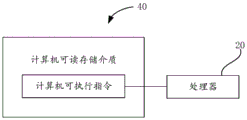
FIG. 8 is a schematic diagram of a connection between a processor and a computer-readable storage medium according to some embodiments of the present application.
Fig. 9 is a block diagram of a wireless headset communicating with a wearable device according to some embodiments of the present application.
Fig. 10 is a block diagram of a mobile terminal, wireless headset and wearable device communication according to some embodiments of the present application.
FIG. 11 is a further schematic flow chart diagram of a control method according to some embodiments of the present application.
FIG. 12 is yet another flow chart illustrating a control method according to some embodiments of the present application.
FIG. 13 is a further schematic flow chart diagram of a control method according to certain embodiments of the present application.
Detailed Description
Reference will now be made in detail to embodiments of the present application, examples of which are illustrated in the accompanying drawings, wherein like or similar reference numerals refer to the same or similar elements or elements having the same or similar function throughout. The embodiments described below with reference to the accompanying drawings are illustrative and are only for the purpose of explaining the present application and are not to be construed as limiting the present application.
In the description of the present application, it is to be understood that the terms "first", "second" are used for descriptive purposes only and are not to be construed as indicating or implying relative importance or implying any number of technical features indicated. Thus, features defined as "first", "second", may explicitly or implicitly include one or more of the described features. In the description of the present application, "a plurality" means two or more unless specifically defined otherwise.
In the description of the present application, it is to be noted that, unless otherwise explicitly specified or limited, the terms "mounted," "connected," and "connected" are to be construed broadly, e.g., as meaning either a fixed connection, a removable connection, or an integral connection; may be mechanically connected, may be electrically connected or may be in communication with each other; either directly or indirectly through intervening media, either internally or in any other relationship. The specific meaning of the above terms in the present application can be understood by those of ordinary skill in the art as appropriate.
The following disclosure provides many different embodiments or examples for implementing different features of the application. In order to simplify the disclosure of the present application, specific example components and arrangements are described below. Of course, they are merely examples and are not intended to limit the present application. Moreover, the present application may repeat reference numerals and/or letters in the various examples, such repetition is for the purpose of simplicity and clarity and does not in itself dictate a relationship between the various embodiments and/or configurations discussed.
Reference will now be made in detail to embodiments of the present application, examples of which are illustrated in the accompanying drawings, wherein like or similar reference numerals refer to the same or similar elements or elements having the same or similar function throughout. The embodiments described below with reference to the accompanying drawings are illustrative and are only for the purpose of explaining the present application and are not to be construed as limiting the present application.
Referring to fig. 1, a wireless headset 100 is provided, the wireless headset 100 communicating with a wearable device via a Lora communication protocol. The wireless headset 100 comprises a first LoRa module 1, the wearable device 200 comprises a second LoRa module 210, and the wireless headset 100 is wirelessly connected with the second LoRa module 210 through the first LoRa module 1 to realize communication with the wearable device 200.
Those skilled in the art can understand that the LoRa technology is a long-distance wireless transmission technology based on a spread spectrum technology, and belongs to one of Low-Power Wide-Area Network technologies (LPWAN). The low-power-consumption wide area network technology is a wireless communication technology for the communication requirements of long distance and low power consumption in the Internet of things, and has the characteristics of low cost, low power consumption, wide coverage and large connection.
Referring to fig. 2, specifically, the wireless headset 100 includes a first LoRa module 1, a first audio module 2, and a first touch module 3. The wireless headset 100 is used for collecting audio data and playing the audio data through the first audio module 2, and the wireless headset 100 receives a control command of a user through the first touch module 3.
The first LoRa module 1 includes a first LoRa chip 101, a first Micro Control Unit (MCU) 102, a first data transceiver module 103, and a first antenna 104 connected to the first data transceiver module 103. The first micro control unit 102 is connected to the first LoRa chip 101, and the first LoRa chip 101 and the first micro control unit 102 may be connected via bus interfaces such as an Integrated Circuit bus (I2C) and a Serial Peripheral Interface (SPI). The first micro control unit 102 is configured to control the first LoRa chip 101 to initialize, configure communication parameters, switch operating modes, and receive and transmit data. The operating frequency of the first LoRa chip 101 may be 433 mhz, 868 mhz, 915 mhz, or the like, and is not limited in particular.
The first data Transceiver module 103 includes a first Transceiver (Transceiver1) and a first radio frequency switch (RF switch 1). The Transceiver is a radio transmitter and a receiver which are mounted on the same component and share a part of the same circuit, and the first data Transceiver module 103 can receive or transmit data through the Transceiver 1. The RF switch 1 is used for controlling the working state of a Transceiver1, and the working state of a Transceiver1 comprises a receiving state and a transmitting state. The first data transceiver module 103 is connected to the first antenna 104 through the RF switch 1.
The first LoRa module 1 includes a sleep mode, a standby mode, an RX mode, and a TX mode. In the sleep mode, the first LoRa module 1 does not perform data transceiving, does not perform data processing, and can only perform mode switching. In the standby mode, data transmission and reception are not performed, but data processing is possible. In the RX mode, data transmitted by other LoRa modules may be received. The first LoRa module 1 may continuously scan the channel (for example, the first LoRa module 1 may continuously scan the communication channel that the wireless headset 100 has agreed with the wearable device 200) to search for data sent by other LoRa modules. If no data is received for a period of time in RX mode, the standby mode is automatically entered. In the standby mode, the first mcu 102 may control the first LoRa module 1 to enter the RX mode. For example, when the wireless headset 100 is worn, the first LoRa module 1 may automatically enter the RX mode. Alternatively, when the wireless headset 100 is communicatively connected to the wearable device 200, the wearable device 200 transmits data to the wireless headset 100 to control the first micro control unit 102 to control the first LoRa module 1 to enter the RX mode. In TX mode, the first LoRa module 1 can transmit data to other LoRa modules paired therewith.
The first micro control unit 102 implements a parameter configuration function of the first LoRa chip 101, a routing establishment and maintenance function of the first LoRa module 1, and a signaling interaction function of the first LoRa module 1 and the wearable device 200 through the first protocol stack. The parameter configuration function of the first LoRa chip 101 includes configuring an operating frequency band, an operating bandwidth, and the like of the first LoRa chip 101. The signaling interaction function of the first LoRa module 1 and the wearable device 200 may include functions of sweep frequency measurement control, broadcast/multicast transmission and reception, point-to-point transmission and reception, relay transmission, node connection state acquisition, signaling control transceiving, sweep frequency measurement control, instant service bearing, real-time service bearing, and the like of the first LoRa module 1 and the wearable device 200.
Further, in some examples, the first LoRa module 1 may further include a Power Amplifier (PA) and a Low Noise Amplifier (LNA), and the power amplifier and the LNA can improve communication quality of the first LoRa module 1.
The first audio module 2 includes a first audio collecting unit 201 and a first audio playing unit 202. The first audio collecting unit 201 is configured to obtain audio data, and the first audio playing unit 202 is configured to play the audio data. The first audio collecting unit 201 may be a microphone. The first audio playing unit 202 may be a speaker. The first audio playing unit 202 may use any one of moving-coil sound generation, moving-iron sound generation, and ring-iron sound generation.
The first touch module 3 may sense a touch operation input by a user, for example, sense a gesture operation such as pressing, sliding, clicking, double-clicking, and the like input by the user. And generate a corresponding control command based on the touch operation, for example, an audio data command, a phone dialing command, a phone answering command, a phone hang-up command, a play pause command, a volume up command, a volume down command, a track switching command, etc. may be generated according to the gesture operation of the user. After the first touch module 3 generates the control command, the wireless headset 100 executes a control operation corresponding to the control command.
Referring to fig. 3, the wearable device 200 includes, but is not limited to, wearable smart rings, wearable smart bands, wearable smart watches, wireless headsets 100, and the like. For example, the wearable device 200 may also be a wireless headset 100, such that the wireless headset 100 is in communication with the wireless headset 100.
Specifically, the wearable device 200 includes a second LoRa module 210, a second audio module 220, and a second touch module 230. Wherein, the wearable device 200 is wirelessly connected with the first LoRa module 1 through the second LoRa module 210 to realize communication with the wireless headset 100. The wearable device 200 is used to collect audio data and play audio data through the second audio module 220, and the wearable device 200 receives a control command of the user through the second touch module 230.
The second LoRa module 210 includes a second LoRa chip 211, a second mcu 212, a second data transceiver module 213, and a second antenna 214 connected to the second data transceiver module 213. The second micro control unit 212 is connected to the second LoRa chip 211, and the second LoRa chip 211 and the second micro control unit 212 may be connected through bus interfaces such as an integrated circuit bus and a serial peripheral interface. The second micro control unit 212 is configured to control the second LoRa chip 211 to initialize, configure communication parameters, switch operating modes, and receive and transmit data. The operating frequency of the second LoRa chip 211 may be 433 mhz, 868 mhz, 915 mhz, or the like, and is not limited in particular.
The second data Transceiver module 213 includes a second Transceiver (Transceiver2) and a second RF switch (RF switch 2). The second data Transceiver module 213 can receive or transmit data through the Transceiver 2. The RFSwith2 is used for controlling the working state of a Transceiver2, and the working state of the Transceiver2 comprises a receiving state and a transmitting state. The second data transceiver module 213 is connected to the second antenna 214 through the RF switch 2.
The second LoRa module 210 includes a sleep mode, a standby mode, an RX mode, and a TX mode. In the sleep mode, the second LoRa module 210 does not perform data transceiving, does not perform data processing, and only performs mode switching. In the standby mode, data transmission and reception are not performed, but data processing is possible. In the RX mode, data transmitted by other LoRa modules may be received. The second LoRa module 210 may continuously scan the channel (for example, the second LoRa module may continuously scan a communication channel that the wearable device 200 has agreed with the wireless headset 100) to search for data sent by other LoRa modules. If no data is received for a period of time in RX mode, the standby mode is automatically entered. In the standby mode, the second micro control unit 212 may control the second LoRa module to enter the RX mode. For example, the second LoRa module may automatically enter the RX mode when the wearable device 200 is worn. Alternatively, when the wireless headset 100 is communicatively connected to the wearable device 200, the wireless headset 100 sends data to the wearable device 200 to control the second micro-control unit 212 to control the second LoRa module 210 to enter the RX mode. In TX mode, the second LoRa module 210 can transmit data to other LoRa modules with which it is paired.
The second micro control unit 212 implements a parameter configuration function of the second LoRa chip 211, a routing establishment and maintenance function of the second LoRa module 210, and a signaling interaction function of the second LoRa module 210 and the wireless headset 100 through a second protocol stack. The parameter configuration function of the second LoRa chip 211 includes configuring an operating frequency band, an operating bandwidth, and the like of the second LoRa chip 211. The signaling interaction function of the second LoRa module 210 and the wireless headset 100 may include functions of frequency sweep measurement control, broadcast/multicast transmission and reception, point-to-point transmission and reception, relay transmission, node connection state acquisition, signaling transmission and reception control, frequency sweep measurement control, instant service bearer, real-time service bearer, and the like of the second LoRa module 210 and the wireless headset 100.
Further, in some examples, the second LoRa module 210 may further include a power amplifier and a low noise amplifier, which may be capable of improving communication quality of the second LoRa module 210.
The second audio module 220 includes a second audio collecting unit 221 and a second audio playing unit 222. The second audio collecting unit 221 is configured to obtain audio data, and the second audio playing unit 222 is configured to play the audio data. The second audio collecting unit 221 may be a microphone. The second audio playing unit 222 may be a speaker. The second audio playing unit 222 may use any one of moving-coil sound generation, moving-iron sound generation, and coil-iron sound generation.
The second touch module 230 may sense a touch operation input by a user, for example, sense a gesture operation such as pressing, sliding, clicking, double-clicking, and the like input by the user. And generate a corresponding control command based on the touch operation, for example, a command to send audio data to the wireless headset 100, a command to pair with the wireless headset 100, a command to dial a phone, a command to answer a phone call, a command to hang up a phone call, a command to pause a play, a command to turn up a volume, a command to turn down a volume, a command to switch tracks, and the like may be generated according to the gesture operation of the user. After the second touch module 230 generates the control command, the wearable device 200 performs a control operation corresponding to the control command.
Referring to fig. 4, the present application provides a control method for a wireless headset 100, in which the wireless headset 100 communicates with a wearable device 200 via an LoRa communication protocol, and the control method includes the steps of:
s12, acquiring first audio data;
s14, detecting the communication signal strength of the wireless earphone and the wearable device;
s16, when the intensity of the communication signal is larger than a preset value, first audio data are sent to the wearable device; and
and S18, sending the text data generated according to the first audio data to the wearable device when the communication signal strength is less than or equal to the preset value.
Referring further to fig. 5, the present embodiment provides a control device 10. The control device 10 includes an acquisition module 12, a detection module 14, a first control module 16, and a second control module 18.
The step S12 may be implemented by the obtaining module 12, the step S14 may be implemented by the detecting module 14, the step S16 may be implemented by the first control module 16, and the step S18 may be implemented by the detecting module 18.
Alternatively, the obtaining module 12 may be configured to obtain the first audio data.
The detection module 14 may be used to detect the communication signal strength of the wireless headset 100 and the wearable device 200.
The first control module 16 may be configured to send the first audio data to the wearable device 200 when the communication signal strength is greater than a preset value.
The second control module 18 may be configured to send text data generated from the first audio data to the wearable device 200 when the communication signal strength is less than or equal to a preset value.
Referring to fig. 6, the control method of the present application can be performed by the wireless headset 100. The wireless headset 100 includes a processor 20. The processor 20 is connected to the first LoRa module 1, the first audio module 2, and the first touch module 3, respectively.
The processor 20 may acquire the first audio data and detect a communication signal strength of the wireless headset 100 and the wearable device 200. The processor 20 may be further configured to send the first audio data to the wearable device 200 when the communication signal strength is greater than the preset value, and send the text data generated according to the first audio data to the wearable device 200 when the communication signal strength is less than or equal to the preset value.
Referring to fig. 7, the present application provides a wireless headset 100 comprising one or more processors 20, a memory 30; and one or more programs 32, wherein the one or more programs 32 are stored in the memory 30 and executed by the one or more processors 20, the programs 32 being executed by the processors 20 to perform the instructions of the control method.
Referring to fig. 8, the present application provides a non-transitory computer-readable storage medium 40 containing computer-executable instructions that, when executed by one or more processors 20, cause the processors 20 to perform a control method.
In the control method, the control apparatus 10, the wireless headset 100, and the computer-readable storage medium 40 of these embodiments, after acquiring the first audio data, the wireless headset 100 directly transmits the first audio data to the wearable device 200 when the communication signal is strong through the determination of the strength of the communication signal, and converts the first audio data into text data with smaller data size and transmits the text data to the wearable device 200 when the communication signal is weak. Therefore, the influence of the wireless earphone 100 on normal communication caused by weak communication signals is avoided, and the user experience is enhanced. In addition, the wireless headset 100 can implement long-distance communication with the wearable device 200 through the LoRa communication protocol under the non-mobile communication network.
In some embodiments, the control device 10 may be part of a wireless headset 100. In other words, the wireless headset 100 includes the control device 10.
In some embodiments, the control device 10 may be a discrete component assembled in such a way as to have the aforementioned functions, or a chip having the aforementioned functions in the form of an integrated circuit, or a piece of computer software code that causes a computer to have the aforementioned functions when run on the computer.
In some embodiments, the control device 10 may be a stand-alone or add-on peripheral component to a computer or computer system as hardware. The control device 10 may also be integrated into a computer or computer system, for example, where the control device 10 is part of a wireless headset 100, the control device 10 may be integrated into the processor 20.
In some embodiments, the control device 10 is part of the wireless headset 100, and as software, code segments corresponding to the wireless headset 100 may be stored on the memory 30 and executed on the processor 20 to implement the aforementioned functions. Or the control device 10, includes one or more of the programs 32 described above, or one or more of the programs described above includes the control device 10.
In some embodiments, the computer readable storage medium 40 may be a storage medium built in the wireless headset 100, such as the memory 30, or a storage medium that can be plugged into the wireless headset 100 in a pluggable manner, such as an SD card.
It should be noted that the audio data includes first audio data, second audio data, and third audio data, where the first audio data is the audio data acquired by the wireless headset 100 through the first audio collecting unit 201, and the second audio data is the audio data received by the wireless headset 100 through the first LoRa module 1. The third audio data is audio data generated by processing the text data. The first audio data and the second audio data are the original voice of the user when being played, and the third audio data is the machine voice. It is understood that in some embodiments, the storage medium 40 may further store a voice database corresponding to the text data and the voice data, and the wireless headset 100 may convert the text data and the voice data into each other according to the voice database.
It should be noted that the preset value is a predefined value of the wireless headset 100, and the preset value may be set by a manufacturer when the wireless headset 100 leaves a factory, or may be set by a user. The preset value may be stored in the computer-readable storage medium 40, and called by the processor 20 or the control device 10.
It can be understood that the distance between the wireless headset 100 and the wearable device 200 may affect the communication signal strength of the communication between the first LoRa module 1 and the second LoRa module 210, and the longer the distance between the wireless headset 100 and the wearable device 200 is, the greater the effect on the communication signal strength is. In addition, an obstacle between the wireless headset 100 and the wearable device 200 may also affect the strength of the communication signal of the communication between the first LoRa module 1 and the second LoRa module 210, and the strength of the communication signal has a positive correlation with the transmission rate during communication. The higher the communication signal strength, the faster the transmission rate. If communication signal intensity when first LoRa module 1 and second LoRa module 210 communicate is low, can lead to the transmission rate of data low when first LoRa module 1 and second LoRa module 210 communicate to when carrying out pronunciation exchange between wireless headset 100 and the wearable equipment 200, wireless headset 100 can't normally send audio data to wearable equipment 200, and wireless headset 100 also can't normally receive the audio data that wearable equipment 200 sent simultaneously. Thus, when the wireless headset 100 is in communication with the wearable device 200, the processor 20 may detect the communication signal strength of the communication with the wearable device 200 to determine the communication rate between the wireless headset 100 and the wearable device 200. Thereby converting the audio data into corresponding text data when the communication signal of the wireless headset 100 communicating with the wearable device 200 is weak. Since the size of the text data may be much smaller than the size of the audio data, the wireless headset 100 is guaranteed to communicate with the wearable device 200 properly.
Referring to fig. 2, 4 and 9 together, specifically, after the wireless headset 100 establishes LoRa communication with the second LoRa module 210 of the wearable device 200 through the first LoRa module 1. The processor 20 may control the first audio collecting unit 201 to obtain the first audio data of the user, and obtain the communication signal strength of the communication between the first LoRa module 1 and the second LoRa module 210, and further compare the communication signal strength with a preset value to determine whether the communication signal strength is greater than the preset value.
When the communication signal intensity is greater than the preset value, it is determined that the communication signal of the wireless headset 100 communicating with the wearable device 200 is strong, the first LoRa module 1 and the second LoRa module 210 can communicate normally, and then the processor 20 can directly set the working mode of the first LoRa module 1 to the TX mode and send the first audio data to the second LoRa module 210, so that the second LoRa module 210 can play the first audio data through the second audio playing unit 222.
When the communication signal strength is less than or equal to the preset value, it may be determined that the communication signal of the wireless headset 100 communicating with the wearable device 200 is weak, and the transmission rate between the first LoRa module 1 and the second LoRa module 210 is low, and then the processor 20 processes the first audio data to generate text data corresponding to the first audio data, where the size of the text data may be much smaller than the size of the first audio data. And then sets the first LoRa module 1 to the TX mode and controls the first LoRa module 1 to send text data to the second LoRa module 210. After the second LoRa module 210 receives the text data, the wearable device 200 may process the text data to generate third audio data and play the third audio data by the second audio playing unit 222. Thus, when the communication signal strength of the communication between the first LoRa module 1 and the second LoRa module 210 is weak, the communication between the first LoRa module 1 and the second LoRa module 210 can also be ensured.
Referring to fig. 10, in some embodiments, the control method further includes the steps of:
s20, receiving data sent by the wearable device;
s22, detecting the type of data, wherein the data comprises second audio data and text data;
s24, playing the second audio data when the data is the second audio data;
and S26, when the data is text data, generating third audio data according to the text data and playing.
In some embodiments, step S20 may be implemented by acquisition module 12. Step S22 may be implemented by the detection module 14. Step S24 may be implemented by the first control module 16. Step S26 may be implemented by the second control module 18.
Alternatively, the acquisition module 12 may be configured to receive data transmitted from the wearable device 200.
The detection module 14 may also be configured to play the second audio data when the data is the second audio data.
The first control module 16 may also be used to play the second audio data when the data is the second audio data.
The second control module 18 may also be configured to generate third audio data according to the text data and play the third audio data when the data is text data.
In some embodiments, the processor 20 may be configured to receive data transmitted from the wearable device 200 and detect a type of the data, the data including the second audio data and the text data. The processor 20 may be further configured to play the second audio data when the data is the second audio data, and generate and play third audio data according to the text data when the data is the text data.
It should be noted that the wearable device 200 may acquire the second audio data through the second audio collecting unit 221, and directly send the second audio data to the first LoRa module 1 of the wireless headset 100 through the second LoRa module 210, or generate text data from the second audio data and send the text data to the first LoRa module 1 of the wireless headset 100 through the second LoRa module 210.
Specifically, the processor 20 may control the first LoRa module 1 to set the operation mode of the first LoRa module 1 to the RX mode, so that the first LoRa module 1 may receive the data transmitted by the second LoRa module 210, and after the first LoRa module 1 receives the data, detect the type of the data by the processing, thereby determining whether the data is the second audio data or the text data. If the data is the second audio data, the first audio playing unit 202 is controlled to play the second audio data. If the data is text data, the text data is processed and converted to generate third audio data, and the first audio playing unit 202 is controlled to play the third audio data.
Referring to fig. 11, in other examples, the wireless headset 100 may further include a communication module 4, and the wireless headset 100 may communicate with the mobile terminal 300 through the communication module 4. The connection mode includes, but is not limited to, a bluetooth connection, a Wi-Fi connection, a LoRa connection, etc., for example, the mobile terminal 300 and the communication module 4 of the wireless headset 100 both include a bluetooth module, and the mobile terminal 300 and the wireless headset 100 realize wireless communication through bluetooth. It should be noted that the distance between the mobile terminal 300 and the wireless headset 100 should be within the wireless communication range. For example, the mobile terminal 300 and the wireless headset 100 are both held by the same user, wherein the wireless headset 100 is worn on the head of the user and the mobile terminal 300 is held by the user. The wireless headset 100 may receive data transmitted from the mobile terminal 300 through the communication module 4, so that data processing, transmission, input control, and the like in the communication process between the wireless headset 100 and the wearable device 200 may be controlled by the mobile terminal 300 when the mobile terminal 300 and the wireless headset 100 communicate. Thus, through the communication between the wireless headset 100 and the mobile terminal 300, the processing load of the wireless headset 100 can be reduced, the endurance time of the wireless headset 100 can be prolonged, and the user experience is enhanced.
Referring to fig. 12, in some embodiments, before step S12, the method further includes the steps of:
and S11, responding to the first control command input by the user to control the mobile terminal to send a pairing signal to the wearable device through the LoRa communication protocol so as to pair with the wearable device.
In some embodiments, step S11 may be implemented by the sending module 12, or in other words, the sending module 12 may further respond to the first control command input by the user to control the mobile terminal to send the pairing signal to the wearable device 200 through the LoRa communication protocol to pair with the wearable device 200.
In some embodiments, the processor 20 may be configured to respond to a first control command input by the user to control the mobile terminal to send a pairing signal to the wearable device 200 via the LoRa communication protocol to pair with the wearable device 200.
The first control command is a control command for controlling the wireless headset 100 and the wearable device 200 to be paired, and the first control command may be a control command generated after a user inputs a gesture operation through the first touch module 3, or a control command generated after the user inputs voice data through the first audio collection unit 201.
Specifically, after processor 20 receives a first control command input by the user, it controls first LoRa module 1 to send a pairing signal to second LoRa module 210, and after second LoRa module 210 receives a second pairing signal, it pairs with first LoRa module 1, and after pairing is successful, wireless headset 100 establishes communication with wearable device 200, so that first LoRa module 1 and second LoRa module 210 directly transmit data to each other.
Referring to fig. 13, in some embodiments, step S16 includes the steps of:
and S161, responding to a second control command input by the user to send the first audio data to the wearable device when the communication signal strength is greater than a preset value.
In some embodiments, step S161 may be implemented by the first control module 16, or the first control module 16 may be further configured to respond to a second control command input by the user to send the first audio data to the wearable device 200 when the communication signal strength is greater than the preset value.
In some embodiments, the processor 20 may be configured to respond to a second control command input by the user to send the first audio data to the wearable device 200 when the communication signal strength is greater than a preset value.
The second control command is a control command for controlling the wireless headset 100 to transmit data to the wearable device 200, and the second control command may be a control command generated after the user inputs a gesture operation through the first touch module 3, or a control command generated after the user inputs voice data through the second audio collection unit 221. In this way, after the processor 20 receives the second control command, and when the communication signal strength is greater than the preset value, the first LoRa module 1 may be controlled to send the first audio data to the second LoRa module 210.
In addition, after receiving the second control command, the processor 20 controls the first LoRa module 1 to send the text data to the second LoRa module 210 when the communication signal strength is smaller than or equal to the preset value.
The above examples only express several embodiments of the present application, and the description thereof is more specific and detailed, but not construed as limiting the scope of the present application. It should be noted that, for a person skilled in the art, several variations and modifications can be made without departing from the concept of the present application, which falls within the scope of protection of the present application. Therefore, the protection scope of the present patent shall be subject to the appended claims.
Claims (11)
1. A control method for a wireless headset that communicates with a wearable device via a LoRa communication protocol, the control method comprising:
acquiring first audio data;
detecting a communication signal strength of the wireless headset and the wearable device;
when the communication signal strength is larger than a preset value, the first audio data is sent to the wearable device; and
and when the communication signal intensity is smaller than or equal to the preset value, sending text data generated according to the first audio data to the wearable device.
2. The control method according to claim 1, characterized by further comprising:
receiving data transmitted from the wearable device;
detecting a category of the data, the data including second audio data and text data;
playing the second audio data when the data is the second audio data;
and when the data is text data, generating third audio data according to the text data and playing the third audio data.
3. The control method of claim 1, further comprising, prior to the detecting the communication signal strength of the wireless headset with the wearable device:
responding to a first control command input by a user to control the mobile terminal to send a pairing signal to the wearable device through the LoRa communication protocol so as to pair with the wearable device.
4. The method of claim 1, wherein the sending the first audio data to the wearable device when the communication signal strength is greater than the preset value comprises:
responding to a second control command input by the user to send the first audio data to the wearable device when the communication signal strength is greater than the preset value.
5. A control apparatus for controlling a wireless headset, the wireless headset communicating with a wearable device via a LoRa communication protocol, the control apparatus comprising:
an acquisition module for acquiring first audio data;
a detection module for detecting a communication signal strength of the wireless headset and the wearable device;
the first control module is used for sending the first audio data to the wearable device when the communication signal strength is larger than the preset value; and
the second control module is used for sending text data generated according to the first audio data to the wearable device when the communication signal strength is smaller than or equal to the preset value.
6. A wireless headset that communicates with a wearable device via an LoRa communication protocol, the wireless headset comprising a first LoRa module, a processor, and a first audio module, the wearable device comprising a second LoRa module, the first LoRa module in communication with the second LoRa module, the processor configured to:
controlling the first audio module to acquire first audio data;
detecting the communication signal intensity of the first LoRa module and the second LoRa module;
when the communication signal strength is greater than the preset value, controlling the first LoRa module to send the first audio data to the second LoRa module; and
and when the communication signal intensity is smaller than or equal to the preset value, controlling the first LoRa module to send text data generated according to the first audio data to the second LoRa module.
7. The wireless headset of claim 6, wherein the first LoRa module comprises a first LoRa chip, a first micro control unit, a first data transceiver module and a first antenna; the second LoRa module comprises a second LoRa chip, a second micro control unit, a second data transceiver module and a second antenna;
the first LoRa chip is connected with the first micro control unit, and the first micro control unit is also connected with the first antenna through the first data transceiver module;
the second LoRa chip is connected with the second micro control unit, and the second micro control unit is also connected with the second antenna through the second data transceiver module.
8. The wireless headset of claim 7, wherein the first micro-control unit implements a parameter configuration function of the first LoRa chip, a route establishment and maintenance function of the first LoRa module, and a signaling interaction function of the first LoRa module and the second LoRa module through a first protocol stack; the second micro control unit realizes the parameter configuration function of the second LoRa chip, the route establishment and maintenance function of the second LoRa module, and the signaling interaction function of the second LoRa module and the first LoRa module through a second protocol stack.
9. The wireless headset of claim 6, wherein the first audio module comprises a first audio collecting unit and a first audio playing unit, the first audio collecting unit is configured to obtain first audio data, and the first audio playing unit is configured to play the first audio data, the second audio data, and the third audio data.
10. A wireless headset comprising one or more processors, memory; and
one or more programs, wherein the one or more programs are stored in the memory and executed by the one or more processors, the programs comprising instructions for performing the control method of any of claims 1-4.
11. A non-transitory computer-readable storage medium containing computer-executable instructions that, when executed by one or more processors, cause the processors to perform the control method of any one of claims 1-4.
Priority Applications (1)
| Application Number | Priority Date | Filing Date | Title |
|---|---|---|---|
| CN202010644743.8A CN111770408A (en) | 2020-07-07 | 2020-07-07 | Control method, control device, wireless headset and storage medium |
Applications Claiming Priority (1)
| Application Number | Priority Date | Filing Date | Title |
|---|---|---|---|
| CN202010644743.8A CN111770408A (en) | 2020-07-07 | 2020-07-07 | Control method, control device, wireless headset and storage medium |
Publications (1)
| Publication Number | Publication Date |
|---|---|
| CN111770408A true CN111770408A (en) | 2020-10-13 |
Family
ID=72724664
Family Applications (1)
| Application Number | Title | Priority Date | Filing Date |
|---|---|---|---|
| CN202010644743.8A Pending CN111770408A (en) | 2020-07-07 | 2020-07-07 | Control method, control device, wireless headset and storage medium |
Country Status (1)
| Country | Link |
|---|---|
| CN (1) | CN111770408A (en) |
Cited By (1)
| Publication number | Priority date | Publication date | Assignee | Title |
|---|---|---|---|---|
| CN112954528A (en) * | 2021-02-20 | 2021-06-11 | 英华达(上海)科技有限公司 | Method for transmitting audio data |
Citations (4)
| Publication number | Priority date | Publication date | Assignee | Title |
|---|---|---|---|---|
| US9736318B2 (en) * | 2015-09-16 | 2017-08-15 | International Business Machines Corporation | Adaptive voice-text transmission |
| CN109151148A (en) * | 2018-10-15 | 2019-01-04 | Oppo广东移动通信有限公司 | Recording method, device, terminal and the computer readable storage medium of dialog context |
| CN110650405A (en) * | 2019-10-22 | 2020-01-03 | Oppo(重庆)智能科技有限公司 | Wireless earphone control system, method, device and storage medium |
| CN111372228A (en) * | 2020-02-24 | 2020-07-03 | 维沃移动通信有限公司 | Audio control method and electronic equipment |
-
2020
- 2020-07-07 CN CN202010644743.8A patent/CN111770408A/en active Pending
Patent Citations (4)
| Publication number | Priority date | Publication date | Assignee | Title |
|---|---|---|---|---|
| US9736318B2 (en) * | 2015-09-16 | 2017-08-15 | International Business Machines Corporation | Adaptive voice-text transmission |
| CN109151148A (en) * | 2018-10-15 | 2019-01-04 | Oppo广东移动通信有限公司 | Recording method, device, terminal and the computer readable storage medium of dialog context |
| CN110650405A (en) * | 2019-10-22 | 2020-01-03 | Oppo(重庆)智能科技有限公司 | Wireless earphone control system, method, device and storage medium |
| CN111372228A (en) * | 2020-02-24 | 2020-07-03 | 维沃移动通信有限公司 | Audio control method and electronic equipment |
Cited By (2)
| Publication number | Priority date | Publication date | Assignee | Title |
|---|---|---|---|---|
| CN112954528A (en) * | 2021-02-20 | 2021-06-11 | 英华达(上海)科技有限公司 | Method for transmitting audio data |
| CN112954528B (en) * | 2021-02-20 | 2023-01-24 | 英华达(上海)科技有限公司 | Method for transmitting audio data |
Similar Documents
| Publication | Publication Date | Title |
|---|---|---|
| CN110247678B (en) | Terminal control method and terminal | |
| KR20170115480A (en) | A headphone operating mode switching method and a headphone | |
| US8559663B1 (en) | Method and apparatus for detecting cellular telephones for hearing assistance devices | |
| RU2010145146A (en) | WIRELESS HEADPHONE MISSING BETWEEN WIRELESS NETWORKS | |
| EP4258574A1 (en) | Channel quality evaluation method and related apparatus | |
| KR101436593B1 (en) | Radio Transmitting/Receiving Apparatus Using RF Dual Band | |
| US20250379621A1 (en) | Communication method and electronic device | |
| KR102004481B1 (en) | Smartphone and bluetooth earset with function of digital walkie-talkie | |
| CN111683358A (en) | Control method, control device, mobile terminal, storage medium and wireless headset | |
| KR20090110069A (en) | How to reduce howling of a wireless microphone | |
| US8422409B2 (en) | System and method of duplex wireless audio link over broadcast channels | |
| CN110945880A (en) | Communication device with wireless interface using different protocols | |
| CA3048605C (en) | Wearable wireless communication device and communication group setting method using the same | |
| CN111279654A (en) | Intelligent watch with digital radio function | |
| CN111770408A (en) | Control method, control device, wireless headset and storage medium | |
| CN109257732A (en) | Device control method, device, and electronic device | |
| KR101524801B1 (en) | Wireless microphone receiver, wireless microphone transmitter, and wireless microphone system including the same | |
| WO2013162414A1 (en) | Terminal for wireless voice communication | |
| CN204425599U (en) | A kind of earphone based on bone conduction technology | |
| CN106658379A (en) | Communication method, device and system for Bluetooth device | |
| RU121411U1 (en) | WIRELESS VOICE TERMINAL | |
| CN111446981A (en) | Bluetooth wireless intercom system | |
| JP4821546B2 (en) | Optical transmission system | |
| EP3346737A1 (en) | Wearable wireless communication device and communication group setting method using the same | |
| CN103220049A (en) | Microphone monitoring method, microphone monitoring device and microphone monitoring system |
Legal Events
| Date | Code | Title | Description |
|---|---|---|---|
| PB01 | Publication | ||
| PB01 | Publication | ||
| SE01 | Entry into force of request for substantive examination | ||
| SE01 | Entry into force of request for substantive examination | ||
| RJ01 | Rejection of invention patent application after publication |
Application publication date: 20201013 |
|
| RJ01 | Rejection of invention patent application after publication |