CN111748505A - A genetically engineered bacterium expressing carboxypeptidase G2 and its preparation method and application - Google Patents
A genetically engineered bacterium expressing carboxypeptidase G2 and its preparation method and application Download PDFInfo
- Publication number
- CN111748505A CN111748505A CN201910245430.2A CN201910245430A CN111748505A CN 111748505 A CN111748505 A CN 111748505A CN 201910245430 A CN201910245430 A CN 201910245430A CN 111748505 A CN111748505 A CN 111748505A
- Authority
- CN
- China
- Prior art keywords
- gene
- cpg2
- genetically engineered
- smt3
- engineered bacterium
- Prior art date
- Legal status (The legal status is an assumption and is not a legal conclusion. Google has not performed a legal analysis and makes no representation as to the accuracy of the status listed.)
- Granted
Links
Images


Classifications
-
- C—CHEMISTRY; METALLURGY
- C12—BIOCHEMISTRY; BEER; SPIRITS; WINE; VINEGAR; MICROBIOLOGY; ENZYMOLOGY; MUTATION OR GENETIC ENGINEERING
- C12N—MICROORGANISMS OR ENZYMES; COMPOSITIONS THEREOF; PROPAGATING, PRESERVING, OR MAINTAINING MICROORGANISMS; MUTATION OR GENETIC ENGINEERING; CULTURE MEDIA
- C12N9/00—Enzymes; Proenzymes; Compositions thereof; Processes for preparing, activating, inhibiting, separating or purifying enzymes
- C12N9/14—Hydrolases (3)
- C12N9/48—Hydrolases (3) acting on peptide bonds (3.4)
- C12N9/485—Exopeptidases (3.4.11-3.4.19)
-
- C—CHEMISTRY; METALLURGY
- C12—BIOCHEMISTRY; BEER; SPIRITS; WINE; VINEGAR; MICROBIOLOGY; ENZYMOLOGY; MUTATION OR GENETIC ENGINEERING
- C12N—MICROORGANISMS OR ENZYMES; COMPOSITIONS THEREOF; PROPAGATING, PRESERVING, OR MAINTAINING MICROORGANISMS; MUTATION OR GENETIC ENGINEERING; CULTURE MEDIA
- C12N15/00—Mutation or genetic engineering; DNA or RNA concerning genetic engineering, vectors, e.g. plasmids, or their isolation, preparation or purification; Use of hosts therefor
- C12N15/09—Recombinant DNA-technology
- C12N15/63—Introduction of foreign genetic material using vectors; Vectors; Use of hosts therefor; Regulation of expression
- C12N15/70—Vectors or expression systems specially adapted for E. coli
-
- Y—GENERAL TAGGING OF NEW TECHNOLOGICAL DEVELOPMENTS; GENERAL TAGGING OF CROSS-SECTIONAL TECHNOLOGIES SPANNING OVER SEVERAL SECTIONS OF THE IPC; TECHNICAL SUBJECTS COVERED BY FORMER USPC CROSS-REFERENCE ART COLLECTIONS [XRACs] AND DIGESTS
- Y02—TECHNOLOGIES OR APPLICATIONS FOR MITIGATION OR ADAPTATION AGAINST CLIMATE CHANGE
- Y02A—TECHNOLOGIES FOR ADAPTATION TO CLIMATE CHANGE
- Y02A50/00—TECHNOLOGIES FOR ADAPTATION TO CLIMATE CHANGE in human health protection, e.g. against extreme weather
- Y02A50/30—Against vector-borne diseases, e.g. mosquito-borne, fly-borne, tick-borne or waterborne diseases whose impact is exacerbated by climate change
Landscapes
- Health & Medical Sciences (AREA)
- Genetics & Genomics (AREA)
- Life Sciences & Earth Sciences (AREA)
- Engineering & Computer Science (AREA)
- Chemical & Material Sciences (AREA)
- Bioinformatics & Cheminformatics (AREA)
- Organic Chemistry (AREA)
- Zoology (AREA)
- Wood Science & Technology (AREA)
- Biomedical Technology (AREA)
- General Engineering & Computer Science (AREA)
- Biotechnology (AREA)
- Molecular Biology (AREA)
- Microbiology (AREA)
- Biochemistry (AREA)
- General Health & Medical Sciences (AREA)
- Plant Pathology (AREA)
- Biophysics (AREA)
- Physics & Mathematics (AREA)
- Medicinal Chemistry (AREA)
- Enzymes And Modification Thereof (AREA)
- Micro-Organisms Or Cultivation Processes Thereof (AREA)
Abstract
Description
技术领域technical field
本发明属于生物技术和基因工程技术领域,具体涉及一种表达羧肽酶G2的基因工程菌及其制备方法和应用。The invention belongs to the technical fields of biotechnology and genetic engineering, and in particular relates to a genetically engineered bacterium expressing carboxypeptidase G2 and a preparation method and application thereof.
背景技术Background technique
羧肽酶G2(carboxypeptidase G2,CPG2)是一种从假单胞菌属分离获得的锌离子依赖型金属酶,具有水解叶酸及其类似物的C端谷氨酸残基的作用。目前,CPG2被开发作为在使用高剂量的甲氨蝶呤(MTX)产生毒性后的急救措施。CPG2能够将MTX快速水解成两种没有毒性的代谢物:谷氨酸和2,4-二氨基-N[10]-甲基蝶呤(DAMPA),并且通过肝脏代谢,从而起到清除血清中MTX的作用。假单胞菌属菌株RS-16的CPG2基因最初被克隆到大肠杆菌后,其表达水平相对于菌株RS-16降低了100倍。根据Jeyaharan D等人对CPG2结构进行研究后,通过大肠杆菌表达系统最终获得了250mg/L具有活性的目的蛋白。CPG2共有415个氨基酸,包括C端的25个信号肽序列和390个成熟蛋白氨基酸序列,分子量为84kD。CPG2为二聚体形式,并且每条单体络合4个Zn2+才具有生物活性。由于CPG2没有二硫键和糖基化,所以原核表达系统是其进行大量表达的最佳选择。Carboxypeptidase G2 (carboxypeptidase G2, CPG2) is a zinc ion-dependent metalloenzyme isolated from Pseudomonas, which can hydrolyze the C-terminal glutamic acid residue of folic acid and its analogs. Currently, CPG2 is being developed as a first aid measure after toxicity with high doses of methotrexate (MTX). CPG2 can rapidly hydrolyze MTX into two non-toxic metabolites: glutamate and 2,4-diamino-N[10]-methylpterin (DAMPA), which are metabolized by the liver and thus cleared from serum The role of MTX. When the CPG2 gene of Pseudomonas strain RS-16 was initially cloned into E. coli, its expression level was reduced 100-fold relative to strain RS-16. After studying the structure of CPG2 according to Jeyaharan D et al., the target protein with activity of 250 mg/L was finally obtained through the E. coli expression system. CPG2 has a total of 415 amino acids, including 25 C-terminal signal peptide sequences and 390 mature protein amino acid sequences, with a molecular weight of 84kD. CPG2 is in the form of dimers, and only 4 Zn 2+ complexes per monomer are biologically active. Since CPG2 is free of disulfide bonds and glycosylation, a prokaryotic expression system is the best choice for its large-scale expression.
MTX是一种具有抑制二氢叶酸还原酶活性的叶酸类似物,其抑制二氢叶酸还原酶将二氢叶酸还原为四氢叶酸,从而抑制DNA的合成、修复和复制,最终也使蛋白质合成发生障碍。同时,MTX具有高度的细胞周期依赖性,主要在DNA合成(S期)期间起作用。MTX有皮下注射和口服两种给药途径,是目前应用最广泛的抗癌药物之一,并且高剂量MTX是治疗多种儿童和成人癌症的重要组成部分。同时,MTX也用于自身免疫性疾病的治疗。自1953年首次临床试验以来,MTX的使用剂量急剧增加。MTX一个较大的缺点是它对健康细胞的毒性具有剂量和时间的依赖性。MTX主要由肾排泄清除,但是MTX所致的肾功能不全将导致MTX消除延迟。Brigitte等人在2006年发现MTX一旦被多聚在一起,就会在细胞中长期保留。随着MTX剂量增加,人体中无法快速有效的将MTX全部代谢,从而使MTX在体内的累积,最终导致肝肾损坏、衰竭、中毒性脑病,甚至危及生命等。MTX is a folic acid analog with inhibitory dihydrofolate reductase activity, which inhibits dihydrofolate reductase from reducing dihydrofolate to tetrahydrofolate, thereby inhibiting DNA synthesis, repair and replication, and ultimately protein synthesis occurs obstacle. Meanwhile, MTX is highly cell cycle-dependent and functions mainly during DNA synthesis (S phase). MTX has two routes of administration, subcutaneous injection and oral administration. It is one of the most widely used anticancer drugs, and high-dose MTX is an important part of the treatment of various childhood and adult cancers. At the same time, MTX is also used in the treatment of autoimmune diseases. Doses of MTX have increased dramatically since the first clinical trials in 1953. A major disadvantage of MTX is its dose- and time-dependent toxicity to healthy cells. MTX is mainly eliminated by renal excretion, but renal insufficiency caused by MTX will result in delayed elimination of MTX. In 2006, Brigitte et al. found that MTX, once aggregated, remains long-term in cells. As the dose of MTX increases, the human body cannot rapidly and effectively metabolize all MTX, so that the accumulation of MTX in the body will eventually lead to liver and kidney damage, failure, toxic encephalopathy, and even life-threatening.
目前,对于大剂量使用MTX后中毒的急救措施主要包括充分水化、碱化尿液、血液透析和大剂量使用亚叶酸钙等方法。亚叶酸钙和大剂量MTX的联合使用,在一定程度上能够使DNA和蛋白质的合成恢复成正常水平,但是当MTX浓度升高,亚叶酸钙也很难保护骨髓细胞不受到损坏。水化和碱化尿液同样对于降低MTX血药浓度的效果较差,时间较长。对于血液透析来说,清除速率与分子量成反比。由于MTX分子量大,水溶性差,组织高分布等特点,使得血液透析很难达到预期的清除效果,无法完全清除血液中的MTX。而对于CPG2来说,给药后几分钟内能够将血浆中的MTX浓度降低98%以上,从而降低MTX毒性威胁生命的风险。At present, the first aid measures for poisoning after high-dose MTX mainly include adequate hydration, alkalization of urine, hemodialysis, and high-dose calcium folinate. The combined use of calcium folinate and high-dose MTX can restore the synthesis of DNA and protein to normal levels to a certain extent, but when the concentration of MTX increases, it is difficult for calcium folinate to protect bone marrow cells from damage. Hydration and alkalization of urine were also less effective in reducing MTX plasma concentrations and lasted longer. For hemodialysis, the clearance rate is inversely proportional to molecular weight. Due to the large molecular weight of MTX, poor water solubility, and high tissue distribution, it is difficult for hemodialysis to achieve the expected removal effect, and it is impossible to completely remove MTX in the blood. In the case of CPG2, plasma MTX concentrations were reduced by more than 98% within minutes of administration, thereby reducing the life-threatening risk of MTX toxicity.
CPG2还可应用于抗体导向酶前体药物疗法(ADEPT)和基因导向酶前体药物疗法(GDEPT)。ADEPT是一种两步治疗癌症的方法,其目的是在肿瘤部位选择性地产生一种强效的细胞毒分子。第一步,肿瘤选择性抗体与酶通过化学共轭结合;第二步,通过肿瘤选择性抗体与肿瘤部位结合,释放前药后在肿瘤部位将无活性的前药转化为活性药物,起到杀伤肿瘤细胞的作用。因此,该策略对癌细胞具有较强的细胞毒性作用,而对其他细胞的毒性较小。CPG2是ADEPT疗法目前应用最广泛的酶。GDEPT疗法与ADEPT疗法类似,也是通过两步法达到治疗效果,第一步,将外源性酶的基因转运至肿瘤细胞;第二步,系统给予无毒性的前体药物,通过酶代谢为细胞毒药物。CPG2 can also be used in antibody-directed enzyme prodrug therapy (ADEPT) and gene-directed enzyme prodrug therapy (GDEPT). ADEPT is a two-step approach to cancer treatment aimed at selectively producing a potent cytotoxic molecule at the tumor site. In the first step, the tumor-selective antibody is combined with the enzyme through chemical conjugation; in the second step, the tumor-selective antibody is combined with the tumor site, and after releasing the prodrug, the inactive prodrug is converted into an active drug at the tumor site. The effect of killing tumor cells. Therefore, this strategy has a strong cytotoxic effect on cancer cells and less toxicity on other cells. CPG2 is currently the most widely used enzyme for ADEPT therapy. GDEPT therapy is similar to ADEPT therapy. It also achieves the therapeutic effect through a two-step method. The first step is to transfer the gene of exogenous enzymes to tumor cells. poisonous drugs.
鉴于其重要性,现有技术中已有诸多对其表达及纯化工艺进行构建和优化的记载,然而最终所得CPG2蛋白的比活力最高仅达400-600U/mg(如专利申请CN 101509012B所公开的重组羧肽酶G2表达载体及制备重组羧肽酶G2的方法),不能满足工业化生产以及大批量制备等的需要。In view of its importance, there are many records of constructing and optimizing its expression and purification process in the prior art, but the specific activity of the final obtained CPG2 protein is only up to 400-600 U/mg (as disclosed in patent application CN 101509012B). The recombinant carboxypeptidase G2 expression vector and the method for preparing the recombinant carboxypeptidase G2) cannot meet the needs of industrial production and mass production.
发明内容SUMMARY OF THE INVENTION
本发明所要解决的技术问题是为克服现有技术中利用制备羧肽酶G2(CPG2)的方法所得CPG2比活力低、且纯度低等缺陷,提供一种表达CPG2的基因工程菌及其制备方法和应用。利用该基因工程菌进行CPG2的制备,最终所得CPG2的比活力可高达1792U/mg,纯度可高达99.1%,具有良好的产业化应用前景。The technical problem to be solved by the present invention is to provide a genetically engineered bacteria expressing CPG2 and a preparation method thereof in order to overcome the defects of low specific activity and low purity of CPG2 obtained by the method for preparing carboxypeptidase G2 (CPG2) in the prior art and application. Using the genetically engineered bacteria to prepare CPG2, the specific activity of the finally obtained CPG2 can be as high as 1792 U/mg and the purity can be as high as 99.1%, which has a good industrial application prospect.
本发明解决上述技术问题的技术方案之一为:一种表达CPG2的基因工程菌,其为在大肠杆菌(Escherichia coli)中同时表达SUMO蛋白标签和羧肽酶G2(CPG2)的基因工程菌,表达所述SUMO蛋白标签的SMT3基因位于表达所述羧肽酶G2的CPG2基因的上游。One of the technical solutions of the present invention to solve the above technical problems is: a genetically engineered bacteria expressing CPG2, which is a genetically engineered bacteria that simultaneously expresses SUMO protein tag and carboxypeptidase G2 (CPG2) in Escherichia coli, The SMT3 gene expressing the SUMO protein tag is located upstream of the CPG2 gene expressing the carboxypeptidase G2.
其中,根据本领域常识,所述的SMT3基因和所述的CPG2基因可通过同源重组等方法整合到宿主大肠杆菌中进行表达,亦可通过表达载体将两者导入大肠杆菌中进行表达。本发明中,优选使用携带SMT3基因和CPG2基因的表达载体将两者导入到大肠杆菌中进行表达。Wherein, according to common knowledge in the art, the SMT3 gene and the CPG2 gene can be integrated into the host E. coli for expression by methods such as homologous recombination, or the two can be introduced into E. coli for expression through an expression vector. In the present invention, it is preferable to use an expression vector carrying the SMT3 gene and the CPG2 gene to introduce both into Escherichia coli for expression.
较佳地,所述的基因工程菌携带自5’端至3’端依次含有启动子、SMT3基因、CPG2基因和终止子的表达载体。Preferably, the genetically engineered bacteria carry an expression vector containing a promoter, SMT3 gene, CPG2 gene and terminator in sequence from the 5' end to the 3' end.
本发明中,所述的表达载体的骨架较佳地为质粒pET-28a。In the present invention, the backbone of the expression vector is preferably plasmid pET-28a.
本发明中,所述的启动子较佳地为T7启动子。In the present invention, the promoter is preferably T7 promoter.
根据本领域公知常识,所述的CPG2基因来源于假单胞菌属;本发明中所述的CPG2基因的核苷酸序列较佳地如序列表中SEQ ID NO.1所示。According to common knowledge in the art, the CPG2 gene is derived from Pseudomonas; the nucleotide sequence of the CPG2 gene described in the present invention is preferably as shown in SEQ ID NO. 1 in the sequence listing.
本发明中所述的SMT3基因可为本领域常规的用于表达SUMO蛋白标签的SMT3基因;较佳地,所述的SMT3基因的核苷酸序列如序列表中SEQ ID NO.2所示。The SMT3 gene described in the present invention may be a conventional SMT3 gene used in the art for expressing SUMO protein tags; preferably, the nucleotide sequence of the SMT3 gene is shown in SEQ ID NO. 2 in the sequence listing.
为便于在蛋白表达后的纯化过程中除去所述SUMO蛋白标签,所述的SUMO蛋白标签较佳地携带His标签,所述的His标签优选位于所述SUMO蛋白标签的N端,所述的His标签优选为6×His。In order to facilitate the removal of the SUMO protein tag during the purification process after protein expression, the SUMO protein tag preferably carries a His tag, and the His tag is preferably located at the N-terminus of the SUMO protein tag. The tag is preferably 6xHis.
本发明解决上述技术问题的技术方案之二为:一种如上所述的基因工程菌在制备CPG2中的应用。The second technical solution of the present invention to solve the above-mentioned technical problem is: the application of the above-mentioned genetically engineered bacteria in the preparation of CPG2.
本发明解决上述技术问题的技术方案之三为:一种如上所述的基因工程菌的制备方法,所述的制备方法包括下列步骤:将SMT3基因、CPG2基因整合到大肠杆菌中,所述SMT3基因位于所述CPG2基因的上游;The third technical solution of the present invention to solve the above-mentioned technical problems is: a preparation method of the above-mentioned genetically engineered bacteria, the preparation method comprising the following steps: integrating the SMT3 gene and the CPG2 gene into Escherichia coli, the SMT3 The gene is located upstream of the CPG2 gene;
较佳地,所述的制备方法包括以下步骤:Preferably, the preparation method comprises the following steps:
(1)构建含有SMT3基因和CPG2基因的表达载体;(1) construct an expression vector containing SMT3 gene and CPG2 gene;
(2)以大肠杆菌为宿主菌株,用步骤(1)得到的表达载体进行转化,获得所述基因工程菌。(2) Taking Escherichia coli as a host strain, transforming with the expression vector obtained in step (1) to obtain the genetically engineered bacteria.
本发明解决上述技术问题的技术方案之四为:一种CPG2的制备方法,其包括将如上所述的基因工程菌发酵,从发酵液中获得CPG2。The fourth technical solution of the present invention to solve the above-mentioned technical problem is: a preparation method of CPG2, which comprises fermenting the above-mentioned genetically engineered bacteria to obtain CPG2 from the fermentation broth.
本发明解决上述技术问题的技术方案之五为:一种表达载体,其自5’端至3’端依次含有SMT3基因、CPG2基因。The fifth technical solution of the present invention to solve the above-mentioned technical problem is: an expression vector, which sequentially contains SMT3 gene and CPG2 gene from the 5' end to the 3' end.
其中,所述的表达载体的骨架优选质粒pET-28a。Wherein, the backbone of the expression vector is preferably plasmid pET-28a.
所述的CPG2基因的核苷酸序列优选如序列表中SEQ ID NO.1所示。The nucleotide sequence of the CPG2 gene is preferably as shown in SEQ ID NO. 1 in the sequence listing.
所述的SMT3基因的核苷酸序列优选如序列表中SEQ ID NO.2所示。The nucleotide sequence of the SMT3 gene is preferably as shown in SEQ ID NO. 2 in the sequence listing.
根据本领域常识,所述的表达载体还含有启动子和终止子等元件,所述的启动子位于所述SMT3基因的上游,所述的终止子位于所述CPG2基因的下游。所述的启动子较佳地为T7启动子。According to common knowledge in the art, the expression vector also contains elements such as a promoter and a terminator, the promoter is located upstream of the SMT3 gene, and the terminator is located downstream of the CPG2 gene. Said promoter is preferably T7 promoter.
在符合本领域常识的基础上,上述各优选条件,可任意组合,即得本发明各较佳实例。On the basis of conforming to common knowledge in the art, the above preferred conditions can be combined arbitrarily to obtain preferred examples of the present invention.
本发明所用试剂和原料均市售可得。The reagents and raw materials used in the present invention are all commercially available.
本发明的积极进步效果在于:The positive progressive effect of the present invention is:
利用本发明的基因工程菌进行CPG2的制备,具有表达效率高、表达量大、成本低且易操作等特点,且所表达的重组CPG2蛋白纯度高(可高达99.1%)、活性高(可高达1792U/mg),具有良好的产业化应用前景。The preparation of CPG2 by using the genetically engineered bacteria of the present invention has the characteristics of high expression efficiency, large expression amount, low cost and easy operation, and the expressed recombinant CPG2 protein has high purity (up to 99.1%) and high activity (up to 99.1%) 1792U/mg), has a good prospect of industrial application.
附图说明Description of drawings
图1为CPG2基因片段PCR产物回收电泳示意图。Figure 1 is a schematic diagram of electrophoresis for the recovery of PCR products of CPG2 gene fragments.
图2为SMT3基因片段PCR产物回收电泳示意图。Figure 2 is a schematic diagram of electrophoresis of the recovery of PCR products of SMT3 gene fragments.
图3为SMT3-CPG2基因片段PCR产物回收电泳示意图。Figure 3 is a schematic diagram of the electrophoresis of the recovery of the PCR product of the SMT3-CPG2 gene fragment.
图4为SMT3-CPG2基因片段结构示意图。Figure 4 is a schematic diagram of the structure of the SMT3-CPG2 gene fragment.
图5为测序结果示意图。Figure 5 is a schematic diagram of the sequencing results.
图6为pET-28a-SMT3-CPG2质粒的双酶切验证电泳示意图。Figure 6 is a schematic diagram of the double-enzyme digestion verification electrophoresis of the pET-28a-SMT3-CPG2 plasmid.
图7为pET-28a-SMT3-CPG2表达载体的构建示意图。Figure 7 is a schematic diagram of the construction of the pET-28a-SMT3-CPG2 expression vector.
图8为重组CPG2各步纯化结果电泳示意图。Figure 8 is a schematic diagram of the electrophoresis results of each step of purification of recombinant CPG2.
图9为重组CPG2纯化后HPLC纯度分析结果图谱。FIG. 9 is a chromatogram of the results of HPLC purity analysis after the purification of recombinant CPG2.
图10为重组CPG2纯化后的Native-PAGE电泳图。Figure 10 is a native-PAGE electrophoresis image of recombinant CPG2 after purification.
具体实施方式Detailed ways
下面通过实施例的方式进一步说明本发明,但并不因此将本发明限制在所述的实施例范围之中。下列实施例中未注明具体条件的实验方法,按照常规方法和条件,或按照商品说明书选择。The present invention is further described below by way of examples, but the present invention is not limited to the scope of the described examples. The experimental methods that do not specify specific conditions in the following examples are selected according to conventional methods and conditions, or according to the product description.
大肠杆菌DH5α,DE3购自北京天恩泽基因科技有限公司。Escherichia coli DH5α, DE3 were purchased from Beijing Tianenze Gene Technology Co., Ltd.
重组CPG2目的基因合成、引物合成以及测序服务为上海睿迪生物科技有限公司提供。Recombinant CPG2 target gene synthesis, primer synthesis and sequencing services were provided by Shanghai Ruidi Biotechnology Co., Ltd.
本发明中的SMT3基因由本实验室储存质粒中获得,亦可通过生物公司进行合成(其核苷酸序列如序列表中SEQ ID NO.2所示)。The SMT3 gene in the present invention is obtained from the plasmid stored in the laboratory, and can also be synthesized by a biological company (its nucleotide sequence is shown in SEQ ID NO. 2 in the sequence table).
NdeI、HindⅢ、DNA连接酶、
DNA胶回收试剂盒购自上海捷瑞生物工程有限公司。DNA gel recovery kit was purchased from Shanghai Jierui Bioengineering Co., Ltd.
实施例1CPG2原始基因和SMT3基因的扩增Example 1 Amplification of CPG2 original gene and SMT3 gene
1、CPG2原始基因的扩增1. Amplification of the original gene of CPG2
从NCBI网站上获取CPG2原始基因序列(登录号:M12599;序列如序列表中SEQ IDNO.1所示),以去掉C端25个信号肽氨基酸序列后的390个氨基酸为目标序列,委托专业生物公司进行基因序列合成。将含有CPG2基因序列的质粒作为模板,分别以:Obtain the original gene sequence of CPG2 (accession number: M12599 ; the sequence is shown in SEQ ID NO.1 in the sequence listing) from the NCBI website, take the 390 amino acids after removing the 25 signal peptide amino acid sequences at the C-terminal as the target sequence, and entrust professional biology The company conducts gene sequence synthesis. The plasmid containing the CPG2 gene sequence was used as a template, respectively:
P1(SMT3-G2):GAACAGATTGGTGGTCAGAAGCGCGACAACP1(SMT3-G2): GAACAGATTGGTGGTCAGAAGCGCGACAAC
P2(HindIII-G2):CCCAAGCTTTTACTTGCCGGCGCCCAGATCCATG(下划线序列为HindIII酶切位点)作为上下游引物,进行PCR扩增,从而使CPG2的上游引入SMT3部分基因序列,同时在下游引入HindIII酶切位点,反应体系如下:P2 (HindIII-G2): CCC AAGCTT TTACTTGCCGGCGCCCAGATCCATG (the underlined sequence is the HindIII restriction site) was used as the upstream and downstream primers to carry out PCR amplification, so that the SMT3 partial gene sequence was introduced upstream of CPG2, and the HindIII restriction site was introduced downstream , the reaction system is as follows:

反应条件如下:The reaction conditions are as follows:

PCR扩增结束后使用凝胶回收试剂盒回收产物,大小约为1170bp左右,与理论值相同,见图1。After PCR amplification, the gel recovery kit was used to recover the product, and the size was about 1170bp, which was the same as the theoretical value, as shown in Figure 1.
2、SMT3基因的扩增2. Amplification of SMT3 gene
将由本实验室储存的含有SMT3基因序列(序列如序列表中SEQ ID NO.2所示)的大肠杆菌进行质粒提取,以含有SMT3基因序列的质粒作为模板,分别以:The Escherichia coli containing the SMT3 gene sequence (the sequence is shown as SEQ ID NO.2 in the sequence table) stored in the laboratory was extracted from the plasmid, and the plasmid containing the SMT3 gene sequence was used as a template, respectively:
P3(NdeI-SMT3):P3(NdeI-SMT3):
GGGAATTCCATATGTCGGACTCAGAAGTCAATCAAGAAGCGGGAATTC CATATG TCGGACTCAGAAGTCAATCAAGAAGC
P4(G2-SMT3):GTTGTCGCGCTTCTGACCACCAATCTGTTCP4(G2-SMT3): GTTGTCGCCGCTTCTGACCACCAATCTGTTC
(下划线序列为NdeI酶切位点)作为上下游引物,进行PCR扩增,从而使SMT3的上游引入NdeI酶切位点,同时在下游引入部分CPG2部分基因序列,反应体系如下:(the underlined sequence is the NdeI restriction site) as the upstream and downstream primers, carry out PCR amplification, so that the upstream of SMT3 is introduced into the NdeI restriction site, and the partial CPG2 partial gene sequence is introduced in the downstream simultaneously, and the reaction system is as follows:

反应条件如下:The reaction conditions are as follows:

PCR扩增结束后使用凝胶回收试剂盒回收产物,进行DNA电泳鉴定,大小约为294bp左右,与理论值相同,见图2。After PCR amplification, the gel recovery kit was used to recover the product, and the DNA electrophoresis identification was carried out. The size was about 294bp, which was the same as the theoretical value, as shown in Figure 2.
实施例2SMT3基因与CPG2基因进行重叠PCR
将扩增后的SMT3基因序列(C端含有NdeI酶切位点)和CPG2基因序列(N端含有HindIII酶切位点)作为模板,分别以:The amplified SMT3 gene sequence (the C-terminal contains NdeI restriction site) and the CPG2 gene sequence (N-terminal contains the HindIII restriction site) are used as templates, respectively:
P3(NdeI-SMT3):P3(NdeI-SMT3):
GGGAATTCCATATGTCGGACTCAGAAGTCAATCAAGAAGCGGGAATTC CATATG TCGGACTCAGAAGTCAATCAAGAAGC
P2(HindIII-G2):CCCAAGCTTTTACTTGCCGGCGCCCAGATCCATGP2(HindIII-G2): CCC AAGCTT TTACTTGCCGGCGCCCAGATCCATG
(下划线序列分别为NdeI和HindIII酶切位点)作为上下游引物,进行重叠PCR扩增,使SMT3基因片段与CPG2基因片段连接在一起,反应体系如下:(the underlined sequences are respectively NdeI and HindIII restriction sites) as upstream and downstream primers, carry out overlapping PCR amplification, make SMT3 gene fragment and CPG2 gene fragment connect together, reaction system is as follows:
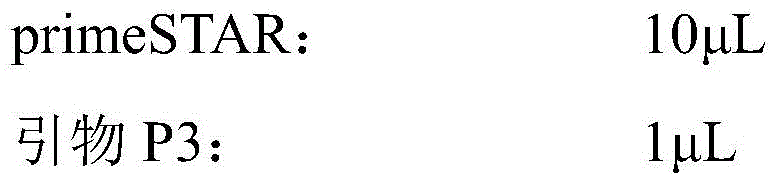
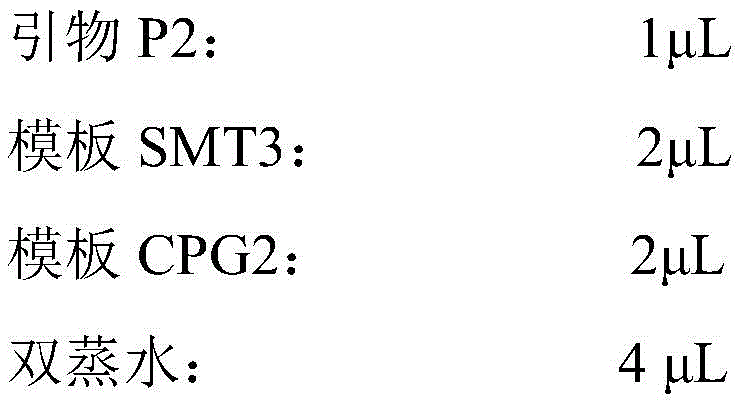
反应条件如下:The reaction conditions are as follows:
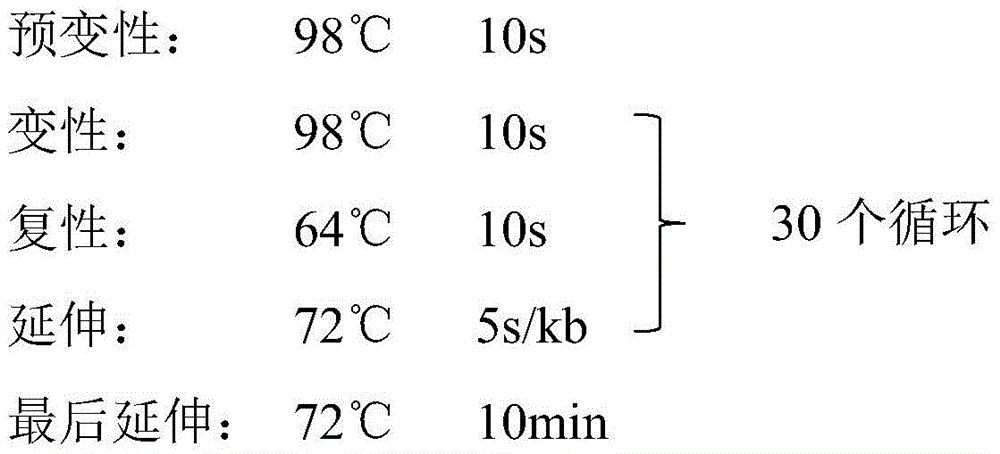
PCR扩增结束后使用凝胶回收试剂盒回收产物,进行DNA电泳鉴定,大小约为1464bp左右,与理论值相同,见图3、4。After PCR amplification, the gel recovery kit was used to recover the product, and DNA electrophoresis was carried out to identify the product. The size was about 1464bp, which was the same as the theoretical value.
实施例3表达载体pET-28a-SMT3-CPG2的构建Example 3 Construction of expression vector pET-28a-SMT3-CPG2
参考TaKaRa说明书的酶切体系,使用NdeI和HindⅢ双酶切实施例2中获得的PCR产物以及pET-28a载体。酶切产物使用凝胶回收试剂盒回收后使用DNA连接酶连接两个酶切产物,将连接产物转化到大肠杆菌DH5α中,在含有卡那(可简写为Kan)抗生素的LB培养基平板中37℃过夜培养。Referring to the enzyme digestion system in TaKaRa's instructions, the PCR product obtained in Example 2 and the pET-28a vector were double-enzyme digested with NdeI and HindIII. The digested product was recovered using a gel recovery kit, and then the two digested products were ligated with DNA ligase, and the ligated product was transformed into E. coli DH5α and placed on an LB medium plate containing kana (can be abbreviated as Kan) antibiotics 37 Cultivate overnight.
挑选上述转化子培养后,进行菌落PCR和测序鉴定。经DNA电泳检测,条带大小与理论值相等,同时测序结果显示SMT3-CPG2和pET-28a载体连接成功、序列正确且无任何序列突变,如图5。提取pET-28a-SMT3-CPG2质粒,使用NdeI和HindⅢ进行双酶切验证,电泳结果显示,pET-28a和SMT3-CPG2条带与理论值相同,如图6所示。pET-28a-SMT3-CPG2表达载体成功构建,构建示意图如图7所示。将pET-28a-SMT3-CPG2转至DH5α的菌株命名为:pET-28a-SMT3-CPG2/DH5α。After selecting and culturing the above transformants, colony PCR and sequencing identification were performed. After DNA electrophoresis, the size of the band was equal to the theoretical value, and the sequencing results showed that the SMT3-CPG2 and pET-28a vectors were successfully connected, the sequence was correct, and there was no sequence mutation, as shown in Figure 5. The pET-28a-SMT3-CPG2 plasmid was extracted and verified by double digestion with NdeI and HindIII. The electrophoresis results showed that the bands of pET-28a and SMT3-CPG2 were the same as the theoretical values, as shown in Figure 6. The pET-28a-SMT3-CPG2 expression vector was successfully constructed, and the schematic diagram of the construction is shown in Figure 7. The strain transformed from pET-28a-SMT3-CPG2 to DH5α was named: pET-28a-SMT3-CPG2/DH5α.
实施例4表达菌株pET-28a-SMT3-CPG2的构建Example 4 Construction of expression strain pET-28a-SMT3-CPG2
接种pET-28a-SMT3-CPG2/DH5α菌株到5ml含有卡那抗生素的LB液体培养基中,37℃,250rpm培养过夜,收集菌体后使用质粒纯化试剂盒进行质粒制备。The pET-28a-SMT3-CPG2/DH5α strain was inoculated into 5 ml of LB liquid medium containing kana antibiotics, and cultured at 37°C at 250 rpm overnight. After the cells were collected, a plasmid purification kit was used for plasmid preparation.
将上述提取的质粒加入100μL预冷的BL(DE3)感受态细胞悬液中,用移液器轻轻吹打混匀,冰浴30min,转入42℃温热水浴中热击45s,迅速将离心管转移到冰浴中,静置2~3min,再加入450μL LB培养基,颠倒混匀后置于37℃摇床,150rpm振荡培养45min使菌体复苏,取适量已转化的感受态细胞,加到含有卡那抗生素LB固体培养基平板,用无菌的涂布棒将细胞均匀涂开,将平板置于37℃直至液体被吸收,倒置培养,37℃培养12-16h。次日,挑取单菌落,最终得到表达菌株pET-28a-SMT3-CPG2/BL21(DE3)。The plasmids extracted above were added to 100 μL of pre-cooled BL(DE3) competent cell suspension, gently pipetted and mixed with a pipette, ice bathed for 30 min, transferred to a warm water bath at 42 °C for 45 s, and centrifuged quickly. Transfer the tube to an ice bath, let stand for 2-3 min, add 450 μL of LB medium, invert and mix evenly, place it on a shaker at 37°C, shake at 150 rpm for 45 min to recover the bacteria, take an appropriate amount of transformed competent cells, add Go to the LB solid medium plate containing kanabiotics, spread the cells evenly with a sterile spreading rod, place the plate at 37°C until the liquid is absorbed, invert and culture at 37°C for 12-16h. The next day, a single colony was picked, and finally the expression strain pET-28a-SMT3-CPG2/BL21(DE3) was obtained.
实施例5重组CPG2的表达和纯化Example 5 Expression and purification of recombinant CPG2
挑取表达菌株pET-28a-SMT3-CPG2/BL21(DE3)接种到3mL含有50μg/ml卡那抗生素的LB液体培养基中,37℃,250rpm,过夜培养。次日,按1%的体积比接种到20mL的LB液体培养基(50μg/ml Kan)中,37℃,250rpm,培养3~4小时。按1%的体积比接种到1L LB液体培养基(50μg/ml Kan),37℃,220rpm,培养2.5~3h,待OD600达到0.4~0.6后,加入IPTG至其终浓度为0.1mM,25℃,180rpm,过夜培养。次日,将诱导表达的菌液经6000rpm,4℃离心7min后弃上清收集菌体。The expression strain pET-28a-SMT3-CPG2/BL21(DE3) was picked and inoculated into 3 mL of LB liquid medium containing 50 μg/ml kana antibiotics, and cultured overnight at 37° C., 250 rpm. The next day, it was inoculated into 20 mL of LB liquid medium (50 μg/ml Kan) at a volume ratio of 1% at 37° C., 250 rpm, and cultured for 3 to 4 hours. It was inoculated into 1L LB liquid medium (50μg/ml Kan) at a volume ratio of 1%, 37°C, 220rpm, cultured for 2.5-3h, after the OD 600 reached 0.4-0.6, IPTG was added to its final concentration of 0.1mM, 25 C, 180rpm, overnight incubation. The next day, the induced expression bacterial solution was centrifuged at 6000 rpm at 4°C for 7 min, and the supernatant was discarded to collect the bacterial cells.
发酵液菌体按1:10(1g湿重菌体:10mL缓冲液)比例加入缓冲液(20mM Tris-Hcl,0.2mM Zn2+,100mM NaCl,50%甘油,pH8.0)进行重新悬浮。将悬浮菌体于高压匀浆机进行破碎,破碎条件为4℃,900bar,循环4次。将破碎后菌体经8000rpm,4℃离心10min后收集上清。将上清上样于经缓冲液(20mM Tris-Hcl,0.2mM Zn2+,100mM NaCl,50%甘油,pH8.0)平衡过的Ni柱螯合层析介质,分别以20mM和200mM咪唑进行洗脱,其中目的蛋白主要集中于200mM洗脱液中。将收集到的目的蛋白通过BCA法测得蛋白质含量后,以SUMO酶和目的蛋白质量比为1:100加入SUMO酶,4℃,酶切过夜。将酶切后的蛋白装入透析袋后,置于透析buffer中,4℃,透析过夜。次日,取出样品进行第二次Ni柱亲和层析,除去SUMO蛋白标签、SUMO酶和其他杂蛋白,收集流穿液。将收集到的流穿液进行分子筛层析,进一步除去杂蛋白和根据出峰时间间接鉴定是否为二聚体形式,获得纯度较纯的目的蛋白。最后,将获得的目的蛋白进行SDS-PAGE和Native-PAGE验证,测定分子量分别为42kD和84kD,证实目的蛋白分子量与理论值相同,同时以二聚体形式存在,纯度大于99%。HPLC分析纯度为99.1%。收集到的目的蛋白经活性检测,显示具有催化MTX降解的活性。The bacterial cells of the fermentation broth were added with buffer (20 mM Tris-HCl, 0.2 mM Zn 2+ , 100 mM NaCl, 50% glycerol, pH 8.0) at a ratio of 1:10 (1 g wet weight bacterial cells: 10 mL buffer) to resuspend. The suspended bacteria were crushed in a high-pressure homogenizer, and the crushing conditions were 4° C., 900 bar, and circulated 4 times. The disrupted cells were centrifuged at 8000 rpm for 10 min at 4°C and the supernatant was collected. The supernatant was loaded on Ni-column chelate chromatography medium equilibrated with buffer (20 mM Tris-HCl, 0.2 mM Zn 2+ , 100 mM NaCl, 50% glycerol, pH 8.0) with 20 mM and 200 mM imidazole, respectively Elution, in which the target protein is mainly concentrated in the 200mM eluate. After the protein content of the collected target protein was measured by BCA method, SUMO enzyme was added at a ratio of 1:100 of SUMO enzyme and target protein, and digested overnight at 4°C. The digested protein was put into a dialysis bag, placed in a dialysis buffer, and dialyzed overnight at 4°C. The next day, the samples were taken out for the second Ni column affinity chromatography to remove the SUMO protein tag, SUMO enzyme and other impurity proteins, and the flow-through was collected. The collected flow-through liquid is subjected to molecular sieve chromatography to further remove impurity proteins and indirectly identify whether it is a dimer form according to the peak time to obtain a purer target protein. Finally, the obtained target protein was verified by SDS-PAGE and Native-PAGE, and the molecular weights were 42kD and 84kD, respectively. It was confirmed that the molecular weight of the target protein was the same as the theoretical value, and it existed in the form of dimer, and the purity was more than 99%. The purity by HPLC analysis was 99.1%. The collected target protein was tested for activity and showed the activity of catalyzing the degradation of MTX.
具体结果请参照图8~10,其中图8为重组CPG2各步纯化结果电泳示意图,泳道1~7分别是Marker、破碎后上清、第一次Ni柱亲和层析流穿液、200mM蛋白洗脱液、SUMO酶酶切后收集液、第二次Ni柱亲和层析流穿液和Hiprp凝胶层析收集液。图9为重组CPG2纯化后HPLC纯度分析结果图谱,图谱中20min后的峰为缓冲液本身引起的。图10为重组CPG2纯化后的Native-PAGE电泳图,其中泳道1~4分别为BSA标准品、破碎后上清、第二次Ni柱亲和层析流穿液和Hiprp凝胶层析收集液。For specific results, please refer to Figures 8 to 10. Figure 8 is a schematic diagram of the electrophoresis results of each step of the purification of recombinant CPG2.
实施例6重组CPG2的活性测定Example 6 Activity assay of recombinant CPG2
测活步骤:Live test steps:
(1)通过测出底物MTX不同浓度下的OD值,做底物标准曲线(Cmtx-OD320);(1) Make a substrate standard curve (C mtx -OD 320 ) by measuring the OD values of the substrate MTX at different concentrations;
(2)37℃下,测定不同浓度的目的蛋白在相同条件下(相同Buffer,等量的底物)进行30分钟的反应,每隔30s测一次。在摸索出合适测活蛋白浓度后,将不同浓度的目的蛋白所测出来的meanV值(吸光值变化曲线的斜率OD1-OD2/t2-t1=ΔOD320/Δt),做标准曲线(CCPG2-meanV);(2) Under the same conditions (same Buffer, equal amount of substrate), the target protein of different concentrations was measured at 37°C for 30 minutes, and the measurement was performed every 30s. After figuring out the appropriate concentration of the active protein, the meanV value (the slope of the absorbance value change curve OD 1 -OD 2 /t 2 -t 1 =ΔOD 320 /Δt) measured by different concentrations of the target protein is used to make a standard curve (C CPG2 -meanV);
(3)利用标准曲线(CCPG2-meanV),将未知浓度样品稀释成多个梯度浓度后,进行反应,测出其meanV后(即ΔOD320/Δt)(需确保稀释的浓度中有一个浓度是在标准曲线范围内),结合MTX标准曲线,求出酶活;(3) Using the standard curve (C CPG2 -meanV), after diluting the unknown concentration sample into multiple gradient concentrations, carry out the reaction, and measure its meanV (ie ΔOD 320 /Δt) (need to ensure that there is one concentration in the diluted concentration is within the range of the standard curve), combined with the MTX standard curve to obtain the enzyme activity;
酶活定义:37℃,pH7.3条件下,每分钟水解1μmol MTX所需要的酶量为1个活性单位(U)。Definition of enzyme activity: The amount of enzyme required to hydrolyze 1 μmol of MTX per minute at 37°C and pH 7.3 is 1 activity unit (U).
比酶活定义:单位重量的重组CPG2中所具有酶的活力单位数,一般用U/mg蛋白质来表示。Definition of specific enzyme activity: the number of units of enzyme activity in a unit weight of recombinant CPG2, generally expressed in U/mg protein.
测活体系(200μL):Viability assay system (200 μL):
底物:40μL 1mmol/L甲氨蝶呤(MTX);Substrate: 40 μL of 1 mmol/L methotrexate (MTX);
缓冲液:155μL 0.l mol/L Tris-HCl,pH7.3,0.2mmol/L ZnCl2;Buffer: 155 μL 0.1 mol/L Tris-HCl, pH7.3, 0.2 mmol/L ZnCl 2 ;
酶:5μL经纯化后纯度为99%以上的重组CPG2酶(浓度范围在50μg/ml左右),同时浓度在标准曲线(CCPG2-meanV)范围内;于320nm下,检测吸光值变化。Enzyme: 5 μL of purified recombinant CPG2 enzyme with a purity of more than 99% (the concentration range is about 50 μg/ml), and the concentration is within the range of the standard curve (C CPG2 -meanV); at 320nm, detect the change in absorbance.
通过上述酶活方法测定,最终纯化获得的纯度为99.1%的重组CPG2的比活力达到了1792U/mg。The specific activity of the recombinant CPG2 with a purity of 99.1% obtained by the final purification reached 1792 U/mg as determined by the above enzymatic activity method.
SEQUENCE LISTINGSEQUENCE LISTING
<110> 上海医药工业研究院,中国医药工业研究总院<110> Shanghai Pharmaceutical Industry Research Institute, China Pharmaceutical Industry Research Institute
<120> 一种表达羧肽酶G2的基因工程菌及其制备方法和应用<120> A genetically engineered bacterium expressing carboxypeptidase G2 and its preparation method and application
<130> P19010399C<130> P19010399C
<160> 2<160> 2
<170> PatentIn version 3.5<170> PatentIn version 3.5
<210> 1<210> 1
<211> 1170<211> 1170
<212> DNA<212> DNA
<213> Variovorax paradoxus<213> Variovorax paradoxus
<400> 1<400> 1
cagaagcgcg acaacgtgct gttccaggca gctaccgacg agcagccggc cgtgatcaag 60cagaagcgcg acaacgtgct gttccaggca gctaccgacg agcagccggc cgtgatcaag 60
acgctggaga agctggtcaa catcgagacc ggcaccggtg acgccgaggg catcgccgct 120acgctggaga agctggtcaa catcgagacc ggcaccggtg acgccgaggg catcgccgct 120
gcgggcaact tcctcgaggc cgagctcaag aacctcggct tcacggtcac gcgaagcaag 180gcgggcaact tcctcgaggc cgagctcaag aacctcggct tcacggtcac gcgaagcaag 180
tcggccggcc tggtggtggg cgacaacatc gtgggcaaga tcaagggccg cggcggcaag 240tcggccggcc tggtggtggg cgacaacatc gtgggcaaga tcaagggccg cggcggcaag 240
aacctgctgc tgatgtcgca catggacacc gtctacctca agggcattct cgcgaaggcc 300aacctgctgc tgatgtcgca catggacacc gtctacctca agggcattct cgcgaaggcc 300
ccgttccgcg tcgaaggcga caaggcctac ggcccgggca tcgccgacga caagggcggc 360ccgttccgcg tcgaaggcga caaggcctac ggcccgggca tcgccgacga caagggcggc 360
aacgcggtca tcctgcacac gctcaagctg ctgaaggaat acggcgtgcg cgactacggc 420aacgcggtca tcctgcacac gctcaagctg ctgaaggaat acggcgtgcg cgactacggc 420
accatcaccg tgctgttcaa caccgacgag gaaaagggtt ccttcggctc gcgcgacctg 480accatcaccg tgctgttcaa caccgacgag gaaaagggtt ccttcggctc gcgcgacctg 480
atccaggaag aagccaagct ggccgactac gtgctctcct tcgagcccac cagcgcaggc 540atccaggaag aagccaagct ggccgactac gtgctctcct tcgagcccac cagcgcaggc 540
gacgaaaaac tctcgctggg cacctcgggc atcgcctacg tgcaggtcaa catcaccggc 600gacgaaaaac tctcgctggg cacctcgggc atcgcctacg tgcaggtcaa catcaccggc 600
aaggcctcgc atgccggcgc cgcgcccgag ctgggcgtga acgcgctggt cgaggcttcc 660aaggcctcgc atgccggcgc cgcgcccgag ctgggcgtga acgcgctggt cgaggcttcc 660
gacctcgtgc tgcgcacgat gaacatcgac gacaaggcga agaacctgcg cttcaactgg 720gacctcgtgc tgcgcacgat gaacatcgac gacaaggcga agaacctgcg cttcaactgg 720
accatcgcca aggccggcaa cgtctcgaac atcatccccg ccagcgccac gctgaacgcc 780accatcgcca aggccggcaa cgtctcgaac atcatccccg ccagcgccac gctgaacgcc 780
gacgtgcgct acgcgcgcaa cgaggacttc gacgccgcca tgaagacgct ggaagagcgc 840gacgtgcgct acgcgcgcaa cgaggacttc gacgccgcca tgaagacgct ggaagagcgc 840
gcgcagcaga agaagctgcc cgaggccgac gtgaaggtga tcgtcacgcg cggccgcccg 900gcgcagcaga agaagctgcc cgaggccgac gtgaaggtga tcgtcacgcg cggccgcccg 900
gccttcaatg ccggcgaagg cggcaagaag ctggtcgaca aggcggtggc ctactacaag 960gccttcaatg ccggcgaagg cggcaagaag ctggtcgaca aggcggtggc ctactacaag 960
gaagccggcg gcacgctggg cgtggaagag cgcaccggcg gcggcaccga cgcggcctac 1020gaagccggcg gcacgctggg cgtggaagag cgcaccggcg gcggcaccga cgcggcctac 1020
gccgcgctct caggcaagcc agtgatcgag agcctgggcc tgccgggctt cggctaccac 1080gccgcgctct caggcaagcc agtgatcgag agcctgggcc tgccgggctt cggctaccac 1080
agcgacaagg ccgagtacgt ggacatcagc gcgattccgc gccgcctgta catggctgcg 1140agcgacaagg ccgagtacgt ggacatcagc gcgattccgc gccgcctgta catggctgcg 1140
cgcctgatca tggatctggg cgccggcaag 1170cgcctgatca tggatctggg cgccggcaag 1170
<210> 2<210> 2
<211> 294<211> 294
<212> DNA<212> DNA
<213> homo sapiens<213> homo sapiens
<400> 2<400> 2
atgtcggact cagaagtcaa tcaagaagct aagccagagg tcaagccaga agtcaagcct 60atgtcggact cagaagtcaa tcaagaagct aagccagagg tcaagccaga agtcaagcct 60
gagactcaca tcaatttaaa ggtgtccgat ggatcttcag agatcttctt caagatcaaa 120gagactcaca tcaatttaaa ggtgtccgat ggatcttcag agatcttctt caagatcaaa 120
aagaccactc ctttaagaag gctgatggaa gcgttcgcta aaagacaggg taaggaaatg 180aagaccactc ctttaagaag gctgatggaa gcgttcgcta aaagacaggg taaggaaatg 180
gactccttaa gattcttgta cgacggtatt agaattcaag ctgatcagac ccctgaagat 240gactccttaa gattcttgta cgacggtatt agaattcaag ctgatcagac ccctgaagat 240
ttggacatgg aggataacga tattattgag gctcacagag aacagattgg tggt 294ttggacatgg aggataacga tattattgag gctcacagag aacagattgg tggt 294
Claims (10)
Priority Applications (1)
| Application Number | Priority Date | Filing Date | Title |
|---|---|---|---|
| CN201910245430.2A CN111748505B (en) | 2019-03-28 | 2019-03-28 | Genetically engineered bacterium for expressing carboxypeptidase G2 and preparation method and application thereof |
Applications Claiming Priority (1)
| Application Number | Priority Date | Filing Date | Title |
|---|---|---|---|
| CN201910245430.2A CN111748505B (en) | 2019-03-28 | 2019-03-28 | Genetically engineered bacterium for expressing carboxypeptidase G2 and preparation method and application thereof |
Publications (2)
| Publication Number | Publication Date |
|---|---|
| CN111748505A true CN111748505A (en) | 2020-10-09 |
| CN111748505B CN111748505B (en) | 2022-12-30 |
Family
ID=72672313
Family Applications (1)
| Application Number | Title | Priority Date | Filing Date |
|---|---|---|---|
| CN201910245430.2A Active CN111748505B (en) | 2019-03-28 | 2019-03-28 | Genetically engineered bacterium for expressing carboxypeptidase G2 and preparation method and application thereof |
Country Status (1)
| Country | Link |
|---|---|
| CN (1) | CN111748505B (en) |
Cited By (1)
| Publication number | Priority date | Publication date | Assignee | Title |
|---|---|---|---|---|
| CN115232804A (en) * | 2021-04-25 | 2022-10-25 | 上海医药工业研究院 | A kind of recombinant carboxypeptidase G2 mutant and its gene, preparation method and application |
Citations (4)
| Publication number | Priority date | Publication date | Assignee | Title |
|---|---|---|---|---|
| CN101509012A (en) * | 2009-04-03 | 2009-08-19 | 重庆科润生物医药研发有限公司 | Recombinant carboxyl peptidase G2 expression vector and method for preparing recombinant carboxyl peptidase G2 |
| CN104140976A (en) * | 2014-08-08 | 2014-11-12 | 天津謙泰生物技术有限公司 | Construction method of linear SUMO vector for homologous recombination |
| CN106434699A (en) * | 2016-07-15 | 2017-02-22 | 安徽农业大学 | SUMO and SUMO protease encoding gene and application thereof |
| WO2017147163A1 (en) * | 2016-02-22 | 2017-08-31 | Danisco Us Inc. | Fungal high-level protein production system |
-
2019
- 2019-03-28 CN CN201910245430.2A patent/CN111748505B/en active Active
Patent Citations (4)
| Publication number | Priority date | Publication date | Assignee | Title |
|---|---|---|---|---|
| CN101509012A (en) * | 2009-04-03 | 2009-08-19 | 重庆科润生物医药研发有限公司 | Recombinant carboxyl peptidase G2 expression vector and method for preparing recombinant carboxyl peptidase G2 |
| CN104140976A (en) * | 2014-08-08 | 2014-11-12 | 天津謙泰生物技术有限公司 | Construction method of linear SUMO vector for homologous recombination |
| WO2017147163A1 (en) * | 2016-02-22 | 2017-08-31 | Danisco Us Inc. | Fungal high-level protein production system |
| CN106434699A (en) * | 2016-07-15 | 2017-02-22 | 安徽农业大学 | SUMO and SUMO protease encoding gene and application thereof |
Non-Patent Citations (4)
| Title |
|---|
| ALANOD D. ALQAHTANI ET AL.: ""Production of "biobetter" glucarpidase variants to improve drug detoxifiation and antibody directed enzyme prodrug therapy for cancer treatment"", 《EUROPEAN JOURNAL OF PHARMACEUTICAL SCIENCES》 * |
| CARISSA L. YOUNG ET AL.: ""Recombinant protein expression and purification: A comprehensive review of affinity tags and microbial applications"", 《BIOTECHNOL. J.》 * |
| MINTON,N.P. ET AL.: ""Variovorax paradoxus hypothetical protein gene, partial cds; carboxypeptidase G2 precursor (cpg) gene, complete cds; and hypothetical protein gene, partial cds",Accession Number:M12599.2", 《GENBANK》 * |
| 李树刚 等: ""重组羧肽酶G2的原核表达、纯化及活性分析"", 《生物技术通报》 * |
Cited By (2)
| Publication number | Priority date | Publication date | Assignee | Title |
|---|---|---|---|---|
| CN115232804A (en) * | 2021-04-25 | 2022-10-25 | 上海医药工业研究院 | A kind of recombinant carboxypeptidase G2 mutant and its gene, preparation method and application |
| CN115232804B (en) * | 2021-04-25 | 2023-11-07 | 上海医药工业研究院 | Recombinant carboxypeptidase G2 mutant and gene, preparation method and application thereof |
Also Published As
| Publication number | Publication date |
|---|---|
| CN111748505B (en) | 2022-12-30 |
Similar Documents
| Publication | Publication Date | Title |
|---|---|---|
| JP4504014B2 (en) | Methods for producing insulinotropic GLP-1 (7-36) polypeptides and / or GLP-1 analogs | |
| CN106434717A (en) | Method for biosynthesis preparation of human GLP-1 polypeptide or analogue thereof | |
| CN105473609A (en) | Methods for expression of peptides and proteins | |
| CN112608933B (en) | A kind of high-purity preparation method of recombinant blue copper peptide precursor-oligopeptide | |
| CN120192399B (en) | Cat serum albumin and application thereof | |
| CN113105536B (en) | New proinsulin glargine and method for preparing insulin glargine by using same | |
| CN113174398B (en) | Expression cassette for recombinant expression of echinocandin B deacylase and application | |
| JPS63245680A (en) | Novel recombined plasmid pgif1 | |
| CN109776653B (en) | Human serum albumin adhesion peptide and application thereof | |
| CN111748505B (en) | Genetically engineered bacterium for expressing carboxypeptidase G2 and preparation method and application thereof | |
| EP2828396A2 (en) | Method for the production of polypeptides | |
| CN120230181A (en) | A polypeptide pka15 with the function of inhibiting tumor cell proliferation and its application | |
| CN102898512A (en) | Recombinant plectasin as well as preparation method and application of recombinant plectasin | |
| Chunxiao et al. | Study on preparation and activity of a novel recombinant human parathyroid hormone (1–34) analog with N-terminal Pro–Pro extension | |
| CN113249288B9 (en) | Recombinant bacterium for expressing GLP-1 analogue and application thereof | |
| CN113773400B (en) | A kind of insulin aspart derivative and its application | |
| EP3904520A1 (en) | Gene expression cassette for expressing n-terminal methionine-truncated protein of interest and method for producing n-terminal methionine-truncated protein of interest by using same | |
| CN100418983C (en) | Human glucagon related peptide-2 analog | |
| US7879578B2 (en) | Self-assembled proteins and related methods and protein structures | |
| CN109306003B (en) | Mutant protein of osteoprotegerin, related product and application thereof | |
| CN112521480A (en) | Human interferon-kappa mutant and preparation method thereof | |
| JP2845558B2 (en) | DNA sequence of methionine aminopeptidase | |
| CN115232804B (en) | Recombinant carboxypeptidase G2 mutant and gene, preparation method and application thereof | |
| CN100531795C (en) | Omega-conotoxin M VII A mutant and its preparation and uses | |
| CN109306004B (en) | S77 mutant protein of osteoprotegerin and related product and application thereof |
Legal Events
| Date | Code | Title | Description |
|---|---|---|---|
| PB01 | Publication | ||
| PB01 | Publication | ||
| SE01 | Entry into force of request for substantive examination | ||
| SE01 | Entry into force of request for substantive examination | ||
| GR01 | Patent grant | ||
| GR01 | Patent grant |