CN111712195A - nose and mouth breathing sensor - Google Patents
nose and mouth breathing sensor Download PDFInfo
- Publication number
- CN111712195A CN111712195A CN201880089070.5A CN201880089070A CN111712195A CN 111712195 A CN111712195 A CN 111712195A CN 201880089070 A CN201880089070 A CN 201880089070A CN 111712195 A CN111712195 A CN 111712195A
- Authority
- CN
- China
- Prior art keywords
- patient
- thermistor
- nasal
- sensor
- breath
- Prior art date
- Legal status (The legal status is an assumption and is not a legal conclusion. Google has not performed a legal analysis and makes no representation as to the accuracy of the status listed.)
- Pending
Links
- 208000001705 Mouth breathing Diseases 0.000 title description 9
- 230000029058 respiratory gaseous exchange Effects 0.000 claims abstract description 343
- 230000033001 locomotion Effects 0.000 claims abstract description 44
- 238000012544 monitoring process Methods 0.000 claims abstract description 27
- 230000010352 nasal breathing Effects 0.000 claims abstract description 12
- 239000012080 ambient air Substances 0.000 claims description 80
- 230000000241 respiratory effect Effects 0.000 claims description 56
- 238000000034 method Methods 0.000 claims description 38
- 230000003434 inspiratory effect Effects 0.000 claims description 17
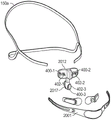
- 208000008784 apnea Diseases 0.000 claims description 14
- 230000004044 response Effects 0.000 claims description 14
- 238000012546 transfer Methods 0.000 claims description 7
- 230000007613 environmental effect Effects 0.000 abstract 1
- 210000000214 mouth Anatomy 0.000 description 95
- 238000005259 measurement Methods 0.000 description 36
- 210000003128 head Anatomy 0.000 description 35
- 238000004891 communication Methods 0.000 description 33
- 239000007789 gas Substances 0.000 description 33
- 210000001331 nose Anatomy 0.000 description 28
- 238000005516 engineering process Methods 0.000 description 27
- 239000003570 air Substances 0.000 description 17
- 230000006870 function Effects 0.000 description 15
- 238000010586 diagram Methods 0.000 description 14
- 238000001514 detection method Methods 0.000 description 13
- CURLTUGMZLYLDI-UHFFFAOYSA-N Carbon dioxide Chemical compound O=C=O CURLTUGMZLYLDI-UHFFFAOYSA-N 0.000 description 12
- 230000008859 change Effects 0.000 description 12
- 230000007423 decrease Effects 0.000 description 10
- 230000001815 facial effect Effects 0.000 description 10
- 239000000463 material Substances 0.000 description 9
- 238000012545 processing Methods 0.000 description 9
- 230000001133 acceleration Effects 0.000 description 8
- 239000008280 blood Substances 0.000 description 8
- 210000004369 blood Anatomy 0.000 description 8
- 210000004072 lung Anatomy 0.000 description 8
- 210000003928 nasal cavity Anatomy 0.000 description 8
- 125000006850 spacer group Chemical group 0.000 description 8
- 229910002092 carbon dioxide Inorganic materials 0.000 description 6
- 230000001419 dependent effect Effects 0.000 description 5
- 238000013461 design Methods 0.000 description 5
- 238000000537 electroencephalography Methods 0.000 description 5
- 229920003023 plastic Polymers 0.000 description 5
- 238000004458 analytical method Methods 0.000 description 4
- 238000013459 approach Methods 0.000 description 4
- 239000004020 conductor Substances 0.000 description 4
- 230000004048 modification Effects 0.000 description 4
- 238000012986 modification Methods 0.000 description 4
- 210000005241 right ventricle Anatomy 0.000 description 4
- 239000000758 substrate Substances 0.000 description 4
- 230000007704 transition Effects 0.000 description 4
- 239000000853 adhesive Substances 0.000 description 3
- 230000001070 adhesive effect Effects 0.000 description 3
- 230000008901 benefit Effects 0.000 description 3
- 230000005540 biological transmission Effects 0.000 description 3
- 238000004364 calculation method Methods 0.000 description 3
- 230000000694 effects Effects 0.000 description 3
- 210000001061 forehead Anatomy 0.000 description 3
- 230000003993 interaction Effects 0.000 description 3
- 210000005240 left ventricle Anatomy 0.000 description 3
- 230000009467 reduction Effects 0.000 description 3
- 230000000284 resting effect Effects 0.000 description 3
- 208000024891 symptom Diseases 0.000 description 3
- 230000001839 systemic circulation Effects 0.000 description 3
- 238000011282 treatment Methods 0.000 description 3
- 206010010071 Coma Diseases 0.000 description 2
- 208000004756 Respiratory Insufficiency Diseases 0.000 description 2
- 206010038678 Respiratory depression Diseases 0.000 description 2
- 238000004378 air conditioning Methods 0.000 description 2
- QVGXLLKOCUKJST-UHFFFAOYSA-N atomic oxygen Chemical compound [O] QVGXLLKOCUKJST-UHFFFAOYSA-N 0.000 description 2
- 230000017531 blood circulation Effects 0.000 description 2
- 230000001413 cellular effect Effects 0.000 description 2
- 210000000038 chest Anatomy 0.000 description 2
- 230000004087 circulation Effects 0.000 description 2
- 239000012141 concentrate Substances 0.000 description 2
- 238000001816 cooling Methods 0.000 description 2
- 238000012864 cross contamination Methods 0.000 description 2
- 239000004744 fabric Substances 0.000 description 2
- 239000011810 insulating material Substances 0.000 description 2
- 230000002452 interceptive effect Effects 0.000 description 2
- 210000005246 left atrium Anatomy 0.000 description 2
- 238000002156 mixing Methods 0.000 description 2
- 238000012806 monitoring device Methods 0.000 description 2
- 229910052760 oxygen Inorganic materials 0.000 description 2
- 239000001301 oxygen Substances 0.000 description 2
- 230000035699 permeability Effects 0.000 description 2
- 230000002265 prevention Effects 0.000 description 2
- 230000008569 process Effects 0.000 description 2
- 230000004088 pulmonary circulation Effects 0.000 description 2
- 230000036387 respiratory rate Effects 0.000 description 2
- 210000005245 right atrium Anatomy 0.000 description 2
- 238000004513 sizing Methods 0.000 description 2
- 210000000115 thoracic cavity Anatomy 0.000 description 2
- 210000000216 zygoma Anatomy 0.000 description 2
- 206010002091 Anaesthesia Diseases 0.000 description 1
- 208000009079 Bronchial Spasm Diseases 0.000 description 1
- 208000014181 Bronchial disease Diseases 0.000 description 1
- 206010006482 Bronchospasm Diseases 0.000 description 1
- RYGMFSIKBFXOCR-UHFFFAOYSA-N Copper Chemical compound [Cu] RYGMFSIKBFXOCR-UHFFFAOYSA-N 0.000 description 1
- 229920000742 Cotton Polymers 0.000 description 1
- 239000004593 Epoxy Substances 0.000 description 1
- 208000007101 Muscle Cramp Diseases 0.000 description 1
- 206010061876 Obstruction Diseases 0.000 description 1
- 241000144958 Piaractus mesopotamicus Species 0.000 description 1
- 206010038687 Respiratory distress Diseases 0.000 description 1
- 208000005392 Spasm Diseases 0.000 description 1
- 208000027418 Wounds and injury Diseases 0.000 description 1
- 230000037005 anaesthesia Effects 0.000 description 1
- 229940035674 anesthetics Drugs 0.000 description 1
- 210000000709 aorta Anatomy 0.000 description 1
- 210000001367 artery Anatomy 0.000 description 1
- 229910052799 carbon Inorganic materials 0.000 description 1
- 239000001569 carbon dioxide Substances 0.000 description 1
- 229920002678 cellulose Polymers 0.000 description 1
- 239000001913 cellulose Substances 0.000 description 1
- 238000004140 cleaning Methods 0.000 description 1
- 238000012790 confirmation Methods 0.000 description 1
- 238000010276 construction Methods 0.000 description 1
- 230000008602 contraction Effects 0.000 description 1
- 238000007796 conventional method Methods 0.000 description 1
- 229910052802 copper Inorganic materials 0.000 description 1
- 239000010949 copper Substances 0.000 description 1
- 230000006378 damage Effects 0.000 description 1
- 230000004069 differentiation Effects 0.000 description 1
- 208000037265 diseases, disorders, signs and symptoms Diseases 0.000 description 1
- 208000035475 disorder Diseases 0.000 description 1
- 238000009826 distribution Methods 0.000 description 1
- 208000002173 dizziness Diseases 0.000 description 1
- 230000004064 dysfunction Effects 0.000 description 1
- 210000000624 ear auricle Anatomy 0.000 description 1
- 239000013013 elastic material Substances 0.000 description 1
- 238000002474 experimental method Methods 0.000 description 1
- 239000000835 fiber Substances 0.000 description 1
- 238000001914 filtration Methods 0.000 description 1
- 229920002457 flexible plastic Polymers 0.000 description 1
- 239000003193 general anesthetic agent Substances 0.000 description 1
- 239000003292 glue Substances 0.000 description 1
- 230000003862 health status Effects 0.000 description 1
- 238000010438 heat treatment Methods 0.000 description 1
- 230000001976 improved effect Effects 0.000 description 1
- 230000001939 inductive effect Effects 0.000 description 1
- 208000014674 injury Diseases 0.000 description 1
- 230000010354 integration Effects 0.000 description 1
- 230000001788 irregular Effects 0.000 description 1
- 238000011545 laboratory measurement Methods 0.000 description 1
- 238000004519 manufacturing process Methods 0.000 description 1
- 230000007246 mechanism Effects 0.000 description 1
- 230000000116 mitigating effect Effects 0.000 description 1
- 239000000203 mixture Substances 0.000 description 1
- 238000003032 molecular docking Methods 0.000 description 1
- 230000002107 myocardial effect Effects 0.000 description 1
- 208000010125 myocardial infarction Diseases 0.000 description 1
- 210000000492 nasalseptum Anatomy 0.000 description 1
- 230000009972 noncorrosive effect Effects 0.000 description 1
- 229940005483 opioid analgesics Drugs 0.000 description 1
- 238000005457 optimization Methods 0.000 description 1
- 238000004806 packaging method and process Methods 0.000 description 1
- 230000036407 pain Effects 0.000 description 1
- 239000013610 patient sample Substances 0.000 description 1
- 230000002085 persistent effect Effects 0.000 description 1
- 229920001296 polysiloxane Polymers 0.000 description 1
- 238000003825 pressing Methods 0.000 description 1
- 238000011084 recovery Methods 0.000 description 1
- 230000000630 rising effect Effects 0.000 description 1
- 230000035945 sensitivity Effects 0.000 description 1
- 230000035939 shock Effects 0.000 description 1
- 229910052710 silicon Inorganic materials 0.000 description 1
- 239000010703 silicon Substances 0.000 description 1
- 210000003491 skin Anatomy 0.000 description 1
- 229910000679 solder Inorganic materials 0.000 description 1
- 238000004659 sterilization and disinfection Methods 0.000 description 1
- 210000002784 stomach Anatomy 0.000 description 1
- 238000003860 storage Methods 0.000 description 1
- 230000035882 stress Effects 0.000 description 1
- 239000000126 substance Substances 0.000 description 1
- 238000001356 surgical procedure Methods 0.000 description 1
- 210000001519 tissue Anatomy 0.000 description 1
- 210000001631 vena cava inferior Anatomy 0.000 description 1
- 210000002620 vena cava superior Anatomy 0.000 description 1
- 230000000007 visual effect Effects 0.000 description 1
- 210000001260 vocal cord Anatomy 0.000 description 1
Images




Classifications
-
- A—HUMAN NECESSITIES
- A61—MEDICAL OR VETERINARY SCIENCE; HYGIENE
- A61B—DIAGNOSIS; SURGERY; IDENTIFICATION
- A61B5/00—Measuring for diagnostic purposes; Identification of persons
- A61B5/08—Measuring devices for evaluating the respiratory organs
- A61B5/0816—Measuring devices for examining respiratory frequency
-
- A—HUMAN NECESSITIES
- A61—MEDICAL OR VETERINARY SCIENCE; HYGIENE
- A61B—DIAGNOSIS; SURGERY; IDENTIFICATION
- A61B5/00—Measuring for diagnostic purposes; Identification of persons
- A61B5/68—Arrangements of detecting, measuring or recording means, e.g. sensors, in relation to patient
- A61B5/6801—Arrangements of detecting, measuring or recording means, e.g. sensors, in relation to patient specially adapted to be attached to or worn on the body surface
- A61B5/6813—Specially adapted to be attached to a specific body part
- A61B5/6814—Head
- A61B5/6819—Nose
-
- A—HUMAN NECESSITIES
- A61—MEDICAL OR VETERINARY SCIENCE; HYGIENE
- A61B—DIAGNOSIS; SURGERY; IDENTIFICATION
- A61B5/00—Measuring for diagnostic purposes; Identification of persons
- A61B5/08—Measuring devices for evaluating the respiratory organs
- A61B5/087—Measuring breath flow
-
- A—HUMAN NECESSITIES
- A61—MEDICAL OR VETERINARY SCIENCE; HYGIENE
- A61B—DIAGNOSIS; SURGERY; IDENTIFICATION
- A61B5/00—Measuring for diagnostic purposes; Identification of persons
- A61B5/08—Measuring devices for evaluating the respiratory organs
- A61B5/087—Measuring breath flow
- A61B5/0878—Measuring breath flow using temperature sensing means
-
- A—HUMAN NECESSITIES
- A61—MEDICAL OR VETERINARY SCIENCE; HYGIENE
- A61B—DIAGNOSIS; SURGERY; IDENTIFICATION
- A61B5/00—Measuring for diagnostic purposes; Identification of persons
- A61B5/103—Measuring devices for testing the shape, pattern, colour, size or movement of the body or parts thereof, for diagnostic purposes
- A61B5/11—Measuring movement of the entire body or parts thereof, e.g. head or hand tremor or mobility of a limb
- A61B5/113—Measuring movement of the entire body or parts thereof, e.g. head or hand tremor or mobility of a limb occurring during breathing
-
- A—HUMAN NECESSITIES
- A61—MEDICAL OR VETERINARY SCIENCE; HYGIENE
- A61B—DIAGNOSIS; SURGERY; IDENTIFICATION
- A61B5/00—Measuring for diagnostic purposes; Identification of persons
- A61B5/68—Arrangements of detecting, measuring or recording means, e.g. sensors, in relation to patient
- A61B5/6801—Arrangements of detecting, measuring or recording means, e.g. sensors, in relation to patient specially adapted to be attached to or worn on the body surface
- A61B5/6813—Specially adapted to be attached to a specific body part
- A61B5/6814—Head
-
- A—HUMAN NECESSITIES
- A61—MEDICAL OR VETERINARY SCIENCE; HYGIENE
- A61M—DEVICES FOR INTRODUCING MEDIA INTO, OR ONTO, THE BODY; DEVICES FOR TRANSDUCING BODY MEDIA OR FOR TAKING MEDIA FROM THE BODY; DEVICES FOR PRODUCING OR ENDING SLEEP OR STUPOR
- A61M16/00—Devices for influencing the respiratory system of patients by gas treatment, e.g. ventilators; Tracheal tubes
- A61M16/06—Respiratory or anaesthetic masks
- A61M16/0666—Nasal cannulas or tubing
-
- A—HUMAN NECESSITIES
- A61—MEDICAL OR VETERINARY SCIENCE; HYGIENE
- A61B—DIAGNOSIS; SURGERY; IDENTIFICATION
- A61B2562/00—Details of sensors; Constructional details of sensor housings or probes; Accessories for sensors
- A61B2562/02—Details of sensors specially adapted for in-vivo measurements
- A61B2562/0219—Inertial sensors, e.g. accelerometers, gyroscopes, tilt switches
-
- A—HUMAN NECESSITIES
- A61—MEDICAL OR VETERINARY SCIENCE; HYGIENE
- A61B—DIAGNOSIS; SURGERY; IDENTIFICATION
- A61B5/00—Measuring for diagnostic purposes; Identification of persons
- A61B5/08—Measuring devices for evaluating the respiratory organs
- A61B5/097—Devices for facilitating collection of breath or for directing breath into or through measuring devices
-
- A—HUMAN NECESSITIES
- A61—MEDICAL OR VETERINARY SCIENCE; HYGIENE
- A61M—DEVICES FOR INTRODUCING MEDIA INTO, OR ONTO, THE BODY; DEVICES FOR TRANSDUCING BODY MEDIA OR FOR TAKING MEDIA FROM THE BODY; DEVICES FOR PRODUCING OR ENDING SLEEP OR STUPOR
- A61M2202/00—Special media to be introduced, removed or treated
- A61M2202/02—Gases
- A61M2202/0208—Oxygen
-
- A—HUMAN NECESSITIES
- A61—MEDICAL OR VETERINARY SCIENCE; HYGIENE
- A61M—DEVICES FOR INTRODUCING MEDIA INTO, OR ONTO, THE BODY; DEVICES FOR TRANSDUCING BODY MEDIA OR FOR TAKING MEDIA FROM THE BODY; DEVICES FOR PRODUCING OR ENDING SLEEP OR STUPOR
- A61M2210/00—Anatomical parts of the body
- A61M2210/06—Head
- A61M2210/0618—Nose
-
- A—HUMAN NECESSITIES
- A61—MEDICAL OR VETERINARY SCIENCE; HYGIENE
- A61M—DEVICES FOR INTRODUCING MEDIA INTO, OR ONTO, THE BODY; DEVICES FOR TRANSDUCING BODY MEDIA OR FOR TAKING MEDIA FROM THE BODY; DEVICES FOR PRODUCING OR ENDING SLEEP OR STUPOR
- A61M2210/00—Anatomical parts of the body
- A61M2210/06—Head
- A61M2210/0625—Mouth
-
- A—HUMAN NECESSITIES
- A61—MEDICAL OR VETERINARY SCIENCE; HYGIENE
- A61M—DEVICES FOR INTRODUCING MEDIA INTO, OR ONTO, THE BODY; DEVICES FOR TRANSDUCING BODY MEDIA OR FOR TAKING MEDIA FROM THE BODY; DEVICES FOR PRODUCING OR ENDING SLEEP OR STUPOR
- A61M2230/00—Measuring parameters of the user
- A61M2230/40—Respiratory characteristics
- A61M2230/43—Composition of exhalation
- A61M2230/432—Composition of exhalation partial CO2 pressure (P-CO2)
Landscapes
- Health & Medical Sciences (AREA)
- Life Sciences & Earth Sciences (AREA)
- Veterinary Medicine (AREA)
- Public Health (AREA)
- General Health & Medical Sciences (AREA)
- Animal Behavior & Ethology (AREA)
- Engineering & Computer Science (AREA)
- Biomedical Technology (AREA)
- Heart & Thoracic Surgery (AREA)
- Pulmonology (AREA)
- Surgery (AREA)
- Medical Informatics (AREA)
- Pathology (AREA)
- Biophysics (AREA)
- Physics & Mathematics (AREA)
- Molecular Biology (AREA)
- Physiology (AREA)
- Otolaryngology (AREA)
- Dentistry (AREA)
- Oral & Maxillofacial Surgery (AREA)
- Emergency Medicine (AREA)
- Anesthesiology (AREA)
- Hematology (AREA)
- Measurement Of The Respiration, Hearing Ability, Form, And Blood Characteristics Of Living Organisms (AREA)
Abstract
Description
相关申请的交叉引用CROSS-REFERENCE TO RELATED APPLICATIONS
本申请要求2017年12月12日提交的美国专利申请No.62/597,870的权益,其全部内容通过引用合并于此。This application claims the benefit of US Patent Application No. 62/597,870, filed on December 12, 2017, the entire contents of which are incorporated herein by reference.
技术领域technical field
本公开总体上涉及医疗传感器。更具体地,本公开涉及用于对个体或患者进行连续、持久监测的呼吸传感器,包括测量和分析人的呼吸状况和运动。The present disclosure generally relates to medical sensors. More particularly, the present disclosure relates to respiration sensors for continuous, persistent monitoring of an individual or patient, including measuring and analyzing a person's breathing conditions and motion.
背景技术Background technique
监测人的呼吸可能出于各种原因。例如,关于患者呼吸的知识可以帮助护理人员评估患者在手术及此后恢复期间的稳定性。关于人的呼吸的知识也可以帮助进行与睡眠有关的治疗。Monitoring a person's breathing can be for a variety of reasons. For example, knowledge about a patient's breathing can help caregivers assess a patient's stability during surgery and recovery thereafter. Knowledge about a person's breathing can also help with sleep-related treatments.
呼吸传感器的许多方法涉及笨重的设备,这些设备会阻塞患者的呼吸道。在许多应用中,患者是昏迷的或半昏迷的,因而将呼吸传感器长时间固定在适当位置将是一个挑战。因此,在许多现有系统中,针对传感器放置或传感器意外移动,需要护士经常检查患者。此外,由于人体呼吸道的模样(physiognomy),许多设备往往会产生对于患者的鼻孔和嘴巴的混淆读数,而无法清楚地区分和提供关于吸气步骤和呼气步骤的差异化数据。Many methods of breathing sensors involve bulky devices that block a patient's airway. In many applications, the patient is comatose or semi-comatose, and it will be a challenge to hold the breath sensor in place for extended periods of time. Thus, in many existing systems, nurses are required to frequently check patients for sensor placement or unintended sensor movement. Furthermore, due to the physiognomy of the human airway, many devices tend to produce confusing readings for the patient's nostrils and mouth, failing to clearly distinguish and provide differentiated data on inspiratory and expiratory steps.
发明内容SUMMARY OF THE INVENTION
在针对患有呼吸功能障碍的患者的医疗护理领域中,非常期望提供对患者的呼吸循环进行连续、实时的测量。在测量患者的呼吸循环时,挑战之一是要清楚地区分吸气循环和呼气循环。人的模样使情况复杂化,使得鼻流和口流(流入和流出患者)彼此非常靠近,从而增加了在某些位置流混合、湍流和停滞的可能性。In the field of medical care for patients with respiratory dysfunction, it is highly desirable to provide continuous, real-time measurements of the patient's respiratory cycle. When measuring a patient's respiratory cycle, one of the challenges is to clearly distinguish between the inspiratory and expiratory cycles. The human appearance complicates the situation by placing nasal and oral flow (in and out of the patient) in close proximity to each other, increasing the likelihood of flow mixing, turbulence and stagnation at certain locations.
本公开的一方面提供了但不限于一种用于监测和分析个体或患者的呼吸状况和循环的呼吸传感器,监测和分析以确保呼吸传感器按预期定位,利用呼吸传感器检测人体的运动,在口气流与个体鼻气流之间进行检测和区分,以及将呼吸传感器和数据与网络集成在一起。One aspect of the present disclosure provides, but is not limited to, a respiration sensor for monitoring and analyzing the breathing condition and circulation of an individual or patient, monitoring and analyzing to ensure that the respiration sensor is positioned as intended, utilizing the respiration sensor to detect movement of the human body, Detection and differentiation between airflow and individual nasal airflow, as well as integration of respiratory sensors and data with the network.
在一些实施例中,本公开提供了一种呼吸传感器,其包括:壳体,该壳体具有延伸穿过其中的鼻流通道,其中,该鼻流通道设置成与鼻呼吸流方向大致平行;以及电子板,其包括鼻热敏电阻,该电子板联接到壳体,使得鼻热敏电阻定位在鼻流通道中。In some embodiments, the present disclosure provides a breath sensor comprising: a housing having a nasal flow passage extending therethrough, wherein the nasal flow passage is disposed substantially parallel to a direction of nasal breathing flow; and an electronic board including a nasal thermistor coupled to the housing such that the nasal thermistor is positioned in the nasal flow channel.
在一些实施例中,公开了一种呼吸传感器,该呼吸传感器包括:壳体,该壳体具有延伸穿过其中的第一鼻流通道和第二鼻流通道,其中,这些鼻流通道相对于鼻呼吸流方向彼此平行地设置;以及电子板,其包括第一鼻热敏电阻和第二鼻热敏电阻,该电子板联接到壳体,使得第一鼻热敏电阻和第二鼻热敏电阻分别定位于第一鼻流通道和第二鼻流通道中。In some embodiments, a breath sensor is disclosed that includes a housing having a first nasal passage and a second nasal passage extending therethrough, wherein the nasal passages are opposite to nasal breathing flow directions are arranged parallel to each other; and an electronic board including a first nasal thermistor and a second nasal thermistor, the electronic board being coupled to the housing such that the first nasal thermistor and the second nasal thermistor Resistors are positioned in the first nasal passage and the second nasal passage, respectively.
在一些实施例中,本公开提供了一种呼吸传感器,其包括:一个或多个热敏电阻,其被配置为检测吸气温度、呼气温度、呼吸传感器附近的环境温度或贴靠呼吸传感器的患者皮肤的温度中的至少一种;加速度计,其被配置为检测患者的运动、患者的位置、心率或呼吸速率中的至少一种;以及电子板,其联接至所述一个或多个热敏电阻以及所述一个或多个热敏电阻。In some embodiments, the present disclosure provides a respiration sensor comprising: one or more thermistors configured to detect inspiratory temperature, expiratory temperature, ambient temperature near the respiration sensor, or abutment against the respiration sensor at least one of the temperature of the patient's skin; an accelerometer configured to detect at least one of the patient's movement, the patient's position, heart rate, or respiration rate; and an electronic board coupled to the one or more a thermistor and the one or more thermistors.
在一些实施例中,本公开提供了一种系统,该系统包括:服务器,其具有存储命令的存储器;以及处理器,其被配置为执行命令,从而:从集线器接收指示患者的呼吸状况的数据、将数据传输到远程服务器的存储器中、根据请求将数据提供给移动计算机设备、以及指示移动计算机设备以图形方式显示数据,其中数据包括来自两个鼻流通道中的至少一个的温度值、来自口流通道的温度值、患者皮肤表面的温度值和患者环境的温度值。In some embodiments, the present disclosure provides a system comprising: a server having a memory storing commands; and a processor configured to execute commands to: receive data from a hub indicating a breathing condition of a patient , transmitting the data to the memory of the remote server, providing the data to the mobile computer device upon request, and instructing the mobile computer device to graphically display the data, wherein the data includes a temperature value from at least one of the two nasal passages, a The temperature value of the flow channel, the temperature value of the patient's skin surface, and the temperature value of the patient's environment.
在本公开的一些实施例中,公开了一种方法,该方法包括:从集线器接收指示患者的呼吸状况的数据;将数据传输到远程服务器的存储器中;根据请求将数据提供给监测器;以及指示监测器以图形方式显示数据,其中数据包括来自两个鼻流通道中的至少一个的温度值、来自口流通道的温度值、患者皮肤表面的温度值和患者环境的温度值。In some embodiments of the present disclosure, a method is disclosed, the method comprising: receiving data indicative of a patient's breathing condition from a hub; transmitting the data to a memory of a remote server; providing the data to a monitor upon request; and The monitor is instructed to graphically display data including a temperature value from at least one of the two nasal flow channels, a temperature value from the oral flow channel, a temperature value of the patient's skin surface, and a temperature value of the patient's environment.
在一些实施例中,公开了一种呼吸传感器系统,该呼吸传感器系统包括:呼吸传感器,其包括壳体和电子板,壳体具有延伸穿过其中的鼻流通道,其中,该鼻流通道与鼻呼吸流方向对齐,电子板,其包括鼻热敏电阻,该电子板联接到壳体,使得鼻热敏电阻器定位在鼻流通道中;以及集线器,其被配置为在呼吸传感器与网络之间移动数据。In some embodiments, a breath sensor system is disclosed that includes a breath sensor including a housing and an electronics board, the housing having a nasal passage extending therethrough, wherein the nasal passage is connected to Nasal breath flow direction aligned, an electronics board that includes a nasal thermistor coupled to the housing such that the nasal thermistor is positioned in the nasal flow channel; and a hub configured between the breath sensor and the network mobile data.
本主题技术的附加特征和优点将在下面的描述中阐述,并且部分地从该描述中显而易见,或者可以通过本主题技术的实践而获知。通过在书面描述及其实施例以及附图中特别指出的结构,将实现和获得本主题技术的优点。Additional features and advantages of the subject technology will be set forth in the description that follows, and in part will be apparent from the description, or may be learned by practice of the subject technology. The advantages of the subject technology will be realized and attained by the structure particularly pointed out in the written description and the examples hereof as well as the appended drawings.
应当理解,前面的一般描述和下面的详细描述都是示例性和说明性的,并且旨在提供对本主题技术的进一步说明。It is to be understood that both the foregoing general description and the following detailed description are exemplary and explanatory and are intended to provide further explanation of the subject technology.
附图说明Description of drawings
下面参考附图描述本发明的说明性实施例的各种特征。说明性实施例旨在说明而非限制本发明。附图包含以下图。Various features of the illustrative embodiments of the invention are described below with reference to the drawings. The illustrative examples are intended to illustrate, but not to limit, the invention. The accompanying drawings contain the following figures.
图1示出了根据一些实施例的放置在患者头部上的呼吸传感器的前透视图。1 illustrates a front perspective view of a breath sensor placed on a patient's head, according to some embodiments.
图2A示出了根据一些实施例的从患者鼻腔排出的气流的侧视图。2A illustrates a side view of airflow exiting the nasal cavity of a patient, according to some embodiments.
图2B示出了根据一些实施例的从患者口腔排出的气流的侧视图。2B illustrates a side view of airflow exiting a patient's mouth in accordance with some embodiments.
图3示出了根据一些实施例的从患者鼻腔排出的气流的前视图。3 illustrates a front view of airflow exiting the nasal cavity of a patient in accordance with some embodiments.
图4示出了根据一些实施例的患者的鼻呼吸流和口呼吸流的前透视图。4 illustrates a front perspective view of nasal and mouth breathing flow of a patient in accordance with some embodiments.
图5示出了根据一些实施例的包括鼻流通道和口流通道的呼吸传感器的前透视图。5 illustrates a front perspective view of a breath sensor including nasal and oral flow channels, according to some embodiments.
图6示出了根据一些实施例的呼吸传感器的鼻流通道和口流通道的透视细节图。6 shows a perspective detail view of nasal and oral flow channels of a breath sensor in accordance with some embodiments.
图7示出了根据一些实施例的相对于呼吸传感器中的热敏电阻的层流呼吸流的剖视图。7 illustrates a cross-sectional view of laminar breath flow relative to a thermistor in a breath sensor, according to some embodiments.
图8示出了根据一些实施例的呼吸传感器的流通道的示意图。8 shows a schematic diagram of a flow channel of a respiration sensor in accordance with some embodiments.
图9A和图9B示出了根据一些实施例的呼吸传感器的前透视图和后透视图。9A and 9B illustrate front and rear perspective views of a respiration sensor in accordance with some embodiments.
图10示出了根据一些实施例的放置在患者头部上的呼吸传感器的前透视图。10 shows a front perspective view of a breath sensor placed on a patient's head in accordance with some embodiments.
图11示出了根据一些实施例的呼吸传感器的前透视图。11 shows a front perspective view of a respiration sensor in accordance with some embodiments.
图12示出了图11的呼吸传感器的底部透视图。FIG. 12 shows a bottom perspective view of the breath sensor of FIG. 11 .
图13示出了根据一些实施例的呼吸传感器的前透视细节图。13 shows a front perspective detail view of a respiration sensor in accordance with some embodiments.
图14示出了图11的呼吸传感器的前透视剖视图。FIG. 14 shows a front perspective cross-sectional view of the breath sensor of FIG. 11 .
图15示出了根据一些实施例的鼻呼吸流和鼻流引导件的示意图。15 shows a schematic diagram of a nasal respiratory flow and a nasal flow guide in accordance with some embodiments.
图16示出了根据一些实施例的鼻流引导件的示意图。16 shows a schematic diagram of a nasal flow guide in accordance with some embodiments.
图17示出了根据一些实施例的呼吸传感器的后透视图。17 shows a rear perspective view of a respiration sensor in accordance with some embodiments.
图18示出了根据一些实施例的经过呼吸传感器的腔室的呼吸流的示意图。18 shows a schematic diagram of breath flow through a chamber of a breath sensor in accordance with some embodiments.
图19示出了根据一些实施例的经过呼吸传感器的腔室的湍流呼吸气流的示意图。19 shows a schematic diagram of turbulent breathing airflow through a chamber of a breathing sensor, according to some embodiments.
图20示出了根据一些实施例的示出呼气期间的湍流噪声流的示图。Figure 20 shows a graph showing turbulent noise flow during exhalation, according to some embodiments.
图21A和图21B示出了根据一些实施例的从患者鼻腔排出的气流的排出角度的前视图和侧视图。21A and 21B illustrate front and side views of the exit angle of airflow exiting the nasal cavity of a patient, according to some embodiments.
图22A和图22B示出了根据一些实施例的口腔室相对于患者的位置的正面示意图和侧面示意图。22A and 22B illustrate schematic front and side views of the position of an oral chamber relative to a patient, according to some embodiments.
图23示出了根据一些实施例的呼吸传感器的前透视图。23 shows a front perspective view of a respiration sensor in accordance with some embodiments.
图24示出了根据一些实施例的针对不同患者的图23的呼吸传感器的测量结果的示图。24 shows a graph of measurements of the respiration sensor of FIG. 23 for different patients, according to some embodiments.
图25A和图25B示出了根据一些实施例的呼吸传感器的口腔室相对于不同患者嘴巴的位置的前视图。25A and 25B illustrate front views of the position of the oral cavity of a breath sensor relative to various patient mouths, according to some embodiments.
图26示出了根据一些实施例的具有束带的呼吸传感器的前透视图。26 shows a front perspective view of a respiration sensor with a strap in accordance with some embodiments.
图27示出了根据一些实施例的具有系带的呼吸传感器的前透视图。27 shows a front perspective view of a breath sensor with a tether, according to some embodiments.
图28示出了根据一些实施例的呼吸传感器的前透视分解图。28 shows a front perspective exploded view of a respiration sensor in accordance with some embodiments.
图29示出了根据一些实施例的呼吸传感器的电子板和框架的顶部透视细节图。29 shows a top perspective detail view of the electronic board and frame of a breath sensor in accordance with some embodiments.
图30示出了根据一些实施例的呼吸传感器的电子板的顶部透视图。30 shows a top perspective view of an electronic board of a breath sensor according to some embodiments.
图31示出了根据一些实施例的图30的电子板的顶部透视细节图。31 illustrates a top perspective detail view of the electronic board of FIG. 30, according to some embodiments.
图32示出了根据一些实施例的图30的电子板的底部透视图。32 illustrates a bottom perspective view of the electronic board of FIG. 30, according to some embodiments.
图33示出了根据一些实施例的图30的与框架和电池联接的电子板的顶部透视图。33 illustrates a top perspective view of the electronic board of FIG. 30 coupled with the frame and battery, according to some embodiments.
图34示出了根据一些实施例的呼吸传感器的电子板的框图。34 shows a block diagram of an electronic board of a breath sensor according to some embodiments.
图35示出了根据一些实施例的呼吸传感器的电子板的另一框图。35 shows another block diagram of the electronic board of the breath sensor according to some embodiments.
图36示出了根据一些实施例的用于确定呼吸传感器的放置和功能的呼吸传感器检测状态表。36 illustrates a breath sensor detection status table for determining placement and function of the breath sensor in accordance with some embodiments.
图37示出了根据一些实施例的显示环境空气温度变化期间的呼吸的示图。Figure 37 illustrates a graph showing respiration during ambient air temperature changes, according to some embodiments.
图38示出了根据一些实施例的显示传导温度变化期间的呼吸的示图。38 illustrates a graph showing respiration during conduction temperature changes, according to some embodiments.
图39示出了根据一些实施例的在从就坐位置转变为运动位置、再转变为跌倒位置的患者身上使用时的呼吸传感器。Figure 39 illustrates a breath sensor when used on a patient transitioning from a sitting position to an exercise position to a fall position, according to some embodiments.
图40示出了心脏以及经过其中的血液循环方向的前视图。Figure 40 shows a front view of the heart and the direction of blood circulation therethrough.
图41示出了根据一些实施例的包括加速度计的呼吸传感器的前视图,利用呼吸传感器来检测患者的身体运动。41 illustrates a front view of a respiration sensor including an accelerometer used to detect body motion of a patient, according to some embodiments.
图42示出了根据一些实施例的具有EtCO2(呼气末二氧化碳)敏感表面的呼吸传感器的前透视分解图。42 shows a front perspective exploded view of a respiration sensor with an EtCO2 (end-tidal carbon dioxide) sensitive surface in accordance with some embodiments.
图43示出了根据一些实施例的呼吸监测系统的示意图。43 shows a schematic diagram of a breathing monitoring system in accordance with some embodiments.
图44示出了根据一些实施例的联接至患者的呼吸传感器以及患者附近的集线器的前透视图。44 shows a front perspective view of a breath sensor coupled to a patient and a hub near the patient, according to some embodiments.
图45示出了根据一些实施例的联接至患者的集线器和呼吸传感器的前透视图。45 shows a front perspective view of a hub and respiration sensor coupled to a patient, according to some embodiments.
图46示出了根据一些实施例的呼吸监测系统中的呼吸传感器与集线器之间的相互作用的透视细节图。46 shows a perspective detail view of the interaction between a respiration sensor and a hub in a respiration monitoring system in accordance with some embodiments.
图47示出了根据一些实施例的与头饰联接的集线器和呼吸传感器的前透视图。47 shows a front perspective view of a hub and respiration sensor coupled with a headgear in accordance with some embodiments.
图48示出了根据一些实施例的与另一种头饰联接的集线器和呼吸传感器的侧视图。48 illustrates a side view of a hub and respiration sensor coupled with another headgear in accordance with some embodiments.
图49示出了根据一些实施例的用于呼吸监测系统的作为监测器的智能电话的前透视图。49 shows a front perspective view of a smartphone as a monitor for use in a respiratory monitoring system, according to some embodiments.
图50示出了根据一些实施例的用于呼吸监测系统的作为另一种监测器的中心站的前透视图。50 shows a front perspective view of a central station as another monitor for a respiratory monitoring system, according to some embodiments.
在附图中,除非另有明确说明,否则具有相同或相似附图标记的元件具有相同或相似的功能或配置。In the drawings, elements having the same or similar reference numbers have the same or similar function or configuration unless explicitly stated otherwise.
具体实施方式Detailed ways
应当理解,根据本公开,本领域技术人员将容易明白本主题技术的各种配置,其中,本主题技术的各种配置以示例方式示出和描述。如将会认识到的,本主题技术能够具有其他的不同的配置,并且其若干细节能够在各种其他方面进行修改,所有这些都不脱离本主题技术的范围。因此,发明内容、附图和详细描述本质上应被认为是说明性的而不是限制性的。It should be appreciated that, in light of this disclosure, various configurations of the subject technology will be readily apparent to those skilled in the art, which are shown and described by way of example. As will be realized, the subject technology is capable of other and different configurations, and its several details are capable of modification in various other respects, all without departing from the scope of the subject technology. Accordingly, the summary, drawings, and detailed description are to be regarded as illustrative in nature and not restrictive.
以下阐述的详细描述旨在作为对本主题技术的各种配置的描述,而不旨在表示可以实践本主题技术的唯一配置。附图被并入本文并且组成详细描述的一部分。为了提供对本主题技术的透彻理解,详细描述包括特定细节。然而,对于本领域普通技术人员而言显而易见的是,可以在没有其中一些特定细节的情况下实践本公开的实施例。在其他情况中,为了避免混淆本主题技术的概念,以框图的形式示出公知的结构和部件,或者为了避免混淆本公开,没有详细示出公知的结构和部件。相似的部件标有相似的元件编号,以便于理解。The detailed description set forth below is intended as a description of various configurations of the subject technology and is not intended to represent the only configurations in which the subject technology may be practiced. The accompanying drawings are incorporated herein and constitute a part of the detailed description. The detailed description includes specific details for the purpose of providing a thorough understanding of the subject technology. It will be apparent, however, to one of ordinary skill in the art that embodiments of the present disclosure may be practiced without some of these specific details. In other instances, well-known structures and components are shown in block diagram form in order to avoid obscuring the concepts of the subject technology or have not been shown in detail in order to avoid obscuring the present disclosure. Similar parts are marked with similar element numbers for ease of understanding.
根据本文公开的至少一些实施例,呼吸传感器可以:监测鼻和口呼吸气流;监测患者和周围状况;监测呼吸传感器的运动;在口气流与鼻气流之间以及在左鼻气流与右鼻气流之间进行区分。呼吸传感器可以识别和分析吸入气体与呼出气体之间的热传递差异,从而提供清晰的呼吸循环模式。According to at least some embodiments disclosed herein, a breath sensor may: monitor nasal and oral breathing airflow; monitor patient and surrounding conditions; monitor movement of the breathing sensor; between oral and nasal airflow and between left and right nasal airflow distinguish between. Breathing sensors can identify and analyze differences in heat transfer between inhaled and exhaled gases, providing a clear pattern of breathing cycles.
在本文公开的至少一些实施例中,确定鼻和口呼吸气流、心率、呼吸频率或循环、以及呼吸传感器和患者的运动中的任何一种。本公开的实施例可以发送和接收与呼吸传感器的监测和分析有关的数据;指示患者的状况或位置;并提供与特定状况相对应的信号或警报。在一些实施例中,利用无线通信技术为医院、治疗设施、家庭护理情况等中的患者的呼吸感测提供普遍的解决方案。In at least some embodiments disclosed herein, any of nasal and oral respiratory airflow, heart rate, respiratory rate or circulation, and respiratory sensors and patient motion are determined. Embodiments of the present disclosure may send and receive data related to monitoring and analysis of respiration sensors; indicate a patient's condition or location; and provide signals or alerts corresponding to specific conditions. In some embodiments, wireless communication technologies are utilized to provide a pervasive solution for patient breathing sensing in hospitals, treatment facilities, home care situations, and the like.
I.呼吸传感器的实施例I. Examples of Breathing Sensors
图1示出了根据一些实施例的放置在患者20头部上的呼吸传感器10。呼吸传感器10被定位于患者面部上介于嘴巴与鼻子之间,以测量鼻和口呼吸气流。气流测量基于测量吸气气流与呼气气流之间的温度差。还可以测量患者的皮肤温度和环境空气温度,以验证呼吸传感器10适当地贴靠患者放置。稍后描述的一些实施例包括其他传感器,比如电容传感器或检测器和加速度计,以确保呼吸传感器10没有掉落出位置,并且确保呼吸传感器10与患者的模样适当接触。固定绳带或束带15有助于相对于患者模样维持呼吸传感器10的位置。FIG. 1 shows a
图2A和图3示出了根据一些实施例的用于从患者的鼻腔排出气流的区域200a、200c,并且图2B示出了用于从患者的口腔排出气流的区域200b。实验表明,呼吸气流在不同受试者之间在不同的区域排出鼻腔和口腔。因此,本文公开的呼吸传感器的实施例包括可以通过区域200a、200b、200c分开每种不同流的几何形状,以提供对患者的呼吸循环的更准确测量。因此,非常需要精确确定呼吸传感器100a、100b相对于患者面部的位置。Figures 2A and 3 illustrate
图4示出了根据一些实施例的对于患者20的鼻呼吸流600C和口呼吸流600B的一部分。呼吸传感器的传感器腔室捕获来自患者的鼻和口呼吸气流。传感器腔室平行于该特定流的平均方向定位,以维持腔室内部的流为尽可能的层流。因此,鼻传感器腔室在鼻子与嘴巴之间彼此平行地定位,而且平行于上唇。更有利地,鼻传感器腔室略微偏离嘴巴和上唇的中间部分,进入鼻呼吸气流的平均方向。口传感器腔室横向于鼻腔室定位,从嘴巴向外。在一些实施例中,口传感器腔室和鼻传感器腔室相对于彼此定位,使得经过口腔室的口呼吸流600B的方向相对于经过任何鼻传感器腔室的鼻呼吸流600C的方向为横向。传感器腔室还是平滑的和笔直的,或者更有利的是略微锥形的,以捕获来自较大区域的流,因为腔室截面沿着流动路径的任何转弯或突然变化都会产生湍流,湍流混合了吸气气流阶段和呼气气流阶段,降低了测量速度、准确性和响应时间。FIG. 4 shows a portion of
图5示出了呼吸传感器100a,例如,包括鼻流通道301和口流通道302。排出患者鼻腔(例如气流区域200a、200c)的鼻呼吸流可以被平行于鼻呼吸流600C的平均方向的鼻通道301捕获并引导。类似地,排出患者嘴巴(例如气流区域200b)的口呼吸流可以被平行于口呼吸流600B的方向的口腔室302捕获并引导。通过在每个不同的流通道301和302的内部提供感测元件,呼吸传感器100a可以在鼻流和口流在患者的上唇附近混合到一起之前准确地确定呼吸流。FIG. 5 shows
图6示出了呼吸传感器100a,其一部分以细节图示出,包括鼻流通道301和口流通道302的细节图。呼吸传感器100a包括用于感测吸气流和呼气流的热敏电阻400-1、400-2、400-3。患者的鼻呼吸流可以被鼻通道301捕获,并利用其中的第一和第二鼻热敏电阻400-1、400-2进行测量。患者的口呼吸流可以被口腔室302捕获,并利用其中的热敏电阻400-3进行测量。每个热敏电阻的电阻与加热或冷却热敏电阻的流动气体成比例地变化,例如在吸气和呼气期间。FIG. 6 shows
此外,鼻流通道301彼此分开,从而鼻热敏电阻400-1和400-2可以分别识别和测量与患者的每个鼻孔相关的呼吸流。通过分别识别与患者的每个鼻孔相关的呼吸流,可以确定潜在的呼吸状况或患者的位置。例如,可以识别和纠正鼻通道或呼吸设备的阻塞。Furthermore, the
在一些实施例中,口热敏电阻400-3被放置在横向于或基本垂直于鼻热敏电阻400-1、400-2的平面上。该几何形状还使得能够在每个热敏电阻400-1、400-2、400-3之间进行准确且独立的测量,避免任何混合或湍流区域。In some embodiments, the oral thermistor 400-3 is placed in a plane transverse or substantially perpendicular to the nasal thermistors 400-1, 400-2. This geometry also enables accurate and independent measurements between each thermistor 400-1, 400-2, 400-3, avoiding any areas of mixing or turbulence.
参考图7和图8,热敏电阻400-1、400-2、400-3可以大致位于其相应的传感器腔室的中间,以使气流的准确性和灵敏度最大化。为了将热敏电阻400-1、400-2、400-3定位在相应的传感器腔室的中间,将热敏电阻400-1、400-2、400-3联接到薄支撑结构730的末端部分。该支撑结构可以具有联接至电子板的近侧部分和横向于由电子板的顶部限定的平面的远侧部分,其中,支撑结构的远侧部分延伸到鼻流通道中。在一些实施例中,呼吸传感器100a具有将鼻流与每个鼻孔单独地分开的结构和几何形状,以提供患者呼吸状况的更准确和详细的图像。Referring to Figures 7 and 8, thermistors 400-1, 400-2, 400-3 may be located approximately in the middle of their respective sensor chambers to maximize airflow accuracy and sensitivity. To position the thermistors 400-1, 400-2, 400-3 in the middle of the respective sensor chambers, the thermistors 400-1, 400-2, 400-3 are coupled to end portions of the
图7示出了经过传感器腔室的患者的层流呼吸流的截面。管中的层流流速分布是抛物线形的,因此最大速度大约在管中间的点处。针对呼吸传感器100a的热敏电阻400-1示出了呼吸流,但是,本公开可以应用于任何热敏电阻400-1、400-2、400-3。例如,通过将热敏电阻400-1尽可能地靠近呼吸传感器100a中的流腔室的中间放置,可以期望更准确的测量,因为气流的速度在流腔室的中央最高。因此,期望吸入和呼出之间的温度差在流腔室的中间点最高。此外,当热敏电阻400-1、400-2、400-3通过支撑结构730放置在腔室的中间时,来自周围结构的对流或辐射热能被最小化。Figure 7 shows a cross-section of a patient's laminar respiratory flow through a sensor chamber. The laminar flow velocity distribution in the tube is parabolic, so the maximum velocity is approximately at the point in the middle of the tube. Breath flow is shown for the thermistor 400-1 of the
图8示出了呼吸传感器100a,其一部分以剖视细节图示出。该剖视图示出了延伸到鼻流通道301中的支撑结构730以及位于支撑结构730的远侧端部部分处的热敏电阻400-1。应当理解,包括支撑结构在内的本公开可以适用于任何热敏电阻400-1、400-2、400-3和流通道301、302。Figure 8 shows a
支撑结构730从呼吸传感器100a的一部分延伸到鼻流通道301中。应当理解,支撑结构730可以部分地延伸到流通道301、302中。例如,支撑结构730可以延伸到两个鼻流通道301中的至少一个的中间部分中。在本公开的一些实施例中,支撑结构730延伸超出或跨过相应的流通道301、302。支撑结构730可以包括延伸到相应的流通道301、302中的悬垂结构。但是,在一些实施例中,支撑结构730可以包括拱形结构,该拱形结构部分地远离流通道301、302的内表面朝向热敏电阻400-1延伸,并且部分地从热敏电阻400-1朝向流腔室的内表面延伸。在一些实施例中,支撑结构730和热敏电阻400-1可以跨过流腔室的内表面延伸。The
呼吸传感器100a包括具有内表面的壁,其形成传感器腔室。腔室的壁围绕热敏电阻400-1、400-2、400-3的至少一部分延伸。所述壁保护敏感的热敏电阻400-1、400-2、400-3不受导致所测量的呼吸气流信号错误的各种干扰周围气流的影响,例如,能够触摸热敏电阻或向热敏电阻呼气的护理人员,或者邻近热敏电阻400-1、400-2、400-3的空气调节。此外,形成腔室的壁还保护机械敏感的小型热敏电阻不受各种机械力、应力和冲击的影响,比如触摸等。The
图9A和图9B示出了根据一些实施例的呼吸传感器100a,例如,包括用于感测传感器相对于患者模样的定位的热敏电阻500-1、500-2。环境热敏电阻500-1可以沿着呼吸传感器100a的前侧定位,当患者佩戴呼吸传感器100a时,在呼吸传感器100a的背对患者的部分附近。类似地,皮肤热敏电阻500-2可以沿着呼吸传感器100a的后侧定位,当患者佩戴呼吸传感器100a时,在呼吸传感器100a的面向患者的部分附近。在一些实施例中,当患者佩戴呼吸传感器100a时,热敏电阻500-1在患者面部的远侧,而热敏电阻500-2在患者上唇的近侧并贴靠患者的皮肤。Figures 9A and 9B illustrate a
呼吸传感器100a可以包括沿着其前侧或后侧中的任何一个的通道或腔室。热敏电阻500-1可以定位在沿着呼吸传感器100a的前侧的腔室中,以测量环境空气温度。热敏电阻500-2可以定位在沿着呼吸传感器100a的后侧的腔室中,以测量患者皮肤的温度。The
在一些情况下,热敏电阻500-2可以在传感器100a适当地定位在患者上时进行检测,而热敏电阻500-1可以检测环境空气的温度。例如,对来自500-1和500-2的温度的比较可以用来指示患者状况或传感器100a的适当定位和功能。在一些实施例中,当热敏电阻500-1和500-2检测到相同的温度时,可以假定呼吸传感器100a可能未附接到患者,或者患者的温度与环境温度相同,这可以指示危险的健康状况。In some cases, thermistor 500-2 may detect when
图10示出了呼吸传感器100b的另一实施例,其与呼吸传感器100a基本上类似。呼吸传感器100b也放置在患者面部上,位于嘴巴和鼻子之间,以测量鼻和口呼吸气流。与呼吸传感器100a非常相似,测量结果基于测量吸气气流和呼气气流之间的温度差。还可以测量患者的皮肤温度和环境空气温度,以验证或检测呼吸传感器100b相对于患者的鼻和口呼吸气流以及患者的上唇适当地放置。Figure 10 shows another embodiment of a
本文所描述的一些实施例包括其他传感器,比如检测呼吸传感器100b是否与患者的模样适当接触的电容检测器或传感器,以及检测呼吸传感器100b的运动和位置的加速度计,以确保例如呼吸传感器100b未掉落出位置,患者没有跌倒,或者患者头部的取向没有阻塞鼻和口呼吸气流(例如,患者的面部向下朝向枕头或床)。Some embodiments described herein include other sensors, such as capacitive detectors or sensors that detect whether
绳带或束带150b帮助维持呼吸传感器100b相对于患者模样的位置。根据一些实施例,呼吸传感器100b可包括鼻流引导件160,以集中并提供经过呼吸传感器100b的层流吸气气流和呼气气流。The cord or
图11和图12示出了具有壳体2001、基座2010和护罩2012的呼吸传感器100b。护罩2012位于壳体2001与基座2010之间,以形成腔室的至少一部分。呼吸传感器100b包括与与呼吸传感器100a鼻流通道301类似的鼻流通道2018以及与口流通道302类似的口流通道2016。鼻流通道2018从呼吸传感器100b的顶部延伸到底部。在使用中,来自患者鼻子的鼻呼吸流可以在每个鼻流通道2018的鼻入口2024和鼻出口2026之间移动。每个鼻流通道2018的鼻入口2024是在呼气期间呼吸气体流入呼吸传感器100b的地方。每个鼻流通道2018的鼻出口2026是在吸气期间环境空气流入呼吸传感器100b的地方。11 and 12 show the
护罩2012包括电池框架2014,其远离护罩2012的前表面延伸。电池框架2014包围电池,将其固定到基座2010,并将护罩2012与壳体2001之间的区域划分为两个不同的鼻流通道2018,使得鼻热敏电阻400-1居中地布置在其中一个鼻流通道2018中,并且鼻热敏电阻400-2居中地布置在另一个鼻流通道2018中。电池框架2014基本上居中地布置在呼吸传感器100b中,并且当呼吸传感器100b放置在患者的上唇上或附接于患者的上唇附近时,电池框架布置成位于患者的鼻中隔下方。The
壳体2001可以由纸电池制成,该纸电池被设计为使用主要由纤维素形成的垫片,这使得纸电池具有柔性和环保性。功能与传统的化学电池类似,但重要的不同是它们无腐蚀性且不需要巨大的壳体,但可以用作壳体。The
口护罩2017从护罩2012延伸,并且包括经过其远侧部分的通道。该通道形成热敏电阻400-3定位于其中的口流通道2016。口流通道2016布置成使得口热敏电阻400-3居中地设置在口流通道2016内。在使用中,来自患者嘴巴的口呼吸流可以在口入口3036与口出口2038之间移动。
图13示出了呼吸传感器100b的实施例,示出了基座2010和护罩2012,为清楚起见省略了壳体2001。护罩2012包围电子板,将其固定到基座2010。热敏电阻400-1从电子板延伸穿过护罩2012。当护罩2012和壳体2001联接在一起时,热敏电阻400-1、400-2定向成使得热敏电阻400-1、400-2的远侧部分延伸到形成鼻腔室1301的空间中。Figure 13 shows an embodiment of a
呼吸传感器100b可以包括透过护罩2012可看到的发光二极管(LED)2013。LED2013可以提供状态的确认或指示。例如,LED 2013可以在呼吸传感器100b与另一设备配对时进行指示。在一些实施例中,LED 2013可以指示充电的或低电量的电池,指示呼吸传感器100b按预期起作用,或指示检测到呼吸传感器100b有问题。LED 2013可以用于指示患者的位置,例如在医院PACU中,其中在同一房间中有许多患者、呼吸传感器和监测设备。LED2013可以接通或显示来自监测设备的一系列闪烁,以指示患者及所连接的呼吸传感器的位置。这对于确保护理人员正在查看连接至患者和呼吸传感器的正确监测设备可能很重要。应当理解,呼吸传感器(比如呼吸传感器100a、100b)的任何实施例可以包括LED2013。
在一些实施例中,垫片2019可以位于电池与电池触点之间。垫片2019可以保持电池触点与电池间隔开,从而防止其间的电传导。垫片2019可以防止在打算使用呼吸传感器100b之前电池放电。当打算使用呼吸传感器100b时,可以将垫片2019从呼吸传感器100b移除或分离。在一些实施例中,呼吸传感器100b可以包括在电池与壳体2001或护罩2012的外表面之间延伸的开口或通道2015。垫片2019可以移动经过通道2015,以将垫片2019与呼吸传感器100b分离。在一些实施例中,垫片2019可以包含条或带形式的塑料材料。In some embodiments, the
图14示出了呼吸传感器100b的实施例,示出了基座2010、护罩2012和流引导件160,为清楚起见省略了壳体2001的一部分和其他特征。至少一个鼻流引导件160设置在每个鼻流通道2018中,并且在护罩2012与壳体2001之间延伸,如图11和图12所示。Figure 14 shows an embodiment of a
在一些实施例中,至少一个鼻流引导件160邻近每个鼻流通道2018的鼻入口2024设置,并且至少一个鼻流引导件160设置在每个鼻流通道2018内。鼻流引导件160可位于鼻流通道中,邻近鼻入口2024和鼻出口2026中的任何一个。鼻流引导件160相对于鼻热敏电阻400-1或400-2对准,以将气流朝向鼻热敏电阻400-1或400-2引导。In some embodiments, at least one
图14和图15示出了相对于呼吸传感器100b、患者鼻孔和周围环境的气体的流动。箭头2028示出了呼气期间从患者鼻孔朝向鼻热敏电阻400-1、400-2的一部分鼻呼吸流,并且箭头2029示出了吸气期间从周围环境指向鼻热敏电阻400-1、400-2的一部分环境气体。Figures 14 and 15 illustrate the flow of gas relative to the
更详细地,在呼气期间,邻近鼻入口2024设置的该至少一个鼻流引导件160引导呼吸气流经过呼吸传感器100b的鼻流通道2018,并且将呼吸气流朝向每个鼻热敏电阻400-1、400-2集中,同时保持呼吸气流在经过每个鼻热敏电阻400-1、400-2时呈层流,以最小化湍流噪声。类似地,在吸气期间,邻近鼻出口2026设置的该至少一个鼻流引导件160引导环境气流经过呼吸传感器100b的鼻流通道2018,并且将环境气流朝向每个鼻热敏电阻400-1、400-2集中,同时保持环境气流在经过每个鼻热敏电阻400-1、400-2时呈层流,以最小化湍流噪声。In more detail, during exhalation, the at least one
该至少一个鼻流引导件160可以防止不期望的物体进入鼻流通道2018并干扰或破坏鼻热敏电阻400-1、400-2和/或它们的相关支撑结构。该至少一个鼻流引导件160还可以相对于壳体2001和至少一个鼻流引导件160在鼻热敏电阻400-1、400-2周围形成气隙,所述气隙防止静电放电(ESD)经由鼻热敏电阻400-1、400-2和它们的相关支撑结构进入电子板300。The at least one
在一些实施例中,该至少一个鼻流引导件160包括小于1mm的厚度和大于2mm的高度。在一些实施例中,两个或四个鼻流引导件160邻近鼻入口2024设置在每个鼻流通道2018内,和/或两个或四个鼻流引导件邻近鼻出口2026设置在每个鼻流通道2018内。在一些实施例中,鼻流引导件160的数量不超过五个,以允许适当的气流经过鼻流通道2018。In some embodiments, the at least one
图16示出了鼻呼吸流引导格栅2030的示意图。流引导格栅2030可以类似于流引导件160起作用,其中,经过呼吸传感器100b的腔室的气流由流引导格栅2030引导。流引导格栅2030可以具有彼此相交且相对于彼此成横向的壁。在一些实施例中,流引导格栅2030邻近鼻入口2024设置,并且流引导格栅2030邻近鼻流通道2018的每个鼻腔室的鼻出口2026设置。FIG. 16 shows a schematic diagram of the nasal respiratory
图17以呼吸传感器100b的后透视图示出了呼吸传感器100b的其他传感器。呼吸传感器100b包括位于呼吸传感器100b的后部上的热敏电阻500-2和传感器1401。热敏电阻500-2可以提供关于患者或呼吸传感器100b的后部附近的周围环境的温度信息。传感器1401是电容板,其可以贴靠患者。传感器1401可以贴靠患者的上唇和鼻子之间的区域,例如包括人中的区域,并且提供信息以确定呼吸传感器100b相对于患者面部的位置。Figure 17 shows other sensors of the
II.气流经过呼吸传感器II. Airflow past the respiration sensor
参考图17和图18,呼吸传感器100b的口护罩2017可以具有沿其一部分或相对于口入口2036和口出口2038逐渐缩小的截面区域。口入口2036是呼气期间呼吸气体流入呼吸传感器的口流通道2016的地方,而口出口2038是吸气期间环境空气流入呼吸传感器的口流通道2016的地方。Referring to FIGS. 17 and 18 , the
在一些实施例中,如图17所示,口护罩2017的截面区域形成沙漏形状。例如,口护罩2017的截面区域可以从口入口2036朝向位于口入口2036与口出口2038之间的口热敏电阻400-3逐渐缩小,并且可以远离口热敏电阻400-3朝向口出口2038逐渐缩小。在一些实施例中,如图18所示,口护罩2017的截面区域可以从口入口2036朝向口出口2038逐渐缩小。口护罩2017的截面区域也可以从口出口2038朝向口入口2036逐渐缩小。In some embodiments, as shown in FIG. 17, the cross-sectional area of the
在一些方面,口护罩2017可以具有横向于经过口护罩2017的流的截面轮廓。口护罩2017的截面轮廓可为任何规则或不规则的形状,比如椭圆形、圆形、方形或矩形。In some aspects, the
图18示出了包括口流引导件2034的口护罩2017的细节示意图。口护罩2017的口流通道2016收集从患者嘴巴呼出的呼吸气流。口护罩2017的截面区域从口入口2036朝向口热敏电阻400-3逐渐缩小,并且从口热敏电阻400-3朝向口出口2038逐渐缩小。替代地,在一些实施例中,口护罩2017的截面区域可以从口出口2038向口入口2036逐渐缩小。FIG. 18 shows a detailed schematic view of the
口流引导件2034可以引导至少一部分口呼吸流2032移动经过口护罩2017的口流通道2016。口流引导件2034邻近口护罩2017的口入口2036设置,并且口流引导件2034邻近口护罩2017的口出口2038设置。The
在呼气期间,邻近口入口2036设置的口流引导件2034引导呼吸气流经过口流通道2016,并且将呼吸气流朝向口热敏电阻400-3集中,同时保持呼吸气流在经过口热敏电阻400-3时呈层流,以最小化湍流噪声。类似地,在吸气期间,邻近口出口2038设置的口流引导件2034引导环境气流经过呼吸传感器的口流通道2016,并且将环境气流向口热敏电阻400-3集中,同时保持环境气流在经过口热敏电阻400-3时呈层流,以最小化湍流噪声。During exhalation, the
口流引导件2034在口流通道2016内从口护罩2017延伸。口流引导件2034可以从口护罩2017的内表面径向向内延伸。口流引导件2034可以延伸跨过口流通道2016的一部分,或跨过口流通道2016以贴靠口护罩2017的相对内表面。在一些实施例中,口流引导件2034可以在口入口2036与口出口2038之间延伸。口流引导件2034可以包括为平面、凸面和凹面中的任何一种的表面。在一些实施例中,口流引导件2034水平地布置,而另一个口流引导件竖直地布置。
图19示出了口流通道2016的示意图,包括可能产生气流湍流2040的进入角ε。如果进入角ε太大,则在吸气和呼气期间,口护罩2017将在两个方向上产生湍流2040。图20示出了呼气期间的湍流噪声流的湍流2040,其由来自热敏电阻(比如热敏电阻400-1、400-2、400-3、500-1、500-2)的测量电信号的呼气曲线2042表示。FIG. 19 shows a schematic diagram of the
在一些实施例中,口入口2036的截面区域模拟患者在睡眠期间张开的嘴巴的尺寸,但是远小于完全张开的嘴巴,并且小于患者食指的直径。在一些实施例中,口入口2036在竖直方向上是椭圆形的。在这样的实施例中,椭圆形的口入口2036的高度大约为9mm,并且宽度小于高度,比如大约为5mm。在一些实施例中,口出口2038是椭圆形的。在一些实施例中,口出口2038是圆形的。在口入口2036和口出口2038均为椭圆形的一些实施例中,进入角ε相对较小,使得产生的湍流较少,但是气流较少朝向口热敏电阻400-3集中。在一些实施例中,口出口2038大约为5mm。In some embodiments, the cross-sectional area of
还可以参考鼻流通道301、2018来使用流腔室中的进入角和湍流产生的分析。图21A和图21B示出了可能的鼻呼吸流角度的示意图,其可以用来确定潜在的湍流2040。例如,在通向鼻子一侧的流路径中,角度α确定流路径的流宽度W,并且角度β确定鼻流路径的方向。流宽度W是来自两个鼻孔的流路径之间的距离。气流柱(在本文中称为GFC)是背离面部和鼻子的气流。例如,在背离面部和鼻子的流路径中,角度γ确定流路径的宽度,并且角度δ确定背离面部和鼻子的流路径的方向。区域CA限定鼻孔的截面表面区域,其影响GFC的平均宽度。通常,鼻孔的较小截面表面区域CA产生GFC的较窄的平均宽度。此外,可能通过远离鼻子一侧(例如大角度β)的窄(例如小角度α和小截面表面区域CA)呼吸GFC在热敏电阻400-1、400-2周围产生湍流2040。Analysis of the entry angle and turbulence generation in the flow chamber can also be used with reference to the
III.呼吸传感器的尺寸和可调性III. Size and Adjustability of Breathing Sensors
图22A、图22B、图23和图24示出了患者面部特征或结构的可能距离或尺寸、利用所测量的平均的患者面部特征确定呼吸传感器的可能尺寸、以及针对各种患者面部特征或结构的平均测量结果。Figures 22A, 22B, 23 and 24 illustrate possible distances or sizes of patient facial features or structures, using measured average patient facial features to determine possible sizes of respiration sensors, and for various patient facial features or structures average measurement results.
图22A和图22B示出了当呼吸传感器放置在患者身上或附接到患者身上时患者面部特征相对于具有热敏电阻400-3的口腔室2016的可能距离或尺寸。更具体地,所识别的尺寸包括患者的鼻子宽度A1、鼻峡宽度B1、鼻子底部与上唇之间的距离C1、鼻子底部与口通道(例如嘴巴)之间的距离D1、鼻通道的前边缘与上唇之间的距离E1、以及唇部厚度F1(例如,唇部相对于人中向外突出的距离)。22A and 22B illustrate the possible distances or dimensions of the patient's facial features relative to the
图23示出了呼吸传感器,比如例如呼吸传感器100a、100b,描绘了呼吸传感器的尺寸,其可以对应于患者的图22A和图22B中所示的测量特征的分析。因此,图22A和图22B中识别出的测量面部特征有助于促进呼吸传感器100a、100b的设计尺寸。A2至少应为A1,但优选地A2大于A1,以确保捕获经过患者鼻孔的气流。类似地,B2不应大于B1,但优选地B2小于B1,以确保B2不会阻塞或干扰经过患者鼻孔的气流。Figure 23 shows a respiration sensor, such as, for example,
可以利用图22A和图22B中所示的测量面部特征来选择图23所示的呼吸传感器的设计尺寸。在一些实施例中,可以利用特定患者的测量结果来选择呼吸传感器的设计尺寸。在一些示例中,可以利用一组患者(例如成人或儿童)的测量结果来选择成人呼吸传感器或儿童呼吸传感器的设计尺寸。The design dimensions of the respiration sensor shown in Figure 23 may be selected using the measured facial features shown in Figures 22A and 22B. In some embodiments, patient-specific measurements may be utilized to select the design size of the respiration sensor. In some examples, measurements from a set of patients (eg, adults or children) may be used to select the design size of the adult or pediatric respiration sensor.
所测量的面部特征可以对应于呼吸传感器的设计尺寸。例如:可以利用患者的鼻子宽度A1来选择呼吸传感器的宽度A2;可以利用患者的鼻峡宽度B1来选择电池框架2014的宽度B2;可以利用鼻子底部与上唇之间的距离C1来选择呼吸传感器壳体2001的高度C2;可以利用鼻子底部与口通道之间的距离D1来选择呼吸传感器100a、100b的顶部(鼻入口2024附近)与口流通道2016、302之间的距离D2;可以利用鼻通道的前边缘与上唇之间的距离E1来选择呼吸传感器100a、100b的深度;并且可以利用唇部厚度F1来选择口流通道302、2016的深度F2。The measured facial features may correspond to the design dimensions of the respiration sensor. For example: the width A2 of the respiration sensor can be selected using the width A1 of the patient's nose; the width B2 of the
在一些实施例中,呼吸传感器100a、100b的距离C2小于20mm,但优选地小于15mm。在一些实施例中,呼吸传感器100a、100b的距离C2为大约10mm以适应不同的面部结构。在一些实施例中,呼吸传感器100a、100b的宽度A2大于25mm,但优选地为大约45mm,从而以较大宽度A2充分捕获患者的气流。在一些实施例中,呼吸传感器100a、100b的距离D2大于5mm,但优选地大于10mm。在一些实施例中,呼吸传感器100a、100b的距离D2大于15mm,以捕获从鼻孔排出的气流。在一些实施例中,鼻流通道301、2018的截面区域大于患者的鼻孔的截面区域以捕获呼吸气流。在一些实施例中,电池框架2014包括与鼻峡宽度B1相对应的尺寸B2,并且优选地小于10mm,但更优选地小于5mm。在一些实施例中,口流通道2016定位成平行于从患者嘴巴引导出的呼吸气流。In some embodiments, the distance C2 of the
图24示出了针对患者样本的各种面部特征的平均测量结果的示图2044,包括患者的鼻子宽度A1、鼻峡宽度B1、鼻子底部与上唇之间的距离C1、鼻子底部与口通道(例如嘴巴)之间的距离D1、鼻通道的前边缘与上唇之间的距离E1、以及患者的唇部高度F1。示图2044示出了一组45个高加索人的测量结果,包括0至70岁之间的女人、男人和儿童。测量值影响呼吸传感器100a、100b相对于鼻子和嘴巴的尺寸设计,包括鼻通道的大小和口通道的位置。应当理解,对患者的测量结果也可能不在该示图中测量特征的范围之内。24 shows a
图25A示出了呼吸传感器,比如例如呼吸传感器100b,其包括呼吸传感器100b的顶部(鼻入口2024附近)与口流通道2016、302之间的距离D2。对于具有较小距离D1的患者,距离D2可以大约等于15mm。这种呼吸传感器可以适应包括的距离D1在大约10mm至25mm范围内的患者。在一些实施例中,距离D1在大约5mm至50mm之间。25A shows a breath sensor, such as, for example,
图25B示出了呼吸传感器,比如例如呼吸传感器100b,其包括对于与具有较大距离D1的患者大约等于33mm的距离D2。这种呼吸传感器可以适应包括的距离D1在大约24mm至40mm范围内的患者。在一些实施例中,距离D1在大约5mm至50mm之间。Figure 25B shows a respiration sensor, such as for
图26和图27示出了将呼吸传感器100a附接到患者的各特征的实施例。附接呼吸传感器100a的特征可以包括绳带、束带或系带中的任一种,其可以保持呼吸传感器100a相对于患者的模样的位置。应当理解,用于附接呼吸传感器100a或100b的任何特征均可以包括用于将呼吸传感器附接至患者的特征。26 and 27 illustrate embodiments of various features for attaching the
如图26所示,束带150a可以具有附接到呼吸传感器100a以形成环路的端部。束带150a可以具有一定长度,使得当患者佩戴该设备时,呼吸传感器100a贴靠患者的面部。在一些实施例中,附加束带150b从束带150a或呼吸传感器100a中的任一者延伸。附加束带150b可以提供附加支撑和拉伸,以将设备与患者固定在一起。束带150a和附加束带150b可以被配置为使得束带150a的一部分在患者耳朵上方延伸,并且附加束带150b的一部分在患者耳朵下方延伸。As shown in Figure 26, the
图27示出了具有放置系带150c的呼吸传感器100a。在一些实施例中,放置系带150c包括半刚性框架,该半刚性框架被配置成引导叠置在放置系带150c上并在患者面部的优选放置部分上延伸的束带。在一些实施例中,放置系带150c包括柔性塑料材料,该柔性塑料材料被配置成在使用期间基本上保持其形状。柔性放置系带150c可以在第一平面中朝向或远离患者的面部移动。放置系带150c可以在第一平面中移动或偏置,以贴靠患者的面部并适应患者面部的形状。放置系带150c相对于横向于第一平面的第二平面的柔性较小,从而防止或抵抗放置系带150c沿患者面部的运动或系带150c的扭曲。Figure 27 shows the
放置系带150a、150c可以具有大约5mm的宽度,但是该宽度可以更宽或更窄。较宽的系带可以减少系带对面部的表面压力。系带的至少一部分表面可以覆盖有柔软和/或透气的材料。例如,被配置成贴靠患者的面部或皮肤的系带的表面可以包括棉或类似材料。The placement tethers 150a, 150c may have a width of about 5mm, but the width may be wider or narrower. Wider straps can reduce the surface pressure of the straps on the face. At least a portion of the surface of the lace may be covered with a soft and/or breathable material. For example, the surface of the strap that is configured to rest against the patient's face or skin may comprise cotton or a similar material.
系带150c的形状被配置成在患者的颊骨下方从呼吸传感器100a延伸。系带150c可以从患者的颊骨下方的区域朝向患者的耳朵弯曲,从而形成S形曲线或类似形状。
系带150c可以与一个或多个附加系带和/或束带联接。例如,系带150c可以联接至束带150a和150b中的任何一个。当束带150a、150b将系带150c和呼吸传感器100a朝向患者面部拉动时,呼吸传感器100a的力矢量大约是笔直地朝向患者的面部或上唇。因此,系带150c可以减小对患者的鼻峡或者患者面部的其他部分或者嘴唇的表面压力。The
IV.用于监测和分析的呼吸传感器特征IV. Characteristics of Breathing Sensors for Monitoring and Analysis
图28示出了根据一些实施例的呼吸传感器100a、100b的分解图,例如包括壳体2001、护罩2012和电子板300。28 shows an exploded view of
电子板300包括在呼吸传感器100a、100b中使用的电子器件。电子板300可以包括电池1110和传感器,例如热敏电阻400-1、400-2、400-3和电容板。在一些实施例中,电子板300由例如玻璃增强的环氧树脂层压材料(例如,FR4衬底)制成,包含自动机器放置的器件,通常用于自动批量生产以降低构造成本。电子板300可以联接到基板或框架320。在一些实施例中,框架320包括塑料,其包含导电区域或导体。The
在本公开的一些实施例中,电池1110可以是一次性的或可充电的电池。在一些实施例中,呼吸传感器100a、100b被配置为由太阳能供电。例如,呼吸传感器100a、100b可以包括可联接至电池的太阳能板。In some embodiments of the present disclosure, the
护罩2012限定了传感器的鼻流通道和口流通道的至少一部分。在一些实施例中,电子板300定位在框架320与护罩2012之间。框架320和护罩2012中的任一个可以包括在组装呼吸传感器100a、100b时保护电子板300的腔室。框架320和/或护罩2012可以由弹性硅树脂、塑料或类似材料制成。The
在一些实施例中,环境空气热敏电阻更远离呼吸气流定位,否则会干扰环境空气的测量结果。在本公开的各方面中,护罩2012可以包括穿孔501,该穿孔使得环境空气能够通过护罩2012与环境空气热敏电阻接触以获得快速响应时间,而且还保护环境空气热敏电阻例如不与手指或任何不希望的气流(例如空气调节)接触。In some embodiments, the ambient air thermistor is located further away from the respiratory airflow, which would otherwise interfere with ambient air measurements. In aspects of the present disclosure, the
参考图29,框架320的一部分可以形成用于热敏电阻400-1、400-2的支撑结构。电子板300可以包括两个穿孔,所述穿孔使得框架320的两个磁极能够刺穿电子板300以形成热敏电阻支撑结构。所述磁极通过机械锁定机构将电子板定位并保持在适当位置。不需要螺钉或类似物品。磁极还包含在磁极末端上的电触点,磁极末端上联接有对鼻呼吸气流敏感的热敏电阻400-1、400-2。磁极侧表面上的导电连接件1012还经由电子板300的顶表面上的靠近磁极的电触点将热敏电阻400-1、400-1连接到电子板300。当框架320被放置在电子板300下方时,框架320的顶表面上的电触点与电子板300的底表面上的相邻电触点连接。可以利用导电胶来确保电接触。在一些实施例中,对经过嘴巴的呼吸气流敏感的热敏电阻400-3位于电子板300的末端。与电子板300相邻的框架320的底侧包含使热敏电阻400-3能够定位在流腔室的中间的凹口303。Referring to Figure 29, a portion of the
来自热敏电阻400-1、400-2、400-3的电信号与相应的环境、皮肤、鼻或口温度变化成比例,所述电信号通过导电连接件1012和导体传导至电子板上的中央处理单元。中央处理单元可以将模拟数据转换为数字形式,处理数据,并且例如经由RF发送器将数据无线地发送到主机,在主机上可以将数据以适当的数字和/或波形形式显示或展示给护理人员。The electrical signals from the thermistors 400-1, 400-2, 400-3 are proportional to the corresponding ambient, skin, nose or mouth temperature changes, which are conducted through the
图30示出了根据一些实施例的例如任何呼吸传感器100a、100b的电子组件1200的细节图,其可以包括两个鼻流热敏电阻400-1、400-2和一个口流热敏电阻400-3。热敏电阻400-1和400-2被配置为测量来自鼻孔的呼吸。热敏电阻400-3可以被配置为测量来自嘴巴的呼吸。电子组件1200还可以包括热敏电阻500-1(见图32)以测量环境温度。30 shows a detailed view of an
支撑结构1230-1、1230-2、1230-3包含在条片两侧上的介于条片两端的电连接件之间的电线。支撑结构可以包括第一支撑结构1230-1和第二支撑结构1230-2,它们可以支撑鼻流热敏电阻400-1、400-2。另外,第三支撑结构1230-3可以支撑口流热敏电阻400-3。在一些实施例中,支撑结构1230-1、1230-2、1230-3可以包括电绝缘和热绝缘材料(例如,FR4衬底)。可以将热敏电阻400-1、400-2、400-3焊接到条片的第一端的电连接件。条片的第二端放置在电子板300中的小孔中并进行焊接,以在条片的侧部上形成与板上的电触点相应的电连接件,以将热敏电阻400-1、400-2、400-3电连接到电子板的平面上的传感器电子器件。The support structures 1230-1, 1230-2, 1230-3 contain wires on both sides of the strip between the electrical connections at both ends of the strip. The support structure may include a first support structure 1230-1 and a second support structure 1230-2, which may support the nasal flow thermistors 400-1, 400-2. Additionally, the third support structure 1230-3 may support the oral flow thermistor 400-3. In some embodiments, the support structures 1230-1, 1230-2, 1230-3 may include electrically and thermally insulating materials (eg, FR4 substrates). The thermistors 400-1, 400-2, 400-3 may be soldered to the electrical connections of the first ends of the strips. The second end of the strip is placed in a small hole in the
减小支撑结构1230-1、1230-2、1230-3内的铜或类似迹线的截面区域,以使经过电导体从板平面到热敏电阻400-1、400-2、400-3的热流最小化。为了使热敏电阻400-1、400-2、400-3的热质量最小化,支撑结构1230-1、1230-2、1230-3可以由非导热或热绝缘材料形成。这些优化使热敏电阻400-1、400-2、400-3对由呼气期间流过热敏电阻的呼吸气体或吸气期间流过热敏电阻的环境气体引起的热变化尽可能敏感。Reduce the cross-sectional area of copper or similar traces within support structures 1230-1, 1230-2, 1230-3 to allow passage of electrical conductors from the plane of the board to thermistors 400-1, 400-2, 400-3 Heat flow is minimized. To minimize the thermal mass of the thermistors 400-1, 400-2, 400-3, the support structures 1230-1, 1230-2, 1230-3 may be formed from a thermally non-conductive or thermally insulating material. These optimizations make the thermistors 400-1, 400-2, 400-3 as sensitive as possible to thermal changes caused by breathing gas flowing through the thermistor during expiration or ambient gas flowing through the thermistor during inspiration.
图31示出了根据一些实施例的例如任何呼吸传感器100a、100b中的电子板300的局部视图1300,包括鼻流热敏电阻400-1的细节。支撑结构1230-1可以包括FR4衬底条片,其中热敏电阻400-1放置在条片的末端上。在支撑结构1230-1的底部,焊接触点提供了在支撑结构1230-1的两侧上与热敏电阻400-1的电触点(例如,+/-端子)。31 shows a
在一些实施例中,支撑结构1230-1、1230-2可以具有联接至电子板300的近侧部分和横向于由电子板300的顶部限定的平面的远侧部分。当电子板定位在壳体内时,支撑结构1230-1、1230-2的远侧部分可以延伸到相应的鼻流通道中。在一些实施例中,支撑结构1230-3可以具有联接至电子板300的近侧部分和与电子板300的顶部所限定的平面正交或基本上平行的远侧部分。In some embodiments, support structures 1230 - 1 , 1230 - 2 may have proximal portions coupled to
图32示出了根据一些实施例的呼吸传感器100a、100b的电子板300的底部的细节图,包括用于测量皮肤温度的热敏电阻500-1以及用于测量上唇中的传感器位置的电容板或传感器1401。可以基于信号来接通/关闭包括电子板的呼吸传感器。另外,在一些实施例中,电子板300包括加速度计1150。32 shows a detailed view of the bottom of the
图33示出了根据一些实施例的与框架320和电池1110联接的电子板300的细节图。支撑结构1130-1和1130-2远离电子板延伸,并且分别包括热敏电阻400-1和400-2。对皮肤温度敏感的热敏电阻500-1可以位于电子板的底侧上,尽可能靠近皮肤。在一些实施例中,热敏电阻放置在上唇上方的两个脊部之一附近,以确保最接近皮肤的距离。框架320最有利地包含热敏电阻附近的穿孔,该穿孔能够更好地与上唇皮肤进行热接触。穿孔也可以填充导热材料,以增加对皮肤的传导性。33 shows a detailed view of the
电子板300包括朝向电池1110延伸的电池接触片1111。间隔件2019的一部分定位于电池接触片1111与电池1110之间,使得接触片1111与电池1110间隔开。当间隔件2019与呼吸传感器100b联接时,电池1110不向呼吸传感器100b提供电力。The
在一些实施例中,板300包括LED 2013,当组装呼吸传感器100b时,LED2013可以从呼吸传感器100b的外表面看到。在一些实施例中,电子板300包括麦克风2020。麦克风2020可以检测环境声音或患者讲话。麦克风2020检测到的声音可用于信号处理期间。例如,麦克风2020检测到的声音可以被滤波,以减少或去除来自其他传感器的信号中的噪声。In some embodiments,
在一些实施例中,任何呼吸传感器100a、100b是被配置为实时地检测呼吸流量的可负担的、一次性的无线传感器。因此,传感器100a、100b包括电池1110,其可以以高信号质量提供若干天(例如,五天或更长时间)的连续、实时、快速的响应操作。在一些实施例中,呼吸传感器100a、100b被配置为测量呼吸速率(RR)和呼吸量并以数字和/或模拟形式提供实时呼吸波形。此外,呼吸传感器中的处理器电路可以被配置为基于实时数据(例如,经由移动平均值、卡尔曼滤波等)来确定趋势和预测。呼吸传感器100a、100b还可以提供皮肤温度、身体位置、运动、跌倒检测(例如,通过加速度计1150)、传感器放置等。In some embodiments, any
V.指示读数的处理V. Processing of Indicated Readings
图34示出了根据一些实施例的在呼吸传感器100a、100b的电子板300上使用的部件的框图1410。在这样的实施例中,电子板300包括温度-电压转换器1412、模拟-数字(AD)转换器1414、中央处理单元(CPU)1416以及用于提供双向数据通信的通信模块或无线电收发器1418,其联接到与本地网络连接的网络链路。这样的通信可以例如通过射频收发器发生。此外,可能会发生短距离通信,例如使用蓝牙、Wi-Fi或其他此类收发器。在一些实施例中,CPU 1416包括蓝牙低功耗处理器1160(图33中所示)。34 shows a block diagram 1410 of components used on the
在一些实施例中,温度-电压转换器1412包括热敏电阻500-1、热敏电阻500-2、热敏电阻400-1、热敏电阻400-2和热敏电阻400-3中的任何一个。在一些实施例中,热敏电阻400-1、400-2、400-3、500-1、500-2中的任何一个都是负温度系数(NTC)型热敏电阻,从而当温度升高时,热敏电阻的电阻减小。在一些其他实施例中,任何一个热敏电阻都是正温度系数(PTC)型热敏电阻,从而当温度升高时,热敏电阻的电阻增大。呼吸传感器100a、100b可以包括NTC型热敏电阻和PTC型热敏电阻的任意组合。温度-电压转换器1412将在任何热敏电阻处检测到的温度电阻值在V输出1420处转换或变换为电压。AD转换器1414然后将V输出1420转换为数字形式,该数字形式由CPU 1416接收以便进一步处理和计算。在一些实施例中,CPU1416可以将数字信号发送到主机监测器或其他客户端设备。CPU 1416可以经由蓝牙低功耗处理器1160发送数字信号。在一些其他实施例中,CPU 1416将数字信号发送到通信模块或无线电收发器1418,以便无线发送到主机监测器或其他客户端设备。In some embodiments, temperature-to-voltage converter 1412 includes any of thermistor 500-1, thermistor 500-2, thermistor 400-1, thermistor 400-2, and thermistor 400-3 One. In some embodiments, any of the thermistors 400-1, 400-2, 400-3, 500-1, 500-2 are negative temperature coefficient (NTC) type thermistors so that when the temperature increases , the resistance of the thermistor decreases. In some other embodiments, any of the thermistors is a positive temperature coefficient (PTC) type thermistor, whereby the resistance of the thermistor increases as the temperature increases. The
除了呼吸传感器100a、100b经由热敏电阻400-1、400-2、400-3测量或检测吸气气流与呼气气流之间的温度差之外,呼吸传感器100a、100b还经由热敏电阻500-1测量或检测环境空气温度并经由热敏电阻500-2测量或检测来自患者皮肤的传导温度。In addition to the
在一些情况下,热敏电阻500-1和热敏电阻500-2包括较宽的工作温度范围,并且可以被调整为包括最低和最高的工作温度范围。呼吸传感器100a、100b被配置为经由热敏电阻500-1测量或检测与环境空气温度成比例的电信号电压,并经由热敏电阻500-2测量或检测与皮肤温度成比例的电信号电压,并补偿来自吸气气流和呼气气流信号幅度的信号偏移、增益和峰值-峰值幅度误差。In some cases, thermistor 500-1 and thermistor 500-2 include a wide operating temperature range and can be adjusted to include a minimum and maximum operating temperature range. The
在一些实施例中,热敏电阻400-1、400-2、400-3、500-1、500-2中的任何一个都可以测量吸气气流、呼气气流、环境空气温度和传导温度中的任何一种。例如,当呼吸传感器100a、100b接通但尚未放置在或附接到患者面部上时,热敏电阻400-1、400-2、400-3、500-1、500-2检测环境空气温度。当呼吸传感器100a、100b放置在或附接到患者面部上时,热敏电阻500-2开始检测患者上唇的皮肤温度。同时,热敏电阻500-1保持检测环境空气温度,而热敏电阻400-1、400-2、400-3开始检测吸气气流与呼气气流之间的温度差(例如,吸入的环境空气和从肺部出来的呼出的温暖气体)。In some embodiments, any of thermistors 400-1, 400-2, 400-3, 500-1, 500-2 may measure inspiratory airflow, expiratory airflow, ambient air temperature, and conduction temperature of any kind. For example, thermistors 400-1, 400-2, 400-3, 500-1, 500-2 detect ambient air temperature when the
在正常稳定的环境状况期间,在将呼吸传感器100a、100b放置在或附接到患者面部上之后,来自热敏电阻500-2的电压信号(例如,检测环境空气温度)稳定且变化缓慢,然而,来自热敏电阻400-1、400-2、400-3中的至少一个的电压信号相对较快地改变其幅度。在热敏电阻是NTC型并且温度-电压转换器1412包括负反馈放大器的一些实施例中,电压信号在与环境空气温度成比例的最大电压和与患者肺部出来的呼出的温暖潮湿气体的温度成比例的最小电压之间变化。During normal stable ambient conditions, after placing or attaching the
在热敏电阻400-1、400-2、400-3、500-1、500-2是PTC型并且温度-电压转换器1412包括正反馈放大器的其他实施例中,电压信号在与患者肺部出来的呼出的温暖潮湿气体的温度成比例的最大电压和与环境空气温度成比例的最小电压之间变化。在NTC型和PTC型场景中,电信号的频率可能在0到3Hz(0-180RR/min)之间变化,这取决于患者的吸气和呼气速度。较小的患者往往比较大的患者(例如成人)相对更快地呼吸。In other embodiments where thermistors 400-1, 400-2, 400-3, 500-1, 500-2 are of the PTC type and the temperature-to-voltage converter 1412 includes a positive feedback amplifier, the voltage signal is communicated with the patient's lungs The temperature of the exhaled warm moist gas varies between a maximum voltage proportional to the temperature and a minimum voltage proportional to the ambient air temperature. In NTC-type and PTC-type scenarios, the frequency of the electrical signal may vary from 0 to 3 Hz (0-180 RR/min), depending on the patient's inspiratory and expiratory rates. Smaller patients tend to breathe relatively faster than larger patients (eg, adults).
图35示出了根据一些实施例的在呼吸传感器100a、100b的电子板300上使用的部件的框图1436。在这样的实施例中,电子板300包括温度-电压转换器1438、滤波器1440、模拟-数字(AD)转换器1442、中央处理单元(CPU)1444以及用于提供双向数据通信的通信模块1446,其联接到与本地网络连接的网络链路。这样的通信可以例如通过射频收发器发生。此外,可能会发生短距离通信,例如使用蓝牙、Wi-Fi或其他此类收发器。在一些实施例中,CPU1444包括蓝牙低功耗处理器1160(图33中所示)。35 shows a block diagram 1436 of components used on the
在一些实施例中,温度-电压转换器1438包括热敏电阻400-1、400-2、400-3、500-1、500-2中的任何一个。在一些实施例中,任何一个热敏电阻都是负温度系数(NTC)型热敏电阻,从而当温度升高时,热敏电阻的电阻减小。在其他实施例中,任何一个热敏电阻都是正温度系数(PTC)型热敏电阻,从而当温度升高时,热敏电阻的电阻增大。呼吸传感器100a、100b可以包括NTC型热敏电阻和PTC型热敏电阻的任意组合。温度-电压转换器1438将在热敏电阻400-1、400-2、400-3、500-1、500-2之一处检测到的温度电阻值在V输出1448处转换或变换为电压。在一些实施例中,温度-电压转换器1438还包括放大器1451,其增大V输出1448处的电压,以提高呼吸气流信号的精度和分辨率。In some embodiments, temperature-to-
滤波器1440从呼吸气流信号中消除或减去任何环境空气和传导的皮肤温度变化。然后,AD转换器1442将来自滤波器1440的信号转换成数字形式,该数字形式由CPU 1444接收以便进一步处理和计算。在一些实施例中,CPU 1444可以经由蓝牙低功耗处理器1160将数字信号发送至主机监测器或其他客户端设备。在一些其他实施例中,CPU 1444将数字信号发送至通信模块1446,以便无线发送至主机监测器或其他客户端设备。在一些实施例中,滤波器1440被配置为从由热敏电阻500-1检测到的电信号中减去由热敏电阻500-2检测到的电信号。在一些实施例中,滤波器1440被配置为从由热敏电阻500-1检测到的电信号中减去由热敏电阻500-2检测到的电信号和由鼻热敏电阻400-1、鼻热敏电阻400-2和口热敏电阻400-3中的任何一个检测到的电信号。
图36示出了用于确定呼吸传感器的放置和功能的呼吸传感器检测状态表1458。例如,从来自热敏电阻500-1、热敏电阻500-2和热敏电阻400-1、400-2、400-3的电信号中得出操作逻辑,以检测呼吸传感器100a,100b的不同状态。利用呼吸传感器100a、100b的不同状态来识别传感器相对于患者的放置以及传感器用于监测和通知这些状态的功能。呼吸传感器100a、100b能够识别例如呼吸抑制、痉挛、阻塞和其他症状的早期迹象,并通知这些识别情况。除了通知这些识别情况外,呼吸传感器100a、100b还能够在识别或检测到传感器不当放置时发出通知,以提醒护理人员检查患者并确保传感器不会阻塞患者的气道或以其他方式干扰患者。Figure 36 shows a breath sensor detection status table 1458 for determining the placement and function of the breath sensor. For example, operating logic is derived from the electrical signals from thermistor 500-1, thermistor 500-2, and thermistor 400-1, 400-2, 400-3 to detect the difference in the
呼吸传感器100a、100b包括各种检测状态,包括但不限于:尚未放置状态(“尚未放置”状态1460);正确放置和测量状态(“正确放置和测量”状态1462);正确放置但无呼吸状态(“正确放置无呼吸”状态1464);松弛的设备状态(“松弛”状态1466);分离或无呼吸状态(“分离或无呼吸”状态1468)以及超出工作温度状态(“超出工作温度”状态1470)。
在尚未放置状态1460,呼吸传感器100a、100b尚未放置在患者身上。例如,当呼吸传感器100a、100b接通但尚未放置在患者上唇上或尚未附接到患者的上唇时,热敏电阻500-2、热敏电阻500-1和热敏电阻400-3都会检测到对应于与环境温度成比例的温度的类似信号,并且呼吸指示器1453a(图35中所示)未检测到呼吸。在这些检测状况下,呼吸传感器100a、100b确定其处于“尚未放置”状态1460,并且将不发送警报通知。In the not yet placed
在将呼吸传感器100a、100b放置在或附接到患者的上唇上之后,热敏电阻500-2检测并适应接近上唇的皮肤温度的温度,而热敏电阻500-1仍检测环境空气温度。在一些实施例中,可以忽略由例如胡须引起的热敏电阻500-2中的温度偏移误差,这是因为温度检测足以监测在检测或确定传感器是否适当放置(例如,不是绝对值)的时间期间的温度变化。当传感器在患者的鼻通道与口通道之间的位置适当并且患者正在呼吸时,热敏电阻400-3开始适应并检测循序变化的气流(例如,呼吸)的温度。此时,呼吸指示器1453a确定热敏电阻400-3检测到呼吸。在这些状况下,呼吸传感器100a、100b确定其处于“正确放置和测量”状态1462,并且将不发送警报通知。After breathing
当热敏电阻500-2保持检测并适应皮肤温度并且热敏电阻500-1保持检测环境空气温度,但即使呼吸指示器1453a检测到呼吸,热敏电阻400-3也不再充分适应或检测气流温度(例如,而是检测环境空气温度)时,呼吸传感器100a、100b确定其处于“正确放置无呼吸”状态1464。在“正确放置无呼吸”状态1464,呼吸传感器100a、100b在鼻腔室和/或口腔室之间的位置可能不令人满意,并且经过传感器腔室的气流可能不足,并且呼吸传感器100a、100b将发送指示检测到“无呼吸”的警报通知。还有一种可能情况是,在“正确放置无呼吸”状态1464,患者的呼吸不足并且需要临床人员立即注意。While thermistor 500-2 keeps detecting and adapting to skin temperature and thermistor 500-1 keeps detecting ambient air temperature, thermistor 400-3 is no longer adequately adapting or detecting airflow even though breathing
当热敏电阻500-2未检测到皮肤温度而是检测到与热敏电阻500-1类似的值(例如,环境空气温度)时,同时热敏电阻500-1保持检测环境空气温度,热敏电阻400-3检测气流温度并且呼吸指示器1453a检测到呼吸,则呼吸传感器100a、100b确定其处于“松弛”状态1466。在松弛状态1466,呼吸传感器100a、100b可能相对于患者的上唇歪斜地定位,使得呼吸气流没有被适当地检测或监测到,并且呼吸传感器100a、100b将发送指示检测到“松弛传感器”的警报通知,从而护理人员可以相对于患者的上唇调整呼吸传感器100a、100b。When the thermistor 500-2 does not detect the skin temperature but detects a value similar to that of the thermistor 500-1 (eg, ambient air temperature), while the thermistor 500-1 keeps detecting the ambient air temperature, the thermal Resistor 400-3 detects airflow temperature and
当热敏电阻500-2、热敏电阻500-1和热敏电阻400-3都检测到环境空气温度并且呼吸指示器1453a检测到无呼吸时,呼吸传感器100a、100b确定其处于“分离或无呼吸”状态1468。在“分离或无呼吸”状态1468,呼吸传感器100a、100b与患者分离,并且它将发送指示“传感器分离”的警报通知。在一些实施例中,在“分离或无呼吸”状态1468,除了或替代地,呼吸传感器100a、100b将发送指示检测到“无呼吸”的警报通知。When the thermistor 500-2, thermistor 500-1, and thermistor 400-3 all detect ambient air temperature and the
当由热敏电阻500-1检测到的温度等于或超过由热敏电阻500-2检测到的温度时,呼吸传感器100a、100b确定其处于“超出工作温度”状态1470。这意味着环境温度太接近呼吸气体温度,以至于无法提供与呼吸信号幅度成比例的足够的温度差读数。当患者面部朝下躺在表面(例如床或枕头)上时,可能会发生这种情况。在“超出工作温度”状态1470,呼吸传感器100a、100b将发送指示“操作错误”的警报通知。When the temperature detected by the thermistor 500-1 equals or exceeds the temperature detected by the thermistor 500-2, the
在一些实施例中,将来自鼻热敏电阻400-1、400-2的信号进行比较,以确定患者或呼吸传感器100a、100b的状态。来自鼻热敏电阻400-1、400-2的信号可以相对于彼此进行比较,以确定呼吸传感器100a、100b是否正确放置在患者身上。例如,来自热敏电阻400-1或400-2的正常信号,以及来自热敏电阻400-1或400-2中另一个的低信号或不存在信号,可以指示呼吸传感器100a、100b未相对于患者的鼻孔正确地定位。In some embodiments, the signals from the nasal thermistors 400-1, 400-2 are compared to determine the status of the patient or
电容传感器1401还可以用于激活和/或接通呼吸传感器100b。在一些实施例中,当呼吸传感器100b处于存储或未使用状态时,可以将处理器设置为低功率或睡眠模式。当处于睡眠模式时,呼吸传感器100b可以处理来自电容传感器1401的测量值,并将该测量值与存储在存储器中的先前值进行比较。存储在存储器中的先前值可以对应于未贴靠在患者面部上的呼吸传感器100b。当呼吸传感器100b放置在患者的上唇上时,由电容传感器1401测量的电容值可能会变化。电容值的变化可能由贴靠在患者的嘴唇或组织上的电容传感器1401引起,相对于另一种材料(诸如电容传感器1401的包装或环境空气),该电容传感器可以具有不同的磁导率。
当检测到来自电容传感器1401的测量值的变化时,处理器可以将传感器从低功率或睡眠模式改变为正常操作模式。在一些实施例中,当检测到来自电容传感器1401的测量值发生变化时,处理器可以激活电子板上的其他电路。在一些实施例中,当呼吸传感器100b与患者的面部分开并且来自电容传感器1401的测量值对应于未与患者面部贴靠的呼吸传感器时,呼吸传感器100b可以关闭。在一些实施例中,当电容传感器1401检测到回到例如空气的磁导率的变化和/或未检测到呼吸时,呼吸传感器100b可以关闭。在一些实施例中,呼吸传感器100b可以等待预定的安全时间限制,例如5分钟,然后关闭或进入低功率模式。When a change in measurements from
在一些实施例中,当处理器计数到来自鼻热敏电阻和口热敏电阻中的任何一个的一次或多次呼吸时,呼吸传感器100a、100b可以自动开始测量。例如,当处理器计数到来自鼻热敏电阻和/或口热敏电阻的三次不同的成功呼吸时,测量可以自动开始。In some embodiments, the
为了确定呼吸传感器的放置和功能,电子板300可以包括例如蓝牙低功耗处理器1160、温度-电压转换器1438、滤波器1440、AD转换器1442、CPU 1444、通信模块1446和存储在存储器1453b中的呼吸指示器1453a中的任一种。To determine respiration sensor placement and function,
来自热敏电阻400-1、400-2、400-3、500-1、500-2的交流电压信号的幅度可以与实时温度成比例地转换,例如转换为摄氏度。原则上,当患者正常呼吸时,来自NTC型热敏电阻的电信号的最小幅度与呼出空气的最高温度成比例,并且来自NTC型热敏电阻的电信号的最大幅度与吸入的环境空气的最低温度成比例。对于PTC型热敏电阻,电信号的最大幅度与呼出空气的最高温度成比例,并且电信号的最小幅度与吸入的环境空气的最低温度成比例。对于NTC型热敏电阻,从电压信号到温度的转换为负,而对于PTC型热敏电阻,从电压信号到温度的转换为正。因此,NTC型热敏电阻和PTC型热敏电阻都可以提供相同的温度值。The magnitude of the AC voltage signals from the thermistors 400-1, 400-2, 400-3, 500-1, 500-2 can be converted proportional to the real-time temperature, eg, to degrees Celsius. In principle, when the patient is breathing normally, the minimum amplitude of the electrical signal from the NTC-type thermistor is proportional to the maximum temperature of the exhaled air, and the maximum amplitude of the electrical signal from the NTC-type thermistor is proportional to the minimum amplitude of the inhaled ambient air. temperature is proportional. For PTC type thermistors, the maximum amplitude of the electrical signal is proportional to the maximum temperature of the exhaled air, and the minimum amplitude of the electrical signal is proportional to the minimum temperature of the inhaled ambient air. For NTC type thermistors, the transition from voltage signal to temperature is negative, while for PTC type thermistors, the transition from voltage signal to temperature is positive. Therefore, both NTC type thermistors and PTC type thermistors can provide the same temperature value.
图37示出了环境空气温度变化期间的呼吸(呼吸流)温度。交替的呼吸信号1422的幅度指示吸入的环境空气与从肺部出来的呼出气体之间的温度差,以摄氏度[℃]表示,并且可以与呼吸强度或者呼吸的体积和流量成比例。以摄氏度[℃]表示的交替的呼吸信号1422的峰值-峰值幅度主要取决于气体的流速和环境空气温度1424。如在图37中可看到的,当环境空气温度1424增大时,呼吸信号1422的峰值-峰值幅度减小。Figure 37 shows respiration (breath flow) temperature during ambient air temperature changes. The amplitude of the alternating
在一些情况中,如果呼出的呼吸气流和体积减小,则测得的信号幅度成比例地减小。由于气体体积较少,所以热能较少,并且由于气流速度较低,所以呼出的气体在到达热敏电阻400-1、400-2、400-3之前有更多的时间向周围的空气和传感器壳体(例如,壳体2001)释放热能。另外,呼出的气体可能具有较少的热能来加热热敏电阻400-1、400-2、400-3。In some cases, if the exhaled respiratory airflow and volume decrease, the measured signal amplitude decreases proportionally. Since there is less gas volume, there is less thermal energy, and due to the lower airflow velocity, the exhaled gas has more time to reach the surrounding air and sensor before reaching the thermistors 400-1, 400-2, 400-3 A housing (eg, housing 2001 ) releases thermal energy. Additionally, exhaled air may have less thermal energy to heat thermistors 400-1, 400-2, 400-3.
在一些情况中,如果环境空气温度降低,则由于两种气体介质之间的较高能量差,呼出的气体释放甚至更多的能量。另一方面,最大呼吸信号与环境温度成比例,并且对环境空气温度的变化敏感,因此,与循序变化的吸入和呼出气体成比例的峰值-峰值信号幅度也取决于环境空气温度。在一些情况下,如果环境空气温度升高,则吸气与呼气之间的呼吸信号幅度减小,反之亦然,当环境空气温度降低时,吸气与呼气之间的呼吸信号幅度增大。In some cases, if the ambient air temperature decreases, the exhaled gas releases even more energy due to the higher energy difference between the two gaseous media. On the other hand, the maximum respiratory signal is proportional to ambient temperature and is sensitive to changes in ambient air temperature, so the peak-to-peak signal amplitude proportional to sequentially varying inhaled and exhaled gases is also dependent on ambient air temperature. In some cases, the amplitude of the breathing signal between inspiration and expiration decreases if the ambient air temperature increases, and vice versa, when the ambient air temperature decreases, the amplitude of the breathing signal between inspiration and expiration increases big.
在一些实施例中,来自患者上唇的热量形式的能量可以通过呼吸传感器壳体传导至热敏电阻。在一些情况下,来自或朝向流过呼吸传感器100a、100b的气体所引导的能量可能引起与环境空气变化类似的效果。图38示出了例如当呼吸传感器100a、100b联接到患者面部时在热能传导温度变化期间的呼吸(呼吸流)。引导气流经过呼吸传感器100a、100b的传感器壳体(例如,壳体2001)优选地由塑料、硅或具有低热系数的类似材料制成,以使其吸收、存储和传导热能的能力最小化。然而,壳体可能从患者的上唇传导一些热能并升高传感器温度,类似于环境温度变化。温度的变化对温度信号1428产生小的偏移(由偏移曲线1426表示),该偏移与吸入的环境空气温度成比例,从而减小了呼吸信号的峰值-峰值幅度。当在吸气期间释放呼气期间存储的热能时,热敏电阻400-1、400-2、400-3感测,并且当在呼气阶段期间释放热能时感测,从而减小了吸气阶段和呼气阶段之间的呼吸信号的峰值-峰值幅度。由偏移曲线1426表示的该偏移可能取决于环境空气温度和传感器壳体材料的热系数(这是基于实验室测量结果的常数,并且可以考虑在内)中的任何一个。从患者的上唇通过传感器壳体传导的热能在很大程度上取决于呼吸传感器100a、100b与患者面部之间的热连接,而热连接又与温度和来自热敏电阻500-2的电信号成比例。In some embodiments, energy in the form of heat from the patient's upper lip may be conducted through the breath sensor housing to the thermistor. In some cases, the energy directed from or towards the gas flowing through the
当呼吸传感器已经放置在患者面部上时,进入鼻流通道腔室的每个入口可以与患者的相应鼻出口分开,并且进入口流通道腔室的入口可以与患者的相应口出口(即,嘴巴)分开。当患者呼吸时,温暖且潮湿的呼吸气体流经鼻流通道和口流通道中的任一个。如果环境空气温度低于呼出的空气温度,则呼出的温暖且潮湿的呼吸气体将热能释放到环境空气中。如由偏移曲线1426表示的图38中所示,呼出空气温度的降低减小了呼吸信号幅度。为了在呼气期间获得最大的呼吸信号幅度,传感器壳体或呼吸传感器腔室尽可能靠近患者的鼻通道腔室和口通道腔室定位。When the breath sensor has been placed on the patient's face, each inlet into the nasal passage chamber may be separate from the patient's corresponding nasal outlet, and the inlet into the oral passage chamber may be separate from the patient's corresponding oral outlet (ie, mouth )separate. When the patient breathes, warm and moist breathing gas flows through either of the nasal passage and the oral passage. If the ambient air temperature is lower than the exhaled air temperature, the exhaled warm and moist breathing gas releases thermal energy into the ambient air. As shown in FIG. 38 represented by offset
可能重要的是,在任何时间和任何状况期间具有与患者的实际吸气和呼气呼吸努力成比例的准确的呼吸信号峰值-峰值幅度,以便能够检测各种情况,例如麻醉剂使患者的呼吸恶化、阻塞、支气管痉挛等。环境空气温度和传导热能的变化可能导致峰值-峰值信号幅度降低,这类似于例如当麻醉剂使患者的呼吸恶化时的类似降低。为了正确地识别或检测降低的原因并避免错误识别,可以补偿和消除这种错误信号,以防止这些错误信号的任何错误通知。可以基于与对环境温度敏感的热敏电阻500-1成比例的温度信号来补偿和消除使呼吸气体信号降低的环境空气温度变化。对呼吸气体信号的补偿与环境空气温度的升高成反比,因此,如果环境空气温度升高,则呼吸气体信号的增益将增加,反之亦然。类似地,与经过传感器壳体2001的传导温度成比例的皮肤温度的变化也降低了呼吸气体信号,并且基于与对皮肤温度敏感的热敏电阻500-2成比例的温度信号来补偿和消除皮肤温度的变化。对呼吸气体信号的补偿与皮肤温度的升高成反比,因此,如果皮肤温度升高,则呼吸气体信号的增益将增加,反之亦然。It may be important to have an accurate peak-to-peak amplitude of the breathing signal proportional to the patient's actual inspiratory and expiratory breathing effort at any time and during any condition, to be able to detect various conditions, such as anesthetics that worsen the patient's breathing , obstruction, bronchospasm, etc. Variations in ambient air temperature and conducted thermal energy may result in a reduction in peak-to-peak signal amplitude similar to, for example, a similar reduction when anesthesia worsens a patient's breathing. In order to correctly identify or detect the cause of the reduction and avoid false identification, such false signals can be compensated and eliminated to prevent any false notification of these false signals. Ambient air temperature variations that degrade the breathing gas signal can be compensated and eliminated based on a temperature signal proportional to ambient temperature sensitive thermistor 500-1. The compensation to the breathing gas signal is inversely proportional to the increase in ambient air temperature, so if the ambient air temperature increases, the gain of the breathing gas signal will increase, and vice versa. Similarly, a change in skin temperature proportional to conduction temperature through
在一些实施例中,可以消除热瞬变,并且可以补偿相对于环境温度和热能传导温度的信号幅度,以产生呼吸流信号。例如,在如上文参考图35所讨论的消除热效应之后,呼吸气流信号可以显示在主机监测器或其他客户端设备上。由于消除了热瞬变并补偿了相对于环境温度和传导温度的信号幅度,因此提高了呼吸气流信号的精度和分辨率。In some embodiments, thermal transients can be eliminated, and signal amplitudes relative to ambient temperature and heat transfer temperature can be compensated to generate a respiratory flow signal. For example, after eliminating thermal effects as discussed above with reference to FIG. 35, the respiratory airflow signal may be displayed on a host monitor or other client device. The accuracy and resolution of the respiratory airflow signal is improved because thermal transients are eliminated and signal amplitudes relative to ambient and conduction temperatures are compensated.
在一些实施例中,当呼吸传感器100a、100b最初放置在患者的上唇上时,经由热敏电阻500-2检测温度。如果放置在患者气道上或靠近气道的小型传感器分离或附件松动,则传感器可能会阻塞气道。减轻传感器分离或变松的可能性的一些常规方法是增大传感器的尺寸并增大粘附在皮肤上的粘合剂面积。然而,较大尺寸的传感器可能使患者不舒服,并且粘合剂的增加可能会刺激患者的皮肤,使得患者可能有意或无意地移除或分离传感器。一些其他的常规方法可以在传感器变得分离时利用通知系统。然而,在这种方法中,护理人员可能会因错误警报而经历“警报疲劳”。所公开的呼吸传感器100a、100b确定不同的适当的测量参数用于指定不同情况以生成适当的通知。In some embodiments, the temperature is detected via thermistor 500-2 when the
例如,当呼吸传感器100a、100b接通但尚未放置在或附接到患者面部上时,热敏电阻500-1、热敏电阻500-2和热敏电阻400-3检测环境空气温度。另外,用于呼吸指示器1453a的数据可以存储在与CPU 1444相关联的存储器1453b中,并且可以指示热敏电阻400尚未检测到呼吸。虽然存储器1453b被示出为包括在CPU 1444中,但它可以是一个单独的元件。当呼吸传感器100a、100b放置在患者的上唇上时,热敏电阻500-2与上唇的皮肤开始紧密接触或接触,并开始检测患者上唇的皮肤温度,如皮肤温度曲线所示。例如,在零秒处,热敏电阻500-2检测到大约23℃的环境空气,并在将呼吸传感器100a、100b放置在患者的上唇上之后加热大约8秒,以在55秒时检测到大约35.5℃的皮肤温度。因此,当呼吸传感器100a、100b从患者上唇的皮肤上移开或松弛时,热敏电阻500-2就会适应并开始检测环境温度。For example, thermistor 500-1, thermistor 500-2 and thermistor 400-3 detect ambient air temperature when the
在一些实施例中,热敏电阻500-2可能引起温度偏移误差,以补偿热敏电阻500-2与患者的上唇之间的任何空间,例如胡须或类似的介质。结果,由热敏电阻500-2检测到的温度可能与实际皮肤温度不同。然而,这种补偿或调整是可以容忍的,因为其可能仅在检测温度变化时是重要的。例如,当呼吸传感器100a、100b放置在患者的上唇上时,热敏电阻500-2监测或检测随时间的温度趋势,直到检测到呼吸传感器100a、100b的移除,而不是测量或检测绝对的皮肤温度值。In some embodiments, the thermistor 500-2 may introduce a temperature offset error to compensate for any space between the thermistor 500-2 and the patient's upper lip, such as a beard or similar medium. As a result, the temperature detected by the thermistor 500-2 may be different from the actual skin temperature. However, this compensation or adjustment can be tolerated as it may only be important when detecting temperature changes. For example, when the
在一些实施例中,在环境温度变化期间经由热敏电阻500-1检测温度。热敏电阻500-1监测或检测环境温度。例如,在环境温度曲线上,热敏电阻500-1在零秒时检测到大约23℃的初始环境温度,而在55秒时检测到大约25℃的新的环境温度,例如,当患者从救护车转移到医院环境时。In some embodiments, temperature is detected via thermistor 500-1 during ambient temperature changes. Thermistor 500-1 monitors or detects the ambient temperature. For example, on an ambient temperature profile, thermistor 500-1 detects an initial ambient temperature of approximately 23°C at zero seconds and a new ambient temperature of approximately 25°C at 55 seconds, for example, when a patient is removed from an ambulance When the car is transferred to a hospital setting.
在一些实施例中,在呼吸流期间经由热敏电阻400-1、400-2、400-3检测温度。热敏电阻400-1、400-2、400-3在25℃恒定环境温度下循序地检测呼出的呼吸气体与吸入的环境空气之间的呼吸气流的温度变化,如呼吸温度曲线所表示的。在呼气期间,呼出的潮湿且温暖的空气从患者的鼻通道和/或口通道流出到传感器壳体(例如壳体2001)内部的腔室(比如例如,鼻流通道301和口流通道302)中,导致位于腔室内部的热敏电阻400-1、400-2、400-3的温度适应流经热敏电阻400-1、400-2、400-3的呼出气体。在吸气期间,患者吸气,导致环境空气经过传感器壳体(例如壳体2001)内部的腔室(比如例如,鼻流通道301和口流通道302)流向患者的口通道和/或鼻通道,此时,热敏电阻400-1、400-2、400-3返回适应流经热敏电阻400的吸入环境空气的温度。因此,在呼气期间,从肺部流出的空气使热敏电阻400-1、400-2、400-3变热,并且在吸气期间,周围空气使热敏电阻400-1、400-2、400-3冷却。当周围空气的温度接近呼出的呼吸气体的温度时,吸入的周围空气与呼出的呼吸气体之间的温度差减小并且接近零。当吸入的周围空气的温度超过呼出的呼吸气体的温度时,温度差再次超过零,但会改变其符号。In some embodiments, temperature is detected via thermistors 400-1, 400-2, 400-3 during respiratory flow. The thermistors 400-1, 400-2, 400-3 sequentially detect the temperature change of the breathing airflow between the exhaled breathing gas and the inhaled ambient air at a constant ambient temperature of 25°C, as represented by the breathing temperature curve. During exhalation, exhaled moist and warm air flows from the patient's nasal and/or oral passages to chambers (such as, eg,
在一些实施例中,确定呼吸流的连续实时测量。因此,曲线表示呼吸实时波形。因此,该曲线是包括两个以上呼吸循环的波形,每个循环包括呼气阶段(正幅度)和吸气阶段(负幅度)。呼吸速率(RR)曲线是表示每分钟的呼吸值[bpm]的曲线。其可以根据公式RR=60秒/呼吸循环时间[秒]从呼吸波形曲线计算得出。每个呼吸循环具有呼吸量,呼吸量可以根据呼气的最大幅度与吸气的最小幅度之间的差(其为负)来计算。在一些实施例中,呼吸量与呼吸流速成比例。当患者呼气时,来自肺部的温暖潮湿的呼吸气体使热敏电阻400-1、400-2、400-3变热,导致呼吸波形信号曲线上升。在吸气期间,环境空气使热敏电阻400-1、400-2、400-3冷却至接近环境空气温度的温度。因此,呼吸循环幅度与呼吸气体流速或呼吸量成比例,呼吸量与由流过热敏电阻的吸入空气和呼出空气的冷却/加热效应所引起的热敏电阻的温度变化成比例。在特定的曲线情况下,呼吸量是相对于特定患者的最大呼吸流量或最大速率而言的表示呼吸流量或速率的百分比值。In some embodiments, continuous real-time measurements of respiratory flow are determined. Therefore, the curve represents the real-time waveform of respiration. Thus, the curve is a waveform that includes more than two breathing cycles, each cycle including an expiratory phase (positive amplitude) and an inspiratory phase (negative amplitude). The respiration rate (RR) curve is a curve representing breaths per minute [bpm]. It can be calculated from the respiration waveform curve according to the formula RR=60 sec/respiratory cycle time [sec]. Each breathing cycle has a breath volume, which can be calculated from the difference (which is negative) between the maximum amplitude of expiration and the minimum amplitude of inspiration. In some embodiments, the breath volume is proportional to the breath flow rate. When the patient exhales, the warm, moist breathing gas from the lungs heats the thermistors 400-1, 400-2, 400-3, causing the respiratory waveform signal curve to rise. During inspiration, the ambient air cools the thermistors 400-1, 400-2, 400-3 to a temperature close to the ambient air temperature. Therefore, the breathing cycle amplitude is proportional to the breathing gas flow rate or breath volume, which is proportional to the temperature change of the thermistor caused by the cooling/heating effect of the inhaled and exhaled air flowing through the thermistor. In the case of a particular curve, the respiratory volume is a percentage value representing the respiratory flow or rate relative to the maximum respiratory flow or rate for a particular patient.
在一些实施例中,可以监测在延长的时间段内的呼吸速率并将其拟合为曲线。该曲线可以表示在延长的时间段内与呼吸深度相对应的呼吸量。在一些实施例中,曲线可以反映呼吸速率和基于呼吸而计算的量值二者。在一些实施例中,曲线可以包括平均值以减少从传感器接收的信号中的大波动。在一些实施例中,呼吸速率和方差可能是用于检测即将来临的心脏病发作(中风)的理想参数。在一些实施例中,呼吸信号方差可以预期在实际中风之前约6-8小时的中风事件。类似地,过量的阿片类药物或疼痛(例如,阿片类药物太少)可能会导致可在呼吸传感器中检测到的呼吸方差变化,从而导致更快的响应和治疗以减轻或预防即将发生的风险。In some embodiments, the respiration rate over an extended period of time can be monitored and fitted to a curve. The curve may represent the respiratory volume corresponding to the respiratory depth over an extended period of time. In some embodiments, the curve may reflect both respiration rate and magnitude calculated based on respiration. In some embodiments, the curve may include an average value to reduce large fluctuations in the signal received from the sensor. In some embodiments, respiration rate and variance may be ideal parameters for detecting an imminent heart attack (stroke). In some embodiments, the respiratory signal variance can be expected to be about 6-8 hours prior to the actual stroke event of a stroke. Similarly, an overdose of opioids or pain (eg, too little opioid) may cause changes in breathing variance that can be detected in breath sensors, leading to faster response and treatment to mitigate or prevent an impending risk .
VI.加速度计功能VI. Accelerometer function
参考图39,呼吸传感器100a、100b可以经由加速度计1150(图33中所示)提供例如身体位置、运动和跌倒检测。加速度计1150测量或检测从与加速度计1150的至少x、y和z轴方向成比例的电信号得出的加速度、位置、角度旋转和其他参数,并且可以检测患者的位置和运动、患者头部的位置和运动、由呼吸传感器100、100b,100c的运动引起的加速度、以及在说话时患者上唇的运动或患者心脏的运动。例如,来自加速度计1150的电信号可以经由蓝牙或其他通信方法发送或传输到监测设备(诸如主机监测器或类似的客户端设备),以监测运动的患者。在一些实施例中,呼吸传感器100a、100b的加速度计1150是三维加速度计,其测量加速度计1150的至少x、y和z轴方向的加速度和位置以及围绕至少这三个轴的旋转。Referring to Figure 39,
如上所述,呼吸传感器100a、100b检测运动和位置,以监测例如呼吸传感器100a、100b相对于患者没有掉落出位置,患者没有跌倒,或者患者头部的取向没有阻塞鼻和口呼吸气流(例如,患者的面部向下朝向枕头或床)。例如,期望获得当患者躺在床上时关于患者头部如何放置的信息,以便确定来自患者的呼吸循环的测量结果。当患者以他/她的面部朝上以他/她的背部躺着时,患者可以例如从左向右转动他/她的头。在这样的位置,患者可以以允许气体自由地流过呼吸传感器100a、100b的鼻腔室和/或口腔室的方式呼吸。当患者侧向躺着时,他/她的头部可以向上或向下转动。在该侧向位置,患者的头部可能面向侧向或朝上,使得患者可以以允许气体自由地流过呼吸传感器100a、100b的鼻腔室和/或口腔室的方式呼吸。然而,在这种侧向位置,患者也可能将他/她的头朝向床或枕头向下转动,使得气体不会自由地流过或被阻塞经过呼吸传感器100a、100b的鼻腔室和/或口腔室。这种不均匀气流或气流阻塞会干扰与呼吸成比例的测量信号,或者患者的呼吸可能会被阻止或恶化。当患者以他/她的面部朝下以他/她的肚子躺在床上或枕头上时,可能会发生类似的结果。As described above, the
在这种情况下,呼吸传感器100a、100b可以经由加速度计1150检测患者面部指向的方向,该加速度计还可以测量或检测轴向和/或角度位置。根据经由加速度计1150检测到的在x、y和z方向上的电信号来确定或计算患者头部的位置。在一些实施例中,呼吸传感器100a、100b经由与患者位置成比例的由加速度计1150监测到的信号来确定患者头部相对于呼吸传感器100a、100b的位置。结果,响应于确定患者头部处于抑制或阻塞气流经过和/或导致呼吸传感器100a、100b无法正常工作的位置,呼吸传感器100a、100b可以经由蓝牙或其他通信方法发送通知以将这种定位告知主机监测器或其他客户端设备。In this case, the
图39示出了在患者身上使用以识别或检测就座位置1166、运动位置1168和跌倒位置1170中的任何一种的呼吸传感器100a、100b。在一些实施例中,呼吸传感器100a、100b可以识别或检测患者在就座位置1166、运动位置1168和跌倒位置1170中的任何位置之间的转变。在某些情况下,患者可能是运动的(例如,从床上起床去使用洗手间),并且可能期望监测患者的运动和位置。例如,患者可能正在从健康问题中恢复,并且当从静止位置起床时感到头晕,使得患者可能昏倒、跌倒或伤害自己,并需要进行紧急医疗照顾和护理。在一些实施例中,呼吸传感器100a、100b经由加速度计1150监测的与患者位置成比例的信号来检测这种情况,并经由蓝牙或其他通信方法指示或发送通知以告知或警告主机监测器或其他客户端设备。Figure 39 shows
作为示例,患者可以处于就座位置1166并站立起来到直立位置1168,使得加速度计1150经由x、y和z方向上的电信号检测到患者头部的运动。此外,当患者在直立位置1168运动或行走时,加速度计1150检测到患者可能进行的每一步或运动,比如当患者下床去洗手间时。每一步产生加速度脉冲,所述加速度脉冲由加速度计1150经由与x、y、z方向上的加速度成比例的电信号来检测。如果患者碰巧跌倒到跌倒位置1170,则加速度计1150检测到与跌倒量成比例的高加速度值。在患者从直立位置1168处于跌倒位置1170(例如,躺在地板上)的情况下,由于加速度计1150检测到高加速度值并确定患者头部位置在直立位置1168和跌倒位置1170的差值,所以呼吸传感器100a、100b确定患者已跌倒。响应于确定患者已跌倒,呼吸传感器100a、100b经由蓝牙或其他通信方法发送通知以告知或警告主机监测器或其他客户端设备,表明患者已跌倒并且可能需要立即医疗护理。As an example, a patient may be in a seated
可以基于患者说话时患者上唇的运动来进行其他测量。说话是来自声带的空气振动,并且其可能会干扰呼吸气流的测量以及呼吸频率(RR)的计算。上唇的运动可以被检测到并表明患者在说话。在一些实施例中,由加速度计1150来检测患者上唇的运动。Other measurements can be made based on the movement of the patient's upper lip as the patient speaks. Speech is air vibrations from the vocal cords, and it can interfere with the measurement of respiratory airflow and the calculation of respiratory rate (RR). Movement of the upper lip can be detected and indicate that the patient is speaking. In some embodiments, motion of the patient's upper lip is detected by an
可以基于患者心脏的运动来进行其他测量。测量结果可以用于确定患者的心率。图40示出了当心脏1172将血液泵送通过身体1174(图41中所示)时经过心脏1172的血液循环。来自体循环的血液从上下腔静脉进入右心房,并流到右心室。血液从右心室经过肺被泵入肺循环。然后血液返回左心房,经过左心室,并通过主动脉泵出,回到体循环。通常,对于每次心跳,右心室将与左心室向身体泵送的相同量的血液泵入肺中。动脉将血液输送远离心脏。心脏1172以接近每分钟72次的静止速率收缩。Other measurements can be made based on the motion of the patient's heart. The measurements can be used to determine the patient's heart rate. Figure 40 shows the blood circulation through the
由于心肌纤维的特定取向,在心跳循环中,心脏1172沿着其长轴进行扭曲或扭转运动。另一方面,心脏的随后收缩允许上下血液进入右心房和右心室,并允许扩张以将血液从左心室和左心房泵送回全身和肺血液循环,从而产生沿着心脏长轴的微运动。这种往复运动相对于身体的纵轴1176稍微向右倾斜,如图41所示。Due to the specific orientation of the myocardial fibers, the
心脏的运动使整个身体1174在接近沿着身体纵轴1176的方向的心跳相位上来回周期地运动。这种微运动可以由呼吸传感器100a、100b的加速度计1150检测。加速度计1150检测的最敏感方向将是z轴。在一些实施例中,加速度计1150另外地或替代地包含角运动传感器或感测元件,使得其可用于检测心脏沿着其长轴的旋转,这还在心跳相位上产生围绕身体纵轴1176的旋转力。根据加速度计的电信号,可以将身体的纵向运动或围绕身体纵轴1176的旋转运动之一或两者转换为每分钟心跳值。通过呼吸传感器110a、100b,该心率(HR)信息可以与呼吸速率(RR)和流信息一起用于早期检测和预防呼吸抑制及其他症状。The movement of the heart moves the
在一些实施例中,加速度计1150还可以检测患者胸部的上升和下降或其他胸廓运动。该信息可以与HR、RR和其他呼吸指示中的至少一个结合以帮助早期检测和预防呼吸窘迫及其他疾病。In some embodiments, the
VII.EtCO2表面VII. EtCO2 surface
在本公开的一些实施例中,呼吸传感器(比如例如,呼吸传感器100a、100b)可以包括呼气末CO2(EtCO2)感测特征。EtCO2感测特征可以包括一个或多个EtCO2敏感表面。一个或多个EtCO2敏感表面可以位于护罩2012的外表面上和口护罩2017的表面上。图42示出了位于护罩2012的外表面上并且在热敏电阻400-1附近的第一EtCO2敏感表面402-1、位于护罩2012的外表面上并且在热敏电阻400-2附近的第二EtCO2敏感表面402-2、以及位于口护罩2017的内表面上并且在热敏电阻400-3附近的第三EtCO2敏感表面402-3。In some embodiments of the present disclosure, respiration sensors (such as, for example,
由于CO2的鼻和/或口呼吸检测,EtCO2敏感表面可以改变颜色。例如,EtCO2敏感表面可以改变颜色以指示CO2的存在。在一些实施例中,该一个或多个EtCO2敏感表面与电极联接。当鼻和/或口呼吸在EtCO2敏感表面上移动时,电阻可能发生变化。利用电阻的变化来确定CO2的存在或其他呼吸相关状况。EtCO2 sensitive surfaces can change color due to CO2 nose and/or mouth breath detection. For example, EtCO2-sensitive surfaces can change color to indicate the presence of CO2. In some embodiments, the one or more EtCO2 sensitive surfaces are coupled to electrodes. Resistance may change as nose and/or mouth breath moves over EtCO2-sensitive surfaces. Changes in electrical resistance are used to determine the presence of CO2 or other breathing-related conditions.
VIII.互联性VIII. Interconnectivity
参考图43,示出了呼吸监测系统1,其包括传感器2(比如呼吸传感器110a、100b)、集线器4和监测器6。传感器2、集线器4和监测器6可以通过电线或无线地彼此通信。在一些实施例中,传感器2、集线器4和监测器6中的任何一个可以彼此通信并与网络50通信。网络可以包括例如局域网(LAN)、广域网(WAN)、因特网、远程服务器或云服务器等中的任何一种。此外,网络50可以包括但不限于网络拓扑,包括总线网络、星形网络、环形网络、网状网络、星形总线网络、树形或分层网络等中的任何一种。尽管示出了一个传感器2、集线器4和监测器6,但是应当理解,呼吸监测系统可以包括多个传感器2、集线器4和监测器6。Referring to FIG. 43 , a
呼吸监测系统的一些实施例可以包括医院内的患者、在家中的患者(例如,家庭护理)以及其他原始设备制造商(OEM)应用。因此,在一些实施例中,可以将OEM参数添加到监测系统(即,SpO2、温度、NiBP、ECG等)。Some embodiments of respiratory monitoring systems may include patients in hospitals, patients at home (eg, home care), and other original equipment manufacturer (OEM) applications. Thus, in some embodiments, OEM parameters can be added to the monitoring system (ie, SpO2, temperature, NiBP, ECG, etc.).
传感器2与集线器4和监测器6中的任何一个之间的通信可以使用低能量通信8(诸如蓝牙)来建立。呼吸传感器附近的集线器(例如,附接在患者身上或在患者附近)通过使用低能量通信8可以实现更长的呼吸传感器操作时间。低能量通信8可以包括无线个人局域网技术或蓝牙中的任何一种。集线器还可以为患者提供呼吸传感器配对,这可以有助于保护患者身份信息。此外,将集线器4与传感器2一起使用可以允许患者移动并在整个医院进行连续监测。Communication between
长距离通信10协议(例如Wi-Fi、蜂窝或其他通信)可以在集线器4与监测器6之间提供数据传输。在一些实施例中,数据可以通过网络50在集线器4与监测器6之间传输。在一些实施例中,传感器2与智能电话形式的集线器通信。智能电话通过Wi-Fi或蜂窝系统与因特网通信。数据可以实时地传输并保存到云中。可以使用智能电话、平板电脑、便携式计算机或台式计算机、智能电视等在不同的物理位置实时地查看患者数据。
图44示出了联接到患者20的头部的传感器2(比如呼吸传感器110a、100b)以及定位在患者附近的集线器4。集线器4向临床医生提供用户界面以用于床边监测。集线器4还可以在患者20与医院的网络50之间提供连接和通信。Figure 44 shows the sensors 2 (such as
图45示出了联接到患者20的头部的传感器2(比如呼吸传感器110a、100b)以及经由系带连接到患者20的手臂的智能电话14形式的集线器4。集线器4向临床医生提供用户界面以用于床边监测。集线器4还可以在患者20与医院的网络50之间提供连接和通信。在本公开的一些实施例中,智能电话14可以放置在患者附近的保持器上。保持器可以与智能电话14联接,以提供智能电话14充电的任何通信接口。Figure 45 shows a sensor 2 (such as
智能电话14可以包括:照相机,其可以用于与传感器2配对;与低功耗传感器2通信的蓝牙;与云网络和医院网络通信的Wi-Fi;为患者和/或护理人员启用的用户界面;4G、WCDMA和GPS。在一些实施例中,智能电话14的通信对于医院内使用被禁用,并且对于医院外使用被启用。例如,在医院外使用中,当患者和用户认证可能不太容易获得时,智能电话14可以执行面部识别算法或其他个人/视觉/听觉识别算法以将患者20与呼吸传感器2配对,并对配对正确和准确进行认证。当未认证任何信息时,智能电话14可以发出警报、发声告警或将警告传达给中央系统中的护士。在一些实施例中,智能电话14被配置为与医院系统集成,以在医院内使用期间提供对患者和/或用户的认证。
图46示出了根据一些实施例的例如在呼吸监测系统中的传感器2和智能电话14之间的交互。交互可用于将传感器2和集线器4配对,并可用于通过传感器2识别患者。Figure 46 illustrates the interaction between
在第一步骤1800A中,护士或授权的医护人员可以以接近模式从传感器2读取数据(例如,传感器识别值,比如条形码等)。在第二步骤1800B中,医护人员可以进一步读取患者的腕带12以在适当的患者记录中登录呼吸数据。在第三步骤1800C中,医护人员可以将智能电话4牢固地放置在患者20身上的臂带14中。在集线器4与网络50或中央服务器连接之后,例如,传感器2可以向网络50或中央服务器实时地发送和/或接收连续呼吸数据和其他信息。In a
图47示出了传感器2(比如呼吸传感器110a、100b)以及联接至患者20的头部的头饰16。头饰16为移动患者提供了易于佩戴的无线监测结构。头饰包括豆荚18形式的集线器4,其可以在患者头顶附近的位置联接到头饰16。FIG. 47 shows sensors 2 (such as
头饰16可以包含附接到头饰织物上、集成到头饰织物中或与头饰织物结合的传感器。传感器2(例如,呼吸传感器100a、100b)可以测量呼吸速率和呼吸流。豆荚18可以包括豆荚传感器22,以测量皮肤温度、环境温度或者患者的位置、运动和加速度中的任何一种。
头部传感器24可以配置成当患者佩戴头饰时贴靠患者的头部。在一些实施例中,当患者佩戴头饰时,头部传感器24定位在患者头部的太阳穴附近。在一些实施例中,头部传感器24可以跨过患者的前额延伸。头部传感器可以测量温度、额叶EEG(脑电图)、额叶氧饱和度或患者运动中的任何一种。在一些示例中,头部传感器24包括位于患者头部上的不同位置处的电极,以测量完整的EEG。The
耳朵传感器26可以配置为当患者佩戴头饰时贴靠患者的耳垂。耳朵传感器26可以测量氧饱和度。传感器2和头饰传感器22、24、26可以将生理信号转换成电信号,以便测量生理参数。例如,呼吸传感器110a、100b和/或其他头饰传感器22、24、26可以测量呼吸速率(RR)、呼吸气流、鼻SpO2、耳朵SpO2、额叶SpO2、脉搏率(PR)、心率(HR)、皮肤温度、环境温度、核心温度、身体位置或运动、胸部或胸廓运动、EtCO2、全脑电图、额叶脑电图或类似参数。根据所测量的物理参数,传感器位于头饰周围的合适位置处,以实现对该参数的优化测量。The
每个传感器可以包含电池以向传感器供电,并且每个传感器还可以包含收发器以与更远地方的主机(例如,网络50)或监测器通信。优选地,传感器通过集成在头饰16中的电线28来供电,所述电线将传感器与位于头饰16上的一个位置的电池连接。传感器还通过位于豆荚18中的一个收发器与主机通信。传感器与收发器之间的数据通信可以经由集成在头饰中的电线28来实现。这简化了电子和电源管理基础设施,减少了射频污染,从而改善了通信质量,降低了成本、重量和尺寸,降低了功耗,并提高了可用性和患者舒适度。Each sensor may contain a battery to power the sensor, and each sensor may also contain a transceiver to communicate with more remote hosts (eg, network 50 ) or monitors. Preferably, the sensor is powered by a
附接到头饰16的传感器仅包含最少数量的机械结构和电子器件,以简化和最小化传感器基础结构。例如,为了能够进行生理信号的测量,仅将能够将该特定参数的生理信号转换成电信号的参数特定电子器件定位在每个传感器中。各传感器之间具有共同点的所有电子器件都可以组合在豆荚18中,该豆荚还可以包括电池、处理单元、收发器等。这种集中化降低了复杂性,减小了尺寸和重量,增加了患者舒适度和可用性,还降低了传感器的成本。The sensors attached to the
位于头饰16上的固定位置或特定位置的传感器还提高了可用性和测量质量,因为无论患者的外表或使用者之间的差异如何,传感器都可以最佳地定位和放置在患者头部上。更简单容易佩戴的可穿戴系统还提高了对复杂多参数系统的适用性。A fixed or location-specific sensor on the
豆荚18可以被移除以便重复使用,并且可以处置头饰16和其中的传感器。可处置性降低了交叉污染风险,并减少了否则护理人员消毒产品所需的工作时间。The
豆荚18可以包括大多数电子器件、无线电收发器、电源(比如电池)、处理器等和软件。通过将复杂功能集中到可重复使用的豆荚中,简化了系统的硬件和机械结构,这也使系统更加高效,易于清洁,从而防止了患者之间的交叉污染,并降低了成本。此外,当患者躺着、坐着或移动时,头顶也是豆荚18的最舒适位置之一,而且它还确保了对护理人员而言的装置容易接近性和警报可见性。The
来自头饰传感器22、24、26和呼吸传感器2中的任何一个的电信号可以通过电线28从豆荚18传输,在豆荚中将电信号处理为合适的形式,以无线地传输到监测器。在一些实施例中,豆荚18可以经由低能量蓝牙或类似的通信方法与传感器2、22、24、26、头饰16和监测器中的任何一个通信。优选地,与监测器的通信经由WiFi、3G、4G通信或类似通信进行。这确保了来自移动患者的数据可以从医院内或外的任何地方传输到监测器设备和医院。Electrical signals from any of the
为了确保在通信中断期间数据不会丢失,豆荚18可以包含内部先进先出(FiFo)存储器,以记录中断时间的数据。监测器以适当的形式显示处理后的数据,例如在主机显示屏上以数字和波形形式显示,并在需要时警告护理人员。To ensure that data is not lost during a communication outage, the
豆荚18可以在表面上具有电触点,所述电触点被配置为贴靠在联接到头饰16的豆荚框架32的表面上的交互电触点30上。在一些实施例中,与头饰16连接的电触点30是平面的。当豆荚18附接到豆荚框架32时,这些电触点30连接电源线和电子数据线,使得能够通过集成到头饰16中的电线在传感器2、22、24、26与豆荚18之间进行电力和数据传输。豆荚18与豆荚框架32之间的附接可以是机械滑动或压入轨道中,或者可以是磁性的或类似的。The
豆荚18内部的电池可以是可充电的。当需要充电时,豆荚18可以与豆荚框架32分开并且联接到电源。在一些实施例中,可以基于例如感应充电将豆荚18放置在无线充电台或插接站上。The battery inside the
豆荚18的外表面可以是平滑的,以防止受伤,防止挂在织物上,并且允许容易清洗和消毒。电源开/关和类似功能通过例如电容性按钮而不是机械按钮来实现,使得用户仅触摸豆荚18表面上的标记区域。豆荚18可以具有警报灯和声音警报器中的任何一种。警报灯或声音警报器可以集成在豆荚18内部。警报灯可以通过由比如塑料之类的材料制成的部分透明壳体可见。The outer surface of the
头饰可以包括围绕患者20的头部的至少一部分延伸的束带34a、34b,如图47中所示。头饰16可以配置为使得当患者20佩戴头饰16时,第一束带34a可以在患者头顶上延伸,并且第二束带34b可以跨过患者的前额延伸。头饰16可以包括紧固件,以允许束带34a、34b彼此附接并且调整头饰16以适应特定患者的头部。紧固件可以包括钩环紧固件、纽扣、按扣或粘合剂中的任何一种。在一些实施例中,束带34a、34b或头饰16的至少一部分由弹性材料形成。The headgear may include
图48示出了头饰40的实施例,该头饰相对于图47中所示的头饰16而言沿着患者20的头部的更大部分延伸。当患者20佩戴头饰40时,该头饰可以沿患者的头顶、前额、头冠和颈背以及上唇中的任何一个延伸。头饰40所覆盖的额外区域将压力以更大的区域分布在患者20上,从而减轻了不适感。此外,由头饰40覆盖的额外区域可以抵抗头饰40相对于患者头部的运动。头饰40可以用于成人和/或儿童以及婴儿。FIG. 48 shows an embodiment of
参考图49和图50,示出了监测器的示例。监测器可以是从集线器4或呼吸传感器2接收数据的任何设备或系统。图49示出了智能电话14形式的监测器。智能电话14可以是患者的电话、护理者的电话或监测患者的其他人的电话。图50示出了中央站42形式的监测器。中央站42可以是电视、计算机站、显示板或者可以由监测患者的人员观察到的另一显示器。Referring to Figures 49 and 50, examples of monitors are shown. The monitor may be any device or system that receives data from the
监测器可以以图形方式显示关于患者的信息和/或从传感器2和集线器4中的任何一个接收的数据。所显示的信息可以包括来自两个鼻流通道中至少一个的温度值、来自口流通道的温度值、患者皮肤表面的温度值和患者环境的温度值。在一些实施例中,所显示的信息包括患者的身份和/或其位置(例如1-1、1-2、2-1)、SpO2测量结果、心率和呼吸速率。另外,所显示的信息可以包括患者的方向或位置的指示。患者的方向或位置可以文本或符号显示。例如,文本或符号可以表示患者是否躺在床上、直立、坐着还是处于某个其他位置。The monitor may graphically display information about the patient and/or data received from any of the
作为条款对本主题技术的说明Description of the subject technology as a clause
为了方便起见,本公开的各方面的各个示例被描述为编号的条款(1、2、3等)。这些仅作为示例提供,并不限制本主题技术。数字和附图标记的标识在下面仅作为示例且仅用于说明目的而提供,并且这些条款不受这些标识的限制。For convenience, various examples of aspects of the present disclosure are described as numbered clauses (1, 2, 3, etc.). These are provided by way of example only, and do not limit the subject technology. The designations of numbers and reference numerals are provided below by way of example and for illustrative purposes only, and these terms are not limited by these designations.
条款1.一种呼吸传感器,包括:壳体,其具有延伸穿过其中的第一鼻流通道和第二鼻流通道,其中,第一鼻流通道和第二鼻流通道相对于鼻呼吸流方向彼此平行地设置;以及电子板,其包括第一鼻热敏电阻和第二鼻热敏电阻,该电子板联接到壳体,使得第一鼻热敏电阻和第二鼻热敏电阻分别位于第一鼻流通道和第二鼻流通道中。
条款2.根据条款1所述的呼吸传感器,其中,电子板包括支撑结构,该支撑结构具有联接至电子板的近侧部分和横向于由电子板的顶部限定的平面的远侧部分,其中,当电子板定位在壳体内时,支撑结构的远侧部分延伸到第一鼻流通道和第二鼻流通道中的至少一个中。
条款3.根据条款2所述的呼吸传感器,其中,第一鼻热敏电阻或第二鼻热敏电阻中的任何一个联接到支撑结构的远侧部分。
条款4.根据条款1和2中的任一项所述的呼吸传感器,进一步包括口流通道和口热敏电阻,该口流通道沿着口呼吸流方向横向于第一鼻流通道和第二鼻流通道设置。
条款5.根据条款4所述的呼吸传感器,其中,电子板包括支撑结构,该支撑结构具有联接至电子板的近侧部分和沿着由电子板的顶部限定的平面延伸的远侧部分,其中,当电子板定位在壳体内,支撑结构的远侧部分延伸到第一鼻流通道和第二鼻流通道中的至少一个中。
条款6.根据条款5所述的呼吸传感器,其中,口热敏电阻联接至支撑结构的远侧部分。
条款7.根据条款4至6中的任一项所述的呼吸传感器,进一步包括设置在口流通道中的至少一个口流引导件。Clause 7. The breath sensor of any of
条款8.根据条款7所述的呼吸传感器,其中,所述至少一个口流引导件中的第一口流引导件邻近口流通道的口入口设置,并且所述至少一个口流引导件中的第二口流引导件邻近口流通道的口出口设置。
条款9.根据条款8所述的呼吸传感器,其中,口入口和口出口中的任一个是椭圆形的。
条款10.根据条款8和9中任一项所述的呼吸传感器,其中,口流通道从口入口朝向口出口逐渐变细。
条款11.根据条款1至10中的任何一项所述的呼吸传感器,进一步包括第三热敏电阻和第四热敏电阻,其中第三热敏电阻是环境热敏电阻,并且第四热敏电阻是皮肤热敏电阻,其被配置为确定呼吸传感器是否抵靠患者的模样适当地定位。Clause 11. The breath sensor of any one of
条款12.根据条款11所述的呼吸传感器,其中,电子板进一步包括滤波器,该滤波器被配置为从由环境热敏电阻检测到的第二电信号中减去由皮肤热敏电阻检测到的第一电信号。
条款13.根据条款11和12中任一项所述的呼吸传感器,其中,电子板进一步包括滤波器,该滤波器被配置为从由环境热敏电阻检测到的第三电信号中减去由皮肤热敏电阻检测到的第一电信号以及由第一和第二鼻热敏电阻及口热敏电阻中任一个检测到的第二电信号。Clause 13. The breath sensor of any one of
条款14.根据条款1至13中的任一项的呼吸传感器,进一步包括护罩,该护罩被配置为保护电子板并形成第一鼻流通道和第二鼻流通道的至少一部分。
条款15.根据条款1至14中任一项所述的呼吸传感器,其中,电子板进一步包括被配置为检测呼吸传感器的运动的加速度计。
条款16.根据条款15所述的呼吸传感器,其中,加速度计被配置为确定呼吸传感器是否从患者面部掉落或者患者是否跌倒。
条款17.根据条款1至16中的任一项所述的呼吸传感器,其中,电子板进一步包括无线电收发器,其被配置为与联接至网络的外部设备通信。
条款18.根据条款2至17中任一项所述的呼吸传感器,其中,电子板包括电容传感器,其被配置为当呼吸传感器处于使用状态时检测壳体与患者面部之间的接触。
条款19.根据条款1至18中的任一项所述的呼吸传感器,进一步包括设置在第一鼻流通道和第二鼻流通道中的每一个中的至少一个鼻流引导件。Clause 19. The breath sensor of any of
条款20.根据条款19所述的呼吸传感器,其中,所述至少一个鼻流引导件中的第一鼻流引导件邻近第一鼻流通道和第二鼻流通道中的一个的鼻入口设置,并且所述至少一个鼻流引导件中的第二鼻流引导件邻近第一鼻流通道和第二鼻流通道中的所述一个的鼻出口设置。
条款21.根据条款1至20中的任一项所述的呼吸传感器,进一步包括电池。Clause 21. The breath sensor of any of
条款22.一种呼吸传感器,包括:一个或多个热敏电阻,其被配置为检测吸气温度、呼气温度、呼吸传感器附近的环境温度或该呼吸传感器贴靠的患者皮肤的温度中的至少一种;加速度计,其被配置为检测患者的运动、患者的位置、心率或呼吸速率中的至少一种;以及电子板,其联接至所述一个或多个热敏电阻以及所述一个或多个热敏电阻。
条款23.根据条款22所述的呼吸传感器,包括被配置为检测贴靠呼吸传感器的患者皮肤的温度的热敏电阻。
条款24.根据条款22所述的呼吸传感器,包括被配置为检测CO2的存在的EtCO2敏感表面。
条款25.一种系统,包括:服务器,其具有存储命令的存储器;以及处理器,其被配置为执行命令,从而:从集线器接收指示患者的呼吸状况的数据、将数据传输到远程服务器的存储器中、根据请求将数据提供给移动计算机设备、以及指示移动计算机设备以图形方式显示数据,其中数据包括来自两个鼻流通道中的至少一个的温度值、来自口流通道的温度值、患者皮肤表面的温度值和患者环境的温度值。
条款26.根据条款25所述的系统,其中,处理器被配置为从指示患者的呼吸状况的数据中确定呼吸速率。
条款27.根据条款25至26中的任一项所述的系统,其中,处理器被配置为从指示患者的呼吸状况的数据中确定呼吸量。Clause 27. The system of any of
条款28.根据条款25至27中的任一项所述的系统,其中,处理器被配置为基于指示患者的呼吸状况的数据的方差来确定患者中风或患者服用阿片类药物的可能性。
条款29.一种方法,包括:从集线器接收指示患者的呼吸状况的数据;将数据传输到远程服务器的存储器中;根据请求将数据提供给监测器;以及指示监测器以图形方式显示数据,其中数据包括来自两个鼻流通道中的至少一个的温度值、来自口流通道的温度值、患者皮肤表面的温度值和患者环境的温度值。Clause 29. A method comprising: receiving data indicative of a patient's breathing condition from a hub; transmitting the data to a memory of a remote server; providing the data to a monitor upon request; and instructing the monitor to graphically display the data, wherein The data includes temperature values from at least one of the two nasal passages, temperature values from the oral passages, temperature values of the patient's skin surface, and temperature values of the patient's environment.
条款30.根据条款29所述的方法,进一步包括从指示患者的呼吸状况的数据中确定呼吸速率。
条款31.根据条款29至30中的任一项所述的方法,进一步包括从指示患者的呼吸状况的数据中确定呼吸量。Clause 31. The method of any of clauses 29 to 30, further comprising determining a respiratory volume from data indicative of a breathing condition of the patient.
条款32.根据条款29至31中的任一项所述的方法,进一步包括基于指示患者的呼吸状况的数据的方差来确定患者中风或患者服用阿片类药物的可能性。
条款33.根据条款29至32中的任一项所述的方法,进一步包括在远程服务器中将患者记录与患者的呼吸状况相关联。Clause 33. The method of any of clauses 29 to 32, further comprising associating the patient record with the patient's breathing condition in the remote server.
条款34.根据条款29至33中的任一项所述的方法,其中,患者是医院患者或家庭护理患者中的一个,所述方法进一步包括:当患者的呼吸状况指示灾难性事件时,向紧急护理单元发出警报。Clause 34. The method of any one of clauses 29 to 33, wherein the patient is one of a hospital patient or a home care patient, the method further comprising: when the patient's breathing condition is indicative of a catastrophic event, to The urgent care unit sounded the alarm.
条款35.一种呼吸传感器系统,包括:呼吸传感器,其包括壳体和电子板,壳体具有延伸穿过其中的鼻流通道,其中,该鼻流通道与鼻呼吸流方向对齐,电子板包括鼻热敏电阻,该电子板联接到壳体,使得鼻热敏电阻器定位在鼻流通道中;以及集线器,其被配置为在呼吸传感器与网络之间移动数据。
条款36.根据条款35所述的呼吸传感器系统,其中,集线器是智能电话。Clause 36. The breath sensor system of
条款37.根据条款35所述的呼吸传感器系统,进一步包括监测器,该监测器被配置为从呼吸传感器和集线器中的任一个接收数据。Clause 37. The respiration sensor system of
条款38.一种方法,包括:使用呼吸传感器监测数据;通过与呼吸传感器分开的集线器接收来自呼吸传感器的数据;将来自呼吸传感器的数据从集线器传输到网络;以及将来自呼吸传感器的数据从网络传输到监测器。Clause 38. A method comprising: monitoring data using a respiration sensor; receiving data from the respiration sensor through a hub separate from the respiration sensor; transmitting data from the respiration sensor from the hub to a network; and transferring data from the respiration sensor from the network transmitted to the monitor.
条款39.根据条款38所述的方法,其中,由呼吸传感器监测的数据经由皮肤热敏电阻、环境热敏电阻、至少一个鼻热敏电阻、口热敏电阻、加速度计和呼吸指示器中的至少一个来监测。Clause 39. The method of clause 38, wherein the data monitored by the respiration sensor is via one of a skin thermistor, an ambient thermistor, at least one nasal thermistor, an oral thermistor, an accelerometer, and a respiration indicator. at least one to monitor.
条款40.根据条款39所述的方法,进一步包括:通过集线器从呼吸传感器接收指示“正确放置无呼吸”状态的通知,其中,接收该通知是响应于呼吸传感器确定以下情况:皮肤热敏电阻正在检测皮肤温度,环境热敏电阻正在检测环境空气温度,至少一个鼻热敏电阻和口热敏电阻中的一个正在检测环境空气温度,并且呼吸指示器正在检测呼吸。
条款41.根据条款39至40中的任一项所述的方法,进一步包括:通过集线器从呼吸传感器接收指示“松弛”状态的通知,其中,接收该通知是响应于呼吸传感器确定以下情况:皮肤热敏电阻正在检测环境空气温度,环境热敏电阻正在检测环境空气温度,至少一个鼻热敏电阻和口热敏电阻中的一个正在检测气流温度,并且呼吸指示器正在检测呼吸。Clause 41. The method of any one of clauses 39 to 40, further comprising: receiving, via the hub, a notification from the respiration sensor indicating a "relaxed" state, wherein receiving the notification is in response to the respiration sensor determining that the skin is: The thermistor is detecting ambient air temperature, the ambient thermistor is detecting ambient air temperature, at least one of the nasal thermistor and the mouth thermistor is detecting airflow temperature, and the breathing indicator is detecting breathing.
条款42.根据条款39至41中的任一项所述的方法,进一步包括:通过集线器从呼吸传感器接收指示“分离或无呼吸”状态中的任一种的通知,其中,接收该通知是响应于呼吸传感器确定以下情况:皮肤热敏电阻正在检测环境空气温度,环境热敏电阻正在检测环境空气温度,至少一个鼻热敏电阻和口热敏电阻中的一个正在检测环境空气温度,并且呼吸指示器未检测呼吸。
条款43.根据条款39至42中的任一项所述的方法,进一步包括:通过远程集线器从呼吸传感器接收指示“超出工作温度”状态的通知,其中,接收该通知是响应于呼吸传感器确定以下情况:皮肤热敏电阻正在检测皮肤温度,并且环境热敏电阻正在检测等于或高于皮肤温度的温度。Clause 43. The method of any one of clauses 39 to 42, further comprising: receiving, via the remote hub, a notification from the respiration sensor indicating an "out of operating temperature" condition, wherein receiving the notification is in response to the respiration sensor determining that: Situation: The skin thermistor is detecting the skin temperature and the ambient thermistor is detecting a temperature equal to or higher than the skin temperature.
进一步的考虑further consideration
在一些实施例中,本文中的任何条款可以取决于任何一个独立条款或任何一个从属条款。在一方面,任何条款(例如,从属条款或独立条款)可以与任何其他的一个或多个条款(例如,从属条款或独立条款)组合。在一个方面,一项权利要求可以包括在一个条款、句子、短语或段落中叙述的一些或全部单词(例如,步骤、操作、装置或部件)。在一个方面,一项权利要求可以包括在一个或多个条款、句子、短语或段落中叙述的一些或全部单词。在一个方面,可以删除每个条款、句子、短语或段落中的一些单词。在一个方面,可以向一个条款、句子、短语或段落添加另外的单词或元素。在一个方面,可以在不利用本文描述的某些部件、元件、功能或操作的情况下实现本主题技术。在一个方面,可以利用另外的部件、元件、功能或操作来实现本主题技术。In some embodiments, any clause herein may depend on any one independent clause or any one dependent clause. In one aspect, any term (eg, a dependent term or an independent term) may be combined with any other term or terms (eg, a dependent term or an independent term). In one aspect, a claim may include some or all of the words (eg, steps, operations, means, or components) recited in one clause, sentence, phrase, or paragraph. In one aspect, a claim may include some or all of the words recited in one or more clauses, sentences, phrases, or paragraphs. In one aspect, some words in each clause, sentence, phrase or paragraph may be deleted. In one aspect, additional words or elements may be added to a clause, sentence, phrase or paragraph. In one aspect, the subject technology can be implemented without utilizing some of the components, elements, functions, or operations described herein. In one aspect, the subject technology may be implemented with additional components, elements, functions, or operations.
提供前面的描述是为了本领域技术人员能够实践本文描述的各种配置。尽管已经参考各个附图和配置具体描述了本主题技术,但应当理解,这些仅是出于说明的目的,而不应被认为是对本主题技术的范围的限制。The preceding description is provided to enable those skilled in the art to practice the various configurations described herein. While the subject technology has been described in detail with reference to various drawings and configurations, it should be understood that these are for illustration purposes only and should not be considered as limiting the scope of the subject technology.
可以有许多其他的方式来实现本主题技术。在不脱离本主题技术的范围的情况下,本文描述的各种功能和元件可以与所示出的功能和元件进行不同的划分。对这些配置的各种修改对于本领域技术人员而言将是显而易见的,并且本文定义的一般原理可以应用于其他配置。因此,本领域普通技术人员可以在不脱离本主题技术的范围的情况下对本主题技术进行许多改变和修改。There may be many other ways to implement the subject technology. Various functions and elements described herein may be divided differently from those shown without departing from the scope of the subject technology. Various modifications to these configurations will be readily apparent to those skilled in the art, and the generic principles defined herein may be applied to other configurations. Accordingly, many changes and modifications of the subject technology can be made by those of ordinary skill in the art without departing from the scope of the subject technology.
如本文所使用的,在一系列项目之前的短语“至少一个”整体上改变所列项,而不是所列项的每个成员(即每个项目),其中用术语“和”或“或”来分隔任何一个项目。短语“至少一个”不需要选择列出的每一项中的至少一项;相反,该短语允许这样的含义:包括任何一个项目中的至少一个和/或各项目的任何组合中的至少一个和/或每个项目中的至少一个。举例来说,短语“A、B和C中的至少一个”或“A、B或C中的至少一个”均指仅A、仅B或仅C;A、B和C的任意组合;和/或A、B和C中的至少一个。As used herein, the phrase "at least one" preceding a series of items alters the listed item as a whole, rather than each member of the listed item (ie, each item), wherein the term "and" or "or" is used to separate any item. The phrase "at least one" does not require a selection of at least one of each of the listed items; rather, the phrase allows the meaning to include at least one of any one item and/or at least one of any combination of items and / or at least one of each item. For example, the phrases "at least one of A, B, and C" or "at least one of A, B, or C" both refer to A only, B only, or C only; any combination of A, B, and C; and/ or at least one of A, B and C.
此外,就在说明书或权利要求书中使用术语“包括”、“具有”等的程度而言,该术语旨在以类似于术语“包含”的方式是包容性的,因为在权利要求中用作过渡词时被解释为“包含”。单词“示例性”在本文中用来表示“用作示例、实例或说明”。本文中描述为“示例性”的任何实施例不必解释为比其他实施例优选或有利。Further, to the extent that the terms "comprises," "has," etc. are used in the specification or the claims, the terms are intended to be inclusive in a manner similar to the term "comprising," as used in the claims as Interpreted as "contains" when used as a transition word. The word "exemplary" is used herein to mean "serving as an example, instance, or illustration." Any embodiment described herein as "exemplary" is not necessarily to be construed as preferred or advantageous over other embodiments.
在一个或多个方面,术语“大约”、“基本上”和“近似地”可以为其对应的术语和/或项目之间的相对性提供工业上可接受的公差。In one or more aspects, the terms "about," "substantially," and "approximately" may provide an industry-acceptable tolerance for their corresponding terms and/or relativity between items.
除非特别指出,否则以单数形式提及元件并不旨在表示“一个且仅一个”,而是“一个或多个”。术语“一些”是指一个或多个。对本领域普通技术人员已知或以后将知道的贯穿本公开内容所描述的各种构造的元件的所有结构和功能等同物均通过引用明确地并入本文,并且旨在被本主题技术涵盖。而且,本文中公开的任何内容都不旨在贡献给公众,无论在上面的描述中是否明确叙述了这种公开。Reference to an element in the singular is not intended to mean "one and only one", but "one or more" unless specifically stated otherwise. The term "some" refers to one or more. All structural and functional equivalents to the elements of the various configurations described throughout this disclosure that are known or later come to be known to those of ordinary skill in the art are expressly incorporated herein by reference and are intended to be encompassed by the subject technology. Furthermore, nothing disclosed herein is intended to be contributed to the public, whether or not such disclosure is expressly recited in the above description.
尽管已经描述了本主题技术的某些方面和实施例,但是这些仅以示例的方式呈现,并且不旨在限制本主题技术的范围。实际上,在不脱离本发明的精神的情况下,本文描述的新颖的方法和系统可以以各种其他形式来体现。所附权利要求及其等同物旨在覆盖落入本主题技术的范围和精神内的这些形式或修改。While certain aspects and embodiments of the subject technology have been described, these have been presented by way of example only, and are not intended to limit the scope of the subject technology. Indeed, the novel methods and systems described herein may be embodied in various other forms without departing from the spirit of the invention. The appended claims and their equivalents are intended to cover such forms or modifications as fall within the scope and spirit of the subject technology.
Claims (43)
Applications Claiming Priority (3)
| Application Number | Priority Date | Filing Date | Title |
|---|---|---|---|
| US201762597870P | 2017-12-12 | 2017-12-12 | |
| US62/597,870 | 2017-12-12 | ||
| PCT/US2018/065247 WO2019118625A1 (en) | 2017-12-12 | 2018-12-12 | Nasal and oral respiration sensor |
Publications (1)
| Publication Number | Publication Date |
|---|---|
| CN111712195A true CN111712195A (en) | 2020-09-25 |
Family
ID=65041904
Family Applications (1)
| Application Number | Title | Priority Date | Filing Date |
|---|---|---|---|
| CN201880089070.5A Pending CN111712195A (en) | 2017-12-12 | 2018-12-12 | nose and mouth breathing sensor |
Country Status (4)
| Country | Link |
|---|---|
| US (1) | US20190175064A1 (en) |
| EP (2) | EP4049582A1 (en) |
| CN (1) | CN111712195A (en) |
| WO (1) | WO2019118625A1 (en) |
Cited By (9)
| Publication number | Priority date | Publication date | Assignee | Title |
|---|---|---|---|---|
| CN112504361A (en) * | 2020-12-16 | 2021-03-16 | 安徽中科医疗器械有限公司 | A miniature differential pressure formula flow sensor for detecting nose flow |
| CN112674756A (en) * | 2020-12-25 | 2021-04-20 | 中日友好医院(中日友好临床医学研究所) | Non-closed portable respiration peak value monitoring device |
| CN113974605A (en) * | 2021-10-09 | 2022-01-28 | 井军虎 | Respiratory intensive care system and respiratory intensive care unit |
| CN114027823A (en) * | 2021-11-30 | 2022-02-11 | 休美(北京)微系统科技有限公司 | breathing monitoring device |
| CN114098706A (en) * | 2021-12-28 | 2022-03-01 | 浙江纽若思医疗科技有限公司 | Patch type replaceable breath collecting device |
| CN114098705A (en) * | 2021-10-11 | 2022-03-01 | 休美(北京)微系统科技有限公司 | Mouth and nose respiratory airflow monitoring device |
| CN114209290A (en) * | 2021-12-08 | 2022-03-22 | 北京航空航天大学 | A system and method for measuring respiratory flow based on temperature |
| CN116889392A (en) * | 2023-07-11 | 2023-10-17 | 上海交通大学 | Respiratory sensor for monitoring oral and nasal airflow and manufacturing method thereof |
| CN121176892A (en) * | 2025-11-21 | 2025-12-23 | 北京大学口腔医学院 | Home-use nasal and oral breathing detection device |
Families Citing this family (12)
| Publication number | Priority date | Publication date | Assignee | Title |
|---|---|---|---|---|
| US11600365B2 (en) | 2017-12-12 | 2023-03-07 | Vyaire Medical, Inc. | Nasal and oral respiration sensor |
| US12186072B2 (en) * | 2018-01-12 | 2025-01-07 | Pontificia Universidad Católica De Chile | Techniques for quantifying respiration using a wearable device and related systems and methods |
| US20200288983A1 (en) * | 2019-02-26 | 2020-09-17 | Masimo Corporation | Respiratory core body temperature measurement systems and methods |
| BR112022012082A2 (en) * | 2019-12-23 | 2022-08-30 | Zelp Ltd | GAS MONITORING DEVICE |
| US11432741B2 (en) * | 2020-03-11 | 2022-09-06 | Child Mind Institute, Inc. | Oxygen mask respirometer |
| GB2621688B (en) * | 2020-08-06 | 2024-08-14 | Fisher & Paykel Healthcare Ltd | A patient interface and a respiratory support system |
| US12458246B2 (en) * | 2020-10-26 | 2025-11-04 | Nazmi Peyman | Miniature wearable capnography device |
| WO2022221316A1 (en) * | 2021-04-13 | 2022-10-20 | Vyaire Medical, Inc. | Oxygenation cannula with flexible measurement circuit |
| WO2022233742A1 (en) * | 2021-05-06 | 2022-11-10 | Koninklijke Philips N.V. | Integrated temperature sensor |
| CN113288059A (en) * | 2021-05-27 | 2021-08-24 | 山东大学 | Respiration detection device and use method thereof |
| US20230218228A1 (en) * | 2022-01-12 | 2023-07-13 | Wisenstech Ltd. | Noninvasive Spontaneous Respiratory Monitoring Device with Micromachined Sensing Elements |
| KR102850066B1 (en) * | 2023-01-27 | 2025-08-27 | 이태양 | Apparatus for measuring respiration |
Citations (18)
| Publication number | Priority date | Publication date | Assignee | Title |
|---|---|---|---|---|
| WO1999034864A1 (en) * | 1998-01-08 | 1999-07-15 | S.L.P. Ltd. | An integrated sleep apnea screening system |
| US20060270941A1 (en) * | 2003-10-07 | 2006-11-30 | Olympus Corporation | Device for measuring respiration during sleep |
| JP2007222382A (en) * | 2006-02-23 | 2007-09-06 | Matsushita Electric Works Ltd | Respiration detector |
| US20080232604A1 (en) * | 2007-03-23 | 2008-09-25 | 3M Innovative Properties Company | Power management for medical sensing devices employing multiple sensor signal feature detection |
| JP2009136423A (en) * | 2007-12-05 | 2009-06-25 | Kenichi Kanazawa | Sleep apnea syndrome examination implement |
| EP2236080A1 (en) * | 2009-04-03 | 2010-10-06 | General Electric Company | Sensor |
| CN101898007A (en) * | 2004-12-08 | 2010-12-01 | 温吐斯医学公司 | Respiratory devices |
| US20110301484A1 (en) * | 2008-06-06 | 2011-12-08 | Salter Labs | Adaptive temperature sensor for breath monitoring device |
| US20120226182A1 (en) * | 2011-03-04 | 2012-09-06 | Braebon Medical Corporation | Disposable thermal sensor for use with a cannula |
| US20130032148A1 (en) * | 2011-08-04 | 2013-02-07 | Neely Travis Ray | Oxygen delivery apparatus, system, and method |
| US20140083419A1 (en) * | 2012-09-21 | 2014-03-27 | Innomed Technologies | Respiratory interface |
| CN104523276A (en) * | 2014-12-23 | 2015-04-22 | 清华大学 | Respiration monitoring nasal paste and respiratory airflow monitoring system |
| US20160150981A1 (en) * | 2013-07-15 | 2016-06-02 | Cambridge Design Partnership Llp | Monitoring systems |
| WO2016185470A1 (en) * | 2015-05-17 | 2016-11-24 | N E Field Diagnostics Ltd. | Pulmonary function test devices and methods |
| US20170079580A1 (en) * | 2015-04-10 | 2017-03-23 | Dymedix Corporation | Combination airflow, sound and pulse wave sensor pack with smartphone data aquisition and transfer |
| US20170151409A1 (en) * | 2014-06-18 | 2017-06-01 | Fisher & Paykel Healthcare Limited | Patient interface and component parts |
| WO2017165583A1 (en) * | 2016-03-23 | 2017-09-28 | Sanostec Corp | Nasal insert having one or more sensors |
| WO2017199089A2 (en) * | 2016-05-17 | 2017-11-23 | Dormotech Medical Ltd. | Device, system, and method for assessing sleep disorders |
Family Cites Families (9)
| Publication number | Priority date | Publication date | Assignee | Title |
|---|---|---|---|---|
| US5069222A (en) * | 1990-08-31 | 1991-12-03 | Mcdonald Jr Lewis D | Respiration sensor set |
| DE60314309D1 (en) * | 2002-03-06 | 2007-07-26 | Boc Group Plc | Improved nasal cannulas |
| US8667964B2 (en) * | 2007-02-16 | 2014-03-11 | Ric Investments, Llc | Nasal interface |
| US20090306528A1 (en) * | 2008-06-06 | 2009-12-10 | Salter Labs | Adaptive temperature sensor for breath monitoring device |
| CA2886090A1 (en) * | 2012-09-27 | 2014-04-03 | X2 Biosystems, Inc. | Adhesive shock patch |
| KR20180058870A (en) * | 2013-03-06 | 2018-06-04 | 아담 제이 사이먼 | Form factors for the multi-modal physiological assessment of brain health |
| NZ718810A (en) * | 2013-10-03 | 2017-10-27 | Resmed Ltd | Mask vent with side wall |
| US10398587B2 (en) * | 2016-10-10 | 2019-09-03 | Hupnos, Inc. | Breathing mask |
| US10953192B2 (en) * | 2017-05-18 | 2021-03-23 | Advanced Brain Monitoring, Inc. | Systems and methods for detecting and managing physiological patterns |
-
2018
- 2018-12-12 WO PCT/US2018/065247 patent/WO2019118625A1/en not_active Ceased
- 2018-12-12 CN CN201880089070.5A patent/CN111712195A/en active Pending
- 2018-12-12 EP EP22168445.9A patent/EP4049582A1/en not_active Withdrawn
- 2018-12-12 US US16/218,388 patent/US20190175064A1/en not_active Abandoned
- 2018-12-12 EP EP18836744.5A patent/EP3723602B1/en active Active
Patent Citations (19)
| Publication number | Priority date | Publication date | Assignee | Title |
|---|---|---|---|---|
| US6368287B1 (en) * | 1998-01-08 | 2002-04-09 | S.L.P. Ltd. | Integrated sleep apnea screening system |
| WO1999034864A1 (en) * | 1998-01-08 | 1999-07-15 | S.L.P. Ltd. | An integrated sleep apnea screening system |
| US20060270941A1 (en) * | 2003-10-07 | 2006-11-30 | Olympus Corporation | Device for measuring respiration during sleep |
| CN101898007A (en) * | 2004-12-08 | 2010-12-01 | 温吐斯医学公司 | Respiratory devices |
| JP2007222382A (en) * | 2006-02-23 | 2007-09-06 | Matsushita Electric Works Ltd | Respiration detector |
| US20080232604A1 (en) * | 2007-03-23 | 2008-09-25 | 3M Innovative Properties Company | Power management for medical sensing devices employing multiple sensor signal feature detection |
| JP2009136423A (en) * | 2007-12-05 | 2009-06-25 | Kenichi Kanazawa | Sleep apnea syndrome examination implement |
| US20110301484A1 (en) * | 2008-06-06 | 2011-12-08 | Salter Labs | Adaptive temperature sensor for breath monitoring device |
| EP2236080A1 (en) * | 2009-04-03 | 2010-10-06 | General Electric Company | Sensor |
| US20120226182A1 (en) * | 2011-03-04 | 2012-09-06 | Braebon Medical Corporation | Disposable thermal sensor for use with a cannula |
| US20130032148A1 (en) * | 2011-08-04 | 2013-02-07 | Neely Travis Ray | Oxygen delivery apparatus, system, and method |
| US20140083419A1 (en) * | 2012-09-21 | 2014-03-27 | Innomed Technologies | Respiratory interface |
| US20160150981A1 (en) * | 2013-07-15 | 2016-06-02 | Cambridge Design Partnership Llp | Monitoring systems |
| US20170151409A1 (en) * | 2014-06-18 | 2017-06-01 | Fisher & Paykel Healthcare Limited | Patient interface and component parts |
| CN104523276A (en) * | 2014-12-23 | 2015-04-22 | 清华大学 | Respiration monitoring nasal paste and respiratory airflow monitoring system |
| US20170079580A1 (en) * | 2015-04-10 | 2017-03-23 | Dymedix Corporation | Combination airflow, sound and pulse wave sensor pack with smartphone data aquisition and transfer |
| WO2016185470A1 (en) * | 2015-05-17 | 2016-11-24 | N E Field Diagnostics Ltd. | Pulmonary function test devices and methods |
| WO2017165583A1 (en) * | 2016-03-23 | 2017-09-28 | Sanostec Corp | Nasal insert having one or more sensors |
| WO2017199089A2 (en) * | 2016-05-17 | 2017-11-23 | Dormotech Medical Ltd. | Device, system, and method for assessing sleep disorders |
Cited By (12)
| Publication number | Priority date | Publication date | Assignee | Title |
|---|---|---|---|---|
| CN112504361A (en) * | 2020-12-16 | 2021-03-16 | 安徽中科医疗器械有限公司 | A miniature differential pressure formula flow sensor for detecting nose flow |
| CN112674756A (en) * | 2020-12-25 | 2021-04-20 | 中日友好医院(中日友好临床医学研究所) | Non-closed portable respiration peak value monitoring device |
| CN113974605A (en) * | 2021-10-09 | 2022-01-28 | 井军虎 | Respiratory intensive care system and respiratory intensive care unit |
| CN113974605B (en) * | 2021-10-09 | 2022-09-30 | 井军虎 | Respiratory intensive care system and respiratory intensive care unit |
| CN114098705A (en) * | 2021-10-11 | 2022-03-01 | 休美(北京)微系统科技有限公司 | Mouth and nose respiratory airflow monitoring device |
| CN114027823A (en) * | 2021-11-30 | 2022-02-11 | 休美(北京)微系统科技有限公司 | breathing monitoring device |
| CN114209290A (en) * | 2021-12-08 | 2022-03-22 | 北京航空航天大学 | A system and method for measuring respiratory flow based on temperature |
| CN114209290B (en) * | 2021-12-08 | 2023-09-01 | 北京航空航天大学 | System and method for measuring respiratory flow based on temperature |
| CN114098706A (en) * | 2021-12-28 | 2022-03-01 | 浙江纽若思医疗科技有限公司 | Patch type replaceable breath collecting device |
| CN116889392A (en) * | 2023-07-11 | 2023-10-17 | 上海交通大学 | Respiratory sensor for monitoring oral and nasal airflow and manufacturing method thereof |
| CN121176892A (en) * | 2025-11-21 | 2025-12-23 | 北京大学口腔医学院 | Home-use nasal and oral breathing detection device |
| CN121176892B (en) * | 2025-11-21 | 2026-02-03 | 北京大学口腔医学院 | Home-use nasal and oral breathing detection device |
Also Published As
| Publication number | Publication date |
|---|---|
| EP3723602A1 (en) | 2020-10-21 |
| EP4049582A1 (en) | 2022-08-31 |
| WO2019118625A1 (en) | 2019-06-20 |
| US20190175064A1 (en) | 2019-06-13 |
| EP3723602B1 (en) | 2022-05-18 |
Similar Documents
| Publication | Publication Date | Title |
|---|---|---|
| EP3723602B1 (en) | Nasal and oral respiration sensor | |
| US12100492B2 (en) | Nasal and oral respiration sensor | |
| US20230213368A1 (en) | Portable spirometer | |
| JP7390307B2 (en) | Portable handheld electronic spirometer | |
| CN111836581B (en) | Technology for quantifying breathing using wearable devices and related systems and methods | |
| CN114098705A (en) | Mouth and nose respiratory airflow monitoring device | |
| CN116783661A (en) | Systems and methods for determining face mask recommendations | |
| CN115643812A (en) | Application of Guided Mask Assembly | |
| US20230144677A1 (en) | User interface with integrated sensors | |
| JP2023532515A (en) | Patient Interfaces and Positioning and Stabilizing Structures for Patient Interfaces | |
| JP2023119038A (en) | Nasal and oral respiration sensor | |
| JP2023546701A (en) | patient interface | |
| WO2022221316A1 (en) | Oxygenation cannula with flexible measurement circuit | |
| WO2023107401A1 (en) | Oxygenation cannula with flexible measurement circuit | |
| BR112019007685B1 (en) | PORTABLE SPIROMETER | |
| HK40013978A (en) | Portable spirometer | |
| HK40013978B (en) | Portable spirometer |
Legal Events
| Date | Code | Title | Description |
|---|---|---|---|
| PB01 | Publication | ||
| PB01 | Publication | ||
| SE01 | Entry into force of request for substantive examination | ||
| SE01 | Entry into force of request for substantive examination | ||
| TA01 | Transfer of patent application right |
Effective date of registration: 20240311 Address after: michigan Applicant after: Shunmei Group Holdings Ltd. Country or region after: U.S.A. Address before: Illinois, USA Applicant before: Viall Medical Co.,Ltd. Country or region before: U.S.A. |
|
| TA01 | Transfer of patent application right | ||
| WD01 | Invention patent application deemed withdrawn after publication |
Application publication date: 20200925 |
|
| WD01 | Invention patent application deemed withdrawn after publication |