Disclosure of Invention
The application provides a communication method, a method for controlling Internet of things equipment and electronic equipment, and aims to provide a new equipment communication mode which can have relatively higher interaction flexibility.
In a first aspect, a communication method is provided, including: the method comprises the steps that a control device obtains a plurality of device registration information, the device registration information corresponds to a plurality of Internet of things devices, the device registration information is used for indicating M input parameters and/or N output parameters of the corresponding Internet of things devices, M is a positive integer, and N is a positive integer; the control equipment acquires a target strategy, wherein the target strategy is used for indicating that target equipment executes target operation under the condition that a preset condition is met; the control device determines a first internet of things device in the plurality of internet of things devices as the target device according to the target strategy, wherein the first internet of things device is used for executing the target operation; the control equipment sends first communication indication information to the first Internet of things equipment, and the first communication indication information is used for indicating the first Internet of things equipment to communicate with other Internet of things equipment except the first Internet of things equipment.
In the application, the data information which can be transmitted between the Internet of things devices is obtained by obtaining the device registration information, and then the data communication service can be established between the Internet of things devices. The strategy can indicate the equipment to indicate a specific action under a specific condition, and can also be used for indicating communication among a plurality of pieces of equipment in the internet of things, so that the convenience of controlling the communication of the equipment in the internet of things is improved.
For the intelligent air conditioner, the M input parameters may include a temperature parameter, a humidity parameter, a time parameter, an event parameter, etc., and the N output parameters may include a temperature parameter, a humidity parameter, a time parameter, an event parameter, etc.
For a television, the M input parameters may include audio parameters, image parameters, video parameters, time parameters, event parameters, etc., and the N output parameters may include audio parameters, image parameters, video parameters, time parameters, event parameters, etc.
For the smart sound box, the M input parameters may include an audio parameter, a time parameter, an event parameter, and the like, and the N output parameters may include an audio parameter, a time parameter, an event parameter, and the like.
For the curtain remote control machine, the M input parameters may include time parameters, event parameters, etc., and the N output parameters may include time parameters, event parameters, etc.
For an intelligent water heater, the M input parameters may include temperature parameters, time parameters, event parameters, etc., and the N output parameters may include time parameters, event parameters, etc.
For the intelligent lamp, the M input parameters may include a brightness parameter, a time parameter, an event parameter, and the like, and the N output parameters may include a brightness parameter, a time parameter, an event parameter, and the like.
For the smart camera, the M input parameters may include event parameters and the like, and the N output parameters may include audio parameters, image parameters, video parameters, time parameters, event parameters and the like.
For a smart clock, the M input parameters may include event parameters, etc., and the N output parameters may include time parameters, event parameters, etc.
For a humidity thermometer, the M input parameters may include event parameters, etc., and the N output parameters may include temperature parameters, humidity parameters, etc.
The provider of the target policy may be, for example, a third-party policy provider, and may also be provided by a brand provider of any internet of things device.
Optionally, the determining, by the control device, a first internet of things device in the plurality of internet of things devices according to the target policy includes: the control device determines the first internet of things device from the plurality of internet of things devices according to at least one of the target operation, the preset condition and the information of the target device.
With reference to the first aspect, in certain implementation manners of the first aspect, the first communication indication information is used to indicate that the first internet of things device communicates with a second internet of things device, whether the preset condition is satisfied is determined by h parameters, and before the control device sends the first communication indication information to the first internet of things device, the method further includes: and the control equipment determines second networking equipment in the plurality of pieces of Internet of things equipment according to the preset condition, wherein the second networking equipment has the capacity of providing the values of the h parameters, and h is a positive integer.
In the application, the control device determines, for the first internet of things device, the second internet of things device which provides the information about the h parameters for the first internet of things device, so that the processing procedure of establishing the wireless communication connection by the first internet of things device can be facilitated. That is to say, first thing networking device can directly establish wireless communication with second thing networking device according to the instruction of controlgear, and first thing networking device need not independently to look for the thing networking device that accords with the requirement.
Optionally, the first communication indication information includes device information of the second networked device.
Optionally, the first communication indication information includes K pieces of device information of K pieces of devices to be connected, the K pieces of device information correspond to the K pieces of devices to be connected one by one, and the K pieces of devices to be connected include the second networking device.
With reference to the first aspect, in certain implementations of the first aspect, the first communication indication information is used to indicate that the first internet of things device finds: providing the internet of things equipment with the values of the h parameters, or judging whether the preset condition is satisfied or not, or indicating the first internet of things equipment to execute the internet of things equipment of the target operation under the condition that the preset condition is satisfied, wherein h is a positive integer.
In this application, the input of the first internet of things device to perform the target operation may include parameter input, condition input, and operation input. Communication data between the internet of things devices can be relatively flexible. Correspondingly, the control equipment can flexibly indicate a plurality of pieces of internet of things equipment to establish wireless communication connection according to data which can be processed by the internet of things equipment.
Optionally, the first communication indication information includes indication information of the h parameters or indication information of the preset condition.
Optionally, the plurality of internet of things devices may be provided by a plurality of different brands of suppliers, respectively.
With reference to the first aspect, in certain implementations of the first aspect, the device registration information further includes at least one of: a wireless communication protocol and an internet of things communication protocol.
In this application, because a plurality of internet of things devices may come from different brand suppliers, or hardware configurations of a plurality of internet of things devices are different, communication protocols that the plurality of internet of things devices may support, and internet of things communication protocols may be different. The protocol supported by the Internet of things equipment is provided for the control equipment in advance, so that convenience in communication between subsequent Internet of things equipment is facilitated.
With reference to the first aspect, in certain implementations of the first aspect, the method further includes: displaying tabs and/or icons associated with the target policy on a display screen.
In the present application, the target strategy can be presented to the user in a vivid and image manner such as icons, tabs, and the like. The user can directly use the strategy provided by the third party, which is beneficial to reducing the times of manually inputting the strategy by the user.
Optionally, the related content includes at least one of: a tab, an application icon, an application search box, the application including one or more of the policies.
Optionally, the application comprises at least one of: smart morning applications, comfort toilet applications, smart user sensing applications, smart matching user preferences applications, fast identification user identity applications.
With reference to the first aspect, in certain implementations of the first aspect, the method further includes: the control device stores a plurality of policy operation documents, the plurality of policy operation documents corresponding to a plurality of policies one to one, the plurality of policies including the target policy; the control device detects an input keyword, wherein the keyword is used for representing at least one of the following: the title of the policy operation document, the type of the execution equipment, parameters in the execution conditions and the type of the execution operation; the control equipment determines a target strategy operation document in the strategy operation documents according to the key words, wherein the target strategy operation document corresponds to a target strategy; and the control equipment feeds the target strategy operation document back to the user.
In the application, the user can quickly search the target strategy in the application mall.
Alternatively, the policy operation document may be, for example, an application package of a smart application.
In one example, the policy action document may be, for example, a summary of the smart application, which includes information about a title, a device type, a device identification, parameters, conditions, actions, and the like corresponding to the smart application.
With reference to the first aspect, in certain implementations of the first aspect, the h parameters include at least one of: temperature parameter, humidity parameter, time parameter, event parameter, audio parameter, image parameter, video parameter, brightness parameter.
In the application, communication data among the Internet of things devices can be relatively abundant, and the communication process among the Internet of things devices can be relatively flexible.
Optionally, the first internet of things device is at least one of the following: the intelligent remote control system comprises a television, an intelligent air conditioner, an intelligent sound box, a humidity thermometer, a curtain remote control machine, an intelligent clock, an intelligent water heater, an intelligent camera device and an intelligent lamp.
Optionally, the brand provider of the first internet of things device is different from the brand provider of the second internet of things device.
Optionally, the first internet of things device and the second internet of things device both support an open internet of things communication protocol.
In a second aspect, a communication method is provided, including: the method comprises the steps that a control device obtains a plurality of device registration information, the device registration information corresponds to a plurality of Internet of things devices, the device registration information is used for indicating M input parameters and/or N output parameters of the corresponding Internet of things devices, M is a positive integer, and N is a positive integer; the control equipment acquires a target strategy, wherein the target strategy is used for indicating that the target equipment executes target operation under the condition that a preset condition is satisfied, whether the preset condition is satisfied is judged by h parameters, and h is a positive integer; the control equipment determines second networking equipment in the multiple pieces of Internet of things equipment according to the target strategy, wherein the second networking equipment has the capacity of providing the values of the h parameters; and the control equipment sends second communication indication information to the second networking equipment, wherein the second communication indication information is used for indicating the second networking equipment to communicate with other networking equipment except the second networking equipment.
In the application, the data information which can be transmitted between the Internet of things devices is obtained by obtaining the device registration information, and then the data communication service can be established between the Internet of things devices. The strategy can indicate the equipment to indicate a specific action under a specific condition, and can also be used for indicating communication among a plurality of pieces of equipment in the internet of things, so that the convenience of controlling the communication of the equipment in the internet of things is improved.
With reference to the second aspect, in certain implementations of the second aspect, before the control device determines the second internet of things device among the plurality of internet of things devices according to the target policy, the method further includes: and the control equipment determines the h parameters according to the preset conditions.
Optionally, the second communication indication information is used to indicate that the second internet-of-things device communicates with the first internet-of-things device.
With reference to the second aspect, in some implementations of the second aspect, the second communication indication information is used to indicate that the second networked device seeks: the method comprises the steps of receiving the values of the h parameters, or receiving condition satisfaction indication information, wherein the condition satisfaction indication information is used for indicating that the preset condition is satisfied, or receiving operation indication information, and the operation indication information is used for indicating to execute the target operation.
In this application, the output of the second networked device may include a parameter output, a condition output, an operation output. Communication data between the internet of things devices can be relatively flexible. Correspondingly, the control equipment can flexibly indicate a plurality of pieces of internet of things equipment to establish wireless communication connection according to data which can be processed by the internet of things equipment.
With reference to the second aspect, in some implementations of the second aspect, the device registration information further includes at least one of: a wireless communication protocol and an internet of things communication protocol.
In this application, because a plurality of internet of things devices may come from different brand suppliers, or hardware configurations of a plurality of internet of things devices are different, communication protocols that the plurality of internet of things devices may support, and internet of things communication protocols may be different. The protocol supported by the Internet of things equipment is provided for the control equipment in advance, so that convenience in communication between subsequent Internet of things equipment is facilitated.
With reference to the second aspect, in certain implementations of the second aspect, the method further includes: displaying tabs and/or icons associated with the target policy on a display screen.
In the present application, the target strategy can be presented to the user in a vivid and image manner such as icons, tabs, and the like. The user can directly use the strategy provided by the third party, which is beneficial to reducing the times of manually inputting the strategy by the user.
With reference to the second aspect, in certain implementations of the second aspect, the method further includes: the control device stores a plurality of policy operation documents, the plurality of policy operation documents corresponding to a plurality of policies one to one, the plurality of policies including the target policy; the control device detects an input keyword, wherein the keyword is used for representing at least one of the following: the title of the policy operation document, the type of the execution equipment, parameters in the execution conditions and the type of the execution operation; the control equipment determines a target strategy operation document in the strategy operation documents according to the key words, wherein the target strategy operation document corresponds to the target strategy; and the control equipment feeds the target strategy operation document back to the user.
In the application, the user can quickly search the target strategy in the application mall.
With reference to the second aspect, in certain implementations of the second aspect, the h parameters include at least one of: temperature parameter, humidity parameter, time parameter, event parameter, audio parameter, image parameter, video parameter, brightness parameter.
In the application, communication data among the Internet of things devices can be relatively abundant, and the communication process among the Internet of things devices can be relatively flexible.
In a third aspect, a communication method is provided, including: the method comprises the steps that a first Internet of things device sends a first broadcast message according to a target strategy, the target strategy is used for indicating, under the condition that a preset condition is met, the target device executes target operation, whether the preset condition is met is judged by h parameters, h is a positive integer, and the first broadcast message is used for indicating any one of the following: searching for the internet of things equipment providing the values of the h parameters, searching for the internet of things equipment judging whether the preset condition is satisfied, and searching for the internet of things equipment indicating the first internet of things equipment to execute target operation under the condition that the preset condition is satisfied; the first Internet of things equipment receives a first target feedback message sent by second Internet of things equipment, wherein the first target feedback message is a feedback aiming at the first broadcast message; and the first Internet of things equipment communicates with the second Internet of things equipment according to the first target feedback message.
In this application, the input of the first internet of things device to perform the target operation may include parameter input, condition input, and operation input. Communication data between the internet of things devices can be relatively flexible. The Internet of things equipment can relatively flexibly indicate the plurality of Internet of things equipment to establish wireless communication connection according to the indication of the control equipment.
Optionally, the sending, by the first internet of things device, the first broadcast message according to the target policy includes: the first Internet of things equipment sends the first broadcast message according to a target strategy and an open Internet of things communication protocol; the first internet of things device receiving a first target feedback message sent by a second internet of things device comprises: the first Internet of things equipment receives a first target feedback message sent by the second Internet of things equipment according to the open Internet of things communication protocol; the first internet of things device communicates with the second internet of things device according to the first target feedback message, and the method includes: and the first Internet of things equipment communicates with the second Internet of things equipment according to the open Internet of things communication protocol and the first target feedback message.
Optionally, before the first internet of things device sends the first broadcast message according to the target policy, the method further includes: the first Internet of things equipment sends M input parameters and/or N output parameters of the first Internet of things equipment to control equipment, wherein M is a positive integer, and N is a positive integer; and the first Internet of things equipment receives the target strategy sent by the control equipment.
In a fourth aspect, a communication method is provided, including: the second networking device sends a second broadcast message according to the second communication indication information, wherein: when the second communication indication information is used for indicating the second networked device to send values of h parameters, the second broadcast message is used for searching for a device receiving the values of the h parameters, where h is a positive integer, and when the second communication indication information is used for indicating the second networked device to send condition satisfaction indication information, the second broadcast message is used for searching for a device receiving the condition satisfaction indication information, where the condition satisfaction indication information is used for indicating that the preset condition is satisfied, and when the second communication indication information is used for indicating that the second networked device sends operation indication information when the preset condition is satisfied, the second broadcast message is used for searching for a device receiving the operation indication information, and the operation indication information is used for indicating to execute the target operation; the second internet of things equipment receives a second target feedback message sent by the first internet of things equipment, wherein the second target feedback message is a feedback aiming at the second broadcast message; and the second Internet of things equipment communicates with the first Internet of things equipment according to the second target feedback message.
In this application, the input of the first internet of things device to perform the target operation may include parameter input, condition input, and operation input. Communication data between the internet of things devices can be relatively flexible. The Internet of things equipment can relatively flexibly indicate the plurality of Internet of things equipment to establish wireless communication connection according to the indication of the control equipment.
Optionally, the second network-to-internet device sends the second broadcast message according to the second communication indication information, including: the second networking equipment sends the second broadcast message according to the open Internet of things communication protocol and the second communication indication information; the second internet of things device receiving a second target feedback message sent by the first internet of things device comprises: the second networking equipment receives a second target feedback message sent by the first networking equipment according to the open Internet of things communication protocol; the second internet of things device communicates with the first internet of things device according to the second target feedback message, and the method comprises the following steps: and the second Internet of things equipment communicates with the first Internet of things equipment according to the open Internet of things communication protocol and the second target feedback message.
Optionally, before the second networked device sends the second broadcast message according to the second communication indication information, the method further includes: the second networking equipment sends M input parameters and/or N output parameters of the second networking equipment to the control equipment, wherein M is a positive integer, and N is a positive integer; and the second networking equipment receives the second communication indication information sent by the control equipment.
In a fifth aspect, a method for controlling an internet of things device is provided, including: the method comprises the steps that first Internet of things equipment obtains first indication information, wherein the first indication information is used for indicating that target operation is executed under the condition that a preset condition is met; the first Internet of things equipment receives h parameter values sent by the second Internet of things equipment according to an open Internet of things communication protocol, wherein the h parameter values are specific values of h parameters, the h parameter values correspond to the h parameters one to one, whether the preset condition is satisfied is judged by the h parameters, and h is a positive integer; the first Internet of things equipment judges whether the preset condition is satisfied according to the h parameter values; and under the condition that the preset condition is met, the first Internet of things equipment executes the target operation.
In the application, the internet of things equipment can directly communicate through an open internet of things communication protocol, and communication barriers among a plurality of internet of things equipment can be reduced. The execution side equipment stores the information related to the strategy, and other equipment triggers the execution side equipment to execute the target operation, so that the hardware requirement on the execution side equipment is reduced.
In the present application, the value may be, for example, a numerical value, a text, a function identifier, a binary value, a code, and the like.
With reference to the fifth aspect, in some implementation manners of the fifth aspect, the first indication information corresponds to a target policy, the target policy is used to indicate that, when the preset condition is satisfied, a target device executes the target operation, and the first internet of things device corresponds to the target device.
In the application, the first internet of things device can directly acquire the first strategy and can have a relatively simple data transmission process.
With reference to the fifth aspect, in certain implementation manners of the fifth aspect, the obtaining, by the first internet of things device, first indication information includes: the first Internet of things equipment receives the first indication information sent by the control equipment, the second Internet of things equipment or the server.
In the present application, the source of the first indication information may be relatively flexible.
With reference to the fifth aspect, in some implementation manners of the fifth aspect, before the first internet of things device receives the h parameter values sent by the second internet of things device according to the open internet of things communication protocol, the method further includes: the first internet of things device sends first communication information to the second internet of things device according to the open internet of things communication protocol, wherein the first communication information is used for indicating that the first internet of things device needs to be provided with values of the h parameters.
In this application, the first internet of things can instruct the second internet of things device to provide values of h parameters.
Optionally, the first communication information includes indication information of the preset condition, and before the second internet-of-things device sends the h parameter values to the first internet-of-things device, the method further includes: and the second networking equipment determines the values of the h parameters according to the preset conditions.
Optionally, the second internet of things device sends h parameter values to the first internet of things device, including: and under the condition that the preset condition is met, the second networking equipment sends the h parameter values to the first networking equipment.
Optionally, the first communication information further includes periodic transmission indication information, where the periodic transmission indication information is used to indicate that the second internet-of-things device sends the h parameter values to the first internet-of-things device according to a preset period.
With reference to the fifth aspect, in some implementation manners of the fifth aspect, whether the preset condition is satisfied is determined by the h parameters and s parameters, where the s parameters are different from the h parameters, and before the first internet of things device determines whether the preset condition is satisfied according to values of the h parameters, the method further includes: the first Internet of things equipment receives s parameter values sent by third Internet of things equipment, wherein the s parameter values are specific values of the s parameters, and the s parameter values correspond to the s parameters one to one; the first internet of things equipment judges whether the preset condition is satisfied according to the h parameter values, and the method comprises the following steps: and the first Internet of things equipment judges whether the preset condition is satisfied according to the h parameter values and the s parameter values.
In the application, the first internet of things device can receive parameter values sent by the plurality of internet of things devices. Moreover, the communication network between the Internet of things devices is established according to the strategy, so that the relative convenience is realized, and the relatively complex operation chain is easier to realize.
With reference to the fifth aspect, in certain implementations of the fifth aspect, the method further comprises: and the first Internet of things equipment sends the execution result of the target operation to fourth Internet of things equipment so as to instruct the fourth Internet of things equipment to execute other operations corresponding to the target operation.
In this application, first thing networking device can trigger the operation of next level thing networking device. Moreover, the communication network between the Internet of things devices is established according to the strategy, so that the relative convenience is realized, and the relatively complex operation chain is easier to realize.
With reference to the fifth aspect, in certain implementations of the fifth aspect, the first internet of things device and the second internet of things device are provided by different brands of vendors.
With reference to the fifth aspect, in certain implementations of the fifth aspect, the open internet of things communication protocol includes at least one of: parameter set, condition set, operation set, device set.
Optionally, the internet of things communication protocol may further define an association relationship between the condition and the parameter.
Optionally, the internet of things communication protocol may further define an association relationship between the condition and the operation indication information.
Optionally, the internet of things communication protocol may further define an association relationship between the operation indication information and the device information.
With reference to the fifth aspect, in certain implementations of the fifth aspect, the open internet of things communication protocol is a HiLink communication protocol.
Optionally, before the first internet of things device acquires the first indication information, the method further includes: the first Internet of things equipment sends M input parameters and/or N output parameters of the first Internet of things equipment to control equipment, wherein M is a positive integer, and N is a positive integer; the first Internet of things equipment receives first communication indication information sent by the control equipment, and the first communication indication information is used for indicating the first Internet of things equipment to communicate with the second Internet of things equipment.
In a sixth aspect, a method for controlling an internet of things device is provided, including: the method comprises the steps that first Internet of things equipment obtains first indication information, wherein the first indication information is used for indicating that target operation is executed under the condition that a preset condition is met; the first Internet of things device receives condition establishment indication information sent by the second Internet of things device according to an open Internet of things communication protocol, wherein the condition establishment indication information is used for indicating that the preset condition is established; and the first Internet of things equipment executes the target operation according to the condition establishment indication information and the first indication information.
In the application, the internet of things equipment can directly communicate through an open internet of things communication protocol, and communication barriers among a plurality of internet of things equipment can be reduced. The execution side equipment stores the information related to the strategy, and other equipment triggers the execution side equipment to execute the target operation, so that the hardware requirement on the execution side equipment is reduced.
Optionally, before the first internet of things device acquires the first indication information, the method further includes: the first Internet of things equipment sends M input parameters and/or N output parameters of the first Internet of things equipment to control equipment, wherein M is a positive integer, and N is a positive integer; the first Internet of things equipment receives first communication indication information sent by the control equipment, and the first communication indication information is used for indicating the first Internet of things equipment to communicate with the second Internet of things equipment.
With reference to the sixth aspect, in certain implementations of the sixth aspect, the first internet of things device and the second internet of things device are provided by different brands of vendors.
With reference to the sixth aspect, in certain implementations of the sixth aspect, the open internet of things communication protocol includes at least one of: parameter set, condition set, operation set, device set.
With reference to the sixth aspect, in certain implementations of the sixth aspect, the open internet of things communication protocol is a HiLink communication protocol.
In a seventh aspect, a method for controlling an internet of things device is provided, including: the second networking equipment acquires second indication information, wherein the second indication information is used for indicating the second networking equipment to judge whether the preset condition is satisfied or not and sending a judgment result of whether the preset condition is satisfied or not to the first networking equipment; and under the condition that the preset condition is met, the second networking equipment sends condition meeting indication information to the first networking equipment according to an open Internet of things communication protocol, wherein the condition meeting indication information is used for indicating that the preset condition is met.
In the application, the internet of things equipment can directly communicate through an open internet of things communication protocol, and communication barriers among a plurality of internet of things equipment can be reduced. The execution side equipment stores the information related to the strategy, and other equipment triggers the execution side equipment to execute the target operation, so that the hardware requirement on the execution side equipment is reduced.
Optionally, before the second networked device acquires the second indication information, the method further includes: the second networking equipment sends M input parameters and/or N output parameters of the second networking equipment to the control equipment, wherein M is a positive integer, and N is a positive integer; and the second networking equipment receives second communication indication information sent by the control equipment, wherein the second communication indication information is used for indicating the second networking equipment to communicate with the first networking equipment.
With reference to the seventh aspect, in certain implementations of the seventh aspect, the first internet of things device and the second internet of things device are provided by different brands of vendors.
With reference to the seventh aspect, in certain implementations of the seventh aspect, the open internet of things communication protocol includes at least one of: parameter set, condition set, operation set, device set.
With reference to the seventh aspect, in some implementations of the seventh aspect, the open internet of things communication protocol is a HiLink communication protocol.
In an eighth aspect, a method for controlling an internet of things device is provided, including: the second networking equipment acquires second indication information, wherein the second indication information is used for indicating the second networking equipment to judge whether the preset condition is satisfied or not; the second internet of things device receives second communication information sent by the first internet of things device, wherein the second communication information is used for indicating that the first internet of things device needs to be provided with a judgment result of the preset condition; and the second networking equipment sends condition satisfaction indication information to the first networking equipment by opening a communication protocol of the Internet of things according to the second communication information and the second indication information under the condition that the preset condition is satisfied, wherein the condition satisfaction indication information is used for indicating that the preset condition is satisfied.
In the application, the internet of things equipment can directly communicate through an open internet of things communication protocol, and communication barriers among a plurality of internet of things equipment can be reduced. The execution side equipment stores the information related to the strategy, and other equipment triggers the execution side equipment to execute the target operation, so that the hardware requirement on the execution side equipment is reduced.
Optionally, before the second networked device acquires the second indication information, the method further includes: the second networking equipment sends M input parameters and/or N output parameters of the second networking equipment to the control equipment, wherein M is a positive integer, and N is a positive integer; and the second networking equipment receives second communication indication information sent by the control equipment, wherein the second communication indication information is used for indicating the second networking equipment to communicate with the first networking equipment.
With reference to the eighth aspect, in certain implementations of the eighth aspect, the first internet of things device and the second internet of things device are provided by different brands of vendors.
With reference to the eighth aspect, in certain implementations of the eighth aspect, the open internet of things communication protocol includes at least one of: parameter set, condition set, operation set, device set.
With reference to the eighth aspect, in certain implementations of the eighth aspect, the open internet of things communication protocol is a HiLink communication protocol.
In a ninth aspect, a method for controlling an internet of things device is provided, including: the second networking equipment acquires third indication information, wherein the third indication information is used for indicating that the target equipment is instructed to execute target operation under the condition that the preset condition is met; the second networking equipment determines that the target equipment is the first networking equipment according to the third indication information; and under the condition that the preset condition is met, the second networking equipment sends operation indication information to the first networking equipment according to an open Internet of things communication protocol, wherein the operation indication information is used for indicating the first networking equipment to execute the target operation.
In the application, the internet of things equipment can directly communicate through an open internet of things communication protocol, and communication barriers among a plurality of internet of things equipment can be reduced. The information related to the strategy is stored in the non-execution side equipment, and the non-execution side equipment triggers the execution side equipment to execute the target operation, so that the hardware requirement on the execution side equipment is reduced.
Optionally, before the second networked device acquires the third indication information, the method further includes: the second networking equipment sends M input parameters and/or N output parameters of the second networking equipment to the control equipment, wherein M is a positive integer, and N is a positive integer; and the second networking equipment receives second communication indication information sent by the control equipment, wherein the second communication indication information is used for indicating the second networking equipment to communicate with the first networking equipment.
With reference to the ninth aspect, in certain implementations of the ninth aspect, the first internet of things device and the second internet of things device are provided by different brands of vendors.
With reference to the ninth aspect, in certain implementations of the ninth aspect, the open internet of things communication protocol includes at least one of: parameter set, condition set, operation set, device set.
With reference to the ninth aspect, in certain implementations of the ninth aspect, the open internet of things communication protocol is a HiLink communication protocol.
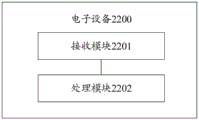
A tenth aspect provides an electronic device configured to perform the method in any one of the implementation manners of the first aspect to the ninth aspect.
In an eleventh aspect, an electronic device is provided, including: a memory for storing a program; a processor configured to execute the program stored in the memory, and when the program stored in the memory is executed, the processor is configured to perform the method in any one of the implementations of the first aspect to the ninth aspect.
In a twelfth aspect, an electronic device is provided, comprising: means for performing the method of any one of the implementations of the first to ninth aspects are included.
In a thirteenth aspect, a computer-readable medium is provided, which stores program code for execution by a device, the program code comprising instructions for performing the method of any one of the implementations of the first to ninth aspects.
In a fourteenth aspect, a computer program product containing instructions is provided, which when run on a computer causes the computer to perform the method in any one of the implementations of the first to ninth aspects.
A fifteenth aspect provides a chip, where the chip includes a processor and a data interface, and the processor reads instructions stored in a memory through the data interface to perform the method in any one of the implementation manners of the first aspect to the ninth aspect.
Optionally, as an implementation manner, the chip may further include a memory, where instructions are stored in the memory, and the processor is configured to execute the instructions stored in the memory, and when the instructions are executed, the processor is configured to execute the method in any one implementation manner of the first aspect to the ninth aspect.
Detailed Description
The technical solution in the present application will be described below with reference to the accompanying drawings.
The terminology used in the following examples is for the purpose of describing particular embodiments only and is not intended to be limiting of the application. As used in the specification of this application and the appended claims, the singular forms "a", "an", "the" and "the" are intended to include the plural forms as well, such as "one or more", unless the context clearly indicates otherwise. It should also be understood that in the following embodiments of the present application, "at least one", "one or more" means one, two or more. The term "and/or" is used to describe an association relationship that associates objects, meaning that three relationships may exist; for example, a and/or B, may represent: a alone, both A and B, and B alone, where A, B may be singular or plural. The character "/" generally indicates that the former and latter associated objects are in an "or" relationship.
Reference throughout this specification to "one embodiment" or "some embodiments," or the like, means that a particular feature, structure, or characteristic described in connection with the embodiment is included in one or more embodiments of the present application. Thus, appearances of the phrases "in one embodiment," "in some embodiments," "in other embodiments," or the like, in various places throughout this specification are not necessarily all referring to the same embodiment, but rather "one or more but not all embodiments" unless specifically stated otherwise. The terms "comprising," "including," "having," and variations thereof mean "including, but not limited to," unless expressly specified otherwise.
Embodiments of an electronic device, a user interface for such an electronic device, and a method for using such an electronic device provided by embodiments of the present application are described below. In some embodiments, the electronic device may be a device that also contains itPortable electronic devices such as cell phones, tablet computers, video players, etc., that function as a personal digital assistant and/or music player. Exemplary embodiments of the portable electronic device include, but are not limited to, a mount

Or other operating system. The portable electronic device may also be other portable electronic devices such as a Laptop computer (Laptop) or the like. It should also be understood that in other embodiments, the electronic device may not be a portable electronic device, but may be a desktop computer, a television (or a smart screen), a notebook computer, an intelligent air conditioner, an intelligent sound box, a room temperature meter, a hygrometer, a humidity thermometer, a curtain remote controller, an intelligent clock, an intelligent water heater, an intelligent camera, an intelligent light, a refrigerator, a power switch, an electric fan, an intelligent humidifier, an air purifier, and the like.
Fig. 1 shows a schematic structural diagram of an electronic device 100. The electronic device 100 may include a processor 110, an external memory interface 120, an internal memory 121, a Universal Serial Bus (USB) interface 130, a charging management module 140, a power management module 141, a battery 142, an antenna 1, an antenna 2, a mobile communication module 150, a wireless communication module 160, an audio module 170, a speaker 170A, a receiver 170B, a microphone 170C, an earphone interface 170D, a button 190, a camera 193, a display screen 194, a Subscriber Identification Module (SIM) card interface 195, and the like.
Processor 110 may include one or more processing units, such as: the processor 110 may include an Application Processor (AP), a modem processor, a Graphics Processing Unit (GPU), an Image Signal Processor (ISP), a controller, a video codec, a Digital Signal Processor (DSP), a baseband processor, and/or a neural-Network Processing Unit (NPU), etc. Wherein the different processing units may be separate components or may be integrated in one or more processors. In some embodiments, the electronic device 101 may also include one or more processors 110. The controller can generate an operation control signal according to the instruction operation code and the time sequence signal to complete the control of instruction fetching and instruction execution. In other embodiments, a memory may also be provided in processor 110 for storing instructions and data. Illustratively, the memory in the processor 110 may be a cache memory. The memory may hold instructions or data that have just been used or recycled by the processor 110. If the processor 110 needs to reuse the instruction or data, it can be called directly from the memory. This avoids repeated accesses and reduces the latency of the processor 110, thereby increasing the efficiency with which the electronic device 101 processes data or executes instructions.
In some embodiments, processor 110 may include one or more interfaces. The interface may include an inter-integrated circuit (I2C) interface, an inter-integrated circuit audio (I2S) interface, a Pulse Code Modulation (PCM) interface, a universal asynchronous receiver/transmitter (UART) interface, a Mobile Industry Processor Interface (MIPI), a general-purpose input/output (GPIO) interface, a SIM card interface, and/or a USB interface, etc. The USB interface 130 is an interface conforming to the USB standard specification, and may specifically be a Mini USB interface, a Micro USB interface, a USB Type C interface, or the like. The USB interface 130 may be used to connect a charger to charge the electronic device 101, and may also be used to transmit data between the electronic device 101 and the device. The USB interface 130 may also be used to connect to a headset to play audio through the headset.
It should be understood that the interface connection relationship between the modules illustrated in the embodiments of the present application is only an illustration, and does not limit the structure of the electronic device 100. In other embodiments of the present application, the electronic device 100 may also adopt different interface connection manners or a combination of multiple interface connection manners in the above embodiments.
The charging management module 140 is configured to receive charging input from a charger. The charger may be a wireless charger or a wired charger. In some wired charging embodiments, the charging management module 140 may receive charging input from a wired charger via the USB interface 130. In some wireless charging embodiments, the charging management module 140 may receive a wireless charging input through a wireless charging coil of the electronic device 100. The charging management module 140 may also supply power to the electronic device through the power management module 141 while charging the battery 142.
The power management module 141 is used to connect the battery 142, the charging management module 140 and the processor 110. The power management module 141 receives input from the battery 142 and/or the charge management module 140 and provides power to the processor 110, the internal memory 121, the external memory, the display 194, the camera 193, the wireless communication module 160, and the like. The power management module 141 may also be used to monitor parameters such as battery capacity, battery cycle count, battery state of health (leakage, impedance), etc. In some other embodiments, the power management module 141 may also be disposed in the processor 110. In other embodiments, the power management module 141 and the charging management module 140 may be disposed in the same device.
The wireless communication function of the electronic device 100 may be implemented by the antenna 1, the antenna 2, the mobile communication module 150, the wireless communication module 160, a modem processor, a baseband processor, and the like.
The antennas 1 and 2 are used for transmitting and receiving electromagnetic wave signals. Each antenna in the electronic device 100 may be used to cover a single or multiple communication bands. Different antennas can also be multiplexed to improve the utilization of the antennas. For example: the antenna 1 may be multiplexed as a diversity antenna of a wireless local area network. In other embodiments, the antenna may be used in conjunction with a tuning switch.
The mobile communication module 150 may provide a solution including 2G/3G/4G/5G wireless communication applied to the electronic device 100. The mobile communication module 150 may include at least one filter, a switch, a power amplifier, a Low Noise Amplifier (LNA), and the like. The mobile communication module 150 may receive the electromagnetic wave from the antenna 1, filter, amplify, etc. the received electromagnetic wave, and transmit the electromagnetic wave to the modem processor for demodulation. The mobile communication module 150 may also amplify the signal modulated by the modem processor, and convert the signal into electromagnetic wave through the antenna 1 to radiate the electromagnetic wave. In some embodiments, at least some of the functional modules of the mobile communication module 150 may be disposed in the processor 110. In some embodiments, at least some of the functional modules of the mobile communication module 150 may be disposed in the same device as at least some of the modules of the processor 110.
The wireless communication module 160 may provide a solution for wireless communication applied to the electronic device 100, including Wireless Local Area Networks (WLANs) (e.g., wireless fidelity (Wi-Fi) networks), bluetooth (bluetooth, BT), Global Navigation Satellite System (GNSS), Frequency Modulation (FM), Near Field Communication (NFC), Infrared (IR), and the like. The wireless communication module 160 may be one or more devices integrating at least one communication processing module. The wireless communication module 160 receives electromagnetic waves via the antenna 2, performs frequency modulation and filtering processing on electromagnetic wave signals, and transmits the processed signals to the processor 110. The wireless communication module 160 may also receive a signal to be transmitted from the processor 110, perform frequency modulation and amplification on the signal, and convert the signal into electromagnetic waves through the antenna 2 to radiate the electromagnetic waves.
The electronic device 100 implements display functions via the GPU, the display screen 194, and the application processor. The GPU is a microprocessor for image processing, and is connected to the display screen 194 and an application processor. The GPU is used to perform mathematical and geometric calculations for graphics rendering. The processor 110 may include one or more GPUs that execute program instructions to generate or alter display information.
The display screen 194 is used to display images, video, and the like. The display screen 194 includes a display panel. The display panel may adopt a Liquid Crystal Display (LCD), an organic light-emitting Diode (OLED), an active-matrix organic light-emitting Diode (active-matrix organic light-emitting Diode, AMOLED), a flexible light-emitting Diode (FLED), a mini light-emitting Diode (mini led), a Micro light-emitting Diode (Micro led), a Micro organic light-emitting Diode (Micro OLED), a quantum dot light-emitting Diode (QLED), and the like. In some embodiments, the mobile terminal 100 may include one or more display screens 194.
The display screen 194 of the electronic device 100 may be a flexible screen, which is currently attracting attention due to its unique characteristics and great potential. Compared with the traditional screen, the flexible screen has the characteristics of strong flexibility and flexibility, can provide a new communication mode based on the bendable characteristic for a user, and can meet more requirements of the user on electronic equipment. For the electronic equipment provided with the foldable display screen, the foldable display screen on the electronic equipment can be switched between a small screen in a folded state and a large screen in an unfolded state at any time. Therefore, the use of the split screen function by the user on the electronic device equipped with the foldable display screen is more and more frequent.
The electronic device 100 may implement a shooting function through the ISP, the camera 193, the video codec, the GPU, the display 194, the application processor, and the like.
The ISP is used to process the data fed back by the camera 193. For example, when taking a picture, the shutter is opened, light is transmitted to the photosensitive element of the camera 193 through the lens, the optical signal is converted into an electrical signal, and the photosensitive element of the camera 193 transmits the electrical signal to the ISP for processing and converting into an image visible to the naked eye. The ISP can also carry out algorithm optimization on the noise, brightness and skin color of the image. The ISP can also optimize parameters such as exposure, color temperature and the like of a shooting scene. In some embodiments, the ISP may be provided in camera 193.
The camera 193 is used to capture still images or video. The object generates an optical image through the lens and projects the optical image to the photosensitive element. The photosensitive element may be a Charge Coupled Device (CCD) or a complementary metal-oxide-semiconductor (CMOS) phototransistor. The light sensing element converts the optical signal into an electrical signal, which is then passed to the ISP where it is converted into a digital image signal. And the ISP outputs the digital image signal to the DSP for processing. The DSP converts the digital image signal into image signal in standard RGB, YUV and other formats. In some embodiments, the electronic device 100 may include 1 or more cameras 193.
The digital signal processor is used for processing digital signals, and can process digital image signals and other digital signals. For example, when the electronic device 100 selects a frequency bin, the digital signal processor is used to perform fourier transform or the like on the frequency bin energy.
Video codecs are used to compress or decompress digital video. The electronic device 100 may support one or more video codecs. In this way, the electronic device 100 may play or record video in a variety of encoding formats, such as: moving Picture Experts Group (MPEG) 1, MPEG2, MPEG3, MPEG4, and the like.
The NPU is a neural-network (NN) computing processor that processes input information quickly by using a biological neural network structure, for example, by using a transfer mode between neurons of a human brain, and can also learn by itself continuously. Applications such as intelligent recognition of the electronic device 100 can be realized through the NPU, for example: image recognition, face recognition, speech recognition, text understanding, and the like.
The external memory interface 120 may be used to connect an external memory card, such as a Micro SD card, to extend the memory capability of the electronic device 100. The external memory card communicates with the processor 110 through the external memory interface 120 to implement a data storage function. For example, files such as music, video, etc. are saved in an external memory card.
Internal memory 121 may be used to store one or more computer programs, including instructions. The processor 110 may execute the above-mentioned instructions stored in the internal memory 121, so as to enable the electronic device 101 to perform the method for displaying the off-screen display provided in some embodiments of the present application, and various applications and data processing. The internal memory 121 may include a program storage area and a data storage area. Wherein, the storage program area can store an operating system; the storage program area may also store one or more applications (e.g., gallery, contacts, etc.), and the like. The storage data area may store data (such as photos, contacts, etc.) created during use of the electronic device 101, and the like. Further, the internal memory 121 may include a high-speed random access memory, and may also include a non-volatile memory, such as one or more magnetic disk storage components, flash memory components, Universal Flash Storage (UFS), and the like. In some embodiments, the processor 110 may cause the electronic device 101 to execute the method for displaying the off-screen provided in the embodiments of the present application, and other applications and data processing by executing instructions stored in the internal memory 121 and/or instructions stored in a memory provided in the processor 110. The electronic device 100 may implement audio functions via the audio module 170, the speaker 170A, the receiver 170B, the microphone 170C, the headphone interface 170D, and the application processor. Such as music playing, recording, etc.
The keys 190 include a power-on key, a volume key, and the like. The keys 190 may be mechanical keys. Or may be touch keys. The electronic apparatus 100 may receive a key input, and generate a key signal input related to user setting and function control of the electronic apparatus 100.
It is to be understood that the illustrated structure of the embodiment of the present application does not specifically limit the electronic device 100. In other embodiments of the present application, electronic device 100 may include more or fewer components than shown, or some components may be combined, some components may be split, or a different arrangement of components. The illustrated components may be implemented in hardware, software, or a combination of software and hardware. For example, the hardware structure diagram of the electronic device 100 shown in fig. 1 may be a hardware structure diagram of a portable electronic device, a desktop computer, a television, a notebook computer, and the like. The intelligent remote control system can be used for intelligent air conditioners, intelligent sound boxes, intelligent camera devices, room temperature meters, hygrometers, humidity thermometers, curtain remote control machines, intelligent clocks, intelligent water heaters, intelligent lamps and the like, and can have hardware structures different from those shown in figure 1.
In one example, a smart air conditioner may include, for example, a processor 110, a wireless communication module 160, a temperature sensor, a refrigeration system, a display screen 194. The wireless communication module 160 of the smart air conditioner may be used to receive indication information of other devices. The processor 110 of the smart air conditioner may run the room temperature adjusting program and process the indication information transmitted from the other devices. The intelligent air conditioner can operate a refrigeration system to reduce the room temperature. The display screen 194 of the smart air conditioner may display a room temperature designated by a user, etc. The intelligent air conditioner can judge whether the refrigeration system needs to be operated according to the room temperature detected by the temperature sensor. The smart air conditioner may suspend the operation of the refrigeration system in case the room temperature reaches or is lower than the user-designated room temperature. The smart air conditioner may operate the refrigeration system in a case where the room temperature is higher than a user-designated room temperature.
In one example, the smart speaker may include, for example, the processor 110, the wireless communication module 160, the speaker 170A, the microphone 170C. The wireless communication module 160 of the smart speaker may be used to communicate data with other devices. The processor 110 of the smart speaker may run an audio playback program to drive the speaker 170A to play audio. The audio may be, for example, audio data received by the wireless communication module 160 that is transmitted by other devices. The processor 110 of the smart speaker may also run a recording program to drive the microphone 170C to record audio. The smart speaker may send the recorded audio data to other devices through the wireless communication module 160.
In one example, the smart camera device may include, for example, the processor 110, the wireless communication module 160, the camera 193, the microphone 170C. The wireless communication module 160 of the smart camera may be used to communicate data with other devices. The processor 110 of the smart camera may run a video capture program to drive the camera 193 to capture image information and the microphone 170C to capture audio information. The smart camera may synthesize the captured image information and audio information into video data and transmit the video data to other devices through the wireless communication module 160.
In one example, the room thermometer may include, for example, the processor 110, the wireless communication module 160, a temperature sensor, the display screen 194. The processor 110 of the room temperature meter may drive the temperature sensor to detect the room temperature and transmit the room temperature to other devices through the wireless communication module 160. The display screen 194 of the room temperature meter may display the current room temperature detected by the temperature sensor.
In one example, the hygrometer may include, for example, the processor 110, the wireless communication module 160, a humidity sensor, and a display screen 194. The processor 110 of the hygrometer may drive the humidity sensor to detect the indoor humidity and send the indoor humidity to other devices through the wireless communication module 160. The display screen 194 of the room temperature meter may display the current humidity detected by the humidity sensor.
In one example, the humidity thermometer may include, for example, the processor 110, the wireless communication module 160, a temperature sensor, a humidity sensor, the display screen 194. The processor 110 of the humidity thermometer may drive the temperature sensor to detect the room temperature and transmit the room temperature to other devices through the wireless communication module 160. The processor 110 of the humidity thermometer may also drive the humidity sensor to detect the indoor humidity and transmit the indoor humidity to other devices through the wireless communication module 160. The display screen 194 of the humidity thermometer can display the current room temperature detected by the temperature sensor and the current humidity detected by the humidity sensor.
In one example, the curtain remote control machine may include, for example, the processor 110, the wireless communication module 160, and a motor. The processor 110 of the remote control machine for curtains may include a program for driving the motor so that the curtain can be opened or closed. The remote control machine of the window curtain can receive the indication information sent by other devices through the wireless communication module 160. The processor 110 of the remote control machine for curtains may operate the program of the driving motor according to the instruction information received by the wireless communication module 160.
In one example, the smart clock may include, for example, the processor 110, the wireless communication module 160, the speaker 170A. The processor 110 of the smart clock may run an alarm clock program. In the case where the current time is the same as the set time in the alarm clock program, the processor 110, which may be a smart clock, may control the speaker 170A to play a ring. The wireless communication module 160 of the smart clock may receive the indication information sent by the other device. The processor 110 of the smart clock may process the indication. For example, the wireless communication module 160 of the smart clock may receive the alarm clock indication information newly input by the user, and the processor 110 of the smart clock may record the alarm clock indication information.
In one example, the smart water heater may include, for example, a processor 110, a wireless communication module 160, a heating system, a temperature sensor, a display screen 194. The wireless communication module 160 of the intelligent water heater may be used to receive indication information of other devices. The processor 110 of the intelligent water heater can run a temperature control program and process the instruction information sent by other devices. The intelligent water heater can operate a heating system to control the water temperature in the intelligent water heater. The display screen 194 of the intelligent water heater can display the current water temperature in the intelligent water heater and the like. The intelligent water heater can judge whether the heating system needs to be operated according to the water temperature detected by the temperature sensor. The intelligent water heater can suspend operation of the heating system when the water temperature reaches or is higher than the water temperature specified by the user. Under the condition that the water temperature is lower than the water temperature specified by the user, the intelligent water heater can operate the heating system.
In one example, the smart light fixture may include, for example, a processor 110, a wireless communication module 160, a lighting system. The wireless communication module 160 of the intelligent light fixture may be used to receive indication information of other devices. The processor 110 of the intelligent luminaire may run the illumination program and process the indication information sent by the other devices. Through the illumination program, the processor 110 of the intelligent lamp can turn on or off the illumination system, and can also control the illumination system to emit light with different brightness.
Fig. 2 is a block diagram of a software structure of the electronic device 100 according to the embodiment of the present application. The layered architecture divides the software into several layers, each layer having a clear role and division of labor. The layers communicate with each other through a software interface. In some embodiments, the Android system is divided into four layers, an application layer, an application framework layer, an Android runtime (Android runtime) and system library, and a kernel layer from top to bottom. The application layer may include a series of application packages.
As shown in fig. 2, the application packages may include applications such as voice assistant, tv play, movie play, audio play, gallery, browser, clock, settings, etc.
The application framework layer provides an Application Programming Interface (API) and a programming framework for the application program of the application layer. The application framework layer includes a number of predefined functions.
As shown in FIG. 2, the application framework layers may include a window manager, content provider, view system, phone manager, resource manager, notification manager, and the like.
The window manager is used for managing window programs. The window manager can obtain the size of the display screen, judge whether a status bar exists, lock the screen, intercept the screen and the like.
The content provider is used to store and retrieve data and make it accessible to applications. The data may include video, images, audio, browsing history and bookmarks etc.
The view system includes visual controls such as controls to display text, controls to display pictures, and the like. The view system may be used to build applications. The display interface may be composed of one or more views. For example, a theatrical playback interface may include a view that displays text, a view that displays images, and a view that displays video.
The resource manager provides various resources for the application, such as localized strings, icons, pictures, layout files, video files, and the like.
The notification manager allows applications to display notification information in the status bar, can be used to convey notification-type messages, can disappear automatically after a short dwell, and does not require user communication. Such as a notification manager used to inform download completion, message alerts, etc. The notification manager may also be a notification that appears in the form of a chart or scroll bar text at the top status bar of the system, such as a notification of a background running application, or a notification that appears on the screen in the form of a dialog window. For example, text information is presented in the status bar, and a warning sound is generated.
The Android Runtime comprises a core library and a virtual machine. The Android runtime is responsible for scheduling and managing an Android system.
The core library comprises two parts: one part is a function which needs to be called by java language, and the other part is a core library of android.
The application layer and the application framework layer run in a virtual machine. And executing java files of the application program layer and the application program framework layer into a binary file by the virtual machine. The virtual machine is used for performing the functions of object life cycle management, stack management, thread management, safety and exception management, garbage collection and the like.
The system library may include a plurality of functional modules. For example: surface managers (surface managers), media libraries (media libraries), three-dimensional graphics processing libraries (e.g., OpenGL ES), 2D graphics engines (e.g., SGL), and the like.
The surface manager is used to manage the display subsystem and provide fusion of 2D and 3D layers for multiple applications.
The media library supports a variety of commonly used audio, video format playback and recording, and still image files, among others. The media library may support a variety of audio-video encoding formats, such as MPEG4, h.264, MP3, AAC, AMR, JPG, PNG, and the like.
The three-dimensional graphic processing library is used for realizing three-dimensional graphic drawing, image rendering, synthesis, layer processing and the like.
The 2D graphics engine is a drawing engine for 2D drawing.
The kernel layer is a layer between hardware and software. The kernel layer at least comprises a display driver, a camera driver, an audio driver and the like.
It is to be understood that the software structure illustrated in the embodiment of the present application does not constitute a specific limitation to the electronic device 100. In other embodiments of the present application, electronic device 100 may include more or fewer modules or functions than those shown. For example, the software structure block diagram of the electronic device 100 shown in fig. 2 may be a hardware structure diagram of a portable electronic device, a desktop computer, a television, a notebook computer, and the like. Aiming at an intelligent air conditioner, an intelligent sound box, an intelligent camera device, a room thermometer, a hygrometer, a humidity thermometer, a curtain remote control machine, an intelligent clock, an intelligent water heater, an intelligent lamp and the like, the intelligent air conditioner and the intelligent sound box can have a relatively simplified software structure, and detailed description is not needed.
Fig. 3 shows an application scenario for multi-device communication.
A user may purchase a plurality of intelligent electronic devices, which are located at home. As shown in fig. 3, the user may purchase, for example, a television 303, a notebook computer 305, an intelligent air conditioner 306, an intelligent sound box 308, a humidity thermometer 311, a curtain remote control 307, an intelligent clock 312, an intelligent water heater 304, an intelligent camera 309, an intelligent light fixture 310, and the like. In addition, a user may carry one or more portable electronic devices with them, such as the cell phone 302 shown in FIG. 3. Also, a user may purchase a device that provides data services to a plurality of intelligent electronic devices, such as router 301 shown in fig. 3. At least some of the functions that can be implemented by the respective electronic devices have been described above, and need not be described in detail here.
Fig. 4 illustrates a communication system for multi-device communication. The communication system may comprise a plurality of intelligent electronic devices as shown in fig. 3. In addition, the communication system may further include a cloud server 401. The plurality of intelligent electronic devices shown in fig. 3 may communicate data with each other via an internet of things communication protocol. The intelligent electronic device shown in fig. 3 may also perform data communication with the cloud server 401 through one or more communication protocols such as an internet of things communication protocol.
The communication system shown in fig. 4 may include category 4 electronic devices.
The first type of electronic device may be a cloud server 401. The cloud server 401 may receive data from a plurality of intelligent electronic devices and provide data services for the plurality of intelligent electronic devices, for example, provide big data storage services, high-speed operation services, and the like for the plurality of intelligent electronic devices.
The second type of electronic device may be an internet of things device 402. The internet of things device 402 may refer to an internet of things device with a particular functionality. That is, the internet of things device 402 can generally provide intelligent services to the user in a small portion of a specific scenario. The internet of things device 402 may be controlled by other intelligent electronic devices. The internet of things device 402 may include, for example, the television 303, the smart air conditioner 306, the smart sound box 308, the humidity thermometer 311, the curtain remote control 307, the smart clock 312, the smart water heater 304, the smart camera 309, the smart light fixture 310, and the like as shown in fig. 3. The embodiment of the present application does not limit the specific type of the internet of things device 402.
A third type of electronic device may be the control device 403. The control device 403 may control the internet of things device 402 to perform corresponding operations, so that the plurality of internet of things devices 402 cooperate to provide an intelligent service for the user. The control device 403 may also be in data communication with the cloud server 401. For example, the control device 403 may send data related to habits of the user to the cloud server 401, and the cloud server 401 may obtain a method suitable for the control device 403 of the user according to the habits of the user and send the method to the control device 403, so that the control device 403 may control the internet of things device 402 by using a method matched with the habits of the user. The control device 403 may be, for example, a cellular phone 302, a notebook computer 305, etc., as shown in fig. 3. The embodiment of the present application does not limit the specific type of the control device 403.
A fourth type of electronic device may be communication service device 404. The communication service device 404 may provide data communication services for a plurality of intelligent electronic devices. That is, the communication service device 404 may provide a local area network for the plurality of intelligent electronic devices. For example, the intelligent electronic device 1 may send data to the communication service device 404, and the communication service device 404 forwards the data to the intelligent electronic device 2. As another example, intelligent electronic device 3 may broadcast data via a local area network, and intelligent electronic device 4 may receive data broadcast by intelligent electronic device 3 via the local area network. As another example, the intelligent electronic device 5 may transmit data to the cloud server 401 through the communication service device 404, and receive data transmitted by the cloud server 401 through the communication service device 404. The communication service apparatus 404 may include, for example, the router 301 and the like as shown in fig. 3. The embodiment of the present application does not limit the specific type of the communication service apparatus 404.
In one example, the internet of things device 402 may directly establish a wireless communication connection with the control device 403 and perform data communication through an internet of things communication protocol (e.g., a smart home communication protocol, a Hilink communication protocol 405 shown in fig. 4, etc.).
In one example, the internet of things device 402 may perform data communication with the control device 403 and the cloud server 401 through the communication service device 404 according to the internet of things communication protocol.
In one example, the control device 403 may perform data communication with the cloud server 401 according to a mobile communication network.
In one example, the control device 403 may perform data communication with the cloud server 401 according to a wireless communication network provided by the communication service device 404.
In a possible case, the plurality of intelligent electronic devices may be provided by the same vendor. The vendor may provide the user with a proprietary internet of things communication protocol. That is to say, the television, the notebook computer, the intelligent air conditioner, the intelligent sound box, the intelligent camera device, the humidity thermometer, the curtain remote control machine, the intelligent clock, the intelligent water heater and the intelligent lamp can be communicated with other intelligent electronic equipment according to the private internet of things communication protocol. For example, the intelligent clock can send the time information to the curtain remote control machine through the private internet of things communication protocol, so that the curtain remote control machine can control the curtain to be opened or closed at a specified time.
In another possible scenario, the plurality of intelligent electronic devices are provided by different vendors. Proprietary internet of things communication protocols used by different vendors differ. Still taking the above example as an example, the smart clock is provided by the provider 1, and the private internet of things communication protocol provided by the provider 1 is the private internet of things communication protocol 1; the curtain remote control machine is provided by a supplier 2, and the private internet of things communication protocol provided by the supplier 2 is the private internet of things communication protocol 2. Because the intelligent clock can not send the indication information to the curtain remote control machine through the private Internet of things communication protocol 2, and the curtain remote control machine can not receive the indication information sent by the intelligent clock through the private Internet of things communication protocol 1, a user can not control the curtain remote control machine to open or close the curtain at the specified time through the intelligent clock.
A user typically considers many factors, such as brand effect, device quality, device price, etc., when purchasing an intelligent electronic device. In addition, vendors often cannot provide sufficient diversity of intelligent electronic devices. If a user purchases a plurality of intelligent electronic devices provided by a plurality of suppliers, the convenience of using the plurality of intelligent electronic devices may be reduced.
In order to enable the intelligent electronic device to execute the operation according to the intention of the user as much as possible, the user can input the specified condition and the specified operation corresponding to the specified condition into the intelligent electronic device, so that the intelligent electronic device can execute the specified operation under the specified condition. Still taking the above example as an example, the user may input the designated time to the curtain remote control machine, so that the curtain remote control machine may control the curtain to be opened or closed at the designated time. However, the process of inputting the specified condition and the specified operation is not very convenient.
Fig. 5 is a communication system according to an embodiment of the present application. In the communication system, wireless communication connections can be established between a plurality of devices. The communication system may include a control device and a plurality of internet of things devices.
The internet of things equipment can establish wireless communication connection with the control equipment through a wireless communication protocol. The internet of things equipment can be, for example, a television 303, a smart air conditioner 306, a smart sound box 308, a humidity thermometer 311, a curtain remote control 307, a smart clock 312, a smart water heater 304, a smart camera 309, a smart light fixture 310 and the like as shown in fig. 5. The control device may be, for example, a cell phone 302 as shown in fig. 5.
In one example, the internet of things device may be in data communication with the control device, such as via a bluetooth communication protocol. For example, the internet of things device may send a message to the control device through a bluetooth communication protocol; accordingly, the control device may send a message to the internet of things device via the bluetooth communication protocol. Thus, the internet of things device can establish a wireless communication connection for data communication with the control device.
In one example, the internet of things device and the control device may access the same wireless local area network, which may be provided by a communication service device (e.g., router 301 in fig. 5). The internet of things device and the control device can communicate through the communication service device. For example, the internet of things device may send a message 1 to the communication service device, and the message 1 may be forwarded to the control device by the communication service device; accordingly, the control device may send the message 2 to the communication service device, and the message 2 may be forwarded to the internet of things device by the communication service device. Thus, the internet of things device can establish a wireless communication connection for data communication with the control device.
Fig. 5 illustrates a communication system 500 in which a plurality of internet of things devices establish wireless communication connections with a control device. In the communication system 500, the control device may establish wireless communication connections with a plurality of internet of things devices. Optionally, communication between any two internet of things devices in the plurality of internet of things devices may use the control device as a medium. In addition, the wireless communication connection between the two internet of things devices does not need to use the control device as a medium. That is, the two internet of things devices may bypass the control device to establish a wireless communication connection. The process of establishing a wireless communication connection between two internet of things devices is described in detail below, and therefore, detailed description thereof is omitted.
Fig. 6 is a schematic communication diagram of a control device and an internet of things device provided in an embodiment of the present application.
The internet of things equipment can send first equipment registration information to the control equipment, wherein the first equipment registration information is used for indicating M input parameters of the internet of things equipment, and M is a positive integer.
Correspondingly, the control equipment receives the first equipment registration information sent by the Internet of things equipment.
That is to say, the control device may determine, according to the first device registration information, M input parameters that the internet of things device may receive. In addition, the control device can establish wireless communication connection with the internet of things device. Establishing the wireless communication connection means that the control device can know that some internet of things device exists around the control device, and the internet of things device can know that the control device exists around the internet of things device; the control device and the internet of things device can jointly establish a data transmission channel for data communication.
In one example, for a smart air conditioner, the M input parameters may include a temperature parameter, a humidity parameter, a time parameter, an event parameter, and the like.
Specific applications of the temperature parameter may include at least one of: and indicating the specific numerical value of the current room temperature to the intelligent air conditioner, indicating the numerical value of the preset temperature to the intelligent air conditioner and the like. Wherein the preset temperature may be specified by a user, for example. For example, the smart air conditioner may adjust a current setting of the smart air conditioner according to the temperature parameter.
Specific applications of the humidity parameter may include at least one of: and indicating the specific numerical value of the current indoor humidity to the intelligent air conditioner, indicating the numerical value of the preset humidity to the intelligent air conditioner and the like. Wherein the preset humidity may be specified by a user, for example. For example, the smart air conditioner may adjust a current setting of the smart air conditioner according to the humidity parameter.
Specific applications of the time parameter may include at least one of: the current time is indicated to the intelligent air conditioner, and the preset time or the preset time period is indicated to the intelligent air conditioner. The preset time and the preset time period may be specified by a user, for example. The preset time, preset period of time may be, for example, alarm clock (or alarm) data. For example, the smart air conditioner is turned on or off at a designated time. For another example, when the time for turning on the intelligent air conditioner reaches a preset time period, the intelligent air conditioner is turned off.
Specific applications of event parameters may include: and sending event information to the intelligent air conditioner, wherein the intelligent air conditioner can realize partial functions of the intelligent air conditioner according to the event information. For example, the event information may include indication information of someone in a room, and the smart air conditioner may turn on the smart air conditioner according to the indication information of someone in the room; the event information can also comprise indicating information of no people in the room, and the intelligent air conditioner can be turned off within a period of time after receiving the indicating information.
In one example, for television, the M input parameters may include audio parameters, image parameters, video parameters, time parameters, event parameters, and the like.
Specific applications of the audio parameters may include at least one of: sending semantic instructions of the user to the television, sending voiceprint data of the user to the television, sending voice call data to the television, sending data of audio to be played to the television and the like. The user's voice commands may correspond to some of the functions that the television is capable of performing. For example, a user's voice instructions may instruct a television to play a particular program. The user's voiceprint data can be used by the television to identify the user. The television can receive the data of the voice call sent by other recording devices, and the television does not need to record. The television can play the audio to be played.
Specific applications of the image parameters may include at least one of: and transmitting the face image of the user to the television, transmitting the data of the image to be displayed to the television, and the like. The facial image of the user can be used for television to identify the identity of the user. The television may display the image to be displayed.
Specific applications of the video parameters may include at least one of: and sending the data of the video call to the television, sending the data of the video to be played to the television, and the like. The television can receive data of video calls sent by other shooting devices without recording the video by the television; the television can also display the video shot by the other shooting devices.
Specific applications of the time parameter may include at least one of: indicating the current time to the television, indicating the preset time or the preset time period to the television, and the like. The preset time and the preset time period may be specified by a user, for example. The preset time, preset period of time may be, for example, alarm clock (or alarm) data. For example, turning a television on or off at a specified time. For another example, when the time for turning on the television reaches the preset time period, the television is turned off.
Specific applications of event parameters may include: and sending event information to a television, wherein the television can realize partial functions of the television according to the event information. For example, the event information may include user preference data, and the television may push multimedia data that the user may prefer based on the user preference data. For example, a user may play a theme song of a tv series multiple times recently through the smart speaker, the smart speaker may indicate to the tv that the user may like the tv series through the user preference data, and the tv may push the tv series to the user according to the user preference data.
In one example, for a smart sound box, the M input parameters may include audio parameters, time parameters, event parameters, and the like.
Specific applications of the audio parameters may include at least one of: and sending a semantic instruction of a user to the intelligent sound box, sending audio data for conversation to the intelligent sound box, sending data of audio to be played to the intelligent sound box, and the like. The voice instruction of the user may correspond to a part of functions that can be realized by the smart sound box. For example, a user's voice instructions may instruct the smart speaker to increase the volume. The smart speaker can play the audio data for the call. The smart speaker can play the audio to be played.
Specific applications of the time parameter may include at least one of: the current moment is indicated to the intelligent sound box, and the preset moment or the preset time period and the like are indicated to the intelligent sound box. The preset time and the preset time period may be specified by a user, for example. The preset time, preset period of time may be, for example, alarm clock (or alarm) data. For example, the smart speakers may be turned on or off at a specified time. For another example, when the time for turning on the smart speaker reaches the preset time period, the smart speaker is turned off.
Specific applications of event parameters may include: and sending event information to the intelligent sound box, wherein the intelligent sound box can realize partial functions of the intelligent sound box according to the event information. For example, the event information may include user preference data, and the smart speaker may push music that may be preferred by the user according to the user preference data. For example, the user may play a concert video of a singer through a television for a plurality of times in the near term, the television may indicate to the smart speaker that the user may like the singer through the user preference data, and the smart speaker may push music of the singer for the user according to the user preference data.
In one example, for a remote control machine for a window covering, the M input parameters may include a time parameter, an event parameter, and the like.
Specific applications of the time parameter may include at least one of: indicating the current time to the curtain remote control machine, indicating the preset time or the preset time period to the curtain remote control machine, and the like. The preset time and the preset time period may be specified by a user, for example. The preset time, preset period of time may be, for example, alarm clock (or alarm) data. For example, the remote control machine opens or closes the window covering at a designated time. For another example, when the time for opening the curtain remote control machine reaches the preset time period, the curtain remote control machine is closed.
Specific applications of event parameters may include: and sending event information to the curtain remote control machine, wherein the curtain remote control machine can realize partial functions of the curtain remote control machine according to the event information. For example, the event information may include information indicative of the light intensity in the room. The curtain remote control machine can control the curtain to be opened to a specified degree according to the indication information of the indoor light intensity. It should be noted that the curtain may not function to shade the window when 100% of the curtain is opened; the window covering can function to substantially shade the window when 100% is closed (i.e., 0% open).
In one example, for an intelligent water heater, the M input parameters may include a temperature parameter, a time parameter, an event parameter, and the like.
Specific applications of the temperature parameter may include at least one of: the current room temperature is indicated to the intelligent water heater, and the numerical value of the preset temperature is indicated to the intelligent water heater. Wherein the preset temperature may be specified by a user, for example. For example, the intelligent water heater can adjust the currently set heating temperature of the intelligent water heater according to the temperature parameter.
Specific applications of the time parameter may include at least one of: the current time is indicated to the intelligent water heater, and the preset time or the preset time period is indicated to the intelligent water heater. The preset time and the preset time period may be specified by a user, for example. The preset time, preset period of time may be, for example, alarm clock (or alarm) data. For example, the heating function of an intelligent water heater is turned on or off at a specified time. For another example, the heating function of the intelligent water heater is turned off when the time for turning on the heating function of the intelligent water heater reaches the preset time period.
Specific applications of event parameters may include: and sending event information to the intelligent water heater, wherein the intelligent water heater can realize partial functions of the intelligent water heater according to the event information. For example, the event information may include indication information of someone in a room, and the intelligent water heater may start a heating function of the intelligent water heater according to the indication information of someone in the room; the event information can also comprise indoor unmanned indicating information, and the intelligent water heater can turn off the heating function of the intelligent water heater within a period of time after receiving the indicating information and turn on the heat preservation function of the intelligent water heater.
In one example, for a smart luminaire, the M input parameters may include a brightness parameter, a time parameter, an event parameter, and the like.
Specific applications of the luminance parameter may include at least one of: indicating the current indoor brightness to the intelligent lamp, indicating the numerical value of the preset brightness to the intelligent lamp, and the like. Wherein the preset brightness may be specified by a user, for example. For example, the intelligent luminaire may adjust the current brightness of the intelligent luminaire according to the brightness parameter.
Specific applications of the time parameter may include at least one of: the method comprises the steps of indicating the current moment to the intelligent lamp, indicating a preset moment or a preset time period to the intelligent lamp, and the like. The preset time and the preset time period may be specified by a user, for example. The preset time, preset period of time may be, for example, alarm clock (or alarm) data. For example, the lighting function of the smart light fixture is turned on or off at a specified time. For another example, when the time for turning on the intelligent lamp reaches the preset time period, the lighting function of the intelligent lamp is turned off.
Specific applications of event parameters may include: and sending event information to the intelligent lamp, wherein the intelligent lamp can realize partial functions of the intelligent lamp according to the event information. For example, the event information may include indication information of a person in a room, and the intelligent lamp may turn on an illumination function of the intelligent lamp according to the indication information of the person in the room; the event information can also comprise indoor unmanned indicating information, and the intelligent lamp can turn off the illumination function of the intelligent lamp within a period of time after receiving the indicating information.
In one example, for a smart camera, the M input parameters may include event parameters and the like.
Specific applications of event parameters may include: and sending event information to the intelligent camera device, wherein the intelligent camera device can realize partial functions of the intelligent camera device according to the event information. For example, the event information may include orientation information of the user indoors, and the smart camera may adjust a photographing angle, a photographing focal length, and the like of the smart camera according to the orientation information.
In one example, for a smart clock, the M input parameters may include event parameters, and the like.
Specific applications of event parameters may include: and sending event information to the intelligent clock, wherein the intelligent clock can realize partial functions of the intelligent clock according to the event information. For example, the user can set an alarm clock at other internet of things devices, the other internet of things devices can send event information to the intelligent clock, the event information can include the indicating information of the alarm clock, and the intelligent clock can add an alarm record according to the indicating information of the alarm clock.
In one example, for a humidity thermometer, the M input parameters may include event parameters, and the like.
Specific applications of event parameters may include: event information is sent to a thermometer, which may implement a portion of the functionality of the thermometer based on the event information. For example, the event information may include indication information that the air conditioner is turned on, and the intelligent lamp may shorten a detection period of temperature and a detection period of humidity according to the indication information that the air conditioner is turned on, and send the temperature parameter and the humidity parameter to the air conditioner according to a preset period.
Optionally, the first device registration information may further include at least one of the following: the interface information of the M input parameters, the wireless communication protocol supported by the Internet of things equipment, the Internet of things communication protocol supported by the Internet of things equipment and the like.
In one example, the first device registration information may include, for example, interface information for the M input parameters.
For example, the internet of things device may receive a first portion of the M input parameters using the wireless communication interface 1, and the internet of things device may receive a second portion of the M input parameters using the wireless communication interface 2. Optionally, any one of the first part of input parameters is different from each of the second part of input parameters.
In one example, the first device registration information may include, for example, a wireless communication protocol supported by the internet of things device.
For example, the internet of things device 1 may support a bluetooth wireless communication protocol, but does not support a Wi-Fi wireless communication protocol, and then the internet of things device 1 may perform data communication with other devices (such as a control device, other internet of things devices, and the like) through the bluetooth wireless communication protocol.
In one example, the first device registration information may include, for example, an internet of things communication protocol supported by the internet of things device.
For example, the brand provider of the internet of things device 1 is brand a, and the brand provider of the internet of things device 2 is brand B. The internet of things communication protocol that internet of things equipment 1 can support includes the internet of things communication protocol that brand a provided, the internet of things communication protocol that brand B provided, and the internet of things communication protocol that internet of things equipment 2 can support includes the internet of things communication protocol that brand B provided, the internet of things communication protocol that brand C provided, then internet of things equipment 1 can carry out data communication with internet of things equipment 2 through the internet of things communication protocol that brand B provided.
Optionally, the internet of things device may support an open internet of things communication protocol. The open internet of things communication protocol can be at least opened for developers of multiple internet of things devices to use. Even more, the open internet of things communication protocol may be at least partially open to the public, i.e., at least partially open internet of things communication protocol is in an unsecured state. The open internet of things communication protocol may be used for communication between multiple electronic devices, which may be provided by the same or different vendors. The open internet of things communication protocol may be, for example, a HiLink communication protocol.
Fig. 7 is a communication schematic diagram of a control device and an internet of things device provided in an embodiment of the present application.
The internet of things equipment can send second equipment registration information to the control equipment, wherein the second equipment registration information is used for indicating N output parameters of the internet of things equipment, and N is a positive integer.
Correspondingly, the control equipment receives the second equipment registration information sent by the internet of things equipment.
That is to say, the control device may determine, according to the second device registration information, N output parameters that the internet of things device may send. M and N may be the same or different. In addition, the control device can establish wireless communication connection with the internet of things device. Establishing the wireless communication connection means that the control device learns that some internet of things device exists around the control device, and the internet of things device learns that the control device exists around the internet of things device; the control device and the internet of things device can jointly establish a data transmission channel for data communication.
In one example, for a smart air conditioner, the N output parameters may include a temperature parameter, a humidity parameter, a time parameter, an event parameter, and the like.
Specific applications of the temperature parameters may include: and indicating the specific numerical value of the current room temperature detected by the intelligent air conditioner to other Internet of things equipment.
Specific applications of the humidity parameter may include: and indicating the specific numerical value of the current indoor humidity detected by the intelligent air conditioner to other Internet of things equipment.
Specific applications of the time parameter may include at least one of: the time data obtained by timing of the intelligent air conditioner is indicated to other Internet of things equipment, and alarm clock records recorded by the intelligent air conditioner are indicated to other Internet of things equipment.
Specific applications of event parameters may include: and sending the event information acquired by the intelligent air conditioner to other Internet of things equipment, so that the other Internet of things equipment can realize the corresponding function according to the event information. For example, the event information is used to indicate that the smart air conditioner currently starts the heating mode. Assuming that the intelligent humidifier can receive the event information, the intelligent humidifier can activate the intelligent humidifier according to the event information. This helps to provide the user with the proper indoor humidity.
In one example, for a television, the N output parameters may include audio parameters, image parameters, video parameters, time parameters, event parameters, and the like.
Specific applications of the audio parameters may include at least one of: the method comprises the steps of sending semantic instructions of a user to other Internet of things equipment, sending voiceprint data of the user to other Internet of things equipment, sending voice call data to other Internet of things equipment, sending data of audio to be played to other Internet of things equipment and the like. The voice command of the user may correspond to a part of functions that can be realized by other internet of things devices. For example, a user's voice instructions may instruct the smart speaker to increase the volume. The voiceprint data of the user can be used for other Internet of things equipment to identify the identity of the user. In the case where there are multiple voiceprint recognition devices indoors, the user may select a television to enter voiceprint information. The television can record in the call process, and sends the recording data to other Internet of things devices (such as intelligent sound boxes), and the other Internet of things devices do not need to record. The television can send the audio to be played to other internet of things devices (such as smart speakers), so that the other internet of things devices can play the audio to be played.
Specific applications of the image parameters may include at least one of: and sending the face image of the user to other Internet of things equipment, and sending the image currently displayed by the television to other Internet of things equipment. The face image of the user can be used for other Internet of things equipment to identify the identity of the user. For example, in a case where a plurality of face recognition devices exist indoors, the user may select a television to enter face information. The current displayed image of the television is sent to other Internet of things equipment, so that the function of copying the screen is realized. The duplicate screen function may cause multiple display devices to display the same content.
Specific applications of the video parameters may include at least one of: and sending the data of the video call to other Internet of things equipment, sending the data of the video to be played to other Internet of things equipment and the like. When a plurality of shooting devices exist indoors, a user can select a scene shot by a television to carry out video call, and can also select a scene shot by a plurality of shooting devices including the television to carry out video call. The television can send the acquired video to be played to other display equipment for playing, so that the other display equipment and the television can share the same media library.
Specific applications of the time parameter may include at least one of: and indicating the time data obtained by timing by the television to other Internet of things equipment, indicating the alarm clock record recorded by the television to other Internet of things equipment and the like.
Specific applications of event parameters may include: and sending the event information acquired by the television to other Internet of things equipment, so that the other Internet of things equipment can realize the corresponding function according to the event information. For example, the event information may include user preference data, and the other internet of things devices may push multimedia data that may be preferred by the user according to the user preference data. For example, the user may play a concert video of a singer through a television for a plurality of times in the near term, the television may indicate to the smart speaker that the user may like the singer through the user preference data, and the smart speaker may push music of the singer for the user according to the user preference data.
In one example, for a smart sound box, the N output parameters may include audio parameters, time parameters, event parameters, and the like.
Specific applications of the audio parameters may include at least one of: the method comprises the steps of sending semantic instructions of a user to other Internet of things equipment, sending voiceprint data of the user to other Internet of things equipment, sending audio data for conversation to other Internet of things equipment, sending data of audio to be played to other Internet of things equipment and the like. The voice command of the user may correspond to a part of functions that can be realized by other internet of things devices. For example, a user's voice instructions may instruct a television to play a particular program. The voiceprint data of the user can be used for other Internet of things equipment to identify the identity of the user. In the case where there are multiple voiceprint recognition devices indoors, the user may select a smart speaker to enter voiceprint information. The intelligent sound box can record in the call process, and sends the recording data to other Internet of things devices (such as a television), and the other Internet of things devices do not need to record. The smart sound box can send the audio to be played to other internet of things devices (such as televisions), so that the other internet of things devices can play the audio to be played.
Specific applications of the time parameter may include at least one of: the time data obtained by timing of the intelligent sound box is indicated to other Internet of things devices, and alarm clock records recorded by the intelligent sound box are indicated to other Internet of things devices.
Specific applications of event parameters may include: and sending the event information acquired by the intelligent sound box to other Internet of things equipment, so that the other Internet of things equipment can realize the corresponding function according to the event information. For example, the event information may include user preference data, and the other internet of things devices may push multimedia data that may be preferred by the user according to the user preference data. For example, a user may play a theme song of a tv series multiple times recently through the smart speaker, the smart speaker may indicate to the tv that the user may like the tv series through the user preference data, and the tv may push the tv series to the user according to the user preference data.
In one example, for a window covering remote control machine, the N output parameters may include a time parameter, an event parameter, and the like.
Specific applications of the time parameter may include at least one of: and indicating the time data obtained by timing by the curtain remote control machine to other Internet of things equipment, indicating the alarm clock record recorded by the curtain remote control machine to other Internet of things equipment and the like.
Specific applications of event parameters may include: and sending the event information acquired by the curtain remote control machine to other Internet of things equipment, so that the other Internet of things equipment can realize the corresponding function according to the event information. For example, the event information may include information indicative of the degree of opening of the window covering. If the intelligent lamp can receive the event information, the intelligent lamp can adjust the light-emitting brightness of the intelligent lamp according to the event information.
In one example, for a smart water heater, the N output parameters may include a time parameter, an event parameter, and the like.
Specific applications of the time parameter may include at least one of: the time data obtained by timing of the intelligent water heater is indicated to other Internet of things devices, and alarm clock records recorded by the intelligent water heater are indicated to other Internet of things devices.
Specific applications of event parameters may include: and sending the event information acquired by the intelligent water heater to other Internet of things equipment, so that the other Internet of things equipment can realize the corresponding function according to the event information. For example, the event information may indicate whether the heating function of the intelligent water heater is currently turned on. Other internet of things equipment can judge whether users appear around the intelligent water heater according to the event information.
In one example, for a smart luminaire, the N output parameters may include a brightness parameter, a time parameter, an event parameter, and the like.
Specific applications of the luminance parameter may include: and indicating the luminous intensity of the current intelligent lamp to other Internet of things equipment. For example, multiple intelligent light fixtures may synchronize lighting intensities.
Specific applications of the time parameter may include at least one of: the time data obtained by timing of the intelligent lamp is indicated to other Internet of things equipment, and the alarm clock records recorded by the intelligent lamp are indicated to other Internet of things equipment.
Specific applications of event parameters may include: and sending the event information acquired by the intelligent lamp to other Internet of things equipment, so that the other Internet of things equipment can realize the corresponding function according to the event information. For example, the event information may indicate whether the smart light fixture is currently turned on. Other internet of things equipment can judge whether the user appears around the intelligent lamp according to the event information.
In one example, for a smart camera device, the N output parameters may include audio parameters, image parameters, video parameters, time parameters, event parameters, and the like.
Specific applications of the audio parameters may include at least one of: the method comprises the steps of sending semantic instructions of a user to other Internet of things equipment, sending voiceprint data of the user to other Internet of things equipment, sending voice call data to other Internet of things equipment, sending recording audio to other Internet of things equipment and the like. The voice command of the user may correspond to a part of functions that can be realized by other internet of things devices. For example, a user's voice instructions may instruct the smart speaker to increase the volume, instruct the television to play a particular program, and so on. The voiceprint data of the user can be used for other Internet of things equipment to identify the identity of the user. In the case where a plurality of voiceprint recognition apparatuses exist indoors, the user can select the smart camera to enter voiceprint information. The device can record at the conversation in-process to with this recording data send for other thing networking devices (like intelligent audio amplifier), this other thing networking devices self need not to record. The intelligent shooting device can send the recording audio frequency to other internet of things equipment (such as intelligent sound box), so that the other internet of things equipment can play the recording audio frequency.
Specific applications of the image parameters may include at least one of: the face image of the user is sent to other Internet of things equipment, and the image shot by the intelligent shooting device is sent to other Internet of things equipment. The face image of the user can be used for other Internet of things equipment to identify the identity of the user. For example, in a case where a plurality of face recognition apparatuses exist indoors, a user may select a smart camera to enter face information. The images shot by the intelligent shooting device are sent to other Internet of things equipment, and flexible display of the shot images is facilitated.
Specific applications of the video parameters may include at least one of: and sending the data of the video call to other Internet of things equipment, and sending the shot video and the like to other Internet of things equipment. When a plurality of shooting devices exist indoors, a user can select a scene shot by the intelligent shooting device to carry out video call, and can also select a scene shot by the plurality of shooting devices including the intelligent shooting device to carry out video call. The shot video is sent to other Internet of things equipment, and flexible playing of the shot video is facilitated.
Specific applications of the time parameter may include at least one of: the time data obtained by timing of the intelligent shooting device is indicated to other Internet of things devices, and alarm clock records recorded by the intelligent shooting device are indicated to other Internet of things devices.
Specific applications of event parameters may include: and sending the event information acquired by the intelligent shooting device to other Internet of things equipment, so that the other Internet of things equipment can realize the corresponding function according to the event information. For example, the event information may include indication information of the presence of the user. The other internet of things equipment can push the multimedia data which is possibly preferred by the user according to the indication information of the appearing user. For example, the intelligent lamp may turn on the illumination function of the intelligent lamp according to the indication information of the user. For another example, the intelligent water heater can start the heating function of the intelligent water heater according to the indication information of the appearing user.
In one example, for a smart clock, the N output parameters may include a time parameter, an event parameter, and the like.
Specific applications of the time parameter may include at least one of: and indicating the time data obtained by the intelligent clock in timing to other Internet of things equipment, indicating the alarm clock record recorded by the intelligent clock to other Internet of things equipment and the like.
In one example, for a humidity thermometer, the N output parameters may include a temperature parameter, a humidity parameter, and the like.
Specific applications of the temperature parameters may include: and sending the specific numerical value of the current room temperature detected by the humidity thermometer to other Internet of things equipment.
Specific applications of the humidity parameter may include: and sending the specific numerical value of the current indoor humidity detected by the humidity thermometer to other Internet of things equipment.
Optionally, the second device registration information may further include at least one of the following: interface information of the N output parameters, a wireless communication protocol supported by the Internet of things equipment, an Internet of things communication protocol supported by the Internet of things equipment and the like.
In one example, the second device registration information may include, for example, interface information for the N output parameters.
For example, the internet of things device may transmit a first part of the N output parameters using the wireless communication interface 1, and the internet of things device may transmit a second part of the N output parameters using the wireless communication interface 2. Optionally, any one of the first part of output parameters is different from each of the second part of output parameters.
In one example, the second device registration information may include, for example, a wireless communication protocol supported by the internet of things device.
For example, the internet of things device 1 may support a bluetooth wireless communication protocol, but does not support a Wi-Fi wireless communication protocol, and then the internet of things device 1 may perform data communication with other devices (such as a control device, other internet of things devices, and the like) through the bluetooth wireless communication protocol.
In one example, the second device registration information may include, for example, an internet of things communication protocol supported by the internet of things device.
For example, the brand provider of the internet of things device 1 is brand a, and the brand provider of the internet of things device 2 is brand B. The internet of things communication protocol that internet of things equipment 1 can support includes the internet of things communication protocol that brand a provided, the internet of things communication protocol that brand B provided, and the internet of things communication protocol that internet of things equipment 2 can support includes the internet of things communication protocol that brand B provided, the internet of things communication protocol that brand C provided, then internet of things equipment 1 can carry out data communication with internet of things equipment 2 through the internet of things communication protocol that brand B provided.
Optionally, the internet of things device may support an open internet of things communication protocol. The open internet of things communication protocol can be at least opened for developers of multiple internet of things devices to use. Even more, the open internet of things communication protocol may be at least partially open to the public, i.e., at least partially open internet of things communication protocol is in an unsecured state. The open internet of things communication protocol may be used for communication between multiple electronic devices, which may be provided by the same or different vendors. The open internet of things communication protocol may be, for example, a HiLink communication protocol.
Fig. 8 is a communication schematic diagram of a control device and an internet of things device provided in an embodiment of the present application.
The internet of things equipment can send first equipment registration information and second equipment registration information to the control equipment, wherein the first equipment registration information is used for indicating M input parameters of the internet of things equipment, the second equipment registration information is used for indicating N output parameters of the internet of things equipment, M is a positive integer, and N is a positive integer.
Correspondingly, the control equipment receives the first equipment registration information sent by the Internet of things equipment.
That is to say, the control device may determine, according to the first device registration information, M input parameters that the internet of things device may receive, and determine, according to the second device registration information, N output parameters that the internet of things device may send. M and N may be the same or different. In addition, the control device can establish wireless communication connection with the internet of things device. Establishing the wireless communication connection means that the control device learns that some internet of things device exists around the control device, and the internet of things device learns that the control device exists around the internet of things device; the control device and the internet of things device can jointly establish a data transmission channel for data communication.
In the embodiment of the present application, specific embodiments of sending, by the internet of things device, the first device registration information to the control device and specific embodiments of sending, by the internet of things device, the second device registration information to the control device are respectively explained by examples shown in fig. 6 and fig. 7, which are not repeated herein.
The control device may receive a plurality of pieces of device registration information (including first device registration information and/or second device registration information) sent by a plurality of internet of things devices, where the plurality of internet of things devices are in one-to-one correspondence with the plurality of pieces of device registration information. The device registration information may be used for the internet of things device to submit a device registration request to the control device. Therefore, the control device can establish wireless communication connection with the plurality of internet of things devices. After sending the device registration information to the control device, the internet of things device may reside in a communication system including a plurality of internet of things devices, where the communication system may be a communication system as shown in fig. 4 and 5.
The embodiment of the application provides a new equipment communication method, and aims to improve the flexibility of communication among multiple pieces of equipment of the Internet of things.
Fig. 9 is a schematic flow chart diagram of a communication method 900 provided in an embodiment of the present application.
901, the control device establishes wireless communication connection with a plurality of internet of things devices respectively.
A definition of the control device in the embodiments of the present application is set forth above by way of example shown in fig. 4. The control device may be, for example, a cellular phone 302, a notebook computer 305, etc., as shown in fig. 3. In one example, the control device may be, for example, a cell phone 302 as shown in FIG. 5.
A definition of the internet of things device in the embodiment of the present application is set forth above by way of an example shown in fig. 4. The internet of things equipment can be, for example, a television 303, a smart air conditioner 306, a smart sound box 308, a humidity thermometer 311, a curtain remote control 307, a smart clock 312, a smart water heater 304, a smart camera 309, a smart light fixture 310 and the like as shown in fig. 3 or fig. 5.
Several possible implementations of the control device establishing wireless communication connections with multiple internet of things devices respectively have been described above by way of examples shown in fig. 6 to 8, and detailed description thereof is omitted here.
And 902, the control device acquires a target policy, wherein the target policy comprises preset conditions, target operation and information of the target device, the target policy is used for indicating that the target device executes the target operation under the condition that the preset conditions are met, and whether the preset conditions are met or not is judged by h parameters.
Several possible embodiments of the objective policy are provided below for each internet of things device. Many modifications and other embodiments of the disclosure will come to mind to one skilled in the art to which this disclosure pertains having the benefit of the teachings presented in the following embodiments. Therefore, it is to be understood that the application is not limited to the specific embodiments disclosed.
Alternatively, the preset condition may include one or more conditions.
In one example, for a smart air conditioner, the preset conditions in the target policy may include, for example, that the user is always present in the target room within 1 hour in the future from the current time; the target operation may be, for example, starting the device; the information of the target device indicates, for example, a device located in the target room, and the type of the target device is an air conditioner or a smart air conditioner. In one possible implementation, the target room may be, for example, a conference room. The target room always presents the user within 1 hour in the future from the current time, for example, the time that the user reserves the conference room is greater than or equal to 1 hour, and the time that the conference starts is the current time.
One possible scenario, the h parameters may be, for example, event parameters, and the specific content of the event parameters may be that the user is always present in the target room within x hours in the future from the current time; in the case where the preset condition is established, x may be greater than or equal to 1.
In a possible case, the h parameters may be, for example, time parameters, and the specific content of the time parameters may be a time period with a duration of x, in which case, the determination process of whether the user always appears in the target room within 1 hour in the future from the current time may be performed by other devices; in the case where the preset condition is established, x may be greater than or equal to 1.
The two parameters can be realized, and the intelligent air conditioner is started automatically in the condition that the user always appears in the target room within 1 hour from the current moment, namely, the user does not need to manually start the intelligent air conditioner. Obviously, the intelligent air conditioner is started under the condition that people exist, and the electric quantity used by the intelligent air conditioner is saved.
In one example, for a television, the preset conditions in the target policy may include, for example, that the target user is using the television; the target operation may be, for example, pushing multimedia data related to the target user's preferences; the information of the target device may indicate, for example, that the type of the target device is a television. In one possible implementation, the target user instructs the smart speaker to turn on the television through voice instructions.
In one possible case, the h parameters may be, for example, audio parameters. The smart speaker may send the voice instruction to the television. The television can execute the operation of starting the television corresponding to the voice instruction, and can analyze whether the user sending the voice instruction is a target user. Furthermore, the television can push matched multimedia data for the initiator of the voice instruction according to the target strategy. In this case, the user using the television may be analyzed by the television as a target user.
In one possible case, the h parameters may be event parameters, for example. The smart sound box can analyze whether the user sending the voice instruction is the target user or not, and send indication information to the television, wherein the indication information is used for indicating the target user to send a command for starting the television, or the indication information is used for indicating that the television is started and the user currently used is the target user. Furthermore, the television can be started automatically, and matched multimedia data can be pushed to the target user according to the target strategy. In this case, the user using the television may be analyzed by the smart speaker as the target user.
Both of the above parameters can be implemented in the case where the target user is using a television that pushes multimedia data related to the target user's preferences. Obviously, this is advantageous in providing more appropriate push information to the user.
In one example, for a smart sound box, the preset conditions in the target policy may include, for example, not activating the smart sound box from 0:00 to 8:00, and the presence of a user in the target room; the target operation may be, for example, playing an audio of "hello" and starting a module that detects a voice instruction; the information of the target device may indicate, for example, that the type of the target device is a smart speaker, and that the target device is located in the target room.
In one possible case, the h parameters may comprise, for example, event parameters. The camera in the target room captures the user's presence. The camera may send indication information to the smart speaker, where the indication information may be used to indicate that a user is present in the target room. The intelligent sound box can judge whether the current time is between 0:00 and 8:00 according to self timing. If the current time is beyond 0:00-8:00, the intelligent sound box can play 'hello' audio and start a module for detecting a voice instruction.
In a possible case, the h parameters may include, for example, a time parameter, an event parameter. The smart light fixture in the target room captures the user's presence. The intelligent lamp can send indication information to the intelligent sound box, and the indication information can be used for indicating that a user appears in the target room. The intelligent lamp can also receive a message indicating the current moment sent by the clock. Furthermore, under the condition that the preset condition is met, the intelligent sound box can play 'hello' audio and start a module for detecting a voice instruction.
Both of the above parameters can be implemented, and when the target user appears in the target room within a specific time, the audio of "hello" is played, and a module for detecting a voice instruction is started. Obviously, the method is beneficial to facilitating the man-machine communication process of the user.
In one example, for a curtain remote control machine, the preset conditions in the target policy may include, for example, a current time of 8: 00; the target operation may be, for example, opening a window covering; the information of the target device may indicate, for example, that the device identification of the target device is a device identification of the target curtain remote control machine, which is a unique identification of the device.
In one possible case, the h parameters may comprise, for example, event parameters. The clock can send instruction information to the curtain remote control machine under the condition that the current time is 8:00, and the instruction information instructs the curtain remote control machine to open the curtain. Furthermore, the curtain remote control machine can open the curtain according to the indication information of the clock.
In one possible case, the h parameters may comprise, for example, a time parameter. The clock can send 8:00 curtain opening as an alarm clock record to the curtain remote control machine according to a target strategy, and sends indication information to the curtain remote control machine at 8:00, wherein the indication information indicates that the current time is 8: 00. Furthermore, the curtain remote control machine can open the curtain according to the indication information and the alarm clock record.
The two parameters can be realized, and the curtain is opened under the condition that the current time is 8: 00. Clearly, this facilitates sharing of tasks for the user.
In one example, for an intelligent water heater, the preset conditions in the target strategy may include, for example, that the current season is spring or fall; the target operation may be, for example, setting the water temperature to 50 ℃; the information of the target device may indicate, for example, that the device type of the target device is an electric water heater. Alternatively, the preset condition in the target strategy may include, for example, that the current season is summer; the target operation may be, for example, setting the water temperature to 40 ℃; the information of the target device may indicate, for example, that the device type of the target device is an electric water heater. Alternatively, the preset condition in the target strategy may include, for example, that the current season is winter; the target operation may be, for example, setting the water temperature to 60 ℃; the information of the target device may indicate, for example, that the device type of the target device is an electric water heater.
In one possible case, the h parameters may comprise, for example, a time parameter. The clock may send the current date to the intelligent water heater. The intelligent water heater can determine the current season according to seasonal solar terms and the like. Furthermore, the intelligent water heater can determine the set water temperature according to the target strategy.
In a possible case, the h parameters may for example comprise temperature parameters. The intelligent thermometer can send the current indoor temperature or the current outdoor temperature to the intelligent water heater. The intelligent water heater can determine the current season according to the ground and determine the corresponding set water temperature.
Both of the above parameters can be implemented to set a specific water temperature in a specific season. It is clear that this is advantageous to provide the user with a suitable water temperature.
In one example, for a smart light fixture, the preset conditions in the target policy may include, for example, that the window covering is open; the target operation may be, for example, not starting the lighting function of the intelligent lamp; the information of the target device may for example indicate that the room is the same as the curtain and that the device type is a device of a lighting appliance.
In one possible case, the h parameters may comprise, for example, a time parameter. The clock can send the alarm clock records of opening the curtain from 8:00 to 18:00 to the curtain and the intelligent lamp, and respectively sends the indication information of the current time to the intelligent lamp at 8:00 and 18: 00. Furthermore, the intelligent light fixture may not activate the illumination function of the intelligent light fixture from 8:00 to 18:00 according to the target strategy.
In one possible case, the h parameters may comprise, for example, event parameters. After the curtain is opened, the curtain remote control machine can send indication information to the intelligent lamp, and the indication information indicates that the curtain is opened. Furthermore, the intelligent lamp can not start the illumination function of the intelligent lamp when the curtain is in the opening state according to the target strategy.
Both of the above parameters can be realized, and the indoor lighting electric appliance is not started under the condition of outdoor illumination. Obviously, this is advantageous in saving energy. The lamp is not started within a specific time, so that the starting times of the lamp are reduced, and the service life of the lamp is prolonged.
In one example, for a smart camera, the preset conditions in the target policy may include, for example, that a user is present in the current a-bearing; the target operation may be, for example, adjusting a shooting angle to an a azimuth; the information of the target device may indicate, for example, that the device type is a photographing device.
In one possible case, the h parameters may comprise, for example, event parameters. The smart sound box can judge that the user appears in the B direction according to the sound sent by the user, and the smart sound box can send the B direction to the smart camera device. This intelligence camera device can judge according to this intelligence audio amplifier for this intelligence camera device's position to and this B position that the user appears in A position, and then this intelligence camera device can be according to the target strategy, adjust shooting angle to A position.
In a possible case, the h parameters may for example comprise picture parameters. The photographing apparatus 1 located on the ceiling takes a picture of the entire room in a depression, and in the case where a user is present in the room, the photographing apparatus 1 captures an image and transmits the image to other photographing apparatuses in the room, such as the photographing apparatus 2. The photographing device 2 can determine that the user appears in the position a according to the image, and further the intelligent photographing device can adjust the photographing angle to the position a according to the target strategy.
The two parameters can be realized, and the shooting angle can be automatically adjusted according to the position of the user. It is clear that this is advantageous for capturing relatively many user actions.
The provider of the target policy may be, for example, a third-party policy provider, and may also be provided by a brand provider of any internet of things device. Optionally, the plurality of internet of things devices may be provided by a plurality of different brands of suppliers, respectively.
Fig. 10 is a Graphical User Interface (GUI) of an intelligent application mall according to an embodiment of the present application. The GUI may be displayed on the control device. The smart application mall may also be referred to as an application mall (or app store), or the like. Alternatively, the smart application mall may be a sub-module in the application mall (or app store).
As shown in fig. 10, the GUI may include a plurality of tabs 1001 that may be switchably displayed. Tab 1001 may be used to push a hot application for the user. In one example, tab 1001 may be used to expose a set of applications that are similar in type. In one example, tab 1001 may be used to present usage effects for a particular application. Because the display area of the tab 1001 is relatively large, the number of contents that can be displayed in the tab 1001 can be relatively large, and the schematic diagram of the tab 1001 can be relatively vivid, which is beneficial to realizing a relatively effective push effect.
As shown in fig. 10, the GUI may also include a plurality of application icons 1002. Each application icon 1002 may correspond to an application. Each application may include one or more policies, any of which is used for one or more specific devices to perform one or more specific operations in a case where one or more specific conditions are satisfied, and the one or more specific devices are in one-to-one correspondence with the one or more specific operations. For example, in a case where the condition 1 is established, the apparatus 1 performs the operation 1. As another example, in the case where the condition 2 is established, the device 2 performs the operation 2, and the device 3 performs the operation 3.
As shown in fig. 10, a plurality of premium smart applications may be displayed in the smart application mall, which may include "smart morning app", "comfort toilet app", "smart user sensing app", and the like. As shown in fig. 10, a plurality of premium tv applications may be displayed in the smart application mall, and the plurality of premium tv applications may include an "smart matching user preference application", "quick identification user identity application", and the like.
Several possible embodiments of smart applications are provided below with respect to the smart application shown in FIG. 10. Many modifications and other embodiments of the disclosure will come to mind to one skilled in the art to which this disclosure pertains having the benefit of the teachings presented in the following embodiments. Therefore, it is to be understood that the application is not limited to the specific embodiments disclosed.
The "smart morning app" may be applied, for example, in a user morning scene. The "smart morning app" may include, for example: strategy 1, opening the curtain by a curtain remote control machine at 8: 00; strategy 2, in a room where a user appears, starting a television and playing morning news; strategy 3, starting the heating function of the electric water heater at 8: 00. That is to say, the curtain remote control machine, the television and the electric water heater can respectively execute corresponding operations so as to realize the function of intelligent morning application. The "smart morning app" functions may include, for example, providing indoor sunlight at the appropriate time and providing the user with up-to-date current news personally.
A "comfort toilet application" may be applied, for example, in the context of a toilet. Such "comfort toilet applications" may include, for example: strategy 1, turning on the air purifier in case the user is present in the toilet; strategy 2, after the user leaves the toilet for 0.5 hour, the air purifier is closed; strategy 3, turning on the intelligent lamp under the condition that the user is in the toilet; strategy 4, after the user leaves the toilet for 2 minutes, the lighting function of the intelligent lamp is turned off; strategy 5, starting the heating function of the electric water heater under the condition that the user is in the toilet; and strategy 6, when the user leaves the toilet, the heating function of the water heater is turned off, and the heat preservation function of the water heater is turned on. That is, the air purifier, the television and the electric water heater can respectively execute corresponding operations to realize the function of comfortable toilet application. The functions of the "comfort toilet application" may include, for example, providing a user with a comfortable washing environment when the user is present in a toilet, and putting appliances in the toilet to a sleep state after the user leaves the toilet.
The "smart user sensing application" may be applied, for example, in a user-identified scenario. The "smart user sensing application" may include, for example: strategy 1, under the condition that the intelligent sound box receives abnormal sound, starting an intelligent shooting device 1 closest to the intelligent sound box; strategy 2, under the condition that the intelligent shooting device 1 cannot capture the body shadow of the target user, the intelligent sound box broadcasts the direction of the abnormal sound; strategy 3, after the intelligent shooting device 1 receives the orientation data of the abnormal sound, adjusting a shooting angle according to the orientation of the intelligent sound box relative to the intelligent shooting device 1 and the orientation of the abnormal sound so as to capture the figure of the target user; a strategy 4 for indicating the direction of the target user relative to the intelligent shooting device 1 to the intelligent shooting device 2 when the intelligent shooting device 1 cannot continuously follow the shadow of the target user; and the strategy 5 is that after the intelligent shooting device 2 receives the position of the target user relative to the intelligent shooting device 1, the shooting angle is adjusted according to the position of the intelligent shooting device 1 relative to the intelligent shooting device 2 and the position of the target user relative to the intelligent shooting device 1 so as to capture the figure of the target user. That is to say, the smart speaker and the plurality of smart cameras may respectively perform corresponding operations to implement the function of the "smart user sensing application". The functionality of the "smart user sensing application" may include, for example, relatively flexible tracking of the target user's behavior in the presence of the target user in a multi-room building.
The "intelligent matching user preference application" may be applied, for example, in a scenario of processing user preference data. The "intelligent matching user preference application" may include, for example: strategy 1, under the condition that the intelligent sound box generates user favorite data 1, sending keywords in the user favorite data 1 to a television; and strategy 2, under the condition that the television generates user preference data 2, sending the key words in the user preference data 2 to the intelligent loudspeaker box. That is to say, the smart speaker and the television can respectively execute corresponding operations to realize the function of "intelligently matching the user preference application". The function of the intelligent matching user preference application can comprise, for example, quickly synchronizing user preference data on multiple internet of things devices, and pushing information to users flexibly and humanizedly.
The "quick identification user identity application" may be applied, for example, in the context of user authentication. The "quick identification user identity application" may include, for example: and strategy 1, after the voiceprint information is verified by the intelligent sound box, sending the user information to the television. And 2, after the intelligent shooting device verifies the face information, sending the user information to the television. That is to say, the smart speaker, the smart camera, and the television can respectively execute corresponding operations to realize the function of "quickly identifying the user identity application". The function of the "fast user identity identification application" may include, for example, fast synchronization of user identity verification results on multiple internet of things devices, and relatively flexible and convenient execution of a user identity verification process.
Optionally, the method further includes: the control device stores a plurality of strategy operation documents, the strategy operation documents are indication documents of strategies, the strategies comprise one or more execution conditions, one or more execution operations and execution devices, and the strategy operation documents are used for indicating that the execution devices execute the one or more execution operations under the condition that the one or more execution conditions are satisfied; the control device receives an input keyword, wherein the keyword is used for representing at least one of the following: a title of the policy operation document, a type of the execution device, a parameter in the execution condition, at least one of the one or more execution conditions, a type of the execution operation; the control equipment determines a target strategy operation document in the strategy operation documents according to the key words, wherein the target strategy operation document corresponds to a target strategy; and the control equipment feeds the target strategy back to the user.
In one example, the policy operation document may be, for example, an application package of a smart application.
In one example, the policy action document may be, for example, a summary of the smart application, which includes information about a title, a device type, a device identification, parameters, conditions, actions, and the like corresponding to the smart application.
The foregoing has been described in detail with respect to various possible specific implementations of the objective policy, and the detailed implementations of the policy are not repeated here.
That is, the control apparatus may find at least one policy operation document that meets the keyword among the plurality of policy operation documents according to the keyword input by the user, and provide the at least one policy operation document to the user.
As shown in fig. 10, the GUI may also include a search box 1003. The user may search for the title, search device type, device identification, parameters, conditions, operations, etc. of the smart application or keywords within the search box 1003.
In one example, the user may find the "smart morning app" shown in fig. 10 by one or more of the following keywords: curtain, television, water heater, curtain remote control machine, morning, news, time, etc.
In one example, the user may find the "comfort toilet application" shown in fig. 10 by one or more of the following keywords: toilets, air purifiers, lights, water heaters, heating, lighting, etc.
In one example, the user may find the "smart user sensing application" shown in fig. 10 by one or more of the following keywords: speaker, orientation, user sensing, camera, shooting angle, tracking, and the like.
In one example, the user may find the "intelligent matching user preferences application" shown in fig. 10 by one or more of the following keywords: user preferences, television, speakers, data synchronization, etc.
In one example, the user may find the "quick identify user identity application" shown in fig. 10 by one or more of the following keywords: authentication, sound box, camera, shooting device, television, face recognition, voiceprint recognition, data synchronization and the like.
Optionally, the step of feeding back the target policy to the user by the control device includes: and displaying the relevant information of the target strategy on a display screen.
For example, the control device may display information corresponding to the searched target policy on a screen. The user can instruct the control device to load the target policy through gestures and the like. For example, a profile of the target smart application is displayed on the user interface.
903a, the control device determines, according to the target policy, a first internet of things device among the plurality of internet of things devices, where the first internet of things device conforms to information of the target device, and the first internet of things device is configured to execute the target operation.
Since the target policy includes the indication information of the target operation, the indication information of the preset condition, and the indication information of the target device, the control device may determine the first internet of things device from the plurality of internet of things devices according to at least one of the indication information of the target operation, the indication information of the preset condition, and the indication information of the target device.
For example, the information of the target device indicates a water heater with which the control device established a wireless connection in 901, so the control device may determine the target water heater as the first internet of things device.
As another example, the information of the target device indicates a television, the content of the target operation is a captured image, the control device establishes a wireless connection with multiple televisions at 901, however, only the target television of the multiple televisions has a capturing function, and the control device may determine the target television as the first internet of things device.
As another example, the information of the target device indicates that the device is identified as identity a, and the control device has established a wireless connection with the target device of identity a in 901, so the control device may determine the target device as the first internet of things device.
As another example, the information of the target device indicates that the face verification is passed, and the control device establishes a wireless connection with a target television having a face recognition function and an image parameter obtaining function in 901, so that the control device may determine the target television as the first internet of things device.
903b, the control device determines a second networking device among the multiple pieces of internet-of-things devices according to the preset condition, and the second networking device has a capability of providing values of the h parameters.
Since the target policy has the indication information of the preset condition, the control device may determine the second internet-of-things device from the plurality of internet-of-things devices according to the indication information of the preset condition.
The capability of providing the values of the h parameters can mean that the second networking device can obtain the specific values of the h parameters. In addition, the second internet-of-things device may perform other processing on the obtained specific values of the h parameters, for example, determine whether a preset condition is satisfied, or instruct other internet-of-things devices to perform an operation when the preset condition is satisfied.
Optionally, before the control device determines the first internet of things device and/or the second internet of things device in the plurality of internet of things devices according to the target policy, the method further includes: and determining the h parameters according to the preset conditions.
In one possible case, the parameters in the preset conditions are displayed. For example, temperatures greater than 25 ℃, in which conditions temperature parameters are explicitly included. Therefore, the control device may determine, according to the preset condition, that the device capable of obtaining the display parameter is the first internet of things device, and/or determine that the device capable of providing the display parameter is the second internet of things device.
In another possible case, the preset condition may be determined by other implicit parameters. For example, for the condition: when the user is present in the room, whether the condition is satisfied can be determined by sound (audio parameter or event parameter) emitted by the user, a photographed figure of the user (image parameter or event parameter), infrared sensing (infrared light parameter or event parameter), or the like. Therefore, the control apparatus can determine an implicit parameter for determining whether the preset condition is satisfied; and then, determining that the equipment capable of acquiring the implicit parameters is the first Internet of things equipment, and/or determining that the equipment capable of providing the implicit parameters is the second Internet of things equipment.
The control device may select: 903a is executed, or 903b is executed, or 903a and 903b are executed.
In the case that the control device executes 903a, the control device may execute 904a, and the control device sends first communication indication information to the first internet of things device, where the first communication indication information is used to indicate that the first internet of things device communicates with other internet of things devices except the first internet of things device.
That is to say, the control device determines that the first internet of things device is related to the target policy according to the target policy, and then the control device may instruct the first internet of things device to establish wireless communication connection with other related internet of things devices.
In one example, the first communication indication information is used for indicating that the first internet of things device establishes a wireless communication connection with the second internet of things device.
Correspondingly, the first internet of things equipment establishes wireless communication connection with the second internet of things equipment according to the first communication indication information.
That is, the first internet of things device establishing a wireless communication connection with the second internet of things device is directly instructed by the control device. In this case, the control device needs to perform 903 b.
One possible implementation manner is that the first communication indication information includes device information (such as a device identifier, a device type, and the like of the second networked device) of the second networked device, so that the first internet of things device may send the wireless communication connection request to the second networked device according to the device information of the second networked device.
Optionally, the first communication indication information includes K pieces of device information of K pieces of devices to be connected, the K pieces of device information correspond to the K pieces of devices to be connected one by one, and the K pieces of devices to be connected include the second networking device.
Correspondingly, the first internet of things equipment establishes wireless communication connection with the K equipment to be connected respectively according to the first communication indication information.
That is to say, the control device can determine a plurality of internet of things devices meeting the conditions, and send the device information of the plurality of internet of things devices to the first internet of things device, so that the first internet of things device can quickly establish wireless communication connection with the plurality of internet of things devices.
Optionally, the first communication indication information is further used to indicate that the first internet of things device requests the second internet of things device to provide specific values of the h parameters.
That is to say, under the condition that the first internet of things device needs the specific values of the h ' parameters (h ' > h), the control device may instruct the first internet of things device to request only the second internet of things device to provide the specific values of the h parameters, and the specific values of the h ' -h parameters may request other internet of things devices except the second internet of things device.
Optionally, the first communication indication information is used to indicate the first internet of things device to search for: providing 1 type of internet of things equipment of the value of the h parameters, or judging 2 types of internet of things equipment of whether the preset condition is satisfied, or indicating the first internet of things equipment to execute 3 types of internet of things equipment of the target operation under the condition that the preset condition is satisfied.
That is to say, in a possible situation, the first internet of things device autonomously searches for the internet of things device providing the values of the h parameters; in another possible situation, whether the preset condition is satisfied or not is judged by the second internet of things device, and the first internet of things device only receives a judgment result whether the preset condition is satisfied or not; in another possible case, the operation corresponding to the preset condition being satisfied is indicated by the second networked device. In this case, the control device may not perform 903 b.
Optionally, before the first internet of things device executes the target operation, information related to the preset condition and the target operation needs to be acquired.
The type 1 internet of things equipment needs to acquire information related to the h parameters, and optionally, the type 1 internet of things equipment can acquire information related to the preset condition; the type 1 internet of things device may not acquire information related to the target operation and the target device.
The type 2 internet of things equipment needs to acquire information related to the preset condition; the type 2 internet of things device may not acquire information related to the target operation and the target device.
The 3 types of internet of things equipment need to acquire information related to the preset condition and the target operation; the type 3 internet of things device may not acquire information related to the target device.
Optionally, the first communication indication information includes indication information of the h parameters or indication information of the preset condition.
In one example, the control device determines h parameters for judging whether the preset condition is satisfied according to the preset condition.
The above has explained the embodiment in which the control device determines the display parameter and/or the implicit parameter related to the preset condition according to the preset condition. And need not be described in detail herein.
In one example, the first internet of things device determines h parameters for judging whether the preset condition is satisfied according to the preset condition.
The technical scheme of determining the h parameters for judging whether the n condition is satisfied by the first internet of things device is similar to the technical scheme of determining the h parameters by the control device, and detailed description is not needed here.
Optionally, the first internet of things device sends a first broadcast message according to the first communication indication information, where the first broadcast message is used to indicate any one of the following: searching for the internet of things equipment providing the values of the h parameters, searching for the internet of things equipment judging whether the preset condition is satisfied, and searching for the internet of things equipment indicating the first internet of things equipment to execute the target operation under the condition that the preset condition is satisfied; the first internet of things device receives a first target feedback message sent by the second internet of things device, wherein the first target feedback message is a feedback for the first broadcast message; and the first Internet of things equipment establishes wireless communication connection with the second Internet of things equipment according to the first target feedback message.
Correspondingly, the second internet-of-things device receives the first broadcast message sent by the first internet-of-things device; the second internet-of-things device sends the first target feedback message to the first internet-of-things device aiming at the first broadcast message, wherein the first target feedback message is used for indicating any one of the following: the second networking equipment provides values of the h parameters, judges whether the preset condition is satisfied or not, and instructs the first networking equipment to execute the target operation under the condition that the preset condition is satisfied; and the second networking equipment establishes wireless communication connection between the first networking equipment and the second networking equipment.
One possible implementation manner is that after determining the values of h parameters to be provided, the first internet of things device may broadcast and find the internet of things device for providing the values of the h parameters; the second internet of things device can provide values of the h parameters, the second internet of things device can send feedback information to the first internet of things device, and then the first internet of things device can establish wireless communication connection with the second internet of things device.
Another possible implementation manner is that after determining that whether the preset condition is satisfied or not, the first internet of things device may broadcast and search for the internet of things device that determines whether the preset condition is satisfied or not; the second internet of things device can judge whether the preset condition is met or not, the second internet of things device can send feedback information to the first internet of things device, and then the first internet of things device can establish wireless communication connection with the second internet of things device.
In yet another possible implementation manner, after determining that the target operation needs to be executed under the condition that the preset condition is satisfied, the first internet of things device may broadcast a message to find the internet of things device that instructs the first internet of things device to execute the target operation under the condition that the preset condition is satisfied; the second internet of things device may instruct the first internet of things device to execute the target operation when the preset condition is satisfied, and the second internet of things device may send feedback information to the first internet of things device, so that the first internet of things device may establish a wireless communication connection with the second internet of things device.
Optionally, the target policy includes L conditions, at least one operation, and information of the target device, where L is an integer greater than 1, where the L conditions include the preset condition, the at least one operation includes the target operation, the L conditions include H parameters, the H parameters include the H parameters, the target policy is configured to instruct the target device to execute the at least one operation when the L conditions are all satisfied, the first communication indication information is configured to instruct the target device to execute the at least one operation when the L conditions are all satisfied, and the first broadcast message is used to find an internet of things device that is any one of: providing the internet of things equipment with the value of any one of the H parameters, judging whether any one of the L conditions is satisfied, and indicating the first internet of things equipment to execute the internet of things equipment with at least one operation according to the target strategy under the condition that the L conditions are satisfied; the first internet of things device receives a plurality of first feedback messages sent by a plurality of internet of things devices, the plurality of first feedback messages correspond to the plurality of internet of things devices one to one, the plurality of first feedback messages are all feedbacks aiming at the first broadcast message, and the plurality of first feedback messages comprise the first target feedback message; the first internet of things device establishes wireless communication connection with the second internet of things device according to the first target feedback message, and the method comprises the following steps: the first Internet of things equipment establishes wireless communication connection with a plurality of Internet of things equipment according to the first feedback messages, and the plurality of Internet of things equipment comprises the second Internet of things equipment.
That is to say, under the condition that the values of the H parameters cannot be completely provided by one piece of internet of things equipment, the above manner can enable the first piece of internet of things equipment to establish contact with the plurality of pieces of internet of things equipment.
For example, a first internet of things device needs to be provided with a parameter 1, a parameter 2, and a parameter 3, a second internet of things device may only provide the parameter 2, and the first internet of things device broadcasts to find the internet of things device providing one or more of the parameter 1, the parameter 2, and the parameter 3, and receives feedback from the internet of things device 1 and the internet of things device 2. Wherein, the feedback of the internet of things device 1 indicates that the internet of things device 1 provides the parameter 1. The feedback of the internet of things device 2 indicates that the internet of things device 2 provides the parameters 2 and 3. The first internet of things device can establish wireless communication connection with the internet of things device 1 and the internet of things device 2 respectively.
The process of providing the parameter may be replaced with a process of judging whether the condition is satisfied.
In the case where the control device executes 903b, the control device may execute 904b, and the control device transmits, to the second internet-of-things device, second communication instruction information for instructing the second internet-of-things device to communicate with other internet-of-things devices other than the second internet-of-things device.
That is to say, the control device determines that the second internet-of-things device is related to the preset condition according to the preset condition in the target policy, and then the control device may instruct the second internet-of-things device to establish wireless communication connection with other related internet-of-things devices.
Optionally, the second communication indication information is used to indicate that the second internet-of-things device establishes a wireless communication connection with the first internet-of-things device.
Correspondingly, the second internet of things equipment establishes wireless communication connection with the first internet of things equipment according to the second communication indication information.
That is, the first internet of things device establishing a wireless communication connection with the second internet of things device is directly instructed by the control device. In this case, the control device needs to perform 903 a.
One possible implementation manner is that the second communication indication information includes device information (such as a device identifier and a device type of the first internet of things device) of the first internet of things device, so that the second internet of things device can send the wireless communication connection request to the first internet of things device according to the device information of the first internet of things device.
One possible implementation manner is that the second communication indication information includes information of the target device, so that the second internet-of-things device may broadcast and find the internet-of-things device that meets the information of the target device according to the information of the target device, and then send the wireless communication connection request to the first internet-of-things device.
Optionally, the second communication indication information includes K pieces of device information of K pieces of devices to be connected, the K pieces of device information correspond to the K pieces of devices to be connected one by one, and the K pieces of devices to be connected include the first internet of things device.
Correspondingly, the second networking equipment establishes wireless communication connection with the K pieces of equipment to be connected respectively according to the second communication indication information.
That is to say, the control device may determine a plurality of internet of things devices that meet the conditions, and send device information of the plurality of internet of things devices to the second internet of things device, so that the second internet of things device may quickly establish a wireless communication connection with the plurality of internet of things devices.
Optionally, the second communication indication information is used to indicate the second networked device to search for: receiving 4 types of internet of things equipment of the values of the h parameters, or receiving 5 types of internet of things equipment of condition establishment indication information, wherein the condition establishment indication information is used for indicating that the preset condition is established, or receiving 6 types of internet of things equipment of operation indication information, and the operation indication information is used for indicating to execute the target operation.
That is to say, in a possible situation, the second internet-of-things device autonomously searches for the internet-of-things device receiving the values of the h parameters; in another possible situation, whether the preset condition is satisfied or not is judged by the second networking equipment, and the networking equipment meeting the requirement only receives a judgment result whether the preset condition is satisfied or not; in another possible case, the operation corresponding to the preset condition is indicated by the second internet-of-things device, and the internet-of-things device meeting the requirement only receives the indication information of the operation. In this case, the control device may not perform 903 a.
The 4 types of internet of things devices need to acquire information related to the preset condition, the target operation and the target device in advance, and optionally, the 4 types of internet of things devices can acquire information related to the h parameters in advance.
The 5 types of internet of things equipment need to acquire information related to the preset conditions, the target operation and the target equipment in advance; the 5 types of internet of things equipment can not acquire information related to the h parameters in advance.
Optionally, the information related to the target operation, the preset condition, and the h parameters may not be acquired in advance by the category 6 internet of things device.
Optionally, the second communication indication information includes indication information of the h parameters or indication information of the preset condition.
The above has explained the embodiment in which the control device determines the display parameter and/or the implicit parameter related to the preset condition according to the preset condition. And need not be described in detail herein. Therefore, the second communication indication information may be used to indicate that the second internet-of-things device provides the h parameter values to other internet-of-things devices. Or the second communication indication information may be used to indicate that the second internet-of-things device provides condition satisfaction indication information to other internet-of-things devices, where the condition satisfaction indication information is used to indicate a determination result that the preset condition is satisfied.
In one example, the second networking device determines h parameters for judging whether the preset condition is satisfied according to the preset condition.
The technical scheme of determining the h parameters for determining whether the n condition is satisfied by the second network-connected device is similar to the technical scheme of determining the h parameters by the control device, and detailed description is not needed here.
In one example, the second networked device sends a second broadcast message according to the second communication indication information, wherein: under the condition that the second communication indication information is used for indicating the second networking device to send the values of the h parameters, the second broadcast message is used for searching for a device for receiving the values of the h parameters; under the condition that the second communication indication information is used for indicating the second networking equipment to send condition satisfaction indication information, the second broadcast message is used for searching equipment receiving the condition satisfaction indication information, and the condition satisfaction indication information is used for indicating that the preset condition is satisfied; when the second communication indication information is used for indicating that the second networked device sends operation indication information when the preset condition is met, the second broadcast message is used for searching for a device receiving the operation indication information, and the operation indication information is used for indicating to execute the target operation; the second internet of things equipment receives a second target feedback message sent by the first internet of things equipment, wherein the second target feedback message is a feedback aiming at the second broadcast message; and the second Internet of things equipment establishes wireless communication connection with the first Internet of things equipment according to the second target feedback message.
Correspondingly, the first internet of things device receives the second broadcast message sent by the second internet of things device; the first internet of things device sends the second target feedback message to the second internet of things device aiming at the second broadcast message, wherein the second target feedback message is used for indicating any one of the following: the first internet of things equipment needs values of the h parameters, needs a judgment result whether the preset condition is met or not, and executes the target operation or needs to receive the operation indication information; the first Internet of things equipment establishes wireless communication connection between the first Internet of things equipment and the second Internet of things equipment.
One possible implementation manner is that after determining that the values of the h parameters need to be provided, the second internet-of-things device can broadcast and search for the internet-of-things device receiving the values of the h parameters; the first internet of things device needs to receive the values of the h parameters, can send feedback information to the second internet of things device, and can establish wireless communication connection with the second internet of things device.
Another possible implementation manner is that after determining that whether the preset condition is satisfied needs to be judged, the second internet-of-things device may broadcast and search for the internet-of-things device that receives the judgment result whether the preset condition is satisfied; the first internet of things device needs to receive the judgment result, the first internet of things device can send feedback information to the second internet of things device, and then the first internet of things device can establish wireless communication connection with the second internet of things device.
In another possible implementation manner, after the second internet-of-things device determines that it is necessary to instruct other internet-of-things devices to perform a target operation when the preset condition is satisfied, the second internet-of-things device may broadcast and search for the internet-of-things device that can perform the target operation, or the internet-of-things device that needs to receive instruction information of the target operation; the first Internet of things equipment meets the requirement, the first Internet of things equipment can send feedback information to the second Internet of things equipment, and then the first Internet of things equipment can establish wireless communication connection with the second Internet of things equipment.
The above is a process of establishing wireless communication between a plurality of internet of things devices and a process of acquiring necessary data. A series of communication processes of the internet of things device before performing the action is described below with reference to fig. 11, 15, and 16.
Fig. 11 is a schematic flow chart of a method 1100 for controlling an internet of things device according to an embodiment of the present application.
1101, a first internet of things device acquires first indication information of a target policy, the target policy includes preset conditions, target operation and information of the target device, the target policy is used for indicating, under the condition that the preset conditions are satisfied, the target device executes the target operation, whether the preset conditions are satisfied or not is judged by h parameters, the first indication information is used for indicating that the target operation is executed under the condition that the preset conditions are satisfied, the first internet of things device conforms to the information of the target device, and the first internet of things device is used for executing the target operation.
Fig. 9 shows an embodiment, which details a plurality of examples of the target policy and a specific implementation manner for the control device to obtain the target policy, and thus detailed description is not necessary here.
In one example, the first internet of things device may directly obtain the complete target policy. For example, a first internet of things device downloads a smart application as shown in fig. 10 from a server. For another example, in the example shown in fig. 9, after obtaining the target policy, the control device sends the target policy to the first internet of things device.
In one example, a first internet of things device may obtain part of information in a target policy. That is, the first internet of things device may not acquire information unrelated to the first internet of things device. For example, since the first internet of things device may be an executor of the target operation, the first internet of things device may not acquire the relevant information of the target device in the target policy.
Optionally, the first internet of things device receives the first indication information sent by the control device, the second internet of things device, or the server.
Correspondingly, the control device sends the first indication information to the first internet of things device, or the second internet of things device sends the first indication information to the first internet of things device, or the server sends the first indication information to the first internet of things device.
The case where the first indication information is acquired from the server or the control apparatus has been described above. After the control device obtains the target policy, the control device may send information related to the target policy to the second internet-of-things device, and then the second internet-of-things device sends the first indication information to the first internet-of-things device.
Optionally, the first internet of things device stores data related to the first indication information.
Fig. 12 shows a communication system including a plurality of internet of things devices. In contrast to the communication system shown in fig. 5, the communication system shown in fig. 12 may not include a control device. For example, a user's cell phone is in an off state, or the user goes out with the cell phone, so that there is no control device available for the moment at home. Since the first internet of things device stores the first indication information, once the first internet of things device determines that the preset condition in the target policy is satisfied, the first internet of things device can execute the target operation. In other words, when a user initially acquires a target policy or an intelligent application, the user may need to complete wireless connection, initial configuration, and the like of the internet of things device through the control device; once the configuration related to the target policy or to the smart application is completed on the first internet-of-things device, the first internet-of-things device may still perform the smart operation even though there is no control device in the communication system. Therefore, in the case where there is no available control device in the communication system shown in fig. 12, the first internet of things device and other internet of things devices (such as the second internet of things device above or below) may also cooperate to perform an operation corresponding to the target policy.
1102, the second internet of things device sends h parameter values to the first internet of things device, wherein the h parameter values are specific values of the h parameters, and the h parameter values are in one-to-one correspondence with the h parameters.
Correspondingly, the first internet of things device receives the h parameter values sent by the second internet of things device.
Optionally, before the first internet of things device receives the h parameter values sent by the second internet of things device, the method further includes: the first internet of things device sends first communication information to the second internet of things device, wherein the first communication information is used for indicating that the first internet of things device needs to be provided with values of the h parameters.
That is to say, the first communication information may be used to instruct the second internet-of-things device to send the h parameter values to the first internet-of-things device. The second internet of things device can respond to the first communication information sent by the first internet of things device and send the h parameters to the first internet of things device.
Optionally, the first communication information includes indication information of the preset condition, and before the second internet-of-things device sends the h parameter values to the first internet-of-things device, the method further includes: and the second networking equipment determines the values of the h parameters according to the preset conditions.
That is to say, the second internet of things device may determine, according to the preset condition, h parameters that need to be provided to the first internet of things device. The above has explained the embodiment in which the second networked device determines the display parameter and/or the implicit parameter related to the preset condition according to the preset condition. And need not be described in detail herein.
Optionally, the second internet of things device sends h parameter values to the first internet of things device, including: and under the condition that the preset condition is met, the second networking equipment sends the h parameter values to the first networking equipment.
That is to say, the second internet of things device may send the h parameter values to the first internet of things device only when the preset condition is satisfied. Therefore, the signaling loss between the second internet of things device and the first internet of things device can be reduced.
Optionally, the first communication information further includes periodic transmission indication information, where the periodic transmission indication information is used to indicate that the second internet-of-things device sends the h parameter values to the first internet-of-things device according to a preset period.
That is, the second internet of things device may periodically provide the h parameter values to the first internet of things device.
Optionally, the first internet of things device and the second internet of things device communicate through an open internet of things communication protocol.
Optionally, the receiving, by the first internet of things device, the h parameter values sent by the second internet of things device includes: and the first Internet of things equipment receives the h parameter values sent by the second Internet of things equipment according to an open Internet of things communication protocol.
Optionally, the sending, by the second internet of things device, the h parameter values to the first internet of things device includes: and the second networking equipment sends the h parameter values to the first networking equipment according to an open Internet of things communication protocol.
The open internet of things communication protocol can be at least opened for developers of multiple internet of things devices to use. Even more, the open internet of things communication protocol may be at least partially open to the public, i.e., at least partially open internet of things communication protocol is in an unsecured state. The open internet of things communication protocol may be used for communication between multiple electronic devices, which may be provided by the same or different vendors. The open internet of things communication protocol may be, for example, a HiLink communication protocol.
In one example, the openness of the open internet of things communication protocol may be similar to the openness of global protocols such as android 4.0, Long Term Evolution (LTE) communication protocol, and so on. The android 4.0 protocol can be understood as an open application development protocol. Multiple third party application developers can complete application development based on the android 4.0 protocol. The LTE communication protocol is also an open communication protocol, and a plurality of communication service providers can provide communication services for users according to the LTE communication protocol.
The open internet of things communication protocol may include any one of: a set of parameters, a set of conditions, a set of operations, a set of devices, etc.
In order to improve the richness of communication among internet of things devices as much as possible and reduce communication barriers among a plurality of internet of things devices, the open internet of things communication protocol may define as much content as possible in advance.
In one example, the set of parameters may include as many parameters as possible. Each parameter may have a particular value. In the present application, the value may be, for example, a numerical value, a text, a function identifier, a binary value, a code, and the like. The set of parameters may include, for example, at least one of: temperature parameters, humidity parameters, time parameters, audio parameters, image parameters, video parameters, brightness parameters, event parameters, and the like. While specific embodiments of the various parameters have been set forth above by way of example in fig. 9, further details need not be set forth herein.
In one example, the set of conditions may include as many conditions as possible. Each condition may include a display parameter and/or an implicit parameter. While specific embodiments of various conditions have been set forth above by way of example in fig. 9, further description is not necessary here.
Optionally, the internet of things communication protocol may further define an association relationship between the condition and the parameter. For example, a target condition in the condition set corresponds to one or more target parameters in the parameter set.
In one example, the operation set may include as much operation indication information as possible. Each operation indication information may be used to indicate one or more operations. While specific embodiments of various operations have been described above by way of example in fig. 9, such details need not be repeated here.
Optionally, the internet of things communication protocol may further define an association relationship between the condition and the operation indication information. For example, the target operation indication information in the operation set corresponds to one or more target conditions in the condition set.
In one example, a device set may include as much device information as possible. Each device information may be used to indicate a device or a class of devices having the same or similar characteristics. The criteria for dividing the device type may include, for example, the model number of the device, the function of the device, the identification of the device, and the like.
Optionally, the internet of things communication protocol may further define an association relationship between the operation indication information and the device information. For example, the target operation indication information in the operation set corresponds to one or more target device information in the operation set.
The first internet of things device and the second internet of things device perform data communication through an open internet of things communication protocol, which means that the first internet of things device receives a message sent by the second internet of things device according to (or through) the open internet of things communication protocol; accordingly, the second networked device broadcasts a message according to (or via) the open internet of things communication protocol, and/or the second networked device sends a message to the first internet of things device according to (or via) the open internet of things communication protocol. The first internet of things device and the second internet of things device perform data communication through an open internet of things communication protocol, and the first internet of things device can also broadcast messages according to (or through) the open internet of things communication protocol, and/or the first internet of things device sends messages to the second internet of things device according to (or through) the open internet of things communication protocol; accordingly, the second internet-of-things device receives the message sent by the first internet-of-things device according to (or through) the open internet-of-things communication protocol.
Optionally, the first internet of things device and the second internet of things device may be provided by the same brand of vendor, and the first internet of things device or the second internet of things device and the open internet of things communication protocol may be provided by different brands of vendors, respectively.
Optionally, the first internet of things device and the second internet of things device may be provided by different brands of suppliers.
1103, the first internet of things device judges whether the preset condition is satisfied according to the h parameter values.
1104, when the preset condition is satisfied, the first internet of things device executes the target operation.
That is to say, the second internet of things device may provide the judgment basis of the preset condition for the first internet of things device; the first internet of things equipment can be triggered to execute the target operation when the preset condition is met.
Optionally, whether the preset condition is satisfied is determined by the h parameters and s parameters, where the s parameters are different from the h parameters, and the method further includes: the method comprises the steps that a first Internet of things device receives s parameter values sent by a third Internet of things device, wherein the s parameter values are specific values of s parameters, and the s parameter values correspond to the s parameters one to one; the first internet of things equipment judges whether the preset condition is satisfied according to the h parameter values, and the method comprises the following steps: and the first Internet of things equipment judges whether the preset condition is satisfied according to the h parameter values and the s parameter values.
That is to say, the first internet of things device may obtain the criterion of the preset condition from the plurality of internet of things devices. As shown in fig. 13, the first internet of things device may receive h parameter values sent by the second internet of things device, and receive s parameter values sent by the third internet of things device. Due to the existence of the target policy, the first internet of things device may establish a wireless communication connection with the second internet of things device, and the first internet of things device may establish a wireless communication connection with the third internet of things device. It can be seen that establishing wireless communication connections among multiple internet of things devices through a strategy can have relatively high convenience.
Optionally, the method further includes: and the first Internet of things equipment sends the execution result of the target operation to fourth Internet of things equipment.
Correspondingly, the fourth internet of things device receives the execution result of the target operation and executes other operations corresponding to the target operation.
After the target operation is executed, the fourth internet of things device may be triggered to execute other operations for the target operation. As shown in fig. 14, the second internet of things device may send h parameter values to the first internet of things device, and the first internet of things device may send an execution result of the target operation to the fourth internet of things device. Thus, the first internet of things device may establish a wireless communication connection with the second internet of things device, and the first internet of things device may establish a wireless communication connection with the fourth internet of things device.
According to the communication networks among the internet of things devices shown in fig. 11, 13 and 14, more complicated communication networks among the internet of things devices can be deduced. That is to say, a relatively complex communication network can be established among a plurality of internet of things devices through a plurality of strategies, which is beneficial to providing more complex intelligent services. Many modifications and other embodiments of the disclosure will come to mind to one skilled in the art to which this disclosure pertains having the benefit of the teachings presented in the following embodiments. Therefore, it is to be understood that the application is not limited to the specific embodiments disclosed.
Fig. 15 is a schematic flow chart of a method 1500 for controlling an internet of things device according to an embodiment of the present application.
1501, a second networking device acquires second indication information of a target policy, wherein the target policy includes a preset condition, a target operation and information of the target device, the target policy is used for indicating that the target device executes the target operation when the preset condition is satisfied, and the second indication information is used for indicating that the second networking device judges whether the preset condition is satisfied.
Optionally, the second internet-of-things device may receive the second indication information sent by the control device, the first internet-of-things device, or the server.
Optionally, the second networked device stores data related to the second indication information.
In one example, the second networked device may directly obtain the full target policy. For example, the second networked device downloads the smart application as shown in fig. 10 from a server. For another example, in the example shown in fig. 9, after acquiring the target policy, the control device sends the target policy to the second networked device.
In one example, the second networked device may obtain a portion of the information in the target policy. That is, the second networked device may not acquire information unrelated to the preset condition. For example, since the second networked device is not the executor of the target operation, the second networked device may not acquire information related to the target operation in the target policy.
1501 can refer to 1101 in the embodiment shown in fig. 11, and thus, a detailed description thereof is omitted.
1502, the first internet of things device acquires first indication information of a target policy, where the first indication information is used to indicate that the target operation is executed when the preset condition is satisfied, the first internet of things device conforms to information of the target device, and the first internet of things device is used to execute the target operation.
Reference may be made to 1101 in the embodiment shown in fig. 11 for a specific implementation of 1502, which is not described herein again.
1503, sending, by the second internet-of-things device, condition satisfaction indication information to the first internet-of-things device when the preset condition is satisfied, where the condition satisfaction indication information is used to indicate that the preset condition is satisfied.
Correspondingly, the first internet of things device receives the condition satisfaction indication information sent by the second internet of things device.
That is to say, the second internet of things device executes the judgment process of the preset condition and sends the judgment result to the first internet of things device.
Optionally, before the first internet of things device receives the condition satisfaction indication information sent by the second internet of things device, the method further includes: the first Internet of things device sends second communication information to the second Internet of things device, and the second communication information is used for indicating that the first Internet of things device needs to be provided with the judgment result of the preset condition.
Correspondingly, the second internet of things equipment receives the second communication information sent by the first internet of things equipment; and the second Internet of things equipment determines to send a judgment result whether the preset condition is satisfied or not to the first Internet of things equipment according to the second communication information.
That is to say, the second communication information may be used to instruct the second internet-of-things device to determine whether a preset condition is satisfied, and send a determination result of the preset condition to the first internet-of-things device. The second internet of things device can respond to the second communication information sent by the first internet of things device and send the condition satisfaction indication information to the first internet of things device.
Optionally, the second indication information further includes information of the target device, and before the second internet-of-things device sends the condition satisfaction indication information to the first internet-of-things device, the method further includes: and the second Internet of things equipment determines to send a judgment result whether the preset condition is satisfied or not to the first Internet of things equipment according to the information of the target equipment.
That is to say, after the second internet-of-things device acquires the second indication information, the second internet-of-things device may autonomously find the internet-of-things device that receives the condition satisfaction indication information.
Optionally, the first internet of things device and the second internet of things device communicate through an open internet of things communication protocol.
Optionally, the receiving, by the first internet of things device, the condition satisfaction indication information sent by the second internet of things device includes: and the first Internet of things equipment receives the condition satisfaction indication information sent by the second Internet of things equipment according to an open Internet of things communication protocol.
Optionally, the sending, by the second internet of things device, the condition satisfaction indication information to the first internet of things device includes: and the second networking equipment sends the condition establishment indication information to the first networking equipment according to an open Internet of things communication protocol.
1503 may refer to 1102 in the embodiment shown in fig. 11, and thus a detailed description thereof is omitted here.
1504, the first internet of things device executes the target operation according to the condition satisfaction indication information and the first indication information.
1504 may refer to 1103 to 1104 in the embodiment shown in fig. 11, and thus, detailed description thereof is omitted.
Fig. 16 is a schematic flow chart of a method for controlling an internet of things device according to an embodiment of the present application.
And 1601, the second internet-of-things device acquires third indication information of a target policy, wherein the target policy comprises preset conditions, target operation and information of the target device, the target policy is used for indicating that the target device executes the target operation under the condition that the preset conditions are met, and the third indication information is used for indicating that other internet-of-things devices execute the target operation under the condition that the preset conditions are met.
Optionally, the second internet-of-things device may receive the third indication information sent by the control device, the first internet-of-things device, or the server.
Optionally, the second networked device stores data related to the third indication information.
In one example, the second networked device may directly obtain the full target policy. For example, the second networked device downloads the smart application as shown in fig. 10 from a server. For another example, in the example shown in fig. 9, after acquiring the target policy, the control device sends the target policy to the second networked device.
In one example, the second networked device may obtain a portion of the information in the target policy. For example, the second networked device may not acquire information that is not related to the preset condition and the target operation.
The specific implementation of 1601 can refer to 1501 in the embodiment shown in fig. 15, and thus, a detailed description thereof is omitted.
And 1602, when the preset condition is satisfied, the second internet-of-things device sends operation instruction information to the first internet-of-things device, where the operation instruction information is used to instruct the first internet-of-things device to execute the target operation.
Correspondingly, the first internet of things device receives the operation instruction information sent by the second internet of things device.
That is to say, the second internet of things device executes the judgment process of the preset condition, and instructs the first internet of things device to execute the target operation when the preset condition is satisfied.
Optionally, the third indication information further includes information of the target device, and before the second internet-of-things device sends the operation indication information to the first internet-of-things device, the method further includes: and the second Internet of things equipment determines to provide data for the first Internet of things equipment according to the information of the target equipment.
That is to say, after the second internet-of-things device acquires the third indication information, the second internet-of-things device may autonomously find the internet-of-things device that receives the operation indication information.
Optionally, the first internet of things device and the second internet of things device communicate through an open internet of things communication protocol.
Optionally, the receiving, by the first internet of things device, the operation instruction information sent by the second internet of things device includes: and the first Internet of things equipment receives the operation instruction information sent by the second Internet of things equipment according to an open Internet of things communication protocol.
Optionally, the sending, by the second internet of things device, operation instruction information to the first internet of things device includes: and the second networking equipment sends the operation instruction information to the first networking equipment according to an open Internet of things communication protocol.
The specific implementation of 1602 can refer to 1603 in the embodiment shown in fig. 15, and thus, a detailed description is not needed here.
1603, the first internet of things device executes the target operation according to the operation instruction information.
Specific implementation of 1603 may refer to 1103 to 1104 in the embodiment shown in fig. 11 or 1504 summarized in the embodiment shown in fig. 15, which is not described herein again.
It will be appreciated that the electronic device, in order to implement the above-described functions, comprises corresponding hardware and/or software modules for performing the respective functions. The present application is capable of being implemented in hardware or a combination of hardware and computer software in conjunction with the exemplary algorithm steps described in connection with the embodiments disclosed herein. Whether a function is performed as hardware or computer software drives hardware depends upon the particular application and design constraints imposed on the solution. Skilled artisans may implement the described functionality in varying ways for each particular application, with the embodiment described in connection with the particular application, but such implementation decisions should not be interpreted as causing a departure from the scope of the present application.
In this embodiment, the electronic device may be divided into functional modules according to the above method example, for example, each functional module may be divided corresponding to each function, or two or more functions may be integrated into one processing module. The integrated module may be implemented in the form of hardware. It should be noted that the division of the modules in this embodiment is schematic, and is only a logic function division, and there may be another division manner in actual implementation.
In the case of dividing each functional module by corresponding functions, fig. 17 shows a possible composition diagram of the electronic device 1700 involved in the above embodiment, as shown in fig. 17, the electronic device 1700 may include: an acquisition module 1701, a processing module 1702, and a sending module 1703. The electronic device 1700 may be, for example, the control device described above.
The obtaining module 1701 may be configured to obtain a plurality of pieces of device registration information, where the plurality of pieces of device registration information correspond to a plurality of pieces of internet of things devices, the device registration information is used to indicate M input parameters and/or N output parameters of the corresponding internet of things devices, M is a positive integer, and N is a positive integer.
The processing module 1702 may be configured to establish wireless communication connections with the plurality of internet of things devices, respectively.
The obtaining module 1701 may be further configured to obtain a target policy, where the target policy includes a preset condition, a target operation, and information of a target device, and the target policy is used to indicate that, when the preset condition is satisfied, the target device executes the target operation, and whether the preset condition is satisfied is determined by h parameters.
The processing module 1702 may be further configured to determine, according to the target policy, a first internet of things device and/or a second internet of things device in the plurality of internet of things devices, where the first internet of things device conforms to information of the target device, the first internet of things device is configured to execute the target operation, and the second internet of things device is configured to provide values of the h parameters.
A sending module 1703 may be configured to send first communication indication information to the first internet of things device, where the first communication indication information is used to indicate that the first internet of things device communicates with other internet of things devices except the first internet of things device; and/or the sending module 1703 may be configured to send second communication indication information to the second internet-of-things device, where the second communication indication information is used to indicate that the second internet-of-things device communicates with other internet-of-things devices except the second internet-of-things device.
It should be noted that all relevant contents of each step related to the above method embodiment may be referred to the functional description of the corresponding functional module, and are not described herein again.
The electronic device provided by the embodiment is used for executing the communication method 900, so that the same effects as the implementation method can be achieved.
In the case of dividing the functional modules according to the respective functions, fig. 18 shows a possible composition diagram of the electronic device 1800 in the above embodiment, as shown in fig. 18, the electronic device 1800 may include: a sending module 1801. The electronic device 1800 may be, for example, an internet of things device as described above.
The sending module 1801 may be configured to send device registration information to a control device, where the device registration information is used to indicate M input parameters and N output parameters of the internet of things device, M is a positive integer, and N is a positive integer.
It should be noted that all relevant contents of each step related to the above method embodiment may be referred to the functional description of the corresponding functional module, and are not described herein again.
The electronic device provided by the embodiment is used for executing the communication method 900, so that the same effects as the implementation method can be achieved.
In the case of dividing each functional module by corresponding functions, fig. 19 shows a possible composition diagram of the electronic device 1900 related in the above embodiment, as shown in fig. 19, the electronic device 1900 may include: an acquisition module 1901 and a processing module 1902. Electronic device 1900 may be, for example, the first internet of things device described above.
The obtaining module 1901 may be configured to obtain first indication information of a target policy, where the target policy includes a preset condition, a target operation, and information of a target device, the target policy is used to indicate that, when the preset condition is satisfied, the target device executes the target operation, whether the preset condition is satisfied is determined by h parameters, the first indication information is used to indicate that, when the preset condition is satisfied, the target operation is executed, the electronic device 1900 conforms to the information of the target device, and the electronic device 1900 is used to execute the target operation.
The obtaining module 1901 may be further configured to receive h parameter values sent by a second internet-of-things device, where the h parameter values are specific values of the h parameters, and the h parameter values are in one-to-one correspondence with the h parameters.
The processing module 1902 may be configured to determine whether the preset condition is satisfied according to the h parameter values.
The processing module 1902 may be further configured to execute the target operation when the preset condition is satisfied.
It should be noted that all relevant contents of each step related to the above method embodiment may be referred to the functional description of the corresponding functional module, and are not described herein again.
The electronic device provided by the embodiment is used for executing the method 1100 for controlling the internet of things device, so that the same effect as the implementation method can be achieved.
In the case of dividing each functional module by corresponding functions, fig. 20 shows a possible composition diagram of the electronic device 2000 involved in the above embodiment, and as shown in fig. 20, the electronic device 2000 may include: an acquisition module 2001 and a processing module 2002. The electronic device 2000 may be, for example, the first internet of things device described above.
The obtaining module 2001 may be configured to obtain first indication information of a target policy, where the target policy includes a preset condition, a target operation, and information of a target device, the target policy is used to indicate that, when the preset condition is satisfied, the target device executes the target operation, whether the preset condition is satisfied is determined by h parameters, the first indication information is used to indicate that the target operation is executed when the preset condition is satisfied, the electronic device 2000 conforms to the information of the target device, and the electronic device 2000 is used to execute the target operation.
The processing module 2002 may be configured to execute the target operation according to the condition satisfaction indication information and the first indication information.
It should be noted that all relevant contents of each step related to the above method embodiment may be referred to the functional description of the corresponding functional module, and are not described herein again.
The electronic device provided in this embodiment is configured to execute the method 1500 for controlling an internet of things device, so that the same effect as that of the implementation method can be achieved.
In the case of dividing each functional module by corresponding functions, fig. 21 shows a possible composition diagram of the electronic device 2100 related to the above embodiment, and as shown in fig. 21, the electronic device 2100 may include: an acquisition module 2101 and a sending module 2102. The electronic device 2100 may be, for example, the second networked device described above.
The obtaining module 2101 may be configured to obtain second indication information of a target policy, where the target policy includes a preset condition, a target operation, and information of a target device, the target policy is configured to indicate that the target device executes the target operation when the preset condition is satisfied, and the second indication information is configured to indicate that the electronic device 2100 determines whether the preset condition is satisfied.
The sending module 2102 may be configured to send condition satisfaction indication information to the first internet of things device when the preset condition is satisfied, where the condition satisfaction indication information is used to indicate that the preset condition is satisfied.
It should be noted that all relevant contents of each step related to the above method embodiment may be referred to the functional description of the corresponding functional module, and are not described herein again.
The electronic device provided in this embodiment is configured to execute the method 1500 for controlling an internet of things device, so that the same effect as that of the implementation method can be achieved.
In the case of dividing each functional module by corresponding functions, fig. 22 shows a schematic diagram of a possible composition of the electronic device 2200 related to the above embodiment, as shown in fig. 22, the electronic device 2200 may include: a receiving module 2201 and a processing module 2202. The electronic device 2200 may be, for example, the first internet of things device described above.
The receiving module 2201 may be configured to receive operation instruction information sent by a second network-connected device, where the operation instruction information is used to instruct the electronic device 2200 to execute the target operation.
The processing module 2202 may be configured to execute the target operation according to the operation indication information.
It should be noted that all relevant contents of each step related to the above method embodiment may be referred to the functional description of the corresponding functional module, and are not described herein again.
The electronic device provided by the embodiment is used for executing the method 1600 for controlling the internet of things device, so that the same effect as the implementation method can be achieved.
In the case of dividing each functional module by corresponding functions, fig. 23 shows a schematic diagram of a possible composition of the electronic device 2300 involved in the above-described embodiment, and as shown in fig. 23, the electronic device 2300 may include: an acquisition module 2301 and a sending module 2302. The electronic device 2300 may be, for example, the second networked device described above.
The obtaining module 2301 may be configured to obtain third indication information of a target policy, where the target policy includes a preset condition, a target operation, and information of a target device, the target policy is used to indicate that the target device executes the target operation when the preset condition is satisfied, and the third indication information is used to indicate that other internet-of-things devices execute the target operation when the preset condition is satisfied.
The sending module 2302 may be configured to send operation instruction information to a first internet of things device when the preset condition is satisfied, where the operation instruction information is used to instruct the first internet of things device to execute the target operation.
It should be noted that all relevant contents of each step related to the above method embodiment may be referred to the functional description of the corresponding functional module, and are not described herein again.
The electronic device provided by the embodiment is used for executing the method 1600 for controlling the internet of things device, so that the same effect as the implementation method can be achieved.
In case an integrated unit is employed, the electronic device may comprise a processing module, a storage module and a communication module. The processing module may be configured to control and manage an action of the electronic device, and for example, may be configured to support the electronic device to execute steps performed by the above units. The memory module may be used to support the electronic device in executing stored program codes and data, etc. The communication module can be used for supporting the communication between the electronic equipment and other equipment.
The processing module may be a processor or a controller. Which may implement or perform the various illustrative logical blocks, modules, and circuits described in connection with the disclosure. A processor may also be a combination of computing functions, e.g., a combination of one or more microprocessors, a Digital Signal Processing (DSP) and a microprocessor, or the like. The storage module may be a memory. The communication module may specifically be a radio frequency circuit, a bluetooth chip, a Wi-Fi chip, or other devices that communicate with other electronic devices.
In an embodiment, when the processing module is a processor and the storage module is a memory, the electronic device according to this embodiment may be a device having the structure shown in fig. 1.
The present embodiment also provides a computer program product, which when running on a computer, causes the computer to execute the relevant steps described above, so as to implement the method for controlling a device by voice in the above embodiment.
In addition, embodiments of the present application also provide an apparatus, which may be specifically a chip, a component or a module, and may include a processor and a memory connected to each other; the memory is used for storing computer execution instructions, and when the device runs, the processor can execute the computer execution instructions stored in the memory, so that the chip can execute the method of the voice control device in the above method embodiments.
The embodiment of the application provides a terminal device, and the terminal device has a function of realizing the behavior of the terminal device in any one of the method embodiments. The functions can be realized by hardware, and the functions can also be realized by executing corresponding software by hardware. The hardware or software includes one or more modules corresponding to respective sub-functions of the above-described functions. In particular, the terminal device may be a user equipment.
An embodiment of the present application further provides a communication system, where the system includes the network device (e.g., cloud server) and the terminal device described in any of the above embodiments.
An embodiment of the present application further provides a communication system, which includes the electronic device and the server described in any of the above embodiments.
The embodiment of the present application further provides a computer-readable storage medium, on which a computer program is stored, where the computer program, when executed by a computer, implements the method flow related to the terminal device in any of the above method embodiments. Specifically, the computer may be the terminal device described above.
The present application further provides a computer program or a computer program product including the computer program, where when the computer program is executed on a computer, the computer is caused to implement the method flows related to the terminal device in any of the above method embodiments. Specifically, the computer may be the terminal device described above.
The embodiment of the present application further provides an apparatus, which is applied to a terminal device, and the apparatus is coupled to a memory, and is configured to read and execute an instruction stored in the memory, so that the terminal device can execute a method flow related to the terminal device in any one of the above method embodiments. The memory may be integrated within the processor or may be separate from the processor. The apparatus may be a chip (e.g., a system on a chip, SoC) on the terminal device.
It should be understood that the processor mentioned in the embodiments of the present application may be a Central Processing Unit (CPU), and may also be other general purpose processors, Digital Signal Processors (DSPs), Application Specific Integrated Circuits (ASICs), Field Programmable Gate Arrays (FPGAs) or other programmable logic devices, discrete gate or transistor logic devices, discrete hardware components, and the like. A general purpose processor may be a microprocessor or the processor may be any conventional processor or the like.
It will also be appreciated that the memory referred to in the embodiments of the application may be either volatile memory or nonvolatile memory, or may include both volatile and nonvolatile memory. The non-volatile memory may be a read-only memory (ROM), a Programmable ROM (PROM), an Erasable PROM (EPROM), an electrically Erasable EPROM (EEPROM), or a flash memory. Volatile memory can be Random Access Memory (RAM), which acts as external cache memory. By way of example, but not limitation, many forms of RAM are available, such as Static Random Access Memory (SRAM), Dynamic RAM (DRAM), Synchronous DRAM (SDRAM), double data rate SDRAM (DDR SDRAM), Enhanced SDRAM (ESDRAM), synchlink DRAM (SLDRAM), and direct rambus RAM (DR RAM).
It should be noted that the memory described herein is intended to comprise, without being limited to, these and any other suitable types of memory.
It should also be understood that the reference herein to first, second, and various numerical designations is merely a convenient division to describe and is not intended to limit the scope of the present application.
In the present application, "and/or" describes an association relationship of associated objects, which means that there may be three relationships, for example, a and/or B, which may mean: a exists alone, A and B exist simultaneously, and B exists alone, wherein A and B can be singular or plural. The character "/" generally indicates that the former and latter associated objects are in an "or" relationship.
In the present application, "at least one" means one or more, "a plurality" means two or more. "at least one of the following" or similar expressions refer to any combination of these items, including any combination of the singular or plural items. For example, "at least one (a) of a, b, or c," or "at least one (a) of a, b, and c," may each represent: a. b, c, a-b (i.e. a and b), a-c, b-c, or a-b-c, wherein a, b, and c can be single or multiple respectively.
It should be understood that, in various embodiments of the present application, the sequence numbers of the above-mentioned processes do not mean the execution sequence, some or all of the steps may be executed in parallel or executed sequentially, and the execution sequence of each process should be determined by its function and inherent logic, and should not constitute any limitation to the implementation process of the embodiments of the present application.
Those of ordinary skill in the art will appreciate that the various illustrative elements and algorithm steps described in connection with the embodiments disclosed herein may be implemented as electronic hardware or combinations of computer software and electronic hardware. Whether such functionality is implemented as hardware or software depends upon the particular application and design constraints imposed on the implementation. Skilled artisans may implement the described functionality in varying ways for each particular application, but such implementation decisions should not be interpreted as causing a departure from the scope of the present application.
It is clear to those skilled in the art that, for convenience and brevity of description, the specific working processes of the above-described systems, apparatuses and units may refer to the corresponding processes in the foregoing method embodiments, and are not described herein again.
In the several embodiments provided in the present application, it should be understood that the disclosed system, apparatus and method may be implemented in other ways. For example, the above-described apparatus embodiments are merely illustrative, and for example, the division of the units is only one logical division, and other divisions may be realized in practice, for example, a plurality of units or components may be combined or integrated into another system, or some features may be omitted, or not executed. In addition, the shown or discussed mutual coupling or direct coupling or communication connection may be an indirect coupling or communication connection through some interfaces, devices or units, and may be in an electrical, mechanical or other form.
The units described as separate parts may or may not be physically separate, and parts displayed as units may or may not be physical units, may be located in one place, or may be distributed on a plurality of network units. Some or all of the units can be selected according to actual needs to achieve the purpose of the solution of the embodiment.
In addition, functional units in the embodiments of the present application may be integrated into one processing unit, or each unit may exist alone physically, or two or more units are integrated into one unit.
The functions, if implemented in the form of software functional units and sold or used as a stand-alone product, may be stored in a computer readable storage medium. Based on such understanding, the technical solution of the present application or portions thereof that substantially contribute to the prior art may be embodied in the form of a software product stored in a storage medium and including instructions for causing a computer device (which may be a personal computer, a server, or a network device) to execute all or part of the steps of the method according to the embodiments of the present application. And the aforementioned storage medium includes: various media capable of storing program codes, such as a usb disk, a removable hard disk, a read-only memory (ROM), a Random Access Memory (RAM), a magnetic disk, or an optical disk.
The above description is only for the specific embodiments of the present application, but the scope of the present application is not limited thereto, and any person skilled in the art can easily conceive of the changes or substitutions within the technical scope of the present application, and shall be covered by the scope of the present application. Therefore, the protection scope of the present application shall be subject to the protection scope of the claims.