CN111652273B - Deep learning-based RGB-D image classification method - Google Patents
Deep learning-based RGB-D image classification method Download PDFInfo
- Publication number
- CN111652273B CN111652273B CN202010344538.XA CN202010344538A CN111652273B CN 111652273 B CN111652273 B CN 111652273B CN 202010344538 A CN202010344538 A CN 202010344538A CN 111652273 B CN111652273 B CN 111652273B
- Authority
- CN
- China
- Prior art keywords
- rgb
- image
- feature
- features
- depth image
- Prior art date
- Legal status (The legal status is an assumption and is not a legal conclusion. Google has not performed a legal analysis and makes no representation as to the accuracy of the status listed.)
- Active
Links
Images


Classifications
-
- G—PHYSICS
- G06—COMPUTING OR CALCULATING; COUNTING
- G06F—ELECTRIC DIGITAL DATA PROCESSING
- G06F18/00—Pattern recognition
- G06F18/20—Analysing
- G06F18/24—Classification techniques
-
- G—PHYSICS
- G06—COMPUTING OR CALCULATING; COUNTING
- G06F—ELECTRIC DIGITAL DATA PROCESSING
- G06F18/00—Pattern recognition
- G06F18/20—Analysing
- G06F18/21—Design or setup of recognition systems or techniques; Extraction of features in feature space; Blind source separation
- G06F18/214—Generating training patterns; Bootstrap methods, e.g. bagging or boosting
-
- G—PHYSICS
- G06—COMPUTING OR CALCULATING; COUNTING
- G06F—ELECTRIC DIGITAL DATA PROCESSING
- G06F18/00—Pattern recognition
- G06F18/20—Analysing
- G06F18/25—Fusion techniques
- G06F18/253—Fusion techniques of extracted features
-
- G—PHYSICS
- G06—COMPUTING OR CALCULATING; COUNTING
- G06N—COMPUTING ARRANGEMENTS BASED ON SPECIFIC COMPUTATIONAL MODELS
- G06N3/00—Computing arrangements based on biological models
- G06N3/02—Neural networks
- G06N3/04—Architecture, e.g. interconnection topology
- G06N3/044—Recurrent networks, e.g. Hopfield networks
-
- G—PHYSICS
- G06—COMPUTING OR CALCULATING; COUNTING
- G06N—COMPUTING ARRANGEMENTS BASED ON SPECIFIC COMPUTATIONAL MODELS
- G06N3/00—Computing arrangements based on biological models
- G06N3/02—Neural networks
- G06N3/04—Architecture, e.g. interconnection topology
- G06N3/045—Combinations of networks
-
- G—PHYSICS
- G06—COMPUTING OR CALCULATING; COUNTING
- G06N—COMPUTING ARRANGEMENTS BASED ON SPECIFIC COMPUTATIONAL MODELS
- G06N3/00—Computing arrangements based on biological models
- G06N3/02—Neural networks
- G06N3/08—Learning methods
Landscapes
- Engineering & Computer Science (AREA)
- Theoretical Computer Science (AREA)
- Physics & Mathematics (AREA)
- Data Mining & Analysis (AREA)
- Evolutionary Computation (AREA)
- Life Sciences & Earth Sciences (AREA)
- Artificial Intelligence (AREA)
- General Physics & Mathematics (AREA)
- General Engineering & Computer Science (AREA)
- General Health & Medical Sciences (AREA)
- Software Systems (AREA)
- Molecular Biology (AREA)
- Computing Systems (AREA)
- Biophysics (AREA)
- Biomedical Technology (AREA)
- Mathematical Physics (AREA)
- Computational Linguistics (AREA)
- Health & Medical Sciences (AREA)
- Bioinformatics & Cheminformatics (AREA)
- Bioinformatics & Computational Biology (AREA)
- Computer Vision & Pattern Recognition (AREA)
- Evolutionary Biology (AREA)
- Image Analysis (AREA)
Abstract
本发明公开了一种基于深度学习的RGB‑D图像分类方法,首先使用计算表面法线的方法对深度图像进行可视化编码,将深度图像编码为三通道,然后对RGB图像和编码后的深度图像进行长边缩放的短边扩展的归一化预处理,使用卷积神经网络分别对RGB图像和深度图像进行训练,提取RGB图像和深度图像的高层次特征,其次,网络顶层RGB图像和深度图像的特征通过特征融合单元进行融合最后将融合后的RGB‑D特征作为GRU递归神经网络的输入生成新的序列,使用Softmax对递归神经网络输出的特征序列进行分类。本发明使用两个并行的卷积神经网络对RGB‑D数据进行联合分类,与手工特征的方法和浅层网络模型相比,分类精度明显提高。
The invention discloses a RGB-D image classification method based on deep learning. First, the method of calculating the surface normal is used to visually encode the depth image, and the depth image is encoded into three channels, and then the RGB image and the encoded depth image are encoded. Perform normalized preprocessing of long-side scaling and short-side expansion, use convolutional neural networks to train RGB images and depth images separately, and extract high-level features of RGB images and depth images. Secondly, the top layer RGB images and depth images of the network The features are fused through the feature fusion unit. Finally, the fused RGB-D features are used as the input of the GRU recurrent neural network to generate a new sequence, and Softmax is used to classify the feature sequence output by the recurrent neural network. The invention uses two parallel convolutional neural networks to jointly classify RGB-D data, and compared with manual feature methods and shallow network models, the classification accuracy is significantly improved.
Description
技术领域Technical Field
本发明属于模式识别和图像分类技术领域,具体涉及一种基于深度学习的RGB-D图像分类方法。The present invention belongs to the technical field of pattern recognition and image classification, and specifically relates to an RGB-D image classification method based on deep learning.
背景技术Background Art
图像识别是计算机视觉领域中的重要分支之一,在过去的几年里RGB图像的识别工作取得了很大的进展。但是由于RGB图像自身的局限性,在实际应用的过程中容易受到光照背景因素的影响,不能达到实际应用中的需求。如在服务机器人领域,由于识别的鲁棒性不能达到指定的要求,导致图像识别在自主式移动机器人上的应用一度陷入瓶颈。近年来推出的RGB-D相机如Kinect等,可以同时捕获物体的RGB图像和深度图像,其中RGB图像包含的物体的颜色和纹理信息,深度图像包含了物体的空间几何形状信息,且具有光照不变性,两者所包含的信息对彼此都是一种有效的补充。已有的研究表明,结合物体的RGB图像和深度图像可以提高图像识别的准确率和鲁棒性。Image recognition is one of the important branches in the field of computer vision. In the past few years, great progress has been made in the recognition of RGB images. However, due to the limitations of RGB images themselves, they are easily affected by lighting background factors in the process of practical application and cannot meet the needs of practical applications. For example, in the field of service robots, the application of image recognition in autonomous mobile robots was once stuck in a bottleneck because the robustness of recognition could not meet the specified requirements. RGB-D cameras such as Kinect introduced in recent years can capture RGB images and depth images of objects at the same time. The RGB image contains the color and texture information of the object, and the depth image contains the spatial geometric shape information of the object, and has lighting invariance. The information contained in both is an effective complement to each other. Existing studies have shown that combining the RGB image and depth image of the object can improve the accuracy and robustness of image recognition.
早期的RGB-D图像分类方法大多基于手工构建特征,包括尺度不变特征变换(SIFT)、加速稳健性(SURF)和方向梯度直方图(HOG)等方法。这类方法具有很大的局限性,对于具体的视觉问题需要有很强的的先验知识才能设计好区分性强的特征与融合规则,所以很难具有普适性。而且手工设计特征的方法通常需要针对不同的条件进行手动调整,并且它们不能捕获不同类别对象的所有有用的区别信息,不容易扩展到其他数据集,很难利用大数据时代万物互联的优势。近年来基于高维数据集的特征学习技术在RGB-D图像分类中展现出优势,如专利(CN201811176644.0)公开了一种四元数广义判别分析的RGB-D目标识别方法,将核函数引入四元数子空间对图像矩阵进行分解,定义四元数广义判别分析;专利(CN105224942A)公开了一种RGB-D图像分类方法,使用单层的卷积神经网络(CNN)对RGB图像和深度图像提取低层次特征,采用块内约束字典学习的方法进行特征组稀疏表示,但是浅层特征表达能力有限,并没有充分利用RGB图像和深度图像的融合优势,对于颜色和纹理相近的图像分类效果不佳。为了克服以上缺陷,提高RGB-D图像的分类精度,本发明利用深度学习在图像处理中的优势,使用两个并行的卷积神经网络对RGB-D数据进行联合分类,与手工特征的方法和浅层网络模型相比,分类精度有了明显的提高。Most of the early RGB-D image classification methods were based on manually constructed features, including scale-invariant feature transform (SIFT), speeded up robustness (SURF), and histogram of oriented gradients (HOG). These methods have great limitations. They require strong prior knowledge for specific visual problems to design distinguishing features and fusion rules, so they are difficult to be universal. Moreover, the methods of manually designed features usually need to be manually adjusted for different conditions, and they cannot capture all the useful distinguishing information of objects of different categories, are not easy to expand to other data sets, and it is difficult to take advantage of the Internet of Everything in the era of big data. In recent years, feature learning technology based on high-dimensional data sets has shown advantages in RGB-D image classification. For example, patent (CN201811176644.0) discloses a quaternion generalized discriminant analysis RGB-D target recognition method, introduces kernel function into quaternion subspace to decompose image matrix, and defines quaternion generalized discriminant analysis; patent (CN105224942A) discloses a RGB-D image classification method, uses a single-layer convolutional neural network (CNN) to extract low-level features from RGB images and depth images, and uses the block-in-constraint dictionary learning method to perform sparse representation of feature groups, but the shallow feature expression ability is limited, and the fusion advantage of RGB images and depth images is not fully utilized, and the classification effect of images with similar colors and textures is not good. In order to overcome the above defects and improve the classification accuracy of RGB-D images, the present invention uses the advantages of deep learning in image processing, uses two parallel convolutional neural networks to jointly classify RGB-D data, and compared with the manual feature method and shallow network model, the classification accuracy has been significantly improved.
发明内容Summary of the invention
本发明的目的是提供一种基于深度学习的RGB-D图像分类方法,使用两个并行的卷积神经网络对RGB-D数据进行联合分类,与手工特征的方法和浅层网络模型相比,分类精度明显提高。The purpose of the present invention is to provide a RGB-D image classification method based on deep learning, which uses two parallel convolutional neural networks to jointly classify RGB-D data. Compared with the manual feature method and shallow network model, the classification accuracy is significantly improved.
本发明所采用的技术方案是,一种基于深度学习的RGB-D图像分类方法,具体按照以下步骤实施:The technical solution adopted by the present invention is a RGB-D image classification method based on deep learning, which is specifically implemented according to the following steps:
步骤1、使用计算表面法线的方法对数据集中每个深度图像中的所有像素点计算表面法线,将单通道深度图像可视化编码为三通道深度图像,深度图像中包含的每个像素点的空间坐标(x,y,z)的数值分别被指定为R、G、B的像素值,并映射到整数值[0,255]之间;Step 1: Use the method of calculating surface normals to calculate the surface normals of all pixels in each depth image in the dataset, and encode the single-channel depth image into a three-channel depth image. The spatial coordinates (x, y, z) of each pixel in the depth image are respectively assigned as R, G, and B pixel values and mapped to integer values between [0, 255].
步骤2、对数据集中经过步骤1所生成编码后的深度图像和数据集中剩余的所有RGB图像进行长边缩放、短边扩展的归一化预处理,避免因图像拉伸影响识别性能,得到尺度归一化后的RGB图像和深度图像;Step 2: Perform normalization preprocessing of long-side scaling and short-side expansion on the encoded depth image generated by step 1 in the data set and all the remaining RGB images in the data set to avoid affecting the recognition performance due to image stretching, and obtain scale-normalized RGB images and depth images;
步骤3、使用两个卷积神经网络分别对步骤2中尺度归一化后的RGB图像和深度图像进行训练,引入残差学习减小模型参数,在网络顶层得到RGB图像的高阶特征Krgbfeaturemap和深度图像的高阶特征Gdfeature map;Step 3: Use two convolutional neural networks to train the scale-normalized RGB image and depth image in step 2 respectively, introduce residual learning to reduce model parameters, and obtain the high-order features K rgb featuremap of the RGB image and the high-order features G d feature map of the depth image at the top layer of the network;
步骤4、将步骤3中RGB图像的高阶特征和深度图像的高阶特征经过特征融合单元进行融合,特征融合单元由一个1×1卷积层、一个批量归一化层、Relu激活函数和全局均值池化层组成,得到RGB图像和深度图像的融合特征;Step 4: The high-order features of the RGB image and the high-order features of the depth image in step 3 are fused through a feature fusion unit. The feature fusion unit consists of a 1×1 convolution layer, a batch normalization layer, a Relu activation function, and a global mean pooling layer to obtain the fusion features of the RGB image and the depth image.
步骤5、将步骤4中的融合特征作为GRU递归神经网络的输入,生成新的RGB-D序列特征;Step 5: Use the fused features in step 4 as the input of the GRU recursive neural network to generate new RGB-D sequence features;
步骤6、对步骤5中的RGB-D序列特征计算概率分布,输出RGB-D图像的类别结果。Step 6: Calculate the probability distribution of the RGB-D sequence features in step 5 and output the category result of the RGB-D image.
本发明的特点还在于,The present invention is also characterized in that:
步骤2具体如下:Step 2 is as follows:
步骤2.1、进行输入目标图像的预扫描,判别目标图像的长、短边;Step 2.1, pre-scan the input target image to determine the long and short sides of the target image;
步骤2.2、目标图像长边进行保留原始比例缩放,长边缩放为256像素;Step 2.2, the long side of the target image is scaled to retain the original ratio, and the long side is scaled to 256 pixels;
步骤2.3、短边按照长边缩放后的像素差值进行额外边界创建,并沿短边轴进行扩充获得256×256像素的图像,原始目标位于扩展图像居中位置。Step 2.3: Create an additional boundary on the short side according to the pixel difference after scaling the long side, and expand along the short side axis to obtain a 256×256 pixel image, with the original target located in the center of the expanded image.
步骤3中使用49卷积层分别对RGB图像和深度图像进行卷积下采样操作,提取高层次特征,具体如下:In step 3, 49 convolutional layers are used to perform convolution downsampling operations on the RGB image and the depth image respectively to extract high-level features, as follows:
步骤3.1、其中,49个卷积层共组成5组卷积:conv2_x、conv3_x、conv4_x、conv5_x,卷积均包含多个残差单元,残差单元表示为:Step 3.1, among which, 49 convolutional layers form 5 groups of convolutions: conv2_x, conv3_x, conv4_x, conv5_x, and each convolution contains multiple residual units, which are expressed as:
Qi=h(si)+F(si,Wi) Qi = h( si ) + F( si , Wi )
si+1=f(Qi)s i+1 =f(Q i )
上式中,i表示任意残差单元,Qi表示经过残差单元要得到的目标特征,si表示sd残差单元的输入,si+1表示si的输出,即下一个残差单元的输入,F(si,Wi)是学习的残差,Wi代表残差单元i中的卷积操作,当h(si)=si时表示恒等映射,f代表激活函数,I表示更深层的残差单元,I>i,当h(si)=si,f(Qi)=Qi时可以计算出i到深层I所学习到的目标特征SI,从第d个残差单元开始,SI通式如下:In the above formula, i represents any residual unit, Qi represents the target feature to be obtained after the residual unit, si represents the input of the sd residual unit, si+1 represents the output of si , that is, the input of the next residual unit, F( si , Wi ) is the learned residual, Wi represents the convolution operation in the residual unit i, when h( si ) = si , it represents the identity mapping, f represents the activation function, I represents the deeper residual unit, I>i, when h( si ) = si , f( Qi ) = Qi, the target feature S I learned from i to the deep layer I can be calculated, starting from the dth residual unit, S I is as follows:
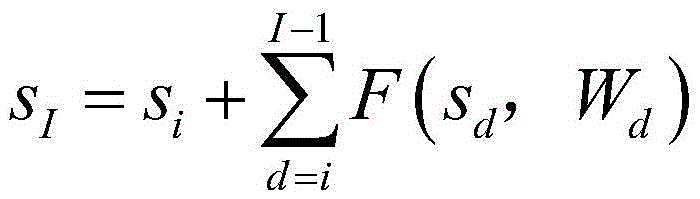
上式中,sd代表第d个残差单元的输入,Wd代表第d个残差单元中的卷操作;In the above formula, s d represents the input of the d-th residual unit, and W d represents the convolution operation in the d-th residual unit;
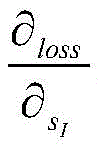
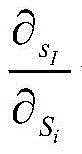
步骤3.2、通过链式求导计算反向过程的梯度:Step 3.2, calculate the gradient of the reverse process by chain derivation:

上式中,第一个偏导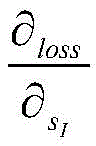

经过49个卷积层提取的RGB图像的高阶特征Krgbfeature map具体表示为Krgb=[K1,K2,…Kx],深度图像的高阶特征Gd feature map具体表示为Gd=[G1,G2,…Gx],其中,x表示特征的个数,K1代表所提取RGB图像的第一个特征,K2代表所提取RGB图像的第二个特征,Kx代表所提取RGB图像的第x个特征,G1代表所提取深度图像的第一个特征,G2代表所提取深度图像的第二个特征,Gx代表所提取深度图像的第x个特征。The high-order features Krgb feature map of the RGB image extracted after 49 convolutional layers are specifically expressed as Krgb = [ K1 , K2 , ... Kx ], and the high-order features Gd feature map of the depth image are specifically expressed as Gd = [ G1 , G2 , ... Gx ], where x represents the number of features, K1 represents the first feature of the extracted RGB image, K2 represents the second feature of the extracted RGB image, Kx represents the x-th feature of the extracted RGB image, G1 represents the first feature of the extracted depth image, G2 represents the second feature of the extracted depth image, and Gx represents the x-th feature of the extracted depth image.
步骤4具体如下:Step 4 is as follows:
将步骤3中得到的高阶特征Krgbfeature map和Gdfeature map经过特征融合单元进行融合,特征融合单元包括:1×1的卷积层、一个批量归一化层、Relu激活函数和全局均值池化层,得到RGB图像和深度图像的融合特征。The high-order features K rgb feature map and G d feature map obtained in step 3 are fused through a feature fusion unit. The feature fusion unit includes: a 1×1 convolution layer, a batch normalization layer, a Relu activation function and a global mean pooling layer to obtain the fusion features of the RGB image and the depth image.
步骤5中递归神经网络模块中,使用tanh函数作为GRU递归神经网络的激活函数得到新的RGB-D序列特征。In the recursive neural network module in step 5, the tanh function is used as the activation function of the GRU recursive neural network to obtain new RGB-D sequence features.
步骤6中使用Softmax分类器对GRU递归神经网络生成的RGB-D序列特征计算概率分布,得到RGB-D图像的分类结果。In step 6, the Softmax classifier is used to calculate the probability distribution of the RGB-D sequence features generated by the GRU recursive neural network to obtain the classification result of the RGB-D image.
本发明的有益效果是,(1)本发明提出了一种基于深度神经网络的RG B-D图像分类方法,将更深层次的神经网络用于RGB-D图像分类算法,残差学习模块减少卷积神经网络的训练参数,克服RGB图像和深度图像同时训练占用资源过多的情况,同时避免过程中发生梯度下降,并提高分类效率。并使用双流卷积与递归相结合的学习模式,充分发挥深度学习在特征提取方面的优势。The beneficial effects of the present invention are as follows: (1) the present invention proposes an RGB-D image classification method based on a deep neural network, which uses a deeper neural network for the RGB-D image classification algorithm. The residual learning module reduces the training parameters of the convolutional neural network, overcomes the situation where the simultaneous training of RGB images and depth images occupies too many resources, avoids gradient descent during the process, and improves classification efficiency. And a learning mode combining dual-stream convolution and recursion is used to give full play to the advantages of deep learning in feature extraction.
(2)采用迁移学习的方法对编码后的深度图像进行训练,提高了深度图像的三维表达能力,增加了一个新的特征融合单元,把RGB图像和深度图像的高阶特征跨通道信息融合,并使用递归神经网络生成新的特征序列,避免了已有的网络模型中注重单独模态的识别结果,忽略了RGB-D融合特征问题,使融合后的识别结果有了明显的提高。(2) The encoded depth images are trained using transfer learning methods to improve the three-dimensional expression ability of the depth images. A new feature fusion unit is added to fuse the high-order features of the RGB images and the depth images across channels, and a recursive neural network is used to generate new feature sequences. This avoids the problem of focusing on the recognition results of a single modality in the existing network model and ignoring the RGB-D fusion feature problem, which significantly improves the recognition results after fusion.
(3)本发明提出的RGB-D图像分类方法能够更好的自动学习特征并进行端到端的训练,与传统方法相比普适性更强。在标准的RGB-D数据库上进行了大量的验证,本发明提出的方法具有更优越的性能。(3) The RGB-D image classification method proposed in the present invention can automatically learn features and perform end-to-end training better, and is more universal than traditional methods. A large number of verifications have been carried out on standard RGB-D databases, and the method proposed in the present invention has superior performance.
附图说明BRIEF DESCRIPTION OF THE DRAWINGS
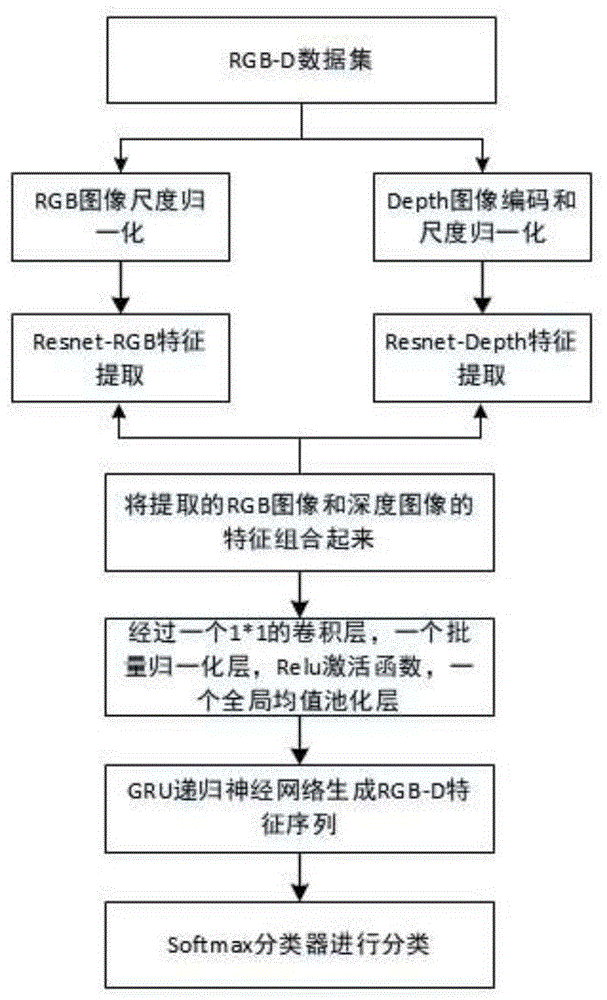
图1是本发明一种基于深度学习的RGB-D图像分类方法流程图;FIG1 is a flow chart of a method for RGB-D image classification based on deep learning according to the present invention;
图2是本发明一种基于深度学习的RGB-D图像分类方法结构图;FIG2 is a structural diagram of an RGB-D image classification method based on deep learning according to the present invention;
图3是本发明一种基于深度学习的RGB-D图像分类方法特征融合单元结构示意图;FIG3 is a schematic diagram of a feature fusion unit structure of an RGB-D image classification method based on deep learning according to the present invention;
图4是本发明具体实验所用的RGB-D数据集示意图;FIG4 is a schematic diagram of an RGB-D data set used in a specific experiment of the present invention;
图5是本发明方法实验结果混淆矩阵表示图。FIG. 5 is a confusion matrix representation diagram of the experimental results of the method of the present invention.
具体实施方式DETAILED DESCRIPTION
下面结合附图和具体实施方式对本发明进行详细说明。The present invention is described in detail below with reference to the accompanying drawings and specific embodiments.
本发明一种基于深度学习的RGB-D图像分类方法,流程图如图1所示,具体按照以下步骤实施:The present invention provides a RGB-D image classification method based on deep learning, the flow chart of which is shown in FIG1 , and is specifically implemented according to the following steps:
步骤1、使用计算表面法线的方法对数据集中每个深度图像中的所有像素点计算表面法线,将单通道深度图像可视化编码为三通道深度图像,深度图像中包含的每个像素点的空间坐标(x,y,z)的数值分别被指定为R、G、B的像素值,并映射到整数值[0,255]之间;Step 1: Use the method of calculating surface normals to calculate the surface normals of all pixels in each depth image in the dataset, and encode the single-channel depth image into a three-channel depth image. The spatial coordinates (x, y, z) of each pixel in the depth image are respectively assigned as R, G, and B pixel values and mapped to integer values between [0, 255].
步骤2、对数据集中经过步骤1所生成编码后的深度图像和数据集中剩余的所有RGB图像进行长边缩放、短边扩展的归一化预处理,避免因图像拉伸影响识别性能,得到尺度归一化后的RGB图像和深度图像;Step 2: Perform normalization preprocessing of long-side scaling and short-side expansion on the encoded depth image generated by step 1 in the data set and all the remaining RGB images in the data set to avoid affecting the recognition performance due to image stretching, and obtain scale-normalized RGB images and depth images;
步骤2具体如下:Step 2 is as follows:
步骤2.1、进行输入目标图像的预扫描,判别目标图像的长、短边;Step 2.1, pre-scan the input target image to determine the long and short sides of the target image;
步骤2.2、目标图像长边进行保留原始比例缩放,长边缩放为256像素;Step 2.2, the long side of the target image is scaled to retain the original ratio, and the long side is scaled to 256 pixels;
步骤2.3、短边按照长边缩放后的像素差值进行额外边界创建,并沿短边轴进行扩充获得256×256像素的图像,原始目标位于扩展图像居中位置。Step 2.3: Create an additional boundary on the short side according to the pixel difference after scaling the long side, and expand along the short side axis to obtain a 256×256 pixel image, with the original target located in the center of the expanded image.
步骤3、使用两个卷积神经网络分别对步骤2中尺度归一化后的RGB图像和深度图像进行训练,引入残差学习减小模型参数,在网络顶层得到RGB图像的高阶特征Krgbfeaturemap和深度图像的高阶特征Gdfeature map;Step 3: Use two convolutional neural networks to train the scale-normalized RGB image and depth image in step 2 respectively, introduce residual learning to reduce model parameters, and obtain the high-order features K rgb featuremap of the RGB image and the high-order features G d feature map of the depth image at the top layer of the network;
步骤3中使用49卷积层分别对RGB图像和深度图像进行卷积下采样操作,提取高层次特征,具体如下:In step 3, 49 convolutional layers are used to perform convolution downsampling operations on the RGB image and the depth image respectively to extract high-level features, as follows:
步骤3.1、其中,49个卷积层共组成5组卷积:conv2_x、conv3_x、conv4_x、conv5_x,卷积均包含多个残差单元,残差单元表示为:Step 3.1, among which, 49 convolutional layers form 5 groups of convolutions: conv2_x, conv3_x, conv4_x, conv5_x, and each convolution contains multiple residual units, which are expressed as:
Qi=h(si)+F(si,Wi) Qi = h( si ) + F( si , Wi )
si+1=f(Qi)s i+1 =f(Q i )
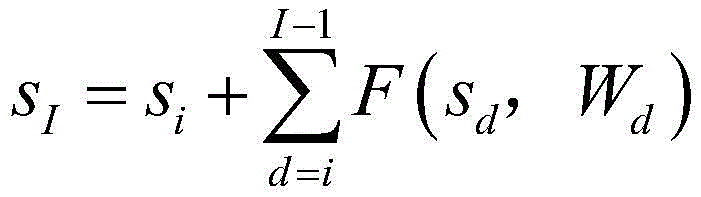
上式中,i表示任意残差单元,Qi表示经过残差单元要得到的目标特征,si表示sd残差单元的输入,si+1表示si的输出,即下一个残差单元的输入,F(si,Wi)是学习的残差,Wi代表残差单元i中的卷积操作,当h(si)=si时表示恒等映射,f代表激活函数,I表示更深层的残差单元,I>i,当h(si)=si,f(Qi)=Qi时可以计算出i到深层I所学习到的目标特征SI,从第d个残差单元开始,SI通式如下:In the above formula, i represents any residual unit, Qi represents the target feature to be obtained after the residual unit, si represents the input of the sd residual unit, si+1 represents the output of si , that is, the input of the next residual unit, F( si , Wi ) is the learned residual, Wi represents the convolution operation in the residual unit i, when h( si ) = si , it represents the identity mapping, f represents the activation function, I represents the deeper residual unit, I>i, when h( si ) = si , f( Qi ) = Qi, the target feature S I learned from i to the deep layer I can be calculated, starting from the dth residual unit, S I is as follows:
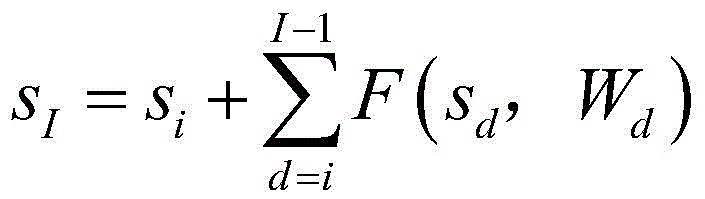
上式中,sd代表第d个残差单元的输入,Wd代表第d个残差单元中的卷操作;In the above formula, s d represents the input of the d-th residual unit, and W d represents the convolution operation in the d-th residual unit;
步骤3.2、通过链式求导计算反向过程的梯度:Step 3.2, calculate the gradient of the reverse process by chain derivation:

上式中,第一个偏导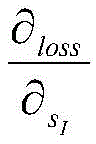

经过49个卷积层提取的RGB图像的高阶特征Krgbfeature map具体表示为Krgb=[K1,K2,…Kx],深度图像的高阶特征Gd feature map具体表示为Gd=[G1,G2,…Gx],其中,x表示特征的个数,K1代表所提取RGB图像的第一个特征,K2代表所提取RGB图像的第二个特征,Kx代表所提取RGB图像的第x个特征,G1代表所提取深度图像的第一个特征,G2代表所提取深度图像的第二个特征,Gx代表所提取深度图像的第x个特征。The high-order features Krgb feature map of the RGB image extracted after 49 convolutional layers are specifically expressed as Krgb = [ K1 , K2 , ... Kx ], and the high-order features Gd feature map of the depth image are specifically expressed as Gd = [ G1 , G2 , ... Gx ], where x represents the number of features, K1 represents the first feature of the extracted RGB image, K2 represents the second feature of the extracted RGB image, Kx represents the x-th feature of the extracted RGB image, G1 represents the first feature of the extracted depth image, G2 represents the second feature of the extracted depth image, and Gx represents the x-th feature of the extracted depth image.
步骤4、将步骤3中RGB图像的高阶特征和深度图像的高阶特征经过特征融合单元进行融合,特征融合单元由一个1×1卷积层、一个批量归一化层、Relu激活函数和全局均值池化层组成,得到RGB图像和深度图像的融合特征;Step 4: The high-order features of the RGB image and the high-order features of the depth image in step 3 are fused through a feature fusion unit. The feature fusion unit consists of a 1×1 convolution layer, a batch normalization layer, a Relu activation function, and a global mean pooling layer to obtain the fusion features of the RGB image and the depth image.
步骤4具体如下:Step 4 is as follows:
将步骤3中得到的高阶特征Krgbfeature map和Gdfeature map经过特征融合单元进行融合,特征融合单元包括:1×1的卷积层、一个批量归一化层、Relu激活函数和全局均值池化层,得到RGB图像和深度图像的融合特征。The high-order features K rgb feature map and G d feature map obtained in step 3 are fused through a feature fusion unit. The feature fusion unit includes: a 1×1 convolution layer, a batch normalization layer, a Relu activation function and a global mean pooling layer to obtain the fusion features of the RGB image and the depth image.
步骤5、将步骤4中的融合特征作为GRU递归神经网络的输入,生成新的RGB-D序列特征;Step 5: Use the fused features in step 4 as the input of the GRU recursive neural network to generate new RGB-D sequence features;
步骤5中递归神经网络模块中,使用tanh函数作为GRU递归神经网络的激活函数得到新的RGB-D序列特征。In the recursive neural network module in step 5, the tanh function is used as the activation function of the GRU recursive neural network to obtain new RGB-D sequence features.
步骤6、对步骤5中的RGB-D序列特征计算概率分布,输出RGB-D图像的类别结果。Step 6: Calculate the probability distribution of the RGB-D sequence features in step 5 and output the category result of the RGB-D image.
步骤6中使用Softmax分类器对GRU递归神经网络生成的RGB-D序列特征计算概率分布,得到RGB-D图像的分类结果。In step 6, the Softmax classifier is used to calculate the probability distribution of the RGB-D sequence features generated by the GRU recursive neural network to obtain the classification result of the RGB-D image.
本发明的一种基于深度学习的RGB-D图像分类方法结构图如图2所示,主要包括:RGB-D数据集、RGB-Resnet提取RGB图像特征、Depth-Resnet提取深度图像特征、特征融合单元、GRU递归神经网络和Softmax分类器。图4所示为本发明专利实验所用RGB-D数据集,具体包括51类室内常见用品共300个实例,生成41877幅RGB图像和对应的深度图像。随机抽取每个类别的一种对象用于测试,剩余个对象用于训练,得到大约35000张训练图像和7000张测试图像。The structure diagram of the RGB-D image classification method based on deep learning of the present invention is shown in Figure 2, which mainly includes: RGB-D data set, RGB-Resnet to extract RGB image features, Depth-Resnet to extract depth image features, feature fusion unit, GRU recursive neural network and Softmax classifier. Figure 4 shows the RGB-D data set used in the patent experiment of the present invention, which specifically includes 300 instances of 51 categories of common indoor supplies, generating 41,877 RGB images and corresponding depth images. One object of each category is randomly selected for testing, and the remaining objects are used for training, resulting in approximately 35,000 training images and 7,000 test images.
RGB-Resnet和Depth-Resnet包含49的卷积层、共分为5组残差模块(conv2_x、conv3_x、conv4_x、conv5_x)提取RGB图像的高阶特征Krgbfeature map和深度图像的高阶特征Gdfeature map。RGB-Resnet and Depth-Resnet contain 49 convolutional layers and are divided into 5 groups of residual modules (conv2_x, conv3_x, conv4_x, conv5_x) to extract the high-order features K rgb feature map of RGB images and the high-order features G d feature map of depth images.
图3所示为本发明专利特征融合单元示意图,将RGB-Resnet和Depth-Resnet提取的高阶特征跨通道信息整合。特征融合单元具体包括:一个1×1卷积层、一个批量归一化层、Relu激活函数和全局均值池化层组成。Krgbfeature map和Gdfeature map经过特征融合单元,得到RGB图像和深度图像的融合特征(fusion feature map)Figure 3 shows a schematic diagram of the feature fusion unit of the present invention, which integrates the high-order features extracted by RGB-Resnet and Depth-Resnet across channels. The feature fusion unit specifically includes: a 1×1 convolution layer, a batch normalization layer, a Relu activation function, and a global mean pooling layer. The K rgb feature map and the G d feature map pass through the feature fusion unit to obtain the fusion feature map of the RGB image and the depth image.
递归神经网使用GRU递归神经网络,递归神经网络的优势是包含时间序列的输出问题,网络中先前序列的所有输入会共同作用当前序列的输出。将融合后的特征fusionfeature map作为神经网络的输入,生成新的特征序列。The recursive neural network uses the GRU recursive neural network. The advantage of the recursive neural network is that it includes the output problem of time series. All the inputs of the previous sequence in the network will jointly affect the output of the current sequence. The fused feature map is used as the input of the neural network to generate a new feature sequence.
使用Softmax分类器读取GRU递归神经网络的输出序列计算概率分布,得到RGB-D图像的分类结果。Use the Softmax classifier to read the output sequence of the GRU recurrent neural network to calculate the probability distribution and obtain the classification result of the RGB-D image.
参见图5所示RGB-D数据集上分类结果的混淆矩阵,混淆矩阵可以更清晰的看到错误分类的类别,为分析其原因提供了有用的信息。具体的,每一行的索引代表了RGB-D数据集中所有类别的真实标签,每一列的索引代表了各类别的分类结果,主对角线的深浅表示正确分类的总体占比。可以看到容易错分的类别存在于颜色和纹理都相似的物体,具体集中在以下几个类别:orange和peach、ball和garlic、mushroon和garlic等。分析其原因,首先,较少的实例会影响分类结果,如mushroon类仅有3个实例,训练样本的单一化导致可学习特征类与量均受到限制,网络无法泛化新增添的数据,是造成错误的分类的原因之一;此外受传感器性能影响,已有的RGB-D数据集中图像的分辨率普遍不高,且深度图像中物体边缘部分深度值缺失,也可能对结果造成干扰。本发明专利的一种基于深度学习的RGB-D图像分类方法在大多数类别上都表现出高性能的识别率,可以很好的完成RGB-D图像的分类任务。See the confusion matrix of the classification results on the RGB-D dataset shown in Figure 5. The confusion matrix can more clearly see the misclassified categories and provide useful information for analyzing the reasons. Specifically, the index of each row represents the true label of all categories in the RGB-D dataset, and the index of each column represents the classification results of each category. The depth of the main diagonal represents the overall proportion of correct classification. It can be seen that the categories that are easily misclassified exist in objects with similar colors and textures, which are specifically concentrated in the following categories: orange and peach, ball and garlic, mushroon and garlic, etc. Analyzing the reasons, first, fewer instances will affect the classification results. For example, there are only 3 instances of the mushroon class. The simplification of training samples leads to the limitation of the class and amount of learnable features. The network cannot generalize the newly added data, which is one of the reasons for the wrong classification. In addition, affected by the performance of the sensor, the resolution of the images in the existing RGB-D dataset is generally not high, and the depth value of the edge of the object in the depth image is missing, which may also interfere with the results. The RGB-D image classification method based on deep learning in the patent of this invention shows high performance recognition rate in most categories and can well complete the classification task of RGB-D images.
Claims (6)

Priority Applications (1)
| Application Number | Priority Date | Filing Date | Title |
|---|---|---|---|
| CN202010344538.XA CN111652273B (en) | 2020-04-27 | 2020-04-27 | Deep learning-based RGB-D image classification method |
Applications Claiming Priority (1)
| Application Number | Priority Date | Filing Date | Title |
|---|---|---|---|
| CN202010344538.XA CN111652273B (en) | 2020-04-27 | 2020-04-27 | Deep learning-based RGB-D image classification method |
Publications (2)
| Publication Number | Publication Date |
|---|---|
| CN111652273A CN111652273A (en) | 2020-09-11 |
| CN111652273B true CN111652273B (en) | 2023-04-07 |
Family
ID=72345488
Family Applications (1)
| Application Number | Title | Priority Date | Filing Date |
|---|---|---|---|
| CN202010344538.XA Active CN111652273B (en) | 2020-04-27 | 2020-04-27 | Deep learning-based RGB-D image classification method |
Country Status (1)
| Country | Link |
|---|---|
| CN (1) | CN111652273B (en) |
Families Citing this family (6)
| Publication number | Priority date | Publication date | Assignee | Title |
|---|---|---|---|---|
| CN112308090B (en) * | 2020-09-21 | 2024-06-18 | 北京沃东天骏信息技术有限公司 | Image classification method and device |
| CN112257639A (en) * | 2020-10-30 | 2021-01-22 | 福州大学 | Student learning behavior identification method based on human skeleton |
| CN112950693B (en) * | 2021-02-04 | 2023-08-11 | 南京南华航空产业有限公司 | Intelligent electrostatic adsorption distance control method using Gaussian distribution probability value |
| CN112873211B (en) * | 2021-02-24 | 2022-03-11 | 清华大学 | Robot man-machine interaction method |
| CN113902786B (en) * | 2021-09-23 | 2022-05-27 | 珠海视熙科技有限公司 | Depth image preprocessing method, system and related device |
| CN116129236A (en) * | 2021-11-11 | 2023-05-16 | 中国科学院沈阳自动化研究所 | Method for improving grabbing recognition precision of manipulator |
Family Cites Families (3)
| Publication number | Priority date | Publication date | Assignee | Title |
|---|---|---|---|---|
| CN105787439B (en) * | 2016-02-04 | 2019-04-05 | 广州新节奏智能科技股份有限公司 | A Convolutional Neural Network-based Human Joint Localization Method in Depth Image |
| CN106408562B (en) * | 2016-09-22 | 2019-04-09 | 华南理工大学 | A method and system for retinal blood vessel segmentation in fundus images based on deep learning |
| US10475165B2 (en) * | 2017-04-06 | 2019-11-12 | Disney Enterprises, Inc. | Kernel-predicting convolutional neural networks for denoising |
-
2020
- 2020-04-27 CN CN202010344538.XA patent/CN111652273B/en active Active
Also Published As
| Publication number | Publication date |
|---|---|
| CN111652273A (en) | 2020-09-11 |
Similar Documents
| Publication | Publication Date | Title |
|---|---|---|
| CN111652273B (en) | Deep learning-based RGB-D image classification method | |
| CN111191583B (en) | Space target recognition system and method based on convolutional neural network | |
| CN109584248B (en) | Infrared target instance segmentation method based on feature fusion and dense connection network | |
| CN108052911B (en) | Deep learning-based multi-mode remote sensing image high-level feature fusion classification method | |
| CN108562589B (en) | Method for detecting surface defects of magnetic circuit material | |
| CN110766063B (en) | Image classification method based on compressed excitation and tightly connected convolutional neural network | |
| CN110555465B (en) | Weather image identification method based on CNN and multi-feature fusion | |
| CN108520516A (en) | A Crack Detection and Segmentation Method for Bridge Pavement Based on Semantic Segmentation | |
| CN111259905A (en) | Feature fusion remote sensing image semantic segmentation method based on downsampling | |
| CN111507217A (en) | A Pedestrian Re-identification Method Based on Local Discriminatory Feature Fusion | |
| CN111126127B (en) | High-resolution remote sensing image classification method guided by multi-level spatial context characteristics | |
| CN114898417B (en) | Jupiter identification method based on coordinated attention depth neural network | |
| CN113269224B (en) | A scene image classification method, system and storage medium | |
| CN112668630A (en) | Lightweight image classification method, system and equipment based on model pruning | |
| CN111222545B (en) | Image classification method based on linear programming incremental learning | |
| CN113011506B (en) | Texture image classification method based on deep fractal spectrum network | |
| CN113837263A (en) | Gesture image classification method based on feature fusion attention module and feature selection | |
| CN110543906A (en) | Skin type automatic identification method based on data enhancement and Mask R-CNN model | |
| CN116977844A (en) | Lightweight underwater target real-time detection method | |
| CN114882234B (en) | Construction method of multi-scale lightweight densely connected object detection network | |
| CN116091946A (en) | Yolov 5-based unmanned aerial vehicle aerial image target detection method | |
| CN119904449A (en) | Lightweight mobile phone screen defect detection method based on improved YOLOv10 | |
| CN109977834B (en) | Method and device for segmenting human hand and interactive object from depth image | |
| CN119205764A (en) | Wafer defect detection method, system and storage medium for IGP processing unit | |
| WO2020119624A1 (en) | Class-sensitive edge detection method based on deep learning |
Legal Events
| Date | Code | Title | Description |
|---|---|---|---|
| PB01 | Publication | ||
| PB01 | Publication | ||
| SE01 | Entry into force of request for substantive examination | ||
| SE01 | Entry into force of request for substantive examination | ||
| GR01 | Patent grant | ||
| GR01 | Patent grant |