CN111651740B - Trusted platform sharing system for distributed intelligent embedded system - Google Patents
Trusted platform sharing system for distributed intelligent embedded system Download PDFInfo
- Publication number
- CN111651740B CN111651740B CN202010457587.4A CN202010457587A CN111651740B CN 111651740 B CN111651740 B CN 111651740B CN 202010457587 A CN202010457587 A CN 202010457587A CN 111651740 B CN111651740 B CN 111651740B
- Authority
- CN
- China
- Prior art keywords
- tsed
- proxy
- tpm chip
- trusted
- intelligent embedded
- Prior art date
- Legal status (The legal status is an assumption and is not a legal conclusion. Google has not performed a legal analysis and makes no representation as to the accuracy of the status listed.)
- Active
Links
Images


Classifications
-
- G—PHYSICS
- G06—COMPUTING OR CALCULATING; COUNTING
- G06F—ELECTRIC DIGITAL DATA PROCESSING
- G06F21/00—Security arrangements for protecting computers, components thereof, programs or data against unauthorised activity
- G06F21/30—Authentication, i.e. establishing the identity or authorisation of security principals
- G06F21/31—User authentication
-
- G—PHYSICS
- G06—COMPUTING OR CALCULATING; COUNTING
- G06F—ELECTRIC DIGITAL DATA PROCESSING
- G06F21/00—Security arrangements for protecting computers, components thereof, programs or data against unauthorised activity
- G06F21/50—Monitoring users, programs or devices to maintain the integrity of platforms, e.g. of processors, firmware or operating systems
- G06F21/57—Certifying or maintaining trusted computer platforms, e.g. secure boots or power-downs, version controls, system software checks, secure updates or assessing vulnerabilities
-
- G—PHYSICS
- G06—COMPUTING OR CALCULATING; COUNTING
- G06F—ELECTRIC DIGITAL DATA PROCESSING
- G06F21/00—Security arrangements for protecting computers, components thereof, programs or data against unauthorised activity
- G06F21/60—Protecting data
- G06F21/602—Providing cryptographic facilities or services
-
- G—PHYSICS
- G06—COMPUTING OR CALCULATING; COUNTING
- G06F—ELECTRIC DIGITAL DATA PROCESSING
- G06F21/00—Security arrangements for protecting computers, components thereof, programs or data against unauthorised activity
- G06F21/60—Protecting data
- G06F21/64—Protecting data integrity, e.g. using checksums, certificates or signatures
Landscapes
- Engineering & Computer Science (AREA)
- Theoretical Computer Science (AREA)
- Computer Security & Cryptography (AREA)
- Computer Hardware Design (AREA)
- Software Systems (AREA)
- General Engineering & Computer Science (AREA)
- Physics & Mathematics (AREA)
- General Physics & Mathematics (AREA)
- Health & Medical Sciences (AREA)
- Bioethics (AREA)
- General Health & Medical Sciences (AREA)
- Computer And Data Communications (AREA)
Abstract
The invention discloses a trusted platform sharing system facing a distributed intelligent embedded system, which designs and realizes a kernel-mode shadow TPM for ensuring the integrity and identity authentication of an intelligent embedded device N-TSED without TPM chip protection, and represents a TPM chip in the intelligent embedded device TSED with TPM chip protection. The invention provides a security authentication protocol for ensuring that a TPM chip in a TSED verifies the integrity and authenticity of an N-TSED in a secure manner. The intelligent embedded device has the problems of limited expandability and insufficient system resources, and not all the intelligent embedded devices can be deployed by using the TPM chip, so the trusted platform module sharing scheme for the distributed intelligent embedded system expands the functions of the hardware TPM chip of the TSED into the N-TSED through the network. Therefore, the invention not only avoids malicious users or programs from tampering the intelligent embedded equipment, but also can carry out identity authentication on the intelligent embedded equipment.
Description
Technical Field
The invention belongs to the field of information security, and particularly relates to a trusted platform sharing system for a distributed intelligent embedded system.
Background
Intelligent embedded systems (SES) are widely used in various devices, such as smart phones, cameras, robots, and the like. However, due to hardware capability limitations, the construction of such intelligent embedded devices (SED) typically only takes into account software functionality, and does not take into account sufficient security mechanisms, which would expose the intelligent embedded device to network threats. To prevent malicious users (or programs) from tampering with the smart embedded device, the integrity of the system may be measured by employing trusted computing.
Trusted computing platform modules (TPMs) are widely used in general purpose computing platforms, such as servers and personal computers, as a tamper-resistant hardware trust foundation to ensure the integrity of the host system and to provide cryptographic services to upper-level applications. Different from special trusted computing technologies such as Intel SGX and ARM TrustZone, the TPM chip is widely applied to various computing systems. Meanwhile, because of low coupling between the TPM and the host, the host may be not only a general-purpose computer but also an embedded system. Because some intelligent embedded devices have the problems of limited expandability and insufficient system resources, and not all intelligent embedded devices can be deployed by using the TPM chip.
Disclosure of Invention
The invention aims to overcome the defects and provide a trusted platform sharing system for a distributed intelligent embedded system, which expands the trusted function of an intelligent embedded device TSED (trusted service provider) containing a TPM chip to an intelligent embedded device N-TSED without the TPM chip through a network, thereby avoiding malicious users or programs from tampering the intelligent embedded device.
In order to achieve the purpose, the intelligent embedded device comprises an intelligent embedded device TSED with a TPM chip and a plurality of intelligent embedded devices N-TSEDs without the TPM chip, wherein the intelligent embedded device N-TSED without the TPM chip is provided with a security authentication protocol capable of ensuring the integrity and authenticity of the N-TSED.
The security authentication protocol comprises a trusted boot protocol TBP, a remote authentication protocol RVP and a node authentication protocol NAP;
the trusted boot protocol TBP is used for realizing the safe boot of the N-TSED;
the remote authentication protocol RVP is used for regularly checking whether the N-TSED which is started safely is attacked or not;
the node authentication protocol NAP is used to implement identity authentication between any two N-TSEDs.
The node authentication protocol NAP includes a challenger D A Verifier D B And a verifier D T ;
Challenger D A For initiating an identity authentication request, verifier D B For the authenticatee D T Authenticating if it is authentic, verifier D T For receiving challenger D A To verify the verifier D B SysCI of (a), by checking the verifier D B Verifies the verifier D by verifying the SysCI of (a) B The identity is trusted.
The intelligent embedded device TSED with the TPM chip comprises the TPM chip, a TSS trusted software stack and a Proxy-V agent;
the TPM chip is used for measuring the integrity of the computing platform;
the TSS trusted software stack is used for providing an API (application programming interface) for calling the TPM chip function;
the Proxy-V agent is used for communicating with each trusted agent TA deployed on the N-TSED to verify the integrity and authenticity of the N-TSED.
The intelligent embedded device N-TSED without the TPM chip includes a trusted agent TA for ensuring the integrity of the local system by communicating with the Proxy-V agent.
The trusted agent TA comprises: the SdwTPM module and the Proxy-P agent;
the SdwTPM module is used for collecting system configuration information SysCI and generating system indexes for the TSED;
the Proxy-P Proxy is a bridge between the Proxy-V Proxy and the SdwTPM module.
Compared with the prior art, the invention designs and realizes a kernel-mode shadow TPM for ensuring the integrity and identity authentication of the intelligent embedded device N-TSED without TPM chip protection, and represents the TPM chip in the intelligent embedded device TSED protected by the TPM chip. The invention provides a security authentication protocol for ensuring that a TPM chip in a TSED verifies the integrity and authenticity of an N-TSED in a secure manner. The intelligent embedded device has the problems of expandability limitation and insufficient system resources, and not all the intelligent embedded devices can be deployed by using the TPM chip, so the trusted platform module sharing scheme oriented to the distributed intelligent embedded system expands the functions of the hardware TPM chip of the TSED into the N-TSED through the network. Therefore, the invention not only avoids malicious users or programs from tampering the intelligent embedded equipment, but also can carry out identity authentication on the intelligent embedded equipment.
Drawings
FIG. 1 is a block diagram of the present invention for extending TPM functions from a smart embedded device TSED having a TPM chip to a smart embedded device N-TSED having no TPM chip via a network;
FIG. 2 is a diagram of TPM extended scheme TPMEX architecture of the present invention.
Detailed Description
The invention is further described below with reference to the accompanying drawings.
As shown in fig. 1, the present invention comprises one TSED and three N-TSEDs and network environments that can communicate with each other. The node in fig. 1 uses three security authentication protocols that can guarantee the integrity and authenticity of the security authentication N-TSED.
Three security authentication protocols that can guarantee the integrity and authenticity of the N-TSED include: a trusted boot protocol TBP, a remote authentication protocol RVP and a node authentication protocol NAP.
The trusted boot protocol TBP is used for realizing the safe boot of the N-TSED; it is executed when the N-TSED is started and finally reports whether the system configuration information SysCI of the N-TSED is tampered.
The remote authentication protocol RVP is used to authenticate the integrity of the N-TSED, which is performed by Proxy-V. In the remote authentication protocol RVP, one TSED acts as the only hardware root of trust, and the other N-TSEDs will be verified periodically to ensure that no corrupted device is present. If a corrupted device is found, it will be marked as corrupted and blacklisted by the TSED.
The node authentication protocol NAP is used for realizing identity authentication between any two N-TSEDs; the protocol contains three main parts: challenger D A And verifier D B And a verifier D T 。
Challenger D A For initiating an identity authentication request, verifier D B For the authenticatee D T Authenticating if it is authentic, verifier D T For receiving challenger D A To verify the verifier D B SysCI of (a), by checking the verifier D B Verifies the verifier D by verifying the SysCI of (a) B The identity is trusted. If the authentication is successful, a session key K is created AB (ii) a The key is used for challenger D A And verifier D B Otherwise challenger D A Will be informed of D B Is a damaged device.
As shown in FIG. 2, the TPM extension scheme TPMEX of the present invention includes a smart embedded device TSED having a TPM chip and a smart embedded device N-TSED not having a TPM chip.
The intelligent embedded device TSED containing the TPM chip comprises: the system comprises a TPM chip, a TSS trusted software stack and a Proxy-V agent.
The TPM chip is used for measuring the integrity of the computing platform; the TSS trusted software stack is used for providing an API (application programming interface) for calling TPM (trusted platform System) functions; the Proxy-V agent is used for communicating with each trusted agent TA deployed on the N-TSED to verify the integrity and authenticity of the N-TSED.
The TPM chip provides encryption operation, random number generation, hash operation and safe storage of a small amount of data; and provides a hardware-based root of trust for the computing platform.
The verification operation of the Proxy-V agent is completed by calling a TSPI function of the TSS trusted software stack.
The N-TSED includes a trusted agent TA for ensuring the integrity of the local system by communicating with the Proxy-V agent.
The trusted agent TA comprises: the SdwTPM module and the Proxy-P agent; sdwTPM is a kernel module that is a representative of the remote hardware TPM, that is automatically booted with the operating system, and that collects system configuration information SysCI to generate system metrics for TSED. The Proxy-P is an application-level Proxy designed as a bridge between Proxy-V and SdwTPM.
Trusted Boot Protocol (TBP):
TBP protocol involves in the course of useAnd 5 major entities D N (N-TSED),D T (TSED), sdwTPM (shadow TPM) and two Proxy-P and Proxy-V.
First, D N And starting and completing the loading of the OS kernel and the SdwTPM module, and then starting the Proxy-P agent. D N The SdwTPM module checks the local system environment, checks the contents including the presence of the Proxy-P agent, and whether the device is online. If the check fails, D N The device will be suspended by the SdwTPM module; if the check is successful, the SdwTPM module will collect and compute SysCI data, which includes key hardware serial numbers, operating system version numbers, hash values of the boot partitions, hash values of the Proxy-P agents (including program files and runtime processes), and the like. Finally, the SdwTPM module generates a system report message And is sent to Proxy-V through Proxy-P Proxy.
System report message The method comprises the following steps: preventing a message replay attack pick>
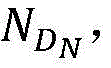 Time stamp->
 By D T Is encrypted by the public key of the SysCI message>
 And a signature of the hash value over the entire message->
 They will be used to ensure freshness, confidentiality, integrity and authenticity of the information.
Once Proxy-V receives the system report message To authenticate messagesFreshness and integrity, the authentication process is as follows:
Proxy-V decrypted signature Gets the hash value->
Proxy-V computing hash
If the hash value Not equal to hash value->
 The integrity authentication fails;
if the hash value Has been previously received, or is time stamped>
 Having timed out, proxy-V will discard the message and request Proxy-P to retransmit, if authentication fails L times, D N It is considered a corrupted node.
After successful authentication, proxy-V decrypts with D T SysCI message encrypted by public key To obtain D N The plain text SysCI data of (a); proxy-V calls TPM _ PcrExtend () function of TPM, extends SysCI data into PCR registers, generating D N System index V PCR (ii) a Proxy-V reads pre-stored D from the non-volatile memory of the TPM chip N Encrypted configuration data->
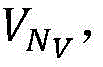 Call Data _ Unseal () to decrypt the configured Data ≧ using the TPM's storage root Key SRK>
 Get decrypted data>
 Proxy-V comparative system index V PCR And decryption data>
 Whether the values of D are the same or not is judged N Is corrupted and generates a response message->
 Finally sent to D N . In response message>
 Contains a function that verifies its freshness and a signature that verifies its authenticity and integrity>
 Thus, receiver D N It is possible to determine whether this message is freshly available and to check the integrity and authenticity of the message.
Remote authentication protocol (RVP):
in use, the RVP protocol first generates a request message from Proxy-V The message is used to direct D N Request D N The requested system configuration information SysCI is included in m REQ M in REQ The information in (1) is determined by Proxy-V according to the needs of the user; for example, if Proxy-V needs to authenticate the integrity of Proxy-P, sdwTPM and TF cards, as well as the boot partition of CPU sequence numbers, then m REQ ={H Proxy-P ,H sdwTPM ,H boot ,I SN-CPU In which H is x A hash value representing x (e.g., H) sdwTPM A hash value representing the sdwTPM module); and I y A string value representing y, usually in plaintext form (e.g., I:) SN-CPU A serial number indicating the CPU). Proxy-P passes authentication>
 Sig in (1) REQ Confirming the authenticity and integrity of the message, once->
 Proved to be legitimate, proxy-P will inform SdwTPM according to m REQ Collects the SysCI message and generates a response message @>
 Including SysCI message, random number N REQ 、
 And &>
 Random number N REQ Will be processed to ensure the freshness of the message for further verification by Proxy-V.
 Ensure confidentiality of the submitted SysCI
 Indicating that the message is from a genuine D N Rather than false. Then Proxy-V on SysCI message>
 The integrity of the system is authenticated, the authentication process is the same as the TBP protocol, and if the authentication fails, the Proxy-V marks D N (N-TSED) is a node that has been destroyed, is blacklisted, and is not accessible by other nodes.
Node Authentication Protocol (NAP):
the use of the NAP protocol involves three main parts, challenger D A (N-TSED), verifier D B (N-TSED) and verifier D T (TSED). When D is present A Access D B When D is A Need to send message to D T Request D T To D B Identity verification is carried out, and Proxy-V receives D A After the request message, first by decrypting Checking whether the message is from a real D A And pass through>
 To verify the integrity of the message. If the authentication fails, proxy-P will generate a response message containing an encrypted error message->
 If the authentication is successful, proxy-V runs RVP protocol check D A Platform integrity of. Thereafter, proxy-V checks D B Is in the blacklist and runs RVP protocol measurement D B A platform. After the measurement is successful, proxy-V is respectively D A And D B Generating two response messages containing a session key>
 And &>
 Wherein->
 In which>
 And &>
 Is defined as->
 m RSP Including with respect to D A And D B Information of successful authentication, and K AB Is used for D A And D B A session key (symmetric key) for future communications therebetween. Signature->
 To be covered with A And D B To verify the authenticity of the sender (Proxy-V). Then, proxy-V will >>
 And &>
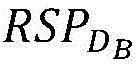 Are sent to D respectively A And D B . Once D is completed A Receive and answer>
 Will verify the signature in the message, D B As well as so. Otherwise, D A Will be informed of D B Is a device under attack.
In the present embodiment, a prototype system is implemented on a raspberry derivative, and the time cost of the protocol is evaluated. And the experimental results are discussed. The results show that all three protocols are ideal and acceptable. This demonstrates the feasibility and usability of the present solution in practical applications. Meanwhile, the scheme may encounter the problem that the TPM chip may become a bottleneck when the request amount is increased. This problem can be solved by setting a buffer to temporarily store the request or to schedule the request according to the priority of the request.
Claims (3)
1. A trusted platform sharing system facing a distributed intelligent embedded system is characterized by comprising an intelligent embedded device TSED with a TPM chip and a plurality of intelligent embedded devices N-TSEDs without the TPM chip, wherein the intelligent embedded devices N-TSEDs without the TPM chip are provided with a security authentication protocol capable of ensuring the integrity and authenticity of the N-TSEDs;
the intelligent embedded device TSED with the TPM chip comprises the TPM chip, a TSS trusted software stack and a Proxy-V agent;
the TPM chip is used for measuring the integrity of the computing platform;
the TSS trusted software stack is used for providing an API (application programming interface) for calling the TPM chip function;
the Proxy-V agent is used for communicating with each trusted agent TA deployed on the N-TSED to verify the integrity and authenticity of the N-TSED;
the intelligent embedded device N-TSED without the TPM chip comprises a trusted agent TA, wherein the trusted agent TA is used for ensuring the integrity of a local system through communication with a Proxy-V agent;
the security authentication protocol comprises a trusted boot protocol TBP, a remote authentication protocol RVP and a node authentication protocol NAP;
the trusted boot protocol TBP is used for realizing the safe boot of the N-TSED;
the remote authentication protocol RVP is used for regularly checking whether the N-TSED which is started safely is attacked or not;
the node authentication protocol NAP is used for realizing identity authentication between any two N-TSEDs.
2. The system according to claim 1, wherein the node authentication protocol NAP comprises a challenger D A Verifier D B And a verifier D T ;
Challenger D A For initiating an identity authentication request, verifier D B For the authenticatee D T Authenticating if it is authentic, verifier D T For receiving challenger D A To verify the verifier D B By the verifier D B Verifies the verifier D by verifying the SysCI of (a) B The identity is trusted.
3. The system according to claim 1, wherein the trusted agent TA comprises: the SdwTPM module and the Proxy-P agent;
the SdwTPM module is used for collecting system configuration information SysCI and generating system indexes for TSED;
the Proxy-P Proxy is a bridge between the Proxy-V Proxy and the SdwTPM module.
Priority Applications (1)
| Application Number | Priority Date | Filing Date | Title |
|---|---|---|---|
| CN202010457587.4A CN111651740B (en) | 2020-05-26 | 2020-05-26 | Trusted platform sharing system for distributed intelligent embedded system |
Applications Claiming Priority (1)
| Application Number | Priority Date | Filing Date | Title |
|---|---|---|---|
| CN202010457587.4A CN111651740B (en) | 2020-05-26 | 2020-05-26 | Trusted platform sharing system for distributed intelligent embedded system |
Publications (2)
| Publication Number | Publication Date |
|---|---|
| CN111651740A CN111651740A (en) | 2020-09-11 |
| CN111651740B true CN111651740B (en) | 2023-04-07 |
Family
ID=72346897
Family Applications (1)
| Application Number | Title | Priority Date | Filing Date |
|---|---|---|---|
| CN202010457587.4A Active CN111651740B (en) | 2020-05-26 | 2020-05-26 | Trusted platform sharing system for distributed intelligent embedded system |
Country Status (1)
| Country | Link |
|---|---|
| CN (1) | CN111651740B (en) |
Families Citing this family (1)
| Publication number | Priority date | Publication date | Assignee | Title |
|---|---|---|---|---|
| CN115237495B (en) * | 2021-02-09 | 2025-09-16 | 支付宝(杭州)信息技术有限公司 | Method and device for starting application program on target platform |
Citations (4)
| Publication number | Priority date | Publication date | Assignee | Title |
|---|---|---|---|---|
| WO2015149663A1 (en) * | 2014-04-03 | 2015-10-08 | 国家电网公司 | System and method for trapping network attack on embedded device in smart power grid |
| CN105608385A (en) * | 2015-12-29 | 2016-05-25 | 南京理工大学 | Trusted starting method of embedded equipment based on embedded trusted computing module |
| CN107766724A (en) * | 2017-10-17 | 2018-03-06 | 华北电力大学 | A kind of construction method of trusted computer platform software stack function structure |
| CN109951276A (en) * | 2019-03-04 | 2019-06-28 | 北京工业大学 | Embedded device remote identity authentication method based on TPM |
Family Cites Families (1)
| Publication number | Priority date | Publication date | Assignee | Title |
|---|---|---|---|---|
| CN104158791A (en) * | 2013-05-14 | 2014-11-19 | 北大方正集团有限公司 | Safe communication authentication method and system in distributed environment |
-
2020
- 2020-05-26 CN CN202010457587.4A patent/CN111651740B/en active Active
Patent Citations (4)
| Publication number | Priority date | Publication date | Assignee | Title |
|---|---|---|---|---|
| WO2015149663A1 (en) * | 2014-04-03 | 2015-10-08 | 国家电网公司 | System and method for trapping network attack on embedded device in smart power grid |
| CN105608385A (en) * | 2015-12-29 | 2016-05-25 | 南京理工大学 | Trusted starting method of embedded equipment based on embedded trusted computing module |
| CN107766724A (en) * | 2017-10-17 | 2018-03-06 | 华北电力大学 | A kind of construction method of trusted computer platform software stack function structure |
| CN109951276A (en) * | 2019-03-04 | 2019-06-28 | 北京工业大学 | Embedded device remote identity authentication method based on TPM |
Non-Patent Citations (3)
| Title |
|---|
| O. Qingyu等.High-Security System Primitive for Embedded Systems.《2009 International Conference on Multimedia Information Networking and Security》.2009, * |
| 基于可信平台的IED远程安全通信的设计;李杰君;《计算技术与自动化》;20090915(第03期);全文 * |
| 嵌入式平台TPM扩展及可信引导设计与实现;王禹等;《计算机工程与设计》;20090516(第09期);全文 * |
Also Published As
| Publication number | Publication date |
|---|---|
| CN111651740A (en) | 2020-09-11 |
Similar Documents
| Publication | Publication Date | Title |
|---|---|---|
| US11818274B1 (en) | Systems and methods for trusted path secure communication | |
| US11778059B1 (en) | Systems and methods for recognizing a device | |
| CN113014539B (en) | Internet of things equipment safety protection system and method | |
| CN116633530B (en) | Quantum key transmission methods, devices and systems | |
| CN101350723B (en) | USB Key equipment and method for implementing verification thereof | |
| CN109361668A (en) | A method of reliable data transmission | |
| US10263782B2 (en) | Soft-token authentication system | |
| JP2004508619A (en) | Trusted device | |
| CN114710351A (en) | Method and system for improving data security during communication | |
| WO2023151427A1 (en) | Quantum key transmission method, device and system | |
| CN113259123B (en) | Block chain data writing and accessing method and device | |
| CN109302442B (en) | Data storage proving method and related equipment | |
| CN107026729B (en) | Method and apparatus for transferring software | |
| CN117063174A (en) | Security module and method for mutual trust between apps through app-based identity | |
| US20060053288A1 (en) | Interface method and device for the on-line exchange of content data in a secure manner | |
| EP3836478A1 (en) | Method and system of data encryption using cryptographic keys | |
| US20240223370A1 (en) | Method for authentication of a service provider device to a user device | |
| CN111651740B (en) | Trusted platform sharing system for distributed intelligent embedded system | |
| CN108449753B (en) | Method for reading data in trusted computing environment by mobile phone device | |
| Murti | Security in embedded systems | |
| Lu et al. | Communication security between a computer and a hardware token | |
| US10979226B1 (en) | Soft-token authentication system with token blocking after entering the wrong PIN | |
| CN112311752A (en) | Internet of things smart meter safety system and implementation method | |
| Nosouhi et al. | Towards Availability of Strong Authentication in Remote and Disruption-Prone Operational Technology Environments | |
| Lin et al. | Shared-Key Biometrics Authentication Protocol |
Legal Events
| Date | Code | Title | Description |
|---|---|---|---|
| PB01 | Publication | ||
| PB01 | Publication | ||
| SE01 | Entry into force of request for substantive examination | ||
| SE01 | Entry into force of request for substantive examination | ||
| GR01 | Patent grant | ||
| GR01 | Patent grant |