CN111565733A - Gene Expression Systems for Probiotic Microorganisms - Google Patents
Gene Expression Systems for Probiotic Microorganisms Download PDFInfo
- Publication number
- CN111565733A CN111565733A CN201880073972.XA CN201880073972A CN111565733A CN 111565733 A CN111565733 A CN 111565733A CN 201880073972 A CN201880073972 A CN 201880073972A CN 111565733 A CN111565733 A CN 111565733A
- Authority
- CN
- China
- Prior art keywords
- microorganism
- flgm
- recombinant microorganism
- promoter
- recombinant
- Prior art date
- Legal status (The legal status is an assumption and is not a legal conclusion. Google has not performed a legal analysis and makes no representation as to the accuracy of the status listed.)
- Granted
Links
Images


Classifications
-
- A—HUMAN NECESSITIES
- A61—MEDICAL OR VETERINARY SCIENCE; HYGIENE
- A61K—PREPARATIONS FOR MEDICAL, DENTAL OR TOILETRY PURPOSES
- A61K48/00—Medicinal preparations containing genetic material which is inserted into cells of the living body to treat genetic diseases; Gene therapy
- A61K48/005—Medicinal preparations containing genetic material which is inserted into cells of the living body to treat genetic diseases; Gene therapy characterised by an aspect of the 'active' part of the composition delivered, i.e. the nucleic acid delivered
- A61K48/0058—Nucleic acids adapted for tissue specific expression, e.g. having tissue specific promoters as part of a contruct
-
- A—HUMAN NECESSITIES
- A61—MEDICAL OR VETERINARY SCIENCE; HYGIENE
- A61K—PREPARATIONS FOR MEDICAL, DENTAL OR TOILETRY PURPOSES
- A61K35/00—Medicinal preparations containing materials or reaction products thereof with undetermined constitution
- A61K35/66—Microorganisms or materials therefrom
- A61K35/74—Bacteria
- A61K35/741—Probiotics
- A61K35/742—Spore-forming bacteria, e.g. Bacillus coagulans, Bacillus subtilis, clostridium or Lactobacillus sporogenes
-
- A—HUMAN NECESSITIES
- A61—MEDICAL OR VETERINARY SCIENCE; HYGIENE
- A61K—PREPARATIONS FOR MEDICAL, DENTAL OR TOILETRY PURPOSES
- A61K38/00—Medicinal preparations containing peptides
-
- A—HUMAN NECESSITIES
- A61—MEDICAL OR VETERINARY SCIENCE; HYGIENE
- A61K—PREPARATIONS FOR MEDICAL, DENTAL OR TOILETRY PURPOSES
- A61K38/00—Medicinal preparations containing peptides
- A61K38/16—Peptides having more than 20 amino acids; Gastrins; Somatostatins; Melanotropins; Derivatives thereof
- A61K38/43—Enzymes; Proenzymes; Derivatives thereof
- A61K38/44—Oxidoreductases (1)
-
- A—HUMAN NECESSITIES
- A61—MEDICAL OR VETERINARY SCIENCE; HYGIENE
- A61K—PREPARATIONS FOR MEDICAL, DENTAL OR TOILETRY PURPOSES
- A61K9/00—Medicinal preparations characterised by special physical form
- A61K9/0012—Galenical forms characterised by the site of application
- A61K9/0053—Mouth and digestive tract, i.e. intraoral and peroral administration
-
- A—HUMAN NECESSITIES
- A61—MEDICAL OR VETERINARY SCIENCE; HYGIENE
- A61K—PREPARATIONS FOR MEDICAL, DENTAL OR TOILETRY PURPOSES
- A61K9/00—Medicinal preparations characterised by special physical form
- A61K9/0087—Galenical forms not covered by A61K9/02 - A61K9/7023
- A61K9/0095—Drinks; Beverages; Syrups; Compositions for reconstitution thereof, e.g. powders or tablets to be dispersed in a glass of water; Veterinary drenches
-
- A—HUMAN NECESSITIES
- A61—MEDICAL OR VETERINARY SCIENCE; HYGIENE
- A61P—SPECIFIC THERAPEUTIC ACTIVITY OF CHEMICAL COMPOUNDS OR MEDICINAL PREPARATIONS
- A61P39/00—General protective or antinoxious agents
- A61P39/02—Antidotes
-
- A—HUMAN NECESSITIES
- A61—MEDICAL OR VETERINARY SCIENCE; HYGIENE
- A61P—SPECIFIC THERAPEUTIC ACTIVITY OF CHEMICAL COMPOUNDS OR MEDICINAL PREPARATIONS
- A61P43/00—Drugs for specific purposes, not provided for in groups A61P1/00-A61P41/00
-
- C—CHEMISTRY; METALLURGY
- C07—ORGANIC CHEMISTRY
- C07K—PEPTIDES
- C07K14/00—Peptides having more than 20 amino acids; Gastrins; Somatostatins; Melanotropins; Derivatives thereof
- C07K14/195—Peptides having more than 20 amino acids; Gastrins; Somatostatins; Melanotropins; Derivatives thereof from bacteria
- C07K14/32—Peptides having more than 20 amino acids; Gastrins; Somatostatins; Melanotropins; Derivatives thereof from bacteria from Bacillus (G)
-
- C—CHEMISTRY; METALLURGY
- C12—BIOCHEMISTRY; BEER; SPIRITS; WINE; VINEGAR; MICROBIOLOGY; ENZYMOLOGY; MUTATION OR GENETIC ENGINEERING
- C12N—MICROORGANISMS OR ENZYMES; COMPOSITIONS THEREOF; PROPAGATING, PRESERVING, OR MAINTAINING MICROORGANISMS; MUTATION OR GENETIC ENGINEERING; CULTURE MEDIA
- C12N15/00—Mutation or genetic engineering; DNA or RNA concerning genetic engineering, vectors, e.g. plasmids, or their isolation, preparation or purification; Use of hosts therefor
- C12N15/09—Recombinant DNA-technology
- C12N15/63—Introduction of foreign genetic material using vectors; Vectors; Use of hosts therefor; Regulation of expression
-
- C—CHEMISTRY; METALLURGY
- C12—BIOCHEMISTRY; BEER; SPIRITS; WINE; VINEGAR; MICROBIOLOGY; ENZYMOLOGY; MUTATION OR GENETIC ENGINEERING
- C12N—MICROORGANISMS OR ENZYMES; COMPOSITIONS THEREOF; PROPAGATING, PRESERVING, OR MAINTAINING MICROORGANISMS; MUTATION OR GENETIC ENGINEERING; CULTURE MEDIA
- C12N15/00—Mutation or genetic engineering; DNA or RNA concerning genetic engineering, vectors, e.g. plasmids, or their isolation, preparation or purification; Use of hosts therefor
- C12N15/09—Recombinant DNA-technology
- C12N15/63—Introduction of foreign genetic material using vectors; Vectors; Use of hosts therefor; Regulation of expression
- C12N15/74—Vectors or expression systems specially adapted for prokaryotic hosts other than E. coli, e.g. Lactobacillus, Micromonospora
-
- C—CHEMISTRY; METALLURGY
- C12—BIOCHEMISTRY; BEER; SPIRITS; WINE; VINEGAR; MICROBIOLOGY; ENZYMOLOGY; MUTATION OR GENETIC ENGINEERING
- C12N—MICROORGANISMS OR ENZYMES; COMPOSITIONS THEREOF; PROPAGATING, PRESERVING, OR MAINTAINING MICROORGANISMS; MUTATION OR GENETIC ENGINEERING; CULTURE MEDIA
- C12N15/00—Mutation or genetic engineering; DNA or RNA concerning genetic engineering, vectors, e.g. plasmids, or their isolation, preparation or purification; Use of hosts therefor
- C12N15/09—Recombinant DNA-technology
- C12N15/63—Introduction of foreign genetic material using vectors; Vectors; Use of hosts therefor; Regulation of expression
- C12N15/74—Vectors or expression systems specially adapted for prokaryotic hosts other than E. coli, e.g. Lactobacillus, Micromonospora
- C12N15/75—Vectors or expression systems specially adapted for prokaryotic hosts other than E. coli, e.g. Lactobacillus, Micromonospora for Bacillus
-
- C—CHEMISTRY; METALLURGY
- C12—BIOCHEMISTRY; BEER; SPIRITS; WINE; VINEGAR; MICROBIOLOGY; ENZYMOLOGY; MUTATION OR GENETIC ENGINEERING
- C12N—MICROORGANISMS OR ENZYMES; COMPOSITIONS THEREOF; PROPAGATING, PRESERVING, OR MAINTAINING MICROORGANISMS; MUTATION OR GENETIC ENGINEERING; CULTURE MEDIA
- C12N9/00—Enzymes; Proenzymes; Compositions thereof; Processes for preparing, activating, inhibiting, separating or purifying enzymes
- C12N9/0004—Oxidoreductases (1.)
- C12N9/0008—Oxidoreductases (1.) acting on the aldehyde or oxo group of donors (1.2)
-
- C—CHEMISTRY; METALLURGY
- C12—BIOCHEMISTRY; BEER; SPIRITS; WINE; VINEGAR; MICROBIOLOGY; ENZYMOLOGY; MUTATION OR GENETIC ENGINEERING
- C12Y—ENZYMES
- C12Y102/00—Oxidoreductases acting on the aldehyde or oxo group of donors (1.2)
- C12Y102/01—Oxidoreductases acting on the aldehyde or oxo group of donors (1.2) with NAD+ or NADP+ as acceptor (1.2.1)
- C12Y102/01003—Aldehyde dehydrogenase (NAD+) (1.2.1.3)
-
- A—HUMAN NECESSITIES
- A61—MEDICAL OR VETERINARY SCIENCE; HYGIENE
- A61K—PREPARATIONS FOR MEDICAL, DENTAL OR TOILETRY PURPOSES
- A61K35/00—Medicinal preparations containing materials or reaction products thereof with undetermined constitution
- A61K2035/11—Medicinal preparations comprising living procariotic cells
- A61K2035/115—Probiotics
-
- A—HUMAN NECESSITIES
- A61—MEDICAL OR VETERINARY SCIENCE; HYGIENE
- A61K—PREPARATIONS FOR MEDICAL, DENTAL OR TOILETRY PURPOSES
- A61K35/00—Medicinal preparations containing materials or reaction products thereof with undetermined constitution
- A61K35/66—Microorganisms or materials therefrom
- A61K35/74—Bacteria
- A61K35/741—Probiotics
-
- C—CHEMISTRY; METALLURGY
- C12—BIOCHEMISTRY; BEER; SPIRITS; WINE; VINEGAR; MICROBIOLOGY; ENZYMOLOGY; MUTATION OR GENETIC ENGINEERING
- C12R—INDEXING SCHEME ASSOCIATED WITH SUBCLASSES C12C - C12Q, RELATING TO MICROORGANISMS
- C12R2001/00—Microorganisms ; Processes using microorganisms
- C12R2001/01—Bacteria or Actinomycetales ; using bacteria or Actinomycetales
-
- C—CHEMISTRY; METALLURGY
- C12—BIOCHEMISTRY; BEER; SPIRITS; WINE; VINEGAR; MICROBIOLOGY; ENZYMOLOGY; MUTATION OR GENETIC ENGINEERING
- C12R—INDEXING SCHEME ASSOCIATED WITH SUBCLASSES C12C - C12Q, RELATING TO MICROORGANISMS
- C12R2001/00—Microorganisms ; Processes using microorganisms
- C12R2001/01—Bacteria or Actinomycetales ; using bacteria or Actinomycetales
- C12R2001/07—Bacillus
-
- C—CHEMISTRY; METALLURGY
- C12—BIOCHEMISTRY; BEER; SPIRITS; WINE; VINEGAR; MICROBIOLOGY; ENZYMOLOGY; MUTATION OR GENETIC ENGINEERING
- C12R—INDEXING SCHEME ASSOCIATED WITH SUBCLASSES C12C - C12Q, RELATING TO MICROORGANISMS
- C12R2001/00—Microorganisms ; Processes using microorganisms
- C12R2001/01—Bacteria or Actinomycetales ; using bacteria or Actinomycetales
- C12R2001/185—Escherichia
- C12R2001/19—Escherichia coli
-
- C—CHEMISTRY; METALLURGY
- C12—BIOCHEMISTRY; BEER; SPIRITS; WINE; VINEGAR; MICROBIOLOGY; ENZYMOLOGY; MUTATION OR GENETIC ENGINEERING
- C12R—INDEXING SCHEME ASSOCIATED WITH SUBCLASSES C12C - C12Q, RELATING TO MICROORGANISMS
- C12R2001/00—Microorganisms ; Processes using microorganisms
- C12R2001/01—Bacteria or Actinomycetales ; using bacteria or Actinomycetales
- C12R2001/225—Lactobacillus
-
- C—CHEMISTRY; METALLURGY
- C12—BIOCHEMISTRY; BEER; SPIRITS; WINE; VINEGAR; MICROBIOLOGY; ENZYMOLOGY; MUTATION OR GENETIC ENGINEERING
- C12R—INDEXING SCHEME ASSOCIATED WITH SUBCLASSES C12C - C12Q, RELATING TO MICROORGANISMS
- C12R2001/00—Microorganisms ; Processes using microorganisms
- C12R2001/01—Bacteria or Actinomycetales ; using bacteria or Actinomycetales
- C12R2001/46—Streptococcus ; Enterococcus; Lactococcus
-
- Y—GENERAL TAGGING OF NEW TECHNOLOGICAL DEVELOPMENTS; GENERAL TAGGING OF CROSS-SECTIONAL TECHNOLOGIES SPANNING OVER SEVERAL SECTIONS OF THE IPC; TECHNICAL SUBJECTS COVERED BY FORMER USPC CROSS-REFERENCE ART COLLECTIONS [XRACs] AND DIGESTS
- Y02—TECHNOLOGIES OR APPLICATIONS FOR MITIGATION OR ADAPTATION AGAINST CLIMATE CHANGE
- Y02E—REDUCTION OF GREENHOUSE GAS [GHG] EMISSIONS, RELATED TO ENERGY GENERATION, TRANSMISSION OR DISTRIBUTION
- Y02E50/00—Technologies for the production of fuel of non-fossil origin
- Y02E50/10—Biofuels, e.g. bio-diesel
Landscapes
- Health & Medical Sciences (AREA)
- Life Sciences & Earth Sciences (AREA)
- Chemical & Material Sciences (AREA)
- Genetics & Genomics (AREA)
- Organic Chemistry (AREA)
- Engineering & Computer Science (AREA)
- General Health & Medical Sciences (AREA)
- Zoology (AREA)
- Bioinformatics & Cheminformatics (AREA)
- Wood Science & Technology (AREA)
- Medicinal Chemistry (AREA)
- Microbiology (AREA)
- General Engineering & Computer Science (AREA)
- Molecular Biology (AREA)
- Biochemistry (AREA)
- Biomedical Technology (AREA)
- Biotechnology (AREA)
- Veterinary Medicine (AREA)
- Pharmacology & Pharmacy (AREA)
- Animal Behavior & Ethology (AREA)
- Public Health (AREA)
- Epidemiology (AREA)
- Mycology (AREA)
- Biophysics (AREA)
- Physics & Mathematics (AREA)
- Plant Pathology (AREA)
- Nuclear Medicine, Radiotherapy & Molecular Imaging (AREA)
- General Chemical & Material Sciences (AREA)
- Chemical Kinetics & Catalysis (AREA)
- Proteomics, Peptides & Aminoacids (AREA)
- Toxicology (AREA)
- Gastroenterology & Hepatology (AREA)
- Immunology (AREA)
- Nutrition Science (AREA)
- Physiology (AREA)
- Micro-Organisms Or Cultivation Processes Thereof (AREA)
- Enzymes And Modification Thereof (AREA)
Abstract
Description
关于联邦资助研究的声明Statement Regarding Federally Funded Research
无。none.
相关申请的引用Citations to Related Applications
本申请要求2017年9月13日提交的美国临时申请62/558,346和2018年7月27日提交的美国申请16/048,147的优先权日的权益,其全部内容通过引用以其整体并入本文。This application claims the benefit of the priority dates of US Provisional Application 62/558,346, filed September 13, 2017, and US Application 16/048,147, filed July 27, 2018, the entire contents of which are incorporated herein by reference in their entirety.
序列表sequence listing
本申请包含已经以ASCII格式电子提交并且在此通过引用以其整体并入的序列表。创建于2018年6月21日的所述ASCII副本命名为1642-001-US_SL.TXT,并且大小为29,323字节。This application contains a Sequence Listing that has been electronically filed in ASCII format and is hereby incorporated by reference in its entirety. The ASCII copy, created on June 21, 2018, is named 1642-001-US_SL.TXT and is 29,323 bytes in size.
背景background
当一个人饮用酒精时,从血流去除酒精的主要途径是经由醇脱氢酶在肝脏中氧化成乙醛。乙醛随后经由乙醛脱氢酶在肝脏中氧化成乙酸。当大量和/或快速消耗酒精时,高度毒性的中间乙醛能够积累并且随后释放回血流中,血流中的乙醛由于其高溶解性可以在全身起作用。乙醛不仅是一种已知的致癌物,它的毒性作用也是酒精宿醉的许多影响被充分研究和记载的原因。事实上,去除乙醛已经被证明降低宿醉症状。PMID:16554376(PubMedID)。相反,当身体将乙醛氧化成乙酸(acetate)的能力受化学(例如用双硫仑(disulfiram))或遗传(例如东亚群体中常见的乙醛脱氢酶基因中的单核苷酸多态性)抑制时,则经历极度放大的宿醉症状。When a person consumes alcohol, the primary route of removal of alcohol from the bloodstream is oxidation to acetaldehyde in the liver via alcohol dehydrogenase. Acetaldehyde is then oxidized to acetate in the liver via aldehyde dehydrogenase. When alcohol is consumed in large quantities and/or rapidly, highly toxic intermediate acetaldehyde can accumulate and subsequently be released back into the bloodstream, where acetaldehyde can act systemically due to its high solubility. Not only is acetaldehyde a known carcinogen, its toxic effects are why many of the effects of alcohol hangovers are well-studied and documented. In fact, removing acetaldehyde has been shown to reduce hangover symptoms. PMID: 16554376 (PubMedID). Conversely, when the body's ability to oxidize acetaldehyde to acetate is controlled by chemical (eg, with disulfiram) or genetically (eg, by a single nucleotide polymorphism in the acetaldehyde dehydrogenase gene commonly found in East Asian populations) Sexually inhibited, experience greatly amplified hangover symptoms.
先前已经存在若干降低、消除或预防宿醉的影响的尝试。一些已经试图通过酶的方式或以其他方式降低吸收的乙醇的量或增加乙醇从身体去除的速率(专利公布US2009-0060894A1)。然而,这些方法具有至少两个潜在缺陷:(1)它们的作用方法影响饮用者的血液酒精含量本身,其可能是不期望的;和(2)乙醇加速代谢成乙醛可以增加身体对乙醛的暴露,并且使症状加剧和/或仅仅是更早地诱导宿醉症状而不是预防它们。简而言之,以乙醇为中心的策略不直接解决乙醛毒性的问题。There have been several previous attempts to reduce, eliminate or prevent the effects of hangovers. Some have attempted to reduce the amount of ethanol absorbed or increase the rate of ethanol removal from the body, enzymatically or otherwise (Patent Publication US2009-0060894A1). However, these methods suffer from at least two potential drawbacks: (1) their method of action affects the drinker's blood alcohol content itself, which may be undesirable; and (2) the accelerated metabolism of ethanol to acetaldehyde can increase the body's ability to respond to acetaldehyde exposure, and exacerbate symptoms and/or simply induce hangover symptoms earlier rather than prevent them. In short, ethanol-centric strategies do not directly address the problem of acetaldehyde toxicity.
更直接地,其他组已经试图解决乙醛本身。美国专利公布2013-0089535A1在口腔中使用酶制备物。尽管存在关于酒精饮用确实增加唾液中的乙醛浓度的证据,但从口腔去除的乙醛将不可能具有对导致酒精宿醉的全身乙醛毒性的任何显著影响。More directly, other groups have attempted to address acetaldehyde itself. US Patent Publication 2013-0089535A1 uses enzyme preparations in the oral cavity. Although there is evidence that alcohol drinking does increase acetaldehyde concentrations in saliva, it is unlikely that acetaldehyde removed from the oral cavity would have any significant effect on systemic acetaldehyde toxicity leading to an alcohol hangover.
Sprince,H.,等(Protective action of ascorbic acid and sulfur compoundsagainst acetaldehyde toxicity:implications in alcoholism and smoking.AgentsActions,1975.5(2):p.164-73)涉及使用小分子以结合并且去除乙醛[1]。Sprince, H., et al. (Protective action of ascorbic acid and sulfur compounds again acetaldehyde toxicity: implications in alcoholism and smoking. Agents Actions, 1975.5(2):p.164-73) involve the use of small molecules to bind and remove acetaldehyde [1] .
美国专利公布2015-0087702A1涉及使用小分子增加人类酶的速率或表达以去除乙醛。US Patent Publication 2015-0087702A1 relates to the use of small molecules to increase the rate or expression of human enzymes to remove acetaldehyde.
其他组已经开发了基于芽孢杆菌属(Bacillus)或其他细菌鞭毛调控区(美国专利7888064B2、欧洲专利EP2235045B1)或通过特别操纵flgM和CsrA (日本专利JP5881352B2)的表达系统。Other groups have developed expression systems based on Bacillus or other bacterial flagellar regulatory regions (US Patent 7888064B2, European Patent EP2235045B1) or by specifically manipulating flgM and CsrA (Japanese Patent JP5881352B2).
Liu,Y.等("Heterologous Expression of Aldehyde Dehydrogenase inLactococcus lactis for Acetaldehyde Detoxification at Low pH",Appl BiochemBiotechnol.8August 2017)涉及应用具有乳链菌肽控制表达(NICE)系统的乳酸乳球菌(Lactococcus lactis)来表达醛脱氢酶基因(istALDH),以在低pH催化乙醛的氧化。Liu, Y. et al. ("Heterologous Expression of Aldehyde Dehydrogenase in Lactococcus lactis for Acetaldehyde Detoxification at Low pH", Appl Biochem Biotechnol. 8 August 2017) relate to the use of Lactococcus lactis with a nisin-controlled expression (NICE) system to express aldehyde detoxification A hydrogenase gene (istALDH) to catalyze the oxidation of acetaldehyde at low pH.
附图简述Brief Description of Drawings
并入本文并且构成说明书一部分的附图图示了示例性实施方案,并且与说明书一起进一步用于使所属领域的技术人员能够制造和使用这些实施方案以及对本领域技术人员而言将明显的其他实施方案。将结合以下附图更具体地描述本发明,其中:The accompanying drawings, which are incorporated herein and constitute a part of this specification, illustrate exemplary embodiments and, together with the description, further serve to enable those skilled in the art to make and use these embodiments and other implementations that will be apparent to those skilled in the art Program. The present invention will be described in more detail with reference to the following drawings, in which:
图1示出了醛脱氢酶AldB或AcoD的诱导引起乙醛的快速去除。将样品与200mM乙醛在37℃孵育30分钟。然后将样品过滤,1:10稀释,并且冷冻。然后解冻的样品在HPLC上运行,并且与标准曲线进行比较,以计算剩余的乙醛浓度,并且将这些值展示于此。“乙醛10mM”是指10mM乙醛标准物,其在HPLC运行开始时运行并且然后在HPLC运行结束时再次运行以确保在机器上时没有乙醛的随机损失。Figure 1 shows that induction of aldehyde dehydrogenases AldB or AcoD results in rapid removal of acetaldehyde. The samples were incubated with 200 mM acetaldehyde for 30 minutes at 37°C. The samples were then filtered, diluted 1:10, and frozen. Thawed samples were then run on HPLC and compared to a standard curve to calculate residual acetaldehyde concentrations and these values are presented here. "
图2A和2B示出了在修饰的hag启动子的控制下GFP的表达比在pHyspank启动子的控制下强5-10倍。(A)将枯草芽孢杆菌(Bacillus subtilis)菌株PY79的冷冻储备物(Frozen stocks)(阴性对照;“左侧板2点钟”位置处)、在去除了lacI阻遏的pHyspank启动子下表达GFP的枯草芽孢杆菌(B.subtilis)(右侧板“11点钟”位置处)、以及在修饰的hag启动子下表达GFP的枯草芽孢杆菌(左侧板“11点钟”位置处和右侧板“2点钟”位置)在LB上斑块接种(patched)并且生长过夜。用蓝色LED闪光灯和橙色滤光片使绿色荧光可视化。(B)将在去除了lacI阻遏的pHyspank启动子下表达GFP的枯草芽孢杆菌的培养物(图中的下方深灰色线;(A)中右侧板“11点钟”位置处),以及在修饰的hag启动子下表达GFP的枯草芽孢杆菌(图中的上方浅灰色线;(A)中左侧板“11点钟”位置处)从LB肉汤中的个体菌落生长7小时,并且从2.5小时开始每90分钟获取荧光和OD600读数。Figures 2A and 2B show that the expression of GFP is 5-10 times stronger under the control of the modified hag promoter than under the control of the pHyspank promoter. (A) Frozen stocks of Bacillus subtilis strain PY79 (negative control; "2 o'clock on the left panel"), expressing GFP under the pHyspank promoter from which the lacI repression has been removed B. subtilis (right panel at "11 o'clock" position), and B. subtilis expressing GFP under a modified hag promoter (left panel at "11 o'clock" position and right panel "2 o'clock" position) were patched on LB and grown overnight. Green fluorescence was visualized with a blue LED flash and orange filter. (B) A culture of B. subtilis expressing GFP under the pHyspank promoter with the lacI repression removed (lower dark gray line in the figure; at the "11 o'clock" position on the right panel in (A)), and in Bacillus subtilis expressing GFP under the modified hag promoter (upper light grey line in the figure; at the "11 o'clock" position of the left panel in (A)) was grown from individual colonies in LB broth for 7 hours and obtained from Fluorescence and OD 600 readings were taken every 90 minutes starting at 2.5 hours.
图3示出了以蛋白质的存在表示的在来自培养物的经沉淀的细胞中的GFP、AcoD和AldB的表达,所述细胞在LB中生长4.5小时、裂解并且通过在8%SDS-PAGE凝胶上进行考马斯染色来评估总蛋白质。泳道1是Bio-Rad Kaleidoscope蛋白质标准梯状物(ladder)。泳道2和3(分别)是在pHyspank启动子下表达AldB的枯草芽孢杆菌的未诱导的培养物和诱导的培养物。泳道4和5(分别)是在pHyspank启动子下表达AcoD的枯草芽孢杆菌的未诱导的培养物和诱导的培养物。泳道6是缺失了flgM但hag仍然完整的枯草芽孢杆菌的培养物(异源蛋白质表达的阴性对照)。泳道7是在修饰的hag启动子下表达GFP(感兴趣的蛋白质条带由箭头指示)的枯草芽孢杆菌的培养物。泳道8、9和10是在修饰的hag启动子下表达n末端6×组氨酸标记的AcoD(“6×-组氨酸”公开为SEQ ID NO:22)、未标记的AcoD和n-末端6×-组氨酸标记的AldB(“6×-组氨酸”公开为SEQ ID NO:22)(分别地;感兴趣的蛋白质条带由箭头指示)的枯草芽孢杆菌的培养物。Figure 3 shows the expression of GFP, AcoD and AldB expressed in the presence of protein in pelleted cells from cultures grown in LB for 4.5 hours, lysed and coagulated by 8% SDS-PAGE Coomassie staining was performed on the gel to assess total protein. Lane 1 is the Bio-Rad Kaleidoscope protein standard ladder.
图4示出了用于hag基因的启动子结构[SEQ ID NO:7]。图中经鉴定的是:启动子起始位置(由箭头和“-182”指示)、SigD RNA聚合酶结合位点(加下划线并标记“-10”和“-35”)、转录起始位点(由箭头和“+1”指示)、CsrA结合位点1和2(加括号并标记“CsrA BS1/2”)、如方法中讨论的被靶向进行G-至-A点突变以防止CsrA结合的残基(加圆圈的“g”)和Shine-Dalgarno序列(加框的)。ATG(序列大写)是用于hag蛋白或任何异源多肽的起始密码子。Figure 4 shows the promoter structure [SEQ ID NO:7] for the hag gene. Identified in the figure are: promoter start position (indicated by arrows and "-182"), SigD RNA polymerase binding site (underlined and marked "-10" and "-35"), transcription start site Points (indicated by arrows and "+1"),
图5示出了包括5’-UTR的hag mRNA[SEQ ID No:21]的预测的二级结构(由University of Vienna的RNA折叠软件生成的折叠预测;引用:Gruber AR、Lorenz R、Bernhart SH、
图6示出了用于使来自hag启动子的表达去阻遏的策略。FlgM基因的敲除(“X”)防止FlgM抑制SigD活性。SigD活化(粗箭头)hag启动子和可操作地连接的ALDH基因的转录。hag启动子上的csrA结合位点的突变(“X”)降低了对核糖体结合和ALDH基因的翻译的抑制。这引起ALDH蛋白的稳健表达(粗箭头)。Figure 6 shows a strategy for derepressing expression from the hag promoter. Knockout ("X") of the FlgM gene prevents FlgM from inhibiting SigD activity. SigD activates (thick arrows) transcription of the hag promoter and the operably linked ALDH gene. Mutation of the csrA binding site ("X") on the hag promoter reduces repression of ribosome binding and translation of the ALDH gene. This resulted in robust expression of ALDH protein (thick arrows).
概述Overview
在一方面,本文公开了一种重组微生物,该重组微生物包含:a)包含表达构建体的多核苷酸,所述表达构建体包含与编码主题多肽的异源核苷酸序列可操作地连接的鞭毛蛋白基因启动子,其中鞭毛蛋白基因启动子包含一个或更多个遗传修饰,所述一个或更多个遗传修饰降低CsrA对从鞭毛蛋白基因启动子转录的mRNA的翻译的阻遏;和b)flgM基因的遗传修饰,所述flgM基因的遗传修饰降低对SigD转录起始的抑制。在一种实施方案中,重组微生物组成性地表达多肽。在另一种实施方案中,微生物是益生的。在另一种实施方案中,微生物属于选自以下的属:芽孢杆菌属(Bacillus)、双歧杆菌属(Bifidobacterium)、肠球菌属(Enterococcus)、埃希氏菌属(Escherichia)、乳杆菌属(Lactobacillus)、明串珠菌属(Leuconostoc)、片球菌属(Pediococcus)、片球菌属和链球菌属(Streptococcus)。在另一种实施方案中,微生物属于芽孢杆菌属。在另一种实施方案中,微生物是枯草芽孢杆菌(Bacillus subtilis,B.subtilis)。在另一种实施方案中,鞭毛蛋白基因启动子是hag启动子。在另一种实施方案中,hag启动子包含一种或更多种遗传修饰,所述一种或更多种遗传修饰降低CsrA对从鞭毛蛋白基因启动子转录的mRNA的翻译的阻遏,其中遗传修饰包括对CsrA BS1结合位点和/或CsrA BS2结合位点的修饰(例如,核苷酸取代、插入或缺失)。在另一种实施方案中,一种或更多种遗传修饰包括对CsrA BS1识别序列AGGA的一种或多于一种(例如两种、三种或四种)遗传修饰,例如修饰为序列AGAA。在另一种实施方案中,一种或更多种遗传修饰包括在12碱基对BS1结合位点中或在该结合位点的任一侧上的形成BS1的茎-环二级结构的茎的周围碱基中的一种或更多种遗传修饰。在另一种实施方案中,一种或更多种遗传修饰包括BS1结合位点gcacaaggacgt(SEQ ID NO:8)中的一种或多于一种(例如,至少2种、至少3种、至少4种、至少5种、至少6种、至少7种、至少8种、至少9种、至少10种、至少11种、至少12种)遗传修饰。在另一种实施方案中,一种或更多种遗传修饰通过消除允许氢键合的互补性来破坏BS1的茎环结构。在另一种实施方案中,一种或更多种遗传修饰包括参与氢键合的序列taagggcacaaggacgtgcctta(SEQ ID NO:1)中的一种或多于一种遗传修饰,例如以消除一个、两个、三个、四个或更多个氢键对。在另一种实施方案中,修饰的BS1具有核苷酸序列GCACAAGAACGT(SEQ ID NO:2)。在另一种实施方案中,一种或更多种遗传修饰包括对CsrA BS2结合位点的一个或更多个点突变。在另一种实施方案中,一种或更多种遗传修饰包括在13碱基对BS2结合位点中或在该结合位点的任一侧上的形成BS2ATTCAGGGAGGAA(SEQ ID NO:9)的茎-环二级结构的茎的周围碱基中的一种或多于一种(例如,至少2种、至少3种、至少4种、至少5种、至少6种、至少7种、至少8种、至少9种、至少10种、至少11种、至少12种、至少13种)遗传修饰。在另一种实施方案中,一种或更多种遗传修饰通过消除允许氢键合的互补性来破坏BS2的茎环结构。在另一种实施方案中,修饰的BS2具有核苷酸序列ATTTAGGGAGGAA(SEQ ID NO:3)。在另一种实施方案中,对BS2结合位点的一种或更多种遗传修饰不包括Shine-Dalgarno序列agggagga中核苷酸的改变。在另一种实施方案中,其中鞭毛蛋白基因启动子位于细菌染色体中或质粒中。在另一种实施方案中,主题多肽是醛脱氢酶。在另一种实施方案中,醛脱氢酶是来自钩虫贪铜菌(Cupriavidus necator)的AcoD,并且包含与以下相同或基本上相同的氨基酸序列:In one aspect, disclosed herein is a recombinant microorganism comprising: a) a polynucleotide comprising an expression construct comprising a heterologous nucleotide sequence operably linked to a heterologous nucleotide sequence encoding a subject polypeptide a flagellin gene promoter, wherein the flagellin gene promoter comprises one or more genetic modifications that reduce CsrA repression of translation of mRNA transcribed from the flagellin gene promoter; and b) Genetic modification of the flgM gene that reduces the inhibition of SigD transcription initiation. In one embodiment, the recombinant microorganism constitutively expresses the polypeptide. In another embodiment, the microorganism is probiotic. In another embodiment, the microorganism belongs to a genus selected from the group consisting of Bacillus, Bifidobacterium, Enterococcus, Escherichia, Lactobacillus (Lactobacillus), Leuconostoc, Pediococcus, Pediococcus, and Streptococcus. In another embodiment, the microorganism belongs to the genus Bacillus. In another embodiment, the microorganism is Bacillus subtilis (B. subtilis). In another embodiment, the flagellin gene promoter is the hag promoter. In another embodiment, the hag promoter comprises one or more genetic modifications that reduce CsrA repression of translation of mRNA transcribed from a flagellin gene promoter, wherein genetic Modifications include modifications (eg, nucleotide substitutions, insertions or deletions) to the CsrA BS1 binding site and/or the CsrA BS2 binding site. In another embodiment, the one or more genetic modifications include one or more (eg, two, three, or four) genetic modifications to the CsrA BS1 recognition sequence AGGA, eg, to the sequence AGAA . In another embodiment, the one or more genetic modifications include a stem in or on either side of the 12 base pair BS1 binding site that forms the stem-loop secondary structure of BS1 One or more genetic modifications in the surrounding bases of . In another embodiment, the one or more genetic modifications include one or more (eg, at least 2, at least 3, at least 1) of the BS1 binding site gcacaaggacgt (SEQ ID NO: 8) 4, at least 5, at least 6, at least 7, at least 8, at least 9, at least 10, at least 11, at least 12) genetic modifications. In another embodiment, one or more genetic modifications disrupt the stem-loop structure of BS1 by eliminating complementarity that allows hydrogen bonding. In another embodiment, the one or more genetic modifications include one or more than one of the sequence taagggcacaaggacgtgcctta (SEQ ID NO: 1) involved in hydrogen bonding, eg, to eliminate one, two , three, four or more hydrogen bond pairs. In another embodiment, the modified BS1 has the nucleotide sequence GCACAAGAACGT (SEQ ID NO:2). In another embodiment, the one or more genetic modifications include one or more point mutations to the CsrA BS2 binding site. In another embodiment, the one or more genetic modifications include a stem forming BS2ATTCAGGGAGGAA (SEQ ID NO:9) in or on either side of the 13 base pair BS2 binding site - one or more of the bases surrounding the stem of the loop secondary structure (eg, at least 2, at least 3, at least 4, at least 5, at least 6, at least 7, at least 8 , at least 9, at least 10, at least 11, at least 12, at least 13) genetic modifications. In another embodiment, one or more genetic modifications disrupt the stem-loop structure of BS2 by eliminating complementarity that allows hydrogen bonding. In another embodiment, the modified BS2 has the nucleotide sequence ATTTAGGGAGGAA (SEQ ID NO: 3). In another embodiment, the one or more genetic modifications to the BS2 binding site do not include nucleotide changes in the Shine-Dalgarno sequence agggagga. In another embodiment, wherein the flagellin gene promoter is located in the bacterial chromosome or plasmid. In another embodiment, the subject polypeptide is an aldehyde dehydrogenase. In another embodiment, the aldehyde dehydrogenase is AcoD from Cupriavidus necator and comprises the same or substantially the same amino acid sequence as:

在另一种实施方案中,醛脱氢酶是人类醛脱氢酶,例如具有与以下相同或基本上相同的氨基酸序列的人类醛脱氢酶:In another embodiment, the aldehyde dehydrogenase is a human aldehyde dehydrogenase, eg, a human aldehyde dehydrogenase having the same or substantially the same amino acid sequence as:

在另一种实施方案中,flgM基因中的遗传修饰包括flgM基因的全部或部分缺失。在另一种实施方案中,flgM基因中的遗传修饰包括编码flgM的活性位点的序列中的单个突变或系列突变。在另一种实施方案中,flgM基因中的遗传修饰破坏二级结构或三级结构,诸如在定义FlgM二级结构的螺旋之一中。在另一种实施方案中,flgM基因中的遗传修饰包括改变FlgM蛋白的C末端处的第三螺旋或第四螺旋中的氨基酸,例如选自枯草芽孢杆菌FlgM的I-58、K-62、I-65、G-68、D-73、A-78。在另一种实施方案中,flgM基因中的遗传修饰包括改变预测参与FlgM与SigD结合的一个或更多个氨基酸,例如选自枯草芽孢杆菌FlgM的I-3、G-7、S-10、V-11、A-40、K-41、M43、I-58、L-61、K-62、I-65、Y-70、K-71、V-72、D-73、A-74、H-76、I-77、A-78、N-80、M-81、I-82、N-83、F-84、Y-85和K-86。In another embodiment, the genetic modification in the flgM gene comprises a complete or partial deletion of the flgM gene. In another embodiment, the genetic modification in the flgM gene comprises a single mutation or a series of mutations in the sequence encoding the active site of flgM. In another embodiment, the genetic modification in the flgM gene disrupts secondary or tertiary structure, such as in one of the helices that define the secondary structure of FlgM. In another embodiment, the genetic modification in the flgM gene comprises altering amino acids in the third or fourth helix at the C-terminus of the FlgM protein, for example selected from I-58, K-62, K-62, Bacillus subtilis FlgM, I-65, G-68, D-73, A-78. In another embodiment, the genetic modification in the flgM gene comprises altering one or more amino acids predicted to be involved in the binding of FlgM to SigD, for example selected from the group consisting of I-3, G-7, S-10, V-11, A-40, K-41, M43, I-58, L-61, K-62, I-65, Y-70, K-71, V-72, D-73, A-74, H-76, I-77, A-78, N-80, M-81, I-82, N-83, F-84, Y-85 and K-86.
在另一方面,本文公开了一种组成性地表达醛脱氢酶的重组益生微生物。在一种实施方案中,微生物包含:a)包含表达构建体的多核苷酸,所述表达构建体包含与编码主题多肽的异源核苷酸序列可操作地连接的鞭毛蛋白基因启动子;和b)FlgM基因中的遗传修饰,所述flgM基因中的遗传修饰降低对SigD表达的抑制。在另一种实施方案中,鞭毛蛋白基因启动子包含一种或更多种遗传修饰,所述一种或更多种遗传修饰降低CsrA对从启动子转录的mRNA的翻译的阻遏。In another aspect, disclosed herein is a recombinant probiotic microorganism that constitutively expresses an aldehyde dehydrogenase. In one embodiment, the microorganism comprises: a) a polynucleotide comprising an expression construct comprising a flagellin gene promoter operably linked to a heterologous nucleotide sequence encoding a subject polypeptide; and b) Genetic modification in the FlgM gene that reduces the inhibition of SigD expression. In another embodiment, the flagellin gene promoter comprises one or more genetic modifications that reduce CsrA repression of translation of mRNA transcribed from the promoter.
在另一方面,本文公开了一种多核苷酸,所述多核苷酸包含表达构建体,所述表达构建体包含与编码主题多肽的异源核苷酸序列可操作地连接的鞭毛蛋白基因启动子,其中鞭毛蛋白基因启动子包含一种或更多种遗传修饰,所述一种或更多种遗传修饰降低CsrA对从鞭毛蛋白基因启动子转录的mRNA的翻译的阻遏。In another aspect, disclosed herein is a polynucleotide comprising an expression construct comprising a flagellin gene promoter operably linked to a heterologous nucleotide sequence encoding a subject polypeptide , wherein the flagellin gene promoter comprises one or more genetic modifications that reduce CsrA repression of translation of mRNA transcribed from the flagellin gene promoter.
在另一方面,本文公开了一种制备多肽的方法,该方法包括培养如本文公开的重组微生物。在一种实施方案中,该方法还包括分离多肽。In another aspect, disclosed herein is a method of making a polypeptide comprising culturing a recombinant microorganism as disclosed herein. In one embodiment, the method further comprises isolating the polypeptide.
在另一方面,本文公开了一种组合物,所述组合物包含生理学上可接受的载体和重组益生微生物,其中重组益生微生物包含:a)包含表达构建体的多核苷酸,所述表达构建体包含与编码主题多肽的异源核苷酸序列可操作地连接的鞭毛蛋白基因启动子;和b)FlgM基因的遗传修饰,所述FlgM基因的遗传修饰降低对SigD转录起始的抑制。在一种实施方案中,鞭毛蛋白基因启动子包含一种或更多种遗传修饰,所述一种或更多种遗传修饰降低CsrA对从鞭毛蛋白基因启动子转录的mRNA的翻译的阻遏。在另一种实施方案中,主题多肽是醛脱氢酶。在另一种实施方案中,生理学上可接受的载体选自乳酸发酵食品、发酵乳制品、抗性淀粉、膳食纤维、碳水化合物、蛋白质和糖基化蛋白质、水、胶囊填充剂和胶状物质(gummy material)。In another aspect, disclosed herein is a composition comprising a physiologically acceptable carrier and a recombinant probiotic microorganism, wherein the recombinant probiotic microorganism comprises: a) a polynucleotide comprising an expression construct, the expression construct The body comprises a flagellin gene promoter operably linked to a heterologous nucleotide sequence encoding the subject polypeptide; and b) a genetic modification of the FlgM gene that reduces inhibition of SigD transcription initiation. In one embodiment, the flagellin gene promoter comprises one or more genetic modifications that reduce CsrA repression of translation of mRNA transcribed from the flagellin gene promoter. In another embodiment, the subject polypeptide is an aldehyde dehydrogenase. In another embodiment, the physiologically acceptable carrier is selected from the group consisting of lactic acid fermented foods, fermented dairy products, resistant starches, dietary fibers, carbohydrates, proteins and glycosylated proteins, water, capsule fillers and colloidal substances (gummy material).
在另一方面,本文公开了如本文公开的组合物的单位剂量,所述单位剂量包含约104个至约1012个菌落形成单位的重组益生微生物。In another aspect, disclosed herein is a unit dose of a composition as disclosed herein, the unit dose comprising from about 10 4 to about 10 12 colony forming units of recombinant probiotic microorganisms.
在另一方面,本文公开了一种用于预防或治疗酒精宿醉的方法,该方法包括向有相应需要的受试者施用有效量的包含组成性地表达醛脱氢酶的微生物的组合物。在另一种实施方案中,在受试者已经饮用酒精之前、期间或之后施用组合物。In another aspect, disclosed herein is a method for preventing or treating an alcohol hangover, the method comprising administering to a subject in need thereof an effective amount of a composition comprising a microorganism constitutively expressing an aldehyde dehydrogenase . In another embodiment, the composition is administered before, during, or after the subject has consumed alcohol.
在另一方面,本文公开了一种在受试者中的肠中或循环中使分析物代谢的方法,该方法包括向受试者施用有效量的包含组成性地表达使分析物代谢的酶的微生物的组合物。In another aspect, disclosed herein is a method of metabolizing an analyte in the gut or circulation in a subject, the method comprising administering to the subject an effective amount comprising an enzyme constitutively expressed that metabolizes the analyte composition of microorganisms.
在另一方面,本文公开了一种产生靶化合物的方法,该方法包括:a)将包含如本文公开的表达主题多肽的重组微生物的培养物与分析物接触,其中主题多肽是以分析物为底物的酶,和b)培养微生物,其中酶催化分析物转化成靶化合物。在一种实施方案中,酶选自淀粉酶、脂肪酶和蛋白酶。In another aspect, disclosed herein is a method of producing a target compound, the method comprising: a) contacting a culture comprising a recombinant microorganism expressing a subject polypeptide as disclosed herein with an analyte, wherein the subject polypeptide is the analyte The enzyme of the substrate, and b) culturing the microorganism, wherein the enzyme catalyzes the conversion of the analyte to the target compound. In one embodiment, the enzyme is selected from the group consisting of amylases, lipases and proteases.
详细描述Detailed Description
I.引言I. Introduction
本文公开了一种已经被遗传工程化以组成性地表达乙醛脱氢酶的微生物,例如细菌。乙醛脱氢酶(ALDH)在细菌细胞中内在地表达,并且不是通过酶的分泌,而是通过乙醛扩散到细菌中来接近(access)其底物乙醛。乙醛是一种高度可溶性分子,并且可以跨越细胞膜被动扩散。酶的这种内在定位提供了优于分泌的功能优势,因为细菌细胞的内部被保护免受肠腔中的严苛和可变环境,该环境特征为:低pH、出于防御或营养的目的而寻求降解游离漂浮的蛋白质的不友好的细菌和真核细胞、对酶的辅因子诸如NAD的高度竞争和细胞外蛋白酶。Disclosed herein is a microorganism, such as a bacterium, that has been genetically engineered to constitutively express an aldehyde dehydrogenase. Aldehyde dehydrogenase (ALDH) is expressed intrinsically in bacterial cells and accesses its substrate, acetaldehyde, not by secretion of the enzyme, but by diffusion of acetaldehyde into the bacteria. Acetaldehyde is a highly soluble molecule and can passively diffuse across cell membranes. This intrinsic localization of the enzyme provides a functional advantage over secretion because the interior of the bacterial cell is protected from the harsh and variable environment in the gut lumen, which is characterized by: low pH, for defensive or nutritional purposes While unfriendly bacteria and eukaryotic cells seek to degrade free floating proteins, high competition for enzymatic cofactors such as NAD and extracellular proteases.
枯草芽孢杆菌的鞭毛调控机制适于完成ALDH的组成性和稳健表达。枯草芽孢杆菌通过一个包括若干正调控物和负调控物的复杂系统来调控运动性[2]。该系统的基本策略是去除高度表达的鞭毛蛋白基因(被称为hag)的负调控物。The flagellar regulatory mechanism of Bacillus subtilis is suitable for constitutive and robust expression of ALDH. Bacillus subtilis regulates motility through a complex system that includes several positive and negative regulators [2]. The basic strategy of this system is to remove the negative regulator of the highly expressed flagellin gene, known as hag.
编码枯草芽孢杆菌鞭毛蛋白的鞭毛亚基的基因是hag,并且因此在正确的条件下,使用均为稳健的转录启动子和核糖体结合位点二者在单个细菌中产生数十万个拷贝[3,4]。The gene encoding the flagellar subunit of the Bacillus subtilis flagellin is hag and, therefore, under the right conditions, produces hundreds of thousands of copies in a single bacterium using both a transcriptional promoter and a ribosome binding site that are robust [ 3,4].
转录由被FlgM蛋白阻遏的σ因子SigD介导[5]。flgM的缺失大大增强了SigD的组成性表达和活性,并且因此引起鞭毛操纵子并且特别是hag基因的更高和更组成性的转录。Transcription is mediated by the sigma factor SigD, which is repressed by the FlgM protein [5]. Deletion of flgM greatly enhanced the constitutive expression and activity of SigD, and thus resulted in higher and more constitutive transcription of the flagellar operon and, in particular, the hag gene.
hag基因的翻译通过高度稳健的核糖体结合位点实现,该核糖体结合位点与称为CsrA的蛋白质结合并且受转录后阻遏[6]。然而,CsrA结合位点中的单个点突变取消了其结合并且引起Hag蛋白的组成性翻译[7]。Translation of the hag gene is achieved through a highly robust ribosome binding site that binds to a protein called CsrA and is post-transcriptionally repressed [6]. However, a single point mutation in the CsrA binding site abolished its binding and caused constitutive translation of the Hag protein [7].
使用使flgM基因缺失和在CsrA结合位点中进行单个点突变的组合,可以在枯草芽孢杆菌的生命周期中组成性地达到极高水平的Hag蛋白。类似地,如果hag基因被编码感兴趣的蛋白质的异源基因替换,该基因可以以高水平组成性地转录和翻译。因此,通过用编码ALDH的基因替换hag基因,并且然后使flgM基因缺失并且在hag启动子的CsrA结合位点处产生单个点突变,在枯草芽孢杆菌中达到了我们的ALDH的稳健和组成型表达。Using a combination of deletion of the flgM gene and a single point mutation in the CsrA binding site, very high levels of Hag protein can be achieved constitutively during the life cycle of B. subtilis. Similarly, if the hag gene is replaced by a heterologous gene encoding a protein of interest, the gene can be constitutively transcribed and translated at high levels. Therefore, by replacing the hag gene with the gene encoding ALDH, and then deleting the flgM gene and creating a single point mutation at the CsrA binding site of the hag promoter, robust and constitutive expression of our ALDH was achieved in B. subtilis .
因此,在某些实施方案中,本文提供的微生物包括CsrA的结合位点中的点突变和flgM缺失的组合。通过进行这两种突变,任何基于SigD的或鞭毛蛋白启动子系统的效用通过去除阻遏并且使表达为组成性的而大大增加。不希望受理论的限制,据信这不同于简单的CsrA缺失,因为CsrA在许多细菌物种中是多能调控物(pluripotent regulator)[8],并且其缺失可以具有对细胞的许多其他潜在不期望表型作用。通过仅在结合位点中进行点突变,突变特异性地且独特地排除了CsrA对hag启动子的阻遏,而不从CsrA可能具有的任何其他靶去除CsrA阻遏。Thus, in certain embodiments, the microorganisms provided herein include a combination of point mutations in the binding site of CsrA and deletion of flgM. By making these two mutations, the utility of any SigD-based or flagellin promoter system is greatly increased by removing the repression and making expression constitutive. Without wishing to be bound by theory, it is believed that this is different from a simple CsrA deletion because CsrA is a pluripotent regulator in many bacterial species [8], and its deletion can have many other potential undesirable effects on cells phenotypic effect. By making point mutations only in the binding site, the mutation specifically and uniquely precludes repression of the hag promoter by CsrA without removing CsrA repression from any other targets CsrA might have.
该策略可用于任何期望的多肽的组成性表达。这包括在个体的肠中使靶分析物代谢或在工业过程中产生靶分子的其他酶。This strategy can be used for constitutive expression of any desired polypeptide. This includes other enzymes that metabolize target analytes in the gut of an individual or produce target molecules in industrial processes.
II.定义II. Definitions
如本文使用的,术语“益生微生物”或“益生菌”是指当以有效量施用时赋予宿主健康或健康益处的微生物或细菌。As used herein, the term "probiotic microorganism" or "probiotic" refers to a microorganism or bacteria that, when administered in an effective amount, confer a health or health benefit to the host.
如本文使用的,术语“重组微生物”或“重组细菌”是指包含以下多核苷酸的微生物或细菌,所述多核苷酸含有自然界中通常不相互附接的附接的核苷酸序列。As used herein, the term "recombinant microorganism" or "recombinant bacterium" refers to a microorganism or bacterium comprising a polynucleotide containing attached nucleotide sequences that are not normally attached to each other in nature.
用于描述两个或更多个核苷酸序列或氨基酸序列之间的序列关系的术语包括“参考序列”、“选自”、“比较窗口”、“相同的”、“序列同一性百分比”、“基本上相同的”、“互补”和“基本上互补”。Terms used to describe the sequence relationship between two or more nucleotide sequences or amino acid sequences include "reference sequence", "selected from", "comparison window", "identical", "percent sequence identity" , "substantially the same", "complementary" and "substantially complementary".
“参考序列”是用作序列比较的基础的定义序列,并且可以是较大序列的子集,例如完整的cDNA、蛋白质或基因序列的子集。A "reference sequence" is a defined sequence used as a basis for sequence comparison, and can be a subset of a larger sequence, such as a subset of a complete cDNA, protein, or gene sequence.
因为两个多核苷酸或多肽可以各自包含(1)在两个多核苷酸之间相似的序列(即,仅完整多核苷酸或多肽序列的一部分),和(2)在两个多核苷酸之间不同的序列,两个(或更多个)多核苷酸或多肽之间的序列比较通常通过在“比较窗口”上比较两个多核苷酸的序列来进行,以鉴定和比较序列相似性的局部区域。Because two polynucleotides or polypeptides may each contain (1) similar sequences between the two polynucleotides (ie, only a portion of the complete polynucleotide or polypeptide sequence), and (2) between the two polynucleotides Sequence comparisons between two (or more) polynucleotides or polypeptides that differ between sequences are typically performed by comparing the sequences of the two polynucleotides over a "comparison window" to identify and compare sequence similarity local area.
“比较窗口”是指与参考序列相比的、通常至少12个连续核苷酸或4个连续氨基酸残基的概念区段(segment)。比较窗口经常具有至少15个核苷酸或至少25个核苷酸或至少5个氨基酸或至少8个氨基酸的长度。为了两个序列的最佳比对,比较窗口可以包含与参考序列(其不包含添加或缺失)相比约20%或更少的添加或缺失(即,空位)。用于对齐比较窗口的序列的最佳比对可以通过算法的计算机化实现(Wisconsin Genetics SoftwarePackage Release 7.0中的GAP、BESTFIT、FASTA和TFASTA,Genetics Computer Group,575Science Dr.,Madison,WI)或通过检查来进行,并且选择由多种方法中的任一种产生的最佳比对(即,得到比较窗口上的最高同源性百分比)。A "comparison window" refers to a conceptual segment of generally at least 12 contiguous nucleotides or 4 contiguous amino acid residues compared to a reference sequence. The comparison window is often at least 15 nucleotides or at least 25 nucleotides or at least 5 amino acids or at least 8 amino acids in length. For optimal alignment of the two sequences, the comparison window may contain about 20% or fewer additions or deletions (ie, gaps) compared to the reference sequence (which contains no additions or deletions). Optimal alignment of sequences for alignment of comparison windows can be achieved by computerization of algorithms (GAP, BESTFIT, FASTA, and TFASTA in Wisconsin Genetics Software Package Release 7.0, Genetics Computer Group, 575 Science Dr., Madison, WI) or by inspection performed, and the best alignment produced by any of a variety of methods (ie, yielding the highest percent homology over the comparison window) was selected.
如果为了最大的对应性在核苷酸或氨基酸序列的长度上进行比对时主题核苷酸序列或氨基酸序列与参考序列是相同的,则这两个序列是“相同的”。Two sequences are "identical" if a subject nucleotide or amino acid sequence is identical to a reference sequence when aligned over their lengths for maximum correspondence.
因此,两个序列之间的“序列同一性百分比”通过如下计算:在比较窗口上比较两个最佳比对的序列,确定两个序列中出现相同的核苷酸或氨基酸的位置的数目以得到匹配的位置的数目,将匹配的位置的数目除以比较窗口中的位置的总数目(即,窗口尺寸),并且将结果乘以100以得到序列同一性百分比。Thus, the "percent sequence identity" between two sequences is calculated by comparing the two optimally aligned sequences over a comparison window, determining the number of positions in the two sequences where the same nucleotide or amino acid occurs as To obtain the number of matched positions, divide the number of matched positions by the total number of positions in the comparison window (ie, the window size), and multiply the result by 100 to obtain the percent sequence identity.
除非另有指明,用于比较两个序列的比较窗口是较短序列的长度。Unless otherwise specified, the comparison window for comparing two sequences is the length of the shorter sequence.
方法还在以下中描述:Nat1.Acad.Sci.USA 85:2444;Higgins&Sharp(1988)Gene73:237-244;Higgins&Sharp,CABIOS 5:151-153(1989);Corpet等(1988)Nucleic AcidsResearch 16:10881-90;Huang等(1992)Computer Applications in the Biosciences 8:155-65;和Pearson等(1994)Methods in Molecular Biology 24:307-31。通常还通过检查和手动比对来进行比对。Methods are also described in: Natl. Acad. Sci. USA 85:2444; Higgins & Sharp (1988) Gene 73:237-244; Higgins & Sharp, CABIOS 5:151-153 (1989); Corpet et al. (1988) Nucleic Acids Research 16:10881 -90; Huang et al. (1992) Computer Applications in the Biosciences 8:155-65; and Pearson et al. (1994) Methods in Molecular Biology 24:307-31. Alignment is also usually performed by inspection and manual alignment.
如果主题氨基酸序列或核苷酸序列在比较窗口上具有至少70%序列同一性,主题核苷酸序列或氨基酸序列是与参考序列“基本上相同的”。因此,具有与参考序列至少80%序列同一性、至少85%序列同一性、至少90%序列同一性、至少95%序列同一性、至少98%序列同一性或至少99%序列同一性的序列也是“基本上相同的”。当然,两个彼此相同的序列也是“基本上相同的”。A subject nucleotide or amino acid sequence is "substantially identical" to a reference sequence if the subject amino acid sequence or nucleotide sequence has at least 70% sequence identity over the comparison window. Thus, sequences having at least 80% sequence identity, at least 85% sequence identity, at least 90% sequence identity, at least 95% sequence identity, at least 98% sequence identity, or at least 99% sequence identity to the reference sequence are also "essentially the same". Of course, two sequences that are identical to each other are also "substantially identical."
在某些实施方案中,主题多核苷酸与参考多核苷酸特异性杂交。“与...特异性杂交”或“特异性杂交”或“与...选择性杂交”是指当核酸分子存在于复杂混合物(例如,总细胞)DNA或RNA中时,该序列优先与特定核苷酸序列在严格的条件下的结合、双链体化或杂交。In certain embodiments, a subject polynucleotide specifically hybridizes to a reference polynucleotide. "Specifically hybridizes with" or "specifically hybridizes" or "selectively hybridizes with" means that when a nucleic acid molecule is present in a complex mixture (eg, total cellular) DNA or RNA, the sequence preferentially interacts with Binding, duplexing, or hybridization of specific nucleotide sequences under stringent conditions.
术语“严格的条件”是指在该条件下探针将优先与其靶子序列杂交,并且在较小程度上与其他序列杂交或根本不与其他序列杂交的条件。在核酸杂交实验诸如DNA杂交和RNA杂交的背景中,“严格的杂交”和“严格的杂交洗涤条件”是序列依赖性的,并且在不同的环境参数下是不同的。核酸杂交的广泛指南见于Tijssen(1993)Laboratory Techniques inBiochemistry and Molecular Biology--Hybridization with Nucleic Acid Probes第I部分第2章“Overview of principles of hybridization and the strategy of nucleicacid probe assays”,Elsevier,New York。The term "stringent conditions" refers to conditions under which a probe will hybridize preferentially to its target subsequence, and to a lesser extent or not to other sequences at all. In the context of nucleic acid hybridization experiments such as DNA hybridization and RNA hybridization, "stringent hybridization" and "stringent hybridization wash conditions" are sequence-dependent and differ under different environmental parameters. An extensive guide to nucleic acid hybridization can be found in Tijssen (1993) Laboratory Techniques in Biochemistry and Molecular Biology--Hybridization with Nucleic Acid Probes Part I,
通常,高度严格的杂交和洗涤条件被选择为比在定义的离子强度和pH时特定序列的热解链温度(Tm)低约5℃。Tm是50%的靶序列与完全匹配的探针杂交的温度(在定义的离子强度和pH下)。非常严格的条件被选择为等于特定探针的Tm。Typically, highly stringent hybridization and washing conditions are selected to be about 5°C lower than the thermal melting point (Tm) of the specific sequence at a defined ionic strength and pH. Tm is the temperature (at a defined ionic strength and pH) at which 50% of the target sequence hybridizes to a perfectly matched probe. Very stringent conditions are chosen to be equal to the Tm of a particular probe.
对于在DNA印迹或RNA印迹中具有多于100个互补残基的互补核酸在过滤器上的杂交,严格的杂交条件的实例为在42℃,50%福尔马林与1mg的肝素,将杂交进行过夜。高度严格的洗涤条件的实例为在72℃,0.15M NaCl,持续约15分钟。严格的洗涤条件的实例为在65℃,0.2×SSC洗涤,持续15分钟(参见,Sambrook等关于SSC缓冲液的描述)。通常,高严格洗涤之前进行低严格洗涤以去除背景探针信号。对于例如多于100个核苷酸的双链体,示例性中度严格洗涤为在45℃,1×SSC,持续15分钟。对于例如多于100个核苷酸的双链体,示例性低严格洗涤为在40℃,4-6×SSC,持续15分钟。通常,在特定杂交测定中比起针对不相关探针观察到的2×(或更高)的信噪比指示检测到特异性杂交。For hybridization on filters of complementary nucleic acids with more than 100 complementary residues in Southern or Northern blots, an example of stringent hybridization conditions is 50% formalin with 1 mg of heparin at 42°C, the hybridization Go overnight. An example of highly stringent wash conditions is 0.15M NaCl at 72°C for about 15 minutes. An example of stringent wash conditions is a 0.2xSSC wash at 65°C for 15 minutes (see, Sambrook et al. for a description of SSC buffers). Typically, high stringency washes are preceded by low stringency washes to remove background probe signal. For duplexes, eg, more than 100 nucleotides, an exemplary moderate stringency wash is 1 x SSC at 45°C for 15 minutes. For duplexes, eg, more than 100 nucleotides, an exemplary low stringency wash is 4-6 x SSC at 40°C for 15 minutes. Typically, a signal-to-noise ratio of 2x (or higher) in a specific hybridization assay compared to that observed for an unrelated probe indicates that specific hybridization was detected.
如本文使用的,术语“转录调控序列”是指调控与其可操作地连接的第二核苷酸序列的转录的第一核苷酸序列。As used herein, the term "transcriptional regulatory sequence" refers to a first nucleotide sequence that regulates transcription of a second nucleotide sequence to which it is operably linked.
“启动子”是至少足以启动(promote)DNA中的核苷酸序列转录成RNA转录物的转录调控序列。从启动子转录的转录物通常包括从启动子开始在转录起始位点下游的序列,以及在mRNA的情况下编码氨基酸序列的下游序列。启动子是最完全表征的转录调控序列,因为它们紧邻于转录起始位点上游且位置可预测。启动子包括调节RNA聚合酶的识别、结合和转录起始活性的序列。这些序列可以是顺式作用的,或可以对反式作用因子应答。根据调控的性质,启动子可以是组成性的或受调控的。启动子通常被描述为具有两个分离的区段:核心区和延伸启动子区。A "promoter" is a transcriptional regulatory sequence that is at least sufficient to promote transcription of a nucleotide sequence in DNA into an RNA transcript. Transcripts transcribed from a promoter typically include sequences from the promoter downstream of the transcription initiation site and, in the case of mRNA, sequences encoding amino acid sequences. Promoters are the most well-characterized transcriptional regulatory sequences because they are located immediately upstream of the transcription start site and are predictably located. Promoters include sequences that regulate the recognition, binding, and transcription initiation activities of RNA polymerase. These sequences can be cis-acting, or can be responsive to trans-acting factors. Depending on the nature of the regulation, a promoter can be constitutive or regulated. Promoters are generally described as having two separate segments: a core region and an extended promoter region.
核心启动子包括足够用于RNA聚合酶识别、结合和转录起始的序列。核心启动子包括转录起始位点、RNA聚合酶结合位点和其他通用转录结合位点,并且是前起始复合物形成和通用转录机制组装的地方。前起始复合物通常在转录起始位点(TSS)的50个核苷酸(nt)内。The core promoter includes sufficient sequences for RNA polymerase recognition, binding and transcription initiation. The core promoter includes transcription initiation sites, RNA polymerase binding sites, and other universal transcription binding sites, and is where the pre-initiation complex is formed and the universal transcription machinery is assembled. The pre-initiation complex is usually within 50 nucleotides (nt) of the transcription start site (TSS).
核心启动子还包括对于将mRNA翻译成多肽所必需的核糖体结合位点的序列。The core promoter also includes sequences for ribosome binding sites necessary for translation of mRNA into polypeptides.
延伸启动子区包括所谓的近侧启动子,其延伸至转录起始位点上游约250个核苷酸(即,-250nt)。它包括主要的调控元件,诸如特异性转录因子结合位点。已经发现许多基因具有位于更上游的转录调控元件。特别地,包括基因的大多数转录调控元件的片段可以延伸到转录起始位点上游高达700nt或更多。(参见,例如,U.S.2007-0161031。)在某些基因中,转录调控序列已经被发现在转录起始位点上游数千个核苷酸处。The extended promoter region includes the so-called proximal promoter, which extends approximately 250 nucleotides upstream of the transcription start site (ie, -250 nt). It includes major regulatory elements such as specific transcription factor binding sites. Many genes have been found to have transcriptional regulatory elements located further upstream. In particular, fragments including most transcriptional regulatory elements of a gene can extend up to 700 nt or more upstream of the transcription initiation site. (See, eg, U.S. 2007-0161031.) In certain genes, transcriptional regulatory sequences have been found thousands of nucleotides upstream of the transcription initiation site.
如本文使用的,当转录调控序列在细胞中起作用以调控核苷酸序列的转录时,核苷酸序列与转录调控序列“可操作地连接”。这包括通过聚合酶和启动子之间的相互作用来启动核苷酸序列的转录。As used herein, a nucleotide sequence is "operably linked" to a transcriptional regulatory sequence when it functions in a cell to regulate the transcription of the nucleotide sequence. This includes initiation of transcription of a nucleotide sequence through the interaction between a polymerase and a promoter.
如本文使用的,如果第一核苷酸序列在自然界中未与第二核苷酸序列可操作地连接,则第一核苷酸序列与第二核苷酸序列是“异源的”。延伸而言,如果多肽由与启动子异源的核苷酸序列编码,则多肽与表达控制序列是“异源的”。As used herein, a first nucleotide sequence is "heterologous" to a second nucleotide sequence if the first nucleotide sequence is not operably linked to the second nucleotide sequence in nature. By extension, a polypeptide is "heterologous" to an expression control sequence if it is encoded by a nucleotide sequence that is heterologous to the promoter.
如本文使用的,术语“同源物”是指来自与所定义的属或物种不同的另一种属或物种的任何天然存在的基因,或同一株系或物种中编码具有几乎相同折叠和功能的蛋白质的不同基因。研究已经显示出,在微生物之间,与所讨论的基因或蛋白质具有至少30%氨基酸同一性的蛋白质具有这样的性质(引用:PMID 23352839)。此外,术语“同源物”延伸至编码与所讨论的基因或蛋白质具有小于30%的同一性的蛋白质、但已经在同行评审的科学杂志中被鉴定为所述基因或蛋白质的同源物的基因。As used herein, the term "homolog" refers to any naturally-occurring gene from another genus or species different from the one defined, or encoding in the same strain or species with nearly the same fold and function different genes for proteins. Studies have shown that between microorganisms, proteins with at least 30% amino acid identity to the gene or protein in question have this property (Citation: PMID 23352839). Furthermore, the term "homolog" extends to a protein that encodes a protein that is less than 30% identical to the gene or protein in question, but has been identified as a homologue of said gene or protein in a peer-reviewed scientific journal Gene.
如本文使用的,术语“直系同源物”是指出现在与所讨论的属或物种不同的另一个属或物种中的任何同源物。As used herein, the term "ortholog" refers to any homolog that occurs in another genus or species than the genus or species in question.
如本文使用的,术语“种内同源物(paralog)”是指出现在与所讨论的株系或物种相同的株系或物种中的任何同源物,通常是基因复制的结果。As used herein, the term "paralog" refers to any homolog that occurs in the same strain or species as the strain or species in question, usually as a result of gene duplication.
如本文使用的,术语“等位基因变体”是指基因的天然存在的变异。As used herein, the term "allelic variant" refers to a naturally occurring variation of a gene.
如本文使用的,术语“人工变体”是指包含对天然存在的基因或蛋白质的一种或更多种遗传修饰同时保持天然功能的基因或蛋白质。As used herein, the term "artificial variant" refers to a gene or protein that contains one or more genetic modifications to a naturally occurring gene or protein while maintaining the native function.
如本文使用的,术语“突变”是指核苷酸序列或氨基酸序列的改变。突变可以包括一个或更多个核苷酸的取代(单个核苷酸取代被称为“SNV”或“点突变”)、一个或更多个核苷酸添加或一个或更多个核苷酸缺失,以及如果存在的话,由这些核苷酸改变引起的氨基酸序列的改变。As used herein, the term "mutation" refers to changes in nucleotide sequence or amino acid sequence. Mutations may include substitutions of one or more nucleotides (single nucleotide substitutions are referred to as "SNVs" or "point mutations"), additions of one or more nucleotides, or addition of one or more nucleotides Deletions, and, if present, changes in amino acid sequence resulting from these nucleotide changes.
如本文使用的,细菌菌株的“衍生物”是该菌株的任何遗传上不同的形式。As used herein, a "derivative" of a bacterial strain is any genetically distinct form of that strain.
如本文使用的,术语“受试者”在用于指个体时是指个体动物,例如人类。As used herein, the term "subject" when used in reference to an individual refers to an individual animal, such as a human.
如本文使用的,术语“疗法”、“治疗”、“治疗干预”和“改善”是指引起症状的严重程度降低的任何活动。术语“治疗”和“预防”不意图为绝对的术语。治疗和预防可以指任何的发作延迟、症状改善、症状严重程度减轻、患者生存改善、生存时间或生存率增加等。治疗的效果可以与未接受治疗的个体或个体池(pool of individuals)比较,或与治疗之前或治疗期间不同时间的同一患者比较。在一些方面,与例如施用前的个体或与未进行治疗的对照个体相比,疾病的严重程度降低至少10%。在一些方面,状况的严重程度降低了至少25%、50%、75%、80%或90%,或在一些情况下,使用标准诊断技术不再可检测到。As used herein, the terms "therapy," "treatment," "therapeutic intervention," and "improvement" refer to any activity that results in a reduction in the severity of symptoms. The terms "treatment" and "prevention" are not intended to be absolute terms. Treatment and prevention can refer to any delay in onset, improvement in symptoms, reduction in severity of symptoms, improvement in patient survival, increase in survival time or survival rate, and the like. The effect of treatment can be compared to an individual or pool of individuals who did not receive treatment, or to the same patient before treatment or at different times during treatment. In some aspects, the severity of the disease is reduced by at least 10% compared to, eg, the subject prior to administration or compared to an untreated control subject. In some aspects, the severity of the condition is reduced by at least 25%, 50%, 75%, 80%, or 90%, or in some cases, is no longer detectable using standard diagnostic techniques.
如本文使用的,术语“益生组合物”是指包含益生微生物和生理上可接受的载体的组合物。通常地,益生组合物赋予它被施用至的宿主受试者健康或健康益处。As used herein, the term "probiotic composition" refers to a composition comprising a probiotic microorganism and a physiologically acceptable carrier. Typically, a probiotic composition confers a health or health benefit to the host subject to which it is administered.
如本文使用的,术语“生理学上可接受的”是指与组合物的其他成分相容并且可以安全地施用至受试者的载体。益生组合物和用于其制备和使用的技术是本领域技术人员根据本公开内容已知的。关于合适的药物组合物和用于其施用的技术的详细清单,可以参考以下教科书,诸如Remington's Pharmaceutical Sciences,17th ed.1985;Brunton等,"Goodman and Gilman's The Pharmacological Basis of Therapeutics,"McGraw-Hill,2005;University of the Sciences in Philadelphia(eds.),"Remington:The Scienceand Practice of Pharmacy,"Lippincott Williams&Wilkins,2005;和University ofthe Sciences in Philadelphia(eds.),"Remington:The Principles of PharmacyPractice,"Lippincott Williams&Wilkins,2008。As used herein, the term "physiologically acceptable" refers to a carrier that is compatible with the other ingredients of the composition and that can be safely administered to a subject. Probiotic compositions and techniques for their preparation and use are known to those of skill in the art from this disclosure. For a detailed listing of suitable pharmaceutical compositions and techniques for their administration, reference may be made to the following textbooks, such as Remington's Pharmaceutical Sciences, 17th ed. 1985; Brunton et al., "Goodman and Gilman's The Pharmacological Basis of Therapeutics," McGraw-Hill, 2005; University of the Sciences in Philadelphia (eds.), "Remington: The Science and Practice of Pharmacy," Lippincott Williams & Wilkins, 2005; and University of the Sciences in Philadelphia (eds.), "Remington: The Principles of Pharmacy Practice," Lippincott Williams & Wilkins , 2008.
益生组合物可以是液体制剂或固体制剂。当益生组合物是固体制剂时,它可以被配制成片剂、吸吮片剂、咀嚼片剂、口香糖、胶囊、小袋、粉末、颗粒、包衣颗粒、包衣片剂、肠溶片、肠溶胶囊、熔化条(melting strip)或薄膜。当益生组合物是液体制剂时,它可以被配制成口服溶液、悬浮液、乳液或糖浆剂。所述组合物还可以包含独立选自但不限于由以下组成的组的载体材料:乳酸发酵食品、发酵乳制品、抗性淀粉、膳食纤维、碳水化合物、蛋白质和糖基化蛋白质。The probiotic composition can be a liquid formulation or a solid formulation. When the probiotic composition is a solid preparation, it can be formulated into tablets, sucking tablets, chewable tablets, chewing gum, capsules, sachets, powders, granules, coated granules, coated tablets, enteric-coated tablets, enteric-coated tablets Capsules, melting strips or films. When the probiotic composition is a liquid, it can be formulated as an oral solution, suspension, emulsion or syrup. The composition may also comprise a carrier material independently selected from, but not limited to, the group consisting of lactic acid fermented foods, fermented dairy products, resistant starch, dietary fiber, carbohydrates, proteins, and glycosylated proteins.
如本文使用的,益生组合物可以被配制成食品组合物、膳食补充剂、功能食品、医疗食品或营养产品,只要达到所需的效果,例如治疗或预防酒精宿醉。所述食品组合物可以选自由以下组成的组:饮料、酸奶、果汁、冰淇淋、面包、饼干(biscuit)、薄脆饼干(cracker)、谷类食品、健康棒、涂抹食品、软糖(gummy)和营养产品。食品组合物还可以包含载体材料,其中所述载体材料选自由以下组成的组:乳酸发酵食品、发酵乳制品、抗性淀粉、膳食纤维、碳水化合物、蛋白质和糖基化蛋白质。As used herein, a probiotic composition can be formulated into a food composition, dietary supplement, functional food, medical food, or nutritional product, so long as the desired effect is achieved, such as the treatment or prevention of an alcoholic hangover. The food composition may be selected from the group consisting of beverages, yogurt, juice, ice cream, bread, biscuit, cracker, cereal, health bar, spread, gummy and nutrition product. The food composition may also comprise a carrier material, wherein the carrier material is selected from the group consisting of lactic acid fermented foods, fermented dairy products, resistant starch, dietary fiber, carbohydrates, proteins, and glycosylated proteins.
术语“有效量”和“有效剂量”是指有效改善紊乱或状况的剂的量。例如,对于给定参数,有效量将显示出增加或减少至少5%、10%、15%、20%、25%、40%、50%、60%、75%、80%、90%中任一项或至少100%的治疗效果。效力也可以表示为“倍”增加或降低。例如,有效量可以具有超过对照至少1.2倍、1.5倍、2倍、5倍或更多倍中的任一项的效果。The terms "effective amount" and "effective dose" refer to an amount of an agent effective to ameliorate a disorder or condition. For example, for a given parameter, an effective amount would exhibit an increase or decrease of at least any of 5%, 10%, 15%, 20%, 25%, 40%, 50%, 60%, 75%, 80%, 90% One or at least 100% therapeutic effect. Potency can also be expressed as a "fold" increase or decrease. For example, an effective amount can have an effect that exceeds any of a control by at least 1.2-fold, 1.5-fold, 2-fold, 5-fold, or more.
剂的有效量基于预期的目标确定。术语“单位剂量”是指适于在受试者中使用的物理上分散的单位,每个单位包含预先确定的量的组合物,所述预先确定的量经计算产生与其施用即合适的途径和治疗方案相关的期望的应答。根据治疗的次数和单位剂量二者,待施用的量取决于待治疗的受试者、受试者的状态和期望的保护。组合物的精确量还取决于从业者的判断,并且是每个个体所特有的。The effective amount of the agent is determined based on the intended purpose. The term "unit dose" refers to physically discrete units suitable for use in subjects, each unit containing a predetermined quantity of the composition calculated to produce the appropriate route of administration and The desired response in relation to the treatment regimen. The amount to be administered depends on the subject to be treated, the state of the subject and the protection desired, both in terms of the number of treatments and the unit dose. The precise amount of composition is also at the discretion of the practitioner and is unique to each individual.
术语“剂量(dose)”和“剂量(dosage)”在本文中可互换地使用。剂量是指每次施用时给予个体的活性成分的量。对于本发明,剂量可以指细菌的数目,例如菌落形成单位(CFU)的量。剂量将根据许多因素,包括施用频率;个体的大小和耐受性;状况的严重程度;副作用的风险;施用途径而变化。本领域技术人员将认识到,剂量可以根据上文的因素或基于治疗进展进行修改。术语“剂型”是指药物的特定形式,并且取决于施用途径。例如,剂型可以呈液体,例如用于口服饮用的饮料。The terms "dose" and "dosage" are used interchangeably herein. Dosage refers to the amount of active ingredient administered to an individual per administration. For the purposes of the present invention, dosage may refer to the number of bacteria, such as the amount of colony forming units (CFU). Dosage will vary depending on a number of factors, including frequency of administration; size and tolerance of the individual; severity of the condition; risk of side effects; route of administration. One of skill in the art will recognize that the dosage may be modified according to the factors above or based on the progression of the treatment. The term "dosage form" refers to the specific form of the drug and depends on the route of administration. For example, the dosage form can be in the form of a liquid, such as a beverage for oral consumption.
III.表达构建体III. Expression Constructs
此处预期的是降低对从鞭毛蛋白启动子转录的抑制和对由鞭毛蛋白启动子起始的mRNA转录物的翻译的抑制中的一种或两种的方法。Contemplated herein are methods that reduce one or both of the inhibition of transcription from the flagellin promoter and the inhibition of translation of mRNA transcripts initiated by the flagellin promoter.
本文公开的某些多核苷酸包含表达构建体,所述表达构建体包含与编码主题多肽即待表达的多肽的异源核苷酸序列可操作地连接的鞭毛蛋白基因转录调控序列,例如启动子。在某些实施方案中,hag启动子包含遗传改变,使得在从hag启动子转录mRNA后,阻遏CsrA对mRNA翻译的抑制。Certain polynucleotides disclosed herein comprise expression constructs comprising a flagellin gene transcriptional regulatory sequence, eg, a promoter, operably linked to a heterologous nucleotide sequence encoding the subject polypeptide, ie, the polypeptide to be expressed . In certain embodiments, the hag promoter comprises a genetic alteration such that upon transcription of the mRNA from the hag promoter, inhibition of mRNA translation by CsrA is repressed.
A.鞭毛蛋白基因转录调控序列A. Flagellin Gene Transcriptional Regulatory Sequences
许多细菌具有鞭毛蛋白基因同源物。该基因有许多名称,其一些实例为:枯草芽孢杆菌中的hag;大肠杆菌(Escherichia coli)、苏云金芽孢杆菌(Bacillus thuringiensis)和若干乳杆菌属种类中的fliC;和军团菌属(Legionella)物种、弧菌属(Vibrio)物种和弯曲杆菌属(Campylobacter)物种中的flaA或flaB/C/D/E/F等。Many bacteria have homologs of flagellin genes. This gene has many names, some examples of which are: hag in Bacillus subtilis; fliC in Escherichia coli, Bacillus thuringiensis and several Lactobacillus species; and Legionella species , flaA or flaB/C/D/E/F in Vibrio species and Campylobacter species.
在一种实施方案中,鞭毛蛋白基因启动子是hag基因启动子。鞭毛蛋白同源物是芽孢杆菌属例如枯草芽孢杆菌中的hag。在另一种实施方案中,鞭毛蛋白基因启动子对其中待表达主题蛋白质的微生物而言是天然的。例如,这可以是当表达构建体位于细菌染色体中时的情况。In one embodiment, the flagellin gene promoter is the hag gene promoter. The flagellin homolog is hag in Bacillus sp. such as Bacillus subtilis. In another embodiment, the flagellin gene promoter is native to the microorganism in which the subject protein is to be expressed. This may be the case, for example, when the expression construct is located in the bacterial chromosome.
如本文使用的,术语“Hag”(或“hag”或“hag”)是指在枯草芽孢杆菌中被注释为“Hag”的蛋白质(或编码这样的蛋白质的基因)或相同或其它属、物种或菌株中的任何同源物,其是用于组装鞭毛的更一般地称为“鞭毛蛋白”的结构亚基。在其他属、物种和菌株中,它有若干其他名称。它在枯草芽孢杆菌中根据以下序列被定义:As used herein, the term "Hag" (or "hag" or "hag") refers to a protein (or gene encoding such a protein) annotated as "Hag" in Bacillus subtilis or the same or other genus, species or any homolog in a strain, which is the structural subunit more commonly known as "flagellin" used to assemble flagella. It has several other names in other genera, species and strains. It is defined in Bacillus subtilis according to the following sequence:

如本文使用的,术语“hag启动子”是指与芽孢杆菌属同源的天然存在的鞭毛蛋白基因启动子和具有与其基本上相同的序列或与其特异性杂交的启动子。在枯草芽孢杆菌中,hag启动子包含在hag基因的起始密码子的5’的273个碱基对序列中。它具有以下核苷酸序列:As used herein, the term "hag promoter" refers to the naturally occurring flagellin gene promoter homologous to Bacillus and promoters that have substantially the same sequence or that specifically hybridize thereto. In Bacillus subtilis, the hag promoter is contained in a sequence of 273 base pairs 5' to the initiation codon of the hag gene. It has the following nucleotide sequence:

[SEQ ID NO:7](其中“ATG”代表hag的起始密码子)。预期从TTAA(加下划线的)开始到起始密码子ATG的粗体序列足以启动基因表达。[SEQ ID NO: 7] (wherein "ATG" represents the initiation codon of hag). The bolded sequence starting from TTAA (underlined) to the start codon ATG is expected to be sufficient to initiate gene expression.
特别地,hag启动子包含由“ttaa”序列(加下划线的)和“tccgatat”序列(加下划线的)定义的SigD识别序列,“ttaa”序列是-35SigD RNA聚合酶结合位点,并且“tccgatat”序列是-10SigD RNA聚合酶结合位点。此外,hag具有由序列“gcacaaggacgt"[SEQ ID NO:8](高亲和力结合位点1,或“BS1”)(加下划线的)和"attcagggaggaa"[SEQ ID NO:9](低亲和力结合位点2,或“BS2”)(加下划线的)定义的两个CsrA结合位点。hag启动子还由Shine-Dalgarno序列“agggagga”定义。hag启动子的整体结构在图4中图示。In particular, the hag promoter comprises a SigD recognition sequence defined by the "ttaa" sequence (underlined) and the "tccgatat" sequence (underlined), the "ttaa" sequence being the -35SigD RNA polymerase binding site, and the "tccgatat" sequence " sequence is the -10SigD RNA polymerase binding site. In addition, hag has the sequence "gcacaaggacgt" [SEQ ID NO:8] (high
如本文使用的,术语“CsrA”(“Carbon storage regulator A,碳储存调控物A”)是指在枯草芽孢杆菌中被注释为“CsrA”的蛋白质(或编码这样的蛋白质的基因),——或在另一个属或物种中的任何同源物或种间同源物(ortholog),或在同一物种中的种内同源物。CsrA在一些物种中被同源地称为RsmA。CsrA蛋白与在环中具有共有序列AGGA的茎-环RNA基序结合,从而抑制包含共有序列的mRNA中掺入的核苷酸序列翻译成多肽。CsrA可以通过与RNA结合并且阻止翻译来直接抑制或通过与编码以其他方式调控鞭毛表达的蛋白质的另一种RNA结合来间接抑制从hag启动子转录的mRNA的表达。CsrA在枯草芽孢杆菌中根据以下序列被定义:As used herein, the term "CsrA" ("Carbon storage regulator A, carbon storage regulator A") refers to a protein (or a gene encoding such a protein) annotated as "CsrA" in Bacillus subtilis,— Or any homolog or interspecific ortholog in another genus or species, or intraspecific homolog in the same species. CsrA is homologously called RsmA in some species. The CsrA protein binds to a stem-loop RNA motif with the consensus sequence AGGA in the loop, thereby inhibiting translation into polypeptides of nucleotide sequences incorporated in mRNAs containing the consensus sequence. CsrA can directly inhibit the expression of mRNA transcribed from the hag promoter by binding to the RNA and preventing translation or indirectly by binding to another RNA encoding a protein that otherwise regulates flagellar expression. CsrA is defined in Bacillus subtilis according to the following sequence:

在某些实施方案中,本公开内容的表达构建体包含鞭毛蛋白基因启动子中的遗传修饰,其在从启动子转录成转录物诸如mRNA后,阻遏CsrA对mRNA翻译的抑制。本公开内容预期了对鞭毛蛋白基因启动子并且特别是对hag启动子的若干遗传修饰,以达到该结果。在一些实施方案中,对hag进行遗传修饰以抑制CsrA对翻译的阻遏可以包括改变BS1或BS2中的一个或两个的茎环结构。在一些实施方案中,遗传修饰是一个或更多个核苷酸的插入或缺失。In certain embodiments, the expression constructs of the present disclosure comprise a genetic modification in the flagellin gene promoter that, upon transcription from the promoter into a transcript, such as mRNA, represses the inhibition of mRNA translation by CsrA. The present disclosure contemplates several genetic modifications to the flagellin gene promoter, and particularly the hag promoter, to achieve this result. In some embodiments, genetically modifying hag to inhibit the repression of translation by CsrA can include altering the stem-loop structure of one or both of BS1 or BS2. In some embodiments, the genetic modification is an insertion or deletion of one or more nucleotides.
遗传修饰可以是与CsrA BS1结合位点结合的一个或更多个点突变。BS1可以通过改变CsrA识别序列AGGA中的一个或多于一个(例如,两个、三个或四个)核苷酸来修饰。例如,BS1的AGGA结合基序可以被修饰为AGAA。可选地,遗传修饰可以包括在12碱基对BS1结合位点中或在结合位点的任一侧上的形成BS1的茎-环二级结构的茎的周围碱基中的一个或更多个突变。这包括,例如,对BS1结合位点gcacaaggacgt(SEQ ID NO:8)中的一个或多于一个(例如,至少2个、至少3个、至少4个、至少5个、至少6个、至少7个、至少8个、至少9个、至少10个、至少11个、至少12个)核苷酸的修饰。可选地,遗传改变可以通过消除允许氢键合的互补性来破坏BS1的茎环结构。这样的改变可以作为参与氢键合的序列taagggcacaaggacgtgcctta[SEQ ID NO:1]中的一个或多于一个突变进行,例如,以消除一个、两个、三个、四个或更多个氢键对。在一种实施方案中,修饰的BS1具有核苷酸序列GCACAAGAACGT[SEQ ID NO:2]。The genetic modification can be one or more point mutations that bind to the CsrA BS1 binding site. BS1 can be modified by changing one or more (eg, two, three, or four) nucleotides in the CsrA recognition sequence AGGA. For example, the AGGA binding motif of BS1 can be modified to AGAA. Alternatively, the genetic modification may include one or more of the surrounding bases in the 12 base pair BS1 binding site or on either side of the binding site that form the stem of the stem-loop secondary structure of BS1. a mutation. This includes, for example, binding to one or more (eg, at least 2, at least 3, at least 4, at least 5, at least 6, at least 7) of the BS1 binding site gcacaaggacgt (SEQ ID NO: 8). 1, at least 8, at least 9, at least 10, at least 11, at least 12) nucleotide modifications. Alternatively, genetic alterations can disrupt the stem-loop structure of BS1 by eliminating the complementarity that allows hydrogen bonding. Such changes can be made as one or more mutations in the sequence taagg gcacaaggacgt gcctta [SEQ ID NO: 1] involved in hydrogen bonding, eg, to eliminate one, two, three, four or more hydrogens key pair. In one embodiment, the modified BS1 has the nucleotide sequence GCACAAGAACGT [SEQ ID NO:2].
遗传修饰可以是与CsrA BS2结合位点结合的一个或更多个点突变。这包括在13碱基对BS2结合位点或在结合位点的任一侧上的形成BS2的茎-环二级结构的茎的周围碱基中的一个或多于一个(例如,至少2个、至少3个、至少4个、至少5个、至少6个、至少7个、至少8个、至少9个、至少10个、至少11个、至少12个、至少13个)突变。这还包括通过消除允许氢键合的互补性来破坏BS2的茎环结构的遗传改变。例如,修饰的BS2可以具有核苷酸序列ATTTAGGGAGGAA[SEQ ID NO:3]。在某些实施方案中,修饰不包括Shine-Dalgarno序列agggagga中核苷酸的改变。The genetic modification can be one or more point mutations that bind to the CsrA BS2 binding site. This includes one or more of the bases surrounding the 13 base pair BS2 binding site or the stem forming the stem-loop secondary structure of BS2 on either side of the binding site (eg, at least 2 , at least 3, at least 4, at least 5, at least 6, at least 7, at least 8, at least 9, at least 10, at least 11, at least 12, at least 13) mutations. This also includes genetic alterations that disrupt the stem-loop structure of BS2 by eliminating the complementarity that allows hydrogen bonding. For example, the modified BS2 may have the nucleotide sequence ATTTAGGGAGGAA [SEQ ID NO:3]. In certain embodiments, the modifications do not include changes in nucleotides in the Shine-Dalgarno sequence agggagga.
将认识到,遗传修饰被选择为在抑制CsrA结合的同时允许mRNA保持核糖体结合活性并且允许翻译。It will be appreciated that the genetic modification was selected to allow the mRNA to retain ribosome binding activity and allow translation while inhibiting CsrA binding.
异源核苷酸序列与鞭毛蛋白启动子是异源的。即,异源核苷酸序列是一种在自然界中通常不在hag启动子的控制下的序列,并且通常编码其表达不在鞭毛蛋白启动子的控制下的多肽。主题多肽可以是任何期望表达的多肽。在某些实施方案中,多肽是醛脱氢酶。The heterologous nucleotide sequence is heterologous to the flagellin promoter. That is, a heterologous nucleotide sequence is a sequence that is not normally under the control of the hag promoter in nature, and typically encodes a polypeptide whose expression is not under the control of the flagellin promoter. The subject polypeptide can be any polypeptide desired to be expressed. In certain embodiments, the polypeptide is an aldehyde dehydrogenase.
B.主题多肽B. Subject Polypeptides
可以通过本领域已知的任何方法将异源核苷酸序列放置于与鞭毛蛋白启动子的可操作连接下。例如,异源核苷酸序列可以被整合到细菌染色体中。可选地,异源核苷酸序列可以被附接至引入到微生物中的质粒中的鞭毛蛋白启动子。异源核苷酸序列可以通过例如同源重组靶向hag启动子,如例如PMID:4994568中描述的。另一种有用的方法包括转座子技术。转座子可以靶向染色体中的特定序列,并且在那里插入和附接核苷酸序列。用于转座子整合的材料从例如将EZ-Tn5转座酶商业化的Lucigen(Middleton,WI)可得。The heterologous nucleotide sequence can be placed in operable linkage to the flagellin promoter by any method known in the art. For example, heterologous nucleotide sequences can be integrated into bacterial chromosomes. Alternatively, the heterologous nucleotide sequence can be attached to a flagellin promoter in a plasmid introduced into the microorganism. Heterologous nucleotide sequences can be targeted to the hag promoter by eg homologous recombination, as described eg in PMID:4994568. Another useful method involves transposon technology. Transposons can target specific sequences in a chromosome, and insert and attach nucleotide sequences there. Materials for transposon integration are available from, eg, Lucigen (Middleton, WI), which commercializes the EZ-Tn5 transposase.
作为表达对象的多肽(“主题多肽”)可以是任何期望的多肽。这样的多肽可以是出于获得大量多肽的目的而期望组成性表达的那些多肽。多肽可以是生物药物、食物蛋白质诸如清蛋白或生物化学途径中的酶诸如α-半乳糖苷酶A。在某些实施方案中,多肽是使可能见于动物的肠中的分析物代谢的酶。这样的分析物可以通过摄入、通过由微生物群产生、通过由受试者产生、或通过跨越肠膜的扩散或主动转运而见于其中。这样的多肽包括例如:肽酶,如二肽基肽酶IV;和脂肪酶,如人类胰腺脂肪酶。The polypeptide that is the subject of expression ("subject polypeptide") can be any desired polypeptide. Such polypeptides may be those for which constitutive expression is desired for the purpose of obtaining large quantities of the polypeptide. A polypeptide can be a biopharmaceutical, a food protein such as albumin, or an enzyme in a biochemical pathway such as alpha-galactosidase A. In certain embodiments, the polypeptide is an enzyme that metabolizes an analyte that may be found in the animal's intestine. Such analytes may be found therein by ingestion, by production by the microbiota, by production by the subject, or by diffusion or active transport across the intestinal membrane. Such polypeptides include, for example: peptidases, such as dipeptidyl peptidase IV; and lipases, such as human pancreatic lipase.
在一种实施方案中,多肽是醛脱氢酶。如本文使用的,术语“醛脱氢酶”或“ALDH”是指已知或预测使用乙醛作为底物并且将其催化成不同产物的任何酶。这最常见的是一种已知或预测其功能为催化醛的氧化的酶。一般地,这是指分类EC 1.2.1.-的酶,其使用NAD(P)作为辅因子催化醛氧化成羧酸。它包括将乙醛氧化为乙酸酯/乙酸的酶(例如EC 1.2.1.3、1.2.1.4和1.2.1.5),以及将辅酶A转化为乙酰辅酶A的乙酰化酶(例如EC 1.2.1.10)。它还指使用其他定义的受体的酶,包括(但不限于):使用醌的酶(例如,分类EC 1.2.5.-),或使用其他未知受体的酶(例如,分类EC 1.2.99.-)。In one embodiment, the polypeptide is an aldehyde dehydrogenase. As used herein, the term "aldehyde dehydrogenase" or "ALDH" refers to any enzyme known or predicted to use acetaldehyde as a substrate and catalyze it to various products. This is most commonly an enzyme whose function is known or predicted to catalyze the oxidation of aldehydes. In general, this refers to enzymes of classification EC 1.2.1.- which catalyze the oxidation of aldehydes to carboxylic acids using NAD(P) as a cofactor. It includes enzymes that oxidize acetaldehyde to acetate/acetic acid (eg EC 1.2.1.3, 1.2.1.4 and 1.2.1.5), and acetylases that convert coenzyme A to acetyl-CoA (eg EC 1.2.1.10) . It also refers to enzymes that use other defined receptors, including but not limited to: quinones (eg, classification EC 1.2.5.-), or enzymes that use other unknown receptors (eg, classification EC 1.2. 99.-).
在某些实施方案中,醛脱氢酶是人类醛脱氢酶(例如,ALDH2)或非人类醛脱氢酶(例如,AcoD或AldB)。醛脱氢酶可以是细菌醛脱氢酶,并且表达醛脱氢酶的微生物是细菌。醛脱氢酶可以是对将在其中表达基因的微生物而言天然的。In certain embodiments, the aldehyde dehydrogenase is a human aldehyde dehydrogenase (eg, ALDH2) or a non-human aldehyde dehydrogenase (eg, AcoD or AldB). The aldehyde dehydrogenase may be a bacterial aldehyde dehydrogenase, and the microorganism expressing the aldehyde dehydrogenase is a bacterium. The aldehyde dehydrogenase may be native to the microorganism in which the gene is to be expressed.
主题多肽通过将编码多肽的核苷酸序列放置在本文描述的鞭毛蛋白启动子的转录调控控制下来表达。编码许多基因的核苷酸序列可以见于公开可得的数据库诸如NCBI、uniprot、KEGG、BRENDA等。编码这些多肽的氨基酸序列的多核苷酸可以通过分子生物学领域中熟知的方法连接至启动子。在一种实施方案中,主题多肽不是lacZ。The subject polypeptides are expressed by placing the nucleotide sequence encoding the polypeptide under the transcriptional control of the flagellin promoter described herein. Nucleotide sequences encoding many genes can be found in publicly available databases such as NCBI, uniprot, KEGG, BRENDA and the like. Polynucleotides encoding the amino acid sequences of these polypeptides can be linked to promoters by methods well known in the art of molecular biology. In one embodiment, the subject polypeptide is not lacZ.
IV.σ因子的阻遏物的破坏Disruption of the repressor of factor IV.sigma
σ因子,诸如SigD及其同源物,起始鞭毛蛋白合成。FlgM及其同源物作为σ因子活性的阻遏物起作用。本公开内容提供了通过破坏σ因子阻遏物诸如FlgM将σ因子活性去阻遏。Sigma factors, such as SigD and its homologues, initiate flagellin synthesis. FlgM and its homologues function as repressors of sigma factor activity. The present disclosure provides for derepressing sigma factor activity by disrupting sigma factor repressors such as FlgM.
如本文使用的,术语“FlgM”是指在枯草芽孢杆菌中被注释为“FlgM”的蛋白质(或编码这样的蛋白质的基因),或在另一个属或物种中的任何同源物,其抑制负责将RNA聚合酶募集到晚期鞭毛基因用于转录的σ因子。这种被抑制的σ因子在枯草芽孢杆菌中被称为SigD,在大肠杆菌中被称为FliA,或在其中所述σ因子具有同源物的其他属和物种中被潜在地称为其他名称诸如σ28。在枯草芽孢杆菌中,FlgM根据以下序列被定义:As used herein, the term "FlgM" refers to a protein (or a gene encoding such a protein) annotated as "FlgM" in B. subtilis, or any homolog in another genus or species, which inhibits Sigma factor responsible for recruiting RNA polymerase to late flagellar genes for transcription. This suppressed sigma factor is called SigD in B. subtilis, FliA in E. coli, or potentially other names in other genera and species in which the sigma factor has homologues Such as σ28. In Bacillus subtilis, FlgM is defined according to the following sequence:

如本文使用的,术语“SigD”是指枯草芽孢杆菌中尤其负责将RNA聚合酶募集到晚期鞭毛基因用于转录的σ因子(或编码它的基因)。“SigD”还指其他物种中的同源物,诸如大肠杆菌中的FliA,或若干物种中的σ-28的更宽的外延。SigD在枯草芽孢杆菌中根据以下序列被定义:As used herein, the term "SigD" refers to the sigma factor (or the gene encoding it) in Bacillus subtilis that is particularly responsible for recruiting RNA polymerase to late flagellar genes for transcription. "SigD" also refers to homologues in other species, such as FliA in E. coli, or the broader extension of σ-28 in several species. SigD is defined in Bacillus subtilis according to the following sequence:
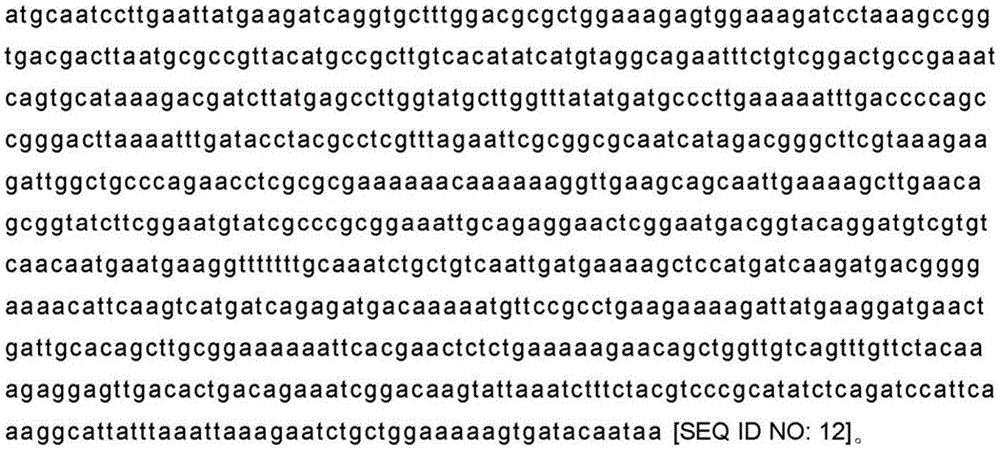
FlgM经由若干残基与SigD结合,这些残基大部分位于FlgM蛋白的C末端处的第4螺旋。用于失活的靶将是枯草芽孢杆菌FlgM的第3和第4螺旋中对应于I-58、K-62、I-65、G-68、D-73、A-78的高度保守的残基的突变。更广泛地,直接参与与SigD结合的26个残基中的任何一个或组合(如PMID:15068809中鉴定的)可以被突变以潜在地产生具有降低的活性或无活性的蛋白质。可选地,破坏二级结构或三级结构——特别是定义二级结构的4个螺旋——的任何突变或突变组合可以潜在成功地降低或减弱FlgM抑制SigD的能力。FlgM binds to SigD via several residues, most of which are located in the 4th helix at the C-terminus of the FlgM protein. The target for inactivation will be the highly conserved residues corresponding to 1-58, K-62, 1-65, G-68, D-73, A-78 in the 3rd and 4th helix of Bacillus subtilis FlgM base mutation. More broadly, any one or combination of the 26 residues directly involved in binding to SigD (as identified in PMID: 15068809) can be mutated to potentially generate proteins with reduced or inactive activity. Alternatively, any mutation or combination of mutations that disrupts secondary or tertiary structure, particularly the 4 helices that define the secondary structure, can potentially successfully reduce or attenuate the ability of FlgM to inhibit SigD.
在一些实施方案中,重组微生物包含降低FlgM抑制SigD活性的能力的遗传修饰。特别是,一种这样的遗传修饰是部分或完全缺失FlgM基因以降低或消除其生物活性。部分缺失可以包括编码至少25%的蛋白质C末端的基因部分的缺失。In some embodiments, the recombinant microorganism comprises a genetic modification that reduces the ability of FlgM to inhibit SigD activity. In particular, one such genetic modification is the partial or complete deletion of the FlgM gene to reduce or eliminate its biological activity. A partial deletion can include deletion of a portion of a gene encoding at least 25% of the C-terminus of the protein.
其他遗传修饰包括,例如,产生无活性FlgM蛋白的移码突变,或FlgM启动子的破坏。可选地,FlgM可以通过点突变变得无活性,所述点突变使FlgM无功能活性或以其他方式抑制FlgM与SigD结合的能力或以其他方式阻遏SigD。间接地,可以通过使FlgM对活化物诸如ComK或DegU不敏感,或通过使FlgM对阻遏物诸如ScoC或蛋白酶Epr和Wpr过度敏感来破坏FlgM。Other genetic modifications include, for example, frameshift mutations that produce an inactive FlgM protein, or disruption of the FlgM promoter. Alternatively, FlgM can be rendered inactive by point mutations that render FlgM functionally inactive or otherwise inhibit the ability of FlgM to bind to or otherwise repress SigD. Indirectly, FlgM can be disrupted by desensitizing FlgM to activators such as ComK or DegU, or by oversensitizing FlgM to repressors such as ScoC or the proteases Epr and Wpr.
V.重组微生物V. Recombinant Microorganisms
预期用于本文使用的重组微生物包含表达系统,该表达系统包括至少一种表达构建体,该表达构建体包含与编码用于表达的主题多核苷酸的异源核苷酸序列可操作地连接的鞭毛蛋白基因启动子,该鞭毛蛋白基因启动子被遗传修饰以降低CsrA对翻译的抑制;并且任选地,FlgM基因被遗传修饰以降低对SigD表达的阻遏。Recombinant microorganisms contemplated for use herein comprise expression systems comprising at least one expression construct comprising a heterologous nucleotide sequence operably linked to a heterologous nucleotide sequence encoding a subject polynucleotide for expression a flagellin gene promoter genetically modified to reduce repression of translation by CsrA; and optionally, a FlgM gene genetically modified to reduce repression of SigD expression.
重组微生物通常是对动物例如人类的摄入安全的益生微生物。益生微生物包括但不限于芽孢杆菌属、双歧杆菌属、肠球菌属、大肠杆菌、乳杆菌属、明串珠菌属、片球菌属和链球菌属。具体地,本公开内容预期使用芽孢杆菌属的细菌,并且更具体是枯草芽孢杆菌。微生物可以从任何经典来源获得,包括例如美国典型培养物保藏中心(American TypeCulture Collection)(ATCC)或芽孢杆菌遗传保藏中心(Bacillus Genetic StockCenter)(BGSC)。Recombinant microorganisms are generally probiotic microorganisms that are safe for ingestion by animals such as humans. Probiotic microorganisms include, but are not limited to, Bacillus, Bifidobacterium, Enterococcus, Escherichia coli, Lactobacillus, Leuconostoc, Pediococcus, and Streptococcus. Specifically, the present disclosure contemplates the use of bacteria of the genus Bacillus, and more specifically Bacillus subtilis. Microorganisms can be obtained from any classical source, including, for example, the American Type Culture Collection (ATCC) or the Bacillus Genetic Stock Center (BGSC).
在某些实施方案中,微生物不是真核生物。例如,微生物不是用于酒精饮料发酵的真核生物,诸如酵母属(Saccharomyces)。In certain embodiments, the microorganism is not a eukaryotic organism. For example, microorganisms are not eukaryotic organisms such as Saccharomyces used for fermentation of alcoholic beverages.
VI.益生组合物VI. PROBIOTIC COMPOSITIONS
本文还提供了包含益生微生物的组合物。组合物包含在生理学上可接受的载体中的如本文提供的重组微生物。Also provided herein are compositions comprising probiotic microorganisms. The composition comprises a recombinant microorganism as provided herein in a physiologically acceptable carrier.
在某些实施方案中,益生组合物以单位剂量提供。单位剂量将通常在合适的载体中具有104个至1012个之间的菌落形成单位的微生物。这包括如本文描述的任何有效剂量。剂量的总体积可以在约0.05mL和500mL之间,例如在约0.5mL和约50mL之间或在约2.5mL和15mL之间。In certain embodiments, the probiotic composition is provided in a unit dose. A unit dose will typically have between 104 and 1012 colony forming units of the microorganism in a suitable carrier. This includes any effective dose as described herein. The total volume of the dose may be between about 0.05 mL and 500 mL, eg, between about 0.5 mL and about 50 mL or between about 2.5 mL and 15 mL.
VII.使用方法VII. How to use
本文还提供了使用重组微生物和益生组合物使靶分析物代谢和/或为宿主提供健康或健康益处的方法。Also provided herein are methods of using recombinant microorganisms and probiotic compositions to metabolize target analytes and/or provide health or health benefits to a host.
宿主可以是任何动物。这包括例如哺乳动物,例如灵长类动物,例如人类。哺乳动物可以属于任何类,诸如偶蹄目(artiodactyla)、食肉目(carnivora)、鲸目(cetacean)、翼手目(chiroptera)、皮翼目(dermoptera)、贫齿目(edentata)、蹄兔类(hyracoidae)、蹄兔类、食虫类(insectivore)、兔形目(lagomorpha)、有袋目(marsupialia)、单孔目(monotremata)、奇蹄目(perissodactyla)、有蹄类(ungulate)、鳞甲目(pholidata)和鳍足目(pinnipedia)。The host can be any animal. This includes, for example, mammals, such as primates, such as humans. Mammals may belong to any class such as artiodactyla, carnivora, cetacean, chiroptera, dermoptera, edentata, hyrax (hyracoidae), hyraxes, insectivore, lagomorpha, marsupialia, monotremata, perissodactyla, ungulate, The order pholidata and the order pinnipedia.
宿主可以以有效产生预期的结果的量摄入本公开内容的益生组合物。预期的结果可以是宿主的肠中的靶分析物的代谢。在这种情况下,主题多肽可以是处理分析物的酶。具体地,本公开内容预期了乙醛的代谢,乙醛是乙醇代谢的产物,其是酒精宿醉的原因。The probiotic compositions of the present disclosure can be ingested by the host in an amount effective to produce the desired result. The expected result may be the metabolism of the target analyte in the host's gut. In this case, the subject polypeptide may be an enzyme that processes the analyte. Specifically, the present disclosure contemplates the metabolism of acetaldehyde, a product of ethanol metabolism that is responsible for alcohol hangovers.
如本文使用的,术语“酒精宿醉”是指由饮用酒精引起的状况,并且特征为以下一种或更多种:脱水、睡眠不佳、体虚(grogginess)、恶心、呕吐、头痛、不适、口干、对光和声音敏感、出汗、肌肉疼痛、腹泻、胃痛、胃肠不适、眩晕、焦虑、抑郁、易怒和身体中乙醛浓度升高。As used herein, the term "alcoholic hangover" refers to a condition caused by drinking alcohol and characterized by one or more of the following: dehydration, poor sleep, grogginess, nausea, vomiting, headache, malaise , dry mouth, sensitivity to light and sound, sweating, muscle pain, diarrhea, stomach pain, gastrointestinal upset, dizziness, anxiety, depression, irritability, and elevated levels of acetaldehyde in the body.
酒精宿醉的预防或治疗,例如缓解,可以包括在饮用酒精之前、期间或之后向受试者施用本公开内容的益生组合物。组合物可以在开始饮用酒精前最多24小时、18小时、12小时、11小时、10小时、9小时、8小时、7小时、6小时、5小时、4小时、3小时、2小时或1小时中的任何一项被摄入。益生组合物可以在饮用酒精期间被施用。益生组合物可以在饮用酒精后最多12小时、11小时、10小时、9小时、8小时、7小时、6小时、5小时、4小时、3小时、2小时或1小时中的任何一项被施用,或在受试者出现酒精宿醉的症状的任何时间施用。Prevention or treatment, eg, mitigation, of an alcohol hangover can include administering to a subject a probiotic composition of the present disclosure before, during, or after drinking alcohol. The composition can be up to 24 hours, 18 hours, 12 hours, 11 hours, 10 hours, 9 hours, 8 hours, 7 hours, 6 hours, 5 hours, 4 hours, 3 hours, 2 hours, or 1 hour before starting alcohol consumption any of the ingested. The prebiotic composition can be administered during alcohol consumption. The probiotic composition can be consumed up to any one of 12 hours, 11 hours, 10 hours, 9 hours, 8 hours, 7 hours, 6 hours, 5 hours, 4 hours, 3 hours, 2 hours, or 1 hour after drinking alcohol. administered, or at any time the subject is experiencing symptoms of an alcohol hangover.
组合物可以通过口服饮用或通过肛门施用至个体的肠(例如,胃或肠)。可以向个体施用活的微生物而不是死的微生物。微生物可以以不同于酒精饮料的成分提供,即,可以与酒精饮料分开服用。例如,这可以是在饮用酒精之前施用组合物的情况。The composition can be administered to the intestines (eg, stomach or intestines) of an individual by oral drinking or by anal administration. Live microorganisms can be administered to an individual rather than dead microorganisms. The microorganisms may be provided in a different composition from the alcoholic beverage, ie, may be taken separately from the alcoholic beverage. For example, this may be the case when the composition is administered prior to drinking alcohol.
益生菌的有效剂量可以取决于酒精宿醉的症状的程度。一般地,重组细菌的剂量将根据诸如受试者的年龄、体重、身高、性别、一般医疗状况和先前的病史的因素而变化。在具体实施方案中,施用约104CFU至约1012CFU、105CFU至1011CFU、106CFU至1010CFU、108CFU至1010CFU或108CFU至1012CFU(“菌落形成单位”)的微生物的范围内的细菌可能是期望的。The effective dose of probiotics may depend on the severity of the symptoms of an alcohol hangover. Generally, the dosage of recombinant bacteria will vary depending on factors such as the subject's age, weight, height, sex, general medical condition, and previous medical history. In specific embodiments, about 104 CFU to about 1012 CFU, 105 CFU to 1011 CFU, 106 CFU to 1010 CFU, 108 CFU to 1010 CFU, or 108 CFU to 1012 CFU are administered (" Bacteria within the range of microorganisms known as "colony forming units") may be desirable.
在另一种实施方案中,本文公开的微生物被用于产生期望的组合物。产生这样的组合物的方法可以包括培养重组微生物,该重组微生物组成性表达将靶分析物转化成期望的组合物或产生期望的组合物中的中间物的酶。在这种情况下,将靶分析物添加到微生物培养物并且孵育足够的时间以产生酶促产物。In another embodiment, the microorganisms disclosed herein are used to produce a desired composition. Methods of producing such compositions can include culturing recombinant microorganisms that constitutively express enzymes that convert the target analyte into the desired composition or produce intermediates in the desired composition. In this case, the target analyte is added to the microbial culture and incubated for a sufficient time to produce the enzymatic product.
实施例Example
实施例1Example 1
方法:method:
菌株、质粒和培养基Strains, Plasmids and Media
使用来自芽孢杆菌遗传保藏中心的枯草芽孢杆菌菌株PY79(菌株1A747)用于所有操作。此处使用的所有枯草芽孢杆菌菌株是PY79的衍生菌株。Bacillus subtilis strain PY79 (strain 1A747) from the Bacillus Genetic Collection was used for all manipulations. All B. subtilis strains used here are derived strains of PY79.
除非另有说明,否则细菌生长于LB培养基(1%胰蛋白胨、0.5%酵母提取物、0.5%氯化钠、[1.5%琼脂,如果是固体培养基])中。对于MLS耐受性选择,使用1μg/mL红霉素和25μg/mL林可霉素。对于转化实验,细菌生长于改良的感受态(MC)培养基(100mM磷酸盐缓冲液、2%葡萄糖、3mM柠檬酸三钠、22mg/L柠檬酸铁铵、0.1%酪蛋白水解物、0.16%谷氨酸、3mM硫酸镁)中。Bacteria were grown in LB medium (1% tryptone, 0.5% yeast extract, 0.5% sodium chloride, [1.5% agar if solid medium]) unless otherwise stated. For MLS tolerance selection, 1 μg/mL erythromycin and 25 μg/mL lincomycin were used. For transformation experiments, bacteria were grown in modified competent (MC) medium (100 mM phosphate buffer, 2% glucose, 3 mM trisodium citrate, 22 mg/L ferric ammonium citrate, 0.1% casein hydrolysate, 0.16% glutamic acid, 3 mM magnesium sulfate).
用于进行遗传修饰的质粒是pMiniMAD[9]。The plasmid used for genetic modification was pMiniMAD [9].
用于在pHyspank启动子下IPTG诱导的表达的质粒是pDR111[10]。1mM IPTG被用于所有诱导。The plasmid used for IPTG-induced expression under the pHyspank promoter was pDR111 [10]. 1 mM IPTG was used for all inductions.
flgM缺失flgM is missing
构建了体外转录的双链DNA分子,其含有来自枯草芽孢杆菌PY79的flgM基因的5’和3’的约800个碱基对,连同由Pstl限制性内切酶识别序列隔开的flgM的编码序列的前15个碱基对和最后15个碱基对(参见表1中的全序列)。然后使用引物ZP24和ZP25(表1)将pMiniMAD线性化。然后使用Gibson组装[11]将所得的PCR产物和ΔflgM序列连接在一起以产生pMiniMADΔflgM。经由热转化将所得的质粒转化到大肠杆菌中。使用商购可得的试剂盒对质粒进行微制备(miniprepped),并且将该微制备的质粒用作进行如下缺失的DNA来源:An in vitro transcribed double-stranded DNA molecule was constructed containing approximately 800 base pairs 5' and 3' of the flgM gene from Bacillus subtilis PY79, along with the encoding for flgM separated by a Pstl restriction endonuclease recognition sequence The first 15 base pairs and the last 15 base pairs of the sequence (see Table 1 for the full sequence). pMiniMAD was then linearized using primers ZP24 and ZP25 (Table 1). The resulting PCR product and the ΔflgM sequence were then ligated together using Gibson assembly [11] to generate pMiniMADΔflgM. The resulting plasmid was transformed into E. coli via thermal transformation. Plasmids were miniprepped using a commercially available kit, and the miniprepped plasmid was used as a source of DNA for the following deletions:
i.PY79的单菌落接种于15mL试管中的2mL的MC培养基中i. A single colony of PY79 was inoculated into 2 mL of MC medium in a 15 mL tube
ii.使培养物在37℃生长,以275rmp振荡4.5小时或在退出指数生长后约1小时ii. Grow the culture at 37°C with shaking at 275rmp for 4.5 hours or about 1 hour after exiting exponential growth
iii.将400μL的培养物转移到新的15mL试管中,并且添加1μg微制备的质粒(上文描述的)iii. Transfer 400 μL of culture to a new 15 mL tube and add 1 μg of microprepared plasmid (described above)
iv.将培养物与DNA放回37℃的摇床中1.5小时iv. Put the culture and DNA back into the shaker at 37°C for 1.5 hours
v.在具有1μg/mL红霉素和25μg/mL林可霉素的LB琼脂上板培养v. Plate on LB agar with 1 μg/mL erythromycin and 25 μg/mL lincomycin
vi.在37℃孵育过夜vi. Incubate overnight at 37°C
vii.经由PCR使用引物ZP77和ZP78筛选突变等位基因的分离的菌落,并且将阳性菌落接种在3mL不具有抗生素的LB肉汤中vii. Screen isolated colonies for mutant alleles via PCR using primers ZP77 and ZP78 and inoculate positive colonies in 3 mL of LB broth without antibiotics
viii.在室温以275rpm振荡生长过夜viii. Grow overnight at room temperature with shaking at 275 rpm
ix.将10μL的在不具有抗生素的LB上的过夜培养物划线分离(isolationstreak),并且在37℃生长过夜。由于缺乏抗生素选择,质粒可以在过夜复制期间丢失。观察到的该质粒的稳定性为约90%,在此阶段10个菌落中约有1个菌落失去质粒。ix. 10 μL of overnight culture on LB without antibiotics was isolated streak and grown overnight at 37°C. Plasmids can be lost during overnight replication due to lack of antibiotic selection. The observed stability of this plasmid was about 90%, with about 1 in 10 colonies losing the plasmid at this stage.
x.在具有和不具有抗生素(1μg/mL红霉素和25μg/mL林可霉素)的LB上一式两份划线分离的菌落,并且在37℃生长过夜x. Colonies streaked in duplicate on LB with and without antibiotics (1 μg/mL erythromycin and 25 μg/mL lincomycin) and grown overnight at 37°C
xi.用引物ZP77和ZP78进行抗生素敏感菌落PCR筛选以鉴定具有突变等位基因的菌株xi. PCR screening of antibiotic-sensitive colonies with primers ZP77 and ZP78 to identify strains with mutant alleles
表1:引物和构建的基因/等位基因Table 1: Primers and constructed genes/alleles


用acoD、aldB或GFP基因替换hagReplace hag with acoD, aldB or GFP gene
构建了侧翼为在hag基因的5’和3’的800个碱基对的编码GFP或醛脱氢酶AcoD(来自钩虫贪铜菌)和AldB(来自大肠杆菌)的双链DNA(序列参见表1)。此外,通过指定每种构建体在GFP/AcoD/AldB编码序列的5’正好38个碱基对处的5’侧翼hag同源物中具有单个点突变,将天然存在的“G”变为“A”(“A”突变在表2的这些序列中突出显示),来破坏CsrA结合位点。经由Gibson组装将这些连接到用ZP24和ZP25线性化的pMiniMAD质粒中。经由热转化将所得的质粒转化到大肠杆菌中。使用商购可得的试剂盒对质粒进行微制备,并且将该微制备的质粒用作DNA来源以遵循与flgM缺失相同的方案进行染色体修饰。Double-stranded DNA encoding GFP or aldehyde dehydrogenases AcoD (from Copper worm) and AldB (from E. coli) flanked by 800 base pairs at the 5' and 3' of the hag gene (see Table for sequences) were constructed. 1). Furthermore, the naturally occurring "G" was changed to " A" ("A" mutations are highlighted in these sequences in Table 2) to disrupt the CsrA binding site. These were ligated into pMiniMAD plasmids linearized with ZP24 and ZP25 via Gibson assembly. The resulting plasmid was transformed into E. coli via thermal transformation. Plasmids were miniprepared using a commercially available kit, and the miniprepared plasmid was used as a source of DNA to perform chromosomal modifications following the same protocol as flgM deletion.
GFP测定来定量启动子强度GFP assay to quantify promoter strength
在LB板上涂布(struck out)待测试的菌株,并且在37℃生长过夜。将来自过夜生长的单个菌落接种到3mL的LB中,并且添加1mM IPTG以诱导具有在IPTG可诱导的pHyspank启动子下的GFP的枯草芽孢杆菌的菌株。菌株在37℃,以275rpm振荡生长7小时。在2.5小时、4小时、5.5小时和7小时获取时间点。通过从每支管取出200μL的培养物并且在13,000×g旋降(spin down)2分钟,并且然后将沉淀重悬于200μL的PBS中,获取时间点。然后将这些重悬物等分到costar黑色96孔板的孔中,并且在荧光计上读取(激发485nm;发射535nm)。在荧光读取后,取每个孔的100μL,并且在分光光度计上读取600nm处的吸光度,以将荧光针对培养物的光密度归一化。Strains to be tested were struck out on LB plates and grown overnight at 37°C. A single colony from an overnight growth was inoculated into 3 mL of LB and 1 mM IPTG was added to induce a strain of B. subtilis with GFP under the IPTG-inducible pHyspank promoter. The strain was grown for 7 hours at 37°C with shaking at 275 rpm. Time points were acquired at 2.5 hours, 4 hours, 5.5 hours and 7 hours . Time points were obtained by removing 200 μL of culture from each tube and spinning down at 13,000×g for 2 minutes, and then resuspending the pellet in 200 μL of PBS. These resuspensions were then aliquoted into wells of a costar black 96-well plate and read on a fluorometer (excitation 485 nm; emission 535 nm). After fluorescence reading, 100 μL of each well was taken and the absorbance at 600 nm was read on a spectrophotometer to normalize the fluorescence to the optical density of the culture.
对于板观察,冷冻的储备物在LB板上在斑块(patch)中划线,并且在37℃生长过夜。用蓝色LED闪光灯(480nm波长)和橙色滤光片观察荧光。For plate observation, frozen stocks were streaked in patches on LB plates and grown overnight at 37°C. Fluorescence was observed with a blue LED flash (480 nm wavelength) and an orange filter.
HPLC测定以定量ALDH活性HPLC assay to quantify ALDH activity
样品制备:将来自在37℃在LB板上过夜生长的单个菌落接种到4mL的LB培养基中,并且在37℃以275rpm振荡生长1.75小时至OD600为约0.2,并且然后分成两支各2mL的管。对于每个菌株,一支管用1mM IPTG诱导,并且另一支管保留不诱导作为对照。诱导后5小时(总生长6.75小时),评估OD600(所有菌株OD600为约4),并且将1.5mL培养物在6000×G旋降5分钟,然后将沉淀重悬于200μL的PBS中。将22μL的2M乙醛添加到每支管的细胞,以给出最终浓度为200mM的乙醛。然后将管在37℃孵育30分钟。然后将细胞在20,000×G于4℃旋降10分钟,并且将150μL的所得上清液添加到1350μL的PBS中(因此,如果无乙醛损失,最终浓度现在应该是20mM)。然后将这些稀释的上清液在-20℃冷冻于1.5mL微量离心管中。Sample preparation: A single colony from overnight growth on LB plates at 37 °C was inoculated into 4 mL of LB medium and grown for 1.75 h at 37 °C with shaking at 275 rpm to an OD600 of about 0.2, and then split into two 2 mL each. Tube. For each strain, one tube was induced with 1 mM IPTG and the other tube was left uninduced as a control. 5 hours post induction (6.75 hours total growth), OD600 was assessed (all strains had an OD600 of about 4) and 1.5 mL of the culture was spin down at 6000 x G for 5 minutes, then the pellet was resuspended in 200 [mu]L of PBS. 22 μL of 2M acetaldehyde was added to the cells in each tube to give a final concentration of 200 mM acetaldehyde. The tubes were then incubated at 37°C for 30 minutes. Cells were then spun down at 20,000 x G for 10 minutes at 4°C and 150 μL of the resulting supernatant was added to 1350 μL of PBS (thus, if no acetaldehyde was lost, the final concentration should now be 20 mM). These diluted supernatants were then frozen in 1.5 mL microcentrifuge tubes at -20°C.
标准物制备:将168μL的乙醛添加到1332μL的PBS以制成2M储液,并且在-20℃冷冻。在实验当天新鲜制备用于制备HPLC的标准曲线的样品,通过将该2M储液稀释到PBS中,获得最终浓度为1mM、2.5mM、5mM、10mM和20mM的标准物。每种标准物以一式两份制备,一套在样品前运行,并且一套在样品后运行。然后,将所有标准物和样品装载到HPLC小瓶中,HPLC小瓶填充至颈部以限制顶部空间。样品,但不是标准物,通过0.2μm过滤器过滤,以在装载到HPLC小瓶中时去除任何残留细菌。Standard preparation: 168 μL of acetaldehyde was added to 1332 μL of PBS to make a 2M stock and frozen at -20°C. Samples for preparing standard curves for HPLC were freshly prepared on the day of the experiment, and standards were obtained at final concentrations of 1 mM, 2.5 mM, 5 mM, 10 mM and 20 mM by diluting this 2M stock into PBS. Each standard was prepared in duplicate, one run before the sample and one set after the sample. All standards and samples were then loaded into HPLC vials, which were filled to the neck to limit headspace. Samples, but not standards, were filtered through 0.2 μm filters to remove any residual bacteria when loaded into HPLC vials.
样品在具有Aminex HPX-87H柱的Shimadzu系统上运行。样品以0.6mL/min的流速运行,并且用0.005M硫酸流动相在50℃(柱温)等度洗脱。经由折射率检测样品。Samples were run on a Shimadzu system with an Aminex HPX-87H column. The samples were run at a flow rate of 0.6 mL/min and eluted isocratically with 0.005M sulfuric acid mobile phase at 50°C (column temperature). Samples were detected via refractive index.
AcoD表达的定性分析(考马斯染色)Qualitative analysis of AcoD expression (Coomassie staining)
将来自在37℃在LB平板上过夜生长的单个菌落接种到2.5mL的LB培养基中(对于具有pHyspank启动子的菌株,+1mM IPTG),并且在37℃以275rpm振荡生长4.5小时。将1.5mL的每种培养物在13,000×G旋降2分钟,并且将沉淀重悬于50μL的裂解缓冲液(20mM TRIS、10mM EDTA、0.1%溶菌酶、0.01%RNA酶A、0.002%DNA酶I和Roche无EDTA cOmplete蛋白酶抑制剂混合片剂,按照制造商说明稀释)中。然后将样品在裂解缓冲液中在37℃水浴中孵育30分钟。然后将50μL的2×laemmli缓冲液添加至样品,并且将样品在100℃在热循环仪上孵育5分钟。然后将样品在13,000×G旋降2分钟,并且将10μL装载到8%SDS-PAGE凝胶上,并且在140V运行1小时。然后用ddH2O振荡漂洗凝胶6次,每次5分钟。然后在考马斯亮蓝染料中在室温振荡孵育过夜。A single colony from overnight growth on LB plates at 37°C was inoculated into 2.5 mL of LB medium (+1 mM IPTG for strains with pHyspank promoter) and grown for 4.5 hours at 37°C with shaking at 275 rpm. 1.5 mL of each culture was spin down at 13,000 x G for 2 min and the pellet resuspended in 50 μL of lysis buffer (20 mM TRIS, 10 mM EDTA, 0.1% lysozyme, 0.01% RNase A, 0.002% DNase) I and Roche EDTA-free cOmplete Protease Inhibitor Mix Tablets, diluted according to the manufacturer's instructions). The samples were then incubated in lysis buffer for 30 minutes in a 37°C water bath. 50 μL of 2× laemmli buffer was then added to the samples, and the samples were incubated at 100° C. on a thermal cycler for 5 minutes. The samples were then spin down at 13,000 x G for 2 minutes and 10 [mu]L were loaded onto an 8% SDS-PAGE gel and run at 140V for 1 hour. The gel was then rinsed 6 times with ddH2O shaking for 5 minutes each. It was then incubated overnight in Coomassie brilliant blue dye with shaking at room temperature.
结果:result:
ALDH基因在枯草芽孢杆菌中的异源表达引起生理学相关速率(physiologically Heterologous expression of the ALDH gene in Bacillus subtilis causes physiologically relevant rates relevant rates)的乙醛分解。relevant rates) of acetaldehyde decomposition.
为了评估枯草芽孢杆菌异源表达功能性乙醛脱氢酶的能力,构建了编码在IPTG可诱导的pHyspank启动子的控制下的乙醛脱氢酶基因的菌株。在查阅文献后,选择了两种不同的乙醛脱氢酶。选择的标准是:经表征的酶动力学和对乙醛的高特异性;细菌起源;来自非致病细菌;可溶性蛋白质产物(即不与膜结合);和氨基酸序列已知。在进行了这样的搜索之后,鉴定了若干候选物,并且两种被选为最符合这些标准。第一种是AcoD,由来自钩虫贪铜菌的acoD基因编码[12],其具有通过实验确定的约4μM的对乙醛的Km,并且使用NAD作为其将乙醛氧化成乙酸的辅因子。第二个是AldB,由大肠杆菌的aldB基因编码[13],其具有通过实验确定的约2.5μM的Km,并且Vmax为2U/mg,并且使用NADP作为其辅因子。To assess the ability of B. subtilis to heterologously express a functional aldehyde dehydrogenase, a strain encoding an aldehyde dehydrogenase gene under the control of the IPTG-inducible pHyspank promoter was constructed. After reviewing the literature, two different aldehyde dehydrogenases were selected. Criteria for selection were: characterized enzyme kinetics and high specificity for acetaldehyde; bacterial origin; from non-pathogenic bacteria; soluble protein product (ie, not membrane bound); and known amino acid sequence. Following such a search, several candidates were identified and two were selected as best meeting these criteria. The first is AcoD, encoded by the acoD gene from C. elegans [12], which has an experimentally determined Km for acetaldehyde of about 4 μM, and uses NAD as its cofactor for the oxidation of acetaldehyde to acetate. The second is AldB, encoded by the aldB gene of E. coli [13], which has an experimentally determined Km of about 2.5 μM and a Vmax of 2 U/mg, and uses NADP as its cofactor.
具有在pHyspank启动子控制下的acoD的枯草芽孢杆菌和具有在pHyspank启动子的控制下的aldB的枯草芽孢杆菌在具有和具有IPTG诱导的情况下生长,并且然后用200mMIPTG在室温孵育30分钟。然后过滤样品以去除所有细菌,并且在-20℃冷冻。B. subtilis with acoD under the control of the pHyspank promoter and B. subtilis with aldB under the control of the pHyspank promoter were grown with and with IPTG induction and then incubated with 200 mM IPTG for 30 minutes at room temperature. The samples were then filtered to remove all bacteria and frozen at -20°C.
将样品解冻并且以1:10稀释在PBS中,并且标准物在HPLC测定当天新鲜制备。然后在HPLC上运行所有样品,以定量乙醛的量。除了运行两套标准物(一套在运行开始时,一套在运行结束时),在运行开始和结束时运行乙醛的10mM标准物的单一制备物(即同一管运行两次),以控制在HPLC运行期间乙醛的任何潜在蒸发或其他随机损失,因为管将在机器上运行若干小时,并且期望确保按顺序较晚运行的样品将不错误地表现得更低。基于曲线下面积为每个标准样品生成标准曲线,并且最佳拟合线具有>0.99的R2。这条线的方程然后被用于产生每个样品的浓度。该测定的结果展示在图1中。乙醛标准物运行两次基本不存在差异,指示出运行期间乙醛没有从样品显著随机损失。此外,具有未诱导的细菌的样品具有与20mM标准物良好对应的乙醛水平,证明未诱导的细菌无法通过天然存在的机制有效去除乙醛。Samples were thawed and diluted 1:10 in PBS and standards were prepared fresh on the day of the HPLC assay. All samples were then run on HPLC to quantify the amount of acetaldehyde. In addition to running two sets of standards (one at the beginning of the run and one at the end of the run), a single preparation of a 10 mM standard of acetaldehyde was run at the beginning and end of the run (ie, the same tube was run twice) to control Any potential evaporation or other random loss of acetaldehyde during the HPLC run, as the tube will be running on the machine for several hours, and the desire to ensure that samples run later in the sequence will not erroneously appear lower. A standard curve was generated for each standard sample based on the area under the curve and the line of best fit had an R2 of >0.99. The equation for this line was then used to generate the concentration for each sample. The results of this assay are shown in Figure 1 . There was essentially no difference between the two runs of the acetaldehyde standard, indicating that there was no significant random loss of acetaldehyde from the samples during the run. In addition, samples with uninduced bacteria had acetaldehyde levels that corresponded well to the 20 mM standard, demonstrating that uninduced bacteria were unable to efficiently remove acetaldehyde by naturally occurring mechanisms.
然而,当AldB或AcoD被诱导时,样品显示出乙醛浓度(分别)降低约4mM和约8mM,指示出蛋白质的诱导引起乙醛的去除。However, when AldB or AcoD were induced, the samples showed a decrease in acetaldehyde concentration (respectively) of about 4 mM and about 8 mM, indicating that induction of the protein resulted in the removal of acetaldehyde.
flqM缺失和CSrA结合位点点突变的组合引起经由hag启动子的稳健和组成性异源Combination of flqM deletion and CSrA binding site mutation results in robust and constitutively heterologous via the hag promoter 蛋白质表达。protein expression.
由枯草芽孢杆菌中的hag基因编码的鞭毛蛋白在细胞确定运动性有益时以极高水平表达。然而,因为鞭毛的制造对细胞来说非常耗费营养和能量,在生命周期中当运动性将是不适当的时候它具有若干机制来阻遏Hag的产生。Flagellin, encoded by the hag gene in Bacillus subtilis, is expressed at extremely high levels when cells determine motility to be beneficial. However, because the manufacture of flagella is very nutrient and energy-intensive for the cell, it has several mechanisms to repress Hag production during the life cycle when motility would be inappropriate.
已知FlgM与活化hag的转录的σ因子SigD因子结合并且阻遏SigD因子。因此,flgM的缺失应当去除转录阻遏,并且引起高水平的组成性表达。hag翻译成蛋白质在转录后被CsrA进一步阻遏,CsrA在核糖体结合位点与hag转录物结合,因此竞争性抑制核糖体翻译。该结合位点中的单个点突变排除了CsrA结合,但不排除核糖体结合,因此允许hag转录物的组成性翻译。FlgM is known to bind to the sigma factor SigD factor that activates the transcription of hag and to repress the SigD factor. Thus, deletion of flgM should remove transcriptional repression and cause high levels of constitutive expression. The translation of hag into protein is further repressed post-transcriptionally by CsrA, which binds to the hag transcript at the ribosome binding site and thus competitively inhibits ribosomal translation. A single point mutation in this binding site precludes CsrA binding, but not ribosome binding, thus allowing constitutive translation of the hag transcript.
为了测试去除这两种关键的阻遏机制将引起异源蛋白质的稳定和组成性表达的假设,使flgM缺失,在CsrA结合位点进行单个点突变,并且将hag基因替换为表达报告物GFP。将该菌株在板上的荧光与经由去阻遏的pHyspank启动子表达GFP的菌株(使lacI从该构建体缺失以确保组成性表达,并且ΔlacI菌株显示出具有与具有完整lacI并且用1mMIPTG诱导的菌株相似的GFP表达水平[数据未示出])的荧光进行比较。当被同时涂布时,修饰的hag表达系统的两种不同分离株在定量上比pHyspank表达系统亮得多(图2a)。To test the hypothesis that removal of these two key repressive mechanisms would result in stable and constitutive expression of the heterologous protein, flgM was deleted, a single point mutation was made at the CsrA binding site, and the hag gene was replaced with the expression reporter GFP. The fluorescence of this strain on the plate was compared with the strain expressing GFP via the derepressed pHyspank promoter (lacI was deleted from this construct to ensure constitutive expression, and the ΔlacI strain was shown to have the same Similar GFP expression levels [data not shown]) were compared for fluorescence. When coated simultaneously, the two different isolates of the modified hag expression system were quantitatively much brighter than the pHyspank expression system (Figure 2a).
然而,为了观察表达是否确实是组成性的并且定量这两种表达系统之间的差异,获取了肉汤生长和荧光时间过程。菌株生长于LB中,并且在生长的2.5小时并且然后其后每90分钟直到7小时评估OD600和荧光(图2b)。事实上,在2.5小时后,在修饰的hag表达系统中,归一化到OD600的荧光比在pHyspank表达系统中高约4倍。这在4小时内增加到约10倍高,并且在评估的7小时内保持约10倍高。However, to see if expression was indeed constitutive and to quantify the differences between the two expression systems, broth growth and fluorescence time courses were obtained. Strains were grown in LB and OD600 and fluorescence were assessed at 2.5 hours of growth and then every 90 minutes thereafter until 7 hours (Fig. 2b). In fact, after 2.5 h, the fluorescence normalized to OD600 was about 4-fold higher in the modified hag expression system than in the pHyspank expression system. This increased to about 10-fold high within 4 hours and remained about 10-fold high for 7 hours of evaluation.
使用去阻遏的hag启动子,产生了比由pHyspank产生的更高水平的AcoD。 Using the derepressed hag promoter, higher levels of AcoD were produced than those produced by pHyspank .
为了确保经由我们修饰的hag启动子的稳健和组成性表达不是对GFP特异性的,而是可以用于其它异源蛋白质包括醛脱氢酶表达,将两种不同的醛脱氢酶基因插入到两种不同菌株的hag基因座中:来自钩虫贪铜菌的acoD和来自大肠杆菌的aldB。然后将这些菌株与经由pHyspank启动子表达acoD和aldB的菌株以及作为阳性对照的经由修饰的hag启动子表达GFP的菌株一起在肉汤培养基中培养。将细菌沉淀并且裂解,并且裂解物在SDS-PAGE凝胶上运行,并且使用考马斯染色总蛋白。如预期的,存在GFP的明显条带(图3)。此外,加his标签的AcoD、未加标签的AcoD和加his标签的AldB在经由修饰的hag启动子表达时存在同样亮的条带(图3)。然而,在诱导的pHyspank控制下AcoD和AldB仅存在预期的大小的微弱条带。尽管这种明显低水平的表达,但从HPLC实验已知,该水平足以以生理学相关速率去除乙醛。因此,因为考马斯染色证明存在定量上明显更多的经由修饰的hag启动子产生的蛋白质,合理预期该表达系统将产生如果不是更多的话至少同样稳健的乙醛去除速率。To ensure that robust and constitutive expression via our modified hag promoter is not specific to GFP, but can be used for other heterologous proteins including aldehyde dehydrogenase expression, two different aldehyde dehydrogenase genes were inserted into in the hag locus of two different strains: acoD from Cuprocera hookworm and aldB from Escherichia coli. These strains were then grown in broth medium with strains expressing acoD and aldB via the pHyspank promoter and, as a positive control, strains expressing GFP via the modified hag promoter. Bacteria were pelleted and lysed, and lysates were run on SDS-PAGE gels and Coomassie stained for total protein. As expected, there was a distinct band of GFP (Figure 3). In addition, his-tagged AcoD, untagged AcoD, and his-tagged AldB presented equally bright bands when expressed via the modified hag promoter (Figure 3). However, there were only faint bands of the expected size for AcoD and AldB under the control of induced pHyspank. Despite this apparently low level of expression, it is known from HPLC experiments that this level is sufficient to remove acetaldehyde at a physiologically relevant rate. Therefore, since Coomassie staining demonstrated that there was quantitatively significantly more protein produced via the modified hag promoter, it is reasonable to expect that this expression system would yield at least as robust, if not more, rates of acetaldehyde removal.
讨论:discuss:
酶方法正在快速取代小分子并且成为制药界的标准,这在很大程度上是由于其优越的效力、多功能性和特异性。这可以在以下事实中观察到证据:在2017年,生物药品市场价值超过2000亿美元,并且将在接下来7年内翻一番。此外,2016年中最畅销的10种药物中有8种是生物制品。Enzymatic approaches are rapidly replacing small molecules and becoming the standard in the pharmaceutical world, in large part due to their superior potency, versatility and specificity. Evidence of this can be observed in the fact that in 2017, the biopharmaceuticals market was worth over $200 billion and will double in the next seven years. Additionally, 8 of the 10 best-selling drugs in 2016 were biologics.
然而,目前制造生物药物的过程漫长、昂贵,并且通常以类似于制造小分子药物的思维方式进行。为了使这种强大的药物类别可用于更广泛的用途,有必要逐步改变方法。本发明的目的是提供用于酒精宿醉的经济有效、可口服递送的酶疗法。However, the current process of making biopharmaceuticals is long, expensive, and often done with a mindset similar to making small-molecule drugs. To make this powerful class of drugs available for wider use, a gradual change in approach is necessary. It is an object of the present invention to provide a cost-effective, orally deliverable enzyme therapy for alcoholic hangovers.
如图1中证明的,两种不同的异源蛋白质的细胞内表达引起乙醛的显著去除。事实上,如果假设一晚上大量饮酒引起结肠乙醛水平为约150μM[14]并且在72kg人类身体中存在约15L的细胞外液,那么相同量的细菌可以在大致3小时中从15L去除150μM的乙醛。虽然这当然是一个“粗略(back-of-the-envelop)”的计算,但至少可以合理地假设这些可以相对代表生理学相关速率。As demonstrated in Figure 1, intracellular expression of two different heterologous proteins resulted in significant removal of acetaldehyde. In fact, if it is assumed that a night of heavy drinking causes colonic acetaldehyde levels of about 150 μM [14] and that about 15 L of extracellular fluid are present in a 72 kg human body, the same amount of bacteria can remove 150 μM of acetaldehyde from 15 L in roughly 3 hours Acetaldehyde. While this is of course a "back-of-the-envelop" calculation, it is at least reasonable to assume that these can be relatively representative of physiologically relevant rates.
此外,无细菌对照证明,下降不是由于简单的蒸发或一些其他去除方法,并且未诱导的对照证明,去除是对ALDH的表达特异性的而不是细菌的某些固有功能。此外,在运行开始和结束时对相同的20mM标准管的重新读取证明,任何下降不是由于HPLC运行期间的蒸发。此外,乙醛的去除取决于醛脱氢酶的诱导,指示出细菌本身不天然去除乙醛,而是需要异源表达的乙醛脱氢酶。Furthermore, the no-bacteria control demonstrated that the drop was not due to simple evaporation or some other removal method, and the uninduced control demonstrated that the removal was specific to the expression of ALDH rather than some intrinsic function of the bacteria. Furthermore, re-reads of the same 20 mM standard tubes at the beginning and end of the run demonstrated that any drop was not due to evaporation during the HPLC run. Furthermore, acetaldehyde removal was dependent on the induction of aldehyde dehydrogenase, indicating that the bacteria themselves do not naturally remove acetaldehyde, but require a heterologously expressed acetaldehyde dehydrogenase.
通过去除FlgM和CsrA阻遏,在我们菌株的整个生长周期中,达到了GFP的快速且稳健的组成性表达。这些水平比使用在枯草芽孢杆菌中表达的学术性金标准pHyspank启动子的表达水平高5-10倍的事实证明了表达系统的实用性。此外,还重要的是注意到,荧光/OD600 比率在整个生长曲线中持续增加,指示出荧光比OD增加快,意味着每个细胞持续产生更多GFP。这与flgM缺失和CsrA结合位点突变引起组成性和稳健表达的假设一致。如果表达在整个生长曲线中不是组成性的,那么荧光与OD600的比率最终将稳定或下降,即使绝对荧光继续上升。By removing the FlgM and CsrA repression, rapid and robust constitutive expression of GFP was achieved throughout the growth cycle of our strain. The fact that these levels are 5-10 times higher than the expression levels using the academic gold standard pHyspank promoter expressed in B. subtilis demonstrates the utility of the expression system. In addition, it is also important to note that the fluorescence/ OD600 ratio continued to increase throughout the growth curve, indicating that the fluorescence increased faster than the OD, implying that more GFP was consistently produced per cell. This is consistent with the hypothesis that flgM deletion and mutation of the CsrA binding site cause constitutive and robust expression. If expression is not constitutive throughout the growth curve, then the ratio of fluorescence to OD600 will eventually stabilize or decrease, even if absolute fluorescence continues to rise.
此外,使用pHyspank启动子完成了乙醛去除的生理学相关速率的证明,指示出我们的系统使用经编辑的pHag启动子产生更多蛋白质,并且甚至应更充分地超过必需的乙醛去除速率。事实上,考马斯凝胶中AcoD的条带密度的定性比较(图2b)证明了稳健得多的蛋白质条带,指示出优越得多的蛋白质表达。Furthermore, the demonstration of a physiologically relevant rate of acetaldehyde removal was accomplished using the pHyspank promoter, indicating that our system produces more protein using the edited pHag promoter, and should even more adequately exceed the necessary rate of acetaldehyde removal. In fact, a qualitative comparison of the band density of AcoD in Coomassie gels (Fig. 2b) demonstrated much more robust protein bands, indicating much superior protein expression.
综上所述,已经开发了一种从身体去除乙醛的新型系统,该系统不同于目前描述或执行的任何其他策略。它包括出于直接通过酶的方式去除乙醛的目的被工程化以组成性地表达异源蛋白质的可食用细菌。它使用了一种利用通过去除鞭毛蛋白启动子的阻遏物来增强的稳健的鞭毛蛋白启动子的异源蛋白质表达策略。In conclusion, a novel system for removing acetaldehyde from the body has been developed that is unlike any other strategy described or performed so far. It includes edible bacteria engineered to constitutively express heterologous proteins for the purpose of directly enzymatically removing acetaldehyde. It uses a heterologous protein expression strategy that utilizes a robust flagellin promoter enhanced by removal of the flagellin promoter's repressor.
实施例2Example 2
受试者摄入1E9CFU的具有以下修饰的枯草芽孢杆菌的孢子制备物的水悬浮液:FlgM缺失、如本文描述的BS1中的突变,以及hag基因被替换为如本文描述的AcoD。紧接着,这个人在接下来三个小时摄入了六罐酒精饮料(12盎司的5%乙醇),然后睡觉。通常,这种量的酒精引起此人具有酒精宿醉,其特征为:体虚、严重头痛、恶心、不适、对光和声音敏感、眩晕和易怒。这些症状通常在此人睡觉的8小时内出现,并且其后持续12小时。然而,此人8小时后醒来,由于前一天晚上饮用的乙醇的代谢,他或她的身体没有形成任何过量的乙醛。因此,当他或她由于脱水具有轻度的体虚和轻微的头痛时,这个人已经大大降低了或者没有与宿醉相关的其他症状。Subjects ingested an aqueous suspension of 1E9 CFU of a spore preparation of B. subtilis with the following modifications: FlgM deletion, mutation in BS1 as described herein, and hag gene replaced with AcoD as described herein. Immediately afterwards, the person ingested six cans of alcoholic beverages (12 ounces of 5% ethanol) for the next three hours before going to sleep. Typically, this amount of alcohol causes the person to have an alcoholic hangover characterized by weakness, severe headache, nausea, malaise, sensitivity to light and sound, dizziness, and irritability. These symptoms usually appear within 8 hours of the person sleeping and continue for 12 hours thereafter. However, the person woke up 8 hours later and his or her body did not form any excess acetaldehyde due to the metabolism of the ethanol consumed the night before. Thus, when he or she has mild weakness and mild headaches due to dehydration, the person has greatly reduced or no other symptoms associated with hangovers.
示例性实施方案Exemplary Embodiment
1.一种用于预防或治疗酒精宿醉的方法,所述方法包括向有相应需要的受试者的肠施用有效量的包含重组细菌的组合物,所述重组细菌经重组工程化以组成性地表达醛脱氢酶。1. A method for preventing or treating an alcoholic hangover, the method comprising administering an effective amount of a composition comprising a recombinant bacterium to the intestine of a subject in need of correspondingly, the recombinant bacterium being recombinantly engineered to form to express aldehyde dehydrogenase.
2.如实施方案1所述的方法,其中所述重组细菌包含:2. The method of
a)包含表达构建体的多核苷酸,所述表达构建体包含与编码醛脱氢酶的异源核苷酸序列可操作地连接的鞭毛蛋白基因启动子,其中所述鞭毛蛋白基因启动子包含一种或更多种遗传修饰,所述一种或更多种遗传修饰降低CsrA对从所述鞭毛蛋白基因启动子转录的mRNA的翻译的阻遏;和b)σ因子阻遏物的遗传修饰,其中所述修饰降低对从所述鞭毛蛋白基因启动子的σ因子转录起始的抑制。a) a polynucleotide comprising an expression construct comprising a flagellin gene promoter operably linked to a heterologous nucleotide sequence encoding an aldehyde dehydrogenase, wherein the flagellin gene promoter comprises one or more genetic modifications that reduce CsrA repression of translation of mRNA transcribed from the flagellin gene promoter; and b) a genetic modification of the sigma factor repressor, wherein The modification reduces the inhibition of sigma factor transcription initiation from the flagellin gene promoter.
3.如实施方案2所述的方法,其中所述细菌属于选自以下的属:芽孢杆菌属、双歧杆菌属、肠球菌属、埃希氏菌属、乳杆菌属、明串珠菌属、片球菌属、片球菌属和链球菌属。3. The method of
4.如实施方案2所述的方法,其中(1)所述细菌属于芽孢杆菌属,(2)所述鞭毛蛋白基因启动子是经修饰的芽孢杆菌属hag启动子,所述hag启动子包含CsrA BS1结合位点和/或CsrA BS2结合位点的一种或更多种遗传修饰,(3)所述σ因子是SigD,并且(4)SigD阻遏物是FlgM。4. The method of
5.如实施方案4所述的方法,其中所述hag启动子包含在12碱基对BS1结合位点中或在所述结合位点的任一侧上的形成BS1的茎-环二级结构的茎的周围碱基中的一种或更多种遗传修饰。5. The method of
6.如实施方案4所述的方法,其中所述hag启动子包含CsrA BS1识别序列AGGA的修饰。6. The method of
7.如实施方案4所述的方法,其中所述hag启动子包含核苷酸序列GCACAAGAACGT[SEQ ID NO:2]。7. The method of
8.如实施方案4所述的方法,其中所述一种或更多种遗传修饰包括对所述CsrABS2结合位点的一个或更多个点突变。8. The method of
9.如实施方案4所述的方法,其中所述hag启动子包含通过消除允许氢键合的互补性来破坏BS2的茎环结构的一种或更多种遗传修饰。9. The method of
10.如实施方案4所述的方法,其中所述hag启动子包含所述BS2结合位点的修饰,其中所述修饰包括核苷酸序列ATTTAGGGAGGAA[SEQ ID NO:3]。10. The method of
11.如实施方案1所述的方法,其中所述醛脱氢酶是细菌醛脱氢酶。11. The method of
12.如实施方案4所述的方法,其中所述醛脱氢酶选自(1)来自钩虫贪铜菌的AcoD和(2)来自大肠杆菌的AldB。12. The method of
13.如实施方案4所述的方法,其中flgM基因中的遗传修饰包括所述flgM基因的全部或部分缺失。13. The method of
14.如实施方案4的方法,其中flgM基因中的遗传修饰破坏二级结构或三级结构。14. The method of
15.如实施方案4所述的方法,其中所述表达构建体位于细菌染色体中。15. The method of
16.如实施方案1所述的方法,所述方法包括在饮用酒精期间向所述受试者施用所述组合物。16. The method of
17.如实施方案1所述的方法,所述方法包括在开始饮用酒精前最多24小时向所述受试者施用所述组合物。17. The method of
18.如实施方案1所述的方法,其中所述组合物经口服施用。18. The method of
19.如实施方案1所述的方法,其中所述组合物还包含选自以下的生理学上可接受的载体:乳酸发酵食品、发酵乳制品、抗性淀粉、膳食纤维、碳水化合物、蛋白质和糖基化蛋白质、水、胶囊填充剂和胶状物质。19. The method of
20.如实施方案1所述的方法,其中所述组合物包含约104个至约1012个菌落形成单位的所述重组细菌。20. The method of
21.一种重组微生物,所述重组微生物包含:a)包含表达构建体的多核苷酸,所述表达构建体包含与编码主题多肽的异源核苷酸序列可操作地连接的鞭毛蛋白基因启动子,其中所述鞭毛蛋白基因启动子包含一种或更多种遗传修饰,所述一种或更多种遗传修饰降低CsrA对从所述鞭毛蛋白基因启动子转录的mRNA的翻译的阻遏;和b)flgM基因的遗传修饰,所述flgM基因的遗传修饰降低对SigD转录起始的抑制。21. A recombinant microorganism comprising: a) a polynucleotide comprising an expression construct comprising a flagellin gene that is operably linked with a heterologous nucleotide sequence encoding a subject polypeptide a promoter, wherein the flagellin gene promoter comprises one or more genetic modifications that reduce CsrA repression of translation of mRNA transcribed from the flagellin gene promoter; and b) Genetic modification of the flgM gene that reduces the inhibition of SigD transcription initiation.
22.如实施方案21的重组微生物,所述重组微生物组成性地表达所述多肽。22. The recombinant microorganism of embodiment 21 which constitutively expresses the polypeptide.
23.如实施方案21所述的重组微生物,其中所述微生物是益生的。23. The recombinant microorganism of embodiment 21, wherein the microorganism is probiotic.
24.如实施方案21所述的重组微生物,其中所述微生物属于选自以下的属:芽孢杆菌属、双歧杆菌属、肠球菌属、大肠杆菌、乳杆菌属、明串珠菌属、片球菌属、片球菌属和链球菌属。24. The recombinant microorganism of embodiment 21, wherein the microorganism belongs to a genus selected from the group consisting of Bacillus, Bifidobacterium, Enterococcus, Escherichia coli, Lactobacillus, Leuconostoc, Pediococcus Genus, Pediococcus and Streptococcus.
25.如实施方案21所述的重组微生物,其中所述微生物属于芽孢杆菌属。25. The recombinant microorganism of embodiment 21, wherein the microorganism belongs to the genus Bacillus.
26.如实施方案21所述的重组微生物,其中所述微生物是枯草芽孢杆菌。26. The recombinant microorganism of embodiment 21, wherein the microorganism is Bacillus subtilis.
27.如前述实施方案中任一项所述的重组微生物,其中所述鞭毛蛋白基因启动子是hag启动子。27. The recombinant microorganism of any one of the preceding embodiments, wherein the flagellin gene promoter is a hag promoter.
28.如实施方案27所述的重组微生物,其中所述hag启动子包含一种或更多种遗传修饰,所述一种或更多种遗传修饰降低CsrA对从所述鞭毛蛋白基因启动子转录的mRNA的翻译的阻遏,其中所述遗传修饰包括CsrABS1结合位点和/或CsrA BS2结合位点的修饰(例如,核苷酸取代、插入或缺失)。28. The recombinant microorganism of embodiment 27, wherein the hag promoter comprises one or more genetic modifications that reduce CsrA to transcription from the flagellin gene promoter Repression of translation of mRNA, wherein the genetic modification includes modification (eg, nucleotide substitutions, insertions or deletions) of the CsrABS1 binding site and/or the CsrABS2 binding site.
29.如实施方案28所述的重组微生物,其中所述一种或更多种遗传修饰包括对CsrA BS1识别序列AGGA的一种或多于一种(例如两种、三种或四种)遗传修饰,例如修饰为序列AGAA。29. The recombinant microorganism of embodiment 28, wherein said one or more genetic modifications comprise one or more than one (for example two, three or four) genetics to CsrA BS1 recognition sequence AGGA Modified, for example, to the sequence AGAA.
30.如实施方案28所述的重组微生物,其中所述一种或更多种遗传修饰包括在12碱基对BS1结合位点中或在所述结合位点的任一侧上的形成BS1的茎-环二级结构的茎的周围碱基中的一种或更多种遗传修饰。30. The recombinant microorganism of embodiment 28, wherein the one or more genetic modifications are included in the 12 base pair BS1 binding site or on either side of the binding site to form BS1. One or more genetic modifications in the surrounding bases of the stem of a stem-loop secondary structure.
31.如实施方案28所述的重组微生物,其中所述一种或更多种遗传修饰包括所述BS1结合位点gcacaaggacgt中的一种或多于一种(例如,至少2种、至少3种、至少4种、至少5种、至少6种、至少7种、至少8种、至少9种、至少10种、至少11种、至少12种)遗传修饰。31. The recombinant microorganism of embodiment 28, wherein the one or more genetic modifications comprise one or more than one (for example, at least 2, at least 3) in the BS1 binding site gcacaaggacgt , at least 4, at least 5, at least 6, at least 7, at least 8, at least 9, at least 10, at least 11, at least 12) genetic modifications.
32.如实施方案28所述的重组微生物,其中所述一种或更多种遗传修饰通过消除允许氢键合的互补性来破坏BS1的茎环结构。32. The recombinant microorganism of embodiment 28, wherein the one or more genetic modifications disrupt the stem-loop structure of BS1 by eliminating complementarity that allows hydrogen bonding.
33.如实施方案28所述的重组微生物,其中所述一种或更多种遗传修饰包括序列taagggcacaaggacgtgcctta[SEQ ID NO:1]中参与氢键合的一种或多于一种遗传修饰,例如以消除一个、两个、三个、四个或更多个氢键对。33. The recombinant microorganism of embodiment 28, wherein the one or more genetic modifications include one or more than one genetic modification that participates in hydrogen bonding in the sequence taagggcacaaggacgtgcctta [SEQ ID NO: 1], such as to eliminate one, two, three, four or more hydrogen bond pairs.
34.如实施方案28所述的重组微生物,其中经修饰的BS1具有核苷酸序列GCACAAGAACGT[SEQ ID NO:2]。34. The recombinant microorganism of embodiment 28, wherein the modified BS1 has the nucleotide sequence GCACAAGAACGT [SEQ ID NO:2].
35.如实施方案28所述的重组微生物,其中所述一种或更多种遗传修饰包括对所述CsrA BS2结合位点的一个或更多个点突变。35. The recombinant microorganism of embodiment 28, wherein the one or more genetic modifications comprise one or more point mutations to the CsrA BS2 binding site.
36.如实施方案28所述的重组微生物,其中所述一种或更多种遗传修饰包括在13碱基对BS2结合位点中或在所述结合位点的任一侧上形成BS2的茎-环二级结构的茎的周围碱基中的一种或多于一种(例如,至少2种、至少3种、至少4种、至少5种、至少6种、至少7种、至少8种、至少9种、至少10种、至少11种、至少12种、至少13种)遗传修饰。36. The recombinant microorganism of embodiment 28, wherein the one or more genetic modifications are included in a 13 base pair BS2 binding site or form a stem of BS2 on either side of the binding site - one or more of the bases surrounding the stem of the loop secondary structure (eg, at least 2, at least 3, at least 4, at least 5, at least 6, at least 7, at least 8 , at least 9, at least 10, at least 11, at least 12, at least 13) genetic modifications.
37.如实施方案28所述的重组微生物,其中所述一种或更多种遗传修饰通过消除允许氢键合的互补性来破坏BS2的茎环结构。37. The recombinant microorganism of embodiment 28, wherein the one or more genetic modifications disrupt the stem-loop structure of BS2 by eliminating complementarity that allows hydrogen bonding.
38.如实施方案28所述的重组微生物,其中经修饰的BS2具有核苷酸序列ATTTAGGGAGGAA[SEQ ID NO:3]。38. The recombinant microorganism of embodiment 28, wherein the modified BS2 has the nucleotide sequence ATTTAGGGAGGAA [SEQ ID NO:3].
39.如实施方案28所述的重组微生物,其中对所述BS2结合位点的一种或更多种遗传修饰不包括Shine-Dalgarno序列agggagga中核苷酸的改变。39. The recombinant microorganism of embodiment 28, wherein the one or more genetic modifications to the BS2 binding site do not include changes in nucleotides in the Shine-Dalgarno sequence aggagga.
40.如前述实施方案中任一项所述的重组微生物,其中所述鞭毛蛋白基因启动子位于细菌染色体中或质粒中。40. The recombinant microorganism of any one of the preceding embodiments, wherein the flagellin gene promoter is located in a bacterial chromosome or a plasmid.
41.如前述实施方案中任一项所述的重组微生物,其中所述主题多肽是醛脱氢酶。41. The recombinant microorganism of any preceding embodiment, wherein the subject polypeptide is an aldehyde dehydrogenase.
42.如实施方案41所述的重组微生物,其中所述醛脱氢酶是来自钩虫贪铜菌的AcoD,并且包含与以下相同或基本上相同的氨基酸序列:42. The recombinant microorganism of embodiment 41, wherein the aldehyde dehydrogenase is an AcoD from Cupric greedy for hookworms, and comprises an amino acid sequence identical or substantially identical to the following:

43.如实施方案41所述的重组微生物,其中所述醛脱氢酶是人类醛脱氢酶,例如具有与以下相同或基本上相同的氨基酸序列的人类醛脱氢酶:43. The recombinant microorganism of embodiment 41, wherein the aldehyde dehydrogenase is a human aldehyde dehydrogenase, such as a human aldehyde dehydrogenase having the same or substantially the same amino acid sequence as:

44.如实施方案21所述的重组微生物,其中flgM基因中的遗传修饰包括所述flgM基因的全部或部分缺失。44. The recombinant microorganism of embodiment 21, wherein the genetic modification in the flgM gene comprises a complete or partial deletion of the flgM gene.
45.如实施方案21所述的重组微生物,其中flgM基因中的遗传修饰包括编码flgM的活性位点的序列中的单个突变或系列突变。45. The recombinant microorganism of embodiment 21, wherein the genetic modification in the flgM gene comprises a single mutation or a series of mutations in the sequence encoding the active site of flgM.
46.如实施方案21所述的重组微生物,其中flgM基因中的遗传修饰破坏二级结构或三级结构,诸如在定义FlgM二级结构的螺旋之一中的。46. The recombinant microorganism of embodiment 21, wherein the genetic modification in the flgM gene disrupts secondary or tertiary structure, such as in one of the helices that define the secondary structure of FlgM.
47.如实施方案21所述的重组微生物,其中flgM基因中的遗传修饰包括改变FlgM蛋白的C末端处的第三螺旋或第四螺旋中的氨基酸,所述氨基酸例如选自枯草芽孢杆菌FlgM的I-58、K-62、I-65、G-68、D-73、A-78。47. The recombinant microorganism of embodiment 21, wherein the genetic modification in the flgM gene comprises changing the amino acid in the third helix or the fourth helix at the C-terminus of the FlgM protein, and the amino acid is for example selected from Bacillus subtilis FlgM. I-58, K-62, I-65, G-68, D-73, A-78.
48.如实施方案21所述的重组微生物,其中flgM基因中的遗传修饰包括改变预测参与FlgM与SigD结合的一个或更多个氨基酸,所述氨基酸例如选自枯草芽孢杆菌FlgM的I-3、G-7、S-10、V-11、A-40、K-41、M43、I-58、L-61、K-62、I-65、Y-70、K-71、V-72、D-73、A-74、H-76、I-77、A-78、N-80、M-81、I-82、N-83、F-84、Y-85和K-86。48. The recombinant microorganism of embodiment 21, wherein the genetic modification in the flgM gene comprises changing and predicting one or more amino acids that participate in the combination of FlgM and SigD, and the amino acid is for example selected from 1-3 of Bacillus subtilis FlgM, G-7, S-10, V-11, A-40, K-41, M43, I-58, L-61, K-62, I-65, Y-70, K-71, V-72, D-73, A-74, H-76, I-77, A-78, N-80, M-81, I-82, N-83, F-84, Y-85 and K-86.
49.一种重组益生微生物,所述重组益生微生物组成性地表达醛脱氢酶。49. A recombinant probiotic microorganism constitutively expressing an aldehyde dehydrogenase.
50.如实施方案49所述的重组益生微生物,其中所述微生物包含:a)包含表达构建体的多核苷酸,所述表达构建体包含与编码主题多肽的异源核苷酸序列可操作地连接的鞭毛蛋白基因启动子;和b)FlgM基因中的遗传修饰,所述FlgM基因中的遗传修饰降低对SigD表达的抑制。50. The recombinant probiotic microorganism of embodiment 49, wherein the microorganism comprises: a) a polynucleotide comprising an expression construct comprising operably a heterologous nucleotide sequence encoding a subject polypeptide a linked flagellin gene promoter; and b) a genetic modification in the FlgM gene that reduces the inhibition of SigD expression.
51.如实施方案50所述的重组益生微生物,其中所述鞭毛蛋白基因启动子包含一种或更多种遗传修饰,所述一种或更多种遗传修饰降低CsrA对从所述启动子转录的mRNA的翻译的阻遏。51. The recombinant probiotic microorganism of
52.一种多核苷酸,所述多核苷酸包含表达构建体,所述表达构建体包含与编码主题多肽的异源核苷酸序列可操作地连接的鞭毛蛋白基因启动子,其中所述鞭毛蛋白基因启动子包含一种或更多种遗传修饰,所述一种或更多种遗传修饰降低CsrA对从所述鞭毛蛋白基因启动子转录的mRNA的翻译的阻遏。52. A polynucleotide comprising an expression construct comprising a flagellin gene promoter operably linked to a heterologous nucleotide sequence encoding a subject polypeptide, wherein the flagellum The protein gene promoter comprises one or more genetic modifications that reduce CsrA repression of translation of mRNA transcribed from the flagellin gene promoter.
53.一种制备多肽的方法,所述方法包括培养如实施方案21或实施方案49所述的重组微生物。53. A method of making a polypeptide, the method comprising culturing the recombinant microorganism of embodiment 21 or embodiment 49.
54.如实施方案53所述的方法,所述方法还包括分离所述多肽。54. The method of embodiment 53, further comprising isolating the polypeptide.
55.一种组合物,所述组合物包含生理学上可接受的载体和重组益生微生物,其中所述重组益生微生物包含:a)包含表达构建体的多核苷酸,所述表达构建体包含与编码主题多肽的异源核苷酸序列可操作地连接的鞭毛蛋白基因启动子;和b)FlgM基因的遗传修饰,所述FlgM基因的遗传修饰降低对SigD转录起始的抑制。55. A composition comprising a physiologically acceptable carrier and a recombinant probiotic microorganism, wherein the recombinant probiotic microorganism comprises: a) a polynucleotide comprising an expression construct comprising and encoding A flagellin gene promoter to which a heterologous nucleotide sequence of a subject polypeptide is operably linked; and b) a genetic modification of the FlgM gene that reduces inhibition of SigD transcription initiation.
56.如实施方案55所述的组合物,其中所述鞭毛蛋白基因启动子包含一种或更多种遗传修饰,所述一种或更多种遗传修饰降低CsrA对从所述鞭毛蛋白基因启动子转录的mRNA的翻译的阻遏。56. The composition of embodiment 55, wherein the flagellin gene promoter comprises one or more genetic modifications that reduce CsrA pair initiation from the flagellin gene Repression of translation of subtranscribed mRNAs.
57.如实施方案55所述的组合物,其中所述主题多肽是醛脱氢酶。57. The composition of embodiment 55, wherein the subject polypeptide is an aldehyde dehydrogenase.
58.如实施方案55所述的组合物,其中所述生理学上可接受的载体选自乳酸发酵食品、发酵乳制品、抗性淀粉、膳食纤维、碳水化合物、蛋白质和糖基化蛋白质、水、胶囊填充剂和胶状物质。58. The composition of embodiment 55, wherein the physiologically acceptable carrier is selected from the group consisting of lactic acid fermented foods, fermented dairy products, resistant starch, dietary fiber, carbohydrates, proteins and glycosylated proteins, water, Capsule fillers and gelatinous substances.
59.如实施方案55所述的组合物的单位剂量,包含约104个至约1012个菌落形成单位的所述重组益生微生物。59. A unit dose of the composition of embodiment 55 comprising from about 104 to about 1012 colony forming units of the recombinant probiotic microorganism.
60.一种在受试者中的肠中或循环中使分析物代谢的方法,所述方法包括向所述受试者施用有效量的包含组成性地表达使所述分析物代谢的酶的微生物的组合物。60. A method of metabolizing an analyte in the intestine or circulation in a subject, the method comprising administering to the subject an effective amount of an enzyme comprising constitutively expressing an enzyme that metabolizes the analyte composition of microorganisms.
61.一种产生靶化合物的方法,所述方法包括:a)使包含如实施方案1所述的重组微生物的培养物与分析物接触,其中所述主题多肽是以所述分析物为底物的酶,并且b)培养所述微生物,其中所述酶催化所述分析物转化成所述靶化合物。61. A method of producing a target compound, the method comprising: a) contacting a culture comprising the recombinant microorganism of
62.如实施方案63所述的方法,其中所述酶选自淀粉酶、脂肪酶和蛋白酶。62. The method of embodiment 63, wherein the enzyme is selected from the group consisting of amylase, lipase, and protease.
参考文献目录Bibliography
1.Sprince,H.,et al.,Protective action of ascorbic acid and sulfurcompounds against acetaldehyde toxicity:implications in alcoholism andsmoking.Agents Actions,1975.5(2):p.164-73.1. Sprince, H., et al., Protective action of ascorbic acid and sulfurcompounds against acetaldehyde toxicity: implications in alcoholism and smoking. Agents Actions, 1975.5(2):p.164-73.
2.Mukherjee,S.and D.B.Kearns,The structure and regulation offlagellinBacillus subtilis.Annu Rev Genet,2014.48:p.319-40.2. Mukherjee, S. and D.B. Kearns, The structure and regulation of flagellin Bacillus subtilis. Annu Rev Genet, 2014.48:p.319-40.
3.Guttenplan,S.B.,S.Shaw,and D.B.Kearns,The cell biologyofperitrichous flagellin Bacillus subtilis.Mol Microbiol,2013.87(1):p.211-29.3. Guttenplan, S.B., S.Shaw, and D.B.Kearns, The cell biology ofperitrichous flagellin Bacillus subtilis. Mol Microbiol, 2013.87(1):p.211-29.
4.Macnab,R.M.,Genetics and biogenesis of bacterial flagella.Annu RevGenet,1992.26:p.131-58.4. Macnab, R.M., Genetics and biogenesis of bacterial flagella. Annu RevGenet, 1992.26:p.131-58.
5.Caramori,T.,et al.,Role of FlgM in sigma D-dependent geneexpression in Bacillus subtilis.J Bacteriol,1996.178(11):p.3113-8.5. Caramori, T., et al., Role of FlgM in sigma D-dependent gene expression in Bacillus subtilis. J Bacteriol, 1996.178(11):p.3113-8.
6.Yakhnin,H.,et al.,CsrA of Bacillus subtilis regulates translationinitiation of the gene encoding the flagellin protein(hag)by blockingribosome binding.Mol Microbiol,2007.64(6):p.1605-20.6. Yakhnin, H., et al., CsrA of Bacillus subtilis regulates translation initiation of the gene encoding the flagellin protein(hag) by blockingribosome binding. Mol Microbiol, 2007.64(6):p.1605-20.
7.Mukherjee,S.,et al.,CsrA-FliW interaction governs flagellinhomeostasis and a checkpoint on flagellar morphogenesis in Bacillussubtilis.Mol Microbiol,2011.82(2):p.447-61.7. Mukherjee, S., et al., CsrA-FliW interaction governs flagellinhomeostasis and a checkpoint on flagellar morphogenesis in Bacillussubtilis. Mol Microbiol, 2011.82(2):p.447-61.
8.Vakulskas,C.A.,et al.,Regulation of bacterial virulence by Csr(Rsm)systems.Microbiol Mol Biol Rev,2015.79(2):p.193-224.8. Vakulskas, C.A., et al., Regulation of bacterial virulence by Csr(Rsm) systems. Microbiol Mol Biol Rev, 2015.79(2):p.193-224.
9.Chen,R.,et al.,Role of the sigmaD-dependent autolysins in Bacillussubtilis population heterogeneity.J Bacteriol,2009.191(18):p.5775-84.9. Chen, R., et al., Role of the sigmaD-dependent autolysins in Bacillus subtilis population heterogeneity. J Bacteriol, 2009.191(18):p.5775-84.
10.Ben-Yehuda,S.,D.Z.Rudner,and R.Losick,RacA,a bacterial proteinthat anchors chromosomes to the cell poles.Science,2003.299(5606):p.532-6.10. Ben-Yehuda, S., D.Z. Rudner, and R. Losick, RacA, a bacterial protein that anchors chromosomes to the cell poles. Science, 2003.299(5606):p.532-6.
11.Gibson,D.G.,et al.,Enzymatic assembly of DNA molecules up toseveral hundred kilobases.Nat Methods,2009.6(5):p.343-5.11. Gibson, D.G., et al., Enzymatic assembly of DNA molecules up toseveral hundred kilobases. Nat Methods, 2009.6(5):p.343-5.
12.Jendrossek,D.,A.Steinbuchel,and H.G.Schlegel,Three differentproteins exhibiting NAD-dependent acetaldehyde dehydrogenase activity fromAlcaligenes eutrophus.Eur J Biochem,1987.167(3):p.541-8.12. Jendrossek, D., A. Steinbuchel, and H.G. Schlegel, Three different proteins exhibiting NAD-dependent acetaldehyde dehydrogenase activity from Alcaligenes eutrophus. Eur J Biochem, 1987.167(3):p.541-8.
13.Ho,K.K.and H.Weiner,Isolation and characterization of an aldehydedehydrogenase encoded by the aldB gene of Escherichia coli.J Bacteriol,2005.187(3):p.1067-73.13. Ho, K.K. and H. Weiner, Isolation and characterization of an aldehydedehydrogenase encoded by the alDB gene of Escherichia coli. J Bacteriol, 2005.187(3):p.1067-73.
14.Salaspuro,M.,Microbial metabolism of ethanol and acetaldehyde andclinical consequences.Addict Biol,1997.2(1):p.35-46.14.Salaspuro, M., Microbial metabolism of ethanol and acetaldehyde and clinical consequences. Addict Biol, 1997.2(1):p.35-46.
如贯穿本申请使用的,措辞“可以/可能”以允许的意义(即,意指具有潜力去),而不是强制的意义(即,意指必须)使用。措辞“包括(include)”、“包括(including)”和“包括(includes)”等意指包括但不限于。如贯穿本申请使用的,除非上下文另外清楚指示,否则单数形式″一(a)″、″一(an)″和″该(the)″包括复数指代物。因此,例如,对“一个要素”的引用包括两个或更多个要素的组合,尽管对一个或更多个要素使用了其他术语和短语,诸如“一个或更多个”。除非另有指示,术语“或”是非排他性的,即包括“和”以及“或”二者。As used throughout this application, the word "may/may" is used in a permissive sense (ie, meaning having the potential to go), rather than a mandatory sense (ie, meaning having to). The words "include", "including" and "includes" and the like mean including, but not limited to. As used throughout this application, the singular forms "a (a)," "an (an)," and "the (the)" include plural referents unless the context clearly dictates otherwise. Thus, for example, reference to "an element" includes a combination of two or more elements, although other terms and phrases, such as "one or more," are used in reference to the one or more elements. Unless otherwise indicated, the term "or" is non-exclusive, ie, includes both "and" and "or".
虽然已经在此示出和描述了本公开内容的实施方案,对于本领域技术人员将明显的是,这样的实施方案仅以示例的方式提供。并不意图将本公开内容限制于本说明书中提供的具体实例。虽然已经参考以上提及的说明书描述了本公开内容,但本文的实施方案的描述和说明不意味着以限制性的意义来理解。在不偏离本公开内容的情况下,本领域技术人员现在将想到许多变化、改变和替换。此外,应当理解,本公开内容的所有方面并不限于本文阐述的取决于多种条件和变量的具体描绘、配置或相对比例。应当理解,在实践本公开内容时可以采用本文描述的本公开内容的实施方案的多种替代选择。因此可以预期,本公开内容还应涵盖任何这样的替代选择、修改、变化或等同物。意图以下权利要求界定本公开内容的范围,并且从而涵盖在这些权利要求的范围内的方法和结构及其等同物。While embodiments of the present disclosure have been shown and described herein, it will be apparent to those skilled in the art that such embodiments are provided by way of example only. It is not intended that the present disclosure be limited to the specific examples provided in this specification. While the present disclosure has been described with reference to the above-mentioned specification, the description and illustration of the embodiments herein are not meant to be taken in a limiting sense. Numerous variations, changes and substitutions will now occur to those skilled in the art without departing from this disclosure. Furthermore, it is to be understood that all aspects of the present disclosure are not limited to the specific depictions, configurations, or relative proportions set forth herein that depend on various conditions and variables. It should be understood that various alternatives to the embodiments of the disclosure described herein may be employed in practicing the disclosure. It is therefore contemplated that the present disclosure shall also cover any such alternatives, modifications, variations or equivalents. It is intended that the following claims define the scope of the disclosure and that methods and structures within the scope of these claims and their equivalents be covered thereby.
Claims (62)

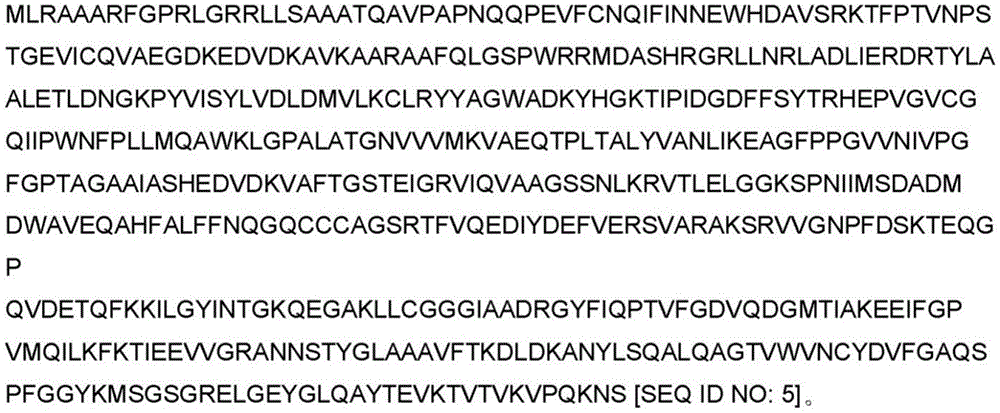
Priority Applications (1)
| Application Number | Priority Date | Filing Date | Title |
|---|---|---|---|
| CN202510236300.8A CN120114487A (en) | 2017-09-13 | 2018-09-13 | Gene expression systems for probiotic microorganisms |
Applications Claiming Priority (5)
| Application Number | Priority Date | Filing Date | Title |
|---|---|---|---|
| US201762558346P | 2017-09-13 | 2017-09-13 | |
| US62/558,346 | 2017-09-13 | ||
| US16/048,147 US10849938B2 (en) | 2017-09-13 | 2018-07-27 | Gene expression system for probiotic microorganisms |
| US16/048,147 | 2018-07-27 | ||
| PCT/US2018/050957 WO2019055707A1 (en) | 2017-09-13 | 2018-09-13 | Gene expression system for probiotic microorganisms |
Related Child Applications (1)
| Application Number | Title | Priority Date | Filing Date |
|---|---|---|---|
| CN202510236300.8A Division CN120114487A (en) | 2017-09-13 | 2018-09-13 | Gene expression systems for probiotic microorganisms |
Publications (2)
| Publication Number | Publication Date |
|---|---|
| CN111565733A true CN111565733A (en) | 2020-08-21 |
| CN111565733B CN111565733B (en) | 2025-03-11 |
Family
ID=65630201
Family Applications (2)
| Application Number | Title | Priority Date | Filing Date |
|---|---|---|---|
| CN202510236300.8A Pending CN120114487A (en) | 2017-09-13 | 2018-09-13 | Gene expression systems for probiotic microorganisms |
| CN201880073972.XA Active CN111565733B (en) | 2017-09-13 | 2018-09-13 | Gene expression systems for probiotic microorganisms |
Family Applications Before (1)
| Application Number | Title | Priority Date | Filing Date |
|---|---|---|---|
| CN202510236300.8A Pending CN120114487A (en) | 2017-09-13 | 2018-09-13 | Gene expression systems for probiotic microorganisms |
Country Status (10)
| Country | Link |
|---|---|
| US (4) | US10849938B2 (en) |
| EP (1) | EP3682009A4 (en) |
| JP (1) | JP7356967B2 (en) |
| KR (2) | KR102832304B1 (en) |
| CN (2) | CN120114487A (en) |
| AU (1) | AU2018332986B2 (en) |
| CA (1) | CA3075522A1 (en) |
| GB (2) | GB2602206B (en) |
| SG (1) | SG11202002541YA (en) |
| WO (1) | WO2019055707A1 (en) |
Cited By (2)
| Publication number | Priority date | Publication date | Assignee | Title |
|---|---|---|---|---|
| CN113186140A (en) * | 2021-02-08 | 2021-07-30 | 和度生物医药(上海)有限公司 | Genetically engineered bacteria for preventing and/or treating hangover and liver diseases |
| CN114891808A (en) * | 2022-06-21 | 2022-08-12 | 珠海丽凡达生物技术有限公司 | mRNA molecule for encoding ALDH2 polypeptide, application and mRNA medicament |
Families Citing this family (8)
| Publication number | Priority date | Publication date | Assignee | Title |
|---|---|---|---|---|
| US10849938B2 (en) * | 2017-09-13 | 2020-12-01 | ZBiotics Company | Gene expression system for probiotic microorganisms |
| CN110734890A (en) * | 2019-12-02 | 2020-01-31 | 山东汉泰生物科技有限公司 | Construction and application of acetaldehyde dehydrogenase gene engineering bacteria |
| CN111471660B (en) * | 2020-03-12 | 2023-11-24 | 广州辉园苑医药科技有限公司 | Acetaldehyde dehydrogenase recombinant gene, lactic acid bacteria carrier and application thereof |
| US20230372453A1 (en) * | 2020-10-08 | 2023-11-23 | ZBiotics Company | Engineered probiotics for expression of fiber-synthesizing enzymes in gut |
| EP4387638A4 (en) * | 2021-09-22 | 2025-05-14 | BiomEdit, Inc. | Genetically modified Bacillus subtilis strain and use as a live delivery and production system |
| CN114350699B (en) * | 2021-12-02 | 2024-03-26 | 江南大学 | A strain producing D-psicose 3-epimerase and its application |
| CN116288740B (en) * | 2023-05-11 | 2023-08-29 | 北京蓝晶微生物科技有限公司 | Microorganism promoter library and application thereof |
| WO2025128743A1 (en) * | 2023-12-11 | 2025-06-19 | Lanzatech, Inc. | Single cell protein with enhanced digestive enzyme content |
Citations (10)
| Publication number | Priority date | Publication date | Assignee | Title |
|---|---|---|---|---|
| US20030031659A1 (en) * | 1998-08-24 | 2003-02-13 | Sean Farmer | Probiotic, lactic acid-producing bacteria and uses thereof |
| US20090060894A1 (en) * | 2007-08-27 | 2009-03-05 | John Charin Somberg | Treatment to aid in the metabolism of alcohol |
| CN101649323A (en) * | 2009-06-16 | 2010-02-17 | 武汉工程大学 | Human aldehyde dehydrogenase 2 sequence designed according to preferred codon of pichia pastoris |
| CN101985625A (en) * | 2010-11-09 | 2011-03-16 | 南京农业大学 | Issatchenkia terricola acetaldehyde dehydrogenase gene and expression vector thereof |
| CN102337280A (en) * | 2011-10-11 | 2012-02-01 | 昆明理工大学 | Bacillus brevis formaldehyde dehydrogenase gene and plant expression vector and application thereof |
| CN103114056A (en) * | 2013-01-23 | 2013-05-22 | 国家海洋局第三海洋研究所 | Aldehyde dehydrogenase and preparation method thereof |
| KR20130092182A (en) * | 2012-02-10 | 2013-08-20 | 매일유업주식회사 | Lactobacillus brevis with high alcohol dehydrogenase activity and dairy products, health functional food and food additives comprising the same |
| US20140065697A1 (en) * | 2011-02-11 | 2014-03-06 | Regents Of The University Of Minnesota | Cells and methods for producing isobutyric acid |
| US20140134700A1 (en) * | 2011-07-06 | 2014-05-15 | The Regents Of The University Of California | Multiple-enzyme nanocomplexes |
| CN106867930A (en) * | 2016-12-29 | 2017-06-20 | 大连医科大学 | Lactobacillus plantarum PLH1405 and the application in treatment acute alcoholism medicine is prepared |
Family Cites Families (51)
| Publication number | Priority date | Publication date | Assignee | Title |
|---|---|---|---|---|
| US4801536A (en) | 1985-10-11 | 1989-01-31 | Genetics Institute, Inc. | Method for producing heterologous proteins |
| JPS63501053A (en) | 1985-10-11 | 1988-04-21 | ジェネティックス・インスチチュ−ト・インコ−ポレ−テッド | Methods for producing heterologous proteins |
| JP2660520B2 (en) | 1987-10-26 | 1997-10-08 | 塩野義製薬株式会社 | Nucleotide sequence encoding N-terminal amino acid sequence of flagellin having an excretion function |
| CA1340817C (en) | 1988-05-05 | 1999-11-09 | Salete Maria Cardozo Newton | Recombinant flagellin vaccines |
| US5275819A (en) | 1989-02-06 | 1994-01-04 | Amer Particle Technologies Inc. | Drug loaded pollen grains with an outer coating for pulsed delivery |
| US5268274A (en) | 1989-04-12 | 1993-12-07 | Cetus Corporation | Methods and nucleic acid sequences for the expression of the cellulose synthase operon |
| US5160742A (en) | 1991-12-31 | 1992-11-03 | Abbott Laboratories | System for delivering an active substance for sustained release |
| JPH05339159A (en) | 1992-06-10 | 1993-12-21 | Kazuoki Ishihara | Antilipemic and antiobestic agent |
| US5800821A (en) | 1995-03-10 | 1998-09-01 | New England Medical Center Hospitals, Inc. | Bacterial spores as a heat stable vaccine delivery system |
| JPH09168391A (en) | 1996-11-05 | 1997-06-30 | Shionogi & Co Ltd | Use of amino acid fragment on n end side of flagellin having excretion function |
| US6042823A (en) | 1998-07-02 | 2000-03-28 | Amano Pharmaceuticals Co., Ltd. | Enzyme composition and use thereof |
| US6833260B1 (en) | 1999-10-08 | 2004-12-21 | Protein Scientific, Inc. | Lactose hydrolysis |
| DE10106163B4 (en) | 2000-12-21 | 2007-03-29 | Südzucker AG Mannheim/Ochsenfurt | Process for producing carbohydrates |
| WO2006018446A2 (en) | 2004-08-20 | 2006-02-23 | Actogenix Nv | Method to improve lactococcus preservation |
| AU2005286494B2 (en) | 2004-09-22 | 2011-06-23 | Vib Vzw | Intestinal epithelial glucose sensor |
| BRPI0515748A (en) | 2004-12-02 | 2008-08-05 | Csir | recombinant protein produced by gram-positive bacteria, method to manufacture it, to isolate metal ions from a liquid, to convert a substrate into a product, its use and its kit |
| JP5085547B2 (en) | 2005-08-30 | 2012-11-28 | コモンウェルス サイエンティフィック アンド インダストリアル リサーチ オーガニゼイション | Bacterial delivery of bioactive polypeptides |
| US20070161031A1 (en) | 2005-12-16 | 2007-07-12 | The Board Of Trustees Of The Leland Stanford Junior University | Functional arrays for high throughput characterization of gene expression regulatory elements |
| ATE520413T1 (en) | 2007-01-26 | 2011-09-15 | Amano Enzyme Inc | GLYCOSYL TRANSFERASE FOR THE TREATMENT OF INFLAMMATORY INTESTINAL DISEASE |
| US8236297B2 (en) | 2007-10-11 | 2012-08-07 | Kenneth Manzo | Method of treating lactose intolerance using genetically engineered bacteria |
| EP2235045B1 (en) | 2008-01-08 | 2012-10-03 | Csir | Production of heterologous proteins or peptides |
| KR20090101130A (en) | 2008-03-21 | 2009-09-24 | 한국생명공학연구원 | Levanschkras derived from Bacillus amyloliquefaciens type 1 and preparation method thereof |
| US8389522B2 (en) * | 2008-10-28 | 2013-03-05 | The Board Of Trustees Of The Leland Stanford Junior University | Modulators of aldehyde dehydrogenase and methods of use thereof |
| CN102413840A (en) | 2009-04-22 | 2012-04-11 | 富士胶片株式会社 | Gut bacterial community composition ratio regulator |
| WO2011111783A1 (en) | 2010-03-12 | 2011-09-15 | カルピス株式会社 | Agent for controlling the increase and decrease of lactobacillus bifidus in colon |
| WO2011158689A1 (en) | 2010-06-19 | 2011-12-22 | 天野エンザイム株式会社 | Agent for reducing acetaldehyde in oral cavity |
| US9987224B2 (en) | 2011-02-04 | 2018-06-05 | Joseph E. Kovarik | Method and system for preventing migraine headaches, cluster headaches and dizziness |
| JP5881352B2 (en) | 2011-09-26 | 2016-03-09 | 花王株式会社 | σD factor suppression release strain and protein production method using the same |
| JP6437823B2 (en) | 2011-11-22 | 2018-12-12 | ザ・ジョンズ・ホプキンス・ユニバーシティ | Methods and compositions for reducing alcohol toxicity |
| JP6496243B2 (en) | 2012-05-30 | 2019-04-03 | ユニヴァーシティー オブ ユタ リサーチ ファウンデーション | Compositions and methods for peptide expression and purification using a type III secretion system |
| US9161957B2 (en) * | 2012-08-03 | 2015-10-20 | Life Well Lived, Llc | Compositions and methods for reducing blood alcohol content |
| WO2014062566A1 (en) | 2012-10-15 | 2014-04-24 | Texas Tech University System | Immunomodulation using spores and pollen grains |
| CA2920114A1 (en) | 2013-08-15 | 2015-02-19 | Lallemand Hungary Liquidity Management Llc | Methods for the improvement of product yield and production in a microorganism through glycerol recycling |
| CN103484482B (en) | 2013-09-06 | 2015-07-22 | 广西大学 | Bacillus subtilis levan sucrase mutant T305A and application thereof |
| WO2015074054A1 (en) | 2013-11-18 | 2015-05-21 | The Trustees Of Columbia University In The City Of New York | Improving microbial fitness in the mammalian gut |
| EP3222157B1 (en) | 2014-10-29 | 2019-05-29 | Chung-Ang University Industry-Academic Cooperation Foundation | Food composition, containing lactococcus strain as active ingredient, for alleviating hangover |
| DK3253868T3 (en) | 2014-12-05 | 2020-04-27 | Danisco Us Inc | COMPOSITIONS AND PROCEDURES INCLUDING THE USE OF A BACILLUS AGARADHAER'S INULOSUCRASE (INOU) |
| WO2016183531A1 (en) | 2015-05-13 | 2016-11-17 | Synlogic, Inc. | Bacteria engineered to reduce hyperphenylalaninemia |
| WO2016172341A2 (en) | 2015-04-21 | 2016-10-27 | Nutech Ventures | Mutant microorganisms and methods of making and using |
| CA2988981A1 (en) | 2015-06-10 | 2016-12-15 | Synlogic, Inc. | Bacteria engineered to treat disorders involving the catabolism of a branched chain amino acid |
| WO2017105990A1 (en) | 2015-12-14 | 2017-06-22 | Massachusetts Institute Of Technology | Ph-responsive mucoadhesive polymeric encapsulated microorganisms |
| KR101840535B1 (en) | 2016-02-12 | 2018-03-20 | 건양대학교산학협력단 | Recombinant levansucrase expression vector |
| IL246378A0 (en) | 2016-06-21 | 2016-11-30 | Technion Res & Dev Foundation | Hybrid muco-adhesive polymer/lipid drug delivery systems for treating oral cancers |
| CN106222190B (en) | 2016-08-25 | 2019-10-25 | 江南大学 | A logarithmic phase expression system of Bacillus subtilis |
| KR101853603B1 (en) | 2017-05-18 | 2018-05-02 | 주식회사 쎌바이오텍 | Composition containing of probiotics for using alcohol or acetaldehyde dehydrogenase activity |
| US10849938B2 (en) | 2017-09-13 | 2020-12-01 | ZBiotics Company | Gene expression system for probiotic microorganisms |
| CN107815458B (en) | 2017-12-04 | 2020-12-29 | 江南大学(如皋)食品生物技术研究所 | Genetically engineered bacterium for expressing human acetaldehyde dehydrogenase gene and application thereof |
| CN108103081B (en) | 2018-02-13 | 2020-09-04 | 淄博职业学院 | Acetaldehyde dehydrogenase and application thereof in anti-alcohol health-care product |
| WO2019195592A1 (en) * | 2018-04-04 | 2019-10-10 | The University Of Chicago | Genetically-engineered microbes and compositions thereof |
| WO2022013269A1 (en) | 2020-07-15 | 2022-01-20 | Danmarks Tekniske Universitet | Engineered probiotic bacteria for prebiotic-responsive control of colonization |
| US20230372453A1 (en) | 2020-10-08 | 2023-11-23 | ZBiotics Company | Engineered probiotics for expression of fiber-synthesizing enzymes in gut |
-
2018
- 2018-07-27 US US16/048,147 patent/US10849938B2/en active Active
- 2018-09-13 CN CN202510236300.8A patent/CN120114487A/en active Pending
- 2018-09-13 US US16/646,989 patent/US11696932B2/en active Active
- 2018-09-13 CN CN201880073972.XA patent/CN111565733B/en active Active
- 2018-09-13 AU AU2018332986A patent/AU2018332986B2/en active Active
- 2018-09-13 KR KR1020207010551A patent/KR102832304B1/en active Active
- 2018-09-13 GB GB2201334.6A patent/GB2602206B/en active Active
- 2018-09-13 KR KR1020257022709A patent/KR20250109797A/en active Pending
- 2018-09-13 EP EP18855675.7A patent/EP3682009A4/en active Pending
- 2018-09-13 CA CA3075522A patent/CA3075522A1/en active Pending
- 2018-09-13 JP JP2020515920A patent/JP7356967B2/en active Active
- 2018-09-13 GB GB2005404.5A patent/GB2583189B/en active Active
- 2018-09-13 SG SG11202002541YA patent/SG11202002541YA/en unknown
- 2018-09-13 WO PCT/US2018/050957 patent/WO2019055707A1/en not_active Ceased
-
2020
- 2020-10-26 US US17/080,185 patent/US11975033B2/en active Active
-
2024
- 2024-03-26 US US18/616,811 patent/US12539317B2/en active Active
Patent Citations (10)
| Publication number | Priority date | Publication date | Assignee | Title |
|---|---|---|---|---|
| US20030031659A1 (en) * | 1998-08-24 | 2003-02-13 | Sean Farmer | Probiotic, lactic acid-producing bacteria and uses thereof |
| US20090060894A1 (en) * | 2007-08-27 | 2009-03-05 | John Charin Somberg | Treatment to aid in the metabolism of alcohol |
| CN101649323A (en) * | 2009-06-16 | 2010-02-17 | 武汉工程大学 | Human aldehyde dehydrogenase 2 sequence designed according to preferred codon of pichia pastoris |
| CN101985625A (en) * | 2010-11-09 | 2011-03-16 | 南京农业大学 | Issatchenkia terricola acetaldehyde dehydrogenase gene and expression vector thereof |
| US20140065697A1 (en) * | 2011-02-11 | 2014-03-06 | Regents Of The University Of Minnesota | Cells and methods for producing isobutyric acid |
| US20140134700A1 (en) * | 2011-07-06 | 2014-05-15 | The Regents Of The University Of California | Multiple-enzyme nanocomplexes |
| CN102337280A (en) * | 2011-10-11 | 2012-02-01 | 昆明理工大学 | Bacillus brevis formaldehyde dehydrogenase gene and plant expression vector and application thereof |
| KR20130092182A (en) * | 2012-02-10 | 2013-08-20 | 매일유업주식회사 | Lactobacillus brevis with high alcohol dehydrogenase activity and dairy products, health functional food and food additives comprising the same |
| CN103114056A (en) * | 2013-01-23 | 2013-05-22 | 国家海洋局第三海洋研究所 | Aldehyde dehydrogenase and preparation method thereof |
| CN106867930A (en) * | 2016-12-29 | 2017-06-20 | 大连医科大学 | Lactobacillus plantarum PLH1405 and the application in treatment acute alcoholism medicine is prepared |
Cited By (4)
| Publication number | Priority date | Publication date | Assignee | Title |
|---|---|---|---|---|
| CN113186140A (en) * | 2021-02-08 | 2021-07-30 | 和度生物医药(上海)有限公司 | Genetically engineered bacteria for preventing and/or treating hangover and liver diseases |
| WO2022166978A1 (en) * | 2021-02-08 | 2022-08-11 | Commbio Therapeutics Co., Ltd. | Genetically gengineered bacterium for hangover and liver disease prevention and/or treatment |
| CN114891808A (en) * | 2022-06-21 | 2022-08-12 | 珠海丽凡达生物技术有限公司 | mRNA molecule for encoding ALDH2 polypeptide, application and mRNA medicament |
| CN114891808B (en) * | 2022-06-21 | 2023-10-27 | 珠海丽凡达生物技术有限公司 | mRNA molecule encoding ALDH2 polypeptide, application and mRNA medicament |
Also Published As
| Publication number | Publication date |
|---|---|
| US20200345793A1 (en) | 2020-11-05 |
| GB2602206A (en) | 2022-06-22 |
| CA3075522A1 (en) | 2019-03-21 |
| GB2583189A (en) | 2020-10-21 |
| AU2018332986A1 (en) | 2020-04-23 |
| CN111565733B (en) | 2025-03-11 |
| JP7356967B2 (en) | 2023-10-05 |
| GB202201334D0 (en) | 2022-03-16 |
| US11696932B2 (en) | 2023-07-11 |
| KR20200075830A (en) | 2020-06-26 |
| AU2018332986B2 (en) | 2023-12-14 |
| WO2019055707A1 (en) | 2019-03-21 |
| CN120114487A (en) | 2025-06-10 |
| US10849938B2 (en) | 2020-12-01 |
| EP3682009A1 (en) | 2020-07-22 |
| GB2583189B (en) | 2022-09-21 |
| GB2602206B (en) | 2022-12-14 |
| KR20250109797A (en) | 2025-07-17 |
| GB202005404D0 (en) | 2020-05-27 |
| US20210121506A1 (en) | 2021-04-29 |
| US11975033B2 (en) | 2024-05-07 |
| US20190076489A1 (en) | 2019-03-14 |
| KR102832304B1 (en) | 2025-07-09 |
| JP2020535801A (en) | 2020-12-10 |
| US12539317B2 (en) | 2026-02-03 |
| EP3682009A4 (en) | 2021-09-22 |
| US20240316123A1 (en) | 2024-09-26 |
| SG11202002541YA (en) | 2020-04-29 |
Similar Documents
| Publication | Publication Date | Title |
|---|---|---|
| US12539317B2 (en) | Gene expression system for probiotic microorganisms | |
| Prigent‐Combaret et al. | The nucleoid‐associated protein Fis directly modulates the synthesis of cellulose, an essential component of pellicle–biofilms in the phytopathogenic bacterium Dickeya dadantii | |
| Isabella et al. | Deep sequencing-based analysis of the anaerobic stimulon in Neisseria gonorrhoeae | |
| US20200222474A1 (en) | Compositions and methods for increasing phytochemical bioavailablity and bioactivity | |
| Hagemann et al. | DNA‐bearing membrane vesicles produced by Ahrensia kielensis and Pseudoalteromonas marina | |
| TW202031277A (en) | Therapeutic and prophylactic use of microorganisms | |
| WO2024056027A1 (en) | Use of ldh gene-containing lactobacillus plantarum in preparing product for relieving enteritis | |
| CN102174557A (en) | A surface-displayed recombinant spore of silkworm alcohol dehydrogenase and its preparation method | |
| Tao et al. | QseC regulates chemotaxis, biofilm formation, motility, and virulence in Aeromonas veronii TH0426 | |
| HK40034281A (en) | Gene expression system for probiotic microorganisms | |
| HK40034281B (en) | Gene expression system for probiotic microorganisms | |
| Jiang et al. | LoiA directly represses lon gene expression to activate the expression of Salmonella pathogenicity island-1 genes | |
| EP3802788B1 (en) | Systems and methods for genetic manipulation of akkermansia species | |
| Yagi et al. | Ethanolamine utilization supports Clostridium perfringens growth in infected tissues | |
| KR20180073641A (en) | Adaptation method | |
| Miller | Elucidating the role of the membrane associated protein, YbjP, in Klebsiella pneumoniae | |
| De Hoog-Almási | Understanding the impact of carbohydrate availability on microbial competition in the gut | |
| TW202216169A (en) | Use of hypo-acylated lps for anti-oxidation and prevention/treatment of diseases | |
| Maldonado Alvarez | PagP-Mediated Signal Transduction: Link to the dmsABC Operon in Escherichia coli. | |
| Chanin | Characterizing the Role of the E. Coli Cytochrome Oxidase AppBCX During Intestinal Inflammation | |
| Steen | Contribution of the stringent response and Anr to anaerobic survival of Pseudomonads | |
| Lewanika | Probiotics for the management of kidney stone disease | |
| Gillis | Dysbiosis-Associated Changes in Host Metabolism Produce Lactate to Support Enterobacterial Expansion During Inflammation | |
| Almashta | Species wide analysis of Escherichia coli identifies a negative regulatory input that controls flhDC transcription | |
| Santana | Identification of a Fur-regulated small regulatory RNA in nontypeable Haemophilus influenzae |
Legal Events
| Date | Code | Title | Description |
|---|---|---|---|
| PB01 | Publication | ||
| PB01 | Publication | ||
| SE01 | Entry into force of request for substantive examination | ||
| SE01 | Entry into force of request for substantive examination | ||
| REG | Reference to a national code |
Ref country code: HK Ref legal event code: DE Ref document number: 40034281 Country of ref document: HK |
|
| GR01 | Patent grant | ||
| GR01 | Patent grant |