CN111541505B - A time-domain channel prediction method and system for OFDM wireless communication system - Google Patents
A time-domain channel prediction method and system for OFDM wireless communication system Download PDFInfo
- Publication number
- CN111541505B CN111541505B CN202010260603.0A CN202010260603A CN111541505B CN 111541505 B CN111541505 B CN 111541505B CN 202010260603 A CN202010260603 A CN 202010260603A CN 111541505 B CN111541505 B CN 111541505B
- Authority
- CN
- China
- Prior art keywords
- learning machine
- extreme learning
- tap
- delay tap
- important
- Prior art date
- Legal status (The legal status is an assumption and is not a legal conclusion. Google has not performed a legal analysis and makes no representation as to the accuracy of the status listed.)
- Active
Links
Images


Classifications
-
- H—ELECTRICITY
- H04—ELECTRIC COMMUNICATION TECHNIQUE
- H04L—TRANSMISSION OF DIGITAL INFORMATION, e.g. TELEGRAPHIC COMMUNICATION
- H04L27/00—Modulated-carrier systems
- H04L27/26—Systems using multi-frequency codes
- H04L27/2601—Multicarrier modulation systems
- H04L27/2647—Arrangements specific to the receiver only
-
- H—ELECTRICITY
- H04—ELECTRIC COMMUNICATION TECHNIQUE
- H04L—TRANSMISSION OF DIGITAL INFORMATION, e.g. TELEGRAPHIC COMMUNICATION
- H04L27/00—Modulated-carrier systems
- H04L27/26—Systems using multi-frequency codes
- H04L27/2601—Multicarrier modulation systems
- H04L27/2647—Arrangements specific to the receiver only
- H04L27/2655—Synchronisation arrangements
- H04L27/2689—Link with other circuits, i.e. special connections between synchronisation arrangements and other circuits for achieving synchronisation
- H04L27/2695—Link with other circuits, i.e. special connections between synchronisation arrangements and other circuits for achieving synchronisation with channel estimation, e.g. determination of delay spread, derivative or peak tracking
-
- H—ELECTRICITY
- H04—ELECTRIC COMMUNICATION TECHNIQUE
- H04B—TRANSMISSION
- H04B17/00—Monitoring; Testing
- H04B17/30—Monitoring; Testing of propagation channels
- H04B17/373—Predicting channel quality or other radio frequency [RF] parameters
-
- G—PHYSICS
- G06—COMPUTING OR CALCULATING; COUNTING
- G06F—ELECTRIC DIGITAL DATA PROCESSING
- G06F17/00—Digital computing or data processing equipment or methods, specially adapted for specific functions
- G06F17/10—Complex mathematical operations
- G06F17/16—Matrix or vector computation, e.g. matrix-matrix or matrix-vector multiplication, matrix factorization
-
- G—PHYSICS
- G06—COMPUTING OR CALCULATING; COUNTING
- G06N—COMPUTING ARRANGEMENTS BASED ON SPECIFIC COMPUTATIONAL MODELS
- G06N20/00—Machine learning
-
- G—PHYSICS
- G06—COMPUTING OR CALCULATING; COUNTING
- G06N—COMPUTING ARRANGEMENTS BASED ON SPECIFIC COMPUTATIONAL MODELS
- G06N3/00—Computing arrangements based on biological models
- G06N3/02—Neural networks
- G06N3/04—Architecture, e.g. interconnection topology
- G06N3/047—Probabilistic or stochastic networks
-
- G—PHYSICS
- G06—COMPUTING OR CALCULATING; COUNTING
- G06N—COMPUTING ARRANGEMENTS BASED ON SPECIFIC COMPUTATIONAL MODELS
- G06N3/00—Computing arrangements based on biological models
- G06N3/02—Neural networks
- G06N3/04—Architecture, e.g. interconnection topology
- G06N3/0495—Quantised networks; Sparse networks; Compressed networks
-
- G—PHYSICS
- G06—COMPUTING OR CALCULATING; COUNTING
- G06N—COMPUTING ARRANGEMENTS BASED ON SPECIFIC COMPUTATIONAL MODELS
- G06N3/00—Computing arrangements based on biological models
- G06N3/02—Neural networks
- G06N3/04—Architecture, e.g. interconnection topology
- G06N3/0499—Feedforward networks
-
- G—PHYSICS
- G06—COMPUTING OR CALCULATING; COUNTING
- G06N—COMPUTING ARRANGEMENTS BASED ON SPECIFIC COMPUTATIONAL MODELS
- G06N3/00—Computing arrangements based on biological models
- G06N3/02—Neural networks
- G06N3/08—Learning methods
-
- G—PHYSICS
- G06—COMPUTING OR CALCULATING; COUNTING
- G06N—COMPUTING ARRANGEMENTS BASED ON SPECIFIC COMPUTATIONAL MODELS
- G06N3/00—Computing arrangements based on biological models
- G06N3/02—Neural networks
- G06N3/08—Learning methods
- G06N3/09—Supervised learning
-
- H—ELECTRICITY
- H04—ELECTRIC COMMUNICATION TECHNIQUE
- H04L—TRANSMISSION OF DIGITAL INFORMATION, e.g. TELEGRAPHIC COMMUNICATION
- H04L25/00—Baseband systems
- H04L25/02—Details ; arrangements for supplying electrical power along data transmission lines
- H04L25/0202—Channel estimation
- H04L25/022—Channel estimation of frequency response
-
- H—ELECTRICITY
- H04—ELECTRIC COMMUNICATION TECHNIQUE
- H04L—TRANSMISSION OF DIGITAL INFORMATION, e.g. TELEGRAPHIC COMMUNICATION
- H04L25/00—Baseband systems
- H04L25/02—Details ; arrangements for supplying electrical power along data transmission lines
- H04L25/0202—Channel estimation
- H04L25/0224—Channel estimation using sounding signals
-
- H—ELECTRICITY
- H04—ELECTRIC COMMUNICATION TECHNIQUE
- H04L—TRANSMISSION OF DIGITAL INFORMATION, e.g. TELEGRAPHIC COMMUNICATION
- H04L25/00—Baseband systems
- H04L25/02—Details ; arrangements for supplying electrical power along data transmission lines
- H04L25/0202—Channel estimation
- H04L25/024—Channel estimation channel estimation algorithms
- H04L25/0242—Channel estimation channel estimation algorithms using matrix methods
-
- H—ELECTRICITY
- H04—ELECTRIC COMMUNICATION TECHNIQUE
- H04L—TRANSMISSION OF DIGITAL INFORMATION, e.g. TELEGRAPHIC COMMUNICATION
- H04L27/00—Modulated-carrier systems
- H04L27/26—Systems using multi-frequency codes
- H04L27/2601—Multicarrier modulation systems
- H04L27/2626—Arrangements specific to the transmitter only
- H04L27/2627—Modulators
- H04L27/2628—Inverse Fourier transform modulators, e.g. inverse fast Fourier transform [IFFT] or inverse discrete Fourier transform [IDFT] modulators
-
- H—ELECTRICITY
- H04—ELECTRIC COMMUNICATION TECHNIQUE
- H04L—TRANSMISSION OF DIGITAL INFORMATION, e.g. TELEGRAPHIC COMMUNICATION
- H04L5/00—Arrangements affording multiple use of the transmission path
- H04L5/0001—Arrangements for dividing the transmission path
- H04L5/0003—Two-dimensional division
- H04L5/0005—Time-frequency
- H04L5/0007—Time-frequency the frequencies being orthogonal, e.g. OFDM(A) or DMT
-
- G—PHYSICS
- G06—COMPUTING OR CALCULATING; COUNTING
- G06N—COMPUTING ARRANGEMENTS BASED ON SPECIFIC COMPUTATIONAL MODELS
- G06N3/00—Computing arrangements based on biological models
- G06N3/02—Neural networks
- G06N3/04—Architecture, e.g. interconnection topology
- G06N3/048—Activation functions
-
- H—ELECTRICITY
- H04—ELECTRIC COMMUNICATION TECHNIQUE
- H04L—TRANSMISSION OF DIGITAL INFORMATION, e.g. TELEGRAPHIC COMMUNICATION
- H04L27/00—Modulated-carrier systems
- H04L27/26—Systems using multi-frequency codes
- H04L27/2601—Multicarrier modulation systems
- H04L27/2602—Signal structure
- H04L27/2605—Symbol extensions, e.g. Zero Tail, Unique Word [UW]
- H04L27/2607—Cyclic extensions
Landscapes
- Engineering & Computer Science (AREA)
- Physics & Mathematics (AREA)
- Theoretical Computer Science (AREA)
- Mathematical Physics (AREA)
- Signal Processing (AREA)
- General Physics & Mathematics (AREA)
- Computer Networks & Wireless Communication (AREA)
- Software Systems (AREA)
- Data Mining & Analysis (AREA)
- Computing Systems (AREA)
- General Engineering & Computer Science (AREA)
- Evolutionary Computation (AREA)
- Artificial Intelligence (AREA)
- Computational Linguistics (AREA)
- Molecular Biology (AREA)
- General Health & Medical Sciences (AREA)
- Biophysics (AREA)
- Biomedical Technology (AREA)
- Life Sciences & Earth Sciences (AREA)
- Health & Medical Sciences (AREA)
- Power Engineering (AREA)
- Mathematical Optimization (AREA)
- Computational Mathematics (AREA)
- Mathematical Analysis (AREA)
- Pure & Applied Mathematics (AREA)
- Computer Vision & Pattern Recognition (AREA)
- Medical Informatics (AREA)
- Discrete Mathematics (AREA)
- Quality & Reliability (AREA)
- Electromagnetism (AREA)
- Probability & Statistics with Applications (AREA)
- Algebra (AREA)
- Databases & Information Systems (AREA)
- Mobile Radio Communication Systems (AREA)
Abstract
本发明公开了一种面向OFDM无线通信系统的时域信道预测方法及系统,属于无线通信自适应传输技术领域,其中,在频域的信道信息通过反傅里叶变换转换为时域抽头信息。对每个时域抽头信息,实现基于极限学习机的抽头信息预测,最后将预测的抽头信息通过傅里叶变换转换为频域信道信息。其中,为了提高信道预测器的泛化能力,本发明通过l2正则化和l1/2正则化结合的方式对极限学习机的输出权重进行惩戒。本发明可以提供满意的预测性能,而且可以输出稀疏的输出权重,减小了对内存存储的要求。本发明为实现无线通信的自适应传输和自适应编码等提供了保障。
The invention discloses a time-domain channel prediction method and system for an OFDM wireless communication system, belonging to the technical field of wireless communication adaptive transmission, wherein channel information in the frequency domain is converted into time-domain tap information through inverse Fourier transform. For each time-domain tap information, the prediction of tap information based on extreme learning machine is realized, and finally the predicted tap information is converted into frequency-domain channel information through Fourier transform. Among them, in order to improve the generalization ability of the channel predictor, the present invention punishes the output weight of the extreme learning machine by combining l 2 regularization and l 1/2 regularization. The present invention can provide satisfactory prediction performance, and can output sparse output weights, reducing the requirement for memory storage. The invention provides guarantee for realizing adaptive transmission and adaptive coding of wireless communication.
Description
技术领域technical field
本发明属于无线通信自适应传输技术领域,更具体地,涉及一种面向OFDM无线通信系统的时域信道预测方法及系统。The invention belongs to the technical field of wireless communication adaptive transmission, and more particularly, relates to a time-domain channel prediction method and system for an OFDM wireless communication system.
背景技术Background technique
随着科技的发展,无线通信的自适应传输是未来发展的趋势。在自适应正交频分复用(Orthogonal Frequency Division Multiplexing,OFDM)系统中,由于衰落信道的快速变化,从接收端反馈到发送端的信道信息容易过期。信道预测是支持OFDM系统自适应传输的必要技术。With the development of science and technology, the adaptive transmission of wireless communication is the trend of future development. In an adaptive orthogonal frequency division multiplexing (Orthogonal Frequency Division Multiplexing, OFDM) system, due to the rapid change of the fading channel, the channel information fed back from the receiving end to the transmitting end is likely to expire. Channel prediction is a necessary technology to support adaptive transmission in OFDM systems.
参考申请号为201510473741.6的发明专利,公开了一种基于复数神经网络的信道预测方法,参考申请号为201911240969.5的发明专利,公开了一种面向OFDM无线通信系统的信道预测系统及方法。上述的预测方法皆为频域预测方法。考虑到OFDM系统的时频特性,时域预测比频域预测有更好的性能。因此,为OFDM系统提供一种有效的时域预测具有重要的意义。With reference to the invention patent with the application number 201510473741.6, a channel prediction method based on a complex neural network is disclosed, and with reference to the invention patent with the application number 201911240969.5, a channel prediction system and method for an OFDM wireless communication system are disclosed. The above prediction methods are all frequency domain prediction methods. Considering the time-frequency characteristics of OFDM systems, time-domain prediction has better performance than frequency-domain prediction. Therefore, it is of great significance to provide an effective time-domain prediction for OFDM systems.
发明内容SUMMARY OF THE INVENTION
针对现有技术的以上缺陷或改进需求,本发明提出了一种面向OFDM无线通信系统的时域信道预测方法及系统,由此解决如何为OFDM系统提供一种有效的时域预测的技术问题。In view of the above defects or improvement requirements of the prior art, the present invention proposes a time-domain channel prediction method and system for an OFDM wireless communication system, thereby solving the technical problem of how to provide an effective time-domain prediction for the OFDM system.
为实现上述目的,按照本发明的一个方面,提供了一种面向OFDM无线通信系统的时域信道预测方法,包括:To achieve the above object, according to an aspect of the present invention, a time-domain channel prediction method for an OFDM wireless communication system is provided, including:
通过信道估计,获取OFDM频域信道信息,对所述OFDM频域信道信息通过反傅里叶变换,获取时域抽头信息;Obtain OFDM frequency domain channel information through channel estimation, and obtain time domain tap information through inverse Fourier transform on the OFDM frequency domain channel information;
根据所述时域抽头信息筛选信道脉冲响应中的重要时延抽头;Screen important delay taps in the channel impulse response according to the time domain tap information;
利用训练好的极限学习机对筛选出的各所述重要时延抽头进行预测,获得各所述重要时延抽头的下一时刻的时域抽头信息;Use the trained extreme learning machine to predict each of the selected important time delay taps, and obtain the time domain tap information of the next moment of each of the important time delay taps;
将预测得到的各所述重要时延抽头的下一时刻的时域抽头信息进行汇总后,利用傅里叶变换转换为预测的频域信道信息。After summarizing the predicted time-domain tap information of each of the important time-delay taps at the next moment, Fourier transform is used to convert it into predicted frequency-domain channel information.
优选地,所述根据所述时域抽头信息筛选信道脉冲响应中的重要时延抽头,包括:Preferably, the filtering of important delay taps in the channel impulse response according to the time domain tap information includes:
保留Lcp内的时延抽头作为重要时延抽头,丢弃Lcp+1到K的时延抽头,其中,Lcp为OFDM系统循环前缀的长度,K为OFDM符号中子载波数目。The delay taps in L cp are reserved as important delay taps, and the delay taps from L cp +1 to K are discarded, where L cp is the length of the cyclic prefix of the OFDM system, and K is the number of subcarriers in the OFDM symbol.
优选地,所述训练好的极限学习机的训练过程为:Preferably, the training process of the trained extreme learning machine is:
设置输入层和隐含层神经元数目Np和L,随机生成输入权重和偏置;Set the number of neurons in the input layer and hidden layer N p and L, and randomly generate input weights and biases;
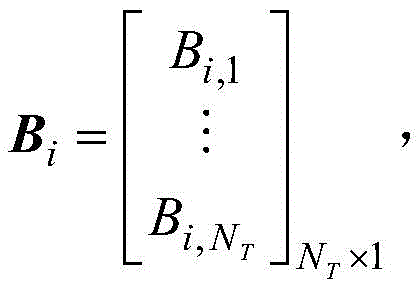
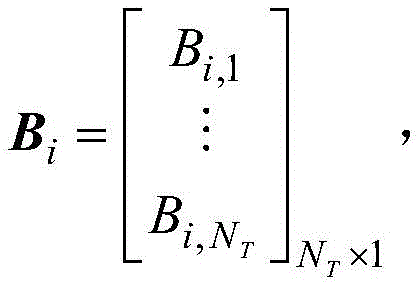
由Aiβi=Bi对极限学习机进行训练,其中,
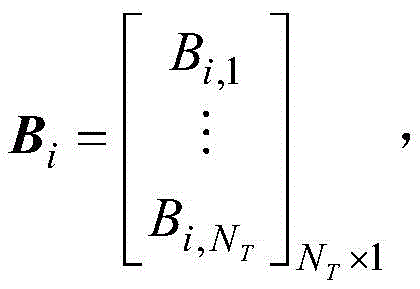
优选地,所述极限学习机的损失函数为:
优选地,所述方法还包括:Preferably, the method further includes:
采用坐标下降法对所述极限学习机的损失函数进行计算,获得所述极限学习机的输出权重。The loss function of the extreme learning machine is calculated by the coordinate descent method, and the output weight of the extreme learning machine is obtained.
按照本发明的另一方面,提供了一种面向OFDM无线通信系统的时域信道预测系统,包括:According to another aspect of the present invention, a time-domain channel prediction system for an OFDM wireless communication system is provided, including:
频域信道估计模块,用于通过信道估计,获取OFDM频域信道信息;The frequency domain channel estimation module is used to obtain OFDM frequency domain channel information through channel estimation;
时域抽头信息获取模块,用于对所述OFDM频域信道信息通过反傅里叶变换,获取时域抽头信息;a time-domain tap information acquisition module, configured to obtain time-domain tap information by performing an inverse Fourier transform on the OFDM frequency-domain channel information;
抽头筛选模块,用于根据所述时域抽头信息筛选信道脉冲响应中的重要时延抽头;a tap screening module for screening important delay taps in the channel impulse response according to the time domain tap information;
时域抽头信息预测模块,用于利用训练好的极限学习机对筛选出的各所述重要时延抽头进行预测,获得各所述重要时延抽头的下一时刻的时域抽头信息;a time-domain tap information prediction module, configured to use the trained extreme learning machine to predict each of the selected important time-delay taps, and obtain time-domain tap information at the next moment of each of the important time-delay taps;
频域信道信息处理模块,用于将预测得到的各所述重要时延抽头的下一时刻的时域抽头信息进行汇总后,利用傅里叶变换转换为预测的频域信道信息。The frequency-domain channel information processing module is configured to convert the predicted time-domain tap information at the next moment of each of the important delay taps into predicted frequency-domain channel information by using Fourier transform.
优选地,所述抽头筛选模块,用于保留Lcp内的时延抽头作为重要时延抽头,丢弃Lcp+1到K的时延抽头,其中,Lcp为OFDM系统循环前缀的长度,K为OFDM符号中子载波数目。Preferably, the tap screening module is configured to reserve the delay taps in L cp as important delay taps, and discard the delay taps from L cp +1 to K, where L cp is the length of the cyclic prefix of the OFDM system, and K is the number of subcarriers in the OFDM symbol.
优选地,所述系统还包括:Preferably, the system further includes:
初始化极限学习机模块,用于设置输入层和隐含层神经元数目Np和L,随机生成输入权重和偏置;Initialize the extreme learning machine module, which is used to set the number of neurons in the input layer and hidden layer N p and L, and randomly generate input weights and biases;
训练模块,用于由Aiβi=Bi对极限学习机进行训练,其中,
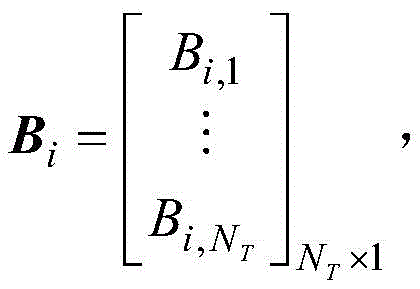
优选地,所述极限学习机的损失函数为:
优选地,所述系统还包括:Preferably, the system further includes:
损失函数计算模块,用于采用坐标下降法对所述极限学习机的损失函数进行计算,获得所述极限学习机的输出权重。The loss function calculation module is used for calculating the loss function of the extreme learning machine by using the coordinate descent method to obtain the output weight of the extreme learning machine.
按照本发明的另一方面,提供了一种计算机可读存储介质,其上存储有程序指令,所述程序指令被处理器执行时实现如上述任一所述的面向OFDM无线通信系统的时域信道预测方法。According to another aspect of the present invention, there is provided a computer-readable storage medium having program instructions stored thereon, and when the program instructions are executed by a processor, implement the time domain oriented OFDM wireless communication system as described in any of the above Channel prediction method.
总体而言,通过本发明所构思的以上技术方案与现有技术相比,能够取得下列有益效果:In general, compared with the prior art, the above technical solutions conceived by the present invention can achieve the following beneficial effects:
本发明的OFDM无线通信系统的时域信道预测,可以利用改进的极限学习机对筛选时延抽头进行预测。其中,为了提高极限学习机的性能,本发明通过l2正则化和l1/2正则化结合的方式估计极限学习机的输出权重。因此本发明可以实现很好的预测性能,还可以产生稀疏的输出权重解。对未来自适应通信技术,例如自适应编码、自适应调制和自适应预测等奠定了基础。The time domain channel prediction of the OFDM wireless communication system of the present invention can use the improved extreme learning machine to predict the screening delay tap. Among them, in order to improve the performance of the extreme learning machine, the present invention estimates the output weight of the extreme learning machine through the combination of l 2 regularization and l 1/2 regularization. Therefore, the present invention can achieve good prediction performance, and can also generate sparse output weight solutions. It lays the foundation for future adaptive communication technologies, such as adaptive coding, adaptive modulation and adaptive prediction.
附图说明Description of drawings
图1是本发明实施例提供的一种设备连接图;1 is a connection diagram of a device according to an embodiment of the present invention;
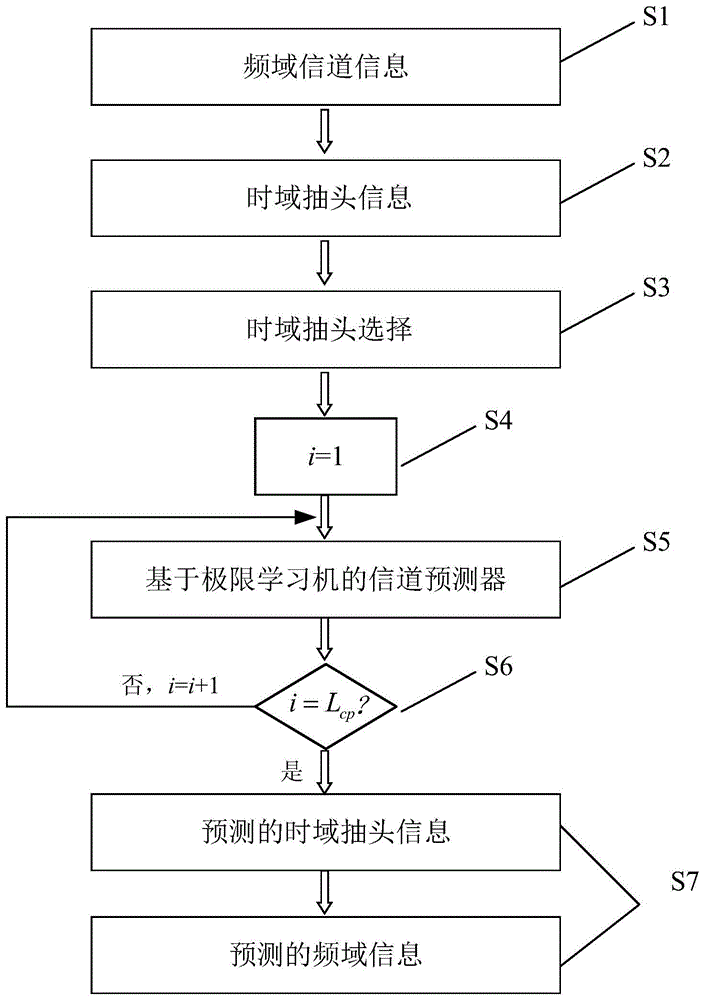
图2是本发明实施例提供的一种时域预测方法的流程示意图;2 is a schematic flowchart of a time-domain prediction method provided by an embodiment of the present invention;
图3是本发明实施例提供的一种在不同信噪比下的性能。FIG. 3 is a performance under different signal-to-noise ratios provided by an embodiment of the present invention.
图4是本发明实施例提供的一种面向OFDM无线通信系统的时域信道预测系统。FIG. 4 is a time-domain channel prediction system for an OFDM wireless communication system provided by an embodiment of the present invention.
具体实施方式Detailed ways
为了使本发明的目的、技术方案及优点更加清楚明白,以下结合附图及实施例,对本发明进行进一步详细说明。应当理解,此处所描述的具体实施例仅仅用以解释本发明,并不用于限定本发明。此外,下面所描述的本发明各个实施方式中所涉及到的技术特征只要彼此之间未构成冲突就可以相互组合。In order to make the objectives, technical solutions and advantages of the present invention clearer, the present invention will be further described in detail below with reference to the accompanying drawings and embodiments. It should be understood that the specific embodiments described herein are only used to explain the present invention, but not to limit the present invention. In addition, the technical features involved in the various embodiments of the present invention described below can be combined with each other as long as they do not conflict with each other.
如图1所示为本发明实施例的OFDM无线通信系统,包括:As shown in FIG. 1, an OFDM wireless communication system according to an embodiment of the present invention includes:
发射天线,用于发射无线信号;Transmitting antenna for transmitting wireless signals;
接收天线,用于接收无线信号;A receiving antenna for receiving wireless signals;
网络分析仪,用于对接收天线得到的无线信号进行解析;The network analyzer is used to analyze the wireless signal obtained by the receiving antenna;
信号处理器,用于信道估计获取OFDM符号频域信道信息;a signal processor, used for channel estimation to obtain OFDM symbol frequency domain channel information;
信道预测模块,用于进行信道预测操作。The channel prediction module is used for channel prediction operation.
如图2所示是本发明实施例提供的一种面向OFDM无线通信系统的时域信道预测方法的流程示意图,该方法包括以下步骤:FIG. 2 is a schematic flowchart of a time-domain channel prediction method for an OFDM wireless communication system provided by an embodiment of the present invention, and the method includes the following steps:
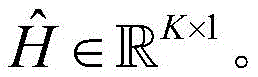
步骤S1:通过信道估计,获取OFDM频域信道信息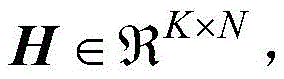
步骤S2:对信道估计获取得到的频域信道信息进行反傅里叶变换,获取时域抽头信息
步骤S3:根据获取的时域抽头信息筛选信道脉冲响应中的重要时延抽头;Step S3: Screen important delay taps in the channel impulse response according to the acquired time-domain tap information;
在本发明实施例中,使用的重要时延抽头选择方案为保留Lcp内的时延抽头,丢弃Lcp+1到K的时延抽头,其中,Lcp为OFDM系统循环前缀的长度。In the embodiment of the present invention, the important delay tap selection scheme used is to retain the delay taps within L cp and discard the delay taps from L cp +1 to K, where L cp is the length of the cyclic prefix of the OFDM system.
步骤S4:定义抽头标签i=1;Step S4: define the tap label i=1;
步骤S5:利用改进的极限学习机对步骤S3筛选保留的第i个时延抽头进行预测,获得第i个时延抽头的下一时刻的时域抽头信息;Step S5: use the improved extreme learning machine to predict the i-th delay tap screened and reserved in step S3, and obtain the time-domain tap information at the next moment of the i-th delay tap;
其中,对于Lcp+1到K的时延抽头,预测的时延抽头信息直接设置为0。Among them, for the delay taps from L cp +1 to K, the predicted delay tap information is directly set to 0.
在本发明实施例中,步骤5具体可以通过以下方式实现:In this embodiment of the present invention,
步骤51:设置输入层和隐含层神经元数目Np和L;Step 51: Set the number of neurons in the input layer and hidden layer N p and L;
步骤52:在一定范围随机生成输入权重和偏置;Step 52: Randomly generate input weights and biases within a certain range;
步骤53:改进极限学习机的训练过程为:Step 53: The training process for improving the extreme learning machine is:
Aiβi=Bi (1)A i β i =B i (1)
其中,in,

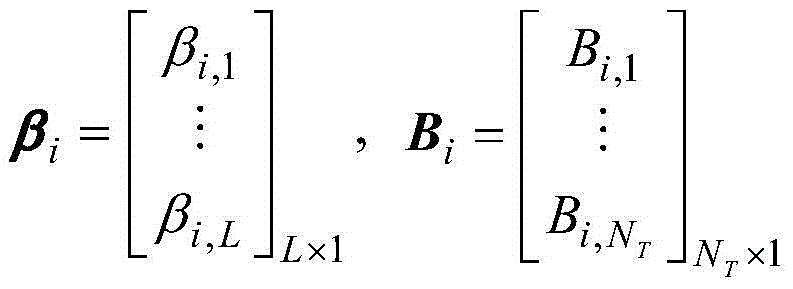
其中,NT是训练的OFDM符号数,并且Ai,βi和Bi分别为极限学习机隐含层输出,输出权重矩阵和输出矩阵,g(*)为激活函数,hi,μi和νi分别为对应于第i个时延抽头的改进极限学习机的输入数据,输入层的权重和偏置。Among them, NT is the number of OFDM symbols for training, and A i , β i and B i are the output of the hidden layer of the extreme learning machine, the output weight matrix and the output matrix, g(*) is the activation function, h i , μ i and ν i are the input data of the improved extreme learning machine corresponding to the ith delay tap, the weights and biases of the input layer, respectively.
为了提高极限学习机的泛化能力,本发明实施例中使用l2正则化和l1/2正则化结合方式来估计输出权重,即In order to improve the generalization ability of the extreme learning machine, in the embodiment of the present invention, the combination of l 2 regularization and l 1/2 regularization is used to estimate the output weight, that is,

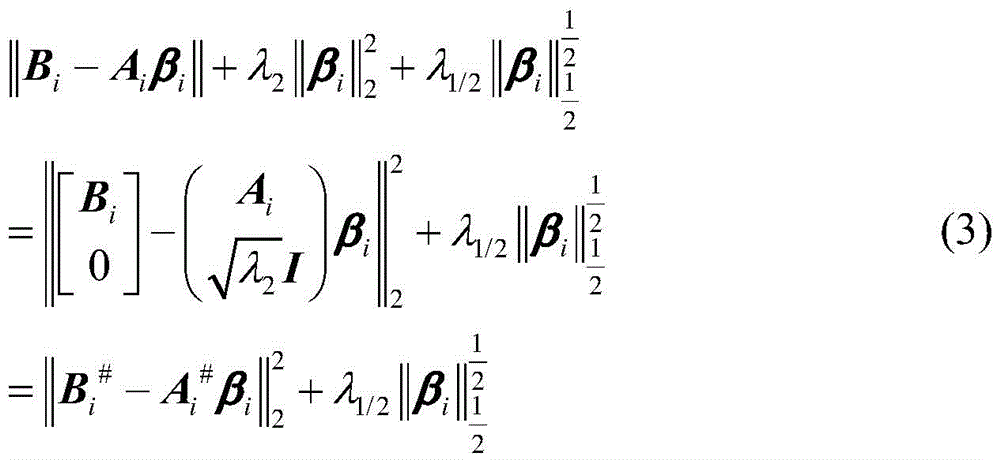
其中,Ji表示对应于第i个时延抽头的改进极限学习机的损失函数,Bi(j)表示对应于第i个时延抽头的改进极限学习机的输出矩阵,即Bi(j)=hi(j),Ai(j)=[hi(j-1),hi(j-2),...,hi(j-Np)],j=1,2,...,NT。λ2为l2正则化的正则化系数,λ1/2为l1/2正则化的正则化系数。Among them, J i represents the loss function of the improved extreme learning machine corresponding to the ith delay tap, and B i (j) represents the output matrix of the improved extreme learning machine corresponding to the ith delay tap, that is, B i (j )= hi (j), A i ( j)=[hi ( j -1),hi ( j -2),...,hi (jN p )], j =1,2,. ..,N T . λ 2 is the regularization coefficient of the l 2 regularization, and λ 1/2 is the regularization coefficient of the l 1/2 regularization.
利用坐标下降法求解第i个时延抽头的改进极限学习机的输出权重,即:Use the coordinate descent method to solve the output weight of the ith delay tap of the improved extreme learning machine, namely:
其中,in,

为了求解公式(2),本发明给出坐标下降法的推导公式,即:In order to solve the formula (2), the present invention provides the derivation formula of the coordinate descent method, namely:

其中,βi,ρ和
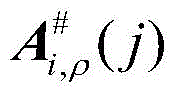
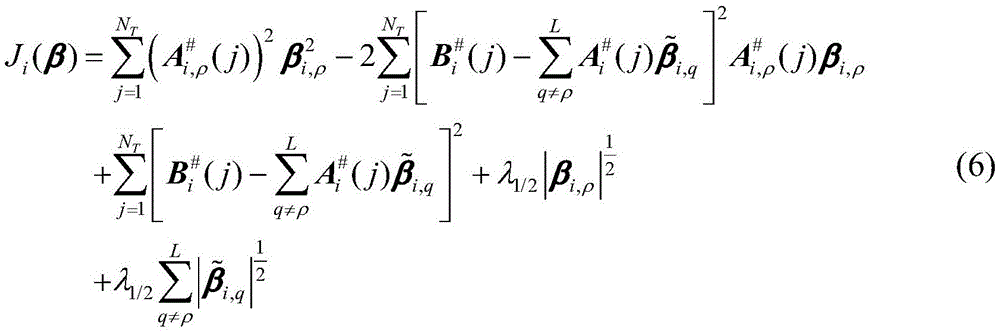
通常来说,下式一般都是成立的,即Generally speaking, the following formula is generally established, namely

因此,therefore,
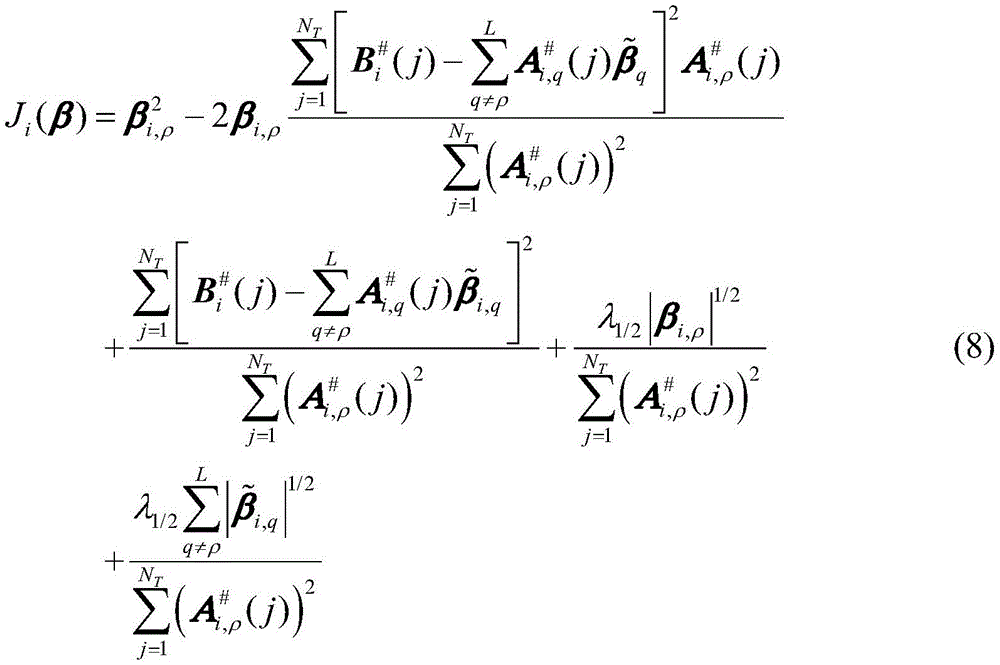
进一步可以获得further available

本发明实施例中有下定义,即There are the following definitions in the embodiments of the present invention, namely,
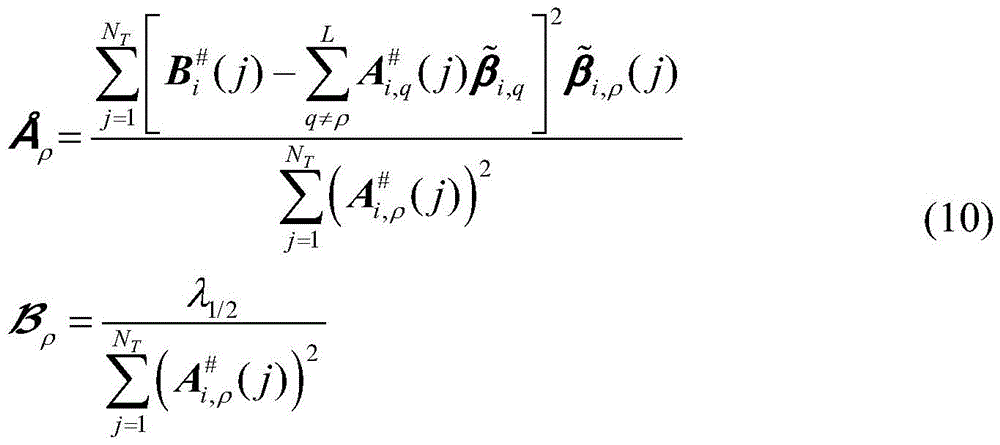
因此,有Therefore, there is
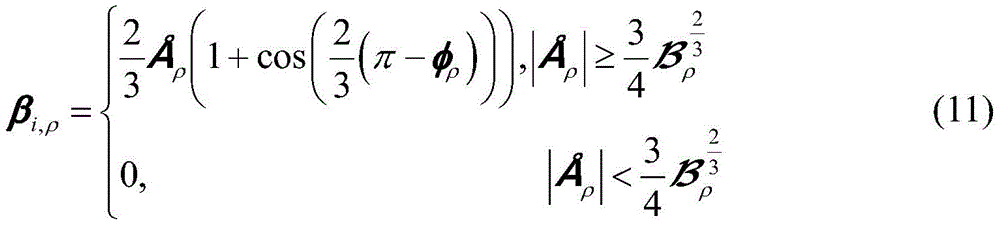
其中,in,

其中,步骤5中坐标下降法的流程步骤为:Wherein, the process steps of the coordinate descent method in
1)初始化权重矩阵β和零矩阵βint;1) Initialize the weight matrix β and the zero matrix β int ;
2)β=βint;2) β=β int ;
3)定义标签n=1;3) Define the label n=1;
4)βint=β;4) β int = β;
5)按照公式(11)计算βn;5) Calculate β n according to formula (11);
6)判断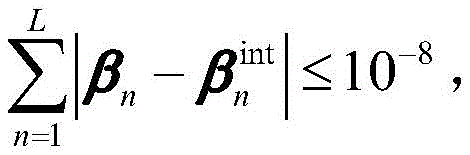
步骤S6:判断i是否等于最大时延抽头数Lcp;如果否,则i=i+1,跳回步骤S5;Step S6: judge whether i is equal to the maximum delay tap number L cp ; if not, then i=i+1, and jump back to step S5;
步骤S7:对预测的时域抽头信息
为了验证本发明的有效性,按照IEEE802.11ah标准中2MHz模式设置导频OFDM符号相关参数,设置单发单收天线。图3为不同信噪比下的预测性能对比。其中,发明1为“一种面向OFDM无线通信系统的信道预测系统及方法”(申请号:201911240969.5)。可以看到,本发明公布的时域信道预测方法具有更好的性能。In order to verify the effectiveness of the present invention, the related parameters of the pilot OFDM symbol are set according to the 2MHz mode in the IEEE802.11ah standard, and the single-transmitting and single-receiving antenna is set. Figure 3 shows the comparison of prediction performance under different signal-to-noise ratios. Among them,
如图4所示,在本发明的另一实施例中,还提供了一种面向OFDM无线通信系统的时域信道预测系统,包括:As shown in FIG. 4 , in another embodiment of the present invention, a time-domain channel prediction system for an OFDM wireless communication system is also provided, including:
频域信道估计模块201,用于通过信道估计,获取OFDM频域信道信息;A frequency-domain
时域抽头信息获取模块202,用于对OFDM频域信道信息通过反傅里叶变换,获取时域抽头信息;a time-domain tap
抽头筛选模块203,用于根据时域抽头信息筛选信道脉冲响应中的重要时延抽头;A
时域抽头信息预测模块204,用于利用训练好的极限学习机对筛选出的各所述重要时延抽头进行预测,获得各重要时延抽头的下一时刻的时域抽头信息;The time-domain tap
频域信道信息处理模块205,用于将预测得到的各重要时延抽头的下一时刻的时域抽头信息进行汇总后,利用傅里叶变换转换为预测的频域信道信息。The frequency-domain channel
其中,各模块的具体实施方式可以参考上述方法实施例的描述,本发明实施例将不再复述。For the specific implementation of each module, reference may be made to the descriptions of the foregoing method embodiments, which will not be repeated in the embodiments of the present invention.
在本发明的另一实施例中,还提供了一种计算机可读存储介质,其上存储有程序指令,该程序指令被处理器执行时实现如上述的面向OFDM无线通信系统的时域信道预测方法。In another embodiment of the present invention, there is also provided a computer-readable storage medium on which program instructions are stored, and when the program instructions are executed by a processor, the above-mentioned time-domain channel prediction for an OFDM wireless communication system is implemented method.
需要指出,根据实施的需要,可将本申请中描述的各个步骤/部件拆分为更多步骤/部件,也可将两个或多个步骤/部件或者步骤/部件的部分操作组合成新的步骤/部件,以实现本发明的目的。It should be pointed out that, according to the needs of implementation, the various steps/components described in this application may be split into more steps/components, or two or more steps/components or partial operations of steps/components may be combined into new steps/components to achieve the purpose of the present invention.
上述根据本发明的方法可在硬件、固件中实现,或者被实现为可存储在记录介质(诸如CD ROM、RAM、软盘、硬盘或磁光盘)中的软件或计算机代码,或者被实现通过网络下载的原始存储在远程记录介质或非暂时机器可读介质中并将被存储在本地记录介质中的计算机代码,从而在此描述的方法可被存储在使用通用计算机、专用处理器或者可编程或专用硬件(诸如ASIC或FPGA)的记录介质上的这样的软件处理。可以理解,计算机、处理器、微处理器控制器或可编程硬件包括可存储或接收软件或计算机代码的存储组件(例如,RAM、ROM、闪存等),当所述软件或计算机代码被计算机、处理器或硬件访问且执行时,实现在此描述的处理方法。此外,当通用计算机访问用于实现在此示出的处理的代码时,代码的执行将通用计算机转换为用于执行在此示出的处理的专用计算机。The above-mentioned method according to the present invention can be implemented in hardware, firmware, or as software or computer code that can be stored in a recording medium (such as CD ROM, RAM, floppy disk, hard disk or magneto-optical disk), or downloaded through a network of computer code originally stored in a remote recording medium or non-transitory machine-readable medium and to be stored in a local recording medium so that the methods described herein can be stored on a computer using a general purpose computer, special purpose processor or programmable or special purpose Such software processing on a recording medium of hardware such as ASIC or FPGA. It will be understood that a computer, processor, microprocessor controller or programmable hardware includes storage components (eg, RAM, ROM, flash memory, etc.) that can store or receive software or computer code, when the software or computer code is executed by a computer, When accessed and executed by a processor or hardware, the processing methods described herein are implemented. Furthermore, when a general purpose computer accesses code for implementing the processing shown herein, execution of the code converts the general purpose computer into a special purpose computer for executing the processing shown herein.
本领域的技术人员容易理解,以上所述仅为本发明的较佳实施例而已,并不用以限制本发明,凡在本发明的精神和原则之内所作的任何修改、等同替换和改进等,均应包含在本发明的保护范围之内。Those skilled in the art can easily understand that the above are only preferred embodiments of the present invention, and are not intended to limit the present invention. Any modifications, equivalent replacements and improvements made within the spirit and principles of the present invention, etc., All should be included within the protection scope of the present invention.
Claims (6)




Priority Applications (2)
| Application Number | Priority Date | Filing Date | Title |
|---|---|---|---|
| CN202010260603.0A CN111541505B (en) | 2020-04-03 | 2020-04-03 | A time-domain channel prediction method and system for OFDM wireless communication system |
| US17/098,433 US11381442B2 (en) | 2020-04-03 | 2020-11-15 | Time domain channel prediction method and time domain channel prediction system for OFDM wireless communication system |
Applications Claiming Priority (1)
| Application Number | Priority Date | Filing Date | Title |
|---|---|---|---|
| CN202010260603.0A CN111541505B (en) | 2020-04-03 | 2020-04-03 | A time-domain channel prediction method and system for OFDM wireless communication system |
Publications (2)
| Publication Number | Publication Date |
|---|---|
| CN111541505A CN111541505A (en) | 2020-08-14 |
| CN111541505B true CN111541505B (en) | 2021-04-27 |
Family
ID=71978538
Family Applications (1)
| Application Number | Title | Priority Date | Filing Date |
|---|---|---|---|
| CN202010260603.0A Active CN111541505B (en) | 2020-04-03 | 2020-04-03 | A time-domain channel prediction method and system for OFDM wireless communication system |
Country Status (2)
| Country | Link |
|---|---|
| US (1) | US11381442B2 (en) |
| CN (1) | CN111541505B (en) |
Families Citing this family (4)
| Publication number | Priority date | Publication date | Assignee | Title |
|---|---|---|---|---|
| CN111541505B (en) * | 2020-04-03 | 2021-04-27 | 武汉大学 | A time-domain channel prediction method and system for OFDM wireless communication system |
| CN113381953B (en) * | 2021-06-11 | 2022-04-22 | 西华大学 | Channel estimation method of extreme learning machine based on reconfigurable intelligent surface assistance |
| CN113660184B (en) * | 2021-07-19 | 2022-09-09 | 武汉大学 | OFDM channel prediction method and system based on parallel deep learning network |
| CN115632730B (en) * | 2022-12-07 | 2023-03-21 | 南京中网卫星通信股份有限公司 | Time domain transmission characteristic analysis method for wireless communication |
Citations (3)
| Publication number | Priority date | Publication date | Assignee | Title |
|---|---|---|---|---|
| KR20050027204A (en) * | 2003-05-01 | 2005-03-18 | 박평일 | Elm young leaf tea |
| CN109582003A (en) * | 2018-12-03 | 2019-04-05 | 东北林业大学 | Based on pseudo label semi-supervised kernel part Fei Sheer discriminant analysis bearing failure diagnosis |
| CN110138475A (en) * | 2019-05-08 | 2019-08-16 | 南京邮电大学 | A kind of adaptive threshold channel occupation status prediction technique based on LSTM neural network |
Family Cites Families (51)
| Publication number | Priority date | Publication date | Assignee | Title |
|---|---|---|---|---|
| US5452015A (en) * | 1994-02-10 | 1995-09-19 | Philips Electronics North America Corporation | Method and apparatus for combating co-channel NTSC interference for digital TV transmission |
| KR100222680B1 (en) * | 1996-07-09 | 1999-10-01 | 윤종용 | Method and apparatus for switching of operating mode in a high definition television system |
| US6922680B2 (en) * | 2002-03-19 | 2005-07-26 | Koninklijke Philips Electronics N.V. | Method and apparatus for recommending an item of interest using a radial basis function to fuse a plurality of recommendation scores |
| DE60206356T2 (en) * | 2002-04-16 | 2006-05-11 | Sony International (Europe) Gmbh | Orthogonal frequency division multiplexing (OFDM) with channel prediction |
| DE10350362B4 (en) * | 2003-10-29 | 2008-06-19 | Infineon Technologies Ag | Method for predicting a channel coefficient |
| US7356096B2 (en) * | 2004-07-15 | 2008-04-08 | Nokia Corporation | Multiple hypothesis channel estimation and prediction for OFDM systems |
| KR100656384B1 (en) * | 2004-10-29 | 2007-02-28 | 전자부품연구원 | Channel Estimation Method and Apparatus Using Linear Prediction in Open FM Communication System with Virtual Subcarrier |
| US20060293045A1 (en) * | 2005-05-27 | 2006-12-28 | Ladue Christoph K | Evolutionary synthesis of a modem for band-limited non-linear channels |
| KR101218495B1 (en) * | 2006-02-21 | 2013-01-18 | 삼성전자주식회사 | An adaptive channel prediction apparatus and method for uplink pre-equalization in mobile communication system using orthgonal frequncy division multiplexing/time division duplex according to the quantity of downlink channel variation |
| GB2473674A (en) * | 2009-09-22 | 2011-03-23 | Sony Corp | OFDM receiver with a plurality of prediction filters to reduce noise in channel transfer function estimates |
| US8842750B2 (en) * | 2010-12-21 | 2014-09-23 | Intel Corporation | Channel estimation for DVB-T2 demodulation using an adaptive prediction technique |
| BR112014009537A2 (en) * | 2011-10-19 | 2017-04-18 | Optis Cellular Tech Llc | channel prediction method and apparatus |
| KR101901757B1 (en) * | 2011-11-24 | 2018-09-28 | 엘지디스플레이 주식회사 | Organic light emitting diode display device and method of driving the same |
| US20140181171A1 (en) * | 2012-12-24 | 2014-06-26 | Pavel Dourbal | Method and system for fast tensor-vector multiplication |
| US20160013773A1 (en) * | 2012-11-06 | 2016-01-14 | Pavel Dourbal | Method and apparatus for fast digital filtering and signal processing |
| US9288094B2 (en) * | 2013-12-18 | 2016-03-15 | Intel Corporation | Adaptive channel prediction and mitigating interference in OFDM systems |
| US9509455B2 (en) * | 2014-04-29 | 2016-11-29 | Altiostar Networks, Inc. | Autonomous channel quality information prediction |
| CN105142177B (en) | 2015-08-05 | 2018-08-21 | 西安电子科技大学 | Complex-valued neural networks channel prediction method |
| CN105550649B (en) * | 2015-12-09 | 2019-03-08 | 武汉工程大学 | A very low-resolution face recognition method and system based on fully coupled local constraint representation |
| ITUA20163986A1 (en) * | 2016-05-31 | 2017-12-01 | Tenova Spa | METHOD AND EQUIPMENT FOR THE PRODUCTION OF CAST IRON, CAST IRON PRODUCED ACCORDING TO THAT METHOD |
| US9893941B1 (en) * | 2016-07-29 | 2018-02-13 | Qualcomm Incorporated | Unit sourcing |
| CN106332277B (en) * | 2016-09-05 | 2019-06-04 | 中南大学 | An indoor positioning method based on the distribution of channel state information |
| EP3535625B1 (en) * | 2016-12-07 | 2021-02-24 | Arilou Information Security Technologies Ltd. | System and method for using signal waveform analysis for detecting a change in a wired network |
| CN107483091B (en) * | 2017-07-06 | 2020-12-22 | 重庆邮电大学 | A Channel Information Feedback Algorithm in FDD Massive MIMO-OFDM System |
| US11553843B2 (en) * | 2017-10-18 | 2023-01-17 | Nxgen Partners Ip, Llc | Topological features and time-bandwidth signature of heart signals as biomarkers to detect deterioration of a heart |
| US10755188B2 (en) * | 2017-10-18 | 2020-08-25 | Nxgen Partners Ip, Llc | Unified nonlinear modeling approach for machine learning and artificial intelligence (attractor assisted AI) |
| US10305766B1 (en) * | 2017-11-07 | 2019-05-28 | Amazon Technologies, Inc. | Coexistence-insensitive presence detection |
| EP3492944B1 (en) * | 2017-12-01 | 2021-05-05 | Origin Wireless, Inc. | Apparatus, systems and methods for event detection and recognition based on a wireless signal |
| US10638482B2 (en) * | 2017-12-15 | 2020-04-28 | Qualcomm Incorporated | Methods and apparatuses for dynamic beam pair determination |
| CN108414923A (en) * | 2018-02-05 | 2018-08-17 | 武汉大学 | A kind of analog-circuit fault diagnosis method based on the extraction of depth confidence network characterization |
| WO2019172412A1 (en) * | 2018-03-09 | 2019-09-12 | 日本電気株式会社 | Wireless device and channel prediction method |
| CN108809458A (en) * | 2018-03-26 | 2018-11-13 | 上海聚星仪器有限公司 | A kind of channel simulator and its analogy method based on FPGA |
| US11086317B2 (en) * | 2018-03-30 | 2021-08-10 | Intel Corporation | Emotional adaptive driving policies for automated driving vehicles |
| US11943809B2 (en) * | 2018-08-10 | 2024-03-26 | Lg Electronics Inc. | Method and device for controlling plurality of links in wireless local area network system supporting plurality of links |
| WO2020032633A1 (en) * | 2018-08-10 | 2020-02-13 | 엘지전자 주식회사 | Method and device for transmitting signal through multi-link in wireless lan system |
| WO2020032639A1 (en) * | 2018-08-10 | 2020-02-13 | 엘지전자 주식회사 | Method and device for transmitting information for operating station in wireless local area network system supporting multiple bands |
| WO2020040587A1 (en) * | 2018-08-23 | 2020-02-27 | 엘지전자 주식회사 | Method and device for transmitting or receiving information about links in wireless lan system |
| CN110890930B (en) * | 2018-09-10 | 2021-06-01 | 华为技术有限公司 | Channel prediction method, related equipment and storage medium |
| US12373731B2 (en) * | 2018-10-12 | 2025-07-29 | Massachusetts Institute Of Technology | Elastic strain engineering of materials |
| US20200136700A1 (en) * | 2018-10-31 | 2020-04-30 | Huawei Technologies Co., Ltd. | Channel Prediction for Adaptive Channel State Information (CSI) Feedback Overhead Reduction |
| CN109510676B (en) * | 2019-01-11 | 2021-09-21 | 杭州电子科技大学 | Wireless channel prediction method based on quantum computation |
| CN111698789B (en) * | 2019-03-15 | 2022-05-13 | 华为技术有限公司 | Scheduling method, apparatus and storage medium in communication system |
| US11222242B2 (en) * | 2019-08-23 | 2022-01-11 | International Business Machines Corporation | Contrastive explanations for images with monotonic attribute functions |
| US10979097B2 (en) * | 2019-09-05 | 2021-04-13 | Micron Technology, Inc. | Wireless devices and systems including examples of full duplex transmission using neural networks or recurrent neural networks |
| KR102780228B1 (en) * | 2019-10-10 | 2025-03-14 | 삼성전자 주식회사 | Method and apparatus for transceiving signal using artificial intelligence in wireless communication system |
| CN110995379B (en) * | 2019-12-06 | 2021-03-30 | 武汉大学 | A channel prediction system and method for OFDM wireless communication system |
| US11128498B2 (en) * | 2020-02-25 | 2021-09-21 | Nokia Solutions And Networks Oy | Communication-channel tracking aided by reinforcement learning |
| US11936452B2 (en) * | 2020-02-28 | 2024-03-19 | Qualcomm Incorporated | Neural network based channel state information feedback |
| CN111541505B (en) * | 2020-04-03 | 2021-04-27 | 武汉大学 | A time-domain channel prediction method and system for OFDM wireless communication system |
| US11496339B2 (en) * | 2020-04-03 | 2022-11-08 | Samsung Electronics Co., Ltd. | Doppler spread estimation based on supervised learning |
| CN111490954B (en) * | 2020-04-03 | 2021-08-10 | 武汉大学 | Method and system for selecting important time delay tap of channel impulse response |
-
2020
- 2020-04-03 CN CN202010260603.0A patent/CN111541505B/en active Active
- 2020-11-15 US US17/098,433 patent/US11381442B2/en active Active
Patent Citations (3)
| Publication number | Priority date | Publication date | Assignee | Title |
|---|---|---|---|---|
| KR20050027204A (en) * | 2003-05-01 | 2005-03-18 | 박평일 | Elm young leaf tea |
| CN109582003A (en) * | 2018-12-03 | 2019-04-05 | 东北林业大学 | Based on pseudo label semi-supervised kernel part Fei Sheer discriminant analysis bearing failure diagnosis |
| CN110138475A (en) * | 2019-05-08 | 2019-08-16 | 南京邮电大学 | A kind of adaptive threshold channel occupation status prediction technique based on LSTM neural network |
Non-Patent Citations (2)
| Title |
|---|
| Multistage decoding-aided channel estimation and equalization for DVB-H in single-frequency networks;Luca Rugini等;《2009 IEEE 10th Workshop on Signal Processing Advances in Wireless Communications》;20090724;全文 * |
| 基于深度学习的OFDM系统信道估计研究;姚泰;《中国优秀硕士学位论文全文数据库》;20200315;I136-563 * |
Also Published As
| Publication number | Publication date |
|---|---|
| US11381442B2 (en) | 2022-07-05 |
| US20210314206A1 (en) | 2021-10-07 |
| CN111541505A (en) | 2020-08-14 |
Similar Documents
| Publication | Publication Date | Title |
|---|---|---|
| CN111541505B (en) | A time-domain channel prediction method and system for OFDM wireless communication system | |
| CN111817757B (en) | A kind of channel prediction method and system for MIMO wireless communication system | |
| US20100046599A1 (en) | Apparatus and method for acquiring initial coefficient of decision feedback equalizer using fast fourier transform | |
| US7369607B2 (en) | Multicarrier communication using a time domain equalizing filter | |
| CN115250216A (en) | A joint channel estimation and signal detection method for underwater acoustic OFDM based on deep learning | |
| CN110995379B (en) | A channel prediction system and method for OFDM wireless communication system | |
| CN105072072B (en) | A kind of OFDM-TDCS waveform design methods of low PAPR | |
| CN111431832A (en) | Signal modulation method and system based on multi-dimensional OFDM and MIMO communication system | |
| CN115171713A (en) | Voice noise reduction method, device and equipment and computer readable storage medium | |
| CN116760491A (en) | A signal-to-noise ratio estimation method based on deep learning | |
| KR20110081995A (en) | Channel Prediction at ODF Receiver | |
| CN114884777B (en) | Channel estimation method based on transform domain | |
| CN101989971B (en) | Out-of-band power inhibiting method and device | |
| CN113660184B (en) | OFDM channel prediction method and system based on parallel deep learning network | |
| CN114070354A (en) | Adaptive Segmental Matrix Inverse Tracking MIMO Detection Method Based on GS Iterative Method | |
| US7173967B2 (en) | Method for determining the filter coefficients of a digital time domain equalizer for a multicarrier frequency signal | |
| CN101510858B (en) | Channel long-range forecast method based on slope correction | |
| CN118200086A (en) | An interference identification method based on frequency domain equalization method | |
| KR101837609B1 (en) | Optimal waveform design method for generalized frequency division multiplexing systems | |
| CN112671419B (en) | Wireless signal reconstruction method, device, system, equipment and storage medium | |
| EP4072088B1 (en) | Channel estimation method and apparatus, and device and storage medium | |
| US20040202260A1 (en) | Reduced complexity time-frequency trained equalizer for discrete multi-tone based DSL systems | |
| CN105245476B (en) | Efficient symbol cyclic shift equalization method suitable for OFDM/OFDMA system without cyclic prefix | |
| CN111383643A (en) | Audio packet loss hiding method and device and Bluetooth receiver | |
| CN102340473B (en) | Noise signal estimation device and method |
Legal Events
| Date | Code | Title | Description |
|---|---|---|---|
| PB01 | Publication | ||
| PB01 | Publication | ||
| SE01 | Entry into force of request for substantive examination | ||
| SE01 | Entry into force of request for substantive examination | ||
| GR01 | Patent grant | ||
| GR01 | Patent grant |