CN111527252A - Method for preparing multi-layer sheet fiber water-soluble product - Google Patents
Method for preparing multi-layer sheet fiber water-soluble product Download PDFInfo
- Publication number
- CN111527252A CN111527252A CN201980006804.3A CN201980006804A CN111527252A CN 111527252 A CN111527252 A CN 111527252A CN 201980006804 A CN201980006804 A CN 201980006804A CN 111527252 A CN111527252 A CN 111527252A
- Authority
- CN
- China
- Prior art keywords
- ply
- agents
- water
- layer
- agent
- Prior art date
- Legal status (The legal status is an assumption and is not a legal conclusion. Google has not performed a legal analysis and makes no representation as to the accuracy of the status listed.)
- Granted
Links
Images


Classifications
-
- B—PERFORMING OPERATIONS; TRANSPORTING
- B29—WORKING OF PLASTICS; WORKING OF SUBSTANCES IN A PLASTIC STATE IN GENERAL
- B29C—SHAPING OR JOINING OF PLASTICS; SHAPING OF MATERIAL IN A PLASTIC STATE, NOT OTHERWISE PROVIDED FOR; AFTER-TREATMENT OF THE SHAPED PRODUCTS, e.g. REPAIRING
- B29C65/00—Joining or sealing of preformed parts, e.g. welding of plastics materials; Apparatus therefor
- B29C65/02—Joining or sealing of preformed parts, e.g. welding of plastics materials; Apparatus therefor by heating, with or without pressure
-
- B—PERFORMING OPERATIONS; TRANSPORTING
- B32—LAYERED PRODUCTS
- B32B—LAYERED PRODUCTS, i.e. PRODUCTS BUILT-UP OF STRATA OF FLAT OR NON-FLAT, e.g. CELLULAR OR HONEYCOMB, FORM
- B32B27/00—Layered products comprising a layer of synthetic resin
- B32B27/18—Layered products comprising a layer of synthetic resin characterised by the use of special additives
-
- B—PERFORMING OPERATIONS; TRANSPORTING
- B32—LAYERED PRODUCTS
- B32B—LAYERED PRODUCTS, i.e. PRODUCTS BUILT-UP OF STRATA OF FLAT OR NON-FLAT, e.g. CELLULAR OR HONEYCOMB, FORM
- B32B37/00—Methods or apparatus for laminating, e.g. by curing or by ultrasonic bonding
- B32B37/06—Methods or apparatus for laminating, e.g. by curing or by ultrasonic bonding characterised by the heating method
-
- B—PERFORMING OPERATIONS; TRANSPORTING
- B32—LAYERED PRODUCTS
- B32B—LAYERED PRODUCTS, i.e. PRODUCTS BUILT-UP OF STRATA OF FLAT OR NON-FLAT, e.g. CELLULAR OR HONEYCOMB, FORM
- B32B5/00—Layered products characterised by the non- homogeneity or physical structure, i.e. comprising a fibrous, filamentary, particulate or foam layer; Layered products characterised by having a layer differing constitutionally or physically in different parts
- B32B5/02—Layered products characterised by the non- homogeneity or physical structure, i.e. comprising a fibrous, filamentary, particulate or foam layer; Layered products characterised by having a layer differing constitutionally or physically in different parts characterised by structural features of a fibrous or filamentary layer
-
- B—PERFORMING OPERATIONS; TRANSPORTING
- B65—CONVEYING; PACKING; STORING; HANDLING THIN OR FILAMENTARY MATERIAL
- B65D—CONTAINERS FOR STORAGE OR TRANSPORT OF ARTICLES OR MATERIALS, e.g. BAGS, BARRELS, BOTTLES, BOXES, CANS, CARTONS, CRATES, DRUMS, JARS, TANKS, HOPPERS, FORWARDING CONTAINERS; ACCESSORIES, CLOSURES, OR FITTINGS THEREFOR; PACKAGING ELEMENTS; PACKAGES
- B65D65/00—Wrappers or flexible covers; Packaging materials of special type or form
- B65D65/38—Packaging materials of special type or form
- B65D65/46—Applications of disintegrable, dissolvable or edible materials
-
- C—CHEMISTRY; METALLURGY
- C11—ANIMAL OR VEGETABLE OILS, FATS, FATTY SUBSTANCES OR WAXES; FATTY ACIDS THEREFROM; DETERGENTS; CANDLES
- C11D—DETERGENT COMPOSITIONS; USE OF SINGLE SUBSTANCES AS DETERGENTS; SOAP OR SOAP-MAKING; RESIN SOAPS; RECOVERY OF GLYCEROL
- C11D17/00—Detergent materials or soaps characterised by their shape or physical properties
- C11D17/04—Detergent materials or soaps characterised by their shape or physical properties combined with or containing other objects
- C11D17/041—Compositions releasably affixed on a substrate or incorporated into a dispensing means
- C11D17/042—Water soluble or water disintegrable containers or substrates containing cleaning compositions or additives for cleaning compositions
-
- D—TEXTILES; PAPER
- D04—BRAIDING; LACE-MAKING; KNITTING; TRIMMINGS; NON-WOVEN FABRICS
- D04H—MAKING TEXTILE FABRICS, e.g. FROM FIBRES OR FILAMENTARY MATERIAL; FABRICS MADE BY SUCH PROCESSES OR APPARATUS, e.g. FELTS, NON-WOVEN FABRICS; COTTON-WOOL; WADDING ; NON-WOVEN FABRICS FROM STAPLE FIBRES, FILAMENTS OR YARNS, BONDED WITH AT LEAST ONE WEB-LIKE MATERIAL DURING THEIR CONSOLIDATION
- D04H1/00—Non-woven fabrics formed wholly or mainly of staple fibres or like relatively short fibres
- D04H1/40—Non-woven fabrics formed wholly or mainly of staple fibres or like relatively short fibres from fleeces or layers composed of fibres without existing or potential cohesive properties
- D04H1/413—Non-woven fabrics formed wholly or mainly of staple fibres or like relatively short fibres from fleeces or layers composed of fibres without existing or potential cohesive properties containing granules other than absorbent substances
-
- D—TEXTILES; PAPER
- D04—BRAIDING; LACE-MAKING; KNITTING; TRIMMINGS; NON-WOVEN FABRICS
- D04H—MAKING TEXTILE FABRICS, e.g. FROM FIBRES OR FILAMENTARY MATERIAL; FABRICS MADE BY SUCH PROCESSES OR APPARATUS, e.g. FELTS, NON-WOVEN FABRICS; COTTON-WOOL; WADDING ; NON-WOVEN FABRICS FROM STAPLE FIBRES, FILAMENTS OR YARNS, BONDED WITH AT LEAST ONE WEB-LIKE MATERIAL DURING THEIR CONSOLIDATION
- D04H1/00—Non-woven fabrics formed wholly or mainly of staple fibres or like relatively short fibres
- D04H1/40—Non-woven fabrics formed wholly or mainly of staple fibres or like relatively short fibres from fleeces or layers composed of fibres without existing or potential cohesive properties
- D04H1/42—Non-woven fabrics formed wholly or mainly of staple fibres or like relatively short fibres from fleeces or layers composed of fibres without existing or potential cohesive properties characterised by the use of certain kinds of fibres insofar as this use has no preponderant influence on the consolidation of the fleece
-
- D—TEXTILES; PAPER
- D04—BRAIDING; LACE-MAKING; KNITTING; TRIMMINGS; NON-WOVEN FABRICS
- D04H—MAKING TEXTILE FABRICS, e.g. FROM FIBRES OR FILAMENTARY MATERIAL; FABRICS MADE BY SUCH PROCESSES OR APPARATUS, e.g. FELTS, NON-WOVEN FABRICS; COTTON-WOOL; WADDING ; NON-WOVEN FABRICS FROM STAPLE FIBRES, FILAMENTS OR YARNS, BONDED WITH AT LEAST ONE WEB-LIKE MATERIAL DURING THEIR CONSOLIDATION
- D04H1/00—Non-woven fabrics formed wholly or mainly of staple fibres or like relatively short fibres
- D04H1/40—Non-woven fabrics formed wholly or mainly of staple fibres or like relatively short fibres from fleeces or layers composed of fibres without existing or potential cohesive properties
- D04H1/42—Non-woven fabrics formed wholly or mainly of staple fibres or like relatively short fibres from fleeces or layers composed of fibres without existing or potential cohesive properties characterised by the use of certain kinds of fibres insofar as this use has no preponderant influence on the consolidation of the fleece
- D04H1/4282—Addition polymers
- D04H1/4309—Polyvinyl alcohol
-
- D—TEXTILES; PAPER
- D04—BRAIDING; LACE-MAKING; KNITTING; TRIMMINGS; NON-WOVEN FABRICS
- D04H—MAKING TEXTILE FABRICS, e.g. FROM FIBRES OR FILAMENTARY MATERIAL; FABRICS MADE BY SUCH PROCESSES OR APPARATUS, e.g. FELTS, NON-WOVEN FABRICS; COTTON-WOOL; WADDING ; NON-WOVEN FABRICS FROM STAPLE FIBRES, FILAMENTS OR YARNS, BONDED WITH AT LEAST ONE WEB-LIKE MATERIAL DURING THEIR CONSOLIDATION
- D04H1/00—Non-woven fabrics formed wholly or mainly of staple fibres or like relatively short fibres
- D04H1/40—Non-woven fabrics formed wholly or mainly of staple fibres or like relatively short fibres from fleeces or layers composed of fibres without existing or potential cohesive properties
- D04H1/42—Non-woven fabrics formed wholly or mainly of staple fibres or like relatively short fibres from fleeces or layers composed of fibres without existing or potential cohesive properties characterised by the use of certain kinds of fibres insofar as this use has no preponderant influence on the consolidation of the fleece
- D04H1/4326—Condensation or reaction polymers
- D04H1/435—Polyesters
-
- D—TEXTILES; PAPER
- D04—BRAIDING; LACE-MAKING; KNITTING; TRIMMINGS; NON-WOVEN FABRICS
- D04H—MAKING TEXTILE FABRICS, e.g. FROM FIBRES OR FILAMENTARY MATERIAL; FABRICS MADE BY SUCH PROCESSES OR APPARATUS, e.g. FELTS, NON-WOVEN FABRICS; COTTON-WOOL; WADDING ; NON-WOVEN FABRICS FROM STAPLE FIBRES, FILAMENTS OR YARNS, BONDED WITH AT LEAST ONE WEB-LIKE MATERIAL DURING THEIR CONSOLIDATION
- D04H1/00—Non-woven fabrics formed wholly or mainly of staple fibres or like relatively short fibres
- D04H1/40—Non-woven fabrics formed wholly or mainly of staple fibres or like relatively short fibres from fleeces or layers composed of fibres without existing or potential cohesive properties
- D04H1/44—Non-woven fabrics formed wholly or mainly of staple fibres or like relatively short fibres from fleeces or layers composed of fibres without existing or potential cohesive properties the fleeces or layers being consolidated by mechanical means, e.g. by rolling
- D04H1/46—Non-woven fabrics formed wholly or mainly of staple fibres or like relatively short fibres from fleeces or layers composed of fibres without existing or potential cohesive properties the fleeces or layers being consolidated by mechanical means, e.g. by rolling by needling or like operations to cause entanglement of fibres
- D04H1/498—Non-woven fabrics formed wholly or mainly of staple fibres or like relatively short fibres from fleeces or layers composed of fibres without existing or potential cohesive properties the fleeces or layers being consolidated by mechanical means, e.g. by rolling by needling or like operations to cause entanglement of fibres entanglement of layered webs
-
- D—TEXTILES; PAPER
- D04—BRAIDING; LACE-MAKING; KNITTING; TRIMMINGS; NON-WOVEN FABRICS
- D04H—MAKING TEXTILE FABRICS, e.g. FROM FIBRES OR FILAMENTARY MATERIAL; FABRICS MADE BY SUCH PROCESSES OR APPARATUS, e.g. FELTS, NON-WOVEN FABRICS; COTTON-WOOL; WADDING ; NON-WOVEN FABRICS FROM STAPLE FIBRES, FILAMENTS OR YARNS, BONDED WITH AT LEAST ONE WEB-LIKE MATERIAL DURING THEIR CONSOLIDATION
- D04H1/00—Non-woven fabrics formed wholly or mainly of staple fibres or like relatively short fibres
- D04H1/40—Non-woven fabrics formed wholly or mainly of staple fibres or like relatively short fibres from fleeces or layers composed of fibres without existing or potential cohesive properties
- D04H1/54—Non-woven fabrics formed wholly or mainly of staple fibres or like relatively short fibres from fleeces or layers composed of fibres without existing or potential cohesive properties by welding together the fibres, e.g. by partially melting or dissolving
- D04H1/559—Non-woven fabrics formed wholly or mainly of staple fibres or like relatively short fibres from fleeces or layers composed of fibres without existing or potential cohesive properties by welding together the fibres, e.g. by partially melting or dissolving the fibres being within layered webs
-
- D—TEXTILES; PAPER
- D04—BRAIDING; LACE-MAKING; KNITTING; TRIMMINGS; NON-WOVEN FABRICS
- D04H—MAKING TEXTILE FABRICS, e.g. FROM FIBRES OR FILAMENTARY MATERIAL; FABRICS MADE BY SUCH PROCESSES OR APPARATUS, e.g. FELTS, NON-WOVEN FABRICS; COTTON-WOOL; WADDING ; NON-WOVEN FABRICS FROM STAPLE FIBRES, FILAMENTS OR YARNS, BONDED WITH AT LEAST ONE WEB-LIKE MATERIAL DURING THEIR CONSOLIDATION
- D04H1/00—Non-woven fabrics formed wholly or mainly of staple fibres or like relatively short fibres
- D04H1/40—Non-woven fabrics formed wholly or mainly of staple fibres or like relatively short fibres from fleeces or layers composed of fibres without existing or potential cohesive properties
- D04H1/58—Non-woven fabrics formed wholly or mainly of staple fibres or like relatively short fibres from fleeces or layers composed of fibres without existing or potential cohesive properties by applying, incorporating or activating chemical or thermoplastic bonding agents, e.g. adhesives
- D04H1/593—Non-woven fabrics formed wholly or mainly of staple fibres or like relatively short fibres from fleeces or layers composed of fibres without existing or potential cohesive properties by applying, incorporating or activating chemical or thermoplastic bonding agents, e.g. adhesives to layered webs
-
- D—TEXTILES; PAPER
- D04—BRAIDING; LACE-MAKING; KNITTING; TRIMMINGS; NON-WOVEN FABRICS
- D04H—MAKING TEXTILE FABRICS, e.g. FROM FIBRES OR FILAMENTARY MATERIAL; FABRICS MADE BY SUCH PROCESSES OR APPARATUS, e.g. FELTS, NON-WOVEN FABRICS; COTTON-WOOL; WADDING ; NON-WOVEN FABRICS FROM STAPLE FIBRES, FILAMENTS OR YARNS, BONDED WITH AT LEAST ONE WEB-LIKE MATERIAL DURING THEIR CONSOLIDATION
- D04H3/00—Non-woven fabrics formed wholly or mainly of yarns or like filamentary material of substantial length
- D04H3/005—Synthetic yarns or filaments
-
- D—TEXTILES; PAPER
- D04—BRAIDING; LACE-MAKING; KNITTING; TRIMMINGS; NON-WOVEN FABRICS
- D04H—MAKING TEXTILE FABRICS, e.g. FROM FIBRES OR FILAMENTARY MATERIAL; FABRICS MADE BY SUCH PROCESSES OR APPARATUS, e.g. FELTS, NON-WOVEN FABRICS; COTTON-WOOL; WADDING ; NON-WOVEN FABRICS FROM STAPLE FIBRES, FILAMENTS OR YARNS, BONDED WITH AT LEAST ONE WEB-LIKE MATERIAL DURING THEIR CONSOLIDATION
- D04H3/00—Non-woven fabrics formed wholly or mainly of yarns or like filamentary material of substantial length
- D04H3/005—Synthetic yarns or filaments
- D04H3/009—Condensation or reaction polymers
- D04H3/011—Polyesters
-
- B—PERFORMING OPERATIONS; TRANSPORTING
- B29—WORKING OF PLASTICS; WORKING OF SUBSTANCES IN A PLASTIC STATE IN GENERAL
- B29K—INDEXING SCHEME ASSOCIATED WITH SUBCLASSES B29B, B29C OR B29D, RELATING TO MOULDING MATERIALS OR TO MATERIALS FOR MOULDS, REINFORCEMENTS, FILLERS OR PREFORMED PARTS, e.g. INSERTS
- B29K2701/00—Use of unspecified macromolecular compounds for preformed parts, e.g. for inserts
- B29K2701/12—Thermoplastic materials
-
- B—PERFORMING OPERATIONS; TRANSPORTING
- B29—WORKING OF PLASTICS; WORKING OF SUBSTANCES IN A PLASTIC STATE IN GENERAL
- B29K—INDEXING SCHEME ASSOCIATED WITH SUBCLASSES B29B, B29C OR B29D, RELATING TO MOULDING MATERIALS OR TO MATERIALS FOR MOULDS, REINFORCEMENTS, FILLERS OR PREFORMED PARTS, e.g. INSERTS
- B29K2713/00—Use of textile products or fabrics for preformed parts, e.g. for inserts
-
- B—PERFORMING OPERATIONS; TRANSPORTING
- B29—WORKING OF PLASTICS; WORKING OF SUBSTANCES IN A PLASTIC STATE IN GENERAL
- B29K—INDEXING SCHEME ASSOCIATED WITH SUBCLASSES B29B, B29C OR B29D, RELATING TO MOULDING MATERIALS OR TO MATERIALS FOR MOULDS, REINFORCEMENTS, FILLERS OR PREFORMED PARTS, e.g. INSERTS
- B29K2995/00—Properties of moulding materials, reinforcements, fillers, preformed parts or moulds
- B29K2995/0037—Other properties
- B29K2995/0059—Degradable
- B29K2995/0062—Degradable water-soluble
-
- B—PERFORMING OPERATIONS; TRANSPORTING
- B32—LAYERED PRODUCTS
- B32B—LAYERED PRODUCTS, i.e. PRODUCTS BUILT-UP OF STRATA OF FLAT OR NON-FLAT, e.g. CELLULAR OR HONEYCOMB, FORM
- B32B2305/00—Condition, form or state of the layers or laminate
- B32B2305/10—Fibres of continuous length
- B32B2305/20—Fibres of continuous length in the form of a non-woven mat
-
- B—PERFORMING OPERATIONS; TRANSPORTING
- B32—LAYERED PRODUCTS
- B32B—LAYERED PRODUCTS, i.e. PRODUCTS BUILT-UP OF STRATA OF FLAT OR NON-FLAT, e.g. CELLULAR OR HONEYCOMB, FORM
- B32B2307/00—Properties of the layers or laminate
- B32B2307/70—Other properties
- B32B2307/716—Degradable
- B32B2307/7166—Water-soluble, water-dispersible
-
- B—PERFORMING OPERATIONS; TRANSPORTING
- B32—LAYERED PRODUCTS
- B32B—LAYERED PRODUCTS, i.e. PRODUCTS BUILT-UP OF STRATA OF FLAT OR NON-FLAT, e.g. CELLULAR OR HONEYCOMB, FORM
- B32B2398/00—Unspecified macromolecular compounds
- B32B2398/20—Thermoplastics
-
- B—PERFORMING OPERATIONS; TRANSPORTING
- B32—LAYERED PRODUCTS
- B32B—LAYERED PRODUCTS, i.e. PRODUCTS BUILT-UP OF STRATA OF FLAT OR NON-FLAT, e.g. CELLULAR OR HONEYCOMB, FORM
- B32B5/00—Layered products characterised by the non- homogeneity or physical structure, i.e. comprising a fibrous, filamentary, particulate or foam layer; Layered products characterised by having a layer differing constitutionally or physically in different parts
- B32B5/22—Layered products characterised by the non- homogeneity or physical structure, i.e. comprising a fibrous, filamentary, particulate or foam layer; Layered products characterised by having a layer differing constitutionally or physically in different parts characterised by the presence of two or more layers which are next to each other and are fibrous, filamentary, formed of particles or foamed
- B32B5/24—Layered products characterised by the non- homogeneity or physical structure, i.e. comprising a fibrous, filamentary, particulate or foam layer; Layered products characterised by having a layer differing constitutionally or physically in different parts characterised by the presence of two or more layers which are next to each other and are fibrous, filamentary, formed of particles or foamed one layer being a fibrous or filamentary layer
- B32B5/26—Layered products characterised by the non- homogeneity or physical structure, i.e. comprising a fibrous, filamentary, particulate or foam layer; Layered products characterised by having a layer differing constitutionally or physically in different parts characterised by the presence of two or more layers which are next to each other and are fibrous, filamentary, formed of particles or foamed one layer being a fibrous or filamentary layer another layer next to it also being fibrous or filamentary
Landscapes
- Engineering & Computer Science (AREA)
- Textile Engineering (AREA)
- Chemical & Material Sciences (AREA)
- Chemical Kinetics & Catalysis (AREA)
- Mechanical Engineering (AREA)
- Oil, Petroleum & Natural Gas (AREA)
- Life Sciences & Earth Sciences (AREA)
- Wood Science & Technology (AREA)
- Organic Chemistry (AREA)
- Detergent Compositions (AREA)
- Laminated Bodies (AREA)
- Treatments For Attaching Organic Compounds To Fibrous Goods (AREA)
- Multicomponent Fibers (AREA)
- Absorbent Articles And Supports Therefor (AREA)
Abstract
本发明公开了一种用于制造水溶性产品的方法,该方法包括以下步骤:提供第一水溶性纤维层片;提供第二水溶性纤维层片,其形成在除第一层片之外的表面上,其中第二层片与第一层片分离;将第一层片和第二层片叠置;以及将第一层片的第一部分接合到第二层片的第二部分以形成水溶性产品。
The present invention discloses a method for manufacturing a water-soluble product, the method comprising the steps of: providing a first water-soluble fiber sheet; providing a second water-soluble fiber sheet formed on a surface other than the first sheet, wherein the second sheet is separate from the first sheet; stacking the first sheet and the second sheet; and bonding a first portion of the first sheet to a second portion of the second sheet to form a water-soluble product.
Description
技术领域technical field
多层片纤维水溶性单位剂量制品及其制备方法。Multilayer sheet fibrous water-soluble unit dose articles and methods of making the same.
背景技术Background technique
消费者对纤维状水溶性单位剂量制品越来越感兴趣。在提供所需活性剂与制品方面,与这些制品有关的技术继续发展,使得消费者能够完成他们希望完成的工作。Consumers are increasingly interested in fibrous water-soluble unit dose products. The technology associated with these articles continues to evolve in providing the desired active agents and articles that enable consumers to do what they want to do.
在消费品领域,递送正确的活性剂尚不足以满足消费者的需要。产品的外观和感觉对于消费者往往是重要的。In the field of consumer products, delivering the right active agent is not enough to meet consumer needs. The look and feel of a product is often important to consumers.
过去,纤维基底已用于消费品中,包括烘干机纸、盥洗室用品和擦拭物。当使用此类产品时,该产品常常是软的并且包覆在消费者手或手指上。这可使得该产品难以处理整齐或者令消费者在整理时不愉快。对于包括活性剂的此类产品,可能期望限制消费者的手与活性剂之间的接触。一些纤维基底具有表面纹理,而一些消费者发现这些表面纹理是无法触知的。再者,当活性剂由纤维基底携带时,消费者可能发现触碰到该活性剂是不愉快的。In the past, fibrous substrates have been used in consumer products including dryer sheets, toiletry products and wipes. When such products are used, the products are often soft and wrap around the consumer's hands or fingers. This can make the product difficult to handle or unpleasant for the consumer to organize. For such products that include active agents, it may be desirable to limit contact between the consumer's hands and the active agent. Some fibrous substrates have surface textures that some consumers find imperceptible. Furthermore, when the active agent is carried by the fibrous substrate, the consumer may find it unpleasant to touch the active agent.
考虑到这些局限性,对于制造消费者可接受的纤维水溶性单位剂量制品的方法存在持续未解决的需求。In view of these limitations, there is an ongoing unresolved need for a method of manufacturing a consumer acceptable fibrous water-soluble unit dose article.
发明内容SUMMARY OF THE INVENTION
一种用于制造水溶性产品的方法,包括以下步骤:提供第一水溶性纤维层片;提供第二水溶性纤维层片,其形成在除第一层片之外的表面上,其中第二层片与第一层片分离;将第一层片和第二层片叠置;以及将第一层片的第一部分接合到第二层片的第二部分以形成水溶性产品。A method for manufacturing a water-soluble product, comprising the steps of: providing a first water-soluble fiber ply; providing a second water-soluble fiber ply formed on a surface other than the first ply, wherein the second The plies are separated from the first ply; the first ply and the second ply are stacked; and the first portion of the first ply is joined to the second portion of the second ply to form a water soluble product.
附图说明Description of drawings
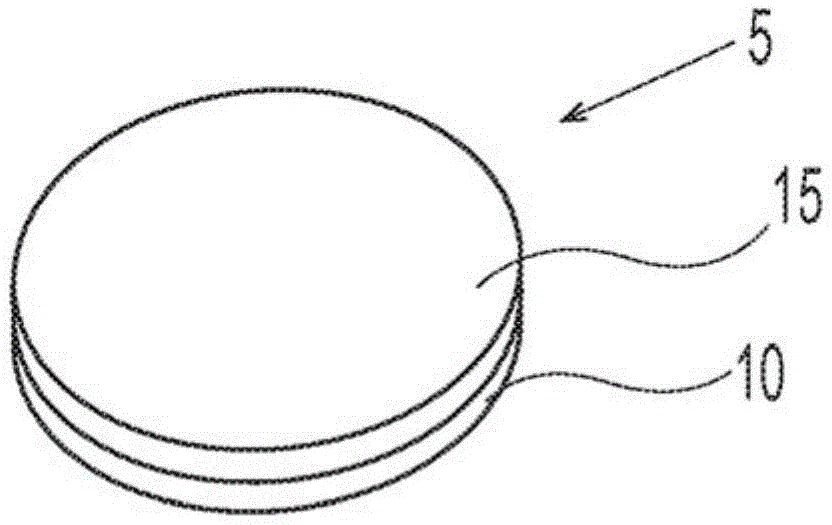
图1为一种产品。Figure 1 is a product.
图2为具有第一层和第二层的第一层片。Figure 2 is a first ply having a first layer and a second layer.
图3为用于制备材料层片的生产线。Figure 3 is a production line for the preparation of material plies.
图4为第二层片接合到第一层片以形成产品。Figure 4 is a second ply joined to a first ply to form a product.
图5为用于制备双层片产品的生产线。Figure 5 is a production line for making a bilayer sheet product.
图6为双层片产品的横截面图。Figure 6 is a cross-sectional view of a bilayer sheet product.
图7为双层片产品的横截面图,每个层片为多层层片。Figure 7 is a cross-sectional view of a two-layer sheet product, each ply being a multi-layer ply.
图8为用于制备三层片产品的生产线。Figure 8 is a production line for making a three-layer sheet product.
图9为三层片产品的横截面图,每个层片为多层层片。Figure 9 is a cross-sectional view of a three-ply product, each ply being a multi-layer ply.
具体实施方式Detailed ways
水溶性产品5显示在图1中。水溶性产品5可包含相对于彼此叠置的第一水溶性纤维层片10和第二水溶性纤维层片15。第一层片10和第二层片15彼此接合以形成一体的水溶性产品5。水溶性产品5可具有约50mg至约30g,任选地约100mg至约20g,任选地约1g至约20g的质量。水溶性产品5可具有约5mm至约20cm,任选地约1cm至约10cm的长度和宽度,以及约1mm至约2cm,任选地约2mm至约10mm的厚度。Water-
就本文所述的水溶性纤维层片的类型而言,制造足够刚性以便在消费者使用产品时不软的独立层片可能是挑战性的。水溶性产品可具有介于约1cm2和约100cm2之间的平面面积。纤维层片的刚度可以是以下的函数:层片的厚度、构成层片的独立纤维的强度和刚度、纤维间粘结的量、纤维缠结的程度和性质、以及纤维间粘结的强度。就构成本文所讨论的纤维层片的纤维而言,可能难以提供足够厚的层片,其具有足够坚固和刚性的水溶性纤维,它们在所希望的结构中彼此充分地互相粘结和缠结,并且彼此粘结,使得由此类纤维制成的层片在其自重下不软。With the types of water-soluble fiber plies described herein, it can be challenging to manufacture a separate ply that is rigid enough so as not to be soft when the product is used by the consumer. The water-soluble product can have a planar area of between about 1 cm 2 and about 100 cm 2 . The stiffness of a fibrous ply can be a function of the thickness of the ply, the strength and stiffness of the individual fibers that make up the ply, the amount of fiber-to-fiber bonds, the degree and nature of fiber entanglement, and the strength of the fiber-to-fiber bonds. With regard to the fibers making up the fibrous plies discussed herein, it may be difficult to provide a sufficiently thick ply with sufficiently strong and rigid water-soluble fibers that are sufficiently bonded and entangled with each other in the desired structure , and are bonded to each other so that plies made of such fibers are not soft under their own weight.
提供多层片水溶性产品5可有助于克服这些限制。通过将层片分层和接合而实现的水溶性产品的厚度增加,由于围绕弯曲轴线的惯性力矩增大,因此可提供更高的抗平面内弯折刚度。此类产品5不像较薄的单层片产品那样软。此外,此类产品5的厚度的增加使得消费者更容易抓握和握持它们。此外,多层片产品5在产品内部提供位置,该处可放置活性剂,使得消费者不与活性剂接触。Providing a multi-layer sheet water-
水溶性产品5的层片可从消费者与水溶性产品5相互作用的形式开始分级地观察,并且向后工作到制造层片的原料。The plies of the water
I.纤维层片I. Fiber ply
A.纤维结构A. Fiber structure
纤维层片可以是纤维结构。纤维结构包含一种或多种纤维元件。纤维元件可彼此相关联以形成结构。纤维结构可包含结构内和/或结构上的颗粒。纤维结构可以是均匀的、分层的、整体的、分区的、或者如果需要的话,具有限定上述各种部分的不同活性剂。The fibrous ply may be a fibrous structure. The fibrous structure contains one or more fibrous elements. Fiber elements can be associated with each other to form a structure. The fibrous structure may contain particles within and/or on the structure. The fibrous structure can be homogeneous, layered, monolithic, zoned, or if desired, with different active agents defining the various portions described above.
纤维结构可包含一个或多个层,这些层一起形成层片。例如,如图2所示,第一层片10可包含第一层20和第二层25。第一层20和第二层25可包含多个纤维元件30。第一层片10可在选自以下的位置处包含多个颗粒:第一层20、第二层25、第一层20和第二层25之间、以及它们的组合。可通过沉积具有区别特征的多个纤维元件30以形成第一层20,然后将纤维元件30的第二层25沉积在第一层20的顶上来形成具有多个层的层片。为清楚起见,对于多层层片,可存在构成这些层的纤维的掺混。再者,为清楚起见,可存在构成层片的纤维的掺混。The fibrous structure may comprise one or more layers that together form a ply. For example, as shown in FIG. 2 , the
纤维结构可包含多个从组成角度来看相同或基本相同的纤维元件30。任选地,纤维结构可包含两个或更多个不同的纤维元件30。纤维元件30的差异的非限制性示例可为物理差异诸如直径、长度、纹理、形状、硬度、弹性等的差异;化学差异诸如交联水平、溶解度、熔点、玻璃化转变温度、活性剂、长丝形成材料、颜色、活性剂水平、基重、长丝形成材料水平、纤维元件上任何涂层的存在、是否生物可降解、是否疏水、接触角等;当纤维元件30暴露于预期用途条件时是否丧失其物理结构的差异;当纤维元件30暴露于预期用途条件时纤维元件30是否改变形态的差异;以及当纤维元件30暴露于预期用途条件时纤维元件30释放一种或多种它的活性剂的速率的差异。在一个示例中,纤维结构中的两种或更多种纤维元件30和/或颗粒可包含不同的活性剂。The fibrous structure may comprise a plurality of
纤维结构可表现出差异性区域,诸如基重、密度和/或厚度、表面纹理、纤维结构的图案、压花图案、孔、图案中的孔等的差异性区域。The fiber structure may exhibit areas of difference, such as areas of difference in basis weight, density and/or thickness, surface texture, pattern of fiber structure, embossed pattern, holes, holes in a pattern, and the like.
本发明纤维结构的用途的非限制性示例包括但不限于,用于洗衣机中、干衣机中的可溶和/或可熔基底,处理硬质表面进行清洁和/或抛光,处理底板进行清洁和/或抛光基底,处理皮肤,施加驱虫剂,处理游泳池,作为口气清新剂、除臭剂、伤口敷料,用于药物递送,皮肤护理基底,毛发护理基底,空气护理基底,水处理基底和/或过滤器,马桶清洁基底,糖果基底,牙齿增白基底,地毯清洁基底,以及本发明活性剂的其他合适用途。本发明的纤维结构可直接使用或可涂覆有一种或多种活性剂。Non-limiting examples of uses of the fibrous structures of the present invention include, but are not limited to, use in soluble and/or fusible substrates in washing machines, in dryers, treating hard surfaces for cleaning and/or polishing, treating soleplates for cleaning and/or polishing substrates, treating skin, applying insect repellants, treating swimming pools, as breath fresheners, deodorants, wound dressings, for drug delivery, skin care substrates, hair care substrates, air care substrates, water treatment substrates and /or filters, toilet cleaning substrates, confectionery substrates, tooth whitening substrates, carpet cleaning substrates, and other suitable uses of the active agents of the present invention. The fibrous structures of the present invention can be used directly or can be coated with one or more active agents.
B.纤维元件B. Fiber Elements
纤维元件30可为水溶性的。纤维元件30可包含选自一种或多种长丝形成材料、一种或多种活性剂、以及它们的组合的构成材料。活性剂可从纤维元件30释放,诸如当纤维元件30和/或包含纤维元件30的纤维结构暴露于预期用途的条件时。The
以干燥纤维元件和/或干燥纤维结构为基准计,纤维元件可包含约5重量%至约100重量%的一种或多种长丝形成材料。纤维元件可包含,以干燥纤维元件和/或干燥纤维结构为基准计约5重量%至约100重量%的一种或多种长丝形成材料,和以干燥纤维元件和/或干燥纤维结构为基准计约5重量%至约95重量%的一种或多种活性剂。The fibrous elements may comprise from about 5% to about 100% by weight of one or more filament-forming materials, based on the dry fibrous element and/or the dry fibrous structure. The fibrous elements may comprise from about 5% to about 100% by weight, based on the dry fibrous elements and/or dry fibrous structures, of one or more filament-forming materials, and based on the dry fibrous elements and/or dry fibrous structures as From about 5% to about 95% by weight of one or more active agents on a basis.
纤维元件可包含,以干燥纤维元件和/或干燥纤维结构为基准计超过约50重量%的一种或多种长丝形成材料,和以干燥纤维元件和/或干燥纤维结构为基准计少于约50重量%的一种或多种活性剂。The fibrous elements may comprise, based on the dry fibrous element and/or dry fibrous structure, in excess of about 50% by weight of one or more filament-forming materials, and based on the dry fibrous element and/or dry fibrous structure, less than About 50% by weight of one or more active agents.
纤维元件可包含,以干燥纤维元件和/或干燥纤维结构为基准计少于约50重量%的一种或多种长丝形成材料,和以干燥纤维元件和/或干燥纤维结构为基准计超过约50重量%的一种或多种活性剂。The fibrous elements may comprise, based on the dry fibrous element and/or dry fibrous structure, less than about 50% by weight of one or more filament-forming materials and more than About 50% by weight of one or more active agents.
纤维元件30包含一种或多种长丝形成材料以及当纤维元件和/或包含纤维元件的纤维结构暴露于预期使用条件下时可释放和/或被释放的一种或多种活性剂,该活性剂选自:酶、漂白剂、助洗剂、螯合剂、感觉剂、分散剂、香料、抗微生物剂、抗细菌剂、抗真菌剂、以及它们的混合物。The
纤维元件30可为熔喷纤维元件30、纺粘纤维元件30、中空纤维元件30等。纤维元件30可为亲水性或疏水性的。纤维元件30可经表面处理和/或内部处理以改变纤维元件的固有亲水性或疏水性特性。纤维元件30可具有如根据本文所述的直径测试方法测量的小于约100μm,和/或小于约75μm,和/或小于约50μm,和/或小于约25μm,和/或小于约10μm,和/或小于约5μm,和/或小于约1μm的直径。根据本文所述的直径测试方法,纤维元件30可具有约1μm至约500μm,任选地约1μm至约100μm,任选地约1μm至约50μm,任选地约1μm至约30μm,任选地约5μm至约15μm,任选地约7μm至约15μm的直径。纤维元件30可具有如根据本文所述的直径测试方法所测得的大于约1μm的直径。直径越小,活性剂的释放速率越快,纤维元件30物理结构的丧失和或改变速率越快。The
纤维元件30可包含纤维元件内的活性剂和在纤维元件30的外表面上的活性剂,诸如在纤维元件30上的活性剂涂层。在纤维元件30的外表面上的活性剂可以与存在于纤维元件30中的活性剂相同或不同。如果不同,则活性剂可彼此相容或不相容。The
一种或多种活性剂可均匀分布或基本上均匀分布在整个纤维元件30中。活性剂可作为纤维元件30内的离散区域分布。至少一种活性剂可均匀地或基本上均匀地分布在整个纤维元件30中,并且至少一种其他活性剂作为纤维元件30内的一个或多个离散区域分布。任选地,至少一种活性剂作为纤维元件30内的一个或多个离散区域分布,并且至少一种其他活性剂作为不同于纤维元件30内的第一离散区域的一个或多个离散区域分布。The one or more active agents may be uniformly or substantially uniformly distributed throughout the
C.长丝形成材料C. Filament-forming materials
长丝形成材料是任何合适的材料,诸如聚合物或能够制备聚合物的单体,其表现出适用于诸如通过纺丝工艺制备长丝的特性。长丝形成材料可包含极性溶剂可溶性材料,诸如醇溶性材料和/或水溶性材料,其可有益于包括使用水的产品应用。A filament-forming material is any suitable material, such as a polymer or monomer capable of making a polymer, that exhibits properties suitable for use in making filaments, such as by spinning processes. Filament-forming materials may comprise polar solvent soluble materials, such as alcohol soluble materials and/or water soluble materials, which may be beneficial for product applications involving the use of water.
长丝形成材料可包括非极性溶剂可溶解的材料。The filament-forming material may include a non-polar solvent soluble material.
长丝形成材料可包括水溶性材料并且不含(以干燥纤维元件和/或干燥纤维结构为基准计小于5重量%、和/或小于3重量%、和/或小于1重量%、和/或0重量%)水不溶性材料。The filament-forming material may include water-soluble materials and be free of (less than 5% by weight, and/or less than 3% by weight, and/or less than 1% by weight, based on dry fiber elements and/or dry fiber structure, and/or 0% by weight) water insoluble material.
长丝形成材料可包含选自以下的聚合物:衍生自丙烯酸类单体诸如烯键式不饱和羧酸单体和烯键式不饱和单体的聚合物、聚乙烯醇、聚乙烯基甲酰胺、聚乙烯胺、聚丙烯酸酯、聚甲基丙烯酸酯、丙烯酸和丙烯酸甲酯的共聚物、聚乙烯吡咯烷酮、聚环氧烷、淀粉和淀粉衍生物、普鲁兰、明胶和纤维素衍生物(例如,羟丙基甲基纤维素、甲基纤维素、羧甲基纤维素)。The filament-forming material may comprise a polymer selected from the group consisting of polymers derived from acrylic monomers such as ethylenically unsaturated carboxylic acid monomers and ethylenically unsaturated monomers, polyvinyl alcohol, polyvinyl formamide , polyvinylamine, polyacrylate, polymethacrylate, copolymer of acrylic acid and methyl acrylate, polyvinylpyrrolidone, polyalkylene oxide, starch and starch derivatives, pullulan, gelatin and cellulose derivatives ( For example, hydroxypropyl methylcellulose, methylcellulose, carboxymethylcellulose).
长丝形成材料可包含选自以下的聚合物:聚乙烯醇、聚乙烯醇衍生物、淀粉、淀粉衍生物、纤维素衍生物、半纤维素、半纤维素衍生物、蛋白质、海藻酸钠、羟丙基甲基纤维素、脱乙酰壳多糖、脱乙酰壳多糖衍生物、聚乙二醇、四亚甲基醚二醇、聚乙烯基吡咯烷酮、羟甲基纤维素、羟乙基纤维素、羧甲基纤维素、以及它们的混合物。The filament-forming material may comprise a polymer selected from the group consisting of polyvinyl alcohol, polyvinyl alcohol derivatives, starch, starch derivatives, cellulose derivatives, hemicellulose, hemicellulose derivatives, proteins, sodium alginate, Hydroxypropyl methylcellulose, chitosan, chitosan derivatives, polyethylene glycol, tetramethylene ether glycol, polyvinyl pyrrolidone, hydroxymethyl cellulose, hydroxyethyl cellulose, Carboxymethyl cellulose, and mixtures thereof.
长丝形成材料可包含选自以下的聚合物:普鲁兰、羟丙基甲基纤维素、羟乙基纤维素、羟丙基纤维素、聚乙烯基吡咯烷酮、羧甲基纤维素、海藻酸钠、黄原胶、黄蓍胶、瓜尔胶、金合欢胶、阿拉伯胶、聚丙烯酸、甲基丙烯酸甲酯共聚物、羧乙烯基聚合物、糊精、果胶、甲壳素、果聚糖、爱生兰(elsinan)、胶原、明胶、玉米醇溶蛋白、谷蛋白、大豆蛋白、酪蛋白、聚乙烯醇、羧化聚乙烯醇、磺化聚乙烯醇、淀粉、淀粉衍生物、半纤维素、半纤维素衍生物、蛋白质、脱乙酰壳多糖、脱乙酰壳多糖衍生物、聚乙二醇、四亚甲基醚二醇、羟甲基纤维素、以及它们的混合物。The filament-forming material may comprise a polymer selected from the group consisting of pullulan, hydroxypropylmethylcellulose, hydroxyethylcellulose, hydroxypropylcellulose, polyvinylpyrrolidone, carboxymethylcellulose, alginic acid Sodium, Xanthan Gum, Tragacanth Gum, Guar Gum, Acacia Gum, Gum Arabic, Polyacrylic Acid, Methyl Methacrylate Copolymer, Carboxyvinyl Polymer, Dextrin, Pectin, Chitin, Fructan , elsinan, collagen, gelatin, zein, gluten, soy protein, casein, polyvinyl alcohol, carboxylated polyvinyl alcohol, sulfonated polyvinyl alcohol, starch, starch derivatives, hemicellulose cellulose, hemicellulose derivatives, proteins, chitosan, chitosan derivatives, polyethylene glycol, tetramethylene ether glycol, hydroxymethyl cellulose, and mixtures thereof.
1.水溶性材料1. Water-soluble materials
水溶性材料的非限制示例包括水溶性聚合物。水溶性聚合物可为合成的或天然来源的,并且可进行化学和/或物理改性。Non-limiting examples of water-soluble materials include water-soluble polymers. Water-soluble polymers can be of synthetic or natural origin, and can be chemically and/or physically modified.
水溶性聚合物的非限制性示例包括水溶性羟基聚合物、水溶性热塑性聚合物、水溶性能够生物降解的聚合物、水溶性不能够生物降解的聚合物以及它们的混合物。水溶性聚合物可包含聚乙烯醇。在另一个示例中,水溶性聚合物可包含淀粉。水溶性聚合物可包含聚乙烯醇和淀粉。水溶性聚合物可包含羧甲基纤维素。所述聚合物可包含羧甲基纤维素和聚乙烯醇。Non-limiting examples of water-soluble polymers include water-soluble hydroxy polymers, water-soluble thermoplastic polymers, water-soluble biodegradable polymers, water-soluble non-biodegradable polymers, and mixtures thereof. The water-soluble polymer may contain polyvinyl alcohol. In another example, the water-soluble polymer may comprise starch. The water-soluble polymer may contain polyvinyl alcohol and starch. The water-soluble polymer may comprise carboxymethyl cellulose. The polymer may comprise carboxymethyl cellulose and polyvinyl alcohol.
a.水溶性羟基聚合物a. Water-soluble hydroxyl polymer
根据本发明的水溶性羟基聚合物的非限制性示例可选自多元醇,诸如聚乙烯醇、聚乙烯醇衍生物、聚乙烯醇共聚物、淀粉、淀粉衍生物、淀粉共聚物、脱乙酰壳多糖、脱乙酰壳多糖衍生物、脱乙酰壳多糖共聚物、纤维素衍生物诸如纤维素醚和纤维素酯衍生物、纤维素共聚物、半纤维素、半纤维素衍生物、半纤维素共聚物、树胶、阿拉伯聚糖、半乳聚糖、蛋白质、羧甲基纤维素和各种其他多糖以及它们的混合物。Non-limiting examples of water-soluble hydroxy polymers according to the present invention may be selected from polyols such as polyvinyl alcohol, polyvinyl alcohol derivatives, polyvinyl alcohol copolymers, starch, starch derivatives, starch copolymers, chitosan Polysaccharides, chitosan derivatives, chitosan copolymers, cellulose derivatives such as cellulose ether and cellulose ester derivatives, cellulose copolymers, hemicellulose, hemicellulose derivatives, hemicellulose copolymers polysaccharides, gums, arabinans, galactans, proteins, carboxymethyl cellulose and various other polysaccharides and mixtures thereof.
可用其它单体接枝本文的聚乙烯醇以改变其特性。已经成功地将大量单体接枝到聚乙烯醇。此类单体的非限制性示例包括乙酸乙烯酯、苯乙烯、丙烯酰胺、丙烯酸、甲基丙烯酸2-羟乙酯、丙烯腈、1,3-丁二烯、甲基丙烯酸甲酯、甲基丙烯酸、马来酸、衣康酸、乙烯基磺酸钠、烯丙基磺酸钠、甲基烯丙基磺酸钠、苯基烯丙基醚磺酸钠、苯基甲代烯丙基醚磺酸钠、2-丙烯酰胺-甲基丙磺酸(AMP)、偏二氯乙烯、氯乙烯、乙烯胺和多种丙烯酸酯。The polyvinyl alcohols herein can be grafted with other monomers to alter their properties. A large number of monomers have been successfully grafted to polyvinyl alcohol. Non-limiting examples of such monomers include vinyl acetate, styrene, acrylamide, acrylic acid, 2-hydroxyethyl methacrylate, acrylonitrile, 1,3-butadiene, methyl methacrylate, methyl methacrylate Acrylic Acid, Maleic Acid, Itaconic Acid, Sodium Vinyl Sulfonate, Sodium Allyl Sulfonate, Sodium Methallyl Sulfonate, Sodium Phenyl Allyl Ether Sulfonate, Phenyl Methallyl Ether Sodium sulfonate, 2-acrylamide-methylpropanesulfonic acid (AMP), vinylidene chloride, vinyl chloride, vinylamine and various acrylates.
在一个示例中,水溶性羟基聚合物选自:聚乙烯醇、羟甲基纤维素、羟乙基纤维素、羟丙基甲基纤维素、羧甲基纤维素以及它们的混合物。合适的聚乙烯醇的非限制性示例包括可从积水(美国)特种化学品公司(SekisuiSpecialty Chemicals America,LLC(Dallas,Tex.))以商品名CELVOL(注册商标)商购获得的那些。合适的聚乙烯醇的另一个非限制性示例包括可从Nippon Ghosei商购获得的G聚合物。合适的羟丙基甲基纤维素的非限制性示例包括可从陶氏化学公司(Dow Chemical Company(Midland,Mich.))以商品名METHOCEL(注册商标)商购获得的那些,包括与上文提到的聚乙烯醇的组合。In one example, the water-soluble hydroxyl polymer is selected from the group consisting of: polyvinyl alcohol, hydroxymethyl cellulose, hydroxyethyl cellulose, hydroxypropyl methyl cellulose, carboxymethyl cellulose, and mixtures thereof. Non-limiting examples of suitable polyvinyl alcohols include those commercially available from Sekisui Specialty Chemicals America, LLC (Dallas, Tex.) under the tradename CELVOL (registered trademark). Another non-limiting example of suitable polyvinyl alcohols includes G polymers commercially available from Nippon Ghosei. Non-limiting examples of suitable hydroxypropyl methylcelluloses include those commercially available from The Dow Chemical Company (Midland, Mich.) under the tradename METHOCEL (registered trademark), including those described above. A combination of the polyvinyl alcohols mentioned.
b.水溶性热塑性聚合物b. Water-soluble thermoplastic polymer
合适的水溶性热塑性聚合物的非限制性示例包括热塑性淀粉和/或淀粉衍生物、聚乳酸、多羟基链烷酸酯、聚己内酯、聚酯酰胺和某些聚酯、以及它们的混合物。水溶性热塑性聚合物可为亲水性的或疏水性的。水溶性热塑性聚合物可经表面处理和/或内部处理以改变热塑性聚合物的固有亲水性或疏水性特性。水溶性热塑性聚合物可包括能够生物降解的聚合物。可使用热塑性聚合物的任何合适的重均分子量。例如,根据本发明的热塑性聚合物的重均分子量可为大于约10,000g/mol、和/或大于约40,000g/mol、和/或大于约50,000g/mol、和/或小于约500,000g/mol、和/或小于约400,000g/mol、和/或小于约200,000g/mol。Non-limiting examples of suitable water-soluble thermoplastic polymers include thermoplastic starch and/or starch derivatives, polylactic acid, polyhydroxyalkanoates, polycaprolactones, polyesteramides, and certain polyesters, and mixtures thereof . Water-soluble thermoplastic polymers can be hydrophilic or hydrophobic. Water-soluble thermoplastic polymers can be surface treated and/or internally treated to alter the inherent hydrophilic or hydrophobic properties of the thermoplastic polymer. Water-soluble thermoplastic polymers can include polymers that are capable of biodegradation. Any suitable weight average molecular weight of the thermoplastic polymer can be used. For example, thermoplastic polymers according to the present invention may have a weight average molecular weight greater than about 10,000 g/mol, and/or greater than about 40,000 g/mol, and/or greater than about 50,000 g/mol, and/or less than about 500,000 g/mol mol, and/or less than about 400,000 g/mol, and/or less than about 200,000 g/mol.
D.活性剂D. Active agent
活性剂是一类经设计且旨在对除了纤维元件和/或颗粒和/或纤维结构本身之外的某些物质提供有益效果,诸如对纤维元件和/或颗粒和/或纤维结构外的环境提供有益效果的添加剂。活性剂可选自:个人清洁和/或调理剂,诸如毛发护理剂诸如洗发剂和/或毛发着色剂、毛发调理剂、皮肤护理剂、防晒剂和皮肤调理剂;衣物洗涤护理和/或调理剂诸如织物护理剂、织物调理剂、织物软化剂、织物抗皱剂、织物护理抗静电剂、织物护理去污剂、去垢剂、分散剂、抑泡剂、促泡剂、消泡剂和织物清新剂;液体和/或粉末盘碟洗涤剂(用于手动盘碟洗涤和/或自动洗碗机应用)、硬质表面护理剂和/或调理剂和/或抛光剂;其他清洁和/或调理剂诸如抗微生物剂、抗菌剂、抗真菌剂、织物调色剂、香料、漂白剂(诸如氧化漂白剂、过氧化氢、过碳酸盐漂白剂、过硼酸盐漂白剂、氯漂白剂)、漂白活化剂、螯合剂、助洗剂、洗剂、增白剂、空气护理剂、地毯护理剂、染料转移抑制剂、粘土污垢去除剂、抗再沉积剂、聚合物土壤剥离剂、聚合物分散剂、烷氧基化的聚胺聚合物、烷氧基化的聚羧酸酯聚合物、两亲性接枝共聚物、溶解助剂、缓冲体系、水软化剂、水硬化剂、pH调节剂、酶、絮凝剂、泡腾剂、防腐剂、美容剂、卸妆剂、起泡剂、沉积助剂、团集体形成剂、粘土、增稠剂、胶乳、二氧化硅、干燥剂、气味控制剂、止汗剂、凉爽剂、加温剂、吸收凝胶剂、抗炎剂、染料、颜料、酸和碱;液体处理活性剂;农业活性剂;工业活性剂;可摄取的活性剂诸如治疗剂、牙齿美白剂、牙齿护理剂、漱口剂、牙周牙龈护理剂、食用剂、膳食剂、维生素、矿物质;水处理剂如水澄清和/或水消毒剂、以及它们的混合物。Active agents are a class of agents designed and intended to provide a beneficial effect on something other than the fibrous elements and/or particles and/or fibrous structures themselves, such as the environment outside the fibrous elements and/or particles and/or fibrous structures Additives that provide beneficial effects. Active agents may be selected from: personal cleansing and/or conditioning agents, such as hair care agents such as shampoos and/or hair colorants, hair conditioners, skin care agents, sunscreens and skin conditioners; laundry care and/or Conditioners such as fabric care agents, fabric conditioners, fabric softeners, fabric anti-wrinkle agents, fabric care antistatic agents, fabric care stain removers, detergents, dispersants, suds suppressors, suds boosters, defoamers and Fabric fresheners; liquid and/or powder dishwashing detergents (for manual dishwashing and/or automatic dishwasher applications), hard surface conditioners and/or conditioners and/or polishes; other cleaning and/or polishing agents or conditioners such as antimicrobials, antibacterials, antifungals, fabric toners, fragrances, bleaches such as oxidative bleach, hydrogen peroxide, percarbonate bleach, perborate bleach, chlorine bleach agents), bleach activators, chelating agents, builders, lotions, brighteners, air conditioners, carpet conditioners, dye transfer inhibitors, clay soil removers, anti-redeposition agents, polymeric soil strippers, Polymer dispersants, alkoxylated polyamine polymers, alkoxylated polycarboxylate polymers, amphiphilic graft copolymers, dissolution aids, buffer systems, water softeners, water hardeners, pH adjusters, enzymes, flocculants, effervescent agents, preservatives, cosmetic agents, makeup removers, foaming agents, deposition aids, agglomerate formers, clays, thickeners, latex, silica, desiccants, Odor Control Agents, Antiperspirants, Cooling Agents, Warming Agents, Absorbent Gels, Anti-Inflammatory Agents, Dyes, Pigments, Acids and Bases; Liquid Handling Actives; Agricultural Actives; Industrial Actives; Ingestible Actives Such as therapeutic agents, tooth whitening agents, dental care agents, mouthwashes, periodontal gum care agents, edibles, dietary agents, vitamins, minerals; water treatment agents such as water clarifiers and/or water disinfectants, and mixtures thereof.
1.表面活性剂1. Surfactant
合适的表面活性剂的非限制性示例包括阴离子表面活性剂、阳离子表面活性剂、非离子表面活性剂、两性离子表面活性剂、两性表面活性剂、以及它们的混合物。辅助表面活性剂也可包含在纤维元件和/或颗粒中。就设计用作衣物洗涤剂和/或餐具洗涤剂的纤维元件和/或颗粒而言,表面活性剂的总含量将足以提供包括去污和/或除臭在内的清洁,并且一般在约0.5%至约95%的范围内。另外,被设计用于衣物洗涤剂和/或餐具洗涤剂的纤维元件和/或颗粒中的包含两种或更多种表面活性剂的表面活性剂体系,可包括全阴离子表面活性剂体系、包含阴离子-非离子表面活性剂混合物、或非离子-阳离子表面活性剂混合物或低发泡非离子表面活性剂的混合型表面活性剂体系。本文的表面活性剂可为直链或支化的。在一个示例中,合适的直链表面活性剂包括来源于农用化学品油如椰子油、棕榈仁油、大豆油、或其他植物油的那些。Non-limiting examples of suitable surfactants include anionic surfactants, cationic surfactants, nonionic surfactants, zwitterionic surfactants, amphoteric surfactants, and mixtures thereof. Co-surfactants may also be included in the fibrous elements and/or particles. For fibrous elements and/or particles designed for use as laundry detergents and/or dishwashing detergents, the total surfactant level will be sufficient to provide cleaning, including soil removal and/or deodorization, and is generally within the range of about 0.5 % to about 95%. Additionally, surfactant systems comprising two or more surfactants designed for use in fibrous elements and/or granules of laundry detergents and/or dishwashing detergents may include fully anionic surfactant systems, including Hybrid surfactant system of anionic-nonionic surfactant mixture, or nonionic-cationic surfactant mixture or low foaming nonionic surfactant. The surfactants herein may be linear or branched. In one example, suitable linear surfactants include those derived from agrochemical oils such as coconut oil, palm kernel oil, soybean oil, or other vegetable oils.
2.香料2. Spices
可在本发明的一个或多个纤维元件和/或颗粒中掺入一种或多种香料和/或香料原料诸如谐香剂和/或香。香料可包含香料成分,该香料成分选自醛香料成分、酮香料成分、酯、以及它们的混合物。还包括各种天然提取物和精油,其可包含各成分的复杂混合物,诸如橙油、柠檬油、玫瑰提取物、熏衣草、麝香植物、绿叶刺蕊草、凤仙花精油、檀木油、松油、雪松等。在一个示例中,基于干燥纤维元件和/或干燥纤维结构重量计,精制香料的含量通常为约0.01%至约2%。One or more fragrances and/or fragrance materials such as accords and/or incense may be incorporated into one or more of the fibrous elements and/or particles of the present invention. The fragrance may comprise a fragrance ingredient selected from the group consisting of aldehyde fragrance components, ketone fragrance components, esters, and mixtures thereof. Also included are various natural extracts and essential oils, which may contain complex mixtures of ingredients such as orange oil, lemon oil, rose extract, lavender, musk botanicals, patchouli, balsam essential oil, sandalwood oil , pine oil, cedar, etc. In one example, the amount of refined fragrance is typically from about 0.01% to about 2% by weight of dry fibrous elements and/or dry fibrous structure.
香料可通过香料递送体系递送。香料递送体系可为聚合物辅助递送体系。该香料递送技术使用聚合物材料来递送香料材料。一些示例为典型的附聚体、水溶性或部分水溶性至不溶性带电或中性聚合物、液晶、热熔体、水凝胶、充有香料的塑料、包封的香料、纳米胶乳和微米胶乳、聚合物成膜剂和聚合物吸收剂、聚合物吸附剂等。聚合物辅助递送体系可为基质体系,其中芳香剂溶解或分散于聚合物基质或颗粒中。Fragrances can be delivered by fragrance delivery systems. The fragrance delivery system can be a polymer assisted delivery system. This fragrance delivery technology uses polymeric materials to deliver fragrance materials. Some examples are typical agglomerates, water soluble or partially water soluble to insoluble charged or neutral polymers, liquid crystals, hot melts, hydrogels, perfumed plastics, encapsulated perfumes, nanolatexes and microlatexes , polymer film formers and polymer absorbents, polymer adsorbents, etc. The polymer-assisted delivery system can be a matrix system in which the fragrance is dissolved or dispersed in a polymer matrix or particles.
香料递送体系可为包封物。包封的香料包含香料核和作为包封壁的外壳。包封物可为压敏包封物。The fragrance delivery system can be an encapsulant. Encapsulated fragrances contain a fragrance core and a shell as the walls of the envelope. The encapsulant may be a pressure sensitive encapsulant.
香料递送体系可为纤维辅助递送体系。香料可加载和/或储存在纤维的表面上或吸收到纤维中。当使用时,香料可从纤维中释放出来。The fragrance delivery system can be a fiber assisted delivery system. Fragrances can be loaded and/or stored on the surface of the fibers or absorbed into the fibers. When used, the fragrance can be released from the fiber.
香料递送体系可为胺辅助递送体系。胺辅助递送体系可包含具有胺基团的材料以在产品使用期间增加香料沉积和或调节香料释放。适用于本文的胺辅助递送体系材料可为非芳族的;例如聚烷基亚胺诸如聚乙烯亚胺(PEI)或聚乙烯胺(PVAm),或是芳族的例如邻氨基苯甲酸酯。此类材料还可以是聚合的或非聚合的。在一个方面,此类材料包含至少一个伯胺。The fragrance delivery system can be an amine-assisted delivery system. Amine-assisted delivery systems can include materials with amine groups to increase fragrance deposition and or to modulate fragrance release during product use. Amine-assisted delivery system materials suitable for use herein may be non-aromatic; for example, polyalkylimines such as polyethyleneimine (PEI) or polyvinylamine (PVAm), or aromatic such as anthranilates . Such materials may also be polymeric or non-polymeric. In one aspect, such materials comprise at least one primary amine.
香料递送体系可为环糊精递送体系。这一技术方法使用环状寡糖或环糊精来改善香料递送。通常形成香料和环糊精复合物。The fragrance delivery system can be a cyclodextrin delivery system. This technical approach uses cyclic oligosaccharides or cyclodextrins to improve flavor delivery. Fragrance and cyclodextrin complexes are usually formed.
香料递送体系可为淀粉包封的谐香剂。这一技术采用通过加入成分诸如淀粉转变成固体的液体香料。The fragrance delivery system can be a starch-encapsulated accord. This technique employs liquid flavors that are converted into solids by adding ingredients such as starch.
香料递送体系可为无机载体递送体系。在此类体系中,将香料加载到无机载体例如沸石、多孔沸石、或其他无机材料上。The fragrance delivery system can be an inorganic carrier delivery system. In such systems, the fragrance is loaded onto an inorganic carrier such as a zeolite, porous zeolite, or other inorganic material.
香料递送体系可为前香料。这一技术包括共价键合到载体上的香料。前香料可为胺反应产物。换句话讲,聚合的胺与一种或多种香料原料反应以形成胺反应产物。The perfume delivery system can be a pro-perfume. This technique involves covalently bonding the fragrance to a carrier. The pro-perfume can be an amine reaction product. In other words, the polymerized amine is reacted with one or more fragrance raw materials to form an amine reaction product.
3.抗微生物剂、抗细菌剂和抗真菌剂3. Antimicrobial, antibacterial and antifungal agents
活性剂可选自抗微生物剂、抗细菌剂、抗真菌剂、以及它们的组合。The active agent may be selected from antimicrobials, antibacterials, antifungals, and combinations thereof.
4.漂白剂4. Bleach
本发明的纤维元件和或颗粒可包含一种或多种漂白剂。合适的漂白剂的非限制性示例包括过氧酸、过硼酸盐、过碳酸盐、氯漂白剂、过氧漂白剂、过羧酸漂白剂及其盐、氧漂白剂、过硫酸盐漂白剂、次氯酸盐漂白剂、漂白剂前体、漂白活化剂、漂白催化剂、过氧化氢、漂白增强剂、光漂白剂、漂白酶、自由基引发剂、过氧漂白剂、以及它们的混合物。The fibrous elements and or particles of the present invention may contain one or more bleaching agents. Non-limiting examples of suitable bleaches include peroxyacids, perborates, percarbonates, chlorine bleaches, peroxygen bleaches, percarboxylic acid bleaches and their salts, oxygen bleaches, persulfate bleaches agents, hypochlorite bleaches, bleach precursors, bleach activators, bleach catalysts, hydrogen peroxide, bleach enhancers, photobleaches, bleaching enzymes, free radical initiators, peroxygen bleaches, and mixtures thereof .
可包含在本发明的纤维元件和/或颗粒中的一种或多种漂白剂以按基于干燥纤维元件和/或干燥颗粒和/或干燥纤维结构的重量计约0.05%至约30%和/或约1%至约20%的水平被包含。当存在时,漂白活化剂可以按基于干燥纤维元件和/或干燥颗粒和/或干燥纤维结构的重量计约0.1%至约60%和/或约0.5%至约40%的水平存在于本发明的纤维元件和/或颗粒中。One or more bleaching agents may be included in the fibrous elements and/or granules of the present invention at about 0.05% to about 30% by weight based on the dry fibrous elements and/or dry granules and/or dry fibrous structure and/or Or levels of about 1% to about 20% are included. When present, bleach activators may be present in the present invention at levels of from about 0.1% to about 60% and/or from about 0.5% to about 40% by weight of dry fibrous elements and/or dry particles and/or dry fibrous structures fibrous elements and/or particles.
5.染料转移抑制剂5. Dye Transfer Inhibitors
纤维元件和/或颗粒可包含一种或多种染料转移抑制剂。合适的聚合物染料转移抑制剂包括但不限于聚乙烯吡咯烷酮聚合物、聚胺N-氧化物聚合物、N-乙烯吡咯烷酮和N-乙烯咪唑的共聚物、聚乙烯噁唑烷酮和聚乙烯咪唑或它们的混合物。所述染料转移抑制剂可存在于本发明的纤维元件和/或颗粒和/或纤维结构中,其含量基于干燥纤维元件和/或干燥颗粒和/或干燥纤维结构重量计为约0.0001%至约10%、约0.01%至约5%或甚至约0.1%至约3%。The fibrous elements and/or particles may contain one or more dye transfer inhibitors. Suitable polymeric dye transfer inhibiting agents include, but are not limited to, polyvinylpyrrolidone polymers, polyamine N-oxide polymers, copolymers of N-vinylpyrrolidone and N-vinylimidazole, polyvinyloxazolidinone and polyvinylimidazole or their mixtures. The dye transfer inhibitor may be present in the fibrous elements and/or particles and/or fibrous structures of the present invention in an amount of from about 0.0001% to about 0.0001% by weight of dry fibrous elements and/or dry particles and/or dry fibrous structures. 10%, about 0.01% to about 5% or even about 0.1% to about 3%.
6.增白剂6. Brightener
本发明的纤维元件和/或颗粒可包含活性剂,如增白剂,例如荧光增白剂。此类增白剂可着色被清洁的制品。纤维元件和/或颗粒可包含α-结晶形式的C.I.荧光增白剂260。The fibrous elements and/or particles of the present invention may contain active agents, such as brighteners, eg optical brighteners. Such brighteners can color articles being cleaned. The fiber elements and/or particles may contain C.I. Optical Brightener 260 in alpha-crystalline form.
7.调色剂7. Toner
组合物可包含调色剂。合适的调色剂包括染料、染料-粘土缀合物和颜料。合适的染料包括小分子染料和聚合物染料。合适的小分子染料包括选自以下的小分子染料:属于直接蓝、直接红、直接紫、酸性蓝、酸性红、酸性紫、碱性蓝、碱性紫和碱性红的颜色索引(C.I.)类别的染料、或它们的混合物。The composition may contain a toner. Suitable toners include dyes, dye-clay conjugates and pigments. Suitable dyes include small molecule dyes and polymeric dyes. Suitable small molecule dyes include those selected from the Color Index (C.I.) of Direct Blue, Direct Red, Direct Violet, Acid Blue, Acid Red, Acid Violet, Basic Blue, Basic Violet and Basic Red class of dyes, or mixtures thereof.
在另一方面,合适的小分子染料包括选自以下的小分子染料:颜色索引(Societyof Dyers and Colourists,Bradford,UK)号直接紫9、直接紫35、直接紫48、直接紫51、直接紫66、直接紫99、直接蓝1、直接蓝71、直接蓝80、直接蓝279、酸性红17、酸性红73、酸性红88、酸性红150、酸性紫15、酸性紫17、酸性紫24、酸性紫43、酸性红52、酸性紫49、酸性紫50、酸性蓝15、酸性蓝17、酸性蓝25、酸性蓝29、酸性蓝40、酸性蓝45、酸性蓝75、酸性蓝80、酸性蓝83、酸性蓝90和酸性蓝113、酸性黑1、碱性紫1、碱性紫3、碱性紫4、碱性紫10、碱性紫35、碱性蓝3、碱性蓝16、碱性蓝22、碱性蓝47、碱性蓝66、碱性蓝75、碱性蓝159以及它们的混合物。在另一方面,合适的小分子染料选自由下列组成的组:颜色索引(Society of Dyers andColourists,Bradford,UK)号酸性紫17、酸性紫43、酸性红52、酸性红73、酸性红88、酸性红150、酸性蓝25、酸性蓝29、酸性蓝45、酸性蓝113、酸性黑1、直接蓝1、直接蓝71、直接紫51以及它们的混合物。在另一方面,合适的小分子染料包括选自的小分子染料:颜色索引(Society of Dyers and Colourists,Bradford,UK)号酸性紫17、直接蓝71、直接紫51、直接蓝1、酸性红88、酸性红150、酸性蓝29、酸性蓝113或它们的混合物。In another aspect, suitable small molecule dyes include small molecule dyes selected from the group consisting of: Color Index (Society of Dyers and Colourists, Bradford, UK)
活性剂可为颜料。合适的颜料可包括选自以下的颜料:黄烷士酮、蓝蒽酮、包含1至4个氯原子的氯化蓝蒽酮、皮蒽酮、二氯皮蒽酮、单溴二氯皮蒽酮、二溴二氯皮蒽酮、四溴皮蒽酮、二萘嵌苯-3,4,9,10-四羧酸二酰亚胺,其中所述酰亚胺基团可为未取代的或者被C1至C3的烷基或苯基或杂环基取代,并且其中苯基和杂环基可另外带有不提供水中溶解度的取代基、蒽嘧啶羧酸酰胺、蒽酮紫、异蒽酮紫、二噁嗪颜料、每个分子可包含至多2个氯原子的铜酞菁、多氯铜酞菁或每个分子包含至多14个溴原子的多溴氯铜酞菁、以及它们的混合物。The active agent can be a pigment. Suitable pigments may include pigments selected from the group consisting of flavansterones, blueanthrones, chlorinated blueanthrones containing 1 to 4 chlorine atoms, picanthrones, dichloropicanthrones, monobromodichloropicanthrenes ketones, dibromodichloropicanthone, tetrabromopicanthrone, perylene-3,4,9,10-tetracarboxylic diimide, wherein the imide group may be unsubstituted Alternatively substituted with C1 to C3 alkyl or phenyl or heterocyclyl, and wherein phenyl and heterocyclyl may additionally carry substituents that do not provide solubility in water, anthrapyrimidine carboxylic acid amides, anthrone violet, isoanthrone Violet, dioxazine pigments, copper phthalocyanines which may contain up to 2 chlorine atoms per molecule, polychlorocopper phthalocyanines, or polybromochlorocopper phthalocyanines which contain up to 14 bromine atoms per molecule, and mixtures thereof.
合适的颜料包括选自以下的颜料:群青蓝(C.I.颜料蓝29)、群青紫(C.I.颜料紫15)以及它们的混合物。Suitable pigments include pigments selected from the group consisting of Ultramarine Blue (C.I. Pigment Blue 29), Ultramarine Violet (C.I. Pigment Violet 15), and mixtures thereof.
8.酶8. Enzymes
一种或多种酶可存在于本发明的纤维元件和/或颗粒中。合适酶的非限制性示例包括蛋白酶、淀粉酶、脂肪酶、纤维素酶、糖酶,其包括甘露聚糖酶和内切葡聚糖酶、果胶酶、半纤维素酶、过氧化物酶、木聚糖酶、磷脂酶、酯酶、角质酶、角质素酶、还原酶、氧化酶、酚氧化酶、脂氧合酶、木素酶、支链淀粉酶、鞣酸酶、戊聚糖酶、麦拉宁酶、葡聚糖酶、阿拉伯糖苷酶、透明质酸酶、软骨素酶、漆酶、以及它们的混合物。One or more enzymes may be present in the fiber elements and/or particles of the present invention. Non-limiting examples of suitable enzymes include proteases, amylases, lipases, cellulases, carbohydrases including mannanases and endoglucanases, pectinases, hemicellulases, peroxidases , xylanase, phospholipase, esterase, cutinase, cutinase, reductase, oxidase, phenol oxidase, lipoxygenase, ligninase, pullulanase, tannase, pentosan Enzymes, melaninase, glucanase, arabinosidase, hyaluronidase, chondroitinase, laccase, and mixtures thereof.
当存在于本发明的纤维元件和/或颗粒中时,所述酶的含量可足以提供“清洁有效量”。术语“清洁有效量”是指能够在基底例如织物、餐具、地板、瓷器和陶瓷、金属表面等上产生清洁、去污效果、污垢去除、美白、除臭或清新改善效应的任何量。实际上,对于目前的商业制剂而言,典型量为按重量计每克本发明的纤维元件和/或颗粒至多约5mg,更典型0.01mg至3mg的活性酶。换句话讲,本发明的纤维元件和/或颗粒通常可包含基于干燥纤维元件和/或干燥颗粒和/或干燥纤维结构重量计约0.001%至约5%、和/或约0.01%至约3%、和/或约0.01%至约1%的酶。When present in the fibrous elements and/or particles of the present invention, the enzyme may be present in an amount sufficient to provide a "cleaning effective amount". The term "cleaning effective amount" refers to any amount capable of producing a cleaning, stain removal, soil removal, whitening, deodorizing or freshening improving effect on substrates such as fabrics, tableware, floors, china and ceramics, metal surfaces, and the like. Indeed, for current commercial formulations, typical amounts are up to about 5 mg, more typically 0.01 mg to 3 mg, of active enzyme by weight per gram of fibrous elements and/or particles of the invention. In other words, the fibrous elements and/or particles of the present invention may generally comprise from about 0.001% to about 5%, and/or from about 0.01% to about 0.01% by weight of dry fibrous elements and/or dry particles and/or dry fibrous structure. 3%, and/or about 0.01% to about 1% enzyme.
在制备纤维元件和/或颗粒后,可将一种或多种酶施加到所述纤维元件和/或颗粒上。After the fibrous elements and/or granules have been prepared, one or more enzymes may be applied to the fibrous elements and/or granules.
当酶存在于本发明的纤维长丝和/或颗粒中时,所述纤维长丝和/或颗粒中还可包括酶稳定体系。可通过多种技术稳定酶。When enzymes are present in the fiber filaments and/or particles of the present invention, the fiber filaments and/or particles may also include an enzyme stabilization system. Enzymes can be stabilized by a variety of techniques.
9.热形成剂9. Heat formers
本发明的纤维元件和/或颗粒可包含热形成剂。配制热形成剂以在水和/或氧气(例如,空气中的氧气等)的存在下生成热,并由此使纤维结构在水和/或氧气的存在下降解的速率加快,和/或增加纤维元件中一种或多种活性物质的效果。热形成剂可用于使一种或多种活性物质从纤维结构中释放的速率加快。可配制热形成剂以在暴露于氧气(即,空气中的氧气,水中的氧气)和/或水时发生放热反应。可用于纤维结构中的非限制性热形成剂包括电解质盐(例如,氯化铝、氯化钙、硫酸钙、氯化铜、氯化亚铜、硫酸铁、氯化镁、硫酸镁、氯化锰、硫酸锰、氯化钾、硫酸钾、乙酸钠、氯化钠、碳酸钠、硫酸钠等)、二醇类(例如,丙二醇、二丙二醇等)、石灰(例如,生石灰、熟石灰等)、金属(例如,铬、铜、铁、镁、锰等)、金属氧化物(例如,氧化铝、氧化铁等)、聚亚烷基胺、聚亚烷基亚胺、聚乙烯胺、沸石、甘油、1,3-丙二醇、聚山梨醇酯(例如,吐温20、60、85、80)、和/或聚甘油酯(例如得自Stepan的Noobe、Drewpol和Drewmulze)。热形成剂可由一种或多种材料形成。例如,硫酸镁可单独地形成热形成剂。在另一个非限制性示例中,约2-25重量%活性炭、约30-70重量%铁粉和约1-10重量%金属盐的组合可形成热形成剂。如可以理解的,其它或附加的材料可单独使用或与其它材料组合使用以形成热形成剂。The fibrous elements and/or particles of the present invention may contain thermal formers. Heat formers are formulated to generate heat in the presence of water and/or oxygen (eg, oxygen in air, etc.) and thereby accelerate, and/or increase the rate at which fibrous structures degrade in the presence of water and/or oxygen The effect of one or more active substances in the fibrous element. Thermoforming agents can be used to increase the rate at which one or more actives are released from the fibrous structure. Heat formers can be formulated to react exothermically upon exposure to oxygen (ie, oxygen in air, oxygen in water) and/or water. Non-limiting heat formers that can be used in fibrous structures include electrolyte salts (eg, aluminum chloride, calcium chloride, calcium sulfate, cupric chloride, cuprous chloride, ferric sulfate, magnesium chloride, magnesium sulfate, manganese chloride, manganese sulfate, potassium chloride, potassium sulfate, sodium acetate, sodium chloride, sodium carbonate, sodium sulfate, etc.), glycols (eg, propylene glycol, dipropylene glycol, etc.), lime (eg, quicklime, slaked lime, etc.), metals ( For example, chromium, copper, iron, magnesium, manganese, etc.), metal oxides (eg, alumina, iron oxide, etc.), polyalkyleneamines, polyalkyleneimines, polyvinylamines, zeolites, glycerol, 1 , 3-propanediol, polysorbates (eg,
10.降解促进剂10. Degradation accelerator
本发明的纤维元件和/或颗粒可包含降解促进剂以在水和氧气的存在下加快纤维结构降解的速率。当使用时,降解促进剂一般被设计成当暴露于水和/或氧气时释放气体,其继而搅动围绕纤维结构的区域以使纤维结构的载体膜的降解加快。当使用时,降解促进剂还可或另选地用于加快一种或多种活性物质从纤维结构释放的速率。降解促进剂可包括一种或多种材料,诸如但不限于,碱金属碳酸盐(例如,碳酸钠、碳酸钾等)、碱金属碳酸氢盐(例如,碳酸氢钠、碳酸氢钾等)、碳酸铵等。当使用活化剂时,可包括在纤维结构中的活性剂的非限制性示例包括有机酸(例如,羟基羧酸[柠檬酸、酒石酸、苹果酸、乳酸、葡萄糖酸等]、饱和脂族羧酸[醋酸、琥珀酸等]、不饱和脂族羧酸[例如,富马酸等]。The fibrous elements and/or particles of the present invention may contain degradation promoters to accelerate the rate of degradation of the fibrous structure in the presence of water and oxygen. When used, degradation accelerators are generally designed to release gases when exposed to water and/or oxygen, which in turn agitate the area surrounding the fibrous structure to accelerate degradation of the carrier film of the fibrous structure. When used, degradation promoters may also or alternatively be used to accelerate the rate of release of one or more actives from the fibrous structure. Degradation accelerators may include one or more materials such as, but not limited to, alkali metal carbonates (eg, sodium carbonate, potassium carbonate, etc.), alkali metal bicarbonates (eg, sodium bicarbonate, potassium bicarbonate, etc.) , ammonium carbonate, etc. When activating agents are used, non-limiting examples of active agents that can be included in the fibrous structure include organic acids (eg, hydroxycarboxylic acids [citric acid, tartaric acid, malic acid, lactic acid, gluconic acid, etc.], saturated aliphatic carboxylic acids [acetic acid, succinic acid, etc.], unsaturated aliphatic carboxylic acid [eg, fumaric acid, etc.].
E.活性剂的释放E. Release of Active Agent
当纤维元件和/或颗粒和/或纤维结构暴露于触发条件时,一种或多种活性剂可从纤维元件和/或颗粒和/或纤维结构释放。当纤维元件和或纤维结构或它们的一部分丧失其物理结构(例如,溶解、熔融)、改变其物理结构(例如,溶胀、收缩、变长、变短)时,活性剂可自其释放。当纤维结构或其部分改变形态时,活性剂可被释放。One or more active agents may be released from the fibrous elements and/or particles and/or fibrous structures when the fibrous elements and/or particles and/or fibrous structures are exposed to triggering conditions. Active agents can be released from fibrous elements and or fibrous structures or portions thereof when they lose their physical structure (eg, dissolve, melt), change their physical structure (eg, swell, shrink, lengthen, shorten). The active agent can be released when the fibrous structure or part thereof changes shape.
在将纤维元件和/或颗粒和/或纤维结构暴露于诸如上述通过造成纤维元件和/或颗粒和/或纤维结构丧失或改变其特征而导致活性剂释放的触发条件时,纤维元件和/或颗粒和/或纤维结构可释放活性剂。触发条件的非限制性示例包括使纤维元件和/或颗粒和/或纤维结构暴露于溶剂(极性溶剂诸如醇和/或水,和/或非极性溶剂),其可为连续的,这取决于长丝形成材料是否包含极性溶剂可溶性材料和/或非极性溶剂可溶性材料;使纤维元件和/或颗粒和/或纤维结构暴露于热和/或摩擦,和/或用纤维结构产品预处理织物制品上的污渍,通过使纤维结构产品与水接触形成洗涤液体;在烘干机中翻滚纤维结构产品;在烘干机中加热纤维结构产品,以及它们的组合。When the fibrous elements and/or particles and/or fibrous structures are exposed to triggering conditions such as those described above that result in the release of active agents by causing the fibrous elements and/or particles and/or fibrous structures to lose or change their characteristics, the fibrous elements and/or The particulate and/or fibrous structure can release the active agent. Non-limiting examples of trigger conditions include exposing fibrous elements and/or particles and/or fibrous structures to solvents (polar solvents such as alcohol and/or water, and/or non-polar solvents), which may be continuous, depending on Whether the filament-forming material contains polar solvent-soluble materials and/or non-polar solvent-soluble materials; exposing fibrous elements and/or particles and/or fibrous structures to heat and/or friction, and/or Treating stains on fabric articles, forming a wash liquor by contacting the fibrous structure product with water; tumbling the fibrous structure product in a dryer; heating the fibrous structure product in a dryer, and combinations thereof.
F.长丝形成组合物F. Filament-forming compositions
本发明的纤维元件30由长丝形成组合物制成。长丝形成组合物可以为基于极性溶剂的组合物。在一个示例中,长丝形成组合物是包含一种或多种长丝形成材料和一种或多种活性剂的含水组合物。The
如根据本文所述的剪切粘度测试方法测量的,本发明的长丝形成组合物可具有约1帕斯卡·秒至约25帕斯卡·秒、和/或约2帕斯卡·秒至约20帕斯卡·秒、和/或约3帕斯卡·秒至约10帕斯卡·秒的剪切粘度,如在3,000秒-1的剪切速率和加工温度(50摄氏度至100摄氏度)下测量的。当由长丝形成组合物制备纤维元件30时,可在约25摄氏度至约100摄氏度、和/或约65摄氏度至约95摄氏度、和/或约70摄氏度至约90摄氏度的温度下加工长丝形成组合物。The filament-forming compositions of the present invention may have from about 1 Pascal sec to about 25 Pascal sec, and/or from about 2 Pascal sec to about 20 Pascal sec, as measured according to the Shear Viscosity Test Method described herein , and/or a shear viscosity of about 3 Pascals to about 10 Pascals, as measured at a shear rate of 3,000 s-1 and a processing temperature (50 to 100 degrees Celsius). When preparing the
在一个示例中,长丝形成组合物可包含按重量计至少20%、和/或至少30%、和/或至少40%、和/或至少45%、和/或至少50%至约90%、和/或至约85%、和/或至约80%、和/或至约75%的一种或多种长丝形成材料、一种或多种活性剂、以及它们的混合物。长丝形成组合物可包含约10重量%至约80重量%的极性溶剂,诸如水。In one example, the filament-forming composition may comprise at least 20%, and/or at least 30%, and/or at least 40%, and/or at least 45%, and/or at least 50% to about 90% by weight , and/or to about 85%, and/or to about 80%, and/or to about 75% of one or more filament-forming materials, one or more active agents, and mixtures thereof. The filament-forming composition may comprise from about 10% to about 80% by weight of a polar solvent, such as water.
在纤维元件纺丝方法中,在纤维元件30离开纺丝模头时需要具有初始稳定性。使用毛细管数来表征这种初始稳定性标准。在模具的条件下,毛细管数可为约0.5至约10,至少1和/或至少3和/或至少4和/或至少5。In the fiber element spinning process, initial stability is required as the
在一个示例中,长丝形成组合物表现出约1至约50和/或约3至约50和/或约5至约30和/或约0.5至约20和/或约9至约15和/或约15至约20的毛细管数,使得长丝形成材料可有效地聚合物加工成纤维元件。In one example, the filament-forming composition exhibits about 1 to about 50 and/or about 3 to about 50 and/or about 5 to about 30 and/or about 0.5 to about 20 and/or about 9 to about 15 and /or a capillary number of from about 15 to about 20 such that the filament-forming material can be effectively polymerized into fibrous elements.
如本文所用,“聚合物加工”是指任何纺丝操作和/或纺丝方法,借此由长丝形成组合物形成包含经处理的长丝形成材料的纤维元件。纺丝操作和/或方法可包括纺粘法、熔喷法、静电纺丝法、旋转纺丝法、连续长丝制备和/或丝束纤维制备操作/方法。如本文所用,“经处理的长丝形成材料”是指已经历熔融加工操作和产生纤维元件的后续聚合物加工操作的任何长丝形成材料。As used herein, "polymer processing" refers to any spinning operation and/or spinning method whereby a fibrous element comprising a treated filament-forming material is formed from a filament-forming composition. Spinning operations and/or methods may include spunbonding, meltblowing, electrospinning, rotary spinning, continuous filament preparation, and/or tow fiber preparation operations/methods. As used herein, "treated filament-forming material" refers to any filament-forming material that has undergone melt processing operations and subsequent polymer processing operations that produce fibrous elements.
毛细管数是用来表征这种小滴破碎可能性的无量纲数。较大的毛细管数表示流体离开模头时更大的稳定性。毛细管数ca定义如下:The capillary number is a dimensionless number used to characterize the probability of this droplet breakup. A larger capillary number indicates greater stability of the fluid as it exits the die. The capillary number ca is defined as follows:

其中V为模头出口处的平均流体速度(单位为长度/时间),η为模头出口条件下的流体粘度(单位为质量/长度*时间),σ为流体的表面张力(单位为质量/时间2)。where V is the average fluid velocity at the die exit (unit: length/time), η is the fluid viscosity at the die exit condition (unit: mass/length*time), and σ is the surface tension of the fluid (unit: mass/time). time 2 ).
在一个示例中,长丝形成组合物可包含一种或多种剥离剂和/或润滑剂。合适的剥离剂和/或润滑剂的非限制性示例包括脂肪酸、脂肪酸盐、脂肪醇、脂肪酸酯、磺化脂肪酸酯、乙酸脂肪胺和脂肪酸酰胺、硅氧烷、氨基硅氧烷、含氟聚合物以及它们的混合物。In one example, the filament-forming composition may include one or more release agents and/or lubricants. Non-limiting examples of suitable release agents and/or lubricants include fatty acids, fatty acid salts, fatty alcohols, fatty acid esters, sulfonated fatty acid esters, acetate fatty amines and fatty acid amides, silicones, aminosilicones, Fluoropolymers and mixtures thereof.
在一个示例中,长丝形成组合物可包含一种或多种抗粘连剂和/或防粘剂。合适的抗粘连剂和/或防粘剂的非限制性示例包括淀粉、改性淀粉、交联聚乙烯基吡咯烷酮、交联纤维素、微晶纤维素、二氧化硅、金属氧化物、碳酸钙、滑石和云母。In one example, the filament-forming composition can include one or more anti-blocking and/or anti-blocking agents. Non-limiting examples of suitable anti-blocking and/or anti-blocking agents include starch, modified starch, cross-linked polyvinyl pyrrolidone, cross-linked cellulose, microcrystalline cellulose, silicon dioxide, metal oxides, calcium carbonate , talc and mica.
本发明的活性剂可在纤维元件形成之前和/或期间加入长丝形成组合物中,和/或可在纤维元件形成之后加入纤维元件中。例如,在形成根据本发明的纤维元件和/或纤维结构之后,可将香料活性剂施加到纤维元件和/或包含纤维元件的纤维结构。在另一个示例中,在形成根据本发明的纤维元件和/或纤维结构之后,可将酶活性剂施加于纤维元件和/或包含纤维元件的纤维结构。在另一个示例中,在形成根据本发明的纤维元件和/或纤维结构之后,可将一种或多种颗粒施加于纤维元件和/或包含纤维元件的纤维结构,该颗粒可能不适用于穿过用于制备纤维元件的纺丝工艺。The active agent of the present invention can be added to the filament-forming composition before and/or during formation of the fibrous element, and/or can be added to the fibrous element after formation of the fibrous element. For example, after forming fibrous elements and/or fibrous structures according to the present invention, perfume actives may be applied to the fibrous elements and/or fibrous structures comprising fibrous elements. In another example, after forming fibrous elements and/or fibrous structures according to the present invention, an enzymatically active agent may be applied to the fibrous elements and/or fibrous structures comprising fibrous elements. In another example, after forming fibrous elements and/or fibrous structures in accordance with the present invention, one or more particles may be applied to the fibrous elements and/or fibrous structures comprising fibrous elements that may not be suitable for wear through the spinning process used to make fiber elements.
G.延伸助剂G. Extension aids
在一个示例中,纤维元件包含延伸助剂。延伸助剂的非限制性示例可包括聚合物、其它延伸助剂、以及它们的组合。可使用高分子量延伸助剂,这是由于它们具有增加延伸熔体粘度并减少熔体破裂的能力。In one example, the fiber element contains an extension aid. Non-limiting examples of extension aids may include polymers, other extension aids, and combinations thereof. High molecular weight elongation aids can be used due to their ability to increase elongation melt viscosity and reduce melt fracture.
当用于熔喷法时,将有效量的延伸助剂添加到本发明的组合物中以视觉上减少纺丝工艺期间的纤维的熔体破裂和毛细管破碎,使得能够熔纺出具有相对一致直径的基本上连续的纤维。在一个示例中,延伸助剂可基于干燥纤维元件计和/或基于干燥颗粒计和/或基于纤维结构计以约0.001重量%至约10重量%存在,并且在另一个示例中基于干燥纤维元件计和/或基于干燥颗粒计和/或基于纤维结构计以约0.005重量%至约5重量%存在,在又一个示例中基于干燥纤维元件计和/或基于干燥颗粒计和/或基于纤维结构计以约0.01重量%至约1重量%存在,并且在另一个示例中基于干燥纤维元件计和/或基于干燥颗粒计和/或基于纤维结构计以约0.05重量%至约0.5重量%存在。When used in meltblowing, an effective amount of an extension aid is added to the compositions of the present invention to visually reduce melt and capillary breakage of the fibers during the spinning process, enabling melt-spun yarns with relatively uniform diameters of substantially continuous fibers. In one example, the extension aid may be present at about 0.001 wt% to about 10 wt% based on dry fibrous elements and/or based on dry granules and/or based on fibrous structure, and in another example based on dry fibrous elements is present at about 0.005 wt% to about 5 wt% based on dry granules and/or based on fibrous structure, in yet another example based on dry fibrous elements and/or based on dry granules and/or based on fibrous structure It is present at from about 0.01 wt% to about 1 wt%, and in another example from about 0.05 wt% to about 0.5 wt% based on dry fibrous elements and/or based on dry particles and/or based on fibrous structure.
可用作延伸助剂的聚合物的非限制性示例可包括藻酸盐、角叉菜胶、果胶、甲壳质、瓜尔胶、黄多醣胶、琼脂、阿拉伯树胶、刺梧桐树胶、黄蓍胶、刺槐豆胶、烷基纤维素、羟烷基纤维素、羧基烷基纤维素、以及它们的混合物。其它拉伸助剂的非限制性示例可包括改性的和未改性的聚丙烯酰胺、聚丙烯酸、聚甲基丙烯酸、聚乙烯醇、聚乙酸乙烯酯、聚乙烯吡咯烷酮、聚乙烯乙酸乙烯酯、聚乙烯亚胺、聚酰胺、聚环氧烷包括聚环氧乙烷、聚环氧丙烷、聚乙烯环氧丙烷、以及它们的混合物。Non-limiting examples of polymers that can be used as extension aids can include alginate, carrageenan, pectin, chitin, guar, xanthan, agar, acacia, karaya, tragacanth Gum, locust bean gum, alkyl cellulose, hydroxyalkyl cellulose, carboxyalkyl cellulose, and mixtures thereof. Non-limiting examples of other stretching aids may include modified and unmodified polyacrylamides, polyacrylic acid, polymethacrylic acid, polyvinyl alcohol, polyvinyl acetate, polyvinyl pyrrolidone, polyvinyl vinyl acetate , polyethyleneimine, polyamide, polyalkylene oxide including polyethylene oxide, polypropylene oxide, polyethylene oxide, and mixtures thereof.
H.用于制备纤维元件和层片的方法H. Methods for making fibrous elements and plies
可通过任何合适的方法制备纤维元件30和层片。用于制备层片和连续层片幅材的合适方法的非限制性示例在图3中示出。提供长丝形成组合物35的溶液。长丝形成组合物可包含一种或多种长丝形成材料和任选的一种或多种活性剂。使长丝形成组合物35通过一个或多个包括多个喷丝头45的模块组件40,以形成多个纤维元件30,该多个纤维元件30包含一种或多种长丝形成材料和任选的一种或多种活性剂。多个模块组件40可用于旋转纤维元件30的不同层,不同层的纤维元件30具有彼此不同或彼此相同的组成。也就是说,提供给一个模块组件40的长丝形成组合物35可在组成上不同于提供给另一个模块组件40的长丝形成组合物35。可提供串联的两个以上的模块组件,以在给定的层中形成三个、四个或任何其他整数个层片。The
纤维元件30可沉积在沿机器方向MD移动的带50上以形成第一层10。带50可为多孔带。The
所希望的是可透气的带50,以便可将真空施加到带并透过该带。带50可为可得自F.N.Sheppard&Co.Erlanger,KY,USA.的XBE2A9带。带50可由聚酯股线或其他聚合物股线形成。所希望的是带50具有小开口,使得在其上承载的幅材不变形到开口中。可涂覆带50以相对于其上承载的幅材降低带50的表面张力。带50可以约1m/min至约100m/min,任选地约2m/min至约30m/min的速度移动。What is desired is a
用于移动本文所公开的连续层片幅材的动力可由一个或多个带50提供。随着带50移动,连续层片幅材直接或间接地穿越带50上的另一种材料,例如另一个连续层片幅材。对于连续层片幅材不与带50接触的位置,在连续层片幅材丧失与带50的接触的位置下游的连续层片幅材中所固定的张力可牵拉连续层片纤维幅材。任选地,当连续层片幅材离开带时,可由机动辊提供动力。Power for moving the continuous ply web disclosed herein may be provided by one or
喷丝头45可包括多个纤维元件形成孔,所述形成孔包括被同心衰减流体孔围绕的熔体毛细管,流体诸如温度为约10C至100C的空气可穿过所述同心衰减流体孔以有助于在长丝形成组合物35离开纤维元件形成孔时,将所述长丝形成组合物拉细成纤维元件30。长丝形成组合物可按每孔约0.1g/min至约2g/min的速率被提供至纤维元件形成孔,所述速率可基于长丝形成组合物的组成来设定。The
在纺丝步骤期间,随着纤维元件30的形成,可通过诸如干燥除去存在于长丝形成组合物35中的挥发性溶剂诸如水。大于30重量%和/或大于40重量%和/或大于50重量%和/或大于60重量%的长丝形成组合物的挥发性溶剂诸如水可在纺丝步骤期间诸如通过干燥所产生的纤维元件被除去。During the spinning step, volatile solvents, such as water, present in the filament-forming
通过任何合适的纺丝方法如熔喷、纺粘、静电纺丝和/或旋转纺丝将长丝形成组合物纺成一种或多种纤维元件30。在一个示例中,通过熔喷将长丝形成组合物纺成多个纤维元件30和/或颗粒。例如,可将长丝形成组合物从槽中泵入熔喷喷丝头。在长丝形成组合物离开喷丝头中的一个或多个长丝形成孔时,用空气使其变细,从而产生一个或多个纤维元件30和/或颗粒。然后可将纤维元件30和/或颗粒干燥以除去用于纺丝的任何残余的溶剂诸如水。The filament-forming composition is spun into one or more
本发明的纤维元件30和/或颗粒可收集在带诸如图案化带或平坦带上以形成包含纤维元件30和/或被导向纤维元件30中的颗粒的纤维结构。The
可将颗粒引入模块组件40与带50之间的纤维元件30的流中。颗粒可从颗粒接收器进料到带式进料器41或任选的螺杆进料器上。可设定和控制带式送料器41以将所需质量的颗粒递送到过程中。带式进料器可向气刀42进料,该气刀将空气流中的颗粒悬浮并引导到纤维元件30中,以形成混合纤维元件30的混合物和随后沉积在带50上的颗粒。任选地,颗粒可均匀地分布在层片中或层片的层中。颗粒可在横向上均匀地分布在母体连续层片幅材中。任选地,可在纤维元件30沉积在带50上之后引入颗粒。任选地,颗粒可通过重力和或任选地引入到长丝形成组合物的料流之间。气流成网成形头或筛可用于引入颗粒。Particles may be introduced into the flow of
多层层片可通过提供两个模块组件40而形成,其中一个模块组件40在另一个模块组件40的下游,以非限制性示例的方式如图3所示。A multi-layer ply may be formed by providing two
适于成批操作的增压槽可填充有适于纺丝的长丝成形组合物35。可使用泵(诸如
模块组件40可具有多行相互以约1.524毫米的节距P间隔开的环形挤出喷嘴(纤维元件形成孔)。喷嘴可具有约0.305毫米的独立内径和约0.813毫米的独立外径。每个独立的喷嘴可被环状且发散的喇叭状孔(对每个独立的熔体毛细管提供衰减空气的同心衰减流体孔)环绕。通过喷嘴挤出的长丝形成组合物35可被通过孔提供的通常为圆柱形的湿空气流包围并衰减。The
通过用电阻加热器(例如,由Pittsburgh(Pa.,USA)的Emerson Electric的Chromalox分部制造的加热器)加热来自源的压缩空气,可提供衰减空气。可加入适量气流以在电加热的、恒温控制的递送管道条件下使热空气饱和或接近饱和。可在电加热的恒温控制的分离器中移除冷凝物。Attenuating air may be provided by heating compressed air from a source with a resistive heater (eg, heaters manufactured by the Chromalox division of Emerson Electric of Pittsburgh (Pa., USA)). A suitable amount of air flow can be added to saturate or nearly saturate the hot air under electrically heated, thermostatically controlled delivery conduit conditions. The condensate can be removed in an electrically heated, thermostatically controlled separator.
雏形纤维元件30可用温度为约149C至约315C的干燥空气流干燥,所述空气流由电阻加热器通过干燥喷嘴提供,并以相对于被挤出非热塑性雏形纤一般取向为约90度或更小的角度排放。可将干燥的雏形纤维元件30收集在收集装置诸如可移动的多孔带、图案化收集带或平坦带上。在成形区正下方添加真空源可用于帮助收集纤维。The
II.用于制造水溶性产品的方法II. METHODS FOR THE MANUFACTURING OF WATER-SOLUBLE PRODUCTS
本文所公开的各种水溶性纤维层片可用于制造水溶性产品5。制造方法可在离散的材料层片上进行。离散的材料层片是本文所述的各种层片的独立片,它们以某种方式组装并接合以形成单个水溶性产品5。任选地,用于制造的方法可在本文所述的以某种方式组装和接合并且被切割以形成多个水溶性产品5的连续层片幅材上进行。The various water-soluble fiber plies disclosed herein can be used to make water-
制造水溶性产品5的方法可包括如图4所示的以下步骤。可提供第一水溶性层片10。可提供与第一层片10分离设置的第二水溶性层片15。第一层片10和第二层片15彼此叠置。叠置是指一个位于另一个之上或之下,前提条件是附加的层片或其他材料,例如活性剂,可位于叠置的层片之间。第一层片10的一部分可接合到第二层片15的一部分以形成水溶性产品5。重要的是,第二层片15可形成在除第一层片10之外的表面52上。换句话说,第二层片15任选地不像如果多个纤维元件30被从第一模块组件40排放到带50上以形成材料的第一层片10并且随后另一组多个纤维元件30被从第二模块组件40排放到第一层片10的顶上以在第一层片10的顶上形成第二层片15时可能出现的那样形成在第一层片10上。The method of manufacturing the water-
每个层片可包含一个或多个层。由多个层形成的层片可在这些层的两个或更多个之间具有相干性以形成整体层片。可能存在构成层片的层的纤维的掺混和彼此相邻的层片之间的纤维的掺混。Each ply may contain one or more layers. A ply formed from multiple layers may have coherence between two or more of the layers to form an integral ply. There may be an intermingling of fibers that make up the layers of a ply and intermingling of fibers between plies that are adjacent to each other.
可从第一层片10切割第二层片15,这种情况下,第二层片15和第一层片10可形成在相同的形成表面上并且彼此在成形时间和定位方面是整体的。可能有利的是不将一个层片形成在另一个顶上,这是因为此类构造将具有一个表面,所述表面是具有纹理的带侧,并且所述纹理可能与此类构造的空气侧不同。这可能使得难以在产品5的两侧上印刷,如果将颗粒提供在一层中或上则导致一侧比另一侧更容易泄露颗粒,并且导致产品5的一侧的表面纹理或手感不同于另一侧,这可能会对消费者造成困扰,因为他或她可能认为产品5的不同侧可具有不同的功能。The
接合意味着这些元件直接地彼此附接或连接,或通过一个或多个中间元件间接地彼此附接或连接,所述中间元件附接或连接到被称为接合的元件。Engaged means that the elements are attached or connected to each other directly, or indirectly to each other through one or more intervening elements attached or connected to what is referred to as a joined element.
更具体地,通过如图5所示的非限制性示例途径,第一层片10可提供为第一连续层片幅材60的一部分,并且第二层片15可提供为第二连续层片幅材65的一部分。图5是如何可形成双层片产品5的非限制性示例。可将第一连续层片幅材60和第二连续层片幅材65叠置,以叠置最终变为产品5的第一层片10和第二层片15的东西。在所述方法的这一阶段,最终变为独立水溶性产品5的东西可能是连续多层片幅材的一部分。可存在构成层片的纤维的掺混。这可能在将形成产品5的层片带至与彼此接触和或与彼此粘结时发生。More specifically, by way of a non-limiting example as shown in Figure 5, the
将宽度为约20cm至约500cm、或约20cm至约100cm、或约20cm至约80cm、或约40cm至约70cm、或约60cm的第一连续层片幅材60旋转是可行的。可在机器方向MD上切割此类第一连续层片幅材60以形成多个层片,所述多个层片可在产品5生产的一个或多个通道中堆叠形成一个或多个产品5。例如,提供约60cm宽的第一连续层片幅材60并将其切割为三个各自具有约20cm宽度的连续层片,将那三个连续层片堆叠、将那三个层片接合在一起以在横向CD上形成两个或多个产品5是可行的。It is possible to rotate the first continuous
在图5中,产品5制备减少到单个通道,可能在横向上制备多个产品5。任选地,可能存在多个由从宽模具组件40形成的宽幅材进料的产品制备通道。宽幅材可在机器方向上分开以形成多个第一连续层片幅材60和第二连续层片幅材65,使得多通道产品制备是可能的。例如,可将图5中所示设备的副本定位成紧邻图5中所示设备,但单个模具组件40可将宽的连续层片幅材进料到产品制备的独立通道中,并且切割刀70被构造成分离出适于进料到产品5制备的独立通道中的连续层片幅材。In Figure 5,
在叠置第一层片10和第二层片15的步骤之后,可将叠置的第一连续层片幅材60和第二连续层片幅材65彼此接合并切割以形成水溶性产品5。第一层片10的第一部分11可接合到第二层片15的第二部分16以形成水溶性产品5。After the step of laminating the
第一连续层片幅材60可与第二连续层片幅材65分离提供。例如,可使用与用来制备第二连续层片幅材65的模块组件40分离的模块组件40形成第一连续层片幅材60。任选地,第一连续层片幅材60和第二连续层片幅材65可作为此类材料的分离母卷供应。因为处理和储存水溶性纤维幅材具备挑战性,所以采用从层片的形成到最终产品5的连续方法可能是可行的。The first continuous
可从第一连续层片幅材60切割第二连续层片幅材65。例如,可在模块组件40上形成第一连续层片幅材60,随后用刀70在机器方向MD上切割,如图5中所示,该刀是例如在机器方向MD上切割的旋转切割刀。就提供更高的制造质量控制而言,从第一连续层片幅材60切割层片幅材是可行的,这是因为仅单个模块组件必须是受控的并且控制最终被普遍应用至每个层片幅材。这与以下情况形成对比:使用一个模块形成一个层片,使用另一个模块形成另一个层片,并且必须仔细地监测并控制两个模块。而且,在机器方向MD上,层片幅材的边缘可能比层片幅材的接近层片幅材中心线的部分薄,此类布置可能有助于最小化层片幅材边缘所需的裁剪浪费。层片的薄边缘可导致对于加工和处理具有不均匀厚度的层片和产品5的需求,例如通过裁剪具有减小厚度的边缘或仔细地关注被叠置以形成产品5的层片的取向。A second continuous
该方法还可包括在将第一层片10和第二层片15接合之前将第一层片带侧75和第二层片带侧80定位成彼此背对的步骤。这可通过在第二连续层片幅材65中仅提供一次180度捻转而实现。第一层片带侧75是第一层片10的被形成为与表面52或带50接触的那一侧。在图5中,对第二连续层片幅材65进行两次90度捻转,使得第二层片空气侧85背对第一层片带侧75。在将第一连续层片幅材60和第二连续层片幅材65带至面对关系之前,可将第一连续层片幅材60和第二连续层片幅材65中的一者或两者捻转0度,这些幅材可捻转和不捻转相同的度数,180度(例如,右向或左向捻转180度,任选地在两个90度步骤中捻转)或360度,以获得所希望的第一层片带侧75、第一层片空气侧90、第二层片带侧80和第二层片空气侧85相对于彼此的定位。第一层片空气侧90(或第一连续层片幅材空气侧)和第二层片空气侧85(或第二连续层片幅材空气侧)将要彼此接触是可行的,以及,第一层片带侧75(或第一连续层片幅材带侧)和第二层片带侧80(或第二连续层片幅材带侧)将要彼此背对并且第一层片空气侧90和第二层片空气侧85(或第二连续层片幅材空气侧)位于第一层片带侧75(或第一连续层片幅材带侧)与第二层片带侧80(或第二连续层片幅材带侧)之间是可行的。此类布置可将层片或连续层片幅材的带侧定位为面向外并最终形成产品5的可提供更好触感的外表面和或便于在其上印刷的表面。此外,如果采用多层层片或连续层片幅材并且颗粒被提供在多层层片的一个层中,则带侧可用作屏障以容纳颗粒并将消费者的手与颗粒分离。The method may also include the step of positioning the first
如果方法的步骤还包括在将第一层片10和第二层片15接合之前将第一层片带侧75和第二层片带侧80定位成彼此背对的步骤,此步骤可通过将第一连续层片幅材60或第二连续层片幅材65的一者捻转180度并将第一连续层片幅材60和第二连续层片幅材65放置为彼此面对关系而发生。连续层片幅材的捻转可通过以下实施:将连续层片幅材从带50上提起,将连续层片幅材捻转180度或360度,以及将被捻转的连续层片幅材放置为将要与另一连续层片幅材呈面对关系。If the steps of the method further include the step of positioning the first
通过用一个或多个转向杆77或转向杆系统将连续层片幅材提起,可促进捻转。例如,可将转向杆77放置在带50近端,并且可将连续层片幅材环绕转向杆77向上进料。可将连续层片幅材捻转所希望的量,并且进料到升高的转向杆77上。可在横向CD上移动连续层片幅材,将其定位到另一连续层片幅材上方并在另一转向杆77上方进料。随后,可将连续层片幅材在位于带50近端的另一转向杆77上方向下进料,从而令其与另一连续层片幅材呈面对关系。可采用该领域中已知的其他用于翻转连续幅材的途径,诸如轮廓反转表面。Twisting may be facilitated by lifting the continuous ply web with one or
转向杆77可以是静态抛光金属转向杆77,或者可以是围绕轴旋转的转向杆77,由马达或连续层片幅材穿过转向杆77的曳力驱动,诸如辊。转向杆77可以是抛光金属转向杆77,以允许连续层片幅材在转向杆77上滑动,来自转向杆77的曳力微不足道,使得连续层片幅材的拉伸不超过可以容忍的范围。The steering
第一连续层片幅材10可视为具有第一层片带侧75和与第一层片带侧75相对的第一层片空气侧90。同样,第二连续层片幅材65可视为具有第二层片带侧80和与第二层片带侧80相对的第二层片空气侧85。The first
层片的带侧和空气侧在表面纹理方面可能有所不同。层片或连续层片幅材的带侧是该层片或连续层片幅材的被形成为在将纤维元件30沉积在其上时与带50接触的那一侧。换句话说,层片或连续层片幅材的带侧可以是层片或连续层片幅材的在将纤维元件30沉积在其上时面对带50并与该带接触的那一侧。带侧可能趋于具有比空气侧更平坦的表面轮廓,因为纤维元件30可与纤维元件30着陆于其上的带50的表面52适形或部分地适形。空气侧不具有约束表面。没有进行沉积后的处理,层片的空气侧可能趋于比带侧更蓬松或更高耸,可能更不连贯。就呈递更光滑的用于后续印刷的层片向外的表面、更好的触感和外观、以及更好的容纳颗粒的能力而言,提供具有面朝外的层片带侧的产品5可能是可行的。而且,如果提供多层层片,则含有颗粒的层片可被禁闭在产品5的内部,使得使用者不与可能包含活性剂的颗粒接触或很少接触。The belt and air sides of the plies may differ in surface texture. The belt side of a ply or continuous ply web is the side of the ply or continuous ply web that is formed into contact with the
以如图6中所示的非限制性示例的方式,可向层片中的一个或多个提供包含一种或多种活性剂的颗粒。例如,第一层片10可提供为具有第一组91多个第一水溶性颗粒95。同样,第二层片15可提供为具有第二组100多个第二水溶性颗粒105。第一颗粒95在组成上可与第二颗粒105相同。如果以如图5中所示的非限制性示例的方式从第一层片10切割第二层片15,而不考虑刀70下游的捻转和叠置步骤,这可能是方便的。By way of non-limiting example as shown in Figure 6, one or more of the plies may be provided with particles comprising one or more active agents. For example, the
任选地,产品5的外表面可包含层片的带侧表面。例如,可在将第一层片10和第二层片15接合之前将第一层片带侧75和第二层片带侧80定位成彼此背对。否则描述为,在将第一层片10和第二层片15接合之前,第一层片空气侧90和第二层片空气侧85可面向彼此。此类构造的可能有益效果在先前有所讨论。Optionally, the outer surface of the
可方便地采用本文所述的制造方法将具有多个层片且任选为多层层片的产品5加工成形。多个层片和多层层片令制造者能在以下方面提供不同的产品有益效果:每个层片或层中,活性剂远离形成产品5的外表面的层,便于在其上印刷的表面,以及触感令人愉悦的产品5。The
本文所述的制造方法还可包括以下步骤:提供第一纤维层20,以及提供面向第一纤维层20或与第一纤维层呈面对关系的第二纤维层25。可能存在构成第一层10的纤维与构成第二层25的纤维的掺混。如图7所示,第一层片10可包含第一纤维层20和第二纤维层25。第一层20和第二层25可一起形成第一层片10。第二层25和第一层20可彼此面对或呈接触关系,例如,在如果将第二层25沉积在第一层20上时将会发生的。第二层25可包含分布在第二层25内的第一组91多个第一水溶性颗粒95。本文所述的制造方法还可包括以下步骤:提供第三纤维层110,以及提供面向第三纤维层或与第三纤维层呈面对关系的第四纤维层115。第三层110和第四层115可彼此面对或呈接触关系,例如,在如果将第四层115沉积在第三层110上时将会发生的。The manufacturing methods described herein may further include the steps of providing a first
第二层片15可包含第三纤维层110和第四纤维层115。第三层110和第四层115可一起形成第二层片15。第四层115可包含分布在第四层115内的第二组100多个第二水溶性颗粒105。提供多层层片可趋于增强产品5的刚度。此外,多层层片令产品设计者能将活性剂放置在层片的所选层中,任选地在层片的不同层中提供不同的活性剂,并且任选地将活性剂放置在层与层之间或层片与层片之间。The
可以非限制性示例的方式如图3所示形成多层层片幅材。通过采用多个模块组件40,每个层片幅材可独立于其他幅材而形成。并且任选地,可如本文所述引入第一颗粒95、第二颗粒105和第三颗粒。The multi-layer sheet web may be formed as shown in FIG. 3 by way of non-limiting example. By employing
根据基重测试方法,第三层110和第一层20可各自具有约20gsm至约500gsm,任选地约40gsm至约100gsm,任选地约50gsm至80gsm的基重。根据基重测试方法,第二层25和第四层115可各自具有约20gsm至约500gsm,任选地约40gsm至约300gsm,任选地约200gsm的基重。According to the basis weight test method, the
本文设想的任何实施方案中,根据基重测试方法,第一连续层片幅材60、第二连续层片幅材65和第三连续层片幅材130(如果存在)可各自具有约100gsm至约800gsm,任选地约150gsm至约500gsm,任选地约200gsm至约300gsm的基重。In any of the embodiments contemplated herein, the first continuous
为了提供具有易于在其上印刷并且具有令人愉悦的触感的表面的产品5,由层片的面向带的表面形成产品5的外表面可能是可行的。如图7中所示,第一层20可取向为朝向第一层片带侧75,并且第二层25可取向为朝向第一层片空气侧90。第一层片空气侧90可与第一层片带侧75相对。第三层110可取向为朝向第二层片带侧80,并且第四层115可取向为朝向第二层片空气侧85。第二层片空气侧85可与第二层片带侧80相对。产品5的制造方法还可包括在将第一层片10和第二层片15接合之前将第一层片带侧75和第二层片带侧80定位成彼此背对的步骤。这一布置可提供以下有益效果:将第一颗粒95和第二颗粒105定位成朝向产品5的内部,并且在处理产品时远离与消费者手的接触。在这一布置中,第二层25和第四层115可位于第一层20与第三层110之间。In order to provide a
提供具有比第二层25和此外的第五层(如果存在)更少的第一颗粒95的第一层20,可能是可行的。第一层20可不含或基本上不含第一颗粒95。任选地,第二层25可不含或基本上不含第二颗粒105。同样,第五层(如果存在)可不含或基本上不含第三颗粒。就最小化消费者暴露于颗粒中的活性剂和或形成第二层25和或第四层115或处于形成产品5表面的层内部的任何其他层的纤维元件30中的活性剂而言,此类布置可能是可行的。It may be feasible to provide the
三层片产品5也可能是可行的。制备三层片产品5的非限制性示例显示在图8中。为了制备三层片产品5,该方法还包含提供第三水溶性纤维层片120的步骤。第三层片120可与第一层片10和第二层片15分离。第一层片10、第二层片15和第三层片120可彼此叠置,使得第三层片120位于第一层片10与第二层片15之间。第一层片10、第二层片15和第三层片120可接合以形成水溶性产品5。A three-
第三层片120可作为第三连续层片幅材130的一部分而提供。可方便地在机器方向(MD)上从第一连续层片幅材60切割第三连续层片幅材130。例如,可通过将纤维元件30沉积在带50上而提供第一连续层片幅材60。任选地,可将颗粒引入模块组件40与带50之间的纤维元件30的料流中。还任选地,可将颗粒引入到第一连续层片幅材60的空气侧上。可从第一连续层片幅材60切割第二连续层片幅材65和第三连续层片幅材130。如果在机器方向MD上从第一连续层片幅材60切割第二连续层片幅材65后,在机器方向MD上从第二连续层片幅材65切割第三连续层片幅材130,则视为在机器方向MD上从第一连续层片幅材60切割第三连续层片幅材。The
在该方法的一种配置中,可在机器方向MD上提供分离的连续层片幅材的三个通道125。连续层片幅材的通道在横向上可以是任何次序,并且幅材处理配件可用来从带50上提起独立的连续层片幅材并将它们放在另一连续层片幅材上,使带侧或空气侧面朝上。使用单个连续层片幅材诸如第一连续层片幅材60开始,并且从该层片幅材切割第二连续层片幅材65和第三连续层片幅材130,可简化制造品质控制,因为仅需要监测并控制单个模块组件40和任选的颗粒提供设备。任选地,连续层片幅材各自可通过一个或多个独立的模块组件40形成。In one configuration of the method, three channels 125 of separate continuous ply webs may be provided in the machine direction MD. The passages of the continuous ply webs can be in any order in the cross direction, and the web handling accessories can be used to lift the individual continuous ply webs from the
将第一连续层片幅材60、第二连续层片幅材65和第三连续层片幅材130叠置之后,可切割此类连续层片幅材以形成水溶性产品5。任选地,可首先将此类连续层片幅材中的两个或更多个彼此接合,随后切割以形成水溶性产品5。任选地,将连续层片幅材中的两个或更多个接合的步骤和切割此类幅材以形成水溶性产品5的步骤可组合为单个步骤。还任选地,可在将两个或更多个此类层片接合以形成水溶性产品5之前,切割此类连续层片幅材以提供第一层片10、第二层片15和第三层片120。After the first continuous
与上文讨论的双层片水溶性产品5类似并且出于与上文所讨论的相同的原因,当第三层片120被定位在第一层片10与第二层片15之间时,该方法还包括在将第一层片10和第二层片15接合之前将第一层片带侧75和第二层片带侧80定位为彼此背对可能是可行的。Similar to the bilayer sheet water
该方法还可包含将活性剂放置在位于此类层片或连续层片幅材的空气侧或带侧中的一者或两者上的第一层片10、第二层片15和第三层片120、以及此类层片的任何层(例如,第一层20、第二层25、第三层110、第四层115、或任何构造第三层片120的层)上或层中,其中所述活性剂选自未包封的香料、包封的香料、表面活性剂、酶、漂白剂、螯合剂、结构剂、助洗剂、有机聚合物化合物、增白剂、调色剂、抑泡剂、调理剂、湿润剂、碱度体系、pH控制体系、缓冲剂链烷醇胺、驱昆虫剂、毛发护理剂、毛发调理剂、皮肤护理剂、防晒剂、皮肤调理剂、织物软化剂、抗皱剂、抗静电剂、织物护理去污剂、去垢剂、分散剂、消泡剂、促泡剂、防沫剂、织物清新剂、盘碟洗涤剂、硬质表面护理剂、抗微生物剂、抗细菌剂、抗真菌剂、漂白活化剂、螯合剂、助洗剂、洗液、空气护理剂、地毯护理剂、染料转移抑制剂、粘土污垢去除剂、抗再沉积剂、聚合物去垢剂、聚合物分散剂、烷氧基化的多胺聚合物、烷氧基化的聚羧酸酯聚合物、两亲性接枝共聚物、溶解助剂、缓冲体系、水软化剂、水硬化剂、pH调节剂、絮凝剂、泡腾剂、防腐剂、美容剂、卸妆剂、起泡沫剂、沉积助剂、团聚体形成剂、粘土、增稠剂、胶乳、二氧化硅、干燥剂、气味控制剂、止汗剂、凉爽剂、加温剂、吸收凝胶剂、抗炎剂、染料、颜料、酸、碱、液体处理活性剂、农业活性剂、工业活性剂、可摄取活性剂、药剂、牙齿美白剂、牙齿护理剂、漱口剂、牙周牙龈护理剂、膳食剂、维生素、矿物质、水处理剂、水澄清剂、水消毒剂、以及它们的混合物。活性剂可作为被引入料流中的颗粒而提供,所述料流从任何模块组件40排放并用于形成纤维元件30。活性剂最终可被定为在产品5的层片之间,包埋在形成产品5的一个或多个层片中,或部分地包埋在形成产品5的一个或多个层片中。The method may further comprise placing the active agent on the first ply 10, the second ply 15 and the third ply 10, second ply 15 and third ply on one or both of the air side or the belt side of such a ply or continuous ply web ply 120, and on or in any layer of such ply (eg, first layer 20, second layer 25, third layer 110, fourth layer 115, or any layer from which third layer 120 is constructed) , wherein the active agent is selected from the group consisting of unencapsulated fragrances, encapsulated fragrances, surfactants, enzymes, bleaching agents, chelating agents, structurants, builders, organic polymer compounds, brighteners, toners , suds suppressor, conditioner, humectant, alkalinity system, pH control system, buffer alkanolamine, insect repellent, hair conditioner, hair conditioner, skin conditioner, sunscreen, skin conditioner, fabric Softeners, anti-wrinkle agents, anti-static agents, fabric care stain removers, detergents, dispersants, defoamers, foam boosters, antifoams, fabric fresheners, dishwashing detergents, hard surface conditioners, Antimicrobials, Antibacterials, Antifungals, Bleach Activators, Chelating Agents, Builders, Lotions, Air Conditioners, Carpet Conditioners, Dye Transfer Inhibitors, Clay Soil Removers, Antiredeposition Agents, Polymers detergents, polymeric dispersants, alkoxylated polyamine polymers, alkoxylated polycarboxylate polymers, amphiphilic graft copolymers, dissolution aids, buffer systems, water softeners , water hardener, pH adjuster, flocculant, effervescent agent, preservative, cosmetic agent, makeup remover, foaming agent, deposition aid, agglomerate former, clay, thickener, latex, silica, Drying agents, odor control agents, antiperspirants, cooling agents, warming agents, absorbent gelling agents, anti-inflammatory agents, dyes, pigments, acids, bases, liquid handling actives, agricultural actives, industrial actives, ingestible Actives, medicaments, teeth whitening agents, dental care agents, mouthwashes, periodontal gum care agents, dietary agents, vitamins, minerals, water treatment agents, water clarifiers, water disinfectants, and mixtures thereof. The active agent may be provided as particles that are introduced into the stream that is discharged from any
在制造产品5的方法过程中,可通过活性剂施加器135将活性剂沉积到任何层片的上表面600上或任何层片中,或任何层片上和层片中,或任何连续层片幅材的空气侧72上,或任何连续层片幅材中。可将一个或多个活性剂施加器135提供到生产线140上。活性剂施加器135可以是喷嘴、挤出机、筛、打印机、转移辊、气动雾化喷嘴、液压雾化喷嘴、流体施加器、挤出施加器、热熔体施加器、喷墨装置、柔性版打印机、凹版打印机、补偿槽、按需喷墨装置、或任何其他适用于将活性剂沉积在层片尤其是正在移动的层片上的装置。活性剂施加器135可被定位在任何通道上或任何层片上。During the method of making the
出于可行性的原因,可在将任何连续层片幅材定位为具有所希望的面朝上的一侧之后,将活性剂放置在该连续层片幅材的面朝上的一侧上或该侧中或者该侧上和该侧中。如果在将连续层片幅材最终以其垂直定位放置在产品5内之前将活性剂施加到该连续层片幅材上或幅材中或者该幅材上和幅材中,则活性剂可能接触转向杆77。如果活性剂残留物蓄积在转向杆77上,则可能导致很差的幅材处理结果。例如,如图8中所示,在第三连续层片幅材130被定位在第一连续层片幅材60的顶上之后,活性剂施加器135将活性剂放置在第三连续层片幅材130上。活性剂被放置在第三连续层片幅材130上之后,可将第二连续层片幅材65放置在第三连续层片幅材130的顶上,使得第三连续层片幅材130位于第一连续层片幅材60与第二连续层片幅材65之间。For reasons of feasibility, the active agent may be placed on the upward facing side of any continuous layer sheet web after positioning it to have the desired upward facing side or In this side or on this side and in this side. If the active agent is applied to or into the continuous ply web, or both on and into the web, before the continuous ply web is finally placed in its vertical orientation within the
任选地,可在将第三连续层片幅材130定位在第一连续层片幅材60顶上之前,将活性剂放置在第一层片空气侧90即第一连续层片幅材60的面朝上的表面上或中。因此,当采用三层片产品5时,可方便地将活性剂提供到第三层120上方或下方,第三层片120的任一侧的面朝上的表面上或中,或者第一层片10或第二层片10的向内取向一侧上或中。因此,对于三层片产品5,可通过第三层片120将多种不相容的活性剂彼此分离。Optionally, the active agent may be placed on the
该方法还可包括提供长丝形成组合物35的溶液的步骤。可使长丝形成组合物35穿过一个或多个包含多个喷丝头45的模块组件40以形成多个纤维元件30。多个纤维元件30可沉积到沿机器方向MD移动的带50上以形成第一层片10。可在机器方向上切割第一层片10或第一连续层片幅材60以形成第二层片15、第二连续层片幅材65、第三层片120、和或第三连续层片幅材130,如先前所述。任选地,可将多个长丝形成组合物供应到单个模块组件40或该组件的多个部分,或者可将多个长丝形成组合物供应到多个模块组件40。The method may also include the step of providing a solution of the filament-forming
可在将纤维元件30沉积在带50上之前,将第一颗粒95和第二颗粒105引入纤维元件30的料流中。The
图8中例示的方法可用来以连续方法制造三层片水溶性产品5。该连续方法可以从提供长丝形成组合物35的步骤到水溶性产品5的形成是不中断的,无论水溶性产品5作为彼此接合的多个水溶性产品的幅材的一部分而存在或者是彼此分离的离散水溶性产品。连续方法的一个有益效果是无需在将层片或连续层片幅材转化为水溶性产品之前储存此类材料。水溶性层片或连续层片幅材的储存可能需要过分关注温度、湿度和轻柔处理以保持此类材料的完整性。连续方法意味着该方法的步骤在连续的生产线中或生产线上发生。The method exemplified in Figure 8 can be used to manufacture a three-layer tablet water-
在该方法的上游末端,可提供长丝形成组合物35。可使长丝形成组合物穿过包含多个喷丝头45的模块组件40以形成多个纤维元件30。纤维元件30可沉积在沿机器方向移动的带50上以形成第一层20。第一层20随后可在另一模块组件40的下方穿过,长丝形成组合物35正从该另一模块组件离开并通过多个喷丝头45以形成多个纤维元件30。可将颗粒插入纤维元件30的料流中。纤维元件30和颗粒可被放在第一层20顶上第二层25中。第一层20和第二层25可一起形成第一层片10,所述第一层片可以是第一连续层片幅材60的一部分。At the upstream end of the process, a filament-forming
可在机器方向MD上将第一层片10切割为三个通道125的层片。中心通道可为第一连续层片幅材60。外侧通道125可为第二连续层片幅材65和第三连续层片幅材130,而第二层片15和第三层片120可分别为所述幅材的一部分。一个或多个活性剂施加器135可将一种或多种活性剂施加到第二层25。The
可将任选的作为第三连续层片幅材130的一部分的第三层片120从带50提起并放置在第一层片10上,所述第一层片可为第一连续层片幅材60的一部分。任选地,可在将第三层片120或第三连续层片幅材130放置在第一层片10或第一连续层片幅材60上之前,将第三层片或第三连续层片幅材反转。任选地,一个或多个活性剂施加器135可将一种或多种活性剂施加到第三层片120或第三连续层片幅材130的空气侧。Optional
可将作为第二连续层片幅材65的一部分的第二层片15从带50提起,如果第三层片120或第三连续层片幅材130存在则放置在其顶上,或者如果不存在则放置在第一层片10或第一连续层片幅材60顶上。任选地,可在如果第三层片120或第三连续层片幅材130存在则放置在其顶上或者如果不存在则放置在第一层片10或第一连续层片幅材60顶上之前,将第二层片15或第二连续层片幅材65反转。The
如图8所示,转向杆77可提供在第一幅材处理站78处和第二幅材处理站79处。第一幅材处理站78可位于模块组件40的下游并且位于第二幅材处理站79的上游。一个或多个活性剂施加器135可定位在第一幅材处理站78的上游,和或第一幅材处理站78与第二幅材处理站79之间。活性剂施加器135可定位在第一幅材处理站79的上游并且定位成压在第一连续层片幅材60上。任选地,活性剂施加器135可定位在第一幅材处理站78与第二幅材处理站79之间,使得其压在第三连续层片幅材130上,第一连续层片幅材60附带地位于第三连续层片幅材130下方。如此定位一个或多个活性剂施加器135允许将活性剂定位成朝向最终产品5的内部,减少消费者接触活性剂的可能性。As shown in FIG. 8 , diverting
可通过一个或多个印刷单元150在水溶性产品5上印刷。印刷单元150可定位在生产线的任何处,使得可在第一层片10、第二层片15和或第三层片120中的一个或多个所希望的表面上印刷。印刷可以是CMYK印刷。印刷可以是激光喷墨印刷、喷墨印刷、凹版印刷、移印、影印、柔性版印刷、补偿印刷、筛网印刷、光刻、或任何适用于印刷材料幅材的其它途径,具体地讲,最适用于非织造材料的方法。干燥器220可位于印刷单元150的下游或上游。The water
第一层片10和第二层片15、或第一层片10的第一部分11和第二层片15的第二部分16,可例如通过使用粘结辊而彼此接合,以形成水溶性产品5。如果在第一层片10和第二层片15之间存在第三层片120,则第三层片120可容纳在第一层片10和第二层片15内。任选地,第一层片10和第二层片15可与第三层片120接合,使得第一层片10和第二层片15通过第三层片120而彼此接合。The
层片可通过热粘结而彼此粘结。如果层片含有热塑性粉末,任选地水溶性热塑性材料,则热粘结可能是可行的。如果构成层片的纤维是热塑性的,则热粘结也可能是可行的。可任选地将层片压延粘结、点粘结、超声粘结、红外粘结、送风粘结、针刺、水缠结、熔融粘结、粘合剂粘结、或通过其他已知的用于粘结材料层片的途径粘结。The plies may be bonded to each other by thermal bonding. Thermal bonding may be possible if the plies contain thermoplastic powders, optionally water-soluble thermoplastics. Thermal bonding may also be possible if the fibers making up the plies are thermoplastic. The plies may optionally be calender bonded, point bonded, ultrasonic bonded, infrared bonded, air bonded, needle punched, hydroentangled, melt bonded, adhesively bonded, or otherwise known The approach used for bonding material plies to bond.
可通过模切机160,任选地旋转模切机160,将水溶性产品5彼此分离。旋转模切机160包含模辊和砧辊,所述模辊和砧辊彼此抗衡。可使用单个往复粘结和模切设备或旋转粘结和模切设备在一个步骤中将层片彼此粘结并模切。在将粘结和模切组合的旋转粘结和模切设备中,模具被成型为提供模切,其中被切割的材料被夹在模具的刀边缘与砧的平滑表面之间。此外,模具被成型为将层片或连续层片幅材以及它们的层的多个部分压缩在一起,以将层片、连续层片幅材和它们的层彼此粘结。模具可以是图案化的模具,其向层片、连续层片幅材和它们的层提供切割和粘结图案。任选地,模具是可加热的,就层片、连续层片幅材和它们的层的热粘结而言,这可能是可行的。The water-
三层片水溶性产品5显示在图9中。每个层片可以是多层层片。The three-layer tablet water-
可能存在一层的纤维与靠近它的另一层的纤维的掺混。也可能存在一个层片的纤维与靠近它的另一层或层片的纤维的掺混。如图9中所示,第三层片120可位于第一层片10与第二层片15之间。第三层片120可以是单层层片或多层层片。第三层片120可具有第三层片带侧165和与第三层片带侧165相对的第三层片空气侧170。第三层片120可包含第五纤维层175和第六纤维层180。第五层175和第六层180一起形成第三层片120。任选地,第三层片120可包含多个第三颗粒185。还任选地,第六层180可包含第三颗粒185。一种或多种活性剂190可位于第三层片120与第二层片15之间。第三层片120可任选地相对于图9中所示翻转,其中第六层165取向为朝向第二层25。类似地,可以任何所希望的取向以任何次序布置层片。There may be a blend of fibers from one layer with fibers from another layer adjacent to it. There may also be a blend of fibers of one ply with fibers of another ply or ply adjacent to it. As shown in FIG. 9 , the
产品5中可存在任何大于或等于二的整数数量的层片。可通过提供此数量的层片或连续层片幅材并堆叠此类层片或连续层片幅材,按所希望的反转任何层片或连续层片幅材,以及将此类层片或连续层片幅材组装为此类产品5而完成。Any integer number of plies greater than or equal to two may be present in
本文所公开的方法可在受控的环境中执行。该方法可在以下环境中执行:其中相对湿度为约15%至约85%,任选地约30%至约60%,任选地约45%,并且温度为约15℃至约40℃,任选地约15℃至约30℃,任选地约18℃至约25℃,或者前述范围或值的相对湿度和温度的任意组合。不受理论的约束,认为这些相对湿度和温度的范围提供了其中层片可被制造并被转化为成品的条件。The methods disclosed herein can be performed in a controlled environment. The method may be performed in an environment wherein the relative humidity is from about 15% to about 85%, optionally from about 30% to about 60%, optionally from about 45%, and the temperature is from about 15°C to about 40°C, Optionally from about 15°C to about 30°C, optionally from about 18°C to about 25°C, or any combination of the foregoing ranges or values of relative humidity and temperature. Without being bound by theory, it is believed that these ranges of relative humidity and temperature provide conditions in which plies can be fabricated and converted into finished products.
直径测试方法Diameter test method
不连续纤维元件或纤维结构内的纤维元件的直径通过使用扫描电镜(SEM)或光学显微镜以及图像分析软件确定。选择200至10,000倍的放大倍数使得纤维元件被合适地放大以便进行测量。当使用SEM时,将这些样品溅射上金或钯化合物以避免纤维元件在电子束中带电和振动。使用来自图像(在监视屏上)的确定纤维元件直径的手动规程,所述图像用SEM或光学显微镜捕获。使用鼠标和光标工具,搜寻随机选择的纤维元件的边缘,然后横跨其宽度(即,在该点处垂直于纤维元件方向)测量至纤维元件的另一个边缘。缩放和校准的图像分析工具提供缩放以获得以微米计的实际读数。对于纤维结构内的纤维元件,使用SEM或光学显微镜横跨纤维结构样品而随机选择多根纤维元件。以这种方式切出并测试纤维结构的至少两个部分。总共进行至少100次此类测量并且然后将所有的数据记录下来以用于统计分析。所记录的数据用于计算纤维元件直径的平均值、纤维元件直径的标准偏差和纤维元件直径的中值。The diameter of the discontinuous fiber elements or fiber elements within the fiber structure is determined by using scanning electron microscopy (SEM) or optical microscopy and image analysis software. A magnification of 200 to 10,000 times is chosen so that the fiber element is properly magnified for measurement. When using SEM, these samples were sputtered with gold or palladium compounds to avoid charging and vibration of the fiber elements in the electron beam. A manual procedure for determining fiber element diameters was used from images (on a monitor screen) captured with a SEM or light microscope. Using the mouse and cursor tools, search for the edge of a randomly selected fiber element, then measure across its width (ie, perpendicular to the fiber element direction at that point) to the other edge of the fiber element. Scaling and calibration image analysis tools provide scaling to obtain actual readings in microns. For fiber elements within the fiber structure, a plurality of fiber elements are randomly selected across the fiber structure sample using SEM or optical microscopy. At least two sections of the fiber structure are cut out and tested in this way. In total, at least 100 such measurements were made and all data were then recorded for statistical analysis. The recorded data were used to calculate the mean value of the fiber element diameters, the standard deviation of the fiber element diameters and the median value of the fiber element diameters.
另一个可用的统计量为计算低于某个上限的纤维元件的群体数量。为了确定该统计量,对软件进行编程以计数结果有多少纤维元件直径低于上限,并且将该数(除以总数据数量并乘以100%)按百分数记录为低于该上限的百分数,诸如例如低于1微米直径的百分数或%-亚微米。我们将单个圆形纤维元件的所测量的直径(以μm计)表示为di。Another statistic that can be used is to count the population of fiber elements below a certain upper limit. To determine this statistic, the software is programmed to count how many of the resulting fiber element diameters are below the upper limit, and record this number (divided by the total number of data and multiplied by 100%) as a percentage below the upper limit, such as For example a percentage or %-submicron diameter below 1 micron. We denote the measured diameter (in μm) of a single circular fiber element as di .
在纤维元件具有非圆形横截面的情况下,纤维元件直径的测量值被测定为且设定成等于液压直径,该液压直径为纤维元件横截面积的四倍除以纤维元件横截面的周长(在中空纤维元件的情况下为外周长)。数均直径,或者平均直径如下计算:In the case of fiber elements having a non-circular cross-section, the measurement of fiber element diameter is determined and set equal to the hydraulic diameter, which is four times the cross-sectional area of the fiber element divided by the circumference of the fiber element cross-section Length (outer perimeter in the case of hollow fiber elements). The number-average diameter, or average diameter, is calculated as follows:
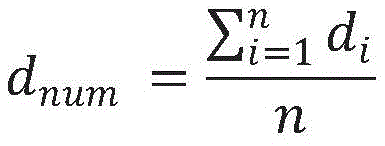
剪切粘度测试方法Shear Viscosity Test Method
本发明的长丝形成组合物的剪切粘度使用毛细管流变仪(Goettfert Rheograph6000,由Goettfert USA of Rock Hill S.C.,USA制造)测量。使用具有1.0mm的直径D和30mm的长度L(即L/30)的毛细管模来进行测量。将模头附接到保持在75℃的模头测试温度下的流变仪的20mm圆筒的下端。将已预热至模头测试温度的60g长丝形成组合物的样品加载到流变仪的圆筒部分中。去除具有任何夹带的空气的样品。以一组选定的速率1,000秒-1至10,000秒-1将样品从圆筒推过毛细管模。可用流变仪的软件由样品从圆筒到毛细管模时经历的压降和样品经过毛细管模的流速来计算表观剪切粘度。可用log(表观剪切粘度)对log(剪切速率)作图:The shear viscosity of the filament-forming composition of the present invention was measured using a capillary rheometer (Goettfert Rheograph 6000, manufactured by Goettfert USA of Rock Hill SC, USA). Measurements were performed using a capillary die having a diameter D of 1.0 mm and a length L of 30 mm (ie L/30). The die was attached to the lower end of the 20mm cylinder of the rheometer maintained at a die test temperature of 75°C. A 60 g sample of the filament-forming composition that had been preheated to the die test temperature was loaded into the barrel section of the rheometer. Remove the sample with any entrained air. The sample is pushed from the barrel through the capillary die at a set of selected rates of 1,000 sec -1 to 10,000 sec -1 . The apparent shear viscosity can be calculated using the software of the rheometer from the pressure drop experienced by the sample from the cylinder to the capillary die and the flow rate of the sample through the capillary die. The log (apparent shear viscosity) can be plotted against the log (shear rate):
η=Kγn-1 η=Kγ n-1
其中η是表观剪切黏度,K是材料的粘度常数,n是材料的稀化指数,而γ是剪切速率。本文的长丝形成组合物的记录的表观剪切粘度是使用幂律关系内推至3,000秒-1的剪切速率时计算所得的。where η is the apparent shear viscosity, K is the viscosity constant of the material, n is the thinning index of the material, and γ is the shear rate. The reported apparent shear viscosities of the filament-forming compositions herein were calculated using a power-law relationship to interpolate to a shear rate of 3,000 sec -1 .
基重测试方法Basis Weight Test Method
纤维结构的基重使用分辩率为+-0.001g的顶部加载分析天平对十二个可用单元的叠堆进行测量。使用气流罩使天平免受气流干扰和其他干扰。使用量度为8.890cm+-0.0089cm乘8.890cm+-0.0089cm的精密切割模头来制备所有样本。使用精密切割冲模,将样本切割成正方形。将切割的正方形组合以形成十二个样品厚度的叠堆。测量样本叠堆的质量并记录结果,精确到0.001g。The basis weight of the fiber structure was measured on a stack of twelve usable units using a top-loading analytical balance with a resolution of +-0.001 g. Use an airflow hood to protect the balance from airflow and other disturbances. All samples were prepared using a precision cut die measuring 8.890cm+-0.0089cm by 8.890cm+-0.0089cm. Using a precision cutting die, cut the sample into squares. The cut squares were combined to form stacks of twelve sample thicknesses. Measure the mass of the sample stack and record the results to the nearest 0.001 g.
基重以g/m2为单位计算如下:Basis weight in g/m2 is calculated as follows:
基重=(叠堆的质量)/[(叠堆中1个正方形的面积)*(叠堆中正方形的数目)]Basis weight = (mass of stack)/[(area of 1 square in stack)*(number of squares in stack)]
例如,E.g,
基重(g/m2)=叠堆的质量(g)/[79.032(cm2)/10,000(cm2/m2)*12]Basis weight (g/m 2 )=mass of stack (g)/[79.032(cm 2 )/10,000(cm 2 /m 2 )*12]
报告结果,精确至0.1g/m2。可使用如上所述的类似精密切割器来改变或变更样本尺寸,以便堆叠中存在至少645.16cm2的样本面积,并且相应地调整基重计算。Report results to the nearest 0.1 g/m 2 . Similar precision cutters as described above can be used to alter or alter the sample size so that there is at least 645.16 cm2 of sample area in the stack, and the basis weight calculations are adjusted accordingly.
厚度测试方法Thickness test method
纤维结构的厚度通过从纤维结构样本中切出5个样本,使得每个切出样本的尺寸大于购自Thwing-Albert Instrument Company,Philadelphia,Pa的型号II的VIR电子测厚仪的加载底脚装载面来测量。通常,加载底脚装载表面具有约20.258cm2的圆形表面积。将样本限定在一个水平平面和加载底脚装载表面之间。加载底脚装载表面对样本施加的围压为15.5g/cm2。每个样本的厚度是扁平平面和加载底脚装载面之间所得的间隙。所述厚度计算为五个样本的平均厚度。结果报告为毫米(mm)。The thickness of the fiber structure was loaded by cutting 5 samples from the fiber structure sample such that each cut sample was larger in size than the loading foot of a VIR Electronic Thickness Gauge Model II available from Thwing-Albert Instrument Company, Philadelphia, Pa. face to measure. Typically, the loading foot loading surface has a circular surface area of about 20.258 cm2 . Confine the sample between a horizontal plane and the loading surface of the loading foot. The confining pressure exerted on the sample by the loading surface of the loading foot was 15.5 g/cm 2 . The thickness of each sample is the resulting gap between the flat surface and the loading surface of the loading foot. The thickness is calculated as the average thickness of five samples. Results are reported in millimeters (mm).
实施例和组合Embodiments and Combinations
实施例如下:Examples are as follows:
A.一种用于制造水溶性产品(5)的方法,所述方法包括以下步骤:A. a method for the manufacture of a water-soluble product (5), the method comprising the steps of:
提供第一水溶性纤维层片(10);providing a first water-soluble fiber ply (10);
提供第二水溶性纤维层片(15),其形成在除所述第一层片之外的表面(52)上,其中所述第二层片与所述第一层片分离;providing a second ply (15) of water-soluble fibers formed on a surface (52) other than the first ply, wherein the second ply is separated from the first ply;
将所述第一层片和所述第二层片叠置;以及stacking the first ply and the second ply; and
将所述第一层片的第一部分(11)接合到所述第二层片的第二部分(16)以形成所述水溶性产品。The first part (11) of the first ply is joined to the second part (16) of the second ply to form the water soluble product.
B.根据段落A所述的方法,还包括以下步骤:B. The method according to paragraph A, further comprising the steps of:
提供所述第一层片作为第一连续层片幅材(60)的一部分;providing the first ply as part of a first continuous ply web (60);
提供所述第二层片作为第二连续层片幅材(65)的一部分;以及providing the second ply as part of a second continuous ply web (65); and
在将所述第一层片和所述第二层片叠置的步骤之后,切割所述第一连续层片幅材和第二连续层片幅材以形成所述水溶性制品。After the step of stacking the first ply and the second ply, the first and second continuous ply webs are cut to form the water soluble article.
C.根据段落B所述的方法,还包括沿机器方向(MD)从所述第一连续层片幅材切割所述第二连续层片幅材的步骤。C. The method of paragraph B, further comprising the step of cutting the second continuous ply web from the first continuous ply web in the machine direction (MD).
D.根据段落A至C中任一段落所述的方法,其中所述第一层片具有第一层片带侧(75)和与所述第一层片带侧相对的第一层片空气侧(90);D. The method of any of paragraphs A to C, wherein the first ply has a first ply tape side (75) and a first ply air side opposite the first ply tape side (90);
其中所述第二层片具有第二层片带侧(80)和与所述第二层片带侧相对的第二层片空气侧(85);和wherein the second ply has a second ply tape side (80) and a second ply air side (85) opposite the second ply tape side; and
其中所述方法还包括在将所述第一层片与所述第二层片接合之前将所述第一层片带侧与所述第二层片带侧定位成彼此背对的步骤。Wherein the method further includes the step of positioning the tape side of the first ply and the tape side of the second ply away from each other prior to joining the first ply and the second ply.
E.根据段落A至D中任一段落所述的方法,还包括以下步骤:E. The method of any of paragraphs A to D, further comprising the steps of:
为所述第一层片提供第一组多个水溶性第一颗粒(95);以及providing the first ply with a first plurality of water-soluble first particles (95); and
为所述第二层片提供第二组多个水溶性第二颗粒(105)。The second ply is provided with a second plurality of water-soluble second particles (105).
F.根据段落A至E中任一段落所述的方法,还包括以下步骤:F. The method of any of paragraphs A to E, further comprising the steps of:
提供第一纤维层(20);providing a first fiber layer (20);
提供面向所述第一纤维层的第二纤维层(25),所述第二层包含分布在所述第二层内的第一组多个水溶性第一颗粒(95),所述第一层和所述第二层一起形成所述第一层片;A second fibrous layer (25) is provided facing the first fibrous layer, the second layer comprising a first plurality of water-soluble first particles (95) distributed within the second layer, the first layer and said second layer together form said first ply;
提供第三纤维层(110);providing a third fiber layer (110);
提供面向所述第三纤维层的第四纤维层(115),所述第四层包含分布在所述第四层内的第二组多个水溶性第二颗粒(105),所述第三层和所述第四层一起形成所述第二层片。A fourth fibrous layer (115) is provided facing the third fibrous layer, the fourth layer comprising a second plurality of water-soluble second particles (105) distributed within the fourth layer, the third The layer and the fourth layer together form the second ply.
G.根据段落F所述的方法,其中所述第一层取向为朝向第一层片带侧(75)并且所述第二层取向为朝向第一层片空气侧(90),其中所述第一层片空气侧与所述第一层片带侧相对,其中所述第三层取向为朝向第二层片带侧(80)并且所述第四层取向为朝向第二层片空气侧(85),其中所述第二层片空气侧与所述第二层片带侧相对,其中所述方法还包括在将所述第一层片与所述第二层片接合之前将所述第一层片带侧和所述第二层片带侧定位成彼此背对的步骤。G. The method of paragraph F, wherein the first layer is oriented toward the first ply tape side (75) and the second layer is oriented toward the first ply air side (90), wherein the The first ply air side is opposite the first ply tape side, wherein the third ply is oriented toward the second ply tape side (80) and the fourth ply is oriented toward the second ply air side (85) wherein the air side of the second ply is opposite the tape side of the second ply, wherein the method further comprises bonding the first ply to the second ply prior to joining the second ply The step of positioning the tape side of the first ply and the tape side of the second ply away from each other.
H.根据段落F或G所述的方法,其中所述第一层含有比所述第二层更少的第一颗粒,并且所述第三层含有比所述第四层更少的第二颗粒。H. The method of paragraphs F or G, wherein the first layer contains fewer first particles than the second layer, and the third layer contains fewer second particles than the fourth layer particles.
I.根据段落F至H中任一段落所述的方法,其中所述方法包括将活性剂放置在所述第二层和所述第四层中一者或两者之上或之中,所述活性剂选自未包封香料、包封的香料、香料预混物、表面活性剂、酶、漂白剂、漂白活化剂、螯合剂、结构剂、助洗剂、有机聚合物化合物、增白剂、调色剂、抑泡剂、调理剂、湿润剂、碱度体系、pH控制体系、缓冲剂链烷醇胺、驱昆虫剂、毛发护理剂、毛发调理剂、皮肤护理剂、防晒剂、皮肤调理剂、织物软化剂、抗皱剂、抗静电剂、织物护理去污剂、去垢剂、分散剂、消泡剂、促泡剂、防沫剂、织物清新剂、盘碟洗涤剂、硬质表面护理剂、抗微生物剂、抗细菌剂、抗真菌剂、漂白激活剂、螯合试剂、助洗剂、洗液、空气护理剂、地毯护理剂、染料转移抑制剂、粘土污垢去除剂、抗再沉积剂、聚合物去垢剂、聚合物分散剂、烷氧基化的多胺聚合物、烷氧基化的聚羧酸酯聚合物、两亲性接枝共聚物、溶解助剂、缓冲体系、水软化剂、水硬化剂、pH调节剂、絮凝剂、泡腾剂、防腐剂、美容剂、卸妆剂、起泡沫剂、沉积助剂、团聚体形成剂、粘土、增稠剂、胶乳、二氧化硅、干燥剂、气味控制剂、止汗剂、凉爽剂、加温剂、吸收凝胶剂、抗炎剂、染料、调色剂、颜料、酸、碱、液体处理活性剂、农业活性剂、工业活性剂、可摄取活性剂、药剂、助眠剂、牙齿美白剂、牙齿护理剂、漱口剂、牙周牙龈护理剂、膳食剂、维生素、矿物质、水处理剂、水澄清剂、水消毒剂、以及它们的混合物。I. The method of any of paragraphs F to H, wherein the method comprises placing an active agent on or in one or both of the second layer and the fourth layer, the Active agents selected from the group consisting of unencapsulated fragrances, encapsulated fragrances, fragrance premixes, surfactants, enzymes, bleaches, bleach activators, chelating agents, structurants, builders, organic polymer compounds, brighteners , toner, suds suppressor, conditioner, humectant, alkalinity system, pH control system, buffer alkanolamine, insect repellent, hair conditioner, hair conditioner, skin conditioner, sunscreen, skin Conditioners, Fabric Softeners, Anti-Wrinkle Agents, Anti-Static Agents, Fabric Care Stain Removers, Detergents, Dispersants, Antifoams, Foam Enhancers, Antifoams, Fabric Fresheners, Dishwashing Detergents, Hard Surface conditioners, antimicrobials, antibacterials, antifungals, bleach activators, chelating agents, builders, lotions, air conditioners, carpet conditioners, dye transfer inhibitors, clay soil removers, anti- Redeposition agents, polymeric detergents, polymeric dispersants, alkoxylated polyamine polymers, alkoxylated polycarboxylate polymers, amphiphilic graft copolymers, dissolution aids, buffers Systems, water softeners, water hardeners, pH adjusters, flocculants, effervescent agents, preservatives, cosmetic agents, makeup removers, foaming agents, deposition aids, agglomerate formers, clays, thickeners, latexes , silica, desiccants, odor control agents, antiperspirants, cooling agents, warming agents, absorbent gelling agents, anti-inflammatory agents, dyes, toners, pigments, acids, bases, liquid treatment actives, agriculture Active agents, industrial active agents, ingestible active agents, pharmaceuticals, sleep aids, teeth whitening agents, dental care agents, mouthwashes, periodontal gum care agents, dietary agents, vitamins, minerals, water treatment agents, water clarification detergents, water disinfectants, and mixtures thereof.
J.根据段落A至I中任一段落所述的方法,还包括以下步骤:J. The method of any of paragraphs A to I, further comprising the steps of:
提供第三水溶性纤维层片(120),其与所述第一层片和所述第二层片分离,其中所述第三层片形成下除所述第一层片或所述第二层片之外的表面上;A third ply of water-soluble fibers (120) is provided, separate from the first ply and the second ply, wherein the third ply is formed in addition to the first ply or the second ply on surfaces other than plies;
将所述第一层片、所述第二层片和所述第三层片彼此叠置,使得所述第三层片位于所述第一层片和所述第二层片之间;stacking the first ply, the second ply and the third ply on each other such that the third ply is located between the first ply and the second ply;
将所述第一层片的部分与所述第二层片的部分接合以形成所述水溶性产品。Portions of the first ply and portions of the second ply are joined to form the water-soluble product.
K.根据权利要求J所述的方法,其中所述第一层片被提供为第一连续层片幅材的一部分,并且所述第二层片被提供为第二连续层片幅材的一部分,其中所述第三层片被提供为第三连续层片幅材的一部分,其中在将所述第一层片、所述第二层片和所述第三层片彼此叠置的步骤之后,切割所述第一连续层片幅材、所述第二连续层片幅材和所述第三连续层片幅材以形成所述水溶性产品。K. The method of claim J, wherein the first ply is provided as part of a first continuous ply web and the second ply is provided as part of a second continuous ply web , wherein the third ply is provided as part of a third continuous ply web, wherein after the step of laying the first ply, the second ply and the third ply on each other , cutting the first continuous ply web, the second continuous ply web and the third continuous ply web to form the water soluble product.
L.根据段落J或K所述的方法,其中所述方法包括将活性剂放置在所述第三层片或所述第二层或所述第四层之上或之中,所述活性剂选自未包封香料、香料预混物、包封的香料、表面活性剂、酶、漂白剂、漂白活化剂、螯合剂、结构剂、助洗剂、有机聚合物化合物、增白剂、调色剂、抑泡剂、调理剂、湿润剂、碱度体系、pH控制体系、缓冲剂链烷醇胺、驱昆虫剂、毛发护理剂、毛发调理剂、皮肤护理剂、防晒剂、皮肤调理剂、织物软化剂、抗皱剂、抗静电剂、织物护理去污剂、去垢剂、分散剂、消泡剂、促泡剂、防沫剂、织物清新剂、盘碟洗涤剂、硬质表面护理剂、抗微生物剂、抗细菌剂、抗真菌剂、漂白激活剂、螯合试剂、助洗剂、洗液、空气护理剂、地毯护理剂、染料转移抑制剂、粘土污垢去除剂、抗再沉积剂、聚合物去垢剂、聚合物分散剂、烷氧基化的多胺聚合物、烷氧基化的聚羧酸酯聚合物、两亲性接枝共聚物、溶解助剂、缓冲体系、水软化剂、水硬化剂、pH调节剂、絮凝剂、泡腾剂、防腐剂、美容剂、卸妆剂、起泡沫剂、沉积助剂、团聚体形成剂、粘土、增稠剂、胶乳、二氧化硅、干燥剂、气味控制剂、止汗剂、凉爽剂、加温剂、吸收凝胶剂、抗炎剂、染料、调色剂、颜料、酸、碱、液体处理活性剂、农业活性剂、工业活性剂、可摄取活性剂、药剂、助眠剂、牙齿美白剂、牙齿护理剂、漱口剂、牙周牙龈护理剂、膳食剂、维生素、矿物质、水处理剂、水澄清剂、水消毒剂、以及它们的混合物。L. The method of paragraphs J or K, wherein the method comprises placing an active agent on or in the third layer sheet or the second layer or the fourth layer, the active agent Selected from unencapsulated perfumes, perfume premixes, encapsulated perfumes, surfactants, enzymes, bleaches, bleach activators, chelating agents, structurants, builders, organic polymer compounds, brighteners, conditioners Colorants, suds suppressors, conditioners, humectants, alkalinity systems, pH control systems, buffers alkanolamines, insect repellants, hair conditioners, hair conditioners, skin conditioners, sunscreens, skin conditioners , fabric softener, anti-wrinkle, antistatic, fabric care stain remover, detergent, dispersant, defoamer, foam booster, antifoam, fabric freshener, dishwashing detergent, hard surface care Agents, Antimicrobials, Antibacterials, Antifungals, Bleach Activators, Chelating Agents, Builders, Lotions, Air Conditioners, Carpet Conditioners, Dye Transfer Inhibitors, Clay Soil Removers, Anti-Redeposition agents, polymeric detergents, polymeric dispersants, alkoxylated polyamine polymers, alkoxylated polycarboxylate polymers, amphiphilic graft copolymers, dissolution aids, buffer systems, Water softeners, water hardeners, pH adjusters, flocculants, effervescent agents, preservatives, cosmetic agents, makeup removers, foaming agents, deposition aids, agglomerate formers, clays, thickeners, latex, dihydrate Silica, desiccants, odor control agents, antiperspirants, cooling agents, warming agents, absorbent gelling agents, anti-inflammatory agents, dyes, toners, pigments, acids, bases, liquid treatment actives, agricultural actives , industrial active agents, ingestible active agents, pharmaceuticals, sleep aids, tooth whitening agents, dental care agents, mouthwashes, periodontal gum care agents, dietary agents, vitamins, minerals, water treatment agents, water clarifiers, Water sanitizers, and mixtures thereof.
M.根据段落J至L中任一段落所述的方法,其中沿机器方向从所述第一层片切割所述第二层片和所述第三层片。M. The method of any of paragraphs J-L, wherein the second ply and the third ply are cut in the machine direction from the first ply.
N.根据段落A至M中任一段落所述的方法,还包括以下步骤:N. The method of any of paragraphs A to M, further comprising the steps of:
提供长丝形成组合物(35)的溶液;providing a solution of a filament-forming composition (35);
使所述长丝形成组合物穿过一个或多个包含多个喷丝头(45)的模块组件(40)以形成多个纤维元件(30);passing the filament-forming composition through one or more modular assemblies (40) comprising a plurality of spinnerets (45) to form a plurality of fiber elements (30);
将所述多个纤维元件沉积到沿机器方向(MD)移动的带(50)上以形成所述第一层片;depositing the plurality of fibrous elements onto a belt (50) moving in the machine direction (MD) to form the first ply;
沿所述机器方向切割所述第一层片以形成所述第二层片;以及cutting the first ply in the machine direction to form the second ply; and
在将所述第一层片和所述第二层片叠置的步骤之后,切割所述第一层片和所述第二层片以形成所述水溶性产品;after the step of stacking the first ply and the second ply, cutting the first ply and the second ply to form the water soluble product;
其中所述方法是连续方法。wherein the process is a continuous process.
O.根据段落N所述的方法,还包括在将所述多个纤维元件沉积到所述带上的步骤之前,将所述多个第一颗粒和所述多个第二颗粒引入所述多个纤维元件的料流中的步骤。O. The method of paragraph N, further comprising introducing the plurality of first particles and the plurality of second particles into the plurality of fibrous elements prior to the step of depositing the plurality of fibrous elements on the tape steps in a stream of fiber elements.
P.根据段落A至O中任一段落所述的方法,还包括在所述第一层片和所述第二层片中的一者或多者上印刷的步骤。P. The method of any of paragraphs A to O, further comprising the step of printing on one or more of the first ply and the second ply.
本文所公开的量纲和值不应理解为严格限于所引用的精确数值。相反,除非另外指明,否则每个此类量纲旨在表示所述值以及围绕该值功能上等同的范围。例如,公开为“40mm”的量纲旨在表示“约40mm”。Dimensions and values disclosed herein should not be construed as strictly limited to the precise numerical values recited. Instead, unless otherwise specified, each such dimension is intended to mean both the recited value and a functionally equivalent range surrounding that value. For example, a dimension disclosed as "40mm" is intended to mean "about 40mm".
除非明确排除或以其它方式限制,本文中引用的每一篇文献,包括任何交叉引用或相关专利或专利申请以及本申请对其要求优先权或其有益效果的任何专利申请或专利,均据此全文以引用方式并入本文。对任何文献的引用不是对其作为与本发明的任何所公开或本文受权利要求书保护的现有技术的认可,或不是对其自身或与任何一个或多个参考文献的组合提出、建议或公开任何此类发明的认可。此外,当本发明中术语的任何含义或定义与以引用方式并入的文献中相同术语的任何含义或定义矛盾时,应当服从在本发明中赋予该术语的含义或定义。Unless expressly excluded or otherwise limited, each document cited herein, including any cross-referenced or related patent or patent application and any patent application or patent to which this application claims priority or its benefit, is hereby incorporated by reference The entire contents are incorporated herein by reference. Citation of any document is not an admission that it is prior art to any disclosed or claimed herein to the present invention, nor does it suggest, suggest or suggest itself or in combination with any one or more references. Disclosure of recognition of any such invention. Furthermore, to the extent that any meaning or definition of a term in this application conflicts with any meaning or definition of the same term in a document incorporated by reference, the meaning or definition assigned to that term in this application shall govern.
虽然已举例说明和描述了本发明的具体实施方案,但是对于本领域技术人员来说显而易见的是,在不脱离本发明的实质和范围的情况下可作出多个其它变化和修改。因此,本文旨在于所附权利要求中涵盖属于本发明范围内的所有此类变化和修改。While particular embodiments of the present invention have been illustrated and described, it would be obvious to those skilled in the art that various other changes and modifications can be made without departing from the spirit and scope of the invention. Accordingly, it is intended to cover in the appended claims all such changes and modifications as fall within the scope of this invention.
Claims (15)
Applications Claiming Priority (3)
| Application Number | Priority Date | Filing Date | Title |
|---|---|---|---|
| US15/881,124 US10857756B2 (en) | 2018-01-26 | 2018-01-26 | Process of making a multi-ply fibrous water soluble product |
| US15/881,124 | 2018-01-26 | ||
| PCT/US2019/014449 WO2019147529A1 (en) | 2018-01-26 | 2019-01-22 | Process of making a multi-ply fibrous water soluble product |
Publications (2)
| Publication Number | Publication Date |
|---|---|
| CN111527252A true CN111527252A (en) | 2020-08-11 |
| CN111527252B CN111527252B (en) | 2022-11-22 |
Family
ID=65516741
Family Applications (1)
| Application Number | Title | Priority Date | Filing Date |
|---|---|---|---|
| CN201980006804.3A Active CN111527252B (en) | 2018-01-26 | 2019-01-22 | Method for preparing multi-layer sheet fiber water-soluble product |
Country Status (8)
| Country | Link |
|---|---|
| US (2) | US10857756B2 (en) |
| EP (1) | EP3743551B1 (en) |
| JP (1) | JP7167181B2 (en) |
| KR (1) | KR20200088887A (en) |
| CN (1) | CN111527252B (en) |
| CA (1) | CA3087581C (en) |
| ES (1) | ES2980613T3 (en) |
| WO (1) | WO2019147529A1 (en) |
Cited By (1)
| Publication number | Priority date | Publication date | Assignee | Title |
|---|---|---|---|---|
| CN114622343A (en) * | 2020-10-30 | 2022-06-14 | 耐克创新有限合伙公司 | Recyclable asymmetric-faced composite nonwoven fabric with silicone-coated fibers |
Families Citing this family (12)
| Publication number | Priority date | Publication date | Assignee | Title |
|---|---|---|---|---|
| RU2705616C1 (en) * | 2016-09-01 | 2019-11-11 | Эссити Хайджин Энд Хелт Актиеболаг | Method of producing nonwoven material |
| US11149383B2 (en) | 2017-01-20 | 2021-10-19 | The Procter & Gamble Company | Layered fibrous structures |
| US11220790B2 (en) * | 2017-01-20 | 2022-01-11 | The Procter & Gamble Company | Multi-ply fibrous structures |
| US10857756B2 (en) | 2018-01-26 | 2020-12-08 | The Procter & Gamble Company | Process of making a multi-ply fibrous water soluble product |
| CN111542590A (en) * | 2018-01-26 | 2020-08-14 | 宝洁公司 | Water-soluble unit-dose preparation containing fragrance |
| US10683618B2 (en) | 2018-01-26 | 2020-06-16 | The Procter & Gamble Company | Process of making a multi-ply fibrous water soluble product |
| JP2023531767A (en) * | 2020-06-27 | 2023-07-25 | モノソル リミテッド ライアビリティ カンパニー | Bathing experience molded product enclosed in film and manufacturing method |
| CN114867834A (en) | 2020-08-19 | 2022-08-05 | 宝洁公司 | Flexible porous dissolvable solid sheet article with directly added microcapsules and method of making same |
| US12503673B2 (en) | 2021-12-29 | 2025-12-23 | Henkel Ag & Co. Kgaa | Multi-layer laundry sheet |
| US11464384B1 (en) | 2022-03-31 | 2022-10-11 | Techtronic Cordless Gp | Water soluable package for a floor cleaner |
| WO2025251257A1 (en) | 2024-06-06 | 2025-12-11 | The Procter & Gamble Company | Multilayer, flexible, porous, dissolvable solid sheet article |
| WO2025251259A1 (en) | 2024-06-06 | 2025-12-11 | The Procter & Gamble Company | Dissolvable unit dose article containing high active paste |
Citations (16)
| Publication number | Priority date | Publication date | Assignee | Title |
|---|---|---|---|---|
| US5458590A (en) * | 1993-12-20 | 1995-10-17 | Kimberly-Clark Corporation | Ink-printed, low basis weight nonwoven fibrous webs and method |
| US5786056A (en) * | 1997-04-04 | 1998-07-28 | Komine; Keiji | Liquid absorbent material used in a pouch for a stoma |
| US20030042195A1 (en) * | 2001-09-04 | 2003-03-06 | Lois Jean Forde-Kohler | Multi-ply filter |
| US20030084994A1 (en) * | 2001-11-08 | 2003-05-08 | L'oreal | Process for making cosmetic articles |
| JP2003146839A (en) * | 2001-11-08 | 2003-05-21 | L'oreal Sa | Cosmetic article containing encapsulated liquid and method for producing the cosmetic article |
| US20030119397A1 (en) * | 2001-11-20 | 2003-06-26 | Peter Von Paleske | Multy-ply planar product including adhesively bonded fibrous plies |
| US20050266760A1 (en) * | 2003-06-30 | 2005-12-01 | The Procter & Gamble Company | Particulates in nanofiber webs |
| CN101668887A (en) * | 2007-04-30 | 2010-03-10 | 金伯利-克拉克环球有限公司 | layered dispersible substrate |
| US20100084084A1 (en) * | 2008-10-02 | 2010-04-08 | Miller Ii Kenneth J | Method for Making a Multilayer Adhesive Laminate |
| CN102482818A (en) * | 2009-07-07 | 2012-05-30 | 可乐丽可乐富丽世股份有限公司 | Laminated sheet, and process for production thereof |
| US20130004552A1 (en) * | 2011-07-01 | 2013-01-03 | Suominen Corporation | Water dispersible nonwoven fabric material |
| CN103282015A (en) * | 2010-07-02 | 2013-09-04 | 宝洁公司 | Dissolvable fibrous web structure article comprising active agents |
| JP2015509147A (en) * | 2012-01-04 | 2015-03-26 | ザ プロクター アンド ギャンブルカンパニー | Fibrous structure containing particles and method for producing the same |
| US20160101026A1 (en) * | 2014-10-10 | 2016-04-14 | The Procter & Gamble Company | Apertured Fibrous Structures and Methods for Making Same |
| CN205934323U (en) * | 2016-08-18 | 2017-02-08 | 杭州湿法无纺布设备有限公司 | Compound material apparatus for producing of cleaning |
| CN106659287A (en) * | 2014-08-28 | 2017-05-10 | 阿莫生命科学有限公司 | Beauty sheet and method for manufacturing same |
Family Cites Families (23)
| Publication number | Priority date | Publication date | Assignee | Title |
|---|---|---|---|---|
| US3402227A (en) | 1965-01-25 | 1968-09-17 | Du Pont | Process for preparation of nonwoven webs |
| US3916447A (en) * | 1972-04-24 | 1975-11-04 | Kimberly Clark Co | Low cost, absorbent, clinging, aqueous liquid barrier protective covering |
| GB8512206D0 (en) * | 1985-05-14 | 1985-06-19 | Kimberly Clark Ltd | Non-woven material |
| US5053157A (en) | 1988-05-03 | 1991-10-01 | Kimberly-Clark Corporation | Meltblown laundry web comprising powdered detergency enhancing ingredients |
| JPH11140765A (en) | 1997-11-07 | 1999-05-25 | Nippon Synthetic Chem Ind Co Ltd:The | Water-soluble nonwoven laminate |
| JP3722665B2 (en) | 2000-03-31 | 2005-11-30 | ユニ・チャーム株式会社 | Multi-structured water-decomposable wiping sheet |
| EP1835944A1 (en) | 2005-01-12 | 2007-09-26 | Fintex and Partners Italia S.p.A. | Composite absorbent material with water-soluble bonding agents, products made of said material and method for its manufacture |
| US20090286437A1 (en) | 2008-05-14 | 2009-11-19 | Kimberly-Clark Worldwide, Inc. | Wipes with rupturable beads |
| DE102008063520A1 (en) | 2008-12-18 | 2010-07-01 | Huhtamaki Forchheim Zweigniederlassung Der Huhtamaki Deutschland Gmbh & Co. Kg | Rinsable multilayer film |
| MX345025B (en) | 2010-07-02 | 2017-01-12 | Procter & Gamble | Detergent product. |
| BR112014015579A8 (en) | 2011-12-29 | 2017-07-04 | Procter & Gamble | process for manufacturing absorbent articles |
| EP2800803A1 (en) | 2012-01-04 | 2014-11-12 | The Procter and Gamble Company | Active containing fibrous structures with multiple regions |
| CA2860647C (en) | 2012-01-04 | 2022-06-14 | The Procter & Gamble Company | Active containing fibrous structures with multiple regions having differing densities |
| WO2014022988A1 (en) | 2012-08-08 | 2014-02-13 | Daiwabo Holdings Co., Ltd. | Nonwoven, sheet for absorbent article from the same, and absorbent article using the same |
| EP3215096B1 (en) | 2014-11-06 | 2023-05-24 | The Procter & Gamble Company | Apertured webs and methods for making the same |
| JP6325492B2 (en) | 2015-07-27 | 2018-05-16 | 大王製紙株式会社 | Water disintegratable sheet |
| WO2017176707A1 (en) | 2016-04-04 | 2017-10-12 | The Procter & Gamble Company | Fibrous structures with improved tewl properties |
| WO2018140668A1 (en) | 2017-01-27 | 2018-08-02 | The Procter & Gamble Company | Water-soluble unit dose articles comprising water-soluble fibrous structures and particles |
| EP3574077A1 (en) | 2017-01-27 | 2019-12-04 | The Procter and Gamble Company | Water-soluble unit dose articles comprising water-soluble fibrous structures and particles |
| US10683618B2 (en) | 2018-01-26 | 2020-06-16 | The Procter & Gamble Company | Process of making a multi-ply fibrous water soluble product |
| US20190233970A1 (en) | 2018-01-26 | 2019-08-01 | The Procter & Gamble Company | Process for Making an Article of Manufacture |
| US20190233974A1 (en) | 2018-01-26 | 2019-08-01 | The Procter & Gamble Company | Process for Making an Article of Manufacture |
| US10857756B2 (en) | 2018-01-26 | 2020-12-08 | The Procter & Gamble Company | Process of making a multi-ply fibrous water soluble product |
-
2018
- 2018-01-26 US US15/881,124 patent/US10857756B2/en active Active
-
2019
- 2019-01-22 KR KR1020207018277A patent/KR20200088887A/en not_active Ceased
- 2019-01-22 JP JP2020555753A patent/JP7167181B2/en active Active
- 2019-01-22 CA CA3087581A patent/CA3087581C/en active Active
- 2019-01-22 EP EP19706803.4A patent/EP3743551B1/en active Active
- 2019-01-22 ES ES19706803T patent/ES2980613T3/en active Active
- 2019-01-22 WO PCT/US2019/014449 patent/WO2019147529A1/en not_active Ceased
- 2019-01-22 CN CN201980006804.3A patent/CN111527252B/en active Active
-
2020
- 2020-10-30 US US17/085,462 patent/US12208601B2/en active Active
Patent Citations (16)
| Publication number | Priority date | Publication date | Assignee | Title |
|---|---|---|---|---|
| US5458590A (en) * | 1993-12-20 | 1995-10-17 | Kimberly-Clark Corporation | Ink-printed, low basis weight nonwoven fibrous webs and method |
| US5786056A (en) * | 1997-04-04 | 1998-07-28 | Komine; Keiji | Liquid absorbent material used in a pouch for a stoma |
| US20030042195A1 (en) * | 2001-09-04 | 2003-03-06 | Lois Jean Forde-Kohler | Multi-ply filter |
| US20030084994A1 (en) * | 2001-11-08 | 2003-05-08 | L'oreal | Process for making cosmetic articles |
| JP2003146839A (en) * | 2001-11-08 | 2003-05-21 | L'oreal Sa | Cosmetic article containing encapsulated liquid and method for producing the cosmetic article |
| US20030119397A1 (en) * | 2001-11-20 | 2003-06-26 | Peter Von Paleske | Multy-ply planar product including adhesively bonded fibrous plies |
| US20050266760A1 (en) * | 2003-06-30 | 2005-12-01 | The Procter & Gamble Company | Particulates in nanofiber webs |
| CN101668887A (en) * | 2007-04-30 | 2010-03-10 | 金伯利-克拉克环球有限公司 | layered dispersible substrate |
| US20100084084A1 (en) * | 2008-10-02 | 2010-04-08 | Miller Ii Kenneth J | Method for Making a Multilayer Adhesive Laminate |
| CN102482818A (en) * | 2009-07-07 | 2012-05-30 | 可乐丽可乐富丽世股份有限公司 | Laminated sheet, and process for production thereof |
| CN103282015A (en) * | 2010-07-02 | 2013-09-04 | 宝洁公司 | Dissolvable fibrous web structure article comprising active agents |
| US20130004552A1 (en) * | 2011-07-01 | 2013-01-03 | Suominen Corporation | Water dispersible nonwoven fabric material |
| JP2015509147A (en) * | 2012-01-04 | 2015-03-26 | ザ プロクター アンド ギャンブルカンパニー | Fibrous structure containing particles and method for producing the same |
| CN106659287A (en) * | 2014-08-28 | 2017-05-10 | 阿莫生命科学有限公司 | Beauty sheet and method for manufacturing same |
| US20160101026A1 (en) * | 2014-10-10 | 2016-04-14 | The Procter & Gamble Company | Apertured Fibrous Structures and Methods for Making Same |
| CN205934323U (en) * | 2016-08-18 | 2017-02-08 | 杭州湿法无纺布设备有限公司 | Compound material apparatus for producing of cleaning |
Cited By (5)
| Publication number | Priority date | Publication date | Assignee | Title |
|---|---|---|---|---|
| CN114622343A (en) * | 2020-10-30 | 2022-06-14 | 耐克创新有限合伙公司 | Recyclable asymmetric-faced composite nonwoven fabric with silicone-coated fibers |
| CN114622343B (en) * | 2020-10-30 | 2023-11-07 | 耐克创新有限合伙公司 | Composite nonwoven fabric with recyclable asymmetric facing of silicone coated fibers |
| US12005691B2 (en) | 2020-10-30 | 2024-06-11 | Nike, Inc. | Recyclable, asymmetrical-faced composite nonwoven textile having varied denier |
| US12434453B2 (en) | 2020-10-30 | 2025-10-07 | Nike, Inc. | Recyclable, asymmetrical-faced composite nonwoven textile |
| US12502867B2 (en) | 2020-10-30 | 2025-12-23 | Nike, Inc. | Recyclable, asymmetrical-faced composite nonwoven textile having silicone-coated fibers |
Also Published As
| Publication number | Publication date |
|---|---|
| WO2019147529A1 (en) | 2019-08-01 |
| CA3087581C (en) | 2023-09-05 |
| KR20200088887A (en) | 2020-07-23 |
| CN111527252B (en) | 2022-11-22 |
| US20210046726A1 (en) | 2021-02-18 |
| CA3087581A1 (en) | 2019-08-01 |
| US12208601B2 (en) | 2025-01-28 |
| US20190232604A1 (en) | 2019-08-01 |
| JP2021508628A (en) | 2021-03-11 |
| EP3743551A1 (en) | 2020-12-02 |
| JP7167181B2 (en) | 2022-11-08 |
| ES2980613T3 (en) | 2024-10-02 |
| EP3743551B1 (en) | 2024-04-17 |
| US10857756B2 (en) | 2020-12-08 |
Similar Documents
| Publication | Publication Date | Title |
|---|---|---|
| CN111527252B (en) | Method for preparing multi-layer sheet fiber water-soluble product | |
| CN111566276B (en) | Method for producing a multi-layer sheet fibrous water-soluble product | |
| US12035861B2 (en) | Fibrous structures comprising particles and methods for making same | |
| CN105980618B (en) | A fibrous structure containing an active agent and having graphics printed thereon | |
| CN106968050B (en) | Fibre structure containing active material with multiple regions | |
| EP3719192A1 (en) | Fibrous structures comprising particles and methods for making same | |
| CN111492047A (en) | Water-soluble articles and related methods | |
| US20240285147A1 (en) | Fibrous Structures Comprising Particles and Methods for Making Same | |
| HK1224710B (en) | Fibrous structures including an active agent and having a graphic printed thereon | |
| HK1224710A1 (en) | Fibrous structures including an active agent and having a graphic printed thereon |
Legal Events
| Date | Code | Title | Description |
|---|---|---|---|
| PB01 | Publication | ||
| PB01 | Publication | ||
| SE01 | Entry into force of request for substantive examination | ||
| SE01 | Entry into force of request for substantive examination | ||
| GR01 | Patent grant | ||
| GR01 | Patent grant |