CN111433181A - Synthesis of bicyclo [2.2.2] octane derivatives - Google Patents
Synthesis of bicyclo [2.2.2] octane derivatives Download PDFInfo
- Publication number
- CN111433181A CN111433181A CN201880080011.1A CN201880080011A CN111433181A CN 111433181 A CN111433181 A CN 111433181A CN 201880080011 A CN201880080011 A CN 201880080011A CN 111433181 A CN111433181 A CN 111433181A
- Authority
- CN
- China
- Prior art keywords
- formula
- compound
- catalyst
- hydrogen
- bicyclo
- Prior art date
- Legal status (The legal status is an assumption and is not a legal conclusion. Google has not performed a legal analysis and makes no representation as to the accuracy of the status listed.)
- Granted
Links
Classifications
-
- C—CHEMISTRY; METALLURGY
- C07—ORGANIC CHEMISTRY
- C07C—ACYCLIC OR CARBOCYCLIC COMPOUNDS
- C07C29/00—Preparation of compounds having hydroxy or O-metal groups bound to a carbon atom not belonging to a six-membered aromatic ring
- C07C29/60—Preparation of compounds having hydroxy or O-metal groups bound to a carbon atom not belonging to a six-membered aromatic ring by elimination of -OH groups, e.g. by dehydration
-
- C—CHEMISTRY; METALLURGY
- C07—ORGANIC CHEMISTRY
- C07C—ACYCLIC OR CARBOCYCLIC COMPOUNDS
- C07C67/00—Preparation of carboxylic acid esters
- C07C67/04—Preparation of carboxylic acid esters by reacting carboxylic acids or symmetrical anhydrides onto unsaturated carbon-to-carbon bonds
- C07C67/05—Preparation of carboxylic acid esters by reacting carboxylic acids or symmetrical anhydrides onto unsaturated carbon-to-carbon bonds with oxidation
- C07C67/055—Preparation of carboxylic acid esters by reacting carboxylic acids or symmetrical anhydrides onto unsaturated carbon-to-carbon bonds with oxidation in the presence of platinum group metals or their compounds
-
- C—CHEMISTRY; METALLURGY
- C07—ORGANIC CHEMISTRY
- C07C—ACYCLIC OR CARBOCYCLIC COMPOUNDS
- C07C209/00—Preparation of compounds containing amino groups bound to a carbon skeleton
- C07C209/04—Preparation of compounds containing amino groups bound to a carbon skeleton by substitution of functional groups by amino groups
- C07C209/14—Preparation of compounds containing amino groups bound to a carbon skeleton by substitution of functional groups by amino groups by substitution of hydroxy groups or of etherified or esterified hydroxy groups
- C07C209/16—Preparation of compounds containing amino groups bound to a carbon skeleton by substitution of functional groups by amino groups by substitution of hydroxy groups or of etherified or esterified hydroxy groups with formation of amino groups bound to acyclic carbon atoms or to carbon atoms of rings other than six-membered aromatic rings
-
- C—CHEMISTRY; METALLURGY
- C07—ORGANIC CHEMISTRY
- C07C—ACYCLIC OR CARBOCYCLIC COMPOUNDS
- C07C211/00—Compounds containing amino groups bound to a carbon skeleton
- C07C211/01—Compounds containing amino groups bound to a carbon skeleton having amino groups bound to acyclic carbon atoms
- C07C211/16—Compounds containing amino groups bound to a carbon skeleton having amino groups bound to acyclic carbon atoms of a saturated carbon skeleton containing rings other than six-membered aromatic rings
- C07C211/19—Compounds containing amino groups bound to a carbon skeleton having amino groups bound to acyclic carbon atoms of a saturated carbon skeleton containing rings other than six-membered aromatic rings containing condensed ring systems
-
- C—CHEMISTRY; METALLURGY
- C07—ORGANIC CHEMISTRY
- C07C—ACYCLIC OR CARBOCYCLIC COMPOUNDS
- C07C213/00—Preparation of compounds containing amino and hydroxy, amino and etherified hydroxy or amino and esterified hydroxy groups bound to the same carbon skeleton
- C07C213/02—Preparation of compounds containing amino and hydroxy, amino and etherified hydroxy or amino and esterified hydroxy groups bound to the same carbon skeleton by reactions involving the formation of amino groups from compounds containing hydroxy groups or etherified or esterified hydroxy groups
-
- C—CHEMISTRY; METALLURGY
- C07—ORGANIC CHEMISTRY
- C07C—ACYCLIC OR CARBOCYCLIC COMPOUNDS
- C07C215/00—Compounds containing amino and hydroxy groups bound to the same carbon skeleton
- C07C215/02—Compounds containing amino and hydroxy groups bound to the same carbon skeleton having hydroxy groups and amino groups bound to acyclic carbon atoms of the same carbon skeleton
- C07C215/04—Compounds containing amino and hydroxy groups bound to the same carbon skeleton having hydroxy groups and amino groups bound to acyclic carbon atoms of the same carbon skeleton the carbon skeleton being saturated
- C07C215/20—Compounds containing amino and hydroxy groups bound to the same carbon skeleton having hydroxy groups and amino groups bound to acyclic carbon atoms of the same carbon skeleton the carbon skeleton being saturated the carbon skeleton being saturated and containing rings
-
- C—CHEMISTRY; METALLURGY
- C07—ORGANIC CHEMISTRY
- C07C—ACYCLIC OR CARBOCYCLIC COMPOUNDS
- C07C231/00—Preparation of carboxylic acid amides
- C07C231/02—Preparation of carboxylic acid amides from carboxylic acids or from esters, anhydrides, or halides thereof by reaction with ammonia or amines
-
- C—CHEMISTRY; METALLURGY
- C07—ORGANIC CHEMISTRY
- C07C—ACYCLIC OR CARBOCYCLIC COMPOUNDS
- C07C263/00—Preparation of derivatives of isocyanic acid
- C07C263/10—Preparation of derivatives of isocyanic acid by reaction of amines with carbonyl halides, e.g. with phosgene
-
- C—CHEMISTRY; METALLURGY
- C07—ORGANIC CHEMISTRY
- C07C—ACYCLIC OR CARBOCYCLIC COMPOUNDS
- C07C29/00—Preparation of compounds having hydroxy or O-metal groups bound to a carbon atom not belonging to a six-membered aromatic ring
- C07C29/132—Preparation of compounds having hydroxy or O-metal groups bound to a carbon atom not belonging to a six-membered aromatic ring by reduction of an oxygen containing functional group
- C07C29/136—Preparation of compounds having hydroxy or O-metal groups bound to a carbon atom not belonging to a six-membered aromatic ring by reduction of an oxygen containing functional group of >C=O containing groups, e.g. —COOH
- C07C29/147—Preparation of compounds having hydroxy or O-metal groups bound to a carbon atom not belonging to a six-membered aromatic ring by reduction of an oxygen containing functional group of >C=O containing groups, e.g. —COOH of carboxylic acids or derivatives thereof
- C07C29/149—Preparation of compounds having hydroxy or O-metal groups bound to a carbon atom not belonging to a six-membered aromatic ring by reduction of an oxygen containing functional group of >C=O containing groups, e.g. —COOH of carboxylic acids or derivatives thereof with hydrogen or hydrogen-containing gases
-
- C—CHEMISTRY; METALLURGY
- C07—ORGANIC CHEMISTRY
- C07C—ACYCLIC OR CARBOCYCLIC COMPOUNDS
- C07C29/00—Preparation of compounds having hydroxy or O-metal groups bound to a carbon atom not belonging to a six-membered aromatic ring
- C07C29/48—Preparation of compounds having hydroxy or O-metal groups bound to a carbon atom not belonging to a six-membered aromatic ring by oxidation reactions with formation of hydroxy groups
-
- C—CHEMISTRY; METALLURGY
- C07—ORGANIC CHEMISTRY
- C07C—ACYCLIC OR CARBOCYCLIC COMPOUNDS
- C07C31/00—Saturated compounds having hydroxy or O-metal groups bound to acyclic carbon atoms
- C07C31/27—Polyhydroxylic alcohols containing saturated rings
- C07C31/278—Polycyclic with condensed rings
-
- C—CHEMISTRY; METALLURGY
- C07—ORGANIC CHEMISTRY
- C07C—ACYCLIC OR CARBOCYCLIC COMPOUNDS
- C07C35/00—Compounds having at least one hydroxy or O-metal group bound to a carbon atom of a ring other than a six-membered aromatic ring
- C07C35/22—Compounds having at least one hydroxy or O-metal group bound to a carbon atom of a ring other than a six-membered aromatic ring polycyclic, at least one hydroxy group bound to a condensed ring system
- C07C35/23—Compounds having at least one hydroxy or O-metal group bound to a carbon atom of a ring other than a six-membered aromatic ring polycyclic, at least one hydroxy group bound to a condensed ring system with hydroxy on a condensed ring system having two rings
- C07C35/31—Compounds having at least one hydroxy or O-metal group bound to a carbon atom of a ring other than a six-membered aromatic ring polycyclic, at least one hydroxy group bound to a condensed ring system with hydroxy on a condensed ring system having two rings the condensed ring system containing eight carbon atoms
-
- C—CHEMISTRY; METALLURGY
- C07—ORGANIC CHEMISTRY
- C07C—ACYCLIC OR CARBOCYCLIC COMPOUNDS
- C07C45/00—Preparation of compounds having >C = O groups bound only to carbon or hydrogen atoms; Preparation of chelates of such compounds
- C07C45/49—Preparation of compounds having >C = O groups bound only to carbon or hydrogen atoms; Preparation of chelates of such compounds by reaction with carbon monoxide
- C07C45/50—Preparation of compounds having >C = O groups bound only to carbon or hydrogen atoms; Preparation of chelates of such compounds by reaction with carbon monoxide by oxo-reactions
-
- C—CHEMISTRY; METALLURGY
- C07—ORGANIC CHEMISTRY
- C07C—ACYCLIC OR CARBOCYCLIC COMPOUNDS
- C07C51/00—Preparation of carboxylic acids or their salts, halides or anhydrides
- C07C51/10—Preparation of carboxylic acids or their salts, halides or anhydrides by reaction with carbon monoxide
- C07C51/12—Preparation of carboxylic acids or their salts, halides or anhydrides by reaction with carbon monoxide on an oxygen-containing group in organic compounds, e.g. alcohols
-
- C—CHEMISTRY; METALLURGY
- C07—ORGANIC CHEMISTRY
- C07C—ACYCLIC OR CARBOCYCLIC COMPOUNDS
- C07C51/00—Preparation of carboxylic acids or their salts, halides or anhydrides
- C07C51/16—Preparation of carboxylic acids or their salts, halides or anhydrides by oxidation
-
- C—CHEMISTRY; METALLURGY
- C07—ORGANIC CHEMISTRY
- C07C—ACYCLIC OR CARBOCYCLIC COMPOUNDS
- C07C61/00—Compounds having carboxyl groups bound to carbon atoms of rings other than six-membered aromatic rings
- C07C61/12—Saturated polycyclic compounds
- C07C61/125—Saturated polycyclic compounds having a carboxyl group bound to a condensed ring system
- C07C61/13—Saturated polycyclic compounds having a carboxyl group bound to a condensed ring system having two rings
-
- C—CHEMISTRY; METALLURGY
- C07—ORGANIC CHEMISTRY
- C07C—ACYCLIC OR CARBOCYCLIC COMPOUNDS
- C07C67/00—Preparation of carboxylic acid esters
- C07C67/36—Preparation of carboxylic acid esters by reaction with carbon monoxide or formates
-
- C—CHEMISTRY; METALLURGY
- C07—ORGANIC CHEMISTRY
- C07C—ACYCLIC OR CARBOCYCLIC COMPOUNDS
- C07C69/00—Esters of carboxylic acids; Esters of carbonic or haloformic acids
- C07C69/013—Esters of alcohols having the esterified hydroxy group bound to a carbon atom of a ring other than a six-membered aromatic ring
-
- C—CHEMISTRY; METALLURGY
- C07—ORGANIC CHEMISTRY
- C07C—ACYCLIC OR CARBOCYCLIC COMPOUNDS
- C07C2602/00—Systems containing two condensed rings
- C07C2602/36—Systems containing two condensed rings the rings having more than two atoms in common
- C07C2602/44—Systems containing two condensed rings the rings having more than two atoms in common the bicyclo ring system containing eight carbon atoms
Landscapes
- Chemical & Material Sciences (AREA)
- Organic Chemistry (AREA)
- Chemical Kinetics & Catalysis (AREA)
- Engineering & Computer Science (AREA)
- Oil, Petroleum & Natural Gas (AREA)
- Organic Low-Molecular-Weight Compounds And Preparation Thereof (AREA)
- Low-Molecular Organic Synthesis Reactions Using Catalysts (AREA)
Abstract
提供了一种制备某些1,4‑双环[2.2.2]辛烷衍生物的方法。该新合成程序涉及在过渡金属催化剂存在下用氧化剂处理1,4‑二亚甲基环己烷以提供氧代双环[2.2.2]辛烷物质。这种中间体结构可随后进一步衍生化。本公开的方法因此提供用于商业生产多种多样的双环[2.2.2]辛烷衍生物的新颖和简化的手段。A method of preparing certain 1,4-bicyclo[2.2.2]octane derivatives is provided. This new synthetic procedure involves treatment of 1,4-dimethylenecyclohexane with an oxidizing agent in the presence of a transition metal catalyst to provide oxobicyclo[2.2.2]octane species. This intermediate structure can then be further derivatized. The methods of the present disclosure thus provide a novel and simplified means for the commercial production of a wide variety of bicyclo[2.2.2]octane derivatives.
Description
发明领域Field of Invention
本公开涉及有机合成领域。其特别涉及制备各种1,4-(取代)双环[2.2.2]辛烷衍生物的方法。The present disclosure relates to the field of organic synthesis. It particularly relates to methods of preparing various 1,4-(substituted)bicyclo[2.2.2]octane derivatives.
发明背景Background of the Invention
在1-和/或4-位置被取代的双环[2.2.2]辛烷拥有巨大的商业利益。参见例如:(a)Joel G. Whitney, W. A. Gregory, J. C. Kauer, J. R. Roland, Jack A. Snyder, R.E. Benson和E. C. Hermann “Antiviral agents. I. Bicyclo[2.2.2]octan- and –oct-2-enamines” J. Med. Chem., 1970, 13, 254-60;(b) 美国专利3,546,290. (c) “4-Pyridyl and 4-(substituted-pyridyl) bicyclo[2.2.2]octane-1-amines”,美国专利3,367,941;和(d) Bicyclo [2.2.2] Acid GPR120 Modulators, 美国专利申请2016/0039780。Bicyclo[2.2.2]octane substituted at the 1- and/or 4-position is of great commercial interest. See eg: (a) Joel G. Whitney, W. A. Gregory, J. C. Kauer, J. R. Roland, Jack A. Snyder, R.E. Benson and E. C. Hermann "Antiviral agents. I. Bicyclo[2.2.2]octan- and –oct-2- enamines” J. Med. Chem., 1970, 13, 254-60; (b) U.S. Patent 3,546,290. (c) “4-Pyridyl and 4-(substituted-pyridyl) bicyclo[2.2.2]octane-1-amines ”, US Patent 3,367,941; and (d) Bicyclo [2.2.2] Acid GPR120 Modulators, US Patent Application 2016/0039780.
遗憾地,包括双环[2.2.2]辛烷体系在内的各种双环体系的桥头取代基对亲核取代呈惰性。因此,开发桥头双环[2.2.2]辛烷衍生物的简单制备方法是有用的。1,4-二乙酰氧基双环[2.2.2]辛烷特别受到关注,因为其是用于制备各种桥头双环[2.2.2]辛烷衍生物的潜在原材料。例如,美国专利6,649,660教导了可由1,4-二乙酰氧基双环[2.2.2]辛烷制备的各种腺苷受体拮抗剂,这样的化合物含有桥头双环[2.2.2]辛烷取代基。Unfortunately, the bridgehead substituents of various bicyclic ring systems, including the bicyclo[2.2.2]octane system, are inert to nucleophilic substitution. Therefore, it would be useful to develop a simple method for the preparation of bridgehead bicyclo[2.2.2]octane derivatives. 1,4-Diacetoxybicyclo[2.2.2]octane is of particular interest as it is a potential starting material for the preparation of various bridgehead bicyclo[2.2.2]octane derivatives. For example, US Patent 6,649,660 teaches various adenosine receptor antagonists that can be prepared from 1,4-diacetoxybicyclo[2.2.2]octane, such compounds containing a bridgehead bicyclo[2.2.2]octane substituent .
双环[2.2.2]辛烷衍生物也充当天然产物如萜类和生物碱类的合成中的重要中间体(参见例如Org. Biomol. Chem., 2006, 4, 2304–2312)。它们也是用于治疗代谢综合征(参见例如Bioorg. Med. Chem. Lett., 2005, 15, 5266–5269)和其它疾病(Org.Biomol. Chem., 2006, 4, 2304–2312)的治疗剂的重要结构单元。Bicyclo[2.2.2]octane derivatives also serve as important intermediates in the synthesis of natural products such as terpenes and alkaloids (see eg Org. Biomol. Chem., 2006, 4, 2304-2312). They are also therapeutic agents for the treatment of metabolic syndrome (see eg Bioorg. Med. Chem. Lett., 2005, 15, 5266-5269) and other diseases (Org. Biomol. Chem., 2006, 4, 2304-2312) important structural unit.
此外,双环[2.2.2]辛烷二醇和二酸可用作某些聚合物的专用单体。参见例如(a)G.B. 1,024,487;(b) J. Polym. Sci. Part A, 2010, 第48卷, 第2162–2169页;(c) 美国专利No 3,256,241,其内容和公开经此引用并入本文;(d) 美国专利3,081,334,其内容和公开经此引用并入本文;(e) Mol. Cryst. Liq. Cryst., 1981, 第66卷, 第267-282页;(f) J. Polym. Sci. A, 1994, 第32卷, 第2953–2960页;和(g) J. Am.Chem. Soc.1970, 第92卷, 第1582-1586页。In addition, bicyclo[2.2.2]octane diols and diacids can be used as specialized monomers for some polymers. See, eg, (a) G.B. 1,024,487; (b) J. Polym. Sci. Part A, 2010, Vol. 48, pp. 2162-2169; (c) U.S. Patent No. 3,256,241, the contents and disclosures of which are incorporated herein by reference (d) U.S. Patent 3,081,334, the content and disclosure of which is hereby incorporated by reference; (e) Mol. Cryst. Liq. Cryst., 1981, Vol. 66, pp. 267-282; (f) J. Polym. Sci. A, 1994, Vol. 32, pp. 2953-2960; and (g) J. Am. Chem. Soc. 1970, Vol. 92, pp. 1582-1586.
用于生产双环[2.2.2]辛烷的1,4-取代衍生物的现有方法通常涉及昂贵和有毒的试剂、成盐反应、昂贵的反应条件并受困于净收率差。(参见例如Kopecký, Jan;Jaroslav,Šmejkal;和Vladimír, Hanuš;Synthesis of bridgehead bicyclo[2.2.2]octanols,Coll. Czech. Chem. Commun. 1981, 46, 1370-1375)。在下列方案1中给出反应序列。乙酸异丙烯酯与1,4-环己二酮的酸催化反应提供(除1,4-二乙酰氧基-1,4-环己二烯外)1,4-二乙酰氧基-1,3-环己二烯(I),其与马来酸酐发生二烯环加成以提供1,4-二乙酰氧基双环[2.2.2]辛-5-烯-2,3-二甲酸酐(II)。(II)的氢化提供饱和III,将其水解成相应的二羧酸(IV)。(IV)与四乙酸铅在吡啶中在氧气存在下的氧化脱羧产生1,4-二乙酰氧基双环[2.2.2]辛-2-烯(V),其在氢化后产生二乙酸酯(VI)。总收率被报道为28-31%。Existing methods for producing 1,4-substituted derivatives of bicyclo[2.2.2]octane typically involve expensive and toxic reagents, salt-forming reactions, expensive reaction conditions and suffer from poor net yields. (See eg Kopecký, Jan; Jaroslav, Šmejkal; and Vladimír, Hanuš; Synthesis of bridgehead bicyclo[2.2.2]octanols, Coll. Czech. Chem. Commun. 1981, 46, 1370-1375). The reaction sequence is given in Scheme 1 below. Acid-catalyzed reaction of isopropenyl acetate with 1,4-cyclohexanedione provides (in addition to 1,4-diacetoxy-1,4-cyclohexadiene) 1,4-diacetoxy-1, 3-cyclohexadiene ( I ), which undergoes diene cycloaddition with maleic anhydride to afford 1,4-diacetoxybicyclo[2.2.2]oct-5-ene-2,3-dicarboxylic anhydride (II) . Hydrogenation of ( II) provides saturated III , which is hydrolyzed to the corresponding dicarboxylic acid ( IV) . ( IV) Oxidative decarboxylation with lead tetraacetate in pyridine in the presence of oxygen to yield 1,4-diacetoxybicyclo[2.2.2]oct-2-ene ( V ), which upon hydrogenation yields diacetate ( VI) . The overall yield was reported to be 28-31%.

由1,4-CHDM(1,4-环己烷二甲醇)开始,两步转化成1,4-二亚甲基环己烷是已知的(方案2)。(参见J. Am. Chem. Soc., 1953, 75, 4780–4782.)。Starting from 1,4-CHDM (1,4-cyclohexanedimethanol), a two-step conversion to 1,4-dimethylenecyclohexane is known (Scheme 2). (See J. Am. Chem. Soc., 1953, 75, 4780-4782.).

发明概述SUMMARY OF THE INVENTION
本公开如所附权利要求书中所述。简言之,本公开提供下式的化合物的衍生化方法The present disclosure is set forth in the appended claims. Briefly, the present disclosure provides methods for the derivatization of compounds of the formula

其中各R1独立地为氢或下式的基团wherein each R is independently hydrogen or a group of the formula

式(I)的化合物也可由下式表示:Compounds of formula (I) can also be represented by the formula:

其中R如下文定义。wherein R is as defined below.
本公开的方法因此代表新型的过渡金属催化的化学转化。该方法的特征在于1,4-CHDM转化成1,4-二取代双环[2.2.2]辛烷的高转化产率。本公开的方法因此提供用于商业生产多种多样有用的具有桥头双环[2.2.2]辛烷取代基的化合物的新颖和简化的手段。The methods of the present disclosure thus represent a new class of transition metal catalyzed chemical transformations. The process is characterized by high conversion yields of 1,4-CHDM to 1,4-disubstituted bicyclo[2.2.2]octane. The methods of the present disclosure thus provide novel and simplified means for the commercial production of a wide variety of useful compounds having bridgehead bicyclo[2.2.2]octane substituents.
本公开的方面1是一种方法,其包括使下式的化合物Aspect 1 of the present disclosure is a method comprising making a compound of formula

任选在至少一种下列化合物存在下与(i) 包含钯化合物的过渡金属催化剂和(ii) 氧化剂接触;contacting (i) a transition metal catalyst comprising a palladium compound and (ii) an oxidizing agent, optionally in the presence of at least one of the following compounds;
(I) 下式的化合物(I) Compounds of the following formula

其中R选自氢;和任选被选自C1-C6烷氧基、卤素、硝基和氰基的一个或多个基团取代的C1-C12烷基;wherein R is selected from hydrogen; and C1-C12 alkyl optionally substituted with one or more groups selected from C1 - C6 alkoxy , halogen, nitro and cyano;
R*选自氢;任选被选自C1-C6烷氧基、卤素、硝基和氰基的一个或多个基团取代的C1-C12烷基;和碱金属阳离子;或R* is selected from hydrogen; C1-C12 alkyl optionally substituted with one or more groups selected from C1 - C6 alkoxy , halogen, nitro and cyano; and alkali metal cations; or
(II) 具有至少一个下式的C1-C12烷酰氧基基团的化合物(II) Compounds having at least one C 1 -C 12 alkanoyloxy group of the formula

以提供下式的化合物to provide compounds of the formula

其中各R1独立地为氢或下式的基团wherein each R is independently hydrogen or a group of the formula

其进一步包括选自(a)、(b)或(c)的步骤:It further comprises a step selected from (a), (b) or (c):
(a) 在强酸存在下与一氧化碳反应,接着用(i) 水或(ii) 式R-OH的醇的至少一种淬灭,以提供下式的化合物的步骤(a) a step of reacting with carbon monoxide in the presence of a strong acid, followed by quenching with at least one of (i) water or (ii) an alcohol of formula R-OH to provide a compound of formula

所述步骤(a)任选进一步包括以下步骤:The step (a) optionally further comprises the following steps:
在非均相铜催化剂或均相钌催化剂存在下与氢气接触以提供下式的化合物Contact with hydrogen in the presence of a heterogeneous copper catalyst or a homogeneous ruthenium catalyst to provide a compound of formula

任选接着还原胺化以提供下式的化合物Optionally followed by reductive amination to provide compounds of formula

(b) 转化成下式的化合物的步骤:(b) a step of converting to a compound of the formula:

其包括(I)与腈在酸存在下的反应,接着水解成相应的胺;It involves the reaction of (I) with a nitrile in the presence of an acid, followed by hydrolysis to the corresponding amine;
所述步骤(b)任选进一步包括用光气(COCl2)处理以提供下式的化合物:Said step (b) optionally further comprises treatment with phosgene ( COCl2 ) to provide a compound of formula:

(c) (I)的卤化以提供下式的化合物的步骤:(c) a step of halogenation of (I) to provide compounds of the formula:

其中x是卤素;where x is halogen;
所述步骤(c)任选进一步包括选自下列的步骤:The step (c) optionally further comprises a step selected from the group consisting of:
a. 在强酸存在下与一氧化碳反应,接着用(i) 水或(ii) 式R-OH的醇的至少一种淬灭,以提供下式的化合物a. Reaction with carbon monoxide in the presence of a strong acid followed by quenching with at least one of (i) water or (ii) an alcohol of formula R-OH to provide compounds of formula

b. 通过用氨处理而胺化以提供下式的化合物:b. Amination by treatment with ammonia to provide compounds of formula:

c. 通过在钴或钌催化剂的至少一种存在下在大约90至250℃的温度和大约5至300巴的压力下用一氧化碳和氢气处理而加氢甲酰基化,以提供下式的化合物:c. Hydroformylation by treatment with carbon monoxide and hydrogen in the presence of at least one of a cobalt or ruthenium catalyst at a temperature of about 90 to 250°C and a pressure of about 5 to 300 bar to provide a compound of formula:

所述步骤c任选进一步包括:Described step c optionally further comprises:
a. 任选在均相和/或非均相催化剂存在下用氧化剂处理以提供下式的化合物:a. Treatment with an oxidizing agent, optionally in the presence of a homogeneous and/or heterogeneous catalyst, to provide a compound of the formula:

b. 任选在均相和/或非均相催化剂存在下氢化以提供下式的化合物:b. Optionally hydrogenation in the presence of homogeneous and/or heterogeneous catalysts to provide compounds of the formula:

方面2是方面1的方法,以步骤(a)为代表。Aspect 2 is the method of Aspect 1, represented by step (a).
方面3是方面2的方法,其进一步包括在氢化催化剂存在下与氢气接触以提供下式的化合物Aspect 3 is the method of aspect 2, further comprising contacting with hydrogen in the presence of a hydrogenation catalyst to provide a compound of the formula

方面4是方面3的方法,其进一步包括还原胺化以提供下式的化合物Aspect 4 is the method of aspect 3, further comprising reductive amination to provide a compound of the formula
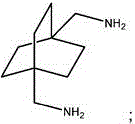
方面5是方面2的方法,其进一步包括下列步骤之一:Aspect 5 is the method of aspect 2, further comprising one of the following steps:
(i) 形成铵盐,接着施加热;(i) forming an ammonium salt followed by application of heat;
(ii) 形成酰基卤,接着用氨处理;或(ii) formation of an acid halide followed by treatment with ammonia; or
(iii) 形成酸酐,接着用氨处理;(iii) formation of anhydride followed by treatment with ammonia;
以提供下式的化合物to provide compounds of the formula

方面6是方面5的方法,其进一步包括任选在催化剂存在下氢化,以提供下式的化合物Aspect 6 is the method of aspect 5, further comprising hydrogenating, optionally in the presence of a catalyst, to provide a compound of the formula

方面7是方面1的方法,以步骤(b)为代表。Aspect 7 is the method of aspect 1, represented by step (b).
方面8是方面7的方法,其进一步包括在钴或钌催化剂的至少一种存在下在大约90至250℃的温度和大约5至300巴的压力下用一氧化碳和氢气处理;以提供下式的化合物:Aspect 8 is the method of aspect 7, further comprising treating with carbon monoxide and hydrogen in the presence of at least one of a cobalt or ruthenium catalyst at a temperature of about 90 to 250° C. and a pressure of about 5 to 300 bar; to provide a Compound:

方面9是方面1的方法,以步骤(c)为代表。Aspect 9 is the method of aspect 1, represented by step (c).
方面10是方面9的方法,其进一步包括在强酸存在下与一氧化碳反应以提供下式的化合物:Aspect 10 is the method of aspect 9, further comprising reacting with carbon monoxide in the presence of a strong acid to provide a compound of the formula:

方面11是方面9的方法,其进一步包括通过用氨处理而胺化以提供下式的化合物:Aspect 11 is the method of aspect 9, further comprising aminating by treatment with ammonia to provide a compound of the formula:

方面12是方面9的方法,其进一步包括通过在钌催化剂存在下在大约90至250℃的温度和大约5至300巴的压力下用一氧化碳和氢气处理而加氢甲酰基化,以提供下式的化合物:Aspect 12 is the method of aspect 9, further comprising hydroformylating by treatment with carbon monoxide and hydrogen in the presence of a ruthenium catalyst at a temperature of about 90 to 250°C and a pressure of about 5 to 300 bar to provide the formula compound of:

方面13是方面12的方法,其进一步包括用氧化剂处理以提供下式的化合物:Aspect 13 is the method of aspect 12, further comprising treating with an oxidizing agent to provide a compound of the formula:

方面14是方面13的方法,其进一步包括任选在催化剂存在下氢化,以提供下式的化合物:Aspect 14 is the method of aspect 13, further comprising hydrogenating, optionally in the presence of a catalyst, to provide a compound of the formula:

本公开的方面15是一种制备下式的化合物的方法Aspect 15 of the present disclosure is a method of making a compound of the formula

其包括下式的化合物与一氧化碳在强酸存在下的反应It includes the reaction of a compound of the formula with carbon monoxide in the presence of a strong acid

其中各R1独立地为氢或下式的基团wherein each R is independently hydrogen or a group of the formula

其中R独立地为氢;和任选被选自C1-C6烷氧基、卤素、硝基和氰基的一个或多个基团取代的C1-C12烷基;或任选被选自C1-C6烷氧基、卤素、硝基、氰基和C1-C12烷基的一个或多个基团取代的苯基;wherein R is independently hydrogen; and C1-C12 alkyl optionally substituted with one or more groups selected from C1 - C6 alkoxy , halogen, nitro , and cyano; or optionally substituted by phenyl substituted with one or more groups selected from C 1 -C 6 alkoxy, halogen, nitro, cyano and C 1 -C 12 alkyl;
接着用(i) 水或(ii) 式R-OH的醇的至少一种淬灭。It is then quenched with at least one of (i) water or (ii) an alcohol of formula R-OH.
本公开的方面16是一种制备下式的化合物的方法Aspect 16 of the present disclosure is a method of making a compound of the formula

其包括使下式的化合物与氢气在铜催化剂存在下接触It involves contacting a compound of the formula with hydrogen in the presence of a copper catalyst

其中R是C1-C6烷基。wherein R is C 1 -C 6 alkyl.
本公开的方面17是一种制备下式的化合物的方法Aspect 17 of the present disclosure is a method of making a compound of the formula

其包括使下式的化合物与氢气在均相钌催化剂存在下接触It involves contacting a compound of the formula with hydrogen in the presence of a homogeneous ruthenium catalyst

其中R是C1-C6烷基。wherein R is C 1 -C 6 alkyl.
本公开的方面18是一种制备下式的化合物的方法Aspect 18 of the present disclosure is a method of making a compound of the formula

其包括对下式的化合物施以还原胺化:It involves subjecting a compound of formula to reductive amination:

本公开的方面19是包括衍生自通过本公开的方面1-18的方法制备的化合物的单体的聚合物。Aspect 19 of the present disclosure is a polymer comprising monomers derived from compounds prepared by the methods of aspects 1-18 of the present disclosure.
发明详述Detailed description of the invention
本公开提供一种方法,其包括使下式的化合物The present disclosure provides a method comprising making a compound of the formula

任选在至少一种下列化合物存在下与(i) 包含钯化合物的过渡金属催化剂和(ii) 氧化剂接触;contacting (i) a transition metal catalyst comprising a palladium compound and (ii) an oxidizing agent, optionally in the presence of at least one of the following compounds;
(I) 下式的化合物(I) Compounds of the following formula

其中R选自氢;和任选被选自C1-C6烷氧基、卤素、硝基和氰基的一个或多个基团取代的C1-C12烷基;wherein R is selected from hydrogen; and C1-C12 alkyl optionally substituted with one or more groups selected from C1 - C6 alkoxy , halogen, nitro and cyano;
R*选自氢;任选被选自C1-C6烷氧基、卤素、硝基和氰基的一个或多个基团取代的C1-C12烷基;和碱金属阳离子;或R* is selected from hydrogen; C1-C12 alkyl optionally substituted with one or more groups selected from C1 - C6 alkoxy , halogen, nitro and cyano; and alkali metal cations; or
(II) 具有至少一个下式的C1-C12烷酰氧基基团的化合物(II) Compounds having at least one C 1 -C 12 alkanoyloxy group of the formula

以提供下式的化合物to provide compounds of the formula

其中各R1独立地为氢或下式的基团wherein each R is independently hydrogen or a group of the formula

其进一步包括选自(a)、(b)或(c)的步骤:It further comprises a step selected from (a), (b) or (c):
(a) 在强酸存在下与一氧化碳反应,接着用(i) 水或(ii) 式R-OH的醇的至少一种淬灭,以提供下式的化合物的步骤(a) a step of reacting with carbon monoxide in the presence of a strong acid, followed by quenching with at least one of (i) water or (ii) an alcohol of formula R-OH to provide a compound of formula

所述步骤(a)任选进一步包括以下步骤:The step (a) optionally further comprises the following steps:
在非均相铜催化剂或均相钌催化剂存在下与氢气接触以提供下式的化合物Contact with hydrogen in the presence of a heterogeneous copper catalyst or a homogeneous ruthenium catalyst to provide a compound of formula

任选接着还原胺化以提供下式的化合物Optionally followed by reductive amination to provide compounds of formula

(b) 转化成下式的化合物的步骤:(b) a step of converting to a compound of the formula:

其包括(I)与腈在酸存在下的反应,接着水解成相应的胺(XVI、XVII);It involves the reaction of (I) with a nitrile in the presence of an acid, followed by hydrolysis to the corresponding amines (XVI, XVII);
所述步骤(b)任选进一步包括用光气(COCl2)处理以提供下式的化合物:Said step (b) optionally further comprises treatment with phosgene ( COCl2 ) to provide a compound of formula:

(c) (I)的卤化以提供下式的化合物的步骤:(c) a step of halogenation of (I) to provide compounds of the formula:

其中x是卤素;where x is halogen;
所述步骤(c)任选进一步包括选自下列的步骤:The step (c) optionally further comprises a step selected from the group consisting of:
a.) 在强酸存在下与一氧化碳反应,接着用(i) 水或(ii) 式R-OH的醇的至少一种淬灭,以提供下式的化合物a.) Reaction with carbon monoxide in the presence of a strong acid followed by quenching with at least one of (i) water or (ii) an alcohol of formula R-OH to provide compounds of formula

b.) 通过用氨处理而胺化以提供下式的化合物:b.) Amination by treatment with ammonia to provide compounds of formula:

c.) 通过在钴或钌催化剂的至少一种存在下在大约90至250℃的温度和大约5至300巴的压力下用一氧化碳和氢气处理而加氢甲酰基化,以提供下式的化合物:c.) Hydroformylation by treatment with carbon monoxide and hydrogen in the presence of at least one of a cobalt or ruthenium catalyst at a temperature of about 90 to 250°C and a pressure of about 5 to 300 bar to provide a compound of formula :

所述步骤c.)任选进一步包括:The step c.) optionally further comprises:
a. 用氧化剂处理以提供下式的化合物:a. Treatment with an oxidizing agent to provide a compound of formula:

b. 氢化,以提供下式的化合物:b. Hydrogenation to provide compounds of the formula:

关于式(I)的化合物的合成的进一步细节可见于在这一日期提交的PCT申请PCT/US17/56027,其经此引用并入本文。在这一公开中,由某些上式(I)的化合物开始,可制备双环[2.2.2]辛烷结构的各种1,4-衍生物。在某些实施方案中,本公开提供制备具有桥头官能团的1,4-双环[2.2.2]辛烷化合物的方法,所述桥头官能团选自Further details regarding the synthesis of compounds of formula (I) can be found in PCT application PCT/US17/56027, filed on this date, which is incorporated herein by reference. In this disclosure, starting from certain compounds of formula (I) above, various 1,4-derivatives of the bicyclo[2.2.2]octane structure can be prepared. In certain embodiments, the present disclosure provides methods of preparing 1,4-bicyclo[2.2.2]octane compounds having a bridgehead functional group selected from the group consisting of
二甲醇;Dimethanol;
二胺;diamine;
二酸;Diacid;
二酯;diester;
二醛,dialdehyde,
二卤,Dihalogen,
二异氰酸酯和Diisocyanates and
二酰氨基基团。diamido group.
这样的后续化学转化可在下列流程图中图示说明:Such subsequent chemical transformations can be illustrated in the following flow diagrams:

在一个实施方案中,本公开提供一种制备下式的化合物的方法In one embodiment, the present disclosure provides a method of preparing a compound of the formula

其包括下式的化合物与一氧化碳在强酸存在下的反应It includes the reaction of a compound of the formula with carbon monoxide in the presence of a strong acid

其中各R1独立地为氢或下式的基团wherein each R is independently hydrogen or a group of the formula

其中R独立地为氢;任选被选自C1-C6烷氧基、卤素、硝基和氰基的一个或多个基团取代的C1-C12烷基;或任选被选自C1-C6烷氧基、卤素、硝基、氰基和C1-C12烷基的一个或多个基团取代的苯基;wherein R is independently hydrogen; C1-C12 alkyl optionally substituted with one or more groups selected from C1 - C6 alkoxy , halogen, nitro , and cyano; or optionally selected phenyl substituted from one or more groups of C 1 -C 6 alkoxy, halogen, nitro, cyano and C 1- C 12 alkyl;
接着用(i) 水或(ii) 式R-OH的醇的至少一种淬灭。It is then quenched with at least one of (i) water or (ii) an alcohol of formula R-OH.
在上述实施方案中,关于上述方案中的步骤IV和VII,使式I的化合物与一氧化碳在强酸如硫酸、无水HF、BF3、三氟甲磺酸、SbF5/HF、SbF5/SO2ClF、SbF5/SO2、SbF5/HSO3F等存在下反应。对于环状化合物1,4-二乙酰氧基双环[2.2.2]辛烷,浓磷酸和三氟乙酸在当前方法中无效。如果使用硫酸,必须使用浓缩形式,即浓度高于90%和在另一实施方案中高于96%。所选浓度取决于反应温度和压力。一般而言,在越温和的条件下需要越高的浓度。稀硫酸通常导致获得含有相对较少(如果有的话)所需产物的反应混合物。在这种方法的某些实施方案中,107%发烟硫酸用于在室温下进行的反应。硫酸与双环化合物装料的摩尔比在大约2:1至大约100:1的范围内。但是,在本公开的范围内可使用更大或更小量的硫酸。In the above embodiments, with respect to steps IV and VII of the above schemes, compounds of formula I are reacted with carbon monoxide in a strong acid such as sulfuric acid, anhydrous HF, BF3 , trifluoromethanesulfonic acid, SbF5 /HF, SbF5 /SO The reaction is carried out in the presence of 2 ClF, SbF 5 /SO 2 , SbF 5 /HSO 3 F and the like. For the cyclic compound 1,4-diacetoxybicyclo[2.2.2]octane, concentrated phosphoric acid and trifluoroacetic acid were ineffective in the current method. If sulfuric acid is used, it must be used in concentrated form, ie at a concentration higher than 90% and in another embodiment higher than 96%. The concentration chosen depends on the reaction temperature and pressure. In general, higher concentrations are required under milder conditions. Dilute sulfuric acid generally results in a reaction mixture containing relatively little, if any, of the desired product. In certain embodiments of this method, 107% oleum is used for the reaction carried out at room temperature. The molar ratio of sulfuric acid to bicyclic charge is in the range of about 2:1 to about 100:1. However, larger or smaller amounts of sulfuric acid may be used within the scope of this disclosure.
在本公开的这一方面的范围内可使用催化剂以降低反应温度和压力,但不是必要的。如果使用,可能的催化剂包括来自第VIIIB和IB族(CAS)的过渡金属配合物,它们在当前反应条件下可形成羰基阳离子。实例包括Cu、Au、Pd、Ir、Ni等。Catalysts may be used within the scope of this aspect of the present disclosure to reduce reaction temperature and pressure, but are not required. If used, possible catalysts include transition metal complexes from groups VIIIB and IB (CAS), which can form carbonyl cations under the current reaction conditions. Examples include Cu, Au, Pd, Ir, Ni, and the like.
一氧化碳反应物不需要必须是纯的。合适的一氧化碳装料包括市售一氧化碳和含一氧化碳的气体。固定气体(fixed gases)和少量饱和烃在其中的存在不会不利地影响该方法的效率。The carbon monoxide reactant need not necessarily be pure. Suitable carbon monoxide charges include commercially available carbon monoxide and carbon monoxide-containing gases. The presence of fixed gases and small amounts of saturated hydrocarbons therein does not adversely affect the efficiency of the process.
在本公开的范围内可使用在该反应的实施条件下为液体的溶剂以利于溶解双环化合物,但不是必要的。这样的溶剂包括例如通常为液体的饱和烃,如戊烷、己烷、庚烷、辛烷;羧酸,如庚酸;脂族酮,如二甲酮;等。所用溶剂可添加到有机装料中或单独引入反应区。Solvents that are liquid under the conditions in which the reaction is carried out may be used within the scope of this disclosure to facilitate dissolution of the bicyclic compound, but are not required. Such solvents include, for example, typically liquid saturated hydrocarbons such as pentane, hexane, heptane, octane; carboxylic acids such as heptanoic acid; aliphatic ketones such as dimethyl ketone; and the like. The solvent used can be added to the organic charge or introduced separately into the reaction zone.
双环化合物与一氧化碳的反应在相对温和的条件下进行。所用温度是例如大约-10℃至大约100℃,或大约20℃至大约60℃。可以使用大约大气压至大约4000 p.s.i.g和更高的压力。也可使用例如大约100至大约2000 p.s.i.g.的压力。在进行这样的反应时,需要避免在有机装料与一氧化碳的反应过程中从外部来源将大量的水引入反应区。The reaction of the bicyclic compound with carbon monoxide proceeds under relatively mild conditions. The temperature used is, for example, from about -10°C to about 100°C, or from about 20°C to about 60°C. Pressures from about atmospheric pressure to about 4000 p.s.i.g and higher can be used. Pressures of, for example, about 100 to about 2000 p.s.i.g. can also be used. In conducting such reactions, it is desirable to avoid introducing large amounts of water into the reaction zone from external sources during the reaction of the organic charge with carbon monoxide.
可对供入该方法的双环化合物以及一氧化碳装料施以合适的预处理以实现从中除去水和/或杂质。这样的预处理可包括一个或多个步骤,例如蒸馏、与合适的吸附剂材料,例如活性炭、吸附性氧化铝、粘土等接触;所选步骤取决于处理的材料和要除去的杂质或水的量。在该方法中可以使用发烟硫酸以从原材料(双环化合物和一氧化碳)中除去水残留物。The bicyclic compound and carbon monoxide charge fed to the process may be subjected to suitable pretreatments to effect removal of water and/or impurities therefrom. Such pretreatment may include one or more steps, such as distillation, contact with a suitable adsorbent material, such as activated carbon, adsorbed alumina, clay, etc.; the selected step depends on the material treated and the impurities or water to be removed quantity. Fuming sulfuric acid can be used in this process to remove water residues from the starting materials (bicyclic compounds and carbon monoxide).
双环化合物与一氧化碳在浓强酸存在下的反应可在分批、连续或半连续操作中实施。The reaction of the bicyclic compound with carbon monoxide in the presence of a concentrated strong acid can be carried out in a batch, continuous or semi-continuous operation.
在一氧化碳与双环化合物的反应完成后,停止一氧化碳流入反应混合物,并且如果该混合物在明显高于室温的温度下,将其冷却到不明显超过大约20℃的温度并达到大约大气压。After the reaction of carbon monoxide with the bicyclic compound is complete, the flow of carbon monoxide into the reaction mixture is stopped, and if the mixture is at a temperature significantly above room temperature, it is cooled to a temperature not significantly above about 20°C and to about atmospheric pressure.
将所得反应混合物此后用选自水、醇、胺或它们的混合物的淬灭试剂稀释。由此添加到反应混合物中的淬灭试剂的量可在本公开的范围内显著变化。可将淬灭试剂以最初装载的酸的例如少到大约3体积%至多达大约2,000体积%的量添加到反应混合物中,发现这是令人满意的。但是,在本公开的范围内可使用更大或更少量的水。在进行本公开的一个优选方法中,将淬灭试剂以等于最初装载的酸的大约75体积%至大约500体积%的量添加到反应混合物中。优选进行反应混合物的稀释而不显著升温。要指出,仅在一氧化碳与双环化合物的反应完成后才将水添加到反应混合物中。在不添加一氧化碳的情况下并优选在不存在游离一氧化碳气氛的情况下实施水的添加。优选在不明显超过并可能小于大气条件(atmospheric)的温度和压力下实施水的添加。The resulting reaction mixture is then diluted with a quenching reagent selected from water, alcohols, amines or mixtures thereof. The amount of quenching reagent thus added to the reaction mixture can vary significantly within the scope of the present disclosure. The quenching reagent can be added to the reaction mixture in an amount of, for example, as little as about 3% by volume to as much as about 2,000% by volume of the initially charged acid, which has been found to be satisfactory. However, larger or smaller amounts of water may be used within the scope of the present disclosure. In one preferred method of carrying out the present disclosure, the quenching reagent is added to the reaction mixture in an amount equal to about 75% to about 500% by volume of the acid initially charged. The dilution of the reaction mixture is preferably carried out without significant warming. Note that water was added to the reaction mixture only after the reaction of carbon monoxide with the bicyclic compound was complete. The addition of water is carried out without the addition of carbon monoxide and preferably without an atmosphere of free carbon monoxide. The addition of water is preferably carried out at temperatures and pressures that are not significantly above and possibly below atmospheric conditions.
在下列实例中,使用水作为淬灭试剂。所得双环[2.2.2]辛烷1,4-二甲酸作为白色固体从溶液中沉淀出来。通过从碱性/酸性水溶液中重结晶获得纯双环[2.2.2]辛烷1,4-二甲酸。In the following examples, water was used as the quenching reagent. The resulting bicyclo[2.2.2]octane 1,4-dicarboxylic acid precipitated out of solution as a white solid. Pure bicyclo[2.2.2]octane 1,4-dicarboxylic acid was obtained by recrystallization from basic/acidic aqueous solution.
也可由二酸通过在酯化催化剂,如HCl、H2SO4、固体酸、过渡金属催化剂如Sn、Ti配合物等存在下与醇反应生成二酯(步骤V)。参见例如Tin-Catalyzed Esterification andTransesterification Reactions:A Review, Arthur Batista Ferreira, Abiney LemosCardoso, and Márcio José da Silva, ISRN Renewable Energy, 第2012卷 (2012),Article ID 142857, 第13页, doi:10.5402/2012/142857; Transesterification,Junzo Otera, Chem. Rev. 1993, 93. 1449-1470。替代性地,二酸可在不存在酸催化剂的情况下在升高的温度,例如100℃至300℃下与醇反应。在任一反应后,由此制成的粗二酯可通过升华、结晶或柱色谱法提纯。 Diesters can also be formed from diacids by reaction with alcohols in the presence of esterification catalysts such as HCl, H2SO4 , solid acids, transition metal catalysts such as Sn, Ti complexes and the like (step V). See eg Tin-Catalyzed Esterification and Transesterification Reactions: A Review, Arthur Batista Ferreira, Abiney Lemos Cardoso, and Márcio José da Silva, ISRN Renewable Energy, Vol. 2012 (2012), Article ID 142857, p. 13, doi:10.5402/2012/ 142857; Transesterification, Junzo Otera, Chem. Rev. 1993, 93. 1449-1470. Alternatively, the diacid can be reacted with the alcohol in the absence of an acid catalyst at elevated temperature, eg, 100°C to 300°C. After either reaction, the crude diester thus produced can be purified by sublimation, crystallization or column chromatography.
在一个进一步实施方案中,本公开提供一种制备下式的化合物的方法In a further embodiment, the present disclosure provides a method of preparing a compound of the formula

其包括使下式的化合物与氢气在铜催化剂存在下接触It involves contacting a compound of the formula with hydrogen in the presence of a copper catalyst

其中R是C1-C6烷基。(步骤VI和VI’)。wherein R is C 1 -C 6 alkyl. (steps VI and VI').
在一个实施方案中,当在该方法中使用二酯时,在本公开的这一方面中可使用多种多样的基于铜的催化剂。实例包括但不限于:In one embodiment, when a diester is used in the process, a wide variety of copper-based catalysts can be used in this aspect of the disclosure. Examples include but are not limited to:
1) 含有单一组分的铜催化剂,如雷尼铜和沉积在催化剂载体材料如碳、二氧化硅、纤维等上的单金属铜催化剂。1) Copper catalysts containing a single component, such as Raney copper and monometallic copper catalysts deposited on catalyst support materials such as carbon, silica, fibers, etc.
2) 含有二元组分的铜催化剂,如负载在不同的金属氧化物上的铜催化剂。金属氧化物的实例包括但不限于Cr2O3、Al2O3、ZnO、ZrO、TiO2、MgO等。2) Copper catalysts containing binary components, such as copper catalysts supported on different metal oxides. Examples of metal oxides include, but are not limited to, Cr 2 O 3 , Al 2 O 3 , ZnO, ZrO, TiO 2 , MgO, and the like.
3) 含有三元或更多组分的铜催化剂,如含有助催化剂如钡、锰等的亚铬酸铜。含有其它助催化剂的其它基于铜的催化剂也属于这一类别,如沉积在催化剂载体材料如氧化铝、氧化镁和二氧化钛上的氧化铜/氧化锌。3) Copper catalysts containing ternary or more components, such as copper chromite containing cocatalysts such as barium, manganese, etc. Other copper-based catalysts containing other cocatalysts also fall into this category, such as copper/zinc oxide deposited on catalyst support materials such as alumina, magnesia and titania.
该催化剂只需具有合理的活性,并且其催化副产物形成的活性比其催化氢解(氢化)反应的活性低得多。The catalyst need only be reasonably active, and its activity in catalyzing by-product formation is much lower than its activity in catalyzing hydrogenolysis (hydrogenation) reactions.
在一个实施方案中,该催化剂在其还原/活性形式下包含大约25至60重量%铜和大约10至35重量%铬、锰或其组合。合适的氧化铜/氧化锌催化剂前体包括用大约0.1重量%至大约15重量%锰促进的CuO/ZnO混合物,其中Cu:Zn重量比为大约0.4:1至大约2:1。合适的亚铬酸铜催化剂前体包括其中Cu:Cr重量比为大约0.1至大约4:1或大约0.5:1至大约4:1的那些。促进型亚铬酸铜前体包括用大约0.1重量%至大约15重量%锰促进的亚铬酸铜催化剂前体,其中Cu:Cr重量比为大约0.1:1至大约4:1或大约0.5:1至大约4:1。锰促进的铜催化剂前体通常具有大约2:1至大约10:1的Cu:Mn重量比并可包括氧化铝载体,在这种情况下,Cu:Al重量比通常为大约2:1至大约4:1。In one embodiment, the catalyst in its reduced/active form comprises about 25 to 60 wt % copper and about 10 to 35 wt % chromium, manganese, or a combination thereof. Suitable copper oxide/zinc oxide catalyst precursors include CuO/ZnO mixtures promoted with about 0.1 wt % to about 15 wt % manganese, wherein the Cu:Zn weight ratio is about 0.4:1 to about 2:1. Suitable copper chromite catalyst precursors include those in which the Cu:Cr weight ratio is from about 0.1 to about 4:1 or from about 0.5:1 to about 4:1. Promoted copper chromite precursors include copper chromite catalyst precursors promoted with about 0.1 wt% to about 15 wt% manganese, wherein the Cu:Cr weight ratio is about 0.1:1 to about 4:1 or about 0.5: 1 to about 4:1. The manganese-promoted copper catalyst precursor typically has a Cu:Mn weight ratio of about 2:1 to about 10:1 and can include an alumina support, in which case the Cu:Al weight ratio is typically about 2:1 to about 4:1.
该催化剂的物理形式不重要并通常取决于该方法的操作模式。例如,在反应物在被称为滴流床操作的操作模式中经过(passed over and through)一个或多个催化剂固定床的方法中可使用具有1至6 mm的平均直径和2至12 mm的长度的丸粒。该反应可使用例如粉末形式的铜催化剂连续、半连续或分批运行。该方法在气相中的运行也在本公开的范围内。The physical form of the catalyst is not critical and generally depends on the mode of operation of the process. For example, in processes where the reactants are passed over and through one or more fixed beds of catalyst in a mode of operation known as trickle bed operation, a catalyst having an average diameter of 1 to 6 mm and a length of pellets. The reaction can be run continuously, semi-continuously or batchwise using, for example, a copper catalyst in powder form. The operation of the method in the gas phase is also within the scope of this disclosure.
氢解的温度和压力条件通常重要,但可在宽范围内变化。通常,该方法在大约120至350℃的温度下运行。如预期,较低温度导致较低反应速率,而过高温度增加不合意副产物的量。在一个实施方案中,温度范围为200至260℃。当该反应在连续滴流床反应器中进行时,这些温度是指催化剂床的平均温度。压力可在大约1000 psig至6000 psig之间变化。在一个实施方案中,压力为2000 psig至4000 psig。较低压力通常导致较低转化率,而较高压力提高该运行的能量和设备成本。The temperature and pressure conditions for hydrogenolysis are generally important, but can vary widely. Typically, the method operates at a temperature of about 120 to 350°C. As expected, lower temperatures result in lower reaction rates, while too high temperatures increase the amount of undesired by-products. In one embodiment, the temperature ranges from 200 to 260°C. When the reaction is carried out in a continuous trickle bed reactor, these temperatures refer to the average temperature of the catalyst bed. The pressure can vary from about 1000 psig to 6000 psig. In one embodiment, the pressure is from 2000 psig to 4000 psig. Lower pressures generally result in lower conversions, while higher pressures increase the energy and equipment costs of this operation.
该反应可在纯条件(neat condition)中或在作为溶剂的二醇或一元醇或混合物存在下进行。合适的二醇的实例包括乙二醇、丙二醇、CHDM等。氢解产物双环[2.2.2]辛烷-1,4-二甲醇也可用作溶剂。合适的一元醇的实例包括甲醇、乙醇、正丙醇、正丁醇等,或其混合物。The reaction can be carried out in neat conditions or in the presence of diols or monohydric alcohols or mixtures as solvent. Examples of suitable glycols include ethylene glycol, propylene glycol, CHDM, and the like. The hydrogenolysis product bicyclo[2.2.2]octane-1,4-dimethanol can also be used as a solvent. Examples of suitable monohydric alcohols include methanol, ethanol, n-propanol, n-butanol, and the like, or mixtures thereof.
在另一实施方案中,当使用二酯或二酸时,在本公开的方法中也可使用对羧酸/羧酸酯基团还原成羟甲基有效的多种多样的常规均相氢化催化剂(参见例如经此引用并入本文的美国专利9,328,050)。该催化剂可以是溶解或分散在溶剂中的均相催化剂。在该方法的某些实施方案中,催化剂包含:a) 钌、铑、铁、锇或钯化合物;和(b) 作为配体的有机化合物。在某些实施方案中,本公开的催化剂是钌化合物。钌化合物不受特别限制并且可以是可溶于本公开的溶剂的任何钌源。示例性的化合物包括钌盐、氢化物配合物、羰基化合物、卤化物、氧化物、膦配合物和上述两种或更多种的组合。在某些实施方案中,钌化合物可在反应条件下转化成活性物质。在某些实施方案中,有机化合物是三齿配体。所选三齿化合物包括但不限于1,1,1-三(二芳基膦基甲基)烷基(其中烷基被取代或未取代)、6-(二-叔丁基膦基甲基)-2-(N,N-二乙基氨基甲基)吡啶(在Milstein催化剂中)、双[2-(二苯基膦基)乙基]胺(在Ru-MACHO中)和其它钳形配体。此外,在该方法的某些实施方案中,钌化合物和三齿化合物是相同化合物。例如,在一个实施方案中,该催化剂是Milstein催化剂(二酯);在另一实施方案中,该催化剂是可获自Sigma-Aldrich的Ru-MACHO®催化剂(二酯)。在另一实施方案中,该催化剂是Ru(TriPhos)(二酸)。In another embodiment, when a diester or diacid is used, a wide variety of conventional homogeneous hydrogenation catalysts effective for the reduction of carboxylic acid/carboxylate groups to methylol groups can also be used in the process of the present disclosure (See, eg, US Patent 9,328,050, incorporated herein by reference). The catalyst may be a homogeneous catalyst dissolved or dispersed in a solvent. In certain embodiments of the method, the catalyst comprises: a) a ruthenium, rhodium, iron, osmium or palladium compound; and (b) an organic compound as a ligand. In certain embodiments, the catalysts of the present disclosure are ruthenium compounds. The ruthenium compound is not particularly limited and can be any source of ruthenium that is soluble in the solvent of the present disclosure. Exemplary compounds include ruthenium salts, hydride complexes, carbonyl compounds, halides, oxides, phosphine complexes, and combinations of two or more of the foregoing. In certain embodiments, the ruthenium compound can be converted to the active species under the reaction conditions. In certain embodiments, the organic compound is a tridentate ligand. Selected tridentate compounds include, but are not limited to, 1,1,1-tris(diarylphosphinomethyl)alkyl (wherein alkyl is substituted or unsubstituted), 6-(di-tert-butylphosphinomethyl) )-2-(N,N-diethylaminomethyl)pyridine (in Milstein catalyst), bis[2-(diphenylphosphino)ethyl]amine (in Ru-MACHO) and other pincers Ligand. Furthermore, in certain embodiments of the method, the ruthenium compound and the tridentate compound are the same compound. For example, in one embodiment, the catalyst is a Milstein catalyst (diester); in another embodiment, the catalyst is a Ru- MACHO® catalyst (diester) available from Sigma-Aldrich. In another embodiment, the catalyst is Ru(TriPhos) (diacid).
在某些实施方案中,该方法进一步包括将助催化剂供入第二反应区。在Ru-1,1,1-三(二芳基膦基甲基)烷基体系中,助催化剂选自路易斯酸、具有5×10⁻³或更大的电离常数(Ki)的质子酸、鎓盐和上述两种或更多种的组合。在某些实施方案中,助催化剂选自六氟磷酸铵、四丁基六氟磷酸铵、四苯基溴化鏻、四苯基硼酸钠、四氟硼酸铵、四甲基四氟硼酸铵、甲苯磺酸、磷酸、三氟甲磺酸、硫酸、甲磺酸、三氟乙酸、十二烷基苯磺酸、二壬基萘磺酸和上述两种或更多种的组合。在某些实施方案中,助催化剂选自四丁基六氟磷酸铵、甲苯磺酸、三氟甲磺酸、十二烷基苯磺酸、二壬基萘磺酸和上述两种或更多种的组合。(参见例如美国专利9,328,050,其经此引用并入本文)。In certain embodiments, the method further comprises supplying the cocatalyst to the second reaction zone. In the Ru-1,1,1-tris(diarylphosphinomethyl)alkyl system, the cocatalyst is selected from Lewis acids, protic acids with an ionization constant (Ki) of 5×10 −3 or greater, Onium salts and combinations of two or more of the above. In certain embodiments, the cocatalyst is selected from the group consisting of ammonium hexafluorophosphate, tetrabutylammonium hexafluorophosphate, tetraphenylphosphonium bromide, sodium tetraphenylborate, ammonium tetrafluoroborate, tetramethylammonium tetrafluoroborate, Toluenesulfonic acid, phosphoric acid, trifluoromethanesulfonic acid, sulfuric acid, methanesulfonic acid, trifluoroacetic acid, dodecylbenzenesulfonic acid, dinonylnaphthalenesulfonic acid, and combinations of two or more of the foregoing. In certain embodiments, the cocatalyst is selected from the group consisting of tetrabutylammonium hexafluorophosphate, toluenesulfonic acid, trifluoromethanesulfonic acid, dodecylbenzenesulfonic acid, dinonylnaphthalenesulfonic acid, and two or more of the foregoing combination of species. (See, eg, US Patent 9,328,050, which is incorporated herein by reference).
如果使用Ru-MACHO或Milstein催化剂的前体,加入助催化剂以除去氯化物配体,从而生成活性催化剂物质。所选助催化剂包括具有非配位或弱配位阴离子的钾盐、钠盐和银盐(这些盐形成不溶性氯化物盐)。所选助催化剂包括但不限于氢氧化钾、甲醇钾、氢氧化钠、甲醇钠。If a Ru-MACHO or Milstein catalyst precursor is used, a cocatalyst is added to remove the chloride ligand, thereby generating the active catalyst species. Selected cocatalysts include potassium, sodium and silver salts with non-coordinating or weakly coordinating anions (these salts form insoluble chloride salts). Selected cocatalysts include, but are not limited to, potassium hydroxide, potassium methoxide, sodium hydroxide, sodium methoxide.
氢解的温度和压力条件通常重要,并可在宽范围内变化,取决于所选催化剂的性质。通常,该方法在大约100至250℃的温度下运行。如预期,较低温度导致较低反应速率,而过高温度增加不合意副产物的量或催化剂失活。在一些实施方案(Milstein催化剂和Ru-MACHO)中,优选温度范围为100至160℃。在一些实施方案(Ru-triphos)中,优选温度范围为160至250℃。氢气压力可在大约100 psig至3000 psig之间变化。较低压力通常导致较低转化率,而较高压力提高该运行的能量和设备成本。The temperature and pressure conditions for hydrogenolysis are generally important and can vary widely, depending on the nature of the catalyst chosen. Typically, the method operates at a temperature of about 100 to 250°C. As expected, lower temperatures result in lower reaction rates, while too high temperatures increase the amount of undesired by-products or catalyst deactivation. In some embodiments (Milstein catalyst and Ru-MACHO), the preferred temperature range is 100 to 160°C. In some embodiments (Ru-triphos), the preferred temperature range is 160 to 250°C. Hydrogen pressure can vary from about 100 psig to 3000 psig. Lower pressures generally result in lower conversions, while higher pressures increase the energy and equipment costs of this operation.
在本公开的方法中可使用多种多样的溶剂。溶剂需要是液相并在工艺条件下溶解或部分溶解原材料、催化剂和助催化剂。合适的溶剂的实例包括醇、烃、水、醚、胺、酰胺等。在实施方案中,选择对二甲苯作为溶剂。A wide variety of solvents can be used in the methods of the present disclosure. The solvent needs to be in the liquid phase and dissolve or partially dissolve the raw material, catalyst and cocatalyst under process conditions. Examples of suitable solvents include alcohols, hydrocarbons, water, ethers, amines, amides, and the like. In embodiments, para-xylene is selected as the solvent.
该反应可连续、半连续或分批运行。参见美国专利9,328,050。The reaction can be run continuously, semi-continuously or batchwise. See US Patent 9,328,050.
在一个进一步实施方案中,本公开提供一种制备下式的化合物的方法In a further embodiment, the present disclosure provides a method of preparing a compound of the formula

其包括对下式的化合物施以还原胺化:It involves subjecting a compound of formula to reductive amination:

在下列实验中,使用雷尼镍作为催化剂。也可使用其它催化剂。In the following experiments, Raney nickel was used as the catalyst. Other catalysts can also be used.
在另一实施方案中,关于上示反应方案中的步骤VIII,可通过已知方法将二羧酸转化成相应的酰胺。有三种可能的路线:1) 可以首先将二羧酸转化成铵盐,然后其在加热时提供相应的酰胺。可通过加入铵盐,例如碳酸铵至过量以驱使平衡至所需铵盐来形成该铵盐,其随后在施加热时脱水以形成酰胺;2) 可将二羧酸转化成相应的酰基氯,其可随后用氨水的浓溶液处理以形成酰胺;3) 可将二羧酸转化成酸酐,其可随后用氨处理以形成酰胺。(参见例如www.chemguide.co.uk/organicprops/amides/preparation.html)。In another embodiment, with respect to step VIII in the reaction scheme shown above, the dicarboxylic acid can be converted to the corresponding amide by known methods. There are three possible routes: 1) The dicarboxylic acid can first be converted to the ammonium salt, which then provides the corresponding amide upon heating. This ammonium salt can be formed by adding an ammonium salt, such as ammonium carbonate, to excess to drive equilibrium to the desired ammonium salt, which is then dehydrated upon application of heat to form an amide; 2) the dicarboxylic acid can be converted to the corresponding acid chloride, This can then be treated with a concentrated solution of ammonia to form the amide; 3) the dicarboxylic acid can be converted to an acid anhydride, which can then be treated with ammonia to form the amide. (See eg www.chemguide.co.uk/organicprops/amides/preparation.html).

在另一实施方案中,关于上示方案中的步骤IX,可通过氢化将二酰胺转化成相应的胺。In another embodiment, with respect to step IX in the scheme shown above, the diamide can be converted to the corresponding amine by hydrogenation.
方法1:在四氢呋喃和甲醇的混合溶剂中使用还原剂如氢化锂铝、硼氢化锂的非催化路线。Method 1: A non-catalytic route using a reducing agent such as lithium aluminum hydride, lithium borohydride in a mixed solvent of tetrahydrofuran and methanol.
方法2:非均相催化: 1) 在高H2压力(~ 300巴)和反应温度(250℃)下的Cu-Cr氧化物催化剂(JACS 1934, 56, 247)。添加剂如NH3或4A沸石可改进选择性或反应条件(Helv. Chim. Acta 1955, 38, 1649-1654;专利US 4448998)。2) 由第8至10族和第6或7族金属组成的双金属催化剂(例如Rh/Re、Rh/Mo、Ru/Re、Ru/Mo)在酰胺的氢化(100 atm的H2,在160℃下)中表现出极有力的还原能力(TL 1996, 37, 6749-6752)。Method 2: Heterogeneous catalysis: 1) Cu-Cr oxide catalyst (JACS 1934, 56, 247) at high H2 pressure (~300 bar) and reaction temperature (250 °C). Additives such as NH3 or 4A zeolite can improve selectivity or reaction conditions (Helv. Chim. Acta 1955, 38, 1649-1654; patent US 4448998). 2) Hydrogenation of amides (H2 at 100 atm, at 160 ℃) showed extremely potent reducing ability (TL 1996, 37, 6749-6752).
方法3:均相催化: Ru(acac)3/triphos(Chem. Commun. 2007, 3154-3156)(Milstein's催化剂裂解C-N键)。Method 3: Homogeneous catalysis: Ru(acac) 3 /triphos (Chem. Commun. 2007, 3154-3156) (Milstein's catalyst for cleavage of CN bonds).

在一个进一步实施方案中,关于上示方案中的步骤X,可通过已知方法将上式I的化合物转化成相应的二卤化物。参见例如(Collection Czechoslov. Chern. Cornrnun.1979, 2965)。例如,可使式I的化合物与卤化剂,如碱金属卤化物(NaCl、KBr、KI)和无机酸卤化物(SOCl2、POCl3、PBr3),和强酸(例如100% H3PO4、多聚磷酸、硫酸)在80 – 150℃的温度下反应。在冷却后,可将该混合物用冰水淬灭并用有机溶剂(例如乙醚、氯仿、乙酸乙酯)萃取。可将有机层用NaHCO3水溶液、水、盐水洗涤并用MgSO4干燥。在溶剂蒸发后,可将粗二卤化物通过升华、结晶或柱色谱法提纯。In a further embodiment, with respect to step X in the scheme shown above, the compound of formula I above can be converted to the corresponding dihalide by known methods. See eg (Collection Czechoslov. Chern. Cornrnun. 1979, 2965). For example, compounds of formula I can be combined with halogenating agents, such as alkali metal halides (NaCl, KBr, KI) and inorganic acid halides (SOCl 2 , POCl 3 , PBr 3 ), and strong acids (eg 100% H 3 PO 4 ) , polyphosphoric acid, sulfuric acid) at a temperature of 80 – 150 °C. After cooling, the mixture can be quenched with ice water and extracted with an organic solvent (eg ether, chloroform, ethyl acetate). The organic layer can be washed with aqueous NaHCO 3 , water, brine and dried over MgSO 4 . After evaporation of the solvent, the crude dihalide can be purified by sublimation, crystallization or column chromatography.

在一个进一步实施方案中,关于上示方案中的步骤XI和XI’,可在常规Koch反应条件下将二卤化物转化成相应的二酯。In a further embodiment, with respect to steps XI and XI' of the scheme shown above, the dihalide can be converted to the corresponding diester under conventional Koch reaction conditions.

在一个进一步实施方案中,关于上示方案中的步骤XII,可通过例如在乙醇中与氨一起加热二卤化物而将二卤化物转化成相应的二胺。该反应可在密封管中进行。(参见http://www.chemguide.co.uk/organicprops/amines/preparation.html)。In a further embodiment, with respect to step XII in the scheme shown above, the dihalide can be converted to the corresponding diamine by heating the dihalide with ammonia, for example, in ethanol. The reaction can be carried out in a sealed tube. (See http://www.chemguide.co.uk/organicprops/amines/preparation.html).

在一个进一步实施方案中,关于上示方案中的步骤XIII,可通过常规加氢甲酰基化步骤将二卤化物转化成相应的二醛。例如,这可通过在[Co]或[Rh]催化剂存在下在大约90 – 250℃的温度和大约5-300巴的压力下使二卤化物与一氧化碳和氢气反应实现。In a further embodiment, with respect to Step XIII in the scheme shown above, the dihalide can be converted to the corresponding dialdehyde by conventional hydroformylation steps. This can be achieved, for example, by reacting the dihalide with carbon monoxide and hydrogen in the presence of a [Co] or [Rh] catalyst at a temperature of about 90-250°C and a pressure of about 5-300 bar.

在一个进一步实施方案中,可通过下列方法将二醛经氧化转化成相应的二酸。In a further embodiment, the dialdehyde can be oxidatively converted to the corresponding diacid by the following method.
方法1:非催化路线: 在酸性条件下使醛与氧化剂如铬酸、铬酸盐、重铬酸盐、高锰酸盐等反应。Method 1: Non-catalytic route: The aldehyde is reacted with an oxidizing agent such as chromic acid, chromate, dichromate, permanganate, etc. under acidic conditions.
方法2:Co/Mn/Br催化的在乙酸中用O2氧化(更温和的TPA工艺)。Method 2 : Co/Mn/Br catalyzed oxidation with O in acetic acid (milder TPA process).

在一个进一步实施方案中,关于上示方案中的步骤XV,可通过下列方法将二醛经氢化转化成相应的二甲醇化合物。In a further embodiment, with respect to Step XV in the scheme shown above, the dialdehyde can be converted to the corresponding dimethanol compound by hydrogenation by the following method.
方法1: 非催化路线: 用化学计算量的还原剂如LiAlH4和NaBH4还原Method 1: Non-catalytic route: reduction with stoichiometric amounts of reducing agents such as LiAlH4 and NaBH4
方法2: 非均相氢化Method 2: Heterogeneous hydrogenation
方法3: 均相氢化Method 3: Homogeneous hydrogenation

在一个进一步实施方案中,关于上示方案中的步骤XVI,可通过Ritter反应将式I的化合物(未提纯)转化成相应的二烷基酰胺。例如,式I的化合物可在强酸存在下与腈反应。所得腈鎓离子(nitrilium ion)然后被水水解成所需二烷基酰胺In a further embodiment, with respect to Step XVI in the scheme shown above, the compound of formula I (unpurified) can be converted to the corresponding dialkylamide by a Ritter reaction. For example, a compound of formula I can be reacted with a nitrile in the presence of a strong acid. The resulting nitrilium ion is then hydrolyzed by water to the desired dialkylamide

在另一实施方案中,关于上示方案中的步骤XVII,可使用已知方法通过酸(例如HCl)或碱催化(例如KOH)水解将二烷基酰胺转化成相应的二胺。In another embodiment, with respect to Step XVII in the scheme shown above, the dialkylamides can be converted to the corresponding diamines by acid (eg, HCl) or base-catalyzed (eg, KOH) hydrolysis using known methods.

在另一实施方案中,关于上示方案中的步骤XVIII,可通过用光气(COCl2)处理而将二胺化合物转化成相应的异氰酸酯。In another embodiment, with respect to Step XVIII in the scheme shown above, the diamine compound can be converted to the corresponding isocyanate by treatment with phosgene ( COCl2 ).

本公开包括并明确设想了本文中公开的方面、实施方案、要素、特征、参数和/或范围的任何和所有组合。也就是说,可通过本文中提到的方面、实施方案、要素、特征、参数和/或范围的任何组合限定本公开。除非上下文清楚地另行指示,本文所用的不定冠词“一个”和“一种”是指一个或多个。类似地,除非上下文清楚地另行指示,名词的单数形式包括它们的复数形式,反之亦然。This disclosure includes and expressly contemplates any and all combinations of aspects, embodiments, elements, features, parameters and/or ranges disclosed herein. That is, the disclosure may be defined by any combination of aspects, embodiments, elements, features, parameters and/or ranges mentioned herein. The indefinite articles "a" and "an" as used herein refer to one or more unless the context clearly dictates otherwise. Similarly, unless the context clearly dictates otherwise, the singular forms of nouns include their plural forms and vice versa.
尽管已试图精确化,但本文中描述的数值和范围应被视为近似值(即使没有受术语“大约”限制)。根据通过本公开试图获得的所需性质以及由测量技术中存在的标准偏差造成的变动,这些数值和范围可不同于它们的指定数值。此外,本文中描述的范围意在并被明确设想为包括指定范围内的所有子范围和值。例如,50至100的范围意在描述和包括该范围内的所有值,包括子范围,如60至90和70至80。Although attempts have been made to be precise, the numerical values and ranges described herein are to be regarded as approximations (even if not limited by the term "about"). These numerical values and ranges may vary from their specified numerical values depending upon the desired properties sought to be obtained by the present disclosure, as well as variations caused by standard deviations found in measurement techniques. Furthermore, the ranges described herein are intended and expressly contemplated to include all subranges and values within the stated range. For example, a range of 50 to 100 is intended to describe and include all values within that range, including subranges such as 60 to 90 and 70 to 80.
本文中引用的所有文献,包括专利以及非专利文献的内容全文经此引用并入本文。在任何并入的主题与本文中的任何公开矛盾的情况下,本文中的公开应优先于并入的内容。All documents cited herein, including patent and non-patent documents, are incorporated by reference in their entirety. To the extent that any incorporated subject matter contradicts any disclosure herein, the disclosure herein shall take precedence over the incorporated content.
可通过本公开某些实施方案的下列实施例进一步举例说明本公开,但要理解的是,除非明确地另行指明,这些实施例仅用于举例说明而无意限制本公开的范围。The disclosure may be further illustrated by the following examples of certain embodiments of the disclosure, but it is to be understood that these examples are intended to be illustrative only and are not intended to limit the scope of the disclosure unless expressly stated otherwise.
实施例Example
由1,4-环己烷二甲醇(CHDM)制备4-乙酰氧基双环[2.2.2]辛-1-醇、1,4-二乙酰氧Preparation of 4-acetoxybicyclo[2.2.2]octan-1-ol, 1,4-diacetoxyl from 1,4-cyclohexanedimethanol (CHDM) 基双环[2.2.2]辛烷和双环[2.2.2]辛-1,4-二醇的混合物A mixture of bicyclo[2.2.2]octane and bicyclo[2.2.2]oct-1,4-diol
根据具有小修改的文献程序制备1,4-二亚甲基环己烷。(William J. Bailey, HaroldR. Golden, Cyclic Dienes. I. 1,2-Dimethylenecyclohexane, J. Am. Chem. Soc.,1953, 75, 4780–4782)。在配有滴液漏斗和回流冷凝器的20升反应器中将1,4-环己烷二甲醇(CHDM)(3250g, 22.5 mol)和吡啶(5.5g, 0.07 mol)加热到125℃。经2小时将乙酸酐(7020g, 68.8 mol)添加到二醇中。在添加后,将该混合物在125℃下搅拌1.5小时。在通过真空蒸馏除去乙酸和酸酐后,收集CHDM二乙酸酯(5100g, 99%收率)。也使用DMAP和作为催化剂的Nafion成功进行该反应。1,4-Dimethylenecyclohexane was prepared according to literature procedures with minor modifications. (William J. Bailey, Harold R. Golden, Cyclic Dienes. I. 1,2-Dimethylenecyclohexane, J. Am. Chem. Soc., 1953, 75, 4780–4782). 1,4-Cyclohexanedimethanol (CHDM) (3250 g, 22.5 mol) and pyridine (5.5 g, 0.07 mol) were heated to 125 °C in a 20 L reactor equipped with a dropping funnel and reflux condenser. Acetic anhydride (7020 g, 68.8 mol) was added to the diol over 2 hours. After the addition, the mixture was stirred at 125°C for 1.5 hours. After removal of acetic acid and anhydride by vacuum distillation, CHDM diacetate (5100 g, 99% yield) was collected. The reaction was also successfully performed using DMAP and Nafion as catalyst.
在每分钟0.5g的速率下,将2000g(8.8 mol)CHDM二乙酸酯滴加到通过Lindberg/Blue M炉(型号: HTF55347C)加热到540℃并用0.25-in.石英片(chip)放置到(paced to)27 in.深度的1-in.石英柱中。通过在柱顶部引入缓慢氮气物流(25 ccm)在氮气气氛中进行该添加。将热解物收集在冰浴冷却的3升烧瓶中。热解物的GC-MS显示主要是1,4-二亚甲基环己烷和乙酸,以及痕量的未反应的CHDM二乙酸酯和乙酸(4-亚甲基环己基)甲酯。热解物的蒸馏产生含有1:2摩尔比的1,4-二亚甲基环己烷和乙酸的共沸物。通过用蒸馏水洗涤该共沸物,可获得纯1,4-二亚甲基环己烷。2000 g (8.8 mol) CHDM diacetate was added dropwise at a rate of 0.5 g per minute to 540°C through a Lindberg/Blue M furnace (Model: HTF55347C) and placed with a 0.25-in. quartz chip (chip) to (paced to) 27 in. deep into a 1-in. quartz column. The addition was carried out under a nitrogen atmosphere by introducing a slow nitrogen stream (25 ccm) at the top of the column. The pyrolysate was collected in an ice bath cooled 3 liter flask. GC-MS of the pyrolysate showed predominantly 1,4-dimethylenecyclohexane and acetic acid, with traces of unreacted CHDM diacetate and (4-methylenecyclohexyl)methyl acetate. Distillation of the pyrolysate produced an azeotrope containing 1 :2 molar ratio of 1,4-dimethylenecyclohexane and acetic acid. By washing the azeotrope with distilled water, pure 1,4-dimethylenecyclohexane can be obtained.
将1,4-二亚甲基环己烷(10g, 93 mmol)、二乙酸钯(200 mg, 0.9 mmol)和乙酸(50g)装载到配有3/4英寸磁搅拌棒的250毫升圆底烧瓶中。在快速搅拌下向冰浴冷却的所得混合物中逐滴加入30%过氧化氢水溶液(15g)。将所得黄色溶液在室温下搅拌过夜并通过GC-MS分析,显示形成4-乙酰氧基双环[2.2.2]辛-1-醇、1,4-二乙酰氧基双环[2.2.2]辛烷和双环[2.2.2]辛-1,4-二醇。1,4-二亚甲基环己烷的转化率为59.7%。4-乙酰氧基双环[2.2.2]辛-1-醇、1,4-二乙酰氧基双环[2.2.2]辛烷和双环[2.2.2]辛-1,4-二醇的选择性为52.6%、22.4%、19.3%。1,4-Dimethylenecyclohexane (10 g, 93 mmol), palladium diacetate (200 mg, 0.9 mmol) and acetic acid (50 g) were loaded into a 250 mL round bottom equipped with a 3/4 inch magnetic stir bar in the flask. To the ice-bath cooled resulting mixture was added 30% aqueous hydrogen peroxide (15 g) dropwise with rapid stirring. The resulting yellow solution was stirred at room temperature overnight and analyzed by GC-MS, showing the formation of 4-acetoxybicyclo[2.2.2]octan-1-ol, 1,4-diacetoxybicyclo[2.2.2]octane Alkane and bicyclo[2.2.2]octan-1,4-diol. The conversion of 1,4-dimethylenecyclohexane was 59.7%. Selection of 4-acetoxybicyclo[2.2.2]oct-1-ol, 1,4-diacetoxybicyclo[2.2.2]octane and bicyclo[2.2.2]octan-1,4-diol Sex is 52.6%, 22.4%, 19.3%.
将1,4-二亚甲基环己烷(5 g, 0.046 mol)和二氯化钯(0.248 g, 0.0014 mol,3mol%)添加到125毫升烧瓶中。经大约2小时向烧瓶中逐滴加入25% oxone水溶液(28.27 g,0.092 mol, 2 eq)。该反应是放热的。将反应混合物搅拌过夜。通过GCMS分析显示转化成双环[2.2.2]辛-1,4-二醇。将反应混合物过滤以除去未溶解的PdCl2。将该水溶液用正丁醇萃取4x。合并有机萃取物,经MgSO4干燥并在真空中浓缩以提供深色残留物。通过GCMS分析证实存在双环[2.2.2]辛-1,4-二醇和痕量正丁醇。1,4-Dimethylenecyclohexane (5 g, 0.046 mol) and palladium dichloride (0.248 g, 0.0014 mol, 3 mol%) were added to a 125 mL flask. To the flask was added 25% oxone in water (28.27 g, 0.092 mol, 2 eq) dropwise over approximately 2 hours. The reaction is exothermic. The reaction mixture was stirred overnight. Conversion to bicyclo[2.2.2]octan-1,4-diol was shown by GCMS analysis. The reaction mixture was filtered to remove undissolved PdCl2. The aqueous solution was extracted 4x with n-butanol. The organic extracts were combined, dried over MgSO4 and concentrated in vacuo to provide a dark residue. The presence of bicyclo[2.2.2]octan-1,4-diol and traces of n-butanol was confirmed by GCMS analysis.
也根据文献程序制备1,4-二乙酰氧基双环[2.2.2]辛烷(参见Kopecký, Jan;Jaroslav, Šmejkal;和Vladimír, Hanuš;Synthesis of bridgehead bicyclo[2.2.2]octanols, Collection of Czechoslovak Chemical Communications 1981, 46, 1370-1375.)。1,4-Diacetoxybicyclo[2.2.2]octane was also prepared according to literature procedures (see Kopecký, Jan; Jaroslav, Šmejkal; and Vladimír, Hanuš; Synthesis of bridgehead bicyclo[2.2.2]octanols, Collection of Czechoslovak Chemical Communications 1981, 46 , 1370-1375.).
实施例1Example 1
将20 cc发烟硫酸(由10cc 96%硫酸和10cc 20%发烟硫酸制备)和1克1,4-二乙酰氧基双环[2.2.2]辛烷装载到配有玻璃内衬和搅拌器的100毫升不锈钢高压釜反应器中。将组装的高压釜反应器用一氧化碳加压到2000 psig压力。将反应器保持在600 rpm的搅拌速率、23℃的温度和2000 psig的压力下16小时。在这一时期结束时,通过切断一氧化碳源并放空,将压力降低到大气压。然后用100 cc水稀释反应混合物;在稀释全程小心地将温度保持在低于大约30℃。反应混合物的稀释导致形成白色沉淀物,其经过滤收集。将沉淀物溶解在饱和NaHCO3水溶液中并通过用浓HCl将该溶液酸化而再沉淀。通过过滤收集沉淀物,其是纯双环[2.2.2]辛烷1,4-二甲酸(524mg, 60%收率),将其在开放空气中干燥并通过1H NMR表征。Load 20 cc of oleum (prepared from 10cc of 96% sulfuric acid and 10cc of 20% oleum) and 1 g of 1,4-diacetoxybicyclo[2.2.2]octane into a glass lined with a stirrer. 100 ml stainless steel autoclave reactor. The assembled autoclave reactor was pressurized to 2000 psig pressure with carbon monoxide. The reactor was maintained at a stirring rate of 600 rpm, a temperature of 23°C, and a pressure of 2000 psig for 16 hours. At the end of this period, the pressure was reduced to atmospheric by cutting off the carbon monoxide source and venting. The reaction mixture was then diluted with 100 cc of water; care was taken to keep the temperature below about 30°C throughout the dilution. Dilution of the reaction mixture resulted in the formation of a white precipitate which was collected by filtration. The precipitate was dissolved in saturated aqueous NaHCO3 and reprecipitated by acidifying the solution with concentrated HCl. The precipitate was collected by filtration, which was pure bicyclo[2.2.2]octane 1,4-dicarboxylic acid (524 mg, 60% yield), dried in open air and characterized by 1 H NMR.
实施例2Example 2
当在与实施例1中基本相同的条件下重复该操作但除了使用1克4-乙酰氧基双环[2.2.2]辛-1-醇作为原材料反应4小时时,分离出520 mg(48%收率)双环[2.2.2]辛烷1,4-二甲酸。When the operation was repeated under substantially the same conditions as in Example 1 except that 1 g of 4-acetoxybicyclo[2.2.2]octan-1-ol was used as the starting material to react for 4 hours, 520 mg (48% Yield) Bicyclo[2.2.2]octane 1,4-dicarboxylic acid.
实施例3Example 3
当在与实施例1中基本相同的条件下重复该操作但除了使用1克双环[2.2.2]辛-1,4-二醇作为原材料反应4小时时,分离出1.22 g(87%收率)双环[2.2.2]辛烷1,4-二甲酸。When this operation was repeated under substantially the same conditions as in Example 1 except that 1 g of bicyclo[2.2.2]octan-1,4-diol was used as the starting material to react for 4 hours, 1.22 g (87% yield) were isolated ) bicyclo[2.2.2]octane 1,4-dicarboxylic acid.
实施例4Example 4
当在与实施例1中基本相同的条件下重复该操作但除了添加0.2克Ag2SO4 作为催化剂反应4小时时,生成的双环[2.2.2]辛烷1,4-二甲酸产物是深棕色的。When the operation was repeated under substantially the same conditions as in Example 1 except that 0.2 g of Ag 2 SO 4 was added as a catalyst to react for 4 hours, the resulting bicyclo[2.2.2]octane 1,4-dicarboxylic acid product was deep Brown.
实施例5Example 5
在100毫升圆底烧瓶中混合双环[2.2.2]辛烷-1,4-二甲酸(5g)、甲醇(25mL)和几滴96%硫酸。将所得悬浮液在55℃下搅拌过夜。所得清澈溶液的GC-MS指示明确形成(cleanformation)双环[2.2.2]辛烷-1,4-二甲酸二甲酯,其通过重结晶提纯。In a 100 mL round bottom flask, combine bicyclo[2.2.2]octane-1,4-dicarboxylic acid (5 g), methanol (25 mL) and a few drops of 96% sulfuric acid. The resulting suspension was stirred at 55°C overnight. GC-MS of the resulting clear solution indicated clean formation of dimethyl bicyclo[2.2.2]octane-1,4-dicarboxylate, which was purified by recrystallization.
实施例6Example 6
在100毫升不锈钢高压釜反应器中,将5克双环[2.2.2]辛烷-1,4-二甲酸与50毫升甲醇混合。组装该高压釜反应器并用氮气吹扫三次以除去空气。逐渐提高温度到250℃。将反应器保持在600 rpm的搅拌速率、250℃的温度下5小时。在这一时期结束时,将反应器冷却到室温。所得清澈溶液的GC-MS指示明确形成双环[2.2.2]辛烷-1,4-二甲酸二甲酯,其通过重结晶提纯。In a 100 mL stainless steel autoclave reactor, 5 g of bicyclo[2.2.2]octane-1,4-dicarboxylic acid was mixed with 50 mL of methanol. The autoclave reactor was assembled and purged three times with nitrogen to remove air. Gradually increase the temperature to 250°C. The reactor was maintained at a stirring rate of 600 rpm and a temperature of 250°C for 5 hours. At the end of this period, the reactor was cooled to room temperature. GC-MS of the resulting clear solution indicated the clear formation of dimethyl bicyclo[2.2.2]octane-1,4-dicarboxylate, which was purified by recrystallization.
实施例7Example 7
将10克铜催化剂(来自BASF的E406)置于不锈钢篮中,然后将所述不锈钢篮安装在100毫升高压釜(HEL)中。然后,将该催化剂在高压釜中用1500 psig氢气在200℃下处理2小时。在将高压釜冷却到80℃并将氢气压力降低到100 psig后,用吹气箱将60克10%双环[2.2.2]辛烷-1,4-二甲酸二甲酯的正丙醇溶液添加到高压釜中;由此开始反应。在240℃和4000psig氢气下3小时后,停止反应并用GC分析产物。双环[2.2.2]辛烷-1,4-二甲酸二甲酯转化率为100%且双环[2.2.2]辛烷-1,4-二甲醇选择性为100%。10 grams of copper catalyst (E406 from BASF) was placed in a stainless steel basket which was then mounted in a 100 ml autoclave (HEL). The catalyst was then treated in an autoclave with 1500 psig of hydrogen at 200°C for 2 hours. After cooling the autoclave to 80 °C and reducing the hydrogen pressure to 100 psig, 60 g of a 10% solution of dimethyl bicyclo[2.2.2]octane-1,4-dicarboxylate in n-propanol was purged with a blow box. Added to the autoclave; the reaction was thus started. After 3 hours at 240°C and 4000 psig hydrogen, the reaction was stopped and the product was analyzed by GC. The conversion of dimethyl bicyclo[2.2.2]octane-1,4-dicarboxylate was 100% and the selectivity to bicyclo[2.2.2]octane-1,4-dimethanol was 100%.
实施例8Example 8
将10克铜催化剂(来自BASF的E406)置于不锈钢篮中,然后将所述不锈钢篮安装在100毫升高压釜(HEL)中。然后,将该催化剂在高压釜中用1500 psig氢气在200℃下处理2小时。在将高压釜冷却到80℃并将氢气压力降低到100 psig后,用吹气箱将60克10%双环[2.2.2]辛烷-1,4-二甲酸二甲酯的正丙醇溶液添加到高压釜中;由此开始反应。在240℃和2000psig氢气下3小时后,停止反应并用GC分析产物。双环[2.2.2]辛烷-1,4-二甲酸二甲酯转化率为95%且双环[2.2.2]辛烷-1,4-二甲醇选择性为92%。10 grams of copper catalyst (E406 from BASF) was placed in a stainless steel basket which was then mounted in a 100 ml autoclave (HEL). The catalyst was then treated in an autoclave with 1500 psig of hydrogen at 200°C for 2 hours. After cooling the autoclave to 80 °C and reducing the hydrogen pressure to 100 psig, 60 g of a 10% solution of dimethyl bicyclo[2.2.2]octane-1,4-dicarboxylate in n-propanol was purged with a blow box. Added to the autoclave; the reaction was thus started. After 3 hours at 240°C and 2000 psig hydrogen, the reaction was stopped and the product was analyzed by GC. The conversion of dimethyl bicyclo[2.2.2]octane-1,4-dicarboxylate was 95% and the selectivity to bicyclo[2.2.2]octane-1,4-dimethanol was 92%.
实施例9Example 9
将10克铜催化剂(来自BASF的E406)置于不锈钢篮中,然后将所述不锈钢篮安装在100毫升高压釜(HEL)中。然后,将该催化剂在高压釜中用1500 psig氢气在200℃下处理2小时。在将高压釜冷却到80℃并将氢气压力降低到100 psig后,用吹气箱将60克10%双环[2.2.2]辛烷-1,4-二甲酸二甲酯的正丙醇溶液添加到高压釜中;由此开始反应。在200℃和4000psig氢气下3小时后,停止反应并用GC分析产物。双环[2.2.2]辛烷-1,4-二甲酸二甲酯转化率为99%且双环[2.2.2]辛烷-1,4-二甲醇选择性为97%。10 grams of copper catalyst (E406 from BASF) was placed in a stainless steel basket which was then mounted in a 100 ml autoclave (HEL). The catalyst was then treated in an autoclave with 1500 psig of hydrogen at 200°C for 2 hours. After cooling the autoclave to 80 °C and reducing the hydrogen pressure to 100 psig, 60 g of a 10% solution of dimethyl bicyclo[2.2.2]octane-1,4-dicarboxylate in n-propanol was purged with a blow box. Added to the autoclave; the reaction was thus started. After 3 hours at 200°C and 4000 psig hydrogen, the reaction was stopped and the product was analyzed by GC. The conversion of dimethyl bicyclo[2.2.2]octane-1,4-dicarboxylate was 99% and the selectivity to bicyclo[2.2.2]octane-1,4-dimethanol was 97%.
实施例10Example 10
在大气条件下,将0.1克Milstein催化剂前体[2-(二-叔丁基膦基甲基)-6-(二乙基氨基甲基)吡啶]羰基氯氢化钌(II)、30毫克氢氧化钾、2.5克双环[2.2.2]辛烷-1,4-二甲酸二甲酯和50毫升对二甲苯添加到100毫升高压釜反应器中。然后通过每次用氮气加压到200psig,然后泄压到大气压,将反应器吹扫三次。然后通过每次用氢气加压到大约300 psig,然后泄压到大气压,将反应器吹扫三次。然后开始在800 rpm下搅拌,然后添加氢气以使压力达到750 psig。然后提高温度到140℃,同时允许压力升高。在温度达到140℃后,将氢气压力提高到1000 psig。这些条件(140℃和1000 psig)保持8小时的反应时间。在反应8小时后,停止搅拌并停止加热以使高压釜开始冷却。在冷却到室温后,释放压力,用氮气吹扫内容物并放空。最后从高压釜中排出溶液并通过GC-MS和1H NMR分析。双环[2.2.2]辛烷-1,4-二甲酸二甲酯的转化率为94%;双环[2.2.2]辛烷-1,4-二甲醇的选择性为93%;且4-(羟甲基)双环[2.2.2]辛烷-1-甲酸甲酯的选择性为7%。Under atmospheric conditions, 0.1 g of Milstein catalyst precursor [2-(di-tert-butylphosphinomethyl)-6-(diethylaminomethyl)pyridine]carbonylruthenium(II) chloride, 30 mg hydrogen Potassium oxide, 2.5 g of dimethyl bicyclo[2.2.2]octane-1,4-dicarboxylate and 50 ml of para-xylene were added to a 100 ml autoclave reactor. The reactor was then purged three times by pressurizing to 200 psig with nitrogen each time and then venting to atmospheric pressure. The reactor was then purged three times by pressurizing each time with hydrogen to approximately 300 psig and then depressurizing to atmospheric pressure. Agitation at 800 rpm was then started and then hydrogen was added to bring the pressure to 750 psig. The temperature was then increased to 140°C while the pressure was allowed to increase. After the temperature reached 140°C, the hydrogen pressure was increased to 1000 psig. These conditions (140 °C and 1000 psig) were maintained for a reaction time of 8 hours. After 8 hours of reaction, stirring was stopped and heating was stopped to allow the autoclave to begin to cool. After cooling to room temperature, the pressure was released, the contents purged with nitrogen and vented. The solution was finally drained from the autoclave and analyzed by GC-MS and 1 H NMR. The conversion of dimethyl bicyclo[2.2.2]octane-1,4-dicarboxylate was 94%; the selectivity of bicyclo[2.2.2]octane-1,4-dimethanol was 93%; and 4- The selectivity for methyl (hydroxymethyl)bicyclo[2.2.2]octane-1-carboxylate was 7%.
实施例11Example 11
在大气条件下,将0.1克Milstein催化剂前体[2-(二-叔丁基膦基甲基)-6-(二乙基氨基甲基)吡啶]羰基氯氢化钌(II)、30毫克氢氧化钾、2.5克双环[2.2.2]辛烷-1,4-二甲酸二甲酯和50毫升对二甲苯添加到100毫升高压釜反应器中。然后通过每次用氮气加压到200psig,然后泄压到大气压,将反应器吹扫三次。然后通过每次用氢气加压到大约300 psig,然后泄压到大气压,将反应器吹扫三次。然后开始在800 rpm下搅拌,然后添加氢气以使压力达到100 psig。然后提高温度到150℃,同时允许压力升高。在温度达到150℃后,将氢气压力提高到150 psig。这些条件(150℃和150 psig)保持8小时的反应时间。在反应8小时后,停止搅拌并停止加热以使高压釜开始冷却。在冷却到室温后,释放压力,用氮气吹扫内容物并放空。最后从高压釜中排出溶液并通过GC-MS和1H NMR分析。双环[2.2.2]辛烷-1,4-二甲酸二甲酯的转化率为77%;双环[2.2.2]辛烷-1,4-二甲醇的选择性为46%;且4-(羟甲基)双环[2.2.2]辛烷-1-甲酸甲酯的选择性为54%。Under atmospheric conditions, 0.1 g of Milstein catalyst precursor [2-(di-tert-butylphosphinomethyl)-6-(diethylaminomethyl)pyridine]carbonylruthenium(II) chloride, 30 mg hydrogen Potassium oxide, 2.5 g of dimethyl bicyclo[2.2.2]octane-1,4-dicarboxylate and 50 ml of para-xylene were added to a 100 ml autoclave reactor. The reactor was then purged three times by pressurizing to 200 psig with nitrogen each time and then venting to atmospheric pressure. The reactor was then purged three times by pressurizing each time with hydrogen to approximately 300 psig and then depressurizing to atmospheric pressure. Agitation at 800 rpm was then started and then hydrogen was added to bring the pressure to 100 psig. The temperature was then increased to 150°C while the pressure was allowed to increase. After the temperature reached 150°C, the hydrogen pressure was increased to 150 psig. These conditions (150 °C and 150 psig) were maintained for a reaction time of 8 hours. After 8 hours of reaction, stirring was stopped and heating was stopped to allow the autoclave to begin to cool. After cooling to room temperature, the pressure was released, the contents purged with nitrogen and vented. The solution was finally drained from the autoclave and analyzed by GC-MS and 1 H NMR. The conversion of dimethyl bicyclo[2.2.2]octane-1,4-dicarboxylate was 77%; the selectivity of bicyclo[2.2.2]octane-1,4-dimethanol was 46%; and 4- The selectivity for methyl (hydroxymethyl)bicyclo[2.2.2]octane-1-carboxylate was 54%.
实施例12Example 12
在大气条件下,将0.134克Ru-MACHO催化剂{双[2-(二苯基膦基)乙基]胺}羰基氯氢化钌(II)、30毫克氢氧化钾、2.5克双环[2.2.2]辛烷-1,4-二甲酸二甲酯和50毫升对二甲苯添加到100毫升高压釜反应器中。然后通过每次用氮气加压到200 psig,然后泄压到大气压,将反应器吹扫三次。然后通过每次用氢气加压到大约300 psig,然后泄压到大气压,将反应器吹扫三次。然后开始在800 rpm下搅拌,然后添加氢气以使压力达到750 psig。然后提高温度到140℃,同时允许压力升高。在温度达到140℃后,将氢气压力提高到1000 psig。这些条件(140℃和1000 psig)保持8小时的反应时间。在反应8小时后,停止搅拌并停止加热以使高压釜开始冷却。在冷却到室温后,释放压力,用氮气吹扫内容物并放空。最后从高压釜中排出溶液并通过GC-MS和1H NMR分析。双环[2.2.2]辛烷-1,4-二甲酸二甲酯的转化率为74%;双环[2.2.2]辛烷-1,4-二甲醇的选择性为47%;且4-(羟甲基)双环[2.2.2]辛烷-1-甲酸甲酯的选择性为53%。Under atmospheric conditions, 0.134 g of Ru-MACHO catalyst {bis[2-(diphenylphosphino)ethyl]amine} carbonyl ruthenium(II) chloride, 30 mg of potassium hydroxide, 2.5 g of bicyclo[2.2.2 ]Octane-1,4-dicarboxylate dimethyl ester and 50 mL of p-xylene were added to a 100 mL autoclave reactor. The reactor was then purged three times by pressurizing each time to 200 psig with nitrogen and then venting to atmospheric pressure. The reactor was then purged three times by pressurizing each time with hydrogen to approximately 300 psig and then depressurizing to atmospheric pressure. Agitation at 800 rpm was then started and then hydrogen was added to bring the pressure to 750 psig. The temperature was then increased to 140°C while the pressure was allowed to increase. After the temperature reached 140°C, the hydrogen pressure was increased to 1000 psig. These conditions (140 °C and 1000 psig) were maintained for a reaction time of 8 hours. After 8 hours of reaction, stirring was stopped and heating was stopped to allow the autoclave to begin to cool. After cooling to room temperature, the pressure was released, the contents purged with nitrogen and vented. The solution was finally drained from the autoclave and analyzed by GC-MS and 1 H NMR. The conversion of dimethyl bicyclo[2.2.2]octane-1,4-dicarboxylate was 74%; the selectivity of bicyclo[2.2.2]octane-1,4-dimethanol was 47%; and 4- The selectivity for methyl (hydroxymethyl)bicyclo[2.2.2]octane-1-carboxylate was 53%.
实施例13Example 13
在大气条件下,将0.25克Ru-TRIPHOS催化剂钌1,1,1-三(二苯基膦基甲基)乙烷、25毫克对甲苯磺酸、2.5克双环[2.2.2]辛烷-1,4-二甲酸二甲酯和50毫升对二甲苯添加到100毫升高压釜反应器中。然后通过每次用氮气加压到200 psig,然后泄压到大气压,将反应器吹扫三次。然后通过每次用氢气加压到大约300 psig,然后泄压到大气压,将反应器吹扫三次。然后开始在800 rpm下搅拌,然后添加氢气以使压力达到1600 psig。然后提高温度到200℃,同时允许压力升高。在温度达到200℃后,将氢气压力提高到2000 psig。这些条件(200℃和2000 psig)保持24小时的反应时间。在反应24小时后,停止搅拌并停止加热以使高压釜开始冷却。在冷却到室温后,释放压力,用氮气吹扫内容物并放空。最后从高压釜中排出溶液并通过GC-MS和1H NMR分析。双环[2.2.2]辛烷-1,4-二甲酸二甲酯的转化率为30%且唯一产物是4-(羟甲基)双环[2.2.2]辛烷-1-甲酸甲酯(100%选择性)。Under atmospheric conditions, 0.25 g of Ru-TRIPHOS catalyst ruthenium 1,1,1-tris(diphenylphosphinomethyl)ethane, 25 mg of p-toluenesulfonic acid, 2.5 g of bicyclo[2.2.2]octane- Dimethyl 1,4-dicarboxylate and 50 mL of p-xylene were added to a 100 mL autoclave reactor. The reactor was then purged three times by pressurizing each time to 200 psig with nitrogen and then venting to atmospheric pressure. The reactor was then purged three times by pressurizing each time with hydrogen to approximately 300 psig and then depressurizing to atmospheric pressure. Agitation at 800 rpm was then started and then hydrogen was added to bring the pressure to 1600 psig. The temperature was then increased to 200°C while the pressure was allowed to increase. After the temperature reached 200°C, the hydrogen pressure was increased to 2000 psig. These conditions (200 °C and 2000 psig) were maintained for a reaction time of 24 hours. After 24 hours of reaction, stirring was stopped and heating was stopped to allow the autoclave to begin to cool. After cooling to room temperature, the pressure was released, the contents purged with nitrogen and vented. The solution was finally drained from the autoclave and analyzed by GC-MS and 1 H NMR. The conversion of dimethyl bicyclo[2.2.2]octane-1,4-dicarboxylate was 30% and the only product was methyl 4-(hydroxymethyl)bicyclo[2.2.2]octane-1-carboxylate ( 100% selective).
实施例14Example 14
在大气条件下,将0.25克Ru-TRIPHOS催化剂钌1,1,1-三(二苯基膦基甲基)乙烷、20毫克对甲苯磺酸、2克双环[2.2.2]辛烷-1,4-二甲酸和40克N-甲基-2-吡咯烷酮添加到100毫升高压釜反应器中。然后通过每次用氮气加压到200 psig,然后泄压到大气压,将反应器吹扫三次。然后通过每次用氢气加压到大约300 psig,然后泄压到大气压,将反应器吹扫三次。然后开始在800 rpm下搅拌,然后添加氢气以使压力达到1600 psig。然后提高温度到210℃,同时允许压力升高。在温度达到210℃后,将氢气压力提高到2000 psig。这些条件(210℃和2000 psig)保持6小时的反应时间。在反应6小时后,停止搅拌并停止加热以使高压釜开始冷却。在冷却到室温后,释放压力,用氮气吹扫内容物并放空。最后从高压釜中排出溶液并通过GC-MS和1H NMR分析,显示双环[2.2.2]辛烷-1,4-二甲醇为主要产物,有少量4-(羟甲基)双环[2.2.2]辛烷-1-甲醛。双环[2.2.2]辛烷-1,4-二甲酸的转化率为100%。Under atmospheric conditions, 0.25 g of Ru-TRIPHOS catalyst ruthenium 1,1,1-tris(diphenylphosphinomethyl)ethane, 20 mg of p-toluenesulfonic acid, 2 g of bicyclo[2.2.2]octane- 1,4-Dicarboxylic acid and 40 grams of N-methyl-2-pyrrolidone were added to a 100 mL autoclave reactor. The reactor was then purged three times by pressurizing each time to 200 psig with nitrogen and then venting to atmospheric pressure. The reactor was then purged three times by pressurizing each time with hydrogen to approximately 300 psig and then depressurizing to atmospheric pressure. Agitation at 800 rpm was then started and then hydrogen was added to bring the pressure to 1600 psig. The temperature was then increased to 210°C while the pressure was allowed to increase. After the temperature reached 210°C, the hydrogen pressure was increased to 2000 psig. These conditions (210 °C and 2000 psig) were maintained for a 6 hour reaction time. After 6 hours of reaction, stirring was stopped and heating was stopped to allow the autoclave to begin to cool. After cooling to room temperature, the pressure was released, the contents purged with nitrogen and vented. The solution was finally discharged from the autoclave and analyzed by GC-MS and 1 H NMR, which showed bicyclo[2.2.2]octane-1,4-dimethanol as the main product with a small amount of 4-(hydroxymethyl)bicyclo[2.2 .2] Octane-1-carbaldehyde. The conversion of bicyclo[2.2.2]octane-1,4-dicarboxylic acid was 100%.
实施例15Example 15
在大气条件下,将2克含有4-乙酰氧基双环[2.2.2]辛-1-醇(主要)、1,4-二乙酰氧基双环[2.2.2]辛烷(次要)和双环[2.2.2]辛-1,4-二醇(次要)的产物混合物、25毫升甲醇、25毫升水和1克Amberlyst 70(50%水)添加到100毫升高压釜反应器中。然后通过每次用氮气加压到200 psig,然后泄压到大气压,将反应器吹扫三次。然后开始在800 rpm下搅拌,并提高温度到180℃,同时允许压力升高。这些条件(180℃和800 rpm)保持4小时的反应时间。在反应4小时后,停止搅拌并停止加热以使高压釜开始冷却。在冷却到室温后,释放压力,并用GC-MS和1H NMR分析内容物。4-乙酰氧基双环[2.2.2]辛-1-醇和1,4-二乙酰氧基双环[2.2.2]辛烷都洁净地(cleanly)转化成双环[2.2.2]辛-1,4-二醇。Under atmospheric conditions, 2 grams containing 4-acetoxybicyclo[2.2.2]oct-1-ol (primary), 1,4-diacetoxybicyclo[2.2.2]octane (secondary) and The product mixture of bicyclo[2.2.2]octan-1,4-diol (minor), 25 mL methanol, 25 mL water, and 1 g Amberlyst 70 (50% water) were added to a 100 mL autoclave reactor. The reactor was then purged three times by pressurizing each time to 200 psig with nitrogen and then venting to atmospheric pressure. Agitation at 800 rpm was then started and the temperature was increased to 180°C while the pressure was allowed to increase. These conditions (180 °C and 800 rpm) were maintained for a 4 h reaction time. After 4 hours of reaction, stirring was stopped and heating was stopped to allow the autoclave to begin to cool. After cooling to room temperature, the pressure was released and the contents were analyzed by GC-MS and 1 H NMR. Both 4-acetoxybicyclo[2.2.2]oct-1-ol and 1,4-diacetoxybicyclo[2.2.2]octane were cleanly converted to bicyclo[2.2.2]octane-1, 4-Diol.
也可通过其它酯交换催化剂,包括但不限于无机酸(例如硫酸、氯化氢)、无机碱(例如NaOH、KOH)、过渡金属配合物(例如Sn、Ti)和其它固体酸和碱催化上述反应。The above reactions can also be catalyzed by other transesterification catalysts including, but not limited to, inorganic acids (eg, sulfuric acid, hydrogen chloride), inorganic bases (eg, NaOH, KOH), transition metal complexes (eg, Sn, Ti), and other solid acids and bases.
实施例16Example 16
在25毫升圆底烧瓶中,将2克含有4-乙酰氧基双环[2.2.2]辛-1-醇(主要)、1,4-二乙酰氧基双环[2.2.2]辛烷(次要)和双环[2.2.2]辛-1,4-二醇(次要)的产物混合物与10毫升乙酸酐和0.5毫升吡啶混合。将所得混合物在100℃下搅拌4小时并冷却到室温。通过GC-MS分析过滤后的溶液。4-乙酰氧基双环[2.2.2]辛-1-醇和双环[2.2.2]辛-1,4-二醇都洁净地转化成1,4-二乙酰氧基双环[2.2.2]辛烷。In a 25 ml round bottom flask, mix 2 g containing 4-acetoxybicyclo[2.2.2]oct-1-ol (primary), 1,4-diacetoxybicyclo[2.2.2]octane (secondary) The product mixture of bicyclo[2.2.2]octan-1,4-diol (minor) was mixed with 10 mL of acetic anhydride and 0.5 mL of pyridine. The resulting mixture was stirred at 100°C for 4 hours and cooled to room temperature. The filtered solution was analyzed by GC-MS. Both 4-acetoxybicyclo[2.2.2]octan-1-ol and bicyclo[2.2.2]octan-1,4-diol were cleanly converted to 1,4-diacetoxybicyclo[2.2.2]octane alkyl.
实施例17Example 17
在配有1/8磁搅拌棒的25毫升厚壁玻璃管中,将1克1,4-二乙酰氧基双环[2.2.2]辛烷与1克溴化钾(1g)和5克100% H3PO4(由85% H3PO4和P2O5制成)混合。将所得混合物在100℃下搅拌4小时。在冷却后用10克冰水淬灭该混合物并用二乙醚萃取。将萃取物用饱和NaHCO3水溶液、水和盐水洗涤。该醚溶液的GC-MS显示双环[2.2.2]辛烷-1,4-二溴化物作为主要产物。在干燥(MgSO4)和溶剂蒸发后,通过升华、结晶或柱色谱法提纯该粗双环[2.2.2]辛烷-1,4-二溴化物。In a 25 mL thick-walled glass tube equipped with a 1/8 magnetic stir bar, combine 1 g of 1,4-diacetoxybicyclo[2.2.2]octane with 1 g of potassium bromide (1 g) and 5 g of 100 % H 3 PO 4 (made from 85% H 3 PO 4 and P 2 O 5 ) mixed. The resulting mixture was stirred at 100°C for 4 hours. After cooling, the mixture was quenched with 10 g of ice water and extracted with diethyl ether. The extracts were washed with saturated aqueous NaHCO3 , water and brine. GC-MS of this ether solution showed bicyclo[2.2.2]octane-1,4-dibromide as the major product. After drying ( MgSO4 ) and solvent evaporation, the crude bicyclo[2.2.2]octane-1,4-dibromide was purified by sublimation, crystallization or column chromatography.
实施例18Example 18
在大气条件下,将2克双环[2.2.2]辛烷-1,4-二甲醇、40毫升对二甲苯和2克雷尼镍3200添加到100毫升高压釜反应器中。然后用300 psig氮气,然后泄压到大气压来吹扫反应器。将15克氨气压缩到吹气箱中并使用300 psig N2将氨推入高压釜。然后开始在800 rpm下搅拌,并将温度缓慢提高到250℃,同时允许压力升高。如果压力超过3000 psig,使反应器压力降至2800-2900 psig。在温度达到250℃后,保持这些条件(250℃和2000 psig)8小时。Under atmospheric conditions, 2 g of bicyclo[2.2.2]octane-1,4-dimethanol, 40 ml of p-xylene and 2 g of Raney Nickel 3200 were added to a 100 ml autoclave reactor. The reactor was then purged with 300 psig nitrogen and then vented to atmospheric pressure. Compress 15 grams of ammonia gas into the blow box and push the ammonia into the autoclave using 300 psig N2. Agitation at 800 rpm was then started and the temperature was slowly increased to 250°C while the pressure was allowed to increase. If the pressure exceeds 3000 psig, reduce the reactor pressure to 2800-2900 psig. These conditions (250°C and 2000 psig) were maintained for 8 hours after the temperature reached 250°C.
在反应8小时后,停止搅拌并停止加热以使高压釜开始冷却。在冷却到室温后,释放压力,并用100 psig氮气吹扫该系统三次。将高压釜放空,从高压釜排出反应混合物并通过GC-MS和1H NMR分析,显示双环[2.2.2]辛烷-1,4-二甲胺为主要产物,有少量4-(氨基甲基)双环[2.2.2]辛烷-1-甲醛。双环[2.2.2]辛烷-1,4-二甲醇的转化率为100%。After 8 hours of reaction, stirring was stopped and heating was stopped to allow the autoclave to begin to cool. After cooling to room temperature, the pressure was released and the system was purged three times with 100 psig nitrogen. The autoclave was vented, and the reaction mixture was discharged from the autoclave and analyzed by GC-MS and 1H NMR, showing bicyclo[2.2.2]octane-1,4-dimethylamine as the main product with a small amount of 4-(aminomethyl ) bicyclo[2.2.2]octane-1-carbaldehyde. The conversion of bicyclo[2.2.2]octane-1,4-dimethanol was 100%.
对比例1Comparative Example 1
当在基本相同的条件下重复该操作但除了使用20 cc 96%硫酸和500 psig一氧化碳反应4小时时,在反应后没有观察到可检出量的双环[2.2.2]辛烷1,4-二甲酸。When the procedure was repeated under essentially the same conditions except that 20 cc 96% sulfuric acid and 500 psig carbon monoxide were used for 4 hours, no detectable amounts of bicyclo[2.2.2]octane 1,4- Diformic acid.
对比例2Comparative Example 2
将25 cc正磷酸(由85%磷酸和P2O5制备)和1克1,4-二乙酰氧基双环[2.2.2]辛烷装载到配有玻璃内衬的100毫升不锈钢高压釜反应器中。将组装的高压釜反应器用一氧化碳加压到500 psig压力。将反应温度提高到140℃。将反应器保持在600 rpm的搅拌速率、140℃的温度和500 psig的压力下5小时。在这一时期结束时,将反应器冷却到室温并通过切断一氧化碳源和放空,将压力降低到大气压。然后用100 cc水稀释反应混合物;在稀释全程小心地将温度保持在低于大约30℃。反应混合物的稀释导致形成未经鉴别的棕色沉淀物。由该反应没有观察到双环[2.2.2]辛烷1,4-二甲酸。Load 25 cc of orthophosphoric acid (prepared from 85% phosphoric acid and P2O5 ) and 1 g of 1,4-diacetoxybicyclo[2.2.2]octane into a 100-mL stainless steel autoclave equipped with a glass-lined reaction in the device. The assembled autoclave reactor was pressurized to 500 psig pressure with carbon monoxide. The reaction temperature was increased to 140°C. The reactor was maintained at a stirring rate of 600 rpm, a temperature of 140°C, and a pressure of 500 psig for 5 hours. At the end of this period, the reactor was cooled to room temperature and the pressure was reduced to atmospheric by cutting off the carbon monoxide source and venting. The reaction mixture was then diluted with 100 cc of water; care was taken to keep the temperature below about 30°C throughout the dilution. Dilution of the reaction mixture resulted in the formation of an unidentified brown precipitate. No bicyclo[2.2.2]octane 1,4-dicarboxylic acid was observed from this reaction.
对比例3Comparative Example 3
将30 cc三氟乙酸和1克1,4-二乙酰氧基双环[2.2.2]辛烷装载到100毫升Ti高压釜反应器中。将组装的高压釜反应器用一氧化碳加压到2000 psig压力。将反应温度提高到140℃。将反应器保持在600 rpm的搅拌速率、140℃的温度和2000 psig的压力下4小时。在这一时期结束时,将反应器冷却到室温并通过切断一氧化碳源和放空,将压力降低到大气压。在除去三氟乙酸后,所得固体被鉴定为双(2,2,2-三氟乙酸)双环[2.2.2]辛烷-1,4-二甲酯。由该反应没有观察到双环[2.2.2]辛烷1,4-二甲酸。30 cc of trifluoroacetic acid and 1 g of 1,4-diacetoxybicyclo[2.2.2]octane were loaded into a 100 mL Ti autoclave reactor. The assembled autoclave reactor was pressurized to 2000 psig pressure with carbon monoxide. The reaction temperature was increased to 140°C. The reactor was maintained at a stirring rate of 600 rpm, a temperature of 140°C, and a pressure of 2000 psig for 4 hours. At the end of this period, the reactor was cooled to room temperature and the pressure was reduced to atmospheric by cutting off the carbon monoxide source and venting. After removal of trifluoroacetic acid, the resulting solid was identified as bis(2,2,2-trifluoroacetic acid)bicyclo[2.2.2]octane-1,4-dimethyl ester. No bicyclo[2.2.2]octane 1,4-dicarboxylic acid was observed from this reaction.
Claims (19)


Applications Claiming Priority (3)
| Application Number | Priority Date | Filing Date | Title |
|---|---|---|---|
| US201762570866P | 2017-10-11 | 2017-10-11 | |
| US62/570866 | 2017-10-11 | ||
| PCT/US2018/055138 WO2019075004A1 (en) | 2017-10-11 | 2018-10-10 | Synthesis of bicyclo[2.2.2]octane derivatives |
Publications (2)
| Publication Number | Publication Date |
|---|---|
| CN111433181A true CN111433181A (en) | 2020-07-17 |
| CN111433181B CN111433181B (en) | 2023-08-04 |
Family
ID=64110068
Family Applications (1)
| Application Number | Title | Priority Date | Filing Date |
|---|---|---|---|
| CN201880080011.1A Active CN111433181B (en) | 2017-10-11 | 2018-10-10 | Synthesis of Bicyclo[2.2.2]octane Derivatives |
Country Status (4)
| Country | Link |
|---|---|
| US (1) | US11518726B2 (en) |
| EP (1) | EP3694831A1 (en) |
| CN (1) | CN111433181B (en) |
| WO (1) | WO2019075004A1 (en) |
Families Citing this family (1)
| Publication number | Priority date | Publication date | Assignee | Title |
|---|---|---|---|---|
| CN115010593B (en) * | 2022-07-15 | 2023-08-25 | 上海毕得医药科技股份有限公司 | Synthesis method of 3-methyl bicyclo [1.1.1] pentane-1-carboxylic acid |
Citations (3)
| Publication number | Priority date | Publication date | Assignee | Title |
|---|---|---|---|---|
| US3337498A (en) * | 1962-11-07 | 1967-08-22 | Du Pont | Linear polyesters of 1, 4-bicyclo [2.2.2]octanedimethanol |
| CN103687833A (en) * | 2011-07-29 | 2014-03-26 | 伊士曼化工公司 | Process for the preparation of 1,4-cyclohexanedimethanol |
| CN103687834A (en) * | 2011-07-29 | 2014-03-26 | 伊士曼化工公司 | Process for the preparation of 1,4-cyclohexanedimethanol from terephthalic acid |
Family Cites Families (34)
| Publication number | Priority date | Publication date | Assignee | Title |
|---|---|---|---|---|
| US3081334A (en) | 1960-05-16 | 1963-03-12 | Du Pont | Bicyclo-[2.2.2]oct-2-ene-1, 4-dicarboxylic acid, its preparation and functional derivatives |
| US3255254A (en) * | 1961-05-01 | 1966-06-07 | Du Pont | 1, 4-dihydroxybicyclo-[2.2.2]octane |
| FR1374693A (en) * | 1962-11-07 | 1964-10-09 | Du Pont | New alicyclic glycol, esters and polyesters thereof and application of these products |
| US3256241A (en) | 1962-11-07 | 1966-06-14 | Du Pont | Glycol 1, 4-bicyclo [2. 2. 2] octanedicarboxylate polyesters |
| US3228984A (en) * | 1963-11-04 | 1966-01-11 | American Home Prod | 1, 4-bis-cyclic and aryl-amino-[2.2.2] bicyclooctane derivatives |
| US3367941A (en) | 1965-06-28 | 1968-02-06 | Du Pont | 4-pyridyl and 4-substituted pyridylbicyclo-[2.2.2]octane-1-amines |
| US3301827A (en) | 1965-05-07 | 1967-01-31 | Du Pont | Polymers from polycyclic reactants having functional substituents on bridgehead carbon atoms |
| CH452179A (en) | 1966-08-19 | 1968-05-31 | Segmueller Ag | Hot runner injection molding tool |
| US3546290A (en) | 1968-07-17 | 1970-12-08 | Du Pont | Bicyclo(2.2.2)octane-1-amines and bicyclo(2.2.2)octane-1-methylamines |
| US4020141A (en) | 1974-06-13 | 1977-04-26 | E. I. Du Pont De Nemours And Company | Method of making heat-sealable, heat-shrinkable, biaxially oriented polyester film |
| US4355080A (en) | 1981-03-02 | 1982-10-19 | Eastman Kodak Company | Polyester-acrylic composite sheet having improved weatherability |
| US4486561A (en) | 1981-08-21 | 1984-12-04 | Ethyl Corporation | Injection-moldable thermoplastic polyester composition |
| US4448998A (en) | 1982-11-22 | 1984-05-15 | The Procter & Gamble Company | Catalytic hydrogenation of N,N-disubstituted amides to amines |
| JP3348910B2 (en) | 1992-05-19 | 2002-11-20 | 三井化学株式会社 | Adhesive component and adhesive polyester composition |
| US5707667A (en) | 1995-12-07 | 1998-01-13 | Husky Injection Molding Systems Ltd. | Sound insulated injection molding machine |
| JP3765681B2 (en) | 1998-12-18 | 2006-04-12 | 富士写真フイルム株式会社 | Production method of polyester film |
| KR100359881B1 (en) | 1999-01-30 | 2002-11-04 | 주식회사 엘지화학 | Method for olefin polymerization with recycling cocatalyst |
| US6183848B1 (en) | 1999-06-03 | 2001-02-06 | Eastman Chemical Company | Low melt viscosity amorphous copolyesters with enhanced glass transition temperatures having improved gas barrier properties |
| US6414036B1 (en) | 1999-09-01 | 2002-07-02 | Van Beek Global/Ninkov Llc | Composition for treatment of infections of humans and animals |
| PT1230243E (en) | 1999-11-12 | 2009-06-12 | Biogen Idec Inc | Poycyloalkylpurines as adenosine receptor antagonists |
| US6921736B1 (en) | 2000-07-17 | 2005-07-26 | University Of New Orleans Research And Technology Foundation, Inc. | Simply assembled and recyclable polymer-supported olefin metathesis catalysts |
| JP4666957B2 (en) | 2004-06-16 | 2011-04-06 | 株式会社Adeka | Polyester resin container with improved weather resistance |
| US20060004151A1 (en) | 2004-06-30 | 2006-01-05 | General Electric Company | Copolymers containing indan moieties and blends thereof |
| US7868128B2 (en) | 2005-06-17 | 2011-01-11 | Eastman Chemical Company | Skylights and windows comprising polyester compositions formed from 2,2,4,4,-tetramethyl-1,3-cyclobutanediol and 1,4-cyclohexanedimethanol |
| WO2006128184A2 (en) * | 2005-05-20 | 2006-11-30 | Alantos-Pharmaceuticals, Inc. | Pyrimidine or triazine fused bicyclic metalloprotease inhibitors |
| ATE518255T1 (en) | 2006-08-30 | 2011-08-15 | Keiwa Inc | USE OF A BACK PLATE FOR PHOTOVOLTAIC MODULES AND PHOTOVOLTAIC MODULES WITH IT |
| ATE522564T1 (en) | 2009-06-18 | 2011-09-15 | Ems Patent Ag | PHOTOVOLTAIC MODULE MONO BACK FILM, METHOD FOR THE PRODUCTION THEREOF AND THEIR USE IN THE PRODUCTION OF PHOTOVOLTAIC MODULES |
| KR101818780B1 (en) | 2009-10-19 | 2018-01-15 | 이스트만 케미칼 컴파니 | Radio-frequency sealable polymer and articles thereof |
| WO2011137077A1 (en) | 2010-04-26 | 2011-11-03 | Stanley Burton Levy | Photovoltaic module backsheet, materials for use in module backsheet, and processes for making the same |
| RU2585761C2 (en) | 2011-03-25 | 2016-06-10 | Мицубиси Гэс Кемикал Компани, Инк. | Novel compound of carboxylic ester and production method thereof, and composition of aromatic substances |
| EA201591815A1 (en) | 2013-03-14 | 2016-01-29 | Бристол-Майерс Сквибб Компани | BICYCLO [2.2.2] ACIDS - GPR120 MODULATORS |
| US9328050B1 (en) | 2014-12-23 | 2016-05-03 | Eastman Chemical Company | Processes for making hydroxymethylbenzoic acid compounds |
| CN109843846B (en) * | 2016-10-19 | 2022-07-05 | 伊士曼化工公司 | Synthesis of bicyclo [2.2.2] octane |
| CN106748704A (en) * | 2016-11-14 | 2017-05-31 | 中海油天津化工研究设计院有限公司 | A kind of method of the cyclohexanedimethanol of coproduction 1,4 and the dicarbaldehyde of cyclohexyl 1,4 |
-
2018
- 2018-10-10 US US16/754,206 patent/US11518726B2/en active Active
- 2018-10-10 WO PCT/US2018/055138 patent/WO2019075004A1/en not_active Ceased
- 2018-10-10 CN CN201880080011.1A patent/CN111433181B/en active Active
- 2018-10-10 EP EP18797266.6A patent/EP3694831A1/en active Pending
Patent Citations (3)
| Publication number | Priority date | Publication date | Assignee | Title |
|---|---|---|---|---|
| US3337498A (en) * | 1962-11-07 | 1967-08-22 | Du Pont | Linear polyesters of 1, 4-bicyclo [2.2.2]octanedimethanol |
| CN103687833A (en) * | 2011-07-29 | 2014-03-26 | 伊士曼化工公司 | Process for the preparation of 1,4-cyclohexanedimethanol |
| CN103687834A (en) * | 2011-07-29 | 2014-03-26 | 伊士曼化工公司 | Process for the preparation of 1,4-cyclohexanedimethanol from terephthalic acid |
Non-Patent Citations (1)
| Title |
|---|
| HANWEN LIU ET AL: "Surface synergistic effect in well-dispersed Cu/MgO catalysts for highly efficient vapor-phase hydrogenation of carbonyl compounds", 《CATALYSIS SCIENCE & TECHNOLOGY》 * |
Also Published As
| Publication number | Publication date |
|---|---|
| CN111433181B (en) | 2023-08-04 |
| US20200270191A1 (en) | 2020-08-27 |
| WO2019075004A1 (en) | 2019-04-18 |
| US11518726B2 (en) | 2022-12-06 |
| EP3694831A1 (en) | 2020-08-19 |
Similar Documents
| Publication | Publication Date | Title |
|---|---|---|
| JP5478504B2 (en) | Method for producing N-methylpyrrolidone | |
| KR101619399B1 (en) | Preparation method of 1,4-cyclohexanedimethanol | |
| CN111433181B (en) | Synthesis of Bicyclo[2.2.2]octane Derivatives | |
| KR100681257B1 (en) | Method for producing tetrafluorobenzenemethanol | |
| JP3701032B2 (en) | Process for producing benzonitrile and benzyl alcohol | |
| EP3015446B1 (en) | Method for producing allyl alcohol and allyl alcohol produced thereby | |
| JPWO2000068173A1 (en) | Method for producing tetrafluorobenzenemethanols | |
| JPWO1998008795A1 (en) | Method for producing benzonitrile and benzyl alcohol | |
| JPH085838B2 (en) | Method for producing biphenyltetracarboxylic acid | |
| US5648568A (en) | Method for producing a hydrofluorocarbon | |
| CN114933532B (en) | Method for continuously synthesizing 2-n-butyl acetoacetic acid ethyl ester by fixed bed | |
| KR101555649B1 (en) | Preparation method of cyclohexanone | |
| EP0632001B1 (en) | Method for producing a hydrofluorocarbon | |
| JPS6133829B2 (en) | ||
| JPH0125729B2 (en) | ||
| RU2832927C1 (en) | Method of producing fluoroalkane compounds | |
| JP4472063B2 (en) | Method for producing dicyclohexane derivative | |
| JP2000178216A (en) | Method for producing isobutylene glycol | |
| JP4357645B2 (en) | Process for producing 1,3-cycloalkadiene | |
| JP7168565B2 (en) | Method for producing bisacyloxylated exomethylene compound | |
| JP4709369B2 (en) | Esters and their synthesis | |
| JPH01121268A (en) | Production of 3,5-dichloropyridine | |
| JP2006008636A (en) | Method for producing fluorine-containing acrylic ester | |
| JPH11158108A (en) | Production of alicyclic monoketone and production of alicyclic diketone | |
| US6297388B1 (en) | Ester and process for producing the same |
Legal Events
| Date | Code | Title | Description |
|---|---|---|---|
| PB01 | Publication | ||
| PB01 | Publication | ||
| SE01 | Entry into force of request for substantive examination | ||
| SE01 | Entry into force of request for substantive examination | ||
| GR01 | Patent grant | ||
| GR01 | Patent grant |