CN111413721A - Vehicle positioning method, device, controller, intelligent vehicle and system - Google Patents
Vehicle positioning method, device, controller, intelligent vehicle and system Download PDFInfo
- Publication number
- CN111413721A CN111413721A CN202010177804.4A CN202010177804A CN111413721A CN 111413721 A CN111413721 A CN 111413721A CN 202010177804 A CN202010177804 A CN 202010177804A CN 111413721 A CN111413721 A CN 111413721A
- Authority
- CN
- China
- Prior art keywords
- vehicle
- point cloud
- cloud data
- pose
- coordinate system
- Prior art date
- Legal status (The legal status is an assumption and is not a legal conclusion. Google has not performed a legal analysis and makes no representation as to the accuracy of the status listed.)
- Granted
Links
Images


Classifications
-
- G—PHYSICS
- G01—MEASURING; TESTING
- G01C—MEASURING DISTANCES, LEVELS OR BEARINGS; SURVEYING; NAVIGATION; GYROSCOPIC INSTRUMENTS; PHOTOGRAMMETRY OR VIDEOGRAMMETRY
- G01C21/00—Navigation; Navigational instruments not provided for in groups G01C1/00 - G01C19/00
- G01C21/26—Navigation; Navigational instruments not provided for in groups G01C1/00 - G01C19/00 specially adapted for navigation in a road network
-
- B—PERFORMING OPERATIONS; TRANSPORTING
- B60—VEHICLES IN GENERAL
- B60W—CONJOINT CONTROL OF VEHICLE SUB-UNITS OF DIFFERENT TYPE OR DIFFERENT FUNCTION; CONTROL SYSTEMS SPECIALLY ADAPTED FOR HYBRID VEHICLES; ROAD VEHICLE DRIVE CONTROL SYSTEMS FOR PURPOSES NOT RELATED TO THE CONTROL OF A PARTICULAR SUB-UNIT
- B60W40/00—Estimation or calculation of non-directly measurable driving parameters for road vehicle drive control systems not related to the control of a particular sub unit, e.g. by using mathematical models
- B60W40/10—Estimation or calculation of non-directly measurable driving parameters for road vehicle drive control systems not related to the control of a particular sub unit, e.g. by using mathematical models related to vehicle motion
-
- G—PHYSICS
- G01—MEASURING; TESTING
- G01C—MEASURING DISTANCES, LEVELS OR BEARINGS; SURVEYING; NAVIGATION; GYROSCOPIC INSTRUMENTS; PHOTOGRAMMETRY OR VIDEOGRAMMETRY
- G01C21/00—Navigation; Navigational instruments not provided for in groups G01C1/00 - G01C19/00
- G01C21/10—Navigation; Navigational instruments not provided for in groups G01C1/00 - G01C19/00 by using measurements of speed or acceleration
- G01C21/12—Navigation; Navigational instruments not provided for in groups G01C1/00 - G01C19/00 by using measurements of speed or acceleration executed aboard the object being navigated; Dead reckoning
- G01C21/16—Navigation; Navigational instruments not provided for in groups G01C1/00 - G01C19/00 by using measurements of speed or acceleration executed aboard the object being navigated; Dead reckoning by integrating acceleration or speed, i.e. inertial navigation
- G01C21/165—Navigation; Navigational instruments not provided for in groups G01C1/00 - G01C19/00 by using measurements of speed or acceleration executed aboard the object being navigated; Dead reckoning by integrating acceleration or speed, i.e. inertial navigation combined with non-inertial navigation instruments
-
- G—PHYSICS
- G01—MEASURING; TESTING
- G01S—RADIO DIRECTION-FINDING; RADIO NAVIGATION; DETERMINING DISTANCE OR VELOCITY BY USE OF RADIO WAVES; LOCATING OR PRESENCE-DETECTING BY USE OF THE REFLECTION OR RERADIATION OF RADIO WAVES; ANALOGOUS ARRANGEMENTS USING OTHER WAVES
- G01S13/00—Systems using the reflection or reradiation of radio waves, e.g. radar systems; Analogous systems using reflection or reradiation of waves whose nature or wavelength is irrelevant or unspecified
- G01S13/86—Combinations of radar systems with non-radar systems, e.g. sonar, direction finder
- G01S13/865—Combination of radar systems with lidar systems
-
- G—PHYSICS
- G01—MEASURING; TESTING
- G01S—RADIO DIRECTION-FINDING; RADIO NAVIGATION; DETERMINING DISTANCE OR VELOCITY BY USE OF RADIO WAVES; LOCATING OR PRESENCE-DETECTING BY USE OF THE REFLECTION OR RERADIATION OF RADIO WAVES; ANALOGOUS ARRANGEMENTS USING OTHER WAVES
- G01S13/00—Systems using the reflection or reradiation of radio waves, e.g. radar systems; Analogous systems using reflection or reradiation of waves whose nature or wavelength is irrelevant or unspecified
- G01S13/86—Combinations of radar systems with non-radar systems, e.g. sonar, direction finder
- G01S13/867—Combination of radar systems with cameras
-
- G—PHYSICS
- G01—MEASURING; TESTING
- G01S—RADIO DIRECTION-FINDING; RADIO NAVIGATION; DETERMINING DISTANCE OR VELOCITY BY USE OF RADIO WAVES; LOCATING OR PRESENCE-DETECTING BY USE OF THE REFLECTION OR RERADIATION OF RADIO WAVES; ANALOGOUS ARRANGEMENTS USING OTHER WAVES
- G01S17/00—Systems using the reflection or reradiation of electromagnetic waves other than radio waves, e.g. lidar systems
- G01S17/86—Combinations of lidar systems with systems other than lidar, radar or sonar, e.g. with direction finders
-
- G—PHYSICS
- G01—MEASURING; TESTING
- G01S—RADIO DIRECTION-FINDING; RADIO NAVIGATION; DETERMINING DISTANCE OR VELOCITY BY USE OF RADIO WAVES; LOCATING OR PRESENCE-DETECTING BY USE OF THE REFLECTION OR RERADIATION OF RADIO WAVES; ANALOGOUS ARRANGEMENTS USING OTHER WAVES
- G01S17/00—Systems using the reflection or reradiation of electromagnetic waves other than radio waves, e.g. lidar systems
- G01S17/87—Combinations of systems using electromagnetic waves other than radio waves
-
- G—PHYSICS
- G01—MEASURING; TESTING
- G01S—RADIO DIRECTION-FINDING; RADIO NAVIGATION; DETERMINING DISTANCE OR VELOCITY BY USE OF RADIO WAVES; LOCATING OR PRESENCE-DETECTING BY USE OF THE REFLECTION OR RERADIATION OF RADIO WAVES; ANALOGOUS ARRANGEMENTS USING OTHER WAVES
- G01S17/00—Systems using the reflection or reradiation of electromagnetic waves other than radio waves, e.g. lidar systems
- G01S17/87—Combinations of systems using electromagnetic waves other than radio waves
- G01S17/875—Combinations of systems using electromagnetic waves other than radio waves for determining attitude
-
- G—PHYSICS
- G01—MEASURING; TESTING
- G01S—RADIO DIRECTION-FINDING; RADIO NAVIGATION; DETERMINING DISTANCE OR VELOCITY BY USE OF RADIO WAVES; LOCATING OR PRESENCE-DETECTING BY USE OF THE REFLECTION OR RERADIATION OF RADIO WAVES; ANALOGOUS ARRANGEMENTS USING OTHER WAVES
- G01S17/00—Systems using the reflection or reradiation of electromagnetic waves other than radio waves, e.g. lidar systems
- G01S17/88—Lidar systems specially adapted for specific applications
- G01S17/93—Lidar systems specially adapted for specific applications for anti-collision purposes
- G01S17/931—Lidar systems specially adapted for specific applications for anti-collision purposes of land vehicles
-
- G—PHYSICS
- G01—MEASURING; TESTING
- G01S—RADIO DIRECTION-FINDING; RADIO NAVIGATION; DETERMINING DISTANCE OR VELOCITY BY USE OF RADIO WAVES; LOCATING OR PRESENCE-DETECTING BY USE OF THE REFLECTION OR RERADIATION OF RADIO WAVES; ANALOGOUS ARRANGEMENTS USING OTHER WAVES
- G01S7/00—Details of systems according to groups G01S13/00, G01S15/00, G01S17/00
- G01S7/48—Details of systems according to groups G01S13/00, G01S15/00, G01S17/00 of systems according to group G01S17/00
- G01S7/4808—Evaluating distance, position or velocity data
-
- G—PHYSICS
- G06—COMPUTING OR CALCULATING; COUNTING
- G06F—ELECTRIC DIGITAL DATA PROCESSING
- G06F18/00—Pattern recognition
- G06F18/20—Analysing
- G06F18/25—Fusion techniques
-
- B—PERFORMING OPERATIONS; TRANSPORTING
- B60—VEHICLES IN GENERAL
- B60W—CONJOINT CONTROL OF VEHICLE SUB-UNITS OF DIFFERENT TYPE OR DIFFERENT FUNCTION; CONTROL SYSTEMS SPECIALLY ADAPTED FOR HYBRID VEHICLES; ROAD VEHICLE DRIVE CONTROL SYSTEMS FOR PURPOSES NOT RELATED TO THE CONTROL OF A PARTICULAR SUB-UNIT
- B60W2420/00—Indexing codes relating to the type of sensors based on the principle of their operation
- B60W2420/40—Photo, light or radio wave sensitive means, e.g. infrared sensors
- B60W2420/403—Image sensing, e.g. optical camera
-
- B—PERFORMING OPERATIONS; TRANSPORTING
- B60—VEHICLES IN GENERAL
- B60W—CONJOINT CONTROL OF VEHICLE SUB-UNITS OF DIFFERENT TYPE OR DIFFERENT FUNCTION; CONTROL SYSTEMS SPECIALLY ADAPTED FOR HYBRID VEHICLES; ROAD VEHICLE DRIVE CONTROL SYSTEMS FOR PURPOSES NOT RELATED TO THE CONTROL OF A PARTICULAR SUB-UNIT
- B60W2420/00—Indexing codes relating to the type of sensors based on the principle of their operation
- B60W2420/40—Photo, light or radio wave sensitive means, e.g. infrared sensors
- B60W2420/408—Radar; Laser, e.g. lidar
-
- B—PERFORMING OPERATIONS; TRANSPORTING
- B60—VEHICLES IN GENERAL
- B60W—CONJOINT CONTROL OF VEHICLE SUB-UNITS OF DIFFERENT TYPE OR DIFFERENT FUNCTION; CONTROL SYSTEMS SPECIALLY ADAPTED FOR HYBRID VEHICLES; ROAD VEHICLE DRIVE CONTROL SYSTEMS FOR PURPOSES NOT RELATED TO THE CONTROL OF A PARTICULAR SUB-UNIT
- B60W2554/00—Input parameters relating to objects
- B60W2554/40—Dynamic objects, e.g. animals, windblown objects
- B60W2554/404—Characteristics
- B60W2554/4041—Position
-
- B—PERFORMING OPERATIONS; TRANSPORTING
- B60—VEHICLES IN GENERAL
- B60W—CONJOINT CONTROL OF VEHICLE SUB-UNITS OF DIFFERENT TYPE OR DIFFERENT FUNCTION; CONTROL SYSTEMS SPECIALLY ADAPTED FOR HYBRID VEHICLES; ROAD VEHICLE DRIVE CONTROL SYSTEMS FOR PURPOSES NOT RELATED TO THE CONTROL OF A PARTICULAR SUB-UNIT
- B60W2554/00—Input parameters relating to objects
- B60W2554/40—Dynamic objects, e.g. animals, windblown objects
- B60W2554/404—Characteristics
- B60W2554/4049—Relationship among other objects, e.g. converging dynamic objects
-
- G—PHYSICS
- G01—MEASURING; TESTING
- G01S—RADIO DIRECTION-FINDING; RADIO NAVIGATION; DETERMINING DISTANCE OR VELOCITY BY USE OF RADIO WAVES; LOCATING OR PRESENCE-DETECTING BY USE OF THE REFLECTION OR RERADIATION OF RADIO WAVES; ANALOGOUS ARRANGEMENTS USING OTHER WAVES
- G01S13/00—Systems using the reflection or reradiation of radio waves, e.g. radar systems; Analogous systems using reflection or reradiation of waves whose nature or wavelength is irrelevant or unspecified
- G01S13/88—Radar or analogous systems specially adapted for specific applications
- G01S13/93—Radar or analogous systems specially adapted for specific applications for anti-collision purposes
- G01S13/931—Radar or analogous systems specially adapted for specific applications for anti-collision purposes of land vehicles
-
- G—PHYSICS
- G01—MEASURING; TESTING
- G01S—RADIO DIRECTION-FINDING; RADIO NAVIGATION; DETERMINING DISTANCE OR VELOCITY BY USE OF RADIO WAVES; LOCATING OR PRESENCE-DETECTING BY USE OF THE REFLECTION OR RERADIATION OF RADIO WAVES; ANALOGOUS ARRANGEMENTS USING OTHER WAVES
- G01S17/00—Systems using the reflection or reradiation of electromagnetic waves other than radio waves, e.g. lidar systems
- G01S17/02—Systems using the reflection of electromagnetic waves other than radio waves
- G01S17/06—Systems determining position data of a target
- G01S17/42—Simultaneous measurement of distance and other co-ordinates
-
- G—PHYSICS
- G01—MEASURING; TESTING
- G01S—RADIO DIRECTION-FINDING; RADIO NAVIGATION; DETERMINING DISTANCE OR VELOCITY BY USE OF RADIO WAVES; LOCATING OR PRESENCE-DETECTING BY USE OF THE REFLECTION OR RERADIATION OF RADIO WAVES; ANALOGOUS ARRANGEMENTS USING OTHER WAVES
- G01S19/00—Satellite radio beacon positioning systems; Determining position, velocity or attitude using signals transmitted by such systems
- G01S19/38—Determining a navigation solution using signals transmitted by a satellite radio beacon positioning system
- G01S19/39—Determining a navigation solution using signals transmitted by a satellite radio beacon positioning system the satellite radio beacon positioning system transmitting time-stamped messages, e.g. GPS [Global Positioning System], GLONASS [Global Orbiting Navigation Satellite System] or GALILEO
- G01S19/53—Determining attitude
-
- G—PHYSICS
- G01—MEASURING; TESTING
- G01S—RADIO DIRECTION-FINDING; RADIO NAVIGATION; DETERMINING DISTANCE OR VELOCITY BY USE OF RADIO WAVES; LOCATING OR PRESENCE-DETECTING BY USE OF THE REFLECTION OR RERADIATION OF RADIO WAVES; ANALOGOUS ARRANGEMENTS USING OTHER WAVES
- G01S5/00—Position-fixing by co-ordinating two or more direction or position line determinations; Position-fixing by co-ordinating two or more distance determinations
- G01S5/16—Position-fixing by co-ordinating two or more direction or position line determinations; Position-fixing by co-ordinating two or more distance determinations using electromagnetic waves other than radio waves
- G01S5/163—Determination of attitude
-
- G—PHYSICS
- G06—COMPUTING OR CALCULATING; COUNTING
- G06V—IMAGE OR VIDEO RECOGNITION OR UNDERSTANDING
- G06V20/00—Scenes; Scene-specific elements
- G06V20/50—Context or environment of the image
- G06V20/56—Context or environment of the image exterior to a vehicle by using sensors mounted on the vehicle
- G06V20/58—Recognition of moving objects or obstacles, e.g. vehicles or pedestrians; Recognition of traffic objects, e.g. traffic signs, traffic lights or roads
-
- G—PHYSICS
- G06—COMPUTING OR CALCULATING; COUNTING
- G06V—IMAGE OR VIDEO RECOGNITION OR UNDERSTANDING
- G06V20/00—Scenes; Scene-specific elements
- G06V20/60—Type of objects
- G06V20/64—Three-dimensional objects
Landscapes
- Engineering & Computer Science (AREA)
- Radar, Positioning & Navigation (AREA)
- Remote Sensing (AREA)
- Physics & Mathematics (AREA)
- General Physics & Mathematics (AREA)
- Computer Networks & Wireless Communication (AREA)
- Electromagnetism (AREA)
- Data Mining & Analysis (AREA)
- Theoretical Computer Science (AREA)
- Automation & Control Theory (AREA)
- Computer Vision & Pattern Recognition (AREA)
- Life Sciences & Earth Sciences (AREA)
- Bioinformatics & Cheminformatics (AREA)
- Evolutionary Biology (AREA)
- Evolutionary Computation (AREA)
- General Engineering & Computer Science (AREA)
- Artificial Intelligence (AREA)
- Bioinformatics & Computational Biology (AREA)
- Mathematical Physics (AREA)
- Transportation (AREA)
- Mechanical Engineering (AREA)
- Traffic Control Systems (AREA)
- Navigation (AREA)
- Control Of Position, Course, Altitude, Or Attitude Of Moving Bodies (AREA)
Abstract
Description
本申请要求在2020年01月14日提交中国专利局、申请号为202010038272.6、申请名称为“智能车定位的方法、装置、系统和智能车”的中国专利申请的优先权,其全部内容通过引用结合在本申请中。This application claims the priority of the Chinese patent application with the application number of 202010038272.6 and the application title of "Method, Device, System and Smart Vehicle for Smart Vehicle Positioning" filed with the China Patent Office on January 14, 2020, the entire contents of which are by reference Incorporated in this application.
技术领域technical field
本申请涉及智能车(intelligent driving)领域,尤其涉及一种车辆定位的方法、装置、控制器、智能车和系统。The present application relates to the field of intelligent driving, and in particular, to a method, device, controller, intelligent vehicle and system for vehicle positioning.
背景技术Background technique
全球定位系统(Global Positioning System,GPS)具有性能好、精度高、应用广的特点,是迄今较常用的导航定位系统。目前车辆定位领域GPS的应用已极为广泛。将GPS应用在车辆中,可以达到导航定位、安全控制、智能交通等目标,具备良好的发展趋势。Global Positioning System (Global Positioning System, GPS) has the characteristics of good performance, high precision and wide application, and is the most commonly used navigation and positioning system so far. At present, the application of GPS in the field of vehicle positioning has been extremely extensive. The application of GPS in vehicles can achieve the goals of navigation and positioning, safety control, intelligent transportation, etc., and has a good development trend.
GPS技术广泛应用于车辆的定位中,比如可以应用到支持无人驾驶(unmanneddriving)、辅助驾驶(driver assistance/ADAS)、智能驾驶(intelligent driving)、网联驾驶(connected driving)、智能网联驾驶(intelligent network driving)或汽车共享(car sharing)的智能车。在实际应用中,可能会由于硬件和/或通信的原因,导致GPS信号弱甚至无GPS信号的情况发生,这种情况下若还依据GPS来进行车辆的定位,则会带来较为严重的安全问题。GPS technology is widely used in vehicle positioning, for example, it can be applied to support unmanned driving (driver assistance/ADAS), intelligent driving (intelligent driving), connected driving (connected driving), intelligent networked driving (intelligent network driving) or car sharing smart cars. In practical applications, the GPS signal may be weak or even no GPS signal may occur due to hardware and/or communication reasons. In this case, if the GPS is also used to locate the vehicle, it will bring serious safety problems. question.
发明内容SUMMARY OF THE INVENTION
本申请提供一种车辆定位方法、装置和可读存储介质,用于在GPS信号弱或者无GPS信号的情况下,解决车辆定位的问题。The present application provides a vehicle positioning method, a device and a readable storage medium, which are used to solve the problem of vehicle positioning when the GPS signal is weak or there is no GPS signal.
第一方面,本申请实施例提供一种车辆定位方法,该方法中,控制器获取第一车辆与被求助物的第一相对位姿以及被求助物的全局位姿,根据第一相对位姿和全局位姿,计算第一车辆的全局位姿。其中,第一相对位姿用于指示以第一车辆为基准,被求助物相对于第一车辆的位置和姿态;第一相对位姿是在第一坐标系中确定的被求助物的位姿;全局位姿是在第二坐标系确定的被求助物的全局位姿。如此,在第一车辆的GPS信号弱或者无GPS信号的情况下,可以基于被求助物的全局位姿,以及第一车辆和被求助物之间的第一相对位姿来确定出第一车辆的全局位姿。In a first aspect, an embodiment of the present application provides a method for locating a vehicle. In the method, a controller obtains a first relative pose between a first vehicle and a person being helped, and a global pose of the object. According to the first relative pose and the global pose, calculate the global pose of the first vehicle. Wherein, the first relative pose is used to indicate the position and attitude of the requested object relative to the first vehicle based on the first vehicle; the first relative pose is the pose of the requested object determined in the first coordinate system ; The global pose is the global pose of the begged object determined in the second coordinate system. In this way, in the case that the GPS signal of the first vehicle is weak or has no GPS signal, the first vehicle can be determined based on the global pose of the person being helped and the first relative pose between the first vehicle and the person being helped the global pose.
在一种可能地实施方式中,被求助物为第二车辆,第一相对位姿用于指示以第一车辆为基准,第二车辆相对于第一车辆的位置和姿态,姿态用于指示以第一车辆的车头朝向为基准,第二车辆的车头的朝向。如此,在第一车辆的GPS信号弱或者无GPS信号的情况下,可以向其他车辆求助,且可以基于其他车辆的信息,确定出第一车辆的车头朝向,从而在智能车领域可以辅助其实现自动驾驶。In a possible implementation manner, the person being sought is a second vehicle, the first relative posture is used to indicate that the first vehicle is used as a reference, the position and posture of the second vehicle relative to the first vehicle, and the posture is used to indicate The head direction of the first vehicle is used as the reference, and the head direction of the second vehicle is used as the reference. In this way, when the GPS signal of the first vehicle is weak or there is no GPS signal, other vehicles can be asked for help, and the head orientation of the first vehicle can be determined based on the information of the other vehicles, so that it can be assisted in the field of smart cars. Autopilot.
在另一种可能地实施方式中,获取第一车辆与被求助物的第一相对位姿,包括:获取第一车辆的激光雷达进行扫描第一车辆周围物体所得到的在第一坐标系的第一点云数据;获取第二车辆的激光雷达进行扫描第二车辆周围物体所得到的在第二坐标系的第二点云数据;其中,第一车辆的激光雷达和第二车辆的激光雷达具有重合扫描区域,且针对重合扫描区域中的障碍物,第一点云数据中包括障碍物对应的点云数据,第二点云数据中包括障碍物对应的点云数据;根据障碍物在第一点云数据中对应的点云数据,以及障碍物在第二点云数据中对应的点云数据,计算第一相对位姿。由于部署在两辆车的激光雷达具有重合扫描区域,因此,可以根据部署在两辆车的激光雷达扫描出的点云数据进行点云匹配,从而确定出较为准确的两辆车之间的相对位姿。In another possible implementation manner, acquiring the first relative pose between the first vehicle and the person being sought includes: acquiring a first coordinate system obtained by scanning objects around the first vehicle by the lidar of the first vehicle. The first point cloud data; the second point cloud data in the second coordinate system obtained by the laser radar of the second vehicle scanning the objects around the second vehicle; wherein the laser radar of the first vehicle and the laser radar of the second vehicle There are overlapping scanning areas, and for obstacles in the overlapping scanning areas, the first point cloud data includes the point cloud data corresponding to the obstacle, and the second point cloud data includes the point cloud data corresponding to the obstacle; The point cloud data corresponding to the point cloud data and the point cloud data corresponding to the obstacle in the second point cloud data are used to calculate the first relative pose. Since the lidars deployed on the two vehicles have overlapping scanning areas, point cloud matching can be performed according to the point cloud data scanned by the lidars deployed on the two vehicles, so as to determine the relative accuracy between the two vehicles. pose.
在另一种可能地实施方式中,根据第一点云数据和第二点云数据,确定出第一相对位姿,包括:根据障碍物在第一点云数据中对应的点云数据,以及障碍物在第二点云数据中对应的点云数据,计算第一相对位姿,包括:将第一坐标系中第一点云数据转换至预设的第一车辆的第一基准坐标系,获得第三点云数据;其中,第一基准坐标系是将第一坐标系的原点平移至预设的第一基准点后得到的坐标系;将第二坐标系中第二点云数据转换至预设的第二车辆的第二基准坐标系,获得第四点云数据;其中,第二基准坐标系是将第二坐标系的原点平移至预设的第二基准点后得到的坐标系;对障碍物在第三点云数据中对应的点云数据,以及障碍物在第四点云数据中对应的点云数据进行点云匹配,得到第一相对位姿。如此,可以将第一点云数据和第二点云数据均转换至各自车辆的基准坐标系下,各个车辆的基准坐标系的原点相对于各自的车辆的位置都是对应的,例如各个车辆的基准坐标系的原点均位于各自的车辆的后轴中心,从而可以较为准确的确定出两辆车之间的相对位姿。In another possible implementation manner, determining the first relative pose according to the first point cloud data and the second point cloud data includes: according to the point cloud data corresponding to the obstacle in the first point cloud data, and The point cloud data corresponding to the obstacle in the second point cloud data, and calculating the first relative pose includes: converting the first point cloud data in the first coordinate system to the preset first reference coordinate system of the first vehicle, Obtain third point cloud data; wherein, the first reference coordinate system is a coordinate system obtained by translating the origin of the first coordinate system to a preset first reference point; convert the second point cloud data in the second coordinate system to The preset second reference coordinate system of the second vehicle is used to obtain fourth point cloud data; wherein, the second reference coordinate system is a coordinate system obtained by translating the origin of the second coordinate system to the preset second reference point; Point cloud matching is performed on the point cloud data corresponding to the obstacle in the third point cloud data and the point cloud data corresponding to the obstacle in the fourth point cloud data to obtain the first relative pose. In this way, both the first point cloud data and the second point cloud data can be converted to the reference coordinate system of the respective vehicle, and the origin of the reference coordinate system of each vehicle is corresponding to the position of the respective vehicle. The origin of the reference coordinate system is located at the center of the rear axle of the respective vehicle, so that the relative pose between the two vehicles can be determined more accurately.
在另一种可能地实施方式中,对障碍物在第三点云数据中对应的点云数据,以及障碍物在第四点云数据中对应的点云数据进行点云匹配,得到第一相对位姿,包括:根据障碍物在第三点云数据中对应的点云数据,以及障碍物在第四点云数据中对应的点云数据,执行N次迭代,得到第N次迭代输出的第三变换矩阵;N为正整数;根据第N次迭代输出的第三变换矩阵,确定第一相对位姿。其中,针对N迭代中的第i次迭代,i为不大于N的正整数:针对障碍物的M个点中的每个点执行:根据第i-1次迭代输出的第三变换矩阵,对该点在第三点云数据中对应的点云数据执行一次变换,得到该点对应的变换后点云数据;计算该点对应的变换后点云数据和该点在第四点云数据中对应的点云数据的差值,得到该点对应的残差;M为正整数;根据障碍物的M个点中每个点对应的残差,计算残差总和;若残差总和不小于预设的残差阈值,则以预设变换量更新第i-1次迭代输出的第三变换矩阵,并将更新后的第i-1次迭代输出的第三变换矩阵作为:第i次迭代输出的第三变换矩阵,并执行下一次迭代;若残差总和小于残差阈值,则结束迭代,将第i-1次迭代输出的第三变换矩阵作为:第N次迭代输出的第三变换矩阵。如此,可以通过N次迭代的方式求解出较为准确的第三变换矩阵,从而确定出更加准确的第一相对位姿。In another possible implementation, point cloud matching is performed on the point cloud data corresponding to the obstacle in the third point cloud data and the point cloud data corresponding to the obstacle in the fourth point cloud data to obtain the first relative The pose includes: according to the point cloud data corresponding to the obstacle in the third point cloud data and the point cloud data corresponding to the obstacle in the fourth point cloud data, performing N iterations to obtain the first output of the Nth iteration. Three transformation matrices; N is a positive integer; the first relative pose is determined according to the third transformation matrix output by the Nth iteration. Among them, for the ith iteration in the N iterations, i is a positive integer not greater than N: perform for each point in the M points of the obstacle: According to the third transformation matrix output by the ith-1th iteration, for Perform a transformation on the point cloud data corresponding to the point in the third point cloud data to obtain the transformed point cloud data corresponding to the point; calculate the transformed point cloud data corresponding to the point and the corresponding point in the fourth point cloud data The difference value of the point cloud data, get the residual corresponding to the point; M is a positive integer; According to the residual corresponding to each point in the M points of the obstacle, calculate the residual sum; if the residual sum is not less than the preset value , then update the third transformation matrix output by the i-1th iteration with the preset transformation amount, and use the updated third transformation matrix output by the i-1th iteration as: the output of the i-th iteration The third transformation matrix is performed, and the next iteration is performed; if the sum of the residuals is less than the residual threshold, the iteration is ended, and the third transformation matrix output by the i-1th iteration is taken as the third transformation matrix output by the Nth iteration. In this way, a more accurate third transformation matrix can be solved by means of N iterations, thereby determining a more accurate first relative pose.
在另一种可能地实施方式中,当i为1时,第i-1次迭代输出的第三变换矩阵通过如下内容确定:根据前一时刻第一车辆的全局位姿,以及基于IMU计算出的:以前一时刻第一车辆的全局位姿为基准,第一车辆在当前时刻相对于前一时刻的位姿,计算第一车辆当前时刻的预估全局位姿;获取第二车辆基于全球定位系统GPS和IMU得到的当前时刻的全局位姿;根据第一车辆当前时刻的预估全局位姿和第二车辆当前时刻的全局位姿,确定出第二相对位姿,第二相对位姿用于指示以第一车辆为基准,被求助物相对于第一车辆的位置和姿态;第二相对位姿是在第一坐标系中确定的被求助物的位姿;将用于表达第二相对位姿的矩阵作为:第i-1次迭代输出的第三变换矩阵。如此,可以为N次迭代提供一个第三矩阵初始值,由于第三矩阵的初始值是基于第一车辆当前时刻的预估全局位姿,以及第二车辆当前时刻的全局位姿确定的,因此,该第三矩阵初始值是较为接近第N次迭代输出的第三变换矩阵,进而,可以减少迭代次数,缩短寻找到最优解的时间。In another possible implementation, when i is 1, the third transformation matrix output by the i-1 th iteration is determined by the following content: according to the global pose of the first vehicle at the previous moment, and calculated based on the IMU : Calculate the estimated global pose of the first vehicle at the current moment relative to the pose of the first vehicle at the current moment relative to the pose of the first vehicle at the previous moment; obtain the second vehicle based on the global positioning The global pose at the current moment obtained by the system GPS and IMU; according to the estimated global pose of the first vehicle at the current moment and the global pose of the second vehicle at the current moment, the second relative pose is determined, and the second relative pose is In order to indicate the position and attitude of the object to be aided relative to the first vehicle based on the first vehicle; the second relative pose is the pose of the object to be aided determined in the first coordinate system; it will be used to express the second relative The matrix of the pose is taken as: the third transformation matrix output by the i-1th iteration. In this way, an initial value of the third matrix can be provided for N iterations. Since the initial value of the third matrix is determined based on the estimated global pose of the first vehicle at the current moment and the global pose of the second vehicle at the current moment, so , the initial value of the third matrix is the third transformation matrix that is relatively close to the output of the Nth iteration, and further, the number of iterations can be reduced, and the time to find the optimal solution can be shortened.
在另一种可能地实施方式中,前一时刻第一车辆的全局位姿可以基于以下内容得到:系统记录的最近一次基于GPS的第一车辆的全局位姿,以及基于IMU计算出的:以第一时刻第一车辆的全局位姿为基准,第一车辆在当前时刻相对于第一时刻的位姿;第一时刻为系统记录的最近一次基于GPS的第一车辆的全局位姿的时刻。In another possible implementation manner, the global pose of the first vehicle at the previous moment may be obtained based on the following contents: the latest GPS-based global pose of the first vehicle recorded by the system, and calculated based on the IMU: The global pose of the first vehicle at the first moment is the reference, and the pose of the first vehicle at the current moment relative to the first moment; the first moment is the last GPS-based global pose of the first vehicle recorded by the system.
在另一种可能地实施方式中,前一时刻第一车辆的全局位姿可以基于以下内容得到:最近一次计算出的第一车辆的全局位姿,以及基于IMU计算出的:以第二时刻第一车辆的全局位姿为基准,第一车辆在当前时刻相对于第二时刻的位姿;第二时刻为最近一次计算出的第一车辆的全局位姿的时刻。如此,可以提高方案的灵活性。In another possible implementation manner, the global pose of the first vehicle at the previous moment may be obtained based on the following content: the global pose of the first vehicle calculated the last time, and calculated based on the IMU: at the second moment The global pose of the first vehicle is used as a reference, and the pose of the first vehicle at the current moment relative to the second moment; the second moment is the moment of the last calculated global pose of the first vehicle. In this way, the flexibility of the scheme can be improved.
为了提高方案的灵活性,本申请中可以有多种确定第一相对位姿的方案,在另一种可能地实施方式中,将第N次迭代输出的第三变换矩阵作为第一相对位姿的数学表达形式。在另一种可能地实施方式中,对第i-1次迭代输出的第三变换矩阵和第N次迭代输出的第三变换矩阵进行加权融合,得到第四变换矩阵,将第四变换矩阵作为第一相对位姿的数学表达形式。通过该可能地实施方案可以得到的第一相对位姿可以更加准确,进而可以计算出更加准确的全局位姿。In order to improve the flexibility of the solution, there may be various solutions for determining the first relative pose in this application. In another possible implementation, the third transformation matrix output by the Nth iteration is used as the first relative pose mathematical expression. In another possible implementation manner, weighted fusion is performed on the third transformation matrix output by the i-1th iteration and the third transformation matrix output by the Nth iteration to obtain a fourth transformation matrix, and the fourth transformation matrix is taken as Mathematical representation of the first relative pose. The first relative pose that can be obtained through this possible implementation can be more accurate, and thus a more accurate global pose can be calculated.
在另一种可能地实施方式中,所述根据所述第一相对位姿和所述相对位姿初始值,计算第二相对位姿,包括:对所述第一相对位姿和所述相对位姿初始值进行加权融合,得到所述第二相对位姿。In another possible implementation manner, the calculating the second relative pose according to the first relative pose and the initial value of the relative pose includes: comparing the first relative pose and the relative pose The initial value of the pose is weighted and fused to obtain the second relative pose.
在另一种可能地实施方式中,获取第一车辆与被求助物的第一相对位姿之前,还包括:在第一车辆的基于GPS的全局位姿误差大于误差阈值;或者;第一车辆在第一车辆的GPS定位装置出现故障。In another possible implementation manner, before acquiring the first relative pose between the first vehicle and the object to be helped, the method further includes: when the GPS-based global pose error of the first vehicle is greater than an error threshold; or; the first vehicle The GPS positioning device in the first vehicle has malfunctioned.
当控制器部署在第一车辆上时,获取被求助物的全局位姿,包括:向被求助物发送第一请求;第一请求中携带第一车辆的标识;接收被求助物发送的被求助物的全局位姿。When the controller is deployed on the first vehicle, acquiring the global pose of the object to be helped includes: sending a first request to the object to be helped; carrying the identifier of the first vehicle in the first request; receiving the requested object sent by the object to help the global pose of the object.
在另一种可能地实施方式中,根据第一相对位姿和被求助物的全局位姿,确定出第一车辆的全局位姿之后,还包括:获取多个被求助物中每个被求助物对应的第一车辆的全局位姿;对多个被求助物对应的多个第一车辆的全局位姿进行加权融合,得到第一车辆的目标全局位姿。In another possible implementation manner, after determining the global pose of the first vehicle according to the first relative pose and the global pose of the person being asked for help, the method further includes: acquiring each of the multiple objects to be asked for help. The global pose of the first vehicle corresponding to the object; weighted fusion of the global poses of the multiple first vehicles corresponding to the multiple requested objects, to obtain the target global pose of the first vehicle.
第二方面,提供了一种车辆定位的装置,装置包括用于执行第一方面或第一方面任一种可能实现方式中的车辆定位方法的各个模块。In a second aspect, an apparatus for locating a vehicle is provided. The apparatus includes various modules for executing the method for locating a vehicle in the first aspect or any possible implementation manner of the first aspect.
第三方面,提供了一种用于车辆定位的控制器,该控制器包括处理器和存储器。存储器中用于存储计算机执行指令,控制器运行时,处理器执行存储器中的计算机执行指令以利用控制器中的硬件资源执行第一方面或第一方面任一种可能实现方式中方法的操作步骤。In a third aspect, a controller for vehicle positioning is provided, the controller including a processor and a memory. The memory is used to store computer-executed instructions, and when the controller is running, the processor executes the computer-executed instructions in the memory to use hardware resources in the controller to perform the first aspect or the operation steps of the method in any possible implementation manner of the first aspect .
第四方面,本申请提供一种智能车,该智能车包括如上述第三方面或第三方面任一种可能的实现方式中的控制器。In a fourth aspect, the present application provides a smart car, where the smart car includes the controller in the third aspect or any possible implementation manner of the third aspect.
第五方面,本申请还提供一种车辆定位的系统,该系统包括第一车辆和云端的计算平台,上述云端计算平台用于执行上述第三方面或第三方面任一种可能实现方式中的控制器的功能。In a fifth aspect, the present application further provides a system for positioning a vehicle, the system includes a first vehicle and a cloud computing platform, and the cloud computing platform is used to execute the third aspect or any of the possible implementations of the third aspect. the function of the controller.
第六方面,本申请还提供一种车辆定位的系统,该系统包括第一车辆和被求助物,被求助物用于执行上述第三方面或第三方面任一种可能实现方式中的控制器的功能。In a sixth aspect, the present application further provides a system for positioning a vehicle, the system includes a first vehicle and a person to be helped, and the person to be asked for is used to execute the third aspect or the controller in any possible implementation manner of the third aspect function.
第七方面,本申请提供一种计算机可读存储介质,计算机可读存储介质中存储有指令,当其在计算机上运行时,使得计算机执行上述各方面的方法。In a seventh aspect, the present application provides a computer-readable storage medium, in which instructions are stored, which, when executed on a computer, cause the computer to execute the methods of the above aspects.
第八方面,本申请提供了一种包含指令的计算机程序产品,当其在计算机上运行时,使得计算机执行上述各方面的方法。In an eighth aspect, the present application provides a computer program product comprising instructions which, when run on a computer, cause the computer to perform the methods of the above aspects.
本申请在上述各方面提供的实现方式的基础上,还可以进行进一步组合以提供更多实现方式。On the basis of the implementation manners provided by the above aspects, the present application may further combine to provide more implementation manners.
附图说明Description of drawings
图1为本申请提供的一种应用场景的示意图;1 is a schematic diagram of an application scenario provided by the present application;
图2为本申请提供的一种控制器部署在第一车辆的情况下的车辆定位方法的流程示意图;2 is a schematic flowchart of a method for locating a vehicle provided by the present application when a controller is deployed in a first vehicle;
图3为本申请提供的一种以图1所示的车辆A和车辆B为例的坐标系转换示意图;FIG. 3 is a schematic diagram of coordinate system conversion provided by the application, taking the vehicle A and the vehicle B shown in FIG. 1 as an example;
图4为本申请提供的一种计算第三变换矩阵的方法流程示意图;4 is a schematic flowchart of a method for calculating a third transformation matrix provided by the application;
图5为本申请提供的一种预估车辆的全局位姿的计算过程的示意图;5 is a schematic diagram of a calculation process for estimating the global pose of a vehicle provided by the application;
图6为本申请提供的一种车辆定位装置的结构示意图;6 is a schematic structural diagram of a vehicle positioning device provided by the application;
图7为本申请提供的另一种车辆定位装置的结构示意图。FIG. 7 is a schematic structural diagram of another vehicle positioning device provided by the present application.
具体实施方式Detailed ways
为了便于理解,下面先对本申请实施例涉及到的专有概念和名词进行解释。For ease of understanding, the following explanations will be given to the specific concepts and terms involved in the embodiments of the present application.
(1)全局位姿(1) Global pose
全局位姿也可以称为绝对位姿,是指在一个基准坐标系中物体的位置和姿态。其中,基准坐标系可以为多维坐标系,多维坐标系包括具有多个维度的坐标系,如二维坐标系、三维坐标系等多维坐标系,具体可以为大地坐标系、通用横墨卡托(universaltransverse mercartor,UTM)网格系统(grid system)等。The global pose can also be called absolute pose, which refers to the position and pose of an object in a reference coordinate system. The reference coordinate system can be a multi-dimensional coordinate system, and the multi-dimensional coordinate system includes a coordinate system with multiple dimensions, such as a two-dimensional coordinate system, a three-dimensional coordinate system and other multi-dimensional coordinate systems, and specifically can be a geodetic coordinate system, a universal transverse Mercator ( universaltransverse mercartor, UTM) grid system (grid system) and so on.
物体的位置可以由坐标系中的坐标轴的坐标值来表示。同一个物体在不同的坐标系下,坐标值可能不同。本申请实施例中车辆的位置可以由该车辆所在坐标系中各个坐标轴的坐标值表示,为了便于计算,也可以利用一个基准坐标系中的坐标轴的坐标值来表示。其中,当多个物体分别利用多个坐标系标识位置时,可以以一个坐标系为准,确定所有物体所在的位置,进而进一步确定其他物体在该基准坐标系中的位置。作为基准的坐标系也称为基准坐标系,可以为任意一个物体所在的坐标系,也可以是一个第三方公共的坐标系,本申请实施例对此不做限定。The position of the object can be represented by the coordinate values of the coordinate axes in the coordinate system. The same object may have different coordinate values in different coordinate systems. The position of the vehicle in the embodiment of the present application may be represented by the coordinate values of each coordinate axis in the coordinate system where the vehicle is located, and may also be represented by the coordinate values of the coordinate axes in a reference coordinate system for the convenience of calculation. Wherein, when multiple objects use multiple coordinate systems to identify their positions, one coordinate system can be used as the criterion to determine the positions of all objects, and then the positions of other objects in the reference coordinate system can be further determined. The coordinate system used as a reference is also called a reference coordinate system, which may be a coordinate system where any object is located, or may be a third-party public coordinate system, which is not limited in this embodiment of the present application.
物体的姿态对于车辆而言可以理解为该车辆车头的朝向,或者,理解为车身的任意位置的朝向。具体可以由车辆对应的矢量与多维坐标系中的水平坐标轴之间的夹角来确定。矢量是一种既有大小又有方向的量,通过车辆的姿态可以确定出车头方向,也可以确定出车辆的行进方向。For a vehicle, the posture of an object can be understood as the orientation of the front of the vehicle, or it can be understood as the orientation of any position of the vehicle body. Specifically, it can be determined by the included angle between the vector corresponding to the vehicle and the horizontal coordinate axis in the multi-dimensional coordinate system. A vector is a quantity with both size and direction. The vehicle's attitude can determine the direction of the head of the vehicle and the direction of travel of the vehicle.
(2)相对位姿(2) Relative pose
相对位姿是指两个物体中一个物体相对于另一个物体的位姿。比如,以物体O1为基准,物体O2相对于物体O1的位姿;或者,以物体O2为基准,物体O1相对于物体O2的位姿。本申请实施例中提到的第一车辆(也可以称为故障车辆)与被求助物的第一相对位姿,可以是指以第一车辆为基准,被求助物相对于第一车辆的位姿;或者,以被求助物为基准,第一车辆相对于被求助物的位置。Relative pose refers to the pose of one of the two objects relative to the other. For example, taking the object O1 as the reference, the pose of the object O2 relative to the object O1; or, taking the object O2 as the reference, the pose of the object O1 relative to the object O2. The first relative pose between the first vehicle (which may also be referred to as a faulty vehicle) and the object to be helped mentioned in the embodiments of the present application may refer to the position of the object to be helped relative to the first vehicle based on the first vehicle. posture; or, based on the requested object, the position of the first vehicle relative to the requested object.
(3)点云数据(3) Point cloud data
点云数据是指在一个三维坐标系统中的一组向量的集合。这些向量通常以X、Y、Z三维坐标的形式表示,而且一般主要用来代表一个物体的外表面形状。不仅如此,除(X,Y,Z)代表的几何位置信息之外,点云数据还可以表示一个点的RGB颜色,灰度值,深度,分割结果等。Point cloud data refers to a set of vectors in a three-dimensional coordinate system. These vectors are usually expressed in the form of X, Y, Z three-dimensional coordinates, and are generally mainly used to represent the outer surface shape of an object. Not only that, in addition to the geometric position information represented by (X, Y, Z), point cloud data can also represent the RGB color, gray value, depth, segmentation result, etc. of a point.
本申请实施例中的点云数据可以由激光雷达扫描获取,激光雷达也可以称为激光探测及测距系统(Light Detection and Ranging,LiDAR)。The point cloud data in this embodiment of the present application may be scanned and acquired by a lidar, and the lidar may also be referred to as a laser detection and ranging system (Light Detection and Ranging, LiDAR).
(4)变换矩阵(4) Transformation matrix
变换矩阵是数学线性代数中的一个概念。在线性代数中,线性变换能够用变换矩阵表示。最为常用的几何变换都是线性变换,这包括旋转、平移、缩放、切变、反射以及正投。本申请实施例中以线性变换包括旋转和平移为例进行示意,即变换矩阵可以表示的线性变换包括旋转和平移。Transformation matrix is a concept in mathematical linear algebra. In linear algebra, linear transformations can be represented by transformation matrices. The most commonly used geometric transformations are linear transformations, which include rotation, translation, scaling, shear, reflection, and orthographic. In the embodiments of the present application, the linear transformation includes rotation and translation as an example for illustration, that is, the linear transformation that can be represented by the transformation matrix includes rotation and translation.
下面结合附图进一步介绍本申请实施例提供的车辆定位方法。图1为本申请实施例提供的一种应用场景的示意图。如图1所示的车道行驶方向的指示信息,包括4个车道,其中左侧两个车道的行驶方向一致,右侧两个车道的车辆行驶方向一致。任意一个车辆可以是智能车或非智能车,本申请实施例对比不做限定。每个车辆上设置有传感器,该传感器用于探测车辆周边的障碍物,其中,传感器包括激光雷达、毫米波雷达和相机。另外,每辆车可以设置一种或多种传感器,每种传感器的个数可以为一个或多个。传感器可以安装在车辆的顶部、具体可以设置在车辆顶部的中间位置,本申请实施例对每个车辆中传感器安装位置和数量并不做限定。本申请实施例中车辆可以基于车辆与外界无线通信技术(例如,vehicle to everything(V2X))与其它物体进行通信。例如,可以基于车辆间无线通信技术(例如,vehicle to vehicle(V2V))实现车辆与车辆之间的通信。车辆与其它物体之间进行通信可以基于无线高保真(例如,wireless fidelity(Wi-Fi))、第五代(5th generation,5G)移动通信技术等进行通信。例如,可以基于5G实现车辆与智能设备(如支持定位功能的智能手机或移动设备)之间的通信。The vehicle positioning method provided by the embodiments of the present application is further described below with reference to the accompanying drawings. FIG. 1 is a schematic diagram of an application scenario provided by an embodiment of the present application. As shown in Figure 1, the indication information of the driving direction of the lane includes 4 lanes, of which the driving directions of the two lanes on the left are the same, and the driving directions of the vehicles in the two lanes on the right are the same. Any vehicle may be a smart car or a non-smart car, and the comparison of the embodiments of the present application is not limited. Each vehicle is provided with a sensor for detecting obstacles around the vehicle, wherein the sensors include lidar, millimeter-wave radar and cameras. In addition, each vehicle may be provided with one or more sensors, and the number of each sensor may be one or more. The sensors may be installed on the roof of the vehicle, specifically, may be arranged in the middle of the roof of the vehicle. The embodiments of the present application do not limit the installation position and number of sensors in each vehicle. In this embodiment of the present application, the vehicle may communicate with other objects based on a wireless communication technology between the vehicle and the outside world (for example, vehicle to everything (V2X)). For example, vehicle-to-vehicle communication may be implemented based on inter-vehicle wireless communication technology (eg, vehicle to vehicle (V2V)). Communication between vehicles and other objects may be based on wireless high-fidelity (eg, wireless fidelity (Wi-Fi)), fifth-generation (5th generation, 5G) mobile communication technologies, and the like. For example, communication between vehicles and smart devices such as location-enabled smartphones or mobile devices can be enabled based on 5G.
可选地,图1所示的应用场景中还可以包括云端的计算平台,该计算平台可以由云端的服务器或虚拟机实现。Optionally, the application scenario shown in FIG. 1 may further include a computing platform in the cloud, and the computing platform may be implemented by a server or a virtual machine in the cloud.
本申请实施例中确定第一车辆的全局位姿的控制器可以位于第一车辆中,具体可以由该车辆中定位系统的控制器、智能驾驶的控制器或其他任何具有计算能力的设备实施,该控制器也可以位于被求助物中,此时,该控制器同样也可以是被求助物中任何具有计算能力的设备或器件,在确定第一车辆的全局位姿后将该第一车辆的全局位姿发送给第一车辆。另外,该控制器还可以位于云端的计算平台(这种情况也可以描述为控制器的功能由云端虚拟机或服务器实施),此时,在确定第一车辆的全局位姿后,将第一车辆的全局位姿发送给第一车辆。In this embodiment of the present application, the controller for determining the global pose of the first vehicle may be located in the first vehicle, and may be specifically implemented by a controller of a positioning system in the vehicle, a controller of intelligent driving, or any other device with computing capabilities, The controller may also be located in the object of assistance. In this case, the controller may also be any device or device with computing capability in the object of assistance. After determining the global pose of the first vehicle, the controller of the first vehicle The global pose is sent to the first vehicle. In addition, the controller may also be located on a computing platform in the cloud (in this case, the function of the controller can also be described as being implemented by a cloud virtual machine or server). In this case, after the global pose of the first vehicle is determined, the first The global pose of the vehicle is sent to the first vehicle.
接下来,以图1所示的场景中传感器为激光雷达,假设第一车辆为车辆A在路上行驶过程中GPS出现了异常为例,进一步介绍车辆A如何借助其他物体来进行定位。车辆A和其它物体上均配置有通信模块,车辆A可以通过通信模块搜索到预设区域内其它物体发出的无线信号。车辆A的预设区域如图1中虚线框圆圈所示,以车辆A为中心,以预设距离为半径的区域。该预设距离可以是小于或等于车辆A所发出的无线信号的覆盖范围的半径的一个值。Next, take the sensor as a lidar in the scene shown in Figure 1, and assume that the first vehicle is vehicle A and the GPS is abnormal while driving on the road as an example to further introduce how vehicle A uses other objects to locate. Vehicle A and other objects are equipped with communication modules, and vehicle A can search for wireless signals sent by other objects in a preset area through the communication module. The preset area of vehicle A is shown as a circle with a dotted line in FIG. 1 , an area with vehicle A as the center and a preset distance as the radius. The preset distance may be a value smaller than or equal to the radius of the coverage range of the wireless signal sent by the vehicle A.
本申请实施例中用于帮助车辆A进行定位的被求助物可以是车辆,比如车辆B、车辆C和车辆D中的一辆或多辆,还可以是其它具有定位能力或可获知定位信息的物体,比如是道路两侧的一些安装有通信模块的基础设施,比如安装有通信模块的电线杆、移动基站、行人携带的移动电子设备(如带有定位功能的智能手机)和摄像头等等。图1中示例性示出的基础设施为以车辆A为中心的预设区域内的摄像头H。如图1所示,图1中还示出了车辆E和车辆F,由于车辆E和车辆F在以车辆A为中心的预设区域之外,因此车辆A不会借助车辆E和车辆F来进行定位。In this embodiment of the present application, the object of assistance used to help the vehicle A to locate the vehicle may be a vehicle, such as one or more of the vehicle B, the vehicle C, and the vehicle D, or may be any other vehicle that has the ability to locate or can obtain the location information. Objects, such as some infrastructure installed with communication modules on both sides of the road, such as utility poles installed with communication modules, mobile base stations, mobile electronic devices carried by pedestrians (such as smartphones with positioning functions) and cameras, etc. The infrastructure exemplarily shown in FIG. 1 is a camera H in a preset area centered on the vehicle A. As shown in FIG. 1 , the vehicle E and the vehicle F are also shown in FIG. 1 . Since the vehicle E and the vehicle F are outside the preset area centered on the vehicle A, the vehicle A will not use the vehicle E and the vehicle F to to locate.
在一种可选地实施方式中,车辆A在预设区域中搜索到其它物体后,可以向其发送第一请求,用于请求其它物体协助车辆A进行定位。其中,车辆A搜到的其它物体中包括上述内容提到的被求助物。In an optional implementation manner, after vehicle A searches for other objects in the preset area, a first request may be sent to it for requesting other objects to assist vehicle A in positioning. Among them, other objects found by vehicle A include the objects to be sought mentioned in the above content.
在另外一种可选地实施方式中,车辆A在预设区域中搜索到其它物体后,可以先与其建立互信,也就是车辆A和搜索到的其他物体首先进行安全认证,鉴权成功后再向其发送第一请求。其中,鉴权成功的其它物体中包括上述内容提到的被求助物。其中,一种可能地建立互信的过程如下:车辆A搜索到预设区域中的其它物体后,针对每个搜索到的物体,车辆A可以通过通信模块向该物体发送第一信令,第一信令用于请求与该物体建立之间建立通信链路,第一信令中可以携带用于指示车辆A的标识,该标识包括能够全球唯一指示该车辆的信息,例如,发动机号、车辆的序列号。该物体的通信模块接收到第一信令之后,可以对车辆A进行校验,具体身份校验过程可以由该物体根据预置的互信列表确认,也可以是该物体向第三方系统请求验证车辆A的身份,在校验成功后,向车辆A发送第二信令,第二信令用于指示该物体同意与车辆A建立互信。In another optional implementation manner, after vehicle A searches for other objects in the preset area, it can establish mutual trust with it first, that is, vehicle A and the other objects searched for security authentication first, and then after the authentication is successful. Send it the first request. Among them, the other objects that are authenticated successfully include the objects to be sought mentioned in the above content. Among them, a possible process of establishing mutual trust is as follows: after vehicle A searches for other objects in the preset area, for each searched object, vehicle A can send a first signaling to the object through the communication module. The signaling is used to request the establishment of a communication link with the object. The first signaling can carry an identifier used to indicate vehicle A, and the identifier includes information that can uniquely indicate the vehicle in the world, such as engine number, vehicle serial number. After the communication module of the object receives the first signaling, it can verify the vehicle A. The specific identity verification process can be confirmed by the object according to the preset mutual trust list, or the object can request the third-party system to verify the vehicle After the identity of A is successfully verified, a second signaling is sent to vehicle A, and the second signaling is used to indicate that the object agrees to establish mutual trust with vehicle A.
图2为本申请实施例提供的一种以第一车辆为故障车辆且控制器部署在第一车辆的情况为例进一步解释本申请实施例所提供的车辆定位方法的流程的示意图,如图2所示,该方法包括:FIG. 2 is a schematic diagram provided by an embodiment of the present application to further explain the process of the vehicle positioning method provided by the embodiment of the present application by taking the case where the first vehicle is a faulty vehicle and the controller is deployed in the first vehicle as an example, as shown in FIG. 2 . As shown, the method includes:
步骤310,第一车辆在确定第一车辆的基于GPS的全局位姿误差大于误差阈值,或者,在确定第一车辆的GPS定位装置出现故障的情况下,向被求助物发送第一请求。
其中,第一请求用于指示第一车辆需要请求协助定位。第一请求中可以包括第一车辆的标识。其中,第一车辆的标识包括能够全球唯一指示第一车辆的信息,例如,第一车辆的发动机号、第一车辆的序列号。The first request is used to indicate that the first vehicle needs to request assistance in positioning. The first request may include an identification of the first vehicle. The identifier of the first vehicle includes information that can uniquely indicate the first vehicle globally, for example, the engine number of the first vehicle and the serial number of the first vehicle.
相对应地,被求助物接收第一请求。Correspondingly, the aided object receives the first request.
步骤311,控制器获取第一车辆与被求助物的第一相对位姿。第一相对位姿用于指示以第一车辆为基准,被求助物相对于第一车辆的位置和姿态;第一相对位姿是在第一坐标系中确定的被求助物的位姿。第一坐标系可以为第一车辆的传感器所在坐标系,例如,第一坐标系可以为以第一车辆的传感器所在中心位置为原点所建立的坐标系。
步骤312,被求助物向控制器发送被求助物的全局位姿。
全局位姿是在第二坐标系确定的被求助物的全局位姿。第二坐标系可以是以第二车辆的传感器所在坐标系,例如,第二坐标系可以为以第二车辆的传感器的中心位置为原点所建立的坐标系。The global pose is the global pose of the aided object determined in the second coordinate system. The second coordinate system may be a coordinate system where the sensor of the second vehicle is located. For example, the second coordinate system may be a coordinate system established with the center position of the sensor of the second vehicle as an origin.
相对应地,控制器接收被求助物发送的被求助物的全局位姿。Correspondingly, the controller receives the global pose of the aided object sent by the aided object.
步骤313,控制器根据第一相对位姿和被求助物的全局位姿,计算出第一车辆的全局位姿。
其中,第一车辆的全局位姿也是在上述第二坐标系下的第一车辆的全局位姿。第二坐标系可以是二维坐标系、三维坐标系等多维坐标系,例如上述提到的大地坐标系、UTM网格系统等。The global pose of the first vehicle is also the global pose of the first vehicle in the second coordinate system. The second coordinate system may be a multi-dimensional coordinate system such as a two-dimensional coordinate system and a three-dimensional coordinate system, for example, the above-mentioned geodetic coordinate system, UTM grid system, and the like.
通过上述步骤311至步骤313提供的方案可以看出,车辆在行驶过程中,若发生了GPS信号弱或者无GPS信号的情况,控制器可以基于被求助物的全局位姿,以及被求助物和第一车辆的第一相对位姿计算出第一车辆的全局位姿,从而可以解决GPS信号弱或者无GPS信号的情况下的车辆定位问题。若应用在无人驾驶领域,则可以解决无人驾驶应用场景下GPS信号弱或者无GPS信号的情况下的车辆定位问题。It can be seen from the solutions provided in the
在一种可能地实施方式中,第一车辆可以向一个或多个被求助物请求协助。被求助物可以是车辆,这种情况下,也可以称该车辆为被求助车。第一车辆将一个车辆作为被求助车后,向该被求助车发送请求,并以该被求助车为准确定第一车辆的第一相对位姿,并基于该第一相对位姿和该被求助车的全局位姿确定第一车辆的全局位姿。可选地,第一车辆还可以选择多个被求助物请求协助。比如,第一车辆可以向K个被求助物请求协助,K为正整数,当K为大于1的正整数时,针对K个被求助物中的每个被求助物,控制器可以根据该被求助物的全局位姿,以及第一车辆与该被求助物的第一相对位姿,计算该被求助物对应的第一车辆的全局位姿。最终可以得到K个被求助物对应的K个第一车辆的全局位姿。进一步,可以根据K个被求助物对应的K个第一车辆的全局位姿,计算出该第一车辆的全局位姿,由多个被求助物对应的第一车辆的全局位姿确定出的一个第一车辆的全局位姿称为该第一车辆的目标全局位姿。In a possible implementation, the first vehicle may request assistance from one or more objects. The object of assistance may be a vehicle, and in this case, the vehicle may also be called the vehicle for which assistance is sought. After the first vehicle takes a vehicle as the vehicle to be assisted, it sends a request to the vehicle to be assisted, and determines the first relative pose of the first vehicle based on the vehicle to be assisted, and based on the first relative pose and the requested vehicle. The global pose of the help vehicle determines the global pose of the first vehicle. Optionally, the first vehicle may also select a plurality of begged objects to request assistance. For example, the first vehicle may request assistance from K objects of assistance, where K is a positive integer, and when K is a positive integer greater than 1, for each object of assistance among the K objects of assistance, the controller can The global pose of the requested object and the first relative pose of the first vehicle and the requested object are used to calculate the global pose of the first vehicle corresponding to the requested object. Finally, the global poses of the K first vehicles corresponding to the K requested objects can be obtained. Further, the global pose of the first vehicle can be calculated according to the global poses of the K first vehicles corresponding to the K objects for assistance, which is determined by the global poses of the first vehicles corresponding to the multiple objects for assistance. The global pose of a first vehicle is called the target global pose of the first vehicle.
根据K个第一车辆的全局位姿计算第一车辆的全局位姿的方案可以有多种,具体实施中可以采用以下方式中任意一种:There may be various schemes for calculating the global pose of the first vehicle according to the global poses of the K first vehicles, and any one of the following methods may be adopted in the specific implementation:
方式一,将K个第一车辆的全局位姿中的一个作为第一车辆的全局位姿。The first way is to use one of the global poses of the K first vehicles as the global pose of the first vehicle.
控制器可以从K个第一车辆的K个全局位姿中选择任意一个作为第一车辆的全局位姿。也可以根据K个全局位姿中每个全局位姿的可信度,选择K个全局位姿中可信度最高的一个全局位姿作为第一车辆的全局位姿。The controller may select any one of the K global poses of the K first vehicles as the global pose of the first vehicle. It is also possible to select a global pose with the highest reliability among the K global poses as the global pose of the first vehicle according to the credibility of each of the K global poses.
一个全局位姿的可信度可以与以下参数项中的一项或多项相关:The confidence of a global pose can be related to one or more of the following parameters:
参数项1:该全局位姿对应的被求助物发送的无线信号的强度;其中,该全局位姿对应的被求助物发送的无线信号的强度越强,则该参数项的参数值越大;反之,则该参数项的参数值越小;Parameter item 1: the strength of the wireless signal sent by the object of assistance corresponding to the global pose; wherein, the stronger the strength of the wireless signal sent by the object of assistance corresponding to the global pose, the larger the parameter value of this parameter item; On the contrary, the parameter value of the parameter item is smaller;
参数项2:该全局位姿对应的被求助物与第一车辆之间的间距;其中,该全局位姿对应的被求助物与第一车辆之间的间距越小,则该参数项的参数值越大;反之,则该参数项的参数值越小;Parameter item 2: the distance between the object to be helped and the first vehicle corresponding to the global pose; wherein, the smaller the distance between the object to be helped and the first vehicle corresponding to the global pose, the parameter of the parameter item The larger the value; otherwise, the smaller the parameter value of the parameter item;
参数项3:该全局位姿对应的被求助物的身份(智能电线杆、智能摄像头、车辆等等);其中,可以根据被求助物的身份为预设被求助的身份与该参数项的参数值的对应关系,例如,被求助物的身份为车辆时,该参数项的参数值为80分,被求助物的身份为智能电线杆时,该参数项的参数值为60分,被求助物的身份为智能摄像头时,该参数项的参数值为50分。一种可能地实施方式中,可以人为的根据被求助物的身份,硬件能力等为其设置对应的参数值;Parameter item 3: The identity of the person to be helped (smart utility pole, smart camera, vehicle, etc.) corresponding to the global pose; wherein, the identity of the person to be asked for help and the parameters of the parameter item can be preset according to the identity of the person to be asked for help The corresponding relationship between the values, for example, when the identity of the person being asked for assistance is a vehicle, the parameter value of this parameter item is 80 points, and when the identity of the person being asked for assistance is a smart telephone pole, the parameter value of this parameter item is 60 points. When the identity is a smart camera, the parameter value of this parameter item is 50 points. In a possible implementation manner, corresponding parameter values can be set for the person being sought according to the identity, hardware capability, etc.;
参数项4:该全局位姿计算过程中使用到的传感器类型(激光雷达传感器、毫米波雷达、相机等);其中,可以为预设传感器类型与该参数项的参数值的对应关系,例如,传感器类型为激光雷达传感器时,该参数项的参数值为80分,传感器类型为毫米波雷达时,该参数项的参数值为60分,传感器类型为相机时,该参数项的参数值为50分。Parameter item 4: The sensor type (lidar sensor, millimeter-wave radar, camera, etc.) used in the global pose calculation process; wherein, it can be the corresponding relationship between the preset sensor type and the parameter value of this parameter item, for example, When the sensor type is lidar sensor, the parameter value of this parameter item is 80 points, when the sensor type is millimeter wave radar, the parameter value of this parameter item is 60 points, and when the sensor type is camera, the parameter value of this parameter item is 50 points point.
当一个全局位姿的可信度与多个参数项相关时,可以预设每个参数项对应的权重,并对该多个参数项的参数值进行加权相加,从而得到该全局位姿的可信度。When the credibility of a global pose is related to multiple parameter items, the weight corresponding to each parameter item can be preset, and the parameter values of the multiple parameter items can be weighted and added to obtain the global pose. credibility.
方式二,根据K个第一车辆的全局位姿计算第一车辆的全局位姿。In a second manner, the global pose of the first vehicle is calculated according to the global poses of the K first vehicles.
控制器分别获取K个被求助物对应的K个第一车辆的K个全局位姿,然后,对K个全局位姿进行加权融合,从而得到第一车辆的目标全局位姿。对K个全局位姿进行加权融合的过程具体可以包括:为K个全局位姿确定各自对应的权重,之后对各个全局位姿进行加权相加。The controller obtains the K global poses of the K first vehicles corresponding to the K objects, and then performs weighted fusion on the K global poses to obtain the target global pose of the first vehicle. The process of performing weighted fusion on the K global poses may specifically include: determining respective corresponding weights for the K global poses, and then performing weighted addition on each global pose.
一个全局位姿的权重与该全局位姿的可信度相关,比如该全局位姿的可信度越高,则该全局位姿的权重可以越大;该全局位姿的可信度越低,则该全局位姿的权重可以越小。值得说明的是,方式二中所使用的加权融合的过程可以采用卡尔曼滤波融合,卡尔曼滤波融合的具体过程可以采用传统方法或该方法的改进算法进行处理,本申请实施例对此并不做限定。The weight of a global pose is related to the credibility of the global pose. For example, the higher the credibility of the global pose, the greater the weight of the global pose; the lower the credibility of the global pose. , the weight of the global pose can be smaller. It is worth noting that the weighted fusion process used in the second method may use Kalman filter fusion, and the specific process of Kalman filter fusion may be processed by using a traditional method or an improved algorithm of this method, which is not the case in the embodiments of the present application. Do limit.
上述方式一提供的方案基于一个全局位姿计算第一车辆的目标全局位姿,该计算过程较为简单,计算速度较快。上述方式二提供的方案基于K个全局位姿计算第一车辆的目标全局位姿,可以提高第一车辆的目标全局位姿的精度。The solution provided by the above method 1 calculates the target global pose of the first vehicle based on a global pose, the calculation process is relatively simple, and the calculation speed is relatively fast. The solution provided in the second manner above calculates the target global pose of the first vehicle based on the K global poses, which can improve the accuracy of the target global pose of the first vehicle.
接下来,以被求助物为第二车辆,且第一车辆和第二车辆分别安装激光雷达为例进一步介绍步骤311中确定第一相对位姿的具体过程。激光雷达所探测的障碍物信息以点云数据表示,控制器获取第一车辆的激光雷达扫描得到的第一点云数据和第二车辆的激光雷达扫描得到的第二点云数据。第一点云数据的坐标系通常是以采集该第一点云数据的设备所在位置为原点建立的多维坐标系,即以第一车辆的激光雷达所在位置为原点建立的多维坐标系。类似地,第二坐标系通常是以采集该第二点云数据的设备所在位置为原点建立的多维坐标系,即以第二车辆的激光雷达所在位置为原点建立的多维坐标系。Next, the specific process of determining the first relative pose in
针对第一点云数据和第二点云数据中的每个点云数据,本申请实施例中可以对激光雷达扫描出的点云数据进行筛选,例如可以从点云数据中筛选出曲率大于曲率阈值的点云数据(该曲率大于曲率阈值的点云数据也可以理解为激光雷达扫描到的物体的表面上的点对应的点云数据)。由于第一车辆的激光雷达和第二车辆的激光雷达具有重合扫描区域,如此,第一点云数据和第二点云数据中均包括该重合扫描区域中的一个或多个障碍物对应的点云数据,(对第一点云数据和第二点云数据进行筛选,筛选后的第一点云数据和第二点云数据中均包括该重合扫描区域中的一个或多个障碍物的表面上的点对应的点云数据)。也可以理解为:该重合扫描区域中的一个障碍物的点在第一坐标系下对应一组向量的集合,且在第二坐标系下也对应一组向量的集合,进一步,可以根据该障碍物在该两个不同的坐标系下的两组向量的集合,确定出第一车辆和第二车辆之间的第一相对位姿。其中,第一相对位姿用于指示以第一车辆为基准,被求助物相对于第一车辆的位置和姿态;第一相对位姿是在第一坐标系中确定的被求助物的位姿。For each point cloud data in the first point cloud data and the second point cloud data, in this embodiment of the present application, the point cloud data scanned by the lidar may be screened, for example, the curvature greater than the curvature may be screened from the point cloud data Threshold point cloud data (point cloud data with a curvature greater than the curvature threshold can also be understood as point cloud data corresponding to points on the surface of the object scanned by the lidar). Since the lidar of the first vehicle and the lidar of the second vehicle have overlapping scanning areas, the first point cloud data and the second point cloud data both include points corresponding to one or more obstacles in the overlapping scanning area Cloud data, (screen the first point cloud data and the second point cloud data, the filtered first point cloud data and the second point cloud data both include the surface of one or more obstacles in the overlapping scanning area point on the corresponding point cloud data). It can also be understood as: the point of an obstacle in the overlapping scanning area corresponds to a set of vectors in the first coordinate system, and also corresponds to a set of vectors in the second coordinate system. Further, according to the obstacle The set of two sets of vectors of the object in the two different coordinate systems determines the first relative pose between the first vehicle and the second vehicle. Wherein, the first relative pose is used to indicate the position and attitude of the requested object relative to the first vehicle based on the first vehicle; the first relative pose is the pose of the requested object determined in the first coordinate system .
下述内容将详细介绍确定第一相对位姿的过程。The following content will describe the process of determining the first relative pose in detail.
方式一,分别选择第一车辆和第二坐标系,再将第一点云数据和第二点云数据在其对应的基准坐标系中进行坐标转换。Mode 1: Select the first vehicle and the second coordinate system respectively, and then perform coordinate transformation on the first point cloud data and the second point cloud data in their corresponding reference coordinate systems.
由于两辆车的激光雷达在一辆车的安装位置可能是不同的,比如第一车辆的激光雷达装在靠近车头的位置,第二车辆的激光雷达装在靠近车尾的位置,且由于激光雷达扫描到的点云数据的通常以激光雷达的位置为原点建立多维坐标系,因此,第一坐标系原点靠近第一车辆的车头,第二坐标系原点靠近第二车辆的车尾。这种情况下,若直接以第一坐标系为基准,对第二点云数据与第一点云数据进行点云匹配,则得出的点云匹配的结果反映的是:以第一车辆的车头为基准,第二车辆的车尾相对于第一车辆的车头的相对位姿。显然,这种相对位姿并不能精确的表达第一车辆和第二车辆之间的相对位姿。更加精确的第一车辆和第二车辆之间的相对位姿例如可以是:以第一车辆的车头为基准,第二车辆的车头相对于第一车辆的车头的相对位姿;或者,以第一车辆的车尾为基准,第二车辆的车尾相对于第一车辆的车尾的相对位姿。Since the installation positions of the lidars of the two vehicles in one vehicle may be different, for example, the lidars of the first vehicle are installed near the front of the vehicle, and the lidars of the second vehicle are installed near the rear of the vehicle. The point cloud data scanned by the radar usually uses the position of the lidar as the origin to establish a multi-dimensional coordinate system. Therefore, the origin of the first coordinate system is close to the front of the first vehicle, and the origin of the second coordinate system is close to the rear of the second vehicle. In this case, if the first coordinate system is directly used as the benchmark to perform point cloud matching on the second point cloud data and the first point cloud data, the obtained point cloud matching result reflects: the first vehicle's The front of the vehicle is the reference, and the relative pose of the rear of the second vehicle relative to the front of the first vehicle. Obviously, this relative pose cannot accurately express the relative pose between the first vehicle and the second vehicle. The more accurate relative pose between the first vehicle and the second vehicle may be, for example, the relative pose of the head of the second vehicle relative to the head of the first vehicle based on the head of the first vehicle; The rear of one vehicle is the reference, and the relative pose of the rear of the second vehicle relative to the rear of the first vehicle.
为了更加准确的确定第一车辆和第二车辆之间的第一相对位姿,可以为第一车辆和第二车辆分别选择两个各自的基准坐标系,比如,在第一车辆上选择第一基准坐标系,在第二车辆上选择第二基准坐标系。其中,第一基准坐标系是将第一坐标系的原点平移至预设的第一基准点后得到的坐标系,即第一基准坐标系的原点为第一基准点。第二基准坐标系是将第二坐标系的原点平移至预设的第二基准点后得到的坐标系,即第二基准坐标系的原点为第二基准点。第一基准坐标系和第二基准坐标系的各个坐标轴对应平行(例如,第一基准坐标系和第二基准坐标系均为X/Y/Z三维坐标系,则第一基准坐标系的X轴与第二基准坐标系的X轴平行,第一基准坐标系的Y轴与第二基准坐标系的Y轴平行,第一基准坐标系的Z轴与第二基准坐标系的Z轴平行),然后,将第一点云数据转换至第一基准坐标系下,将第二点云数据转换至第二基准坐标系下,再对转换至两个基准坐标系下的点云数据进行点云匹配,以得到点云匹配结果。In order to more accurately determine the first relative pose between the first vehicle and the second vehicle, two respective reference coordinate systems may be selected for the first vehicle and the second vehicle. Reference coordinate system, select the second reference coordinate system on the second vehicle. The first reference coordinate system is a coordinate system obtained by translating the origin of the first reference coordinate system to a preset first reference point, that is, the origin of the first reference coordinate system is the first reference point. The second reference coordinate system is a coordinate system obtained by translating the origin of the second coordinate system to a preset second reference point, that is, the origin of the second reference coordinate system is the second reference point. The respective coordinate axes of the first reference coordinate system and the second reference coordinate system are correspondingly parallel (for example, if the first reference coordinate system and the second reference coordinate system are both X/Y/Z three-dimensional coordinate systems, then the X of the first reference coordinate system is The axis is parallel to the X axis of the second reference coordinate system, the Y axis of the first reference coordinate system is parallel to the Y axis of the second reference coordinate system, and the Z axis of the first reference coordinate system is parallel to the Z axis of the second reference coordinate system) , and then, convert the first point cloud data to the first reference coordinate system, convert the second point cloud data to the second reference coordinate system, and then perform point cloud data on the point cloud data converted to the two reference coordinate systems. match to get the point cloud matching result.
其中,第一基准点在第一车辆的位置与第二基准点在第二车辆的位置是车辆的同一个部位。具体来说,第一基准点和第二基准点可以是两辆车的车身上的点,比如第一基准点可以是指第一车辆的后轴中心,第二基准点可以是指第二车辆的后轴中心;再比如,第一基准点可以是指第一车辆的车头中轴中心,第二基准点可以是指第二车辆的车头中轴中心;再比如,第一基准点可以是指第一车辆的车顶中心,第二基准点可以是指第二车辆的车顶中心。The position of the first reference point on the first vehicle and the position of the second reference point on the second vehicle are the same part of the vehicle. Specifically, the first reference point and the second reference point may be points on the body of the two vehicles, for example, the first reference point may refer to the center of the rear axle of the first vehicle, and the second reference point may refer to the second vehicle For another example, the first reference point may refer to the center of the front axle of the first vehicle, and the second reference point may refer to the center of the front axle of the second vehicle; for another example, the first reference point may refer to the center of the front axle of the second vehicle. The center of the roof of the first vehicle, and the second reference point may refer to the center of the roof of the second vehicle.
以第一基准点是指第一车辆的后轴中心,第二基准点是指第二车辆的后轴中心为例进行说明。首先,将第一车辆的激光雷达扫描得到的第一点云数据进行坐标系转换,使其转换至第一坐标系下。坐标系转换的过程可以是将一个坐标系的原点向基准坐标系的原点进行平移。例如,将第一坐标系原点由第一车辆的激光雷达所在位置移动至第一车辆的后轴中心,为了便于描述,将坐标系原点移动至第一车辆的后轴中心的第一点云数据称为第三点云数据。与第一车辆的点云数据进行坐标转换过程类似,第二车辆的激光雷达扫描得到的第二点云数据也需要进行坐标系转换,使其转换至第二坐标系下,将第二坐标系原点由第二车辆的激光雷达所在位置移动至第二车辆的后轴中心,为了便于描述,将坐标系原定移动至第二车辆的后轴中心的第二点云数据称为第四点云数据。For example, the first reference point refers to the center of the rear axle of the first vehicle, and the second reference point refers to the center of the rear axle of the second vehicle. First, coordinate system conversion is performed on the first point cloud data scanned by the lidar of the first vehicle, so that it is converted into the first coordinate system. The process of coordinate system transformation may be to translate the origin of a coordinate system to the origin of the reference coordinate system. For example, the origin of the first coordinate system is moved from the position of the lidar of the first vehicle to the center of the rear axle of the first vehicle. For the convenience of description, the origin of the coordinate system is moved to the first point cloud data of the center of the rear axle of the first vehicle It is called the third point cloud data. Similar to the coordinate transformation process of the point cloud data of the first vehicle, the second point cloud data scanned by the lidar of the second vehicle also needs to be transformed into the coordinate system to convert it to the second coordinate system, and the second coordinate system needs to be transformed into the second coordinate system. The origin is moved from the position of the lidar of the second vehicle to the center of the rear axle of the second vehicle. For the convenience of description, the second point cloud data of the coordinate system originally moved to the center of the rear axle of the second vehicle is called the fourth point cloud data.
在平移不同坐标系的原点后,还需要对不同坐标系中各个坐标值进行转换,具体可以通过点坐标乘以与变换矩阵获得。例如,一个点是在坐标系S1下表示的(即采用坐标系S1下的坐标轴的坐标值表示),若需要将该点进行坐标系转换,转换至坐标系S2下(即将该点在坐标系S2下表示),则可以将该点乘以变换矩阵。举个例子,坐标系S1的原点在坐标系S1下的坐标轴为(0,0,0,),在坐标系S2下为(x1,y1,z1),(x1,y1,z1)即为坐标系S1的原点乘以变换矩阵后得到的值。After translating the origins of different coordinate systems, it is also necessary to transform each coordinate value in the different coordinate systems, which can be obtained by multiplying the point coordinates by the transformation matrix. For example, a point is represented in the coordinate system S1 (that is, it is represented by the coordinate value of the coordinate axis in the coordinate system S1). (represented under system S2), the point can be multiplied by the transformation matrix. For example, the origin of the coordinate system S1 is (0, 0, 0, ) in the coordinate system of the coordinate system S1, and (x1, y1, z1) in the coordinate system S2, and (x1, y1, z1) is The value obtained by multiplying the origin of the coordinate system S1 by the transformation matrix.
图3示例性示出了图1中的车辆A和车辆B的坐标系转换示意图,如图3所示,以车辆A为第一车辆,车辆B为第二车辆为例,车辆A扫描到的点云数据称为第一点云数据,第一点云数据的坐标轴中心位于车辆A的激光雷达上,第一点云数据所属的坐标系称为第一坐标系或激光雷达坐标系,第一点云数据进行坐标系转换的过程具体为:将其坐标系原点移动至车辆A的后轴中心,将以车辆后轴中心为圆心的坐标系(即第三点云数据所属的坐标系)称为第一坐标系。则该过程涉及到激光雷达坐标系与第一坐标系之间的转换(坐标系转换参见前述内容)。也可以说,针对第一车辆的激光雷达和第二车辆的激光雷达的重合扫描区域的一个障碍物的表面的一个点,将该点在第一点云数据对应的一组向量(该组向量可以称为该点在第一点云数据中对应的点云数据)乘以预设的第一变换矩阵,得到该点在第三点云数据对应的一组向量(该组向量可以称为该点在第三点云数据中对应的点云数据)。由于车辆A的激光雷达在安装时已经固定,车辆后轴中心也已确定,因此该第一变换矩阵也可以确定。FIG. 3 exemplarily shows a schematic diagram of the coordinate system conversion of vehicle A and vehicle B in FIG. 1 . As shown in FIG. 3 , taking vehicle A as the first vehicle and vehicle B as the second vehicle as an example, the scanned image of vehicle A The point cloud data is called the first point cloud data. The center of the coordinate axis of the first point cloud data is located on the lidar of vehicle A. The coordinate system to which the first point cloud data belongs is called the first coordinate system or lidar coordinate system. The process of converting the coordinate system of one point cloud data is as follows: move the origin of its coordinate system to the center of the rear axle of vehicle A, and convert the coordinate system with the center of the rear axle of the vehicle as the center of the circle (that is, the coordinate system to which the third point cloud data belongs) is called the first coordinate system. Then this process involves the conversion between the lidar coordinate system and the first coordinate system (see the foregoing content for coordinate system conversion). It can also be said that for a point on the surface of an obstacle in the overlapping scanning area of the lidar of the first vehicle and the lidar of the second vehicle, the point is in a set of vectors corresponding to the first point cloud data (the set of vectors It can be called the point cloud data corresponding to the point in the first point cloud data) by multiplying the preset first transformation matrix to obtain a set of vectors corresponding to the point in the third point cloud data (this set of vectors can be called the point in the corresponding point cloud data in the third point cloud data). Since the lidar of vehicle A has been fixed during installation, and the center of the rear axle of the vehicle has also been determined, the first transformation matrix can also be determined.
类似地,车辆B扫描到的点云数据称为第二点云数据,第二点云数据的坐标轴中心位于车辆B的激光雷达上,也就是说,第二点云数据是在第二车辆的第二坐标系中所得的数据。将第二点云数据进行坐标系转换,将其坐标系原点移动至车辆B的后轴中心。具体转换过程与前述内容类似,需要说明的是,将第二点云数据与第四点云数据之间进行坐标系转换过程中使用到的变换矩阵称为第二变换矩阵,第二变换矩阵是以车辆B的后轴中心为基准,车辆B的激光雷达的中心相对于车辆A的后轴中心需要进行的线性变换对应的变换矩阵。由于车辆A的激光雷达的安装位置与车辆B的安装位置可以不同,因此第一变换矩阵和第二变换矩阵也可以不同。Similarly, the point cloud data scanned by vehicle B is called the second point cloud data, and the coordinate axis center of the second point cloud data is located on the lidar of vehicle B, that is, the second point cloud data is in the second vehicle The data obtained in the second coordinate system of . Convert the second point cloud data to the coordinate system, and move the origin of its coordinate system to the center of the rear axle of vehicle B. The specific conversion process is similar to the previous content. It should be noted that the transformation matrix used in the coordinate system transformation process between the second point cloud data and the fourth point cloud data is called the second transformation matrix, and the second transformation matrix is Taking the center of the rear axle of vehicle B as a reference, the transformation matrix corresponding to the linear transformation that needs to be performed between the center of the lidar of vehicle B relative to the center of the rear axle of vehicle A. Since the installation position of the lidar of the vehicle A and the installation position of the vehicle B may be different, the first transformation matrix and the second transformation matrix may also be different.
进一步,以第一基准坐标系为基准,根据第三点云数据和第四点云数据,计算出第二基准坐标系与第一基准坐标系之间的第三变换矩阵。如何根据两个点云数据计算变换矩阵,后续内容将详细说明。Further, using the first reference coordinate system as a reference, and according to the third point cloud data and the fourth point cloud data, a third transformation matrix between the second reference coordinate system and the first reference coordinate system is calculated. How to calculate the transformation matrix from the two point cloud data will be explained in detail later.
作为一种可能的实现方式,除了分别设置两个基准坐标系转换第一点云数据和第二点云数据外,还可以仅选择一个基准坐标系(例如可以是上述内容中提到的大地坐标系、UTM网格系统、第二坐标系等),分别将第一点云数据和第二点云数据分别转换至该基准坐标系中,然后再对转换后的点云数据进行点云匹配,进而确定点云匹配结果所获得的第三变换矩阵。具体转换过程与上述第一车辆和第二车辆分别选择基准坐标系时获得第三点云数据和第四点云数据的方法类似,为了简洁,在此不再赘述。As a possible implementation manner, in addition to setting two reference coordinate systems to transform the first point cloud data and the second point cloud data, you can also select only one reference coordinate system (for example, the geodetic coordinates mentioned in the above content) system, UTM grid system, second coordinate system, etc.), respectively convert the first point cloud data and the second point cloud data into the reference coordinate system, and then perform point cloud matching on the converted point cloud data, Then, the third transformation matrix obtained from the point cloud matching result is determined. The specific conversion process is similar to the method for obtaining the third point cloud data and the fourth point cloud data when the first vehicle and the second vehicle respectively select the reference coordinate system, and for the sake of brevity, details are not repeated here.
方式二,选择第一坐标系作为第一点云数据和第二点云数据坐标转换的基准坐标系。In the second method, the first coordinate system is selected as the reference coordinate system for coordinate conversion between the first point cloud data and the second point cloud data.
在该方式二中,需要有前提条件,即第一车辆的激光雷达在第一车辆的安装位置,与第二车辆的激光雷达在第二车辆的安装位置对应。例如,第一车辆的激光雷达安装在第一车辆的车顶中间位置,第二车辆的激光雷达安装在第二车辆的车顶中间位置。再例如,第一车辆的激光雷达安装在第一车辆的车顶上靠近车头位置,第二车辆的激光雷达安装在第二车辆的车顶上靠近车头位置。再例如,第一车辆的激光雷达安装在第一车辆的车顶上靠近车尾位置,第二车辆的激光雷达安装在第二车辆的车顶上靠近车尾位置。In the second method, a precondition is required, that is, the installation position of the lidar of the first vehicle on the first vehicle corresponds to the installation position of the lidar of the second vehicle on the second vehicle. For example, the lidar of the first vehicle is installed in the middle of the roof of the first vehicle, and the lidar of the second vehicle is installed in the middle of the roof of the second vehicle. For another example, the lidar of the first vehicle is installed on the roof of the first vehicle close to the head of the vehicle, and the lidar of the second vehicle is installed on the roof of the second vehicle close to the head of the vehicle. For another example, the lidar of the first vehicle is installed on the roof of the first vehicle near the rear of the vehicle, and the lidar of the second vehicle is installed on the roof of the second vehicle near the rear of the vehicle.
一种可能地实施方式中,可以计算第一车辆的激光雷达的安装位置与第一车辆的车头的距离,以及第二车辆的激光雷达的安装位置与第二车辆的车头的距离,该两个距离小于距离阈值,则可以确定:第一车辆的激光雷达在第一车辆的安装位置,与第二车辆的激光雷达在第二车辆的安装位置对应。In a possible implementation manner, the distance between the installation position of the lidar of the first vehicle and the front of the first vehicle, and the distance between the installation position of the lidar of the second vehicle and the front of the second vehicle can be calculated. If the distance is less than the distance threshold, it can be determined that the installation position of the lidar of the first vehicle on the first vehicle corresponds to the installation position of the lidar of the second vehicle on the second vehicle.
进而,在方式二中,可以以第一坐标系为基准,根据第一点云数据和第二点云数据,计算出第二坐标系与第一坐标系之间的第三变换矩阵。Furthermore, in the second manner, a third transformation matrix between the second coordinate system and the first coordinate system may be calculated based on the first point cloud data and the second point cloud data using the first coordinate system as a reference.
下面进一步介绍如何根据两个点云数据计算第三变换矩阵的方法,该方法中以根据第三点云数据和第四点云数据计算第三变换矩阵为例进行说明。对第三点云数据和第四点云数据进行点云匹配的过程也可以理解为:以第三点云数据所属的第一基准坐标系为基准,求解将第四点云数据从所属的第二基准坐标系下转换至第一基准坐标系所进行的线性变换对应的第三变换矩阵。也就是说,点云匹配过程就是求解第三变换矩阵的过程。The following further describes how to calculate the third transformation matrix according to the two point cloud data. In this method, the calculation of the third transformation matrix according to the third point cloud data and the fourth point cloud data is taken as an example for description. The process of performing point cloud matching between the third point cloud data and the fourth point cloud data can also be understood as: taking the first reference coordinate system to which the third point cloud data belongs as a benchmark, and solving A third transformation matrix corresponding to the linear transformation performed by down-converting the second reference coordinate system to the first reference coordinate system. That is to say, the point cloud matching process is the process of solving the third transformation matrix.
对第三点云数据和第四点云数据的进行点云匹配的关系可以采用下述公式(1)来表达:The point cloud matching relationship between the third point cloud data and the fourth point cloud data can be expressed by the following formula (1):

在公式(1)中,第一车辆编号为v1,第二车辆的编号为v2,


可以通过迭代最近邻(Iterative Closest Point,ICP)算法求解上述公式(1)中的第三变换矩阵。ICP算法是通过N次迭代求解第三变换矩阵的过程,N为正整数。针对每次迭代过程,该次迭代过程采用的第三变换矩阵是将上次迭代所输出的第三变换矩阵乘以预设变换量所得到。针对第一车辆的激光雷达和第二车辆的激光雷达的重合扫描区域内的障碍物的M个点中的每个点(其中,障碍物的M个点可以是第一车辆的激光雷达和第二车辆的激光雷达均扫描到的该障碍物的表面的M个点,M为正整数),以该点为基准,将该点在第四点云数据中对应的点云数据乘以第三变换矩阵,得到该点对应的变换后点云数据,将变换后点云数据称为第五点云数据,则针对该点在第五点云数据中对应的点云数据,以及该点在第四点云数据中对应的点云数据,计算两者之间的残差。计算两个点云数据间的残差(也可以理解为误差),由于两个点云数据对应两组向量,因此计算两个点云数据之间的残差可以理解为求解该两组向量之间的残差,求解向量之间的残差也可以理解为求解两组向量之间的欧几里得度量(euclidean metric)(也称欧氏距离)。The third transformation matrix in the above formula (1) can be solved by an iterative nearest neighbor (Iterative Closest Point, ICP) algorithm. The ICP algorithm is a process of solving the third transformation matrix through N iterations, where N is a positive integer. For each iterative process, the third transformation matrix used in the iterative process is obtained by multiplying the third transformation matrix output from the previous iteration by a preset transformation amount. For each of the M points of the obstacle within the coincident scanning area of the lidar of the first vehicle and the lidar of the second vehicle (wherein the M points of the obstacle may be the lidar of the first vehicle and the lidar of the second vehicle M points on the surface of the obstacle scanned by the lidars of the two vehicles, where M is a positive integer), take this point as the benchmark, and multiply the point cloud data corresponding to the point in the fourth point cloud data by the third point cloud data. Transform matrix to obtain the transformed point cloud data corresponding to the point, and call the transformed point cloud data as the fifth point cloud data, then for the point cloud data corresponding to the point in the fifth point cloud data, and the point in the fifth point cloud data For the corresponding point cloud data in the four point cloud data, calculate the residual between the two. Calculate the residual between the two point cloud data (which can also be understood as an error). Since the two point cloud data correspond to two sets of vectors, calculating the residual between the two point cloud data can be understood as solving the difference between the two sets of vectors. The residual between the two vectors can also be understood as solving the Euclidean metric (also known as the Euclidean distance) between the two sets of vectors.
针对障碍物中的M个点对应的M个残差,可以进一步计算M个点的残差总和,若该残差总和小于预设的残差阈值,则说明该次迭代结果满足要求,可以将该次迭代过程中使用的第三变换矩阵作为最后求解的第三变换矩阵。若该残差总和不满足要求,则需要以预设的变换量调整该第三变换矩阵,将该调整后的第三变换矩阵作为下一次迭代过程的第三变换矩阵。For the M residuals corresponding to the M points in the obstacle, the sum of the residuals of the M points can be further calculated. If the sum of the residuals is less than the preset residual threshold, it means that the result of this iteration meets the requirements, and the The third transformation matrix used in this iteration process is used as the third transformation matrix to be finally solved. If the residual sum does not meet the requirements, the third transformation matrix needs to be adjusted with a preset transformation amount, and the adjusted third transformation matrix is used as the third transformation matrix in the next iteration process.
用ICP算法来进行点云匹配的过程可以用下述公式(2)来表示:The process of point cloud matching using the ICP algorithm can be represented by the following formula (2):

在公式(2)中,第一车辆编号为v1,第二车辆的编号为v2,


图4为本申请实施例提供的一种通过ICP算法求解公式(2)中的第三变换矩阵的流程示意图,如图4所示,包括:Fig. 4 is a kind of schematic flowchart of solving the third transformation matrix in formula (2) by ICP algorithm provided by the embodiment of this application, as shown in Fig. 4, including:
步骤301,开始。
步骤302,初始化第三变换矩阵ΔT,ΔT为第三变换矩阵,对应线性变换为旋转和平移,也可以将第三变换矩阵表示为一个旋转矩阵R和平移矩阵t。该步骤302也可以描述为初始化旋转矩阵R和平移矩阵t。Step 302: Initialize the third transformation matrix ΔT, where ΔT is the third transformation matrix, which corresponds to the linear transformation into rotation and translation, and the third transformation matrix can also be expressed as a rotation matrix R and a translation matrix t. This
在步骤302中,一种可能地实施方式中,初始化第三变换矩阵具体可以是指:将下属内容中提到的第三变换矩阵的初始值赋值给ΔT。In
该第三变换矩阵的初始值,也可以理解为下述内容中进行第一次迭代所使用的第三变换矩阵,即下述内容中提到的N次迭代中,当i为1时,第i-1次迭代输出的第三变换矩阵。The initial value of the third transformation matrix can also be understood as the third transformation matrix used for the first iteration in the following content, that is, in the N iterations mentioned in the following content, when i is 1, the first The third transformation matrix output by i-1 iterations.
另一种可能地实施方式中,初始化第三变换矩阵具体可以是指:给ΔT赋值,一种可能地示例中,旋转矩阵R和平移矩阵t有如下取值:In another possible implementation manner, initializing the third transformation matrix may specifically refer to: assigning a value to ΔT. In a possible example, the rotation matrix R and the translation matrix t have the following values:


下面开始进行N次迭代,N次迭代中以第1次迭代为起始开始迭代。步骤303至步骤307是第i次迭代的过程,i为不大于N的正整数:Next, N iterations are performed, and the first iteration is used as the starting iteration in the N iterations.
步骤303,针对障碍物的M个点中的每个点执行:根据第i-1次迭代输出的第三变换矩阵,对该点在第三点云数据中对应的点云数据执行一次变换,得到该点对应的变换后点云数据。M为正整数。
针对障碍物的M个点中的每个点xi,计算(Rxi+t)。For each point xi of the M points of the obstacle, (Rxi+t) is calculated.
(Rxi+t)也可以写为(xi*ΔT)。在步骤303中,将该点在第三点云数据中对应的点云数据进行旋转和平移后得到该点对应的变换后点云数据。(Rxi+t) can also be written as (xi*ΔT). In
步骤304,根据M个点中的每个点对应的变换后点云数据,以及每个点在第四点云数据中对应的点云数据,得到M个点中每个点对应的残差。
在步骤304中,可以通过如下方式确定出该点在第四点云数据中对应的点云数据:In
针对第四点云数据的一个点云数据,若该点云数据与该点对应的变换后点云数据满足以下条件,则确定该点云数据为:该点在第四点云数据中对应的点云数据;其中,该条件包括:该点对应的变换后点云数据与该点云数据之间对应的距离小于预设的距离阈值。其中,该两个点云数据之间对应的距离可以是欧几里得度量,可以是指在多维(二维或二维以上)空间中两个点之间的真实距离。在二维和三维空间中的欧氏距离就是两点之间的实际距离。For a point cloud data of the fourth point cloud data, if the point cloud data and the transformed point cloud data corresponding to the point satisfy the following conditions, the point cloud data is determined to be: the point corresponding to the fourth point cloud data Point cloud data; wherein, the condition includes: the corresponding distance between the transformed point cloud data corresponding to the point and the point cloud data is less than a preset distance threshold. Wherein, the corresponding distance between the two point cloud data may be a Euclidean metric, which may refer to the real distance between two points in a multi-dimensional (two-dimensional or more than two-dimensional) space. Euclidean distance in 2D and 3D space is the actual distance between two points.
针对M个点中的每个点,计算该点对应的变化后点云数据和该点在第四点云数据中对应的点云数据之间对应的距离,可以作为该点对应的残差。For each of the M points, the corresponding distance between the changed point cloud data corresponding to the point and the point cloud data corresponding to the point in the fourth point cloud data is calculated, which can be used as the residual corresponding to the point.
步骤305,根据障碍物的M个点中每个点对应的残差,计算残差总和。Step 305: Calculate the sum of the residuals according to the residuals corresponding to each of the M points of the obstacle.
步骤306,判断残差总和是否小于残差阈值,若不是则执行步骤307,若是,则执行步骤308。
在步骤306中,残差阈值可以是预设的值,比如可以是10-10。In
步骤307,在确定迭代次数不大于迭代次数阈值的情况下,以预设变换量更新第i-1次迭代输出的第三变换矩阵,并将更新后的第i-1次迭代输出的第三变换矩阵作为:第i次迭代输出的第三变换矩阵,并执行下一次迭代,以重复执行步骤303,从而进入下次迭代。Step 307: In the case where it is determined that the number of iterations is not greater than the threshold of the number of iterations, update the third transformation matrix output by the i-1th iteration with a preset transformation amount, and update the third transformation matrix output by the updated i-1th iteration. The transformation matrix is taken as the third transformation matrix output by the ith iteration, and the next iteration is performed to repeat
在步骤307中,设置有迭代次数阈值,若迭代次数大于迭代次数阈值,则结束该进程,不再进行迭代。迭代次数阈值可以是预设的一个值,以防止迭代次数过多的问题。In step 307, a threshold for the number of iterations is set, and if the number of iterations is greater than the threshold for the number of iterations, the process is terminated and no more iterations are performed. The threshold for the number of iterations can be a preset value to prevent the problem of excessive number of iterations.
在步骤307中,预设的变换量可以包括预设的旋转步长和预设的平移步长,可以通过高斯牛顿法来计算。In step 307, the preset transformation amount may include a preset rotation step size and a preset translation step size, which may be calculated by the Gauss-Newton method.
步骤308,若残差总和小于残差阈值,则结束迭代,将第i-1次迭代输出的第三变换矩阵作为:第N次迭代输出的第三变换矩阵。
一种可能地实施方式中,将第N次迭代输出的第三变换矩阵作为第一相对位姿的数学表达形式。也就是说,第N次迭代输出的第三变换矩阵可以作为本申请实施例中的第一相对位姿的一种数学表达方式。本申请实施例中第一相对位姿是指以第一车辆为基准,第二车辆相对于第一车辆的位置和姿态,该位置和姿态可以通过第N次迭代输出的第三变换矩阵来表示。第一相对位姿用变换矩阵来表达(例如第N次迭代输出的第三变换矩阵,或下述内容提到的第四变换矩阵)仅仅是一种可能地实现方式,具体实施例中,也可以用其它数学表达式来表达,例如,四元素、角轴、欧拉角等。In a possible implementation manner, the third transformation matrix output by the Nth iteration is used as the mathematical expression form of the first relative pose. That is to say, the third transformation matrix output by the Nth iteration can be used as a mathematical expression of the first relative pose in this embodiment of the present application. In the embodiment of the present application, the first relative pose refers to the position and attitude of the second vehicle relative to the first vehicle based on the first vehicle, and the position and attitude can be represented by the third transformation matrix output by the Nth iteration . The first relative pose is expressed by a transformation matrix (for example, the third transformation matrix output by the Nth iteration, or the fourth transformation matrix mentioned in the following content) is only a possible implementation. It can be expressed in other mathematical expressions, for example, four elements, angular axes, Euler angles, etc.
上述ICP算法的迭代过程使用到的第三点云数据和第四点云数据是由第一点云数据和第二点云数据进行坐标系转换得到的,因此第一点云数据和第二点云数据需要保证是同一个时刻由两个激光雷达采集到的数据,为了保证此要求,可以设置以第一车辆的无线时钟源为基准,调整第二车辆的时钟,以使第一车辆和第二车辆的时钟同步,第一点云数据和第二点云数据均携带有各自的时间戳,该时间戳可以有多种表示方法,该时间戳可以是当前时间与预设时间之间的增量值,该预设时间比如可以是指定的2020年12月31日0点0分0秒。The third point cloud data and the fourth point cloud data used in the iterative process of the above ICP algorithm are obtained by the coordinate system transformation of the first point cloud data and the second point cloud data, so the first point cloud data and the second point cloud data are obtained. The cloud data needs to be guaranteed to be the data collected by two lidars at the same time. In order to ensure this requirement, you can set the wireless clock source of the first vehicle as the benchmark to adjust the clock of the second vehicle, so that the first vehicle and the second vehicle can be adjusted. The clocks of the two vehicles are synchronized. Both the first point cloud data and the second point cloud data carry their own time stamps. The time stamp can be represented in multiple ways. The time stamp can be the increment between the current time and the preset time. Quantity, the preset time can be, for example, the specified time at 0:00:00 on December 31, 2020.
在具体实施中,当第一车辆和第二车辆距离较远时,上述ICP算法可能迭代次数会过多,而且很容易陷入局部极值的情况。为了应对这个问题,本申请实施例中可以为ICP算法迭代提供一个第三变换矩阵的初始值,也可以说是为点云匹配提供一个初始值。该第三变换矩阵的初始值,也可以说是上述内容中当i为1时,第i-1次迭代输出的第三变换矩阵,即第三变换矩阵的初始值也可以称为第0次迭代输出的第三变换矩阵。上述迭代过程中是从第1次迭代起始的。In a specific implementation, when the distance between the first vehicle and the second vehicle is relatively far, the above-mentioned ICP algorithm may have too many iterations, and it is easy to fall into a local extreme value situation. In order to cope with this problem, in the embodiment of the present application, an initial value of the third transformation matrix may be provided for the ICP algorithm iteration, and it can also be said that an initial value is provided for the point cloud matching. The initial value of the third transformation matrix can also be said to be the third transformation matrix output by the i-1th iteration when i is 1 in the above content, that is, the initial value of the third transformation matrix can also be called the 0th time The third transformation matrix of the iterative output. The above iteration process starts from the first iteration.
下面介绍一种确定第三变换矩阵的初始值的方案。A scheme for determining the initial value of the third transformation matrix is introduced below.
本申请实施例中提供的第三变换矩阵的初始值可以是基于第一车辆的预估全局位姿以及第二车辆的全局位姿确定的,第二车辆的GPS没有损坏,因此第二车辆的全局位姿是较准确的,而第一车辆的GPS出了故障,本申请实施例基于其它方案预估出第一车辆的预估全局位姿(下述内容将介绍如何计算第一车辆的预估全局位姿),该值是预估的,因此准确度没有第二车辆的全局位姿高,根据第一车辆当前时刻的预估全局位姿和第二车辆当前时刻的全局位姿,确定出第二相对位姿,第二相对位姿用于指示以第一车辆为基准,被求助物相对于第一车辆的位置和姿态;第二相对位姿是在第一坐标系中确定的被求助物的位姿。将用于表达第二相对位姿的矩阵作为:第i-1次迭代输出的第三变换矩阵。也可以说:将用于表达第二相对位姿的矩阵作为:第三变换矩阵的初始值。计算出的第三变换矩阵的初始值虽然准确度不是很高,但是较为接近第N次迭代输出的第三矩阵(第N次迭代输出的第三矩阵可以称为最优解),如此,基于第三变换矩阵的初始值进行ICP算法的迭代,就好比在距离最优解较近的地方寻找该最优解,明显可以缩小寻找最优解的搜索范围,迭代次数可以明显减少,从而可以大大的提高算法收敛的速度和精度。The initial value of the third transformation matrix provided in the embodiment of the present application may be determined based on the estimated global pose of the first vehicle and the global pose of the second vehicle. The GPS of the second vehicle is not damaged, so the second vehicle's GPS is not damaged. The global pose is relatively accurate, but the GPS of the first vehicle is out of order. This embodiment of the present application estimates the estimated global pose of the first vehicle based on other solutions (the following content will introduce how to calculate the estimated global pose of the first vehicle. Estimated global pose), this value is estimated, so the accuracy is not as high as the global pose of the second vehicle. According to the estimated global pose of the first vehicle at the current moment and the global pose of the second vehicle at the current moment, determine The second relative pose is used to indicate the position and pose of the object to be sought relative to the first vehicle based on the first vehicle; the second relative pose is determined in the first coordinate system. The pose of the petitioner. The matrix used to express the second relative pose is taken as: the third transformation matrix output by the i-1th iteration. It can also be said that the matrix used to express the second relative pose is taken as the initial value of the third transformation matrix. Although the initial value of the calculated third transformation matrix is not very accurate, it is closer to the third matrix output by the Nth iteration (the third matrix output by the Nth iteration can be called the optimal solution), so, based on The initial value of the third transformation matrix to perform the iteration of the ICP algorithm is like finding the optimal solution in a place closer to the optimal solution, which can obviously narrow the search range for finding the optimal solution, and the number of iterations can be significantly reduced, which can greatly reduce the number of iterations. to improve the speed and accuracy of algorithm convergence.
需要注意的是,本申请实施例提到的最优解,最优解是数学规划的基本概念之一。指在数学规划问题中,使目标函数取最小值(对极大化问题取最大值)的可行解。使目标函数取最小值的可行解称为极小解,使其取最大值的可行解称为极大解。极小解或极大解均称为最优解。相应地,目标函数的最小值或最大值称为最优值。有时,也将最优解和最优值一起称为相应数学规划问题的最优解。这里的目标函数是指上述公式(2),求解公式(2)的过程可以理解为求解第三矩阵的最优解。It should be noted that the optimal solution mentioned in the embodiments of this application is one of the basic concepts of mathematical programming. Refers to the feasible solution that minimizes the objective function (takes the maximum value for maximization problems) in mathematical programming problems. The feasible solution that makes the objective function take the minimum value is called the minimum solution, and the feasible solution that makes the objective function take the maximum value is called the maximum solution. The minimum solution or the maximum solution is called the optimal solution. Correspondingly, the minimum or maximum value of the objective function is called the optimal value. Sometimes, the optimal solution and the optimal value together are also referred to as the optimal solution of the corresponding mathematical programming problem. The objective function here refers to the above formula (2), and the process of solving the formula (2) can be understood as solving the optimal solution of the third matrix.
第一车辆的当前时刻的预估全局位姿可以根据前一时刻第一车辆的全局位姿,以及基于IMU计算出的:以前一时刻第一车辆的全局位姿为基准,第一车辆在当前时刻相对于前一时刻的位姿,计算得到。下面进行详细介绍。The estimated global pose of the first vehicle at the current moment can be calculated based on the global pose of the first vehicle at the previous moment and based on the IMU: The moment is calculated relative to the pose of the previous moment. Details are given below.
方式a1:前一时刻第一车辆的全局位姿可以是系统记录的最近一次有效的基于GPS的全局位姿。Manner a1: The global pose of the first vehicle at the previous moment may be the latest valid GPS-based global pose recorded by the system.
在一种可能地实施方式中,在GPS失效(比如基于GPS的全局位姿误差大于误差阈值,或者,GPS定位装置出现故障)的情况下,系统记录有最近的一次有效的基于GPS的全局位姿(第一车辆的最近的一次有效的基于GPS的全局位姿也可以称为第一车辆的前一帧的基于GPS的全局位姿)。在方式a1中,将系统记录的最近的一次有效的基于GPS的全局位姿的时刻称为第一时刻,第一车辆当前时刻的预估全局位姿基于以下内容得到:第一车辆前一帧的基于GPS的全局位姿,以及第一车辆在当前时刻的位姿和第一车辆在第一时刻的位姿之间的相对位姿。In a possible implementation, when the GPS fails (for example, the GPS-based global pose error is greater than the error threshold, or the GPS positioning device fails), the system records the latest valid GPS-based global pose error. pose (the last valid GPS-based global pose of the first vehicle may also be referred to as the GPS-based global pose of the previous frame of the first vehicle). In method a1, the last valid GPS-based global pose recorded by the system is called the first moment, and the estimated global pose of the first vehicle at the current moment is obtained based on the following: The GPS-based global pose of , and the relative pose between the pose of the first vehicle at the current moment and the pose of the first vehicle at the first moment.
在计算一辆车在一个时间段内发生的相对位姿的方法有多种,比如基于轮式里程计、视觉里程计、惯性测量单元等进行计算得到。通常可以采用数据预积分的方法计算一个时间段内发生的相对位姿。为了介绍方便,下面以IMU方法进行示例。There are many methods for calculating the relative pose of a vehicle in a period of time, such as calculation based on wheel odometer, visual odometer, inertial measurement unit, etc. The relative poses occurring in a period of time can usually be calculated by means of data pre-integration. For the convenience of introduction, the IMU method is used as an example below.
在方式a1中可以基于IMU计算第一时刻至当前时刻这段时长第一车辆的位姿变化量(也可以称为第一车辆在当前时刻的位姿和第一车辆在第一时刻的位姿之间的相对位姿)。结合第一时刻的第一车辆的基于GPS的全局位姿,以及第一时刻至当前时刻基于IMU计算出的相对位姿,可以得到第一车辆的当前时刻的全局位姿。In the method a1, the pose change amount of the first vehicle during the period from the first time to the current time can be calculated based on the IMU (also referred to as the pose of the first vehicle at the current time and the pose of the first vehicle at the first time). relative pose between). Combined with the GPS-based global pose of the first vehicle at the first moment, and the relative pose calculated from the first moment to the current moment based on the IMU, the global pose of the first vehicle at the current moment can be obtained.
在方式a1中,第一车辆当前时刻的预估全局位姿可以通过下述公式(3)来确定:In the method a1, the estimated global pose of the first vehicle at the current moment can be determined by the following formula (3):

在公式(3)中,第一车辆编号为v1,第二车辆的编号为v2,


公式(3)也可以理解为:基于IMU计算第一车辆的当前时刻与第一时刻第一车辆的全局位姿之间的相对位姿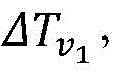


在方式a1中,第二车辆基于GPS和IMU得到的当前时刻的全局位姿。因为第二车辆的GPS未失效,但是由于基于GPS获知的第二车辆的全局位姿本身会有一定的延迟,因此在基于GPS对第二车辆进行定位时,可以将基于GPS得到的信息和基于其它技术(例如IMU)得到的信息融合,将融合后的结果作为第二车辆的当前时刻的全局位姿。这种将基于GPS得到的信息和基于其它技术(例如IMU)得到的信息进行融合以实现定位的方式可以称为组合定位。具有来说,先确定收到的最新的第二车辆的基于GPS的全局位姿的时刻,之后基于IMU计算接收到最新的第二车辆的基于GPS的全局位姿的时刻至当前时刻这段时间内第二车辆可能行驶的距离,结合二者确定出第二车辆的当前时刻的全局位姿。In the manner a1, the second vehicle obtains the global pose at the current moment based on the GPS and the IMU. Because the GPS of the second vehicle is not invalid, but since the global pose of the second vehicle obtained based on GPS will have a certain delay, when positioning the second vehicle based on GPS, the information obtained based on GPS can be combined with the information obtained based on GPS. The information obtained by other technologies (eg, IMU) is fused, and the fused result is used as the global pose of the second vehicle at the current moment. This method of fusing the information obtained based on GPS and the information obtained based on other technologies (eg, IMU) to realize positioning may be called combined positioning. In other words, first determine the time when the latest GPS-based global pose of the second vehicle is received, and then calculate the time from the time when the latest GPS-based global pose of the second vehicle is received to the current time based on the IMU. The distance that the second vehicle may travel within is determined, and the global pose of the second vehicle at the current moment is determined by combining the two.
在方式a1中,可以通过下述公式(4)计算第一车辆和第二车辆的第三变换矩阵的初始值:In the mode a1, the initial values of the third transformation matrices of the first vehicle and the second vehicle can be calculated by the following formula (4):

在公式(4)中,第一车辆编号为v1,第二车辆的编号为v2,


图5示例性示出了图1中的车辆A的当前时刻的预估全局位姿的计算示意图,如图5所示,以车辆A为第一车辆进行示例,车辆A的当前时刻的预估全局位姿可以根据车辆A的第一时刻的全局位姿和车辆A在第一时刻至当前时刻这段时长内的相对位姿来确定。如图5所示,车辆A在第一时刻的全局位姿可以是上述公式(3)中的

方式a2,前一时刻第一车辆的全局位姿可以是最近一次采用上述图3提供的方法得到的第一车辆的全局位姿。In the manner a2, the global pose of the first vehicle at the previous moment may be the global pose of the first vehicle obtained by the method provided in FIG. 3 in the most recent time.
在方式a2中,一种可能地实施方式中,在本次计算第一车辆的全局位姿之前,已经至少根据上述步骤310至步骤313提供的方案确定出了一次第一车辆的全局位姿。在方式a2中,最近一次计算出的第一车辆的全局位姿的时刻为第二时刻,则一种可选地实施方式中,第一车辆当前时刻的预估全局位姿基于以下内容得到:以最近一次计算出的第一车辆的全局位姿(即第一车辆在第二时刻的全局位姿)为基准,第一车辆在当前时刻相对于第二时刻的位姿变换量,也可以说是第一车辆在第二时刻和当前时刻之间的相对位姿。In mode a2, in a possible implementation, before calculating the global pose of the first vehicle this time, the global pose of the first vehicle has been determined at least once according to the solutions provided in
在方式a2中,第二车辆得到当前时刻的全局位姿的方式与方式a1中相同,不再赘述。且基于第一车辆当前时刻的预估全局位姿和第二车辆当前时刻的全局位姿计算第一车辆和第二车辆的第三变换矩阵的初始值可以采用上述公式(4),不再赘述。In manner a2, the manner in which the second vehicle obtains the global pose at the current moment is the same as that in manner a1, and details are not repeated here. And based on the estimated global pose of the first vehicle at the current moment and the global pose of the second vehicle at the current moment, the initial value of the third transformation matrix of the first vehicle and the second vehicle can be calculated using the above formula (4), which will not be repeated. .
图5示例性示出了图1中的车辆A的当前时刻的预估全局位姿的计算示意图,如图5所示,以车辆A为第一车辆进行示例,车辆A的当前时刻的预估全局位姿可以根据车辆A的第二时刻的全局位姿和车辆A在第二时刻至当前时刻这段时长内的相对位姿来确定。如图5所示,车辆A在第二时刻的全局位姿可以是根据上述步骤311至步骤313提供的方案确定出的一次第一车辆的全局位姿。车辆A在第二时刻至当前时刻这段时长内的相对位姿可以是基于以下内容得到:前一时刻计算出的第一车辆的全局位姿和IMU得到。FIG. 5 exemplarily shows a schematic diagram of the calculation of the estimated global pose of the vehicle A at the current moment in FIG. 1 . As shown in FIG. 5 , taking the vehicle A as the first vehicle for example, the estimation of the current moment of the vehicle A The global pose may be determined according to the global pose of the vehicle A at the second moment and the relative pose of the vehicle A during the period from the second moment to the current moment. As shown in FIG. 5 , the global pose of the vehicle A at the second moment may be the global pose of the first vehicle once determined according to the solutions provided in the
需要说明的是,上述方式a1和方式a2的选用时机,上述方式a1和方式a2可以灵活选用,本申请实施例提供一种可能地实施方案,可以在第一车辆的GPS失效后第一次采用上述图2提供的方案计算第一车辆的全局位姿时采用上述方式a1计算第一车辆和第二车辆的第三变换矩阵的初始值。在第二次以及以后采用上述图2提供的方案计算第一车辆的全局位姿时采用上述方式a2计算第一车辆和第二车辆的第三变换矩阵的初始值。It should be noted that the timing for selecting the above-mentioned methods a1 and a2, the above-mentioned methods a1 and a2 can be flexibly selected, and the embodiment of the present application provides a possible implementation scheme, which can be used for the first time after the GPS of the first vehicle fails. When calculating the global pose of the first vehicle in the solution provided in FIG. 2 above, the above method a1 is used to calculate the initial values of the third transformation matrices of the first vehicle and the second vehicle. When calculating the global pose of the first vehicle for the second and subsequent times using the solution provided in FIG. 2 , the above-mentioned method a2 is used to calculate the initial values of the third transformation matrices of the first vehicle and the second vehicle.
一种可能地实施方式中,将第N次迭代输出的第三变换矩阵作为第一相对位姿的数学表达形式。另一种可能地实施方式中,对第三变换矩阵的初始值和第N次迭代输出的第三变换矩阵进行加权融合,得到第四变换矩阵,将第四变换矩阵作为第一相对位姿的数学表达形式。加权融合可以采用卡尔曼滤波融合。In a possible implementation manner, the third transformation matrix output by the Nth iteration is used as the mathematical expression form of the first relative pose. In another possible implementation, weighted fusion is performed on the initial value of the third transformation matrix and the third transformation matrix output by the Nth iteration to obtain a fourth transformation matrix, and the fourth transformation matrix is used as the first relative pose Mathematical expression. Weighted fusion can use Kalman filter fusion.
在对第N次迭代输出的第三变换矩阵和第三变换矩阵的初始值进行卡尔曼滤波融合的过程中,为第N次迭代输出的第三变换矩阵和第三变换矩阵的初始值确定各自对应的权重,之后对第N次迭代输出的第三变换矩阵和第三变换矩阵的初始值进行加权相加,从而得到第四变换矩阵。将第四变换矩阵作为第一相对位姿的数学表达形式。第N次迭代输出的第三变换矩阵的权重与其可信度相关,第三变换矩阵的初始值的权重与其可信度相关。由于第三变换矩阵的初始值是根据第一车辆的预估的全局位姿确定的,因此可信度较低,而第N次迭代输出的第三变换矩阵的可信度较高,基于此,可以设定第一相对位姿作为卡尔曼滤波融合的观测模型(观测模型的可信度较高,),第三变换矩阵的初始值作为卡尔曼滤波融合的预测模型(预测模型的可信度较低)。In the process of performing Kalman filter fusion on the third transformation matrix output by the Nth iteration and the initial value of the third transformation matrix, determine the respective initial values of the third transformation matrix and the third transformation matrix output by the Nth iteration. The corresponding weight is then weighted and added to the third transformation matrix output by the Nth iteration and the initial value of the third transformation matrix, so as to obtain the fourth transformation matrix. The fourth transformation matrix is taken as the mathematical expression of the first relative pose. The weight of the third transformation matrix output by the Nth iteration is related to its credibility, and the weight of the initial value of the third transformation matrix is related to its credibility. Since the initial value of the third transformation matrix is determined according to the estimated global pose of the first vehicle, the reliability is low, while the reliability of the third transformation matrix output by the Nth iteration is high. Based on this , the first relative pose can be set as the observation model of Kalman filter fusion (the reliability of the observation model is high), and the initial value of the third transformation matrix is used as the prediction model of Kalman filter fusion (the credibility of the prediction model lower degree).
第一车辆的全局位姿可以通过下述公式(5)来确定:The global pose of the first vehicle can be determined by the following formula (5):

在公式(5)中,第一车辆编号为v1,第二车辆的编号为v2,为第一车辆的全局位姿,

上述方案介绍了被求助物为第二车辆,且通过第一车辆和第二车辆上安装的激光雷达来辅助确定第一车辆和第二车辆的第一相对位姿的方案。下面介绍几种其它用于确定第一车辆和被求助物之间的第一相对位姿的方案。The above solution introduces a solution in which the object to be sought is the second vehicle, and the first relative pose of the first vehicle and the second vehicle is assisted by the lidar installed on the first vehicle and the second vehicle. Several other solutions for determining the first relative pose between the first vehicle and the aided object are introduced below.
作为一种可能的实施例,除了将实施车辆定位的控制器部署在第一车辆中,还可以部署在被求助物上,这种情况下,相对于上述图2所示的方案的不同之处在于,控制器可以直接获取被求助物的全局位姿,不需要通过上述步骤312来获取被求助物的全局位姿。另一方面,当控制器确定出第一车辆的全局位姿之后,还需要向第一车辆发送该第一车辆的全局位姿。这种实施方式中,由于服务器部署在被求助物上,因此可以减少第一车辆的计算量,即减轻故障车辆的计算负担。As a possible example, in addition to deploying the controller that implements vehicle positioning in the first vehicle, it can also be deployed on the person being sought. In this case, the difference from the solution shown in FIG. 2 above is That is, the controller can directly obtain the global pose of the object to be aided, and does not need to obtain the global pose of the object to be aided through the
作为另一种可能的实施例,实施车辆定位的控制器还可以部署在云端,这种情况下,相对于上述图2所示的方案的不同之处在于,被求助物可以在接收到上述步骤310中的第一请求之后,可以将被求助物的全局位姿发送至云端的控制器。另一种可能地实施方式中,第一车辆可以向云端的控制器发送第一请求,并由部署于云端的控制器向被求助物发送第一请求,之后被求助物将被求助物的全局位姿可以发送至云端的控制器。在该实施方式中,当控制器计算出第一车辆的全局位姿之后,需要向第一车辆发送该第一车辆的全局位姿。这种实施方式中,由于将服务器部署在云端,因此可以减少第一车辆或第二车辆的计算量,减轻第一车辆或第二车辆的负担。As another possible embodiment, the controller that implements vehicle positioning can also be deployed in the cloud. In this case, the difference from the solution shown in FIG. 2 above is that the person being sought can receive the above steps after receiving After the first request in 310, the global pose of the aided object can be sent to the controller in the cloud. In another possible implementation, the first vehicle may send the first request to the controller in the cloud, and the controller deployed in the cloud may send the first request to the object to be aided, and then the object to be aided will change the global picture of the object to be aided. Pose can be sent to the controller in the cloud. In this embodiment, after the controller calculates the global pose of the first vehicle, it needs to send the global pose of the first vehicle to the first vehicle. In this embodiment, since the server is deployed in the cloud, the calculation amount of the first vehicle or the second vehicle can be reduced, and the burden of the first vehicle or the second vehicle can be reduced.
在另一种可能地实施方式中,除了图2的方法中以被求助物为可以是第二车辆且第二车辆上部署激光雷达以外,第一车辆和第二车辆上也可以安装有相机,相机传感器可以是全景相机传感器。第一车辆可以通过相机传感器连续拍摄两帧第一图像,每个图像为二维坐标系(例如X/Y坐标系)下的图像,图像中的特征点对应X轴和Y轴的坐标。结合两帧第一图像可以确定出该第一图像中的特征点的深度信息,即Z轴坐标。也就是说,第一车辆可以通过相机传感器获取障碍物的特征点的X轴、Y轴和Z轴的坐标,该特征点的X轴、Y轴和Z轴的坐标构成一组向量,这种情况下可以称获取了该点对应的点云数据。可以看出,通过第一车辆的相机传感器也可以获取第一图像对应的点云数据。类似地,通过第二车辆的相机传感器获取第二图像对应的点云数据。第一车辆的相机传感器和第二车辆的相机传感器具有重合的拍摄区域,进而可以根据该重合的拍摄区域的障碍物的特征点在第一图像的点云数据中对应的点云数据,以及该特征点在第二图像的点云数据中对应的点云数据进行点云匹配,从而确定出第一车辆和第二车辆的第一相对位姿。结合两个点云数据进行点云匹配从而确定第一相对位姿的方案可以参见上述内容,在此不再赘述。进一步,根据第一相对位姿以及第二车辆的全局位姿确定出第一车辆的全局位姿。In another possible implementation manner, in addition to the method in FIG. 2 that the person being sought may be the second vehicle and the lidar is deployed on the second vehicle, cameras may also be installed on the first vehicle and the second vehicle, The camera sensor may be a panoramic camera sensor. The first vehicle can continuously capture two frames of first images through the camera sensor, each image is an image in a two-dimensional coordinate system (for example, an X/Y coordinate system), and feature points in the image correspond to the coordinates of the X-axis and the Y-axis. The depth information of the feature points in the first images, that is, the Z-axis coordinates, can be determined by combining the two frames of the first images. That is to say, the first vehicle can obtain the coordinates of the X-axis, Y-axis and Z-axis of the feature point of the obstacle through the camera sensor, and the coordinates of the X-axis, Y-axis and Z-axis of the feature point constitute a set of vectors. In this case, it can be said that the point cloud data corresponding to the point is obtained. It can be seen that the point cloud data corresponding to the first image can also be acquired through the camera sensor of the first vehicle. Similarly, point cloud data corresponding to the second image is acquired through the camera sensor of the second vehicle. The camera sensor of the first vehicle and the camera sensor of the second vehicle have overlapping shooting areas, and then the point cloud data corresponding to the point cloud data of the first image according to the feature points of the obstacles in the overlapping shooting areas, and the Point cloud matching is performed on the point cloud data corresponding to the feature points in the point cloud data of the second image, thereby determining the first relative pose of the first vehicle and the second vehicle. The solution of performing point cloud matching by combining two point cloud data to determine the first relative pose can refer to the above content, and details are not repeated here. Further, the global pose of the first vehicle is determined according to the first relative pose and the global pose of the second vehicle.
在另一种可能地实施方式中,被求助物可以是配置有通信模块的基础设施,例如上述内容提到的配置有通信模块的路灯,或者还可以是路边的基站,还可以是配置有通信模块的摄像头。In another possible implementation manner, the object of assistance may be an infrastructure configured with a communication module, such as a street lamp configured with a communication module mentioned in the above content, or a roadside base station, or a base station configured with a communication module. The camera of the communication module.
当被求助物为配置有通信模块的路灯或者为基站等基础设置,以路灯为例进行介绍,第一车辆可以接收路灯发送的信号,可以根据信号的强度判断出路灯和第一车辆之间的相对位置。路灯可以将自身的全局位置发送给车辆,之后第一车辆可以基于相对位置和路灯的位置,确定出第一车辆自身的位置。另一方面,第一车辆可以估计出自身的姿态,例如:根据前一时刻所述第一车辆的姿态,以及基于IMU计算出的:以前一时刻第一车辆的姿态为基准,所述第一车辆在当前时刻相对于所述前一时刻的姿态,计算所述第一车辆当前时刻的姿态。When the requested object is a street lamp equipped with a communication module or a basic setting such as a base station, taking a street lamp as an example, the first vehicle can receive the signal sent by the street lamp, and can determine the relationship between the street lamp and the first vehicle according to the strength of the signal. relative position. The street lamp can send its own global position to the vehicle, and then the first vehicle can determine the position of the first vehicle itself based on the relative position and the position of the street lamp. On the other hand, the first vehicle can estimate its own attitude, for example, according to the attitude of the first vehicle at the previous moment, and calculated based on the IMU: the attitude of the first vehicle at the previous moment is used as a reference, the first vehicle The attitude of the first vehicle at the current moment is calculated relative to the attitude of the vehicle at the previous moment.
当被求助物为配置有通信模块的摄像头,摄像头可以拍摄两帧包括有第一车辆的第三图像,每个图像为二维坐标系(例如X/Y坐标系)下的图像,图像中第一车辆的特征点对应X轴和Y轴的坐标。结合两帧第三图像可以确定出该第三图像中第一车辆的特征点的深度信息,即Z轴坐标。第一车辆的特征点的X轴、Y轴和Z轴的坐标可以作为第一车辆的全局姿态信息的一种表示方式。When the person being sought is a camera equipped with a communication module, the camera can capture two frames of a third image including the first vehicle, each image is an image in a two-dimensional coordinate system (such as an X/Y coordinate system), and the third image in the image A feature point of a vehicle corresponds to the coordinates of the X-axis and the Y-axis. The depth information of the feature point of the first vehicle in the third image, that is, the Z-axis coordinate, can be determined by combining the two frames of the third image. The coordinates of the X-axis, Y-axis and Z-axis of the feature point of the first vehicle may be used as a representation of the global attitude information of the first vehicle.
上文中结合图1至图5,详细描述了根据本申请实施例所提供的车辆定位的方法,下面将结合图6至图7,描述根据本申请实施例所提供的车辆定位的控制器和系统。The vehicle positioning method provided according to the embodiments of the present application is described in detail above with reference to FIGS. 1 to 5 , and the controller and system for vehicle positioning provided according to the embodiments of the present application will be described below with reference to FIGS. 6 to 7 . .
图6为本申请实施例提供的一种车辆定位装置的结构的示意图,如图所示,装置1501包括获取单元1502和计算单元1503。FIG. 6 is a schematic diagram of the structure of a vehicle positioning apparatus provided by an embodiment of the present application. As shown in the figure, the
获取单元1502,用于获取第一车辆与被求助物的第一相对位姿,获取被求助物的全局位姿;第一相对位姿用于指示以第一车辆为基准,被求助物相对于第一车辆的位置和姿态;第一相对位姿是在第一坐标系中确定的被求助物的位姿;全局位姿是在第二坐标系确定的被求助物的全局位姿;The obtaining
计算单元1503,用于根据第一相对位姿和全局位姿,计算第一车辆的全局位姿。如此,在第一车辆的GPS信号弱或者无GPS信号的情况下,可以基于被求助物的全局位姿,以及第一车辆和被求助物之间的第一相对位姿来确定出第一车辆的全局位姿。The
应理解的是,本申请实施例的装置1501可以通过专用集成电路(application-specific integrated circuit,ASIC)实现,或可编程逻辑器件(programmable logicdevice,PLD)实现,上述PLD可以是复杂程序逻辑器件(complex programmable logicaldevice,CPLD),现场可编程门阵列(field-programmable gate array,FPGA),通用阵列逻辑(generic array logic,GAL)或其任意组合。也可以通过软件实现图2至图5所示的车辆定位方法时,装置1501及其各个模块也可以为软件模块。It should be understood that the
在一种可能地实施方式中,被求助物为第二车辆,第一相对位姿用于指示以第一车辆为基准,第二车辆相对于第一车辆的位置和姿态,姿态用于指示以第一车辆的车头朝向为基准,第二车辆的车头的朝向。如此,在第一车辆的GPS信号弱或者无GPS信号的情况下,可以向其他车辆求助,且可以基于其他车辆的信息,确定出第一车辆的车头朝向,从而在智能车领域可以辅助其实现自动驾驶。In a possible implementation manner, the person being sought is a second vehicle, the first relative posture is used to indicate that the first vehicle is used as a reference, the position and posture of the second vehicle relative to the first vehicle, and the posture is used to indicate The head direction of the first vehicle is used as the reference, and the head direction of the second vehicle is used as the reference. In this way, when the GPS signal of the first vehicle is weak or there is no GPS signal, other vehicles can be asked for help, and the head orientation of the first vehicle can be determined based on the information of the other vehicles, so that it can be assisted in the field of smart cars. Autopilot.
在一种可能地实施方式中,获取单元1502,还用于:获取第一车辆的激光雷达进行扫描第一车辆周围物体所得到的在第一坐标系的第一点云数据;获取第二车辆的激光雷达进行扫描第二车辆周围物体所得到的在第二坐标系的第二点云数据;其中,第一车辆的激光雷达和第二车辆的激光雷达具有重合扫描区域,且针对重合扫描区域中的障碍物,第一点云数据中包括障碍物对应的点云数据,第二点云数据中包括障碍物对应的点云数据;根据障碍物在第一点云数据中对应的点云数据,以及障碍物在第二点云数据中对应的点云数据,计算第一相对位姿。如此,可以根据激光雷达扫描出的点云数据进行点云匹配,从而确定出较为准确的两辆车之间的相对位姿。In a possible implementation manner, the acquiring
在一种可能地实施方式中,获取单元1502,还用于:将第一坐标系中第一点云数据转换至预设的第一车辆的第一基准坐标系,获得第三点云数据;其中,第一基准坐标系是将第一坐标系的原点平移至预设的第一基准点后得到的坐标系;将第二坐标系中第二点云数据转换至预设的第二车辆的第二基准坐标系,获得第四点云数据;其中,第二基准坐标系是将第二坐标系的原点平移至预设的第二基准点后得到的坐标系;对障碍物在第三点云数据中对应的点云数据,以及障碍物在第四点云数据中对应的点云数据进行点云匹配,得到第一相对位姿。如此,可以将第一点云数据和第二点云数据均转换至各自车辆的基准坐标系下,各个车辆的基准坐标系的原点相对于各自的车辆的位置都是对应的,例如各个车辆的基准坐标系的原点均位于各自的车辆的后轴中心,从而可以较为准确的确定出两辆车之间的相对位姿。In a possible implementation manner, the obtaining
在一种可能地实施方式中,获取单元1502,还用于:根据障碍物在第三点云数据中对应的点云数据,以及障碍物在第四点云数据中对应的点云数据,执行N次迭代,得到第N次迭代输出的第三变换矩阵;N为正整数;根据第N次迭代输出的第三变换矩阵,确定第一相对位姿;其中,针对N迭代中的第i次迭代,i为不大于N的正整数:针对障碍物的M个点中的每个点执行:根据第i-1次迭代输出的第三变换矩阵,对该点在第三点云数据中对应的点云数据执行一次变换,得到该点对应的变换后点云数据;计算该点对应的变换后点云数据和该点在第四点云数据中对应的点云数据的差值,得到该点对应的残差;M为正整数;根据障碍物的M个点中每个点对应的残差,计算残差总和;若残差总和不小于预设的残差阈值,则以预设变换量更新第i-1次迭代输出的第三变换矩阵,并将更新后的第i-1次迭代输出的第三变换矩阵作为:第i次迭代输出的第三变换矩阵,并执行下一次迭代;若残差总和小于残差阈值,则结束迭代,将第i-1次迭代输出的第三变换矩阵作为:第N次迭代输出的第三变换矩阵。In a possible implementation manner, the obtaining
在一种可能地实施方式中,获取单元1502,还用于:当i为1时,通过如下内容确定第i-1次迭代输出的第三变换矩阵:根据前一时刻第一车辆的全局位姿,以及基于IMU计算出的:以前一时刻第一车辆的全局位姿为基准,第一车辆在当前时刻相对于前一时刻的位姿,计算第一车辆当前时刻的预估全局位姿;获取第二车辆基于全球定位系统GPS和IMU得到的当前时刻的全局位姿;根据第一车辆当前时刻的预估全局位姿和第二车辆当前时刻的全局位姿,确定出第二相对位姿,第二相对位姿用于指示以第一车辆为基准,被求助物相对于第一车辆的位置和姿态;第二相对位姿是在第一坐标系中确定的被求助物的位姿;将用于表达第二相对位姿的矩阵作为:第i-1次迭代输出的第三变换矩阵。In a possible implementation manner, the obtaining
在一种可能地实施方式中,获取单元1502,还用于:第i-1次迭代输出的第三变换矩阵,还用于:将第N次迭代输出的第三变换矩阵作为第一相对位姿的数学表达形式。在另一种可能地实施方式中,获取单元1502,还用于:对第i-1次迭代输出的第三变换矩阵和第N次迭代输出的第三变换矩阵进行加权融合,得到第四变换矩阵,将第四变换矩阵作为第一相对位姿的数学表达形式。In a possible implementation manner, the obtaining
在一种可能地实施方式中,装置1501还包括确定单元1504,用于:确定第一车辆的基于GPS的全局位姿误差大于误差阈值;或者;第一车辆在第一车辆的GPS定位装置出现故障。In a possible implementation manner, the
在一种可能地实施方式中,获取单元1502,还用于:获取多个被求助物中每个被求助物对应的第一车辆的全局位姿;计算单元1503,还用于:对多个被求助物对应的多个第一车辆的全局位姿进行加权融合,得到第一车辆的目标全局位姿。In a possible implementation manner, the obtaining
装置1501还包括发送单元1505和接收单元1506,发送单元1505用于:向被求助物发送第一请求;第一请求中携带第一车辆的标识。接收单元1506,用于:接收被求助物发送的被求助物的全局位姿。The
根据本申请实施例的装置1501可对应于执行本申请实施例中描述的方法,并且装置1501中的各个单元的上述和其它操作和/或功能分别为了实现图2至图5中的各个方法的相应流程,为了简洁,在此不再赘述。The
图7为本申请实施例提供的一种控制器结构的示意图,如图所示,控制器1301包括处理器1302、存储器1304和通信接口1303。其中,处理器1302、存储器1304和通信接口1303可以通过总线1305进行通信,也可以通过无线传输等其他手段实现通信。该存储器1304用于存储指令,该处理器1302用于执行该存储器1304存储的指令。该存储器1304存储程序代码,且处理器1302可以调用存储器1304中存储的程序代码执行以下操作:FIG. 7 is a schematic diagram of the structure of a controller according to an embodiment of the present application. As shown in the figure, the
处理器1302,用于获取第一车辆与被求助物的第一相对位姿,获取被求助物的全局位姿;第一相对位姿用于指示以第一车辆为基准,被求助物相对于第一车辆的位置和姿态;第一相对位姿是在第一坐标系中确定的被求助物的位姿;全局位姿是在第二坐标系确定的被求助物的全局位姿;处理器1302,用于根据第一相对位姿和全局位姿,计算第一车辆的全局位姿。如此,在第一车辆的GPS信号弱或者无GPS信号的情况下,可以基于被求助物的全局位姿,以及第一车辆和被求助物之间的第一相对位姿来确定出第一车辆的全局位姿。The
应理解,在本申请实施例中,该处理器1302可以是中央处理单元(centralprocessing unit,CPU),该处理器1302还可以是其他通用处理器、数字信号处理器(digital signal processing,DSP)、专用集成电路(ASIC)、现场可编程门阵列(FPGA)或者其他可编程逻辑器件、分立门或者晶体管逻辑器件、分立硬件组件等。通用处理器可以是微处理器或者是任何常规的处理器等。It should be understood that, in this embodiment of the present application, the
该存储器1304可以包括只读存储器和随机存取存储器,并向处理器1302提供指令和数据。存储器1304还可以包括非易失性随机存取存储器。例如,存储器1304还可以存储设备类型的信息。The
该存储器1304可以是易失性存储器或非易失性存储器,或可包括易失性和非易失性存储器两者。其中,非易失性存储器可以是只读存储器(read-only memory,ROM)、可编程只读存储器(programmable ROM,PROM)、可擦除可编程只读存储器(erasable PROM,EPROM)、电可擦除可编程只读存储器(electrically EPROM,EEPROM)或闪存。易失性存储器可以是随机存取存储器(random access memory,RAM),其用作外部高速缓存。通过示例性但不是限制性说明,许多形式的RAM可用,例如静态随机存取存储器(static RAM,SRAM)、动态随机存取存储器(DRAM)、同步动态随机存取存储器(synchronous DRAM,SDRAM)、双倍数据速率同步动态随机存取存储器(double data date SDRAM,DDR SDRAM)、增强型同步动态随机存取存储器(enhanced SDRAM,ESDRAM)、同步连接动态随机存取存储器(synchlinkDRAM,SLDRAM)和直接内存总线随机存取存储器(direct rambus RAM,DR RAM)。The
该总线1305除包括数据总线之外,还可以包括电源总线、控制总线和状态信号总线等。但是为了清楚说明起见,在图中将各种总线都标为总线1305。In addition to the data bus, the
应理解,根据本申请实施例的车辆定位的控制器1301可对应于本申请实施例中的车辆定位的装置的装置1501,并可以对应于执行根据本申请实施例的方法中的相应主体,并且控制器1301中的各个模块的上述和其它操作和/或功能分别为了实现图2至图5中的各个方法的相应流程,为了简洁,在此不再赘述。It should be understood that the
本申请还提供一种车辆,该车辆上包括如图7所示的控制器1301。该车辆可以对应图2所示方法中第一车辆,用于实现如图2至图5中各个方法的操作步骤,为了简洁,在此不再赘述。The present application also provides a vehicle, which includes the
本申请还提供一种车辆,该车辆包括如图7所示的控制器1301。此时,该车辆可以为被求助车辆,用于利用图2至图5所示的各个方法的操作步骤实现辅助GPS故障车辆定位的过程。The present application also provides a vehicle including the
本申请还提供一种系统,该系统包括第一车辆和云端的计算平台,该云端的计算平台用于实现上述方法中由云端的计算平台辅助GPS故障的第一车辆进行定位的过程。The present application also provides a system, which includes a first vehicle and a cloud computing platform, where the cloud computing platform is used to implement the process in which the cloud computing platform assists the positioning of the first vehicle with GPS failure in the above method.
在上述实施例中,可以全部或部分地通过软件、硬件、固件或者其任意组合来实现。当使用软件实现时,可以全部或部分地以计算机程序产品的形式实现。计算机程序产品包括一个或多个计算机指令。在计算机上加载和执行计算机指令时,全部或部分地产生按照本申请实施例的流程或功能。计算机可以是通用计算机、专用计算机、计算机网络、或者其他可编程装置。计算机指令可以存储在计算机可读存储介质中,或者从一个计算机可读存储介质向另一个计算机可读存储介质传输,例如,计算机指令可以从一个网站站点、计算机、服务器或数据中心通过有线(例如同轴电缆、光纤、数字用户线(digital subscriberline,DSL))或无线(例如红外、无线、微波等)方式向另一个网站站点、计算机、服务器或数据中心进行传输。计算机可读存储介质可以是计算机能够存取的任何可用介质或者是包含一个或多个可用介质集成的服务器、数据中心等数据存储设备。可用介质可以是磁性介质(例如,软盘、硬盘、磁带)、光介质(例如,高密度数字视频光盘(digital video disc,DVD))、或者半导体介质(例如,固态硬盘(solid state disc,SSD))等。In the above-mentioned embodiments, it may be implemented in whole or in part by software, hardware, firmware or any combination thereof. When implemented in software, it can be implemented in whole or in part in the form of a computer program product. A computer program product includes one or more computer instructions. When computer instructions are loaded and executed on a computer, the processes or functions according to the embodiments of the present application are produced in whole or in part. The computer may be a general purpose computer, a special purpose computer, a computer network, or other programmable device. Computer instructions may be stored in or transmitted from one computer-readable storage medium to another computer-readable storage medium, for example, the computer instructions may be transmitted from a website site, computer, server, or data center over a wire (e.g. coaxial cable, optical fiber, digital subscriber line (DSL)) or wireless (eg infrared, wireless, microwave, etc.) means to transmit to another website site, computer, server or data center. A computer-readable storage medium can be any available medium that can be accessed by a computer or a data storage device such as a server, a data center, or the like that includes an integration of one or more available media. Useful media may be magnetic media (eg, floppy disks, hard disks, magnetic tapes), optical media (eg, high-density digital video discs (DVDs)), or semiconductor media (eg, solid state discs (SSDs)) )Wait.
以上所述,仅为本申请的具体实施方式,但本申请的保护范围并不局限于此,任何熟悉本技术领域的技术人员在本申请揭露的技术范围内,可轻易想到各种等效的修改或替换,这些修改或替换都应涵盖在本申请的保护范围之内。因此,本申请的保护范围应以权利要求的保护范围为准。The above are only specific embodiments of the present application, but the protection scope of the present application is not limited thereto. Any person skilled in the art can easily think of various equivalents within the technical scope disclosed in the present application. Modifications or substitutions shall be covered by the protection scope of this application. Therefore, the protection scope of the present application shall be subject to the protection scope of the claims.
Claims (17)
Priority Applications (3)
| Application Number | Priority Date | Filing Date | Title |
|---|---|---|---|
| EP20914151.4A EP4080248A4 (en) | 2020-01-14 | 2020-11-02 | METHOD AND DEVICE FOR VEHICLE POSITIONING, CONTROL, INTELLIGENT CAR AND SYSTEM |
| PCT/CN2020/125761 WO2021143286A1 (en) | 2020-01-14 | 2020-11-02 | Method and apparatus for vehicle positioning, controller, smart car and system |
| US17/864,998 US12252137B2 (en) | 2020-01-14 | 2022-07-14 | Vehicle positioning method, apparatus, and controller, intelligent vehicle, and system |
Applications Claiming Priority (2)
| Application Number | Priority Date | Filing Date | Title |
|---|---|---|---|
| CN202010038272 | 2020-01-14 | ||
| CN2020100382726 | 2020-01-14 |
Publications (2)
| Publication Number | Publication Date |
|---|---|
| CN111413721A true CN111413721A (en) | 2020-07-14 |
| CN111413721B CN111413721B (en) | 2022-07-19 |
Family
ID=71491015
Family Applications (1)
| Application Number | Title | Priority Date | Filing Date |
|---|---|---|---|
| CN202010177804.4A Active CN111413721B (en) | 2020-01-14 | 2020-03-13 | Vehicle positioning method, device, controller, intelligent vehicle and system |
Country Status (4)
| Country | Link |
|---|---|
| US (1) | US12252137B2 (en) |
| EP (1) | EP4080248A4 (en) |
| CN (1) | CN111413721B (en) |
| WO (1) | WO2021143286A1 (en) |
Cited By (11)
| Publication number | Priority date | Publication date | Assignee | Title |
|---|---|---|---|---|
| WO2021143286A1 (en) * | 2020-01-14 | 2021-07-22 | 华为技术有限公司 | Method and apparatus for vehicle positioning, controller, smart car and system |
| CN113359167A (en) * | 2021-04-16 | 2021-09-07 | 电子科技大学 | Method for fusing and positioning GPS and laser radar through inertial measurement parameters |
| CN113675923A (en) * | 2021-08-23 | 2021-11-19 | 追觅创新科技(苏州)有限公司 | Charging method, charging device and robot |
| CN113758491A (en) * | 2021-08-05 | 2021-12-07 | 重庆长安汽车股份有限公司 | Relative positioning method and system based on multi-sensor fusion unmanned vehicle and vehicle |
| CN113899363A (en) * | 2021-09-29 | 2022-01-07 | 北京百度网讯科技有限公司 | Vehicle positioning method, device and automatic driving vehicle |
| CN114212049A (en) * | 2021-12-10 | 2022-03-22 | 镁佳(北京)科技有限公司 | Vehicle positioning method and system |
| CN114429499A (en) * | 2022-01-24 | 2022-05-03 | 苏州挚途科技有限公司 | Vehicle positioning method and device and electronic equipment |
| CN114521267A (en) * | 2020-09-18 | 2022-05-20 | 中国科学院重庆绿色智能技术研究院 | Sensing method and system for anti-shake stabilizer of vehicle |
| CN115951369A (en) * | 2022-12-14 | 2023-04-11 | 畅加风行(苏州)智能科技有限公司 | Multi-sensor fusion positioning method for complex port environment |
| WO2024119363A1 (en) * | 2022-12-06 | 2024-06-13 | 华为技术有限公司 | Data collection method and apparatus, and intelligent driving device |
| WO2025213724A1 (en) * | 2024-04-10 | 2025-10-16 | 中国第一汽车股份有限公司 | Relative vehicle distance calculation method and apparatus, and device and readable storage medium |
Families Citing this family (10)
| Publication number | Priority date | Publication date | Assignee | Title |
|---|---|---|---|---|
| CN112541475B (en) * | 2020-12-24 | 2024-01-19 | 北京百度网讯科技有限公司 | Sensing data detection method and device |
| US12117540B2 (en) * | 2021-11-03 | 2024-10-15 | Toyota Research Institute, Inc. | Systems and methods for improving localization accuracy by sharing mutual localization information |
| CN114061573B (en) * | 2021-11-16 | 2024-03-22 | 中国人民解放军陆军工程大学 | Ground unmanned vehicle formation positioning device and method |
| US12130390B2 (en) * | 2022-01-06 | 2024-10-29 | GM Global Technology Operations LLC | Aggregation-based LIDAR data alignment |
| CN114563795B (en) * | 2022-02-25 | 2023-01-17 | 湖南大学无锡智能控制研究院 | Positioning and tracking method and system based on laser odometer and tag fusion algorithm |
| US12530896B2 (en) * | 2022-09-02 | 2026-01-20 | Qualcomm Incorporated | Visual feature sharing for relative pose |
| CN119968301A (en) * | 2022-09-27 | 2025-05-09 | 阿波罗智能技术(北京)有限公司 | Cloud-based scanning for detecting sensor failures in autonomous vehicles |
| CN116309804B (en) * | 2023-03-13 | 2025-08-29 | 中国铁建重工集团股份有限公司 | Method and system for calculating the posture of the front and rear vehicles of tunnel bolter supporting equipment |
| WO2024249118A1 (en) * | 2023-06-01 | 2024-12-05 | Qualcomm Incorporated | Relative pose estimation based on opportunistic reference coordinate system |
| CN116559928B (en) * | 2023-07-11 | 2023-09-22 | 新石器慧通(北京)科技有限公司 | Lidar position and orientation information determination method, device, equipment and storage medium |
Citations (13)
| Publication number | Priority date | Publication date | Assignee | Title |
|---|---|---|---|---|
| US20170094245A1 (en) * | 2015-09-24 | 2017-03-30 | Intel Corporation | Drift correction for camera tracking |
| US20180045519A1 (en) * | 2016-08-09 | 2018-02-15 | Nauto, Inc. | System and method for precision localization and mapping |
| CN108345020A (en) * | 2018-02-09 | 2018-07-31 | 长沙智能驾驶研究院有限公司 | Vehicle positioning method, system and computer readable storage medium |
| CN109059902A (en) * | 2018-09-07 | 2018-12-21 | 百度在线网络技术(北京)有限公司 | Relative pose determines method, apparatus, equipment and medium |
| WO2018233699A1 (en) * | 2017-06-22 | 2018-12-27 | 中兴通讯股份有限公司 | Vehicle positioning method, apparatus and terminal device |
| CN109523581A (en) * | 2017-09-19 | 2019-03-26 | 华为技术有限公司 | A kind of method and apparatus of three-dimensional point cloud alignment |
| CN109540148A (en) * | 2018-12-04 | 2019-03-29 | 广州小鹏汽车科技有限公司 | Localization method and system based on SLAM map |
| CN109932741A (en) * | 2017-12-19 | 2019-06-25 | 阿里巴巴集团控股有限公司 | Localization method, positioning system, calculates equipment and storage medium at positioning device |
| CN110007300A (en) * | 2019-03-28 | 2019-07-12 | 东软睿驰汽车技术(沈阳)有限公司 | A kind of method and device obtaining point cloud data |
| CN110221276A (en) * | 2019-05-31 | 2019-09-10 | 文远知行有限公司 | Scaling method, device, computer equipment and the storage medium of laser radar |
| US20190302220A1 (en) * | 2018-03-28 | 2019-10-03 | Qualcomm Incorporated | Method and apparatus for v2x assisted positioning determination using positioning reference signal signals |
| US20190302275A1 (en) * | 2018-03-30 | 2019-10-03 | Beijing Baidu Netcom Science Technology Co., Ltd. | Vehicle positioning method, apparatus and device |
| CN110398729A (en) * | 2019-07-16 | 2019-11-01 | 启迪云控(北京)科技有限公司 | A kind of vehicle positioning method and system based on car networking |
Family Cites Families (12)
| Publication number | Priority date | Publication date | Assignee | Title |
|---|---|---|---|---|
| JP2007232690A (en) * | 2006-03-03 | 2007-09-13 | Denso Corp | Present position detection apparatus, map display device and present position detecting method |
| CN103366593B (en) | 2012-03-27 | 2016-01-20 | 哈尔滨工业大学深圳研究生院 | A kind of intelligent parking navigational system based on cloud computing |
| CN103983997A (en) | 2014-05-09 | 2014-08-13 | 北京航空航天大学 | Vehicle-mounted integrated navigation method of resisting to failure of global positioning system |
| CN104848856B (en) | 2015-05-29 | 2017-09-22 | 山东鲁能智能技术有限公司 | A kind of Intelligent Mobile Robot reckoning method and apparatus based on differential between wheel |
| CN106842271B (en) * | 2015-12-03 | 2020-05-12 | 宁波芯路通讯科技有限公司 | Navigation positioning method and device |
| CN107909614B (en) | 2017-11-13 | 2021-02-26 | 中国矿业大学 | A positioning method of inspection robot under GPS failure environment |
| US11294060B2 (en) * | 2018-04-18 | 2022-04-05 | Faraday & Future Inc. | System and method for lidar-based vehicular localization relating to autonomous navigation |
| CN108917762B (en) * | 2018-05-16 | 2020-06-30 | 珠海格力电器股份有限公司 | Method and system for positioning electric appliance, storage medium and home system |
| CN110361008B (en) | 2019-07-10 | 2020-12-25 | 北京智行者科技有限公司 | Positioning method and device for automatic parking of underground garage |
| CN110609290B (en) * | 2019-09-19 | 2021-07-23 | 北京智行者科技有限公司 | Lidar matching and positioning method and device |
| US11604288B2 (en) * | 2019-11-08 | 2023-03-14 | Ford Global Technologies, Llc | Self-correcting vehicle localization |
| CN111413721B (en) * | 2020-01-14 | 2022-07-19 | 华为技术有限公司 | Vehicle positioning method, device, controller, intelligent vehicle and system |
-
2020
- 2020-03-13 CN CN202010177804.4A patent/CN111413721B/en active Active
- 2020-11-02 WO PCT/CN2020/125761 patent/WO2021143286A1/en not_active Ceased
- 2020-11-02 EP EP20914151.4A patent/EP4080248A4/en active Pending
-
2022
- 2022-07-14 US US17/864,998 patent/US12252137B2/en active Active
Patent Citations (13)
| Publication number | Priority date | Publication date | Assignee | Title |
|---|---|---|---|---|
| US20170094245A1 (en) * | 2015-09-24 | 2017-03-30 | Intel Corporation | Drift correction for camera tracking |
| US20180045519A1 (en) * | 2016-08-09 | 2018-02-15 | Nauto, Inc. | System and method for precision localization and mapping |
| WO2018233699A1 (en) * | 2017-06-22 | 2018-12-27 | 中兴通讯股份有限公司 | Vehicle positioning method, apparatus and terminal device |
| CN109523581A (en) * | 2017-09-19 | 2019-03-26 | 华为技术有限公司 | A kind of method and apparatus of three-dimensional point cloud alignment |
| CN109932741A (en) * | 2017-12-19 | 2019-06-25 | 阿里巴巴集团控股有限公司 | Localization method, positioning system, calculates equipment and storage medium at positioning device |
| CN108345020A (en) * | 2018-02-09 | 2018-07-31 | 长沙智能驾驶研究院有限公司 | Vehicle positioning method, system and computer readable storage medium |
| US20190302220A1 (en) * | 2018-03-28 | 2019-10-03 | Qualcomm Incorporated | Method and apparatus for v2x assisted positioning determination using positioning reference signal signals |
| US20190302275A1 (en) * | 2018-03-30 | 2019-10-03 | Beijing Baidu Netcom Science Technology Co., Ltd. | Vehicle positioning method, apparatus and device |
| CN109059902A (en) * | 2018-09-07 | 2018-12-21 | 百度在线网络技术(北京)有限公司 | Relative pose determines method, apparatus, equipment and medium |
| CN109540148A (en) * | 2018-12-04 | 2019-03-29 | 广州小鹏汽车科技有限公司 | Localization method and system based on SLAM map |
| CN110007300A (en) * | 2019-03-28 | 2019-07-12 | 东软睿驰汽车技术(沈阳)有限公司 | A kind of method and device obtaining point cloud data |
| CN110221276A (en) * | 2019-05-31 | 2019-09-10 | 文远知行有限公司 | Scaling method, device, computer equipment and the storage medium of laser radar |
| CN110398729A (en) * | 2019-07-16 | 2019-11-01 | 启迪云控(北京)科技有限公司 | A kind of vehicle positioning method and system based on car networking |
Non-Patent Citations (4)
| Title |
|---|
| V. KUKSHYA: "Performance Evaluation of a System for Estimating Relative Positions of Vehicles During GPS Outages", 《2006 IEEE INTELLIGENT VEHICLES SYMPOSIUM》 * |
| 吉超: "车联网中车辆盲区定位技术的研究", 《轻工科技》 * |
| 朱艳芳: "三维颅面点对应方法研究", 《中国优秀硕士学位论文全文数据库,信息科技辑》 * |
| 鲁光泉: "考虑定位信息不确定性的多车协同定位算法", 《交通信息与安全》 * |
Cited By (15)
| Publication number | Priority date | Publication date | Assignee | Title |
|---|---|---|---|---|
| US12252137B2 (en) | 2020-01-14 | 2025-03-18 | Shenzhen Yinwang Intelligent Technologies Co., Ltd. | Vehicle positioning method, apparatus, and controller, intelligent vehicle, and system |
| WO2021143286A1 (en) * | 2020-01-14 | 2021-07-22 | 华为技术有限公司 | Method and apparatus for vehicle positioning, controller, smart car and system |
| CN114521267A (en) * | 2020-09-18 | 2022-05-20 | 中国科学院重庆绿色智能技术研究院 | Sensing method and system for anti-shake stabilizer of vehicle |
| CN113359167A (en) * | 2021-04-16 | 2021-09-07 | 电子科技大学 | Method for fusing and positioning GPS and laser radar through inertial measurement parameters |
| CN113758491A (en) * | 2021-08-05 | 2021-12-07 | 重庆长安汽车股份有限公司 | Relative positioning method and system based on multi-sensor fusion unmanned vehicle and vehicle |
| CN113758491B (en) * | 2021-08-05 | 2024-02-23 | 重庆长安汽车股份有限公司 | Relative positioning method, system and vehicle for unmanned vehicle based on multi-sensor fusion |
| CN113675923B (en) * | 2021-08-23 | 2023-08-08 | 追觅创新科技(苏州)有限公司 | Charging method, charging device and robot |
| CN113675923A (en) * | 2021-08-23 | 2021-11-19 | 追觅创新科技(苏州)有限公司 | Charging method, charging device and robot |
| CN113899363A (en) * | 2021-09-29 | 2022-01-07 | 北京百度网讯科技有限公司 | Vehicle positioning method, device and automatic driving vehicle |
| US11953609B2 (en) | 2021-09-29 | 2024-04-09 | Beijing Baidu Netcom Science Technology Co., Ltd. | Vehicle positioning method, apparatus and autonomous driving vehicle |
| CN114212049A (en) * | 2021-12-10 | 2022-03-22 | 镁佳(北京)科技有限公司 | Vehicle positioning method and system |
| CN114429499A (en) * | 2022-01-24 | 2022-05-03 | 苏州挚途科技有限公司 | Vehicle positioning method and device and electronic equipment |
| WO2024119363A1 (en) * | 2022-12-06 | 2024-06-13 | 华为技术有限公司 | Data collection method and apparatus, and intelligent driving device |
| CN115951369A (en) * | 2022-12-14 | 2023-04-11 | 畅加风行(苏州)智能科技有限公司 | Multi-sensor fusion positioning method for complex port environment |
| WO2025213724A1 (en) * | 2024-04-10 | 2025-10-16 | 中国第一汽车股份有限公司 | Relative vehicle distance calculation method and apparatus, and device and readable storage medium |
Also Published As
| Publication number | Publication date |
|---|---|
| EP4080248A1 (en) | 2022-10-26 |
| WO2021143286A1 (en) | 2021-07-22 |
| EP4080248A4 (en) | 2023-06-21 |
| US20220371602A1 (en) | 2022-11-24 |
| US12252137B2 (en) | 2025-03-18 |
| CN111413721B (en) | 2022-07-19 |
Similar Documents
| Publication | Publication Date | Title |
|---|---|---|
| CN111413721A (en) | Vehicle positioning method, device, controller, intelligent vehicle and system | |
| CN110148185B (en) | Method and device for determining coordinate system conversion parameters of imaging equipment and electronic equipment | |
| CN110146869B (en) | Method and device for determining coordinate system conversion parameters, electronic equipment and storage medium | |
| CN110033489B (en) | Method, device and equipment for evaluating vehicle positioning accuracy | |
| US11915099B2 (en) | Information processing method, information processing apparatus, and recording medium for selecting sensing data serving as learning data | |
| CN108828527B (en) | Multi-sensor data fusion method and device, vehicle-mounted equipment and storage medium | |
| CN110378965A (en) | Determine the method, apparatus, equipment and storage medium of coordinate system conversion parameter | |
| CN107636679B (en) | An obstacle detection method and device | |
| WO2020232648A1 (en) | Lane line detection method, electronic device and storage medium | |
| CN109849930B (en) | Method and device for calculating speed of adjacent vehicle of automatic driving automobile | |
| CN110779538B (en) | Allocate processing resources across on-premises and cloud-based systems relative to autonomous navigation | |
| CN110411457B (en) | Positioning method, system, terminal and storage medium based on stroke perception and vision fusion | |
| US11080561B2 (en) | Training and verification of learning models using high-definition map information and positioning information | |
| CN112689234A (en) | Indoor vehicle positioning method and device, computer equipment and storage medium | |
| CN117274933A (en) | Training method, detection method and device of three-dimensional lane line detection model | |
| CN113312403B (en) | Map acquisition method and device, electronic equipment and storage medium | |
| JP2020095435A (en) | Mobile | |
| CN117315432B (en) | Dynamic multi-target recognition vehicle-road multi-mode sensor data fusion method | |
| CN113447032A (en) | Positioning method, positioning device, electronic equipment and storage medium | |
| CN108416044A (en) | Scene thumbnail map generalization method, apparatus, electronic equipment and storage medium | |
| US12423836B2 (en) | Camera-radar fusion using correspondences | |
| CN114648598B (en) | Global map construction method and device | |
| CN114076946B (en) | Motion estimation method and device | |
| CN113390422A (en) | Automobile positioning method and device and computer storage medium | |
| CN115848358B (en) | Vehicle parking method, device, electronic equipment and computer readable medium |
Legal Events
| Date | Code | Title | Description |
|---|---|---|---|
| PB01 | Publication | ||
| PB01 | Publication | ||
| SE01 | Entry into force of request for substantive examination | ||
| SE01 | Entry into force of request for substantive examination | ||
| GR01 | Patent grant | ||
| GR01 | Patent grant | ||
| TR01 | Transfer of patent right | ||
| TR01 | Transfer of patent right |
Effective date of registration: 20241105 Address after: 518129 Huawei Headquarters Office Building 101, Wankecheng Community, Bantian Street, Longgang District, Shenzhen, Guangdong Patentee after: Shenzhen Yinwang Intelligent Technology Co.,Ltd. Country or region after: China Address before: 518129 Bantian HUAWEI headquarters office building, Longgang District, Guangdong, Shenzhen Patentee before: HUAWEI TECHNOLOGIES Co.,Ltd. Country or region before: China |