CN111400324B - A method, device and server for locking objects in cloud storage - Google Patents
A method, device and server for locking objects in cloud storage Download PDFInfo
- Publication number
- CN111400324B CN111400324B CN201911088601.1A CN201911088601A CN111400324B CN 111400324 B CN111400324 B CN 111400324B CN 201911088601 A CN201911088601 A CN 201911088601A CN 111400324 B CN111400324 B CN 111400324B
- Authority
- CN
- China
- Prior art keywords
- locking
- capacity
- task
- locked
- current
- Prior art date
- Legal status (The legal status is an assumption and is not a legal conclusion. Google has not performed a legal analysis and makes no representation as to the accuracy of the status listed.)
- Active
Links
Images


Classifications
-
- G—PHYSICS
- G06—COMPUTING OR CALCULATING; COUNTING
- G06F—ELECTRIC DIGITAL DATA PROCESSING
- G06F16/00—Information retrieval; Database structures therefor; File system structures therefor
- G06F16/20—Information retrieval; Database structures therefor; File system structures therefor of structured data, e.g. relational data
- G06F16/23—Updating
- G06F16/2308—Concurrency control
- G06F16/2336—Pessimistic concurrency control approaches, e.g. locking or multiple versions without time stamps
- G06F16/2343—Locking methods, e.g. distributed locking or locking implementation details
-
- G—PHYSICS
- G06—COMPUTING OR CALCULATING; COUNTING
- G06F—ELECTRIC DIGITAL DATA PROCESSING
- G06F16/00—Information retrieval; Database structures therefor; File system structures therefor
- G06F16/20—Information retrieval; Database structures therefor; File system structures therefor of structured data, e.g. relational data
- G06F16/27—Replication, distribution or synchronisation of data between databases or within a distributed database system; Distributed database system architectures therefor
-
- H—ELECTRICITY
- H04—ELECTRIC COMMUNICATION TECHNIQUE
- H04L—TRANSMISSION OF DIGITAL INFORMATION, e.g. TELEGRAPHIC COMMUNICATION
- H04L67/00—Network arrangements or protocols for supporting network services or applications
- H04L67/01—Protocols
- H04L67/10—Protocols in which an application is distributed across nodes in the network
- H04L67/1097—Protocols in which an application is distributed across nodes in the network for distributed storage of data in networks, e.g. transport arrangements for network file system [NFS], storage area networks [SAN] or network attached storage [NAS]
-
- Y—GENERAL TAGGING OF NEW TECHNOLOGICAL DEVELOPMENTS; GENERAL TAGGING OF CROSS-SECTIONAL TECHNOLOGIES SPANNING OVER SEVERAL SECTIONS OF THE IPC; TECHNICAL SUBJECTS COVERED BY FORMER USPC CROSS-REFERENCE ART COLLECTIONS [XRACs] AND DIGESTS
- Y02—TECHNOLOGIES OR APPLICATIONS FOR MITIGATION OR ADAPTATION AGAINST CLIMATE CHANGE
- Y02D—CLIMATE CHANGE MITIGATION TECHNOLOGIES IN INFORMATION AND COMMUNICATION TECHNOLOGIES [ICT], I.E. INFORMATION AND COMMUNICATION TECHNOLOGIES AIMING AT THE REDUCTION OF THEIR OWN ENERGY USE
- Y02D10/00—Energy efficient computing, e.g. low power processors, power management or thermal management
Landscapes
- Engineering & Computer Science (AREA)
- Theoretical Computer Science (AREA)
- Databases & Information Systems (AREA)
- Data Mining & Analysis (AREA)
- Physics & Mathematics (AREA)
- General Engineering & Computer Science (AREA)
- General Physics & Mathematics (AREA)
- Computing Systems (AREA)
- Computer Networks & Wireless Communication (AREA)
- Signal Processing (AREA)
- Information Retrieval, Db Structures And Fs Structures Therefor (AREA)
Abstract
本发明实施了一种锁定云存储中对象的方法、装置及服务器。该方法包括:接收对象锁定请求;为对象锁定请求添加分布式锁,遍历对象锁定请求对应的待锁定对象的对象标识;在遍历每一对象标识时,判断当前的已占锁定容量、第一预占锁定容量、第二预占锁定容量,以及具有该对象标识的待锁定对象的空间占用量的总容量,是否小于或者等于锁定容量上限;如果是,遍历成功,更新第二预占锁定容量。在成功遍历完各个对象标识后,为待锁定对象建立锁定任务,更新第一预占锁定容量和第二预占锁定容量并释放分布式锁;执行锁定任务并相应更新各种锁定容量。本发明实施例可以避免出现已建立的锁定任务因可用锁定容量不足而出现锁定对象失败的情况。
The invention implements a method, device and server for locking objects in cloud storage. The method includes: receiving an object lock request; adding a distributed lock to the object lock request, traversing the object identification of the object to be locked corresponding to the object lock request; when traversing each object identification, judging the current occupied lock capacity, the first reserved Whether the total capacity of the occupied lock capacity, the second reserved lock capacity, and the space occupied by the object to be locked with the object identifier is less than or equal to the upper limit of the lock capacity; if yes, the traversal is successful, and the second reserved lock capacity is updated. After successfully traversing each object identifier, a locking task is established for the object to be locked, the first reserved locking capacity and the second reserved locking capacity are updated, and the distributed lock is released; the locking task is executed and various locking capacities are updated accordingly. The embodiment of the present invention can avoid the situation that the established locking task fails to lock the object due to insufficient available locking capacity.
Description
技术领域technical field
本发明涉及云存储技术领域,特别是涉及一种锁定云存储中对象的方法、装置及服务器。The present invention relates to the technical field of cloud storage, in particular to a method, device and server for locking objects in cloud storage.
背景技术Background technique
在云存储技术领域中,锁定云存储中对象是指为云存储系统中所存储的对象设置一个不会被覆盖的时间范围。为了避免锁定云存储中过量的对象而影响数据存储,云存储系统通常对应有锁定容量上限,如果超过该锁定容量上限,就无法对云存储中对象进行锁定。相关技术中,锁定云存储中对象的方法包括:云存储系统中的管理服务器每当接收到对象锁定请求时,确定云存储系统的锁定容量上限值和已占锁定容量的差值,作为可用锁定容量,判断该可用锁定容量是否超过该对象锁定请求针对的目标对象所需占用的容量,如果是,为该目标对象建立锁定任务;并且,管理服务器按照预定的执行顺序,执行已建立的各个锁定任务,并在锁定任务执行完毕后更新已占锁定容量。In the technical field of cloud storage, locking an object in the cloud storage refers to setting a time range that will not be overwritten for the object stored in the cloud storage system. In order to prevent data storage from being affected by locking too many objects in cloud storage, cloud storage systems usually have an upper limit for locking capacity. If the upper limit of locking capacity is exceeded, objects in cloud storage cannot be locked. In related technologies, the method for locking objects in cloud storage includes: whenever the management server in the cloud storage system receives an object lock request, it determines the difference between the upper limit of the lock capacity of the cloud storage system and the occupied lock capacity as the available Locking capacity, judging whether the available locking capacity exceeds the capacity required by the target object targeted by the object locking request, if so, establishing a locking task for the target object; and, the management server executes the established Lock the task, and update the occupied lock capacity after the locked task is executed.
但是,由于相关技术中,在执行完锁定任务后,才会相应地更新已占锁定容量,因此,管理服务器在处理对象锁定请求时,如果存在正在执行的任务和/或未被执行的任务,会存在如下问题:However, in the related art, the occupied lock capacity will be updated correspondingly after the lock task is executed. Therefore, when the management server processes the object lock request, if there are tasks being executed and/or unexecuted tasks, There will be the following problems:
在处理对象锁定请求时,可用锁定容量充足,从而建立该对象锁定请求对应的锁定任务,但是,执行该对象锁定请求针对的目标对象的锁定任务时,可用锁定容量不足,导致锁定对象失败。When processing the object lock request, the available lock capacity is sufficient, so that the lock task corresponding to the object lock request is established, but when the lock task of the target object targeted by the object lock request is executed, the available lock capacity is insufficient, resulting in failure to lock the object.
可见,如何避免出现已建立的锁定任务因可用锁定容量不足而出现锁定对象失败的情况,是一个亟待解决的技术问题。It can be seen that how to avoid the failure of locking objects due to insufficient available locking capacity of established locking tasks is an urgent technical problem to be solved.
发明内容Contents of the invention
本发明实施例的目的在于提供一种锁定云存储中对象的方法、装置及服务器,以避免出现已建立的锁定任务因可用锁定容量不足而出现锁定对象失败的情况。具体技术方案如下:The purpose of the embodiments of the present invention is to provide a method, device and server for locking objects in cloud storage, so as to avoid the failure of locking objects in established locking tasks due to insufficient available locking capacity. The specific technical scheme is as follows:
一种锁定云存储中对象的方法,应用于云存储系统的管理服务器,所述方法包括:A method for locking objects in cloud storage, applied to a management server of a cloud storage system, the method comprising:
接收客户端发送的对象锁定请求,并确定所述对象锁定请求对应的各个待锁定对象的对象标识;Receive the object lock request sent by the client, and determine the object identifier of each object to be locked corresponding to the object lock request;
为所述对象锁定请求添加分布式锁,并遍历所述各个待锁定对象的对象标识,在遍历到每一对象标识时,判断当前的已占锁定容量、当前的第一预占锁定容量、当前的第二预占锁定容量,以及具有该对象标识的待锁定对象的空间占用量的总容量,是否小于或者等于预定的锁定容量上限;如果是,遍历该对象标识成功,并更新当前的第二预占锁定容量;其中,所述第一预占锁定容量为:未执行和正在执行的锁定任务所对应待锁定对象的空间占用量总和;所述第二预占锁定容量为所述对象锁定请求中,对象标识遍历成功且未建立锁定任务的待锁定对象的空间占用量总和;Add a distributed lock for the object locking request, and traverse the object identifiers of the objects to be locked, and when traversing each object identifier, judge the current occupied locking capacity, the current first pre-occupied locking capacity, the current Whether the second reserved lock capacity of the object ID and the total capacity of the space occupied by the object to be locked with the object ID are less than or equal to the predetermined upper limit of the lock capacity; if yes, the traversal of the object ID is successful, and the current second Pre-occupied lock capacity; wherein, the first pre-occupied lock capacity is: the sum of space occupancy of objects to be locked corresponding to unexecuted and executing locking tasks; the second pre-occupied lock capacity is the object lock request In , the object identifier traverses successfully and does not establish the sum of the space occupied by the locked object;
在成功遍历完毕所述各个待锁定对象的对象标识后,分别为所述各个待锁定对象建立锁定任务,更新当前的第一预占锁定容量和当前的第二预占锁定容量,并释放所述分布式锁;After successfully traversing the object identifiers of the objects to be locked, respectively establish locking tasks for the objects to be locked, update the current first pre-occupied locking capacity and the current second pre-occupied locking capacity, and release the Distributed lock;
按照预定的执行顺序,执行当前存在的每个锁定任务;当任一锁定任务被成功执行时,更新当前的第一预占锁定容量和当前的已占锁定容量。Execute each currently existing locking task according to a predetermined execution sequence; when any locking task is successfully executed, update the current first reserved locking capacity and the current occupied locking capacity.
可选地,针对当前存在的每个锁定任务,在执行该锁定任务之前,还包括:Optionally, for each currently existing locking task, before executing the locking task, further include:
判断该锁定任务是否过期,如果未过期,继续执行该锁定任务;否则,删除该锁定任务,并更新当前的第一预占锁定容量。Judging whether the locking task is expired, if not, continue to execute the locking task; otherwise, delete the locking task, and update the current first reserved locking capacity.
可选地,所述对象锁定请求中还携带有各个待锁定对象的请求锁定时长;Optionally, the object locking request also carries the requested locking duration of each object to be locked;
所述分别为所述各个待锁定对象建立锁定任务,包括:Said establishing locking tasks for said objects to be locked respectively includes:
针对每个待锁定对象,新建一锁定任务,并将该待锁定对象的对象标识和该待锁定对象的请求锁定时长,添加至新建的锁定任务的任务信息中;For each object to be locked, create a new locking task, and add the object identifier of the object to be locked and the requested locking duration of the object to be locked to the task information of the newly created locking task;
所述判断该锁定任务是否过期,包括:Said judging whether the locking task expires includes:
判断当前系统时间点与该锁定任务的建立时间点之差,是否大于该锁定任务的任务信息包含的锁定时长,如果大于,判定该锁定任务过期,如果不大于,判定该锁定任务未过期。Determine whether the difference between the current system time point and the creation time point of the locked task is greater than the locked duration contained in the task information of the locked task. If it is greater, it is determined that the locked task has expired. If it is not greater, it is determined that the locked task has not expired.
可选地,对每个锁定任务的执行过程包括:Optionally, the execution process of each locking task includes:
向存有该锁定任务所对应待锁定对象的目标存储节点,请求锁定该锁定对象;Request to lock the locked object from the target storage node that stores the object to be locked corresponding to the locked task;
接收所述目标存储节点的反馈信息;当所述反馈信息为锁定成功时,该锁定任务被成功执行。Receiving feedback information from the target storage node; when the feedback information is that the locking is successful, the locking task is successfully executed.
可选地,在遍历到每一对象标识时,还包括:Optionally, when traversing to each object identifier, it also includes:
在判断当前的已占锁定容量、当前的第一预占锁定容量、当前的第二预占锁定容量,以及具有该对象标识的待锁定对象的空间占用量的总容量,是否小于或者等于预定的锁定容量上限之前,判断当前存在的锁定任务中,是否存在具有该对象标识的待锁定对象对应的锁定任务;When judging whether the total capacity of the current occupied lock capacity, the current first pre-occupied lock capacity, the current second pre-occupied lock capacity, and the space occupied by the object to be locked with the object identifier is less than or equal to the predetermined Before locking the upper limit of capacity, determine whether there is a locking task corresponding to the object to be locked with the object identifier among the currently existing locking tasks;
如果不存在,执行所述判断当前的已占锁定容量、当前的第一预占锁定容量、当前的第二预占锁定容量,以及具有该对象标识的待锁定对象的空间占用量的总容量,是否小于或者等于预定的锁定容量上限的步骤;If it does not exist, perform the determination of the current occupied lock capacity, the current first reserved lock capacity, the current second reserved lock capacity, and the total capacity of the space occupancy of the object to be locked with the object identifier, Whether it is less than or equal to the predetermined upper limit of locked capacity;
如果存在,继续遍历该对象标识的下一对象标识。If it exists, continue to traverse the next object ID of this object ID.
一种锁定云存储中对象的装置,应用于云存储系统的管理服务器,包括:A device for locking objects in cloud storage, applied to a management server of a cloud storage system, comprising:
接收模块,用于接收客户端发送的对象锁定请求,并确定所述对象锁定请求对应的各个待锁定对象的对象标识;The receiving module is configured to receive the object lock request sent by the client, and determine the object identifier of each object to be locked corresponding to the object lock request;
遍历模块,用于为所述对象锁定请求添加分布式锁,并遍历所述各个待锁定对象的对象标识;在遍历到每一对象标识时,判断当前的已占锁定容量、当前的第一预占锁定容量、当前的第二预占锁定容量,以及具有该对象标识的待锁定对象的空间占用量的总容量,是否小于或者等于预定的锁定容量上限;如果是,遍历该对象标识成功,更新当前的第二预占锁定容量;其中,所述第一预占锁定容量为:未执行和正在执行的锁定任务所对应待锁定对象的空间占用量总和;所述第二预占锁定容量为所述对象锁定请求中,对象标识遍历成功且未建立锁定任务的待锁定对象的空间占用量总和;A traversal module, configured to add a distributed lock to the object locking request, and traverse the object identifiers of the objects to be locked; when each object identifier is traversed, determine the current occupied locking capacity, the current first reserved Whether the total capacity occupied by the locked capacity, the current second pre-occupied locked capacity, and the space occupied by the object to be locked with the object ID is less than or equal to the predetermined upper limit of the locked capacity; if yes, the traversal of the object ID is successful, and update The current second reserved locking capacity; wherein, the first reserved locking capacity is: the sum of the space occupation of objects to be locked corresponding to unexecuted and executing locking tasks; the second reserved locking capacity is In the above object lock request, the sum of space occupied by objects to be locked whose object identifiers have been successfully traversed and whose lock task has not been established;
建立模块,用于在所述遍历模块成功遍历完毕所述各个待锁定对象的对象标识后,分别为所述各个待锁定对象建立锁定任务,更新当前的第一预占锁定容量和当前的第二预占锁定容量,并释放所述分布式锁;The establishment module is configured to, after the traversal module has successfully traversed the object identifiers of the objects to be locked, respectively establish locking tasks for the objects to be locked, and update the current first pre-occupied locking capacity and the current second Reserve the lock capacity, and release the distributed lock;
执行模块,用于按照预定的执行顺序,执行当前存在的每个锁定任务;当任一锁定任务被成功执行时,更新当前的第一预占锁定容量和当前的已占锁定容量。The executing module is configured to execute each currently existing locking task according to a predetermined execution sequence; when any locking task is successfully executed, update the current first pre-occupied locking capacity and the current occupied locking capacity.
可选地,所述执行模块,还用于针对当前存在的每个锁定任务,在执行该锁定任务之前,判断该锁定任务是否过期,如果未过期,继续执行该锁定任务;否则,删除该锁定任务,并更新当前的第一预占锁定容量。Optionally, the execution module is further configured to, for each currently existing locking task, before executing the locking task, determine whether the locking task has expired, and if not expired, continue to execute the locking task; otherwise, delete the locking task task, and update the current first preemptive lock capacity.
可选地,所述对象锁定请求中还携带有各个待锁定对象的请求锁定时长;Optionally, the object locking request also carries the requested locking duration of each object to be locked;
所述建立模块分别为所述各个待锁定对象建立锁定任务,具体为:The establishment module establishes locking tasks for each object to be locked respectively, specifically:
针对每个待锁定对象,新建一锁定任务,并将该待锁定对象的对象标识和该待锁定对象的请求锁定时长,添加至新建的锁定任务的任务信息中;For each object to be locked, create a new locking task, and add the object identifier of the object to be locked and the requested locking duration of the object to be locked to the task information of the newly created locking task;
所述执行模块判断该锁定任务是否过期,具体为:The execution module judges whether the locking task has expired, specifically:
判断当前系统时间点与该锁定任务的建立时间点之差,是否大于该锁定任务的任务信息包含的锁定时长,如果大于,判定该锁定任务过期,如果不大于,判定该锁定任务未过期。Determine whether the difference between the current system time point and the creation time point of the locked task is greater than the locked duration contained in the task information of the locked task. If it is greater, it is determined that the locked task has expired. If it is not greater, it is determined that the locked task has not expired.
可选地,所述执行模块对每个锁定任务的执行过程包括:Optionally, the execution process of each locking task by the execution module includes:
向存有该锁定任务所对应待锁定对象的目标存储节点,请求锁定该锁定对象;Request to lock the locked object from the target storage node that stores the object to be locked corresponding to the locked task;
接收所述目标存储节点的反馈信息;当所述反馈信息为锁定成功时,该任务被成功执行。Receiving feedback information from the target storage node; when the feedback information is that the locking is successful, the task is successfully executed.
可选地,所述遍历模块,还用于在遍历到每一对象标识时,在判断当前的已占锁定容量、当前的第一预占锁定容量、当前的第二预占锁定容量,以及具有该对象标识的待锁定对象的空间占用量的总容量,是否小于或者等于预定的锁定容量上限之前,判断当前存在的锁定任务中,是否存在具有该对象标识的待锁定对象对应的锁定任务;Optionally, the traversal module is further configured to determine the current occupied lock capacity, the current first preempted lock capacity, the current second preempted lock capacity, and the Before whether the total capacity of the space occupied by the object to be locked identified by the object is less than or equal to the predetermined upper limit of the locked capacity, it is judged whether there is a locking task corresponding to the object to be locked with the object identified in the currently existing locking tasks;
如果不存在,执行所述判断当前的已占锁定容量、当前的第一预占锁定容量、当前的第二预占锁定容量,以及具有该对象标识的待锁定对象的空间占用量的总容量,是否小于或者等于预定的锁定容量上限的步骤;If it does not exist, perform the determination of the current occupied lock capacity, the current first reserved lock capacity, the current second reserved lock capacity, and the total capacity of the space occupancy of the object to be locked with the object identifier, Whether it is less than or equal to the predetermined upper limit of locked capacity;
如果存在,继续遍历该对象标识的下一对象标识。If it exists, continue to traverse the next object ID of this object ID.
一种服务器,包括处理器、通信接口、存储器和通信总线,其中,处理器,通信接口,存储器通过通信总线完成相互间的通信;A server, including a processor, a communication interface, a memory, and a communication bus, wherein the processor, the communication interface, and the memory complete mutual communication through the communication bus;
存储器,用于存放计算机程序;memory for storing computer programs;
处理器,用于执行存储器上所存放的程序时,实现上述任一所述的锁定云存储中对象的方法。The processor is configured to implement any of the methods for locking objects in the cloud storage described above when executing the program stored in the memory.
一种计算机可读存储介质,所述计算机可读存储介质内存储有计算机程序,所述计算机程序被处理器执行时,实现上述任一所述的锁定云存储中对象的方法。A computer-readable storage medium, wherein a computer program is stored in the computer-readable storage medium, and when the computer program is executed by a processor, any one of the methods for locking an object in cloud storage described above is implemented.
本发明实施例提供的锁定云存储中对象的方法中,设置了第一预占锁定容量和第二预占锁定容量,锁定容量上限减去这两种预占锁定容量,再减去云存储中的已占锁定容量后,就可以得到云存储中的可用锁定容量。这样,在任一锁定任务执行之前和执行之后,已占锁定容量增加多少容量,相应的已预占的锁定容量就减少多少容量,可用锁定容量则不会发生变化。因此,本方案中,任何锁定任务的执行均不会影响到管理服务器针对每一对象标识确定可用锁定容量时的确定结果。并且,本方案中,管理服务器在为对象锁定请求确定可用锁定容量时,为对象锁定请求添加了分布式锁。也就是说,管理服务器串行地执行对各个对象锁定请求的遍历。这样,不会出现管理服务器同时为多个对象锁定请求确定可用锁定容量,从而出现确定结果出错的情况。可见,通过设置预定锁定容量和设置分布式锁两种手段,本方案可以避免已建立的锁定任务因可用锁定容量不足而出现锁定对象失败的情况。当然,实施本发明的任一产品或方法必不一定需要同时达到以上所述的所有优点。In the method for locking an object in cloud storage provided by the embodiment of the present invention, the first reserved locking capacity and the second reserved locking capacity are set, and the upper limit of the locking capacity is subtracted from the After the occupied locked capacity, you can get the available locked capacity in cloud storage. In this way, before and after the execution of any locking task, the occupied locking capacity will decrease by the same amount as the occupied locking capacity increases, and the available locking capacity will not change. Therefore, in this solution, the execution of any locking task will not affect the determination result when the management server determines the available locking capacity for each object identifier. Moreover, in this solution, when the management server determines the available locking capacity for the object locking request, it adds a distributed lock for the object locking request. That is, the management server serially executes the traversal of each object lock request. In this way, there will be no situation where the management server determines the available locking capacity for multiple object locking requests at the same time, so that the determination result is wrong. It can be seen that by setting the predetermined locking capacity and setting the distributed lock, this solution can avoid the failure of locking the object due to the insufficient available locking capacity of the established locking task. Of course, implementing any product or method of the present invention does not necessarily need to achieve all the above-mentioned advantages at the same time.
附图说明Description of drawings
为了更清楚地说明本发明实施例或现有技术中的技术方案,下面将对实施例或现有技术描述中所需要使用的附图作简单地介绍,显而易见地,下面描述中的附图仅仅是本发明的一些实施例,对于本领域普通技术人员来讲,在不付出创造性劳动的前提下,还可以根据这些附图获得其他的附图。In order to more clearly illustrate the technical solutions in the embodiments of the present invention or the prior art, the following will briefly introduce the drawings that need to be used in the description of the embodiments or the prior art. Obviously, the accompanying drawings in the following description are only These are some embodiments of the present invention. Those skilled in the art can also obtain other drawings based on these drawings without creative work.
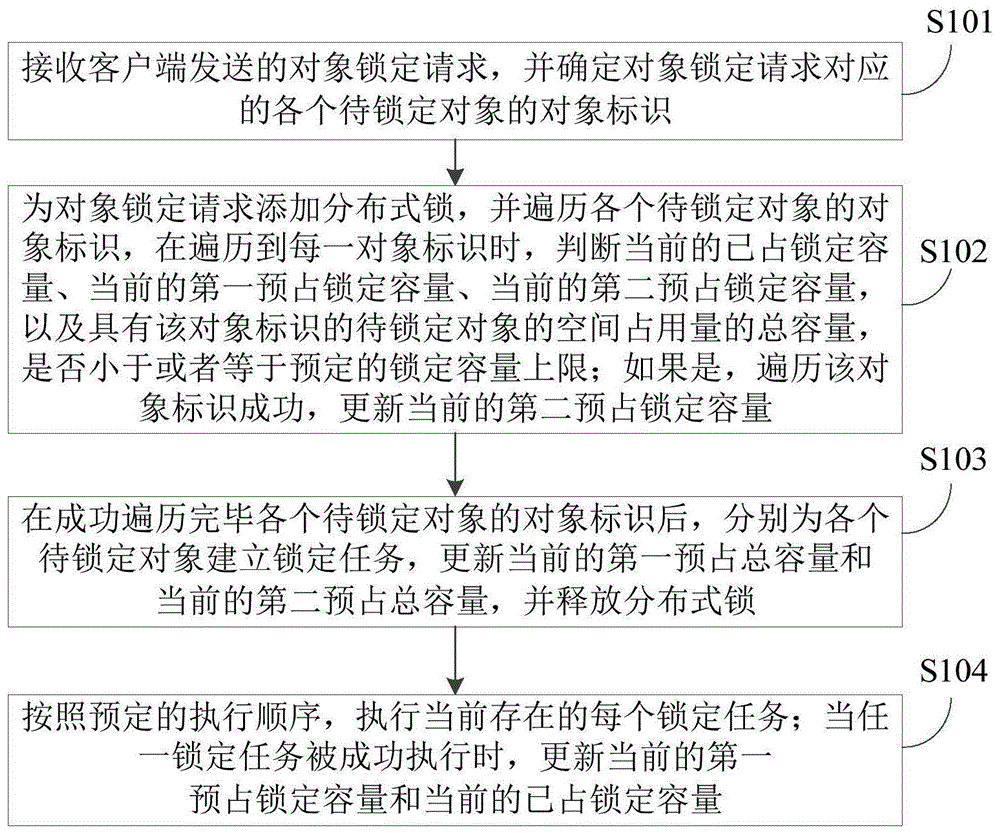
图1为本发明实施例提供的一种锁定云存储中对象的方法的流程图;FIG. 1 is a flowchart of a method for locking objects in cloud storage provided by an embodiment of the present invention;
图2为本发明实施例提供的一种锁定云存储中对象的方法中,对任一锁定任务的处理过程的流程图;FIG. 2 is a flow chart of the processing of any locking task in a method for locking objects in cloud storage provided by an embodiment of the present invention;
图3为本发明实施例提供的一种锁定云存储中对象的方法中,对任一对象锁定请求的响应过程的流程图;3 is a flow chart of the response process to any object lock request in a method for locking objects in cloud storage provided by an embodiment of the present invention;
图4为本发明实施例提供的一种锁定云存储中对象的装置的结构示意图;FIG. 4 is a schematic structural diagram of a device for locking objects in cloud storage provided by an embodiment of the present invention;
图5为本发明实施例提供的一种服务器的结构示意图。FIG. 5 is a schematic structural diagram of a server provided by an embodiment of the present invention.
具体实施方式Detailed ways
下面将结合本发明实施例中的附图,对本发明实施例中的技术方案进行清楚、完整地描述,显然,所描述的实施例仅仅是本发明一部分实施例,而不是全部的实施例。基于本发明中的实施例,本领域普通技术人员在没有做出创造性劳动前提下所获得的所有其他实施例,都属于本发明保护的范围。The following will clearly and completely describe the technical solutions in the embodiments of the present invention with reference to the accompanying drawings in the embodiments of the present invention. Obviously, the described embodiments are only some, not all, embodiments of the present invention. Based on the embodiments of the present invention, all other embodiments obtained by persons of ordinary skill in the art without making creative efforts belong to the protection scope of the present invention.
为了避免出现已建立的锁定任务因可用锁定容量不足而出现锁定对象失败的情况,本发明实施例提供了一种锁定云存储中对象的方法、装置及服务器。In order to avoid the failure of an established locking task to lock an object due to insufficient available locking capacity, embodiments of the present invention provide a method, device, and server for locking an object in cloud storage.
其中,云存储中的对象,可以是云存储中所存储的数据或文件,如视频、图片、文档或等等。Wherein, the objects in the cloud storage may be data or files stored in the cloud storage, such as videos, pictures, documents or the like.
本发明实施例提供的一种锁定云存储中对象的方法的执行主体,可以为一种锁定云存储中对象的装置,该装置可以应用于云存储系统的管理服务器。其中,除管理服务器之外,云存储系统还可以包括多个存储节点,这些存储节点中存有各种对象。对云存储系统中的对象进行锁定,即是将存储节点上的对象进行锁定。为了描述简洁,下面将云存储系统简称为云储存。The execution subject of the method for locking objects in cloud storage provided by the embodiments of the present invention may be a device for locking objects in cloud storage, and the device may be applied to a management server of a cloud storage system. Wherein, in addition to the management server, the cloud storage system may also include multiple storage nodes, and various objects are stored in these storage nodes. To lock the objects in the cloud storage system is to lock the objects on the storage nodes. For brevity of description, the cloud storage system is referred to as cloud storage for short below.
本发明实施例中,设置了第一预占锁定容量、第二预占锁定容量以及分布式锁。其中,第一预占锁定容量,用于对未执行完的锁定任务对应的待锁定对象所要预占的空间占用量进行统计,第二预占锁定容量用于对正在处理的对象锁定请求中,对象标识遍历成功但尚未建立锁定任务的待锁定对象所要预占的空间占用量进行统计。通过设置第一预占锁定容量,可以使得在任一锁定任务执行之前和执行之后,已占锁定容量增加多少容量,第一预占锁定容量相应的就减少多少容量,可用锁定容量则不会发生变化。也就是说,锁定任务的执行不影响云存储的可用锁定容量。通过设置第二预占锁定容量,可以保证管理服务器对于对象锁定请求的处理过程的原子性;即管理服务器针对每个对象锁定请求对应的所有待锁定对象,要么锁定成功,为这些待锁定对象均建立锁定任务;要么锁定失败,均不为这些待锁定对象建立锁定任务。通过设置分布式锁,使得管理服务器可以串行地执行对各个对象锁定请求的遍历,从而避免管理服务器同时为多个对象锁定请求确定可用锁定容量所出现确定结果出错的情况。这样,本发明实施例可以避免已建立的锁定任务因可用锁定容量不足而出现锁定对象失败的情况。In the embodiment of the present invention, the first preemptive lock capacity, the second preemptive lock capacity and the distributed lock are set. Wherein, the first pre-occupied locking capacity is used to count the space occupied by the object to be locked corresponding to the unfinished locking task, and the second pre-occupied locking capacity is used for the object locking request being processed, Count the space occupied by objects to be locked that have been traversed successfully but have not yet established a lock task. By setting the first reserved lock capacity, before and after the execution of any locking task, the occupied lock capacity can be increased, and the first reserved lock capacity can be reduced correspondingly, while the available lock capacity will not change. . That is, the execution of the locking task does not affect the available locking capacity of the cloud storage. By setting the second reserved lock capacity, the atomicity of the management server's processing of the object lock request can be guaranteed; that is, for all objects to be locked corresponding to each object lock request of the management server, or the lock is successful, all the objects to be locked are Create a locking task; or if the locking fails, no locking task will be established for these objects to be locked. By setting the distributed lock, the management server can serially execute the traversal of each object lock request, thereby avoiding the situation that the management server determines the available lock capacity for multiple object lock requests at the same time and the determination result is wrong. In this way, the embodiment of the present invention can avoid the situation that the established locking task fails to lock the object due to insufficient available locking capacity.
第一方面,对本发明实施例提供的一种锁定云存储中对象的方法进行详细说明。如图1所示,本发明实施例提供的一种锁定云存储中对象的方法,可以包括以下步骤:In the first aspect, a method for locking an object in cloud storage provided by an embodiment of the present invention is described in detail. As shown in Figure 1, a method for locking objects in cloud storage provided by an embodiment of the present invention may include the following steps:
S101:接收客户端发送的对象锁定请求,确定该对象锁定请求对应的各个待锁定对象的对象标识。S101: Receive an object lock request sent by a client, and determine object identifiers of each object to be locked corresponding to the object lock request.
这里,对象锁定请求可以携带多种信息,通过这些信息,可以确定出存在锁定需求的各个待锁定对象。Here, the object locking request may carry a variety of information, through which each object to be locked that needs to be locked can be determined.
举例而言,对象锁定请求所携带的信息可以包括:各个待锁定对象的对象标识;例如,待锁定视频的视频标识、待锁定图片的图片标识或待锁定文档的文档标识等等。再举例而言,当客户端发送的对象锁定请求为锁定云存储中的录像片段时,对象锁定请求携带的信息可以包括:录像设备标识和录像时间段。管理服务器可以从云存储中查询在该录像时间段内,以及在该录像设备标识下的所有录像片段,将所查到的录像片段的标识确定为对象锁定请求中携带的各个待锁定对象的对象标识。当然,对象锁定请求可以携带的信息并不局限于这里示出的对象标识、录像设备标识和录像时间段。为了方案清楚及布局清晰,后续将对对象锁定请求可以携带的其他信息进行举例说明。For example, the information carried in the object locking request may include: the object ID of each object to be locked; for example, the video ID of the video to be locked, the picture ID of the picture to be locked, or the document ID of the document to be locked, and so on. For another example, when the object locking request sent by the client is to lock a recording clip in cloud storage, the information carried in the object locking request may include: a recording device identifier and a recording time period. The management server can query from the cloud storage for all the recording segments within the recording time period and under the identification of the recording device, and determine the identification of the found recording segment as the object of each object to be locked carried in the object locking request logo. Of course, the information that may be carried in the object locking request is not limited to the object identifier, recording device identifier and recording time period shown here. In order to make the scheme clear and the layout clear, other information that can be carried in the object locking request will be described with examples later.
S102:为对象锁定请求添加分布式锁,并遍历各个待锁定对象的对象标识,在遍历到每一对象标识时,判断当前的已占锁定容量、当前的第一预占锁定容量、当前的第二预占锁定容量,以及具有该对象标识的待锁定对象的空间占用量的总容量,是否小于或者等于预定的锁定容量上限;如果是,遍历该对象标识成功,更新当前的第二预占锁定容量。S102: Add a distributed lock to the object locking request, and traverse the object identifiers of each object to be locked. When each object identifier is traversed, determine the current occupied lock capacity, the current first reserved lock capacity, and the current 2. Whether the pre-occupied lock capacity, and the total capacity of the space occupied by the object to be locked with the object ID is less than or equal to the predetermined upper limit of the lock capacity; if yes, the traversal of the object ID is successful, and the current second pre-occupied lock is updated capacity.
其中,第一预占锁定容量为:未执行和正在执行的锁定任务所对应待锁定对象的空间占用量总和;第二预占锁定容量为所述对象锁定请求中,对象标识遍历成功且未建立锁定任务的待锁定对象的空间占用量总和。Among them, the first reserved locking capacity is: the sum of the space occupied by the objects to be locked corresponding to the locking tasks that are not executed and are being executed; The total amount of space occupied by objects to be locked by the locking task.
可以理解的是,判断当前的已占锁定容量、当前的第一预占锁定容量、当前的第二预占锁定容量,以及具有该对象标识的待锁定对象的空间占用量的总容量,是否小于或者等于预定的锁定容量上限,即是判断当前云存储中是否有足够的可用锁定容量。It can be understood that it is judged whether the total capacity of the current occupied lock capacity, the current first preempted lock capacity, the current second preempted lock capacity, and the space occupied by the object to be locked with the object identifier is less than Or it is equal to the predetermined upper limit of the locked capacity, which is to judge whether there is enough available locked capacity in the current cloud storage.
其中,待锁定对象的空间占用量为:待锁定对象在云存储中的空间占用量。在实际应用中,管理服务器可以在获得了对象锁定请求中携带的各个待锁定对象的对象标识后,从云存储中查询这些对象标识所对应待锁定对象的空间占用量。当然,管理服务器也可以实时地对云存储中对象的存储信息进行同步,这样,管理服务器可以直接在本地查询对象标识所对应待锁定对象的空间占用量。Wherein, the space occupation of the object to be locked is: the space occupation of the object to be locked in the cloud storage. In practical applications, after obtaining the object identifiers of the objects to be locked carried in the object locking request, the management server can query the space occupied by the objects to be locked corresponding to these object identifiers from the cloud storage. Of course, the management server can also synchronize the storage information of the object in the cloud storage in real time, so that the management server can directly query the space occupied by the object to be locked corresponding to the object identifier locally.
该步骤中,遍历对象标识成功后,更新当前的第二预占锁定容量,具体为将具有该对象标识的待锁定对象的空间占用量,增加至当前的第二预占锁定容量中。In this step, after traversing the object ID successfully, update the current second reserved lock capacity, specifically adding the space occupied by the object to be locked with the object ID to the current second reserved lock capacity.
可以理解的是,分布式锁是控制分布式对象之间同步访问共享资源的一种方式。在任一分布式对象访问共享资源的时候,需要防止其他分布式对象对资源进行改写,从而在多个分布式对象之间,保证共享资源的一致性。It can be understood that distributed locks are a way to control synchronized access to shared resources between distributed objects. When any distributed object accesses a shared resource, it is necessary to prevent other distributed objects from rewriting the resource, so as to ensure the consistency of the shared resource among multiple distributed objects.
可以理解的是,在为任一对象锁定请求添加了分布式锁的期间,管理服务器所执行的各个步骤,仅可以针对该对象锁定请求执行,也就是说,这些步骤所能够实现的功能,并不对其他对象锁定请求开放。It can be understood that during the period when a distributed lock is added to any object lock request, the various steps performed by the management server can only be performed for this object lock request, that is to say, the functions that these steps can achieve are not Not open to other object lock requests.
另外,可以理解的是,当S102中的判断结果为否时,说明当前的可用锁定容量已不足,对于对象标识的遍历执行失败。此时,可以将当前的第二预占锁定容量清零,即释放已遍历成功的对象标识对应的待锁定对象的空间占用量,并向客户端反馈:可用锁定容量不足。相应的,释放为该对象锁定请求添加的分布式锁。In addition, it can be understood that when the determination result in S102 is no, it means that the current available locking capacity is insufficient, and the traversal execution of the object identifier fails. At this time, the current second reserved lock capacity can be cleared, that is, the space occupied by the object to be locked corresponding to the successfully traversed object ID is released, and the client is fed back that the available lock capacity is insufficient. Correspondingly, the distributed lock added for the object locking request is released.
S103:在成功遍历完毕各个待锁定对象的对象标识后,分别为各个待锁定对象建立锁定任务,更新当前的第一预占锁定容量和当前的第二预占锁定容量,并释放分布式锁。S103: After successfully traversing the object identifiers of each object to be locked, respectively establish a locking task for each object to be locked, update the current first reserved lock capacity and the current second reserved lock capacity, and release the distributed lock.
这里,为各个待锁定对象建立锁定任务的具体实现方式存在多种。示例性的,在一种实现方式中,管理服务器可以维护一个锁定任务列表,因此,为各个待锁定对象建立锁定任务,可以包括:在锁定任务列表中,为各个待锁定对象分别插入一个新的锁定任务,并将各个待锁定对象的对象标识,分别写入对应的锁定任务的任务信息中。当然,锁定任务的任务信息并不局限于对象标识,还可以包括锁定任务的建立时间以及待锁定对象的空间占用量等。其中,锁定任务的建立时间,可以是在锁定任务列表中,插入该锁定任务时的时间。Here, there are many specific implementation manners for establishing a locking task for each object to be locked. Exemplarily, in an implementation manner, the management server may maintain a lock task list, therefore, establishing a lock task for each object to be locked may include: inserting a new lock task list for each object to be locked The task is locked, and the object identification of each object to be locked is respectively written into the task information of the corresponding locked task. Of course, the task information of the locking task is not limited to the object identifier, and may also include the creation time of the locking task and the space occupied by the object to be locked. Wherein, the creation time of the locked task may be the time when the locked task is inserted into the locked task list.
该步骤中,在成功遍历完毕所述各个待锁定对象的对象标识后,分别为所述各个待锁定对象建立锁定任务,更新当前的第一预占锁定容量和当前的第二预占锁定容量,具体可以为:在为每个待锁定对象建立锁定任务后,从当前的第二预占锁定容量中,减去该待锁定对象的空间占用量,并将该待锁定对象的空间占用量,添加至当前的第一预占锁定容量中。可以理解的是,当为各个待锁定对象均建立锁定任务后,第二预占锁定容量即被清零。In this step, after successfully traversing the object identifiers of the objects to be locked, respectively establish locking tasks for the objects to be locked, and update the current first reserved locking capacity and the current second reserved locking capacity, Specifically, after establishing a locking task for each object to be locked, subtract the space occupied by the object to be locked from the current second reserved locking capacity, and add the space occupied by the object to be locked to into the current first preempted lock capacity. It can be understood that, after the locking tasks are established for each object to be locked, the second reserved locking capacity is cleared.
另外,在分别为各个待锁定对象建立锁定任务,并释放分布式锁后,可以向客户端反馈:已为该对象锁定请求下达锁定任务。至此,管理服务器完成对于对象锁定请求的响应处理。在释放了为对象锁定请求添加的分布式锁后,管理服务器可以转而处理另一对象锁定请求。In addition, after establishing a locking task for each object to be locked and releasing the distributed lock, the client can be fed back that the locking task has been issued for the object locking request. So far, the management server has completed the processing of responding to the object locking request. After the distributed lock added for the object lock request is released, the management server can move on to another object lock request.
可以理解的是,管理服务器针对接收到的每一对象锁定请求,均可以按照上述S101-S103的过程,对该对象锁定请求进行处理。It can be understood that, for each object locking request received, the management server may process the object locking request according to the above-mentioned process of S101-S103.
S104:按照预定的执行顺序,执行当前存在的每个锁定任务;当任一锁定任务被成功执行时,更新当前的第一预占锁定容量和当前的已占锁定容量。S104: Execute each currently existing locking task according to a predetermined execution sequence; when any locking task is successfully executed, update the current first reserved locking capacity and the current occupied locking capacity.
这里,所谓的当前存在的每个锁定任务为:管理服务器当前未执行和正在执行的所有锁定任务,并不局限于S103中所建立的锁定任务。除了S103中所建立的锁定任务之外,当前存在的每个锁定任务还可以包括:根据同一客户端发送的其他对象锁定请求所建立的锁定任务,以及根据其他客户端发送的对象锁定请求所建立的锁定任务。可以理解的是,任一锁定任务被成功执行后,该锁定任务就可以被解除。Here, the so-called currently existing locking tasks refer to all locking tasks that are currently not executed and are being executed by the management server, and are not limited to the locking tasks established in S103. In addition to the locking task established in S103, each currently existing locking task may also include: a locking task established according to other object locking requests sent by the same client, and an object locking request established according to other clients lock task. It can be understood that after any locked task is successfully executed, the locked task can be released.
可以理解的是,S104所限定步骤,为管理服务器执行锁定任务的步骤;S101-S103所限定步骤,为管理服务器处理对象锁定请求的步骤。由于管理服务器可以同时接收多个对象锁定请求,故管理服务器针对某一对象锁定请求,在执行S101、S102以及S103的过程中的任意时刻,也可以同步地执行S104。It can be understood that the steps defined in S104 are the steps for the management server to execute the locking task; the steps defined in S101-S103 are the steps for the management server to process the object locking request. Since the management server can receive multiple object locking requests at the same time, the management server can also execute S104 synchronously at any time during the execution of S101, S102, and S103 for a certain object locking request.
其中,对每个锁定任务的执行过程可以包括:Wherein, the execution process of each locking task may include:
向存有该锁定任务所对应待锁定对象的目标存储节点,请求锁定该锁定对象;Request to lock the locked object from the target storage node that stores the object to be locked corresponding to the locked task;
接收目标存储节点的反馈信息;当反馈信息为锁定成功时,该锁定任务被成功执行。The feedback information of the target storage node is received; when the feedback information is that the locking is successful, the locking task is successfully executed.
这里,目标存储节点的反馈信息可以存在多种。为了方案清楚及布局清晰,后续对目标存储节点的反馈信息为其他类型的信息时,管理服务器相应的处理流程进行举例说明。Here, there may be multiple kinds of feedback information of the target storage node. In order to make the solution clear and the layout clear, when the subsequent feedback information of the target storage node is other types of information, the corresponding processing flow of the management server will be illustrated with an example.
另外,按照预定的执行顺序,执行当前存在的每个锁定任务的具体实现方式存在多种。示例性的,在一种实现方式中,按照预定的执行顺序,执行当前存在的每个锁定任务,可以包括:按照锁定任务的建立顺序,执行当前存在的每个锁定任务。这样,根据一个对象锁定请求所建立的各个锁定任务,可以被集中执行。在另一种实现方式中,可以从当前存在的每个锁定任务中,随机扫描出一个或多个锁定任务,并执行扫描出的锁定任务。需要说明的是,这里所示出的按照预定的执行顺序,执行当前存在的每个锁定任务的具体实现方式,仅仅作为示例,并不应该构成对本发明的限定。In addition, according to the predetermined execution sequence, there are many specific implementation manners for executing each currently existing locking task. Exemplarily, in an implementation manner, executing each currently existing locking task according to a predetermined execution sequence may include: executing each currently existing locking task according to an establishment sequence of the locking tasks. In this way, each locking task established according to an object locking request can be executed centrally. In another implementation manner, one or more locking tasks may be randomly scanned from each currently existing locking task, and the scanned locking tasks may be executed. It should be noted that, the specific implementation manner shown here of executing each currently existing locking task according to a predetermined execution sequence is merely an example, and should not be construed as a limitation of the present invention.
可以理解的是,当任一锁定任务被成功执行时,该锁定任务所对应的待锁定对象已被锁定,已占锁定容量增加,相应的,该锁定任务所预占的第一预占锁定容量则可以被释放。可见,已占锁定容量和第一预占锁定容量是一对互斥的变量。这样,当任一锁定任务被成功执行时,更新当前的第一预占锁定容量和当前的已占锁定容量,具体可以为:从当前的第一预占锁定容量中,减去该锁定任务对应的待锁定对象的空间占用量,并将该锁定任务对应的待锁定对象的空间占用量,加入到当前的已占锁定容量中。It can be understood that when any locking task is successfully executed, the object to be locked corresponding to the locking task has been locked, and the occupied locking capacity increases. Correspondingly, the first pre-occupied locking capacity occupied by the locking task can be released. It can be seen that the occupied lock capacity and the first reserved lock capacity are a pair of mutually exclusive variables. In this way, when any locking task is successfully executed, update the current first preempted locking capacity and the current occupied locking capacity, which may specifically be: subtract the corresponding lock task from the current first preempted locking capacity The space occupied by the object to be locked, and the space occupied by the object to be locked corresponding to the locking task is added to the current occupied lock capacity.
本发明实施例提供的锁定云存储中对象的方法中,设置了第一预占锁定容量和第二预占锁定容量,锁定容量上限减去这两种预占锁定容量,再减去云存储中的已占锁定容量后,就可以得到云存储中的可用锁定容量。这样,在任一锁定任务执行之前和执行之后,已占锁定容量增加多少容量,相应的已预占的锁定容量就减少多少容量,可用锁定容量则不会发生变化。因此,本方案中,任何锁定任务的执行均不会影响到管理服务器针对每一对象标识确定可用锁定容量时的确定结果。并且,本方案中,管理服务器在为对象锁定请求确定可用锁定容量并新建锁定任务时,为对象锁定请求添加了分布式锁。也就是说,管理服务器串行地执行对各个对象锁定请求的遍历。这样,不会出现管理服务器同时为多个对象锁定请求确定可用锁定容量,从而出现确定结果出错的情况。可见,通过设置预定锁定容量和设置分布式锁两种手段,本方案可以避免已建立的锁定任务因可用锁定容量不足而出现锁定对象失败的情况。In the method for locking an object in cloud storage provided by the embodiment of the present invention, the first reserved locking capacity and the second reserved locking capacity are set. After the occupied locked capacity, you can get the available locked capacity in cloud storage. In this way, before and after the execution of any locking task, the occupied locking capacity will be reduced by the same amount as the occupied locking capacity is increased, and the available locking capacity will not change. Therefore, in this solution, the execution of any locking task will not affect the determination result when the management server determines the available locking capacity for each object identifier. Moreover, in this solution, when the management server determines the available locking capacity for the object locking request and creates a new locking task, it adds a distributed lock to the object locking request. That is, the management server serially executes the traversal of each object lock request. In this way, there will be no situation where the management server determines the available locking capacity for multiple object locking requests at the same time, so that the determination result is wrong. It can be seen that by setting the predetermined locking capacity and setting the distributed lock, this solution can avoid the failure of locking the object due to the insufficient available locking capacity of the established locking task.
可选地,在一种实现方式中,为了提高管理服务器对当前存在的锁定任务的执行效率,针对当前存在的每个锁定任务,在执行该锁定任务之前,发明实施例提供的锁定云存储中对象的方法,还可以包括:Optionally, in an implementation manner, in order to improve the execution efficiency of the management server for currently existing locking tasks, for each currently existing locking task, before executing the locking task, the locking cloud storage provided by the embodiment of the invention Object methods can also include:
判断该锁定任务是否过期,如果未过期,继续执行该锁定任务;Determine whether the locked task has expired, and if not expired, continue to execute the locked task;
否则,删除该锁定任务,并更新当前的第一预占锁定容量。Otherwise, delete the locking task, and update the current first preempted locking capacity.
这样,过期的锁定任务直接被跳过,从而可以节省出执行过期的锁定任务所耗费的时间。In this way, expired locking tasks are directly skipped, thereby saving time spent on executing expired locking tasks.
其中,针对任一锁定任务,判断该锁定任务是否过期的具体实现方式存在多种。示例性的,在一种实现方式中,针对任一锁定任务,判断该锁定任务是否过期,可以包括:Wherein, for any locking task, there are various specific implementation manners for judging whether the locking task expires. Exemplarily, in an implementation manner, for any locked task, judging whether the locked task expires may include:
判断当前系统时间点与该锁定任务的建立时间点之差,是否大于预定的锁定时长阈值;如果大于,判定该锁定任务过期;如果不大于,判定该锁定任务未过期。Determine whether the difference between the current system time point and the establishment time point of the locking task is greater than the predetermined locking duration threshold; if greater, determine that the locking task has expired; if not greater, determine that the locking task has not expired.
这里,预定的锁定时长阈值,可以是每个锁定任务能够对待锁定对象进行锁定的最大时长。该时长阈值可以在管理服务器中配置。举例而言,假设该锁定时长阈值为1小时,那么自锁定任务建成之时起,该锁定任务所对应的待锁定对象,只能在未来的1小时内被该锁定任务锁定,超过1小时后,该锁定任务就过期了。Here, the predetermined locking duration threshold may be the maximum duration that each locking task can lock the object to be locked. The duration threshold can be configured in the management server. For example, assuming that the lock duration threshold is 1 hour, then since the lock task is completed, the object to be locked corresponding to the lock task can only be locked by the lock task within 1 hour in the future. , the lock task expires.
在另一种实现方式中,管理服务器接收的对象锁定请求所携带的信息中,还可以包括各个待锁定对象的请求锁定时长;In another implementation manner, the information carried in the object locking request received by the management server may also include the requested locking duration of each object to be locked;
相应的,管理服务器为所述各个待锁定对象建立锁定任务,可以包括:Correspondingly, the management server establishes a locking task for each object to be locked, which may include:
针对每个待锁定对象,新建一锁定任务,并将该待锁定对象的对象标识和该待锁定对象的请求锁定时长,添加至新建的锁定任务的任务信息中;For each object to be locked, create a new locking task, and add the object identifier of the object to be locked and the requested locking duration of the object to be locked to the task information of the newly created locking task;
相应的,判断该锁定任务是否过期,可以包括:Correspondingly, judging whether the locked task expires may include:
判断当前系统时间点与该锁定任务的建立时间点之差,是否大于该锁定任务的任务信息包含的锁定时长,如果大于,判定该锁定任务过期,如果不大于,判定该锁定任务未过期。Determine whether the difference between the current system time point and the creation time point of the locked task is greater than the locked duration contained in the task information of the locked task. If it is greater, it is determined that the locked task has expired. If it is not greater, it is determined that the locked task has not expired.
可以理解的是,如果当前系统时间点与锁定任务的建立时间点之差,大于该锁定任务的任务信息包含的锁定时长,说明当前时间早已经超过了该锁定任务请求对待锁定对象进行锁定的锁定结束时间点,已经没有必要再对该待锁定对象进行锁定,故判定该锁定任务过期。It can be understood that if the difference between the current system time point and the creation time point of the locking task is greater than the locking duration contained in the task information of the locking task, it means that the current time has already exceeded the lock task request to lock the object to be locked. At the end time point, it is no longer necessary to lock the object to be locked, so it is determined that the locking task expires.
为了方案清楚,下面用图2所示流程为例,对本发明实施提供的锁定云存储中对象的方法中,对任一锁定任务的处理过程进行示例性的说明。如图2所示,该处理过程可以包括以下步骤:In order to clarify the solution, the process shown in FIG. 2 is used as an example below to illustrate the processing process of any locking task in the method for locking objects in cloud storage provided by the implementation of the present invention. As shown in Figure 2, the processing may include the following steps:
S201:针对任一锁定任务,判断该锁定任务是否过期;如果未过期,执行S202-S203,如果过期,执行S204;S201: For any locked task, determine whether the locked task has expired; if not expired, perform S202-S203, and if expired, perform S204;
S202:向存有该锁定任务所对应待锁定对象的目标存储节点,请求锁定该锁定对象;S202: Request to lock the locked object from the target storage node storing the object to be locked corresponding to the locked task;
S203:接收目标存储节点的反馈信息;当反馈信息为锁定成功时,该锁定任务被成功执行,更新当前的第一预占锁定容量和当前的已占锁定容量;S203: Receive feedback information from the target storage node; when the feedback information is that the locking is successful, the locking task is successfully executed, and the current first pre-occupied locking capacity and the current occupied locking capacity are updated;
S204:删除该锁定任务,并更新当前的第一预占锁定容量。S204: Delete the locking task, and update the current first reserved locking capacity.
其中,在S203和S204中,更新当前的第一预占锁定容量,均为从当前的第一预占锁定容量中,减去锁定任务对应的待锁定对象的空间占用量;在S203中,更新当前的已占锁定容量,为将锁定任务对应的待锁定对象的空间占用量,增加至当前的已占锁定容量中。Wherein, in S203 and S204, updating the current first reserved locking capacity is to subtract the space occupation of the object to be locked corresponding to the locking task from the current first reserved locking capacity; in S203, updating The current occupied lock capacity is to add the space occupied by the object to be locked corresponding to the lock task to the current occupied lock capacity.
在对S104的说明中已经提到过,目标存储节点的反馈信息并不局限于锁定成功的信息。为了方案清楚及布局清晰,下面对目标存储节点的反馈信息为锁定成功之外的其他类型的信息时,相应的处理流程进行举例说明。As mentioned in the description of S104, the feedback information of the target storage node is not limited to the information of successful locking. In order to make the solution clear and the layout clear, the following will illustrate the corresponding processing flow when the feedback information of the target storage node is other types of information other than locking success.
示例性的,在一种实现方式中,当目标存储节点的反馈信息为待锁定对象不存在时,可以删除该锁定任务,并更新当前的第一预占锁定容量。Exemplarily, in an implementation manner, when the feedback information from the target storage node is that the object to be locked does not exist, the locking task may be deleted, and the current first reserved locking capacity may be updated.
这里,更新当前的第一预占锁定容量,可以是从当前的第一预占锁定容量,减去该锁定任务所对应待锁定对象的空间占用量。Here, updating the current first preempted locking capacity may be subtracting the space occupied by the object to be locked corresponding to the locking task from the current first preempted locking capacity.
在另一种实现方式中,当目标存储节点的反馈信息为锁定失败时,可以直接返回S201,或者,待一段等待时间过去后,再返回S201,或者,当下一次随机扫描到该锁定任务时,返回S201。这样,在锁定失败时,可以尝试多次锁定。可以理解的是,当尝试的次数达到预定的次数时,可以删除该锁定任务,并更新当前的第一预占锁定容量。这里,更新当前的第一预占锁定容量具体为从当前的第一预占锁定容量,减去该锁定任务所对应待锁定对象的空间占用量。In another implementation, when the feedback information of the target storage node is that the lock fails, it can directly return to S201, or return to S201 after a period of waiting time has elapsed, or, when the lock task is found in the next random scan, Return to S201. This way, when the lock fails, multiple lock attempts can be made. It can be understood that, when the number of attempts reaches a predetermined number, the locking task may be deleted, and the current first reserved locking capacity may be updated. Here, updating the current first preempted locking capacity is specifically subtracting the space occupied by the object to be locked corresponding to the locking task from the current first preempted locking capacity.
需要说明的是,这里所示出的当目标存储节点的反馈信息为锁定成功之外的其他类型的信息时,相应的处理流程,仅仅作为示例,不应该构成对本发明的限定。It should be noted that when the feedback information of the target storage node shown here is other types of information other than locking success, the corresponding processing flow is only an example and should not be construed as a limitation of the present invention.
在少数情况下,管理服务器在遍历到一个对象标识时,当前存在锁定任务中,恰好有一个具有该对象标识的待锁定对象对应的锁定任务。针对这种情况,本发明实施例提供的锁定云存储中对象的方法,在遍历到每一对象标识时,还可以包括:In a few cases, when the management server traverses to an object identifier, among the currently existing locking tasks, there is exactly one locking task corresponding to the object to be locked with the object identifier. In view of this situation, the method for locking objects in cloud storage provided by the embodiment of the present invention may also include:
在判断当前的已占锁定容量、当前的第一预占锁定容量、当前的第二预占锁定容量,以及具有该对象标识的待锁定对象的空间占用量的总容量,是否小于或者等于预定的锁定容量上限之前,判断当前存在的锁定任务中,是否存在具有该对象标识的待锁定对象对应的锁定任务;When judging whether the total capacity of the current occupied lock capacity, the current first pre-occupied lock capacity, the current second pre-occupied lock capacity, and the space occupied by the object to be locked with the object identifier is less than or equal to the predetermined Before locking the upper limit of capacity, determine whether there is a locking task corresponding to the object to be locked with the object identifier among the currently existing locking tasks;
如果不存在,继续执行所述判断当前的已占锁定容量、当前的第一预占锁定容量、当前的第二预占锁定容量,以及具有该对象标识的待锁定对象的空间占用量的总容量,是否小于或者等于预定的锁定容量上限的步骤;If it does not exist, continue to perform the judgment of the current occupied lock capacity, the current first preempted lock capacity, the current second preempted lock capacity, and the total capacity of the space occupancy of the object to be locked with the object identifier , whether it is less than or equal to the predetermined upper limit of the locked capacity;
如果存在,继续遍历该对象标识的下一对象标识。If it exists, continue to traverse the next object ID of this object ID.
可以理解的是,如果当前存在的锁定任务中,已经存在具有所遍历对象标识的待锁定对象对应的锁定任务,那么当前的第一预占锁定容量中,已经包含了该待锁定对象的空间占用量,即已被预占的锁定容量中已经包含了该待锁定对象的空间占用量,因此,无需更新当前的第二预占锁定容量,直接遍历下一对象标识即可。It can be understood that if among the currently existing locking tasks, there is already a locking task corresponding to the object to be locked with the ID of the traversed object, then the current first reserved locking capacity already includes the space occupied by the object to be locked That is, the space occupied by the object to be locked has already been included in the pre-occupied locking capacity. Therefore, there is no need to update the current second pre-occupied locking capacity, and the next object ID can be traversed directly.
为了方案清楚,下面以图3所示流程为例,对本发明实施提供的锁定云存储中对象的方法中,对任一对象锁定请求的响应过程进行示例性的说明。如图3所示,该响应过程,可以包括以下步骤:To make the solution clear, the process shown in FIG. 3 is taken as an example below to illustrate the process of responding to any object lock request in the method for locking objects in cloud storage provided by the implementation of the present invention. As shown in Figure 3, the response process may include the following steps:
S301:为对象锁定请求添加分布式锁,开始遍历对象锁定请求所携带的各个待锁定对象的对象标识;S301: Add a distributed lock to the object locking request, and start traversing the object identifiers of each object to be locked carried in the object locking request;
S302:在遍历到每一对象标识时,判断当前存在的锁定任务中,是否存在具有该对象标识的待锁定对象对应的锁定任务;如果存在,继续遍历该对象标识的下一对象标识;如果不存在,执行S303;S302: When each object identifier is traversed, judge whether there is a locking task corresponding to the object to be locked with the object identifier among the currently existing locking tasks; if it exists, continue to traverse the next object identifier of the object identifier; if not exists, execute S303;
S303:判断当前的已占锁定容量、当前的第一预占锁定容量、当前的第二预占锁定容量,以及具有该对象标识的待锁定对象的空间占用量的总容量,是否小于或者等于预定的锁定容量上限;如果是,执行S304;如果否,执行S306;S303: Determine whether the total capacity of the current occupied lock capacity, the current first reserved lock capacity, the current second reserved lock capacity, and the space occupied by the object to be locked with the object identifier is less than or equal to the predetermined upper limit of locked capacity; if yes, execute S304; if no, execute S306;
S304:遍历该对象标识成功,更新当前的第二预占锁定容量,返回S302继续遍历该对象标识的下一对象标识;S304: Traverse the object identifier successfully, update the current second reserved lock capacity, and return to S302 to continue traversing the next object identifier of the object identifier;
S305:在成功遍历完毕各个待锁定对象的对象标识后,分别为各个待锁定对象建立锁定任务,更新当前的第一预占锁定容量和当前的第二预占锁定容量,并释放分布式锁;S305: After successfully traversing the object identifiers of each object to be locked, respectively establish a locking task for each object to be locked, update the current first pre-occupied lock capacity and the current second pre-occupied lock capacity, and release the distributed lock;
S306:向客户端反馈可用锁定容量不足,清零当前的第二预占锁定容量,并释放分布式锁。S306: Feedback to the client that the available lock capacity is insufficient, clear the current second reserved lock capacity, and release the distributed lock.
其中,S301、S303以及S304的内容与上述S102的内容相同或相似,此处不再赘述。S305中的内容与上述S103的内容相同,此处同样不再赘述。Wherein, the content of S301, S303 and S304 is the same as or similar to the content of S102 above, and will not be repeated here. The content in S305 is the same as the content in S103 above, and will not be repeated here.
另外,在S302中,如果当前存在的锁定任务中,已经存在具有所遍历对象标识的待锁定对象对应的锁定任务。那么在执行S305时,可以为具有该标识的待锁定对象另外建立一个新的锁定任务,此时,更新当前的第一预占锁定容量和当前的第二预占锁定容量,可以是保留当前的第一预占锁定容量和当前的第二预占锁定容量。可以理解的是,虽然新建的锁定任务与彼时已经存在的锁定任务,欲对同一对象标识对应的待锁定对象进行锁定,但二者对待锁定对象进行锁定的锁定时间段却可能是不同的。在这种情况下,在具体对存储节点上的待锁定对象执行锁定时,后执行的锁定任务,可以根据任务信息中所包括的请求锁定时长,延长对待锁定对象的锁定时间。In addition, in S302, if there is already a locking task corresponding to the object to be locked with the traversed object identifier among the currently existing locking tasks. Then, when executing S305, a new locking task can be established for the object to be locked with this identifier. At this time, updating the current first reserved locking capacity and the current second reserved locking capacity can be to retain the current The first preempted lock capacity and the current second preempted lock capacity. It can be understood that although the newly created locking task and the existing locking task at that time intend to lock the object to be locked corresponding to the same object identifier, the locking time periods for locking the object to be locked may be different. In this case, when specifically locking the object to be locked on the storage node, the locking task executed later may extend the locking time of the object to be locked according to the requested locking duration included in the task information.
在另一种实现方式中,在S302中,如果当前存在的锁定任务中,已经存在具有所遍历对象标识的待锁定对象对应的锁定任务。那么在执行S305时,可以忽略具有该标识的待锁定对象,即不再为具有该标识的待锁定对象另外建立锁定任务。此时,更新当前的第一预占锁定容量和当前的第二预占锁定容量,仍可以是保留当前的第一预占锁定容量和当前的第二预占锁定容量。In another implementation manner, in S302, if there is already a locking task corresponding to the object to be locked with the traversed object identifier among the currently existing locking tasks. Then, when executing S305, the object to be locked with the identifier may be ignored, that is, no additional locking task is established for the object to be locked with the identifier. At this time, updating the current first preemptive locking capacity and the current second preemptive locking capacity may still be retaining the current first preemptive locking capacity and the current second preemptive locking capacity.
可以理解的是,当执行S306时,说明管理服务器无法为对象锁定请求对应的各个待锁定对象建立锁定任务,即锁定失败。此时,管理服务器可以继续处理其他的对象锁定请求。It can be understood that, when S306 is executed, it indicates that the management server cannot establish a locking task for each object to be locked corresponding to the object locking request, that is, the locking fails. At this point, the management server can continue processing other object lock requests.
第二方面,对本发明实施例提供的一种锁定云存储中对象的装置,进行详细说明。如图4所示,本发明实施例提供的锁定云存储中对象的装置,应用于云存储系统的管理服务器,该装置可以包括:In the second aspect, a device for locking objects in cloud storage provided by an embodiment of the present invention is described in detail. As shown in Figure 4, the device for locking objects in cloud storage provided by the embodiment of the present invention is applied to the management server of the cloud storage system, and the device may include:
接收模块401,用于接收客户端发送的对象锁定请求,并确定所述对象锁定请求对应的各个待锁定对象的对象标识;The receiving
遍历模块402,用于为所述对象锁定请求添加分布式锁,并遍历所述各个待锁定对象的对象标识;在遍历到每一对象标识时,判断当前的已占锁定容量、当前的第一预占锁定容量、当前的第二预占锁定容量,以及具有该对象标识的待锁定对象的空间占用量的总容量,是否小于或者等于预定的锁定容量上限;如果是,遍历该对象标识成功,更新当前的第二预占锁定容量;其中,所述第一预占锁定容量为:未执行和正在执行的锁定任务所对应待锁定对象的空间占用量总和;所述第二预占锁定容量为所述对象锁定请求中,对象标识遍历成功且未建立锁定任务的待锁定对象的空间占用量总和;The
建立模块403,用于在所述遍历模块成功遍历完毕所述各个待锁定对象的对象标识后,分别为所述各个待锁定对象建立锁定任务,更新当前的第一预占锁定容量和当前的第二预占锁定容量,并释放所述分布式锁;The establishing
执行模块404,用于按照预定的执行顺序,执行当前存在的每个锁定任务;当任一锁定任务被成功执行时,更新当前的第一预占锁定容量和当前的已占锁定容量。The executing
可选地,所述执行模块404,还用于针对当前存在的每个锁定任务,在执行该锁定任务之前,判断该锁定任务是否过期,如果未过期,继续执行该锁定任务;否则,删除该锁定任务,并更新当前的第一预占锁定容量。Optionally, the
可选地,所述对象锁定请求中还携带有各个待锁定对象的请求锁定时长;Optionally, the object locking request also carries the requested locking duration of each object to be locked;
所述建立模块403分别为所述各个待锁定对象建立锁定任务,具体为:The
针对每个待锁定对象,新建一锁定任务,并将该待锁定对象的对象标识和该待锁定对象的请求锁定时长,添加至新建的锁定任务的任务信息中;For each object to be locked, create a new locking task, and add the object identifier of the object to be locked and the requested locking duration of the object to be locked to the task information of the newly created locking task;
所述执行模块404判断该锁定任务是否过期,具体为:The
判断当前系统时间点与该锁定任务的建立时间点之差,是否大于该锁定任务的任务信息包含的锁定时长,如果大于,判定该锁定任务过期,如果不大于,判定该锁定任务未过期。Determine whether the difference between the current system time point and the creation time point of the locked task is greater than the locked duration contained in the task information of the locked task. If it is greater, it is determined that the locked task has expired. If it is not greater, it is determined that the locked task has not expired.
可选地,所述执行模块404对每个锁定任务的执行过程包括:Optionally, the execution process of each locking task by the
向存有该锁定任务所对应待锁定对象的目标存储节点,请求锁定该锁定对象;Request to lock the locked object from the target storage node that stores the object to be locked corresponding to the locked task;
接收所述目标存储节点的反馈信息;当所述反馈信息为锁定成功时,该任务被成功执行。Receiving feedback information from the target storage node; when the feedback information is that the locking is successful, the task is successfully executed.
可选地,所述遍历模块402,还用于在遍历到每一对象标识时,在判断当前的已占锁定容量、当前的第一预占锁定容量、当前的第二预占锁定容量,以及具有该对象标识的待锁定对象的空间占用量的总容量,是否小于或者等于预定的锁定容量上限之前,判断当前存在的锁定任务中,是否存在具有该对象标识的待锁定对象对应的锁定任务;Optionally, the
如果不存在,执行所述判断当前的已占锁定容量、当前的第一预占锁定容量、当前的第二预占锁定容量,以及具有该对象标识的待锁定对象的空间占用量的总容量,是否小于或者等于预定的锁定容量上限的步骤;If it does not exist, perform the determination of the current occupied lock capacity, the current first reserved lock capacity, the current second reserved lock capacity, and the total capacity of the space occupancy of the object to be locked with the object identifier, Whether it is less than or equal to the predetermined upper limit of locked capacity;
如果存在,继续遍历该对象标识的下一对象标识。If it exists, continue to traverse the next object ID of this object ID.
本发明实施例提供的锁定云存储中对象的装置,设置了第一预占锁定容量和第二预占锁定容量,锁定容量上限减去这两种预占锁定容量,再减去云存储中的已占锁定容量后,就可以得到云存储中的可用锁定容量。这样,在任一锁定任务执行之前和执行之后,已占锁定容量增加多少容量,相应的已预占的锁定容量就减少多少容量,可用锁定容量则不会发生变化。因此,本方案中,任何锁定任务的执行均不会影响到管理服务器针对每一对象标识确定可用锁定容量时的确定结果。并且,本方案中,管理服务器在为对象锁定请求确定可用锁定容量时,为对象锁定请求添加了分布式锁。也就是说,管理服务器串行地执行对各个对象锁定请求的遍历。这样,不会出现管理服务器同时为多个对象锁定请求确定可用锁定容量,从而出现确定结果出错的情况。可见,通过设置预定锁定容量和设置分布式锁两种手段,本方案可以避免已建立的锁定任务因可用锁定容量不足而出现锁定对象失败的情况。The device for locking objects in cloud storage provided by the embodiments of the present invention is provided with a first reserved locking capacity and a second reserved locking capacity. After the locked capacity has been occupied, the available locked capacity in the cloud storage can be obtained. In this way, before and after the execution of any locking task, the occupied locking capacity will decrease by the same amount as the occupied locking capacity increases, and the available locking capacity will not change. Therefore, in this solution, the execution of any locking task will not affect the determination result when the management server determines the available locking capacity for each object identifier. Moreover, in this solution, when the management server determines the available locking capacity for the object locking request, it adds a distributed lock for the object locking request. That is, the management server serially executes the traversal of each object lock request. In this way, there will be no situation where the management server determines the available locking capacity for multiple object locking requests at the same time, so that the determination result is wrong. It can be seen that by setting the predetermined locking capacity and setting the distributed lock, this solution can avoid the failure of locking the object due to the insufficient available locking capacity of the established locking task.
本发明实施例还提供了一种服务器,如图5所示,包括处理器501、通信接口502、存储器503和通信总线504,其中,处理器501,通信接口502,存储器503通过通信总线504完成相互间的通信,The embodiment of the present invention also provides a server, as shown in FIG. 5 , including a
存储器503,用于存放计算机程序;
处理器501,用于执行存储器503上所存放的程序时,实现上述任一所述的锁定云存储中对象的方法。The
在具体应用中,本发明图5实施例中的服务器具体可以为云存储系统的管理服务器。In a specific application, the server in the embodiment of FIG. 5 of the present invention may specifically be a management server of a cloud storage system.
上述服务器提到的通信总线可以是外设部件互连标准(Peripheral ComponentInterconnect,PCI)总线或扩展工业标准结构(Extended Industry StandardArchitecture,EISA)总线等。该通信总线可以分为地址总线、数据总线、控制总线等。为便于表示,图中仅用一条粗线表示,但并不表示仅有一根总线或一种类型的总线。The communication bus mentioned in the above server may be a Peripheral Component Interconnect (PCI) bus or an Extended Industry Standard Architecture (EISA) bus or the like. The communication bus can be divided into an address bus, a data bus, a control bus, and the like. For ease of representation, only one thick line is used in the figure, but it does not mean that there is only one bus or one type of bus.
通信接口用于上述服务器与其他设备之间的通信。The communication interface is used for communication between the above server and other devices.
存储器可以包括随机存取存储器(Random Access Memory,RAM),也可以包括非易失性存储器(Non-Volatile Memory,NVM),例如至少一个磁盘存储器。可选的,存储器还可以是至少一个位于远离前述处理器的存储装置。The memory may include a random access memory (Random Access Memory, RAM), and may also include a non-volatile memory (Non-Volatile Memory, NVM), such as at least one disk memory. Optionally, the memory may also be at least one storage device located far away from the aforementioned processor.
上述的处理器可以是通用处理器,包括中央处理器(Central Processing Unit,CPU)、网络处理器(Network Processor,NP)等;还可以是数字信号处理器(Digital SignalProcessing,DSP)、专用集成电路(Application Specific Integrated Circuit,ASIC)、现场可编程门阵列(Field-Programmable Gate Array,FPGA)或者其他可编程逻辑器件、分立门或者晶体管逻辑器件、分立硬件组件。The above-mentioned processor can be a general-purpose processor, including a central processing unit (Central Processing Unit, CPU), a network processor (Network Processor, NP), etc.; it can also be a digital signal processor (Digital Signal Processing, DSP), an application-specific integrated circuit (Application Specific Integrated Circuit, ASIC), Field-Programmable Gate Array (Field-Programmable Gate Array, FPGA) or other programmable logic devices, discrete gate or transistor logic devices, discrete hardware components.
在本发明提供的又一实施例中,还提供了一种计算机可读存储介质,该计算机可读存储介质中存储有指令,当其在计算机上运行时,使得计算机执行上述实施例中任一所述的锁定云存储中对象的方法。In yet another embodiment provided by the present invention, a computer-readable storage medium is also provided. Instructions are stored in the computer-readable storage medium. When the computer-readable storage medium is run on a computer, it causes the computer to execute any one of the above-mentioned embodiments. The method for locking objects in cloud storage.
需要说明的是,在本文中,诸如第一和第二等之类的关系术语仅仅用来将一个实体或者操作与另一个实体或操作区分开来,而不一定要求或者暗示这些实体或操作之间存在任何这种实际的关系或者顺序。而且,术语“包括”、“包含”或者其任何其他变体意在涵盖非排他性的包含,从而使得包括一系列要素的过程、方法、物品或者设备不仅包括那些要素,而且还包括没有明确列出的其他要素,或者是还包括为这种过程、方法、物品或者设备所固有的要素。在没有更多限制的情况下,由语句“包括一个……”限定的要素,并不排除在包括所述要素的过程、方法、物品或者设备中还存在另外的相同要素。It should be noted that in this article, relational terms such as first and second are only used to distinguish one entity or operation from another entity or operation, and do not necessarily require or imply that there is a relationship between these entities or operations. There is no such actual relationship or order between them. Furthermore, the term "comprises", "comprises" or any other variation thereof is intended to cover a non-exclusive inclusion such that a process, method, article, or apparatus comprising a set of elements includes not only those elements, but also includes elements not expressly listed. other elements of or also include elements inherent in such a process, method, article, or device. Without further limitations, an element defined by the phrase "comprising a ..." does not exclude the presence of additional identical elements in the process, method, article or apparatus comprising said element.
本说明书中的各个实施例均采用相关的方式描述,各个实施例之间相同相似的部分互相参见即可,每个实施例重点说明的都是与其他实施例的不同之处。尤其,对于装置和服务器实施例而言,由于其基本相似于方法实施例,所以描述的比较简单,相关之处参见方法实施例的部分说明即可。Each embodiment in this specification is described in a related manner, the same and similar parts of each embodiment can be referred to each other, and each embodiment focuses on the differences from other embodiments. In particular, for the device and server embodiments, since they are basically similar to the method embodiments, the description is relatively simple, and for relevant parts, please refer to part of the description of the method embodiments.
以上所述仅为本发明的较佳实施例而已,并非用于限定本发明的保护范围。凡在本发明的精神和原则之内所作的任何修改、等同替换、改进等,均包含在本发明的保护范围内。The above descriptions are only preferred embodiments of the present invention, and are not intended to limit the protection scope of the present invention. Any modification, equivalent replacement, improvement, etc. made within the spirit and principles of the present invention are included in the protection scope of the present invention.
Claims (12)
Priority Applications (1)
| Application Number | Priority Date | Filing Date | Title |
|---|---|---|---|
| CN201911088601.1A CN111400324B (en) | 2019-11-08 | 2019-11-08 | A method, device and server for locking objects in cloud storage |
Applications Claiming Priority (1)
| Application Number | Priority Date | Filing Date | Title |
|---|---|---|---|
| CN201911088601.1A CN111400324B (en) | 2019-11-08 | 2019-11-08 | A method, device and server for locking objects in cloud storage |
Publications (2)
| Publication Number | Publication Date |
|---|---|
| CN111400324A CN111400324A (en) | 2020-07-10 |
| CN111400324B true CN111400324B (en) | 2023-05-02 |
Family
ID=71435845
Family Applications (1)
| Application Number | Title | Priority Date | Filing Date |
|---|---|---|---|
| CN201911088601.1A Active CN111400324B (en) | 2019-11-08 | 2019-11-08 | A method, device and server for locking objects in cloud storage |
Country Status (1)
| Country | Link |
|---|---|
| CN (1) | CN111400324B (en) |
Citations (5)
| Publication number | Priority date | Publication date | Assignee | Title |
|---|---|---|---|---|
| CN102882928A (en) * | 2012-08-31 | 2013-01-16 | 浪潮电子信息产业股份有限公司 | Hierarchical storage management method of cloud storing system |
| US9171019B1 (en) * | 2013-02-19 | 2015-10-27 | Amazon Technologies, Inc. | Distributed lock service with external lock information database |
| CN107656815A (en) * | 2016-07-26 | 2018-02-02 | 北京京东尚科信息技术有限公司 | Method and apparatus for controlling distributed lock |
| CN107818018A (en) * | 2016-09-14 | 2018-03-20 | 北京京东尚科信息技术有限公司 | The control method and device of distributed lock |
| CN109901798A (en) * | 2019-02-27 | 2019-06-18 | 新华三技术有限公司成都分公司 | Date storage method and device |
Family Cites Families (2)
| Publication number | Priority date | Publication date | Assignee | Title |
|---|---|---|---|---|
| US7406519B2 (en) * | 2001-11-13 | 2008-07-29 | Microsoft Corporation | Method and system for locking resources in a distributed environment |
| US10929357B2 (en) * | 2016-02-29 | 2021-02-23 | Red Hat, Inc. | Detecting stale storage layouts without using client locks |
-
2019
- 2019-11-08 CN CN201911088601.1A patent/CN111400324B/en active Active
Patent Citations (5)
| Publication number | Priority date | Publication date | Assignee | Title |
|---|---|---|---|---|
| CN102882928A (en) * | 2012-08-31 | 2013-01-16 | 浪潮电子信息产业股份有限公司 | Hierarchical storage management method of cloud storing system |
| US9171019B1 (en) * | 2013-02-19 | 2015-10-27 | Amazon Technologies, Inc. | Distributed lock service with external lock information database |
| CN107656815A (en) * | 2016-07-26 | 2018-02-02 | 北京京东尚科信息技术有限公司 | Method and apparatus for controlling distributed lock |
| CN107818018A (en) * | 2016-09-14 | 2018-03-20 | 北京京东尚科信息技术有限公司 | The control method and device of distributed lock |
| CN109901798A (en) * | 2019-02-27 | 2019-06-18 | 新华三技术有限公司成都分公司 | Date storage method and device |
Non-Patent Citations (1)
| Title |
|---|
| Fan Lin;Jianbin Xiahou;Qihua Huang.Distributed Consistency Method and Two-Phase Locking in Cloud Storage over Multiple Data Centers.《Cybernetics and Information Technologies》.2015,全文. * |
Also Published As
| Publication number | Publication date |
|---|---|
| CN111400324A (en) | 2020-07-10 |
Similar Documents
| Publication | Publication Date | Title |
|---|---|---|
| CN109101341B (en) | Distribution method and equipment of distributed lock | |
| CN108897628B (en) | Method and device for realizing distributed lock and electronic equipment | |
| CN113342507B (en) | Distributed lock service realization method and device and computer equipment | |
| CN111046001B (en) | Method, device, equipment and storage medium for creating files in batches | |
| CN110008041B (en) | Message processing method and device | |
| CN108512930B (en) | Shared file management method, device, server and storage medium | |
| CN108572876B (en) | Method and device for realizing read-write lock | |
| US11675622B2 (en) | Leader election with lifetime term | |
| CN105224255A (en) | A kind of storage file management method and device | |
| CN105095489A (en) | Distributed file deletion method, device and system | |
| CN112241398B (en) | A data migration method and system | |
| CN106331153A (en) | Service request filtering method, device and system | |
| CN114327642B (en) | Data reading and writing control method and electronic equipment | |
| CN103152390A (en) | Method and device and nodes and system for node configuration of distributed storage system | |
| CN107678859A (en) | A kind of file access method based on CAP mechanism, device and equipment | |
| CN108667744A (en) | Flow control methods and device | |
| CN107026879B (en) | A data caching method and background application system | |
| CN115129455A (en) | Method, device, server and medium for accessing shared resources | |
| CN113076187A (en) | Distributed lock management method and device | |
| CN111651419A (en) | Data storage method, device and storage medium | |
| CN111400324B (en) | A method, device and server for locking objects in cloud storage | |
| CN110019057B (en) | Request processing method and device | |
| CN105205160A (en) | Data write-in method and device | |
| US10678453B2 (en) | Method and device for checking false sharing in data block deletion using a mapping pointer and weight bits | |
| CN111614750B (en) | A data update method, system, device and storage medium |
Legal Events
| Date | Code | Title | Description |
|---|---|---|---|
| PB01 | Publication | ||
| PB01 | Publication | ||
| SE01 | Entry into force of request for substantive examination | ||
| SE01 | Entry into force of request for substantive examination | ||
| GR01 | Patent grant | ||
| GR01 | Patent grant | ||
| TR01 | Transfer of patent right | ||
| TR01 | Transfer of patent right |
Effective date of registration: 20250728 Address after: Rooms 602 and 605, No. 85 Xiangxue Avenue Middle, Huangpu District, Guangzhou City, Guangdong Province 510000 Patentee after: Guangzhou Gaohang Technology Transfer Co.,Ltd. Country or region after: China Address before: Hangzhou City, Zhejiang province 310051 Binjiang District Qianmo Road No. 555 Patentee before: HANGZHOU HIKVISION SYSTEM TECHNOLOGY Co.,Ltd. Country or region before: China |
|
| TR01 | Transfer of patent right | ||
| TR01 | Transfer of patent right |
Effective date of registration: 20250806 Address after: 518000 Guangdong Province Shenzhen City Nanshan District Yuhai Street Gaoxin Technology Park Community No. 1, Gaoxin Nanqi Road Yuetemte Building 701 Patentee after: Shuzhi Yuncai (Shenzhen) Supply Chain Management Co.,Ltd. Country or region after: China Address before: Rooms 602 and 605, No. 85 Xiangxue Avenue Middle, Huangpu District, Guangzhou City, Guangdong Province 510000 Patentee before: Guangzhou Gaohang Technology Transfer Co.,Ltd. Country or region before: China |