CN111399946B - Terminal application starting change control method and device, terminal and USIM - Google Patents
Terminal application starting change control method and device, terminal and USIM Download PDFInfo
- Publication number
- CN111399946B CN111399946B CN202010219556.5A CN202010219556A CN111399946B CN 111399946 B CN111399946 B CN 111399946B CN 202010219556 A CN202010219556 A CN 202010219556A CN 111399946 B CN111399946 B CN 111399946B
- Authority
- CN
- China
- Prior art keywords
- terminal
- startup mode
- application
- startup
- usim
- Prior art date
- Legal status (The legal status is an assumption and is not a legal conclusion. Google has not performed a legal analysis and makes no representation as to the accuracy of the status listed.)
- Active
Links
Images


Classifications
-
- G—PHYSICS
- G06—COMPUTING OR CALCULATING; COUNTING
- G06F—ELECTRIC DIGITAL DATA PROCESSING
- G06F9/00—Arrangements for program control, e.g. control units
- G06F9/06—Arrangements for program control, e.g. control units using stored programs, i.e. using an internal store of processing equipment to receive or retain programs
- G06F9/44—Arrangements for executing specific programs
- G06F9/445—Program loading or initiating
- G06F9/44568—Immediately runnable code
- G06F9/44578—Preparing or optimising for loading
Landscapes
- Engineering & Computer Science (AREA)
- Software Systems (AREA)
- Theoretical Computer Science (AREA)
- Physics & Mathematics (AREA)
- General Engineering & Computer Science (AREA)
- General Physics & Mathematics (AREA)
- Telephone Function (AREA)
Abstract
本发明提供一种终端应用启动变更控制的方法、装置、终端及USIM,所述方法包括:生成终端应用部署情况信息发送到USIM;在终端应用产生启动方式变更的需求后,生成启动方式变更命令并发送到USIM,命令包括目标应用数据和启动方式变更类型,以使USIM根据终端的应用部署情况和预设规则判断是否允许终端对目标应用执行启动方式变更的操作,并向终端发送包含判断结果的响应信息;接收响应信息,并根据判断结果执行针对目标应用的启动方式变更的相应操作。本发明的方法、装置、终端及USIM提高了USIM和终端之间交互的能力和范围,增强了业务安全性和不同业务模块的协同性,提升了用户体验。

The present invention provides a method, device, terminal and USIM for controlling the start-up change of terminal applications. The method includes: generating terminal application deployment status information and sending it to the USIM; generating a start-up mode change command after the terminal application generates a demand for change in start-up mode And sent to the USIM, the command includes the target application data and the type of startup mode change, so that the USIM can judge whether the terminal is allowed to perform the operation of changing the startup mode of the target application according to the application deployment status of the terminal and the preset rules, and send the judgment result to the terminal response information; receive the response information, and perform corresponding operations for changing the startup mode of the target application according to the judgment result. The method, device, terminal and USIM of the present invention improve the capability and range of interaction between the USIM and the terminal, enhance service security and synergy of different service modules, and improve user experience.
Description
技术领域Technical Field
本发明属于通信技术领域,具体涉及一种终端应用启动变更控制方法、装置、终端及USIM。The present invention belongs to the field of communication technology, and in particular relates to a terminal application startup change control method, device, terminal and USIM.
背景技术Background Art
通用用户识别模块(Universal Subscriber Identity Module,简称USIM)用于存储用户身份信息和个人数据,保障接入移动网络服务的安全;USIM可以利用必要的功能和数据,在用户访问移动网络服务时进行用户识别和用户授权,相对于SIM(SubscriberIdentity Module,用户身份识别模块)来说,USIM不再是建立于单一的电信应用平台上,而是将成为通用集成电路卡(Universal Integrated Circuit Card,UICC)上驻留的多种应用之一。UICC是一个通用智能卡平台,为其上层应用提供统一的底层支撑,除USIM之外,UICC上还可以驻留银行、票务等其它智能卡应用,真正实现了承载平台和应用的分离。The Universal Subscriber Identity Module (USIM) is used to store user identity information and personal data to ensure the security of access to mobile network services. USIM can use the necessary functions and data to identify and authorize users when they access mobile network services. Compared with SIM (Subscriber Identity Module), USIM is no longer built on a single telecommunications application platform, but will become one of the multiple applications resident on the Universal Integrated Circuit Card (UICC). UICC is a universal smart card platform that provides unified underlying support for its upper-layer applications. In addition to USIM, other smart card applications such as banking and ticketing can also reside on UICC, truly realizing the separation of the bearer platform and applications.
在现有技术中,关于终端应用和USIM应用之间的关系,基本可以满足终端通知USIM应用加载情况,或者特定终端应用对授权USIM应用访问的需求,但是很难支持USIM对终端应用的主动管理和控制。而USIM对关联的终端应用的管理需求却逐渐增多,尤其是一些涉及USIM业务领域内的需求。如比较典型的需要终端应用和USIM应用相结合的NFC业务,USIM应用实现基本业务功能和业务安全,终端应用为用户提供接入和管理,在此类业务需求中,终端应用和USIM应用不再是各自独立的,而是相互配合、密切关联的两部分,由于终端应用与USIM应用密切相关,终端应用的属性设置某种程度上会直接对UICC应用产生影响。但终端应用作为普通应用之一,与其它终端应用很可能发生关系,如被其它应用作为相关应用启动,而NFC业务作为安全敏感业务,却缺乏对该方面应有的判断、管理和控制能力,作为主要承担安全部分的USIM应用,很难对在终端应用启动变更控制发挥作用,只能依靠用户主动自发的常规设置,这不仅会给用户带来困惑和不便,也不利于业务的统一管理和整体策略的实施。In the prior art, the relationship between terminal applications and USIM applications can basically meet the needs of the terminal notifying the USIM of the loading status of applications, or the needs of specific terminal applications for authorized USIM application access, but it is difficult to support the USIM's active management and control of terminal applications. However, the USIM's management requirements for associated terminal applications are gradually increasing, especially some requirements related to the USIM business field. For example, in the typical NFC business that requires the combination of terminal applications and USIM applications, the USIM application implements basic business functions and business security, and the terminal application provides access and management for users. In such business requirements, the terminal application and the USIM application are no longer independent of each other, but two parts that cooperate with each other and are closely related. Since the terminal application is closely related to the USIM application, the attribute settings of the terminal application will directly affect the UICC application to a certain extent. However, as one of the common applications, the terminal application is likely to have relationships with other terminal applications, such as being started as a related application by other applications. However, as a security-sensitive service, the NFC service lacks the necessary judgment, management and control capabilities in this regard. As the USIM application that mainly undertakes the security part, it is difficult to play a role in the control of changes in the startup of terminal applications. It can only rely on the user's active and spontaneous routine settings, which will not only bring confusion and inconvenience to users, but also is not conducive to the unified management of services and the implementation of overall strategies.
因此,现有技术中还缺少一种通过USIM满足终端应用启动变更属性控制的管理方法。Therefore, the prior art still lacks a management method that satisfies the control of attribute change when the terminal application starts using the USIM.
发明内容Summary of the invention
本发明提供一种终端应用启动变更控制方法、装置、终端及USIM,可以通过USIM对终端应用启动变更进行有效的控制,满足了USIM应用对终端应用增长的管理和控制需求,同时有利于增强业务安全性,保证业务整体策略和统一管理的实施。The present invention provides a terminal application startup change control method, device, terminal and USIM, which can effectively control the terminal application startup change through the USIM, meet the management and control requirements of the USIM application on the growth of terminal applications, and at the same time are conducive to enhancing business security and ensuring the implementation of the overall business strategy and unified management.
第一方面,本发明实施例提供一种终端应用启动变更控制的方法,应用于终端,包括:In a first aspect, an embodiment of the present invention provides a method for controlling the startup change of a terminal application, which is applied to a terminal and includes:
下载终端的应用部署情况后生成终端应用部署情况信息并发送到USIM;After downloading the terminal's application deployment status, generate the terminal application deployment status information and send it to the USIM;
在终端应用产生启动方式变更的需求后,生成启动方式变更命令并发送到USIM,所述命令包括启动方式需要变更的目标应用数据和启动方式变更类型,以使USIM根据启动方式变更命令确定启动方式需要变更的目标应用及其启动方式变更类型,以及根据终端的应用部署情况和预设规则判断是否允许终端对所述目标应用执行启动方式变更的操作,并向终端发送包含判断结果的响应信息;以及,After the terminal application generates a demand for changing the startup mode, a startup mode change command is generated and sent to the USIM, the command including target application data of the startup mode to be changed and the startup mode change type, so that the USIM determines the target application of the startup mode to be changed and the startup mode change type according to the startup mode change command, and determines whether the terminal is allowed to perform the startup mode change operation on the target application according to the application deployment status of the terminal and the preset rules, and sends a response message containing the determination result to the terminal; and
接收USIM发送的响应信息,并根据所述响应信息包含的判断结果执行针对所述目标应用的启动方式变更的相应操作。Receive the response information sent by the USIM, and perform a corresponding operation of changing the startup mode of the target application according to the judgment result included in the response information.
进一步的,在将终端的应用部署情况信息发送到USIM之前,还包括:Furthermore, before sending the application deployment information of the terminal to the USIM, the method further includes:
在终端应用部署情况信息中添加“应用数据”,所述“应用数据”中包含启动方式变更指示参数,以使USIM解析终端应用部署情况信息后,获取是否允许终端应用的启动方式变更行为由USIM控制的情况,并在收到启动方式变更命令后,若获取的情况为允许目标应用的启动方式变更行为由USIM控制,则根据终端的应用部署情况和预设规则判断是否允许终端对所述目标应用执行启动方式变更的操作,并向终端发送包含判断结果的响应信息;若获取的情况为不允许目标应用的启动方式变更行为由USIM控制,则不对是否允许终端对所述目标应用执行启动方式变更的操作进行判断,并向终端发送包含启动方式变更行为不由USIM控制的响应信息。Add "application data" to the terminal application deployment information, where the "application data" includes a startup mode change indication parameter, so that after the USIM parses the terminal application deployment information, it obtains whether the startup mode change behavior of the terminal application is allowed to be controlled by the USIM, and after receiving the startup mode change command, if the obtained situation is that the startup mode change behavior of the target application is allowed to be controlled by the USIM, then it is determined whether the terminal is allowed to perform the startup mode change operation on the target application according to the terminal's application deployment situation and preset rules, and a response message containing the determination result is sent to the terminal; if the obtained situation is that the startup mode change behavior of the target application is not allowed to be controlled by the USIM, then it is not determined whether the terminal is allowed to perform the startup mode change operation on the target application, and a response message containing the startup mode change behavior not being controlled by the USIM is sent to the terminal.
进一步的,所述终端应用的启动方式变更类型包括:开机启动变更和关联启动变更;Furthermore, the types of changes in the startup mode of the terminal application include: power-on startup change and associated startup change;
当所述终端应用的启动方式变更类型为关联启动变更时,所述启动方式变更命令还包括启动目标应用的关联应用数据。When the startup mode change type of the terminal application is an associated startup change, the startup mode change command further includes associated application data of the startup target application.
第二方面,本发明实施例提供一种终端应用启动变更控制的方法,应用于USIM,包括:In a second aspect, an embodiment of the present invention provides a method for controlling the startup change of a terminal application, which is applied to a USIM, and includes:
接收终端发送的终端应用部署情况信息和启动方式变更命令,所述命令包括启动方式需要变更的目标应用数据和启动方式变更类型;Receiving terminal application deployment information and a startup mode change command sent by the terminal, wherein the command includes target application data for which the startup mode needs to be changed and a startup mode change type;
解析所述终端应用部署情况信息,以获取终端的应用部署情况;以及,解析所述启动方式变更命令,以确定启动方式需要变更的目标应用和启动方式变更类型;Parsing the terminal application deployment information to obtain the terminal application deployment status; and parsing the startup mode change command to determine the target application that needs to change the startup mode and the startup mode change type;
根据终端应用部署情况和预设规则判断是否允许终端对所述目标应用执行启动方式变更的操作,并向终端发送包含判断结果的响应信息,以使终端根据所述响应信息包含的判断结果执行针对所述目标应用的启动方式变更的相应操作。Determine whether the terminal is allowed to change the startup mode of the target application based on the terminal application deployment status and preset rules, and send a response message containing the judgment result to the terminal so that the terminal performs the corresponding operation of changing the startup mode of the target application based on the judgment result contained in the response message.
进一步的,在接收到终端发送的终端应用部署情况信息后,还包括:Furthermore, after receiving the terminal application deployment information sent by the terminal, it also includes:
解析终端应用部署情况信息,得到终端应用部署情况信息中添加的包含启动方式变更指示参数的“应用数据”,以获取是否允许终端应用的启动方式变更行为由USIM控制的情况;Parse the terminal application deployment information to obtain the "application data" containing the startup mode change indication parameter added to the terminal application deployment information to obtain whether the startup mode change behavior of the terminal application is allowed to be controlled by the USIM;
在收到启动方式变更命令后,还包括:After receiving the startup mode change command, it also includes:
若获取的情况为允许目标应用的启动方式变更行为由USIM控制,则根据终端的应用部署情况和预设规则判断是否允许终端对所述目标应用执行启动方式变更的操作,并向终端发送包含判断结果的响应信息;若获取的情况为不允许目标应用的启动方式变更行为由USIM控制,则向终端发送包含启动方式变更行为不由USIM控制的响应信息。If the situation obtained is that the startup mode change behavior of the target application is allowed to be controlled by the USIM, it is determined whether the terminal is allowed to perform the startup mode change operation on the target application according to the application deployment situation of the terminal and the preset rules, and a response message containing the judgment result is sent to the terminal; if the situation obtained is that the startup mode change behavior of the target application is not allowed to be controlled by the USIM, a response message including that the startup mode change behavior is not controlled by the USIM is sent to the terminal.
进一步的,所述终端应用的启动方式变更类型包括开机启动变更和关联启动变更;当所述终端应用的启动方式变更类型为关联启动变更时,所述启动方式变更命令还包括启动目标应用的关联应用数据,则在根据终端应用部署情况和预设规则判断是否允许终端对所述目标应用执行启动方式变更的操作之前,还包括:Further, the startup mode change type of the terminal application includes a boot startup change and an associated startup change; when the startup mode change type of the terminal application is an associated startup change, the startup mode change command also includes associated application data of the startup target application, and before determining whether to allow the terminal to perform the startup mode change operation on the target application according to the terminal application deployment situation and the preset rules, it also includes:
根据预设规则判断目标应用是否可以进行开启/禁止关联启动的操作;Determine whether the target application can be enabled/disabled for associated startup based on preset rules;
根据终端应用部署情况和预设规则判断是否允许终端对所述目标应用执行启动方式变更的操作,具体为:Determine whether to allow the terminal to perform the operation of changing the startup mode of the target application according to the terminal application deployment status and preset rules, specifically:
如果根据预设规则判定目标应用可以进行开启/禁止关联启动的操作,则进行根据终端应用部署情况和预设规则判断是否允许该关联应用针对所述目标应用执行启动方式变更的操作;如果根据预设规则判定目标应用不可以进行开启/禁止关联启动的操作,则不允许该关联应用针对所述目标应用执行启动方式变更的操作。If it is determined according to the preset rules that the target application can perform the operation of enabling/disabling associated startup, then it is determined whether the associated application is allowed to perform the operation of changing the startup mode for the target application based on the terminal application deployment situation and the preset rules; if it is determined according to the preset rules that the target application cannot perform the operation of enabling/disabling associated startup, then the associated application is not allowed to perform the operation of changing the startup mode for the target application.
进一步的,所述向终端发送的响应信息中还包括文本串,以使终端根据文本串内容的要求执行相应的操作。Furthermore, the response information sent to the terminal also includes a text string, so that the terminal performs corresponding operations according to the requirements of the text string content.
第三方面,本发明实施例提供一种终端应用启动变更控制的装置,包括:In a third aspect, an embodiment of the present invention provides a device for controlling the startup change of a terminal application, including:
生成模块,其设置为下载终端的应用部署情况后生成终端应用部署情况信息,以及在终端应用产生启动方式变更的需求后,生成启动方式变更命令;所述命令包括启动方式需要变更的目标应用数据和启动方式变更类型;A generating module, which is configured to generate terminal application deployment information after downloading the terminal application deployment information, and generate a startup mode change command after the terminal application generates a need to change the startup mode; the command includes target application data that needs to change the startup mode and the startup mode change type;
发送模块,其设置为向USIM发送终端应用部署情况信息和启动方式变更命令,以使USIM根据启动方式变更命令确定启动方式需要变更的目标应用及其启动方式变更类型,以及根据终端的应用部署情况和预设规则判断是否允许终端对所述目标应用执行启动方式变更的操作,并向终端发送包含判断结果的响应信息;a sending module, configured to send terminal application deployment information and a startup mode change command to the USIM, so that the USIM determines the target application whose startup mode needs to be changed and the startup mode change type thereof according to the startup mode change command, and determines whether the terminal is allowed to perform a startup mode change operation on the target application according to the application deployment status of the terminal and a preset rule, and sends a response message containing the determination result to the terminal;
接收模块,其设置为接收USIM发送的响应信息;A receiving module, configured to receive a response message sent by the USIM;
执行模块,其设置为根据所述响应信息包含的判断结果执行针对所述目标应用的启动方式变更的相应操作。An execution module is configured to execute a corresponding operation of changing the startup mode of the target application according to the judgment result included in the response information.
第四方面,本发明实施例提供一种终端应用启动变更控制的装置,包括:In a fourth aspect, an embodiment of the present invention provides a device for controlling the startup change of a terminal application, including:
接收模块,其设置为接收终端发送的终端应用部署情况信息和启动方式变更命令,所述命令包括需要变更的目标应用数据和启动方式变更类型;A receiving module, which is configured to receive terminal application deployment information and a startup mode change command sent by the terminal, wherein the command includes target application data to be changed and a startup mode change type;
解析模块,其设置为解析所述终端应用部署情况信息,以获取终端的应用部署情况;以及,解析所述启动方式变更命令,以确定启动方式需要变更的目标应用和启动方式变更类型;a parsing module configured to parse the terminal application deployment information to obtain the terminal application deployment information; and parse the startup mode change command to determine the target application that needs to change the startup mode and the startup mode change type;
判断模块,其设置为根据终端应用部署情况和预设规则判断是否允许终端对所述目标应用执行启动方式变更的操作,并得出判断结果;以及,a judgment module, which is configured to judge whether the terminal is allowed to perform a startup mode change operation on the target application according to the terminal application deployment status and preset rules, and obtain a judgment result; and
发送模块,其设置为向终端发送包含判断结果的响应信息,以使终端根据所述响应信息包含的判断结果执行针对所述目标应用的启动方式变更的相应操作。The sending module is configured to send a response message including a judgment result to the terminal, so that the terminal performs a corresponding operation for changing the startup mode of the target application according to the judgment result included in the response message.
第五方面,本发明实施例提供一种终端,包括:存储器,用于存储程序;In a fifth aspect, an embodiment of the present invention provides a terminal, including: a memory for storing a program;
处理器,用于执行所述存储器存储的所述程序,当所述程序被执行时,所述处理器用于执行第一方面中任一项所述的方法。A processor is used to execute the program stored in the memory. When the program is executed, the processor is used to execute any one of the methods in the first aspect.
第六方面,本发明实施例提供一种USIM,包括:存储器,用于存储程序;处理器,用于执行所述存储器存储的所述程序,当所述程序被执行时,处理器与第五方面所述的终端进行数据交互,用于执行第二方面中任一项所述的方法。In a sixth aspect, an embodiment of the present invention provides a USIM, comprising: a memory for storing programs; a processor for executing the programs stored in the memory, when the program is executed, the processor interacts with the terminal described in the fifth aspect for executing any method described in the second aspect.
第七方面,本发明实施例提供一种计算机可读存储介质,包括:计算机程序,当其在计算机上运行时,使得计算机执行第一方面、第二方面中任一所述的方法。In a seventh aspect, an embodiment of the present invention provides a computer-readable storage medium, comprising: a computer program, which, when executed on a computer, enables the computer to execute any one of the methods described in the first aspect or the second aspect.
有益效果:Beneficial effects:
本发明提供的终端应用启动变更控制方法、装置、终端、USIM及存储介质,通过对具体功能和命令进行扩展和增强,提出对于USIM关联的终端应用的启动方式进行必要管理和控制的方法。本发明可以使USIM出于安全、业务策略管理等原因,对于关联的终端应用的启动方式的变更行为,不仅可以获悉行为的发生和部分具体情况,而且可以基于预设策略进行一定程度的干预、控制和管理。该方案一方面提高了USIM卡和终端,尤其是终端应用之间的交互的能力和范围,为更多业务功能的实现提供了可行的方式,另一方面对于增强业务安全性、增强不同业务模块的协同性、实现业务统一管理和保证业务整体策略的实施也有所助力。The terminal application startup change control method, device, terminal, USIM and storage medium provided by the present invention, by expanding and enhancing specific functions and commands, proposes a method for necessary management and control of the startup mode of the terminal application associated with the USIM. The present invention can enable the USIM to not only learn the occurrence and some specific circumstances of the change behavior of the startup mode of the associated terminal application for reasons such as security and business policy management, but also to perform a certain degree of intervention, control and management based on preset policies. On the one hand, this solution improves the ability and scope of interaction between the USIM card and the terminal, especially the terminal application, and provides a feasible way to realize more business functions. On the other hand, it also helps to enhance business security, enhance the synergy of different business modules, realize unified business management and ensure the implementation of the overall business strategy.
附图说明BRIEF DESCRIPTION OF THE DRAWINGS
图1为本发明实施例一提供的一种终端应用启动变更控制的方法的流程图;FIG1 is a flow chart of a method for controlling terminal application startup changes provided by Embodiment 1 of the present invention;
图2为本发明实施例二提供的一种终端应用启动变更控制的方法的流程图;FIG2 is a flow chart of a method for controlling terminal application startup changes provided by Embodiment 2 of the present invention;
图3为本发明实施例三提供的一种终端应用启动变更控制的方法的流程图;3 is a flow chart of a method for controlling terminal application startup changes provided by Embodiment 3 of the present invention;
图4为本发明实施例四提供的一种终端应用启动变更控制的装置的结构示意图;FIG4 is a schematic diagram of the structure of a device for controlling the startup change of a terminal application provided in a fourth embodiment of the present invention;
图5为本发明实施例五提供的一种终端应用启动变更控制的装置的结构示意图;5 is a schematic diagram of the structure of a device for controlling the startup change of a terminal application provided in a fifth embodiment of the present invention;
图6为本发明实施例六提供的终端的结构示意图;FIG6 is a schematic diagram of the structure of a terminal provided in Embodiment 6 of the present invention;
图7为本发明实施例七提供的通用用户标识模块的结构示意图。FIG. 7 is a schematic diagram of the structure of a universal user identification module provided in Embodiment 7 of the present invention.
具体实施方式DETAILED DESCRIPTION
为使本领域技术人员更好地理解本发明的技术方案,下面结合附图和实施例对本发明作进一步详细描述。In order to enable those skilled in the art to better understand the technical solution of the present invention, the present invention is further described in detail below with reference to the accompanying drawings and embodiments.
其中,在本发明实施例中使用的术语是仅仅出于描述特定实施例的目的,而非旨在限制本发明。在本发明实施例和所附权利要求书中所使用的单数形式的“一种”、“所述”和“该”也旨在包括多数形式,除非上下文清楚的表示其他含义。The terms used in the embodiments of the present invention are only for the purpose of describing specific embodiments and are not intended to limit the present invention. The singular forms "a", "said" and "the" used in the embodiments of the present invention and the appended claims are also intended to include plural forms unless the context clearly indicates other meanings.
以下,对本发明中的部分用语进行解释说明,以便于本领域技术人员理解:Below, some terms in the present invention are explained to facilitate understanding by those skilled in the art:
通用集成电路卡(Universal Integrated Circuit Card,UICC),可以同时包括多种逻辑应用,例如用户标识模块(Subscriber Identity Module,SIM)、通用用户标识模块(Universal Subscriber Identity Module,USIM),及其他应用(例如电子钱包等等)。终端和UICC通过Cu接口进行数据交互。在Cu接口的协议栈中引入STK/USAT协议层,STK/USAT协议层在传输层提供的服务基础之上提供了一种服务机制,允许UICC应用与支持这种机制的终端进行交互和操作,使得UICC可以主动要求终端执行某个操作,STK/USAT指令集是电信智能卡通过终端实现业务的基础和主要方式。Universal Integrated Circuit Card (UICC) can include multiple logical applications at the same time, such as Subscriber Identity Module (SIM), Universal Subscriber Identity Module (USIM), and other applications (such as electronic wallet, etc.). The terminal and UICC exchange data through the Cu interface. The STK/USAT protocol layer is introduced in the protocol stack of the Cu interface. The STK/USAT protocol layer provides a service mechanism based on the services provided by the transport layer, allowing UICC applications to interact and operate with terminals that support this mechanism, so that UICC can actively request the terminal to perform a certain operation. The STK/USAT instruction set is the basis and main way for telecommunications smart cards to implement services through terminals.
借助USAT机制,UICC上可以实现更多的应用。与功能更多、人机交互更强的终端应用相比,UICC应用也具有自身优势,如更适合安全性强的业务。因此在实际应用中,越来越多的方案需使UICC应用与终端应用相结合,以便共同发挥二者优势取得更好效果。在这种方案中,UICC应用会随着应用需求的复杂化,逐渐产生对终端应用进行相应的支配和管理的要求,但此类要求目前还难以得到满足。目前终端应用和UICC应用的交互中,通常还是侧重于终端应用对UICC应用的访问,即终端应用通过授权访问UICC应用,可以发送和接收APDU指令,从UICC应用中读取或更新数据,与终端应用配合提供业务功能。即目前STK/USAT的扩展命令可以实现UICC对终端部分行为的管理控制,主要面向的是语音呼叫、短消息、数据连接等终端基本业务,作为主要承担安全部分的USIM应用,很难对在终端应用启动变更控制发挥作用,只能依靠用户主动自发的常规设置,这不仅会给用户带来困惑和不便,也不利于业务的统一管理和整体策略的实施。现有技术中还缺少一种通过USIM控制终端应用启动方式变更的方法。With the help of the USAT mechanism, more applications can be implemented on the UICC. Compared with terminal applications with more functions and stronger human-computer interaction, UICC applications also have their own advantages, such as being more suitable for highly secure services. Therefore, in actual applications, more and more solutions need to combine UICC applications with terminal applications in order to jointly leverage the advantages of both and achieve better results. In this solution, as application requirements become more complex, UICC applications will gradually generate requirements for corresponding control and management of terminal applications, but such requirements are currently difficult to meet. At present, the interaction between terminal applications and UICC applications usually focuses on the access of terminal applications to UICC applications, that is, terminal applications can send and receive APDU instructions, read or update data from UICC applications, and cooperate with terminal applications to provide business functions by authorizing access to UICC applications. That is, the current extended commands of STK/USAT can realize the management and control of some terminal behaviors by UICC, mainly for basic terminal services such as voice calls, short messages, and data connections. As the main security part of the USIM application, it is difficult to play a role in the control of terminal application startup changes. It can only rely on the user's active and spontaneous routine settings, which will not only bring confusion and inconvenience to users, but also be detrimental to the unified management of services and the implementation of overall strategies. The prior art also lacks a method for controlling the change of terminal application startup mode through USIM.
下面以具体地实施例对本发明的技术方案以及本发明的技术方案如何解决上述技术问题进行详细说明。下面这几个具体的实施例可以相互结合,对于相同或相似的概念或过程可能在某些实施例中不再赘述。The following specific embodiments are used to describe in detail the technical solution of the present invention and how the technical solution of the present invention solves the above technical problems. The following specific embodiments can be combined with each other, and the same or similar concepts or processes may not be repeated in some embodiments.
图1为本发明实施例一提供的一种终端应用启动变更控制的方法,应用于终端,包括:FIG1 is a method for controlling the startup change of a terminal application provided by Embodiment 1 of the present invention, which is applied to a terminal and includes:
步骤S101:下载终端的应用部署情况后生成终端应用部署情况信息并发送到USIM;Step S101: after downloading the terminal application deployment status, generate the terminal application deployment status information and send it to the USIM;
步骤S102:在终端应用产生启动方式变更的需求后,生成启动方式变更命令并发送到USIM,所述命令包括启动方式需要变更的目标应用数据和启动方式变更类型,以使USIM根据启动方式变更命令确定启动方式需要变更的目标应用及其启动方式变更类型,以及根据终端的应用部署情况和预设规则判断是否允许终端对所述目标应用执行启动方式变更的操作,并向终端发送包含判断结果的响应信息;以及,Step S102: after the terminal application generates a demand for changing the startup mode, a startup mode change command is generated and sent to the USIM, the command including target application data of the startup mode to be changed and the startup mode change type, so that the USIM determines the target application of the startup mode to be changed and the startup mode change type according to the startup mode change command, and determines whether the terminal is allowed to perform the startup mode change operation on the target application according to the application deployment status of the terminal and the preset rules, and sends a response message containing the determination result to the terminal; and
步骤S103:接收USIM发送的响应信息,并根据所述响应信息包含的判断结果执行针对所述目标应用的启动方式变更的相应操作。Step S103: receiving the response information sent by the USIM, and executing a corresponding operation for changing the startup mode of the target application according to the judgment result included in the response information.
在本实施例中,移动终端可以由终端设备和USIM构成,USIM存储有用户身份信息和个人数据,保障移动终端接入网络服务时该移动终端的安全性,另外,当移动终端访问网络服务时,移动终端根据USIM存储的用户身份信息和个人数据进行用户识别和用户授权。终端设备和USIM通过Cu接口交互信令,具体地,USIM通过STK/USAT协议层向终端设备发送命令,USIM的应用需要对终端应用的启动方式进行必要管理和控制,因此在进行终端应用启动方式变更控制管理前,需确定终端上的应用部署情况,本实施例的实施方式中,应用部署情况信息为Envelope-Terminal Application命令,终端在需要时,通过前置命令Envelope-Terminal Application将终端的应用部署情况下载到USIM。In this embodiment, the mobile terminal may be composed of a terminal device and a USIM. The USIM stores user identity information and personal data to ensure the security of the mobile terminal when the mobile terminal accesses a network service. In addition, when the mobile terminal accesses a network service, the mobile terminal performs user identification and user authorization based on the user identity information and personal data stored in the USIM. The terminal device and the USIM interact with each other through the Cu interface signaling. Specifically, the USIM sends commands to the terminal device through the STK/USAT protocol layer. The application of the USIM needs to perform necessary management and control on the startup mode of the terminal application. Therefore, before performing the change control management of the terminal application startup mode, it is necessary to determine the application deployment status on the terminal. In the implementation of this embodiment, the application deployment status information is the Envelope-Terminal Application command. When necessary, the terminal downloads the application deployment status of the terminal to the USIM through the pre-command Envelope-Terminal Application.
终端接收USIM发送的响应信息,并根据所述响应信息包含的判断结果执行针对所述目标应用的启动方式变更的相应操作,包括:对响应信息进行解析,得到判断结果,当判断结果为允许终端对所述目标应用执行启动方式变更时,终端执行相应的目标应用启动变更动作,当判断结果为不允许终端对所述目标应用执行启动方式变更时,终端不执行相应的目标应用启动变更动作,并可向用户显示是否完成目标应用启动方式的变更。The terminal receives the response information sent by the USIM, and performs a corresponding operation for changing the startup mode of the target application according to the judgment result contained in the response information, including: parsing the response information to obtain a judgment result, when the judgment result is that the terminal is allowed to change the startup mode of the target application, the terminal performs the corresponding target application startup change action, when the judgment result is that the terminal is not allowed to change the startup mode of the target application, the terminal does not perform the corresponding target application startup change action, and can display to the user whether the change of the target application startup mode is completed.
进一步的,在将终端的应用部署情况信息发送到USIM之前,还包括:Furthermore, before sending the application deployment information of the terminal to the USIM, the method further includes:
在终端应用部署情况信息中添加“应用数据”,所述“应用数据”中包含启动方式变更指示参数,以使USIM解析终端应用部署情况信息后,获取是否允许终端应用的启动方式变更行为由USIM控制的情况,并在收到启动方式变更命令后,若获取的情况为允许目标应用的启动方式变更行为由USIM控制,则根据终端的应用部署情况和预设规则判断是否允许终端对所述目标应用执行启动方式变更的操作,并向终端发送包含判断结果的响应信息;若获取的情况为不允许目标应用的启动方式变更行为由USIM控制,则不对是否允许终端对所述目标应用执行启动方式变更的操作进行判断,并向终端发送包含启动方式变更行为不由USIM控制的响应信息。Add "application data" to the terminal application deployment information, where the "application data" includes a startup mode change indication parameter, so that after the USIM parses the terminal application deployment information, it obtains whether the startup mode change behavior of the terminal application is allowed to be controlled by the USIM, and after receiving the startup mode change command, if the obtained situation is that the startup mode change behavior of the target application is allowed to be controlled by the USIM, then it is determined whether the terminal is allowed to perform the startup mode change operation on the target application according to the terminal's application deployment situation and preset rules, and a response message containing the determination result is sent to the terminal; if the obtained situation is that the startup mode change behavior of the target application is not allowed to be controlled by the USIM, then it is not determined whether the terminal is allowed to perform the startup mode change operation on the target application, and a response message containing the startup mode change behavior not being controlled by the USIM is sent to the terminal.
USIM从Envelope-Terminal Application命令中获取需要对启动方式变更进行控制的命令信息,为此对“应用数据”数据对象进行改造,增加启动方式变更指示参数,表示该应用是否需要启动方式变更由USIM控制。改造后的数据对象结构如下:需要说明的是,本实施例中给出了数据对象结构参数,但是不限定改造数据对象的具体编辑形式。其命令结构如下:The USIM obtains the command information that needs to control the startup mode change from the Envelope-Terminal Application command. For this purpose, the "application data" data object is modified and a startup mode change indication parameter is added to indicate whether the application needs the startup mode change to be controlled by the USIM. The modified data object structure is as follows: It should be noted that the data object structure parameters are given in this embodiment, but the specific editing form of the modified data object is not limited. Its command structure is as follows:
表1:改造后的数据对象结构/参数Table 1: Transformed data object structure/parameters

终端发送Envelope-Terminal Application命令到USIM,命令内含有改造后的Registry application data(应用数据)数据对象,USIM收到后可以获知每个终端应用是否允许启动方式变更经过USIM控制。The terminal sends an Envelope-Terminal Application command to the USIM, which contains the modified Registry application data (application data) data object. After receiving it, the USIM can know whether each terminal application allows the startup mode to be changed through the USIM control.
其次,考虑在STK/USAT机制中Envelope呼叫控制命令的基础上,将应用启动方式变更行为的控制作为新增功能添加进去,要求终端在终端应用的启动方式设置变更的行为发生时,将行为发生及其必要情况通过新增的命令,即启动方式变更命令下载到USIM,并由USIM根据自身预设规则判断是否允许本次行为的执行,终端根据USIM响应确定本次行为的执行与否,实现USIM基于安全性、业务策略等原因对关联终端应用启动方式的必要干预和控制。扩展后的新增命令(启动方式变更命令)命名为Application Launch Control byUSIM,其命令结构如表2:Secondly, based on the Envelope call control command in the STK/USAT mechanism, the control of application launch mode change behavior is added as a new function, requiring the terminal to download the behavior and necessary conditions to the USIM through a new command, namely, the launch mode change command, when the terminal application launch mode setting change behavior occurs, and the USIM determines whether to allow the execution of this behavior based on its own preset rules. The terminal determines whether to execute this behavior based on the USIM response, so as to realize the necessary intervention and control of the USIM on the launch mode of the associated terminal application based on security, business policy and other reasons. The expanded new command (launch mode change command) is named Application Launch Control byUSIM, and its command structure is shown in Table 2:
表2:启动方式变更命令结构/参数:Table 2: Startup mode change command structure/parameters:
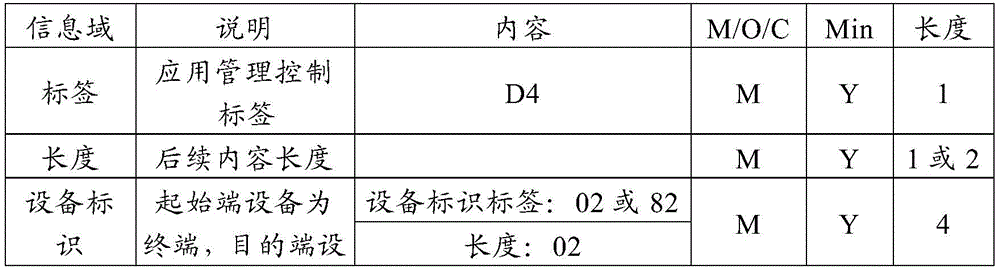

注:Note:
应用数据A为必选数据对象,表示启动方式变更发生的应用的相关数据和信息;Application data A is a mandatory data object, which indicates the relevant data and information of the application for which the startup mode has changed;
启动方式为新增的扩展数据对象,表示对指定应用的启动方式的变更,启动方式设置目前可以包括开机启动和关联应用启动,具体编码格式如下:The startup mode is a newly added extended data object, which indicates the change of the startup mode of the specified application. The startup mode setting can currently include startup at boot and startup of associated applications. The specific encoding format is as follows:
b2b1=00:禁止开机启动b2b1=00:Disable startup
01:允许开机启动01: Allow startup
10:禁止关联启动10: Disable associated startup
11:允许关联启动11: Allow association startup
其余保留The rest is reserved
应用数据B为条件必选数据对象,即在启动方式为允许关联启动时该数据对象存在,表示可以启动应用数据A的关联应用。Application data B is a conditionally required data object, that is, when the startup mode is to allow associated startup, the data object exists, indicating that the associated application of application data A can be started.
最后,USIM在收到命令后,根据预设规则对本次启动方式变更行为进行判断,是否允许本次行为的执行,并将管理控制结果包含在响应信息中返回到终端,响应信息的结构如表3:Finally, after receiving the command, the USIM determines whether to allow the execution of this behavior according to the preset rules for the change of the startup mode, and returns the management control result to the terminal in the response information. The structure of the response information is shown in Table 3:
表3:响应信息的结构/参数Table 3: Structure/parameters of response information

其中文本串是可选参数,只有在USIM需要给用户提示信息提出。如响应信息不允许本次启动方式变更行为,则可以在返回响应结果的同时将提示信息向用户展示。The text string is an optional parameter and is only used when the USIM needs to give a prompt to the user. If the response does not allow the change of the startup mode, the prompt can be displayed to the user while returning the response result.
响应信息的参数中,启动方式变更控制结果的内容为02时,表示目标应用启动方式变更行为不由USIM控制。In the parameters of the response information, when the content of the startup mode change control result is 02, it means that the target application startup mode change behavior is not controlled by the USIM.
终端根据所述判断结果执行针对目标应用的启动方式变更的后续操作包括,当判断结果为可以进行本次启动方式变更时,终端进行目标应用的启动方式变更;当判断结果为不可以进行本次启动方式变更时,终端不进行目标应用相应的启动方式变更。The terminal performs subsequent operations for changing the startup mode of the target application based on the judgment result, including: when the judgment result is that the startup mode can be changed, the terminal changes the startup mode of the target application; when the judgment result is that the startup mode cannot be changed, the terminal does not change the startup mode of the target application accordingly.
在本实施例的另一种实施方式中,目标应用的启动方式变更行为是否由USIM控制的处理过程为:对于不支持USIM启动控制的终端应用,当其有启动控制需求时,不会向USIM发送要求USIM对变更进行控制的命令请求,USIM无法获知变更行为,而无法决定是否对其进行判断。In another implementation of this embodiment, the processing process of whether the startup mode change behavior of the target application is controlled by the USIM is: for terminal applications that do not support USIM startup control, when they have startup control requirements, they will not send a command request to the USIM to require the USIM to control the change. The USIM cannot know the change behavior and cannot decide whether to make a judgment on it.
进一步的,所述终端应用的启动方式变更类型包括:开机启动变更和关联启动变更;Furthermore, the types of changes in the startup mode of the terminal application include: power-on startup change and associated startup change;
当所述终端应用的启动方式变更类型为关联启动变更时,所述启动方式变更命令还包括启动目标应用的关联应用数据。When the startup mode change type of the terminal application is an associated startup change, the startup mode change command further includes associated application data of the startup target application.
由于USIM应用和终端应用是相互配合、密切关联的,终端应用的属性设置某种程度上会直接对USIM产生影响。当与USIM应用关联的终端应用被用户设置为开机启动或者禁止开机启动,或者与其他终端应用发生关系,被其它应用作为相关应用启动或禁止,而对USIM应用造成影响。因此,终端应用的启动方式变更类型包含了开机启动变更和关联启动变更。Since USIM applications and terminal applications are closely related and cooperate with each other, the attribute settings of terminal applications will directly affect USIM to some extent. When the terminal application associated with the USIM application is set by the user to start or prohibit startup at startup, or has a relationship with other terminal applications, it is started or prohibited by other applications as a related application, which affects the USIM application. Therefore, the startup mode change type of the terminal application includes startup change and associated startup change.
终端根据启动方式变更类型的具体要求生成启动方式变更命令并发送到USIM,命令格式如表2所述。USIM对命令进行解析,检查启动方式的变更设置,并结合命令参数确定命令本次需要求进行的启动方式变更类型,并通过不同的判断步骤对本次启动方式变更设置的行为进行判断。The terminal generates a startup mode change command according to the specific requirements of the startup mode change type and sends it to the USIM. The command format is described in Table 2. The USIM parses the command, checks the startup mode change settings, and determines the startup mode change type required by the command based on the command parameters, and judges the behavior of the startup mode change settings through different judgment steps.
进一步的,终端应用的启动方式变更类型为关联启动变更时,生成启动方式变更命令并发送到USIM,在使所述USIM根据预设规则判断是否允许所述启动方式变更命令需求的启动方式变更的操作之前,还包括:Further, when the startup mode change type of the terminal application is an associated startup change, a startup mode change command is generated and sent to the USIM, and before the USIM determines whether to allow the startup mode change required by the startup mode change command according to a preset rule, it also includes:
使USIM先根据预设规则判断目标应用是否可以进行开启/禁止关联启动的操作;The USIM first determines whether the target application can be enabled/disabled for associated startup according to preset rules;
根据终端应用部署情况和预设规则判断是否允许终端对所述目标应用执行启动方式变更的操作,具体为:Determine whether to allow the terminal to perform the operation of changing the startup mode of the target application according to the terminal application deployment status and preset rules, specifically:
如果根据预设规则判定目标应用可以进行开启/禁止关联启动的操作,则进行根据终端应用部署情况和预设规则判断是否允许该关联应用针对所述目标应用执行启动方式变更的操作;如果根据预设规则判定目标应用不可以进行开启/禁止关联启动的操作,则不允许该关联应用针对所述目标应用执行启动方式变更的操作。If it is determined according to the preset rules that the target application can perform the operation of enabling/disabling associated startup, then it is determined whether the associated application is allowed to perform the operation of changing the startup mode for the target application based on the terminal application deployment situation and the preset rules; if it is determined according to the preset rules that the target application cannot perform the operation of enabling/disabling associated startup, then the associated application is not allowed to perform the operation of changing the startup mode for the target application.
关联应用针对目标应用启动方式变更的操作包括,由原状态变更为关联应用启动时同时启动目标应用,或者变更为关联应用启动时不启动目标应用,或者变更为关联应用关闭时关闭目标应用,以及变更为关联应用关闭时不关闭目标应用。The operations of the associated application for changing the startup mode of the target application include changing from the original state to starting the target application at the same time when the associated application is started, or changing to not starting the target application when the associated application is started, or changing to closing the target application when the associated application is closed, and changing to not closing the target application when the associated application is closed.
当启动方式变更类型为终端应用的开机启动变更时,USIM读取命令中包含的应用数据,确定需进行开机启动变更的目标应用;根据预设规则(通常为该终端应用关联的USIM应用中预设的规则)判断是否可以进行本次开启/禁止开机启动的操作;向终端返回响应信息,信息内包含判断结果和可选的文本串,信息结构如表3所述;终端根据响应信息,当判断结果为可以进行本次开机启动方式变更时,终端进行目标应用的开机启动方式变更,如由不能开机启动变更为开机启动,或开机启动变更为禁止开机启动;当判断结果为不可以进行本次开启启动方式变更时,终端不进行目标应用相应的开机启动变更。在根据终端应用部署情况和预设规则判断是否允许终端对所述目标应用执行启动方式变更的操作,和根据预设规则判断目标应用是否可以进行开启/禁止关联启动的操作中,所述的预设规则相同,都是该终端应用关联的USIM应用中预设的规则。When the startup mode change type is a power-on startup change of the terminal application, the USIM reads the application data contained in the command to determine the target application that needs to be changed; according to the preset rules (usually the preset rules in the USIM application associated with the terminal application), it is determined whether the operation of enabling/disabling the power-on startup can be performed; a response message is returned to the terminal, and the message includes the judgment result and an optional text string, and the information structure is as described in Table 3; according to the response information, when the judgment result is that the power-on startup mode change can be performed, the terminal changes the power-on startup mode of the target application, such as changing from not being able to power on to power on, or changing from power on to prohibiting power on; when the judgment result is that the power-on startup mode change cannot be performed, the terminal does not perform the corresponding power-on startup change of the target application. In the operation of determining whether the terminal is allowed to perform the startup mode change on the target application according to the terminal application deployment situation and the preset rules, and the operation of determining whether the target application can be enabled/disabled for associated startup according to the preset rules, the preset rules are the same, and are all rules preset in the USIM application associated with the terminal application.
当启动方式变更类型为终端应用的关联启动变更时,USIM读取命令中包含的应用数据,确定需进行开机启动变更的目标应用;并根据启动目标应用的关联应用数据或者启动目标应用的关联应用,USIM根据预设规则(通常为该终端应用关联的USIM应用中预设的规则)判断目标应用是否可以进行开启/禁止关联启动的操作,如果为否,则不进行后续判断,直接向终端返回响应信息,信息中包含判断结果为不允许本次关联启动变更,终端不进行目标应用的本次关联启动变更;如果判断结果为是,则进一步根据预设规则判断是否允许该关联应用对目标应用启动或关闭的更改;并向终端返回响应信息,信息内包含第二次的判断结果和可选的文本串,信息结构如表3所述;终端根据响应信息,当判断结果为可以进行本次关联启动方式变更时,终端进行目标应用的关联启动方式变更;当判断结果为不可以进行本次关联启动方式变更时,终端不进行目标应用相应的关联启动变更。When the startup mode change type is an associated startup change of a terminal application, the USIM reads the application data contained in the command to determine the target application that needs to be changed for startup; and according to the associated application data of the started target application or the associated application of the started target application, the USIM determines whether the target application can perform an operation of enabling/disabling associated startup according to a preset rule (usually a preset rule in the USIM application associated with the terminal application). If not, no subsequent judgment is made, and a response message is directly returned to the terminal, the message including a judgment result that this associated startup change is not allowed, and the terminal does not perform this associated startup change of the target application; if the judgment result is yes, it is further determined according to the preset rule whether the associated application is allowed to change the startup or shutdown of the target application; and a response message is returned to the terminal, the message including a second judgment result and an optional text string, the information structure is as described in Table 3; according to the response information, when the judgment result is that this associated startup mode change can be performed, the terminal performs an associated startup mode change of the target application; when the judgment result is that this associated startup mode change cannot be performed, the terminal does not perform the corresponding associated startup change of the target application.
为了更方便的了解本实施例的具体实施过程,图2为本发明实施例二提供的一种终端应用启动变更控制的方法的流程图,如图2所示,对整个实施过程进行描述,所述终端应用启动变更控制的方法包括:In order to more conveniently understand the specific implementation process of this embodiment, FIG. 2 is a flow chart of a method for terminal application startup change control provided in Embodiment 2 of the present invention. As shown in FIG. 2, the entire implementation process is described. The method for terminal application startup change control includes:
步骤S201:终端通过Envelope-Terminal Application命令将终端应用情况下载到USIM,其中包含改造的“应用数据”数据对象,及包含目标应用是否允许启动方式变更行为由USIM控制的参数指示,USIM通过命令获知需要进行变更控制的应用范围和情况;Step S201: The terminal downloads the terminal application status to the USIM through the Envelope-Terminal Application command, which includes the modified "application data" data object and a parameter indicating whether the target application allows the startup mode change behavior to be controlled by the USIM. The USIM learns the application scope and situation that need to be changed through the command;
步骤S202:终端应用产生开机启动或关联启动等启动方式变更的需求,发送Application Launch Control by USIM命令到USIM,要求USIM进行控制和管理;命令结构如表2所述,除包括被启动变更的目标应用数据和启动方式操作类型外,如为开启关联启动,还需包括启动目标应用的关联应用数据;Step S202: The terminal application generates a demand for changing the startup mode such as power-on startup or associated startup, and sends an Application Launch Control by USIM command to the USIM to request the USIM to control and manage. The command structure is as described in Table 2, which includes the target application data to be started and the startup mode operation type. If the associated startup is to be enabled, the associated application data of the target application to be started is also required.
步骤S203:USIM收到命令后对命令进行解析,判断启动方式变更的类型;Step S203: After receiving the command, the USIM parses the command and determines the type of the startup mode change;
步骤S204:根据启动方式变更的类型执行后续步骤,如b2b1=00/01,则为开机启动变更,转到后续步骤S205—步骤S207,如b2b1=10/11,则为关联启动变更,转到步骤S208—步骤S211;Step S204: Execute subsequent steps according to the type of startup mode change. For example, if b2b1=00/01, it is a power-on startup change, and go to subsequent steps S205 to S207. If b2b1=10/11, it is an associated startup change, and go to steps S208 to S211.
步骤S205:读取命令中包含的应用数据,确定需进行开机启动变更的目标应用;Step S205: reading the application data contained in the command, and determining the target application to be started up and changed;
步骤S206:根据预设规则(通常为该终端应用关联的USIM应用中预设的规则)判断是否可以进行目标应用的本次开启/禁止开机启动的操作;Step S206: judging whether the target application can be enabled/disabled for startup according to a preset rule (usually a rule preset in the USIM application associated with the terminal application);
步骤S207:向终端返回响应信息,信息内包含判断结果和可选的文本串,信息结构如表3所述;Step S207: Return response information to the terminal, the information including the judgment result and an optional text string, and the information structure is as described in Table 3;
步骤S208:读取命令中包含的应用数据,确定需进行关联启动变更的目标应用;Step S208: reading the application data contained in the command, and determining the target application that needs to be associated and started;
步骤S209:根据预设规则(通常为该终端应用关联的USIM应用中预设的规则)判断目标应用是否可以进行开启/禁止关联启动的操作,如果否则转到步骤S211,如果是则继续后续步骤S210-步骤S211;Step S209: judging whether the target application can be enabled/disabled for associated startup according to a preset rule (usually a preset rule in the USIM application associated with the terminal application), if not, go to step S211, if yes, continue with subsequent steps S210-S211;
步骤S210:继续根据预设规则判断是否允许该关联应用对目标应用启动方式变更;Step S210: Continue to determine whether the associated application is allowed to change the target application startup mode according to the preset rules;
步骤S211:向终端返回响应信息,信息内包含判断结果和可选的文本串,信息结构如表3所述。Step S211: Return response information to the terminal, the information including the judgment result and an optional text string, and the information structure is as described in Table 3.
在步骤S207或S211之后,终端收到响应信息,根据响应信息,执行相应的目标应用启动变更动作,或不执行相应的目标应用启动变更动作。After step S207 or S211, the terminal receives the response information, and executes the corresponding target application startup change action or does not execute the corresponding target application startup change action according to the response information.
图3为本发明实施例三提供的一种终端应用启动变更控制的方法的流程图,如图3所示,本实施例中的方法应用于USIM,可以包括:FIG3 is a flow chart of a method for controlling the startup change of a terminal application provided in Embodiment 3 of the present invention. As shown in FIG3 , the method in this embodiment is applied to a USIM and may include:
步骤S301:接收终端发送的终端应用部署情况信息和启动方式变更命令,所述命令包括启动方式需要变更的目标应用数据和启动方式变更类型;Step S301: receiving terminal application deployment information and a startup mode change command sent by a terminal, wherein the command includes target application data of which the startup mode needs to be changed and a startup mode change type;
步骤S302:解析所述终端应用部署情况信息,以获取终端的应用部署情况;以及,解析所述启动方式变更命令,以确定启动方式需要变更的目标应用和启动方式变更类型;Step S302: parsing the terminal application deployment information to obtain the terminal application deployment status; and parsing the startup mode change command to determine the target application that needs to change the startup mode and the startup mode change type;
步骤S303:根据终端应用部署情况和预设规则判断是否允许终端对所述目标应用执行启动方式变更的操作,并向终端发送包含判断结果的响应信息,以使终端根据所述响应信息包含的判断结果执行针对所述目标应用的启动方式变更的相应操作。Step S303: Determine whether the terminal is allowed to change the startup mode of the target application based on the terminal application deployment status and preset rules, and send a response message containing the judgment result to the terminal so that the terminal performs the corresponding operation of changing the startup mode of the target application based on the judgment result contained in the response message.
进一步的,在接收到终端发送的终端应用部署情况信息后,还包括:Furthermore, after receiving the terminal application deployment information sent by the terminal, it also includes:
解析终端应用部署情况信息,得到终端应用部署情况信息中添加的包含启动方式变更指示参数的“应用数据”,以获取是否允许终端应用的启动方式变更行为由USIM控制的情况;Parse the terminal application deployment information to obtain the "application data" containing the startup mode change indication parameter added to the terminal application deployment information to obtain whether the startup mode change behavior of the terminal application is allowed to be controlled by the USIM;
在收到启动方式变更命令后,还包括:After receiving the startup mode change command, it also includes:
若获取的情况为允许目标应用的启动方式变更行为由USIM控制,则根据终端的应用部署情况和预设规则判断是否允许终端对所述目标应用执行启动方式变更的操作,并向终端发送包含判断结果的响应信息;若获取的情况为不允许目标应用的启动方式变更行为由USIM控制,则向终端发送包含启动方式变更行为不由USIM控制的响应信息。If the situation obtained is that the startup mode change behavior of the target application is allowed to be controlled by the USIM, it is determined whether the terminal is allowed to perform the startup mode change operation on the target application according to the application deployment situation of the terminal and the preset rules, and a response message containing the judgment result is sent to the terminal; if the situation obtained is that the startup mode change behavior of the target application is not allowed to be controlled by the USIM, a response message including that the startup mode change behavior is not controlled by the USIM is sent to the terminal.
进一步的,所述终端应用的启动方式变更类型包括开机启动变更和关联启动变更;当所述终端应用的启动方式变更类型为关联启动变更时,所述启动方式变更命令还包括启动目标应用的关联应用数据,则在根据终端应用部署情况和预设规则判断是否允许终端对所述目标应用执行启动方式变更的操作之前,还包括:Further, the startup mode change type of the terminal application includes a boot startup change and an associated startup change; when the startup mode change type of the terminal application is an associated startup change, the startup mode change command also includes associated application data of the startup target application, and before determining whether to allow the terminal to perform the startup mode change operation on the target application according to the terminal application deployment situation and the preset rules, it also includes:
根据预设规则判断目标应用是否可以进行开启/禁止关联启动的操作;Determine whether the target application can be enabled/disabled for associated startup based on preset rules;
根据终端应用部署情况和预设规则判断是否允许终端对所述目标应用执行启动方式变更的操作,具体为:Determine whether to allow the terminal to perform the operation of changing the startup mode of the target application according to the terminal application deployment status and preset rules, specifically:
如果根据预设规则判定目标应用可以进行开启/禁止关联启动的操作,则进行根据终端应用部署情况和预设规则判断是否允许该关联应用针对所述目标应用执行启动方式变更的操作;如果根据预设规则判定目标应用不可以进行开启/禁止关联启动的操作,则不允许该关联应用针对所述目标应用执行启动方式变更的操作。If it is determined according to the preset rules that the target application can perform the operation of enabling/disabling associated startup, then it is determined whether the associated application is allowed to perform the operation of changing the startup mode for the target application based on the terminal application deployment situation and the preset rules; if it is determined according to the preset rules that the target application cannot perform the operation of enabling/disabling associated startup, then the associated application is not allowed to perform the operation of changing the startup mode for the target application.
进一步的,所述向终端发送的响应信息中还包括文本串,以使终端根据文本串内容的要求执行相应的操作。Furthermore, the response information sent to the terminal also includes a text string, so that the terminal performs corresponding operations according to the requirements of the text string content.
在响应信息的结构中可以包含文本串,用于向用户提供提示信息(文本串内容),在一种实施方式中,提示信息通过弹出窗口的方式呈现给用户,文本串内容可以根据具体情况显示,例如“不允许xx应用启动方式变更”等,使用户知悉。The structure of the response information may include a text string for providing prompt information (text string content) to the user. In one embodiment, the prompt information is presented to the user in the form of a pop-up window, and the text string content may be displayed according to the specific situation, such as "changes to the startup method of xx application are not allowed", etc., to inform the user.
图4为本发明实施例四提供的终端应用启动变更控制装置的结构示意图,如图4所示,本实施例中的装置可以包括:FIG4 is a schematic diagram of the structure of a terminal application startup change control device provided in Embodiment 4 of the present invention. As shown in FIG4 , the device in this embodiment may include:
生成模块41,其设置为下载终端的应用部署情况后生成终端应用部署情况信息,以及在终端应用产生启动方式变更的需求后,生成启动方式变更命令;所述命令包括启动方式需要变更的目标应用数据和启动方式变更类型;A generating
发送模块42,其设置为向USIM发送终端应用部署情况信息和启动方式变更命令,以使USIM根据启动方式变更命令确定启动方式需要变更的目标应用及其启动方式变更类型,以及根据终端的应用部署情况和预设规则判断是否允许终端对所述目标应用执行启动方式变更的操作,并向终端发送包含判断结果的响应信息;a sending
接收模块43,其设置为接收USIM发送的响应信息;A receiving
执行模块44,其设置为根据所述响应信息包含的判断结果执行针对所述目标应用的启动方式变更的相应操作。The
进一步的,所述生成模块41还设置为在发送模块42将终端的应用部署情况信息发送到USIM之前,Furthermore, the generating
在终端应用部署情况信息中添加“应用数据”,所述“应用数据”中包含启动方式变更指示参数,以使USIM解析终端应用部署情况信息后,获取是否允许终端应用的启动方式变更行为由USIM控制的情况,并在收到启动方式变更命令后,若获取的情况为允许目标应用的启动方式变更行为由USIM控制,则根据终端的应用部署情况和预设规则判断是否允许终端对所述目标应用执行启动方式变更的操作,并向终端发送包含判断结果的响应信息;若获取的情况为不允许目标应用的启动方式变更行为由USIM控制,则不对是否允许终端对所述目标应用执行启动方式变更的操作进行判断,并向终端发送包含启动方式变更行为不由USIM控制的响应信息。Add "application data" to the terminal application deployment information, where the "application data" includes a startup mode change indication parameter, so that after the USIM parses the terminal application deployment information, it obtains whether the startup mode change behavior of the terminal application is allowed to be controlled by the USIM, and after receiving the startup mode change command, if the obtained situation is that the startup mode change behavior of the target application is allowed to be controlled by the USIM, then it is determined whether the terminal is allowed to perform the startup mode change operation on the target application according to the terminal's application deployment situation and preset rules, and a response message containing the determination result is sent to the terminal; if the obtained situation is that the startup mode change behavior of the target application is not allowed to be controlled by the USIM, then it is not determined whether the terminal is allowed to perform the startup mode change operation on the target application, and a response message containing the startup mode change behavior not being controlled by the USIM is sent to the terminal.
进一步的,所述生成模块41生成的所述终端应用的启动方式变更类型包括:开机启动变更和关联启动变更;Furthermore, the startup mode change types of the terminal application generated by the generating
当所述终端应用的启动方式变更类型为关联启动变更时,所述启动方式变更命令还包括启动目标应用的关联应用数据。When the startup mode change type of the terminal application is an associated startup change, the startup mode change command further includes associated application data of the startup target application.
图5为本发明实施例五提供的终端应用启动变更控制装置的结构示意图,如图5所示,本实施例中的装置可以包括:FIG5 is a schematic diagram of the structure of a terminal application startup change control device provided in Embodiment 5 of the present invention. As shown in FIG5 , the device in this embodiment may include:
接收模块51,其设置为接收终端发送的终端应用部署情况信息和启动方式变更命令,所述命令包括需要变更的目标应用数据和启动方式变更类型;A receiving
解析模块52,其设置为解析所述终端应用部署情况信息,以获取终端的应用部署情况;以及,解析所述启动方式变更命令,以确定启动方式需要变更的目标应用和启动方式变更类型;The
判断模块53,其设置为根据终端应用部署情况和预设规则判断是否允许终端对所述目标应用执行启动方式变更的操作,并得出判断结果;以及,A
发送模块54,其设置为向终端发送包含判断结果的响应信息,以使终端根据所述响应信息包含的判断结果执行针对所述目标应用的启动方式变更的相应操作。The sending
进一步的,解析模块52还设置为在接收到终端发送的终端应用部署情况信息后,Furthermore, the parsing
解析终端应用部署情况信息,得到终端应用部署情况信息中添加的包含启动方式变更指示参数的“应用数据”,以获取是否允许终端应用的启动方式变更行为由USIM控制的情况;以及,Parsing the terminal application deployment information, obtaining the "application data" containing the startup mode change indication parameter added to the terminal application deployment information, so as to obtain whether the startup mode change behavior of the terminal application is allowed to be controlled by the USIM; and,
在收到启动方式变更命令后,After receiving the startup mode change command,
若解析到获取的情况为允许目标应用的启动方式变更行为由USIM控制,则使判断模块53根据终端的应用部署情况和预设规则判断是否允许终端对所述目标应用执行启动方式变更的操作,并使发送模块54向终端发送包含判断结果的响应信息;若解析到获取的情况为不允许目标应用的启动方式变更行为由USIM控制,则使发送模块54向终端发送包含启动方式变更行为不由USIM控制的响应信息。If it is parsed that the acquired situation is that the start-up mode change behavior of the target application is allowed to be controlled by the USIM, the
进一步的,解析模块52还设置为在所述终端应用的启动方式变更类型包括开机启动变更和关联启动变更;当所述终端应用的启动方式变更类型为关联启动变更时,解析所述启动方式变更命令中包括的启动目标应用的关联应用数据,并使判断模块53在根据终端应用部署情况和预设规则判断是否允许终端对所述目标应用执行启动方式变更的操作之前,还进行:Further, the parsing
根据预设规则判断目标应用是否可以进行开启/禁止关联启动操作的动作;Determine whether the target application can enable/disable the associated startup operation according to the preset rules;
根据终端应用部署情况和预设规则判断是否允许终端对所述目标应用执行启动方式变更的操作,具体为:Determine whether to allow the terminal to perform the operation of changing the startup mode of the target application according to the terminal application deployment status and preset rules, specifically:
如果根据预设规则判定目标应用可以进行开启/禁止关联启动的操作,则进行根据终端应用部署情况和预设规则判断是否允许该关联应用针对所述目标应用执行启动方式变更的操作;如果根据预设规则判定目标应用不可以进行开启/禁止关联启动的操作,则不允许该关联应用针对所述目标应用执行启动方式变更的操作。If it is determined according to the preset rules that the target application can perform the operation of enabling/disabling associated startup, then it is determined whether the associated application is allowed to perform the operation of changing the startup mode for the target application based on the terminal application deployment situation and the preset rules; if it is determined according to the preset rules that the target application cannot perform the operation of enabling/disabling associated startup, then the associated application is not allowed to perform the operation of changing the startup mode for the target application.
进一步的,所述发送模块54还设置为在所述向终端发送的响应信息中添加包括文本串,以使终端根据文本串内容的要求执行相应的操作。Furthermore, the sending
图6为本发明实施例六提供的终端的结构示意图,如图6所示,本实施例中的终端可以包括:FIG6 is a schematic diagram of the structure of a terminal provided in Embodiment 6 of the present invention. As shown in FIG6 , the terminal in this embodiment may include:
存储器62,用于存储程序;存储器62,可以包括易失性存储器(英文:volatilememory),例如随机存取存储器(英文:random-access memory,缩写:RAM),如静态随机存取存储器(英文:static random-access memory,缩写:SRAM),双倍数据率同步动态随机存取存储器(英文:Double Data Rate Synchronous Dynamic Random Access Memory,缩写:DDR SDRAM)等;存储器也可以包括非易失性存储器(英文:non-volatile memory),例如快闪存储器(英文:flash memory)。存储器62用于存储计算机程序(如实现上述方法的应用程序、功能模块等)、计算机指令等,上述的计算机程序、计算机指令等可以分区存储在一个或多个存储器中。并且上述的计算机程序、计算机指令、数据等可以被处理器调用。其中,存储器62、处理器61可以通过总线63耦合连接。The
处理器61,用于执行存储器62存储的计算机程序,以实现上述实施例涉及的方法中的各个步骤。具体可以参见前面方法实施例中的相关描述,此处不再赘述。The
图7为本发明实施例七提供的通用用户标识模块的结构示意图,如图7所示,本实施例中的通用用户标识模块70可以包括:FIG. 7 is a schematic diagram of the structure of a universal user identification module provided in Embodiment 7 of the present invention. As shown in FIG. 7 , the universal
存储器72,用于存储程序;存储器72,可以包括易失性存储器(英文:volatilememory),例如随机存取存储器(英文:random-access memory,缩写:RAM),如静态随机存取存储器(英文:static random-access memory,缩写:SRAM),双倍数据率同步动态随机存取存储器(英文:Double Data Rate Synchronous Dynamic Random Access Memory,缩写:DDR SDRAM)等;存储器也可以包括非易失性存储器(英文:non-volatile memory),例如快闪存储器(英文:flash memory)。存储器72用于存储计算机程序(如实现上述方法的应用程序、功能模块等)、计算机指令等,上述的计算机程序、计算机指令等可以分区存储在一个或多个存储器72中。并且上述的计算机程序、计算机指令、数据等可以被处理器71调用。其中,存储器72、处理器71可以通过总线73耦合连接。The
处理器71,用于执行存储器72存储的计算机程序,以实现上述实施例涉及的方法中的各个步骤。具体可以参见前面方法实施例中的相关描述,此处不再赘述。The
此外,本发明实施例还提供一种计算机可读存储介质,计算机可读存储介质中存储有计算机执行指令,当用户设备的至少一个处理器执行该计算机执行指令时,用户设备执行上述各种可能的方法。In addition, an embodiment of the present invention further provides a computer-readable storage medium, in which computer-executable instructions are stored. When at least one processor of a user device executes the computer-executable instructions, the user device executes the above-mentioned various possible methods.
其中,计算机可读介质包括计算机存储介质和通信介质,其中通信介质包括便于从一个地方向另一个地方传送计算机程序的任何介质。存储介质可以是通用或专用计算机能够存取的任何可用介质。一种示例性的存储介质耦合至处理器,从而使处理器能够从该存储介质读取信息,且可向该存储介质写入信息。当然,存储介质也可以是处理器的组成部分。处理器和存储介质可以位于ASIC(Application Specific Integrated Circuit,专用集成电路)中。另外,该ASIC可以位于用户设备中。当然,处理器和存储介质也可以作为分立组件存在于通信设备中。Among them, computer-readable media include computer storage media and communication media, wherein communication media include any media that facilitates the transmission of computer programs from one place to another. The storage medium can be any available medium that can be accessed by a general or special-purpose computer. An exemplary storage medium is coupled to a processor so that the processor can read information from the storage medium and write information to the storage medium. Of course, the storage medium can also be an integral part of the processor. The processor and the storage medium can be located in an ASIC (Application Specific Integrated Circuit). In addition, the ASIC can be located in a user device. Of course, the processor and the storage medium can also exist in a communication device as discrete components.
可以理解的是,以上实施方式仅仅是为了说明本发明的原理而采用的示例性实施方式,然而本发明并不局限于此。对于本领域内的普通技术人员而言,在不脱离本发明的精神和实质的情况下,可以做出各种变型和改进,这些变型和改进也视为本发明的保护范围。It is to be understood that the above embodiments are merely exemplary embodiments used to illustrate the principles of the present invention, but the present invention is not limited thereto. For those skilled in the art, various modifications and improvements can be made without departing from the spirit and essence of the present invention, and these modifications and improvements are also considered to be within the scope of protection of the present invention.
Claims (12)
Priority Applications (1)
| Application Number | Priority Date | Filing Date | Title |
|---|---|---|---|
| CN202010219556.5A CN111399946B (en) | 2020-03-25 | 2020-03-25 | Terminal application starting change control method and device, terminal and USIM |
Applications Claiming Priority (1)
| Application Number | Priority Date | Filing Date | Title |
|---|---|---|---|
| CN202010219556.5A CN111399946B (en) | 2020-03-25 | 2020-03-25 | Terminal application starting change control method and device, terminal and USIM |
Publications (2)
| Publication Number | Publication Date |
|---|---|
| CN111399946A CN111399946A (en) | 2020-07-10 |
| CN111399946B true CN111399946B (en) | 2023-03-24 |
Family
ID=71434567
Family Applications (1)
| Application Number | Title | Priority Date | Filing Date |
|---|---|---|---|
| CN202010219556.5A Active CN111399946B (en) | 2020-03-25 | 2020-03-25 | Terminal application starting change control method and device, terminal and USIM |
Country Status (1)
| Country | Link |
|---|---|
| CN (1) | CN111399946B (en) |
Families Citing this family (5)
| Publication number | Priority date | Publication date | Assignee | Title |
|---|---|---|---|---|
| CN111901792B (en) * | 2020-09-08 | 2023-04-07 | 中国联合网络通信集团有限公司 | UICC application setting information management method, system and terminal |
| CN112188475B (en) * | 2020-10-21 | 2022-07-19 | 中国联合网络通信集团有限公司 | Method, USIM, computer device and medium for dynamically managing service control |
| CN113242543B (en) * | 2021-05-14 | 2023-06-23 | 中国联合网络通信集团有限公司 | USIM-based application control method, USIM, terminal and medium |
| CN113950035B (en) * | 2021-10-15 | 2023-10-27 | 中国联合网络通信集团有限公司 | Method, terminal and UICC for dynamically updating NFC capability |
| CN114786170B (en) * | 2022-05-09 | 2023-06-23 | 中国联合网络通信集团有限公司 | Uplink data security processing entity switching method, terminal, USIM and system |
Citations (6)
| Publication number | Priority date | Publication date | Assignee | Title |
|---|---|---|---|---|
| CN101561857A (en) * | 2009-04-28 | 2009-10-21 | 苏州国芯科技有限公司 | Multi-mode startup safety embedded system |
| WO2016178495A1 (en) * | 2015-05-01 | 2016-11-10 | 주식회사 엠버즈 | Smart card for processing multi-subscriber information, electronic device using same, and method for managing multi-subscribers in electronic device |
| CN106255094A (en) * | 2015-06-12 | 2016-12-21 | 中国移动通信集团公司 | Locking means, device, SIM and the system of a kind of SIM application |
| CN107079283A (en) * | 2014-07-24 | 2017-08-18 | 高通股份有限公司 | Equipment automatic configuration system and process based on many SIM |
| CN107957913A (en) * | 2017-11-21 | 2018-04-24 | 广东欧珀移动通信有限公司 | Management and control method and device for associated startup, storage medium and mobile terminal |
| CN109089256A (en) * | 2018-08-27 | 2018-12-25 | 深圳杰睿联科技有限公司 | Connection management system, user terminal and the application program of electronics SIM card terminal |
Family Cites Families (1)
| Publication number | Priority date | Publication date | Assignee | Title |
|---|---|---|---|---|
| US8359016B2 (en) * | 2010-11-19 | 2013-01-22 | Mobile Iron, Inc. | Management of mobile applications |
-
2020
- 2020-03-25 CN CN202010219556.5A patent/CN111399946B/en active Active
Patent Citations (6)
| Publication number | Priority date | Publication date | Assignee | Title |
|---|---|---|---|---|
| CN101561857A (en) * | 2009-04-28 | 2009-10-21 | 苏州国芯科技有限公司 | Multi-mode startup safety embedded system |
| CN107079283A (en) * | 2014-07-24 | 2017-08-18 | 高通股份有限公司 | Equipment automatic configuration system and process based on many SIM |
| WO2016178495A1 (en) * | 2015-05-01 | 2016-11-10 | 주식회사 엠버즈 | Smart card for processing multi-subscriber information, electronic device using same, and method for managing multi-subscribers in electronic device |
| CN106255094A (en) * | 2015-06-12 | 2016-12-21 | 中国移动通信集团公司 | Locking means, device, SIM and the system of a kind of SIM application |
| CN107957913A (en) * | 2017-11-21 | 2018-04-24 | 广东欧珀移动通信有限公司 | Management and control method and device for associated startup, storage medium and mobile terminal |
| CN109089256A (en) * | 2018-08-27 | 2018-12-25 | 深圳杰睿联科技有限公司 | Connection management system, user terminal and the application program of electronics SIM card terminal |
Non-Patent Citations (4)
| Title |
|---|
| Android 恶意程序常用权限分析及统计研究;李红灵;《计算机技术与发展》;第27卷(第11期);132-136 * |
| eSIM技术发展以及对运营商的机遇和挑战;方刚;《邮电设计技术》(第08期);78-82 * |
| Fully Implicit Ultrascale Physics Solvers and Application to Ion Source Modeling;Kris Beckwith;《IEEE TRANSACTIONS ON PLASMA SCIENCE》;第43卷(第4期);957-964 * |
| Non-3GPP对EPS的安全接入研究;杜雪涛;《电信工程技术与标准化》;第07卷(第22期);11-15 * |
Also Published As
| Publication number | Publication date |
|---|---|
| CN111399946A (en) | 2020-07-10 |
Similar Documents
| Publication | Publication Date | Title |
|---|---|---|
| CN111399946B (en) | Terminal application starting change control method and device, terminal and USIM | |
| CN111355844A (en) | Method, device, terminal and USIM for terminal application startup management | |
| CN107844342B (en) | Application program keep alive management and control method, device and storage medium and mobile terminal | |
| CN111787521B (en) | Terminal application permission obtaining method, terminal equipment and USIM | |
| CN107861816A (en) | Resource allocation method and device | |
| CN107950041A (en) | A kind of method and terminal of Profile switchings | |
| CN104159222A (en) | Terminal, identity identification realization method, and authentication method and apparatus | |
| CN105228182A (en) | The double card collocation method of multimode double-card mobile terminal and device | |
| CN107748684A (en) | Realize processing method, device, storage medium and the mobile terminal of self-starting | |
| CN104469982A (en) | USIM card-based data connection control method and USIM card | |
| CN109195157B (en) | Application management method, device and terminal | |
| CN107621981A (en) | Resource allocation method and related products | |
| CN112004222B (en) | USAT application matching management method, terminal, USIM and system | |
| CN108875396A (en) | File operation method, usim card, terminal and readable storage medium storing program for executing | |
| CN112188475B (en) | Method, USIM, computer device and medium for dynamically managing service control | |
| CN111741462B (en) | Terminal application permission change acquisition method, terminal and USIM | |
| CN110430112A (en) | A method and device for realizing virtual machine network IO priority | |
| CN114244887B (en) | Channel management method and device and electronic equipment | |
| CN112367661B (en) | USAT application matching implementation method, USIM, terminal, device and medium | |
| CN113242543B (en) | USIM-based application control method, USIM, terminal and medium | |
| CN113950035B (en) | Method, terminal and UICC for dynamically updating NFC capability | |
| WO2009072018A1 (en) | Method, apparatus and computer program product for providing improved memory usage | |
| CN111901792B (en) | UICC application setting information management method, system and terminal | |
| CN113950036B (en) | NFC capability synchronization method, UICC, terminal, equipment and medium | |
| CN108668336A (en) | Wireless hotspot management method, device, terminal and system |
Legal Events
| Date | Code | Title | Description |
|---|---|---|---|
| PB01 | Publication | ||
| PB01 | Publication | ||
| SE01 | Entry into force of request for substantive examination | ||
| SE01 | Entry into force of request for substantive examination | ||
| GR01 | Patent grant | ||
| GR01 | Patent grant |