CN111397870A - Mechanical fault prediction method based on diversified integrated convolutional neural network - Google Patents
Mechanical fault prediction method based on diversified integrated convolutional neural network Download PDFInfo
- Publication number
- CN111397870A CN111397870A CN202010154764.1A CN202010154764A CN111397870A CN 111397870 A CN111397870 A CN 111397870A CN 202010154764 A CN202010154764 A CN 202010154764A CN 111397870 A CN111397870 A CN 111397870A
- Authority
- CN
- China
- Prior art keywords
- convolutional neural
- neural network
- formula
- mechanical
- diversified
- Prior art date
- Legal status (The legal status is an assumption and is not a legal conclusion. Google has not performed a legal analysis and makes no representation as to the accuracy of the status listed.)
- Granted
Links
Images

Classifications
-
- G—PHYSICS
- G01—MEASURING; TESTING
- G01M—TESTING STATIC OR DYNAMIC BALANCE OF MACHINES OR STRUCTURES; TESTING OF STRUCTURES OR APPARATUS, NOT OTHERWISE PROVIDED FOR
- G01M13/00—Testing of machine parts
-
- G—PHYSICS
- G01—MEASURING; TESTING
- G01M—TESTING STATIC OR DYNAMIC BALANCE OF MACHINES OR STRUCTURES; TESTING OF STRUCTURES OR APPARATUS, NOT OTHERWISE PROVIDED FOR
- G01M13/00—Testing of machine parts
- G01M13/04—Bearings
- G01M13/045—Acoustic or vibration analysis
-
- G—PHYSICS
- G06—COMPUTING OR CALCULATING; COUNTING
- G06F—ELECTRIC DIGITAL DATA PROCESSING
- G06F18/00—Pattern recognition
- G06F18/20—Analysing
- G06F18/24—Classification techniques
- G06F18/241—Classification techniques relating to the classification model, e.g. parametric or non-parametric approaches
-
- G—PHYSICS
- G06—COMPUTING OR CALCULATING; COUNTING
- G06N—COMPUTING ARRANGEMENTS BASED ON SPECIFIC COMPUTATIONAL MODELS
- G06N3/00—Computing arrangements based on biological models
- G06N3/02—Neural networks
- G06N3/04—Architecture, e.g. interconnection topology
- G06N3/045—Combinations of networks
-
- G—PHYSICS
- G06—COMPUTING OR CALCULATING; COUNTING
- G06N—COMPUTING ARRANGEMENTS BASED ON SPECIFIC COMPUTATIONAL MODELS
- G06N3/00—Computing arrangements based on biological models
- G06N3/02—Neural networks
- G06N3/08—Learning methods
-
- G—PHYSICS
- G06—COMPUTING OR CALCULATING; COUNTING
- G06F—ELECTRIC DIGITAL DATA PROCESSING
- G06F2218/00—Aspects of pattern recognition specially adapted for signal processing
- G06F2218/12—Classification; Matching
Landscapes
- Engineering & Computer Science (AREA)
- Physics & Mathematics (AREA)
- Theoretical Computer Science (AREA)
- General Physics & Mathematics (AREA)
- Data Mining & Analysis (AREA)
- Life Sciences & Earth Sciences (AREA)
- Artificial Intelligence (AREA)
- General Engineering & Computer Science (AREA)
- Evolutionary Computation (AREA)
- Molecular Biology (AREA)
- Computational Linguistics (AREA)
- Software Systems (AREA)
- Mathematical Physics (AREA)
- Health & Medical Sciences (AREA)
- Biomedical Technology (AREA)
- Biophysics (AREA)
- Computing Systems (AREA)
- General Health & Medical Sciences (AREA)
- Bioinformatics & Cheminformatics (AREA)
- Evolutionary Biology (AREA)
- Bioinformatics & Computational Biology (AREA)
- Computer Vision & Pattern Recognition (AREA)
- Acoustics & Sound (AREA)
- Testing And Monitoring For Control Systems (AREA)
- Testing Of Devices, Machine Parts, Or Other Structures Thereof (AREA)
Abstract
Description
技术领域technical field
本发明涉及神经网络故障预测相关技术领域,尤其涉及一种基于多样化集成卷积神经网络的机械故障预测方法。The invention relates to the related technical field of neural network fault prediction, in particular to a mechanical fault prediction method based on a diversified integrated convolutional neural network.
背景技术Background technique
故障诊断在现代装备制造业占有重要地位。随着智能制造的飞速发展,设备变得越来越复杂,而这些设备的故障可能造成巨大的经济损失,甚至导致危险情况的发生。故障诊断是确保上述装备稳定、可靠、安全的关键技术,也是当前学术界和工程界研究的热点。Fault diagnosis occupies an important position in modern equipment manufacturing industry. With the rapid development of smart manufacturing, equipment becomes more and more complex, and the failure of these equipment can cause huge economic losses and even lead to dangerous situations. Fault diagnosis is a key technology to ensure the stability, reliability and safety of the above equipment, and it is also a hot research topic in the current academic and engineering circles.
随着人工智能(AI)的发展,深度学习(DL)已经成为机器学习领域的一种新范式。DL具有数据表示能力,能够自动提取数据特征,这可以消除对传统手工提取参数的依赖性。因此DL在故障诊断领域取得了显著的应用效果。但是在实际的工业应用中,所采集的数据具有噪音和随机性,而单一的DL方法仅仅能刻画所采集数据的某一部分特征,导致其存在泛化能力不强的问题,限制了其应用效果的提升。With the development of artificial intelligence (AI), deep learning (DL) has become a new paradigm in the field of machine learning. DL has data representation capability and can automatically extract data features, which can eliminate the dependence on traditional manual extraction of parameters. Therefore, DL has achieved remarkable application effects in the field of fault diagnosis. However, in practical industrial applications, the collected data is noisy and random, and a single DL method can only describe a certain part of the collected data, which leads to the problem of poor generalization ability, which limits its application effect. improvement.
集成学习模型是提高机器学习泛化能力的有效方法,其通利用多个基学习器(单个学习器)学习数据的不同特征,并通过一定的组合策略,进而实现更加稳健的学习方法。基于集成学习模型的故障诊断模型已经得到了大量研究成果和实际应用效果。在集成学习模型中,多个学习器的多样性是确保集成学习模型的关键性指标之一。传统方法在构造多个基学习器时往往采用不同的数据抽样方法、不同的算法结构、不同的算法参数来提高学习器间的多样性。然而,上述的多样性策略均为定性方法。因此研究定型化的多样性指标以提高基于集成学习的故障诊断模型的算法性能是非常必要的。相应地,本领域存在着发展一种稳健性更好的机械故障预测方法的技术需求。The ensemble learning model is an effective method to improve the generalization ability of machine learning. It uses multiple basic learners (single learners) to learn different characteristics of the data, and achieves a more robust learning method through a certain combination strategy. The fault diagnosis model based on the ensemble learning model has obtained a lot of research results and practical application effects. In an ensemble learning model, the diversity of multiple learners is one of the key indicators to ensure an ensemble learning model. Traditional methods often use different data sampling methods, different algorithm structures, and different algorithm parameters to improve the diversity among learners when constructing multiple base learners. However, the diversity strategies described above are qualitative methods. Therefore, it is necessary to study the stereotyped diversity index to improve the algorithm performance of the fault diagnosis model based on ensemble learning. Accordingly, there is a technical need in the art to develop a more robust mechanical failure prediction method.
发明内容SUMMARY OF THE INVENTION
有鉴于此,本发明提供了一种基于多样化集成卷积神经网络的机械故障预测方法。In view of this, the present invention provides a mechanical fault prediction method based on a diversified integrated convolutional neural network.
本发明提供一种基于多样化集成卷积神经网络的机械故障预测方法,具体包括:The present invention provides a method for predicting mechanical faults based on a diversified integrated convolutional neural network, which specifically includes:
S101:对机械故障振动信号进行数据预处理;S101: perform data preprocessing on the mechanical fault vibration signal;
S102:基于LeNet-5模型改进卷积神经网络,并依据改进卷积神经网络构造基于多样化集成卷积神经网络的机械故障预测模型;S102: Improve the convolutional neural network based on the LeNet-5 model, and construct a mechanical failure prediction model based on the diversified integrated convolutional neural network according to the improved convolutional neural network;
S103:设定所述基于多样化集成卷积神经网络的机械故障预测模型的学习率为循环余弦学习率机制,构造多样性指标和多样性损失函数,训练所述基于多样化集成卷积神经网络的机械故障预测模型。S103: Set the learning rate of the mechanical failure prediction model based on the diversified integrated convolutional neural network as a cyclic cosine learning rate mechanism, construct a diversity index and a diversity loss function, and train the diversified integrated convolutional neural network-based mechanical failure prediction model.
进一步地,步骤S101具体为:步骤S101具体为:采集机械故障振动信号,采用S变换将所述机械故障振动信号进行时频分析,得到所述机械故障振动信号的时频信号。Further, step S101 is specifically: step S101 is specifically: collecting mechanical fault vibration signals, using S transform to perform time-frequency analysis on the mechanical fault vibration signals, and obtaining time-frequency signals of the mechanical fault vibration signals.
进一步地,步骤S102中,利用所述训练集和测试集的时频信号构建基于多样化集成卷积神经网络的机械故障预测模型;所述改进卷积神经网络,具体为:在最大池化层之前插入多个卷积层;包括:插入在第一个最大池化层之前的1个7×7×64的卷积层和3个5×5×96的卷积层;插入在第二个最大池化层之前的3个3×3×128的卷积层;插入在第三个最大池化层之前的2个3×3×256的卷积层;插入在第四个最大池化层之前的1个3×3×256的卷积层;其中所述3×3、5×5和7×7分别表示卷积层的卷积滤波器尺寸为3×3、5×5和7×7;所述64、128和256分别表示卷积层的深度为64、128和256;除7×7×64的卷积层的步长为2×2以外,其余卷积层步长均为1×1。Further, in step S102, a mechanical failure prediction model based on a diversified integrated convolutional neural network is constructed by using the time-frequency signals of the training set and the test set; the improved convolutional neural network is specifically: in the maximum pooling layer Insert multiple convolutional layers before; including: 1 7×7×64 convolutional layer and 3 5×5×96 convolutional layers inserted before the first max pooling layer; inserted in the second 3 3×3×128 convolutional layers before the max pooling layer; 2 3×3×256 convolutional layers inserted before the third max pooling layer; inserted in the fourth max pooling layer The previous 1 convolutional layer of 3×3×256; wherein the 3×3, 5×5 and 7×7 indicate that the convolutional filter size of the convolutional layer is 3×3, 5×5 and 7×, respectively 7; The 64, 128, and 256 indicate that the depths of the convolutional layers are 64, 128, and 256, respectively; except that the stride of the 7×7×64 convolutional layer is 2×2, the other convolutional layers have a stride of 2×2. 1×1.
进一步地,步骤S102中,所述基于多样化集成卷积神经网络的机械故障预Further, in step S102, the mechanical failure prediction based on the diversified integrated convolutional neural network
测模型fsel如式(1)所示:The measurement model f sel is shown in formula (1):

式(1)中,fi,i=1…M表示每个局部最优值对应的卷积神经网络模型,M表示所有局部最优值的个数。In formula (1), f i , i=1...M represents the convolutional neural network model corresponding to each local optimal value, and M represents the number of all local optimal values.
进一步地,步骤S103中,所述基于多样化集成卷积神经网络的机械故障预测模型的学习率公式如式(2)所示:Further, in step S103, the learning rate formula of the mechanical failure prediction model based on the diversified integrated convolutional neural network is shown in formula (2):

式(2)中,η是当前迭代步的学习率,ηmax是最大学习率,ηmin是最小学习率,i代表当前迭代次数,T是总迭代次数,M是周期数,b是批量大小,
进一步地,步骤103中,所述基于多样化集成卷积神经网络的机械故障预测模型的损失由交叉熵来表示,所述交叉熵如式(3)所示:Further, in step 103, the loss of the mechanical failure prediction model based on the diversified integrated convolutional neural network is represented by cross entropy, and the cross entropy is shown in formula (3):

式(3)中,N表示样本数,Yi和Pi是卷积神经网络模型在第i个样本上的标签与其预测结果;In formula (3), N represents the number of samples, and Y i and P i are the label of the convolutional neural network model on the ith sample and its prediction result;
所述基于多样化集成卷积神经网络的机械故障预测模型的损失函数如式(4):The loss function of the mechanical failure prediction model based on the diversified integrated convolutional neural network is as formula (4):

式(4)中,ε设定为1e-10,J表示已获得的局部最优值的数量,YPj,j=1…J是模型fi的预测标签。In formula (4), ε is set to 1e-10, J represents the number of obtained local optimal values, and YP j , j=1...J is the predicted label of the model f i .
进一步地,步骤S103中,所述多样性指标如式(5)所示:Further, in step S103, the diversity index is shown in formula (5):

进一步地,所述S变换,具体如式(6)所示:Further, the S transform is specifically shown in formula (6):

式(6)中,τ是频谱定位的时间,f是傅里叶频率,w(t)是窗口函数,S(τ,f)是时频信号,x(t)是采集的输出信号,t是时间,j表示复数单位。In formula (6), τ is the time of spectral positioning, f is the Fourier frequency, w(t) is the window function, S(τ, f) is the time-frequency signal, x(t) is the collected output signal, t is time, and j is a complex unit.
进一步地,训练所述基于多样化集成卷积神经网络的机械故障预测模型具体Further, training the mechanical failure prediction model based on the diversified integrated convolutional neural network specifically
步骤如下:Proceed as follows:
S201:初始化所述改进卷积神经网络的结构,并利用公式(3)训练第一个局部最优值;S201: Initialize the structure of the improved convolutional neural network, and use formula (3) to train the first local optimum;
S202:将所述基于多样化集成卷积神经网络的机械故障预测模型的损失函数重置为公式(4)以训练后续的局部最优值;S202: Reset the loss function of the mechanical failure prediction model based on the diversified integrated convolutional neural network to formula (4) to train subsequent local optimal values;
S203:训练完所有局部最优值后,使用公式(6)实现对所有局部最优值的集成。S203: After training all local optimal values, use formula (6) to realize the integration of all local optimal values.
所述基于多样化集成卷积神经网络的机械故障预测模型采用随机梯度下降算法对故障振动信号的分类误差进行最小化。The mechanical fault prediction model based on the diversified integrated convolutional neural network adopts the stochastic gradient descent algorithm to minimize the classification error of the fault vibration signal.
本发明提供的技术方案带来的有益效果是:该方法提高了故障预测的精度及效率,且适用性较好,有利于在实际应用中推广使用。The beneficial effects brought by the technical solution provided by the present invention are: the method improves the accuracy and efficiency of fault prediction, and has good applicability, which is favorable for popularization and use in practical applications.
附图说明Description of drawings
图1是本发明一种基于多样化集成卷积神经网络的机械故障预测方法的流程图。FIG. 1 is a flow chart of a method for predicting mechanical faults based on a diversified integrated convolutional neural network according to the present invention.
具体实施方式Detailed ways
为使本发明的目的、技术方案和优点更加清楚,下面将结合附图对本发明实施方式作进一步地描述。In order to make the objectives, technical solutions and advantages of the present invention clearer, the embodiments of the present invention will be further described below with reference to the accompanying drawings.
请参考图1,本发明的实施例提供了一种基于多样化集成卷积神经网络的机械故障预测方法的结构图,具体包括:Referring to FIG. 1 , an embodiment of the present invention provides a structural diagram of a method for predicting mechanical faults based on a diversified integrated convolutional neural network, which specifically includes:
S101:对机械故障振动信号进行数据预处理;S101: perform data preprocessing on the mechanical fault vibration signal;
S102:基于LeNet-5模型改进卷积神经网络,并依据改进卷积神经网络构造基于多样化集成卷积神经网络的机械故障预测模型;S102: Improve the convolutional neural network based on the LeNet-5 model, and construct a mechanical failure prediction model based on the diversified integrated convolutional neural network according to the improved convolutional neural network;
S103:设定所述基于多样化集成卷积神经网络的机械故障预测模型的学习率为循环余弦学习率机制,构造多样性指标和多样性损失函数,训练所述基于多样化集成卷积神经网络的机械故障预测模型。S103: Set the learning rate of the mechanical failure prediction model based on the diversified integrated convolutional neural network as a cyclic cosine learning rate mechanism, construct a diversity index and a diversity loss function, and train the diversified integrated convolutional neural network-based mechanical failure prediction model.
步骤S101具体为:采集机械故障振动信号,采用S变换将所述机械故障振动信号进行时频分析,得到所述机械故障振动信号的时频信号。Step S101 is specifically as follows: collecting a mechanical fault vibration signal, and using S transform to perform a time-frequency analysis on the mechanical fault vibration signal to obtain a time-frequency signal of the mechanical fault vibration signal.
步骤S102中,利用所述训练集和测试集的时频信号构建基于多样化集成卷积神经网络的机械故障预测模型;所述改进卷积神经网络,如表1所示,具体为:在最大池化层之前插入多个卷积层;包括:插入在第一个最大池化层之前的1个7×7×64的卷积层和3个5×5×96的卷积层;插入在第二个最大池化层之前的3个3×3×128的卷积层;插入在第三个最大池化层之前的2个3×3×256的卷积层;插入在第四个最大池化层之前的1个3×3×256的卷积层;其中所述3×3、5×5和7×7分别表示卷积层的卷积滤波器尺寸为3×3、5×5和7×7;所述64、128和256分别表示卷积层的深度为64、128和256;除7×7×64的卷积层的步长为2×2以外,其余卷积层步长均为1×1。In step S102, a mechanical failure prediction model based on a diversified integrated convolutional neural network is constructed by using the time-frequency signals of the training set and the test set; the improved convolutional neural network, as shown in Table 1, is specifically: Insert multiple convolutional layers before the pooling layer; including: 1 7×7×64 convolutional layer and 3 5×5×96 convolutional layers inserted before the first max pooling layer; inserted in Three 3×3×128 convolutional layers before the second max pooling layer; two 3×3×256 convolutional layers inserted before the third max pooling layer; inserted in the fourth max pooling layer One 3×3×256 convolutional layer before the pooling layer; wherein the 3×3, 5×5 and 7×7 indicate that the convolutional filter size of the convolutional layer is 3×3 and 5×5, respectively and 7×7; the 64, 128 and 256 indicate that the depths of the convolutional layers are 64, 128 and 256 respectively; except that the stride of the 7×7×64 convolutional layer is 2×2, the rest of the convolutional layer steps The length is 1×1.
表1改进的卷积神经网络结构Table 1 Improved convolutional neural network structure


步骤S102中,所述基于多样化集成卷积神经网络的机械故障预测模型fsel如In step S102, the mechanical failure prediction model f sel based on the diversified integrated convolutional neural network is as follows:
式(1)所示:Formula (1) shows:

式(1)中,fi,i=1…M表示每个局部最优值对应的卷积神经网络模型,M表示所有局部最优值的个数。In formula (1), f i , i=1...M represents the convolutional neural network model corresponding to each local optimal value, and M represents the number of all local optimal values.
步骤S103中,所述基于多样化集成卷积神经网络的机械故障预测模型的学习率公式如式(2)所示:In step S103, the learning rate formula of the mechanical failure prediction model based on the diversified integrated convolutional neural network is shown in formula (2):

式(2)中,η是当前迭代步的学习率,ηmax是最大学习率,ηmin是最小学习率,i代表当前迭代次数,T是总迭代次数,M是周期数,b是批量大小,
步骤103中,所述基于多样化集成卷积神经网络的机械故障预测模型的损失由交叉熵来表示,所述交叉熵如式(3)所示:In step 103, the loss of the mechanical failure prediction model based on the diversified integrated convolutional neural network is represented by cross entropy, and the cross entropy is shown in formula (3):

式(3)中,N表示样本数,Yi和Pi是卷积神经网络模型在第i个样本上的标签与其预测结果;In formula (3), N represents the number of samples, and Y i and P i are the label of the convolutional neural network model on the ith sample and its prediction result;
所述基于多样化集成卷积神经网络的机械故障预测模型的损失函数如式(4):The loss function of the mechanical failure prediction model based on the diversified integrated convolutional neural network is as formula (4):

式(4)中,ε设定为1e-10,J表示已获得的局部最优值的数量,YPj,j=1…J是模型fi的预测标签。In formula (4), ε is set to 1e-10, J represents the number of obtained local optimal values, and YP j , j=1...J is the predicted label of the model f i .
步骤S103中,所述多样性指标如式(5)所示:In step S103, the diversity index is shown in formula (5):

所述S变换,具体如式(6)所示:The S transform is specifically shown in formula (6):

式(6)中,τ是频谱定位的时间,f是傅里叶频率,w(t)是窗口函数,S(τ,f)是时频信号,x(t)是采集的输出信号,t是时间,j表示复数单位。In formula (6), τ is the time of spectral positioning, f is the Fourier frequency, w(t) is the window function, S(τ, f) is the time-frequency signal, x(t) is the collected output signal, t is time, and j is a complex unit.
训练所述基于多样化集成卷积神经网络的机械故障预测模型具体步骤如下:The specific steps for training the mechanical failure prediction model based on the diversified integrated convolutional neural network are as follows:
S201:初始化所述改进卷积神经网络的结构,并利用公式(3)训练第一个局部最优值;S201: Initialize the structure of the improved convolutional neural network, and use formula (3) to train the first local optimum;
S202:将所述基于多样化集成卷积神经网络的机械故障预测模型的损失函数重置为公式(4)以训练后续的局部最优值;S202: Reset the loss function of the mechanical failure prediction model based on the diversified integrated convolutional neural network to formula (4) to train subsequent local optimal values;
S203:训练完所有局部最优值后,使用公式(6)实现对所有局部最优值的集成。S203: After training all local optimal values, use formula (6) to realize the integration of all local optimal values.
所述基于多样化集成卷积神经网络的机械故障预测模型采用随机梯度下降算法对故障振动信号的分类误差进行最小化。The mechanical fault prediction model based on the diversified integrated convolutional neural network adopts the stochastic gradient descent algorithm to minimize the classification error of the fault vibration signal.
为了更好的对本发明提出的内容进行解释说明,下面提供2个采用本发明的具体实施案例。In order to better explain the content proposed by the present invention, two specific implementation cases of the present invention are provided below.
案例一采用的数据集是由凯斯西储大学(CWRU)提供的轴承数据集。本实验采集振动信号,以进一步分析轴承的健康状态,也采集了正常轴承、单点驱动端和风机端的振动信号。采样频率为12kHz。轴承健康状态包括正常状态(NO)和三种故障状态,分别为滚柱故障(RF)、外圈故障(OF)和内圈故障(IF)。每种故障状态有三种损伤尺寸,分别为0.18mm、0.36mm和0.54mm。实验在四种工作负载条件下进行,电机负载分别为0、1、2、3HP,近似速度如表1中所示。The dataset used in Case 1 is the bearing dataset provided by Case Western Reserve University (CWRU). In this experiment, vibration signals were collected to further analyze the bearing's health status, and the vibration signals of normal bearings, single-point drive end and fan end were also collected. The sampling frequency is 12kHz. The bearing health state includes normal state (NO) and three fault states, namely roller fault (RF), outer ring fault (OF) and inner ring fault (IF). There are three damage sizes for each failure state, 0.18mm, 0.36mm, and 0.54mm. The experiments were carried out under four working load conditions, the motor loads were 0, 1, 2, and 3 HP, respectively, and the approximate speeds were shown in Table 1.
表1Table 1

本研究选取驱动端振动信号进行轴承健康状态预测,将每种损伤大小的故障状态视为一种特定的健康状态,共9种故障状态。故障状态和正常状态组成10种健康状态。将ISECNN应用于该数据集的故障诊断,并将五次交叉验证应用于其性能评估.In this study, the vibration signal of the driving end is selected to predict the bearing health state, and the fault state of each damage size is regarded as a specific health state, with a total of 9 fault states. Fault state and normal state make up 10 health states. ISECNN is applied to fault diagnosis on this dataset, and five-fold cross-validation is applied to its performance evaluation.
将ISECNN的性能与结构相同的其他三种CNN模型相比,他们的训练性能都有所不同。它们是不使用集成技术的ISCNN余弦,应用于随机梯度下降(SGD)的学习率衰减的ISCNN衰减,以及使用SGD学习率逐步衰减的ISCNN阶跃衰减。ISECNN、ISCNN余弦、ISCNN衰减和ISCNN阶跃衰减的交叉验证结果见表2和表3。Comparing the performance of ISECNN with other three CNN models with the same structure, their training performance is different. They are ISCNN cosine without ensemble techniques, ISCNN decay with learning rate decay applied to stochastic gradient descent (SGD), and ISCNN step decay with progressive learning rate decay with SGD. The cross-validation results of ISECNN, ISCNN cosine, ISCNN decay and ISCNN step decay are shown in Tables 2 and 3.
表2各方法预测精度Table 2 Prediction accuracy of each method
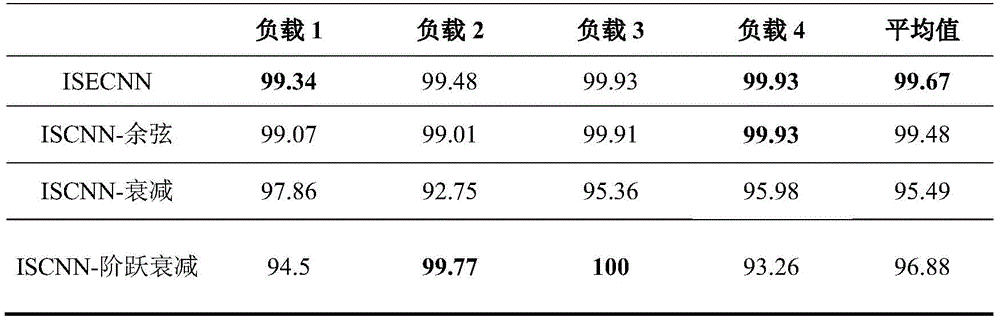
表3各方法标准差Table 3 Standard deviation of each method


从表2可以看出,在这四个模型中,ISECNN的预测精度交叉验证结果最好。在四种负载下的数据集上均取得了较好的结果,平均预测精度为99.67%,优于ISCNN余弦、ISCNN衰减和ISCNN阶跃衰减。表3给出了与表2相似的结果,并显示了这四个模型上标准差结果的交叉验证。可见,ISECNN的标准差结果为0.00137,是最小的,而对于ISCNN衰变和ISCNN阶跃衰变的标准差结果,这个值减少了10倍以上。由于ISECNN的交叉验证具有更好的预测精度和标准差值,表明ISECNN比其他三种模型有了较大的改进。As can be seen from Table 2, among these four models, ISECNN has the best prediction accuracy cross-validation results. Good results are achieved on the datasets under the four workloads, with an average prediction accuracy of 99.67%, outperforming ISCNN cosine, ISCNN decay, and ISCNN step decay. Table 3 presents similar results to Table 2 and shows the cross-validation of the standard deviation results on these four models. It can be seen that the standard deviation result of ISECNN is 0.00137, which is the smallest, while for the standard deviation results of ISCNN decay and ISCNN step decay, this value is reduced by more than 10 times. Since the cross-validation of ISECNN has better prediction accuracy and standard deviation value, it shows that ISECNN has a larger improvement than the other three models.
案例二中将提出的ISECNN与其他已经发表文献的著名的基于深度学习的方法和传统的基于机器学习的方法进行了比较。并且,将提出的ISECNN与传统的深度学习和机器学习方法进行了比较。比较的结果见表6。Case 2 compares the proposed ISECNN with other well-known deep learning-based methods and traditional machine learning-based methods that have been published in the literature. And, the proposed ISECNN is compared with traditional deep learning and machine learning methods. The results of the comparison are shown in Table 6.
表6各方法预测精度Table 6 Prediction accuracy of each method

如表7所示,在比较中,ISECNN的平均预测精度为97.928%,优于SECNN、ICN、HCNN、WDCNN、WDCNN(AdaBN)、TICNN和集成TICNN。在本组实验中,ISECNN显示了对“3→1”案例的极大改进,获得了高达96.80%的结果。将提出的ISECNN与传统的深度学习和机器学习方法进行了比较。从结果可以看出,ISECNN的性能优于ResNet、AlexNet、SVM和ANN。除案例“3→2”外,ISECNN对其他5种案例的预测效果最好。这些结果表明,与这些方法相比,ISECNN取得了很大的进步,表明ISECNN在故障诊断方面具有良好的性能。As shown in Table 7, in comparison, ISECNN achieves an average prediction accuracy of 97.928%, outperforming SECNN, ICN, HCNN, WDCNN, WDCNN(AdaBN), TICNN and ensemble TICNN. In this set of experiments, ISECNN shows great improvement over the "3→1" case, obtaining results as high as 96.80%. The proposed ISECNN is compared with traditional deep learning and machine learning methods. From the results, it can be seen that ISECNN outperforms ResNet, AlexNet, SVM and ANN. Except for the case "3→2", ISECNN has the best prediction effect on the other 5 cases. These results show that ISECNN has achieved great progress compared with these methods, indicating that ISECNN has good performance in fault diagnosis.
本发明的有益效果是:该方法提高了故障预测的精度及效率,且适用性较好,有利于在实际应用中推广使用。The beneficial effects of the present invention are: the method improves the accuracy and efficiency of fault prediction, and has good applicability, which is favorable for popularization and use in practical applications.
在不冲突的情况下,本文中上述实施例及实施例中的特征可以相互结合。The above-described embodiments and features of the embodiments herein may be combined with each other without conflict.
以上所述仅为本发明的较佳实施例,并不用以限制本发明,凡在本发明的精神和原则之内,所作的任何修改、等同替换、改进等,均应包含在本发明的保护范围之内。The above are only preferred embodiments of the present invention and are not intended to limit the present invention. Any modifications, equivalent replacements, improvements, etc. made within the spirit and principles of the present invention shall be included in the protection of the present invention. within the range.
Claims (10)


Priority Applications (1)
| Application Number | Priority Date | Filing Date | Title |
|---|---|---|---|
| CN202010154764.1A CN111397870B (en) | 2020-03-08 | 2020-03-08 | Mechanical fault prediction method based on diversified integrated convolutional neural network |
Applications Claiming Priority (1)
| Application Number | Priority Date | Filing Date | Title |
|---|---|---|---|
| CN202010154764.1A CN111397870B (en) | 2020-03-08 | 2020-03-08 | Mechanical fault prediction method based on diversified integrated convolutional neural network |
Publications (2)
| Publication Number | Publication Date |
|---|---|
| CN111397870A true CN111397870A (en) | 2020-07-10 |
| CN111397870B CN111397870B (en) | 2021-05-14 |
Family
ID=71428579
Family Applications (1)
| Application Number | Title | Priority Date | Filing Date |
|---|---|---|---|
| CN202010154764.1A Active CN111397870B (en) | 2020-03-08 | 2020-03-08 | Mechanical fault prediction method based on diversified integrated convolutional neural network |
Country Status (1)
| Country | Link |
|---|---|
| CN (1) | CN111397870B (en) |
Citations (10)
| Publication number | Priority date | Publication date | Assignee | Title |
|---|---|---|---|---|
| JPH0348746A (en) * | 1989-07-18 | 1991-03-01 | Noboru Yahata | Thin plate bending and shock fatigue testing machine using liquid element |
| US20170148433A1 (en) * | 2015-11-25 | 2017-05-25 | Baidu Usa Llc | Deployed end-to-end speech recognition |
| CN106897390A (en) * | 2017-01-24 | 2017-06-27 | 北京大学 | Target precise search method based on depth measure study |
| CN107563493A (en) * | 2017-07-17 | 2018-01-09 | 华南理工大学 | A kind of confrontation network algorithm of more maker convolution composographs |
| CN108334936A (en) * | 2018-01-30 | 2018-07-27 | 华中科技大学 | Failure prediction method based on migration convolutional neural networks |
| CN108763326A (en) * | 2018-05-04 | 2018-11-06 | 南京邮电大学 | A kind of sentiment analysis model building method of the diversified convolutional neural networks of feature based |
| CN109284606A (en) * | 2018-09-04 | 2019-01-29 | 中国人民解放军陆军工程大学 | Data flow anomaly detection system based on empirical characteristics and convolutional neural network |
| CN109299705A (en) * | 2018-10-24 | 2019-02-01 | 电子科技大学 | Fault diagnosis method for rotating machinery based on one-dimensional deep residual convolutional neural network |
| CN109978134A (en) * | 2019-02-26 | 2019-07-05 | 华中科技大学 | A kind of failure prediction method based on fast integration convolutional neural networks |
| CN110033021A (en) * | 2019-03-07 | 2019-07-19 | 华中科技大学 | A kind of Fault Classification based on one-dimensional multichannel convolutional neural networks |
-
2020
- 2020-03-08 CN CN202010154764.1A patent/CN111397870B/en active Active
Patent Citations (10)
| Publication number | Priority date | Publication date | Assignee | Title |
|---|---|---|---|---|
| JPH0348746A (en) * | 1989-07-18 | 1991-03-01 | Noboru Yahata | Thin plate bending and shock fatigue testing machine using liquid element |
| US20170148433A1 (en) * | 2015-11-25 | 2017-05-25 | Baidu Usa Llc | Deployed end-to-end speech recognition |
| CN106897390A (en) * | 2017-01-24 | 2017-06-27 | 北京大学 | Target precise search method based on depth measure study |
| CN107563493A (en) * | 2017-07-17 | 2018-01-09 | 华南理工大学 | A kind of confrontation network algorithm of more maker convolution composographs |
| CN108334936A (en) * | 2018-01-30 | 2018-07-27 | 华中科技大学 | Failure prediction method based on migration convolutional neural networks |
| CN108763326A (en) * | 2018-05-04 | 2018-11-06 | 南京邮电大学 | A kind of sentiment analysis model building method of the diversified convolutional neural networks of feature based |
| CN109284606A (en) * | 2018-09-04 | 2019-01-29 | 中国人民解放军陆军工程大学 | Data flow anomaly detection system based on empirical characteristics and convolutional neural network |
| CN109299705A (en) * | 2018-10-24 | 2019-02-01 | 电子科技大学 | Fault diagnosis method for rotating machinery based on one-dimensional deep residual convolutional neural network |
| CN109978134A (en) * | 2019-02-26 | 2019-07-05 | 华中科技大学 | A kind of failure prediction method based on fast integration convolutional neural networks |
| CN110033021A (en) * | 2019-03-07 | 2019-07-19 | 华中科技大学 | A kind of Fault Classification based on one-dimensional multichannel convolutional neural networks |
Non-Patent Citations (2)
| Title |
|---|
| WEN LONG: "A New Snapshot Ensemble Convolutional Neural", 《IEEE》 * |
| 张玥璇: "基于深度学习的静态面部表情识别系统的研究与实现", 《中国优秀硕士学位论文全文数据库 信息科技辑》 * |
Also Published As
| Publication number | Publication date |
|---|---|
| CN111397870B (en) | 2021-05-14 |
Similar Documents
| Publication | Publication Date | Title |
|---|---|---|
| CN113408299B (en) | Training method, apparatus, device and storage medium for semantic representation model | |
| Yin et al. | Wasserstein Generative Adversarial Network and Convolutional Neural Network (WG‐CNN) for Bearing Fault Diagnosis | |
| CN101799368B (en) | A Nonlinear Fault Prediction Method for Electromechanical Equipment | |
| CN109978134B (en) | A fault prediction method based on fast ensemble convolutional neural network | |
| CN110470477A (en) | A kind of Fault Diagnosis of Roller Bearings based on SSAE and BA-ELM | |
| CN101561813A (en) | Method for analyzing similarity of character string under Web environment | |
| Wang et al. | Fault diagnosis of industrial robots based on multi-sensor information fusion and 1D convolutional neural network | |
| Li et al. | A fault diagnosis method for rotating machinery with semi-supervised graph convolutional network and images converted from vibration signals | |
| CN118913693B (en) | Bearing fault diagnosis method and system based on hypergraph neural network | |
| Ding et al. | Gear fault diagnosis based on VMD sample entropy and discrete hopfield neural network | |
| Xiang et al. | Fault diagnosis of gearbox based on refined topology and spatio-temporal graph convolutional network | |
| CN119042543A (en) | Coiled tubing fault detection device and method | |
| CN108776818A (en) | Bearing features extracting method, bearing residual life prediction technique and device | |
| CN117760732A (en) | Multi-domain feature selection bearing fault diagnosis method | |
| Luo et al. | Rotating machinery fault diagnosis using dimension expansion and AntisymNet lightweight convolutional neural network | |
| CN116467461A (en) | Data processing method, device, equipment and medium applied to distribution network | |
| CN111397870A (en) | Mechanical fault prediction method based on diversified integrated convolutional neural network | |
| CN114021275B (en) | A Rolling Bearing Fault Diagnosis Method Based on Deep Convolutional Fuzzy System | |
| CN115659257A (en) | An Imbalanced Node Classification Method Based on Attention Weighted Graph Neural Network | |
| Du et al. | Graph neural network-based early bearing fault detection | |
| CN111122160B (en) | An abnormal signal detection method based on stack noise reduction autoencoder | |
| CN118551164A (en) | Rolling bearing few-sample cross-domain fault diagnosis method based on fine tuning prototype network | |
| CN118797477A (en) | Transformer fault diagnosis model construction method and device based on counterfactual analysis | |
| CN110108489B (en) | Method for acquiring performance degradation trend of rolling bearing | |
| CN116662873B (en) | Intelligent diagnosis method for composite faults of rolling bearings based on deep graph convolutional network |
Legal Events
| Date | Code | Title | Description |
|---|---|---|---|
| PB01 | Publication | ||
| PB01 | Publication | ||
| SE01 | Entry into force of request for substantive examination | ||
| SE01 | Entry into force of request for substantive examination | ||
| GR01 | Patent grant | ||
| GR01 | Patent grant |