CN111385884A - Method and device used in user equipment and base station for wireless communication - Google Patents
Method and device used in user equipment and base station for wireless communication Download PDFInfo
- Publication number
- CN111385884A CN111385884A CN201811634904.4A CN201811634904A CN111385884A CN 111385884 A CN111385884 A CN 111385884A CN 201811634904 A CN201811634904 A CN 201811634904A CN 111385884 A CN111385884 A CN 111385884A
- Authority
- CN
- China
- Prior art keywords
- bit block
- node
- block groups
- information
- sub
- Prior art date
- Legal status (The legal status is an assumption and is not a legal conclusion. Google has not performed a legal analysis and makes no representation as to the accuracy of the status listed.)
- Granted
Links
Images


Classifications
-
- H—ELECTRICITY
- H04—ELECTRIC COMMUNICATION TECHNIQUE
- H04L—TRANSMISSION OF DIGITAL INFORMATION, e.g. TELEGRAPHIC COMMUNICATION
- H04L5/00—Arrangements affording multiple use of the transmission path
- H04L5/0001—Arrangements for dividing the transmission path
- H04L5/0003—Two-dimensional division
- H04L5/0005—Time-frequency
- H04L5/0007—Time-frequency the frequencies being orthogonal, e.g. OFDM(A) or DMT
- H04L5/001—Time-frequency the frequencies being orthogonal, e.g. OFDM(A) or DMT the frequencies being arranged in component carriers
-
- H—ELECTRICITY
- H04—ELECTRIC COMMUNICATION TECHNIQUE
- H04W—WIRELESS COMMUNICATION NETWORKS
- H04W16/00—Network planning, e.g. coverage or traffic planning tools; Network deployment, e.g. resource partitioning or cells structures
- H04W16/14—Spectrum sharing arrangements between different networks
-
- H—ELECTRICITY
- H04—ELECTRIC COMMUNICATION TECHNIQUE
- H04W—WIRELESS COMMUNICATION NETWORKS
- H04W72/00—Local resource management
- H04W72/20—Control channels or signalling for resource management
- H04W72/23—Control channels or signalling for resource management in the downlink direction of a wireless link, i.e. towards a terminal
-
- H—ELECTRICITY
- H04—ELECTRIC COMMUNICATION TECHNIQUE
- H04L—TRANSMISSION OF DIGITAL INFORMATION, e.g. TELEGRAPHIC COMMUNICATION
- H04L1/00—Arrangements for detecting or preventing errors in the information received
- H04L1/004—Arrangements for detecting or preventing errors in the information received by using forward error control
- H04L1/0041—Arrangements at the transmitter end
-
- H—ELECTRICITY
- H04—ELECTRIC COMMUNICATION TECHNIQUE
- H04L—TRANSMISSION OF DIGITAL INFORMATION, e.g. TELEGRAPHIC COMMUNICATION
- H04L1/00—Arrangements for detecting or preventing errors in the information received
- H04L1/004—Arrangements for detecting or preventing errors in the information received by using forward error control
- H04L1/0045—Arrangements at the receiver end
-
- H—ELECTRICITY
- H04—ELECTRIC COMMUNICATION TECHNIQUE
- H04L—TRANSMISSION OF DIGITAL INFORMATION, e.g. TELEGRAPHIC COMMUNICATION
- H04L1/00—Arrangements for detecting or preventing errors in the information received
- H04L1/004—Arrangements for detecting or preventing errors in the information received by using forward error control
- H04L1/0056—Systems characterized by the type of code used
- H04L1/0057—Block codes
-
- H—ELECTRICITY
- H04—ELECTRIC COMMUNICATION TECHNIQUE
- H04L—TRANSMISSION OF DIGITAL INFORMATION, e.g. TELEGRAPHIC COMMUNICATION
- H04L1/00—Arrangements for detecting or preventing errors in the information received
- H04L1/12—Arrangements for detecting or preventing errors in the information received by using return channel
- H04L1/16—Arrangements for detecting or preventing errors in the information received by using return channel in which the return channel carries supervisory signals, e.g. repetition request signals
- H04L1/18—Automatic repetition systems, e.g. Van Duuren systems
- H04L1/1812—Hybrid protocols; Hybrid automatic repeat request [HARQ]
-
- H—ELECTRICITY
- H04—ELECTRIC COMMUNICATION TECHNIQUE
- H04L—TRANSMISSION OF DIGITAL INFORMATION, e.g. TELEGRAPHIC COMMUNICATION
- H04L27/00—Modulated-carrier systems
- H04L27/0006—Assessment of spectral gaps suitable for allocating digitally modulated signals, e.g. for carrier allocation in cognitive radio
-
- H—ELECTRICITY
- H04—ELECTRIC COMMUNICATION TECHNIQUE
- H04L—TRANSMISSION OF DIGITAL INFORMATION, e.g. TELEGRAPHIC COMMUNICATION
- H04L5/00—Arrangements affording multiple use of the transmission path
- H04L5/0001—Arrangements for dividing the transmission path
- H04L5/0003—Two-dimensional division
- H04L5/0005—Time-frequency
-
- H—ELECTRICITY
- H04—ELECTRIC COMMUNICATION TECHNIQUE
- H04L—TRANSMISSION OF DIGITAL INFORMATION, e.g. TELEGRAPHIC COMMUNICATION
- H04L5/00—Arrangements affording multiple use of the transmission path
- H04L5/003—Arrangements for allocating sub-channels of the transmission path
-
- H—ELECTRICITY
- H04—ELECTRIC COMMUNICATION TECHNIQUE
- H04L—TRANSMISSION OF DIGITAL INFORMATION, e.g. TELEGRAPHIC COMMUNICATION
- H04L5/00—Arrangements affording multiple use of the transmission path
- H04L5/003—Arrangements for allocating sub-channels of the transmission path
- H04L5/0032—Distributed allocation, i.e. involving a plurality of allocating devices, each making partial allocation
- H04L5/0035—Resource allocation in a cooperative multipoint environment
-
- H—ELECTRICITY
- H04—ELECTRIC COMMUNICATION TECHNIQUE
- H04L—TRANSMISSION OF DIGITAL INFORMATION, e.g. TELEGRAPHIC COMMUNICATION
- H04L5/00—Arrangements affording multiple use of the transmission path
- H04L5/003—Arrangements for allocating sub-channels of the transmission path
- H04L5/0053—Allocation of signalling, i.e. of overhead other than pilot signals
-
- H—ELECTRICITY
- H04—ELECTRIC COMMUNICATION TECHNIQUE
- H04L—TRANSMISSION OF DIGITAL INFORMATION, e.g. TELEGRAPHIC COMMUNICATION
- H04L5/00—Arrangements affording multiple use of the transmission path
- H04L5/0091—Signalling for the administration of the divided path, e.g. signalling of configuration information
- H04L5/0094—Indication of how sub-channels of the path are allocated
-
- H—ELECTRICITY
- H04—ELECTRIC COMMUNICATION TECHNIQUE
- H04W—WIRELESS COMMUNICATION NETWORKS
- H04W72/00—Local resource management
- H04W72/04—Wireless resource allocation
- H04W72/044—Wireless resource allocation based on the type of the allocated resource
- H04W72/0446—Resources in time domain, e.g. slots or frames
-
- H—ELECTRICITY
- H04—ELECTRIC COMMUNICATION TECHNIQUE
- H04W—WIRELESS COMMUNICATION NETWORKS
- H04W72/00—Local resource management
- H04W72/04—Wireless resource allocation
- H04W72/044—Wireless resource allocation based on the type of the allocated resource
- H04W72/0453—Resources in frequency domain, e.g. a carrier in FDMA
-
- H—ELECTRICITY
- H04—ELECTRIC COMMUNICATION TECHNIQUE
- H04W—WIRELESS COMMUNICATION NETWORKS
- H04W72/00—Local resource management
- H04W72/12—Wireless traffic scheduling
- H04W72/1215—Wireless traffic scheduling for collaboration of different radio technologies
-
- H—ELECTRICITY
- H04—ELECTRIC COMMUNICATION TECHNIQUE
- H04W—WIRELESS COMMUNICATION NETWORKS
- H04W74/00—Wireless channel access
- H04W74/002—Transmission of channel access control information
- H04W74/006—Transmission of channel access control information in the downlink, i.e. towards the terminal
-
- H—ELECTRICITY
- H04—ELECTRIC COMMUNICATION TECHNIQUE
- H04W—WIRELESS COMMUNICATION NETWORKS
- H04W74/00—Wireless channel access
- H04W74/08—Non-scheduled access, e.g. ALOHA
- H04W74/0808—Non-scheduled access, e.g. ALOHA using carrier sensing, e.g. carrier sense multiple access [CSMA]
- H04W74/0816—Non-scheduled access, e.g. ALOHA using carrier sensing, e.g. carrier sense multiple access [CSMA] with collision avoidance
-
- H—ELECTRICITY
- H04—ELECTRIC COMMUNICATION TECHNIQUE
- H04L—TRANSMISSION OF DIGITAL INFORMATION, e.g. TELEGRAPHIC COMMUNICATION
- H04L5/00—Arrangements affording multiple use of the transmission path
- H04L5/0091—Signalling for the administration of the divided path, e.g. signalling of configuration information
- H04L5/0096—Indication of changes in allocation
- H04L5/0098—Signalling of the activation or deactivation of component carriers, subcarriers or frequency bands
Landscapes
- Engineering & Computer Science (AREA)
- Signal Processing (AREA)
- Computer Networks & Wireless Communication (AREA)
- Physics & Mathematics (AREA)
- Health & Medical Sciences (AREA)
- General Health & Medical Sciences (AREA)
- Spectroscopy & Molecular Physics (AREA)
- Mobile Radio Communication Systems (AREA)
Abstract
The application discloses a method and a device in a user equipment, a base station and the like used for wireless communication. The first node operates the first information; the first wireless signal is transmitted in M1 of the M subbands. Wherein the first information is used to determine S candidate integers; k1 bit block groups of K bit block groups are used for generating the first wireless signal, any bit block group of the K bit block groups comprises a positive integer number of coding blocks; the K is one of the S1 candidate integers, the M used to determine the S1 candidate integers from the S candidate integers; the first node is a base station and the operation is transmitting; or the first node is a user equipment and the operation is receiving. In a broadband NR-U system, the method reduces the retransmitted data volume caused by the failure of partial sub-band LBT and improves the spectrum utilization rate.
Description
Technical Field
The present application relates to methods and apparatus in a wireless communication system, and more particularly, to methods and apparatus in a wireless communication system that supports data transmission over an Unlicensed Spectrum (Unlicensed Spectrum).
Background
In a conventional 3GPP (3rd Generation Partner Project) LTE (Long-term Evolution) system, data transmission can only occur over a licensed spectrum. With the continuous diversification of application scenes and the rapid increase of the traffic, the authorized spectrum is difficult to meet the demand of the traffic. LTE Release 13 and Release 14 introduce communication over unlicensed spectrum. A research project of Access to an unlicensed spectrum (unlicensed spectrum) under NR (New Radio) was performed on 3GPP RAN (Radio Access Network) #75 congress. The 3GPP RAN #78 has decided for the first time that unlicensed spectrum access is supported in NR Release 15.
In the LTE LAA (licensed Assisted Access) project, a transmitter (base station or UE) needs to perform LBT (listen before Talk) before transmitting data on an unlicensed spectrum to ensure that no interference is caused to other ongoing radio transmissions. According to the discussion of the 3gpp ran1#92bis conference, in an NR-U (NR-Unlicensed spectrum) system, LBT is in units of 20 MHz.
In NR Release 15, CBG (Code Block Group) based transmission is supported. A CBG includes a positive integer number of CBs (Code blocks), and all CBs within a CBG may be retransmitted together or considered together to be correctly received.
Disclosure of Invention
The inventor finds through research that the broadband NR-U system will include a positive integer number of 20MHz sub-bands. In the case of LBT in units of 20MHz, it is possible that only a portion of the sub-band may be used for transmitting wireless signals. In order to reduce the amount of retransmitted data due to the failure of LBT of some subbands, CBG mapping needs to be performed in correspondence with subbands to ensure that one CBG is mapped into one subband.
In view of the above, the present application discloses a solution. It should be noted that, without conflict, the embodiments and features in the embodiments in the user equipment of the present application may be applied to the base station, and vice versa. The embodiments and features of the embodiments of the present application may be combined with each other arbitrarily without conflict.
The application discloses a method in a first node used for wireless communication, characterized by comprising:
operating the first information;
transmitting a first wireless signal in M1 of the M subbands;
wherein the first information is used to determine S candidate integers; k1 bit block groups of K bit block groups are used for generating the first wireless signal, any bit block group of the K bit block groups comprises a positive integer number of coding blocks; the K is one of the S1 candidate integers, the M used to determine the S1 candidate integers from the S candidate integers; said M, said K and said S are each positive integers; the M1, the K1 and the S1 are positive integers not greater than the M, the K and the S, respectively; the first node is a base station and the operation is transmitting; or the first node is a user equipment and the operation is receiving.
As an embodiment, the problem to be solved by the present application is: how to guarantee that a CBG is mapped into a subband. The above method provides a solution to this problem by correlating the number of CBGs with the number of sub-bands.
As an embodiment, the method is characterized in that the K bit block groups are K CBGs, and the method selects K to be a positive integer multiple of M, so that one CBG can be mapped into one sub-band.
As an embodiment, the above method has a benefit of reducing the amount of retransmitted data due to partial subband LBT failure.
According to one aspect of the application, the method is characterized by comprising the following steps:
operating the first signaling;
wherein a first transport block is used to generate the K bit block groups, the first signaling being used to determine a size of the first transport block; the first node is a base station and the operation is transmitting; or the first node is a user equipment and the operation is receiving.
According to one aspect of the application, the method is characterized by comprising the following steps:
receiving second information;
wherein the second information is used to determine whether each of the K bit block groups was received correctly; the reference bit block group is any one bit block group in the K bit block groups; the second information is used to determine that all encoded blocks comprised by the reference bit block group are received correctly or that one encoded block comprised by the reference bit block group is not received correctly.
According to one aspect of the application, the method is characterized by comprising the following steps:
transmitting a second wireless signal;
wherein K2 bit block groups of the K bit block groups are used to generate the second wireless signal, the K2 being a positive integer no greater than the K; the first wireless signal and the second wireless signal belong to the same HARQ process.
According to one aspect of the application, the K bit block groups are used to generate a first modulation symbol sequence, which is mapped into M sets of time-frequency resources belonging to the M subbands in the frequency domain, respectively; any two of the first modulation symbol sequence are mapped to modulation symbols in a target time frequency resource set in the M time frequency resource sets; all modulation symbols in the first modulation symbol sequence that are located between the first modulation symbol and the second modulation symbol are mapped into the target set of time-frequency resources.
According to an aspect of the present application, the first modulation symbol sequence includes M subsequences, and the M subsequences are mapped to the M time-frequency resource sets respectively; the K bit block groups are divided into M bit block group sets, and any one bit block group set in the M bit block group sets comprises a positive integer number of bit block groups in the K bit block groups; the M sets of bit block groups are used to generate the M subsequences, respectively.
As an example, the above method ensures that one CBG is completely mapped into one sub-band, thereby reducing the amount of retransmitted data due to partial sub-band LBT failure.
According to one aspect of the application, the method is characterized by comprising the following steps:
performing channel monitoring for M times in the M sub-bands respectively;
wherein the M channel listens are used to determine that the first wireless signal may be transmitted in the M1 of the M subbands.
According to one aspect of the application, the method is characterized by comprising the following steps:
operating the fourth information;
wherein the fourth information is used to determine a type of the M channel listens; the K bit block groups are used for generating a first modulation symbol sequence, and the M times of channel monitoring types are used for determining the mapping mode of the first modulation symbol sequence in the M sub-bands; the first node is a base station and the operation is transmitting; or the first node is a user equipment and the operation is receiving.
According to one aspect of the application, the method is characterized by comprising the following steps:
operating the third information;
wherein the third information is used to determine M0 subbands, any of the M subbands being one of the M0 subbands; said M0 is a positive integer not less than said M; the first node is a base station and the operation is transmitting; or the first node is a user equipment and the operation is receiving.
The application discloses a method in a second node used for wireless communication, characterized by comprising:
processing the first information;
receiving a first wireless signal in M1 of the M subbands;
wherein the first information is used to determine S candidate integers; k1 bit block groups of K bit block groups are used for generating the first wireless signal, any bit block group of the K bit block groups comprises a positive integer number of coding blocks; the K is one of the S1 candidate integers, the M used to determine the S1 candidate integers from the S candidate integers; said M, said K and said S are each positive integers; the M1, the K1 and the S1 are positive integers not greater than the M, the K and the S, respectively; the second node is a base station and the processing is transmission; or the second node is a user equipment and the processing is receiving.
According to one aspect of the application, the method is characterized by comprising the following steps:
processing the first signaling;
wherein a first transport block is used to generate the K bit block groups, the first signaling being used to determine a size of the first transport block; the second node is a base station and the processing is transmission; or the second node is a user equipment and the processing is receiving.
According to one aspect of the application, the method is characterized by comprising the following steps:
sending the second information;
wherein the second information is used to determine whether each of the K bit block groups was received correctly; the reference bit block group is any one bit block group in the K bit block groups; the second information is used to determine that all encoded blocks comprised by the reference bit block group are received correctly or that one encoded block comprised by the reference bit block group is not received correctly.
According to one aspect of the application, the method is characterized by comprising the following steps:
receiving a second wireless signal;
wherein K2 bit block groups of the K bit block groups are used to generate the second wireless signal, the K2 being a positive integer no greater than the K; the first wireless signal and the second wireless signal belong to the same HARQ process.
According to one aspect of the application, the K bit block groups are used to generate a first modulation symbol sequence, which is mapped into M sets of time-frequency resources belonging to the M subbands in the frequency domain, respectively; any two of the first modulation symbol sequence are mapped to modulation symbols in a target time frequency resource set in the M time frequency resource sets; all modulation symbols in the first modulation symbol sequence that are located between the first modulation symbol and the second modulation symbol are mapped into the target set of time-frequency resources.
According to an aspect of the present application, the first modulation symbol sequence includes M subsequences, and the M subsequences are mapped to the M time-frequency resource sets respectively; the K bit block groups are divided into M bit block group sets, and any one bit block group set in the M bit block group sets comprises a positive integer number of bit block groups in the K bit block groups; the M sets of bit block groups are used to generate the M subsequences, respectively.
According to one aspect of the application, the method is characterized by comprising the following steps:
monitoring the first wireless signal in the M sub-bands, respectively;
wherein the first wireless signal is received in the M1 sub-bands.
According to one aspect of the application, the method is characterized by comprising the following steps:
processing the fourth information;
wherein the fourth information is used to determine a type of channel listening for M times; the M channel listening is applied to the M subbands, respectively, the M channel listening being used to determine that the first wireless signal may be transmitted in the M1 subbands of the M subbands; the K bit block groups are used for generating a first modulation symbol sequence, and the M times of channel monitoring types are used for determining the mapping mode of the first modulation symbol sequence in the M sub-frequency bands; the second node is a base station and the processing is transmission; or the second node is a user equipment and the processing is receiving.
According to one aspect of the application, the method is characterized by comprising the following steps:
processing the third information;
wherein the third information is used to determine M0 subbands, any of the M subbands being one of the M0 subbands; said M0 is a positive integer not less than said M; the second node is a base station and the processing is transmission; or the second node is a user equipment and the processing is receiving.
The application discloses an apparatus in a first node used for wireless communication, comprising:
a first processor to operate first information;
a first transmitter that transmits a first wireless signal in M1 sub-bands among the M sub-bands;
wherein the first information is used to determine S candidate integers; k1 bit block groups of K bit block groups are used for generating the first wireless signal, any bit block group of the K bit block groups comprises a positive integer number of coding blocks; the K is one of the S1 candidate integers, the M used to determine the S1 candidate integers from the S candidate integers; said M, said K and said S are each positive integers; the M1, the K1 and the S1 are positive integers not greater than the M, the K and the S, respectively; the first node is a base station and the operation is transmitting; or the first node is a user equipment and the operation is receiving.
The application discloses a device in a second node used for wireless communication, characterized by comprising:
a second processor for processing the first information;
a first receiver that receives first wireless signals in M1 sub-bands of the M sub-bands;
wherein the first information is used to determine S candidate integers; k1 bit block groups of K bit block groups are used for generating the first wireless signal, any bit block group of the K bit block groups comprises a positive integer number of coding blocks; the K is one of the S1 candidate integers, the M used to determine the S1 candidate integers from the S candidate integers; said M, said K and said S are each positive integers; the M1, the K1 and the S1 are positive integers not greater than the M, the K and the S, respectively; the second node is a base station and the processing is transmission; or the second node is a user equipment and the processing is receiving.
As an example, compared with the conventional scheme, the method has the following advantages:
in a broadband NR-U system including a plurality of sub-bands, the amount of retransmitted data due to partial sub-band LBT failure is reduced, and transmission efficiency and spectrum utilization are improved.
Drawings
Other features, objects and advantages of the present application will become more apparent upon reading of the following detailed description of non-limiting embodiments thereof with reference to the accompanying drawings in which:
FIG. 1 shows a flow diagram of first information and a first wireless signal according to one embodiment of the present application;
FIG. 2 shows a schematic diagram of a network architecture according to an embodiment of the present application;
figure 3 shows a schematic diagram of an embodiment of a radio protocol architecture for the user plane and the control plane according to an embodiment of the present application;
fig. 4 illustrates a schematic diagram of an NR (New Radio) node and a UE according to an embodiment of the present application;
FIG. 5 shows a flow diagram of a transmission according to an embodiment of the present application;
FIG. 6 shows a flow diagram of a transmission according to an embodiment of the present application;
FIG. 7 shows a schematic diagram of M sub-bands according to an embodiment of the present application;
fig. 8 shows a schematic diagram of a K1 bit block set used to generate a first wireless signal according to an embodiment of the application;
fig. 9 shows a schematic diagram of a first signaling used for determining a size of a first transport block according to an embodiment of the application;
fig. 10 shows a schematic diagram of a first transport block being used to generate a set of K bit blocks according to an embodiment of the present application;
FIG. 11 shows a schematic diagram of second information according to an embodiment of the present application;
FIG. 12 shows a schematic diagram of a K bit block set, a K1 bit block set, and a K2 bit block set, according to an embodiment of the present application;
FIG. 13 is a diagram illustrating resource mapping of M sets of time-frequency resources in M subbands, according to an embodiment of the present application;
FIG. 14 shows a schematic diagram of resource mapping of M sets of time-frequency resources in M subbands, according to an embodiment of the present application;
fig. 15 shows a schematic diagram of resource mapping in a target set of time-frequency resources for a first modulation symbol, a second modulation symbol and any modulation symbol located between the first modulation symbol and the second modulation symbol in a first modulation symbol sequence according to an embodiment of the present application;
fig. 16 shows a schematic diagram of a set of M bit block groups, M subsequences and M sets of time-frequency resources according to an embodiment of the application;
fig. 17 shows a schematic diagram of M times channel listening according to an embodiment of the present application;
fig. 18 shows a schematic diagram of M times channel listening according to an embodiment of the present application;
fig. 19 shows a flow diagram of a given channel listening at one of M channel listening according to an embodiment of the application;
fig. 20 shows a flow diagram of a given channel listening at one of M channel listening according to an embodiment of the application;
fig. 21 is a diagram illustrating that the type of M times of channel sensing is used to determine the mapping manner of the first modulation symbol sequence in M sub-bands according to an embodiment of the present application;
FIG. 22 shows a diagram where third information is used to determine M0 subbands, according to an embodiment of the present application;
FIG. 23 shows a block diagram of a processing device for use in a first node according to an embodiment of the present application;
fig. 24 shows a block diagram of a processing arrangement for use in a second node according to an embodiment of the present application.
Detailed Description
The technical solutions of the present application will be further described in detail with reference to the accompanying drawings, and it should be noted that the embodiments and features of the embodiments of the present application can be arbitrarily combined with each other without conflict.
Example 1
In embodiment 1, the first node in the present application operates first information; the first wireless signal is transmitted in M1 of the M subbands. Wherein the first information is used to determine S candidate integers; k1 bit block groups of K bit block groups are used for generating the first wireless signal, any bit block group of the K bit block groups comprises a positive integer number of coding blocks; the K is one of the S1 candidate integers, the M used to determine the S1 candidate integers from the S candidate integers; said M, said K and said S are each positive integers; the M1, the K1 and the S1 are positive integers not greater than the M, the K and the S, respectively; the first node is a base station and the operation is transmitting; or the first node is a user equipment and the operation is receiving.
As an embodiment, the first information is carried by higher layer (higher layer) signaling.
As an embodiment, the first information is carried by RRC (Radio Resource Control) signaling.
As an embodiment, the first information is carried by a MAC CE (Medium Access Control layer Control Element) signaling.
As an embodiment, the first information includes part or all of information in PDSCH-ServingCellConfig IE (information element).
For one embodiment, the first information includes part or all of information in a maxcodeblock group pertransportblock field (field) in the PDSCH-ServingCellConfig IE.
For an embodiment, the PDSCH-ServingCellConfig IE is specifically defined in reference to 3gpp ts 38.331.
For an embodiment, the maxcodeblockgroupptransportblock domain is specifically defined in 3GPP TS 38.331.
As an embodiment, the first information is transmitted in a positive integer number of the M subbands.
As an embodiment, the first information is transmitted in a frequency band other than the M sub-bands.
As one embodiment, the first information is transmitted in a frequency band disposed in an unlicensed spectrum.
As one embodiment, the first information is transmitted in a frequency band deployed in a licensed spectrum.
As one embodiment, M is greater than 1.
As an example, said M is equal to 1.
As one example, the M1 is equal to the M.
As one embodiment, the M1 is less than the M.
As one embodiment, the M1 is less than the M, the first node transmits the first wireless signal in only the M1 of the M subbands.
As one embodiment, the M1 is less than the M, the first node refrains from transmitting wireless signals in any of the M subbands and outside of the M1 subbands.
As one embodiment, the first information indicates the S candidate integers.
As an embodiment, the first information explicitly indicates the S candidate integers.
As one embodiment, the first information implicitly indicates the S candidate integers.
As an embodiment, the first information indicates a largest candidate integer of the S candidate integers.
As an embodiment, the first information explicitly indicates a largest candidate integer of the S candidate integers.
As an embodiment, S is greater than 1.
As an embodiment, any one of the S candidate integers is a positive integer.
As an embodiment, the S candidate integers are 1,2, …, P, where P is the largest candidate integer of the S candidate integers and P is a positive integer greater than 1.
As a sub-embodiment of the above embodiment, the first information indicates the P.
As an embodiment, the largest candidate integer of the S candidate integers is configured by maxCodeBlockGroupsPerTransportBlock field in PDSCH-ServingCellConfig IE.
As one example, the S1 is equal to the S.
As one example, the S1 is less than the S.
As one embodiment, the S1 candidate integers are a subset of the S candidate integers.
As one embodiment, the M being used to determine the S1 candidate integers from the S candidate integers includes: the S1 candidate integers include all of the S candidate integers that are positive integer multiples of the M.
As one embodiment, the M being used to determine the S1 candidate integers from the S candidate integers includes: the S1 candidate integers consist of all of the S candidate integers that are positive integer multiples of the M.
As one embodiment, the M being used to determine the S1 candidate integers from the S candidate integers includes: the S1 candidate integers include all positive integers not greater than the largest of the S candidate integers and that are positive integer multiples of the M.
As one embodiment, any one of the S1 candidate integers is a positive integer multiple of the M
As one embodiment, the S1 candidate integers include 1, 2.
As one embodiment, the S1 candidate integers include 1,2, a, M, 2 × M, a × M, wherein A is a positive integer and the A × M is not greater than the largest candidate integer of the S candidate integers.
As an embodiment, any one of the K bit block groups includes a positive integer number of bit blocks, and any one of the positive integer number of bit blocks includes a positive integer number of bits.
As a sub-embodiment of the above embodiment, any one bit block of the positive integer number of bit blocks is a coding block.
As one embodiment, any one of the positive integer number of coding blocks includes a positive integer number of bits.
As an embodiment, any one of the positive integer number of coding blocks is a code block.
For one embodiment, the coding block is a code block.
For an embodiment, any coding block in the K bit block groups is a code block.
For an example, the code block is specifically defined in sections 6.2 and 7.2 of 3GPP TS 38.212.
As an embodiment, any two Coding blocks of all the Coding blocks included in the K bit block groups respectively correspond to Channel Coding (Channel Coding) which is independent of each other.
As an embodiment, any two of the positive integer number of coding blocks respectively correspond to mutually independent channel codes.
As an embodiment, the channel codes corresponding to all the coding blocks included in the K bit block groups are based on an LDPC (Low density parity check) code.
As an embodiment, the channel coding corresponding to all the coding blocks included in the K bit block groups is based on LDPC code base graph 1 (basic pattern 1).
As an embodiment, the channel coding corresponding to all the coding blocks included in the K bit block groups is based on LDPC code base graph 2 (basic pattern 2).
As an embodiment, the number of output bits of Rate Matching (Rate Matching) corresponding to at least two coding blocks in all the coding blocks included in the K bit block groups is different.
As an embodiment, the number of output bits of rate matching corresponding to all the coding blocks included in the K bit block groups is the same.
As an embodiment, all bits in any coding block included in any one of the K bit block groups are arranged in sequence.
As an embodiment, the K bit Block groups are K CBGs (Code Block groups), respectively.
As an embodiment, the CBG is specifically defined in section 6 of 3GPP TS 38.214.
As an embodiment, any two bit block groups in the K bit block groups include equal number of coding blocks.
As an embodiment, at least two bit block groups of the K bit block groups include unequal number of coding blocks.
As an embodiment, the total number of all encoded blocks comprised by said K groups of bits is a positive integer multiple of said M.
As an embodiment, the total number of all encoded blocks comprised by the K bit block groups is smaller than the M.
As an embodiment, the K bit Block groups are generated by the same TB (Transport Block).
As an embodiment, all encoded blocks comprised by the K bit block groups are generated by the same TB.
As one example, K is greater than 1.
As an example, K is equal to 1.
As one embodiment, K is a positive integer multiple of M.
As one embodiment, K is less than M.
As one embodiment, the first node determines the K from the S1 candidate integers.
As an example, the first node assumes that K can only be one of the S1 candidate integers.
As one embodiment, the first node assumes that the case where K is one of the S candidate integers and one of the S1 candidate integers is erroneous.
As an embodiment, K is the largest candidate integer of the S1 candidate integers not greater than T, where T is the number of all encoded blocks included in the K bit block groups.
As one example, the K1 is less than the K.
As one example, the K1 is equal to the K.
As one embodiment, the K1 is less than the K, only the K1 bit block groups of the K bit block groups being used to generate the first wireless signal.
As an embodiment, the K1 is less than the K, the first wireless signal is independent of any group of bit blocks of the K group of bit blocks other than the K1 group of bit blocks.
As one embodiment, the M1 is equal to the M, the K1 is equal to the K.
As one embodiment, the M1 is less than the M and the K1 is less than the K.
As one embodiment, the M1 is less than the M, the K1 is equal to the K.
As one embodiment, the M1 is used to determine the K1.
As an example, the K1 relates to the M1.
As an embodiment, the K1 bit block groups relate to the M1 sub-bands.
As an embodiment, the position of the K1 bit block groups in the K bit block groups is related to the position of the M1 sub-bands in the M sub-bands.
As one embodiment, the M1 subbands are used to determine the K1 groups of bit blocks from the K groups of bit blocks.
As an embodiment, the position of the M1 subbands in the M subbands is used to determine the K1 groups of bit blocks from the K groups of bit blocks.
As an embodiment, all bits included in the K bit block groups are used to generate B1 modulation symbols, and the B1 modulation symbols are respectively mapped to B1 REs (Resource elements); REs to which only B2 modulation symbols of the B1 modulation symbols are mapped are located within the M1 sub-bands in a frequency domain, the first radio signal being generated by only the B2 modulation symbols of the B1 modulation symbols; the B2 is a positive integer, the B1 is a positive integer not less than the B2.
As an embodiment, all bits included in the K bit block groups are used to generate B1 modulation symbols, and the B1 modulation symbols are respectively mapped to B1 REs; REs mapped by only B2 modulation symbols of the B1 modulation symbols are located within the M1 subbands in a frequency domain; the K1 bit block groups are composed of bit block groups of the K bit block groups used for generating the B2 modulation symbols, the B2 is a positive integer, and the B1 is a positive integer not less than the B2.
As a sub-implementation of the above embodiment, all bits in any bit block group of the K1 bit block groups are used to generate the B2 modulation symbols, and bits in any bit block group of the K bit block groups that does not belong to the K1 bit block groups are independent of the B2 modulation symbols.
Example 2
Embodiment 2 illustrates a schematic diagram of a network architecture, as shown in fig. 2.
Fig. 2 illustrates a network architecture 200 of LTE (Long-Term Evolution), LTE-a (Long-Term Evolution Advanced), and future 5G systems. The network architecture 200 of LTE, LTE-a and future 5G systems may be referred to as EPS (Evolved Packet System) 200. The EPS200 may include one or more UEs (User Equipment) 201, E-UTRAN-NR (Evolved UMTS terrestrial radio access network-new radio) 202, 5G-CN (5G-Core network, 5G Core network)/EPC (Evolved Packet Core) 210, HSS (Home Subscriber Server) 220, and internet service 230. The UMTS is compatible with Universal Mobile telecommunications system (Universal Mobile telecommunications system). The EPS200 may interconnect with other access networks, but these entities/interfaces are not shown for simplicity. As shown in fig. 2, the EPS200 provides packet-switched services, however those skilled in the art will readily appreciate that the various concepts presented throughout this application may be extended to networks providing circuit-switched services. The E-UTRAN-NR202 includes NR (New Radio ) node bs (gnbs) 203 and other gnbs 204. The gNB203 provides user and control plane protocol termination towards the UE 201. The gNB203 may be connected to other gnbs 204 via an X2 interface (e.g., backhaul). The gNB203 may also be referred to as a base station, a base transceiver station, a radio base station, a radio transceiver, a transceiver function, a Basic Service Set (BSS), an Extended Service Set (ESS), a TRP (point of transmission reception), or some other suitable terminology. The gNB203 provides the UE201 with an access point to the 5G-CN/EPC 210. Examples of the UE201 include a cellular phone, a smart phone, a Session Initiation Protocol (SIP) phone, a laptop, a Personal Digital Assistant (PDA), a satellite radio, a global positioning system, a multimedia device, a video device, a digital audio player (e.g., MP3 player), a camera, a gaming console, a drone, an aircraft, a narrowband physical network device, a machine type communication device, a land vehicle, an automobile, a wearable device, or any other similar functioning device. Those skilled in the art may also refer to UE201 as a mobile station, a subscriber station, a mobile unit, a subscriber unit, a wireless unit, a remote unit, a mobile device, a wireless communication device, a remote device, a mobile subscriber station, an access terminal, a mobile terminal, a wireless terminal, a remote terminal, a handset, a user agent, a mobile client, a client, or some other suitable terminology. The gNB203 is connected to the 5G-CN/EPC210 through an S1 interface.
The 5G-CN/EPC210 includes an MME211, other MMEs 214, an S-GW (Service Gateway) 212, and a P-GW (Packet data Network Gateway) 213. The MME211 is a control node that handles signaling between the UE201 and the 5G-CN/EPC 210. Generally, the MME211 provides bearer and connection management. All user IP (Internet protocol) packets are transmitted through S-GW212, and S-GW212 itself is connected to P-GW 213.
The P-GW213 provides UE IP address allocation as well as other functions. The P-GW213 is connected to the internet service 230. The internet service 230 includes an operator-corresponding internet protocol service, and may specifically include the internet, an intranet, an IMS (IP multimedia Subsystem) and a Packet switching (Packet switching) service.
As an embodiment, the UE201 corresponds to the first node in this application, and the gNB203 corresponds to the second node in this application.
As an embodiment, the gNB203 corresponds to the first node in the present application, and the UE201 corresponds to the second node in the present application.
As an embodiment, the gNB203 supports data transmission over an Unlicensed Spectrum (Unlicensed Spectrum).
As an embodiment, the UE201 supports data transmission over an Unlicensed Spectrum (Unlicensed Spectrum).
Example 3
Embodiment 3 illustrates a schematic diagram of an embodiment of radio protocol architecture for the user plane and the control plane, as shown in fig. 3.
Fig. 3 is a schematic diagram illustrating an embodiment of radio protocol architecture for the user plane and the control plane, fig. 3 showing the radio protocol architecture for the UE and the gNB in three layers: layer 1, layer 2 and layer 3. Layer 1(L1 layer) is the lowest layer and implements various PHY (physical layer) signal processing functions. The L1 layer will be referred to herein as PHY 301. Layer 2(L2 layer) 305 is above PHY301 and is responsible for the link between the UE and the gNB through PHY 301. In the user plane, the L2 layer 305 includes a MAC (media access Control) sublayer 302, an RLC (Radio Link Control) sublayer 303, and a PDCP (Packet Data Convergence Protocol) sublayer 304, which terminate at the gNB on the network side. Although not shown, the UE may have several protocol layers above the L2 layer 305, including a network layer (e.g., IP layer) that terminates at the P-GW213 on the network side and an application layer that terminates at the other end of the connection (e.g., far end UE, server, etc.). The PDCP sublayer 304 provides multiplexing between different radio bearers and logical channels. The PDCP sublayer 304 also provides header compression for upper layer packets to reduce radio transmission overhead, security by ciphering the packets, and handover support for UEs between gnbs. The RLC sublayer 303 provides segmentation and reassembly of upper layer packets, retransmission of lost packets, and reordering of packets to compensate for out-of-order reception due to HARQ (hybrid automatic Repeat reQuest). The MAC sublayer 302 provides multiplexing between logical and transport channels. The MAC sublayer 302 is also responsible for allocating various radio resources (e.g., resource blocks) in one cell among the UEs. The MAC sublayer 302 is also responsible for HARQ operations. In the control plane, the radio protocol architecture for the UE and the gNB is substantially the same for the physical layer 301 and the L2 layer 305, but without the header compression function for the control plane. The Control plane also includes an RRC (Radio Resource Control) sublayer 306 in layer 3 (layer L3). The RRC sublayer 306 is responsible for obtaining radio resources (i.e., radio bearers) and configures the lower layers using RRC signaling between the gNB and the UE.
As an example, the wireless protocol architecture in fig. 3 is applicable to the first node in this application.
As an example, the radio protocol architecture in fig. 3 is applicable to the second node in this application.
As an embodiment, the first information in this application is generated in the RRC sublayer 306.
As an embodiment, the first information in this application is generated in the MAC sublayer 302.
For one embodiment, the first wireless signal is composed of the PHY 301.
As an embodiment, the first signaling in this application is generated in the PHY 301.
As an embodiment, the second information in this application is generated in the PHY 301.
For one embodiment, the second wireless signal is formed in the PHY 301.
As an embodiment, the fourth information in this application is generated in the RRC sublayer 306.
As an embodiment, the fourth information in this application is generated in the MAC sublayer 302.
As an embodiment, the fourth information in the present application is generated in the PHY 301.
As an embodiment, the third information in this application is generated in the RRC sublayer 306.
As an embodiment, the third information in this application is generated in the MAC sublayer 302.
Example 4
Embodiment 4 illustrates a schematic diagram of an NR node and a UE as shown in fig. 4. Fig. 4 is a block diagram of a UE450 and a gNB410 in communication with each other in an access network.
gNB410 includes a controller/processor 475, a memory 476, a receive processor 470, a transmit processor 416, a channel encoder 477, a channel decoder 478, a transmitter/receiver 418, and an antenna 420.
The UE450 includes a controller/processor 459, memory 460, a data source 467, a transmit processor 468, a receive processor 456, a channel encoder 457, a channel decoder 458, a transmitter/receiver 454, and an antenna 452.
In the DL (Downlink), at the gNB, upper layer data packets from the core network are provided to a controller/processor 475. The controller/processor 475 implements the functionality of layer L2. In the DL, the controller/processor 475 provides header compression, ciphering, packet segmentation and reordering, multiplexing between logical and transport channels, and allocation of radio resources for the UE450 based on various priority metrics. Controller/processor 475 is also responsible for HARQ operations, retransmission of lost packets, and signaling to UE 450. The transmit processor 416 and channel encoder 477 perform various signal processing functions for the L1 layer (i.e., the physical layer). Channel encoder 477 performs coding and interleaving to facilitate Forward Error Correction (FEC) at UE 450. Transmit processor 416 performs mapping for signal constellation based on various modulation schemes (e.g., binary phase-shift keying (BPSK), quadrature phase-shift keying (QPSK), M-phase-shift keying (M-PSK), M-quadrature amplitude modulation (M-QAM)) and performs spatial precoding/beamforming on the encoded and modulated symbols to generate one or more spatial streams. Transmit processor 416 then maps each spatial stream to subcarriers, multiplexes with reference signals (e.g., pilots) in the time and/or frequency domain, and then uses an Inverse Fast Fourier Transform (IFFT) to generate the physical channels carrying the time-domain multicarrier symbol streams. Each transmitter 418 converts the baseband multi-carrier symbol stream provided by the transmit processor 416 into a radio frequency stream that is then provided to a different antenna 420.
In the DL (Downlink), at the UE450, each receiver 454 receives a signal through its respective antenna 452. Each receiver 454 recovers information modulated onto a radio frequency carrier and converts the radio frequency stream into a baseband multi-carrier symbol stream that is provided to a receive processor 456. The receive processor 456 and channel decoder 458 implement the various signal processing functions of the L1 layer. Receive processor 456 converts the baseband multicarrier symbol stream from the time domain to the frequency domain using a Fast Fourier Transform (FFT). In the frequency domain, the physical layer data signals and the reference signals to be used for channel estimation are demultiplexed by the receive processor 456, and the physical layer data is recovered into spatial streams destined for the UE450 through multi-antenna detection in the receive processor 456. The symbols on each spatial stream are demodulated and recovered at a receive processor 456 and soft decisions are generated. Channel decoder 458 then decodes and deinterleaves the soft decisions to recover the upper layer data and control signals transmitted by the gNB410 on the physical channel. The upper layer data and control signals are then provided to a controller/processor 459. The controller/processor 459 implements the functionality of the L2 layer. The controller/processor can be associated with a memory 460 that stores program codes and data. Memory 460 may be referred to as a computer-readable medium. In the DL, the controller/processor 459 provides demultiplexing between transport and logical channels, packet reassembly, deciphering, header decompression, control signal processing to recover upper layer data packets from the core network. The upper layer packet is then provided to all protocol layers above the L2 layer. Various control signals may also be provided to L3 for L3 processing. The controller/processor 459 is also responsible for error detection using an Acknowledgement (ACK) and/or Negative Acknowledgement (NACK) protocol to support HARQ operations.
In the UL (Uplink), at the UE450, a data source 467 is used to provide upper layer data packets to the controller/processor 459. Data source 467 represents all protocol layers above the L2 layer. Similar to the transmit function at the gNB410 described in the DL, the controller/processor 459 implements header compression, encryption, packet segmentation and reordering, and multiplexing between logical and transport channels based on the radio resource allocation of the gNB410, implementing L2 layer functions for the user plane and the control plane. The controller/processor 459 is also responsible for HARQ operations, retransmission of lost packets, and signaling to the gNB 410. The channel encoder 457 performs channel encoding and the encoded data is modulated into a multi-carrier/single-carrier symbol stream by modulation performed by the transmit processor 468 and multi-antenna spatial precoding/beamforming processing and provided to different antennas 452 via the transmitter 454. Each transmitter 454 first converts the baseband symbol stream provided by the transmit processor 468 into a radio frequency symbol stream that is provided to the antenna 452.
In UL (Uplink), the function at the gNB410 is similar to the reception function at the UE450 described in DL. Each receiver 418 receives radio frequency signals through its respective antenna 420, converts the received radio frequency signals to baseband signals, and provides the baseband signals to a receive processor 470. Receive processor 470 and channel decoder 478 together implement the functions of layer L1. Controller/processor 475 implements the L2 layer functions. The controller/processor 475 can be associated with a memory 476 that stores program codes and data. Memory 476 may be referred to as a computer-readable medium. In the UL, the controller/processor 475 provides demultiplexing between transport and logical channels, packet reassembly, deciphering, header decompression, control signal processing to recover upper layer packets from the UE 450. Upper layer packets from the controller/processor 475 may be provided to the core network. Controller/processor 475 is also responsible for error detection using the ACK and/or NACK protocol to support HARQ operations.
As an embodiment, the UE450 includes: at least one processor and at least one memory including computer program code; the at least one memory and the computer program code are configured for use with the at least one processor. The UE450 apparatus at least: receiving the first information in the application; transmitting the first wireless signal in the present application in the M1 of the M subbands in the present application. Wherein the first information is used to determine S candidate integers; k1 bit block groups of K bit block groups are used for generating the first wireless signal, any bit block group of the K bit block groups comprises a positive integer number of coding blocks; the K is one of the S1 candidate integers, the M used to determine the S1 candidate integers from the S candidate integers; said M, said K and said S are each positive integers; the M1, the K1 and the S1 are positive integers not greater than the M, the K and the S, respectively.
As an embodiment, the UE450 includes: a memory storing a program of computer readable instructions that when executed by at least one processor result in actions comprising: receiving the first information in the application; transmitting the first wireless signal in the present application in the M1 of the M subbands in the present application. Wherein the first information is used to determine S candidate integers; k1 bit block groups of K bit block groups are used for generating the first wireless signal, any bit block group of the K bit block groups comprises a positive integer number of coding blocks; the K is one of the S1 candidate integers, the M used to determine the S1 candidate integers from the S candidate integers; said M, said K and said S are each positive integers; the M1, the K1 and the S1 are positive integers not greater than the M, the K and the S, respectively.
As an embodiment, the gNB410 includes: at least one processor and at least one memory including computer program code; the at least one memory and the computer program code are configured for use with the at least one processor. The gNB410 apparatus at least: sending the first information in the application; receiving the first wireless signal in the present application in the M1 of the M subbands in the present application. Wherein the first information is used to determine S candidate integers; k1 bit block groups of K bit block groups are used for generating the first wireless signal, any bit block group of the K bit block groups comprises a positive integer number of coding blocks; the K is one of the S1 candidate integers, the M used to determine the S1 candidate integers from the S candidate integers; said M, said K and said S are each positive integers; the M1, the K1 and the S1 are positive integers not greater than the M, the K and the S, respectively.
As an embodiment, the gNB410 includes: a memory storing a program of computer readable instructions that when executed by at least one processor result in actions comprising: sending the first information in the application; receiving the first wireless signal in the present application in the M1 of the M subbands in the present application. Wherein the first information is used to determine S candidate integers; k1 bit block groups of K bit block groups are used for generating the first wireless signal, any bit block group of the K bit block groups comprises a positive integer number of coding blocks; the K is one of the S1 candidate integers, the M used to determine the S1 candidate integers from the S candidate integers; said M, said K and said S are each positive integers; the M1, the K1 and the S1 are positive integers not greater than the M, the K and the S, respectively.
As an embodiment, the UE450 includes: at least one processor and at least one memory including computer program code; the at least one memory and the computer program code are configured for use with the at least one processor. The UE450 apparatus at least: receiving the first information in the application; receiving the first wireless signal in the present application in the M1 of the M subbands in the present application. Wherein the first information is used to determine S candidate integers; k1 bit block groups of K bit block groups are used for generating the first wireless signal, any bit block group of the K bit block groups comprises a positive integer number of coding blocks; the K is one of the S1 candidate integers, the M used to determine the S1 candidate integers from the S candidate integers; said M, said K and said S are each positive integers; the M1, the K1 and the S1 are positive integers not greater than the M, the K and the S, respectively.
As an embodiment, the UE450 includes: a memory storing a program of computer readable instructions that when executed by at least one processor result in actions comprising: receiving the first information in the application; receiving the first wireless signal in the present application in the M1 of the M subbands in the present application. Wherein the first information is used to determine S candidate integers; k1 bit block groups of K bit block groups are used for generating the first wireless signal, any bit block group of the K bit block groups comprises a positive integer number of coding blocks; the K is one of the S1 candidate integers, the M used to determine the S1 candidate integers from the S candidate integers; said M, said K and said S are each positive integers; the M1, the K1 and the S1 are positive integers not greater than the M, the K and the S, respectively.
As an embodiment, the gNB410 includes: at least one processor and at least one memory including computer program code; the at least one memory and the computer program code are configured for use with the at least one processor. The gNB410 apparatus at least: sending the first information in the application; transmitting the first wireless signal in the present application in the M1 of the M subbands in the present application. Wherein the first information is used to determine S candidate integers; k1 bit block groups of K bit block groups are used for generating the first wireless signal, any bit block group of the K bit block groups comprises a positive integer number of coding blocks; the K is one of the S1 candidate integers, the M used to determine the S1 candidate integers from the S candidate integers; said M, said K and said S are each positive integers; the M1, the K1 and the S1 are positive integers not greater than the M, the K and the S, respectively.
As an embodiment, the gNB410 includes: a memory storing a program of computer readable instructions that when executed by at least one processor result in actions comprising: sending the first information in the application; transmitting the first wireless signal in the present application in the M1 of the M subbands in the present application. Wherein the first information is used to determine S candidate integers; k1 bit block groups of K bit block groups are used for generating the first wireless signal, any bit block group of the K bit block groups comprises a positive integer number of coding blocks; the K is one of the S1 candidate integers, the M used to determine the S1 candidate integers from the S candidate integers; said M, said K and said S are each positive integers; the M1, the K1 and the S1 are positive integers not greater than the M, the K and the S, respectively.
As an embodiment, the UE450 corresponds to the first node in this application, and the gNB410 corresponds to the second node in this application.
As an embodiment, the gNB410 corresponds to the first node in the present application, and the UE450 corresponds to the second node in the present application.
As one example, at least one of { the antenna 420, the transmitter 418, the transmission processor 416, the channel encoder 477, the controller/processor 475, the memory 476} is used to transmit the first information in this application; { the antenna 452, the receiver 454, the receive processor 456, the channel decoder 458, the controller/processor 459, the memory 460, the data source 467}, is used to receive the first information in this application.
As one example, at least one of { the antenna 452, the transmitter 454, the transmission processor 468, the channel encoder 457, the controller/processor 459, the memory 460, the data source 467} is used to transmit the first wireless signal in the present application in the M1 of the M subbands in the present application; { the antenna 420, the receiver 418, the receive processor 470, the channel decoder 478, the controller/processor 475, the memory 476}, at least one of which is used to receive the first wireless signal in this application in the M1 of the M subbands in this application.
As one example, at least one of { the antenna 420, the transmitter 418, the transmission processor 416, the channel encoder 477, the controller/processor 475, the memory 476} is used to transmit the first wireless signal of this application in the M1 of the M subbands of this application; { the antenna 452, the receiver 454, the receive processor 456, the channel decoder 458, the controller/processor 459, the memory 460, the data source 467}, is used to receive the first wireless signal in the M1 of the M subbands in this application.
As an example, at least one of { the antenna 420, the transmitter 418, the transmission processor 416, the channel encoder 477, the controller/processor 475, the memory 476} is used to transmit the first signaling in this application; { the antenna 452, the receiver 454, the receive processor 456, the channel decoder 458, the controller/processor 459, the memory 460, the data source 467}, at least one of which is used to receive the first signaling in this application.
As one example, at least one of { the antenna 452, the transmitter 454, the transmission processor 468, the channel encoder 457, the controller/processor 459, the memory 460, the data source 467} is used to transmit the second information in this application; { the antenna 420, the receiver 418, the receive processor 470, the channel decoder 478, the controller/processor 475, the memory 476}, at least one of which is used to receive the second information in this application.
As one example, at least one of { the antenna 452, the transmitter 454, the transmission processor 468, the channel encoder 457, the controller/processor 459, the memory 460, the data source 467} is used to transmit the second wireless signal in this application; at least one of the antenna 420, the receiver 418, the receive processor 470, the channel decoder 478, the controller/processor 475, the memory 476 is used to receive the second wireless signal in this application.
As one example, at least one of { the antenna 420, the transmitter 418, the transmission processor 416, the channel encoder 477, the controller/processor 475, the memory 476} is used to transmit the second wireless signal in this application; { the antenna 452, the receiver 454, the receive processor 456, the channel decoder 458, the controller/processor 459, the memory 460, the data source 467}, at least one of which is used to receive the second wireless signal in this application.
As an example, at least the latter of the transmit processor 416 and the channel encoder 477 is used to generate the K bit block sets in this application.
As an example, at least the latter of the transmit processor 468 and the channel encoder 457 are used to generate the K bit block sets in this application.
For one embodiment, the transmit processor 416 and the channel encoder 477 are used to generate the first modulation symbol sequence in this application.
For one embodiment, the transmit processor 468 and the channel encoder 457 are used to generate the first modulation symbol sequence in this application.
As an example, the transmit processor 416 is configured to map the first modulation symbol sequence in this application into the M time-frequency resource sets in this application.
As an example, the transmit processor 468 is configured to map the first modulation symbol sequence in this application into the M time-frequency resource sets in this application.
As an embodiment, at least one of the antenna 452, the receiver 454, and the reception processor 456 is used to perform the M channel listening in the M subbands, respectively.
As an embodiment, at least one of the antenna 420, the receiver 418, and the reception processor 470 is used to perform the M channel listening in the present application in the M subbands, respectively.
As an example, at least one of the antenna 452, the receiver 454, the receive processor 456, and the channel decoder 458 is used to monitor the first wireless signal in the present application in the M sub-bands, respectively.
As an embodiment, at least one of { the antenna 420, the receiver 418, the reception processor 470, the channel decoder 478} is used to monitor the first wireless signal in the present application in the M subbands, respectively.
As an example, at least one of { the antenna 420, the transmitter 418, the transmission processor 416, the channel encoder 477, the controller/processor 475, the memory 476} is used to transmit the fourth information in this application; { the antenna 452, the receiver 454, the receive processor 456, the channel decoder 458, the controller/processor 459, the memory 460, the data source 467}, is used to receive the fourth information in this application.
As one example, at least one of { the antenna 420, the transmitter 418, the transmission processor 416, the channel encoder 477, the controller/processor 475, the memory 476} is used to transmit the third information in this application; { the antenna 452, the receiver 454, the receive processor 456, the channel decoder 458, the controller/processor 459, the memory 460, the data source 467}, is used to receive the third information in this application.
Example 5
Embodiment 5 illustrates a flow chart of wireless transmission, as shown in fig. 5. In fig. 5, the base station N1 is the second node in this application and the user equipment U2 is the first node in this application. Base station N1 is the serving cell maintenance base station for user equipment U2. In fig. 5, the steps in blocks F1 through F7, respectively, are optional.
For N1, third information is sent in step S101; transmitting the first information in step S11; transmitting a first signaling in step S102; transmitting fourth information in step S103; monitoring the first wireless signals in the M sub-bands, respectively, in step S104; receiving the first wireless signal in M1 of the M sub-bands in step S12; transmitting second information in step S105; the second wireless signal is received in step S106.
For U2, third information is received in step S201; receiving the first information in step S21; receiving a first signaling in step S202; receiving fourth information in step S203; performing M channel listening in the M subbands in step S204, respectively; transmitting first wireless signals in M1 sub-bands of the M sub-bands in step S22; receiving second information in step S205; the second wireless signal is transmitted in step S206.
In embodiment 5, the first information is used by the U2 to determine S candidate integers; k1 bit block groups of K bit block groups are used by the U2 to generate the first wireless signal, any one of the K bit block groups comprising a positive integer number of encoded blocks; the K is one of the S1 candidate integers, the M used by the U2 to determine the S1 candidate integers from the S candidate integers; said M, said K and said S are each positive integers; the M1, the K1 and the S1 are positive integers not greater than the M, the K and the S, respectively. A first transport block is used by the U2 to generate the K bit block groups, and the first signaling is used by the U2 to determine a size of the first transport block. The second information is used by the U2 to determine whether each of the K groups of bit blocks was received correctly. The first wireless signal and the second wireless signal belong to the same HARQ process; k2 bit block groups of the K bit block groups are used by the U2 to generate the second wireless signal, the K2 being a positive integer no greater than the K. The M channel listens are used by the U2 to determine that the first wireless signal may be transmitted in the M1 of the M subbands. The fourth information is used by the U2 to determine the type of the M channel listens. The third information is used by the U2 to determine M0 subbands, any of which is one of the M0 subbands; the M0 is a positive integer not less than the M.
As an embodiment, the first node is a user equipment, and the operation in this application is receiving.
As an embodiment, the second node is a base station, and the processing in this application is transmission.
As an embodiment, the first transport block is a TB.
As an embodiment, the first transport block comprises one TB.
As an embodiment, the reference bit block group is any one of the K bit block groups; the second information indicates that all encoded blocks comprised by the reference bit block group are correctly received or that one encoded block comprised by the reference bit block group is not correctly received.
As a sub-embodiment of the above embodiment, the second information indicates that all encoded blocks included in the reference bit block group are correctly received.
As a sub-embodiment of the above embodiment, the second information indicates that at least one coding block comprised by the reference bit block group was not correctly received.
As an embodiment, the K bit block groups are used by the U2 to generate a first modulation symbol sequence, which is mapped into M sets of time-frequency resources belonging to the M subbands in the frequency domain, respectively; any two of the first modulation symbol sequence are mapped to modulation symbols in a target time frequency resource set in the M time frequency resource sets; all modulation symbols in the first modulation symbol sequence that are located between the first modulation symbol and the second modulation symbol are mapped into the target set of time-frequency resources.
As an embodiment, the first modulation symbol sequence includes M subsequences, and the M subsequences are mapped to the M time-frequency resource sets respectively; the K bit block groups are divided into M bit block group sets, and any one bit block group set in the M bit block group sets comprises a positive integer number of bit block groups in the K bit block groups; the M bit block group sets are used by the U2 to generate the M subsequences, respectively.
As an embodiment, the type of the M times of channel sensing is used by the U2 to determine a mapping manner of the first modulation symbol sequence in the M subbands.
As an example, the M1 is less than the M, the second node in this application receives the first wireless signal in only the M1 of the M subbands.
As an embodiment, the monitoring of the first wireless signal is performed by energy detection, i.e. sensing (Sense) the energy of the wireless signal within the M sub-bands, respectively, and averaging over time to obtain the received energy. If the received energy is greater than a first given threshold value in any given sub-frequency band of the M sub-frequency bands, judging that the first wireless signal is received in the given sub-frequency band; otherwise, the first wireless signal is judged not to be received in the given sub-frequency band.
As an embodiment, the monitoring of the first wireless signal is implemented by coherent detection, that is, coherent reception is performed in the M sub-frequency bands, respectively, and energy of a signal obtained after the coherent reception is measured. If the energy of the signal obtained after the coherent reception is greater than a second given threshold value in any given sub-frequency band of the M sub-frequency bands, judging that the first wireless signal is received in the given sub-frequency band; otherwise, the first wireless signal is judged not to be received in the given sub-frequency band.
As an embodiment, the monitoring the first wireless signal is performed by blind detection, i.e. receiving signals in the M sub-bands and performing a decoding operation. If the decoding is determined to be correct in any given sub-frequency band of the M sub-frequency bands according to the check bits, judging that the first wireless signal is received in the given sub-frequency band; otherwise, the first wireless signal is judged not to be received in the given sub-frequency band.
As an embodiment, the first information is transmitted on a downlink physical layer data channel (i.e. a downlink channel that can be used to carry physical layer data).
As an embodiment, the Downlink Physical layer data channel is a PDSCH (Physical Downlink shared channel).
As an embodiment, the downlink physical layer data channel is sPDSCH (short PDSCH).
As an embodiment, the downlink physical layer data channel is NR-PDSCH (New Radio PDSCH).
As an embodiment, the downlink physical layer data channel is NB-PDSCH (Narrow Band PDSCH).
As an embodiment, the first wireless signal is transmitted on an uplink physical layer data channel (i.e. an uplink channel that can be used to carry physical layer data), the first node is a user equipment, and the second node is a base station.
As an embodiment, the Uplink Physical layer data channel is a PUSCH (Physical Uplink shared channel).
As an embodiment, the uplink physical layer data channel is a short PUSCH (short PUSCH).
As an embodiment, the uplink physical layer data channel is NR-PUSCH (New Radio PUSCH).
As an embodiment, the uplink physical layer data channel is NB-PUSCH (Narrow Band PUSCH).
As an embodiment, the transmission channel corresponding to the first radio signal is an UL-SCH (Uplink shared channel), the first node is a user equipment, and the second node is a base station.
As an embodiment, the first signaling is transmitted on a downlink physical layer data channel (i.e. a downlink channel that can be used to carry physical layer data).
As one embodiment, the first signaling is transmitted on a PDSCH.
As an embodiment, the first signaling is transmitted on a downlink physical layer control channel (i.e. a downlink channel that can only be used to carry physical layer signaling).
As an embodiment, the downlink Physical layer control CHannel is a PDCCH (Physical downlink control CHannel).
As an embodiment, the downlink physical layer control channel is a short PDCCH (short PDCCH).
As an embodiment, the downlink physical layer control channel is an NR-PDCCH (New Radio PDCCH).
As an embodiment, the downlink physical layer control channel is an NB-PDCCH (Narrow Band PDCCH).
As an embodiment, the second information is transmitted on a downlink physical layer control channel (i.e. a downlink channel that can only be used for carrying physical layer signaling), the first node is a user equipment, and the second node is a base station.
As an embodiment, the second information is transmitted on a PDCCH, the first node is a user equipment, and the second node is a base station.
As an embodiment, the second wireless signal is transmitted on an uplink physical layer data channel (i.e. an uplink channel that can be used to carry physical layer data), the first node is a user equipment, and the second node is a base station.
As an embodiment, the second radio signal is transmitted on PUSCH, the first node is a user equipment and the second node is a base station.
As an embodiment, the transmission channel corresponding to the second radio signal is UL-SCH, the first node is a user equipment, and the second node is a base station.
As an embodiment, the third information is transmitted on a downlink physical layer data channel (i.e. a downlink channel that can be used to carry physical layer data).
As one embodiment, the third information is transmitted on a PDSCH.
Example 6
Embodiment 6 illustrates a flow chart of wireless transmission, as shown in fig. 6. In fig. 6, the base station N3 is the first node in this application and the user equipment U4 is the second node in this application. Base station N3 is the serving cell maintenance base station for user equipment U4. In fig. 6, the steps in blocks F8 through F14, respectively, are optional.
For N3, the first information is sent in step S31; transmitting third information in step S301; transmitting fourth information in step S302; performing M channel listening in the M subbands in step S303, respectively; transmitting a first signaling in step S304; transmitting first wireless signals in M1 sub-bands of the M sub-bands in step S32; receiving second information in step S305; the second wireless signal is transmitted in step S306.
For U4, first information is received in step S41; receiving third information in step S401; receiving fourth information in step S402; receiving a first signaling in step S403; monitoring the first wireless signals in the M sub-bands, respectively, in step S404; receiving the first wireless signal in M1 of the M sub-bands in step S42; transmitting second information in step S405; a second wireless signal is received in step S406.
In embodiment 6, K1 bit block groups of the K bit block groups are used by the N3 to generate the first wireless signal. The first transport block is used by the N3 to generate the K groups of bit blocks. The second information is used by the N3 to determine whether each of the K groups of bit blocks was received correctly. K2 bit block groups of the K bit block groups are used by the N3 to generate the second wireless signal. The M channel listens are used by the N3 to determine that the first wireless signal may be transmitted in the M1 of the M subbands.
As an embodiment, the first node is a base station, and the operation in this application is transmission.
As an embodiment, the second node is a user equipment, and the processing in this application is receiving.
As an embodiment, the first wireless signal is transmitted on a downlink physical layer data channel (i.e. a downlink channel that can be used to carry physical layer data), the first node is a base station, and the second node is a user equipment.
As an embodiment, the first radio signal is transmitted on PDSCH, the first node is a base station and the second node is a user equipment.
As an embodiment, the transmission channel corresponding to the first radio signal is a DL-SCH (Downlink shared channel), the first node is a base station, and the second node is a user equipment.
As an embodiment, the second information is transmitted on an uplink physical layer data channel (i.e. an uplink channel capable of carrying physical layer data), the first node is a base station, and the second node is a user equipment.
As an embodiment, the second information is transmitted on PUSCH, the first node is a base station, and the second node is a user equipment.
As an embodiment, the second information is transmitted on an uplink physical layer control channel (i.e. an uplink channel that can only be used for carrying physical layer signaling), the first node is a base station, and the second node is a user equipment.
As an embodiment, the Uplink Physical layer control channel is a PUCCH (Physical Uplink control channel).
As an embodiment, the uplink physical layer control channel is sPUCCH (short PUCCH ).
As an embodiment, the uplink physical layer control channel is an NR-PUCCH (New Radio PUCCH).
In one embodiment, the uplink physical layer control channel is NB-PUCCH (Narrow Band PUCCH).
As an embodiment, the second wireless signal is transmitted on a downlink physical layer data channel (i.e. a downlink channel capable of carrying physical layer data), the first node is a base station, and the second node is a user equipment.
As an embodiment, the second radio signal is transmitted on PDSCH, the first node is a base station and the second node is a user equipment.
As an embodiment, the second radio signal corresponds to a transmission channel being a DL-SCH, the first node is a base station, and the second node is a user equipment.
Example 7
Embodiment 7 illustrates a schematic diagram of M subbands; as shown in fig. 7.
In embodiment 7, any two of the M subbands are orthogonal (non-overlapping) to each other in the frequency domain. In fig. 7, the indexes of the M subbands are # 0., # M-1, respectively.
As one embodiment, the M subbands are all deployed in unlicensed spectrum.
As one embodiment, any one of the M subbands includes one Carrier (Carrier).
As one embodiment, any one of the M subbands includes a plurality of carriers (carriers).
As an embodiment, any one of the M subbands includes a BWP (Bandwidth Part) in one carrier.
As an embodiment, any one of the M subbands includes a plurality of BWPs in one carrier.
As an embodiment, the M sub-bands belong to the same Carrier (Carrier).
As an embodiment, the M sub-bands belong to the same BWP in one Carrier (Carrier).
As an embodiment, any one of the M subbands is a minimum frequency domain unit of LBT (Listen Before Talk).
As an embodiment, any one of the M subbands is a continuous frequency domain interval.
As an embodiment, any one of the M subbands includes a positive integer number of consecutive subcarriers in a frequency domain.
As an embodiment, any one of the M subbands includes a positive integer number of consecutive PRBs (Physical Resource blocks) in a frequency domain.
As an embodiment, any one of the M subbands includes a positive integer number of consecutive RBs (Resource blocks) in a frequency domain.
As an embodiment, the bandwidths of any two of the M subbands are equal.
As an embodiment, the bandwidths of at least two of the M subbands are not equal.
As an embodiment, a bandwidth of any one of the M subbands is 20 MHz.
As an embodiment, the M subbands are contiguous in the frequency domain.
As an embodiment, at least two adjacent subbands of the M subbands are discontinuous in the frequency domain.
As an embodiment, a guard interval exists between any two adjacent subbands in the M subbands in the frequency domain.
Example 8
Embodiment 8 illustrates a schematic diagram in which K1 bit block groups are used to generate a first wireless signal; as shown in fig. 8.
In embodiment 8, the K1 bit block groups include T1 code blocks (code blocks), and T1 is a positive integer. In fig. 8, the indexes of the T1 coding blocks are # 0., # T1-1, respectively. The dashed box in fig. 8 is optional.
As an embodiment, the K1 bit block group consists of the T1 coding blocks.
As one embodiment, the K1 bit block set used to generate the first wireless signal includes: the bits in the T1 coding blocks are respectively subjected to coding block level CRC Attachment (Attachment), channel coding (channel coding) and Rate Matching (Rate Matching) in sequence to obtain T1 coded bit strings; the first radio signal is an output of the T1 encoded bit strings after being sequentially concatenated (configuration), scrambled (Scrambling), Modulation Mapper (Modulation Mapper), Layer Mapper (Layer Mapper), conversion precoder (transform precoder), Precoding (Precoding), Resource Element Mapper (Resource Element Mapper), multi-carrier symbol Generation (Generation), Modulation and Upconversion (Modulation and Upconversion).
As one embodiment, the K1 bit block set used to generate the first wireless signal includes: the bits in the T1 coding blocks are respectively subjected to coding block level CRC attachment, channel coding and rate matching in sequence to obtain T1 coded bit strings; the first wireless signal is the output of the T1 encoded bit strings after serial connection, scrambling, modulation mapper, layer mapper, precoding, resource element mapper, multi-carrier symbol generation, modulation and up-conversion in sequence.
As one example, the T1 is greater than 1.
As an example, the T1 is equal to 1.
As an embodiment, any two of the T1 code blocks include equal number of bits.
As an embodiment, any one of the T1 encoded bit strings includes a positive integer number of bits.
As an embodiment, any two of the T1 encoded bit strings include equal number of bits.
In an embodiment, at least two of the T1 encoded bit strings have different numbers of bits.
As an embodiment, CRC attachments corresponding to the T1 coding blocks are independent of each other two by two.
As an embodiment, the channel codes corresponding to the T1 coding blocks are independent of each other two by two.
As an embodiment, the rate matching for the T1 coding blocks is independent of each other two by two.
Example 9
Embodiment 9 illustrates a schematic diagram in which first signaling is used to determine the size of a first transport block; as shown in fig. 9.
In embodiment 9, the first transport block is used to generate the K bit block groups in the present application, and K1 bit block groups in the K bit block groups are used to generate the first wireless signal in the present application.
As an embodiment, the first signaling is higher layer (higher layer) signaling.
As an embodiment, the first signaling is RRC signaling.
As an embodiment, the first signaling is MAC CE signaling.
As an embodiment, the first signaling comprises part or all of the information in the ConfiguredGrantConfig IE.
As an example, the specific definition of the ConfiguredGrantConfig IE is described in 3gpp ts 38.331.
As an embodiment, the first signaling includes part or all of the information in the AUL-Config IE.
For an embodiment, see 3GPP TS36.331 for a specific definition of the AUL-Config IE.
As an embodiment, the first signaling is physical layer signaling.
As an embodiment, the first signaling is dynamic signaling.
As one embodiment, the first signaling is layer 1(L1) signaling.
As an embodiment, the first signaling is layer 1(L1) control signaling.
As an embodiment, the first signaling includes dynamic signaling for an UpLink Grant (UpLink Grant).
As an embodiment, the first signaling includes dynamic signaling for DownLink Grant (DownLink Grant).
As an embodiment, the first signaling comprises dynamic signaling for Configured UL grant.
As one embodiment, the first signaling includes dynamic signaling for Configured UL grant activation (activation).
As an embodiment, the first signaling includes dynamic signaling for AUL (Autonomous UpLink) activation (activation).
As an embodiment, the first signaling includes DCI (Downlink Control Information).
As an embodiment, the first signaling includes DCI for an UpLink Grant (UpLink Grant).
As an embodiment, the first signaling includes DCI for a DownLink Grant (DownLink Grant).
As one embodiment, the first signaling includes DCI for a Configured UL grant.
As one embodiment, the first signaling includes DCI for Configured UL grant activation (activation).
As one embodiment, the first signaling includes DCI for Configured UL grant Type 2 (second Type) activation (activation).
As one embodiment, the first signaling includes DCI for AUL activation (activation).
As an embodiment, the first signaling is user-specific (UE-specific).
As an embodiment, the first signaling includes DCI identified by C (Cell ) -RNTI (Radio network temporary identity).
As an embodiment, the first signaling includes DCI in which CRC (Cyclic Redundancy Check) is Scrambled by C-RNTI (Scrambled).
As an embodiment, the first signaling includes DCI identified by CS (Configured Scheduling) -RNTI.
As one embodiment, the first signaling includes DCI with CRC Scrambled by CS-RNTI (Scrambled).
As an embodiment, the first signaling includes DCI identified by AUL C-RNTI.
For one embodiment, the first signaling includes DCI with CRC Scrambled (Scrambled) by AUL C-RNTI.
As an embodiment, the first signaling is transmitted in the M subbands in this application.
As an embodiment, the first signaling is transmitted in a frequency band other than the M sub-bands in the present application.
As one embodiment, the first signaling is transmitted in a frequency band deployed in an unlicensed spectrum.
As one embodiment, the first signaling is transmitted in a frequency band deployed in a licensed spectrum.
As an embodiment, the first transport block is a TB.
As an embodiment, the first transport block comprises one TB.
As an embodiment, the Size of the first Transport Block is TBS (Transport Block Size).
As one embodiment, the first transport block includes a positive integer number of bits.
As an embodiment, all bits comprised by the first transport block are arranged in sequence.
As an embodiment, the size of the first transport block refers to the number of bits comprised by the first transport block.
As one embodiment, the first signaling indicates a size of the first transport block.
As one embodiment, the first signaling implicitly indicates a size of the first transport block.
As an embodiment, the first signaling is used to determine a time-frequency resource occupied by the first wireless signal.
As an embodiment, the first signaling indicates a time-frequency resource occupied by the first wireless signal.
As an embodiment, the first signaling explicitly indicates a time-frequency resource occupied by the first wireless signal.
As an embodiment, the first signaling implicitly indicates a time-frequency resource occupied by the first wireless signal.
As an embodiment, the first signaling indicates a Modulation and Coding Scheme (MCS) corresponding to the first radio signal.
As an embodiment, the first signaling explicitly indicates an MCS corresponding to the first wireless signal.
As an embodiment, the size of the time-frequency resource occupied by the first wireless signal and the MCS corresponding to the first wireless signal are jointly used to determine the size of the first transport block.
As an embodiment, the first wireless signal does not include DMRSs (DeModulation reference signals).
As an embodiment, the size of the time-frequency resource occupied by the first radio signal includes the number of REs occupied by the first radio signal.
As one embodiment, the first signaling indicates configuration information of a DMRS of the first wireless signal.
As an embodiment, the configuration information of the DMRS includes { occupied time domain resource, occupied frequency domain resource, occupied Code domain resource, RS sequence, mapping manner, DMRS type, cyclic shift amount (cyclic shift), OCC (Orthogonal Cover Code), wf(k′),wt(l') }. Said wf(k') and said wt(l') are spreading sequences in the frequency and time domains, respectively, wf(k') and said wt(l') see section 6.4.1 of 3GPPTS38.211 for specific definitions.
As an embodiment, the first signaling is used to determine the M time-frequency resource sets in this application.
As an embodiment, the first signaling indicates the M time-frequency resource sets in this application.
As an embodiment, in the present application, the number of REs occupied by the M time-frequency resource sets and the MCS corresponding to the first wireless signal are jointly used to determine the size of the first transport block.
As an embodiment, the first wireless signal is a retransmission of the K1 bit block group; any one of the K bit block groups is one of K0 bit block groups, the first transport block is used for generating the K0 bit block groups, and K0 is a positive integer not less than K; the first signaling includes a first field, the first field in the first signaling indicating the K bit block groups from the K0 bit block groups.
As a sub-embodiment of the above embodiment, the first wireless signal is a retransmission of the K bit block groups.
As a sub-embodiment of the above embodiment, the first wireless signal is a retransmission of the first transport block.
As a sub-embodiment of the above-mentioned embodiment, the first field in the first signaling includes all or part of Information of a CBGTI (CBGTransmission Information) field (field).
As a sub-embodiment of the above-mentioned embodiment, the first field in the first signaling is a CBGTI field.
As a sub-embodiment of the above embodiment, the K is equal to the K0.
As a sub-embodiment of the above embodiment, the K is less than the K0.
As a sub-embodiment of the foregoing embodiment, the K bit block groups correspond to K bits in the first domain in the first signaling one to one.
As a sub-embodiment of the foregoing embodiment, the first field in the first signaling includes K0 bits, and the K0 bits and the K0 bit block groups are in one-to-one correspondence; for any given bit block group of the K0 bit block groups, the given bit block group is one of the K bit block groups if the bits of the K0 bits corresponding to the given bit block group are equal to a first value, otherwise the given bit block group is not one of the K bit block groups.
As a reference example of the above sub-embodiment, the first value is equal to 1.
As a reference example of the above sub-embodiment, the first value is equal to 0.
As an embodiment, the specific definition of the CBGTI domain is described in section 7.3 of 3GPP TS 38.212.
Example 10
Embodiment 10 illustrates a schematic diagram in which a first transport block is used to generate a group of K bit blocks; as shown in fig. 10.
In embodiment 10, the K bit block groups include T coding blocks (Code blocks), where T is a positive integer. In fig. 10, the indexes of the T coding blocks are # 0., # T-1, respectively.
As an embodiment, the total number of encoded blocks comprised by the K bit block groups is the T.
As an embodiment, the K bit block groups are composed of the T coding blocks.
As one embodiment, T is greater than 1.
As an example, T is equal to 1.
As an embodiment, any two of the T coding blocks include equal number of bits.
As an embodiment, the number of bits included in any one of the T coding blocks is 8424.
As an embodiment, the number of bits included in any of the T coding blocks is 3816.
As an embodiment, the first transport block being used to generate the K bit block groups comprises: all bits in the first transmission block are sequentially subjected to CRC Attachment (Attachment) and Segmentation (Segmentation) to obtain the T coding blocks, and the T coding blocks are divided into the K bit block groups; any bit block group in the K bit block groups comprises a positive integer number of the T coding blocks.
As an embodiment, any two bit block groups in the K bit block groups include equal number of coding blocks.
As an embodiment, any one of the J1 bit block groups in the K bit block groups includes 1 more coding blocks than any one of the other K-J1 bit block groups, and the J1 is a positive integer smaller than the K.
As an embodiment, any one of the J1 bit block groups in the K bit block groups includes a number of coding blocks equal to that of the coding blocks Said K bit block groups except for said JAny one of the other K-J1 bit block groups except the 1 bit block group comprises the same number of coding blocks as
 The J1 equals mod (T, K).
As a sub-embodiment of the foregoing embodiment, the bit block group with index i in the K bit block groups includes index slave in the T coding blocks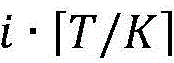 To
To Is any non-negative integer less than J1.
As a sub-embodiment of the foregoing embodiment, the bit block group with index i in the K bit block groups includes index slave in the T coding blocks To
To Is any positive integer less than K and not less than J1.
As an embodiment, the indexes of the K bit block groups are # 0. # K-1, respectively.
Example 11
Embodiment 11 illustrates a schematic diagram of the second information; as shown in fig. 11.
In embodiment 11, the second information carries K bits, where the K bits respectively indicate whether the K bit block groups in this application are correctly received.
As an embodiment, the second information is carried by physical layer signaling.
As an embodiment, the second information is carried by dynamic signaling.
As an embodiment, the second Information includes UCI (Uplink Control Information), and the first node in this application is a base station.
As an embodiment, the second information includes DCI, and the first node in this application is a user equipment.
As an embodiment, the second information includes HARQ-ACK (Hybrid Automatic repeat request-Acknowledgement), and the first node in this application is a base station.
As an embodiment, the second information includes all or part of information in a CBGTI domain, and the first node in this application is a user equipment.
As an embodiment, the second information is transmitted in the M subbands in this application.
As an embodiment, the second information is transmitted in a frequency band other than the M sub-bands in the present application.
As one embodiment, the second information is transmitted in a frequency band disposed in an unlicensed spectrum.
As one embodiment, the second information is transmitted in a frequency band disposed in a licensed spectrum.
As an embodiment, for any given bit block group in the K bit block groups, if bits corresponding to the given bit block group in the K bits are equal to a second value, the first node in this application assumes that all encoded blocks in the given bit block group are correctly received; if the bit corresponding to the given bit block group in the K bits is equal to a third value, the first node in this application assumes that at least one encoded block in the given bit block group is not correctly received.
As a sub-embodiment of the above embodiment, the second value is equal to 1 and the third value is equal to 0.
As a sub-embodiment of the above embodiment, the second value is equal to 0 and the third value is equal to 1.
As a sub-embodiment of the above embodiment, the second value is ACK and the third value is equal to NACK (Negative ACKnowledgement).
As an embodiment, the second information used to determine whether each of the K bit block groups is correctly received means that: the second information is used to determine whether the coding block included in each of the K bit block groups is correctly received.
As an embodiment, the first node in this application determines, according to the second information, that all the coding blocks included in the reference bit block group in this application are correctly received, or all the coding blocks included in the reference bit block group are not correctly received.
As an embodiment, the first node in this application determines, according to the second information, that all the coding blocks included in the reference bit block group in this application are correctly received, or at least one coding block included in the reference bit block group is not correctly received.
As an embodiment, the first node in this application determines not to retransmit all coding blocks included in the reference bit block group in this application or retransmit all coding blocks included in the reference bit block group according to the second information.
Example 12
Example 12 illustrates a schematic diagram of K bit block groups, K1 bit block groups, and K2 bit block groups; as shown in fig. 12. In embodiment 12, the first radio signal in the present application and the second radio signal in the present application belong to the same HARQ process. The K1 bit block groups of the K bit block groups are used to generate the first wireless signal and the K2 bit block groups of the K bit block groups are used to generate the second wireless signal. In fig. 12, the indexes of the K bit block groups are # 0., # K-1, respectively.
As an embodiment, the HARQ process refers to: HARQ (Hybrid Automatic Repeat reQuest) process.
As an embodiment, the second wireless signal is retransmission of the K2 bit block group.
As an embodiment, the second wireless signal is retransmission of the first transport block in this application.
As an embodiment, the first wireless signal and the second wireless signal correspond to the same HARQ process number (process number).
As an embodiment, the second wireless signal is transmitted in the M sub-bands in this application.
As an embodiment, the second wireless signal is transmitted in a frequency band other than the M sub-bands in the present application.
As one embodiment, the second wireless signal is transmitted in a frequency band disposed in an unlicensed spectrum.
As one embodiment, the second wireless signal is transmitted in a frequency band deployed in a licensed spectrum.
As one embodiment, the second wireless signal and the first wireless signal occupy a same positive integer number of the M subbands.
As an embodiment, at least one of the sub-bands occupied by the second wireless signal is not occupied by the first wireless signal.
As an embodiment, at least one of the sub-bands occupied by the first wireless signal is not occupied by the second wireless signal.
As one example, the K2 is less than the K.
As one example, the K2 is equal to the K.
As one embodiment, the K2 is less than the K1.
As one example, the K2 is equal to the K1.
As one embodiment, the K2 is greater than the K1.
As one embodiment, the K2 is less than the K, only the K2 bit block groups of the K bit block groups being used to generate the second wireless signal.
As an embodiment, at least one of the K1 bit block groups does not belong to the K2 bit block group.
As an embodiment, at least one of the K1 bit block groups is not used for generating the second wireless signal.
As an embodiment, at least one of the K2 bit block groups does not belong to the K1 bit block group.
As an embodiment, at least one of the K2 bit block groups is not used to generate the first wireless signal.
As an embodiment, the first node in this application receives a second signaling, and the second node in this application sends the second signaling; the second signaling comprises scheduling information of the second wireless signal; the first node is a user equipment and the second node is a base station.
As an embodiment, the first node in this application sends a second signaling, and the second node in this application receives the second signaling; the second signaling comprises scheduling information of the second wireless signal; the first node is a base station and the second node is a user equipment.
As an embodiment, the scheduling information of the second wireless signal includes at least one of { occupied time domain resource, occupied frequency domain resource, MCS, configuration information of DMRS, HARQ process number, RV (Redundancy Version), NDI (New Data Indicator), and corresponding Spatial Rx parameters }.
As an embodiment, the second signaling includes a second field, and the second field in the second signaling indicates the K2 bit block groups from among the K bit block groups.
As a sub-embodiment of the above-mentioned embodiment, the second field in the second signaling includes all or part of information of a CBGTI field (field).
As a sub-embodiment of the above embodiment, the second field in the second signaling is a CBGTI field.
As a sub-embodiment of the above embodiment, the K2 bit block groups and the K2 bits in the second domain in the second signaling have a one-to-one correspondence.
As a sub-embodiment of the foregoing embodiment, the second field in the second signaling includes K bits, and the K bits correspond to the K bit block groups one to one; for any given bit block group of the K bit block groups, if the bit of the K bits corresponding to the given bit block group is not equal to the first value, the given bit block group is not one bit block group of the K2 bit block groups.
As a reference example of the above sub-embodiment, the first value is equal to 1.
As a reference example of the above sub-embodiment, the first value is equal to 0.
As a reference example of the above sub-embodiment, if the bit corresponding to the given bit block group in the K bits is equal to the first value, the given bit block group is one bit block group in the K2 bit block groups.
As a reference example of the above sub-embodiment, if the bit corresponding to the given bit block group in the K bits is equal to the first value, the given bit block group is not one bit block group in the K2 bit block groups.
Example 13
Embodiment 13 illustrates a schematic diagram of resource mapping of M time-frequency resource sets in M subbands; as shown in fig. 13. In embodiment 13, the M sets of time-frequency resources belong to the M subbands in the frequency domain, respectively. In fig. 13, the indexes of the M sets of time-frequency resources and the M subbands are # 0., # M-1, respectively.
As an embodiment, the M sets of time-frequency resources are reserved for the first transport block in this application.
As an embodiment, the M sets of time-frequency resources are reserved for transmission of the first transport block in the present application.
As an embodiment, the M sets of time-frequency resources are reserved for the K bit block groups in this application.
As an embodiment, the M sets of time-frequency resources are reserved for transmission of the K groups of bit blocks in the present application.
As an embodiment, any one of the M sets of time-frequency resources includes a positive integer number of REs.
As an embodiment, one RE occupies one multicarrier symbol in the time domain and one subcarrier in the frequency domain.
As an embodiment, the multicarrier symbol is an OFDM (Orthogonal Frequency division multiplexing) symbol.
As an embodiment, the multicarrier symbol is an SC-FDMA (Single Carrier-frequency division Multiple Access) symbol.
As one embodiment, the multi-carrier symbol is a DFT-S-OFDM (Discrete Fourier transform OFDM, Discrete Fourier transform orthogonal frequency division multiplexing) symbol.
As an embodiment, any one of the M sets of time-frequency resources comprises a positive integer number of multicarrier symbols in the time domain.
As an embodiment, any one of the M sets of time-frequency resources comprises a positive integer number of consecutive multicarrier symbols in the time domain.
As an embodiment, any one of the M sets of time-frequency resources includes a positive integer number of subcarriers in the frequency domain.
As an embodiment, any one of the M sets of time-frequency resources includes a positive integer number of discontinuous subcarriers in the frequency domain.
As an embodiment, any one of the M sets of time-frequency resources comprises a positive integer number of PRBs in the frequency domain.
As an embodiment, any one of the M sets of time-frequency resources comprises a positive integer number of discontinuous PRBs in the frequency domain.
As an embodiment, any one of the M sets of time-frequency resources includes a positive integer number of interlaces in the frequency domain.
As an embodiment, the number of multicarrier symbols occupied by any two time-frequency resource sets in the M time-frequency resource sets in the time domain is equal.
As an embodiment, any two time-frequency resource sets of the M time-frequency resource sets occupy the same time-domain resource.
As an embodiment, the number of subcarriers occupied by any two time-frequency resource sets in the M time-frequency resource sets in the frequency domain is equal.
As an embodiment, at least two of the M time-frequency resource sets occupy unequal numbers of subcarriers in the frequency domain.
As an embodiment, any two of the M time-frequency resource sets occupy the same number of REs.
As an embodiment, at least two of the M time-frequency resource sets occupy different numbers of REs.
As an embodiment, any one of the M time-frequency resource sets does not include REs occupied by reference signals.
As a sub-embodiment of the above embodiment, the Reference Signal includes one or more of SS/PBCH block (Synchronization Signal/Physical Broadcast Channel block), CSI-RS (Channel-State Information Reference Signals), DMRS, SRS (Sounding Reference Signal), CRS (Common Reference Signal), PTRS (Phase error Tracking Reference Signals), and TRS (fine time domain/frequency domain Tracking Reference Signals).
As an embodiment, any one of the M time-frequency resource sets does not include REs that are not available for the PDSCH (not available for), the first node in this application is a base station, and the second node in this application is a user equipment.
As a sub-embodiment of the above embodiment, the REs that are not available for PDSCH are indicated by higher layer (higherlayer) signaling.
As a sub-embodiment of the above embodiment, the REs that are not available for PDSCH are indicated by RRC signaling.
As a sub-embodiment of the above embodiment, the REs that are not available for PDSCH are indicated by ratematchpattern ie.
As a sub-embodiment of the above embodiment, the REs that are not available for PDSCH are indicated by ratematchchpattern IE configured in ratematchchpattern field (field).
As a sub-embodiment of the above embodiment, the REs not available for PDSCH are indicated by RateMatchPattern IE configured in RateMatchPattern field (field) in PDSCH-Config IE.
As a sub-embodiment of the above embodiment, the REs that are not available for PDSCH are indicated by ratematchchpattern IE configured in ratematchchpattern field (field) in ServingCellConfigCommon IE.
As an embodiment, any one of the M time-frequency resource sets does not include an RE that is not available for a (not available for) PUSCH, the first node in this application is a user equipment, and the second node in this application is a base station.
As an embodiment, any one of the M time-frequency resource sets does not include REs occupied by a PRACH (Physical Random Access Channel).
Example 14
Embodiment 14 illustrates a schematic diagram of resource mapping of M time-frequency resource sets in M subbands; as shown in fig. 14. In fig. 14, the indexes of the M sets of time-frequency resources and the M subbands are # 0., # M-1, respectively.
As an embodiment, any one of the M sets of time-frequency resources comprises a positive integer number of non-contiguous multicarrier symbols in the time domain.
As an embodiment, any one of the M sets of time-frequency resources includes a positive integer number of consecutive subcarriers in the frequency domain.
As an embodiment, any one of the M sets of time-frequency resources comprises a positive integer number of consecutive PRBs in the frequency domain.
Example 15
Embodiment 15 illustrates a schematic diagram of resource mapping of a first modulation symbol, a second modulation symbol, and any modulation symbol located between the first modulation symbol and the second modulation symbol in a first modulation symbol sequence in a target time-frequency resource set; as shown in fig. 15. In embodiment 15, the K bit block groups in this application are used to generate the first modulation symbol sequence, and the first modulation symbol sequence is mapped into M time-frequency resource sets in this application, where the M time-frequency resource sets respectively belong to the M frequency subbands in this application in a frequency domain. The first modulation symbol and the second modulation symbol are modulation symbols in the target one of the M sets of time-frequency resources to which any two of the first sequence of modulation symbols are mapped. Any modulation symbol in the first sequence of modulation symbols between the first modulation symbol and the second modulation symbol is mapped into the target set of time-frequency resources. In fig. 15, the indexes of the M sets of time-frequency resources are # 0., # M-1, respectively.
As one embodiment, the first modulation symbol sequence includes a positive integer number of modulation symbols.
As an embodiment, all modulation symbols in the first modulation symbol sequence are arranged in sequence.
As an embodiment, all modulation symbols in the first modulation symbol sequence correspond to the same modulation order (modulation order).
As an embodiment, all modulation symbols in the first modulation symbol sequence correspond to the same modulation scheme, and the same modulation scheme is one of pi/2-BPSK, QPSK, 16QAM, 64QAM, and 256 QAM.
As an embodiment, the target time-frequency resource set is any one of the M time-frequency resource sets.
As an embodiment, the K bit block groups used to generate the first modulation symbol sequence include: the K bit block groups comprise T coding blocks (code blocks), wherein T is a positive integer; the bits in the T coding blocks are respectively attached through coding block level CRC, channel coding and rate matching in sequence to obtain T coded bit strings; the first modulation symbol sequence is output after the T coded bit strings are sequentially connected in series, scrambled and modulated by a mapper.
As an embodiment, all modulation symbols in the first modulation symbol sequence are mapped to the M time-frequency resource sets after passing through a layer mapper, a conversion precoder, a precoding, and a resource element mapper in sequence.
As an embodiment, all modulation symbols in the first modulation symbol sequence are mapped to the M time-frequency resource sets after passing through a layer mapper, a precoding and a resource element mapper in sequence.
As an embodiment, the first modulation symbol sequence includes B1 modulation symbols, the B1 modulation symbols are respectively mapped to B1 REs, and the B1 is a positive integer.
As an embodiment, there are B3 modulation symbols in the first modulation symbol sequence, and a position of a subband to which an RE mapped by any one of the B3 modulation symbols belongs in the M subbands is related to a number of multicarrier symbols occupied by at least one of the M sets of time-frequency resources in a time domain; the B3 is a positive integer smaller than the number of modulation symbols included in the first modulation symbol sequence.
As a sub-embodiment of the above embodiment, the B3 is greater than 1.
As a sub-embodiment of the foregoing embodiment, the B3 is equal to the number of modulation symbols included in the first modulation symbol sequence minus the number of subcarriers occupied by the first reference time-frequency resource set in the frequency domain; the sub-band to which the first reference time-frequency resource set belongs is lower than any sub-band of the M sub-bands except the sub-band to which the first reference time-frequency resource set belongs.
As a reference embodiment of the foregoing sub-embodiments, the number of subcarriers occupied by the first reference time-frequency resource set in the frequency domain refers to: the first reference time-frequency resource set is a set of the number of sub-carriers occupied within an earliest occupied multi-carrier symbol.
As a reference embodiment of the foregoing sub-embodiments, the number of subcarriers occupied by the first reference time-frequency resource set in the frequency domain refers to: the first set of Reference time-frequency resources occupies a number of sub-carriers within an earliest occupied multi-carrier symbol that does not include Reference signals (Reference signals).
As one embodiment, the first given sub-band being lower than the second given sub-band comprises: a third modulation symbol is any modulation symbol mapped to the first given subband in the first modulation symbol sequence, and a fourth modulation symbol is any modulation symbol mapped to the second given subband in the first modulation symbol sequence; the position of the third modulation symbol in the first modulation symbol is before the fourth modulation symbol.
As one embodiment, the first given sub-band being lower than the second given sub-band comprises: the first given sub-band comprises highest frequency points lower than the lowest frequency points comprised by the second given sub-band.
As one embodiment, the first given sub-band being lower than the second given sub-band comprises: the index of the first given subband is smaller than the index of the second given subband.
As one embodiment, the first given sub-band being lower than the second given sub-band comprises: the index of the subcarrier with the largest index in the first given subband is smaller than the index of the subcarrier with the smallest index in the second given subband.
As an embodiment, the first modulation symbol sequence is mapped to L layers (layers) in the M sets of time-frequency resources, where L is a positive integer greater than 1. The third modulation symbol and the fourth modulation symbol are modulation symbols of different layers of any two of the first modulation symbol sequence mapped onto reference subcarriers within reference multicarrier symbols in a second reference time-frequency resource set. The second reference time frequency resource set is any one of the M time frequency resource sets, the reference multicarrier symbol is any one of multicarrier symbols in the second reference time frequency resource set, and the reference subcarrier is any one of subcarriers in the second reference time frequency resource set. All modulation symbols in the first modulation symbol sequence located between the third modulation symbol and the fourth modulation symbol are mapped to the reference subcarriers within the reference multicarrier symbol in the second reference set of time-frequency resources.
As an embodiment, the third modulation symbol and the fourth modulation symbol are modulation symbols of any two of the first sequence of modulation symbols mapped to different subcarriers within a reference multicarrier symbol in the second set of reference time-frequency resources. The second reference time frequency resource set is any one of the M time frequency resource sets, and the reference multi-carrier symbol is any one of the multi-carrier symbols in the second reference time frequency resource set. All modulation symbols in the first modulation symbol sequence located between the third modulation symbol and the fourth modulation symbol are mapped to the reference multicarrier symbol in the second reference set of time-frequency resources.
As an embodiment, the first modulation symbol sequence is mapped to L layers (layers) in the M sets of time-frequency resources, where L is a positive integer. The third modulation symbol and the fourth modulation symbol are any two modulation symbols in the first modulation symbol sequence, and the position of the third modulation symbol in the first modulation symbol sequence is before the fourth modulation symbol. If the third modulation symbol and the fourth modulation symbol are mapped to the same subcarrier in the same multicarrier symbol in the same one of the M time-frequency resource sets, the index of the layer mapped by the third modulation symbol is smaller than the index of the layer mapped by the fourth modulation symbol; if the third modulation symbol and the fourth modulation symbol are mapped to different subcarriers within the same multicarrier symbol in the same one of the M time-frequency resource sets, the subcarriers mapped by the third modulation symbol are lower than the subcarriers mapped by the fourth modulation symbol; if the third modulation symbol and the fourth modulation symbol are mapped to different multicarrier symbols in the same one of the M sets of time-frequency resources, the multicarrier symbol mapped by the third modulation symbol is earlier than the multicarrier symbol mapped by the fourth modulation symbol; if the third modulation symbol and the fourth modulation symbol are mapped to different time frequency resource sets in the M time frequency resource sets, the sub-band to which the time frequency resource set mapped by the third modulation symbol belongs is lower than the sub-band to which the time frequency resource set mapped by the fourth modulation symbol belongs.
As an embodiment, the first given subcarrier being lower than the second given subcarrier comprises: the index of the first given subcarrier is smaller than the index of the second given subcarrier.
As an embodiment, the first given subcarrier being lower than the second given subcarrier comprises: the frequency point of the first given subcarrier is lower than the frequency point of the second given subcarrier.
Example 16
Embodiment 16 illustrates a schematic diagram of M bit block group sets, M subsequences and M sets of time-frequency resources; as shown in fig. 16. In embodiment 16, the first modulation symbol sequence in this application includes the M subsequences, and the M subsequences are mapped to the M time-frequency resource sets respectively; the K bit block groups in this application are divided into the M bit block group sets, which are used to generate the M subsequences, respectively. In fig. 16, the indexes of the M bit block groups, the M subsequences and the M time-frequency resource groups are # 0., # M-1, respectively.
As an embodiment, for any given subsequence of the M subsequences, any modulation symbol in the given subsequence is not mapped to any set of time-frequency resources of the M sets of time-frequency resources other than the set of time-frequency resources corresponding to the given subsequence.
As an embodiment, the first modulation symbol sequence is composed of the M subsequences.
As an embodiment, any one of the M subsequences includes a positive integer number of modulation symbols in the first modulation symbol sequence.
As an embodiment, any one of the M subsequences consists of a positive integer number of modulation symbols in the first modulation symbol sequence.
As an embodiment, any two subsequences in the M subsequences include equal number of modulation symbols.
As an embodiment, at least two of the M subsequences comprise unequal numbers of modulation symbols.
As an embodiment, the number of modulation symbols included in any one of the M subsequences is equal to the number of REs occupied by the corresponding time-frequency resource set.
As an embodiment, for any given one of the M sets of time frequency resources, the number of REs included in the given set of time frequency resources is used to determine a code rate corresponding to each coding block in the set of bit blocks corresponding to the given set of time frequency resources.
As an embodiment, for any given time-frequency resource set of the M time-frequency resource sets, the number of REs included in the given time-frequency resource set is used to determine the number of output bits for Rate Matching (Rate Matching) for each coding block in the bit block group set corresponding to the given time-frequency resource set in the M bit block group sets.
As an embodiment, any one of the M bit block group sets is composed of a positive integer number of the K bit block groups.
As an embodiment, any one of the K bit block groups belongs to one of the M bit block group sets.
As an embodiment, none of the K bit block groups belongs to two different bit block group sets of the M bit block group sets.
As an embodiment, any two bit block group sets of the M bit block group sets include equal number of bit block groups.
As an embodiment, at least two bit block group sets in the M bit block group sets include unequal number of bit block groups.
As an embodiment, the set of M bit block groups used for generating the M subsequences respectively comprises: for any given set of bit block groups of the M sets of bit block groups, the given set of bit block groups comprising T2 code blocks (code blocks), the T2 being a positive integer; the bits in the T2 coding blocks are respectively subjected to coding block level CRC attachment, channel coding and rate matching in sequence to obtain T2 coded bit strings; and the subsequence corresponding to the given bit block group set in the M subsequences is the output of the T2 coded bit strings after being sequentially connected in series, scrambled and modulated by a mapper.
As an embodiment, any given subsequence of the M subsequences is independent of any encoded block of any block group of bits of the M block group sets other than the block group set corresponding to the given subsequence.
As an embodiment, for any given subsequence of the M subsequences, all modulation symbols in the given subsequence are mapped to the M sets of time-frequency resources and the set of time-frequency resources corresponding to the given subsequence after passing through a layer mapper, a conversion precoder, a precoding unit, and a resource element mapper in sequence.
As an embodiment, for any given subsequence of the M subsequences, all modulation symbols in the given subsequence are mapped to the time-frequency resource sets corresponding to the given subsequence in the M time-frequency resource sets after passing through a layer mapper, a precoding unit and a resource element mapper in sequence.
As an embodiment, any bit block group in the K1 bit block groups in the present application belongs to one bit block group set in M1 bit block group sets, the M1 bit block group sets are bit block group sets respectively used for generating M1 subsequences in the M bit block group sets, the M1 subsequences are respectively mapped into M1 time-frequency resource sets, and the M1 time-frequency resource sets are time-frequency resource sets respectively belonging to the M1 subbands in the present application in the frequency domain in the M time-frequency resource sets.
As a sub-embodiment of the above embodiment, the K1 bit block groups include all bit block groups in the M1 bit block group set.
As a sub-embodiment of the above embodiment, the K1 bit block groups are composed of all bit block groups in the M1 bit block group set.
Example 17
Embodiment 17 illustrates a schematic diagram of M times of channel listening; as shown in fig. 17. In embodiment 17, the M times of channel listening are respectively performed on the M subbands in this application. The M channel listening is performed independently. In fig. 17, the indexes of the M subbands and the M channel listens are { # 0.
As an embodiment, the M channel listens are used to determine whether the M subbands can be used to transmit wireless signals, respectively.
As an embodiment, the M channel listens are used to determine whether the M subbands are free (Idle), respectively.
As one embodiment, the M times of channel listening is used to determine that the first wireless signal may be transmitted in only the M1 of the M subbands.
As one embodiment, the M channel listens are used to determine to refrain from transmitting wireless signals in any of the M subbands other than the M1 subbands.
As an embodiment, M1 channel listens among the M channel listens are respectively used to determine that the M1 sub-bands can be used to transmit wireless signals, and the M1 channel listens are respectively performed in the M1 sub-bands.
As an embodiment, M1 channel listens among the M channel listens are respectively used to determine that the M1 sub-bands are free (Idle), and the M1 channel listens are respectively performed in the M1 sub-bands.
As an embodiment, M-M1 of the M channel listens are used to determine that M-M1 sub-bands may not be used to transmit wireless signals, respectively; the M-M1 sub-channel listening is performed in the M-M1 sub-bands, respectively, and the M-M1 sub-bands are composed of all sub-bands of the M sub-bands that do not belong to the M1 sub-bands.
As an embodiment, M-M1 channel listens of the M channel listens are used to determine that M-M1 sub-bands are not Idle (Idle), respectively; the M-M1 sub-channel listening is performed in the M-M1 sub-bands, respectively, and the M-M1 sub-bands are composed of all sub-bands of the M sub-bands that do not belong to the M1 sub-bands.
As an embodiment, any one of the M channel listens is LBT.
As an embodiment, the specific definition and implementation of LBT are referred to 3GPP TR 36.889.
As an embodiment, any one of the mth channel listens is a CCA (Clear channel assessment).
As an embodiment, the specific definition and implementation of the CCA are referred to 3GPP TR 36.889.
As an embodiment, any one of the M channel listens is implemented by a method defined in section 15 of 3GPP TS 36.213.
As an embodiment, any one of the M channel listens is Category 4LBT (fourth type LBT).
As an embodiment, at least one of the M channel listens is Category 4 LBT.
As an embodiment, any one of the M channel listens is Category 2LBT (second type LBT).
As an embodiment, at least one of the M channel listens is Category 2 LBT.
For a specific definition and implementation of the Category 4LBT, see 3gpp tr36.889, as an example.
For a specific definition and implementation of the Category 2LBT, see 3gpp tr36.889, as an example.
As an embodiment, any one of the M channel listens is a sub-band (sub-band) LBT.
As an embodiment, any one of the M channel listening is performed on a frequency band of 20MHz bandwidth.
As one embodiment, any one of the M channel listening is performed in units of 20MHz bandwidth on a frequency domain.
As an embodiment, the ending time of any two channel listens in the M channel listens is the same.
As an embodiment, the starting time of at least two channel listens in the M channel listens is the same.
As an embodiment, the starting time of at least two channel listens in the M channel listens are different.
As an embodiment, counters (counters) N corresponding to any two channel listens in the M channel listens are independent from each other, and the specific definition of the counters (counters) N is described in section 15.1.1 in 3GPP TS36.213 (V14.1.0).
As an embodiment, the counter (counter) N corresponding to at least two channel listens in the M channel listens is not equal.
As an example, when the first mentioned in this applicationWhen the node stops transmitting on any given sub-frequency band in the M sub-frequency bands, for any given channel monitoring except the channel monitoring corresponding to the given sub-frequency band in the M channel monitoring, the first node waits for 4TslOr after resetting (reinitialise) the counter (counter) N corresponding to the given channel listening, continuing to decrement the counter (counter) N corresponding to the given channel listening when detecting an Idle (Idle) time slot.
As an embodiment, a counter (counter) N corresponding to all channel listens in the M channel listens is equal to a reference counter, the reference counter being the largest CW in the M channel listens and in the M subbandspThe sub-band of (c) corresponds to the counter (counter) N of channel listening.
As an example, the CWpIs the size of a Contention Window (CW)pSee section 15 in 3GPP TS36.213 for specific definitions of (d).
As an embodiment, when the first node stops transmitting on any given sub-band of the M sub-bands, the first node resets (reinitialize) the counters N of all channel listening in the M channel listening.
As one embodiment, the M sub-bands have the same CWp。
As an example, CW corresponding to the M sub-bandspAre independent of each other two by two.
As an embodiment, the ending time of any one of the M times of channel monitoring is not later than the starting time of the time domain resource occupied by the first wireless signal in this application.
Example 18
Embodiment 18 illustrates a schematic diagram of M times of channel listening; as shown in fig. 18.
In embodiment 18, whether any one of the M subbands can be used for transmitting wireless signals in relation to reference channel sensing is related to channel sensing corresponding to the M channel sensing and a reference subband, where the reference subband is one of the M subbands.
As an embodiment, only one of the M channel listens is Category 4 LBT.
As an embodiment, the reference channel sensing is Category 4 LBT.
As an embodiment, M-1 channel listens among the M channel listens is Category 2 LBT.
As an embodiment, any one of the M channel listens except for the reference channel listen is Category 2 LBT.
As an embodiment, at least one given sub-band of the M sub-bands is available, and whether the given sub-band can be used for transmitting wireless signals is related to one channel listening of the M channel listening except for the channel listening corresponding to the given sub-band.
As an embodiment, whether the reference sub-band can be used for transmitting wireless signals is only related to the reference channel listening among the M channel listening.
As an embodiment, if the reference channel listening determines that the reference sub-band is idle, the reference sub-band may be used for transmitting wireless signals; if the reference channel listening determines that the reference sub-band is not idle, the reference sub-band may not be used for transmitting wireless signals.
As an embodiment, for any given sub-band of the M sub-bands except for the reference sub-band, the reference channel sensing and the channel sensing corresponding to the given sub-band are used together to determine whether the given sub-band can be used for transmitting wireless signals.
As an embodiment, for any given sub-band of the M sub-bands except for the reference sub-band, if the reference channel listening determines that the reference sub-band is free and the channel listening corresponding to the given sub-band determines that the given sub-band is free, the given sub-band may be used for transmitting wireless signals.
As an embodiment, for any given sub-band of the M sub-bands except for the reference sub-band, if the reference channel listening determines that the reference sub-band is not free, the given sub-band may not be used for transmitting wireless signals.
As an embodiment, for any given sub-band of the M sub-bands except for the reference sub-band, if the reference channel listening determines that the reference sub-band can be used for transmitting wireless signals, and the channel listening corresponding to the given sub-band determines that the given sub-band is idle within 25 microseconds before the reference sub-band transmits wireless signals, the given sub-band can be used for transmitting wireless signals.
As an embodiment, for any given sub-band of the M sub-bands except for the reference sub-band, if the channel monitoring corresponding to the given sub-band determines that the given sub-band is not idle, the given sub-band may not be used for transmitting wireless signals.
As an embodiment, for any given sub-band of the M sub-bands except for the reference sub-band, if the channel monitoring corresponding to the given sub-band determines that the given sub-band is not idle within 25 microseconds before the reference sub-band transmits the wireless signal, the given sub-band may not be used for transmitting the wireless signal.
As an embodiment, the reference sub-band is randomly selected among the M sub-bands.
As an embodiment, the probability that any one of the M subbands is selected as the reference subband is equal.
As an embodiment, any one of the M subbands is not selected as the reference subband multiple times in 1 second.
Example 19
Embodiment 19 illustrates a flowchart of a given channel listening at one of M channel listening; as shown in fig. 19.
In embodiment 19, the given channel listening is one of the M channel listening, the given channel listening being performed on a given sub-band of the M sub-bands in the present application. The process of the given channel listening may be described by the flow chart in fig. 19. The first node in the present application is in an idle state in step S1901, and determines whether transmission is needed in step S1902, if so, proceeds to step S1903, otherwise, returns to step S1901; performing energy detection within one delay period (defer duration) on the given subband in step S1903; in step S1904, it is determined whether all slot periods within this delay period are Idle (Idle), if yes, go to step S1905, otherwise go to step S1908; judging whether to transmit on the given sub-band in step S1905, if so, proceeding to step S1906, otherwise returning to step S1901; transmitting a wireless signal on the given sub-band in step S1906; judging whether the transmission needs to be continued in step S1907, if so, proceeding to step S1908, otherwise, returning to step S901; performing energy detection within one delay period (defer duration) on the given subband in step S1908; in step S1909, it is determined whether all slot periods within the delay period are Idle (Idle), if yes, go to step S1910, otherwise return to step S1908; setting a first counter in step S1910; in step S1911, it is determined whether the first counter is 0, and if so, the process returns to step S1905, otherwise, the process proceeds to step S1912; decrementing the first counter by 1 in step S1912; performing energy detection in an additional slot period (additional slot duration) on the given sub-band in step S1913; in step S1914, it is judged whether or not this additional slot period is free (Idle), and if so, it returns to step S1911, otherwise, it proceeds to step S1915; performing energy detection in an additional delay period (additional delay duration) on the given sub-band until a non-idle slot period is detected or all slot periods within the additional delay period are idle in step S1915; in step S1916, it is determined whether all slot periods within this additional delay period are free (Idle), and if so, it returns to step S1911; otherwise, return to step S1915.
For an example, the specific definitions of the delay period, the slot period, the additional slot period and the additional delay period in fig. 19 are described in section 15 of 3GPP TS 36.213.
As an embodiment, performing energy detection within a given time period refers to: performing energy detection in all slot periods (slot durations) within the given period; the given period is any one of { all the delay periods in step S1903 and step S1908, all the additional slot periods in step S1913, and all the additional delay periods in step S1915 } in fig. 19.
As an embodiment, performing energy detection within one slot period refers to: sensing (Sense) the power of the wireless signal over a given time unit and averaging over time; if the obtained received power is lower than a reference threshold value, judging that the one time slot period is Idle (Idle), otherwise, judging that the one time slot period is not Idle; the given time unit is one duration period within the one slot period.
As an embodiment, performing energy detection within one slot period refers to: sensing (Sense) the energy of the wireless signal over a given time unit and averaging over time; if the obtained received energy is lower than a reference threshold value, judging that the one time slot period is Idle (Idle), otherwise, judging that the one time slot period is not Idle; the given time unit is one duration period within the one slot period.
As an embodiment, the duration of the given time unit is not shorter than 4 microseconds.
As an example, the duration of one delay period (defer duration) is 16 microseconds plus Q1 9 microseconds, Q1 being a positive integer.
As a sub-embodiment of the above embodiment, the Q1 belongs to {1, 2, 3,7 }.
As an embodiment, one delay period (defer duration) includes a plurality of slot periods (slot durations).
As a sub-embodiment of the above embodiment, the first slot period and the second slot period of the plurality of slot periods are discontinuous.
As a sub-embodiment of the above embodiment, a time interval between a first slot period and a second slot period of the plurality of slot periods is 7 milliseconds.
As an embodiment, the duration of one delay period is equal to the duration of one additional delay period.
As an example, the duration of one slot period (slot duration) is 9 microseconds.
As an example, the duration of one additional slot period (additional slot duration) is equal to the duration of one slot period (slot duration).
As an embodiment, the value to which the first counter is set in step S1910 is one of P1 alternative integers.
As a sub-embodiment of the above embodiment, the P1 belongs to {3,7,15,31,63,127,255,511,1023 }.
As a sub-embodiment of the above embodiment, the P1 is CW in Category 4LBT processp。
As a sub-embodiment of the above embodiment, the P1 alternative integers are 0,1,2, …, P1-1.
As a sub-embodiment of the foregoing embodiment, the first node randomly selects one alternative integer from the P1 alternative integers as the value to which the first counter is set.
As a sub-embodiment of the foregoing embodiment, the probabilities that any one of the P1 alternative integers is selected as the value to which the first counter is set are all equal.
As an embodiment, the given channel listening is any one of the M channel listening.
As an embodiment, the given channel listening is the reference channel listening in embodiment 18.
Example 20
Embodiment 20 illustrates a flow chart of a given channel listening at one of M channel listening; as shown in fig. 20.
In embodiment 20, the given channel listening is one of the M channel listening, and the given channel listening is performed on a given sub-band of the M sub-bands in the present application. The process of the given channel listening may be described by the flow chart in fig. 20. The first node in the present application is in an idle state in step S2001, and determines in step S2002 whether transmission is required, if so, proceeds to step 2003, otherwise, returns to step S2001; performing energy detection for a Sensing interval (Sensing interval) on the given subband in step 2003; judging whether all time slot periods within the sensing time are Idle (Idle) in step S2004, if so, proceeding to step S2005, otherwise, returning to step S2003; judging whether a wireless signal is transmitted on the given sub-band in step S2005, if so, proceeding to step S2006, otherwise, returning to step S2001; a wireless signal is transmitted on the given sub-band in step S2006.
The specific definition of the sensing time and slot period in fig. 20 is seen in section 15.2 of 3gpp ts36.213, as an example.
As an embodiment, performing energy detection within one sensing time refers to: performing energy detection in all slot periods (slot durations) within the one sensing time.
As an example, the duration of one Sensing interval is 25 microseconds.
As an embodiment, one sensing time includes 2 slot periods, and the 2 slot periods are discontinuous in the time domain.
As a sub-embodiment of the above embodiment, the time interval in the 2 slot periods is 7 microseconds.
As an embodiment, the given channel listening is any one of the M channel listening.
As an embodiment, the given channel listening is any one of the M channel listening except for the reference channel listening of embodiment 18.
Example 21
Embodiment 21 illustrates a schematic diagram in which the type of channel listening for M times is used to determine the mapping manner of the first modulation symbol sequence in M subbands; as shown in fig. 21.
In embodiment 21, the fourth information in this application is used to determine the type of the M times of channel listening. The K groups of bits in this application are used to generate the first modulation symbol sequence, which is mapped into the M sets of time-frequency resources in this application, which belong to the M subbands in the frequency domain, respectively.
As an embodiment, the fourth information is carried by higher layer (higher layer) signaling.
As an embodiment, the fourth information is carried by RRC signaling.
As an embodiment, the fourth information is carried by MAC CE signaling.
As an embodiment, the fourth information is carried by physical layer signaling.
As an embodiment, the fourth information is carried by the first signaling in this application.
As an embodiment, the fourth information indicates a type of the M times of channel listening.
As an embodiment, the fourth information explicitly indicates a type of the M channel listening.
As an embodiment, the fourth information implicitly indicates a type of the M times of channel listening.
As an embodiment, the type of the M channel listens includes: whether a first sub-band exists in the M sub-bands, whether the first sub-band is one of the M1 sub-bands, and one of the M times of channel sensing except for channel sensing performed in the first sub-band.
As an embodiment, the type of the M channel listens includes: a type of each of the M channel listens.
As an embodiment, the type of each of the M channel listens is one of Category 1LBT (first type LBT), Category 2LBT and Category 4 LBT.
As an example, the Category 1LBT is a no LBT.
As an embodiment, a mapping manner of the first modulation symbol sequence in the M subbands includes: a third modulation symbol and a fourth modulation symbol are two modulation symbols in the first modulation symbol sequence, both the third modulation symbol and the fourth modulation symbol being mapped into a third reference time-frequency resource set of the M sets of time-frequency resources. Whether all modulation symbols in the first sequence of modulation symbols located between the third and fourth modulation symbols are mapped into the third set of reference time-frequency resources.
As an embodiment, a mapping manner of the first modulation symbol sequence in the M subbands includes: whether a modulation symbol in the first modulation symbol sequence generated by the same one of the K bit block groups is mapped into a different one of the M subbands.
As an embodiment, the third reference set of time frequency resources is any one of the M sets of time frequency resources; if whether any given one of the M subbands is one of the M1 subbands is only related to channel listening performed in the given subband among the M channel listening, mapping all modulation symbols located between a third modulation symbol and a fourth modulation symbol in the first modulation symbol sequence into the third reference set of time-frequency resources, wherein the third modulation symbol and the fourth modulation symbol are any two modulation symbols in the first modulation symbol sequence that are mapped into the third reference set of time-frequency resources; otherwise, a fifth modulation symbol and a sixth modulation symbol are present in the first modulation symbol sequence, where both the fifth modulation symbol and the sixth modulation symbol are mapped into the third reference time-frequency resource set, and at least one modulation symbol located between the fifth modulation symbol and the sixth modulation symbol in the first modulation symbol sequence is mapped into one of the M time-frequency resource sets and a time-frequency resource set other than the third reference time-frequency resource set.
As an embodiment, the third reference set of time frequency resources is any one of the M sets of time frequency resources; if at least one of the M channel listens is of Category 2LBT or Category 4LBT, mapping all modulation symbols between a third modulation symbol and a fourth modulation symbol in the first modulation symbol sequence into the third reference time-frequency resource set, wherein the third modulation symbol and the fourth modulation symbol are modulation symbols in the first modulation symbol sequence, any two of which are mapped into the third reference time-frequency resource set; otherwise, a fifth modulation symbol and a sixth modulation symbol are present in the first modulation symbol sequence, where both the fifth modulation symbol and the sixth modulation symbol are mapped into the third reference time-frequency resource set, and at least one modulation symbol located between the fifth modulation symbol and the sixth modulation symbol in the first modulation symbol sequence is mapped into one of the M time-frequency resource sets and a time-frequency resource set other than the third reference time-frequency resource set.
As an embodiment, if whether any given subband of the M subbands is one subband of the M1 subbands is only related to channel listening performed in the given subband among the M channel listening, then modulation symbols in the first modulation symbol sequence generated by the same one of the K bit block groups are mapped into the same one of the M subbands; otherwise, modulation symbols generated by at least one of the K bit block groups in the first modulation symbol sequence are mapped into a plurality of subbands of the M subbands.
As an embodiment, if the type of at least one of the M channel listens is Category 2LBT or Category 4LBT, then the modulation symbols generated by the same bit block group of the K bit block groups in the first modulation symbol sequence are mapped into the same subband of the M subbands; otherwise, modulation symbols generated by at least one of the K bit block groups in the first modulation symbol sequence are mapped into a plurality of subbands of the M subbands.
Example 22
Embodiment 22 illustrates a schematic diagram in which the third information is used to determine M0 subbands; as shown in fig. 22. In embodiment 22, any one of the M subbands in this application is one of the M0 subbands.
As an embodiment, the third information is carried by higher layer (higher layer) signaling.
As an embodiment, the third information is carried by RRC signaling.
As an embodiment, the third information is carried by MAC CE signaling.
For one embodiment, the third information includes part or all of information in the BWP-Downlink IE.
As an embodiment, the third information includes part or all of information in the BWP-Uplink IE.
As an embodiment, the third information includes part or all of the information in the ServingCellConfig IE.
For an embodiment, the specific definition of the BWP-Downlink IE is described in 3GPP TS 38.331.
For an embodiment, the specific definition of the BWP-Uplink IE is described in 3GPP TS 38.331.
For an embodiment, the ServingCellConfig IE is specifically defined in 3GPP TS 38.331.
As an embodiment, the third information is transmitted in the M subbands.
As an embodiment, the third information is transmitted in a frequency band other than the M sub-bands.
As one embodiment, the third information is transmitted in a frequency band disposed in an unlicensed spectrum.
As an embodiment, the third information is transmitted in a frequency band deployed in a licensed spectrum.
As one embodiment, the third information indicates the M0 subbands.
As an embodiment, the third information explicitly indicates the M0 subbands.
As an embodiment, the third information implicitly indicates the M0 subbands.
For one embodiment, the M0 is equal to the M, the M subbands are the M0 subbands.
For one embodiment, the M0 is greater than the M, the M subbands being a subset of the M0 subbands.
Example 23
Embodiment 23 is a block diagram illustrating a configuration of a processing apparatus used in a first node; as shown in fig. 23. In fig. 23, a processing device 2300 in a first node includes a first processor 2301 and a first transmitter 2302.
In embodiment 23, the first processor 2301 operates first information; the first transmitter 2302 transmits a first wireless signal in M1 of the M subbands.
In embodiment 23, the first information is used to determine S candidate integers; k1 bit block groups of K bit block groups are used for generating the first wireless signal, any bit block group of the K bit block groups comprises a positive integer number of coding blocks; the K is one of the S1 candidate integers, the M used to determine the S1 candidate integers from the S candidate integers; said M, said K and said S are each positive integers; the M1, the K1 and the S1 are positive integers not greater than the M, the K and the S, respectively; the first node is a base station and the operation is transmitting; or the first node is a user equipment and the operation is receiving.
For one embodiment, the first processor 2301 receives the first information, and the first node is a user equipment.
For one embodiment, the first processor 2301 sends the first information, and the first node is a base station.
For one embodiment, the first processor 2301 may also receive first signaling; a first transport block is used to generate the set of K bit blocks, the first signaling is used to determine a size of the first transport block; the first node is a user equipment.
For one embodiment, the first processor 2301 further transmits a first signaling; a first transport block is used to generate the set of K bit blocks, the first signaling is used to determine a size of the first transport block; the first node is a base station.
For one embodiment, the first processor 2301 may also receive second information; wherein the second information is used to determine whether each of the K bit block groups was received correctly; the reference bit block group is any one bit block group in the K bit block groups; the second information is used to determine that all encoded blocks comprised by the reference bit block group are received correctly or that one encoded block comprised by the reference bit block group is not received correctly.
For one embodiment, the first transmitter 2302 also transmits a second wireless signal; wherein K2 bit block groups of the K bit block groups are used to generate the second wireless signal, the K2 being a positive integer no greater than the K; the first wireless signal and the second wireless signal belong to the same HARQ process.
As an embodiment, the K bit block groups are used to generate a first modulation symbol sequence, which is mapped into M sets of time-frequency resources belonging to the M subbands in the frequency domain, respectively; any two of the first modulation symbol sequence are mapped to modulation symbols in a target time frequency resource set in the M time frequency resource sets; all modulation symbols in the first modulation symbol sequence that are located between the first modulation symbol and the second modulation symbol are mapped into the target set of time-frequency resources.
As an embodiment, the first modulation symbol sequence includes M subsequences, and the M subsequences are mapped to the M time-frequency resource sets respectively; the K bit block groups are divided into M bit block group sets, and any one bit block group set in the M bit block group sets comprises a positive integer number of bit block groups in the K bit block groups; the M sets of bit block groups are used to generate the M subsequences, respectively.
As an embodiment, the first processor 2301 further performs channel listening M times in the M subbands, respectively; wherein the M channel listens are used to determine that the first wireless signal may be transmitted in the M1 of the M subbands.
For one embodiment, the first processor 2301 may also receive fourth information; wherein the fourth information is used to determine a type of the M channel listens; the K bit block groups are used for generating a first modulation symbol sequence, and the M times of channel monitoring types are used for determining the mapping mode of the first modulation symbol sequence in the M sub-bands; the first node is a user equipment.
For one embodiment, the first processor 2301 may further send fourth information; wherein the fourth information is used to determine a type of the M channel listens; the K bit block groups are used for generating a first modulation symbol sequence, and the M times of channel monitoring types are used for determining the mapping mode of the first modulation symbol sequence in the M sub-bands; the first node is a base station.
For one embodiment, the first processor 2301 may also receive third information; wherein the third information is used to determine M0 subbands, any of the M subbands being one of the M0 subbands; said M0 is a positive integer not less than said M; the first node is a user equipment.
As an embodiment, the first processor 2301 also transmits third information; wherein the third information is used to determine M0 subbands, any of the M subbands being one of the M0 subbands; said M0 is a positive integer not less than said M; the first node is a base station.
For one embodiment, the first processor 2301 includes at least one of the following { antenna 452, receiver 454, receive processor 456, channel decoder 458, controller/processor 459, memory 460, data source 467} in embodiment 4, and the first node is a user equipment.
For one embodiment, the first processor 2301 includes at least one of { antenna 420, transmitter/receiver 418, transmit processor 416, receive processor 470, channel encoder 477, channel decoder 478, controller/processor 475, memory 476} of embodiment 4, and the first node is a base station.
For one embodiment, the first transmitter 2302 comprises at least one of the antenna 452, the transmitter 454, the transmit processor 468, the channel encoder 457, the controller/processor 459, the memory 460, and the data source 467 of embodiment 4, and the first node is a user equipment.
For one embodiment, the first transmitter 2302 comprises at least one of { antenna 420, transmitter 418, transmit processor 416, channel encoder 477, controller/processor 475, and memory 476} of embodiment 4, and the first node is a base station.
Example 24
Embodiment 24 illustrates a block diagram of a processing apparatus for use in a second node; as shown in fig. 24. In fig. 24, a processing device 2400 in a second node includes a second processor 2401 and a first receiver 2402.
In embodiment 24, the second processor 2401 processes the first information; the first receiver 2402 receives the first wireless signal in M1 subbands of the M subbands.
In embodiment 24, the first information is used to determine S candidate integers; k1 bit block groups of K bit block groups are used for generating the first wireless signal, any bit block group of the K bit block groups comprises a positive integer number of coding blocks; the K is one of the S1 candidate integers, the M used to determine the S1 candidate integers from the S candidate integers; said M, said K and said S are each positive integers; the M1, the K1 and the S1 are positive integers not greater than the M, the K and the S, respectively; the second node is a base station and the processing is transmission; or the second node is a user equipment and the processing is receiving.
As an embodiment, the second processor 2401 sends the first information, and the second node is a base station.
For one embodiment, the second processor 2401 receives the first information, and the second node is a user equipment.
For one embodiment, the second processor 2401 further sends a first signaling; a first transport block is used to generate the set of K bit blocks, the first signaling is used to determine a size of the first transport block; the second node is a base station.
For one embodiment, the second processor 2401 further receives a first signaling; a first transport block is used to generate the set of K bit blocks, the first signaling is used to determine a size of the first transport block; the second node is a user equipment.
For one embodiment, the second processor 2401 further sends a second message; wherein the second information is used to determine whether each of the K bit block groups was received correctly; the reference bit block group is any one bit block group in the K bit block groups; the second information is used to determine that all encoded blocks comprised by the reference bit block group are received correctly or that one encoded block comprised by the reference bit block group is not received correctly.
For one embodiment, the first receiver 2402 also receives a second wireless signal; wherein K2 bit block groups of the K bit block groups are used to generate the second wireless signal, the K2 being a positive integer no greater than the K; the first wireless signal and the second wireless signal belong to the same HARQ process.
As an embodiment, the K bit block groups are used to generate a first modulation symbol sequence, which is mapped into M sets of time-frequency resources belonging to the M subbands in the frequency domain, respectively; any two of the first modulation symbol sequence are mapped to modulation symbols in a target time frequency resource set in the M time frequency resource sets; all modulation symbols in the first modulation symbol sequence that are located between the first modulation symbol and the second modulation symbol are mapped into the target set of time-frequency resources.
As an embodiment, the first modulation symbol sequence includes M subsequences, and the M subsequences are mapped to the M time-frequency resource sets respectively; the K bit block groups are divided into M bit block group sets, and any one bit block group set in the M bit block group sets comprises a positive integer number of bit block groups in the K bit block groups; the M sets of bit block groups are used to generate the M subsequences, respectively.
As an embodiment, the first receiver 2402 further monitors the first wireless signals in the M sub-bands, respectively, and receives the first wireless signals in the M1 sub-bands.
For one embodiment, the second processor 2401 further sends fourth information; wherein the fourth information is used to determine a type of channel listening for M times; the M channel listening is applied to the M subbands, respectively, the M channel listening being used to determine that the first wireless signal may be transmitted in the M1 subbands of the M subbands; the K bit block groups are used for generating a first modulation symbol sequence, and the M times of channel monitoring types are used for determining the mapping mode of the first modulation symbol sequence in the M sub-frequency bands; the second node is a base station.
For one embodiment, the second processor 2401 further receives fourth information; wherein the fourth information is used to determine a type of channel listening for M times; the M channel listening is applied to the M subbands, respectively, the M channel listening being used to determine that the first wireless signal may be transmitted in the M1 subbands of the M subbands; the K bit block groups are used for generating a first modulation symbol sequence, and the M times of channel monitoring types are used for determining the mapping mode of the first modulation symbol sequence in the M sub-frequency bands; the second node is a user equipment.
For one embodiment, the second processor 2401 further sends third information; wherein the third information is used to determine M0 subbands, any of the M subbands being one of the M0 subbands; said M0 is a positive integer not less than said M; the second node is a base station.
For one embodiment, the second processor 2401 further receives third information; wherein the third information is used to determine M0 subbands, any of the M subbands being one of the M0 subbands; said M0 is a positive integer not less than said M; the second node is a user equipment.
For one embodiment, the second processor 2401 includes at least one of { antenna 420, transmitter 418, transmit processor 416, channel encoder 477, controller/processor 475, memory 476} in embodiment 4, and the second node is a base station.
For one embodiment, the second processor 2401 includes at least one of { antenna 452, transmitter/receiver 454, transmit processor 468, receive processor 456, channel encoder 457, channel decoder 458, controller/processor 459, memory 460, data source 467} in embodiment 4, and the second node is a user equipment.
For one embodiment, the first receiver 2402 includes at least one of { antenna 420, receiver 418, receive processor 470, channel decoder 478, controller/processor 475, memory 476} of embodiment 4, and the second node is a base station.
For one embodiment, the first receiver 2402 includes at least one of the antenna 452, the receiver 454, the receive processor 456, the channel decoder 458, the controller/processor 459, the memory 460, and the data source 467 of embodiment 4, and the second node is a user equipment.
It will be understood by those skilled in the art that all or part of the steps of the above methods may be implemented by instructing relevant hardware through a program, and the program may be stored in a computer readable storage medium, such as a read-only memory, a hard disk or an optical disk. Alternatively, all or part of the steps of the above embodiments may be implemented by using one or more integrated circuits. Accordingly, the module units in the above embodiments may be implemented in a hardware form, or may be implemented in a form of software functional modules, and the present application is not limited to any specific form of combination of software and hardware. User equipment, terminal and UE in this application include but not limited to unmanned aerial vehicle, Communication module on the unmanned aerial vehicle, remote control plane, the aircraft, small aircraft, the cell-phone, the panel computer, the notebook, vehicle-mounted Communication equipment, wireless sensor, network card, thing networking terminal, the RFID terminal, NB-IOT terminal, Machine Type Communication (MTC) terminal, eMTC (enhanced MTC) terminal, the data card, network card, vehicle-mounted Communication equipment, low-cost cell-phone, wireless Communication equipment such as low-cost panel computer. The base station or the system device in the present application includes, but is not limited to, a macro cell base station, a micro cell base station, a home base station, a relay base station, a gNB (NR node B) NR node B, a TRP (Transmitter Receiver Point), and other wireless communication devices.
The above description is only a preferred embodiment of the present application, and is not intended to limit the scope of the present application. Any modification, equivalent replacement, improvement and the like made within the spirit and principle of the present application shall be included in the protection scope of the present application.
Claims (12)
1. A method in a first node used for wireless communication, comprising:
operating the first information;
transmitting a first wireless signal in M1 of the M subbands;
wherein the first information is used to determine S candidate integers; k1 bit block groups of K bit block groups are used for generating the first wireless signal, any bit block group of the K bit block groups comprises a positive integer number of coding blocks; the K is one of the S1 candidate integers, the M used to determine the S1 candidate integers from the S candidate integers; said M, said K and said S are each positive integers; the M1, the K1 and the S1 are positive integers not greater than the M, the K and the S, respectively; the first node is a base station and the operation is transmitting; or the first node is a user equipment and the operation is receiving.
2. A method in a second node used for wireless communication, comprising:
processing the first information;
receiving a first wireless signal in M1 of the M subbands;
wherein the first information is used to determine S candidate integers; k1 bit block groups of K bit block groups are used for generating the first wireless signal, any bit block group of the K bit block groups comprises a positive integer number of coding blocks; the K is one of the S1 candidate integers, the M used to determine the S1 candidate integers from the S candidate integers; said M, said K and said S are each positive integers; the M1, the K1 and the S1 are positive integers not greater than the M, the K and the S, respectively; the second node is a base station and the processing is transmission; or the second node is a user equipment and the processing is receiving.
3. An apparatus in a first node used for wireless communication, comprising:
a first processor to operate first information;
a first transmitter that transmits a first wireless signal in M1 sub-bands among the M sub-bands;
wherein the first information is used to determine S candidate integers; k1 bit block groups of K bit block groups are used for generating the first wireless signal, any bit block group of the K bit block groups comprises a positive integer number of coding blocks; the K is one of the S1 candidate integers, the M used to determine the S1 candidate integers from the S candidate integers; said M, said K and said S are each positive integers; the M1, the K1 and the S1 are positive integers not greater than the M, the K and the S, respectively; the first node is a base station and the operation is transmitting; or the first node is a user equipment and the operation is receiving.
4. The apparatus in the first node of claim 3, wherein the first processor is further operative with first signaling; wherein a first transport block is used to generate the K bit block groups, the first signaling being used to determine a size of the first transport block; the first node is a base station and the operation is transmitting; or the first node is a user equipment and the operation is receiving.
5. An arrangement in a first node according to claim 3 or 4, characterised in that the first processor also receives second information; wherein the second information is used to determine whether each of the K bit block groups was received correctly; the reference bit block group is any one bit block group in the K bit block groups; the second information is used to determine that all encoded blocks comprised by the reference bit block group are received correctly or that one encoded block comprised by the reference bit block group is not received correctly.
6. An arrangement in a first node according to any of claims 3-5, characterised in that the first transmitter also transmits a second wireless signal; wherein K2 bit block groups of the K bit block groups are used to generate the second wireless signal, the K2 being a positive integer no greater than the K; the first wireless signal and the second wireless signal belong to the same HARQ process.
7. The arrangement in the first node according to any of claims 3-6, characterized in that the K bit block groups are used for generating a first modulation symbol sequence, which is mapped into M sets of time-frequency resources belonging to the M subbands, respectively, in the frequency domain; any two of the first modulation symbol sequence are mapped to modulation symbols in a target time frequency resource set in the M time frequency resource sets; all modulation symbols in the first modulation symbol sequence that are located between the first modulation symbol and the second modulation symbol are mapped into the target set of time-frequency resources.
8. The apparatus in a first node according to claim 7, wherein the first modulation symbol sequence comprises M subsequences, which are mapped to the M sets of time-frequency resources, respectively; the K bit block groups are divided into M bit block group sets, and any one bit block group set in the M bit block group sets comprises a positive integer number of bit block groups in the K bit block groups; the M sets of bit block groups are used to generate the M subsequences, respectively.
9. The apparatus in the first node according to any of claims 3-8, wherein the first processor further performs M channel listening in the M subbands, respectively; wherein the M channel listens are used to determine that the first wireless signal may be transmitted in the M1 of the M subbands.
10. The apparatus in the first node of claim 9, wherein the first processor is further operative with fourth information; wherein the fourth information is used to determine a type of the M channel listens; the K bit block groups are used for generating a first modulation symbol sequence, and the M times of channel monitoring types are used for determining the mapping mode of the first modulation symbol sequence in the M sub-bands; the first node is a base station and the operation is transmitting; or the first node is a user equipment and the operation is receiving.
11. An arrangement in a first node according to any of claims 3-10, characterised in that the first processor further operates third information; wherein the third information is used to determine M0 subbands, any of the M subbands being one of the M0 subbands; said M0 is a positive integer not less than said M; the first node is a base station and the operation is transmitting; or the first node is a user equipment and the operation is receiving.
12. An apparatus in a second node used for wireless communication, comprising:
a second processor for processing the first information;
a first receiver that receives first wireless signals in M1 sub-bands of the M sub-bands;
wherein the first information is used to determine S candidate integers; k1 bit block groups of K bit block groups are used for generating the first wireless signal, any bit block group of the K bit block groups comprises a positive integer number of coding blocks; the K is one of the S1 candidate integers, the M used to determine the S1 candidate integers from the S candidate integers; said M, said K and said S are each positive integers; the M1, the K1 and the S1 are positive integers not greater than the M, the K and the S, respectively; the second node is a base station and the processing is transmission; or the second node is a user equipment and the processing is receiving.
Priority Applications (2)
| Application Number | Priority Date | Filing Date | Title |
|---|---|---|---|
| CN201811634904.4A CN111385884B (en) | 2018-12-29 | 2018-12-29 | Method and device used in user equipment and base station for wireless communication |
| US16/727,850 US11146969B2 (en) | 2018-12-29 | 2019-12-26 | Method and device in UE and base station used for wireless communication |
Applications Claiming Priority (1)
| Application Number | Priority Date | Filing Date | Title |
|---|---|---|---|
| CN201811634904.4A CN111385884B (en) | 2018-12-29 | 2018-12-29 | Method and device used in user equipment and base station for wireless communication |
Publications (2)
| Publication Number | Publication Date |
|---|---|
| CN111385884A true CN111385884A (en) | 2020-07-07 |
| CN111385884B CN111385884B (en) | 2023-01-31 |
Family
ID=71122352
Family Applications (1)
| Application Number | Title | Priority Date | Filing Date |
|---|---|---|---|
| CN201811634904.4A Active CN111385884B (en) | 2018-12-29 | 2018-12-29 | Method and device used in user equipment and base station for wireless communication |
Country Status (2)
| Country | Link |
|---|---|
| US (1) | US11146969B2 (en) |
| CN (1) | CN111385884B (en) |
Families Citing this family (6)
| Publication number | Priority date | Publication date | Assignee | Title |
|---|---|---|---|---|
| CN111385884B (en) * | 2018-12-29 | 2023-01-31 | 上海朗帛通信技术有限公司 | Method and device used in user equipment and base station for wireless communication |
| US11375542B2 (en) * | 2019-04-08 | 2022-06-28 | Qualcomm Incorporated | Multi-sub-band LBT operation |
| CN115665871A (en) * | 2019-09-06 | 2023-01-31 | 上海朗帛通信技术有限公司 | Method and apparatus in a node used for wireless communication |
| US11659569B2 (en) * | 2020-04-29 | 2023-05-23 | Qualcomm Incorporated | Rate matching for piggyback downlink control information |
| CN115943657B (en) * | 2021-08-05 | 2025-04-08 | Lg电子株式会社 | Method for transmitting and receiving signal in unauthorized band and apparatus therefor |
| KR102544447B1 (en) * | 2022-02-11 | 2023-06-20 | 엘지전자 주식회사 | The method and apparatus for transmitting and receiving signal in unlicensed band |
Citations (3)
| Publication number | Priority date | Publication date | Assignee | Title |
|---|---|---|---|---|
| JP2007049582A (en) * | 2005-08-12 | 2007-02-22 | Ricoh Co Ltd | Encoding device, program, and information recording medium |
| US20160191175A1 (en) * | 2014-12-30 | 2016-06-30 | Mediatek Inc. | Resource Allocation for Superposition Coding |
| WO2018171444A1 (en) * | 2017-03-24 | 2018-09-27 | Telefonaktiebolaget Lm Ericsson (Publ) | Method and device for code block grouping |
Family Cites Families (6)
| Publication number | Priority date | Publication date | Assignee | Title |
|---|---|---|---|---|
| JPH08190764A (en) * | 1995-01-05 | 1996-07-23 | Sony Corp | Digital signal processing method, digital signal processing device and recording medium |
| US8817769B2 (en) * | 2009-01-26 | 2014-08-26 | Qualcomm Incorporated | Power decision pilot for wireless communication |
| CN107465483B (en) * | 2016-06-03 | 2020-11-27 | 华为技术有限公司 | License-free transmission method and device |
| US10749644B2 (en) * | 2016-08-12 | 2020-08-18 | Huawei Technologies Co., Ltd. | System and method for efficient bandwidth utilization |
| CN110266450B (en) * | 2018-03-12 | 2020-10-02 | 上海朗帛通信技术有限公司 | A kind of user equipment used for wireless communication, method and apparatus in base station |
| CN111385884B (en) * | 2018-12-29 | 2023-01-31 | 上海朗帛通信技术有限公司 | Method and device used in user equipment and base station for wireless communication |
-
2018
- 2018-12-29 CN CN201811634904.4A patent/CN111385884B/en active Active
-
2019
- 2019-12-26 US US16/727,850 patent/US11146969B2/en active Active
Patent Citations (3)
| Publication number | Priority date | Publication date | Assignee | Title |
|---|---|---|---|---|
| JP2007049582A (en) * | 2005-08-12 | 2007-02-22 | Ricoh Co Ltd | Encoding device, program, and information recording medium |
| US20160191175A1 (en) * | 2014-12-30 | 2016-06-30 | Mediatek Inc. | Resource Allocation for Superposition Coding |
| WO2018171444A1 (en) * | 2017-03-24 | 2018-09-27 | Telefonaktiebolaget Lm Ericsson (Publ) | Method and device for code block grouping |
Non-Patent Citations (1)
| Title |
|---|
| ""R1-1804771 Discussion on CBG based retransmissions "", 《3GPP TSG_RAN\WG1_RL1》 * |
Also Published As
| Publication number | Publication date |
|---|---|
| US20200213863A1 (en) | 2020-07-02 |
| US11146969B2 (en) | 2021-10-12 |
| CN111385884B (en) | 2023-01-31 |
Similar Documents
| Publication | Publication Date | Title |
|---|---|---|
| CN110401980B (en) | Method and device used in user equipment and base station for wireless communication | |
| CN111769925B (en) | Method and device used in user equipment and base station for wireless communication | |
| US11109388B2 (en) | Method and device in user equipment and base station for wireless communication | |
| CN111385884B (en) | Method and device used in user equipment and base station for wireless communication | |
| CN110138429B (en) | Method and device used in user equipment and base station for wireless communication | |
| US11018819B2 (en) | Method and device in UE and base station used for wireless communication | |
| CN110972324B (en) | Method and apparatus in a base station used for wireless communication | |
| CN113271673B (en) | Method and arrangement in a user equipment, base station, used for wireless communication | |
| CN111278110A (en) | Method and device used in user equipment and base station for wireless communication | |
| US12052581B2 (en) | Method and device for wireless communication on unlicensed spectrum in ue and base station | |
| CN110034871B (en) | Method and device used in user equipment and base station for wireless communication | |
| US11019524B2 (en) | Method and device for utilization of radio resources in wireless communication in UE and base station | |
| CN110753398B (en) | A kind of user equipment used for wireless communication, method and apparatus in base station | |
| CN115801211B (en) | Method and apparatus in a node for wireless communication | |
| CN110582095B (en) | Method and device used in user equipment and base station for wireless communication | |
| CN109039550A (en) | Method and device used in user equipment and base station with variable transmission format | |
| CN115529672A (en) | Method and apparatus in a node used for wireless communication | |
| CN118199836A (en) | Method and apparatus in a node for wireless communication | |
| CN113950105B (en) | Method and apparatus in a node for wireless communication | |
| CN110636620B (en) | Method and device used in user equipment and base station for wireless communication | |
| CN119212089A (en) | Method and apparatus in a node for wireless communication |
Legal Events
| Date | Code | Title | Description |
|---|---|---|---|
| PB01 | Publication | ||
| PB01 | Publication | ||
| SE01 | Entry into force of request for substantive examination | ||
| SE01 | Entry into force of request for substantive examination | ||
| GR01 | Patent grant | ||
| GR01 | Patent grant |