CN111358459A - Arrhythmia identification method, device, equipment and storage medium - Google Patents
Arrhythmia identification method, device, equipment and storage medium Download PDFInfo
- Publication number
- CN111358459A CN111358459A CN202010086075.1A CN202010086075A CN111358459A CN 111358459 A CN111358459 A CN 111358459A CN 202010086075 A CN202010086075 A CN 202010086075A CN 111358459 A CN111358459 A CN 111358459A
- Authority
- CN
- China
- Prior art keywords
- segment
- feature
- heartbeat
- beat
- interval
- Prior art date
- Legal status (The legal status is an assumption and is not a legal conclusion. Google has not performed a legal analysis and makes no representation as to the accuracy of the status listed.)
- Pending
Links
Images


Classifications
-
- A—HUMAN NECESSITIES
- A61—MEDICAL OR VETERINARY SCIENCE; HYGIENE
- A61B—DIAGNOSIS; SURGERY; IDENTIFICATION
- A61B5/00—Measuring for diagnostic purposes; Identification of persons
- A61B5/02—Detecting, measuring or recording for evaluating the cardiovascular system, e.g. pulse, heart rate, blood pressure or blood flow
- A61B5/024—Measuring pulse rate or heart rate
- A61B5/0245—Measuring pulse rate or heart rate by using sensing means generating electric signals, i.e. ECG signals
-
- A—HUMAN NECESSITIES
- A61—MEDICAL OR VETERINARY SCIENCE; HYGIENE
- A61B—DIAGNOSIS; SURGERY; IDENTIFICATION
- A61B5/00—Measuring for diagnostic purposes; Identification of persons
- A61B5/24—Detecting, measuring or recording bioelectric or biomagnetic signals of the body or parts thereof
- A61B5/316—Modalities, i.e. specific diagnostic methods
Landscapes
- Health & Medical Sciences (AREA)
- Life Sciences & Earth Sciences (AREA)
- Engineering & Computer Science (AREA)
- Medical Informatics (AREA)
- Surgery (AREA)
- Biophysics (AREA)
- Biomedical Technology (AREA)
- Heart & Thoracic Surgery (AREA)
- Physics & Mathematics (AREA)
- Molecular Biology (AREA)
- Pathology (AREA)
- Animal Behavior & Ethology (AREA)
- General Health & Medical Sciences (AREA)
- Public Health (AREA)
- Veterinary Medicine (AREA)
- Cardiology (AREA)
- Signal Processing (AREA)
- Physiology (AREA)
- Measurement And Recording Of Electrical Phenomena And Electrical Characteristics Of The Living Body (AREA)
Abstract
本发明公开了一种心律失常识别方法、装置、设备和存储介质。该方法包括:获取待测用户的原始心电信号对应的至少一个滤波心拍片段;对滤波心拍片段进行特征提取,得到对应的目标心拍片段特征;确定每个导联上的目标心拍片段特征的输出结果;根据输出结果确定每个标签对应的概率估计值,作为心律失常的识别结果。本发明实施例通过对多个输出结果进行融合处理,以确定每个标签对应的概率估计值,有效提高了心律失常识别的准确率。
The invention discloses an arrhythmia identification method, device, equipment and storage medium. The method includes: acquiring at least one filtered cardiac beat segment corresponding to the original ECG signal of a user to be tested; performing feature extraction on the filtered cardiac segment to obtain the corresponding target cardiac segment feature; and determining the output of the target cardiac segment feature on each lead Result: According to the output result, determine the probability estimation value corresponding to each label as the identification result of arrhythmia. The embodiment of the present invention effectively improves the accuracy of arrhythmia identification by performing fusion processing on multiple output results to determine the probability estimation value corresponding to each label.
Description
技术领域technical field
本发明实施例涉及心律识别技术,尤其涉及一种心律失常识别方法、装置、 设备和存储介质。Embodiments of the present invention relate to a heart rhythm identification technology, and in particular, to a method, apparatus, device, and storage medium for arrhythmia identification.
背景技术Background technique
心电图因为直接地反映了心脏收缩和舒张的电生理过程,已经作为心内科 医生诊断心律失常等心脏病症的重要工具。图1是现有技术提供的一种心电信 号的显示示意图。如图1所示,一个典型的心电波形由P波,QRS复合波和T 波组成,其中P波表示心房收缩的电活动,QRS波和T波分别表示心室收缩和 舒张的电活动。Because ECG directly reflects the electrophysiological process of cardiac systole and diastole, it has been used as an important tool for cardiologists to diagnose cardiac diseases such as arrhythmia. Fig. 1 is a schematic diagram showing an ECG signal provided in the prior art. As shown in Figure 1, a typical ECG waveform consists of P wave, QRS complex and T wave, where P wave represents the electrical activity of atrial systole, and QRS and T wave represent the electrical activity of ventricular systole and diastole, respectively.
室上性心律失常是心律失常的一种。其临床表现为异常P波。根据起搏点 位置的不同,室上性心律失常包括了房性和结性两种。并且根据起搏时间的不 同,能进一步细分为早搏和逸博。虽然室上性心律失常的致命程度不如室性早 搏,室颤等室性心律失常,但是由于房性心律失常特别是房性早搏容易诱发心 房颤动,造成脑栓塞等严重病症。因此,对室上性心律失常的检测和识别依然 具有重要的临床意义。另一方面,由于室上性心律失常的QRS复合波的形态与 窦性心搏类似,临床上较难以区分。并且,医生对于长时心电图(例如,24小 时心电图)的分析需要耗费较长的时间,工作量大。Supraventricular arrhythmia is a type of cardiac arrhythmia. Its clinical manifestations are abnormal P waves. There are two types of supraventricular arrhythmias, atrial and nodal, depending on the location of the pacemaker. And according to the different pacing time, it can be further subdivided into premature beat and escape. Although supraventricular arrhythmias are not as deadly as ventricular premature beats, ventricular fibrillation and other ventricular arrhythmias, atrial arrhythmias, especially premature atrial beats, can easily induce atrial fibrillation and cause serious diseases such as cerebral embolism. Therefore, the detection and identification of supraventricular arrhythmias still has important clinical significance. On the other hand, because the QRS complex of supraventricular arrhythmias has a similar morphology to that of sinus beats, it is more difficult to distinguish clinically. In addition, the analysis of a long-term electrocardiogram (for example, a 24-hour electrocardiogram) requires a long time and a large workload for doctors.
发明内容SUMMARY OF THE INVENTION
有鉴于此,本发明提供一种心律失常识别方法、装置、设备和存储介质, 提高了心律失常识别的准确率。In view of this, the present invention provides an arrhythmia identification method, device, device and storage medium, which improve the accuracy of arrhythmia identification.
第一方面,本发明实施例提供了一种心律失常识别方法,包括:In a first aspect, an embodiment of the present invention provides a method for identifying arrhythmia, including:
获取待测用户的原始心电信号对应的至少一个滤波心拍片段;acquiring at least one filtered cardiac beat segment corresponding to the original ECG signal of the user to be tested;
对所述滤波心拍片段进行特征提取,得到对应的目标心拍片段特征;performing feature extraction on the filtered heart beat segment to obtain the corresponding target heart beat segment feature;
确定每个导联上的所述目标心拍片段特征的输出结果;determining an output result of the target beat segment feature on each lead;
根据所述输出结果确定每个标签对应的概率估计值,作为心律失常的识别 结果。The probability estimation value corresponding to each label is determined according to the output result, as the identification result of arrhythmia.
第二方面,本发明实施例还提供了一种心律失常识别装置,包括:In a second aspect, an embodiment of the present invention also provides an arrhythmia identification device, including:
获取模块,用于获取待测用户的原始心电信号对应的至少一个滤波心拍片 段;an acquisition module, configured to acquire at least one filtered cardiac slice corresponding to the original ECG signal of the user to be tested;
提取模块,用于对所述滤波心拍片段进行特征提取,得到对应的目标心拍 片段特征;an extraction module, for performing feature extraction on the filtered heart beat segment to obtain the corresponding target heart beat segment feature;
第一确定模块,用于确定每个导联上的所述目标心拍片段特征的输出结果;a first determining module, configured to determine an output result of the target heart beat segment feature on each lead;
第二确定模块,用于根据所述输出结果确定每个标签对应的概率估计值, 作为心律失常的识别结果。The second determining module is configured to determine, according to the output result, a probability estimate value corresponding to each label, as the identification result of arrhythmia.
第三方面,本发明实施例还提供了一种设备,该设备包括:存储器,以及 一个或多个处理器;In a third aspect, an embodiment of the present invention also provides a device, the device includes: a memory, and one or more processors;
存储器,用于存储一个或多个程序;memory for storing one or more programs;
当所述一个或多个程序被所述一个或多个处理器执行,使得所述一个或多 个处理器实现如上述任一实施例所述的心律失常识别方法。When the one or more programs are executed by the one or more processors, the one or more processors implement the method for recognizing arrhythmia as described in any of the above embodiments.
第四方面,一种计算机可读存储介质,其上存储有计算机程序,该程序被 处理器执行时实现如上述任一实施例所述的心律失常识别方法。In a fourth aspect, a computer-readable storage medium stores a computer program thereon, and when the program is executed by a processor, implements the method for recognizing arrhythmia according to any one of the above embodiments.
本发明通过获取待测用户的原始心电信号对应的至少一个滤波心拍片段; 对滤波心拍片段进行特征提取,得到对应的目标心拍片段特征;确定每个导联 上的目标心拍片段特征的输出结果;根据输出结果确定每个标签对应的概率估 计值,作为心律失常的识别结果。本发明实施例通过对多个导联结果进行融合 处理,以确定每个标签对应的概率估计值,有效提高了心律失常识别的准确率。The present invention obtains at least one filtered cardiac beat segment corresponding to the original ECG signal of the user to be tested; performs feature extraction on the filtered cardiac beat segment to obtain the corresponding target cardiac segment feature; determines the output result of the target cardiac segment feature on each lead ; Determine the probability estimation value corresponding to each label according to the output result, as the identification result of arrhythmia. The embodiment of the present invention effectively improves the accuracy of arrhythmia identification by performing fusion processing on the results of multiple leads to determine the probability estimation value corresponding to each label.
附图说明Description of drawings
图1是现有技术提供的一种心电信号的显示示意图。FIG. 1 is a schematic diagram of displaying an electrocardiogram signal provided by the prior art.
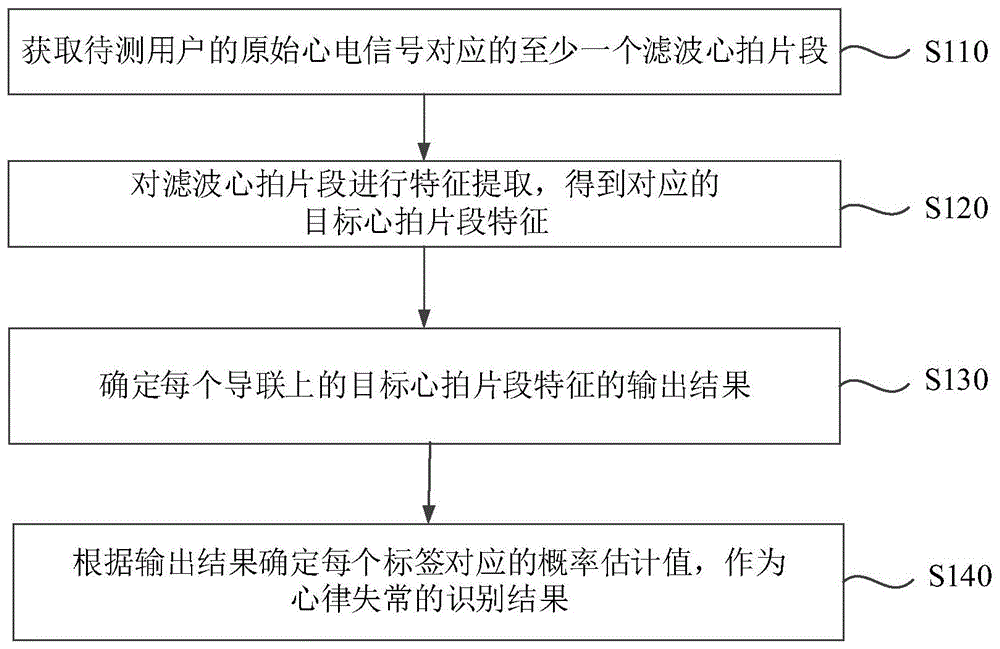
图2是本发明实施例提供的一种心律失常识别方法的流程图;2 is a flowchart of a method for identifying arrhythmia provided by an embodiment of the present invention;
图3是本发明实施例提供的另一种心律失常识别方法的流程图;3 is a flowchart of another arrhythmia identification method provided by an embodiment of the present invention;
图4是本发明实施例提供的一种心律失常识别装置的结构框图;4 is a structural block diagram of an arrhythmia identification device provided by an embodiment of the present invention;
图5是本发明实施例提供的一种设备的硬件结构示意图。FIG. 5 is a schematic diagram of a hardware structure of a device provided by an embodiment of the present invention.
具体实施方式Detailed ways
下面结合附图和实施例对本发明作进一步的详细说明。可以理解的是,此 处所描述的具体实施例仅仅用于解释本发明,而非对本发明的限定。另外还需 要说明的是,为了便于描述,附图中仅示出了与本发明相关的部分而非全部结 构。The present invention will be further described in detail below in conjunction with the accompanying drawings and embodiments. It should be understood that the specific embodiments described herein are only used to explain the present invention, but not to limit the present invention. In addition, it should be noted that, for the convenience of description, the drawings only show some but not all structures related to the present invention.
图2是本发明实施例提供的一种心律失常识别方法的流程图,本实施例可 适用于诊断是否患有心律失常病症的情况。如图2所示,本实施例包括如下步 骤:Fig. 2 is a flow chart of a method for identifying arrhythmia provided by an embodiment of the present invention, and this embodiment can be applied to diagnose whether there is an arrhythmia condition. As shown in Figure 2, this embodiment includes the following steps:
S110、获取待测用户的原始心电信号对应的至少一个滤波心拍片段。S110: Acquire at least one filtered cardiac beat segment corresponding to the original ECG signal of the user to be tested.
在实施例中,原始心电信号指的是通过检测仪器直接检测出的未处理过的 心电信号。在实际操作过程中,可以采用多种方式采集待测用户的原始心电信 号,比如,可以采用心电图仪、心电监护仪等心电设备采集待测用户的原始心 电信号。In the embodiment, the raw ECG signal refers to the unprocessed ECG signal directly detected by the detection instrument. In the actual operation process, the original ECG signal of the user to be tested can be collected in various ways. For example, ECG equipment such as an electrocardiograph and an ECG monitor can be used to collect the original ECG signal of the user to be tested.
在获取到待测用户的原始心电信号之后,为了能够清晰并准确地获取到原 始心电信号中的特征,可对原始心电信号进行预处理,得到至少一个滤波心拍 片段。其中,滤波心拍片段指的是对原始心电信号进行预处理之后得到的滤波 心拍片段。在实施例中,预处理可以包括噪声去除和心拍切片两个方面。针对 噪声去除,可采用高通滤波去除原始心电信号中的基线漂移;并且可采用低通 滤波对原始心电信号去除工频以及高频噪声干扰;针对心拍位置检测,可采用 多种现有方法进行心拍检测,例如经典的pan-Tompkins方法;针对心拍切片, 可采用分段方式对滤波之后的心电信号在检出心拍的位置进行分割。示例性地, 以滤波之后的心电信号R波峰为中心,将向前第一预设时间和向后第二预设时 间之间的片段作为一个滤波心拍片段。在实施例中,第一预设时间和第二预设 时间可以是相等的,也可以是不相等的,对此并不进行限定。比如,第一预设 时间为0.4秒(s),第二预设时间可以为0.5s,即以滤波之后的心电信号R 波峰为中心,向前0.4s和向后0.5s之间的片段作为一个滤波心拍片段。After acquiring the original ECG signal of the user to be tested, in order to obtain the features in the original ECG signal clearly and accurately, the original ECG signal can be preprocessed to obtain at least one filtered cardiac beat segment. The filtered cardiac beat segment refers to the filtered cardiac beat segment obtained after preprocessing the original ECG signal. In an embodiment, preprocessing may include both noise removal and cardiac slices. For noise removal, high-pass filtering can be used to remove baseline drift in the original ECG signal; and low-pass filtering can be used to remove power frequency and high-frequency noise interference from the original ECG signal; for heart beat position detection, a variety of existing methods can be used Perform heart beat detection, such as the classic pan-Tumpkins method; for heart beat slices, the filtered ECG signal may be segmented at the position where the heart beat is detected in a segmented manner. Exemplarily, taking the R wave peak of the ECG signal after filtering as the center, a segment between the first preset time forward and the second preset time backward is taken as a filtered cardiac beat segment. In an embodiment, the first preset time and the second preset time may be equal or unequal, which is not limited. For example, the first preset time is 0.4 seconds (s), and the second preset time may be 0.5s, that is, a segment between 0.4s forward and 0.5s backward with the filtered ECG signal R peak as the center as a filtered heartbeat segment.
S120、对滤波心拍片段进行特征提取,得到对应的目标心拍片段特征。S120. Perform feature extraction on the filtered cardiac beat segment to obtain the corresponding target cardiac segment feature.
在实施例中,在对滤波心拍片段进行特征提取的过程中,可将滤波心拍片 段的特征分为多心拍片段特征和单心拍片段特征,即目标心拍片段特征包括: 多心拍片段特征和单心拍片段特征。可以理解为,在目标心拍片段特征为不同 特征的情况下,所采集的具体参数是不同的。在实施例中,多心拍片段特征和 单心拍片段特征均包括:心电波的相对位置、大小、形状,以及基于时间的临 床特征(也可以称为时间特征)(比如,RR间隔、PR间隔、QT间隔和QRS波 宽度等)。具体的,多心拍片段特征是以临床特征(也可以称为时间特征)为基础,用于表达临床医学上基于心拍的心电信号的解释;单心拍片段特征可以 分为形态特征和时间特征。也就是说,多心拍片段特征和单心拍片段特征所对 应的具体参数是不同的。In an embodiment, during the feature extraction process for the filtered beat segment, the features of the filtered beat segment can be divided into multi-beat segment features and single-beat segment features, that is, the target beat segment features include: multi-beat segment features and single-beat segment features Fragment feature. It can be understood that in the case that the characteristics of the target heart beat segments are different, the specific parameters collected are different. In an embodiment, both the multi-beat segment feature and the single-beat segment feature include: relative position, size, and shape of ECG waves, and time-based clinical features (also referred to as time features) (eg, RR interval, PR interval, QT interval and QRS wave width, etc.). Specifically, multi-beat segment features are based on clinical features (also referred to as temporal features), and are used to express the interpretation of heartbeat-based ECG signals in clinical medicine; single-beat segment features can be divided into morphological features and temporal features. That is to say, the specific parameters corresponding to the multi-beat segment feature and the single-beat segment feature are different.
在实施例中,多心拍片段特征可以包括:当前心拍的R波和前一心拍的R 波之间的间隔,当前心拍的R波和后一心拍的R波之间的间隔,当前心拍的P 波和R波峰之间的间隔;在单心拍片段特征为形态特征时,可以基于独立成分 分析(Independent ComponentAnalysis,ICA),提取完整心拍片段的独立成 分;在单心拍片段特征为时间特征时,可以通过以P波、QRS波群和T波为中 心将滤波心拍片段划分为不同部分,以提取不同的特征。In an embodiment, the multi-beat segment feature may include: the interval between the R wave of the current beat and the R wave of the previous beat, the interval between the R wave of the current beat and the R wave of the next beat, the P of the current beat The interval between the wave and the R wave peak; when the single-beat segment feature is a morphological feature, the independent components of the complete cardiac segment can be extracted based on Independent Component Analysis (ICA); when the single-beat segment feature is a temporal feature, it can be Different features are extracted by dividing the filtered cardiac segment into different parts centered on the P wave, QRS complex and T wave.
S130、确定每个导联上的目标心拍片段特征的输出结果。S130. Determine the output result of the target heart beat segment feature on each lead.
在实施例中,在确定滤波心拍片段的目标心拍片段特征之后,可以基于树 模型的梯度提升机作为分类模型的分类器,对目标心拍片段特征进行分类,以 将目标心拍片段分类至对应的通道中。可以理解为,不同通道对应的目标心拍 片段特征的类型是不同的。在实施例中,每个目标心拍片段特征的导联结果可 以由每个特征的权重和特征值进行计算的得到。其中,每个目标心拍片段的特 征值可以为每个目标心拍片段特征对应的具体参数值。In an embodiment, after determining the target beat segment feature of the filtered beat segment, a gradient boosting machine based on the tree model may be used as a classifier of the classification model to classify the target beat segment feature, so as to classify the target beat segment into a corresponding channel middle. It can be understood that the types of target heart beat segment features corresponding to different channels are different. In an embodiment, the lead results for each target beat segment feature may be calculated from the weight and feature value of each feature. The feature value of each target heartbeat segment may be a specific parameter value corresponding to the feature of each target heartbeat segment.
S140、根据输出结果确定每个标签对应的概率估计值,作为心律失常的识 别结果。S140. Determine the probability estimation value corresponding to each label according to the output result, as the identification result of arrhythmia.
在实施例中,标签指的是心律失常病症。可以理解为,一个标签表示一种 心律失常病症。在实施例中,在确定每个目标心拍片段特征的导联结果之后, 对至少两个导联结果进行融合处理,以计算每个标签对应的概率估计值,作为 心律失常的识别结果。需要说明的是,每个通多对应一个导联结果,为了获取 最佳可信度的决策结果,可对多个导联结果进行融合处理,即对多个通道的导 联结果进行融合处理。在实施例中,每个通道对应一个导联决策模型。In an embodiment, the label refers to a cardiac arrhythmia condition. It can be understood that a label represents a cardiac arrhythmia condition. In an embodiment, after determining the lead results of each target heart beat segment feature, fusion processing is performed on at least two lead results to calculate a probability estimate value corresponding to each label, as the arrhythmia identification result. It should be noted that each channel corresponds to one lead result. In order to obtain the decision result with the best reliability, the results of multiple leads can be fused, that is, the lead results of multiple channels can be fused. In an embodiment, each channel corresponds to a lead decision model.
在实际操作过程中,可根据贝叶斯乘积方法,对每个导联决策模型下的多 个便签进行概率估计,以得到每个标签的概率估计值,并作为心律失常的识别 结果,以使医护人员根据心律失常的识别结果诊断待测用户是否患有心律失常 病症。In the actual operation process, the probability estimation of multiple sticky notes under each lead decision model can be performed according to the Bayesian product method, so as to obtain the probability estimation value of each label, which can be used as the identification result of arrhythmia, so that the The medical staff diagnoses whether the user to be tested suffers from arrhythmia according to the recognition result of the arrhythmia.
在一实施例中,在获取待测用户的原始心电信号对应的至少一个滤波心拍 片段之前,还包括:对待测用户的原始心电信号依次进行高通滤波和低通滤波, 得到滤波心电信号;对滤波心电信号依次进行心拍检测和心拍切片,得到至少 一个滤波心拍片段。In an embodiment, before acquiring at least one filtered cardiac beat segment corresponding to the original ECG signal of the user to be tested, the method further includes: sequentially performing high-pass filtering and low-pass filtering on the original ECG signal of the user to be tested to obtain the filtered ECG signal. and performing cardiac beat detection and cardiac slicing sequentially on the filtered ECG signal to obtain at least one filtered cardiac beat segment.
在实施例中,针对待测用户的原始心电信号的基线漂移校正方面,可通过 0.5Hz高通滤波器去除原始心电信号的基线漂移;针对待测用户的原始心电信 号的工频以及高频噪声引起的干扰,可通过40Hz的低通滤波器去除原始心电信 号的噪声干扰,以得到滤波心电信号;然后对滤波心电信号进行分段,以得到 至少一个滤波心拍片段。在实施例中,在得到滤波心电信号之后,需对滤波心 电信号进行心拍检测,以确定该待测用户的原始心电信号中的心拍位置,然后 再对滤波心电信号进行心拍切片,比如,可以滤波心电信号的R波峰为中心, 向前和先后截取一段片段,作为一个滤波心拍片段。选择该区间内的片段,除了包含完整的心拍,切片间有相互重叠的部分能表现心拍间的相互关系。In the embodiment, for the baseline drift correction of the original ECG signal of the user to be tested, the baseline drift of the original ECG signal can be removed by a 0.5Hz high-pass filter; If the interference caused by the frequency noise, the noise interference of the original ECG signal can be removed by a 40Hz low-pass filter to obtain the filtered ECG signal; then the filtered ECG signal is segmented to obtain at least one filtered cardiac beat segment. In the embodiment, after obtaining the filtered ECG signal, it is necessary to perform heart beat detection on the filtered ECG signal to determine the position of the heart beat in the original ECG signal of the user to be tested, and then perform heart beat slices on the filtered ECG signal, For example, the R wave peak of the ECG signal may be filtered as the center, and a segment may be intercepted forward and successively, as a filtered cardiac beat segment. Select the segment in this interval, in addition to containing the complete heartbeat, the overlapping parts between the slices can express the relationship between the heartbeats.
在实施例中,为了解决训练数据标签的不平衡问题,遵循“跨患者 (inter-patient)”的基础,预选取标签占比较低的所有样本,按照以下条件 采样:Mmax<αiMi,In the embodiment, in order to solve the imbalance problem of training data labels, following the "inter-patient" basis, all samples with a low label proportion are preselected and sampled according to the following conditions: M max <α i M i ,
其中,Mi为第i个标签的样本数量,Mmax为占比较多的样本的数量,αi为 调整后的比例参数,一般选取范围为[1,4]。Among them, M i is the number of samples of the ith label, M max is the number of samples with a large proportion, α i is the adjusted scale parameter, and the general selection range is [1, 4].
在一实施例中,在目标心拍片段特征为多心拍片段特征时,对滤波心拍片 段进行特征提取,得到对应的目标心拍片段特征,包括:提取滤波心拍片段的 第一间隔,第二间隔以及第三间隔,第一间隔为当前心拍的R波与前一心拍的 R波之间的间隔,第二间隔为当前心拍的R波与后一心拍的R波之间的间隔, 第三间隔为当前心拍的P波和R波峰之间的间隔;将第一间隔、第二间隔和第 三间隔作为多心拍片段特征。In one embodiment, when the feature of the target beat segment is a multi-beat segment feature, feature extraction is performed on the filtered beat segment to obtain the corresponding target beat segment feature, including: extracting the first interval, the second interval and the first interval of the filtered beat segment. Three intervals, the first interval is the interval between the R wave of the current heartbeat and the R wave of the previous heartbeat, the second interval is the interval between the R wave of the current heartbeat and the R wave of the next heartbeat, and the third interval is the current The interval between the P-wave and R-wave peaks of the heartbeat; the first interval, the second interval and the third interval are used as multi-beat segment features.
在实施例中,对预处理得到的滤波心拍片段进行特征提取。并且,可将提 取的特征分为多心拍片段特征和单心拍片段特征,其中,多心拍片段特征和单 心拍片段特征均包括:心电波的相对位置、大小、形状和时间特征(比如,RR 间隔、PR间隔、QT间期和QRS波宽度等)。在实施例中,多心拍片段特征以时 间特征为基础,以表达临床医学上基于心拍的心电信号的解释,可包括:第一 间隔、第二间隔和第三间隔。可以理解为,对滤波心拍片段的多心拍片段特征 进行分析的过程,即为对滤波心拍片段的第一间隔、第二间隔和第三间隔进行 分析的过程。In an embodiment, feature extraction is performed on the preprocessed filtered heart beat segments. Moreover, the extracted features can be divided into multi-beat segment features and single-beat segment features, wherein the multi-beat segment features and single-beat segment features both include: relative position, size, shape, and time features of ECG waves (for example, RR interval , PR interval, QT interval and QRS wave width, etc.). In an embodiment, the multi-beat segment feature is based on the temporal feature to express the interpretation of the heartbeat-based ECG signal in clinical medicine, and may include: a first interval, a second interval and a third interval. It can be understood that the process of analyzing the multi-beat segment features of the filtered cardiac segment is the process of analyzing the first interval, the second interval and the third interval of the filtered cardiac segment.
在一实施例中,在目标心拍片段特征为单心拍片段特征时,对滤波心拍片 段进行特征提取,得到对应的目标心拍片段特征,包括:提取滤波心拍片段的 独立成分、第一片段特征、第二片段特征和第三片段特征,第一片段特征为P 波起始位置至QRS波的起始位置之间的特征,第二片段特征为QRS波的起始位 置到QRS波的截止位置之间的特征,第三片段特征为QRS波的截止位置至T波 的截止位置之间的特征;将独立成分、第一片段特征、第二片段特征和第三片 段特征作为单心拍片段特征。In an embodiment, when the feature of the target beat segment is a single beat segment feature, feature extraction is performed on the filtered beat segment to obtain the corresponding target beat segment feature, including: extracting the independent components of the filtered beat segment, the first segment feature, the first segment feature, and the first segment feature. The second segment feature and the third segment feature, the first segment feature is the feature between the start position of the P wave and the start position of the QRS complex, and the second segment feature is the feature between the start position of the QRS complex and the end position of the QRS complex. The third segment feature is the feature between the cut-off position of the QRS complex and the cut-off position of the T wave; the independent component, the first segment feature, the second segment feature and the third segment feature are used as single-beat segment features.
在一实施例中,第一片段特征至少包括:第一片段的最大值、第一片段的 最小值、第一片段的标准差、第一片段的方差、第一片段的一阶差分幅值、第 一片段的平均功率;第二片段特征至少包括:第二片段的小波系数特征;第三 片段特征至少包括:第三片段的最大值、第三片段的最小值、第三片段的平均 功率。In an embodiment, the first segment features at least include: the maximum value of the first segment, the minimum value of the first segment, the standard deviation of the first segment, the variance of the first segment, the first-order difference amplitude of the first segment, The average power of the first segment; the second segment feature at least includes: the wavelet coefficient feature of the second segment; the third segment feature at least includes: the maximum value of the third segment, the minimum value of the third segment, and the average power of the third segment.
在一实施例中,独立成分的确定方式,包括:确定每个滤波心拍片段的当 前长度;根据当前长度、预设独立成分数和滤波心拍片段确定对应的独立成分。In one embodiment, the method for determining the independent components includes: determining the current length of each filtered heartbeat segment; and determining the corresponding independent component according to the current length, the preset number of independent components, and the filtered heartbeat segment.
在实施例中,针对单心拍片段特征,可以分为形态特征和时间特征。对于 滤波心拍片段的形态特征,基于ICA算法提取完整心拍片段的独立成分。其中, 独立成分的计算公式为:ics_component=A·ecg。其中,ecg为完整的滤波心拍片 段,A为n×Necg的解混矩阵,n为预先设置的独立成分数,Necg为ecg的片段长度。 在实施例中,A可以通过ICA训练得到,比如,采用训练集为每个项目/人中, 对每类滤波心拍信号随机抽取至多5个滤波心拍片段。可通过降低维数后的独 立成分表示心电信号的形态特征,降低了“跨患者”下训练集片段个性化以及 噪音的影响,从而更准确地表达完整片段的心电信号的形态特征。In the embodiment, the single heart beat segment features can be divided into morphological features and temporal features. For the morphological features of the filtered cardiac segments, the independent components of the complete cardiac segments are extracted based on the ICA algorithm. The calculation formula of the independent component is: ics_component=A·ecg. Among them, ecg is the complete filtered heartbeat segment, A is the unmixing matrix of n×N ecg , n is the preset number of independent components, and N ecg is the segment length of ecg. In an embodiment, A can be obtained through ICA training, for example, a training set is used for each item/person, and at most 5 filtered cardiac beat segments are randomly selected for each type of filtered cardiac beat signal. The morphological characteristics of ECG signals can be represented by independent components after reducing the dimension, which reduces the influence of segment personalization and noise in the training set under "cross-patient", so that the morphological characteristics of ECG signals of complete segments can be more accurately expressed.
在一实施例中,针对滤波心拍片段中单心拍片段特征为时间特征的情况。 不同于以往的完整心拍片段特征提取,可通过以P波、QRS波群、T波为中心划 分为不同部分提取不同特征。通过分片段的心拍特征提取,除了获得更多的心 电信号特征表达,分片段的心拍特征提取可以更细致化地刻画滤波心电信号在 主要的波或波群的特征。In one embodiment, it is directed to the case where the feature of a single beat segment in the filtered beat segment is a temporal feature. Different from the previous feature extraction of complete cardiac segments, different features can be extracted by dividing the P wave, QRS complex and T wave into different parts. Through segmented heart beat feature extraction, in addition to obtaining more ECG signal feature expression, segmented cardiac beat feature extraction can more detailedly describe the characteristics of the main wave or complex of the filtered ECG signal.
在实施例中,在单心拍片段特征为时间特征的情况下,单心拍片段特征可 以包括:第一片段特征、第二片段特征和第三片段特征。其中,第一片段特征 为P波起始位置(即P_onset)至QRS波的起始位置(QRS_onset)之间的特征, 比如,包括:最大值(记为prev_max)、最小值(记为prev_min)、标准差(prev_std)、 方差(prev_var)、片段的一阶差分幅值(prev_diff_win)举例和平均功率 (prev_power);第二片段特征为QRS波的起始位置(QRS_onset)到QRS波 的截止位置(QRS_offset)之间的特征,比如,包括:小波系数特征(比如,A4_qrs、D4_qrs、D3_qrs);第三片段特征为QRS波的截止位置(QRS_offset) 至T波的截止位置(T_offset)之间的特征,比如,包括:最大值(记为post_max)、 最小值(post_min)和平均功率(post_power)。在一实施例中,可利用db6小 波基对原始信号进行小波分解,得到第1层信号的高频系数(记为D1_qrs)和 低频系数(记为A1_qrs)。对第1层信号的低频系数(A1_qrs)再次进行小波分解, 得到第2层信号的高频系数(记为D2_qrs)和低频系数(记为A2_qrs)。重复上述 步骤,直到获得第3层信号的低频系数(记为D3_qrs),以及第4层信号的低频 系数(记为D4_qrs)和(记为A4_qrs)。In an embodiment, when the single-beat segment feature is a temporal feature, the single-beat segment feature may include: a first segment feature, a second segment feature, and a third segment feature. The first segment feature is the feature between the starting position of the P wave (ie P_onset) and the starting position of the QRS wave (QRS_onset), for example, including: the maximum value (referred to as prev_max) and the minimum value (referred to as prev_min) , standard deviation (prev_std), variance (prev_var), first-order difference amplitude (prev_diff_win) and average power (prev_power) of the segment; the second segment is characterized from the start position of the QRS complex (QRS_onset) to the end position of the QRS complex The features between (QRS_offset), for example, include: wavelet coefficient features (eg, A4_qrs, D4_qrs, D3_qrs); the third segment feature is the cutoff position of the QRS wave (QRS_offset) to the cutoff position of the T wave (T_offset). Features, for example, include: maximum value (denoted post_max), minimum value (post_min), and average power (post_power). In one embodiment, the original signal can be decomposed using the db6 wavelet basis to obtain the high-frequency coefficients (denoted as D1_qrs) and low-frequency coefficients (denoted as A1_qrs) of the first layer signal. Wavelet decomposition is performed on the low-frequency coefficients (A1_qrs) of the first-layer signal again to obtain high-frequency coefficients (denoted as D2_qrs) and low-frequency coefficients (denoted as A2_qrs) of the second-layer signal. The above steps are repeated until the low frequency coefficients of the layer 3 signal (denoted as D3_qrs) and the low frequency coefficients of the layer 4 signal (denoted as D4_qrs) and (denoted as A4_qrs) are obtained.
具体的,上述特征的具体计算过程分别如下:Specifically, the specific calculation processes of the above features are as follows:
其中,P_onset=R_index-0.26s,QRS_onset=R_index-0.035s, QRS_offset=R_index+0.035s,T_offset=QRS_offset+0.15s,其中,R_index为T波峰 位置。prev_diff_win={x1,x2,...,xp},
其中,方差的计算公式为:
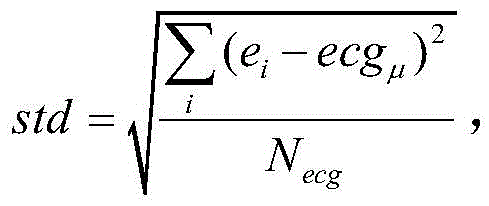
在实施例中,平均功率可以由功率谱密度计算获得。具体的,功率谱密度 可以利用基于Hann窗的Welch法功率谱计算方法:1)信号总长度为N,定义 每段的数据长度为M,信号可被切分的个数为:
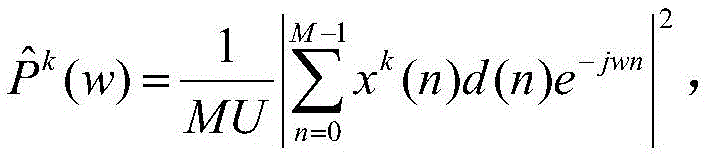


在一实施例中,确定每个导联上的目标心拍片段特征的输出结果,包括: 获取每个目标心拍特征的权重;根据每个目标心拍特征对应的特征值和权重, 确定每个导联上对应的导联结果。In one embodiment, determining the output result of the target beat segment feature on each lead includes: acquiring the weight of each target beat feature; and determining each lead according to the feature value and weight corresponding to each target beat feature The corresponding lead results above.
在实施例中,预先为每个目标心拍片段特征设置权重,并根据每个目标心 拍片段特征的权重和特征值计算出每个导联上对应的输出结果。其中,导联, 可以理解为通道,即对每个通道上的目标心拍片段特征进行计算,得到对应的 输出结果。示例性地,每个导联上的目标心拍特征的输出结果可以为对应权重 和特征值之间的乘积值。其中,特征值可以通过基于树模型的梯度提升机进行 计算得到。In an embodiment, a weight is set for each target heartbeat segment feature in advance, and a corresponding output result on each lead is calculated according to the weight and feature value of each target heartbeat segment feature. Among them, the lead can be understood as a channel, that is, the feature of the target heart beat segment on each channel is calculated to obtain the corresponding output result. Exemplarily, the output result of the target heartbeat feature on each lead may be the product value between the corresponding weight and the feature value. Among them, the eigenvalues can be calculated by the gradient boosting machine based on the tree model.
在一实施例中,根据输出结果确定每个标签对应的概率估计值,包括:基 于贝叶斯乘积方法,融合至少两个导联决策模型下的输出结果;根据至少两个 导联决策模型下的输出结果确定每个标签的概率估计值。In one embodiment, determining the probability estimation value corresponding to each label according to the output result includes: fusing the output results under at least two lead decision models based on the Bayesian product method; The output of determines the probability estimates for each label.
在实施例中,在计算得到每个目标心拍片段特征的输出结果之后,可通过 树模型的梯度提升机作为分类模型的分类器,对输出结果进行分类,以输入至 不同的通道(即一个通道对应一种类型的输出结果,并且每个输出结果对应一 种导联决策模型)。对于多导联结果,需要融合多个导联决策模型的输出结果, 以获得最佳可信度的决策结果。根据贝叶斯乘积方法,给定K类标签数据,对 于每个导联决策模型的概率估计,对L个导联决策模型的概率进行不相关评估。 其中,第k类的概率估计值的计算公式为: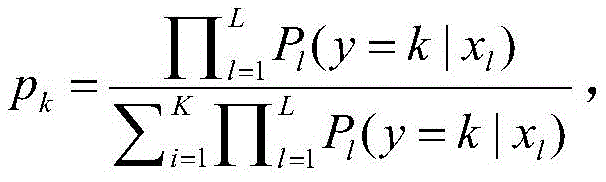

图3是本发明实施例提供的另一种心律失常识别方法的流程图。示例性地, 本实施例可用于对五种基本的室上性心律失常进行分析,包括:房性早搏 (atrial prematurebeat)、房性逸搏(atrial escape beat)与结性早搏(junctional premature beat)、结性逸搏(junctional escape beat)以及异常 房性早搏的分类(aberrated atrialpremature beat)。如图3所示,本实施 例包括如下步骤:FIG. 3 is a flowchart of another arrhythmia identification method provided by an embodiment of the present invention. Exemplarily, this embodiment can be used to analyze five basic supraventricular arrhythmias, including: atrial premature beat, atrial escape beat, and junctional premature beat , junctional escape beat (junctional escape beat) and classification of abnormal premature atrial beat (aberrated atrialpremature beat). As shown in Figure 3, this embodiment includes the following steps:
S210、原始心电信号输入。S210, the original ECG signal is input.
在实施例中,采用多导联的形式输入待测用户的原始心电信号。In the embodiment, the original ECG signal of the user to be tested is input in the form of multiple leads.
S220、对原始心电信号进行预处理。S220, preprocessing the original ECG signal.
在实施例中,对原始心电信号进行预处理,可包括:欠采样、高通滤波、 低通滤波、心拍切片以及过滤非目标心拍等步骤。In an embodiment, the preprocessing of the original ECG signal may include steps such as under-sampling, high-pass filtering, low-pass filtering, slicing heartbeats, and filtering non-target heartbeats.
S230、对预处理得到的心拍片段进行特征提取。S230. Perform feature extraction on the heart beat segments obtained by preprocessing.
在实施例中,根据病症特点对预处理得到的心拍片段进行特征提取。其中, 预处理得到的心拍片段的特征可包括:多心拍片段特征和单心拍片段特征。即 根据不同的病症特点提取不同的特征。In the embodiment, feature extraction is performed on the heart beat segments obtained by preprocessing according to the characteristics of the disease. The features of the beat segments obtained by preprocessing may include: multi-beat segment features and single-beat segment features. That is to extract different features according to different disease characteristics.
S240、对提取的特征进行分类。S240. Classify the extracted features.
在实施例中,采用分类模型对心拍类型进行分类,即采用分类模型对提取 到的特征进行分类的过程。在实施例中,不同的病症对应的特征是不同的,即 根据不同的心拍类型将不同的特征输入至不同的通道中,以采用对应的导联决 策模型对特征进行分析处理,得到对应的导联结果。In the embodiment, a classification model is used to classify the heartbeat types, that is, a process of classifying the extracted features using a classification model. In the embodiment, the features corresponding to different diseases are different, that is, different features are input into different channels according to different heartbeat types, so as to use the corresponding lead decision model to analyze and process the features, and obtain the corresponding lead Linked results.
S250、对多导联结果进行融合。S250 , fuse the multi-lead results.
在实施例中,基于贝叶斯乘积方法的多导联模型结果融合模块对多导联信 号上的结果进行了多导联结果融合,以确定每个标签的概率估计值,来推断待 测用户是否患有心律失常病症。在现有的心律失常病症检测技术大多基于单导 联的心电数据,这往往造成在某些心律失常病症的检测准确率/敏感率低的问题。 本技术方案考虑到某些病症在不同导联表达不同的特点,采用基于贝叶斯乘积 的方法,融合多导联模型的结果,提高了病症的检出率。In the embodiment, the multi-lead model result fusion module based on the Bayesian product method performs multi-lead result fusion on the results on the multi-lead signals to determine the probability estimation value of each label to infer the user to be tested. Have a heart rhythm disorder. Most of the existing arrhythmia detection technologies are based on single-lead ECG data, which often causes the problem of low detection accuracy/sensitivity in certain arrhythmia conditions. The technical solution takes into account the different characteristics of certain diseases expressed in different leads, and adopts a Bayesian product-based method to fuse the results of the multi-lead model, thereby improving the detection rate of the disease.
在现有的心律失常病症检测技术中,使用大量的深度模型框架,该模型框 架所具备的特殊性质往往造成难以对决策结果进行有效解释,并且多层的深度 模型不利于轻量型平台使用。因此,本技术方案考虑了医学医疗领域对于决策 解释的需求,使用时间特征及轻量化的树模型等机器学习模型,降低了模型复 杂度,降低设备成本,甚至向便携式移动终端普及,有利于心脏病症的早期筛 查普及和早期预防;提高模型解释性,利于模型的迭代改进,同时增加医师、 患者对技术方案的信任度。In the existing arrhythmia disease detection technology, a large number of deep model frameworks are used. The special properties of the model framework often make it difficult to effectively explain the decision results, and the multi-layer deep model is not conducive to the use of lightweight platforms. Therefore, this technical solution takes into account the demand for decision interpretation in the medical and medical field, and uses machine learning models such as time features and lightweight tree models to reduce model complexity and equipment costs. Early screening and popularization of diseases and early prevention; improving the interpretability of the model, which is conducive to the iterative improvement of the model, and at the same time increases the trust of doctors and patients in technical solutions.
在现有的心律失常病症检测技术中,大多对于特征的选取较为单一,特征 的单一性不对于部分心律失常病症的分类。因此,本技术方案对心电信号重要 的时间节点分片段切割,通过对片段的特征提取,细致化表达心电信号的特征, 提高心律失常病症的检出率。In the existing arrhythmia disease detection technologies, the selection of features is mostly single, and the singleness of the features does not contribute to the classification of some arrhythmia symptoms. Therefore, the technical solution cuts the important time nodes of the ECG signal into segments, and through the feature extraction of the segments, the characteristics of the ECG signal are expressed in detail, and the detection rate of arrhythmia disorders is improved.
本实施例的技术方案,面向心律失常病症检测,将室上性早搏、逸搏内的 五类病症细分类为房性早搏、房性逸搏/结性早搏、结性逸搏/异常房性早搏, 通过片段化的特征提取丰富的特性表达,并由多个导联决策结果综合考虑提高 心律失常病症的检出率;利用轻量级机器学习模型降低模型复杂度,达到模型 的可解释性。The technical solution of this embodiment is aimed at detecting arrhythmias, and subdivides the five types of diseases in supraventricular premature beats and escape beats into atrial premature beats, atrial escape beats/nodal premature beats, nodal escape beats/abnormal atrial beats Premature beats, extract rich feature expressions through fragmented features, and comprehensively consider the results of multiple lead decisions to improve the detection rate of arrhythmias; use lightweight machine learning models to reduce model complexity and achieve model interpretability .
图4是本发明实施例提供的一种心律失常识别装置的结构框图,该装置适 用于诊断是否患有心律失常病症的情况,该装置可以由硬件/软件实现。如图4 所示,该装置包括:获取模块310、提取模块320、第一确定模块330和第二确 定模块340。Fig. 4 is a structural block diagram of a device for identifying arrhythmia provided by an embodiment of the present invention. The device is suitable for diagnosing whether there is an arrhythmia condition, and the device can be implemented by hardware/software. As shown in FIG. 4 , the apparatus includes: an
其中,获取模块310,用于获取待测用户的原始心电信号对应的至少一个 滤波心拍片段;Wherein, the
提取模块320,用于对滤波心拍片段进行特征提取,得到对应的目标心拍 片段特征;The
第一确定模块330,用于确定每个导联上的目标心拍片段特征的输出结果;a first determining
第二确定模块340,用于确定每个输出结果对应的概率估计值,作为心律 失常的识别结果。The second determining
本实施例的技术方案,获取待测用户的原始心电信号对应的至少一个滤波 心拍片段;对滤波心拍片段进行特征提取,得到对应的目标心拍片段特征;确 定每个导联上的目标心拍片段特征的输出结果;根据输出结果确定每个标签对 应的概率估计值,作为心律失常的识别结果。本发明实施例通过对多个导联的 输出结果进行融合处理,以确定每个标签对应的概率估计值,有效提高了心律 失常识别的准确率。The technical solution of this embodiment is to obtain at least one filtered heart beat segment corresponding to the original ECG signal of the user to be tested; perform feature extraction on the filtered heart beat segment to obtain the corresponding target beat segment feature; determine the target beat segment on each lead The output result of the feature; the probability estimation value corresponding to each label is determined according to the output result, as the identification result of arrhythmia. The embodiment of the present invention effectively improves the accuracy of arrhythmia identification by performing fusion processing on the output results of multiple leads to determine the probability estimation value corresponding to each label.
进一步地,心律失常识别装置,还包括:Further, the arrhythmia identification device also includes:
滤波模块,用于在获取待测用户的原始心电信号对应的至少一个滤波心拍 片段之前,对待测用户的原始心电信号依次进行高通滤波和低通滤波,得到滤 波心电信号;The filtering module is used to sequentially perform high-pass filtering and low-pass filtering on the original ECG signal of the user to be tested before obtaining at least one filtered cardiac beat segment corresponding to the original ECG signal of the user to be tested to obtain a filtered ECG signal;
分段模块,用于对滤波心电信号依次进行心拍检测和心拍切片,得到至少 一个滤波心拍片段。The segmentation module is used to sequentially perform cardiac beat detection and cardiac slice slices on the filtered ECG signal to obtain at least one filtered cardiac beat segment.
在一实施例中,在目标心拍片段特征为多心拍片段特征时,提取模块,包 括:In one embodiment, when the target beat segment feature is a multi-beat segment feature, the extraction module includes:
第一提取单元,用于提取滤波心拍片段的第一间隔,第二间隔以及第三间 隔,第一间隔为当前心拍的R波与前一心拍的R波之间的间隔,第二间隔为当 前心拍的R波与后一心拍的R波之间的间隔,第三间隔为当前心拍的P波和R 波峰之间的间隔;The first extraction unit is used to extract the first interval, the second interval and the third interval of the filtered heart beat segment, the first interval is the interval between the R wave of the current heart beat and the R wave of the previous heart beat, and the second interval is the current The interval between the R wave of the heart beat and the R wave of the next heart beat, and the third interval is the interval between the P wave and the R wave peak of the current heart beat;
第一确定单元,用于将第一间隔、第二间隔和第三间隔作为多心拍片段特 征。The first determining unit is configured to use the first interval, the second interval and the third interval as the multi-beat segment features.
在一实施例中,在目标心拍片段特征为单心拍片段特征时,提取模块,包 括:In one embodiment, when the target heart beat segment feature is a single heart beat segment feature, the extraction module includes:
第一提取单元,用于滤波心拍片段的独立成分、第一片段特征、第二片段 特征和第三片段特征,第一片段特征为P波起始位置至QRS波的起始位置之间 的特征,第二片段特征为QRS波的起始位置到QRS波的截止位置之间的特征, 第三片段特征为QRS波的截止位置至T波的截止位置之间的特征;The first extraction unit is used to filter the independent components, the first segment feature, the second segment feature and the third segment feature of the cardiac segment, where the first segment feature is the feature between the starting position of the P wave and the starting position of the QRS complex , the second segment feature is the feature between the start position of the QRS wave and the cut-off position of the QRS wave, and the third segment feature is the feature between the cut-off position of the QRS wave and the cut-off position of the T wave;
第二确定单元,用于将独立成分、第一片段特征、第二片段特征和第三片 段特征作为单心拍片段特征。The second determining unit is configured to use the independent component, the first segment feature, the second segment feature and the third segment feature as the single heart beat segment feature.
在一实施例中,第一片段特征至少包括:第一片段的最大值、第一片段的 最小值、第一片段的标准差、第一片段的方差、第一片段的一阶差分幅值、第 一片段的平均功率;第二片段特征至少包括:第二片段的小波系数特征;第三 片段特征至少包括:第三片段的最大值、第三片段的最小值、第三片段的平均 功率。In an embodiment, the first segment features at least include: the maximum value of the first segment, the minimum value of the first segment, the standard deviation of the first segment, the variance of the first segment, the first-order difference amplitude of the first segment, The average power of the first segment; the second segment feature at least includes: the wavelet coefficient feature of the second segment; the third segment feature at least includes: the maximum value of the third segment, the minimum value of the third segment, and the average power of the third segment.
在一实施例中,独立成分的确定方式,包括:确定每个滤波心拍片段的当 前长度;根据当前长度、预设独立成分数和滤波心拍片段确定对应的独立成分。In one embodiment, the method for determining the independent components includes: determining the current length of each filtered heartbeat segment; and determining the corresponding independent component according to the current length, the preset number of independent components, and the filtered heartbeat segment.
在一实施例中,第一确定模块,包括:In one embodiment, the first determining module includes:
获取单元,用于获取每个目标心拍特征的权重;an acquisition unit for acquiring the weight of each target heartbeat feature;
第三确定单元,用于根据每个目标心拍特征对应的特征值和权重,确定每 个导联上对应的输出结果。The third determining unit is configured to determine the corresponding output result on each lead according to the feature value and weight corresponding to each target heartbeat feature.
在一实施例中,第二确定模块,包括:In one embodiment, the second determining module includes:
融合模块,用于基于贝叶斯乘积方法,融合至少两个导联决策模型下的输 出结果;The fusion module is used to fuse the output results of at least two lead decision models based on the Bayesian product method;
第四确定单元,用于根据至少两个导联决策模型下的输出结果确定每个标 签的概率估计值。The fourth determining unit is configured to determine the probability estimation value of each label according to the output results under the at least two lead decision models.
上述心律失常识别装置可执行本发明任意实施例所提供的心律失常识别方 法,具备执行方法相应的功能模块和有益效果。The above-mentioned arrhythmia identification device can execute the arrhythmia identification method provided by any embodiment of the present invention, and has functional modules and beneficial effects corresponding to the execution method.
图5是本发明实施例提供的一种设备的硬件结构示意图。本发明实施例中 的设备以计算机设备为例进行说明。如图5所示,本发明实施例提供的计算机 设备,包括:处理器410和存储器420、输入装置430和输出装置440。该计算 机设备中的处理器410可以是一个或多个,图5中以一个处理器410为例,计 算机设备中的处理器410、存储器420、输入装置430和输出装置440可以通过 总线或其他方式连接,图5中以通过总线连接为例。FIG. 5 is a schematic diagram of a hardware structure of a device provided by an embodiment of the present invention. The device in the embodiment of the present invention is described by taking a computer device as an example. As shown in FIG. 5 , the computer device provided by the embodiment of the present invention includes: a
该计算机设备中的存储器420作为一种计算机可读存储介质,可用于存储 一个或多个程序,程序可以是软件程序、计算机可执行程序以及模块,如本发 明实施例或所提供心律失常识别方法对应的程序指令/模块(例如,图4所示的 心律失常识别装置中的模块,包括:获取模块、提取模块、第一确定模块和第 二确定模块)。处理器410通过运行存储在存储器420中的软件程序、指令以及 模块,从而执行计算机设备的各种功能应用以及数据处理,即实现上述方法实 施例中心律失常识别方法。The
存储器420可包括存储程序区和存储数据区,其中,存储程序区可存储操 作系统、至少一个功能所需的应用程序;存储数据区可存储根据设备的使用所 创建的数据等。此外,存储器420可以包括高速随机存取存储器,还可以包括 非易失性存储器,例如至少一个磁盘存储器件、闪存器件、或其他非易失性固 态存储器件。在一些实例中,存储器420可进一步包括相对于处理器410远程 设置的存储器,这些远程存储器可以通过网络连接至设备。上述网络的实例包 括但不限于互联网、企业内部网、局域网、移动通信网及其组合。The
输入装置430可用于接收用户输入的数字或字符信息,以产生与终端设备 的用户设置以及功能控制有关的键信号输入。输出装置440可包括显示屏等显 示设备。The
并且,当上述计算机设备所包括一个或者多个程序被一个或者多个处理器 410执行时,程序进行如下操作:获取待测用户的原始心电信号对应的至少一 个滤波心拍片段;对滤波心拍片段进行特征提取,得到对应的目标心拍片段特 征;确定每个导联上的目标心拍片段特征的输出结果;根据输出结果确定每个 标签对应的概率估计值,作为心律失常的识别结果。Moreover, when one or more programs included in the above-mentioned computer device are executed by one or
本发明实施例还提供了一种计算机可读存储介质,其上存储有计算机程序, 该程序被处理器执行时实现本发明实施例提供的心律失常识别定方法,该方法 包括:获取待测用户的原始心电信号对应的至少一个滤波心拍片段;对滤波心 拍片段进行特征提取,得到对应的目标心拍片段特征;确定每个导联上的目标 心拍片段特征的输出结果;根据输出结果确定每个标签对应的概率估计值,作 为心律失常的识别结果。Embodiments of the present invention further provide a computer-readable storage medium, on which a computer program is stored, and when the program is executed by a processor, implements the method for identifying and determining arrhythmia provided by the embodiments of the present invention, and the method includes: acquiring a user to be tested at least one filtered heartbeat segment corresponding to the original ECG signal; perform feature extraction on the filtered heartbeat segment to obtain the corresponding target heartbeat segment feature; determine the output result of the target heartbeat segment feature on each lead; determine each lead according to the output result. The probability estimates corresponding to the labels are used as arrhythmia identification results.
本发明实施例的计算机存储介质,可以采用一个或多个计算机可读的介质 的任意组合。计算机可读介质可以是计算机可读信号介质或者计算机可读存储 介质。计算机可读存储介质例如可以是,但不限于电、磁、光、电磁、红外线、 或半导体的系统、装置或器件,或者任意以上的组合。计算机可读存储介质的 更具体的例子(非穷举的列表)包括:具有一个或多个导线的电连接、便携式 计算机磁盘、硬盘、随机存取存储器(RAM)、只读存储器(ROM)、可擦式可 编程只读存储器(EPROM或闪存)、光纤、便携式紧凑磁盘只读存储器(CD-ROM)、 光存储器件、磁存储器件、或者上述的任意合适的组合。在本文件中,计算机 可读存储介质可以是任何包含或存储程序的有形介质,该程序可以被指令执行 系统、装置或者器件使用或者与其结合使用。The computer storage medium of the embodiment of the present invention may adopt any combination of one or more computer-readable media. The computer-readable medium may be a computer-readable signal medium or a computer-readable storage medium. The computer-readable storage medium can be, for example, but not limited to, an electrical, magnetic, optical, electromagnetic, infrared, or semiconductor system, apparatus or device, or any combination of the above. More specific examples (a non-exhaustive list) of computer readable storage media include: electrical connections having one or more wires, portable computer disks, hard disks, random access memory (RAM), read only memory (ROM), Erasable Programmable Read Only Memory (EPROM or flash memory), fiber optics, portable compact disk read only memory (CD-ROM), optical storage devices, magnetic storage devices, or any suitable combination of the foregoing. In this document, a computer-readable storage medium can be any tangible medium that contains or stores a program that can be used by or in conjunction with an instruction execution system, apparatus, or device.
计算机可读的信号介质可以包括在基带中或者作为载波一部分传播的数据 信号,其中承载了计算机可读的程序代码。这种传播的数据信号可以采用多种 形式,包括但不限于电磁信号、光信号或上述的任意合适的组合。计算机可读 的信号介质还可以是计算机可读存储介质以外的任何计算机可读介质,该计算 机可读介质可以发送、传播或者传输用于由指令执行系统、装置或者器件使用 或者与其结合使用的程序。A computer-readable signal medium may include a propagated data signal in baseband or as part of a carrier wave with computer-readable program code embodied thereon. Such propagated data signals may take a variety of forms including, but not limited to, electromagnetic signals, optical signals, or any suitable combination of the foregoing. A computer-readable signal medium can also be any computer-readable medium other than a computer-readable storage medium that can transmit, propagate, or transport the program for use by or in connection with the instruction execution system, apparatus, or device .
计算机可读介质上包含的程序代码可以用任何适当的介质传输,包括但不 限于无线、电线、光缆、RF等等,或者上述的任意合适的组合。Program code embodied on a computer readable medium may be transmitted using any suitable medium, including but not limited to wireless, wireline, optical fiber cable, RF, etc., or any suitable combination of the foregoing.
可以以一种或多种程序设计语言或其组合来编写用于执行本发明操作的计 算机程序代码,程序设计语言包括面向对象的程序设计语言,诸如Java、 Smalltalk、C++,还包括常规的过程式程序设计语言,诸如“C”语言或类似的 程序设计语言。程序代码可以完全地在用户计算机上执行、部分地在用户计算 机上执行、作为一个独立的软件包执行、部分在用户计算机上部分在远程计算 机上执行、或者完全在远程计算机或服务器上执行。在涉及远程计算机的情形 中,远程计算机可以通过任意种类的网络,包括局域网(LAN)或广域网(WAN) 连接到用户计算机,或者,可以连接到外部计算机(例如利用因特网服务提供 商来通过因特网连接)。Computer program code for carrying out operations of the present invention may be written in one or more programming languages, including object-oriented programming languages such as Java, Smalltalk, C++, and conventional procedural A programming language, such as the "C" language or similar programming language. The program code may execute entirely on the user's computer, partly on the user's computer, as a stand-alone software package, partly on the user's computer and partly on a remote computer, or entirely on the remote computer or server. In the case of a remote computer, the remote computer may be connected to the user's computer through any kind of network, including a local area network (LAN) or a wide area network (WAN), or may be connected to an external computer (eg, using an Internet service provider to connect through the Internet) ).
注意,上述仅为本发明的较佳实施例及所运用技术原理。本领域技术人员 会理解,本发明不限于这里所述的特定实施例,对本领域技术人员来说能够进 行各种明显的变化、重新调整和替代而不会脱离本发明的保护范围。因此,虽 然通过以上实施例对本发明进行了较为详细的说明,但是本发明不仅仅限于以 上实施例,在不脱离本发明构思的情况下,还可以包括更多其他等效实施例, 而本发明的范围由所附的权利要求范围决定。Note that the above are only preferred embodiments of the present invention and applied technical principles. Those skilled in the art will understand that the present invention is not limited to the specific embodiments described herein, and various obvious changes, readjustments and substitutions can be made to those skilled in the art without departing from the protection scope of the present invention. Therefore, although the present invention has been described in detail through the above embodiments, the present invention is not limited to the above embodiments, and can also include more other equivalent embodiments without departing from the concept of the present invention. The scope is determined by the scope of the appended claims.
Claims (11)
Priority Applications (1)
| Application Number | Priority Date | Filing Date | Title |
|---|---|---|---|
| CN202010086075.1A CN111358459A (en) | 2020-02-11 | 2020-02-11 | Arrhythmia identification method, device, equipment and storage medium |
Applications Claiming Priority (1)
| Application Number | Priority Date | Filing Date | Title |
|---|---|---|---|
| CN202010086075.1A CN111358459A (en) | 2020-02-11 | 2020-02-11 | Arrhythmia identification method, device, equipment and storage medium |
Publications (1)
| Publication Number | Publication Date |
|---|---|
| CN111358459A true CN111358459A (en) | 2020-07-03 |
Family
ID=71198298
Family Applications (1)
| Application Number | Title | Priority Date | Filing Date |
|---|---|---|---|
| CN202010086075.1A Pending CN111358459A (en) | 2020-02-11 | 2020-02-11 | Arrhythmia identification method, device, equipment and storage medium |
Country Status (1)
| Country | Link |
|---|---|
| CN (1) | CN111358459A (en) |
Cited By (9)
| Publication number | Priority date | Publication date | Assignee | Title |
|---|---|---|---|---|
| CN111759298A (en) * | 2020-07-10 | 2020-10-13 | 齐鲁工业大学 | A method to reduce the false alarm rate of arrhythmia in multi-parameter monitor |
| CN111839502A (en) * | 2020-07-21 | 2020-10-30 | 广州视源电子科技股份有限公司 | A kind of abnormal detection method, device, equipment and storage medium of ECG data |
| CN111956207A (en) * | 2020-08-19 | 2020-11-20 | 广州视源电子科技股份有限公司 | Electrocardio record marking method, device, equipment and storage medium |
| CN112270240A (en) * | 2020-10-22 | 2021-01-26 | 微医云(杭州)控股有限公司 | Signal processing method and device, electronic equipment and storage medium |
| CN112617850A (en) * | 2021-01-04 | 2021-04-09 | 苏州大学 | Premature beat and heart beat detection method for electrocardiosignals |
| CN112932431A (en) * | 2021-01-26 | 2021-06-11 | 山西三友和智慧信息技术股份有限公司 | Heart rate identification method based on 1DCNN + Inception Net + GRU fusion network |
| CN114224355A (en) * | 2020-09-07 | 2022-03-25 | 中国移动通信有限公司研究院 | ECG signal classification training method, classification method, device and storage medium |
| CN114617562A (en) * | 2022-03-24 | 2022-06-14 | 中国农业银行股份有限公司 | Method, device and equipment for classifying heartbeat signals and storage medium |
| CN116956101A (en) * | 2022-04-12 | 2023-10-27 | 广州视源电子科技股份有限公司 | Arrhythmia analysis method, device, equipment and medium based on heart beat classification |
Citations (6)
| Publication number | Priority date | Publication date | Assignee | Title |
|---|---|---|---|---|
| CN106377247A (en) * | 2016-09-10 | 2017-02-08 | 天津大学 | Feature selection-based arrhythmia classification method |
| CN108309262A (en) * | 2018-02-24 | 2018-07-24 | 乐普(北京)医疗器械股份有限公司 | Multi-parameter monitoring data analysing method and multi-parameter monitor |
| CN108836307A (en) * | 2018-05-14 | 2018-11-20 | 广东工业大学 | A kind of intelligent ECG detection device, equipment and mobile terminal |
| CN109303559A (en) * | 2018-11-01 | 2019-02-05 | 杭州质子科技有限公司 | A kind of dynamic ECG beat classification method promoting decision tree based on gradient |
| CN109770860A (en) * | 2019-03-28 | 2019-05-21 | 广州视源电子科技股份有限公司 | Electrocardiosignal processing device and electrocardio equipment |
| CN110025308A (en) * | 2019-04-09 | 2019-07-19 | 澳门大学 | A kind of cardioelectric characteristic extracting process, the heart clap recognition methods and device |
-
2020
- 2020-02-11 CN CN202010086075.1A patent/CN111358459A/en active Pending
Patent Citations (6)
| Publication number | Priority date | Publication date | Assignee | Title |
|---|---|---|---|---|
| CN106377247A (en) * | 2016-09-10 | 2017-02-08 | 天津大学 | Feature selection-based arrhythmia classification method |
| CN108309262A (en) * | 2018-02-24 | 2018-07-24 | 乐普(北京)医疗器械股份有限公司 | Multi-parameter monitoring data analysing method and multi-parameter monitor |
| CN108836307A (en) * | 2018-05-14 | 2018-11-20 | 广东工业大学 | A kind of intelligent ECG detection device, equipment and mobile terminal |
| CN109303559A (en) * | 2018-11-01 | 2019-02-05 | 杭州质子科技有限公司 | A kind of dynamic ECG beat classification method promoting decision tree based on gradient |
| CN109770860A (en) * | 2019-03-28 | 2019-05-21 | 广州视源电子科技股份有限公司 | Electrocardiosignal processing device and electrocardio equipment |
| CN110025308A (en) * | 2019-04-09 | 2019-07-19 | 澳门大学 | A kind of cardioelectric characteristic extracting process, the heart clap recognition methods and device |
Cited By (14)
| Publication number | Priority date | Publication date | Assignee | Title |
|---|---|---|---|---|
| CN111759298A (en) * | 2020-07-10 | 2020-10-13 | 齐鲁工业大学 | A method to reduce the false alarm rate of arrhythmia in multi-parameter monitor |
| CN111839502A (en) * | 2020-07-21 | 2020-10-30 | 广州视源电子科技股份有限公司 | A kind of abnormal detection method, device, equipment and storage medium of ECG data |
| CN111839502B (en) * | 2020-07-21 | 2024-02-09 | 广州视源电子科技股份有限公司 | An abnormality detection method, device, equipment and storage medium for electrocardiographic data |
| CN111956207A (en) * | 2020-08-19 | 2020-11-20 | 广州视源电子科技股份有限公司 | Electrocardio record marking method, device, equipment and storage medium |
| CN111956207B (en) * | 2020-08-19 | 2024-02-20 | 广州视源电子科技股份有限公司 | An electrocardiographic record labeling method, device, equipment and storage medium |
| CN114224355A (en) * | 2020-09-07 | 2022-03-25 | 中国移动通信有限公司研究院 | ECG signal classification training method, classification method, device and storage medium |
| CN112270240A (en) * | 2020-10-22 | 2021-01-26 | 微医云(杭州)控股有限公司 | Signal processing method and device, electronic equipment and storage medium |
| CN112270240B (en) * | 2020-10-22 | 2024-02-09 | 微医云(杭州)控股有限公司 | Signal processing method, device, electronic equipment and storage medium |
| CN112617850B (en) * | 2021-01-04 | 2022-08-30 | 苏州大学 | Premature beat and heart beat detection system for electrocardiosignals |
| CN112617850A (en) * | 2021-01-04 | 2021-04-09 | 苏州大学 | Premature beat and heart beat detection method for electrocardiosignals |
| CN112932431B (en) * | 2021-01-26 | 2022-09-27 | 山西三友和智慧信息技术股份有限公司 | Heart rate identification method based on 1DCNN + Inception Net + GRU fusion network |
| CN112932431A (en) * | 2021-01-26 | 2021-06-11 | 山西三友和智慧信息技术股份有限公司 | Heart rate identification method based on 1DCNN + Inception Net + GRU fusion network |
| CN114617562A (en) * | 2022-03-24 | 2022-06-14 | 中国农业银行股份有限公司 | Method, device and equipment for classifying heartbeat signals and storage medium |
| CN116956101A (en) * | 2022-04-12 | 2023-10-27 | 广州视源电子科技股份有限公司 | Arrhythmia analysis method, device, equipment and medium based on heart beat classification |
Similar Documents
| Publication | Publication Date | Title |
|---|---|---|
| CN111358459A (en) | Arrhythmia identification method, device, equipment and storage medium | |
| CN103110417B (en) | Automatic electrocardiogram recognition system | |
| US10959660B2 (en) | Electrocardiogram processing system for delineation and classification | |
| US11350868B2 (en) | Electrocardiogram information processing method and electrocardiogram workstation system | |
| CN109171712A (en) | Auricular fibrillation recognition methods, device, equipment and computer readable storage medium | |
| CN111772628B (en) | An automatic detection system for ECG signal atrial fibrillation based on deep learning | |
| US20200205687A1 (en) | Detecting atrial fibrillation using short single-lead ecg recordings | |
| EP2030565A1 (en) | Systems for safe and remote outpatient ECG monitoring | |
| US20130046193A1 (en) | Method and Apparatus for Predicting Patient Outcomes from a Physiological Segmentable Patient Signal | |
| CN109411042B (en) | ECG information processing method and ECG workstation | |
| US20060167364A1 (en) | Algorithms for detecting cardiac arrhythmia and methods and apparatuses utilizing the algorithms | |
| CN103970975B (en) | Electrocardiogram (ECG) data processing method and system | |
| WO2021037102A1 (en) | Electrocardiogram analysis method and apparatus based on picture and heartbeat information, and device and medium | |
| Parvaneh et al. | Electrocardiogram monitoring and interpretation: from traditional machine learning to deep learning, and their combination | |
| EP3730049A1 (en) | Apparatus and method for analyzing electrocardiogram | |
| Wu et al. | Personalizing a generic ECG heartbeat classification for arrhythmia detection: a deep learning approach | |
| CN109077720B (en) | Signal processing method, device, equipment and storage medium | |
| CN110960207A (en) | Tree model-based atrial fibrillation detection method, device, equipment and storage medium | |
| CN116473569A (en) | A method, system and storage medium for electrocardiogram data processing | |
| CN111528833A (en) | Method and system for quickly identifying and processing electrocardiosignals | |
| Goovaerts et al. | Detection of irregular heartbeats using tensors | |
| Tziakouri et al. | Classification of AF and other arrhythmias from a short segment of ECG using dynamic time warping | |
| KR102684410B1 (en) | Apparatus for Generating Arrhythmia by using Diffusion Model | |
| Thungtong | A robust algorithm for R peak detection based on optimal discrete wavelet transform | |
| Bonizzi et al. | Detection of atrial fibrillation episodes from short single lead recordings by means of ensemble learning |
Legal Events
| Date | Code | Title | Description |
|---|---|---|---|
| PB01 | Publication | ||
| PB01 | Publication | ||
| SE01 | Entry into force of request for substantive examination | ||
| SE01 | Entry into force of request for substantive examination | ||
| RJ01 | Rejection of invention patent application after publication |
Application publication date: 20200703 |
|
| RJ01 | Rejection of invention patent application after publication |