CN111260658A - A Novel Deep Reinforcement Learning Algorithm for Image Segmentation - Google Patents
A Novel Deep Reinforcement Learning Algorithm for Image Segmentation Download PDFInfo
- Publication number
- CN111260658A CN111260658A CN202010029217.0A CN202010029217A CN111260658A CN 111260658 A CN111260658 A CN 111260658A CN 202010029217 A CN202010029217 A CN 202010029217A CN 111260658 A CN111260658 A CN 111260658A
- Authority
- CN
- China
- Prior art keywords
- network
- value
- training
- learning
- reinforcement learning
- Prior art date
- Legal status (The legal status is an assumption and is not a legal conclusion. Google has not performed a legal analysis and makes no representation as to the accuracy of the status listed.)
- Granted
Links
Images


Classifications
-
- G—PHYSICS
- G06—COMPUTING OR CALCULATING; COUNTING
- G06T—IMAGE DATA PROCESSING OR GENERATION, IN GENERAL
- G06T7/00—Image analysis
- G06T7/10—Segmentation; Edge detection
- G06T7/11—Region-based segmentation
-
- G—PHYSICS
- G06—COMPUTING OR CALCULATING; COUNTING
- G06N—COMPUTING ARRANGEMENTS BASED ON SPECIFIC COMPUTATIONAL MODELS
- G06N3/00—Computing arrangements based on biological models
- G06N3/02—Neural networks
- G06N3/08—Learning methods
- G06N3/084—Backpropagation, e.g. using gradient descent
-
- G—PHYSICS
- G06—COMPUTING OR CALCULATING; COUNTING
- G06T—IMAGE DATA PROCESSING OR GENERATION, IN GENERAL
- G06T2207/00—Indexing scheme for image analysis or image enhancement
- G06T2207/20—Special algorithmic details
- G06T2207/20081—Training; Learning
-
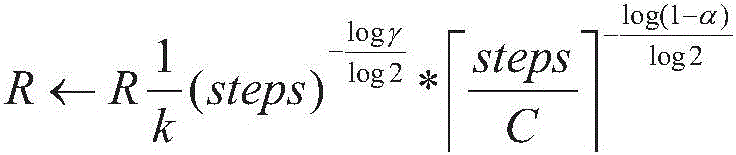
- G—PHYSICS
- G06—COMPUTING OR CALCULATING; COUNTING
- G06T—IMAGE DATA PROCESSING OR GENERATION, IN GENERAL
- G06T2207/00—Indexing scheme for image analysis or image enhancement
- G06T2207/20—Special algorithmic details
- G06T2207/20092—Interactive image processing based on input by user
- G06T2207/20104—Interactive definition of region of interest [ROI]
Landscapes
- Engineering & Computer Science (AREA)
- Physics & Mathematics (AREA)
- Theoretical Computer Science (AREA)
- General Physics & Mathematics (AREA)
- General Health & Medical Sciences (AREA)
- General Engineering & Computer Science (AREA)
- Biophysics (AREA)
- Computational Linguistics (AREA)
- Data Mining & Analysis (AREA)
- Evolutionary Computation (AREA)
- Artificial Intelligence (AREA)
- Molecular Biology (AREA)
- Computing Systems (AREA)
- Biomedical Technology (AREA)
- Life Sciences & Earth Sciences (AREA)
- Mathematical Physics (AREA)
- Software Systems (AREA)
- Health & Medical Sciences (AREA)
- Computer Vision & Pattern Recognition (AREA)
- Image Analysis (AREA)
- Image Processing (AREA)
Abstract
本发明公开了一种用于图像分割的新型深度强化学习算法,包括以下步骤:1)采集若干相关图像作为训练图像集,并且对其进行预处理,提取出包含目标区域的感兴趣区域;2)针对要分割图像的特点,建立深度强化学习所需的状态值,动作值以及奖赏值;3)构建合适的深度学习网络模型作为深度强化学习算法中的值网络和目标网络;4)在深度网络训练过程中,利用多因素自学习学习曲线对经验池和样本采样大小进行动态调整;5)完成网络的训练,对测试样本进行运动轨迹的预测,从而得到最终的图像的分割结果。本发明提出了一种用于图像分割的新型深度强化学习算法,通过构建合理的深度强化学习模型,并且对其经验池和样本采样大小进行合理改进,能够有效提高模型训练效率,获得较为精确的分割结果,具有较强的稳定性和应用性。The invention discloses a novel deep reinforcement learning algorithm for image segmentation, which includes the following steps: 1) collecting several relevant images as a training image set, and preprocessing them to extract an area of interest including a target area; 2) ) According to the characteristics of the image to be segmented, establish the state value, action value and reward value required for deep reinforcement learning; 3) Construct a suitable deep learning network model as the value network and target network in the deep reinforcement learning algorithm; 4) In depth In the process of network training, the multi-factor self-learning learning curve is used to dynamically adjust the experience pool and sample sampling size; 5) After completing the network training, predict the motion trajectory of the test sample, so as to obtain the final image segmentation result. The present invention proposes a new deep reinforcement learning algorithm for image segmentation. By constructing a reasonable deep reinforcement learning model and reasonably improving its experience pool and sample sampling size, the model training efficiency can be effectively improved, and more accurate results can be obtained. The segmentation result has strong stability and applicability.
Description
技术领域technical field
本发明涉及图像处理和智能算法技术领域,具体为一种用于图像分割的深度强化学习算法。The invention relates to the technical field of image processing and intelligent algorithms, in particular to a deep reinforcement learning algorithm for image segmentation.
背景技术Background technique
深度强化学习是一种基于动态规划求解框架的无模型马尔可夫决策过程处理方法,通过与环境的交互来指导智能体在不同的状态下进行收益最大化的动作,从而得到最优决策。由于其具有智能、有效解决高维状态输入、数据可重用等特点,目前已经广泛应用于智能控制、策略分析、图像处理等领域。然而,传统的深度强化学习算法的经验池大小以及采样大小是固定的,没有考虑到智能体随着训练的进行其学习能力也在不断增强的特性,因此导致在模型训练前期出现效率较低的现象。因此,本专利采用多因子学习曲线动态调整经验池的大小和样本采样大小,提出了一种用于图像分割的新型深度强化学习算法。Deep reinforcement learning is a model-free Markov decision process processing method based on the dynamic programming framework. Through interaction with the environment, it guides the agent to perform the action of maximizing revenue in different states, so as to obtain the optimal decision. Due to its intelligent, effective solution to high-dimensional state input, and data reusability, it has been widely used in intelligent control, policy analysis, image processing and other fields. However, the experience pool size and sampling size of traditional deep reinforcement learning algorithms are fixed, which does not take into account the fact that the learning ability of the agent is continuously enhanced as the training progresses, which leads to low efficiency in the early stage of model training. Phenomenon. Therefore, this patent adopts a multi-factor learning curve to dynamically adjust the size of the experience pool and the sample sampling size, and proposes a novel deep reinforcement learning algorithm for image segmentation.
特别的,该算法已经成功运用于免疫层析图像试条的识别及其定量检测,可以为环境检测、临床诊断、食品安全检测、农业生产以及其它一些新兴领域比如分子诊断提供一种有效、准确而快速的检测手段。In particular, the algorithm has been successfully applied to the identification and quantitative detection of immunochromatographic test strips, which can provide an effective and accurate method for environmental detection, clinical diagnosis, food safety detection, agricultural production and other emerging fields such as molecular diagnosis. and rapid detection methods.
发明内容SUMMARY OF THE INVENTION
本发明为了克服现有技术存在的不足之处,提供了一种用于图像分割的新型深度强化学习算法。所述方法将图像分割方法转换成目标像素的运动状态估计问题,采用多因素自学习曲线原理动态改变经验池大小和采样样本大小能够有效提高算法效率,得到较为准确的目标状态估计,从而实现最终的图像分割。In order to overcome the shortcomings of the prior art, the present invention provides a novel deep reinforcement learning algorithm for image segmentation. The method converts the image segmentation method into the problem of estimating the motion state of the target pixel. Using the principle of multi-factor self-learning curve to dynamically change the size of the experience pool and the size of the sampling sample can effectively improve the efficiency of the algorithm and obtain a more accurate target state estimation, so as to achieve the final result. image segmentation.
本发明采用的技术方案是:一种用于图像分割的深度强化学习算法,包括以下步骤:The technical scheme adopted in the present invention is: a deep reinforcement learning algorithm for image segmentation, comprising the following steps:
1、采集若干相关图像作为训练图像集,并且对其进行预处理,提取出包含目标区域的感兴趣区域。1. Collect several related images as a training image set, and preprocess them to extract the region of interest containing the target region.
2、针对要分割图像的特点,构建深度强化学习所需的状态值,动作值以及奖赏值。2. According to the characteristics of the image to be segmented, construct the state value, action value and reward value required for deep reinforcement learning.
3、构建合适的深度学习网络模型作为深度强化学习算法中的值网络和目标网络,比如深度信念网络,堆栈自动编码网络等,并输入样本图像对网络进行训练。3. Build a suitable deep learning network model as the value network and target network in the deep reinforcement learning algorithm, such as deep belief network, stack auto-encoding network, etc., and input sample images to train the network.
4、根据多因子学习曲线动态调节经验池和样本采样大小,通过图像分割效果来调节深度神经网络的的参数,最终确定网络的模型。4. Dynamically adjust the experience pool and sample sampling size according to the multi-factor learning curve, adjust the parameters of the deep neural network through the image segmentation effect, and finally determine the network model.
5、深度强化学习模型确定之后,将待分割的图像以同样的方式构建测试样本,通过训练过的深度强化学习模型得出测试样本的分割结果。5. After the deep reinforcement learning model is determined, a test sample is constructed for the image to be segmented in the same way, and the segmentation result of the test sample is obtained through the trained deep reinforcement learning model.
所述步骤2具体包括:The step 2 specifically includes:
21)针对要分割图像的特点,以图像感兴趣区域的每一列为研究对象,构建深度强化学习模型所需要的状态值,动作值,奖赏值。21) According to the characteristics of the image to be segmented, take each column of the region of interest in the image as the research object, and construct the state value, action value, and reward value required by the deep reinforcement learning model.
22)状态值的确定:选取图像每一列某一像素的领域灰度值向量组成状态值。22) Determination of the state value: Select the domain gray value vector of a certain pixel in each column of the image to form the state value.
23)动作值的确定:深度强化学习智能体以图像的顶部或者底部为起始位置,根据当前状态是否是最佳状态给出相应的奖赏值或者惩罚,并依据当前状态做出向上或者向下运动改变当前的状态。23) Determination of action value: The deep reinforcement learning agent takes the top or bottom of the image as the starting position, gives the corresponding reward value or punishment according to whether the current state is the best state, and makes an upward or downward movement according to the current state. Movement changes the current state.
24)奖赏值的确定:依据强化学习智能体当前状态是否是目标状态给出相应的奖赏值,奖赏值可以由图像当前的分割效果与人工最佳分割版本进行对比得出,与人工版本符合率高给出较高的奖赏值,符合率低的给出相应的惩罚值。24) Determination of reward value: According to whether the current state of the reinforcement learning agent is the target state, the corresponding reward value is given. The reward value can be obtained by comparing the current segmentation effect of the image with the best artificial segmentation version, and the coincidence rate with the manual version is obtained. A high value gives a higher reward value, and a low coincidence rate gives a corresponding penalty value.
所述步骤3具体包括:The step 3 specifically includes:
31)构建合适的深度学习网络模型作为深度强化学习算法中的值网络和目标网络,比如深度信念网络,堆栈自动编码网络等。其中,深度学习网络模型的输入层节点数与训练样本的状态特征向量维数一致,输出层的节点数与智能体的动作总数量相一致,隐含层的层数以及各层的节点数根据图像分割的效果来确定。31) Construct a suitable deep learning network model as the value network and target network in the deep reinforcement learning algorithm, such as deep belief network, stack autoencoder network, etc. Among them, the number of nodes in the input layer of the deep learning network model is consistent with the dimension of the state feature vector of the training samples, the number of nodes in the output layer is consistent with the total number of actions of the agent, the number of layers in the hidden layer and the number of nodes in each layer Determined according to the effect of image segmentation.
32)预训练阶段:从训练图片中获取训练样本并将训练样本储存到经验池中,从经验池中随机抽取部分训练样本,将训练样本输入到输入层,通过逐层训练的方式对各层结构进行训练,低一层隐含层输出作为高一层的输入。32) Pre-training stage: obtain training samples from training pictures and store them in the experience pool, randomly select some training samples from the experience pool, input the training samples into the input layer, and perform layer-by-layer training on each layer. The structure is trained, and the output of the lower hidden layer is used as the input of the upper layer.
33)微调阶段:采用有监督学习方式对整个网络进行训练,将目标网络的输出作为值网络输出的标签,将值网络的实际输出与目标网络的误差逐层向后传播,对值网络的参数进行微调。33) Fine-tuning stage: The entire network is trained by supervised learning, the output of the target network is used as the label of the output of the value network, the error between the actual output of the value network and the target network is propagated back layer by layer, and the parameters of the value network are adjusted. Make fine adjustments.
34)目标网络更新阶段:训练每间隔一段时间将值网络的参数赋给目标网络,其余训练时间目标网络的参数保持固定不变,实现值网络和目标网络的参数同步。34) Target network update stage: During training, the parameters of the value network are assigned to the target network at intervals, and the parameters of the target network remain fixed during the rest of the training time, so that the parameters of the value network and the target network are synchronized.
35)根据图像分割效果调节和优化网络参数,完成深度神经网络的训练。最后,根据训练好的深度强化学习模型对测试样本进行最终的分割。35) Adjust and optimize the network parameters according to the image segmentation effect, and complete the training of the deep neural network. Finally, the final segmentation of the test samples is performed according to the trained deep reinforcement learning model.
所述步骤4具体包括:The step 4 specifically includes:
41)在后续的训练过程中,为了提高训练效率,根据多因子学习曲线动态调节经验池的大小:41) In the subsequent training process, in order to improve the training efficiency, the size of the experience pool is dynamically adjusted according to the multi-factor learning curve:

42)在后续的训练过程中,为了提高训练效率,根据多因子学习曲线动态调节样本采样的大小:42) In the subsequent training process, in order to improve the training efficiency, the size of the sample sampling is dynamically adjusted according to the multi-factor learning curve:

R表示经验池的大小,N表示样本采样大小,k表示算法的首次学习效果,一般取为常数1,steps表示训练步数,γ表示奖赏折扣率,α表示学习率,C表示目标网络更新步数间隔,。R represents the size of the experience pool, N represents the sample sampling size, k represents the first learning effect of the algorithm, generally taken as a constant 1, steps represents the number of training steps, γ represents the reward discount rate, α represents the learning rate, and C represents the target network update step number interval, .
由上述对本发明的描述可知,与现有技术相比,本发明具有如下有益效果:As can be seen from the above description of the present invention, compared with the prior art, the present invention has the following beneficial effects:
1)建立了针对图像分割的深度强化学习模型所需的状态值,动作值以及奖赏值;2)采用多因子学习曲线动态的调节经验池以及采样样本的大小,提高算法的效率;3)该新型深度强化学习算法能够取得较为准确的图像分割结果。特别的,该算法已经成功运用于免疫层析图像试条的识别及其定量检测,可以为环境检测、临床诊断、食品安全检测、农业生产以及其它一些新兴领域比如分子诊断提供一种有效、准确而快速的检测手段。1) The state value, action value and reward value required by the deep reinforcement learning model for image segmentation are established; 2) The multi-factor learning curve is used to dynamically adjust the size of the experience pool and sampling samples to improve the efficiency of the algorithm; 3) The The new deep reinforcement learning algorithm can achieve more accurate image segmentation results. In particular, the algorithm has been successfully applied to the identification and quantitative detection of immunochromatographic test strips, which can provide an effective and accurate method for environmental detection, clinical diagnosis, food safety detection, agricultural production and other emerging fields such as molecular diagnosis. and rapid detection methods.
附图说明Description of drawings
图1是本发明的方法流程图;Fig. 1 is the method flow chart of the present invention;
图2是基于新型深度强化学习算法的免疫层析试条图像分割结果图;Figure 2 is the result of image segmentation of immune tomography test strips based on the new deep reinforcement learning algorithm;
图3是基于新型深度强化学习算法的免疫层析试条定量检测实例结果图。Figure 3 is an example result of quantitative detection of immunochromatographic test strips based on the new deep reinforcement learning algorithm.
具体实施方式Detailed ways
以下通过具体实施方式对本发明作进一步的描述。The present invention will be further described below through specific embodiments.
下面结合附图和在基于图像的免疫层析试条定量检测上的具体实施例对本发明做进一步说明,如图1所示,一种用于图像分割的深度强化学习算法,包括以下步骤:The present invention will be further described below in conjunction with the accompanying drawings and specific embodiments on the quantitative detection of image-based immunochromatographic test strips. As shown in Figure 1, a deep reinforcement learning algorithm for image segmentation includes the following steps:
1、采集若干不同浓度样品液的免疫层析试条图像作为训练图像集,并对其进行预处理,分别提取出包含检测线和质控线的目标区域的感兴趣区域,并且将每一张训练图像被分为两张大小均为115*270的子图像。1. Collect several immunochromatographic test strip images of different concentrations of sample solution as a training image set, and preprocess them to extract the region of interest including the target area of the detection line and the quality control line, and each The training image is divided into two sub-images of size 115*270.
2、针对要分割图像的特点,构建深度强化学习所需的状态值,动作值以及奖赏值。2. According to the characteristics of the image to be segmented, construct the state value, action value and reward value required for deep reinforcement learning.
21)针对要分割图像的特点,以子图像的每一列为研究对象,构建深度强化学习模型所必需的状态值,动作值,奖赏值。21) According to the characteristics of the image to be segmented, use each column of the sub-image as the research object to construct the state value, action value, and reward value necessary for the deep reinforcement learning model.
22)确定状态量,选取图像每一列某一像素的领域灰度值向量组成状态值,比如领域大小选取为3,那么代表状态的输入向量维度为9。对于超出窗口的像素,采用镜像方法进行补充。22) Determine the state quantity, and select the field gray value vector of a certain pixel in each column of the image to form the state value. For example, if the field size is selected as 3, then the dimension of the input vector representing the state is 9. For pixels beyond the window, the mirror method is used to supplement.
23)确定动作量:对于每一个子图像而言,深度强化学习智能体以顶端或者低端的第一个像素为起始点,根据当前状态与目标状态的差异向上(以低端为起始点)或者向下(以顶端为起始点)运动去改变状态。因此,动作的定义可依据下式:23) Determine the amount of action: For each sub-image, the deep reinforcement learning agent starts from the first pixel at the top or low end, and moves upward according to the difference between the current state and the target state (with the low end as the starting point) Or move down (starting from the top) to change the state. Therefore, the definition of the action can be based on the following formula:

A表示动作,当A为0时代表强化学习智能体停止运动,当A为1时表示智能体向上或者向下运动。A represents action. When A is 0, it means that the reinforcement learning agent stops moving. When A is 1, it means that the agent moves up or down.
24)确定奖赏量:借助人工最佳分割版本评估当前分割的好坏,如果强化学习智能体当前的状态与目标状态符合率高于0.9,给与一个高的奖赏值,如果符合率低于0.9,给予一个负的惩罚值。奖赏值或惩罚值的定义如下:24) Determine the reward amount: Evaluate the quality of the current segmentation with the help of the best artificial segmentation version, if the current state of the reinforcement learning agent and the target state coincidence rate is higher than 0.9, give a high reward value, if the coincidence rate is lower than 0.9 , giving a negative penalty. The reward or penalty value is defined as follows:


Cr表示当前状态的像素领域与目标像素领域之间的重合率,pf和pf|opt分别表示当前像素领域中的前景区域和目标像素领域中的前景区域,pb和pf|opt分别表示当前像素中的背景区域和目标像素中的背景区域。R表示奖赏值。Cr represents the coincidence rate between the pixel field of the current state and the target pixel field, p f and p f|opt represent the foreground area in the current pixel field and the foreground area in the target pixel field, respectively, p b and p f|opt respectively Represents the background area in the current pixel and the background area in the target pixel. R represents the reward value.
取8张不同浓度的图像作为训练集,对于每一张子图像,根据以上定义21)构建状态输入量,并且依据公式(4)和(5)计算出每个状态所对应的奖赏值。Take 8 images of different concentrations as the training set, for each sub-image, construct the state input quantity according to the above definition 21), and calculate the reward value corresponding to each state according to formulas (4) and (5).
3、构建合适的深度学习网络模型作为深度强化学习算法中的值网络和目标网络,选取深度信念网络,输入训练样本进行训练,并且根据图像分割效果来调节网络参数,从而确定深度网络模型。3. Construct a suitable deep learning network model as the value network and target network in the deep reinforcement learning algorithm, select the deep belief network, input training samples for training, and adjust the network parameters according to the image segmentation effect to determine the deep network model.
31)构建基于受限玻尔兹曼机的深信度神经网络模型,包括一个输入层、两个隐含层和一个输出层,其中,输入层节点数为9,隐含层节点数均为20,输出层节点数为2;训练样本获取:通过深度强化学习智能体与不断环境交互,得到网络训练样本,并将其储存至经验池中,后续训练中,依据公式(1)和(2)从经验池中选取训练样本,初始的经验池大小设置为100,初始样本采样大小设置为80。31) Construct a deep belief neural network model based on restricted Boltzmann machine, including one input layer, two hidden layers and one output layer, wherein the number of nodes in the input layer is 9, and the number of nodes in the hidden layer is 20 , the number of nodes in the output layer is 2; training sample acquisition: through the deep reinforcement learning agent interacting with the continuous environment, the network training samples are obtained and stored in the experience pool. In subsequent training, according to formulas (1) and (2) The training samples are selected from the experience pool, the initial experience pool size is set to 100, and the initial sample sampling size is set to 80.
32)预训练阶段:将训练样本输入到第1层受限玻尔兹曼机的可见层,通过逐层训练的方式对各层受限玻尔兹曼机进行训练,低一层受限玻尔兹曼机隐含层输出作为高一层受限玻尔兹曼机可见层的输入,每层受限玻尔兹曼机通过对比散度算法确定模型参数θ=(wj,ai,bj)。32) Pre-training stage: input the training samples into the visible layer of the first restricted Boltzmann machine, and train the restricted Boltzmann machine of each layer by layer-by-layer training. The output of the hidden layer of the Boltzmann machine is used as the input of the visible layer of the upper restricted Boltzmann machine, and the model parameters θ=(w j , a i , b j ).
33)微调阶段:采用有监督学习方式对整个网络进行训练,将目标网络的输出作为值网络输出的标签,将值网络的实际输出与目标网络的误差逐层向后传播,对值网络的参数进行微调。33) Fine-tuning stage: The entire network is trained by supervised learning, the output of the target network is used as the label of the output of the value network, the error between the actual output of the value network and the target network is propagated back layer by layer, and the parameters of the value network are adjusted. Make fine adjustments.
34)目标网络更新阶段:训练每间隔一段时间将值网络的参数赋给目标网络,其余训练时间目标网络的参数保持固定不变,实现值网络和目标网络的参数同步,目标网络的更新周期设置为20。34) Target network update stage: The parameters of the value network are assigned to the target network at intervals of training, and the parameters of the target network remain fixed during the rest of the training time, so that the parameters of the value network and the target network are synchronized, and the update period of the target network is set is 20.
35)根据图像分割效果调节和优化网络参数,完成深信度神经网络的训练,参数确定如下:训练阶段学习率为0.1,奖赏折扣率为0.9。35) Adjust and optimize the network parameters according to the image segmentation effect, and complete the training of the deep confidence neural network. The parameters are determined as follows: the learning rate in the training phase is 0.1, and the reward discount rate is 0.9.
4、根据多因子学习曲线动态调节经验池和样本采样大小,通过图像分割效果来调节深度神经网络的的参数,最终确定网络的模型。4. Dynamically adjust the experience pool and sample sampling size according to the multi-factor learning curve, adjust the parameters of the deep neural network through the image segmentation effect, and finally determine the network model.
41)在后续的训练过程中,为了提高训练效率,根据多因子学习曲线动态调节经验池的大小:41) In the subsequent training process, in order to improve the training efficiency, the size of the experience pool is dynamically adjusted according to the multi-factor learning curve:

42)在后续的训练过程中,为了提高训练效率,根据多因子学习曲线动态调节样本采样的大小:42) In the subsequent training process, in order to improve the training efficiency, the size of the sample sampling is dynamically adjusted according to the multi-factor learning curve:

R表示经验池的大小,N表示样本采样大小,k表示算法的首次学习效果,一般取为常数1,steps表示训练步数,γ表示奖赏折扣率,α表示学习率,C表示目标网络更新步数间隔。R represents the size of the experience pool, N represents the sample sampling size, k represents the first learning effect of the algorithm, generally taken as a constant 1, steps represents the number of training steps, γ represents the reward discount rate, α represents the learning rate, and C represents the target network update step number interval.
5、将待分割图像以同种方式组建为测试样本,输入训练好的深度强化学习模型得到初始的最终的分割结果Y。5. The images to be segmented are formed into test samples in the same way, and the trained deep reinforcement learning model is input to obtain the initial final segmentation result Y.
根据得到的图像分割结果计算待测样品液试条图像的特征量,根据样品液浓度与特征量之间的特定关系,得出待测物样品液的定量检测浓度值。According to the obtained image segmentation result, the characteristic quantity of the test strip image of the sample liquid to be tested is calculated, and the quantitative detection concentration value of the sample liquid of the test substance is obtained according to the specific relationship between the concentration of the sample liquid and the characteristic quantity.
为了验证本发明方法在图像分割领域的效果,将其应用到基于图像的免疫层析试条定量检测上,对不同浓度的人绒毛膜促性腺激素样品液纳米金免疫层析试条图像进行分割,结果如图2、3所示。图2中左侧为试条的检测窗口,右侧为通过本方法的图像分割结果,可以看出,本方法能够取得较准确的分割效果。图3为根据图像分割的结果计算特征量,通过最小均方误差法拟合得到人绒毛膜促性腺激素特征量直线,明显地,拟合直线的相关度很好,相关系数为0.973,从而验证了本方法的准确性和应用性。In order to verify the effect of the method of the present invention in the field of image segmentation, it was applied to the quantitative detection of immunochromatographic test strips based on images, and the images of nano-gold immunochromatographic test strips of different concentrations of human chorionic gonadotropin sample solution were segmented. , the results are shown in Figures 2 and 3. In Figure 2, the left side is the detection window of the test strip, and the right side is the image segmentation result by this method. It can be seen that this method can achieve a more accurate segmentation effect. Figure 3 shows the feature quantity calculated according to the result of the image segmentation, and obtained the straight line of the feature quantity of human chorionic gonadotropin by fitting the minimum mean square error method. Obviously, the correlation degree of the fitted straight line is very good, and the correlation coefficient is 0.973, thus verifying the accuracy and applicability of this method.
本发明提出的用于图像分割的深度强化学习算法,1)建立了针对图像分割的深度强化学习模型所需的状态值,动作值以及奖赏值;2)采用多因子学习曲线动态的调节经验池以及采样样本的大小,提高算法的效率;3)该新型深度强化学习算法能够取得较为准确的图像分割结果。特别的,该算法已经成功运用于免疫层析图像试条的识别及其定量检测,可以为环境检测、临床诊断、食品安全检测、农业生产以及其它一些新兴领域比如分子诊断提供一种有效、准确而快速的检测手段。The deep reinforcement learning algorithm for image segmentation proposed by the present invention, 1) establishes the state value, action value and reward value required by the deep reinforcement learning model for image segmentation; 2) adopts a multi-factor learning curve to dynamically adjust the experience pool As well as the size of the sampling samples, the efficiency of the algorithm is improved; 3) The new deep reinforcement learning algorithm can obtain more accurate image segmentation results. In particular, the algorithm has been successfully applied to the identification and quantitative detection of immunochromatographic test strips, which can provide an effective and accurate method for environmental detection, clinical diagnosis, food safety detection, agricultural production and other emerging fields such as molecular diagnosis. and rapid detection methods.
上述仅为本发明的具体实施方式,但本发明的设计构思并不局限于此,凡利用此构思对本发明进行非实质性的改动,均应属于侵犯本发明保护范围的行为。The above are only specific embodiments of the present invention, but the design concept of the present invention is not limited to this, and any non-substantial modification of the present invention by using this concept should be regarded as an act of infringing the protection scope of the present invention.
Claims (4)

Priority Applications (1)
| Application Number | Priority Date | Filing Date | Title |
|---|---|---|---|
| CN202010029217.0A CN111260658B (en) | 2020-01-10 | 2020-01-10 | A deep reinforcement learning method for image segmentation |
Applications Claiming Priority (1)
| Application Number | Priority Date | Filing Date | Title |
|---|---|---|---|
| CN202010029217.0A CN111260658B (en) | 2020-01-10 | 2020-01-10 | A deep reinforcement learning method for image segmentation |
Publications (2)
| Publication Number | Publication Date |
|---|---|
| CN111260658A true CN111260658A (en) | 2020-06-09 |
| CN111260658B CN111260658B (en) | 2023-10-17 |
Family
ID=70948653
Family Applications (1)
| Application Number | Title | Priority Date | Filing Date |
|---|---|---|---|
| CN202010029217.0A Active CN111260658B (en) | 2020-01-10 | 2020-01-10 | A deep reinforcement learning method for image segmentation |
Country Status (1)
| Country | Link |
|---|---|
| CN (1) | CN111260658B (en) |
Cited By (3)
| Publication number | Priority date | Publication date | Assignee | Title |
|---|---|---|---|---|
| CN112529160A (en) * | 2020-12-09 | 2021-03-19 | 南京大学 | High-dimensional simulation learning method for video image data recorded by camera equipment |
| TWI775265B (en) * | 2021-01-05 | 2022-08-21 | 財團法人資訊工業策進會 | Training system and training method of reinforcement learning |
| CN116189166A (en) * | 2023-02-07 | 2023-05-30 | 台州勃美科技有限公司 | Meter reading method and device and robot |
Citations (5)
| Publication number | Priority date | Publication date | Assignee | Title |
|---|---|---|---|---|
| CN105654203A (en) * | 2015-12-31 | 2016-06-08 | 西北农林科技大学 | Cucumber whole-course photosynthetic rate predicting model based on support vector machine, and establishing method |
| CN106970615A (en) * | 2017-03-21 | 2017-07-21 | 西北工业大学 | A kind of real-time online paths planning method of deeply study |
| CN107274408A (en) * | 2017-06-16 | 2017-10-20 | 厦门大学 | A kind of image partition method based on new particle filter algorithm |
| CN109933086A (en) * | 2019-03-14 | 2019-06-25 | 天津大学 | Environment perception and autonomous obstacle avoidance method for UAV based on deep Q-learning |
| WO2019144575A1 (en) * | 2018-01-24 | 2019-08-01 | 中山大学 | Fast pedestrian detection method and device |
-
2020
- 2020-01-10 CN CN202010029217.0A patent/CN111260658B/en active Active
Patent Citations (5)
| Publication number | Priority date | Publication date | Assignee | Title |
|---|---|---|---|---|
| CN105654203A (en) * | 2015-12-31 | 2016-06-08 | 西北农林科技大学 | Cucumber whole-course photosynthetic rate predicting model based on support vector machine, and establishing method |
| CN106970615A (en) * | 2017-03-21 | 2017-07-21 | 西北工业大学 | A kind of real-time online paths planning method of deeply study |
| CN107274408A (en) * | 2017-06-16 | 2017-10-20 | 厦门大学 | A kind of image partition method based on new particle filter algorithm |
| WO2019144575A1 (en) * | 2018-01-24 | 2019-08-01 | 中山大学 | Fast pedestrian detection method and device |
| CN109933086A (en) * | 2019-03-14 | 2019-06-25 | 天津大学 | Environment perception and autonomous obstacle avoidance method for UAV based on deep Q-learning |
Non-Patent Citations (3)
| Title |
|---|
| NIANYIN ZENG ET AL: "Image-Based Quantitative Analysis of Gold Immunochromatographic Strip via Cellular Neural Network Approach" * |
| 张红: "基于深度学习与粒子群优化算法的免疫层析试条定量检测研究" * |
| 曾念寅: "基于深度学习的金免疫层析试条定量检测方法" * |
Cited By (4)
| Publication number | Priority date | Publication date | Assignee | Title |
|---|---|---|---|---|
| CN112529160A (en) * | 2020-12-09 | 2021-03-19 | 南京大学 | High-dimensional simulation learning method for video image data recorded by camera equipment |
| TWI775265B (en) * | 2021-01-05 | 2022-08-21 | 財團法人資訊工業策進會 | Training system and training method of reinforcement learning |
| CN116189166A (en) * | 2023-02-07 | 2023-05-30 | 台州勃美科技有限公司 | Meter reading method and device and robot |
| CN116189166B (en) * | 2023-02-07 | 2024-08-27 | 台州勃美科技有限公司 | Meter reading method and device and robot |
Also Published As
| Publication number | Publication date |
|---|---|
| CN111260658B (en) | 2023-10-17 |
Similar Documents
| Publication | Publication Date | Title |
|---|---|---|
| CN117152503B (en) | A Cross-Domain Small Sample Classification Method for Remote Sensing Images Based on Pseudo-Label Uncertainty Awareness | |
| CN110276264B (en) | Crowd density estimation method based on foreground segmentation graph | |
| CN105243398B (en) | The method of improvement convolutional neural networks performance based on linear discriminant analysis criterion | |
| CN107610087B (en) | Tongue coating automatic segmentation method based on deep learning | |
| CN110598598A (en) | Double-current convolution neural network human behavior identification method based on finite sample set | |
| CN102722714B (en) | Artificial neural network expanding type learning method based on target tracking | |
| CN114581486A (en) | Template update target tracking algorithm based on multi-layer features of fully convolutional Siamese network | |
| CN114863348A (en) | Video target segmentation method based on self-supervision | |
| CN110245550B (en) | Human face noise data set CNN training method based on total cosine distribution | |
| CN109902558A (en) | A kind of human health deep learning prediction technique based on CNN-LSTM | |
| CN113743474A (en) | Digital picture classification method and system based on cooperative semi-supervised convolutional neural network | |
| CN111832479B (en) | Video Object Detection Method Based on Improved Adaptive Anchor R-CNN | |
| CN116863274A (en) | Semi-supervised learning-based steel plate surface defect detection method and system | |
| CN117274657B (en) | A Classification Method and System for Noise-Resistant Cassava Leaf Diseases Based on Course Knowledge Distillation | |
| CN109214470A (en) | An Image Visibility Detection Method Based on Coding Network Fine-tuning | |
| CN107609575A (en) | Calligraphy evaluation method, calligraphy evaluating apparatus and electronic equipment | |
| CN107274408B (en) | An Image Segmentation Method Based on a New Particle Filter Algorithm | |
| CN111260658A (en) | A Novel Deep Reinforcement Learning Algorithm for Image Segmentation | |
| CN114140469A (en) | Depth hierarchical image semantic segmentation method based on multilayer attention | |
| CN106952275A (en) | A Cell Image Segmentation Method Based on Particle Swarm Neural Network | |
| CN108875794A (en) | A Method of Image Visibility Detection Based on Transfer Learning | |
| CN110378882B (en) | Traditional Chinese medicine tongue quality and color classification method based on multi-level depth feature fusion | |
| CN110245587A (en) | A kind of remote sensing image object detection method based on Bayes's transfer learning | |
| CN107392938A (en) | A kind of sparse tracking of structure based on importance weighting | |
| CN112633257A (en) | Potato disease identification method based on improved convolutional neural network |
Legal Events
| Date | Code | Title | Description |
|---|---|---|---|
| PB01 | Publication | ||
| PB01 | Publication | ||
| SE01 | Entry into force of request for substantive examination | ||
| SE01 | Entry into force of request for substantive examination | ||
| GR01 | Patent grant | ||
| GR01 | Patent grant |