CN111244230B - A kind of preparation method of back junction solar cell with passivated metal contact - Google Patents
A kind of preparation method of back junction solar cell with passivated metal contact Download PDFInfo
- Publication number
- CN111244230B CN111244230B CN202010225364.5A CN202010225364A CN111244230B CN 111244230 B CN111244230 B CN 111244230B CN 202010225364 A CN202010225364 A CN 202010225364A CN 111244230 B CN111244230 B CN 111244230B
- Authority
- CN
- China
- Prior art keywords
- silicon wafer
- emitter
- annealing
- silicon
- back surface
- Prior art date
- Legal status (The legal status is an assumption and is not a legal conclusion. Google has not performed a legal analysis and makes no representation as to the accuracy of the status listed.)
- Active
Links
- 229910052751 metal Inorganic materials 0.000 title claims abstract description 24
- 239000002184 metal Substances 0.000 title claims abstract description 24
- 238000002360 preparation method Methods 0.000 title claims abstract description 18
- XUIMIQQOPSSXEZ-UHFFFAOYSA-N Silicon Chemical compound [Si] XUIMIQQOPSSXEZ-UHFFFAOYSA-N 0.000 claims abstract description 134
- 229910052710 silicon Inorganic materials 0.000 claims abstract description 134
- 239000010703 silicon Substances 0.000 claims abstract description 134
- 238000000034 method Methods 0.000 claims abstract description 85
- 238000000137 annealing Methods 0.000 claims abstract description 73
- 238000002161 passivation Methods 0.000 claims abstract description 66
- 229910021420 polycrystalline silicon Inorganic materials 0.000 claims abstract description 41
- 239000005388 borosilicate glass Substances 0.000 claims abstract description 35
- 238000001465 metallisation Methods 0.000 claims abstract description 10
- 235000012431 wafers Nutrition 0.000 claims description 116
- IJGRMHOSHXDMSA-UHFFFAOYSA-N Atomic nitrogen Chemical compound N#N IJGRMHOSHXDMSA-UHFFFAOYSA-N 0.000 claims description 48
- VYPSYNLAJGMNEJ-UHFFFAOYSA-N Silicium dioxide Chemical compound O=[Si]=O VYPSYNLAJGMNEJ-UHFFFAOYSA-N 0.000 claims description 32
- 238000005468 ion implantation Methods 0.000 claims description 31
- 239000007789 gas Substances 0.000 claims description 24
- 229910052757 nitrogen Inorganic materials 0.000 claims description 24
- 238000000151 deposition Methods 0.000 claims description 21
- 229910052814 silicon oxide Inorganic materials 0.000 claims description 21
- 238000009792 diffusion process Methods 0.000 claims description 19
- 125000004437 phosphorous atom Chemical group 0.000 claims description 18
- ZOXJGFHDIHLPTG-UHFFFAOYSA-N Boron Chemical compound [B] ZOXJGFHDIHLPTG-UHFFFAOYSA-N 0.000 claims description 15
- 230000008021 deposition Effects 0.000 claims description 14
- 238000004518 low pressure chemical vapour deposition Methods 0.000 claims description 14
- 125000004429 atom Chemical group 0.000 claims description 12
- ILAHWRKJUDSMFH-UHFFFAOYSA-N boron tribromide Chemical compound BrB(Br)Br ILAHWRKJUDSMFH-UHFFFAOYSA-N 0.000 claims description 12
- 238000000623 plasma-assisted chemical vapour deposition Methods 0.000 claims description 12
- 230000001681 protective effect Effects 0.000 claims description 12
- 239000010453 quartz Substances 0.000 claims description 12
- XLYOFNOQVPJJNP-UHFFFAOYSA-N water Substances O XLYOFNOQVPJJNP-UHFFFAOYSA-N 0.000 claims description 12
- 229910021417 amorphous silicon Inorganic materials 0.000 claims description 11
- 238000005245 sintering Methods 0.000 claims description 10
- 238000004519 manufacturing process Methods 0.000 claims description 9
- 238000007639 printing Methods 0.000 claims description 9
- BQCADISMDOOEFD-UHFFFAOYSA-N Silver Chemical compound [Ag] BQCADISMDOOEFD-UHFFFAOYSA-N 0.000 claims description 7
- 238000004140 cleaning Methods 0.000 claims description 7
- 229910052709 silver Inorganic materials 0.000 claims description 7
- 239000004332 silver Substances 0.000 claims description 7
- QVGXLLKOCUKJST-UHFFFAOYSA-N atomic oxygen Chemical compound [O] QVGXLLKOCUKJST-UHFFFAOYSA-N 0.000 claims description 6
- 229910052796 boron Inorganic materials 0.000 claims description 6
- 239000012535 impurity Substances 0.000 claims description 6
- 239000001301 oxygen Substances 0.000 claims description 6
- 229910052760 oxygen Inorganic materials 0.000 claims description 6
- 238000005498 polishing Methods 0.000 claims description 6
- 238000004151 rapid thermal annealing Methods 0.000 claims description 6
- -1 silver-aluminum Chemical compound 0.000 claims description 6
- 229910004205 SiNX Inorganic materials 0.000 claims description 4
- 230000005540 biological transmission Effects 0.000 claims description 4
- 230000005641 tunneling Effects 0.000 claims description 3
- 238000005507 spraying Methods 0.000 claims 2
- 238000005406 washing Methods 0.000 claims 2
- PNEYBMLMFCGWSK-UHFFFAOYSA-N aluminium oxide Inorganic materials [O-2].[O-2].[O-2].[Al+3].[Al+3] PNEYBMLMFCGWSK-UHFFFAOYSA-N 0.000 claims 1
- 238000001816 cooling Methods 0.000 claims 1
- 229910052593 corundum Inorganic materials 0.000 claims 1
- 238000001035 drying Methods 0.000 claims 1
- 238000011049 filling Methods 0.000 claims 1
- 229910001845 yogo sapphire Inorganic materials 0.000 claims 1
- 229920005591 polysilicon Polymers 0.000 abstract description 32
- 229910021419 crystalline silicon Inorganic materials 0.000 description 10
- 239000000758 substrate Substances 0.000 description 10
- 239000007921 spray Substances 0.000 description 7
- 229910018072 Al 2 O 3 Inorganic materials 0.000 description 6
- 239000000969 carrier Substances 0.000 description 5
- 239000007943 implant Substances 0.000 description 5
- 230000006798 recombination Effects 0.000 description 4
- 238000005215 recombination Methods 0.000 description 4
- 238000005516 engineering process Methods 0.000 description 3
- 238000010329 laser etching Methods 0.000 description 3
- 238000000206 photolithography Methods 0.000 description 3
- 238000006243 chemical reaction Methods 0.000 description 2
- 238000002425 crystallisation Methods 0.000 description 2
- 230000008025 crystallization Effects 0.000 description 2
- LIVNPJMFVYWSIS-UHFFFAOYSA-N silicon monoxide Chemical compound [Si-]#[O+] LIVNPJMFVYWSIS-UHFFFAOYSA-N 0.000 description 2
- 238000005452 bending Methods 0.000 description 1
- 230000007812 deficiency Effects 0.000 description 1
- 230000000694 effects Effects 0.000 description 1
- 230000000873 masking effect Effects 0.000 description 1
- 238000012986 modification Methods 0.000 description 1
- 230000004048 modification Effects 0.000 description 1
- 238000007650 screen-printing Methods 0.000 description 1
Images




Classifications
-
- H—ELECTRICITY
- H10—SEMICONDUCTOR DEVICES; ELECTRIC SOLID-STATE DEVICES NOT OTHERWISE PROVIDED FOR
- H10F—INORGANIC SEMICONDUCTOR DEVICES SENSITIVE TO INFRARED RADIATION, LIGHT, ELECTROMAGNETIC RADIATION OF SHORTER WAVELENGTH OR CORPUSCULAR RADIATION
- H10F71/00—Manufacture or treatment of devices covered by this subclass
- H10F71/121—The active layers comprising only Group IV materials
-
- H—ELECTRICITY
- H10—SEMICONDUCTOR DEVICES; ELECTRIC SOLID-STATE DEVICES NOT OTHERWISE PROVIDED FOR
- H10F—INORGANIC SEMICONDUCTOR DEVICES SENSITIVE TO INFRARED RADIATION, LIGHT, ELECTROMAGNETIC RADIATION OF SHORTER WAVELENGTH OR CORPUSCULAR RADIATION
- H10F10/00—Individual photovoltaic cells, e.g. solar cells
- H10F10/10—Individual photovoltaic cells, e.g. solar cells having potential barriers
- H10F10/14—Photovoltaic cells having only PN homojunction potential barriers
- H10F10/146—Back-junction photovoltaic cells, e.g. having interdigitated base-emitter regions on the back side
-
- H—ELECTRICITY
- H10—SEMICONDUCTOR DEVICES; ELECTRIC SOLID-STATE DEVICES NOT OTHERWISE PROVIDED FOR
- H10F—INORGANIC SEMICONDUCTOR DEVICES SENSITIVE TO INFRARED RADIATION, LIGHT, ELECTROMAGNETIC RADIATION OF SHORTER WAVELENGTH OR CORPUSCULAR RADIATION
- H10F77/00—Constructional details of devices covered by this subclass
- H10F77/20—Electrodes
- H10F77/206—Electrodes for devices having potential barriers
- H10F77/211—Electrodes for devices having potential barriers for photovoltaic cells
- H10F77/219—Arrangements for electrodes of back-contact photovoltaic cells
-
- Y—GENERAL TAGGING OF NEW TECHNOLOGICAL DEVELOPMENTS; GENERAL TAGGING OF CROSS-SECTIONAL TECHNOLOGIES SPANNING OVER SEVERAL SECTIONS OF THE IPC; TECHNICAL SUBJECTS COVERED BY FORMER USPC CROSS-REFERENCE ART COLLECTIONS [XRACs] AND DIGESTS
- Y02—TECHNOLOGIES OR APPLICATIONS FOR MITIGATION OR ADAPTATION AGAINST CLIMATE CHANGE
- Y02P—CLIMATE CHANGE MITIGATION TECHNOLOGIES IN THE PRODUCTION OR PROCESSING OF GOODS
- Y02P70/00—Climate change mitigation technologies in the production process for final industrial or consumer products
- Y02P70/50—Manufacturing or production processes characterised by the final manufactured product
Landscapes
- Photovoltaic Devices (AREA)
Abstract
本发明涉及一种钝化金属接触的背结太阳能电池的制备方法,包括:(1)、在硅片的前表面制备浅掺杂的n+前场;(2)、在浅掺杂的n+前场上制备掩膜层;(3)、在硅片的背表面制备p+发射极,掩膜层能够阻挡制备p+发射极所用的掺杂原子对硅片前表面的n+前场形成反掺杂;在制备p+发射极的过程中,p+发射极上会覆盖硼硅玻璃层;(4)、在硼硅玻璃层和p+发射极上局部开凹槽;(5)、在硅片的背表面制备n+背场,硼硅玻璃层能够阻挡制备n+背场所用的掺杂原子对p+发射极形成反掺杂;(6)、清洗硅片,以去除掩膜层和硼硅玻璃层;(7)、在硅片背面制备隧穿氧化层和多晶硅膜层,并退火处理;(8)、对硅片进行钝化和金属化处理。

The invention relates to a preparation method of a back junction solar cell with passivation metal contact, comprising: (1) preparing a shallowly doped n+ front field on the front surface of a silicon wafer; (2) preparing a shallowly doped n+ front field A mask layer is prepared on the field; (3) a p+ emitter is prepared on the back surface of the silicon wafer, and the mask layer can prevent the doping atoms used for preparing the p+ emitter from forming an anti-doping on the n+ front field of the front surface of the silicon wafer; In the process of preparing the p+ emitter, the p+ emitter will be covered with a borosilicate glass layer; (4), a groove is partially opened on the borosilicate glass layer and the p+ emitter; (5), the back surface of the silicon wafer is prepared n+ back field, the borosilicate glass layer can block the doping atoms used to prepare the n+ back field to form anti-doping on the p+ emitter; (6), clean the silicon wafer to remove the mask layer and the borosilicate glass layer; (7) . Prepare a tunnel oxide layer and a polysilicon film layer on the back of the silicon wafer, and perform annealing treatment; (8), perform passivation and metallization treatment on the silicon wafer.
Description
技术领域technical field
本发明涉及太阳能电池技术领域,具体涉及一种钝化金属接触的背结太阳能电池的制备方法。The invention relates to the technical field of solar cells, in particular to a preparation method of a back junction solar cell with passivation metal contact.
背景技术Background technique
近年来,随着太阳电池技术的发展,载流子选择性钝化接触概念已经被广泛研究,成为提高晶硅电池效率的关键技术。非晶硅和晶硅形成的钝化接触结构(a-Si:H/c-Si),因为较低的表面复合,可得到750mV的开路电压,是目前性能最好的钝化接触结构。另一种钝化接触结构是c-Si/SiOx/poly-Si/的TOPCon结构,其结构是把超薄的氧化层与重掺杂的多晶硅层相结合,多数载流子以隧穿的方式传输通过,而少数载流子则会因能带弯曲的阻碍而无法穿过氧化层,故此结构可促进多子传输,阻挡少子传输,实现载流子的选择性接触,获得极佳的表面钝化性能和接触性能,使电池具备较高的开路电压,此结构也被称为电子/空穴选择性接触。与a-Si:H/c-Si相比,c-Si/SiOx/poly-Si结构:1)可以承受电池制备过程中的高温,如丝网印刷和烧结;2)工艺所需设备成本低,与PERT电池产线相兼容,便于产线的升级改造;3)无需制备透明导电氧化物,如ITO、IZO等,不需要使用低温银浆。故c-Si/SiOx/poly-Si/的钝化接触结构将会比a-Si:H/c-Si得到更加的广泛应用。In recent years, with the development of solar cell technology, the concept of carrier-selective passivation contacts has been widely studied and has become a key technology to improve the efficiency of crystalline silicon cells. The passivation contact structure (a-Si:H/c-Si) formed by amorphous silicon and crystalline silicon can obtain an open circuit voltage of 750mV because of lower surface recombination, which is the best passivation contact structure at present. Another passivation contact structure is the c-Si/SiO x /poly-Si/ TOPCon structure, which combines an ultra-thin oxide layer with a heavily doped polysilicon layer, and the majority carriers tunnel through However, the minority carriers cannot pass through the oxide layer due to the obstacle of the band bending, so the structure can promote the transport of the majority carriers, block the transport of the minority carriers, realize the selective contact of carriers, and obtain an excellent surface. The passivation performance and contact performance enable the battery to have a higher open circuit voltage, which is also called electron/hole selective contact. Compared with a-Si:H/c-Si, the c-Si/ SiOx /poly-Si structure: 1) Can withstand high temperatures during cell fabrication, such as screen printing and sintering; 2) Equipment cost required for the process Low, compatible with PERT battery production line, easy to upgrade the production line; 3) No need to prepare transparent conductive oxides, such as ITO, IZO, etc., no need to use low-temperature silver paste. Therefore, the passivation contact structure of c-Si/SiO x /poly-Si/ will be more widely used than a-Si:H/c-Si.
众所周知,IBC背结电池正面无栅线遮挡,具有较高的电流密度,而钝化接触结构具有较高的开路电压,所以未来高效电池的发展方向必定是将高电流密度的IBC电池和高开路电压的钝化接触结构相结合的技术。ISFH研究所报道了在IBC电池上应用c-Si/SiOx/poly-Si的钝化金属接触结构,制备出POLO-IBC电池,此电池具有较低背面接触复合和正面零栅线遮挡的优势,已获得了26.1%(Voc=726.6mV,Jsc=42.62mA/cm2,FF=84.28%)的世界效率纪录。As we all know, the front of IBC back junction cell is not blocked by grid lines and has a high current density, while the passivation contact structure has a high open circuit voltage, so the future development direction of high-efficiency cells must be to combine high current density IBC cells with high open circuit Voltage-passivated contact structure combined technology. ISFH Institute reported the application of c-Si/ SiOx /poly-Si passivation metal contact structure on IBC cells to prepare POLO-IBC cells, which have the advantages of low back contact recombination and front zero grid line shading , a world efficiency record of 26.1% (V oc =726.6mV, Jsc =42.62mA/cm 2 , FF=84.28%) has been obtained.
传统制备POLO-IBC电池的背面钝化接触结构的方法是先沉积氧化硅和多晶硅再掺杂,因IBC电池背面是叉指状结构,故钝化接触结构也需形成叉指状。要形成多晶硅掺杂的背面叉指形状需多次光刻掩膜工艺。The traditional method for preparing the backside passivation contact structure of POLO-IBC cells is to deposit silicon oxide and polysilicon before doping. Because the backside of IBC cells is an interdigitated structure, the passivation contact structure also needs to be interdigitated. Multiple photolithography masking processes are required to form the polysilicon doped backside interdigitated shape.
发明内容SUMMARY OF THE INVENTION
本发明的目的在于克服现有技术的不足,提供一种钝化金属接触的背结太阳能电池的制备方法。The purpose of the present invention is to overcome the deficiencies of the prior art and provide a preparation method of a back junction solar cell with passivation metal contact.
本发明的一种钝化金属接触的背结太阳能电池的制备方法,其技术方案为:A preparation method of a back junction solar cell contacted by a passivation metal of the present invention, the technical scheme is as follows:
包括以下步骤:Include the following steps:
(1)、在硅片的前表面制备浅掺杂的n+前场;(1) Prepare a shallowly doped n+ front field on the front surface of the silicon wafer;
(2)、在硅片前表面的所述浅掺杂的n+前场上制备掩膜层;(2), preparing a mask layer on the shallowly doped n+ front field on the front surface of the silicon wafer;
(3)、在硅片的背表面制备p+发射极,所述掩膜层能够阻挡制备p+发射极所用的掺杂原子对硅片前表面的n+前场形成反掺杂;在制备所述p+发射极的过程中,所述p+发射极上会覆盖硼硅玻璃层;(3) Prepare a p+ emitter on the back surface of the silicon wafer, and the mask layer can prevent the doping atoms used for preparing the p+ emitter from counter-doping the n+ front field on the front surface of the silicon wafer; in the preparation of the p+ During the process of the emitter, the p+ emitter will be covered with a borosilicate glass layer;
(4)、在硅片背表面的所述硼硅玻璃层和p+发射极上局部开凹槽;(4), partially opening grooves on the borosilicate glass layer and the p+ emitter on the back surface of the silicon wafer;
(5)、在硅片的背表面制备n+背场,所述硼硅玻璃层能够阻挡制备n+背场所用的掺杂原子对所述p+发射极形成反掺杂;(5) preparing an n+ back field on the back surface of the silicon wafer, and the borosilicate glass layer can prevent the doping atoms used for preparing the n+ back field from forming counter-doping on the p+ emitter;
(6)、清洗硅片,以去除硅片前表面的掩膜层和硅片背表面的硼硅玻璃层;(6), cleaning the silicon wafer to remove the mask layer on the front surface of the silicon wafer and the borosilicate glass layer on the back surface of the silicon wafer;
(7)、在硅片背面制备隧穿氧化层和多晶硅膜层,并退火处理;(7), prepare a tunnel oxide layer and a polysilicon film layer on the back of the silicon wafer, and anneal;
(8)、对硅片进行钝化和金属化处理。(8) Passivating and metallizing the silicon wafer.
本发明提供的一种钝化金属接触的背结太阳能电池的制备方法,还包括如下附属技术方案:The preparation method of a back junction solar cell with passivation metal contact provided by the present invention also includes the following subsidiary technical solutions:
其中,在步骤(1)中,采用离子注入的方法制备所述浅掺杂的n+前场;其中,离子注入设备的牵引电压为10-15KeV,形成的方阻为300-600Ω/sqr。Wherein, in step (1), the shallowly doped n+ front field is prepared by ion implantation; wherein, the traction voltage of the ion implantation device is 10-15KeV, and the formed square resistance is 300-600Ω/sqr.
其中,在步骤(2)中,用PECVD法制备氧化硅薄膜作为所述掩膜层,其厚度为150~250nm;Wherein, in step (2), a silicon oxide film is prepared by PECVD method as the mask layer, and its thickness is 150-250 nm;
PECVD法包括:将硅片置于压力为1300~1500mTorr,功率为7000~9000W,温度为400~500℃的环境下,通入SiH4与N2O的混合气体,沉积25~35min;其中,SiH4与N2O的体积比值为1、5或10。The PECVD method includes: placing the silicon wafer in an environment with a pressure of 1300-1500 mTorr, a power of 7000-9000 W, and a temperature of 400-500 °C, feeding a mixed gas of SiH 4 and N 2 O, and depositing for 25-35 minutes; wherein, The volume ratio of SiH 4 to N 2 O is 1, 5 or 10.
其中,在步骤(3)中,通过高温热扩散法在硅片的背表面制备所述p+发射极;Wherein, in step (3), the p+ emitter is prepared on the back surface of the silicon wafer by a high temperature thermal diffusion method;
高温热扩散法包括:采用三溴化硼作为硼源,控扩散温度为800~1000℃,时间为50~100min,方阻为75~100Ω/sqr,所述掩膜层能够阻挡硼原子对硅片前表面的n+前场形成反掺杂。The high-temperature thermal diffusion method includes: using boron tribromide as the boron source, the controlled diffusion temperature is 800-1000°C, the time is 50-100min, the square resistance is 75-100Ω/sqr, and the mask layer can block the boron atoms from the silicon The n+ front field on the front surface of the chip forms a counter-doping.
其中,在步骤(4)中,利用激光对硅片背表面的所述硼硅玻璃层和p+发射极开凹槽;其中,激光为波长为532nm的绿光,频率为50~500KHz,功率为34W。Wherein, in step (4), the borosilicate glass layer and the p+ emitter on the back surface of the silicon wafer are grooved by laser; wherein, the laser is green light with a wavelength of 532 nm, a frequency of 50-500 KHz, and a power of 34W.
其中,在步骤(5)中,先采用离子注入法注入磷原子,并进行退火处理,以激活掺杂的磷原子,形成n+背场;其中,Wherein, in step (5), ion implantation is used to implant phosphorus atoms first, and annealing is performed to activate the doped phosphorus atoms to form an n+ back field; wherein,
离子注入设备的牵引电压10~15KeV,方阻30~60Ω/sqr;The traction voltage of the ion implantation equipment is 10~15KeV, and the square resistance is 30~60Ω/sqr;
退火处理过程中,先将退火炉抽真空,然后充氮气作为保护气,并控制退火炉的真空度为450~950mbar,退火温度700~900℃,退火时间25~60min。During the annealing treatment, the annealing furnace was first evacuated, and then filled with nitrogen as a protective gas, and the vacuum degree of the annealing furnace was controlled to be 450-950 mbar, the annealing temperature was 700-900 °C, and the annealing time was 25-60 min.
其中,在步骤(6)中;Wherein, in step (6);
先采用质量分数为5~10%的HCl溶液,在常温下清洗3~5min,以去除离子注入和退火过程中产生的杂质原子;接着用清水喷淋冲洗5~10min;然后用质量分数为20~30%的HF溶液处理5~10min,以去除硅片前表面的掩膜层和背表面的硼硅玻璃层;再用清水喷淋冲洗10~15min;最后用氮气烘干。First, use 5-10% HCl solution at room temperature for 3-5 minutes to remove impurity atoms generated during ion implantation and annealing; then spray and rinse with clean water for 5-10 minutes; then use a mass fraction of 20 Treat with ~30% HF solution for 5-10min to remove the mask layer on the front surface of the silicon wafer and the borosilicate glass layer on the back surface; then spray and rinse with clean water for 10-15min; and finally dry with nitrogen.
其中,在步骤(7)中,采用LPCVD法沉积超薄隧穿氧化层和本征非晶硅;其过程为:Wherein, in step (7), the ultra-thin tunnel oxide layer and intrinsic amorphous silicon are deposited by LPCVD method; the process is:
首先将硅片置于石英舟上,并使两片硅片置于一个槽中,非多晶硅薄膜沉积面朝内相贴,沉积多晶硅薄膜面朝外;First, place the silicon wafer on the quartz boat, and place the two silicon wafers in a groove, with the deposition side of the non-polysilicon film facing inward, and the deposited polysilicon film facing outward;
然后将石英舟通过自动化传输送入LPCVD管内,管内抽真空至7×10⁻³Torr,温度升至500~600℃,通入氧气10~20min,完成超薄隧穿氧化层的制备;Then the quartz boat is sent into the LPCVD tube by automatic transmission, the tube is evacuated to 7×10 -3 Torr, the temperature is raised to 500-600°C, and oxygen is introduced for 10-20min to complete the preparation of the ultra-thin tunnel oxide layer;
接着再次抽真空至7×10⁻³Torr,温度升至600~700℃,通入SiH4沉积10-40分钟;Then vacuum again to 7×10 -3 Torr, the temperature rises to 600-700°C, and SiH 4 is introduced for deposition for 10-40 minutes;
最后再次抽真空,使危险气体SiH4抽干净后,通入氮气至常压,冷却降温,取出硅片;Finally, evacuate again to make the dangerous gas SiH 4 clean, pass nitrogen to normal pressure, cool down and take out the silicon wafer;
然后,对硅片进行快速热退火处理,其过程为:将退火炉抽真空,并充氮气作为保护气,控制退火炉的真空度为550~1000mbar,退火时间为45min,退火温度为800℃。Then, the silicon wafer is subjected to rapid thermal annealing treatment. The process is as follows: the annealing furnace is evacuated and filled with nitrogen as a protective gas.
其中,在步骤(8)中,Wherein, in step (8),
钝化处理过程为:在硅片的前表面采用SiNx的钝化结构,背表面采用Al2O3钝化膜和SiNx钝化膜的叠层钝化结构;The passivation treatment process is as follows: the front surface of the silicon wafer adopts the passivation structure of SiN x , and the back surface adopts the stack passivation structure of Al 2 O 3 passivation film and SiN x passivation film;
金属化处理过程为:在硅片背面的p+发射极上印刷银铝浆电极并高温烧结,形成p+栅线,在硅片背面的n+背场印刷银浆并烧结,形成n+细栅线;其中,所述p+栅线的数量为110~150根,n+细栅线的数量为111~151根。The metallization process is: printing silver-aluminum paste electrodes on the p+ emitter on the back of the silicon wafer and sintering at high temperature to form p+ grid lines, printing silver paste on the n+ back field on the back of the silicon wafer and sintering to form n+ thin grid lines; , the number of the p+ grid lines is 110-150, and the number of n+ thin grid lines is 111-151.
其中,在步骤(1)之前,所述方法还包括:Wherein, before step (1), the method also includes:
(1)’、对硅片的前表面进行制绒处理,背表面进行抛光处理。(1)', the front surface of the silicon wafer is subjected to texturing treatment, and the back surface of the silicon wafer is subjected to polishing treatment.
本发明的实施包括以下技术效果:The implementation of the present invention includes the following technical effects:
本发明选择性地先完成叉指状的掺杂,再整面沉积氧化硅和多晶硅,最后退火晶化,工艺只在原IBC电池的流程上增加LPCVD沉积氧化硅/多晶硅和退火两步工艺即可完成,工艺步骤简单,适合大规模产业化发展。并且,本发明的钝化金属接触结构可显著降低金属接触区域的复合损失,具有较好的接触性能,较低的接触电阻;同时具有高电流和高开压的优势,更高的转换效率,更低的成本;还可以缩短制备POLO-IBC电池的工艺步骤,避免了多次的光刻掩膜工艺。The present invention selectively completes interdigitated doping first, then deposits silicon oxide and polysilicon on the entire surface, and finally annealing and crystallization. The process only adds two steps of LPCVD deposition of silicon oxide/polysilicon and annealing to the flow of the original IBC cell. The process is completed, the process steps are simple, and it is suitable for large-scale industrialization development. In addition, the passivation metal contact structure of the present invention can significantly reduce the recombination loss of the metal contact area, has better contact performance, lower contact resistance; at the same time, it has the advantages of high current and high open voltage, higher conversion efficiency, Lower cost; it can also shorten the process steps for preparing POLO-IBC cells and avoid multiple photolithography mask processes.
附图说明Description of drawings
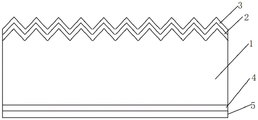
图1为本发明实施例的一种钝化金属接触的背结太阳能电池的制备方法步骤(1)’后的电池结构截面示意图。Fig. 1 is a schematic cross-sectional view of the cell structure after step (1)' of a method for preparing a back junction solar cell with passivation metal contact according to an embodiment of the present invention.
图2为本发明实施例的一种钝化金属接触的背结太阳能电池的制备方法步骤(1)后的电池结构截面示意图。2 is a schematic cross-sectional view of the cell structure after step (1) of a method for preparing a back junction solar cell with passivation metal contact according to an embodiment of the present invention.
图3为本发明实施例的一种钝化金属接触的背结太阳能电池的制备方法步骤(2)后的电池结构截面示意图。3 is a schematic cross-sectional view of the cell structure after step (2) of a method for preparing a back junction solar cell with passivation metal contact according to an embodiment of the present invention.
图4为本发明实施例的一种钝化金属接触的背结太阳能电池的制备方法步骤(3)后的电池结构截面示意图。4 is a schematic cross-sectional view of the cell structure after step (3) of a method for preparing a back junction solar cell with passivation metal contact according to an embodiment of the present invention.
图5为本发明实施例的一种钝化金属接触的背结太阳能电池的制备方法步骤(4)后的电池结构截面示意图。5 is a schematic cross-sectional view of the cell structure after step (4) of a method for preparing a back junction solar cell with passivation metal contact according to an embodiment of the present invention.
图6为本发明实施例的一种钝化金属接触的背结太阳能电池的制备方法步骤(5)后的电池结构截面示意图。6 is a schematic cross-sectional view of the cell structure after step (5) of a method for preparing a back junction solar cell with passivation metal contact according to an embodiment of the present invention.
图7为本发明实施例的一种钝化金属接触的背结太阳能电池的制备方法步骤(6)后的电池结构截面示意图。7 is a schematic cross-sectional view of a cell structure after step (6) of a method for preparing a back junction solar cell with passivation metal contact according to an embodiment of the present invention.
图8.1为本发明实施例的一种钝化金属接触的背结太阳能电池的制备方法步骤(7)中制备完超薄隧穿氧化层和本征非晶硅后的电池结构截面示意图。8.1 is a schematic cross-sectional view of the cell structure after the ultra-thin tunneling oxide layer and intrinsic amorphous silicon are prepared in step (7) of a method for preparing a back junction solar cell with passivation metal contact according to an embodiment of the present invention.
图8.2为本发明实施例的一种钝化金属接触的背结太阳能电池的制备方法步骤(7)中退火处理后的电池结构截面示意图。8.2 is a schematic cross-sectional view of the cell structure after annealing in step (7) of a method for preparing a back junction solar cell with passivation metal contact according to an embodiment of the present invention.
图9为本发明实施例的一种钝化金属接触的背结太阳能电池的制备方法步骤(8)后的电池结构截面示意图。9 is a schematic cross-sectional view of a cell structure after step (8) of a method for preparing a back junction solar cell with passivation metal contact according to an embodiment of the present invention.
图中,1-N型晶体硅基体,2-n+前场,3-氧化硅薄膜,4-p+发射极,5-硼硅玻璃层,6-凹槽,7-n+背场,8-隧穿氧化层,9-掺磷的多晶硅薄膜,10-掺硼的多晶硅薄膜,11-前面SiNx钝化减反射膜,12-背表Al2O3钝化膜,13-背面SiNx钝化膜,14-n+细栅线,15-p+栅线。In the figure, 1-N type crystalline silicon substrate, 2-n+ front field, 3- silicon oxide film, 4-p+ emitter, 5- borosilicate glass layer, 6- groove, 7-n+ back field, 8- tunnel Through oxide layer, 9-phosphorus-doped polysilicon film, 10-boron-doped polysilicon film, 11-front SiN x passivation anti-reflection film, 12- back surface Al 2 O 3 passivation film, 13- back surface SiN x passivation film, 14-n+ thin gate lines, 15-p+ gate lines.
具体实施方式Detailed ways
下面结合实例对本发明进行详细的说明。The present invention will be described in detail below with reference to examples.
具体实施例仅仅是对本发明的解释,并不是对本发明的限制,本领域技术人员在阅读完本说明书后可以根据需要对本实施例做出没有创造性贡献的修改,但只要在本发明的权利要求范围内都受到保护。The specific embodiment is only an explanation of the present invention, not a limitation of the present invention. Those skilled in the art can make modifications without creative contribution to the present embodiment as needed after reading this specification, but only within the scope of the claims of the present invention are protected inside.
本发明的一种钝化金属接触的背结太阳能电池的制备方法,包括以下步骤:A preparation method of a back junction solar cell contacted by a passivation metal of the present invention comprises the following steps:
(1)、在硅片的前表面制备浅掺杂的n+前场;(1) Prepare a shallowly doped n+ front field on the front surface of the silicon wafer;
(2)、在硅片前表面的所述浅掺杂的n+前场上制备掩膜层;(2), preparing a mask layer on the shallowly doped n+ front field on the front surface of the silicon wafer;
(3)、在硅片的背表面制备p+发射极,所述掩膜层能够阻挡制备p+发射极所用的掺杂原子对硅片前表面的n+前场形成反掺杂;在制备所述p+发射极的过程中,所述p+发射极上会覆盖硼硅玻璃层;(3) Prepare a p+ emitter on the back surface of the silicon wafer, and the mask layer can prevent the doping atoms used for preparing the p+ emitter from counter-doping the n+ front field on the front surface of the silicon wafer; in the preparation of the p+ During the process of the emitter, the p+ emitter will be covered with a borosilicate glass layer;
(4)、在硅片背表面的所述硼硅玻璃层和p+发射极上局部开凹槽;(4), partially opening grooves on the borosilicate glass layer and the p+ emitter on the back surface of the silicon wafer;
(5)、在硅片的背表面制备n+背场,所述硼硅玻璃层能够阻挡制备n+背场所用的掺杂原子对所述p+发射极形成反掺杂;(5) preparing an n+ back field on the back surface of the silicon wafer, and the borosilicate glass layer can prevent the doping atoms used for preparing the n+ back field from forming counter-doping on the p+ emitter;
(6)、清洗硅片,以去除硅片前表面的掩膜层和硅片背表面的硼硅玻璃层;(6), cleaning the silicon wafer to remove the mask layer on the front surface of the silicon wafer and the borosilicate glass layer on the back surface of the silicon wafer;
(7)、在硅片背面制备隧穿氧化层和多晶硅膜层,并退火处理;(7), prepare a tunnel oxide layer and a polysilicon film layer on the back of the silicon wafer, and anneal;
(8)、对硅片进行钝化和金属化处理。(8) Passivating and metallizing the silicon wafer.
本发明提供的一种钝化金属接触的背结太阳能电池的制备方法,还包括如下附属技术方案:The preparation method of a back junction solar cell with passivation metal contact provided by the present invention also includes the following subsidiary technical solutions:
在一个实施例中,在步骤(1)中,采用离子注入的方法制备所述浅掺杂的n+前场;其中,离子注入设备的牵引电压为10-15KeV,形成的方阻为300-600Ω/sqr。In one embodiment, in step (1), the shallowly doped n+ front field is prepared by ion implantation; wherein, the pulling voltage of the ion implantation device is 10-15KeV, and the formed square resistance is 300-600Ω /sqr.
在一个实施例中,在步骤(2)中,用PECVD法制备氧化硅薄膜作为所述掩膜层,其厚度为150~250nm;In one embodiment, in step (2), a silicon oxide film is prepared by PECVD as the mask layer, and its thickness is 150-250 nm;
PECVD法包括:将硅片置于压力为1300~1500mTorr,功率为7000~9000W,温度为400~500℃的环境下,通入SiH4与N2O的混合气体,沉积25~35min;其中,SiH4与N2O的体积比值为1、5或10。The PECVD method includes: placing the silicon wafer in an environment with a pressure of 1300-1500 mTorr, a power of 7000-9000 W, and a temperature of 400-500 °C, feeding a mixed gas of SiH 4 and N 2 O, and depositing for 25-35 minutes; wherein, The volume ratio of SiH 4 to N 2 O is 1, 5 or 10.
在一个实施例中,在步骤(3)中,通过高温热扩散法在硅片的背表面制备所述p+发射极;In one embodiment, in step (3), the p+ emitter is prepared on the back surface of the silicon wafer by a high temperature thermal diffusion method;
高温热扩散法包括:采用三溴化硼作为硼源,控扩散温度为800~1000℃,时间为50~100min,方阻为75~100Ω/sqr,所述掩膜层能够阻挡硼原子对硅片前表面的n+前场形成反掺杂。The high-temperature thermal diffusion method includes: using boron tribromide as the boron source, the controlled diffusion temperature is 800-1000°C, the time is 50-100min, the square resistance is 75-100Ω/sqr, and the mask layer can block the boron atoms from the silicon The n+ front field on the front surface of the chip forms a counter-doping.
在一个实施例中,在步骤(4)中,利用激光对硅片背表面的所述硼硅玻璃层和p+发射极开凹槽;其中,激光为波长为532nm的绿光,频率为50~500KHz,功率为34W。In one embodiment, in step (4), the borosilicate glass layer and the p+ emitter on the back surface of the silicon wafer are grooved by a laser; wherein, the laser is green light with a wavelength of 532 nm, and a frequency of 50~ 500KHz, the power is 34W.
在一个实施例中,在步骤(5)中,先采用离子注入法注入磷原子,并进行退火处理,以激活掺杂的磷原子,形成n+背场;其中,In one embodiment, in step (5), ion implantation is used to implant phosphorus atoms first, and annealing is performed to activate the doped phosphorus atoms to form an n+ back field; wherein,
离子注入设备的牵引电压10~15KeV,方阻30~60Ω/sqr;The traction voltage of the ion implantation equipment is 10~15KeV, and the square resistance is 30~60Ω/sqr;
退火处理过程中,先将退火炉抽真空,然后充氮气作为保护气,并控制退火炉的真空度为450~950mbar,退火温度700~900℃,退火时间25~60min。During the annealing treatment, the annealing furnace was first evacuated, and then filled with nitrogen as a protective gas, and the vacuum degree of the annealing furnace was controlled to be 450-950 mbar, the annealing temperature was 700-900 °C, and the annealing time was 25-60 min.
在一个实施例中,在步骤(6)中;In one embodiment, in step (6);
先采用质量分数为5~10%的HCl溶液,在常温下清洗3~5min,以去除离子注入和退火过程中产生的杂质原子;接着用清水喷淋冲洗5~10min;然后用质量分数为20~30%的HF溶液处理5~10min,以去除硅片前表面的掩膜层和背表面的硼硅玻璃层;再用清水喷淋冲洗10~15min;最后用氮气烘干。First, use 5-10% HCl solution at room temperature for 3-5 minutes to remove impurity atoms generated during ion implantation and annealing; then spray and rinse with clean water for 5-10 minutes; then use a mass fraction of 20 Treat with ~30% HF solution for 5-10min to remove the mask layer on the front surface of the silicon wafer and the borosilicate glass layer on the back surface; then spray and rinse with clean water for 10-15min; and finally dry with nitrogen.
在一个实施例中,在步骤(7)中,采用LPCVD法沉积超薄隧穿氧化层和本征非晶硅;其过程为:In one embodiment, in step (7), an ultra-thin tunnel oxide layer and intrinsic amorphous silicon are deposited by LPCVD method; the process is:
首先将硅片置于石英舟上,并使两片硅片置于一个槽中,非多晶硅薄膜沉积面朝内相贴,沉积多晶硅薄膜面朝外;First, place the silicon wafer on the quartz boat, and place the two silicon wafers in a groove, with the deposition side of the non-polysilicon film facing inward, and the deposited polysilicon film facing outward;
然后将石英舟通过自动化传输送入LPCVD管内,管内抽真空至7×10⁻³Torr,温度升至500~600℃,通入氧气10~20min,完成超薄隧穿氧化层的制备;Then the quartz boat is sent into the LPCVD tube by automatic transmission, the tube is evacuated to 7×10 -3 Torr, the temperature is raised to 500-600°C, and oxygen is introduced for 10-20min to complete the preparation of the ultra-thin tunnel oxide layer;
接着再次抽真空至7×10⁻³Torr,温度升至600~700℃,通入SiH4沉积10-40分钟;Then vacuum again to 7×10 -3 Torr, the temperature rises to 600-700°C, and SiH 4 is introduced for deposition for 10-40 minutes;
最后再次抽真空,使危险气体SiH4抽干净后,通入氮气至常压,冷却降温,取出硅片;Finally, evacuate again to make the dangerous gas SiH 4 clean, pass nitrogen to normal pressure, cool down and take out the silicon wafer;
然后,对硅片进行快速热退火处理,其过程为:将退火炉抽真空,并充氮气作为保护气,控制退火炉的真空度为550~1000mbar,退火时间为45min,退火温度为800℃。Then, the silicon wafer is subjected to rapid thermal annealing treatment. The process is as follows: the annealing furnace is evacuated and filled with nitrogen as a protective gas.
在一个实施例中,在步骤(8)中,In one embodiment, in step (8),
钝化处理过程为:在硅片的前表面采用SiNx的钝化结构,背表面采用Al2O3钝化膜和SiNx钝化膜的叠层钝化结构;The passivation treatment process is as follows: the front surface of the silicon wafer adopts the passivation structure of SiN x , and the back surface adopts the stack passivation structure of Al 2 O 3 passivation film and SiN x passivation film;
金属化处理过程为:在硅片背面的p+发射极上印刷银铝浆电极并高温烧结,形成p+栅线,在硅片背面的n+背场印刷银浆并烧结,形成n+细栅线;其中,所述p+栅线的数量为110~150根,n+细栅线的数量为111~151根。The metallization process is: printing silver-aluminum paste electrodes on the p+ emitter on the back of the silicon wafer and sintering at high temperature to form p+ grid lines, printing silver paste on the n+ back field on the back of the silicon wafer and sintering to form n+ thin grid lines; , the number of the p+ grid lines is 110-150, and the number of n+ thin grid lines is 111-151.
可选地,在步骤(1)之前,所述方法还包括:Optionally, before step (1), the method further includes:
(1)’、对硅片的前表面进行制绒处理,背表面进行抛光处理。(1)', the front surface of the silicon wafer is subjected to texturing treatment, and the back surface of the silicon wafer is subjected to polishing treatment.
本发明选择性地先完成叉指状的掺杂,再整面沉积氧化硅和多晶硅,最后退火晶化,工艺只在原IBC电池的流程上增加LPCVD沉积氧化硅/多晶硅和退火两步工艺即可完成,工艺步骤简单,适合大规模产业化发展。并且,本发明的钝化金属接触结构可显著降低金属接触区域的复合损失,具有较好的接触性能,较低的接触电阻;同时具有高电流和高开压的优势,更高的转换效率,更低的成本;还可以缩短制备POLO-IBC电池的工艺步骤,避免了多次的光刻掩膜工艺。The present invention selectively completes interdigitated doping first, then deposits silicon oxide and polysilicon on the entire surface, and finally annealing and crystallization. The process only adds two steps of LPCVD deposition of silicon oxide/polysilicon and annealing to the flow of the original IBC cell. The process is completed, the process steps are simple, and it is suitable for large-scale industrialization development. In addition, the passivation metal contact structure of the present invention can significantly reduce the recombination loss of the metal contact area, has better contact performance, lower contact resistance; at the same time, it has the advantages of high current and high open voltage, higher conversion efficiency, Lower cost; it can also shorten the process steps for preparing POLO-IBC cells and avoid multiple photolithography mask processes.
下面将以具体的实施例对发明的制备方法进行详细地说明。The preparation method of the invention will be described in detail below with specific examples.
实施例1Example 1
步骤(1)’、选择厚度为150~180nm,电阻率为1~9Ω·cm,尺寸156.75mm×156.75mm的N型硅基体,并对该N型硅基体1进行前表面制绒处理,背表面抛光处理,完成本步骤后的电池结构如图1所示。Step (1)', select an N-type silicon substrate with a thickness of 150 to 180 nm, a resistivity of 1 to 9 Ω·cm, and a size of 156.75 mm × 156.75 mm, and the N-
步骤(1)、在步骤(1)’处理后的N型硅基体1前表面采用离子注入的方法制备浅掺杂的n+前场2。其中,在离子注入过程中,牵引电压为10KeV,束流为30mA,退火后的方阻为300Ω/sqr。完成本步骤后的电池结构如图2所示。In step (1), a shallowly doped n+
步骤(2)、在步骤(1)处理后的浅掺杂n+前场2的前表面采用PECVD法制备一层氧化硅薄膜3。PECVD法包括:将硅片置于压力为1300mTorr,功率为7000W,温度为400℃的环境下,通入SiH4与N2O的混合气体,沉积25min;其中,SiH4与N2O的体积比值为1。完成本步骤后的电池结构如图3所示。In step (2), a layer of
步骤(3)、在步骤(2)处理后的硅片的背面采用高温热扩散法制备p+发射极4。具体地,在常压管中,采用三溴化硼作为硼源,扩散温度为800℃,时间为50min,方阻为75Ω/sqr;扩散过程中,在p+发射极4的表面形成硼硅玻璃层5,其厚度为60nm。其中,步骤(2)中制备的氧化硅薄膜3能够阻挡硼原子对硅片前表面的n+前场2形成反掺杂。完成本步骤后的电池结构如图4所示。In step (3), a
步骤(4)、在步骤(3)处理后的硅片背面的p+发射极4和硼硅玻璃层5上采用激光刻蚀的方法进行局部开凹槽6,其中,激光为波长为532nm的绿光,频率为50KHz,功率为34W。完成本步骤后的电池结构如图5所示。Step (4), on the
步骤(5)、在步骤(4)处理后的硅片背面采用离子注入的方法注入磷原子,并进行退火处理,以激活掺杂的磷原子,形成n+背场7;在离子注入过程中,在离子注入过程中,牵引电压为10~15KeV,剂量为4.5~7.0cm-2,方阻为35~60Ω/sqr。退火处理时,先将退火炉抽真空,然后充氮气作为保护气,并控制退火炉的真空度为450mbar,退火温度为700℃,退火时间为25min。其中,步骤(3)中形成的硼硅玻璃层5能够阻挡磷原子对p+发射极4形成反掺杂。完成本步骤后的电池结构如图6所示。In step (5), ion implantation is used to implant phosphorus atoms on the back of the silicon wafer processed in step (4), and annealing is performed to activate the doped phosphorus atoms to form an n+ back
(6)将步骤(5)处理后的硅片进行清洗处理。具体过程为:先采用质量分数为5%的HCl溶液,在常温下清洗3min,以去除离子注入和退火过程中产生的杂质原子;接着用清水喷淋冲洗5min;然后用质量分数为20%的HF溶液处理5min,以去除硅片前表面的氧化硅薄膜3和背表面的硼硅玻璃层5;再用清水喷淋冲洗10min;最后用氮气烘干。完成本步骤后的电池结构如图7所示。(6) cleaning the silicon wafer processed in step (5). The specific process is as follows: first, use a 5% HCl solution at room temperature for 3 minutes to remove impurity atoms generated during ion implantation and annealing; then spray and rinse with water for 5 minutes; then use a 20% HCl solution The HF solution was treated for 5 minutes to remove the
(7)首先,将步骤(6)处理后的硅片背面采用LPCVD法沉积超薄隧穿氧化层8和本征非晶硅。先将硅片置于石英舟上,两片置于一个槽中,非多晶硅薄膜沉积面朝内相贴,沉积多晶硅薄膜面朝外,再将石英舟通过自动化传输送入LPCVD管内,管内抽真空,压力至7×10⁻³Torr,温度升至550℃,通入氧气10min,此时完成0.5nm超薄隧穿氧化层8的制备。工艺完成后,再次抽真空至7×10⁻³Torr,温度升至650℃,通入SiH4沉积10分钟,工艺完成后,再次抽真空,确认危险气体SiH4抽干净后通入氮气至常压,冷却降温并取出样品,完成电池结构如图8.1所示。然后,对硅片进行快速热退火处理,具体地,将退火炉抽真空,并充氮气作为保护气,控制退火炉的真空度为550mbar以内,退火时间为45min,退火温度为800℃。经过退火处理,一方面可以使原有的非晶结构结晶,另一方面原掺杂的硼原子和磷原子会因为浓度梯度向外扩散,最终在硅片背面最外层会形成晶粒尺寸较小且均匀的掺磷的多晶硅薄膜9和掺硼的多晶硅薄膜10,太阳能电池中称为n+poly和p+poly。完成的电池结构如图8.2所示。(7) First, an ultra-thin
(8)将步骤(7)处理后的硅片进行前后表面钝化处理,其中前表面采用SiNX制作前面SiNX钝化减反射膜11,背表面采用制作背面Al2O3钝化膜12和背面SiNX钝化膜13的叠层钝化结构。钝化结束后对电池背面进行金属化处理,金属化的具体过程为:在硅片背面的掺硼的多晶硅薄膜10上印刷银铝浆电极并高温烧结,形成p+栅线15,在硅片背面的掺磷的多晶硅薄膜9印刷银浆并烧结,形成n+细栅线14;其中,所述p+栅线15的数量为110根,n+细栅线14的数量为111根。完成本步骤后的电池结构如图9所示。(8) The front and rear surfaces of the silicon wafer processed in step (7) are subjected to passivation treatment, wherein the front surface is made of SiN X passivation anti - reflection film 11, and the back surface is made of back Al 2 O 3 passivation film 12 and the stack passivation structure of the backside SiN X passivation film 13 . After the passivation is completed, metallization is performed on the back of the battery. The specific process of metallization is: printing silver-aluminum paste electrodes on the boron-doped
实施例2Example 2
步骤(1)’、选择厚度为150~180nm,电阻率为1~9Ω·cm,尺寸156.75mm×156.75mm的N型硅基体,并对该N型硅基体1进行前表面制绒处理,背表面抛光处理,完成本步骤后的电池结构如图1所示。Step (1)', select an N-type silicon substrate with a thickness of 150 to 180 nm, a resistivity of 1 to 9 Ω·cm, and a size of 156.75 mm × 156.75 mm, and the N-
步骤(1)、在步骤(1)’处理后的N型硅基体1前表面采用离子注入的方法制备浅掺杂的n+前场2。其中,在离子注入过程中,牵引电压为15KeV,剂量为2.0cm-2,退火后的方阻为600Ω/sqr。完成本步骤后的电池结构如图2所示。In step (1), a shallowly doped n+
步骤(2)、在步骤(1)处理后的浅掺杂n+前场2的前表面采用PECVD法制备一层氧化硅薄膜3。PECVD法包括:将硅片置于压力为1500mTorr,功率为9000W,温度为500℃的环境下,通入SiH4与N2O的混合气体,沉积35min;其中,SiH4与N2O的体积比值为10。完成本步骤后的电池结构如图3所示。In step (2), a layer of
步骤(3)、在步骤(2)处理后的硅片的背面采用高温热扩散法制备p+发射极4。具体地,在常压管中,采用三溴化硼作为硼源,扩散温度为1000℃,时间为100min,方阻为100Ω/sqr;扩散过程中,在p+发射极4的表面形成硼硅玻璃层5,其厚度为120nm。其中,步骤(2)中制备的氧化硅薄膜3能够阻挡硼原子对硅片前表面的n+前场2形成反掺杂。完成本步骤后的电池结构如图4所示。In step (3), a
步骤(4)、在步骤(3)处理后的硅片背面的p+发射极4和硼硅玻璃层5上采用激光刻蚀的方法进行局部开凹槽6,其中,激光为波长为532nm的绿光,频率为500KHz,功率为34W。完成本步骤后的电池结构如图5所示。Step (4), on the
步骤(5)、在步骤(4)处理后的硅片背面采用离子注入的方法注入磷原子,并进行退火处理,以激活掺杂的磷原子,形成n+背场7;在离子注入过程中,牵引电压为15KeV,束流为350mA,方阻为50Ω/sqr。退火处理时,先将退火炉抽真空,然后充氮气作为保护气,并控制退火炉的真空度为950mbar,退火温度为900℃,退火时间为60min。其中,步骤(3)中形成的硼硅玻璃层5能够阻挡磷原子对p+发射极4形成反掺杂。完成本步骤后的电池结构如图6所示。In step (5), ion implantation is used to implant phosphorus atoms on the back of the silicon wafer processed in step (4), and annealing is performed to activate the doped phosphorus atoms to form an n+ back
(6)将步骤(5)处理后的硅片进行清洗处理。具体过程为:先采用质量分数为10%的HCl溶液,在常温下清洗5min,以去除离子注入和退火过程中产生的杂质原子;接着用清水喷淋冲洗10min;然后用质量分数为30%的HF溶液处理510min,以去除硅片前表面的氧化硅薄膜3和背表面的硼硅玻璃层5;再用清水喷淋冲洗15min;最后用氮气烘干。完成本步骤后的电池结构如图7所示。(6) cleaning the silicon wafer processed in step (5). The specific process is as follows: first, use a HCl solution with a mass fraction of 10%, and wash it at room temperature for 5 minutes to remove the impurity atoms generated during the ion implantation and annealing process; then spray and rinse with water for 10 minutes; The HF solution was treated for 510 min to remove the
(7)首先,将步骤(6)处理后的硅片背面采用LPCVD法沉积超薄隧穿氧化层8和本征非晶硅。首先将硅片置于石英舟上,两片置于一个槽中,非多晶硅薄膜沉积面朝内相贴,沉积多晶硅薄膜面朝外。将石英舟通过自动化传输送入LPCVD管内,管内抽真空,压力至7×10⁻³Torr,温度升至550℃,通入氧气20min,此时完成3.0nm超薄隧穿氧化层8的制备。工艺完成后,再次抽真空至7×10⁻³Torr,温度升至650℃,通入SiH4沉积40分钟,工艺完成后,再次抽真空,确认危险气体SiH4抽干净后通入氮气至常压,冷却降温并取出样品,完成电池结构如图8.1所示。然后,对硅片进行快速热退火处理,具体地,将退火炉抽真空,并充氮气作为保护气,控制退火炉的真空度为1000mbar以内,退火时间为45min,退火温度为800℃。经过退火处理,一方面可以使原有的非晶结构结晶,另一方面原掺杂的硼原子和磷原子会因为浓度梯度向外扩散,最终在硅片背面最外层会形成晶粒尺寸较小且均匀的掺磷的多晶硅薄膜9和掺硼的多晶硅薄膜10,太阳能电池中称为n+poly和p+poly。完成的电池结构如图8.2所示。(7) First, an ultra-thin
(8)将步骤(7)处理后的硅片进行前后表面钝化处理,其中前表面采用SiNx制作前面SiNX钝化减反射膜11,背表面采用制作背面Al2O3钝化膜12和背面SiNX钝化膜13的叠层钝化结构。钝化结束后对电池背面进行金属化处理,金属化的具体过程为:在硅片背面的掺硼的多晶硅薄膜10上印刷银铝浆电极并高温烧结,形成p+栅线15,在硅片背面的掺磷的多晶硅薄膜9印刷银浆并烧结,形成n+细栅线14;其中,所述p+栅线15的数量为150根,n+细栅线14的数量为151根。完成本步骤后的电池结构如图9所示。(8) The front and rear surfaces of the silicon wafer processed in step (7) are subjected to passivation treatment, wherein the front surface adopts SiNx to make the front SiN X
实施例3Example 3
步骤(1)’、选择厚度为150~180nm,电阻率为1~9Ω·cm,尺寸156.75mm×156.75mm的N型硅基体,并对该N型硅基体1进行前表面制绒处理,背表面抛光处理,完成本步骤后的电池结构如图1所示。Step (1)', select an N-type silicon substrate with a thickness of 150 to 180 nm, a resistivity of 1 to 9 Ω·cm, and a size of 156.75 mm × 156.75 mm, and the N-
步骤(1)、在步骤(1)’处理后的N型硅基体1前表面采用离子注入的方法制备浅掺杂的n+前场2。其中,离子注入时,牵引电压为12KeV,束流为50mA,退火后的方阻为400Ω/sqr。完成本步骤后的电池结构如图2所示。In step (1), a shallowly doped n+
步骤(2)、在步骤(1)处理后的浅掺杂n+前场2的前表面采用PECVD法制备一层氧化硅薄膜3。PECVD法包括:将硅片置于压力为1400mTorr,功率为8000W,温度为450℃的环境下,通入SiH4与N2O的混合气体,沉积30min;其中,SiH4与N2O的体积比值为5。完成本步骤后的电池结构如图3所示。In step (2), a layer of
步骤(3)、在步骤(2)处理后的硅片的背面采用高温热扩散法制备p+发射极4。具体地,在常压管中,采用三溴化硼作为硼源,扩散温度为900℃,时间为80min,方阻为85Ω/sqr;扩散过程中,在p+发射极4的表面形成硼硅玻璃层5,其厚度为90nm。其中,步骤(2)中制备的氧化硅薄膜3能够阻挡硼原子对硅片前表面的n+前场2形成反掺杂。完成本步骤后的电池结构如图4所示。In step (3), a
步骤(4)、在步骤(3)处理后的硅片背面的p+发射极4和硼硅玻璃层5上采用激光刻蚀的方法进行局部开凹槽6,其中,激光为波长为532nm的绿光,频率为200KHz,功率为34W。完成本步骤后的电池结构如图5所示。Step (4), on the
步骤(5)、在步骤(4)处理后的硅片背面采用离子注入的方法注入磷原子,并进行退火处理,以激活掺杂的磷原子,形成n+背场7;在离子注入过程中,牵引电压为12KeV,束流为300mA,方阻为40Ω/sqr。退火处理时,先将退火炉抽真空,然后充氮气作为保护气,并控制退火炉的真空度为600mbar,退火温度为800℃,退火时间为50min。其中,步骤(3)中形成的硼硅玻璃层5能够阻挡磷原子对p+发射极4形成反掺杂。完成本步骤后的电池结构如图6所示。In step (5), ion implantation is used to implant phosphorus atoms on the back of the silicon wafer processed in step (4), and annealing is performed to activate the doped phosphorus atoms to form an n+ back
(6)将步骤(5)处理后的硅片进行清洗处理。具体过程为:先采用质量分数为8%的HCl溶液,在常温下清洗4min,以去除离子注入和退火过程中产生的杂质原子;接着用清水喷淋冲洗8min;然后用质量分数25%的HF溶液处理8min,以去除硅片前表面的氧化硅薄膜3和背表面的硼硅玻璃层5;再用清水喷淋冲洗13min;最后用氮气烘干。完成本步骤后的电池结构如图7所示。(6) cleaning the silicon wafer processed in step (5). The specific process is as follows: first, use 8% HCl solution, clean at room temperature for 4 minutes to remove impurity atoms generated during ion implantation and annealing; then spray and rinse with water for 8 minutes; then use 25% HF The solution was treated for 8 minutes to remove the
(7)首先,将步骤(6)处理后的硅片背面采用LPCVD法沉积超薄隧穿氧化层8和本征非晶硅。首先将硅片置于石英舟上,两片置于一个槽中,非多晶硅薄膜沉积面朝内相贴,沉积多晶硅薄膜面朝外。将石英舟通过自动化传输送入LPCVD管内,管内抽真空,压力至7×10⁻³Torr,温度升至550℃,通入氧气15min,此时完成2nm超薄隧穿氧化层8的制备。工艺完成后,再次抽真空至7×10⁻³Torr,温度升至650℃,通入SiH4沉积30分钟,工艺完成后,再次抽真空,确认危险气体SiH4抽干净后通入氮气至常压,冷却降温并取出样品,完成电池结构如图8.1所示。然后,对硅片进行快速热退火处理,具体地,将退火炉抽真空,并充氮气作为保护气,控制退火炉的真空度为550~1000mbar以内,退火时间为45min,退火温度为800℃。经过退火处理,一方面可以使原有的非晶结构结晶,另一方面原掺杂的硼原子和磷原子会因为浓度梯度向外扩散,最终在硅片背面最外层会形成晶粒尺寸较小且均匀的掺磷的多晶硅薄膜9和掺硼的多晶硅薄膜10,太阳能电池中称为n+poly和p+poly。完成的电池结构如图8.2所示。(7) First, an ultra-thin
(8)将步骤(7)处理后的硅片进行前后表面钝化处理,其中前表面采用SiNx制作前面SiNX钝化减反射膜11,背表面采用制作背面Al2O3钝化膜12和背面SiNX钝化膜13的叠层钝化结构。钝化结束后对电池背面进行金属化处理,金属化的具体过程为:在硅片背面的掺硼的多晶硅薄膜10上印刷银铝浆电极并高温烧结,形成p+栅线15,在硅片背面的掺磷的多晶硅薄膜9印刷银浆并烧结,形成n+细栅线14;其中,所述p+栅线15的数量为130根,n+细栅线14的数量为120根。完成本步骤后的电池结构如图9所示。(8) The front and rear surfaces of the silicon wafer processed in step (7) are subjected to passivation treatment, wherein the front surface adopts SiNx to make the front SiNx
最后应当说明的是,以上实施例仅用以说明本发明的技术方案,而非对本发明保护范围的限制,尽管参照较佳实施例对本发明作了详细地说明,本领域的普通技术人员应当理解,可以对本发明的技术方案进行修改或者等同替换,而不脱离本发明技术方案的实质和范围。Finally, it should be noted that the above embodiments are only used to illustrate the technical solutions of the present invention, but not to limit the protection scope of the present invention. Although the present invention has been described in detail with reference to the preferred embodiments, those of ordinary skill in the art should understand that , the technical solutions of the present invention may be modified or equivalently replaced without departing from the spirit and scope of the technical solutions of the present invention.
Claims (10)
Priority Applications (1)
| Application Number | Priority Date | Filing Date | Title |
|---|---|---|---|
| CN202010225364.5A CN111244230B (en) | 2020-03-26 | 2020-03-26 | A kind of preparation method of back junction solar cell with passivated metal contact |
Applications Claiming Priority (1)
| Application Number | Priority Date | Filing Date | Title |
|---|---|---|---|
| CN202010225364.5A CN111244230B (en) | 2020-03-26 | 2020-03-26 | A kind of preparation method of back junction solar cell with passivated metal contact |
Publications (2)
| Publication Number | Publication Date |
|---|---|
| CN111244230A CN111244230A (en) | 2020-06-05 |
| CN111244230B true CN111244230B (en) | 2022-07-12 |
Family
ID=70878862
Family Applications (1)
| Application Number | Title | Priority Date | Filing Date |
|---|---|---|---|
| CN202010225364.5A Active CN111244230B (en) | 2020-03-26 | 2020-03-26 | A kind of preparation method of back junction solar cell with passivated metal contact |
Country Status (1)
| Country | Link |
|---|---|
| CN (1) | CN111244230B (en) |
Families Citing this family (9)
| Publication number | Priority date | Publication date | Assignee | Title |
|---|---|---|---|---|
| CN111916528B (en) * | 2020-06-29 | 2022-06-24 | 苏州腾晖光伏技术有限公司 | A kind of preparation method of P-type crystalline silicon solar cell with reduced LETID |
| CN112018196B (en) * | 2020-08-04 | 2022-11-29 | 隆基绿能科技股份有限公司 | Back contact solar cell, production method thereof and back contact cell assembly |
| CN112490325B (en) * | 2020-11-27 | 2023-08-04 | 泰州中来光电科技有限公司 | Preparation method of solar cell |
| CN113903817B (en) * | 2021-09-07 | 2024-10-01 | 湖南红太阳光电科技有限公司 | A method for preparing a selective emitter of a crystalline silicon solar cell |
| CN115020536A (en) * | 2022-04-30 | 2022-09-06 | 常州时创能源股份有限公司 | A kind of preparation method of patterned P region of IBC battery |
| CN115832069B (en) * | 2023-02-13 | 2024-07-23 | 通威太阳能(眉山)有限公司 | Passivation contact structure, solar cell and preparation method, and photovoltaic module |
| CN119451239A (en) * | 2023-08-04 | 2025-02-14 | 横店集团东磁股份有限公司 | Solar cell and method for preparing the same |
| CN118335838A (en) * | 2024-04-09 | 2024-07-12 | 环晟光伏(江苏)有限公司 | A method for reducing cutting loss of battery components and Topcon boron-doped battery prepared thereby |
| CN119342931B (en) * | 2024-12-18 | 2025-04-08 | 金阳(泉州)新能源科技有限公司 | A back contact solar cell and a short process preparation method thereof |
Citations (7)
| Publication number | Priority date | Publication date | Assignee | Title |
|---|---|---|---|---|
| US7339110B1 (en) * | 2003-04-10 | 2008-03-04 | Sunpower Corporation | Solar cell and method of manufacture |
| CN102856328A (en) * | 2012-10-10 | 2013-01-02 | 友达光电股份有限公司 | Solar cell and manufacturing method thereof |
| CN202977438U (en) * | 2012-12-27 | 2013-06-05 | 汉能科技有限公司 | Full back contact crystalline silicon cell |
| CN103811591A (en) * | 2014-02-27 | 2014-05-21 | 友达光电股份有限公司 | Fabrication method of back contact solar cell |
| CN105609571A (en) * | 2016-02-25 | 2016-05-25 | 上海大族新能源科技有限公司 | IBC solar cell and manufacturing method thereof |
| CN106129133A (en) * | 2016-06-27 | 2016-11-16 | 泰州乐叶光伏科技有限公司 | A kind of all back-contact electrodes contact crystal silicon solar batteries structure and preparation method thereof |
| CN107275443A (en) * | 2017-08-02 | 2017-10-20 | 英利能源(中国)有限公司 | A kind of IBC battery preparation methods |
-
2020
- 2020-03-26 CN CN202010225364.5A patent/CN111244230B/en active Active
Patent Citations (7)
| Publication number | Priority date | Publication date | Assignee | Title |
|---|---|---|---|---|
| US7339110B1 (en) * | 2003-04-10 | 2008-03-04 | Sunpower Corporation | Solar cell and method of manufacture |
| CN102856328A (en) * | 2012-10-10 | 2013-01-02 | 友达光电股份有限公司 | Solar cell and manufacturing method thereof |
| CN202977438U (en) * | 2012-12-27 | 2013-06-05 | 汉能科技有限公司 | Full back contact crystalline silicon cell |
| CN103811591A (en) * | 2014-02-27 | 2014-05-21 | 友达光电股份有限公司 | Fabrication method of back contact solar cell |
| CN105609571A (en) * | 2016-02-25 | 2016-05-25 | 上海大族新能源科技有限公司 | IBC solar cell and manufacturing method thereof |
| CN106129133A (en) * | 2016-06-27 | 2016-11-16 | 泰州乐叶光伏科技有限公司 | A kind of all back-contact electrodes contact crystal silicon solar batteries structure and preparation method thereof |
| CN107275443A (en) * | 2017-08-02 | 2017-10-20 | 英利能源(中国)有限公司 | A kind of IBC battery preparation methods |
Also Published As
| Publication number | Publication date |
|---|---|
| CN111244230A (en) | 2020-06-05 |
Similar Documents
| Publication | Publication Date | Title |
|---|---|---|
| CN111244230B (en) | A kind of preparation method of back junction solar cell with passivated metal contact | |
| CN111029438B (en) | A kind of preparation method of N-type passivation contact solar cell | |
| CN115498057B (en) | Combined passivation back contact solar cell and preparation method thereof based on laser diffusion | |
| WO2022100081A1 (en) | Highly efficient solar battery and preparation method therefor | |
| CN111370539A (en) | A kind of preparation method of solar cell with selective emitter | |
| CN110197855A (en) | For Topcon battery production poly-Si around plating minimizing technology | |
| CN110739367A (en) | A kind of preparation method of N-type TOPCon solar cell | |
| CN107195699A (en) | One kind passivation contact solar cell and preparation method | |
| CN114883421A (en) | Double-sided passivation contact solar cell and manufacturing method thereof | |
| CN210897302U (en) | Solar cell | |
| CN106374009A (en) | A passivated contact IBC battery and its preparation method, assembly and system | |
| CN112490325B (en) | Preparation method of solar cell | |
| CN113471305B (en) | Selectively passivated contact structure battery and preparation method thereof | |
| CN108538962A (en) | A kind of preparation method of the IBC batteries of passivation contact | |
| CN117691000B (en) | A method for preparing a solar cell, a solar cell and a photovoltaic module | |
| CN117133834A (en) | Short-process preparation method and application of combined passivation back contact battery | |
| CN106653942A (en) | N-type monocrystalline silicon double-sided cell manufacturing method | |
| CN111952408A (en) | A back junction solar cell with passivated metal contact and preparation method thereof | |
| CN110931596A (en) | A method for preparing passivation contact structure based on PVD technology | |
| CN115394863A (en) | Solar cell and preparation method thereof | |
| CN101971358A (en) | Solar cell manufacturing method, solar cell manufacturing apparatus, and solar cell | |
| CN110212057A (en) | A kind of preparation method of p-type passivation contact crystalline silicon solar cell comprising | |
| CN118472062B (en) | Solar cell and method for manufacturing the same | |
| CN111063764A (en) | A kind of preparation method of passivation contact structure | |
| JP2024112320A (en) | Solar Cell |
Legal Events
| Date | Code | Title | Description |
|---|---|---|---|
| PB01 | Publication | ||
| PB01 | Publication | ||
| SE01 | Entry into force of request for substantive examination | ||
| SE01 | Entry into force of request for substantive examination | ||
| GR01 | Patent grant | ||
| GR01 | Patent grant |