CN111172243B - Fluorescent DNA sensor and E542K gene detection method based on hybridization chain reaction - Google Patents
Fluorescent DNA sensor and E542K gene detection method based on hybridization chain reaction Download PDFInfo
- Publication number
- CN111172243B CN111172243B CN202010080730.2A CN202010080730A CN111172243B CN 111172243 B CN111172243 B CN 111172243B CN 202010080730 A CN202010080730 A CN 202010080730A CN 111172243 B CN111172243 B CN 111172243B
- Authority
- CN
- China
- Prior art keywords
- hairpin probe
- gene
- solution
- hairpin
- chain reaction
- Prior art date
- Legal status (The legal status is an assumption and is not a legal conclusion. Google has not performed a legal analysis and makes no representation as to the accuracy of the status listed.)
- Active
Links
- 108090000623 proteins and genes Proteins 0.000 title claims abstract description 101
- 238000009396 hybridization Methods 0.000 title claims abstract description 41
- 238000001514 detection method Methods 0.000 title abstract description 36
- 239000000523 sample Substances 0.000 claims abstract description 186
- 238000010791 quenching Methods 0.000 claims abstract description 22
- 230000000171 quenching effect Effects 0.000 claims abstract description 22
- 239000000243 solution Substances 0.000 claims description 129
- 108020004414 DNA Proteins 0.000 claims description 58
- 239000000872 buffer Substances 0.000 claims description 47
- 101100257624 Arabidopsis thaliana SPS4 gene Proteins 0.000 claims description 40
- 238000000034 method Methods 0.000 claims description 13
- 102000053602 DNA Human genes 0.000 claims description 9
- 238000010438 heat treatment Methods 0.000 claims description 9
- 230000000977 initiatory effect Effects 0.000 claims description 9
- 230000035484 reaction time Effects 0.000 claims description 9
- 238000002156 mixing Methods 0.000 claims description 7
- XLYOFNOQVPJJNP-UHFFFAOYSA-N water Substances O XLYOFNOQVPJJNP-UHFFFAOYSA-N 0.000 claims description 7
- BZTDTCNHAFUJOG-UHFFFAOYSA-N 6-carboxyfluorescein Chemical compound C12=CC=C(O)C=C2OC2=CC(O)=CC=C2C11OC(=O)C2=CC=C(C(=O)O)C=C21 BZTDTCNHAFUJOG-UHFFFAOYSA-N 0.000 claims description 4
- 238000001816 cooling Methods 0.000 claims description 4
- 230000000295 complement effect Effects 0.000 claims description 3
- 238000003745 diagnosis Methods 0.000 claims description 2
- 239000007853 buffer solution Substances 0.000 claims 2
- 239000012452 mother liquor Substances 0.000 claims 2
- 238000007865 diluting Methods 0.000 claims 1
- 201000010099 disease Diseases 0.000 claims 1
- 208000037265 diseases, disorders, signs and symptoms Diseases 0.000 claims 1
- 230000035945 sensitivity Effects 0.000 abstract description 6
- 206010028980 Neoplasm Diseases 0.000 description 8
- 239000011550 stock solution Substances 0.000 description 6
- 230000008859 change Effects 0.000 description 5
- 230000003321 amplification Effects 0.000 description 4
- 238000002866 fluorescence resonance energy transfer Methods 0.000 description 4
- 238000003199 nucleic acid amplification method Methods 0.000 description 4
- 230000037452 priming Effects 0.000 description 4
- 108020004711 Nucleic Acid Probes Proteins 0.000 description 3
- 238000010586 diagram Methods 0.000 description 3
- 239000002853 nucleic acid probe Substances 0.000 description 3
- 108091028043 Nucleic acid sequence Proteins 0.000 description 2
- 101150063858 Pik3ca gene Proteins 0.000 description 2
- 238000000246 agarose gel electrophoresis Methods 0.000 description 2
- 230000006872 improvement Effects 0.000 description 2
- 238000012544 monitoring process Methods 0.000 description 2
- 230000035772 mutation Effects 0.000 description 2
- 108020004707 nucleic acids Proteins 0.000 description 2
- 102000039446 nucleic acids Human genes 0.000 description 2
- 150000007523 nucleic acids Chemical class 0.000 description 2
- 230000008569 process Effects 0.000 description 2
- 238000011084 recovery Methods 0.000 description 2
- 210000002966 serum Anatomy 0.000 description 2
- 239000000439 tumor marker Substances 0.000 description 2
- 102000004190 Enzymes Human genes 0.000 description 1
- 108090000790 Enzymes Proteins 0.000 description 1
- 206010058467 Lung neoplasm malignant Diseases 0.000 description 1
- 101710163270 Nuclease Proteins 0.000 description 1
- 230000003213 activating effect Effects 0.000 description 1
- 239000012491 analyte Substances 0.000 description 1
- 238000004458 analytical method Methods 0.000 description 1
- 238000000137 annealing Methods 0.000 description 1
- 230000009286 beneficial effect Effects 0.000 description 1
- 239000012472 biological sample Substances 0.000 description 1
- 201000011510 cancer Diseases 0.000 description 1
- 230000024245 cell differentiation Effects 0.000 description 1
- 230000004663 cell proliferation Effects 0.000 description 1
- 238000007847 digital PCR Methods 0.000 description 1
- 239000000539 dimer Substances 0.000 description 1
- 238000013399 early diagnosis Methods 0.000 description 1
- 230000000694 effects Effects 0.000 description 1
- 238000000835 electrochemical detection Methods 0.000 description 1
- 238000000289 electrochemical surface enhanced Raman spectroscopy Methods 0.000 description 1
- 238000005516 engineering process Methods 0.000 description 1
- 238000011156 evaluation Methods 0.000 description 1
- 230000005284 excitation Effects 0.000 description 1
- 238000002474 experimental method Methods 0.000 description 1
- 238000002189 fluorescence spectrum Methods 0.000 description 1
- 229910052739 hydrogen Inorganic materials 0.000 description 1
- 239000001257 hydrogen Substances 0.000 description 1
- 201000005202 lung cancer Diseases 0.000 description 1
- 208000020816 lung neoplasm Diseases 0.000 description 1
- 239000000155 melt Substances 0.000 description 1
- 238000002844 melting Methods 0.000 description 1
- 230000008018 melting Effects 0.000 description 1
- 238000012986 modification Methods 0.000 description 1
- 230000004048 modification Effects 0.000 description 1
- 238000004393 prognosis Methods 0.000 description 1
- 102000004169 proteins and genes Human genes 0.000 description 1
- 238000004153 renaturation Methods 0.000 description 1
- 238000004904 shortening Methods 0.000 description 1
- 239000000126 substance Substances 0.000 description 1
- 238000012546 transfer Methods 0.000 description 1
Images




Classifications
-
- C—CHEMISTRY; METALLURGY
- C12—BIOCHEMISTRY; BEER; SPIRITS; WINE; VINEGAR; MICROBIOLOGY; ENZYMOLOGY; MUTATION OR GENETIC ENGINEERING
- C12Q—MEASURING OR TESTING PROCESSES INVOLVING ENZYMES, NUCLEIC ACIDS OR MICROORGANISMS; COMPOSITIONS OR TEST PAPERS THEREFOR; PROCESSES OF PREPARING SUCH COMPOSITIONS; CONDITION-RESPONSIVE CONTROL IN MICROBIOLOGICAL OR ENZYMOLOGICAL PROCESSES
- C12Q1/00—Measuring or testing processes involving enzymes, nucleic acids or microorganisms; Compositions therefor; Processes of preparing such compositions
- C12Q1/68—Measuring or testing processes involving enzymes, nucleic acids or microorganisms; Compositions therefor; Processes of preparing such compositions involving nucleic acids
- C12Q1/6813—Hybridisation assays
- C12Q1/6816—Hybridisation assays characterised by the detection means
- C12Q1/6825—Nucleic acid detection involving sensors
-
- C—CHEMISTRY; METALLURGY
- C12—BIOCHEMISTRY; BEER; SPIRITS; WINE; VINEGAR; MICROBIOLOGY; ENZYMOLOGY; MUTATION OR GENETIC ENGINEERING
- C12Q—MEASURING OR TESTING PROCESSES INVOLVING ENZYMES, NUCLEIC ACIDS OR MICROORGANISMS; COMPOSITIONS OR TEST PAPERS THEREFOR; PROCESSES OF PREPARING SUCH COMPOSITIONS; CONDITION-RESPONSIVE CONTROL IN MICROBIOLOGICAL OR ENZYMOLOGICAL PROCESSES
- C12Q1/00—Measuring or testing processes involving enzymes, nucleic acids or microorganisms; Compositions therefor; Processes of preparing such compositions
- C12Q1/68—Measuring or testing processes involving enzymes, nucleic acids or microorganisms; Compositions therefor; Processes of preparing such compositions involving nucleic acids
- C12Q1/6876—Nucleic acid products used in the analysis of nucleic acids, e.g. primers or probes
- C12Q1/6883—Nucleic acid products used in the analysis of nucleic acids, e.g. primers or probes for diseases caused by alterations of genetic material
- C12Q1/6886—Nucleic acid products used in the analysis of nucleic acids, e.g. primers or probes for diseases caused by alterations of genetic material for cancer
-
- Y—GENERAL TAGGING OF NEW TECHNOLOGICAL DEVELOPMENTS; GENERAL TAGGING OF CROSS-SECTIONAL TECHNOLOGIES SPANNING OVER SEVERAL SECTIONS OF THE IPC; TECHNICAL SUBJECTS COVERED BY FORMER USPC CROSS-REFERENCE ART COLLECTIONS [XRACs] AND DIGESTS
- Y02—TECHNOLOGIES OR APPLICATIONS FOR MITIGATION OR ADAPTATION AGAINST CLIMATE CHANGE
- Y02A—TECHNOLOGIES FOR ADAPTATION TO CLIMATE CHANGE
- Y02A50/00—TECHNOLOGIES FOR ADAPTATION TO CLIMATE CHANGE in human health protection, e.g. against extreme weather
- Y02A50/30—Against vector-borne diseases, e.g. mosquito-borne, fly-borne, tick-borne or waterborne diseases whose impact is exacerbated by climate change
Landscapes
- Chemical & Material Sciences (AREA)
- Life Sciences & Earth Sciences (AREA)
- Organic Chemistry (AREA)
- Health & Medical Sciences (AREA)
- Proteomics, Peptides & Aminoacids (AREA)
- Zoology (AREA)
- Engineering & Computer Science (AREA)
- Analytical Chemistry (AREA)
- Wood Science & Technology (AREA)
- Genetics & Genomics (AREA)
- Immunology (AREA)
- Biotechnology (AREA)
- Physics & Mathematics (AREA)
- Microbiology (AREA)
- Molecular Biology (AREA)
- Biochemistry (AREA)
- Bioinformatics & Cheminformatics (AREA)
- General Engineering & Computer Science (AREA)
- General Health & Medical Sciences (AREA)
- Biophysics (AREA)
- Pathology (AREA)
- Hospice & Palliative Care (AREA)
- Oncology (AREA)
- Measuring Or Testing Involving Enzymes Or Micro-Organisms (AREA)
Abstract
Description
技术领域technical field
本发明涉及化学与生物传感技术领域,特别是涉及基于杂交链式反应的荧光DNA传感器及E542K基因检测方法。The invention relates to the technical field of chemical and biological sensing, in particular to a fluorescent DNA sensor based on hybridization chain reaction and an E542K gene detection method.
背景技术Background technique
循环肿瘤DNA是一类重要的肿瘤标志物,能够实时反映肿瘤的动态变化,因此在多种肿瘤的早期诊断、实时监控、预后评估等方面体现出重要的临床价值。PIK3CA基因是一种重要的循环肿瘤DNA,可以编码蛋白质,调控细胞增殖、分化等一系列细胞活动,其中,E542K基因是野生型PIK3CA基因热点突变区域的一种突变型基因,在乳腺癌、结肠癌和肺癌中均有该基因的突变,可作为肿瘤标志物用于临床上的辅助诊断。Circulating tumor DNA is an important tumor marker, which can reflect the dynamic changes of tumors in real time, so it has important clinical value in the early diagnosis, real-time monitoring, and prognosis evaluation of various tumors. PIK3CA gene is an important circulating tumor DNA, which can encode proteins and regulate a series of cell activities such as cell proliferation and differentiation. Among them, E542K gene is a mutant gene in the hot spot mutation region of the wild-type PIK3CA gene. Both cancer and lung cancer have mutations in this gene, which can be used as a tumor marker for clinical auxiliary diagnosis.
循环肿瘤DNA的检测方法主要有数字PCR、BEAMing及NGS等,但是这些方法具有操作复杂、价格昂贵、耗时耗力、实验条件苛刻等缺点。近年来,随着检测技术的不断提高,循环肿瘤DNA的检测出现了电化学检测、表面增强拉曼散射检测等方法,但这些方法都存在检测信号不稳定的问题,使得这些方法在实际应用中受到制约。The detection methods of circulating tumor DNA mainly include digital PCR, BEAMing and NGS, but these methods have disadvantages such as complicated operation, high price, time-consuming and labor-intensive, and harsh experimental conditions. In recent years, with the continuous improvement of detection technology, methods such as electrochemical detection and surface-enhanced Raman scattering detection have appeared in the detection of circulating tumor DNA. However, these methods all have the problem of unstable detection signal, which makes these methods in practical application. restricted.
发明内容SUMMARY OF THE INVENTION
基于此,为了克服上述问题,提供一种基于杂交链式反应的荧光DNA传感器及E542K基因检测方法,其中,E542K基因既是靶标分子又是所述引发链,能够激活杂交链式反应,提高检测的灵敏度与选择性,并利用反应前后荧光强度的变化实现E542K基因的定量检测。Based on this, in order to overcome the above problems, a fluorescent DNA sensor and E542K gene detection method based on hybridization chain reaction are provided, wherein the E542K gene is both the target molecule and the priming chain, which can activate the hybridization chain reaction and improve the detection efficiency. Sensitivity and selectivity, and the quantitative detection of E542K gene is realized by the change of fluorescence intensity before and after the reaction.
一种基于杂交链式反应的荧光DNA传感器,包括引发链、第一发夹探针及第二发夹探针,所述第一发夹探针的两端分别标记有荧光基团及相应的荧光猝灭基团,所述第二发夹探针的两端分别标记有荧光基团及相应的荧光猝灭基团,所述引发链为E542K基因,所述引发链可与所述第一发夹探针结合,打开所述第一发夹探针的发夹结构,使所述第一发夹探针与所述第二发夹探针结合,激活杂交链式反应,形成长双链DNA,使所述长双链DNA荧光增强,从而定量检测所述E542K基因。A fluorescent DNA sensor based on hybridization chain reaction, comprising a priming chain, a first hairpin probe and a second hairpin probe, the two ends of the first hairpin probe are respectively marked with fluorescent groups and corresponding A fluorescence quenching group, the two ends of the second hairpin probe are respectively marked with a fluorescent group and a corresponding fluorescence quenching group, the initiating chain is the E542K gene, and the initiating chain can be combined with the first The hairpin probe is combined, the hairpin structure of the first hairpin probe is opened, the first hairpin probe is combined with the second hairpin probe, the hybridization chain reaction is activated, and a long double strand is formed DNA to enhance the fluorescence of the long double-stranded DNA, thereby quantitatively detecting the E542K gene.
进一步地,所述荧光基团为6-羧基荧光素(FAM),所述荧光猝灭基团为黑洞猝灭基团(BHQ1)。Further, the fluorescent group is 6-carboxyfluorescein (FAM), and the fluorescent quenching group is a black hole quenching group (BHQ1).
进一步地,所述第一发夹探针包括特异性识别E542K基因的碱基序列,所述第一发夹探针的碱基序列为5’-BHQ1-AAAATCACTAAGCAGGCAAAGTCCTGCTTAGTGATTTTAGAGAG-FAM-3’。Further, the first hairpin probe includes a base sequence that specifically recognizes the E542K gene, and the base sequence of the first hairpin probe is 5'-BHQ1-AAAATCACTAAGCAGGCAAAGTCCTGCTTAGTGATTTTAGAGAG-FAM-3'.
进一步地,所述第二发夹探针包括与所述第一发夹探针互补的碱基序列,所述第二发夹探针的碱基序列为5’-FAM-ACTTTGCCTGCTTAGTGATTTTCTCTCTAAAATCACTAAGCAGG-BHQ1-3’。Further, the second hairpin probe comprises a base sequence complementary to the first hairpin probe, and the base sequence of the second hairpin probe is 5'-FAM-ACTTTGCCTGCTTAGTGATTTTCTCTCTAAAATCACTAAGCAGG-BHQ1-3 '.
一种所述的基于杂交链式反应的荧光DNA传感器的E542K基因检测方法,包括以下步骤:A method for detecting E542K gene based on a hybridized chain reaction fluorescent DNA sensor, comprising the following steps:
S1、E542K基因、第一发夹探针与第二发夹探针首次开盖使用前先离心,分别将其溶于二次水中配成100μM的母液,再用缓冲液稀释成E542K基因溶液、第一发夹探针溶液和第二发夹探针溶液,4℃保存待用;S1, E542K gene, the first hairpin probe and the second hairpin probe were centrifuged before being used for the first time, dissolved in secondary water to make 100μM stock solution, and then diluted with buffer to obtain E542K gene solution, The first hairpin probe solution and the second hairpin probe solution were stored at 4°C for later use;
S2、将第一发夹探针溶液与第二发夹探针溶液分别加热并冷却至室温备用;S2, heating the first hairpin probe solution and the second hairpin probe solution respectively and cooling to room temperature for subsequent use;
S3、将所述步骤S2中加热后的第一发夹探针溶液、第二发夹探针溶液与不同浓度的E542K基因溶液在缓冲液中混合反应,得到反应液,检测荧光信号强度。S3. The first hairpin probe solution, the second hairpin probe solution heated in the step S2, and the E542K gene solution of different concentrations are mixed and reacted in a buffer to obtain a reaction solution, and the intensity of the fluorescence signal is detected.
进一步地,所述缓冲液为SPSC缓冲液,pH为7.4。Further, the buffer is SPSC buffer, and the pH is 7.4.
进一步地,在所述步骤S2中,加热反应温度为85℃~95℃,加热反应时间为5分钟~15分钟。Further, in the step S2, the heating reaction temperature is 85°C to 95°C, and the heating reaction time is 5 minutes to 15 minutes.
进一步地,在所述步骤S3中,所述E542K基因溶液的浓度为10nM~1000nM,所述第一发夹探针溶液的浓度为1nM~1000nM,所述第二发夹探针溶液的浓度为1nM~1000nM。Further, in the step S3, the concentration of the E542K gene solution is 10nM-1000nM, the concentration of the first hairpin probe solution is 1nM-1000nM, and the concentration of the second hairpin probe solution is 1nM~1000nM.
进一步地,在所述步骤S3中,混合反应温度为25℃~45℃,混合反应时间为3小时~7小时。Further, in the step S3, the mixing reaction temperature is 25°C to 45°C, and the mixing reaction time is 3 hours to 7 hours.
本发明所提供的基于杂交链式反应的荧光DNA传感器中,E542K基因既是靶标分子又是杂交链式反应的引发链。当E542K基因不存在时,第一发夹探针与第二发夹探针都是发夹结构,标记在两端的荧光基团与荧光猝灭基团相互靠近,发生荧光共振能量转移,荧光猝灭。当E542K基因存在时,E542K基因能够与第一发夹探针特异性结合,打开第一发夹探针的发夹结构,使得第一发夹探针产生构象变化,从而第一发夹探针与第二发夹探针结合,激活杂交链式反应,形成长双链DNA,从而荧光强度增加,进而实现了E542K基因的定量检测,提高了E542K基因检测的灵敏度与选择性,具有简单、快速、高效的优势。In the fluorescent DNA sensor based on the hybridization chain reaction provided by the present invention, the E542K gene is both the target molecule and the initiation chain of the hybridization chain reaction. When the E542K gene does not exist, the first hairpin probe and the second hairpin probe are both hairpin structures, and the fluorescent groups and fluorescent quenching groups marked at both ends are close to each other, and fluorescence resonance energy transfer occurs, and fluorescence quenching occurs. extinguish. When the E542K gene exists, the E542K gene can specifically bind to the first hairpin probe, opening the hairpin structure of the first hairpin probe, so that the first hairpin probe produces a conformational change, so that the first hairpin probe Combined with the second hairpin probe, it activates the hybridization chain reaction to form long double-stranded DNA, thereby increasing the fluorescence intensity, thereby realizing the quantitative detection of E542K gene, improving the sensitivity and selectivity of E542K gene detection, with simple and rapid , efficient advantages.
而且,本发明所提供的基于杂交链式反应的荧光DNA传感器的E542K基因检测方法具有操作简便、信号稳定、显著降低检测成本的优势,使得该检测方法具有很广阔的应用前景。Moreover, the E542K gene detection method based on the hybridization chain reaction fluorescent DNA sensor provided by the present invention has the advantages of simple operation, stable signal, and significantly reduced detection cost, so that the detection method has a very broad application prospect.
附图说明Description of drawings
图1为本发明基于杂交链式反应的荧光DNA传感器的E542K基因检测方法的原理示意图;Fig. 1 is the principle schematic diagram of the E542K gene detection method based on the hybridization chain reaction fluorescent DNA sensor of the present invention;
图2为本发明实施例1中基于杂交链式反应的荧光DNA传感器的琼脂糖凝胶电泳图;2 is an agarose gel electrophoresis image of a fluorescent DNA sensor based on hybridization chain reaction in Example 1 of the present invention;
图3为本发明实施例2中基于杂交链式反应的荧光DNA传感器处于不同条件下的荧光光谱图;Fig. 3 is the fluorescence spectrogram of the fluorescent DNA sensor based on hybridization chain reaction under different conditions in Example 2 of the present invention;
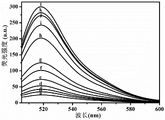
图4为本发明实施例3中基于杂交链式反应的荧光DNA传感器对不同浓度的E542K基因检测的荧光光谱图;Fig. 4 is the fluorescence spectrogram of E542K gene detection of different concentrations by the fluorescent DNA sensor based on hybridization chain reaction in Example 3 of the present invention;
图5为本发明实施例3中基于杂交链式反应的荧光DNA传感器中E542K基因的浓度与相对荧光强度的关系图;5 is a graph showing the relationship between the concentration of E542K gene and the relative fluorescence intensity in the fluorescent DNA sensor based on hybridization chain reaction in Example 3 of the present invention;
图6为本发明实施例4中基于杂交链式反应的荧光DNA传感器对E542K基因检测的选择性分析。FIG. 6 is the selective analysis of the detection of E542K gene by the fluorescent DNA sensor based on hybridization chain reaction in Example 4 of the present invention.
具体实施方式Detailed ways
以下将对本发明提供的基于杂交链式反应的荧光DNA传感器及E542K基因检测方法作进一步说明。The following will further describe the hybridization chain reaction-based fluorescent DNA sensor and the E542K gene detection method provided by the present invention.
本发明所提供的基于杂交链式反应的荧光DNA传感器,包括引发链、第一发夹探针及第二发夹探针,所述第一发夹探针的两端分别标记有荧光基团及相应的荧光猝灭基团,所述第二发夹探针的两端分别标记有荧光基团及相应的荧光猝灭基团,所述引发链为E542K基因,所述引发链可与所述第一发夹探针结合,打开所述第一发夹探针的发夹结构,使所述第一发夹探针与所述第二发夹探针结合,激活杂交链式反应,形成长双链DNA,使所述长双链DNA荧光增强,从而定量检测所述E542K基因。The fluorescent DNA sensor based on hybridization chain reaction provided by the present invention includes a priming strand, a first hairpin probe and a second hairpin probe, and both ends of the first hairpin probe are respectively marked with fluorescent groups and the corresponding fluorescent quenching group, the two ends of the second hairpin probe are respectively marked with a fluorescent group and a corresponding fluorescent quenching group, the initiating chain is the E542K gene, and the initiating chain can be combined with the The first hairpin probe is combined, the hairpin structure of the first hairpin probe is opened, the first hairpin probe is combined with the second hairpin probe, and the hybridization chain reaction is activated to form The long double-stranded DNA enhances the fluorescence of the long double-stranded DNA, thereby quantitatively detecting the E542K gene.
具体的,所述荧光DNA传感器利用E542K基因作为引发链,能够与所述第一发夹探针特异性结合,使得所述第一发夹探针产生构象变化,打开发夹结构,与所述第二发夹探针杂交组装,激活杂交链式反应,形成长双链DNA,从而放大反应检测信号,提高了检测的选择性与灵敏度,有利于实际样品中的E542K基因检测,进而有助于肿瘤的动态监控。因此,所述荧光DNA传感器具有简单、快速、高效的优势,应用前景广阔。Specifically, the fluorescent DNA sensor uses the E542K gene as a priming chain, which can specifically bind to the first hairpin probe, so that the first hairpin probe produces a conformational change, opens a hairpin structure, and is compatible with the first hairpin probe. The second hairpin probe hybridizes and assembles, activates the hybridization chain reaction, and forms long double-stranded DNA, thereby amplifying the detection signal of the reaction, improving the selectivity and sensitivity of the detection, which is conducive to the detection of E542K gene in actual samples, which in turn helps Dynamic monitoring of tumors. Therefore, the fluorescent DNA sensor has the advantages of simplicity, speed and efficiency, and has broad application prospects.
发夹探针包括修饰有荧光基团与猝灭基团的第一发夹探针(H1L)、修饰有荧光基团与猝灭基团的第二发夹探针(H2L)及未标记荧光基团与猝灭基团的第一发夹探针(H1)、未标记荧光基团与猝灭基团的第二发夹探针(H2)。所述杂交链式反应激活,所述第一发夹探针H1L与所述第二发夹探针H2L链末端修饰的荧光基团与荧光猝灭基团之间能够发生荧光共振能量转移,使得双链DNA两端的荧光增强,分子内部间的荧光猝灭,从而能够利用荧光信号强度变化实现E542K基因的定量检测。Hairpin probes include the first hairpin probe (H1L) modified with a fluorophore and a quencher group, a second hairpin probe (H2L) modified with a fluorophore and a quencher group, and an unlabeled fluorophore The first hairpin probe (H1) of the group and the quenching group, the second hairpin probe (H2) of the unlabeled fluorophore and the quenching group. The hybridization chain reaction is activated, and fluorescence resonance energy transfer can occur between the fluorescent groups and the fluorescent quenching groups modified at the chain ends of the first hairpin probe H1L and the second hairpin probe H2L, so that The fluorescence at both ends of the double-stranded DNA is enhanced, and the fluorescence between the molecules is quenched, so that the quantitative detection of the E542K gene can be realized by the change of the fluorescence signal intensity.
进一步地,考虑到荧光信号强度,所述荧光基团选择6-羧基荧光素(FAM),所述荧光猝灭基团为黑洞猝灭基团(BHQ1)。所述荧光基团以及相应的所述荧光猝灭基团没有具体的限制,两个基团之间能够实现荧光共振能量转移即可,从而有效地实现荧光猝灭及荧光激发。Further, considering the intensity of fluorescence signal, 6-carboxyfluorescein (FAM) is selected as the fluorescent group, and the fluorescence quenching group is a black hole quenching group (BHQ1). The fluorescent group and the corresponding fluorescent quenching group are not particularly limited, as long as fluorescence resonance energy transfer can be realized between the two groups, thereby effectively realizing fluorescence quenching and fluorescence excitation.
进一步地,考虑到靶标的特异性识别,所述第一发夹探针包括特异性识别E542K基因的碱基序列,所述第一发夹探针的碱基序列为5’-BHQ1-AAAATCACTAAGCAGGCAAAGTCCTGCTTAGTGATTTTAGAGAG-FAM-3’。为了提高第一发夹探针的稳定性,所述第一发夹探针还包括稳定发夹结构的碱基序列,使得所述第一发夹探针能够稳定存在于溶液中。Further, considering the specific recognition of the target, the first hairpin probe includes a base sequence that specifically recognizes the E542K gene, and the base sequence of the first hairpin probe is 5'-BHQ1-AAAATCACTAAGCAGGCAAAGTCCTGCTTAGTGATTTTAGAGAG- FAM-3'. In order to improve the stability of the first hairpin probe, the first hairpin probe further includes a base sequence that stabilizes the hairpin structure, so that the first hairpin probe can stably exist in a solution.
进一步地,所述第二发夹探针包括与所述第一发夹探针互补的碱基序列,所述第二发夹探针的碱基序列为5’-FAM-ACTTTGCCTGCTTAGTGATTTTCTCTCTAAAATCACTAAGCAGG-BHQ1-3’,能够与所述第一发夹探针杂交组装,从而激活杂交链式反应,形成长双链DNA,并根据荧光共振能量转移原理,产生荧光信号强度变化。其中,所述第二发夹探针还包括稳定发夹结构的碱基序列,能够提高所述第二发夹探针的稳定性。Further, the second hairpin probe comprises a base sequence complementary to the first hairpin probe, and the base sequence of the second hairpin probe is 5'-FAM-ACTTTGCCTGCTTAGTGATTTTCTCTCTAAAATCACTAAGCAGG-BHQ1-3 ', which can be hybridized and assembled with the first hairpin probe, thereby activating the hybridization chain reaction to form long double-stranded DNA, and according to the principle of fluorescence resonance energy transfer, the fluorescence signal intensity changes. Wherein, the second hairpin probe further includes a base sequence that stabilizes the hairpin structure, which can improve the stability of the second hairpin probe.
本发明还提供了所述的基于杂交链式反应的荧光DNA传感器的E542K基因检测方法,包括以下步骤:The present invention also provides the E542K gene detection method based on the hybridization chain reaction fluorescent DNA sensor, comprising the following steps:
S1、E542K基因、第一发夹探针与第二发夹探针首次开盖使用前先离心,分别将其溶于二次水中配成100μM的母液,再用缓冲液稀释成E542K基因溶液、第一发夹探针溶液和第二发夹探针溶液,4℃保存待用;S1, E542K gene, the first hairpin probe and the second hairpin probe were centrifuged before being used for the first time, dissolved in secondary water to make 100μM stock solution, and then diluted with buffer to obtain E542K gene solution, The first hairpin probe solution and the second hairpin probe solution were stored at 4°C for later use;
S2、将第一发夹探针溶液与第二发夹探针溶液分别加热并冷却至室温备用;S2, heating the first hairpin probe solution and the second hairpin probe solution respectively and cooling to room temperature for subsequent use;
S3、将所述步骤S2中加热后的第一发夹探针溶液、第二发夹探针溶液与不同浓度的E542K基因溶液在缓冲液中混合反应,得到反应液,检测荧光信号强度。S3. The first hairpin probe solution, the second hairpin probe solution heated in the step S2, and the E542K gene solution of different concentrations are mixed and reacted in a buffer to obtain a reaction solution, and the intensity of the fluorescence signal is detected.
具体的,考虑到核酸易受到核酸酶作用而降解,以及杂交链式反应扩增效率,所述缓冲液为SPSC缓冲液,所述SPSC缓冲液的pH为7.4,使所述E542K基因、所述第一发夹探针与所述第二发夹探针能够保持较稳定的发夹结构,从而实现杂交链式反应。Specifically, considering that nucleic acid is easily degraded by nuclease and the amplification efficiency of hybrid chain reaction, the buffer is SPSC buffer, and the pH of the SPSC buffer is 7.4, so that the E542K gene, the The first hairpin probe and the second hairpin probe can maintain a relatively stable hairpin structure, thereby realizing the hybridization chain reaction.
在所述步骤S2中,为了使核酸充分形成发夹结构,核酸探针需要经过高温过程,即加热反应温度为85℃~95℃,加热反应时间为5分钟~15分钟,使得DNA变性,从而形成二聚体的DNA解链形成单链,在缓慢退火降温的复性过程中,核酸探针能够充分形成稳定的发夹结构,有利于后续的杂交链式反应。优选的,反应温度为90℃,反应时间为10分钟。In the step S2, in order to make the nucleic acid fully form the hairpin structure, the nucleic acid probe needs to undergo a high temperature process, that is, the heating reaction temperature is 85°C to 95°C, and the heating reaction time is 5 minutes to 15 minutes, so that the DNA is denatured, thereby The DNA forming the dimer melts to form a single strand. During the renaturation process of slow annealing and cooling, the nucleic acid probe can fully form a stable hairpin structure, which is beneficial to the subsequent hybridization chain reaction. Preferably, the reaction temperature is 90°C, and the reaction time is 10 minutes.
在所述步骤S3中,为了提高杂交链式反应的扩增效率,所述E542K基因溶液的浓度为10nM~1000nM,所述第一发夹探针溶液为1nM~1000nM,所述第二发夹探针溶液为1nM~1000nM。优选的,所述第一发夹探针溶液为50nM,所述第二发夹探针溶液为50nM。In the step S3, in order to improve the amplification efficiency of the hybridization chain reaction, the concentration of the E542K gene solution is 10nM-1000nM, the first hairpin probe solution is 1nM-1000nM, the second hairpin The probe solution is 1 nM to 1000 nM. Preferably, the first hairpin probe solution is 50 nM, and the second hairpin probe solution is 50 nM.
当反应温度过高时,DNA双链之间的氢键不稳定,导致DNA解链,降低扩增效率。当反应时间过短,则核酸探针之间的反应不完全。因此,考虑到反应温度以及反应时间对杂交链式反应的影响,所述混合反应温度为25℃~45℃之间,优选为37℃,所述混合反应时间为3小时~7小时,优选为5小时。When the reaction temperature is too high, the hydrogen bonds between the DNA double strands are unstable, resulting in DNA melting and reducing the amplification efficiency. When the reaction time is too short, the reaction between nucleic acid probes is incomplete. Therefore, considering the influence of reaction temperature and reaction time on the hybridization chain reaction, the mixing reaction temperature is between 25°C and 45°C, preferably 37°C, and the mixing reaction time is 3 hours to 7 hours, preferably 5 hours.
本发明所提供的基于杂交链式反应的荧光DNA传感器的E542K基因检测方法中,E542K基因既是目标分析物,又是杂交链式反应的引发链,具有操作简便、显著降低检测成本、缩短检测时间的优势,而且无需辅助酶,就能够实现荧光信号放大,从而提高实际样品中E542K基因检测的选择性与灵敏度。In the E542K gene detection method based on the hybridization chain reaction fluorescent DNA sensor provided by the present invention, the E542K gene is not only the target analyte, but also the initiating chain of the hybridization chain reaction, which has the advantages of simple operation, significantly reducing the detection cost and shortening the detection time. Moreover, it can achieve fluorescence signal amplification without auxiliary enzymes, thereby improving the selectivity and sensitivity of E542K gene detection in actual samples.
以下,将通过具体实施例对所述基于杂交链式反应的荧光DNA传感器及E542K基因检测方法做进一步的说明。Hereinafter, the hybridization chain reaction-based fluorescent DNA sensor and the E542K gene detection method will be further described through specific examples.
如图1所示,基于杂交链式反应的荧光DNA传感器的E542K基因检测方法的原理示意图。As shown in Figure 1, the schematic diagram of the E542K gene detection method based on the hybridization chain reaction fluorescent DNA sensor.
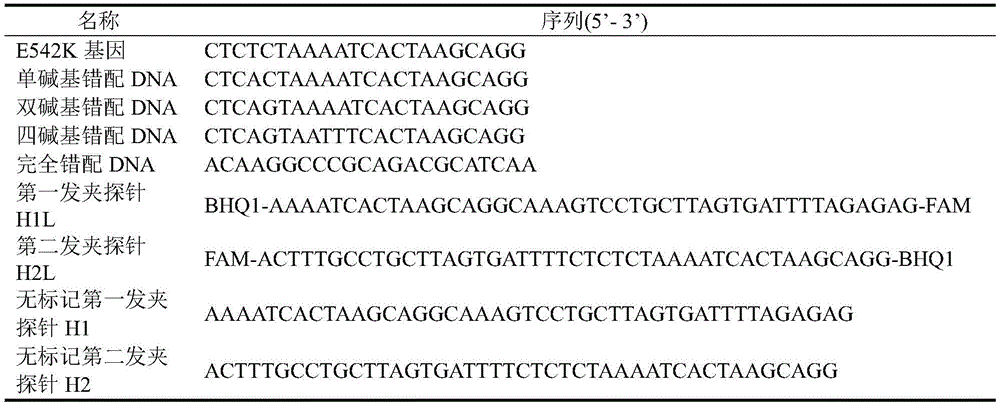
实施例中,各DNA序列如下:In the embodiment, each DNA sequence is as follows:
表1本实验所用的DNA序列Table 1 DNA sequences used in this experiment
实施例1Example 1
E542K基因、第一发夹探针与第二发夹探针首次开盖使用前先10000rpm离心,4℃离心30秒,分别将其溶于二次水中配成100μM的母液,再用SPSC缓冲液稀释,4℃保存待用;将第一发夹探针溶液10μM与第二发夹探针溶液10μM分别加热到90℃,反应10分钟,并冷却至室温备用。The E542K gene, the first hairpin probe and the second hairpin probe were centrifuged at 10,000 rpm and 4°C for 30 seconds before opening the cap for the first time. They were respectively dissolved in secondary water to make a 100 μM stock solution, and then SPSC buffer was used. Diluted and stored at 4°C for use; 10 μM of the first hairpin probe solution and 10 μM of the second hairpin probe solution were respectively heated to 90°C, reacted for 10 minutes, and cooled to room temperature for use.
其中,在图2条带1中,离心管中加入1μM E542K基因于pH为7.4的SPSC缓冲液中,37℃反应5小时。Among them, in the
在图2条带2中,离心管中加入1μM无标记的第一发夹探针溶液H1于pH为7.4的SPSC缓冲液中,37℃反应5小时。In Figure 2,
在图2条带3中,离心管中加入1μM无标记的第二发夹探针溶液H2于pH为7.4的SPSC缓冲液中,37℃反应5小时。In Figure 2,
在图2条带4中,离心管中加入1μM无标记第一发夹探针溶液H1与1μM无标记第二发夹探针溶液H2于pH为7.4的SPSC缓冲液中,37℃反应5小时。In
在图2条带5中,离心管中加入0.1μM E542K基因、1μM无标记第一发夹探针溶液H1与1μM无标记第二发夹探针溶液H2于pH为7.4的SPSC缓冲液中,37℃反应5小时。In
在图2条带6中,离心管中加入0.4μM E542K基因、1μM无标记第一发夹探针溶液H1与1μM无标记第二发夹探针溶液H2于pH为7.4的SPSC缓冲液中,37℃反应5小时。In
在图2条带7中,离心管中加入0.8μM E542K基因、1μM无标记第一发夹探针溶液H1与1μM无标记第二发夹探针溶液H2于pH为7.4的SPSC缓冲液中,37℃反应5小时。In
在图2条带8中,离心管中加入1μM E542K基因、1μM无标记第一发夹探针溶液H1与1μM无标记第二发夹探针溶液H2于pH为7.4的SPSC缓冲液中,37℃反应5小时。In
在图2条带M中,100bp分子量的DNAMarker。In Figure 2, Band M, a DNAMarker with a molecular weight of 100 bp.
通过图2的琼脂糖凝胶电泳图,可以得出,所述E542K基因不存在时,所述无标记第一发夹探针H1与所述无标记第二发夹探针H2保持稳定的发夹结构,保持闭合状态,未发生杂交链式反应,两个无标记发夹探针稳定地存在于溶液中。所述E542K基因存在时,两个无标记发夹探针杂交组装,激活杂交链式反应,聚合形成了大分子DNA双链。From the agarose gel electrophoresis diagram in FIG. 2 , it can be concluded that when the E542K gene does not exist, the unlabeled first hairpin probe H1 and the unlabeled second hairpin probe H2 maintain stable hair The clip structure remains closed, no hybridization chain reaction occurs, and two unlabeled hairpin probes exist stably in solution. When the E542K gene exists, two unlabeled hairpin probes hybridize and assemble, activate the hybridization chain reaction, and aggregate to form a macromolecular DNA double-strand.
实施例2Example 2
E542K基因、第一发夹探针与第二发夹探针首次开盖使用前先10000rpm离心,4℃离心30秒,分别将其溶于二次水中配成100μM的母液,再用SPSC缓冲液稀释,4℃保存待用;将0.5μM第一发夹探针溶液与0.5μM第二发夹探针溶液分别加热到90℃,反应10分钟,并冷却至室温备用。The E542K gene, the first hairpin probe and the second hairpin probe were centrifuged at 10,000 rpm and 4°C for 30 seconds before opening the cap for the first time. They were respectively dissolved in secondary water to make a 100 μM stock solution, and then SPSC buffer was used. Diluted, stored at 4°C for use; 0.5 μM first hairpin probe solution and 0.5 μM second hairpin probe solution were heated to 90°C respectively, reacted for 10 minutes, and cooled to room temperature for use.
其中,在图3(a)中,离心管中加入100nM E542K基因在pH为7.4的SPSC缓冲液中,37℃反应5小时,得到反应液,检测荧光信号强度。Among them, in Figure 3(a), 100nM E542K gene was added to the centrifuge tube in SPSC buffer with pH 7.4, and the reaction was performed at 37°C for 5 hours to obtain a reaction solution, and the fluorescence signal intensity was detected.
在图3(b)中,离心管中加入50nM第一发夹探针溶液H1L在pH为7.4的SPSC缓冲液中,37℃反应5小时,得到反应液,检测荧光信号强度。In Figure 3(b), 50nM first hairpin probe solution H1L was added to the centrifuge tube in SPSC buffer with pH 7.4, and reacted at 37°C for 5 hours to obtain a reaction solution, and the fluorescence signal intensity was detected.
在图3(c)中,离心管中加入50nM第二发夹探针溶液H2L在pH为7.4的SPSC缓冲液中,37℃反应5小时,得到反应液,检测荧光信号强度。In Figure 3(c), 50nM second hairpin probe solution H2L was added to the centrifuge tube in SPSC buffer with pH 7.4, reacted at 37°C for 5 hours to obtain a reaction solution, and the fluorescence signal intensity was detected.
在图3(d)中,离心管中加入50nM第一发夹探针溶液H1L与50nM第二发夹探针溶液H2L在pH为7.4的SPSC缓冲液中,37℃反应5小时,得到反应液,检测荧光信号强度。In Figure 3(d), 50nM first hairpin probe solution H1L and 50nM second hairpin probe solution H2L were added to the centrifuge tube in SPSC buffer with pH 7.4, and reacted at 37°C for 5 hours to obtain a reaction solution , to detect the fluorescence signal intensity.
在图3(e)中,离心管中加入100nM E542K基因,50nM第一发夹探针溶液H1L与50nM第二发夹探针溶液H2L在pH为7.4的SPSC缓冲液中,37℃反应5小时,得到反应液,检测荧光信号强度。In Figure 3(e), 100nM E542K gene, 50nM first hairpin probe solution H1L and 50nM second hairpin probe solution H2L were added to the centrifuge tube in SPSC buffer at pH 7.4, and reacted at 37°C for 5 hours , obtain the reaction solution, and detect the intensity of the fluorescence signal.
在图3(f)中,离心管中加入500nM E542K基因,50nM第一发夹探针溶液H1L与50nM第二发夹探针溶液H2L在pH为7.4的SPSC缓冲液中,37℃反应5小时,得到反应液,检测荧光信号强度。In Figure 3(f), 500nM E542K gene, 50nM first hairpin probe solution H1L and 50nM second hairpin probe solution H2L were added to the centrifuge tube in SPSC buffer at pH 7.4, and reacted at 37°C for 5 hours , obtain the reaction solution, and detect the intensity of the fluorescence signal.
通过图3的荧光光谱图,可以得出,当E542K基因分子不存在时,所述第一发夹探针H1L与所述第二发夹探针H2L保持稳定的发夹结构,发生荧光共振能量转移,荧光猝灭,因此,反应液仅有较弱的荧光信号强度。然而,当E542K基因分子存在时,随着所述E542K基因浓度的增加,荧光信号强度显著增强。From the fluorescence spectrum of FIG. 3 , it can be concluded that when the E542K gene molecule does not exist, the first hairpin probe H1L and the second hairpin probe H2L maintain a stable hairpin structure, and fluorescence resonance energy is generated. Transfer, fluorescence quenching, therefore, the reaction solution has only weak fluorescence signal intensity. However, when the E542K gene molecule was present, the fluorescence signal intensity was significantly enhanced as the concentration of the E542K gene increased.
实施例3Example 3
E542K基因、第一发夹探针与第二发夹探针首次开盖使用前先10000rpm离心,4℃离心30秒,分别将其溶于二次水中配成100μM的母液,再用SPSC缓冲液稀释,4℃保存待用;将0.5μM第一发夹探针溶液与0.5μM第二发夹探针溶液分别加热到90℃,反应10分钟,并冷却至室温备用。The E542K gene, the first hairpin probe and the second hairpin probe were centrifuged at 10,000 rpm and 4°C for 30 seconds before opening the cap for the first time. They were respectively dissolved in secondary water to make a 100 μM stock solution, and then SPSC buffer was used. Diluted, stored at 4°C for use; 0.5 μM first hairpin probe solution and 0.5 μM second hairpin probe solution were heated to 90°C respectively, reacted for 10 minutes, and cooled to room temperature for use.
在图4(a)中,离心管中加入50nM第一发夹探针溶液H1L与50nM第二发夹探针溶液H2L在pH为7.4的SPSC缓冲液中,37℃反应5小时,得到反应液,检测荧光信号强度。In Figure 4(a), 50nM first hairpin probe solution H1L and 50nM second hairpin probe solution H2L were added to the centrifuge tube in SPSC buffer with pH 7.4, and reacted at 37°C for 5 hours to obtain a reaction solution , to detect the fluorescence signal intensity.
在图4(b)中,离心管中加入5nM E542K基因、50nM第一发夹探针溶液H1L与50nM第二发夹探针溶液H2L在pH为7.4的SPSC缓冲液中,37℃反应5小时,得到反应液,检测荧光信号强度。In Figure 4(b), 5nM E542K gene, 50nM first hairpin probe solution H1L and 50nM second hairpin probe solution H2L were added to the centrifuge tube in SPSC buffer with pH 7.4, and reacted at 37°C for 5 hours , obtain the reaction solution, and detect the intensity of the fluorescence signal.
在图4(c)中,离心管中加入10nM E542K基因、50nM第一发夹探针溶液H1L与50nM第二发夹探针溶液H2L在pH为7.4的SPSC缓冲液中,37℃反应5小时,得到反应液,检测荧光信号强度。In Figure 4(c), 10nM E542K gene, 50nM first hairpin probe solution H1L and 50nM second hairpin probe solution H2L were added to the centrifuge tube in SPSC buffer with pH 7.4, and reacted at 37°C for 5 hours , obtain the reaction solution, and detect the intensity of the fluorescence signal.
在图4(d)中,离心管中加入15nM E542K基因、50nM第一发夹探针溶液H1L与50nM第二发夹探针溶液H2L在pH为7.4的SPSC缓冲液中,37℃反应5小时,得到反应液,检测荧光信号强度。In Figure 4(d), 15nM E542K gene, 50nM first hairpin probe solution H1L and 50nM second hairpin probe solution H2L were added to the centrifuge tube in SPSC buffer with pH 7.4, and reacted at 37°C for 5 hours , obtain the reaction solution, and detect the intensity of the fluorescence signal.
在图4(e)中,离心管中加入20nM E542K基因、50nM第一发夹探针溶液H1L与50nM第二发夹探针溶液H2L在pH为7.4的SPSC缓冲液中,37℃反应5小时,得到反应液,检测荧光信号强度。In Figure 4(e), 20nM E542K gene, 50nM first hairpin probe solution H1L and 50nM second hairpin probe solution H2L were added to the centrifuge tube in SPSC buffer with pH 7.4, and reacted at 37°C for 5 hours , obtain the reaction solution, and detect the intensity of the fluorescence signal.
在图4(f)中,离心管中加入30nM E542K基因、50nM第一发夹探针溶液H1L与50nM第二发夹探针溶液H2L在pH为7.4的SPSC缓冲液中,37℃反应5小时,得到反应液,检测荧光信号强度。In Figure 4(f), 30nM E542K gene, 50nM first hairpin probe solution H1L and 50nM second hairpin probe solution H2L were added to the centrifuge tube in SPSC buffer with pH 7.4, and reacted at 37°C for 5 hours , obtain the reaction solution, and detect the intensity of the fluorescence signal.
在图4(g)中,离心管中加入40nM E542K基因、50nM第一发夹探针溶液H1L与50nM第二发夹探针溶液H2L在pH为7.4的SPSC缓冲液中,37℃反应5小时,得到反应液,检测荧光信号强度。In Figure 4(g), 40nM E542K gene, 50nM first hairpin probe solution H1L and 50nM second hairpin probe solution H2L were added to the centrifuge tube in SPSC buffer with pH 7.4, and reacted at 37°C for 5 hours , obtain the reaction solution, and detect the intensity of the fluorescence signal.
在图4(h)中,离心管中加入60nM E542K基因、50nM第一发夹探针溶液H1L与50nM第二发夹探针溶液H2L在pH为7.4的SPSC缓冲液中,37℃反应5小时,得到反应液,检测荧光信号强度。In Figure 4(h), 60nM E542K gene, 50nM first hairpin probe solution H1L and 50nM second hairpin probe solution H2L were added to the centrifuge tube in SPSC buffer with pH 7.4, and reacted at 37°C for 5 hours , obtain the reaction solution, and detect the intensity of the fluorescence signal.
在图4(i)中,离心管中加入80nM E542K基因、50nM第一发夹探针溶液H1L与50nM第二发夹探针溶液H2L在pH为7.4的SPSC缓冲液中,37℃反应5小时,得到反应液,检测荧光信号强度。In Figure 4(i), 80nM E542K gene, 50nM first hairpin probe solution H1L and 50nM second hairpin probe solution H2L were added to the centrifuge tube in SPSC buffer with pH 7.4, and reacted at 37°C for 5 hours , obtain the reaction solution, and detect the intensity of the fluorescence signal.
在图4(j)中,离心管中加入100nM E542K基因、50nM第一发夹探针溶液H1L与50nM第二发夹探针溶液H2L在pH为7.4的SPSC缓冲液中,37℃反应5小时,得到反应液,检测荧光信号强度。In Figure 4(j), 100nM E542K gene, 50nM first hairpin probe solution H1L and 50nM second hairpin probe solution H2L were added to the centrifuge tube in SPSC buffer at pH 7.4, and reacted at 37°C for 5 hours , obtain the reaction solution, and detect the intensity of the fluorescence signal.
在图4(k)中,离心管中加入200nM E542K基因、50nM第一发夹探针溶液H1L与50nM第二发夹探针溶液H2L在pH为7.4的SPSC缓冲液中,37℃反应5小时,得到反应液,检测荧光信号强度。In Figure 4(k), 200nM E542K gene, 50nM first hairpin probe solution H1L and 50nM second hairpin probe solution H2L were added to the centrifuge tube in SPSC buffer with pH 7.4, and reacted at 37°C for 5 hours , obtain the reaction solution, and detect the intensity of the fluorescence signal.
在图4(l)中,离心管中加入400nM E542K基因、50nM第一发夹探针溶液H1L与50nM第二发夹探针溶液H2L在pH为7.4的SPSC缓冲液中,37℃反应5小时,得到反应液,检测荧光信号强度。In Figure 4(l), 400nM E542K gene, 50nM first hairpin probe solution H1L and 50nM second hairpin probe solution H2L were added to the centrifuge tube in SPSC buffer with pH 7.4, and reacted at 37°C for 5 hours , obtain the reaction solution, and detect the intensity of the fluorescence signal.
通过图4的荧光光谱图,可以得出,随着所述E542K基因浓度的增加,荧光信号强度显著增强。From the fluorescence spectrogram of Fig. 4, it can be concluded that with the increase of the E542K gene concentration, the fluorescence signal intensity is significantly enhanced.
在本实施例中,从图5可以得出,在5nM~100nM浓度范围内,E542K基因的浓度与相对荧光强度变化呈现良好的线性关系,线性相关系数为R2=0.99052,检出限为2nM,其中F和F0分别为E542K基因存在与不存在时的荧光强度,因此,所述基于杂交链式反应的荧光DNA传感器具有较高的灵敏度。In this example, it can be concluded from Figure 5 that in the concentration range of 5nM to 100nM, the concentration of E542K gene has a good linear relationship with the relative fluorescence intensity change, the linear correlation coefficient is R 2 =0.99052, and the detection limit is 2nM , where F and F 0 are the fluorescence intensities in the presence and absence of the E542K gene, respectively. Therefore, the hybridization chain reaction-based fluorescent DNA sensor has high sensitivity.
实施例4Example 4
E542K基因、第一发夹探针与第二发夹探针首次开盖使用前先10000rpm离心,4℃离心30秒,分别将其溶于二次水中配成100μM的母液,再用SPSC缓冲液稀释,4℃保存待用;将0.5μM第一发夹探针溶液与0.5μM第二发夹探针溶液分别加热到90℃,反应10分钟,并冷却至室温备用。The E542K gene, the first hairpin probe and the second hairpin probe were centrifuged at 10,000 rpm and 4°C for 30 seconds before opening the cap for the first time. They were respectively dissolved in secondary water to make a 100 μM stock solution, and then SPSC buffer was used. Diluted, stored at 4°C for use; 0.5 μM first hairpin probe solution and 0.5 μM second hairpin probe solution were heated to 90°C respectively, reacted for 10 minutes, and cooled to room temperature for use.
在图6(a)中,离心管中加入50nM第一发夹探针溶液H1L与50nM第二发夹探针溶液H2L在pH为7.4的SPSC缓冲液中,37℃反应5小时,得到反应液,检测荧光信号强度。In Figure 6(a), 50nM first hairpin probe solution H1L and 50nM second hairpin probe solution H2L were added to the centrifuge tube in SPSC buffer with pH 7.4, and reacted at 37°C for 5 hours to obtain a reaction solution , to detect the fluorescence signal intensity.
在图6(b)中,离心管中加入100nM E542K基因、50nM第一发夹探针溶液H1L与50nM第二发夹探针溶液H2L在pH为7.4的SPSC缓冲液中,37℃反应5小时,得到反应液,检测荧光信号强度。In Figure 6(b), 100nM E542K gene, 50nM first hairpin probe solution H1L and 50nM second hairpin probe solution H2L were added to the centrifuge tube in SPSC buffer with pH 7.4, and reacted at 37°C for 5 hours , obtain the reaction solution, and detect the intensity of the fluorescence signal.
在图6(c)中,离心管中加入100nM单碱基错配DNA(1MTDNA)、50nM第一发夹探针溶液H1L与50nM第二发夹探针溶液H2L在pH为7.4的SPSC缓冲液中,37℃反应5小时,得到反应液,检测荧光信号强度。In Figure 6(c), 100nM single base mismatch DNA (1MTDNA), 50nM first hairpin probe solution H1L and 50nM second hairpin probe solution H2L in SPSC buffer at pH 7.4 were added to the centrifuge tube , react at 37°C for 5 hours to obtain a reaction solution, and detect the intensity of the fluorescence signal.
在图6(d)中,离心管中加入100nM双碱基错配DNA(2MTDNA)、50nM第一发夹探针溶液H1L与50nM第二发夹探针溶液H2L在pH为7.4的SPSC缓冲液中,37℃反应5小时,得到反应液,检测荧光信号强度。In Figure 6(d), 100 nM double base mismatch DNA (2MTDNA), 50 nM first hairpin probe solution H1L and 50 nM second hairpin probe solution H2L in SPSC buffer at pH 7.4 were added to the centrifuge tube , react at 37°C for 5 hours to obtain a reaction solution, and detect the intensity of the fluorescence signal.
在图6(e)中,离心管中加入100nM四碱基错配DNA(4MTDNA)、50nM第一发夹探针溶液H1L与50nM第二发夹探针溶液H2L在pH为7.4的SPSC缓冲液中,37℃反应5小时,得到反应液,检测荧光信号强度。In Figure 6(e), 100 nM four-base mismatch DNA (4MTDNA), 50 nM first hairpin probe solution H1L and 50 nM second hairpin probe solution H2L in SPSC buffer at pH 7.4 were added to the centrifuge tube , react at 37°C for 5 hours to obtain a reaction solution, and detect the intensity of the fluorescence signal.
在图6(f)中,离心管中加入100nM完全错配DNA(ncDNA)、50nM第一发夹探针溶液H1L与50nM第二发夹探针溶液H2L在pH为7.4的SPSC缓冲液中,37℃反应5小时,得到反应液,检测荧光信号强度。In Figure 6(f), 100 nM completely mismatched DNA (ncDNA), 50 nM first hairpin probe solution H1L and 50 nM second hairpin probe solution H2L in SPSC buffer at pH 7.4 were added to the centrifuge tube, The reaction was carried out at 37° C. for 5 hours to obtain a reaction solution, and the intensity of the fluorescence signal was detected.
从图6可知,E542K基因能够引发杂交链式反应,从而具有较强的荧光信号强度,而单碱基错配DNA、双碱基错配DNA、四碱基错配DNA和完全错配DNA及背景仅有较弱的荧光信号强度,因此,所述基于杂交链式反应的荧光DNA传感器对E542K基因具有较高的选择性,能够区分单碱基错配序列。It can be seen from Figure 6 that the E542K gene can trigger the hybridization chain reaction and thus has a strong fluorescence signal intensity, while the single-base mismatch DNA, double-base mismatch DNA, four-base mismatch DNA and complete mismatch DNA and The background has only weak fluorescence signal intensity, therefore, the hybridization chain reaction-based fluorescent DNA sensor has high selectivity for the E542K gene and can distinguish single base mismatch sequences.
实施例5Example 5
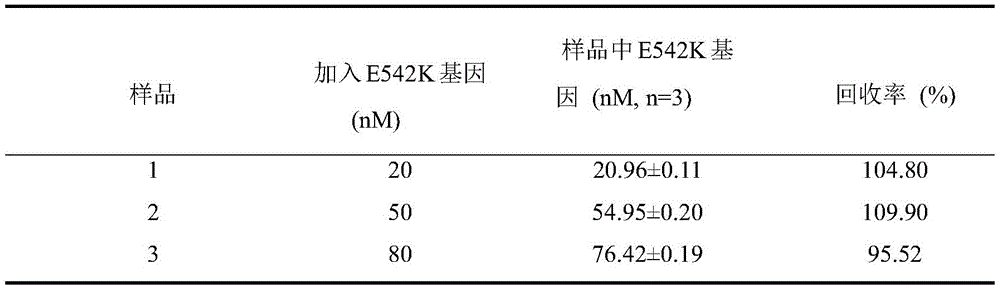
为了评估该荧光DNA传感器在实样检测中的分析应用能力,测定了不同浓度的E542K基因在稀释的人血清样本中的回收率。实验结果如表2所示,所述基于杂交链式反应的荧光DNA传感器对E542K基因的加标回收率在95.52%到104.80%之间,满足实验要求,因而该荧光DNA传感器能够在复杂生物样品中定量检测E542K基因,具有临床应用前景。In order to evaluate the analytical application ability of the fluorescent DNA sensor in real sample detection, the recovery rate of E542K gene at different concentrations in diluted human serum samples was determined. The experimental results are shown in Table 2. The recovery rate of the E542K gene by the hybridization chain reaction-based fluorescent DNA sensor is between 95.52% and 104.80%, which meets the experimental requirements. Therefore, the fluorescent DNA sensor can be used in complex biological samples. The quantitative detection of E542K gene has clinical application prospects.
表2血清中E542K基因的检测Table 2 Detection of E542K gene in serum
以上所述实施例的各技术特征可以进行任意的组合,为使描述简洁,未对上述实施例中的各个技术特征所有可能的组合都进行描述,然而,只要这些技术特征的组合不存在矛盾,都应当认为是本说明书记载的范围。The technical features of the above-described embodiments can be combined arbitrarily. For the sake of brevity, all possible combinations of the technical features in the above-described embodiments are not described. However, as long as there is no contradiction between the combinations of these technical features, All should be regarded as the scope described in this specification.
以上所述实施例仅表达了本发明的几种实施方式,其描述较为具体和详细,但并不能因此而理解为对发明专利范围的限制。应当指出的是,对于本领域的普通技术人员来说,在不脱离本发明构思的前提下,还可以做出若干变形和改进,这些都属于本发明的保护范围。因此,本发明专利的保护范围应以所附权利要求为准。The above-mentioned embodiments only represent several embodiments of the present invention, and the descriptions thereof are specific and detailed, but should not be construed as a limitation on the scope of the invention patent. It should be pointed out that for those of ordinary skill in the art, without departing from the concept of the present invention, several modifications and improvements can also be made, which all belong to the protection scope of the present invention. Therefore, the protection scope of the patent of the present invention should be subject to the appended claims.
Claims (6)
Priority Applications (1)
| Application Number | Priority Date | Filing Date | Title |
|---|---|---|---|
| CN202010080730.2A CN111172243B (en) | 2020-02-05 | 2020-02-05 | Fluorescent DNA sensor and E542K gene detection method based on hybridization chain reaction |
Applications Claiming Priority (1)
| Application Number | Priority Date | Filing Date | Title |
|---|---|---|---|
| CN202010080730.2A CN111172243B (en) | 2020-02-05 | 2020-02-05 | Fluorescent DNA sensor and E542K gene detection method based on hybridization chain reaction |
Publications (2)
| Publication Number | Publication Date |
|---|---|
| CN111172243A CN111172243A (en) | 2020-05-19 |
| CN111172243B true CN111172243B (en) | 2022-09-09 |
Family
ID=70648255
Family Applications (1)
| Application Number | Title | Priority Date | Filing Date |
|---|---|---|---|
| CN202010080730.2A Active CN111172243B (en) | 2020-02-05 | 2020-02-05 | Fluorescent DNA sensor and E542K gene detection method based on hybridization chain reaction |
Country Status (1)
| Country | Link |
|---|---|
| CN (1) | CN111172243B (en) |
Families Citing this family (1)
| Publication number | Priority date | Publication date | Assignee | Title |
|---|---|---|---|---|
| CN116445586B (en) * | 2023-06-13 | 2023-09-01 | 中国农业大学 | Biosensor based on fluorescence hybridization chain reaction |
Citations (3)
| Publication number | Priority date | Publication date | Assignee | Title |
|---|---|---|---|---|
| CN107574227A (en) * | 2017-10-10 | 2018-01-12 | 武汉大学 | A kind of method for nucleic acid analysis based on cascade hybridization chain reaction |
| CN109321635A (en) * | 2018-09-19 | 2019-02-12 | 嘉兴学院 | A kind of nucleic acid detection method and application based on multi-branch hybridization chain reaction |
| US20190218608A1 (en) * | 2016-04-25 | 2019-07-18 | President And Fellows Of Harvard College | Hybridization Chain Reaction Methods for In Situ Molecular Detection |
-
2020
- 2020-02-05 CN CN202010080730.2A patent/CN111172243B/en active Active
Patent Citations (3)
| Publication number | Priority date | Publication date | Assignee | Title |
|---|---|---|---|---|
| US20190218608A1 (en) * | 2016-04-25 | 2019-07-18 | President And Fellows Of Harvard College | Hybridization Chain Reaction Methods for In Situ Molecular Detection |
| CN107574227A (en) * | 2017-10-10 | 2018-01-12 | 武汉大学 | A kind of method for nucleic acid analysis based on cascade hybridization chain reaction |
| CN109321635A (en) * | 2018-09-19 | 2019-02-12 | 嘉兴学院 | A kind of nucleic acid detection method and application based on multi-branch hybridization chain reaction |
Also Published As
| Publication number | Publication date |
|---|---|
| CN111172243A (en) | 2020-05-19 |
Similar Documents
| Publication | Publication Date | Title |
|---|---|---|
| Dougan et al. | Surface enhanced Raman scattering for multiplexed detection | |
| Degliangeli et al. | Nanotechnology‐based strategies for the detection and quantification of MicroRNA | |
| CN111175506B (en) | Sensor and carcinoembryonic antigen detection method based on hybridization chain reaction and ribozyme | |
| CN109913546B (en) | Fluorescent biological probe for detecting miRNA, detection method and application | |
| CN104630363A (en) | Method for detecting activity of uracil-DNA glycosylase (UDG) based on fluorescence amplification strategy of label-free non-enzyme DNA machines | |
| CN104502437B (en) | What a kind of multiple signal amplified exempts from mark electrochemistry sensor and the detection to nucleic acid | |
| CN110398481A (en) | A single quantum dot fluorescent nanosensor based on enzyme-free catalyzed self-assembly and its preparation method and application | |
| CN101889210B (en) | G-quadruplex detection method, G-quadruplex-forming DNA detection method, and telomerase activity measurement method | |
| CN110305770A (en) | A DNA nanostructure modified microfluidic chip for optical biosensing and its preparation and application | |
| Li et al. | Graphene oxide-based fluorometric determination of microRNA-141 using rolling circle amplification and exonuclease III-aided recycling amplification | |
| CN111175268A (en) | A kind of fluorescent sensor with double signal amplification for detecting mercury ions and preparation method thereof | |
| CN112301100A (en) | Fluorescent aptamer sensor based on hybridization chain reaction and ribozyme and its application | |
| US9512468B2 (en) | Detection method uses magnetic and detectable nanoparticles with oligonucleotides attached thereto | |
| CN112961907A (en) | Fluorescent biosensor for simultaneously detecting two RNAs and preparation and use methods thereof | |
| Zhang et al. | A highly sensitive and versatile fluorescent biosensor for pathogen nucleic acid detection based on toehold-mediated strand displacement initiated primer exchange reaction | |
| Nie et al. | Enzyme-assisted amplification of target cycle triggers the unlocking of locked hairpin probes for let-7a detection | |
| CN111172243B (en) | Fluorescent DNA sensor and E542K gene detection method based on hybridization chain reaction | |
| CN114540519A (en) | Primer, kit and identification method for identifying bacillus amyloliquefaciens in yeast for making hard liquor | |
| EP4180810A1 (en) | Fluorescent cross-linked rnase h mutant conjugate, mirna combination and application thereof | |
| CN101705292B (en) | Exonuclease III/I protection analysis based fluorescent biosensor method for detecting single nucleotide polymorphism | |
| Yan et al. | Advanced ligase chain reaction strategy to generate a circular DNA walker for electrochemiluminescent detection of single nucleotide polymorphism | |
| Zhang et al. | Recent advances in CRISPR/Cas systems-associated surface enhanced Raman spectroscopy biosensor towards nucleic acid detection | |
| Iwe et al. | A dual-cycling fluorescence scheme for ultrasensitive DNA detection through signal amplification and target regeneration | |
| CN110229872B (en) | Detection method for visually identifying microRNA based on unwinding of G-quadruplex probe structure | |
| Su et al. | CRISPR/dCas9-assisted SERS sensing for transgenic crops based on two-factor verification of 35S promoter and Nos terminator |
Legal Events
| Date | Code | Title | Description |
|---|---|---|---|
| PB01 | Publication | ||
| PB01 | Publication | ||
| SE01 | Entry into force of request for substantive examination | ||
| SE01 | Entry into force of request for substantive examination | ||
| GR01 | Patent grant | ||
| GR01 | Patent grant |