CN111150393B - Electroencephalogram epilepsy spike discharge joint detection method based on LSTM multichannel - Google Patents
Electroencephalogram epilepsy spike discharge joint detection method based on LSTM multichannel Download PDFInfo
- Publication number
- CN111150393B CN111150393B CN202010103082.8A CN202010103082A CN111150393B CN 111150393 B CN111150393 B CN 111150393B CN 202010103082 A CN202010103082 A CN 202010103082A CN 111150393 B CN111150393 B CN 111150393B
- Authority
- CN
- China
- Prior art keywords
- signal
- channel
- neural network
- loss function
- classification
- Prior art date
- Legal status (The legal status is an assumption and is not a legal conclusion. Google has not performed a legal analysis and makes no representation as to the accuracy of the status listed.)
- Active
Links
Images


Classifications
-
- A—HUMAN NECESSITIES
- A61—MEDICAL OR VETERINARY SCIENCE; HYGIENE
- A61B—DIAGNOSIS; SURGERY; IDENTIFICATION
- A61B5/00—Measuring for diagnostic purposes; Identification of persons
- A61B5/24—Detecting, measuring or recording bioelectric or biomagnetic signals of the body or parts thereof
- A61B5/316—Modalities, i.e. specific diagnostic methods
- A61B5/369—Electroencephalography [EEG]
-
- A—HUMAN NECESSITIES
- A61—MEDICAL OR VETERINARY SCIENCE; HYGIENE
- A61B—DIAGNOSIS; SURGERY; IDENTIFICATION
- A61B5/00—Measuring for diagnostic purposes; Identification of persons
- A61B5/40—Detecting, measuring or recording for evaluating the nervous system
- A61B5/4058—Detecting, measuring or recording for evaluating the nervous system for evaluating the central nervous system
- A61B5/4064—Evaluating the brain
-
- A—HUMAN NECESSITIES
- A61—MEDICAL OR VETERINARY SCIENCE; HYGIENE
- A61B—DIAGNOSIS; SURGERY; IDENTIFICATION
- A61B5/00—Measuring for diagnostic purposes; Identification of persons
- A61B5/40—Detecting, measuring or recording for evaluating the nervous system
- A61B5/4076—Diagnosing or monitoring particular conditions of the nervous system
- A61B5/4094—Diagnosing or monitoring seizure diseases, e.g. epilepsy
-
- A—HUMAN NECESSITIES
- A61—MEDICAL OR VETERINARY SCIENCE; HYGIENE
- A61B—DIAGNOSIS; SURGERY; IDENTIFICATION
- A61B5/00—Measuring for diagnostic purposes; Identification of persons
- A61B5/72—Signal processing specially adapted for physiological signals or for diagnostic purposes
- A61B5/7203—Signal processing specially adapted for physiological signals or for diagnostic purposes for noise prevention, reduction or removal
- A61B5/7207—Signal processing specially adapted for physiological signals or for diagnostic purposes for noise prevention, reduction or removal of noise induced by motion artifacts
- A61B5/721—Signal processing specially adapted for physiological signals or for diagnostic purposes for noise prevention, reduction or removal of noise induced by motion artifacts using a separate sensor to detect motion or using motion information derived from signals other than the physiological signal to be measured
-
- A—HUMAN NECESSITIES
- A61—MEDICAL OR VETERINARY SCIENCE; HYGIENE
- A61B—DIAGNOSIS; SURGERY; IDENTIFICATION
- A61B5/00—Measuring for diagnostic purposes; Identification of persons
- A61B5/72—Signal processing specially adapted for physiological signals or for diagnostic purposes
- A61B5/7235—Details of waveform analysis
- A61B5/725—Details of waveform analysis using specific filters therefor, e.g. Kalman or adaptive filters
-
- A—HUMAN NECESSITIES
- A61—MEDICAL OR VETERINARY SCIENCE; HYGIENE
- A61B—DIAGNOSIS; SURGERY; IDENTIFICATION
- A61B5/00—Measuring for diagnostic purposes; Identification of persons
- A61B5/72—Signal processing specially adapted for physiological signals or for diagnostic purposes
- A61B5/7235—Details of waveform analysis
- A61B5/7264—Classification of physiological signals or data, e.g. using neural networks, statistical classifiers, expert systems or fuzzy systems
- A61B5/7267—Classification of physiological signals or data, e.g. using neural networks, statistical classifiers, expert systems or fuzzy systems involving training the classification device
Landscapes
- Health & Medical Sciences (AREA)
- Life Sciences & Earth Sciences (AREA)
- Engineering & Computer Science (AREA)
- Physics & Mathematics (AREA)
- Surgery (AREA)
- Public Health (AREA)
- Pathology (AREA)
- Neurology (AREA)
- Biomedical Technology (AREA)
- Heart & Thoracic Surgery (AREA)
- Medical Informatics (AREA)
- Molecular Biology (AREA)
- Veterinary Medicine (AREA)
- Animal Behavior & Ethology (AREA)
- General Health & Medical Sciences (AREA)
- Biophysics (AREA)
- Artificial Intelligence (AREA)
- Physiology (AREA)
- Psychiatry (AREA)
- Signal Processing (AREA)
- Computer Vision & Pattern Recognition (AREA)
- Neurosurgery (AREA)
- Psychology (AREA)
- Evolutionary Computation (AREA)
- Fuzzy Systems (AREA)
- Mathematical Physics (AREA)
- Measurement And Recording Of Electrical Phenomena And Electrical Characteristics Of The Living Body (AREA)
Abstract
本发明公开了一种基于LSTM多通道的脑电癫痫尖棘波放电联合检测方法。本发明步骤:步骤1、对输入的原始多导联脑电进行滤波以及心电、咀嚼吞咽的生理活动造成的伪迹消除;对处理后的信号首先依据检测目标波形时长特征,在时域对其进行分割,将信号转化为后续步骤的识别形式;步骤2、将分割后信号中每条通道的数据经由长短时记忆神经网络进行特征提取,并通过自适应加权融合算法进行特征融合;步骤3、利用特征融合得到的结果,通过全连接神经网络对多通道信号片段进行分类,最终得到整段信号不同时段的分类结果,从而达到尖棘波放电检测的目的。本发明能够实现在多通道信号输入下精度更高、抗干扰能力更强的尖棘波检测效果。
The invention discloses an LSTM-based multi-channel combined detection method for EEG epilepsy spike discharge. Steps of the present invention: step 1, filtering the input original multi-lead EEG and eliminating the artifacts caused by the physiological activities of ECG, chewing and swallowing; the processed signal is firstly analyzed in the time domain according to the duration characteristics of the detection target waveform It performs segmentation and converts the signal into the recognition form of the subsequent step; step 2, extracts the data of each channel in the segmented signal through the long-short-term memory neural network, and performs feature fusion through an adaptive weighted fusion algorithm; step 3 , Using the results obtained by feature fusion, classify the multi-channel signal segments through the fully connected neural network, and finally obtain the classification results of the entire signal at different time periods, so as to achieve the purpose of spike discharge detection. The invention can realize the spike wave detection effect with higher precision and stronger anti-interference ability under multi-channel signal input.
Description
技术领域technical field
本发明属于智能医学信号处理领域,涉及一种基于长短时记忆神经网络(LSTM)多通道的脑电癫痫尖棘波放电联合检测方法。The invention belongs to the field of intelligent medical signal processing, and relates to a multi-channel long-short-term memory neural network (LSTM)-based joint detection method for EEG epilepsy spike discharge.
背景技术Background technique
传统的尖棘波放电检测方法主要是通过对一段单通道信号的特征提取然后将其与典型的尖棘波信号的特征参数进行比较,以判断其是否为尖棘波信号,从而达到尖棘波信号检测的目的,其检测方法过程存在以下两个缺点:The traditional spike wave discharge detection method mainly extracts the features of a single channel signal and compares it with the characteristic parameters of typical spike wave signals to judge whether it is a spike wave signal, so as to achieve the spike wave discharge detection method. For the purpose of signal detection, the detection method process has the following two shortcomings:
1.对于特征的选取过于敏感,同一个特征在不同个体上不同时期信号的差异性可能不同,容易产生某个特征在一些个体上区分度较高,而对于其他个体而言不具有区分性的现象;1. It is too sensitive to the selection of features. The same feature may have different signal differences in different periods on different individuals. It is easy to produce a feature that is highly distinguishable on some individuals but not distinguishable from other individuals. Phenomenon;
2.传统检测算法往往进行的是单通道的检测,一般来说,尖棘波是一种能在多个大脑区域的癫痫样放电活动,即能在多个检测电极上测量到类似的特征波形,仅对单通道进行的检测准确性不能满足需要。2. Traditional detection algorithms often perform single-channel detection. Generally speaking, spike waves are epileptiform discharge activities that can occur in multiple brain regions, that is, similar characteristic waveforms can be measured on multiple detection electrodes. , the detection accuracy of only a single channel cannot meet the needs.
本发明基于脑电各个导联在发生尖棘波放电时的波形特征,提出了一种针对尖棘波波形特征的LSTM多通道尖棘波放电联合检测算法,能够实现在多通道信号输入下精度更高、抗干扰能力更强的尖棘波检测效果。Based on the waveform characteristics of each lead of the EEG when a spike discharge occurs, the present invention proposes an LSTM multi-channel spike discharge joint detection algorithm aimed at the spike waveform characteristics, which can achieve high precision under multi-channel signal input. Higher, stronger anti-interference ability of spike wave detection effect.
发明内容Contents of the invention
本发明针对传统尖棘波检测方案的不足,提出了一种基于LSTM多通道的脑电癫痫尖棘波放电联合检测方法。本发明能够实现在无需人工选取具体信号特征从而化简特征提取步骤下,通过对多个通道提取到的特征进行融合,从而得到更精确的检测效果。Aiming at the deficiencies of the traditional spike wave detection scheme, the present invention proposes a joint detection method of EEG epilepsy spike wave discharge based on LSTM multi-channel. The present invention can achieve a more accurate detection effect by fusing features extracted from multiple channels without manual selection of specific signal features to simplify feature extraction steps.
本发明的技术方案主要包括如下步骤:Technical scheme of the present invention mainly comprises the steps:
步骤1、对输入的原始多导联脑电进行滤波以及心电、咀嚼吞咽等生理活动造成的伪迹消除。对处理后的信号首先依据检测目标波形时长特征,在时域对其进行分割,将信号转化为后续步骤的识别形式。Step 1. Filter the input raw multi-lead EEG and eliminate artifacts caused by physiological activities such as ECG, chewing and swallowing. The processed signal is first segmented in the time domain according to the duration characteristics of the detected target waveform, and the signal is converted into a recognition form for subsequent steps.
步骤2、将分割后信号中每条通道的数据经由长短时记忆神经网络进行特征提取,并通过自适应加权融合算法进行特征融合。Step 2. The data of each channel in the segmented signal is subjected to feature extraction through a long-short-term memory neural network, and feature fusion is performed through an adaptive weighted fusion algorithm.
步骤3、利用特征融合得到的结果,通过全连接神经网络对多通道信号片段进行分类,最终得到整段信号不同时段的分类结果,从而达到尖棘波放电检测的目的。Step 3. Using the result obtained by feature fusion, classify the multi-channel signal segments through the fully connected neural network, and finally obtain the classification results of the entire signal at different time periods, so as to achieve the purpose of spike discharge detection.
所述步骤1的具体实现包括以下几个步骤:The concrete realization of described step 1 comprises the following steps:
1-1.将原始输入的多通道脑电信号利用0.5-70HZ带通滤波器以及50HZ陷波滤波器进行滤波。1-1. Filter the original input multi-channel EEG signal with a 0.5-70HZ bandpass filter and a 50HZ notch filter.
1-2.通过协方差矩阵之间的距离利用K-means算法将数据聚为若干个簇,将信号分段并计算每段信号协方差矩阵与各簇质心间的距离,并将其归类为与其距离最小的簇。进一步求得标准化距离,将其视为z分数,然后用一个移动平均滤波器对得到的分数进行平滑处理,能有效消除信号中心电、咀嚼吞咽等伪迹干扰。1-2. Use the K-means algorithm to cluster the data into several clusters through the distance between the covariance matrices, segment the signal and calculate the distance between the covariance matrix of each segment of the signal and the centroid of each cluster, and classify them is the cluster with the smallest distance to it. Further obtain the normalized distance, treat it as a z-score, and then use a moving average filter to smooth the obtained score, which can effectively eliminate the interference of signal artifacts such as electrocardiograms, chewing and swallowing.
1-3.将处理完的信号在时间域分割成小样本,每个样本信号为0.2s一帧,其中帧重叠为50%。得到分割结果为若干个帧长为0.2s的多通道信号片段。1-3. Divide the processed signal into small samples in the time domain, each sample signal is 0.2s a frame, and the frame overlap is 50%. The segmentation result is obtained as several multi-channel signal segments with a frame length of 0.2s.
步骤1需要注意如下几点:Step 1 needs to pay attention to the following points:
(1)步骤1-1中使用0.5-70HZ带通滤波器的依据是脑电活动频率主要集中于该频率段,使用50HZ陷波滤波器的依据是为了消除50HZ工频噪声的干扰。(1) The basis for using the 0.5-70HZ bandpass filter in step 1-1 is that the frequency of EEG activity is mainly concentrated in this frequency band, and the basis for using the 50HZ notch filter is to eliminate the interference of 50HZ power frequency noise.
(2)步骤1-3中选取0.2s作为一帧的时长是考虑到棘波放电时长为0.02-0.07s,尖波放电时长为0.07-0.2s。(2) In steps 1-3, 0.2s is selected as the duration of one frame because the spike discharge duration is 0.02-0.07s, and the spike discharge duration is 0.07-0.2s.
所述的步骤2根据滤波去伪迹并进行分割后得到的多通道信号片段,利用长短时记忆神经网络对该片段中每一维数据进行特征提取,得到多通道信号片段分类概率矩阵,并通过自适应加权融合算法进行特征融合:In the step 2, according to the multi-channel signal segment obtained after filtering to remove artifacts and segmentation, the long-short-term memory neural network is used to perform feature extraction on each dimension of the data in the segment to obtain the classification probability matrix of the multi-channel signal segment, and pass Adaptive weighted fusion algorithm for feature fusion:
2-1.将0.2s的多通道信号片段数据中每个单通道的信号片段划分成三类,即负相尖棘波、正相尖棘波、正常波形。2-1. Divide each single-channel signal segment in the 0.2s multi-channel signal segment data into three categories, namely negative-phase spikes, positive-phase spikes, and normal waveforms.
2-2.基于样本库随机将样本分成8:2,其中80%为训练样本,其余的20%为测试样本。2-2. Based on the sample library, the samples are randomly divided into 8:2, 80% of which are training samples, and the remaining 20% are test samples.
2-3.构建一个长短时记忆神经网络,其训练流程为:2-3. Construct a long short-term memory neural network, and its training process is as follows:
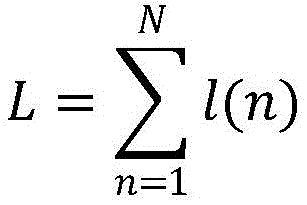
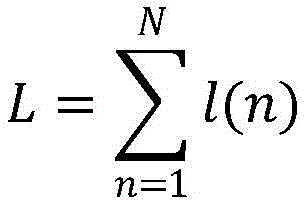
(1)令l(n)为每一个LSTM模块的损失函数,N为LSTM模块的个数,首先定义全局化损失函数:(1) Let l(n) be the loss function of each LSTM module, N is the number of LSTM modules, first define the global loss function:
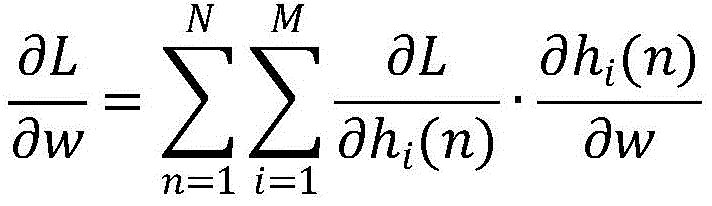
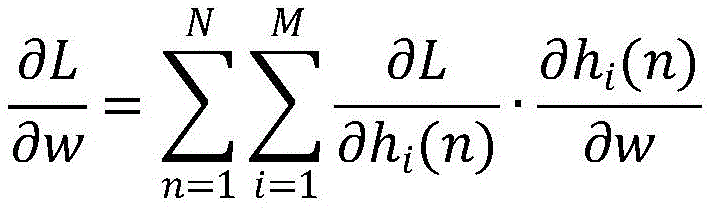
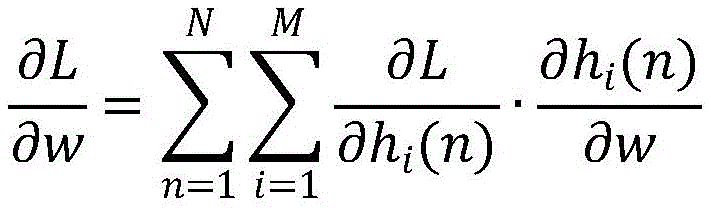
(2)令hi(n)为隐藏层第i个记忆单元的输出,M为记忆单元的长度,由链式法则得到全局化损失函数L对权重参数w的偏微分:(2) Let h i (n) be the output of the i-th memory unit in the hidden layer, M is the length of the memory unit, and the partial differential of the globalized loss function L to the weight parameter w is obtained by the chain rule:
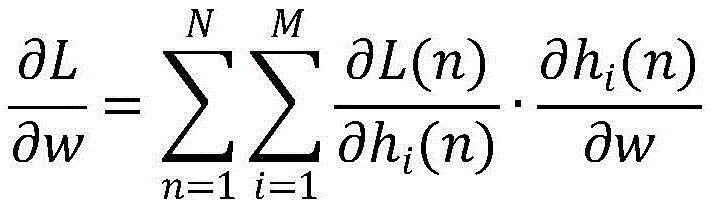
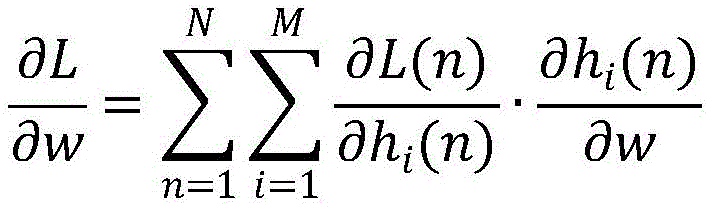
引入变量L(n),用于表示第n步开始到结束的损失:Introduce a variable L(n) to represent the loss from the beginning to the end of the nth step:

相应偏微分公式变为:The corresponding partial differential formula becomes:

联立得最优化结果为:Simultaneous optimization results are:
(3)利用各权重参数对全局损失函数的梯度迭代更新参数值,训练网络使得全局损失函数最小化。(3) Use the gradient of each weight parameter to the global loss function to iteratively update the parameter value, and train the network to minimize the global loss function.
2-4.利用训练好的长短时记忆神经网络分类模型对测试样本进行分类,得到每个样本的输出类别以及识别率;所述的输出类别即负相尖棘波、正相尖棘波、正常波形;2-4. Utilize the trained long-short-term memory neural network classification model to classify the test samples to obtain the output category and recognition rate of each sample; the output categories are negative phase spikes, positive phase spikes, normal waveform;
2-5.利用训练好的网络模型,通过截取网络softmax层概率输出,生成所有多通道信号片段的分类概率矩阵,其行数等于输入信号通道数,列数等于长短时记忆神经网络模型的分类类别个数。2-5. Use the trained network model to generate the classification probability matrix of all multi-channel signal segments by intercepting the probability output of the network softmax layer. The number of rows is equal to the number of input signal channels, and the number of columns is equal to the classification of the long-short-term memory neural network model number of categories.
2-6.通过自适应特征加权融合算法对概率矩阵进行降维,令P为步骤2-5所得分类概率矩阵:2-6. Reduce the dimensionality of the probability matrix through the adaptive feature weighted fusion algorithm, let P be the classification probability matrix obtained in steps 2-5:
P=[pl,…,pm]∈Rn×m P=[p l ,...,p m ]∈R n×m
其中pi为n维列向量,代表判定为第i类的概率,i取值为1或2或3。设

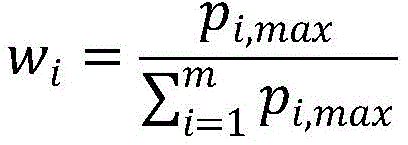
w=[wl...wm]T w=[w l ... w m ] T
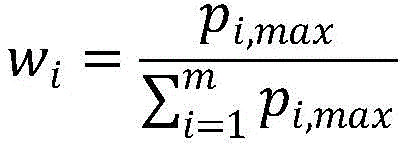
其中pi,max为pi向量中最大的分量值。由此可以得到所有多通道信号片段对应的特征向量
所述步骤3基于上一步得到样本的特征向量,训练一个两层的全连接神经网络实现多通道放电联合检测,得到该时间段的样本所属的最终类别,以及整体测试样本的分类准确率:The step 3 is based on the eigenvector of the sample obtained in the previous step, training a two-layer fully connected neural network to realize the joint detection of multi-channel discharge, and obtaining the final category of the sample in this time period, and the classification accuracy of the overall test sample:
3-1.将分割所得多通道信号片段依据有无尖棘波放电现象划分为两类。3-1. Divide the segmented multi-channel signal segments into two categories according to whether there is a spike discharge phenomenon.
3-2.基于样本库随机将样本分成8:2,其中80%为训练样本,其余的20%为测试样本。样本值为经由上步所得的信号片段的特征向量。3-2. Randomly divide the samples into 8:2 based on the sample library, 80% of which are training samples and the remaining 20% are testing samples. The sample value is the feature vector of the signal segment obtained through the previous step.
3-3.构建一个全连接神经网络,其训练流程为:3-3. Construct a fully connected neural network, and its training process is:
(1)前向传播,即由输入层开始,逐层计算每一个神经元的输出,最终得到输出层神经元的输出。(1) Forward propagation, that is, starting from the input layer, calculating the output of each neuron layer by layer, and finally obtaining the output of the output layer neurons.
令x为神经元的输入,W为权重矩阵,b为偏置,f为激活函数,则输出h有公式如下:Let x be the input of the neuron, W is the weight matrix, b is the bias, and f is the activation function, then the output h has the following formula:
h=f(Wx+b)h=f(Wx+b)
(2)反向传播,采用梯度下降法更新参数,定义好损失函数后,通过链式求导法则计算损失函数对权重参数的偏微分,利用各权重参数对全局损失函数的梯度迭代更新参数值,训练网络使得全局损失函数最小化。(2) Backpropagation, using the gradient descent method to update parameters, after defining the loss function, calculate the partial differential of the loss function to the weight parameter through the chain derivation rule, and use the gradient of each weight parameter to the global loss function to iteratively update the parameter value , train the network to minimize the global loss function.
3-4.利用训练好的全连接神经网络分类模型对测试样本进行分类,得到每个样本的输出类别以及总的识别率。3-4. Use the trained fully connected neural network classification model to classify the test samples, and obtain the output category of each sample and the total recognition rate.
本发明有益效果如下:The beneficial effects of the present invention are as follows:
本发明提出的针对尖棘波波形特征的尖棘波放电多通道检测算法,是考虑到尖棘波放电作为一种癫痫样放电对癫痫诊断与发作预警的重要意义,在输入脑电图中精确标注尖棘波放电时间点进而提供放电频率、放电部位等具体信息,可以有效提高临床诊断效率。由于脑电信号复杂程度高且易受干扰,加之存在波形特征相似度高但非尖棘波信号的正常生理电信号,传统的特征提取算法加分类器对其的检测效果较差,本发明中利用长短时记忆神经网络提取特征,利用全连接神经网络进行分类识别,实现较为精准的尖棘波放电检测功能。The spike wave discharge multi-channel detection algorithm for the spike wave waveform characteristics proposed by the present invention is to consider the significance of spike discharge as a kind of epileptiform discharge for epilepsy diagnosis and seizure warning, and accurately input EEG. Marking the time point of spike discharge and providing specific information such as discharge frequency and discharge location can effectively improve the efficiency of clinical diagnosis. Due to the high complexity of the EEG signal and its susceptibility to interference, and the presence of normal physiological electrical signals with high waveform feature similarities but non-sharp spike signals, the detection effect of traditional feature extraction algorithms plus classifiers is poor. In the present invention Using the long-short-term memory neural network to extract features, using the fully connected neural network for classification and recognition, to achieve a more accurate spike discharge detection function.
运用此种基于LSTM多通道的脑电癫痫尖棘波放电联合检测方法后,通过搭建长短时记忆神经网络快速提取信号每个通道的特征,减少尖棘波相关特征提取的工作量,通过搭建全连接神经网络以实现对提取到特征的多通道联合检测,减少单通道中类似但非尖棘波波形对检测的干扰,从而有效解决多通道尖棘波检测中经常存在的误报率高的问题,达到精准检测的效果。所提出算法能够同时检测尖棘波放电时间节点以及尖棘波放电导联位置,对癫痫类型检测与癫痫发作检测都具有较大意义。After using this LSTM-based multi-channel EEG spike discharge joint detection method, the characteristics of each channel of the signal can be quickly extracted by building a long-short-term memory neural network, and the workload of spike-related feature extraction can be reduced. Connect the neural network to realize the multi-channel joint detection of the extracted features, reduce the interference of similar but non-sharp wave waveforms in a single channel, so as to effectively solve the problem of high false alarm rate often existing in multi-channel sharp wave detection , to achieve the effect of accurate detection. The proposed algorithm can simultaneously detect the time node of spike discharge and the location of spike discharge leads, which is of great significance for the detection of epilepsy types and seizures.
附图说明:Description of drawings:
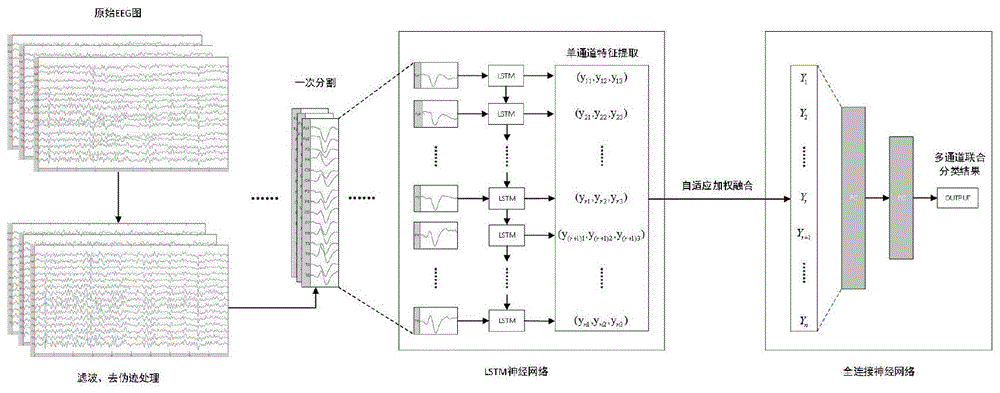
图1系统总体结构图Figure 1 Overall structure diagram of the system
图2棘波识别效果图Figure 2 Spike recognition effect diagram
具体实施方式Detailed ways
下面结合附图和具体实施方式对本发明作详细说明。The present invention will be described in detail below in conjunction with the accompanying drawings and specific embodiments.
如图1和2所示,通用的针对尖棘波放电多通道联合检测方法的实现步骤,在发明内容内已有详细的介绍,即本发明的技术方案主要包括如下步骤:As shown in Figures 1 and 2, the general implementation steps of the multi-channel joint detection method for spike discharge have been introduced in detail in the content of the invention, that is, the technical solution of the present invention mainly includes the following steps:
步骤1、对输入的原始多导联脑电进行滤波以及心电、咀嚼吞咽等生理活动造成的伪迹消除。对处理后的信号首先依据检测目标波形时长特征,在时域对其进行分割,将信号转化为后续步骤的识别形式。Step 1. Filter the input raw multi-lead EEG and eliminate artifacts caused by physiological activities such as ECG, chewing and swallowing. The processed signal is first segmented in the time domain according to the duration characteristics of the detected target waveform, and the signal is converted into a recognition form for subsequent steps.
步骤2、将分割后信号中每条通道的数据经由长短时记忆神经网络进行特征提取,并通过自适应加权融合算法进行特征融合。Step 2. The data of each channel in the segmented signal is subjected to feature extraction through a long-short-term memory neural network, and feature fusion is performed through an adaptive weighted fusion algorithm.
步骤3、利用特征融合得到的结果,通过全连接神经网络对多通道信号片段进行分类,最终得到整段信号不同时段的分类结果,从而达到尖棘波放电检测的目的。Step 3. Using the result obtained by feature fusion, classify the multi-channel signal segments through the fully connected neural network, and finally obtain the classification results of the entire signal at different time periods, so as to achieve the purpose of spike discharge detection.
所述步骤1的具体实现包括以下几个步骤:The concrete realization of described step 1 comprises the following steps:
1-1.将原始输入的多通道脑电信号利用0.5-70HZ带通滤波器以及50HZ陷波滤波器进行滤波。1-1. Filter the original input multi-channel EEG signal with a 0.5-70HZ bandpass filter and a 50HZ notch filter.
1-2.通过协方差矩阵之间的距离利用K-means算法将数据聚为若干个簇,将信号分段并计算每段信号协方差矩阵与各簇质心间的距离,并将其归类为与其距离最小的簇。进一步求得标准化距离,将其视为z分数,然后用一个移动平均滤波器对得到的分数进行平滑处理,能有效消除信号中心电、咀嚼吞咽等伪迹干扰。1-2. Use the K-means algorithm to cluster the data into several clusters through the distance between the covariance matrices, segment the signal and calculate the distance between the covariance matrix of each segment of the signal and the centroid of each cluster, and classify them is the cluster with the smallest distance to it. Further obtain the normalized distance, treat it as a z-score, and then use a moving average filter to smooth the obtained score, which can effectively eliminate the interference of signal artifacts such as electrocardiograms, chewing and swallowing.
1-3.将处理完的信号在时间域分割成小样本,每个样本信号为0.2s一帧,其中帧重叠为50%。得到分割结果为若干个帧长为0.2s的多通道信号片段。1-3. Divide the processed signal into small samples in the time domain, each sample signal is 0.2s a frame, and the frame overlap is 50%. The segmentation result is obtained as several multi-channel signal segments with a frame length of 0.2s.
步骤1需要注意如下几点:Step 1 needs to pay attention to the following points:
(1)1-1中使用0.5-70HZ带通滤波器的依据是脑电活动频率主要集中于该频率段,使用50HZ陷波滤波器的依据是为了消除50HZ工频噪声的干扰。(1) The basis for using the 0.5-70HZ bandpass filter in 1-1 is that the frequency of EEG activity is mainly concentrated in this frequency band, and the basis for using the 50HZ notch filter is to eliminate the interference of 50HZ power frequency noise.
(2)1-3中选取0.2s作为一帧的时长是考虑到棘波放电时长为0.02-0.07s,尖波放电时长为0.07-0.2s。(2) 0.2s is selected as the duration of one frame in 1-3 because the spike discharge duration is 0.02-0.07s, and the spike discharge duration is 0.07-0.2s.
所述的步骤2根据滤波去伪迹并进行分割后得到的多通道信号片段,利用长短时记忆神经网络对该片段中每一维数据进行特征提取,得到多通道信号片段分类概率矩阵,并通过自适应加权融合算法进行特征融合:In the step 2, according to the multi-channel signal segment obtained after filtering to remove artifacts and segmentation, the long-short-term memory neural network is used to perform feature extraction on each dimension of the data in the segment to obtain the classification probability matrix of the multi-channel signal segment, and pass Adaptive weighted fusion algorithm for feature fusion:
2-1.将数据中单通道的信号片段划分成三类。即负相尖棘波、正相尖棘波、正常波形。2-1. Divide the single-channel signal fragments in the data into three categories. That is, negative-phase spikes, positive-phase spikes, and normal waveforms.
2-2.基于样本库随机将样本分成8:2,其中80%为训练样本,其余的20%为测试样本。2-2. Based on the sample library, the samples are randomly divided into 8:2, 80% of which are training samples, and the remaining 20% are test samples.
2-3.构建一个长短时记忆神经网络,其训练流程为:2-3. Construct a long short-term memory neural network, and its training process is as follows:
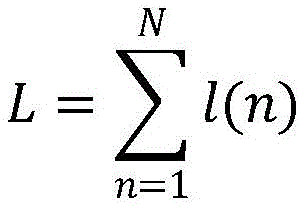
(1)令l(n)为每一个LSTM模块的损失函数,N为LSTM模块的个数,首先定义全局化损失函数:(1) Let l(n) be the loss function of each LSTM module, N is the number of LSTM modules, first define the global loss function:
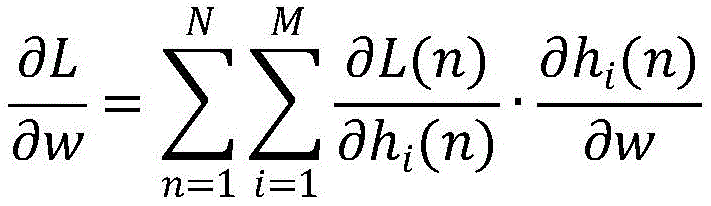
(2)令hi(n)为隐藏层第i个记忆单元的输出,M为记忆单元的长度,由链式法则得到全局化损失函数L对权重参数w的偏微分:(2) Let h i (n) be the output of the i-th memory unit in the hidden layer, M is the length of the memory unit, and the partial differential of the globalized loss function L to the weight parameter w is obtained by the chain rule:
引入变量L(n),用于表示第n步开始到结束的损失:Introduce a variable L(n) to represent the loss from the beginning to the end of the nth step:

相应偏微分公式变为:The corresponding partial differential formula becomes:
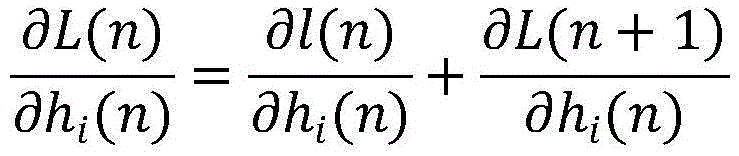
联立得最优化结果为:Simultaneous optimization results are:
(3)利用各权重参数对全局损失函数的梯度迭代更新参数值,训练网络使得全局损失函数最小化;(3) Use each weight parameter to iteratively update the parameter value of the gradient of the global loss function, and train the network to minimize the global loss function;
2-4.利用训练好的长短时记忆神经网络分类模型对测试样本进行分类,得到每个样本的输出类别以及识别率。2-4. Use the trained long-short-term memory neural network classification model to classify the test samples, and obtain the output category and recognition rate of each sample.
2-5.利用训练好的网络模型,通过截取网络softmax层概率输出,生成所有多通道信号片段的分类概率矩阵,其行数等于输入信号通道数,列数等于长短时记忆神经网络模型的分类类别个数。2-5. Use the trained network model to generate the classification probability matrix of all multi-channel signal segments by intercepting the probability output of the network softmax layer. The number of rows is equal to the number of input signal channels, and the number of columns is equal to the classification of the long-short-term memory neural network model number of categories.
2-6.通过自适应特征加权融合算法对概率矩阵进行降维,令P为步骤2-5所得分类概率矩阵:2-6. Reduce the dimensionality of the probability matrix through the adaptive feature weighted fusion algorithm, let P be the classification probability matrix obtained in steps 2-5:
P=[pl,...,pm]∈Rn×m P=[p l ,...,p m ]∈R n×m
其中pi为n维列向量,代表判定为第i类的概率,i取值为1或2或3;设
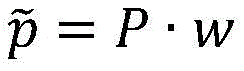
w=[wl…wm]T w=[w l ... w m ] T
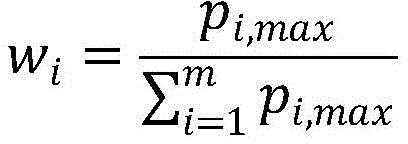
其中pi,max为pi向量中最大的分量值;由此可以得到所有多通道信号片段对应的特征向量
所述步骤3基于上一步得到样本的特征向量,训练一个两层的全连接神经网络实现多通道放电联合检测,得到该时间段的样本所属的最终类别,以及整体测试样本的分类准确率:The step 3 is based on the eigenvector of the sample obtained in the previous step, training a two-layer fully connected neural network to realize the joint detection of multi-channel discharge, and obtaining the final category of the sample in this time period, and the classification accuracy of the overall test sample:
3-1.将分割所得多通道信号片段依据有无尖棘波放电现象划分为两类。3-1. Divide the segmented multi-channel signal segments into two categories according to whether there is a spike discharge phenomenon.
3-2.基于样本库随机将样本分成8:2,其中80%为训练样本,其余的20%为测试样本。样本值为经由上步所得的信号片段的特征向量。3-2. Randomly divide the samples into 8:2 based on the sample library, 80% of which are training samples and the remaining 20% are testing samples. The sample value is the feature vector of the signal segment obtained through the previous step.
3-3.构建一个全连接神经网络,其训练流程为:3-3. Construct a fully connected neural network, and its training process is:
(1)前向传播,即由输入层开始,逐层计算每一个神经元的输出,最终得到输出层神经元的输出;(1) Forward propagation, that is, starting from the input layer, calculating the output of each neuron layer by layer, and finally obtaining the output of the neuron in the output layer;
令x为神经元的输入,W为权重矩阵,b为偏置,f为激活函数,则输出h有公式如下:Let x be the input of the neuron, W is the weight matrix, b is the bias, and f is the activation function, then the output h has the following formula:
h=f(Wx+b)h=f(Wx+b)
(2)反向传播,采用梯度下降法更新参数,定义好损失函数后,通过链式求导法则计算损失函数对权重参数的偏微分,利用各权重参数对全局损失函数的梯度迭代更新参数值,训练网络使得全局损失函数最小化。(2) Backpropagation, using the gradient descent method to update parameters, after defining the loss function, calculate the partial differential of the loss function to the weight parameter through the chain derivation rule, and use the gradient of each weight parameter to the global loss function to iteratively update the parameter value , train the network to minimize the global loss function.
3-4.利用训练好的全连接神经网络分类模型对测试样本进行分类,得到每个样本的输出类别以及总的识别率。3-4. Use the trained fully connected neural network classification model to classify the test samples, and obtain the output category of each sample and the total recognition rate.
为了达到更好的尖棘波放电检测效果,以下将从实际应用时参数的选择与设计方面展开介绍,以作为该发明用于其他应用的参考:In order to achieve a better spike discharge detection effect, the following will introduce the selection and design of parameters in practical applications, as a reference for other applications of the invention:
本发明以帧为单位处理原始信号的,因此需要考虑设计时需要检测的信号的时长,同时为了防止分割时无法截取完整的特征信号,需要考虑进行帧重叠工作,一般设置为50%的重叠,也即0.1s长度的帧移。The present invention processes the original signal in units of frames, so it is necessary to consider the duration of the signal to be detected during design. At the same time, in order to prevent the complete feature signal from being intercepted during segmentation, it is necessary to consider the frame overlapping work, which is generally set to 50%. That is, a frame shift of 0.1s length.
在2-3步骤中,由于不同脑电图采集仪器采样频率不同,需要相应对长短时记忆神经网络中输入序列长度参数进行调整,保证0.2s时长的单通道信号输入网络时不发生报错。In steps 2-3, due to the different sampling frequencies of different EEG acquisition instruments, it is necessary to adjust the input sequence length parameters in the long-short-term memory neural network accordingly to ensure that no error occurs when the 0.2s long single-channel signal is input into the network.
在3-3步骤中,全连接神经网络的输入层神经元个数等于原始信号的通道数,采用不同导联连接方式测量原始脑电信号相应信号的通道数也不同,应根据此进行调整。In step 3-3, the number of neurons in the input layer of the fully connected neural network is equal to the number of channels of the original signal, and the number of channels corresponding to the original EEG signal measured by different lead connection methods is also different, and adjustments should be made accordingly.
Claims (2)





Priority Applications (1)
| Application Number | Priority Date | Filing Date | Title |
|---|---|---|---|
| CN202010103082.8A CN111150393B (en) | 2020-02-19 | 2020-02-19 | Electroencephalogram epilepsy spike discharge joint detection method based on LSTM multichannel |
Applications Claiming Priority (1)
| Application Number | Priority Date | Filing Date | Title |
|---|---|---|---|
| CN202010103082.8A CN111150393B (en) | 2020-02-19 | 2020-02-19 | Electroencephalogram epilepsy spike discharge joint detection method based on LSTM multichannel |
Publications (2)
| Publication Number | Publication Date |
|---|---|
| CN111150393A CN111150393A (en) | 2020-05-15 |
| CN111150393B true CN111150393B (en) | 2023-03-28 |
Family
ID=70566190
Family Applications (1)
| Application Number | Title | Priority Date | Filing Date |
|---|---|---|---|
| CN202010103082.8A Active CN111150393B (en) | 2020-02-19 | 2020-02-19 | Electroencephalogram epilepsy spike discharge joint detection method based on LSTM multichannel |
Country Status (1)
| Country | Link |
|---|---|
| CN (1) | CN111150393B (en) |
Families Citing this family (12)
| Publication number | Priority date | Publication date | Assignee | Title |
|---|---|---|---|---|
| CN113842111A (en) * | 2020-06-28 | 2021-12-28 | 珠海格力电器股份有限公司 | Sleep staging method and device, computing equipment and storage medium |
| CN112568868B (en) * | 2020-10-16 | 2022-12-23 | 苏州赛美科基因科技有限公司 | Automatic quantitative analysis method and device for electrophysiological signals of epilepsy model |
| CN112603334B (en) * | 2020-12-18 | 2022-04-08 | 杭州电子科技大学 | Spike detection method based on time series features and stacked Bi-LSTM network |
| CN113662560B (en) * | 2020-12-22 | 2022-05-24 | 北京航空航天大学 | Method for detecting seizure-like discharge between attacks, storage medium and device |
| CN116390685B (en) * | 2021-05-12 | 2025-11-04 | 北京太阳电子科技有限公司 | Methods, devices, media and equipment for detecting abnormal brainwave discharges |
| CN114081508B (en) * | 2021-10-28 | 2024-05-14 | 杭州电子科技大学 | Spike detection method based on fusion of deep neural network and CCA (common cancer cell) characteristics |
| CN113974653B (en) * | 2021-11-30 | 2024-03-22 | 杭州妞诺霄云大数据科技有限公司 | Method and device for detecting optimized spike based on about log index, storage medium and terminal |
| CN114587381B (en) * | 2022-03-14 | 2025-09-02 | 杭州电子科技大学 | Spike wave detection method based on multi-channel EEG intelligent screening and weighted sample generation |
| CN115486858B (en) * | 2022-09-23 | 2025-09-05 | 杭州电子科技大学 | Adaptive brain region EEG artifact detection method based on multi-classifier fusion |
| CN116196018B (en) * | 2023-05-04 | 2023-07-07 | 北京理工大学 | Method and system for dynamic recognition of epileptic EEG signals based on sharpness and nonlinearity |
| CN116597148B (en) * | 2023-06-02 | 2025-09-19 | 哈尔滨工业大学 | Method, storage medium and device for semantic segmentation of point cloud of airborne multispectral laser radar |
| CN120345873B (en) * | 2025-06-25 | 2025-09-16 | 合肥综合性国家科学中心人工智能研究院(安徽省人工智能实验室) | EEG signal processing method, system, device and medium based on gradient memory bank |
Citations (6)
| Publication number | Priority date | Publication date | Assignee | Title |
|---|---|---|---|---|
| CN106909784A (en) * | 2017-02-24 | 2017-06-30 | 天津大学 | Epileptic electroencephalogram (eeg) recognition methods based on two-dimentional time-frequency image depth convolutional neural networks |
| CN107967686A (en) * | 2017-12-27 | 2018-04-27 | 电子科技大学 | A kind of epilepsy identification device for combining dynamic brain network and long memory network in short-term |
| CN108852350A (en) * | 2018-05-18 | 2018-11-23 | 中山大学 | A kind of identification in the area scalp EEG Zhi Xian based on deep learning algorithm and localization method |
| CN109472194A (en) * | 2018-09-26 | 2019-03-15 | 重庆邮电大学 | A Feature Recognition Method of Motor Imagery EEG Signals Based on CBLSTM Algorithm Model |
| CN110289081A (en) * | 2019-05-14 | 2019-09-27 | 杭州电子科技大学 | Epilepsy Detection Method Based on Adaptive Weighted Feature Fusion of Deep Network Stack Model |
| CN110464334A (en) * | 2019-07-23 | 2019-11-19 | 苏州国科视清医疗科技有限公司 | A kind of electrocardiographic abnormality detection method based on composite depth learning network |
Family Cites Families (1)
| Publication number | Priority date | Publication date | Assignee | Title |
|---|---|---|---|---|
| WO2012094621A2 (en) * | 2011-01-06 | 2012-07-12 | The Johns Hopkins University | Seizure detection device and systems |
-
2020
- 2020-02-19 CN CN202010103082.8A patent/CN111150393B/en active Active
Patent Citations (6)
| Publication number | Priority date | Publication date | Assignee | Title |
|---|---|---|---|---|
| CN106909784A (en) * | 2017-02-24 | 2017-06-30 | 天津大学 | Epileptic electroencephalogram (eeg) recognition methods based on two-dimentional time-frequency image depth convolutional neural networks |
| CN107967686A (en) * | 2017-12-27 | 2018-04-27 | 电子科技大学 | A kind of epilepsy identification device for combining dynamic brain network and long memory network in short-term |
| CN108852350A (en) * | 2018-05-18 | 2018-11-23 | 中山大学 | A kind of identification in the area scalp EEG Zhi Xian based on deep learning algorithm and localization method |
| CN109472194A (en) * | 2018-09-26 | 2019-03-15 | 重庆邮电大学 | A Feature Recognition Method of Motor Imagery EEG Signals Based on CBLSTM Algorithm Model |
| CN110289081A (en) * | 2019-05-14 | 2019-09-27 | 杭州电子科技大学 | Epilepsy Detection Method Based on Adaptive Weighted Feature Fusion of Deep Network Stack Model |
| CN110464334A (en) * | 2019-07-23 | 2019-11-19 | 苏州国科视清医疗科技有限公司 | A kind of electrocardiographic abnormality detection method based on composite depth learning network |
Non-Patent Citations (3)
| Title |
|---|
| A Long Short-Term Memory neural network for the detection of epileptiform spikes and high frequency oscillations;A. V. Medvedev等;《scientific reports》;第1-10页 * |
| Epileptiform spike detection via convolutional neural networks;Alexander Rosenberg Johansen等;《 2016 IEEE International Conference on Acoustics, Speech and Signal Processing (ICASSP)》;第46-49页 * |
| 机器学习实现癫痫分类预测;徐雅蕾等;《中国数字医学》;第754-758页 * |
Also Published As
| Publication number | Publication date |
|---|---|
| CN111150393A (en) | 2020-05-15 |
Similar Documents
| Publication | Publication Date | Title |
|---|---|---|
| CN111150393B (en) | Electroencephalogram epilepsy spike discharge joint detection method based on LSTM multichannel | |
| Peh et al. | Transformer convolutional neural networks for automated artifact detection in scalp EEG | |
| Thomas et al. | EEG classification via convolutional neural network-based interictal epileptiform event detection | |
| Übeyli | Analysis of EEG signals by implementing eigenvector methods/recurrent neural networks | |
| CN114532993B (en) | Automatic detection method for electroencephalogram high-frequency oscillation signals of epileptic patients | |
| CN110321783A (en) | A kind of MEG spike detection method and system based on 1D convolutional neural networks | |
| CN110598676B (en) | Deep Learning Gesture EMG Recognition Method Based on Confidence Score Model | |
| CN113010013A (en) | Wasserstein distance-based motor imagery electroencephalogram migration learning method | |
| CN113180691B (en) | Three-channel sleep apnea and hypopnea syndrome recognition device | |
| CN114861706B (en) | An ECG identity recognition method based on quality assessment and deep transfer learning | |
| WO2024016590A1 (en) | Online neuron classification method based on neuromorphic computing | |
| CN114781461B (en) | Target detection method and system based on auditory brain-computer interface | |
| CN114841191B (en) | Epileptic EEG signal feature compression method based on fully connected spiking neural network | |
| CN115486814A (en) | Intelligent fusion analysis and processing method based on multi-modal epilepsy data | |
| CN109498000B (en) | Pre-seizure prediction method based on fusion of EMD and WPD features | |
| CN103190904A (en) | Electroencephalogram classification detection device based on lacuna characteristics | |
| WO2022135449A1 (en) | Interictal epileptiform discharge activity detection apparatus and method for epileptic patient | |
| CN106923825B (en) | Electroencephalogram relaxation degree identification method and device based on frequency domain and phase space | |
| CN115530846A (en) | Scalp electroencephalogram spike detection method and system | |
| Gnana Rajesh | Analysis of MFCC features for EEG signal classification | |
| CN118986349A (en) | Electroencephalogram depression recognition system and method based on knowledge distillation and meta-shift learning | |
| CN115736828A (en) | Epileptic signal detection method and device based on brain network characteristics and single-lead characteristics | |
| CN120436582A (en) | Sleep staging method and system based on multimodal signal fusion and context perception | |
| CN114611560A (en) | SSVEP electroencephalogram signal classification method based on convolutional neural network | |
| CN106264519A (en) | A kind of epileptic electroencephalogram (eeg) detection device based on Stockwell conversion |
Legal Events
| Date | Code | Title | Description |
|---|---|---|---|
| PB01 | Publication | ||
| PB01 | Publication | ||
| SE01 | Entry into force of request for substantive examination | ||
| SE01 | Entry into force of request for substantive examination | ||
| GR01 | Patent grant | ||
| GR01 | Patent grant |