CN110998590A - Domain-specific vocabulary-driven preparsers - Google Patents
Domain-specific vocabulary-driven preparsers Download PDFInfo
- Publication number
- CN110998590A CN110998590A CN201880052761.8A CN201880052761A CN110998590A CN 110998590 A CN110998590 A CN 110998590A CN 201880052761 A CN201880052761 A CN 201880052761A CN 110998590 A CN110998590 A CN 110998590A
- Authority
- CN
- China
- Prior art keywords
- domain
- word
- specific
- input text
- parser
- Prior art date
- Legal status (The legal status is an assumption and is not a legal conclusion. Google has not performed a legal analysis and makes no representation as to the accuracy of the status listed.)
- Granted
Links
Images





Classifications
-
- G—PHYSICS
- G06—COMPUTING OR CALCULATING; COUNTING
- G06F—ELECTRIC DIGITAL DATA PROCESSING
- G06F40/00—Handling natural language data
- G06F40/20—Natural language analysis
- G06F40/205—Parsing
-
- G—PHYSICS
- G06—COMPUTING OR CALCULATING; COUNTING
- G06F—ELECTRIC DIGITAL DATA PROCESSING
- G06F40/00—Handling natural language data
- G06F40/20—Natural language analysis
- G06F40/205—Parsing
- G06F40/211—Syntactic parsing, e.g. based on context-free grammar [CFG] or unification grammars
-
- G—PHYSICS
- G06—COMPUTING OR CALCULATING; COUNTING
- G06F—ELECTRIC DIGITAL DATA PROCESSING
- G06F40/00—Handling natural language data
- G06F40/20—Natural language analysis
- G06F40/279—Recognition of textual entities
- G06F40/284—Lexical analysis, e.g. tokenisation or collocates
-
- G—PHYSICS
- G06—COMPUTING OR CALCULATING; COUNTING
- G06F—ELECTRIC DIGITAL DATA PROCESSING
- G06F40/00—Handling natural language data
- G06F40/20—Natural language analysis
- G06F40/279—Recognition of textual entities
- G06F40/289—Phrasal analysis, e.g. finite state techniques or chunking
- G06F40/295—Named entity recognition
-
- G—PHYSICS
- G06—COMPUTING OR CALCULATING; COUNTING
- G06F—ELECTRIC DIGITAL DATA PROCESSING
- G06F40/00—Handling natural language data
- G06F40/30—Semantic analysis
-
- G—PHYSICS
- G06—COMPUTING OR CALCULATING; COUNTING
- G06F—ELECTRIC DIGITAL DATA PROCESSING
- G06F40/00—Handling natural language data
- G06F40/20—Natural language analysis
- G06F40/205—Parsing
- G06F40/216—Parsing using statistical methods
-
- G—PHYSICS
- G06—COMPUTING OR CALCULATING; COUNTING
- G06F—ELECTRIC DIGITAL DATA PROCESSING
- G06F40/00—Handling natural language data
- G06F40/20—Natural language analysis
- G06F40/279—Recognition of textual entities
- G06F40/289—Phrasal analysis, e.g. finite state techniques or chunking
Landscapes
- Engineering & Computer Science (AREA)
- Theoretical Computer Science (AREA)
- Health & Medical Sciences (AREA)
- Artificial Intelligence (AREA)
- Audiology, Speech & Language Pathology (AREA)
- Computational Linguistics (AREA)
- General Health & Medical Sciences (AREA)
- Physics & Mathematics (AREA)
- General Engineering & Computer Science (AREA)
- General Physics & Mathematics (AREA)
- Machine Translation (AREA)
Abstract
One method comprises the following steps: obtaining an input text; identifying a first word in the input text; and accessing the dictionary data to identify a first entry corresponding to the first word. The first entry includes core data corresponding to domain-independent lexical information of the first term and non-core data corresponding to domain-specific lexical information of the first term. The method also includes determining that the non-core data of the first entry identifies a second word in the input text as a modifier of the first word. The method also includes generating a partially parsed and bracketed version of the input text. The partially parsed and bracketed version indicates that the second word modifies the first word in the input text. The method also includes generating a parsed version of the input text based on the partial parsing of the input text and the bracketed version.
Description
Background
The present application relates to domain-specific vocabulary-driven parsing.
Disclosure of Invention
In a particular implementation, a method includes obtaining input text at a text parser of a device. The text parser includes a domain-specific vocabulary-driven pre-parser and a domain-independent rule-based parser. The method also includes identifying, at the device, a first word in the input text. The method also includes accessing, at the device, dictionary data to identify a first entry corresponding to the first word. The first entry includes core data and non-core data. The core data corresponds to domain-independent lexical information of the first word. The non-core data corresponds to domain-specific lexical information of the first word. The method also includes determining, at a domain-specific vocabulary-driven pre-parser, that the non-core data of the first entry identifies a second word in the input text as a modifier of the first word. The method also includes generating a partially parsed and bracketed version of the input text at a domain-specific vocabulary-driven pre-parser. The partially parsed and bracketed version indicates that the second word modifies the first word in the input text. The method also includes generating, at a domain-independent rule-based parser, a parsed version of the input text based on the partial parsing and bracketed version of the input text.
In another particular implementation, a computer program product for domain-specific data generation includes a computer-readable storage medium having program instructions embodied therewith. The program instructions are executable by the processor to cause the processor to perform operations comprising obtaining input text at a text parser. The text parser includes a domain-specific vocabulary-driven pre-parser and a domain-independent rule-based parser. The operations also include identifying a first word in the input text. The operations also include accessing the dictionary data to identify a first entry corresponding to the first word. The first entry includes core data and non-core data. The core data corresponds to domain-independent lexical information of the first word. The non-core data corresponds to domain-specific lexical information of the first word. The operations further include determining, at a domain-specific vocabulary-driven pre-parser, that noncore data of the first entry identifies a second word in the input text as a modifier of the first word. The operations also include generating a partially parsed and bracketed version of the input text at a domain-specific vocabulary-driven pre-parser. The partially parsed and bracketed version indicates that the second word modifies the first word in the input text. The operations also include generating, at a domain-independent rule-based parser, a parsed version of the input text based on the partial parsing and bracketed version of the input text.
In another particular implementation, a system includes a memory, a processor, a domain-specific vocabulary-driven pre-parser, and a domain-independent rule-based parser. The memory is configured to store input text and dictionary data. The processor is configured to identify a first word in the input text. The processor is also configured to access the dictionary data to identify a first entry corresponding to the first word. The first entry includes core data and non-core data. The core data corresponds to domain-independent lexical information of the first word. The non-core data corresponds to domain-specific lexical information of the first word. The domain-specific vocabulary-driven pre-parser is configured to determine that noncore data of a first word identifies a second word in the input text as a modifier of the first word. The domain-specific vocabulary-driven pre-parser is also configured to generate a partially parsed and bracketed version of the input text. The partially parsed and bracketed version indicates that the second word modifies the first word in the input text. The domain-independent rule-based parser is configured to generate a parsed version of the input text based on the partial parsing of the input text and the bracketed version.
Drawings
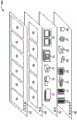
FIG. 1 illustrates a cloud computing environment in accordance with an aspect of the present disclosure.
FIG. 2 illustrates abstraction model layers in accordance with an aspect of the present disclosure.
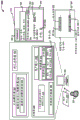
FIG. 3 illustrates a system for domain-specific lexical analysis.
FIG. 4 illustrates a system for vocabulary guidance parsing.
FIG. 5 illustrates an example parse tree generated by the system of FIG. 3.
FIG. 6 shows an example set of dictionary data entries generated by the system of FIG. 3.
FIG. 7 illustrates an example of a domain-specific parsing rule generated by the system of FIG. 3.
FIG. 8 shows an example of input text processed by the system of FIG. 4.
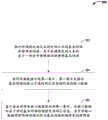
FIG. 9 illustrates a flow diagram of a method of domain-specific vocabulary analysis.
FIG. 10 illustrates a flow diagram of a method of vocabulary-guided parsing.
FIG. 11 illustrates a block diagram of a computing environment that includes electronic components by which the described system can be implemented, according to one aspect.
Detailed Description
Systems and methods of domain-specific lexical analysis and domain-specific pre-analysis are disclosed. Natural language processing uses lexical data to parse language samples (e.g., text). In many languages, a particular word may have different meanings depending on the context. For example, when a particular word is used in the context of a particular technical field (e.g., in a domain-specific context), the word may have a different meaning or nuance than when the word existed in general usage (e.g., in a domain-independent context). Manually adapting a generic (e.g., domain-independent) rule-based parser to a specialized domain (e.g., medical) is non-trivial (e.g., complex, time-consuming, and likely incomplete). A specific domain may introduce syntactic patterns and may present syntactic ambiguity types that are less common in general domains. As described herein, automated (or semi-automated) rule creation saves resources (e.g., time) and may result in a more robust parser (e.g., fewer errors and greater coverage).
According to the techniques described herein, during a training phase, a vocabulary analyzer (e.g., a processor) may generate domain-specific parsing rules based on analyzing a domain-specific corpus associated with a domain (e.g., medical). The vocabulary analyzer may also update a database of dictionary data based on analyzing the domain-specific corpus. The dictionary data may be previously generated, received from another device, or both. The dictionary data may include domain-independent information (e.g., core data), such as parts of speech of the underlying words (e.g., nouns). The vocabulary analyzer may update the lexicon data to include domain-specific information (e.g., non-core data) corresponding to the base word. For example, the vocabulary analyzer may analyze a large amount of domain-specific text to generate co-occurrence statistics of head-modifier pairs in the domain-specific text. As described herein, the lexical analyzer may determine, based on the co-occurrence statistics, that a particular word (e.g., "high", "blood", or "plasma") appears to modify a base word (e.g., "cholesterol") in at least a portion of the domain-specific corpus. The vocabulary analyzer may update the lexicon data to indicate that a particular word may be used as a modifier word for a base word in a domain (e.g., medical).
As described herein, the vocabulary analyzer may generate domain-specific parsing rules corresponding to modifier words and base words. For example, the vocabulary analyzer may generate collocation rules (e.g., the left attachment of adjective modifier words) in response to determining that modifier words of a particular modifier type (e.g., adjective modifier words) are detected (e.g., "high," "bad," "elevated," and "good") in a particular position relative to (e.g., before) the corresponding base word in the domain-specific corpus. The training phase may occur off-line (e.g., before running in production mode). The domain-specific parsing rules and domain-specific information of the dictionary data may be used to train the domain-specific parser. For example, the lexical analyzer may provide domain-specific parsing rules and dictionary data (e.g., including domain-specific information) to the domain-specific parser.
During the runtime phase, a parser including a domain-specific parser and a domain-independent parser (e.g., a generic parser) may parse the input text. The input text parsed during the runtime phase may be different from the domain-specific corpus analyzed during the training phase. During the training phase, the vocabulary analyzer analyzes the domain-specific corpus to generate domain-specific parsing rules and domain-specific information for the lexicon data. During the runtime phase, the parser parses the input text using domain-specific parsing rules and dictionary data in addition to the domain-independent parsing rules. For example, as described herein, the domain-specific parser may analyze the input text based on the dictionary data and domain-specific parsing rules. As described herein, a domain-specific parser may generate partial parses and bracketed text by analyzing input text (e.g., "The patent suffirs from high block credit"). Partially parsed and bracketed text (e.g., "The patent suffirs from high" phrase boundary attachments ") may indicate phrase boundary attachments that are valid in a domain (e.g., medicine). The domain-specific parser may provide the partial parse and bracketed text to a domain-independent parser (e.g., a generic parser).
The domain-independent parser may generate parsed text by analyzing the partial parsed and bracketed text based on domain-independent parsing rules in response to receiving the partial parsed and bracketed text from the domain-specific parser. The domain-independent parsing rules may be previously generated, received from another device, or both. In a particular example, the partial parse and bracketed text may correspond to an intermediate parse tree. The domain-independent parser may generate a parse tree corresponding to the parsed text by analyzing the intermediate parse tree based on domain-independent parsing rules.
Lexical analyzers, domain-specific resolvers, and domain-independent resolvers may be useful in a variety of applications. For example, the vocabulary analyzer may generate domain-specific parsing rules and update the dictionary data based on analyzing a domain-specific corpus (e.g., research paper) associated with a domain (e.g., medical). Emergency medical personnel (EMT) may upload patient notes to the hospital system after examining the patient in an ambulance. The patient notes (e.g., input text) may be analyzed by a domain-specific parser and a domain-independent parser to generate parsed text. The hospital system may generate an alert in response to determining that the parsed text indicates that a particular condition has been detected. The alarm may enable the preparation of appropriate resources (e.g., equipment, medical personnel, medications, or combinations thereof) to treat the patient when the ambulance arrives at the hospital.
As another example, during an outbreak of a rare disease, a physician may locate a large number of research papers associated with the rare disease. The lexical analyzer may generate domain-specific parsing rules and update the dictionary data based on some of the research papers. The domain-specific parser and the domain-independent parser may analyze the research papers (e.g., all research papers) to generate parsed text. The parsed text can be used to populate a research database. Searching the research database for relevant information may save time compared to reading each research paper.
It should be understood that medicine is used as an illustrative example, and that a domain may correspond to any specific domain, such as a research domain (e.g., engineering, legal, medical, or chemical), a language (e.g., french, spanish, or italian), a programming language (e.g., (registered trademarks of Oracle, Redwood Shores, California),
 (a registered trademark of Delaware), etc.), another private domain, or a combination thereof.
It should be understood at the outset that although the present disclosure includes a detailed description with respect to cloud computing, implementation of the teachings set forth therein is not limited to cloud computing environments, but rather aspects of the present disclosure can be implemented in connection with any other type of computing environment, whether now known or later developed.
Cloud computing is a service delivery model for convenient, on-demand network access to a shared pool of configurable computing resources. Configurable computing resources are resources that can be deployed and released quickly with minimal administrative cost or interaction with a service provider, such as networks, network bandwidth, servers, processing, memory, storage, applications, virtual machines, and services. In some implementations, such a cloud model may include at least five features, at least three service models, and at least four deployment models, as described herein.
Is characterized by comprising the following steps:
self-service on demand: consumers of the cloud are able to unilaterally automatically deploy computing capabilities such as server time and network storage on demand without human interaction with the service provider.
Wide network access: capabilities can be acquired and accessed over a network through standard mechanisms that facilitate the use of different kinds of thin client platforms or thick client platforms (e.g., mobile phones, laptops, personal digital assistants, PDAs).
Resource pool: the provider's computing resources are relegated to a resource pool and serve multiple consumers through a multi-tenant (multi-tenant) model, where different physical and virtual resources are dynamically allocated and reallocated as needed. Typically, the customer has no control or even knowledge of the exact location of the resources provided, but can specify the location at a higher level of abstraction (e.g., country, state, or data center), and thus has location independence.
Quick elasticity: computing power can be deployed quickly, flexibly (and sometimes automatically) to enable rapid expansion, and quickly released to shrink quickly. The computing power available for deployment tends to appear unlimited to consumers and can be available in any amount at any time.
Measurable service: cloud systems automatically control and optimize resource utility by utilizing some level of abstraction of metering capabilities appropriate to the type of service (e.g., storage, processing, bandwidth, and active user accounts). Resource usage can be monitored, controlled and reported, providing transparency to both the provider and consumer of the utilized service.
The service model is as follows:
software as a service (SaaS): the capability provided to the consumer is to use the provider's applications running on the cloud infrastructure. Applications may be accessed from various client devices through a thin client interface (e.g., web-based email) such as a web browser. The consumer does not manage nor control the underlying cloud infrastructure including networks, servers, operating systems, storage, or even individual application capabilities, except for limited user-specific application configuration settings.
Platform as a service (PaaS): the ability provided to the consumer is to deploy consumer-created or acquired applications on the cloud infrastructure, which are created using programming languages and tools supported by the provider. The consumer does not manage or control the underlying cloud infrastructure, including networks, servers, operating systems, or storage, but has control over the applications that are deployed, and possibly also the application hosting environment configuration.
Infrastructure as a service (IaaS): the capabilities provided to the consumer are the processing, storage, network, and other underlying computing resources in which the consumer can deploy and run any software that may include operating systems and applications. The consumer does not manage nor control the underlying cloud infrastructure, but has control over the operating system, storage, and applications deployed thereto, and may have limited control over selected network components (e.g., host firewalls).
The deployment model is as follows:
private cloud: the cloud infrastructure operates solely for an organization. The cloud infrastructure may be managed by the organization or a third party and may exist inside or outside the organization.
Community cloud: the cloud infrastructure is shared by several organizations and supports a specific community of common interest relationships, such as mission missions, security requirements, policy and compliance considerations. A community cloud may be managed by multiple organizations or third parties within a community and may exist within or outside of the community.
Public cloud: the cloud infrastructure is offered to the public or large industry groups and owned by organizations that sell cloud services.
Mixing cloud: the cloud infrastructure consists of two or more clouds (private, community, or public) that remain unique entities but are bound together by standardized or proprietary technologies that enable data and application portability (e.g., cloud bursting traffic sharing for load balancing between clouds).
Cloud computing environments are service-oriented with features focused on statelessness, low coupling, modularity, and semantic interoperability. At the heart of cloud computing is an infrastructure that contains a network of interconnected nodes.
Referring now to FIG. 1, an exemplary cloud computing environment 50 is shown. As shown, cloud computing environment 50 includes one or more cloud computing nodes 10 with which local computing devices used by cloud consumers, such as Personal Digital Assistants (PDAs) or mobile phones 54A, desktops 54B, laptops 54C, and/or automotive computer systems 54N may communicate.
The nodes 10 may communicate with each other. Nodes 10 may be physically or virtually grouped (not shown) in one or more networks, such as a private cloud, a community cloud, a public cloud, or a hybrid cloud, or combinations thereof, as described above. This allows the cloud computing environment 50 to provide infrastructure as a service (IaaS), platform as a service (PaaS), and/or software as a service (SaaS) for which a customer of the cloud need not maintain resources on local computing devices. One or more of the nodes 10 may include a vocabulary analyzer 108, a domain-specific vocabulary-driven pre-analyzer 110, or both. The vocabulary analyzer 108, the domain-specific vocabulary driven pre-analyzer 110, or both may correspond to the infrastructure, platform, and/or software provided as a service by the cloud computing environment 50. The vocabulary analyzer 108 may be configured to analyze the domain-specific corpus to generate domain-specific information (e.g., non-core data), domain-specific parsing rules, or a combination thereof, as further described with reference to fig. 3. A domain-specific corpus may be associated with a domain. The vocabulary analyzer 108 may update the dictionary data to indicate the non-core data associated with the domain, as further described with reference to FIG. 3.
The domain-specific vocabulary-driven pre-parser 110 may be configured to generate partially parsed and bracketed input text by analyzing the input text based on the updated lexicon data and the domain-specific parsing rules, as further described with reference to fig. 4-5. 4-5, the domain-independent rule-based parser may generate parsed text by analyzing the partially parsed and bracketed input text based on the domain-independent parsing rules. Applying the domain-independent parsing rules to the partially parsed and included input text may result in fewer parsing errors (e.g., no errors) than applying the domain-independent parsing rules directly to the input text. For example, partial parsing and bracketed input text may indicate phrase boundaries that are valid in the domain, and thus may resolve at least some syntactic ambiguities that would otherwise result in parsing errors.
It should be appreciated that the types of computing devices 54A-54N shown in fig. 1 are merely illustrative, and that computing node 10, as well as cloud computing environment 50, may communicate with any type of computing device over any type of network and/or network addressable connection (e.g., using a web browser).
Referring now to FIG. 2, a set of functional abstraction layers provided by cloud computing environment 50 (FIG. 1) is shown. It should be understood at the outset that the components, layers, and functions illustrated in FIG. 2 are illustrative only and that embodiments of the present invention are not limited thereto. As shown in fig. 2, the following layers and corresponding functions are provided:
the hardware and software layer 60 includes hardware and software components. Examples of hardware components include: a host computer 61; a RISC (reduced instruction set computer) architecture based server 62; a server 63; a blade server 64; a storage device 65; networks and network components 66. In some aspects, the software component comprises: web application server software 67 and database software 68.
The virtual layer 70 provides an abstraction layer that can provide examples of the following virtual entities: virtual server 71, virtual storage 72, virtual network 73 (including a virtual private network), virtual applications and operating system 74, and virtual client 75.
In one example, the management layer 80 may provide the following functions: the resource provisioning function 81: providing dynamic acquisition of computing resources and other resources for performing tasks in a cloud computing environment; metering and pricing function 82: cost tracking of the use of resources within a cloud computing environment and providing billing and invoicing for the consumption of such resources. In one example, the resource may include an application software license. The safety function is as follows: providing authentication for cloud consumers and tasks, and protection for data and other resources. User portal function 83: access to the cloud computing environment is provided for consumers and system administrators. Service level management function 84: allocation and management of cloud computing resources is provided to meet the requisite level of service. Service Level Agreement (SLA) planning and fulfillment function 85: the future demand for cloud computing resources predicted according to the SLA is prearranged and provisioned.
FIG. 3 illustrates a system 300 for performing domain-specific lexical analysis. The system 300 includes a device 302. The device 302 may include a processor, computer, laptop, server, communication device, entertainment device, or a combination thereof. The device 302 includes (or has access to) a lexical analyzer 108, a text parser 304, a memory 306, or a combination thereof. The vocabulary analyzer 108 may correspond to software, such as instructions executable by a processor to perform one or more of the operations described with reference to fig. 1-11. In a particular aspect, the vocabulary analyzer 108 may correspond to a processor configured to perform one or more of the operations described with reference to fig. 1-11. Text parser 304 includes a domain-specific vocabulary-driven pre-parser 110. The domain-specific vocabulary-driven pre-parser 110 may correspond to software, such as instructions executable by a processor to perform one or more of the operations described with reference to fig. 1-11. In a particular aspect, the domain-specific vocabulary-driven pre-parser 110 may correspond to a processor configured to perform one or more of the operations described with reference to fig. 1-11.
In particular aspects, the device 302 may correspond to one or more of the cloud computing nodes 10 of fig. 1. For example, the apparatus 302 may provide the vocabulary analyzer 108 (e.g., software corresponding to the vocabulary analyzer 108) or provide the functionality of the vocabulary analyzer 108 as a service. In an alternative aspect, device 302 may correspond to a cloud consumer device, such as Personal Digital Assistant (PDA) or cellular telephone 54A, desktop computer 54B, laptop computer 54C, automobile computer system 54N of fig. 1, or a combination thereof. The device 302 may receive the vocabulary analyzer 108 (e.g., software corresponding to the vocabulary analyzer 108) or access functionality of the vocabulary analyzer 108 as a service provided by one or more of the cloud computing nodes 10 of fig. 1.
The memory 306 may be configured to store dictionary data 316. The dictionary data 316 may be previously generated by the device 302, received by the device 302 from another device, provided to the device 302 by the user 301, or a combination thereof. The dictionary data 316 may correspond to a data structure (e.g., a table) arranged to have one or more entries. Each entry of the lexicon data 316 may include a base word (e.g., a noun), core data associated with the base word, or both. The core data may indicate domain-independent information associated with the base word. The domain-independent information may indicate a part-of-speech (e.g., noun) of the base word, one or more semantic types (or semantic categories) of the base word, or a combination thereof.
The semantic type may include a physical object, a conceptual entity, an activity, a phenomenon, a process, or another semantic type. The semantic type may correspond to one or more additional semantic types (e.g., subtypes) that correspond to a higher level of detail or a narrower classification. For example, a physical object may include an organism, an anatomical structure, a manufactured object, a substance, or another type of physical object.
In a particular aspect, the various entries of the dictionary data 316 may indicate semantic types of different levels of detail. For example, an entry of the dictionary data 316 may indicate a first semantic type (e.g., plant) of a corresponding base word (e.g., "aloe"), while another entry of the dictionary data 316 may indicate a second semantic type (e.g., substance) of a corresponding base word (e.g., "cholesterol"). The first semantic type (e.g., plant) may correspond to a higher level of detail than the second semantic type (e.g., substance). For example, a first semantic type (e.g., plant) may correspond to a semantic sub-subtype (e.g., physical object → organism → plant), and a second semantic type (e.g., substance) may correspond to a semantic sub-type (e.g., physical object → substance).
In a particular example, the dictionary data 316 includes entries 318. The entry 318 includes a base word 322 (e.g., "cholestrol"). The entry 318 may include core data 330 associated with the base word 322. The core data 330 may indicate a part-of-speech (e.g., a noun) of the base word 322 (e.g., "cholestol"). The core data 330 may indicate a first semantic type (e.g., substance), a second semantic type (e.g., condition), one or more additional semantic types, or a combination thereof, of the base terms 322.
As described herein, the vocabulary analyzer 108 is configured to generate non-core data based on analyzing the domain-specific corpus 314, the user input 382, or a combination thereof. For example, the lexical analyzer 108 may generate the non-core data 340 associated with the base terms 322 (e.g., "cholestrol"), as described herein. The domain-specific corpus 314 is associated with a domain 320 (e.g., medical). Domain 320 may correspond to a research domain (e.g., medical, engineering, arts, music, finance, oil, and gas, etc.), a language (e.g., english, french, spanish, etc.), a programming language (e.g., (registered trademarks of Oracle, Redwood Shores, California),
 (registered trademark of Python Software Foundation, Delaware) and the like) Another domain, or a combination thereof.
The non-core data may indicate domain-specific information associated with the base word. For example, the uncore data 340 may indicate domain-specific information associated with the base word 322 (e.g., "cholestrol"). To illustrate, uncore data 340 may indicate one or more modifier words that may be used to modify base words 322 in domain 320. The modifier word may comprise at least one of an adjective modifier, a preposition modifier, a noun modifier, or another modifier word. An adjective modifier word may correspond to an adjective of a modifier word that is a base word. The noun modifier word may correspond to a noun of the modifier word as the base word. A term modifier word (e.g., "blood") may be used as an adjective in a phrase (e.g., "bloodcholestrol") relative to a base word (e.g., "cholestrol"). The preposition modifier word may correspond to a preposition of a modifier word as a base word.
The noun modifier words may include noun pre-modifier words or noun post-modifier words. Adjective modifier words may include adjective pre-modifier words or adjective post-modifier words. The preposition modifier words may comprise preposition post modifier words. In a phrase, a pre-modifier word (e.g., a noun pre-modifier word or an adjective pre-modifier word) may precede a base word. For example, if a phrase in field 320 is to be read from left to right, the pre-modifier term (of field 320) may be to the left of the corresponding base term in the phrase. Post modifier words can follow the base words in the phrase. For example, if a phrase in field 320 is to be read from left to right, the post-modifier term (of field 320) may be to the right of the corresponding base term.
The vocabulary analyzer 108 is configured to generate domain-specific parsing rules 370 based on analyzing the domain-specific corpus 314, the user input 382, or a combination thereof, as further described with reference to fig. 7. The domain-specific parsing rules 370 may include at least one of collocation rules, morpheme semantic rules, named entity-based schema rules, or semantic syntax schema rules, as described with reference to FIG. 7. The collocation rules may indicate whether a particular type of modifier word is a pre-modifier word or a post-modifier word. For example, a first collocation rule may indicate that an adjective-modifier word is a pre-modifier word, while a second collocation rule may indicate that a media-modifier word is a post-modifier word.
A morpheme semantic rule may indicate whether a particular word may be used as a modifier word for a word having a particular semantic feature (e.g., a modifier word that is a word having a particular semantic feature is valid). For example, a particular morpheme semantic rule may indicate that a word having a particular semantic feature (e.g., low, high, or elevated) is not valid as a modifier word for a word having a particular prefix (e.g., "hyper"). The particular semantic features may correspond to "intensity" semantic features.
The named entity based schema rule can indicate a schema of a term, where the schema includes one or more named entities. A named entity typically includes a word (or phrase) that identifies the entity by name and belongs to a particular semantic type. For example, a particular semantic type may include a person, an event, a date, an organization, a place, an artifact, or a currency expression. In another example, a particular semantic type may be finer grained, such as person _ name, person _ role, or event _ reporting. In particular aspects, a particular semantic type may be even more specific, such as person _ name _ author or event _ transporting _ football. Various named entity based schema rules corresponding to named entity X, Y and Z can be formed, such as where X will occur at Y at Z, or where Y is Z for X, where X has a semantic type for an event, Y has a semantic type for a place, and Z has a semantic type for a date.
The semantic syntactic pattern rule may indicate a pattern of words, where the pattern indicates a phrase type and a semantic type of one or more words. For example, a particular semantic syntax pattern rule (e.g., [ ACTION) ] [ PREP (preposition) ] { substance) | drug) }) may indicate that an ACTION phrase (e.g., "press binding") followed by a preposition (e.g., "of") followed by a word (e.g., "acetaminophen") having a first semantic type (e.g., substance) or a second semantic type (e.g., drug) satisfies the particular semantic syntax pattern rule.
The lexical analyzer 108 may provide domain-specific parsing rules 370 to the domain-specific lexical driven pre-analyzer 110. The domain-specific vocabulary-driven pre-parser 110 is configured to generate partial parses and bracketed text according to domain-specific parsing rules 370, as further described with reference to FIG. 4. For example, as described herein, the domain-specific vocabulary-driven pre-parser 110 may generate partially parsed and bracketed text by applying domain-specific parsing rules 370 to the input text. The partial parse and bracketed text may correspond to (e.g., represent) the intermediate parse tree, as further described with reference to fig. 5, and the partial parse and bracketed text (e.g., the intermediate parse tree) may indicate phrase boundary attachments that are valid in the field 320. The domain-independent rule-based parser may be configured to generate parsed text based on the output of the domain-specific vocabulary-driven pre-parser 110, as further described with reference to fig. 4. For example, the domain-independent rule-based parser may generate a parse tree by applying the domain-independent parse rules to the intermediate parse tree, as further described with reference to fig. 5. The parse tree may correspond to (e.g., represent) the parsed text. It should be understood that parse trees are used as an illustrative example, and that parse text (or partial parse and bracketed text) may be represented in various ways.
During operation, the vocabulary analyzer 108 may determine that the domain-specific corpus 314 is to be analyzed. For example, vocabulary analyzer 108 may receive user input 382 from user 301 indicating that domain-specific corpus 314 is to be analyzed. The vocabulary analyzer 108 may be configured to analyze the domain-specific corpus 314 as corresponding to the domain 320. In a particular aspect, the vocabulary analyzer 108 determines whether the domain-specific corpus 314 is associated with the domain 320. For example, the lexical analyzer 108 may use a heuristic-based approach to determine that the domain-specific corpus 314 is likely associated with the domain 320. As another example, vocabulary analyzer 108 may receive user input 382 (or data from another device) from user 301 indicating that domain-specific corpus 314 is associated with domain 320. For example, user input 382 (or data) may include an identifier of domain-specific corpus 314 (e.g., a file identifier) and an identifier of domain 320 (e.g., "# media").
The vocabulary analyzer 108 may generate words (e.g., words) by parsing the domain-specific corpus 314. The vocabulary analyzer 108 may compare these words to the base words indicated by the lexicon data 316. The vocabulary analyzer 108 may generate co-occurrence statistics 380 corresponding to the base words indicated by the lexicon data 316. For example, the vocabulary analyzer 108 may generate the co-occurrence statistics 380 to indicate a number of times another word appears to modify the base word 322 in at least a portion of the domain-specific corpus 314 in response to determining that the lexicon data 316 includes the base word 322 (e.g., "cholestol"). The base word 322 and the other word may correspond to a core word-modifier pair. The vocabulary analyzer 108 may determine that another word appears to modify the base word 322 in response to detecting the other word near (e.g., next to) the base word 322 in the domain-specific corpus 314. For example, the co-occurrence statistics 380 may indicate a first number of times that a first word (e.g., "high") has occurred next to the base word 322 (e.g., "cholestrol") and before the base word 322, a second number of times that a second word (e.g., "blood") has occurred next to the base word 322 and before the base word 322, and a third number of times that a third word (e.g., "in") has occurred next to the base word 322 and after the base word 322.
The vocabulary analyzer 108 may designate the identified word as a modifier word for the base word 322 in response to determining that the co-occurrence statistics 380 indicate that the identified word appears in the domain-specific corpus 314 to modify the base word 322 at least a threshold number of times. For example, the vocabulary analyzer 108 may designate a first word (e.g., "high") as a modifier word 334 of the base word 322 in response to determining that the first number satisfies a threshold. The vocabulary analyzer 108 may designate a second word (e.g., "blood") as a modifier word 324 of the base word 322 in response to determining that the second number satisfies the threshold. The vocabulary analyzer 108 may designate a third word (e.g., "in") as the modifier word 344 of the base word 322 in response to determining that the third number satisfies the threshold.
In a particular aspect, the vocabulary analyzer 108 may determine that a particular word (e.g., "expensive") appears to modify a base word 322 (e.g., "expensive cholestolemedicine") in the domain-specific corpus 314. The vocabulary analyzer 108 may determine that the co-occurrence statistics 380 indicate that a particular word (e.g., "depend") appears to modify the base word 322 (e.g., "cholestol") a particular number of times. The vocabulary analyzer 108 may refrain from designating a particular word (e.g., "depend") as a modifier word of the base word 322 in response to determining that a particular number of times fails to satisfy a threshold (e.g., 20). In a particular aspect, the vocabulary analyzer 108 may determine that another base word (e.g., a media) follows the base word 322 (e.g., "expenscholesteremedicine") in the domain-specific corpus 314 and that the particular word (e.g., "expensive") appears to modify the other base word (e.g., the media) a second number of times. The vocabulary analyzer 108 may refrain from designating a particular word (e.g., depend) as a modifier word of the base word 322 in response to determining that the particular number of times is less than the second number of times.
As described herein, the vocabulary analyzer 108 may identify parts-of-speech of the modifier words based on the dictionary data 316. Dictionary data 316 may indicate one or more adjectives 331, one or more prepositions 333, or a combination thereof for the modified term. Vocabulary analyzer 108 may determine that modifier word 334 (e.g., "high") corresponds to an adjective in response to determining that adjective 331 includes modifier word 334 (e.g., "high"). The vocabulary analyzer 108 may determine that the modifier word 344 (e.g., "in") corresponds to a preposition in response to determining that the preposition 333 includes the modifier word 344 (e.g., "in"). The vocabulary analyzer 108 may determine that the modifier word 324 (e.g., "blood") corresponds to a noun in response to determining that the modifier word 324 (e.g., "blood") is indicated as a particular base word in the lexicon data 316 and that the lexicon data 316 indicates that the part of speech of the particular base word is a noun.
The vocabulary analyzer 108 may determine that the modifier word 334 (e.g., "high") corresponds to the first modifier type (e.g., an adjective modifier word) in response to determining that the modifier word 334 (e.g., "high") corresponds to the particular part of speech (e.g., an adjective). The vocabulary analyzer 108 may determine that the modifier word 334 corresponds to a second modifier type (e.g., a pre-modifier word) in response to determining that the modifier word 334 (e.g., "high") appears next to the base word 322 and before the base word 322. The vocabulary analyzer 108 may generate (or update) the uncore data 340 to indicate that the modifier word 334 (e.g., "high") is a domain-specific modifier of the base word 322 that indicates a type of the first modifier type (e.g., an adjective modifier word), the second modifier type (e.g., a pre-modifier word), or both (e.g., an adjective pre-modifier word). A particular domain-specific modifier of the base word 322 may be used to modify the base word 322 in the text associated with the domain 320.
The vocabulary analyzer 108 may generate domain-specific information (e.g., the non-core data 340) of the dictionary data 316 during an offline training phase. For example, the vocabulary analyzer 108 may provide domain-specific information (e.g., the uncore data 340) of the dictionary data 316 to the text parser 304 to train the domain-specific vocabulary-driven pre-parser 110. During the offline training phase, the vocabulary analyzer 108 may also generate domain-specific parsing rules 370, as described herein. During the runtime phase, the domain-specific vocabulary-driven pre-parser 110 may process the input text based on domain-specific information of the lexicon data 316, the domain-specific parsing rules 370, or a combination thereof, to generate partially parsed and bracketed input text, as further described with reference to FIG. 4. The domain-independent rule-based parser may generate parsed text based on the partial parse and bracketed input text, as further described with reference to fig. 4.
In a particular aspect, the vocabulary analyzer 108 may generate a first collocation rule (e.g., a left appendage of an adjective phrase) based at least in part on determining that the modifier word 334 occurs next to and before the base word 322 in the domain-specific corpus 314, as further described with reference to fig. 7. The domain-specific resolution rules 370 may include a first collocation rule. Domain-specific resolution rules 370 are associated with domain 320.
The vocabulary analyzer 108 may generate (or update) the uncore data 340 to indicate that the modifier word 344 (e.g., "in") is a domain-specific modifier (e.g., a mesomodifier word) of the base word 322 that corresponds to a particular part of speech in response to determining that the modifier word 344 (e.g., "in") corresponds to the particular part of speech (e.g., a preposition). The vocabulary analyzer 108 may generate a second collocation rule (e.g., a right appendage of a prepositional phrase) based at least in part on determining that the modifier word 344 appears next to and after the base word 322 in the domain-specific corpus 314, as further described with respect to fig. 7. The domain-specific resolution rules 370 may include a second collocation rule.
The vocabulary analyzer 108 may determine that the modifier words 324 correspond to a first modifier type (e.g., noun modifier words) in response to determining that the modifier words 324 (e.g., "blood") correspond to a particular part of speech (e.g., noun). The vocabulary analyzer 108 may determine that the modifier words 324 correspond to a second modifier type (e.g., pre-modifier words) in response to determining that the modifier words 324 (e.g., "blood") appear next to and before the base words 322. The vocabulary analyzer 108 may generate (or update) the uncore data 340 to indicate that the modifier word 324 (e.g., "blod") is a domain-specific modifier of the base word 322 that indicates a type of the first modifier type (e.g., a noun modifier word), the second modifier type (e.g., a pre-modifier word), or both (e.g., a noun pre-modifier word). The vocabulary analyzer 108 may generate a third collocation rule (e.g., the left appendage of the pre-noun modifier word) based at least in part on determining that the modifier word 324 appears next to and before the base word 322 in the domain-specific corpus 314, as further described with reference to fig. 7. The domain-specific resolution rules 370 may include a third collocation rule.
In a particular aspect, a modifier type (e.g., pre-modifier word or post-modifier word) of a modifier word may indicate a collocation rule. For example, a modifier word (e.g., "high") of a first modifier type (e.g., a pre-modifier word) can indicate a first collocation rule (e.g., left attachment). The lexical analyzer 108 may generate (or update) the domain-specific parsing rules 370 to include one or more rules based on the domain-specific corpus 314, as further described with reference to fig. 7.
In a particular aspect, the vocabulary analyzer 108 may display the proposed updates to a display of the device 302. The proposed update may indicate an update to the dictionary data 316, the domain-specific parsing rules 370, or a combination thereof. The user 301 may provide a user input 382 to the device 302 indicating an edit to the proposed update, an approval to the proposed update, or a rejection of the proposed update. The vocabulary analyzer 108 may update the dictionary data 316, the domain-specific parsing rules 370, or a combination thereof, in response to determining that the user input 382 indicates an edit or approval of the proposed update. The vocabulary analyzer 108 may thus enable the user 301 to monitor updates to the dictionary data 316, the domain-specific parsing rules 370, or a combination thereof. Alternatively, the vocabulary analyzer 108 may refrain from updating the dictionary data 316 and refrain from updating the domain-specific parsing rules 370 in response to determining that the user input 382 indicates a rejection of the proposed update.
In a particular aspect, the vocabulary analyzer 108 may generate (or update) the dictionary data 316 based on the user input 382. For example, user 301 may provide user input 382 to device 302. The user input 382 may indicate that a word (e.g., "extreme") is to be added as a base word to the dictionary data 316. The user input 382 may indicate domain-independent information associated with the term (e.g., "exercise"). For example, the user input 382 may indicate a part-of-speech (e.g., a noun) of a word (e.g., "extreme"), one or more semantic types (e.g., body parts, points, limits, and states), or a combination thereof. The vocabulary analyzer 108 may generate (or update) the lexicon data 316 to include an entry indicating the word (e.g., "extreme") as a base word in response to receiving the user input 382.
In a particular aspect, the vocabulary analyzer 108 may generate (or update) the non-core data 340 based on the user input 382. For example, user 301 may provide user input 382 to device 302. The user input 382 may indicate that a term (e.g., "elevated") is to be added to the non-core data 340 as a modifier (e.g., "cholestrol") of the base term 322. The user input 382 may indicate a part-of-speech of a modifier (e.g., an adjective). The vocabulary analyzer 108 may generate (or update) the uncore data 340 in response to receiving the user input 382 to indicate that the modifier word (e.g., "elongated") is a domain-specific modifier (e.g., an adjective modifier word) of the base word 322 that corresponds to the part of speech. The vocabulary analyzer 108 may thus enable the user 301 to manually add modifier words to the uncore data 340 independent of the domain-specific corpus 314.
In a particular aspect, the non-core data 340 is based on the domain-specific corpus 314 and the user input 382. For example, the non-core data 340 may include words based on the user input 382 (e.g., "rated"), and may include modifier words 324, 334, and 344 based on the domain-specific corpus 314.
In a particular aspect, the lexical analyzer 108 may generate (or update) the domain-specific parsing rules 370 based on the user input 382. For example, user 301 may provide user input 382 to device 302. The user input 382 may indicate that a rule (e.g., a collocation rule, a morpheme semantic rule, a named entity-based schema rule, a semantic syntax schema rule, or another rule) is to be added to the domain-specific parsing rule 370, as further described with reference to fig. 7. The lexical analyzer 108 may generate (or update) the domain-specific parsing rules 370 to include user-specified rules in response to receiving the user input 382. The lexical analyzer 108 may thus enable the user 301 to manually add rules to the domain-specific parsing rules 370 independent of the domain-specific corpus 314.
In a particular aspect, the domain-specific parsing rules 370 are based on the domain-specific corpus 314 and the user input 382. For example, the domain-specific parsing rules 370 may include semantic syntactic pattern rules based on the user input 382, and may include first collocation rules (e.g., right appendage of prepositional phrases) and second collocation rules (e.g., left appendage of adjective phrases) based on the domain-specific corpus 314, as further described with reference to fig. 7.




In a particular aspect, the vocabulary analyzer 108 may identify the modified-word phrase as a preferred domain-specific modified word of the base word in the dictionary data 316 based on the user input 382, the co-occurrence statistics 380, or both. For example, the user 301 may provide a user input 382 indicating that a modifier word 324 (e.g., "blood") is a preferred domain-specific modifier word for a base word 322 (e.g., "cholestol"). The vocabulary analyzer 108 may determine that the modifier word 324 is the preferred domain-specific modifier word for the base word 322 in response to receiving the user input 382. In another aspect, the vocabulary analyzer 108 may determine that the modifier words 324 are preferred domain-specific modifier words of the base words 322 in response to determining that the first number of times the modifier words 324 (e.g., "blood") appear to modify the base words 322 (e.g., "cholestrol") meets (e.g., is greater than) a preference threshold. The vocabulary analyzer 108 may generate (or update) the noncore data 340 to indicate that the modifier words 324 are preferred domain-specific modifier words in response to determining that the modifier words 324 are preferred domain-specific modifier words.
The lexical analyzer 108 may provide domain-specific parsing rules 370 to the domain-specific lexical driven pre-analyzer 110. Text parser 304 may parse text based on domain-specific parsing rules 370, dictionary data 316, or a combination thereof, as further described with reference to fig. 4. In a particular aspect, the device 302 may provide the domain-specific parsing rules 370, the dictionary data 316, or a combination thereof to one or more other devices. For example, the device 302 may provide the domain-specific resolution rules 370, the dictionary data 316, or a combination thereof to one of the cloud computing nodes 10 or one of the computing devices 54A-54N. Another device may include a parser (e.g., text parser 304) configured to parse input text based on domain-specific parsing rules 370, dictionary data 316, or a combination thereof.
The system 300 enables generation (or updating) of dictionary data 316 (e.g., non-core data 340), domain-specific parsing rules 370, or a combination thereof, based on the user input 182, the domain-specific corpus 314, or both. For example, the vocabulary analyzer 108 may automatically (or partially automatically) analyze large text to efficiently update (e.g., train) the dictionary data 316, the domain-specific parsing rules 370, or a combination thereof. Automatic (or at least partially automatic) generation (or updating) of the dictionary data 316, the domain-specific resolution rules 370, or a combination thereof may improve efficiency, robustness, and coverage as compared to manual generation (or updating) of the dictionary data 316, the domain-specific resolution rules 370, or both.
FIG. 4 illustrates a system 400 for performing vocabulary-driven parsing. System 400 includes a device 402. The device 402 may include a processor, computer, laptop, server, communication device, entertainment device, or a combination thereof. Device 402 may be the same as or different from device 302 of fig. 3.
The device 402 includes (or has access to) a domain-specific vocabulary-driven pre-parser 110. For example, device 402 includes (or has access to) text parser 304. Text parser 304 includes a domain-specific vocabulary-driven pre-parser 110 and a domain-independent rules-based parser 412. The domain-independent rule based parser 412 is configured to perform domain-independent parsing based on the domain-independent parsing rules 470. The domain-independent parsing rules 470 may be previously generated at the device 402, received by the device 402 from a user, received by the device 402 from another device, or a combination thereof.
In particular aspects, device 402 may correspond to one or more of cloud computing nodes 10 of fig. 1. For example, the device 402 may provide the functionality of the domain-specific vocabulary-driven pre-parser 110 (e.g., software corresponding to the domain-specific vocabulary-driven pre-parser 110) or the domain-specific vocabulary-driven pre-parser 110 as a service. In an alternative aspect, device 402 may correspond to a cloud consumer device, such as Personal Digital Assistant (PDA) or cellular telephone 54A, desktop computer 54B, laptop computer 54C, automobile computer system 54N of fig. 1, or a combination thereof. The device 402 may receive a domain-specific vocabulary-driven pre-parser 110 (e.g., software corresponding to the domain-specific vocabulary-driven pre-parser 110) or access the functionality of the domain-specific vocabulary-driven pre-parser 110 as a service provided by one or more of the cloud computing nodes 10 of fig. 1.
The device 402 may include a memory 406. The memory 406 is configured to store dictionary data 316. In a particular aspect, the device 402 can receive the dictionary data 316, the domain-specific parsing rules 370, or a combination thereof, from another device, such as the device 302 of fig. 3. The device 402 may store the dictionary data 316 in the memory 406.
During operation, text parser 304 may determine to analyze input text 414. For example, text parser 304 may receive user input 484 from user 401 or a request from another device indicating that input text 414 is to be analyzed. User 401 may be the same as or different from user 301 of FIG. 3. Text parser 304 may determine that input text 414 is associated with field 320. For example, text parser 304 may determine that input text 414 indicates a field 320. To illustrate, the first line of input text 414 may include an identifier of field 320 (e.g., "# media"). In an alternative aspect, text parser 304 may receive user input 484 or data from another device indicating that input text 414 is associated with field 320. For example, user input 484 (or data) may include an identifier of input text 414 (e.g., a file identifier) and an identifier of field 320 (e.g., "# media").
Text parser 304 may provide input text 414 to domain-specific vocabulary-driven pre-parser 110 in response to determining that input text 414 is associated with domain 320. The domain-specific vocabulary-driven pre-parser 110 may generate partially parsed and bracketed input text 480 by processing the input text 414 based on domain-specific parsing rules 370. For example, The input text 414 may include a sentence (e.g., "The patient sufficiencies from high blood cholesterol"). In a particular aspect, The domain-specific vocabulary-driven pre-parser 110 may replicate a sentence to generate an initial version of partially parsed and bracketed input text 480 (e.g., "The patent suffirs from high block cholestol"). The domain-specific vocabulary-driven pre-parser 110 may update the partially parsed and bracketed input text 480 at various stages of processing. For example, at a particular stage of processing, the domain-specific vocabulary-driven pre-parser 110 may generate a next version of the partially parsed and bracketed input text 480 by adding one or more phrase tags to a previous version of the partially parsed and bracketed input text 480, as described herein. In response to determining that The pre-parsing of The input text 414 is complete, The domain-specific vocabulary-driven pre-parser 110 will partially parse and bracket The most recently generated version of The input text 480 (e.g., "The patent suffixes from [,")ADJhigh][[Nblood][Ncholesterol]]]") to a domain-independent rule-based parser 412, as described herein.
The domain-specific vocabulary-driven pre-parser 110 may identify words (e.g., words) in the input text 414. For example, The domain-specific vocabulary-driven pre-parser 110 may determine that The input text 414 includes words (e.g., "The"), words (e.g., "pat"), words (e.g., "suffirs"), words (e.g., "from"), words 422 (e.g., "high"), words 424 (e.g., "blood"), and words 426 (e.g., "cholestrol").
The domain-specific vocabulary-driven pre-parser 110 may determine that a word 426 (e.g., cholestrol) is indicated as the base word 322 in the entry 318 of the lexicon data 316. The domain-specific vocabulary-driven pre-parser 110 may update The partially parsed and bracketed input text 480 (e.g., "The patent suffirs from high block cholestol") to indicate The part-of-speech of The word 426 corresponding to The base word 322 in response to determining that The core data 330 indicates The part-of-speech (e.g., noun) of The base word 322. For example, The domain-specific vocabulary-driven pre-parser 110 may parse and bracket The input text 480 in sections (e.g., "The patent suffirs from high bloodNcholesterol]") with a phrase marker (e.g., cholesterol) added around the word 426 (e.g., cholesterol)N]) To indicate part of speech (e.g., noun).
The domain-specific vocabulary-driven pre-parser 110 may determine that a word 424 (e.g., a blood) is a potential modifier word of the word 426 (e.g., cholestol) in response to determining that the word 424 appears to modify (e.g., next to) the word 426 in the input text 414. The domain-specific vocabulary-driven pre-parser 110 may compare potential modifier words (e.g., word 424) to modifier words indicated in the non-core data 340. The domain-specific vocabulary-driven pre-parser 110 may determine that a word 424 (e.g., a blood) is indicated as a modifier word 324 (e.g., a noun pre-modifier word) in the uncore data 340.
The domain-specific vocabulary-driven pre-parser 110 may determine whether the modifier word 324 is associated with a collocation rule. For example, the domain-specific vocabulary-driven pre-parser 110 may determine whether the modifier word 324 has a modifier type indicating collocation rules. The pre-modifier word may indicate a first collocation rule (e.g., left attachment). The post modifier word may indicate a second collocation rule (e.g., right attachment). The domain-specific vocabulary-driven pre-parser 110 may determine that the modifier word 324 is associated with a particular collocation rule (e.g., left attachment) in response to determining that the modifier word 324 has a modifier type (e.g., pre-modifier word) that indicates the particular collocation rule. Alternatively, or in addition, the domain-specific vocabulary-driven pre-parser 110 may determine that the modifier words 324 are associated with a particular collocation rule in response to determining that the domain-specific parsing rule 370 indicates that the modifier type (e.g., pre-modifier words) is associated with a particular collocation rule (e.g., left attachment of pre-modifier words).
The domain-specific vocabulary-driven pre-parser 110 may determine whether a location of a word 424 (e.g., a block) relative to a word 426 (e.g., cholestol) in the input text 414 satisfies a particular collocation rule (e.g., a left attachment) in response to determining that the modifier word 324 is associated with the particular collocation rule (e.g., a left attachment). For example, the domain-specific vocabulary-driven pre-parser 110 may determine that a word 424 (e.g., a blood) satisfies a first collocation rule (e.g., left attachment) associated with a modifier word 324 (e.g., a pre-noun modifier word) in response to determining that the word 424 (e.g., the blood) precedes (e.g., is to the left of) a word 426 (e.g., cholestol) in the input text 414. In response to determining that a word 424 (e.g., a blood) satisfies a collocation rule (e.g., left attachment) associated with the modifier word 324, the domain-specific vocabulary-driven pre-parser 110 may add a phrase tag (e.g., [ 2 ]) around the word 424N]) And updates The partially parsed and bracketed input text 480 (e.g., "The patient suffirs from high [, [ 2 ]) by bracketing (e.g., grouping) The word 424 (e.g., block) and The word 426 (e.g., cholestol)Nblood][Ncholesterol]]"). Phrase markers (e.g., [ 2 ]) around the word 424N]) May indicate a part-of-speech (e.g., a noun) corresponding to a modifier type (e.g., a noun modifier word) of a modifier word 324 (e.g., a blood).
The domain-specific vocabulary-driven pre-parser 110 may determine that a word 422 is a potential modifier word of the word 426 in response to determining that the word 422 (e.g., high) appears to modify the word 426 (e.g., cholestol) in the input text 414. For example, the domain-specific vocabulary-driven pre-parser 110 may be responsive to determining that the words 422 are partially parsed and bracketed in the input text 480 are bracketed (e.g., grouped) by a word 424 in the grouping together with the word 426 (e.g., "the therapeutic deficiencies from high [,")Nblood][Ncholesterol]]", to determine that word 422 appears to modify word 426.
The domain-specific vocabulary-driven pre-parser 110 may compare potential modifier words (e.g., word 422) to modifier words indicated by the non-core data 340. The domain-specific vocabulary-driven pre-parser 110 may determine that a word 422 (e.g., high) is indicated as a modifier word 334 (e.g., an adjective modifier word) in the uncore data 340.
The domain-specific vocabulary-driven pre-parser 110 may determine whether modifier words 334 are associated with collocation rules. For example, the domain-specific vocabulary-driven pre-parser 110 may determine whether the domain-specific parsing rules 370 indicate collocation rules associated with a modifier type (e.g., adjective modifier words) of the modifier word 334 (e.g., high) in response to determining that the uncore data 340 does not refer to (e.g., does not indicate) whether the modifier word 334 is a pre-modifier word or a post-modifier word. To illustrate, the domain-specific vocabulary-driven pre-parser 110 may determine that a modifier word 334 (e.g., high) is associated with a particular collocation rule (e.g., left attachment) in response to determining that the domain-specific parsing rule 370 indicates that a modifier type (e.g., adjective modifier word) is associated with the particular collocation rule. Alternatively, the domain-specific vocabulary-driven pre-parser 110 may determine that a default collocation rule (e.g., left attachment) is associated with the modifier word 334 in response to determining that neither the non-core data 340 nor the domain-specific parsing rules 370 indicate a collocation rule associated with the modifier word 334 (e.g., high).
The domain-specific vocabulary-driven pre-parser 110 may determine whether the position of the word 422 (e.g., high) relative to the word (e.g., cholestol) in the input text 414 satisfies a particular collocation rule in response to determining that the modifier word 334 (e.g., high) is associated with the particular collocation rule (e.g., left attachment). For example, the domain-specific vocabulary-driven pre-parser 110 may be responsive to determining that a word 422 (e.g., high) precedes a word 426 (e.g., cholestrol) in the input text 414, the partially parsed and bracketed input text 480, or both (e.g., to the left of the word 426).
In a particular aspect, in response to determining that the first word precedes (or is to the left of) the second word bracketed (i.e., grouped) with the word 426 in the partially parsed and bracketed input text 480, the domain-specific vocabulary-driven pre-parser 110 may determine that the first word satisfies a first collocation rule (e.g., left attachment) with respect to the word 426. For example, The domain-specific vocabulary-driven pre-parser 110 may partially parse and bracket The input text 480 (e.g., "The patent suffixes from high [," in response to determining that The word 422 (e.g., high) is in partial parsing and bracketingNblood][Ncholesterol]]") occurs before (e.g., to the left of) a word 424 (e.g., a blood) bracketed with a word 426 (e.g., cholestrol), and a determination is made that the word 422 (e.g., high) satisfies a first collocation rule (e.g., a left attachment).
The domain-specific vocabulary-driven pre-parser 110 may respond to determining that the word 422 (e.g., high) satisfies a first collocation rule (e.g., left annex) by adding a phrase token (e.g., word [ 2 ])ADJ]) And updating The partially parsed and bracketed input text 480 (e.g., "The patent suffixes from [," by bracketing (e.g., grouping) The word 422 (e.g., high) with bracketed (i.e., grouped) words that include The word 426 (e.g., cholestrol)ADJhigh][[Nblood][Ncholesterol]]]")。
In a particular aspect, the domain-specific vocabulary-driven pre-parser 110 may determine that a word (e.g., from) is a potential modifier word of the word 426 (e.g., cholestol) in response to determining that the word (e.g., from) appears to modify the word 426 in the input text 414. For example, The domain-specific vocabulary-driven pre-parser 110 may respond to determining that The word (e.g., from) is adjacent (e.g., "The patient suffixes from [," in partial parse-and bracketed input text 480) to a word 422 (e.g., high) bracketed (e.g., grouped) with The word 426ADJhigh][[Nblood][Ncholesterol]]]") are determinedDetermining the word (e.g., from) appears to modify the word 426. The "potential modifier word" may or may not be a modifier word of word 426. As used herein, the "potential modifier word" of word 426 includes a word that is grammatically linked with word 426. In response to determining that The word (e.g., from) is partially resolved and bracketed input text 480 (e.g., "The patient suffirs from [,")ADJhigh][[Nblood][Ncholesterol]]]") next to a word 422 (e.g., high) bracketed (e.g., grouped) with the word 426, the domain-specific vocabulary-driven pre-parser 110 may determine that the word (e.g., from) is syntactically linked to the word 422 (e.g., high).
The domain-specific vocabulary-driven pre-parser 110 may determine whether the potential modifier word (e.g., from) is actually a modifier word of the word 426. For example, the domain-specific vocabulary-driven pre-parser 110 may compare potential modifier words (e.g., from) to modifier words indicated by the non-core data 340. The domain-specific vocabulary-driven pre-parser 110 may determine that the input text 414 does not include any additional domain-specific modifier words of the base words 322 preceding the word 426 in response to determining that the potential modifier words (e.g., from) are not indicated as modifier words by the uncore data 340.
The domain-specific vocabulary-driven pre-parser 110 may determine whether the input text 414 includes potential modifier words following the word 426 in response to determining that the input text 414 does not include any additional domain-specific modifier words prior to the word 426. The domain-specific vocabulary-driven pre-parser 110 may determine that no additional modifier words associated with the word 426 are to be identified in response to determining that the input text 414 does not include any additional domain-specific modifier words before the word 426 or after the word 426.
The domain-specific vocabulary-driven pre-parser 110 may determine whether the input text 414 includes another word indicated by the lexicon data 316 as a base word in response to determining that there are no additional modifier words to be recognized for the word 426. As described herein, in response to determining that the input text 414 includes another word indicated as a base word, the domain-specific vocabulary-driven pre-parser 110 may determine a modifier word of the other word in the input text 414. Alternatively, the domain-specific vocabulary-driven pre-parser 110 may determine that the pre-parsing of the input text 414 is complete in response to determining that the input text 414 does not include another word indicated as a base word by the lexicon data 316.
In a particular aspect, the domain-specific vocabulary-driven pre-parser 110 may generate (or update) a partially parsed and bracketed input text 480 in response to determining that the input text 414 satisfies at least one of the morpheme semantic rules, the named entity-based schema rules, or the semantic syntax schema rules of the domain-specific parsing rules 370, as further described with reference to fig. 8. The domain-specific vocabulary-driven pre-parser 110 may determine that pre-parsing of the input text 414 is complete in response to determining that no additional rules (or no parsing rules) in the domain-specific parsing rules 370 apply to the partially parsed and bracketed input text 480.
It should be understood that iteratively updating the partial parsing and bracketing input text 480 is described as an illustrative, non-limiting example. In an alternative aspect, The domain-specific vocabulary-driven pre-parser 110 copies sentences of The input text 414 into memory 406 as an initial version of The processing data (e.g., "The probability buffers from high block cholestol"). The domain-specific vocabulary-driven pre-parser 110 updates the process data at various stages of the process. For example, the domain-specific vocabulary-driven pre-parser 110 generates a next version of the processed data by adding one or more phrase tags to a previous version of the processed data based on the dictionary data 316 and the domain-specific parsing rules 370. In this regard, in response to determining that The preresolution of The input text 414 is complete, The domain-specific vocabulary-driven prerelyzer 110 will process The most recently generated version of The data (e.g., "The patent suffirs from [,")ADJhigh][[Nblood][Ncholesterol]]]") is designated as partial parsed and bracketed input text 480.
The partially parsed and bracketed input text 480 may be prepared for processing by the domain-independent rule-based parser 412 (e.g., parsing). In response to determining that The pre-parsing of The input text 414 is complete, The domain-specific vocabulary-driven pre-parser 110 may parse and bracket The partially parsed and bracketed input text 480 (e.g., "The patent suffixes from [,"ADJhigh][[Nblood][Ncholesterol]]]") to a domain-independent rule-based parser 412.
The domain-independent rule-based parser 412 may process The partially parsed and bracketed input text 480 (e.g., "The patent suffirs from [, [ solution ]) according to The domain-independent parsing rules 470ADJhigh][[Nblood][Ncholesterol]]]") to generate parsed text 482, as further described with reference to fig. 5. Parsed text 482 may be associated with field 320. The domain-independent rule based grammar parser 412 can provide a message to a display of the device 402 that the input text 414 has been successfully parsed based at least in part on the domain-specific parsing rules 370 associated with the domain 320. For example, the message may indicate that the input text 414 has been parsed by the domain-specific parsing rule 370 using a domain-specific parsing rule based rule parser 412.
The domain-independent resolution rules 470 may be maintained (e.g., updated) independently of the domain-specific resolution rules 370. The domain-independent rule-based parser 412 may be configured to receive partial parses and bracketed text from a plurality of domain-specific vocabulary-driven pre-parsers. For example, the domain-independent rule-based parser 412 may be configured to receive the partial parse and bracketed input text 480 generated by the domain-specific vocabulary-driven pre-parser 110 and to receive the second partial parse and bracketed text generated by the second domain-specific vocabulary-driven pre-parser. The domain 320 associated with the domain-specific vocabulary-driven pre-parser 110 may be different from a second domain associated with a second domain-specific vocabulary-driven pre-parser. In a particular aspect, the domain associated with the input text 414 may be unknown to the device 402. Text parser 304 may provide input text 414 to a plurality of domain-specific vocabulary-driven pre-parsers (e.g., domain-specific vocabulary-driven pre-parser 110 and second domain-specific vocabulary-driven pre-parser 110). The text parser 304 may identify a domain associated with the input text 414 based on determining whether the partial parse and bracketed input text 480, the second partial parse and bracketed text, or both, were successfully analyzed by the parser 412 based on domain-independent rules. For example, the text parser 304 may determine that the input text 414 may be associated with the domain 320, the second domain, or both in response to determining that the partial parsing and bracketed input text 480, the second partial parsing and bracketed text, or both, respectively, were successfully parsed by the parser 412 based on domain-independent rules.
In a particular aspect, the parsed text 482 may be processed by another component of the device 402 or by another device. For example, the input text 414 may correspond to a doctor note. A hospital record component (e.g., processor) of the device 402 may update a patient care record (e.g., a database) based on the parsed text 482, the user input 484, or both. As another example, the input text 414 may correspond to a research paper. A research system (e.g., a processor) may update the research data based on the parsed text 482.
The system 400 enables parsing of the input text 414 based on domain-specific parsing rules 370, domain-independent parsing rules 470, or a combination thereof. Having different domain-specific resolution rules may improve performance. For example, a specialized domain (e.g., domain 320) may introduce syntactic patterns and may present syntactic ambiguity types that are less common in general domains. Pre-parsing input text for a specific domain (e.g., domain 320) based on domain-specific parsing rules 370 may reduce (e.g., resolve) syntactic ambiguities prior to parsing based on domain-independent parsing rules 470, resulting in fewer (e.g., no) parsing errors.
Fig. 5 shows an intermediate parse tree 580 and parse tree 582. The intermediate parse tree 580 may be generated by the domain-specific vocabulary-driven pre-parser 110 of FIG. 1, the text parser 304 of FIG. 3, the device 402 of FIG. 4, the system 400, or a combination thereof. The intermediate parse tree 580 may correspond to (e.g., represent) a partial parse and bracketed input text 480 (e.g., "The topics buffers from [,")ADJhigh][[Nblood][Ncholesterol]]]")。
Parse tree 582 may be generated by text parser 304 of fig. 3, domain-independent rule-based parser 412, device 402 of fig. 4, system 400, or a combination thereof. For example, as described herein, the domain-independent rule based parser 412 may generate parsed text 482 by parsing the partially parsed and bracketed input text 480 based on the domain-independent parsing rules 470. Parse tree 582 may correspond to (e.g., represent) parse text 482.
The domain-independent parsing rules 470 may include the following rules:
S→NP VP
VP→V PP
PP→PREP NP
NP→DET NOM
NP→NOM
NOM→N
NOM→N NOM
NOM→ADJ NOM
DET→"The"
N→"patient"
V→"suffers"
PREP→"from"
where S corresponds to a sentence, NP corresponds to a noun phrase, VP corresponds to a verb phrase, V corresponds to a verb, PP corresponds to a preposition phrase, PREP corresponds to a preposition, DET corresponds to a qualifier, NOM corresponds to a nominal word, N corresponds to a noun, and ADJ corresponds to an adjective.
The domain-independent rule-based parser 412 may parse and bracket The input text 480 (e.g., "The patent suffirs from [," by parsing a portion according to The domain-independent parsing rules 470ADJhigh][[Nblood][Ncholesterol]]]") to generate parsed text 482. For example, The parser 412 based on domain-independent rules may parse and bracket The input text 480 (e.g., "The patient suffirs from [,") by copying portionsADJhigh][[Nblood][Ncholesterol]]]") to generate parsed text 482.
Domain-independent rule-based grammar parser 412, after generating parsed text 482 by copying partial parsing and bracketed input text 480, may be based on applying domain-independent parsing rules 47Various rules in 0 to update the parsed text 482. For example, The domain-independent rule-based parser 412 may respond to a determination that a word 514 (e.g., "The") of The partially parsed and bracketed input text 480 corresponds to a part of speech (e.g., DET) based on a rule (e.g., "DET" → "The") in The domain-independent parsing rules 470 by adding a phrase tag (e.g., "The") around The word 514 (e.g., "The")DET]) To update the parse text 482 (e.g., "etc."DETThe]patient suffers from[[ADJhigh][[Nblood][Ncholesterol]]]"). The domain-independent rule-based parser 412 can continue to apply various rules in the domain-independent parsing rules 470 to generate parsed text 482 (e.g., "S[NP[DETThe][NOM[Npatient]]][VP[Vsuffers][PP][PREPfrom][NP[NOM[ADJhigh][NOM[Nblood][NOM[Ncholesterol]]]]]]]]). The parser 412 based on domain-independent rules may be responsive to determining that the parsed text 482 includes a particular phrase tag (e.g.,)S]) And a determination is made that the partial parsing and the bracketed parsing of the input text 480 is successful.
The input text 414 may include syntactic ambiguities. For example, word 422 (e.g., "high") may be a potential modifier of each of word 424 (e.g., "blood") and word 426 (e.g., "cholestol"). Dictionary data 316 may indicate word 426 (e.g., "cholestol") as base word 322, while noncore data 340 may indicate word 422 (e.g., "high") as modifier word 334 of base word 322. The dictionary data 316 may include a second entry indicating that the word 424 is a second base word. The second entry may include second uncore data indicating one or more modifier words of the second base word. Word 422 (e.g., "high") may not be in one or more modifier words of the second base word (e.g., "blood"). In response to determining that a word 422 (e.g., "high") is not present in one or more modifier words of the second base word (e.g., "blood"), the domain-specific vocabulary-driven pre-parser 110 may refrain from grouping the word 422 (e.g., "high") with the base word (e.g., "blood").
The domain-specific vocabulary-driven pre-parser 110 may group (e.g., "bracket") words 424 (e.g., "blood") and words 426 (e.g., "cholestol") to generate a first group of words (e.g., "blodccholestol]") and may match term 422 (e.g.," high ") with a first group term (e.g.," bloodcholestrol]") to generate a second grouped term (e.g.," [ high [ block cholestrol ]]]") as described with reference to figure 4. Partially parsed and bracketed input text 480 (e.g., "The patient suffirs from [,")ADJhigh][[Nblood][Ncholesterol]]]") of a second grouping of words (e.g.," [ blob cholestrol [ ")]]") the first grouping of words (e.g.," [ bloodcholestrol ] may be modified by indicating word 422]") to resolve syntactic ambiguities. Thus, the domain-independent rule-based parser 412 may have a higher likelihood of successfully parsing the partially parsed and bracketed input text 480.
Fig. 6 shows an entry 600 of the dictionary data 316 of fig. 3. The entry 600 may be generated by the lexical analyzer 108 of FIG. 1, the device 302 of FIG. 3, the system 300, or a combination thereof.
Fig. 7 shows an example of domain-specific parsing rules 370. The domain-specific parsing rules 370 may be generated by the lexical analyzer 108 of FIG. 1, the device 302 of FIG. 3, the system 300, or a combination thereof. For example, the lexical analyzer 108 may generate the domain-specific parsing rules 370 based on the domain-specific corpus 314, the user input 382, or both, as described herein.
The domain-specific parsing rules 370 may include collocation rules 702 (e.g., right attachment to prepositional phrases). Collocation rules 702 may indicate that the intermediary modifier words that follow the corresponding base word (e.g., to the right of the base word) are valid in the domain 320. The vocabulary analyzer 108 may generate the collocation rules 702 in response to determining that at least a threshold number of prepositional words are detected after (e.g., to the right of) the corresponding base words in the domain-specific corpus 314. For example, the vocabulary analyzer 108 may generate the collocation rules 702 based at least in part on determining that the modifier words 344 (e.g., "in") of fig. 3 are detected after the base words 322 (e.g., "cholestrol") in the domain-specific corpus 314 (e.g., to the right of the base words 322). Alternatively, the vocabulary analyzer 108 may generate the collocation rule 702 in response to determining that the user input 382 indicates that a mesoscopic word that follows the corresponding base word (e.g., to the right of the base word) is valid in the domain 320.
The domain-specific parsing rules 370 may include collocation rules 704 (e.g., left attachment of adjective phrases). Collocation rules 704 may indicate that adjective modifier words preceding the corresponding base word (e.g., to the left of the base word) are valid in domain 320. The vocabulary analyzer 108 may generate the collocation rules 704 in response to determining that at least a threshold number of adjective words are detected before (e.g., to the left of) the corresponding base word in the domain-specific corpus 314. For example, the vocabulary analyzer 108 may generate collocation rules 704 based at least in part on determining that a modifier word 334 (e.g., "high") is detected before (e.g., to the left of) a base word 322 (e.g., "cholestrol") in the domain-specific corpus 314. Alternatively, the vocabulary analyzer 108 may generate the collocation rule 704 in response to determining that the user input 382 indicates that an adjective modifier word preceding the corresponding base word (e.g., to the left of the base word) is valid in the domain 320.
The domain-specific parsing rules 370 may include morpheme semantic rules 706 (e.g., tag < > prefix [ HYPER ] with semantic features { low, high, elevated }). The morpheme semantic rules 706 may indicate that a word with a particular semantic feature (e.g., low, high, elevated) is not a valid modifier word for a base word with a particular prefix (e.g., "hyper") in the domain 320.
In a particular aspect, the lexical analyzer 108 may generate the morpheme semantic rules 706 based on analyzing the domain-specific corpus 314. For example, the vocabulary analyzer 108 may determine that a first number (e.g., 0) of modifier words having a particular semantic feature are detected in at least a portion of the domain-specific corpus 314 before (e.g., to the left of) a corresponding base word having a particular prefix (e.g., "hyper"). The lexical analyzer 108 may generate the morpheme semantic rules 706 in response to determining that the first quantity (e.g., 0) is less than or equal to a threshold. In a particular aspect, the vocabulary analyzer 108 may determine a first number of modifier words (e.g., 0) in response to determining that the configuration settings, the user input 382, data from another device, or a combination thereof indicate that a relationship between a particular prefix and a word having a particular semantic feature is to be evaluated. Alternatively, the vocabulary analyzer 108 may generate the morpheme semantic rules 706 in response to determining that the user input 382 indicates that a word having a particular semantic feature (e.g., low, high, elevated) is not a valid modifier word for a base word having a particular prefix (e.g., "hyper") in the domain 320.
The domain-specific resolution rules 370 may include named entity-based schema rules 708 (e.g., "Release of Verror W by X at Y with Z (Release V and Z from W by X when Y)"). The named entity based schema rules 708 can indicate a particular word schema that includes one or more named entities (e.g., V, W, X, Y and Z). For example, a first named entity (e.g., V) may correspond to a first semantic type (e.g., person name), a second named entity (e.g., W) may correspond to a second semantic type (e.g., department name), a third named entity (e.g., X) may correspond to a third semantic type (e.g., person name), a fourth named entity (Y) may correspond to a fourth semantic type (e.g., time), and a fifth named entity (Z) may correspond to a fifth semantic type (e.g., person name).
In a particular aspect, the lexical analyzer 108 may generate the named entity based pattern rules 708 based on analyzing the domain-specific corpus 314. For example, the vocabulary analyzer 108 may determine a first number of times (e.g., 5 times) that a particular pattern occurs in at least a portion of the domain-specific corpus 314 based on a pattern detection technique of the named entity. The lexical analyzer 108 may generate the named entity based schema rule 708 in response to determining that the first number of times (e.g., 5) is greater than or equal to a threshold value (e.g., 2). In a particular aspect, the vocabulary analyzer 108 may determine the first number of times (e.g., 5) in response to determining that the configuration settings, the user input 382, data from another device, or a combination thereof indicate that named entity based pattern detection is to be performed. Alternatively, the lexical analyzer 108 may generate the named entity based pattern rule 708 in response to determining that the user input 382 indicates that a particular named entity based pattern (e.g., "Release of V from W by X with Z from W when X is Y)" is valid in the domain 320.
Domain-specific parsing rules 370 may include semantic syntax pattern rules 710 (e.g., [ ACTION) ] [ PREP (preposition) ] { substance (| drug) } [ PREP (preposition) ] { Agent) } [ PREP (preposition) ] { Location (| Measure) }. The semantic syntactic pattern rules 710 may indicate a particular pattern of words, where the pattern indicates a phrase type and a semantic type of one or more words. For example, a semantic syntax schema rule 710 (e.g., [ ACTION ] [ PREP ] { substance | drug } [ PREP ] { Agent } [ PREP ] { Location | Measure }) may indicate an ACTION phrase (e.g., "prescribed"), followed by a first preposition (e.g., "of"), followed by a first word (e.g., "acetominophen") having a first semantic type (e.g., substance or drug), followed by a second preposition (e.g., "by"), followed by a second word (e.g., person name) having a second semantic type (e.g., Agent), followed by a third preposition (e.g., "at" or "of"), followed by a third word (e.g., "clinic" or "10 Agent") having a third semantic type (e.g., Location or metric), valid in field 320.
In a particular aspect, the lexical analyzer 108 may generate semantic syntactic pattern rules 710 based on analyzing the domain-specific corpus 314. For example, the lexical analyzer 108 may determine a first number of times (e.g., 3 times) that a particular pattern occurs in at least a portion of the domain-specific corpus 314 based on a semantic syntactic pattern detection technique. The lexical analyzer 108 may generate the semantic syntax schema rules 710 in response to determining that the first number of times (e.g., 3) is greater than or equal to a threshold value (e.g., 2). In a particular aspect, the vocabulary analyzer 108 may determine the first number of times (e.g., 3) in response to determining that the configuration setting, the user input 382, data from another device, or a combination thereof indicates that semantic syntactic pattern detection is to be performed. Alternatively, the lexical analyzer 108 may generate the semantic syntax schema rule 710 in response to determining that the user input 382 indicates that a particular semantic syntax schema (e.g., [ ACTION ] [ PREP ] { substance | drug } [ PREP ] { Agent } [ PREP ] { Location | Measure }) is valid in the field 320. The domain-specific vocabulary-driven pre-parser 110 may process the input text according to one or more of the domain-specific parsing rules 370, as further described with reference to FIG. 8.
FIG. 8 shows an example 800 of input text and corresponding partial parsing and bracketing input text. Example 800 includes input text 802, input text 804, input text 806, and input text 810.
The domain-specific vocabulary-driven pre-parser 110 may generate partially parsed and bracketed input text 882 by processing input text 802 (e.g., "The topics from high cholesterol, trigyceries, and hypertension"), as described with reference to fig. 4. As described herein, the domain-specific vocabulary-driven pre-parser 110 may generate partially parsed and bracketed input text 882 based at least in part on entries 318 associated with base words 322 (e.g., "cholestol"), entries 604 associated with base words 624 (e.g., "hypertension"), entries 608 associated with base words 628 (e.g., "trigyceride"), collocation rules 704, and morpheme semantic rules 706 (e.g., token < > prefix [ HYPER ] with semantic features { low, high, elevated }).
The domain-specific vocabulary-driven pre-parser 110 may determine that modifier word 334("high") appears to modify the base word 322 (e.g., "cholestrol") in the input text 802. The domain-specific parsing rules 370 may include one or more LIST rules (e.g., LIST → LIST CONJ N, LIST → NCOMMA LIST, LIST → N, where COMMA corresponds to "," and CONJ corresponds to "and"). The domain-specific vocabulary-driven pre-parser 110 may determine, based on one or more list rules, that a base word 322 (e.g., cholestol) is included in a first list (e.g., "cholestol, trigyceries, and hypertension"), a second list (e.g., "cholestol, trigyceries"), and a third list (e.g., "cholestol").
The domain-specific parsing rules 370 may determine, based on collocation rules 704 (e.g., The left attachment of an adjective phrase), that a modifier word 334 (e.g., "high") may be bracketed with a first list, a second list, or a third list, respectively, to generate a first text (e.g., "The patent suffixes from [ high [ cholesterol, trigyceries ] ]", and permission ") a second text (e.g.," The patent suffixes from [ high [ cholesterol ], trigyceries ] ], and permission ") or a third text (e.g.," The patent suffixes [ high [ cholesterol ] ], trigyceries, and permission ").
The domain-specific vocabulary-driven pre-parser 110 may resolve ambiguities based on entries 318 associated with base words 322 (e.g., "cholestol"), entries 604 associated with base words 624 (e.g., "hypertension"), entries 608 associated with base words 628 (e.g., "trigyceries"), and morpheme semantic rules 706 (e.g., token < > prefix [ HYPER ] with semantic features { low, high, elevated }). For example, the domain-specific vocabulary-driven pre-parser 110 may determine that the morpheme semantic rule 706 (e.g., tag < > prefix [ HYPER ] with semantic features { low, high, elevated } indicates that a word with a particular semantic feature (e.g., low, high, elevated) is an invalid modifier word for a base word with a particular prefix (e.g., "HYPER") in the domain 320. The domain-specific vocabulary-driven pre-parser 110 may determine that a first text (e.g., "The patent suffirs from [ high, trigyceries, and hypertension ] ]") is invalid in The domain 320 in response to determining that a base word 624 (e.g., "hypertension") has a particular prefix (e.g., "hyper") and that a modifier word 334 (e.g., "high") has a semantic feature (e.g., high) of an invalid modifier word indicated as a base word having The particular prefix.
In response to determining that noncore data 340 indicates a modifier word 334 (e.g., "high") as The active modifier word for base word 322 (e.g., "cholestol") and noncore data 668 indicates a modifier 334 (e.g., "high") as The active modifier word for base word 628 (e.g., "trigyceries"), domain-specific vocabulary-driven pre-parser 110 may determine that a second text (e.g., "The patent suffixes from [ high [ cholestol, trigyceries ] ], and hypertension ]") and a third text (e.g., "The patent suffixes from [ high [ cholestol ] ], trigyceries, and hypertension ]") are active in domain 320.
The domain-specific vocabulary-driven pre-parser 110 may select one of the second text or the third text as the partial parsed and bracketed input text 882. For example, the domain-specific vocabulary-driven pre-parser 110 may select the second text in response to determining that a greater number of words are grouped with modifier words 334 in the second text than the third text. In a particular aspect, the domain-specific vocabulary-driven pre-parser 110 may select the second text in response to determining that the uncore data 668 indicates that the modifier word 334 (e.g., high) is a preferred domain-specific modifier for the base word 628 (e.g., "trigyceride"). The domain-specific vocabulary-driven pre-parser 110 may output The second text as partially parsed and bracketed input text 882 (e.g., "The patent suffirs from [,")ADJhigh][[Ncholesterol],[Ntriglycerides]]],and[Nhypertension].")。
The domain-specific vocabulary-driven pre-parser 110 may generate partially parsed and bracketed input text 884 by processing The input text 804 (e.g., "The partientityhas a lower extreme edima"), as described with reference to fig. 4. For example, as described herein, the domain-specific vocabulary-driven pre-parser 110 may generate partially parsed and bracketed input text 884 based at least in part on the entry 602 associated with the base word 622 (e.g., "edema"), the entry 606 associated with the base word 626 (e.g., "ontology"), and the collocation rules 704.
Domain-specific vocabulary-driven pre-parser 110 may determine that input text 804 includes base words 622 (e.g., "edema") and base words 626 (e.g., "extreme"). Domain-specific vocabulary-driven pre-parser 110 may determine that base word 622 (e.g., "edema") appears to modify base word 626 (e.g., "extreme") in input text 804, and vice versa. Domain-specific vocabulary-driven pre-parser 110 may determine that uncore data 662 corresponding to base word 622 (e.g., "edema") does not mention content regarding whether base word 626 (e.g., "extreme") is a valid modifier word (e.g., does not include a modifier word for which base word 626 is valid). Domain-specific vocabulary-driven pre-parser 110 may determine whether uncore data 667 corresponding to base word 626 (e.g., "extreme") does not mention base word 622 (e.g., "edema") as a valid modifier word (e.g., does not include that base word 622 is a valid modifier word). In response to determining that uncore data 662 and uncore data 667 do not refer to base words 626 and 622 as valid modifier words of each other, respectively, domain-specific vocabulary-driven pre-parser 110 may avoid grouping base words 626 and base words 622 together.
The domain-specific vocabulary-driven pre-parser 110 may determine that a word (e.g., "lower") appears to modify a base word 626 (e.g., "extreme") in the input text 804. In response to determining that the word (e.g., "lower") is indicated as a valid modifier word in the non-core data 667 corresponding to the base word 626 (e.g., "extension"), the domain-specific vocabulary-driven pre-parser 110 may group (e.g., "lower") the word (e.g., "lower") with the base word 626 (e.g., "extension") to generate partially parsed and bracketed input text 884("the performance has a [,")ADJlower][Nextremity]][Nedema].")。
The domain-specific vocabulary-driven pre-parser 110 may generate partially parsed and bracketed input text 886 by processing the input text 806 (e.g., "Release of mr. Shah from expression way Dr. Smith at2PM with Mrs. Shah"), as described with reference to FIG. 4. For example, the domain-specific vocabulary-driven pre-parser 110 may generate a partially parsed and bracketed input text 886 based at least in part on the schema rules 708 (e.g., "Release of V from W by X at Y with Z") of the named entity, as described herein.
The domain-specific vocabulary-driven pre-parser 110 may determine that the input text 886 satisfies the pattern indicated by the named entity-based pattern rule 708. For example, in response to determining that the input text 886 includes a first word (e.g., "Release"), followed by a second word (e.g., "of"), followed by one or more words (e.g., "mr. shah"), followed by a third word (e.g., "from"), followed by one or more words (e.g., "employee Room"), followed by a fourth word (e.g., "by"), followed by one or more words (e.g., "dr. smith"), followed by a fifth word (e.g., "at"), followed by one or more words (e.g., "2PM"), followed by a sixth word (e.g., "with"), followed by one or more words (e.g., "mrs. shah"), the domain-specific vocabulary-driven pre-parser 110 may determine that the input text 886 matches the pattern indicated by the named entity-based pattern rule 708.
In response to determining that the input text 886 matches the pattern indicated by the named entity-based pattern rules 708, the domain-specific vocabulary-driven pre-parser 110 may determine that one or more words (e.g., "mr. shah") between the second word (e.g., "of") and the third word (e.g., "from") correspond to a first named entity (e.g., V) associated with a first semantic type (e.g., person name). The domain-specific vocabulary-driven pre-parser 110 may also determine that one or more words (e.g., "employee _ rom") between the third word (e.g., "from") and the fourth word (e.g., "by") correspond to a second named entity (e.g., W) associated with a second semantic type (e.g., department _ name). The domain-specific vocabulary-driven pre-parser 110 may determine that one or more words (e.g., "dr. smith") between the fourth word (e.g., "by") and the fifth word (e.g., "at") correspond to a third named entity (e.g., X) associated with a third semantic type (e.g., "person _ name"). The domain-specific vocabulary-driven pre-parser 110 may determine that one or more words (e.g., "2PM") between the fifth word (e.g., "at") and the sixth word (e.g., "with") correspond to a fourth named entity (Y) associated with a fourth semantic type (e.g., time). The domain-specific vocabulary-driven pre-parser 110 may determine that one or more words (e.g., "mrs. smith") following the sixth word (e.g., "with") correspond to a fifth named entity (Z) associated with a fifth semantic type (e.g., person _ name).
The domain-specific vocabulary-driven pre-parser 110 may generate partial parses and addsParenthesized input text 886, which indicates the named entity identified. For example, the partially parsed and bracketed input text 886 (e.g., "Release ofVMr.Shah]from[WEmergency Room]by[XDr.Smith]at[Y2PM]with[ZMrs.Shah]") may include a separate phrase marker corresponding to each named entity.
The domain-specific vocabulary-driven pre-parser 110 may generate the partially parsed and bracketed input text 888 by processing the input text 808 (e.g., "Prescribingo _ acetamidophen by Dr. Smith at emery Room"), as described with reference to FIG. 4. For example, the domain-specific vocabulary-driven pre-parser 110 may generate partially parsed and bracketed input text 888 based at least in part on semantic syntax schema rules 710 (e.g., [ ACTION ] [ PREP ] { substance | drug } [ PREP ] { Agent } [ PREP ] { Location | Measure }), as described herein.
The domain-specific vocabulary-driven pre-parser 110 may determine that the input text 888 satisfies the pattern indicated by the semantic syntactic pattern rules 710. For example, in response to determining that the input text 888 includes at least one word corresponding to the semantic type indicated by the semantic syntax pattern rules 710 in the order indicated by the semantic syntax pattern rules 710, the domain-specific vocabulary-driven pre-parser 110 may determine that the input text 888 matches the pattern indicated by the semantic syntax pattern rules 710. To illustrate, the domain-specific vocabulary-driven pre-parser 110 may determine that the input text 888 includes a first word (e.g., "predibings") corresponding to a first semantic type (e.g., [ ACTION ]) indicated by the semantic syntax schema rules 710. The domain-specific vocabulary-driven pre-parser 110 may determine that the input text 888 includes a second word (e.g., "of") corresponding to a second grammar type (e.g., [ PREP ]) indicated by the semantic syntax schema rules 710 after the first semantic type (e.g., [ ACTION ]).
The domain-specific vocabulary-driven pre-parser 110 may generate a partially parsed and bracketed input text indicating the identified instances of syntactic type, semantic type, or a combination thereof in response to determining that the input text 888 matches the schema indicated by the semantic syntactic schema rules 710This patent 888. For example, the partially parsed and bracketed input text 888 (e.g., "CACTIONPrescribing][PREPof][DRUGacetaminophen][PREPby][AGENTDr.Smith][PREPat][LOCATIONEmergencyRoom]") may include separate phrase tags corresponding to each of the semantic types, syntactic types, or combinations thereof. The domain-specific vocabulary-driven pre-parser 110 may provide the partial parsing and bracketing input text 882, the partial parsing and bracketing input text 884, the partial parsing and bracketing input text 886, the partial parsing and bracketing input text 888, or a combination thereof, to the domain-independent rules-based parser 412.
FIG. 9 illustrates a method 900 for performing domain-specific lexical analysis. The method 900 may be performed by one or more of the vocabulary analyzer 108 of FIG. 1, the node 10, the system 300 of FIG. 3, or a combination thereof. In particular aspects, the domain-specific analysis 96 may include at least a portion of the method 900.
The method 900 includes, at 902, performing an analysis of a domain-specific corpus to identify base words and modifier words. For example, as described with reference to fig. 3, the vocabulary analyzer 108 may perform an analysis of the domain-specific corpus 314 to identify base words 322 and modifier words 334. Modifier words 334 can modify base words 322 in at least a portion of domain-specific corpus 314.
The method 900 further includes, at 904, accessing a first entry in the dictionary data. For example, as described with reference to FIG. 3, the vocabulary analyzer 108 may access an entry 318 in the dictionary data 316. The entry 318 may include core data 330 corresponding to domain-independent lexical information of the base word 322.
The method 900 further includes adding, at 906, non-core data to the first entry based on the analysis. For example, as described with reference to FIG. 3, the lexical analyzer 108 may add the non-core data 340 to the entries 318 based on the analysis. The non-core data 340 may correspond to domain-specific lexical information for the base words 322. Uncore data 340 identifies modifier word 334 as a domain-specific modifier of base word 322.
The method 900 may thus enable automatic generation of domain-specific information corresponding to the base words and updating the dictionary data 316 to indicate the domain-specific information. In particular implementations, method 900 allows for partially automatic generation of domain-specific information, updating dictionary data 316, or both. For example, the lexical analyzer 108 may provide a prompt to a display indicating that the non-core data 340 is to be added to the entry 318 corresponding to the base word 322. The lexical analyzer 108 may add the non-core data 340 to the entry 318 in response to receiving user input confirming the addition. Automatically (or at least partially automatically) generating domain-specific information, updating the dictionary data 316, or both, may conserve resources (e.g., time), reduce (e.g., eliminate) errors, and improve (e.g., expand) coverage.
FIG. 10 illustrates a method 1000 for performing vocabulary driven parsing. The method 1000 may be performed by the domain-specific vocabulary-driven pre-parser 110 of fig. 1, one or more of the nodes 10, the text parser 304, the system 300 of fig. 3, the domain-independent rules-based parser 412 of fig. 4, or a combination thereof. In particular aspects, the domain-specific analysis 96 may comprise at least a portion of the method 1000.
The method 1000 includes obtaining input text at a text parser at 1002. For example, as described with reference to fig. 4, text parser 304 may obtain input text 414. Text parser 304 may include a domain-specific vocabulary-driven pre-parser 110 and a domain-independent rules-based parser 412.
The method 1000 also includes identifying a first word in the input text at 1004. For example, as described with reference to FIG. 4, domain-specific vocabulary-driven pre-parser 110 may identify words 426 in input text 414.
The method 1000 also includes, at 1006, accessing dictionary data to identify a first entry corresponding to the first word. For example, as described with reference to FIG. 4, the domain-specific vocabulary-driven pre-parser 110 may access the dictionary data 316 to identify the entry 318 corresponding to the word 426. The entry 318 may include core data 330 and uncore data 340. Core data 330 may correspond to domain-independent lexical information for words 426. Non-core data 340 may correspond to domain-specific lexical information for words 426.
The method 1000 further includes determining, at 1008, that the uncore data of the first entry identifies a second word in the input text as a modifier of the first word at a domain-specific vocabulary-driven pre-parser. For example, as described with reference to FIG. 4, the domain-specific vocabulary-driven pre-parser 110 may determine that the non-core data 340 of the entry 318 identifies the word 424 in the input text 414 as a modifier of the word 426.
The method 1000 further includes generating, at 1010, a partially parsed and bracketed version of the input text at a domain-specific vocabulary-driven pre-parser. For example, as described with reference to FIG. 4, the domain-specific vocabulary-driven pre-parser 110 may generate partially parsed and bracketed input text 480 (e.g., a partially parsed and bracketed version of the input text 414). Partial parsing and bracketed input text 480 may indicate that word 424 modifies word 426 in input text 414.
The method 1000 further includes generating, at the parser based on the domain-independent rules, a parsed version of the input text based on the partial parsing and the bracketed version of the input text, at 1012. For example, as described with reference to fig. 4, the domain-independent rule-based parser 412 may generate parsed text 482 (e.g., a parsed version of the input text 414) based on the partial parsing and bracketed input text 480.
The method 1000 may thus enable pre-parsing of input text based on domain-specific information to generate partially parsed and bracketed input text. The domain-specific information based pre-parsing may be performed prior to the domain-independent information based parsing. For example, partial parsing and bracketed input text may be prepared for parsing based on domain-independent information. The partial parsing and bracketed text may be parsed by a parser based on domain independent rules. Preresolution may reduce (or even eliminate) syntactic ambiguities in the text, thereby reducing (or eliminating) parsing errors in the parsed text.
Fig. 11 is a block diagram 1100 of a computing environment including electronic components by which the described system may be implemented, according to the first aspect. The components in fig. 11 support aspects of computer-implemented methods and computer-executable program instructions or code in accordance with the present disclosure. For example, the computing device 1110, or portions thereof, may execute instructions to perform domain-specific lexical analysis, such as described with respect to the lexical analyzer 108 of fig. 1, perform domain-specific pre-analysis, such as described with respect to the domain-specific lexical driven pre-analyzer 110 of fig. 1, or a combination thereof.
In FIG. 11, computing device 1110 may include a processor 1112, a main memory 1114, an input/output (I/O) adapter 1146, a non-volatile memory 1118, a memory controller 1120, a bus adapter 1124, a display adapter 1154, a communication adapter 1150, and a disk drive adapter 1142. The I/O adapter 1146 may be configured to interface with one or more user input devices 1148. For example, the I/O adapter 1146 may communicate via a serial interface (e.g., a Universal Serial Bus (USB) interface or an Institute of Electrical and Electronics Engineers (IEEE)1394 interface), a parallel interface, a display adapter, an audio adapter, and other interfaces. User input devices 1148 may include a keyboard, pointing device, display, speaker, microphone, touch screen, magnetic field generating device, magnetic field detecting device, and other devices. The processor 1112 may detect interaction events based on user input received via the I/O adapter 1146. In addition, the processor 1112 may send a Graphical User Interface (GUI) and related elements to a display device via the I/O adapter 1146.
The processor 1112 may include the vocabulary analyzer 108, the domain-specific vocabulary driven pre-analyzer 110, or both. The main memory 1114 may include volatile memory devices (e.g., Random Access Memory (RAM) devices), non-volatile memory devices (e.g., Read Only Memory (ROM) devices, programmable read only memory (prom), and flash memory), or both. The main memory 1114 of the computer 1110 includes software, such as an operating system 1132 and software applications 1130. Operating system 1132 can include a basic/input-output system for booting up computing device 1110 and a full operating system that enables computing device 1110 to interact with users, other programs, and other devices. The software applications 1130 may include a lexical analysis application 1133, a domain-specific lexical driven pre-analysis application 1135, or both. The lexical analysis applications 1133 may include one or more of the lexical analyzers 108, be included within one or more of the lexical analyzers 108, or correspond to one or more of the lexical analyzers 108. The domain-specific vocabulary-driven pre-parser application 1135 may correspond to the domain-specific vocabulary-driven pre-parser 110. Non-volatile memory 1118 may include memory 1106. Memory 1106 may correspond to memory 306 of fig. 3, memory 406 of fig. 4, or both.
Display adapter 1154 may be configured to interface with display device 1156. Communications adapter 1150 may be configured to interface with one or more networks 1152. The disk drive adapter 1142 may be configured to interface with one or more data storage devices 1140. The data storage device 1140 may include a non-volatile storage device such as a magnetic disk, optical disk, or flash memory device. The data storage device 1140 may include removable and non-removable memory devices. Data storage device 1140 may be configured to store an operating system, images of the operating system, applications, and program data. One or more buses 1144 or other communication circuitry may enable the various components of computer 1110 to communicate with each other.
The present invention may be a system, method and/or computer program product in any combination of possible technical details. The computer program product may include a computer-readable storage medium having computer-readable program instructions embodied therewith for causing a processor to implement various aspects of the present invention.
The computer readable storage medium may be a tangible device that can hold and store the instructions for use by the instruction execution device. The computer readable storage medium may be, for example, but not limited to, an electronic memory device, a magnetic memory device, an optical memory device, an electromagnetic memory device, a semiconductor memory device, or any suitable combination of the foregoing. More specific examples (a non-exhaustive list) of the computer readable storage medium would include the following: a portable computer diskette, a hard disk, a Random Access Memory (RAM), a read-only memory (ROM), an erasable programmable read-only memory (EPROM or flash memory), a Static Random Access Memory (SRAM), a portable compact disc read-only memory (CD-ROM), a Digital Versatile Disc (DVD), a memory stick, a floppy disk, a mechanical coding device, such as punch cards or in-groove projection structures having instructions stored thereon, and any suitable combination of the foregoing. Computer-readable storage media as used herein is not to be construed as transitory signals per se, such as radio waves or other freely propagating electromagnetic waves, electromagnetic waves propagating through a waveguide or other transmission medium (e.g., optical pulses through a fiber optic cable), or electrical signals transmitted through electrical wires.
The computer-readable program instructions described herein may be downloaded from a computer-readable storage medium to a respective computing/processing device, or to an external computer or external storage device via a network, such as the internet, a local area network, a wide area network, and/or a wireless network. The network may include copper transmission cables, fiber optic transmission, wireless transmission, routers, firewalls, switches, gateway computers and/or edge servers. The network adapter card or network interface in each computing/processing device receives computer-readable program instructions from the network and forwards the computer-readable program instructions for storage in a computer-readable storage medium in the respective computing/processing device.
Computer readable program instructions for carrying out operations of the present invention may be assembler instructions, Instruction Set Architecture (ISA) instructions, machine-related instructions, microcode, firmware instructions, state setting data, integrated circuit configuration data, or source or object code written in any combination of one or more programming languages, including an object oriented programming language such as Smalltalk, C + + or the like and procedural programming languages, such as the "C" programming language or similar programming languages. The computer-readable program instructions may execute entirely on the user's computer, partly on the user's computer, as a stand-alone software package, partly on the user's computer and partly on a remote computer or entirely on the remote computer or server. In the case of a remote computer, the remote computer may be connected to the user's computer through any type of network, including a Local Area Network (LAN) or a Wide Area Network (WAN), or the connection may be made to an external computer (for example, through the Internet using an Internet service provider). In some embodiments, aspects of the present invention are implemented by personalizing an electronic circuit, such as a programmable logic circuit, a Field Programmable Gate Array (FPGA), or a Programmable Logic Array (PLA), with state information of computer-readable program instructions, which can execute the computer-readable program instructions.
Aspects of the present invention are described herein with reference to flowchart illustrations and/or block diagrams of methods, apparatus (systems) and computer program products according to embodiments of the invention. It will be understood that each block of the flowchart illustrations and/or block diagrams, and combinations of blocks in the flowchart illustrations and/or block diagrams, can be implemented by computer-readable program instructions.
These computer-readable program instructions may be provided to a processor of a general purpose computer, special purpose computer, or other programmable data processing apparatus to produce a machine, such that the instructions, which execute via the processor of the computer or other programmable data processing apparatus, create means for implementing the functions/acts specified in the flowchart and/or block diagram block or blocks. These computer-readable program instructions may also be stored in a computer-readable storage medium that can direct a computer, programmable data processing apparatus, and/or other devices to function in a particular manner, such that the computer-readable medium storing the instructions comprises an article of manufacture including instructions which implement the function/act specified in the flowchart and/or block diagram block or blocks.
The computer readable program instructions may also be loaded onto a computer, other programmable data processing apparatus, or other devices to cause a series of operational steps to be performed on the computer, other programmable apparatus or other devices to produce a computer implemented process such that the instructions which execute on the computer, other programmable apparatus or other devices implement the functions/acts specified in the flowchart and/or block diagram block or blocks.
The flowchart and block diagrams in the figures illustrate the architecture, functionality, and operation of possible implementations of systems, methods and computer program products according to various embodiments of the present invention. In this regard, each block in the flowchart or block diagrams may represent a module, segment, or portion of instructions, which comprises one or more executable instructions for implementing the specified logical function(s). In some alternative implementations, the functions noted in the block may occur out of the order noted in the figures. For example, two blocks shown in succession may, in fact, be executed substantially concurrently, or the blocks may sometimes be executed in the reverse order, depending upon the functionality involved. It will also be noted that each block of the block diagrams and/or flowchart illustration, and combinations of blocks in the block diagrams and/or flowchart illustration, can be implemented by special purpose hardware-based systems which perform the specified functions or acts, or combinations of special purpose hardware and computer instructions.
Having described embodiments of the present invention, the foregoing description is intended to be exemplary, not exhaustive, and not limited to the embodiments disclosed. Many modifications and variations will be apparent to those of ordinary skill in the art without departing from the scope and spirit of the described embodiments. The terms used herein were chosen in order to best explain the principles of the embodiments, the practical application, or technical improvements to the techniques in the marketplace, or to enable others of ordinary skill in the art to understand the embodiments disclosed herein.
Claims (20)
Applications Claiming Priority (3)
| Application Number | Priority Date | Filing Date | Title |
|---|---|---|---|
| US15/679,844 | 2017-08-17 | ||
| US15/679,844 US10445423B2 (en) | 2017-08-17 | 2017-08-17 | Domain-specific lexically-driven pre-parser |
| PCT/IB2018/055818 WO2019034957A1 (en) | 2017-08-17 | 2018-08-02 | Domain-specific lexically-driven pre-parser |
Publications (2)
| Publication Number | Publication Date |
|---|---|
| CN110998590A true CN110998590A (en) | 2020-04-10 |
| CN110998590B CN110998590B (en) | 2024-01-26 |
Family
ID=65361490
Family Applications (1)
| Application Number | Title | Priority Date | Filing Date |
|---|---|---|---|
| CN201880052761.8A Active CN110998590B (en) | 2017-08-17 | 2018-08-02 | Domain-specific vocabulary-driven preparser |
Country Status (6)
| Country | Link |
|---|---|
| US (2) | US10445423B2 (en) |
| JP (1) | JP7082185B2 (en) |
| CN (1) | CN110998590B (en) |
| DE (1) | DE112018003236T5 (en) |
| GB (1) | GB2579957A (en) |
| WO (1) | WO2019034957A1 (en) |
Families Citing this family (10)
| Publication number | Priority date | Publication date | Assignee | Title |
|---|---|---|---|---|
| US10872611B2 (en) | 2017-09-12 | 2020-12-22 | Qualcomm Incorporated | Selecting channel adjustment method for inter-frame temporal shift variations |
| US11182565B2 (en) | 2018-02-23 | 2021-11-23 | Samsung Electronics Co., Ltd. | Method to learn personalized intents |
| US11314940B2 (en) * | 2018-05-22 | 2022-04-26 | Samsung Electronics Co., Ltd. | Cross domain personalized vocabulary learning in intelligent assistants |
| US10984191B2 (en) * | 2018-09-28 | 2021-04-20 | Verint Americas Inc. | Experiential parser |
| CN111951782B (en) * | 2019-04-30 | 2024-09-10 | 京东方科技集团股份有限公司 | Voice question answering method and device, computer readable storage medium and electronic equipment |
| CN112069790B (en) * | 2019-05-21 | 2024-10-22 | 阿里巴巴集团控股有限公司 | Text similarity recognition method and device and electronic equipment |
| CN110516036A (en) * | 2019-07-18 | 2019-11-29 | 平安科技(深圳)有限公司 | Legal documents information extracting method, device, computer equipment and storage medium |
| CN111079422B (en) * | 2019-12-13 | 2023-07-14 | 北京小米移动软件有限公司 | Keyword extraction method, device and storage medium |
| CN111581971B (en) * | 2020-06-04 | 2024-01-23 | 腾讯科技(深圳)有限公司 | Word stock updating method, device, terminal and storage medium |
| US12482454B2 (en) * | 2023-08-10 | 2025-11-25 | Fifth Third Bank | Methods and systems for training and deploying natural language understanding models |
Citations (7)
| Publication number | Priority date | Publication date | Assignee | Title |
|---|---|---|---|---|
| US6275791B1 (en) * | 1999-02-26 | 2001-08-14 | David N. Weise | Natural language parser |
| US20080010274A1 (en) * | 2006-06-21 | 2008-01-10 | Information Extraction Systems, Inc. | Semantic exploration and discovery |
| US20100121630A1 (en) * | 2008-11-07 | 2010-05-13 | Lingupedia Investments S. A R. L. | Language processing systems and methods |
| US20120072204A1 (en) * | 2010-09-22 | 2012-03-22 | Voice On The Go Inc. | Systems and methods for normalizing input media |
| US20140142924A1 (en) * | 2011-07-29 | 2014-05-22 | The Trustees Of Columbia University In The City Of New York | System and method for language extraction and encoding |
| US20160203120A1 (en) * | 2015-01-09 | 2016-07-14 | International Business Machines Corporation | Extraction of lexical kernel units from a domain-specific lexicon |
| CN105912521A (en) * | 2015-12-25 | 2016-08-31 | 乐视致新电子科技(天津)有限公司 | Method and device for parsing voice content |
Family Cites Families (43)
| Publication number | Priority date | Publication date | Assignee | Title |
|---|---|---|---|---|
| US72204A (en) * | 1867-12-17 | Improvement in steam-engine goveenoes | ||
| JPH083815B2 (en) | 1985-10-25 | 1996-01-17 | 株式会社日立製作所 | Natural language co-occurrence relation dictionary maintenance method |
| JPH05135094A (en) * | 1991-11-12 | 1993-06-01 | Ricoh Co Ltd | Language analyzer |
| US5383120A (en) | 1992-03-02 | 1995-01-17 | General Electric Company | Method for tagging collocations in text |
| US6278967B1 (en) * | 1992-08-31 | 2001-08-21 | Logovista Corporation | Automated system for generating natural language translations that are domain-specific, grammar rule-based, and/or based on part-of-speech analysis |
| JPH06274530A (en) * | 1993-03-17 | 1994-09-30 | Ricoh Co Ltd | Syntax analyzed result display system |
| US5799268A (en) | 1994-09-28 | 1998-08-25 | Apple Computer, Inc. | Method for extracting knowledge from online documentation and creating a glossary, index, help database or the like |
| JP3743678B2 (en) * | 1996-04-23 | 2006-02-08 | ロゴヴィスタ株式会社 | Automatic natural language translation |
| US5878386A (en) | 1996-06-28 | 1999-03-02 | Microsoft Corporation | Natural language parser with dictionary-based part-of-speech probabilities |
| GB9619165D0 (en) * | 1996-09-13 | 1996-10-23 | British Telecomm | Training apparatus and method |
| US6173298B1 (en) | 1996-09-17 | 2001-01-09 | Asap, Ltd. | Method and apparatus for implementing a dynamic collocation dictionary |
| US5991712A (en) | 1996-12-05 | 1999-11-23 | Sun Microsystems, Inc. | Method, apparatus, and product for automatic generation of lexical features for speech recognition systems |
| GB2329047A (en) | 1997-09-05 | 1999-03-10 | Sharp Kk | A method of identifying collocates |
| US6182028B1 (en) | 1997-11-07 | 2001-01-30 | Motorola, Inc. | Method, device and system for part-of-speech disambiguation |
| JP3353829B2 (en) * | 1999-08-26 | 2002-12-03 | インターナショナル・ビジネス・マシーンズ・コーポレーション | Method, apparatus and medium for extracting knowledge from huge document data |
| JP2001075963A (en) * | 1999-09-02 | 2001-03-23 | Toshiba Corp | Translation system, lyrics translation server and recording medium |
| US7146308B2 (en) | 2001-04-05 | 2006-12-05 | Dekang Lin | Discovery of inference rules from text |
| US7526424B2 (en) | 2002-03-20 | 2009-04-28 | Microsoft Corporation | Sentence realization model for a natural language generation system |
| JP3765799B2 (en) * | 2003-05-28 | 2006-04-12 | 沖電気工業株式会社 | Natural language processing apparatus, natural language processing method, and natural language processing program |
| US20050043940A1 (en) * | 2003-08-20 | 2005-02-24 | Marvin Elder | Preparing a data source for a natural language query |
| US7421386B2 (en) | 2003-10-23 | 2008-09-02 | Microsoft Corporation | Full-form lexicon with tagged data and methods of constructing and using the same |
| US7873992B1 (en) * | 2003-12-04 | 2011-01-18 | Avaya Inc. | Dynamic system of autonomous parsers for interpreting arbitrary telecommunication equipment streams |
| US20070055491A1 (en) | 2005-08-24 | 2007-03-08 | Keith Manson | Method for apparatus for construction and use of an operational lexicon in process models and managing their synchronized representations |
| US7890328B1 (en) * | 2006-09-07 | 2011-02-15 | At&T Intellectual Property Ii, L.P. | Enhanced accuracy for speech recognition grammars |
| US9471562B2 (en) | 2006-10-10 | 2016-10-18 | Abbyy Infopoisk Llc | Method and system for analyzing and translating various languages with use of semantic hierarchy |
| US9645993B2 (en) | 2006-10-10 | 2017-05-09 | Abbyy Infopoisk Llc | Method and system for semantic searching |
| US8027946B1 (en) * | 2006-12-22 | 2011-09-27 | Avaya Inc. | Higher order logic applied to expert systems for alarm analysis, filtering, correlation and root cause |
| US7925678B2 (en) * | 2007-01-12 | 2011-04-12 | Loglogic, Inc. | Customized reporting and mining of event data |
| US7899666B2 (en) * | 2007-05-04 | 2011-03-01 | Expert System S.P.A. | Method and system for automatically extracting relations between concepts included in text |
| US8359309B1 (en) | 2007-05-23 | 2013-01-22 | Google Inc. | Modifying search result ranking based on corpus search statistics |
| US8370128B2 (en) | 2008-09-30 | 2013-02-05 | Xerox Corporation | Semantically-driven extraction of relations between named entities |
| US8762131B1 (en) * | 2009-06-17 | 2014-06-24 | Softwin Srl Romania | Systems and methods for managing a complex lexicon comprising multiword expressions and multiword inflection templates |
| JP5390463B2 (en) * | 2010-04-27 | 2014-01-15 | インターナショナル・ビジネス・マシーンズ・コーポレーション | Defect predicate expression extraction device, defect predicate expression extraction method, and defect predicate expression extraction program for extracting predicate expressions indicating defects |
| CN102902806B (en) | 2012-10-17 | 2016-02-10 | 深圳市宜搜科技发展有限公司 | A kind of method and system utilizing search engine to carry out query expansion |
| GB2523028A (en) * | 2012-10-25 | 2015-08-12 | Walker Reading Technologies Inc | Sentence parsing correction system |
| US9460078B2 (en) | 2012-12-06 | 2016-10-04 | Accenture Global Services Limited | Identifying glossary terms from natural language text documents |
| WO2014093935A1 (en) | 2012-12-16 | 2014-06-19 | Cloud 9 Llc | Vital text analytics system for the enhancement of requirements engineering documents and other documents |
| US9201860B1 (en) | 2013-03-12 | 2015-12-01 | Guangsheng Zhang | System and methods for determining sentiment based on context |
| CN103678278A (en) | 2013-12-16 | 2014-03-26 | 中国科学院计算机网络信息中心 | Chinese text emotion recognition method |
| US9659005B2 (en) * | 2014-05-16 | 2017-05-23 | Semantix Technologies Corporation | System for semantic interpretation |
| US9880997B2 (en) | 2014-07-23 | 2018-01-30 | Accenture Global Services Limited | Inferring type classifications from natural language text |
| US9678941B2 (en) * | 2014-12-23 | 2017-06-13 | International Business Machines Corporation | Domain-specific computational lexicon formation |
| WO2016141187A1 (en) | 2015-03-04 | 2016-09-09 | The Allen Institute For Artificial Intelligence | System and methods for generating treebanks for natural language processing by modifying parser operation through introduction of constraints on parse tree structure |
-
2017
- 2017-08-17 US US15/679,844 patent/US10445423B2/en not_active Expired - Fee Related
- 2017-11-03 US US15/803,275 patent/US10496744B2/en active Active
-
2018
- 2018-08-02 GB GB2003261.1A patent/GB2579957A/en not_active Withdrawn
- 2018-08-02 WO PCT/IB2018/055818 patent/WO2019034957A1/en not_active Ceased
- 2018-08-02 CN CN201880052761.8A patent/CN110998590B/en active Active
- 2018-08-02 DE DE112018003236.1T patent/DE112018003236T5/en active Pending
- 2018-08-02 JP JP2020507588A patent/JP7082185B2/en active Active
Patent Citations (7)
| Publication number | Priority date | Publication date | Assignee | Title |
|---|---|---|---|---|
| US6275791B1 (en) * | 1999-02-26 | 2001-08-14 | David N. Weise | Natural language parser |
| US20080010274A1 (en) * | 2006-06-21 | 2008-01-10 | Information Extraction Systems, Inc. | Semantic exploration and discovery |
| US20100121630A1 (en) * | 2008-11-07 | 2010-05-13 | Lingupedia Investments S. A R. L. | Language processing systems and methods |
| US20120072204A1 (en) * | 2010-09-22 | 2012-03-22 | Voice On The Go Inc. | Systems and methods for normalizing input media |
| US20140142924A1 (en) * | 2011-07-29 | 2014-05-22 | The Trustees Of Columbia University In The City Of New York | System and method for language extraction and encoding |
| US20160203120A1 (en) * | 2015-01-09 | 2016-07-14 | International Business Machines Corporation | Extraction of lexical kernel units from a domain-specific lexicon |
| CN105912521A (en) * | 2015-12-25 | 2016-08-31 | 乐视致新电子科技(天津)有限公司 | Method and device for parsing voice content |
Also Published As
| Publication number | Publication date |
|---|---|
| GB202003261D0 (en) | 2020-04-22 |
| CN110998590B (en) | 2024-01-26 |
| US10496744B2 (en) | 2019-12-03 |
| JP7082185B2 (en) | 2022-06-07 |
| DE112018003236T5 (en) | 2020-03-26 |
| WO2019034957A1 (en) | 2019-02-21 |
| US20190057075A1 (en) | 2019-02-21 |
| JP2020531957A (en) | 2020-11-05 |
| US20190057076A1 (en) | 2019-02-21 |
| US10445423B2 (en) | 2019-10-15 |
| GB2579957A (en) | 2020-07-08 |
Similar Documents
| Publication | Publication Date | Title |
|---|---|---|
| CN110998590B (en) | Domain-specific vocabulary-driven preparser | |
| US10726204B2 (en) | Training data expansion for natural language classification | |
| US11636376B2 (en) | Active learning for concept disambiguation | |
| US10019437B2 (en) | Facilitating information extraction via semantic abstraction | |
| US10055410B1 (en) | Corpus-scoped annotation and analysis | |
| US9740685B2 (en) | Generation of natural language processing model for an information domain | |
| JP2018533126A (en) | Method, system, and computer program product for a natural language interface to a database | |
| US9110659B2 (en) | Policy to source code conversion | |
| US11675980B2 (en) | Bias identification and correction in text documents | |
| US11222165B1 (en) | Sliding window to detect entities in corpus using natural language processing | |
| CN110998587B (en) | Methods and systems for domain-specific lexical analysis | |
| Kumar et al. | Static UML model generator from analysis of requirements (SUGAR) | |
| CN116235163A (en) | Inference-Based Natural Language Interpretation | |
| JP2022077022A (en) | Machine translation system, chatops system, method for context-aware language machine identification, and computer program product for machine translation system (context-aware machine language identification) | |
| US20230297855A1 (en) | Rule mining using virtual knowledge graph created from text | |
| US11074402B1 (en) | Linguistically consistent document annotation | |
| US20220036007A1 (en) | Bootstrapping relation training data | |
| US20210157881A1 (en) | Object oriented self-discovered cognitive chatbot | |
| WO2021033136A1 (en) | Extracting meaning representation from text | |
| Al Ameri et al. | Building lexical resources for dialectical Arabic | |
| US11397862B2 (en) | Configuring metrics and recall levels for natural language processing annotator |
Legal Events
| Date | Code | Title | Description |
|---|---|---|---|
| PB01 | Publication | ||
| PB01 | Publication | ||
| SE01 | Entry into force of request for substantive examination | ||
| SE01 | Entry into force of request for substantive examination | ||
| GR01 | Patent grant | ||
| GR01 | Patent grant |