CN110996932A - Cyclobenzaprine and amitriptyline analogs - Google Patents
Cyclobenzaprine and amitriptyline analogs Download PDFInfo
- Publication number
- CN110996932A CN110996932A CN201880050758.2A CN201880050758A CN110996932A CN 110996932 A CN110996932 A CN 110996932A CN 201880050758 A CN201880050758 A CN 201880050758A CN 110996932 A CN110996932 A CN 110996932A
- Authority
- CN
- China
- Prior art keywords
- substituted
- compound
- alkyl group
- methyl
- alkyl
- Prior art date
- Legal status (The legal status is an assumption and is not a legal conclusion. Google has not performed a legal analysis and makes no representation as to the accuracy of the status listed.)
- Pending
Links
Images


Classifications
-
- A—HUMAN NECESSITIES
- A61—MEDICAL OR VETERINARY SCIENCE; HYGIENE
- A61K—PREPARATIONS FOR MEDICAL, DENTAL OR TOILETRY PURPOSES
- A61K31/00—Medicinal preparations containing organic active ingredients
- A61K31/33—Heterocyclic compounds
- A61K31/395—Heterocyclic compounds having nitrogen as a ring hetero atom, e.g. guanethidine or rifamycins
- A61K31/397—Heterocyclic compounds having nitrogen as a ring hetero atom, e.g. guanethidine or rifamycins having four-membered rings, e.g. azetidine
-
- A—HUMAN NECESSITIES
- A61—MEDICAL OR VETERINARY SCIENCE; HYGIENE
- A61P—SPECIFIC THERAPEUTIC ACTIVITY OF CHEMICAL COMPOUNDS OR MEDICINAL PREPARATIONS
- A61P25/00—Drugs for disorders of the nervous system
-
- A—HUMAN NECESSITIES
- A61—MEDICAL OR VETERINARY SCIENCE; HYGIENE
- A61K—PREPARATIONS FOR MEDICAL, DENTAL OR TOILETRY PURPOSES
- A61K31/00—Medicinal preparations containing organic active ingredients
- A61K31/13—Amines
- A61K31/135—Amines having aromatic rings, e.g. ketamine, nortriptyline
-
- A—HUMAN NECESSITIES
- A61—MEDICAL OR VETERINARY SCIENCE; HYGIENE
- A61K—PREPARATIONS FOR MEDICAL, DENTAL OR TOILETRY PURPOSES
- A61K31/00—Medicinal preparations containing organic active ingredients
- A61K31/13—Amines
- A61K31/155—Amidines (), e.g. guanidine (H2N—C(=NH)—NH2), isourea (N=C(OH)—NH2), isothiourea (—N=C(SH)—NH2)
-
- A—HUMAN NECESSITIES
- A61—MEDICAL OR VETERINARY SCIENCE; HYGIENE
- A61K—PREPARATIONS FOR MEDICAL, DENTAL OR TOILETRY PURPOSES
- A61K45/00—Medicinal preparations containing active ingredients not provided for in groups A61K31/00 - A61K41/00
- A61K45/06—Mixtures of active ingredients without chemical characterisation, e.g. antiphlogistics and cardiaca
-
- A—HUMAN NECESSITIES
- A61—MEDICAL OR VETERINARY SCIENCE; HYGIENE
- A61P—SPECIFIC THERAPEUTIC ACTIVITY OF CHEMICAL COMPOUNDS OR MEDICINAL PREPARATIONS
- A61P25/00—Drugs for disorders of the nervous system
- A61P25/24—Antidepressants
-
- C—CHEMISTRY; METALLURGY
- C07—ORGANIC CHEMISTRY
- C07C—ACYCLIC OR CARBOCYCLIC COMPOUNDS
- C07C211/00—Compounds containing amino groups bound to a carbon skeleton
- C07C211/01—Compounds containing amino groups bound to a carbon skeleton having amino groups bound to acyclic carbon atoms
- C07C211/26—Compounds containing amino groups bound to a carbon skeleton having amino groups bound to acyclic carbon atoms of an unsaturated carbon skeleton containing at least one six-membered aromatic ring
- C07C211/31—Compounds containing amino groups bound to a carbon skeleton having amino groups bound to acyclic carbon atoms of an unsaturated carbon skeleton containing at least one six-membered aromatic ring the six-membered aromatic ring being part of a condensed ring system formed by at least three rings
- C07C211/32—Compounds containing amino groups bound to a carbon skeleton having amino groups bound to acyclic carbon atoms of an unsaturated carbon skeleton containing at least one six-membered aromatic ring the six-membered aromatic ring being part of a condensed ring system formed by at least three rings containing dibenzocycloheptane or dibenzocycloheptene ring systems or condensed derivatives thereof
-
- C—CHEMISTRY; METALLURGY
- C07—ORGANIC CHEMISTRY
- C07D—HETEROCYCLIC COMPOUNDS
- C07D205/00—Heterocyclic compounds containing four-membered rings with one nitrogen atom as the only ring hetero atom
- C07D205/02—Heterocyclic compounds containing four-membered rings with one nitrogen atom as the only ring hetero atom not condensed with other rings
- C07D205/04—Heterocyclic compounds containing four-membered rings with one nitrogen atom as the only ring hetero atom not condensed with other rings having no double bonds between ring members or between ring members and non-ring members
Landscapes
- Health & Medical Sciences (AREA)
- Chemical & Material Sciences (AREA)
- Organic Chemistry (AREA)
- Medicinal Chemistry (AREA)
- Veterinary Medicine (AREA)
- Public Health (AREA)
- General Health & Medical Sciences (AREA)
- Animal Behavior & Ethology (AREA)
- Life Sciences & Earth Sciences (AREA)
- Pharmacology & Pharmacy (AREA)
- Epidemiology (AREA)
- Neurology (AREA)
- Nuclear Medicine, Radiotherapy & Molecular Imaging (AREA)
- General Chemical & Material Sciences (AREA)
- Chemical Kinetics & Catalysis (AREA)
- Neurosurgery (AREA)
- Biomedical Technology (AREA)
- Bioinformatics & Cheminformatics (AREA)
- Engineering & Computer Science (AREA)
- Psychiatry (AREA)
- Pain & Pain Management (AREA)
- Pharmaceuticals Containing Other Organic And Inorganic Compounds (AREA)
- Acyclic And Carbocyclic Compounds In Medicinal Compositions (AREA)
- Organic Low-Molecular-Weight Compounds And Preparation Thereof (AREA)
Abstract
本发明涉及环苯扎林类似物和阿米替林类似物,所述环苯扎林类似物和阿米替林类似物包含可用于治疗或预防创伤后应激障碍相关的症状的氘化形式。

This invention relates to cyclobenzaridine analogues and amitriptyline analogues, which comprise deuterated forms that can be used to treat or prevent symptoms associated with post-traumatic stress disorder.
Description
RELATED APPLICATIONS
This PCT application claims priority to us serial number 62/532353 filed on 13/7/2017.
Technical Field
The present invention relates to novel analogs of cyclobenzaprine. The novel analogs have similar pharmacodynamic properties to cyclobenzaprine and may be used to treat the same disorders as cyclobenzaprine, such as muscle spasms, fibromyalgia syndrome, traumatic brain injury, sleep problems, and post traumatic stress syndrome (PTSD) which includes sleep problems associated with the disorders.
Background
Cyclobenzaprine or 3- (5H-dibenzo [ a, d ] cyclohepten-5-ylidene) -N, N-dimethyl-1-propanamine was first approved by the U.S. food and drug administration in 1977 for the treatment of locally induced acute muscle spasms. (Katz, W. et al, Cyclobenzaprine Treatment of acute muscle Spasm: Review of ten years of Clinical Experience (Cyclobenzaprine in the Treatment of acute muscle Spasm: Review of a disease of Clinical Experience.) (Clinical therapeutics) 10:216-228 (1988)). Cyclobenzaprine has also been studied for the treatment of fibromyalgia. In one study of 120 fibromyalgia patients, those treated with cyclobenzaprine (10 to 40mg) for 12 weeks had a significant improvement in sleep quality and pain score. The total number of tender points and muscle tension are also reduced.
The utility of cyclobenzaprine at very low doses as an agent to improve sleep quality, as a sleep enhancing agent, or for the treatment of sleep disorders has been investigated. Very low dose regimens are believed to be particularly useful for treating sleep disorders caused by, exacerbated by, or associated with fibromyalgia syndrome, long-term fatigue, chronic fatigue syndrome, sleep disorders, psychiatric pain disorders, chronic pain syndrome (class II), drug administration, autoimmune diseases, stress or anxiety, or for treating diseases caused by or exacerbated by sleep disorders, as well as symptoms of such diseases and generalized anxiety disorders. See U.S. patent nos. 6,395,788 and 6,358,944, which are incorporated herein by reference.
Post-traumatic stress disorder (PTSD) is one of the most common and disabling mental disorders afflicting American war men who have participated in some deployments of permanent free action (OEF), Iraq free action (OIF) and New dawn action (OND) (Thomas JL, et al, mental health problems and functional disorders of active military and National police soldiers are prevalent 3and12months after Iraq Combat (Presence of mental health problems and functional disorders) in general psychiatric literature (Argent Pshatary 2004; 67 (626), (614) and Hoge CW, et al, health problems and health risks of Iraq and European Combat (I351, III, IV . In approximately 20 refuge military suicide cases per day, unknown but significant numbers were associated with untreated or improperly treated PTSD. Among the persons in service with PTSD, the incidence of suicidal ideation or attempts over the past year was 18%, as reported in the 2014 army study evaluating the risk and recovery of the persons in service or the starts study. (Ramsawh HJ et al, Risk for clinical questions associated with PTSD, depression, and their associated diseases in the United states of America with suicidal Risk of PTSD, depression, and their concomitant diseases.) Journal of affective disorders 2014; 161: 116-. Only two drug therapies: sertraline and paroxetine are FDA approved for PTSD, and the drug therapies are both Selective Serotonin Reuptake Inhibitors (SSRIs). Sertraline showed no therapeutic effect in the retrograde soldiers with PTSD (Friedman MJ et al, Randomized, double-blind comparison of sertraline and placebo for post-traumatic stress disorder in the context of the refurbished military Affairs Department. (Randomized, double-blind patent office and placebo for posttraumatic stress disorder).: Journal of clinical psychiatric Journal 2007; 68(5): and 720) and men (Smith D.) statistical examination and evaluation: sertraline (sertraline hydrochloride): FDA; 1999, 27.NDA: 19-839); paroxetine studies have never been performed on PTSD populations primarily associated with the military. Serotonin-norepinephrine reuptake inhibitor (SNRI), venlafaxine ER, also did not show an effect on PTSD or disability in the collective analysis of the combat samples (N77). (Rothbaum BO et al, analysis of a summary of the effects of gender and wound type on the responsiveness of sustained release venlafaxine or placebo-treated PTSD (A pulmonary analysis of gender and traffic-type effects on responsiveness to treatment of PTSD with vascular injury extended release or plasma); journal of Clinical Psychiatry (journal of Clinical Psychiatry) 2008; 69(10): 1529) 1539). Furthermore, no report has been published on any pharmaceutical formulation that has been worked in large multicenter trials to treat samples with PTSD primarily associated with the military. Despite the lack of evidence-based drug treatment in military-related PTSD, VA treatment guidelines provide SSRI and SNRI only as suggested first-line drug treatments ("good evidence.. intervention improves important health outcomes"). (TMoP-TSW group, quality and Performance office five, Washington, DC, quality Management division USAM. VA/DoD Clinical Practice guidelines Management of Post-Traumatic Stress In AffiairsDoV, Defence Do eds.; 2010). These findings focus on the severe lack of evidence-based physical therapy for military-related PTSD, and highlight the urgent and unmet need for new pharmaceutical approaches that operate through different mechanisms of action than currently approved or recommended military-related PTSD products.
Over the past few years, applicants have made substantial progress in the development of TNX-102SL, a proprietary sublingual formulation of the tricyclic cyclobenzaprine for the treatment of PTSD, cyclobenzaprine is on three receptors with a defined role in regulating sleep physiology (i.e., serotonin-2A (5-HT2A), α)1-adrenergic and histaminergic (H)1) Receptor) have higher affinity binding and antagonistic activity. (Dalugherty B, Sullivan G, Gershell L, Ledermann S. "Serotonin receptor profiles for treatment of prodrugs of Post Traumatic Stress Disorder (PTSD) ((Serotin receptor profiles of Bedtime pharmaceuticals Targeting Post-traumatic stress disorder (PTSD))The applicant has developed to this end a eutectic formulation that rapidly delivers cyclobenzaprine to circulating TNX-102SL by sublingual administration, the unique composition of cyclobenzaprine, β mannitol, and dipotassium hydrogen phosphate in a TNX-102SL tablet facilitates efficient transmucosal absorption, producing a unique PK profile, and reduces the production of its long-term active metabolites or CBP, furthermore, the receptor affinity of the parent molecule allows different therapeutic effects to be achieved according to dynamic changes in plasma concentration after pre-sleep dosing, the observed sleep and stress system benefits of sublingual administration of low doses of TNX-102SL differ from those expected of oral 15-30mg cyclobenzaprine, which is currently labeled as a daily rest and physical therapy using cyclobenzaprine as an adjunct to muscle rest and physical therapy.
In 2015, applicants initiated and completed the registration of a multicenter 12-week 2-phase study of TNX-102SL in military-related PTSD. The admission standards mandate that PTSD be associated with one or more wounds that have occurred during military service since 2001, resulting in samples with PTSD being primarily responsive to combat wounds that have occurred during iraq free action (OIF)/persistent free action (OEF)/new dawn action (OND) deployment. There were 245 enrollees in 24 centers in the united states, with enrollment results published in 2016 at 5 months. 5.6mg of TNX-102SL proved to be effective for treating PTSD, while 2.8mg proved to be less effective. The clinician-administered PTSD scale for DSM-5(CAPS-5) primary efficacy endpoint outcomes was cross-validated in terms of significant impact on key secondary indicators of overall and functional improvement. Data demonstrating early (≦ 2 weeks) and robust effects on sleep disorders and hyperresponsiveness support a postulated mechanism that a range of PTSD symptoms continued to improve gradually over 12 weeks of treatment.
Sleep disorders are a central feature of post-traumatic stress disorder (PTSD) contained in two-thirds of the major symptomatic group of DSM-IV. Several observations suggest that sleep disorders exacerbate or prolong PTSD: (1) sleep disturbance in response to trauma is a hallmark of PTSD development; (2) the severity of the established PTSD correlates with the severity of the sleep disorder; (3) sleep arousal and nightmare are core symptoms; and (4) at least one pharmacologic agent targeting PTSD sleep disorders (prazosin) administered while sleeping can improve not only sleep, but overall clinical status. Therefore, it is important to develop new methods and pharmaceutical compositions that will attenuate wake-up signals that upset sleep, reduce PTSD nightmares and other measures of sleep disturbance, and improve the overall symptoms of PTSD with minimal side effects.
Disclosure of Invention
Disclosed herein are cyclobenzaprine analogs of formula a:
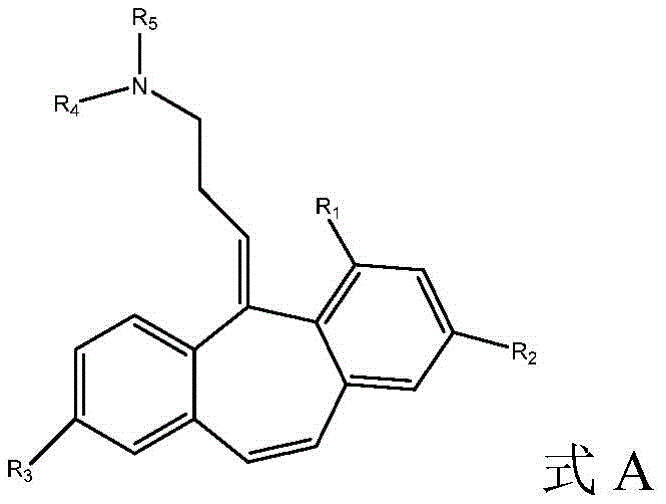
and pharmaceutically acceptable salts thereof. In some embodiments of the present invention, the,
R1selected from H, C1-4-alkyl and C1-4-an alkoxy group;
R2selected from H, Br, (CH)2)nCO2R, wherein n is 0 to 3and
R=C1-4alkyl radical, C1-4-alkoxy and halogen;
R3selected from H, C1-4-alkyl, OH and OCOR, wherein R ═ C1-4-an alkyl group;
R4is C1-4-alkyl, wherein if R is4Is ethyl, the terminal carbon may be optionally substituted one to three times with fluorine; and is
R4And R5Together form a compound substituted by 1 or more fluorine and optionally further substituted by methyl, methoxy, CF3Or CHF2Substituted 4-membered saturated rings.
In another embodiment, the amitriptyline analog compound of formula B

And pharmaceutically acceptable salts thereof, wherein:
R1selected from H, C1-4-alkyl and C1-4-an alkoxy group;
R2selected from H, Br, (CH)2))nCO2R, wherein n is 0 to 3and R is C1-4Alkyl radical, C1-4-alkoxy and halogen;
R3selected from H, C1-4-alkyl, OH and OCOR, wherein R ═ C1-4-an alkyl group;
R4is C1-4-alkyl, wherein if R is4Is ethyl, the terminal carbon may be optionally substituted one to three times with fluorine; and is
R4And R5Together form a compound substituted by 1 or more fluorine and optionally further substituted by methyl, methoxy, CF3Or CHF2Substituted 4-membered saturated rings.
Drawings
Figure 1 shows two metabolic pathways for the breakdown of cyclobenzaprine in humans.
Figure 2 shows the structures of four cyclobenzaprine analogues and their anti-5-HT 2a activity.
Detailed Description
In humans, cyclobenzaprine is rapidly broken down by 2 metabolic pathways (fig. 1).
The non-cyclobenzaprine metabolite formed by pathway b (N-dealkylation) has a much longer half-life of about 48 hours. Patients treated by oral cyclobenzaprine received oral doses sufficient to treat sleep disorders associated with PTSD, with lethargy occurring the next day due to accumulation of non-cyclobenzaprine. Accordingly, one aspect disclosed herein is an analog of cyclobenzaprine (or a small molecule with similar pharmacodynamic properties) that causes little or no drowsiness by altering the metabolic profile of cyclobenzaprine.
Cyclobenzaprine analogs demonstrating inhibition of the 5HT2a receptor are disclosed herein (with respect to the structure and anti-5 HT2a activity of some of the analogs and cyclobenzaprine disclosed herein, see fig. 2.) β -fluoroalkyl groups in all 4 molecules, as well as azetidine rings in TXCB-2 and TXAA-2, are expected to reduce the rate of metabolism of α -nitrogen, thereby reducing the rate of formation of undesirable non-cyclobenzaprine-like metabolites.
The present disclosure relates to cyclobenzaprine analogs having the general formula a shown below

In another aspect, the disclosure relates to amitriptyline analogs having the general formula B shown below

Wherein for formula a and formula B:
R1is H, C1-4Alkyl radical, C1-4-an alkoxy group; r2Is H, Br, (CH)2)nCO2R, wherein n is 0 to 3and R is C1-4Alkyl radical, C1-4-alkoxy, halogen; r3Is H, C1-4-alkyl, OH, OCOR, wherein R ═ C1-4-an alkyl group; r4Is C1-4-alkyl, wherein if R is4Is ethyl, the terminal carbon may be optionally substituted one to three times with fluorine; and R is5Is C1-4-an alkyl group; r4And R5Together may form a fused 4-membered saturated ring optionally substituted with fluorine.
In one embodiment, R1、R2And R3Is H, R4Is C1-4-alkyl, and R5Is C1-4-an alkyl group.
In another embodiment, R1、R2And R3Is H, R4Is substituted by fluorine and optionally by methyl, methoxy, CF3Or CHF2Substituted ethyl, and R5Is C1-4-an alkyl group.
In another embodimentIn, R1、R2And R3Is H, R4Is ethyl optionally substituted by fluorine, and R5Is methyl.
In yet another embodiment, R1、R2And R3Is H, and R4And R5Together form a fused 4-membered saturated ring optionally substituted with fluorine.
In the examples, R1、R2And R3Is H, R4Is C1-4-alkyl, and R5Is C1-4-an alkyl group.
In another embodiment, R1Is C1-4-alkyl, R2Is H, R3Is C1-4-alkoxy, R4Is C1-4-alkyl, and R5Is C1-4-an alkyl group.
In another embodiment, R1Is C1-4-alkyl, R2Is H, R3Is OCOR, wherein R ═ C1-4-alkyl, R4Is C1-4-alkyl, and R5Is C1-4-an alkyl group.
In yet another embodiment, R1Is C1-4-alkyl, R2Is (CH)2)nCO2R, wherein n is 0 and R is methyl, R3Is H, R4Is C1-4-alkyl, and R5Is C1-4-an alkyl group.
In another embodiment, R1Is C1-4-alkyl, R2Is C1-4-alkoxy, R3Is H, R4Is C1-4-alkyl, and R5Is C1-4-an alkyl group.
In another embodiment, R1Is C1-4-alkoxy, R2Is H, R3Is H, R4Is C1-4-alkyl, and R5Is C1-4-an alkyl group.
In the examples, R1Is C1-4-alkyl, R2Is H, R3Is OH, R4Is C1-4-alkyl, and R5Is C1-4-an alkyl group.
In another embodiment, R1Is C1-4-alkyl, R2Is (CH)2)nCO2R, wherein n is 0 and R is C1-4-alkyl, R3Is H, R4Is C1-4-alkyl, and R5Is C1-4-an alkyl group.
In another embodiment, R1Is H, R2And R3Is C1-4-alkoxy groups.
In the examples, R1Is C1-4-alkyl, R2Is Br, R3Is H, R4Is C1-4-alkyl, and R5Is C1-4-an alkyl group.
Another aspect of the disclosure is deuterated compounds of formula a and formula B. Deuterated drugs are small molecule drug products wherein one or more hydrogen atoms contained in the drug molecule have been replaced with deuterium, which is its heavier stable isotope. The half-life of deuterium containing drugs may be longer because the metabolic rate of the drug is lower.
In another aspect, the disclosure relates to deuterated compounds having the general formula C shown below

Wherein R is1-R3The same as formula A.
R4And R5Is deuterated as follows:
R4=R5=CD3
R4,R5=CD2CDFCD2
R4,R5=CD2CD2CD2
in another aspect, the disclosure relates to deuterated compounds of general formula D shown below

R1-R3The same as formula B.
R4And R5Is deuterated as follows:
R4=R5=CD3
R4,R5=CD2CDFCD2
R4,R5=CD2CD2CD2
R4=CD3,R5=CD2CHF2
in some aspects, disclosed herein are (2, 2-difluoro-ethyl) - [3- (10, 11-dihydro-dibenzo [ a, d ] cyclohepten-5-ylidene) -propyl ] -methyl-amine; the hydrochloride salt is shown in formula I. In some aspects, the (2, 2-difluoro-ethyl) - [3- (10, 11-dihydro-dibenzo [ a, d ] cyclohepten-5-ylidene) -propyl ] -methyl-amine disclosed herein is a free base or salt of a pharmaceutically acceptable acid other than hydrochloric acid, preferably, but not limited to, nitric acid, sulfuric acid, methanesulfonic acid, ethanesulfonic acid, hydroxyethanesulfonic acid, sulfosalicylic acid, ethanedisulfonic acid, methanesulfonic acid, or trifluoroacetic acid.
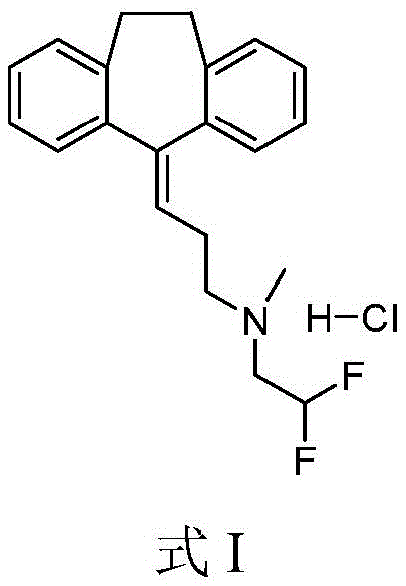
In some aspects, disclosed herein is a pharmaceutical composition comprising (2, 2-difluoro-ethyl) - [3- (10, 11-dihydro-dibenzo [ a, d ] cyclohepten-5-ylidene) -propyl ] -methyl-amine; hydrochloride salt with a pharmaceutically acceptable carrier, diluent or excipient. In some aspects, the (2, 2-difluoro-ethyl) - [3- (10, 11-dihydro-dibenzo [ a, d ] cyclohepten-5-ylidene) -propyl ] -methyl-amine disclosed herein is a pharmaceutical composition comprising a free base or salt of a pharmaceutically acceptable acid other than hydrochloric acid, preferably, but not limited to, nitric acid, sulfuric acid, methanesulfonic acid, ethanesulfonic acid, hydroxyethanesulfonic acid, sulfosalicylic acid, ethanedisulfonic acid, methanesulfonic acid, or trifluoroacetic acid; and a pharmaceutically acceptable carrier, diluent or excipient.
In some aspects, disclosed herein are (3-dibenzo [ a, d ] cyclohepten-5-ylidene-propyl) - (2, 2-difluoro-ethyl) -methyl-amine; the hydrochloride salt is shown in formula II. In some aspects, disclosed herein is (3-dibenzo [ a, d ] cyclohepten-5-ylidene-propyl) - (2, 2-difluoro-ethyl) -methyl-amine as the free base or salt of a pharmaceutically acceptable acid other than hydrochloric acid, preferably but not limited to nitric acid, sulfuric acid, methanesulfonic acid, ethanesulfonic acid, hydroxyethanesulfonic acid, sulfosalicylic acid, ethanedisulfonic acid, methanesulfonic acid, or trifluoroacetic acid.

In some aspects, disclosed herein is a pharmaceutical composition comprising (3-dibenzo [ a, d ] cyclohepten-5-ylidene-propyl) - (2, 2-difluoro-ethyl) -methyl-amine; hydrochloride salt with a pharmaceutically acceptable carrier, diluent or excipient. In some aspects, the (3-dibenzo [ a, d ] cyclohepten-5-ylidene-propyl) - (2, 2-difluoro-ethyl) -methyl-amine disclosed herein is a pharmaceutical composition comprising a free base or salt of a pharmaceutically acceptable acid other than hydrochloric acid, preferably but not limited to nitric acid, sulfuric acid, methanesulfonic acid, ethanesulfonic acid, hydroxyethanesulfonic acid, sulfosalicylic acid, ethanedisulfonic acid, methanesulfonic acid, or trifluoroacetic acid; and a pharmaceutically acceptable carrier, diluent or excipient.
In some aspects, disclosed herein is 1- [3- (10, 11-dihydro-dibenzo [ a, d ] cyclohepten-5-ylidene) -propyl ] -3-fluoro-azetidine, an oxalate salt as shown in formula III. In some aspects, 1- [3- (10, 11-dihydro-dibenzo [ a, d ] cyclohepten-5-ylidene) -propyl ] -3-fluoro-azetidine disclosed herein is a free base or salt of a pharmaceutically acceptable acid other than a herbicidal acid, including but not limited to malic acid, maleic acid, methanesulfonic acid, ethanesulfonic acid, hydroxyethanesulfonic acid, methanesulfonic acid, gluconic acid, or tartaric acid.

In some aspects, disclosed herein is a pharmaceutical composition comprising 1- [3- (10, 11-dihydro-dibenzo [ a, d ] cyclohepten-5-ylidene) -propyl ] -3-fluoro-azetidine, an oxalate salt with a pharmaceutically acceptable carrier, diluent, or excipient. In some aspects, 1- [3- (10, 11-dihydro-dibenzo [ a, d ] cyclohepten-5-ylidene) -propyl ] -3-fluoro-azetidine disclosed herein is a pharmaceutical composition comprising a free base or salt of a pharmaceutically acceptable acid other than oxalic acid, including, but not limited to, malic acid, maleic acid, methanesulfonic acid, ethanesulfonic acid, hydroxyethanesulfonic acid, methanesulfonic acid, gluconic acid, or tartaric acid; and a pharmaceutically acceptable carrier, diluent or excipient.
In some aspects, disclosed herein is 1- (3-dibenzo [ a, d ] cyclohepten-5-ylidenepropyl) -3-fluoro-azetidine, an oxalate salt as shown in formula IV. In some aspects, the 1- (3-dibenzo [ a, d ] cyclohepten-5-ylidene-propyl) -3-fluoro-azetidines disclosed herein are free bases or salts of pharmaceutically acceptable acids other than herbicidal acids, including, but not limited to, malic acid, maleic acid, methanesulfonic acid, ethanesulfonic acid, hydroxyethanesulfonic acid, methanesulfonic acid, gluconic acid, or tartaric acid.

In some aspects, disclosed herein is a pharmaceutical composition comprising 1- (3-dibenzo [ a, d ] cyclohepten-5-ylidene-propyl) -3-fluoro-azetidine, an oxalate salt with a pharmaceutically acceptable carrier, diluent, or excipient. In some aspects, 1- [3- (10, 11-dihydro-dibenzo [ a, d ] cyclohepten-5-ylidene) -propyl ] -3-fluoro-azetidine disclosed herein is a pharmaceutical composition comprising a free base or salt of a pharmaceutically acceptable acid other than oxalic acid, including, but not limited to, malic acid, maleic acid, methanesulfonic acid, ethanesulfonic acid, hydroxyethanesulfonic acid, methanesulfonic acid, gluconic acid, or tartaric acid; and a pharmaceutically acceptable carrier, diluent or excipient.
Additional compounds disclosed herein include the following:
TABLE 1 cyclobenzaprine and amitriptyline analogs


In one aspect, disclosed herein is a method for treating or preventing post-traumatic stress disorder (PTSD) or one of its symptoms comprising administering to a human in need of such treatment a pharmaceutical composition comprising an analog of cyclobenzaprine and/or amitriptyline as defined in the disclosure and claims, which reduces the metabolic rate of α -nitrogen, thereby reducing the rate of formation of undesirable non-cyclobenzaprine-like metabolites in some embodiments of this aspect, the analog is (2, 2-difluoro-ethyl) - [3- (10, 11-dihydro-dibenzo [ a, d ] cyclohepten-5-ylidene) -propyl ] -methyl-amine, hydrochloride, (3-dibenzo [ a, d ] cyclohepten-5-ylidene-propyl) - (2, 2-difluoro-ethyl) -methyl-amine, hydrochloride,/[ 3- (10, 11-dihydro-dibenzo [ a, d ] cyclohepten-5-ylidene) -propyl ] -3-fluoro-azetidine, 1- (3-dihydro-dibenzo [ a, d ] cyclohepten-5-ylidene) -propyl ] -3-fluoro-azetidine, or 1- (3-dibenzo [ a, d ] cycloheptene-5-ylidene) -propyl ] -methyl-amine, as shown in figures as non-oxalates.
The term "sleep disorder" encompasses symptoms including difficulty falling asleep, early waking insomnia, nightmare, and poor sleep quality. Quality of sleep ("sleep disturbance") can be determined, among other things, by asking whether the patient is "never", "little", "often or often" or "always" tired or not alive when waking up. The score for a "frequent or usual" or "always" reply may be positive and the score for other replies may be negative. The patient's health report or the report that is relieved from the "numb" or "dull" sensation, the "exhausted" sensation, and the feeling of difficulty concentrating on waking is an indication of better sleep quality or profound and exciting sleep. A scale commonly used to assess sleep quality, the functional outcome questionnaire for sleep (FOSQ), is described in Weaver et al (1997) instruments for measuring functional status outcomes of diseases of excessive sleepiness, 20(10), 835-43.
The term "non-sleep disorder" encompasses conditions comprising: repeated and intrusive painful recall of events including images, ideas or perceptions; exhibiting or feeling the sensation as if the traumatic event is reproducing (including re-experiencing experiences experiencing, hallucinations, illusions and wandering flashback segments (including those occurring when waking or drinking), generating intense psychological distress upon exposure to internal or external cues indicative of or resembling an aspect of a traumatic event, generating a physiological response upon exposure to internal or external cues indicative of or resembling an aspect of a traumatic event, continuously avoiding irritation associated with trauma and numbing of general responses (absence prior to trauma) as shown by three (or more) of (1) difficulty falling asleep or keeping asleep, (2) irritability or anger outbreak, (3) difficulty concentrating, (4) high alertness, or (5) excessive response to startle, persistent symptom of increased wakefulness (absence prior to trauma), as shown by two (or more) difficulty falling asleep or keeping sleep, Irritability or angry outbreaks, difficulty concentrating, high alertness, or excessive responsiveness to startle. These symptoms are typically measured using a clinician-administered PTSD scale (Blake et al, (1995) The development of The clinician-administered PTSD scale (Journal of traumatic stress, 8, 75-90).
The cyclobenzaprine and amitriptyline analogs disclosed herein include metabolites, prodrugs, and analogs thereof having one or more hydrogen atoms replaced with deuterium. Methods for making Prodrugs are well known in the art (e.g., Balant, L.P., "Prodrugs for the improvement of Drug Absorption by Different Routes of Administration,". Eur. J. Drug Metab. Pharmacokinet. 15: 143. 153 (1990); and Bundgaard, H., "New Chemical methods in Prodrug Design" (Novel Chemical applications in Prodrug Den.), "Future Drugs (Drugs of the Future): 16: 443. 458 (1991); which are incorporated herein by reference).
As used herein, for purposes of the present disclosure, a "therapeutically effective dose" of a cyclobenzaprine analog and or an amitriptyline analog refers to an amount of a compound that prevents or alleviates or eliminates or interferes with one of the symptoms associated with PTSD. A physician can readily determine when to prevent or alleviate or eliminate symptoms, for example, by clinical observation of the subject or by a subject's reporting of symptoms during the course of treatment. One skilled in the art can readily determine an effective dose of cyclobenzaprine analog to be administered by considering factors such as the size, weight, age, and sex of the subject, the degree of disease penetration or persistence, and the severity of symptoms, as well as the route of administration. Typically, a therapeutically effective dose of the cyclobenzaprine analog administered to the subject is between 0.1 mg/day to about 50 mg/day, 0.5 mg/day to about 30 mg/day, or 1 mg/day to 20/day. Higher or lower dosages are also contemplated.
In one embodiment, the cyclobenzaprine analog and or the amitriptyline analog are administered at very low doses to minimize side effects observed at higher doses. The very low dose comprises a dose of less than 5 mg/day or less than 2.5 mg/day. Even lower doses are also contemplated. Generally, cyclobenzaprine analog and or amitriptyline analog therapy can be administered indefinitely to relieve the symptoms of interest, and the frequency of doses can be varied as needed. The treatment period should be as long as possible to alleviate one or both of the PTSD symptoms, and the cyclobenzaprine analog is administered at night and at the appropriate dose.
In another embodiment of the invention, the pharmaceutical comprises α -1-adrenergic receptor antagonist, β -adrenergic antagonist, anticonvulsant, selective serotonin reuptake inhibitor or serotonin-norepinephrine reuptake inhibitor, including but not limited to bupropion (at a dose between about 105 mg/day and 450 mg/day), citalopram (at a dose between about 10 mg/day and 40 mg/day), desvenlafaxine (at a dose between about 50 mg/day and 400 mg/day), duloxetine (at a dose between about 40 mg/day and 120 mg/day), escitalopram (at a dose between about 10 mg/day and 20 mg/day), fluoxetine (at a dose between about 20 mg/day and 80 mg/day), and valnemulin (at a dose between about 400 mg/day) and about 600 mg/day), escitalopram (at a dose between about 500 mg/day), valnemulin (at a dose between about 400 mg/day and about 400 mg/day), and about 200 mg/day, including between 400 mg/day, 600 mg/day, 400 mg/day, 600 mg/day, and 1200 mg/mg of bupropion (between 400 mg/day), and 200 mg/day of valnemadefovir (between 400 mg/day), and 200 mg/mg of.
In another aspect, the present invention may be used to treat or prevent the development (onset, consolidation or persistence) of PTSD symptoms following a traumatic event. A traumatic event is defined as an immediate personal experience involving actual or threatening death or serious injury, or other threat to physical integrity; or to witness events involving death, injury, or threatening the physical integrity of others; or to learn about unexpected or violent death, serious injury or death or injury threat experienced by family members or other close partners. Traumatic events that are directly experienced include, but are not limited to, military combat, violent personal attack (sexual assault, personal attack, robbery, murder robbery), being kidnapped, being detained as hostage, terrorist attack, crime, being contraindicated as a captive or centralized operation, natural or man-made disaster, serious car accident, or being diagnosed with a life threatening illness. For children, sexual trauma events may involve a dysplastic sexual experience without threatening or actual violence or injury. Sighting events include, but are not limited to, observing that others suffer serious injury or non-natural death from a violent assault, accident, war, or disaster, or an accidental sighting of a body part of a cadaver or cadaver. Events experienced by others that are known include, but are not limited to, violent physical attacks, serious accidents, or serious injuries experienced by family members or close friends; understanding the sudden unexpected death of a family member or close friend; or to learn that a person's children have life-threatening illnesses. When the stressors are artificially designed (e.g., torturous, rape), the condition can be particularly severe or of long duration.
PTSD symptoms begin to appear immediately after a traumatic event during which they appear and become increasingly severe. It is believed that there is a "learning" or strengthening process in which the memory of the wound is deeply impressed into the brain. As these memories become more stable, the severity and frequency of symptoms such as flashback and nightmare also increase. It is believed that intervention during this critical time may prevent some patients from developing fully mature PTSD. Consolidation of PTSD symptoms typically occurs within weeks and months after a traumatic event. The human memory of the event is consolidated into a highly vivid and concrete memory that recurs increasingly frequently in the form of a flashback or nightmare. During this period, the symptoms of hyperresponsiveness and avoidance behavior become increasingly severe and disabling. Once the traumatic memory is consolidated, PTSD symptoms persist, and symptoms that are re-experienced (flashback and nightmare) and overreacting persist and remain at a level that causes functional disability to the patient.
By the methods of the invention, different stages of PTSD development may be treated with pharmaceutical compositions comprising cyclobenzaprine analogs at different time intervals following a traumatic event. For example, to treat PTSD in the initial stage, it is desirable to administer a cyclobenzaprine analog and or an amitriptyline analog to a subject in need thereof shortly after a re-traumatic event (e.g., within one week, within two weeks, within three weeks, or within four weeks, or more). To treat the consolidated phase of PTSD, the cyclobenzaprine analog must be administered after the traumatic event and after the period of symptom development (e.g., within the first month, within the second month, or within the third month, or longer). Typically, for the treatment of a persistent phase PTSD, the cyclobenzaprine analog is administered within 3 months or more (e.g., within the third month, within the fourth month, or within the fifth month or more) after the traumatic event. As a result of cyclobenzaprine analog treatment in the initial, consolidation or persistence phase, PTSD symptoms will be improved or eliminated.
The methods include administering to a human in need of such treatment a pharmaceutical composition including a cyclobenzaprine analog disclosed herein in a therapeutically effective amount and in a therapeutically acceptable carrier between 0.1 mg/day to about 50 mg/day, 0.5 mg/day to about 30 mg/day, or 1 mg/day to 20 mg/day, also contemplated for higher or lower doses in one particular embodiment, a cyclobenzaprine analog is administered at a very low dose to minimize side effects observed at higher doses, the very low dose includes less than 10 mg/day or less than 5 mg/day or less than 2.5 mg/day, even further contemplated for lower doses in another embodiment of the invention, the pharmaceutical administration of a cyclobenzaprine analog and/or an amitriptyline analog and/or a pharmaceutically acceptable carrier may include an α -1-fonner antagonist, β -32 mg/day, and a selective antagonist (between 200 mg/day), between 200 mg/day, and 200 mg/day of the selective antagonist (between 200 mg/day), between 200 mg/day, 200 mg/day, and 200 mg/day of the pharmaceutical administration of the non-mg/day of the non-200 mg/day of the non-parenteral (including the non-parenteral (non-parenteral) and non-parenteral (non-parenteral) and non-parenteral (non-parenteral.
In a further aspect, the invention is a pharmaceutical composition comprising a therapeutically effective amount of a cyclobenzaprine analog and/or an amitriptyline analog, typically the amount of cyclobenzaprine analog in the pharmaceutical composition is between 0.1mg to about 50mg, 0.5mg to about 30mg, or between 1mg and 20mg, further contemplated are higher or lower doses, in one particular embodiment the amount of cyclobenzaprine analog and/or amitriptyline analog is very low to minimize side effects observed with higher amounts, the very low amount is less than 10mg or less than 5mg or less than 2.5mg, even further contemplated are lower amounts, in another embodiment of the invention the cyclobenzaprine analog is combined with a drug that can further alleviate the symptoms of PTSD, the drug comprises α -1-adrenergic receptor antagonist, β -adrenergic receptor antagonist, an anticonvulsant, an selective inhibitor, or a selective inhibitor comprising a selective amount of 1-adrenergic receptor antagonist (including, but not limited to, 400mg to 1200mg of escitalopram), 400mg to 1200mg, 400mg to 1200mg of a selective inhibitor comprising a properdine (exemplified by 400mg) and 400mg of a properdine.
Any suitable route of administration may be used to provide the patient with an effective dose of the cyclobenzaprine analog and or the amitriptyline analog. For example, oral, rectal, parenteral, transdermal, subcutaneous, sublingual, intranasal, intramuscular, intrathecal and the like may be suitably employed. The term parenteral as used herein includes subcutaneous, intradermal, intravenous, intramuscular, intraarticular, intrasynovial, intrasternal, intrathecal, intralesional and intracranial injection or infusion techniques. The dosage form comprises a tablet, such as a scored tablet, a coated tablet or an orally dissolving tablet; films, caplets, capsules (e.g., hard gelatin capsules), lozenges, dragees, dispersions, suspensions, solutions, patches, and the like, comprising sustained release formulations well known in the art. In a preferred embodiment, the dosage form is an orally dissolving tablet or film.
By "pharmaceutically acceptable carrier" is meant any diluent or excipient that is compatible with the other ingredients of the formulation and not deleterious to the recipient thereof. Pharmaceutically acceptable carriers can be selected on the basis of the desired route of administration according to standard pharmaceutical practice. The pharmaceutical composition for parenteral administration of the present invention may take the form of an aqueous or non-aqueous solution, dispersion, suspension or emulsion. In preparing the pharmaceutical compositions of the present invention for parenteral administration, the cyclobenzaprine analog and or the amitriptyline analog can be admixed with a suitable pharmaceutically acceptable carrier such as water, oils (particularly vegetable oils), ethanol, saline solutions (e.g., physiological saline), aqueous glucose solutions (dextrose) and related sugar solutions, glycerol or glycols such as propylene glycol or polyethylene glycol. The pharmaceutical compositions of the present invention for parenteral administration preferably contain a water-soluble salt of a cyclobenzaprine analog. Stabilizers, antioxidants and preservatives may also be added to pharmaceutical compositions for parenteral administration. Suitable antioxidants include sulfites, ascorbic acid, citric acid and its salts and sodium EDTA. Suitable preservatives include benzalkonium chloride, methyl or propyl paraben and chlorobutanol.
In preparing the pharmaceutical compositions of the present invention for oral administration, the cyclobenzaprine analogs can be combined with one or more solid or liquid inactive ingredients to form tablets, capsules, pills, powders, granules, or other suitable oral dosage forms. For example, the cyclobenzaprine analog and or the amitriptyline analog can be combined with at least one pharmaceutically acceptable carrier, such as a solvent, filler, binder, humectant, disintegrant, solution retarder, absorption enhancer, humectant absorber, or lubricant. In one embodiment, the cyclobenzaprine analog is combined with calcium carboxymethylcellulose, magnesium stearate, mannitol, or starch and made into tablets by conventional tableting methods.
The pharmaceutical compositions of the present invention may be formulated to provide oral absorption comprising a film formulation and an oral dissolving tablet, providing faster absorption than the oral/GI route and bypassing the first-pass hepatic metabolism of cyclobenzaprine by cytochrome P-4503 a4, which is the base of CYP 3A. Preferably, the controlled release pharmaceutical compositions of the present invention are capable of releasing a cyclobenzaprine analog into a subject's body at a rapid onset of action, so as to maintain a substantially constant or desired pharmacological activity over a given period of time, reduce or eliminate the effect of food on absorption, and provide a shortened terminal elimination phase for elimination of drugs and metabolites from the body.
The pharmaceutical compositions of the present invention may also be formulated to provide controlled release of the cyclobenzaprine analog and or the amitriptyline analog following administration of the composition to a subject. Preferably, the controlled release pharmaceutical compositions of the present invention are capable of releasing a cyclobenzaprine analog into a subject at a desired rate so as to maintain a substantially constant or desired pharmacological activity over a given period of time. As used herein, a "controlled release component" is a compound, such as a lipid or a mixture of lipids, liposomes, and/or microspheres, that induces controlled release of the cyclobenzaprine analog into a subject upon exposure to a certain physiological compound or condition. For example, the controlled release component may be biodegradable, activated by exposure to a certain pH or temperature, exposure to an aqueous environment, or exposure to an enzyme.
Formulations of the controlled release pharmaceutical compositions of the present invention are within the skill of the art. Controlled release formulations suitable for use in the present invention are described, for example, in U.S. patent No. 5,674,533 (liquid dosage form), U.S. patent No. 5,591,767 (reservoir transdermal patch), U.S. patent No. 5,120,548 (device comprising swellable polymer), U.S. patent No. 5,073,543 (ganglioside liposome carrier), U.S. patent No. 5,639,476 (stable solid formulation coated with hydrophobic acrylic polymer), and enteric coated capsules for rapid release in the duodenum, the entire disclosures of which are incorporated herein by reference. Enteric coated capsules may contain the free base or free base precursor of the cyclobenzaprine analog, such as the cyclobenzaprine analog salt/mannitol cocrystal in combination with dipotassium phosphate. The free base form of the cyclobenzaprine analog should penetrate the duodenal lumen faster than the salt form, achieving a maximum plasma concentration above any salt form.
Biodegradable microparticles may also be used to formulate controlled release pharmaceutical compositions suitable for use in the present invention, for example as described in U.S. patent nos. 5,354,566 and 5,733,566, the entire disclosures of which are incorporated herein by reference.
In one embodiment, the controlled release pharmaceutical composition of the present invention comprises a cyclobenzaprine analog and a controlled release component. As used herein, a "controlled release component" is a compound that induces controlled release of cyclobenzaprine into a subject upon exposure to a certain physiological compound or condition, such as a polymer, polymer matrix, gel, permeable membrane, liposome, and/or microsphere. For example, the controlled release component may be biodegradable, activated by exposure to a certain pH or temperature, exposure to an aqueous environment, or exposure to an enzyme. An example of a controlled release component that is activated by exposure to a certain temperature is a sol-gel. In this example, the cyclobenzaprine analog is incorporated into a sol-gel matrix that is solid at room temperature. Implanting the sol-gel matrix into a subject having a body temperature high enough to induce the sol-gel matrix to form a gel, thereby releasing the active ingredient into the subject.
In one embodiment, the pharmaceutical composition of the present invention may include a cyclobenzaprine analog and a micelle-forming component. Micelles containing cyclobenzaprine analogs in the stomach and proximal small intestine promote absorption. Examples of micellar components that are activated by exposure to a certain temperature are found in U.S. patent nos. 6,761,903; 6,720,001; 6,383,471; 6,309,663, respectively; 6,267,985, respectively; and 6,248,363, which are incorporated herein by reference. In this example, the cyclobenzaprine analog is incorporated into a soft gel capsule. Such components may mimic the increased absorption known as the "food effect", and such formulations may provide more predictable absorption by eliminating the "food effect" in dietary sources.
The compositions of the present invention may be administered by nasal spray or inhalation. Such compositions are prepared according to techniques well known in the art of pharmaceutical formulation and may be prepared as solutions in saline using benzyl alcohol or other suitable preservatives, absorption promoters to enhance bioavailability, fluorocarbons, and/or other solubilizing or dispersing agents known in the art.
In the prophylaxis or treatment of humans, the magnitude of the prophylactic or therapeutic dose of the active ingredient (i.e., the cyclobenzaprine analog or metabolite thereof) will vary with the type of affliction, the severity of the affliction in the patient, and the route of administration. The dosage and dosage frequency will also vary according to the age, weight and response of the individual patient. However, the dose is not equal to or greater than 5mg per day. In a preferred embodiment, one dose is taken while sleeping or several hours before sleeping, which helps to achieve a refreshing deep sleep. The sleep time may be any time during the day that a person sleeps for the longest time.
Any of the above treatments can be combined with psychotherapeutic intervention to improve treatment outcome. There is a particular need for psychotherapeutic interventions aimed at modifying the traumatic memory, reducing the emotional response to the traumatic memory, and comprising: psychological counseling, cognitive behavioral therapy and eye movement desensitization and reprocessing, systemic desensitization, relaxation training, biofeedback, cognitive processing therapy, stress prevention training, confidence training, exposure therapy, a combination of stress prevention training and exposure therapy, a combination of exposure therapy and relaxation training, and cognitive therapy. In each case, the goal of the intervention involves altering the traumatic memory or reducing the emotional response to the traumatic memory. The expected outcome is generally an improvement in terms of reducing invasive combat memory, physiological responses, anxiety, depression, and feeling of dismissal.
Pharmacogenomic assays for measuring the cytochromes CYP3a4, CYP1a2, CYP3A and CYP2G6 can be used to predict the metabolism of cyclobenzaprine analogs by certain patients in personalized medicine. Accordingly, the present invention is a method for selecting an effective dose of a cyclobenzaprine analog for administration to a human in need of such treatment to correct for changes in cyclobenzaprine metabolism. The method comprises obtaining a base sample from the human and identifying the human's CYP1a2, CYP3a4, CYP3A or CYP2G6 genotype, for example by using gene chip or PCR techniques, to identify alleles of one or more of the genes. Different alleles metabolize cyclobenzaprine at different rates. For individuals with cytochrome alleles identified for rapid metabolism of cyclobenzaprine analogs, higher doses of cyclobenzaprine analogs are administered. For individuals with alleles identified for slowly metabolizing cyclobenzaprine analogs, lower doses of cyclobenzaprine analogs are administered. The gene test can be sold with the product as a kit to a physician/laboratory testing service.
The present disclosure will now be described with respect to the following examples that illustrate some specific aspects and embodiments of the present application. However, it should be understood that the particularity described below does not supersede the generality of the preceding detailed description/summary of the aspects and embodiments of the present disclosure.
Examples of the invention
Purification of the trialkylamine end products of examples 1-4 and 7-18. As a free base, the trialkylamine end product may optionally be purified as follows: 1) silica gel chromatography was used for hexane-ethyl acetate, hexane-diethyl ether, dichloromethane-ethyl acetate, dichloromethane-methanol. Volatile trialkylamines, such as triethylamine, trimethylamine, or DIPEA, may optionally be added to the solvent at 1-3% by volume to improve separation.
2) Reverse phase chromatography was used on C18 silica or phenyl silica. As salts (including but not limited to oxalates, chlorides, or benzoates), the trialkylamine end products may be purified by recrystallization from a suitable solvent or solvent mixture including but not limited to isopropanol, methanol, ethanol, and mixtures thereof with ethyl acetate, chloroform, and/or toluene.
Example 1-TXAA-1, (2, 2-difluoro-ethyl) - [3- (10, 11-dihydro-dibenzo [ a, d ] cyclohepten-5-ylidene) -propyl ] -methyl-amine; preparation of hydrochloride salts
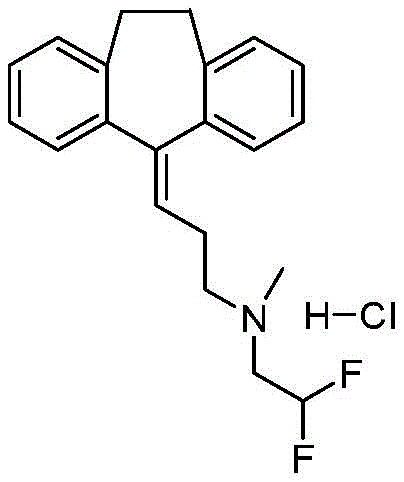
Nortriptyline HCl (1.80g, 6)00mmol) was suspended in anhydrous THF (20mL) and DIEA (2.30mL, 13.2mmol) was added at Room Temperature (RT) to give a suspension. The reaction mixture was briefly heated to gentle reflux, after which the suspension was retained. The suspension was cooled to 5 ℃, 2-difluoro-ethyl trifluoro-methanesulfonate (1.414mL, 6.60mmol) was added dropwise at 5 ℃, then the reaction mixture was allowed to warm slowly to RT and stirred at RT for 14 h, after which an amber solution with a small amount of suspension was obtained. Evaporation of the solvent in vacuo gave a solid which was washed with diethyl ether (Et)2O) (200mL), washed with water (40mL), brine (40mL), MgSO4Drying, evaporation of the solvent in vacuo gave an oil which was dissolved in Dichloromethane (DCM) (6mL) and passed through SiO using Hex-EtOAc (ethyl acetate)2Purification by chromatography gave an amber oil (1.05g, 3.2 mmol). Dissolving the oil in Et2O (3.0mL), cooled to 5 ℃ and Et was added dropwise with stirring21M HCl in O (6.4mL, 6.4mmol) to give the gum. The solvent was evaporated in vacuo to give the gum, which was then further evaporated in vacuo (0.5mm Hg) to give the title compound (1.150g, 53%) as an absorbent foam. LCMS: c21H23F2Expected mass of N: 327.18. experimental values: 328.2(M + H).1H NMR(dmso-d6):6.60(1H,t,J=54Hz),5.78(1H,t,J=7Hz),
TLC:DCM-MeOH-HNEt290:10:3, SM, Rf 0.35, product, Rf 0.80.
TLC: Hex-EtOAc, 80:20, sm.rf 0.0, product, Rf 0.38.
Example 2-TXCB-1, (3-dibenzo [ a, d ] cyclohepten-5-ylidene-propyl) - (2, 2-difluoro-ethyl) -methyl-amine; preparation of hydrochloride salts

Descyclobenzaprine (1.57g, 6.00mmol) was suspended in anhydrous Tetrahydrofuran (THF) (20mL) and N, N-Diisopropylethylamine (DIEA) (1.25mL, 7.20mmol) was added at RT to give a suspension. The reaction mixture was briefly heated to gentle reflux to give a cloudy solution, which was cooled to 5 deg.fTrifluoro-methanesulfonic acid 2, 2-difluoro-ethyl ester (1.414mL, 6.60mmol) was added dropwise at 5 ℃, then the reaction mixture was allowed to warm slowly to RT and stirred at RT for 15 hours before a suspension was obtained. Evaporation of the solvent in vacuo to give an oil, which was used in Et2O (120mL), washing with water (20mL), brine (20mL), MgSO4And (5) drying. The solvent was evaporated in vacuo to give an oil, which was dissolved in DCM (6mL) and passed through SiO with Hex-EtOAc2Purification by chromatography gave an amber oil (1.70g, 5.21 mmol). Dissolving the oil in Et2O (5.0mL), cooled to 5 ℃ and Et was added dropwise with stirring21M HCl in O (12mL, 12mmol) to give the gum. The solvent was evaporated in vacuo to give the gum, which was then further evaporated in vacuo (0.5mm Hg) to give the title compound (1.514g, 70%) as an absorbent foam. LCMS: c21H23F2Expected mass of N: 325.16. experimental values: 326.2(M + H).1H NMR(dmso-d6):6.5(1H,br),5.47(1H,t,7Hz),
TLC:DCM-MeOH-HNEt295:5:3, SM, Rf 0.30, product, Rf 0.85.
TLC: Hex-EtOAc, 80:20, SM.Rf 0.0, product, Rf 0.40.
Alternatively, the desired molecule is produced by combining a 3-fold excess of N- (2, 2-difluoroethyl) -methylamine (Yoshida et al, "Bioorganic and Medicinal Chemistry", 2006, volume 14 pp 8506-.
Example 3 preparation of TXAA-2, l- [3- (10, 11-dihydro-dibenzo [ a, d ] cyclohepten-5-ylidene) -propyl ] -3-fluoro-azetidine, oxalate salt

3-fluoro-azetidine was reacted using a sealed thick-walled glass reaction vessel; hydrochloride (0.974g, 8.73mmol), cesium carbonate (6.64g, 20.4mmol) and 5- (3-bromo-propylene) -10, 11-dihydro-5H-dibenzo[a,d]Synthesis of cycloheptene (1.823g, 5.82mmol) in Nordisk A/S-U.S. Pat. No. 5,595,989 was suspended in anhydrous acetonitrile (17.6mL) and stirred at 75 ℃ for 16 h to give a white suspension. The reaction mixture was cooled to RT, the solid was filtered off, washed three times with acetonitrile, the filtrate was concentrated to give an oil which was taken up in Et2Partition between O (120mL) and water (60 mL). The organic layer was washed with brine (60mL), MgSO4The organic layer was dried and the solvent was concentrated to give an oil which was further evaporated under vacuum at RT for 14 hours (0.1mm Hg) to remove 3-fluoro-azetidine to give an oil (1.88g, about 4.1mmol, LCMS purity about 70%). Dissolving the oil in Et2To the stirred mixture was added Et dropwise at RT using a syringe pump in O (41mL)20.156M oxalic acid (26.3mL, 4.11mmol) in O over 40 minutes gave a white suspension. The solid was filtered and washed with Et2O washes three times to give the oxalate salt as a fluffy white solid (1.63g, 4.10mmol, LCMS purity 90%). The solid was dissolved in 1N NaOH (41mL) and Et2Partition between O (100mL), wash the organic layer with water (50mL), brine (50mL), and MgSO4The organic layer was dried and the solvent was concentrated to give the free base as an oil. Dissolving the oil in Et2O (41mL) and Et in the same manner as described2Treatment of 0.156M oxalic acid (26.3mL, 4.11mmol) in O gave the title compound as a fluffy white solid (1.38g, 60%). LCMS: c21H22Quality calculation of FN: 307.17, measurement: 308.3(M + H)1H NMR(DMSO-d6):
Example 4 preparation of TXCB-2, 1- (3-dibenzo [ a, d ] cyclohepten-5-ylidene-propyl) -3-fluoro-azetidine, oxalate salt
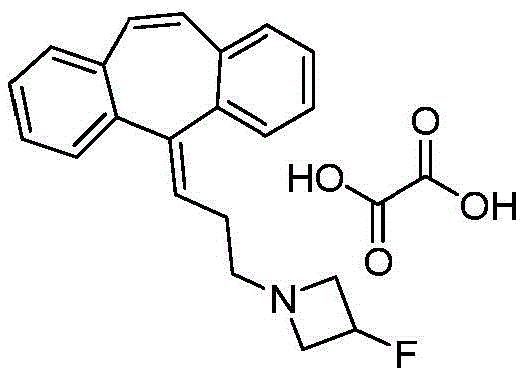
3-fluoro-azetidine was reacted using a sealed thick-walled glass reaction vessel; hydrochloride (977g, 8.76mmol), cesium carbonate (6.66g,20.45mmol) and 5- (3-bromo-propylene) -10, 11-dihydro-5H-dibenzo [ a, d ]]Synthesis of cycloheptene (1.818g, 5.84mmol) in Nordisk A/S-U.S. Pat. No. 5,595,989 suspended in anhydrousAcetonitrile (17.6mL) and stirring at 75 ℃ for 16 h to give a white suspension. The reaction mixture was cooled to RT, the solid was filtered, washed three times with acetonitrile, the filtrate was concentrated to give an oil, which was taken up in Et2Partition between O (120mL) and water (60 mL). The organic layer was washed with brine (60mL), MgSO4The organic layer was dried and the solvent was concentrated to give an oil which was further evaporated in vacuo at RT for 14 hours (0.1mm Hg) to remove 3-fluoro-azetidine to give an oil (1.643g, about 3.39mmol, LCMS purity about 63%). Dissolving the oil in Et2To the stirred mixture was added Et dropwise at RT using a syringe pump in O (41mL)20.156M oxalic acid (26.3mL, 4.11mmol) in O over 40 minutes gave a white suspension. The solid was filtered and washed with Et2O washes three times to give the oxalate salt as a white solid (1.60g, 4.04mmol, LCMS purity 90%). The solid was dissolved in 1N NaOH (41mL) and Et2Partition between O (100mL), wash the organic layer with water (50mL), brine (50mL), and MgSO4The organic layer was dried and the solvent was concentrated to give the free base as an oil (1.151g, 3.77 mmol). Dissolving the oil in Et2O (38mL) and Et in the same manner as described2Treatment of 0.156M oxalic acid (24.2mL, 3.77mmol) in O gave the title compound as a white solid (1.25g, 54%). LCMS: c21H20Quality calculation of FN: 305.16, measurement: 306.2(M + H),lH NMR(DMSO-d6):13C NMR(DMSO-d6):
example 5 preparation of 5- (3-bromo-d 5-propylidene) -5H-dibenzo [ a, d ] cycloheptene
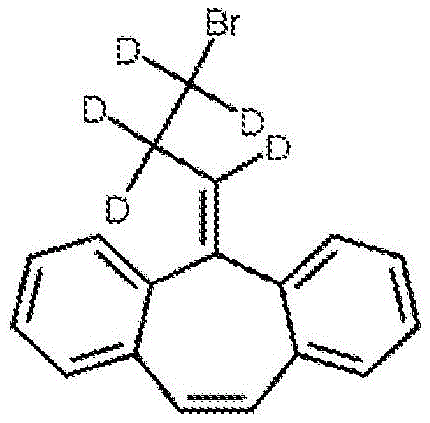
A solution of D5-cyclopropylmagnesium bromide in dry THF (prepared from D5 cyclopropylbromine (8.0g, 0.067mol), magnesium turnings (1.3g, 0.053mol) and dry THF (35ml) was placed under a nitrogen atmosphere. A solution of dibenzosuberene in dry THF (15ml) (6.0g, 0.028mol) was added dropwise and, upon completion of the addition, the mixture was heated under reflux for 30 minutes. The reaction mixture was cooled on an ice bath and saturated ammonium chloride (35ml) was added carefully. Will be provided withThe mixture was diluted with water (50ml) and extracted with diethyl ether (2X 50 ml). Washing the combined organic extracts with water and then with (Na)2SO4) Drying and evaporation of the solvent in vacuo afforded the crude 5-hydroxy-5- (d 5-cyclopropyl) -dibenzocycloheptene.
The alcohol (10 mmol) was mixed with CBr4(20 mmol), triphenylphosphine (Ph)3P) (20 mmol), N-Diisopropylethylamine (DIPEA) (20 mmol) and tributylphosphine (1 mmol) were combined in toluene (20mL) and heated at 100 ℃ for 1 hour. The reaction was stripped of solvent and the product was purified by silica chromatography in hexane-ethyl acetate. (adapted from N.Sakai, T.Maruyama, T.Konakahara, synthetic organic chemistry Kunststoff (Synlett), 2009, 2105-2106).
Alternatively, this conversion may be performed by: 1. by on CD3Repeated dissolution in OD and removal of the solvent to replace the OH of 5-hydroxy-5- (d 5-cyclopropyl) -dibenzocycloheptene with OD; trimethylsilyl bromides were treated as described by Anderson et al, U.S. Pat. No. 5,95989 (1995).
Bromocyclopropane-d 5 is commercially available from Toronto Research Chemicals # B682763
Dibenzosuberenes are commercially available from Sigma Aldrich (Sigma Aldrich).
Example 6 preparation of 3-fluoro-pentadeuterated-azetidine deuterated chloride salt
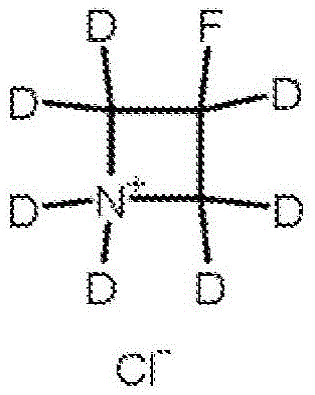
Epichlorohydrin-d 5 and diphenylmethylamine were converted into N-diphenylmethyl-3-hydroxy-d 5-azetidine deuterochloride using the procedure in Bartnik and Marchand, Rapid synthetic organic chemistry 1997pp 1029-1039. After neutralization, N-diphenylmethyl-3-hydroxy-d 5-azetidine was treated with bis (2-methoxyethyl) aminosulfurtrifluoride (defluorination) to form N-diphenylmethyl-3-fluoro-d 5-azetidine according to Singh and Shreeve, J.Fluorine Chemistry, VI16 pp 23-26 (2002). Deprotection with deuterium in deuterium chloride using Pd/C according to Bartnik and Marchand, journal of synthetic organic chemistry 1997pp 1029-1039, leads to the formation of 3-fluoro-penta-deuterated-azetidines, deuterated chlorides.
Epichlorohydrin-d 5 is commercially available from Santa Cruz Biotechnology.
Example 7 preparation of TXCB-2-D11, l- (3-dibenzo [ a, D ] cyclohepten-5-ylidene-D5-propyl) -3-fluoro-pentadeuterated-azetidine, deuterated oxalate
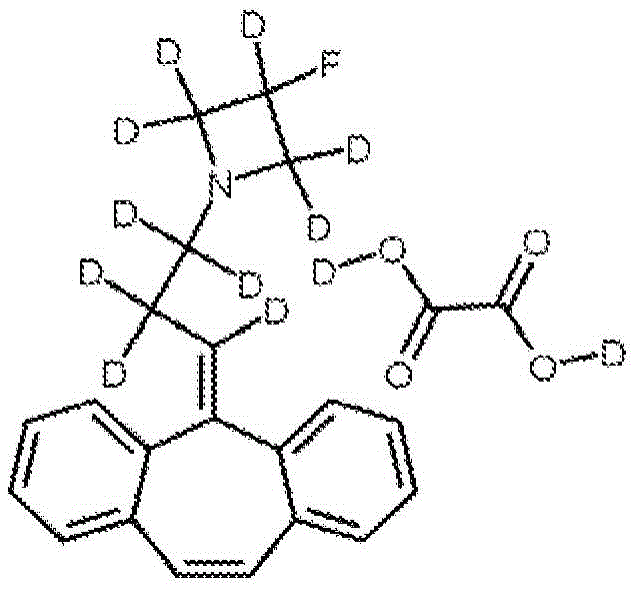
5- (3-bromo-d 5-propylidene) -5H-dibenzo [ a, d ] cycloheptene (from example 5) was combined with 3-fluoro-pentadeutero-azetidine, deuterated chloride salt (from example 6) using the procedure in example 4 to produce l- (3-dibenzo [ a, d ] cycloheptene-5-ylidene-d 5-propyl) -3-fluoro-pentadeutero-azetidine. This free base was combined with deuterated oxalic acid to afford the title compound.
Example 8 preparation of bis (methyl-D3) -11,12,12,13, 13-pentadeuterated-cyclobenzaprine
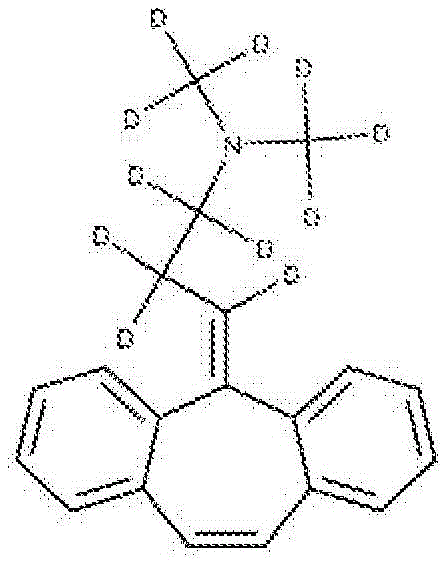
5- (3-bromo-D5-propylidene) -5H-dibenzo [ a, D ] cycloheptene (from example 5 combined with dimethylamine-D7 deuterochloride to give D-11 cyclobenzaprine using the procedure in example 4 this free base was combined with deuterooxalic acid to give the title compound.
dimethylamine-D7 deuterated chloride (MDL number MFCD04118250) dimethylamine-D7 is commercially available from Toronto research Chemicals, Sigma Aldrich.
Example 9-5-methyl-2-methoxy-cyclobenzaprine:

preparation of 5-methyl-2-methoxy-cyclobenzaprine

Methyl 2- [2- (3-methoxyphenyl) ethynyl ] -6-benzoate 1.2 equivalents of 3-methoxyphenylacetylene were combined with methyl 2-methyl-6-iodobenzoate in the presence of 3 equivalents of TBAF and 3 mol% of PdC12(PPh3)2 and stirred at 80 ℃ until the reaction was complete by TLC. (alternatively, methyl 2-methyl-6-bromobenzoate can be used instead of methyl 2-methyl-6-iodobenzoate.) the product was isolated by silica gel chromatography using hexane-ethyl acetate as solvent. (Y.Liang, Y. -X.Xie, J. -H.Li, J.org.chem., 2006,77, 379-381).

2- [2- (3-methoxyphenyl) ethynyl ] -6-methylbenzoic acid the ester was cleaved with 1 equivalent of LiOH in 1:1H 20/THF. The mixture was stirred at 0 ℃ for 1 hour and then left at 25 ℃ or 20 hours. The crude product was acidified with HCL, the solvent removed, dissolved in aqueous NaHC03, cooled and acidified to pH 2 to precipitate the product.

2- [2- (3-methoxyphenyl) ethyl ] -6-methylbenzoic acid

Use of a method in heterocyclic Compounds V91, pp 2172-9(2015) by Re (CO)5Cl converts the acid to the intermediate (3Z) -3- [ (3-methoxyphenyl) methylene]-7-methyl-1, 3-dihydro-2-benzofuran-1-one. This intermediate was purified by chromatography on SiO2 according to Noda et al, JOC V59 pp7968-7975, and reduced to the final product with Raney nickel and hydrogen.
2-methoxy-5-methyldibenzocyclohepten-11-one
Cyclization of 2- [2- (3-methoxyphenyl) ethyl ] -6-methylbenzoic acid to 2-methoxy-5-methyldibenzocyclohepten-11-one with polyphosphoric acid (PPA). This intermediate was dehydrogenated to the final product by chlorination with NBS in CC14 followed by removal of HCl with triethylamine. After the reaction with NBS, temperature adjustments were made immediately thereafter to avoid chlorination of the methyl groups. These two steps are described in detail in Noda et al, JOC V59 pp 7968-7975).
Optionally, as an alternative, 2-methoxy-5-methyldibenzosuberene-11-one can be prepared by methylation of 2-methoxy dibenzosuberene-11-one catalyzed by Fe (acac)3(5 mol%) and 4- (bis (2- (diphenylphosphoryl) phenyl) phosphoryl) -N, N-dimethylaniline (NMe2-TP) (5 mol%) in THF with 0.8 equivalents of trimethylaluminum under argon, followed by silica chromatography to separate 5-methyl and 4-methyl 2-methoxy dibenzosuberene-11-one. (the programme was adapted from Shang et al JACS V138 pp10132-10135 (2016)).

(E) -11- (3-bromopropylidene) -2-methoxy-5-methyldibenzocycloheptene-11-one was combined with cyclopropyl magnesium bromide in THF to form 2-methoxy-5-methyl 11-cyclopropyl-dibenzocycloheptene-2-ol: a solution of cyclopropylmagnesium bromide in dry THF (prepared from cyclopropylbromine (8.0g, 0.067mol), magnesium turnings (1.3g, 0.053mol) and dry THF (35ml) was placed under a nitrogen atmosphere. A solution of 2-methoxy-5-methyldibenzosuberin-11-one (6.0g, 0.028mol) in dry THF (15ml) was added dropwise and, upon completion of the addition, the mixture was heated under reflux for 30 minutes. The reaction mixture was cooled on an ice bath and saturated ammonium chloride (35ml) was added carefully. The mixture was diluted with water (50ml) and extracted with diethyl ether (2X 50 ml).
The combined organic extracts were washed with water, dried (Na2 SO4) and the solvent evaporated in vacuo to give 8.6g of 2-methoxy-5-methyl 11-cyclopropyl-dibenzocyclohepten-2-ol in crude form. (Novo Nordisk A/S-US 5595989). Optionally, this material is purified by silica chromatography. The alcohol was converted to the title product (adapted from N.Sakai, T.Maruyama, T.Konakahara, Synlett,2009, pp 2105-2106) using tributylphosphine, CBr4 and DIPEA.
Alternatively, concentrated aqueous hydrogen bromide may be used (NovoNordisk A/S-US 5595989). (the HBr method may result in H/D isotope exchanges when certain deuterated analogs are synthesized.)

5-methyl-2-methoxy-cyclobenzaprine dimethylamine hydrochloride (16mmol), cesium carbonate (6.66g,20.45mmol) and (E) -11- (3-bromopropylidene) -2-methoxy-5-methyldibenzocycloheptene (5.84mmol) were suspended in anhydrous acetonitrile (17.6mL) using a sealed thick-walled glass reaction vessel and stirred at 75 ℃ for 16 hours to give a white suspension. The reaction mixture was cooled to RT, the solid was filtered, washed three times with acetonitrile, the filtrate was concentrated to give an oil, which was partitioned between Et2O (120mL) and water (60 mL). The organic layer was washed with brine (60mL), dried over MgSO4, and the solvent was concentrated to give an oil which was further evaporated in vacuo for 14 hours (0.1mm Hg) at RT to give the desired product. A salt is formed with HBr or another acid and the product can then be recrystallized.

Optionally, the product can be made from 2-methoxy-5-methyldibenzocyclohepten-11-one and dimethylaminopropyl magnesium chloride in a 1-pot (1pot) procedure by employing the procedure for cyclobenzaprine (Jain et al, 2011, WO2012098563a 2). In a single vessel, 2-methoxy-5-methyldibenzosuberin-11-one was reacted with dimethylaminopropyl magnesium chloride at 0-15 ℃ for 30-90 minutes. The reaction mass is subjected to hydrolysis and dehydration reactions in aqueous 15-25% w/v hydrochloric acid by heating at a temperature of about 70-80 ℃ for 2-3 hours. After completion of the reaction, the reaction mass was neutralized by aqueous Na2CO3 solution and the product was extracted with dichloromethane. After complete removal of the solvent, the oil was dissolved in isopropanol and the mixture was acidified by slowly adding IPA HC1 solution with continuous stirring at 0-10 ℃ for 2-3 hours to completely precipitate. The precipitate was filtered, recrystallized from isopropanol, and dried to give the crude product. Optionally, the product is purified by recrystallization from isopropanol, by silica gel chromatography in a solvent containing 1-3% triethylamine, or both.
Example 10-preparation of 5-methyl-2-acetoxy-cyclobenzaprine (5-Me-2-AcO-Cbp):

5-methyl-2-hydroxy-cyclobenzaprine (example 14) was treated with acetic anhydride in the presence of DIPEA in a polar aprotic solvent such as THF, dioxane or DMF to form the final product. The product was purified by silica gel chromatography in the presence of 1-3% triethylamine, Cl8 silica reverse phase chromatography or oxalate recrystallization.
Example 11 preparation of 5-methyl-7-methoxycarbonyl-cyclobenzaprine (5-Me-7-OMe-Cbp)

t-Bu2PCl (0.3 mmol) and MeOH (20mL) were stirred in a pressure vessel at 25 ℃ under atmospheric pressure for 5 hours. 5-methyl-7-bromo-cyclobenzaprine (example 17, 20mmol) and Pd (OAc) as HCl salt were added2(0.1 mmol) and the solution was stirred at 115 ℃ for 18 h under 20 bar CO. (Wang et al, chemical communication (Comm.) V53, pp 7469-7472). The product was purified by silica gel chromatography in the presence of 1-3% triethylamine, C18 silica reverse phase chromatography or oxalate recrystallization.
EXAMPLE 12 preparation of 5-methyl-7-methoxy-cyclobenzaprine (5-Me-7-OMe-Cbp)

Using the procedure in example 9, phenylacetylene was used in place of 3-methoxyphenylacetylene and methyl 2-methyl-4-methoxy-6-iodobenzoate was used in place of methyl 2-methyl-6-iodobenzoate in the initial step.
Example 13-preparation of 5-methoxy-cyclobenzaprine (5-MeO-Cpb):

using the procedure in example 9, phenylacetylene was used in place of 3-methoxyphenylacetylene and methyl 2-methoxy-6-iodobenzoate was used in place of methyl 2-methyl-6-iodobenzoate in the initial step.
EXAMPLE 14 preparation of 5-methyl-2-hydroxy-cyclobenzaprine (2-OH-5-Me-Cbp)

5-methyl-2-methoxy-cyclobenzaprine (from example 9) was selectively demethylated using boron tribromide. Alternatively, lithium diphenylphosphinate may be used. The crude product is purified as the oxalate salt by recrystallization from a solvent such as isopropanol. Alternatively, reverse phase chromatography may be used.
Example 15 preparation of 5-methyl-2-butoxycarbonyl-cyclobenzaprine (5-Me-7-BuOCO-Cbp)
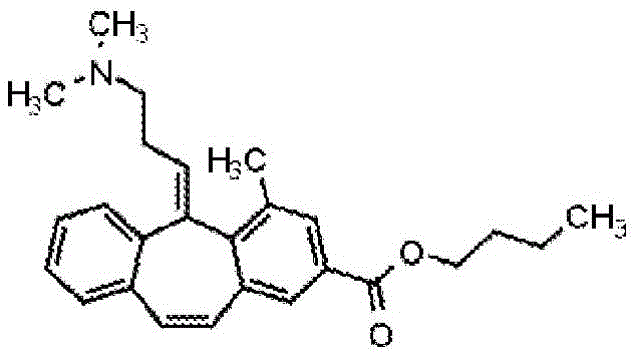
The product was prepared using the procedure in example 11 substituting n-butanol for methanol.
Example 16: preparation of 2, 7-dimethoxy-cyclobenzaprine (2,7-DiOMe-Cbp)
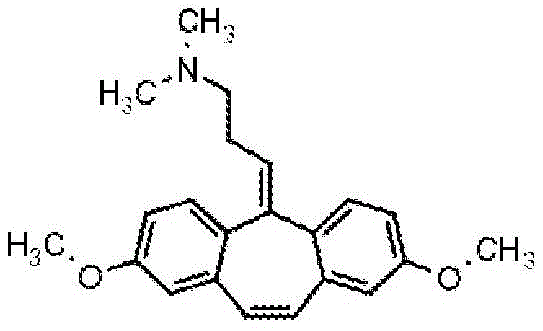
Using the procedure in example 9, methyl 2-methyl-6-iodobenzoate was replaced in an initial step with methyl 4-methoxy-2-iodobenzoate.
Example 17: synthesis of 5-methyl-7-bromo-cyclobenzaprine (5-Me-7-Br-Cbp)
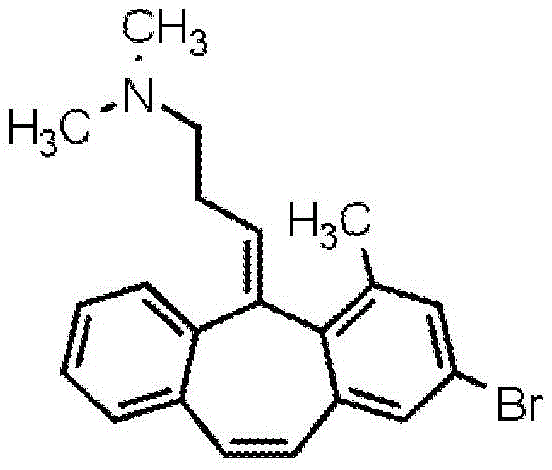
Using the procedure in example 9, phenylacetylene was substituted for 3-methoxybenzeneacetylene and methyl 2-methyl-4-bromo-6-iodobenzoate was substituted for methyl 2-methyl-6-iodobenzoate in the initial sonogashira coupling step. The conditions used result in selective coupling with more reactive iodine, but no reaction at the time of bromination.
Example 18: synthesis of l- (3-dibenzo [ a, d ] cyclohepten-5-ylidene-propyl) -azetidine (Cbp-Azeltl)

The procedure in example 4 was used, replacing 3-fluoroazetidine with azetidine.
The 9,10 dihydro analogs of examples 7, 8 and 18 can be made starting from 5- (3-bromo-propylidene) -10, 11-dihydro-5H-dibenzo [ a, d ] cycloheptene (synthesized in Novo NordiskA/S-US 5595989) instead of 5- (3-bromo-propylidene) -5H-dibenzo [ a, d ] cycloheptene.
The 9,10 dihydro analogs of examples 9-17 can be made by replacing 2-methoxy-5-methyldibenzosuberin-11-one with 2-methoxy-5-methyldibenzofuran-11-one (i.e., by skipping the NCS, triethylamine dehydrogenation step).
Claims (52)
1. A cyclobenzaprine analog compound of formula a:

and pharmaceutically acceptable salts thereof, wherein:
R1selected from H, C1-4-alkyl and C1-4-an alkoxy group;
R2selected from H, Br, (CH)2)nCO2R, wherein n is 0 to 3and R is C1-4Alkyl radical, C1-4-alkoxy and halogen;
R3selected from H, C1-4-alkyl, OH and OCOR, wherein R ═ C1-4-an alkyl group;
R4is C1-4-alkyl, wherein if R is4Is ethyl, the terminal carbon may be optionally substituted one to three times with fluorine; and is
R4And R5Together form a compound substituted by 1 or more fluorine and optionally further substituted by methyl, methoxy, CF3Or CHF2Substituted 4-membered saturated rings.
2. The compound of claim 1, wherein
R1Is H;
R2is H;
R3is H;
R4and R5Together form a 4-membered saturated ring substituted with 1 or more fluorines and optionally further substituted with methyl, methoxy, CF3 or CHF.
3. The compound of claim 1, wherein
R1Is H;
R2is H;
R3is H;
R4and R5Together form an optionally further CD substituted by 1 or more fluorine3、CD3O、CF3Or CDF2A 4-membered saturated ring substituted and all other positions substituted with D;
linking the nitrogen to the 3 carbons of cycloheptenone at all 5 positions (CDCD)2CD2) Are deuterated.
4. The compound of claim 1, wherein
R1Is C1-4-an alkyl group;
R2is H;
R3is C1-4-an alkoxy group;
R4and R5Are formed togetherSubstituted by 1 or more fluorine and optionally further substituted by methyl, methoxy, CF3Or CHF2Substituted 4-membered saturated rings.
5. The compound of claim 1, wherein
R1Is C1-4-an alkyl group;
R2is H;
R3is OCOR, wherein R ═ C1-4-an alkyl group;
R4and R5Together form a compound substituted by 1 or more fluorine and optionally further substituted by methyl, methoxy, CF3Or CHF2Substituted 4-membered saturated rings.
6. The compound of claim 1, wherein
R1Is C1-4-an alkyl group;
R2is (CH)2)nCO2R, wherein n ═ 0 and R ═ methyl;
R3is H;
R4and R5Together form a compound substituted by 1 or more fluorine and optionally further substituted by methyl, methoxy, CF3Or CHF2Substituted 4-membered saturated rings.
7. The compound of claim 1, wherein
R1Is C1-4-an alkyl group;
R2is C1-4-an alkoxy group;
R3is H;
R4and R5Together form a compound substituted by 1 or more fluorine and optionally further substituted by methyl, methoxy, CF3Or CHF2Substituted 4-membered saturated rings.
R5Is C1-4-an alkyl group.
8. The compound of claim 1, wherein,
R1is C1-4-an alkoxy group;
R2is H;
R3is H;
R4and R5Together form a compound substituted by 1 or more fluorine and optionally further substituted by methyl, methoxy, CF3Or CHF2Substituted 4-membered saturated rings.
9. The compound of claim 1, wherein
R1Is C1-4-an alkyl group;
R2is H;
R3is OH;
R4and R5Together form a compound substituted by 1 or more fluorine and optionally further substituted by methyl, methoxy, CF3Or a 4-membered saturated ring substituted with CHF 2.
10. The compound of claim 1, wherein
R1Is C1-4-alkyl;
R2is (CH)2)nCO2R, wherein n is 0 and R is C1-4-an alkyl group;
R3is H;
R4and R5Together form a compound substituted by 1 or more fluorine and optionally further substituted by methyl, methoxy, CF3Or CHF2Substituted 4-membered saturated rings.
11. A compound according to claim 1, which is a pharmaceutically acceptable salt thereof,
R1is H;
R2is C1-4-an alkoxy group;
R3is C1-4-an alkoxy group;
R4and R5Together form a compound substituted by 1 or more fluorine and optionally further substituted by methyl, methoxy, CF3Or CHF2Substituted byA 4-membered saturated ring.
12. The compound of claim 1, wherein
R1Is C1-4-an alkyl group;
R2is Br;
R3is H:
R4and R5Together form a compound substituted by 1 or more fluorine and optionally further substituted by methyl, methoxy, CF3Or CHF2Substituted 4-membered saturated rings.
13. Cyclobenzaprine analogue compound of formula A

And pharmaceutically acceptable salts thereof, wherein:
R1is selected from C1-4-alkyl and C1-4-an alkoxy group;
R2selected from H, Br, (CH)2)nCO2R, wherein n is 0 to 3and R is C1-4Alkyl radical, C1-4-alkoxy and halogen;
R3selected from H, C1-4-alkyl, OH and OCOR, wherein R ═ C1-4-an alkyl group;
R4is C1-4-alkyl, wherein if R is4Is ethyl, the terminal carbon may be optionally substituted one to three times with fluorine; and is
R5Is C1-4-an alkyl group; r4And R5Together may form an optionally substituted methyl, methoxy, CF3Or CHF2A substituted fused 4-membered saturated ring.
14. The compound of claim 13, wherein
R1Is C1-4-an alkyl group;
R2is H;
R3is C1-4-an alkoxy group;
R4is C1-4-alkyl, wherein if R is4Is ethyl, the terminal carbon may be optionally substituted one to three times with fluorine; and is
R5Is C1-4-an alkyl group; r4And R5Together may form an optionally substituted methyl, methoxy, CF3Or CHF2A substituted fused 4-membered saturated ring.
15. The compound of claim 13, wherein
R1Is C1-4-an alkyl group;
R2is H;
R3is OCOR, wherein R ═ C1-4-an alkyl group; r4Is C1-4-alkyl, wherein if R is4Is ethyl, the terminal carbon may be optionally substituted one to three times with fluorine; and is
R5Is C1-4-an alkyl group; r4And R5Together may form an optionally substituted methyl, methoxy, CF3Or CHF2A substituted fused 4-membered saturated ring.
16. The compound of claim 13, wherein
R1Is C1-4-an alkyl group;
R2is (CH)2)nCO2R, wherein n ═ 0 and R ═ methyl;
R3is H;
R4is C1-4-alkyl, wherein if R is4Is ethyl, the terminal carbon may be optionally substituted one to three times with fluorine; and is
R5Is C1-4-an alkyl group; r4And R5Together may form a fused 4-membered saturated ring optionally substituted with methyl, methoxy, CF3, or CHF 2.
17. The compound of claim 13, wherein
R1Is C1-4-an alkyl group;
R2is C1-4-an alkoxy group;
R3is H;
R4is C1-4-alkyl, wherein if R is4Is ethyl, the terminal carbon may be optionally substituted one to three times with fluorine; and is
R5Is C1-4-an alkyl group; r4And R5Together may form an optionally substituted methyl, methoxy, CF3Or CHF2A substituted fused 4-membered saturated ring.
18. The compound of claim 13, wherein,
R1is C1-4-an alkoxy group;
R2is H;
R3is H;
R4is C1-4-alkyl, wherein if R is4Is ethyl, the terminal carbon may be optionally substituted one to three times with fluorine; and is
R5Is C1-4-an alkyl group; r4And R5Together may form an optionally substituted methyl, methoxy, CF3Or CHF2A substituted fused 4-membered saturated ring.
19. The compound of claim 13, wherein
R1Is C1-4-an alkyl group;
R2is H;
R3is OH;
R4is C1-4-an alkyl group; and R is5Is C1-4-an alkyl group.
20. A compound according to claim 13, wherein R1Is C1-4-an alkyl group;
R2is (CH)2)nCO2R, wherein n is 0 and R is C1-4-an alkyl group;
R3is H;
R4is C1-4-alkyl, wherein if R is4Is ethyl, the terminal carbon may be optionally substituted one to three times with fluorine; and is
R5Is C1-4-an alkyl group; r4And R5Together may form an optionally substituted methyl, methoxy, CF3Or CHF2A substituted fused 4-membered saturated ring.
21. The compound of claim 13, wherein
R1Is C1-4-an alkyl group;
R2is Br;
R3is H;
R4is C1-4-alkyl, wherein if R is4Is ethyl, the terminal carbon may be optionally substituted one to three times with fluorine; and is
R5Is C1-4-an alkyl group; r4And R5Together may form an optionally substituted methyl, methoxy, CF3Or CHF2A substituted fused 4-membered saturated ring.
22. Cyclobenzaprine analogue compound of formula A

And pharmaceutically acceptable salts thereof, wherein:
R1is H
R2Selected from H, Br, (CH)2)nCO2R, wherein n is 0 to 3and R is C1-4Alkyl radical, C1-4-alkoxy and halogen;
R3selected from H, C1-4-alkyl, OH and OCOR, wherein R ═ C1-4-an alkyl group;
R4is methyl or 2, 2-difluoroethyl
R5Is C1-4-an alkyl group; r4And R5Together may form a fused 4-membered saturated ring optionally substituted with methyl, methoxy.
23. The compound of claim 22, wherein
R1Is H;
R2is H;
R3is H;
R4is methyl and R5Is C1-4-an alkyl group.
24. The compound of claim 22, wherein
R1Is H:
R2is H;
R3is H;
R4is 2, 2-difluoroethyl.
25. The compound of claim 22, wherein
R1Is H;
R2is H;
R3is H; and is
R4And R5Together may form optionally CH3Or OCH3A substituted fused 4-membered saturated ring.
26. The compound of claim 22, wherein
R1Is H;
R2is H;
R3is H;
R4and R5Is a CD3Or R is4And R5Together form an optionally CD-coated sheet3、CD3O、CF3Or CDF2A 4-membered saturated ring substituted and all other positions substituted with D;
linking the nitrogen to the 3 carbons of cycloheptenone at all 5 positions (CDCD)2CD2) Are deuterated.
27. An amitriptyline analog compound of formula B
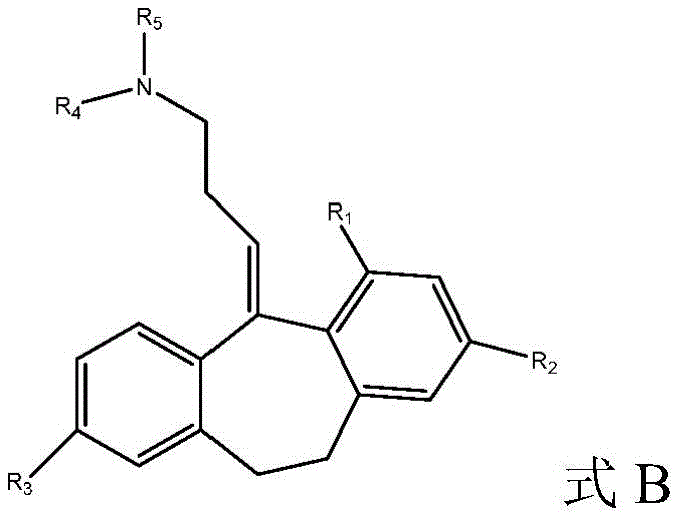
And pharmaceutically acceptable salts thereof, wherein:
R1selected from H, C1-4-alkyl and C1-4-an alkoxy group;
R2selected from H, Br, (CH)2)nCO2R, wherein n is 0 to 3and R is C1-4Alkyl radical, C1-4-alkoxy and halogen;
R3selected from H, C1-4-alkyl, OH and OCOR, wherein R ═ C1-4-an alkyl group;
R4is C1-4-alkyl, wherein if R is4Is ethyl, the terminal carbon may be optionally substituted one to three times with fluorine; and is
R4And R5Together form a compound substituted by 1 or more fluorine and optionally further substituted by methyl, methoxy, CF3Or CHF2Substituted 4-membered saturated rings.
28. The compound of claim 27, wherein
R1Is H;
R2is H;
R3is H;
R4and R5Together form a compound substituted by 1 or more fluorine and optionally further substituted by methyl, methoxy, CF3Or CHF2Substituted 4-membered saturated rings.
29. The compound of claim 27, wherein
R1Is H;
R2is H;
R3is H;
R4and R5Together form an optionally further CD substituted by 1 or more fluorine3、CD3O、CF3Or CDF2A 4-membered saturated ring substituted and all other positions substituted with D;
linking the nitrogen to the 3 carbons of cycloheptenone at all 5 positions (CDCD)2CD2) Are deuterated.
30. The compound of claim 27, wherein
R1Is C1-4-an alkyl group;
R2is H;
R3is C1-4-an alkoxy group;
R4and R5Together form a compound substituted by 1 or more fluorine and optionally further substituted by methyl, methoxy, CF3Or CHF2Substituted 4-membered saturated rings.
31. The compound of claim 27, wherein
R1Is C1-4-an alkyl group;
R2is H;
R3is OCOR, wherein R ═ C1-4-an alkyl group;
R4and R5Together form a compound substituted by 1 or more fluorine and optionally further substituted by methyl, methoxy, CF3Or CHF2Substituted 4-membered saturated rings.
32. The compound of claim 27, wherein
R1Is C1-4-an alkyl group;
R2is (CH)2)nCO2R, wherein n ═ 0 and R ═ methyl;
R3is H;
R4and R5Together form a compound substituted by 1 or more fluorine and optionally further substituted by methyl, methoxy, CF3Or CHF2Substituted 4-membered saturated rings.
33. The compound of claim 27, wherein
R1Is C1-4-an alkyl group;
R2is C1-4-an alkoxy group;
R3is H;
R4and R5Together form a compound substituted by 1 or more fluorine and optionally further substituted by methyl, methoxy, CF3Or CHF2Substituted 4-membered saturated rings.
R5Is C1-4-an alkyl group.
34. The compound of claim 27, wherein,
R1is C1-4-an alkoxy group;
R2is H;
R3is H;
R4and R5Together form a compound substituted by 1 or more fluorine and optionally further substituted by methyl, methoxy, CF3Or CHF2Substituted 4-membered saturated rings.
35. The compound of claim 27, wherein
R1Is C1-4-an alkyl group;
R2is H;
R3is OH;
R4and R5Together form a compound substituted by 1 or more fluorine and optionally further substituted by methyl, methoxy, CF3Or CHF2Substituted 4-membered saturated rings.
36. The compound of claim 27, wherein
R1Is C1-4-an alkyl group;
R2is (CH)2)nCO2R, wherein n is 0 andand R is C1-4-an alkyl group;
R3is H;
R4and R5Together form a compound substituted by 1 or more fluorine and optionally further substituted by methyl, methoxy, CF3Or CHF2Substituted 4-membered saturated rings.
37. A compound according to claim 27, wherein said compound is,
R1is H;
R2is C1-4-an alkoxy group;
R3is C1-4-an alkoxy group;
R4and R5Together form a compound substituted by 1 or more fluorine and optionally further substituted by methyl, methoxy, CF3Or CHF2Substituted 4-membered saturated rings.
38. The compound of claim 27, wherein
R1Is C1-4-an alkyl group;
R2is Br;
R3is H:
R4and R5Together form a compound substituted by 1 or more fluorine and optionally further substituted by methyl, methoxy, CF3Or CHF2Substituted 4-membered saturated rings.
39. An amitriptyline analog compound of formula B
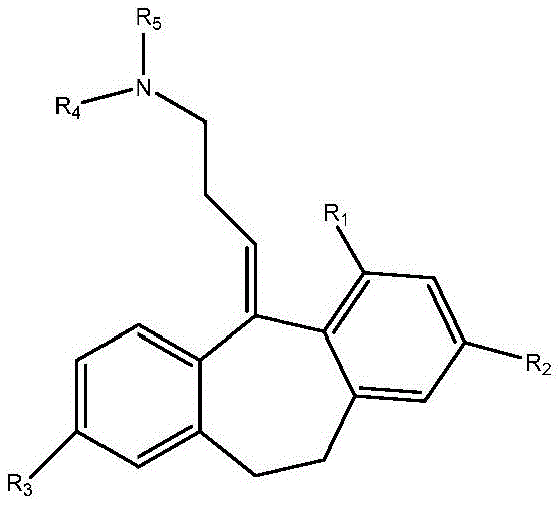
And pharmaceutically acceptable salts thereof, wherein:
R1is selected from C1-4-alkyl and C1-4-an alkoxy group;
R2selected from H, Br, (CH)2)nCO2R, wherein n is 0 to 3and R is C1-4Alkyl radical, C1-4-alkoxy andhalogen;
R3selected from H, C1-4-alkyl, OH and OCOR, wherein R ═ C1-4-an alkyl group;
R4is C1-4-alkyl, wherein if R is4Is ethyl, the terminal carbon may be optionally substituted one to three times with fluorine; and is
R5Is C1-4-an alkyl group; r4And R5Together may form an optionally substituted methyl, methoxy, CF3Or CHF2A substituted fused 4-membered saturated ring.
40. The compound of claim 39, wherein
R1Is C1-4-an alkyl group;
R2is H;
R3is C1-4-an alkoxy group;
R4is C1-4-alkyl, wherein if R is4Is ethyl, the terminal carbon may be optionally substituted one to three times with fluorine; and is
R5Is C1-4-an alkyl group; r4And R5Together may form an optionally substituted methyl, methoxy, CF3Or CHF2A substituted fused 4-membered saturated ring.
41. The compound of claim 39, wherein
R1Is C1-4-an alkyl group;
R2is H;
R3is OCOR, wherein R ═ C1-4-an alkyl group; r4Is C1-4-alkyl, wherein if R is4Is ethyl, the terminal carbon may be optionally substituted one to three times with fluorine; and is
R5Is C1-4-an alkyl group; r4And R5Together may form an optionally substituted methyl, methoxy, CF3Or CHF2A substituted fused 4-membered saturated ring.
42. The compound of claim 39, wherein
R1Is C1-4-an alkyl group;
R2is (CH)2)nCO2R, wherein n ═ 0 and R ═ methyl;
R3is H;
R4is C1-4-alkyl, wherein if R is4Is ethyl, the terminal carbon may be optionally substituted one to three times with fluorine; and is
R5Is C1-4-an alkyl group; r4And R5Together may form a fused 4-membered saturated ring optionally substituted with methyl, methoxy, CF3, or CHF 2.
43. The compound of claim 39, wherein
R1Is C1-4-an alkyl group;
R2is C1-4-an alkoxy group;
R3is H;
R4is C1-4-alkyl, wherein if R is4Is ethyl, the terminal carbon may be optionally substituted one to three times with fluorine; and is
R5Is C1-4-an alkyl group; r4And R5Together may form an optionally substituted methyl, methoxy, CF3Or CHF2A substituted fused 4-membered saturated ring.
44. The compound of claim 39, wherein,
R1is C1-4-an alkoxy group;
R2is H;
R3is H;
R4is C1-4-alkyl, wherein if R is4Is ethyl, the terminal carbon may be optionally substituted one to three times with fluorine; and is
R5Is C1-4-an alkyl group; r4And R5Together may form an optionally coated sheetMethyl, methoxy, CF3Or CHF2A substituted fused 4-membered saturated ring.
45. The compound of claim 39, wherein
R1Is C1-4-an alkyl group;
R2is H;
R3is OH;
R4is C1-4-an alkyl group; and is
R5Is C1-4-an alkyl group.
46. The compound of claim 39, wherein
R1Is C1-4-an alkyl group;
R2is (CH)2)nCO2R, wherein n is 0 and R is C1-4-an alkyl group;
R3is H;
R4is C1-4-alkyl, wherein if R is4Is ethyl, the terminal carbon may be optionally substituted one to three times with fluorine; and is
R5Is C1-4-an alkyl group; r4And R5Together may form an optionally substituted methyl, methoxy, CF3Or CHF2A substituted fused 4-membered saturated ring.
47. The compound of claim 39, wherein
R1Is C1-4-an alkyl group;
R2is Br;
R3is H;
R4is C1-4-alkyl, wherein if R is4Is ethyl, the terminal carbon may be optionally substituted one to three times with fluorine; and is
R5Is C1-4-an alkyl group; r4And R5Together may form an optionally substituted methyl, methoxy, CF3Or CHF2Substituted condensed matter4-membered saturated rings are combined.
48. An amitriptyline analog compound of formula B,
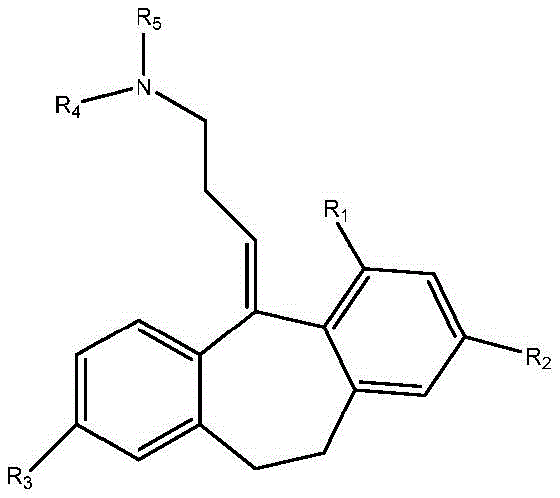
a pharmaceutically acceptable salt thereof, wherein:
R1is H
R2Selected from H, Br, (CH)2)nCO2R, wherein n is 0 to 3and R is C1-4Alkyl radical, C1-4-alkoxy and halogen;
R3selected from H, C1-4-alkyl, OH and OCOR, wherein R ═ C1-4-an alkyl group;
R4is methyl or 2, 2-difluoroethyl
R5Is C1-4-an alkyl group; r4And R5Together may form a fused 4-membered saturated ring optionally substituted with methyl, methoxy.
49. The compound of claim 48, wherein
R1Is H;
R2is H;
R3is H;
R4is methyl
And R is5Is C1-4-an alkyl group.
50. The compound of claim 48, wherein
R1Is H:
R2is H;
R3is H;
R4is 2, 2-difluoroethyl.
51. The compound of claim 48, wherein
R1Is H;
R2is H;
R3is H; and is
R4And R5Together may form a fused 4-membered saturated ring optionally substituted with Me or OMe.
52. The compound of claim 48, wherein
R1Is H;
R2is H;
R3is H;
R4and R5Is a CD3Or R is4And R5Together form an optionally CD-coated sheet3、CD3O、CF3Or CDF2A 4-membered saturated ring substituted and all other positions substituted with D;
wherein the nitrogen is attached to all 5 positions of the 3 carbons of cycloheptenone (CDCD)2CD2) Are deuterated.
Applications Claiming Priority (3)
| Application Number | Priority Date | Filing Date | Title |
|---|---|---|---|
| US201762532353P | 2017-07-13 | 2017-07-13 | |
| US62/532,353 | 2017-07-13 | ||
| PCT/US2018/042184 WO2019014651A1 (en) | 2017-07-13 | 2018-07-13 | Analogs of cyclobenzaprine and amitryptilene |
Publications (1)
| Publication Number | Publication Date |
|---|---|
| CN110996932A true CN110996932A (en) | 2020-04-10 |
Family
ID=65001841
Family Applications (1)
| Application Number | Title | Priority Date | Filing Date |
|---|---|---|---|
| CN201880050758.2A Pending CN110996932A (en) | 2017-07-13 | 2018-07-13 | Cyclobenzaprine and amitriptyline analogs |
Country Status (6)
| Country | Link |
|---|---|
| US (3) | US11517557B2 (en) |
| EP (1) | EP3651751A4 (en) |
| JP (2) | JP2020526592A (en) |
| CN (1) | CN110996932A (en) |
| CA (1) | CA3069699A1 (en) |
| WO (1) | WO2019014651A1 (en) |
Cited By (1)
| Publication number | Priority date | Publication date | Assignee | Title |
|---|---|---|---|---|
| CN114853556A (en) * | 2022-06-14 | 2022-08-05 | 绍兴文理学院 | Novel synthesis method of 5H-dibenzo [ a, d ] cycloheptene skeleton |
Citations (4)
| Publication number | Priority date | Publication date | Assignee | Title |
|---|---|---|---|---|
| US3454643A (en) * | 1959-04-27 | 1969-07-08 | Arthur C Cope | 5 - (tertiaryaminoalkylene)-5 hydroxy- and 5-(tertiary aminoalkylidene) - dibenzocycloheptatrienes,and salts thereof |
| GB1274261A (en) * | 1968-05-03 | 1972-05-17 | Hoffmann La Roche | Dibenzocycloheptene derivatives and the manufacture thereof |
| WO2010035047A1 (en) * | 2008-09-25 | 2010-04-01 | Pharmapatents Global Ltd. | Binary compositions comprising an no-donor and an a-smase inhibitor for the treatment of respiratory diseases |
| US20170065538A1 (en) * | 2010-06-24 | 2017-03-09 | Tonix Pharma Holdings Limited | Methods and compositions for treating fatigue associated with disordered sleep using very low dose cyclobenzaprine |
Family Cites Families (30)
| Publication number | Priority date | Publication date | Assignee | Title |
|---|---|---|---|---|
| BE630063A (en) * | 1962-03-23 | |||
| JPS5122958B2 (en) | 1972-08-23 | 1976-07-13 | ||
| US4223013A (en) * | 1978-12-29 | 1980-09-16 | Syva Company | Amitriptyline conjugates to antigenic proteins and enzymes |
| US4861862A (en) | 1987-12-31 | 1989-08-29 | General Electric Company | Polyetherimide amide from polyoxyalkylene diimide dicarboxylic acid |
| US5073543A (en) | 1988-07-21 | 1991-12-17 | G. D. Searle & Co. | Controlled release formulations of trophic factors in ganglioside-lipsome vehicle |
| US5120548A (en) | 1989-11-07 | 1992-06-09 | Merck & Co., Inc. | Swelling modulated polymeric drug delivery device |
| US5733566A (en) | 1990-05-15 | 1998-03-31 | Alkermes Controlled Therapeutics Inc. Ii | Controlled release of antiparasitic agents in animals |
| US5580578A (en) | 1992-01-27 | 1996-12-03 | Euro-Celtique, S.A. | Controlled release formulations coated with aqueous dispersions of acrylic polymers |
| US5591767A (en) | 1993-01-25 | 1997-01-07 | Pharmetrix Corporation | Liquid reservoir transdermal patch for the administration of ketorolac |
| US5354566A (en) | 1993-06-02 | 1994-10-11 | Kraft General Foods, Inc. | Preparation of yeast-leavened dough crusts |
| MY113463A (en) | 1994-01-04 | 2002-03-30 | Novo Nordisk As | Novel heterocyclic compounds |
| IT1270594B (en) | 1994-07-07 | 1997-05-07 | Recordati Chem Pharm | CONTROLLED RELEASE PHARMACEUTICAL COMPOSITION OF LIQUID SUSPENSION MOGUISTEIN |
| US5552399A (en) * | 1994-11-02 | 1996-09-03 | Janssen Pharmaceutica N.V. | Substituted tetracyclic azepine derivatives |
| PL327445A1 (en) | 1995-12-15 | 1998-12-07 | Novo Nordisk As | Novel process |
| US6248363B1 (en) | 1999-11-23 | 2001-06-19 | Lipocine, Inc. | Solid carriers for improved delivery of active ingredients in pharmaceutical compositions |
| US6267985B1 (en) | 1999-06-30 | 2001-07-31 | Lipocine Inc. | Clear oil-containing pharmaceutical compositions |
| US6761903B2 (en) | 1999-06-30 | 2004-07-13 | Lipocine, Inc. | Clear oil-containing pharmaceutical compositions containing a therapeutic agent |
| US6383471B1 (en) | 1999-04-06 | 2002-05-07 | Lipocine, Inc. | Compositions and methods for improved delivery of ionizable hydrophobic therapeutic agents |
| US6309663B1 (en) | 1999-08-17 | 2001-10-30 | Lipocine Inc. | Triglyceride-free compositions and methods for enhanced absorption of hydrophilic therapeutic agents |
| JP2003506484A (en) | 1999-08-13 | 2003-02-18 | ベラ・ファーマシューティカルズ・インコーポレイテッド | Use of compositions for treating or preventing sleep disorders using very low doses of cyclobenzaprine |
| GB2368283A (en) | 1999-08-13 | 2002-05-01 | Vela Pharmaceuticals Inc | Cyclobenzaprine for treating generalized anxiety disorder and compositions thereof |
| US6720001B2 (en) | 1999-10-18 | 2004-04-13 | Lipocine, Inc. | Emulsion compositions for polyfunctional active ingredients |
| US6602911B2 (en) * | 2001-11-05 | 2003-08-05 | Cypress Bioscience, Inc. | Methods of treating fibromyalgia |
| MX2007009797A (en) | 2005-02-14 | 2007-11-06 | Combinatorx Inc | Compounds and uses thereof. |
| MX2008009022A (en) * | 2006-01-13 | 2008-09-24 | Wyeth Corp | Sulfonyl substituted 1h-indoles as ligands for the 5-hydroxytryptamine receptors. |
| WO2009064493A1 (en) | 2007-11-14 | 2009-05-22 | New York University School Of Medicine | Tricyclic compounds as melanogenesis modifiers and uses thereof |
| CA2818028C (en) | 2010-12-10 | 2019-04-09 | Nektar Therapeutics | Hydroxylated tricyclic compounds |
| EP2665700B1 (en) | 2011-01-20 | 2016-01-13 | Harman Finochem Limited | One-pot preparation of cyclobenzaprine hydrochloride |
| US9346742B2 (en) | 2012-05-10 | 2016-05-24 | Cellix Bio Private Limited | Compositions and methods for the treatment of fibromyalgia pain |
| CA3118913C (en) * | 2012-06-15 | 2024-04-30 | Tonix Pharma Holdings Limited | Compositions and methods for transmucosal absorption |
-
2018
- 2018-07-13 EP EP18831505.5A patent/EP3651751A4/en active Pending
- 2018-07-13 US US16/630,832 patent/US11517557B2/en active Active
- 2018-07-13 JP JP2020523238A patent/JP2020526592A/en active Pending
- 2018-07-13 CA CA3069699A patent/CA3069699A1/en active Pending
- 2018-07-13 WO PCT/US2018/042184 patent/WO2019014651A1/en not_active Ceased
- 2018-07-13 CN CN201880050758.2A patent/CN110996932A/en active Pending
-
2022
- 2022-12-05 US US18/075,386 patent/US12156864B2/en active Active
-
2024
- 2024-02-27 JP JP2024027046A patent/JP2024063076A/en active Pending
- 2024-11-18 US US18/950,382 patent/US20250073204A1/en active Pending
Patent Citations (4)
| Publication number | Priority date | Publication date | Assignee | Title |
|---|---|---|---|---|
| US3454643A (en) * | 1959-04-27 | 1969-07-08 | Arthur C Cope | 5 - (tertiaryaminoalkylene)-5 hydroxy- and 5-(tertiary aminoalkylidene) - dibenzocycloheptatrienes,and salts thereof |
| GB1274261A (en) * | 1968-05-03 | 1972-05-17 | Hoffmann La Roche | Dibenzocycloheptene derivatives and the manufacture thereof |
| WO2010035047A1 (en) * | 2008-09-25 | 2010-04-01 | Pharmapatents Global Ltd. | Binary compositions comprising an no-donor and an a-smase inhibitor for the treatment of respiratory diseases |
| US20170065538A1 (en) * | 2010-06-24 | 2017-03-09 | Tonix Pharma Holdings Limited | Methods and compositions for treating fatigue associated with disordered sleep using very low dose cyclobenzaprine |
Non-Patent Citations (2)
| Title |
|---|
| DONGLU ZHANG ET AL;: "Formation of mammalian metabolites of cyclobenzaprine by the fungus, Cunninghamella elegans", 《CHEMICO-BIOLOGICAL INTERACTIONS》 * |
| 陈彦方等主编: "《新编临床精神药物手册》", 31 July 1998, 山东科学技术出版社 * |
Cited By (2)
| Publication number | Priority date | Publication date | Assignee | Title |
|---|---|---|---|---|
| CN114853556A (en) * | 2022-06-14 | 2022-08-05 | 绍兴文理学院 | Novel synthesis method of 5H-dibenzo [ a, d ] cycloheptene skeleton |
| CN114853556B (en) * | 2022-06-14 | 2023-08-29 | 绍兴文理学院 | New synthesis method of 5H-dibenzo [ a, d ] cycloheptene skeleton |
Also Published As
| Publication number | Publication date |
|---|---|
| US20200230104A1 (en) | 2020-07-23 |
| US20230149348A1 (en) | 2023-05-18 |
| US11517557B2 (en) | 2022-12-06 |
| US20250073204A1 (en) | 2025-03-06 |
| EP3651751A1 (en) | 2020-05-20 |
| WO2019014651A1 (en) | 2019-01-17 |
| JP2020526592A (en) | 2020-08-31 |
| JP2024063076A (en) | 2024-05-10 |
| EP3651751A4 (en) | 2021-03-31 |
| CA3069699A1 (en) | 2019-01-17 |
| US12156864B2 (en) | 2024-12-03 |
Similar Documents
| Publication | Publication Date | Title |
|---|---|---|
| JP2026010068A (en) | Psilocin derivatives as serotonergic hallucinogens for the treatment of central nervous system disorders | |
| US10722478B2 (en) | Methods and compositions for treating fatigue associated with disordered sleep using very low dose cyclobenzaprine | |
| TWI692465B (en) | Prodrugs of phenolic trpv1 agonists | |
| AU2021215274B2 (en) | Targeted drug rescue with novel compositions, combinations, and methods thereof | |
| EP3310785B1 (en) | Benzodiazepine derivatives, compositions, and methods for treating cognitive impairment | |
| WO2013060258A1 (en) | Clavatine a-c, preparation method thereof and pharmaceutical composition and use thereof | |
| JP2018044006A (en) | Use of low-dose doxepin to improve sleep | |
| AU2012276114A1 (en) | Substituted cinnamamide derivative, preparation method and use thereof | |
| KR20230154220A (en) | Indole derivatives as serotonergic agonists useful in the treatment of disorders associated with serotonergic agonists | |
| JP6518595B2 (en) | Therapeutic and / or preventive agent for pain comprising 1-indansulfamide derivative | |
| US20250073204A1 (en) | Analogs of cyclobenzaprine and amitryptilene | |
| KR20150109456A (en) | Protopanoxadiol derivative, preparation method thereof and application thereof | |
| US20090036538A1 (en) | Treatment methods using triaryl methane compounds | |
| CN103826622B (en) | N-substituted phenylpropanamides or phenylacrylamides for use in the prevention or treatment of affective disorders | |
| Garavan et al. | New Psychoactive Substances | |
| UA121965C2 (en) | COMBINATIONS CONTAINING POSITIVE ALOSTERIC MODULATORS OR ORTHOSTERIC AGONISTS OF METABOTROPIC GLUTAMATERGIC RECEPTOR FOR 2TH | |
| HK40106138A (en) | Indole derivatives as serotonergic agents useful for the treatment of disorders related thereto | |
| HK40105243A (en) | Indole derivatives as serotonergic agents useful for the treatment of disorders related thereto | |
| HK1254300B (en) | Benzodiazepine derivatives, compositions, and methods for treating cognitive impairment | |
| HK1254300A1 (en) | Benzodiazepine derivatives, compositions, and methods for treating cognitive impairment | |
| CN101277954A (en) | 8-azabicyclo [3.2.1] octane derivatives and their use as monoamine neurotransmitter re-uptake inhibitors | |
| CN105517991A (en) | Diphenoxyalkylamine derivatives and aryloxyalkylamine derivatives, pharmaceutical composition, use of said pharmaceutical composition for treating, preventing or inhibiting chronic pneumonia diseases and for treating or preventing said diseases Methods |
Legal Events
| Date | Code | Title | Description |
|---|---|---|---|
| PB01 | Publication | ||
| PB01 | Publication | ||
| SE01 | Entry into force of request for substantive examination | ||
| SE01 | Entry into force of request for substantive examination |