CN110892478A - Audio codec window and transform implementation - Google Patents
Audio codec window and transform implementation Download PDFInfo
- Publication number
- CN110892478A CN110892478A CN201880043267.5A CN201880043267A CN110892478A CN 110892478 A CN110892478 A CN 110892478A CN 201880043267 A CN201880043267 A CN 201880043267A CN 110892478 A CN110892478 A CN 110892478A
- Authority
- CN
- China
- Prior art keywords
- audio signal
- window
- frame
- signal frame
- windowing
- Prior art date
- Legal status (The legal status is an assumption and is not a legal conclusion. Google has not performed a legal analysis and makes no representation as to the accuracy of the status listed.)
- Pending
Links
Images


Classifications
-
- G—PHYSICS
- G10—MUSICAL INSTRUMENTS; ACOUSTICS
- G10L—SPEECH ANALYSIS TECHNIQUES OR SPEECH SYNTHESIS; SPEECH RECOGNITION; SPEECH OR VOICE PROCESSING TECHNIQUES; SPEECH OR AUDIO CODING OR DECODING
- G10L19/00—Speech or audio signals analysis-synthesis techniques for redundancy reduction, e.g. in vocoders; Coding or decoding of speech or audio signals, using source filter models or psychoacoustic analysis
- G10L19/02—Speech or audio signals analysis-synthesis techniques for redundancy reduction, e.g. in vocoders; Coding or decoding of speech or audio signals, using source filter models or psychoacoustic analysis using spectral analysis, e.g. transform vocoders or subband vocoders
- G10L19/0212—Speech or audio signals analysis-synthesis techniques for redundancy reduction, e.g. in vocoders; Coding or decoding of speech or audio signals, using source filter models or psychoacoustic analysis using spectral analysis, e.g. transform vocoders or subband vocoders using orthogonal transformation
-
- G—PHYSICS
- G06—COMPUTING OR CALCULATING; COUNTING
- G06F—ELECTRIC DIGITAL DATA PROCESSING
- G06F17/00—Digital computing or data processing equipment or methods, specially adapted for specific functions
- G06F17/10—Complex mathematical operations
- G06F17/14—Fourier, Walsh or analogous domain transformations, e.g. Laplace, Hilbert, Karhunen-Loeve, transforms
- G06F17/147—Discrete orthonormal transforms, e.g. discrete cosine transform, discrete sine transform, and variations therefrom, e.g. modified discrete cosine transform, integer transforms approximating the discrete cosine transform
-
- G—PHYSICS
- G10—MUSICAL INSTRUMENTS; ACOUSTICS
- G10L—SPEECH ANALYSIS TECHNIQUES OR SPEECH SYNTHESIS; SPEECH RECOGNITION; SPEECH OR VOICE PROCESSING TECHNIQUES; SPEECH OR AUDIO CODING OR DECODING
- G10L19/00—Speech or audio signals analysis-synthesis techniques for redundancy reduction, e.g. in vocoders; Coding or decoding of speech or audio signals, using source filter models or psychoacoustic analysis
- G10L19/02—Speech or audio signals analysis-synthesis techniques for redundancy reduction, e.g. in vocoders; Coding or decoding of speech or audio signals, using source filter models or psychoacoustic analysis using spectral analysis, e.g. transform vocoders or subband vocoders
- G10L19/022—Blocking, i.e. grouping of samples in time; Choice of analysis windows; Overlap factoring
-
- G—PHYSICS
- G10—MUSICAL INSTRUMENTS; ACOUSTICS
- G10L—SPEECH ANALYSIS TECHNIQUES OR SPEECH SYNTHESIS; SPEECH RECOGNITION; SPEECH OR VOICE PROCESSING TECHNIQUES; SPEECH OR AUDIO CODING OR DECODING
- G10L19/00—Speech or audio signals analysis-synthesis techniques for redundancy reduction, e.g. in vocoders; Coding or decoding of speech or audio signals, using source filter models or psychoacoustic analysis
- G10L19/04—Speech or audio signals analysis-synthesis techniques for redundancy reduction, e.g. in vocoders; Coding or decoding of speech or audio signals, using source filter models or psychoacoustic analysis using predictive techniques
- G10L19/26—Pre-filtering or post-filtering
- G10L19/265—Pre-filtering, e.g. high frequency emphasis prior to encoding
-
- G—PHYSICS
- G10—MUSICAL INSTRUMENTS; ACOUSTICS
- G10L—SPEECH ANALYSIS TECHNIQUES OR SPEECH SYNTHESIS; SPEECH RECOGNITION; SPEECH OR VOICE PROCESSING TECHNIQUES; SPEECH OR AUDIO CODING OR DECODING
- G10L25/00—Speech or voice analysis techniques not restricted to a single one of groups G10L15/00 - G10L21/00
- G10L25/45—Speech or voice analysis techniques not restricted to a single one of groups G10L15/00 - G10L21/00 characterised by the type of analysis window
Landscapes
- Engineering & Computer Science (AREA)
- Physics & Mathematics (AREA)
- Computational Linguistics (AREA)
- Signal Processing (AREA)
- Health & Medical Sciences (AREA)
- Audiology, Speech & Language Pathology (AREA)
- Human Computer Interaction (AREA)
- Acoustics & Sound (AREA)
- Multimedia (AREA)
- Spectroscopy & Molecular Physics (AREA)
- General Physics & Mathematics (AREA)
- Mathematical Physics (AREA)
- Computational Mathematics (AREA)
- Mathematical Analysis (AREA)
- Mathematical Optimization (AREA)
- Pure & Applied Mathematics (AREA)
- Data Mining & Analysis (AREA)
- Theoretical Computer Science (AREA)
- Discrete Mathematics (AREA)
- Algebra (AREA)
- Databases & Information Systems (AREA)
- Software Systems (AREA)
- General Engineering & Computer Science (AREA)
- Compression, Expansion, Code Conversion, And Decoders (AREA)
Abstract
提供了一种音频信号编码方法,包括:接收第一音频信号帧和第二音频信号帧;使用正交变换来处理第一音频信号帧的第二部分和第二音频信号帧的第一部分,以部分地确定第一中间编码结果;并且使用正交变换处理第一中间编码结果,以确定与第一音频信号帧的至少一部分相对应的一组频谱系数。

An audio signal encoding method is provided, comprising: receiving a first audio signal frame and a second audio signal frame; using an orthogonal transform to process a second portion of the first audio signal frame and a first portion of the second audio signal frame to partially determine a first intermediate encoding result; and using an orthogonal transform to process the first intermediate encoding result to determine a set of spectral coefficients corresponding to at least a portion of the first audio signal frame.
Description
优先权要求priority claim
本专利申请要求于2017年4月28日提交的美国临时专利申请第62/492,011号的优先权权益,该美国临时专利申请通过引用而整体并入本文。This patent application claims the benefit of priority from US Provisional Patent Application No. 62/492,011, filed April 28, 2017, which is incorporated herein by reference in its entirety.
背景技术Background technique
用于数据缩减的音频信号编解码是一种普遍存在的技术。高质量、低比特率的编解码对于实现具有成本效益的媒体存储以及促进在受约束通道(诸如互联网流)上的分发是必需的。因为在许多情况下,未压缩音频的容量要求可能会过高,所以压缩效率对这些应用是重要的。Audio signal encoding and decoding for data reduction is a ubiquitous technique. High-quality, low-bit-rate codecs are necessary to enable cost-effective media storage and facilitate distribution over constrained channels such as Internet streaming. Compression efficiency is important for these applications because in many cases the capacity requirements for uncompressed audio may be prohibitive.
几个现有的音频编解码方法都是基于滑动窗口时频变换的。这样的变换将时域音频信号转换为时频表示,该时频表示适合于利用心理声学原理来实现数据缩减,同时限制可听见伪像的引入。特别地,因为滑动窗口MDCT具有固有地对音频编解码应用有利的性质,所以修正离散余弦变换(MDCT)通常在音频编解码器中使用;特别地,滑动窗口MDCT可以被配置为利用重叠的非矩形窗口来实现完美的重构,而不在时频表示中进行过采样。Several existing audio codec methods are based on sliding window time-frequency transform. Such a transformation converts a time-domain audio signal into a time-frequency representation suitable for utilizing psychoacoustic principles to achieve data reduction while limiting the introduction of audible artifacts. In particular, because sliding-window MDCTs have properties that are inherently beneficial for audio codec applications, Modified Discrete Cosine Transforms (MDCTs) are commonly used in audio codecs; in particular, sliding-window MDCTs can be configured to take advantage of overlapping non- A rectangular window to achieve perfect reconstruction without oversampling in the time-frequency representation.
虽然由滑动窗口MDCT导出的音频信号的时频表示为音频编解码提供了有效的框架,但是扩展框架以使得该表示的时频分辨率可以基于要编解码的信号的特性而被调整对于编解码性能而言是有益的。例如,这种调整可被用于限制编解码伪像的可听性。几个现有的音频编解码器通过响应于信号行为来改变在滑动窗口MDCT中使用的窗口来适应于要编解码的信号。对于音调信号内容,使用长窗口以提供高频率分辨率;对于瞬态信号内容,使用短窗口以提供高时间分辨率。这种方法通常被称为窗口切换。While the time-frequency representation of an audio signal derived by sliding-window MDCT provides an efficient framework for audio codecs, the framework is extended so that the time-frequency resolution of this representation can be adjusted based on the characteristics of the signal to be codec for codec Beneficial in terms of performance. For example, this adjustment can be used to limit the audibility of codec artifacts. Several existing audio codecs adapt to the signal to be encoded and decoded by changing the window used in sliding window MDCT in response to the signal behavior. For tonal signal content, use long windows to provide high frequency resolution; for transient signal content, use short windows to provide high temporal resolution. This method is often referred to as window switching.
窗口切换方法通常提供短窗口、长窗口和过渡窗口,该过渡窗口用于从长切换为短,反之亦然。通常的做法是基于瞬态检测处理切换到短窗口。如果在要编解码的音频信号的一部分中检测到瞬态,那么使用短窗口来处理音频信号的该部分。但是,允许在短窗口和长窗口之间使用附加的中间窗口大小对于编解码性能可能是有益的。Window switching methods typically provide a short window, a long window, and a transition window for switching from long to short and vice versa. It is common practice to switch to short windows based on transient detection processing. If a transient is detected in a part of the audio signal to be codec, a short window is used to process that part of the audio signal. However, allowing additional intermediate window sizes between short and long windows may be beneficial for codec performance.
发明内容SUMMARY OF THE INVENTION
提供本发明内容以便以简化形式介绍一些概念,在下文的详细描述中将进一步描述这些概念。本发明内容既不旨在标识所要求保护的主题的关键特征或必要特征,也不旨在用于限制所要求保护的主题的范围。This Summary is provided to introduce some concepts in a simplified form that are further described below in the Detailed Description. This Summary is not intended to identify key features or essential features of the claimed subject matter, nor is it intended to be used to limit the scope of the claimed subject matter.
在一个方面,提供了一种音频信号编码方法。依次接收第一音频信号帧和第二音频信号帧。缩放加窗旋转被施加到第一音频信号帧和第二音频信号帧的部分,以基于第一窗口的第二部分和第二窗口的第一部分来缩放第一音频信号帧的第二部分和第二音频信号帧的第一部分。中间缩放加窗旋转的结果被变换为与第一音频信号帧的第二部分相对应的第一组频谱系数和与第二音频信号帧的第一部分相对应的第二组频谱系数。In one aspect, a method of encoding an audio signal is provided. The first audio signal frame and the second audio signal frame are received in sequence. A scaling windowing rotation is applied to portions of the first audio signal frame and the second audio signal frame to scale the second portion and the second portion of the first audio signal frame based on the second portion of the first window and the first portion of the second window. 2. The first part of the audio signal frame. The result of the intermediate scaling and windowing rotation is transformed into a first set of spectral coefficients corresponding to the second portion of the first audio signal frame and a second set of spectral coefficients corresponding to the first portion of the second audio signal frame.
在另一方面,提供了一种音频信号解码方法。接收与第一音频信号帧的第二部分和第二音频信号帧的第一部分相对应的一组频谱系数。该组频谱系数被变换为一组时域信号值。基于第一缩放窗口的第二部分和第二缩放窗口的第一部分,将缩放加窗旋转施加到该组时域信号值,以产生与第一音频信号帧的第二部分相对应的第二时域信号部分和与第二音频信号帧的第一部分相对应的第一时域信号部分。In another aspect, an audio signal decoding method is provided. A set of spectral coefficients corresponding to the second portion of the first audio signal frame and the first portion of the second audio signal frame is received. The set of spectral coefficients is transformed into a set of time-domain signal values. applying a scaling windowed rotation to the set of time-domain signal values based on the second portion of the first scaling window and the first portion of the second scaling window to generate a second time-domain corresponding to the second portion of the first audio signal frame a domain signal portion and a first time domain signal portion corresponding to the first portion of the second audio signal frame.
在又一方面,提供了一种音频信号编码器。成帧器电路被配置为接收音频信号并产生包括第一帧接着是第二帧的对应的一系列音频信号帧。加窗电路被配置为对第一音频信号帧和第二音频信号帧的部分施加缩放加窗旋转,以基于第一窗口的第二部分和第二窗口的第一部分来缩放第一音频信号帧的第二部分和第二音频信号帧的第一部分,以产生中间结果。变换电路被配置为将中间结果变换为与第一音频信号帧的第二部分相对应的第一组频谱系数和与第二音频信号帧的第一部分相对应的第二组频谱系数。In yet another aspect, an audio signal encoder is provided. The framer circuit is configured to receive the audio signal and generate a corresponding series of audio signal frames including a first frame followed by a second frame. The windowing circuit is configured to apply scaling and windowing to the part of the first audio signal frame and the second audio signal frame, to scale the first audio signal frame based on the second part of the first window and the first part of the second window. The second portion and the first portion of the second audio signal frame to produce an intermediate result. The transform circuit is configured to transform the intermediate result into a first set of spectral coefficients corresponding to the second portion of the first audio signal frame and a second set of spectral coefficients corresponding to the first portion of the second audio signal frame.
在又一方面,提供了一种音频解码器。In yet another aspect, an audio decoder is provided.
变换电路被配置为将第一组和第二组频谱系数变换为一组时域信号值。加窗电路被配置为基于第一窗口的第二部分和第二窗口的第一部分,将缩放加窗旋转施加到该组时域信号值,以产生与第一音频信号帧的第二部分相对应的第二时域信号部分和与第二音频信号帧的第一部分相对应的第一时域信号部分。The transform circuit is configured to transform the first and second sets of spectral coefficients into a set of time-domain signal values. The windowing circuit is configured to apply scaling and windowing rotation to the set of time-domain signal values based on the second portion of the first window and the first portion of the second window to produce a second portion corresponding to the first audio signal frame and a first time-domain signal portion corresponding to the first portion of the second audio signal frame.
附图说明Description of drawings
现在参考附图,其中相似的附图标记始终表示对应的部分:Reference is now made to the drawings, wherein like reference numerals refer to corresponding parts throughout:
图1A是表示被分割成数据帧的音频信号和与音频信号帧时间对准的窗口序列的示例的说明图。FIG. 1A is an explanatory diagram showing an example of an audio signal divided into data frames and a sequence of windows time-aligned with the audio signal frames.
图1B是由加窗操作产生的被加窗信号片段的说明性示例,该加窗操作将窗口以乘法应用于由该窗口所涵盖的音频信号的片段。1B is an illustrative example of a windowed signal segment resulting from a windowing operation that applies a window multiplicatively to the segment of the audio signal covered by the window.
图2是音频信号帧片段和与帧对准的示例窗口的第一序列的说明性示例。2 is an illustrative example of a first sequence of audio signal frame segments and example windows aligned with the frames.
图3是时序图的说明性示例,该时序图示出了音频信号帧片段以及与帧时间对准的示例窗口的第二序列。3 is an illustrative example of a timing diagram showing audio signal frame segments and a second sequence of example windows time-aligned with the frames.
图4是示出根据一些实施例的音频编码器架构的某些细节的说明性框图。4 is an illustrative block diagram showing certain details of an audio encoder architecture in accordance with some embodiments.
图5是示出对音频数据帧序列进行编解码的第一编码器和第一解码器(第一编解码器(coder))流水线的说明图,该音频数据帧序列与对应的窗口序列对准。FIG. 5 is an explanatory diagram showing a pipeline of a first encoder and a first decoder (first coder) for encoding and decoding a sequence of audio data frames aligned with a corresponding sequence of windows .
图6是示出对音频数据帧序列进行编解码的第二编码器和第二解码器(第二编解码器)流水线的说明图,该音频数据帧序列与对应的窗口序列对准。6 is an explanatory diagram showing a second encoder and a second decoder (second codec) pipeline for encoding and decoding a sequence of audio data frames aligned with a corresponding sequence of windows.
图7是表示在图6的第二编码器实施例中由图4的编码器架构执行的处理的说明性流程图。FIG. 7 is an illustrative flow diagram representing processing performed by the encoder architecture of FIG. 4 in the second encoder embodiment of FIG. 6 .
图8是示出由分别与帧片段中的音频信号帧相关联的长窗口、长短过渡窗口和短窗口组成的窗口序列的说明图。8 is an explanatory diagram showing a window sequence consisting of long windows, long and short transition windows, and short windows, respectively, associated with audio signal frames in a frame segment.
图9是示出根据一些实施例的示例帧片段和对应的窗口序列的说明图。9 is an illustrative diagram showing example frame segments and corresponding window sequences in accordance with some embodiments.
图10是示出根据一些实施例的窗口的说明图。10 is an illustrative diagram showing a window in accordance with some embodiments.
图11是示出帧边界、信号片段边界和窗口片段的说明图。FIG. 11 is an explanatory diagram showing frame boundaries, signal segment boundaries, and window segments.
图12是示出用于过渡窗口的窗口片段、信号片段边界和帧边界的说明图。FIG. 12 is an explanatory diagram showing window segments, signal segment boundaries, and frame boundaries for transition windows.
图13(a)、图13(b)、图13(c)、图13(d)是示出了窗口切换序列的示例的说明图,该窗口切换序列容易由图6-图7的编解码器和方法支持。Fig. 13(a), Fig. 13(b), Fig. 13(c), Fig. 13(d) are explanatory diagrams showing an example of a window switching sequence which can be easily decoded by the codec of Figs. 6-7 device and method support.
图14是示出根据一些示例实施例的机器的组件的说明性框图,该机器能够从机器可读介质(例如,机器可读存储介质)读取指令并执行本文讨论的方法中的任何一个或多个。14 is an illustrative block diagram showing components of a machine capable of reading instructions from a machine-readable medium (eg, a machine-readable storage medium) and performing any one of the methods discussed herein or multiple.
具体实施方式Detailed ways
在音频编解码器和方法的实施例的以下描述中,参考附图。这些附图通过图示的方式示出了如何实现音频编解码器和方法的实施例的特定示例。应该理解,在不脱离所要求保护的主题的范围的情况下,可以利用其它实施例并且可以进行结构改变。In the following description of embodiments of audio codecs and methods, reference is made to the accompanying drawings. These figures illustrate, by way of illustration, specific examples of how embodiments of audio codecs and methods may be implemented. It is to be understood that other embodiments may be utilized and structural changes may be made without departing from the scope of the claimed subject matter.
高效音频编解码需要使用适当的信号自适应时频分辨率来表示要编码的音频信号。音频编解码器通常对于音调和瞬态内容分别使用长窗口和短窗口以实现信号自适应的时频分辨率。实现信号自适应时频分辨率的高效方法可以使用多个不同的窗口长度,而不仅仅是长窗口和短窗口。Efficient audio codec requires the use of appropriate signal-adaptive time-frequency resolution to represent the audio signal to be encoded. Audio codecs typically use long and short windows for tonal and transient content, respectively, to achieve signal-adaptive time-frequency resolution. An efficient way to achieve signal-adaptive time-frequency resolution can use multiple different window lengths, not just long and short windows.
滑动窗口MDCT编解码器Sliding window MDCT codec
图1A-图1B是描绘编解码器(未示出)的加窗电路块的操作的说明性时序图。图1A是表示被分割成数据帧的音频信号和与音频信号帧时间对准的窗口序列的示例的说明图。图1B是由加窗操作产生的被加窗信号片段117的说明性示例,该加窗操作将窗口113以乘法应用于该窗口113所涵盖的音频信号101的片段。加窗块将窗口函数应用于音频信号样本序列以产生被加窗片段。更具体地,加窗块通过根据与窗口相关联的音频信号大小缩放函数来调节在由时间窗口所涵盖的时间跨度内的音频信号序列的值而产生被加窗片段。加窗块可以被配置为应用具有不同时间的不同窗口。1A-1B are illustrative timing diagrams depicting the operation of a windowing circuit block of a codec (not shown). FIG. 1A is an explanatory diagram showing an example of an audio signal divided into data frames and a sequence of windows time-aligned with the audio signal frames. FIG. 1B is an illustrative example of a
用时间线102表示的音频信号101可以表示较长音频信号或流的节选,该音频信号101可以是随时间变化的物理声音特征的表示。如帧边界103-109所指示的那样,音频信号被分割为用于处理的帧120-128。加窗块(未示出)以乘法将窗口111、113和115的序列应用于音频信号,以产生用于进一步处理的被加窗的信号片段。窗口根据帧边界与音频信号在时间上对准。例如,窗口113与音频信号101在时间上对准,以使得窗口113以具有帧边界105和107的帧124为中心。
音频信号101可以被表示为离散时间样本x[t]的序列,其中t是整数时间索引。例如由(1)所示的加窗块音频信号值缩放函数可以被表示为w[n],其中n是整数时间索引。在一个实施例中,加窗块缩放函数可以被定义为The

0≤n≤N-1,其中N是表示窗口时间长度的整数值。在另一个实施例中,窗口可以被定义为0≤n≤N-1, where N is an integer value representing the window time length. In another embodiment, the window can be defined as

其它实施例可以执行其它加窗缩放函数,只要该加窗函数满足附录的章节4C中说明的某些条件即可。被加窗片段可以被定义为Other embodiments may implement other windowing scaling functions as long as the windowing function satisfies certain conditions described in Section 4C of the Appendix. A windowed fragment can be defined as
Xi[n]=Wi[n]X[n+ti]X i [n]=W i [n]X[n+t i ]
其中i表示被加窗片段的索引,wi[n]表示用于片段的加窗函数,ti表示音频信号中的用于片段的开始时间索引。在一些实施例中,加窗缩放函数对于不同片段可以是不同的。换句话说,不同的加窗时间长度和不同的加窗缩放函数可以被用于信号101的不同部分,例如用于信号的不同帧或者在一些情况下用于同一帧的不同部分。where i represents the index of the windowed segment, wi [n] represents the windowing function for the segment, and ti represents the start time index for the segment in the audio signal. In some embodiments, the windowing scaling function may be different for different segments. In other words, different windowing time lengths and different windowing scaling functions may be used for different parts of the
图2是时序图的说明性示例,该时序图示出了音频信号帧片段以及与帧对准的示例窗口的第一序列。帧203、205、207、209和211在时间线202上被标示。帧201具有帧边界220和222。帧203具有帧边界222和224。帧205具有帧边界224和226。帧207具有帧边界226和228。帧209具有帧边界228和230。窗口213、215、217和219被对准以分别在时间上以帧203、205、207和209为中心。在一些实施例中,可以跨越整个帧并且可以与一个或多个相邻帧重叠的诸如窗口213之类的窗口可以被称为长窗口。在一些实施例中,由长窗口跨越的诸如203之类的音频信号数据帧可以被称为长窗口帧。在一些实施例中,诸如图2所示的窗口序列之类的窗口序列可以被称为长窗口序列。2 is an illustrative example of a timing diagram showing a first sequence of audio signal frame segments and example windows aligned with the frames.
图3是时序图的说明性示例,该时序图示出了音频信号帧片段以及与帧时间对准的示例窗口的第二序列。帧301、303、305、307、309和311在时间线302上被标示。帧301具有帧边界320和322。帧303具有帧边界322和324。帧305具有帧边界324和326。帧307具有帧边界326和328。帧309具有帧边界328和330。窗口函数313、315、317和319分别与帧303、305、307和309时间对准。与帧303时间对准的窗口313是长窗口函数的示例。帧307被多个短窗口317跨越。在一些实施例中,与多个短窗口时间对准的诸如帧307之类的帧可以被称为短窗口帧。分别在短窗口帧之前和之后的诸如305和309之类的帧可以被称为过渡帧,而分别在短窗口之前和之后的诸如315和319之类的窗口可以被称为过渡窗口。3 is an illustrative example of a timing diagram showing audio signal frame segments and a second sequence of example windows time-aligned with the frames.
图4是示出了根据一些实施例的音频编码器架构400的某些细节的说明性框图。包括离散时间音频样本的音频信号401被输入到编码器400。音频信号可以例如是单通道信号或立体声或多通道音频信号的单个通道。成帧(framing)电路块403将音频信号401分成包括规定数量的样本的帧;帧中样本的数量可以被称为帧大小或帧长度。成帧模块403将信号帧提供给控制电路块405和加窗电路块407。控制块可以分析一个或多个帧,并将分析结果提供给加窗块407、变换电路块409以及数据缩减和格式化电路块411。提供给加窗块407的分析结果可以指示应用于音频数据的帧序列的加窗块407的加窗操作序列。加窗块407可以指示应用于音频数据的帧序列的缩放窗口序列;窗口块407还可以指示将相应的缩放窗口应用于音频数据之时的时间索引的对应序列。例如,控制块405可以使加窗块407将不同的缩放操作和不同的窗口时间长度应用于不同的音频帧。一些音频帧可能会根据长窗口缩放。例如,其它音频帧可以根据短窗口来缩放,而还有其它音频帧可以根据过渡窗口来缩放。在一些实施例中,控制块405可以包括确定音频帧是否包含瞬态信号行为的瞬态检测器(未示出)。例如,响应于确定帧包括瞬态信号行为,控制块405可以指示应用由短窗口组成的加窗操作序列。FIG. 4 is an illustrative block diagram showing certain details of an audio encoder architecture 400 in accordance with some embodiments. An
加窗块407将加窗函数应用于音频帧以产生被加窗音频片段,并将被加窗音频片段提供给变换块409。由控制块405提供给变换块409的分析结果可以包括用于变换块409在处理被加窗音频片段时使用的变换大小。在一些实施例中,由控制块405提供给变换块409的变换大小可以与由控制块405提供给加窗块407的窗口大小相对应。如本领域普通技术人员将理解的,变换块409的输出和由控制块405提供的结果可以由数据缩减和格式化块411处理以生成表示输入音频信号的数据比特流413。在一些实施例中,如本领域普通技术人员将理解的,数据缩减和格式化可以包括心理声学模型和信息编解码原理的应用。音频编码器400可以提供数据比特流413作为用于存储或传输到如下所述的解码器(未示出)的输出。变换块409可以被配置为执行可以在数学上被如下定义的MDCT:

其中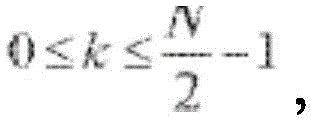
相反,可以由解码器(未示出)执行的逆修正离散余弦变换(IMDCT)可以在数学上被定义为:Conversely, the Inverse Modified Discrete Cosine Transform (IMDCT), which can be performed by a decoder (not shown), can be mathematically defined as:

其中0≤n≤N-1。如本领域普通技术人员将理解的,比例因子可以与MDCT或IMDCT中的一个或两者相关联。where 0≤n≤N-1. As will be understood by one of ordinary skill in the art, the scale factor may be associated with one or both of the MDCT or the IMDCT.
有关MDCT和IMDCT中的比例因子的附加数学详细信息被提供在附录的章节2F。Additional mathematical details on scale factors in MDCT and IMDCT are provided in Section 2F of the Appendix.
在典型实施例中,由变换块409对输入信号401的每个被加窗片段执行诸如MDCT之类的变换操作。此变换操作序列将时域信号401转换成时频表示,该时频表示包括与每个被加窗片段相对应的MDCT系数。时频表示的时间和频率分辨率至少部分地由被加窗片段的时间长度和在被加窗片段上执行的相关联变换的大小确定。在一些实施例中,变换大小对应于窗口长度。例如,对于与长时间长度窗口相对应的被加窗片段,所得的时频表示具有低时间分辨率但高频率分辨率。例如,对于与短时间长度窗口相对应的被加窗片段,和与长窗口片段相对应的时频表示相比,所得的时频表示具有相对较高的时间分辨率但较低的频率分辨率。在某些情况下,如由图3的与多个短窗口相关联的示例帧307所示,信号401的帧可以与一个以上被加窗片段相关联,每个短窗口用于为帧307的对应部分产生被加窗片段。In a typical embodiment, a transform operation such as MDCT is performed by
利用与窗口中心对准的加窗操作的滑动窗口MDCT编解码器Sliding window MDCT codec with windowing operation aligned to the center of the window
图5是示出用于对与窗口501、503、505和507的对应序列对准的音频数据帧530-536的序列进行编解码的第一编码器509和第一解码器513(第一编解码器)流水线560-1、560-3和560-5的说明图。在第一编码器509中使用图4的编码器架构400。编解码器509/513使用滑动窗口MDCT。尽管如上所述可以使用具有不同时间长度的窗口,但是说明性示例窗口501-507在时间长度上相等。每个窗口跨越三个音频信号数据帧的部分,并且每个窗口跨越的三个帧中的一个在窗口内居中。例如,窗口501跨帧530、532和534的部分,而帧532在窗口501内居中。因为帧530的左帧时间边界540在时间窗口501之外,而帧530的右帧时间边界542在时间窗口501之内,所以帧530被时间窗口函数501部分地涵盖。类似地,因为帧534的右帧时间边界546在时间窗口501之外,而帧534的左帧时间边界544在时间窗口501之内,所以帧534被时间窗口函数501部分地涵盖。因为窗口中心帧532的左帧边界和右帧边界542、544都在时间窗口501之内,所以窗口中心帧532被时间窗口501完全地涵盖并在时间窗口501内居中。5 is a diagram illustrating the
每个编解码器流水线均与窗口中心对准。例如,编解码器流水线560-1被配置为生成表示窗口501的编解码,该窗口501完全地跨越帧532并且跨越帧530和帧534的一部分。例如,编解码器流水线560-3被配置为生成表示窗口503的编解码,该窗口503完全地跨越帧534并且跨越帧532和帧536的一部分。编解码器流水线560-5被配置为生成表示窗口505的编解码,该窗口505完全地跨越帧536并且跨越帧534和帧538的一部分。应当理解,尽管图5中所示的窗口501、503、505和507的说明性序列仅包括长窗口,但是,例如第一编码器509和第一解码器513(第一编解码器)可以被配置为实现以共同跨越单个帧的多个对应的短窗口为中心的多个流水线(未示出)。Each codec pipeline is aligned to the center of the window. For example, codec pipeline 560-1 is configured to generate a
应理解的是,编码器509和解码器513可以独立地操作。由编码器509产生的变换系数可以通过通信系统发送到解码器513。信号处理电路(诸如参考图14描述的机器)可以被配置为按时间顺序在流水线配置560-1、560-3、560-3中的每个中配置编码器509。同样,信号处理电路(未示出)可以被配置为按时间顺序在流水线配置560-1、560-3、560-3中的每个中配置解码器513。此外,本领域普通技术人员将理解,图5中的编码器509仅示出了编码器的窗口和变换组件,而没有示出在编码器中可能存在的诸如数据缩减或比特流格式化之类的其它组件。同样,解码器513仅示出了典型解码器的逆变换、窗口和重叠相加组件,而没有示出在解码器中可能存在的诸如比特流读取之类的其它组件。It should be understood that
例如,考虑帧534的处理,窗口503以该帧534为中心。编码器509包括加窗块570,该加窗块570被配置为将窗口503应用于在帧534内的音频样本以及在被窗口503部分地涵盖的前一帧532的部分和后一帧536的部分内的音频样本,以生成被加窗片段。编码器包括MDCT块572,该MDCT块572被配置为基于由加窗块503产生的被加窗片段来产生与时间窗口503相对应的变换系数574-2。解码器513包括逆MDCT(IMDCT)块576以基于变换系数574-2产生IMDCT输出时域信号值,并且解码器513包括被配置为将窗口503应用于IMDCT输出时域信号值以产生被加窗结果的加窗块578。在一些实施例中,在IMDCT之后应用的窗口578与在MDCT之前应用的窗口572相同;在其它实施例中,它们可以不同。解码器513包括重叠相加块580,该重叠相加块580被配置为将帧534的被加窗结果与来自与前一窗口501相关联的前一帧532的被加窗结果重叠并相加。与前一帧的重叠相加的结果构建了指示的输出片段523。本领域普通技术人员将理解,与前一帧532(与窗口501相关联)的重叠相加获得了在生成与时间窗口503部分地相关联的片段523的输出样本时时域混叠消除的益处。For example, consider the processing of
利用与窗口过渡对准的加窗操作的MDCT编解码器MDCT Codec with Windowing Aligned with Window Transitions
图6是示出用于对与窗口601、603、605和607的相应序列对准的相邻音频数据帧630-636的序列进行编解码的第二编码器609和第二解码器613(第二编解码器)流水线660-1、660-3和660-5的说明图。在第二编码器609中使用图4的编码器架构400。编解码器609/613使用MDCT。虽然可以如下所述使用具有不同时间长度的窗口,但是说明性示例窗口601-607在时间长度上相等。每个窗口跨越三个音频信号数据帧的部分,并且每个窗口跨越的三个帧中的一个在该窗口内居中。例如,窗口601跨越帧630、632和634的部分,而帧632在窗口601内居中。帧630与帧632相邻,并且帧632与帧634相邻。因为帧630的左帧时间边界640在时间窗口601之外,而帧630的右帧时间边界642在时间窗口601之内,所以帧630被时间窗口函数601部分地涵盖。类似地,因为帧634的右帧时间边界646在时间窗口601之外,而帧634的左帧时间边界644在时间窗口601内,所以帧634被时间窗口函数601部分地涵盖。因为帧632的左帧边界和右帧边界642、644都在时间窗口601内,所以窗口中心帧632被完全涵盖在窗口601内并在时间窗口601内居中。6 is a diagram illustrating the
每个帧时间边界都与编解码器流水线的实例对准。每个编解码器流水线实例被配置为基于相邻的半帧和对应的相邻的半窗口来生成编解码结果。更具体地,作为第一编解码器流水线660-1的部分的第一变换块672-1与帧632对准;作为第二编解码器流水线660-3的部分的第二变换块672-2与帧634对准;并且作为第三编解码器流水线660-5的部分的第三变换块672-3与帧636对准。编解码器流水线660-1以帧时间边界644为中心,并且被配置为部分地基于使用窗口601的后半部分、帧632的后半部分和帧634的前半部分生成的后半被加窗片段、以及使用窗口603的前半部分,帧634的前半部分和帧632的后半部分生成的前半被加窗片段,来生成编解码结果。编解码器流水线660-3以帧时间边界646为中心,并且被配置为部分地基于使用窗口603的后半部分、帧634的后半部分和帧636的前半部分生成的后半被加窗片段、以及使用窗口605的前半部分、帧636的前半部分和帧634的后半部分生成的前半被加窗片段,来生成编解码结果。编解码器流水线660-5以帧时间边界648为中心,并且被配置为部分地基于使用窗口605的后半部分、帧636的后半部分和帧638的前半部分生成的后半被加窗片段、以及使用窗口607的前半部分、帧638的前半部分和帧636的后半部分生成的前半被加窗片段,来生成编解码结果。Each frame time boundary is aligned with an instance of the codec pipeline. Each codec pipeline instance is configured to generate codec results based on adjacent fields and corresponding adjacent half-windows. More specifically, the first transform block 672-1, which is part of the first codec pipeline 660-1, is aligned with the
将理解的是,编码器609和解码器613可以独立地操作。由编码器609产生的系数可以通过通信系统发送到解码器613。信号处理电路(诸如参考图14描述的机器)可以被配置为按时间顺序在流水线660-1、660-3、660-5中的每个中配置编码器609。同样,信号处理电路(未示出)可以被配置为按时间顺序在流水线配置660-1、660-3、660-5中的每个中配置解码器613。而且,如本领域普通技术人员将理解的,图6中的编码器609仅示出了编码器的窗口和变换组件,而没有示出在编码器609中可能存在的诸如数据缩减或比特流格式化之类的其它组件。同样,解码器613仅示出了典型解码器的逆变换、窗口和重叠相加组件,而没有示出在解码器中可能存在的诸如比特流读取之类的其它组件。It will be appreciated that
考虑例如窗口601的第二部分和帧632的第二部分与窗口603的第一部分和帧634的第一部分一起的第一流水线实例660-1处理。编码器609包括加窗块670,该加窗块670被配置为基于窗口601的第二部分和窗口603的第一部分对帧632的第二部分和帧634的第一部分实施加窗旋转操作,以便产生加窗旋转结果。更特别地,在一些实施例中,可以将输入信号的被缩放部分与围绕帧时间边界折叠并缩放的输入信号的对应部分进行组合,以形成中间时间混叠时域信号。帧时间边界充当围绕其发生旋转的固定点。在一些实施例中,缩放、折叠和组合可以经由加窗旋转操作来实现。而且,根据一些实施例,与相邻半帧(帧632的后半部分和帧634的前半部分)的拼接相对应的样本矢量由部分地与附录A中所说明的加窗操作相对应的旋转矩阵处理。特别地,附录的章节3和章节4A提供了编码器609的加窗操作的数学公式作为旋转矩阵。特别地,式(27)提供了可以经由加窗旋转操作来实现的缩放、折叠和组合操作的数学公式。特别地,框式(26)中的子矩阵是图6流水线和图7流程图的“加窗旋转”。式(24)示出了应用于加窗的结果的DCT。这是图6和图7中的变换(DCT)。Consider, for example, the first pipeline instance 660-1 processing of the second portion of
变换块672接受与来自相邻过渡的加窗旋转结果的部分的拼接相对应的中间编码结果作为输入。然后,变换块通过离散余弦变换(DCT)来变换拼接的加窗旋转结果(中间编码结果),以产生DCT变换系数674(也称为频谱系数)。在一些实施例中,使用对于本领域普通技术人员来说是已知的被称为DCT-IV的DCT的变型。DCT变换系数同样地与如在附录中在数学上解释的MDCT变换系数相对应。在解码器部分613中,可以在块676中执行逆DCT-IV变换,以产生中间解码结果,该中间解码结果随后部分地被提供给相邻的加窗旋转块678。加窗旋转块678可以从相邻的逆DCT块接收拼接的中间解码结果。加窗旋转块678可以处理中间解码结果以执行加窗和重叠相加函数,以生成由621指示的输出部分的表示帧632的后半部分和帧634的前半部分的输出样本。Transform block 672 accepts as input an intermediate encoding result corresponding to the concatenation of portions of the windowed rotation results from adjacent transitions. The transform block then transforms the concatenated windowed and rotated results (intermediate encoding results) through a discrete cosine transform (DCT) to produce DCT transform coefficients 674 (also referred to as spectral coefficients). In some embodiments, a variant of DCT known to those of ordinary skill in the art known as DCT-IV is used. The DCT transform coefficients likewise correspond to the MDCT transform coefficients as explained mathematically in the appendix. In the
图7是表示在图6的第二编码器609内由图4的编码器架构400执行的处理700的说明性流程图。处理系统(诸如参考图14描述的机器)可以配置有执行处理700的操作的可执行指令。在操作701,成帧块403接收音频样本的帧Fi。在操作703,控制块405评估帧Fi的样本以确定帧Fi的窗口大小。在操作705,加窗块407/670确定用于从先前接收到的帧Fi-1到帧Fi的过渡的加窗旋转。在操作707,加窗块407/670可基于从帧Fi-1到帧Fi的过渡来应用加窗旋转操作。加窗旋转操作可以组合(1)帧Fi-1的后半部分的至少一部分的音频样本和帧Fi的前半部分的至少一部分的音频样本的缩放版本,其中缩放可以是基于所确定的从帧Fi-1到帧Fi的加窗过渡,与(2)帧Fi-1的后半部分的至少一部分的音频样本和帧Fi的前半部分的至少一部分的音频样本的缩放和时间混叠版本,其中缩放可以是基于所确定的从帧Fi-1到帧Fi的加窗过渡,并且可以包括否定。FIG. 7 is an illustrative flow diagram representing a process 700 performed by the encoder architecture 400 of FIG. 4 within the
在操作708,可以通过将用于从帧i-1到帧i的过渡的加窗旋转的一部分与用于先前窗口过渡(例如从帧i-2到i-1)的加窗旋转的一部分进行组合,来形成中间编码结果。在一些情况下,先前窗口过渡可以与被完全包含在帧i-1中的窗口相对应。在一些情况下,在步骤708中最后确定来自帧i-1的中间编码结果包括聚集对于过程的先前迭代在步骤717中形成的中间编码结果。在操作709,变换块409/672分别将DCT变换应用于帧Fi-1的一个或多个中间编码结果。在操作711,可以最终确定帧i-1的数据,该操作可以包括将数据提供给数据缩减和比特流格式化块411。在操作713,如果控制块405指示了应当将多个窗口应用于帧Fi,那么加窗块407/670确定用于帧Fi的后续加窗旋转。例如,如果帧Fi是长窗口帧,那么操作713不涉及任何进一步的处理。例如,如果帧Fi是短窗口帧,那么操作713确定用于被包含在帧Fi的帧边界内的短窗口的加窗旋转。在操作715,应用用于被包含在帧Fi的帧边界内的任何窗口的加窗旋转。在操作717,组合在帧Fi的帧边界内的窗口的加窗旋转的结果以形成中间编码结果。操作717可以与短窗口有关。在操作719,帧计数器加1,并且针对在操作701处开始的下一帧重复该处理。At
将理解的是,加窗块670和变换块672可以在后续帧被接收到之前就开始针对帧的前半部分的处理。此外,在部分地帧处理期间,控制块405可以确定对于帧的后半部分应该使用与帧的前半部分不同的窗口形状,并且可以指示加窗块670将不同的窗口函数与帧的后半部分相关联。例如,控制块405可以确定用于后续帧的音频数据具有需要不同窗口的不同特性,并且可以根据该确定来指示利用不同的窗口形状来处理帧的后半部分,以便为过渡到为后续帧确定的窗口做准备。例如,较短的窗口用于瞬态。响应于控制块405确定后续帧包含瞬态,可以将过渡窗口应用于当前帧的后半部分。因此,由于可以在帧的处理期间改变窗口,因此需要较少的窗口规划前瞻。结果,由于帧的处理可以在接收到后续帧之前开始,因此可以实现较低的信号处理等待时间。相比之下,在图5的第一编码器509和第一解码器513中,例如,由于当前帧的窗口通常与后续帧重叠,并且整个窗口在执行MDCT之前被应用,因此通常必须在开始对当前帧的任何处理之前接收到后续帧。根据如图6所示的一些实施例,在音频编码器609中的加窗旋转和MDCT变换操作可以被实现为正交矩阵乘法。根据如图6所示的一些实施例,在音频解码器613中的IMDCT变换和加窗旋转操作可以被实现为正交矩阵乘法。在一些实施例中,将操作实现为正交矩阵操作可以提供计算益处。在一些实施例中,正交矩阵操作可以被实现为整数变换,该整数变换在使用定点算法的实现中可能是有益的。It will be appreciated that
图8是示出了窗口序列的说明图,该窗口序列由分别与帧片段807中的音频信号帧811、813和815相关联的长窗口801、长到短过渡窗口803和短窗口805组成。帧811的中点由虚线821指示,而帧813的中点由虚线823指示。在如图5所示的窗口变换实施例中,因为长窗口801跨越了音频信号帧809、811和813中的每一个的全部或一部分,所以在应用窗口801之前,音频信号帧809、811和813必须全部可用于处理。换句话说,在图5的实施例中,直到帧813可用于处理为止,不能执行通过应用窗口801而生成的被加窗片段的MDCT。类似地,在图5的实施例中,在可以应用窗口803并且可以执行通过应用窗口803而生成的被加窗片段的窗口803的相关联的MDCT之前,帧815必须可用于处理。此外,在图5的实施例中,在可以对帧813进行任何处理之前,必须对帧815进行分析以确定用于帧815的适当的窗口大小。在图5的实施例中,因为帧815窗口约束了过渡窗口803的形状(该过渡窗口803的形状必须在可以针对帧813开始任何处理之前被确定),所以在处理帧813之前,用于帧815的窗口大小是需要的。8 is an explanatory diagram showing a sequence of windows consisting of a
在图6-图7的实施例中,可以在接收到音频信号帧813之前开始音频信号帧811的处理。因为如图6-图7所指示的并在附录A的章节3和章节4中在数学上解释那样,用于帧811的初始处理(即用于帧的前半部分的加窗旋转)仅取决于帧811的前半部分,所以上述操作是可能的。例如,式(22)示出在对帧的后半部分执行任何处理之前,可以处理用于帧的前半部分的加窗旋转。由片段x02和x11组成的x矢量的上半部分可以通过左上角的块矩阵进行处理,而无需使用片段x12或x21。In the embodiments of FIGS. 6-7 , the processing of audio signal frame 811 may begin before audio signal frame 813 is received. Because as indicated in Figures 6-7 and explained mathematically in
类似地,在图6-图7的实施例中,在开始帧813的处理之前,帧815不需要是可用的。因为可以独立于帧后半部分的窗口形状来处理帧813的前半部分的加窗操作,所以在开始帧813的处理之前不需要确定帧815的窗口大小。此外,在图6-图7的实施例中,可以在接收到帧815并对其进行分析以确定用于帧815的窗口大小(该帧815的窗口大小指示用于帧813的后半部分的窗口形状)之后,对帧813的后半部分进行处理以得出帧813的MDCT系数的导数。Similarly, in the embodiments of Figures 6-7, frame 815 need not be available before processing of frame 813 begins. Because the windowing operation of the first half of frame 813 can be processed independently of the window shape of the second half of the frame, the window size of frame 815 does not need to be determined before starting processing of frame 813. Furthermore, in the embodiments of FIGS. 6-7 , frame 815 may be received and analyzed to determine a window size for frame 815 (the window size of frame 815 indicates a window size for the second half of frame 813 window shape), the second half of frame 813 is processed to derive the derivatives of the MDCT coefficients of frame 813.
图9是示出根据一些实施例的示例帧片段和对应的窗口序列的说明图。在图示中的大量帧中,示出了根据一些实施例的各种窗口选项。窗口序列包括开始窗口901、长窗口903、跨越帧的一系列四个窗口(905)、过渡窗口907、共同跨越帧的一系列八个窗口(909)、跨越帧的一系列两个窗口(911)(第一个是过渡窗口)和停止窗口913。9 is an illustrative diagram showing example frame segments and corresponding window sequences in accordance with some embodiments. In a number of frames in the illustration, various window options are shown according to some embodiments. The window sequence includes a
当在帧中有多个窗口时,第一个窗口跨过帧开始边界。连续窗口的流水线处理可以利用选择的窗口和MDCT变换大小从一个窗口到下一个窗口通过该帧持续进行。流水线处理的加窗旋转以在连续窗口之间的过渡为中心。处理流水线针对帧内的每个窗口过渡运行。帧中的最后一个窗口跨过帧结束边界。When there are multiple windows in a frame, the first window crosses the frame start boundary. The pipeline processing of successive windows can continue through the frame from one window to the next using the selected window and MDCT transform size. Windowed rotation of pipelined processing is centered on transitions between successive windows. The processing pipeline runs for each window transition within the frame. The last window in the frame crosses the end-of-frame boundary.
在一些实施例中,所有帧可以由与2的幂相对应的多个窗口跨越。在一些实施例中,每个窗口可以由MDCT处理,该MDCT生成的频谱系数是窗口长度的一半。因此,每个帧可以由相同数量的频谱系数表示,而与用于处理该帧的窗口大小无关。在示例实施例中,帧大小N可以是1024。对于长窗口帧,单个长窗口可以跨越来自相应长窗口帧和相邻帧的2048个时域样本;对应的MDCT可以生成1024个频谱系数。对于短窗口帧,短窗口可以跨越256个时域样本,以使得8个重叠的短窗口跨越该帧。与短窗口对应的MDCT可以生成128个频谱系数。考虑到短窗口帧可以由8个窗口组成(对于每个窗口,对应的MDCT可以生成128个频谱系数),那么对于短窗口帧可以生成总共1024个频谱系数。在该示例以及在适当地构造的其它示例中,对于长窗口帧和由多个窗口组成的帧生成的频谱系数的数量可以相等。在一些实施例中,因为对于所有帧,比特流格式化(诸如在块411中执行的)可以是一致的,而与用于处理帧的窗口大小无关,所以该规律性可能是有利的。在窗口切换的先前方法中,对于不同的窗口类型,数据速率可能显著不同。在一些实施例中,因为数据缩减步骤(诸如在框411中执行的)可以通常采用诸如矢量量化器之类的构造的处理,而与用于处理该帧的窗口大小无关,所以规律性可能是有利的。In some embodiments, all frames may be spanned by multiple windows corresponding to powers of two. In some embodiments, each window may be processed by an MDCT that generates spectral coefficients that are half the length of the window. Therefore, each frame can be represented by the same number of spectral coefficients, regardless of the window size used to process the frame. In an example embodiment, the frame size N may be 1024. For long window frames, a single long window can span 2048 time-domain samples from the corresponding long window frame and adjacent frames; the corresponding MDCT can generate 1024 spectral coefficients. For a short window frame, the short window may span 256 time domain samples such that 8 overlapping short windows span the frame. The MDCT corresponding to the short window can generate 128 spectral coefficients. Considering that the short window frame can be composed of 8 windows (for each window, the corresponding MDCT can generate 128 spectral coefficients), then a total of 1024 spectral coefficients can be generated for the short window frame. In this example and in other suitably constructed examples, the number of spectral coefficients generated may be equal for long window frames and frames consisting of multiple windows. In some embodiments, this regularity may be advantageous because bitstream formatting (such as performed in block 411) may be consistent for all frames, regardless of the window size used to process the frames. In previous methods of window switching, the data rate can be significantly different for different window types. In some embodiments, since the data reduction step (such as performed in block 411 ) may typically employ processing such as a vector quantizer, regardless of the window size used to process the frame, the regularity may be advantageous.
在一些实施例中,因为具有通过2的幂相关的大小的变换可以共享公共处理组件,所以使用通过2的幂相关的窗口大小可以提高相关联变换的实现效率。在一些实施例中,诸如窗口901之类的开始窗口可以被用于处理信号的开始。在一些实施例中,诸如913之类的停止窗口可以被用于处理信号的结束。在一些实施例中,可以在信号的中间点处连续使用停止窗口和开始窗口以形成下面会讨论的诸如图13(d)所示的同步点。In some embodiments, using a window size related by a power of 2 may improve the implementation efficiency of associated transforms because transforms having sizes related by a power of 2 may share common processing components. In some embodiments, a start window such as
图10是示出根据一些实施例的窗口的说明图。图10还示出三个帧1001、1003和1005的序列。为了说明,与这些帧相关联的窗口大小将分别被定义为2M0、2M1和2M2。帧长将由N表示。所示窗口被进一步划分为五个部分1011、1013、1015、1017和1019。图10示出了可以如何构造完全地跨越帧1003的长度为2M1的窗口以从在帧1001处的2M0的窗口大小过渡到在帧1003处的2M2的窗口大小。在图10的描述中,完全地跨越帧1003的长度为2M1的窗口1015还跨越帧1001的后半部分和帧1005的前半部分,以使得窗口1015的长度2M1等于帧大小N的两倍,因此在此示例中,M1=N。10 is an illustrative diagram showing a window in accordance with some embodiments. FIG. 10 also shows a sequence of three
窗口1015可以被如下构造。片段1011可以由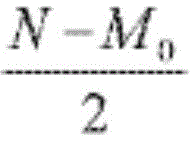
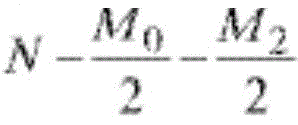
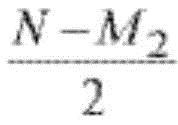
结合图10的描述所述的示例与通过一个窗口处理帧1003的情况相对应。如果与帧1003相关联的窗口的数量大于1,那么构造可能与上述不同。在一些实施例中,可以通过以下方式将用于与一个以上窗口相关联的帧的第一窗口构造为五个片段,其中,m0被定义为M0和M1的最小值,并且M被定义为m0和M1的最大值:由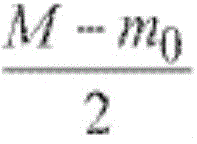
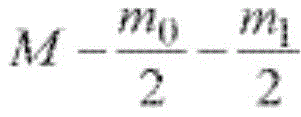
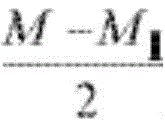


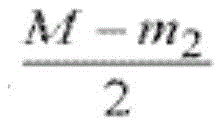
诸如图6-图7的MDCT实施例之类的MDCT实施例可以减少实现的存储需求。如关于图8中的图示所解释的,因为帧的前半部分可以独立于帧的后半部分被处理,所以图6-图7的实施例可以允许以减少的等待时间进行窗口切换。在诸如图6-图7的实施例之类的实施例中,与诸如图5中所示的其它MDCT实现之类的其它MDCT实现相比,实现过渡窗口的决定可以需要较少的前瞻并且引起较少的等待时间。在一些实施例中,利用其大小与2的幂有关的窗口和相关联的变换来处理帧可以在计算效率和数据规律性方面提供优势。MDCT embodiments, such as the MDCT embodiments of Figures 6-7, may reduce the storage requirements of the implementation. As explained with respect to the illustration in Figure 8, the embodiments of Figures 6-7 may allow window switching with reduced latency because the first half of the frame may be processed independently of the second half of the frame. In embodiments such as those of Figures 6-7, the decision to implement the transition window may require less look-ahead and cause less look-ahead than other MDCT implementations such as those shown in Figure 5 Less waiting time. In some embodiments, processing frames with windows whose sizes are related to powers of 2 and associated transforms may provide advantages in computational efficiency and data regularity.
尽管已经在音频信号的上下文中讨论了本发明的实施例,但是本领域普通技术人员将理解,对除音频信号之外的不同类别的信号进行操作也在本发明的范围内。Although embodiments of the present invention have been discussed in the context of audio signals, those of ordinary skill in the art will appreciate that it is within the scope of the present invention to operate on different classes of signals other than audio signals.
附录appendix
用于音频编解码器中修正离散余弦变换的高效实现的数学框架Mathematical framework for efficient implementation of modified discrete cosine transforms in audio codecs
1、介绍1 Introduction
本章节介绍了用于在音频编解码器或其它信号处理应用中实现修正离散余弦变换的通用数学框架。实现特征在于:This chapter presents a general mathematical framework for implementing Modified Discrete Cosine Transforms in audio codecs or other signal processing applications. The implementation features are:
·良好的时频定位。·Good time-frequency positioning.
·使用DCT-IV的高效计算。· Efficient computation using DCT-IV.
·作为旋转矩阵的加窗的实现。• Implementation of windowing as a rotation matrix.
·灵活的窗口设计。· Flexible window design.
·灵活的窗口切换,伴随有限的前瞻。· Flexible window switching with limited look-ahead.
2、定义和性质2. Definition and nature
2A、DCT-IV2A, DCT-IV
N阶的离散余弦变换(DCT)是由下式定义的N×N矩阵DN The discrete cosine transform (DCT) of order N is an N×N matrix D N defined by

其中0≤k、n<N,其中k是矩阵的行索引,并且n是列索引。文献中定义了DCT的其它变型;此变型被称为DCT-IV。where 0≤k, n<N, where k is the row index of the matrix and n is the column index. Other variants of DCT are defined in the literature; this variant is referred to as DCT-IV.
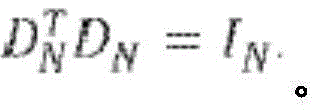
如上定义的DCT-IV满足正交性条件DCT-IV as defined above satisfies the orthogonality condition

其中IN表示N×N单位矩阵,而上标T表示矩阵转置。请注意,DCT-IV的定义中的比例因子
2B、MDCT2B, MDCT
N阶的修正离散余弦变换(MDCT)是由下式定义的N×2N矩阵CN:The Modified Discrete Cosine Transform (MDCT) of order N is an Nx2N matrix C N defined by:

其中0≤k<N并且0≤n<2N。这也被称为正向MDCT。where 0≤k<N and 0≤n<2N. This is also known as forward MDCT.
2C、在MDCT与DCT-IV之间的关系2C. Relationship between MDCT and DCT-IV
对于为2的幂的N,N>1,N阶的MDCT和DCT-IV通过下式进行关联:For N which is a power of 2, N>1, MDCT and DCT-IV of order N are related by the following formula:

其中J表示反单位矩阵。块矩阵中的右侧子矩阵中的每一个具有大小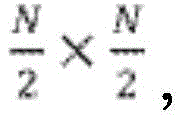
2D、逆MDCT2D, inverse MDCT
逆MDCT是由MDCT的转置给出的2N×N矩阵。这可以使用块矩阵公式被写为The inverse MDCT is a 2N×N matrix given by the transpose of the MDCT. This can be written using the block matrix formula as

注意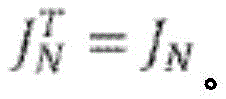
2E、时域混叠2E, time domain aliasing
逆MDCT与正向MDCT的乘积得出2N×2N矩阵The product of the inverse MDCT and the forward MDCT yields a 2N × 2N matrix

子矩阵中的对角线之外的元素(JN项)对应于MDCT中发生的时域混叠。The off - diagonal elements (JN terms) in the submatrix correspond to the time domain aliasing that occurs in MDCT.
2F、归一化2F, normalization
为了归一化连续应用正向MDCT和逆MDCT的结果,正向MDCT和逆MDCT分别按因子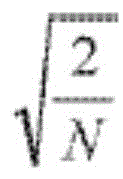

(9)(9)
并且在解码器中实现的逆MDCT同样地可以由下式给出And the inverse MDCT implemented in the decoder likewise can be given by

其中,0≤k<N且0≤n<2N。Among them, 0≤k<N and 0≤n<2N.
在矩阵表示法中,缩放的正向变换和逆变换为In matrix notation, the scaled forward and inverse transforms are


并且正向变换和逆变换的拼接产生And the concatenation of forward transform and inverse transform produces

3、加窗3. Add window
在典型的处理场景中,将变换应用于通过窗口函数提取并加权的信号片段:In a typical processing scenario, transforms are applied to signal fragments extracted and weighted by a window function:

其中,窗口函数wi[n]可以随帧索引i的变化而变化,其中Hk,n是当其被视为n的函数时正向变换的核心函数。where the window function wi [n] can vary with frame index i, where Hk , n is the core function of the forward transform when it is viewed as a function of n.
图11是示出帧边界、信号片段边界和窗口片段的说明图。在矩阵表示法中,可以根据图11中的表示法将用于单个帧(在这种情况下是帧1)的加窗和变换操作表示为FIG. 11 is an explanatory diagram showing frame boundaries, signal segment boundaries, and window segments. In matrix notation, the windowing and transforming operations for a single frame (

其中W1是在对角线上具有长度为2N的窗口w1[n]的2N×2N对角矩阵。如图11所示,窗口w1[n]可以被分解为与由整个窗口跨越的四个子帧相对应的长度为
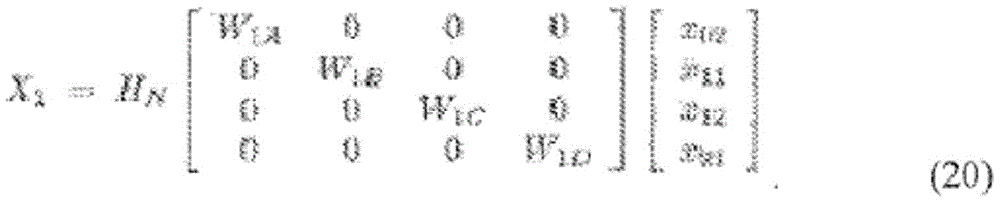
使用上面MDCT的公式,该式(20)可以被重写为Using the formula for MDCT above, this formula (20) can be rewritten as


式子(22)中的表达式将MDCT重构为一系列矩阵运算。式子(22)最右边的矢量是信号值的矢量。在这一系列矩阵运算中应用于信号值的矢量的第一矩阵运算至少部分地对应于加窗运算。应用于第一矩阵运算的结果的第二矩阵运算至少部分地对应于DCT变换。缩放和置换运算可以结合在第一或第二矩阵运算中。第二矩阵运算的结果对应于信号值矢量的MDCT。式子(22)中的公式表示信号值的单个矢量或序列的MDCT的计算。在式子(20)-(22)中,通过考虑一系列信号矢量的矩阵处理来构造滑动窗口MDCT。这种构造指示,滑动窗口MDCT可以公式化为以帧边界为中心的加窗旋转操作(对于长窗口的情况),然后是至少部分对应于DCT变换的变换操作。对于较短窗口的情况,加窗旋转操作可以更普遍地以窗口过渡边界为中心。The expression in Equation (22) reconstructs the MDCT into a series of matrix operations. The rightmost vector of equation (22) is the vector of signal values. The first matrix operation applied to the vector of signal values in the series of matrix operations corresponds at least in part to a windowing operation. The second matrix operation applied to the result of the first matrix operation corresponds at least in part to a DCT transform. Scaling and permutation operations can be combined in either the first or second matrix operations. The result of the second matrix operation corresponds to the MDCT of the vector of signal values. The formula in Equation (22) represents the calculation of the MDCT of a single vector or sequence of signal values. In equations (20)-(22), a sliding window MDCT is constructed by considering matrix processing of a series of signal vectors. This construction indicates that a sliding window MDCT can be formulated as a windowed rotation operation centered on the frame boundary (for the long window case), followed by a transform operation corresponding at least in part to the DCT transform. For the case of shorter windows, the windowed rotation operation can be more generally centered on the window transition boundary.
4、滑动窗口MDCT4. Sliding window MDCT
在诸如音频编解码之类的信号处理应用中,通常经由滑动窗口变换来处理任意长度的信号,在滑动窗口变换中对于整个信号以规则的间隔连续地应用窗口和变换操作。In signal processing applications such as audio codecs, signals of arbitrary length are typically processed via a sliding window transform, in which window and transform operations are continuously applied to the entire signal at regular intervals.
4A、正向MDCT的数学公式4A. Mathematical formula of forward MDCT
使用式(18)作为基础,滑动窗口MDCT可被以块对角线形式写为Using Equation (18) as a basis, the sliding window MDCT can be written in block diagonal form as
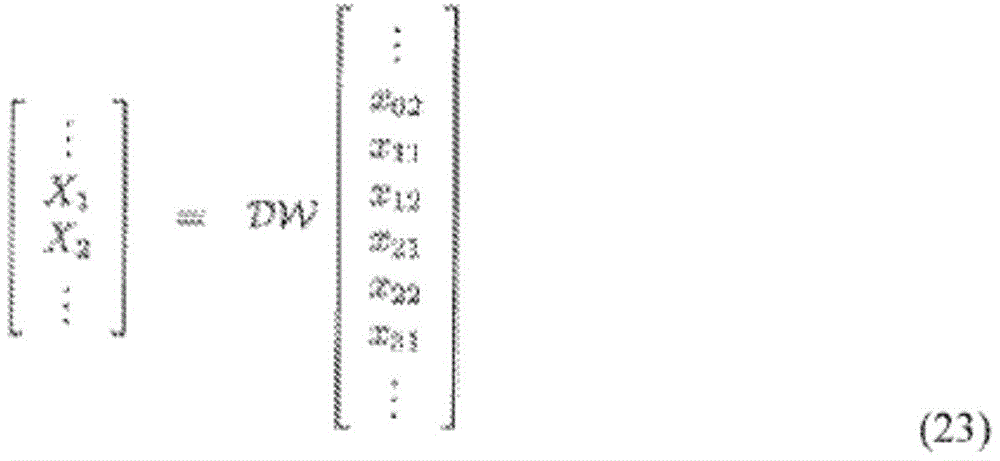
其中D和W被定义为块对角线矩阵;请注意,块对角线子矩阵在输入信号的连续帧上操作:where D and W are defined as block-diagonal matrices; note that the block-diagonal submatrix operates on successive frames of the input signal:


通过考虑以上被框起来的元素与式(22)中MDCT的单帧公式的对应关系,可以理解W的构造。被框起来的子矩阵被应用于帧1信号
注意,式(25)中的加窗块矩阵具有块对角线结构。矩阵的对角线由加窗旋转子矩阵组成,这些加窗旋转子矩阵以帧边界为中心并如以下的式(26)中的被框起来的元素所示:Note that the windowed block matrix in equation (25) has a block diagonal structure. The diagonal of the matrix consists of windowed rotation sub-matrices centered on the frame boundary and represented by the boxed elements in Equation (26) below:
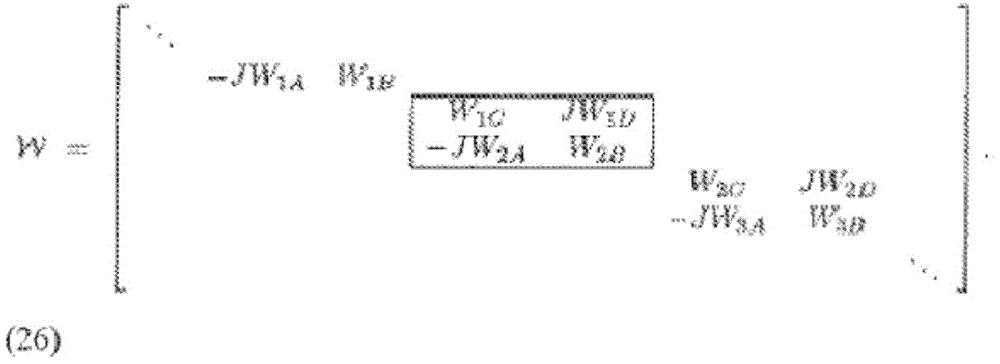
式(22)中所示出的被框起来的元素与对帧1的后半部分和帧2的前半部分执行的加窗旋转运算相对应,该加窗旋转操作如下所示:The framed elements shown in equation (22) correspond to the windowed rotation operations performed on the second half of

其中除了对角线(从矩阵左上角到右下角)和反对角线(从右上角到左下角)之外,矩阵由零组成。对角线用于缩放矢量中的数据;反对角线用于对矢量中数据的前半部分取反、缩放矢量并使数据围绕中心点翻转以创建数据的时间混叠版本。总体上,矩阵因此用于将数据矢量的缩放版本与缩放且时间混叠版本相组合。where the matrix consists of zeros except for the diagonal (from the upper left corner of the matrix to the lower right corner) and the antidiagonal (from the upper right corner to the lower left corner). The diagonal is used to scale the data in the vector; the anti-diagonal is used to negate the first half of the data in the vector, scale the vector, and flip the data around the center point to create a time aliased version of the data. In general, the matrix is thus used to combine the scaled version of the data vector with the scaled and time-aliased version.
式(24)-式(27)中的矩阵的结构产生图6中的流水线。请注意,式(24)-式(27)和图6示出了对于长窗口的情况的加窗旋转操作和随后的处理,其中,加窗操作以帧边界为中心。更一般地,例如在帧内较短窗口的情况下,窗口操作以窗口过渡为中心。The structure of the matrix in equations (24)-(27) results in the pipeline in FIG. 6 . Note that Equations (24)-(27) and Figure 6 illustrate the windowing rotation operation and subsequent processing for the long window case, where the windowing operation is centered on the frame boundary. More generally, window operations are centered on window transitions, such as in the case of shorter windows within a frame.
4B、逆MDCT和完美重构4B, Inverse MDCT and Perfect Reconstruction
滑动窗口MDCT的块对角线公式可被用于建立用于经由逐帧逆MDCT实现完美重构的条件。将整个正向块对角线变换约束为正交,则正向变换和逆变换的拼接可以表达为:The block diagonal formulation of sliding window MDCT can be used to establish conditions for perfect reconstruction via frame-by-frame inverse MDCT. Constraining the entire forward block diagonal transformation to be orthogonal, the concatenation of forward and inverse transformations can be expressed as:

其中,已经结合了属性DHD=I。因此,如果WHW=I,那么可以实现完美重构,这要求对角线上的N×N子矩阵满足正交性条件。考虑式(26)中的加窗矩阵W中突出显示的方形子矩阵。由此,窗口所需的正交性条件为:Therein, the attribute DH D=I has been incorporated. Therefore, perfect reconstruction can be achieved if W H W=I, which requires that the N×N sub-matrices on the diagonal satisfy the orthogonality condition. Consider the highlighted square submatrix in the windowed matrix W in equation (26). Thus, the orthogonality condition required for the window is:

所述条件是帧1和帧2的重叠。如果对应的条件适用于对角线上的所有子矩阵(即所有窗口重叠区域),那么可以对完整滑动窗口变换实现完美的重构。The condition is the overlap of
4C、用于完美重构的窗口条件4C. Window conditions for perfect reconstruction
式(29)中的正交性条件可以等效地被写为The orthogonality condition in Eq. (29) can be equivalently written as

从中可以得出四个子矩阵条件:From this, four submatrix conditions can be derived:


W1C JW1D-W2A JW2B=0 (33)W 1C JW 1D -W 2A JW 2B = 0 (33)
W1D JW1C-W2B JW2A=0. (34)W 1D JW 1C -W 2B JW 2A = 0. (34)
注意,后两个通过转置相关联,因此是等效条件。想到W子矩阵是对角线的,可以将用于完美重构的三个子矩阵条件等效地表达为用于窗口片段wA[n]、wB[n]、wC[n]和wD[n]的时域条件。Note that the latter two are related by transpose and are therefore equivalent conditions. Considering that the W submatrix is diagonal, the three submatrix conditions for perfect reconstruction can be equivalently expressed as for window segments w A [n], w B [n], w C [n] and w The time domain condition for D [n].



其中



类似的,akin,

从式(35)、式(36)、式(40)和式(41),可以得出以下关系:From Equation (35), Equation (36), Equation (40) and Equation (41), the following relationship can be derived:


将窗口片段wA[n]和wB[n]的拼接指示为wAB[n](并且类似地对于wCD[n]),对于窗口的要求可以被简化为Denoting the concatenation of window segments w A [n] and w B [n] as w AB [n] (and similarly for w CD [n]), the requirement for the window can be simplified to
w1CD[n]2+w1CD[N-1-n]2=1 (44)w 1CD [n] 2 +w 1CD [N-1-n] 2 =1 (44)
w1CD[N-1-n]2=w2AB[n]2 (45)w 1CD [N-1-n] 2 =w 2AB [n] 2 (45)
对于0≤n≤N-1。第一个约束意味着帧窗口的后半部分必须与其的反向(关于其中点)幂互补。第二个约束意味着帧窗口的后半部分的反向必须与后续帧窗口的前半部分匹配。在这些限制条件下,随之而来的是,帧窗口的前半部分也必须与其的反向幂互补。但是请注意,所有约束都应用于窗口的一半,这意味着窗口的后半部分可以独立于前半部分来设计,该性质在窗口切换的上下文中将变得重要。For 0≤n≤N-1. The first constraint means that the second half of the frame window must be complementary to its inverse (with respect to its midpoint) power. The second constraint means that the inverse of the second half of the frame window must match the first half of the subsequent frame window. With these constraints, it follows that the first half of the frame window must also be complementary to its inverse power. Note, however, that all constraints are applied to one half of the window, which means that the second half of the window can be designed independently of the first half, a property that will become important in the context of window switching.
如果对称窗口被假定为使得If a symmetric window is assumed such that
w[n]=w[2N-1-n] (46)w[n]=w[2N-1-n] (46)
对于0≤n≤N-1,意味着关系For 0≤n≤N-1, it means the relation
wCD[n]=wCD[N-1-n] (47)w CD [n] = w CD [N-1-n] (47)
对于半个窗口wAB[n]和wCD[n]对于0≤n≤N-1是适用的,然后式(45)可以被简化为w1AB[n]2=w2AB[n]2,对于0≤n≤N-1。式(44)可以被重写为:For half windows w AB [n] and w CD [n] are valid for 0≤n≤N-1, then equation (45) can be simplified as w 1AB [n] 2 =w 2AB [n] 2 , For 0≤n≤N-1. Equation (44) can be rewritten as:
w1AB[n]2+w1CD[n]2=1 (51)w 1AB [n] 2 +w 1CD [n] 2 =1 (51)
或者,就整个窗口w[n]而言:Or, in terms of the entire window w[n]:
w[n]2+w[n]+N]2=1, (52)w[n] 2 +w[n]+N] 2 =1, (52)
这被称为Princen-Bradley条件[1]。This is called the Princen-Bradley condition [1].
5、运行的MDCT的实现5. Implementation of running MDCT
在本章节中,回顾用于实现滑动窗口或运行MDCT(和逆MDCT)的两种不同的方法。In this section, two different approaches for implementing sliding windows or running MDCT (and inverse MDCT) are reviewed.
5A、使用滑动窗口的实现5A. Implementation using sliding window
运行MDCT的典型实现包括以下步骤A typical implementation to run MDCT consists of the following steps
·使时域输入信号成帧,将其划分为长度为N的相邻片段。• Frame the time-domain input signal, dividing it into adjacent segments of length N.
·将长度为2N的乘法窗口应用于信号的2N个样本,该信号的2N个样本包括来自当前帧的N个样本以及来自前一帧和后一帧中的一个或两者的N个附加样本。Apply a multiplying window of length 2N to 2N samples of a signal consisting of N samples from the current frame and N additional samples from one or both of the previous and subsequent frames .
·将MDCT应用于长度为2N的被加窗片段。通常使用诸如快速傅立叶变换(FFT)之类的计算高效方法来实现此MDCT。MDCT产生N个频谱系数。• Apply MDCT to windowed segments of length 2N. This MDCT is typically implemented using computationally efficient methods such as the Fast Fourier Transform (FFT). MDCT produces N spectral coefficients.
·对N个MDCT系数应用逆MDCT(再次使用高效计算),以得出2N个时域值。• Apply the inverse MDCT (again using efficient computation) on the N MDCT coefficients to yield 2N time domain values.
·对来自MDCT的2N个输出应用长度为2N的乘法窗口。• Apply a multiplication window of length 2N to the 2N outputs from the MDCT.
·将长度为2N的被加窗片段与N个先前生成的输出样本进行重叠相加,以得出N个最终输出样本,以及被存储以用于下一次迭代中进行重叠相加的N个样本。通常基于这些步骤或相对微小的变型来实现运行MDCT。这一系列操作如图5所示。Overlap-add a windowed segment of length 2N with N previously generated output samples to yield N final output samples, and N samples that are stored for overlap-add in the next iteration . Running the MDCT is usually accomplished based on these steps or relatively minor variations. This series of operations is shown in Figure 5.
5B、使用正交变换的实现5B. Implementation using orthogonal transformation
再次参考图6,这示出了基于旋转的MDCT实现的说明性框图。本领域技术人员将理解,旋转是一种正交变换。Referring again to FIG. 6, this shows an illustrative block diagram of a rotation-based MDCT implementation. Those skilled in the art will understand that rotation is an orthogonal transformation.
当在滑动窗口MDCT中使用的窗口满足上面导出的完美重构条件时,W的对角线上的N×N子矩阵是正交矩阵。因此,滑动窗口MDCT和逆MDCT可以通过以下方式实现:When the window used in sliding-window MDCT satisfies the perfect reconstruction condition derived above, the N×N sub-matrices on the diagonal of W are orthogonal matrices. Therefore, sliding window MDCT and inverse MDCT can be implemented in the following ways:
·成帧以将时域信号划分为长度为N的相邻片段。• Framing to divide the time domain signal into adjacent segments of length N.
·正交加窗变换(旋转),覆盖一个帧的后面

·DCT-IV被应用于一个加窗旋转的后半部分(例如,帧0-1重叠)和下一加窗旋转的前半部分(例如,帧1-2重叠);此DCT-IV的结果是这两次连续旋转的中心的帧(在此示例中为帧1)的MDCT。DCT-IV is applied to the second half of one windowed rotation (e.g., frame 0-1 overlap) and the first half of the next windowed rotation (e.g., frame 1-2 overlap); the result of this DCT-IV is The MDCT of the frame at the center of these two consecutive rotations (
·逆DCT-IV被应用于DCT-IV的输出。• Inverse DCT-IV is applied to the output of DCT-IV.
·逆加窗旋转对于一个帧被应用于逆DCT-IV的输出的后半部分,而对于下一帧被应用于逆DCT-IV的输出的前半部分。• Inverse windowing rotation is applied to the second half of the output of the inverse DCT-IV for one frame and to the first half of the output of the inverse DCT-IV for the next frame.
·逆加窗旋转结果的拼接导致形成时域输出信号。The concatenation of the inverse windowed rotation results results in a time domain output signal.
这一系列操作如图6所示。This series of operations is shown in Figure 6.
6、窗口切换6. Window switching
在音频编解码器中,基于音频信号的时频行为来调整窗口和切换是有益的。对于音调信号,使用长窗口可以提高编解码效率;另一方面,将短窗口用于瞬态信号会限制编解码伪像。In audio codecs, it is beneficial to adjust windowing and switching based on the time-frequency behavior of the audio signal. For tonal signals, using long windows can improve codec efficiency; on the other hand, using short windows for transient signals limits codec artifacts.
为了保持完美的重构,需要非对称过渡窗口来调节窗口大小。图12是示出用于过渡窗口的窗口片段、信号片段边界和帧边界的说明图。更具体地说,图12是示出用于从长窗口切换到短窗口的过渡窗口的说明图。请注意,过渡窗口在帧的前半部分(片段A和B)上与长窗口行为匹配。通过被分解为正交旋转的MDCT,窗口的这一部分可以在决定用于帧的后半部分(片段C和D)的窗口形状之前被处理(并且用于帧1的MDCT计算可被启动)。这意味着与其中用于一个帧的整个窗口在开始MDCT计算之前被应用的直接加窗方法相比,所需的前瞻较少。请注意,窗口的后半部分中的过渡区域由片段C中的平坦(恒定值)区域、跨C-D边界的向下过渡以及片段D中的平坦(零值)区域组成。In order to maintain a perfect reconstruction, an asymmetric transition window is required to adjust the window size. FIG. 12 is an explanatory diagram showing window segments, signal segment boundaries, and frame boundaries for transition windows. More specifically, FIG. 12 is an explanatory diagram showing a transition window for switching from a long window to a short window. Note that the transition window matches the long window behavior on the first half of the frame (fragments A and B). By being decomposed into an orthogonally rotated MDCT, this part of the window can be processed (and the MDCT calculation for
图13(a)、图13(b)、图13(c)、图13(d)是示出了在图6-图7的正交旋转MDCT帧中容易得到支持的窗口切换序列的示例的说明图。图13(a)示出了中间过渡窗口从长窗口帧到短窗口帧的过渡,如图3所示。图13(b)示出了具有多个窗口大小过渡的窗口序列;该窗口序列包括在窗口序列的开头的开始窗口以及在结尾处的停止窗口。图13(c)示出了具有多个过渡的另一个序列。开始窗口和停止窗口也可以在流的中间使用,例如建立用于在不同编解码流之间切换的同步点。图13(d)示出了具有中间流同步点的长窗口序列,该中间流同步点包括连续的开始窗口和停止窗口。Figures 13(a), 13(b), 13(c), 13(d) are diagrams showing examples of window switching sequences that are easily supported in the orthogonally rotated MDCT frames of Figures 6-7 Illustrating. Figure 13(a) shows the transition of an intermediate transition window from a long window frame to a short window frame, as shown in Figure 3 . Figure 13(b) shows a window sequence with multiple window size transitions; the window sequence includes a start window at the beginning of the window sequence and a stop window at the end. Figure 13(c) shows another sequence with multiple transitions. Start and stop windows can also be used in the middle of a stream, for example to establish synchronization points for switching between different codec streams. Figure 13(d) shows a long window sequence with intermediate stream synchronization points including consecutive start and stop windows.
参考文献references
[1]J.P.Princen,A.W.Johnson和A.B.Bradley,使用基于时域混叠消除的滤波器组设计进行子带/变换编解码(Subband/transform coding using filter bank designsbased on time-domain aliasing cancellation).IEEE的国际声学、语音和信号处理会议(ICASSP),第2161-2164页,1987年。[1] J.P.Princen, A.W.Johnson and A.B.Bradley, Subband/transform coding using filter bank designs based on time-domain aliasing cancellation. IEEE International Conference on Acoustics, Speech and Signal Processing (ICASSP), pp. 2161-2164, 1987.
示例硬件实现Example hardware implementation
图14是示出了根据一些示例实施例的能够从机器可读介质(例如,机器可读存储介质)读取指令1416并执行本文讨论的方法中的任何一种或多种的机器1400的组件的说明性框图。具体地,图14以计算机系统的示例形式示出了机器1400的图示,在该机器1400中可以执行用于使机器1400执行本文讨论的方法中的任何一种或多种的指令1416(例如,软件、程序、应用程序、小应用程序、应用或其它可执行代码)。例如,指令1416可以配置处理器1410以实现例如图4、图5和6图的模块或电路或组件。指令1416可以将通用的、未编程的机器1400变换成被编程为以所描述的方式执行所描述和示出的功能的特定机器(例如,作为音频处理器电路)。在替代实施例中,机器1400作为独立设备操作,或者可以耦接(例如,联网)到其它机器。在联网部署中,机器1400可以在服务器-客户端网络环境中以服务器机器或客户端机器的身份进行操作,或者在对等(或分布式)网络环境中作为对等机器进行操作。14 is a diagram illustrating components of a
机器1400可以包括但不限于服务器计算机、客户端计算机、个人计算机(PC)、平板计算机、膝上型计算机、上网本、机顶盒(STB)、个人数字助理(PDA)、娱乐媒体系统或系统组件、蜂窝电话、智能电话、移动设备、可穿戴设备(例如智能手表)、智能家居设备(例如智能家电)、其它智能设备、网络设备、网络路由器,网络交换机、网桥、耳机驱动器或能够依次或以其它方式执行指令1416的任何机器,该指令1416指定了要由机器1400采取的动作。此外,虽然仅示出了单个机器1400,但是术语“机器”也应被认为包括单独地或联合地执行指令1416以执行本文所讨论的方法中的任何一种或多种的机器1400的集合。
机器1400可以包括或使用诸如包括音频处理器电路之类的处理器1410、非暂时性存储器/存储设备1430和I/O组件1450,它们可以被配置为诸如经由总线1402彼此通信。在示例实施例中,处理器1410(例如,中央处理单元(CPU)、精简指令集计算(RISC)处理器、复杂指令集计算(CISC)处理器、图形处理单元(GPU)、数字信号处理器(DSP)、ASIC、射频集成电路(RFIC)、其它处理器或它们的任意合适的组合)可以包括例如可以执行指令1416的诸如处理器1412和处理器1414之类的电路。术语“处理器”旨在包括多核处理器1412、1414(有时称为“核”),该多核处理器可以包括可以同时执行指令1416的两个或更多个独立处理器1412、1414。尽管图14示出了多个处理器1410,但是机器1100可以包括具有单核的单个处理器1412、1414、具有多核的单个处理器1412、1414(例如,多核处理器1412、1414)、具有单核的多个处理器1412、1414、具有多核的多个处理器1412、1414或它们的任意组合,其中任何一个或多个处理器可以包括被配置为对音频信号应用高度滤波器以渲染经处理的或虚拟化的音频信号的电路。
存储器/存储设备1430可以包括诸如主存储器电路或其它内存存储电路之类的存储器1432、以及存储单元1426,两者都可以由处理器1410诸如经由总线1402访问。存储单元1426和存储器1432存储体现本文描述的方法或功能中的任何一个或多个的指令1416。在由机器1400执行期间,指令1416还可以全部或部分地驻留在存储器1432内、存储单元1426内、处理器1410中的至少一个内(例如,处理器1412、1414的高速缓存内)或其任何合适的组合。因此,存储器1432、存储单元1426和处理器1410的存储器是机器可读介质的示例。Memory/
如本文所用,“机器可读介质”是指能够临时或永久地存储指令1416和数据的设备,并且可以包括但不限于随机存取存储器(RAM)、只读存储器(ROM)、缓冲存储器、闪存、光学介质、磁性介质、高速缓存存储器、其它类型的存储设备(例如可擦可编程只读存储器)(EEPROM))和/或其任何合适的组合。术语“机器可读介质”应被认为包括能够存储指令1416的单个介质或多个介质(例如,集中式或分布式数据库,或相关联的高速缓存和服务器)。术语“机器可读介质”还应被认为包括能够存储用于由机器(例如,机器1400)执行的指令(例如,指令1416)的任何介质或多种介质的组合,以使得指令1416在由机器1400的一个或多个处理器(例如,处理器1410)执行时,使机器1400执行本文所述的方法中的任何一种或多种。因此,“机器可读介质”是指单个存储装置或设备,以及包括多个存储装置或设备的“基于云的”存储系统或存储网络。术语“机器可读介质”本身不包括信号。As used herein, "machine-readable medium" refers to a device capable of temporarily or permanently storing
I/O组件1450可以包括接收输入、提供输出、产生输出、发送信息、交换信息、捕获测量等等的各种组件。包括在特定机器1400中的特定I/O组件1450将取决于机器1400的类型。例如,诸如移动电话之类的便携式机器将可能包括触摸输入设备或其它这样的输入机构,而无头服务器机器将可能不包括这种触摸输入设备。应理解的是,I/O组件1450可以包括在图10中未示出的许多其它组件。I/O组件1450仅出于简化以下讨论的目的而按功能分组,并且该分组绝不是限制性的。在各种示例实施例中,I/O组件1450可以包括输出组件1452和输入组件1454。输出组件1452可以包括视觉组件(例如显示器,诸如等离子体显示面板(PDP)、发光二极管(LED)显示器、液晶显示器(LCD)、投影仪或阴极射线管(CRT))、声学组件(例如扬声器)、触觉组件(例如振动马达、阻力机构)、其它信号发生器等等。输入组件1454可以包括字母数字输入组件(例如,键盘、被配置为接收字母数字输入的触摸屏、光电键盘或其它字母数字输入组件)、基于点的输入组件(例如,鼠标、触摸板、轨迹球、操纵杆、运动传感器或其它指向工具)、触觉输入组件(例如,物理按钮、提供触摸或触摸手势的位置和/或力的触摸屏或其它触觉输入组件)、音频输入组件(例如,麦克风)等。I/
在其它示例实施例中,I/O组件1450可包括各种各样的其它组件中的生物统计组件1456、运动组件1458、环境组件1460或位置组件1462。例如,生物统计组件1456可以包括诸如例如可能影响特定于收听者或特定于环境的脉冲响应或HRTF的包含、使用或选择的如下组件:检测表达(例如,手表达、面部表达、声音表达、身体姿态或眼睛跟踪)、测量生物信号(例如,血压、心率、体温、汗液或脑波)、识别人物(例如,语音识别、视网膜识别、面部识别、指纹识别或基于脑电图的识别)等。在一个示例中,生物统计组件1456可以包括被配置为感测或提供关于所检测到的环境中收听者的位置的信息的一个或多个传感器。运动组件1458可以包括诸如可以被用于跟踪收听者的位置的变化的加速度传感器组件(例如,加速度计)、重力传感器组件、旋转传感器组件(例如陀螺仪)等。环境组件1460可以包括例如照明传感器组件(例如,光度计)、温度传感器组件(例如,检测环境温度的一个或多个温度计)、湿度传感器组件、压力传感器组件(例如气压计)、声学传感器组件(例如,检测混响衰减时间(例如,针对一个或多个频率或频带)的一个或多个麦克风)、接近传感器或房间体积感应组件(例如,检测附近物体的红外传感器)、气体传感器(例如,为了安全性检测有害气体的浓度或测量大气中的污染物的气体检测传感器,)或可以提供与周围物理环境相对应的指示、测量或信号的其它组件。位置组件1462可以包括位置传感器组件(例如,全球定位系统(GPS)接收器组件)、高度传感器组件(例如,高度计或检测可以从中导出高度的气压的气压计)、方向传感器组件(例如,磁力计)等等。In other example embodiments, the I/
可以使用多种技术来实现通信。I/O组件1450可以包括通信组件1464,该通信组件1464可操作以分别经由耦接1482和耦接1472将机器1400耦接到网络1480或设备1470。例如,通信组件1464可以包括网络接口组件或与网络1480对接的其它合适的设备。在其它示例中,通信组件1464可以包括有线通信组件、无线通信组件、蜂窝通信组件、近场通信(NFC)组件、



此外,通信组件1464可以检测标识符,或包括可操作以检测标识符的组件。例如,通信组件1464可以包括射频识别(RFID)标签阅读器组件、NFC智能标签检测组件、光学阅读器组件(例如,光学传感器,其用于检测诸如通用产品代码(UPC)条形码之类的一维条形码、诸如快速响应(QR)代码、Aztec代码、数据矩阵、数据字形(Dataglyph)、最大代码(MaxiCode)、PDF49、Ultra Code(超级代码)、UCC RSS-2D条形码之类的多维条形码、和其它光学代码)或声学检测组件(例如用于识别的被标记的音频信号的麦克风)。另外,可以经由通信组件1464得出各种信息,例如,经由因特网协议(IP)地理位置进行定位、经由
在各种示例实施例中,网络1480的一个或多个部分可以是自组织网络、内联网、外联网、虚拟专用网(VPN)、局域网(LAN)、无线LAN(WLAN)、广域网(WAN)、无线WAN(WWAN)、城域网(MAN)、因特网、因特网的一部分、公共交换电话网(PSTN)的一部分、简易老式电话服务(POTS)网络、蜂窝电话网络、无线网络、
指令1416可以使用传输介质经由网络接口设备(例如,通信组件1464中包括的网络接口组件)并使用多种公知的传输协议(例如,超文本传输协议(HTTP))中的任何一种通过网络1480被发送或接收。类似地,指令1416可以使用传输介质经由耦接1472(例如,对等耦接)被发送到设备1470或接收。术语“传输介质”应被认为包括能够存储、编码或携带由机器1400执行的指令1416的任何无形介质,并且包括数字或模拟通信信号或有助于此类软件的通信的其它无形介质。The
尽管上面的详细描述已经示出、描述并指出了应用于各种实施例的新颖特征,但是应当理解,在不脱离本公开的范围的前提下,可以对所示的设备或算法的形式和细节进行各种省略、替换和改变。如将认识到的,由于一些特征可以与其它特征分开使用或实践,因此本文描述的本发明的某些实施例可以以不提供本文阐述的所有特征和优点的形式来体现。While the foregoing detailed description has shown, described and indicated novel features applicable to various embodiments, it should be understood that changes may be made to the form and details of the devices or algorithms shown without departing from the scope of the present disclosure. Various omissions, substitutions and changes are made. As will be appreciated, as some features may be used or practiced separately from other features, certain embodiments of the invention described herein may be embodied in forms that do not provide all of the features and advantages set forth herein.
此外,尽管已经用结构特征和方法动作专用的语言描述了主题,但是应该理解,所附权利要求书中定义的主题不必限于上述特定特征或动作。相反,上述特定特征和动作被公开为实现权利要求的示例形式。Furthermore, although the subject matter has been described in language specific to structural features and methodological acts, it is to be understood that the subject matter defined in the appended claims is not necessarily limited to the specific features or acts described above. Rather, the specific features and acts described above are disclosed as example forms of implementing the claims.
Claims (36)
Applications Claiming Priority (3)
| Application Number | Priority Date | Filing Date | Title |
|---|---|---|---|
| US201762492011P | 2017-04-28 | 2017-04-28 | |
| US62/492,011 | 2017-04-28 | ||
| PCT/US2018/030061 WO2018201113A1 (en) | 2017-04-28 | 2018-04-28 | Audio coder window and transform implementations |
Publications (1)
| Publication Number | Publication Date |
|---|---|
| CN110892478A true CN110892478A (en) | 2020-03-17 |
Family
ID=63916754
Family Applications (1)
| Application Number | Title | Priority Date | Filing Date |
|---|---|---|---|
| CN201880043267.5A Pending CN110892478A (en) | 2017-04-28 | 2018-04-28 | Audio codec window and transform implementation |
Country Status (5)
| Country | Link |
|---|---|
| US (3) | US10847169B2 (en) |
| EP (1) | EP3616196A4 (en) |
| KR (1) | KR102615903B1 (en) |
| CN (1) | CN110892478A (en) |
| WO (1) | WO2018201113A1 (en) |
Cited By (2)
| Publication number | Priority date | Publication date | Assignee | Title |
|---|---|---|---|---|
| CN111640440A (en) * | 2020-04-30 | 2020-09-08 | 华为技术有限公司 | An audio stream decoding method, device, storage medium and device |
| WO2024179054A1 (en) * | 2023-02-28 | 2024-09-06 | 华为技术有限公司 | Audio encoding method, audio decoding method, and related apparatus |
Families Citing this family (7)
| Publication number | Priority date | Publication date | Assignee | Title |
|---|---|---|---|---|
| CN110892478A (en) | 2017-04-28 | 2020-03-17 | Dts公司 | Audio codec window and transform implementation |
| US10733998B2 (en) | 2017-10-25 | 2020-08-04 | The Nielsen Company (Us), Llc | Methods, apparatus and articles of manufacture to identify sources of network streaming services |
| US11049507B2 (en) | 2017-10-25 | 2021-06-29 | Gracenote, Inc. | Methods, apparatus, and articles of manufacture to identify sources of network streaming services |
| US10629213B2 (en) | 2017-10-25 | 2020-04-21 | The Nielsen Company (Us), Llc | Methods and apparatus to perform windowed sliding transforms |
| US10726852B2 (en) * | 2018-02-19 | 2020-07-28 | The Nielsen Company (Us), Llc | Methods and apparatus to perform windowed sliding transforms |
| EP3928313A1 (en) * | 2019-02-21 | 2021-12-29 | Telefonaktiebolaget LM Ericsson (publ) | Methods for frequency domain packet loss concealment and related decoder |
| WO2022264399A1 (en) * | 2021-06-18 | 2022-12-22 | 三菱電機株式会社 | Air-conditioning device |
Citations (3)
| Publication number | Priority date | Publication date | Assignee | Title |
|---|---|---|---|---|
| US20050114126A1 (en) * | 2002-04-18 | 2005-05-26 | Ralf Geiger | Apparatus and method for coding a time-discrete audio signal and apparatus and method for decoding coded audio data |
| CN1675683A (en) * | 2002-08-09 | 2005-09-28 | 弗兰霍菲尔运输应用研究公司 | Device and method for scalable coding and device and method for scalable decoding |
| CN105074819A (en) * | 2013-02-20 | 2015-11-18 | 弗劳恩霍夫应用研究促进协会” | Apparatus and method for generating an encoded signal or decoding an encoded audio signal using multiple overlapping portions |
Family Cites Families (41)
| Publication number | Priority date | Publication date | Assignee | Title |
|---|---|---|---|---|
| US5179626A (en) * | 1988-04-08 | 1993-01-12 | At&T Bell Laboratories | Harmonic speech coding arrangement where a set of parameters for a continuous magnitude spectrum is determined by a speech analyzer and the parameters are used by a synthesizer to determine a spectrum which is used to determine senusoids for synthesis |
| US6226608B1 (en) * | 1999-01-28 | 2001-05-01 | Dolby Laboratories Licensing Corporation | Data framing for adaptive-block-length coding system |
| DE10129240A1 (en) * | 2001-06-18 | 2003-01-02 | Fraunhofer Ges Forschung | Method and device for processing discrete-time audio samples |
| WO2003042979A2 (en) | 2001-11-14 | 2003-05-22 | Matsushita Electric Industrial Co., Ltd. | Encoding device and decoding device |
| WO2004082288A1 (en) | 2003-03-11 | 2004-09-23 | Nokia Corporation | Switching between coding schemes |
| DE10331803A1 (en) * | 2003-07-14 | 2005-02-17 | Fraunhofer-Gesellschaft zur Förderung der angewandten Forschung e.V. | Apparatus and method for converting to a transformed representation or for inverse transformation of the transformed representation |
| KR100885438B1 (en) | 2003-09-29 | 2009-02-24 | 에이전시 포 사이언스, 테크놀로지 앤드 리서치 | How to perform domain conversion of digital signal from time domain to frequency domain and vice versa |
| DE10345995B4 (en) * | 2003-10-02 | 2005-07-07 | Fraunhofer-Gesellschaft zur Förderung der angewandten Forschung e.V. | Apparatus and method for processing a signal having a sequence of discrete values |
| US7315822B2 (en) * | 2003-10-20 | 2008-01-01 | Microsoft Corp. | System and method for a media codec employing a reversible transform obtained via matrix lifting |
| GB0326539D0 (en) * | 2003-11-14 | 2003-12-17 | Qinetiq Ltd | Dynamic blind signal separation |
| CA2556575C (en) * | 2004-03-01 | 2013-07-02 | Dolby Laboratories Licensing Corporation | Multichannel audio coding |
| KR101158698B1 (en) * | 2004-04-05 | 2012-06-22 | 코닌클리케 필립스 일렉트로닉스 엔.브이. | A multi-channel encoder, a method of encoding input signals, storage medium, and a decoder operable to decode encoded output data |
| US7386445B2 (en) * | 2005-01-18 | 2008-06-10 | Nokia Corporation | Compensation of transient effects in transform coding |
| AU2005201813B2 (en) * | 2005-04-29 | 2011-03-24 | Phonak Ag | Sound processing with frequency transposition |
| US7974837B2 (en) | 2005-06-23 | 2011-07-05 | Panasonic Corporation | Audio encoding apparatus, audio decoding apparatus, and audio encoded information transmitting apparatus |
| US7546240B2 (en) | 2005-07-15 | 2009-06-09 | Microsoft Corporation | Coding with improved time resolution for selected segments via adaptive block transformation of a group of samples from a subband decomposition |
| US7953604B2 (en) * | 2006-01-20 | 2011-05-31 | Microsoft Corporation | Shape and scale parameters for extended-band frequency coding |
| FR2898725A1 (en) * | 2006-03-15 | 2007-09-21 | France Telecom | DEVICE AND METHOD FOR GRADUALLY ENCODING A MULTI-CHANNEL AUDIO SIGNAL ACCORDING TO MAIN COMPONENT ANALYSIS |
| US8046214B2 (en) * | 2007-06-22 | 2011-10-25 | Microsoft Corporation | Low complexity decoder for complex transform coding of multi-channel sound |
| US8521540B2 (en) * | 2007-08-17 | 2013-08-27 | Qualcomm Incorporated | Encoding and/or decoding digital signals using a permutation value |
| US8548815B2 (en) * | 2007-09-19 | 2013-10-01 | Qualcomm Incorporated | Efficient design of MDCT / IMDCT filterbanks for speech and audio coding applications |
| US8515767B2 (en) * | 2007-11-04 | 2013-08-20 | Qualcomm Incorporated | Technique for encoding/decoding of codebook indices for quantized MDCT spectrum in scalable speech and audio codecs |
| EP2063417A1 (en) * | 2007-11-23 | 2009-05-27 | Deutsche Thomson OHG | Rounding noise shaping for integer transform based encoding and decoding |
| US20110060433A1 (en) | 2008-02-01 | 2011-03-10 | Lehigh University | Bilinear algorithms and vlsi implementations of forward and inverse mdct with applications to mp3 audio |
| US8447591B2 (en) * | 2008-05-30 | 2013-05-21 | Microsoft Corporation | Factorization of overlapping tranforms into two block transforms |
| EP2346029B1 (en) * | 2008-07-11 | 2013-06-05 | Fraunhofer-Gesellschaft zur Förderung der angewandten Forschung e.V. | Audio encoder, method for encoding an audio signal and corresponding computer program |
| JP5163545B2 (en) | 2009-03-05 | 2013-03-13 | 富士通株式会社 | Audio decoding apparatus and audio decoding method |
| KR102691176B1 (en) * | 2010-01-19 | 2024-08-07 | 돌비 인터네셔널 에이비 | Improved subband block based harmonic transposition |
| JP5604933B2 (en) * | 2010-03-30 | 2014-10-15 | 富士通株式会社 | Downmix apparatus and downmix method |
| WO2012048472A1 (en) | 2010-10-15 | 2012-04-19 | Huawei Technologies Co., Ltd. | Signal analyzer, signal analyzing method, signal synthesizer, signal synthesizing method, windower, transformer and inverse transformer |
| WO2012122303A1 (en) * | 2011-03-07 | 2012-09-13 | Xiph. Org | Method and system for two-step spreading for tonal artifact avoidance in audio coding |
| EP2688066A1 (en) * | 2012-07-16 | 2014-01-22 | Thomson Licensing | Method and apparatus for encoding multi-channel HOA audio signals for noise reduction, and method and apparatus for decoding multi-channel HOA audio signals for noise reduction |
| JPWO2014136628A1 (en) * | 2013-03-05 | 2017-02-09 | 日本電気株式会社 | Signal processing apparatus, signal processing method, and signal processing program |
| EP2881944B1 (en) * | 2013-12-05 | 2016-04-13 | Nxp B.V. | Audio signal processing apparatus |
| DE202015009312U1 (en) | 2014-01-26 | 2017-02-03 | Cable Television Laboratories, Inc. | data transformation |
| EP2919232A1 (en) * | 2014-03-14 | 2015-09-16 | Fraunhofer-Gesellschaft zur Förderung der angewandten Forschung e.V. | Encoder, decoder and method for encoding and decoding |
| US10134403B2 (en) * | 2014-05-16 | 2018-11-20 | Qualcomm Incorporated | Crossfading between higher order ambisonic signals |
| EP3278180B1 (en) * | 2015-04-01 | 2021-11-24 | Owl Labs, Inc. | Compositing and scaling angularly separated sub-scenes |
| EP3208800A1 (en) * | 2016-02-17 | 2017-08-23 | Fraunhofer-Gesellschaft zur Förderung der angewandten Forschung e.V. | Apparatus and method for stereo filing in multichannel coding |
| CN110892478A (en) | 2017-04-28 | 2020-03-17 | Dts公司 | Audio codec window and transform implementation |
| KR102837794B1 (en) * | 2019-07-02 | 2025-07-24 | 한국전자통신연구원 | Encoding method and decoding method for high band of audio, and encoder and decoder for performing the method |
-
2018
- 2018-04-28 CN CN201880043267.5A patent/CN110892478A/en active Pending
- 2018-04-28 KR KR1020197034970A patent/KR102615903B1/en active Active
- 2018-04-28 WO PCT/US2018/030061 patent/WO2018201113A1/en not_active Ceased
- 2018-04-28 EP EP18790505.4A patent/EP3616196A4/en not_active Withdrawn
- 2018-04-30 US US15/967,248 patent/US10847169B2/en active Active
-
2020
- 2020-11-13 US US17/097,690 patent/US11894004B2/en active Active
-
2023
- 2023-09-19 US US18/369,919 patent/US12175989B2/en active Active
Patent Citations (3)
| Publication number | Priority date | Publication date | Assignee | Title |
|---|---|---|---|---|
| US20050114126A1 (en) * | 2002-04-18 | 2005-05-26 | Ralf Geiger | Apparatus and method for coding a time-discrete audio signal and apparatus and method for decoding coded audio data |
| CN1675683A (en) * | 2002-08-09 | 2005-09-28 | 弗兰霍菲尔运输应用研究公司 | Device and method for scalable coding and device and method for scalable decoding |
| CN105074819A (en) * | 2013-02-20 | 2015-11-18 | 弗劳恩霍夫应用研究促进协会” | Apparatus and method for generating an encoded signal or decoding an encoded audio signal using multiple overlapping portions |
Non-Patent Citations (4)
| Title |
|---|
| BRITANAK ET AL: "A survey of efficient MDCT implementations in MP3 audio coding standard: Retrospective and state-of-the-art", 《SIGNAL PROCESSING》 * |
| DAVID VIRETTE: "Low Delay Transform for High Quality Low Delay Audio Coding", 《HTTPS://HAL.INRIA.FR/TEL-01205574/DOCUMENT》 * |
| HELMRICH CHRISTIAN R ET AL: "Low-Delay Transform Coding Using the MPEG-H 3D Audio Codec", 《AES CONVENTION》 * |
| RALF GEIGER: "Audio Coding Based on Integer Transforms", 《HTTP:WWW.DB-THUERINGEN.DE/SERVLETS/DERIVATESERVLET/DERIVATE-13817/ILM1-2007000278.PDF》 * |
Cited By (3)
| Publication number | Priority date | Publication date | Assignee | Title |
|---|---|---|---|---|
| CN111640440A (en) * | 2020-04-30 | 2020-09-08 | 华为技术有限公司 | An audio stream decoding method, device, storage medium and device |
| CN111640440B (en) * | 2020-04-30 | 2022-12-30 | 华为技术有限公司 | Audio stream decoding method, device, storage medium and equipment |
| WO2024179054A1 (en) * | 2023-02-28 | 2024-09-06 | 华为技术有限公司 | Audio encoding method, audio decoding method, and related apparatus |
Also Published As
| Publication number | Publication date |
|---|---|
| EP3616196A4 (en) | 2021-01-20 |
| US10847169B2 (en) | 2020-11-24 |
| EP3616196A1 (en) | 2020-03-04 |
| US11894004B2 (en) | 2024-02-06 |
| WO2018201113A1 (en) | 2018-11-01 |
| US12175989B2 (en) | 2024-12-24 |
| KR102615903B1 (en) | 2023-12-19 |
| KR20200012867A (en) | 2020-02-05 |
| US20180315435A1 (en) | 2018-11-01 |
| US20210134309A1 (en) | 2021-05-06 |
| US20240005932A1 (en) | 2024-01-04 |
Similar Documents
| Publication | Publication Date | Title |
|---|---|---|
| US11894004B2 (en) | Audio coder window and transform implementations | |
| US11769515B2 (en) | Audio coder window sizes and time-frequency transformations | |
| US11355132B2 (en) | Spatial audio signal decoder | |
| US9451304B2 (en) | Sound feature priority alignment | |
| JP5706917B2 (en) | Signal processor, method and program for providing a processed version of an input signal in response to an input signal | |
| TW201636998A (en) | Method and system of random access compression of transducer data for automatic speech recognition decoding | |
| WO2020037282A1 (en) | Spatial audio signal encoder | |
| EP3616199B1 (en) | Variable alphabet size in digital audio signals | |
| EP3980993B1 (en) | Hybrid spatial audio decoder | |
| KR20240088788A (en) | Audio coding using a combination of machine learning-based time-varying filters and linear predictive coding filters | |
| US20250046295A1 (en) | Sample generation using pipelined processing units | |
| CN114495977B (en) | Speech translation and model training methods, devices, electronic devices and storage media | |
| JP2014195152A (en) | Orthogonal transformation device, orthogonal transformation method, computer program for orthogonal transformation and audio decoding apparatus | |
| HK40026250A (en) | Audio coder window and transform implementations | |
| WO2023134433A1 (en) | Font generation method and apparatus, and device | |
| US20240289416A1 (en) | Methods and apparatus for accelerating transforms via sparse matrix operations | |
| CN115867965A (en) | Frame drop concealment for low frequency effects channels | |
| HK40016683A (en) | Audio coder window sizes and time-frequency transformations | |
| WO2018130742A1 (en) | Method for determining line spectral frequencies |
Legal Events
| Date | Code | Title | Description |
|---|---|---|---|
| PB01 | Publication | ||
| PB01 | Publication | ||
| SE01 | Entry into force of request for substantive examination | ||
| SE01 | Entry into force of request for substantive examination | ||
| REG | Reference to a national code |
Ref country code: HK Ref legal event code: DE Ref document number: 40026250 Country of ref document: HK |