Disclosure of Invention
The present invention provides a compound of formula (I) or a pharmaceutically acceptable salt thereof:
wherein R is 1 is-NR 5 R 6 Wherein R is 5 And R 6 Each independently selected from C 1 -C 6 Alkyl, wherein the alkyl is unsubstituted or substituted by-NR 7 R 8 Substituted;
wherein R is 2 Is selected from C 2 -C 6 Alkenyl which is unsubstituted or substituted by-NR 7 R 8 Substituted;
wherein R is 7 And R 8 Each at each occurrence is independently selected from H or C 1 -C 6 An alkyl group;
wherein R is 3 Selected from substituted or unsubstituted fused bicyclic groups fused to a five membered ring and a six membered ring;
wherein R is 4 Is selected from C 1 -C 6 An alkyl group.
According to an embodiment of the present invention, wherein the compound is represented by the following formula (II):
wherein A is 1 、A 4 、A 9 Each is independently selected from N or C; a. The 2 、A 3 、A 5 、A 6 、A 7 、A 8 Each independently selected from N, NR a 、CR a 、CR a R b Wherein R is a And R b Each independently selected from H and C 1 -C 6 Alkyl and halogen, or R a 、R b And together with the same carbon atom to which they are attached form C 3 -C 6 Cycloalkyl radical, said C 1 -C 6 Alkyl and C 3 -C 6 Cycloalkyl is optionally substituted with one or more halogen atoms which are fluorine, chlorine or bromine, provided that at least one of ring a and ring B is an unsaturated ring.
According to one embodiment of the invention, A 2 Selected from N, CH 2 ;A 3 Selected from N, CR a 、NR a 、CH、CR a R b ;A 5 Selected from N or CH, CH 2 ;A 6 Selected from N or CH, CH 2 、CF;A 7 Selected from N or CH, CH 2 、CF;A 8 Selected from N or CH, CH 2 、CF、CF 2 。
According to one embodiment of the invention, wherein A 1 Is N.
According to one embodiment of the invention, wherein A 1 、A 2 、A 3 、A 4 、A 5 、A 6 、A 7 、A 8 、A 9 One, two or three of which contain an N atom.
According to one embodiment of the invention, wherein R is as defined above 1 Selected from:
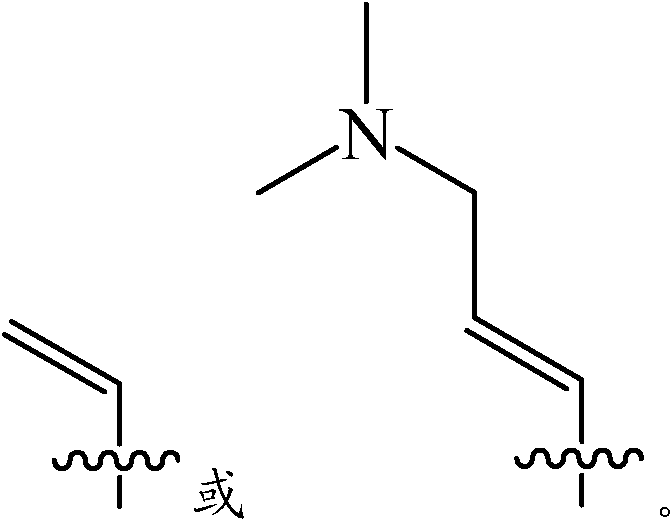
according to one embodiment of the invention, wherein R2 is selected from:
according to one embodiment of the invention, wherein said R3 is selected from:
according to one embodiment of the invention, wherein the compound is selected from:
n- (2- ((2- (dimethylamino) ethyl) (methyl) amino) -4-methoxy-5- ((4- (pyrazolo [1,5-a ] pyridin-3-yl) -1,3, 5-triazin-2-yl) amino) phenyl) acrylamide (Compound 1)
N- (2- ((2- (dimethylamino) ethyl) (methyl) amino) -4-methoxy-5- ((4- (pyrazolo [1,5-a ] pyrimidin-3-yl) -1,3, 5-triazin-2-yl) amino) phenyl) acrylamide (compound 2)
N- (2- ((2- (dimethylamino) ethyl) (methyl) amino) -4-methoxy-5- ((4- (4, 5,6, 7-tetrahydropyrazol [1,5-a ] pyridin-3-yl) -1,3, 5-triazin-2-yl) amino) phenyl) acrylamide (Compound 3)
N- (2- ((2- (dimethylamino) ethyl) (methyl) amino) -4-methoxy-5- ((4- (3-methyl-1H-indol-1-yl) -1,3, 5-triazin-2-yl) amino) phenyl) acrylamide (Compound 4)
N- (2- ((2- (dimethylamino) ethyl) (methyl) amino) -4-methoxy-5- ((4- (1-methyl-1H-pyrrolo [2,3-c ] pyridin-3-yl) -1,3, 5-triazin-2-yl) amino) phenyl) acrylamide (Compound 5)
N- (5- ((4- (1H-pyrrolo [3,2-b ] pyridin-1-yl) -1,3, 5-triazin-2-yl) amino) -2- ((2- (dimethylamino) ethyl) (methyl) amino) -4-methoxyphenyl) acrylamide (Compound 6)
N- (2- ((2- (dimethylamino) ethyl) (methyl) amino) -5- ((4- (imidazo [1,2-a ] pyridin-3-yl) -1,3, 5-triazin-2-yl) amino) -4-methoxyphenyl) acrylamide (Compound 7)
N- (5- ((4- (1H-benzo [ d ] imidazol-1-yl) -1,3, 5-triazin-2-yl) amino) -2- ((2- (dimethylamino) ethyl) (methyl) amino) -4-methoxyphenyl) acrylamide (Compound 8)
N- (2- ((2- (dimethylamino) ethyl) (methyl) amino) -4-methoxy-5- ((4- (pyrazolo [1,5-c ] pyrimidin-3-yl) -1,3, 5-triazin-2-yl) amino) phenyl) acrylamide (compound 9)
N- (2- ((2- (dimethylamino) ethyl) (methyl) amino) -5- ((4- (imidazo [1,5-a ] pyridin-3-yl) -1,3, 5-triazin-2-yl) amino) -4-methoxyphenyl) acrylamide (Compound 10)
N- (5- ((4- (3, 3-dimethyl-2, 3-dihydro-1H-pyrrolo [3,2-b ] pyridin-1-yl) -1,3, 5-triazin-2-yl) amino) -2- ((2- (dimethylamino) ethyl) (methyl) amino) -4-methoxyphenyl) acrylamide (Compound 11)
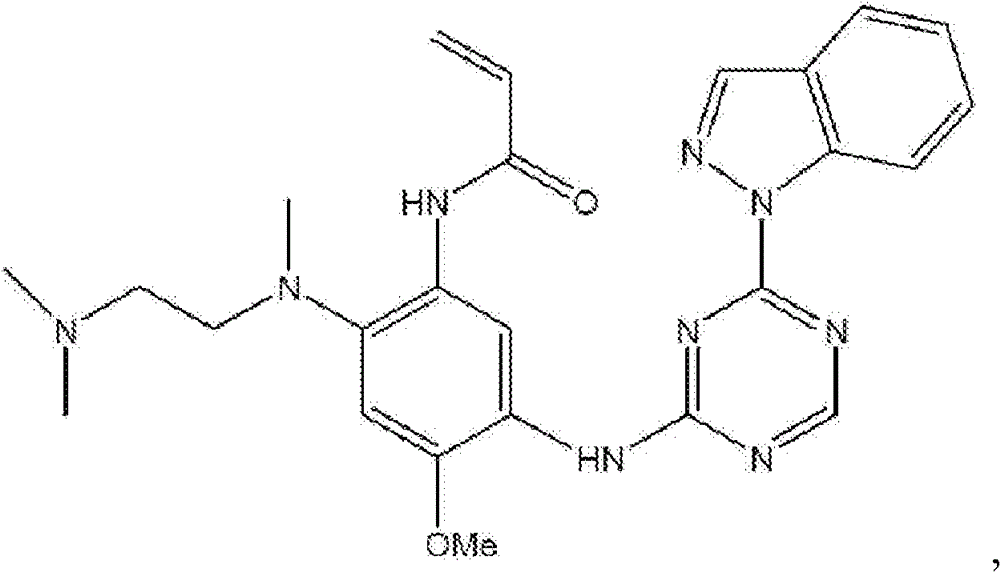
N- (5- ((4- (1H-indazol-1-yl) -1,3, 5-triazin-2-yl) amino) -2- ((2- (dimethylamino) ethyl) (methyl) amino) -4-methoxyphenyl) acrylamide (Compound 12)
N- (5- ((4- (1H-pyrrolo [3,2-c ] pyridin-1-yl) -1,3, 5-triazin-2-yl) amino) -2- ((2- (dimethylamino) ethyl) (methyl) amino) -4-methoxyphenyl) acrylamide (Compound 13)
N- (2- ((2- (dimethylamino) ethyl) (methyl) amino) -4-methoxy-5- ((4- (3-methyl-1H-indazol-1-yl) -1,3, 5-triazin-2-yl) amino) phenyl) acrylamide (Compound 14)
N- (2- ((2- (dimethylamino) ethyl) (methyl) amino) -5- ((4- (5-fluoro-3-methyl-1H-indazol-1-yl) -1,3, 5-triazin-2-yl) amino) -4-methoxyphenyl) acrylamide (Compound 15)
(E) -4- (dimethylamino) -N- (2- ((2- (dimethylamino) ethyl) (methyl) amino) -4-methoxy-5- ((4- (4, 5,6, 7-tetrahydropyrazolo [1,5-a ] pyridin-3-yl) -1,3, 5-triazin-2-yl) amino) phenyl) but-2-enamide (Compound 16)
N- (5- ((4- (4, 4-difluoro-4, 5,6, 7-tetrahydropyrazolo [1,5-a ] pyridin-3-yl) -1,3, 5-triazin-2-yl) amino) -2- ((2- (dimethylamino) ethyl) (methyl) amino) -4-methoxyphenyl) acrylamide (Compound 17)
N- (2- ((2- (dimethylamino) ethyl) (methyl) amino) -4-methoxy-5- ((4- (3-methyl-1H-pyrrolo [3,2-c ] pyridin-1-yl) -1,3, 5-triazin-2-yl) amino) phenyl) acrylamide (Compound 18)
N- (5- ((4- (1H-benzo [ d ] [1,2,3] triazol-1-yl) -1,3, 5-triazin-2-yl) amino) -2- ((2- (dimethylamino) ethyl) (methyl) amino) -4-methoxyphenyl) acrylamide (Compound 19)
N- (2- ((2- (dimethylamino) ethyl) (methyl) amino) -5- ((4- (6-fluoro-3-methyl-1H-indazol-1-yl) -1,3, 5-triazin-2-yl) amino) -4-methoxyphenyl) acrylamide (Compound 20)
N- (5- ((4- (3, 3-difluoro-2, 3-dihydro-1H-pyrrolo [3,2-b ] pyridin-1-yl) -1,3, 5-triazin-2-yl) amino) -2- ((2- (dimethylamino) ethyl) (methyl) amino) -4-methoxyphenyl) acrylamide (Compound 21)
N- (2- ((2- (dimethylamino) ethyl) (methyl) amino) -4-methoxy-5- ((4- (spiro [ cyclopropane-1, 3' -pyrrolo [3,2-b ] pyridine ] -1' (2 ' H) -yl) -1,3, 5-triazin-2-yl) amino) phenyl) acrylamide (Compound 22)
N- (5- ((4- (3, 3-dimethyl-5-fluoro-2, 3-dihydro-1H-pyrrolo [3,2-b ] pyridin-1-yl) -1,3, 5-triazin-2-yl) amino) -2- ((2- (dimethylamino) ethyl) (methyl) amino) -4-methoxyphenyl) acrylamide (Compound 23)
N- (2- ((2- (dimethylamino) ethyl) (methyl) amino) -5- ((4- (5 '-fluorospiro [ cyclopropane-1, 3' -pyrrolo [3,2-b ] pyridine ] -1 '(2' H) -yl) -1,3, 5-triazin-2-yl) amino) -4-methoxyphenyl) acrylamide (Compound 24)
N- (5- ((4- (3, 3-dimethyl-7-fluoro-2, 3-dihydro-1H-pyrrolo [3,2-b ] pyridin-1-yl) -1,3, 5-triazin-2-yl) amino) -2- ((2- (dimethylamino) ethyl) (methyl) amino) -4-methoxyphenyl) acrylamide (Compound 25)
N- (2- ((2- (dimethylamino) ethyl) (methyl) amino) -4-methoxy-5- ((4- (8-methylimidazol [1,2-a ] pyridin-3-yl) -1,3, 5-triazin-2-yl) amino) phenyl) acrylamide (Compound 26)
N- (2- ((2- (dimethylamino) ethyl) (methyl) amino) -5- ((4- (8-fluoroimidazo [1,2-a ] pyridin-3-yl) -1,3, 5-triazin-2-yl) amino) -4-methoxyphenyl) acrylamide (Compound 27)
N- (2- ((2- (dimethylamino) ethyl) (methyl) amino) -4-methoxy-5- ((4- (8- (trifluoromethyl) imidazo [1,2-a ] pyridin-3-yl) -1,3, 5-triazin-2-yl) amino) phenyl) acrylamide (Compound 28)
N- (2- ((2- (dimethylamino) ethyl) (methyl) amino) -5- ((4- (3-fluoro-1H-indazol-1-yl) -1,3, 5-triazin-2-yl) amino) -4-methoxyphenyl) acrylamide (Compound 29)
The invention also provides a pharmaceutical composition comprising a compound according to the invention or a pharmaceutically acceptable salt thereof.
The invention also provides application of the compound or the pharmaceutically acceptable salt thereof in preparing a medicament for treating small cell lung cancer.
Definition of
In the present invention, the following terms have the meanings as described below:
the "alkyl group" in the present invention means a straight, branched or cyclic saturated hydrocarbon group, preferably an alkyl group of 12 carbon atoms or less, more preferably an alkyl group of 6 carbon atoms or less. Examples of alkyl groups include methyl, ethyl, n-propyl, isopropyl, cyclopropyl, n-butyl, isobutyl, tert-butyl, cyclobutyl, n-pentyl, isopentyl, neopentyl, cyclohexyl, n-hexyl, isohexyl, 2, -methylbutyl and 2, 3-dimethylbutyl. "C" of the invention 1-6 Alkyl "refers to a straight, branched or cyclic saturated hydrocarbon group containing 1 to 6 carbon atoms. "C" of the invention 1-3 Alkyl "refers to a straight, branched or cyclic saturated hydrocarbon group containing 1 to 3 carbon atoms.
"alkenyl" in the present invention refers to a straight or branched chain unsaturated hydrocarbon group containing one or more carbon-carbon double bonds (C = C). "C" of the invention 2-6 Alkenyl "refers to an unsaturated hydrocarbon group containing 1 or 2 carbon-carbon double bonds and 2 to 6 carbon atoms. "C" of the present invention 2-4 Alkenyl "refers to an unsaturated hydrocarbon group containing 1 or 2 carbon-carbon double bonds and containing 2 to 4 carbon atoms. For example, ethenyl, propenyl, n-butenyl, butadienyl, pentenyl, hexenyl.
The "halogen" in the present invention means fluorine, chlorine, bromine and iodine.
In the context of the present specification, the term "treatment" also encompasses "prevention", unless indicated to the contrary. The term "treatment" as used herein is intended to have its ordinary meaning as follows: the disease is treated to relieve one, part or all of its symptoms, either completely or partially, or to correct or compensate for the underlying pathology. The term "prevention" as used herein is intended to have its normal daily meaning and includes both primary prevention to prevent disease development and secondary prevention to prevent disease from having occurred, either temporarily or continuously to prevent exacerbation or worsening of disease in a patient or the occurrence of new symptoms associated with the disease.
Pharmaceutically acceptable salts
It will be appreciated by those skilled in the art that salts, including pharmaceutically acceptable salts, of the compounds of formula (I) may be prepared. These salts may be prepared in situ during the final isolation and purification of the compound or by separately reacting the purified compound in its free acid or free base form with a suitable base or acid, respectively.
Pharmaceutically acceptable acid addition salts may be formed with inorganic and organic acids, for example, acetate, aspartate, benzoate, benzenesulfonate, bromide/hydrobromide, bicarbonate/carbonate, bisulfate/sulfate, camphorsulfonate, chloride/hydrochloride, citrate, edisylate, fumarate, glucoheptonate, gluconate, glucuronate, hippurate, hydroiodide/iodide, isethionate, lactate, lactobionate, lauryl sulfate, malate, maleate, malonate, mandelate, methanesulfonate, methylsulfate, naphthoate, naphthalenesulfonate, nicotinate, nitrate, stearate, oleate, oxalate, palmitate, pamoate, phosphate/biphosphate/dihydrogen phosphate, polygalacturonate, propionate, stearate, succinate, sulfosalicylate, tartrate, tosylate and trifluoroacetate.
Inorganic acids from which salts can be formed include, for example, hydrochloric acid, hydrobromic acid, sulfuric acid, nitric acid, phosphoric acid, and the like.
Organic acids from which salts can be formed include, for example, acetic acid, propionic acid, glycolic acid, oxalic acid, maleic acid, malonic acid, succinic acid, fumaric acid, tartaric acid, citric acid, benzoic acid, mandelic acid, methanesulfonic acid, ethanesulfonic acid, toluenesulfonic acid, sulfosalicylic acid, and the like. Pharmaceutically acceptable base addition salts may be formed with inorganic or organic bases.
Inorganic bases from which salts can be formed include, for example, ammonium salts and metals from groups I to XII of the periodic Table of the elements. In certain embodiments, the salts are derived from sodium, potassium, ammonium, calcium, magnesium, iron, silver, zinc, and copper; particularly suitable salts include ammonium, potassium, sodium, calcium and magnesium salts.
Organic bases from which salts can be formed include, for example, primary, secondary and tertiary amines, substituted amines including naturally occurring substituted amines, cyclic amines, basic ion exchange resins, and the like. Certain organic amines include isopropylamine, diethanolamine, diethylamine, lysine, meglumine, piperazine and tromethamine.
The pharmaceutically acceptable salts of the present invention can be synthesized from basic or acidic moieties by conventional chemical methods. In general, these salts can be prepared by reacting the free acid forms of these compounds with a stoichiometric amount of the appropriate base (Na, ca, mg, or K hydroxide, carbonate, bicarbonate, etc.), or by reacting the free base forms of these compounds with a stoichiometric amount of the appropriate acid. These reactions are generally carried out in water or in an organic solvent, or in a mixture of the two. Generally, where appropriate, it is desirable to use a non-aqueous medium, such as diethyl ether, ethyl acetate, ethanol, isopropanol or acetonitrile. Other suitable salts may be listed in "Remington's Pharmaceutical Sciences", 20 th edition, mack Publishing Company, easton, pa., (1985); and "Handbook of Pharmaceutical Salts" by Stahl and Wermuth: properties, selection, and Use "(Wiley-VCH, weinheim, germany, 2002).
Solvates, including pharmaceutically acceptable solvates, of the compounds of formula (I) may also be prepared. "solvate" refers to a complex of variable chemical mass formed by a solute and a solvent. Such solvents for the purposes of the present invention do not affect the biological activity of the solute. Examples of suitable solvents include, but are not limited to, water, meOH, etOH, and AcOH. Solvates wherein water is the solvent molecule are generally referred to as hydrates. Hydrates include compositions containing a stoichiometric amount of water, as well as compositions containing variable amounts of water.
As used herein, the term "pharmaceutically acceptable" means a compound suitable for pharmaceutical use. Salts and solvates (e.g., hydrates and hydrates of salts) of the compounds of the invention suitable for use in medicine are those in which the counterion or bound solvent is pharmaceutically acceptable. However, salts and solvates having non-pharmaceutically acceptable counterions or bound solvents are also encompassed by the invention, e.g., as intermediates in the preparation of other compounds of the invention and pharmaceutically acceptable salts and solvates thereof.
The compounds of formula (I), including salts and solvates thereof, may be present in crystalline form, non-crystalline form or mixtures thereof. The compounds, or salts or solvates thereof, may also exhibit polymorphism, i.e. the ability to occur in different crystalline forms. These different crystalline forms are generally known as "polymorphs". Polymorphs have the same chemical composition, but differ in the packing, geometric arrangement and other descriptive properties of the crystalline solid state. Thus, polymorphs can have different physical properties, such as shape, density, hardness, deformability, stability, and solubility properties. Polymorphs typically exhibit distinct melting points, IR spectra, and X-ray powder diffraction patterns, all of which can be used for identification. It will be appreciated by those skilled in the art that different polymorphic forms may be produced, for example, by varying or adjusting the conditions used in the crystallisation/recrystallisation of a compound of formula (I).
The invention also encompasses different isomers of the compounds of formula (I). "isomers" refer to compounds having the same composition and molecular weight, but differing in physical and/or chemical properties. The structural differences can be in the structure (geometric isomers) or in the ability to rotate plane polarized light (stereoisomers). With respect to stereoisomers, the compounds of formula (I) may have one or more asymmetric carbon atoms and may occur as racemates, racemic mixtures and as individual enantiomers or diastereomers. All such isomeric forms are included within the scope of the present invention, including mixtures thereof. If the compound contains a double bond, the substituent may be in the E or Z configuration. If the compound comprises a disubstituted cycloalkyl group, the substituents of the cycloalkyl group may have a cis-or trans-configuration. It is also intended to include all tautomeric forms.
Any asymmetric atom (e.g., carbon, etc.) of the compounds of formula (I) can exist in racemic or enantiomerically enriched form, e.g., in the (R) -, (S) -or (R, S) -configuration. In certain embodiments, each asymmetric atom has at least 50% enantiomeric excess, at least 60% enantiomeric excess, at least 70% enantiomeric excess, at least 80% enantiomeric excess, at least 90% enantiomeric excess, at least 95% enantiomeric excess, or at least 99% enantiomeric excess in the (R) -or (S) -configuration. If possible, the substituents on the atoms having an unsaturated double bond are present in cis- (Z) -or trans- (E) -form.
Thus, as used herein, a compound of formula (I) can be in the form of one of the possible isomers, rotamers, atropisomers, tautomers or mixtures thereof, for example as substantially pure geometric isomers (cis or trans), diastereomers, optical isomers (enantiomers), racemates or mixtures thereof.
Any resulting mixture of isomers can be separated into pure or substantially pure geometric or optical isomers, diastereomers, racemates based on the physicochemical differences of the components, for example, by chromatography and/or fractional crystallization.
The racemates of any of the resulting end products or intermediates can be resolved into the optical enantiomers by known methods, for example by separation of diastereomeric salts thereof, which are obtained with an optically active acid or base and release the optically active acidic or basic compound. In particular, basic moieties may therefore be used to resolve the compounds of the invention into their optical enantiomers, for example by fractional crystallisation of a salt with an optically active acid (such as tartaric acid, dibenzoyltartaric acid, diacetyltartaric acid, di-O, O' -p-toluoyltartaric acid, mandelic acid, malic acid or camphor-10-sulfonic acid). The racemic product can also be resolved by chiral chromatography, such as High Pressure Liquid Chromatography (HPLC) using a chiral adsorbent.
The invention includes unlabeled as well as isotopically labeled forms of the compounds of formula (I). Isotopically labeled compounds have the structure depicted by the formulae given herein, except that one or more atoms are replaced by an atom having a selected atomic mass or mass number. Examples of isotopes that can be incorporated into compounds of the invention include isotopes of hydrogen, carbon, nitrogen, oxygen, phosphorus, fluorine and chlorine, such as 2 H、 3 H、 11 C、 13 C、 14 C、 15 N、 18 F、 31 P、 32 P、 35 S、 36 Cl、 125 I. The invention includes various isotopically-labeled compounds as defined herein, for example, in which a radioisotope is present (e.g., in which a radioisotope is present 3 H and 14 c) Or in which non-radioactive isotopes occur (e.g. in 2 H and 13 c) Those of (a). These isotopically-labeled compounds are useful in metabolic studies (e.g., using 14 C) Reaction kinetics study (e.g. with 2 H or 3 H) Detection or imaging techniques, such as Positron Emission Tomography (PET) or Single Photon Emission Computed Tomography (SPECT), including drug substrate tissue distribution analysis, or for radiotherapy of a patient. In particular, it may be particularly desirable for PET or SPECT studies 18 F or a labeled compound. Isotopically-labelled compounds of formula (I) can generally be prepared by conventional techniques known to those skilled in the art or by processes analogous to those described in the accompanying examples and preparations using a suitable isotopically-labelled reagent in place of the unlabelled reagent previously used.
In addition, heavier isotopes, in particular deuterium (i.e. deuterium) 2 Substitution of H or D) may lead to certain therapeutic advantages resulting from greater metabolic stability, such as increased in vivo half-life or reduced dosage requirements or improvement in therapeutic index. It is understood that deuterium is considered herein as a substituent of the compound of formula (I). The concentration of this heavier isotope, in particular deuterium, may be determined by the isotopic enrichment factor. As used hereinThe term "isotopic enrichment factor" refers to the ratio between the isotopic and natural abundance of a particular isotope. If a substituent in a compound of the invention is designated as deuterium, then for each designated deuterium atom the compound has an isotopic enrichment factor of at least 3500 (52.5% deuterium incorporation at each designated deuterium atom), at least 4000 (60% deuterium incorporation), at least 4500 (67.5% deuterium incorporation), at least 5000 (75% deuterium incorporation), at least 5500 (82.5% deuterium incorporation), at least 6000 (90% deuterium incorporation), at least 6333.3 (95% deuterium incorporation), at least 6466.7 (97% deuterium incorporation), at least 6600 (99% deuterium incorporation), or at least 6633.3 (99.5% deuterium incorporation).
Pharmaceutical composition
The present invention provides a pharmaceutical composition comprising a compound of formula (I) as described above, or a pharmaceutically acceptable salt thereof, in association with a pharmaceutically acceptable diluent or carrier.
The pharmaceutical compositions can be formulated for a particular route of administration, such as oral, parenteral, and rectal administration. Furthermore, the pharmaceutical compositions of the present invention can be formulated in solid form (including without limitation capsules, tablets, pills, granules, powders or suppositories) or in liquid form (including without limitation solutions, suspensions or emulsions). The pharmaceutical compositions can be subjected to conventional pharmaceutical operations (e.g., sterilization) and/or can contain conventional inert diluents, lubricating agents or buffers, as well as adjuvants, such as preservatives, stabilizers, wetting agents, emulsifiers, buffers, and the like.
Typically, the pharmaceutical composition is a tablet or gelatin capsule comprising the active ingredient and
a) Diluents, such as lactose, dextrose, sucrose, mannitol, sorbitol, cellulose and/or glycine;
b) Lubricants, for example silica, talc, stearic acid, its magnesium or calcium salts and/or polyethylene glycol; also included for the tablets are
c) Binders, such as magnesium aluminum silicate, starch paste, gelatin, gum tragacanth, methyl cellulose, sodium carboxymethylcellulose, and/or polyvinylpyrrolidone; if desired, also
d) Disintegrating agents, such as starch, agar, alginic acid or its sodium salt, or effervescent mixtures; and/or
e) Absorbents, coloring agents, flavoring agents, and sweeteners.
The tablets may be film-coated or enteric-coated according to methods known in the art.
Suitable compositions for oral administration include an effective amount of a compound of formula (I) or a pharmaceutically acceptable salt thereof, in the form of tablets, lozenges, aqueous or oily suspensions, dispersible powders or granules, emulsions, hard or soft capsules, or syrups or elixirs. Compositions for oral use are prepared according to any method known to the art for the manufacture of pharmaceutical compositions and can contain 1 or more agents selected from the group consisting of sweetening agents, flavoring agents, coloring agents and preserving agents in order to provide a fine and palatable preparation. Tablets may contain the active ingredient in admixture with non-toxic pharmaceutically acceptable excipients which are suitable for the manufacture of tablets. Such excipients are, for example, inert diluents (e.g. calcium carbonate, sodium carbonate, lactose, calcium phosphate or sodium phosphate); granulating and disintegrating agents (e.g., corn starch, or alginic acid); binding agents (e.g., starch, gelatin, or acacia); and lubricating agents (e.g., magnesium stearate, stearic acid, or talc). The tablets are uncoated or they may be coated by known techniques to delay disintegration and absorption in the gastrointestinal tract and thereby provide a sustained action over a longer period. For example, a time delay material such as glyceryl monostearate or glyceryl distearate can be employed. Formulations for oral use may be presented as hard gelatin capsules wherein the active ingredient is mixed with an inert solid diluent, for example calcium carbonate, calcium phosphate or kaolin, or as soft gelatin capsules wherein the active ingredient is mixed with water or an oil medium, for example peanut oil, liquid paraffin or olive oil.
Certain injectable compositions are isotonic aqueous solutions or suspensions, and suppositories are advantageously prepared from fatty emulsions or suspensions. The compositions may be sterilized and/or contain adjuvants, such as preserving, stabilizing, wetting or emulsifying agents, solubility promoters, salts for regulating the osmotic pressure and/or buffers. In addition, they may also contain other therapeutically valuable substances. The compositions are prepared according to conventional mixing, granulating or coating methods, respectively, and contain about 0.1-75% or about 1-50% of the active ingredient.
Since water may promote the degradation of certain compounds, the present invention also provides anhydrous pharmaceutical compositions and dosage forms comprising the compounds of the present invention as an active ingredient.
Anhydrous pharmaceutical compositions and dosage forms of the invention can be prepared using anhydrous or low water content ingredients and low water content or low humidity conditions. Anhydrous pharmaceutical compositions can be prepared and stored so as to retain their anhydrous nature. Thus, anhydrous compositions are packaged using materials known to prevent contact with water so that they can be included in suitable formulary kits. Examples of suitable packaging include, without limitation, hermetically sealed foils, plastics, unit dose containers (e.g., vials), blister packs, and strip packs.
The invention further provides pharmaceutical compositions and dosage forms comprising 1 or more agents that reduce the rate of decomposition of a compound of the invention as an active ingredient. Such agents (which are referred to herein as "stabilizers") include, without limitation, antioxidants (e.g., ascorbic acid), pH buffers or salt buffers, and the like.
The pharmaceutical composition or combination product of the invention can be a unit dose of about 1-1000mg of active ingredient, or about 1-500mg or about 1-250mg or about 1-150mg or about 0.5-100mg, or about 1-50mg of active ingredient for about 50-70kg of an individual. The therapeutically effective dose of the compound, pharmaceutical composition or combination thereof will depend on the species, weight, age and condition of the individual, the condition or disease being treated, or the severity thereof. A physician, clinician or veterinarian of ordinary skill can readily determine the effective amount of each active ingredient required to prevent, treat or inhibit the development of the condition or disease.
Therapeutic use
In another aspect, the present invention provides a compound of formula (I) or a pharmaceutically acceptable salt thereof, for use as a medicament. In another aspect, the present invention also provides the use of a compound of formula (I), or a pharmaceutically acceptable salt thereof, in the manufacture of a medicament for the treatment of cancer.
In a further aspect, the present invention provides a method for producing an anti-cancer effect in a warm-blooded animal, such as man, in need of such treatment which comprises: administering to the animal an effective amount of a compound of formula (I) or a pharmaceutically acceptable salt thereof.
In another aspect, the invention also provides the use of a compound of formula (I) or a pharmaceutically acceptable salt thereof and an additional anti-tumour agent for the simultaneous, separate or sequential treatment of cancer.
In any of the aspects or embodiments mentioned above, the cancer may be selected from ovarian cancer, cervical cancer, colorectal cancer, breast cancer, pancreatic cancer, glioma, glioblastoma, melanoma, prostate cancer, leukemia, lymphoma, non-hodgkin lymphoma, gastric cancer, lung cancer, hepatocellular cancer, gastric cancer, gastrointestinal stromal tumor (GIST), thyroid cancer, cholangiocarcinoma, endometrial cancer, renal cancer, anaplastic large cell lymphoma, acute Myeloid Leukemia (AML), multiple myeloma, melanoma, mesothelioma.
In a preferred embodiment, the cancer is non-small cell lung cancer.
The compounds of formula (I) or pharmaceutically acceptable salts thereof as described above may be used as monotherapy or in addition to the compounds of the invention may be involved in conventional surgery or radiotherapy or chemotherapy or immunotherapy. Such chemotherapy may be administered concurrently, simultaneously, sequentially, or separately with a compound of the invention, and may comprise one or more of the following types of antineoplastic agents:
(i) Antiproliferative/antineoplastic drugs and combinations thereof used in medical oncology, such as alkylating agents (e.g., cisplatin, oxaliplatin, carboplatin, cyclophosphamide, nitrogen mustard, melphalan, chlorambucil, busulfan, temozolomide, nitrosoureas); antimetabolites (e.g., gemcitabine and antifolates such as fluoropyrimidines (e.g., 5-fluorouracil and tegafur), raltitrexed, methotrexate, cytarabine, hydroxyurea); antitumor antibiotics (e.g., anthracyclines such as doxorubicin, bleomycin, doxorubicin, daunorubicin, epirubicin, idarubicin, mitomycin C, actinomycin, mithramycin); antimitotic agents (e.g., vinca alkaloids such as vincristine, vinblastine, vindesine, vinorelbine; and taxanes such as taxol, taxotere); topoisomerase inhibitors (e.g., epipodophyllotoxins (e.g., etoposide, teniposide), amsacrine, topotecan, camptothecin);
(ii) Cytostatic agents, such as antiestrogens (e.g., tamoxifen, fulvestrant, toremifene, raloxifene, droloxifene, antiandrogens (e.g., bicalutamide, flutamide, nilutamide, cyproterone acetate), LHRH antagonists or LHRH agonists (e.g., goserelin, leuprolide, and buserelin), progestogens (e.g., megestrol acetate), aromatase inhibitors (e.g., anastrozole, letrozole, exemestane), 5 α -reductase inhibitors (e.g., finasteride);
(iii) Anti-invasive agents, such as c-Src kinase family inhibitors, e.g. dasatinib and bosutinib (SKI-606), and metalloproteinase inhibitors (such as marimastat), inhibitors of urokinase plasminogen activator receptor function, or antibodies to heparanase;
(iv) Inhibitors of growth factor function: such inhibitors include, for example, growth factor antibodies and growth factor receptor antibodies (e.g., the anti-erbB 2 antibody trastuzumab, the anti-EGFR antibody panitumumab, the anti-erbB 1 antibody cetuximab, and any growth factor or growth factor receptor antibody); such inhibitors also include: tyrosine kinase inhibitors, e.g. inhibitors of the epidermal growth factor family (e.g. EGFR family tyrosine kinase inhibitors such as N- (3-chloro-4-fluorophenyl) -7-methoxy-6- (3-morpholinopropoxy) -quinazolin-4-amine (gefitinib, ZD 1839), N- (3-ethynylphenyl) -6, 7-bis (2-methoxyethoxy) quinazolin-4-amine (erlotinib, OSI-774), 6-acrylamido-N- (3-chloro-4-fluorophenyl) -7- (3-morpholinopropoxy) -quinazolin-4-amine (CI 1033), erbB2 tyrosine kinase inhibitors (e.g. lapatinib), inhibitors of the hepatocyte growth factor family, inhibitors of the insulin growth factor family, inhibitors of the platelet derived growth factor family such as imatinib and/or nilotinib (AMN 107), inhibitors of serine/threonine kinases (e.g. Ras/Raf signal transduction inhibitors such as farnesyl transferase inhibitors, e.g. sorafenib (BAY 43-9006), inhibitors of the Pitinib kinase (CSF) and inhibitors of the conductance of serine/threonine kinases (e.g. inhibitors of the Ras kinase, inhibitors of the SCH 1, and/or PlK 3 kinase inhibitors of the kinase, plI-kinase, inhibitors of the EGFR-kinase, and PlI-kinase inhibitors of the, IGF receptor (insulin-like growth factor) kinase inhibitors; aurora kinase (e.g. AZD1152, PH739358, VX-680, MLN8054, R763, MP235, MP529, VX-528, AX 39459), cyclin dependent kinase inhibitors, e.g. CDK2 and/or CDK4 inhibitors;
(v) Anti-angiogenic agents, for example agents which inhibit the action of vascular endothelial growth factor, for example the anti-human vascular endothelial growth factor antibody bevacizumab, and for example VEGF receptor tyrosine kinase inhibitors, for example vandetanib (ZD 6474), vatalanib (PTK 787), sunitinib (SU 11248), axitinib (AG-013736), pazopanib (GW 786034), 4- (4-fluoro-2-methylindol-5-yloxy) -6-methoxy-7- (3-pyrrolidin-1-ylpropoxy) quinazoline (AZD 2171; example 240 in WO 00/47212), for example those disclosed in WO 97/22596, WO 97/30035, WO 97/32856 and WO 98/13354;
(vi) Vascular damaging agents, such as combretastatin A4 and the compounds disclosed in WO 99/02166, WO 00/40529, WO00/41669, WO 01/92224, WO 02/04434 and WO 02/08213;
(vii) Endothelin receptor antagonists such as zipopotant (ZD 4054) or atrasentan;
(viii) Gene therapy methods, including, for example, methods of replacing an aberrant gene (e.g., aberrant p53 or aberrant BRCA1 or BRCA 2); GDEPT (gene-directed enzyme prodrug therapy) methods such as those using cytosine deaminase, thymidine kinase, or bacterial nitroreductase; methods of increasing the patient's tolerance to chemotherapy or radiation therapy, such as multiple drug resistant gene therapy; and
(ix) Immunotherapeutic approaches, including, for example, in vitro and in vivo approaches to increasing the immunogenicity of patient tumor cells, such as transfection with cytokines (e.g., interleukin 2, interleukin 4, or granulocyte macrophage colony stimulating factor); methods of reducing T cell anergy; methods using transfected immune cells (e.g., cytokine-transfected dendritic cells); methods of using cytokine-transfected tumor cell lines; methods of using anti-idiotype antibodies; a method of reducing the function of an immunosuppressive cell (e.g., a regulatory T cell, a myeloid-derived suppressor cell, or a dendritic cell expressing IDO (indoleamine 2, 3-deoxyenzyme)); and methods of using cancer vaccines comprised of proteins or peptides derived from tumor associated antigens (e.g., NY-ESO-1, mAGE-3, WT1 or Her 2/neu).
Herein, if the term "combination therapy" is used to describe combination therapy, it is understood that this may mean simultaneous administration, separate administration or sequential administration. Reference to "co-administration" is to be understood analogously. In one aspect of the invention, "combination therapy" refers to simultaneous administration. In another aspect of the invention, "combination therapy" refers to separate administration. In another aspect of the invention, "combination therapy" refers to sequential administration. The delay in administering the second component should not, for example, lose the benefit of the effect produced by the use of the combination when administered sequentially or separately.
Synthesis of the Compounds of the invention
The compounds of formula (I) of the present invention can be synthesized generally according to the following scheme:
in the scheme, 2, 4-dichloro-1, 3, 5-triazine as a starting material is mixed with a suitable fused ring compound R
3 H coupling to give intermediates
Which binds to intermediates->
In the presence of a catalyst to obtain the compound of the formula (I). Wherein R is
3 As defined above.
In particular, for example
The synthetic route of (2) is as follows:
wherein, ring A, ring B, and A 2 、A 3 、A 4 、A 5 、A 6 、A 7 、A 8 、A 9 As defined above.
In addition, intermediates
The preparation synthetic route is as follows: />
Detailed Description
The process of the present invention is further illustrated by the following examples. It should be understood that the following examples are provided only for the purpose of enabling a better understanding of the present invention, and are not intended to limit the scope of the present invention in any way.
And (3) synthesis of an intermediate III:
to compound a (50.0g, 354mmol) in H at 0 deg.C 2 SO 4 (260 mL) solution KNO was added slowly with stirring 3 (35.8g, 354mmol) and then stirred for 2 hours. TLC (petroleum ether: ethyl acetate = 5: 1, rf = 0.57) indicated complete conversion of the reaction. The reaction mixture was poured into ice water (3 kg), adjusted to pH7 with aqueous NaOH, and extracted with ethyl acetate (1.5l × 2). Extracting organic phase with Na 2 SO 4 Drying and concentrating to obtain a crude product. Crude productPurification on a silica gel column (eluent: petroleum ether: ethyl acetate = 20: 1 to 5: 1) gave compound b (91.0 g, yield: 69%) as a yellow solid. 1 H NMR:(ES6131-2-P1A,CDCl 3 ,400MHz)δ7.45-7.43(d,J=9.2Hz,1H),6.82-6.79(d,J=12.0Hz,1H),3.89(s,3H),3.69(br s,2H).
A mixture of compound b (79.0g, 424mmol), N, N ', N' -trimethylethane-1, 2-diamine (65.1g, 637mmol, 82mL) and potassium carbonate (88.0g, 637mmol) in DMF (150 mL) was stirred at 90 ℃ for 25 hours. TLC (petroleum ether: ethyl acetate = 3: 1) indicated that the reaction had been consumed to completion. Water (1.5L) was added to the reaction mixture, extracted with dichloromethane (800 mLx 3), washed with saturated brine (1L), and washed with Na 2 SO 4 Drying and concentrating to obtain a crude product. The crude product was purified by silica gel column (eluent: dichloromethane: methanol = 100: 1 to 20: 1) to give compound c (66.0 g, yield: 58%) as a yellow oil.
1 H NMR:(ES6131-2-P1A,CDCl 3 ,400MHz)δ=7.31(s,1H),6.63(s,1H),3.90(s,3H),3.06-3.03(t,J=6.0Hz,2H),2.79(s,3H),2.51-2.48(t,J=6.0Hz,2H),2.31(s,6H).LCMS:269.1[M+H] + ,Rt=1.240。
Triethylamine (18.0 g,178mmol, 25mL) was added to a solution of compound c (18.0 g,67.1 mmol) in methylene chloride (200 mL) at 0 ℃ and then acryloyl chloride (8.0 g,88.6mmol, 7.2mL) was added dropwise. The reaction mixture was stirred at 0 ℃ for 16 hours. TLC (dichloromethane: methanol = 20: 1) indicated that the reaction was essentially complete. The reaction mixture was quenched with water (400 mL) and extracted with dichloromethane (200 mLx 3). Na for organic phase 2 SO 4 Drying, filtering and concentrating to obtain a crude product. The crude product was purified by silica gel column chromatography (dichloromethane: methanol = 100: 1 to 20: 1) to give compound d (8.10 g, yield: 39%) as a brown oil.
1 H NMR:(ES6131-4-p1a,CDCl 3 ,400MHz)δ=10.12(s,1H),9.19(s,1H),6.79(s,1H),6.49-6.44(d,J=17.2Hz,1H),6.32-6.25(dd,J 1 =10.0Hz,J 2 =16.8Hz,2H),5.75-5.72(d,J=10.0Hz),3.93(s,3H),2.92-2.90(t,J=5.2Hz,2H),2.79(s,3H),2.49-2.46(m,2H),2.33(s,6H).LCMS:323.2[M+H] + 。
To compound d (9.0g, 27.9mmol), fe (7.8g, 139mmol) and nNH 4 To a mixture of Cl (7.5g, 140mmol) were added ethanol (100 mL) and water (50 mL), followed by stirring at 50 ℃ for 16 hours. TLC (dichloromethane: methanol = 10: 1) indicated that the reaction was complete. The reaction solution was filtered and concentrated to obtain a crude product. The crude product was purified by silica gel column chromatography (dichloromethane: methanol = 20: 1), and the eluent was concentrated to give intermediate III as an off-white solid (7.6 g, yield: 93%). 1 H NMR:(ES6131-12-p1a,CDCl 3 ,400MHz)δ7.08(br s,1H),6.85(s,1H),6.65-6.58(dd,J 1 =10.0Hz,J=16.8Hz,1H),6.45-6.41(m,1H),5.86-5.83(dd,J 1 =10.0Hz,J=16.8Hz,1H),3.93(s,3H),3.37-3.31(m,2H),3.08(s,2H),2.75(s,6H),2.68(s,3H)。
Example 1
N- (2- ((2- (dimethylamino) ethyl) (methyl) amino) -4-methoxy-5- ((4- (3-methyl-1H-indol-1-yl) -1,3, 5-triazin-2-yl) amino) phenyl) acrylamide (Compound 4)
Synthetic route
To a solution of compound B1-1 (500mg, 3.75mmol) and diisopropylethylamine (533mg, 4.13mmol) in dichloromethane (3 mL) at 0 deg.C was added 2, 4-dichloro-1, 3, 5-triazine (562mg, 3.75mmol), followed by stirring for 1 hour. TLC (petroleum ether: ethyl acetate = 10: 1, rf = 0.48) indicated that the reaction was complete. The reaction mixture was concentrated to give the crude product. The crude product was purified by silica gel column chromatography (petroleum ether: ethyl acetate = 100: 1 to 25: 1) to give compound B1 — 2 as an off-white solid (720 mg, yield: 70%).
1 H NMR:(ES6208-30-P1A,CDCl 3 ,400MHz)δ8.51(s,0.5H),8.47(s,0.5H),8.3(d,J=8.0Hz,0.5H),8.27(d,J=8.0Hz,0.5H),7.26-7.15(m,2H),7.06(t,J=7.6Hz,1H),4.39(t,J=12.0Hz,1H),3.74-3.70(m,1H),3.50-3.42(m,1H),1.33(d,J=6.8Hz,3H)。
To a solution of B1-2 (600mg, 2.4 mmol) in dichloromethane (15 mL) was added DDQ (1.1g, 4.9 mmol). The reaction was stirred at 25 ℃ for 5 hours under nitrogen. TLC (petroleum ether: ethyl acetate = 10: 1) indicated complete reaction the reaction solution was purified by silica gel column chromatography (petroleum ether: ethyl acetate = 25: 1) to give compound B1-3 as a white solid (560 mg, yield: 94%).
1 H NMR:(ES6176-26-P1A,CDCl 3 ,400MHz)δ8.81(br s,1H),8.69-8.67(d,J=9.2Hz,1H),7.91(s,1H),7.56-7.54(d,J=8.0Hz,1H),7.43-7.39(t,J=7.6Hz,1H),7.36-7.33(t,J=7.6Hz,1H),2.34(s,3H)。
To a solution of intermediate III (239mg, 0.82mmol) in tetrahydrofuran (10 mL) was added compound B1-3 (200mg, 0.82mmol) followed by pyridine (129mg, 1.6 mmol). The reaction mixture was stirred at 25 ℃ for 6 hours under nitrogen. TLC (petroleum ether: ethyl acetate = 5: 1) indicated that the reaction was complete. The reaction mixture was concentrated to give a crude product. The crude product was purified by prep-HPLC (column: waters Xbridge 150 × 25 u mobile phase: [ water (10 mM NH) 4 HCO 3 )-ACN](ii) a B%:48% -78%,8 min) to yield compound 4 as a yellow solid (79 mg, yield: 19%).
1 H NMR:(ES6176-27-P1A,CDCl 3 ,400MHz)δ10.13(s,1H),9.81-9.76(br s,1H),8.79-8.77(d,J=8.4Hz,1H),8.63(s,1H),7.92-7.88(br s,1H),7.54-7.52(d,J=7.6Hz,1H),7.35-7.24(m,3H),6.82(s,1H),6.55-6.51(m,1H),6.41-6.36(m,1H),5.75-5.72(d,J=10.4Hz,1H),3.90(s,3H),2.91(s,2H),2.73(s,3H),2.49(s,3H),2.31(s,8H).LCMS:501.4[M+H] + ,Rt=0.771.HPLC:96.41%purity(220nm),Rt=5.06。
Example 2
N- (5- ((4- (1H-pyrrolo [3,2-b ] pyridin-1-yl) -1,3, 5-triazin-2-yl) amino) -2- ((2- (dimethylamino) ethyl) (methyl) amino) -4-methoxyphenyl) acrylamide (Compound 6)
Synthetic route
To a solution of 2, 4-dichloro-1, 3, 5-triazine (257mg, 1.70mmol) in DMF (12 mL) at 0 deg.C were added compound B2 (202mg, 1.70mmol) and diisopropylethylamine (234mg, 1.80mmol), followed by stirring for 0.5 h. Intermediate III (500mg, 1.70mmol) and diisopropylethylamine (234mg, 1.80mmol) were added to the reaction at 0 ℃ in succession. The reaction mixture was stirred at 25 ℃ for 20 hours. TLC (petroleum ether: ethyl acetate = 1: 2, rf = 0.35) indicated that the reaction was complete. The reaction mixture was purified by prep-HPLC (column: waters Xbridge 150 x 25 5u, mobile phase: [ water (10 mM NH4HCO3) -ACN ]; B%:18% -48%,10 min) to give compound 6 (37.5 mg, yield: 4.5%) as a bright yellow solid.
1 H NMR:(ES6045-14-P1A,CDCl 3 ,400MHz)δ10.21(br s,1H),9.01(d,J=8.0Hz,1H),8.65(s,1H),8.52(d,J=2.8Hz,1H),7.87(s,1H),7.20-7.28(m,1H),6.95(s,1H),6.84(s,1H),6.50(d,J=16.0Hz,1H),6.37-6.33(m,1H),5.75(d,J=10.0Hz,1H),3.92(s,3H),2.91(s,2H),2.75(s,3H),2.33(d,J=4.0Hz,2H),2.18(s.6H)。
LCMS:488.1[M+H] + ,Rt=3.615.HPLC:98.31%purity(220nm),Rt=3.52。
Example 3
N- (5- ((4- (1H-benzo [ d ] imidazol-1-yl) -1,3, 5-triazin-2-yl) amino) -2- ((2- (dimethylamino) ethyl) (methyl) amino) -4-methoxyphenyl) acrylamide (Compound 8)
Synthetic route
At 0 ℃ to 2, 4-dichloro-1, 3, 5-triazine (257 m)g,1.70 mmol) in DMF (8 mL) was added compound B3 (202mg, 1.70mmol) and diisopropylethylamine (234mg, 1.80mmol) and stirred for 1 hour. Diisopropylethylamine (234mg, 1.80mmol) and intermediate III (500mg, 1.70mmol) were added to the reaction mixture in sequence at 0 ℃. The reaction mixture was stirred at 25 ℃ for 16 hours. LCMS (es 6131-8-p1 a) indicated that the reaction was complete. The reaction mixture was purified by prep-HPLC (column: waters Xbridge 150 x 25 u mobile phase: [ water (10 mM NH) 4 HCO 3 )-ACN](ii) a B%:25% -55%,10 min), and freeze-drying the eluent to obtain a crude product. The crude product was purified by prep-TLC (dichloromethane: methanol = 15: 1) to give compound 8 (59 mg, yield: 7%) as a white solid.
1 H NMR:(ES6131-28-P1A1,CDCl 3 ,400MHz)δ10.20(s,1H),9.72(s,2H),8.72(s,1H),8.60-8.58(m,1H),7.95(s,1H),7.93-7.84(m,1H),7.42(s,2H),6.84(s,1H),6.59-6.53(m,1H),7.42(s,2H),6.84(s,1H),6.59-6.53(m,1H),6.37-6.32(m,1H),5.76-5.73(d,J=10.8Hz,1H),3.92(s,3H),2.91(s,2H),2.75(s,3H),2.31(s,8H)。
LCMS:488.3[M+H] + ,Rt=0.687.HPLC:97.53%purity(220nm),Rt=3.70。
Example 4
N- (5- ((4- (3, 3-dimethyl-2, 3-dihydro-1H-pyrrolo [3,2-b ] pyridin-1-yl) -1,3, 5-triazin-2-yl) amino) -2- ((2- (dimethylamino) ethyl) (methyl) amino) -4-methoxyphenyl) acrylamide (Compound 11)
Synthetic route
To a solution of Compound B9-1 (500mg, 3.08mmol) in tetrahydrofuran (10 mL) at 0 deg.C under nitrogen was added sodium borohydride (583mg, 15.4 mmol) and BF was added dropwise 3 .Et 2 O (6.82g, 21.6mmol,5.93mL,45% purity). The reaction mixture was then stirred at 20 ℃ for 6 hours. TLC (petroleum ether: ethyl acetate = 1: 1, rf = 0.45) showed the reactantThe reaction was complete. The reaction mixture was quenched with saturated ammonium chloride (5 mL) and extracted with ethyl acetate (10 mL). The aqueous phase was extracted with ethyl acetate (5mL. Times.3). The combined organic phases were washed with saturated brine (5 mL), dried over sodium sulfate, and concentrated to give Compound B9 (400 mg, yield: 88%) as a yellow solid.
1 H NMR:(ES6174-5-P1A 400MHz CDCl 3 )δ7.86(dd,J=1.2Hz,4.8Hz,1H),6.98(dd,J=4.8Hz,8.0Hz,1H),6.93(dd,J=5.2Hz,8.0Hz,1H),3.42(s,2H),1.39(s,6H)。
To a solution of 2, 4-dichloro-1, 3, 5-triazine (202mg, 1.40mmol) in tetrahydrofuran (10 mL) were added compound B9 (200mg, 1.40mmol) and pyridine (213mg, 2.70mmol), followed by stirring at 25 ℃ for 5 hours under nitrogen. TLC (petroleum ether: ethyl acetate = 2: 1) indicated that the reaction was complete. The reaction mixture was concentrated under reduced pressure to give the crude product. The crude product was purified by silica gel column chromatography (petroleum ether: ethyl acetate = 30: 1 to 25: 1) to give compound B9 — 2 (35 mg, yield: 10%) as a white solid.
To a solution of intermediate III (39mg, 0.13mmol) in tetrahydrofuran 3mL was added compound B9-2 (35mg, 0.13mmol) and pyridine (21mg, 0.27mmol), followed by stirring at 25 ℃ for 5 hours under nitrogen. TLC (petroleum ether: ethyl acetate = 2: 1) indicated that the reaction was complete. The reaction mixture was concentrated under reduced pressure to give the crude product. The crude product was purified by prep-HPLC (column: waters Xbridge 150 × 25 u mobile phase: [ water (10 mM NH) 4 HCO 3 )-ACN](ii) a B%:31% -51%,8 min) to yield compound 11 as a yellow solid (9.5 mg, yield: 14%).
1 H NMR:(ES6176-31-P1B,CDCl 3 ,400MHz)δ10.11-10.06(br s,1H),9.72(s,1H),8.60-8.58(d,J=8.4Hz,1H),8.54(s,1H),8.44(s,1H),7.79-7.76(br s,1H),7.13(s,1H),6.80(s,1H),6.48-6.44(m,1H),6.37-6.31(m,1H),5.73-5.69(d,J=11.6Hz,1H),4.44-4.40(br s,1H),3.88(s,3H),2.90(s,2H),2.72(s,3H),2.25(s,8H),1.50(s,6H),1.43(s,2H).LCMS:518.4[M+H] + ,Rt=0.655.HPLC:89.62%purity(220nm),Rt=3.76。
Example 5
N- (5- ((4- (1H-indazol-1-yl) -1,3, 5-triazin-2-yl) amino) -2- ((2- (dimethylamino) ethyl) (methyl) amino) -4-methoxyphenyl) acrylamide (Compound 12)
Synthetic route
To a solution of 2, 4-dichloro-1, 3, 5-triazine (206mg, 1.40mmol) in acetonitrile (12 mL) at 0 deg.C were added compound B4 (162mg, 1.40mmol) and sodium bicarbonate (127mg, 1.50mmol), followed by stirring at 0 deg.C for 6 hours. Intermediate III (400mg, 1.40mmol) was added and the reaction mixture was stirred at 25 ℃ for 20 h. TLC (dichloromethane: methanol = 20: 1, rf = 0.40) indicated that the reaction was complete. The reaction mixture was extracted with water (12 mL), dichloromethane (12mL. Times.3). The organic phase was washed with saturated brine, dried over sodium sulfate, filtered and concentrated to give the crude product. The crude product was purified by prep-HPLC, and the eluate was lyophilized to give Compound 12 (110 mg, yield: 16%) as a yellow solid.
1 H NMR:(ES6131-28-P1A1,CDCl 3 ,400MHz)δ10.28-10.23(m,2H),9.96(s,1H),8.80(s,1H),8.24-8.21(m,1H),7.79-7.77(m,1H),7.34-7.30(m,1H),7.11-7.07(m,1H),6.84(s,1H),6.66-6.62(d,J=16.8Hz,1H),6.45-6.41(m,1H),5.83-5.80(d,J=9.6Hz,1H),3.93(s,3H),2.90-2.89(m,2H),2.74(s,3H),2.34-2.31(m,8H)。
LCMS:488.3[M+H] + ,Rt=0.688。
HPLC:98.33%purity(220nm),Rt=4.52。
Example 6
N- (5- ((4- (1H-pyrrolo [3,2-c ] pyridin-1-yl) -1,3, 5-triazin-2-yl) amino) -2- ((2- (dimethylamino) ethyl) (methyl) amino) -4-methoxyphenyl) acrylamide (Compound 13)
Synthetic route
To a solution of 2, 4-dichloro-1, 3, 5-triazine (257mg, 1.70mmol) in DMF (10 mL) at 0 deg.C were added intermediate III (500mg, 1.71mmol) and diisopropylethylamine (234mg, 1.80mmol) and the mixture was stirred at 0 deg.C for 1 hour. Diisopropylethylamine (234mg, 1.80mmol) and compound B5 (202mg, 1.71mmol) were added in that order, and the reaction mixture was stirred at 25 ℃ for 15 hours. LCMS indicated the reaction was complete. The reaction mixture was purified by prep-HPLC (column: waters Xbridge 150 x 25 u mobile phase: [ water (10 mM NH) 4 HCO 3 )-ACN](ii) a B%:23% -53%,10 min), the eluate was lyophilized and then purified by prep-TLC (dichloromethane: methanol = 15: 1) to give compound 13 as an off-white solid (60 mg, yield: 7%).
1 H NMR:(ES6131-13-P2A,CDCl 3 ,400MHz)δ10.23(s,1H),9.66-9.60(m,1H),8.93-8.88(m,1H),8.67-8.60(m,2H),8.43-8.42(m,1H),7.92-7.89(m,1H),6.84(s,2H),6.51-6.46(d,J=17.6Hz,1H),6.38-6.31(dd,J 1 =10.0Hz,J 2 =16.8Hz,1H),5.75-5.73(d,J=13.0Hz,1H),3.90(s,3H),2.92-2.89(t,J=6.0Hz,2H),2.75(s,3H),2.35-2.33(t,J=5.6Hz,2H),2.30(s,6H).LCMS:488.4[M+H] + ,Rt=0.660。
HPLC:97.75%purity(220nm),Rt=3.47。
Example 7
N- (2- ((2- (dimethylamino) ethyl) (methyl) amino) -4-methoxy-5- ((4- (3-methyl-1H-indazol-1-yl) -1,3, 5-triazin-2-yl) amino) phenyl) acrylamide (Compound 14)
Synthetic route
To a solution of compound B6 (300mg, 2.30mmol) in acetonitrile (5 mL) at 25 ℃ was added 2, 4-dichloro-1, 3, 5-triazine (340mg, 2.30mmol), followed by stirring at 50 ℃ for 3 hours. Product was detected by LCMS. The reaction mixture was filtered and concentrated to give crude product B6-1 (410 mg) as a yellow solid, which was used in the next reaction without purification.
To a solution of Compound B6-1 (300mg, 1.20mmol) in DMF (10 mL) at 25 ℃ was added intermediate III (357mg, 1.20mmol), and the mixture was stirred at 25 ℃ for 3 hours. Product was detected by LCMS. The reaction mixture was purified by prep-HPLC (column: waters Xbridge 150 x 25 u mobile phase: [ water (10 mM NH) 4 HCO 3 )-ACN](ii) a B%:25% -55%,10 min), and freeze-drying the eluent to obtain a crude product. The crude product was recrystallized from ethyl acetate (3 mL), and filtered to give compound 14 (127 mg, yield: 21%) as a yellow solid.
1 H NMR:(ES6131-31-p1b,CDCl 3 ,400MHz)δ9.63(s,1H),9.09(s,1H),8.95(s,1H),8.17(s,1H),7.74-7.72(d,J=8.8Hz,1H),7.60-7.58(d,J=8.0Hz,1H),7.33-7.30(m,1H),7.06-7.03(m,1H),6.94-6.90(m,1H),6.72(s,1H),6.51-6.47(d,J=16.8Hz,1H),5.77-5.74(d,J=11.2Hz,1H),3.89(s,3H),3.29-3.27(t,J=5.2Hz,2H),3.19(s,2H),3.08(s,3H),2.84(s,6H),2.64(s,3H).LCMS:502.4[M+H] + ,Rt=0.692。
HPLC:99.48%purity(220nm),Rt=3.38。
Example 8
N- (2- ((2- (dimethylamino) ethyl) (methyl) amino) -5- ((4- (5-fluoro-3-methyl-1H-indazol-1-yl) -1,3, 5-triazin-2-yl) amino) -4-methoxyphenyl) acrylamide (Compound 15)
Synthetic route
To a solution of Compound B8-1 (4.0 g,26.1 mmol) in concentrated hydrochloric acid (20 mL) was added dropwise, while stirring at 0 deg.C, a solution of sodium nitrite (1.9 g,27.9 mmol) in water (9.6 mL), followed by continued stirring for 1 hour. SnCl 2 .2H 2 A solution of O (13.2g, 58.5 mmol) in concentrated hydrochloric acid (9.6 mL) was added dropwise to the reaction at 0 deg.CAfter that, stirring was continued for 2 hours. TLC (petroleum ether: ethyl acetate = 8: 1) indicated that the reaction was complete. A saturated potassium carbonate solution was added to the reaction solution to pH =8. Extract with ethyl acetate (200mL x 4). The organic phase was washed with saturated brine (150 mL), dried over sodium sulfate, filtered, and concentrated under reduced pressure to give yellow compound B8 (3.9 g, yield: 51%).
1 H NMR:(ES6176-15-P1A,CDCl 3 ,400MHz)δ10.01(br s,1H),7.39-7.36(m,1H),7.32-7.29(dd,J 1 =2.0Hz,J 2 =8.8Hz,1H),7.19-7.14(td,J 1 =2.4Hz,J 2 =8.8Hz,1H),2.57(s,3H)。
To a solution of the compound 2, 4-dichloro-1, 3, 5-triazine (500mg, 3.33mmol) in acetonitrile (10 mL) at 0 ℃ were added the compound B8 (501mg, 3.33mmol) and sodium bicarbonate (308mg, 3.66mmol). The reaction mixture was then stirred under nitrogen at 25 ℃ for 16 hours. TLC (dichloromethane: petroleum ether = 5: 1) indicated complete reaction. The reaction mixture was filtered and the filtrate was concentrated under reduced pressure to give the crude product. The crude product was purified by silica gel column chromatography (dichloromethane: petroleum ether = 1: 1 to 4: 1) to give yellow compound B8 — 2 (400 mg, yield: 46%).
1 H NMR:(ES6176-21-P1A2,CDCl 3 ,400MHz)δ9.12(s,1H),7.72-7.69(m,1H),7.18-7.10(m,2H),3.02(s,3H)。
To a solution of intermediate III (222mg, 0.76mmol) in tetrahydrofuran (10 mL) at 25 deg.C was added compound B8-2 (200mg, 0.76mmol) followed by pyridine (120mg, 1.50mmol) to the reaction solution and the reaction mixture was stirred under nitrogen at 25 deg.C for 6 hours. TLC (petroleum ether: ethyl acetate = 4: 1) indicated that the reaction was complete. The reaction mixture was concentrated under reduced pressure to give a crude product. The crude product was purified by prep-HPLC (column: gemini 150 × 25 u mobile phase: [ water (10 mM NH 4 HCO 3 )-ACN](ii) a B%:35% -60%,12.5 min) to yield compound 15 as a white solid (46 mg, yield: 12%).
1 H NMR:(ES6176-23-P1A,CDCl 3 ,400MHz)δ10.19(s,1H),9.60(s,1H),8.14(s,1H),7.72(br s,1H),7.15-7.11(m,2H),6.82(s,1H),6.49-6.45(m,1H),6.35-6.29(m,1H),5.73-5.70(d,J=9.6Hz,1H),3.88(s,3H),3.02(s,2H),2.84(s,2H),2.73(s,3H),2.66(s,1H),2.33(s,3H),2.29(s,6H)。
LCMS:520.4[M+H] + ,Rt=0.695.HPLC:98.4%purity(220nm),Rt=3.75。
Example 9
N- (2- ((2- (dimethylamino) ethyl) (methyl) amino) -4-methoxy-5- ((4- (3-methyl-1H-pyrrolo [3,2-c ] pyridin-1-yl) -1,3, 5-triazin-2-yl) amino) phenyl) acrylamide (Compound 18)
Synthetic route
To a solution of Compound B10-1 (1.0g, 4.50mmol) in DMF (15 mL) were added trimetyl (prop-1-ynyl) silane (1.5g, 13.6 mmol), lithium chloride (192.9mg, 4.50mmol), sodium carbonate (964.5mg, 9.10mmol) and Pd (dppf) Cl 2 .CH 2 Cl 2 (186mg, 0.23mmol), and the reaction mixture is stirred at 25 ℃ for 16 hours under nitrogen. TLC (petroleum ether: ethyl acetate = 1: 1) indicated that the reaction was complete. Water (80 mL) was added to the reaction mixture, and the mixture was extracted with ethyl acetate (100mL. Times.3). The organic phase was washed with saturated brine, dried over sodium sulfate, filtered and concentrated under reduced pressure to give the crude product. The crude product was purified by silica gel column chromatography (petroleum ether: ethyl acetate = 20: 1 to 1: 1) to give B10 — 2 (780 mg, yield: 84%) as a brown solid.
1 H NMR:(ES6176-36-P1A,CDCl 3 ,400MHz)δ8.89(s,1H),8.70(br s,1H),8.27-8.26(d,J=5.6Hz,1H),7.24-7.22(d,J=6.0Hz,1H),2.47(s,3H),0.40(s,9H)。
To a solution of compound B10-2 (780 mg, 3.80mmol) in ethanol (35 mL) was added sodium hydroxide (4.7g, 117mmol), and the reaction mixture was stirred at 80 ℃ for 16 hours. TLC (dichloromethane: methanol = 20: 1) indicated that the reaction was complete. The reaction was cooled to 25 ℃, poured into water (50 mL) and extracted with ethyl acetate (60mL x 3). The organic phase was washed with saturated brine solution (50 mL), dried over sodium sulfate, filtered and concentrated under reduced pressure to give the crude product. The crude product was purified by silica gel column chromatography (dichloromethane: methanol = 100: 1 to 20: 1) to give B10 (400 mg, yield: 79%) as a brown solid.
1 H NMR:(ES6176-39-P1A,CDCl 3 ,400MHz)δ9.49(br s,1H),8.70(s,1H),8.09-8.07(d,J=5.6Hz,1H),7.07-7.06(d,J=6.0Hz,1H),6.83(s,1H),2.19(s,3H)。
To a solution of intermediate III (664mg, 2.3mmol) in DMF (10 mL) at 0 ℃ was added compound 2, 4-dichloro-1, 3, 5-triazine (340mg, 2.30mmol) and the reaction mixture was stirred at 0 ℃ under nitrogen for 1h. Compound B10 (300mg, 2.30mmol) was added to the reaction mixture, and the reaction mixture was stirred at 0 deg.C under nitrogen for 2 hours. The reaction mixture was concentrated under reduced pressure to give the crude product. The crude product was purified by prep-HPLC (column: waters Xbridge 150 × 25 u mobile phase: [ water (10mM NH4HCO3) -ACN];B%:18%-48%,8min)and then was purified by prep-HPLC(column:Waters Xbridge 150*25 5u;mobile phase:[water(10mM NH 4 HCO 3 )-ACN](ii) a B%:32% -62%,10 min) to yield compound 18 as a white solid (58 mg, yield: 5%).
1 H NMR:(ES6176-42-P1A,CDCl 3 ,400MHz)δ10.19(s,1H),9.76-9.74(br s,1H),8.85(s,2H),8.65-8.59(m,2H),8.47(s,1H),7.97-7.96(br,1H),6.83(s,1H),6.54-6.39(m,2H),5.76-5.74(d,J=10.4Hz,1H),3.91(s,3H),2.94-2.91(m,2H),2.74(s,3H),2.49(s,3H),2.38(s,2H),2.33(s,6H).LCMS:502.3[M+H] + ,Rt=0.632。
HPLC:100.0%purity(220nm),Rt=3.85。
Example 10
N- (5- ((4- (1H-benzo [ d ] [1,2,3] triazol-1-yl) -1,3, 5-triazin-2-yl) amino) -2- ((2- (dimethylamino) ethyl) (methyl) amino) -4-methoxyphenyl) acrylamide (Compound 19)
Synthetic route
To a solution of compound 2, 4-dichloro-1, 3, 5-triazine (257mg, 1.70mmol) in DMF (10 mL) at 0 deg.C was added intermediate III (204mg, 1.70mmol) and diisopropylethylamine (234mg, 1.80mmol) and the reaction mixture was stirred at 0 deg.C for 1 hour. Diisopropylethylamine (234mg, 1.80mmol) and compound B11 (204mg, 1.70mmol) were added to the reaction solution in this order. The reaction mixture was then stirred at 25 ℃ for 15 hours. LCMS indicated the reaction was complete. The reaction was directly purified by prep-HPLC (column: waters Xbridge 150 x 25 5u, [ water (10 mM NH) 4 HCO 3 )-ACN](ii) a B%:25% -55%,10 min), and freeze-drying to obtain the treated product (190 mg). The crude product was further purified by prep-TLC (dichloromethane: methanol = 20: 1) to give compound 19 (79 mg, yield: 13%) as a yellow solid.
1 H NMR:(ES6131-11-P1A,CDCl 3 ,400MHz)δ10.22(s,1H),9.03(s,1H),9.02(s,1H),8.66-8.64(d,J=7.6Hz,1H),8.19-8.17(d,J=8.8Hz,2H),7.69(s,1H),7.51(s,1H),6.84(s,1H),6.55-6.33(m,2H),5.73-7.70(m,1H),3.91(s,3H),6.79(s,1H),2.89(s,2H),2.74(s,3H),2.29(s,8H)。
LCMS:489.2[M+H] + ,Rt=0.673.HPLC:95.63%purity(220nm),Rt=3.27。
Example 11
N- (2- ((2- (dimethylamino) ethyl) (methyl) amino) -5- ((4- (6-fluoro-3-methyl-1H-indazol-1-yl) -1,3, 5-triazin-2-yl) amino) -4-methoxyphenyl) acrylamide (Compound 20)
Synthetic route
To a solution of hydrazine hydrate (6.4 g, 128mmol) in DMF (50 mL) at 25 ℃ was added compound B7_1 (10.0 g, 64.1mmol). The reaction mixture was then stirred at 120 ℃ for 18 hours under nitrogen. TLC (petroleum ether: ethyl acetate = 5: 1) indicated that the reaction was complete. The reaction was cooled to room temperature, diluted with water (200 mL) and extracted with ethyl acetate (150mL. Times.3). The organic phase was washed with saturated brine (200 mL), dried over sodium sulfate, filtered and concentrated under reduced pressure to give the crude product. The crude product was purified by silica gel column chromatography (petroleum ether: ethyl acetate = 5: 1 to 1: 1) to give compound B7 (3.0 g, yield: 31%) as a white solid.
1 H NMR:(ES6176-3-P1A1,CDCl 3 ,400MHz)δ10.35(br s,3H),7.64-7.60(m,1H),7.09-7.06(dd,J 1 =2.0Hz,J 2 =9.2Hz,1H),6.95-6.92(td,J 1 =8.8Hz,J 2 =11.2Hz,1H),2.59(s,3H)。
To a solution of compound 2, 4-dichloro-1, 3, 5-triazine (500mg, 3.33mmol) in acetonitrile (10 mL) at 0 deg.C were added compound B7 (501mg, 3.33mmol) and sodium bicarbonate (308mg, 3.66mmol), and the reaction mixture was stirred at 25 deg.C under nitrogen for 16 hours. TLC (dichloromethane: petroleum ether = 4: 1) indicated complete reaction. The reaction solution is filtered, and the filtrate is decompressed and concentrated to obtain a crude product. The crude product was purified by silica gel column chromatography (dichloromethane: petroleum ether = 1: 1 to 3: 1) to give compound B7 — 2 (410 mg, yield: 47%) as a yellow solid.
1 H NMR:(ES6176-3-P1A1,CDCl 3 ,400MHz)δ8.97(s,1H),8.42-8.39(dd,J 1 =1.6Hz,J 2 =9.6Hz,1H),7.70-7.67(m,1H),7.21-7.17(td,J 1 =2.0Hz,J 2 =4.4Hz,1H),2.68(s,3H)。
To a solution of intermediate III (222mg, 0.76mmol) in tetrahydrofuran (10 mL) at 25 deg.C were added B7-2 (200mg, 0.76mmol) and pyridine (120mg, 1.5 mmol). The reaction mixture was then stirred at 25 ℃ for 6 hours under nitrogen. TLC (petroleum ether: ethyl acetate = 4: 1) indicated that the reaction was complete. The reaction solution was concentrated under reduced pressure to obtain a crude product. The crude product was purified by prep-HPLC (column: gemini 150 × 25 u mobile phase: [ water (10 mM NH 4 HCO 3 )-ACN](ii) a B%:35% -60%,12.5 min) to yield compound 20 as a white solid (76 mg, yield: 19%).
1 H NMR:(ES6176-24-P1A1,CDCl 3 ,400MHz)δ10.20-10.13(m,1H),9.59(s,1H),8.90(s,1H),8.15(s,1H),7.63-7.58(br s,1H),7.31(s,1H),6.88-6.82(m,2H),6.48-6.44(m,1H),6.35-6.29(m,1H),5.73-5.70(d,J=10.8Hz,1H),3.88(s,3H),3.06(s,2H),2.90(s,2H),2.73(s,3H),2.66(s,1H),2.34(s,2H),2.29(s,6H)。
LCMS:520.4[M+H] + ,Rt=0.689.HPLC:97.8%purity(220nm),Rt=3.67。
Example 12
N- (2- ((2- (dimethylamino) ethyl) (methyl) amino) -4-methoxy-5- ((4- (8-methylimidazol [1,2-a ] pyridin-3-yl) -1,3, 5-triazin-2-yl) amino) phenyl) acrylamide (Compound 26),
n- (2- ((2- (dimethylamino) ethyl) (methyl) amino) -5- ((4- (8-fluoroimidazo [1,2-a ] pyridin-3-yl) -1,3, 5-triazin-2-yl) amino) -4-methoxyphenyl) acrylamide (compound 27),
n- (2- ((2- (dimethylamino) ethyl) (methyl) amino) -4-methoxy-5- ((4- (8- (trifluoromethyl) imidazo [1,2-a ] pyridin-3-yl) -1,3, 5-triazin-2-yl) amino) phenyl) acrylamide (Compound 28)
The synthetic route is as follows:
aminopyridine (50mmol, 1.0 eq.), chloroacetaldehyde (55mmol, 1.1 eq.), and sodium bicarbonate (60mmol, 1.2 mmol) were added to a round-bottomed flask, 60mL ethanol and 15mL water were added, the reaction was allowed to proceed at 80 ℃ for 5h (R = CF3 overnight), and the reaction was monitored by TLC for completion. Saturated brine (100 mL) was added, dichloromethane (100 mL × 3) was extracted, the organic phase was taken, dried and concentrated, and purified by column chromatography (eluent EA: PE = 1: 3), yield: 95 percent.
Compound 12-2 (10mmol, 1.0eq.) was dissolved in 20mL of dichloromethane, NBS (10.5mmol, 1.05mmol) was added in portions, and the mixture was stirred at room temperature for 10min to complete the reaction, and quenched with saturated brine. Purification by column chromatography (eluent EA: PE = 1: 4) yield: 95 percent.
Under the protection of argon, compound 12-3 (10mmol, 1.0eq.) and isopropanol pinacol borate (10mmol, 1.0eq.) were dissolved in 20mL of tetrahydrofuran. An isopropyl magnesium chloride tetrahydrofuran solution (2.0M, 5.5mL, 1.1eq.) was added dropwise under ice-cooling, and the reaction was carried out for 3 hours. The reaction was quenched with saturated brine, extracted with ethyl acetate (50 mL. Times.3), and the organic phase was dried and concentrated. Purification by column chromatography (eluent EA: meOH = 12: 1), yield: 25 percent.
2, 4-dichloro-1, 3, 5-triazine (10mmol, 1.0eq.) was dissolved in 20mL of acetone, and 4-fluoro-2-methoxy-5-was added dropwise under ice bath; nitroaniline (9.5mmol, 0.95eq.) in acetone (10 mL) was reacted for 3h. Purification by column chromatography (eluent EA: PE = 1: 4), yield: 50 percent.
Under the protection of argon, compounds 12-4 (1.0mmol, 1.0eq.) and compounds 12-5 (1.0mmol, 1.0eq.) are dissolved in 2.0mL of DMSO, tetratriphenylphosphine palladium (0.15mmol, 0.15eq.) and a sodium carbonate solution (1.0M, 2.0eq.) are added, the mixture is placed in a microwave reactor to react at 120 ℃ for 1 hour, and the mixture is filtered and concentrated to be directly used for the next reaction.
N, N, N' -trimethylethylenediamine (1.0 mmol,1.0 eq.) and N, N-diisopropylethylamine (2.0 mmol,2.0 eq.) were added to the solution obtained in the above step, and they were placed in a microwave reactor at 140 ℃ for 1 hour. 50mL of ethyl acetate was added and washed with a large amount of saturated brine, and the organic phase was retained, dried and concentrated and used directly in the next reaction.
Ethanol (5 mL) and water (1 mL) were added to the concentrate obtained in the previous step, and iron powder (10.0 mmol,10.0 eq.) and ammonium chloride (10.0 mmol,10.0 eq.) were added and stirred at room temperature overnight. Adjusting the pH value to 8-9 by using saturated sodium bicarbonate solution, extracting by using ethyl acetate, reserving an organic phase, drying and concentrating, and directly using the organic phase in the next reaction.
Under the protection of argon, the compound 12-8 (1.0 mmol,1.0 eq.) was dissolved in dichloromethane, acryloyl chloride (1.0 mmol,1.0 eq.) and N, N-diisopropylethylamine (1.0 mmol,1.0 eq.) were added, stirred at room temperature for 20min, the reaction was quenched with saturated brine, and extracted with dichloromethane (20 mL. Times.3), the organic phase was retained, dried and concentrated to prepare high performance liquid purification.
Example 13
N- (2- ((2- (dimethylamino) ethyl) (methyl) amino) -5- ((4- (3-fluoro-1H-indazol-1-yl) -1,3, 5-triazin-2-yl) amino) -4-methoxyphenyl) acrylamide (Compound 29)
The synthesis method comprises the following steps:
compound 13-1 (200mg, 1.47mmol) and compound 13-2 (420mg, 1.40mmol) of the following formula were dissolved in CH3CN (20 ml), and K was added 2 CO 3 (386.7 mg, 2.80mmol) was stirred at room temperature overnight. LC-MS detectionAfter the reaction is finished, water is added for quenching, ethyl acetate is used for extraction (50 ml multiplied by 3), and the crude product compound 13-3 is obtained after drying and spin drying.
Compound 13-3 and compound 13-4 (123.5mg, 1.2mmol) obtained in the above step were dissolved in DMA (10 ml), DIPEA (260.4mg, 2.0mmol) was added, and the reaction was carried out at 80 ℃ for 1 hour under microwave conditions. And detecting the reaction process by LC-MS, adding water to quench after the reaction is finished, extracting by ethyl acetate (3 ml multiplied by 3), drying by anhydrous sodium sulfate, and spin-drying to obtain a crude product compound 13-5.
Dissolving the compound 13-5 obtained in the previous step in CH 3 Adding Pd/C (50 mg) into OH (20 ml), reducing overnight under the atmosphere of 1 standard atmospheric pressure H2, detecting the reaction progress by LC-MS, filtering off Pd/C after the reaction is finished, washing by ethyl acetate (5 ml multiplied by 3), and spin-drying to obtain a crude product compound 13-6.
Dissolving the crude product 13-6 and DIPEA (219.7mg, 1.7mmol) obtained in the above step in DCM (20 ml), adding 13-7 (67.7mg, 0.75mmol), reacting at room temperature for 30min, detecting the reaction progress by LC-MS, quenching with saturated sodium bicarbonate solution after the reaction is completed, extracting with ethyl acetate (30 ml. Times.3), spin drying to obtain crude product 13-8, and separating by preparative liquid chromatography to obtain white solid 13-8 (10 mg). 1H NMR (500mhz, dmso-d 6) δ 9.84 (br, 1H), 9.58 (br, 1H), 9.38 (br, 1H), 8.66 (br, 1H), 8.02 (s, 1H), 7.88 (br, 1H), 7.46 (m, 2H), 7.08 (m, 1H), 6.66 (m, 1H), 6.28 (d, J =17hz, 1h), 5.78 (d, J =12hz, 1h), 3.82 (s, 3H), 3.33 (m, 7H), 2.83 (s, 3H), 2.82 (s, 3H), 2.64 (m, 4H). 19 F NMR(376MHz,DMSO-d 6 )δ-73.7.HRMS(ESI)calcd.for[C 25 H 28 FN 9 O 2 H] + (M+H) + :m/z 506.24228.
Table 1 below shows the LC/MS data for each example
TABLE 1
| Example numbering
|
Compound number
|
[M+H] + |
| 1
|
Compound 4
|
501.4
|
| 2
|
Compound 6
|
488.1
|
| 3
|
Compound 8
|
488.3
|
| 4
|
Compound 11
|
518.4
|
| 5
|
Compound 12
|
488.3
|
| 6
|
Compound 13
|
488.4
|
| 7
|
Compound 14
|
502.4
|
| 8
|
Compound 15
|
520.4
|
| 9
|
Compound 18
|
502.3
|
| 10
|
Compound 19
|
489.2
|
| 11
|
Compound 20
|
520.4
|
| 12
|
Compound 26
|
502.3
|
| 12
|
Compound 27
|
506.2
|
| 12
|
Compound 28
|
556.2
|
| 13
|
Compound 29
|
506.2 |
Test 1: L858R/T790M EGFR (double mutant) cell phosphorylation assay
The human lung cell line NCI-H1975 (L858R/T790M double mutant EGFR) was obtained from the American type culture Collection. NCI-H1975 cells were cultured in RPMI1640 medium containing 10% fetal bovine serum and 2mM glutamine. Making the cells have 5% CO 2 Grown at 37 ℃ in a humidified incubator.
According to R&DuoSet IC Human Phospho-EGFR ELISA (R) by D Systems&D Systems catalog # DYC 1095) to perform the detection of endogenous cellular phosphorylated p-EGFR in cell lysates. 90 μ l of cells (8000 cells/well) were cultured in the growth medium in a Corning black clear bottom 96 well plate and at 37 ℃ in 5% CO 2 After overnight incubation in a humidified incubator, the cell culture medium was replaced with RPMI1640 medium containing 1% fetal bovine serum and 2mM glutamine to continue the incubation. The compounds serially diluted in 100-percent dmso were added to the cells using a pipette, after gently mixing the medium, and the cells were cultured for another 2 hours. Add 100. Mu.l of 1 Xlysis buffer to each well. Greiner high binding 96-well plates were covered with capture antibody and then blocked with 3% BSA. After removal of the blocking solution, 100. Mu.l of the lysate were transferred to Greiner high binding 96 well plates and incubated for 2 hours. After gentle mixing and washing of the plates with PBS, 100 μ l of detection antibody was added and incubated for 2 hours. After gentle mixing and washing of the plates with PBS, 100. Mu.l of TMB substrate (Cell Signaling Technology catalog No. 7004) was added and incubated for 1 hour. 100 μ l of stop solution was added to the plate and the absorbance of each well at a wavelength of 450nm was measured. The data is finally entered into a suitable software package (e.g., prism) for curve fitting analysis. IC50 values were determined based on this data and by calculating the concentration of compound required to obtain 50% inhibition effect.
Table 2 below shows representative compounds of the inventionI.e. IC of compound 6 of example 2, compound 11 of example 4, compound 26, compound 27, compound 28 of example 12, compound 29 of example 13 in the above biological experiments 50 Values (. Mu.M), wherein the compound Osimetinib (AZD 9291) used as control was synthesized according to the method described in the following literature:
Discovery of a Potent and Selective EGFR Inhibitor(AZD9291)of Both Sensitizing and T790M Resistance Mutations That Spares the Wild Type Form of the Receptor,J.Med.Chem.,2014,57(20),pp 8249-8267。
TABLE 2
As shown in Table 2 above, the IC of Compound 6, compound 11, compound 26, compound 27, compound 28, compound 29 of the present invention in the L858R/T790M EGFR (double mutant) cell phosphorylation assay 50 Values were 0.0151, 0.0111, 0.0121, 0.0118, 0.0114 and 0.0106, respectively, in comparison to Osimertinib (AZD 9291) IC in L858R/T790M EGFR (double mutant) cell phosphorylation assay 50 A value of 0.0459, corresponding to the IC in the case of compounds 6 and 11 according to the invention 50 More than three times the value.
And (3) testing 2: wild type EGFR cell proliferation assay
Human lung cell line a431 (wild-type EGFR) was obtained from the american type culture collection. NCI-H838 cells were cultured in RPMI1640 medium containing 10% fetal bovine serum and 2mM glutamine. Making the cells have 5% CO 2 Grown at 37 ℃ in a humidified incubator.
The number of viable cells in the culture was determined according to the protocol described in the Promega corporation Cell Titer-Glo luminescence Cell Viability Assay (Promega catalog # G7570). Mu.l of cells (8000 cells/well) were cultured in growth medium in Corning black clear bottom 96 well plates and incubated overnight in a 5% CO2 humidified incubator at 37 ℃. The compounds serially diluted in 100% dmso were added to the cells using a pipette,and the cells were cultured for another 72 hours. Add 100. Mu.l of the mixed Cell Titer-Glo reagent to the cells in 96-well plates to lyse the cells and mix gently. Subsequently, autofluorescence was detected on an Envision microplate detector to obtain data of the compound. The data is finally entered into a suitable software package (e.g., prism) for curve fitting analysis. IC was determined based on this data and by calculating the concentration of compound required to obtain 50% inhibition 50 The value is obtained.
And (3) testing: L858R/T790M EGFR (double mutant) cell proliferation assay
The human lung cell line NCI-H1975 (L858R/T790M double mutant EGFR) was obtained from the American type culture Collection. NCI-H1975 cells were cultured in RPMI1640 medium containing 10% fetal bovine serum and 2mM glutamine. Making the cells have 5% CO 2 Grown at 37 ℃ in a humidified incubator.
The number of viable cells in the culture was determined according to the protocol described in the Promega corporation Cell Titer-Glo luminescence Cell Viability Assay (Promega catalog # G7570). 90 μ l of cells (8000 cells/well) were cultured in the growth medium in a Corning black clear bottom 96 well plate and at 37 ℃ in 5% CO 2 Incubate overnight in a humidified incubator. The compounds serially diluted in 100% dmso were added to the cells using a pipette, and the cells were further cultured for 72 hours. Add 100. Mu.l of the mixed Cell Titer-Glo reagent to the cells in 96-well plates to lyse the cells and mix gently. Subsequently, autofluorescence was detected on an Envision microplate detector to obtain data of the compound. The data is finally entered into a suitable software package (e.g., prism) for curve fitting analysis. IC was determined based on this data and by calculating the concentration of compound required to obtain 50% inhibition 50 The value is obtained.
Table 3 below shows representative compounds of the invention, namely Compound 6, compound 26, compound 27, compound 28 and Compound 29, IC in the above biological experiments 50 Values (. Mu.M), wherein the compound Osimetinib (AZD 9291) used as control was synthesized according to the method described in the following literature:
Discovery of a Potent and Selective EGFR Inhibitor(AZD9291)of Both Sensitizing and T790M Resistance Mutations That Spares the Wild Type Form of the Receptor,J.Med.Chem.,2014,57(20),pp 8249-8267。
TABLE 3
As shown in Table 3, the compounds of the present invention showed IC in a L858R/T790M EGFR (double mutant) cell proliferation assay relative to Osimetinib (AZD 9291) 50 The value is relatively small. IC obtained with Osimetinib (AZD 9291) 50 Values of about IC obtained with the compounds of the invention 50 More than four times the value. This shows that the compounds of the invention are better able to inhibit the proliferation of L858R/T790M EGFR (double mutant) cells than Osimertinib (AZD 9291). In addition, as shown in Table 3, the rightmost column of the table shows the IC of test 2 50 IC of value and test 3 50 A ratio of values characterizing the selectivity of the compound for inhibition of cell proliferation of L858R/T790M EGFR (double mutant) and for inhibition of cell proliferation of wild-type EGFR, a larger value indicating a better selectivity of the compound for inhibition of cell proliferation of L858R/T790M EGFR (double mutant) in wild-type EGFR cells. As shown in Table 3, the compound of the present invention has far better selectivity for inhibiting the cell proliferation of L858R/T790M EGFR (double mutant) than Osimetinib (AZD 9291).
And (4) testing: ba/F3-CAT-EGFR cell proliferation assay
The Ba/F3-CAT-EGFR cell viability detection is based on
Developed detection techniques. Transforming Ba/F3 cells by over-expressing intracellular kinase region of wild EGFR to construct CAT-EGFR tool cell strain. This cell line depends on the kinase activity of EGFR to grow, and if wild-type EGFR is inhibited by a small molecule compound, the cell will die. Thus, the specificity and the specificity of the EGFR to the wild EGFR can be evaluated by observing the influence of the EGFR small molecule on the cell viabilityAnd (4) activity.
Ba/F3-CAT-EGFR (wild-type EGFR) cells were cultured in RPMI1640 medium containing 10% fetal bovine serum and 2mM glutamine. Making the cells have 5% CO 2 Grown at 37 ℃ in a humidified incubator.
The number of viable cells in the culture was determined according to the protocol described in the Cell Titer-Glo luminescennt Cell Viability Assay (Promega catalog # G7570) from Promega. Culturing 100 μ l of cells (3000 cells/well) in a growth medium in a Corning black clear bottom 96-well plate, and 5% CO at 37% 2 Incubate overnight in a humidified incubator. The compounds serially diluted in 100% dmso were added to the cells using a pipette and the cells were further cultured for 72 hours. Add 100. Mu.l of the mixed Cell Titer-Glo reagent to the cells in 96-well plates to lyse the cells and mix gently. Subsequently, autofluorescence was detected on an Envision microplate detector to obtain data of the compound. Finally the data is put into a suitable software package (e.g. Prism) for curve fitting analysis. IC was determined based on this data and by calculating the concentration of compound required to obtain 50% inhibition 50 The value is obtained.
And (5) testing: ba/F3-DTM-EGFR cell proliferation assay
The Ba/F3-DTM-EGFR cell viability detection is based on
Developed detection techniques. DTM-EGFR tool cell lines were constructed by transforming Ba/F3 cells by overexpressing wild-state T790M mutant and Exon19 deleted EGFR. The cells can grow only by relying on the kinase activity of the EGFR, and if the EGFR in a mutation state is inhibited by a small molecular compound, the cells are apoptotic. Thus, the specificity and activity of EGFR on mutant EGFR can be evaluated by observing the effect of small EGFR molecules on cell viability.
Ba/F3-DTM-EGFR (mutant EGFR) cells were cultured in RPMI1640 medium containing 10% fetal bovine serum and 2mM glutamine. Subjecting the cells to 5% CO 2 Grown at 37 ℃ in a humidified incubator.
Cell Titer-Glo Lumin according to PromegaThe protocol described in the innovative cell Viability Assay (Promega catalog # G7570) was used to determine the number of viable cells in culture. 100 μ l of cells (3000 cells/well) were cultured in growth medium in Corning black clear bottom 96-well plates and 5% CO at 37% 2 The cells were incubated overnight in a humidified incubator. The compounds serially diluted in 100% dmso were added to the cells using a pipette, and the cells were further cultured for 72 hours. Cell lysis was performed by adding 100. Mu.l of the mixed Cell Titer-Glo reagent to the cells in a 96-well plate and gently mixing. Subsequently, autofluorescence was detected on an Envision microplate detector to obtain data of the compound. The data is finally entered into a suitable software package (e.g., prism) for curve fitting analysis. IC was determined based on this data and by calculating the concentration of compound required to obtain 50% inhibition 50 The value is obtained.
Table 4 shows the IC of representative compounds of the invention, i.e., the compounds of examples 4, 9 and 11, in the above-described biological experiments 50 Values (. Mu.M), wherein the compound Osimetinib (AZD 9291) used as control was synthesized according to the method described in the following literature:
Discovery of a Potent and Selective EGFR Inhibitor(AZD9291)of Both Sensitizing and T790M Resistance Mutations That Spares the Wild Type Form of the Receptor,J.Med.Chem.,2014,57(20),pp 8249-8267。
TABLE 4
As shown in Table 4, the compounds of the present invention were tested for Ba/F3-DTM-EGFR cell proliferation relative to Osimetinib (AZD 9291), and IC thereof 50 The values are relatively small, which shows that the compound of the invention can better inhibit Ba/F3-DTM-EGFR cell proliferation compared with Osimetinib (AZD 9291). In addition, as shown in Table 4, the rightmost column in Table 4 indicates the IC of test 4 50 IC value and test 5 50 Ratio of values characterizing the cell proliferation inhibitory effect of the compound on Ba/F3-CAT-EGFR and Ba/F3-DTM-EGFRA larger value indicates a better selectivity of the compound for inhibition of proliferation of Ba/F3-DTM-EGFR cells in Ba/F3 cells. As shown in Table 4, the compounds of the present invention showed far better selectivity for inhibiting cell proliferation of Ba/F3-DTM-EGFR than that of Osimertinib (AZD 9291).
And (6) testing: plasma protein binding Rate (Plasma protein binding Rate) assay
Plasma protein binding assay protein binding studies were performed using a 96-well equilibrium dialysis apparatus from htanalysis, using human or mouse plasma samples at 2 μ M concentrations of test and control compounds for 4 hours at 37 ℃. mu.L of test compound plasma sample was added to the administration end of each dialysis well, and 150. Mu.L of blank dialysis buffer was added to the corresponding receiving end of the dialysis well. Then subjecting the dialysis plate to wet, 5% CO 2 The incubator of (1) was incubated at 37 ℃ for 4 hours. After the dialysis was completed, 50. Mu.L of the buffer sample after dialysis and the plasma sample after dialysis were transferred to a new 96-well plate (sample receiving plate). Corresponding blank plasma or buffer was added to the samples in the corresponding volumes. All samples were subjected to protein precipitation followed by LC/MS/MS analysis. The concentration of the sample is expressed as the peak area ratio of compound to internal standard (semi-quantitative). Finally, the% Unbound (% Unbound),% Bound (% Bound), and% recovered (% Recovery) of the compound were calculated according to the formula.
TABLE 5
Normally, each drug binds to plasma proteins at a certain ratio, and both bound and unbound (free) forms often exist in plasma, while only unbound drug has pharmaceutical activity. Referring to table 5, for the plasma protein binding rate test, the compound of the present invention has a relatively large unbound drug ratio in human and mouse plasma relative to Osimertinib (AZD 9291), indicating that the compound of the present invention can increase its plasma unbound drug ratio, i.e., active drug ratio, relative to Osimertinib (AZD 9291).
The dimensions and values disclosed herein are not to be understood as being strictly limited to the exact numerical values recited. Rather, unless otherwise specified, each such dimension is intended to mean both the recited value and a functionally equivalent range surrounding that value.
Each document cited herein, including any cross-referenced or related patent or patent application, is hereby incorporated by reference in its entirety unless expressly excluded or otherwise limited. The citation of any document is not an admission that it is prior art with respect to any invention disclosed or claimed herein or that it alone, or in any combination with any other reference or references, teaches, suggests or discloses any such invention. Further, to the extent that any meaning or definition of a term in this document conflicts with any meaning or definition of the same term in a document incorporated by reference, the meaning or definition assigned to that term in this document shall govern.
While particular embodiments of the present invention have been illustrated and described, it would be obvious to those skilled in the art that various other changes and modifications can be made without departing from the spirit and scope of the invention. It is therefore intended to cover in the appended claims all such changes and modifications that are within the scope of this invention.