CN110710135B - Simplified inter-satellite link communications using orbital plane crossings to optimize inter-satellite data transfer - Google Patents
Simplified inter-satellite link communications using orbital plane crossings to optimize inter-satellite data transfer Download PDFInfo
- Publication number
- CN110710135B CN110710135B CN201880029028.4A CN201880029028A CN110710135B CN 110710135 B CN110710135 B CN 110710135B CN 201880029028 A CN201880029028 A CN 201880029028A CN 110710135 B CN110710135 B CN 110710135B
- Authority
- CN
- China
- Prior art keywords
- satellite
- plane
- message
- orbital
- path
- Prior art date
- Legal status (The legal status is an assumption and is not a legal conclusion. Google has not performed a legal analysis and makes no representation as to the accuracy of the status listed.)
- Active
Links
Images




Classifications
-
- H—ELECTRICITY
- H04—ELECTRIC COMMUNICATION TECHNIQUE
- H04B—TRANSMISSION
- H04B7/00—Radio transmission systems, i.e. using radiation field
- H04B7/14—Relay systems
- H04B7/15—Active relay systems
- H04B7/185—Space-based or airborne stations; Stations for satellite systems
- H04B7/1851—Systems using a satellite or space-based relay
- H04B7/18515—Transmission equipment in satellites or space-based relays
-
- H—ELECTRICITY
- H04—ELECTRIC COMMUNICATION TECHNIQUE
- H04B—TRANSMISSION
- H04B7/00—Radio transmission systems, i.e. using radiation field
- H04B7/14—Relay systems
- H04B7/15—Active relay systems
- H04B7/185—Space-based or airborne stations; Stations for satellite systems
- H04B7/1851—Systems using a satellite or space-based relay
- H04B7/18513—Transmission in a satellite or space-based system
-
- H—ELECTRICITY
- H04—ELECTRIC COMMUNICATION TECHNIQUE
- H04B—TRANSMISSION
- H04B7/00—Radio transmission systems, i.e. using radiation field
- H04B7/14—Relay systems
- H04B7/15—Active relay systems
- H04B7/185—Space-based or airborne stations; Stations for satellite systems
- H04B7/18521—Systems of inter linked satellites, i.e. inter satellite service
-
- H—ELECTRICITY
- H04—ELECTRIC COMMUNICATION TECHNIQUE
- H04B—TRANSMISSION
- H04B7/00—Radio transmission systems, i.e. using radiation field
- H04B7/14—Relay systems
- H04B7/15—Active relay systems
- H04B7/185—Space-based or airborne stations; Stations for satellite systems
- H04B7/1853—Satellite systems for providing telephony service to a mobile station, i.e. mobile satellite service
- H04B7/18532—Arrangements for managing transmission, i.e. for transporting data or a signalling message
-
- H—ELECTRICITY
- H04—ELECTRIC COMMUNICATION TECHNIQUE
- H04B—TRANSMISSION
- H04B7/00—Radio transmission systems, i.e. using radiation field
- H04B7/14—Relay systems
- H04B7/15—Active relay systems
- H04B7/185—Space-based or airborne stations; Stations for satellite systems
- H04B7/18578—Satellite systems for providing broadband data service to individual earth stations
- H04B7/1858—Arrangements for data transmission on the physical system, i.e. for data bit transmission between network components
-
- H—ELECTRICITY
- H04—ELECTRIC COMMUNICATION TECHNIQUE
- H04B—TRANSMISSION
- H04B7/00—Radio transmission systems, i.e. using radiation field
- H04B7/14—Relay systems
- H04B7/15—Active relay systems
- H04B7/185—Space-based or airborne stations; Stations for satellite systems
- H04B7/18578—Satellite systems for providing broadband data service to individual earth stations
- H04B7/18582—Arrangements for data linking, i.e. for data framing, for error recovery, for multiple access
-
- H—ELECTRICITY
- H04—ELECTRIC COMMUNICATION TECHNIQUE
- H04B—TRANSMISSION
- H04B7/00—Radio transmission systems, i.e. using radiation field
- H04B7/14—Relay systems
- H04B7/15—Active relay systems
- H04B7/185—Space-based or airborne stations; Stations for satellite systems
- H04B7/19—Earth-synchronous stations
-
- H—ELECTRICITY
- H04—ELECTRIC COMMUNICATION TECHNIQUE
- H04B—TRANSMISSION
- H04B7/00—Radio transmission systems, i.e. using radiation field
- H04B7/14—Relay systems
- H04B7/15—Active relay systems
- H04B7/185—Space-based or airborne stations; Stations for satellite systems
- H04B7/195—Non-synchronous stations
-
- H—ELECTRICITY
- H04—ELECTRIC COMMUNICATION TECHNIQUE
- H04B—TRANSMISSION
- H04B7/00—Radio transmission systems, i.e. using radiation field
- H04B7/14—Relay systems
- H04B7/15—Active relay systems
- H04B7/204—Multiple access
- H04B7/212—Time-division multiple access [TDMA]
- H04B7/2121—Channels assignment to the different stations
-
- H—ELECTRICITY
- H04—ELECTRIC COMMUNICATION TECHNIQUE
- H04B—TRANSMISSION
- H04B7/00—Radio transmission systems, i.e. using radiation field
- H04B7/14—Relay systems
- H04B7/15—Active relay systems
- H04B7/204—Multiple access
- H04B7/212—Time-division multiple access [TDMA]
- H04B7/2121—Channels assignment to the different stations
- H04B7/2123—Variable assignment, e.g. demand assignment
-
- H—ELECTRICITY
- H04—ELECTRIC COMMUNICATION TECHNIQUE
- H04B—TRANSMISSION
- H04B7/00—Radio transmission systems, i.e. using radiation field
- H04B7/14—Relay systems
- H04B7/15—Active relay systems
- H04B7/204—Multiple access
- H04B7/212—Time-division multiple access [TDMA]
- H04B7/2125—Synchronisation
-
- H—ELECTRICITY
- H04—ELECTRIC COMMUNICATION TECHNIQUE
- H04W—WIRELESS COMMUNICATION NETWORKS
- H04W56/00—Synchronisation arrangements
- H04W56/0035—Synchronisation arrangements detecting errors in frequency or phase
-
- H—ELECTRICITY
- H04—ELECTRIC COMMUNICATION TECHNIQUE
- H04W—WIRELESS COMMUNICATION NETWORKS
- H04W56/00—Synchronisation arrangements
- H04W56/004—Synchronisation arrangements compensating for timing error of reception due to propagation delay
- H04W56/0045—Synchronisation arrangements compensating for timing error of reception due to propagation delay compensating for timing error by altering transmission time
Landscapes
- Engineering & Computer Science (AREA)
- Computer Networks & Wireless Communication (AREA)
- Signal Processing (AREA)
- Physics & Mathematics (AREA)
- Astronomy & Astrophysics (AREA)
- Aviation & Aerospace Engineering (AREA)
- General Physics & Mathematics (AREA)
- Mobile Radio Communication Systems (AREA)
- Radio Relay Systems (AREA)
Abstract
在一种用于卫星间通信的方法和设备中,卫星和共享轨道平面的相邻卫星之间的发射经由后置天线或前置天线发生,且所述卫星和不共享轨道平面的相邻卫星之间的发射经由在轨道平面交叉期间定时的所述后置天线或所述前置天线发生。即使总路径长度和链路数目高于使用边到边传送的卫星间通信时,也发生这种情形。

In a method and apparatus for inter-satellite communications, transmissions between a satellite and an adjacent satellite that share an orbital plane occur via a rear antenna or a front antenna, and the satellite and adjacent satellites that do not share an orbital plane Transmission between them occurs via the rear antenna or the front antenna timed during orbital plane crossings. This occurs even when the total path length and number of links are higher than for inter-satellite communications using edge-to-edge transmission.
Description
Technical Field
The present disclosure relates generally to inter-satellite communication between satellites in orbit. The present disclosure more particularly relates to apparatus and techniques for performing multilink data transfers over multiple satellites, some of which may be in different orbital planes.
CROSS-REFERENCE TO PRIORITY AND RELATED APPLICATIONS
The present application claims priority of and non-provisional patent application No. 62/465,945 entitled "Method for Low Cost and Low Complexity Inter-Satellite Link Communications with in a Satellite Constellation Network for Near Real Time, Continuous and Global Connectivity" (Method for Low-Cost and Low-Complexity Inter-Satellite Communications with a Satellite Constellation networking Network for Near Real Time, Continuous, and Global Connectivity) "filed on 3/2 of 2017. The entire disclosure of this application is hereby incorporated by reference for all purposes as if fully set forth herein.
United states patent application number 15/857,073 entitled "Method and Apparatus for Handling Communications Between Spacecraft Operating in an Orbital Environment and Terrestrial Telecommunications equipment using Terrestrial Base Station Communications" (Method and Apparatus for Handling Communications Between Spacecraft Operating in an Orbital Environment and Terrestrial Telecommunications Devices with Terrestrial Base Station Communications) "filed 2017, 12, 28 is also incorporated by reference for all purposes as if fully set forth in this document.
Background
Communications using satellites provide advantages not available with terrestrial-based communications alone, but may also be subject to more constraints than terrestrial-based communications. For example, the satellites must remain in orbit a certain distance above the surface of the earth, one satellite cannot cover the entire surface of the earth at the same time, and the satellites move relative to the surface of the earth except for geostationary satellites. Thus, it is often necessary to use a constellation of satellites, and inter-satellite communication may be required where one ground-based user device needs to communicate with another ground-based user device, but they are not all within the coverage of one satellite. Geostationary satellites may have a coverage large enough that the entire earth surface may be covered by four satellite coverage, but in the case of Low Earth Orbit (LEO) satellites, the coverage may be approximately circular with a diameter of about 1,000 km. In this case, a constellation of about 1,000 to 2,000 satellites may be required in order to have a coverage that continuously covers the entire earth's surface in distinct orbital planes. Even in the case of geostationary satellites that orbit approximately in a plane containing the equator of the earth, full coverage is not easily achieved, since poles are not well covered by a geostationary satellite and it may be necessary to use constellations of dissimilar orbital planes, such as those of geostationary and polar satellites.
If the source device and the destination device are both within the coverage of one satellite, the source device may send data to the satellite by transmitting signals received by the satellite, and the satellite may send data to the destination device by transmitting signals received by the destination device. More conditions are needed if the source device and the destination device are not both within the coverage of one satellite. In this case, the data must be obtained from one overlay to another. More specifically, the link path from the source device to the destination device is more than the path from the source device to the satellite to the destination device.
In some approaches, the constellation includes multiple orbital planes and the arrangement of data communication satellites is done in a grid fashion, with data being transmitted from one satellite to another in front of the transmitter (referred to as north, but which may not be in the same direction as north on the surface of the earth below the transmitter), one satellite behind the transmitter (south), one side of the transmitter (west) or the other side (east). Although the rear and front receivers may be in a stable orientation with respect to the transmitter, the east and west satellites are in different orbital planes and therefore their orientation with respect to the transmitter varies. This may require a wideband antenna, which may be inefficient, expensive, and increase link, weight, and power budgets.
Satellite communication systems are often required to provide global or near-global coverage of the planet so that individuals and businesses can remain connected and receive/send information (i.e., telephone calls, messages, data, etc.) in near real-time or otherwise at any time.
Improved inter-satellite link communications may overcome some of the limitations described above.
Disclosure of Invention
In a method and apparatus for inter-satellite communication, transmissions between a satellite and an adjacent satellite sharing an orbital plane occur via a rear antenna or a front antenna, and transmissions between the satellite and an adjacent satellite not sharing an orbital plane occur via the rear antenna or the front antenna timed during orbital plane crossings. This situation occurs even when the total path length and number of links are higher than when inter-satellite communication using edge-to-edge transmission is used.
A method of operating a communication system to transmit a message from a source device to a destination device may comprise: obtaining a message at a satellite; obtaining a message path for the message at the satellite, wherein the message path accounts for orbital motion of the satellite and other satellites in a constellation; determining, at the satellite, a next satellite in a constellation selected from a back-facing satellite, a front-facing satellite, a west-crossing cross-plane satellite, or an east-crossing cross-plane satellite based on a message path; and sending the message from the satellite to the next satellite, wherein a message path indicates the next satellite. The message path may be computed at a satellite or at a terrestrial location, the method further comprising including with the message a representation of the message path.
If the message path includes a ground station, the method may include passing the message from the downlink satellite to the ground station and passing the message from the ground station to the uplink satellite. The message may be stored at the satellite for a predetermined period of time before being sent to the next satellite. The predetermined time period may be specified in a representation of the message path and/or determined in terms of orbital parameters and corresponds to one pass in the beam path of the satellite across the planar satellite, and the satellite will use the representation of the predetermined time period to time the message transmission.
In some variations, each satellite in the constellation has a distinct orbital plane, and the constellation is arranged in a spiral.
When in-plane antennas may be used to communicate messages, the message path may be explicitly limited to only links for cross-plane satellites.
A system for delivering a message from a source device to a destination device may comprise: a processor for calculating a message path for a message; a plurality of satellites in a constellation, wherein a satellite is configured to receive and transmit messages to other satellites in the constellation; storage means for a message path for a message, wherein the message path takes into account the orbital motion of the satellite and other satellites in the constellation; a first antenna for transmitting and receiving messages between the satellite and a back-mounted in-plane satellite or a back-mounted cross-plane satellite; a second antenna for transmitting and receiving messages between the satellite and a pre-planar or pre-cross-planar satellite; logic for determining, at the satellite, a next satellite in a constellation based on a message path, the next satellite selected from a postpositional in-plane satellite, a prepositioned in-plane satellite, a postpositional cross-plane satellite, or a prepositioned cross-plane satellite; and a radio frequency transmission system for transmitting or receiving messages between the satellite and the next satellite based on a message path.
The system may include one or more ground stations for repeating the message. The system may include a clock for use at least in timing the storage of messages as indicated by the representation of the predetermined period specified by the message path. The representation of the predetermined time period may be specified in the representation of the message path and/or determined in accordance with the orbital parameters and correspond to one pass in the beam path of the satellite across the planar satellite.
The message may comprise a representation of at least a portion of an SMS message, a data packet, or a digitized audio signal (e.g., a voice signal).
In some aspects, a satellite for use in a constellation of satellites capable of inter-satellite message forwarding and having an orbital plane is described, the satellite comprising: a processor; memory storage for messages; memory storage for a representation of at least a portion of a message path, wherein the message path indicates a plurality of satellites in a constellation via which to forward the message, wherein at least two of the plurality of satellites indicated in the message path are in dissimilar orbital planes and are thus cross-planar satellites with respect to one another; a rear-mounted antenna for transmitting and receiving messages between the satellite and a rear in-plane satellite or a rear cross-plane satellite; a front-mounted antenna for transmitting and receiving messages between the satellite and a front-mounted in-plane satellite or a front-mounted cross-plane satellite; a radio frequency transmission system for receiving the message from the satellite via a back antenna or a front antenna and sending the message to a next satellite; and program code stored in a program code memory accessible by the processor.
The program code may be executable by a processor and include: a) program code for initiating receipt of a message; b) program code for initiating transmission of a message; c) program code for calculating, obtaining or extracting the representation of at least a portion of a message path, wherein calculation of the representation of at least a portion of a message path takes into account orbital motion of the satellite and other satellites in the constellation; and d) program code for determining at the satellite which satellites in the constellation will be the next satellite based on the message path, the next satellite selected from a postpositional in-plane satellite, a prepositioned in-plane satellite, a postpositional cross-plane satellite, or a prepositioned cross-plane satellite, wherein the determination takes into account orbital plane crossings.
The following detailed description together with the accompanying drawings will provide a better understanding of the nature and advantages of the present invention.
Drawings
Various embodiments according to the present disclosure will be described with reference to the figures, in which:
fig. 1 shows a constellation of satellites in an orbital plane that may be used with aspects of the present invention.
Fig. 2 shows the relevant reference frames of the satellites.
FIG. 3 shows an example of device-to-satellite communications that may be used with aspects of the present invention.
Fig. 4 shows a constellation of satellites similar to the woker Delta Pattern constellation.
Fig. 5 shows a conventional message path on a wacker constellation.
Fig. 6A and 6B illustrate satellites that may be used as one of the satellites in the constellation shown in fig. 5.
Fig. 7 illustrates an improved satellite that can handle inter-satellite communications in a constellation having a wobbe constellation arrangement or other multi-planar constellation.
Fig. 8 is a block diagram of elements of the satellite shown in fig. 7.
Fig. 9 shows an example of a message path following the plane of the track until cross-plane transmission using a front/rear antenna.
Fig. 10 shows the cross-plane transport in more detail.
Fig. 11 shows an example of a message path using a bent-tube link.
Fig. 12 shows an example of store-and-forward, which may also be used with the bent-pipe approach of fig. 11, with timed track plane crossings.
Fig. 13 shows the orbital mechanism of the spacecraft in the constellation.
Figure 14 illustrates neighboring satellite motion in a reference frame for a reference satellite of the same hypothetical satellite constellation of figure 13.
Fig. 15A to 15D show the juxtaposition of adjacent satellite positions within one period of their relative orbits.
Fig. 16A to 16D show timings generated from the tracks shown in fig. 15A to 15D and 9.
Fig. 17 is a flow chart of a process that may be performed by a satellite handling a message.
Fig. 18 shows the geometry of the orbital mechanism of the spiral constellation.
Fig. 19A-19D illustrate the geometry of the anterior and posterior directions relative to a reference satellite in a spiral constellation.
Fig. 20 shows a multiple pass spiral arrangement.
Fig. 21 is a flow chart of a process that may be performed on this spiral constellation by handling messages through satellites.
Fig. 22 is an illustration of the arrangement of helical satellites.
Detailed Description
In the following description, various embodiments will be described. For purposes of explanation, specific configurations and details are set forth in order to provide a thorough understanding of the embodiments. However, it will also be apparent to one skilled in the art that the embodiments may be practiced without the specific details. Furthermore, well-known features may be omitted or simplified in order not to obscure the described embodiments.
The technology described and presented herein includes novel arrangements for inter-satellite communications and terrestrial-to-satellite communications. In many examples herein, communication involves the transfer of data from one device to another device via one or more other devices or systems. In this disclosure, a path may be described using parentheses (e.g., "{ }") such as { device 1, system a, system B, system C, device 2} refers to communicating/transferring data from device 1 to device 2 via several nodes and links between nodes, with or without protocol and/or formatting changes, by: device 1 sends data to system a (first link), then system a sends data to system B (second link), then system B sends data to system C (third link), and then system C sends data to device 2 (fourth link), possibly with some local storage and/or latency. The devices and/or systems may be fixed, portable or mobile, but in most instances herein typically at least one node is in orbit.
Mobile communications involve sending signals between a Mobile Station (MS) and a transceiver, which may provide an interface for the MS to communicate to and from other network resources, such as a telecommunications network, the internet, etc., to carry voice and data communications, and possibly a location finding feature, possibly for eventual communication between two mobile stations. Examples of mobile stations include mobile telephones, cellular telephones, smart phones, and other devices equipped to communicate wirelessly. Although the mobile station is referred to by this name herein, it should be understood that the operation, function, or characteristic of the mobile station may also be that of a station that is actually or functionally the mobile station, but is not currently mobile. In some examples, a mobile station may actually be considered a portable station that can move from one place to another but is stationary in operation, such as a laptop computer with several connected peripherals and with a cellular connection; or the mobile station may be stationary, such as a cellular device embedded in an installed home security system. It is only necessary that the mobile station be capable of or configured to communicate in at least one mode in a wireless manner.
For simplicity of explanation, in many examples herein, communication is described as between a first device and a second device, but it is understood that interaction may be from the first device to the first device or a device attached to the first device's wireless circuitry, to the first device's antenna (each implemented in hardware, firmware, and/or software), and a corresponding path at the second device end. In some variations, there are more than one first device and/or more than one second device, so the examples herein may be extended to broadcast mode.
The apparatus may use GSM (global system for mobile communications; registered trademark by GSM alliance) 2G + protocol with Gaussian Minimum Shift Keying (GMSK), EDGE protocol with GMSK, 8-PSK keying, etc. With the spectral band logically divided into a spectrum of carriers, a device may use a channel that communicates using one (or more) of those carrier frequencies. Other variations of communication are possible.
Generally, as described herein, the communication path between a first device and a second device is { device 1, satellite constellation, device 2}, where at least one of the two devices is on the ground. Herein, "ground" refers to the earth's surface, or a place sufficiently close to the earth's surface for communication purposes. The teachings herein with respect to the earth are extensible and applicable to the surfaces of other celestial bodies in which electronic communications occur.
Communication refers to communicating a signal by propagating electromagnetic energy, e.g., within a frequency range for antenna-to-antenna transfer, optical transmission, etc., of the signal, where the signal communicates or transfers data from a source device to a destination device. As used herein, "data" may represent binary data, voice, image, video, or other forms of data, possibly including information and redundant data for error detection and correction. The source device and/or destination device may be mobile devices (designed to be easily carried and used in motion), portable devices (designed to be easily moved, but typically used while stationary), or stationary devices used at the site of installation. The size of the source device and/or destination device may vary from a smartphone to a building having an antenna attached or otherwise connected to electronics in or around the building. In the examples herein, at least one satellite (i.e., a man-made object in orbit around a celestial body capable of electronic communication) is in a path from a source device to a destination device.
A "message," as used herein, may be represented by a data structure that is communicated from a source device or system to a destination device or system. In some cases, the source and destination of the message are ground-based, such as a mobile device or a communications gateway to other terrestrial destinations. In other cases, the message is a control message, which is a message to or from a satellite. The data structure represents data to be communicated. In one example, the message comprises a sequence of 160 characters, like an SMS message. Some communications may include multiple messages intended for reintegration, such as packet-based communications. In some terms, a message having more than one source and/or more than one destination may be considered multiple messages each having one source and one destination.
The satellite travels in an orbit, which is a path in space of the satellite around the celestial body, which may be determined at least approximately in terms of the initial position and velocity of the satellite and in terms of the propulsive or other forces applied to or impinging on the satellite, and which may be maintained at least approximately and over a period of time in a balance between the gravitational force of the celestial body and the tangential motion of the satellite along the orbital path. The trajectory may be specified by a small number of parameters, such as a set of kepler roots: inclination (i), longitude (omega) of ascending node, argument of near arch (omega), eccentricity (e), semi-major axis (a) and true nearing angle of duration (M)0). In general, the orbit may be considered planar, and satellites that are not under propulsive force or that are affected by forces other than gravity may be considered orbiting in a plane with a predictable path, orbital period, etc. The satellite may be equipped with a rocket or other propulsion means to allow the satellite to maintain its position in its orbit in its orbital plane.
In the case where the orbit of the satellite defines a curve in space that is a plane curve, the orbital plane is a plane in some reference frame in which the satellite operates. In some cases, the orbital plane may drift slightly, and the satellite may change slightly with respect to its path and still be considered to be traveling in the orbital plane. In earth orbit, the orbital plane may correspond to a great circle and may be determined entirely from the two parameters of inclination and longitude of the orbiting satellite in the orbital plane.
Examples of orbits include Low Earth Orbit (LEO), in which a satellite traveling at 7.45 to 7.61 km/sec relative to the earth's surface follows an elliptical path about 500 to 700km above the earth's surface; a Medium Earth Orbit (MEO) in which satellites traveling at 5.78 to 6.33 km/sec relative to the earth's surface follow an elliptical path about 4,000 to 5,000km above the earth's surface; or geosynchronous orbit, in which a satellite traveling at about 3.1 km/sec relative to the surface of the earth follows an elliptical path about 35,800km above the surface of the earth.
At a particular time and/or orbital location, there is a region on the surface where mobile devices or other devices or systems can communicate with the satellite, provided they are within a particular range of the satellite (and possibly in line of sight as needed) and meet other requirements. The area on the ground where such devices are present is called the "footprint" of the satellite. This definition need not be exact, and there may be situations where the terrestrial device is in the coverage plane in some cases and out of the coverage plane in other cases for the same terrestrial location, satellite location, and other factors. There may also be different coverage levels, for example, higher speed data communications may be achieved when the satellite is overhead, lower speed data communications may be achieved when the satellite is at a lower angle relative to the surface plane, and no communications may be achieved when the satellite is below the horizon, in which case there will be "high speed coverage" and "low speed coverage", the latter presumably being greater than the former. The coverage of a satellite is said to cover an area or device if the satellite is in a position where direct communication between the ground-based device and the satellite is possible.
A group of two or more satellites in orbit and positioned to provide a greater communication range than a single satellite is often referred to as a constellation. The relative positions and positions over time and velocities of the individual satellites in the constellation may be based on a constellation coverage plan that provides a larger constellation coverage than one satellite can provide. For example, if coverage is required to enable continuous communication between 20 degrees north to 20 degrees south of latitude with a ground device having a fixed directional antenna, a constellation coverage plan may require a constellation of six geostationary satellites. One example of a constellation used herein for purposes of explanation is a wobbe triangle pattern constellation. After reading this disclosure, it should be apparent how an example referring to one constellation may be implemented in a similar constellation. The constellation may be optimized for imaging, communications, exploration, or other tasks, and may be oriented in polar orbits, equatorial orbits, oblique orbits, low orbits, high orbits, eccentric orbits, and the like.
Fig. 1 shows a constellation of sixteen song satellites 102 (numbered 1 through 16) all in one orbital plane that may be used with aspects of the present invention. If each satellite has a footprint 104 with a diameter in excess of 2500km, the continuous constellation footprint will encircle the earth in bands. The belt may be only 2500km wide and in many locations less than 2500 km. More complete coverage can be achieved using satellites in more than one orbital plane.
However, if source device S106 and destination device D108 are both within the constellation coverage plane, the communication path may be { device S, satellite 12, satellite 13, satellite 14, satellite 15, device D }. Satellite-to-satellite communication may be direct or may be via terrestrial repeaters.
Satellite-based terrestrial communications may involve data transmissions from a source device on the ground to a satellite system in orbit that receives the data transmissions, may process the received data, and transmit the data to a destination device. The source device may not be the original source of the data and the destination device may not be the final destination of the data because there may be additional ground-based communication elements present before the source device and/or after the destination device. Communications via a satellite system may include multiple links between satellites and/or terrestrial repeaters, which are ground-based devices that receive data transmissions from one satellite and forward them to another satellite.
It is often useful to consider the reference frame of the satellite, for example when positioning the satellite using directional antennas, navigation, etc. A reference frame is a coordinate space defined relative to a physical object or aspect of a physical object, where the object or aspect is stationary (i.e., the coordinates of various points on the object or aspect do not substantially change over a relevant time period), such as a geocentric reference frame, where the center of mass of the earth is stationary in the coordinate space of the geocentric reference frame and the angle between the earth and a remote star is constant (although the earth's surface is of course not stationary in the reference frame); a frame of reference of the earth's surface, wherein the earth's surface is substantially stationary; or a satellite reference frame, wherein the main structural elements of the satellite are stationary in the coordinate space of the satellite reference frame.
Fig. 2 shows the relative reference frame 204 of the satellite 202. In this example, the reference frame 204 is defined by three orthogonal vectors: (1)vthe velocity vector of the satellite, which lies in the orbital plane and is tangential to the orbit, (2)rA radial vector, also in the orbital plane, pointing from the satellite to the geocentric; and (3)hThe angular momentum vector, which is the cross product of the velocity vector and the radial vector, is perpendicular to the orbital plane. A coordinate system is defined by the reference frame 204, using an origin at the satellite 202 and three orthogonal vectors.
In designing an antenna for a satellite, the reference frame may be used to determine antenna requirements. In the reference frame of the satellite, other satellites in the same orbital plane in the same orbit but advanced or delayed in time/position will appear more or less stationary, while satellites in east/west orbits will appear to move in figure-8 in the reference frame of the satellite. Typically, for east/west orbits, this would require a wide angle antenna or steerable antenna.
FIG. 3 shows an example of device-to-satellite communications that may be used with aspects of the present invention. As shown here, person 302 has various devices 304 that include elements that make up a mobile station, such as smart phone 304(1), laptop computer 304(2), and tablet computer device 304(N), each of which is configured and/or adapted to communicate with satellite 306, which satellite 306 in turn may communicate with ground station 308, which ground station 308 may route data messages to router 310, and from there to internet 312 and/or internet-connected resource 314. Other examples of devices may be non-user interface devices such as industrial, automotive, or home equipment (e.g., "internet of things" devices) that interact via a network.
Fig. 4 shows a constellation of satellites similar to the wobbe triangle pattern constellation. The satellite is represented by a point on a line that crosses the sphere, and the line represents the orbital path of the satellite. Satellites on one orbital path are said to be in-plane because the orbital paths shared by the satellites (even though spaced apart in time) at least approximately form an orbital plane. For purposes of explanation, only four orbital planes 402 are shown, but more or fewer planes may be implemented. Because the track and the track plane define at least approximately a great circle, the track planes will intersect. The arrangement of the intersection points may be different from that shown in fig. 4. Arrow 418 indicates the general direction of travel of the satellite. The location of the orbital plane on the earth's surface is shown by way of example, and other locations may be used instead.
In the reference frame of a given satellite, two adjacent satellites in the same orbital plane may be referred to as the "front satellite" and the "back satellite" (or the "north satellite" and the "south satellite," respectively), while adjacent satellites in adjacent or nearby orbital planes may be referred to as the east satellite and the west satellite. As is known from orbital mechanisms, east and west satellites that are in different orbital planes than a given satellite will not appear stationary in the reference frame of the given satellite. In fact, if in stable orbit, the east and west satellites will appear to travel in a wide "figure 8" pattern on the course of the orbit in the reference frame of a given satellite, while the leading and trailing neighboring satellites in the same orbital plane will be more or less at the same position in the reference frame of the given satellite.
Fig. 5 shows a conventional message path on a wacker constellation. As in fig. 4, the visible satellites are shown as points on a line representing the orbital plane. The corresponding coverage of the satellite is also shown in fig. 5. Because the satellite coverage areas overlap, continuous coverage can be implemented on the surface of the earth.
As shown, source device 502 is within coverage 504 of satellite 506, while destination device 512 is within coverage 514 of a different satellite 516. Arrow 518 indicates the direction of travel of the satellite. In this example, message path 530 is { device S502, satellite 506, satellite 532, satellite 534, satellite 536, satellite 516, device D512 }. The link from satellite 506 to satellite 532 and the links to satellite 534 and satellite 536 are in the "east" direction in the reference frame of each of those satellites. The link from satellite 536 to satellite 516 is in the forward direction.
In this illustration, the message path follows a sequence of links, and the inter-satellite links are to adjacent or neighboring satellites. For a constellation of satellites all in one orbital plane, it is possible that their common coverage provides good coverage for the surface strips and for a given satellite, neighboring satellites being in the same orbital plane and thus they remain stationary in the reference frame of the given satellite. Thus, a simple, highly directional antenna may be used for satellite-to-satellite transmissions. To obtain further coverage, a satellite in one orbital plane may need to transmit to a satellite in another orbital plane, for example if the destination device is outside the common coverage area of the satellites in the orbital plane that covers the source device. This is shown in fig. 5. In the method of fig. 5, a side (in this example, eastward) wide angle antenna to a second satellite in a different orbital plane is required.
Fig. 6A and 6B illustrate a satellite 602 that may be used as one of the satellites in the constellation illustrated in fig. 5. The satellite 602 includes various antennas in addition to electronics, solar power generation, propulsion, maintenance, and other satellite details not shown. Fig. 6A shows the front antenna 604 facing in the direction of travel of the satellite 602 (i.e., more or less in the direction of the velocity vector of the satellite 602). The rear antenna 606 faces in the opposite direction of the operation of the satellite 602. East antenna 608 (i.e., an antenna that faces more or less in a direction perpendicular to a radial vector of satellite 602 and perpendicular to a velocity vector of satellite 602, which is conventionally referred to as "east," but may not be correlated with the east-facing direction on the surface of the earth) is shown, and satellite 602 also has a west antenna 610, not shown. Fig. 6B shows a view from below at satellite 602, where west antenna 610 is shown. Terrestrial antenna 612 is used for communication between satellite 602 and ground devices or ground stations (e.g., stations 622 on the surface of the earth 620), while front antenna 604, rear antenna 606, east antenna 608, and west antenna 610 are used for inter-satellite communication within the constellation.
Inter-satellite communication between a satellite and its west and east neighbors in different orbital planes can be cumbersome because the positions of the neighbors change relative to the reference frame of the satellite. The inter-plane connection typically uses multiple low-gain wide beam width antennas for east 608 and west 610 antennas to handle relative motion to the west and east neighbors. This may limit the data rate and/or increase the power requirements in the inter-plane link budget. The data rate may be increased via increased transmit power, but this may complicate the power budget requirements. The satellite 602 may use a higher gain, narrower beamwidth steerable antenna to steer west and east neighbors in the current direction and change the orientation as those neighbors travel in the reference frame of the satellite 602. The pointing of such antennas may be controlled in an active feedback loop or pointed in a direction determined by the predicted position of the neighbors predicted from the orbital mechanism. Phased array antennas may be used to steer the antenna beam digitally to reduce the risk of mechanical failure on the spacecraft, but still result in increased complexity and quality on the satellite 602 because high-gain narrow beam-width antennas are larger than low-gain wide beam-width antennas.
Unlike east antenna 608 and west antenna 610, front antenna 604 and rear antenna 606 are simpler to implement. With a suitable attitude control system, the front and back satellite neighbors remain approximately static in the reference frame of the satellite 602, and thus very high gain and very narrow beam width antennas can be used without requiring complex steering capabilities, and they can provide a high data rate link in both directions. At high enough frequencies, very high gain patch antennas may still be small enough to fit on the surface of even 1U-sized nano-satellites (i.e., 35dB gain V-band, or 60GHz antennas, which may have a diameter of about 10 cm).
Fig. 7 illustrates an improved satellite 702 that can handle inter-satellite communications in a constellation having a wobbe constellation arrangement or other multi-planar constellation. With programming and other configurations (not shown in this figure, but shown and described elsewhere herein), satellite 702 may handle inter-satellite communications using front antenna 704 and rear antenna 706 without the need for complex east and west antennas. Terrestrial antenna 712 is used for communication between satellite 702 and ground devices or ground stations, such as stations 722 on the surface 720 of the earth.
Fig. 8 is a block diagram of elements of a satellite 702. The interconnections shown are typically electrical connections, such as via wires or buses, and may be included within a satellite having an externally mounted antenna. In this example, the rear antenna 706, the front antenna 704, and the ground antenna 712 are coupled to an RF subsystem 808 that can receive signals impinging on those antennas and can send signals to those antennas for transmission. The communication interface 810 handles the transmission of baseband data or signals to the RF subsystem 808 and the reception of baseband data or signals from the RF subsystem 808. Data sent via communications interface 810 may be specified by a processor 820 operating according to program code stored in a program code storage 822 and readable by processor 820. Alternatively, the processing functionality may be implemented by an FPGA or other circuitry.
As shown, processor 820 can also access random access memory 826, and message storage unit 824, for a variety of purposes. In some embodiments, program code storage 822, random access memory 826, and message storage unit 824 may be common data structures. Some or all of the elements shown may be powered by power supply 832 and one or more clock signals provided by clock 830.
Other elements, such as a control system, may be handled by processor 820 or other processors on the satellite and may or may not communicate. Program code storage 822 also may be used for storing temporary variables or other intermediate information during execution of instructions to be executed by processor 820. The program code may be replaceable in response to commands sent to the satellite. The program code, when stored in a non-transitory storage medium accessible to processor 820, may render portions of the processing of the satellite into a special-purpose machine customized to perform the operations specified in the instructions. The memory component may be a static or dynamic memory preferably capable of operating in a space environment. A maintenance interface may be provided. Custom hardwired logic, one or more ASICs or FPGAs, firmware and/or program logic may be provided in combination with processor 820 to implement a special purpose machine. Execution of the sequences of instructions contained in program code storage 822 may cause processor 820 to perform the process steps described in the flowcharts and elsewhere herein. In alternative embodiments, hard-wired circuitry may be used in place of or in combination with software instructions. The term "storage medium" as used herein refers to any non-transitory medium that stores data and/or instructions that cause a machine to operate in a specific manner. Such storage media may include non-volatile media and/or volatile media.
One aspect of the operation of processor 820 and/or program code is the reception and transmission of messages to the ground and to other satellites so that as a system, the system delivers messages from a source to a destination. When a satellite receives a message on the uplink via terrestrial antenna 712, the processor determines what message path to use and therefore which set of inter-satellite links to deliver the message, possibly based on the location of the intended recipient with the destination device. Because the time it takes to move data through a satellite network is very fast relative to the motion of the satellite around the earth, a satellite that stays over a recipient when a message is initiated at a source may still have a destination device within its coverage when the message is last delivered (or "terminated" in the telecommunications industry). Even if this is not the case, this fact can be calculated and expected as the data is delivered across the network. Thus, the satellite delivering the message or making the connection determines whether the satellite that will cause the message to be transmitted down the downlink to the destination device of the recipient is in the same orbital plane as the uplink satellite. If not, the message is transferred to another track plane in a cross-plane transfer. Once the message has reached a satellite in the orbital plane of the satellite that will transmit (or terminate) the message down the downlink, the signal can pass through the remaining path via the forward link or the backward link on the satellite until the message reaches the final destination satellite.
Each message may have a message path, and the path of the message may be provided explicitly with the message, or may be determined by program steps performed on the satellite or elsewhere. Regardless of how calculated, the message path follows the orbital plane until appropriate cross-plane transmission can be achieved using the front/rear antennas. The message path may be stored at the satellite and used to determine which antenna to use to retransmit and thus forward the received message.
Fig. 9 shows an example. As shown, the source device S902 is within the coverage 904 of the satellite 906, while the destination device D912 is within the coverage 514 of a different satellite 516 in a different orbital plane. The message path 930 via which messages may be communicated between device S902 and device D912 follows the satellites in the first orbital plane 920(1) until satellites from other orbital planes cross the first orbital plane 920(1), at which time the message is forwarded from the satellites in the first orbital plane 920(1) to the satellites in the other orbital plane until it is communicated to the satellites in the orbital plane 920(4) in which the satellite 516 is operating. Although the operating path is longer than the east/west path, it can be done with fewer antennas and possibly higher throughput than otherwise. In this example, the message path is { device S902, satellite 906, …, satellite 910, …, satellite 916, device D912 }. One or more links from satellite 906 to satellite 910 are inter-plane transmissions, but using directional front-facing antennas of the satellites in the constellation.
Depending on design considerations, inter-plane transfer may be limited to adjacent planes. For example, a message path may require a link from a satellite in orbital plane 920(1) to a satellite in orbital plane 920(2), then to a satellite in orbital plane 920(3), then to a satellite in orbital plane 920 (4). Alternatively, the message path may skip one or more adjacent track planes. In some cases, it may be preferable to limit the link to one orbital plane at a time, as the closer the orbital planes are, the longer the cross-plane satellite may remain in range. In some variations, the message path may skip adjacent orbital planes, and may also skip adjacent satellites in the same orbital plane as desired.
The message path 930 benefits from the high data rate potential of the links between the front and rear satellites, and because the west and east facing satellites in other orbital planes pass in front of or behind some satellites in other orbital planes, the use of front and rear antennas may be sufficient and reduce or eliminate the need for additional communication components for edge-to-edge communication, thereby reducing spacecraft complexity, quality, and cost, while actually increasing network throughput and reducing network latency.
The message path 930 may have more links on average to transmit messages. Despite the increased number of links formed, the path may still be faster than typical eastern or western links established in traditional inter-satellite link architectures due to the increased data rate. Depending on the antenna/link specifications and geometry of the east and west links, the fore-aft direction (assuming the same power per bandwidth on all links) can be over 1000 times faster in comparison, simply because of the higher gain antenna and reduced pointing offset (due to reduced relative orbital motion). Thus, the increase in the number of links required to transmit data is offset by the reduced network latency and cost, complexity, quality and power of each spacecraft in the network.
Fig. 10 shows the cross-plane transport in more detail. As shown here, message path 930 is partially { …, satellite 908, satellite 1010, satellite 1012, satellite 910, satellite 1016, satellite 1018, satellite 1020, … }, where satellite 908 is in orbital plane 920(1), satellite 1010 is in orbital plane 920(2), satellite 1012 is in orbital plane 920(3), and satellite 910, satellite 1016, satellite 1018, and satellite 1020 are in orbital plane 920 (4).
In combination with other link types
As described above, a message path may follow an uplink from a source device on the ground to a satellite, through one or more inter-satellite links intersecting an orbital plane as needed, and follow a downlink from the satellite to a destination device. Inter-satellite links may also be combined in the message path with "bent pipe" links and "store and forward" links.
Using the bent-tube path, the satellite receives data from the source device and forwards the data to a terrestrial repeater within the coverage of the satellite. The terrestrial repeater used will be a terrestrial repeater that is also in the coverage of the second satellite and that forwards the data to the second satellite. The second satellite may transmit data to the destination device if the destination device is within a coverage area of the second satellite. If the destination device is not within the coverage of the second satellite (and the coverage of any satellites in which the source and destination devices are located do not overlap), the second satellite may send data to another ground station, which would then forward to a third satellite, and so on, until the satellite with the coverage enclosing the destination device is reached. This may involve appropriately placed terrestrial repeater sites. The message path may be { source device, satellite 1, terrestrial repeater 1, …, repeater N-1, satellite N, destination device }, where the ellipses represent zero or more additional satellites and repeaters, and where N > 1. The particular terrestrial repeater and satellite used to form the source-destination link path may be determined by a computer process executed by a device, satellite, terrestrial repeater, or elsewhere and communicated to the device/satellite/repeater that needs to know the message path in order to correctly forward or transmit the message. The computer process may run in real-time or may run in advance to derive a data table for determining the message path based on device/satellite position and timing.
Fig. 11 shows an example of a message path using a bent-tube link. There is shown a source device S1102, a satellite 1104 and a satellite 1106 in one group of satellites 1120, a ground station 1108, a satellite 1110, a satellite 1112 and a satellite 1114 in a group of satellites 1122, and a destination device D1116. Satellite coverage is also shown, and notably, the ground station 1108 is within the satellite coverage of both the satellite 1106 and the satellite 1110.
In this example, the source device S1102 sends a message to the destination device D1116, and those devices are located at transmission time for some reason or other, making it more desirable to use the ground station 1108 as compared to a full satellite-based link set. In this case, the message path is { source device S1102, satellite 1104, satellite 1106, ground station 1108, satellite 1110, satellite 1112, satellite 1114, destination device D1116 }. In this example, the ground station 1108 may be used to bridge one or more orbital planes based on the timing of the transmissions, possibly in order to shorten the path. This consideration may be calculated when calculating the message path (wherever it is calculated).
It is possible that the ground station 1108 does not bridge the track path. For example, satellite 1104, satellite 1106, and satellite 1110 may all be in one orbital plane. It is possible that satellite 1112 and satellite 1110 are not in the same orbital plane, in which case message delivery would be timed based on orbital plane crossings and messages delivered to other satellites in the same orbital plane until the messages reach the satellite where the orbital plane crossings occur. Although not shown, there may be more than one ground station. This may be used for redundancy or to simplify constellations.
Another approach is the "store and forward" approach. This method takes into account that the coverage of the satellite is running over the surface (excluding geostationary satellites of course) and thus at one point in time the coverage of the satellite may cover the source device but not the destination device, but at a later point in time the satellite already running in its orbit may cover the destination device while the source device is outside the coverage of the satellite. In this scenario, the transmission of data is from the source device to the satellite while the source device is within the coverage area of the satellite, the satellite stores the data for a period of time, and then later when the destination device is within the coverage area of the satellite, the satellite sends the data to the destination device. This can result in large latencies in the transmission process due to the time it takes for the satellite to travel in its orbit to a new position. The particular store-and-forward delay period between reception from the source device and transmission to the destination device may be determined by a computer process executed by the device, satellite, or elsewhere and communicated to the device/satellite that needs to know the link path in order to properly time the forwarding or transmission of the data. The computer process may run in real-time or may run in advance to derive a data table for determining message paths and storage time requirements based on device/satellite locations. In this approach, the message path may be { source device, satellite 1, internal storage device, satellite 1, destination device }.
Fig. 12 shows an example of using store-and-forward, which may also be used with the bent-pipe approach of fig. 11, with timed track plane crossings. This may be useful in keeping messages more cost effective than transmitting messages across many links in the orbital plane. As illustrated herein, satellites 1204, 1106, and 1201 orbit as indicated by 1200. The source device S1202 may at time t by the following steps0Send a message to destination device D1216: the message is sent to the satellite 1204, the satellite 1204 sends the message to the satellite 1206, and the satellite 1206 sends the message to the satellite 1210. Satellite 1210 then at time t1And time t2During which the message is stored, transmitted to destination device D1216. It is possible that satellites 1204, 1206, and 1210 are not all in the same orbital plane. Using store-and-forward, constellations take advantage of the fact that the satellite footprint travels over the surface over time, because the orbital speed is often faster than the rotation of the earth's surface. Because this approach requires data to be kept on the spacecraft in the satellite network, system latency can be very high, but this may be useful in some situations.
With store-and-forward, the satellite may also store/hold messages to allow time for better alignment across the planar satellite. It is possible that a first satellite in one orbital plane will transmit a message to a second satellite in another orbital plane and the first satellite will hold the message for a short period until the second satellite is close to the orbital plane of the first satellite. In the more general case of the message path, there is an intervening delay, e.g., message path { source device, satellite 1, internal storage holds for 3.5 seconds, satellite 1, satellite 2, destination device }. One data structure that may be used is a message path with timing associated with each link, such as { device 1/12:00:00, satellite 1/12:00:00.7, satellite 2/12:00:05.15, satellite 3/12:00:05.23, satellite 4/12:00:07.00, destination }, and each satellite is programmed to calculate the delay between links and note that the current clock time holds the message until just before it is to be received by the next link. As with the time independent message paths, the time stamped message path may be computed terrestrially at the first satellite encountered by the message and passed along with the message, or computed at each satellite based on the destination, clock time, and data defining the orbital path of the satellites in the constellation. This may solve the problem of wide spacing between satellites in an orbital plane so that messages may be held until a passing satellite in another orbital plane is in place.
Inter-satellite link geometry
When using inter-satellite links, the geometry of the communication link is driven by the orbital mechanism of the spacecraft in the constellation. In the reference frame of a certain reference satellite (referred to herein as a "reference satellite") in the constellation, the forward, rearward, eastward and westward neighboring satellites actually orbit around the reference satellite, completing one revolution around the reference satellite for each orbit around the earth.
This is illustrated in fig. 13, which shows adjacent satellites in the reference frame of a reference satellite in a hypothetical constellation of satellites tilted 51.6 degrees in motion. Typically, spacecraft are equipped to maintain a particular orientation in space when they are operating in orbit. In the reference frame of an orbiting spacecraft, the axis of the spacecraft body frame is maintained in alignment with the spacecraft velocity vector, the nadir vector (toward the earth's surface, in the opposite direction to the radial vector), and the orbital angular momentum vector. The nadir vector does not always differ from the radial vector by exactly 180 degrees, but upon reading this disclosure it should be apparent that one of the reference frame axes may be parallel to the nadir vector or parallel to the radial vector, as long as a non-identical correspondence thereof is observed.
In this reference frame, the relative positions of the forward, rearward, east-ward and west-ward neighbors orbit around the reference satellite, with the forward and rearward neighbors remaining in near-static positions forward and rearward of the reference satellite, respectively. East and west neighboring satellites travel in figure-8 motion-following a four-quarter bean loop-where they travel cyclically and almost completely in the direction of the orbital angular momentum vector of the reference satellite.
Figure 14 shows adjacent satellites in the reference frame of a reference satellite of the same hypothetical satellite constellation tilted 51.6 degrees in motion. This cyclic motion forms trajectories for east (E) and west (W) neighboring satellites to pass above and below the velocity vector of the reference satellite, crossing the velocity vector in front of and behind the reference satellite, respectively. The front (F) and back (a) neighbors remain relatively stationary in the reference frame. In other configurations and possibly elsewhere in the constellation, satellites that are considered east-bound neighbor satellites may be figure-8 in the backward direction, and satellites that are considered west-bound neighbor satellites may be figure-8 in the forward direction.
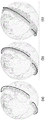
Fig. 15A to 15D show the juxtaposition of adjacent satellite positions within one period (cycle) of their relative orbits. The left column shows the geocentric reference frame locations of the reference satellite and the forward, rearward, eastward and westward neighbors. The second column shows the same satellite positions, but in the reference frame of the reference satellite. The rows indicate the relative position of the satellites over time, where fig. 15A represents the time the reference satellite is at the ascending node, fig. 15B represents the time the reference satellite has elapsed 90 degrees from the ascending node, fig. 15C represents the time the reference satellite is at the descending node, and fig. 15D represents the time the reference satellite has elapsed 90 degrees from the descending node.
Fig. 16A to 16D show timings generated from the tracks shown in fig. 15A to 15D and 9. The transmission of messages between satellites need only be in the forward and backward directions. Cross-plane communication occurs at a cross-plane location in the constellation, which may be a point in the satellite orbit approximately 90 degrees before both its rising and its falling nodes. These points in space are graphically illustrated in fig. 15B and 15D, and also shown in fig. 16B and 16D. Thus, messages or signals to be routed via inter-plane communications pass forward or backward to a satellite in its plane that is flying 90 degrees before its ascending (or descending) node. This satellite is in a position such that its front antenna points in the direction to the east and front adjacent satellites, and the rear antenna points in the direction to the west and rear adjacent satellites. Depending on the required change in plane, the satellite will route its messages forward to the eastern satellite or backward to the western satellite. If more than one plane change is required, the satellite receiving the inter-plane communication may then pass the message to another plane using its front or rear antenna. Once the message has been routed to the destination plane, the message can be delivered within the plane using the forward and reverse links in that plane until the message reaches the satellite intended to transmit the message down the downlink to the device of the recipient.
Fig. 17 is a flow chart of a process that may be performed by a satellite handling a message. In step 1701, the satellite obtains a message from another satellite or via an uplink from the ground. In step 1702, the satellite obtains a message path. This may be accomplished by calculating the message path on-board from a message field (e.g., global coordinates) that indicates the destination. A processor in the satellite may calculate global coordinates of its own position and destination with knowledge of the current position, orbital plane, etc. of the satellite to determine a path that only requires messages to be passed forward and backward between satellites. The message path may be obtained by reading the message path from a message encapsulation.
In step 1703, the satellite determines whether the cross-plane satellite is aligned and in the path, which may be for the sole purpose of determining the timing and position of the cross-plane satellite. If the cross-plane satellite is not there, then in step 1704, the satellite sends the message back or forth in-plane to another satellite. If the cross-plane satellite is there, the satellite sends a message back or forward to the cross-plane satellite in step 1705.
The satellite then waits for another message, and/or performs other tasks, at step 1706, and then checks whether another message is received, at step 1707. If so, the process continues with a new message at step 1702.
Spiral constellation
Instead of distinct orbital planes, the satellites may be arranged such that each satellite is in a separate plane, but adjacent satellites are stationary in the reference frame of the satellite, albeit slightly to one side. The satellites in this constellation thus form a spiral such that each other satellite can arrive from the originating satellite using only the forward and reverse links.
Each satellite in the spiral may be considered to be in its own "plane" because it is similar to winding around a sphere, with each successive winding/spiral being slightly offset from the previous winding/spiral. Although the true proximal angles of the satellites in the orbital spiral are equally spaced across 360 degrees, the elevation node of each satellite is shifted west as the true proximal angle increases (i.e., continuously wraps around the ball). The result is that the last satellite in any spiral is approximately directly behind (in the direction of the velocity vector) the first satellite in the next spiral.
Fig. 18 shows the geometry of the orbital mechanism of this constellation configuration. It should be noted that this orbital configuration may be reversed such that as the true anomaly increases, the elevation node of each satellite is shifted east within each spiral. In other words, the continuous wrapping around the ball may be east or west facing and achieve a similar goal.
This orbital architecture is advantageous because it creates a satellite system in which all satellite nodes are connected in a single global string. With this design, each satellite orbits the earth in its own unique plane in inertial space, and thus, any messages passing in the forward direction are also passed in the westward direction, and any messages passing in the backward direction are also passed in the eastward direction. This fact means that the satellite network is never required to efficiently decide whether it has to pass messages between planes to deliver the data payload to the intended recipient on the earth's surface. In practice, the only satellite that needs to transmit the data payload down the downlink to the recipient is a certain number of forward or backward passes in the satellite network, or a certain number of outward spirals.
This also has a beneficial effect on the ground system requirements. With a globally connected satellite string, individual global ground segments are not required to provide connectivity between satellite orbital planes. In fact, a minimum of one ground station (possibly two, for redundancy) is required to connect to all the satellites in the network to reach the ground. Of course, in some configurations, there are also satellites that share an orbital plane and are used in the manner described herein.
Fig. 19A to 19D show the geometry with respect to the forward and backward directions of the reference satellite. Although the front and back satellites in this architecture operate in different planes of inertia than the reference satellite (much like eastern and westward satellites in typical wacker configurations), the offset of the true proximal angle is sufficient so that the quarternary bean shape of the flight path in the reference frame of the reference satellite is still very narrow. Redundancy can be provided in this design because satellites in front of the forward neighbor satellite can fall within the communication cone of the forward high gain antenna of the reference satellite. The communication link can be easily closed, although the distance to this satellite is approximately twice the distance to the forward neighbor relative to the reference satellite. Tradeoffs can be made to optimize transmit power and antenna design depending on the number of satellites in the network to manage variability in data rate performance and network throughput. For example, it is possible to use a phased antenna array, wherein when a spacecraft in front of a reference satellite fails, the antenna beam can be digitally commanded to point to the satellite in front of the failed satellite, thereby maintaining a spiral link around the sphere for the entire satellite constellation.
This link may also be allowed to close using an RF communication design in the event that a second failure causes the reference satellite to need to connect to a satellite in the spiral two slots ahead of it. However, if this distance is too far to close a meaningful link, in this case, it can be noted that the backward direction can actually be used to serve any communication that would normally need to be sent in the forward direction, because the system is actually one long chain of communication around the sphere. This comes at the expense of increased latency and reduced network throughput, but will at least accomplish the task of delivering data without the need for store and forward activity.
The neighboring satellites do operate in the reference frame of the reference satellite, but the amount of operation is small. In the spiral, the back satellite is behind the reference satellite and only slightly to one side, and in one orbit it does follow a figure 8, but with a small angular deviation with respect to the reference satellite, well within the beam width of the back antenna of the reference satellite.
Fig. 20 shows a multiple pass spiral arrangement.
Fig. 21 is a flow chart of a process that may be performed on this spiral constellation by handling messages through satellites. In step 2101, the satellite obtains a message from another satellite or via an uplink from the ground. In step 2102, the satellite obtains a message path. This may be accomplished by calculating the message path on-board from a message field (e.g., global coordinates) that indicates the destination. A processor in the satellite may compute with knowledge of the current position of the satellite, its own position, and the global coordinates of the destination (which will indicate which satellite in the spiral will perform the downlink) to determine the path that only messages need to be passed forward and backward between satellites. The message path may be obtained by reading the message path from a message encapsulation.
In step 2103, the satellite determines whether the number of links between the current satellite and the downlink satellite is small in the backward direction or the forward direction. If the backward path is short, then in step 2104, the satellite sends the message backward to the next spiral satellite. If the forward path is short, the satellite sends the message forward to the next spiral satellite in step 2105. The satellite then waits for another message, and/or performs other tasks, at step 2106, and then checks whether another message is received at step 2107. If so, the process continues with a new message at step 2102.
It is possible that each satellite does not fully compute the message path. It may be that the satellite only needs to determine whether it will send a message in the proceed path (i.e., if the satellite receives a message at its back antenna, it transmits the message using its front antenna, and if the satellite receives a message at its front antenna, it transmits the message using its back antenna), or whether it sends it to the ground. The satellite that first receives the message may calculate the entire message path for the message and attach the message path to the message. The path may not need to be fully specified except to indicate which satellite in the spiral will be sending the message in the downlink.
In one variation, the determination of the message path is on the ground, and the calculation at one satellite or at multiple places takes into account the likelihood of "wormholes" in the spiral, where the satellite (or other path determiner) determines that it is preferable to send the message to a ground station that can transmit the message up-link to another location in the spiral. For example, if a ground station is within the coverage of a first satellite and also within the coverage of a second satellite that is 60 links out of phase with the first satellite, the first satellite sends a message to the ground that is picked up by the ground station and transmitted along an uplink to the second satellite, potentially speeding up the delivery of the message. In another variant, the ground station obtaining the downlink is geographically separated from the second ground station forming the uplink, and neither need be in the coverage of both satellites at the same time.
Fig. 22 is an illustration of the arrangement of helical satellites. As will be described herein in greater detail,vthe forward beam from the front antenna in the vector direction will cover the front adjacent satellite in the helix throughout its orbit, and similarly for the rear adjacent satellite. In practice, as shown, the next adjacent rear and front antennas are also within the beam.
Benefits of embodiments described herein may include a reduction in the technical complexity, cost, quality, and power requirements of the spacecraft in the satellite network required to maintain connectivity between each satellite in the network and the ground at any point in time. By effectively creating a continuous but operationally and technically simple string of communication connections between each node in the satellite network, global knowledge can be delivered at low cost throughout segments of space and globally dispersed ground nodes (devices, systems, users, etc.). The cost of a segment of space may be reduced by two to three times, considering the savings in quality, power, and link budget, and how those savings propagate through design, integration, testing, startup, and operation, etc. Further operational and financial benefits may be obtained by not requiring many ground stations for network operation and TT & C. Thus, when using the teachings herein, the cost associated with the terrestrial system portion of the satellite network may be reduced by an order of magnitude or more.
As has now been described, in the novel method, the message path (which may be a list of links that messages will take and the time that a message will likely travel on those links) need not be calculated and assigned to the shortest path, but rather follows the message path of the satellites in the constellation along the orbital plane until the point at which the other orbital plane intersects the first orbital plane, at which point the satellite can transmit using its front or rear antenna to another satellite (albeit then in front of or behind the transmitting satellite) that is actually in a different orbital plane. This allows inter-satellite links to occur without the need to use side antennas or wide lobe antennas. This can be done without latency that cannot work (even if signal transmission times are taken into account) because there is a calculable maximum time of flight for the message. In one example, the satellite forwards the data to a preceding satellite, which in turn sends the data forward until the orbital planes intersect, and then the satellite sends the data forward or backward on the new orbital plane, depending on which is the closest route to the satellite with the coverage of the coverage destination device.
In a variation of the novel method, each satellite operates in its own orbital plane and the other satellites in the constellation operate in intersecting orbital planes. In this arrangement the emission can be directed in one direction, e.g. in a spiral, each time slightly changing the track plane. While this may involve the data transmission navigating the earth more than once, the resulting latency of about 140 milliseconds/navigation may be acceptable. Messages can hop from one part of the spiral to another using strategically placed terrestrial repeater sites.
The novel techniques may be used in combination with existing techniques where appropriate. In one embodiment, the satellites may be configured to use some techniques, including conventional techniques, until enough satellites fill the constellation and implement novel techniques.
In a computer process for determining a message path, this may be done at one location by entering source location, time of transmission, destination location and other parameters, and then including the message path with the source message so that each receiving satellite knows how to route each data transmission. This satellite will be programmed to direct transmissions after reading the message path data fields from the transmissions, where the message path data fields are calculated according to the novel method described herein. Alternatively, the satellite may be programmed to calculate a message path or portion thereof with the time of transmission, the destination location, and other parameters, and use the message path or portion thereof to determine how to route the data transmission. Where the message path includes timing targets, the satellite may hold messages for delayed transmission in order to meet those timing targets. Timing targets may be used to provide closer alignment across planar satellites or to account for dynamic satellite coverage.
The operations of the processes described herein may be performed in any suitable order unless otherwise indicated herein or otherwise clearly contradicted by context. The processes described herein (or variations and/or combinations thereof) may be performed under the control of one or more computer systems configured with executable instructions, and may be implemented as code (e.g., executable instructions, one or more computer programs, or one or more applications) that are executed collectively by hardware or combinations thereof on one or more processors. The code may be stored on a computer-readable storage medium, for example in the form of a computer program comprising a plurality of instructions executable by one or more processors. The computer readable storage medium may be non-transitory.
Unless otherwise expressly stated or otherwise clearly contradicted by context, conjunctive language such as phrases in the form of "A, B, and at least one of C" or "A, B and at least one of C" are otherwise understood by context to be used generically to refer to items, terms, etc., which may be any non-empty subset of the set of A or B or C, or A and B and C. For example, in an illustrative example of a set having three components, the conjunctive phrases "A, B, and at least one of C" and "A, B and at least one of C" refer to any of the following sets: { A }, { B }, { C }, { A, B }, { A, C }, { B, C }, and { A, B, C }. Thus, such conjunctive language is generally not intended to imply that certain embodiments require at least one A, at least one B, and at least one C to be present.
The use of any and all examples, or exemplary language (e.g., "such as") provided herein, is intended merely to better illuminate embodiments of the invention and does not pose a limitation on the scope of the invention unless otherwise claimed. No language in the specification should be construed as indicating any non-claimed element as essential to the practice of the invention.
In the foregoing specification, embodiments of the invention have been described with reference to numerous specific details that may vary from implementation to implementation. The specification and drawings are, accordingly, to be regarded in an illustrative sense rather than a restrictive sense. The sole and exclusive indicator of the scope of the invention, and what is intended by the applicants to be the scope of the invention, is the literal and equivalent scope of such claims that issue from this application, in the specific form in which such claims issue, including any subsequent correction.
Other embodiments may be envisioned by one of ordinary skill in the art after reading this disclosure. In other embodiments, combinations or sub-combinations of the above disclosed invention may be advantageously made. Example configurations of components are shown for illustrative purposes, and it is understood that combinations, additions, rearrangements, and the like are contemplated in alternative embodiments of the invention. Thus, while the invention has been described with respect to exemplary embodiments, those skilled in the art will recognize that numerous modifications are possible.
For example, the processes described herein may be implemented using hardware components, software components, and/or any combination thereof. The specification and drawings are, accordingly, to be regarded in an illustrative sense rather than a restrictive sense. It will, however, be evident that various modifications and changes may be made thereto without departing from the broader spirit and scope of the invention as set forth in the claims, and the invention is intended to cover all modifications and equivalents within the scope of the appended claims.
All references, including publications, patent applications, and patents, cited herein are hereby incorporated by reference to the same extent as if each reference were individually and specifically indicated to be incorporated by reference and were set forth in its entirety herein.
Claims (20)
Applications Claiming Priority (7)
| Application Number | Priority Date | Filing Date | Title |
|---|---|---|---|
| US201762465945P | 2017-03-02 | 2017-03-02 | |
| US62/465,945 | 2017-03-02 | ||
| US201762490298P | 2017-04-26 | 2017-04-26 | |
| US62/490,298 | 2017-04-26 | ||
| US15/857,073 | 2017-12-28 | ||
| US15/857,073 US12250064B2 (en) | 2017-03-02 | 2017-12-28 | Method and apparatus for handling communications between spacecraft operating in an orbital environment and terrestrial telecommunications devices that use terrestrial base station communications |
| PCT/US2018/020778 WO2018222235A2 (en) | 2017-03-02 | 2018-03-02 | Simplified inter-satellite link communications using orbital plane crossing to optimize inter-satellite data transfers |
Publications (2)
| Publication Number | Publication Date |
|---|---|
| CN110710135A CN110710135A (en) | 2020-01-17 |
| CN110710135B true CN110710135B (en) | 2022-02-08 |
Family
ID=63355925
Family Applications (3)
| Application Number | Title | Priority Date | Filing Date |
|---|---|---|---|
| CN202310310147.XA Pending CN116388841A (en) | 2017-03-02 | 2018-02-28 | Method and apparatus for handling communications between a spacecraft and a ground telecommunication device operating in an orbital environment |
| CN201880015533.3A Active CN110582992B (en) | 2017-03-02 | 2018-02-28 | Method and apparatus for handling communications between a spacecraft operating in an orbital environment and a terrestrial telecommunications device |
| CN201880029028.4A Active CN110710135B (en) | 2017-03-02 | 2018-03-02 | Simplified inter-satellite link communications using orbital plane crossings to optimize inter-satellite data transfer |
Family Applications Before (2)
| Application Number | Title | Priority Date | Filing Date |
|---|---|---|---|
| CN202310310147.XA Pending CN116388841A (en) | 2017-03-02 | 2018-02-28 | Method and apparatus for handling communications between a spacecraft and a ground telecommunication device operating in an orbital environment |
| CN201880015533.3A Active CN110582992B (en) | 2017-03-02 | 2018-02-28 | Method and apparatus for handling communications between a spacecraft operating in an orbital environment and a terrestrial telecommunications device |
Country Status (10)
| Country | Link |
|---|---|
| US (1) | US12250064B2 (en) |
| EP (2) | EP3574614A4 (en) |
| JP (3) | JP7029478B2 (en) |
| KR (2) | KR102112345B1 (en) |
| CN (3) | CN116388841A (en) |
| AU (4) | AU2018227806B2 (en) |
| CA (2) | CA3054931C (en) |
| EA (1) | EA201991901A1 (en) |
| IL (1) | IL268968B (en) |
| WO (2) | WO2018160682A1 (en) |
Families Citing this family (39)
| Publication number | Priority date | Publication date | Assignee | Title |
|---|---|---|---|---|
| US12250064B2 (en) * | 2017-03-02 | 2025-03-11 | Lynk Global, Inc. | Method and apparatus for handling communications between spacecraft operating in an orbital environment and terrestrial telecommunications devices that use terrestrial base station communications |
| US10742311B2 (en) * | 2017-03-02 | 2020-08-11 | Lynk Global, Inc. | Simplified inter-satellite link communications using orbital plane crossing to optimize inter-satellite data transfers |
| US10084535B1 (en) | 2017-04-26 | 2018-09-25 | UbiquitiLink, Inc. | Method and apparatus for handling communications between spacecraft operating in an orbital environment and terrestrial telecommunications devices that use terrestrial base station communications |
| US10863547B2 (en) * | 2017-11-09 | 2020-12-08 | Qualcomm Incorporated | Adapting timing advance for multiple RACH transmission in backhaul networks |
| US10727965B2 (en) | 2017-11-21 | 2020-07-28 | Western Digital Technologies, Inc. | System and method for time stamp synchronization |
| US10719100B2 (en) * | 2017-11-21 | 2020-07-21 | Western Digital Technologies, Inc. | System and method for time stamp synchronization |
| US10959201B2 (en) * | 2018-04-05 | 2021-03-23 | Qualcomm Incorporated | Techniques for initial access in wireless systems |
| US10951305B2 (en) | 2018-04-26 | 2021-03-16 | Lynk Global, Inc. | Orbital base station filtering of interference from terrestrial-terrestrial communications of devices that use protocols in common with orbital-terrestrial communications |
| CN116366130A (en) | 2018-09-06 | 2023-06-30 | 环球星链公司 | Cellular core network and radio access network infrastructure and space management |
| WO2020089471A1 (en) | 2018-11-02 | 2020-05-07 | Telefonaktiebolaget Lm Ericsson (Publ) | Frequency offset in non-terrestrial networks |
| US10841890B2 (en) | 2018-11-09 | 2020-11-17 | SRS Space Limited | Delay tolerant node |
| CN111225450B (en) * | 2018-11-26 | 2022-05-13 | 华为技术有限公司 | Random access method and device suitable for satellite communication |
| JP7259934B2 (en) * | 2019-03-01 | 2023-04-18 | 日本電気株式会社 | Control device, control method, and control program |
| GB2582136B (en) * | 2019-03-11 | 2022-08-03 | Airspan Ip Holdco Llc | Timing adjustment within a wireless communication system for a moving vehicle |
| CN109977576A (en) * | 2019-04-03 | 2019-07-05 | 北京理工大学 | A kind of constellation system multidisciplinary design optimization based on agent model |
| CN111836355B (en) * | 2019-04-23 | 2022-05-10 | 华为技术有限公司 | A communication method, terminal, network device and storage medium |
| CN110557169B (en) * | 2019-07-24 | 2022-01-04 | 西安空间无线电技术研究所 | Low-orbit mobile communication satellite system based on frequency hopping time hopping positioning time service function |
| NL2023820B1 (en) * | 2019-09-12 | 2021-05-17 | Nedap Nv | System for determining positions of a plurality of labels. |
| CN112929899A (en) * | 2019-12-06 | 2021-06-08 | 华为技术有限公司 | Method and apparatus for access |
| US11563484B2 (en) * | 2020-02-28 | 2023-01-24 | Qualcomm Incorporated | Uplink frequency and timing compensation in a non-terrestrial network |
| US11659599B2 (en) * | 2020-04-28 | 2023-05-23 | Qualcomm Incorporated | Random access preamble transmission timing offset |
| EP3952364A1 (en) * | 2020-08-06 | 2022-02-09 | Panasonic Intellectual Property Corporation of America | Transceiver device, network entity and base station |
| CN112073287B (en) * | 2020-08-20 | 2022-04-12 | 湖南三一智能控制设备有限公司 | Data transmission device, control method, transmission method, and TCP service device |
| US20240106524A1 (en) * | 2020-12-24 | 2024-03-28 | Nippon Telegraph And Telephone Corporation | Wireless communication system, relay apparatus, wireless communication method and program |
| CN114696883A (en) * | 2020-12-28 | 2022-07-01 | 华为技术有限公司 | Cooperative transmission method and device |
| WO2022150518A1 (en) | 2021-01-06 | 2022-07-14 | Lynk Global, Inc. | Satellite communication system transmitting navigation signals using a wide beam and data signals using a directive beam |
| WO2022176893A1 (en) * | 2021-02-19 | 2022-08-25 | 三菱電機株式会社 | Method for forming integrated satellite constellation, integrated data library, and integrated satellite constellation |
| US12389213B1 (en) | 2021-03-08 | 2025-08-12 | Lynk Global, Inc. | Routing emergency cellular communications and associated detected location information using orbital base stations |
| EP4087158A1 (en) * | 2021-05-05 | 2022-11-09 | Mitsubishi Electric R&D Centre Europe B.V. | Timing advance acquisition for leo systems |
| US11848747B1 (en) * | 2021-06-04 | 2023-12-19 | Apple Inc. | Multiple user access channel |
| JP7607178B2 (en) * | 2021-07-16 | 2024-12-26 | エーエスティー アンド サイエンス エルエルシー | Dynamic time division duplex (DTDD) access for satellite RANs |
| EP4511980A4 (en) * | 2022-05-10 | 2025-06-11 | Huawei Technologies Co., Ltd. | METHODS AND APPARATUS FOR DETECTION-ASSISTED DOPPLER COMPENSATION |
| CN114630366B (en) * | 2022-05-17 | 2023-05-09 | 深圳传音控股股份有限公司 | Control method, communication device and storage medium |
| US20230379849A1 (en) * | 2022-05-18 | 2023-11-23 | Charter Communications Operating, Llc | Conveyance of communications in a wireless network |
| US12267147B2 (en) * | 2022-06-15 | 2025-04-01 | Satelles, Inc. | Low cost, size, weight, and power (CSWAP) geolocation capability utilizing signal characteristics passed through to backhaul network |
| FR3139690A1 (en) | 2022-09-14 | 2024-03-15 | Universite de Bordeaux | Bluetooth transmission from a satellite to a ground telecommunications terminal |
| CN115549760B (en) * | 2022-09-19 | 2024-07-26 | 航天宏图信息技术股份有限公司 | Satellite network security analysis method and system |
| EP4447340A1 (en) * | 2023-04-14 | 2024-10-16 | Nokia Solutions and Networks Oy | Apparatus, method, and computer program |
| US20250344107A1 (en) * | 2023-11-30 | 2025-11-06 | James John GUSMAN | Communication resiliency system for tribal ground stations |
Citations (7)
| Publication number | Priority date | Publication date | Assignee | Title |
|---|---|---|---|---|
| US6226493B1 (en) * | 1996-05-31 | 2001-05-01 | Motorola, Inc. | Geosynchronous satellite communication system and method |
| US6404769B1 (en) * | 1996-06-26 | 2002-06-11 | Motorola, Inc. | Directional routing of packets in a satellite network |
| WO2006038992A1 (en) * | 2004-09-30 | 2006-04-13 | Itt Manufacturing Enterprises, Inc. | Method and apparatus for multicast packet distribution in a satellite constellation network |
| CN103546211A (en) * | 2013-10-31 | 2014-01-29 | 中国人民解放军国防科学技术大学 | Fast link building method for space-time and time-division inter-satellite links based on space-time prior link building information |
| CN103905306A (en) * | 2014-04-02 | 2014-07-02 | 中国人民解放军西安通信学院 | Route exchange method suitable for GEO/LEO double layered constellation network |
| CN105227483A (en) * | 2015-08-21 | 2016-01-06 | 北京空间飞行器总体设计部 | Based on the low complex degree Load Balance Routing Algorithms of LEO satellite network |
| CN106464343A (en) * | 2014-09-30 | 2017-02-22 | 谷歌公司 | Satellite constellation |
Family Cites Families (122)
| Publication number | Priority date | Publication date | Assignee | Title |
|---|---|---|---|---|
| US3349398A (en) | 1964-08-27 | 1967-10-24 | Itt | Satellite communication system |
| JPS54143009A (en) | 1978-04-28 | 1979-11-07 | Kokusai Denshin Denwa Co Ltd | Space diversity system for tdma communication system |
| JPH083525B2 (en) | 1988-10-12 | 1996-01-17 | 日本無線株式会社 | CPS receiver |
| JPH04207529A (en) * | 1990-11-30 | 1992-07-29 | Toshiba Corp | Satellite communication system |
| US6157621A (en) | 1991-10-28 | 2000-12-05 | Teledesic Llc | Satellite communication system |
| US6101177A (en) | 1992-03-30 | 2000-08-08 | Telefonaktiebolaget Lm Ericsson | Cell extension in a cellular telephone system |
| US5740164A (en) | 1993-02-09 | 1998-04-14 | Teledesic Corporation | Traffic routing for satellite communication system |
| JPH0787424B2 (en) * | 1993-06-30 | 1995-09-20 | 日本電気株式会社 | Burst signal transmission system |
| US5515062A (en) | 1993-08-11 | 1996-05-07 | Motorola, Inc. | Location system and method with acquisition of accurate location parameters |
| US5943324A (en) * | 1994-01-11 | 1999-08-24 | Ericsson, Inc. | Methods and apparatus for mobile station to mobile station communications in a mobile satellite communication system |
| US5467345A (en) | 1994-05-31 | 1995-11-14 | Motorola, Inc. | Packet routing system and method therefor |
| AU706242B2 (en) | 1994-12-12 | 1999-06-10 | Ericsson Inc. | Diversity-oriented channel allocation in a mobile communications system |
| US5663957A (en) | 1995-07-12 | 1997-09-02 | Ericsson Inc. | Dual mode satellite/cellular terminal |
| US6272325B1 (en) * | 1995-07-13 | 2001-08-07 | Globalstar L.P. | Method and apparatus for considering user terminal transmitted power during operation in a plurality of different communication systems |
| US5592175A (en) | 1995-08-25 | 1997-01-07 | Motorola, Inc. | Location determination method and apparatus for a communication unit |
| US5642355A (en) | 1995-09-29 | 1997-06-24 | Telefonaktiebolaget Lm Ericsson | Method of supporting extended range in a TDMA system |
| US5661724A (en) * | 1995-12-18 | 1997-08-26 | Ericsson Inc. | Satellite diversity scheme |
| US6031826A (en) | 1996-08-27 | 2000-02-29 | Ericsson Inc. | Fast associated control channel technique for satellite communications |
| US6606309B1 (en) | 1996-11-19 | 2003-08-12 | Ericsson Inc. | Time-multiplexed short message acknowledgement systems and methods |
| US5978653A (en) | 1997-05-02 | 1999-11-02 | Motorola, Inc. | Method and apparatus for providing additional resources in a satellite communication system |
| US5907541A (en) | 1997-09-17 | 1999-05-25 | Lockheed Martin Corp. | Architecture for an integrated mobile and fixed telecommunications system including a spacecraft |
| US6307840B1 (en) | 1997-09-19 | 2001-10-23 | Qualcomm Incorporated | Mobile station assisted timing synchronization in CDMA communication system |
| US6008758A (en) * | 1998-05-26 | 1999-12-28 | Rockwell International Corporation | Method and apparatus for Doppler compensation in a satellite communications system |
| US6204808B1 (en) | 1998-08-13 | 2001-03-20 | Ericsson Inc. | Method and system for aiding GPS receivers via a cellular or PCS network |
| JP2000098880A (en) | 1998-09-28 | 2000-04-07 | Casio Comput Co Ltd | Position display control device, position display control method, and recording medium |
| US6980531B1 (en) | 1998-12-02 | 2005-12-27 | At&T Corp. | Multiple access spread spectrum switching methodology |
| US6553225B1 (en) | 1999-02-03 | 2003-04-22 | Wei Zhao | Apparatus and method for positioning single-offset zones in a spot beam coverage area to maximize call duration in a satellite-based communications network |
| US6452989B1 (en) | 1999-02-03 | 2002-09-17 | Virtual Satellite Corporation | System and method for combining multiple satellite channels into a virtual composite channel |
| GB2347828B (en) | 1999-03-05 | 2004-05-19 | Internat Mobile Satellite Orga | Communication methods and apparatus |
| US6442385B1 (en) | 1999-11-04 | 2002-08-27 | Xm Satellite Radio, Inc. | Method and apparatus for selectively operating satellites in tundra orbits to reduce receiver buffering requirements for time diversity signals |
| EP1148661A3 (en) | 2000-04-21 | 2003-10-29 | Lockheed Martin Corporation | Geostationary satellite system with satellite clusters having intra-cluster local area networks and inter-cluster wide area network |
| US7366463B1 (en) | 2000-05-05 | 2008-04-29 | The Directv Group, Inc. | Military UHF and commercial Geo-mobile system combination for radio signal relay |
| US7139324B1 (en) | 2000-06-02 | 2006-11-21 | Nokia Networks Oy | Closed loop feedback system for improved down link performance |
| US6985465B2 (en) | 2000-07-07 | 2006-01-10 | Koninklijke Philips Electronics N.V. | Dynamic channel selection scheme for IEEE 802.11 WLANs |
| US7358899B1 (en) | 2000-08-31 | 2008-04-15 | Nokia Corporation | Distance estimation in a communication system |
| CN1119909C (en) | 2000-09-29 | 2003-08-27 | 华为技术有限公司 | Base station transmitting/receiving machine for global mobile communication system |
| US7792488B2 (en) | 2000-12-04 | 2010-09-07 | Atc Technologies, Llc | Systems and methods for transmitting electromagnetic energy over a wireless channel having sufficiently weak measured signal strength |
| US20020177403A1 (en) | 2001-02-09 | 2002-11-28 | Laprade James Nicholas | High availability broadband communications satellite system using satellite constellations in elliptical orbits inclined to the equatorial plane |
| US6538601B2 (en) | 2001-02-27 | 2003-03-25 | Itt Manufacturing Enterprises, Inc. | Hybrid system for position determination by a mobile communications terminal |
| DE60129108T2 (en) | 2001-05-04 | 2008-02-28 | Lucent Technologies Inc. | Radio telecommunication system and method for asymmetric data transmission |
| US6701264B2 (en) | 2001-07-31 | 2004-03-02 | Trw Northrop | Method of and apparatus for calibrating receive path gain |
| GB2379581B (en) | 2001-09-11 | 2005-08-31 | Nec Technologies | Apparatus and method of compensation for signal time-of-arrival variation in a UMTS handset |
| US7664460B2 (en) | 2001-09-14 | 2010-02-16 | Atc Technologies, Llc | Systems and methods for terrestrial reuse of cellular satellite frequency spectrum in a time-division duplex and/or frequency-division duplex mode |
| JP2003134022A (en) | 2001-10-22 | 2003-05-09 | Mitsubishi Electric Corp | Doppler shift compensation apparatus and method in satellite communication system |
| US7471720B2 (en) | 2003-05-23 | 2008-12-30 | Gilat Satellite Networks, Inc. | Frequency and timing synchronization and error correction in a satellite network |
| US7257371B1 (en) | 2003-11-26 | 2007-08-14 | Idirect Incorporated | Method, apparatus, and system for using a synchronous burst time plan in a communication network |
| EP1704656A4 (en) | 2003-12-29 | 2011-08-17 | Peersat Llc | Inter-satellite crosslink communications system, apparatus, method and computer program product |
| US7319878B2 (en) * | 2004-06-18 | 2008-01-15 | Qualcomm Incorporated | Method and apparatus for determining location of a base station using a plurality of mobile stations in a wireless mobile network |
| US20050288012A1 (en) | 2004-06-23 | 2005-12-29 | William Morgan | Timing compensation method and means for a terrestrial wireless communication system having satelite backhaul link |
| US7515566B2 (en) * | 2004-12-09 | 2009-04-07 | Viasat, Inc. | Partial mesh communication in hub based system |
| CN102833685B (en) * | 2005-03-25 | 2016-01-27 | 桥扬科技有限公司 | For method and apparatus and the data distribution of data communication |
| US20060246913A1 (en) * | 2005-04-27 | 2006-11-02 | Merboth Lawrence J | Method for handling propagation delay in a wireless communication system |
| US7574224B2 (en) * | 2005-06-13 | 2009-08-11 | Qualcomm Incorporated | Methods and apparatus for performing timing synchronization with base stations |
| US7403470B2 (en) | 2005-06-13 | 2008-07-22 | Qualcomm Incorporated | Communications system, methods and apparatus |
| US7917358B2 (en) | 2005-09-30 | 2011-03-29 | Apple Inc. | Transient detection by power weighted average |
| US7630682B2 (en) | 2006-01-04 | 2009-12-08 | Globalstar, Inc. | Satellite communication system employing a combination of time slots and orthogonal codes |
| US7769375B2 (en) | 2006-02-09 | 2010-08-03 | Eagle River Holdings Llc | System and method for communication utilizing time division duplexing |
| US8705436B2 (en) * | 2006-02-15 | 2014-04-22 | Atc Technologies, Llc | Adaptive spotbeam broadcasting, systems, methods and devices for high bandwidth content distribution over satellite |
| US7629923B2 (en) | 2006-03-14 | 2009-12-08 | Media Tek Inc. | Method and device for storing economically auxiliary correction data applied in global navigation satellite system |
| US20070218931A1 (en) | 2006-03-20 | 2007-09-20 | Harris Corporation | Time/frequency recovery of a communication signal in a multi-beam configuration using a kinematic-based kalman filter and providing a pseudo-ranging feature |
| US11463860B2 (en) | 2006-05-16 | 2022-10-04 | Everbridge, Inc. | Method and system for an emergency location information service (E-LIS) for proxy network devices |
| US7881246B2 (en) | 2006-08-22 | 2011-02-01 | Viasat, Inc. | Cooperative orthogonal multi-satellite communication system |
| CN101166360A (en) | 2006-10-18 | 2008-04-23 | 明基电通股份有限公司 | Base station selection method and communication system thereof |
| US7742738B2 (en) | 2006-12-27 | 2010-06-22 | Nortel Networks Limited | Method and system for diversity using orthogonal frequency/division multiplexing |
| US20080311844A1 (en) * | 2007-03-19 | 2008-12-18 | Viasat, Inc. | Multiple Input Receiver In Satellite Communication System |
| US8054779B2 (en) | 2007-05-08 | 2011-11-08 | Microsoft Corporation | Simultaneous wireless support in software defined radio |
| KR101491964B1 (en) | 2007-07-30 | 2015-03-09 | 삼성전자주식회사 | Method and system for transmitting and receiving different signal types in communication systems |
| CN101400136A (en) | 2007-09-29 | 2009-04-01 | 华为技术有限公司 | Uplink data transmission method and device, method and device for converting slot configuration |
| US8910299B2 (en) | 2008-02-08 | 2014-12-09 | Steven Charles Michalske | Emergency information access on portable electronic devices |
| US8013786B2 (en) | 2008-06-17 | 2011-09-06 | Trimble Navigation Limited | Method and communication system for limiting the functionality of an electronic device |
| WO2010027213A2 (en) | 2008-09-05 | 2010-03-11 | Lg Electronics Inc. | Network assisted positioning |
| US8538328B2 (en) | 2008-09-11 | 2013-09-17 | Viasat, Inc. | Antenna and satellite alignment using beam projections |
| US8478228B2 (en) | 2008-10-20 | 2013-07-02 | Qualcomm Incorporated | Mobile receiver with location services capability |
| US8320504B2 (en) | 2009-05-11 | 2012-11-27 | Comtech Ef Data Corp. | Fully compensated adaptive interference cancellation system |
| US8433015B2 (en) | 2009-12-03 | 2013-04-30 | Glowlink Communications Technology, Inc. | System for and method of removing unwanted inband signals from a received communication signal |
| US8538327B2 (en) * | 2010-04-15 | 2013-09-17 | Alcatel Lucent | User equipment adjustment of uplink satellite communications |
| KR101341046B1 (en) | 2010-04-20 | 2013-12-11 | 한국전자통신연구원 | Satellite mobile communication systems considering evolution of satellite mobile communication services market and method for communication using the system |
| US9184829B2 (en) | 2010-05-02 | 2015-11-10 | Viasat Inc. | Flexible capacity satellite communications system |
| US8929393B2 (en) | 2010-05-03 | 2015-01-06 | Qualcomm Incorporated | Method and apparatus for communication with shortened signal formats |
| US20110312320A1 (en) | 2010-06-16 | 2011-12-22 | Qualcomm Incorporated | Satellite-assisted positioning in hybrid terrestrial-satellite communication systems |
| KR101763326B1 (en) | 2010-12-21 | 2017-07-31 | 한국전자통신연구원 | Apparatus and Method for Measuring Multiple Link Wireless Channel |
| NO334170B1 (en) | 2011-05-16 | 2013-12-30 | Radionor Comm As | Method and system for long distance, adaptive, mobile, beamforming adhoc communication system with integrated positioning |
| US8693947B2 (en) | 2011-05-27 | 2014-04-08 | John F. SILNY | Extensible high bandwidth global space communication network |
| WO2013025555A1 (en) | 2011-08-12 | 2013-02-21 | Qualcomm Incorporated | Emergency messaging between citizens and authorities |
| CN102307167B (en) | 2011-09-22 | 2015-02-04 | 京信通信系统(中国)有限公司 | Method and device for adjusting uplink timing advance and base station system |
| US9164163B2 (en) | 2012-02-16 | 2015-10-20 | Hughes Network Systems, Llc | System and method for estimating terminal position based on non-geostationary communication satellite signals |
| KR102127836B1 (en) | 2012-05-08 | 2020-06-29 | 한국전자통신연구원 | Enhanced downlink transmission methods with low PAPR in LTE based mobile communications |
| KR102039065B1 (en) | 2012-05-08 | 2019-10-31 | 한국전자통신연구원 | Random access methods and channel structures for mobile communications with large cell size |
| CN103458513B (en) | 2012-06-01 | 2016-09-14 | 华为技术有限公司 | Wireless communications method and base station and terminal |
| US9967758B2 (en) | 2012-06-25 | 2018-05-08 | Cohere Technologies, Inc. | Multiple access in an orthogonal time frequency space communication system |
| CN103036607B (en) | 2012-12-12 | 2015-02-04 | 南京邮电大学 | Communication channel dynamic reserved allocation method suitable for low orbit satellite network |
| US8712321B1 (en) | 2013-01-07 | 2014-04-29 | Viasat, Inc. | Satellite fleet deployment |
| US9220318B2 (en) | 2013-09-27 | 2015-12-29 | Nike, Inc. | Article of footwear with adjustable fitting system |
| EP3175647B1 (en) | 2014-08-03 | 2018-12-12 | Hughes Network Systems, LLC | Centralized ground-based route determination and traffic engineering for software defined satellite communications networks |
| EP3442135B1 (en) | 2014-09-17 | 2024-10-16 | Iridium Satellite LLC | Satellite communications networking |
| US9491635B2 (en) | 2015-01-13 | 2016-11-08 | Smartsky Networks LLC | Architecture for simultaneous spectrum usage by air-to-ground and terrestrial networks |
| JP6386674B2 (en) | 2015-02-03 | 2018-09-05 | クラウド コンステレーション コーポレイション | Space-based electronic data storage and transfer network system |
| US9900856B2 (en) | 2015-03-20 | 2018-02-20 | Qualcomm Incorporated | Method and apparatus for time or frequency synchronization in non-geosynchronous satellite communication systems |
| ES2715111T3 (en) | 2015-04-08 | 2019-05-31 | Intel Corp | Transmissions with non-orthogonal overlay for multimedia broadcast / multicast service (MBMS) |
| ES2931033T3 (en) | 2015-04-10 | 2022-12-23 | Viasat Inc | Formation of terrestrial antenna beams for communications between access nodes and user terminals linked by a relay such as a satellite |
| US10187141B2 (en) | 2015-04-10 | 2019-01-22 | Viasat, Inc. | Cross-band system for end-to-end beamforming |
| KR20170087303A (en) | 2016-01-20 | 2017-07-28 | 주식회사 푸른밤 | Method, system and non-transitory computer-readable recording medium for monitoring attendance |
| US10439706B2 (en) * | 2015-10-30 | 2019-10-08 | Paris Michaels | Mobile satellite communication system |
| BR112017021549B1 (en) | 2016-01-13 | 2021-11-16 | Viasat, Inc | SATELLITE TO PROVIDE COMMUNICATIONS BETWEEN A PLURALITY OF ACCESS NODE CLUSTERS AND A PLURALITY OF USER TERMINALS, AND METHOD FOR PROVIDING A COMMUNICATION SERVICE TO USER TERMINALS |
| US10481275B2 (en) | 2016-01-21 | 2019-11-19 | Deere & Company | Long term repeatability of determined position in GNSS navigation system |
| FR3051088B1 (en) | 2016-05-04 | 2018-05-25 | Thales | INTER SATELLITE, SATELLITE AND SATELLITE CONSTELLATION COMMUNICATION DEVICE |
| US10321112B2 (en) | 2016-07-18 | 2019-06-11 | Samsung Electronics Co., Ltd. | Stereo matching system and method of operating thereof |
| US10954003B2 (en) | 2016-07-20 | 2021-03-23 | Worldvu Satellites Limited | Constellation configuration for constellations having a large number of LEO satellites |
| DE102016121919B4 (en) | 2016-11-15 | 2018-10-31 | Tesat-Spacecom Gmbh & Co.Kg | Communications satellite for a satellite constellation |
| CN110249570B (en) | 2016-12-05 | 2022-11-01 | 瑞典爱立信有限公司 | Controlling a cell-specific reference signal (CRS) bandwidth on a minicarrier based on another reference signal bandwidth |
| US12250064B2 (en) | 2017-03-02 | 2025-03-11 | Lynk Global, Inc. | Method and apparatus for handling communications between spacecraft operating in an orbital environment and terrestrial telecommunications devices that use terrestrial base station communications |
| US10742311B2 (en) | 2017-03-02 | 2020-08-11 | Lynk Global, Inc. | Simplified inter-satellite link communications using orbital plane crossing to optimize inter-satellite data transfers |
| US10084535B1 (en) | 2017-04-26 | 2018-09-25 | UbiquitiLink, Inc. | Method and apparatus for handling communications between spacecraft operating in an orbital environment and terrestrial telecommunications devices that use terrestrial base station communications |
| US9973266B1 (en) | 2017-06-12 | 2018-05-15 | Ast & Science, Llc | System and method for high throughput fractionated satellites (HTFS) for direct connectivity to and from end user devices and terminals using flight formations of small or very small satellites |
| US11348380B2 (en) | 2018-06-08 | 2022-05-31 | Metawave Corporation | Beacon system in an autonomous vehicle radar for vehicle identification |
| US10687254B2 (en) | 2018-08-21 | 2020-06-16 | T-Mobile Usa, Inc. | Dynamic quality of service in wireless networks |
| CN109283554A (en) | 2018-09-13 | 2019-01-29 | 垣纬多媒体卫星通信(上海)有限公司 | A low-orbit satellite navigation signal power enhancement method based on Ka-band multi-beam antenna |
| EP4075685B1 (en) | 2018-10-12 | 2024-04-03 | OQ Technology S.à r.l. | Method and system for non-terrestrial cellular wireless communication networks |
| CN110086000A (en) | 2019-05-15 | 2019-08-02 | 南京理工大学 | A kind of wide bandwidth scan angle phased array antenna |
| US11736946B2 (en) | 2020-04-01 | 2023-08-22 | Higher Ground Llc | Satellite relaying for geolocation and mitigation of GNSS denial |
| US12156035B2 (en) | 2020-08-04 | 2024-11-26 | Qualcomm Incorporated | Systems and methods for supporting location and country determination for 5G satellite access |
| CN115885529A (en) | 2020-10-16 | 2023-03-31 | Oppo广东移动通信有限公司 | Terminal capability reporting method, terminal configuration method, terminal equipment and network equipment |
-
2017
- 2017-12-28 US US15/857,073 patent/US12250064B2/en active Active
-
2018
- 2018-02-28 CN CN202310310147.XA patent/CN116388841A/en active Pending
- 2018-02-28 AU AU2018227806A patent/AU2018227806B2/en active Active
- 2018-02-28 WO PCT/US2018/020205 patent/WO2018160682A1/en not_active Ceased
- 2018-02-28 CN CN201880015533.3A patent/CN110582992B/en active Active
- 2018-02-28 JP JP2019568585A patent/JP7029478B2/en active Active
- 2018-02-28 EA EA201991901A patent/EA201991901A1/en unknown
- 2018-02-28 KR KR1020197028929A patent/KR102112345B1/en active Active
- 2018-02-28 KR KR1020207013599A patent/KR102487683B1/en active Active
- 2018-02-28 CA CA3054931A patent/CA3054931C/en active Active
- 2018-02-28 CA CA3076387A patent/CA3076387A1/en active Pending
- 2018-02-28 EP EP18761611.5A patent/EP3574614A4/en active Pending
- 2018-03-02 WO PCT/US2018/020778 patent/WO2018222235A2/en not_active Ceased
- 2018-03-02 CN CN201880029028.4A patent/CN110710135B/en active Active
- 2018-03-02 EP EP18810437.6A patent/EP3574591A4/en active Pending
-
2019
- 2019-08-27 IL IL268968A patent/IL268968B/en active IP Right Grant
-
2021
- 2021-09-30 AU AU2021240280A patent/AU2021240280C1/en active Active
-
2022
- 2022-02-18 JP JP2022024211A patent/JP7683983B2/en active Active
-
2023
- 2023-08-11 AU AU2023214345A patent/AU2023214345B2/en active Active
-
2024
- 2024-01-19 JP JP2024006951A patent/JP2024054144A/en active Pending
-
2025
- 2025-09-25 AU AU2025238021A patent/AU2025238021A1/en active Pending
Patent Citations (7)
| Publication number | Priority date | Publication date | Assignee | Title |
|---|---|---|---|---|
| US6226493B1 (en) * | 1996-05-31 | 2001-05-01 | Motorola, Inc. | Geosynchronous satellite communication system and method |
| US6404769B1 (en) * | 1996-06-26 | 2002-06-11 | Motorola, Inc. | Directional routing of packets in a satellite network |
| WO2006038992A1 (en) * | 2004-09-30 | 2006-04-13 | Itt Manufacturing Enterprises, Inc. | Method and apparatus for multicast packet distribution in a satellite constellation network |
| CN103546211A (en) * | 2013-10-31 | 2014-01-29 | 中国人民解放军国防科学技术大学 | Fast link building method for space-time and time-division inter-satellite links based on space-time prior link building information |
| CN103905306A (en) * | 2014-04-02 | 2014-07-02 | 中国人民解放军西安通信学院 | Route exchange method suitable for GEO/LEO double layered constellation network |
| CN106464343A (en) * | 2014-09-30 | 2017-02-22 | 谷歌公司 | Satellite constellation |
| CN105227483A (en) * | 2015-08-21 | 2016-01-06 | 北京空间飞行器总体设计部 | Based on the low complex degree Load Balance Routing Algorithms of LEO satellite network |
Also Published As
Similar Documents
| Publication | Publication Date | Title |
|---|---|---|
| CN110710135B (en) | Simplified inter-satellite link communications using orbital plane crossings to optimize inter-satellite data transfer | |
| US12052088B2 (en) | Simplified inter-satellite link communications using orbital plane crossing to optimize inter-satellite data transfers | |
| JP7366018B2 (en) | Data transmission system and method using intersatellite radio link | |
| US10827414B2 (en) | Global communication network | |
| US12335024B2 (en) | Radio system using satellites | |
| CN111373668B (en) | Radio communication system, method of creating radio communication route, and ground station | |
| Paul | Communication platform for inter-satellite links in distributed satellite systems | |
| HK40006930B (en) | Radio system using nodes | |
| HK40006930A (en) | Radio system using nodes | |
| Gal-Edd | Lunar Architecture Team–II Communication & Navigation |
Legal Events
| Date | Code | Title | Description |
|---|---|---|---|
| PB01 | Publication | ||
| PB01 | Publication | ||
| SE01 | Entry into force of request for substantive examination | ||
| SE01 | Entry into force of request for substantive examination | ||
| GR01 | Patent grant | ||
| GR01 | Patent grant |