CN110706689A - Emotion estimation system and computer-readable medium - Google Patents
Emotion estimation system and computer-readable medium Download PDFInfo
- Publication number
- CN110706689A CN110706689A CN201910170895.6A CN201910170895A CN110706689A CN 110706689 A CN110706689 A CN 110706689A CN 201910170895 A CN201910170895 A CN 201910170895A CN 110706689 A CN110706689 A CN 110706689A
- Authority
- CN
- China
- Prior art keywords
- vowel
- emotion
- segment
- unit
- speech
- Prior art date
- Legal status (The legal status is an assumption and is not a legal conclusion. Google has not performed a legal analysis and makes no representation as to the accuracy of the status listed.)
- Pending
Links
- 230000008451 emotion Effects 0.000 title claims abstract description 205
- 230000007704 transition Effects 0.000 claims description 69
- 238000000605 extraction Methods 0.000 claims description 22
- 230000002996 emotional effect Effects 0.000 claims description 12
- 238000000034 method Methods 0.000 description 20
- 238000010586 diagram Methods 0.000 description 18
- 230000008569 process Effects 0.000 description 14
- 239000000284 extract Substances 0.000 description 5
- 230000034179 segment specification Effects 0.000 description 4
- 230000004048 modification Effects 0.000 description 3
- 238000012986 modification Methods 0.000 description 3
- 238000013528 artificial neural network Methods 0.000 description 2
- 230000008859 change Effects 0.000 description 2
- 238000007796 conventional method Methods 0.000 description 2
- 238000001514 detection method Methods 0.000 description 2
- 238000006073 displacement reaction Methods 0.000 description 2
- 230000007246 mechanism Effects 0.000 description 2
- 230000000306 recurrent effect Effects 0.000 description 2
- 238000001228 spectrum Methods 0.000 description 2
- 206010063659 Aversion Diseases 0.000 description 1
- 230000009471 action Effects 0.000 description 1
- 238000004364 calculation method Methods 0.000 description 1
- 230000000694 effects Effects 0.000 description 1
- 230000008909 emotion recognition Effects 0.000 description 1
- 230000006870 function Effects 0.000 description 1
- 230000000877 morphologic effect Effects 0.000 description 1
- 230000002093 peripheral effect Effects 0.000 description 1
- 239000007787 solid Substances 0.000 description 1
- 238000006467 substitution reaction Methods 0.000 description 1
Images


Classifications
-
- G—PHYSICS
- G10—MUSICAL INSTRUMENTS; ACOUSTICS
- G10L—SPEECH ANALYSIS TECHNIQUES OR SPEECH SYNTHESIS; SPEECH RECOGNITION; SPEECH OR VOICE PROCESSING TECHNIQUES; SPEECH OR AUDIO CODING OR DECODING
- G10L15/00—Speech recognition
- G10L15/02—Feature extraction for speech recognition; Selection of recognition unit
-
- G—PHYSICS
- G10—MUSICAL INSTRUMENTS; ACOUSTICS
- G10L—SPEECH ANALYSIS TECHNIQUES OR SPEECH SYNTHESIS; SPEECH RECOGNITION; SPEECH OR VOICE PROCESSING TECHNIQUES; SPEECH OR AUDIO CODING OR DECODING
- G10L25/00—Speech or voice analysis techniques not restricted to a single one of groups G10L15/00 - G10L21/00
- G10L25/48—Speech or voice analysis techniques not restricted to a single one of groups G10L15/00 - G10L21/00 specially adapted for particular use
- G10L25/51—Speech or voice analysis techniques not restricted to a single one of groups G10L15/00 - G10L21/00 specially adapted for particular use for comparison or discrimination
- G10L25/63—Speech or voice analysis techniques not restricted to a single one of groups G10L15/00 - G10L21/00 specially adapted for particular use for comparison or discrimination for estimating an emotional state
-
- G—PHYSICS
- G10—MUSICAL INSTRUMENTS; ACOUSTICS
- G10L—SPEECH ANALYSIS TECHNIQUES OR SPEECH SYNTHESIS; SPEECH RECOGNITION; SPEECH OR VOICE PROCESSING TECHNIQUES; SPEECH OR AUDIO CODING OR DECODING
- G10L25/00—Speech or voice analysis techniques not restricted to a single one of groups G10L15/00 - G10L21/00
- G10L25/93—Discriminating between voiced and unvoiced parts of speech signals
-
- G—PHYSICS
- G10—MUSICAL INSTRUMENTS; ACOUSTICS
- G10L—SPEECH ANALYSIS TECHNIQUES OR SPEECH SYNTHESIS; SPEECH RECOGNITION; SPEECH OR VOICE PROCESSING TECHNIQUES; SPEECH OR AUDIO CODING OR DECODING
- G10L15/00—Speech recognition
- G10L15/02—Feature extraction for speech recognition; Selection of recognition unit
- G10L2015/025—Phonemes, fenemes or fenones being the recognition units
-
- G—PHYSICS
- G10—MUSICAL INSTRUMENTS; ACOUSTICS
- G10L—SPEECH ANALYSIS TECHNIQUES OR SPEECH SYNTHESIS; SPEECH RECOGNITION; SPEECH OR VOICE PROCESSING TECHNIQUES; SPEECH OR AUDIO CODING OR DECODING
- G10L25/00—Speech or voice analysis techniques not restricted to a single one of groups G10L15/00 - G10L21/00
- G10L25/03—Speech or voice analysis techniques not restricted to a single one of groups G10L15/00 - G10L21/00 characterised by the type of extracted parameters
- G10L25/15—Speech or voice analysis techniques not restricted to a single one of groups G10L15/00 - G10L21/00 characterised by the type of extracted parameters the extracted parameters being formant information
Landscapes
- Engineering & Computer Science (AREA)
- Health & Medical Sciences (AREA)
- Multimedia (AREA)
- Audiology, Speech & Language Pathology (AREA)
- Human Computer Interaction (AREA)
- Physics & Mathematics (AREA)
- Acoustics & Sound (AREA)
- Computational Linguistics (AREA)
- Signal Processing (AREA)
- Child & Adolescent Psychology (AREA)
- General Health & Medical Sciences (AREA)
- Hospice & Palliative Care (AREA)
- Psychiatry (AREA)
- Computer Vision & Pattern Recognition (AREA)
- User Interface Of Digital Computer (AREA)
- Information Retrieval, Db Structures And Fs Structures Therefor (AREA)
Abstract
The invention provides an emotion estimation system and a computer readable medium, which is a speaker emotion estimation technology based on speaking voice, and has small processing load, is difficult to be influenced by noise and the like, and has high precision. The emotion estimation system of the present invention includes: a feature value extracting unit that analyzes the recorded speech to extract a predetermined feature value; a vowel segment specifying unit that specifies a segment in which a vowel is uttered based on the feature amount extracted by the feature amount extracting unit; and an emotion estimation unit that estimates the emotion of the speaker based on the feature amount of the vowel segment determined by the vowel segment determination unit.
Description
Technical Field
The present invention relates to an emotion estimation system and a computer-readable medium storing a program.
Background
A conventional technique for estimating the emotion of a speaker from speech. Patent document 1 discloses an emotion estimator generation device including: an analysis section setting unit that sets an analysis section for analyzing a feature amount of speech data by performing morphological analysis processing and emphasized word extraction processing on a result of speech recognition processing performed on the speech data serving as a teaching data source; a highlight type determination unit that determines a pattern in which the feature amount of the speech data included in the analysis section changes, as a feature amount change pattern of the speech data included in the analysis section, based on the change patterns classified into a plurality of classes; and an emotion estimator generating unit for generating an emotion estimator for estimating the emotion of the speaker when the voice is spoken, in accordance with each feature amount variation pattern, using the voice data classified in accordance with each feature amount variation pattern as teaching data.
Further, patent document 2 below discloses an emotion recognition device including: a characteristic tone color detection unit that detects a characteristic tone color associated with a specific emotion from an input voice; a speech recognition unit that recognizes a type of a phoneme included in the input speech based on the characteristic timbre detected by the characteristic timbre detection unit; a characteristic tone generation index calculation unit that calculates a characteristic tone generation index indicating the difficulty of generating a characteristic tone for each of the rhymes based on the type of the rhyme recognized by the speech recognition unit; and emotion determining means for determining an emotion of the input speech speaker in the rhyme from which the characteristic tone is generated, based on a rule that the smaller the characteristic tone generation index is, the stronger the emotion is, based on the characteristic tone generation index calculated by the characteristic tone generation index calculating means, and the emotion recognizing device recognizes the emotion of the input speech speaker from the input speech.
Documents of the prior art
Patent document
Patent document 1: japanese patent laid-open publication No. 2017-111760
Patent document 2: japanese patent No. 4085130
Disclosure of Invention
Problems to be solved by the invention
When the emotion of the speaker is estimated by analyzing the result of the speech recognition processing performed on the speech, the load due to the speech recognition processing is large. Moreover, the emotion estimation method is susceptible to noise and the like, and the emotion estimation accuracy is low.
The present invention aims to provide a speaker emotion estimation technique based on a speech sound, which has a smaller processing load, is less susceptible to noise and the like, and has higher accuracy than a configuration for estimating the emotion of a speaker based on the result of speech recognition.
Means for solving the problems
The invention of claim 1 is an emotion inference system including:
a feature amount extracting section that analyzes the recorded speech to extract a predetermined feature amount;
a vowel section determination section that determines a section in which a vowel is uttered based on the feature amount extracted by the feature amount extraction section; and
and an estimation unit configured to estimate an emotion of the speaker based on the feature amount of the vowel segment determined by the vowel segment determination unit.
The invention according to claim 2 is the emotion estimation system according to claim 1, wherein,
the estimation unit refers to a vowel classification probability database in which feature patterns for each emotion type are recorded for each vowel, and obtains a probability that a feature pattern of a vowel segment specified by the vowel segment specifying unit matches each emotion type.
The invention according to claim 3 is the emotion estimation system according to claim 2, wherein,
the estimation unit divides the vowel segment specified by the vowel segment specifying unit into a plurality of frames, finds probabilities of corresponding to the emotion types with respect to the feature pattern of each of the frames by referring to the vowel classification probability database, and specifies the emotion type corresponding to the vowel segment based on the obtained probabilities of each frame.
The invention according to claim 4 is the emotion estimation system according to claim 3, further including:
and a vowel classification probability database updating unit that records the feature pattern of each frame in the vowel segment in the vowel classification probability database as a feature pattern of a vowel corresponding to the vowel segment.
The invention according to claim 5 is the emotion estimation system according to claim 1, wherein,
the estimating unit estimates, for each vowel segment determined by the vowel segment determining unit, an emotion of a speaker in the vowel segment from a feature amount of the vowel segment,
obtaining an emotional transition probability between vowels estimated for each of a plurality of vowel segments included in the spoken speech with reference to a transition probability database in which a transition probability from emotion in one vowel segment to emotion in another vowel segment is recorded for each vowel combination,
and determining the emotion of the speaker in the whole speaking voice based on the emotion presumption result of each vowel interval and the emotion transition probability among the vowel intervals.
The invention according to claim 6 is the emotion estimation system according to claim 5, further comprising:
and a transition probability database updating unit that updates the emotional transition probability between the vowels corresponding to the emotion transition probability between the vowels included in the spoken speech, based on the emotional transition probability between the vowels acquired by the estimating unit.
The invention of claim 7 is a computer-readable medium storing a program, the program being read and executed by a computer (computer), the program being characterized in that,
causing the computer to function as:
a feature amount extracting section that analyzes the recorded speech to extract a predetermined feature amount;
a vowel section determination section that determines a section in which a vowel is uttered based on the feature amount extracted by the feature amount extraction section; and
and an estimation unit configured to estimate an emotion of the speaker based on the feature amount of the vowel segment determined by the vowel segment determination unit.
ADVANTAGEOUS EFFECTS OF INVENTION
According to the invention of claim 1, it is possible to provide a speaker emotion estimation technique based on a speech sound, which has a smaller processing load, is less likely to be affected by noise or the like, and has high accuracy, as compared with a configuration in which the speaker emotion is estimated based on the result of speech recognition.
According to the invention of claim 2, by performing estimation using matching (matching) of feature quantity patterns, the processing load can be reduced compared to estimation using speech recognition.
According to the invention of claim 3, by making the vowel segment subdivided and making the determination, it is possible to improve the accuracy as compared with a configuration in which estimation is performed for each vowel obtained by speech recognition.
According to the invention of claim 4, compared with a configuration in which processing is performed using only data of a database prepared in advance, it is possible to reflect a feature of a user's utterance in the database, and it is possible to improve the accuracy of estimation.
According to the invention of claim 5, compared with a configuration in which emotion estimation of the entire voice is performed using only the estimation result of each vowel segment, it is possible to suppress the influence of sudden changes and the like occurring in the estimation result of each vowel segment, and to improve the accuracy of estimation.
According to the invention of claim 6, compared with a configuration in which processing is performed using only data of a database prepared in advance, it is possible to reflect a feature of a user's utterance in the database, and it is possible to improve the accuracy of estimation.
According to the invention of claim 7, it is possible to provide a speaker emotion estimation technique based on a speech sound, which has a smaller processing load, is less likely to be affected by noise and the like, and has high accuracy, in a computer in which the program of the present invention is installed, as compared with a configuration in which the speaker emotion is estimated based on the result of speech recognition.
Drawings
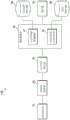
Fig. 1 is a diagram showing the overall configuration of the emotion estimation system according to the present embodiment.
Fig. 2 is a diagram showing an example of setting of a speech frame by the feature extraction unit.
Fig. 3A and 3B are diagrams showing a process of specifying a vowel segment, fig. 3A is a diagram showing a case where a start point and an end point of a vowel segment are specified, and fig. 3B is a diagram showing a case where a vowel segment is specified and an ID is attached.
Fig. 4 is a diagram showing a relationship between the frequencies of the 1 st formant (formant) and the 2 nd formant and japanese vowels.
Fig. 5 is a diagram showing emotion estimation processing for a vowel segment.
Fig. 6 is a diagram showing a state transition analysis process between vowel segments.
Fig. 7 is a flowchart showing the operation of the emotion estimation system.
Fig. 8 is a diagram showing an example of a hardware (hardware) configuration of a computer used as an emotion estimation system.
Description of the symbols
10: voice acquisition unit
20: feature value extraction unit
30: vowel segment specifying unit
40: emotion estimation unit
41: vowel classification emotion estimation unit
42: vowel state transition analysis unit
50: vowel classification probability Database (DB)
60: transition probability Database (DB)
70: output unit
100: emotion estimation system
Detailed Description
With respect to speech, it is known that the emotion of a speaker affects the sound of a vowel in speech. Moreover, the sound of a vowel in speech is less susceptible to noise and the like than the sound of a consonant. Therefore, in the present invention, the emotion of the speaker is estimated by focusing on the sound of the vowel in the speech. Hereinafter, embodiments of the present invention will be described in detail with reference to the drawings.
< System architecture >
Fig. 1 is a diagram showing the overall configuration of the emotion estimation system according to the present embodiment. The emotion estimation system 100 includes a voice acquisition unit 10, a feature extraction unit 20, a vowel segment determination unit 30, an emotion estimation unit 40, a vowel classification probability Database (DB)50, a transition probability Database (DB)60, and an output unit 70.
The voice acquiring unit 10 is a means for acquiring a processing target voice for estimating emotion. As the voice acquisition unit 10, for example, a microphone (microphone) is used. Further, the following structure may be adopted: connected to an external device via a network interface (network), and from which voice data as a processing object is received. Further, the following structure may be adopted: a storage device for storing voice data is provided as a peripheral device of the system, and the voice data to be processed is read from the storage device. In this embodiment, it is assumed that the speech of a single speaker is acquired.
The feature amount extraction unit 20 extracts a predetermined feature amount from the speech acquired by the speech acquisition unit 10. The feature extraction unit 20 is an example of a feature extraction means. Here, the feature value is a value indicating a feature of a speech signal used for specifying a vowel segment from speech. In other words, the feature value is a value related to an element defining a speech signal of a vowel. As the feature amount, for example, the amplitude, zero crossing rate, formant (formant), and the like of the speech signal are used. The processing and feature amount extraction unit 20 will be described in detail later.
The vowel segment specifying unit 30 specifies a segment of a vowel from the speech acquired by the speech acquiring unit 10 based on the feature amount extracted by the feature amount extracting unit 20. The vowel segment specifying unit 30 is an example of vowel segment specifying means. The vowel segment specifying unit 30 specifies a vowel segment from a speech signal to be processed. A vowel segment is a segment having a vowel feature based on a feature amount in a speech signal to be processed. Thus, a vowel segment is specified from the speech signal to be processed. The vowel segment specifying unit 30 specifies only vowel segments in the speech signal, and does not perform speech recognition processing for specifying vowels. The processing of the vowel segment determination unit 30 will be described in detail later.
The emotion estimation unit 40 estimates the emotion of the speaker when the processing target speech is uttered, based on the feature amount of the vowel segment specified by the vowel segment specification unit 30. The emotion estimation unit 40 is an example of an estimation unit. The emotion estimation unit 40 includes a vowel classification emotion estimation unit 41 and an inter-vowel state transition analysis unit 42. The vowel classification emotion estimation unit 41 estimates, for each vowel segment, the emotion of a speaker who utters the voice of the vowel segment based on the feature amount of the voice signal of the vowel segment. The vowel state transition analysis unit 42 analyzes the relationship between the emotion estimated for one vowel segment and the emotion estimated for another vowel segment immediately following the one vowel segment. The emotion estimation unit 40 estimates the emotion of the speaker when the speech acquired by the speech acquisition unit 10 is uttered, using the estimation result of the vowel classification emotion estimation unit 41 and the analysis result of the vowel state transition analysis unit 42. The details of the processing of the emotion estimation unit 40 including the processing of the vowel classification emotion estimation unit 41 and the vowel state transition analysis unit 42 will be described later.
The vowel classification probability DB50 stores information of corresponding feature amount patterns for predetermined emotion types for each vowel type. Here, the emotion type refers to a preset emotion type estimated by the emotion estimation system 100. The specific category may be set independently for each system. For example, four emotions, i.e., "joy", "anger", "sadness", and "music", may be set, and in addition, "panic", "aversion", and "depression" may be set. In addition, two types of the "positive" and the "negative" or three types of the intermediate state may be added. In addition, various emotion types can be set according to the purpose of use of the user of the emotion estimation system 100.
The feature amount referred to here is a feature amount of the speech signal extracted by the feature amount extraction unit 20. The feature pattern is a combination pattern of a plurality of features. In the vowel classification probability DB50, a relative pre-score is stored for each vowel typeInformation of probability distribution of each feature quantity pattern for each emotion type set in advance. Here, the probability distribution of each feature quantity pattern with respect to the emotion type means that the speaker is in a certain emotion ejTime-of-flight certain feature quantity pattern VkhProbability b (V) ofkh|ej) Distribution with respect to each emotional type. The vowel classification emotion estimation unit 41 refers to the vowel classification probability DB50, and obtains a probability (vowel segment classification probability) that a feature pattern obtained from a vowel segment in the processing target speech matches each emotion. The vowel classification emotion estimation unit 41 estimates the emotion of the speaker in the vowel segment based on the obtained vowel segment classification probability.
The transition probability DB60 stores information of the inter-vowel state transition probability for each combination of vowel types. Here, the inter-vowel state transition probability refers to a probability that a state transition occurs from the emotion of a speaker in one vowel segment to the emotion of a speaker in another vowel segment. For example, consider a case where four kinds of emotion types, i.e., "happiness", "anger", "sadness", and "music", are set, and the emotion of the speaker in one vowel segment is "happiness". The probability that the emotion of the speaker in the next vowel segment of this vowel segment is "anger" is the probability that the state of the vowel segment transitions from "joy" to "anger" (hereinafter referred to as "joy" → "anger"). At this time, since there are four state transitions of "xi" → "xi", "xi" → "anger", "xi" → "sadi" and "xi" → "le" with "xi" as a starting point, the four state transitions respectively obtain vowel inter-state transition probabilities. Similarly, with "anger", "sadness" and "music" as the starting points, there are four state transitions respectively, and the transition probabilities between vowels are obtained respectively. These inter-vowel state transition probabilities can be obtained by processing a state transition pattern in a combination of adjacent vowel segments using emotion estimation results for each vowel segment in speech collected as a sample (sample). As a method of obtaining the inter-vowel state transition probability from the set of state transition patterns, for example, a process using a hidden Markov model (hidden Markov model), a process using a recurrent neural network (recurrent neural network), other various conventional statistical processes, and the like may be employed. The vowel state transition analysis unit 42 refers to the transition probability DB60, and obtains the vowel state transition probability between each vowel segment based on the emotion of each vowel segment estimated by the vowel classification emotion estimation unit 41.
The output unit 70 outputs the estimation result of the emotion estimation unit 40. As will be described later in detail, the emotion estimation unit 40 determines a probability of matching each predetermined emotion type as an emotion of the speaker when uttering the voice. Therefore, the emotional type with the highest probability may be output as the estimation result. Further, the emotion type as the estimation result may be output by adding a probability value thereto. Furthermore, the set probability value for each emotion type may be output. As an output method, the output content described above may be displayed and output on a display device, or may be output by a voice message (message) using a voice output means.
< extraction processing of feature quantity >
Next, the processing of extracting the feature amount by the feature amount extracting unit 20 will be described. The feature extraction unit 20 divides a speech signal to be processed into speech frames per unit time, and determines a value of each feature for each of the speech frames.
Fig. 2 is a diagram showing an example of setting of the speech frame by the feature extraction unit 20. The feature extraction unit 20 extracts a feature for each speech frame set for the speech signal s (n) to be processed. The length (length per unit time) and the displacement width of the speech frame are not particularly limited, and may be set according to the recording characteristics of the speech. Fig. 2 shows an example in which speech frames of frames F1 to Fi are sequentially cut out in the direction of the arrows in the figure. In the example shown in fig. 2, the frame F1 is overlapped with the frame F2, and a speech frame is acquired while moving by a displacement width shorter than the frame length. In fig. 2, the voice frame F2 is located at a position overlapping the voice frame F1, and is displayed slightly smaller than the voice frame F1 by a broken line for easy recognition in the drawing, but in reality, a voice frame of the same size is obtained from the frame F1 to the frame Fi. In the example shown in fig. 2, frames F1 to Fi are displayed in a partial range of the illustrated speech signal, but actually, the speech frame is acquired for the first to the last of the speech acquired by the speech acquisition unit 10. Further, the speech frame may be acquired for a part where speech of a certain size or more is recorded in the speech acquired by the speech acquisition unit 10.
The feature extraction unit 20 extracts the feature of the speech signal in each speech frame specified as described above. As the feature amount, a value representing various kinds of information can be extracted, but at least a formant is extracted. The formants refer to a plurality of peaks (peaks) recognized in a frequency spectrum (frequency spectrum) of a speech signal. The lower frequencies are referred to as the first resonance peak, the second resonance peak, and … …, respectively. The frequencies of the respective formants have a characteristic relationship according to the type of a vowel, and particularly, the relationship between the 1 st formant and the 2 nd formant at the lower order is important for the recognition of a vowel. Therefore, in the present embodiment, in order to specify a vowel segment, at least the 1 st formant and the 2 nd formant are extracted from the speech signal of each speech frame as the feature amount of the speech signal in the speech frame.
< process for determining vowel interval >
Next, the process of specifying a vowel segment by the vowel segment specifying unit 30 will be described. The vowel segment specifying unit 30 specifies a vowel segment using the feature amount of each speech frame extracted by the feature amount extracting unit 20.
Fig. 3A and 3B are diagrams illustrating a process of determining a vowel segment. Fig. 3A is a diagram showing a case where the start point and the end point of a vowel segment are specified, and fig. 3B is a diagram showing a case where a vowel segment is specified and an ID is attached. The vowel segment determination unit 30 determines a vowel segment in the speech signal based on the feature amount extracted by the feature amount extraction unit 20. As described above, the 1 st formant and the 2 nd formant in the feature amount are important for the recognition of the vowel, and therefore, these feature amounts are mainly used for the determination of the vowel segment by the vowel segment determination unit 30, as an example.
Fig. 4 is a diagram showing the relationship between the frequencies of the 1 st formant and the 2 nd formant and japanese vowels "あ (a)", "い (i)", "う (u)", "え (e)", and "お (o)". In fig. 4, the horizontal axis represents the frequency (kHz) of the 1 st formant (f1), and the vertical axis represents the frequency (kHz) of the 2 nd formant (f 2). As shown in the figure, the 1 st formant and the 2 nd formant are in a characteristic relationship according to the type of vowel. Therefore, when the values of the 1 st formant and the 2 nd formant match these values, that is, when the values are defined as vowels, in the specified section of the speech signal to be processed, the vowel section specifying unit 30 specifies this section as a vowel section.
To describe in more detail, since the feature value is obtained for each speech frame, the vowel segment determination unit 30 examines the feature value of each speech frame and determines whether or not each speech frame is a vowel frame. Here, a vowel frame refers to a speech frame in which the value of a feature amount is defined as the value of a vowel. The vowel segment identification unit 30 determines, for example, a segment in which the frequency of occurrence of a vowel frame is equal to or higher than a certain frequency as a vowel segment. The vowel segment specifying unit 30 sets a point where a vowel frame appears first in a vowel segment as a start point of the vowel segment and a point where a vowel frame appears last as an end point of the vowel segment. The specific contents of the conditions for specifying the vowel segment (the frequency of occurrence of the vowel frame, the positions of the start point and the end point, and the like) are not particularly limited, and may be set independently for each system.
In the example shown in fig. 3A, in the speech signal as the processing target, a set of the start point and the end point of a section in which a vowel frame appears at four places (a set of the start point V1S and the end point V1E, a set of the start point V2S and the end point V2E, a set of the start point V3S and the end point V3E, and a set of the start point V4S and the end point V4E) is detected. As a result, as shown in fig. 3B, the segments sandwiched between the sets of the start point and the end point are identified as vowel segments V1, V2, V3, and V4. In fig. 3A and 3B, a part where some voices are recorded (a part where the amplitude of a voice signal becomes large) exists after the end point V2E of the vowel section V2, but a vowel frame does not exist in a voice frame in this part. Therefore, this section N is not a vowel section but a noise (noise).
< emotional feeling inference processing for each vowel segment >
Next, the emotion estimation process of the vowel classification emotion estimation unit 41 for each vowel segment will be described. The vowel classification emotion estimation unit 41 refers to the probability distribution of the feature quantity pattern corresponding to each of the set emotions stored in the vowel classification probability DB50 for the vowel segment specified by the vowel segment specification unit 30, obtains the probability that each vowel segment matches each of the set emotions, and estimates the emotion of the speaker in each vowel segment from the obtained probability.
Fig. 5 is a diagram showing emotion estimation processing for a vowel segment. The vowel classification emotion estimation unit 41 first focuses on one of the vowel segments specified by the vowel segment specification unit 30 as a processing target. In the example shown in fig. 5, it is assumed that the vowel segment V1 is focused on as a processing target. Next, the vowel classification emotion estimation unit 41 extracts feature patterns for each of the speech frames F1 to Fi included in the vowel segment V1. The vowel classification emotion estimation unit 41 refers to the vowel classification probability DB50 and determines the probability that the feature patterns of the speech frames F1 to Fi match the respective emotions set. The vowel classification emotion estimation unit 41 determines the probability that the vowel segment V1 matches each of the set emotions based on the relationship between the feature value patterns of the voice frames F1 to Fi and each of the set emotions. For example, E emotion categories are set, and one emotion E is set in the speakerj(j is 1 to E) probability P (V) that the uttered voice is a specific vowel Vkk|ej) The following expression (number 1) is given. In addition, b (V)kh|ej) Is in the speaker as emotion ejFeature quantity pattern V appearing as a specific in time-uttered voicekhProbability of a speech frame of (h ═ 1 to m).

The vowel classification emotion estimation unit 41 performs the above processing on each of the vowel segments specified by the vowel segment specification unit 30. Thereby, the emotion of the speaker in each vowel section of the speech signal s (n) is estimated.
< State transition analysis processing between vowel intervals >
Next, the state transition analysis process of the vowel state transition analysis unit 42 for the vowels will be described. The vowel state transition analysis unit 42 refers to the vowel state transition probability stored in the transition probability DB60 based on the emotion estimation result for each vowel segment by the vowel classification emotion estimation unit 41, and obtains the probability of emotion transitioning between vowel segments.
Fig. 6 is a diagram showing a state transition analysis process between vowel segments. The vowel state transition analysis unit 42 first focuses on two adjacent vowel segments in the speech signal. Then, the vowel state transition analysis unit 42 acquires the vowel state transition probability corresponding to the combination of the vowel segments from the transition probability DB 60. In the example of the figure, the inter-vowel state transition probabilities are obtained for the group of k-1 vowel intervals for V1 and V2, … …, Vk-1 and Vk.
< emotion estimation processing for processing target speech >
Next, the emotion estimation process of the emotion estimation unit 40 on the entire processing target speech will be described. The emotion estimation unit 40 estimates the emotion of the speaker in the speech including the vowel segment based on the emotion estimation result for each vowel segment by the vowel classification emotion estimation unit 41 and the vowel state transition probability obtained by the vowel state transition analysis unit 42. Specifically, the emotion estimation unit 40 obtains the probability that the emotion of the speaker in the processing target speech matches for each emotion type set in the emotion estimation system 100, and takes the emotion with the highest probability as the emotion of the speaker. The emotion of the speaker in the processing target speech X matches one emotion e of the emotion types set in the emotion estimation system 100jProbability P (E) of (j ═ 1 to E)j| X) is represented by the following formula (number 2), for example.

In addition, P (V)K|ej) That is to say that the speaker is in emotion ejIs sent out at any timeThe probability of a vowel VK (K1-K), A (V)KVK+1|ej) Is in the emotion e of the speakerjThe probability of causing a state transition between vowels VK → VK +1 (K1. K-1). The emotion e (X) of the speaker in speech X is expressed as follows.
E(X)=argmax[P(ej|X)]
Action of the emotional inference System
Fig. 7 is a flowchart showing the operation of the emotion estimation system 100. In the processing of the emotion estimation system 100, first, the speech acquisition unit 10 acquires a processing target speech (target speech) (S701). Here, the target speech is the speech of a speaker. When the recorded speech includes speech uttered by a plurality of speakers, the speech uttered by one speaker is cut out from the recorded speech as the target speech. The speech of a single speaker may be cut out by a conventional method, such as cutting out a blank portion in a predetermined time period, while the speaker is listening to the speech.
Next, the feature extraction unit 20 divides the target speech into speech frames and extracts features for each of the speech frames (S702). Then, the vowel segment determination unit 30 determines a vowel segment using the feature amount of each speech frame extracted by the feature amount extraction unit 20 (S703). As described above, here, the vowel segment in the target speech is determined based on the feature amount of the speech signal without performing the speech recognition processing. However, the type of vowel in a vowel segment may be determined based on a formant or the like, which is a feature amount.
Next, the vowel classification emotion estimation unit 41 of the emotion estimation unit 40 estimates, for each vowel segment, the emotion of the speaker who uttered the voice of the vowel segment based on the feature amount of the voice signal of the vowel segment (S704). As described above, the vowel classification emotion estimation unit 41 determines the probability of appearance of the feature pattern of the speech frame included in the currently-attended vowel segment for each emotion set by the emotion estimation system 100, and takes the emotion with the highest probability as the emotion estimation result in the vowel segment.
Next, the vowel state transition analysis unit 42 of the emotion estimation unit 40 analyzes the state transition between each vowel segment included in the target speech (S705). The emotion estimation unit 40 estimates the emotion of the speaker in the target speech based on the emotion estimation result for each vowel segment by the vowel classification emotion estimation unit 41 and the vowel state transition probability obtained by the vowel state transition analysis unit 42. As described above, the emotion estimation unit 40 here obtains the emotion estimation result and the probability of occurrence of the state transition probability between vowels for each vowel segment in the target speech, for each emotion set by the emotion estimation system 100 with respect to the emotion of the speaker. Then, the emotion estimation unit 40 determines the emotion that has obtained the highest probability as the emotion estimation result in the target speech (S706). Subsequently, the output unit 70 outputs the emotion determined by the emotion estimation unit 40 as an emotion estimation result in the target speech (S707).
< example of hardware Structure >
Fig. 8 is a diagram showing an example of the hardware configuration of a computer used as the emotion estimation system 100. The computer 200 shown in fig. 8 includes a Central Processing Unit (CPU) 201 as an arithmetic Unit, a main storage device (main memory) 202 as a storage Unit, and an external storage device 203. The CPU201 reads a program stored in the external storage device 203 into the main storage device 202 and executes it. As the main storage 202, for example, a Random Access Memory (RAM) is used. As the external storage device 203, for example, a magnetic disk device, a Solid State Drive (SSD), or the like is used. The computer 200 includes a display mechanism 204 for displaying and outputting information on and from a display device 210, and an input device 205 for inputting and operating information to and from the computer 200 by a user. As the input device 205, for example, a keyboard (keyboard) or a mouse (mouse) or the like is used. Further, the computer 200 includes a network interface 206 for connecting to a network. The configuration of the computer 200 shown in fig. 7 is merely an example, and the computer used in the present embodiment is not limited to the configuration example of fig. 8. For example, the storage device may be configured to include a nonvolatile Memory such as a flash Memory (flash Memory) or a Read Only Memory (ROM).
When the emotion estimation system 100 shown in fig. 1 is implemented by the computer 200 shown in fig. 8, the feature amount extraction unit 20, the vowel segment determination unit 30, and the emotion estimation unit 40 including the vowel classification emotion estimation unit 41 and the vowel state transition analysis unit 42 are implemented by, for example, the CPU201 executing a program. The vowel classification probability DB50 and the transition probability DB60 are realized by the external storage device 203, for example. The output unit 70 is realized by, for example, the display mechanism 204 and the display device 210.
< modification example >
In the emotion estimation system 100 according to the present embodiment, the probability distribution of the feature quantity pattern stored in the vowel classification probability DB50 and the inter-vowel state transition probability stored in the transition probability DB60 are prepared in advance by performing statistical processing on voices (sample voices) collected as samples. As a modification of the present embodiment, the following configuration may be provided: the result of the process of estimating emotion with respect to a specific voice is fed back (feedback) to the emotion estimation system 100. Specifically, the feature quantity pattern and the state transition pattern between vowels of the speech frame extracted in the process of estimating the emotion of the speaker by the emotion estimation system 100 are stored and reflected in the vowel classification probability DB50 and the transition probability DB 60. It is expected that there is an individual difference for each speaker in the feature quantity pattern in the spoken voice or the state transition pattern between vowels. Therefore, by feeding back the actual processing result of the specific speech of the speaker to the emotion estimation system 100 and reflecting the result in each database, the emotion estimation system 100 is optimized for the speech of the speaker, and the estimation accuracy is improved. If the emotion estimation system 100 estimates that there are a plurality of emotional speakers, the processing result information may be added with speaker identification information and fed back to construct a database optimized for each speaker.
Note that explanation of the formants of the feature quantities is made with reference to the relationship between vowels and formants in japanese (fig. 4). However, the feature that vowels significantly affect expression of emotion in spoken speech is not limited to japanese, and is applicable to various languages. However, as for the specific relationship between the feature quantity and emotion in the speech signal of a vowel, it is expected that there is a separate relationship for each language. The emotion estimation system 100 according to the present embodiment uses the probability distribution of the feature quantity pattern and the inter-vowel state transition probability in the speech signal of the vowel segment obtained by performing statistical processing on the sample speech, and therefore can be applied to speech of various languages by selecting the language of the sample speech.
The embodiments of the present invention have been described above, but the technical scope of the present invention is not limited to the embodiments. Various modifications and structural substitutions are included in the present invention without departing from the scope of the technical idea of the present invention.
Claims (7)
1. An emotion estimation system, comprising:
a feature amount extracting section that analyzes the recorded speech to extract a predetermined feature amount;
a vowel section determination section that determines a section in which a vowel is uttered based on the feature amount extracted by the feature amount extraction section; and
and an estimation unit configured to estimate an emotion of the speaker based on the feature amount of the vowel segment determined by the vowel segment determination unit.
2. The emotion estimation system according to claim 1,
the estimation unit refers to a vowel classification probability database in which feature patterns for each predetermined emotion type are recorded for each vowel, and obtains a probability that the feature pattern of the vowel segment specified by the vowel segment specifying unit matches each of the emotion types.
3. The emotion estimation system according to claim 2,
the estimation unit divides the vowel segment specified by the vowel segment specifying unit into a plurality of frames, finds the probability of matching each emotion type with respect to the feature pattern of each frame by referring to the vowel classification probability database, and specifies an emotion type to which the vowel segment matches based on the obtained probability of each frame.
4. The emotion estimation system according to claim 3, further comprising:
and a vowel classification probability database updating unit that records the feature pattern of each frame in the vowel segment in the vowel classification probability database as a feature pattern of a vowel corresponding to the vowel segment.
5. The emotion estimation system according to claim 1,
the estimating unit estimates an emotion of a speaker in the vowel segment on the basis of the feature amount of the vowel segment for each of the vowel segments determined by the vowel segment determining unit,
obtaining an emotional transition probability between vowels estimated for each of a plurality of the vowel segments included in the spoken speech with reference to a transition probability database in which emotional transition probabilities from emotion in one vowel segment to emotion in another vowel segment are recorded for each vowel combination,
and determining the emotion of the speaker in the whole of the spoken speech based on the emotion estimation result of each vowel segment and the emotion transition probability between the vowel segments.
6. The emotion estimation system according to claim 5, further comprising:
and a transition probability database updating unit that updates the emotional transition probability between the vowels corresponding to the emotion transition probability between the vowels included in the spoken speech, based on the emotional transition probability between the vowels acquired by the estimating unit.
7. A computer-readable medium storing a program, the program being read and executed by a computer, the program being characterized in that,
causing the computer to function as:
a feature amount extracting section that analyzes the recorded speech to extract a predetermined feature amount;
a vowel section determination section that determines a section in which a vowel is uttered based on the feature amount extracted by the feature amount extraction section; and
and an estimation unit configured to estimate an emotion of the speaker based on the feature amount of the vowel segment determined by the vowel segment determination unit.
Applications Claiming Priority (2)
| Application Number | Priority Date | Filing Date | Title |
|---|---|---|---|
| JP2018-129928 | 2018-07-09 | ||
| JP2018129928A JP7159655B2 (en) | 2018-07-09 | 2018-07-09 | Emotion estimation system and program |
Publications (1)
| Publication Number | Publication Date |
|---|---|
| CN110706689A true CN110706689A (en) | 2020-01-17 |
Family
ID=69102440
Family Applications (1)
| Application Number | Title | Priority Date | Filing Date |
|---|---|---|---|
| CN201910170895.6A Pending CN110706689A (en) | 2018-07-09 | 2019-03-07 | Emotion estimation system and computer-readable medium |
Country Status (3)
| Country | Link |
|---|---|
| US (1) | US11355140B2 (en) |
| JP (1) | JP7159655B2 (en) |
| CN (1) | CN110706689A (en) |
Families Citing this family (3)
| Publication number | Priority date | Publication date | Assignee | Title |
|---|---|---|---|---|
| JP7159655B2 (en) * | 2018-07-09 | 2022-10-25 | 富士フイルムビジネスイノベーション株式会社 | Emotion estimation system and program |
| JP7562430B2 (en) * | 2021-01-06 | 2024-10-07 | 株式会社竹中工務店 | Psychological state learning device and psychological state estimation device |
| JP7706340B2 (en) * | 2021-11-11 | 2025-07-11 | 株式会社日立製作所 | Emotion recognition system and emotion recognition method |
Citations (5)
| Publication number | Priority date | Publication date | Assignee | Title |
|---|---|---|---|---|
| JP2003099084A (en) * | 2001-07-13 | 2003-04-04 | Sony France Sa | Emotion recognition method and device |
| CN1975856A (en) * | 2006-10-30 | 2007-06-06 | 邹采荣 | Speech emotion identifying method based on supporting vector machine |
| US20090313019A1 (en) * | 2006-06-23 | 2009-12-17 | Yumiko Kato | Emotion recognition apparatus |
| CN101930735A (en) * | 2009-06-23 | 2010-12-29 | 富士通株式会社 | Voice emotion recognition device and method for voice emotion recognition |
| JP2017111760A (en) * | 2015-12-18 | 2017-06-22 | カシオ計算機株式会社 | Emotion estimator generation method, emotion estimator generation device, emotion estimation method, emotion estimation device, and program |
Family Cites Families (8)
| Publication number | Priority date | Publication date | Assignee | Title |
|---|---|---|---|---|
| CN101506874B (en) * | 2006-09-13 | 2011-12-07 | 日本电信电话株式会社 | Feeling detection method, and feeling detection device |
| US8756061B2 (en) * | 2011-04-01 | 2014-06-17 | Sony Computer Entertainment Inc. | Speech syllable/vowel/phone boundary detection using auditory attention cues |
| US9621713B1 (en) * | 2014-04-01 | 2017-04-11 | Securus Technologies, Inc. | Identical conversation detection method and apparatus |
| US10237399B1 (en) * | 2014-04-01 | 2019-03-19 | Securus Technologies, Inc. | Identical conversation detection method and apparatus |
| WO2018051945A1 (en) * | 2016-09-14 | 2018-03-22 | 日本電気株式会社 | Speech processing device, speech processing method, and recording medium |
| US10964191B2 (en) * | 2016-12-28 | 2021-03-30 | Samsung Electronics Co., Ltd. | Personal safety device and operating method therefor |
| US11250860B2 (en) * | 2017-03-07 | 2022-02-15 | Nec Corporation | Speaker recognition based on signal segments weighted by quality |
| JP7159655B2 (en) * | 2018-07-09 | 2022-10-25 | 富士フイルムビジネスイノベーション株式会社 | Emotion estimation system and program |
-
2018
- 2018-07-09 JP JP2018129928A patent/JP7159655B2/en active Active
-
2019
- 2019-03-07 CN CN201910170895.6A patent/CN110706689A/en active Pending
- 2019-07-01 US US16/458,200 patent/US11355140B2/en active Active
Patent Citations (5)
| Publication number | Priority date | Publication date | Assignee | Title |
|---|---|---|---|---|
| JP2003099084A (en) * | 2001-07-13 | 2003-04-04 | Sony France Sa | Emotion recognition method and device |
| US20090313019A1 (en) * | 2006-06-23 | 2009-12-17 | Yumiko Kato | Emotion recognition apparatus |
| CN1975856A (en) * | 2006-10-30 | 2007-06-06 | 邹采荣 | Speech emotion identifying method based on supporting vector machine |
| CN101930735A (en) * | 2009-06-23 | 2010-12-29 | 富士通株式会社 | Voice emotion recognition device and method for voice emotion recognition |
| JP2017111760A (en) * | 2015-12-18 | 2017-06-22 | カシオ計算機株式会社 | Emotion estimator generation method, emotion estimator generation device, emotion estimation method, emotion estimation device, and program |
Non-Patent Citations (2)
| Title |
|---|
| SHASHIDHAR KOOLAGUDI G: "Contribution of Telugu vowels in identifying emotions", 2015 EIGHTH INTERNATIONAL CONFERENCE ON ADVANCES IN PATTERN RECOGNITION, pages 1 - 5 * |
| 赵腊生: "语音情感特征提取与识别方法研究", 中国博士学位论文全文数据库, pages 10 * |
Also Published As
| Publication number | Publication date |
|---|---|
| JP2020008730A (en) | 2020-01-16 |
| US20200013428A1 (en) | 2020-01-09 |
| JP7159655B2 (en) | 2022-10-25 |
| US11355140B2 (en) | 2022-06-07 |
Similar Documents
| Publication | Publication Date | Title |
|---|---|---|
| CN109410914B (en) | A Gan dialect phonetic and dialect point recognition method | |
| JP5059115B2 (en) | Voice keyword identification method, apparatus, and voice identification system | |
| JP4224250B2 (en) | Speech recognition apparatus, speech recognition method, and speech recognition program | |
| JP6596924B2 (en) | Audio data processing apparatus, audio data processing method, and audio data processing program | |
| US20180286385A1 (en) | Method and system for predicting speech recognition performance using accuracy scores | |
| EP2888669B1 (en) | Method and system for selectively biased linear discriminant analysis in automatic speech recognition systems | |
| EP2891147B1 (en) | Method and system for predicting speech recognition performance using accuracy scores | |
| Martinez et al. | Prosodic features and formant modeling for an ivector-based language recognition system | |
| JP2021152682A (en) | Voice processing device, voice processing method and program | |
| Hasija et al. | Recognition of children Punjabi speech using tonal non-tonal classifier | |
| CN110706689A (en) | Emotion estimation system and computer-readable medium | |
| JPWO2007046267A1 (en) | Voice discrimination system, voice discrimination method, and voice discrimination program | |
| CN111785299B (en) | Voice evaluation method, device, equipment and computer storage medium | |
| JP2016177045A (en) | Speech recognition apparatus and speech recognition program | |
| JP2010145784A (en) | Voice recognizing device, acoustic model learning apparatus, voice recognizing method, and program | |
| JP3444108B2 (en) | Voice recognition device | |
| CN120632013B (en) | Intelligent Dialogue Scene Analysis Method Based on AI Large Model | |
| Manjunath et al. | Development of consonant-vowel recognition systems for Indian languages: Bengali and Odia | |
| Sawakare et al. | Speech recognition techniques: a review | |
| Oladipo et al. | Automatic speech recognition and accent identification of ethnically diverse Nigerian English speakers | |
| Manjunath et al. | Automatic phonetic transcription for read, extempore and conversation speech for an Indian language: Bengali | |
| Manjunath et al. | Articulatory and excitation source features for speech recognition in read, extempore and conversation modes | |
| JP2001312293A (en) | Voice recognition method and apparatus, and computer-readable storage medium | |
| JP2010072446A (en) | Coarticulation feature extraction device, coarticulation feature extraction method and coarticulation feature extraction program | |
| JP3061292B2 (en) | Accent phrase boundary detection device |
Legal Events
| Date | Code | Title | Description |
|---|---|---|---|
| PB01 | Publication | ||
| PB01 | Publication | ||
| CB02 | Change of applicant information | ||
| CB02 | Change of applicant information |
Address after: No. 3, chiban 9, Dingmu 7, Tokyo port, Japan Applicant after: Fuji film business innovation Co.,Ltd. Address before: No. 3, chiban 9, Dingmu 7, Tokyo port, Japan Applicant before: Fuji Xerox Co.,Ltd. |
|
| SE01 | Entry into force of request for substantive examination | ||
| SE01 | Entry into force of request for substantive examination | ||
| WD01 | Invention patent application deemed withdrawn after publication | ||
| WD01 | Invention patent application deemed withdrawn after publication |
Application publication date: 20200117 |