CN110647414A - Improved analog function security with anomaly detection - Google Patents
Improved analog function security with anomaly detection Download PDFInfo
- Publication number
- CN110647414A CN110647414A CN201910445283.3A CN201910445283A CN110647414A CN 110647414 A CN110647414 A CN 110647414A CN 201910445283 A CN201910445283 A CN 201910445283A CN 110647414 A CN110647414 A CN 110647414A
- Authority
- CN
- China
- Prior art keywords
- signal data
- dfx
- data
- functional
- anomaly
- Prior art date
- Legal status (The legal status is an assumption and is not a legal conclusion. Google has not performed a legal analysis and makes no representation as to the accuracy of the status listed.)
- Pending
Links
Images


Classifications
-
- G—PHYSICS
- G06—COMPUTING OR CALCULATING; COUNTING
- G06F—ELECTRIC DIGITAL DATA PROCESSING
- G06F30/00—Computer-aided design [CAD]
- G06F30/30—Circuit design
- G06F30/36—Circuit design at the analogue level
- G06F30/367—Design verification, e.g. using simulation, simulation program with integrated circuit emphasis [SPICE], direct methods or relaxation methods
-
- G—PHYSICS
- G01—MEASURING; TESTING
- G01R—MEASURING ELECTRIC VARIABLES; MEASURING MAGNETIC VARIABLES
- G01R31/00—Arrangements for testing electric properties; Arrangements for locating electric faults; Arrangements for electrical testing characterised by what is being tested not provided for elsewhere
- G01R31/005—Testing of electric installations on transport means
- G01R31/006—Testing of electric installations on transport means on road vehicles, e.g. automobiles or trucks
- G01R31/007—Testing of electric installations on transport means on road vehicles, e.g. automobiles or trucks using microprocessors or computers
-
- G—PHYSICS
- G06—COMPUTING OR CALCULATING; COUNTING
- G06F—ELECTRIC DIGITAL DATA PROCESSING
- G06F11/00—Error detection; Error correction; Monitoring
- G06F11/07—Responding to the occurrence of a fault, e.g. fault tolerance
- G06F11/0703—Error or fault processing not based on redundancy, i.e. by taking additional measures to deal with the error or fault not making use of redundancy in operation, in hardware, or in data representation
- G06F11/0706—Error or fault processing not based on redundancy, i.e. by taking additional measures to deal with the error or fault not making use of redundancy in operation, in hardware, or in data representation the processing taking place on a specific hardware platform or in a specific software environment
- G06F11/0736—Error or fault processing not based on redundancy, i.e. by taking additional measures to deal with the error or fault not making use of redundancy in operation, in hardware, or in data representation the processing taking place on a specific hardware platform or in a specific software environment in functional embedded systems, i.e. in a data processing system designed as a combination of hardware and software dedicated to performing a certain function
- G06F11/0739—Error or fault processing not based on redundancy, i.e. by taking additional measures to deal with the error or fault not making use of redundancy in operation, in hardware, or in data representation the processing taking place on a specific hardware platform or in a specific software environment in functional embedded systems, i.e. in a data processing system designed as a combination of hardware and software dedicated to performing a certain function in a data processing system embedded in automotive or aircraft systems
-
- G—PHYSICS
- G01—MEASURING; TESTING
- G01R—MEASURING ELECTRIC VARIABLES; MEASURING MAGNETIC VARIABLES
- G01R31/00—Arrangements for testing electric properties; Arrangements for locating electric faults; Arrangements for electrical testing characterised by what is being tested not provided for elsewhere
- G01R31/28—Testing of electronic circuits, e.g. by signal tracer
- G01R31/2851—Testing of integrated circuits [IC]
-
- G—PHYSICS
- G01—MEASURING; TESTING
- G01R—MEASURING ELECTRIC VARIABLES; MEASURING MAGNETIC VARIABLES
- G01R31/00—Arrangements for testing electric properties; Arrangements for locating electric faults; Arrangements for electrical testing characterised by what is being tested not provided for elsewhere
- G01R31/28—Testing of electronic circuits, e.g. by signal tracer
- G01R31/316—Testing of analog circuits
-
- G—PHYSICS
- G01—MEASURING; TESTING
- G01R—MEASURING ELECTRIC VARIABLES; MEASURING MAGNETIC VARIABLES
- G01R31/00—Arrangements for testing electric properties; Arrangements for locating electric faults; Arrangements for electrical testing characterised by what is being tested not provided for elsewhere
- G01R31/28—Testing of electronic circuits, e.g. by signal tracer
- G01R31/316—Testing of analog circuits
- G01R31/3163—Functional testing
-
- G—PHYSICS
- G06—COMPUTING OR CALCULATING; COUNTING
- G06F—ELECTRIC DIGITAL DATA PROCESSING
- G06F11/00—Error detection; Error correction; Monitoring
- G06F11/07—Responding to the occurrence of a fault, e.g. fault tolerance
- G06F11/0703—Error or fault processing not based on redundancy, i.e. by taking additional measures to deal with the error or fault not making use of redundancy in operation, in hardware, or in data representation
- G06F11/0751—Error or fault detection not based on redundancy
-
- G—PHYSICS
- G06—COMPUTING OR CALCULATING; COUNTING
- G06F—ELECTRIC DIGITAL DATA PROCESSING
- G06F11/00—Error detection; Error correction; Monitoring
- G06F11/07—Responding to the occurrence of a fault, e.g. fault tolerance
- G06F11/0703—Error or fault processing not based on redundancy, i.e. by taking additional measures to deal with the error or fault not making use of redundancy in operation, in hardware, or in data representation
- G06F11/079—Root cause analysis, i.e. error or fault diagnosis
-
- G—PHYSICS
- G06—COMPUTING OR CALCULATING; COUNTING
- G06N—COMPUTING ARRANGEMENTS BASED ON SPECIFIC COMPUTATIONAL MODELS
- G06N20/00—Machine learning
-
- G—PHYSICS
- G06—COMPUTING OR CALCULATING; COUNTING
- G06N—COMPUTING ARRANGEMENTS BASED ON SPECIFIC COMPUTATIONAL MODELS
- G06N3/00—Computing arrangements based on biological models
- G06N3/02—Neural networks
- G06N3/04—Architecture, e.g. interconnection topology
- G06N3/044—Recurrent networks, e.g. Hopfield networks
-
- G—PHYSICS
- G06—COMPUTING OR CALCULATING; COUNTING
- G06N—COMPUTING ARRANGEMENTS BASED ON SPECIFIC COMPUTATIONAL MODELS
- G06N3/00—Computing arrangements based on biological models
- G06N3/02—Neural networks
- G06N3/04—Architecture, e.g. interconnection topology
- G06N3/044—Recurrent networks, e.g. Hopfield networks
- G06N3/0442—Recurrent networks, e.g. Hopfield networks characterised by memory or gating, e.g. long short-term memory [LSTM] or gated recurrent units [GRU]
-
- G—PHYSICS
- G06—COMPUTING OR CALCULATING; COUNTING
- G06N—COMPUTING ARRANGEMENTS BASED ON SPECIFIC COMPUTATIONAL MODELS
- G06N3/00—Computing arrangements based on biological models
- G06N3/02—Neural networks
- G06N3/04—Architecture, e.g. interconnection topology
- G06N3/045—Combinations of networks
-
- G—PHYSICS
- G06—COMPUTING OR CALCULATING; COUNTING
- G06N—COMPUTING ARRANGEMENTS BASED ON SPECIFIC COMPUTATIONAL MODELS
- G06N3/00—Computing arrangements based on biological models
- G06N3/02—Neural networks
- G06N3/04—Architecture, e.g. interconnection topology
- G06N3/045—Combinations of networks
- G06N3/0455—Auto-encoder networks; Encoder-decoder networks
-
- G—PHYSICS
- G06—COMPUTING OR CALCULATING; COUNTING
- G06N—COMPUTING ARRANGEMENTS BASED ON SPECIFIC COMPUTATIONAL MODELS
- G06N3/00—Computing arrangements based on biological models
- G06N3/02—Neural networks
- G06N3/08—Learning methods
-
- G—PHYSICS
- G06—COMPUTING OR CALCULATING; COUNTING
- G06N—COMPUTING ARRANGEMENTS BASED ON SPECIFIC COMPUTATIONAL MODELS
- G06N3/00—Computing arrangements based on biological models
- G06N3/02—Neural networks
- G06N3/08—Learning methods
- G06N3/098—Distributed learning, e.g. federated learning
-
- G—PHYSICS
- G06—COMPUTING OR CALCULATING; COUNTING
- G06N—COMPUTING ARRANGEMENTS BASED ON SPECIFIC COMPUTATIONAL MODELS
- G06N5/00—Computing arrangements using knowledge-based models
- G06N5/04—Inference or reasoning models
-
- G—PHYSICS
- G05—CONTROLLING; REGULATING
- G05B—CONTROL OR REGULATING SYSTEMS IN GENERAL; FUNCTIONAL ELEMENTS OF SUCH SYSTEMS; MONITORING OR TESTING ARRANGEMENTS FOR SUCH SYSTEMS OR ELEMENTS
- G05B23/00—Testing or monitoring of control systems or parts thereof
- G05B23/02—Electric testing or monitoring
- G05B23/0205—Electric testing or monitoring by means of a monitoring system capable of detecting and responding to faults
- G05B23/0218—Electric testing or monitoring by means of a monitoring system capable of detecting and responding to faults characterised by the fault detection method dealing with either existing or incipient faults
- G05B23/0224—Process history based detection method, e.g. whereby history implies the availability of large amounts of data
- G05B23/024—Quantitative history assessment, e.g. mathematical relationships between available data; Functions therefor; Principal component analysis [PCA]; Partial least square [PLS]; Statistical classifiers, e.g. Bayesian networks, linear regression or correlation analysis; Neural networks
-
- G—PHYSICS
- G06—COMPUTING OR CALCULATING; COUNTING
- G06F—ELECTRIC DIGITAL DATA PROCESSING
- G06F30/00—Computer-aided design [CAD]
- G06F30/10—Geometric CAD
- G06F30/15—Vehicle, aircraft or watercraft design
Landscapes
- Engineering & Computer Science (AREA)
- Physics & Mathematics (AREA)
- Theoretical Computer Science (AREA)
- General Physics & Mathematics (AREA)
- General Engineering & Computer Science (AREA)
- Software Systems (AREA)
- Evolutionary Computation (AREA)
- Artificial Intelligence (AREA)
- Mathematical Physics (AREA)
- Computing Systems (AREA)
- Computer Hardware Design (AREA)
- Data Mining & Analysis (AREA)
- Biomedical Technology (AREA)
- Computational Linguistics (AREA)
- Health & Medical Sciences (AREA)
- Molecular Biology (AREA)
- General Health & Medical Sciences (AREA)
- Life Sciences & Earth Sciences (AREA)
- Biophysics (AREA)
- Microelectronics & Electronic Packaging (AREA)
- Combustion & Propulsion (AREA)
- Chemical & Material Sciences (AREA)
- Quality & Reliability (AREA)
- Computer Vision & Pattern Recognition (AREA)
- Medical Informatics (AREA)
- Geometry (AREA)
- Testing And Monitoring For Control Systems (AREA)
- Debugging And Monitoring (AREA)
Abstract
在一些示例中,系统和方法可以用于改善模拟或混合信号电路的功能安全,并且更具体地,可以用于异常检测以帮助预测故障以用于减轻电路故障的灾难性结果。示例可以包括使用经训练的机器学习模型来识别从电路的现场检测器收集的一组时间序列数据中的点异常、上下文或条件异常或集合异常。可以利用仅具有正常数据或具有包括在数据集中的一些异常数据的数据来训练机器学习模型。在示例中,数据可以包括从模拟组件上的现场检测器接收的功能信号数据或特征设计(DFx)信号数据。可以基于功能信号数据或DFx信号数据的分析来触发功能安全动作。
In some examples, systems and methods can be used to improve the functional safety of analog or mixed-signal circuits, and more particularly, anomaly detection to help predict failures for mitigating catastrophic consequences of circuit failures. Examples may include using a trained machine learning model to identify point anomalies, contextual or conditional anomalies, or aggregate anomalies in a set of time series data collected from a field detector of an electrical circuit. A machine learning model can be trained with data with only normal data or with some abnormal data included in the dataset. In an example, the data may include functional signal data or feature design (DFx) signal data received from a field detector on an analog component. Functional safety actions can be triggered based on analysis of functional signal data or DFx signal data.
Description
技术领域technical field
本主题的实施例总体上涉及改善模拟和混合信号电路的功能安全性,并且更具体地,涉及异常检测以帮助预测故障以用于减轻电路故障的灾难性结果。Embodiments of the present subject matter relate generally to improving the functional safety of analog and mixed-signal circuits and, more particularly, to anomaly detection to help predict failures for mitigating the catastrophic consequences of circuit failures.
背景技术Background technique
安全性是系统的关键目标,如果组件或系统故障未被消除,则可能造成伤害,例如在汽车系统中。汽车模拟和混合信号电路的功能安全面临着一些挑战。随着汽车领域中安全关键应用的不断发展,例如ADAS(高级驾驶辅助系统)和自主驾驶,它成为用于确保公路车辆内电气和/或电子(E/E)系统功能安全的关键。功能安全(FuSa)在国际标准化组织(ISO)26262中定义,因为E/E系统的故障行为导致的危险不存在不合理的风险。具有2011年发布的第一个版本和2018年的第二个版本的ISO 26262是一个管理汽车E/E系统的安全生命周期、风险分析、安全管理、安全概念开发和验证活动的国际标准。汽车安全完整性等级(ASIL:A-D)定义了与系统的功能及其关键性相关联的安全要求。ASIL目标需要由协同系统设计来实现,使得即使在故障的情况下,对于人类用户(例如,驾驶员或乘客)来说存在足够的安全裕度。然而,汽车E/E系统日益增加的复杂性使得在车辆中达到高ASIL等级目标(例如ASIL-D)具有挑战性。Safety is a key objective of the system, and if a component or system failure is not eliminated, it can cause harm, such as in automotive systems. Functional safety of automotive analog and mixed-signal circuits presents several challenges. With the continuous development of safety-critical applications in the automotive sector, such as ADAS (Advanced Driver Assistance Systems) and autonomous driving, it is critical for ensuring the functional safety of electrical and/or electronic (E/E) systems in road vehicles. Functional Safety (FuSa) is defined in the International Organization for Standardization (ISO) 26262 as there is no unreasonable risk of hazards resulting from faulty behavior of E/E systems. ISO 26262, with the first version published in 2011 and the second version in 2018, is an international standard for managing the safety lifecycle, risk analysis, safety management, safety concept development and validation activities of automotive E/E systems. Automotive Safety Integrity Levels (ASIL: A-D) define safety requirements associated with the functionality of a system and its criticality. The ASIL goal needs to be achieved by collaborative system design so that even in the event of a failure, there is a sufficient safety margin for the human user (eg, driver or passenger). However, the increasing complexity of automotive E/E systems makes it challenging to achieve high ASIL level targets such as ASIL-D in vehicles.
根据ISO 26262,如果未激活安全机制,则容错时间间隔(FTTI)被定义为从项目(即车辆)中的错误的发生到危险事件的发生的最小时间跨度。安全机制包括错误检测和错误反应,因此错误处理时间间隔(FHTI),即错误检测时间间隔和错误反应时间间隔之和,应小于FTTI,以便达到预期的安全目标。因此,从功能安全角度来看,任何有助于减少总错误处理时间的早期检测都是非常需要的。然而,现有的标准和系统聚焦在发生故障时的校正动作。According to ISO 26262, the Fault Tolerance Time Interval (FTTI) is defined as the minimum time span from the occurrence of an error in an item (ie a vehicle) to the occurrence of a hazardous event if the safety mechanism is not activated. The safety mechanism includes error detection and error reaction, so the error handling time interval (FHTI), that is, the sum of the error detection time interval and the error reaction time interval, should be smaller than the FTTI in order to achieve the expected safety goal. Therefore, from a functional safety perspective, any early detection that helps reduce the overall error handling time is highly desirable. However, existing standards and systems focus on corrective action in the event of a failure.
附图说明Description of drawings
在不必按比例绘制的附图中,相同标号可以描述不同视图中的类似组件。具有不同字母后缀的相同标号可以表示类似组件的不同实例。一些实施例以举例的方式被展示并且不限于附图中的图,在附图中:In the drawings, which are not necessarily to scale, the same reference numbers may describe similar components in different views. The same reference numbers with different letter suffixes may represent different instances of similar components. Some embodiments are shown by way of example and not limited to the figures in the accompanying drawings, in which:
图1是示出根据实施例的从功能安全(FuSa)的立场来看的状态转换的高级视图的框图;1 is a block diagram illustrating a high-level view of state transitions from a functional safety (FuSa) standpoint, according to an embodiment;
图2是示出根据实施例的分析下的元件(例如,系统或组件)的模型的图;2 is a diagram illustrating a model of an element (eg, a system or component) under analysis, according to an embodiment;
图3是示出根据实施例的用于将数据挖掘/机器学习技术应用于从元件的现场操作所收集的数据以便检测异常状态的方法的高级工作流的图。3 is a diagram illustrating a high-level workflow of a method for applying data mining/machine learning techniques to data collected from field operations of elements in order to detect abnormal conditions, according to an embodiment.
图4示出了根据实施例的用于异常检测的示例场景;FIG. 4 illustrates an example scenario for anomaly detection, according to an embodiment;
图5示出了根据实施例的用于模拟FuSa异常检测的联合学习的系统;5 illustrates a system for simulating joint learning for FuSa anomaly detection, according to an embodiment;
图6示出了根据实施例的示出所使用的示例数据结构的表格;Figure 6 shows a table showing an example data structure used, according to an embodiment;
图7示出了根据实施例的使用如图6所示的数据结构的异常检测;Figure 7 illustrates anomaly detection using the data structure shown in Figure 6, according to an embodiment;
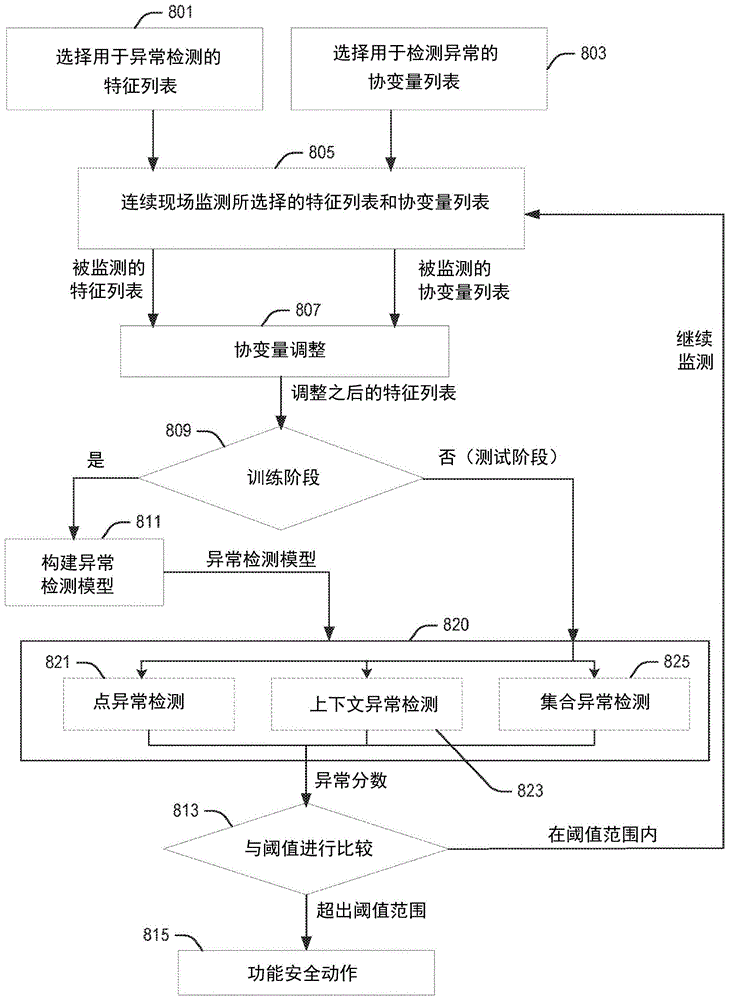
图8是示出根据实施例的用于检测功能安全的异常的方法的流程图;8 is a flowchart illustrating a method for detecting anomalies in functional safety according to an embodiment;
图9A示出了根据实施例的单点数据的时间序列集合;Figure 9A shows a time series collection of single point data according to an embodiment;
图9B示出了根据实施例的数据集中的上下文异常;9B illustrates contextual anomalies in a dataset according to an embodiment;
图9C示出了根据实施例的数据集中的趋势异常;9C illustrates trend anomalies in a data set according to an embodiment;
图9D示出了根据实施例的数据集中的集合异常;Figure 9D illustrates aggregated anomalies in a dataset according to an embodiment;
图10示出了根据实施例的具有不同时间标度的数据表示的示例;Figure 10 shows an example of data representation with different time scales, according to an embodiment;
图11示出了根据实施例的用于执行异常检测的混合异常检测模型;以及FIG. 11 illustrates a hybrid anomaly detection model for performing anomaly detection, according to an embodiment; and
图12是示出可以在其上实现一个或多个实施例的机器的示例的框图。12 is a block diagram illustrating an example of a machine on which one or more embodiments may be implemented.
具体实施方式Detailed ways
在以下描述中,出于解释的目的,阐明了各种具体细节以提供对一些示例实施例的透彻理解。然而,对本领域技术人员将显而易见的是,可以在没有这些具体细节的情况下或者通过略微改变来实践本主题。In the following description, for purposes of explanation, various specific details are set forth in order to provide a thorough understanding of some example embodiments. However, it will be apparent to those skilled in the art that the present subject matter may be practiced without these specific details or with slight modification.
现代车辆现在可包含数千个半导体芯片。其中,大量模拟和混合信号集成电路(IC)在安全关键应用中起着非常重要的作用。此外,半导体工业中存在将先进制造节点(例如,14/10nm)应用于汽车IC的新趋势。随着器件技术的缩小,由于模拟电路缺陷,系统可能会出现更多故障。因此,改善汽车系统中使用的模拟电路的功能安全性(FuSa)至关重要。Modern vehicles can now contain thousands of semiconductor chips. Among them, a large number of analog and mixed-signal integrated circuits (ICs) play a very important role in safety-critical applications. Additionally, there is a new trend in the semiconductor industry to apply advanced manufacturing nodes (eg, 14/10 nm) to automotive ICs. As device technology shrinks, systems may experience more failures due to analog circuit defects. Therefore, improving the functional safety (FuSa) of analog circuits used in automotive systems is critical.
模拟行为为早期异常警报提供了机会,从而改善了FuSa。本主题的实施例是涉及使用模拟汽车电路的数据驱动异常检测的基于机器学习的方法的系统和方法。实施例提供了用于在系统操作的上下文中挖掘动态现场时间序列数据以从模拟功能安全角度检测异常事件的框架,该框架具有最小的硬件开销。各种实施例可以包括用于通过预测即将发生的故障并采取早期动作来减轻不期望结果来改善汽车应用中的模拟电路的FuSa的机制。应当理解,虽然本文描述的实施例使用汽车电路作为示例,但是所描述的技术的应用可用于在各种系统和组件的电路中提供改善的FuSa,并且不限于汽车电路。The simulated behavior provides an opportunity for early anomaly alerts, thereby improving FuSa. Embodiments of the present subject matter are systems and methods involving machine learning based methods of data-driven anomaly detection using simulated automotive circuits. Embodiments provide a framework for mining dynamic field time series data in the context of system operation to detect anomalous events from a simulated functional safety perspective, with minimal hardware overhead. Various embodiments may include mechanisms for improving the FuSa of analog circuits in automotive applications by predicting impending failures and taking early action to mitigate undesired outcomes. It should be understood that while the embodiments described herein use automotive circuits as an example, applications of the described techniques can be used to provide improved FuSa in circuits of various systems and components and are not limited to automotive circuits.
模拟电路的功能安全面临若干挑战。首先,模拟电路比数字电路更容易受到参数错误的影响,定义为电路参数扰动。即使在大批量制造中采用详尽的参数错误测试程序,仍有可能在制造阶段不能检测到某些参数错误,但在现场操作期间会恶化,从而导致功能故障模式。其次,许多模拟错误可能仅在由环境压力(包括热量、湿度或振动)引起的现场系统操作的上下文中触发或检测,而不是在单个组件级别中。由于模拟电路中各种元件的复杂交互,即使在原始设计空间(例如,6-sigma)内也可能存在未知的故障点。模拟功能安全面临的另一个挑战是整个行业缺乏广泛接受的模拟故障/缺陷模型。Functional safety of analog circuits faces several challenges. First, analog circuits are more susceptible than digital circuits to parameter errors, defined as circuit parameter perturbations. Even with exhaustive parametric error testing procedures in high-volume manufacturing, it is still possible that some parametric errors go undetected at the manufacturing stage, but deteriorate during field operations, leading to functional failure modes. Second, many simulation errors may only be triggered or detected in the context of field system operation caused by ambient stress (including heat, humidity, or vibration), rather than at the individual component level. Even within the original design space (eg, 6-sigma) there may be unknown points of failure due to the complex interaction of various elements in an analog circuit. Another challenge for analog functional safety is the lack of widely accepted analog fault/defect models across the industry.
模拟电路可以由连续信号区域表征。该特性提供了实现早期模拟信号异常检测的机会。模拟电路在最终导致系统中的实际故障之前可能表现出异常。本文描述的实施例使用机器学习来检测此类中间状态并采取主动动作,从而减少错误处理时间。Analog circuits can be characterized by continuous signal regions. This feature provides an opportunity to implement early analog signal anomaly detection. Analog circuits may behave abnormally before eventually causing actual failures in the system. Embodiments described herein use machine learning to detect such intermediate states and take proactive action, thereby reducing error handling time.
本说明书中对“一个实施例”或“一实施例”的引用意味着结合该实施例描述的特定特征、结构或特性被包括在本发明的至少一个实施例中。因此,纵观本说明书,短语“在一个实施例中”或“在一实施例中”在多个位置的出现不一定全部指同一实施例,或者指不同的或相互排他的实施例。在其他实施例中可以组合各种实施例的特征。Reference in this specification to "one embodiment" or "an embodiment" means that a particular feature, structure, or characteristic described in connection with the embodiment is included in at least one embodiment of the present invention. Thus, appearances of the phrases "in one embodiment" or "in an embodiment" in various places throughout this specification are not necessarily all referring to the same embodiment or to different or mutually exclusive embodiments. Features of various embodiments may be combined in other embodiments.
出于解释的目的,阐述了具体配置和细节以便提供对本主题的透彻理解。然而,对于本领域普通技术人员显而易见的是,所描述的主题的实施例可以在没有本文呈现的具体细节的情况下实施,或者以如本文所述的各种组合实施。此外,为了不混淆所描述的实施例,可省略或简化公知特征。在整个说明书中可以给出各种示例。这些仅是具体实施方案的描述。权利要求的范围或含义不限于给出的示例。For purposes of explanation, specific configurations and details are set forth in order to provide a thorough understanding of the present subject matter. However, it will be apparent to those of ordinary skill in the art that embodiments of the described subject matter may be practiced without the specific details presented herein, or in various combinations as described herein. Furthermore, well-known features may be omitted or simplified in order not to obscure the described embodiments. Various examples may be given throughout the specification. These are merely descriptions of specific embodiments. The scope or meaning of the claims is not limited to the examples given.
在至少一个实施例中,数据驱动的异常检测方法用于解释模拟功能安全面临的挑战和机遇两者。实施例基于在系统操作的上下文中的运行时(runtime)操作模式(例如,现场操作)和测试模式两者的现场模拟数据的集合,通过使用功能特征和x设计(design-for-x;DFx)特征的固有可观察性。在此上下文中,DFx中的x表示一种“设计用于”监测特征,包括DFT(可测试性设计)、DFD(调试设计)、DFV(验证设计)等。开发了一种机器学习方法,该方法具有这些动态时间序列数据作为训练数据(来自现场模拟数据),用于即将到来的实时测试数据的异常检测。采用数据驱动方法而不依赖于某种错误(fault)模型,因此它自然地解释了固有电路误差(error)和外在环境变化。实施例可以将模拟功能安全问题构架为使用动态现场时间序列数据的异常检测。In at least one embodiment, a data-driven anomaly detection approach is used to account for both the challenges and opportunities for simulating functional safety. Embodiments are based on a collection of field simulation data for both runtime operating modes (eg, field operations) and test modes in the context of system operation, by using functional characteristics and design-for-x (DFx) ) features are inherently observable. In this context, the x in DFx represents a "designed for" monitoring feature, including DFT (Design for Test), DFD (Design for Debug), DFV (Design for Verification), etc. A machine learning method is developed with these dynamic time series data as training data (from live simulation data) for anomaly detection on upcoming live test data. A data-driven approach is adopted without relying on a fault model, so it naturally accounts for inherent circuit errors and external environmental changes. Embodiments may frame a simulated functional safety problem as anomaly detection using dynamic field time series data.
已经提出了逻辑和存储器电路的功能安全(诸如使用ECC(纠错码)/LBIST(逻辑内置自测试)/内场扫描)。另一方面,关于模拟电路的研究报道相对较少。在过去的30年中,已经研究了HVM中的模拟电路测试和DFT方法。然而,与数字电路相比,工业上这些技术的广泛采用是有限的。实际模拟测试的一个障碍是缺乏广泛接受的模拟错误模型和有效的模拟错误模拟方法。这一挑战不仅适用于模拟电路的HVM测试,还适用于它们的现场FuSa问题。此外,模拟电路中的现场缺陷效应通常是随机分布的而不是确定性的。这为模拟缺陷/错误建模问题带来了更多复杂性。Functional safety of logic and memory circuits has been proposed (such as using ECC (Error Correcting Code)/LBIST (Logic Built-In Self Test)/Infield Scanning). On the other hand, there are relatively few research reports on analog circuits. Over the past 30 years, analog circuit testing and DFT methods in HVM have been studied. However, the widespread adoption of these technologies in industry is limited compared to digital circuits. One obstacle to practical mock testing is the lack of widely accepted mock error models and efficient mock error simulation methods. This challenge applies not only to HVM testing of analog circuits, but also to their field FuSa problems. Furthermore, field defect effects in analog circuits are often distributed randomly rather than deterministically. This brings more complexity to the problem of simulating defect/error modeling.
异常检测,也称为异常值检测,是在数据中找到不符合明确定义的正常行为概念的模式的问题。它已被用于改善测试质量并降低制造流程中电路的测试成本。已经在模拟和混合信号电路的测试的上下文中提出了各种异常值检测方法,并且可以将其集成在制造测试框架内。但是,目前研究人员提出的大多数方法都是针对组件级而不是系统级。Anomaly detection, also known as outlier detection, is the problem of finding patterns in data that do not conform to a well-defined concept of normal behavior. It has been used to improve test quality and reduce the cost of testing circuits in the manufacturing process. Various outlier detection methods have been proposed in the context of testing of analog and mixed-signal circuits and can be integrated within a manufacturing test framework. However, most of the methods currently proposed by researchers are aimed at the component level rather than the system level.
在汽车领域中,生产中异常值检测的一种应用是部分平均测试(PAT)。PAT检测通过原始制造测试,但与同一群体中的其他部分相比具有异常特性的异常值,并将其排除在产品出货之外。然而,这些工作已经在制造测试的上下文中呈现,而不是在呈现不同形式的数据的现场应用中呈现,例如具有长得多的时间范围的动态时间序列数据。In the automotive domain, one application of outlier detection in production is Partial Average Testing (PAT). PAT detects outliers that pass original manufacturing testing but have unusual properties compared to the rest of the population and exclude them from product shipments. However, these works have been presented in the context of manufacturing testing, rather than in field applications that present data in different forms, such as dynamic time series data with much longer time horizons.
图1是示出根据实施例的从FuSa的立场来看的状态转换的高级视图的框图;假设元件(定义为系统或组件,例如ISO 26262中的硬件或软件)以正常功能状态101开始。定义为可导致元件失效的异常条件的错误或其他不可预见的操作条件103A-B,将状态移动到误差状态105,误差状态105被定义为计算的、观察的或测量的值或条件与真实的、指定的或理论上正确的值或条件之间的差异。从半导体的角度来看,错误示例是逻辑门中的卡在1/0或设计范围外的参数变化,并且误差可能是逻辑电路的错误值或模拟接收器电路的降级的眼图开度(eye opening)。如果未及时纠正或减轻,则该误差将导致组件或系统的故障107。故障107被定义为终止执行功能的能力。错误检测和错误反应程序110可以触发安全机制112进入安全状态109,并且可以稍后恢复回到正常操作状态101。应该注意的是,这种典型的FuSa状态转换依赖于实际错误和纠正措施,而不是故障前的预测异常检测。1 is a block diagram illustrating a high-level view of state transitions from a FuSa standpoint, according to an embodiment; an element (defined as a system or component, such as hardware or software in ISO 26262) is assumed to start with a normal functional state 101. Errors or other unforeseen operating conditions 103A-B, defined as abnormal conditions that can lead to component failure, move the state to an error state 105, which is defined as a calculated, observed or measured value or condition that differs from the true , specified or theoretically correct value or condition. From a semiconductor point of view, examples of errors are stuck 1/0s in logic gates or parameter changes outside the design range, and errors can be wrong values for logic circuits or degraded eye openings for analog receiver circuits opening). If not corrected or mitigated in a timely manner, the error will lead to failure 107 of the component or system. Failure 107 is defined as the ability to terminate the execution function. The error detection and error response procedure 110 can trigger the safety mechanism 112 to enter the safe state 109 and can later revert back to the normal operating state 101 . It should be noted that this typical FuSa state transition relies on actual errors and corrective actions rather than predictive anomaly detection before failure.
如上所述,该误差也可能是不可预见的条件的结果,例如,超出规范范围的极端温度。另一种不可预见的条件可能是由于不断发展的汽车应用中的意外使用情况转移。例如,自动驾驶车辆最终可能比原始预测模型具有少得多的空闲时间,这可能导致加速老化。对环境和使用情况的依赖是不同于传统的制造测试的功能安全问题的关键特性。As mentioned above, this error can also be the result of unforeseen conditions, such as extreme temperatures outside of specification. Another unforeseen condition could be due to unexpected usage shifts in evolving automotive applications. For example, autonomous vehicles may end up with much less idle time than the original predictive model, which could lead to accelerated aging. Dependency on the environment and usage is a key characteristic of functional safety issues that differs from traditional manufacturing testing.
随着器件缩放的增加,除了改变电路拓扑结构的硬缺陷(例如,开路/短路、晶体管固定开路/固定接通)之外,更多的参数错误有助于模拟电路的现场故障。对于参数错误,电路性能可能会降级,但仍可能正在操作中。如果没有检测到并做出反应,这些参数变化可能会增长并变得更加严重,并最终导致实际的硬件故障。As device scaling increases, in addition to hard defects that change circuit topology (e.g., open/short, transistor fixed open/fixed on), more parametric errors contribute to simulating circuit field failures. For parameter errors, circuit performance may be degraded, but may still be in operation. If not detected and reacted to, these parameter changes can grow and become more severe and eventually lead to actual hardware failures.
参数错误可能由制造工艺参数偏移引起。另一导致现场模拟参数错误的来源是可靠性降级问题和环境压力。这些随机特征使得从功能安全角度检测模拟错误更具挑战性。利用先进技术节点和新兴使用情况(例如自主驾驶),现有的老化和可靠性模型可能在各种环境条件下随着时间推移而不适用于这些设备。Parameter errors can be caused by manufacturing process parameter shifts. Another source of errors in field simulation parameters is reliability degradation issues and environmental stress. These random features make it more challenging to detect simulation errors from a functional safety perspective. With advanced technology nodes and emerging use cases (such as autonomous driving), existing aging and reliability models may not apply to these devices over time under various environmental conditions.
模拟电路退化模型变得复杂得多,因为它需要在系统的上下文中完成。不可预见的环境和使用情况变化可能导致预定的通过/失败限制无效。级联错误和相关故障可能仅在系统的上下文中捕获,而不是大多数数字电路测试使用的结构方式。模拟功能安全性的另一个挑战是,尽管模拟电路的外部功能输出信号可能具有客户规范,例如外部设计规范,但通常很难定义许多内部模拟信号的测试规范范围以用于观察。这里描述的实施例可以克服上述挑战以达到模拟电路的预期的功能安全目标。Analog circuit degradation modeling becomes much more complex because it needs to be done in the context of the system. Unforeseen changes in circumstances and usage may invalidate predetermined pass/fail limits. Cascading errors and related faults may only be caught in the context of the system, not the way most digital circuit tests are structured. Another challenge with analog functional safety is that while the external functional output signals of an analog circuit may have customer specifications, such as external design specifications, it is often difficult to define test specification ranges for many internal analog signals for observation. The embodiments described herein may overcome the above-mentioned challenges to achieve the desired functional safety goals of analog circuits.
图2是示出根据实施例的分析下的元件(例如,系统或组件)的模型的图。元件210可以包括汽车IC 211的模拟电路。在示例中,元件210接收功能输入信号201并发出功能输出信号221。还有环境变量205,例如温度或湿度,作为模型的输入,以及噪声207。一些DFx特征(DFT、DFD、DFV等)213可以嵌入在元件210中,其可以用于控制测试输入信号203并观察相关联的测试输出信号223。由于其现场特性,例如实时操作数据,数据被预期是根据时间序列的。2 is a diagram illustrating a model of an element (eg, a system or component) under analysis, according to an embodiment.
图3是示出根据实施例的用于将数据挖掘/机器学习技术应用于从元件的现场操作所收集的数据以检测异常状态的方法的高级工作流的图。实施例利用由元件的固有功能和DFx特征提供的可观察性,因此具有最小的硬件开销,以收集现场数据。数据测量可以由正常功能事件或测试模式标志触发,因此不仅限于传统的接通/切断或周期性测试时段。功能数据(例如,锁相环、PLL、锁定时间、SerDes(串行器/解串器)IO数据传输重试次数)和测试数据(例如,泄漏电流)都由要收集的一组现场数据组成。3 is a diagram illustrating a high-level workflow of a method for applying data mining/machine learning techniques to data collected from field operations of elements to detect abnormal conditions, according to an embodiment. Embodiments utilize the observability provided by the intrinsic functionality of the elements and the DFx characteristics, thus with minimal hardware overhead, to collect field data. Data measurements can be triggered by normal functional events or test mode flags and are therefore not limited to traditional on/off or periodic test periods. Functional data (e.g., PLL, PLL, lock time, SerDes (serializer/deserializer) IO data transfer retries) and test data (e.g., leakage current) all consist of a set of field data to be collected .
选择一组用于观察的信号以用于301中的异常检测。可以基于所观察的元件的固有特性来选择该组,例如,基于能够被监测的现场信号。所选信号303A-C的现场监测提供输入信号以用于训练以及运行时操作。该组现场数据以及制造和电气特性数据(和/或先前产品数据)在被提供时用于训练和构建异常检测模型310。在训练之后,可以使用该异常检测模型320测试新被监测的现场数据序列303C,并输出相关联的异常分数。A set of signals for observation is selected for anomaly detection in 301. The set may be selected based on intrinsic properties of the observed element, eg, based on field signals that can be monitored. Field monitoring of selected
异常分数表示测试数据实例被视为异常的程度。如果可用,则异常分数可以进一步与测试规范限制关联。在示例中,异常分数可以被表征为正常或异常。正常异常分数可以启用继续操作330或触发动作340。异常分数可以是在执行连续的现场异常检测时的时间序列数据。异常分数的值和趋势两者可以一起使用以使用特定于域的阈值来确定对异常警报的动作级别。例如,在示例汽车系统中,异常分数可能导致三个动作级别:The anomaly score represents the degree to which a test data instance is considered anomalous. If available, anomaly scores can be further associated with test specification limits. In an example, the abnormal score may be characterized as normal or abnormal. A normal anomaly score may enable continue
·级别1(红色):立即采取动作;Level 1 (red): take immediate action;
·级别2(橙色):小心驾驶/事后检查;以及Level 2 (Orange): Drive Carefully / Check After; and
·级别3(绿色):继续监测。· Level 3 (green): Continue monitoring.
图4示出了根据实施例的用于异常检测的示例场景。例如,场景#1 410以相对高的异常分数410A开始,但随着时间的推移具有下降趋势到异常分数410N。因此,可以将级别3警报(例如,继续监测)分配给该场景。另一方面,场景#2 420在开始时具有相对低的异常分数420A,但是随着时间的推移具有快速增加的趋势到420N。因此,可能需要级别2动作。采取的动作级别也可能取决于相关联功能的关键性。例如,在安全关键应用中,在发现异常状态之后可能需要立即采取错误隔离或容错机制(例如,重新配置或重新校准模拟电路),然后接着进行进一步的错误诊断。FIG. 4 illustrates an example scenario for anomaly detection, according to an embodiment. For example,
在实施例中,所提出的异常检测不旨在完全取代任何现场测试或诊断步骤。相反,异常检测预期与现场测试一起工作作为主动步骤,以提供早期警报/通知,以提高安全关键应用的功能安全。In embodiments, the proposed anomaly detection is not intended to completely replace any field testing or diagnostic steps. Instead, anomaly detection is expected to work alongside field testing as a proactive step to provide early alerts/notifications to improve functional safety of safety-critical applications.
图5示出了根据实施例的用于模拟FuSa异常检测的联合学习的系统。在实施例中,可以进一步扩展示例工作流以适合联合学习的框架。联合学习是最近提出的机器学习方法,以用于使广泛分布(通常具有大量数量)的设备协作地学习共享预测模型,同时将所有训练数据保持在设备上。联合学习框架下的模拟FuSa异常检测工作流可以包括云或云服务器510,云或云服务器510具有用于分析的汽车模拟电路的异常检测的共享“超级模型”511。可以基于制造和车辆测试数据或先前的类似产品来初始地构建共享超级模型。每个单独的汽车520A-N首先从云510下载当前模型,然后通过学习由汽车所收集的数据来更新模型。Figure 5 illustrates a system for simulating federated learning for FuSa anomaly detection, according to an embodiment. In an embodiment, the example workflow can be further extended to fit the framework of federated learning. Federated learning is a recently proposed machine learning method for enabling widely distributed (often with a large number of) devices to collaboratively learn a shared predictive model, while keeping all training data on-device. A simulated FuSa anomaly detection workflow under the federated learning framework may include a cloud or
在示例中,在第一时间段530中,汽车520Azai 531处下载初始模型。使用现场功能收集模式或DFx收集模式收集本地数据并且在533处将其用于本地地训练模型。在535处,然后可以将对模型的更新上传回云510。可以将本地学习结果概括为小模型更新。在实施例中,仅模型更新而不是整组本地学习数据,通过加密的通信上传回云以保护安全性和隐私。云可以包括聚合器513以组合来自大量汽车520A-N的更新以改善共享模型。该过程可以动态地执行,例如,每个单独的汽车周期性地从云重新下载更新的模型并再次开始相同的工作流程,如在第二时间段540中所见。In the example, in the
使用功能监测器和DFx特征的数据结构可用于提供数据以训练和操作用于异常检测的机器学习模型。模拟DFX的进展为收集大量的现场数据提供了很好的机会。通常,可以通过模拟DFx执行两种类型的测试,例如AC测试和DC测试,如表1所示。AC测试的测量数据是动态信号,而DC测试是静态信号。表1示出了商用汽车片上系统(SOC)中的模拟DFx的示例。Data structures using feature monitors and DFx features can be used to provide data to train and operate machine learning models for anomaly detection. Advances in analog DFX provide a great opportunity to collect large amounts of live data. Generally, two types of tests, such as AC tests and DC tests, can be performed by simulating DFx, as shown in Table 1. The measurement data for AC test is a dynamic signal, while for DC test it is a static signal. Table 1 shows an example of an analog DFx in a commercial vehicle system-on-chip (SOC).
表1.模拟DFx的示例Table 1. Examples of simulated DFx
在现场操作期间选择并启用元件中的功能和DFx监测特征的列表。从现场监测所收集的数据可以是动态时间序列数据。异常检测数据结构可用于表示数据。特征被定义为用于异常检测的监测得信号或变量,并且特征列表可以存在于定义为:{Yij:i=1:N,j=1:M}的数据结构中,其中i表示时间序列中的索引,j表示特征数。List of functions and DFx monitoring features in the element selected and enabled during field operation. The data collected from field monitoring can be dynamic time series data. Anomaly detection data structures can be used to represent data. Features are defined as monitored signals or variables for anomaly detection, and a list of features can exist in a data structure defined as: {Y ij :i=1:N,j=1:M}, where i represents a time series The index in , j represents the number of features.
协变量被定义为元件的基线特性。协变量的示例包括基线环境温度、环境湿度以及每次测量的日期。该数据利用统计研究中的“基线协变量”的概念。当预处理用于异常检测模型的数据时,可以执行协变量调整。协变量列表可以存在于定义为:{Xij:i=1:N,j=1:K}的数据结构中,其中i表示时间序列中的索引,j表示协变量数。Covariates are defined as baseline properties of elements. Examples of covariates include baseline ambient temperature, ambient humidity, and the date of each measurement. This data utilizes the concept of "baseline covariates" in statistical research. Covariate adjustment can be performed when preprocessing data for anomaly detection models. A list of covariates may exist in a data structure defined as: {X ij :i=1:N,j=1:K}, where i represents the index in the time series and j represents the number of covariates.
图6示出了根据实施例的示出所使用的示例数据结构的表2。在该示例中,列601-609表示特征列表Yij和协变量Xij的元素。行表示索引i 600,并且列表示特征或协变量。例如,特征元素Y12、VDM#1的开始时间在列602中示出。每行可以与时间序列中的特定时间相关联,如列609中所指示。例如,在2017年1月30日、晚上11:55的时间,特征Y16泄漏(在MA中)被测量为0.88(在626)。因此,如所示出的,特征和协变量的时间序列数据可以用数组数据结构表示。应该理解,可以使用其他结构(诸如,链表等)。FIG. 6 shows Table 2 showing an example data structure used, according to an embodiment. In this example, columns 601-609 represent the elements of the feature list Y ij and the covariate X ij . Rows represent index i 600, and columns represent features or covariates. For example, the start time of feature element Y 12 ,
图7示出了根据实施例的使用如图6所示的数据结构的异常检测。在示例中,时间序列特征数据Yij 710和协变量信息Xij 720可以被输入到异常检测模型700以提供异常分数701。Figure 7 illustrates anomaly detection using the data structure shown in Figure 6, according to an embodiment. In an example, time series
图8是示出根据实施例的用于检测功能安全的异常的方法的流程图。在实施例中,在框801中选择用于异常检测的特征列表。特征列表可以取决于系统或系统的组件上的现场传感器的可用性。在框803中选择协变量列表以用于检测异常。8 is a flowchart illustrating a method for detecting anomalies of functional safety, according to an embodiment. In an embodiment, a list of features for anomaly detection is selected in
在框805中,现场传感器连续监测所选择的特征列表和协变量列表。在框807中,将所监测的特征和协变量数据提供给执行协变量调整的逻辑。在框809中,作出关于数据是否是机器学习模型的训练阶段的一部分的确定。在训练阶段期间,在框811中构建异常检测模型。可以通过各种机器学习算法或过程自动地对数据进行关联。在实施例中,可以由一个或多个专家手动地标记所接收的数据以对异常和正常数据进行分类。在已经训练初始或更新的异常检测模型820之后,该模型可以用于检测来自实时现场数据的异常。In
在实施例中,异常检测模型可以包括多个模型或过程以检测所收集的特征数据中的各种异常。在实施例中,异常检测模型可以包括点异常检测逻辑821、上下文(contextual)异常检测逻辑823和集合(collective)异常检测逻辑825中的一个或多个。异常检测模型820可以关联各种形式的异常821、异常823、异常825并且提供异常分数。异常分数可以提供所收集的数据指示单个特征的异常的可能性或概率。In embodiments, an anomaly detection model may include multiple models or processes to detect various anomalies in the collected feature data. In an embodiment, the anomaly detection model may include one or more of point
在框813中,将异常分数与预定义阈值进行比较,以确定分数是否指示异常或是在阈值范围内。如果现场数据在阈值范围内,则过程在框805中继续进行监测。In
当异常分数在阈值范围之外时,可以在框815中触发功能安全动作。如上所述,可以存在与不同阈值相关联的不同动作级别。在示例中,异常分数可以指示可能需要立即动作的红色级别。在另一示例中,分数可以指示橙色等级,该橙色级别可以通知驾驶员/操作者特定类型的故障即将发生并且在预定的附加操作时间之后检查级别。在另一示例中,可以警告操作者很快执行一些维护动作,诸如当油粘度指示换油到期时,而不考虑自上次更换以来的英里数或天数。When the abnormal score is outside the threshold range, functional safety actions may be triggered in
在实施例中,各种异常检测逻辑821、823以及825使用显示测量中的趋势和变化的时间序列数据。时间序列数据可以基于其特性分为以下几类:平稳过程(stationaryprocess);单调过程;递归过程(recurrent process);和其他过程,如下所述。In an embodiment, the various
·平稳过程:弱平稳或广义平稳(WSS)过程被定义为平均值和相关函数不随时间的变化而变化的类型的时间序列过程。实践中,如果信号跨时域保持相对稳定,则可以将其归类为该类别。一个示例是在相对短的时间范围(例如,在一年内)内温度协变量调整之后的管芯上电压调节器DC输出。Stationary processes: Weakly stationary or generalized stationary (WSS) processes are defined as time series processes of the type in which the mean and correlation function do not vary with time. In practice, if the signal remains relatively stable across the time domain, it can be classified into this category. An example is the on-die voltage regulator DC output after temperature covariate adjustment over a relatively short time horizon (eg, within a year).
·单调过程:此类别中的时间序列数据跨时域具有单调递增或递减趋势。一个示例是在相对长的时间范围内(例如,跨越几年)的管芯上泄漏电流值(在温度协变量调整之后),该泄漏电流值将由于电路退化而缓慢增加。Monotonic Process: Time series data in this category have a monotonically increasing or decreasing trend across the time domain. An example is an on-die leakage current value (after temperature covariate adjustment) over a relatively long time horizon (eg, spanning several years) that will slowly increase due to circuit degradation.
·递归过程:此类别中的数据具有跨时域的递归趋势。一个示例是来自管芯上电压下降监测器(VDM)的所测量的数据,该数据包括一系列递归事件,并且在每个事件中,信号具有动态频率的范围。另一个更简单的示例是来自PLL的经监测的时钟信号,预期在锁定PLL后具有相对稳定的频率。· Recursive Processes: Data in this category have recursive trends across time domains. An example is measured data from an on-die voltage drop monitor (VDM), which includes a series of recursive events, and in each event, the signal has a range of dynamic frequencies. Another simpler example is a monitored clock signal from a PLL that is expected to have a relatively stable frequency after locking the PLL.
·其他过程:其他过程可以包括任何无法归类到上述类别的时间序列数据。Other processes: Other processes can include any time series data that cannot be classified into the categories above.
时间序列和随机采样(例如,蒙特卡罗(Monte-Carlo)模拟)之间的一个基本差异是时间序列通常具有记忆,量化为自相关。换句话说,一个时间点中的数据影响后续时间点中的数据。时间序列的另一个特性是它是同步性的。它表示时域中多个时间序列数据之间的某种关系。这对于存在这种潜在特性的某种类型的异常检测是重要的。A fundamental difference between time series and random sampling (eg, Monte-Carlo simulations) is that time series usually have memory, quantified as autocorrelation. In other words, data in one point in time affects data in subsequent points in time. Another property of time series is that it is synchronous. It represents some kind of relationship between multiple time series data in the time domain. This is important for some type of anomaly detection where this latent property exists.
对于功能安全问题,可能需要不同的时间尺度,例如多分辨率方法。可以使用较小时间尺度的数据来聚合较大时间尺度的数据。例如,可以分别在实践中创建两个数据分辨率,例如,每天和每个时钟周期作为时间单位。For functional safety problems, different time scales, such as multi-resolution methods, may be required. Data on a smaller time scale can be used to aggregate data on a larger time scale. For example, two data resolutions can be created in practice, eg, per day and per clock cycle as time units.
如上所述,在模拟功能安全问题中可能遇到不同类型的异常:点异常、上下文异常和集合异常。在示例中,点异常检测821可以使用各个数据点。单个数据点可以被认为与数据集的其余部分异常,例如,与所有其他数据相比,时间点中的所监测的电压具有高得多或低得多的值。图9A示出了根据实施例的单点数据的时间序列集。可以在901和903处看到单点异常,其中点901显示数据中的向上尖峰,而903显示数据中的向下尖峰。As mentioned above, different types of exceptions may be encountered in simulating functional safety issues: point exceptions, contextual exceptions, and collection exceptions. In an example,
图9B示出了根据实施例的数据集中的上下文异常。上下文异常意味着数据实例在特定上下文中是异常的,但不是其他情况。它也被称为条件异常。在图9B中,当预期在di/dt事件之后稳定下来时,意外的高频电源电压切换可以被认为是上下文异常。一种特殊类型的上下文异常是趋势异常。这被定义为违反上下文内跨时域的数据的整体趋势。例如,在要观察的信号的特定时间点发生快得多的衰减率,如图9C所示。这里,线905是预期的下降趋势,并且与预期趋势相比,更尖锐的下降907可能是异常的。对于该特征,可以使用非异常数据来训练模型来确定预期趋势。Figure 9B illustrates contextual anomalies in a dataset according to an embodiment. A contextual exception means that the data instance is abnormal in a specific context, but not otherwise. It is also known as a conditional exception. In Figure 9B, unexpected high frequency supply voltage switching can be considered a contextual anomaly when expected to settle after a di/dt event. A special type of contextual anomaly is the trend anomaly. This is defined as the overall trend of data across time domains within a violation context. For example, a much faster decay rate occurs at a specific time point of the signal to be observed, as shown in Figure 9C. Here,
图9D示出了根据实施例的数据集中的集合异常。集合异常被定义为相对于整个数据集异常的数据实例的集合。集合异常中的每个单独的数据实例本身可能不是异常。例如,如图9D所示,两个时间序列的电压下降信号需要满足它们之间的一定滞后时间要求。如果它们之间存在异常地较大的滞后909,则可以将其视为集合异常,而每个单独的时间序列数据本身可能仍然是正常的。应该注意,异常可以表示不同时间尺度下的不同类型的异常。例如,小时间尺度内的集合异常可能会在较大尺度内聚合为点异常。Figure 9D illustrates aggregated anomalies in a dataset according to an embodiment. A collection exception is defined as a collection of data instances that are exceptions relative to the entire dataset. Each individual data instance in a collection exception may not itself be an exception. For example, as shown in Fig. 9D, the voltage drop signals of two time series need to satisfy a certain lag time requirement between them. If there is an unusually
再次参考图8,协变量调整逻辑807可以包括预处理逻辑,用于将从可观察性电路(在框805)所收集的原始现场数据变换到适合于异常检测方法的表示。时间序列分析可能需要执行数据预处理,例如,改变时间序列的属性或将时间序列数据解构成其组成部分,例如季节性趋势分解(STD)。平滑可用于移除时间序列数据中的噪声,但应注意不要平滑掉异常数据,例如,为数据集设置适当的平滑阈值/范围。Referring again to FIG. 8,
已经提出了不同类型的方法来检测时间序列数据中的异常。在实施例中,基于接近度的方法和基于预测模型的方法被用于分析数据。应当注意,本文描述的实施例可以使用各种异常检测方法以改善模拟FuSa,并且不限于任何特定类型的算法或方法。预期该框架与适用于各种类型数据的任何统计或机器学习方法一起工作。Different types of methods have been proposed to detect anomalies in time series data. In an embodiment, a proximity-based method and a predictive model-based method are used to analyze the data. It should be noted that the embodiments described herein may use various anomaly detection methods to improve the simulated FuSa and are not limited to any particular type of algorithm or method. The framework is expected to work with any statistical or machine learning method applicable to various types of data.
基于接近度的方法的基本思想是将异常建模为基于接近函数从剩余数据中隔离(或稀疏填充)的数据实例。定义接近度的常用方式包括基于集群(例如聚类技术)、基于距离(例如,K-最近邻KNN方法)、或基于密度(例如,局部异常因子LOF方法)。The basic idea of proximity-based methods is to model anomalies as data instances that are isolated (or sparsely populated) from the remaining data based on a proximity function. Common ways of defining proximity include cluster-based (eg, clustering techniques), distance-based (eg, K-Nearest Neighbors KNN method), or density-based (eg, local outlier factor LOF method).
在基于预测模式的方法中,利用不同的机器学习/统计学习方法从诸如训练数据之类的历史数据中学习预测模型。取决于训练数据类型的可用性,这些方法可以被分类为生成性(generative)方法或判别性(discriminative)方法。生成性方法仅基于正常的训练数据来构建模型,然后评估每个测试用例以确定它与模型有多匹配。另一方面,判别性方法是用于学习正常和异常数据之间的差异;因此,训练需要这两种情况。在汽车应用的示例中,由于汽车电子设备的高可靠性,非常期望在训练阶段期间罕见地发生异常事件。收集完全代表其底层统计分布的标记的异常数据可能具有挑战性。假设仅包含正常情况的训练数据更为自然。因此,可以在该申请中采用生成性方法。In predictive model-based methods, different machine learning/statistical learning methods are utilized to learn predictive models from historical data such as training data. Depending on the availability of training data types, these methods can be classified as generative or discriminative. Generative methods build models based only on normal training data, and then evaluate each test case to determine how well it matches the model. On the other hand, discriminative methods are used to learn the difference between normal and abnormal data; thus, both cases are required for training. In the example of automotive applications, due to the high reliability of automotive electronics, it is highly expected that unusual events will occur rarely during the training phase. Collecting labeled anomalous data that fully represents its underlying statistical distribution can be challenging. It is more natural to assume that the training data contains only normal cases. Therefore, a generative approach can be employed in this application.
在学习之后,可以将预测模型应用于测试数据,其中将计算预测值与实际观察数据之间的差异并用于计算异常分数。传统的时间序列统计学习方法包括移动平均(MA)、自回归模型(AR)和自回归综合移动平均(ARIMA)。虽然这组方法对平稳或单调过程表现良好,但它们通常具有处理复杂得多的递归过程数据的挑战。随着深度学习的最新进展,特殊类型的深度学习模型,即递归神经网络(RNN),显示了应用于时间序列数据异常检测的巨大机会,特别是对于模拟电路中所收集的复杂的递归数据。与传统的前馈神经网络不同,RNN包括保持内部状态(记忆)的隐藏层节点,这使得它适合于使用具有自相关特性的时间序列数据。可以使用不同类型的RNN,包括LSTM(长短期记忆)。After learning, the predictive model can be applied to the test data, where the difference between the predicted value and the actual observed data is calculated and used to calculate the anomaly score. Traditional time series statistical learning methods include moving average (MA), autoregressive model (AR) and autoregressive integrated moving average (ARIMA). While this group of methods performs well for stationary or monotonic processes, they often have challenges dealing with much more complex recursive process data. With recent advances in deep learning, a special type of deep learning model, the recurrent neural network (RNN), has shown great opportunities for application to anomaly detection in time series data, especially for complex recursive data collected in analog circuits. Unlike traditional feedforward neural networks, RNNs include hidden layer nodes that maintain an internal state (memory), which makes it suitable for working with time-series data with autocorrelation properties. Different types of RNNs can be used, including LSTM (Long Short Term Memory).
对于生成性异常检测方法,可以假设训练数据仅包含正常数据,例如非异常数据。然而,在实际场景中,训练数据可能包含一些异常数据,这些异常数据在上述假设下被视为正常。这是一种训练数据污染。在实施例中,所应用的异常检测方法可以是鲁棒的以处理这种训练数据污染。For generative anomaly detection methods, it can be assumed that the training data contains only normal data, such as non-anomalous data. However, in practical scenarios, the training data may contain some abnormal data, which are considered normal under the above assumptions. This is a training data pollution. In embodiments, the applied anomaly detection method may be robust to handle such training data contamination.
可以使用使用称为ROC曲线下的面积(Area under the ROC Curve)、或ROC-AUC的方法的异常检测方法的评估。在接收器操作特性曲线(ROC)中,将真阳性率与假阳性率进行图表对比。可以表明,给定一组点按其异常的倾向的顺序的得分(例如,更高的分数指示更大程度为异常),ROC AUC等于随机选择的正常-异常数据对以正确的顺序得分的概率。Evaluation of an anomaly detection method using a method called Area under the ROC Curve, or ROC-AUC, can be used. The true positive rate is graphically compared to the false positive rate in the receiver operating characteristic curve (ROC). It can be shown that given the scores of a set of points in the order of their propensity to be abnormal (e.g., a higher score indicates a greater degree of abnormality), the ROC AUC is equal to the probability that a randomly selected normal-abnormal data pair is scored in the correct order .
为了说明本文描述的实施例的结果,描述了基于实际电路设计的模拟的示例。为了简化和说明,选择了相对简单的示例。然而,应该注意,实施例不限于该示例,并且可以扩展并应用于实际应用场景的更复杂的情况。To illustrate the results of the embodiments described herein, an example based on a simulation of an actual circuit design is described. A relatively simple example has been chosen for simplicity and illustration. However, it should be noted that the embodiments are not limited to this example, and can be extended and applied to more complex cases of actual application scenarios.
在示例中,基于英特尔架构(IA)核的汽车SOC具有跨管芯空间区域放置的五个电压下降监测器(VDM)。监测器可以由功率域中的功能事件或测试模式事件触发,以测量单个或多个时钟周期上的实时电源电压下降。每个检测器或监测器可以单独校准,以考虑测量前的过程、电压和温度(PVT)变化。VDM的一种操作模式是在连续周期上捕获下降以重建电压瞬态波形。In an example, an Intel Architecture (IA) core based automotive SOC has five voltage drop monitors (VDMs) placed across the die space area. Monitors can be triggered by functional events or test mode events in the power domain to measure real-time supply voltage drops over single or multiple clock cycles. Each detector or monitor can be individually calibrated to account for process, voltage and temperature (PVT) changes prior to measurement. One mode of operation of the VDM is to capture dips over successive cycles to reconstruct the voltage transient waveform.
在实施例中,VDM在系统操作的上下文中现场启用,以在每次触发预定义事件(例如,功率门转换)时收集所监测的数据。为简单起见,假设在每个VDM测量中使用相同的时钟周期数,例如100。然而,在实际测量中,时间窗口可以不同地配置。应用上述数据结构,可以如下创建五个VDM数据集的特征列表和协变量列表:In an embodiment, the VDM is enabled on-site in the context of system operation to collect monitored data each time a predefined event (eg, power gate transition) is triggered. For simplicity, assume the same number of clock cycles, say 100, is used in each VDM measurement. However, in actual measurements, the time window can be configured differently. Applying the above data structure, feature lists and covariate lists for the five VDM datasets can be created as follows:
特征列表:Feature list:
·Yi1:VDM#1电压下降的测量数据Y i1 : Measurement data of
·Yi2:每次测量开始的VDM#1时钟周期Y i2 :
·…·…
·Yi9:VDM#5电压下降的测量数据Y i9 : Measurement data of VDM#5 voltage drop
·Yi10:每次测量开始的VDM#5时钟周期Y i10 : VDM#5 clock cycle at the start of each measurement
协变量列表:List of covariates:
·Xi1:环境温度·X i1 : ambient temperature
·Xi2:时间戳。· X i2 : Timestamp.
在示例中,VDM#1、#2、#3监测不同位置的相同功率平面,而VDM#4、#5监测另一个功率平面。利用电路设计提供的该域知识,原始特征列表可以表征为两个特征组:特征组#1:{Yi1,Yi2,Yi3,Yi4,Yi5,Yi6},特征组#2:{Yi7,Yi8,Yi9,Yi10}。特征在同一特征组内关联,并且在组之间是独立的。从异常检测的角度来看,针对每个单独的特征分析点异常和上下文异常,而需要针对相同特征组内的特征检查集合异常。In the example,
在该示例中,针对用于异常检测的训练数据收集250天的现场操作,其中每天平均进行四次测量。该数据生成一组包含1,000次测量的时间序列数据。如果每个VDM测量有100个时钟周期,对于特征{Yi1,Yi3,Yi5,Yi7,Yi9},跨时域时间将有100,000个时间索引作为训练数据。每次测量使用一个时间索引的较大时间尺度,表示适合于检测长期趋势异常。具有不同时间尺度的数据表示的示例在图10中示出。In this example, 250 days of field operations were collected for training data for anomaly detection, with an average of four measurements per day. This data generates a set of time series data with 1,000 measurements. If each VDM measurement has 100 clock cycles, for features {Y i1 , Y i3 , Y i5 , Y i7 , Y i9 }, there will be 100,000 time indices as training data across time domain time. A larger time scale with one time index per measurement is used, indicating that it is suitable for detecting long-term trend anomalies. Examples of data representations with different time scales are shown in Figure 10.
图10示出了用于相同数据集的两个时间尺度1001和1003。在该示例中,可以在时间尺度1003处查看在时间尺度1001处所收集的数据1005。应当理解,在不同时间尺度处分析数据可以揭示不同种类的异常数据,如上所述。Figure 10 shows two
由于汽车IC被设计为以高可靠性操作,因此在系统操作期间预期异常的实际发生是罕见的。因此,可以假设训练数据仅显示正常操作。本文的实施例被分析以示出异常检测模型的鲁棒性,即使在训练数据被污染时,例如,几个异常情况被包括在训练数据中但被错误标记为正常。为了验证所提出方法的有效性,生成具有100次测量的测试数据集。在50个测量中随机插入不同类型的异常,在测试数据集中总共50个异常情况和50个正常情况。插入的异常包括不同的示例模式,如下面的表3中所列。Since automotive ICs are designed to operate with high reliability, the actual occurrence of expected anomalies during system operation is rare. Therefore, it can be assumed that the training data only shows normal operation. The embodiments herein are analyzed to show the robustness of anomaly detection models even when the training data is contaminated, eg, several anomalies are included in the training data but are mislabeled as normal. To verify the effectiveness of the proposed method, a test dataset with 100 measurements is generated. Different types of anomalies were randomly inserted in 50 measurements, for a total of 50 abnormal cases and 50 normal cases in the test dataset. The inserted exceptions include different example patterns, as listed in Table 3 below.
表3.示例中的异常模式Table 3. Exception patterns in the example
图11示出了根据实施例的用于执行异常检测的混合异常检测模型1100。在特征列表1101的协变量调整1103之后,其中Xi1和Xi2,考虑到不同类型的异常,模拟FuSa问题被考虑用于点异常1110、上下文异常1120和集合异常1130。以下讨论用于分析每个异常类型,例如,1110、1120、1120的异常检测的实施例。一旦执行并聚合异常检测1110、1120、1130,就将结果与预定阈值1140进行比较。当比较显示异常时,可以将异常分数1141提供给错误减轻组件(未示出)和/或标有警报1143。11 illustrates a hybrid
可以使用每个特征的训练数据在每个时间点使用数据统计分布模型来构建点异常检测器1110。统计度量(例如,3-σ)可用于设置阈值。对于每个即将出现的测试数据,如果所测量的值超出阈值,则检测到点异常。The
这里相对于相同特征的所有训练数据的分布,对异常数据点分析点异常。存在另一种类型的异常数据点,该异常数据点可能仍在来自所有训练数据的阈值范围内,但在该系列数据的上下文中可能是异常的。下面描述了上下文异常的特例。Here, point anomalies are analyzed for anomalous data points relative to the distribution of all training data for the same feature. There is another type of anomalous data point that may still be within a threshold from all training data, but may be anomalous in the context of the series of data. A special case of contextual exceptions is described below.
由于上下文异常类别中的数据的复杂性,基于接近度和预测模型都被评估。在该示例中首先要考虑的是由异常模式#2引起的一种上下文异常(如表3所见),例如,信号在di/dt事件之后具有异常地较长的设置时间。首先通过使用测试数据和训练数据之间的距离作为异常分数来评估基于接近度的方法。评估测试数据与跨时域的每个历史数据之间的值差的总和。为了改善抵抗固有噪声的鲁棒性,可以选择异常分数作为测试数据和所有训练数据之间的距离的中值。Due to the complexity of the data in the contextual anomaly category, both proximity-based and predictive models are evaluated. The first consideration in this example is a contextual exception caused by exception pattern #2 (as seen in Table 3), eg, the signal has an unusually long settling time after a di/dt event. Proximity-based methods are first evaluated by using the distance between the test and training data as the anomaly score. Evaluate the sum of the value differences between the test data and each historical data across time domains. To improve robustness against inherent noise, the anomaly score can be chosen as the median of the distances between the test data and all training data.
在实施例中,可以使用使用RNN模型的基于预测模型的方法。将RNN应用于时间序列数据异常检测有不同的方式。在该示例中选择的方法是基于自动编码器方法。自动编码器用于训练RNN隐藏层以捕获时间序列数据的非线性签名。利用类似于压缩和解压缩的概念,RNN读取时间序列数据作为输入并预测相同的序列增益。实际数据和预测数据之间的差异可以用作异常分数。该方法基于这样的假设:具有与训练数据类似的统计特性的数据与经训练的基于RNN的自动编码器一起工作良好。另一方面,具有完全不同的统计特性的异常信号将具有较大的估计误差,导致较大的异常分数。In an embodiment, a predictive model based approach using an RNN model may be used. There are different ways to apply RNNs to time series data anomaly detection. The method chosen in this example is based on the autoencoder method. Autoencoders are used to train RNN hidden layers to capture nonlinear signatures of time series data. Using concepts similar to compression and decompression, RNN reads time series data as input and predicts the same sequence gain. The difference between actual and predicted data can be used as anomaly score. The method is based on the assumption that data with similar statistical properties to the training data works well with trained RNN-based autoencoders. On the other hand, anomalous signals with completely different statistical properties will have larger estimation errors, resulting in larger anomaly scores.
使用ROC-AUC评估基于实例的方法和基于RNN的方法两者的性能。来自两种方法的高ROC AUC的值示出区分异常与正常数据情况的良好可能性。The performance of both instance-based and RNN-based methods is evaluated using ROC-AUC. The high ROC AUC values from both methods show a good likelihood of distinguishing abnormal from normal data situations.
注意,上述方法也适用于检测个体异常数据点。可以使用每个时间点的单独异常分数,而不是使用所有时间点的值创建聚合异常分数。如果任何值大于预定义值,则检测到上下文中的这种“点”异常。Note that the above method is also suitable for detecting individual outlier data points. An aggregated anomaly score can be created using a separate anomaly score for each time point, rather than using values from all time points. Such a "dot" exception in the context is detected if any value is greater than a predefined value.
可以执行对异常分数和测试规范限制(当可用时)之间的潜在相关性的进一步分析。异常模式#3(如表3中所示),例如,逐渐增加电压幅度,可以绘制来自上述基于距离的方法的异常分数列表以及相关联的幅度增加百分比。例如,异常分数可能随着幅度增加而增加。假设测试规范限制为从标称值增加48%的幅度,超过该测试规范限制将导致测试失败。它与异常分数0.35(I级)关联。通过使用所提出的异常检测方法并应用域知识,可以报告不同级别的异常警报,其中级别I与测试规范失效关联。这表明可以提供在测试规范违反之前的早期检测。Further analysis of potential correlations between anomaly scores and test specification limits (when available) can be performed. Anomaly pattern #3 (as shown in Table 3), eg, gradually increasing the voltage amplitude, can plot a list of anomaly scores from the distance-based method described above and the associated percentage increase in amplitude. For example, the anomaly score may increase as the magnitude increases. Assuming that the test specification is limited to a 48% increase from the nominal value, exceeding this test specification limit will cause the test to fail. It is associated with an abnormal score of 0.35 (grade I). By using the proposed anomaly detection method and applying domain knowledge, different levels of anomaly alerts can be reported, where level I is associated with test specification failures. This suggests that early detection before test specification violations can be provided.
趋势异常是一种特殊类型的上下文异常。可以通过上述类似的基于距离和基于RNN的方法来检测小时间尺度中的趋势异常。对于大时间尺度的趋势异常(例如,异常模式#4,如表3所示),联合学习可用于从大量车辆中学习长程趋势。Trend exceptions are a special type of contextual exceptions. Trend anomalies in small time scales can be detected by similar distance-based and RNN-based methods described above. For trend anomalies at large time scales (e.g., anomaly pattern #4, shown in Table 3), federated learning can be used to learn long-range trends from a large number of vehicles.
在该示例中,集合异常检测1130(图11)可以使用特征组#1中的特征{Yi2,Yi4,Yi6},以及特征组#2中的{Yi8,Yi10,}来检测集合异常类型(异常模式#5,如表3所示),例如,对于预定义的事件触发时间,VDM测量开始时间之间的异常延迟。在变换这些特征之后,例如,创建新特征Yi(2,4)=(Yi2-Yi4),可以使用相同的方法作为点异常检测来估计新特征的统计分布,并在超过定义的阈值时报告异常值。In this example, aggregate anomaly detection 1130 (FIG. 11) may use features {Yi2, Yi4, Yi6} in
考虑到两个特征之间复杂得多的相关性,上述统计方法可能是不够的。例如,在两个VDM瞬态波形之间存在潜在的关系,例如,两者都应响应相同的di/dt事件。在该示例中,可以扩展上述基于预测模型的方法(例如,RNN模型)以学习两个特征之间的复杂的非线性相关性。任何违反学习到的相关性的测试数据都将被视为集合异常。Given the much more complex correlation between the two features, the above statistical methods may not be sufficient. For example, there is a potential relationship between two VDM transient waveforms, eg, both should respond to the same di/dt event. In this example, the predictive model-based methods described above (eg, RNN models) can be extended to learn complex nonlinear correlations between two features. Any test data that violates the learned correlation will be treated as an ensemble anomaly.
如上所述,可以针对违反训练数据集仅包含正常数据的假设来分析本文描述的异常检测方法的鲁棒性。这在所描述的实施例的实际应用中是重要的,其中训练阶段中所收集的数据可能包括一些异常事件。通过利用不同百分比将异常随机地注入训练数据中,可以使用基于距离和基于RNN的方法来评估鲁棒性,并分别计算ROC-AUC。在该示例中,两种方法都具有针对训练数据污染的良好鲁棒性,尤其是当异常数据少于整个训练数据集的10%时。从使用如本文所述的异常检测模型的汽车模拟功能安全角度来看,预期是实际应用的有效场景。因此,实现本文描述的方法可以允许在电路故障之前早期检测异常,以增强系统中的功能安全性。As discussed above, the robustness of the anomaly detection methods described herein can be analyzed against violations of the assumption that the training dataset contains only normal data. This is important in practical applications of the described embodiments, where the data collected during the training phase may include some abnormal events. By randomly injecting anomalies into the training data with different percentages, both distance-based and RNN-based methods can be used to evaluate robustness and compute ROC-AUC separately. In this example, both methods have good robustness against training data contamination, especially when the outlier data is less than 10% of the entire training dataset. From the perspective of functional safety of automotive simulations using anomaly detection models as described in this paper, it is expected to be a valid scenario for practical application. Therefore, implementing the methods described herein may allow early detection of anomalies before circuit failure to enhance functional safety in systems.
图12展示了在其上可以执行在此所讨论的技术(例如,方法论)中的任何一种或多种方法的示例机器1200的框图。在替代性实施例中,机器1200可作为独立设备而进行操作或者可以连接(例如,联网)至其他机器。在联网部署中,机器1200在服务器-客户端网络环境中可以以服务器机器、客户端机器或两者的能力进行操作。在示例中,机器1200可以充当对等(P2P)(或其他分布式)网络环境中的对等机器。机器1200可以是个人计算机(PC)、平板PC、机顶盒(STB)、个人数字助理(PDA)、移动电话、web电器、网络路由器、交换机或桥、或能够执行指定要由所述机器采取的动作的(顺序或以其他方式)指令的任何机器。此外,尽管仅示出了单个机器,但术语_机器_还可被认为包括机器的任何集合,其可独立地或结合地执行一组(或多组)指令来执行本文所讨论的方法中的任何一项或多项方法(诸如云计算、软件即服务(SaaS)或其他计算机集群配置)。12 illustrates a block diagram of an example machine 1200 on which any one or more of the techniques (eg, methodologies) discussed herein may be performed. In alternative embodiments, machine 1200 may operate as a stand-alone device or may be connected (eg, networked) to other machines. In a networked deployment, machine 1200 may operate in the capabilities of a server machine, a client machine, or both in a server-client network environment. In an example, machine 1200 may function as a peer-to-peer machine in a peer-to-peer (P2P) (or other distributed) network environment. Machine 1200 may be a personal computer (PC), tablet PC, set-top box (STB), personal digital assistant (PDA), mobile phone, web appliance, network router, switch or bridge, or capable of performing actions designated to be taken by the machine (sequential or otherwise) instructions for any machine. Furthermore, although only a single machine is shown, the term _machine_ may also be considered to include any collection of machines that, independently or in combination, execute a set (or sets) of instructions to perform any of the methods discussed herein. Any one or more methods (such as cloud computing, software as a service (SaaS), or other computer cluster configuration).
如本文所描述的示例可以包括逻辑或多个组件或机制或者可以由所述逻辑或多个组件或机制操作。电路是在包括硬件(例如,简单电路、门、逻辑等)有形实体中实现的电路的集合。电路成员关系可能随着时间和潜在的硬件可变性而变得灵活。电路包括可以单独或组合地在操作时执行指定的操作的成员。在示例中,电路的硬件可以被永恒地设计成执行特定操作(例如,硬接线的)。在示例中,电路的硬件可以包括可变连接的物理组件(例如,执行单元、晶体管、简单电路等),所述物理组件包括被物理地修改的(例如,对不变的大量粒子的磁性地、电气地、可移动地进行放置等)以对特定操作的指令进行编码的计算机可读介质。在连接物理组件时,硬件成分的底层电气性质例如从绝缘体变成导体或反之亦然。所述指令使得嵌入式硬件(例如,执行单元或加载机制)能够通过可变连接在硬件中创造电路的成员,从而在操作时执行特定操作的部分。因此,当设备操作时,计算机可读介质通信地耦合到电路的其他组件。在示例中,物理组件中的任何一个可以用在多于一个电路的多于一个的成员中。例如,在运行时,执行单元可以在一个时间点用在第一电路系统中的第一电路,并在不同的时间由第一电路系统中的第二电路、或由第二电路系统中的第三电路重新使用。Examples as described herein may include or be operable by logic or components or mechanisms. A circuit is a collection of circuits implemented in tangible entities including hardware (eg, simple circuits, gates, logic, etc.). Circuit membership may become flexible over time and potential hardware variability. A circuit includes members that, individually or in combination, can perform specified operations when in operation. In an example, the hardware of a circuit may be permanently designed to perform a particular operation (eg, hardwired). In an example, the hardware of a circuit may include variably connected physical components (eg, execution units, transistors, simple circuits, etc.) that are physically modified (eg, magnetically to a constant mass of particles) , electrically, removably placed, etc.) to encode instructions for a particular operation of a computer-readable medium. When connecting physical components, the underlying electrical properties of hardware components change, for example, from insulators to conductors or vice versa. The instructions enable embedded hardware (eg, an execution unit or loading mechanism) to create members of a circuit in hardware through variable connections that, when in operation, perform parts of a particular operation. Thus, the computer-readable medium is communicatively coupled to the other components of the circuit when the device is in operation. In an example, any of the physical components may be used in more than one member of more than one circuit. For example, at run time, the execution unit may be used by a first circuit in a first circuit system at one point in time, and by a second circuit in the first circuit system, or by a third circuit in the second circuit system at a different time. Three circuits are reused.
机器(例如,计算机系统)1200可以包括硬件处理器1202(例如,中央处理单元(CPU)、图形处理单元(GPU)、硬件处理器核或其任何组合)、主存储器1204和静态存储器1206,所述组件的一些或全部组件可以经由互连链路(例如,总线)1208彼此通信。机器1200可以进一步包括显示单元1210、字母数字输入设备1212(例如,键盘)和用户界面(UI)导航设备1214(例如,鼠标)。在示例中,显示单元1210、输入设备1212和UI导航设备1214可以是触摸屏显示器。机器1200可以附加地包括存储设备(例如,驱动单元)1216、信号生成设备1218(例如,扬声器)、网络接口设备1220以及一个或多个传感器1221(诸如,全球定位系统(GPS)传感器、指南针、加速度计或其他传感器)。机器1200可以包括输出控制器1228(诸如,串行(例如,通用串行总线(USB))、并行或其他有线或无线(例如,红外(IR)、近场通信(NFC)等)连接以便通信或控制一个或多个外围设备(例如,打印机、读卡器等)。Machine (eg, computer system) 1200 may include hardware processor 1202 (eg, central processing unit (CPU), graphics processing unit (GPU), hardware processor core, or any combination thereof), main memory 1204, and static memory 1206, so Some or all of the components described may communicate with each other via an interconnection link (eg, bus) 1208 . The machine 1200 may further include a display unit 1210, an alphanumeric input device 1212 (eg, a keyboard), and a user interface (UI) navigation device 1214 (eg, a mouse). In an example, display unit 1210, input device 1212, and UI navigation device 1214 may be touch screen displays. The machine 1200 may additionally include a storage device (eg, a drive unit) 1216, a signal generation device 1218 (eg, a speaker), a network interface device 1220, and one or more sensors 1221 (eg, a global positioning system (GPS) sensor, a compass, accelerometer or other sensor). The machine 1200 may include an output controller 1228 such as a serial (eg, universal serial bus (USB)), parallel or other wired or wireless (eg, infrared (IR), near field communication (NFC), etc.) connection for communication Or control one or more peripheral devices (eg, printers, card readers, etc.).
存储设备1216可以包括机器可读介质1222,其上存储有一组或多组数据结构或指令1224(例如,软件),所述一组或多组数据结构或指令2224体现本文所描述的技术或功能中的任何一种或多种或由本文所描述的技术或功能中的任何一种或多种来利用。指令1224还可以完全地或至少部分地驻留在主存储器1204内、在静态存储器1206内或在由机器1200对其的执行期间驻留在硬件处理器1202内。在示例中,硬件处理器1202、主存储器1204、静态存储器1206或存储设备1216的一个或任何组合可以构成机器可读介质。The storage device 1216 may include a machine-readable medium 1222 having stored thereon one or more sets of data structures or instructions 1224 (eg, software) that embody the techniques or functions described herein any one or more of or utilized by any one or more of the techniques or functions described herein. Instructions 1224 may also reside entirely or at least partially within main memory 1204 , within static memory 1206 , or within hardware processor 1202 during execution thereof by machine 1200 . In an example, one or any combination of hardware processor 1202, main memory 1204, static memory 1206, or storage device 1216 may constitute a machine-readable medium.
虽然机器可读介质1222被展示为单个介质,但是术语机器可读介质摂可以包括被配置成用于存储一个或多个指令1224的单个介质或多个介质(例如,集中式或分布式数据库、和/或相关联的缓存和服务器)。Although machine-readable medium 1222 is shown as a single medium, the term machine-readable medium '' may include a single medium or multiple media configured to store one or more instructions 1224 (eg, a centralized or distributed database, and/or associated caches and servers).
术语机器可读介质摂可以包括能够存储、编码或承载用于由机器1200执行的指令且使机器1200执行本公开的技术中的任何一种或多种的任何介质或能够存储、编码或承载由这种指令使用或与这种指令相关联的数据结构的任何介质。非限制性机器可读介质示例可以包括固态存储器以及光介质和磁介质。在示例中,大容量机器可读介质包括带有具有不变(例如,静止)质量的多个粒子的机器可读介质。因此,大容量的机器可读介质不是瞬态传播信号。大容量的机器可读介质的特定示例可包括:非易失性存储器,比如半导体存储器设备(例如,电可编程只读存储器(EPROM)、电可擦除可编程只读存储器(EEPROM))和闪速存储器设备;磁盘,如内置硬盘和可移除磁盘;磁光盘;以及CD-ROM和DVD-ROM磁盘。The term machine-readable medium may include any medium capable of storing, encoding, or carrying instructions for execution by machine 1200 and causing machine 1200 to perform any one or more of the techniques of this disclosure or capable of storing, encoding, or carrying instructions by Such instructions use or any medium of data structures associated with such instructions. Non-limiting examples of machine-readable media may include solid-state memory and optical and magnetic media. In an example, a high-capacity machine-readable medium includes a machine-readable medium with a plurality of particles having a constant (eg, rest) mass. Therefore, the bulk machine-readable medium is not a transitory propagating signal. Specific examples of mass-capacity machine-readable media may include: non-volatile memory, such as semiconductor memory devices (eg, Electrically Programmable Read-Only Memory (EPROM), Electrically Erasable Programmable Read-Only Memory (EEPROM)), and Flash memory devices; magnetic disks, such as internal hard disks and removable disks; magneto-optical disks; and CD-ROM and DVD-ROM disks.
可以进一步利用多种传输协议(例如,帧中继、互联网协议(IP)、传输控制协议(TCP)、用户数据报协议(UDP)、超文本传输协议(HTTP)等)中的任何一种协议经由网络接口设备1220使用传输介质通过通信网络1226来传输或接收指令1224。示例通信网络可以包括:局域网(LAN)、广域网(WAN)、分组数据网络(例如,因特网)、移动电话网络(例如,蜂窝网络)、普通老式电话(POTS)网络、以及无线数据网络(例如,电气与电子工程师协会(IEEE)802.11标准系列称为

附加说明和示例Additional Notes and Examples
各示例可包括诸如以下的主题:方法、用于执行所述方法的动作的装置、至少一种机器可读介质,所述机器可读介质包括指令,所述指令当由机器执行时使得机器执行所述方法的动作、或根据本文中所描述的实施例与示例的设备或系统的动作。Examples may include subject matter such as: a method, an apparatus for performing the acts of the method, at least one machine-readable medium including instructions that, when executed by a machine, cause the machine to execute Acts of the method, or of a device or system according to the embodiments and examples described herein.
示例1是用于检测模拟电路中的异常的系统,包括:存储器,用于存储用于操作运行一个或多个机器学习模型的异常检测模型的指令;处理器,耦合到存储器以执行指令以使异常检测模型用于:访问来自模拟组件上的现场检测器的运行时特征设计(design-for-feature;DFx)信号数据,DFx信号数据基于到模拟组件的功能输入或测试控制信号而收集;使用点异常检测器、上下文异常检测器或集合异常检测器中的至少一个来分析DFx信号数据;基于分析结果生成异常分数;将异常分数与预先选定的阈值进行比较;并且响应于指示异常分数越过阈值的比较结果而触发模拟组件的功能安全动作。Example 1 is a system for detecting anomalies in an analog circuit, comprising: a memory to store instructions for operating an anomaly detection model that runs one or more machine learning models; a processor coupled to the memory to execute the instructions to cause Anomaly detection models are used to: access run-time design-for-feature (DFx) signal data from field detectors on analog components, which are collected based on functional inputs to analog components or test control signals; use at least one of a point anomaly detector, a contextual anomaly detector, or an aggregate anomaly detector to analyze the DFx signal data; generate an anomaly score based on the analysis results; compare the anomaly score to a preselected threshold; and in response to indicating that the anomaly score crossed The result of the comparison of the thresholds triggers the functional safety actions of the analog components.
在示例2中,示例1的主题包括,其中使用点异常检测器分析DFx信号数据,点异常检测器使用第一经训练的机器学习模型识别DFx信号数据中的各个尖峰。In Example 2, the subject matter of Example 1 includes wherein the DFx signal data is analyzed using a point anomaly detector that identifies individual spikes in the DFx signal data using a first trained machine learning model.
在示例3中,示例2的主题包括,其中使用上下文异常检测器分析DFx信号数据,上下文异常检测器使用第二经训练的机器学习模型将DFx信号数据中的数据实例识别为在预定义条件下在特定上下文中是异常的,包括识别DFx信号数据中的趋势异常,其中趋势异常是违反经识别趋势的数据实例。In Example 3, the subject matter of Example 2 includes wherein the DFx signal data is analyzed using a contextual anomaly detector that identifies data instances in the DFx signal data as under predefined conditions using a second trained machine learning model Anomalies in certain contexts include identifying trend anomalies in DFx signal data, where trend anomalies are data instances that violate an identified trend.
在示例4中,示例3的主题包括,其中使用集合异常检测器分析DFx信号数据,集合异常检测器使用第三经训练的机器学习模型识别相对于在选定的时间范围内的DFx信号数据集异常的数据实例的集合,并且其中数据实例的集合包括特征组,并且其中特征在同一特征组内关联并且在特征组的组之间是独立的。In Example 4, the subject matter of Example 3 includes wherein the DFx signal data is analyzed using an ensemble anomaly detector that uses a third trained machine learning model to identify the DFx signal data set relative to the selected time range A collection of abnormal data instances, and wherein the collection of data instances includes feature groups, and wherein the features are associated within the same feature group and independent between groups of feature groups.
在示例5中,示例4的主题包括,其中第一、第二和第三经训练的机器学习模型被组合成一个或多个混合机器学习模型,并且其中使用一个或多个混合机器学习模型所检测的异常被聚合以生成异常分数。In Example 5, the subject matter of Example 4 includes, wherein the first, second, and third trained machine learning models are combined into one or more hybrid machine learning models, and wherein the one or more hybrid machine learning models are used Detected anomalies are aggregated to generate anomaly scores.
在示例6中,示例1-5的主题包括,其中,处理器进一步用于操作模型更新逻辑用于:从云服务接收对一个或多个机器学习模型的联合更新;使用DFx信号数据动态地训练一个或多个机器学习模型;并向云服务提供模型更新,以用于与来自其他系统的模型更新进行聚合。In Example 6, the subject matter of Examples 1-5 includes, wherein the processor is further configured to operate model update logic to: receive joint updates to one or more machine learning models from a cloud service; dynamically train using DFx signal data One or more machine learning models; and provide model updates to cloud services for aggregation with model updates from other systems.
在示例7中,示例1-6的主题包括,其中DFx信号数据在时间序列上以时间戳格式提供。In Example 7, the subject matter of Examples 1-6 includes wherein the DFx signal data is provided in a time-stamped format over a time series.
在示例8中,示例7的主题包括,其中为了将异常分数与阈值进行比较,异常检测模型进一步用于使用值和异常分数在时间序列上的趋势来确定功能安全动作。In Example 8, the subject matter of Example 7 includes wherein in order to compare the anomaly score to a threshold, the anomaly detection model is further used to determine a functional safety action using the value and the trend of the anomaly score over a time series.
在示例9中,示例1-8的主题包括,其中,为了分析DFx信号数据,异常检测模型进一步用于对DFx信号数据应用协变量调整,协变量调整包括基于基线环境温度、基线环境湿度或测量日期对DFx信号数据的调整。In Example 9, the subject matter of Examples 1-8 includes, wherein, to analyze the DFx signal data, the anomaly detection model is further used to apply a covariate adjustment to the DFx signal data, the covariate adjustment including based on baseline ambient temperature, baseline ambient humidity, or measurements Date adjustment to DFx signal data.
示例10是用于检测模拟电路中的异常的计算机实现的方法,包括:访问来自模拟组件上的现场检测器的运行时特征设计(DFx)信号数据,DFx信号数据基于到模拟组件的功能输入或测试控制信号而收集;使用点异常检测器、上下文异常检测器或集合异常检测器中的至少一个来分析DFx信号数据;基于分析结果生成异常分数;并且响应于指示异常分数越过阈值的比较结果而触发模拟组件的功能安全动作。Example 10 is a computer-implemented method for detecting anomalies in an analog circuit, comprising: accessing runtime characterization (DFx) signal data from a field detector on an analog component, the DFx signal data based on a functional input to the analog component or collected by testing the control signal; analyzing the DFx signal data using at least one of a point anomaly detector, a contextual anomaly detector, or an aggregate anomaly detector; generating an anomaly score based on the analysis results; and in response to a comparison result indicating that the anomaly score crossed a threshold Trigger functional safety actions of analog components.
在示例11中,示例10的主题包括,其中分析DFx信号数据包括使用点异常检测器,点异常检测器使用第一经训练的机器学习模型识别DFx信号数据中的各个尖峰。In Example 11, the subject matter of Example 10 includes, wherein analyzing the DFx signal data includes using a point anomaly detector that identifies individual spikes in the DFx signal data using the first trained machine learning model.
在示例12中,示例11的主题包括,其中分析DFx信号数据包括使用上下文异常检测器,上下文异常检测器使用第二经训练的机器学习模型将DFx信号数据中的数据实例识别为在预定义条件下在特定上下文中是异常的,包括识别DFx信号数据中的趋势异常,其中趋势异常是违反经识别的趋势的数据实例。In Example 12, the subject matter of Example 11 includes, wherein analyzing the DFx signal data includes using a contextual anomaly detector that uses a second trained machine learning model to identify data instances in the DFx signal data as under predefined conditions The following is anomalous in certain contexts, including identifying trend anomalies in DFx signal data, where trend anomalies are instances of data that violate the identified trend.
在示例13中,示例12的主题包括,其中分析DFx信号数据包括使用集合异常检测器,集合异常检测器使用第三经训练的机器学习模型识别相对于在选定的时间范围内的DFx信号数据集异常的数据实例的集合,并且其中数据实例的集合包括特征组,并且其中特征在同一特征组内关联并且在特征组的组之间是独立的。In Example 13, the subject matter of Example 12 includes, wherein analyzing the DFx signal data includes using an ensemble anomaly detector that uses a third trained machine learning model to identify DFx signal data relative to the selected time range A collection of data instances that are anomalous, and wherein the collection of data instances includes feature groups, and wherein the features are associated within the same feature group and independent between groups of feature groups.
在示例14中,示例13的主题包括,其中第一、第二和第三经训练的机器学习模型被组合成一个或多个混合机器学习模型,并且进一步包括聚合使用一个或多个混合机器学习模型所检测的异常以生成异常分数。In Example 14, the subject matter of Example 13 includes, wherein the first, second, and third trained machine learning models are combined into one or more hybrid machine learning models, and further comprising aggregating the use of one or more hybrid machine learning models Anomalies detected by the model to generate anomaly scores.
在示例15中,示例10-14的主题包括,从云服务接收对一个或多个机器学习模型的联合更新;使用DFx信号数据动态地训练一个或多个机器学习模型;并向云服务提供模型更新,以用于与来自其他系统的模型更新进行聚合。In Example 15, the subject matter of Examples 10-14 includes receiving joint updates to one or more machine learning models from a cloud service; dynamically training one or more machine learning models using DFx signal data; and providing the models to the cloud service Updates for aggregation with model updates from other systems.
在示例16中,示例10-15的主题包括,其中DFx信号数据在时间序列上以时间戳格式提供。In Example 16, the subject matter of Examples 10-15 includes wherein the DFx signal data is provided in a time-stamped format over a time series.
在示例17中,示例16的主题包括,其中将异常分数与阈值进行比较包括使用时间序列上的异常分数的值和趋势来确定功能安全动作。In Example 17, the subject matter of Example 16 includes, wherein comparing the abnormality score to a threshold value includes using the value and trend of the abnormality score over the time series to determine the functional safety action.
在示例18中,示例10-17的主题包括,其中,分析DFx信号数据包括对DFx信号数据应用协变量调整,协变量调整包括基于基线环境温度、基线环境湿度或测量日期对DFx信号数据的调整。In Example 18, the subject matter of Examples 10-17 includes, wherein analyzing the DFx signal data includes applying a covariate adjustment to the DFx signal data, the covariate adjustment including an adjustment to the DFx signal data based on baseline ambient temperature, baseline ambient humidity, or measurement date .
示例19是至少一种非瞬态机器可读介质,包括用于检测模拟电路中的异常的指令,该指令在由处理器执行时,使得处理器用于执行以下操作:访问来自模拟组件上的现场检测器的运行时特征设计(DFx)信号数据,DFx信号数据基于到模拟组件的功能输入或测试控制信号而收集;使用点异常检测器、上下文异常检测器或集合异常检测器中的至少一个来分析DFx信号数据;基于分析结果生成异常分数;将异常分数与预先选定的阈值进行比较;并且响应于指示异常分数越过阈值的比较结果而触发模拟组件的功能安全动作。Example 19 is at least one non-transitory machine-readable medium comprising instructions for detecting an anomaly in an analog circuit, the instructions, when executed by a processor, cause the processor to perform the following operations: access from a field on an analog component Runtime Feature Design (DFx) signal data for detectors, collected based on functional inputs to analog components or test control signals; using at least one of a point anomaly detector, a contextual anomaly detector, or a collective anomaly detector Analyzing the DFx signal data; generating an abnormality score based on the analysis; comparing the abnormality score to a preselected threshold; and triggering a functional safety action of the analog component in response to the comparison indicating that the abnormality score crossed the threshold.
在示例20中,示例19-14的主题包括,其中指令进一步使得处理器用于:从云服务接收对一个或多个机器学习模型的联合更新;使用DFx信号数据动态地训练一个或多个机器学习模型;并向云服务提供模型更新,以用于与来自其他系统的模型更新进行聚合。In Example 20, the subject matter of Examples 19-14 includes, wherein the instructions further cause the processor to: receive joint updates to the one or more machine learning models from the cloud service; dynamically train the one or more machine learning models using the DFx signal data Models; and provide model updates to cloud services for aggregation with model updates from other systems.
在示例21中,示例19-20的主题包括,其中DFx信号数据在时间序列上以时间戳格式提供,并且其中为了将异常分数与阈值进行比较,指令进一步使得处理器用于使用值和时间序列上的异常分数的趋势来确定功能安全动作。In Example 21, the subject matter of Examples 19-20 includes, wherein the DFx signal data is provided on a time series in a timestamp format, and wherein to compare the anomaly score to a threshold, the instructions further cause the processor to use the value and the time series on The trend of abnormal scores to determine functional safety actions.
在示例22中,示例19-21的主题包括,其中,为了分析DFx信号数据,指令进一步使得处理器用于对DFx信号数据应用协变量调整,协变量调整包括基于基线环境温度、基线环境湿度或测量日期对DFx信号数据的调整。In Example 22, the subject matter of Examples 19-21 includes, wherein, to analyze the DFx signal data, the instructions further cause the processor to apply a covariate adjustment to the DFx signal data, the covariate adjustment including based on a baseline ambient temperature, a baseline ambient humidity, or a measurement Date adjustment to DFx signal data.
示例23是包括指令的至少一种机器可读介质,该指令在由处理电路执行时,使该处理电路执行操作以实现示例1-22中的任一项。Example 23 is at least one machine-readable medium comprising instructions that, when executed by processing circuitry, cause the processing circuitry to perform operations to implement any of Examples 1-22.
示例24是一种设备,包括用于实现示例1-22中的任一项的装置。Example 24 is an apparatus comprising means for implementing any of Examples 1-22.
示例25是一种系统,用于实现示例1-22中的任一项。Example 25 is a system for implementing any of Examples 1-22.
示例26是一种方法,用于实现示例1-22中的任一项。Example 26 is a method for implementing any of Examples 1-22.
本文描述的技术不仅限于任何特定硬件或软件配置;它们可在任何计算、消费性电子或处理环境中找到应用性。这些技术可以用硬件、软件、固件或其组合来实现,从而产生支持本文描述的实施例的执行或操作的逻辑或电路。The techniques described herein are not limited to any particular hardware or software configuration; they may find application in any computing, consumer electronics, or processing environment. These techniques may be implemented in hardware, software, firmware, or a combination thereof, resulting in logic or circuitry that supports the performance or operation of the embodiments described herein.
对于模拟,程序代码可以使用硬件描述语言或另一功能描述语言来表示硬件,该语言基本上提供了预期设计的硬件如何执行的模型。程序代码可以是汇编或机器语言,或是可被编译和/或解释的数据。此外,在本领域中通常将软件以一种或另一种形式称为采取动作或导致结果。这类表达仅仅是陈述由处理系统使得处理器执行动作或产生结果的速记方式。For simulation, the program code may represent the hardware using a hardware description language or another functional description language that basically provides a model of how the intended designed hardware will perform. Program code can be in assembly or machine language, or data that can be compiled and/or interpreted. Furthermore, software is commonly referred to in the art as taking an action or causing a result in one form or another. Such expressions are merely shorthand ways of stating that a processor is caused by a processing system to perform an action or produce a result.
每个程序可以以高级程序化、声明性和/或面向对象的编程语言来实现,以便与处理系统通信。然而,若需要,程序能以汇编语言或机器语言实现。在任何情况下,所述语言可以是编译语言或解释语言。Each program may be implemented in a high-level procedural, declarative, and/or object-oriented programming language to communicate with the processing system. However, the programs can be implemented in assembly language or machine language, if desired. In any case, the language may be a compiled language or an interpreted language.
程序指令可以用于使利用这些指令所编程的通用或专用处理系统执行本文中所描述的操作。替代性地,这些操作可以由含有用于执行这些操作的硬件连线的逻辑的特定硬件部件执行,或者由程序计算机部件和自定义硬件部件的任意组合执行。本文描述的方法可以作为计算机程序产品来提供,也被描述为可包括一个或多个机器可访问存储介质的计算机或机器可访问或可读介质,所述一个或多个机器可访问存储介质具有存储在其上的指令,这些指令可以用来对处理系统或其他电子设备进行编程以执行所述方法。Program instructions may be used to cause a general-purpose or special-purpose processing system programmed with the instructions to perform the operations described herein. Alternatively, the operations may be performed by specific hardware components containing hardwired logic for performing the operations, or by any combination of programmed computer components and custom hardware components. The methods described herein may be provided as a computer program product, also described as a computer or machine-accessible or readable medium that may include one or more machine-accessible storage media having Instructions stored thereon that can be used to program a processing system or other electronic device to perform the method.
程序代码可以存储在例如易失性和/或非易失性存储器中,例如存储设备和/或相关的机器可读或机器可访问介质,包括固态存储器、硬盘驱动程序、软盘、光存储器、磁带、闪存、存储棒、数字视频盘、数字多用途光碟(DVD)等等,以及如机器可读取生物状态保存存储等更特殊的介质。机器可读介质可以包括用于以机器可读的形式存储、传输、或接收信息的任何机制,并且介质可以包括有形介质,通过该有形介质,电子、光学、声学或其他形式的传播信号或编码程序代码的载波可以通过,如天线、光纤、通信接口等。程序代码可以以分组、串行数据、并行数据等形式传输,并且可以以压缩或加密格式使用。Program code may be stored, for example, in volatile and/or non-volatile memory, such as storage devices and/or related machine-readable or machine-accessible media, including solid-state memory, hard drives, floppy disks, optical storage, magnetic tapes , flash memory, memory sticks, digital video discs, digital versatile discs (DVDs), etc., as well as more specialized media such as machine-readable biological state preservation storage. Machine-readable media can include any mechanism for storing, transmitting, or receiving information in a form readable by a machine, and media can include tangible media through which electronic, optical, acoustic, or other forms of propagated signals or codes The carrier of the program code can be passed through, for example, an antenna, an optical fiber, a communication interface, and the like. Program code may be transmitted in packets, serial data, parallel data, etc., and may be used in compressed or encrypted formats.
程序代码可以在可编程机器上执行的程序中实现,例如移动或固定计算机、个人数字助理、智能电话、移动互联网设备、机顶盒,蜂窝电话和寻呼机、消费性电子设备(包括DVD播放器、个人视频录像机、个人视频播放器、卫星接收器、立体声接收器、有线电视接收器)、和其他电子设备,每个电子设备包括处理器、处理器可读的易失性和/或非易失性存储器、至少一个输入设备和/或一个或多个输出设备。程序代码可以应用于使用输入设备输入的数据,以执行所描述的实施例并生成输出信息。输出信息可以应用于一个或多个输出设备。本领域普通技术人员可以理解,所公开的主题的实施例可以用各种计算机系统配置来实践,包括多处理器或多核处理器系统、小型计算机、大型计算机、以及可以是遍布式或微型计算机或几乎可以嵌入到任何设备中的处理器。所公开的主题的实施例还可以在分布式计算环境、云环境、对等或网络微服务中实践,其中任务或其部分可以由通过通信网络链接的远程处理设备来执行。Program code may be implemented in programs executing on programmable machines, such as mobile or stationary computers, personal digital assistants, smart phones, mobile Internet devices, set-top boxes, cellular phones and pagers, consumer electronic devices (including DVD players, personal video VCRs, personal video players, satellite receivers, stereo receivers, cable TV receivers), and other electronic equipment, each electronic equipment including a processor, volatile and/or nonvolatile memory readable by the processor , at least one input device and/or one or more output devices. Program code may be applied to data entered using an input device to perform the described embodiments and generate output information. Output information can be applied to one or more output devices. Those of ordinary skill in the art will appreciate that embodiments of the disclosed subject matter may be practiced with a variety of computer system configurations, including multi-processor or multi-core processor systems, minicomputers, mainframe computers, and either pervasive or microcomputers or A processor that can be embedded into almost any device. Embodiments of the disclosed subject matter may also be practiced in distributed computing environments, cloud environments, peer-to-peer or network microservices, where tasks, or portions thereof, may be performed by remote processing devices that are linked through a communications network.
处理器子系统可用于在机器可读或机器可访问介质上执行指令。处理器子系统可以包括一个或多个处理器,每个处理器具有一个或多个核。另外,处理器子系统可以设置在一个或多个物理设备上。处理器子系统可以包括一个或多个专用处理器(诸如图形处理单元(GPU)、数字信号处理器(DSP)、现场可编程门阵列(FPGA)或固定功能处理器)。The processor subsystem may be operable to execute instructions on machine-readable or machine-accessible media. The processor subsystem may include one or more processors, each processor having one or more cores. Additionally, the processor subsystem may be located on one or more physical devices. The processor subsystem may include one or more special-purpose processors such as graphics processing units (GPUs), digital signal processors (DSPs), field programmable gate arrays (FPGAs), or fixed function processors.
尽管可以将操作描述为顺序过程,但是一些操作实际上可以并行、同时和/或在分布式环境中执行,并且程序代码在本地和/或远程存储以供单个或多个多处理器机器访问。另外,在一些实施例中,可以重新布置操作的顺序而不背离所公开的主题的精神。程序代码可以由嵌入式控制器使用或与之结合使用。Although operations may be described as a sequential process, some operations may in fact be performed in parallel, concurrently, and/or in a distributed environment, with program code stored locally and/or remotely for access by single or multiple multiprocessor machines. Additionally, in some embodiments, the order of operations may be rearranged without departing from the spirit of the disclosed subject matter. Program code can be used by or in conjunction with an embedded controller.
如本文所述,示例可以包括逻辑或多个组件、模块或机制,或可以在电路、逻辑或多个组件、模块或机制上操作。模块可以是通信耦合至一个或多个处理器从而执行在此所述的操作的硬件、软件、或固件。应当理解,模块或逻辑可以在硬件组件或设备、在一个或多个处理器上运行的软件或固件或其组合中实现。模块可以是通过共享或传送数据集成的相异且独立的组件,或模块可以是单个模块的子组件,或被拆分在若干模块之中。这些组件可以是在单个计算节点上运行或实现或被分布在并行地、同时地、顺序地或组合地运行的多个计算节点之中的过程,如结合图中的流程图更全面描述的。因此,模块可以是硬件模块,并且因为此类模块可以被当做能够执行特定操作并且能够以某种方式被配置或布置的有形实体。在示例中,电路可以以指定方式被安排(例如,内部地或关于外部实体(诸如其他电路))为模块。在示例中,可以由固件或软件(例如,指令、应用部分、或应用)将一个或多个计算机系统(例如,独立的客户端或服务器计算机系统)或一个或多个硬件处理器中的整个或部分配置为进行操作以便执行指定操作的模块。在示例中,软件可以驻留在计算机可读介质上。在示例中,软件在由模块的底层硬件执行时使硬件执行指定的操作。因而,术语硬件模块摂被理解为包括有形的实体,所述有形的实体是在物理上构建的、具体配置的(例如,硬接线的)、或临时(例如,暂时)配置的(例如,编程的)实体以便以指定的方式操作或执行在此描述的任何操作中的部分或全部。考虑其中模块被暂时配置的示例,不需要在任何一个时刻处例示每个模块。例如,模块包括通过使用软件配置、布置或调整的通用硬件处理器;通用硬件处理器可以在不同时间被配置为相应的不同模块。例如,软件可以从而配置硬件处理器以便在一个时间实例处构成特定模块并且在不同的时间实例处构成不同的模块。模块还可以是软件或固件模块,所述软件或固件模块运行以执行在此所述的方法论。As described herein, an example may include, or may operate on, logic or multiple components, modules or mechanisms. A module may be hardware, software, or firmware communicatively coupled to one or more processors to perform the operations described herein. It should be understood that a module or logic may be implemented in hardware components or devices, software or firmware running on one or more processors, or a combination thereof. Modules may be distinct and independent components integrated by sharing or transferring data, or modules may be sub-components of a single module, or split among several modules. These components may be processes running on a single computing node or implemented or distributed among multiple computing nodes running in parallel, concurrently, sequentially or in combination, as described more fully in conjunction with the flowcharts in the Figures. Thus, a module may be a hardware module, and as such a module may be considered a tangible entity capable of performing certain operations and capable of being configured or arranged in a certain manner. In an example, the circuits may be arranged in a specified manner (eg, internally or with respect to external entities such as other circuits) as modules. In an example, the entirety of one or more computer systems (eg, stand-alone client or server computer systems) or one or more hardware processors may be implemented by firmware or software (eg, instructions, application portions, or applications). or a module that is partially configured to operate in order to perform the specified action. In an example, the software may reside on a computer-readable medium. In an example, software, when executed by the underlying hardware of the module, causes the hardware to perform specified operations. Thus, the term hardware module is understood to include tangible entities that are physically constructed, specifically configured (eg, hardwired), or temporarily (eg, temporarily) configured (eg, programmed ) entity in order to operate in the manner specified or to perform some or all of any of the operations described herein. Considering the example where modules are temporarily configured, each module need not be instantiated at any one time. For example, modules include general-purpose hardware processors configured, arranged, or adjusted through the use of software; general-purpose hardware processors may be configured as corresponding different modules at different times. For example, software may thereby configure a hardware processor to constitute a particular module at one instance of time and a different module at a different instance of time. A module may also be a software or firmware module that operates to perform the methodologies described herein.
Claims (23)
Applications Claiming Priority (2)
| Application Number | Priority Date | Filing Date | Title |
|---|---|---|---|
| US16/020,396 | 2018-06-27 | ||
| US16/020,396 US10685159B2 (en) | 2018-06-27 | 2018-06-27 | Analog functional safety with anomaly detection |
Publications (1)
| Publication Number | Publication Date |
|---|---|
| CN110647414A true CN110647414A (en) | 2020-01-03 |
Family
ID=65275421
Family Applications (1)
| Application Number | Title | Priority Date | Filing Date |
|---|---|---|---|
| CN201910445283.3A Pending CN110647414A (en) | 2018-06-27 | 2019-05-27 | Improved analog function security with anomaly detection |
Country Status (3)
| Country | Link |
|---|---|
| US (1) | US10685159B2 (en) |
| CN (1) | CN110647414A (en) |
| DE (1) | DE102019112734A1 (en) |
Cited By (21)
| Publication number | Priority date | Publication date | Assignee | Title |
|---|---|---|---|---|
| US20200094849A1 (en) * | 2018-09-26 | 2020-03-26 | Robert Bosch Gmbh | Method for quantitatively characterizing at least one temporal sequence of an object attribute error of an object |
| CN110955571A (en) * | 2020-02-20 | 2020-04-03 | 南京芯驰半导体科技有限公司 | Fault management system for functional safety of vehicle-specification-level chip |
| US10685159B2 (en) | 2018-06-27 | 2020-06-16 | Intel Corporation | Analog functional safety with anomaly detection |
| CN112733453A (en) * | 2021-01-13 | 2021-04-30 | 新智数字科技有限公司 | Equipment predictive maintenance method and device based on joint learning |
| CN113204203A (en) * | 2020-01-31 | 2021-08-03 | 株式会社基恩士 | Programmable logic controller and analyzer |
| CN113971117A (en) * | 2020-07-22 | 2022-01-25 | 美光科技公司 | Predictive maintenance of components for use in machine automation |
| CN114660443A (en) * | 2022-05-24 | 2022-06-24 | 南京宏泰半导体科技有限公司 | Integrated circuit ATE automatic retest system and method based on machine learning |
| CN114817850A (en) * | 2021-01-27 | 2022-07-29 | 华晨宝马汽车有限公司 | Method and system for anomaly detection of bolt tightening data |
| CN115135358A (en) * | 2020-02-27 | 2022-09-30 | 美国西门子医学诊断股份有限公司 | Automatic sensor tracking verification using machine learning |
| TWI794756B (en) * | 2020-02-28 | 2023-03-01 | 美商奈米創尼克影像公司 | Method, systems and apparatus for intelligently emulating factory control systems and simulating response data |
| CN116113942A (en) * | 2020-07-23 | 2023-05-12 | Pdf决策公司 | Prediction of Equipment Failure Modes Based on Process Traces |
| CN116157803A (en) * | 2020-06-29 | 2023-05-23 | 霍尼韦尔国际公司 | A Direct Machine Learning-Based Method for Determining the State of Facility Control Loop Components |
| US11663327B2 (en) | 2020-02-28 | 2023-05-30 | Nanotronics Imaging, Inc. | Method, systems and apparatus for intelligently emulating factory control systems and simulating response data |
| US12111923B2 (en) | 2019-10-08 | 2024-10-08 | Nanotronics Imaging, Inc. | Dynamic monitoring and securing of factory processes, equipment and automated systems |
| US12140926B2 (en) | 2019-02-28 | 2024-11-12 | Nanotronics Imaging, Inc. | Assembly error correction for assembly lines |
| US12153408B2 (en) | 2019-11-06 | 2024-11-26 | Nanotronics Imaging, Inc. | Systems, methods, and media for manufacturing processes |
| US12155673B2 (en) | 2019-12-19 | 2024-11-26 | Nanotronics Imaging, Inc. | Dynamic monitoring and securing of factory processes, equipment and automated systems |
| US12153668B2 (en) | 2019-11-20 | 2024-11-26 | Nanotronics Imaging, Inc. | Securing industrial production from sophisticated attacks |
| US12153401B2 (en) | 2019-11-06 | 2024-11-26 | Nanotronics Imaging, Inc. | Systems, methods, and media for manufacturing processes |
| US12153411B2 (en) | 2019-06-24 | 2024-11-26 | Nanotronics Imaging, Inc. | Predictive process control for a manufacturing process |
| US12165353B2 (en) | 2019-11-06 | 2024-12-10 | Nanotronics Imaging, Inc. | Systems, methods, and media for manufacturing processes |
Families Citing this family (102)
| Publication number | Priority date | Publication date | Assignee | Title |
|---|---|---|---|---|
| US11544554B2 (en) * | 2017-03-03 | 2023-01-03 | Panasonic Intellectual Property Management Co., Ltd. | Additional learning method for deterioration diagnosis system |
| US10678244B2 (en) | 2017-03-23 | 2020-06-09 | Tesla, Inc. | Data synthesis for autonomous control systems |
| US11893393B2 (en) | 2017-07-24 | 2024-02-06 | Tesla, Inc. | Computational array microprocessor system with hardware arbiter managing memory requests |
| US11157441B2 (en) | 2017-07-24 | 2021-10-26 | Tesla, Inc. | Computational array microprocessor system using non-consecutive data formatting |
| US11409692B2 (en) | 2017-07-24 | 2022-08-09 | Tesla, Inc. | Vector computational unit |
| US10671349B2 (en) | 2017-07-24 | 2020-06-02 | Tesla, Inc. | Accelerated mathematical engine |
| US12307350B2 (en) | 2018-01-04 | 2025-05-20 | Tesla, Inc. | Systems and methods for hardware-based pooling |
| US11561791B2 (en) | 2018-02-01 | 2023-01-24 | Tesla, Inc. | Vector computational unit receiving data elements in parallel from a last row of a computational array |
| US11215999B2 (en) | 2018-06-20 | 2022-01-04 | Tesla, Inc. | Data pipeline and deep learning system for autonomous driving |
| US10579932B1 (en) * | 2018-07-10 | 2020-03-03 | Uptake Technologies, Inc. | Computer system and method for creating and deploying an anomaly detection model based on streaming data |
| US11361457B2 (en) | 2018-07-20 | 2022-06-14 | Tesla, Inc. | Annotation cross-labeling for autonomous control systems |
| US11636333B2 (en) | 2018-07-26 | 2023-04-25 | Tesla, Inc. | Optimizing neural network structures for embedded systems |
| US11562231B2 (en) | 2018-09-03 | 2023-01-24 | Tesla, Inc. | Neural networks for embedded devices |
| US11347850B2 (en) | 2018-10-01 | 2022-05-31 | Blackberry Limited | Analyzing binary software code |
| US11106791B2 (en) | 2018-10-01 | 2021-08-31 | Blackberry Limited | Determining security risks in binary software code based on network addresses |
| US10984102B2 (en) * | 2018-10-01 | 2021-04-20 | Blackberry Limited | Determining security risks in binary software code |
| US10664027B2 (en) | 2018-10-09 | 2020-05-26 | Intel Corporation | Methods, systems and apparatus for dynamic temperature aware functional safety |
| CA3115784A1 (en) | 2018-10-11 | 2020-04-16 | Matthew John COOPER | Systems and methods for training machine models with augmented data |
| US10896116B1 (en) | 2018-10-19 | 2021-01-19 | Waymo Llc | Detecting performance regressions in software for controlling autonomous vehicles |
| US11196678B2 (en) | 2018-10-25 | 2021-12-07 | Tesla, Inc. | QOS manager for system on a chip communications |
| US11347629B2 (en) * | 2018-10-31 | 2022-05-31 | Dell Products L.P. | Forecasting a quality of a software release using machine learning |
| US11816585B2 (en) | 2018-12-03 | 2023-11-14 | Tesla, Inc. | Machine learning models operating at different frequencies for autonomous vehicles |
| US11537811B2 (en) | 2018-12-04 | 2022-12-27 | Tesla, Inc. | Enhanced object detection for autonomous vehicles based on field view |
| US11610117B2 (en) | 2018-12-27 | 2023-03-21 | Tesla, Inc. | System and method for adapting a neural network model on a hardware platform |
| US10997461B2 (en) | 2019-02-01 | 2021-05-04 | Tesla, Inc. | Generating ground truth for machine learning from time series elements |
| US11150664B2 (en) | 2019-02-01 | 2021-10-19 | Tesla, Inc. | Predicting three-dimensional features for autonomous driving |
| US11567514B2 (en) | 2019-02-11 | 2023-01-31 | Tesla, Inc. | Autonomous and user controlled vehicle summon to a target |
| US10956755B2 (en) | 2019-02-19 | 2021-03-23 | Tesla, Inc. | Estimating object properties using visual image data |
| EP3918500B1 (en) * | 2019-03-05 | 2024-04-24 | Siemens Industry Software Inc. | Machine learning-based anomaly detections for embedded software applications |
| JP7184689B2 (en) * | 2019-03-26 | 2022-12-06 | ルネサスエレクトロニクス株式会社 | High-level synthesis method, high-level synthesis apparatus, and high-level synthesis system |
| WO2020210227A1 (en) * | 2019-04-11 | 2020-10-15 | Presenso, Ltd. | Detection and prediction of machine failures using online machine learning |
| CN110045210A (en) * | 2019-05-15 | 2019-07-23 | 深圳市英威腾电气股份有限公司 | Functional safety detection method, device, functional safety module and detection system |
| US10929337B2 (en) * | 2019-05-24 | 2021-02-23 | Intel Corporation | Distributed error and anomaly communication architecture for analog and mixed-signal systems |
| CN110619418A (en) * | 2019-07-26 | 2019-12-27 | 重庆大学 | Multi-feature water quality prediction method based on mixed model combination algorithm |
| KR20210015531A (en) | 2019-08-02 | 2021-02-10 | 삼성전자주식회사 | Method and System for Updating Neural Network Model |
| US11561960B2 (en) * | 2019-08-13 | 2023-01-24 | T-Mobile Usa, Inc. | Key performance indicator-based anomaly detection |
| US11284284B2 (en) | 2019-08-13 | 2022-03-22 | T-Mobile Usa, Inc. | Analysis of anomalies using ranking algorithm |
| US11010222B2 (en) | 2019-08-29 | 2021-05-18 | Sap Se | Failure mode specific analytics using parametric models |
| NL2023751B1 (en) * | 2019-09-03 | 2021-05-12 | Univ Delft Tech | Device Aware Test for Memory Units |
| EP3809220B1 (en) | 2019-10-14 | 2023-01-18 | Honda Research Institute Europe GmbH | Method and system for semi-supervised deep anomaly detection for large-scale industrial monitoring systems based on time-series data utilizing digital twin simulation data |
| US20210117829A1 (en) * | 2019-10-16 | 2021-04-22 | International Business Machines Corporation | Learning pattern dictionary from noisy numerical data in distributed networks |
| CN111126656B (en) * | 2019-11-10 | 2023-07-04 | 国网浙江省电力有限公司温州供电公司 | A Method for Predicting the Fault Quantity of Electric Energy Meter |
| GB2589593B (en) * | 2019-12-03 | 2022-05-11 | Siemens Ind Software Inc | Identifying causes of anomalies observed in an integrated circuit chip |
| US12135606B2 (en) * | 2019-12-11 | 2024-11-05 | Samsung Electronics Co., Ltd. | Electronic apparatus that monitors a safety function and a controlling method thereof |
| CN110991552B (en) * | 2019-12-12 | 2021-03-12 | 支付宝(杭州)信息技术有限公司 | Isolated forest model construction and prediction method and device based on federal learning |
| EP4079028A4 (en) | 2019-12-16 | 2023-09-06 | Telefonaktiebolaget Lm Ericsson (Publ) | CONFIGURING NETWORK NODES IN A COMMUNICATION NETWORK |
| JP7335154B2 (en) * | 2019-12-17 | 2023-08-29 | 株式会社東芝 | Information processing device, information processing method, and program |
| US11507836B1 (en) | 2019-12-20 | 2022-11-22 | Apple Inc. | Federated learning using local ground truth estimation |
| CN112734045B (en) * | 2020-01-16 | 2022-07-12 | 支付宝(杭州)信息技术有限公司 | Exception handling method and device for federated learning and electronic equipment |
| KR102455758B1 (en) * | 2020-01-30 | 2022-10-17 | 가부시키가이샤 스크린 홀딩스 | Data processing method, data processing device, and recording medium |
| CN111337819B (en) * | 2020-03-02 | 2021-02-19 | 武汉大学 | Method and system for fault feature extraction of analog circuit based on optimal wavelet basis function |
| CN111476400B (en) * | 2020-03-11 | 2023-05-12 | 珠海格力电器股份有限公司 | Circuit fault prediction method, device, equipment and computer readable medium |
| US11763056B2 (en) * | 2020-04-20 | 2023-09-19 | Synopsys, Inc. | Method and system for custom model definition of analog defects in an integrated circuit |
| DE102020205783A1 (en) | 2020-05-07 | 2021-11-11 | Robert Bosch Gesellschaft mit beschränkter Haftung | Method for operating a test bench for carrying out a power cycling test |
| CN111538947B (en) * | 2020-05-18 | 2022-06-14 | 中车永济电机有限公司 | Method for constructing wind power generator bearing fault classification model |
| CN111898202B (en) * | 2020-07-08 | 2022-03-08 | 江铃汽车股份有限公司 | Automobile frame section optimization design method and system |
| CN111930081B (en) * | 2020-07-15 | 2025-03-04 | 西门子工厂自动化工程有限公司 | Method, apparatus, edge device and storage medium for monitoring AGV status |
| US12346808B2 (en) * | 2020-08-06 | 2025-07-01 | Nec Corporation | Federated learning for anomaly detection |
| US12154387B2 (en) | 2020-08-07 | 2024-11-26 | Marvell Asia Pte Ltd | Self-diagnosis for in-vehicle networks |
| CN112017462B (en) * | 2020-08-25 | 2021-08-31 | 禾多科技(北京)有限公司 | Method, apparatus, electronic device and medium for generating scene information |
| CN112001452B (en) * | 2020-08-27 | 2021-08-27 | 深圳前海微众银行股份有限公司 | Feature selection method, device, equipment and readable storage medium |
| TWI752638B (en) * | 2020-09-17 | 2022-01-11 | 國立臺灣大學 | Method and system for detection of driving anomaly |
| CN112149373B (en) * | 2020-09-25 | 2022-06-03 | 武汉大学 | Complex analog circuit fault identification and estimation method and system |
| CN112036513B (en) * | 2020-11-04 | 2021-03-09 | 成都考拉悠然科技有限公司 | Image anomaly detection method based on memory-enhanced potential spatial autoregression |
| US12160279B2 (en) | 2020-11-25 | 2024-12-03 | Marvell Asia Pte Ltd | Automotive physical layer (PHY) cable fault diagnosis |
| US20220180179A1 (en) * | 2020-12-09 | 2022-06-09 | International Business Machines Corporation | Detecting anomalies in computer systems based on forecasted timeseries |
| DE102020215716A1 (en) | 2020-12-11 | 2022-06-15 | Robert Bosch Gesellschaft mit beschränkter Haftung | Process for manufacturing a semiconductor device and production line |
| CN112763845B (en) * | 2020-12-23 | 2022-07-08 | 广东电网有限责任公司梅州供电局 | Edge Internet of things firmware fault detection method and system based on federal learning |
| CN112651128B (en) * | 2020-12-25 | 2022-05-24 | 湖南大学 | A stochastic optimization method for the output and topology of AC-DC systems |
| CN113033605B (en) * | 2021-02-08 | 2024-09-24 | 广东迅科动力科技有限公司 | Motor fault judging method and device, terminal equipment and computer storage medium |
| US20240152640A1 (en) * | 2021-03-03 | 2024-05-09 | Telefonaktiebolaget Lm Ericsson (Publ) | Managing access to data stored on a terminal device |
| CN112861461B (en) * | 2021-03-05 | 2022-05-17 | 北京华大九天科技股份有限公司 | Abnormity detection method and device for circuit simulation model |
| CN113029592A (en) * | 2021-03-11 | 2021-06-25 | 奇瑞新能源汽车股份有限公司 | Electric automobile testing method and device |
| CN112948277B (en) * | 2021-04-30 | 2024-06-14 | 上海大学 | Fuzzy test case generation system and method based on coupling self-encoder |
| WO2022251675A1 (en) * | 2021-05-28 | 2022-12-01 | Jabil Inc. | An apparatus, system and method for functional test failure prediction |
| EP4095533B1 (en) * | 2021-05-28 | 2024-05-29 | Marvell Asia Pte, Ltd. | Early detection of cable failure in automotive networks |
| US12237982B2 (en) | 2021-05-28 | 2025-02-25 | Marvell Asia Pte Ltd | Early detection of cable failure in automotive networks |
| US20220383141A1 (en) * | 2021-06-01 | 2022-12-01 | Saferide Technologies Ltd. | System and method for feature selection recommendation |
| CN113687209A (en) * | 2021-07-15 | 2021-11-23 | 上海华岭集成电路技术股份有限公司 | Integrated circuit test abnormity analysis system and method based on deep learning |
| US11443245B1 (en) | 2021-07-22 | 2022-09-13 | Alipay Labs (singapore) Pte. Ltd. | Method and system for federated adversarial domain adaptation |
| US12007831B2 (en) | 2021-08-18 | 2024-06-11 | Capital One Services, Llc | Devices and components for machine learning-based signal error correction and methods of use thereof |
| EP4388510A1 (en) | 2021-08-19 | 2024-06-26 | Tesla, Inc. | Vision-based system training with simulated content |
| US12462575B2 (en) | 2021-08-19 | 2025-11-04 | Tesla, Inc. | Vision-based machine learning model for autonomous driving with adjustable virtual camera |
| DE102021210107A1 (en) * | 2021-09-14 | 2023-03-16 | Zf Friedrichshafen Ag | Computer-implemented methods, modules and systems for anomaly detection in industrial manufacturing processes |
| US20230079908A1 (en) * | 2021-09-16 | 2023-03-16 | Dell Products, L.P. | Distributed Fault Detection |
| CN113887592B (en) * | 2021-09-23 | 2025-03-07 | 深圳匠心谷信息技术有限公司 | A method for auditing the operation results of financial software systems based on machine learning technology |
| US12174251B2 (en) | 2021-09-28 | 2024-12-24 | International Business Machines Corporation | System testing using partitioned and controlled noise |
| JP2023061477A (en) * | 2021-10-20 | 2023-05-02 | 富士通株式会社 | Program, data processing method, and data processing device |
| CN118159988A (en) * | 2021-11-26 | 2024-06-07 | 华为技术有限公司 | A model training method and device |
| CN114721902B (en) * | 2022-03-28 | 2024-08-23 | 华中科技大学 | An online anomaly detection method and system for OLTP applications in a cloud database |
| CN114896325B (en) * | 2022-05-26 | 2024-11-19 | 东风汽车集团股份有限公司 | A scenario test evaluation method and system for expected functional safety |
| CN117616400A (en) * | 2022-06-22 | 2024-02-27 | 瞻博网络公司 | Anomaly detection of network devices using intent-based analytics |
| CN115204306B (en) * | 2022-07-28 | 2026-01-09 | 电子科技大学 | A Method for Detecting and Measuring Anomalies in Unlabeled Wastewater Discharge Data |
| US11729195B1 (en) * | 2022-09-15 | 2023-08-15 | Cyviation Ltd | Computerized-system and computerized-method for detecting cyber-attacks on avionic communications of an airborne computerized-device |
| US20240338272A1 (en) * | 2023-04-04 | 2024-10-10 | Google Llc | Anomaly Alerts Accreditation |
| CN116402815B (en) * | 2023-06-08 | 2023-08-22 | 岑科科技(深圳)集团有限公司 | Artificial intelligence-based induction coil packaging abnormality detection method |
| US12457151B2 (en) * | 2023-08-31 | 2025-10-28 | Oracle International Corporation | Multivariate and multi-timescale anomaly detection |
| US20250086042A1 (en) * | 2023-09-12 | 2025-03-13 | Nxp B.V. | Method and apparatus for performing a fault recovery based on an application dependent fault reaction time |
| CN118090078B (en) * | 2024-04-19 | 2024-06-25 | 山东艾克索仑电气有限公司 | Leakage online monitoring method for closed circulation water cooling system |
| CN119375572B (en) * | 2024-10-09 | 2025-09-30 | 卡斯柯信号有限公司 | Analog signal online anomaly detection method, electronic device and readable storage medium |
| CN120162224B (en) * | 2025-05-20 | 2025-09-12 | 北京稀宇极智科技有限公司 | Abnormal monitoring method and device for gray level test |
| CN120610115B (en) * | 2025-08-07 | 2025-10-14 | 国网四川省电力公司资阳供电公司 | Wire loosening detection method based on wire fixing device and wire fixing device |
Family Cites Families (9)
| Publication number | Priority date | Publication date | Assignee | Title |
|---|---|---|---|---|
| US9020966B2 (en) * | 2006-07-31 | 2015-04-28 | Ricoh Co., Ltd. | Client device for interacting with a mixed media reality recognition system |
| CN102066956B (en) * | 2008-04-14 | 2014-06-11 | 努沃尔特股份有限公司 | Electrical anomaly detection method and system |
| US8362791B2 (en) * | 2008-06-20 | 2013-01-29 | Advantest Corporation | Test apparatus additional module and test method |
| US7853433B2 (en) * | 2008-09-24 | 2010-12-14 | Siemens Energy, Inc. | Combustion anomaly detection via wavelet analysis of dynamic sensor signals |
| US10095247B2 (en) * | 2013-12-04 | 2018-10-09 | Indian Institute Of Technology Madras | System and method for controlling oscillatory instabilities in a device |
| US20180268015A1 (en) * | 2015-09-02 | 2018-09-20 | Sasha Sugaberry | Method and apparatus for locating errors in documents via database queries, similarity-based information retrieval and modeling the errors for error resolution |
| US10108480B2 (en) * | 2015-11-06 | 2018-10-23 | HomeAway.com, Inc. | Data stream processor and method to counteract anomalies in data streams transiting a distributed computing system |
| US10335962B1 (en) * | 2017-03-01 | 2019-07-02 | Knowledge Initiatives LLC | Comprehensive fault detection and diagnosis of robots |
| US10685159B2 (en) | 2018-06-27 | 2020-06-16 | Intel Corporation | Analog functional safety with anomaly detection |
-
2018
- 2018-06-27 US US16/020,396 patent/US10685159B2/en active Active
-
2019
- 2019-05-15 DE DE102019112734.3A patent/DE102019112734A1/en not_active Withdrawn
- 2019-05-27 CN CN201910445283.3A patent/CN110647414A/en active Pending
Cited By (27)
| Publication number | Priority date | Publication date | Assignee | Title |
|---|---|---|---|---|
| US10685159B2 (en) | 2018-06-27 | 2020-06-16 | Intel Corporation | Analog functional safety with anomaly detection |
| US20200094849A1 (en) * | 2018-09-26 | 2020-03-26 | Robert Bosch Gmbh | Method for quantitatively characterizing at least one temporal sequence of an object attribute error of an object |
| US12140926B2 (en) | 2019-02-28 | 2024-11-12 | Nanotronics Imaging, Inc. | Assembly error correction for assembly lines |
| US12449792B2 (en) | 2019-06-24 | 2025-10-21 | Nanotronics Imaging, Inc. | Predictive process control for a manufacturing process |
| US12153412B2 (en) | 2019-06-24 | 2024-11-26 | Nanotronics Imaging, Inc. | Predictive process control for a manufacturing process |
| US12153411B2 (en) | 2019-06-24 | 2024-11-26 | Nanotronics Imaging, Inc. | Predictive process control for a manufacturing process |
| US12111923B2 (en) | 2019-10-08 | 2024-10-08 | Nanotronics Imaging, Inc. | Dynamic monitoring and securing of factory processes, equipment and automated systems |
| US12165353B2 (en) | 2019-11-06 | 2024-12-10 | Nanotronics Imaging, Inc. | Systems, methods, and media for manufacturing processes |
| US12153408B2 (en) | 2019-11-06 | 2024-11-26 | Nanotronics Imaging, Inc. | Systems, methods, and media for manufacturing processes |
| US12153401B2 (en) | 2019-11-06 | 2024-11-26 | Nanotronics Imaging, Inc. | Systems, methods, and media for manufacturing processes |
| US12153668B2 (en) | 2019-11-20 | 2024-11-26 | Nanotronics Imaging, Inc. | Securing industrial production from sophisticated attacks |
| US12155673B2 (en) | 2019-12-19 | 2024-11-26 | Nanotronics Imaging, Inc. | Dynamic monitoring and securing of factory processes, equipment and automated systems |
| CN113204203A (en) * | 2020-01-31 | 2021-08-03 | 株式会社基恩士 | Programmable logic controller and analyzer |
| CN110955571A (en) * | 2020-02-20 | 2020-04-03 | 南京芯驰半导体科技有限公司 | Fault management system for functional safety of vehicle-specification-level chip |
| CN115135358A (en) * | 2020-02-27 | 2022-09-30 | 美国西门子医学诊断股份有限公司 | Automatic sensor tracking verification using machine learning |
| CN115135358B (en) * | 2020-02-27 | 2024-07-02 | 美国西门子医学诊断股份有限公司 | Automatic sensor tracking verification using machine learning |
| US12124325B2 (en) | 2020-02-27 | 2024-10-22 | Siemens Healthcare Diagnostics Inc. | Automatic sensor trace validation using machine learning |
| US11663327B2 (en) | 2020-02-28 | 2023-05-30 | Nanotronics Imaging, Inc. | Method, systems and apparatus for intelligently emulating factory control systems and simulating response data |
| US12111922B2 (en) | 2020-02-28 | 2024-10-08 | Nanotronics Imaging, Inc. | Method, systems and apparatus for intelligently emulating factory control systems and simulating response data |
| TWI794756B (en) * | 2020-02-28 | 2023-03-01 | 美商奈米創尼克影像公司 | Method, systems and apparatus for intelligently emulating factory control systems and simulating response data |
| CN116157803A (en) * | 2020-06-29 | 2023-05-23 | 霍尼韦尔国际公司 | A Direct Machine Learning-Based Method for Determining the State of Facility Control Loop Components |
| CN113971117A (en) * | 2020-07-22 | 2022-01-25 | 美光科技公司 | Predictive maintenance of components for use in machine automation |
| CN116113942A (en) * | 2020-07-23 | 2023-05-12 | Pdf决策公司 | Prediction of Equipment Failure Modes Based on Process Traces |
| CN112733453B (en) * | 2021-01-13 | 2024-03-29 | 新奥新智科技有限公司 | Equipment predictive maintenance method and device based on joint learning |
| CN112733453A (en) * | 2021-01-13 | 2021-04-30 | 新智数字科技有限公司 | Equipment predictive maintenance method and device based on joint learning |
| CN114817850A (en) * | 2021-01-27 | 2022-07-29 | 华晨宝马汽车有限公司 | Method and system for anomaly detection of bolt tightening data |
| CN114660443A (en) * | 2022-05-24 | 2022-06-24 | 南京宏泰半导体科技有限公司 | Integrated circuit ATE automatic retest system and method based on machine learning |
Also Published As
| Publication number | Publication date |
|---|---|
| US20190050515A1 (en) | 2019-02-14 |
| DE102019112734A1 (en) | 2020-01-02 |
| US10685159B2 (en) | 2020-06-16 |
Similar Documents
| Publication | Publication Date | Title |
|---|---|---|
| CN110647414A (en) | Improved analog function security with anomaly detection | |
| US12086701B2 (en) | Computer-implemented method, computer program product and system for anomaly detection and/or predictive maintenance | |
| US10992697B2 (en) | On-board networked anomaly detection (ONAD) modules | |
| US11595415B2 (en) | Root cause analysis in multivariate unsupervised anomaly detection | |
| US10635095B2 (en) | Computer system and method for creating a supervised failure model | |
| AU2019395267A1 (en) | Explainability-based adjustment of machine learning models | |
| Tsui et al. | Prognostics and health management: A review on data driven approaches | |
| US20200379454A1 (en) | Machine learning based predictive maintenance of equipment | |
| US9842302B2 (en) | Population-based learning with deep belief networks | |
| EP3827387A1 (en) | Systematic prognostic analysis with dynamic causal model | |
| EP2541358B1 (en) | Method, monitoring system and computer program product for monitoring the health of a monitored system utilizing an associative memory | |
| CN107992410A (en) | Software quality monitoring method, device, computer equipment and storage medium | |
| CN113837596B (en) | Fault determination method and device, electronic equipment and storage medium | |
| US12298459B2 (en) | Flow-after-flow tests in hydrocarbon wells | |
| US20160255109A1 (en) | Detection method and apparatus | |
| Su et al. | Improving analog functional safety using data-driven anomaly detection | |
| Xu et al. | Software reliability growth model with partial differential equation for various debugging processes | |
| US11221934B2 (en) | Identifying anomalies in data during data outage | |
| Brumm et al. | Joint modeling of degradation signals and time‐to‐event data for the prediction of remaining useful life | |
| Kulevome et al. | System diagnosis framework for sustaining the operational fidelity of a radar system | |
| Xin et al. | Run-time probabilistic model checking for failure prediction: A smart lift case study | |
| CN118335298A (en) | System and method for improving the reliability of medical imaging equipment | |
| Behzadi et al. | Dependency anomaly detection for heterogeneous time series: A Granger-Lasso approach | |
| Li et al. | The Assessment and Foundation of Bell‐Shaped Testability Growth Effort Functions Dependent System Testability Growth Models Based on NHPP | |
| US12132621B1 (en) | Managing network service level thresholds |
Legal Events
| Date | Code | Title | Description |
|---|---|---|---|
| PB01 | Publication | ||
| PB01 | Publication | ||
| SE01 | Entry into force of request for substantive examination | ||
| SE01 | Entry into force of request for substantive examination |