CN110423213B - Apremilast derivative and preparation method and application thereof - Google Patents
Apremilast derivative and preparation method and application thereof Download PDFInfo
- Publication number
- CN110423213B CN110423213B CN201910777489.6A CN201910777489A CN110423213B CN 110423213 B CN110423213 B CN 110423213B CN 201910777489 A CN201910777489 A CN 201910777489A CN 110423213 B CN110423213 B CN 110423213B
- Authority
- CN
- China
- Prior art keywords
- formula
- reaction
- compound shown
- compound
- szy1804
- Prior art date
- Legal status (The legal status is an assumption and is not a legal conclusion. Google has not performed a legal analysis and makes no representation as to the accuracy of the status listed.)
- Active
Links
- 238000002360 preparation method Methods 0.000 title claims abstract description 20
- IMOZEMNVLZVGJZ-QGZVFWFLSA-N apremilast Chemical class C1=C(OC)C(OCC)=CC([C@@H](CS(C)(=O)=O)N2C(C3=C(NC(C)=O)C=CC=C3C2=O)=O)=C1 IMOZEMNVLZVGJZ-QGZVFWFLSA-N 0.000 title abstract description 37
- 239000003814 drug Substances 0.000 claims abstract description 20
- 108060008682 Tumor Necrosis Factor Proteins 0.000 claims abstract description 18
- MZOFCQQQCNRIBI-VMXHOPILSA-N (3s)-4-[[(2s)-1-[[(2s)-1-[[(1s)-1-carboxy-2-hydroxyethyl]amino]-4-methyl-1-oxopentan-2-yl]amino]-5-(diaminomethylideneamino)-1-oxopentan-2-yl]amino]-3-[[2-[[(2s)-2,6-diaminohexanoyl]amino]acetyl]amino]-4-oxobutanoic acid Chemical compound OC[C@@H](C(O)=O)NC(=O)[C@H](CC(C)C)NC(=O)[C@H](CCCN=C(N)N)NC(=O)[C@H](CC(O)=O)NC(=O)CNC(=O)[C@@H](N)CCCCN MZOFCQQQCNRIBI-VMXHOPILSA-N 0.000 claims abstract description 13
- 125000004186 cyclopropylmethyl group Chemical group [H]C([H])(*)C1([H])C([H])([H])C1([H])[H] 0.000 claims abstract description 8
- 229940079593 drug Drugs 0.000 claims abstract description 7
- 125000001028 difluoromethyl group Chemical group [H]C(F)(F)* 0.000 claims abstract description 5
- 229940046728 tumor necrosis factor alpha inhibitor Drugs 0.000 claims abstract description 4
- 239000002452 tumor necrosis factor alpha inhibitor Substances 0.000 claims abstract description 4
- 239000002587 phosphodiesterase IV inhibitor Substances 0.000 claims abstract description 3
- 102000000852 Tumor Necrosis Factor-alpha Human genes 0.000 claims abstract 5
- 150000001875 compounds Chemical class 0.000 claims description 110
- 238000006243 chemical reaction Methods 0.000 claims description 90
- JIGUQPWFLRLWPJ-UHFFFAOYSA-N Ethyl acrylate Chemical compound CCOC(=O)C=C JIGUQPWFLRLWPJ-UHFFFAOYSA-N 0.000 claims description 38
- PNJWIWWMYCMZRO-UHFFFAOYSA-N pent‐4‐en‐2‐one Natural products CC(=O)CC=C PNJWIWWMYCMZRO-UHFFFAOYSA-N 0.000 claims description 38
- 239000007787 solid Substances 0.000 claims description 38
- 239000000243 solution Substances 0.000 claims description 36
- OKKJLVBELUTLKV-UHFFFAOYSA-N Methanol Chemical compound OC OKKJLVBELUTLKV-UHFFFAOYSA-N 0.000 claims description 33
- ZMXDDKWLCZADIW-UHFFFAOYSA-N N,N-Dimethylformamide Chemical compound CN(C)C=O ZMXDDKWLCZADIW-UHFFFAOYSA-N 0.000 claims description 33
- WEVYAHXRMPXWCK-UHFFFAOYSA-N Acetonitrile Chemical compound CC#N WEVYAHXRMPXWCK-UHFFFAOYSA-N 0.000 claims description 30
- 238000000034 method Methods 0.000 claims description 24
- MSYGAHOHLUJIKV-UHFFFAOYSA-N 3,5-dimethyl-1-(3-nitrophenyl)-1h-pyrazole-4-carboxylic acid ethyl ester Chemical compound CC1=C(C(=O)OCC)C(C)=NN1C1=CC=CC([N+]([O-])=O)=C1 MSYGAHOHLUJIKV-UHFFFAOYSA-N 0.000 claims description 17
- 108010037584 Type 4 Cyclic Nucleotide Phosphodiesterases Proteins 0.000 claims description 17
- 102000011017 Type 4 Cyclic Nucleotide Phosphodiesterases Human genes 0.000 claims description 17
- 201000010099 disease Diseases 0.000 claims description 14
- 208000037265 diseases, disorders, signs and symptoms Diseases 0.000 claims description 14
- 238000003756 stirring Methods 0.000 claims description 14
- 239000012074 organic phase Substances 0.000 claims description 13
- QTBSBXVTEAMEQO-UHFFFAOYSA-N Acetic acid Chemical compound CC(O)=O QTBSBXVTEAMEQO-UHFFFAOYSA-N 0.000 claims description 12
- KDLHZDBZIXYQEI-UHFFFAOYSA-N Palladium Chemical compound [Pd] KDLHZDBZIXYQEI-UHFFFAOYSA-N 0.000 claims description 12
- 239000003795 chemical substances by application Substances 0.000 claims description 12
- 230000001404 mediated effect Effects 0.000 claims description 12
- HHVIBTZHLRERCL-UHFFFAOYSA-N sulfonyldimethane Chemical compound CS(C)(=O)=O HHVIBTZHLRERCL-UHFFFAOYSA-N 0.000 claims description 12
- 238000005406 washing Methods 0.000 claims description 12
- 201000001263 Psoriatic Arthritis Diseases 0.000 claims description 11
- 208000036824 Psoriatic arthropathy Diseases 0.000 claims description 11
- 238000012544 monitoring process Methods 0.000 claims description 11
- BZLVMXJERCGZMT-UHFFFAOYSA-N Methyl tert-butyl ether Chemical compound COC(C)(C)C BZLVMXJERCGZMT-UHFFFAOYSA-N 0.000 claims description 10
- 239000012295 chemical reaction liquid Substances 0.000 claims description 9
- 238000004440 column chromatography Methods 0.000 claims description 9
- 238000002390 rotary evaporation Methods 0.000 claims description 9
- 239000002002 slurry Substances 0.000 claims description 9
- XLYOFNOQVPJJNP-UHFFFAOYSA-N water Substances O XLYOFNOQVPJJNP-UHFFFAOYSA-N 0.000 claims description 9
- PMZURENOXWZQFD-UHFFFAOYSA-L Sodium Sulfate Chemical compound [Na+].[Na+].[O-]S([O-])(=O)=O PMZURENOXWZQFD-UHFFFAOYSA-L 0.000 claims description 8
- 239000012065 filter cake Substances 0.000 claims description 8
- 239000000706 filtrate Substances 0.000 claims description 8
- 238000010438 heat treatment Methods 0.000 claims description 8
- 230000035484 reaction time Effects 0.000 claims description 8
- AGEZXYOZHKGVCM-UHFFFAOYSA-N benzyl bromide Chemical compound BrCC1=CC=CC=C1 AGEZXYOZHKGVCM-UHFFFAOYSA-N 0.000 claims description 7
- 238000000926 separation method Methods 0.000 claims description 7
- 239000002904 solvent Substances 0.000 claims description 7
- VHUUQVKOLVNVRT-UHFFFAOYSA-N Ammonium hydroxide Chemical compound [NH4+].[OH-] VHUUQVKOLVNVRT-UHFFFAOYSA-N 0.000 claims description 6
- 235000011114 ammonium hydroxide Nutrition 0.000 claims description 6
- 238000001914 filtration Methods 0.000 claims description 6
- 239000011259 mixed solution Substances 0.000 claims description 6
- 229920006395 saturated elastomer Polymers 0.000 claims description 6
- JWUJQDFVADABEY-UHFFFAOYSA-N 2-methyltetrahydrofuran Chemical compound CC1CCCO1 JWUJQDFVADABEY-UHFFFAOYSA-N 0.000 claims description 4
- UFHFLCQGNIYNRP-UHFFFAOYSA-N Hydrogen Chemical compound [H][H] UFHFLCQGNIYNRP-UHFFFAOYSA-N 0.000 claims description 4
- 206010003246 arthritis Diseases 0.000 claims description 4
- FJDQFPXHSGXQBY-UHFFFAOYSA-L caesium carbonate Chemical compound [Cs+].[Cs+].[O-]C([O-])=O FJDQFPXHSGXQBY-UHFFFAOYSA-L 0.000 claims description 4
- 238000001816 cooling Methods 0.000 claims description 4
- 229910052739 hydrogen Inorganic materials 0.000 claims description 4
- 239000001257 hydrogen Substances 0.000 claims description 4
- 239000007791 liquid phase Substances 0.000 claims description 4
- BWHMMNNQKKPAPP-UHFFFAOYSA-L potassium carbonate Substances [K+].[K+].[O-]C([O-])=O BWHMMNNQKKPAPP-UHFFFAOYSA-L 0.000 claims description 4
- 229910000027 potassium carbonate Inorganic materials 0.000 claims description 4
- 150000003839 salts Chemical class 0.000 claims description 4
- 235000002639 sodium chloride Nutrition 0.000 claims description 4
- 238000004808 supercritical fluid chromatography Methods 0.000 claims description 4
- 208000024827 Alzheimer disease Diseases 0.000 claims description 3
- 208000006545 Chronic Obstructive Pulmonary Disease Diseases 0.000 claims description 3
- 201000004624 Dermatitis Diseases 0.000 claims description 3
- 206010028980 Neoplasm Diseases 0.000 claims description 3
- 208000006673 asthma Diseases 0.000 claims description 3
- 238000001035 drying Methods 0.000 claims description 3
- 206010039083 rhinitis Diseases 0.000 claims description 3
- 101000988419 Homo sapiens cAMP-specific 3',5'-cyclic phosphodiesterase 4D Proteins 0.000 claims description 2
- FAPWRFPIFSIZLT-UHFFFAOYSA-M Sodium chloride Chemical class [Na+].[Cl-] FAPWRFPIFSIZLT-UHFFFAOYSA-M 0.000 claims description 2
- 239000004480 active ingredient Substances 0.000 claims description 2
- 239000007864 aqueous solution Substances 0.000 claims description 2
- 102100029170 cAMP-specific 3',5'-cyclic phosphodiesterase 4D Human genes 0.000 claims description 2
- 229910000024 caesium carbonate Inorganic materials 0.000 claims description 2
- 230000008569 process Effects 0.000 claims description 2
- 238000001953 recrystallisation Methods 0.000 claims description 2
- LMBFAGIMSUYTBN-MPZNNTNKSA-N teixobactin Chemical compound C([C@H](C(=O)N[C@@H]([C@@H](C)CC)C(=O)N[C@@H](CO)C(=O)N[C@H](CCC(N)=O)C(=O)N[C@H]([C@@H](C)CC)C(=O)N[C@@H]([C@@H](C)CC)C(=O)N[C@@H](CO)C(=O)N[C@H]1C(N[C@@H](C)C(=O)N[C@@H](C[C@@H]2NC(=N)NC2)C(=O)N[C@H](C(=O)O[C@H]1C)[C@@H](C)CC)=O)NC)C1=CC=CC=C1 LMBFAGIMSUYTBN-MPZNNTNKSA-N 0.000 claims description 2
- 230000000069 prophylactic effect Effects 0.000 claims 1
- 229940124597 therapeutic agent Drugs 0.000 claims 1
- 229960001164 apremilast Drugs 0.000 abstract description 23
- 125000004206 2,2,2-trifluoroethyl group Chemical group [H]C([H])(*)C(F)(F)F 0.000 abstract description 6
- 125000004778 2,2-difluoroethyl group Chemical group [H]C([H])(*)C([H])(F)F 0.000 abstract description 6
- 101100296720 Dictyostelium discoideum Pde4 gene Proteins 0.000 abstract description 5
- 101100082610 Plasmodium falciparum (isolate 3D7) PDEdelta gene Proteins 0.000 abstract description 5
- 230000002401 inhibitory effect Effects 0.000 abstract description 5
- 230000008901 benefit Effects 0.000 abstract description 3
- 125000001495 ethyl group Chemical group [H]C([H])([H])C([H])([H])* 0.000 abstract description 3
- 125000001436 propyl group Chemical group [H]C([*])([H])C([H])([H])C([H])([H])[H] 0.000 abstract description 3
- 125000002023 trifluoromethyl group Chemical group FC(F)(F)* 0.000 abstract description 3
- 229940123932 Phosphodiesterase 4 inhibitor Drugs 0.000 abstract description 2
- IAZDPXIOMUYVGZ-UHFFFAOYSA-N Dimethylsulphoxide Chemical compound CS(C)=O IAZDPXIOMUYVGZ-UHFFFAOYSA-N 0.000 description 25
- HEDRZPFGACZZDS-MICDWDOJSA-N Trichloro(2H)methane Chemical compound [2H]C(Cl)(Cl)Cl HEDRZPFGACZZDS-MICDWDOJSA-N 0.000 description 18
- 238000005160 1H NMR spectroscopy Methods 0.000 description 14
- 241000700159 Rattus Species 0.000 description 13
- 102100040247 Tumor necrosis factor Human genes 0.000 description 10
- 230000000694 effects Effects 0.000 description 10
- 230000002496 gastric effect Effects 0.000 description 10
- 210000003819 peripheral blood mononuclear cell Anatomy 0.000 description 10
- 210000004369 blood Anatomy 0.000 description 8
- 239000008280 blood Substances 0.000 description 8
- 238000002474 experimental method Methods 0.000 description 7
- 238000003556 assay Methods 0.000 description 6
- 229940126214 compound 3 Drugs 0.000 description 6
- 229940125898 compound 5 Drugs 0.000 description 6
- 238000004895 liquid chromatography mass spectrometry Methods 0.000 description 6
- 210000003462 vein Anatomy 0.000 description 6
- 210000004027 cell Anatomy 0.000 description 5
- 238000003304 gavage Methods 0.000 description 5
- 239000000463 material Substances 0.000 description 5
- 201000004681 Psoriasis Diseases 0.000 description 4
- QGZKDVFQNNGYKY-UHFFFAOYSA-N ammonia Natural products N QGZKDVFQNNGYKY-UHFFFAOYSA-N 0.000 description 4
- 229910002092 carbon dioxide Inorganic materials 0.000 description 4
- 229940125904 compound 1 Drugs 0.000 description 4
- 229940125782 compound 2 Drugs 0.000 description 4
- 230000005764 inhibitory process Effects 0.000 description 4
- 239000002609 medium Substances 0.000 description 4
- 230000010412 perfusion Effects 0.000 description 4
- 238000000746 purification Methods 0.000 description 4
- HPALAKNZSZLMCH-UHFFFAOYSA-M sodium;chloride;hydrate Chemical class O.[Na+].[Cl-] HPALAKNZSZLMCH-UHFFFAOYSA-M 0.000 description 4
- 238000012360 testing method Methods 0.000 description 4
- 102000004190 Enzymes Human genes 0.000 description 3
- 108090000790 Enzymes Proteins 0.000 description 3
- -1 adsorption carrier Substances 0.000 description 3
- 239000012131 assay buffer Substances 0.000 description 3
- 230000015572 biosynthetic process Effects 0.000 description 3
- 238000004113 cell culture Methods 0.000 description 3
- 238000001514 detection method Methods 0.000 description 3
- RTZKZFJDLAIYFH-UHFFFAOYSA-N ether Substances CCOCC RTZKZFJDLAIYFH-UHFFFAOYSA-N 0.000 description 3
- 238000000605 extraction Methods 0.000 description 3
- 230000002757 inflammatory effect Effects 0.000 description 3
- 239000003112 inhibitor Substances 0.000 description 3
- 239000007924 injection Substances 0.000 description 3
- 238000002347 injection Methods 0.000 description 3
- 125000002496 methyl group Chemical group [H]C([H])([H])* 0.000 description 3
- 239000012071 phase Substances 0.000 description 3
- 230000000638 stimulation Effects 0.000 description 3
- 239000000758 substrate Substances 0.000 description 3
- 238000003786 synthesis reaction Methods 0.000 description 3
- 102000003390 tumor necrosis factor Human genes 0.000 description 3
- CURLTUGMZLYLDI-UHFFFAOYSA-N Carbon dioxide Chemical compound O=C=O CURLTUGMZLYLDI-UHFFFAOYSA-N 0.000 description 2
- 101100135868 Dictyostelium discoideum pde3 gene Proteins 0.000 description 2
- 239000006144 Dulbecco’s modified Eagle's medium Substances 0.000 description 2
- 229920001917 Ficoll Polymers 0.000 description 2
- YCKRFDGAMUMZLT-UHFFFAOYSA-N Fluorine atom Chemical compound [F] YCKRFDGAMUMZLT-UHFFFAOYSA-N 0.000 description 2
- 229920003171 Poly (ethylene oxide) Polymers 0.000 description 2
- 238000010521 absorption reaction Methods 0.000 description 2
- 239000000872 buffer Substances 0.000 description 2
- 239000004359 castor oil Substances 0.000 description 2
- 235000019438 castor oil Nutrition 0.000 description 2
- MCMSJVMUSBZUCN-YYDJUVGSSA-N chembl285913 Chemical compound C1=2C=C(OC)C(OC)=CC=2CCN(C(N2C)=O)C1=C\C2=N/C1=C(C)C=C(C)C=C1C MCMSJVMUSBZUCN-YYDJUVGSSA-N 0.000 description 2
- 239000012043 crude product Substances 0.000 description 2
- 238000010790 dilution Methods 0.000 description 2
- 239000012895 dilution Substances 0.000 description 2
- 229910052731 fluorine Inorganic materials 0.000 description 2
- 239000011737 fluorine Substances 0.000 description 2
- ZEMPKEQAKRGZGQ-XOQCFJPHSA-N glycerol triricinoleate Natural products CCCCCC[C@@H](O)CC=CCCCCCCCC(=O)OC[C@@H](COC(=O)CCCCCCCC=CC[C@@H](O)CCCCCC)OC(=O)CCCCCCCC=CC[C@H](O)CCCCCC ZEMPKEQAKRGZGQ-XOQCFJPHSA-N 0.000 description 2
- 239000007788 liquid Substances 0.000 description 2
- 229940011530 otezla Drugs 0.000 description 2
- 239000002504 physiological saline solution Substances 0.000 description 2
- 239000011734 sodium Substances 0.000 description 2
- 239000000126 substance Substances 0.000 description 2
- 238000012546 transfer Methods 0.000 description 2
- 229950004127 trequinsin Drugs 0.000 description 2
- REZGGXNDEMKIQB-UHFFFAOYSA-N zaprinast Chemical compound CCCOC1=CC=CC=C1C1=NC(=O)C2=NNNC2=N1 REZGGXNDEMKIQB-UHFFFAOYSA-N 0.000 description 2
- 229950005371 zaprinast Drugs 0.000 description 2
- VGNCBRNRHXEODV-XXVHXNRLSA-N (6r,7r)-1-[(4s,5r)-4-acetyloxy-5-methyl-3-methylidene-6-phenylhexyl]-6-dodecoxy-4,7-dihydroxy-2,8-dioxabicyclo[3.2.1]octane-3,4,5-tricarboxylic acid Chemical compound C([C@@H](C)[C@H](OC(C)=O)C(=C)CCC12[C@H](O)[C@H](C(O2)(C(O)=O)C(O)(C(O1)C(O)=O)C(O)=O)OCCCCCCCCCCCC)C1=CC=CC=C1 VGNCBRNRHXEODV-XXVHXNRLSA-N 0.000 description 1
- 208000006820 Arthralgia Diseases 0.000 description 1
- 108091003079 Bovine Serum Albumin Proteins 0.000 description 1
- 238000002965 ELISA Methods 0.000 description 1
- 101001098818 Homo sapiens cGMP-inhibited 3',5'-cyclic phosphodiesterase A Proteins 0.000 description 1
- 101000988412 Homo sapiens cGMP-specific 3',5'-cyclic phosphodiesterase Proteins 0.000 description 1
- 206010061218 Inflammation Diseases 0.000 description 1
- 102000013462 Interleukin-12 Human genes 0.000 description 1
- 108010065805 Interleukin-12 Proteins 0.000 description 1
- 102000013264 Interleukin-23 Human genes 0.000 description 1
- 108010065637 Interleukin-23 Proteins 0.000 description 1
- 206010023230 Joint stiffness Diseases 0.000 description 1
- 206010023232 Joint swelling Diseases 0.000 description 1
- 238000005481 NMR spectroscopy Methods 0.000 description 1
- 230000009471 action Effects 0.000 description 1
- 229910021529 ammonia Inorganic materials 0.000 description 1
- 239000011230 binding agent Substances 0.000 description 1
- AEILLAXRDHDKDY-UHFFFAOYSA-N bromomethylcyclopropane Chemical compound BrCC1CC1 AEILLAXRDHDKDY-UHFFFAOYSA-N 0.000 description 1
- 102100037093 cGMP-inhibited 3',5'-cyclic phosphodiesterase A Human genes 0.000 description 1
- 102100029175 cGMP-specific 3',5'-cyclic phosphodiesterase Human genes 0.000 description 1
- 239000002775 capsule Substances 0.000 description 1
- 239000001569 carbon dioxide Substances 0.000 description 1
- 238000005119 centrifugation Methods 0.000 description 1
- 239000003153 chemical reaction reagent Substances 0.000 description 1
- 238000007796 conventional method Methods 0.000 description 1
- 239000003246 corticosteroid Substances 0.000 description 1
- 229960001334 corticosteroids Drugs 0.000 description 1
- 239000006071 cream Substances 0.000 description 1
- 238000012258 culturing Methods 0.000 description 1
- 239000003085 diluting agent Substances 0.000 description 1
- 239000002552 dosage form Substances 0.000 description 1
- 239000003937 drug carrier Substances 0.000 description 1
- 230000000857 drug effect Effects 0.000 description 1
- 238000005516 engineering process Methods 0.000 description 1
- 239000003623 enhancer Substances 0.000 description 1
- 210000003743 erythrocyte Anatomy 0.000 description 1
- 150000002148 esters Chemical class 0.000 description 1
- 239000003889 eye drop Substances 0.000 description 1
- 239000012894 fetal calf serum Substances 0.000 description 1
- 239000000945 filler Substances 0.000 description 1
- 239000008187 granular material Substances 0.000 description 1
- 239000001963 growth medium Substances 0.000 description 1
- 229920000669 heparin Polymers 0.000 description 1
- ZFGMDIBRIDKWMY-PASTXAENSA-N heparin Chemical compound CC(O)=N[C@@H]1[C@@H](O)[C@H](O)[C@@H](COS(O)(=O)=O)O[C@@H]1O[C@@H]1[C@@H](C(O)=O)O[C@@H](O[C@H]2[C@@H]([C@@H](OS(O)(=O)=O)[C@@H](O[C@@H]3[C@@H](OC(O)[C@H](OS(O)(=O)=O)[C@H]3O)C(O)=O)O[C@@H]2O)CS(O)(=O)=O)[C@H](O)[C@H]1O ZFGMDIBRIDKWMY-PASTXAENSA-N 0.000 description 1
- 229960001008 heparin sodium Drugs 0.000 description 1
- 230000006872 improvement Effects 0.000 description 1
- 238000000338 in vitro Methods 0.000 description 1
- 208000027866 inflammatory disease Diseases 0.000 description 1
- 230000004054 inflammatory process Effects 0.000 description 1
- 229940117681 interleukin-12 Drugs 0.000 description 1
- 229940124829 interleukin-23 Drugs 0.000 description 1
- 238000001990 intravenous administration Methods 0.000 description 1
- 239000000314 lubricant Substances 0.000 description 1
- 238000004519 manufacturing process Methods 0.000 description 1
- 239000000203 mixture Substances 0.000 description 1
- 238000012986 modification Methods 0.000 description 1
- 230000004048 modification Effects 0.000 description 1
- 210000004400 mucous membrane Anatomy 0.000 description 1
- 210000003205 muscle Anatomy 0.000 description 1
- PVWOIHVRPOBWPI-UHFFFAOYSA-N n-propyl iodide Chemical compound CCCI PVWOIHVRPOBWPI-UHFFFAOYSA-N 0.000 description 1
- 239000007923 nasal drop Substances 0.000 description 1
- 239000003921 oil Substances 0.000 description 1
- 239000006072 paste Substances 0.000 description 1
- 230000035515 penetration Effects 0.000 description 1
- 239000000546 pharmaceutical excipient Substances 0.000 description 1
- 210000002381 plasma Anatomy 0.000 description 1
- 239000000843 powder Substances 0.000 description 1
- 238000004321 preservation Methods 0.000 description 1
- 238000012545 processing Methods 0.000 description 1
- 230000002035 prolonged effect Effects 0.000 description 1
- 238000012113 quantitative test Methods 0.000 description 1
- 239000011541 reaction mixture Substances 0.000 description 1
- 230000001105 regulatory effect Effects 0.000 description 1
- 230000028327 secretion Effects 0.000 description 1
- 239000012453 solvate Substances 0.000 description 1
- 238000001179 sorption measurement Methods 0.000 description 1
- 241000894007 species Species 0.000 description 1
- 239000007921 spray Substances 0.000 description 1
- 238000007920 subcutaneous administration Methods 0.000 description 1
- 239000006228 supernatant Substances 0.000 description 1
- 239000004094 surface-active agent Substances 0.000 description 1
- 239000000725 suspension Substances 0.000 description 1
- 230000008961 swelling Effects 0.000 description 1
- 208000024891 symptom Diseases 0.000 description 1
- 230000009885 systemic effect Effects 0.000 description 1
- 239000003826 tablet Substances 0.000 description 1
- 238000002560 therapeutic procedure Methods 0.000 description 1
- 239000003981 vehicle Substances 0.000 description 1
- 239000000080 wetting agent Substances 0.000 description 1
Images

Classifications
-
- A—HUMAN NECESSITIES
- A61—MEDICAL OR VETERINARY SCIENCE; HYGIENE
- A61P—SPECIFIC THERAPEUTIC ACTIVITY OF CHEMICAL COMPOUNDS OR MEDICINAL PREPARATIONS
- A61P11/00—Drugs for disorders of the respiratory system
-
- A—HUMAN NECESSITIES
- A61—MEDICAL OR VETERINARY SCIENCE; HYGIENE
- A61P—SPECIFIC THERAPEUTIC ACTIVITY OF CHEMICAL COMPOUNDS OR MEDICINAL PREPARATIONS
- A61P11/00—Drugs for disorders of the respiratory system
- A61P11/02—Nasal agents, e.g. decongestants
-
- A—HUMAN NECESSITIES
- A61—MEDICAL OR VETERINARY SCIENCE; HYGIENE
- A61P—SPECIFIC THERAPEUTIC ACTIVITY OF CHEMICAL COMPOUNDS OR MEDICINAL PREPARATIONS
- A61P11/00—Drugs for disorders of the respiratory system
- A61P11/06—Antiasthmatics
-
- A—HUMAN NECESSITIES
- A61—MEDICAL OR VETERINARY SCIENCE; HYGIENE
- A61P—SPECIFIC THERAPEUTIC ACTIVITY OF CHEMICAL COMPOUNDS OR MEDICINAL PREPARATIONS
- A61P17/00—Drugs for dermatological disorders
-
- A—HUMAN NECESSITIES
- A61—MEDICAL OR VETERINARY SCIENCE; HYGIENE
- A61P—SPECIFIC THERAPEUTIC ACTIVITY OF CHEMICAL COMPOUNDS OR MEDICINAL PREPARATIONS
- A61P17/00—Drugs for dermatological disorders
- A61P17/06—Antipsoriatics
-
- A—HUMAN NECESSITIES
- A61—MEDICAL OR VETERINARY SCIENCE; HYGIENE
- A61P—SPECIFIC THERAPEUTIC ACTIVITY OF CHEMICAL COMPOUNDS OR MEDICINAL PREPARATIONS
- A61P19/00—Drugs for skeletal disorders
- A61P19/02—Drugs for skeletal disorders for joint disorders, e.g. arthritis, arthrosis
-
- A—HUMAN NECESSITIES
- A61—MEDICAL OR VETERINARY SCIENCE; HYGIENE
- A61P—SPECIFIC THERAPEUTIC ACTIVITY OF CHEMICAL COMPOUNDS OR MEDICINAL PREPARATIONS
- A61P25/00—Drugs for disorders of the nervous system
- A61P25/28—Drugs for disorders of the nervous system for treating neurodegenerative disorders of the central nervous system, e.g. nootropic agents, cognition enhancers, drugs for treating Alzheimer's disease or other forms of dementia
-
- A—HUMAN NECESSITIES
- A61—MEDICAL OR VETERINARY SCIENCE; HYGIENE
- A61P—SPECIFIC THERAPEUTIC ACTIVITY OF CHEMICAL COMPOUNDS OR MEDICINAL PREPARATIONS
- A61P35/00—Antineoplastic agents
-
- C—CHEMISTRY; METALLURGY
- C07—ORGANIC CHEMISTRY
- C07D—HETEROCYCLIC COMPOUNDS
- C07D209/00—Heterocyclic compounds containing five-membered rings, condensed with other rings, with one nitrogen atom as the only ring hetero atom
- C07D209/02—Heterocyclic compounds containing five-membered rings, condensed with other rings, with one nitrogen atom as the only ring hetero atom condensed with one carbocyclic ring
- C07D209/44—Iso-indoles; Hydrogenated iso-indoles
- C07D209/48—Iso-indoles; Hydrogenated iso-indoles with oxygen atoms in positions 1 and 3, e.g. phthalimide
-
- Y—GENERAL TAGGING OF NEW TECHNOLOGICAL DEVELOPMENTS; GENERAL TAGGING OF CROSS-SECTIONAL TECHNOLOGIES SPANNING OVER SEVERAL SECTIONS OF THE IPC; TECHNICAL SUBJECTS COVERED BY FORMER USPC CROSS-REFERENCE ART COLLECTIONS [XRACs] AND DIGESTS
- Y02—TECHNOLOGIES OR APPLICATIONS FOR MITIGATION OR ADAPTATION AGAINST CLIMATE CHANGE
- Y02P—CLIMATE CHANGE MITIGATION TECHNOLOGIES IN THE PRODUCTION OR PROCESSING OF GOODS
- Y02P20/00—Technologies relating to chemical industry
- Y02P20/50—Improvements relating to the production of bulk chemicals
- Y02P20/54—Improvements relating to the production of bulk chemicals using solvents, e.g. supercritical solvents or ionic liquids
Landscapes
- Health & Medical Sciences (AREA)
- Chemical & Material Sciences (AREA)
- Organic Chemistry (AREA)
- Public Health (AREA)
- Animal Behavior & Ethology (AREA)
- Chemical Kinetics & Catalysis (AREA)
- General Chemical & Material Sciences (AREA)
- Medicinal Chemistry (AREA)
- Nuclear Medicine, Radiotherapy & Molecular Imaging (AREA)
- Bioinformatics & Cheminformatics (AREA)
- Pharmacology & Pharmacy (AREA)
- Life Sciences & Earth Sciences (AREA)
- Veterinary Medicine (AREA)
- General Health & Medical Sciences (AREA)
- Engineering & Computer Science (AREA)
- Pulmonology (AREA)
- Dermatology (AREA)
- Neurosurgery (AREA)
- Neurology (AREA)
- Biomedical Technology (AREA)
- Immunology (AREA)
- Physical Education & Sports Medicine (AREA)
- Hospice & Palliative Care (AREA)
- Rheumatology (AREA)
- Orthopedic Medicine & Surgery (AREA)
- Psychiatry (AREA)
- Otolaryngology (AREA)
- Pharmaceuticals Containing Other Organic And Inorganic Compounds (AREA)
Abstract
The invention discloses an apremilast derivative and a preparation method and application thereof. The structural formula of the apremilast derivative provided by the invention is shown as a formula I, wherein R in the formula I1Selected from any of the following: difluoromethyl, trifluoromethyl, 2, 2-difluoroethyl, 2,2, 2-trifluoroethyl, and cyclopropylmethyl; r2Selected from any of the following: ethyl, propyl, 2, 2-difluoroethyl, 2,2, 2-trifluoroethyl and cyclopropylmethyl. The apremilast derivative shown in the formula I has good inhibitory activity on PDE4 and TNF-alpha, is even obviously superior to a control drug apremilast, is a novel PDE4 and TNF-alpha inhibitor, and has obvious pharmacokinetic advantage compared with the apremilast.
Description
Technical Field
The invention belongs to the field of medical chemistry, and particularly relates to an apremilast derivative, and a preparation method and application thereof.
Background
Apremilast (Otezla) is an original, oral selective phosphodiesterase-4 (PDE-4) inhibitor. At the end of 2014 and early 2015, Apremilast (Otezla) was approved by the U.S. FDA and european regulatory agencies for the treatment of active psoriatic arthritis (PSA) and moderate to severe Plaque psoriasis (Plaque psoriasis), respectively. PsA is a form of arthritis affecting some people with psoriasis. Most people develop psoriasis for the first time and are then diagnosed with PsA. Joint pain, stiffness and swelling are the major signs and symptoms of psoriatic arthritis. Currently approved therapies for psoriatic arthritis (PsA) include corticosteroids, Tumor Necrosis Factor (TNF) blockers, and an interleukin-12/interleukin-23 inhibitor. In pharmacokinetic studies in healthy volunteers, female exposure was about 31% greater than male exposure and Cmax was about 8% greater than male exposure. The pharmacokinetic parameters such as bioavailability, blood concentration and the like of the medicine are greatly different between men and women.
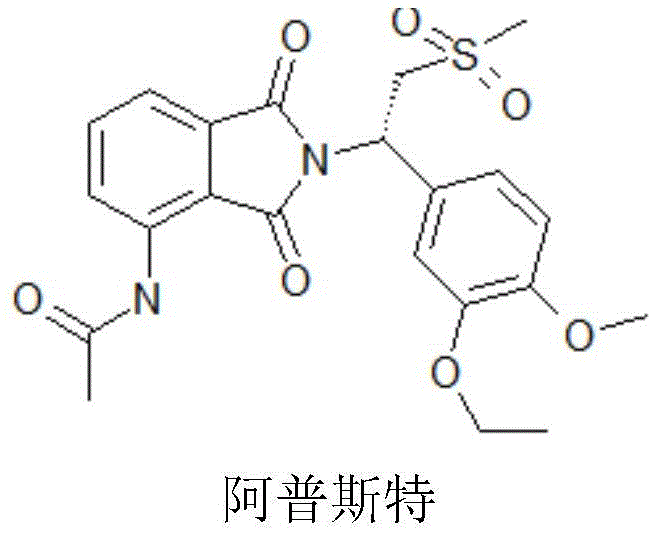
Disclosure of Invention
An object of the invention is to provide an apremilast derivative and pharmaceutically acceptable salts, esters and solvates thereof.
The general structural formula of the apremilast derivative provided by the invention is shown as formula I:
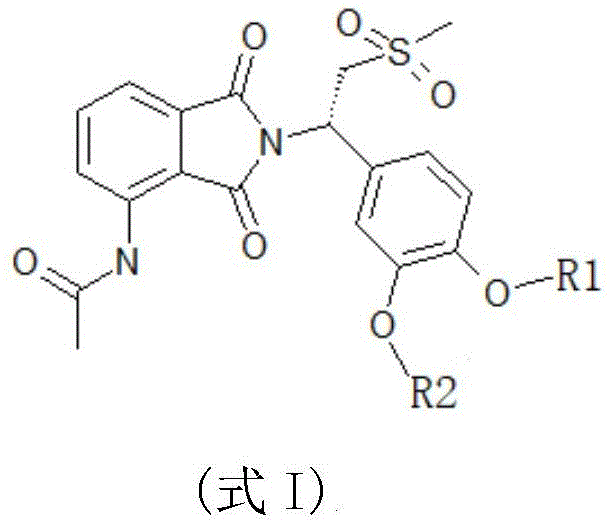
in the formula I, R1Selected from any of the following: difluoromethyl, trifluoromethyl, 2, 2-difluoroethyl, 2,2, 2-trifluoroethyl, and cyclopropylmethyl;
R2selected from any of the following: ethyl, propyl, 2, 2-difluoroethyl, 2,2, 2-trifluoroethyl and cyclopropylmethyl.
Further, R in formula I1、R2At least one of which is a fluorine-containing group; preferably, said R is1、R2And only one of them is a fluorine-containing group.
In some embodiments, the apremilast derivatives of the present invention may be exemplified by, but are not limited to, the structures shown below:
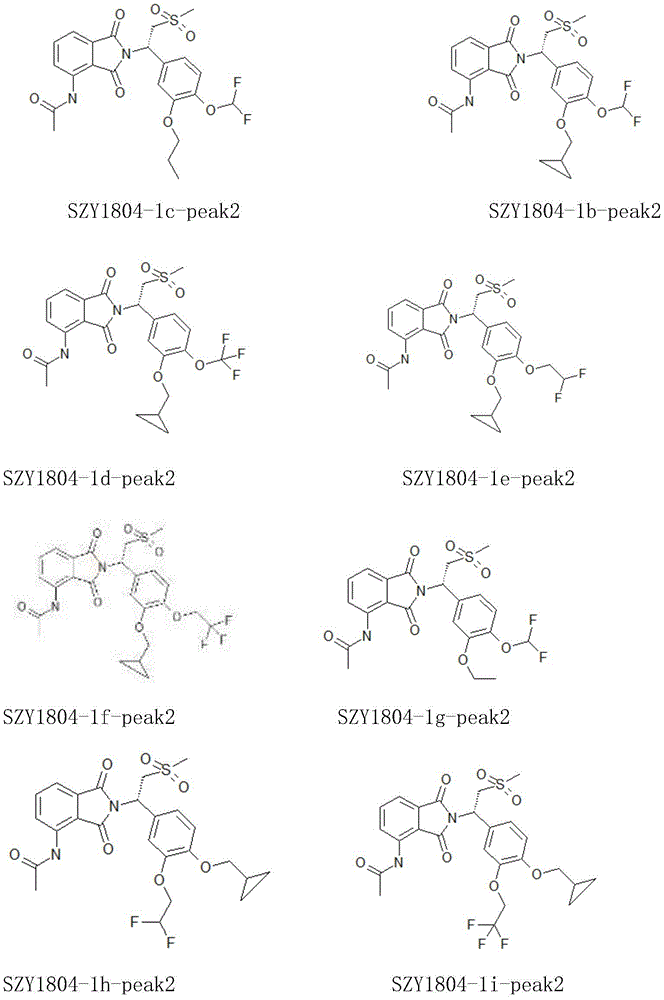
it is another object of the present invention to provide a process for the preparation of the above compounds of formula I.
The invention provides a preparation method of a compound of formula I, which comprises the following steps:
1) reacting a compound shown as a formula II with benzyl bromide (BnBr) under an alkaline condition to obtain a compound shown as a formula III;

in the formula II, R1Selected from any of the following: difluoromethyl, trifluoromethyl, 2, 2-difluoroethyl, 2,2, 2-trifluoroethyl, and cyclopropylmethyl;
r1 in the formula III is defined by the formula II;
2) dissolving dimethyl sulfone in N, N-Dimethylformamide (DMF), adding KOH into the N, N-dimethylformamide at the temperature of 10-20 ℃, adding the compound shown in the formula III into the N, N-dimethylformamide in two batches, and heating to 90-110 ℃ for reaction to obtain the compound shown in the formula IV;

r in the formula IV1Is as defined in formula III;
3) dissolving a compound shown as a formula IV in acetonitrile, adding ammonia water into the acetonitrile at the temperature of 10-20 ℃, and then heating to 90-100 ℃ for reaction to obtain a compound shown as a formula V;
(formula V)
R in the formula V1Is as defined in formula IV;
4) dissolving a compound shown as a formula V and a compound shown as a formula VI in acetic acid at the temperature of 10-20 ℃, and then heating to 100-110 ℃ for reaction to obtain a compound shown as a formula VII;
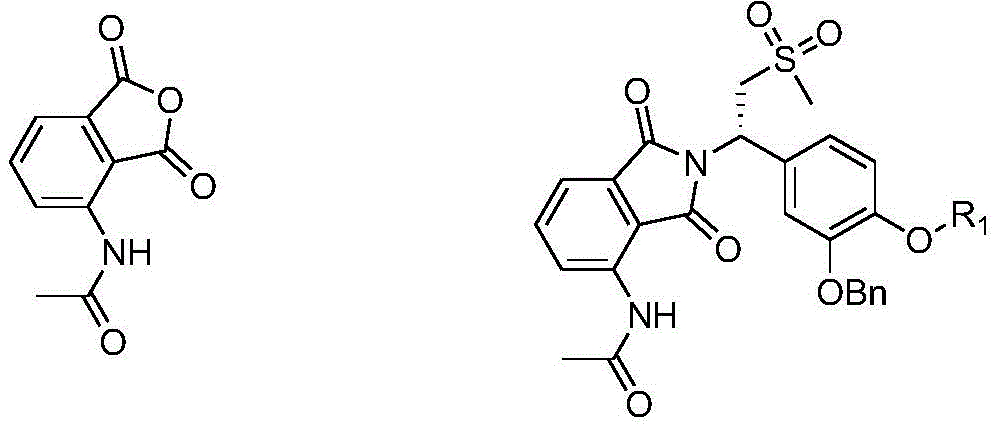

r in the formula VII1Is as defined in formula V;
5) dissolving a compound shown as a formula VII in a mixed solution of methanol and Ethyl Acrylate (EA), and adding Pd/C (the content of Pd is 5% -10%) at 10-20 ℃ under the hydrogen condition for reaction to obtain a compound shown as a formula VIII;

r in said formula VIII1Is as defined in formula VII;
6) dissolving the compound shown as the formula VIII in N, N-Dimethylformamide (DMF), and adding Cs to the solution at the temperature of 10-20 DEG C2CO3、KI、R2Br, the temperature of the reaction liquid is raised to 60-70 ℃ for reaction, and a compound shown as a formula IX is obtained;
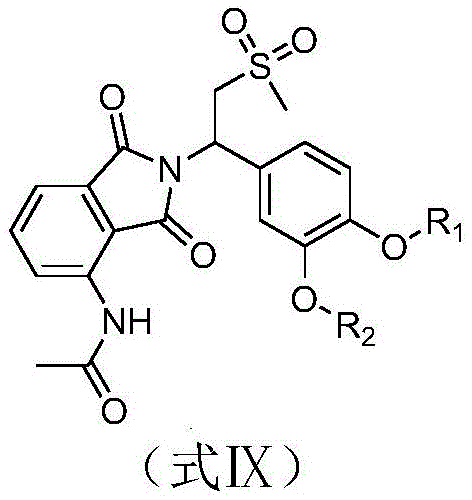
the R is2R in Br2Selected from any of the following: ethyl, propyl, 2, 2-difluoroethyl, 2,2, 2-trifluoroethyl, and cyclopropylmethyl;
in the compound of the formula IX, R1Is as defined for formula VIII; r2Is as defined for formula R2Br;
7) Chiral separation is carried out on the compound shown in the formula IX to obtain the compound shown in the formula I.
In the step 1) of the method, the molar ratio of the compound represented by the formula II to benzyl bromide is 1:1.2-1.5, and specifically can be 1: 1.49. The base may specifically be K2CO3The compound of formula II with K2CO3The molar ratio of (a) to (b) is 1:1 to 3, specifically 1: 2. The reaction is carried out in a solvent, and the solvent can be acetonitrile; the reaction conditions of the reaction are as follows: stirring and reacting for 4-6h at the temperature of 20-30 ℃.
The method also comprises the following steps in the step 1): TLC detection (developing agent PE: EA ═ 3:1(v/v)) showed completion of the reaction of formula II; filtering the reaction solution, and carrying out rotary evaporation on the filtrate under reduced pressure to obtain a solid; the resulting solid was purified by column chromatography (PE: EA ═ 1:0 to 0:1, v/v) to afford a purified compound of formula III in yields between 90% and 100%.
In the step 2) of the method, the molar ratio of the compound shown in the formula III to the dimethyl sulfone is 1:4-16, specifically 1: 15; the molar ratio of the compound shown in the formula III to KOH is 1:1-1.5, and specifically can be 1: 1.05; the reaction is carried out under the condition of stirring, and the reaction time is 2-4 h.
The step 2) of the method also comprises the following steps: TLC monitoring of the reaction (developing agent PE: EA ═ 1:2(v/v)) showed that the reaction of formula III was mostly complete; cooling the reaction solution to 20-30 deg.C, and adding saturated NH4Extracting Cl aqueous solution with Ethyl Acrylate (EA), combining organic phases, washing the organic phases with saturated salt water, drying with anhydrous sodium sulfate, and performing rotary evaporation to obtain a solid; the resulting solid was purified by column chromatography (PE: EA ═ 1:0 to 0:1, v/v) to give a purified compound of formula iv in 20% to 40% yield.
In the step 3) of the method, the molar ratio of the compound shown in the formula IV to ammonia water is 1:45-55, specifically 1:51.5, and the reaction time is 6-8 h.
The method also comprises the following steps in the step 3): TLC monitoring of the reaction (developing solvent PE: EA ═ 1:2(v/v)) showed that the compound of formula iv was mostly reacted; the reaction solution continues to react for 24 hours at the temperature of 100 ℃ and 120 ℃, the reaction solution is filtered, a filter cake is collected, and the filter cake is washed and purified by methyl tert-ether slurry to obtain the compound shown in the formula V, wherein the yield is 60-80%.
In the step 4), the molar ratio of the compound shown in the formula V to the compound shown in the formula VI is 1: 1.0-1.2; the reaction is carried out under the condition of stirring, and the reaction time is 2-4 h.
The method also comprises the following steps in the step 4): and (3) monitoring the reaction by TLC (a developing agent PE: EA ═ 1:2(v/v)) to show that the compound shown in the formula V is completely reacted, concentrating the reaction liquid under reduced pressure to obtain a solid, and washing and purifying the obtained solid by using 2-methyltetrahydrofuran slurry to obtain the compound shown in the formula VII, wherein the yield is 75-85%.
In step 5), the volume ratio of methanol to Ethyl Acrylate (EA) in the mixed solution is 1: 0.8-1.2; the dosage of the Pd/C is 5-10% of the mass of the compound shown in the formula VII. The reaction conditions of the reaction are as follows: stirring and reacting for 2-4h at 40-50 ℃.
The step 5) of the method also comprises the following steps: TLC monitoring (developing agent EA: MeOH ═ 20:1, v/v) shows that the compound represented by formula VII was reacted completely, the reaction solution was filtered, and the filtrate was rotary evaporated under reduced pressure to obtain the compound represented by formula VIII, which was reacted with Cs in step 6) of the above-described method2CO3、KI、R2The molar ratio of Br was 1:2:0.5:2 in this order. The reaction is carried out under the stirring state, and the reaction time of the reaction is 1-3 h.
The method in step 6) further comprises the following steps: TLC monitoring reaction (developing agent PE: EA is 1:2, v/v) shows that the compound shown in the formula VIII completely reacts, water is added into reaction liquid, then EA is used for extraction, organic phases are combined, the organic phases are washed by saturated common salt water, anhydrous sodium sulfate is dried, rotary evaporation is carried out to obtain solid, and the obtained solid is washed by methyl tert-butyl ether (MTBE) and purified to obtain the compound shown in the formula IX, wherein the yield is between 50% and 70%.
The chiral separation described in step 7) of the above method can be performed by, but not limited to, recrystallization, preparative liquid phase, supercritical fluid chromatography.
It is a further object of the present invention to provide the use of the compounds of formula I as described above.
The invention provides a compound of formula I, the application of which comprises at least one aspect as follows: 1) use as phosphodiesterase-4 (PDE-4) inhibitors; 2) use as TNF-alpha inhibitors; 3) the application in the preparation of the drugs for preventing and/or treating the diseases related to phosphodiesterase-4 (PDE-4) mediation; 4) the application in the preparation of the medicine for preventing and/or treating TNF-alpha mediated related diseases.
The phosphodiesterase-4 (PDE-4) can be specifically PDE4A1A and/or PDE4D 3.
The related diseases mediated by phosphodiesterase-4 (PDE-4) comprise psoriatic arthritis (PsA), inflammation, asthma, chronic obstructive pulmonary disease, Alzheimer disease and the like.
The related diseases mediated by TNF-alpha comprise tumors, dermatitis, rhinitis, arthritis and other inflammatory diseases.
The medicine for preventing and/or treating relevant diseases mediated by phosphodiesterase-4 (PDE-4) and the medicine for preventing and/or treating relevant diseases mediated by TNF-alpha, which are prepared by taking the apremilast derivative shown in the formula I as an active ingredient, also belong to the protection scope of the invention.
The drug can be introduced into body such as muscle, intradermal, subcutaneous, intravenous, mucosal tissue by injection, spray, nasal drop, eye drop, penetration, absorption, physical or chemical mediated method; or mixed or coated with other materials and introduced into body.
If necessary, one or more pharmaceutically acceptable carriers can be added into the medicine. The carrier includes diluent, excipient, filler, binder, wetting agent, disintegrating agent, absorption enhancer, surfactant, adsorption carrier, lubricant, etc. which are conventional in the pharmaceutical field.
The above medicine can be made into various forms such as injection, tablet, powder, granule, capsule, oral liquid, paste, cream, etc. The medicaments in various dosage forms can be prepared according to the conventional method in the pharmaceutical field.
The apremilast derivative shown in the formula I has good inhibitory activity on PDE4 and TNF-alpha, is even obviously superior to a control drug apremilast, is a novel PDE4 and TNF-alpha inhibitor, and has obvious pharmacokinetic advantage compared with the apremilast.
Drawings
FIG. 1 is a reaction scheme for the preparation of SZY1804-1b _ peak2 from example 1.
Detailed Description
The present invention is described below with reference to specific embodiments, but the present invention is not limited thereto, and any modification, equivalent replacement, and improvement made within the spirit and principle of the present invention should be included in the scope of the present invention.
The experimental procedures used in the following examples are all conventional procedures unless otherwise specified.
Materials, reagents and the like used in the following examples are commercially available unless otherwise specified.
In the quantitative tests in the following examples, three replicates were set up and the results averaged.
Synthesis part examples
Synthesis of example 1, SZY1804-1b _ peak2
The structural formula of SZY1804-1b _ peak2 is shown as follows:

the preparation is carried out according to a reaction flow chart shown in figure 1, and the specific method is as follows:
1、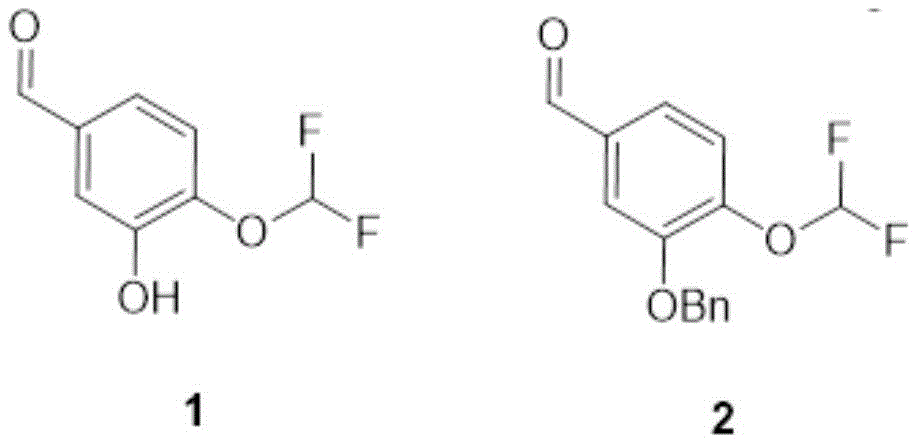
compound 1(200g, 1.06mmol, 1.0eq) was dissolved in 2.0L acetonitrile and K was added thereto at 10-20 deg.C2CO3(294g, 2.13mol, 2.0eq), BnBr (271g, 1.58mol, 188ml, 1.49 eq). Then stirring and reacting for 4 hours at the temperature of 20-30 ℃. TLC check reaction (PE: EA ═ 3:1(v/v), Rf ═ 0.62) indicated that compound 1 was reacted. Filtering the reaction solution, and carrying out rotary evaporation on the filtrate under reduced pressure to obtain a solid. Purification by column chromatography (PE: EA ═ 1:0 to 0:1) gave compound 2(294g, 1.06mol) as a colourless oil in 99.4% yield.
2、
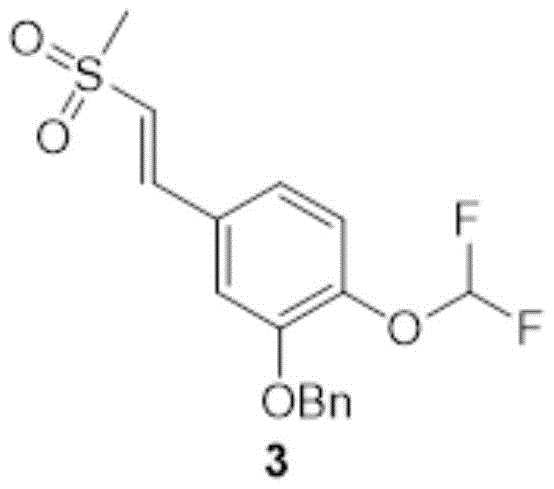
Dimethylsulfone (1.22kg,12.9mol,1.05L,15.0eq) was dissolved in 2.40L of DMF to which was added KOH (50.8g,906mmol,1.05eq) at 10-20 ℃. Then adding the compound in two portions2(240g,863mmol,1.00eq), heating to 100 ℃ and stirring for reaction for 2 h. TLC monitoring of the reaction (PE: EA ═ 1:2, Rf ═ 0.63) indicated that compound 2 was mostly reacted. Cooling the reaction solution to 20-30 deg.C, and adding saturated NH42000ml of aqueous Cl solution was extracted with 2000ml of 3EA, the organic phases were combined, washed with 1000ml of saturated brine, dried over anhydrous sodium sulfate and rotary evaporated to give a solid. Purification by column chromatography (PE: EA ═ 1:0 to 0:1) gave compound 3(82.0g, 231mmol) as a yellow solid in 26.8% yield.
Structure identification data:
1H NMR:EW15835-9-P1A(400MHz CDCl3)7.46(d,J=16Hz,1H),7.35-7.33(m,5H),7.15(d,J=8Hz,1H),7.06–7.04(m,2H),6.77–6.37(m,2H),5.09(s,2H),2.95(s,3H)
3、

compound 3(82g,231mmol,1.00eq) was dissolved in 1L acetonitrile, to which was added aqueous ammonia (1.49kg,11.9mol,1.64L,51.5eq) at 10-20 ℃ and then warmed to 100 ℃ for reaction for 6 h. The reaction was monitored by TLC (PE: EA: 1:2, R)f0.75) showed that compound 3 was mostly reacted. The reaction solution continues to react for 24h at the temperature of 100-120 ℃. The reaction solution was filtered, the filter cake was collected and the filter cake was purified by washing with 500ml of methyl tert-ether slurry. Compound 4(58.0g,156mmol) was obtained as a beige solid in 67.5% yield.
Structure identification data:
1H NMR:EW15835-10-P1A(400MHz DMSO)
7.49-7.47(m,2H),7.43-7.40(t,J=12Hz,2H),7.35-7.33(m,2H),7.22-6.85(m,3H),5.18(s,2H),4.34(br d,J=6.50Hz,1H),3.47-3.41(m,1H),3.29-3.25(m,1H),3.01(s,3H)
LCMS:EW15835-10-P1B,5-95AB,(M+Na)+:394.1
4、
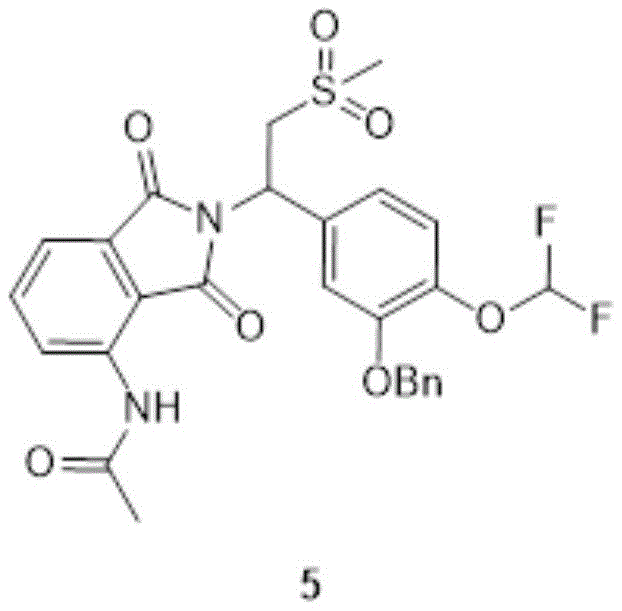
the compounds 4(58.0g,156mmol,1.00eq) and 4a (32.0g,156mmol,1.00eq) were dissolved in 400ml of acetic acid at 10-20 ℃ and then the reaction was stirred for 2h by raising the temperature to 100-. The reaction was monitored by TLC (PE: EA: 1:2, R)fNo. 0.19) showed completion of the reaction of compound 4, and the reaction solution was concentrated under reduced pressure to obtain a solid. The solid was purified by washing with 400ml of 2-methyltetrahydrofuran slurry to give beige compound 5(73.0g,131mmol) in 83.7% yield.
Structure identification data:
1H NMR:EW15835-11-P1A(400MHz DMSO)9.70(s,1H),8.46(d,J=8.38Hz,1H),7.81(t,J=7.88Hz,1H),7.59(d,J=7.13Hz,1H),7.43(d,J=7.25Hz,2H),7.36-7.31(m,3H),7.29-7.26(m,1H),7.25(s,1H),7.22(d,J=8.38Hz,1H),7.11-6.89(m,2H),5.84(dd,J=10.63,4.00Hz,1H),5.19(s,2H),4.34(dd,J=14.26,10.76Hz,1H),4.15-4.24(m,1H),3.05(s,3H),2.20(s,3H)
5、
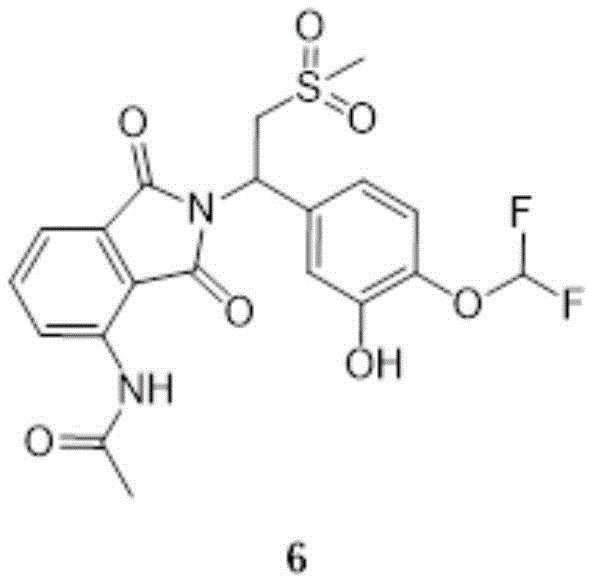
compound 5(72.0g,129mmol,1.00eq) was dissolved in a mixed solution of 500ml methanol and 300ml EA, and Pd/C was added at 10-20 ℃ under hydrogen. The reaction solution is stirred and reacted for 2 hours at the temperature of 40-50 ℃. The reaction was monitored by TLC (EA: MeOH: 20:1, R)f0.71) showed completion of the reaction of compound 5. The reaction solution was filtered, and the filtrate was rotary-distilled under reduced pressure to give compound 6(60.0g, crude product) as a beige solid
Structure identification data:
1H NMR:EW15835-12-P1A(400MHz DMSO)
9.73(s,1H),8.45(d,J=8.44Hz,1H),7.84-7.77(m,1H),7.59(d,J=7.21Hz,1H),7.22–6.82(m,4H),5.76(dd,J=10.64,3.91Hz,1H),4.33(dd,J=14.24,10.70Hz,1H),4.13(dd,J=14.30,4.03Hz,1H),3.05(s,3H),2.19(s,3H)
6、
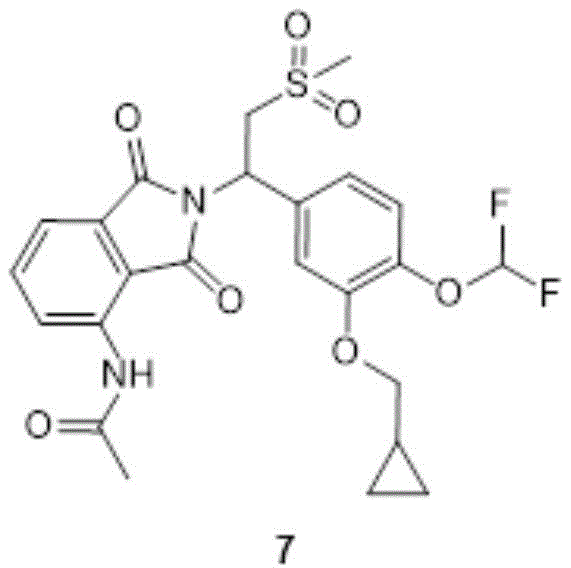
compound 6(10.0g,21.4mmol,1.00eq) was dissolved in 100ml DMF and Cs was added thereto at 10-20 deg.C2CO3(13.9g,42.7mmol,2.00eq), KI (1.77g,10.7mmol,0.500eq), bromomethylcyclopropane (5.76g,42.7mmol,4.09mL,2.00eq), and the reaction mixture was heated to 60-70 ℃ and stirred for 1 h. The reaction was monitored by TLC (PE: EA: 1:2, R)f0.25) showed complete reaction of compound 6. To the reaction solution was added 300ml of water, followed by extraction with EA 200ml × 2, and the organic phases were combined, washed with saturated brine 200ml × 6, dried over anhydrous sodium sulfate, and rotary evaporated to give a solid. The solid was purified by washing with 50ml MTBE slurry to give compound 7 as a white solid (7.00g,13.1mmol, 97.6% purity) in 61.3% yield.
Structure identification data:
1H NMR:EW15835-16-P1A(400MHz CDCl3)9.44(s,1H),8.78(d,J=8.44Hz,1H),7.67(dd,J=8.31,7.46Hz,1H),7.51(dd,J=7.34,0.61Hz,1H),7.20-7.10(m,3H),6.83-6.42(m,1H),5.91(dd,J=10.82,3.97Hz,1H),4.62(dd,J=14.18,10.88Hz,1H),3.98-3.81(m,2H),3.66(dd,J=14.24,3.97Hz,1H),3.27-3.17(m,1H),2.97-2.84(m,3H),2.32–2.20(m,3H),1.36-1.22(m,1H),0.71-0.60(m,2H),0.44-0.34(m,2H)
7、
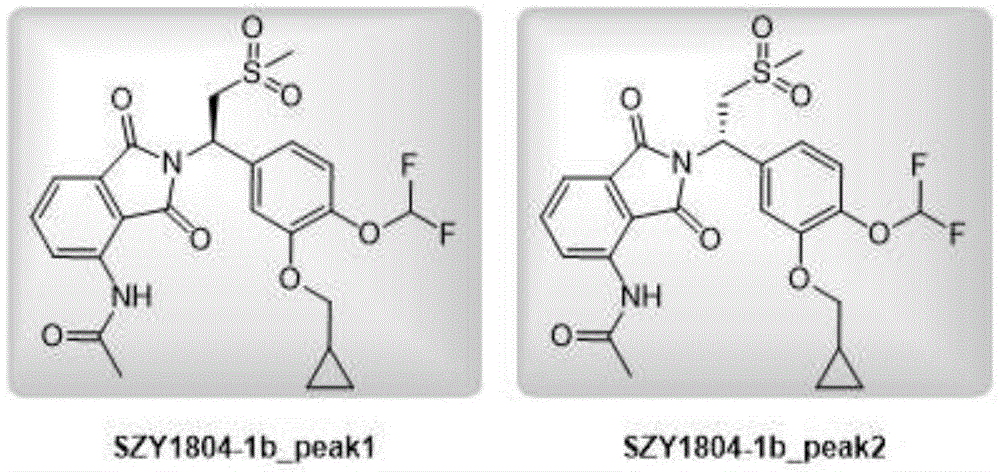
1. This gave SZY1804-1b _ peak1 as a beige solid (2.00g,3.76mmol, 98.3% purity) in 28.8% yield.
Structure identification data:
1H NMR:EW15835-20-P1C1(400MHz CDCl3)9.44(s,1H),8.78(d,J=8.41Hz,1H),7.67(dd,J=8.28,7.53Hz,1H),7.51(dd,J=7.28,0.63Hz,1H),7.19-7.11(m,3H),6.83-6.41(m,1H),5.91(dd,J=10.79,3.89Hz,1H),4.62(dd,J=14.24,10.85Hz,1H),3.95-3.85(m,2H),3.66(dd,J=14.18,4.02Hz,1H),2.92(s,3H),2.28(s,3H),1.24-1.35(m,1H),0.70-0.62(m,2H),0.41-0.34(m,2H)
LCMS:EW15835-20-P1C1,5-95AB,[M+H]+=523.2
2. this gave SZY1804-1b _ peak2 as a beige solid (2.00g,3.76mmol, 98.3% purity) in 28.8% yield.
Structure identification data:
1H NMR:EW15835-20-P2C2(400MHz CDCl3)9.45(s,1H),8.78(d,J=8.44Hz,1H),7.68(t,J=7.95Hz,1H),7.52(s,1H),7.21-7.08(m,3H),6.84-6.39(m,1H),5.91(dd,J=10.82,3.97Hz,1H),4.68-4.55(m,1H),4.62(dd,J=14.31,10.88Hz,1H),3.90(dd,J=6.85,4.40Hz,2H),3.66(dd,J=14.31,4.03Hz,1H),2.92(s,3H),2.28(s,3H),1.36-1.23(m,1H),0.72-0.59(m,2H),0.44-0.31(m,2H)
LCMS:EW15835-20-P2D1,5-95AB,[M+H]+=523.2
synthesis of example 2, SZY1804-1c _ peak2
The structural formula of SZY1804-1c _ peak2 is shown as follows:
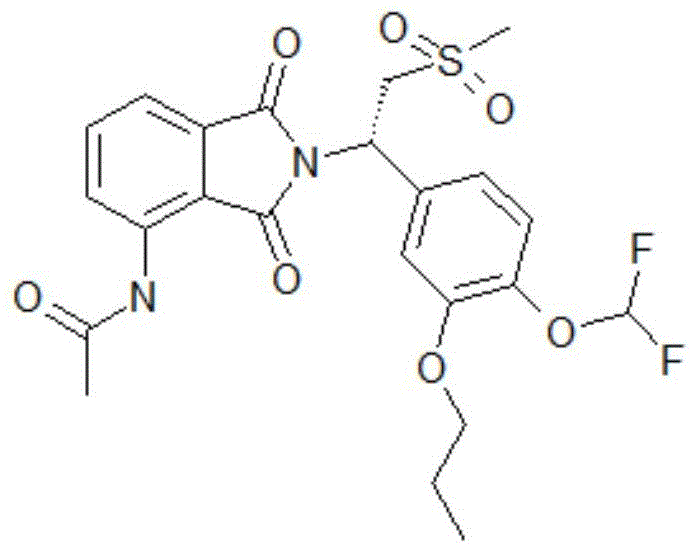
the specific method comprises the following steps:
1、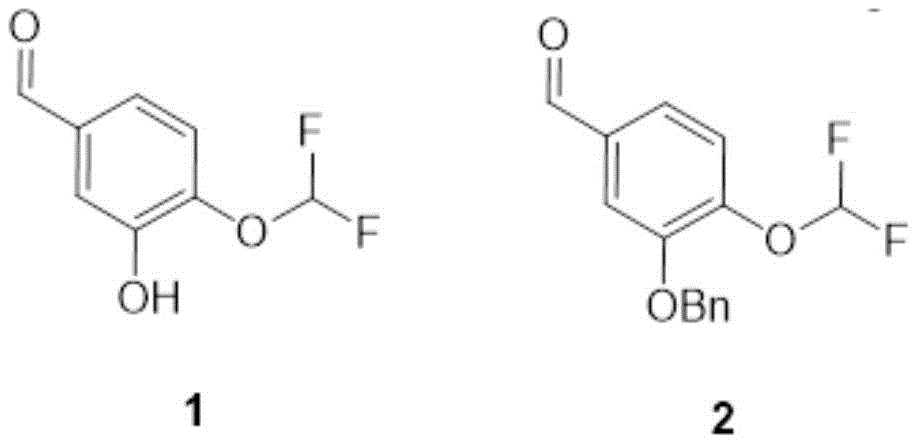
compound 1(200g, 1.06mmol, 1.0eq) was dissolved in 2.0L acetonitrile and K was added thereto at 10-20 deg.C2CO3(294g, 2.13mol, 2.0eq), BnBr (271g, 1.58mol, 188ml, 1.49 eq). Then stirring and reacting for 4 hours at the temperature of 20-30 ℃. TLC check reaction (PE: EA ═ 3:1(v/v), Rf ═ 0.62) indicated that compound 1 was reacted. Filtering the reaction solution, and carrying out rotary evaporation on the filtrate under reduced pressure to obtain a solid. Column chromatography (PE: EA ═ 1:0 to 0:1) afforded the compound as a colorless oil2(294g, 1.06mol) 99.4% yield.
2、
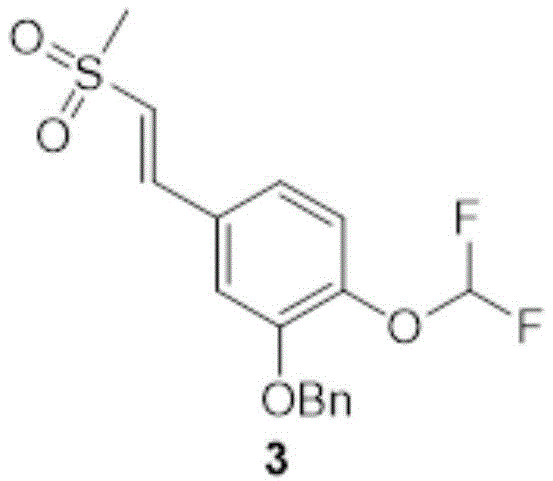
Dimethylsulfone (1.22kg,12.9mol,1.05L,15.0eq) was dissolved in 2.40L of DMF to which was added KOH (50.8g,906mmol,1.05eq) at 10-20 ℃. Then compound 2(240g,863mmol,1.00eq) was added in two portions and the reaction was stirred for 2h at 100 ℃. TLC monitoring of the reaction (PE: EA ═ 1:2, Rf ═ 0.63) indicated that compound 2 was mostly reacted. Cooling the reaction solution to 20-30 deg.C, and adding saturated NH42000ml of aqueous Cl solution was extracted with 2000ml of 3EA, the organic phases were combined, washed with 1000ml of saturated brine, dried over anhydrous sodium sulfate and rotary evaporated to give a solid. Purification by column chromatography (PE: EA ═ 1:0 to 0:1) gave compound 3(82.0g, 231mmol) as a yellow solid in 26.8% yield.
Structure identification data:
1H NMR:EW15835-9-P1A(400MHz CDCl3)7.46(d,J=16Hz,1H),7.35-7.33(m,5H),7.15(d,J=8Hz,1H),7.06–7.04(m,2H),6.77–6.37(m,2H),5.09(s,2H),2.95(s,3H)
3、

compound 3(82g,231mmol,1.00eq) was dissolved in 1L acetonitrile, to which was added aqueous ammonia (1.49kg,11.9mol,1.64L,51.5eq) at 10-20 ℃ and then warmed to 100 ℃ for reaction for 6 h. The reaction was monitored by TLC (PE: EA: 1:2, R)f0.75) showed that compound 3 was mostly reacted. The reaction solution continues to react for 24h at the temperature of 100-120 ℃. The reaction solution was filtered, the filter cake was collected and the filter cake was purified by washing with 500ml of methyl tert-ether slurry. Compound 4(58.0g,156mmol) was obtained as a beige solid in 67.5% yield.
Structure identification data:
1H NMR:EW15835-10-P1A(400MHz DMSO)7.49-7.47(m,2H),7.43-7.40(t,J=12Hz,2H),7.35-7.33(m,2H),7.22-6.85(m,3H),5.18(s,2H),4.34(br d,J=6.50Hz,1H),3.47-3.41(m,1H),3.29-3.25(m,1H),3.01(s,3H)
LCMS:EW15835-10-P1B,5-95AB,(M+Na)+:394.1
4、

the compounds 4(58.0g,156mmol,1.00eq) and 4a (32.0g,156mmol,1.00eq) were dissolved in 400ml of acetic acid at 10-20 ℃ and then the reaction was stirred for 2h by raising the temperature to 100-. The reaction was monitored by TLC (PE: EA: 1:2, R)fNo. 0.19) showed completion of the reaction of compound 4, and the reaction solution was concentrated under reduced pressure to obtain a solid. The solid was purified by washing with 400ml of 2-methyltetrahydrofuran slurry to give beige compound 5(73.0g,131mmol) in 83.7% yield.
Structure identification data:
1H NMR:EW15835-11-P1A(400MHz DMSO)9.70(s,1H),8.46(d,J=8.38Hz,1H),7.81(t,J=7.88Hz,1H),7.59(d,J=7.13Hz,1H),7.43(d,J=7.25Hz,2H),7.36-7.31(m,3H),7.29-7.26(m,1H),7.25(s,1H),7.22(d,J=8.38Hz,1H),7.11-6.89(m,2H),5.84(dd,J=10.63,4.00Hz,1H),5.19(s,2H),4.34(dd,J=14.26,10.76Hz,1H),4.15-4.24(m,1H),3.05(s,3H),2.20(s,3H)
5、
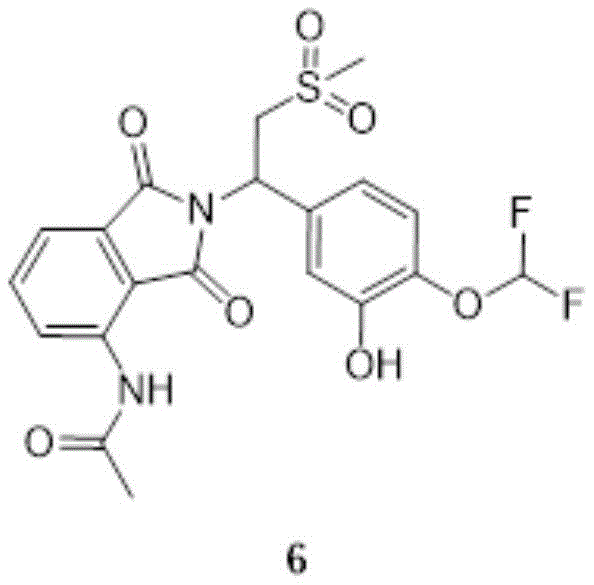
compound 5(72.0g,129mmol,1.00eq) was dissolved in a mixed solution of 500ml methanol and 300ml EA, and Pd/C was added at 10-20 ℃ under hydrogen. The reaction solution is stirred and reacted for 2 hours at the temperature of 40-50 ℃. The reaction was monitored by TLC (EA: MeOH: 20:1, R)f0.71) showed completion of the reaction of compound 5. The reaction solution was filtered, and the filtrate was rotary-distilled under reduced pressure to give compound 6(60.0g, crude product) as a beige solid
Structure identification data:
1H NMR:EW15835-12-P1A(400MHz DMSO)9.73(s,1H),8.45(d,J=8.44Hz,1H),7.84-7.77(m,1H),7.59(d,J=7.21Hz,1H),7.22–6.82(m,4H),5.76(dd,J=10.64,3.91Hz,1H),4.33(dd,J=14.24,10.70Hz,1H),4.13(dd,J=14.30,4.03Hz,1H),3.05(s,3H),2.19(s,3H)
6、
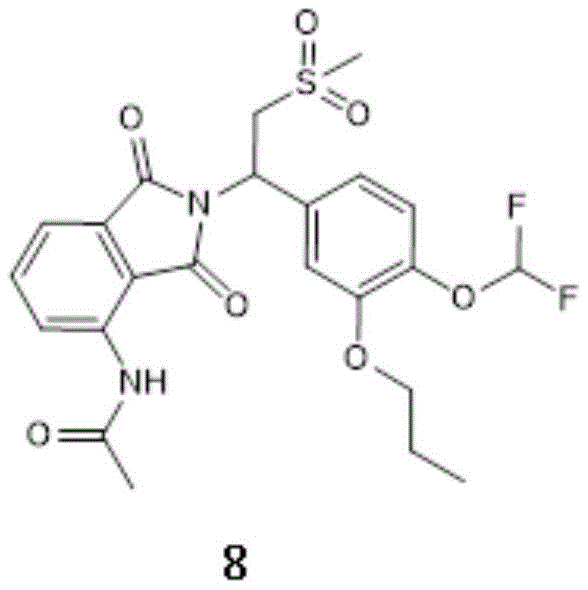
at 10-20 deg.C, compound 6(10g, 21.4mmol,1.0 eq), n-propyl iodide (compound 6c) (7.26g, 42.7mmol, 4.17ml, 2.0eq), Cs2CO3(13.9g,42.7mmol,2.0 eq) was dissolved in 100ml DMF. Then heating to 60-70 ℃, and stirring for reaction for 1 h. TLC monitoring of the reaction (PE: EA ═ 1:2, Rf ═ 0.37) indicated that compound 6 was completely reacted. To the reaction solution was added 300ml of water, followed by extraction with 200ml of 2EA, and the organic phases were combined. The organic phase was washed with 200ml of saturated brine by 6, dried over anhydrous sodium sulfate, and rotary-evaporated under reduced pressure to give a solid. Purification by column chromatography (PE; EA ═ 1:0 to 0:1) gave beige compound 8(7g, 13.3mmol, 96.9% purity) in 62.2% yield.
Structure identification data:1H NMR:EW15835-22-P1A(400MHz CDCl3)9.44(s,1H),8.78(d,J=8.44Hz,1H),7.69–7.65(m,1H),7.50(d,J=7.28Hz,1H),7.16-7.12(m,3H),6.73-6.36(m,1H),5.92(dd,J=10.85,3.95Hz,1H),4.62(dd,J=14.18,10.92Hz,1H),4.01-3.98(m,2H),3.68–3.64(m,1H),2.92(s,3H),2.27(s,3H),1.88-1.83(m,2H),1.06(t,J=7.47Hz,3H)
7、
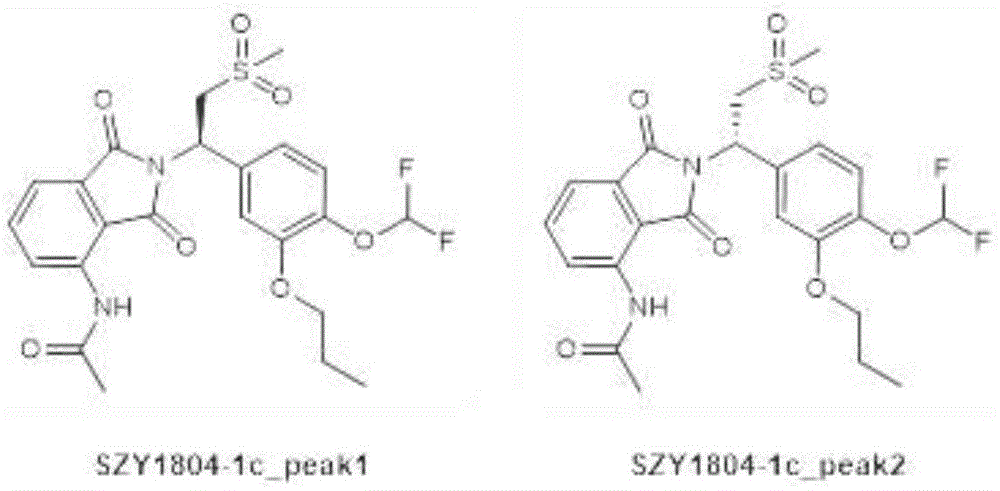
Chiral column AS-350 × 4.6mm I.D.,3 um; mobile phase A is CO2B is MEOH (0.05% DEA); liquid phase conditions, wherein the proportion of B in A is from 5% to 40%; flow rate: 3 mL/min; the wavelength is 220 nm; the column temperature is 35C; column pressure 100 Bar.
Using a chromatographic column: kromasil Eternity XT 250 x 80mm x 10 um; mobile phase: [ water (0.05% ammonia v/v) -ACN ]; b (MEOH (0.05% DEA))% 40% -70%, and is prepared for 20 min.
1. SZY1804-1c _ peak1 was a beige solid (2.00g,3.86mmol, 98.5% purity) with a yield of 29.0%.
Structure identification data:
1H NMR:EW15835-24-P1B1(400MHz CDCl3)9.45(s,1H),8.78(d,J=8.28Hz,1H),7.68(dd,J=8.28,7.53Hz,1H),7.51(d,J=7.35Hz,1H),7.19-7.10(m,3H),6.78-6.33(m,1H),5.92(dd,J=10.79,4.02Hz,1H),4.63(dd,J=14.18,10.92Hz,1H),4.01(t,J=6.46Hz,2H),3.66(dd,J=14.31,4.02Hz,1H),2.93(s,3H),2.28(s,3H),1.91-1.81(m,2H),1.07(t,J=7.40Hz,3H)
F NMR:EW15835-24-P1B1(400MHz CDCl3)
LCMS:EW15835-24-P1A1,5-95AB,[M+H]+=511.2
2. SZY1804-1c _ peak2 was a beige solid (2.00g,3.89mmol, 99.3% purity) with a yield of 29.3%.
Structure identification data:1H NMR:EW15835-24-P2B1(400MHz CDCl3)9.45(s,1H),8.78(d,J=8.41Hz,1H),7.67(t,J=7.86Hz,1H),7.51(d,J=7.28Hz,1H),7.19-7.10(m,3H),6.76-6.35(m,1H),5.92(dd,J=10.85,3.95Hz,1H),4.63(dd,J=14.24,10.85Hz,1H),4.01(t,J=6.40Hz,2H),3.66(dd,J=14.31,4.02Hz,1H),2.92(s,3H),2.28(s,3H),1.90-1.82(m,2H),1.07(t,J=7.47Hz,3H)
LCMS:EW15835-24-P2A7,5-95AB,[M+H]+=511.2
the preparation of the other compounds protected in the present invention can be carried out with reference to the above-mentioned compounds.
Examples of the drug effect
Example 3, Apremilast, SZY1804-1b-peak2, SZY1804-1c-peak2 rat oral bioavailability experiments
SD rats, half male and half female, 36 in total; the administration mode comprises the following steps: respectively as follows: tail vein injection and gastric lavage; administration vehicle: the menstruum of the intragastric perfusion solution is physiological saline solution (containing 30 percent of polyoxyethylene castor oil EL); the tail vein solution solvent is physiological saline solution (containing 10% polyoxyethylene castor oil EL); administration dose: 5mg/kg for intragastric administration and 2mg/kg for caudal vein administration; administration volume: all are 5mL/kg, single administration.
The results are as follows:
TABLE 1 comparison of the major pharmacokinetic parameters in SD rats after intragastric administration of 5mg/kg Apremilast, SZY1804-1b-peak2, and SZY1804-1c-peak2, respectively
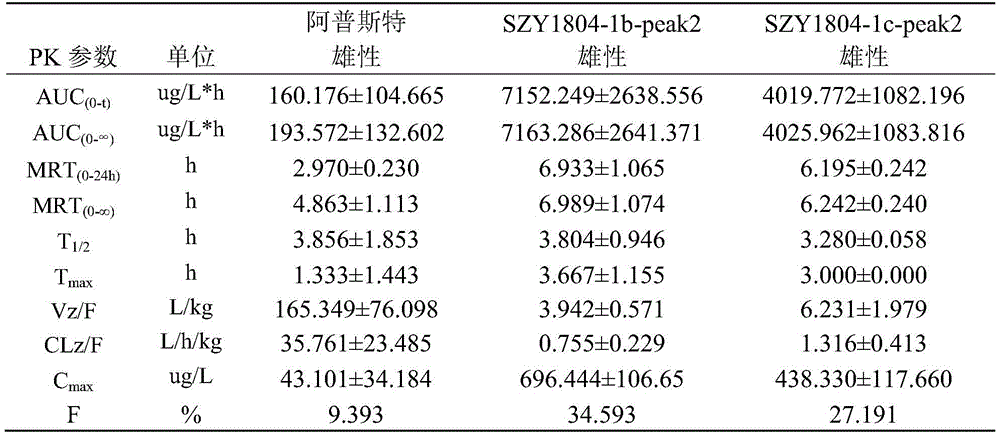
TABLE 2 comparison of the major pharmacokinetic parameters after gastric gavage of 5mg/kg Apremilast, SZY1804-1b-peak2, and SZY1804-1c-peak2 in SD rats, respectively
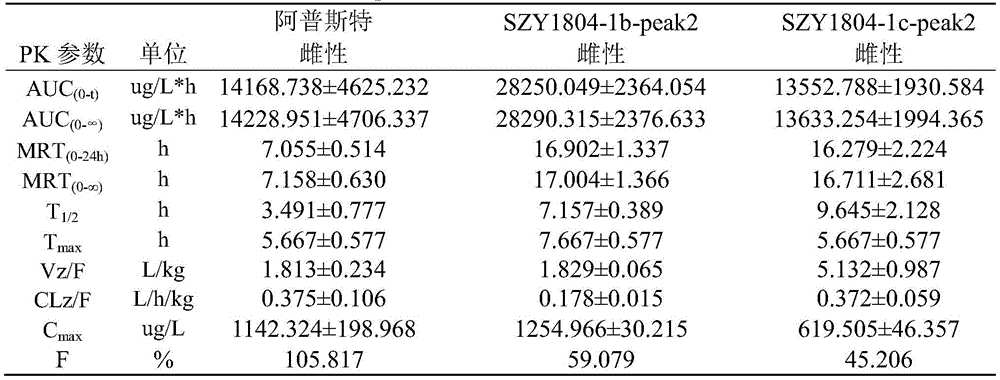
TABLE 3 comparison of the major pharmacokinetic parameters in SD rats after 2mg/kg of apremilast, SZY1804-1b-peak2, and SZY1804-1c-peak2 administered to the tail vein
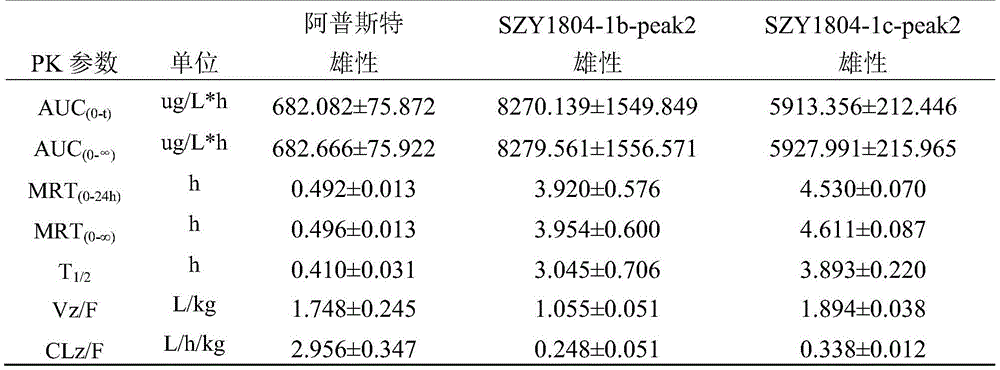
TABLE 4 comparison of the major pharmacokinetic parameters in SD rats after 2mg/kg of apremilast, SZY1804-1b-peak2, and SZY1804-1c-peak2 administered to the tail vein
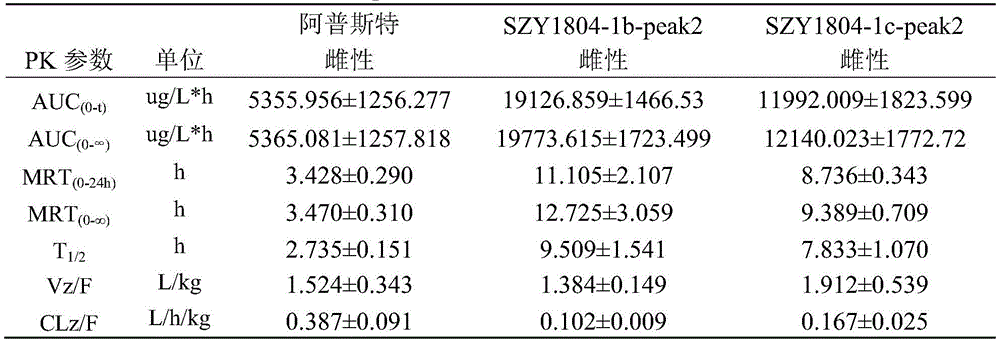
Further observations of SZY1804-1d-peak2, SZY1804-1e-eak2, SZY1804-1f-peak2 and SZY1804-1g-peak2, SZY1804-1h-peak2, SZY1804-1i-peak2 were made as described above, with the following results:
TABLE 5 comparison of major pharmacokinetic parameters in SD rats after gastric gavage of 5mg/kg of SZY1804-1d-peak2, SZY1804-1e-peak2, and SZY1804-1f-peak2

TABLE 6 comparison of major pharmacokinetic parameters in SD rats after gastric gavage of 5mg/kg of SZY1804-1d-peak2, SZY1804-1e-peak2 and SZY1804-1f-peak2
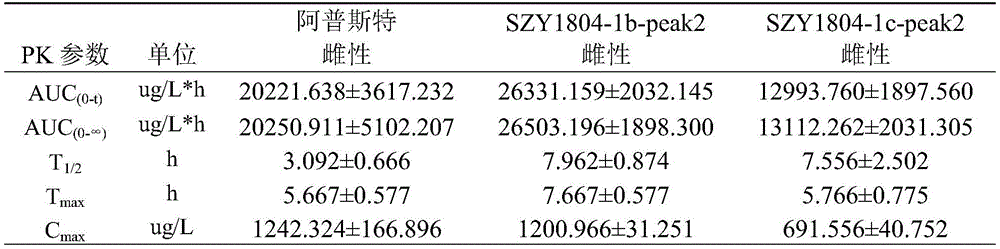
TABLE 7 comparison of major pharmacokinetic parameters in SD rats after gastric gavage of 5mg/kg of SZY1804-1g-peak2, SZY1804-1h-peak2, and SZY1804-1i-peak2


TABLE 8 comparison of major pharmacokinetic parameters in SD rats after gastric gavage of 5mg/kg of SZY1804-1g-peak2, SZY1804-1h-peak2, and SZY1804-1i-peak2

And (4) conclusion:
1): the Apremilast, SZY1804-1b-peak2, SZY1804-1c-peak2 rats are subjected to intragastric administration and tail vein administration, and the systemic exposure of a female group is larger than that of a male group; the gastric perfusion administration group has the highest AUC which is SZY1804-1b-peak2 female group, the AUC is 1.994 times of that of Apremilast female gastric perfusion group, and 2.084 times of that of SZY1804-1c-peak2 female gastric perfusion group;
2) the bioavailability of 5mg/kg intragastric apremilast, SZY1804-1b-peak2 and SZY1804-1c-peak2 respectively in male SD rats is as follows: 9.393%, 34.593%, 27.191%; the bioavailability of the gastric lavage of female SD rats is respectively as follows: 105.817%, 59.079%, 45.206%.
3) Compared with the compounds of apremilast, SZY1804-1b-peak2 and SZY1804-1c-peak2, the differences between male and female species can be reduced by SZY1804-1b-peak2 and SZY1804-1c-peak2, the half-life period of 1b is obviously prolonged, and the Cmax of SZY1804-1b-peak2 and SZY1804-1c-peak2 is improved by more than 10 times compared with that of apremilast.
4) The compounds of SZY1804-1d-peak2, SZY1804-1e-peak2, SZY1804-1f-peak2, SZY1804-1g-peak2, SZY1804-1h-peak2, SZY1804-1i-peak2 and the like can reduce sex difference and improve blood concentration compared with the Apremilast group.
In summary, SZY1804-1b-peak2 and SZY1804-1c-peak2 have significant pharmacokinetic advantages over Apremilast, and SZY1804-1b-peak2 is superior to SZY1804-1c-peak 2. The compound provided by the invention can reduce the influence of sex difference on blood concentration and can greatly improve the blood concentration.
Example 4 Effect of Apremilast, SZY1804-1b-peak2, SZY1804-1c-peak2 on PDE4 inflammatory factor Activity
5 compounds were screened for inhibitory activity against the target enzymes PDE1A1, PDE2A1, PDE3, PDE4A1A, PDE4B1, PDE4D3 and PDE5A 1.
We screened 5 compounds for their inhibitory effect on 7 targets in total, PDE1A1, PDE2A1, PDE3, PDE4A1A, PDE4B1, PDE4D3 and PDE5A1 in vitro. Trequinsin or Zaprinast as reference compounds for targets. For each of the 5 compounds, 10 concentrations were selected and tested, with 100 μ M being the highest concentration, 3-fold dilutions, and 2 duplicate wells per group were set to determine their IC50The value is obtained.
Experimental materials:
chem Partner purchased the following materials:
PDE1A1(BPS, catalog number 60010)
PDE3A (BPS catalog number 60030)
PDE2A1(BPS catalog number 60021)
PDE4A1A (BPS, Cat. No. 60040)
PDE4B1(BPS catalog number 60041)
PDE4D3(BPS, Cat No. 60046)
PDE5A1(BPS, catalog number 60050)
Trequinsin (Sigma, catalog number T2057)
Zaprinast (Sigma, catalog number Z0878)
DMSO (Sigma, catalog No. 34869)
DTT (Sangon Biotech, catalog number A620058-0005)
384 well plates (Perkin Elmer, Cat. No. 6007279)
These compounds were dissolved in 10mM stock (as the original solution for dilution to the desired concentration) using 100% DMSO.
Experimental methods
Preparation of assay buffer and stop buffer
PDE reactions
1) Preparation of 2 Xenzyme solution
1. PDE was added to 1 × assay buffer.
2) Preparation of 2 Xsubstrate solution
1. FAM-cAMP was added to 1 × assay buffer.
3) Transfer 2 Xenzyme solution to assay plate
1. The assay plate already contains the corresponding volume of compound.
2. To each well of a 384 well assay plate was added a 2 x enzyme solution.
3. Incubate at room temperature for 15 minutes.
4) Transfer 2 Xsubstrate solution to assay plate
1. To each well of a 384 well assay plate was added 2 × substrate solution.
5) PDE reaction and termination
1. Incubate at 25 ℃ for 30 minutes.
2. Stop buffer was added to stop the reaction and incubated at room temperature for 60 minutes.
Victor readings
1. Data were collected at a Wallac Victor Multi-able counter (Perkin Elmer).
Curve fitting
1. The transformed data is copied from the Victor program.
2. Inhibition values were obtained in Excel using equation (1)
Equation (1): inh% (Max-Signal)/(Max-Min) × 100
Max results from the action of the enzyme and substrate; min was obtained from the substrate only.
Data were fitted using Graph Pad Prism 5 equation (2) to obtain IC50 values
Equation (2): y ═ Bottom + (Top-Bottom)/(1+10^ ((Log IC50-X) > Hill Slope))
Y is% inhibition and X is compound concentration.
TABLE 9
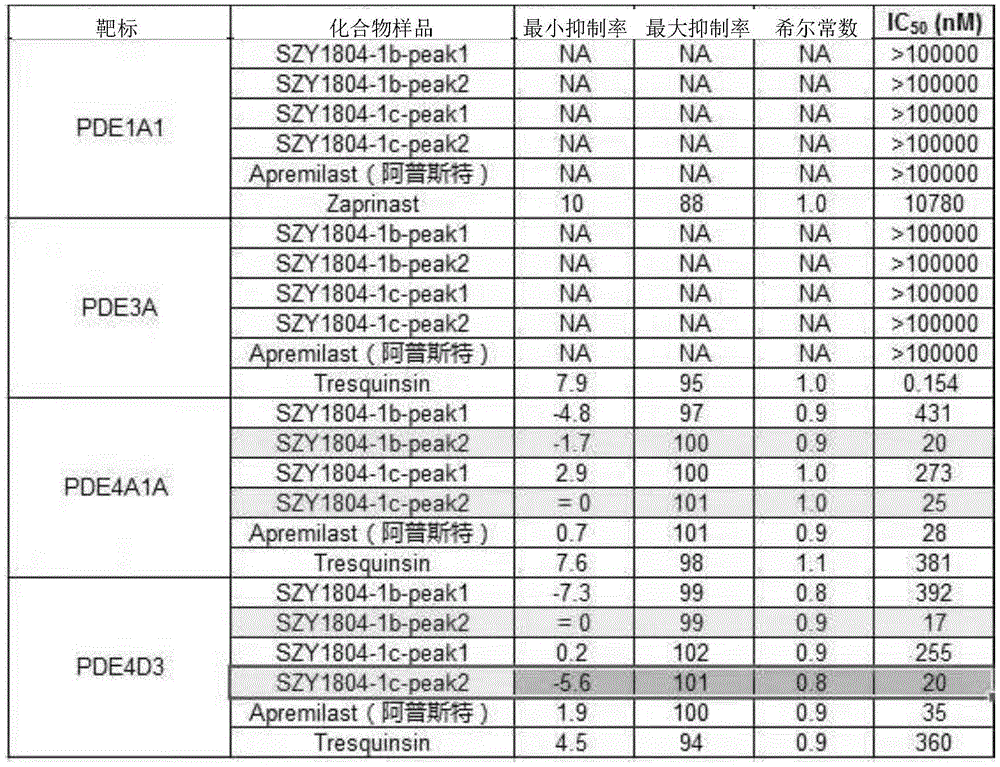
For the inhibition of PDE4A1A and PDE4D3 inflammatory factors, 1b-peak1 and 1c-peak1 have weaker effects, 1b-peak2 and 1c-peak2 have stronger effects than apremilast, and 1b-peak2 is stronger than 1c-peak 2.
Example 4 TNF Activity assay
Purpose of experiment
The effect of SZY1804-1b-peak2 and SZY1804-1c-peak2 on LPS-induced secretion of inflammatory factors by human Peripheral Blood Mononuclear Cells (PBMC) was observed.
1 materials of the experiment
1.1 test article: SZY1804-1b-peak2, SZY1804-1c-peak2, SZY1804-1d-peak2, SZY1804-1e-peak2, SZY1804-1f-peak2, SZY1804-1g-peak2, SZY1804-1h-peak2 and SZY1804-1i-peak2
1.2 control drugs: apremilast (Apremilast), molecular weight 460.51, purity ≥ 99.86%, lot number: 20161209.
1.3 solvent: dimethyl sulfoxide (DMSO).
1.2 Experimental System
1.2.1 cell name: human Peripheral Blood Mononuclear Cells (PBMC).
1.2.2 sources: and (4) self-extracting.
1.2.2.1 5ml of Ficoll separation medium were prepared into 15ml centrifuge tubes and equilibrated at room temperature for 1-2 hours for further use.
1.2.2.2 use heparin sodium blood collection tube to draw 5ml of blood, gently shake and mix.
1.2.2.3 the blood was slowly pipetted into a 15ml centrifuge tube containing Ficoll, keeping the blood and the separation medium in two layers.
1.2.2.4 centrifugation: 100g, 4 ℃, 30 min.
1.2.2.5 this time the liquid in the centrifuge tube is divided into four layers, from top to bottom: the separation, PBMC, plasma, red blood cells, PBMC layer was carefully and rapidly aspirated, approximately 1ml volume.
1.2.2.6 was resuspended in 10ml of precooled PBS, centrifuged at 100g for 10min at 4 ℃ and the procedure was repeated twice.
1.2.3 cell culture: DMEM complete medium containing 10% fetal calf serum and 1% double antibody is prepared in advance for later use. Placing at 37 ℃ and 5% CO2Culturing in a constant-temperature cell culture box.
1.2.4 cell plates: adding prepared complete culture medium, and adjusting cell concentration to 2-4 × 10⁶One per ml.
2 method of experiment
2.1 dose and group
Divided into Normal group, LPS group and Apremilast 10-5、10-6、10-7、10-8、10-9M groups, SZY1804-1b-peak210-5、10-6、10-7、10-8、10-9M groups; SZY1804-1b-peak210-5、10-6、10-7、10-8、10-9And (5) M groups. SZY1804-1d-peak 210-5、10-6、10-7、10-8、10-9M groups; SZY1804-1e-peak 210-5、10-6、10-7、10-8、10-9M groups; SZY1804-1f-peak 210-5、10-6、10-7、10-8、10-9M groups; SZY1804-1g-peak210-5、10-6、10-7、10-8、10-9M groups; SZY1804-1h-peak 210-5、10-6、10-7、10-8、10-9M groups; SZY1804-1i-peak 210-5、10-6、10-7、10-8、10-9M groups of 3 wells each.
2.2 methods of administration
Detection of TNF-a: stimulation with 1 μ g/ml LPS for 24 hours; except for the Normal group, each group was simultaneously stimulated with 1. mu.g/ml LPS for 24 hours; each dosing group was dosed for 24h at the respective concentration, and the Normal and LPS groups were dosed with equal volumes of DMSO.
2.3 preparation and preservation of test articles
The preparation method of the test substance comprises the following steps: apreminast, SZY1804-1b-peak2, SZY1804-1c-peak2, SZY1804-1d-peak2, SZY1804-1e-peak2, SZY1804-1f-peak2, SZY1804-1g-peak2, SZY1804-1h-peak2 and SZY1804-1i-peak2 are firstly prepared into 10 by dimethyl sulfoxide (DMSO)-1M, then diluted to 10 in a 10-fold concentration gradient-2、10-3、10-4、10-5、10-6M is reserved.
2.4 administration of test articles
To a concentration of 10-2、10-3、10-4、10-5、10-6M into DMEM complete medium suspension containing cells, so that the medicine is diluted to the corresponding concentration of 10-5、10-6、10-7、10-8、10-9M, 100. mu.L per well, 3 replicates per group.
2.6 observed metrics, time and content
And collecting cell culture solution after 24h, centrifuging, taking supernatant, and detecting according to the requirements of the kit.
Index detection: the expression level of TNF-a was measured by ELISA.
2.7 Instrument System
Carbon dioxide incubator, Thermo.
Clean bench, Sujing antai.
Gene1580R centrifuge, GeneCo.
TECAN microplate reader, TECAN.
Cell counter, Life Technologies Crop.
Olympus microscope, Olympus.
2.8 data processing
The obtained data results all use Mean ±SD, calculating IC with prism6.050The value is obtained.
3 results
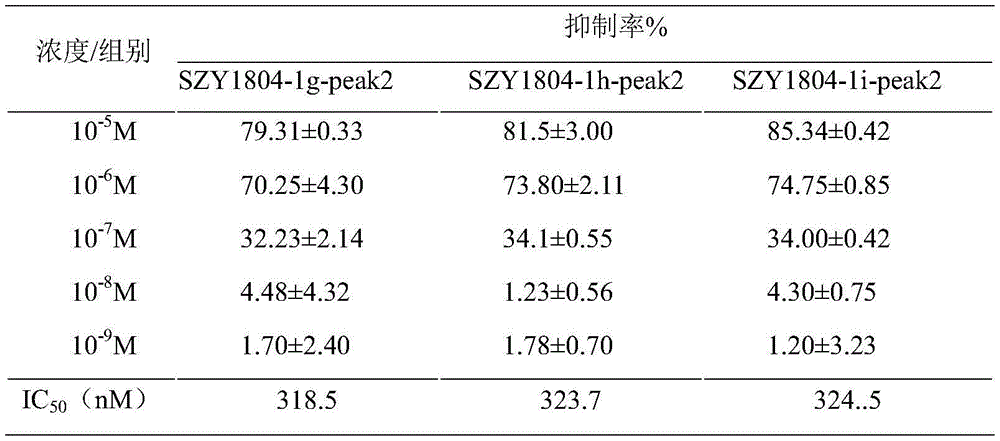
As shown in tables 10 to 12, the results of the experiments were as follows, and the IC's of the inhibitory activities of Apreminast, SZY1804-1b SZY1804-1b-peak2, SZY1804-1c-peak2, SZY1804-1d-peak2, SZY1804-1e-peak2, SZY1804-1f-peak2, SZY1804-1g-peak2, SZY1804-1h-peak2, and SZY1804-1i-peak2 on the expression level of TNF-. alpha after stimulation of PBMC by LPS50Values were 469.6nM, 347.7nM, 475.5nM, respectively.
TABLE 10 Effect of SZY1804 series of compounds on LPS-induced TNF-alpha expression in human PBMC cells


TABLE 11 Effect of SZY1804 series of compounds on LPS-induced TNF-alpha expression in human PBMC cells
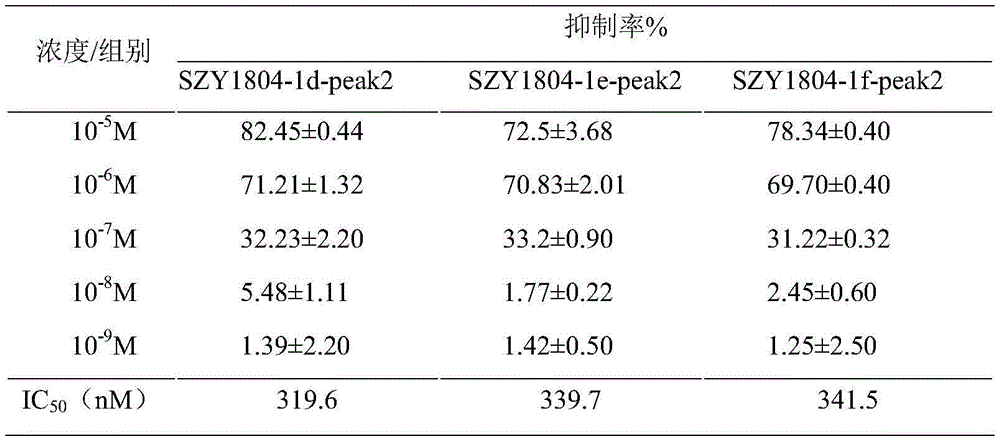
TABLE 12 Effect of SZY1804 series of compounds on LPS-induced TNF-alpha expression in human PBMC cells
4 conclusion
SZY1804-1b-peak2, SZY1804-1c-peak2, SZY1804-1d-peak2, SZY1804-1e-peak2, SZY1804-1f-peak2, SZY1804-1g-peak2, SZY1804-1h-peak2 and SZY1804-1i-peak2 can obviously inhibit the production of TNF-alpha after LPS stimulation, and the inhibition effect is better than that of a control drug Apremilast.
Claims (8)
1. A compound of formula I:
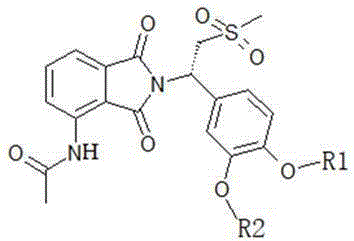
(formula I)
In the formula I, R1Selected from difluoromethyl;
R2selected from cyclopropylmethyl.
2. A process for the preparation of a compound of formula I according to claim 1, comprising the steps of:
1) reacting a compound shown as a formula II with benzyl bromide under an alkaline condition to obtain a compound shown as a formula III;

(formula II) (formula III)
In the formula II, R1Selected from difluoromethyl;
r in the formula III1Is as defined in formula II;
2) dissolving dimethyl sulfone in N, N-dimethylformamide, adding KOH into the N, N-dimethylformamide at the temperature of 10-20 ℃, adding the compound shown in the formula III into the N, N-dimethylformamide in two batches, and heating to 90-110 ℃ for reaction to obtain the compound shown in the formula IV;
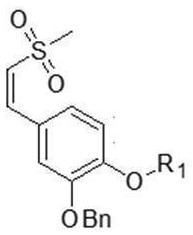
(formula IV)
R in the formula IV1Is as defined in formula III;
3) dissolving a compound shown as a formula IV in acetonitrile, adding ammonia water into the acetonitrile at the temperature of 10-20 ℃, and then heating to 90-100 ℃ for reaction to obtain a compound shown as a formula V;
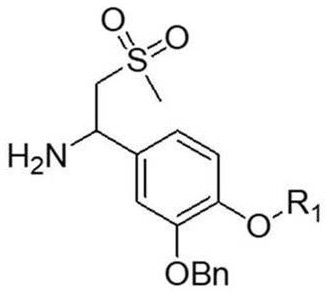
(formula V)
R in the formula V1Is as defined in formula IV;
4) dissolving a compound shown as a formula V and a compound shown as a formula VI in acetic acid at the temperature of 10-20 ℃, and then heating to 100-110 ℃ for reaction to obtain a compound shown as a formula VII;
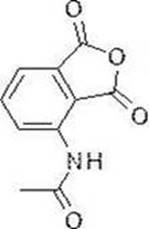

(formula VI) (formula VII)
R in the formula VII1Is as defined in formula V;
5) dissolving a compound shown as a formula VII in a mixed solution of methanol and ethyl acrylate, and adding Pd/C to react at 10-20 ℃ under the hydrogen condition to obtain a compound shown as a formula VIII;
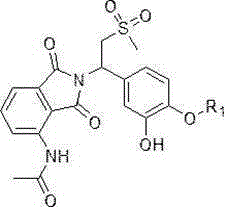
(formula VIII)
R in said formula VIII1Is as defined in formula VII;
6) dissolving the compound shown as the formula VIII in N, N-dimethylformamide, and adding Cs to the N, N-dimethylformamide at the temperature of 10-20 DEG C2CO3、 KI、 R2Br, the temperature of the reaction liquid is raised to 60-70 ℃ for reaction, and a compound shown as a formula IX is obtained;
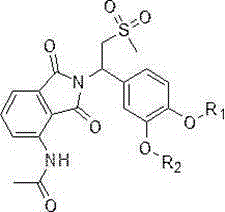
(formula IX)
The R is2R in Br2Is selected from cyclopropyl methyl;
in the compound of the formula IX, R1Is as defined for formula VIII, R2Is as defined for formula R2Br;
7) Chiral separation is carried out on the compound shown in the formula IX to obtain the compound shown in the formula I.
3. The method of claim 2, wherein:
in the step 1), the molar ratio of the compound shown in the formula II to benzyl bromide is 1: 1.2-1.5; the base may specifically be K2CO3The compound of formula II with K2CO3The molar ratio of (A) to (B) is 1: 1-3; the reaction is carried out in a solvent, specifically acetonitrile; the reaction conditions of the reaction are as follows: stirring and reacting for 4-6h at the temperature of 20-30 ℃;
the step 1) also comprises the following steps: the reaction was monitored by TLC, developing agent PE: EA =3: 1(v/v), indicating completion of the reaction of formula II; filtering the reaction solution, and carrying out rotary evaporation on the filtrate under reduced pressure to obtain a solid; purifying the obtained solid by column chromatography to obtain a purified compound shown as a formula III;
in the step 2), the molar ratio of the compound shown in the formula III to the dimethyl sulfone is 1: 4-16; the molar ratio of the compound shown in the formula III to KOH is 1: 1-1.5; the reaction is carried out under the condition of stirring, and the reaction time is 2-4 h;
the step 2) also comprises the following steps: TLC, developing agent EA =1: 2(v/v), showing that the formula III is mostly reacted; cooling the reaction solution to 20-30 deg.C, and adding saturated NH4Extracting Cl aqueous solution with ethyl acrylate, combining organic phases, washing the organic phases with saturated salt water, drying with anhydrous sodium sulfate, and performing rotary evaporation to obtain a solid; purifying the obtained solid by column chromatography to obtain a purified compound shown as a formula IV;
in the step 3), the molar ratio of the compound shown as the formula IV to ammonia water is 1:45-55, and the reaction time is 6-8 h;
the step 3) further comprises the following steps: the reaction was monitored by TLC using a developing solvent PE: EA =1: 2(v/v), indicating that the compound of formula iv was mostly reacted; continuously reacting the reaction liquid for 24h at the temperature of 100 ℃ and 120 ℃, filtering the reaction liquid, collecting a filter cake, and washing and purifying the filter cake by using methyl tert-butyl ether slurry to obtain the compound shown in the formula V;
in the step 4), the molar ratio of the compound shown as the formula V to the compound shown as the formula VI is 1: 1.0-1.2; the reaction is carried out under the condition of stirring, and the reaction time is 2-4 h;
the step 4) further comprises the following steps: monitoring the reaction by TLC, wherein a developing agent PE is EA =1: 2(v/v) and shows that the compound shown in the formula V is completely reacted, concentrating the reaction liquid under reduced pressure to obtain a solid, and washing and purifying the obtained solid by using 2-methyltetrahydrofuran slurry to obtain the compound shown in the formula VII;
in the step 5), the volume ratio of methanol to ethyl acrylate in the mixed solution is 1: 0.8-1.2; the dosage of the Pd/C is 5-10% of the mass of the compound shown in the formula VII; the reaction conditions of the reaction are as follows: stirring and reacting for 2-4 h;
the step 5) also comprises the following steps: monitoring the reaction by TLC, wherein a developing agent EA: MeOH =20: 1(v/v) shows that the compound shown in the formula VII is completely reacted, filtering the reaction liquid, and performing rotary evaporation on the filtrate under reduced pressure to obtain the compound shown in the formula VIII;
in the step 6), the compound represented by the formula VIII and Cs2CO3、KI、R2The molar ratio of Br is 1:2:0.5:2 in sequence, the reaction is carried out under the stirring state, and the reaction time is 1-3 h;
the method in step 6) further comprises the following steps: monitoring the reaction by TLC, wherein a developing agent PE is EA =1: 2(v/v) and shows that the compound shown as the formula VIII completely reacts, adding water into the reaction liquid, then extracting with EA, combining organic phases, washing the organic phases with saturated common salt water, drying anhydrous sodium sulfate, carrying out rotary evaporation to obtain a solid, and washing and purifying the obtained solid with methyl tert-butyl ether to obtain the compound shown as the formula IX;
the chiral separation described in step 7) of the above method employs a method comprising: recrystallization, preparation of liquid phase and supercritical fluid chromatography.
4. The use of a compound of formula I according to claim 1 in: 1) use as phosphodiesterase-4 inhibitors; 2) use as TNF-alpha inhibitors; 3) the application in the preparation of the drugs for preventing and/or treating the diseases related to phosphodiesterase-4 mediation; 4) the application in the preparation of the medicine for preventing and/or treating TNF-alpha mediated related diseases.
5. Use according to claim 4, characterized in that: the phosphodiesterase-4 is PDE4A1A and/or PDE4D 3.
6. Use according to claim 4, characterized in that: the phosphodiesterase-4 mediated related disease is psoriatic arthritis, asthma, chronic obstructive pulmonary disease or Alzheimer's disease;
the TNF-alpha mediated related diseases are tumors, dermatitis, rhinitis or arthritis.
7. A medicament, the active ingredient of which is a compound of formula I as defined in claim 1 or a pharmaceutically acceptable salt thereof; the medicine is as follows: 1) a prophylactic and/or therapeutic agent for diseases related to phosphodiesterase-4 mediation; 2) an agent for preventing and/or treating TNF-alpha mediated diseases.
8. The medicament of claim 7, wherein: the phosphodiesterase-4 mediated related disease is psoriatic arthritis, asthma, chronic obstructive pulmonary disease or Alzheimer's disease;
the TNF-alpha mediated related diseases are tumors, dermatitis, rhinitis or arthritis.
Priority Applications (1)
| Application Number | Priority Date | Filing Date | Title |
|---|---|---|---|
| CN201910777489.6A CN110423213B (en) | 2019-08-22 | 2019-08-22 | Apremilast derivative and preparation method and application thereof |
Applications Claiming Priority (1)
| Application Number | Priority Date | Filing Date | Title |
|---|---|---|---|
| CN201910777489.6A CN110423213B (en) | 2019-08-22 | 2019-08-22 | Apremilast derivative and preparation method and application thereof |
Publications (2)
| Publication Number | Publication Date |
|---|---|
| CN110423213A CN110423213A (en) | 2019-11-08 |
| CN110423213B true CN110423213B (en) | 2021-06-04 |
Family
ID=68415528
Family Applications (1)
| Application Number | Title | Priority Date | Filing Date |
|---|---|---|---|
| CN201910777489.6A Active CN110423213B (en) | 2019-08-22 | 2019-08-22 | Apremilast derivative and preparation method and application thereof |
Country Status (1)
| Country | Link |
|---|---|
| CN (1) | CN110423213B (en) |
Citations (4)
| Publication number | Priority date | Publication date | Assignee | Title |
|---|---|---|---|---|
| US6011050A (en) * | 1998-10-30 | 2000-01-04 | Celgene Corporation | Substituted phenethylsulfones and method of reducing TNFα levels |
| CN1802353A (en) * | 2002-12-30 | 2006-07-12 | 细胞基因公司 | Fluoroalkoxy-substituted 1,3-dihydro-isoindolyl compounds and their pharmaceutical uses |
| CN105330586A (en) * | 2015-11-27 | 2016-02-17 | 东华大学 | Preparation method of Apremilast |
| WO2018157779A1 (en) * | 2017-02-28 | 2018-09-07 | 康朴生物医药技术(上海)有限公司 | Novel isoindoline derivative, and pharmaceutical composition and application thereof |
-
2019
- 2019-08-22 CN CN201910777489.6A patent/CN110423213B/en active Active
Patent Citations (5)
| Publication number | Priority date | Publication date | Assignee | Title |
|---|---|---|---|---|
| US6011050A (en) * | 1998-10-30 | 2000-01-04 | Celgene Corporation | Substituted phenethylsulfones and method of reducing TNFα levels |
| WO2000025777A1 (en) * | 1998-10-30 | 2000-05-11 | Celgene Corporation | SUBSTITUTED PHENETHYLSULFONES AND METHOD OF REDUCING TNFαLEVELS |
| CN1802353A (en) * | 2002-12-30 | 2006-07-12 | 细胞基因公司 | Fluoroalkoxy-substituted 1,3-dihydro-isoindolyl compounds and their pharmaceutical uses |
| CN105330586A (en) * | 2015-11-27 | 2016-02-17 | 东华大学 | Preparation method of Apremilast |
| WO2018157779A1 (en) * | 2017-02-28 | 2018-09-07 | 康朴生物医药技术(上海)有限公司 | Novel isoindoline derivative, and pharmaceutical composition and application thereof |
Non-Patent Citations (1)
| Title |
|---|
| 阿普斯特的合成工艺研究;江珊等;《广州化工》;20150531;第43卷(第10期);107-108 * |
Also Published As
| Publication number | Publication date |
|---|---|
| CN110423213A (en) | 2019-11-08 |
Similar Documents
| Publication | Publication Date | Title |
|---|---|---|
| JP2022517396A (en) | EGFR inhibitor salt, crystalline form and method for producing it | |
| CN110092745B (en) | Compound containing aromatic ring and application thereof | |
| JP6731917B2 (en) | Benzene-fused 6-membered ring derivative as DPP-4 inhibitor and use thereof | |
| KR20170033684A (en) | Crystalline form of linagliptin and preparation method thereof | |
| US20250250254A1 (en) | Deuterated heterocyclic ketone compound and use thereof | |
| CN110092740B (en) | Fused ring compound and application thereof | |
| CN108069954B (en) | The quinazolinones of the donor containing NO | |
| KR20200084357A (en) | Crystalline form of URAT1 inhibitor and method for its preparation | |
| RU2719484C2 (en) | Sodium salt of the uric acid transporter inhibitor and its crystalline form | |
| CN103030631A (en) | Compound for preparing pyrimidinedione DPP-IV (dipeptidyl peptidase IV) inhibitors | |
| CN102164905A (en) | Compounds as hypoxia mimetics, and compositions, and uses thereof | |
| US12116348B2 (en) | Substituted benzimidazole compound and composition comprising same | |
| CN110423213B (en) | Apremilast derivative and preparation method and application thereof | |
| CN111039880A (en) | Application of miconazole and derivative thereof as TGR5 agonist | |
| KR20210081368A (en) | Potassium monohydrate salt of thienopyridone derivative and method for preparing same | |
| CN107849051B (en) | Crystal Forms of Substituted Aminopyran Derivatives | |
| CN110437156A (en) | Paeonol dihydropyrimidinone derivatives and preparation method and application thereof | |
| TW202425980A (en) | Phosphorus containing compounds, pharmaceutical composition and application thereof | |
| CN110407839A (en) | The preparation and application of the triazol heterocycle compound of the structure containing heteroaryl amide | |
| CN110903224A (en) | Aryl sulfonamide compound, preparation method thereof, pharmaceutical composition and application | |
| CN116041324A (en) | A kind of deuterated pyrazole dichlorobenzamide compound, pharmaceutical composition and application | |
| CN118598859B (en) | Nitrogenous heterocyclic indole xanthine oxidase inhibitor and preparation method and application thereof | |
| CN115141169A (en) | Terpene lactone derivative and application thereof in medicine | |
| CN111606884A (en) | A kind of rimonabant derivative and its preparation method and application | |
| CN117886773A (en) | Biphenylcarboxylic acid compounds and their preparation method and pharmaceutical use |
Legal Events
| Date | Code | Title | Description |
|---|---|---|---|
| PB01 | Publication | ||
| PB01 | Publication | ||
| SE01 | Entry into force of request for substantive examination | ||
| SE01 | Entry into force of request for substantive examination | ||
| GR01 | Patent grant | ||
| GR01 | Patent grant |