CN110365013B - A capacity optimization method for a combined solar thermal-photovoltaic-wind power generation system - Google Patents
A capacity optimization method for a combined solar thermal-photovoltaic-wind power generation system Download PDFInfo
- Publication number
- CN110365013B CN110365013B CN201910650474.3A CN201910650474A CN110365013B CN 110365013 B CN110365013 B CN 110365013B CN 201910650474 A CN201910650474 A CN 201910650474A CN 110365013 B CN110365013 B CN 110365013B
- Authority
- CN
- China
- Prior art keywords
- power generation
- heat storage
- pir
- plp
- eta
- Prior art date
- Legal status (The legal status is an assumption and is not a legal conclusion. Google has not performed a legal analysis and makes no representation as to the accuracy of the status listed.)
- Active
Links
Images


Classifications
-
- H—ELECTRICITY
- H02—GENERATION; CONVERSION OR DISTRIBUTION OF ELECTRIC POWER
- H02J—CIRCUIT ARRANGEMENTS OR SYSTEMS FOR SUPPLYING OR DISTRIBUTING ELECTRIC POWER; SYSTEMS FOR STORING ELECTRIC ENERGY
- H02J3/00—Circuit arrangements for AC mains or AC distribution networks
-
- H—ELECTRICITY
- H02—GENERATION; CONVERSION OR DISTRIBUTION OF ELECTRIC POWER
- H02J—CIRCUIT ARRANGEMENTS OR SYSTEMS FOR SUPPLYING OR DISTRIBUTING ELECTRIC POWER; SYSTEMS FOR STORING ELECTRIC ENERGY
- H02J3/00—Circuit arrangements for AC mains or AC distribution networks
- H02J3/28—Arrangements for balancing of the load in a network by storage of energy
-
- H02J2103/30—
-
- H02J2105/55—
-
- Y—GENERAL TAGGING OF NEW TECHNOLOGICAL DEVELOPMENTS; GENERAL TAGGING OF CROSS-SECTIONAL TECHNOLOGIES SPANNING OVER SEVERAL SECTIONS OF THE IPC; TECHNICAL SUBJECTS COVERED BY FORMER USPC CROSS-REFERENCE ART COLLECTIONS [XRACs] AND DIGESTS
- Y02—TECHNOLOGIES OR APPLICATIONS FOR MITIGATION OR ADAPTATION AGAINST CLIMATE CHANGE
- Y02E—REDUCTION OF GREENHOUSE GAS [GHG] EMISSIONS, RELATED TO ENERGY GENERATION, TRANSMISSION OR DISTRIBUTION
- Y02E10/00—Energy generation through renewable energy sources
- Y02E10/50—Photovoltaic [PV] energy
- Y02E10/56—Power conversion systems, e.g. maximum power point trackers
-
- Y—GENERAL TAGGING OF NEW TECHNOLOGICAL DEVELOPMENTS; GENERAL TAGGING OF CROSS-SECTIONAL TECHNOLOGIES SPANNING OVER SEVERAL SECTIONS OF THE IPC; TECHNICAL SUBJECTS COVERED BY FORMER USPC CROSS-REFERENCE ART COLLECTIONS [XRACs] AND DIGESTS
- Y02—TECHNOLOGIES OR APPLICATIONS FOR MITIGATION OR ADAPTATION AGAINST CLIMATE CHANGE
- Y02E—REDUCTION OF GREENHOUSE GAS [GHG] EMISSIONS, RELATED TO ENERGY GENERATION, TRANSMISSION OR DISTRIBUTION
- Y02E10/00—Energy generation through renewable energy sources
- Y02E10/70—Wind energy
- Y02E10/76—Power conversion electric or electronic aspects
-
- Y—GENERAL TAGGING OF NEW TECHNOLOGICAL DEVELOPMENTS; GENERAL TAGGING OF CROSS-SECTIONAL TECHNOLOGIES SPANNING OVER SEVERAL SECTIONS OF THE IPC; TECHNICAL SUBJECTS COVERED BY FORMER USPC CROSS-REFERENCE ART COLLECTIONS [XRACs] AND DIGESTS
- Y02—TECHNOLOGIES OR APPLICATIONS FOR MITIGATION OR ADAPTATION AGAINST CLIMATE CHANGE
- Y02E—REDUCTION OF GREENHOUSE GAS [GHG] EMISSIONS, RELATED TO ENERGY GENERATION, TRANSMISSION OR DISTRIBUTION
- Y02E70/00—Other energy conversion or management systems reducing GHG emissions
- Y02E70/30—Systems combining energy storage with energy generation of non-fossil origin
Landscapes
- Engineering & Computer Science (AREA)
- Power Engineering (AREA)
- Supply And Distribution Of Alternating Current (AREA)
Abstract
本发明公开了一种光热‑光伏‑风电联合发电系统的容量优化方法,该联合发电系统采用风电场和光伏发电场直接供电,光热发电场作为调峰、调频和无功补偿,在满足建造成本最低,年总弃电量费用最小,年总发电量不足负荷的缺电量费用最小和年总发电收益最大的情况下,采用粒子群算法优化光热电站、光伏电站和风电场的装机容量,减小了组合电源的年总弃电率和负荷缺电率,提高了可再生能源的发电质量和效率。
The invention discloses a capacity optimization method for a solar thermal-photovoltaic-wind power combined power generation system. The combined power generation system adopts a wind farm and a photovoltaic power generation field for direct power supply, and the solar thermal power generation field is used for peak regulation, frequency regulation and reactive power compensation. In the case of the lowest construction cost, the lowest total annual electricity curtailment cost, the smallest annual total electricity generation cost and the maximum annual total electricity generation revenue, the particle swarm algorithm is used to optimize the installed capacity of the solar thermal power station, photovoltaic power station and wind farm. The annual total power abandonment rate and load power shortage rate of the combined power supply are reduced, and the power generation quality and efficiency of renewable energy are improved.
Description
技术领域technical field
本发明涉及一种光热-光伏-风电联合发电系统的容量优化方法,属于能源利用技术领域。The invention relates to a capacity optimization method for a photothermal-photovoltaic-wind power combined power generation system, and belongs to the technical field of energy utilization.
背景技术Background technique
太阳能和风能是目前应用最广泛,发展最快,技术最为成熟的新型能源。然而,受自然季节和气候的随机变化的影响,太阳能和风能也呈现出随机性、波动性和间歇性的特点。为了解决上述问题,多种能源互补发电系统应运而生,而多种能源联合运行的容量优化在互补发电中扮演着至关重要的角色。Solar energy and wind energy are currently the most widely used, fastest-growing and most mature new energy sources. However, affected by the random changes of natural seasons and climate, solar and wind energy also exhibit random, fluctuating and intermittent characteristics. In order to solve the above problems, a multi-energy complementary power generation system emerges as the times require, and the capacity optimization of the joint operation of multiple energy sources plays a crucial role in complementary power generation.
目前国内外对多种新能源互补联合运行的研究集中在对蓄电池或抽水蓄能电站与风电场、光伏电站的联合运行的研究。如徐大明等人的风光互补独立供电系统的优化设计,在对风/光互补独立供电系统进行优化配置时,将优化问题看作是多目标优化问题,即以极大化供电可靠性和极小化系统安装成本为目标。在传统的优化决策变量中加入了包含风力发电机的类型和容量以及光伏组件的倾角等因子,以负载缺电率作为供电可靠性指标,采用含精英策略和自适应罚函数法的遗传算法来求解数学模型。李丹等人的小型风光互补发电系统研究,在研究离网型风/光互补发电系统的匹配设计问题时,提出了一种基于NASA(National Aeronautics and Space Administration)美国太空总署气象数据库的资源数据的风/光/蓄互补发电系统设计的计算模型,并开发了用于计算优化配置风/光互补发电系统的程序,并以实例验证了所提计算模型的合理性。杨琦、张建华等人的风光互补混合供电系统多目标优化设计,提出了一种改进微分进化算法对风/光互补供电系统进行优化设计的方法,并且此方法综合考虑了当地的地理位置、风速、日照、负荷变化、风速模型及光伏电池板倾角等多种因素,采用能够更精确的表征组件特性的数学模型。At present, the research on the complementary joint operation of multiple new energy sources at home and abroad focuses on the joint operation of battery or pumped storage power plants, wind farms, and photovoltaic power plants. For example, in the optimization design of the wind/solar hybrid independent power supply system by Xu Daming et al., when optimizing the configuration of the wind/solar hybrid independent power supply system, the optimization problem is regarded as a multi-objective optimization problem, that is, to maximize the reliability of power supply and extreme The goal is to minimize system installation costs. Factors including the type and capacity of wind turbines and the inclination of photovoltaic modules are added to the traditional optimization decision variables, and the load power shortage rate is used as the power supply reliability index, and the genetic algorithm including the elite strategy and the adaptive penalty function method is used to Solve the mathematical model. Li Dan et al.'s research on small wind/solar hybrid power generation system, when studying the matching design problem of off-grid wind/solar hybrid power generation system, proposed a resource based on NASA (National Aeronautics and Space Administration) NASA weather database The calculation model of the wind/solar/storage hybrid power generation system design based on the data, and the program for calculating the optimal configuration of the wind/solar hybrid power generation system was developed, and the rationality of the proposed calculation model was verified by an example. Yang Qi, Zhang Jianhua et al. proposed a multi-objective optimization design of wind/solar hybrid power supply system, and proposed an improved differential evolution algorithm to optimize the design of wind/solar hybrid power supply system, and this method comprehensively considered the local geographical location, wind speed , sunshine, load changes, wind speed model and photovoltaic panel inclination and other factors, using a mathematical model that can more accurately characterize the characteristics of components.
目前国内外主要针对的是抽水蓄能/光伏/风电等的联合运行,带有光热(储热)电站的多种能源互补还处于刚刚研发阶段,因此进行光热-光伏-风电联合运行容量优化设计的研究有着非常重要的意义。At present, it is mainly aimed at the joint operation of pumped storage/photovoltaic/wind power, etc. at home and abroad. The multi-energy complementation with solar thermal (thermal storage) power station is still in the research and development stage, so the combined operation capacity of solar thermal-photovoltaic-wind power The study of optimal design is of great significance.
发明内容SUMMARY OF THE INVENTION
本发明所要解决的技术问题是克服现有技术的缺陷,提供一种光热-光伏-风电联合发电系统的容量优化方法,减小组合电源的年总弃电率和负荷缺电率,提高可再生能源的发电质量和效率。The technical problem to be solved by the present invention is to overcome the defects of the prior art, to provide a capacity optimization method for a combined solar thermal-photovoltaic-wind power generation system, to reduce the total annual power abandonment rate and load power shortage rate of the combined power source, and to improve the availability of The quality and efficiency of electricity generation from renewable energy sources.
为解决上述技术问题,本发明提供一种光热-光伏-风电联合发电系统的容量优化方法,所述光热-光伏-风电联合发电系统由风电场、光伏发电场和光热发电场组成,所述容量优化方法包括:In order to solve the above technical problems, the present invention provides a capacity optimization method for a solar thermal-photovoltaic-wind power combined power generation system, wherein the solar thermal-photovoltaic-wind power combined power generation system is composed of a wind farm, a photovoltaic power generation field and a solar thermal power generation field, The capacity optimization method includes:
(1)确定优化目标;所述优化目标以建造成本、弃电量费用和缺电量费用最小,以及年总发电量最大为优化目标;(1) Determine the optimization goal; the optimization goal is to minimize the construction cost, the cost of abandoned electricity and the cost of lack of electricity, and the maximum annual total power generation as the optimization goal;
(2)确定优化目标的约束条件;(2) Determine the constraints of the optimization objective;
(3)采用改进粒子群优化算法求解得出联合发电系统的最优容量配比,包括:(3) Using the improved particle swarm optimization algorithm to solve the optimal capacity ratio of the co-generation system, including:
以i日j时风电场出力pw(i,j),光伏发电场出力pv(i,j),光热发电场出力pd(i,j),以及实时负荷数据pr(i,j)为输入,结合联合发电系统的发电策略,计算联合发电系统的年总发电量,年总弃电量和年总缺电量;Take the wind farm output pw(i,j), the photovoltaic power farm output pv(i,j), the solar thermal power farm output pd(i,j), and the real-time load data pr(i,j) as the input , combined with the power generation strategy of the co-generation system, to calculate the total annual power generation, the total annual power abandonment and the annual total power shortage of the co-generation system;
将计算所得的年总发电量,年总弃电量和年总缺电量带入所述优化目标,结合约束条件,采用粒子群优化算法求解得出最小优化目标函数下的风电场、光伏发电场和光热发电场的装机容量x,y,和z;Bring the calculated annual total power generation, the annual total abandoned power and the annual total power shortage into the optimization objective, and combine the constraints, use the particle swarm optimization algorithm to solve the wind farm, photovoltaic power farm and the wind farm under the minimum optimization objective function. The installed capacity x, y, and z of the solar thermal power plant;
所述联合发电系统的发电策略,包括:The power generation strategy of the co-generation system includes:
输入为i日j时风电场出力pw(i,j),光伏发电场出力pv(i,j),光热发电场出力pd(i,j),以及实时负荷数据pr(i,j),The input is the output pw(i,j) of the wind farm, the output pv(i,j) of the photovoltaic power plant, the output pd(i,j) of the solar thermal power plant, and the real-time load data pr(i,j) at the time of day i,
定义多余出力为:pir(i,j)=pw(i,j)+pv(i,j)+pd(i,j)-pr(i,j);Define the excess output as: pir(i,j)=pw(i,j)+pv(i,j)+pd(i,j)-pr(i,j);
(1)如果同时满足以下条件:(1) If the following conditions are met at the same time:
pir(i,j)>0,pir(i,j)>0,
pw(i,j)+pv(i,j)≥pr(i,j),pw(i,j)+pv(i,j)≥pr(i,j),
pd(i,j)>0,pd(i,j)>0,
HS≥m,HS≥m,
eta1*pd(i,j)=m,eta 1 *pd(i,j)=m,
则联合发电系统发电量plp(i,j)为:Then the power generation plp(i,j) of the co-generation system is:
plp(i,j)=pw(i,j)+pv(i,j)+pd(i,j)-m/eta1,plp(i,j)=pw(i,j)+pv(i,j)+pd(i,j)-m/eta 1 ,
储热罐储热量HS为:The heat storage tank HS is:
HS=HS-m,HS=HS-m,
m表示储热罐的每小时储放能额定容量;m represents the hourly storage energy rated capacity of the heat storage tank;
eta1表示储热罐储热时效率;eta 1 represents the efficiency of the heat storage tank when storing heat;
(2)如果同时满足以下条件:(2) If the following conditions are met at the same time:
pir(i,j)>0,pir(i,j)>0,
pw(i,j)+pv(i,j)≥pr(i,j),pw(i,j)+pv(i,j)≥pr(i,j),
pd(i,j)>0,pd(i,j)>0,
HS≥m,HS≥m,
eta1*pd(i,j)<m,eta 1 *pd(i,j)<m,
则联合发电系统发电量plp(i,j)为:Then the power generation plp(i,j) of the co-generation system is:
plp(i,j)=pw(i,j)+pv(i,j),plp(i,j)=pw(i,j)+pv(i,j),
储热罐储热量HS为:The heat storage tank HS is:
HS=HS-eta1*pd(i,j);HS=HS-eta 1 *pd(i,j);
(3)如果同时满足以下条件:(3) If the following conditions are met at the same time:
pir(i,j)>0,pir(i,j)>0,
pw(i,j)+pv(i,j)≥pr(i,j),pw(i,j)+pv(i,j)≥pr(i,j),
pd(i,j)>0,pd(i,j)>0,
HS<m,HS<m,
eta1*pd(i,j)≥HS,eta 1 *pd(i,j)≥HS,
则联合发电系统发电量plp(i,j)为:Then the power generation plp(i,j) of the co-generation system is:
plp(i,j)=pw(i,j)+pv(i,j)+pd(i,j)-HS/eta1,plp(i,j)=pw(i,j)+pv(i,j)+pd(i,j)-HS/eta 1 ,
储热罐储热量HS为:The heat storage tank HS is:
HS=0;hs = 0;
(4)如果同时满足以下条件:(4) If the following conditions are met at the same time:
pir(i,j)>0,pir(i,j)>0,
pw(i,j)+pv(i,j)≥pr(i,j),pw(i,j)+pv(i,j)≥pr(i,j),
pd(i,j)>0,pd(i,j)>0,
HS<m,HS<m,
eta1*pd(i,j)<HS,eta 1 *pd(i,j)<HS,
则联合发电系统发电量plp(i,j)为:Then the power generation plp(i,j) of the co-generation system is:
plp(i,j)=pw(i,j)+pv(i,j),plp(i,j)=pw(i,j)+pv(i,j),
储热罐储热量HS为:The heat storage tank HS is:
HS=HS-eta1*pd(i,j);HS=HS-eta 1 *pd(i,j);
(5)如果同时满足以下条件:(5) If the following conditions are met at the same time:
pir(i,j)>0,pir(i,j)>0,
pw(i,j)+pv(i,j)≥pr(i,j),pw(i,j)+pv(i,j)≥pr(i,j),
pd(i,j)=0,pd(i,j)=0,
则联合发电系统发电量plp(i,j)为:Then the power generation plp(i,j) of the co-generation system is:
plp(i,j)=pw(i,j)+pv(i,j),plp(i,j)=pw(i,j)+pv(i,j),
储热罐储热量HS为:The heat storage tank HS is:
HS=HS;hs = hs;
(6)如果同时满足以下条件:(6) If the following conditions are met at the same time:
pir(i,j)>0,pir(i,j)>0,
pw(i,j)+pv(i,j)<pr(i,j),pw(i,j)+pv(i,j)<pr(i,j),
HS>=m,HS>=m,
eta1*pir(i,j)≥m,eta 1 *pir(i,j)≥m,
则联合发电系统发电量plp(i,j)为:Then the power generation plp(i,j) of the co-generation system is:
plp(i,j)=pw(i,j)+pv(i,j)+pd(i,j)-m/eta1,plp(i,j)=pw(i,j)+pv(i,j)+pd(i,j)-m/eta 1 ,
储热罐储热量HS为:The heat storage tank HS is:
HS=HS-m;HS=HS-m;
(7)如果同时满足以下条件:(7) If the following conditions are met at the same time:
pir(i,j)>0,pir(i,j)>0,
pw(i,j)+pv(i,j)<pr(i,j),pw(i,j)+pv(i,j)<pr(i,j),
HS>=m,HS>=m,
eta1*pir(i,j)<m,eta 1 *pir(i,j)<m,
则联合发电系统发电量plp(i,j)为:Then the power generation plp(i,j) of the co-generation system is:
plp(i,j)=pw(i,j)+pv(i,j)+pd(i,j)-pir(i,j),plp(i,j)=pw(i,j)+pv(i,j)+pd(i,j)-pir(i,j),
储热罐储热量HS为:The heat storage tank HS is:
HS=HS-eta1*pir(i,j);HS=HS-eta 1 *pir(i,j);
(8)如果同时满足以下条件:(8) If the following conditions are met at the same time:
pir(i,j)>0,pir(i,j)>0,
pw(i,j)+pv(i,j)<pr(i,j),pw(i,j)+pv(i,j)<pr(i,j),
HS<m,HS<m,
eta1*pir(i,j)≥HS,eta 1 *pir(i,j)≥HS,
则联合发电系统发电量plp(i,j)为:Then the power generation plp(i,j) of the co-generation system is:
plp(i,j)=pw(i,j)+pv(i,j)+pd(i,j)-HS/eta1,plp(i,j)=pw(i,j)+pv(i,j)+pd(i,j)-HS/eta 1 ,
储热罐储热量HS为:The heat storage tank HS is:
HS=0;hs = 0;
(9)如果同时满足以下条件:(9) If the following conditions are met at the same time:
pir(i,j)≥0,pir(i,j)≥0,
pw(i,j)+pv(i,j)<pr(i,j),pw(i,j)+pv(i,j)<pr(i,j),
HS<m,HS<m,
eta1*pir(i,j)<HS,eta 1 *pir(i,j)<HS,
则联合发电系统发电量plp(i,j)为:Then the power generation plp(i,j) of the co-generation system is:
plp(i,j)=pw(i,j)+pv(i,j)+pd(i,j)-pir(i,j),plp(i,j)=pw(i,j)+pv(i,j)+pd(i,j)-pir(i,j),
储热罐储热量HS为:The heat storage tank HS is:
HS=HS-pir(i,j);HS=HS-pir(i,j);
(10)如果同时满足以下条件:(10) If the following conditions are met at the same time:
pir(i,j)<0,pir(i,j)<0,
HSmax-HS>0,HS max -HS>0,
HSmax-HS>m,HS max -HS>m,
|pir(i,j)|-eta2*m≥0,|pir(i,j)|-eta 2 *m≥0,
则联合发电系统发电量plp(i,j)为:Then the power generation plp(i,j) of the co-generation system is:
plp(i,j)=pw(i,j)+pv(i,j)+pd(i,j)+eta2*m,plp(i,j)=pw(i,j)+pv(i,j)+pd(i,j)+eta 2 *m,
储热罐储热量HS为:The heat storage tank HS is:
HS=HS+m,HS=HS+m,
HSmax表示光热发电场的最大储热量;HS max represents the maximum heat storage capacity of the solar thermal power plant;
eta2表示储热罐放热时效率;eta 2 represents the efficiency of the heat storage tank when it releases heat;
(11)如果同时满足以下条件:(11) If the following conditions are met at the same time:
pir(i,j)<0,pir(i,j)<0,
HSmax-HS>0,HS max -HS>0,
HSmax-HS>m,HS max -HS>m,
|pir(i,j)|-eta2*m<0,|pir(i,j)|-eta 2 *m<0,
则联合发电系统发电量plp(i,j)为:Then the power generation plp(i,j) of the co-generation system is:
plp(i,j)=pw(i,j)+pv(i,j)+pd(i,j)+|pir(i,j)|,plp(i,j)=pw(i,j)+pv(i,j)+pd(i,j)+|pir(i,j)|,
储热罐储热量HS为:The heat storage tank HS is:
HS=HS+|pir(i,j)|/eta2;HS=HS+|pir(i,j)|/eta 2 ;
(12)如果同时满足以下条件:(12) If the following conditions are met at the same time:
pir(i,j)<0,pir(i,j)<0,
HSmax-HS>0,HS max -HS>0,
HSmax-HS<m,HS max -HS<m,
|pir(i,j)|-eta2*(HSmax-HS)≥0,|pir(i,j)|-eta 2 *(HS max -HS)≥0,
则联合发电系统发电量plp(i,j)为:Then the power generation plp(i,j) of the co-generation system is:
plp(i,j)=pw(i,j)+pv(i,j)+pd(i,j)+eta2*(HS_max-HS),plp(i,j)=pw(i,j)+pv(i,j)+pd(i,j)+eta 2 *(HS_max -HS ),
储热罐储热量HS为:The heat storage tank HS is:
HS=HSmax;HS= HSmax ;
(13)如果同时满足以下条件:(13) If the following conditions are met at the same time:
pir(i,j)<0,pir(i,j)<0,
HSmax-HS>0,HS max -HS>0,
HSmax-HS<m,HS max -HS<m,
|pir(i,j)|-eta2*(HSmax-HS)<0,|pir(i,j)|-eta 2 *(HS max -HS)<0,
则联合发电系统发电量plp(i,j)为:Then the power generation plp(i,j) of the co-generation system is:
plp(i,j)=pw(i,j)+pv(i,j)+pd(i,j)+|pir(i,j)|,plp(i,j)=pw(i,j)+pv(i,j)+pd(i,j)+|pir(i,j)|,
储热罐储热量HS为:The heat storage tank HS is:
HS=HS+|pir(i,j)|/eta2;HS=HS+|pir(i,j)|/eta 2 ;
(14)如果同时满足以下条件:(14) If the following conditions are met at the same time:
pir(i,j)<0,pir(i,j)<0,
HSmax=HS>0, HSmax =HS>0,
则联合发电系统发电量plp(i,j)为:Then the power generation plp(i,j) of the co-generation system is:
plp(i,j)=pw(i,j)+pv(i,j)+pd(i,j),plp(i,j)=pw(i,j)+pv(i,j)+pd(i,j),
储热罐储热量HS为:The heat storage tank HS is:
HS=HSmax;HS= HSmax ;
(15)当pir(i,j)≥0时,得到:(15) When pir(i,j)≥0, we get:
年总弃电量为:Deltap1=Deltap1+plp(i,j)-pr(i,j);The annual total abandoned electricity is: Deltap 1 =Deltap 1 +plp(i,j)-pr(i,j);
当pir(i,j)<0时,得到:When pir(i,j)<0, we get:
年总缺电量为:Deltap2=Deltap2-plp(i,j)+pr(i,j);The total annual power shortage is: Deltap 2 =Deltap 2 -plp(i,j)+pr(i,j);
年总发电量P为:The total annual power generation P is:
P=P+plp(i,j);P=P+plp(i,j);
最后输出Deltap1,Deltap2和P。Finally output Deltap 1 , Deltap 2 and P.
前述的优化目标为:The aforementioned optimization goals are:

其中,fw表示优化目标,fw1,fw2,fw3和fw4分别表示光热-光伏-风电联合发电系统的建造成本,年总弃电量费用,年总缺电量费用和年总发电量获得的收益,α1,α2,α3,α4分别表示建造成本,年总弃电量费用,年总缺电量费用和年总发电量收益的权重系数。Among them, fw represents the optimization target, fw 1 , fw 2 , fw 3 and fw 4 represent the construction cost of the solar thermal-photovoltaic-wind power combined power generation system, the total annual electricity curtailment cost, the annual total electricity shortage cost and the annual total power generation yield. α 1 , α 2 , α 3 , and α 4 represent the construction cost, the annual total electricity curtailment cost, the annual total electricity shortage cost and the weight coefficient of the annual total power generation revenue, respectively.
前述的建造成本表示为:The aforementioned construction costs are expressed as:
fw1=(γ1x+γ2y+γ3z)fw 1 =(γ 1 x+γ 2 y+γ 3 z)
所述年总弃电量费用表示为:The annual total electricity curtailment cost is expressed as:
fw2=β1Deltap1 fw 2 =β 1 Deltap 1
所述年总缺电量费用表示为:The annual total electricity shortage cost is expressed as:
fw3=β2Deltap2 fw 3 =β 2 Deltap 2
所述年总发电量获得的收益表示为:The benefit obtained from the total power generation in the said year is expressed as:
fw4=β3Pfw 4 =β 3 P
其中,x,y,z分别表示风电场,光伏发电场和光热发电场的装机容量,Deltap1为年总弃电量,Deltap2为年总缺电量,P为年总发电量,γ1,γ2,γ3分别表示风电场,光伏发电场和光热发电场的单位兆瓦建造成本,β1,β2,β3分别表示弃电电价,缺电量电价和发电上网电价。Among them, x, y, z represent the installed capacity of wind farms, photovoltaic farms and CSP farms, respectively, Deltap 1 is the total annual power abandonment, Deltap 2 is the total annual power shortage, P is the annual total power generation, γ 1 , γ 2 , γ 3 represent the unit MW construction cost of wind farms, photovoltaic farms and CSP farms, respectively, and β 1 , β 2 , and β 3 represent the electricity price of abandoned electricity, the electricity shortage electricity price and the electricity price of electricity generation.
前述的优化目标的约束条件包括:The constraints of the aforementioned optimization objectives include:
pw(i,j)+pv(i,j)+pd(i,j)>pr(i,j)pw(i,j)+pv(i,j)+pd(i,j)>pr(i,j)
其中,pw(i,j),pv(i,j),pd(i,j),pr(i,j)分别代表i日j时风电场出力,光伏发电场出力,光热发电场出力,以及实时负荷数据;Among them, pw(i,j), pv(i,j), pd(i,j), pr(i,j) represent the output of the wind farm, the output of the photovoltaic power plant, and the output of the solar thermal power plant at i day and j time, respectively, and real-time load data;
所述光热发电场需满足的约束条件包括:The constraints that the solar thermal power plant needs to meet include:
HS<HSmax HS<HS max
HSmax≥HS+Vexeta1 HS max ≥HS+V ex eta 1
HS-Vouteta2≥0HS-V out eta 2 ≥0
eta1Vex≤meta 1 V ex ≤m
eta2Vout≤meta 2 V out ≤m
其中,HS表示储热罐储热量,HSmax表示光热发电场的最大储热量,eta1表示储热罐储热时效率,eta2表示储热罐放热时效率,m表示储热罐的每小时储放能额定容量,Vout表示每小时释放的电量,Vex表示每小时储存的电量。Among them, HS represents the heat storage capacity of the thermal storage tank, HS max represents the maximum thermal energy storage capacity of the solar thermal power plant, eta 1 represents the heat storage efficiency of the thermal storage tank, eta 2 represents the heat storage efficiency of the thermal storage tank, and m represents the thermal storage tank’s efficiency. The rated capacity is stored per hour, V out is the amount of electricity released per hour, and V ex is the amount of electricity stored per hour.
本发明所达到的有益效果:Beneficial effects achieved by the present invention:
采用本发明进行优化,减小了组合电源的年总弃电率和负荷缺电率,提高了可再生能源的发电质量和效率。By adopting the invention for optimization, the annual total power abandonment rate and the load power shortage rate of the combined power source are reduced, and the power generation quality and efficiency of the renewable energy are improved.
附图说明Description of drawings
图1为本发明的光热-光伏-风电联合发电系统发电结构图;Fig. 1 is the power generation structure diagram of the solar thermal-photovoltaic-wind power combined power generation system of the present invention;
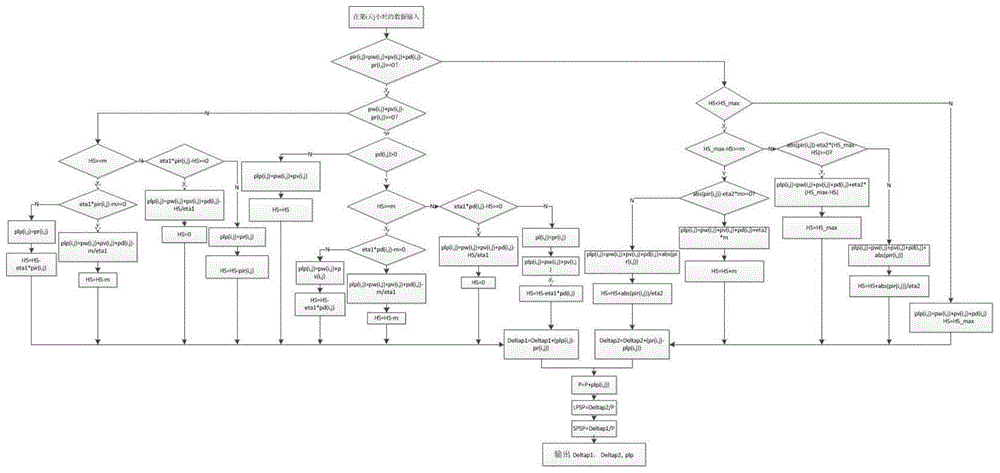
图2为本发明的光热-光伏-风电联合发电系统的容量优化策略;Fig. 2 is the capacity optimization strategy of the solar thermal-photovoltaic-wind power combined power generation system of the present invention;
图3为本发明实施例中风电场出力;Fig. 3 is the output of the wind farm in the embodiment of the present invention;
图4为本发明实施例中光伏发电场出力;FIG. 4 is the output of the photovoltaic power plant in the embodiment of the present invention;
图5为本发明实施例中光热发电场出力;Fig. 5 is the output of the solar thermal power plant in the embodiment of the present invention;
图6为本发明实施例中光热-光伏-风电联合发电模型下的能量浪费率和负荷缺电率曲线;Fig. 6 is the energy waste rate and the load power shortage rate curve under the solar thermal-photovoltaic-wind power combined generation model in the embodiment of the present invention;
图7为本发明实施例中两种模型的出力对比。FIG. 7 is the output comparison of the two models in the embodiment of the present invention.
具体实施方式Detailed ways
下面对本发明作进一步描述。以下实施例仅用于更加清楚地说明本发明的技术方案,而不能以此来限制本发明的保护范围。The present invention is further described below. The following examples are only used to illustrate the technical solutions of the present invention more clearly, and cannot be used to limit the protection scope of the present invention.
本发明提供一种光热-光伏-风电联合发电系统,主要由风电场、光伏发电场和光热发电场组成,其中,光热发电场包括储热罐和集热场等容量配置。本发明仅考虑光热参与储热的联合发电系统,运行结构如图1所示,后期我们会用风电和光伏的多余发电量储热。The invention provides a combined solar-thermal-photovoltaic-wind power generation system, which is mainly composed of a wind farm, a photovoltaic power station and a solar-thermal power farm. The present invention only considers the combined power generation system in which light and heat participate in heat storage. The operation structure is shown in Figure 1. In the later stage, we will use the excess power generation of wind power and photovoltaics to store heat.
当风电和光伏发电量大于负荷时,用风电和光伏发电量满足负荷,光热发电量用于储热,多余的风电、光伏和光热发电用于弃电。当风电、光伏和光热发电量大于负荷时,优先使用风电、光伏和光热产生的电量供应负荷,光热产生的多余热量储热,若光热发电还有余量,则用于弃电。当风电、光伏和光热发电量小于负荷时,使用储热罐内的储热补充电量,若仍然不能满足负荷,缺电量使用外部电量补充。When the wind power and photovoltaic power generation is greater than the load, the wind power and photovoltaic power generation are used to meet the load, the solar thermal power generation is used for heat storage, and the excess wind power, photovoltaic and solar thermal power generation is used for power abandonment. When the wind power, photovoltaic and solar thermal power generation is larger than the load, the electricity generated by wind power, photovoltaic and solar thermal power is given priority to supply the load, and the excess heat generated by the solar thermal power is stored for heat storage. . When the wind power, photovoltaic and solar thermal power generation is less than the load, the heat storage in the heat storage tank is used to supplement the electricity. If the load still cannot be met, the shortage of electricity is supplemented by external electricity.
基于上述系统,本发明提供一种光热-光伏-风电联合发电系统的容量优化方法,包括以下内容:Based on the above system, the present invention provides a capacity optimization method for a combined solar thermal-photovoltaic-wind power generation system, including the following contents:
一、构建优化目标函数1. Build the optimization objective function
光热-光伏-风电联合发电系统主要应满足建造成本、弃电量费用和发电量不足负荷的补充电量费用最小,年总发电收益最大,从而得到了优化模型的目标函数如式(1):The solar thermal-photovoltaic-wind power combined power generation system should mainly satisfy the minimum construction cost, electricity abandonment cost, and supplementary electricity cost for the load with insufficient power generation, and the total annual power generation revenue is the largest, so the objective function of the optimization model is obtained as formula (1):

其中,α1,α2,α3,α4分别表示建造成本、弃电量费用、缺电量费用和年总发电量收益的权重系数,权重系数的大小根据目标函数的重要程度选择。Among them, α 1 , α 2 , α 3 , and α 4 represent the weight coefficients of construction cost, power abandonment cost, power shortage cost and annual total power generation income, respectively. The size of the weight coefficient is selected according to the importance of the objective function.
光热-光伏-风电联合发电系统建造成本如式(2),年总弃电费用如式(3),年总缺电量费用如式(4),年总发电量获得的收益如式(5):The construction cost of the combined solar thermal-photovoltaic-wind power generation system is shown in Equation (2), the total annual electricity curtailment cost is shown in Equation (3), the annual total electricity shortage cost is shown in Equation (4), and the income obtained from the total annual power generation is shown in Equation (5). ):
fw1=(γ1x+γ2y+γ3z) (2)fw 1 =(γ 1 x+γ 2 y+γ 3 z) (2)
fw2=β1Deltap1 (3)fw 2 =β 1 Deltap 1 (3)
fw3=β2Deltap2 (4)fw 3 =β 2 Deltap 2 (4)
fw4=β3P (5)fw 4 =β 3 P (5)
其中,x,y,z分别表示风电场、光伏发电场和光热发电场的装机容量,Deltap1为年总弃电量,Deltap2为年总缺电量,P为年总发电量,γ1,γ2,γ3分别表示风电、光伏和光热单位兆瓦建造成本;β1,β2,β3分别表示弃电电价,不足负荷的购买补充电量电价和发电上网电价。Among them, x, y, and z represent the installed capacity of wind farms, photovoltaic farms and CSP farms, respectively, Deltap 1 is the total annual power abandonment, Deltap 2 is the total annual power shortage, P is the annual total power generation, γ 1 , γ 2 , γ 3 represent the construction cost per megawatt of wind power, photovoltaic and solar thermal, respectively; β 1 , β 2 , and β 3 represent the electricity price for abandoned electricity, the electricity price for purchasing supplementary electricity for insufficient loads, and the electricity price for electricity generation.
二、约束条件2. Constraints
在整个计算周期(一年)内,任意时刻系统均需满足供电曲线尽量与用电负荷贴合。采用pw(i,j),pv(i,j),pd(i,j),pr(i,j)分别代表i日j时风电场出力,光伏发电场出力,光热发电场出力,以及实时负荷数据,应满足公式(6)所示的约束条件。During the entire calculation cycle (one year), the system must meet the power supply curve as closely as possible to the power load at any time. Using pw(i,j), pv(i,j), pd(i,j), pr(i,j) to represent the output of the wind farm, the output of the photovoltaic power plant, the output of the solar thermal power plant, and The real-time load data should satisfy the constraints shown in formula (6).
pw(i,j)+pv(i,j)+pd(i,j)>pr(i,j) (6)pw(i,j)+pv(i,j)+pd(i,j)>pr(i,j) (6)
由于新能源发电的不稳定性,pw(i,j),pv(i,j),pd(i,j)波动较大,一般不能满足实时的供电与负荷匹配。因此,系统需要加入储能单元,即光热发电场中的储热罐。在负荷高峰时期作为电源接入系统,在负荷低谷时期作为负荷接入系统。为了量化储热罐,本发明设储热罐储热量为HS,设定其发电能量按照MW·h来计算,其装机容量等于光热发电场集热场的装机容量。设定HSmax为光热发电场最大储热量,因此HS需时刻满足以下关系:Due to the instability of new energy power generation, pw(i,j), pv(i,j), pd(i,j) fluctuate greatly, which generally cannot meet real-time power supply and load matching. Therefore, the system needs to add an energy storage unit, that is, a heat storage tank in a solar thermal power plant. It is used as a power access system during the load peak period, and it is used as a load access system during the load trough period. In order to quantify the heat storage tank, the present invention sets the heat storage capacity of the heat storage tank as HS, and sets its power generation energy to be calculated according to MW·h, and its installed capacity is equal to the installed capacity of the solar thermal power plant collector field. Set HS max as the maximum heat storage capacity of the solar thermal power plant, so HS needs to satisfy the following relationship at all times:
HS<HSmax (7)HS<HS max (7)
储热罐满足以额定容量储放15h,每小时储放能额定容量为mMW,且满足公式(8)~(11)。The heat storage tank can be stored at the rated capacity for 15h, the rated capacity of the storage energy per hour is mMW, and the formulas (8) to (11) are satisfied.
HSmax≥HS+Vexeta1 (8)HS max ≥HS+V ex eta 1 (8)
HS-Vouteta2≥0 (9)HS-V out eta 2 ≥0 (9)
eta1Vex≤m (10)eta 1 V ex ≤m (10)
eta2Vout≤m (11)eta 2 V out ≤m (11)
其中,储热罐储热时效率为eta1;储热罐放热时效率为eta2,Vex表示每小时储存的电量,Vout表示每小时释放的电量。The efficiency of the heat storage tank during heat storage is eta 1 ; the efficiency of the heat storage tank during heat release is eta 2 , V ex represents the amount of electricity stored per hour, and V out represents the amount of electricity released per hour.
HS的初值是7.5*m,以后每个时间节点都会重新计算,计算准则如公式(8)~(11)The initial value of HS is 7.5*m, which will be recalculated at each time node in the future. The calculation criteria are as follows: formulas (8) to (11)
三、采用粒子群优化算法求解得出联合发电系统的最优容量配比3. Using the particle swarm optimization algorithm to solve the optimal capacity ratio of the combined power generation system
优化策略参见图2,具体为:The optimization strategy is shown in Figure 2, specifically:
输入为i日j时风电场出力pw(i,j),光伏发电场出力pv(i,j),光热发电场出力pd(i,j),以及实时负荷数据pr(i,j),The input is the output pw(i,j) of the wind farm, the output pv(i,j) of the photovoltaic power plant, the output pd(i,j) of the solar thermal power plant, and the real-time load data pr(i,j) at the time of day i,
定义多余出力为:pir(i,j)=pw(i,j)+pv(i,j)+pd(i,j)-pr(i,j)。The excess output is defined as: pir(i,j)=pw(i,j)+pv(i,j)+pd(i,j)-pr(i,j).
(1)如果同时满足以下条件:(1) If the following conditions are met at the same time:
pir(i,j)>0,pir(i,j)>0,
pw(i,j)+pv(i,j)≥pr(i,j),pw(i,j)+pv(i,j)≥pr(i,j),
pd(i,j)>0,pd(i,j)>0,
HS≥m,HS≥m,
eta1*pd(i,j)=m,eta1*pd(i,j)=m,
则联合发电系统发电量plp(i,j)为:Then the power generation plp(i,j) of the co-generation system is:
plp(i,j)=pw(i,j)+pv(i,j)+pd(i,j)-m/eta1,plp(i,j)=pw(i,j)+pv(i,j)+pd(i,j)-m/eta1,
储热罐储热量HS为:The heat storage tank HS is:
HS=HS-m,HS=HS-m,
eta1表示储热罐储热时效率。eta1 represents the heat storage efficiency of the heat storage tank.
(2)如果同时满足以下条件:(2) If the following conditions are met at the same time:
pir(i,j)>0,pir(i,j)>0,
pw(i,j)+pv(i,j)≥pr(i,j),pw(i,j)+pv(i,j)≥pr(i,j),
pd(i,j)>0,pd(i,j)>0,
HS≥m,HS≥m,
eta1*pd(i,j)<m,eta1*pd(i,j)<m,
则联合发电系统发电量plp(i,j)为:Then the power generation plp(i,j) of the co-generation system is:
plp(i,j)=pw(i,j)+pv(i,j),plp(i,j)=pw(i,j)+pv(i,j),
储热罐储热量HS为:The heat storage tank HS is:
HS=HS-eta1*pd(i,j)。HS=HS-eta1*pd(i,j).
(3)如果同时满足以下条件:(3) If the following conditions are met at the same time:
pir(i,j)>0,pir(i,j)>0,
pw(i,j)+pv(i,j)≥pr(i,j),pw(i,j)+pv(i,j)≥pr(i,j),
pd(i,j)>0,pd(i,j)>0,
HS<m,HS<m,
eta1*pd(i,j)≥HS,eta1*pd(i,j)≥HS,
则联合发电系统发电量plp(i,j)为:Then the power generation plp(i,j) of the co-generation system is:
plp(i,j)=pw(i,j)+pv(i,j)+pd(i,j)-HS/eta1,plp(i,j)=pw(i,j)+pv(i,j)+pd(i,j)-HS/eta1,
储热罐储热量HS为:The heat storage tank HS is:
HS=0。HS=0.
(4)如果同时满足以下条件:(4) If the following conditions are met at the same time:
pir(i,j)>0,pir(i,j)>0,
pw(i,j)+pv(i,j)≥pr(i,j),pw(i,j)+pv(i,j)≥pr(i,j),
pd(i,j)>0,pd(i,j)>0,
HS<m,HS<m,
eta1*pd(i,j)<HS,eta1*pd(i,j)<HS,
则联合发电系统发电量plp(i,j)为:Then the power generation plp(i,j) of the co-generation system is:
plp(i,j)=pw(i,j)+pv(i,j),plp(i,j)=pw(i,j)+pv(i,j),
储热罐储热量HS为:The heat storage tank HS is:
HS=HS-eta1*pd(i,j)。HS=HS-eta1*pd(i,j).
(5)如果同时满足以下条件:(5) If the following conditions are met at the same time:
pir(i,j)>0,pir(i,j)>0,
pw(i,j)+pv(i,j)≥pr(i,j),pw(i,j)+pv(i,j)≥pr(i,j),
pd(i,j)=0,pd(i,j)=0,
则联合发电系统发电量plp(i,j)为:Then the power generation plp(i,j) of the co-generation system is:
plp(i,j)=pw(i,j)+pv(i,j),plp(i,j)=pw(i,j)+pv(i,j),
储热罐储热量HS为:The heat storage tank HS is:
HS=HS。HS=HS.
(6)如果同时满足以下条件:(6) If the following conditions are met at the same time:
pir(i,j)>0,pir(i,j)>0,
pw(i,j)+pv(i,j)<pr(i,j),pw(i,j)+pv(i,j)<pr(i,j),
HS>=m,HS>=m,
eta1*pir(i,j)≥m,eta1*pir(i,j)≥m,
则联合发电系统发电量plp(i,j)为:Then the power generation plp(i,j) of the co-generation system is:
plp(i,j)=pw(i,j)+pv(i,j)+pd(i,j)-m/eta1,plp(i,j)=pw(i,j)+pv(i,j)+pd(i,j)-m/eta1,
储热罐储热量HS为:The heat storage tank HS is:
HS=HS-m。HS=HS-m.
(7)如果同时满足以下条件:(7) If the following conditions are met at the same time:
pir(i,j)>0,pir(i,j)>0,
pw(i,j)+pv(i,j)<pr(i,j),pw(i,j)+pv(i,j)<pr(i,j),
HS>=m,HS>=m,
eta1*pir(i,j)<m,eta1*pir(i,j)<m,
则联合发电系统发电量plp(i,j)为:Then the power generation plp(i,j) of the co-generation system is:
plp(i,j)=pw(i,j)+pv(i,j)+pd(i,j)-pir(i,j)plp(i,j)=pw(i,j)+pv(i,j)+pd(i,j)-pir(i,j)
储热罐储热量HS为:The heat storage tank HS is:
HS=HS-eta1*pir(i,j)。HS=HS-eta1*pir(i,j).
(8)如果同时满足以下条件:(8) If the following conditions are met at the same time:
pir(i,j)>0,pir(i,j)>0,
pw(i,j)+pv(i,j)<pr(i,j),pw(i,j)+pv(i,j)<pr(i,j),
HS<m,HS<m,
eta1*pir(i,j)≥HS,eta1*pir(i,j)≥HS,
则联合发电系统发电量plp(i,j)为:Then the power generation plp(i,j) of the co-generation system is:
plp(i,j)=pw(i,j)+pv(i,j)+pd(i,j)-HS/eta1,plp(i,j)=pw(i,j)+pv(i,j)+pd(i,j)-HS/eta1,
储热罐储热量HS为:The heat storage tank HS is:
HS=0。HS=0.
(9)如果同时满足以下条件:(9) If the following conditions are met at the same time:
pir(i,j)≥0,pir(i,j)≥0,
pw(i,j)+pv(i,j)<pr(i,j),pw(i,j)+pv(i,j)<pr(i,j),
HS<m,HS<m,
eta1*pir(i,j)<HS,eta1*pir(i,j)<HS,
则联合发电系统发电量plp(i,j)为:Then the power generation plp(i,j) of the co-generation system is:
plp(i,j)=pw(i,j)+pv(i,j)+pd(i,j)-pir(i,j),plp(i,j)=pw(i,j)+pv(i,j)+pd(i,j)-pir(i,j),
储热罐储热量HS为:The heat storage tank HS is:
HS=HS-pir(i,j)。HS=HS-pir(i,j).
(10)如果同时满足以下条件:(10) If the following conditions are met at the same time:
pir(i,j)<0,pir(i,j)<0,
HSmax-HS>0,HS max -HS>0,
HSmax-HS>m,HS max -HS>m,
|pir(i,j)|-eta2*m≥0,|pir(i,j)|-eta2*m≥0,
则联合发电系统发电量plp(i,j)为:Then the power generation plp(i,j) of the co-generation system is:
plp(i,j)=pw(i,j)+pv(i,j)+pd(i,j)+eta2*m,plp(i,j)=pw(i,j)+pv(i,j)+pd(i,j)+eta2*m,
储热罐储热量HS为:The heat storage tank HS is:
HS=HS+m,HS=HS+m,
eta2表示储热罐放热时效率。eta2 represents the efficiency of the heat storage tank when it releases heat.
(11)如果同时满足以下条件:(11) If the following conditions are met at the same time:
pir(i,j)<0,pir(i,j)<0,
HSmax-HS>0,HS max -HS>0,
HSmax-HS>m,HS max -HS>m,
|pir(i,j)|-eta2*m<0,|pir(i,j)|-eta2*m<0,
则联合发电系统发电量plp(i,j)为:Then the power generation plp(i,j) of the co-generation system is:
plp(i,j)=pw(i,j)+pv(i,j)+pd(i,j)+|pir(i,j)|,plp(i,j)=pw(i,j)+pv(i,j)+pd(i,j)+|pir(i,j)|,
储热罐储热量HS为:The heat storage tank HS is:
HS=HS+|pir(i,j)|/eta2。HS=HS+|pir(i,j)|/eta2.
(12)如果同时满足以下条件:(12) If the following conditions are met at the same time:
pir(i,j)<0,pir(i,j)<0,
HSmax-HS>0,HS max -HS>0,
HSmax-HS<m,HS max -HS<m,
|pir(i,j)|-eta2*(HSmax-HS)≥0,|pir(i,j)|-eta2*(HS max -HS)≥0,
则联合发电系统发电量plp(i,j)为:Then the power generation plp(i,j) of the co-generation system is:
plp(i,j)=pw(i,j)+pv(i,j)+pd(i,j)+eta2*(HSmax-HS),储热罐储热量HS为:plp(i,j)=pw(i,j)+pv(i,j)+pd(i,j)+eta2*(HS max -HS), the heat storage tank HS is:
HS=HSmax。HS= HSmax .
(13)如果同时满足以下条件:(13) If the following conditions are met at the same time:
pir(i,j)<0,pir(i,j)<0,
HSmax-HS>0,HS max -HS>0,
HSmax-HS<m,HS max -HS<m,
|pir(i,j)|-eta2*(HSmax-HS)<0,|pir(i,j)|-eta2*(HS max -HS)<0,
则联合发电系统发电量plp(i,j)为:Then the power generation plp(i,j) of the co-generation system is:
plp(i,j)=pw(i,j)+pv(i,j)+pd(i,j)+|pir(i,j)|,plp(i,j)=pw(i,j)+pv(i,j)+pd(i,j)+|pir(i,j)|,
储热罐储热量HS为:The heat storage tank HS is:
HS=HS+|pir(i,j)|/eta2。HS=HS+|pir(i,j)|/eta2.
(14)如果同时满足以下条件:(14) If the following conditions are met at the same time:
pir(i,j)<0,pir(i,j)<0,
HSmax=HS>0, HSmax =HS>0,
则联合发电系统发电量plp(i,j)为:Then the power generation plp(i,j) of the co-generation system is:
plp(i,j)=pw(i,j)+pv(i,j)+pd(i,j),plp(i,j)=pw(i,j)+pv(i,j)+pd(i,j),
储热罐储热量HS为:The heat storage tank HS is:
HS=HSmax。HS= HSmax .
(15)当pir(i,j)≥0时,得到:(15) When pir(i,j)≥0, we get:
年总弃电量为:Deltap1=Deltap1+plp(i,j)-pr(i,j);The annual total abandoned electricity is: Deltap 1 =Deltap 1 +plp(i,j)-pr(i,j);
当pir(i,j)<0时,得到:When pir(i,j)<0, we get:
年总缺电量为:Deltap2=Deltap2-plp(i,j)+pr(i,j);The total annual power shortage is: Deltap 2 =Deltap 2 -plp(i,j)+pr(i,j);
年总发电量P为:The total annual power generation P is:
P=P+plp(i,j)。P=P+plp(i,j).
最后输出Deltap1,Deltap2和P。Finally output Deltap 1 , Deltap 2 and P.
通过Deltap1,Deltap2和P计算得到:Calculated from Deltap 1 , Deltap 2 and P:
能源浪费率SPSP为:The energy waste rate SPSP is:
SPSP=Deltap1/P;SPSP=Deltap 1 /P;
负荷缺电率LPSP为:The load power shortage rate LPSP is:
LPSP=Deltap2/P。LPSP=Deltap 2 /P.
将上述计算的输出Deltap1,Deltap2和P带入公式(1)中,然后用普通粒子群优化目标函数,得到最小目标函数下的风电、光伏和光热的装机容量分别为x,y,和z。Bring the output Deltap 1 , Deltap 2 and P of the above calculation into formula (1), and then use the ordinary particle swarm to optimize the objective function to obtain the installed capacity of wind power, photovoltaic and solar thermal under the minimum objective function as x, y, and z.
本发明采用某地区2015年无弃风小时数据,得到风电、光伏和光热发电场出力曲线如图3~5所示。之后采用粒子群优化算法,以每小时为计算节点,计算得到光伏-风电联合发电模型的结果如表1所示。在光热-光伏-风电联合发电模型中,调整能量浪费率和发电不足率的大小,得到了发电收益和能量浪费率及负荷缺电率的关系如图6所示,其中,SPSP表示能源浪费率,LPSP表示负荷缺电率。由图6可知能量浪费率和负荷缺电率呈负相关为了使发电量尽量贴近负荷,能量浪费率和负荷缺电率取相等时的值,计算了只考虑光热储热的容量配比,结果如表2所示。The present invention uses the data of no wind curtailment hours in a certain region in 2015, and obtains the output curves of wind power, photovoltaic and solar thermal power plants as shown in Figures 3-5. After that, particle swarm optimization algorithm is used, and the calculation node is every hour, and the results of the photovoltaic-wind power combined generation model are calculated as shown in Table 1. In the combined solar thermal-photovoltaic-wind power generation model, the energy waste rate and power shortage rate are adjusted to obtain the relationship between power generation revenue, energy waste rate and load power shortage rate, as shown in Figure 6, where SPSP represents energy waste rate, LPSP represents the load power shortage rate. It can be seen from Figure 6 that the energy waste rate and the load power shortage rate are negatively correlated. In order to make the power generation as close to the load as possible, the energy waste rate and the load power shortage rate are equal to the value, and the capacity ratio that only considers the solar thermal storage is calculated. The results are shown in Table 2.
表1光伏-风电模型的单位装机成本结果Table 1 Unit installed cost results of PV-wind power model

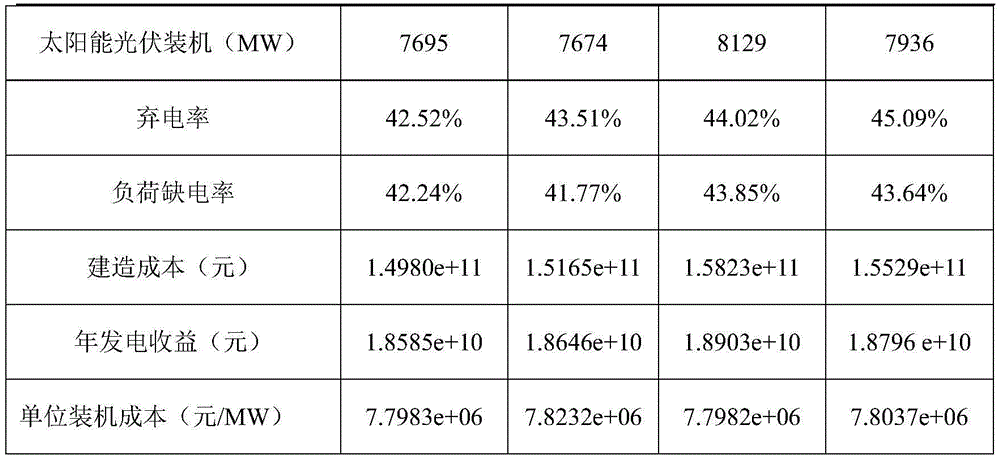
表2光热-光伏-风电模型的单位装机成本结果Table 2. Unit installed cost results of CSP-PV-Wind power model
从负荷数据、计算得到的光伏-风电联合发电出力及光热-光伏-风电联合发电出力中任意提取一天数据,结果如图7所示,其中,Load表示负荷曲线,PV-Wind表示光伏-风电联合出力,CSP-PV-Wind表示光热-光伏-风电联合出力。One day’s data is arbitrarily extracted from the load data, the calculated PV-wind power co-generation output and the CSP-PV-wind power co-generation output. The results are shown in Figure 7, where Load represents the load curve, and PV-Wind represents the photovoltaic-wind power. Combined output, CSP-PV-Wind represents the combined output of solar thermal-photovoltaic-wind power.
从表1,表2和图7中可以看出能量浪费率和负荷缺电率相近时,光热-光伏-风电联合发电模型比光伏-风电联合发电模型的能量浪费率和负荷缺电率较小,发电质量和年发电收益较高明显提高,但是光热容量偏大。From Table 1, Table 2 and Figure 7, it can be seen that when the energy waste rate and the load power shortage rate are similar, the energy waste rate and load power shortage rate of the solar thermal-photovoltaic-wind power combined generation model are higher than those of the photovoltaic-wind power combined power generation model. Small, the power generation quality and annual power generation income are higher and significantly improved, but the solar thermal capacity is too large.
综上,本发明主要由风电和光伏直接供电,光热电站作为调峰、调频和无功补偿。在满足建造成本最低,年总弃电量费用最小,年总发电量不足负荷的缺电量费用最小和年总发电收益最大的情况下,采用粒子群算法优化光热电站、光伏电站和风电场的装机容量,得到的能量浪费率和负荷缺电率均在15%以内,平移了发电时段,提高了发电质量。To sum up, the present invention is mainly powered by wind power and photovoltaic power directly, and the solar thermal power station is used for peak regulation, frequency regulation and reactive power compensation. The particle swarm algorithm is used to optimize the installed capacity of CSP plants, photovoltaic plants and wind farms under the conditions that the construction cost is the lowest, the total annual electricity curtailment cost is the smallest, the electricity shortage cost for the insufficient annual total power generation load is the smallest, and the annual total power generation revenue is the largest. capacity, the obtained energy waste rate and load power shortage rate are both within 15%, which shifts the power generation period and improves the power generation quality.
以上所述仅是本发明的优选实施方式,应当指出,对于本技术领域的普通技术人员来说,在不脱离本发明技术原理的前提下,还可以做出若干改进和变形,这些改进和变形也应视为本发明的保护范围。The above are only the preferred embodiments of the present invention. It should be pointed out that for those skilled in the art, without departing from the technical principle of the present invention, several improvements and modifications can also be made. These improvements and modifications It should also be regarded as the protection scope of the present invention.
Claims (4)

Priority Applications (1)
| Application Number | Priority Date | Filing Date | Title |
|---|---|---|---|
| CN201910650474.3A CN110365013B (en) | 2019-07-18 | 2019-07-18 | A capacity optimization method for a combined solar thermal-photovoltaic-wind power generation system |
Applications Claiming Priority (1)
| Application Number | Priority Date | Filing Date | Title |
|---|---|---|---|
| CN201910650474.3A CN110365013B (en) | 2019-07-18 | 2019-07-18 | A capacity optimization method for a combined solar thermal-photovoltaic-wind power generation system |
Publications (2)
| Publication Number | Publication Date |
|---|---|
| CN110365013A CN110365013A (en) | 2019-10-22 |
| CN110365013B true CN110365013B (en) | 2020-12-08 |
Family
ID=68221154
Family Applications (1)
| Application Number | Title | Priority Date | Filing Date |
|---|---|---|---|
| CN201910650474.3A Active CN110365013B (en) | 2019-07-18 | 2019-07-18 | A capacity optimization method for a combined solar thermal-photovoltaic-wind power generation system |
Country Status (1)
| Country | Link |
|---|---|
| CN (1) | CN110365013B (en) |
Families Citing this family (11)
| Publication number | Priority date | Publication date | Assignee | Title |
|---|---|---|---|---|
| CN110752625B (en) * | 2019-10-29 | 2020-12-25 | 青海格尔木鲁能新能源有限公司 | Operation strategy optimization method of multi-energy complementary new energy power generation system |
| CN112906927B (en) * | 2019-12-03 | 2024-04-19 | 新奥数能科技有限公司 | Method and device for optimizing income of cogeneration unit |
| CN110994698B (en) * | 2019-12-18 | 2022-05-24 | 东北电力大学 | Optimized operation method of solar photovoltaic-photothermal combined power generation system |
| CN111598401B (en) * | 2020-04-20 | 2022-03-01 | 大唐环境产业集团股份有限公司 | Method and device for determining operation strategy of cogeneration system with heat storage |
| CN111723475B (en) * | 2020-06-01 | 2022-11-04 | 河海大学 | A wind power, photovoltaic and heat storage combined heat and power system and its capacity optimization modeling method |
| CN112149339B (en) * | 2020-09-04 | 2022-11-04 | 河海大学 | Capacity optimization model of wind power-photovoltaic-photothermal-electric heater complementary power generation system |
| CN112734464A (en) * | 2020-12-31 | 2021-04-30 | 晶科能源股份有限公司 | Project cost prediction method and device and electronic equipment |
| CN112821466B (en) * | 2021-01-08 | 2023-02-28 | 湖北工业大学 | Independent micro-grid capacity configuration method containing photo-thermal power generation |
| CN113394817B (en) * | 2021-06-28 | 2023-03-28 | 国网甘肃省电力公司电力科学研究院 | Multi-energy capacity optimal configuration method of wind, light, water and fire storage system |
| CN114240104B (en) * | 2021-12-03 | 2022-08-30 | 中广核太阳能开发有限公司 | Photovoltaic electricity abandoning energy storage power and energy storage capacity configuration method and device |
| CN118572797B (en) * | 2024-08-02 | 2024-11-26 | 中国电建集团西北勘测设计研究院有限公司 | Capacity optimization configuration method and device for photovoltaic photo-thermal complementary power generation system |
Citations (2)
| Publication number | Priority date | Publication date | Assignee | Title |
|---|---|---|---|---|
| US7043340B2 (en) * | 2002-02-25 | 2006-05-09 | General Electric Company | Protection system for power distribution systems |
| CN101789598A (en) * | 2010-03-05 | 2010-07-28 | 湖北省电力试验研究院 | Power system load modelling method |
-
2019
- 2019-07-18 CN CN201910650474.3A patent/CN110365013B/en active Active
Patent Citations (2)
| Publication number | Priority date | Publication date | Assignee | Title |
|---|---|---|---|---|
| US7043340B2 (en) * | 2002-02-25 | 2006-05-09 | General Electric Company | Protection system for power distribution systems |
| CN101789598A (en) * | 2010-03-05 | 2010-07-28 | 湖北省电力试验研究院 | Power system load modelling method |
Non-Patent Citations (1)
| Title |
|---|
| 风电-光伏-光热联合发电系统的模糊多目标优化模型;张宏等;《电源学报》;20190614;第1-13页 * |
Also Published As
| Publication number | Publication date |
|---|---|
| CN110365013A (en) | 2019-10-22 |
Similar Documents
| Publication | Publication Date | Title |
|---|---|---|
| CN110365013B (en) | A capacity optimization method for a combined solar thermal-photovoltaic-wind power generation system | |
| CN111738497B (en) | A two-layer optimal dispatching method for virtual power plants taking into account demand side response | |
| CN109327042B (en) | A multi-energy joint optimal dispatching method for microgrid | |
| CN104242335B (en) | A kind of wind-light storage generator unit capacity configuration optimizing method based on rated capacity | |
| CN103023035B (en) | Optimal configuration method of multi-energy supplementary power generation system | |
| CN113343478B (en) | Independent microgrid capacity optimal configuration method considering uncertainty and demand response | |
| WO2022100091A1 (en) | Centralized control method for scheduling of generalized source storage system | |
| CN107807523A (en) | Consider the Regional Energy internet multi-source coordination optimization operation reserve of tou power price | |
| CN109936164A (en) | Multiple-energy-source electric power system optimization operation method based on the analysis of power supply complementary characteristic | |
| CN116979578A (en) | A method and system for optimal dispatching of electricity, heat and electricity combined with wind, solar, water and thermal storage | |
| CN110807588A (en) | An optimal scheduling method for a multi-energy coupled integrated energy system | |
| CN111313480A (en) | A Design Method of Multi-energy Complementary System Based on Multi-objective Optimization | |
| CN115841396A (en) | Watershed cascade water-wind-solar complementary capacity stowage optimization and economic evaluation method | |
| CN107732949A (en) | A method of energy storage point distribution and constant capacity comprehensive wind power year-round and multi-seasonal characteristics | |
| CN112541609A (en) | Wind-light-heat and water energy storage combined renewable energy power generation system capacity optimization model | |
| CN117526446A (en) | Double-layer optimal configuration method of wind and solar capacity in cascade hydro-wind-solar multi-energy complementary power generation system | |
| CN112653137A (en) | Photothermal power station and wind power system considering carbon transaction, and low-carbon scheduling method and system | |
| CN109861292B (en) | Method for improving clean energy consumption based on multi-energy storage system | |
| CN112883630B (en) | Optimized economic dispatch method for multi-microgrid system for wind power consumption | |
| Guo et al. | Capacity configuration and economic analysis of integrated wind–solar–thermal–storage generation system based on concentrated solar power plant | |
| CN110601254A (en) | Wind power plant energy storage optimization configuration method and system considering dynamic current-carrying characteristics | |
| CN110119850A (en) | The quantity of heat storage dual-stage Optimization Scheduling adjusted based on photo-thermal power generation | |
| CN110829493A (en) | Photo-thermal-wind power combined operation method for photo-thermal participating in power grid peak regulation | |
| CN115659666A (en) | A combined optimal scheduling method for virtual power plants with wind and wind considering integrated demand response | |
| CN110334856A (en) | A kind of wind-light storage method for planning capacity based on carbon transaction mechanism |
Legal Events
| Date | Code | Title | Description |
|---|---|---|---|
| PB01 | Publication | ||
| PB01 | Publication | ||
| SE01 | Entry into force of request for substantive examination | ||
| SE01 | Entry into force of request for substantive examination | ||
| GR01 | Patent grant | ||
| GR01 | Patent grant |