Background
With the rapid development and continuous expansion of the application scale of the smart power grid, the interactive information types and contents between the regulation and control center and the transformer substation are increasingly complex, and a service-based interactive infrastructure provides a framework foundation for typical application services of information interaction between the main substation and the sub substation. Based on an intelligent substation monitoring system, a service-based system architecture is introduced, a function access interface is provided for a regulation center in a standardized service mode, and the method has important practical significance for supporting regulation and control integration and improving the operation reliability and economy of the whole power grid.
In the process of advancing the station-side system service, the application requirements are continuously mined, the functional service interface is expanded and extended, and the application load is increased. To accommodate the expansion of traffic, the design of the basic components and critical communication links needs to be perfected.
The service agent, the service management module and the service provider are necessary basic components in a station end system based on a service system architecture, and are the most important three communication links. According to the business function characteristics of each link, a two-machine/multi-machine cooperation mechanism adaptive to each link is realized, so that concurrent access of multiple clients to the same service and different services by the multiple clients is coped with, and a foundation is laid for extension and extension of service.
The following is a description of some proper terms used herein:
the service requester: the client requests the in-station service and can be deployed at a substation end or a main station end.
The service agent: and the portal for accessing the station service by the client is also a portal for the external interaction of the service function in the station. And in the interaction process of the client and the server, the client is mainly responsible for information forwarding.
A service management module: and the service centralized station in the station is responsible for unified management of the application service of the station end and provides an inquiry function.
The service provider: a set of services responsible for publishing the services and responding to service requests.
Disclosure of Invention
The invention aims to solve the technical problem of providing a method for realizing the double-machine cooperation of a station end system based on a service architecture. In order to solve the technical problems, the technical scheme adopted by the invention is as follows:
the method for realizing the station-side system cooperation mechanism based on the service architecture comprises a service requester, a service agent, a service management module and a service provider; the service provider issues the service to the service management module, and the service management module carries out unified monitoring and management; when a service requester accesses a service, the service requester sends a service access request to a service agent, the service agent firstly interacts with a service management module to obtain a service positioning result, and the service access request is forwarded to a service provider according to the positioning result; the service provider accepts the service access request, binds the service, and forwards the service access result to the service requestor via the service broker.
The invention comprises three important links of a service agent, a service management module and a service provider. Preferably, the service agent is a portal for accessing the station system service by the client and is also a portal for the interaction of the service function in the station to the outside; the service agent does not pay attention to specific interactive contents, is mainly responsible for information forwarding, has no service processing state and does not need data synchronization; the service agent preferably adopts a non-master-slave asynchronous dual-computer/multi-computer cooperation strategy.
Preferably, the service management module is an intra-station service centralized station and is responsible for service registration, cancellation, positioning and state maintenance, wherein service positioning is a passive response function, and the service state maintenance is used as a data basis, and the function provides instant and effective data, namely, data synchronization is not needed; the service management module preferably adopts a dual-machine/multi-machine cooperation strategy for distinguishing main and auxiliary from asynchronous, when the service agent requests service positioning information, the service agent is processed by the main service management module, and the auxiliary service management module is not processed; the service provider respectively sends service states to the main service management module and the auxiliary service management module so as to respectively maintain effective service list information; when the main service management module is abnormal, synchronization is not needed, and the auxiliary service management module is automatically switched to be the main service management module.
Preferably, the service provider is a collection of services, and one service provider may comprise a plurality of service interfaces according to business relevance and design requirements; service providers can be divided into two types, one is that an interface and a function are implemented as the same functional module, and the other is that another functional module is called or a task is forwarded to the other functional module in the interface implementation.
Preferably, the interaction steps of service registration, deregistration and state maintenance are as follows:
a1) the method comprises the steps that a main service provider and an auxiliary service provider are deployed and distinguished on a double machine, and the main service provider respectively initiates service registration requests to a main service management center and an auxiliary service management center; deploying service providers which are not divided into a main service provider and an auxiliary service provider to the double computers, wherein the double computer service providers all initiate service registration requests to the main service management center and the auxiliary service management center;
b1) after receiving the service registration request, the main and auxiliary service management centers reply the registration result to the corresponding service provider;
c1) the service provider processes according to the returned service registration result, and sends a heartbeat packet to a corresponding service management center after the registration is successful; after the registration fails, the registration request is continuously sent to the corresponding service management center until the registration is successful;
d1) the main and auxiliary service management centers receive the heartbeat packet and reply, if a certain application service does not receive the heartbeat packet for three times continuously, the service is marked to be abnormal, and the service is removed from the registration success list;
e1) and the service provider receives and processes the heartbeat packet reply, marks the service as an unregistered state if the heartbeat packet reply is not received for three times continuously, and sends a registration request to the corresponding service management center again.
Preferably, the interaction steps of service access are as follows:
a2) the service requester acquires a service agent list according to the domain registration information, and selects a service agent to send an application service access request;
b2) after receiving the application service access request, the service agent sends application service positioning information to the main and auxiliary service management centers;
c2) after receiving the service positioning request, the main service management center returns application service information to the service agent; after receiving the query request, the auxiliary service management center does not process the query request;
d2) after receiving the positioning result, the service agent establishes communication connection according to the positioning result and forwards the application service access request to the service provider;
e2) the service provider receives and processes the application service access request, and returns an access result to the service agent;
f2) the service agent forwards the application service access result to the service requester.
The invention has the beneficial effects that:
the invention provides a method for realizing a station-side system cooperation mechanism based on a service architecture according to a typical dual-machine/multi-machine configuration mode in the current transformer substation, and improves the stability of service access on the premise of not influencing the service access efficiency.
Detailed Description
The technical scheme of the invention is specifically explained below with reference to the accompanying drawings.
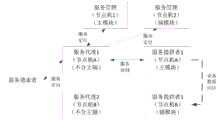
Fig. 1 is an interaction diagram of a station-side system collaboration based on a service architecture, which includes a service requester, a service agent, a service management module, and a service provider. The service provider issues the service to the service management module, and the service management module carries out unified monitoring and management; when a service requester accesses a service, the service requester sends a service access request to a service agent, the service agent firstly interacts with a service management module to obtain a service positioning result, and the service access request is forwarded to a service provider according to the positioning result; the service provider accepts the service access request, binds the service, and forwards the service access result to the service requestor via the service broker.
The embodiment of the invention provides a method for realizing a double-machine/multi-machine cooperation mechanism of a station-side system based on a service architecture, which mainly relates to three key functions of a service agent, a service management module and a service provider.
(1) A method for realizing a dual-machine/multi-machine cooperation mechanism of a service agent.
The service agent is a portal for accessing the system service of the station end by the client and is also a portal for the interaction of the service function in the station to the outside. The service agent does not pay attention to specific interactive contents, is mainly responsible for information forwarding, has no service processing state and does not need data synchronization.
Therefore, the service agent preferably adopts a non-master-slave asynchronous dual-computer/multi-computer cooperation strategy. When the client accesses the system service of the station end, the proxy gateway can be flexibly selected according to the requirement, and the proxy gateway can be alternately used according to a certain rule so as to share the load.
(2) A method for implementing a dual-machine/multi-machine cooperation mechanism of a service management module.
The service management module is a service centralized station in the station and is responsible for functions of service registration, cancellation, positioning, state maintenance and the like. The service location is a passive response function, and based on service state maintenance, the function should provide instant and effective data, i.e. no data synchronization is needed.
Therefore, the service management module preferably adopts a dual-computer/multi-computer cooperation strategy for distinguishing main and auxiliary asynchronous systems. When the service agent requests the service positioning information, the service agent is processed by the main service management module, and the auxiliary service management module is not processed; the service provider respectively sends service states to the main service management module and the auxiliary service management module so as to respectively maintain effective service list information; when the main service management module is abnormal, synchronization is not needed, and the auxiliary service management module is automatically switched to be the main service management module.
(3) A method for implementing a dual/multi-machine cooperation mechanism of a service provider.
A service provider is a collection of services, and a service provider may contain multiple servitization interfaces, as needed for business relevance and design. Service providers can be divided into two types, one is that an interface and a function are implemented as the same functional module, and the other is that another functional module is called or a task is forwarded to the other functional module in the interface implementation.
For the first case, the service provider decides which dual-computer/multi-computer cooperation strategy to adopt based on the service operation directly according to the service requirement and the call dependency relationship between the interfaces. If the service interface has the influence of the sequence or data on the service, a dual-computer/multi-computer cooperation strategy for distinguishing the primary and secondary data synchronization is preferably adopted.
For the second case, the service provider only implements the call or information forwarding without paying attention to the service operation, and preferably adopts a non-master-slave asynchronous dual-computer/multi-computer cooperation strategy.
For the service providers which distinguish the main service provider from the auxiliary service provider, the main service provider keeps the synchronization with the service data of the auxiliary service provider in the service interaction process; and when the main service provider is abnormal, the auxiliary service provider is automatically switched to the main service provider, and the service registration request is sent to the main/auxiliary management module again.
The following takes the interaction process shown in fig. 1 as an example, and is specifically divided into two parts, namely service registration, cancellation, state maintenance and service access, and the embodiment of the present invention is further described in detail by taking a dual-machine cooperation as an example:
1. service registration, cancellation and state maintenance.
Fig. 2 shows an interaction diagram of service registration, cancellation and status maintenance. When the dual-computer is deployed, the interactive processes of service registration, service logout and state maintenance are as follows:
a1) the method comprises the steps that a main service provider and an auxiliary service provider are deployed and distinguished on a double machine, and the main service provider respectively initiates service registration requests to a main service management center and an auxiliary service management center; deploying service providers which are not divided into a main service provider and an auxiliary service provider to the double computers, wherein the double computer service providers all initiate service registration requests to the main service management center and the auxiliary service management center;
b1) after receiving the service registration request, the main and auxiliary service management centers reply the registration result to the corresponding service provider;
c1) the service provider processes according to the returned service registration result, and sends a heartbeat packet to a corresponding service management center after the registration is successful; after the registration fails, the registration request is continuously sent to the corresponding service management center until the registration is successful;
d1) the main and auxiliary service management centers receive the heartbeat packet and reply, if a certain application service does not receive the heartbeat packet for three times continuously, the service is marked to be abnormal, and the service is removed from the registration success list;
e1) and the service provider receives and processes the heartbeat packet reply, marks the service as an unregistered state if the heartbeat packet reply is not received for three times continuously, and sends a registration request to the corresponding service management center again.
2. A method for implementing service access.
As shown in fig. 3, which is an interactive view of service access. When the dual-computer deployment is carried out, the service access interaction process is as follows:
a2) the service requester acquires a service agent list according to the domain registration information, and selects a service agent to send an application service access request;
b2) after receiving the application service access request, the service agent sends application service positioning information to the main and auxiliary service management centers;
c2) after receiving the service positioning request, the main service management center returns application service information to the service agent; after receiving the query request, the auxiliary service management center does not process the query request;
d2) after receiving the positioning result, the service agent establishes communication connection according to the positioning result and forwards the application service access request to the service provider;
e2) the service provider receives and processes the application service access request, and returns an access result to the service agent;
f2) the service agent forwards the application service access result to the service requester.
Further, in this embodiment, the service agent is an externally interactive portal, and is generally deployed in a substation data communication gateway device, so as to communicate with a client outside a local area network of a remote control central station system; the client refers to a software module or component for accessing services provided by the station side system, and generally refers to application software for regulating and controlling communication between the center and the station side services;
the service registration function is that a service provider registers respective service interface information to a service management module, the service management module manages the service interface information in a unified way, and the registration information comprises a service name, a parameter list, an IP address and a port number; service state maintenance is to send service running state to the service management module by a service provider at regular time, if service state information is not received within a certain time, the service management module initiatively logs out the service and moves the service out of a service list; the service location information is the host IP to which the service belongs and the port number monitored by the service, and can be set during system configuration.
The service provider type can be designed into a second type when the service adaptation transformation is carried out on the application function in the station end monitoring platform: another functional module is called or the task is forwarded to the other functional module in the interface implementation, so that the dependence and influence on the original system are reduced.