CN110324132B - Method and device for determining codebook size in wireless communication system - Google Patents
Method and device for determining codebook size in wireless communication system Download PDFInfo
- Publication number
- CN110324132B CN110324132B CN201910220233.5A CN201910220233A CN110324132B CN 110324132 B CN110324132 B CN 110324132B CN 201910220233 A CN201910220233 A CN 201910220233A CN 110324132 B CN110324132 B CN 110324132B
- Authority
- CN
- China
- Prior art keywords
- cell
- bwp
- harq
- slot
- active
- Prior art date
- Legal status (The legal status is an assumption and is not a legal conclusion. Google has not performed a legal analysis and makes no representation as to the accuracy of the status listed.)
- Active
Links
- 238000000034 method Methods 0.000 title claims abstract description 88
- 238000004891 communication Methods 0.000 title abstract description 33
- 230000008859 change Effects 0.000 claims abstract description 56
- 230000005540 biological transmission Effects 0.000 description 38
- 238000013468 resource allocation Methods 0.000 description 38
- 230000008569 process Effects 0.000 description 23
- 238000012544 monitoring process Methods 0.000 description 20
- 238000010586 diagram Methods 0.000 description 12
- 238000001228 spectrum Methods 0.000 description 12
- 101150069124 RAN1 gene Proteins 0.000 description 8
- 101100355633 Salmo salar ran gene Proteins 0.000 description 8
- 230000009471 action Effects 0.000 description 8
- 230000002441 reversible effect Effects 0.000 description 7
- 230000002776 aggregation Effects 0.000 description 4
- 238000004220 aggregation Methods 0.000 description 4
- 239000013256 coordination polymer Substances 0.000 description 4
- 238000012545 processing Methods 0.000 description 4
- 230000004044 response Effects 0.000 description 4
- 230000001143 conditioned effect Effects 0.000 description 3
- 238000013461 design Methods 0.000 description 3
- 230000006870 function Effects 0.000 description 3
- 238000013507 mapping Methods 0.000 description 3
- 239000011159 matrix material Substances 0.000 description 3
- 241001633942 Dais Species 0.000 description 2
- 101150071746 Pbsn gene Proteins 0.000 description 2
- 101150014328 RAN2 gene Proteins 0.000 description 2
- 238000004590 computer program Methods 0.000 description 2
- 230000008094 contradictory effect Effects 0.000 description 2
- 125000004122 cyclic group Chemical group 0.000 description 2
- 238000005516 engineering process Methods 0.000 description 2
- 230000007774 longterm Effects 0.000 description 2
- 238000010295 mobile communication Methods 0.000 description 2
- 230000003287 optical effect Effects 0.000 description 2
- 239000002245 particle Substances 0.000 description 2
- 101100087393 Caenorhabditis elegans ran-2 gene Proteins 0.000 description 1
- 230000006978 adaptation Effects 0.000 description 1
- 238000005352 clarification Methods 0.000 description 1
- 230000000295 complement effect Effects 0.000 description 1
- 238000001514 detection method Methods 0.000 description 1
- 230000007717 exclusion Effects 0.000 description 1
- 230000003993 interaction Effects 0.000 description 1
- 230000000670 limiting effect Effects 0.000 description 1
- 238000007726 management method Methods 0.000 description 1
- 238000005259 measurement Methods 0.000 description 1
- 230000007246 mechanism Effects 0.000 description 1
- 238000012986 modification Methods 0.000 description 1
- 230000004048 modification Effects 0.000 description 1
- 230000008520 organization Effects 0.000 description 1
- 239000005022 packaging material Substances 0.000 description 1
- 230000036961 partial effect Effects 0.000 description 1
- 230000011664 signaling Effects 0.000 description 1
- 230000003068 static effect Effects 0.000 description 1
- 230000007704 transition Effects 0.000 description 1
Images


Classifications
-
- H—ELECTRICITY
- H04—ELECTRIC COMMUNICATION TECHNIQUE
- H04L—TRANSMISSION OF DIGITAL INFORMATION, e.g. TELEGRAPHIC COMMUNICATION
- H04L5/00—Arrangements affording multiple use of the transmission path
- H04L5/003—Arrangements for allocating sub-channels of the transmission path
- H04L5/0053—Allocation of signalling, i.e. of overhead other than pilot signals
- H04L5/0055—Physical resource allocation for ACK/NACK
-
- H—ELECTRICITY
- H04—ELECTRIC COMMUNICATION TECHNIQUE
- H04L—TRANSMISSION OF DIGITAL INFORMATION, e.g. TELEGRAPHIC COMMUNICATION
- H04L5/00—Arrangements affording multiple use of the transmission path
- H04L5/003—Arrangements for allocating sub-channels of the transmission path
- H04L5/0058—Allocation criteria
- H04L5/0064—Rate requirement of the data, e.g. scalable bandwidth, data priority
-
- H—ELECTRICITY
- H04—ELECTRIC COMMUNICATION TECHNIQUE
- H04L—TRANSMISSION OF DIGITAL INFORMATION, e.g. TELEGRAPHIC COMMUNICATION
- H04L5/00—Arrangements affording multiple use of the transmission path
- H04L5/0091—Signalling for the administration of the divided path, e.g. signalling of configuration information
- H04L5/0096—Indication of changes in allocation
- H04L5/0098—Signalling of the activation or deactivation of component carriers, subcarriers or frequency bands
-
- H—ELECTRICITY
- H04—ELECTRIC COMMUNICATION TECHNIQUE
- H04W—WIRELESS COMMUNICATION NETWORKS
- H04W76/00—Connection management
- H04W76/30—Connection release
- H04W76/34—Selective release of ongoing connections
-
- H—ELECTRICITY
- H04—ELECTRIC COMMUNICATION TECHNIQUE
- H04L—TRANSMISSION OF DIGITAL INFORMATION, e.g. TELEGRAPHIC COMMUNICATION
- H04L5/00—Arrangements affording multiple use of the transmission path
- H04L5/0001—Arrangements for dividing the transmission path
- H04L5/0003—Two-dimensional division
- H04L5/0005—Time-frequency
- H04L5/0007—Time-frequency the frequencies being orthogonal, e.g. OFDM(A) or DMT
- H04L5/001—Time-frequency the frequencies being orthogonal, e.g. OFDM(A) or DMT the frequencies being arranged in component carriers
-
- H—ELECTRICITY
- H04—ELECTRIC COMMUNICATION TECHNIQUE
- H04L—TRANSMISSION OF DIGITAL INFORMATION, e.g. TELEGRAPHIC COMMUNICATION
- H04L5/00—Arrangements affording multiple use of the transmission path
- H04L5/003—Arrangements for allocating sub-channels of the transmission path
- H04L5/0053—Allocation of signalling, i.e. of overhead other than pilot signals
-
- H—ELECTRICITY
- H04—ELECTRIC COMMUNICATION TECHNIQUE
- H04W—WIRELESS COMMUNICATION NETWORKS
- H04W72/00—Local resource management
- H04W72/04—Wireless resource allocation
- H04W72/044—Wireless resource allocation based on the type of the allocated resource
- H04W72/0446—Resources in time domain, e.g. slots or frames
-
- H—ELECTRICITY
- H04—ELECTRIC COMMUNICATION TECHNIQUE
- H04W—WIRELESS COMMUNICATION NETWORKS
- H04W72/00—Local resource management
- H04W72/20—Control channels or signalling for resource management
- H04W72/23—Control channels or signalling for resource management in the downlink direction of a wireless link, i.e. towards a terminal
-
- H—ELECTRICITY
- H04—ELECTRIC COMMUNICATION TECHNIQUE
- H04W—WIRELESS COMMUNICATION NETWORKS
- H04W92/00—Interfaces specially adapted for wireless communication networks
- H04W92/04—Interfaces between hierarchically different network devices
- H04W92/10—Interfaces between hierarchically different network devices between terminal device and access point, i.e. wireless air interface
Landscapes
- Engineering & Computer Science (AREA)
- Signal Processing (AREA)
- Computer Networks & Wireless Communication (AREA)
- Mobile Radio Communication Systems (AREA)
Abstract
The invention discloses a method and equipment for determining the size of a codebook in a wireless communication system from the perspective of user equipment. In one embodiment, the method includes configuring a first cell for a user equipment. The method further includes configuring a second cell for the user equipment. The method includes the user equipment changing an active downlink bandwidth portion of the first cell from a first downlink bandwidth portion to a second downlink bandwidth portion, wherein a first occasion in the first cell is before completion of the change in the active downlink bandwidth portion of the first cell and a second occasion in the second cell is before completion of the change in the active downlink bandwidth portion of the first cell. Further, the method includes the user equipment transmitting an uplink signal in a time slot on the first cell after the change in the active downlink bandwidth portion, wherein the uplink signal includes a hybrid automatic repeat request acknowledgement associated with the second occasion and not the first occasion.
Description
Technical Field
The present disclosure relates generally to wireless communication networks, and more particularly, to methods and apparatus for determining codebook size in a wireless communication system.
Background
As the demand for transferring a large amount of data to and from mobile communication devices rapidly increases, conventional mobile voice communication networks evolve into networks that communicate Internet Protocol (IP) packets. Such IP packet communications may provide voice-over-IP, multimedia, multicast, and on-demand communication services to users of mobile communication devices.
An exemplary network architecture is an evolved universal terrestrial radio access network (E-UTRAN). The E-UTRAN system can provide high data throughput in order to implement the above-described voice over IP and multimedia services. Currently, the 3GPP standards organization is discussing new next generation (e.g., 5G) radio technologies. Accordingly, changes to the current body of the 3GPP standard are currently being filed and considered to evolve and fulfill the 3GPP standard.
Disclosure of Invention
A method and apparatus are disclosed from a User Equipment (UE) perspective. In one embodiment, the method includes configuring a first cell for the UE. The method further includes configuring the UE with a second cell. The method includes the UE changing an active downlink BWP (bandwidth part) of the first cell from a first downlink BWP to a second downlink BWP, wherein a first occasion in the first cell is before completing the change of active downlink BWP of the first cell and a second occasion in the second cell is before completing the change of active downlink BWP of the first cell. Further, the method includes the UE transmitting an uplink signal in a slot on the first cell after the change in active downlink BWP, wherein the uplink signal includes a HARQ-ACK (hybrid automatic repeat request acknowledgement) associated with the second occasion and not with the first occasion.
Drawings
Fig. 1 shows a diagram of a wireless communication system according to an example embodiment.
Fig. 2 is a block diagram of a transmitter system (also referred to as an access network) and a receiver system (also referred to as user equipment or UE) according to an example embodiment.
Fig. 3 is a functional block diagram of a communication system according to an example embodiment.
FIG. 4 is a functional block diagram of the program code of FIG. 3 according to one exemplary embodiment.
FIG. 5 is a reproduction of Table 7.3.1-1 of 3GPP R1-1803553.
FIG. 6 is a reproduction of Table 7.3.1.1.2-1 of 3GPP R1-1803553.
FIG. 7 is a diagram according to an embodiment.
FIG. 8 is a diagram according to an embodiment.
FIG. 9 is a diagram according to an embodiment.
FIG. 10 is a diagram according to an embodiment.
FIG. 11 is a flowchart in accordance with an example embodiment.
FIG. 12 is a flowchart in accordance with an example embodiment.
FIG. 13 is a flowchart in accordance with an example embodiment.
FIG. 14 is a flowchart in accordance with an example embodiment.
FIG. 15 is a flowchart in accordance with an example embodiment.
FIG. 16 is a flow chart according to an exemplary embodiment.
Detailed Description
The exemplary wireless communication systems and apparatus described below employ a wireless communication system that supports broadcast services. Wireless communication systems are widely deployed to provide various types of communication such as voice, data, and so on. These systems may be based on Code Division Multiple Access (CDMA), Time Division Multiple Access (TDMA), Orthogonal Frequency Division Multiple Access (OFDMA), 3GPP Long Term Evolution (LTE) wireless access, 3GPP Long Term Evolution Advanced (LTE-a), 3GPP2 Ultra Mobile Broadband (UMB), WiMax, 3GPP New Radio (NR), or some other modulation techniques.
In particular, the example wireless communication system apparatus described below may be designed to support one or more standards, such as the standards provided by the consortium entitled "3 rd generation partnership project" referred to herein as 3GPP, including: 3GPP TSG RAN WG1 Meeting #90bis (Prague, CZ, 10 months, 9 days to 13 days 2017) final chairman era (confirmed updates by e-mail); 3GPP TSG RAN WG1 Meeting #91(Reno, USA, 11 month 27 to 12 month 1 of 2017); 3GPP TSG RAN WG1 Meeting AH1801(Vancouver, Canada, 2018, 1 month, 22 days to 26 days) final chairman era; 3GPP TSG RAN WG1 Meeting #92(Athens, greene, 2.26.2018 to 3.2.2 days); r1-1803554, "CR to38.213capturing the NR ad-hoc1801and RAN1#92 recording indicators"; and R1-1803553, "CR to38.212capturing the Jan18 ad-hoc and RAN1#92meeting observations. The standards and documents listed above are hereby expressly incorporated by reference in their entirety.
Fig. 1 illustrates a multiple access wireless communication system according to one embodiment of the present invention. AN access network 100(AN) includes multiple antenna groups, one including 104 and 106, another including 108 and 110, and AN additional including 112 and 114. In fig. 1, only two antennas are shown for each antenna group, but more or fewer antennas may be utilized for each antenna group. Access terminal 116(AT) is in communication with antennas 112 and 114, where antennas 112 and 114 transmit information to access terminal 116 over forward link 120 and receive information from access terminal 116 over reverse link 118. An Access Terminal (AT)122 is in communication with antennas 106 and 108, where antennas 106 and 108 transmit information to Access Terminal (AT)122 over forward link 126 and receive information from Access Terminal (AT)122 over reverse link 124. In a FDD system, communication links 118, 120, 124 and 126 may use different frequency for communication. For example, forward link 120 may use a different frequency than that used by reverse link 118.
Each group of antennas and/or the area in which they are designed to communicate is often referred to as a sector of the access network. In an embodiment, antenna groups each are designed to communicate to access terminals in a sector of the areas covered by access network 100.
In communication over forward links 120 and 126, the transmitting antennas of access network 100 can utilize beamforming in order to improve the signal-to-noise ratio of forward links for the different access terminals 116 and 122. And, an access network that uses beamforming to communicate to access terminals scattered randomly through the coverage of the access network causes less interference to access terminals in neighboring cells than an access network that communicates through a single antenna to all its access terminals.
AN Access Network (AN) may be a fixed station or a base station used for communicating with the terminals and may also be referred to as AN access point, a Node B, a base station, AN enhanced base station, AN evolved Node B (eNB), or some other terminology. An Access Terminal (AT) may also be referred to as a User Equipment (UE), a wireless communication device, a terminal, an access terminal, or some other terminology.
Fig. 2 is a simplified block diagram of an embodiment of a transmitter system 210 (also referred to as an access network) and a receiver system 250 (also referred to as an Access Terminal (AT) or User Equipment (UE)) in a MIMO system 200 AT the transmitter system 210, traffic data for a number of data streams is provided from a data source 212 to a Transmit (TX) data processor 214.
In one embodiment, each data stream is transmitted over a respective transmit antenna. TX data processor 214 formats, codes, and interleaves the traffic data for each data stream based on a particular coding scheme selected for that data stream to provide coded data.
The coded data for each data stream may be multiplexed with pilot data using OFDM techniques. The pilot data is typically a known data pattern that is processed in a known manner and may be used at the receiver system to estimate the channel response. The multiplexed pilot and coded data for each data stream is then modulated (i.e., symbol mapped) based on a particular modulation scheme (e.g., BPSK, QPSK, M-PSK, or M-QAM) selected for that data stream to provide modulation symbols. The data rate, decoding, and modulation for each data stream may be determined by instructions performed by processor 230.
The modulation symbols for all data streams are then provided to a TX MIMO processor 220, which may further process the modulation symbols (e.g., for OFDM). TX MIMO processor 220 then provides NT modulation symbol streams to NT transmitters (TMTR)222a through 222 t. In certain embodiments, TX MIMO processor 220 applies beamforming weights to the symbols of the data streams and to the antenna from which the symbol is being transmitted.
Each transmitter 222 receives and processes a respective symbol stream to provide one or more analog signals, and further conditions (e.g., amplifies, filters, and frequency upconverts) the analog signals to provide a modulated signal suitable for transmission over the MIMO channel. NT modulated signals from transmitters 222a through 222t are then transmitted from NT antennas 224a through 224t, respectively.
At receiver system 250, the transmitted modulated signals are received by NR antennas 252a through 252r and the received signal from each antenna 252 is provided to a respective receiver (RCVR)254a through 254 r. Each receiver 254 conditions (e.g., filters, amplifies, and frequency downconverts) a respective received signal, digitizes the conditioned signal to provide samples, and further processes the samples to provide a corresponding "received" symbol stream.
An RX data processor 260 then receives and processes the NR received symbol streams from NR receivers 254 based on a particular receiver processing technique to provide NT "detected" symbol streams. RX data processor 260 then demodulates, deinterleaves, and decodes each detected symbol stream to recover the traffic data for the data stream. The processing by RX data processor 260 is complementary to that performed by TX MIMO processor 220 and TX data processor 214 at transmitter system 210.
The processor 270 periodically determines which pre-coding matrix to use (discussed below). Processor 270 formulates a reverse link message comprising a matrix index portion and a rank value portion.
The reverse link message may comprise various types of information regarding the communication link and/or the received data stream. The reverse link message is then processed by a TX data processor 238, which also receives traffic data for a number of data streams from a data source 236, modulated by a modulator 280, conditioned by transmitters 254a through 254r, and transmitted back to transmitter system 210.
At transmitter system 210, the modulated signals from receiver system 250 are received by antennas 224, conditioned by receivers 222, demodulated by a demodulator 240, and processed by a RX data processor 242 to extract the reverse link message transmitted by receiver system 250. Processor 230 then determines which pre-coding matrix to use to determine the beamforming weights then processes the extracted message.
Turning to fig. 3, this figure illustrates an alternative simplified functional block diagram of a communication device according to one embodiment of the present invention. As shown in fig. 3, the communication apparatus 300 in a wireless communication system may be utilized for implementing the UEs (or ATs) 116 and 122 in fig. 1 or the base station (or AN)100 in fig. 1, and the wireless communication system is preferably AN NR system. The communication device 300 may include an input device 302, an output device 304, control circuitry 306, a Central Processing Unit (CPU)308, memory 310, program code 312, and a transceiver 314. Control circuitry 306 executes program code 312 in memory 310 via CPU308, thereby controlling the operation of communication device 300. The communication device 300 may receive signals input by a user via an input device 302, such as a keyboard or keypad, and may output images and sounds via an output device 304, such as a display or speaker. Transceiver 314 is used to receive and transmit wireless signals, pass received signals to control circuitry 306, and wirelessly output signals generated by control circuitry 306. The AN100 of fig. 1 can also be implemented with the communication device 300 in a wireless communication system.
FIG. 4 is a simplified block diagram of the program code 312 shown in FIG. 3 according to one embodiment of the present invention. In this embodiment, program code 312 includes an application layer 400, a layer 3 portion 402, and a layer 2 portion 404, and is coupled to a layer 1 portion 406. The layer 3 part 402 generally performs radio resource control. Layer 2 portion 404 typically performs link control. Layer 1 portion 406 typically performs physical connections.
In the RAN1#90bis conference, some protocols related to HARQ-ACK transmission are described in the final chairman summary (e-mail acknowledgement update) of 3GPP TSG RAN WG1 Meeting #90bis (Prague, CZ, 10 months and 9 to 13 days 2017), as provided below. Furthermore, a semi-static codebook and a dynamic codebook for HARQ-ACK (hybrid automatic repeat request acknowledgement) transmission are introduced. Regarding the semi-static codebook, the semi-static codebook may be determined based on at least the number of configured Downlink (DL) serving cells, the maximum number of Transport Blocks (TBs) per DL serving cell, and the number of Code Block Groups (CBGs) per TB.
Protocol:
1. determining timing between DL data transmission and acknowledgement based on 0 or [2] bit in DCI
a. The timing provides an indication of the slot and symbol determining HARQ-ACK transmission for both slotted and non-slotted scheduling
b. In the [2] -bit case, FFS is the actual value set for slot-based scheduling and non-slot-based scheduling, respectively
c. With bit 0, how the FFS determines a single timing (e.g., UE capability dependency, whether or not having RRC configuration, interaction with different scenarios (e.g., initial access), etc.)
Whether the FFS has separate information fields or the same information field for HARQ-ACK resource determination and HARQ timing determination
And (4) conclusion:
2. further discussing offline how to determine HARQ-ACK payload size when two or more PDSCH transmissions are associated with a single UL transmission using PUCCH or PUSCH (e.g., semi-static determination, dynamic determination based on DAI mechanisms similar to LTE, etc.)
Protocol:
HARQ-ACK bundling in NR support spatial domain for NR-PDSCH transmission
FFS details (e.g., whether RRC configuration is present, whether CBG-based HARQ-ACK is applicable, etc.)
Protocol:
● support semi-static and dynamic HARQ-ACK codebooks by configuration for NR non-CA
Attention is paid to: "pass through configuration" also applies to the CA case
Protocol:
● dynamic HARQ-ACK codebook for the case without CBG configuration (per PUCCH group)
HARQ-ACK codebook determination based on corresponding DAIs and total DAIs
■ use LTE as a starting point
■ FFS details
Protocol:
● for HARQ-ACK spatial bundling:
higher layer configuration to support spatial domain bundling for each PUCCH group
■ bundling is for each cell, and the same configuration applies to all cells
Whether FFS supports HARQ space bundling in a dynamic manner
Protocol:
● 'semi-static' HARQ-ACK codebook (per PUCCH group) is determined at least by
Configured number of DL cells
Maximum number of configuration-based TBs per DL cell
Configuration number of CBGs per TB per configured DL cell
O, FFS: handling different sets of digital parameters between UL and DL
FFS details
● dynamic HARQ-ACK codebook with CBG configuration for at least one serving cell (per PUCCH group)
FFS details
In the RAN1#91 conference, one protocol for semi-static codebooks is described in the final chairman era of the 3GPP TSG RAN WG1 conference #91 (rito, 11/27/2017 to 12/1/2017) as provided below. A DL association set is determined based on the set of configured HARQ-ACK timings, and the DL association set may collect slots and/or minislots based on the configured HARQ-ACK timings.
Protocol:
use of 3 bits to indicate K1 slot timing in DCI
RRC configures the value set to be indexed by these bits to determine K1
■ these values are independent of the slot index
■ each value is represented by 4 bits (i.e., up to 16 different values)
Protocol:
1. for semi-static HARQ-ACK codebooks, support
1. Determining a DL association set based on a configured HARQ-ACK timing set, wherein HARQ-ACK payloads are ordered based on DL time index
Absence of DAI in DL grant
Protocol:
1. generating 2 HARQ-ACK sub-codebooks (sub-CBs)
1. First sub-CB for transmission of HARQ-ACK through TB and second sub-CB for transmission of HARQ-ACK through CBG
2. Combining sub-CBs in a single HARQ-ACK codebook (sub-CBs for TB-based HARQ-ACK are placed first)
3. Without additional reliability enhancement
And (4) conclusion:
1. it should be understood that for the same scheduling "type" (i.e., "slot-based scheduling" or "non-slot-based" scheduling), different PDCCH monitoring periodicities are supported for each PUCCH cell group
In the RAN1 ad hoc #1801 conference, some protocols related to HARQ-ACK timing are described in the final chairman era of 3GPP TSG RAN WG1 conference #91 (wingowski, canada, 1 month 22 days to 26 days 2018) as provided below. The UE may use values 1 to 8 as HARQ-ACK timing before the UE receives the dedicated configuration for HARQ-ACK timing (K1). If the UE receives a dedicated configuration for HARQ-ACK timing (K1), the UE may transmit HARQ-ACK based on the configured HARQ-ACK timing. In other words, the DL association set may be determined based on the configured HARQ-ACK timing (K1). For example, if the UE is configured with a set of HARQ-ACK timings (or a set of K1 values), the UE transmits HARQ-ACK (and/or a semi-static codebook) in slot # n via a Physical Uplink Control Channel (PUCCH), where HARQ-ACK corresponds to DL transmission (and/or a (unicast) Physical Downlink Shared Channel (PDSCH)) received by the UE in DL slot # n-K1.
Protocol:
1. set of timing values K1 between PDSCH and HARQ-ACK for PDSCH transmissions before RRC connection
1. Defined in the specification to use the values 1, 2, 3, 4, 5, 6, 7, 8}
2. Note that: these values should take into account the agreed UE minimum timing requirements in the initial access
2. Set of timing values K1 between PDSCH and HARQ-ACK for PDSCH scheduled by fallback DCI
1. Defined in the specification to use the values 1, 2, 3, 4, 5, 6, 7, 8}
Protocol:
1. the set of K1 slot timing values configurable in RRC includes at least a set
1.{0,1,2,3,4,5,6,7,8}
2. Some of the 16 available RRC values may be reserved
Protocol:
2. when DL SPS PDSCH is detected in slot n, when there is no contradictory semi-static configuration, the UE transmits a HARQ-ACK in slot n + k, where k is given by the PDSCH-to-HARQ timing indicator field carried in the active DCI of the DL SPS process.
FFS: how to handle the case where semi-static configuration conflicts at slot n + k
2, FFS: how to handle dynamic SFI conditions
3. Contradictory semi-static configurations are defined as there being at least one semi-static configured DL symbol overlapping with the symbol carrying HARQ-ACK in slot n + k
Protocol:
3. the number of HARQ processes for unicast PDSCH for each cell of the UE that may be configured in RRC includes an integer set {2, 4, 6, 8, 10, 12, 16 }.
1. Regardless of configuration, 4 bits are provided in fallback and non-fallback DCI for resolving HARQ processes
UE does not expect DCI to process ID greater than number of HARQ processes configured in RRC
3. Further discussion of the number of HARQ processes employed by the UE prior to RRC configuration is taken offline
FFS fixes the number of HARQ processes of PUSCH to 16
R1-1801124Overview of DL/UL scheduling and HARQ management
Protocol:
● clarification Table 2-1 in R1-1801124 "time slot based scheduling" in the previous UE processing time RAN1#91 corresponds to the following condition
Cases 1-1: PDCCH monitoring periodicity of 14 or more symbols
PDCCH monitoring of up to three OFDM symbols at the beginning of a slot
PDSCH type a and PUSCH type a or B
PDSCH duration of at least 7 symbols
For C-RNTI only
The same applies for the case where the UE processes both C-RNTI and other broadcast RNTI at the same time (working assumption)
In the RAN1#92 conference, an agreement is reached for HARQ-ACK timing as described in the final chairman era of 3GPP TSG RAN WG1 conference #92 (greek asens, 26 to3 months 2 of 2018) provided below. HARQ timing indicated by Downlink Control Information (DCI) format 1_0 and DCI format 1_1 may be different. An agreement is reached to limit the HARQ timing indicated by DCI format 1_0 to a subset of the HARQ-ACK timing for a given cell.
Protocol:
1. when the UE is configured with a semi-static HARQ-ACK codebook, the codebook is invariant with the dynamic SFI
Protocol:
2. limiting HARQ-ACK timing for DCI format 1_0 to a subset of HARQ-ACK timing configured for DCI format 1_1 for a given cell is supported when the UE is configured with a semi-static HARQ-ACK codebook
1. As an example: HARQ-ACK timing for configuration of DCI format 1_1 is {2, 6, 9} → then timing of DCI format 1_0 of {2, 6} is possible, but if any timing value comes from {1, 3, 4, 5, 7, 8}, then it is not possible that it is
1. HARQ-ACK timing that is not based on the above rule is not indicated by DCI Format 1_0 for the desired UE
And (4) conclusion:
1. it should be appreciated that prior to dedicated RRC configuration, there is no need to define a default HARQ-ACK codebook prior to dedicated RRC configuration, since it has been agreed previously that "HARQ-ACK does not have only one bit bundled prior to RRC connection"
Protocol:
1. the following working assumptions were confirmed by the update:
1. the working assumption is that: in the case that the UE is configured for semi-static HARQ-ACK codebook determination, when the UE detects that only one PDSCH is received within the DL association set of HARQ-ACK feedback on the Pcell, the UE reports HARQ-ACK only for the one PDSCH
1. The constraint is only added if the UE detects DCI Format 1_0 with a corresponding DAI value of 1
Protocol:
2. when the UE is configured with a semi-static HARQ-ACK codebook, the UE does not transmit HARQ-ACKs after the handover corresponding to PDSCH transmissions of DL BWP prior to DL and/or UL BWP handover.
The working assumption is that:
1. when the UE is configured with a semi-static HARQ-ACK codebook based on each cell:
1. if the UE indicates the capability to receive more than one unicast PDSCH per slot, it takes the maximum number of non-overlapping candidate unicast PDSCH occasions per slot, as determined by the SLIV in the configured PDSCH-symbol allocation table.
2. Otherwise, expecting that the UE only receives one unicast PDSCH per time slot, and adopting one unicast PDSCH per time slot by the HARQ-ACK association set;
3. handling HARQ-ACK of PDCCH for SPS release follows the same way as in LTE
Protocol:
1. in Rel-15, it is not desirable for a UE to be configured to report more than 2 HARQ-ACKs received by SPSPDSCH on the same PUCCH
1. This protocol is contained in one of the LS to RAN2
Protocol:
2. in response to LS (on EN-DC) from RAN 2:
1. simultaneously configuring EN-DC and NR PUCCH Scell (PScell)
1. However, under EN-DC, it is not desirable for a UE to configure more than one PUCCH in NR
2. Also illustrated is an understanding of RAN1 of the intent of the RAN2 problem
2. Simultaneous transmission of PUCCH and PUSCH in LTE for EN-DC
1. Is that
Procedures related to receiving Control Resource Set (CORESET) and/or slot format related information are described in 3GPP R1-1803554, as provided below. Bandwidth Part (BWP) related procedures are also described in 3GPP R1-1803554, as provided below.
UE procedure for reporting control information
If the UE is configured with SCG, the UE should apply the procedure described in this subclause for both MCG and SCG.
The terms "secondary cell", "serving cell" in this clause refer to a secondary cell, serving cell, respectively belonging to an MCG, when said procedure is applied to an MCG.
The terms "secondary cell", "serving cell" in this clause refer to secondary cell, secondary cell (not including PSCell), serving cell belonging to SCG, respectively, when the procedure is applied to SCG. The term "primary cell" in this clause refers to the PSCell of the SCG.
If the UE is configured with a PUCCH-SCell, the UE should apply the procedures described in this clause for both primary and secondary PUCCH groups
The terms "secondary cell", "serving cell" in this clause refer to a secondary cell, serving cell, respectively belonging to a primary PUCCH group, when the procedure is applied to the primary PUCCH group.
When the procedure is applied to a secondary PUCCH group, the terms "secondary cell", "serving cell" in this clause refer to a secondary cell (not including PUCCH-SCell), serving cell, respectively, belonging to the secondary PUCCH group, unless otherwise specified. The term "primary cell" in this clause refers to the PUCCH-SCell of the secondary PUCCH group.
If the UE is to multiplex UCI in a PUCCH transmission having the same first symbol as the PUSCH transmission, the UE multiplexes UCI in the PUSCH transmission and does not transmit PUCCH.
If the UE multiplexes aperiodic CSI in PUSCH and the UE is to multiplex UCI having the same first symbol as PUSCH in PUCCH, the UE multiplexes UCI in PUSCH.
If the UE transmits multiple PUSCHs starting with the same symbol on the respective serving cell, and the UE is to multiplex UCI in one of the multiple PUSCHs and the UE does not multiplex aperiodic CSI in any of the multiple PUSCHs, the UE multiplexes UCI in the PUSCH of the serving cell with the smallest ServCellIndex.
The HARQ-ACK information bit value of 0 indicates Negative Acknowledgement (NACK), and the HARQ-ACK information bit value of 1 indicates positive Acknowledgement (ACK).
9.1 HARQ-ACK codebook determination
If the UE receives the PDSCH without receiving the corresponding PDCCH, or if the UE receives the PDCCH indicating the SPS PDSCH release, the UE generates one corresponding HARQ-ACK information bit.
The UE generates one HARQ-ACK information bit per transport block if the UE is not configured with the higher layer parameter CBG-DL ═ ON.
The UE is not expected to be instructed to transmit HARQ-ACK information received for more than two SPS PDSCHs in the same PUCCH.
Hereinafter, the CRC of DCI format 1_0 is scrambled with C-RNTI or CS-RNTI, and the CRC of DCI format 1_1 is scrambled with C-RNTI.
9.1.1 CBG-based HARQ-ACK codebook determination
The UE receives a PDSCH containing a Code Block Group (CBG) of a transport block if configured for each serving cell having a higher layer parameter CBG-DL ═ ON. If the UE is configured by the higher layer parameter CBG-DL ═ ON, the UE is configured by the higher layer parameter CBGs-per-TB-DL of each serving cell for generating the maximum number of corresponding HARQ-ACK information bits for transport block reception The CBG of (1).
For the number C Code Blocks (CBs) in a transport block, the UE determines the number of CBGs as Reach of front
 Each of the CBGs includes
 A CB, wherein CBG
 Comprising CBs
 And is then
 Each of the CBGs includes
 A CB, wherein CBG
 Comprising CB
 UE via and
 one-to-one mapping generation of individual CBGs
 HARQ-ACK information bits if the UE receives two transport blocks, the UE concatenates the HARQ-ACK information bits of the second transport block after the HARQ-ACK information bits of the first transport block. The UE generates an ACK for HARQ-ACK information bits of the CBG if the UE correctly receives all code blocks of the CBG, and generates a NACK for HARQ-ACK information bits of the CBG if the UE erroneously receives at least one code block of the CBG.
Re-transmission of a transport block to a UE (corresponding to the same HARQ process as the previous transmission of the transport block to the UE) contains the same CB in the CBG as the initial transmission of the transport block.
If DCI Format 1_1 schedules retransmission of a transport block and contains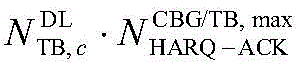 A CBG transport information (CBGTI) field of bits, wherein
 Is a value of higher layer parameter Number-MCS-HARQ-DL-DCI for serving cell c, where the CBGTI field for the transport block is preceded by
 The bits being associated with a transport block
 Each CBG has a one-to-one mapping. The UE determines based on the corresponding value of the CBGTI fieldWhether to retransmit the CBG, where binary 0 indicates to retransmit the corresponding CBG, and
 binary 1 indicates not to retransmit the corresponding CBG.
The HARQ-ACK codebook includes if the UE is configured with a higher layer parameter HARQ-ACK-codebook (semi-static)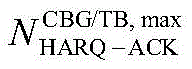 One HARQ-ACK information bit, and if for a transport block
 The UE generates the transmission block in the HARQ-ACK codebook
 And one HARQ-ACK information bit.
If the UE generates a HARQ-ACK codebook (corresponding to the same HARQ process as the previous transmission of the transport block) in response to the retransmission of the transport block, the UE generates an ACK for each CBG that the UE correctly decoded at the previous transmission of the transport block.
If the UE correctly detects Each of the individual CBGs not correctly detected for
 The transport block of a CBG is the UE
 Each of the CBGs generates a NACK value.
If the UE receives a PDSCH scheduled by a PDCCH having DCI format 1_0, the UE generates HARQ-ACK information only for transport blocks in the PDSCH.
If the UE receives a PDSCH scheduled by a PDCCH with DCI format 1_0 and if the UE is configured with a higher layer parameter HARQ-ACK-codebook ═ semi-static, the UE repeats HARQ-ACK information secondary to transport blocks in PDSCH to generate
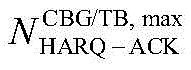 HARQ-ACK information bits as described in subclause 9.1.2.
9.1.2 type 1HARQ-ACK codebook determination
This sub-term applies if the UE is configured with HARQ-ACK-codebook ═ semi-static.
If the UE is only released for SPS PDSCH, or only received for candidate PDSCHM A,cPDSCH reception within a timer reporting HARQ-ACK information in PUSCH or PUCCH (scheduled by DCI format 1_0 with a corresponding Downlink Allocation Indicator (DAI) field value on PCell of 1, as determined in subclause 9.1.2.1), then the UE determines the HARQ-ACK codebook only for SPS PDSCH release or only for PDSCH reception; otherwise, the following procedure for HARQ-ACK codebook determination applies.
Type 1HARQ-ACK codebook in 9.1.2.1 physical uplink control channel
For serving cell c and active DL BWP and active UL BWP, the UE determines M of candidate PDSCH receptions for HARQ-ACK information that the UE can transmit PUCCH in slot n, as described in subclause 12A,cA set of occasions. The determination is based on:
● set of time-slot timing values K now associated with an active DL BWP1
If the UE is configured to monitor PDCCH for DCI format 1_0 and not configured to monitor PDCCH for DCI format 1_1 on serving cell c, K is provided for DCI format 1_0 by slot timing value {1, 2, 3, 4, 5, 6, 7, 8}1;
If the UE is configured to monitor the PDCCH for DCI format 1_1 on serving cell c, K is provided by the higher layer parameter DL-data-DL-acknowledgement for DCI format 1_11;
If the UE is configured to monitor DCI Format 1_0 and DCI Format 1_1 PDCCH on serving cell c, the set of slot timing values provided by (a) the higher layer parameter DL-data-DL-acknowledgement for DCI Format 1_ 1and (b) the slot timing valuesThe intersection of the set {1, 2, 3, 4, 5, 6, 7, 8} and the union of the higher layer parameters DL-data-DL-acknowledgement for the set of slot timing values provided by DCI format 1_0 provides K for DCI format 1_01。
● when provided, are associated with and define sets of slot offsets K for the active DL BWP0A set of row indices of the table provided by the higher layer parameter PDSCH-symbol allocation, a start and length indicator SLIV, and a PDSCH mapping type for PDSCH reception, as in [6, TS38.214]As described in (1); and
● when provided, a higher layer parameter UL-DL-configuration-common-Set2, and a higher layer parameter UL-DL-configuration-determined, as described in sub-clause 11.1; and
● PDCCH monitoring period, PDCCH monitoring offset and PDCCH monitoring mode for each search space in the set of search spaces configured for the UE, for PDCCH candidates corresponding to DCI format 1_0 or DCI format 1_1 for serving cell c, as described in subclause 10.1.
Set of timing values for time slots K1The UE determines M of candidate PDSCH reception or SPS PDSCH release according to the following pseudo codeA,cAnd (4) timing.
Set j 0-timing index of candidate PDSCH reception or SPS PDSCH release
Set
Set
Set K1,CIs a set K1Radix of
Set K is 0-Set K1Time slot timing value indexing in
while k<K1,C
Set R is the Set of lines provided by pdsch-symbolAllocation
Set RCIs the base number of the R, and the base number of the R,
set r 0-line index provided by pdsch-symbol allocation
while r<RC
If the UE is provided with a higher layer parameter UL-DL-configuration-common, or a higher layer parameter UL-DL-configuration-common-Set2, or a higher layer parameter UL-DL-configuration-decoded, and is divided by a time slot n-K1,kIs configured to UL or slot n-K1,k-K0Excluding PDCCH monitoring occasions for at least one configuration of PDCCH having DCI Format 1_0 or DCI Format 1_1, where K1,kIs a set K1K is derived from the line r of the pdsch-symbol allocation0,
R=R\r;
end if
r=r+1;
end while
If the UE does not indicate the capability to receive more than one unicast PDSCH per slot and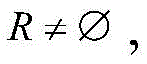
Else
Set RCis the base number of R
Set m is the smallest last OFDM symbol index in all rows of R, determined by SLIV,
while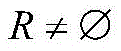
Set r=0
while r<RC
if S ≦ m, index S for the starting OFDM symbol of row r
br,kJ; -an occasion index of candidate PDSCH reception or SPS PDSCH release associated with row r
R=R\r;
B=BUbr,k;
end if
r=r+1;
end while
MA,c=MA,cUj;
j=j+1;
Set m is the smallest last OFDM symbol index in all rows of R;
end while
end if
k=k+1;
end while
for the same value br,k(wherein br,kE.g., B) associated rows of PDSCH-symbol allocation, the UE is not expected to receive more than one PDSCH in the same time slot.
The UE does not report HARQ-ACK information corresponding to PDSCH reception or SPS PDSCH release occurring before changing the active DL BWP of the UE on any serving cell.
If the active UL BWP of the UE on PCell changes between the time of the corresponding DCI format 1_0 or DCI format 1_1 detection and the time of PUCCH or PUSCH transmission using HARQ-ACK information, the UE does not report HARQ-ACK information corresponding to PDSCH reception or SPS PDSCH release.
If the higher layer parameter DL-data-DL-acknowledgement is provided to the UE, the UE does not expect to indicate by DCI format 1_0 a slot timing value for transmitting HARQ-ACK information not belonging to the intersection of the set of slot timing values {1, 2, 3, 4, 5, 6, 7, 8} and the set of slot timing values provided by the higher layer parameter DL-data-DL-acknowledgement for the active DL BWP of the serving cell.
If the timing of candidate PDSCH reception can respond to a PDCCH with DCI format 1_ 1and if higher layer parameter Number-MCS-HARQ-DL-DCI indicates reception of two transport blocks, when the UE receives a PDSCH with one transport block, if spatial bundling (HARQ-ACK-spatial-bundling-PUCCH ═ FALSE) is not applied, the HARQ-ACK response is associated with the first transport block and the UE generates a NACK for the second transport block and if spatial bundling is applied, generates a HARQ-ACK value for the ACK for the second transport block.
The UE should determine the HARQ-ACK codebook for transmission in PUCCH according to the following pseudo code One HARQ-ACK information bit (for O)ACKTotal number of HARQ-ACK information bits). In the following pseudo code, if the UE does not receive a transport block or CBG, the UE generates a NACK value for the transport block or CBG since the UE does not detect a PDCCH having a DCI format 1_0 or DCI format 1_1 correspondence. Set MA,cDefine a total number of occasions M for PDSCH reception or SPS PDSCH release of the serving cell cc。
Set c-0-serving cell index: the lower index corresponds to the lower RRC index of the corresponding cell
Set j-0-HARQ-ACK bit index
Set Number of serving cells configured for higher layer of UE
while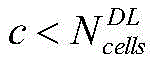
Set m 0-timing index of candidate PDSCH reception or SPS PDSCH release
while m<Mc
If HARQ-ACK-spatial-bundling-PUCCH is FALSE, CBG-DL is OFF, and the UE is configured by higher layer parameter Number-MCS-HARQ-DL-DCI, where two transport blocks for active DL BWP of serving cell c are received,

j=j+1;

j=j+1;
the else HARQ-ACK-spatial-bundling-PUCCH-UE is configured by a higher layer parameter Number-MCS-HARQ-DL-DCI, where two transport blocks of an active DL BWP for the serving cell c are received,

j=j+1;
elseif CBG-DL ═ ON, and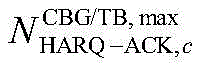 the individual CBGs are indicated by the higher layer parameter CBGs-per-TB-DL of the serving cell c,
Set nCBG0-CBG index
while

If the UE is configured by the higher layer parameter Number-MCS-HARQ-DL-DCI, where two transport blocks for the active DL BWP of serving cell c are received

end if
nCBG=nCBG+1;
end while


else

j=j+1;
end if
m=m+1;
end while
c=c+1;
end while
If OACK+OSR+OCSI≦ 11, the UE determines the number n of HARQ-ACK information bits for obtaining the transmit power of the PUCCHHARQ-ACKAs described in sub-clause 7.2.1, wherein
● Is the number of transport blocks received by the UE in the PDSCH reception occasion m of the serving cell c if HARQ-ACK-spatial-bundling-PUCCH is FALSE, or the number of PDSCH reception or SPS PDSCH release in the PDSCH reception occasion m of the serving cell c if HARQ-ACK-spatial-bundling-PUCCH is TRUE and the UE reports the corresponding HARQ-ACK information in PUCCH.
●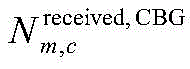 Is the number of CBGs the UE receives in PDSCH reception occasion m of serving cell c, and the UE reports the corresponding HARQ-ACK information in PUCCH.
9.1.2.2 type 1HARQ-ACK codebook in physical uplink shared channel
If the UE multiplexes HARQ-ACK in a PUSCH transmission that is not scheduled by DCI format or is scheduled by DCI format 0_0
● M if the UE receives PDSCH or SPS PDSCH release on any serving cell ccNo PDSCH or SPS PDSCH release is received at any of the occasions, as described in subclause 9.1.2.1, the UE does not multiplex HARQ-ACK in PUSCH transmission;
● except that the HARQ-ACK-spatial-bundling-PUCCH is replaced by HARQ-ACK-spatial-bundling-PUSCH, the UE generates the HARQ-ACK codebook as described in sub-clause 9.1.2.1.
If the UE multiplexes HARQ-ACK in the PUSCH transmission scheduled by DCI Format 0_1, when the value of the DAI field in DCI Format 0_1 is other than that the HARQ-ACK-spatial-bundling-PUCCH is replaced by HARQ-ACK-spatial-bundling-PUSCH The UE generates the HARQ-ACK codebook as described in subclause 9.1.2.1. When in use
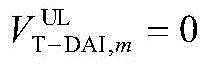 Meanwhile, the UE does not generate the HARQ-ACK codebook for multiplexing at the time of PUSCH transmission.
10 UE procedure for receiving control information
If the UE is configured with SCG, the UE should apply the procedures described in this clause for both MCG and SCG
The terms "secondary cell", "serving cell" in this clause refer to a secondary cell, serving cell, respectively belonging to an MCG, when said procedure is applied to an MCG.
The terms "secondary cell", "serving cell" in this clause refer to secondary cell, secondary cell (not including PSCell), serving cell belonging to SCG, respectively, when the procedure is applied to SCG. The term "primary cell" in this clause refers to the PSCell of the SCG.
The UE shall monitor a set of PDCCH candidates in one or more control resource sets on the active DL BWP on each active serving cell according to the corresponding search space, wherein monitoring implies decoding each PDCCH candidate according to the monitored DCI format.
The UE may configure the period of the half frame by a higher layer parameter SSB-periodicityserving cell for receiving SS/PBCH blocks in the serving cell.
For monitoring PDCCH candidates
● if the UE has received SSB-transmitted-SIB 1and has not received SSB-transmitted for the serving cell, and if at least one RE for monitoring a PDCCH candidate in a DCI format with a CRC that is not scrambled by an SI-RNTI on the serving cell overlaps with a corresponding at least one RE corresponding to the SS/PBCH block index provided by the SSB-transmitted-SIB1, the UE does not need to monitor the PDCCH candidate.
● if the UE has received SSB-transmitted for the serving cell and if at least one RE of a PDCCH candidate for monitoring a DCI format with a CRC that is not scrambled by an SI-RNTI on the serving cell overlaps with a corresponding at least one RE corresponding to an SS/PBCH block index provided by the SSB-transmitted, the UE does not need to monitor the PDCCH candidate.
● if the SSB-transmitted-SIB 1and SSB-transmitted for the serving cell are not received, and if the UE monitors PDCCH candidates of the Type0-PDCCH common search space on the serving cell according to the procedure described in subclause 13, the UE may assume that SS/PBCH blocks are not transmitted in REs used to monitor PDCCH candidates on the serving cell.
If the carrier aggregation Capability of the UE included in the UE-NR-Capability is greater than 4, the UE includes, in the UE-NR-Capability, an indication of a maximum number of PDCCH candidates per slot that the UE can monitor when the UE is configured for carrier aggregation operation exceeding 4 cells. When a UE is configured for carrier aggregation operation of more than 4 cells, it is not desirable that the UE be configured with multiple PDCCH candidates to monitor each slot, which is greater than a maximum number.
[...]
12 Bandwidth partial operation
If the UE is configured with SCG, the UE should apply the procedures described in this clause for both MCG and SCG
The terms "secondary cell", "serving cell" in this clause refer to a secondary cell, serving cell, respectively belonging to an MCG, when said procedure is applied to an MCG.
The terms "secondary cell", "serving cell" in this clause refer to secondary cell, secondary cell (not including PSCell), serving cell belonging to SCG, respectively, when the procedure is applied to SCG. The term "primary cell" in this clause refers to the PSCell of the SCG.
The UE is configured for operation in a bandwidth part (BWP) of the serving cell, a set of up to four bandwidth parts (BWPs) is configured by a higher layer of the serving cell for reception by the UE (DL BWP set) in DL bandwidth over the parameters DL-BWP, and a set of up to four BWPs for transmission by the UE (UL BWP set) in UL bandwidth over the parameters UL-BWP of the serving cell.
The initial active DL BWP is defined by the location and number of consecutive PRBs of the control resource set of Type0-PDCCH common search space, subcarrier spacing and cyclic prefix. For operation on the primary cell, the UE is provided with an initial UL-BWP by a higher layer parameter initial-UL-BWP for the random access procedure. If the UE is configured with a secondary carrier on the primary cell, the UE may be configured with an initial BWP for random access procedures on the secondary carrier.
The UE may provide a first Active DL BWP for reception by a higher layer parameter Active-BWP-DL-Pcell and provide a first Active UL BWP for transmission on the primary cell by a higher layer parameter Active-BWP-UL-Pcell, if the UE has a dedicated BWP configuration.
For each DL BWP or UL BWP in the set of DL BWPs or UL BWPs, respectively, the UE is configured with the following parameters of the serving cell as defined in [4, TS38.211] or [6, TS38.214 ]:
-subcarrier spacing provided by higher layer parameters DL-BWP-mu or UL-BWP-mu;
-a cyclic prefix provided by a higher layer parameter DL-BWP-CP or UL-BWP-CP;
-a PRB offset relative to a PRB determined by higher layer parameters offset-pointA-low-scs and ref-scs and a plurality of consecutive PRBs provided by higher layer parameters DL-BWP-BW or UL-BWP-BW;
-an index in a DL BWP or UL BWP set by a corresponding higher layer parameter DL-BWP-index or UL-BWP-index;
-a PDSCH reception timing value is detected by DCI format 1_0 or DCI format 1_1 provided by a higher layer parameter DL-data-time-domain, a HARQ-ACK transmission timing value is received by PDSCH provided by a higher layer parameter DL-data-DL-acknowledgement, and a PUSCH transmission timing value is detected by DCI0_0 or DCI0_1 provided by a higher layer parameter UL-data-time-domain;
for unpaired spectrum operation, when the DL BWP index is equal to the UL BWP index, the DL BWP from the set of configured DL BWPs with the index provided by the higher layer parameter DL-BWP-index is paired with the UL BWP from the set of configured UL BWPs with the index provided by the higher layer parameter UL-BWP-index. For unpaired spectrum operation, when the DL-BWP's DL-BWP-index is equal to the UL-BWP-index of the UL-BWP, the UE is not expected to receive a configuration in which the center frequency of the DL BWP is different from the center frequency of the UL BWP.
For each DL BWP in the set of DL BWPs on the primary cell, the UE may be configured with a set of control resources for each type of common search space and UE-specific search space, as described in subclause 10.1. The UE does not expect to be configured in active DL BWP without common search space on PCell or PSCell.
For each UL BWP in the set of UL BWPs, the UE is configured with a set of resources for PUCCH transmission, as described in subclause 9.2.
The UE receives the PDCCH and the PDSCH in the DL BWP according to the configured subcarrier spacing and the CP length of the DL BWP. And the UE transmits the PUCCH and the PUSCH in the UL BWP according to the configured subcarrier interval and the CP length of the UL BWP.
If the bandwidth part indicator field is configured in DCI format 1_1, the bandwidth part indicator field value indicates that an active DL BWP from the configured set of DL BWPs is used for DL reception. If the bandwidth part indicator field is configured in DCI format 0_1, the bandwidth part indicator field value indicates that an active UL BWP from the configured UL BWP set is used for UL transmission.
If the bandwidth part indicator field is configured in DCI format 0_1 or DCI format 1_ 1and indicates that UL BWP or DL BWP is different from active UL BWP or DL BWP, respectively, the UE shall do so
-for each information field in the received DCI format 0_1 or DCI format 1_1
If the size of the information field is smaller than the size required for DCI format 0_1 or DCI format 1_1 interpretation of UL BWP or DL BWP, respectively, indicated by the bandwidth part indicator, the UE shall add zero before the information field until its size is the field required for interpreting the information field of UL BWP or DL BWP before interpreting the DCI format 0_1 or DCI format 1_1 information field;
if the size of the information field is larger than the size required for DCI format 0_1 or DCI format 1_1 interpretation of the UL BWP or DL BWP indicated by the bandwidth part indicator, respectively, the UE should use a certain number of the least significant bits of DCI format 0_1 or DCI format 1_1, which is equal to the number required for UL BWP or DL BWP indicated by the bandwidth part indicator, before interpreting the DCI format 0_1 or DCI format 1_1 information field;
-setting the active UL BWP or DL BWP to the UL BWP or DL BWP indicated by the bandwidth part indicator in DCI format 0_1 or DCI format 1_1, respectively.
The UE is expected to detect DCI format 0_1 indicating an active UL BWP change, or DCI format 1_1 indicating an active DL BWP change, only when the corresponding PDCCH is received within the first 3 symbols of the slot.
For the primary cell, a Default DL BWP among the configured DL BWPs may be provided to the UE by a higher layer parameter Default-DL-BWP. If the Default DL BWP is not provided to the UE by the higher layer parameter Default-DL-BWP, the Default BWP is the initially active DL BWP.
If the UE is configured to have a higher layer parameter Default-DL-BWP indicating a Default DL BWP among configured DL BWPs for the secondary cell and the UE is configured to have a higher layer parameter BWP-InactivityTimer indicating a timer value, the UE procedure on the secondary cell is the same as on the primary cell using the timer value of the secondary cell and the Default DL BWP of the secondary cell.
If the UE configures the timer value of the primary cell [11, TS38.321] by the higher layer parameter BWP-inactivity timer and the timer is running, the UE increments the timer at every 1 millisecond interval for frequency range 1 or at every 0.5 milliseconds for frequency range 2 if the UE does not detect DCI format 1_1 for paired spectrum operation or if the UE does not detect DCI format 1_1 or DCI format 0_1 for unpaired spectrum operation during the interval.
If the UE is configured with a first Active DL BWP by a higher layer parameter Active-BWP-DL-SCell and a first Active UL BWP by a higher layer parameter Active-BWP-UL-SCell on the secondary cell or carrier, the UE uses the indicated DL BWP and the indicated UL BWP on the secondary cell as the respective first Active DL BWP and first Active UL BWP on the secondary cell or carrier.
For paired spectrum operation, if the UE changes its active UL BWP on PCell between the time the DCI format 1_0 or DCI format 1_1 is detected and the time of the corresponding HARQ-ACK transmission on PUCCH, the UE is not expected to transmit HARQ-ACK on the PUCCH resource indicated by DCI format 1_0 or DCI format 1_ 1.
When a UE performs RRM measurements on a bandwidth that is not within the UE's active DL BWP [10, TS38.133], it is not desirable for the UE to monitor the PDCCH.
R1-1803553 describes various DCI formats and corresponding content as follows:
7.3 Downlink control information
The DCI transmits downlink and uplink scheduling information, a request for aperiodic CQI reports, or uplink power control commands for one cell and one RNTI.
The following decoding steps may be identified:
-multiplexing of information elements
-channel decoding
-channel decoding
-rate matching
7.3.1 DCI Format
Supporting the DCI format defined in table 7.3.1-1.
[ Table 7.3.1-1 of 3GPP R1-1803553 titled "DCI Format" reproduced as FIG. 5]
Fields defined in the DCI format below map to information bits a0To aA-1The following.
Each field is mapped in the order it appears in the description, containing zero padding bits (if any), the first field being mapped to the lowest order information bits and each successive field being mapped to the higher order information bits. The most significant bit of each field is mapped to the least significant order information bit for that field, e.g., the most significant bit of the first field is mapped to a0。
If the number of information bits in the DCI format is less than 12 bits, zero should be appended to the DCI format until the active payload size equals 12.
7.3.1.1 DCI format for scheduling of PUSCH
7.3.1.1.1 Format 0_0
DCI format 0_0 is used to schedule PUSCH in one cell.
The following information is transmitted by means of DCI format 0_0 with CRC scrambled by C-RNTI:
identifier-1 bit of DCI Format
The value of this bit field is always set to 0, indicating the UL DCI format
- Wherein
- Size of initial bandwidth part in case of monitoring DCI Format 0_0 in common search space
- Is the size of the active bandwidth part if DCI format 0_0 is monitored and satisfied in the UE-specific search space
-the total number of different DCI sizes monitored per slot does not exceed 4, and
-the total number of different DCI sizes per time slot monitoring C-RNTI does not exceed 3
For PUSCH hopping of resource allocation type 1:
according to [6, TS38.214]Clause 6.3, NUL_hopMSB bits are used to indicate frequency Offset, where N is the higher layer parameter frequency-Hopping-Offset-set if it contains two Offset valuesUL_hopIf the higher layer parameter frequency-holding-Offset-set contains four Offset values, N is 1UL_hop=2
According to [6, TS38.214]The sub-clause 6.1.2.2.2 of (a), bits provide frequency domain resource allocation
-for non-frequency hopping PUSCH of resource allocation type 1:
according to [6, TS38.214]The sub-clause 6.1.2.2.2 of (a), bits provide frequency domain resource allocation
Time domain resource allocation-X bits, as defined in subclause 6.1.2.1 of [6, TS38.214]
-hop flag-1 bit.
Modulation coding scheme-5 bits, as defined in subclause 6.1.3 of [6, TS38.214]
New data indicator-1 bit
Redundancy version-2 bits, as defined in table 7.3.1.1.1-2
HARQ process number 4 bits
TPC command of scheduled PUSCH-2 bits, as defined in subclause x.x of [5, TS38.213]
UL/SUL indicator-1 bit for a UE configured with SUL in the cell defined in table 7.3.1.1.1-1, and the number of bits of DCI format 1_0 before padding is greater than the number of bits of DCI format 0_0 before padding; otherwise, it is 0 bit.
-if the UL/SUL indicator is present in DCI format 0_0 and the higher layer parameter dynamic puschsul is set to Disabled, the UE ignores the UL/SUL indicator field in DCI format 0_0 and the corresponding PUSCH scheduled by DCI format 0_0 is used for the carrier indicated by the higher layer parameter pucchcarrier SUL;
-if the UL/SUL indicator is not present in DCI format 0_0, the corresponding PUSCH scheduled by DCI format 0_0 is for the carrier indicated by the higher layer parameter pucchcoursusul.
7.3.1.1.2 Format 0_1
DCI format 0_1 is used to schedule PUSCH in one cell.
The following information is transmitted by means of DCI format 0_1 with CRC scrambled by C-RNTI:
carrier indicator-0 or 3 bits as defined in subclause x.x of [5, TS38.213 ].
UL/SUL indicator-0 bits for a UE not configured to use SUL in a cell or configured to use SUL in a cell, but only the PUCCH carrier in the cell is configured for PUSCH transmission; for a UE configured to use SUL in a cell, 1 bit, as defined in table 7.3.1.1.1-1.
Identifier-1 bit of DCI Format
The value of this bit field is always set to 0, indicating the UL DCI format
Bandwidth part indicator-0, 1 or 2 bits, as defined in table 7.3.1.1.2-1. The bandwidth of this field is limited to A bit, wherein
-nBWP=nBWP,RRC+1, if the higher layer parameter bandwidthcard-Config configures up to3 bandwidth parts and the initial bandwidth part is not included in the higher layer parameter bandwidthcard-Config;
else nBWP=nBWP,RRC;
-nBWP,RRCIs the number of bandwidth parts configured according to the higher layer parameter BandwidthPart-Config.
-frequency domain resource allocation-the number of bits is determined by, wherein Is the size of the active UL bandwidth part:
-N in case of configuring resource allocation type0 onlyRBGOne bit, where NRBGIn [6, TS38.214]As defined in sub-clause 6.1.2.2.1 of (a),
-only in case of configuration resource allocation type 1 One bit, or
-in case both resource allocation types 0 and 1 are configured One bit
-if both resource allocation types 0 and 1 are configured, the MSB bit is used to indicate either resource allocation type0 or resource allocation type 1, with bit value 0 indicating resource allocation type0 and bit value 1 indicating resource allocation type 1.
-for resource allocation type0, NRBGLSB provides resource allocation, e.g. [6, TS38.214]As defined in clause 6.1.2.2.1.
-for a resource allocation type 1, the LSB provides resource allocation as follows:
for PUSCH hopping of resource allocation type 1:
according to [6, TS38.214]Clause 6.3, NUL_hopMSB bits are used to indicate the frequency offset, where N is the higher layer parameter frequency HoppingOffsetlists if it contains two offset values UL_hop1, if the higher layer parameter frequency hoppingoffsetts contains four offset values, then NUL_hop=2
According to [6, TS38.214]The sub-clause 6.1.2.2.2 of (a), bit-provided frequency domain resource allocation
-for non-frequency hopping PUSCH of resource allocation type 1:
according to [6, TS38.214]The sub-clause 6.1.2.2.2 of (a), bits provide frequency domain resource allocation
Time domain resource allocation-0, 1, 2, 3 or 4 bits, e.g. [6, TS38.214]Clause 6.1.2.1 of (a). The bit width for this field is determined as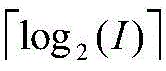 Bits where I is the number of entries of the higher layer parameter, pusch-AllocationList.
-VRB to PRB mapping-0 or 1 bit
-0 bit if only resource allocation type0 is configured if PUSCH-tp ═ Enabled;
-1 is otherwise applicable only to resource allocation type 1 according to table 7.3.1.1.2-33, bit 1, as defined in subclause 6.3.1.7 of [4, TS38.211 ].
-hopping flag-0 or 1 bit
-0 bits only in case of configuration resource allocation type 0;
else 1 bit, applicable only to resource allocation type 1, as defined in subclause 6.3 of [6, TS38.214 ].
Modulation coding scheme-5 bits, as defined in subclause x.x of [6, TS38.214]
New data indicator-1 bit
Redundancy version-2 bits, as defined in table 7.3.1.1.1-2
HARQ process number 4 bits
-1 st downlink allocation index-1 or 2 bits:
-1 bit for a semi-static HARQ-ACK codebook;
2 bits for a dynamic HARQ-ACK codebook with a single HARQ-ACK codebook.
-2 nd downlink allocation index-0 or 2 bits:
2 bits for a dynamic HARQ-ACK codebook with two HARQ-ACK sub-codebooks.
Else 0 bit.
TPC command-2 bits of scheduled PUSCH, as defined in subclause 7.1.1 of [5, TS38.213]
Table 7.3.1.1.2-1 of 3GPP R1-1803553 entitled "Bandwidth portion indicator" is reproduced as FIG. 6
7.3.1.2 DCI Format for scheduling of PDSCH
7.3.1.2.1 Format 1_0
DCI format 1_0 is used for scheduling of PDSCH in one DL cell.
The following information is transmitted by means of DCI format 0_1 with CRC scrambled by C-RNTI:
identifier of DCI Format-1 bit
The value of this bit field is always set to 1, indicating the DL DCI format
-
-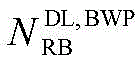 Is the size of the initial bandwidth part in case of monitoring the DCI format 1_0 in the common search space
-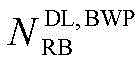 Is the size of the active bandwidth part in case of listening to DCI format 1_0 in the UE-specific search space and satisfies
-the total number of different DCI sizes monitored per slot does not exceed 4, and
-the total number of different DCI sizes per time slot monitoring C-RNTI does not exceed 3
X bits defined in subclause 5.1.2.1 of time domain resource allocation- [6, TS38.214]
-VRB to PRB mapping-1 bit according to table 7.3.1.1.2-33
5 bits defined in subclause 5.1.3 of the modulation and coding scheme- [6, TS38.214]
New data indicator-1 bit
Redundancy version-2 bits defined in table 7.3.1.1.1-2
HARQ process number-4 bits
2 bits defined in subclause 9.1.3 of downlink assignment index- [5, TS38.213], as corresponding DAI
TPC command for scheduled PUCCH [2] bit defined in subclause 7.2.1 of [5, TS38.213]
3 bits defined in subclause 9.2.3 of PUCCH resource indicator- [5, TS38.213]
-bit [3] defined in subclause x.x of PDSCH to HARQ feedback timing indicator- [5, TS38.213]
The following information is transmitted by means of DCI format 0_1 with CRC scrambled by P-RNTI:
● new message indicator-1 bit. This bit is used to indicate whether only a short message or only scheduling information is carried in the paging DCI.
The following information is transmitted by means of DCI format 0_1 with CRC scrambled by SI-RNTI:
-XXX-x position
The following information is transmitted by means of DCI format 0_1 with CRC scrambled by RA-RNTI:
an identifier of the DCI format-1 bit, reserved
-
- Is the size of the initial bandwidth portion in the case of monitoring DCI format 1_0 in a common search space in CORESET0
-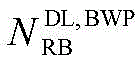 Is the size of the active bandwidth part in case of listening to DCI format 1_0 in the UE-specific search space and satisfies
-the total number of different DCI sizes monitored per slot does not exceed 4, and
-the total number of different DCI sizes monitored per slot does not exceed 3
Time domain resource allocation-X bits, as defined in subclause 5.1.2.1 of [6, TS38.214]
-VRB to PRB mapped-1 bits
Modulation coding scheme-5 bits, as defined in subclause 5.1.3 of [6, TS38.214] using Table 5.1.3.1-1
New data indicator-1 bit, reserved
Redundancy version-2 bits, reservation
HARQ process number-4 bit, reservation
-downlink allocation index-2 bits, reserved
TPC command-2 bits for scheduled PUCCH, reservation
PUCCH resource indicator-3 bits, reserved
PDSCH to HARQ feedback timing indicator-3 bits, reservation
The following information is transmitted by means of DCI format 0_1 with CRC scrambled by TC-RNTI:
identifier of DCI Format-1 bit
The value of this bit field is always set to 1, indicating the DL DCI format
-
- Is the size of the initial bandwidth portion in the case of monitoring DCI format 1_0 in a common search space in CORESET0
-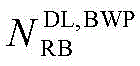 Is the size of the active bandwidth part in case of listening to DCI format 0_0 in the UE-specific search space and satisfies
-the total number of different DCI sizes monitored per slot does not exceed 4, and
-the total number of different DCI sizes monitored per slot does not exceed 3
Time domain resource allocation-X bits, as defined in subclause 5.1.2.1 of [6, TS38.214]
-VRB to PRB mapped-1 bits
Modulation coding scheme-5 bits, as defined in subclause 5.1.3 of [6, TS38.214] using Table 5.1.3.1-1
New data indicator-1 bit
Redundancy version-2 bits, as defined in table 7.3.1.1.1-2
HARQ process number 4 bits
-downlink allocation index-2 bits, reserved
TPC command-2 bits of scheduled PUCCH, as defined in subclause 7.2.1 of [5, TS38.213]
PUCCH resource indicator-3 bits, as defined in subclause 9.2.3 of [5, TS38.213]
PDSCH to HARQ feedback timing indicator-3 bits as defined in subclause x.x of [5, TS38.213]
The following information is transmitted by means of DCI format 0_1 with CRC scrambled by CS-RNTI:
-XXX-x bits
7.3.1.2.2 Format 1_1
DCI format 1_1 is used for scheduling of PDSCH in one cell.
The following information is transmitted by means of DCI format 1_1 with CRC scrambled by C-RNTI:
carrier indicator-0 or 3 bits, as defined in subclause x.x of [5, TS38.213]
Identifier of DCI Format-1 bit
The value of this bit field is always set to 1, indicating the DL DCI format
Bandwidth part indicator-0, 1 or 2 bits, as defined in table 7.3.1.1.2-1. The bit width of this field is determined as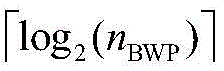 A bit wherein
-nBWP=nBWP,RRC+1, if the higher layer parameter bandwidthcard-Config configures up to3 bandwidth parts and the initial bandwidth part is not included in the higher layer parameter bandwidthcard-Config;
-otherwise, nBWP=nBWP,RRC;
-nBWP,RRCIs the number of bandwidth parts configured according to the higher layer parameter BandwidthPart-Config.
-frequency domain resource allocation-the number of bits is determined by, wherein Is the size of the active UL bandwidth part:
-N in case of configuring resource allocation type0 onlyRBGOne bit, where NRBGIn [6, TS38.214]As defined in sub-clause 5.1.2.2.1 of (a),
- only in case of configuring
 resource allocation type 1 One bit, or
In case both resource allocation types 0 and 1 are configured, one bit
-if both resource allocation types 0 and 1 are configured, the MSB bit is used to indicate either resource allocation type0 or resource allocation type 1, with bit value 0 indicating resource allocation type0 and bit value 1 indicating resource allocation type 1.
-for resource allocation type0, NRBGLSB provides resource allocation, e.g. [6, TS38.214]As defined in clause 5.1.2.2.1.
-for a resource allocation type 1, LSB provides resource allocation, e.g. [6, TS38.214]Defined in clause 5.1.2.2.2 of (a):
time domain resource assignment-0, 1, 2, 3 or 4 bits, such as [6, TS38.214]Clause 5.1.2.1 of (a). The bit width for this field is determined as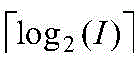 Bits where I is the number of entries of the higher layer parameter, pusch-AllocationList.
-VRB to PRB mapping-0 or 1 bit
0 bit only in case of configuration resource allocation type0
-otherwise according to table 7.3.1.1.2-33, bit 1, applicable only to resource allocation type 1, as defined in subclause xxx of [4, TS38.211 ].
-RB bundling size indicator-0 bit if the higher layer parameter PRB bundling is not configured or set to "static"; if the higher layer parameter PRB _ bundling is set to "dynamic", it is 1 bit, according to subclause 5.1.2.3 of [6, TS38.214 ].
-rate matching indicator-0, 1 or 2 bits, according to higher layer parameter rate-match-PDSCH-resource-set.
ZP CSI-RS trigger-0, 1 or 2 bits, e.g. [6, TS38.214]Is defined in subclause x.x. The bit width of this field is determined as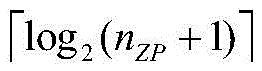 Bit, wherein nZPIs a higher layer parameter [ ZP-CSI-RS-ResourceConfigList ]]Number of ZP CSI-RS resource sets in.
For transport block 1:
5 bits defined in subclause x.x of modulation and coding scheme- [6, TS38.214]
New data indicator-1 bit
Redundancy version-2 bits defined in table 7.3.1.1.1-2
For transport block 2 (only present when Number-MCS-HARQ-DL-DCI equals 2):
modulation coding scheme-5 bits, as defined in subclause x.x of [6, TS38.214]
New data indicator-1 bit
Redundancy version-2 bits, as defined in table 7.3.1.1.1-2
HARQ process number 4 bits
-downlink assignment index-number of bits as defined hereinafter
-4 bits if more than one serving cell is configured in DL and the higher layer parameter HARQ-ACK-codebook is dynamic, where 2 MSB bits are the corresponding DAI and 2 LSB bits are the total DAI;
-2 bits if only one serving cell is configured in DL and the higher layer parameter HARQ-ACK-codebook is dynamic, where 2 bits are the corresponding DAI;
else 0 bit.
TPC command-2 bits of scheduled PUCCH, as defined in subclause x.x of [5, TS38.213]
PUCCH resource indicator-3 bits, as defined in subclause 9.2.3 of [5, TS38.213]
PDSCH to HARQ feedback timing indicator-3 bits, as defined in sub-clause 9.2.3 of [5, TS38.213]
Antenna port-4, 5 or 6 bits, as defined in tables 7.3.1.2.2-1/2/3/4, where the number of CDM groups without data of values 1, 2 and 3 refer to CDM groups {0}, {0, 1} and {0, 1, 2}, respectively.
-transmit configuration indication-0 bit if higher layer parameter tci-PresentInDCI is not enabled; otherwise it is 3 bits as defined in subclause x.x of [6, TS38.214 ].
SRS request-2 bits defined by table 7.3.1.1.2-24 for UEs that do not configure a SUL in a cell; for a UE that configures SUL in a cell is 3 bits, where the first bit is the non-SUL/SUL indicator defined in table 7.3.1.1.1-1, and the second and third bits are defined by tables 7.3.1.1.2-24.
CBG transport information (CBGTI) -0, 2, 4, 6 or 8 bits, as defined in subclause x.x of [6, TS38.214], determined by the PDSCH higher layer parameter maxcodeblock group of traffictransportblock.
CBG flush information (CBGFI) -0 or 1 bit, as defined in subclause x.x of [6, TS38.214], determined by the higher layer parameter codeblockackgroupflushindicator.
DMRS sequence initialization-for a sequence at [4, TS38.211]N as defined in clause 7.4.1.1.1SCIDThe selection is 1 bit.
In a wireless communication system, the number of HARQ-ACK bit feedbacks needs to be carefully defined. In the current PHY specification (as discussed in 3GPP R1-1803554), with respect to a semi-static codebook, a UE may determine a set of occasions at which the UE may transmit HARQ-ACK information bits for the occasions in the set. The determination may be based on a slot timing value, a pdsch-symbolAllocation, a semi-static DL/UL allocation, a PDCCH-config. When determining the set, the UE may transmit HARQ-ACK information bits for corresponding occasions in the set. The UE may generate a NACK value for a Transport Block (TB) or a Code Block Group (CBG) if the UE does not receive the TB or the CBG because the UE does not detect a corresponding PDCCH for the TB or CBG.
With respect to a Carrier Aggregation (CA) scenario, a UE may determine a set of monitoring occasions for each serving cell. The sum of the cardinality of each set of serving cells may determine the size of the semi-static codebook. In addition, with regard to a fallback mode for the semi-static codebook, the UE may transmit, generate or report HARQ-ACK information bits that may only require feedback of HARQ-ACK information bits if the bits in the downlink control information indicate the UE All occasions in the pool. However, the UE may receive a plurality of downlink control information having bits indicating a fallback mode of the semi-static codebook, considering BWP switching within the set and/or partially overlapping the set. Therefore, how to handle this situation needs to be addressed by the UE.
The general concept of the present invention is that when a UE determines a set, the UE may exclude at least one occasion from a set of occasions. In one embodiment, the excluded occasion occurs before (completion of) the bandwidth part (BWP) change/switch. The BWP may be DL BWP and/or UL BWP. The set may comprise a codebook. The UE may determine a HARQ-ACK codebook based on the set. In one embodiment, the UE may transmit HARQ-ACKs corresponding to a set of occasions in PUCCH and/or PUSCH in a slot after BWP change/handover. The UE may be configured semi-statically with respect to the codebook.
In one embodiment, the occasions in the set are candidate PDSCH reception occasions and/or SPS PDSCH release occasions. The SPS PDSCH release occasion means a reception occasion of a PDCCH indicating SPS PDSCH release and/or SPS PUSCH release.
The UE may be configured with a first set of timings. In one embodiment, the first set of timings is DL-data-DL-acknowledgment. The second set of timings may be a default set. The UE may determine the set of occasions based at least on the first set of timings and/or the second set of timings.
Fig. 7 illustrates an example of determining a set of opportunities for transmitting HARQ-ACK feedback in slot # n. For paired spectrum, the UE receives DCI occupying the first two OFDM symbols in slot # n-3 in a control resource set (CORESET) indicating a change in UL BWP from a current active UL BWP to a target active UL BWP, and the UE configures a set of timing as {0, 1, 2, 3 }. When determining the set of occasions, the UE may exclude the occasions in DL slot # n-3, slot # n-2, slot # n-1 from the group.
As shown in fig. 7, if the UE is configured with a first set of timings of {0, 1, 2, 3}, and the UE may transmit an uplink signal associated with a set of occasions in slot # n, the set of occasions may include the occasions in slots # n-0, # n-1, # n-2, # n-3. The UE may be configured with up to four DL and/or UL bandwidth portions (BWPs). Upon receiving DCI indicating the BWP index of the target BWP, the UE may change/switch the currently active BWP to the target BWP. Additionally or alternatively, the UE may change/switch the currently active BWP to the default BWP upon expiration of the timer. The UE may determine a set of occasions based on the target BWP. The UE may exclude opportunities configured in the target BWP for a period of time.
In one embodiment, the time is a time slot before the BWP change or handover. The time is also the BWP switch transition time and/or the RF reset time. In one embodiment, time may start with the last OFDM (orthogonal frequency division multiplexing) symbol carrying the PDCCH, which indicates a handover of BWP to a slot in which the UE may transmit/receive signals on the target/new BWP indicated by the PDCCH. In one embodiment, the time is a time slot before the BWP change or handover (completion).
When the UE determines a set of occasions in a slot and the slot is the first slot after a time and/or BWP handover, the UE may exclude the occasions before the slot. For example, as shown in FIG. 7, assuming that slot # n is the first slot after BWP switches from BWP # 1 to BWP #2, and a set of timings are configured as {0, 1, 2, 3}, the UE may exclude slots # n-1 and # n-2 and slots # n-3 when the UE determines a set of opportunities for transmitting a corresponding HARQ-ACK in slot # n. In another example, if the UE determines a set of opportunities in slot # n +1, while slot # n is the first slot after BWP switches from BWP # 1 to BWP #2, and a set of timings is configured to be in {0, 1, 2, 3}, the UE may exclude opportunities in slot # n-2 and slot # n-3.
The UE may be configured to transmit and/or receive signals in paired spectrum in a serving cell. The UE may be configured with up to four DL and/or UL bandwidth parts (BWPs) in the serving cell. Upon receiving DCI indicating the BWP index of the target BWP, the UE may change/switch the currently active BWP to the target BWP. Additionally and alternatively, the UE may switch the currently active BWP to the default BWP upon expiration of the timer. In one embodiment, the default BWP is the initial BWP. The default BWP is also the BWP configured by the NW. In one embodiment, the initial DL BWP is a DL BWP configured by PBCH and/or a DL BWP for the UE without dedicated RRC signaling. The initial UL BWP is a UL BWP configured by the system information. More specifically, the initial UL BWP may be indicated by remaining system information (RMSI). Additionally and alternatively, the UE may change or handover the currently active UL BWP to the initial UL BWP when the UE triggers the RACH procedure due to the absence of PRACH resources in the currently active UL BWP.
The UE may be configured with a first set of timings. In one embodiment, the first set of timings is DL-data-DL-acknowledgment. The second set of timings may be a default set. In one embodiment, the default set may be {1, 2, 3, 4, 5, 6, 7, 8 }. The UE may determine the set of occasions based at least on the first set of timings and/or the second set of timings. In one embodiment, the occasions in the set are candidate PDSCH reception and/or SPS release PDSCH. If the UE switches the currently active UL BWP to the target UL BWP, the UE may exclude opportunities in the DL slot based on the first set of timings and/or the second set of timings when determining the set of opportunities, wherein the UE excluded opportunities occur in the DL slot before (completing) the BWP switch.
For example, as shown in fig. 7, when the UE determines a set of occasions in slot # n, where slot # n is the first slot after the UE changes/switches the old/original active UL BWP to the new/target active UL BWP, and a set of timings is configured as {0, 1, 2, 3}, the UE may exclude the occasions in slot # n-1, slot # n-2, slot # n-3 from the set. In another example, when the UE determines a set of opportunities in slot # n + 1and slot # n is the first slot BWP after the UE changes or switches the old/original active UL BWP to the new/target active UL and the set of timings is configured as {0, 1, 2, 3}, the UE may exclude the opportunities in slot # n-2, slot # n-3 from the set.
In one embodiment, the UE reports only HARQ-ACKs when the UE detects that only one PDSCH is received within a set of timeframes on the PCell, in case the UE is configured for semi-static codebook determination. The UE may be instructed to transmit back-off if the UE detects DCI format 1_0 corresponding to a DAI value of 1.
In one embodiment, when the UE changes/switches the current active BWP to the target active BWP, the UE may receive more than one DCI format 1_0 with a DAI value of 1. For example, as shown in fig. 8, the UE may determine a set of occasions in slot # n based on a set of timings assumed to be 0, 1, 2, 3, 4. In this example, if the UE detects DCI format 1_0 with a DAI value of 1 in slot # n-4 and receives DCI format 0_1 indicating UL BWP switching, the UE determines the set of occasions by excluding DL slot # n-1, slot # n-2, slot # n-3, slot # n-4.
In the same example, the cardinality of the set of occasions may decrease. In this example, the UE may receive DCI format 1_0 with a DAI value of 1 in DL slot # n. The UE may skip or ignore DCI format 1_0 with DAI value 1 in slot # n-4. The UE may also skip or ignore DCI format 1_0 with a DAI value of 1 if DCI is transmitted at the opportunity before (completing) BWP handover.
In one embodiment, if the UE changes or switches the currently active UL BWP to the target UL BWP, the UE may transmit a NACK value corresponding to an occasion in which an opportunity may occur before (to) the target UL BWP. In one embodiment, the set of occasions is not a function of BWP handover or is undetermined. Assuming that the UE is configured to transmit and/or receive signals in an unpaired spectrum and the UE is configured with a set of timings 0, 1, 2, 3, the UE may transmit an uplink signal in slot # n with HARQ-ACKs corresponding to a set of occasions. In this example, if the UE switches the current active UL BWP to the target active UL BWP and slot # n is the first slot after the switch, the HARQ-ACK for the occasion occurring before slot # n may be transmitted/set by the UE as NACK.
In one embodiment, the NW may ignore or skip HARQ-ACKs transmitted by the UE, which correspond to one or more occasions in the set that occur before (completing) the UL active BWP handover. In one embodiment, the uplink signal may be transmitted on the PUCCH and/or PUSCH. In addition, the set of occasions may be determined based on a PDCCH monitoring occasion and an offset, a bitmap indicating PDCCH monitoring occasions within a slot. The set of occasions may also be determined based on the pdsch-symbolAllocation associated with the active DL BWP. Further, the Set of occasions may be determined based on UL-DL-configuration-common and/or UL-DL-configuration-common-Set2 (if configured) and/or UL-DL-configuration-determined (if configured).
In one embodiment, if the first set of timings and/or the second set of timings do not include a value of 0, the UE transmits PUCCH and/or PUSCH in a UL slot without HARQ-ACK corresponding to the set of occasions, wherein the UL slot is the first slot after active DL and/or active UL BWP switching, the UE may skip transmitting uplink signals. For example, as shown in fig. 7, if a set of timings is configured as {1, 2, 3} in slot # n, which is the first slot after active UL BWP switching, the UE receives DCI format 0_1 indicating active UL BWP switching in slot # n-3, and the UE can determine the set of opportunities in slot # n, excluding slots in DL slot # n-1, DL slot # n-2, DL slot # n-3. In this example, the UE may transmit PUSCH in slot # n without HARQ-ACK corresponding to the set of occasions. More specifically, the UE may not perform HARQ-ACK transmission in slot # n because there is no associated opportunity.
The UE may be configured with at least two serving cells, which are a first serving cell and a second serving cell. The UE may be configured using crosscarrierscheduling config. The UE may be configured to receive a downlink control signal in the first serving cell, where the downlink control signal may schedule data signals in the first serving cell and the second serving cell.
The UE may be configured with a first set of timings. In one embodiment, the first set of timings is DL-data-DL-acknowledgment. The first group timing may be the same for the first serving cell and the second serving cell. Alternatively, the first set of timings may be different for the first serving cell and the second serving cell. In one embodiment, the second set of timings may be a default set. Further, the second set of timings may be the same for the first serving cell and the second serving cell. Alternatively, the second set of timings may be different for the first serving cell and the second serving cell. The UE may determine a first set of timing for the first serving cell and/or a second set of timing for the second serving cell based on at least the first set of timing and/or the second set of timing. In one embodiment, the UE may determine a first set of timing for the first serving cell and/or a second set of timing for the second serving cell based on at least the first set of timing and/or the second set of timing.
In one embodiment, if the UE changes or switches the current active BWP of the first serving cell to the target active BWP of the first serving cell, the UE may exclude opportunities from the second set of opportunities when determining the second set of opportunities, wherein the opportunities occur before (complete) BWP switching of the first serving cell. In one embodiment, the UE may exclude opportunities in the second set of opportunities when determining the second set of opportunities, where the exclusion opportunity of the second serving cell overlaps with a time before (completing) the BWP handover of the first serving cell. If the occasions in the second serving cell are configured for the UE to receive data signals which are not scheduled by (dynamic) downlink control signals, the UE may consider the occasions in the first serving cell for BWP handover when determining the second set of occasions for the second serving cell. In one embodiment, considering the occasions may mean determining that the occasions are included in the second set of occasions when determining the second set of occasions. Taking into account the opportunities may also mean that the opportunities are not excluded from the second set of opportunities when determining the second set of opportunities. In one embodiment, the downlink data is an SPS-PDSCH.
For example, as shown in fig. 9, the UE is configured to receive PDCCH in cell 1, where the PDCCH may schedule cell 1 and/or cell 2, and the UE may determine a first set of occasions for cell 1and a second set of occasions for cell 2 based on a set of timings that may be assumed to be {0, 1, 2, 3 }. In this example, if the UE changes or switches the current active DL BWP of cell 1 to the target active DL BWP of cell 1 within a certain time (in this example, the time spent from slot # n-3 to slot # n-1), the UE may determine the first set of opportunities in slot # n, while excluding opportunities in DL slot # n-1, DL slot # n-2, DL slot # n-3 in slot 1. In the same example, if the UE changes or switches the currently active DL BWP of cell 1 to the target active DL BWP of cell 1 within the time it takes from slot # n-3 to slot # n-1, the UE may determine the second set of opportunities in slot # n, while excluding slots in DL slot # n-1, DL slot # n-2, DL slot # n-3 in cell 2.
In another example, if the UE receives SPS-PDSCH at an opportunity in DL slot # n-1 in cell 2, and the UE changes or switches the current active DL BWP of cell 1 to the target active DL BWP of cell 1 within a time (in this example, the time it takes from slot # n-3 to slot # n-1), the UE may determine a second set of opportunities in slot # n, while excluding opportunities in DL slot # n-1, DL slot # n-2, DL slot # n-3 in cell 2, but adding opportunities in DL slot # n-3 to the second set of opportunities. In one embodiment, the UE may determine the occasions in DL slot # n-3 to be included in the second set of occasions without actually performing the actions of excluding and then adding.
In one embodiment, if the UE changes or switches the current active BWP of the second serving cell to the target active BWP of the second serving cell, the UE may exclude opportunities from the second set of opportunities when determining the second set of opportunities, wherein the opportunities occur before (complete) BWP switching of the second serving cell. In one embodiment, if the UE receives an occasion in the first serving cell indicating SPS-PDSCH release or SPS PUSCH release in the first serving cell, the UE may consider the occasion in BWP handover in the second serving cell when determining the second set of occasions for the second serving cell. The occasion of receiving the PDCCH indicating the SPS release in the first serving cell may overlap with a time before (completing) BWP handover of the second serving cell. In one embodiment, taking into account the occasions may mean determining that the occasions are included in the second set of occasions when determining the second set of occasions. Taking into account the occasions may also mean that the occasions in the second set of occasions are not excluded when determining the second set of occasions.
For example, as shown in fig. 10, a UE may be configured to receive PDCCH in cell 1, where PDCCH may schedule cell 1 and/or cell 2, and the UE may determine a first set of occasions for cell 1and a second set of occasions for cell 2 based on a set of timings that may assume {0, 1, 2, 3, 4 }. In this example, if the UE changes or switches the current active DL BWP of cell 2 to the target active DL BWP of cell 2 within a certain time (in this example, the time it takes from slot # n-3 to slot # n-1), the UE may determine the second set of occasions in slot # n, while excluding the occasions in DL slot # n-1, DL slot # n-2, DL slot # n-3, DL slot # n-4 in cell 2.
In another example, if the UE receives a PDCCH indicating SPS release at an opportunity in slot # n-4 in cell 1, and the UE changes or switches the current active DL BWP of cell 2 to the target active DL BWP of cell 2 within a time (in this example, the time it takes from slot # n-3 to slot # n-1), the UE may determine a second set of opportunities in slot # n, while excluding opportunities in DL slot # n-1, DL slot # n-2, DL slot # n-3, DL slot # n-4 in cell 2, but adding opportunities in DL slot # n-4 to the second set of opportunities. In one embodiment, the UE may determine the occasions in DL slot # n-4 to be included in the second set of occasions without actually performing the actions of excluding and then adding. The first serving cell may be a PCell or a PSCell or an SCell. The second serving cell may be an SCell.
The following provides text suggestions:



fig. 11 illustrates an example of determining a set of opportunities for transmitting HARQ-ACK feedback in slot # n. For paired spectrum, the UE receives DCI occupying the first two OFDM symbols in slot # n-3 in a control resource set (CORESET), which indicates a change from DL BWP 1 to DL BWP2, and is configured with a set of timings {0, 1, 2, 3 }. A first alternative is that when the UE determines a set of opportunities in slot # n, the UE includes/adds the opportunities in DL slot # n-3, DL slot # n-2, DL slot # n corresponding to DL BWP2 to the set of opportunities. A second alternative is that when determining the set of occasions, the UE excludes the occasions in the DL slot # n-3, slot # n-2, slot # n-1 corresponding to DL BWP2 in the set of occasions.
Fig. 12 is a flow diagram 1200 from the perspective of a User Equipment (UE) in accordance with an example embodiment. In step 1205, a first cell is configured for the UE. In step 1210, a second cell is configured for the UE. In step 1215, the UE changes the active downlink BWP of the first cell from a first downlink BWP to a second downlink BWP, wherein a first occasion in the first cell is before completing the change of the active downlink BWP of the first cell and a second occasion in the second cell is before completing the change of the active downlink BWP of the first cell. In step 1220, the UE transmits an uplink signal in a slot of the first cell after the active downlink BWP change, wherein the uplink signal includes a HARQ-ACK associated with the second occasion and not associated with the first occasion.
In one embodiment, the first cell may be a PCell (primary cell) or a PSCell (primary secondary cell), and the second cell may be an SCell (secondary cell). The UE may not change the active uplink BWP of the first cell and the UE may not change the active downlink BWP of the second cell.
In one embodiment, the UE may transmit a HARQ-ACK associated with the second occasion. The UE may receive a PDSCH (physical downlink shared channel) or a PDCCH (physical downlink control channel) indicating an SPS release at a first time. The UE may also receive a PDSCH or PDCCH indicating an SPS release at the second time.
Alternatively, the UE may not receive the PDSCH or PDCCH indicating the SPS release at the first time. The UE may not receive the PDSCH or PDCCH indicating the SPS release at the second occasion.
In one embodiment, the first time machine may be in a first set of time machines associated with the time slot, wherein the first set of time machines refers to a default set of first cells and/or DL-data-DL-acknowledgement; and wherein the second case is in a second set of occasions associated with the timeslot, wherein the second set of occasions refers to a default set of second cells and/or DL-data-DL-acknowledgement.
In one embodiment, the UE may be configured to transmit HARQ-ACK of the first cell and HARQ-ACK of the second cell on the first cell.
Referring back to fig. 3 and 4, in one exemplary embodiment of the UE, the apparatus 300 includes program code 312 stored in memory 310. The CPU308 may execute the program code 312 to enable the UE to (i) be configured with a first cell, (ii) be configured with a second cell, (iii) change the active downlink BWP of the first cell from a first downlink BWP to a second downlink BWP, wherein a first occasion in the first cell is before completion of the change of the active downlink BWP of the first cell and a second occasion in the second cell is before completion of the change of the active downlink BWP of the first cell and (iv) transmit an uplink signal in a slot of the first cell after the change of the active downlink BWP, wherein the uplink signal includes a HARQ-ACK associated with the second occasion and not associated with the first time. Further, CPU308 may execute program code 312 to perform the acts and steps described above or other acts and steps described herein.
Fig. 13 is a flow chart 1300 from the perspective of a UE according to an example embodiment. In step 1305, a first cell is configured for a UE. In step 1310, a second cell is configured for the UE. In step 1315, the UE changes the active downlink BWP of the second cell from the first downlink BWP to a second downlink BWP, wherein the first timing in the first cell is before the change of the active downlink BWP of the second cell is completed and the second timing in the second cell is before the change of the active downlink BWP of the second cell is completed. In step 1320, the UE transmits an uplink signal in a slot of the first cell after the active downlink BWP change, wherein the uplink signal includes a HARQ-ACK associated with the first occasion and not associated with the second occasion.
In one embodiment, the first cell may be a PCell or a PSCell (primary secondary cell) and the second cell may be an SCell. The UE may not change the active uplink BWP of the first cell and the UE may not change the active downlink BWP of the first cell.
In one embodiment, the UE may transmit a HARQ-ACK associated with the first time slot. The UE may also receive a PDSCH or PDCCH indicating an SPS release at the first time. Alternatively, the UE may receive the PDSCH or PDCCH indicating the SPS release at the second occasion.
In one embodiment, the UE may not receive the PDSCH or PDCCH indicating the SPS release at the first time. The UE may not receive the PDSCH or PDCCH indicating the SPS release at the second occasion.
In one embodiment, the first time machine may be in a first set of time machines associated with the time slot, wherein the first set of time machines refers to a default set of first cells and/or DL-data-DL-acknowledgement. The second opportunity may be a second set of opportunities associated with the timeslot, where the second set of opportunities refers to a default set of second cells and/or DL-data-DL-acknowledgement.
In one embodiment, the UE may be configured to transmit HARQ-ACK of the first cell and HARQ-ACK of the second cell on the first cell.
Referring back to fig. 3 and 4, in one exemplary embodiment of the UE, the apparatus 300 includes program code 312 stored in memory 310. The CPU308 may execute the program code 312 to enable the UE to (i) be configured with a first cell, (ii) be configured with a second cell, (iii) change the active downlink BWP of the second cell from a first downlink BWP to a second downlink BWP, wherein a first occasion in the first cell is before completing the change of the active downlink BWP of the second cell and a second occasion in the second cell is before completing the change of the active downlink BWP of the second cell and (iv) transmit an uplink signal in a slot of the first cell after the change of the active downlink BWP, wherein the uplink signal includes a HARQ-ACK associated with the first occasion and not associated with the second occasion. Further, the CPU308 may execute the program code 312 to perform all of the above-described actions and steps or other actions and steps described herein.
Fig. 14 is a flow chart 1400 according to an example embodiment from the perspective of a UE. In step 1405, the UE transmits an uplink signal with HARQ-ACK corresponding to a set of occasions. In step 1410, when the UE determines the set, the UE excludes an opportunity from a set of opportunities for the serving cell, wherein the opportunities occur before or within an active DL and/or an active UL bandwidth portion of the serving cell. In one embodiment, the occasions in the set are PDSCH reception occasions or SPS release PDSCH occasions.
In one embodiment, the UE may determine the set of occasions based on at least the first set of timings and/or the second set of timings. A UE may be configured to transmit and/or receive signals in a paired spectrum.
In one embodiment, the first set of timings is DL-data-DL-acknowledgment. The second set of timings is a default set.
In one embodiment, the UE may not switch active DL BWPs. The uplink signal is PUCCH and/or PUSCH.
In one embodiment, if the UE detects DCI format 1_0 with a DAI value of 1, where DCI format 1_0 is transmitted in a DL slot before changing the active downlink and/or active uplink BWP of the serving cell, the UE may ignore or skip DCI format 1_ 0. More specifically, if the UE detects a first DCI format 1_0 with a DAI value of 1, where the first DCI format 1_0 is transmitted in a DL slot based on the first set of timing and/or the second set of timing and before changing the active downlink and/or active uplink BWP of the serving cell, the UE desires to detect a second DCI format 1_0 with a DAI value of 1 in the DL slot based on the first set of timing and/or the second timing. The timing set occurs after a change in active downlink and/or active uplink BWP of the serving cell. If the first set of timing and/or the second set of timing do not contain a value of 0, the UE may transmit PUCCH and/or PUSCH in a UL slot without HARQ-ACK corresponding to the set of occasions, where the UL slot is the first slot after the active downlink and/or active uplink BWP change of the serving cell.
Referring back to fig. 3 and 4, in one exemplary embodiment of the UE, the apparatus 300 includes program code 312 stored in memory 310. CPU308 may execute program code 312 to enable the UE to (i) transmit an uplink signal having HARQ-ACKs corresponding to a set of occasions, and (ii) exclude an occasion from the set of occasions for the serving cell when the UE determines the set, wherein the occasion occurs before or within a change in the active DL and/or active UL bandwidth portion of the serving cell. Further, CPU308 may execute program code 312 to perform the above-described acts and steps or other acts and steps described herein.
Fig. 15 is a flow chart 1500 from the perspective of a UE according to an example embodiment. In step 1505, a first serving cell and a second serving cell are configured for a UE, wherein the UE receives a downlink control signal scheduled for the second serving cell in the first serving cell. In step 1510, the UE transmits an uplink signal with HARQ-ACKs corresponding to the first set of occasions of the first serving cell and/or the second set of occasions of the second serving cell. In step 1515, if the occasion in the second cell for receiving the scheduling data signal without the (dynamically) scheduled downlink control signal is prior to the change of the active DL BWP of the first serving cell, the UE takes into account the occasion when determining the second set of occasions for the second serving cell.
In one embodiment, the occasion is an SPS PDSCH reception occasion. The UE may determine the first set of timing based on the first set of timing and/or the second set of timing. The UE may also determine a second set of occasions based on the first set of timings and/or the second set of timings.
In one embodiment, a UE may be configured to transmit and/or receive signals in a paired spectrum. The first set of timings is DL-data-DL-acknowledge. The second set of timings is a default set.
In one embodiment, if the UE detects DCI format 1_0 with a DAI value of 1, where DCI format 1_0 is transmitted in a DL slot before changing the active downlink BWP of the first serving cell, the UE may ignore or skip DCI format 1_ 0. More specifically, if the UE detects a first DCI format 1_0 with a DAI value of 1, where the first DCI format 1_0 is transmitted in a DL slot based on the first set of timing and/or the second set of timing and prior to changing the active downlink BWP of the first serving cell, the UE expects to detect a second DCI format 1_0 with a DAI value of 1 in the DL slot based on the first set of timing and/or the second set of timing and occurring after the active downlink BWP of the first serving cell is changed. If the first set of timing and/or the second set of timing do not contain a value of 0, the UE may transmit PUCCH and/or PUSCH in a UL slot without HARQ-ACK corresponding to the second set of occasions, where the UL slot is the first slot after the active downlink BWP change of the first serving cell.
Referring back to fig. 3 and 4, in one exemplary embodiment of the UE, the apparatus 300 includes program code 312 stored in memory 310. The CPU308 may execute the program code 312 to enable the UE to (i) be configured with a first serving cell and a second serving cell, wherein the UE receives a downlink control signal scheduled for the second serving cell in the first serving cell, (ii) transmit an uplink signal having HARQ-ACKs corresponding to a first set of occasions of the first serving cell and/or a second set of occasions of the second serving cell, and (iii) determine a second set of occasions of the second serving cell taking into account the occasions if an occasion in the second cell for receiving a scheduling data signal without a (dynamically) scheduled downlink control signal precedes a change in active DL BWP of the first serving cell. Further, the CPU308 may execute the program code 312 to perform all of the above-described actions and steps or other actions and steps described herein.
Fig. 16 is a flow chart 1600 according to an example embodiment from the perspective of a UE. In step 1605, a first serving cell and a second serving cell are configured for the UE, wherein the UE receives a downlink control signal scheduled for the second serving cell in the first serving cell. In step 1610, the UE transmits an uplink signal having HARQ-ACKs corresponding to a first set of occasions of a first serving cell and/or a second set of occasions of a second serving cell. In step 1615, if the UE receives a downlink control signal indicating a message on an occasion of the first cell, which occurs before the active DL BWP of the second serving cell is changed, the UE considers the occasion when determining the set of occasions of the second serving cell.
In one embodiment, the UE may determine the first set of timing based on at least the first set of timing and/or the second set of timing. The UE may also determine a second set of occasions based at least on the first set of timings and/or the second set of timings. The UE may transmit a HARQ-ACK for the occasion.
In one embodiment, the message is an DL SPS PDSCH release and/or an UL SPS PUSCH release for the second serving cell. A UE may be configured to transmit and/or receive signals in a paired spectrum.
In one embodiment, the first set of timings is DL-data-DL-acknowledgment. The second set of timings is a default set.
In one embodiment, if the UE detects DCI format 1_0 with a DAI value of 1, where DCI format 1_0 is transmitted in a DL slot before changing the active downlink BWP of the second serving cell, the UE may ignore or skip DCI format 1_ 0. If the UE detects a first DCI format 1_0 with a DAI value of 1, where the first DCI format 1_0 is transmitted in a DL slot based on the first set of timing and/or the second set of timing and prior to a change in the active downlink BWP of the second serving cell, the UE expects to detect a second DCI format 1_0 with a DAI value of 1 in the DL slot based on the first set of timing and/or the second set of timing and occurring after the change in the active downlink BWP of the second serving cell. If the first set of timing and/or the second set of timing do not contain a value of 0, the UE may transmit PUCCH and/or PUSCH in a UL slot without HARQ-ACK corresponding to the set of occasions, where the UL slot is the first slot after the active downlink BWP change of the second serving cell.
Referring back to fig. 3 and 4, in one exemplary embodiment of the UE, the apparatus 300 includes program code 312 stored in memory 310. The CPU308 may execute the program code 312 to enable the UE to (i) be configured with a first serving cell and a second serving cell, wherein the UE receives downlink control signals scheduled for the second serving cell in the first serving cell, (ii) transmit uplink signals having HARQ-ACKs corresponding to a first set of occasions for the first serving cell and/or a second set of occasions for the second serving cell, and (iii) receive downlink control signals indicating messages on occasions of the first cell that occur before a change in the active DL BWP of the second serving cell, which the UE considers in determining the set of occasions for the second serving cell. Further, the CPU308 may execute the program code 312 to perform all of the above-described actions and steps or other actions and steps described herein.
In the context of the embodiments described above with reference to fig. 15 and 16, in one embodiment, considering the occasions may mean that when determining the set of occasions for the second serving cell, it is determined that the occasions are included in the set of occasions for the second serving cell. Considering the occasions may also mean that when determining the set of occasions for the second serving cell, the occasions are not excluded from the set of occasions for the second serving cell.
In one embodiment, the UE may perform transmission of an uplink signal with HARQ-ACK in the first serving cell. The first serving cell may be a PCell or a PSCell or an SCell. The second serving cell may be an SCell. The SPS release PDSCH occasion may mean a reception occasion of a PDCCH indicating SPS PDSCH release.
Various aspects of the present invention have been described above. It should be apparent that the teachings herein may be embodied in a wide variety of forms and that any specific structure, function, or both being disclosed herein is merely representative. Based on the teachings herein one skilled in the art should appreciate that an aspect disclosed herein may be implemented independently of any other aspects and that two or more of these aspects may be combined in various ways. For example, an apparatus may be implemented or a method may be practiced using any number of the aspects set forth herein. In addition, such apparatus may be implemented or such methods may be practiced using other structure, functionality, or structure and functionality in addition to or other than one or more of the aspects set forth herein. As an example of some of the above concepts, in some aspects, parallel channels may be established based on pulse repetition frequencies. In some aspects, parallel channels may be established based on pulse position or offset. In some aspects, parallel channels may be established based on time hopping sequences. In some aspects, parallel channels may be established based on pulse repetition frequency, pulse position or offset, and time hopping sequence.
Those of skill in the art would understand that information and signals may be represented using any of a variety of different technologies and techniques. For example, data, instructions, commands, information, signals, bits, symbols, and chips that may be referenced throughout the above description may be represented by voltages, currents, electromagnetic waves, magnetic fields or particles, optical fields or particles, or any combination thereof.
Those of skill would further appreciate that the various illustrative logical blocks, modules, processors, means, circuits, and algorithm steps described in connection with the aspects disclosed herein may be implemented as electronic hardware (e.g., a digital implementation, an analog implementation, or combinations of both), may be designed using source coding or some other technique, in various forms of program or design code incorporating instructions (which may be referred to herein, for convenience, as "software" or a "software module"), or combinations of both. To clearly illustrate this interchangeability of hardware and software, various illustrative components, blocks, modules, circuits, and steps have been described above generally in terms of their functionality. Whether such functionality is implemented as hardware or software depends upon the particular application and design constraints imposed on the overall system. Skilled artisans may implement the described functionality in varying ways for each particular application, but such implementation decisions should not be interpreted as causing a departure from the scope of the present invention.
Additionally, the various illustrative logical blocks, modules, and circuits described in connection with the aspects disclosed herein may be implemented within or performed by an integrated circuit ("IC"), an access terminal, or an access point. The IC may comprise a general purpose processor, a Digital Signal Processor (DSP), an Application Specific Integrated Circuit (ASIC), a Field Programmable Gate Array (FPGA) or other programmable logic device, discrete gate or transistor logic, discrete hardware components, electrical components, optical components, mechanical components, or any combination thereof designed to perform the functions described herein, and may execute code or instructions that reside within the IC, external to the IC, or both. A general purpose processor may be a microprocessor, but in the alternative, the processor may be any conventional processor, controller, microcontroller, or state machine. A processor may also be implemented as a combination of computing devices, e.g., a combination of a DSP and a microprocessor, a plurality of microprocessors, one or more microprocessors in conjunction with a DSP core, or any other such configuration.
It should be understood that any particular order or hierarchy of steps in any disclosed process is an example of an example method. It should be understood that the particular order or hierarchy of steps in the processes may be rearranged based on design preferences, while remaining within the scope of the present disclosure. The accompanying method claims present elements of the various steps in a sample order, and are not intended to be limited to the specific order or hierarchy presented.
The steps of a method or algorithm described in connection with the aspects disclosed herein may be embodied directly in hardware, in a software module executed by a processor, or in a combination of the two. A software module (e.g., containing executable instructions and related data) and other data can reside in a data memory, such as RAM memory, flash memory, ROM memory, EPROM memory, EEPROM memory, registers, a hard disk, a removable disk, a CD-ROM, or any other form of computer-readable storage medium known in the art. The sample storage medium may be coupled to a machine, such as a computer/processor (which may be referred to herein, for convenience, as a "processor"), such that the processor can read information (e.g., code) from, and write information to, the storage medium. In the alternative, the example storage medium may be integral to the processor. The processor and the storage medium may reside in an ASIC. The ASIC may reside in user equipment. In the alternative, the processor and the storage medium may reside as discrete components in user equipment. Further, in some aspects any suitable computer program product may comprise a computer-readable medium comprising code relating to one or more of the aspects of the invention. In some aspects, a computer program product may include packaging materials.
While the invention has been described in connection with various aspects, it will be understood that the invention is capable of further modifications. This application is intended to cover any variations, uses, or adaptations of the invention following, in general, the principles of the invention and including such departures from the present disclosure as come within known or customary practice within the art to which the invention pertains.
Claims (20)
1. A method for a user device, comprising:
configuring a first cell for the user equipment;
configuring a second cell for the user equipment;
the user equipment changing an active downlink bandwidth portion of the first cell from a first downlink bandwidth portion to a second downlink bandwidth portion, wherein a first occasion in the first cell is before completing the change of the active downlink bandwidth portion of the first cell and a second occasion in the second cell is before completing the change of the active downlink bandwidth portion of the first cell; and
the user equipment transmits an uplink signal in a time slot on the first cell after the change in the active downlink bandwidth portion, wherein the uplink signal comprises a hybrid automatic repeat request acknowledgement associated with the second occasion and not associated with the first occasion.
2. The method of claim 1, wherein the first cell is a primary cell or a primary secondary cell, and wherein the second cell is a secondary cell.
3. The method of claim 1, wherein the user equipment does not change an active uplink bandwidth portion of the first cell and the user equipment does not change an active downlink bandwidth portion of the second cell.
4. The method of claim 1, wherein the UE transmits a HARQ acknowledgement associated with the second opportunity.
5. The method of claim 1, wherein the UE receives a physical downlink shared channel or a physical downlink control channel indicating a release of semi-persistent scheduling at the first time.
6. The method of claim 1, wherein the UE receives a physical downlink shared channel or a physical downlink control channel indicating a release of semi-persistent scheduling at the second occasion.
7. The method of claim 1, wherein the user equipment does not receive a physical downlink shared channel or a physical downlink control channel indicating a release of semi-persistent scheduling at the first occasion.
8. The method of claim 1, wherein the user equipment does not receive a physical downlink shared channel or a physical downlink control channel indicating a release of semi-persistent scheduling at the second occasion.
9. The method of claim 1, wherein the first time machine is in a first set of time machines associated with time slots, wherein the first set of time machines refers to a default set and/or downlink-data-downlink-acknowledgement for the first cell; and wherein the second occasion is in a second set of occasions associated with a timeslot, wherein the second set of occasions refers to a default set and/or downlink-data-downlink-acknowledgement for the second cell.
10. The method of claim 1, wherein the user equipment is configured to transmit on the first cell a hybrid automatic repeat request acknowledgement of the first cell and a hybrid automatic repeat request acknowledgement of the second cell.
11. A method for a user device, comprising:
configuring a first cell for the user equipment;
configuring a second cell for the user equipment;
the user equipment changing an active downlink bandwidth portion of the second cell from a first downlink bandwidth portion to a second downlink bandwidth portion, wherein a first occasion in the first cell is before completing the change of the active downlink bandwidth portion of the second cell and a second occasion in the second cell is before completing the change of the active downlink bandwidth portion of the second cell; and
the user equipment transmits an uplink signal in a time slot on the first cell after the change in active downlink bandwidth portion, wherein the uplink signal comprises a hybrid automatic repeat request acknowledgement associated with the first occasion and not associated with the second occasion.
12. The method of claim 11, wherein the first cell is a primary cell or a primary secondary cell, and wherein the second cell is a secondary cell.
13. The method of claim 11, wherein the user equipment does not change an active uplink bandwidth portion of the first cell and wherein the user equipment does not change an active downlink bandwidth portion of the first cell.
14. The method of claim 11, wherein the UE transmits a HARQ acknowledgement associated with the first time instance.
15. The method of claim 11, wherein the UE receives a physical downlink shared channel or a physical downlink control channel indicating a release of semi-persistent scheduling at the first time.
16. The method of claim 11, wherein the UE receives a physical downlink shared channel or a physical downlink control channel indicating a release of semi-persistent scheduling at the second occasion.
17. The method of claim 11, wherein the user equipment does not receive a physical downlink shared channel or a physical downlink control channel indicating a release of semi-persistent scheduling at the first occasion.
18. The method of claim 11, wherein the user equipment does not receive a physical downlink shared channel or a physical downlink control channel indicating a release of semi-persistent scheduling at the second occasion.
19. The method of claim 11, wherein the first time machine is in a first set of time machines associated with a time slot, wherein the first set of time machines refers to a default set and/or downlink-data-downlink-acknowledgement for the first cell; and wherein the second occasion is in a second set of occasions associated with a timeslot, wherein the second set of occasions refers to a default set and/or downlink-data-downlink-acknowledgement for the second cell.
20. The method of claim 11, wherein the user equipment is configured to transmit on the first cell a hybrid automatic repeat request acknowledgement of the first cell and a hybrid automatic repeat request acknowledgement of the second cell.
Applications Claiming Priority (2)
| Application Number | Priority Date | Filing Date | Title |
|---|---|---|---|
| US201862649399P | 2018-03-28 | 2018-03-28 | |
| US62/649,399 | 2018-03-28 |
Publications (2)
| Publication Number | Publication Date |
|---|---|
| CN110324132A CN110324132A (en) | 2019-10-11 |
| CN110324132B true CN110324132B (en) | 2022-03-01 |
Family
ID=65910997
Family Applications (1)
| Application Number | Title | Priority Date | Filing Date |
|---|---|---|---|
| CN201910220233.5A Active CN110324132B (en) | 2018-03-28 | 2019-03-22 | Method and device for determining codebook size in wireless communication system |
Country Status (4)
| Country | Link |
|---|---|
| US (1) | US10873936B2 (en) |
| EP (1) | EP3547593B1 (en) |
| CN (1) | CN110324132B (en) |
| ES (1) | ES2895455T3 (en) |
Families Citing this family (83)
| Publication number | Priority date | Publication date | Assignee | Title |
|---|---|---|---|---|
| US10820225B2 (en) * | 2017-05-05 | 2020-10-27 | Motorola Mobility Llc | Method and apparatus for transmitting a RACH preamble on a wireless network |
| US10869312B2 (en) * | 2017-10-31 | 2020-12-15 | Ofinno, Llc | Scheduling with bandwidth part switching |
| US10749653B2 (en) * | 2017-11-28 | 2020-08-18 | Qualcomm Incorporated | Techniques and apparatuses for providing system information updates in a system using bandwidth parts |
| US10681722B2 (en) * | 2018-04-17 | 2020-06-09 | Huawei Technologies Co., Ltd. | Method for communication and an apparatus thereof |
| US11382051B2 (en) * | 2018-04-18 | 2022-07-05 | Ntt Docomo, Inc. | User terminal and radio communication method |
| US11546092B2 (en) * | 2018-05-11 | 2023-01-03 | Lenovo (Beijing) Limited | Method and apparatus for HARQ-ACK feedback for carrier aggregation |
| US11432369B2 (en) * | 2018-06-19 | 2022-08-30 | Apple Inc. | Reference signal and control information processing in 5G-NR wireless systems |
| CN110635871B (en) * | 2018-06-22 | 2021-08-31 | 华为技术有限公司 | Method and apparatus for generating hybrid automatic repeat request HARQ information |
| JP7271097B2 (en) * | 2018-07-17 | 2023-05-11 | シャープ株式会社 | BASE STATION DEVICE, TERMINAL DEVICE, AND COMMUNICATION METHOD |
| CN110830173B (en) * | 2018-08-08 | 2020-09-15 | 展讯通信(上海)有限公司 | Indication method, base station and readable medium of time difference between PUCCH and PDSCH |
| CN112534934B (en) * | 2018-08-09 | 2023-10-03 | Lg 电子株式会社 | Method for transmitting or receiving signals in a wireless communication system supporting unlicensed bands and apparatus supporting the method |
| MX2021002005A (en) * | 2018-08-21 | 2021-04-28 | Ntt Docomo Inc | Terminal and wireless communication method. |
| KR102586001B1 (en) * | 2018-09-21 | 2023-10-10 | 삼성전자주식회사 | Method and apparatus for transmitting and receiving physical layer channel considering priority in a wireless communication system |
| CN112913172A (en) * | 2018-09-28 | 2021-06-04 | 联想(北京)有限公司 | Triggering HARQ-ACK reporting on unlicensed spectrum |
| EP3672372A1 (en) | 2018-12-21 | 2020-06-24 | Valeo Vision | Method for maintaining luminosity when switching input power in automotive lighting devices |
| KR102786308B1 (en) * | 2019-01-03 | 2025-03-26 | 삼성전자 주식회사 | Method and apparatus for receiving downlink control channel for reducing power consumption of a terminal in wireless communication system |
| US12323282B2 (en) | 2019-01-10 | 2025-06-03 | Apple Inc. | Reference signal design for a system operating above 52.6 gigahertz (GHz) carrier frequency |
| EP3923662B1 (en) * | 2019-03-29 | 2023-03-08 | LG Electronics Inc. | Method and device for transmitting/receiving wireless signal in wireless communication system |
| CN111770572B (en) * | 2019-03-30 | 2023-08-04 | 华为技术有限公司 | Method for determining feedback information and communication device |
| EP3952348B1 (en) * | 2019-04-01 | 2023-08-16 | Beijing Xiaomi Mobile Software Co., Ltd. | Information sending method and receiving method and device |
| US11457511B2 (en) * | 2019-04-02 | 2022-09-27 | Intel Corporation | Enhanced downlink semi-persistent scheduling (SPS) |
| WO2020220357A1 (en) * | 2019-04-30 | 2020-11-05 | Oppo广东移动通信有限公司 | Method for determining harq codebook, terminal apparatus, and network apparatus |
| CN111953447B (en) * | 2019-05-15 | 2021-10-29 | 大唐移动通信设备有限公司 | A kind of dynamic HARQ-ACK codebook determination method and device |
| CA3141346A1 (en) * | 2019-06-20 | 2020-12-24 | Shuqiang Xia | Methods, apparatus and systems for switching between bandwidth parts |
| US11451344B2 (en) * | 2019-07-09 | 2022-09-20 | Ofinno, Llc | HARQ feedback |
| CN114080777B (en) * | 2019-07-11 | 2024-09-17 | 索尼集团公司 | Method, communication device and infrastructure equipment |
| US11109382B2 (en) | 2019-07-22 | 2021-08-31 | Dish Wireless L.L.C. | Multiple concurrent bandwidth parts for a base station of a cellular network |
| US10932269B2 (en) * | 2019-07-22 | 2021-02-23 | Dish Wireless L.L.C. | Bandwidth adjustment of multiple concurrent bandwidth parts for a base station of a cellular network |
| WO2021030947A1 (en) * | 2019-08-16 | 2021-02-25 | Qualcomm Incorporated | Bundling and timeline determination for multiple transport blocks scheduled by a single downlink control information message |
| US12549292B2 (en) * | 2019-08-16 | 2026-02-10 | Telefonaktiebolaget Lm Ericsson (Publ) | HARQ codebooks for multiple DL SPS |
| JP7655868B2 (en) * | 2019-08-16 | 2025-04-02 | オッポ広東移動通信有限公司 | HARQ codebook determination method and device, terminal device, and network device |
| BR112022006069A2 (en) * | 2019-10-03 | 2022-07-12 | Ntt Docomo Inc | TERMINAL AND RADIOCOMMUNICATION METHOD |
| US20210105217A1 (en) * | 2019-10-03 | 2021-04-08 | Samsung Electronics Co., Ltd | System and method for a user equipment to process overlapping physical downlink shared channels |
| GB201914328D0 (en) * | 2019-10-04 | 2019-11-20 | Nokia Technologies Oy | Data Transmission Slot Indexing |
| CA3154832A1 (en) | 2019-10-14 | 2021-04-22 | Zhipeng LIN | Method and apparatus for downlink control information |
| CN111277388B (en) * | 2019-11-07 | 2022-01-28 | 维沃移动通信有限公司 | HARQ-ACK codebook generating method, information sending method and equipment |
| WO2021087836A1 (en) * | 2019-11-07 | 2021-05-14 | Qualcomm Incorporated | Signaling for activation of a bandwidth part |
| CN112787765B (en) | 2019-11-08 | 2021-11-12 | 大唐移动通信设备有限公司 | A HARQ feedback method, terminal, base station and storage medium |
| CN112787764B (en) | 2019-11-08 | 2022-07-01 | 中国移动通信有限公司研究院 | Method and equipment for determining hybrid automatic repeat request codebook |
| WO2021088264A1 (en) * | 2019-11-08 | 2021-05-14 | Oppo广东移动通信有限公司 | Configuration information determination method and apparatus, and terminal |
| US12177160B2 (en) * | 2019-11-20 | 2024-12-24 | Lg Electronics Inc. | Method for transmitting HARQ-ACK codebook, user equipment, device and storage medium, and method and base station for receiving HARQ-ACK codebook |
| KR20210062932A (en) * | 2019-11-22 | 2021-06-01 | 삼성전자주식회사 | Method and apparatus for transmission of control and data information in wireless communication system |
| US12155409B2 (en) * | 2020-01-14 | 2024-11-26 | Qualcomm Incorporated | Physical uplink shared channel repetition with frequency hopping |
| JP2023027422A (en) * | 2020-01-27 | 2023-03-02 | シャープ株式会社 | Terminal device and communication method |
| WO2021159386A1 (en) * | 2020-02-13 | 2021-08-19 | 富士通株式会社 | Method and apparatus for sending uplink signal, method and apparatus for receiving uplink signal, and communication system |
| CN113328831B (en) * | 2020-02-28 | 2022-10-21 | 大唐移动通信设备有限公司 | HARQ-ACK feedback method terminal, base station and storage medium |
| CN115280881A (en) * | 2020-03-26 | 2022-11-01 | Oppo广东移动通信有限公司 | Physical channel monitoring method and terminal device |
| CN113498188B (en) * | 2020-04-08 | 2023-07-25 | 北京紫光展锐通信技术有限公司 | Communication method and device |
| CN118400812A (en) * | 2020-04-10 | 2024-07-26 | 大唐移动通信设备有限公司 | HARQ-ACK feedback method, device, terminal and base station |
| CN118474888A (en) * | 2020-04-10 | 2024-08-09 | 大唐移动通信设备有限公司 | Information transmission method and device |
| CN120200642A (en) * | 2020-04-10 | 2025-06-24 | 联想(北京)有限公司 | Default beam determination |
| CN113541881B (en) * | 2020-04-20 | 2022-05-24 | 大唐移动通信设备有限公司 | Method, device and equipment for determining transmission resources of hybrid automatic repeat request (HARQ) message |
| CN116614781A (en) * | 2020-05-28 | 2023-08-18 | 华为技术有限公司 | Multicast information receiving method, indication information receiving and transmitting method and related device |
| US12074708B2 (en) * | 2020-06-19 | 2024-08-27 | Qualcomm Incorporated | Group feedback for multicast communications |
| US11844103B2 (en) | 2020-06-24 | 2023-12-12 | Qualcomm Incorporated | Management of single-shot HARQ-ACK codebooks along with HARQ-ACK codebooks with set priority levels |
| EP4173421A4 (en) | 2020-06-30 | 2024-07-03 | Telefonaktiebolaget LM Ericsson (publ) | Method and apparatus for multicast communication |
| US11706773B2 (en) * | 2020-07-27 | 2023-07-18 | Samsung Electronics Co., Ltd. | Systems and methods for collision handling and semi-persistently scheduled physical downlink shared channel release |
| US12349123B2 (en) * | 2020-08-07 | 2025-07-01 | Qualcomm Incorporated | Dynamic bundling for feedback |
| JP7542626B2 (en) * | 2020-08-07 | 2024-08-30 | 株式会社Nttドコモ | Terminal and communication method |
| WO2022032651A1 (en) * | 2020-08-14 | 2022-02-17 | Qualcomm Incorporated | Physical uplink shared channel with switched antenna and frequency hopping |
| US11979239B2 (en) * | 2020-09-28 | 2024-05-07 | Qualcomm Incorporated | Delayed HARQ-ACK design under dynamic SFI |
| US20230421310A1 (en) * | 2020-10-14 | 2023-12-28 | Sharp Kabushiki Kaisha | User equipments, base stations and signaling for reduced data buffers |
| US11997692B2 (en) * | 2020-10-30 | 2024-05-28 | Qualcomm Incorporated | Multicast signaling with forward compatibility |
| WO2022150333A1 (en) * | 2021-01-05 | 2022-07-14 | Ofinno, Llc | Processing time in control channel repetition |
| CN114765884A (en) * | 2021-01-13 | 2022-07-19 | 北京三星通信技术研究有限公司 | Signal transmission method and equipment |
| EP4280505A4 (en) * | 2021-01-15 | 2024-12-04 | LG Electronics Inc. | Harq-ack information transmission method, user equipment, processing device, storage medium and computer program, and harq-ack information reception method and base station |
| US20240056776A1 (en) * | 2021-01-18 | 2024-02-15 | Nokia Technologies Oy | Codebook construction for point-to-multipoint operation in telecommunication systems |
| US11617181B2 (en) * | 2021-02-08 | 2023-03-28 | Qualcomm Incorporated | Multi-stage downlink grant for multiple PDSCH |
| CN115085870B (en) * | 2021-03-10 | 2024-07-05 | 维沃移动通信有限公司 | Semi-static HARQ-ACK codebook generation method and terminal |
| CN115134759B (en) * | 2021-03-26 | 2024-11-08 | 中国移动通信有限公司研究院 | Semi-static HARQ codebook construction method, device, equipment and readable storage medium |
| CN115499109B (en) * | 2021-06-17 | 2024-09-13 | 上海朗帛通信技术有限公司 | A method and device used in a node for wireless communication |
| US11564224B1 (en) * | 2021-06-25 | 2023-01-24 | Asustek Computer Inc. | Method and apparatus for determining hybrid automatic repeat request (HARQ) codebook in a wireless communication system |
| WO2023010467A1 (en) * | 2021-08-05 | 2023-02-09 | Apple Inc. | Methods for multi-pdsch transmission with multiple pucch resources |
| US12381662B2 (en) * | 2021-11-11 | 2025-08-05 | Qualcomm Incorporated | Control channel carrier switching for subslot-based cells |
| WO2023092275A1 (en) * | 2021-11-23 | 2023-06-01 | Qualcomm Incorporated | Harq codebook and feedback for multi-pdsch repetitions |
| EP4381661A4 (en) * | 2021-12-15 | 2024-10-16 | ZTE Corporation | Techniques for constructing a hybrid automatic repeat request acknowledgement codebook |
| WO2023115349A1 (en) * | 2021-12-21 | 2023-06-29 | Nec Corporation | Methods, devices, and computer readable medium for communication |
| EP4478637A4 (en) * | 2022-02-11 | 2025-12-10 | Lg Electronics Inc | METHOD AND DEVICE FOR UPLINK TRANSMISSION AND RECEPTION IN A WIRELESS COMMUNICATION SYSTEM |
| CN114731506B (en) * | 2022-02-25 | 2024-07-09 | 北京小米移动软件有限公司 | Codebook transmission, reception determination method and device, communication device and storage medium |
| CN118592077A (en) | 2022-04-22 | 2024-09-03 | 中兴通讯股份有限公司 | Signaling mechanisms for wireless communications |
| KR20240002718A (en) * | 2022-06-29 | 2024-01-05 | 아서스 테크놀러지 라이센싱 아이엔씨. | Method and apparatus for transmitting uplink control information in a wireless communication system |
| EP4651614A1 (en) * | 2023-01-12 | 2025-11-19 | Quectel Wireless Solutions Co., Ltd. | Wireless communication method and apparatus |
| WO2024168707A1 (en) * | 2023-02-16 | 2024-08-22 | Nec Corporation | Methods, devices, and computer readable medium for communication |
Citations (2)
| Publication number | Priority date | Publication date | Assignee | Title |
|---|---|---|---|---|
| CN103262455A (en) * | 2010-12-13 | 2013-08-21 | Lg电子株式会社 | Method and device for transmitting ACK/NACK in TDD-based wireless communication system |
| WO2017044066A1 (en) * | 2015-09-11 | 2017-03-16 | Intel IP Corporation | Transmission of uplink control information in wireless systems |
Family Cites Families (3)
| Publication number | Priority date | Publication date | Assignee | Title |
|---|---|---|---|---|
| US10681723B2 (en) | 2017-02-27 | 2020-06-09 | Qualcomm Incorporated | Technique for HARQ, multiplexing, and contention |
| US10666480B2 (en) * | 2017-11-16 | 2020-05-26 | Ofinno, Llc | Bandwidth part slot format indication |
| US10750562B2 (en) * | 2018-02-02 | 2020-08-18 | Ofinno, Llc | Connection failure report considering bandwidth |
-
2019
- 2019-03-22 CN CN201910220233.5A patent/CN110324132B/en active Active
- 2019-03-22 EP EP19164706.4A patent/EP3547593B1/en active Active
- 2019-03-22 US US16/362,065 patent/US10873936B2/en active Active
- 2019-03-22 ES ES19164706T patent/ES2895455T3/en active Active
Patent Citations (2)
| Publication number | Priority date | Publication date | Assignee | Title |
|---|---|---|---|---|
| CN103262455A (en) * | 2010-12-13 | 2013-08-21 | Lg电子株式会社 | Method and device for transmitting ACK/NACK in TDD-based wireless communication system |
| WO2017044066A1 (en) * | 2015-09-11 | 2017-03-16 | Intel IP Corporation | Transmission of uplink control information in wireless systems |
Non-Patent Citations (4)
| Title |
|---|
| Corrections on CA operation;Samsung;《3GPP TSG RAN WG1 Meeting #92》;20180217;第1-9页 * |
| RACH procedure with BWP;Institute for Information Industry (III);《3GPP TSG RAN WG1 Meeting AH 1801》;20180112;第1-6页 * |
| Remaining issues on bandwidth part operation;LG Electronics;《3GPP TSG RAN WG1 Meeting #92》;20180216;第1-2页 * |
| Remaining issues on CBG-based (re)transmission;vivo;《3GPP TSG RAN WG1 Meeting #92》;20180214;第1-3页 * |
Also Published As
| Publication number | Publication date |
|---|---|
| US10873936B2 (en) | 2020-12-22 |
| US20190306841A1 (en) | 2019-10-03 |
| ES2895455T3 (en) | 2022-02-21 |
| CN110324132A (en) | 2019-10-11 |
| EP3547593A1 (en) | 2019-10-02 |
| EP3547593B1 (en) | 2021-08-18 |
Similar Documents
| Publication | Publication Date | Title |
|---|---|---|
| CN110324132B (en) | Method and device for determining codebook size in wireless communication system | |
| JP6934965B2 (en) | Methods and devices for processing side-link and uplink HARQ-ACK feedback in wireless communication systems | |
| US12362898B2 (en) | Methods, apparatus and systems for interference management in a full duplex radio system | |
| US11456822B2 (en) | Method and apparatus for providing control resource set configuration in a wireless communication system | |
| KR102267185B1 (en) | Method and apparatus of requesting resource for sidelink retransmission in a wireless communication system | |
| US10827487B2 (en) | Method and apparatus for monitoring for interrupted transmission indication in a wireless communication system | |
| CN110474755B (en) | Method and apparatus for determining slot configuration in a wireless communication system | |
| US10660091B2 (en) | Method and apparatus for handling SFI (slot format information) collision in a wireless communication system | |
| CN110446269B (en) | Method and device for downlink control information content processing in wireless communication system | |
| JP6812487B2 (en) | Methods and devices for determining the size of preemption instructions in wireless communication systems | |
| CN110049561B (en) | Method and apparatus for quasi co-located association indication of discontinuous transmission indication | |
| CN110168986B (en) | Receiver feedback in wireless systems | |
| KR102374968B1 (en) | Method and apparatus of source indication for sidelink transmission in a wireless communication system | |
| KR101639407B1 (en) | Apparatus and method for transmitting channel state information in a mobile communication system | |
| EP3914016B1 (en) | Method and apparatus for transport block generation with ul spatial multiplexing in a wireless communication system | |
| CN111726213A (en) | Method and apparatus for beam indication of physical uplink shared channel | |
| KR20230025679A (en) | Operation method of communication node in network supporting licensed and unlicensed bands | |
| CN110740517A (en) | Method and apparatus for determining slot format in a wireless communication system | |
| KR102498332B1 (en) | Operation method of communication node in network supporting licensed and unlicensed bands | |
| CN120786453A (en) | Method and apparatus for transmitting user equipment triggered reporting in wireless communication system |
Legal Events
| Date | Code | Title | Description |
|---|---|---|---|
| PB01 | Publication | ||
| PB01 | Publication | ||
| SE01 | Entry into force of request for substantive examination | ||
| SE01 | Entry into force of request for substantive examination | ||
| GR01 | Patent grant | ||
| GR01 | Patent grant |