CN110033760B - Modeling method, device and equipment for speech recognition - Google Patents
Modeling method, device and equipment for speech recognition Download PDFInfo
- Publication number
- CN110033760B CN110033760B CN201910297805.XA CN201910297805A CN110033760B CN 110033760 B CN110033760 B CN 110033760B CN 201910297805 A CN201910297805 A CN 201910297805A CN 110033760 B CN110033760 B CN 110033760B
- Authority
- CN
- China
- Prior art keywords
- voice data
- label
- dialects
- mandarin
- labels
- Prior art date
- Legal status (The legal status is an assumption and is not a legal conclusion. Google has not performed a legal analysis and makes no representation as to the accuracy of the status listed.)
- Active
Links
Images




Classifications
-
- G—PHYSICS
- G10—MUSICAL INSTRUMENTS; ACOUSTICS
- G10L—SPEECH ANALYSIS TECHNIQUES OR SPEECH SYNTHESIS; SPEECH RECOGNITION; SPEECH OR VOICE PROCESSING TECHNIQUES; SPEECH OR AUDIO CODING OR DECODING
- G10L15/00—Speech recognition
- G10L15/08—Speech classification or search
- G10L15/14—Speech classification or search using statistical models, e.g. Hidden Markov Models [HMMs]
- G10L15/142—Hidden Markov Models [HMMs]
- G10L15/144—Training of HMMs
-
- G—PHYSICS
- G10—MUSICAL INSTRUMENTS; ACOUSTICS
- G10L—SPEECH ANALYSIS TECHNIQUES OR SPEECH SYNTHESIS; SPEECH RECOGNITION; SPEECH OR VOICE PROCESSING TECHNIQUES; SPEECH OR AUDIO CODING OR DECODING
- G10L15/00—Speech recognition
- G10L15/06—Creation of reference templates; Training of speech recognition systems, e.g. adaptation to the characteristics of the speaker's voice
- G10L15/063—Training
-
- G—PHYSICS
- G10—MUSICAL INSTRUMENTS; ACOUSTICS
- G10L—SPEECH ANALYSIS TECHNIQUES OR SPEECH SYNTHESIS; SPEECH RECOGNITION; SPEECH OR VOICE PROCESSING TECHNIQUES; SPEECH OR AUDIO CODING OR DECODING
- G10L15/00—Speech recognition
- G10L15/08—Speech classification or search
- G10L15/16—Speech classification or search using artificial neural networks
-
- G—PHYSICS
- G10—MUSICAL INSTRUMENTS; ACOUSTICS
- G10L—SPEECH ANALYSIS TECHNIQUES OR SPEECH SYNTHESIS; SPEECH RECOGNITION; SPEECH OR VOICE PROCESSING TECHNIQUES; SPEECH OR AUDIO CODING OR DECODING
- G10L15/00—Speech recognition
- G10L15/08—Speech classification or search
- G10L15/18—Speech classification or search using natural language modelling
-
- G—PHYSICS
- G10—MUSICAL INSTRUMENTS; ACOUSTICS
- G10L—SPEECH ANALYSIS TECHNIQUES OR SPEECH SYNTHESIS; SPEECH RECOGNITION; SPEECH OR VOICE PROCESSING TECHNIQUES; SPEECH OR AUDIO CODING OR DECODING
- G10L25/00—Speech or voice analysis techniques not restricted to a single one of groups G10L15/00 - G10L21/00
- G10L25/03—Speech or voice analysis techniques not restricted to a single one of groups G10L15/00 - G10L21/00 characterised by the type of extracted parameters
- G10L25/18—Speech or voice analysis techniques not restricted to a single one of groups G10L15/00 - G10L21/00 characterised by the type of extracted parameters the extracted parameters being spectral information of each sub-band
-
- G—PHYSICS
- G10—MUSICAL INSTRUMENTS; ACOUSTICS
- G10L—SPEECH ANALYSIS TECHNIQUES OR SPEECH SYNTHESIS; SPEECH RECOGNITION; SPEECH OR VOICE PROCESSING TECHNIQUES; SPEECH OR AUDIO CODING OR DECODING
- G10L25/00—Speech or voice analysis techniques not restricted to a single one of groups G10L15/00 - G10L21/00
- G10L25/03—Speech or voice analysis techniques not restricted to a single one of groups G10L15/00 - G10L21/00 characterised by the type of extracted parameters
- G10L25/24—Speech or voice analysis techniques not restricted to a single one of groups G10L15/00 - G10L21/00 characterised by the type of extracted parameters the extracted parameters being the cepstrum
-
- G—PHYSICS
- G10—MUSICAL INSTRUMENTS; ACOUSTICS
- G10L—SPEECH ANALYSIS TECHNIQUES OR SPEECH SYNTHESIS; SPEECH RECOGNITION; SPEECH OR VOICE PROCESSING TECHNIQUES; SPEECH OR AUDIO CODING OR DECODING
- G10L25/00—Speech or voice analysis techniques not restricted to a single one of groups G10L15/00 - G10L21/00
- G10L25/27—Speech or voice analysis techniques not restricted to a single one of groups G10L15/00 - G10L21/00 characterised by the analysis technique
- G10L25/30—Speech or voice analysis techniques not restricted to a single one of groups G10L15/00 - G10L21/00 characterised by the analysis technique using neural networks
-
- G—PHYSICS
- G10—MUSICAL INSTRUMENTS; ACOUSTICS
- G10L—SPEECH ANALYSIS TECHNIQUES OR SPEECH SYNTHESIS; SPEECH RECOGNITION; SPEECH OR VOICE PROCESSING TECHNIQUES; SPEECH OR AUDIO CODING OR DECODING
- G10L15/00—Speech recognition
- G10L15/02—Feature extraction for speech recognition; Selection of recognition unit
-
- G—PHYSICS
- G10—MUSICAL INSTRUMENTS; ACOUSTICS
- G10L—SPEECH ANALYSIS TECHNIQUES OR SPEECH SYNTHESIS; SPEECH RECOGNITION; SPEECH OR VOICE PROCESSING TECHNIQUES; SPEECH OR AUDIO CODING OR DECODING
- G10L15/00—Speech recognition
- G10L15/08—Speech classification or search
- G10L15/14—Speech classification or search using statistical models, e.g. Hidden Markov Models [HMMs]
- G10L15/142—Hidden Markov Models [HMMs]
Landscapes
- Engineering & Computer Science (AREA)
- Physics & Mathematics (AREA)
- Human Computer Interaction (AREA)
- Computational Linguistics (AREA)
- Health & Medical Sciences (AREA)
- Audiology, Speech & Language Pathology (AREA)
- Acoustics & Sound (AREA)
- Multimedia (AREA)
- Artificial Intelligence (AREA)
- Evolutionary Computation (AREA)
- Signal Processing (AREA)
- Probability & Statistics with Applications (AREA)
- Spectroscopy & Molecular Physics (AREA)
- Information Retrieval, Db Structures And Fs Structures Therefor (AREA)
- Telephonic Communication Services (AREA)
Abstract
本发明提出一种语音识别的建模方法、装置及设备,其中,方法包括:确定N类标签;根据普通话的第二语音数据训练神经网络,生成输出为N类标签的识别模型;将P种方言的第二语音数据分别输入到识别模型中进行处理,获取每帧方言的第二语音数据的输出标签;根据所述输出标签和标注的真实标签,对于P种方言中每一种方言确定N类标签的错误率,根据错误率大于预设阈值的标签新生成M类目标标签;根据普通话的第三语音数据和P种方言的第三语音数据训练声学模型,声学模型的输出为N类标签和P种方言中每一种方言对应的M类目标标签。由此,实现了普通话和方言混合建模,在保证识别准确性的同时,使同一个模型既支持普通话,又能支持多种方言。

The present invention provides a modeling method, device and equipment for speech recognition, wherein the method includes: determining N-type labels; training a neural network according to the second speech data of Mandarin to generate a recognition model whose output is N-type labels; The second voice data of the dialect is respectively input into the recognition model for processing, and the output label of the second voice data of each frame of dialect is obtained; The error rate of the class label, according to the label with the error rate greater than the preset threshold, the M class target label is newly generated; the acoustic model is trained according to the third speech data of Mandarin and the third speech data of P dialects, and the output of the acoustic model is the N class label M classes of target labels corresponding to each of the P dialects. As a result, the mixed modeling of Mandarin and dialects is realized, and the same model can support both Mandarin and multiple dialects while ensuring the recognition accuracy.
Description
技术领域technical field
本发明涉及语音识别技术领域,尤其涉及一种语音识别的建模方法、装置及设备。The present invention relates to the technical field of speech recognition, and in particular, to a modeling method, device and device for speech recognition.
背景技术Background technique
随着语音识别技术的发展,语音识别的性能已满足实用,例如手机上的各种输入法都带有语音交互功能。而在实际应用中,除了普通话场景的语音识别外,还存在方言场景的语音识别。目前已有许多支持方言语音识别的语音交互产品,比如手机输入法上语音识别可选项,用户可以根据需要选择对应的方言,再比如一些针对特定方言定制的智能电视、智能冰箱等。With the development of speech recognition technology, the performance of speech recognition has become practical. For example, various input methods on mobile phones have the function of speech interaction. In practical applications, in addition to the speech recognition of the Mandarin scene, there is also the speech recognition of the dialect scene. At present, there are many voice interaction products that support dialect voice recognition, such as the voice recognition option on the mobile phone input method, users can choose the corresponding dialect according to their needs, and some smart TVs, smart refrigerators, etc. customized for specific dialects.
相关技术中,通常采用普通话识别模型对普通话进行语音识别,采用相应的方言识别模型对方言进行语音识别,而在用户在切换语言时,需要来回选择相应的语音识别模型,操作繁琐。并且,随着要支持的方言越来越多,工作量与维护成本较高。In the related art, a Mandarin recognition model is usually used to perform speech recognition on Mandarin, and a corresponding dialect recognition model is used to perform speech recognition on the dialect. When a user switches languages, he needs to select a corresponding speech recognition model back and forth, which is cumbersome to operate. Moreover, as more and more dialects are to be supported, the workload and maintenance costs are high.
发明内容SUMMARY OF THE INVENTION
本发明旨在至少在一定程度上解决相关技术中的技术问题之一。The present invention aims to solve one of the technical problems in the related art at least to a certain extent.
为此,本发明的第一个目的在于提出一种语音识别的建模方法,实现了普通话和方言混合建模,在保证识别准确性的同时,使得同一个模型既支持普通话,又能支持多种方言,无需在多个模型之间切换,简化了用户操作,并且降低了维护成本。Therefore, the first purpose of the present invention is to propose a method for modeling speech recognition, which realizes the mixed modeling of Mandarin and dialect, and makes the same model support both Mandarin and multiple dialects while ensuring the accuracy of recognition. This dialect eliminates the need to switch between multiple models, simplifies user operations, and reduces maintenance costs.
本发明的第二个目的在于提出一种语音识别的建模装置。The second object of the present invention is to provide a modeling device for speech recognition.
本发明的第三个目的在于提出一种计算机设备。The third object of the present invention is to propose a computer device.
本发明的第四个目的在于提出一种计算机可读存储介质。A fourth object of the present invention is to provide a computer-readable storage medium.
本发明第一方面实施例提出了一种语音识别的建模方法,包括:The embodiment of the first aspect of the present invention provides a modeling method for speech recognition, including:
根据预先训练的对齐模型分别对普通话的第一语音数据和P种方言的第一语音数据进行处理,获取每帧第一语音数据对应的标签,统计输出的标签并对相同类别的标签进行去重,确定N类标签,其中,N为正整数,P为正整数;According to the pre-trained alignment model, the first speech data of Mandarin and the first speech data of P dialects are respectively processed, the labels corresponding to the first speech data of each frame are obtained, the output labels are counted, and the labels of the same category are deduplicated. , determine N class labels, where N is a positive integer and P is a positive integer;
根据普通话的第二语音数据训练神经网络,当所述神经网络收敛时生成识别模型,其中,所述识别模型的输出为所述N类标签;A neural network is trained according to the second speech data of Mandarin, and a recognition model is generated when the neural network converges, wherein the output of the recognition model is the N-type labels;
将所述P种方言的第二语音数据分别输入到所述识别模型中进行处理,获取每帧方言的第二语音数据的输出标签;The second voice data of the P dialects are respectively input into the recognition model for processing, and the output label of the second voice data of each frame of dialect is obtained;
根据所述输出标签和标注的真实标签,对于所述P种方言中每一种方言确定所述N类标签中每类标签的错误率,根据所述错误率大于预设阈值的M类标签新生成M类目标标签,其中,M为大于等于零的整数;According to the output label and the labeled true label, for each of the P dialects, determine the error rate of each type of label in the N type labels, according to the M type label whose error rate is greater than a preset threshold, create a new Generate M types of target labels, where M is an integer greater than or equal to zero;
根据普通话的第三语音数据和所述P种方言的第三语音数据训练声学模型,其中,所述声学模型的输出为所述N类标签和所述P种方言中每一种方言对应的所述M类目标标签。The acoustic model is trained according to the third speech data of Mandarin and the third speech data of the P dialects, wherein the output of the acoustic model is the N labels and the corresponding value of each of the P dialects. Describe the M class target label.
本发明第二方面实施例提出了一种语音识别的建模装置,包括:The embodiment of the second aspect of the present invention provides a modeling apparatus for speech recognition, including:
对齐模块,用于根据预先训练的对齐模型分别对普通话的第一语音数据和P种方言的第一语音数据进行处理,获取每帧第一语音数据对应的标签,统计输出的标签并对相同类别的标签进行去重,确定N类标签,其中,N为正整数,P为正整数;The alignment module is used to process the first voice data of Mandarin and the first voice data of P dialects respectively according to the pre-trained alignment model, obtain the label corresponding to the first voice data of each frame, count the output labels and compare the same category Deduplicate the labels of , and determine N types of labels, where N is a positive integer and P is a positive integer;
第一训练模块,用于根据普通话的第二语音数据训练神经网络,当所述神经网络收敛时生成识别模型,其中,所述识别模型的输出为所述N类标签;a first training module, configured to train a neural network according to the second speech data of Mandarin, and generate a recognition model when the neural network converges, wherein the output of the recognition model is the N-type labels;
处理模块,用于将所述P种方言的第二语音数据分别输入到所述识别模型中进行处理,获取每帧方言的第二语音数据的输出标签;a processing module, for inputting the second voice data of the P dialects into the recognition model for processing, and obtaining the output label of the second voice data of each frame of dialect;
生成模块,用于根据所述输出标签和标注的真实标签,对于所述P种方言中每一种方言确定所述N类标签中每类标签的错误率,根据所述错误率大于预设阈值的M类标签新生成M类目标标签,其中,M为大于等于零的整数;A generation module, configured to determine the error rate of each type of label in the N types of labels for each of the P dialects according to the output label and the labeled true label, according to the error rate greater than a preset threshold The M class label of the newly generated M class target label, where M is an integer greater than or equal to zero;
第二训练模块,用于根据普通话的第三语音数据和所述P种方言的第三语音数据训练声学模型,其中,所述声学模型的输出为所述N类标签和所述P种方言中每一种方言对应的所述M类目标标签。The second training module is configured to train an acoustic model according to the third speech data of Mandarin and the third speech data of the P dialects, wherein the output of the acoustic model is the N labels and the P dialects The M types of target labels corresponding to each dialect.
本发明第三方面实施例提出了一种计算机设备,包括处理器和存储器;其中,所述处理器通过读取所述存储器中存储的可执行程序代码来运行与所述可执行程序代码对应的程序,以用于实现如第一方面实施例所述的语音识别的建模方法。The embodiment of the third aspect of the present invention provides a computer device, including a processor and a memory; wherein, the processor executes a program corresponding to the executable program code by reading the executable program code stored in the memory. A program is used to implement the modeling method for speech recognition according to the embodiment of the first aspect.
本发明第四方面实施例提出了一种计算机可读存储介质,其上存储有计算机程序,该程序被处理器执行时实现如第一方面实施例所述的语音识别的建模方法。The embodiment of the fourth aspect of the present invention provides a computer-readable storage medium on which a computer program is stored, and when the program is executed by a processor, implements the modeling method for speech recognition according to the embodiment of the first aspect.
本发明实施例提供的技术方案可以包括以下有益效果:The technical solutions provided by the embodiments of the present invention may include the following beneficial effects:
根据预先训练的对齐模型分别对普通话的第一语音数据和P种方言的第一语音数据进行处理,获取每帧第一语音数据对应的标签,统计输出的标签并对相同类别的标签进行去重,确定N类标签。进而,根据普通话的第二语音数据训练神经网络,当神经网络收敛时生成输出为N类标签的识别模型。进一步将P种方言的第二语音数据分别输入到识别模型中进行处理,获取每帧方言的第二语音数据的输出标签。进一步根据输出标签和标注的真实标签,对于P种方言中每一种方言确定N类标签中每类标签的错误率,根据错误率大于预设阈值的M类标签新生成M类目标标签。进一步根据普通话的第三语音数据和P种方言的第三语音数据训练声学模型,其中,声学模型的输出为N类标签和P种方言中每一种方言对应的M类目标标签。由此,对于每种方言,基于普通话训练的识别模型中各标签的错误率,生成相应的目标标签,并根据已有标签与新生成的目标标签生成声学模型,使得该声学模型可以识别普通话语音与方言语音,实现了普通话和方言混合建模,在保证识别准确性的同时,使得同一个模型既支持普通话,又能支持多种方言,无需在多个模型之间切换,简化了用户操作,并且降低了维护成本。According to the pre-trained alignment model, the first speech data of Mandarin and the first speech data of P dialects are respectively processed, the labels corresponding to the first speech data of each frame are obtained, the output labels are counted, and the labels of the same category are deduplicated. , to determine the N class labels. Furthermore, the neural network is trained according to the second speech data of Mandarin, and when the neural network converges, a recognition model whose output is N-type labels is generated. Further, the second voice data of the P dialects are respectively input into the recognition model for processing, and the output label of the second voice data of each frame of dialect is obtained. Further, according to the output labels and the labeled true labels, for each of the P dialects, the error rate of each label in the N labels is determined, and the M target labels are newly generated according to the M labels whose error rate is greater than the preset threshold. The acoustic model is further trained according to the third speech data of Mandarin and the third speech data of P dialects, wherein the output of the acoustic model is N type labels and M type target labels corresponding to each of the P dialects. Therefore, for each dialect, based on the error rate of each label in the Mandarin-trained recognition model, the corresponding target label is generated, and the acoustic model is generated according to the existing label and the newly generated target label, so that the acoustic model can recognize the Mandarin speech. With the dialect voice, it realizes the mixed modeling of Mandarin and dialects. While ensuring the accuracy of recognition, the same model can support both Mandarin and multiple dialects. There is no need to switch between multiple models, which simplifies user operations. And reduce maintenance costs.
本发明附加的方面和优点将在下面的描述中部分给出,部分将从下面的描述中变得明显,或通过本发明的实践了解到。Additional aspects and advantages of the present invention will be set forth, in part, from the following description, and in part will be apparent from the following description, or may be learned by practice of the invention.
附图说明Description of drawings
图1为本发明实施例所提供的一种语音识别的建模方法的流程示意图;1 is a schematic flowchart of a method for modeling speech recognition according to an embodiment of the present invention;
图2为本发明实施例所提供的一种确定输出标签的流程示意图;2 is a schematic flowchart of determining an output label according to an embodiment of the present invention;
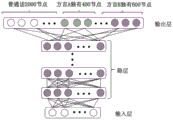
图3为本发明实施例所提供的一种声学模型的示意图;3 is a schematic diagram of an acoustic model provided by an embodiment of the present invention;
图4为本发明实施例所提供的一种语音识别的建模装置的结构示意图;4 is a schematic structural diagram of an apparatus for modeling speech recognition according to an embodiment of the present invention;
图5为本发明实施例所提供的另一种语音识别的建模装置的结构示意图;5 is a schematic structural diagram of another voice recognition modeling apparatus provided by an embodiment of the present invention;
图6示出了适于用来实现本发明实施例的示例性计算机设备的框图。Figure 6 shows a block diagram of an exemplary computer device suitable for use in implementing embodiments of the present invention.
具体实施方式Detailed ways
下面详细描述本发明的实施例,所述实施例的示例在附图中示出,其中自始至终相同或类似的标号表示相同或类似的元件或具有相同或类似功能的元件。下面通过参考附图描述的实施例是示例性的,旨在用于解释本发明,而不能理解为对本发明的限制。The following describes in detail the embodiments of the present invention, examples of which are illustrated in the accompanying drawings, wherein the same or similar reference numerals refer to the same or similar elements or elements having the same or similar functions throughout. The embodiments described below with reference to the accompanying drawings are exemplary, and are intended to explain the present invention and should not be construed as limiting the present invention.
下面参考附图描述本发明实施例的语音识别的建模方法、装置及设备。The following describes the modeling method, apparatus, and device for speech recognition according to the embodiments of the present invention with reference to the accompanying drawings.
图1为本发明实施例所提供的一种语音识别的建模方法的流程示意图,如图1所示,该方法包括:FIG. 1 is a schematic flowchart of a method for modeling speech recognition according to an embodiment of the present invention. As shown in FIG. 1 , the method includes:
步骤101,根据预先训练的对齐模型分别对普通话的第一语音数据和P种方言的第一语音数据进行处理,获取每帧第一语音数据对应的标签,统计输出的标签并对相同类别的标签进行去重,确定N类标签,其中,N为正整数,P为正整数。
相关技术中,在针对普通话和方言进行语音识别时,需要切换至相应的语音识别模型进行识别,切换操作繁琐,并且当方言数量增加时需要增加相应的语音识别模型,成本较高。因此,本发明实施例提出一种语音识别的建模方法,能够对普通话和方言混合建模,从而实现一个模型既可以识别普通话,又可以识别方言。In the related art, when performing speech recognition for Mandarin and dialects, it is necessary to switch to a corresponding speech recognition model for recognition, and the switching operation is cumbersome, and when the number of dialects increases, a corresponding speech recognition model needs to be added, which is costly. Therefore, the embodiment of the present invention proposes a modeling method for speech recognition, which can model a mixture of Mandarin and dialect, so that a model can recognize both Mandarin and dialect.
本发明实施例中,在针对普通话和方言混合建模时,可以先根据预先训练的对齐模型对普通话和方言的语音数据做帧级别的对齐,确定N类标签,以保证普通话与方言的建模单元一致。In the embodiment of the present invention, when the mixed modeling of Mandarin and dialect is carried out, frame-level alignment of the speech data of Mandarin and dialect can be performed according to the pre-trained alignment model, and N types of labels are determined, so as to ensure the modeling of Mandarin and dialect. Units are consistent.
其中,标签为每帧语音数据对应的内容,比如根据相关语音识别模型中的声学模型确定每帧语音数据对应的标签,根据语音识别模型中的语言模型和标签获取识别文本。The label is the content corresponding to each frame of speech data, for example, the label corresponding to each frame of speech data is determined according to the acoustic model in the relevant speech recognition model, and the recognized text is obtained according to the language model and the label in the speech recognition model.
作为一种示例,可以根据普通话数据预先训练对齐模型,该对齐模型输入为每帧语音数据的特征,输出为每帧语音数据对应的标签。进而,将收集的普通话语音数据和方言A、方言B的语音数据输入到该对齐模型中,输出每帧语音数据对应的标签,进一步对输出的标签进行统计和去重,确定N类标签作为后续步骤中神经网络的输出层节点,比如N为2000,对齐后可以确定2000个不同的标签。由此,实现了将方言与普通话进行帧级别的对齐,保证方言和普通话的建模单元一致。As an example, an alignment model may be pre-trained according to Mandarin data, where the input of the alignment model is the feature of each frame of speech data, and the output is the label corresponding to each frame of speech data. Then, input the collected Mandarin speech data and the speech data of dialect A and dialect B into the alignment model, output the label corresponding to each frame of speech data, and further carry out statistics and deduplication on the output label, and determine the N type label as the follow-up The output layer nodes of the neural network in the step, for example, N is 2000, and 2000 different labels can be determined after alignment. In this way, the frame-level alignment of dialects and Mandarin is achieved, and the modeling units of dialects and Mandarin are guaranteed to be consistent.
在本发明的一个实施例中,对齐模型可以基于混合高斯模型实现。可以预先收集普通话的语音数据以及对应标注的文本信息,其中该文本信息中已知每个字对应的一个或多个标签。进而,提取每帧语音数据的梅尔频率倒谱系数(简称MFCC)特征,根据MFCC特征和文本信息,基于最大似然估计训练混合高斯模型的参数,生成对齐模型,使得该对齐模型的输入为每帧语音数据的MFCC特征,输出为每帧语音数据对应的标签。In one embodiment of the present invention, the alignment model may be implemented based on a Gaussian mixture model. The speech data of Mandarin and the corresponding labelled text information may be collected in advance, wherein one or more labels corresponding to each character are known in the text information. Furthermore, the Mel Frequency Cepstral Coefficient (MFCC) feature of each frame of speech data is extracted, and according to the MFCC feature and text information, the parameters of the Gaussian mixture model are trained based on maximum likelihood estimation, and an alignment model is generated, so that the input of the alignment model is The MFCC feature of each frame of speech data is output as a label corresponding to each frame of speech data.
步骤102,根据普通话的第二语音数据训练神经网络,当神经网络收敛时生成识别模型,其中,识别模型的输出为N类标签。Step 102: Train a neural network according to the second speech data of Mandarin, and generate a recognition model when the neural network converges, wherein the output of the recognition model is N-type labels.
本发明实施例中,在确定了N类标签后,可以收集普通话的语音数据训练神经网络,使该神经网络的输出层节点数量为N,分别对应N类标签。其中,神经网络可以为DNN-HMM(深度神经网络-隐马尔科夫模型)。In the embodiment of the present invention, after N types of labels are determined, the speech data of Mandarin can be collected to train a neural network, so that the number of output layer nodes of the neural network is N, corresponding to N types of labels respectively. The neural network may be a DNN-HMM (Deep Neural Network-Hidden Markov Model).
作为一种可能的实现方式,可以收集普通话的语音数据和对应标注的标签,并对普通话语音数据提取滤波器组系数(Filter Bank)特征,基于CTC(ConnectionistTemporal Classification)的训练准则训练神经网络,其中,CTC的训练准则可以如下公式所示,As a possible implementation, it is possible to collect Mandarin speech data and corresponding labels, extract filter bank coefficients (Filter Bank) features from the Mandarin speech data, and train a neural network based on the training criteria of CTC (Connectionist Temporal Classification), where , the training criterion of CTC can be expressed as the following formula,

其中,k为某一时刻参考的标签k的得分,∑s∈label(z,k)α(s)β(s)表示某一时刻CTC路径中属于标签k的得分(通过CTC的前向得分和后向得分的乘积得到),P(z|x)为某一时刻CTC所经过路径的总得分。进而,当神经网络收敛时生成识别模型,该识别模型的输出层为N类标签,可以对普通话的语音数据进行识别。将普通话语音数据输入该识别模型,可以获取每帧语音数据对应的标签。Among them, k is the score of label k referenced at a certain moment, ∑ s∈label(z,k) α(s)β(s) represents the score of label k in the CTC path at a certain moment (through the forward score of CTC and the product of the backward score), P(z|x) is the total score of the path traversed by the CTC at a certain moment. Furthermore, when the neural network converges, a recognition model is generated, and the output layer of the recognition model is N-type labels, which can recognize the speech data of Mandarin. By inputting the Mandarin speech data into the recognition model, the label corresponding to each frame of speech data can be obtained.
步骤103,将P种方言的第二语音数据分别输入到识别模型中进行处理,获取每帧方言的第二语音数据的输出标签。Step 103: Input the second voice data of the P dialects into the recognition model respectively for processing, and obtain the output label of the second voice data of each frame of dialect.
本实施例中,可以收集方言的语音数据,并将方言的语音数据输入到从语音数据到标签的识别模型中,获取每帧方言的语音数据对应的标签,作为相应的输出标签。In this embodiment, dialect voice data can be collected, and the dialect voice data can be input into the recognition model from voice data to tags, and the tag corresponding to each frame of dialect voice data can be obtained as the corresponding output tag.
下面结合识别模型的处理过程进行说明。The following describes the process of identifying the model.
图2为本发明实施例所提供的一种确定输出标签的流程示意图,如图2所示,包括:FIG. 2 is a schematic flowchart of determining an output label according to an embodiment of the present invention, as shown in FIG. 2 , including:
步骤201,提取方言的第二语音数据的滤波器组系数特征,根据滤波器组系数特征确定每帧方言的第二语音数据的N个后验概率。
本实施例中,由于根据对齐模型确定了N类标签,则识别模型的输出为该N类标签。可以提取方言的语音数据的滤波器组系数特征,并将滤波器组系数特征输入到识别模型中进行处理,对于每帧方言的语音数据,输出N个后验概率,比如输出一个长度为N的一维数组,数组中每个值代表每个标签的后验概率。In this embodiment, since the N-type labels are determined according to the alignment model, the output of the recognition model is the N-type labels. The filter bank coefficient features of the dialect speech data can be extracted, and the filter bank coefficient features can be input into the recognition model for processing. For each frame of dialect speech data, N posterior probabilities are output, such as outputting a length of N One-dimensional array, each value in the array represents the posterior probability of each label.
步骤202,将N个后验概率中最大值对应的标签,作为每帧方言的第二语音数据的输出标签。In
本实施例中,对于每帧方言的语音数据,确定N个后验概率中的最大后验概率,并将该最大后验概率对于的标签,作为该帧方言的语音数据的输出标签。In this embodiment, for each frame of dialect speech data, the maximum a posteriori probability among the N posterior probabilities is determined, and the label corresponding to the maximum a posteriori probability is used as the output label of the dialect speech data of this frame.
作为一种示例,N为2000,将方言A和方言B的语音数据分别输入到识别模型,分别得到对应的前向打分,即识别模型输出层的后验概率。由于输出层节点为2000个,对于方言A每一帧数据,以及方言B的每一帧数据,均会得到一个长度为2000的一维数组,其中,数组中每个值代表每个标签的后验概率。进而,将每个数组中最大值对应的标签,作为该帧语音数据的输出标签。As an example, N is 2000. The speech data of dialect A and dialect B are respectively input into the recognition model, and corresponding forward scores are obtained respectively, that is, the posterior probability of the output layer of the recognition model. Since there are 2000 nodes in the output layer, for each frame of data in dialect A and each frame of data in dialect B, a one-dimensional array with a length of 2000 will be obtained, where each value in the array represents the backend of each label. test probability. Furthermore, the label corresponding to the maximum value in each array is used as the output label of the frame of speech data.
步骤104,根据输出标签和标注的真实标签,对于P种方言中每一种方言确定N类标签中每类标签的错误率,根据错误率大于预设阈值的M类标签新生成M类目标标签,其中,M为大于等于零的整数。
本发明实施例中,可以在收集上述步骤中方言的第二语音数据时,获取该语音数据对应标注的真实标签。其中,输出标签与真实标签均属于N类标签。In this embodiment of the present invention, when the second voice data of the dialect in the above steps is collected, a real label corresponding to the annotation of the voice data may be acquired. Among them, both the output label and the real label belong to the N-type label.
可以理解,由于识别模型是根据普通话语音数据训练得到的,因此将方言的语音数据输入到识别模型中进行处理,得到的输出标签可能并不准确,因此可以进一步将能够准确识别的标签作为普通话与方言共用的标签,根据不能够准确识别的标签新生成目标标签作为方言单独使用的标签。It can be understood that since the recognition model is trained based on Mandarin speech data, the dialect speech data is input into the recognition model for processing, and the obtained output labels may not be accurate, so the labels that can be accurately recognized can be further used as Mandarin and For labels shared by dialects, the target labels are newly generated based on labels that cannot be accurately identified as labels used by dialects alone.
作为一种示例,以方言A为例,对于方言A的每一帧语音数据,将该帧语音数据的输出标签与标注的真实标签进行匹配,若一致则代表分类正确,若不一致则代表分类错误。进而统计各个标签分类错误的个数,并对每个标签的总数归一化,得到每个标签分类的错误率。比如,对于标签1,标注的真实标签为10个,对应的输出标签中有5个为标签1,有5个为其他标签,则确定标签1的错误率为50%。As an example, taking dialect A as an example, for each frame of speech data in dialect A, the output label of the frame of speech data is matched with the marked real label. If they are consistent, the classification is correct, and if they are inconsistent, the classification is wrong. . Then count the number of misclassifications of each label, and normalize the total number of each label to obtain the error rate of each label classification. For example, for label 1, there are 10 true labels labeled, 5 of the corresponding output labels are label 1, and 5 are other labels, then the error rate of label 1 is determined to be 50%.
本实施例中,对于每一种方言,在确定N类标签中各标签的错误率后,可以将错误率与预设阈值进行比较,将错误率小于等于预设阈值的标签作为普通话与该种方言共用的标签,并根据错误率大于预设阈值的标签新生成目标标签,也就是说,对于每一种方言可以从N类标签中确定出M类错误率较高的标签,并根据该M类标签新生成对应的M类目标标签,作为该种方言独有的标签。其中,预设阈值可以根据大量实验数据确定,也可以根据需要自行设置,比如可以为90%,此处不作限制。In this embodiment, for each dialect, after determining the error rate of each label in the N types of labels, the error rate can be compared with the preset threshold, and the label with the error rate less than or equal to the preset threshold is regarded as the difference between the Mandarin and the The labels shared by the dialects, and the target labels are newly generated according to the labels whose error rate is greater than the preset threshold. The class label newly generates the corresponding M class target label as the unique label of this dialect. The preset threshold can be determined according to a large amount of experimental data, or can be set according to needs, for example, it can be 90%, which is not limited here.
需要说明的是,本实施例中当方言种类为多种的情况,针对每一种方言,分别确定各标签的错误率,比如对于方言A确定了M1个目标标签,对于方言B确定了M2个目标标签,其具体实现方式可以参照上述示例,此处不再赘述。It should be noted that in this embodiment, when there are multiple dialect types, the error rate of each label is determined separately for each dialect. For example, M1 target labels are determined for dialect A, and M2 target labels are determined for dialect B. For the specific implementation of the target tag, reference may be made to the above example, which will not be repeated here.
在本发明的一个实施例中,对于每一种方言,在根据错误率大于预设阈值的M类标签新生成M类目标标签之后,还可以根据M类目标标签更新解码字典,在解码字典中为目标标签增加相应的发音。其中,解码字典中包括从单词到音素的映射,用于连接声学模型和语言模型。In an embodiment of the present invention, for each dialect, after the M-type target labels are newly generated according to the M-type labels whose error rate is greater than the preset threshold, the decoding dictionary can also be updated according to the M-type target labels. In the decoding dictionary Add the corresponding pronunciation for the target tag. Among them, the decoding dictionary includes the mapping from words to phonemes, which is used to connect the acoustic model and the language model.
步骤105,根据普通话的第三语音数据和P种方言的第三语音数据训练声学模型,其中,声学模型的输出为N类标签和P种方言中每一种方言对应的M类目标标签。Step 105: Train an acoustic model according to the third speech data of Mandarin and the third speech data of P dialects, wherein the output of the acoustic model is N type labels and M type target labels corresponding to each of the P dialects.
本发明实施例中,在对于P种方言中每一种方言确定M类目标标签之后,可以根据普通话的语音数据与方言的语音数据共同训练一个声学模型,其中,声学模型的输出为N类标签和P种方言中每一种方言对应的M类目标标签。由此,通过该声学模型既可以识别普通话,也可以识别P种方言,并且保证了识别的准确性,从而根据该声学模型及相关语言模型、解码字典构建语音识别模型,可以通过一个语音识别模型对普通话和多种方言进行语音识别。其中,声学模型可以为DNN-HMM模型。In the embodiment of the present invention, after M types of target labels are determined for each of the P dialects, an acoustic model can be jointly trained according to the speech data of Mandarin and the speech data of the dialects, wherein the output of the acoustic model is the N types of labels M classes of target labels corresponding to each of the P dialects. Therefore, the acoustic model can recognize both Mandarin and P dialects, and the accuracy of the recognition is ensured, so that a speech recognition model is constructed according to the acoustic model, related language models, and decoding dictionaries, and a speech recognition model can be used. Speech recognition for Mandarin and multiple dialects. The acoustic model may be a DNN-HMM model.
作为一种示例,以普通话和方言A为例,N为2000,预设阈值为90%。对于方言A,2000个标签中错误率大于90%的标签数目为400,将该400个建模单元单独列出并作为额外的建模单元。进而,根据普通话语音数据和方言A语音数据训练声学模型,使得声学模型输出层节点个数为2400,其中,2000个节点中有1600个为普通话和方言A共用,400个为普通话单独使用,额外的400个节点为方言A单独使用。As an example, taking Mandarin and dialect A as an example, N is 2000, and the preset threshold is 90%. For dialect A, the number of labels with an error rate greater than 90% among the 2000 labels is 400, and the 400 modeling units are listed separately and used as additional modeling units. Furthermore, the acoustic model is trained according to the Mandarin speech data and dialect A speech data, so that the number of nodes in the output layer of the acoustic model is 2400, among which, 1600 of the 2000 nodes are shared by Mandarin and dialect A, 400 are used solely for Mandarin, and additional of 400 nodes for dialect A alone.
作为另一种示例,参照图3,以普通话和方言A、方言B为例,N为2000,预设阈值为90%。对于方言A,2000个标签中错误率大于90%的标签数目为400,将该400个建模单元单独列出并作为额外的建模单元;对于方言B,2000个标签中错误率大于90%的标签数目为600,将该600个建模单元单独列出并作为额外的建模单元。进而,根据普通话语音数据和方言A、方言B的语音数据训练声学模型,使得声学模型输出层节点个数为3000,其中,对于方言A,2000个节点中有1600个为普通话和方言A共用,400个为普通话单独使用,额外的400个节点为方言A单独使用。对于方言B,节点中有1400个为普通话和方言B共用,600个为普通话单独使用,额外的600个节点为方言B单独使用。As another example, referring to FIG. 3 , taking Mandarin, dialect A, and dialect B as examples, N is 2000, and the preset threshold is 90%. For dialect A, the number of labels with an error rate greater than 90% among the 2000 labels is 400, and the 400 modeling units are listed separately and used as additional modeling units; for dialect B, among the 2000 labels, the error rate is greater than 90%. The number of tags is 600, and the 600 modeling units are listed separately as additional modeling units. Furthermore, the acoustic model is trained according to the Mandarin speech data and the speech data of dialect A and dialect B, so that the number of nodes in the output layer of the acoustic model is 3000, among which, for dialect A, 1600 of the 2000 nodes are shared by Mandarin and dialect A, 400 nodes are used solely for Mandarin, and an additional 400 nodes are used solely for dialect A. For dialect B, 1400 nodes are shared by Mandarin and dialect B, 600 are used solely by Mandarin, and an additional 600 nodes are used solely by dialect B.
在本发明的一个实施例中,可以收集普通话的语音数据和P种方言的语音数据,并对普通话的语音数据标注相应的标签作为第一标注标签,以及对P种方言的语音数据标注相应的标签作为第二标注标签。进而,根据上述收集的语音数据与对应标注的标签生成训练样本集。其中,对于P种方言中每一种方言的语音数据,将原先标注的错误率大于预设阈值的M类标签替换为对应的M类目标标签,比如,对于方言A,标签1的错误率大于90%,则将原先应当标注的标签1替换为标注目标标签1。进而,根据预设的目标函数和训练样本训练预设模型的处理参数,生成声学模型,使得声学模型的输入为语音数据,输出为每帧语音数据对应的标签或目标标签。其中,预设模型可以为DNN-HMM等,可以基于CTC训练准则训练声学模型,其实现方式可以参照识别模型,此处不再赘述。In an embodiment of the present invention, the voice data of Mandarin and the voice data of P dialects can be collected, and corresponding labels are marked on the voice data of Mandarin as the first marking labels, and the voice data of P dialects are marked with corresponding labels. label as the second label label. Furthermore, a training sample set is generated according to the above-mentioned collected speech data and correspondingly marked labels. Among them, for the speech data of each dialect in the P dialects, the M-type labels whose error rate is greater than the preset threshold are replaced with the corresponding M-type target labels. For example, for dialect A, the error rate of label 1 is greater than 90%, then replace the label 1 that should be labeled with the label target label 1. Furthermore, the processing parameters of the preset model are trained according to the preset objective function and the training samples, and an acoustic model is generated, so that the input of the acoustic model is speech data, and the output is the label or target label corresponding to each frame of speech data. The preset model may be DNN-HMM, etc., the acoustic model may be trained based on the CTC training criterion, and the implementation method may refer to the recognition model, which will not be repeated here.
需要说明的是,本实施例不同步骤中普通话的语音数据可以相同,也可以不同,以及方言的语音数据可以相同,也可以不同,具体可以根据需要进行选择,此处不作限制。It should be noted that, in different steps of this embodiment, the voice data of Mandarin may be the same or different, and the voice data of dialects may be the same or different, which can be selected as needed, which is not limited here.
本发明实施例的语音识别的建模方法,根据预先训练的对齐模型分别对普通话的第一语音数据和P种方言的第一语音数据进行处理,获取每帧第一语音数据对应的标签,统计输出的标签并对相同类别的标签进行去重,确定N类标签。进而,根据普通话的第二语音数据训练神经网络,当神经网络收敛时生成输出为N类标签的识别模型。进一步将P种方言的第二语音数据分别输入到识别模型中进行处理,获取每帧方言的第二语音数据的输出标签。进一步根据输出标签和标注的真实标签,对于P种方言中每一种方言确定N类标签中每类标签的错误率,根据错误率大于预设阈值的M类标签新生成M类目标标签。进一步根据普通话的第三语音数据和P种方言的第三语音数据训练声学模型,其中,声学模型的输出为N类标签和P种方言中每一种方言对应的M类目标标签。由此,对于每种方言,基于普通话训练的识别模型中各标签的错误率,生成相应的目标标签,并根据已有标签与新生成的目标标签生成声学模型,使得该声学模型可以识别普通话语音与方言语音,实现了基于每帧语音数据分类的错误确定建模单元,从而实现了普通话和方言混合建模,在保证识别准确性的同时,使得同一个模型既支持普通话,又能支持多种方言,无需在多个模型之间切换,简化了用户操作,并且降低了维护成本。In the speech recognition modeling method according to the embodiment of the present invention, the first speech data of Mandarin and the first speech data of P dialects are respectively processed according to the pre-trained alignment model, the labels corresponding to the first speech data of each frame are obtained, and the statistics The output labels are de-duplicated for the labels of the same category to determine the N-type labels. Furthermore, the neural network is trained according to the second speech data of Mandarin, and when the neural network converges, a recognition model whose output is N-type labels is generated. Further, the second voice data of the P dialects are respectively input into the recognition model for processing, and the output label of the second voice data of each frame of dialect is obtained. Further, according to the output labels and the labeled true labels, for each of the P dialects, the error rate of each label in the N labels is determined, and the M target labels are newly generated according to the M labels whose error rate is greater than the preset threshold. The acoustic model is further trained according to the third speech data of Mandarin and the third speech data of P dialects, wherein the output of the acoustic model is N type labels and M type target labels corresponding to each of the P dialects. Therefore, for each dialect, based on the error rate of each label in the Mandarin-trained recognition model, the corresponding target label is generated, and the acoustic model is generated according to the existing label and the newly generated target label, so that the acoustic model can recognize the Mandarin speech. With the dialect voice, it realizes the error determination modeling unit based on the classification of each frame of voice data, so as to realize the mixed modeling of Mandarin and dialect, while ensuring the recognition accuracy, the same model can support both Mandarin and multiple languages. dialects, eliminating the need to switch between multiple models, simplifying user operations, and reducing maintenance costs.
为了实现上述实施例,本发明还提出一种语音识别的建模装置。In order to realize the above embodiments, the present invention also provides a modeling apparatus for speech recognition.
图4为本发明实施例所提供的一种语音识别的建模装置的结构示意图,如图4所示,该装置包括:对齐模块100,第一训练模块200,处理模块300,生成模块400,第二训练模块500。FIG. 4 is a schematic structural diagram of an apparatus for modeling speech recognition provided by an embodiment of the present invention. As shown in FIG. 4 , the apparatus includes: an alignment module 100, a first training module 200, a processing module 300, and a generation module 400, The second training module 500 .
其中,对齐模块100,用于根据预先训练的对齐模型分别对普通话的第一语音数据和P种方言的第一语音数据进行处理,获取每帧第一语音数据对应的标签,统计输出的标签并对相同类别的标签进行去重,确定N类标签,其中,N为正整数,P为正整数。Wherein, the alignment module 100 is configured to process the first voice data of Mandarin and the first voice data of P dialects according to the pre-trained alignment model, obtain the labels corresponding to the first voice data of each frame, count the output labels and collect the corresponding labels. De-duplication of labels of the same category is performed to determine N-type labels, where N is a positive integer and P is a positive integer.
第一训练模块200,用于根据普通话的第二语音数据训练神经网络,当神经网络收敛时生成识别模型,其中,识别模型的输出为N类标签。The first training module 200 is configured to train a neural network according to the second speech data of Mandarin, and generate a recognition model when the neural network converges, wherein the output of the recognition model is N-type labels.
处理模块300,用于将P种方言的第二语音数据分别输入到识别模型中进行处理,获取每帧方言的第二语音数据的输出标签。The processing module 300 is configured to input the second voice data of the P dialects into the recognition model respectively for processing, and obtain the output label of the second voice data of each frame of dialect.
生成模块400,用于根据输出标签和标注的真实标签,对于P种方言中每一种方言确定N类标签中每类标签的错误率,根据错误率大于预设阈值的M类标签新生成M类目标标签,其中,M为大于等于零的整数。The generating module 400 is configured to determine, for each of the P dialects, the error rate of each type of label in the N types of labels according to the output label and the labeled true label, and to generate a new M type according to the M type of label whose error rate is greater than a preset threshold. Class target label, where M is an integer greater than or equal to zero.
第二训练模块500,用于根据普通话的第三语音数据和P种方言的第三语音数据训练声学模型,其中,声学模型的输出为N类标签和P种方言中每一种方言对应的M类目标标签。The second training module 500 is configured to train an acoustic model according to the third speech data of Mandarin and the third speech data of P dialects, wherein the output of the acoustic model is N labels and M corresponding to each of the P dialects Class target label.
在图4的基础上,图5所示的装置还包括:第三训练模块600,更新模块700。On the basis of FIG. 4 , the apparatus shown in FIG. 5 further includes: a third training module 600 and an update module 700 .
其中,第三训练模块600,用于获取普通话的第四语音数据和对应的文本信息;提取每帧第四语音数据的MFCC特征,根据MFCC特征和文本信息,基于最大似然估计训练混合高斯模型的参数,生成对齐模型。Wherein, the third training module 600 is used to obtain the fourth speech data of Mandarin and the corresponding text information; extract the MFCC features of the fourth speech data of each frame, and train the mixed Gaussian model based on the maximum likelihood estimation according to the MFCC features and the text information parameters to generate an alignment model.
更新模块700,用于根据M类目标标签更新解码字典。The updating module 700 is configured to update the decoding dictionary according to the M-type target labels.
可选地,处理模块300具体用于:提取方言的第二语音数据的滤波器组系数特征,根据滤波器组系数特征确定每帧方言的第二语音数据的N个后验概率;将N个后验概率中最大值对应的标签,作为每帧方言的第二语音数据的输出标签。Optionally, the processing module 300 is specifically configured to: extract the filter bank coefficient feature of the second voice data of the dialect, and determine N a posteriori probabilities of the second voice data of each frame of dialect according to the filter bank coefficient feature; The label corresponding to the maximum value in the posterior probability is used as the output label of the second speech data of each frame of dialect.
可选地,第二训练模块500具体用于:根据普通话的第三语音数据和与普通话的第三语音数据对应的第一标注标签,以及P种方言的第三语音数据和与P种方言的第三语音数据对应的第二标注标签,生成训练样本,其中,对于P种方言中每一种方言的第三语音数据,将原先标注的错误率大于预设阈值的M类标签替换为对应的M类目标标签;根据预设的目标函数和训练样本训练预设模型的处理参数,生成声学模型。Optionally, the second training module 500 is specifically configured to: according to the third voice data of Mandarin and the first label corresponding to the third voice data of Mandarin, and the third voice data of P dialects and P dialects. The second label corresponding to the third speech data is used to generate training samples, wherein, for the third speech data of each of the P dialects, the M labels whose error rate is greater than the preset threshold are replaced with the corresponding labels. M-type target labels; according to the preset objective function and the training samples to train the processing parameters of the preset model, and generate an acoustic model.
需要说明的是,前述实施例对语音识别的建模方法的解释说明同样适用于本实施例的装置,此处不再赘述。It should be noted that, the explanations on the modeling method for speech recognition in the foregoing embodiments are also applicable to the apparatus of this embodiment, and are not repeated here.
本发明实施例的语音识别的建模装置,能够对于每种方言,基于普通话训练的识别模型中各标签的错误率,生成相应的目标标签,并根据已有标签与新生成的目标标签生成声学模型,使得该声学模型可以识别普通话语音与方言语音,实现了普通话和方言混合建模,在保证识别准确性的同时,使得同一个模型既支持普通话,又能支持多种方言,无需在多个模型之间切换,简化了用户操作,并且降低了维护成本。The apparatus for modeling speech recognition according to the embodiment of the present invention can generate corresponding target labels for each dialect based on the error rate of each label in the recognition model trained in Mandarin, and generate acoustics according to the existing labels and the newly generated target labels. model, so that the acoustic model can recognize Mandarin speech and dialect speech, and realizes the mixed modeling of Mandarin and dialect. While ensuring the accuracy of recognition, the same model can support both Mandarin and multiple dialects. Switching between models simplifies user operations and reduces maintenance costs.
为了实现上述实施例,本发明还提出一种计算机设备,包括处理器和存储器;其中,处理器通过读取存储器中存储的可执行程序代码来运行与可执行程序代码对应的程序,以用于实现如前述任一实施例所述的语音识别的建模方法。In order to realize the above-mentioned embodiments, the present invention also provides a computer device, including a processor and a memory; wherein, the processor runs a program corresponding to the executable program code by reading the executable program code stored in the memory, so as to be used for The modeling method for speech recognition as described in any of the preceding embodiments is implemented.
为了实现上述实施例,本发明还提出一种计算机程序产品,当计算机程序产品中的指令被处理器执行时实现如前述任一实施例所述的语音识别的建模方法。In order to implement the above embodiments, the present invention also provides a computer program product, which implements the modeling method for speech recognition according to any of the foregoing embodiments when instructions in the computer program product are executed by a processor.
为了实现上述实施例,本发明还提出一种计算机可读存储介质,其上存储有计算机程序,该程序被处理器执行时实现如前述任一实施例所述的语音识别的建模方法。In order to realize the above-mentioned embodiments, the present invention also provides a computer-readable storage medium on which a computer program is stored, and when the program is executed by a processor, implements the modeling method for speech recognition according to any of the foregoing embodiments.
图6示出了适于用来实现本发明实施例的示例性计算机设备的框图。图6显示的计算机设备12仅仅是一个示例,不应对本发明实施例的功能和使用范围带来任何限制。Figure 6 shows a block diagram of an exemplary computer device suitable for use in implementing embodiments of the present invention. The computer device 12 shown in FIG. 6 is only an example, and should not impose any limitation on the function and scope of use of the embodiments of the present invention.
如图6所示,计算机设备12以通用计算设备的形式表现。计算机设备12的组件可以包括但不限于:一个或者多个处理器或者处理单元16,系统存储器28,连接不同系统组件(包括系统存储器28和处理单元16)的总线18。As shown in FIG. 6, computer device 12 takes the form of a general-purpose computing device. Components of computer device 12 may include, but are not limited to, one or more processors or
总线18表示几类总线结构中的一种或多种,包括存储器总线或者存储器控制器,外围总线,图形加速端口,处理器或者使用多种总线结构中的任意总线结构的局域总线。举例来说,这些体系结构包括但不限于工业标准体系结构(Industry StandardArchitecture;以下简称:ISA)总线,微通道体系结构(Micro Channel Architecture;以下简称:MAC)总线,增强型ISA总线、视频电子标准协会(Video Electronics StandardsAssociation;以下简称:VESA)局域总线以及外围组件互连(Peripheral ComponentInterconnection;以下简称:PCI)总线。
计算机设备12典型地包括多种计算机系统可读介质。这些介质可以是任何能够被计算机设备12访问的可用介质,包括易失性和非易失性介质,可移动的和不可移动的介质。Computer device 12 typically includes a variety of computer system readable media. These media can be any available media that can be accessed by computer device 12, including both volatile and nonvolatile media, removable and non-removable media.
存储器28可以包括易失性存储器形式的计算机系统可读介质,例如随机存取存储器(Random Access Memory;以下简称:RAM)30和/或高速缓存存储器32。计算机设备12可以进一步包括其它可移动/不可移动的、易失性/非易失性计算机系统存储介质。仅作为举例,存储系统34可以用于读写不可移动的、非易失性磁介质(图6未显示,通常称为“硬盘驱动器”)。尽管图6中未示出,可以提供用于对可移动非易失性磁盘(例如“软盘”)读写的磁盘驱动器,以及对可移动非易失性光盘(例如:光盘只读存储器(Compact Disc Read OnlyMemory;以下简称:CD-ROM)、数字多功能只读光盘(Digital Video Disc Read OnlyMemory;以下简称:DVD-ROM)或者其它光介质)读写的光盘驱动器。在这些情况下,每个驱动器可以通过一个或者多个数据介质接口与总线18相连。存储器28可以包括至少一个程序产品,该程序产品具有一组(例如至少一个)程序模块,这些程序模块被配置以执行本申请各实施例的功能。The
具有一组(至少一个)程序模块42的程序/实用工具40,可以存储在例如存储器28中,这样的程序模块42包括但不限于操作系统、一个或者多个应用程序、其它程序模块以及程序数据,这些示例中的每一个或某种组合中可能包括网络环境的实现。程序模块42通常执行本申请所描述的实施例中的功能和/或方法。A program/
计算机设备12也可以与一个或多个外部设备14(例如键盘、指向设备、显示器24等)通信,还可与一个或者多个使得用户能与该计算机系统/服务器12交互的设备通信,和/或与使得该计算机系统/服务器12能与一个或多个其它计算设备进行通信的任何设备(例如网卡,调制解调器等等)通信。这种通信可以通过输入/输出(I/O)接口22进行。并且,计算机设备12还可以通过网络适配器20与一个或者多个网络(例如局域网(Local AreaNetwork;以下简称:LAN),广域网(Wide Area Network;以下简称:WAN)和/或公共网络,例如因特网)通信。如图所示,网络适配器20通过总线18与计算机设备12的其它模块通信。应当明白,尽管图中未示出,可以结合计算机设备12使用其它硬件和/或软件模块,包括但不限于:微代码、设备驱动器、冗余处理单元、外部磁盘驱动阵列、RAID系统、磁带驱动器以及数据备份存储系统等。The computer device 12 may also communicate with one or more external devices 14 (eg, keyboard, pointing device,
处理单元16通过运行存储在系统存储器28中的程序,从而执行各种功能应用以及数据处理,例如实现前述实施例中提及的方法。The
在本发明的描述中,需要理解的是,术语“第一”、“第二”仅用于描述目的,而不能理解为指示或暗示相对重要性或者隐含指明所指示的技术特征的数量。由此,限定有“第一”、“第二”的特征可以明示或者隐含地包括至少一个该特征。在本发明的描述中,“多个”的含义是至少两个,例如两个,三个等,除非另有明确具体的限定。In the description of the present invention, it should be understood that the terms "first" and "second" are only used for description purposes, and cannot be interpreted as indicating or implying relative importance or the number of indicated technical features. Thus, a feature delimited with "first", "second" may expressly or implicitly include at least one of that feature. In the description of the present invention, "plurality" means at least two, such as two, three, etc., unless otherwise expressly and specifically defined.
在本说明书的描述中,参考术语“一个实施例”、“一些实施例”、“示例”、“具体示例”、或“一些示例”等的描述意指结合该实施例或示例描述的具体特征、结构、材料或者特点包含于本发明的至少一个实施例或示例中。在本说明书中,对上述术语的示意性表述不必须针对的是相同的实施例或示例。而且,描述的具体特征、结构、材料或者特点可以在任一个或多个实施例或示例中以合适的方式结合。此外,在不相互矛盾的情况下,本领域的技术人员可以将本说明书中描述的不同实施例或示例以及不同实施例或示例的特征进行结合和组合。In the description of this specification, description with reference to the terms "one embodiment," "some embodiments," "example," "specific example," or "some examples", etc., mean specific features described in connection with the embodiment or example , structure, material or feature is included in at least one embodiment or example of the present invention. In this specification, schematic representations of the above terms are not necessarily directed to the same embodiment or example. Furthermore, the particular features, structures, materials or characteristics described may be combined in any suitable manner in any one or more embodiments or examples. Furthermore, those skilled in the art may combine and combine the different embodiments or examples described in this specification, as well as the features of the different embodiments or examples, without conflicting each other.
尽管上面已经示出和描述了本发明的实施例,可以理解的是,上述实施例是示例性的,不能理解为对本发明的限制,本领域的普通技术人员在本发明的范围内可以对上述实施例进行变化、修改、替换和变型。Although the embodiments of the present invention have been shown and described above, it should be understood that the above-mentioned embodiments are exemplary and should not be construed as limiting the present invention. Embodiments are subject to variations, modifications, substitutions and variations.
Claims (12)
Priority Applications (2)
| Application Number | Priority Date | Filing Date | Title |
|---|---|---|---|
| CN201910297805.XA CN110033760B (en) | 2019-04-15 | 2019-04-15 | Modeling method, device and equipment for speech recognition |
| US16/843,174 US11688391B2 (en) | 2019-04-15 | 2020-04-08 | Mandarin and dialect mixed modeling and speech recognition |
Applications Claiming Priority (1)
| Application Number | Priority Date | Filing Date | Title |
|---|---|---|---|
| CN201910297805.XA CN110033760B (en) | 2019-04-15 | 2019-04-15 | Modeling method, device and equipment for speech recognition |
Publications (2)
| Publication Number | Publication Date |
|---|---|
| CN110033760A CN110033760A (en) | 2019-07-19 |
| CN110033760B true CN110033760B (en) | 2021-01-29 |
Family
ID=67238338
Family Applications (1)
| Application Number | Title | Priority Date | Filing Date |
|---|---|---|---|
| CN201910297805.XA Active CN110033760B (en) | 2019-04-15 | 2019-04-15 | Modeling method, device and equipment for speech recognition |
Country Status (2)
| Country | Link |
|---|---|
| US (1) | US11688391B2 (en) |
| CN (1) | CN110033760B (en) |
Families Citing this family (22)
| Publication number | Priority date | Publication date | Assignee | Title |
|---|---|---|---|---|
| CN110517664B (en) * | 2019-09-10 | 2022-08-05 | 科大讯飞股份有限公司 | Multi-party identification method, device, equipment and readable storage medium |
| CN110808035B (en) * | 2019-11-06 | 2021-11-26 | 百度在线网络技术(北京)有限公司 | Method and apparatus for training hybrid language recognition models |
| CN110619869B (en) * | 2019-11-06 | 2021-12-24 | 百度在线网络技术(北京)有限公司 | Method and apparatus for training hybrid language recognition models |
| CN110956954B (en) * | 2019-11-29 | 2020-12-11 | 百度在线网络技术(北京)有限公司 | Speech recognition model training method and device and electronic equipment |
| CN110930979B (en) * | 2019-11-29 | 2020-10-30 | 百度在线网络技术(北京)有限公司 | Speech recognition model training method and device and electronic equipment |
| CN111833844A (en) * | 2020-07-28 | 2020-10-27 | 苏州思必驰信息科技有限公司 | Method and system for training hybrid model for speech recognition and language classification |
| CN114596847B (en) * | 2020-11-19 | 2025-06-03 | 珠海市杰理科技股份有限公司 | Interactive speech recognition method, recognition chip, interactive device and medium |
| CN112509555B (en) * | 2020-11-25 | 2023-05-23 | 平安科技(深圳)有限公司 | Dialect voice recognition method, device, medium and electronic equipment |
| CN112233653B (en) * | 2020-12-10 | 2021-03-12 | 北京远鉴信息技术有限公司 | Method, device and equipment for training multi-dialect accent mandarin speech recognition model |
| CN112668340B (en) * | 2020-12-28 | 2024-07-12 | 北京捷通华声科技股份有限公司 | Information processing method and device |
| CN113593524B (en) * | 2021-01-26 | 2024-09-10 | 腾讯科技(深圳)有限公司 | Accent recognition acoustic model training, accent recognition method, apparatus and storage medium |
| CN113192492B (en) * | 2021-04-28 | 2024-05-28 | 平安科技(深圳)有限公司 | Speech recognition method, device, computer equipment and storage medium |
| CN113220839B (en) * | 2021-05-13 | 2022-05-24 | 亿咖通(湖北)技术有限公司 | Intention identification method, electronic equipment and computer readable storage medium |
| CN113823262B (en) * | 2021-11-16 | 2022-02-11 | 腾讯科技(深圳)有限公司 | Voice recognition method and device, electronic equipment and storage medium |
| CN114038450A (en) * | 2021-12-06 | 2022-02-11 | 深圳市北科瑞声科技股份有限公司 | Dialect identification method, dialect identification device, dialect identification equipment and storage medium |
| CN114387950A (en) * | 2021-12-14 | 2022-04-22 | 北京声智科技有限公司 | Speech recognition method, apparatus, device and storage medium |
| CN116266454A (en) * | 2021-12-17 | 2023-06-20 | 腾讯科技(深圳)有限公司 | Multi-dialect speech recognition method, device, computer equipment and storage medium |
| CN114758664B (en) * | 2022-04-06 | 2025-12-12 | 维沃移动通信有限公司 | Voice data filtering methods, devices, electronic equipment and readable storage media |
| CN115240640B (en) * | 2022-07-20 | 2025-02-11 | 科大讯飞股份有限公司 | Dialect speech recognition method, device, equipment and storage medium |
| CN115914471A (en) * | 2022-12-30 | 2023-04-04 | 商客通尚景科技(上海)股份有限公司 | Method of connecting call center based on voice input |
| US12205609B1 (en) * | 2023-07-21 | 2025-01-21 | Krisp Technologies, Inc. | Generating parallel data for real-time speech form conversion |
| CN117763194B (en) * | 2023-12-19 | 2024-08-16 | 知迪科技(安徽)有限公司 | Vehicle-mounted data voice tag system based on large language model |
Citations (14)
| Publication number | Priority date | Publication date | Assignee | Title |
|---|---|---|---|---|
| US20080201145A1 (en) * | 2007-02-20 | 2008-08-21 | Microsoft Corporation | Unsupervised labeling of sentence level accent |
| US20130262111A1 (en) * | 2012-03-30 | 2013-10-03 | Src, Inc. | Automated voice and speech labeling |
| US20140067735A1 (en) * | 2012-08-29 | 2014-03-06 | Microsoft Corporation | Computer-implemented deep tensor neural network |
| CN105632501A (en) * | 2015-12-30 | 2016-06-01 | 中国科学院自动化研究所 | Deep-learning-technology-based automatic accent classification method and apparatus |
| CN106251859A (en) * | 2016-07-22 | 2016-12-21 | 百度在线网络技术(北京)有限公司 | Voice recognition processing method and apparatus |
| US20170148431A1 (en) * | 2015-11-25 | 2017-05-25 | Baidu Usa Llc | End-to-end speech recognition |
| CN106875942A (en) * | 2016-12-28 | 2017-06-20 | 中国科学院自动化研究所 | Acoustic model adaptive approach based on accent bottleneck characteristic |
| CN106919710A (en) * | 2017-03-13 | 2017-07-04 | 东南大学 | A kind of dialect sorting technique based on convolutional neural networks |
| CN107452379A (en) * | 2017-08-17 | 2017-12-08 | 广州腾猴科技有限公司 | The identification technology and virtual reality teaching method and system of a kind of dialect language |
| CN107735833A (en) * | 2015-06-07 | 2018-02-23 | 苹果公司 | Automatic accent detection |
| CN107871497A (en) * | 2016-09-23 | 2018-04-03 | 北京眼神科技有限公司 | Audio recognition method and device |
| CN108172218A (en) * | 2016-12-05 | 2018-06-15 | 中国移动通信有限公司研究院 | A kind of pronunciation modeling method and device |
| CN108711421A (en) * | 2017-04-10 | 2018-10-26 | 北京猎户星空科技有限公司 | A kind of voice recognition acoustic model method for building up and device and electronic equipment |
| CN108831445A (en) * | 2018-05-21 | 2018-11-16 | 四川大学 | Sichuan dialect recognition methods, acoustic training model method, device and equipment |
Family Cites Families (10)
| Publication number | Priority date | Publication date | Assignee | Title |
|---|---|---|---|---|
| JP4267101B2 (en) * | 1997-11-17 | 2009-05-27 | インターナショナル・ビジネス・マシーンズ・コーポレーション | Voice identification device, pronunciation correction device, and methods thereof |
| US7475015B2 (en) * | 2003-09-05 | 2009-01-06 | International Business Machines Corporation | Semantic language modeling and confidence measurement |
| US7880607B2 (en) * | 2006-12-15 | 2011-02-01 | Motorola, Inc. | Intelligent risk management system for first responders |
| US11074495B2 (en) * | 2013-02-28 | 2021-07-27 | Z Advanced Computing, Inc. (Zac) | System and method for extremely efficient image and pattern recognition and artificial intelligence platform |
| US9966064B2 (en) * | 2012-07-18 | 2018-05-08 | International Business Machines Corporation | Dialect-specific acoustic language modeling and speech recognition |
| US9311915B2 (en) * | 2013-07-31 | 2016-04-12 | Google Inc. | Context-based speech recognition |
| US9875736B2 (en) * | 2015-02-19 | 2018-01-23 | Microsoft Technology Licensing, Llc | Pre-training and/or transfer learning for sequence taggers |
| US9892731B2 (en) * | 2015-09-28 | 2018-02-13 | Trausti Thor Kristjansson | Methods for speech enhancement and speech recognition using neural networks |
| US10529322B2 (en) * | 2017-06-15 | 2020-01-07 | Google Llc | Semantic model for tagging of word lattices |
| US11170761B2 (en) * | 2018-12-04 | 2021-11-09 | Sorenson Ip Holdings, Llc | Training of speech recognition systems |
-
2019
- 2019-04-15 CN CN201910297805.XA patent/CN110033760B/en active Active
-
2020
- 2020-04-08 US US16/843,174 patent/US11688391B2/en active Active
Patent Citations (14)
| Publication number | Priority date | Publication date | Assignee | Title |
|---|---|---|---|---|
| US20080201145A1 (en) * | 2007-02-20 | 2008-08-21 | Microsoft Corporation | Unsupervised labeling of sentence level accent |
| US20130262111A1 (en) * | 2012-03-30 | 2013-10-03 | Src, Inc. | Automated voice and speech labeling |
| US20140067735A1 (en) * | 2012-08-29 | 2014-03-06 | Microsoft Corporation | Computer-implemented deep tensor neural network |
| CN107735833A (en) * | 2015-06-07 | 2018-02-23 | 苹果公司 | Automatic accent detection |
| US20170148431A1 (en) * | 2015-11-25 | 2017-05-25 | Baidu Usa Llc | End-to-end speech recognition |
| CN105632501A (en) * | 2015-12-30 | 2016-06-01 | 中国科学院自动化研究所 | Deep-learning-technology-based automatic accent classification method and apparatus |
| CN106251859A (en) * | 2016-07-22 | 2016-12-21 | 百度在线网络技术(北京)有限公司 | Voice recognition processing method and apparatus |
| CN107871497A (en) * | 2016-09-23 | 2018-04-03 | 北京眼神科技有限公司 | Audio recognition method and device |
| CN108172218A (en) * | 2016-12-05 | 2018-06-15 | 中国移动通信有限公司研究院 | A kind of pronunciation modeling method and device |
| CN106875942A (en) * | 2016-12-28 | 2017-06-20 | 中国科学院自动化研究所 | Acoustic model adaptive approach based on accent bottleneck characteristic |
| CN106919710A (en) * | 2017-03-13 | 2017-07-04 | 东南大学 | A kind of dialect sorting technique based on convolutional neural networks |
| CN108711421A (en) * | 2017-04-10 | 2018-10-26 | 北京猎户星空科技有限公司 | A kind of voice recognition acoustic model method for building up and device and electronic equipment |
| CN107452379A (en) * | 2017-08-17 | 2017-12-08 | 广州腾猴科技有限公司 | The identification technology and virtual reality teaching method and system of a kind of dialect language |
| CN108831445A (en) * | 2018-05-21 | 2018-11-16 | 四川大学 | Sichuan dialect recognition methods, acoustic training model method, device and equipment |
Non-Patent Citations (6)
| Title |
|---|
| Ctc regularized model adaptation for improving lstm rnn based multi-accent mandarin speech recognition;Jiangyan Yi et al.;《2016 10th International Symposium on Chinese Spoken Language Processing》;20161231;全文 * |
| CTC Regularized Model Adaptation for Improving LSTM RNN Based Multi-Accent Mandarin Speech Recognition;Jiangyan Yi et al.;《Journal of Signal Processing Systems》;20181231;第985-997页 * |
| Deep neural network acoustic modeling for native and non-native Mandarin speech recognition;Xin Chen et al.;《The 9th International Symposium on Chinese Spoken Language Processing》;20141231;第6-9页 * |
| 基于深层神经网络的藏语识别;袁胜龙 等;《模式识别与人工智能》;20150331;第28卷(第3期);第209-213页 * |
| 基于深度神经网络的四川方言识别;石佳影 等;《现代计算机》;20160531;第3-6页 * |
| 基于深度神经网络的语种识别;崔瑞莲 等;《模式识别与人工智能》;20151231;第28卷(第12期);第1093-1099页 * |
Also Published As
| Publication number | Publication date |
|---|---|
| CN110033760A (en) | 2019-07-19 |
| US11688391B2 (en) | 2023-06-27 |
| US20200327883A1 (en) | 2020-10-15 |
Similar Documents
| Publication | Publication Date | Title |
|---|---|---|
| CN110033760B (en) | Modeling method, device and equipment for speech recognition | |
| CN109887497B (en) | Modeling method, device and equipment for speech recognition | |
| JP7635194B2 (en) | Contextual Bias for Speech Recognition | |
| CN108170749B (en) | Dialog method, device and computer readable medium based on artificial intelligence | |
| CN108829894B (en) | Spoken word recognition and semantic recognition method and device | |
| US20230089308A1 (en) | Speaker-Turn-Based Online Speaker Diarization with Constrained Spectral Clustering | |
| US12536989B2 (en) | Language-agnostic multilingual modeling using effective script normalization | |
| JP2022120024A (en) | Audio signal processing method, model training method, and their device, electronic apparatus, storage medium, and computer program | |
| US12334054B2 (en) | Rescoring automatic speech recognition hypotheses using audio-visual matching | |
| CN108280061A (en) | Text handling method based on ambiguity entity word and device | |
| CN110503956B (en) | Voice recognition method, device, medium and electronic equipment | |
| CN107221320A (en) | Train method, device, equipment and the computer-readable storage medium of acoustic feature extraction model | |
| CN110245348A (en) | Intent recognition method and system | |
| CN112699671B (en) | Language labeling method, device, computer equipment and storage medium | |
| CN112382278A (en) | Streaming voice recognition result display method and device, electronic equipment and storage medium | |
| US20240194188A1 (en) | Voice-history Based Speech Biasing | |
| CN111540363B (en) | Keyword model and decoding network construction method, detection method and related equipment | |
| CN117198289A (en) | Voice interaction method, device, equipment, medium and product | |
| CN111126084B (en) | Data processing method, device, electronic equipment and storage medium | |
| CN115512692A (en) | Speech recognition method, device, equipment and storage medium | |
| CN111552780B (en) | Medical scene search processing method and device, storage medium and electronic equipment | |
| CN110378378B (en) | Event retrieval method, device, computer equipment and storage medium | |
| WO2024076365A1 (en) | Accelerating speaker diarization with multi-stage clustering | |
| CN113360597A (en) | Document retrieval method, electronic device and storage medium | |
| CN114519354A (en) | Text representation method and device, computer equipment and storage medium |
Legal Events
| Date | Code | Title | Description |
|---|---|---|---|
| PB01 | Publication | ||
| PB01 | Publication | ||
| SE01 | Entry into force of request for substantive examination | ||
| SE01 | Entry into force of request for substantive examination | ||
| GR01 | Patent grant | ||
| GR01 | Patent grant |