CN109938892B - A system for recognizing the riding state of the wearer of an intelligent upper-knee prosthesis - Google Patents
A system for recognizing the riding state of the wearer of an intelligent upper-knee prosthesis Download PDFInfo
- Publication number
- CN109938892B CN109938892B CN201910264489.6A CN201910264489A CN109938892B CN 109938892 B CN109938892 B CN 109938892B CN 201910264489 A CN201910264489 A CN 201910264489A CN 109938892 B CN109938892 B CN 109938892B
- Authority
- CN
- China
- Prior art keywords
- prosthetic
- module
- pressure sensor
- knee joint
- calf
- Prior art date
- Legal status (The legal status is an assumption and is not a legal conclusion. Google has not performed a legal analysis and makes no representation as to the accuracy of the status listed.)
- Expired - Fee Related
Links
- 210000000629 knee joint Anatomy 0.000 claims abstract description 64
- 210000003414 extremity Anatomy 0.000 claims abstract description 11
- 244000309466 calf Species 0.000 claims description 70
- 210000002683 foot Anatomy 0.000 claims description 43
- 238000006243 chemical reaction Methods 0.000 claims description 27
- 230000003321 amplification Effects 0.000 claims description 26
- 238000003199 nucleic acid amplification method Methods 0.000 claims description 26
- 230000001133 acceleration Effects 0.000 claims description 24
- 238000000034 method Methods 0.000 claims description 9
- 210000004744 fore-foot Anatomy 0.000 claims description 8
- 210000002414 leg Anatomy 0.000 claims description 5
- 230000008602 contraction Effects 0.000 claims description 4
- 238000001914 filtration Methods 0.000 claims description 3
- 210000001699 lower leg Anatomy 0.000 abstract 4
- 230000001351 cycling effect Effects 0.000 description 5
- 238000010586 diagram Methods 0.000 description 5
- 238000005516 engineering process Methods 0.000 description 5
- 238000009434 installation Methods 0.000 description 5
- 210000003127 knee Anatomy 0.000 description 4
- 210000003141 lower extremity Anatomy 0.000 description 4
- 238000002266 amputation Methods 0.000 description 2
- 239000011159 matrix material Substances 0.000 description 2
- 238000012545 processing Methods 0.000 description 2
- 206010039203 Road traffic accident Diseases 0.000 description 1
- 230000009286 beneficial effect Effects 0.000 description 1
- 230000009194 climbing Effects 0.000 description 1
- 230000007812 deficiency Effects 0.000 description 1
- 238000001514 detection method Methods 0.000 description 1
- 238000011161 development Methods 0.000 description 1
- 230000000694 effects Effects 0.000 description 1
- 210000001503 joint Anatomy 0.000 description 1
- 239000012528 membrane Substances 0.000 description 1
- 230000002503 metabolic effect Effects 0.000 description 1
- 238000012986 modification Methods 0.000 description 1
- 230000004048 modification Effects 0.000 description 1
- 230000003068 static effect Effects 0.000 description 1
- 238000012360 testing method Methods 0.000 description 1
- 238000012549 training Methods 0.000 description 1
- 210000000689 upper leg Anatomy 0.000 description 1
Images


Landscapes
- Prostheses (AREA)
Abstract
Description
技术领域technical field
本发明属于假肢技术领域,具体是一种膝上假肢运动状态识别系统,能够对假肢穿戴者的骑行运动状态进行识别,之后对假肢膝关节进行控制,提高了假肢穿戴者骑行时的流畅性、安全性和稳定性。The invention belongs to the technical field of prosthetics, in particular to a motion state recognition system of an upper-knee prosthesis, which can identify the riding motion state of a prosthetic wearer, and then control the prosthetic knee joint, thereby improving the smoothness of the prosthetic wearer when riding security, security and stability.
背景技术Background technique
由于自然灾害、交通事故等原因,下肢膝上截肢者越来越多,假肢成为了截肢者恢复正常运动状态的唯一装置,但是现在假肢市场中的被动假肢膝关节主要以气缸或液压假肢膝关节居多。但是被动型假肢不能够帮助残疾人主动运动,还会增加残疾人代谢能量,甚至会产生安全隐患。骑行作为一项下肢假肢者活动,在一项对500名下肢截肢者调查研究中表明,240人表示他们在截肢后更愿意进行骑行等运动,250人表示在截肢者截肢后就停止了骑行,这会对残疾人健康造成很大的影响。但是对于普通的气缸型假肢,在过量运动之后,会需要让残疾人进行“放气”,才能够使气缸型假肢稳定的运动,尤其是在骑行时,由于运动更加频繁,需要更加频繁的进行“放气”,这样十分的不安全,而且极不方便。随着计算机技术以及检测技术的发展,出现了能够主动配合运动的智能型假肢,专利号ZL201010589305.2公开了一种“建立下肢假肢自动训练专家知识库的方法”,所用硬件由假肢膝关节、接受腔、足底压力传感器和控制电路组成,该专利通过建立专家知识库,适应不同身体状态的假肢穿戴者,然后根据假肢穿戴者实现对假肢的控制量,提高了假肢穿戴者行走的稳定性;专利号ZL201410314216.5公开了“一种膝上假肢的路况识别系统”该装置由假脚脚尖光电传感器模块、假脚脚跟光电传感器模块、陀螺仪模块、单片机模块和驱动电机模块构成。通过单片机对传感器信息的处理,判断假肢穿戴者当前行走的路况,帮助了残疾人解决上楼体、爬坡等问题。但是虽然这些系统能够对步速以及不同的路况进行识别。但是对于假肢穿戴者骑行运动状态的识别并未提及。Due to natural disasters, traffic accidents and other reasons, there are more and more amputees of lower limbs and upper knees, and prosthetics have become the only device for amputees to restore normal movement. Mostly. However, passive prostheses cannot help the disabled to exercise actively, but also increase the metabolic energy of the disabled, and even cause potential safety hazards. Cycling as a lower extremity prosthetic activity, in a survey of 500 lower extremity amputees, 240 said they would prefer to do sports such as cycling after amputation, and 250 said they stopped after amputation. Cycling can have a huge impact on the health of disabled people. However, for ordinary cylinder-type prostheses, after excessive exercise, the disabled will need to "deflate" so that the cylinder-type prosthesis can move stably, especially when riding, due to more frequent movements, more frequent "Deflation" is very unsafe and extremely inconvenient. With the development of computer technology and detection technology, intelligent prosthetic limbs that can actively cooperate with movement have appeared. Patent No. ZL201010589305.2 discloses a "method for establishing an expert knowledge base for automatic training of lower limb prosthetics". The patent is composed of a receiving cavity, a foot pressure sensor and a control circuit. This patent adapts to the prosthetic wearer of different physical states by establishing an expert knowledge base, and then realizes the control amount of the prosthesis according to the prosthetic wearer, which improves the walking stability of the prosthetic wearer. ; Patent No. ZL201410314216.5 discloses "a road condition recognition system for prosthesis on the knee". The device is composed of a photoelectric sensor module of the prosthetic toe, a photoelectric sensor module of the prosthetic heel, a gyroscope module, a single-chip microcomputer module and a drive motor module. Through the processing of sensor information by the single-chip microcomputer, the current road conditions of the prosthetic wearer can be judged, which helps the disabled to solve problems such as going upstairs and climbing. But although these systems can recognize the pace and different road conditions. However, there is no mention of the recognition of the prosthetic wearer's cycling motion state.
发明内容SUMMARY OF THE INVENTION
本发明的目的为针对现在有技术的不足,提供一种智能膝上假肢穿戴者骑行状态识别系统。该系统通过在假肢上安装多传感器信号,结合陀螺仪信号和加速度信号通过对信号处理判断出假肢穿戴者当前的运动状态,并把运动状态信息提供给智能假肢,使假肢穿戴者的运动更加省力和安全。The purpose of the present invention is to provide a system for recognizing the riding state of a wearer of an intelligent upper-knee prosthesis in view of the deficiencies of the existing technology. By installing multi-sensor signals on the prosthesis, the system combines gyroscope signals and acceleration signals to determine the current motion state of the prosthetic wearer through signal processing, and provides the motion state information to the intelligent prosthesis, making the prosthetic wearer's movement more labor-saving and safety.
本发明的技术方案为:The technical scheme of the present invention is:
一种智能膝上假肢穿戴者骑行状态识别系统,该系统包括假肢主体结构和识别系统;所述的假肢主体结构包括假肢接受腔、假肢膝关节、假肢小腿管、假肢脚,其中,假肢接受腔底部连接假肢膝关节,假肢膝关节底部连接假肢小腿管上端,假肢小腿管下端连接假肢脚;An intelligent upper knee prosthesis wearer riding state recognition system, the system includes a prosthetic body structure and an identification system; the prosthetic body structure includes a prosthesis socket, a prosthetic knee joint, a prosthetic calf tube, and a prosthetic foot, wherein the prosthesis accepts The bottom of the cavity is connected to the prosthetic knee joint, the bottom of the prosthetic knee joint is connected to the upper end of the prosthetic calf tube, and the lower end of the prosthetic calf tube is connected to the prosthetic foot;
所述的识别系统包括假肢接受腔角度模块、假肢小腿模块、脚尖压力传感器模块、脚心压力传感器模块、脚跟压力传感器模块、单片机模块和驱动电机模块;其中,假肢接受腔角度模块安装在假肢接受腔内,与假肢小腿模块在假肢伸展时在同一平行线上;假肢小腿模块安装在假肢脚上方假肢小腿管处;脚尖压力传感器模块安装在假肢脚前脚掌;脚心压力传感器模块安装在假肢脚脚心;脚跟压力传感器模块安装在假肢脚脚跟;单片机模块安装在假肢小腿模块上方假肢小腿管处;驱动电机模块安装在紧靠假肢膝关节下方且在单片机模块上方的假肢小腿管处;The identification system includes a prosthetic socket angle module, a prosthetic calf module, a toe pressure sensor module, a sole pressure sensor module, a heel pressure sensor module, a single-chip microcomputer module and a drive motor module; wherein the prosthetic socket angle module is installed in the prosthetic socket. inside, and the prosthetic calf module is on the same parallel line when the prosthesis is extended; the prosthetic calf module is installed at the prosthetic calf tube above the prosthetic foot; the toe pressure sensor module is installed on the prosthetic foot forefoot; the sole pressure sensor module is installed on the prosthetic foot sole; The heel pressure sensor module is installed on the prosthetic heel; the single-chip microcomputer module is installed at the prosthetic calf tube above the prosthetic calf module; the drive motor module is installed at the prosthetic calf tube immediately below the prosthetic knee joint and above the single-chip module;
所述的假肢接受腔角度模块包括假肢接受腔陀螺仪、假肢接受腔加速度计、假肢接受腔卡尔曼滤波信号放大电路;The prosthetic cavity angle module includes a prosthetic cavity gyroscope, a prosthetic cavity accelerometer, and a prosthetic cavity Kalman filter signal amplification circuit;
所述的假肢小腿模块包括假肢小腿陀螺仪、假肢小腿加速度计、假肢小腿卡尔曼滤波信号放大电路;The prosthetic calf module includes a prosthetic calf gyroscope, a prosthetic calf accelerometer, and a prosthetic calf Kalman filter signal amplification circuit;
所述的脚尖压力传感器模块包括脚尖压力传感器、脚尖压力信号放大电路;The toe pressure sensor module includes a toe pressure sensor and a toe pressure signal amplifying circuit;
所述的脚心压力传感器模块包括脚心压力传感器、脚心压力信号放大电路;The foot pressure sensor module includes a foot pressure sensor and a foot pressure signal amplifier circuit;
所述的脚跟压力传感器模块包括脚跟压力传感器、脚跟压力信号放大电路;脚尖压力传感器安装在假肢前脚掌位置;脚心压力传感器安装在假肢脚脚心位置;脚跟压力传感器安装在假肢脚脚跟位置;将脚尖压力信号放大电路安装在假肢脚前脚掌内侧;脚心压力信号放大电路安装在假肢脚脚心内侧;脚跟压力信号放大电路安装在假肢脚脚跟内侧;The heel pressure sensor module includes a heel pressure sensor and a heel pressure signal amplification circuit; the toe pressure sensor is installed at the forefoot position of the prosthesis; the sole pressure sensor is installed at the sole position of the prosthetic foot; The pressure signal amplification circuit is installed on the inner side of the prosthetic foot; the sole pressure signal amplification circuit is installed on the inner side of the prosthetic foot sole; the heel pressure signal amplification circuit is installed on the inner side of the prosthetic foot heel;
所述的驱动电机模块包括电机正反转控制电路以及直流电机;The drive motor module includes a motor forward and reverse control circuit and a DC motor;
其连接方式为:假肢接受腔陀螺仪、假肢接受腔加速度计分别与假肢接受腔卡尔曼滤波信号放大电路连接,假肢接受腔卡尔曼滤波信号放大电路与单片机模块中的A/D转换电路连接;假肢小腿陀螺仪与假肢小腿加速度计分别与假肢小腿卡尔曼滤波信号放大电路连接,假肢小腿卡尔曼滤波信号放大电路与单片机模块中的A/D转换电路连接;脚尖压力传感器与脚尖压力信号放大电路连接,脚尖压力放大电路与单片机模块中的A/D转换电路连接;脚心压力传感器与脚心压力信号放大电路连接,脚心压力信号放大电路与单片机模块中的A/D转换电路连接;脚跟压力传感器与脚跟压力信号放大电路连接,脚跟压力信号放大电路与单片机模块中的A/D转换电路连接;A/D转换电路与单片机的I口连接,D/A转换电路与单片机的O口连接;电机正反转控制电路与直流电机连接,电机正反转控制电路与D/A转换电路连接,直流电机与假肢膝关节连接。The connection method is as follows: the prosthetic receiving cavity gyroscope and the prosthetic receiving cavity accelerometer are respectively connected with the prosthetic receiving cavity Kalman filter signal amplifying circuit, and the prosthetic receiving cavity Kalman filtering signal amplifying circuit is connected with the A/D conversion circuit in the single chip module; The prosthetic calf gyroscope and the prosthetic calf accelerometer are respectively connected with the prosthetic calf Kalman filter signal amplification circuit, the prosthetic calf Kalman filter signal amplification circuit is connected with the A/D conversion circuit in the single chip module; the toe pressure sensor and the toe pressure signal amplification circuit connection, the toe pressure amplifying circuit is connected with the A/D conversion circuit in the single-chip module; the sole pressure sensor is connected with the sole pressure signal amplifying circuit, and the sole pressure signal amplifying circuit is connected with the A/D conversion circuit in the single-chip module; the heel pressure sensor is connected with The heel pressure signal amplifying circuit is connected, and the heel pressure signal amplifying circuit is connected with the A/D conversion circuit in the microcontroller module; the A/D conversion circuit is connected with the I port of the microcontroller, and the D/A conversion circuit is connected with the O port of the microcontroller; the motor is positive The inversion control circuit is connected with the DC motor, the forward and reverse rotation control circuit of the motor is connected with the D/A conversion circuit, and the DC motor is connected with the prosthetic knee joint.
所述的智能膝上假肢骑行运动状态识别系统的识别方法,包括如下步骤:The identification method of the intelligent upper-knee prosthetic cycling motion state identification system includes the following steps:
(1)当脚尖压力传感器模块中信号输入为1,脚心压力传感器模块中信号输入为0,脚跟压力传感器模块中信号输入为1时,则可以直接判断出此时的假肢穿戴者运动状态为骑行;判断假肢小腿加速度信号为正时,控制电机模块使假肢张开;当膝关节角度信号达到110°度时,控制假肢收缩;当判断假肢小腿加速度信号为负时,控制假肢膝关节收缩,当膝关节角度缩小到75°时,控制假肢张开;(1) When the signal input in the toe pressure sensor module is 1, the signal input in the sole pressure sensor module is 0, and the signal input in the heel pressure sensor module is 1, it can be directly judged that the prosthetic wearer's motion state at this time is riding OK; when it is judged that the acceleration signal of the prosthetic calf is positive, the motor module is controlled to open the prosthesis; when the knee joint angle signal reaches 110°, the artificial limb is controlled to contract; When the knee joint angle is reduced to 75°, control the prosthesis to open;
(2)当脚尖压力传感器模块信号输入为0,脚心压力传感器模块中信号输入为1,脚跟压力传感器模块中信号输入为1时,则可能当前运动状态为行走或者骑行,判断膝关节角度信号,当角度在75°与110°之间时则当前运动状态为骑行,判断假肢小腿加速度信号为正时,控制电机模块使假肢张开;当膝关节角度信号达到110°度时,控制假肢收缩;当判断假肢小腿加速度信号为负时,控制假肢膝关节收缩,当膝关节角度缩小到75°时,控制假肢张开;若膝关节角度在130°与180°之间时,为步行运动状态中的支撑相末期;若为其他角度则重新对运动状态进行判断;(2) When the signal input of the toe pressure sensor module is 0, the signal input of the sole pressure sensor module is 1, and the signal input of the heel pressure sensor module is 1, the current movement state may be walking or riding, and the knee joint angle signal is judged. , when the angle is between 75° and 110°, the current motion state is riding. When judging that the prosthetic leg acceleration signal is positive, control the motor module to open the prosthesis; when the knee joint angle signal reaches 110°, control the prosthesis Contraction; when it is judged that the acceleration signal of the calf of the prosthesis is negative, the knee joint of the prosthesis is controlled to contract, and when the angle of the knee joint is reduced to 75°, the prosthesis is controlled to open; if the angle of the knee joint is between 130° and 180°, it is a walking motion The end of the support phase in the state; if it is other angles, the motion state is re-judged;
(3)当脚尖压力传感器模块信号输入为1,脚心压力传感器模块中信号输入为1,脚跟压力传感器模块中信号输入为0时,则可能当前运动状态为行走或者骑行,判断膝关节角度信号;当膝关节角度在75°与110°之间时则当前运动状态为骑行,且判断假肢小腿加速度信号为正时候,控制电机模块使假肢张开;当膝关节角度信号达到110°度时,控制假肢收缩;判断假肢小腿加速度信号为负时,控制假肢膝关节收缩;当膝关节角度缩小到75°时,控制假肢张开;若膝关节角度150°与180°之间时,则为步行运动状态中的首次触地期;若为其他角度则重新对运动状态进行判断。(3) When the signal input of the toe pressure sensor module is 1, the signal input of the sole pressure sensor module is 1, and the signal input of the heel pressure sensor module is 0, it is possible that the current exercise state is walking or riding, and the knee joint angle signal is judged. ; When the knee joint angle is between 75° and 110°, the current motion state is riding, and when it is judged that the acceleration signal of the prosthetic calf is positive, the motor module is controlled to open the prosthesis; when the knee joint angle signal reaches 110° , control the prosthesis contraction; when it is judged that the prosthetic calf acceleration signal is negative, control the prosthetic knee joint to contract; when the knee joint angle is reduced to 75°, control the prosthesis to open; if the knee joint angle is between 150° and 180°, it is The first touchdown period in the walking motion state; if it is another angle, the motion state is re-judged.
本发明的实质性特点为:The essential features of the present invention are:
本发明利用了假肢穿戴者的脚心部位的压力传感器进行信息判断;角度信息通过结合陀螺仪信号和加速度信号来计算,使得膝关节角度的结果更加准确。The invention utilizes the pressure sensor of the prosthetic wearer's foot center to judge the information; the angle information is calculated by combining the gyroscope signal and the acceleration signal, so that the result of the knee joint angle is more accurate.
本发明的有益效果在于:The beneficial effects of the present invention are:
(1)分别在假肢小腿和假肢接受腔内安装陀螺仪及加速度传感器,对膝关节角度的判断的准确率及计算速度大大提高;(1) Install a gyroscope and an acceleration sensor in the prosthetic calf and the prosthetic receiving cavity respectively, which greatly improves the accuracy and calculation speed of the knee joint angle judgment;
(2)通过多传感器进行判断,大大提高了骑行状态判断的准确性;(2) Judging by multiple sensors, greatly improving the accuracy of riding state judgment;
(3)减少假肢穿戴者的负担,增加了假肢穿戴者骑行时的流畅性,增加的假肢穿戴者骑行的稳定性,提高生活质量。(3) The burden of the prosthetic limb wearer is reduced, the fluency of the prosthetic limb wearer when riding is increased, the riding stability of the prosthetic limb wearer is increased, and the quality of life is improved.
附图说明Description of drawings
图1为本发明膝上假肢穿戴者骑行状态识别系统的模块安装示意图;Fig. 1 is the module installation schematic diagram of the riding state recognition system of the above-knee prosthesis wearer of the present invention;
图2为脚尖压力传感器模块内部示意图;Figure 2 is a schematic diagram of the inside of the toe pressure sensor module;
图3假肢脚压力传感器安装位置图;Figure 3. The installation position of the prosthetic foot pressure sensor;
图4为假肢脚内侧压力传感器安装位置图;Figure 4 is a diagram showing the installation position of the pressure sensor on the inner side of the prosthetic foot;
图5为本发明膝上假肢穿戴者骑行状态识别系统硬件部分连接原理图;5 is a schematic diagram of the connection of the hardware part of the riding state recognition system for the wearer of the above-knee prosthesis according to the present invention;
图6为骑行时完整周期的角度信号图;Fig. 6 is the angle signal diagram of the complete cycle when riding;
图7为本发明膝上假肢穿戴者骑行状态识别系统的运动状态识别流程图;Fig. 7 is the motion state recognition flow chart of the riding state recognition system of the above-knee prosthesis wearer of the present invention;
具体实施方式Detailed ways
下面给出本发明的具体实施例,具体实施例仅用于进一步详细说明本发明,不限制本申请权利要求的保护范围。Specific embodiments of the present invention are given below, and the specific embodiments are only used to further illustrate the present invention in detail, and do not limit the protection scope of the claims of the present application.
本发明提供了一种智能膝上假肢穿戴者骑行状态识别系统如图1所示,包括假肢主体结构和识别系统。其中假肢主体结构由假肢接受腔1、假肢膝关节2、假肢小腿管3、假肢脚4,其结构方式为假肢接受腔1底部连接假肢膝关节2,假肢膝关节2底部连接假肢小腿管3上端,假肢小腿管3下端连接假肢脚4。The present invention provides a system for recognizing the riding state of a wearer of an intelligent upper-knee prosthesis, as shown in FIG. The main structure of the prosthesis consists of a
所述的假肢主体结构中的器件均为当前公知技术。The devices in the prosthetic body structure are all currently known technologies.
所述的识别系统包括假肢接受腔角度模块5、假肢小腿模块6、脚尖压力传感器模块7、脚心压力传感器模块8、脚跟压力传感器模块9、单片机模块10和驱动电机模块11;其中,假肢接受腔角度模块5安装在假肢接受腔1内,与假肢小腿模块6在假肢伸展时在同一平行线上;假肢小腿模块6安装在假肢脚4上方假肢小腿管3处;脚心压力传感器模块8安装在假肢脚4脚心;脚跟压力传感器模块9安装在假肢脚脚跟位置;单片机模块10安装在小腿角度模块6上方假肢小腿管3处;驱动电机模块11安装在紧靠假肢膝关节2下方且在单片机模块10上方的假肢小腿管3处;The identification system includes a prosthetic
所述的假肢接受腔角度模块5包括假肢接受腔陀螺仪51、假肢接受腔加速度计52、假肢接受腔卡尔曼滤波信号放大电路53;The prosthetic
所述的假肢小腿模块6包括假肢小腿陀螺仪61、假肢小腿加速度计62、假肢小腿卡尔曼滤波信号放大电路63;The
本系统中的陀螺仪、加速度模块均采用MPU6050仪器;The gyroscope and acceleration module in this system all use MPU6050 instrument;
所述的脚尖压力传感器模块7如图2所示,由脚尖压力传感器71、以及脚尖压力信号放大电路72构成,把脚尖压力传感器71安装在假肢脚4前脚掌处;当脚部与脚蹬接触时,脚尖压力传感器71按下,输出信号为0,不接触时输出信号为1,脚尖压力信号放大电路72安装在假肢脚4前脚掌内侧,脚心压力传感器模块8、脚跟压力传感器模块9装置与脚尖压力传感器7同样的装置,由压力传感器以及信号放大电路构成,这样可以最大程度上提高假肢穿戴者的舒适度;The toe
所述的脚心压力传感器模块8包括脚心压力传感器81、脚心压力信号放大电路82;The foot
所述的脚跟压力传感器模块9包括脚跟压力传感器91、脚跟压力信号放大电路92;如图3:将脚尖压力传感器71,安装在假肢前脚掌位置;将脚心压力传感器81安装在假肢脚4脚心位置;将脚跟压力传感器91,安装在假肢脚4脚跟位置;如图4:将脚尖压力信号放大电路72安装在假肢脚4前脚掌内侧;将脚心压力信号放大电路82安装在假肢脚4脚心内侧;将脚跟压力信号放大电路92安装在假肢脚4脚跟内侧;压力传感器具体安装位置如图3所示,在安装时测量好压力传感器位置,不会发生踩不到传感器或者踩到两个传感器的情况。The heel
所述的脚尖压力传感器具体均为FPC薄膜开关;The toe pressure sensors are specifically FPC membrane switches;
所述的脚尖压力信号放大电路具体均为LM358。The toe pressure signal amplifying circuit is specifically LM358.
所述的单片机模块10包括A/D转换电路101、单片机102、D/A转换电路103;单片机采用stm32系统;The single-
所述的驱动电机模块11包括电机正反转控制电路111以及直流电机112;The
其电连接方式为:假肢接受腔陀螺仪51、假肢接受腔加速度计52分别与与假肢接受腔卡尔曼滤波信号放大电路53连接,假肢接受腔卡尔曼滤波信号放大电路53与单片机模块10中的A/D转换电路101连接;假肢小腿陀螺仪61与假肢小腿加速度计62分别与假肢小腿卡尔曼滤波信号放大电路63连接,假肢小腿卡尔曼滤波信号放大电路63与单片机模块10中的A/D转换电路101连接;脚尖压力传感器71与脚尖压力信号放大电路72连接,脚尖压力信号放大电路72与单片机模块10中的A/D转换电路101连接;脚心压力传感器81与脚心压力信号放大电路82连接,脚心压力信号放大电路82与单片机模块10中的A/D转换电路101连接;脚跟压力传感器91与脚跟压力信号放大电路92连接,脚跟压力信号放大电路92与单片机模块10中的A/D转换电路101连接;A/D转换电路101与单片机102I口连接,D/A转换电路103与单片机102的O口连接;电机正反转控制电路111与直流电机112连接,电机正反转控制电路111与D/A转换电路103连接,直流电机113与假肢膝关节2连接。The electrical connection method is as follows: the
本发明智能膝上假肢骑行运动状态识别系统的工作原理和工作过程是:The working principle and working process of the intelligent upper-knee prosthetic riding motion state recognition system of the present invention are as follows:
其中工作原理是:Which works as follows:
陀螺仪测量的是角加速度值,可以通过对上一时刻的角速度乘以单位时间得到对应时刻的角度为:The gyroscope measures the angular acceleration value, and the angle at the corresponding moment can be obtained by multiplying the angular velocity at the previous moment by the unit time:
dθ=dt×ωdθ=dt×ω
其中dt为单位时间;ω为此时刻的角速度。所以可以通过对角速度的积分得到当前的角度。但是由于陀螺仪会出现静态漂移,就是当陀螺仪静止时,陀螺仪也会出现一个值,这个值会对计算角度产生影响,所以在计算时要减去这个值:where dt is the unit time; ω is the angular velocity at this moment. So the current angle can be obtained by integrating the angular velocity. However, because the gyroscope will have static drift, that is, when the gyroscope is stationary, the gyroscope will also have a value, which will affect the calculation angle, so this value should be subtracted during calculation:
A=B+(G-Q)*dtA=B+(G-Q)*dt
式中A当前时刻角度,B为上一时刻角度,G为陀螺仪的测试值Q为陀螺仪的零点漂移值,dt为两次滤波的时刻间隔。将两式变为矩阵为:In the formula, A is the current moment angle, B is the previous moment angle, G is the test value of the gyroscope, Q is the zero point drift value of the gyroscope, and dt is the time interval between two filters. Convert the two equations into a matrix as:

对应于卡尔曼滤波中即为:Corresponding to the Kalman filter is:
X(k|k-1)=AX(k-1|k-1)+B U(k)X(k|k-1)=AX(k-1|k-1)+BU(k)
式中X(k|k-1)为2维列向量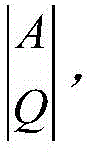


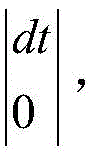
最终得出当前角度,然后利用假肢大腿关节角度和假肢小腿关节角度得出膝关节角度。Finally, the current angle is obtained, and then the knee joint angle is obtained by using the prosthetic thigh joint angle and the prosthetic leg joint angle.
假肢小腿向前加速度为正,向后加速度为负。The forward acceleration of the prosthetic calf is positive and the backward acceleration is negative.
所述的识别原理为公知技术:脚尖压力传感器模块7、脚心压力传感器模块8、脚跟压力传感器模块9同时将接受到的模压力信号通过A/D转换电路101传送到单片机102中,单片机102根据对假肢接受腔角度模块5输入的角度信息与假肢小腿模块6输入的角度信息进行处理得到膝关节角度信息(如图6),得到骑行时膝关节角度在75°到110°之间,单片机对脚底压力信号、膝关节角度信号以及假肢小腿模块6输入的加速度信号的正负,对当前的骑行运动状态进行判断。The identification principle is a known technology: the toe
工作过程是:由于每个人对于踩脚蹬的位置均有不同所以需要根据不同的情况对骑行状态进行判断(如图7):The working process is as follows: since each person has different positions on the pedals, it is necessary to judge the riding state according to different situations (as shown in Figure 7):
(4)当脚尖压力传感器模块7中信号输入为1,脚心压力传感器模块8中信号输入为0,脚跟压力传感器模块9中信号输入为1时,则可以直接判断出此时的假肢穿戴者运动状态为骑行,判断假肢小腿加速度信号为正时,控制电机模块使假肢张开;当膝关节角度信号达到110°度时,控制假肢收缩;当判断假肢小腿加速度信号为负时,控制假肢膝关节收缩,当膝关节角度缩小到75°时,控制假肢张开;(4) When the signal input in the toe
(5)当脚尖压力传感器模块7信号输入为0,脚心压力传感器模块8中信号输入为1,脚跟压力传感器模块9中信号输入为1时,则可能当前运动状态为行走或者骑行,判断膝关节角度信号,当角度在75°与110°之间时则当前运动状态为骑行,判断假肢小腿加速度信号为正时,控制电机模块使假肢张开;当膝关节角度信号达到110°度时,控制假肢收缩,当判断假肢小腿加速度信号为负时,控制假肢膝关节收缩,当膝关节角度缩小到75°时,控制假肢张开;若膝关节角度在130°与180°之间时,为步行运动状态中的支撑相末期;若为其他角度则重新对运动状态进行判断;(5) When the signal input of the toe
(6)当脚尖压力传感器模块7信号输入为1,脚心压力传感器模块8中信号输入为1,脚跟压力传感器模块9中信号输入为0时,则可能当前运动状态为行走或者骑行,判断膝关节角度信号,当膝关节角度在75°与110°之间时则当前运动状态为骑行,且判断假肢小腿加速度信号为正时候,控制电机模块使假肢张开;当膝关节角度信号达到110°度时,控制假肢收缩;判断假肢小腿加速度信号为负时,控制假肢膝关节收缩,当膝关节角度缩小到75°时,控制假肢张开;若膝关节角度150°与180°之间时,则为步行运动状态中的首次触地期。若为其他角度则重新对运动状态进行判断。(6) When the signal input of the toe
本发明的系统形式并非限于本案图示和实施例,任何人对其进行类似思路的适当变化或修饰,皆应视为不脱离本发明的专利范畴。The system form of the present invention is not limited to the illustrations and embodiments of the present case, and any appropriate changes or modifications of similar ideas by anyone should be regarded as not departing from the patent scope of the present invention.
本发明未尽事宜为公知技术。Matters not addressed in the present invention are known in the art.
Claims (2)
Priority Applications (1)
| Application Number | Priority Date | Filing Date | Title |
|---|---|---|---|
| CN201910264489.6A CN109938892B (en) | 2019-04-03 | 2019-04-03 | A system for recognizing the riding state of the wearer of an intelligent upper-knee prosthesis |
Applications Claiming Priority (1)
| Application Number | Priority Date | Filing Date | Title |
|---|---|---|---|
| CN201910264489.6A CN109938892B (en) | 2019-04-03 | 2019-04-03 | A system for recognizing the riding state of the wearer of an intelligent upper-knee prosthesis |
Publications (2)
| Publication Number | Publication Date |
|---|---|
| CN109938892A CN109938892A (en) | 2019-06-28 |
| CN109938892B true CN109938892B (en) | 2020-08-04 |
Family
ID=67012517
Family Applications (1)
| Application Number | Title | Priority Date | Filing Date |
|---|---|---|---|
| CN201910264489.6A Expired - Fee Related CN109938892B (en) | 2019-04-03 | 2019-04-03 | A system for recognizing the riding state of the wearer of an intelligent upper-knee prosthesis |
Country Status (1)
| Country | Link |
|---|---|
| CN (1) | CN109938892B (en) |
Families Citing this family (5)
| Publication number | Priority date | Publication date | Assignee | Title |
|---|---|---|---|---|
| CN111110411A (en) * | 2019-12-30 | 2020-05-08 | 上海理工大学 | Dynamic hip joint prosthesis control system |
| CN111685918A (en) * | 2020-05-25 | 2020-09-22 | 上海工程技术大学 | Rigidity-adjustable foot artificial limb device |
| CN112957674A (en) * | 2021-03-15 | 2021-06-15 | 河北医科大学第三医院 | Active ankle pump movement device and monitoring method thereof |
| CN113616396A (en) * | 2021-08-31 | 2021-11-09 | 北京信息科技大学 | Prosthetic Analysis System |
| CN117204993B (en) * | 2023-11-09 | 2024-02-27 | 浙江强脑科技有限公司 | Intelligent artificial limb movement pattern recognition method and device, intelligent artificial limb and storage medium |
Citations (7)
| Publication number | Priority date | Publication date | Assignee | Title |
|---|---|---|---|---|
| JP2005000500A (en) * | 2003-06-13 | 2005-01-06 | Yaskawa Electric Corp | Ankle joint orthosis |
| CN102036626A (en) * | 2008-03-24 | 2011-04-27 | 奥瑟Hf公司 | Transfemoral prosthetic systems and methods for operating the same |
| CN102119877A (en) * | 2010-12-15 | 2011-07-13 | 河北工业大学 | Method for creating expert knowledge base for automatically training lower artificial limbs |
| CN202875542U (en) * | 2012-10-29 | 2013-04-17 | 河北工业大学 | Dynamic fake limb knee joints |
| CN104027191A (en) * | 2014-07-02 | 2014-09-10 | 河北工业大学 | Road condition recognition system for above-knee prostheses |
| US9700439B1 (en) * | 2008-04-15 | 2017-07-11 | Rehabilitation Institute Of Chicago | Identification and implementation of locomotion modes using surface electromyography |
| CN109498225A (en) * | 2018-12-28 | 2019-03-22 | 东莞理工学院 | Personalized wearable prosthesis and method of making the same |
Family Cites Families (2)
| Publication number | Priority date | Publication date | Assignee | Title |
|---|---|---|---|---|
| US7947085B2 (en) * | 2005-06-10 | 2011-05-24 | The Ohio Williow Wood Company | Prosthetic device utilizing electric vacuum pump |
| US8016892B2 (en) * | 2005-06-10 | 2011-09-13 | The Ohio Willow Wood Company | Prosthetic device utilizing electric vacuum pump |
-
2019
- 2019-04-03 CN CN201910264489.6A patent/CN109938892B/en not_active Expired - Fee Related
Patent Citations (7)
| Publication number | Priority date | Publication date | Assignee | Title |
|---|---|---|---|---|
| JP2005000500A (en) * | 2003-06-13 | 2005-01-06 | Yaskawa Electric Corp | Ankle joint orthosis |
| CN102036626A (en) * | 2008-03-24 | 2011-04-27 | 奥瑟Hf公司 | Transfemoral prosthetic systems and methods for operating the same |
| US9700439B1 (en) * | 2008-04-15 | 2017-07-11 | Rehabilitation Institute Of Chicago | Identification and implementation of locomotion modes using surface electromyography |
| CN102119877A (en) * | 2010-12-15 | 2011-07-13 | 河北工业大学 | Method for creating expert knowledge base for automatically training lower artificial limbs |
| CN202875542U (en) * | 2012-10-29 | 2013-04-17 | 河北工业大学 | Dynamic fake limb knee joints |
| CN104027191A (en) * | 2014-07-02 | 2014-09-10 | 河北工业大学 | Road condition recognition system for above-knee prostheses |
| CN109498225A (en) * | 2018-12-28 | 2019-03-22 | 东莞理工学院 | Personalized wearable prosthesis and method of making the same |
Also Published As
| Publication number | Publication date |
|---|---|
| CN109938892A (en) | 2019-06-28 |
Similar Documents
| Publication | Publication Date | Title |
|---|---|---|
| CN109938892B (en) | A system for recognizing the riding state of the wearer of an intelligent upper-knee prosthesis | |
| CN103083027B (en) | Gait phase distinguishing method based on lower limb joint movement information | |
| CN110169850B (en) | Control method of passive hydraulic knee joint prosthesis | |
| CN102885661A (en) | Dynamic prosthetic knee joint | |
| Gao et al. | IMU-based locomotion mode identification for transtibial prostheses, orthoses, and exoskeletons | |
| Young et al. | A classification method for user-independent intent recognition for transfemoral amputees using powered lower limb prostheses | |
| CN106983589B (en) | A kind of active above-knee prosthesis TSM control method based on interference observer | |
| CN102670218B (en) | Wearable foot bottom pressure acquisition device for artificial limb control | |
| CN110755184B (en) | Prosthetic knee joint control method | |
| CN106037753B (en) | A kind of wearable data collection system and its method based on multi-sensor fusion | |
| CN104027191B (en) | A kind of road conditions recognition system of above-knee prosthesis | |
| AU2013235009A1 (en) | Human machine interface for lower extremity orthotics | |
| CN103263339A (en) | Exoskeleton walk-assisting robot for old people and bionic control method for anti-falling gaits | |
| AU2003236761A1 (en) | Control system and method for controlling an actuated prosthesis | |
| CN110543922A (en) | real-time walking mode identification method based on knee joint exoskeleton | |
| CN113827381B (en) | Dual-drive ankle joint artificial limb | |
| CN101947151B (en) | Power below-knee prosthesis-based gait recognition method | |
| CN110652299A (en) | Multi-source sensing information fusion system for soft exoskeleton of lower limbs | |
| CN111658246B (en) | Intelligent joint prosthesis regulating and controlling method and system based on symmetry | |
| CN106217352A (en) | Exoskeleton robot gait control method based on pressure transducer | |
| CN115337009A (en) | Gait recognition and prediction method based on full-connection and cyclic neural network | |
| CN115778652A (en) | Coordinated control method for walking on level ground based on a hip-knee integrated intelligent prosthesis | |
| CN110742712B (en) | Prosthetic movement intention recognition method and device based on source-end fusion | |
| Zheng et al. | Locomotion mode recognition with robotic transtibial prosthesis in inter-session and inter-day applications | |
| CN202875542U (en) | Dynamic fake limb knee joints |
Legal Events
| Date | Code | Title | Description |
|---|---|---|---|
| PB01 | Publication | ||
| PB01 | Publication | ||
| SE01 | Entry into force of request for substantive examination | ||
| SE01 | Entry into force of request for substantive examination | ||
| GR01 | Patent grant | ||
| GR01 | Patent grant | ||
| CF01 | Termination of patent right due to non-payment of annual fee | ||
| CF01 | Termination of patent right due to non-payment of annual fee |
Granted publication date: 20200804 |