CN109913416B - Preparation method of protective agent used after recovery of frozen umbilical cord blood hematopoietic stem cells - Google Patents
Preparation method of protective agent used after recovery of frozen umbilical cord blood hematopoietic stem cells Download PDFInfo
- Publication number
- CN109913416B CN109913416B CN201910318399.0A CN201910318399A CN109913416B CN 109913416 B CN109913416 B CN 109913416B CN 201910318399 A CN201910318399 A CN 201910318399A CN 109913416 B CN109913416 B CN 109913416B
- Authority
- CN
- China
- Prior art keywords
- hematopoietic stem
- stem cells
- cord blood
- protective agent
- preparation
- Prior art date
- Legal status (The legal status is an assumption and is not a legal conclusion. Google has not performed a legal analysis and makes no representation as to the accuracy of the status listed.)
- Active
Links
- 239000003223 protective agent Substances 0.000 title claims abstract description 70
- 210000003958 hematopoietic stem cell Anatomy 0.000 title claims abstract description 55
- 210000004700 fetal blood Anatomy 0.000 title claims abstract description 49
- 238000002360 preparation method Methods 0.000 title claims abstract description 23
- 238000011084 recovery Methods 0.000 title claims abstract description 22
- 102000009123 Fibrin Human genes 0.000 claims abstract description 18
- 108010073385 Fibrin Proteins 0.000 claims abstract description 18
- BWGVNKXGVNDBDI-UHFFFAOYSA-N Fibrin monomer Chemical compound CNC(=O)CNC(=O)CN BWGVNKXGVNDBDI-UHFFFAOYSA-N 0.000 claims abstract description 18
- 229950003499 fibrin Drugs 0.000 claims abstract description 18
- 239000007853 buffer solution Substances 0.000 claims abstract description 14
- 229920001612 Hydroxyethyl starch Polymers 0.000 claims abstract description 11
- 239000002202 Polyethylene glycol Substances 0.000 claims abstract description 11
- 238000007710 freezing Methods 0.000 claims abstract description 11
- 230000008014 freezing Effects 0.000 claims abstract description 11
- ZFGMDIBRIDKWMY-PASTXAENSA-N heparin Chemical compound CC(O)=N[C@@H]1[C@@H](O)[C@H](O)[C@@H](COS(O)(=O)=O)O[C@@H]1O[C@@H]1[C@@H](C(O)=O)O[C@@H](O[C@H]2[C@@H]([C@@H](OS(O)(=O)=O)[C@@H](O[C@@H]3[C@@H](OC(O)[C@H](OS(O)(=O)=O)[C@H]3O)C(O)=O)O[C@@H]2O)CS(O)(=O)=O)[C@H](O)[C@H]1O ZFGMDIBRIDKWMY-PASTXAENSA-N 0.000 claims abstract description 11
- 229920000669 heparin Polymers 0.000 claims abstract description 11
- 229940050526 hydroxyethylstarch Drugs 0.000 claims abstract description 11
- 239000003055 low molecular weight heparin Substances 0.000 claims abstract description 11
- 229920001223 polyethylene glycol Polymers 0.000 claims abstract description 11
- 229960001008 heparin sodium Drugs 0.000 claims abstract description 10
- 238000000034 method Methods 0.000 claims abstract description 3
- TWRXJAOTZQYOKJ-UHFFFAOYSA-L Magnesium chloride Chemical compound [Mg+2].[Cl-].[Cl-] TWRXJAOTZQYOKJ-UHFFFAOYSA-L 0.000 claims description 32
- WCUXLLCKKVVCTQ-UHFFFAOYSA-M Potassium chloride Chemical compound [Cl-].[K+] WCUXLLCKKVVCTQ-UHFFFAOYSA-M 0.000 claims description 32
- FAPWRFPIFSIZLT-UHFFFAOYSA-M Sodium chloride Chemical compound [Na+].[Cl-] FAPWRFPIFSIZLT-UHFFFAOYSA-M 0.000 claims description 32
- HDTRYLNUVZCQOY-UHFFFAOYSA-N α-D-glucopyranosyl-α-D-glucopyranoside Natural products OC1C(O)C(O)C(CO)OC1OC1C(O)C(O)C(O)C(CO)O1 HDTRYLNUVZCQOY-UHFFFAOYSA-N 0.000 claims description 16
- HDTRYLNUVZCQOY-WSWWMNSNSA-N Trehalose Natural products O[C@@H]1[C@@H](O)[C@@H](O)[C@@H](CO)O[C@@H]1O[C@@H]1[C@H](O)[C@@H](O)[C@@H](O)[C@@H](CO)O1 HDTRYLNUVZCQOY-WSWWMNSNSA-N 0.000 claims description 16
- HDTRYLNUVZCQOY-LIZSDCNHSA-N alpha,alpha-trehalose Chemical compound O[C@@H]1[C@@H](O)[C@H](O)[C@@H](CO)O[C@@H]1O[C@@H]1[C@H](O)[C@@H](O)[C@H](O)[C@@H](CO)O1 HDTRYLNUVZCQOY-LIZSDCNHSA-N 0.000 claims description 16
- 239000004227 calcium gluconate Substances 0.000 claims description 16
- 229960004494 calcium gluconate Drugs 0.000 claims description 16
- 235000013927 calcium gluconate Nutrition 0.000 claims description 16
- NEEHYRZPVYRGPP-UHFFFAOYSA-L calcium;2,3,4,5,6-pentahydroxyhexanoate Chemical compound [Ca+2].OCC(O)C(O)C(O)C(O)C([O-])=O.OCC(O)C(O)C(O)C(O)C([O-])=O NEEHYRZPVYRGPP-UHFFFAOYSA-L 0.000 claims description 16
- 229910001629 magnesium chloride Inorganic materials 0.000 claims description 16
- 239000001103 potassium chloride Substances 0.000 claims description 16
- 235000011164 potassium chloride Nutrition 0.000 claims description 16
- 239000011780 sodium chloride Substances 0.000 claims description 16
- 239000001509 sodium citrate Substances 0.000 claims description 16
- NLJMYIDDQXHKNR-UHFFFAOYSA-K sodium citrate Chemical compound O.O.[Na+].[Na+].[Na+].[O-]C(=O)CC(O)(CC([O-])=O)C([O-])=O NLJMYIDDQXHKNR-UHFFFAOYSA-K 0.000 claims description 16
- 238000003756 stirring Methods 0.000 claims description 14
- VMHLLURERBWHNL-UHFFFAOYSA-M Sodium acetate Chemical compound [Na+].CC([O-])=O VMHLLURERBWHNL-UHFFFAOYSA-M 0.000 claims description 12
- 239000001632 sodium acetate Substances 0.000 claims description 12
- 235000017281 sodium acetate Nutrition 0.000 claims description 12
- HEMHJVSKTPXQMS-UHFFFAOYSA-M Sodium hydroxide Chemical compound [OH-].[Na+] HEMHJVSKTPXQMS-UHFFFAOYSA-M 0.000 claims description 9
- UXVMQQNJUSDDNG-UHFFFAOYSA-L Calcium chloride Chemical compound [Cl-].[Cl-].[Ca+2] UXVMQQNJUSDDNG-UHFFFAOYSA-L 0.000 claims description 8
- 238000005138 cryopreservation Methods 0.000 claims description 8
- XLYOFNOQVPJJNP-UHFFFAOYSA-N water Chemical compound O XLYOFNOQVPJJNP-UHFFFAOYSA-N 0.000 claims description 7
- VEXZGXHMUGYJMC-UHFFFAOYSA-N Hydrochloric acid Chemical compound Cl VEXZGXHMUGYJMC-UHFFFAOYSA-N 0.000 claims description 6
- 239000008367 deionised water Substances 0.000 claims description 6
- 229910021641 deionized water Inorganic materials 0.000 claims description 6
- 239000007791 liquid phase Substances 0.000 claims description 4
- 238000005303 weighing Methods 0.000 claims description 4
- 238000000432 density-gradient centrifugation Methods 0.000 claims description 3
- 229940127215 low-molecular weight heparin Drugs 0.000 claims 1
- 210000004027 cell Anatomy 0.000 abstract description 77
- 230000004083 survival effect Effects 0.000 abstract description 22
- 230000000694 effects Effects 0.000 abstract description 7
- 239000002504 physiological saline solution Substances 0.000 abstract description 5
- 230000002776 aggregation Effects 0.000 abstract description 4
- 239000012634 fragment Substances 0.000 abstract description 2
- 230000015572 biosynthetic process Effects 0.000 abstract 2
- 238000005054 agglomeration Methods 0.000 abstract 1
- IJGRMHOSHXDMSA-UHFFFAOYSA-N Atomic nitrogen Chemical compound N#N IJGRMHOSHXDMSA-UHFFFAOYSA-N 0.000 description 6
- 239000003153 chemical reaction reagent Substances 0.000 description 5
- 150000001875 compounds Chemical class 0.000 description 5
- 230000004069 differentiation Effects 0.000 description 5
- 239000003792 electrolyte Substances 0.000 description 5
- 230000005757 colony formation Effects 0.000 description 4
- 238000007822 cytometric assay Methods 0.000 description 4
- 238000001514 detection method Methods 0.000 description 4
- 210000003954 umbilical cord Anatomy 0.000 description 4
- 208000009329 Graft vs Host Disease Diseases 0.000 description 3
- 238000004220 aggregation Methods 0.000 description 3
- 210000004369 blood Anatomy 0.000 description 3
- 239000008280 blood Substances 0.000 description 3
- 230000004663 cell proliferation Effects 0.000 description 3
- 230000008859 change Effects 0.000 description 3
- 230000001332 colony forming effect Effects 0.000 description 3
- 208000037265 diseases, disorders, signs and symptoms Diseases 0.000 description 3
- 210000003743 erythrocyte Anatomy 0.000 description 3
- 208000024908 graft versus host disease Diseases 0.000 description 3
- 239000007788 liquid Substances 0.000 description 3
- 229910052757 nitrogen Inorganic materials 0.000 description 3
- 210000000130 stem cell Anatomy 0.000 description 3
- 238000002054 transplantation Methods 0.000 description 3
- 208000023275 Autoimmune disease Diseases 0.000 description 2
- 241001465754 Metazoa Species 0.000 description 2
- 230000003321 amplification Effects 0.000 description 2
- 210000001185 bone marrow Anatomy 0.000 description 2
- 239000006143 cell culture medium Substances 0.000 description 2
- 201000010099 disease Diseases 0.000 description 2
- 238000005516 engineering process Methods 0.000 description 2
- 238000011134 hematopoietic stem cell transplantation Methods 0.000 description 2
- 239000007924 injection Substances 0.000 description 2
- 238000002347 injection Methods 0.000 description 2
- 229920002521 macromolecule Polymers 0.000 description 2
- 238000003199 nucleic acid amplification method Methods 0.000 description 2
- 239000002243 precursor Substances 0.000 description 2
- 230000035755 proliferation Effects 0.000 description 2
- 208000024893 Acute lymphoblastic leukemia Diseases 0.000 description 1
- 208000014697 Acute lymphocytic leukaemia Diseases 0.000 description 1
- 208000010839 B-cell chronic lymphocytic leukemia Diseases 0.000 description 1
- 206010010356 Congenital anomaly Diseases 0.000 description 1
- 102100031573 Hematopoietic progenitor cell antigen CD34 Human genes 0.000 description 1
- 102000001554 Hemoglobins Human genes 0.000 description 1
- 108010054147 Hemoglobins Proteins 0.000 description 1
- 101000777663 Homo sapiens Hematopoietic progenitor cell antigen CD34 Proteins 0.000 description 1
- 208000031422 Lymphocytic Chronic B-Cell Leukemia Diseases 0.000 description 1
- 208000002678 Mucopolysaccharidoses Diseases 0.000 description 1
- 208000034578 Multiple myelomas Diseases 0.000 description 1
- 201000003793 Myelodysplastic syndrome Diseases 0.000 description 1
- 206010028980 Neoplasm Diseases 0.000 description 1
- 206010029260 Neuroblastoma Diseases 0.000 description 1
- 206010033307 Overweight Diseases 0.000 description 1
- 206010035226 Plasma cell myeloma Diseases 0.000 description 1
- 208000006664 Precursor Cell Lymphoblastic Leukemia-Lymphoma Diseases 0.000 description 1
- 206010041067 Small cell lung cancer Diseases 0.000 description 1
- 210000001744 T-lymphocyte Anatomy 0.000 description 1
- 208000002903 Thalassemia Diseases 0.000 description 1
- 230000002159 abnormal effect Effects 0.000 description 1
- 208000024340 acute graft versus host disease Diseases 0.000 description 1
- 230000000961 alloantigen Effects 0.000 description 1
- 230000000735 allogeneic effect Effects 0.000 description 1
- 238000004458 analytical method Methods 0.000 description 1
- 208000007502 anemia Diseases 0.000 description 1
- 230000009286 beneficial effect Effects 0.000 description 1
- 210000004204 blood vessel Anatomy 0.000 description 1
- 238000010322 bone marrow transplantation Methods 0.000 description 1
- 201000011510 cancer Diseases 0.000 description 1
- 230000003833 cell viability Effects 0.000 description 1
- 238000005119 centrifugation Methods 0.000 description 1
- 208000032852 chronic lymphocytic leukemia Diseases 0.000 description 1
- 238000004140 cleaning Methods 0.000 description 1
- 230000007012 clinical effect Effects 0.000 description 1
- 210000001151 cytotoxic T lymphocyte Anatomy 0.000 description 1
- 230000003111 delayed effect Effects 0.000 description 1
- 238000007599 discharging Methods 0.000 description 1
- 210000003754 fetus Anatomy 0.000 description 1
- 238000000684 flow cytometry Methods 0.000 description 1
- 239000007789 gas Substances 0.000 description 1
- 239000001963 growth medium Substances 0.000 description 1
- 230000003394 haemopoietic effect Effects 0.000 description 1
- 210000002443 helper t lymphocyte Anatomy 0.000 description 1
- 208000014951 hematologic disease Diseases 0.000 description 1
- 208000018706 hematopoietic system disease Diseases 0.000 description 1
- 238000000338 in vitro Methods 0.000 description 1
- 210000002901 mesenchymal stem cell Anatomy 0.000 description 1
- 208000030159 metabolic disease Diseases 0.000 description 1
- 206010028093 mucopolysaccharidosis Diseases 0.000 description 1
- 210000005259 peripheral blood Anatomy 0.000 description 1
- 239000011886 peripheral blood Substances 0.000 description 1
- 210000002826 placenta Anatomy 0.000 description 1
- 208000028529 primary immunodeficiency disease Diseases 0.000 description 1
- 230000001681 protective effect Effects 0.000 description 1
- 238000011160 research Methods 0.000 description 1
- 230000004044 response Effects 0.000 description 1
- 206010039073 rheumatoid arthritis Diseases 0.000 description 1
- 238000000926 separation method Methods 0.000 description 1
- 208000000587 small cell lung carcinoma Diseases 0.000 description 1
- 238000011476 stem cell transplantation Methods 0.000 description 1
- 239000011550 stock solution Substances 0.000 description 1
- 201000000596 systemic lupus erythematosus Diseases 0.000 description 1
- 210000001519 tissue Anatomy 0.000 description 1
- 210000003462 vein Anatomy 0.000 description 1
Images


Landscapes
- Medicines Containing Material From Animals Or Micro-Organisms (AREA)
- Micro-Organisms Or Cultivation Processes Thereof (AREA)
Abstract
The invention discloses a preparation method of a protective agent used after recovery of frozen cord blood hematopoietic stem cells, and relates to a preparation method of a protective agent used after recovery of frozen cord blood hematopoietic stem cells. The invention aims to solve the problems that cells are easy to agglomerate, cell fragments are increased, the survival rate is reduced and the number of the cells is reduced by the prior treatment of cord blood hematopoietic stem cells by using physiological saline for resuscitation and freezing at present, and the method comprises the following steps: firstly, preparing a buffer solution; secondly, plasma with fibrin removed; adding low-molecular heparin sodium, hydroxyethyl starch and polyethylene glycol into the buffer solution; finally adding the plasma without fibrin to finish the preparation. The protective agent can effectively protect the survival rate of cells, the cells are not easy to agglomerate, the formation of cell colonies is better, the activity of the hematopoietic stem cells after recovery, the number of the cells and the absence of agglomeration of the cells can be effectively protected, and the formation of the colonies is ensured; the invention is applied to the preparation field of the protective agent after the recovery of the hematopoietic stem cells.
Description
Technical Field
The invention relates to a preparation method of a protective agent used after recovery of frozen umbilical cord blood hematopoietic stem cells.
Background
The cord blood refers to blood in blood vessels on the placenta and the umbilical cord side close to a fetus, which is obtained by collecting drainage after a newborn is born and the umbilical cord is cut off by veins or punctured when the umbilical cord is ligated. The umbilical cord blood is rich in mesenchymal stem cells and hematopoietic stem cells. The cord blood hematopoietic stem cell is an original cell, has stronger differentiation potential, and the colony forming capability and the proliferation and differentiation capability are induced or influenced by specific factors, so that the cord blood hematopoietic stem cell can be differentiated into various tissues or cells. CD34 + The proportion of the cells in the nucleated cells of the cord blood is about 1 percent, the characteristic is relatively close to that of bone marrow, and the content of the cells is obviously higher than that of peripheral blood.
The umbilical cord blood has the advantages of wide sources, convenient collection, low immune matching requirement, low incidence of Graft Versus Host Disease (GVHD) after transplantation and the like, is one of important sources of Hematopoietic Stem Cells (HSC), and provides 1 reliable HSC source for patients needing to receive allogeneic hematopoietic stem cell transplantation (allo-HSCT). The stem cells derived from umbilical cord blood and umbilical cord can be used for treating other diseases such as autoimmune diseases, mucopolysaccharidosis and the like, for example, malignant tumor diseases, acute lymphocytic leukemia, chronic lymphocytic leukemia, multiple myeloma, myelodysplastic syndrome and the like, hemoglobin and blood abnormal diseases (such as thalassemia), congenital metabolic diseases, congenital immunodeficiency diseases, autoimmune diseases (such as rheumatoid arthritis, systemic lupus erythematosus) and certain solid tumors (such as small cell lung cancer, neuroblastoma and the like) can be treated.
Since 1989 Gluckman et al succeeded in treating Fanconic anemia in the first instance of the world by replacing bone marrow transplantation with cord blood hematopoietic stem cells. A large number of researches show that the cord blood has high multipotential hematopoietic stem cells and contains a certain amount of immature precursor helper T cells and immature precursor cytotoxic T cells, the immature phenotype of the T cell subgroups is underexpressed, the response capability to alloantigen is weak, the GVHD after cord blood transplantation is less and not serious, in addition, the donor and the receptor HL can be larger in matching range due to the immature immunology, the cord blood is easy to collect, the prepared nucleated cells can be stored in liquid nitrogen for a long time without losing the characteristics, and the nucleated cells can be immediately obtained in emergency. The cord blood Hematopoietic Stem Cells (HSCs) have obvious superiority in amplification capability and immunoreactivity compared with bone marrow HSCs, and cord blood has no ethical limitation, and has better clinical effect by applying Cord Blood Stem Cell Transplantation (CBSCT) to treat hematopoietic system diseases and reestablish hematopoietic capability.
The cord blood hematopoietic stem cell transplantation technology has higher clinical application value and wide application prospect, however, part of the treatment technology has the problems to be further solved, including acute graft-versus-host disease and relapse, delayed immune reconstruction after transplantation, limited number of hematopoietic stem cells in single cord blood and the like. The CBSCT has the main problems that the single umbilical cord blood contains a small number of HSCs, the umbilical cord blood has small volume and limited cell number, the number of hematopoietic stem/progenitor cells (HS/PC) contained in the umbilical cord blood is limited, the allo-HSC cannot be transplanted and used by children with high weight and adult patients, and the limitation of insufficient number of HSCs in the single umbilical cord blood can be solved by utilizing the high proliferation and in-vitro amplification potential of umbilical cord blood stem cells.
Disclosure of Invention
The invention aims to solve the problems that cells are easy to agglomerate, cell fragments are increased, the survival rate is reduced and the number of the cells is reduced in the prior treatment of cord blood hematopoietic stem cells for recovery and freezing by using physiological saline, and provides a preparation method of a protective agent for the cord blood hematopoietic stem cells after recovery.
The invention relates to a preparation method of a protective agent used after recovery of frozen umbilical cord blood hematopoietic stem cells, which comprises the following steps: firstly, buffer solution preparation: weighing 3-3.5 g of sodium chloride, 0.1-0.2 g of potassium chloride, 0.1-0.2 g of magnesium chloride, 1-1.5 g of sodium acetate, 0.2-0.3 g of sodium citrate, 0.3-0.4 g of calcium gluconate and 0.2-0.3 g of trehalose; sequentially dissolving sodium chloride, potassium chloride, magnesium chloride and sodium citrate in 480-520 mL of deionized water, stirring until the sodium chloride, the potassium chloride, the magnesium chloride and the sodium citrate are completely melted, adding calcium gluconate and trehalose, stirring until the calcium gluconate and the trehalose are dissolved, standing for 8-12 min, adding sodium acetate, uniformly stirring, standing for 4-6 min, and adjusting the pH value to 7.0-7.2 to obtain a buffer solution; and II, removing plasma of fibrin: adding a calcium chloride solution into the plasma, shaking for 4-6 min, performing density gradient centrifugation, taking a liquid phase to obtain plasma without fibrin, and performing cryopreservation at a low temperature of 4 ℃ or a temperature of-20 ℃; adding low-molecular heparin sodium into the buffer solution prepared in the step one, uniformly mixing, adding hydroxyethyl starch, uniformly mixing, adding polyethylene glycol, uniformly mixing, and precooling at 4 ℃ to obtain a protective agent, wherein the final concentration of the low-molecular heparin sodium in the protective agent is 14-16 mol/mL; the final concentration of the hydroxyethyl starch is 9-11mol/mL, and the volume concentration of the polyethylene glycol is 2-3%; fourthly, adding plasma without fibrin into the protective agent prepared in the third step, wherein the volume ratio of the plasma without fibrin to the protective agent is 1: 4, obtaining the protective agent used for recovering the frozen umbilical cord blood hematopoietic stem cells.
The protective agent is used for protecting umbilical blood hematopoietic stem cells after recovery after freezing, and the survival rate of the cells is generated due to the fact that the cells are at room temperature for a long timeCertain influence reduces the cell survival rate and various functions to influence the clinical treatment effect after the transfusion. The protective agent of the invention is added with macromolecule protective agent, can effectively protect the survival rate of cells in a certain time, the cells are not easy to agglomerate, the cell colony formation is better, the cell number is superior to other protective agents, and the cell number before cryopreservation is 5.15 x 10 8 The number of cells after several hours was 4.81 x 10 8 (ii) a The protective agent for the revived hematopoietic stem cells can effectively protect the activity, the number and the clustering of the revived hematopoietic stem cells, and ensure the forming power of the colonies; the protective agent can protect the resuscitated hematopoietic stem cells, the cell survival rate before cryopreservation is 95.2 percent, after hours, the cell survival rate is 90.2 percent, the change of the cell survival rate is not obvious, and the protective agent is obviously superior to other three protective agents; the protective agent can be used for protecting cells of other types after recovery, can effectively protect the activity and the cell number of the cells, the cell proliferation function, the differentiation capacity and the like, and can be safely used for human and animal feedback and used for clinical tests; the three reagents related by the invention have lower cost, the dosage of a single sample is less, and the three reagents are convenient to purchase and use.
Drawings
FIG. 1 is a flow cytometric assay of a protectant in physiological saline;
FIG. 2 is a flow cytometric assay of the protective agent in cell culture media;
FIG. 3 is a flow cytometric assay for a compound electrolyte as the protective agent;
FIG. 4 is a flow cytometric assay using the protectant prepared in example one.
Detailed Description
The first embodiment is as follows: the preparation method of the protective agent used after the recovery of the umbilical cord blood hematopoietic stem cells comprises the following steps: firstly, buffer solution preparation: weighing 3-3.5 g of sodium chloride, 0.1-0.2 g of potassium chloride, 0.1-0.2 g of magnesium chloride, 1-1.5 g of sodium acetate, 0.2-0.3 g of sodium citrate, 0.3-0.4 g of calcium gluconate and 0.2-0.3 g of trehalose; sequentially dissolving sodium chloride, potassium chloride, magnesium chloride and sodium citrate in 480-520 mL of deionized water, stirring until the sodium chloride, the potassium chloride, the magnesium chloride and the sodium citrate are completely melted, adding calcium gluconate and trehalose, stirring until the calcium gluconate and the trehalose are dissolved, standing for 8-12 min, adding sodium acetate, uniformly stirring, standing for 4-6 min, and adjusting the pH value to 7.0-7.2 to obtain a buffer solution; second, plasma depleted of fibrin: adding a calcium chloride solution into the plasma, shaking for 4-6 min, performing density gradient centrifugation, taking a liquid phase to obtain plasma without fibrin, and performing cryopreservation at a low temperature of 4 ℃ or a temperature of-20 ℃; adding low-molecular heparin sodium into the buffer solution prepared in the step one, uniformly mixing, adding hydroxyethyl starch, uniformly mixing, adding polyethylene glycol, uniformly mixing, and precooling at 4 ℃ to obtain a protective agent, wherein the final concentration of the low-molecular heparin sodium in the protective agent is 14-16 mol/mL; the final concentration of the hydroxyethyl starch is 9-11mol/mL, and the volume concentration of the polyethylene glycol is 2-3%; fourthly, adding plasma without fibrin into the protective agent prepared in the third step, wherein the volume ratio of the plasma without fibrin to the protective agent is 1: 4, obtaining the protective agent used for recovering the frozen umbilical cord blood hematopoietic stem cells.
The protective agent of the embodiment is used for protecting the cord blood hematopoietic stem cells after recovery after freezing, and the cells have certain influence on the survival rate of the cells under the room temperature condition for a long time, so that the cell survival rate and various functions are reduced, and the clinical treatment effect after the return transfusion is influenced. The protective agent added with the macromolecule protective agent in the embodiment can effectively protect the survival rate of cells in a certain time, the cells are not easy to agglomerate, the cell colony is formed well, and the cell number is superior to that of other protective agents; the protective agent of the embodiment can protect the resuscitated hematopoietic stem cells, the survival rate of the cells before cryopreservation is 95.2 percent, after hours, the survival rate is 90.2 percent, the change of the survival rate is not obvious, and the protective agent is obviously superior to other three protective agents; the protective agent of the invention can also be used for protecting other types of cells after recovery, and can effectively protect the activity, the cell number, the cell proliferation function, the differentiation capability and the like of the cells, the cell number before cryopreservationThe amount is 5.15 x 10 8 The number of cells after several hours was 4.81 x 10 8 (ii) a The three reagents related to the embodiment can be safely used for human and animal feedback and used for clinical tests; the three reagents related to the embodiment have low cost, the using amount of a single sample is small, and the three reagents are convenient to purchase and use.
The second embodiment is as follows: the first difference between the present embodiment and the specific embodiment is: in the first step, 3.12g of sodium chloride, 0.15g of potassium chloride, 0.11g of magnesium chloride, 1.025g of sodium acetate, 0.254g of sodium citrate, 0.322g of calcium gluconate and 0.25g of trehalose are weighed. The rest is the same as the first embodiment.
The third concrete implementation mode: the present embodiment differs from the first or second embodiment in that: in the first step, sodium chloride, potassium chloride, magnesium chloride and sodium citrate are sequentially dissolved in 500mL of deionized water. The others are the same as in the first or second embodiment.
The fourth concrete implementation mode is as follows: the difference between this embodiment mode and one of the first to third embodiment modes is: adding calcium gluconate and trehalose, stirring to dissolve, standing for 10min, adding sodium acetate, stirring uniformly, and standing for 5 min. The rest is the same as one of the first to third embodiments.
The fifth concrete implementation mode: the difference between this embodiment and one of the first to fourth embodiments is: in the first step, sodium hydroxide with the mass concentration of 1% or hydrochloric acid with the mass concentration of 1% is adopted to adjust the pH value to 7.0-7.2. The rest is the same as one of the first to fourth embodiments.
The sixth specific implementation mode: the difference between this embodiment and one of the first to fifth embodiments is: in the second step, the ratio of the plasma to the calcium chloride solution is 1: 8. The rest is the same as one of the first to fifth embodiments.
The seventh embodiment: the difference between this embodiment and one of the first to sixth embodiments is: and in the second step, the mass concentration of the calcium chloride solution is 1%. The rest is the same as one of the first to sixth embodiments.
The specific implementation mode is eight: the present embodiment differs from one of the first to seventh embodiments in that: the final concentration of the low molecular heparin sodium in the protective agent is 15 mol/mL; the final concentration of hydroxyethyl starch is 10 mol/mL. The rest is the same as one of the first to seventh embodiments.
The specific implementation method nine: the present embodiment differs from the first to eighth embodiments in that: the volume concentration of polyethylene glycol in the protective agent is 2.5%. The rest is the same as the first to eighth embodiments.
The following examples were used to demonstrate the beneficial effects of the present invention:
test 1: a preparation method of a protective agent used after recovery of frozen umbilical cord blood hematopoietic stem cells comprises the following steps: firstly, buffer solution preparation: weighing 3.12g of sodium chloride, 0.15g of potassium chloride, 0.11g of magnesium chloride, 1.025g of sodium acetate, 0.254g of sodium citrate, 0.322g of calcium gluconate and 0.25g of trehalose; sequentially dissolving sodium chloride, potassium chloride, magnesium chloride and sodium citrate in 500mL of deionized water, stirring until the sodium chloride, the potassium chloride, the magnesium chloride and the sodium citrate are completely melted, adding calcium gluconate and trehalose, stirring until the calcium gluconate and the trehalose are dissolved, standing for 10min, adding sodium acetate, uniformly stirring, standing for 5min, and adjusting the pH value to be 7.0-7.2 by adopting sodium hydroxide with the mass concentration of 1% or hydrochloric acid with the mass concentration of 1% to obtain a buffer solution; second, plasma depleted of fibrin: adding 1% calcium chloride solution into plasma, shaking for 5min, centrifuging by density gradient, collecting liquid phase to obtain plasma without fibrin, and freezing at 4 deg.C or-20 deg.C; adding low-molecular heparin sodium into the buffer solution prepared in the step one, uniformly mixing, adding hydroxyethyl starch, uniformly mixing, adding polyethylene glycol, uniformly mixing, and precooling at 4 ℃ to obtain a protective agent, wherein the final concentration of the low-molecular heparin sodium in the protective agent is 15 mol/mL; the final concentration of the hydroxyethyl starch is 10mol/mL, and the volume concentration of the polyethylene glycol is 2.5%; fourth, adding plasma without fibrin into the protective agent prepared in the third step, wherein the volume ratio of the plasma without fibrin to the protective agent is 1: 4, obtaining the protective agent used for recovering the frozen umbilical cord blood hematopoietic stem cells.
Aseptic collection of cord blood, addition of HES for fractional centrifugation to remove plasma and erythrocytes (for later use in plasma, stored in-20 ℃ refrigerator). The erythrocytes were discarded, approximately 20ml remained, and the erythrocyte discard was stopped, and 1ml was sampled for cell counting and flow detection after separation and before freezing. The separated nucleated cells were stored in a refrigerator at 4 ℃ before freezing. The frozen stock solution cooled to 4 ℃ was taken out of the refrigerator, and the specific parameters of the syringe pump and the shaker were set (flow rate 40ml/h, injection volume 8ml, shaker speed 120 rpm/min). After injection, discharging excessive gas from the freezing bag, storing at 4 deg.C for 30min, freezing in liquid nitrogen, and recovering.
Separating hematopoietic stem cells, freezing in liquid nitrogen for more than 3 months, taking out, carrying out water bath recovery at 37 ℃ for 2min, transferring recovered samples into a centrifugal tube, adding the protective agent prepared in the embodiment, carrying out centrifugal cleaning, 747g,15min and 4 ℃. The same sample is divided into different groups by using different protective agents (physiological saline, cell culture medium, compound electrolyte and the protective agent configured in the embodiment), the same operation treatment is carried out, the survival rate and the cell number of the hematopoietic stem cells after recovery, the cell aggregation condition and the colony formation condition are respectively detected, and the cell flow detection analysis is carried out, so that the protective effect of the protective agent configured in the embodiment on the recovered cells is verified.
After the frozen umbilical cord blood with the same volume and cell number is recovered, the cells are respectively counted (table 2), the activity is counted (table 1), the cell clustering condition and the cell number of the cell cluster (table 3), the colony forming condition (table 4) and the flow expression condition are detected after the frozen umbilical cord blood is respectively washed by using physiological saline, compound electrolyte, a culture medium and the protective agent prepared by the invention and is respectively placed for 0.5h,1.5h and 3h,
TABLE 1 comparison of cell viability using different protectants
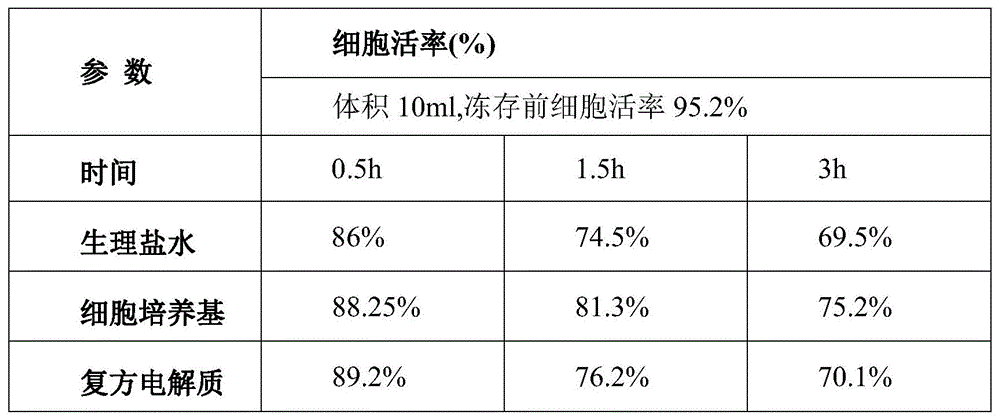

As can be seen from table 1, the survival rate of the cells before cryopreservation is 95.2%, and after the hematopoietic stem cells are protected and recovered for several hours by using the protective agent prepared in the embodiment, the survival rate is 90.2%, and the change of the survival rate is not significant and is significantly better than that of the other three protective agents.
Table 2 results of cell number comparison studies using different protective agents
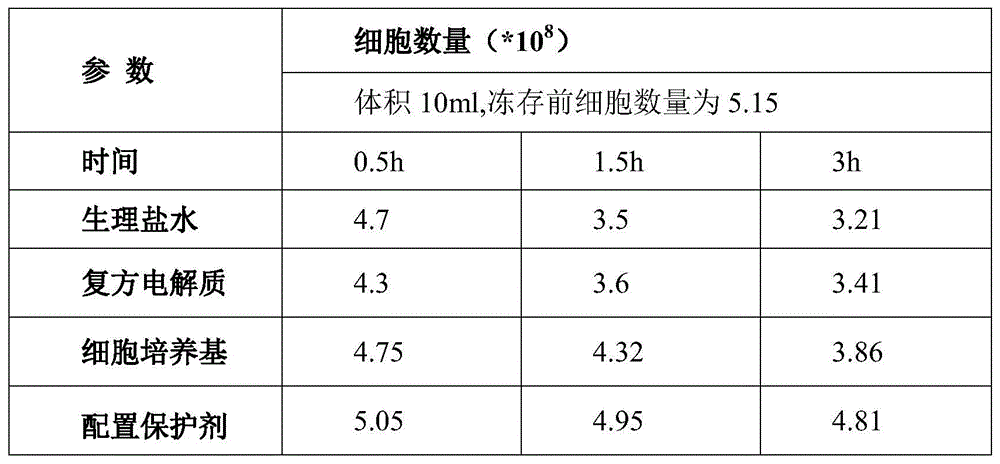
As can be seen from Table 2, the number of cells before cryopreservation was 5.15 x 10 8 The number of cells of the hematopoietic stem cells after recovery was 4.81 x 10 hours after protection of the hematopoietic stem cells using the protective agent prepared in this example 8 。
TABLE 3 comparison of cell clustering using different protectants
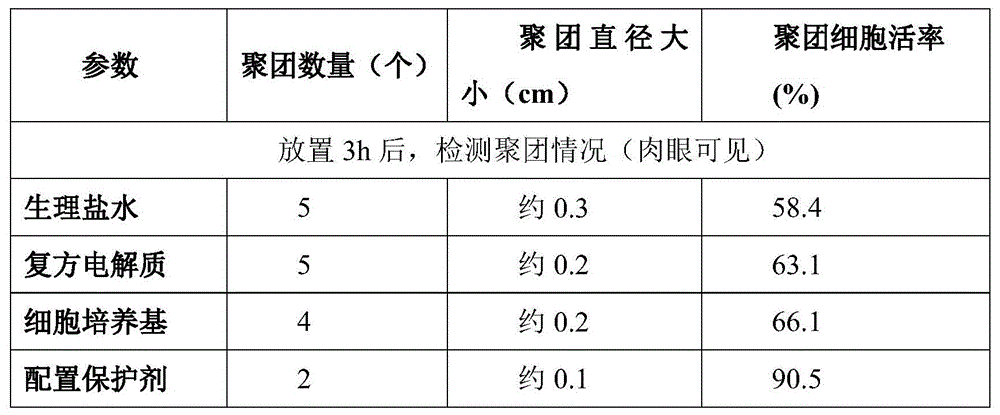
As can be seen from Table 3, the protective agent prepared in this example protects the resuscitated hematopoietic stem cells, the cells are loose, the diameter of the clump is only 0.1cm, and the survival rate of the clump is 90.5%.
TABLE 4 comparison of colony formation after treatment of cells with different protectants


As can be seen from Table 4, the protective agent prepared in this example protects the recovered hematopoietic stem cells, and the colony formation number is higher, indicating that the cell proliferation function and differentiation capability are better.
The flow cytometry detection images are shown in fig. 1-4, and as can be seen from fig. 1-4, the phenotype of the cells protected by different protective agents is not significantly different.
In conclusion, the cell survival rate, the cell number and the cell aggregation number after the compound electrolyte is washed after the compound electrolyte is placed for the same time are obviously lower than those of the protective agent (p is less than or equal to 0.01) and are more obvious, the cell aggregation is more obvious, the cell number is reduced, the number of dead cells is more, cell debris is increased, and the cell survival rate is obviously reduced; colony culture finds that after different protective agents protect the recovered hematopoietic stem cells, the protective agents have small damage to the cells after protection, and the colony forming capability is higher than that of other three protective agents; the difference of the cell phenotype protected by different protective agents is not obvious by flow detection cell phenotype.
Claims (9)
1. A preparation method of a protective agent used after the recovery of cord blood hematopoietic stem cells for freezing is characterized by comprising the following steps: firstly, buffer solution preparation: weighing 3-3.5 g of sodium chloride, 0.1-0.2 g of potassium chloride, 0.1-0.2 g of magnesium chloride, 1-1.5 g of sodium acetate, 0.2-0.3 g of sodium citrate, 0.3-0.4 g of calcium gluconate and 0.2-0.3 g of trehalose; sequentially dissolving sodium chloride, potassium chloride, magnesium chloride and sodium citrate in 480-520 mL of deionized water, stirring until the sodium chloride, the potassium chloride, the magnesium chloride and the sodium citrate are completely melted, adding calcium gluconate and trehalose, stirring until the calcium gluconate and the trehalose are dissolved, standing for 8-12 min, adding sodium acetate, uniformly stirring, standing for 4-6 min, and adjusting the pH value to 7.0-7.2 to obtain a buffer solution; second, plasma depleted of fibrin: adding a calcium chloride solution into the plasma, shaking for 4-6 min, performing density gradient centrifugation, taking a liquid phase to obtain plasma without fibrin, and performing cryopreservation at a low temperature of 4 ℃ or a temperature of-20 ℃; adding low-molecular heparin sodium into the buffer solution prepared in the step one, uniformly mixing, adding hydroxyethyl starch, uniformly mixing, adding polyethylene glycol, uniformly mixing, and precooling at 4 ℃ to obtain a protective agent, wherein the final concentration of the low-molecular heparin sodium in the protective agent is 14-16 mol/mL; the final concentration of the hydroxyethyl starch is 9-11mol/mL, and the volume concentration of the polyethylene glycol is 2-3%; fourthly, adding plasma without fibrin into the protective agent prepared in the third step, wherein the volume ratio of the plasma without fibrin to the protective agent is 1: 4, obtaining the protective agent used for recovering the frozen umbilical cord blood hematopoietic stem cells.
2. The preparation method of the protectant for use after resuscitation of hematopoietic stem cells of frozen umbilical cord blood as claimed in claim 1, wherein in the first step, 3.12g of sodium chloride, 0.15g of potassium chloride, 0.11g of magnesium chloride, 1.025g of sodium acetate, 0.254g of sodium citrate, 0.322g of calcium gluconate and 0.25g of trehalose are weighed.
3. The preparation method of the protectant for the resuscitation of hematopoietic stem cells of frozen umbilical cord blood as claimed in claim 1, wherein in the step one, sodium chloride, potassium chloride, magnesium chloride and sodium citrate are sequentially dissolved in 500mL of deionized water.
4. The preparation method of the protectant for use after recovery of hematopoietic stem cells of frozen umbilical cord blood according to claim 1, wherein the calcium gluconate and trehalose are added in the step one, stirred until dissolved, and then stood for 10min, and then sodium acetate is added, stirred uniformly, and stood for 5 min.
5. The preparation method of the protectant for use after recovery of hematopoietic stem cells of frozen umbilical cord blood according to claim 1, wherein the pH value is adjusted to 7.0-7.2 in the first step by using 1% by mass sodium hydroxide or 1% by mass hydrochloric acid.
6. The preparation method of the protectant for the cord blood hematopoietic stem cells after resuscitation as claimed in claim 1, wherein the ratio of the plasma and the calcium chloride solution in the second step is 1: 8.
7. The method for preparing a protectant for use after resuscitation of hematopoietic stem cells of frozen umbilical cord blood according to claim 1 or 6, wherein the calcium chloride solution in the second step has a mass concentration of 1%.
8. The preparation method of the protectant for use after resuscitation of hematopoietic stem cells of frozen umbilical cord blood according to claim 1, wherein the final concentration of low molecular weight heparin sodium in the protectant is 15 mol/mL; the final concentration of hydroxyethyl starch was 10 mol/mL.
9. The preparation method of the protectant for use after resuscitation of hematopoietic stem cells of frozen umbilical cord blood according to claim 1, wherein the volume concentration of polyethylene glycol in the protectant is 2.5%.
Priority Applications (1)
| Application Number | Priority Date | Filing Date | Title |
|---|---|---|---|
| CN201910318399.0A CN109913416B (en) | 2019-04-19 | 2019-04-19 | Preparation method of protective agent used after recovery of frozen umbilical cord blood hematopoietic stem cells |
Applications Claiming Priority (1)
| Application Number | Priority Date | Filing Date | Title |
|---|---|---|---|
| CN201910318399.0A CN109913416B (en) | 2019-04-19 | 2019-04-19 | Preparation method of protective agent used after recovery of frozen umbilical cord blood hematopoietic stem cells |
Publications (2)
| Publication Number | Publication Date |
|---|---|
| CN109913416A CN109913416A (en) | 2019-06-21 |
| CN109913416B true CN109913416B (en) | 2022-09-09 |
Family
ID=66977932
Family Applications (1)
| Application Number | Title | Priority Date | Filing Date |
|---|---|---|---|
| CN201910318399.0A Active CN109913416B (en) | 2019-04-19 | 2019-04-19 | Preparation method of protective agent used after recovery of frozen umbilical cord blood hematopoietic stem cells |
Country Status (1)
| Country | Link |
|---|---|
| CN (1) | CN109913416B (en) |
Families Citing this family (4)
| Publication number | Priority date | Publication date | Assignee | Title |
|---|---|---|---|---|
| CN110317782B (en) * | 2019-07-18 | 2023-06-13 | 天津瑞博斯生物技术有限公司 | Method for improving the survival of mesenchymal stem cells after resuscitation and the cryopreservation medium used |
| CN110903952B (en) * | 2019-11-06 | 2023-05-26 | 天晴干细胞股份有限公司 | A method for separating, purifying and resuscitating placental blood by using protection solution and placenta squeezer |
| CN114762497B (en) | 2021-01-11 | 2023-08-11 | 京东方再生医学科技有限公司 | Cell cryopreservation liquid and cell cryopreservation method |
| CN113564121A (en) * | 2021-08-10 | 2021-10-29 | 合肥滴碧云生物科技有限公司 | A method for cryopreservation of hematopoietic stem cells |
Citations (4)
| Publication number | Priority date | Publication date | Assignee | Title |
|---|---|---|---|---|
| US5192553A (en) * | 1987-11-12 | 1993-03-09 | Biocyte Corporation | Isolation and preservation of fetal and neonatal hematopoietic stem and progenitor cells of the blood and methods of therapeutic use |
| CN107347874A (en) * | 2017-08-10 | 2017-11-17 | 河南省银丰生物工程技术有限公司 | A kind of frozen stock solution of umbilical hemopoietic stem cell |
| CN108293980A (en) * | 2018-03-07 | 2018-07-20 | 山东国源人类遗传资源库管理有限公司 | A kind of neural molecular biology glass frozen preservation/method for resuscitation |
| CN109122665A (en) * | 2018-09-12 | 2019-01-04 | 银丰生物工程集团有限公司 | With the method for a variety of stem cells of freezing and storing umbilical tissue preserration, method for resuscitation and application |
-
2019
- 2019-04-19 CN CN201910318399.0A patent/CN109913416B/en active Active
Patent Citations (4)
| Publication number | Priority date | Publication date | Assignee | Title |
|---|---|---|---|---|
| US5192553A (en) * | 1987-11-12 | 1993-03-09 | Biocyte Corporation | Isolation and preservation of fetal and neonatal hematopoietic stem and progenitor cells of the blood and methods of therapeutic use |
| CN107347874A (en) * | 2017-08-10 | 2017-11-17 | 河南省银丰生物工程技术有限公司 | A kind of frozen stock solution of umbilical hemopoietic stem cell |
| CN108293980A (en) * | 2018-03-07 | 2018-07-20 | 山东国源人类遗传资源库管理有限公司 | A kind of neural molecular biology glass frozen preservation/method for resuscitation |
| CN109122665A (en) * | 2018-09-12 | 2019-01-04 | 银丰生物工程集团有限公司 | With the method for a variety of stem cells of freezing and storing umbilical tissue preserration, method for resuscitation and application |
Non-Patent Citations (1)
| Title |
|---|
| 冻存复苏对脐带间充质干细胞生物学特性的影响;韩华等;《现代中西医结合杂志》;20160831;第25卷(第23期);2512-2518 * |
Also Published As
| Publication number | Publication date |
|---|---|
| CN109913416A (en) | 2019-06-21 |
Similar Documents
| Publication | Publication Date | Title |
|---|---|---|
| CN109913416B (en) | Preparation method of protective agent used after recovery of frozen umbilical cord blood hematopoietic stem cells | |
| JP4294316B2 (en) | Method for collecting placental stem cells | |
| Hunt et al. | Cryopreservation of umbilical cord blood: 2. Tolerance of CD34+ cells to multimolar dimethyl sulphoxide and the effect of cooling rate on recovery after freezing and thawing | |
| Rowley et al. | Isolation of CD34+ cells from blood stem cell components using the Baxter Isolex system | |
| US20110152719A1 (en) | Materials and methods for hypothermic collection of whole blood | |
| US20220412973A1 (en) | Methods of analysis of blood from deceased donors | |
| JP2017523432A (en) | Stabilization of whole blood samples | |
| EP3219320B1 (en) | Method and solution for cryopreservation of umbilical cord blood and peripheral blood | |
| US20220305057A1 (en) | Methods of making cellular products by post- mortem mobilization and harvesting of hematopoietic cells | |
| CN108849854B (en) | Peripheral blood mononuclear cell cryopreservation method | |
| CN107058224A (en) | A kind of candidate stem cell using placenta as source is extracted and cryopreservation methods | |
| EP3852773A1 (en) | Cellular compositions derived from deceased donors to promote graft tolerance and manufacture and uses thereof | |
| JPH114682A (en) | Preservation of nucleated cells, composition for the same and segregation of yukakusaihou | |
| US5912174A (en) | Stem cell and lymphocyte storage | |
| US11813376B2 (en) | Cellular compositions derived from deceased donors to promote graft tolerance and manufacture and uses thereof | |
| Martin‐Henao et al. | Cryopreservation of hematopoietic progenitor cells from apheresis at high cell concentrations does not impair the hematopoietic recovery after transplantation | |
| JP6633512B2 (en) | Cell separation method | |
| Pecora | Progress in clinical application of use of progenitor cells expanded with hematopoietic growth factors | |
| EP2268293A2 (en) | Stem cell composition for inducing transplant tolerance | |
| JP3938973B2 (en) | Cell separation method | |
| US20200087627A1 (en) | Methods of extracting hematopoietic cells from bone marrow ex vivo | |
| JP2001078756A (en) | Washing of eucaryotic cells and washing solution | |
| Bayer-Zwirello et al. | The effect of processing and cryopreservation on nucleated umbilical cord blood cells | |
| Mgbeoma et al. | Umbilical Cord Blood Processing Techniques and Their Comparative Advantages: A Review | |
| CN106719604A (en) | Pet peripheral blood directly freezes reagent and method |
Legal Events
| Date | Code | Title | Description |
|---|---|---|---|
| PB01 | Publication | ||
| PB01 | Publication | ||
| SE01 | Entry into force of request for substantive examination | ||
| SE01 | Entry into force of request for substantive examination | ||
| GR01 | Patent grant | ||
| GR01 | Patent grant |