CN109871828B - Video recognition method, recognition device and storage medium - Google Patents
Video recognition method, recognition device and storage medium Download PDFInfo
- Publication number
- CN109871828B CN109871828B CN201910197160.2A CN201910197160A CN109871828B CN 109871828 B CN109871828 B CN 109871828B CN 201910197160 A CN201910197160 A CN 201910197160A CN 109871828 B CN109871828 B CN 109871828B
- Authority
- CN
- China
- Prior art keywords
- machine learning
- information
- model
- optical flow
- image
- Prior art date
- Legal status (The legal status is an assumption and is not a legal conclusion. Google has not performed a legal analysis and makes no representation as to the accuracy of the status listed.)
- Active
Links
Images


Classifications
-
- G—PHYSICS
- G06—COMPUTING OR CALCULATING; COUNTING
- G06F—ELECTRIC DIGITAL DATA PROCESSING
- G06F16/00—Information retrieval; Database structures therefor; File system structures therefor
- G06F16/70—Information retrieval; Database structures therefor; File system structures therefor of video data
- G06F16/75—Clustering; Classification
-
- G—PHYSICS
- G06—COMPUTING OR CALCULATING; COUNTING
- G06F—ELECTRIC DIGITAL DATA PROCESSING
- G06F18/00—Pattern recognition
- G06F18/20—Analysing
- G06F18/25—Fusion techniques
-
- G—PHYSICS
- G06—COMPUTING OR CALCULATING; COUNTING
- G06N—COMPUTING ARRANGEMENTS BASED ON SPECIFIC COMPUTATIONAL MODELS
- G06N20/00—Machine learning
- G06N20/20—Ensemble learning
-
- G—PHYSICS
- G06—COMPUTING OR CALCULATING; COUNTING
- G06N—COMPUTING ARRANGEMENTS BASED ON SPECIFIC COMPUTATIONAL MODELS
- G06N3/00—Computing arrangements based on biological models
- G06N3/02—Neural networks
- G06N3/04—Architecture, e.g. interconnection topology
-
- G—PHYSICS
- G06—COMPUTING OR CALCULATING; COUNTING
- G06N—COMPUTING ARRANGEMENTS BASED ON SPECIFIC COMPUTATIONAL MODELS
- G06N3/00—Computing arrangements based on biological models
- G06N3/02—Neural networks
- G06N3/04—Architecture, e.g. interconnection topology
- G06N3/045—Combinations of networks
-
- G—PHYSICS
- G06—COMPUTING OR CALCULATING; COUNTING
- G06N—COMPUTING ARRANGEMENTS BASED ON SPECIFIC COMPUTATIONAL MODELS
- G06N3/00—Computing arrangements based on biological models
- G06N3/02—Neural networks
- G06N3/04—Architecture, e.g. interconnection topology
- G06N3/0464—Convolutional networks [CNN, ConvNet]
-
- G—PHYSICS
- G06—COMPUTING OR CALCULATING; COUNTING
- G06N—COMPUTING ARRANGEMENTS BASED ON SPECIFIC COMPUTATIONAL MODELS
- G06N3/00—Computing arrangements based on biological models
- G06N3/02—Neural networks
- G06N3/08—Learning methods
-
- G—PHYSICS
- G06—COMPUTING OR CALCULATING; COUNTING
- G06N—COMPUTING ARRANGEMENTS BASED ON SPECIFIC COMPUTATIONAL MODELS
- G06N3/00—Computing arrangements based on biological models
- G06N3/02—Neural networks
- G06N3/08—Learning methods
- G06N3/09—Supervised learning
-
- G—PHYSICS
- G06—COMPUTING OR CALCULATING; COUNTING
- G06N—COMPUTING ARRANGEMENTS BASED ON SPECIFIC COMPUTATIONAL MODELS
- G06N7/00—Computing arrangements based on specific mathematical models
- G06N7/01—Probabilistic graphical models, e.g. probabilistic networks
-
- G—PHYSICS
- G06—COMPUTING OR CALCULATING; COUNTING
- G06V—IMAGE OR VIDEO RECOGNITION OR UNDERSTANDING
- G06V10/00—Arrangements for image or video recognition or understanding
- G06V10/70—Arrangements for image or video recognition or understanding using pattern recognition or machine learning
- G06V10/764—Arrangements for image or video recognition or understanding using pattern recognition or machine learning using classification, e.g. of video objects
-
- G—PHYSICS
- G06—COMPUTING OR CALCULATING; COUNTING
- G06V—IMAGE OR VIDEO RECOGNITION OR UNDERSTANDING
- G06V10/00—Arrangements for image or video recognition or understanding
- G06V10/70—Arrangements for image or video recognition or understanding using pattern recognition or machine learning
- G06V10/77—Processing image or video features in feature spaces; using data integration or data reduction, e.g. principal component analysis [PCA] or independent component analysis [ICA] or self-organising maps [SOM]; Blind source separation
- G06V10/80—Fusion, i.e. combining data from various sources at the sensor level, preprocessing level, feature extraction level or classification level
-
- G—PHYSICS
- G06—COMPUTING OR CALCULATING; COUNTING
- G06V—IMAGE OR VIDEO RECOGNITION OR UNDERSTANDING
- G06V20/00—Scenes; Scene-specific elements
- G06V20/40—Scenes; Scene-specific elements in video content
- G06V20/46—Extracting features or characteristics from the video content, e.g. video fingerprints, representative shots or key frames
-
- G—PHYSICS
- G06—COMPUTING OR CALCULATING; COUNTING
- G06V—IMAGE OR VIDEO RECOGNITION OR UNDERSTANDING
- G06V40/00—Recognition of biometric, human-related or animal-related patterns in image or video data
- G06V40/20—Movements or behaviour, e.g. gesture recognition
- G06V40/28—Recognition of hand or arm movements, e.g. recognition of deaf sign language
Landscapes
- Engineering & Computer Science (AREA)
- Theoretical Computer Science (AREA)
- Physics & Mathematics (AREA)
- General Physics & Mathematics (AREA)
- Software Systems (AREA)
- Artificial Intelligence (AREA)
- Evolutionary Computation (AREA)
- Data Mining & Analysis (AREA)
- Computing Systems (AREA)
- General Engineering & Computer Science (AREA)
- Health & Medical Sciences (AREA)
- General Health & Medical Sciences (AREA)
- Computer Vision & Pattern Recognition (AREA)
- Multimedia (AREA)
- Mathematical Physics (AREA)
- Life Sciences & Earth Sciences (AREA)
- Databases & Information Systems (AREA)
- Medical Informatics (AREA)
- Computational Linguistics (AREA)
- Molecular Biology (AREA)
- Biophysics (AREA)
- Biomedical Technology (AREA)
- Human Computer Interaction (AREA)
- Psychiatry (AREA)
- Social Psychology (AREA)
- Mathematical Optimization (AREA)
- Pure & Applied Mathematics (AREA)
- Probability & Statistics with Applications (AREA)
- Mathematical Analysis (AREA)
- Computational Mathematics (AREA)
- Algebra (AREA)
- Bioinformatics & Cheminformatics (AREA)
- Bioinformatics & Computational Biology (AREA)
- Evolutionary Biology (AREA)
- Image Analysis (AREA)
Abstract
本公开提供一种视频识别方法和识别装置、存储介质。视频识别装置从视频中提取出图像和光流图,利用第一机器学习模型对图像进行分类处理,以得到第一分类结果,利用第二机器学习模型对光流图进行分类处理,以得到第二分类结果,其中第一机器学习模型的深度大于第二机器学习模型的深度,对第一分类结果和第二分类结果进行融合,以得到视频的识别结果。由于第一机器学习模型的深度大于第二机器学习模型的深度,因此能够从图像中提取出更多的特征信息,此外,本公开将两个互不相同的机器学习模型的分类结果进行融合,从而能够在识别视频的过程中,不仅借助图像自身的特征信息,还借助相邻帧之间的变化情况,从而提升视频识别的准确度。
The disclosure provides a video recognition method, a recognition device, and a storage medium. The video recognition device extracts images and optical flow graphs from the video, uses the first machine learning model to classify the images to obtain the first classification result, and uses the second machine learning model to classify the optical flow graphs to obtain the second The classification result, wherein the depth of the first machine learning model is greater than the depth of the second machine learning model, and the first classification result and the second classification result are fused to obtain a video recognition result. Since the depth of the first machine learning model is greater than that of the second machine learning model, more feature information can be extracted from the image. In addition, this disclosure fuses the classification results of two different machine learning models, Therefore, in the process of recognizing the video, not only the feature information of the image itself, but also the changes between adjacent frames can be used to improve the accuracy of video recognition.
Description
技术领域technical field
本公开涉及图像处理领域,特别涉及一种视频识别方法和识别装置、存储介质。The present disclosure relates to the field of image processing, in particular to a video recognition method, a recognition device, and a storage medium.
背景技术Background technique
在对视频进行识别的相关技术中,通过直接对视频帧中的图像进行识别,以识别出视频中的内容。In related technologies of video recognition, the content in the video is recognized by directly recognizing images in video frames.
发明内容Contents of the invention
发明人通过研究发现,在相关技术中,仅针对视频帧中的图像进行识别,并未考虑相邻帧之间的变化情况,从而无法有效提升视频识别准确率。The inventor found through research that, in related technologies, only images in video frames are recognized, and changes between adjacent frames are not considered, so that the accuracy of video recognition cannot be effectively improved.
据此,本公开提出一种能够提升视频识别准确率的方案。Accordingly, the present disclosure proposes a solution capable of improving the accuracy of video recognition.
根据本公开实施例的第一方面,提供一种视频识别方法,包括:从视频中提取出图像和光流图;利用第一机器学习模型对所述图像进行分类处理,以得到第一分类结果;利用第二机器学习模型对所述光流图进行分类处理,以得到第二分类结果,其中所述第一机器学习模型的深度大于所述第二机器学习模型的深度;对所述第一分类结果和所述第二分类结果进行融合,以得到所述视频的识别结果。According to the first aspect of an embodiment of the present disclosure, a video recognition method is provided, including: extracting an image and an optical flow graph from a video; using a first machine learning model to classify the image to obtain a first classification result; Using a second machine learning model to classify the optical flow graph to obtain a second classification result, wherein the depth of the first machine learning model is greater than the depth of the second machine learning model; The result is fused with the second classification result to obtain the video recognition result.
在一些实施例中,所述第一机器学习模型包括第一机器学习子模型、第二机器学习子模型、第一全连接层和第一分类器;利用第一机器学习模型对所述图像进行处理包括:将所述图像输入所述第一机器学习子模型,以得到第一特征信息;将所述第一特征信息输入所述第二机器学习子模型,以得到第二特征信息;将所述第二特征信息输入所述第一全连接层,以得到第三特征信息;将所述第三特征信息输入所述第一分类器,以得到所述第一分类结果。In some embodiments, the first machine learning model includes a first machine learning sub-model, a second machine learning sub-model, a first fully connected layer, and a first classifier; the image is processed using the first machine learning model The processing includes: inputting the image into the first machine learning sub-model to obtain first feature information; inputting the first feature information into the second machine learning sub-model to obtain second feature information; The second feature information is input into the first fully connected layer to obtain third feature information; the third feature information is input into the first classifier to obtain the first classification result.
在一些实施例中,所述第二机器学习子模型包括多层卷积层。In some embodiments, the second machine learning sub-model includes multiple convolutional layers.
在一些实施例中,所述卷积层的数量为3层。In some embodiments, the number of convolutional layers is 3.
在一些实施例中,所述第二机器学习模型包括所述第一机器学习子模型、第二全连接层和第二分类器;利用第二机器学习模型对所述光流图进行处理包括:将所述光流图输入所述第一机器学习子模型,以得到第四特征信息;将所述第四特征信息输入所述第二全连接层,以得到第五特征信息;将所述第五特征信息输入所述第二分类器,以得到所述第二分类结果。In some embodiments, the second machine learning model includes the first machine learning sub-model, a second fully connected layer, and a second classifier; using the second machine learning model to process the optical flow graph includes: Inputting the optical flow graph into the first machine learning sub-model to obtain fourth feature information; inputting the fourth feature information into the second fully connected layer to obtain fifth feature information; The five feature information is input into the second classifier to obtain the second classification result.
在一些实施例中,所述第一机器学习模型和所述第二机器学习模型分别包括预定数量个第一机器学习子模型;将输入信息输入所述第一机器学习子模型包括:将所述输入信息划分为所述预定数量个信息片段,所述信息片段与所述第一机器学习子模型一一对应,所述输入信息为所述图像或所述光流图;将所述信息片段输入对应的第一机器学习子模型。In some embodiments, the first machine learning model and the second machine learning model respectively include a predetermined number of first machine learning sub-models; inputting input information into the first machine learning sub-model includes: The input information is divided into the predetermined number of information fragments, the information fragments are in one-to-one correspondence with the first machine learning sub-model, the input information is the image or the optical flow map; input the information fragments The corresponding first machine learning submodel.
根据本公开实施例的第二方面,提供一种视频识别装置,包括:信息提取模块,被配置为从视频中提取出图像和光流图;处理模块,被配置为利用第一机器学习模型对所述图像进行分类处理,以得到第一分类结果,利用第二机器学习模型对所述光流图进行分类处理,以得到第二分类结果,其中所述第一机器学习模型的深度大于所述第二机器学习模型的深度;融合模块,被配置为对所述第一分类结果和所述第二分类结果进行融合,以得到所述视频的识别结果。According to a second aspect of an embodiment of the present disclosure, there is provided a video recognition device, including: an information extraction module configured to extract an image and an optical flow graph from a video; a processing module configured to use a first machine learning model to classify the image to obtain a first classification result, and use a second machine learning model to classify the optical flow graph to obtain a second classification result, wherein the depth of the first machine learning model is greater than that of the first machine learning model 2. Depth of the machine learning model; a fusion module configured to fuse the first classification result and the second classification result to obtain the recognition result of the video.
在一些实施例中,所述第一机器学习模型包括第一机器学习子模型、第二机器学习子模型、第一全连接层和第一分类器;所述处理模块被配置为将所述图像输入所述第一机器学习子模型,以得到第一特征信息,将所述第一特征信息输入所述第二机器学习子模型,以得到第二特征信息,将所述第二特征信息输入所述第一全连接层,以得到第三特征信息,将所述第三特征信息输入所述第一分类器,以得到所述第一分类结果。In some embodiments, the first machine learning model includes a first machine learning sub-model, a second machine learning sub-model, a first fully connected layer, and a first classifier; the processing module is configured to convert the image Input the first machine learning sub-model to obtain first feature information, input the first feature information into the second machine learning sub-model to obtain second feature information, and input the second feature information into the The first fully connected layer is used to obtain third feature information, and the third feature information is input into the first classifier to obtain the first classification result.
在一些实施例中,所述第二机器学习子模型包括多层卷积层。In some embodiments, the second machine learning sub-model includes multiple convolutional layers.
在一些实施例中,所述卷积层的数量为3层。In some embodiments, the number of convolutional layers is 3.
在一些实施例中,所述第二机器学习模型包括所述第一机器学习子模型、第二全连接层和第二分类器;所述处理模块还被配置为将所述光流图输入所述第一机器学习子模型,以得到第四特征信息,将所述第四特征信息输入所述第二全连接层,以得到第五特征信息,将所述第五特征信息输入所述第二分类器,以得到所述第二分类结果。In some embodiments, the second machine learning model includes the first machine learning sub-model, a second fully connected layer, and a second classifier; the processing module is further configured to input the optical flow map into the The first machine learning sub-model to obtain fourth feature information, input the fourth feature information to the second fully connected layer to obtain fifth feature information, and input the fifth feature information to the second a classifier to obtain the second classification result.
在一些实施例中,所述第一机器学习模型和所述第二机器学习模型分别包括预定数量个第一机器学习子模型;所述处理模块还被配置为将输入信息划分为所述预定数量个信息片段,所述信息片段与所述第一机器学习子模型一一对应,所述输入信息为所述图像或所述光流图,将所述信息片段输入对应的第一机器学习子模型。In some embodiments, the first machine learning model and the second machine learning model respectively include a predetermined number of first machine learning sub-models; the processing module is further configured to divide the input information into the predetermined number information fragments, the information fragments are in one-to-one correspondence with the first machine learning sub-model, the input information is the image or the optical flow graph, and the information fragments are input into the corresponding first machine learning sub-model .
根据本公开实施例的第三方面,提供一种视频识别装置,包括:存储器,被配置为存储指令;处理器,耦合到存储器,处理器被配置为基于存储器存储的指令执行实现如上述任一实施例所述的方法。According to a third aspect of an embodiment of the present disclosure, there is provided a video recognition device, including: a memory configured to store instructions; a processor coupled to the memory, and the processor is configured to execute any of the above based on instructions stored in the memory. The method described in the examples.
根据本公开实施例的第四方面,提供一种计算机可读存储介质,其中,计算机可读存储介质存储有计算机指令,指令被处理器执行时实现如上述任一实施例涉及的方法。According to a fourth aspect of the embodiments of the present disclosure, a computer-readable storage medium is provided, wherein the computer-readable storage medium stores computer instructions, and when the instructions are executed by a processor, the method involved in any of the above-mentioned embodiments is implemented.
通过以下参照附图对本公开的示例性实施例的详细描述,本公开的其它特征及其优点将会变得清楚。Other features of the present disclosure and advantages thereof will become apparent through the following detailed description of exemplary embodiments of the present disclosure with reference to the accompanying drawings.
附图说明Description of drawings
构成说明书的一部分的附图描述了本公开的实施例,并且连同说明书一起用于解释本公开的原理。The accompanying drawings, which constitute a part of this specification, illustrate the embodiments of the disclosure and together with the description serve to explain the principles of the disclosure.
参照附图,根据下面的详细描述,可以更加清楚地理解本公开,其中:The present disclosure can be more clearly understood from the following detailed description with reference to the accompanying drawings, in which:
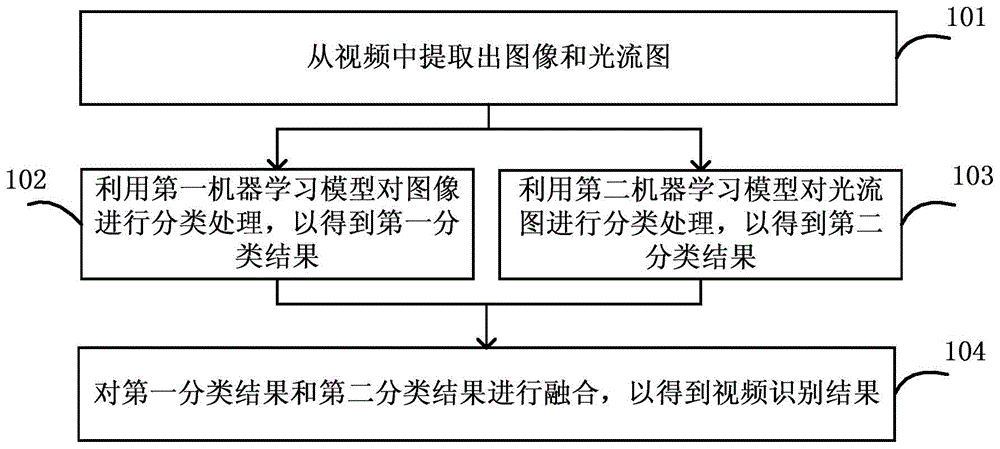
图1是根据本公开一个实施例的视频识别方法的流程示意图;FIG. 1 is a schematic flow diagram of a video recognition method according to an embodiment of the present disclosure;
图2是根据本公开一个实施例的机器学习模型的结构示意图;FIG. 2 is a schematic structural diagram of a machine learning model according to an embodiment of the present disclosure;
图3是根据本公开另一个实施例的机器学习模型的结构示意图;Fig. 3 is a schematic structural diagram of a machine learning model according to another embodiment of the present disclosure;
图4是根据本公开另一个实施例的视频识别方法的流程示意图;FIG. 4 is a schematic flowchart of a video recognition method according to another embodiment of the present disclosure;
图5是根据本公开又一个实施例的机器学习模型的结构示意图;Fig. 5 is a schematic structural diagram of a machine learning model according to yet another embodiment of the present disclosure;
图6是根据本公开一个实施例的信息划分示意图;Fig. 6 is a schematic diagram of information division according to an embodiment of the present disclosure;
图7是根据本公开一个实施例的视频识别装置的结构示意图;Fig. 7 is a schematic structural diagram of a video recognition device according to an embodiment of the present disclosure;
图8是根据本公开另一个实施例的视频识别装置的结构示意图。Fig. 8 is a schematic structural diagram of a video recognition device according to another embodiment of the present disclosure.
应当明白,附图中所示出的各个部分的尺寸并不是按照实际的比例关系绘制的。此外,相同或类似的参考标号表示相同或类似的构件。It should be understood that the sizes of the various parts shown in the drawings are not drawn according to the actual scale relationship. In addition, the same or similar reference numerals denote the same or similar members.
具体实施方式Detailed ways
现在将参照附图来详细描述本公开的各种示例性实施例。对示例性实施例的描述仅仅是说明性的,决不作为对本公开及其应用或使用的任何限制。本公开可以以许多不同的形式实现,不限于这里所述的实施例。提供这些实施例是为了使本公开透彻且完整,并且向本领域技术人员充分表达本公开的范围。应注意到:除非另外具体说明,否则在这些实施例中阐述的部件和步骤的相对布置、材料的组分和数值应被解释为仅仅是示例性的,而不是作为限制。Various exemplary embodiments of the present disclosure will now be described in detail with reference to the accompanying drawings. The description of the exemplary embodiments is illustrative only, and in no way restricts the disclosure, its application or uses. The present disclosure can be implemented in many different forms and is not limited to the embodiments described here. Rather, these embodiments are provided so that this disclosure will be thorough and complete, and will fully convey the scope of the disclosure to those skilled in the art. It should be noted that the relative arrangement of parts and steps, the composition of materials and numerical values set forth in these embodiments should be interpreted as illustrative only and not as limiting unless specifically stated otherwise.
本公开中使用的“第一”、“第二”以及类似的词语并不表示任何顺序、数量或者重要性,而只是用来区分不同的部分。“包括”或者“包含”等类似的词语意指在该词前的要素涵盖在该词后列举的要素,并不排除也涵盖其他要素的可能。"First", "second" and similar words used in the present disclosure do not indicate any order, quantity or importance, but are only used to distinguish different parts. Words like "comprising" or "comprising" mean that the elements preceding the word cover the elements listed after the word, and do not exclude the possibility of also covering other elements.
本公开使用的所有术语(包括技术术语或者科学术语)与本公开所属领域的普通技术人员理解的含义相同,除非另外特别定义。还应当理解,在诸如通用字典中定义的术语应当被解释为具有与它们在相关技术的上下文中的含义相一致的含义,而不应用理想化或极度形式化的意义来解释,除非这里明确地这样定义。All terms (including technical terms or scientific terms) used in the present disclosure have the same meaning as understood by one of ordinary skill in the art to which the present disclosure belongs, unless otherwise specifically defined. It should also be understood that terms defined in, for example, general-purpose dictionaries should be interpreted as having meanings consistent with their meanings in the context of the relevant technology, and should not be interpreted in idealized or extremely formalized meanings, unless explicitly stated herein Defined like this.
对于相关领域普通技术人员已知的技术、方法和设备可能不作详细讨论,但在适当情况下,所述技术、方法和设备应当被视为说明书的一部分。Techniques, methods and devices known to those of ordinary skill in the relevant art may not be discussed in detail, but where appropriate, such techniques, methods and devices should be considered part of the description.
图1是根据本公开一个实施例的视频识别方法的流程示意图。在一些实施例中,视频识别方法由视频识别装置执行。Fig. 1 is a schematic flowchart of a video recognition method according to an embodiment of the present disclosure. In some embodiments, the video recognition method is performed by a video recognition device.
在步骤101,从视频中提取出图像和光流图。In
这里需要说明的是,所提取出的图像是视频中的一帧。例如,所提取出的图像是RGB颜色空间中的图像,或者是其它颜色空间中的图像。It should be noted here that the extracted image is a frame in the video. For example, the extracted image is an image in RGB color space, or an image in other color spaces.
此外,光流图用来描述视频中相邻帧之间的变化情况。In addition, optical flow maps are used to describe the changes between adjacent frames in the video.
在步骤102,利用第一机器学习模型对图像进行分类处理,以得到第一分类结果。In
在步骤103,利用第二机器学习模型对光流图进行分类处理,以得到第二分类结果。第一机器学习模型的深度大于第二机器学习模型的深度。In
这里需要说明的是,图像的纹理和色彩比较丰富,而光流图的纹理和内容相对单一。因此通过增加处理图像的第一机器学习模型的深度,能够进一步提取出图像中所包含的特征信息。由此可提升视频识别的准确度。What needs to be explained here is that the texture and color of the image are relatively rich, while the texture and content of the optical flow map are relatively single. Therefore, by increasing the depth of the first machine learning model for processing images, feature information contained in the images can be further extracted. In this way, the accuracy of video recognition can be improved.
在一些实施例中,第一机器学习模型和第二机器学习模型为经过训练的神经网络。例如,第一机器学习模型和第二机器学习模型为经过训练的卷积神经网络。In some embodiments, the first machine learning model and the second machine learning model are trained neural networks. For example, the first machine learning model and the second machine learning model are trained convolutional neural networks.
在步骤104,对第一分类结果和第二分类结果进行融合,以得到视频的识别结果。In
在一些实施例中,可通过计算第一分类结果和第二分类结果的平均值、加权平均值或其它适当的方式,将第一分类结果和第二分类结果进行融合。In some embodiments, the first classification result and the second classification result may be fused by calculating an average value, a weighted average value or other appropriate methods of the first classification result and the second classification result.
例如,利用上述实施例对视频片段进行识别,第一机器学习模型输出的第一分类结果为:用户仅伸出右手食指的概率为0.7,用户同时伸出右手的拇指和食指的概率为0.2,其它情况的概率为0.1。第二机器学习模型输出的第二分类结果为:用户仅伸出右手食指的概率为0.8,用户同时伸出右手的拇指和食指的概率为0.1,其它情况的概率为0.1。若第一机器学习模型的权值为2,第二机器学习模型的权值为1,则在融合过程中,用户仅伸出右手食指的概率为:For example, using the above embodiment to identify video clips, the first classification result output by the first machine learning model is: the probability that the user only stretches out the right index finger is 0.7, and the probability that the user stretches out the right thumb and index finger at the same time is 0.2, Otherwise the probability is 0.1. The second classification result output by the second machine learning model is: the probability that the user only stretches out the right index finger is 0.8, the probability that the user stretches out the right thumb and index finger at the same time is 0.1, and the probability in other cases is 0.1. If the weight of the first machine learning model is 2, and the weight of the second machine learning model is 1, then during the fusion process, the probability that the user only stretches out the right index finger is:
(2×0.7+1×0.8)/3=0.733(2×0.7+1×0.8)/3=0.733
而用户同时伸出右手的拇指和食指的概率为:And the probability that the user stretches out the thumb and index finger of the right hand at the same time is:
(2×0.2+1×0.1)/3=0.167(2×0.2+1×0.1)/3=0.167
由于0.733>0.167,因此判定出在所识别的视频中,用户仅伸出了右手食指。Since 0.733>0.167, it is determined that in the recognized video, the user only stretches out the right index finger.
图2是根据本公开一个实施例的机器学习模型的结构示意图。如图2所示,机器学习模型20中包括第一机器学习模型21和第二机器学习模型22。第一机器学习模型21的深度大于第二机器学习模型22的深度。Fig. 2 is a schematic structural diagram of a machine learning model according to an embodiment of the present disclosure. As shown in FIG. 2 , the
在一些实施例中,第一机器学习模型21和第二机器学习模型22为经过训练的神经网络。例如,第一机器学习模型21和第二机器学习模型22为经过训练的卷积神经网络。In some embodiments, the first
在从视频中提取出图像和光流图后,将图像输入第一机器学习模型21,将光流图输入第二机器学习模型22。第一机器学习模型21对图像进行分类处理,以得到第一分类结果。第二机器学习模型22对光流图进行分类处理,以得到第二分类结果。接下来,通过对第一分类结果和第二分类结果进行融合处理,以得到视频识别结果。After the image and the optical flow map are extracted from the video, the image is input into the first
在本公开上述实施例提供的视频识别方法中,在对视频进行识别的过程中,用于图像识别的第一机器学习模型的深度大于用于光流图识别的第二机器学习模型的深度,因此能够从图像中提取出更多的特征信息。此外,本公开将两个互不相同的机器学习模型的分类结果进行融合,从而能够在识别视频的过程中,不仅借助图像自身的特征信息,还借助相邻帧之间的变化情况,从而能够提升视频识别的准确度。In the video recognition method provided by the above-mentioned embodiments of the present disclosure, in the process of video recognition, the depth of the first machine learning model used for image recognition is greater than the depth of the second machine learning model used for optical flow graph recognition, Therefore, more feature information can be extracted from the image. In addition, the present disclosure fuses the classification results of two different machine learning models, so that in the process of video recognition, not only the feature information of the image itself but also the changes between adjacent frames can be used to realize Improve the accuracy of video recognition.
图3是根据本公开另一个实施例的机器学习模型的结构示意图。图3与图2的不同之处在于,在图3所示实施例中,第一机器学习模型21包括第一机器学习子模型211、第二机器学习子模型212、第一全连接层213和第一分类器214。第二机器学习模型22包括第一机器学习子模型211、第二全连接层223和第二分类器224。Fig. 3 is a schematic structural diagram of a machine learning model according to another embodiment of the present disclosure. The difference between Fig. 3 and Fig. 2 is that in the embodiment shown in Fig. 3, the first
在一些实施例中,第一机器学习子模型211和第二机器学习子模型212为经过训练的神经网络。例如,第一机器学习子模型211和第二机器学习子模型212为经过训练的卷积神经网络。In some embodiments, the first
在一些实施例中,第一分类器214和第二分类器224利用softmax函数进行分类处理。In some embodiments, the
图4是根据本公开另一个实施例的视频识别方法的流程示意图。所使用的机器学习模型如图3所示。在一些实施例中,视频识别方法由视频识别装置执行。Fig. 4 is a schematic flowchart of a video recognition method according to another embodiment of the present disclosure. The machine learning model used is shown in Figure 3. In some embodiments, the video recognition method is performed by a video recognition device.
在步骤401,从视频中提取出图像和光流图。In
在步骤402,将图像输入第一机器学习子模型,以得到第一特征信息。In
在步骤403,将第一特征信息输入第二机器学习子模型,以得到第二特征信息。In
在步骤404,将第二特征信息输入第一全连接层,以得到第三特征信息。In
第一全连接层能够将第二特征信息中的局部特征转换为全局特征,以便提升视频识别的准确度。The first fully connected layer can convert the local features in the second feature information into global features, so as to improve the accuracy of video recognition.
在步骤405,将第三特征信息输入第一分类器,以得到第一分类结果。In
在步骤406,将光流图输入第一机器学习子模型,以得到第四特征信息。In
在步骤407,将第四特征信息输入第二全连接层,以得到第五特征信息。In
第二全连接层能够将第四特征信息中的局部特征转换为全局特征,以便提升视频识别的准确度。The second fully connected layer can convert the local features in the fourth feature information into global features, so as to improve the accuracy of video recognition.
在步骤408,将第五特征信息输入第二分类器,以得到第二分类结果。In
在步骤409,对第一分类结果和第二分类结果进行融合,以得到视频的识别结果。In
这里需要说明的是,在第二机器学习子模型包括多层卷积层的情况下,随着卷积层的层数的增加,视频识别准确度会随之提升。但在卷积层的层数超过门限值后,视频识别准确度并不会得到进一步改善,同时还导致计算成本显著增加。It should be noted here that, when the second machine learning sub-model includes multiple convolutional layers, as the number of convolutional layers increases, the accuracy of video recognition will increase accordingly. However, after the number of convolutional layers exceeds the threshold, the video recognition accuracy will not be further improved, and it will also lead to a significant increase in computing costs.
在一些实施例中,第二机器学习子模型中的卷积层的层数为3层。由此,既可以得到理想的视频识别准确度,又能够将计算成本控制在可接受范围内。In some embodiments, the number of convolutional layers in the second machine learning sub-model is 3 layers. In this way, ideal video recognition accuracy can be obtained, and the calculation cost can be controlled within an acceptable range.
图5是根据本公开又一个实施例的机器学习模型的结构示意图。图5与图3的不同之处在于,在图5所示实施例中,第一机器学习模型21中包括多个第一机器学习子模型211。第二机器学习模型22中包括多个第一机器学习子模型211。这些第一机器学习子模型211能够相互独立地对输入信息进行处理,从而能够有效提升处理效率。Fig. 5 is a schematic structural diagram of a machine learning model according to yet another embodiment of the present disclosure. The difference between FIG. 5 and FIG. 3 is that, in the embodiment shown in FIG. 5 , the first
在一些实施例中,第一机器学习模型21中的第一机器学习子模型211的数量与第二机器学习模型22中的第一机器学习子模型211的数量相同。In some embodiments, the number of first machine learning sub-models 211 in the first
在一些实施例中,在第一机器学习模型21和第二机器学习模型22中分别设置3个第一机器学习子模型211。由此,既可以得到理想的处理速度,又能够将计算成本控制在可接受范围内。In some embodiments, three first machine learning sub-models 211 are respectively set in the first
图6是根据本公开一个实施例的信息划分示意图。Fig. 6 is a schematic diagram of information division according to an embodiment of the present disclosure.
如图6所示,从视频段V中提取出图像P和光流图F。在第一机器学习模型包括n个第一机器学习子模型的情况下,将输入给第一机器学习模型的图像P也划分为n个信息片段P1、P2、…、Pn。信息片段与第一机器学习子模型一一对应。接下来,将P1输入对应的第一机器学习子模型C11,将P2输入对应的第一机器学习子模型C12,…,将Pn输入对应的第一机器学习子模型C1n。As shown in Figure 6, an image P and an optical flow map F are extracted from a video segment V. In the case that the first machine learning model includes n first machine learning sub-models, the image P input to the first machine learning model is also divided into n pieces of information P 1 , P 2 , . . . , P n . The pieces of information correspond one-to-one to the first machine learning sub-model. Next, input P 1 into the corresponding first machine learning sub-model C 11 , input P 2 into the corresponding first machine learning sub-model C 12 , ..., and input P n into the corresponding first machine learning sub-model C 1n .
在一些实施例中,信息片段P1、P2、…、Pn的长度相同。由此能够将计算负载进行均匀分配,从而提升整体的处理效率。In some embodiments, the information pieces P 1 , P 2 , . . . , P n have the same length. In this way, the calculation load can be evenly distributed, thereby improving the overall processing efficiency.
此外,在第二机器学习模型包括n个第一机器学习子模型的情况下,将输入给第二机器学习模型的光流图F也划分为n个信息片段F1、F2、…、Fn。信息片段与第一机器学习子模型一一对应。接下来,将F1输入对应的第一机器学习子模型C21,将F2输入对应的第一机器学习子模型C22,…,将Fn输入对应的第一机器学习子模型C2n。In addition, when the second machine learning model includes n first machine learning sub-models, the optical flow graph F input to the second machine learning model is also divided into n pieces of information F 1 , F 2 , ..., F n . The pieces of information correspond one-to-one to the first machine learning sub-model. Next, input F 1 into the corresponding first machine learning sub-model C 21 , input F 2 into the corresponding first machine learning sub-model C 22 , ..., input F n into the corresponding first machine learning sub-model C 2n .
在一些实施例中,信息片段F1、F2、…、Fn的长度相同。由此能够将计算负载进行均匀分配,从而提升整体的处理效率。In some embodiments, the information fragments F 1 , F 2 , . . . , F n have the same length. In this way, the calculation load can be evenly distributed, thereby improving the overall processing efficiency.
在一些实施例中,从每个信息片段中以预定间隔提取出多个信息帧。将提取出的多个信息帧输入对应的第一机器学习子模型,由此可减小第一机器学习子模型的信息处理量。In some embodiments, a plurality of frames of information are extracted at predetermined intervals from each piece of information. The multiple extracted information frames are input into the corresponding first machine learning sub-model, thereby reducing the information processing amount of the first machine learning sub-model.
例如,从信息片段P1中随机选择一个起点i1。然后从起点i1开始,在信息片段P1中等间距地选择出m个信息帧i1、i2、…、im。若在选择过程中,所选择的信息帧ij位于信息片段P1的尾部,则继续从信息片段P1的第一帧开始选择下一信息帧ij+1。For example, a starting point i 1 is randomly selected from the information piece P 1 . Then, starting from the starting point i 1 , select m information frames i 1 , i 2 , . . . , im in the information segment P 1 at equal intervals. If during the selection process, the selected information frame i j is located at the end of the information segment P 1 , continue to select the next information frame i j+1 from the first frame of the information segment P 1 .
需要说明的是,虽然在附图中以一定顺序示出了各个方法步骤,但是这不意味着方法步骤必须以所示出的顺序来执行,相反在不背离本发明的精神和原则的情况下可以以相反或并行的顺序被执行。It should be noted that although the various method steps are shown in a certain order in the drawings, this does not mean that the method steps must be performed in the order shown, on the contrary, without departing from the spirit and principles of the present invention Can be performed in reverse or parallel order.
图7是根据本公开一个实施例的视频识别装置的结构示意图。如图7所示,视频识别装置包括信息提取模块71、处理模块72和融合模块73。Fig. 7 is a schematic structural diagram of a video recognition device according to an embodiment of the present disclosure. As shown in FIG. 7 , the video recognition device includes an
信息提取模块71从视频中提取出图像和光流图。The
这里需要说明的是,所提取出的图像是视频中的一帧。例如,所提取出的图像是RGB颜色空间中的图像,或者是其它颜色空间中的图像。It should be noted here that the extracted image is a frame in the video. For example, the extracted image is an image in RGB color space, or an image in other color spaces.
此外,光流图用来描述视频中相邻帧之间的变化情况。In addition, optical flow maps are used to describe the changes between adjacent frames in the video.
处理模块72利用第一机器学习模型对所述图像进行分类处理,以得到第一分类结果,利用第二机器学习模型对所述光流图进行分类处理,以得到第二分类结果。第一机器学习模型的深度大于第二机器学习模型的深度。The
这里需要说明的是,图像的纹理和色彩比较丰富,而光流图的纹理和内容相对单一。因此通过增加处理图像的第一机器学习模型的深度,能够进一步提取出图像中所包含的特征信息。由此可提升视频识别的准确度。What needs to be explained here is that the texture and color of the image are relatively rich, while the texture and content of the optical flow map are relatively single. Therefore, by increasing the depth of the first machine learning model for processing images, feature information contained in the images can be further extracted. In this way, the accuracy of video recognition can be improved.
在一些实施例中,第一机器学习模型和第二机器学习模型为经过训练的神经网络。例如,第一机器学习模型和第二机器学习模型为经过训练的卷积神经网络。In some embodiments, the first machine learning model and the second machine learning model are trained neural networks. For example, the first machine learning model and the second machine learning model are trained convolutional neural networks.
融合模块73对第一分类结果和第二分类结果进行融合,以得到视频的识别结果。The
在一些实施例中,可通过计算第一分类结果和第二分类结果的平均值、加权平均值或其它适当的方式,将第一分类结果和第二分类结果进行融合。In some embodiments, the first classification result and the second classification result may be fused by calculating an average value, a weighted average value or other appropriate methods of the first classification result and the second classification result.
在本公开上述实施例提供的视频识别装置中,在对视频进行识别的过程中,用于图像识别的第一机器学习模型的深度大于用于光流图识别的第二机器学习模型的深度,因此能够从图像中提取出更多的特征信息。此外,本公开将两个互不相同的机器学习模型的分类结果进行融合,从而能够在识别视频的过程中,不仅借助图像自身的特征信息,还借助相邻帧之间的变化情况,从而提升视频识别的准确度。In the video recognition device provided by the above-mentioned embodiments of the present disclosure, in the process of video recognition, the depth of the first machine learning model used for image recognition is greater than the depth of the second machine learning model used for optical flow graph recognition, Therefore, more feature information can be extracted from the image. In addition, the present disclosure fuses the classification results of two different machine learning models, so that in the process of video recognition, not only the feature information of the image itself but also the changes between adjacent frames can be used to improve Accuracy of video recognition.
在一些实施例中,如图3所示,第一机器学习模型包括第一机器学习子模型、第二机器学习子模型、第一全连接层和第一分类器。In some embodiments, as shown in FIG. 3 , the first machine learning model includes a first machine learning sub-model, a second machine learning sub-model, a first fully connected layer, and a first classifier.
处理模块72将所述图像输入所述第一机器学习子模型,以得到第一特征信息。处理模块72将所述第一特征信息输入所述第二机器学习子模型,以得到第二特征信息。处理模块72将所述第二特征信息输入所述第一全连接层,以得到第三特征信息。处理模块72将所述第三特征信息输入所述第一分类器,以得到所述第一分类结果。The
在一些实施例中,第一分类器利用softmax函数进行分类处理。In some embodiments, the first classifier utilizes a softmax function for classification processing.
在一些实施例中,第二机器学习子模型中包括多层卷积层。例如,第二机器学习子模型中的卷积层的层数为3层。由此,既可以得到理想的视频识别准确度,又能够将计算成本控制在可接受范围内。In some embodiments, multiple convolutional layers are included in the second machine learning sub-model. For example, the number of convolutional layers in the second machine learning sub-model is 3 layers. In this way, ideal video recognition accuracy can be obtained, and the calculation cost can be controlled within an acceptable range.
在一些实施例中,如图3所示,第二机器学习模型包括第一机器学习子模型、第二全连接层和第二分类器。In some embodiments, as shown in FIG. 3 , the second machine learning model includes a first machine learning sub-model, a second fully connected layer, and a second classifier.
处理模块72将所述光流图输入所述第一机器学习子模型,以得到第四特征信息。处理模块72将所述第四特征信息输入所述第二全连接层,以得到第五特征信息。处理模块72将所述第五特征信息输入所述第二分类器,以得到所述第二分类结果。The
在一些实施例中,如图5所示,第一机器学习模型和第二机器学习模型分别包括预定数量个第一机器学习子模型。In some embodiments, as shown in FIG. 5 , the first machine learning model and the second machine learning model respectively include a predetermined number of first machine learning sub-models.
如图6所示,在第一机器学习模型包括n个第一机器学习子模型的情况下,处理模块72将输入给第一机器学习模型的图像P划分为n个信息片段P1、P2、…、Pn。信息片段与第一机器学习子模型一一对应。接下来,处理模块72将每个信息片段输入第一机器学习模型中对应的第一机器学习子模型。As shown in Figure 6, when the first machine learning model includes n first machine learning sub-models, the
在一些实施例中,信息片段P1、P2、…、Pn的长度相同。由此能够将计算负载进行均匀分配,从而提升整体的处理效率。In some embodiments, the information pieces P 1 , P 2 , . . . , P n have the same length. In this way, the calculation load can be evenly distributed, thereby improving the overall processing efficiency.
此外,在第二机器学习模型包括n个第一机器学习子模型的情况下,处理模块72将输入给第二机器学习模型的光流图F划分为n个信息片段F1、F2、…、Fn。信息片段与第一机器学习子模型一一对应。接下来,处理模块72将每个信息片段输入第二机器学习模型中对应的第一机器学习子模型。In addition, when the second machine learning model includes n first machine learning sub-models, the
在一些实施例中,各信息片段F1、F2、…、Fn的长度相同。由此能够将计算负载进行均匀分配,从而提升整体的处理效率。In some embodiments, each information fragment F 1 , F 2 , . . . , F n has the same length. In this way, the calculation load can be evenly distributed, thereby improving the overall processing efficiency.
在一些实施例中,从每个信息片段中以预定间隔提取出多个信息帧。将提取出的多个信息帧输入对应的第一机器学习子模型,由此可减小第一机器学习子模型的信息处理量。In some embodiments, a plurality of frames of information are extracted at predetermined intervals from each piece of information. The multiple extracted information frames are input into the corresponding first machine learning sub-model, thereby reducing the information processing amount of the first machine learning sub-model.
在一些实施例中,上述功能模块可以实现为用于执行本公开所描述功能的通用处理器、可编程逻辑控制器(Programmable Logic Controller,简称:PLC)、数字信号处理器(Digital Signal Processor,简称:DSP)、专用集成电路(Application SpecificIntegrated Circuit,简称:ASIC)、现场可编程门阵列(Field-Programmable Gate Array,简称:FPGA)或者其他可编程逻辑器件、分立门或者晶体管逻辑器件、分立硬件组件或者其任意适当组合。In some embodiments, the above-mentioned functional modules can be implemented as a general-purpose processor, a Programmable Logic Controller (Programmable Logic Controller, PLC for short), a Digital Signal Processor (Digital Signal Processor, : DSP), application specific integrated circuit (Application Specific Integrated Circuit, referred to as: ASIC), field programmable gate array (Field-Programmable Gate Array, referred to as: FPGA) or other programmable logic devices, discrete gate or transistor logic devices, discrete hardware components Or any suitable combination thereof.
图8是根据本公开另一个实施例的视频识别装置的结构示意图。如图8所示,视频识别装置包括存储器81和处理器82。Fig. 8 is a schematic structural diagram of a video recognition device according to another embodiment of the present disclosure. As shown in FIG. 8 , the video recognition device includes a
存储器81用于存储指令。处理器82耦合到存储器81。处理器82被配置为基于存储器存储的指令执行实现如图1和图4中任一实施例涉及的方法。The
如图8所示,视频识别装置还包括通信接口83,用于与其它设备进行信息交互。同时,该装置还包括总线84,处理器82、通信接口83、以及存储器81通过总线84完成相互间的通信。As shown in FIG. 8 , the video recognition device further includes a
存储器81可以包含高速RAM(Random Access Memory,随机存取存储器),也可还包括NVM(Non-Volatile Memory,非易失性存储器)。例如至少一个磁盘存储器。存储器81也可以是存储器阵列。存储器81还可能被分块,并且块可按一定的规则组合成虚拟卷。The
此外,处理器82可以是一个中央处理器,或者可以是ASIC(Application SpecificIntegrated Circuit,专用集成电路),或者是被配置成实施本公开实施例的一个或多个集成电路。In addition, the
本公开还提供一种计算机可读存储介质。计算机可读存储介质存储有计算机指令,指令被处理器执行时实现如图1和图4中任一实施例涉及的方法。The present disclosure also provides a computer-readable storage medium. The computer-readable storage medium stores computer instructions, and when the instructions are executed by the processor, the method involved in any one of the embodiments shown in FIG. 1 and FIG. 4 is implemented.
通过将本公开所提供的方案应用于手势数据集20BN-JESTER,能够获得95.6%的准确率。By applying the scheme provided in this disclosure to the gesture dataset 20BN-JESTER, an accuracy rate of 95.6% can be obtained.
至此,已经详细描述了本公开的实施例。为了避免遮蔽本公开的构思,没有描述本领域所公知的一些细节。本领域技术人员根据上面的描述,完全可以明白如何实施这里公开的技术方案。So far, the embodiments of the present disclosure have been described in detail. Certain details known in the art have not been described in order to avoid obscuring the concept of the present disclosure. Based on the above description, those skilled in the art can fully understand how to implement the technical solutions disclosed herein.
虽然已经通过示例对本公开的一些特定实施例进行了详细说明,但是本领域的技术人员应该理解,以上示例仅是为了进行说明,而不是为了限制本公开的范围。本领域的技术人员应该理解,可在不脱离本公开的范围和精神的情况下,对以上实施例进行修改或者对部分技术特征进行等同替换。本公开的范围由所附权利要求来限定。Although some specific embodiments of the present disclosure have been described in detail through examples, those skilled in the art should understand that the above examples are for illustration only, rather than limiting the scope of the present disclosure. Those skilled in the art should understand that the above embodiments can be modified or some technical features can be equivalently replaced without departing from the scope and spirit of the present disclosure. The scope of the present disclosure is defined by the appended claims.
Claims (8)
Priority Applications (2)
| Application Number | Priority Date | Filing Date | Title |
|---|---|---|---|
| CN201910197160.2A CN109871828B (en) | 2019-03-15 | 2019-03-15 | Video recognition method, recognition device and storage medium |
| US16/523,124 US11113536B2 (en) | 2019-03-15 | 2019-07-26 | Video identification method, video identification device, and storage medium |
Applications Claiming Priority (1)
| Application Number | Priority Date | Filing Date | Title |
|---|---|---|---|
| CN201910197160.2A CN109871828B (en) | 2019-03-15 | 2019-03-15 | Video recognition method, recognition device and storage medium |
Publications (2)
| Publication Number | Publication Date |
|---|---|
| CN109871828A CN109871828A (en) | 2019-06-11 |
| CN109871828B true CN109871828B (en) | 2022-12-02 |
Family
ID=66920488
Family Applications (1)
| Application Number | Title | Priority Date | Filing Date |
|---|---|---|---|
| CN201910197160.2A Active CN109871828B (en) | 2019-03-15 | 2019-03-15 | Video recognition method, recognition device and storage medium |
Country Status (2)
| Country | Link |
|---|---|
| US (1) | US11113536B2 (en) |
| CN (1) | CN109871828B (en) |
Families Citing this family (26)
| Publication number | Priority date | Publication date | Assignee | Title |
|---|---|---|---|---|
| US10678244B2 (en) | 2017-03-23 | 2020-06-09 | Tesla, Inc. | Data synthesis for autonomous control systems |
| US11893393B2 (en) | 2017-07-24 | 2024-02-06 | Tesla, Inc. | Computational array microprocessor system with hardware arbiter managing memory requests |
| US10671349B2 (en) | 2017-07-24 | 2020-06-02 | Tesla, Inc. | Accelerated mathematical engine |
| US11157441B2 (en) | 2017-07-24 | 2021-10-26 | Tesla, Inc. | Computational array microprocessor system using non-consecutive data formatting |
| US11409692B2 (en) | 2017-07-24 | 2022-08-09 | Tesla, Inc. | Vector computational unit |
| US12307350B2 (en) | 2018-01-04 | 2025-05-20 | Tesla, Inc. | Systems and methods for hardware-based pooling |
| US11561791B2 (en) | 2018-02-01 | 2023-01-24 | Tesla, Inc. | Vector computational unit receiving data elements in parallel from a last row of a computational array |
| US11215999B2 (en) | 2018-06-20 | 2022-01-04 | Tesla, Inc. | Data pipeline and deep learning system for autonomous driving |
| US11361457B2 (en) | 2018-07-20 | 2022-06-14 | Tesla, Inc. | Annotation cross-labeling for autonomous control systems |
| US11636333B2 (en) | 2018-07-26 | 2023-04-25 | Tesla, Inc. | Optimizing neural network structures for embedded systems |
| US11562231B2 (en) | 2018-09-03 | 2023-01-24 | Tesla, Inc. | Neural networks for embedded devices |
| CA3115784A1 (en) | 2018-10-11 | 2020-04-16 | Matthew John COOPER | Systems and methods for training machine models with augmented data |
| US11196678B2 (en) | 2018-10-25 | 2021-12-07 | Tesla, Inc. | QOS manager for system on a chip communications |
| US11816585B2 (en) | 2018-12-03 | 2023-11-14 | Tesla, Inc. | Machine learning models operating at different frequencies for autonomous vehicles |
| US11537811B2 (en) | 2018-12-04 | 2022-12-27 | Tesla, Inc. | Enhanced object detection for autonomous vehicles based on field view |
| US11610117B2 (en) | 2018-12-27 | 2023-03-21 | Tesla, Inc. | System and method for adapting a neural network model on a hardware platform |
| US10997461B2 (en) | 2019-02-01 | 2021-05-04 | Tesla, Inc. | Generating ground truth for machine learning from time series elements |
| US11150664B2 (en) | 2019-02-01 | 2021-10-19 | Tesla, Inc. | Predicting three-dimensional features for autonomous driving |
| US11567514B2 (en) | 2019-02-11 | 2023-01-31 | Tesla, Inc. | Autonomous and user controlled vehicle summon to a target |
| US10956755B2 (en) | 2019-02-19 | 2021-03-23 | Tesla, Inc. | Estimating object properties using visual image data |
| CN110287816B (en) * | 2019-06-05 | 2021-12-28 | 北京字节跳动网络技术有限公司 | Vehicle door motion detection method, device and computer readable storage medium |
| CN112308100A (en) * | 2019-07-30 | 2021-02-02 | 顺丰科技有限公司 | Loading and unloading port state detection method, device, server and storage |
| CN112507920B (en) * | 2020-12-16 | 2023-01-24 | 重庆交通大学 | A Method for Recognition of Exam Abnormal Behavior Based on Time Shift and Attention Mechanism |
| US11842540B2 (en) * | 2021-03-31 | 2023-12-12 | Qualcomm Incorporated | Adaptive use of video models for holistic video understanding |
| EP4388510A1 (en) | 2021-08-19 | 2024-06-26 | Tesla, Inc. | Vision-based system training with simulated content |
| US12462575B2 (en) | 2021-08-19 | 2025-11-04 | Tesla, Inc. | Vision-based machine learning model for autonomous driving with adjustable virtual camera |
Citations (1)
| Publication number | Priority date | Publication date | Assignee | Title |
|---|---|---|---|---|
| CN107480725A (en) * | 2017-08-23 | 2017-12-15 | 京东方科技集团股份有限公司 | Image-recognizing method, device and computer equipment based on deep learning |
Family Cites Families (24)
| Publication number | Priority date | Publication date | Assignee | Title |
|---|---|---|---|---|
| CA2659698C (en) * | 2008-03-21 | 2020-06-16 | Dressbot Inc. | System and method for collaborative shopping, business and entertainment |
| US20130215116A1 (en) * | 2008-03-21 | 2013-08-22 | Dressbot, Inc. | System and Method for Collaborative Shopping, Business and Entertainment |
| US9848112B2 (en) * | 2014-07-01 | 2017-12-19 | Brain Corporation | Optical detection apparatus and methods |
| US10289912B1 (en) * | 2015-04-29 | 2019-05-14 | Google Llc | Classifying videos using neural networks |
| US20170109584A1 (en) * | 2015-10-20 | 2017-04-20 | Microsoft Technology Licensing, Llc | Video Highlight Detection with Pairwise Deep Ranking |
| US9904874B2 (en) * | 2015-11-05 | 2018-02-27 | Microsoft Technology Licensing, Llc | Hardware-efficient deep convolutional neural networks |
| US10083378B2 (en) * | 2015-12-28 | 2018-09-25 | Qualcomm Incorporated | Automatic detection of objects in video images |
| CN105976400B (en) * | 2016-05-10 | 2017-06-30 | 北京旷视科技有限公司 | Method for tracking target and device based on neural network model |
| CN106599789B (en) | 2016-07-29 | 2019-10-11 | 北京市商汤科技开发有限公司 | The recognition methods of video classification and device, data processing equipment and electronic equipment |
| CN106952269B (en) * | 2017-02-24 | 2019-09-20 | 北京航空航天大学 | Near-neighbor reversible video foreground object sequence detection and segmentation method and system |
| CN107239733A (en) * | 2017-04-19 | 2017-10-10 | 上海嵩恒网络科技有限公司 | Continuous hand-written character recognizing method and system |
| CN107168527B (en) * | 2017-04-25 | 2019-10-18 | 华南理工大学 | First-person gesture recognition and interaction method based on regional convolutional neural network |
| CN107341480A (en) * | 2017-07-12 | 2017-11-10 | 中国电子科技集团公司第二十八研究所 | A Crowd Gathering Detection Method Based on Improved PCCNN Neural Network Model |
| CN107463949B (en) * | 2017-07-14 | 2020-02-21 | 北京协同创新研究院 | A processing method and device for video action classification |
| EP4293574A3 (en) * | 2017-08-08 | 2024-04-03 | RealD Spark, LLC | Adjusting a digital representation of a head region |
| US10579897B2 (en) * | 2017-10-02 | 2020-03-03 | Xnor.ai Inc. | Image based object detection |
| CN108154196B (en) * | 2018-01-19 | 2019-10-22 | 百度在线网络技术(北京)有限公司 | Method and apparatus for exporting image |
| WO2019168765A1 (en) * | 2018-02-27 | 2019-09-06 | Portland State University | Context-aware synthesis for video frame interpolation |
| US11080590B2 (en) * | 2018-03-21 | 2021-08-03 | Nvidia Corporation | Stereo depth estimation using deep neural networks |
| US11640519B2 (en) * | 2018-10-31 | 2023-05-02 | Sony Interactive Entertainment Inc. | Systems and methods for domain adaptation in neural networks using cross-domain batch normalization |
| US11636681B2 (en) * | 2018-11-21 | 2023-04-25 | Meta Platforms, Inc. | Anticipating future video based on present video |
| BR112021009659A2 (en) * | 2018-12-10 | 2021-08-17 | The Climate Corporation | mapping of field anomalies using digital images and machine learning models. |
| US11170299B2 (en) * | 2018-12-28 | 2021-11-09 | Nvidia Corporation | Distance estimation to objects and free-space boundaries in autonomous machine applications |
| US11544928B2 (en) * | 2019-06-17 | 2023-01-03 | The Regents Of The University Of California | Athlete style recognition system and method |
-
2019
- 2019-03-15 CN CN201910197160.2A patent/CN109871828B/en active Active
- 2019-07-26 US US16/523,124 patent/US11113536B2/en active Active
Patent Citations (1)
| Publication number | Priority date | Publication date | Assignee | Title |
|---|---|---|---|---|
| CN107480725A (en) * | 2017-08-23 | 2017-12-15 | 京东方科技集团股份有限公司 | Image-recognizing method, device and computer equipment based on deep learning |
Also Published As
| Publication number | Publication date |
|---|---|
| US11113536B2 (en) | 2021-09-07 |
| CN109871828A (en) | 2019-06-11 |
| US20200293786A1 (en) | 2020-09-17 |
Similar Documents
| Publication | Publication Date | Title |
|---|---|---|
| CN109871828B (en) | Video recognition method, recognition device and storage medium | |
| US9971953B2 (en) | Visual recognition using deep learning attributes | |
| CN101710334B (en) | Large-scale image library retrieving method based on image Hash | |
| JP7559063B2 (en) | FACE PERSHING METHOD AND RELATED DEVICE | |
| CN113762309B (en) | Object matching method, device and equipment | |
| CN114677515B (en) | Weak supervision semantic segmentation method based on similarity between classes | |
| CN112488241B (en) | Zero sample picture identification method based on multi-granularity fusion network | |
| CN108334605A (en) | File classification method, device, computer equipment and storage medium | |
| WO2020143320A1 (en) | Method and apparatus for acquiring word vectors of text, computer device, and storage medium | |
| CN111291807B (en) | A fine-grained image classification method, device and storage medium | |
| CN108960314A (en) | Training method, device and electronic equipment based on difficult samples | |
| CN112560845A (en) | Character recognition method and device, intelligent meal taking cabinet, electronic equipment and storage medium | |
| CN108664993A (en) | A kind of convolutional neural networks image classification method of intensive weight connection | |
| WO2024088269A1 (en) | Character recognition method and apparatus, and electronic device and storage medium | |
| CN114091458A (en) | Entity recognition method and system based on model fusion | |
| WO2024011859A1 (en) | Neural network-based face detection method and device | |
| CN113869165B (en) | Traffic scene target detection method and system | |
| CN111783811B (en) | Pseudo-label generation method and device | |
| CN115600652B (en) | Convolutional neural network processing device, high-speed target detection method and equipment | |
| CN114663656B (en) | Training methods for image segmentation networks, as well as image segmentation methods, devices, and equipment. | |
| US20250148791A1 (en) | Image processing method, apparatus, electronic device and storage medium | |
| CN110619349A (en) | Plant image classification method and device | |
| WO2025140159A1 (en) | Text processing method and apparatus, electronic device, and storage medium | |
| CN111488400B (en) | Data classification method, apparatus and computer readable storage medium | |
| CN110969016B (en) | Word segmentation processing method and device |
Legal Events
| Date | Code | Title | Description |
|---|---|---|---|
| PB01 | Publication | ||
| PB01 | Publication | ||
| SE01 | Entry into force of request for substantive examination | ||
| SE01 | Entry into force of request for substantive examination | ||
| GR01 | Patent grant | ||
| GR01 | Patent grant |