CN109843385B - Skin engaging member comprising ethylene vinyl acetate and fragrance - Google Patents
Skin engaging member comprising ethylene vinyl acetate and fragrance Download PDFInfo
- Publication number
- CN109843385B CN109843385B CN201780063766.6A CN201780063766A CN109843385B CN 109843385 B CN109843385 B CN 109843385B CN 201780063766 A CN201780063766 A CN 201780063766A CN 109843385 B CN109843385 B CN 109843385B
- Authority
- CN
- China
- Prior art keywords
- engaging member
- skin engaging
- vinyl acetate
- skin
- fragrance
- Prior art date
- Legal status (The legal status is an assumption and is not a legal conclusion. Google has not performed a legal analysis and makes no representation as to the accuracy of the status listed.)
- Expired - Fee Related
Links
Images


Classifications
-
- A—HUMAN NECESSITIES
- A61—MEDICAL OR VETERINARY SCIENCE; HYGIENE
- A61K—PREPARATIONS FOR MEDICAL, DENTAL OR TOILETRY PURPOSES
- A61K8/00—Cosmetics or similar toiletry preparations
- A61K8/18—Cosmetics or similar toiletry preparations characterised by the composition
- A61K8/72—Cosmetics or similar toiletry preparations characterised by the composition containing organic macromolecular compounds
- A61K8/81—Cosmetics or similar toiletry preparations characterised by the composition containing organic macromolecular compounds obtained by reactions involving only carbon-to-carbon unsaturated bonds
- A61K8/8135—Compositions of homopolymers or copolymers of compounds having one or more unsaturated aliphatic radicals, each having only one carbon-to-carbon double bond, and at least one being terminated by an acyloxy radical of a saturated carboxylic acid, of carbonic acid or of a haloformic acid; Compositions of derivatives of such polymers, e.g. vinyl esters (polyvinylacetate)
-
- A—HUMAN NECESSITIES
- A61—MEDICAL OR VETERINARY SCIENCE; HYGIENE
- A61K—PREPARATIONS FOR MEDICAL, DENTAL OR TOILETRY PURPOSES
- A61K8/00—Cosmetics or similar toiletry preparations
- A61K8/18—Cosmetics or similar toiletry preparations characterised by the composition
- A61K8/72—Cosmetics or similar toiletry preparations characterised by the composition containing organic macromolecular compounds
- A61K8/84—Cosmetics or similar toiletry preparations characterised by the composition containing organic macromolecular compounds obtained by reactions otherwise than those involving only carbon-carbon unsaturated bonds
- A61K8/86—Polyethers
-
- A—HUMAN NECESSITIES
- A61—MEDICAL OR VETERINARY SCIENCE; HYGIENE
- A61Q—SPECIFIC USE OF COSMETICS OR SIMILAR TOILETRY PREPARATIONS
- A61Q9/00—Preparations for removing hair or for aiding hair removal
- A61Q9/02—Shaving preparations
-
- B—PERFORMING OPERATIONS; TRANSPORTING
- B26—HAND CUTTING TOOLS; CUTTING; SEVERING
- B26B—HAND-HELD CUTTING TOOLS NOT OTHERWISE PROVIDED FOR
- B26B21/00—Razors of the open or knife type; Safety razors or other shaving implements of the planing type; Hair-trimming devices involving a razor-blade; Equipment therefor
- B26B21/40—Details or accessories
- B26B21/44—Means integral with, or attached to, the razor for storing shaving-cream, styptic, or the like
- B26B21/443—Lubricating strips attached to the razor head
-
- A—HUMAN NECESSITIES
- A61—MEDICAL OR VETERINARY SCIENCE; HYGIENE
- A61K—PREPARATIONS FOR MEDICAL, DENTAL OR TOILETRY PURPOSES
- A61K2800/00—Properties of cosmetic compositions or active ingredients thereof or formulation aids used therein and process related aspects
- A61K2800/40—Chemical, physico-chemical or functional or structural properties of particular ingredients
- A61K2800/56—Compounds, absorbed onto or entrapped into a solid carrier, e.g. encapsulated perfumes, inclusion compounds, sustained release forms
-
- A—HUMAN NECESSITIES
- A61—MEDICAL OR VETERINARY SCIENCE; HYGIENE
- A61K—PREPARATIONS FOR MEDICAL, DENTAL OR TOILETRY PURPOSES
- A61K2800/00—Properties of cosmetic compositions or active ingredients thereof or formulation aids used therein and process related aspects
- A61K2800/40—Chemical, physico-chemical or functional or structural properties of particular ingredients
- A61K2800/59—Mixtures
- A61K2800/594—Mixtures of polymers
-
- A—HUMAN NECESSITIES
- A61—MEDICAL OR VETERINARY SCIENCE; HYGIENE
- A61K—PREPARATIONS FOR MEDICAL, DENTAL OR TOILETRY PURPOSES
- A61K2800/00—Properties of cosmetic compositions or active ingredients thereof or formulation aids used therein and process related aspects
- A61K2800/80—Process related aspects concerning the preparation of the cosmetic composition or the storage or application thereof
- A61K2800/87—Application Devices; Containers; Packaging
Landscapes
- Health & Medical Sciences (AREA)
- Life Sciences & Earth Sciences (AREA)
- Veterinary Medicine (AREA)
- Animal Behavior & Ethology (AREA)
- General Health & Medical Sciences (AREA)
- Public Health (AREA)
- Birds (AREA)
- Epidemiology (AREA)
- Mechanical Engineering (AREA)
- Engineering & Computer Science (AREA)
- Dermatology (AREA)
- Forests & Forestry (AREA)
- Cosmetics (AREA)
- Fats And Perfumes (AREA)
Abstract
The present invention provides a skin engaging member suitable for use in a hair removal device, the skin engaging member comprising ethylene vinyl acetate having a low level of vinyl acetate, a water soluble polymer and a fragrance composition.
Description
Background
Many razor cartridges include a skin engaging member commonly referred to as a lubricating strip. These lubricating strips are typically present in a rear position behind the blades so that when the user performs a shaving stroke, the skin contacts the blades before contacting the skin engaging member. Many different types of skin engaging members have been disclosed. See, e.g., U.S. patents 7,121,754, 6,298,558, 5,711,076, 5,134,775, 6,301,785, U.S. patent publications 2009/0223057, 2004/181943, 2006/0225285, and 2006/0272155, 2008/060201a 1; and WO 2011/047211. Some skin engaging members comprise one or more types of polyethylene oxide (PEO) with a water insoluble polymer such as polystyrene.
One problem with the use of polystyrene is that it requires high processing temperatures during extrusion. High processing temperatures can adversely affect the integrity of the chemicals in the skin engaging member, potentially degrading them, which can affect the consumer experience during use or during the product life cycle. The processing conditions required when using polystyrene may also limit what ingredients may be incorporated into the skin engaging member, as certain materials cannot withstand such temperatures or processing conditions.
The use of ethylene vinyl acetate as a water-insoluble polymer has also been proposed. See, for example, U.S. patents 5349750, 5454164, and 5551152. Although ethylene vinyl acetate is generally described as a potentially water-insoluble polymer for use in skin engaging members, many factors (including the level of ingredients, the grade of ethylene vinyl acetate, and the process conditions) can affect the suitability of the skin engaging member for use in actual practice. For example, US 5,551,152 mentions skin engaging member composites which may have 10-50% ethylene vinyl acetate and 50-90% skin engaging member material, wherein the vinyl acetate content of commercial grade vinyl acetate is in the range of 5-50 wt%. This reference continues to provide several examples of skin engaging members (Elvax 360) having vinyl acetate with a 25% vinyl acetate content.
Despite early attempts, there remains a need for a skin engaging member that provides adequate and consistent lubrication over multiple uses, wherein the product maintains a sufficiently effective expected life (which may include the structural integrity and/or ability of the skin engaging member to continue to provide a degree of lubrication after multiple uses). This is a significant challenge, as shaving conditions vary by the user depending on the individual shaving habits and environmental conditions; when designed, products that are robust and can provide the required lubrication maintain structural integrity over multiple uses (in some cases up to 6 shaves, even up to 12 shaves).
Thus, there remains a need for new skin engaging members that can be processed over a wider range of operating conditions, particularly when extrusion-type processes are considered, but still provide the desired lubrication over the life of the product. These and other benefits are addressed by one or more embodiments of the following invention. Furthermore, it has long been desired that the skin engaging member be capable of providing additional benefits beyond lubrication, one of which may be the delivery of a fragrance.
Disclosure of Invention
One aspect of the present invention relates to a skin engaging member suitable for use with a hair removal device such as a razor or epilation and scraping tool, said skin engaging member comprising a water-soluble polymer and a water-insoluble polymer containing ethylene vinyl acetate and a fragrance composition such as fragrance RM as described hereinafter. The skin engaging member may be used on a hair removal device such as a razor.
The skin engaging member comprises ethylene vinyl acetate having a vinyl acetate% of about 18% or less. In one embodiment, the skin engaging member has a total vinyl acetate level of from about 0.2% up to 7.5%, preferably from about 0.4% to about 5.75%, by weight of the skin engaging member. In one embodiment, the skin engaging member comprises from about 50% to about 78%, by weight of the skin engaging member, of a water soluble polymer; from about 20% to about 40%, preferably from about 26% to about 32%, of ethylene vinyl acetate having a vinyl acetate% of less than 18%; and about 0.5 wt% to about 15 wt% of one or more fragrance compositions. The skin engaging member preferably exhibits a low level of swelling when contacted or submerged in water.
Another aspect of the invention provides a hair removal device comprising at least one blade and a skin engaging member, the skin engaging member comprising: a water-soluble polymer; ethylene vinyl acetate and fragrance compositions wherein the skin engaging member swells less than 0.5mm according to the swell test method defined herein.
A further aspect of the invention provides a hair removal device comprising at least one blade and a skin engaging member, the skin engaging member comprising: a water-soluble polymer; ethylene vinyl acetate and fragrance compositions wherein the skin engaging member has a change in swelling ratio in mm/min of from 0 to 0.01 mm/min according to the swelling test method defined herein.
Drawings
FIG. 1 is a perspective view of a razor cartridge including a skin engaging member of the present invention.
Fig. 2 is a cross-sectional view taken along line 2-2 of fig. 1.
Fig. 3 is a side elevational view of a second type of skin engaging member of the present invention.
Figure 4 is a graphical representation of the swelling performance of market samples over time.
Fig. 5 is a graphical representation of a skin engaging member, which is a cross-sectional view taken transverse to the longitudinal (major) axis of the skin engaging member, wherein the image shown in dashed lines is before soaking and the solid line image shows the swollen skin engaging member.
Detailed Description
I. Skin engaging member
The skin engaging member of the present invention is suitable for use on a hair removal device (e.g. a razor) and is comprised of one or more layers of skin engaging member material, which may have a polymeric material. A multi-layer skin engaging member system such as those described in us patent 5956848. The skin engaging member may also be made of a plurality of adjacent strips, as disclosed in us patent 6298559. The skin engaging member comprises at least one skin engaging member. The skin engaging member of the present invention is formed from a polymer matrix comprising a water soluble polymer and a fragrance and a water insoluble polymer comprising Ethylene Vinyl Acetate (EVA).
The water insoluble polymeric material may be EVA at a level of from about 22% to about 40%, preferably from about 26% to about 40%, by weight of the skin engaging member. The amount of EVA may also be selected to a level of about 25% to about 32%, or about 26% to about 30%. Although higher levels of EVA have been disclosed, having too much EVA (in fact too much water-insoluble polymer) can affect the amount of lubrication and other potential benefits provided by the skin engaging member, as it can reduce the amount of other ingredients and water-soluble polymers that can be provided. The EVA may be added separately as a feedstock feed, or may be introduced with other ingredients. For the purposes of the present invention, the level of EVA refers to the total amount of EVA in the skin engaging member, regardless of how it is incorporated. The EVA may be introduced premixed/mixed with the other ingredients (active or filler) or may be mixed during the mixing step.
In one embodiment, the EVA is selected to have a vinyl acetate% (VA%) of about 18% or less, possibly less than about 18%, including less than about 12%. In one embodiment, the vinyl acetate% may be as low as about 2% to about 5%, preferably about 2.5% to 4%. The% vinyl acetate may also be selected at a level of about 8% to about 15%, or about 10% to about 13%. As used herein, "about" in relation to EVA levels and% vinyl acetate may mean ± 0.1%. Without intending to be bound by theory, it is believed that selecting an EVA grade having a vinyl acetate% as specified herein provides a matrix material that provides sufficient structural integrity without limiting the ability of the skin engaging member to provide lubricity over multiple uses. It is believed that the% vinyl acetate may affect the structural integrity benefits provided by EVA. It is believed that a high total amount of vinyl acetate (which is a function of EVA level and vinyl acetate%) may cause the skin engaging member to swell or deform excessively or prematurely over its expected life span.
In one embodiment, the skin engaging member comprises a total vinyl acetate level of from about 0.2% up to 7.5%, preferably from about 0.4% to about 5.75%, by weight of the skin engaging member. The total vinyl acetate level may also be from about 0.55% to about 4.3%, or from about 0.75% to about 3%. The total vinyl acetate level will include vinyl acetate present in the skin engaging member from EVA or from other sources, by weight of the skin engaging member. One skilled in the art will appreciate that no carrier or other non-reactive tray or carrier is considered in determining the total vinyl acetate level.
Without intending to be bound by theory, it is believed that when formulated with EVA having 18% VA%, it may be preferable to have more EVA present such that the total VA% is from about 4% to about 7.2% by weight of the skin engaging member. Additionally, if EVA with 12% VA is used, it may be preferable to control the EVA level to have a total VA% of about 2.6 to about 4.8%. Additionally, if EVA with 9% VA is used, it may be preferred to have a total VA% of about 2.0 to about 3.6%. If an EVA having a VA rating of 2.5% is used, it may be preferred to have a total VA% of about 0.5 to about 1%.
Without intending to be bound by theory, it is believed that as VA% increases, the material may become more elastic and less rigid. However, this is considered an advantage, as indicated in column 2, first paragraph of U.S. Pat. No. 5,349,750, which shows that "increasing the amount of vinyl acetate in an ethylene-vinyl acetate copolymer decreases its crystallinity, increases its flexibility, and decreases its hardness". Despite this teaching, it has now been found that vinyl acetate having high levels, such as 18% or more, can have undesirable benefits due to this increased flexibility and reduced hardness. Without intending to be bound by theory, it is now believed that using vinyl acetate having greater than 18% VA%, such as EVA having a 25% VA rating, may pose a greater challenge to mechanical retention in the cartridge. It is believed that this can become even more challenging for higher MW PEO grades that are known to be likely to undergo swelling of the water-soluble matrix, but also provide the desired lubricity. By using a lower VA% rating as described herein, it is believed that a less elastic skin engaging member can be formulated, which enables control of the greater swelling force of high MW PEO, and/or allows for a lower overall level of insoluble matrix material.
VA% can be determined "as added" based on the total materials in the feed stream. To determine VA% after manufacture of a product, VA% can be determined using many different measurement techniques available for compositional analysis. The total amount of insoluble matrix material may be determined by weight comparison of the fully leached and dried lubricating member to the starting mass. The% VA in the insoluble matrix can be measured by quantitative FTIR spectroscopy, as described by Williams (J. chem. Educ., 1994, 71(8), p. A195), or by nuclear magnetic resonance measurement of the relative spectral peak areas to determine the proportion of vinyl acetate present in the skin engaging member, as described by Koopmans et al (J. Adhesion, 1983, Vol. 15, p. 117-124). In one embodiment, VA% is determined "as added". In another embodiment, the% VA is determined after preparation. One of ordinary skill in the art will appreciate that VA% should be the same between "as added" and have minor potential variations of plus or minus up to 0.1% if analyzed after production, based on analytical method errors, potential volatilization of ingredients, and other processing factors.
Without intending to be bound by theory, it is believed that the skin engaging member according to the present invention provides one or more of the following benefits.
Another potentially useful water-insoluble polymer is polystyrene, preferably general purpose polystyrene or High Impact Polystyrene (HIPS), such as Styrenics 5410 (i.e., polystyrene-butadiene) available from Ineos, such as BASF 495F KG 21.
The strip or any part should contain sufficient water-insoluble polymer to provide sufficient mechanical strength both during production and during use. Without intending to be bound by theory, it is believed that EVA provides superior toughness and resiliency to HIPS, as evidenced by slower matrix wear when subjected to wear. It is also believed that EVA also allows for lower extrusion and molding process temperatures than HIPS. In one embodiment, the matrix does not include any other water-insoluble polymer that is not EVA. In one embodiment, the matrix is free or substantially free (meaning that there are no intentionally added amounts of the ingredients, but trace amounts may be present as a result of processing). However, in another embodiment, the EVA can be blended with another water-insoluble polymer in HIPS or blends thereof.
Without intending to be bound by theory, it is believed that the use of EVA in the present invention allows for a reduction in the extrusion process temperature compared to skin engaging members comprising high impact polystyrene that would require a temperature of about 180 ℃, e.g., skin engaging members comprising EVA may be extruded at 120 ℃, even as low as 100 ℃ for some formulations. This processing flexibility may allow for the inclusion of ingredients that were previously unavailable because they may be able to withstand lower processing temperatures.
In one embodiment, the skin engaging member comprises a solid polymeric matrix having a melting temperature of from about 95 ℃ to about 205 ℃, the matrix comprising a water insoluble polymeric material comprising ethylene vinyl acetate, and being mixed with a water soluble polymeric material and other optional adjunct ingredients or minor ingredients.
In addition to EVA, additional water-insoluble polymers may be used. Examples of additional water-insoluble polymers include those known in the art and used in skin engaging members present in current razors. Specific water-insoluble polymers that can be used include Polyethylene (PE), polypropylene, Polystyrene (PS), butadiene-styrene copolymers (e.g., medium and high impact polystyrene), polyacetal, acrylonitrile-butadiene-styrene copolymers, ethylene-vinyl acetate copolymers, polyurethane, and blends thereof such as polypropylene/polystyrene blends or polystyrene/impact polystyrene blends. These matrix polymers may also be free or substantially free of one or more of these additional water-insoluble polymers.
Suitable water-soluble polymers that may be used in accordance with the present invention include, but are not limited to, one or more of the following: polyethylene oxide, polyvinyl pyrrolidone, polyacrylamide, polyhydroxymethacrylate, polyvinyl imidazoline, polyethylene glycol, polyvinyl alcohol, polyhydroxyethylmethacrylate, silicone polymers, and mixtures thereof. In one embodiment, the water soluble polymer is selected from the group consisting of polyethylene oxide, polyethylene glycol, and mixtures thereof.
In one embodiment, the skin engaging member comprises any other ingredient commonly found in commercially available skin engaging members, such as for purchase from
 Or
Or Those on razor cartridges of (1). Non-limiting examples of such skin engaging members include those disclosed in U.S.6301785, 6442839, 6298558, 6302785 and U.S. patent publications 2008/060201 and 2009/0223057. In one embodiment, the skin engaging member further comprises a skin engaging member ingredient selected from the group consisting of: polyethylene oxide, polyvinylpyrrolidone, polyacrylamide, hydroxypropyl cellulose, polyvinyl imidazoline, polyethylene glycol, polyvinyl alcohol, polyhydroxyethyl methacrylate, silicone copolymers, sucrose stearate, vitamin E, soap, surfactants, panthenol, aloe vera, plasticizers such as polyethylene glycol; a beard softener; additional lubricants such as silicone oils,
 Polytetrafluoroethylene powder (produced by DuPont) and wax; essential oils such as menthol, camphor, eugenol, eucalyptol, safrole and methyl salicylate; tackifiers such as Hercules Regalrez 1094 and 1126; inclusion complexes of non-volatile cooling agents, skin soothing agents and cyclodextrins; fragrances, antipruritics/anti-irritants; antimicrobial/keratolytic materials such as resorcinol; anti-inflammatory agents such as candelilla wax and glycyrrhetinic acid; astringents such as zinc sulfate; surfactants such as pluronic and iconol materials; compatibilizers such as styrene-b-EO copolymers; mineral oil, Polycaprolactone (PCL), and combinations thereof.
Without intending to be bound by theory, it is believed that many potentially useful ingredients may be adversely affected by conventional skin engaging member extrusion and molding process conditions. For example, a skin engaging member comprising polystyrene may require high temperature or high pressure for extrusion. These conditions can result in complete or premature decomposition or reduced efficacy of these ingredients. In one embodiment, the skin engaging member is prepared at a controlled temperature, such as below 130 ℃.
The water soluble polymer will preferably comprise at least 50%, more preferably at least 60%, up to about 78%, or up to about 70% of the matrix by weight of the skin engaging member. More preferred water soluble polymers are polyethylene oxides commonly known as POLYOX (from Dow) or ALKOX (from Meisei Chemical Works (Kyoto, Japan)). These polyethylene oxides will preferably have a molecular weight of about 100,000 to 1 million, most preferably about 300,000 to 6 million.
The water-soluble polymer matrix of the present invention comprises a mixture of high molecular weight PEO and low molecular weight PEO. The relative amounts of high molecular weight PEO and low molecular weight PEO can be: from about 63.5% to about 95%, or from about 65% to about 90%, or from about 70% to about 75%, by weight of the mixture of high molecular weight PEO and low molecular weight PEO, of high molecular weight PEO; and from about 5% to about 36.5%, or from about 10% to about 35%, or from about 25% to about 30%, by weight of the mixture of high molecular weight PEO and low molecular weight PEO, of low molecular weight PEO. In one embodiment, the high and low molecular weight PEO consists essentially of the recited amounts of high and low molecular weight PEO. In addition to the high molecular weight PEO and low molecular weight PEO mixtures, other polymers may also be present.
In one embodiment, the mixture of PEO has a ratio of high molecular weight PEO to low molecular weight PEO of about 1.75:1 to about 19:1, or about 1.8:1 to about 10: 1. In one embodiment, the ratio is greater than 1.8: 1. Without intending to be bound by theory, it is believed that such ratios of more high molecular weight PEO to low molecular weight PEO provide improved benefits to the user during shaving, such as improved lubricity and glide on the skin during a shaving stroke, as compared to what has been disclosed. Without intending to be bound by theory, it is believed that this may provide a more comfortable and pleasant shaving experience by reducing friction and other related irritation on the skin. Further, it is believed that formulating at lower process temperatures can reduce molecular weight degradation of the PEO starting material and increase the molecular weight delivered during shaving. This has the additional benefit of reducing the total level of PEO required, thereby enabling higher levels of other materials to be included without compromising shaving comfort. Other ingredients that are temperature sensitive, such as fragrances and other skin conditioning agents and cosmetic agents, may also benefit from extrusion at lower temperatures.
As defined herein, high molecular weight PEO has an average molecular weight of about 2 million to 1 million Da, preferably about 5 million Da. Commercially available sources of high molecular weight PEO include polyoxoagulant ("COAG"). Also, as defined herein, the low molecular weight PEO has an average molecular weight of less than 1 million to about 100,000Da, preferably about 300,000 Da. Commercially available sources of low molecular weight PEO include POLYOX WSR-N-750 ("N750"). Another commercially available type of PEO is Polyox WSR 308.
In one embodiment, the level of the mixture of high molecular weight PEO and low molecular weight PEO is from about 20% to about 100%, or from about 35% to about 90%, or from about 50% to about 90%, or from 75% to about 80% of the skin engaging member.
In one embodiment, the matrix comprises more PEO than EVA.
In one embodiment, the skin engaging member comprises more than one layer, or a base layer and a second layer at least partially coating a portion of the base layer, as shown in fig. 2, wherein the skin engaging member 22 has two layers. A mixture of high molecular weight PEO and low molecular weight PEO can be present in either or both layers. Skin engaging members having more than two layers are also within the scope of the present invention.
The skin engaging member of the present invention may be a single homogeneous composition, or may be formed from more than one layer. In one embodiment, the skin engaging member comprises at least two layers, a top layer and a base layer. In one embodiment, the top layer may have a ratio of water soluble polymer (i.e., PEO) to water insoluble polymer (i.e., EVA) of about 3:1 to 1:1 by weight. In one embodiment, the base layer may have a ratio of such components of about 5:4 to about 1: 1. In one embodiment, the ratio of water soluble polymer to insoluble polymer in the first layer is higher than the comparable ratio in the second layer.
Further, the skin engaging member may comprise a sheath and core as disclosed in U.S. Pat. nos. 6,298,558 or 7,581,318, wherein the inventive mixture comprising PEO and EVA may be used as a sheath or core, preferably as a core and sheath made of insoluble polymeric materials such as thermoplastic resins (including but not limited to water insoluble polymers such as high impact polystyrene, ethylene vinyl acetate, and mixtures thereof) and water soluble polymers such as those disclosed herein. In one embodiment, the core may be referred to as a first layer and the sheath as a second layer. In one embodiment, the skin may comprise a mixture of PEO and EVA of the invention, or an inactive skin that does not disperse, dissolve, or otherwise release the active lubricant during use. In such cases, the skin is not considered in determining the weight% of the skin engaging member.
It should be understood that other types of PEO (i.e., PEO having a molecular weight above 1 million, between 1 million and 2 million, and/or below 100,000 Da) may be included in addition to the high molecular weight PEO and the low molecular weight PEO described above. One skilled in the art will appreciate that if PEO is included outside of these ranges for high molecular weight PEO and low molecular weight PEO, the relative ratio of high molecular weight PEO to low molecular weight PEO will remain the same, but the overall level of each of these PEO's can be reduced as other ingredients are added to the skin engaging member. The polyethylene oxide blend may also comprise up to about 10 wt% of lower molecular weight PEO (i.e., MW <10,000) polyethylene glycol, such as PEG-100.
Other optional water soluble or insoluble polymers may also be included in the matrix. In one embodiment, the matrix further comprises from about 0.5% to about 50%, preferably from about 1% to about 20% of polycaprolactone (preferably a molecular weight of 30,000 to 60,000 daltons). See US 6,302,785.
In another embodiment, the skin engaging member may comprise other conventional skin engaging member ingredients, such as low molecular weight water soluble release enhancing agents, e.g., polyethylene glycol (molecular weight <10,000, e.g., 1-10 wt% PEG-100), water swellable release enhancing agents, e.g., cross-linked polyacrylates (e.g., 2-7 wt%), colorants, antioxidants, preservatives, vitamin E, aloe, coolants, essential oils, beard softeners, astringents, medicaments, and the like. The portion containing the colorant may be designed to release the colorant (e.g., by leaching or abrasion) and thereby cause the strip to change color during shaving, preferably in response to wear of the colored portion, so as to provide an indication to the user that the skin engaging member and/or razor cartridge has reached the end of its useful life or the end of its optimum performance. A portion may comprise, for example, between about 0.1% and about 5.0% (preferably between about 0.5% and 3%) by weight of a colorant.
II fragrance agent
The fragrance may be added directly to the skin engaging member or may be added in an encapsulated form. In one embodiment, the skin engaging member comprises an effective level of neat fragrance to provide a scent benefit readily perceived by the consumer in multiple shaves. In one embodiment, the total fragrance level may be from about 0.5% to about 15%, or from about 2% to about 10%, by weight of one or more fragrance compositions. In one embodiment, a combination of encapsulated fragrance and neat added fragrance is used. In another embodiment, only neat fragrances are used.
In one embodiment, the skin engaging member comprises a high level of fragrance composition, such as at least about 4%, at least about 5%, at least about 7% or at least 10%, up to 15% by weight of the skin engaging member. Without intending to be bound by theory, it is believed that providing a high level of fragrance may provide the unexpected benefit of improved structural integrity of the skin engaging member even during a single use. It is believed that this may be evidenced when the skin engaging member is exposed to water for an extended duration of time, such as greater than 5 minutes, up to 10 minutes. In such a case, it is believed that the skin engaging member of the present invention may experience less swelling than a skin engaging member comprising from about 0.5% to about 4% fragrance.
In case the skin engaging member has multiple layers, the fragrance may be present in one or more layers, preferably in the outermost layer, thus experiencing a scent upon first use even when the product is opened. In one embodiment, a fragrance is added to the layer using ethylene vinyl alcohol. In one embodiment, there is less if any fragrance used in the substrate.
Furthermore, without intending to be bound by theory, it is believed that by using a water-insoluble polymer comprising ethylene vinyl acetate, processing and extrusion conditions may have less impact on the water-soluble polymer and any other temperature or pressure sensitive ingredients. Because of the less degradation of the water soluble polymer, it is now believed that less water soluble polymer needs to be added to achieve comparable lubrication benefits as compared to skin engaging members using other water insoluble polymers such as polystyrene. It is believed that previous skin engaging member formulations have limited formulation flexibility, as the need to deliver high levels of lubrication is a primary objective requiring large amounts of water soluble polymers. It is now believed that the use of a particular grade of ethylene vinyl acetate of the present invention provides additional formulation flexibility so that other active ingredients, such as fragrances, can be added to the skin engaging member at a sufficiently high level that they can have a meaningful impact on the user.
In one embodiment, the present invention may allow higher levels of fragrance to be incorporated into the skin engaging member without sacrificing core lubrication properties. In addition, it is believed that because fragrance compositions are generally volatile, the use of ethylene vinyl acetate as a water insoluble polymer allows for lower temperature extrusion, which can subject more fragrance to processing.
The determination of a suitable fragrance for use in the skin engaging member of the present invention depends on several factors, including whether the fragrance provided is pleasing to the user, and any effects it may have on processing and storage, as well as the stability and structure of the resulting skin engaging member, particularly if the product is stored for an extended amount of time, such as weeks or months, before use. The fragrance raw material may be a neat fragrance oil and/or an encapsulated fragrance.
The fragrances for use herein should have suitable volatility and a balanced blend of top, middle and base notes. When treating extruded skin engaging members, very high volatile fragrances may negatively impact processing and stability requirements. Very low volatility fragrances may not be readily apparent to the user. In one embodiment, it is useful to have a fragrance that has a flash point of 80 ℃ or higher, 90 ℃ or higher, such as from greater than about 93 ℃ to at most about 95 ℃. Depending on the type of ethylene vinyl acetate used, different fragrances may be selected.
For example, if a more volatile fragrance is selected, such as a fragrance having a flash point between 80-90 ℃, the processing temperature needs to be controlled to avoid excessive loss of fragrance (i.e., extrusion temperatures below 120 ℃). The processing temperature of the skin engaging member depends on a number of factors, including the type of water-insoluble polymer selected. If a less volatile fragrance is selected, such as one having a flash point above 90 ℃, the extrusion temperature may be higher, such as above about 120 ℃, up to about 140 ℃.
In one embodiment, the fragrance component includes ingredients such as ethyl crotinate, methyl dihydrojasmonate, Iso Gamma Super, pyranyl alcohol, nonalactone, galaxolide, benzaldehyde, marylanol (Mayol), ortho-tert-butylcyclohexyl acetate (Verdox), heliotropin, coumarin, hydantoin, santalol, ethyl vanillin, Gamma-decalin, Gamma-methyl ionone, vanillyl ketone, dimethylbenzyl butyrate, santalol, methyl citral B, Laevo Trisandol, undecalactone, cis-3-hexenyl salicylate, vanillyl isobutyrate, hexyl salicylate, Nebulone, cyclopentadecanolide (Habanolide), and musk lactone. One example of a fragrance according to the present invention is described in detail herein as fragrance RM. The fragrance RM has a coconut aroma that provides the desired response by the user when introduced in a shaving environment.
Without intending to be bound by theory, it is believed that excessive and/or uncontrolled swelling of the lubricating strip may result in a possible loss of shaving closeness, inconsistent delivery of lubricant, and less predictable shaving performance. The swelling measurements can be made in two different situations, (1) a lubricating strip in the razor cartridge and (2) a lubricating strip outside the razor cartridge.
For case (1), the lubricating strip cap height within the cartridge housing can be accurately determined by using (a) a Pinnacle dimensional measurement device (e.g., View Pinnacle 250) or (b) an OGP SmartScope multisensor measurement system (e.g., OGP SmartScope DRS-500), or (c) any high quality optical microscope/digital camera. In the case of (a) and (b), they are high-throughput methods. The wet or soaked razor cartridges were mounted in a fixture and placed on a measuring device, ensuring that the cartridges lay flat in the same orientation.
The laser will detect the height of the cap relative to other reference positions. To avoid excessive surface water affecting the measurement, a smooth and soft absorbent paper/cloth is applied to the shaving surface of the razor cartridge to remove any surface water from the skin contacting surface of the skin engaging member.
Swelling test method
The swelling test method mentioned herein may provide a measurement of the swelling of the skin engaging member and the slope of the swelling. This method can be used in case (c) as follows: the 5 lubricating strips were held in a holder in a transparent container that oriented the samples parallel to each other, but none of the samples would contact anything at the skin contact area of the strips. They are further oriented so that the shaving aid size perpendicular to the skin contact plane can be measured with a high resolution digital camera attached by distance calibration to a microscope of about 2 to 3x magnification.
The clamp and transparent container are sized such that 150ml of DI water at a temperature of 68F to 72F will completely submerge the skin engaging member sample. The dimensions of the dry and wet skin engaging member are measured from images taken by a high resolution digital camera attached to a 3x magnification microscope, with a calibration scale in the image for reference, or a calibration relationship between image pixel size and actual measurement. One example is a Nikon SMZ745T microscope with a Sentech STC-TC202USB-AS camera. Images can be collected and calibrated distances measured using solution Lite software. A focused image was first captured for each of the 5 samples and the initial dry dimension of the skin engaging member perpendicular to the skin contact plane was measured to the nearest 0.01mm from the image and recorded as the initial dimension before water contact or time 0.
150ml of DI water at a temperature of 68F to 72F was then added to the vessel along with the clamp and sample to completely submerge all 5 samples and the time was recorded. A focused image of all samples capturing the greatest degree of dimensional change of the skin engaging member perpendicular to the skin contact plane was taken at 5 minutes and then every 5 minutes for up to 30 minutes. The dimension of the skin engaging member perpendicular to the skin contact plane was measured from each image to the nearest 0.01mm and recorded as the wet dimension at each respective total immersion time.
The result can be calculated as the difference in the absolute wet-to-dry difference and the difference divided by the initial size to give the percent change. The average of 5 measurements was taken as representative of the sample. Thus, the rate of change in swelling (in mm/min) can be expressed as the slope of the linear best fit of the dimensional change in mm versus time in minutes at 5, 10, 15, 20, 25, and 30 minutes immersion time.
In one embodiment, the present invention provides a hair removal device comprising at least one blade and a skin engaging member, the skin engaging member comprising: a water-soluble polymer; ethylene vinyl acetate and fragrance composition, wherein the skin engaging member swells less than 0.5mm, preferably less than 0.43mm, preferably less than 0.26mm according to the swell test method defined herein. The swelling ratio can also be as low as 0.025, as low as 0.22, as low as 0.10 and as low as.0.6.
In another embodiment, the present invention provides a hair removal device comprising at least one blade and a skin engaging member, the skin engaging member comprising: a water-soluble polymer; ethylene vinyl acetate and fragrance compositions wherein the skin engaging member has a change in swelling ratio in mm/min of from 0 to 0.01 mm/min according to the swelling test method defined herein. The slope may be as low as 0.017, as low as 0.008, as low as 0.007, or even lower.
For example, the swelling of the skin engaging members found on the market (sold as HyperGlide by King of Shaves) has been determined and plotted over time (see FIG. 4). The sample was analyzed by immersing the entire cartridge square clear glass container into about 200ml of deionized water so that the entire product was submerged. The sample is placed in a position with the blade facing upwards so that the skin engaging member can be seen from the side for imaging analysis. After 30 minutes of immersion, the shaving aid had swelled by about 0.60 mm. Without intending to be bound by theory, it is believed that such a sufficient amount of swelling may result in a loss of shaving closeness, particularly for shower users. Furthermore, the non-linear swelling behavior makes the shaving performance less predictable.
For case (2), one method of measuring the swelling of the skin engaging member would be by high quality microscopy. First, the prepared lubricating strip (or one that is separated from the removal of the blade holder) is mounted in a metal/plastic fixture. Then, the entire sample with the jig was immersed in about 150ml of deionized water, and the cross section of the lubricating strip was adjusted horizontally; immediately after soaking the samples for certain time intervals (0, 5, 10, 15, 20, 25 and 30 minutes), the total height and width were measured using a calibrated microscope and photographs were taken at each time interval. Swelling was monitored continuously until 30 minutes of soaking was complete. Repeated measurements of five lubricating strips were used to determine the average swelling.
The method is particularly useful for comparing a series of lubricating strip samples having different formulations. A series of scented lubricating strip samples can be formulated and tested using this method, with net height change Δ shown in table B below (using different fragrances) and table D below (using different levels of one fragrance RM sample).
Without intending to be bound by theory, it is now believed that when a hydrophobic liquid oil phase (e.g., a fragrance composition as described herein) is formulated into an extruded skin engaging member (also referred to as a razor lubricating strip), the skin engaging member may undergo product swelling when contacted with water and/or immersed in water. Because the skin engaging member comprises ethylene vinyl acetate as the water insoluble polymer for structuring, the resulting extruded skin engaging member may have a low wet shave wear rate, as ethylene vinyl acetate is less likely to wear out by friction over time. This can be an important benefit as it can help maintain the structure of the skin contact surface of the product. Thus, when the product swells, the performance benefits may be lost. Thus, controlling the swelling of the skin engaging member is an important aspect of retention, so that the user may experience a more desirable shaving geometry when the user's skin comes into contact with the product in multiple uses.
The swelling data described in the examples shows that the skin engaging member comprises 10% of the fragrance sample RM as described herein. The formulation was tested against a similar skin engaging member having the same formulation but with a fragrance change. The sample with the fragrance RM resulted in minimal swelling, even less swelling than a similarly formulated skin engaging member without fragrance. See table B in the examples section below.
Table D shows that when the formulation is held constant but the fragrance RM ingredient is reduced in favor of increasing the water-soluble polymer level, the swelling initially increases with increasing fragrance level but levels off at 10%. Surprisingly, this is not a linear swelling behavior. It is now believed that a skin engaging member having about 10% or more of fragrance RM provides the best swelling control.
Skin care actives
Various skin care actives ("actives") commonly used for topical application may also be used in the skin engaging member as neat products and/or in an encapsulate or as a coating. Various actives suitable for cosmetic and dermatological use may be employed herein. Non-limiting examples of suitable active substances include one or more of the following: bis-Abole and ginger extracts, surfactants derived from olive oil, e.g. OLIVEM  And OLIVEM
 Lauryl p-cresol ketoxime, 4- (1-phenylethyl) 1, 3-benzenediol, lupin (Lupinus albus) oil and wheat (Triticum vulgaris) germ oil unsaponifiables, hydrolyzed lupin protein, L-lysine and L-arginine peptide extracts, oil soluble vitamin C, evodia rutaecarpa extract, zinc and zinc oxyphenates PCA, alpha-linoleic acid, p-thymol, and combinations thereof; at least one additional skin and/or hair care active selected from: sugar amine, vitamin B3Retinoids, hydroquinone, peptides, farnesol, phytosterols, dialkanoyl hydroxyproline, hexamidine, salicylic acid, N-acyl amino acid compounds, sunscreen actives, water soluble vitamins, oil soluble vitamins, hesperetin, mustard seed extract, glycyrrhizic acid, glycyrrhetinic acid, carnosine, Butylated Hydroxytoluene (BHT) and Butylated Hydroxyanisole (BHA), menthyl anthranilate, cetylpyridinium chloride, tetrahydrocurcumin, vanillin or derivatives thereof, ergothioneine, melatonineristatin, sterol esters, idebenone, dehydroacetic acid, licochalcone A, creatine, creatinine, feverfew extract, yeast extract (e.g., phytoalexan A, creatine, creatinine, feverfew extract, vitamin E
  ) Beta-glucan, alpha-glucan, diethylhexyl syringylidenemalonate, erythritol, p-methylbenzen-7-ol, benzyl phenylacetate, 4- (4-methoxyphenyl) butan-2-one, ethoxyquinoline, tannic acid, gallic acid, octadecenedioic acid, p-methylbenzen-5-ol, methylsulfonylmethane, avenanthramide (avenanthramide) compounds, fatty acids (especially polyunsaturated fatty acids), antifungal agents, thiol compounds (e.g., N-acetylcysteine, glutathione, thioglycolate), other vitamins (vitamin B12), beta-carotene, ubiquinone, amino acids, salts thereof, derivatives thereof, precursors thereof, and/or combinations thereof; and a dermatologically acceptable carrier. These and other potentially suitable actives are described in more detail in U.S. patent publication 2008/0069784.
Additional actives that may be used include those commercially available under the following trade names: signaline S, Jojoba Oil, Ceramidone, Net DG, Pal-GHK (paltenex), Rhodysterol, Vital ET, and combinations thereof.
In another embodiment, the active substance may be methyl naphthyl ketone. The methyl naphthyl ketone can be 1- (1,2,3,4,5,6,7, 8-octahydro-2, 3,8, 8-tetramethyl-2-naphthyl) -ethan-1-one molecule or an isomer or derivative thereof. It is commercially available as ambrotone from iff (new york). Other sensates may also be employed, including those having the ability to upregulate the TRPM8 receptor (which has been described as the cool menthol receptor). Non-limiting examples of suitable modulators of TRPM8 include: p-methane-3, 8-diol; isopulegol; menthoxypropane-1, 2, -diol; curcumin; menthyl lactate; gingerol; an epstein-barr; menthol; tea tree oil; methyl salicylate; camphor; peppermint oil; n-ethyl-p-menthane-3-carboxamide; 3- (p-menthane-3-carboxamido) acetic acid ethyl ester; 2-isopropyl-N, 2, 3-trimethylbutanamide; menthone glycerol ketals, and mixtures thereof.
The active ingredient may also be one or more skin care actives suitable for topical use. The CTFA Cosmetic Ingredient Handbook, second edition (1992) describes a variety of non-limiting Cosmetic and pharmaceutical ingredients commonly used in the skin care field, which are suitable for use in the compositions of the present invention. The international cosmetic ingredient dictionary and handbook, 11 th edition of PCPC and the 2005 international purchaser guide of PCPC all provide useful compositions that may be suitable for incorporation into the skin engaging member of the present invention. Examples of these composition classes include: abrasives, absorbents, aesthetic components such as pigments, colorants/stains, essential oils, skin sensates, astringents, and the like (e.g., clove oil, camphor, eucalyptus oil, eugenol, witch hazel distillate), anti-acne agents, anti-caking agents, anti-foaming agents, antimicrobial agents (e.g., iodopropynyl butylcarbamate), antioxidants, binders, biological additives, buffers, extenders, chelating agents, chemical additives, colorants, cosmetic astringents, cosmetic biocides, denaturants, medicinal astringents, external analgesics, fatty alcohols and fatty acids, film formers or film forming materials such as polymers (e.g., copolymers of eicosene and vinyl pyrrolidone) that contribute to the film forming characteristics and substantivity of the composition, opacifiers, pH adjusters, propellants, reducing agents, sequestering agents, skin bleaching and skin lightening agents, skin conditioning agents, skin soothing and/or healing agents and derivatives, skin treatment agents, thickeners and vitamins, and derivatives thereof.
Additional non-limiting examples of additional suitable skin treatment actives include part I (i.e., hexamidine, zinc oxide, and niacinamide) in u.s.2003/0082219; part D of u.s.5,665,339 (i.e., coolants, skin conditioners, sunscreens and pigments, and pharmaceuticals); and US 2005/0019356 (i.e., desquamation actives, anti-acne actives, chelating agents, flavonoids, antimicrobial actives, and antifungal actives). It should be noted, however, that many substances may provide more than one beneficial effect, or may function via more than one mode of action. Thus, classifications herein are made for the sake of convenience and are not intended to limit the active material to a particular application or applications listed.
a. Cooling agent
Non-limiting examples of suitable cooling agents include: l-menthol; p-methane-3, 8-diol; isopulegol; menthoxypropane-1, 2, -diol; curcumin; menthyl lactate (e.g., Frescolat ML by Symrise); gingerol; an epstein-barr; tea tree oil; methyl salicylate; camphor; peppermint oil; n-ethyl-p-menthane-3-carboxamide; 3- (p-menthane-3-carboxamido) acetic acid ethyl ester; 2-isopropyl-N, 2, 3-trimethylbutanamide; menthone glycerol ketal, menthone glycerol acetal; cootact 10; and mixtures thereof. These and other cooling agents are known and described in various publications, such as U.S. patent 2008/0300314a1, U.S. patent 5,451,404 and 7,482,373. In another embodiment, the cooling agent comprises one or more of the cooling agents previously described for use in various shaving aids. See, e.g., U.S. Pat. nos. 5,095,619; 5,713,131, 5,095,619, 5,653,971, 6,298,558, 6,944,952, and 6,295,733.
In one embodiment, the skin engaging member further comprises one or more cooling agents. It is now established that sensations such as cooling or cold can be attributed to the activation of receptors at peripheral nerve fibers by stimulating agents such as cold or chemical cooling agents, which produce electrochemical signals that are transmitted to the brain, which then translate, organize, and integrate the incoming signal or signals into a sensation or sensation. At the sensory nerve fibers of mammals, different kinds of receptors have been stimulated by temperature or chemical coolants involved in sensing cold. Of these receptors, the primary candidates involved in the perception of cold have been identified and designated as cold and menthol sensitive receptor (CMR1) or TRPM 8. TRPM8 for the receptor is named from its property as a nonselective cation channel of the Transient Receptor Potential (TRP) family, which is activated by stimuli including hypothermia, menthol, and other chemical coolants. However, the precise mechanism underlying the perception of a pleasant cooling sensation on the skin or oral surfaces is not clearly understood at present. While it has been demonstrated that TRPM8 receptor is activated by menthol and other cooling agents, it is not fully understood which other receptors may be involved and to what extent these receptors need to be stimulated or perhaps suppressed so that the overall perceived sensation will be pleasant, cool and fresh.
For example, menthol is widely used as a cooling agent, but menthol can also produce other sensations, including tingling, burning, stinging and burning, as well as minty odor and bitterness. Thus, it can be concluded that menthol acts on a number of different receptors, including cold, warm, pain and taste receptors. However, it is not readily discernible how to distinguish which receptor activation will result in a particular sensation such as pleasant cooling without undesirable sensations such as bitterness or irritation. It is also not obvious how to control the activity of a cooling agent or other sensory agent such that only the desired sensation is obtained from the use of the particular sensory agent. Thus, the present invention contemplates the addition of specific synthetic derivatives of cyclohexane (as described above) to act as sensates to deliver cooling benefits to the user during hair removal. Additional sensates may be used to further provide a cooling sensation.
A large number of coolant compounds of natural or synthetic origin are known. The best known compounds are menthol, especially L-menthol, which occurs naturally in peppermint oil, especially Mentha arvensis L and spearmint (Mentha viridis L). Of the isomers of menthol, the l-isomer occurs most widely in nature and is generally the substance named menthol, which has cooling agent properties. L-menthol has a characteristic peppermint odor, has a refreshing taste, and produces a cool sensation when applied to the skin and mucosal surfaces. The other isomers of menthol (neomenthol, isomenthol, and neoisomenthol) are somewhat similar, but differ in odor and taste, i.e., some have unpleasant tastes, described as earthy, camphoraceous, musty. The greatest difference between isomers is in their cooling effectiveness. L-menthol provides the most effective cooling sensation, i.e. has a minimum cooling threshold of about 800ppb, i.e. the concentration at which the cooling effect is clearly discernable. At this level, the other isomers had no cooling effect. For example, it is reported that d-neomenthol has a cooling threshold of about 25,000ppb, and l-neomenthol has a cooling threshold of about 3,000 ppb. [ R.Emberger and R.Hopp, "Synthesis and Sensory Characterization of Menthol Enantiomers and the ir Derivatives for the Use in Nature identification Pepper oil, Specialty Chemicals (1987), 7(3), 193-201 ]. This study demonstrates the excellent sensory properties of l-menthol in cooling and freshening as well as the effect of stereochemistry on the activity of these molecules.
Among the synthetic coolants, many are derivatives of or structurally related to menthol, i.e., contain cyclohexane moieties, and are derivatized with functional groups including carboxamides, ketals, esters, ethers, and alcohols. Examples include p-menthane carboxamide compounds such as N-ethyl p-menthane-3-carboxamide, known under the trade name "WS-3", and other compounds of this series such as WS-5 (N-ethoxycarbonylmethyl p-menthane-3-carboxamide) and WS-14 (N-t-butyl p-menthane-3-carboxamide). Examples of menthane carboxy esters include WS-4 and WS-30. Compositions and methods for cooling menthol-related synthetic carboxamidesAn example is N,2, 3-trimethyl-2-isopropylbutanamide known as "WS-23". Additional examples of synthetic coolants include alcohol derivatives such as 3- (1-menthoxy) -propane-1, 2-diol known as TK-10, all available from Takasago, isopulegol (trade name Coolact P), and P-menthane-3, 8-diol (trade name Coolact 38D); menthone glycerol acetal known as MGA; menthyl esters such as menthyl acetate, menthyl acetoacetate, known as menthyl acetate Menthyl lactate supplied by Haarmann and Reimer, and monomenthyl succinate available from v. TK-10 is described in U.S. Pat. No. 4,459,425 to Amano et al. Other alcohol and ether derivatives of menthol are described in, for example, GB 1,315,626 and U.S. patent 4,029,759; 5,608,119, and 6,956,139. WS-3 and other carboxamide coolants are described, for example, in U.S. Pat. nos. 4,136,163; 4,150,052, 4,153,679, 4,157,384, 4,178,459 and 4,230,688.
Additional N-substituted p-menthanecarboxamides are described in WO 2005/049553A1 and include N- (4-cyanomethylphenyl) -p-menthanecarboxamide, N- (4-sulfamoylphenyl) -p-menthanecarboxamide, N- (4-cyanophenyl) -p-menthanecarboxamide, N- (4-acetylphenyl) -p-menthanecarboxamide, N- (4-hydroxymethylphenyl) -p-menthanecarboxamide and N- (3-hydroxy-4-methoxyphenyl) -p-menthanecarboxamide. Other N-substituted p-menthane carboxamides include amino acid derivatives, such as those disclosed in WO 2006/103401 and U.S. patent nos. 4,136,163; 4,178,459 and 7,189,760, such as N- ((5-methyl-2- (1-methylethyl) cyclohexyl) carbonyl) glycine ethyl ester and N- ((5-methyl-2- (1-methylethyl) cyclohexyl) carbonyl) alanine ethyl ester. Menthyl esters, including those of amino acids such as glycine and alanine, are disclosed in, for example, EP 310,299 and U.S. Pat. nos. 3,111,127, 3,917,613, 3,991,178, 5,5703,123, 5,725,865, 5,843,466, 6,365,215, 6,451,844, and 6,884,903. Ketal derivatives are described, for example, in U.S. patent nos. 5,266,592; 5,977,166 and 5,451,404.
Additional agents that are structurally unrelated to menthol but have been reported to have similar physiological cooling effects include alpha-ketoenamine derivatives described in U.S. Pat. No. 6,592,884, including 3-methyl-2- (1-pyrrolidinyl) -2-cyclopenten-1-one (3-MPC), 5-methyl-2- (1-pyrrolidinyl) -2-cyclopenten-1-one (5-MPC), and 2, 5-dimethyl-4- (1-pyrrolidinyl) -3(2H) -furanone (DMPF); escilin (icilin) (also known as AG-3-5, chemical name 1- [ 2-hydroxyphenyl ] -4- [ 2-nitrophenyl ] -1,2,3, 6-tetrahydropyrimidin-2-one) described in J.Pharm.Pharmacol. (1983),35:110-112 by Wei et al. Reviews of cooling agent activity for menthol and synthetic cooling agents include J.Soc.cosmet.chem. (1978),29,185- & ltd.200, and J.pharm.Pharmacol., (1994),46,618- & ltd.630, of R.Eccles et al.
Encapsulated active substances
In one embodiment, the skin engaging member of the present invention further comprises at least one encapsulated active. The encapsulated active may be a thermally resilient skin care active or another skin care composition such as a cooling agent. In one embodiment, the level of the at least one encapsulated active (including the weight of the capsule and encapsulated active) is from about 0.01% to about 50%, or from about 10% to about 45%, or from about 15% to about 35%, by weight of the skin engaging member. The encapsulated active may comprise the same ingredients or different ingredients. The encapsulated active may also comprise a mixture of ingredients.
Encapsulated can be a cyclodextrin inclusion complex as described in U.S. patent nos. 5,653,971 and 5,713,131 and/or another encapsulation technique. The thermally resilient skin care agents of the present invention may be included as neat ingredients (as added directly to the composition) and/or in an encapsulate. In one embodiment, one or more of the thermally resilient skin care actives may be present in either neat or in an encapsulate. In one embodiment, one of the thermally resilient skin care actives may be in pure form and the thermally resilient skin care active may be in capsule form.
In one embodiment, the encapsulated active comprises more than one cooling agent, such as L-menthol + menthyl lactate (Frescolat ML); l-menthol + menthone glycerol acetal (Frescolat MGA); or L-menthol + Cootact 10. In another embodiment, the encapsulated active comprises at least one cooling agent and a fragrance, mineral oil, or a combination thereof. In another embodiment, the cooling agent comprises a mixture of menthol and menthyl lactate, such as described in WO 2007115593 (commercially available as Fresocolat Plus), or a low melting mixture of menthol and menthyl lactate in a weight ratio in the range of 1:4 to 4:1, as described in U.S.6,897,195.
Suitable cooling agents that may be utilized include non-volatile menthol analogs such as menthyl lactate, menthyl ethoxyacetate, menthone glycerol acetal, 3-1 menthoxypropane-l, 2-diol, 1-menthyl carbonate ethyl (IS,3S,4R) -p-menth-8-en-3-ol, pyrrolidone 25 menthyl formate, N-substituted p-menthane-3-carboxamides (as described in U.S. patent No. 4,136,163, incorporated herein by reference), including, for example, N-ethyl p-menthane-3-carboxamide, acyclic carboxamides.
Suitable skin soothing agents that can be used in the cyclodextrin inclusion complex include menthol, camphor, eugenol, eucalyptol, safrole, methyl salicylate, and menthol analogs of the foregoing. Any suitable cyclodextrin may be used to form the inclusion complex, including alpha-cyclodextrin, beta-cyclodextrin, gamma-cyclodextrin, and modified cyclodextrins such as hydroxypropyl-beta-cyclodextrin, methyl-beta-cyclodextrin, and acetyl-beta-cyclodextrin. Preferred cyclodextrins are beta-cyclodextrin and gamma-cyclodextrin.
When the matrix material comprises a cyclodextrin inclusion complex, the matrix material may also advantageously comprise up to about 10%, preferably about 2 to 7% by weight of a displacing agent that can displace the skin soothing agent from the inclusion complex upon contact with water, thereby enhancing release of the skin soothing agent from the skin engaging member material during use. The displacing agent is a material that forms a complex with the cyclodextrin that is more stable than a complex with the skin soothing agent, thereby displacing the skin soothing agent from the complex when the skin engaging member is contacted with water. Suitable displacing agents include surfactants, benzoic acid, and certain amines (e.g., urea). Additional details regarding the foregoing cooling agents, cyclodextrin inclusion complexes, and displacing agents may be found in U.S. Pat. nos. 5,653,971 and 5,713,131.
Non-limiting examples of encapsulation techniques that are not cyclodextrin complexes include nano-and microparticles as described in U.S. patent 7,115,282. The nanoparticles of the present invention are hydrophobic in nature. In one embodiment, the nanoparticles have an average diameter in a range from about 0.01 microns to about 10 microns, or from about 0.05 microns to about 5 microns, or from about 0.1 microns to about 2 microns. This linear dimension of any individual particle represents the length of the longest straight line connecting two points on the surface of the particle. In one embodiment, a portion of the nanoparticles are encapsulated into one or more water-sensitive microparticles. In one embodiment, a majority of the nanoparticles present in the skin engaging member are encapsulated into the water-sensitive microparticles. The microparticles have an average particle size of about 2.0 microns to about 100 microns, or 20 microns to about 100 microns.
In one embodiment, the level of one or more active in the encapsulated active is in the range of from about 20 to about 90%, preferably from about 30% to about 75%, by weight of the nanoparticle. In one embodiment, the level of one or more actives in the encapsulated actives is in the range of from about 10% to about 60%, or from about 30% to about 50%, by weight of the microparticle. Lower levels of encapsulated active may also be used, such as low as 10%, or as low as 5%, or as low as 1%.
V. hair removal head
Hair removal devices generally comprise a hair removal head and a handle or grip portion on which the hair removal head is mounted. The hair removal device may be manual or electric, and may be used for wet and/or dry applications. The hair removal head may comprise a wide scraping surface, such as in the case where the hair removal device is used with a depilatory agent; or may comprise a razor cartridge in the case where the device is a razor. The hair removal head may be replaceable or pivotally connected to the cartridge connecting structure. In one aspect, the cartridge connecting structure includes at least one arm to releasably engage a hair removal head.
The hair removal head comprises one or more elongated blades positioned between the first end and the second end, the one or more elongated blades comprising a tip extending toward the first end. Where the hair removal head is a razor cartridge, the one or more elongated cutting edges may comprise a blade. For example, U.S. Pat. No. 7,168,173 generally describes a razor cartridge including multiple blades Razor, commercially available from Gillette Company. Additionally, the razor cartridge may include a guard and a skin engaging member. A variety of razor cartridges may be used in accordance with the present invention. Non-limiting examples of suitable razor cartridges (with and without fins, guards and/or shaving aids) include those made by GILLETTE (r)
  To be provided with
 Those sold in the product line and those disclosed in the following patents: U.S. Pat. nos. 7,197,825, 6,449,849, 6,442,839, 6,301,785, 6,298,558; 6,161,288, respectively; and U.S. patent publication 2008/060201. It will be understood by those skilled in the art that the skin engaging member of the present invention may be used with any currently commercially available system or disposable razor, including those having 1,2, 3, 4, 5 blades. Another example of a hair removal device is a scraping edge used with a hair removal composition, i.e. a depilatory.
In one embodiment, the at least one skin engaging member is located on the portion of the cartridge that contacts the skin in front of and/or behind the blade during the hair removal process. For example, a feature "front" of one or more elongated edges is positioned such that a surface to be treated with the hair removal device encounters the feature before it encounters the elongated edges. The feature "back" of the elongated edge is positioned such that the surface to be treated with the hair removal device encounters the feature after it encounters the elongated edge. In case more than one skin engaging member is provided on the hair removal device, they may be the same or different. By different, it is meant having different carriers, different skin engaging members, or where both the skin and the composition are different. In one embodiment, wherein a plurality of skin engaging members are present on the cartridge, at least one of the skin engaging members is a skin engaging member of the present invention, which may be the front or rear of the blade. In another embodiment, both skin engaging members are within the scope of the present invention.
In one embodiment, the cartridge includes a guard having at least one elongated flexible protrusion to engage the user's skin. In one embodiment, the at least one flexible protrusion comprises a flexible fin substantially parallel to the one or more elongated blades. In another embodiment, the at least one flexible protrusion comprises a flexible fin comprising at least one portion that is not substantially parallel to the one or more elongated blades. Non-limiting examples of suitable guards include those used in current razor blades and include those described in U.S. Pat. nos. 7,607,230 and 7,024,776; (elastomeric/flexible fin strips are disclosed); 2008/0034590 (discloses curved guard fins); 2009/0049695a1 (an elastomeric guard is disclosed having a guard forming at least one channel extending between an upper surface and a lower surface). In one embodiment, the skin engaging member is positioned on the cartridge behind the guard and in front of the elongated edge. In another embodiment, the skin engaging member is positioned on the cartridge in front of the guard. This embodiment may be particularly suitable for delivering the skin engaging member prior to contact with the guard.
VI preparation method
The skin engaging member of the present invention is prepared by extrusion or another high temperature process such as injection molding, compression molding, compaction, ultrasonic or radio frequency sintering, and slot coating. High temperature processing degrades/decomposes the water soluble Polymer (PEO) as well as additional beneficial ingredients. In one embodiment utilizing EVA grade Elvax 660 (available from Dupont) in the skin engaging member, the extrusion process temperature is reduced to 110 ℃. In one embodiment, the skin engaging member comprising a thermoelastic skin care active may also be coated or laminated with another skin engaging member. In one embodiment, all of the components of the bar, including the high molecular weight PEO and low molecular weight PEO mixture, can be blended separately or in combination with other ingredients prior to molding or extrusion. It may be preferred that the components are free flowing powders, however, the liquid skin active may be adsorbed onto one or more of the other components in the strip, which are in powder form.
In one embodiment, a method of forming a skin engaging member comprises the steps of: providing a high molecular weight and low molecular weight PEO feed comprising from about 60% to about 95% by weight of the PEO feed of high molecular weight PEO; and from about 5% to about 30% by weight of the PEO feed of low molecular weight PEO. EVA is included as an additional polymer, and other ingredients may also be included in or before or after the PEO feed. Those skilled in the art will appreciate that if additional PEO is included in the feed (which is not compatible with either high molecular weight PEO or low molecular weight PEO), these other PEO will not be counted as part of the high molecular weight PEO and low molecular weight PEO feeds.
If additional ingredients are required, the PEO feed can be combined with a second feed. The one or more feed materials may be mixed and processed by a step of extrusion through a die to form a skin engaging member suitable for use as a skin engaging member. As explained below, the step of extruding may include subjecting the mixture to a pressure of about 1000psi to about 7500psi and/or a temperature of about 100 ℃ to about 160 ℃.
The flavoring may be added with the PEO and/or EVA feed or in a separate feed.
The blended components can be extruded through a Rondol 18, which Rondol 18 is an 18mm diameter extruder with a barrel pressure of about500psi, a rotor speed of about 10 to 50rpm, a temperature of about 100-160 deg.C and a mold temperature of about 100-160 deg.C. Alternatively, 1 can be adopted1/2An inch single screw extruder wherein the processing temperature is from 100 ℃ to 160 ℃, preferably 110 ℃ to 130 ℃, the screw speed is from 20 to 50rpm, preferably from 25 to 50rpm, and the extrusion pressure is from 1800 to 7500psi, preferably from 4000 to 6500 psi. Other extrusion conditions may also be used. The extruded strands were cooled to about 25 ℃. For injection molding the strands, the powder blend is preferably first extruded into pellets. This may be in 11/4Or 1 1/2On an inch single screw extruder at a temperature of from 100 ° to 140 ℃, preferably 110 ° to 130 ℃, with a screw speed of from 20 to 100rpm, preferably from 45 to 70 rpm. The pellets are then molded in a single material molding machine or a multi-material molding machine, which may be a single cavity or multiple cavities, optionally equipped with a hot runner system. The process temperature may be from 100 ° to 185 ℃, preferably from 110 ° to 145 ℃. The injection pressure should be sufficient to completely fill the part without flashing. Depending on the cavity size, configuration, and number, the injection pressure may range from 300psi to 2500 psi. The cycle time depends on the same parameters and may range from 3 seconds to 30 seconds, with an optimum typically being about 6 seconds to 15 seconds. In one embodiment, one or more feeds may be preheated, or may be fed at ambient temperature.
In one embodiment, the method further comprises the steps of providing a skin engaging member receiving area (e.g., a portion of the first layer or substrate or skin), and dispensing a volume of a PEO feed into the skin engaging member receiving area (to form a second layer or core). Where a sheath and core system is used, the sheath may be made by molding, and the core may then be formed within the sheath by providing the PEO mixture in a fluid or flowable form (e.g., liquid or powder) and then curing it, such as by pressurizing, heating and/or ultrasonically compressing the PEO feed within the skin engaging member receiving area. Non-limiting examples of the manner in which such skin engaging members are formed are disclosed in U.S. Pat. nos. 6,298,558 or 7,581,318, as well as WO 2011/047221.
Detailed description of the drawings
Referring to fig. 1 and 2, the razor cartridge 14 includes a housing 16 carrying three blades 18, a finned elastomeric guard 20, and a skin engaging member 22 on a skin engaging portion (in this case a cap) of the cartridge. The skin engaging member 22 is shown as having two layers, a first layer may be the matrix and encapsulated active of the present invention, and a second layer may be a conventional shaving aid, or vice versa. The skin engaging member is preferably locked (via adhesive, mounting means, or melt bonding) in the opening or on the plate or other flat surface in the back of the cartridge. The skin engaging member 32 shown in fig. 3 is similar to the skin engaging member 22, except that the skin engaging member 32 has a uniform composition throughout and is slightly uniformly curved to a flat upper surface. FIG. 4 is a graphical representation of the swelling performance over time of samples having skin engaging members commercially available from King of Shaves Hyperglide razor. Fig. 5 is a graphical representation of a skin engaging member, which is a cross-sectional view taken transverse to the longitudinal (major) axis of the skin engaging member, wherein the image shown in dashed lines is before soaking and the solid line image shows the swollen skin engaging member. A swelling measurement of the surface of the skin engaging member at the skin contacting surface is taken before wetting and at various points in time when in contact with water.
VIII example
Table a. samples of scented and unscented skin engaging members may be formulated as follows (in wt%).
| Material | Example A | Example B | Example C |
| EVA, 9% VA (Elvax 750) | 27.00 | 27.00 | 0.00 |
| High impact polystyrene | 0.00 | 0.00 | 27.00 |
| Carowax 4600 PEG | 5.00 | 5.00 | 5.00 |
| Polycaprolactone | 5.00 | 5.00 | 5.00 |
| Coloring agent | 4.00 | 4.00 | 4.00 |
| Sample fragrance | 0.00 | 10.00 | 10.00 |
| Polyox Coag.[Dow] | 35.38 | 29.38 | 29.38 |
| Polyox N750[Dow] | 23.62 | 19.62 | 19.62 |
| Total of | 100 | 100 | 100 |
Table b results of swelling (in mm) of freshly prepared lubricating strips over time (net height change in DI water bath at room temperature). The samples after example B had different fragrance compositions, but each was 10%.

Table C: the average% weight loss over time for the sample bars of the following formulations. The following 10 strips of each sample were placed in an open glass jar and the weight was measured at different temperatures on day 1 and day 30. The flash point of each fragrance is shown. In one embodiment, the fragrances used with the present invention have a flash point of greater than 93 ℃.

According to the data captured in table C, the sample with fragrance RM was considered to have the lowest initial weight loss (1 day-0.64%) and a low weight loss after 30 days at different temperatures. In addition to the reduced swelling behaviour, it is believed that a skin engaging member comprising a fragrance RM may be particularly desirable.
Table d swelling results (change in net height in water) for bars with different levels of sample RM fragrance according to example B. The change in fragrance level was offset by different levels of Polyox Coag/Polyox N750 (but keeping the same ratio at 1:5: 1). The other ingredients were kept at the same level (i.e., EVA was kept at 27%). The samples were immersed in a room temperature water bath for the amounts of time listed below and swelling measurements were taken at the skin engaging surface of the strip.

A fragrance sample RM was prepared having the following formulation:
| material | Is in the weight percent of the perfume composition |
| Basidione acid ethyl ester | 10-20 |
| Dihydrojasmonic acid methyl ester | 10-20 |
| Iso Gamma super | 5-15 |
| Pyranols | 5-15 |
| Nonolactone | 0.001-10 |
| Jiale Musk | 0.001-10 |
| Benzaldehyde | 0.001-5 |
| Marsdenia longipes alcohol | 0.001-5 |
| O-tert-butylcyclohexyl acetate (Verdox) | 0.001-5 |
| Heliotropin | 0.001-5 |
| Coumarin compound | 0.001-5 |
| Sea Fennel aldehyde | 0.001-5 |
| Ebony alcohol | 0.001-5 |
| Ethyl vanillin | 0.001-5 |
| Gamma-decalactone | 0.001-5 |
| Gamma-methyl ionone | 0.001-5 |
| Medicinal scented ketone | 0.001-5 |
| Butyric acid dimethylbenzyl ortho ester | 0.001-5 |
| Polysantalol | 0.001-5 |
| Methyl citral B | 0.001-5 |
| Laevo Trisandol | 0.001-5 |
| Undecalactones | 0.001-5 |
| Salicylic acid cis-3-hexenyl ester | 0.001-5 |
| Isobutanoic acid vanillin ester | 0.001-5 |
| Salicylic acid hexyl ester | 0.001-5 |
| Nebulone | 0.001-5 |
| Cyclopentadecenolide | 0.001-5 |
| Musk lactone | 0.001-5 |
It should be understood that every maximum numerical limitation given throughout this specification includes every lower numerical limitation, as if such lower numerical limitations were expressly written herein. Every minimum numerical limitation given throughout this specification will include every higher numerical limitation, as if such higher numerical limitations were expressly written herein. Every numerical range given throughout this specification will include every narrower numerical range that falls within such broader numerical range, as if such narrower numerical ranges were all expressly written herein.
All parts, ratios, and percentages herein, in the specification, examples, and claims, are by weight and all numerical limitations are used with the standard accuracy provided in the art, unless otherwise specified.
The dimensions and values disclosed herein are not to be understood as being strictly limited to the exact numerical values recited. Rather, unless otherwise specified, each such dimension is intended to mean both the recited value and a functionally equivalent range surrounding that value. For example, a dimension disclosed as "40 mm" is intended to mean "about 40 mm".
All documents cited in the detailed description of the invention are, in relevant part, incorporated herein by reference; the citation of any document is not to be construed as an admission that it is prior art with respect to the present invention. To the extent that any meaning or definition of a term in this written document conflicts with any meaning or definition of the term in a document incorporated by reference, the meaning or definition assigned to the term in this written document shall govern. The articles "a", "an" and "the" mean "one or more", unless otherwise indicated.
While particular embodiments of the present invention have been illustrated and described, it would be obvious to those skilled in the art that various other changes and modifications can be made without departing from the spirit and scope of the invention. It is therefore intended to cover in the appended claims all such changes and modifications that are within the scope of this invention.
Claims (6)
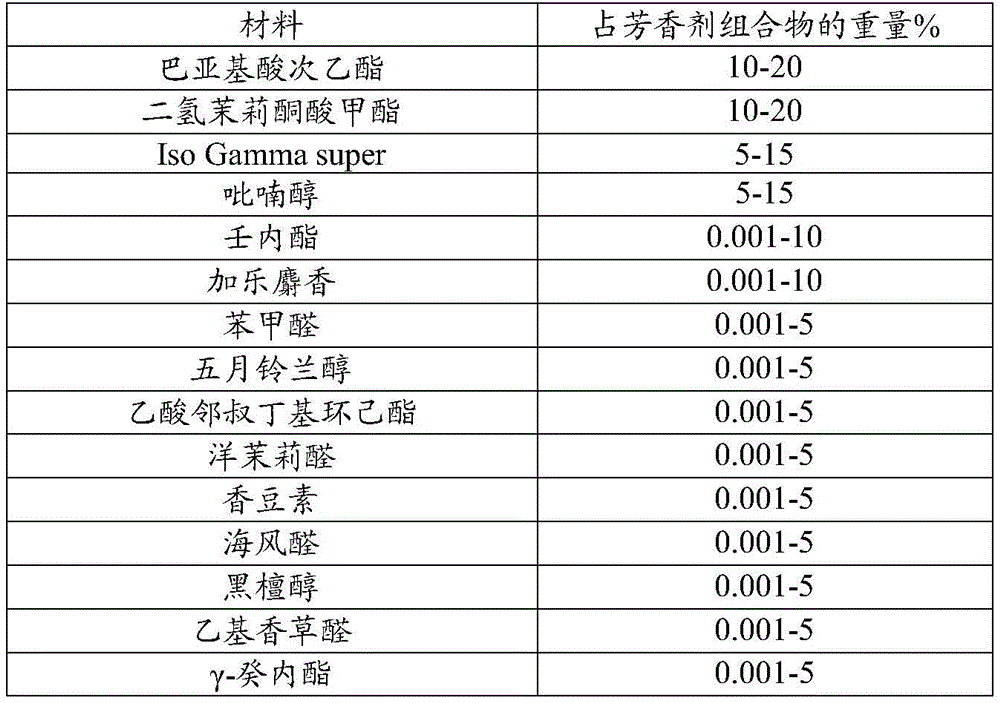
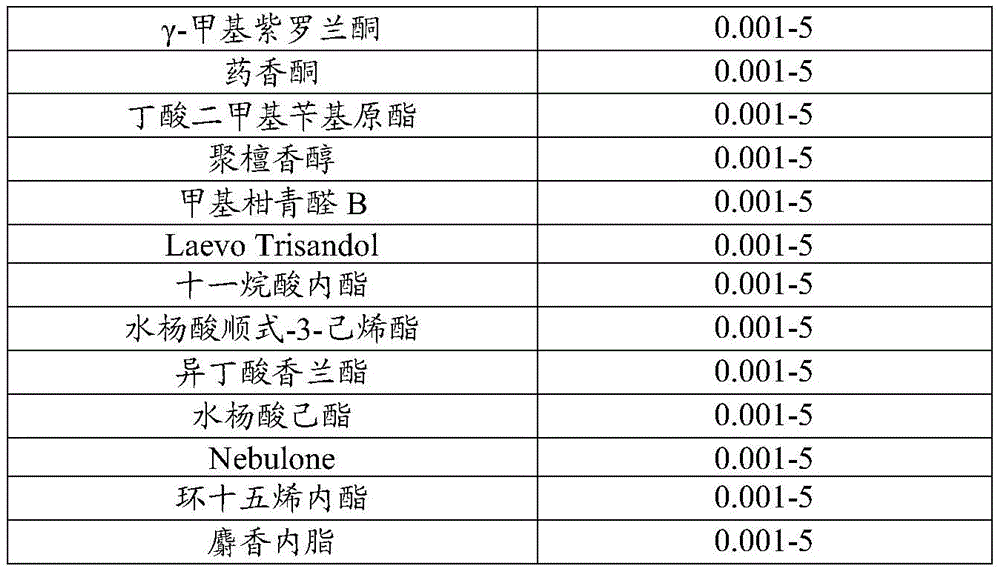
Applications Claiming Priority (3)
| Application Number | Priority Date | Filing Date | Title |
|---|---|---|---|
| US201662423508P | 2016-11-17 | 2016-11-17 | |
| US62/423,508 | 2016-11-17 | ||
| PCT/US2017/062124 WO2018094124A1 (en) | 2016-11-17 | 2017-11-17 | Skin engaging member comprising ethylene vinyl acetate and a fragrance |
Publications (2)
| Publication Number | Publication Date |
|---|---|
| CN109843385A CN109843385A (en) | 2019-06-04 |
| CN109843385B true CN109843385B (en) | 2022-06-03 |
Family
ID=60935925
Family Applications (1)
| Application Number | Title | Priority Date | Filing Date |
|---|---|---|---|
| CN201780063766.6A Expired - Fee Related CN109843385B (en) | 2016-11-17 | 2017-11-17 | Skin engaging member comprising ethylene vinyl acetate and fragrance |
Country Status (6)
| Country | Link |
|---|---|
| US (1) | US10898425B2 (en) |
| EP (1) | EP3541476A1 (en) |
| CN (1) | CN109843385B (en) |
| AU (1) | AU2017362347B2 (en) |
| BR (1) | BR112019009754B1 (en) |
| WO (1) | WO2018094124A1 (en) |
Families Citing this family (5)
| Publication number | Priority date | Publication date | Assignee | Title |
|---|---|---|---|---|
| EP2853362B1 (en) * | 2013-09-25 | 2016-08-10 | BIC Violex S.A. | A shaving blade cartridge |
| CN109843385B (en) | 2016-11-17 | 2022-06-03 | 吉列有限责任公司 | Skin engaging member comprising ethylene vinyl acetate and fragrance |
| US11872711B2 (en) | 2019-05-10 | 2024-01-16 | The Gillette Company Llc | Lubricating member for razor cartridges |
| WO2021071896A1 (en) * | 2019-10-08 | 2021-04-15 | Bedoukian Research, Inc. | Synergistic formulations for control and repellency of biting arthropods |
| USD980525S1 (en) * | 2021-04-05 | 2023-03-07 | Edgewell Personal Care Brands, Llc | Razor cartridge housing |
Citations (1)
| Publication number | Priority date | Publication date | Assignee | Title |
|---|---|---|---|---|
| CN102481240A (en) * | 2009-08-21 | 2012-05-30 | 吉列公司 | hair removal device |
Family Cites Families (79)
| Publication number | Priority date | Publication date | Assignee | Title |
|---|---|---|---|---|
| US3111127A (en) | 1961-06-27 | 1963-11-19 | Brown & Williamson Tobacco Corp | Smoking tobacco product and method of making the same |
| US4136163A (en) | 1971-02-04 | 1979-01-23 | Wilkinson Sword Limited | P-menthane carboxamides having a physiological cooling effect |
| GB1315626A (en) | 1971-02-04 | 1973-05-02 | Wilkinson Sword Ltd | Substituted p-menthanes and compositions containing them |
| US4150052A (en) | 1971-02-04 | 1979-04-17 | Wilkinson Sword Limited | N-substituted paramenthane carboxamides |
| US4178459A (en) | 1971-02-04 | 1979-12-11 | Wilkinson Sword Limited | N-Substituted paramenthane carboxamides |
| US4157384A (en) | 1972-01-28 | 1979-06-05 | Wilkinson Sword Limited | Compositions having a physiological cooling effect |
| BE795751A (en) | 1972-02-28 | 1973-08-21 | Unilever Nv | FLAVORED COMPOSITIONS CONTAINING COMPOUNDS WHICH GIVE A SENSE OF COLD |
| GB1421743A (en) | 1972-04-18 | 1976-01-21 | Wilkinson Sword Ltd | Ingestible topical and other compositions |
| US4153679A (en) | 1972-04-18 | 1979-05-08 | Wilkinson Sword Limited | Acyclic carboxamides having a physiological cooling effect |
| GB1436329A (en) | 1972-08-07 | 1976-05-19 | Unilever Ltd | Esters of menthol and a heterocyclic carboxylic acid and their use in cosmetic preparations |
| LU68016A1 (en) | 1973-07-13 | 1975-04-11 | ||
| JPS5888334A (en) | 1981-11-20 | 1983-05-26 | Takasago Corp | 3-l-menthoxypropane-1,2-diol |
| EP0310299A1 (en) | 1987-09-28 | 1989-04-05 | The Procter & Gamble Company | Beta-amino acid ester derivatives of alcoholic actives having extended duration of activity |
| DE8911246U1 (en) | 1989-09-21 | 1991-01-24 | Wilkinson Sword GmbH, 5650 Solingen | Shaver head, especially razor blade unit |
| WO1992005929A1 (en) | 1990-09-28 | 1992-04-16 | The Gillette Company | Shaving system |
| US5095619A (en) | 1990-09-28 | 1992-03-17 | The Gillette Company | Shaving system |
| EP0485170B1 (en) | 1990-11-06 | 1995-09-13 | Wm. Wrigley Jr. Company | Enhanced flavors using menthone ketals |
| DE4110973A1 (en) | 1991-04-05 | 1992-10-08 | Haarmann & Reimer Gmbh | MEDIUM WITH A PHYSIOLOGICAL COOLING EFFECT AND EFFECTIVE COMPOUNDS SUITABLE FOR THIS MEDIUM |
| JPH07506868A (en) | 1992-05-18 | 1995-07-27 | ザ、プロクター、エンド、ギャンブル、カンパニー | coolant composition |
| DE4226043A1 (en) | 1992-08-06 | 1994-02-10 | Haarmann & Reimer Gmbh | Agents with a physiological cooling effect and active compounds suitable for these agents |
| JP3553987B2 (en) | 1992-11-13 | 2004-08-11 | 株式会社日立製作所 | Client server system |
| US6161288A (en) | 1993-02-22 | 2000-12-19 | Andrews; Edward A. | Four blade bi-directional razor structure with flexible guard system |
| JP2978043B2 (en) | 1993-09-16 | 1999-11-15 | 高砂香料工業株式会社 | (2S) -3-{(1R, 2S, 5R)-[5-methyl-2- (1-methylethyl) cyclohexyl] oxy} -1,2-propanediol, its production method and use |
| US5454164A (en) | 1994-03-17 | 1995-10-03 | The Gillette Company | Wet shaving system with a lubricating device |
| BR9508372A (en) * | 1994-07-01 | 1998-07-14 | Gillette Co | Skin contact piece for use in a wet shaving system and wet shaving system |
| US6944952B1 (en) | 1994-07-01 | 2005-09-20 | The Gillette Company | Shaving system |
| US6295733B1 (en) | 1994-08-03 | 2001-10-02 | Warner-Lambert Company | Changeable color shaving aid |
| US5449512A (en) | 1994-08-24 | 1995-09-12 | The Procter & Gamble Company | Anhydrous after shave lotions |
| US6298558B1 (en) | 1994-10-31 | 2001-10-09 | The Gillette Company | Skin engaging member |
| US5713131A (en) | 1995-06-30 | 1998-02-03 | The Gillette Company | Shaving aid composite with a non-volatile cooling agent |
| US5653971A (en) | 1995-06-30 | 1997-08-05 | The Gillette Company | Shaving aid composite with an inclusion complex of a skin-soothing agent and a cyclodextrin |
| US5725865A (en) | 1995-08-29 | 1998-03-10 | V. Mane Fils S.A. | Coolant compositions |
| US5843466A (en) | 1995-08-29 | 1998-12-01 | V. Mane Fils S.A. | Coolant compositions |
| US5711076A (en) | 1996-03-27 | 1998-01-27 | The Gillette Company | Shaving system with improved guard structure |
| US5956848A (en) | 1997-02-27 | 1999-09-28 | The Gillette Company | Shaving system |
| GB9820233D0 (en) | 1998-09-18 | 1998-11-11 | Quest Int | Improvements in or relating to insect repellents |
| US6298559B1 (en) | 2000-02-18 | 2001-10-09 | The Gillette Company | Shaving aid strip for razor cartridge |
| US6301785B1 (en) | 2000-02-18 | 2001-10-16 | The Gillette Company | Shaving aid strip for razor cartridge |
| JP2001294546A (en) | 2000-02-28 | 2001-10-23 | Takasago Internatl Corp | (1'R, 2'S, 5'R) 3-1-menthoxyalkane-1-ol cooling sensate |
| AU2001243240A1 (en) | 2000-03-21 | 2001-10-15 | Pharmacia And Upjohn Company Llc | 4-oxo-1,4-dihydro(1,8)naphthyridine-3-carboxamides as antiviral agents |
| DE60131804D1 (en) | 2000-05-23 | 2008-01-24 | Nestle Sa | Use of alpha-ketoenamine derivatives as cooling agents |
| US6302785B1 (en) | 2000-06-12 | 2001-10-16 | Headrick Building Products, Inc. | Foundation vent with improved net free ventilation area |
| US6449849B1 (en) | 2000-06-29 | 2002-09-17 | Willard Hackerman | Shaving razor |
| DE10036184A1 (en) | 2000-07-24 | 2002-02-14 | Aventis Cropscience Gmbh | Substituted sulfonylaminomethylbenzoic acid (derivatives) and process for their preparation |
| US20040020053A1 (en) | 2000-10-16 | 2004-02-05 | The Gillette Company | Safety razors |
| US6365215B1 (en) | 2000-11-09 | 2002-04-02 | International Flavors & Fragrances Inc. | Oral sensory perception-affecting compositions containing dimethyl sulfoxide, complexes thereof and salts thereof |
| US20030082219A1 (en) | 2001-10-01 | 2003-05-01 | The Procter & Gamble Company | Skin care compositions comprising low concentrations of skin treatment agents |
| US7115282B2 (en) | 2002-04-17 | 2006-10-03 | Salvona Ip Llc | Multi component controlled release system for anhydrous cosmetic compositions |
| US20060272155A1 (en) | 2002-04-24 | 2006-12-07 | Eveready Battery Company, Inc. | Razor head apparatus |
| JP2005530763A (en) | 2002-05-13 | 2005-10-13 | アイシーエージェン,インコーポレイティド | Bis-benzimidazoles and related compounds as potassium channel modulators |
| US6897195B2 (en) | 2002-07-24 | 2005-05-24 | Nanjing Zhongshi Chemical Co. | Composition of menthol and menthyl lactate, its preparation method and its applications as a cooling agent |
| US20050019356A1 (en) | 2003-07-25 | 2005-01-27 | The Procter & Gamble Company | Regulation of mammalian keratinous tissue using N-acyl amino acid compositions |
| US20040181943A1 (en) | 2003-03-18 | 2004-09-23 | Michael Kwiecien | Shaving systems |
| BRPI0416770B1 (en) | 2003-11-21 | 2014-05-13 | Givaudan Sa | N-REPLACED CARBOSAMIDATED P-MENTAN |
| US20080300314A1 (en) | 2003-11-21 | 2008-12-04 | Givaudan Sa | Cooling Compounds |
| US7121754B2 (en) | 2003-12-08 | 2006-10-17 | Eveready Battery Company, Inc. | Shaving apparatus with pivot-actuated valve for delivery of shaving aid material |
| US7272991B2 (en) | 2004-02-09 | 2007-09-25 | The Gillette Company | Shaving razors, and blade subassemblies therefor and methods of manufacture |
| US20050188539A1 (en) | 2004-02-26 | 2005-09-01 | Prudden John Jr. | Shaving blade unit |
| US7197825B2 (en) | 2004-03-11 | 2007-04-03 | The Gillette Company | Razors and shaving cartridges with guard |
| US7168173B2 (en) | 2004-03-11 | 2007-01-30 | The Gillette Company | Shaving system |
| US7189760B2 (en) | 2004-04-02 | 2007-03-13 | Millennium Specialty Chemicals | Physiological cooling compositions containing highly purified ethyl ester of N-[[5-methyl-2-(1-methylethyl) cyclohexyl] carbonyl]glycine |
| EP2161252A1 (en) | 2005-03-29 | 2010-03-10 | Edward T. Wei | N-Alkylcarbonyl-amino acid ester and N-Alkylcarbonyl-amino lactone compounds and their use |
| US20060225285A1 (en) | 2005-04-12 | 2006-10-12 | Unilever Home & Personal Care Usa, Division Of Conopco, Inc. | Razor head with mild cleansing composition as a shaving aid |
| WO2007115593A1 (en) | 2006-04-11 | 2007-10-18 | Symrise Gmbh & Co. Kg | Composition of menthyl lactate and a mixture of menthol isomers |
| US20080069784A1 (en) | 2006-06-30 | 2008-03-20 | Millikin Cheri L | Regulation of mammalian keratinous tissue using skin and/or hair care actives |
| US7581318B2 (en) | 2006-08-03 | 2009-09-01 | Eveready Battery Company, Inc. | Skin engaging device for a safety razor |
| US20080060201A1 (en) | 2006-09-13 | 2008-03-13 | The Gillette Company | Wet shaving system including a mineral oil coated shaving aid |
| EP1964542A1 (en) * | 2007-03-02 | 2008-09-03 | Takasago International Corporation | Sensitive skin perfumes |
| US8438736B2 (en) | 2007-08-24 | 2013-05-14 | The Gillette Company | Safety razor with improved guard |
| US20090223057A1 (en) | 2008-03-07 | 2009-09-10 | Eveready Battery Company, Inc. | Shaving aid material |
| US9106038B2 (en) | 2009-10-15 | 2015-08-11 | Masimo Corporation | Pulse oximetry system with low noise cable hub |
| CN102712093A (en) | 2009-10-16 | 2012-10-03 | 永备电池有限公司 | Lubrication box for wet shaving implement |
| US20120094003A1 (en) * | 2010-10-15 | 2012-04-19 | Michael Joseph Kwiecien | Method Of Making A Sintered Skin Engaging Member |
| US20130230476A1 (en) * | 2010-11-10 | 2013-09-05 | Basf Se | Fragrance Compositions Comprising Special Mixtures of Diastereomers of 2-Isobutyl-4-Methyl-Tetrahydro-2H-Pyran-4-OL |
| US20130042482A1 (en) * | 2011-08-16 | 2013-02-21 | Valerie Jean Bradford | Skin Engaging Member Comprising An Anti-Irritation Agent |
| US20150272847A1 (en) * | 2014-03-26 | 2015-10-01 | The Gillette Company | Skin Engaging Shaving Aid Comprising A Thermally Resilient Sensate And A TRPA1 Receptor Inhibitor |
| CN107000234A (en) * | 2014-11-26 | 2017-08-01 | 吉列有限公司 | skin engaging member comprising ethylene vinyl acetate |
| US20170334082A1 (en) * | 2016-05-18 | 2017-11-23 | The Gillette Company Llc | Skin Engaging Member Comprising Ethylene Vinyl Acetate |
| CN109843385B (en) | 2016-11-17 | 2022-06-03 | 吉列有限责任公司 | Skin engaging member comprising ethylene vinyl acetate and fragrance |
-
2017
- 2017-11-17 CN CN201780063766.6A patent/CN109843385B/en not_active Expired - Fee Related
- 2017-11-17 US US15/815,896 patent/US10898425B2/en not_active Expired - Fee Related
- 2017-11-17 AU AU2017362347A patent/AU2017362347B2/en not_active Ceased
- 2017-11-17 WO PCT/US2017/062124 patent/WO2018094124A1/en not_active Ceased
- 2017-11-17 EP EP17825633.5A patent/EP3541476A1/en not_active Withdrawn
- 2017-11-17 BR BR112019009754-6A patent/BR112019009754B1/en not_active IP Right Cessation
Patent Citations (1)
| Publication number | Priority date | Publication date | Assignee | Title |
|---|---|---|---|---|
| CN102481240A (en) * | 2009-08-21 | 2012-05-30 | 吉列公司 | hair removal device |
Also Published As
| Publication number | Publication date |
|---|---|
| AU2017362347A1 (en) | 2019-04-18 |
| US10898425B2 (en) | 2021-01-26 |
| AU2017362347B2 (en) | 2020-09-03 |
| EP3541476A1 (en) | 2019-09-25 |
| WO2018094124A1 (en) | 2018-05-24 |
| US20180133139A1 (en) | 2018-05-17 |
| BR112019009754B1 (en) | 2022-11-22 |
| CN109843385A (en) | 2019-06-04 |
| BR112019009754A2 (en) | 2019-08-13 |
Similar Documents
| Publication | Publication Date | Title |
|---|---|---|
| AU2015353904B2 (en) | A skin engaging member comprising ethylene vinyl acetate | |
| CN104703658B (en) | Skin engagement shaving aid component comprising at least one thermoelasticity sensory agent | |
| CN109843385B (en) | Skin engaging member comprising ethylene vinyl acetate and fragrance | |
| CN103732205A (en) | Skin engaging member comprising an anti-irritation agent | |
| US20170334082A1 (en) | Skin Engaging Member Comprising Ethylene Vinyl Acetate | |
| US20140090255A1 (en) | Skin Engaging Member Comprising At Least One Thermally Resilient Sensate | |
| CN106413674A (en) | Oral care zinc compositions | |
| US20180117780A1 (en) | Skin engaging member comprising ethylene vinyl acetate | |
| EP2900333B1 (en) | A skin engaging member comprising at least one thermally resilient sensate |
Legal Events
| Date | Code | Title | Description |
|---|---|---|---|
| PB01 | Publication | ||
| PB01 | Publication | ||
| SE01 | Entry into force of request for substantive examination | ||
| SE01 | Entry into force of request for substantive examination | ||
| GR01 | Patent grant | ||
| GR01 | Patent grant | ||
| CF01 | Termination of patent right due to non-payment of annual fee |
Granted publication date: 20220603 |
|
| CF01 | Termination of patent right due to non-payment of annual fee |