The present application claims priority to chinese patent application number CN2016108638147, filed on date 2016, 9 and 29, the disclosure of which is incorporated herein by reference in its entirety.
Detailed Description
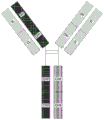
The present disclosure relates to immunoglobulin-like heterodimer constructs, such as (but not necessarily) bispecific antibodies, having a modified heavy chain constant region (e.g., an Fc region) that imparts increased stability and therapeutic efficacy to the construct. These constructs can be made to retain the beneficial features of native IgG and without heavy-light chain mismatches. The present disclosure further relates to methods of producing immunoglobulin constructs, typically by a reduction reaction between two "half antibodies" or "half-mers" followed by an oxidation reaction to produce a heterodimer. The heterodimers of the present disclosure can be considered to be composed of two different half antibodies or half-mers that are interconnected by one or more disulfide bonds. The hemimers contain a single chain mutated immunoglobulin heavy chain or fragment thereof and a recognition portion (referred to as the "cognate" recognition portion of the chain) associated therewith, which association is a covalent bond under typical physiological conditions. These semi-mers are designed to have modifications in their heavy chain constant regions such that homodimer formation is inhibited under reducing conditions, which is generally favored to support homodimer pairing by non-covalent forces, whereas under the same reducing conditions, heterodimer association is favored between two complementarily designed semi-mers. By "heterodimeric association (heterodimeric association)", we mean to include non-covalent binding and covalent binding. As used herein, "half antibody" or "half antibody" may refer to a molecule or molecular complex that may be considered to contain only "half (half)" of a complete immunoglobulin hetero tetramer or a derivative of an immunoglobulin (e.g., scFv), and typically constitutes an Fc receptor binding member having only one polypeptide chain in the usual two polypeptide chains under typical physiological conditions, and one recognition moiety is associated with the one polypeptide chain. For example, a half antibody or half-mer may include an immunoglobulin heavy chain (or fragment thereof) and an immunoglobulin light chain (or fragment thereof) with specific mutations that are bound together by covalent or non-covalent interactions such as hydrophobic and hydrogen bonding, and the half antibody molecule or half-mer may be generally considered "monovalent". Alternatively, such "monovalent" half antibodies or half-mers may comprise a single chain comprising a hinge region and CH2 and CH3 regions of an immunoglobulin heavy chain with a specific mutation, linked, e.g., by a covalent bond, to a non-Fab recognition moiety, e.g., a variable fragment (scFv) or binding domain of a receptor. An exemplary "half-mer" or "half-antibody" corresponding to the previous example is shown in fig. 26, with fig. 26 showing one immunoglobulin heavy chain and one light chain.
The production yield of the heterodimer of the disclosure is similar to that of the natural antibody, and the method is simple and easy to operate. In one embodiment, the heterodimer consists of two different "half antibodies," each consisting of a complete Ig heavy chain and a complete Ig light chain carrying a specific mutation, typically expressed separately, e.g., purified separately in two different cells, reduced separately by the addition of a reducing agent, taken together, and oxidized to form the heterodimer. In another embodiment, the heterodimer consists of two different hemimers, wherein one of the hemimers consists of an intact heavy chain and an intact light chain carrying a specific mutation, and the other of the hemimers is an FcR-binding heavy chain fragment carrying a specific mutation linked to a non-Fab recognition moiety, which can be expressed and purified using a single cell line of the disclosure. Exemplary reducing agents include, for example, 2-mercaptoethylamine, dithiothreitol, tris (2-carboxyethyl) phosphine hydrochloride, and other chemical derivatives, but the reducing agents are not limited thereto. Exemplary oxidizing agents include, for example, L-dehydroascorbic acid and other chemical derivatives, but the oxidizing agents are not limited thereto.
The heterodimers of the disclosure are characterized by five specific non-cysteine mutations in the CH3 domain on the heterodimer. The mutations were T366, D399, L351, Y407 and K409. As used herein, the numbering of amino acid residues is according to the Kabat EU index, e.g., as described in Edelman et al, 1969,Proc Natl Acad Sci USA 63:78-8, incorporated herein by reference in its entirety. For example, the sequence of the target antibody can be compared to the consensus sequence identified by the Kabat EU index numbering using the Kabat EU index numbering. Purely by way of example, five mutations may include T366L, D399R, L351E, Y407L and K409V. However, the present invention is not strictly limited thereto. For example, mutations in T366 can include any of the following non-limiting examples of T366L, T366P, T366C, T366V, T366S, T R and T366W. Mutations in D399 may include any of the non-limiting examples of D399R, D399C, D399H, D399V, D399T, D399 97399P, D399N, D399I, D399H, D399S, D399G and D399M. Mutations of L351 can include any of the non-limiting examples of L351E, L351G, L351R, L Y, L351T, L351K, L351W, L V, L351P and L351D. Mutations of Y407 may include any of the following non-limiting examples of 407L, Y407P, Y407A, Y407R, Y407V, Y407T, Y H and Y407F. Mutations of K409 may include any of the following non-limiting examples, K409V, K409C, K409A, K409F, K409Q, K409R, K409T, K409S, K409M, K409Y and K409N.
In exemplary embodiments, the mutations of T366 and D399 are located on a first polypeptide, i.e., in the CH3 domain of the first heavy chain, and the mutations of L351, Y407, and K409 are located on a second polypeptide, i.e., in the CH3 domain of the second heavy chain. Although the present disclosure is not specifically limited thereto, the combination results in the formation of optimal spontaneous heterodimers with good stability and binding activity. Each semi-mer has a strong attraction to the "partner" or strand of its complementary semi-mer and a strong repulsive force to itself, thus strongly favoring the formation of heterodimers and strongly disfavoring the formation of homodimers. When only one of the two component hemimers is present in an aqueous solution under substantially reduced physiological conditions, the actual polypeptide forms present may include the hemimer form, the homodimer form in which the two hemimers are linked by non-covalent forces, and the unfolded form. In which the portion of the polypeptide in the form of a homodimer is significantly inhibited, the aqueous solution is substantially free of any polypeptide other than the above-described hemimers, e.g., complementary "other" hemimers. In other words, when a polypeptide chain comprising only one of the first or second polypeptide chains and a recognition moiety (cognate) associated therewith (the "cognate" recognition moiety of the polypeptide chain) is introduced into an aqueous medium under physiological conditions containing sufficient reducing agent, such polypeptide chains and their cognate recognition moieties do not tend to form homodimers, but tend to remain as semi-polymers in an aqueous solution that is substantially free of any other polypeptide. Such an act of introducing an aqueous solution includes, for example, expression in a host cell. Likewise, when two polypeptide chains and their homodimer recognition portions are introduced into an aqueous solution under physiological conditions containing sufficient reducing agent, the corresponding heterodimers and their constituent hemimers may be present, but the formation of homodimers is inhibited. The proportion of homodimers formed in the presence of the reducing agent is typically less than 50% based on the total weight of all polypeptide forms (hemimers, homodimers, heterodimers, unfolded species, etc.) present in the aqueous solution, which is substantially free of other polypeptides. For example, the proportion (by weight) of homodimers formed by the first polypeptide, the second polypeptide, the first polypeptide covalently linked to the recognition moiety, or the second polypeptide publicly linked to the recognition moiety in the presence of a reducing agent is less than 50%. For example, less than 45%, 40%, 35%, 30%, 25%, 20%, 15%, 10%, 5%, 4%, 3%, 2%, 1% or even less.
In certain embodiments, the reducing agent is selected from glutathione, 2-mercaptoethanol, 2-mercaptoethylamine, tris (2-carboxyethyl) phosphine (TCEP), cysteine hydrochloride, dithiothreitol (DTT), cysteine dithiothreitol, dithiobutylamine, dithioerythritol (DTE), sodium borohydride (NaBH 4), sodium cyanoborohydride (NaCNBH 3), and/or combinations thereof. In some embodiments, the reducing agent concentration may be 1 to 100-fold (e.g., 20 to 50-fold) molar excess relative to the protein concentration. In certain embodiments, the reducing agent may be at a concentration of about 0.1mM to about 20 mM. Representative reducing agents that may be used in sufficient amounts include dithiothreitol 1mM or more, 2-mercaptoethylamine 50mM or more, and cysteine 50mM or more. In some embodiments, the reducing agent is removed after incubation with the protein prior to oxidation of the protein.
The first polypeptide and the second polypeptide may be linked by a covalent bond or flexible linker, respectively, to a recognition moiety including, but not limited to, an antigen binding fragment, a single chain antibody fragment (scFv), a ligand that recognizes a receptor, or a receptor that recognizes a ligand. Covalent bonds include chemical bonds between two or more atoms that share their outer electrons. The stable chemical structure formed when these electrons reach saturation is called a covalent bond. In other words, covalent bonds are interactions between atoms formed by a common pair of electrons. Atoms or differences of elements of the same kind The elements may all be bound by covalent bonds. Covalent bonds between a first polypeptide and a second polypeptide in the present disclosure include, but are not limited to, carboxyl synthesis of one molecule of amino acid reacting with another molecule of amino acid resulting in release of one molecule of water (H 2 O) or the aldehyde groups of ethylene glycol or polyethylene glycol or other compounds or polymers thereof interact with the amino groups of a molecule of amino acid to form amide or imine bonds. Flexible linkers may include short amino acid sequences or multimers. Such amino acid sequences include, but are not limited to GGGGSGGGGSGGGGS (SEQ ID NO: 72).
Other combinations of mutations of T366, D399, L351, Y407 and K409 are clearly within the scope of the present disclosure. For example, any combination of a) -h) from the first and second groups:
a first group:
a) A first polypeptide T366L substitution and a second polypeptide L351E, Y407L substitution;
b) A first polypeptide T366L substitution and a second polypeptide L351G, Y407L substitution;
c) A first polypeptide T366L substitution and a second polypeptide L351Y, Y407A substitution;
d) A first polypeptide T366P substitution and a second polypeptide L351V, Y407P substitution;
e) A first polypeptide T366W substitution and a second polypeptide L351D, Y407P substitution;
e) A first polypeptide T366P substitution and a second polypeptide L351P, Y407F substitution;
g) A first polypeptide T366V substitution and a second polypeptide L351K, Y407T substitution; and
h) A first polypeptide T366L substitution and a second polypeptide L351W, Y407H substitution;
second group:
a) A first polypeptide D399R substitution and a second polypeptide K409V substitution;
b) A first polypeptide D399C substitution and a second polypeptide K409C substitution;
c) A first polypeptide chain D399C substitution and a second polypeptide K409P substitution;
d) A first polypeptide D399N substitution and a second polypeptide K409S substitution;
e) A first polypeptide D399G substitution and a second polypeptide K409S substitution;
f) A first polypeptide D399I substitution and a second polypeptide K409F substitution;
g) A first polypeptide D399T substitution and a second polypeptide K409Q substitution; and
h) A first polypeptide D399A substitution and a second polypeptide K409R substitution.
Any combination of a) -h) from the third and fourth groups:
third group:
a) First polypeptide T366L substitution and second polypeptide L351E, Y407L substitution
b) A first polypeptide T366L substitution and a second polypeptide L351G, Y407L substitution;
c) A first polypeptide T366L substitution and a second polypeptide L351Y, Y407A substitution;
d) A first polypeptide T366P substitution and a second polypeptide L351V, Y407P substitution;
e) A first polypeptide T366W substitution and a second polypeptide L351D, Y407P substitution;
e) A first polypeptide T366P substitution and a second polypeptide L351P, Y407F substitution;
g) A first polypeptide T366V substitution and a second polypeptide L351K, Y407T substitution; and
h) A first polypeptide T366L substitution and a second polypeptide L351W, Y407H substitution;fourth group:
a) A first polypeptide K409V substitution and a second polypeptide D399R substitution;
b) A first polypeptide K409C substitution and a second polypeptide D399C substitution;
c) A first polypeptide K409P substitution and a second polypeptide D399C substitution;
d) A first polypeptide K409S substitution and a second polypeptide D399N substitution;
e) A first polypeptide K409S substitution and a second polypeptide D399G substitution;
f) A first polypeptide K409F substitution and a second polypeptide D399I substitution;
g) A first polypeptide K409Q substitution and a second polypeptide D399T substitution; and
h) A first polypeptide K409R substitution and a second polypeptide D399A substitution.
Any of the following members a) -h) from the fifth group:
fifth group:
a) A first polypeptide T366L and D399R substitution and a second polypeptide L351E, Y407L and K409V substitution;
b) A first polypeptide T366L and D399C substitution and a second polypeptide L351G, Y407L and K409C substitution;
c) A first polypeptide T366L and D399C substitution and a second polypeptide L351Y, Y407A and K409P substitution;
d) A first polypeptide T366P and D399N substitution and a second polypeptide L351V, Y407P and K409S substitution;
e) A first polypeptide T366W and D399G substitution and a second polypeptide L351D, Y407P and K409S substitution;
f) A first polypeptide T366P and D399I substitution and a second polypeptide L351P, Y407F and K409F substitution;
g) A first polypeptide T366V and D399T substitution and a second polypeptide L351K, Y407T and K409Q substitution;
h) First polypeptide T366L and D399A substitutions and second polypeptide L351W, Y407H and K409R substitutions.
Any of the following members a) -h) from the sixth group:
sixth group:
a) A first polypeptide T366L and K409V substitution and a second polypeptide L351E, Y407L and D399R substitution;
b) A first polypeptide T366L and K409C substitution and a second polypeptide L351G, Y407L and D399C substitution;
c) A first polypeptide T366L and K409P substitution and a second polypeptide L351Y, Y407A and D399C substitution;
d) A first polypeptide T366P and K409S substitution and a second polypeptide L351V, Y407P and D399N substitution;
e) A first polypeptide T366W and K409S substitution and a second polypeptide L351D, Y407P and D399G substitution;
f) A first polypeptide T366P and K409F substitution and a second polypeptide L351P, Y407F and D399I substitution;
g) A first polypeptide T366V and K409Q substitution and a second polypeptide L351K, Y T407 and D399T substitution;
h) First polypeptide T366L and K409R substitutions and second polypeptide L351W, Y407H and D399A substitutions.
The first polypeptide and the second polypeptide may each comprise a heavy chain. The heterodimer constructs of the present disclosure can include bispecific antibodies, but are obviously not limited thereto. For example, a heterodimeric construct can include one or more scFv fragments and one or more Fab fragments, e.g., one scFv fragment and one Fab fragment or two Fab fragments. Exemplary sequences for the heterodimeric polypeptides include, but are not particularly limited to, SEQ ID NO:16-31, 33, 35, 37, 39, 41, 43, 45, 48, 49, 51, 53, 55, 57, 59, 61, 63, 68, 69, 70 and 71. Also included are sequences that are identical to SEQ ID NOs: 16-31, 33, 35, 37, 39, 41, 43, 45, 48, 49, 51, 53, 55, 57, 59, 61, 63, 68, 69, 70 and 71 share variant sequences that share at least 70% sequence identity (while retaining biological activity). For example at least 75%, 80%, 85%, 90%, 95%, 96%, 97%, 98%, 99%, 99.1%, 99.2%, 99.3%, 99.4%, 99.5%, 99.6%, 99.7%, 99.8%, 99.9% or better. In addition, SEQ ID NO:16-31, 33, 35, 37, 39, 41, 43, 45, 48, 49, 51, 53, 55, 57, 59, 61, 63, 68, 69, 70, and 71 may have one or more conservative substitutions and still be within the scope of the present disclosure.
Bispecific heterodimeric antibodies of the present disclosure form one or more disulfide bonds between a first heavy chain and a second heavy chain. Disulfide bonds may be formed during expression in the same cell or by oxidation reactions with the addition of an oxidizing agent in vitro. Disulfide bonds that occur in the examples occur when the hemimers are expressed, purified, reduced by addition of a reducing agent, mixed together, and then oxidized to form heterodimers.
The heterodimers of the present disclosure are capable of binding to an Fc receptor, such as one or more of fcγri, fcγriia, fcγriib1, fcγriib2, fcγriiia, fcγriiib, fcεri, fcεrii, fcαri, fcα/μr, and FcRn. In an exemplary embodiment, the heterodimer has the ability to bind FcRn. FcRn, as used herein, refers to a family of structurally homologous MHC class I heterodimer receptors, comprising a class I transmembrane heavy chain (p 51 subunit, alpha chain) and a soluble light chain (p 14 subunit, beta chain) combined together in a non-covalent interaction. The binding site of FcRn to IgG is at the interface of CH2-CH 3. Of these, the most important amino acid positions are positions 253, 310 and 435.
Depending on the nature of its structure, the heterodimers of the present invention may (but need not) simultaneously target one or more antigens. In exemplary embodiments, the antigen comprises one or more of HER2, PD-L1, TROP2, CD3, and/or CD 20. However, the present invention is not strictly limited thereto. This is because the present disclosure relates to modification of the constant region (CH 3) of antibody/immunoglobulin constructs for improved stability, serum half-life and therapeutic efficacy. The techniques of the present disclosure may be applied to monoclonal antibodies that bind to only one target antigen. This includes, for example, known therapeutic antibodies. Such antibodies may still benefit from improved stability with modified constant regions. In this case, the recognition portion on (or linked to) the first polypeptide and the second polypeptide will remain the same, and the difference between the "half-antibody" or "half-mer" may be located only in the CH3 region.
Known therapeutic monoclonal antibodies that may benefit from modification of the present disclosure may include any of the following non-limiting antibodies: 3F8, 8H9, abalovumab (Abagovomab), abximab (Abciximab), co-cetuximab (Abituzumab), abrilumab, actoxumab, adalimumab (Adaliumaab), adalimumab (Adecatuumab), pertuzumab (Adumaumab), pertuzumab (Adumanomab), afastevikumab, afamomab (Afelimumab), atozumab (Afutuzumab), pezimab (Alacizumab pegol), ALD518, alemtuzumab (Alemuzumab), alirocuumab, pertuzumab (Altumomab pentetate), amatuximab, ma Anmo mab (Anatumomab mafenatox), anetumab ravtansine, antuzumab (Anruzuumab), abpozumab (Apoliumab), afamoumab (Armoumab), afamoumab (Arvatimab), ab, abelzouzumab (Avtuzumab), baemauzumab (Avtuzumab), altuzumab (Altuzumab) and Uzouzumab (Ab conctuzumab), basiliximab, bazedoximab, bei Tuo mab (bectuumab), begelomab, belimumab (bectuumab), benralizumab, bepralizumab, borteumab (bertiliumab), bei Suoshan antibody (Besilesomab), bevacizumab, bei Ciluo tesumab (Bezlotoxumab), bicimab (Biciromab), bimagrumab (Bimagrumab), bimekizumab, bivatuzumab mertansine, bloselumab, lantumomab (Blinatumomab), blonetuzumab (blotuvetmab), blotuvetmab (blodozumab), blosoumab, bococizumab, brazikumab, butuximab (Brentuximab vedotin), bezeumab (briadzumab), bevacizumab, budalumab (Brodalumab), brolucizumab, brontictuzumab, burosumab, cabiralizumab, kanamab (Canakinumab), mecanzumab (Cantuzumab mertansine), mo Kantuo bezumab (Cantuzumab ravtansine), kaplan bezumab (cappucizumab), carlo monoclonal antibody jetutin (Capromab pendetide), caluximab (Carlumab), carotuximab, katucable monoclonal antibody (Catumaxomab), 5296-doxorubicin immunoconjugate (cBR-doxorubicin immunoconjugate), cetrimab (celizumab), cergutuzumab amunaleukin, pezizumab (Certolizumab pegol), cetuximab (Cetuximab), poxituzumab (Citatuzumab bogatox), cetuximab (cixutuumab), clazakizumab, clemizumab (Clenoliximab), cleveluzumab (Clivatuzumab tetraxetan), codruzumab Coltuximab ravtansine, corona MAb (Conatumumab), corona MAb (Conciumumab), CR6261, kleigh MAb (Cruted MAb), croted MAb (Croted MAb), dactyluzumab (Dacetuzumab), dactyluzumab (Daclizumab), dartuzumab Luo Tuzhu (Dalotuzumab), dapirolizumab pegol, dalaumumab (Daratumumab), dectrekumab, ge Mo Mizuo MAb (Demcizumab), denintuzumab mafodotin, demosumab (Denonosumab), depatuxizumab mafodotin, derlotuximab biotin, delumomab (Detumomab), dinutuximab, diridavumab, domagrozumab, attomoab (Dorlimomab aritox), de Luo Tushan (Drozitumab), du Lige (Duligtuumab), dulu MAb (Dupiluumab), derutuzumab (Dutuzumab), emamtimab (Eclomiximab), emamizumab (Eculizumab), emamizumab (Edobacomab), emamizumab (Edrolimab), emamizumab (Efalizumab), emamizumab (Efurumab), emamizumab (Eldelumab), elgemtuumab, emamizumab (Elotuzumab), ai Ximo monoclonal antibody (Elsimumab), emactuzumab, emibetuzumab, emicizumab, emamizumab (Enavaatuzumab), antibody drug conjugate (Enfortumab vedotin), peg Lai Moshan antibody (Enlimompezumab), enobuzumab, ai Nuoke monoclonal antibody (Enokizumab), ai Nuodi gram monoclonal antibody (Enoticumab), entuximab (Ertuximab), siepimzumab (Epitumomab cituxetan), emamizumab, epalizumab (evaginumab), ai Woshan antibody (Evolocumab), ai Weishan antibody (exbivirus mab), fapezumab (Fanolesomab), faraday monoclonal antibody (Farmalimomab), faraday group monoclonal antibody (Farretuzumab), facetuzumab (Faginumab), BTA05, non-valuzumab (Felvizumab), non-zanumab (fezakin umab), febazumab (Fibatuzumab), phenanthratuzumab (Ficlatuzumab), ji Tuom monoclonal antibody (figitumab), frery monoclonal antibody (Firivumab), freund monoclonal antibody (Flanvuzumab), freund Le Dishan antibody (Fletikuumab), feng Teli bead monoclonal antibody (Fontizumab), fuprauzumab (Foralumab), frelizumab (Frelizumab), fulizumab (Galvanuzumab), fuginumab (Fuclaumab), fuginumab (Fuginumab), gancicximab (Galiximab), ganitamab (Ganitumab), getamitumumab (Gantenerumab), ganamomab (Gavilimomab), gemtuzumab ozuzumab (Gemtuzumab ozogamicin), gavagumab Wo Tanzhu mab (Gevokizumab), ji Rentu mab (Girentuximab), vildazomib mab (Glembatumumab vedotin), golimumab (Golimumab), golimumab (Gomiliximab), gusiebolab (Guselkuumab), tiirizumab (Ibalizumab), timumab (Ibritumomab tiuxetan), emamumab (Icriumaab), idarimizumab, idarimab (Igoviumab), IMAB362, imalumab, yingumab (Imiromab), ingazumab), ingakumamab (Ingacumab), lekulmab (Lekulmab), ekuroman (Lekuumab), ekunmab (38, ekumamab) Indusatumab vedotin, inebilizumab, inliximab (Infinizumab), enomomab (Inolimmaab), izu Shan Kangao zomib (Inotuzumab ozogamicin), intuzumab (Intuzumab), intuzumab (Iililimumaab), intuzumab (Iratumumab), isatuximab epouzumab (Iolizumab), hikamizumab (Ixekizumab), klyximab (Keliximab), la Bei Zhushan antibody (Labetuzumab), lampanlizumab (Lampalizumab), lanadelumab, landogrozumab, laprituximab emtansine, and Jin Zhushan antibody (Lebrikizumab), le Ma Suoshan antibody (Lemalesomab), lendalizumab, lenzilumab, lerdelmumab (Lerdelmumaab), lexalimumab (Lexatumab), li Weishan antibody (Libigumab), lipezumab, 95, lipelizumab, ltuzumab), liriluzumab, lodeluximab, lokvtmamab, lawski Wu Tuzhu mab (Lorvotuzumab mertansine), lu Kamu mab (Lucatumumab), lulizumab pegol, lu Xishan antibody (Lumiliximab), lumretuzumab, MABp1, ma Pamu mab (Mapatuzumab), ma Getu-tuximab (Margetuximab), ma Simo mab (Maslimmab), matuzumab (Matuzumab), melizumab (Mavrilimumab), meperimab (Mepolizumab), metimumab (Meteliumab), mi Lazhu mab (Mituzumab), minretimomab (Minretumumab), mirvetuximab soravtansine, mi Tuomo mab (Mitumomab), mo Gemu-mab (Mogamuzumab), monalizumab, moruzumab (Morolizumab), mozumab (Moxetumomab pasudotox), moruzumab-CD 3 (Muromanamab-CD 3), tanacizumab (Nacolomab tafenatox), trimerab nanolimumab (namimumab), tamitumumab (Naptumomab estafenatox), naratrizumab (Narnatumab), natalizumab (Natalizumab), navicixizumab, navivumab, nebukumab (nebacuumab), nesimab (Necitumumab), nemolizumab, nemomoab (nereimomab), certimumab (Nesvacumab), nimuzumab (Nimotuzumab), nivalumab (Nivolumab), minosimumab (Nofetumomab merpentan), obiltoxaximab, obinutuzumab, ocatuzumab (ocaatuzumab), oxuzumab (ocrelumab), oxuzumab (Ocrelizumab), ondumumab (oduzumab), onduzumab (ofaulimumab), nelimumab (ofatumab), nimuzumab, olerazumab (Olataumab), olerazumab Lu Kaizhu (Olaokizumab), oromalizumab (Omalizumab), opentizumab (Onartuzumab), oleraxizumab (Ontuzumab), opipouzumab (Opipoumab), mo Aozhu mab (Oportuzumab monatox), oregotiaab (Oregoumab), oretamab (Orientumab), oxyzumab (Otelixizumab), otylothermolizumab (Otlertuzumab), oxelumzumab (Oxeleumab), openzanizumab (Ozanizumab), ozanizumab (Ozanizumab), ozolizumab (Ozoralizumab), panimab (Pagibiximab), palizumab (Palizumab), pamrevumab, palizumab (Panimumab), panitumab (Pankumab), pankumab (Pankumab), pauzumab (Pauzumab), pauzuumab (Pazuumab), pazuumab (Parku-panumab), pazuumab (Parzakizumab) Paracolizumab (Pascolizumab), pasteuzumab, parteuzumab (Patellizumab), pastuzumab (Patrituximab), pembrolizumab, panitumumab (Pemtumomab), perakakizumab (Perakizumab), pertuzumab (Pertuzumab), pexelizumab (Pexelizumab), pidilizumab (Pidilizumab), ping Nitu bead mab (Pinatuzumab vedotin), pintuzumab (Pintumab), prakuuzumab (plakuumab), platuzumab (Polatuzumab vedotin), ponzuzumab (Ponemab), prelizumab, priuzumab (Pririzumab), pritumizumab (Pritumizumab), pritumizumab (35), raetuzumab (Raetumab), ratuumaab (Raetumab), lei Weishan (rafivizumab), ralpancizumab, ramucirumab (Ramucirumab), ranibizumab (Ranibizumab), lei Xiku mab (Raxibacumab), refanezumab, rega Wei Shankang (Regavirumab), rayleizumab (Reslizumab), rituximab (riluzumab), riluzumab (rilotumab), rinucumab, risankizumab, rituximab (Rituximab), luo Tuomu mab (robatumab), luo Ledu mab (rotuzumab), luo Msu mab (romasozumab), ronuzumab (rontaluzumab), rovalpituzumab tesirine, luo Weizhu mab (rovilizumab), lu Lizhu mab (Ruplizumab), sacituzumab govitecan, sha Mali mab (samlizumab), samlizumab Sha Lushan mab (saritumab), sha Tuo mab (Satumomab pendetide), seuzumab (seluzumab), seuzumab (seuzumab) and seuzumab (seuzumab) Situzumab (Setoximab), setoximab, severe Wei Shankang (Sevirus mab), SGN-CD19A, SGN-CD A, sibrotuzumab (Sibrotuzumab), sibirimumab (Sifalimumab), sibirimumab (Situximab), simtuzumab (Simtuzumab), sibirizumab (Siplizumab), hikumzumab (Sirukuumab), sofituzumab vedotin, su Lanzhu mab (Solanezumab), thremzumab (Solitomab), sonepuzumab (Soneplizumab), soneplizumab (Stamulumab), thiosorumab (Sulesuzumab), sotuzumab (Suvisuzumab), ta Bei Lushan (Tabanumab), tazhuzumab (Tacatuzumab tetraxetan), tadozumab (Tadozumab), talizumab (Talizumab), tamtuvetmab, tanezumab (Tanezumab), patomoab (Taplitumomab paptox), tarextumab, tifezumab (Tefibazumab), atimomab (Telimomab aritox), tetuzumab (Tenatumomab), tenectimab (Teneliximab), tilizumab (Teplizumab), teprimumab (Teprotumumab), tesidolumab, tetulomab, tezepelumab, TGN1412, ticilimumab, tigemulb (Tigatuzumab Tildrakizumab), timoluzumab, tisotumab vedotin, TNX-650, tovoluzumab (Tocilizumab), toriluzumab (Toriluzumab), tosatohumumab, toxilimumab (Tositumomab), tovetuzumab (Tovetumab), qu Luoqing mab (Tralokinumab), trastuzumab (Trastuzumab), trastuzumab emtansine, TRBS07, qu Jiali beads (Tregalizumab), trametezumab (Tremelimumab), trevogreumab, west Mo Baijie mab (Tucotuzumab celmoleukin), tuviruzuumab, ublituzumab (Ublituximab), ulocuzuumab, ulocuumab Wu Ruilu mab (UreIumab), wu Zhushan mab (Urtoxazumab), utekumzumab (Utekinumab), utemilumab, vadastuximab talirine, vandortuzumab vedotin, valdecotuzumab (Vantituzumab), vanucizumab, valliximab (Vapaliximab), varliumbumab, viterbi mab (Vatelizumab), uteuzumab (Vedolizumab), vetuzumab (Velteuzumab), vepalumomab (Vepalimomab), vesencicumab, visiuzumab (Visilizumab), vobanlizumab, fu Luoxi mab (Volociximab), voloxizumab (Vorsetuzumab mafodotin), vatuzumab (Vedolimab), votuximab, xentiuzumab, zaleumab, zanolimumab, zaolimumab, zatuximab, ji Lamu mab (Zirallimumab), azomomab (Zaolimumab aritox), and combinations thereof.
Targets may include any of the following non-limiting targets: amyloid, 4-1BB, 5AC, 5T4, alpha fetoprotein, pro-angiogenic factor, AOC3, B7-H3, BAFF, C-MET, C-MYC, C242 antigen, C5, CA-125, CCL11, CCR2, CCR4, CCR5, CD4, CD8, CD11, CD18, CD125, CD140a, CD127, CD15, CD152, CD140, CD19, CD2, CD20, CD22, CD23, CD25, CD27, CD274, CD276, CD28, CD3, CD30, CD33, CD37, CD38, CD4, CD40, CD41, CD44, CD47, CD5, CD 51; CD52, CD56, CD6, CD74, CD80, CEA, CFD, CGRP, CLDN, CSF1R, CSF, CTGF, CTLA-4, CXCR7, DKK1, DLL3, DLL4, DR5, EGFL7, EGFR, EPCAM, ERBB, ERBB3, FAP, FGF23, FGFR1, GD2, GD3, GDF-8, GPNMB, GUCY2C, HER1, HER2, HGF, HIV-1, HSP90, ICAM-1, IFN-alpha, IFN-gamma, igE, CD221, IGF1, IGF2, IGHE, IL-1, IL2, IL-4, IL-5, IL-6R, IL-9, IL-12, IL-15R, IL-17, IL-13, IL-18, IL-1 beta, IL-22, IL-23, IL23A, integrin, ITGA2, IGTB2, lewis-Y antigen, LFA-1, LOXL2, LTA, MCP-1, MIF, MS5A1, MUC16, MSLN, human myostatin, MMP superfamily, NCA-90, NFG, NOGO-A, notch1, NRP1, OX-40L, P X superfamily, PCSK9, PD-1, PD-L1, PDCD1, PDGF-R, RANKL, RHD, RON, TRN4, serum albumin, SDC1, SLAMF7, SIRP alpha, SOST, SHP1, SHP2, STEAP1, TAG-72, TEM1, TIGIT, TFPI, TGF-beta, TNF-alpha, TNF superfamily, TRAIL superfamily, toll-like receptor, WNT superfamily, VEGF-A, VEGFR-1, VWF, cytomegalovirus (CMV), respiratory Syncytial Virus (RSV), hepatitis b, hepatitis c, influenza a hemagglutinin, rabies Virus (RV), human Immunodeficiency Virus (HIV), herpes Simplex Virus (HSV), and combinations thereof.
The heterodimeric constructs of the present disclosure can have one or more substitutions, deletions, additions, and/or insertions in addition to the specific five amino acid substitutions in the CH3 domains disclosed herein. For example, certain amino acids may be substituted for other amino acids in the protein structure without significant loss of binding to other polypeptides (e.g., antigens) or cells. Since the binding capacity and the nature of the protein determine the biological functional activity of the protein, certain amino acid sequence substitutions can be made to the protein sequences without significant loss of their biological utility or activity. In many cases, polypeptide variants contain one or more conservative substitutions.
The heterodimeric constructs of the present disclosure may be provided in the form of a pharmaceutical composition comprising a pharmaceutically acceptable carrier, excipient, or solvent. The composition may optionally contain one or more additional pharmaceutically active ingredients, such as another antibody or therapeutic agent. The pharmaceutical compositions of the present disclosure may also be administered in combination therapy with, for example, another immunostimulant, an anticancer agent, an antiviral agent, or a vaccine. In certain embodiments, the composition comprises a heterodimer at a concentration of at least 1mg/mL, 5mg/mL, 10mg/mL, 50mg/mL, 100mg/mL, 150mg/mL, or 200 mg/mL. In some embodiments, the concentration of heterodimer may be 1-300mg/mL or 100-300mg/mL.
The pharmaceutical composition may include any number of excipients. Excipients that may be used include carriers, surfactants, thickening or emulsifying agents, solid binders, dispersing or suspending aids, solubilizing agents, colorants, flavoring agents, coating agents, disintegrating agents, lubricating agents, sweetening agents, preserving agents, isotonic agents and combinations thereof. The selection and use of excipients is described in accordance with Gennaro, ed., remington: science and practice of pharmacy (Remington: the Science and Practice of Pharmacy), 20th Ed. (Lippincott Williams & Wilkins 2003), the disclosure of which is incorporated herein by reference.
Preferably, the pharmaceutical composition is suitable for intravenous, intramuscular, subcutaneous, parenteral (parnteral), spinal or epidermal administration (e.g., by injection or infusion). Depending on the route of administration, the active compound may be coated in the material to protect it from acids and other natural conditions which may inactivate it. The term "parenteral administration (parenteral administration)" as used herein refers to modes of administration other than enteral and topical administration, typically by injection, including but not limited to intravenous, intramuscular, intraarterial, intrathecal, intracapsular, intraorbital, intracardiac, intradermal, intraperitoneal, intratracheal, subcutaneous, subcuticular, intraarticular, subcapsular, subarachnoid, intraspinal, epidural and intrasternal injection and infusion. In addition, the antibodies described herein may be administered by a non-parenteral route, e.g., by topical, epidermal, or mucosal route, such as intranasal, oral, vaginal, rectal, sublingual, or topical administration.
The pharmaceutical composition of the present invention may be in the form of a pharmaceutically acceptable salt. "pharmaceutically acceptable salt (pharmaceutically acceptable salt)" refers to a salt that retains the desired biological activity of the parent compound and does not produce any undesirable toxicological effects. Examples of such salts include acid addition salts and base addition salts. Acid addition salts include salts derived from non-toxic inorganic acids such as hydrochloric acid, nitric acid, phosphoric acid, sulfuric acid, hydrobromic acid, hydroiodic acid, phosphorus, and the like, and from non-toxic organic acids such as aliphatic monomers and dicarboxylic acids, phenyl-substituted alkanoic acids, hydroxyalkanoic acids, aromatic acids, aliphatic and aromatic sulfonic acids, and the like. Base addition salts include salts derived from alkaline earth metals, e.g., sodium, potassium, magnesium, calcium, and the like, and from non-toxic organic amines, e.g., N 'N' -dibenzylethylenediamine, N-methyl-D-glucamine, chloroprocaine, choline, diethanolamine, ethylenediamine, procaine, and the like.
The pharmaceutically acceptable composition may be in liquid form or in solid form. Solid formulations are typically, but not necessarily, lyophilized and added to the solution for single or multiple administrations prior to administration. The formulation should not be exposed to extreme temperatures or pH values to avoid thermal denaturation. Thus, the antibody compositions of the present disclosure should be formulated in a biologically relevant pH range. Buffer solutions are often required to maintain an appropriate pH range during storage, particularly for liquid formulations that are stored for an extended period of time between formulation and administration. Generally, both liquid and solid formulations need to be stored at lower temperatures (typically 2-8 ℃) to maintain stability for longer periods of time. The formulated antibody composition, especially a liquid formulation, may contain a bacteriostat to prevent or reduce proteolysis during storage, including but not limited to benzyl alcohol, phenol, cresols, chlorobutanol, methylparaben and/or propyl p-hydroxybenzoate at an effective concentration (typically <1% w/v). For some patients, bacteriostats may be inappropriate. Thus, the lyophilized formulation can be reconstituted in a solution with or without such ingredients. Other components may be added to the buffered liquid or solid antibody formulation including, but not limited to, sugars (including, but not limited to, polyhydroxy hydrocarbons such as sorbitol, mannitol, glycerol, and galactitol, and/or disaccharides such as sucrose, lactose, maltose, or trehalose) and in some cases including, but not limited to, related salts (including, but not limited to, naCl, KCl, or LiCl) as cryoprotectants. Such antibody formulations, particularly liquid formulations for long term storage, will depend on the total osmotic pressure range useful to promote long term stability at temperatures of 2 ℃ to 8 ℃ or higher, and at the same time make the formulation useful for parenteral injection. For example, but not necessarily, the effective range of total osmolarity (total number of molecules in solution) may be about 200mOs/L to about 800mOs/L. It will be apparent that the amount of cytoprotective agent such as sucrose or sorbitol will depend on the amount of salt in the formulation so as to maintain the total osmotic pressure of the solution within a suitable range. Thus, the salt-free formulation may, but need not, contain from about 5% to about 25% sucrose.
Alternatively, the salt-free sorbitol-based formulation may, but need not, contain about 3% to about 12% sorbitol. Of course, a salt-free formulation will ensure an increased range of individual cryoprotectants to maintain effective osmolarity levels. These formulations may also contain divalent cationic (including but not limited to MgCl2, caCl 2) nonionic surfactants (including but not limited to polysorbate)
(Tween 80), polysorbate->
(Tween 60), polysorbate->
(Tween 400) and Polysorbate->
(Tween 20), polyoxyethylene alkyl ether,Including but not limited to Brij->
Brij
And others such as Triton->
Triton X
Span 85 and Pluronic series nonionic surfactants (e.g., pluronic 121)). Any combination of these components, possibly including bacteriostats, may be used to populate the antibody-containing formulations of the present disclosure. The heterodimers of the present disclosure may also be "chemical derivatives" describing antibodies that contain additional chemical moieties that are not typically part of an immunoglobulin molecule (e.g., pegylation). These moieties may improve the solubility, half-life, absorption, etc. of the base molecule. Alternatively, the moiety may attenuate adverse side effects of the base molecule or reduce toxicity of the base molecule. The pharmaceutical compositions of the present invention may be in the form of sterile aqueous solutions or dispersions. The pharmaceutical compositions of the present disclosure may also be formulated as microemulsions, liposomes or other ordered structures suitable for high drug concentrations.
The heterodimeric constructs of the present disclosure are capable of binding multiple target molecules simultaneously and are therefore more effective in treating complex diseases. The heterodimer constructs of the present disclosure can be administered to a subject in need thereof to treat a disease or disorder, e.g., a viral or bacterial infection, a metabolic or autoimmune disease, or a cancer or other cell proliferative disease. In some embodiments, the autoimmune disease comprises at least one of arthritis, rheumatoid arthritis, psoriasis, multiple Sclerosis (MS), ulcerative colitis, crohn's disease, systemic Lupus Erythematosus (SLE), glomerulonephritis, dilated cardiomyopathy-like disease, sjogren's syndrome, allergic contact dermatitis, polymyositis, scleroderma, arterial Zhou Xingduo arteritis, rheumatic fever, vitiligo, insulin dependent diabetes, behcet's syndrome, chronic thyroiditis, and combinations thereof. In some embodiments, the neurodegenerative disease comprises at least one of parkinson's disease, huntington's disease, mahado-joseph disease, amyotrophic Lateral Sclerosis (ALS), creutzfeldt-jakob disease, and combinations thereof. In some embodiments, the tumor and cell proliferative disorder comprises at least one of leukemia, lymphoma, myeloma, brain tumor, head and neck squamous cell carcinoma, non-small cell lung cancer (NSCLC), nasopharyngeal carcinoma, esophageal cancer, gastric cancer, pancreatic cancer, gallbladder cancer, liver cancer, colorectal cancer, breast cancer, ovarian cancer, cervical cancer, endometrial cancer, uterine sarcoma, prostate cancer, bladder cancer, renal cell carcinoma, melanoma, and combinations thereof.
The present disclosure additionally relates to one or more nucleic acids encoding one or more polypeptides of the heterodimer constructs of the present disclosure. The nucleic acid may encode SEQ ID NO:16-31, 33, 35, 37, 39, 41, 43, 45, 48, 49, 51, 53, 55, 57, 59, 61, 63, 68, 69, 70 and 71. In some embodiments, the nucleic acid may comprise SEQ ID NO: 32. 34, 36, 38, 40, 42, 44, 46, 47, 50, 52, 54, 56, 58, 60, 62, and 64 to 67. Also included are sequences that are identical to SEQ ID NOs: 32. 34, 36, 38, 40, 42, 44, 46, 47, 50, 52, 54, 56, 58, 60, 62, and 64 to 67. For example at least 75%, 80%, 85%, 90%, 95%, 96%, 97%, 98%, 99%, 99.1%, 99.2%, 99.3%, 99.4%, 99.5%, 99.6%, 99.7%, 99.8%, 99.9% or better. The variant nucleic acid sequence may be codon-bias optimized. Codon optimization, as used herein, refers to in vitro mutagenesis of a nucleic acid to increase or maximize expression of the gene (e.g., without alteration (or with minimal alteration) of the amino acid sequence of a synthetic protein, i.e., synonymous mutation, relative to the transgene of an unmodified nucleic acid). Codon optimisation can affect protein expression rates up to 1,000 fold, especially by favoring efficient soluble protein expression. The altered codon is typically a codon that is not normally used by the host cell translation system.
Within the scope of the disclosed invention, nucleic acid sequences are provided that are capable of hybridizing to the nucleic acids or fragments (or complementary sequences) of the present disclosure under moderate to high stringency conditions. Hybridization techniques are well known in the art of molecular biology. For example, suitable test conditions include pre-wash in a solution of 5 XSSC, 0.5% SDS, 1.0mM EDTA (pH 8.0); hybridization at 50-60deg.C under 5 XSSC overnight; the washing was performed twice with SSCs of 2X, 0.5X and 0.2X each containing 0.1% SDS solution at 20 minutes. In addition, suitable high stringency hybridization conditions include those described above, except that the hybridization temperature is increased, e.g., to 60-65℃or 65-70 ℃.
The nucleic acids of the present disclosure may be included in a vector or vector system. The vector may be, for example, but is not necessarily, a plasmid. Other well-defined non-limiting recombinant vectors may include shuttle vectors and expression vectors. In general, plasmid constructs will also include an origin of replication (e.g., the ColE1 origin of replication) and a selectable marker (e.g., ampicillin or tetracycline resistance). "expression vector" refers to a vector comprising, for example, control sequences or regulatory elements required for expression of the heterodimer constructs of the present disclosure. Other well-defined non-limiting recombinant vectors are known in the art and may include, for example, phage vectors such as lambda phage, other viral vectors such as non-replicating adenovirus vectors, lentiviral vectors, pSV, pCMV series plasmid vectors, vaccinia and retrovirus vectors, baculovirus vectors, cosmids, and artificial chromosomes. The vector may be a mammalian expression vector. For example, the vector may be transfected into mammalian cells, and in the case of stable transfection, the DNA may be integrated into the genome by homologous recombination, or the cells may be transiently transfected. Common to most engineered vectors are replication initiation sites, multiple cloning sites and selectable markers, and therefore, as long as the vector (including vector systems, e.g., multiple plasmids) contains such a system, they are considered to be encompassed by the scope of the present invention. Common promoters for mammalian expression vectors include the CMV and SV40 promoters. Non-viral promoters such as EF-1 promoters are also known. Exemplary vectors include plasmid vector pX0GC engineered based on pCDNA.
The present disclosure also embodies a host cell containing a vector or vector system according to an aspect of the present disclosure. One of ordinary skill in the art will appreciate that different cell types may result in different heterodimeric construct products and may affect the therapeutic efficacy of the products. For example, the host cell may (but need not) comprise any of the cell types HEK293, HEK293 or HEK293T, HEK293E, HEK F engineered based on HEK293 cells, CHO-S, CHO-dhfr engineered based on CHO hamster ovary cells - CHO/DG44, expiocho, and related cell lines. Other cell lines known in the art include NS0 murine myeloma cells, per.c6 human cells, yeast cells such as saccharomyces cerevisiae (s. Cerevisiae), schizosaccharomyces (s. Pombe) and pichia pastoris (p. Pastoris), and bacterial cells such as escherichia coli. Cell-free expression systems also exist, for example based on E.coli cell lysates, containing cellular components necessary for transcription/translation. Eukaryotic and mammalian cell-free systems are also known in the art, for example, wheat germ cell-free expression systems, and as described in Brodel et al (2015), methods Mol Bio.1261:129-40, incorporated herein by reference in its entirety. Some recombinant antibody production systems express the recombinant antibodies on the surface of host cells prior to harvesting, while other recombinant antibody production systems release the antibodies only into the medium for collection. Such variations are intended to fall within the scope of the present disclosure.
As used herein, the term "antibody" (Ab) is used in its broadest sense and specifically can include any immunoglobulin, whether naturally or partially or fully synthetically produced, including, but not limited to, monoclonal antibodies, polyclonal antibodies, multispecific antibodies (e.g., bispecific antibodies and polyclonal antibodies), and antibody fragments. Thus, the term "antibody" as used in this disclosure is intended to include, but is not limited to, any specific binding member, immunoglobulin class and/or isotype (e.g., igG1, igG2a, igG2b, igG3, igG4,IgM, igA1, igA2, igD, and IgE) and biologically relevant fragments or specific binding members thereof, including but not limited to Fab, F (ab') 2 scFv (Single chain or related entity) and (scFv) 2 。
As used herein, the term "antibody fragment" may include those antibody fragments obtained using techniques readily known and available to those of ordinary skill in the art, as described herein. Thus, in addition to the definition of "antibody" described above, the term "antibody" may also include any polypeptide or protein that comprises a portion of an intact antibody, such as an antigen binding or variable region of an intact antibody. These may originate from natural sources, or they may be produced partially or fully synthetically. Examples of antibody fragments include, but are not limited to, fab ', F (ab') 2 And Fv fragments; diabodies and linear antibodies.
As used herein, the term "antibody-dependent cell-mediated cytotoxicity" or "ADCC" may refer to a cell-mediated response in which cytotoxic cells (e.g., non-specific) expressing fcrs (e.g., natural Killer (NK) cells, neutrophils, and macrophages) recognize bound antibody on a target cell, which subsequently causes lysis of the target cell. Primary cells mediating ADCC, NK cells, express fcyriii, whereas monocytes express fcyri, fcyrii and fcyriii.
As used herein, the term "bispecific antibody" refers to an antibody that has the ability to bind to a single antigen or two different epitopes on two different antigens. Epitopes can be formed by contiguous amino acids (linear epitopes) or by non-contiguous amino acids juxtaposed by tertiary folding of the protein (conformational epitopes). Epitopes formed by contiguous amino acids are typically retained upon exposure to denaturing solvents, while epitopes formed by tertiary folding are typically lost upon treatment with denaturing solvents. Epitopes typically comprise at least 3, more typically at least 5 or at least 8 to 10 amino acids in a unique spatial conformation. Bispecific antibodies of the present disclosure may be bivalent, trivalent, or tetravalent. As used herein, grammatical variants of "valency", "multivalent" or other "valencies" refer to the number of antigen binding sites in an antibody molecule. These antigen recognition sites may recognize the same epitope or different epitopes.
As used herein, the term "carriers" may include pharmaceutically acceptable carriers, excipients or stabilizers, which are non-toxic to cells or mammals at the dosages (dosage) and concentrations used. The pharmaceutically acceptable carrier is typically an aqueous pH buffered solution. Examples of physiologically acceptable carriers include, but are not limited to, buffers such as phosphates, citrates and other organic acids; antioxidants include, but are not limited to, ascorbic acid; a low molecular weight (less than about 10 residues) polypeptide; proteins such as, but not limited to, serum albumin, gelatin or immunoglobulins; hydrophilic polymers such as, but not limited to, polyvinylpyrrolidone; amino acids such as, but not limited to, glycine, glutamine, asparagine, arginine, or lysine; monosaccharides, disaccharides, and other carbohydrates including, but not limited to, glucose, mannose, or dextrins; chelating agents such as, but not limited to, EDTA; sugar alcohols such as, but not limited to, mannitol or sorbitol; salt-forming counterions such as, but not limited to, sodium; and/or nonionic surfactants such as, but not limited to, TWEEN; polyethylene glycol (PEG) and commodity stream Luo Nilei (PLURONICS). Any combination of these components, which may include bacteriostats, may be used to fill the formulations of the present disclosure.
The term "conservative sequence modification (conservative sequence modifications)" or "conservative substitution (conservative substitutions)" as used herein may refer to amino acid modifications to the target epitopes or antibodies of the present disclosure and antigen-binding portions thereof that do not significantly affect or alter the binding characteristics of the heterodimeric immunoglobulin constructs of the present disclosure. Such conservative modifications include amino acid substitutions, additions and deletions. Modifications may be introduced into the antibodies of the present disclosure by standard techniques known in the art, such as site-directed mutagenesis (site-directed mutagenesis) and PCR-mediated mutagenesis. Conservative amino acid substitutions refer to the replacement of an amino acid residue by an amino acid residue having a similar side chain. Amino acid substitutions are generally based on the relative similarity of amino acid side chain substituents, such as their hydrophobicity, hydrophilicity, charge, size, and the like. Families of amino acid residues with similar side chains have been defined in the art. These families include amino acids with basic side chains (e.g., lysine, arginine, histidine), acidic side chains (e.g., aspartic acid, glutamic acid), uncharged polar side chains (e.g., glycine, asparagine, glutamine, serine, threonine, tyrosine, cysteine, tryptophan), nonpolar side chains (e.g., alanine, valine, leucine, isoleucine, proline, phenylalanine, methionine), beta-branched side chains (e.g., threonine, valine, isoleucine) and aromatic side chains (e.g., tyrosine, phenylalanine, tryptophan, histidine).
As used herein, the term "extracellular domain" or "extracellular domain of a membrane receptor" refers to a molecular recognition sequence that generally includes an extracellular region that recognizes and binds a corresponding antigen or ligand, anchors the receptor to a transmembrane domain on the cell surface, and participates in an intracellular domain having intracellular kinase activity or signaling pathways. A ligand may refer to a protein, small peptide or compound that is recognized and bound by the extracellular domain of a membrane receptor. Immunogens, mitogens, or other stimulators can induce the production of low molecular weight soluble proteins by a variety of cells. It can regulate innate and adaptive immunity, hematopoiesis, cell growth, APSC multipotent cells, and damaged tissue repair. Cytokines can be classified as interleukins, interferons, tumor necrosis factor superfamily, colony stimulating factors, chemokines, and growth factors. Protein expression tag refers to a stretch of amino acid sequence added at N-terminal or C-terminal of target protein, and can be small peptide or long amino acid. The addition of the tag can be beneficial to the correct folding of the protein and the separation and purification of the protein. The addition of the tag may be more advantageous in reducing the degradation of the protein in the cell. Commonly used tags include, but are not limited to, HA, SUMO, his, GST, GFP, and Flag.
As used herein, the term "Fab fragment" may refer to a recognition portion, which is an antigen binding fragment (fragment of antigen binding, fab) equivalent to the two arms of an antibody molecule, consisting of VH and CH1 domains of one complete light and heavy chain.
As used herein, the term "Fc" refers to a "crystallizable fragment (fragment crystallizable) region that consists of CH2 and CH3 constant domains and is the interaction region of an immunoglobulin that interacts with an effector molecule or cell (e.g., fc receptor).
As used herein, the term "Fc receptor" or "FcR" is used to describe a receptor that binds an Fc region (e.g., the Fc region of an antibody or antibody fragment). The term "Fc receptor" or "FcR" includes the neonatal receptor (FcRn) which is responsible for transferring the maternal IgG to the fetus. Other Fc receptors include any of fcyri, fcyriia, fcyriib 1, fcyriib 2, fcyriiia, fcyriib, fceri, fcyrii, fcyri, fcα and fcα/μr.
The term "homology" as used herein may refer to the existence of a shared structure between two compositions. "homology" of a protein may refer to the amount of overlap (e.g., expressed as a percentage) between two or more amino acid and/or peptide sequences. "homology" of a nucleic acid may refer to the amount of overlap (e.g., expressed as a percentage) between two or more nucleic acid sequences. As used herein, percent (%) homology between two sequences is equivalent to percent identity between the two sequences. The percent identity between two sequences is a function of the number of identical positions shared by the sequences (i.e., the number of% homology = # identical positions/the total number of positions #. Times.100) taking into account the number and length of gaps each needs to be introduced to obtain an optimal alignment of the two sequences. Comparison of sequences and determination of percent identity between two sequences can be accomplished using a mathematical algorithm. Such homology is well represented in the art by local alignment tools and/or algorithms and may include double sequence alignment, multiple sequence alignment methods, structural alignment methods and/or phylogenetic analysis methods. When sequences differ in conservative substitutions, the percent sequence identity may (but need not) be adjusted upward to correct the conservative nature of the substitution. Methods of making such adjustments are well known to those skilled in the art. Typically, but not necessarily, this involves scoring conservative substitutions as partial rather than complete mismatches, thereby increasing the percent sequence identity. Thus, for example, when the same amino acid is given a score of 1 and the non-conservative substitution score is zero, the conservative substitution score is a score between 0 and 1.
As used herein, the term "immunoglobulin" refers to a symmetrical structure having four polypeptide chains, two of which are relatively long heavy chains of relatively large molecular weight, containing 450 to 550 amino acid residues, and having a relative molecular mass of between 55,000 and 70,000 Da; two shorter, relatively low molecular weight light chains (L chains) containing about 210 amino acid residues, have a relative molecular mass of about 24,000 Da. The different immunoglobulin heavy and light chains vary widely in sequence of about 110 amino acids near the N-terminus, known as the variable region (V-region), while the remaining amino acid sequences near the C-terminus are relatively stable, known as the constant region (C-region). The variable region in the heavy chain is about 1/4 of the length of the heavy chain, and the constant region is about 3/4 of the length of the heavy chain. IgG has three constant regions within the H chain, called CH1, CH2 and CH3. The constant region being of an immunoglobulin moleculeBone FrameAnd is one of the sites for activating immune response. The constant region in the present invention relates to a region where a first polypeptide and a second polypeptide interact, wherein the region comprises an amino acid located in the CH3 region. These amino acids include, but are not limited to: GLN347, TYR349, THR 350, LEU 351, SER 354, ARG 355, ASP 356, GLU 357, LYS 360, SER 364, THR 366, LEU 368, LYS 370, ASN390, LYS392, THR394, PRO395, VAL 397, ASP399, SER400, PHE405, TYR407, LYS409, and LYS439.
As used herein, the term "purified" or "isolated" antibody, peptide, polypeptide or protein may refer to a peptide, polypeptide or protein that has been isolated from other proteins, lipids and nucleic acids with which it is naturally associated. The polypeptide/protein may be at least 10% (i.e., any percentage between 10% and 100%, such as 20%, 30%, 40%, 50%, 60%, 70%, 80%, 85%, 90%, 95%, and 99%) of the dry weight of the purified preparation. Purity may be measured by any suitable standard method, for example, by column chromatography, polyacrylamide gel electrophoresis, or HPLC analysis.
As used herein, the term "scFv" may refer to a single chain variable fragment. scFv is a fusion protein of the variable regions of the heavy (VH) and light (VL) chains of immunoglobulins, which are linked to a connecting peptide. The linking peptide may be about 5 to 40 amino acids in length or about 10 to 30 amino acids or about 5, 10, 15, 20, 25, 30, 35, or 40 amino acids in length. An exemplary connecting peptide is GGGGSGGGGSGGGGS (SEQ ID NO: 72).
The terms "specific binding", "selective binding (selective binding)", "selective binding (selectively binds)" and "specific binding (specifically binds)" may refer to antibodies that bind to an epitope on a predetermined antigen but do not bind to other antigens. Typically, the antibody is present in an amount of less than about 10
-6 Equilibrium dissociation constant of M (K
D ) Bonding, e.g. less than about 10
-7 M、10
-8 M、10
-9 M or 10
-10 M or even lower when passing, for example, equilibrium dialysis or using predetermined antigens (e.g., epitopes on Her2, PD-L1, trop2, CD3 and/or CD 20) as analytes and antibodies as
ligands 2000 Surface Plasmon Resonance (SPR) techniques in a surface plasmon resonance instrument, or Scatchard analysis of antibody binding to antigen positive cells, and (ii) binding to a predetermined antigen with at least twice greater affinity than its binding to a non-specific antigen other than the predetermined antigen or closely related antigen (e.g., BSA, casein).
As used herein, the term "subject" or "patient" may refer to a biological system to which a treatment may be administered. Biological systems may include, for example, single cells, a group of cells (e.g., cell cultures), an organ, a tissue, or a multicellular organism. The subject of the present disclosure may include birds, reptiles, mammals, and the like. Preferably, mammals include rodents and primates, including humans.
As used herein, the term "treatment" or "treatment" disease may refer to an execution regimen that may include administering one or more drugs to a patient (human or otherwise) in an effort to alleviate signs or symptoms of the disease. Remission may occur before and after the symptoms or signs of the disease appear. Thus, "therapeutic" or "treatment" includes "prophylactic" or "prophylaxis" of a disease. In addition, "therapeutic" or "treatment" does not require complete relief from signs or symptoms and no cure, and specifically includes regimens that may have only marginal effect on the patient.
As used herein, the term "variant Fc region (variant Fc region)" refers to an amino acid sequence that differs from a native sequence Fc region (or portion thereof) by at least one amino acid modification (e.g., substitution, insertion, or deletion), and "variant Fc region" includes heterodimeric variants in which the heavy chain subunit sequences may differ from one another. Exemplary amino acid modifications of the present disclosure include T366L, D399R, L351E, Y407L and/or K409V in the CH3 region.
In this disclosure and in the appended claims, the singular forms "a," "and," and "the" include plural forms unless the context clearly dictates otherwise
The term "about" refers to a range of values that one of ordinary skill in the art would not consider to be significantly different from the baseline value. For example, the term "about" may refer to values within a range of 20%, 15%, 10%, 9%, 8%, 7%, 6%, 5%, 4%, 3%, 2%, 1%, 0.5%, 0.1%, 0.05%, or 0.01% of a specified value, and values that will be defined by the context of the values of the specified values during the period.
The term "binding member" as used herein refers to an agent, e.g., a protein or protein complex (e.g., an antibody or fragment thereof), small molecule, etc., that specifically binds a target, e.g., an Fc receptor. An Fc receptor binding member refers to an agent that specifically binds to an Fc receptor. The terms "specific binding", "specific binding" (specifically binds) and the like refer to a preferential binding of a molecule relative to other molecules or moieties in a solution or reaction mixture. In some embodiments, the affinity between the binding member and the target to which it specifically binds is characterized by 10 -6 Kd (dissociation constant) of M or less, e.g., 10 -7 M、10 -8 M、10 -9 M、10 -10 M or lower.
As used herein, the term "recognition portion (recognition moieties)" refers to a region of a reagent that can specifically interact with a target molecule (e.g., antigen, ligand, receptor, substrate) with a high degree of selectivity. The representative identification portion includes: the variable region of an antibody, a structural variant of an antibody variable region, a binding domain of a receptor, a ligand binding domain, or a binding domain of an enzyme. In the present disclosure, an identification moiety is identified as a cognate identification moiety of the strand with which it is associated. Depending on the context and circumstances, the association may be covalent or non-covalent in nature. For example, bispecific heterodimeric antibodies of the present disclosure have a recognition moiety covalently linked to their respective chains, whereas the hemimers of such bispecific antibodies can be at least partially non-covalently bound to the constituent chains under substantially reducing conditions.
As used herein, the term "physiological condition (physiological condition)" or "physiological conditions (physiological conditions)" refers to a condition or conditions in the natural environment in which an organism or cellular system may occur, or conditions that allow certain variables (e.g., temperature) to be outside of the typical ranges that are observable in an organism, yet still support some of the functions of the bispecific heterodimeric antibodies of the present disclosure. Non-limiting examples of physiological conditions are temperature, ionic strength (e.g., ca 2+ Or Mg (Mg) 2+ ) pH and concentration. Temperature ranges of about 2 ℃ to 40 ℃ (e.g., 20 ℃ to 40 ℃), atmospheric pressure of about 1, pH of about 6-8, glucose concentrations of about 1mM to 20mM, atmospheric oxygen concentrations, and earth gravity are also examples of physiological conditions. As used herein, the term may also be combined with other specific limitations that characterize a disorder. It is to be understood that in this case, the term should be interpreted appropriately within the scope of the conditions so characterized. For example, when it is described herein that an aqueous solution is subjected to physiological conditions and sufficiently reduced, e.g., containing 1mM dithiothreitol, e.g., with 1mM dithiothreitol in Phosphate Buffered Saline (PBS) at 2℃to 4℃this does not mean that the whole solution actually supports the function of an antibody even in the presence of a reducing agent, but that means that in addition to dithiothreitol, the whole solution in solutionThe remaining elements or variables are within what is considered to be supported.
As used herein, the term "substantially free" refers to the content of a particular component, e.g., a polypeptide, that is undetectable under conventional detection methods and protocols known to those skilled in the art, e.g., western Blot, enzyme-linked immunosorbent assay (ELISA), radioimmunoassay (RIA), high Performance Liquid Chromatography (HPLC) (including chiral HPLC, chiral HPLC/MS, LC/MS, etc.), thin layer analysis, mass spectrometry, optical rotation, gas chromatography-mass spectrometry, or others.
The publications disclosed herein are provided solely for their disclosure prior to the filing date of the present disclosure. Nothing herein is to be construed as an admission that the disclosure is not entitled to antedate such publication. Further, the dates of publication provided may be different from the actual publication dates which may need to be independently confirmed.
Each application and patent cited herein, and each document or reference cited in each application and patent, patent or non-patent document (including during prosecution of each issued patent; "application citation") and each PCT and foreign application or patent corresponding to any one of these applications and patents and/or claiming priority, and each document cited or referenced in each application citation document is expressly incorporated herein in its entirety by reference. More generally, the documents or references cited herein, whether in the list of references preceding the claims or in the text itself, and each such document or reference ("the references cited herein"), and each document or reference cited in each reference cited herein (including any manufacturer's instructions, directives, etc.), are expressly incorporated herein by reference.
The disclosure will be further illustrated by the following non-limiting examples.
Examples VII. Examples
Example 1, mutation sites for screening heterodimeric molecules
Mutations were introduced in the CH3 domain of the IgG1 heavy chain region to promote heterodimerization. Amino acids that play an important role in the interaction between two homologous CH3 domains (hereinafter denoted CH3-A and CH 3-B) of antibody IgG1 are analyzed according to document J.biol.chem.2010,285:19637-19646, which is incorporated herein by reference in its entirety. The 27 antibody sequences were searched through the Protein Data Bank (PDB) database and amino acids were screened based on criteria of the contact method, where an interfacial residue was defined as a residue whose side chain heavy atom was less than the position of 4.5A from the prescribed limit of heavy atoms of any residue in the second chain.
In addition, amino acids in the CH3 interface were selected by alanine mutation, and the free energy of dissociation and unfolding was detected by guanidine hydrochloride denaturation to find the amino acid that has the greatest influence on free energy compared to the wild type. The results show that the free energy change after mutation of threonine at position 366, leucine at position 368, phenylalanine at position 405, tyrosine at position 407 and lysine at position 409 is greater than 2kcal/mol, see biochemistry 1998jun 30;37 9266-73, which is incorporated herein by reference in its entirety. The distance between the amino acids at the interface was additionally analyzed by the Pymol or DS software and the results are shown in Table 1. Hydrogen bonding between interfaces is shown in italics and underlined. Based on the distance of the interacting amino acids at the CH3 interface and the alanine mutation scan, mutation sites were selected to promote heterodimer formation of threonine 366 and aspartic acid 399 in the first polypeptide/CH 3 domain and leucine 351, tyrosine 407 and lysine 409 in the second polypeptide/CH 3 domain.
TABLE 1 heavy atom distance at CH3 interface
EXAMPLE 2 construction of a display library of Fc heterodimeric eukaryotic cells
Construction of 2.1-Fc heterodimer display vectors
The Fc heterodimer display vector pDis3 was engineered based on display vector pDisplay (Invitrogen, cat No. V66020). First, the pDISPLAY vector was digested with NotI (NEB, cat. No. R0189S) and SfiI (NEB, cat. No. R-0123S), and myc and PDGFR genes on the vector were deleted. The pDISPLAY plasmid is used as a template to amplify the sequence of the multiple cloning site. The upstream primer was TGGGGCCCAGCCGGCCAGATCT (SEQ ID NO: 1) and the downstream primer was ATAAGAATGCGGCCGCGTCGACCTGCA (SEQ ID NO: 2). The upstream and downstream primers have SfiI and NotI cleavage sites respectively. The multiple cloning site sequence is inserted into the vector after being cut by SfiI and NotI. The result is a vector intermediate vector pDIS.
The F1 ori gene in pDIS was removed and inserted into Orip by the following method. The Orip gene fragment was amplified using vector pTT5 (Biovetor, cat. No. 3574108) as a template by using primers containing SspI (NEB, cat.No.R1032S) cleavage sites 5-ATCGAGTCAATATTAGGGTTAGTAAAAGGGTCCTAAGGAAC (SEQ ID NO: 3) and 5-CAGTCGATAATATTAAGAATTAATTCTCATGTTTGACAGCTTAT (SEQ ID NO: 4). Then, the Orip gene was digested with SspI, and ligated into the above SspI digested pDIS vector. As a result, a vector intermediate pDIS1 vector was obtained. The intermediate vector pDIs1 was digested with AvrII (NEB, cat. No. R0174S) to remove Neo-resistance gene fragment. pCEP4 (Invitrogen, cat. V04450) was amplified by inserting the hygro-resistance gene and adding the AvrII restriction site with the following primer, TAGCCTCCCCCTAGGGTGGGCGAAGAACTCCAGCATG (SEQ ID NO: 5) for the upstream primer and TTTGGAGGCCTAGGCTTTTGCAAAGATCGATCAAGAGACAGGATGAGGA (SEQ ID NO: 6) for the downstream primer. The hygro resistance gene is inserted into the pDIS1 vector after enzyme digestion to obtain an intermediate vector pDIS2.
A DNA sequence (SEQ ID NO: 7) was synthesized by Suzhou Jinwei in China. On this DNA fragment, the SUMO gene (source, champion TM pET SUMO vector, invitrogen, cat.no. k 30001), human Fc gene (designated Fc1, containing CH3-a domain), bovine Growth Hormone (BGH) polyadenylation signal, signal peptide gene (source, pDisplay vector), influenza Hemagglutinin (HA) gene (Genbank accession No.: nc_007362.1, amino acids 98 to 106), and a human Fc gene sequence (designated Fc2, containing a CH3-B domain). The two ends of the whole gene sequence are respectively provided with SfiI and PstI enzyme cutting sites. Fc sequence, SUMO sequence and HA sequence are preferred according to codons of mammalian cellsOptimization is performed well. The Fc1 gene sequence has BglII and SacII cleavage sites, and the Fc2 gene sequence contains BsrGI and SalI cleavage sites. And the presence of these cleavage sites does not alter the amino acid sequence of the Fc. And (3) respectively carrying out enzyme digestion on the synthesized gene sequence and the pDIS2 by using SfiI and PstI, and connecting the pDIS2 to obtain a final vector pDIS3, wherein the structure is shown in figure 1.
2.2 construction of heterodimeric Fc libraries
pUC57-TCZHC (Suzhou Jin Weizhi) contains the native human Fc gene sequence. pUC57-TCZHC was amplified by degenerate primers of degenerate codon NNS to prepare a first segment of site-directed randomized Fc sequence, such that amino acid 366 and amino acid 399 of Fc1 were randomly mutated to 20 different natural amino acids. The upstream primer was TCCCAGCCGGGATGAGCTGACCAAGAACCAAGTCTCCCTCNNSTGCCTGGTCAAGGGATTCTACCCTTC (SEQ ID NO: 8), and the downstream primer was GTCCACGGTGAGCTTGGAGTACAGGAAGAAGGATCCGTCGCTSNNCAGGACGGGGGGGGTTGTCTT (SEQ ID NO: 9)
The second Fc gene was amplified from pUC57-TCZHC with the following primers, the upstream primer TACTCCAAGCTCACCGTGGACAAGAGC (SEQ ID NO: 10) and the downstream primer CGATCCAATCGATGGAAGATCTTCATCATTTGCCGGGGCTGAGGCTCAGGCT (SEQ ID NO: 11).
The site-randomized Fc1 fragments were ligated by overlap extension using the following primers 5'-CAAGGGCCAGCCGCGGGAACCTCAAGTGTATACCCTCCCTCCCAGCCGGGATGAGCTGACCAAGAACCAA (SEQ ID NO: 12) and 5' -CGATCCAATCGATGGAAGATCTTCATCATTTGCCGGGGCTGAGGCTCAGGCT (SEQ ID NO: 13).
The Fc1 fragment was subcloned into the pDIS3 vector by BglII (NEB, cat# R0144S) and SacII (NEB, cat# R0157S) restriction sites. The desalted construct was transformed into E.coli Top10 strain cells by electroporation (Biorad, gene Pulser Xcell).
Transformants were plated on selective agar medium containing ampicillin at a concentration of 100 mg/L. The capacity of the mutant library was calculated by counting the number of colonies. 20 colonies were randomly picked and the inserted species verified by DNA sequence. Until 10≡5 capacities are reached by repeated electroporation to obtain Fc1 site-directed random mutant libraries.
The Fc1 site-directed random mutant library was extracted by plasmid extraction kit (Qiagen, cat. No. 27106). The Fc1 site-directed random mutant library is used as a template for constructing the Fc1+Fc2 site-directed random mutant library. Site-directed random mutagenesis the Fc2 fragment was cloned into the Fc1 site-directed random mutagenesis pool using degenerate primers to add BsrGI and SalI restriction sites 5 'and 3', respectively.
The primer has BsrGI and SalI sites at both ends. The 351 th amino acid, 407 th amino acid and 409 th amino acid in the Fc fragment were randomly mutated into 20 different natural amino acids by NNS degenerate codons in the primers. The Fc2 fragment was co-transformed into E.coli Top10 with a linearized Fc2 vector (digested with BsrGI (NEB, cat. No. R3575L) and SalI (NEB, cat. No. R3138L)) using an electroporation device (Bio-Rad Gene Pulser Xcell).
Transformants were plated on selective agar medium containing ampicillin at a concentration of 100 mg/L. Until the pool capacity reaches 3X 10⁻⁸ clones by repeating electrotransformation operation, thereby obtaining the Fc1+Fc2 site-directed random mutation pool. The construction scheme of the heterodimeric Fc library is shown in figure 2. Plasmids of the fc1+fc2 pool were extracted from single colonies randomly picked from selective agar medium using the QIAGEN plasmid Plus 96 kit (QIAGEN, cat. 16181).
Transfection of purified plasmids into a 96 well plate with FreeStyle TM 293F cells. (Invitrogen, cat# R79007). The day prior to transfection, 293-F cells were subcultured and expanded to allow overnight cell growth. On the day of transfection, cells were collected by centrifugation and resuspended in fresh FreeStyle TM 293 expression Medium (Gibco, cat. No. 12338001) to a final Density of 200X 10 5 Living cells/mL. The plasmid (final concentration 36.67 ug/mL) was transiently co-transfected with polyethylenimine (25 kDa, final concentration 55ug/mL, alfa Aesar, cat. 43896) at the indicated molar ratio, mixed and incubated for 1 hour at 37 ℃. Thereafter 19 transfection volumes of fresh medium were added and culture continued. Cell culture supernatants transfected for 5-6 days were collected.
As shown in fig. 3, heterodimeric Fc with two different tags shares five structures in the supernatant. Heterodimers in the supernatants were detected using ELISA methods. Briefly, anti-HA antibody (Abcam, cat# ab 18181) was seeded on 96-well plates at pH9.6 in carbonate buffer and washed with PBST (Sigma, cat# P-3563). Any non-specific binding sites on the plate surface were blocked by PBST containing 5% skim milk. The plates were washed with PBST. The supernatant was diluted with 1% BSA in PBST and added to the plate and incubated at 25℃for 1 hour. The plate was washed with PBST to remove unbound sample. The biotin-labeled anti-SUMO antibodies were diluted with 5% nonfat milk powder PBST and added to the plates, followed by incubation at 25 ℃ for 1 hour. The plates were washed with PBST. The secondary antibody, streptavidin-labeled horseradish peroxidase (Abcam, cat# ab 59653), was then diluted in PBST with 5% nonfat milk powder and added to the plate, followed by incubation at 25℃for 1 hour. The plates were washed with PBST. TMB (BD OptEIA, cat# 555214) was added for enzymatic conversion to color for 10 min. Add 1M H 2 SO 4 The color development was terminated. The absorbance at 450nm was read on a microplate reader.
For each round of screening, 20 clones with the highest OD value are selected, and cells in the corresponding 96-well plates are subjected to expansion culture. Proteins were purified from the culture supernatant using ProteinA agarose chromatography (ACRO Biosystems, cat. No. MA 0422-S1) and analyzed by SDS-PAGE. After multiple rounds of selection, the highest proportion of heterodimers was selected to form clones and the corresponding plasmids were subjected to DNA sequencing analysis. The results are shown in Table 2 below. The amino acid sequence of the positive clone is shown in SEQ ID NO:16-SEQ ID NO: shown at 31.
TABLE 2 sequencing results of Fc1 and Fc2
EXAMPLE 3 construction of heterodimeric antibody expression vectors
An X0GC expression vector encoding the heavy and light chains of an anti-HER 2 antibody was constructed, wherein the antibody variable region sequences were derived from http:// www.drugbank.ca/drugs/DB00072. The heavy chain constant domain used was human IgG1 (Fc 1). The nucleic acid sequence encoding the variable light chain (VL) is SEQ ID NO:32 and the amino acid sequence is SEQ ID NO. 33. Coding light chain (C) L ) The nucleic acid sequence of the constant domain is EQ ID No.34 and the amino acid sequence is SEQ ID No. 35. The nucleic acid sequence encoding the variable heavy chain (VH) is SEQ ID NO:36 and the amino acid sequence is SEQ ID NO. 37. Coding heavy chain (C) H ) The nucleic acid sequence of the constant region is SEQ ID NO:38 and the amino acid sequence is SEQ ID NO. 39.
Amplification of V by PCR method L ,C L ,V H ,C H . The reaction system was H2O 8.9. Mu.l, 5 XPhusion DNA polymerase buffer 4. Mu.l, 1mM dNTP 4. Mu.l, 1. Mu.l of the upstream primer, 1. Mu.l of the downstream primer, 0.1. Mu.l of Phusion DNA polymerase and 1. Mu.l of the template. The PCR products of the variable and constant region fragments were separated by 1.5% agarose gel electrophoresis and recovered using a DNA purification kit (Promega, A9282). The next round of PCR reaction was performed with the variable fragment upstream primer and the constant region fragment downstream primer using the recovered variable and constant fragments as templates. Resulting in full length fragments of either the light or heavy chain. The full length fragment and X0GC vector were digested and ligated with EcoRI (NEB, cat. No. R3101L)/HindIII (NEB, cat. No. R3104L) restriction sites, respectively. The cleavage reaction was carried out using 10 Xbuffer 3 2. Mu.l, ecoRI and HindIII each 0.5. Mu.l, and 3. Mu.l of the fragment H 2 O14.5. Mu.l. The reaction was carried out at 37℃for 3 hours. The ligation system was 2. Mu.l of 10 XT 4DNA ligase buffer, 0.5. Mu.l of T4DNA ligase (NEB, cat. M0202V), 3. Mu.l of the gel-back fragment, 3. Mu.l of the recovered vector, and 11.5. Mu.l of H2O. The reaction was carried out at room temperature for 12 hours. The construct was transformed into E.coli DH 5. Alpha. Strain (Tiangen, CB104, china) and then a plasmid with antibody heavy (Fc 1) or light chain was generated for expression in eukaryotic cells.
An X0GC expression vector encoding the heavy chain of anti-HER 2 was constructed. The heavy chain constant region sequence was IgG1 (Fc 2) (SEQ ID NO: 40). The amino acid sequence is SEQ ID NO:41. expression plasmids for heavy chain of antibodies are used to express the heavy chain of antibodies (Fc 2) in eukaryotic cells.
X0GC expression vectors encoding the heavy and light chains of the anti-CD 20 antibody were constructed. Antibody variable region sequences are derived from US5736137, incorporated herein by reference in its entirety. The heavy chain constant region sequence is human IgG1 (Fc 1). Coding variable light chain (V) L ) Is SEQ ID NO:42 and the amino acid sequence is shown in SEQ ID NO: 43. Constant light chain (C) L ) Is SEQ ID NO:35. coding variable heavy chain (V) H ) Is SEQ ID NO:44, the amino acid sequence is shown in SEQ ID NO: 45. Coding constant heavy chain (C) H ) Is SEQ ID NO:46 or 47, the amino acid sequence of which is shown in SEQ ID NO:48 or 49. Expression vectors were generated as described above. Expression plasmids for heavy or light chains of antibodies are used to express the heavy (Fc 1 or Fc 2) or light chain of an antibody in eukaryotic cells.
As with the above method, X0GC expression vectors for the heavy and light chains of the anti-Trop-2 antibodies were constructed. Wherein the antibody variable region sequences are derived from WO2003074566, incorporated herein by reference in its entirety. The heavy chain constant region sequence is human IgG1 (Fc 1). Coding variable light chain (V) L ) Is SEQ ID NO:50, the amino acid sequence is shown in SEQ ID NO: 51. Constant light chain (C) L ) Is SEQ ID NO:35. coding variable heavy chain (V) H ) Is SEQ ID NO:52, the amino acid sequence of which is shown in SEQ ID NO: 53. Coding constant heavy chain (C) H ) Is SEQ ID NO:54, the amino acid sequence is shown in SEQ ID NO: shown at 55.
As with the above method, X0GC expression vectors for the heavy and light chains of the anti-PD-L1 antibodies were constructed. Wherein the antibody variable region sequences are derived from US20100203056, which is incorporated herein by reference in its entirety. The heavy chain constant region sequence is human IgG1 (Fc 1). The nucleic acid sequence of the variable light chain is SEQ ID NO:56, the amino acid sequence of the variable light chain is shown in SEQ ID NO: shown at 57. The amino acid sequence of the constant light chain is shown in SEQ ID NO: shown at 35. The nucleic acid sequence of the variable heavy chain is SEQ ID NO:58, the amino acid sequence of the variable heavy chain is shown in SEQ ID NO: 59. The nucleic acid sequence of the constant heavy chain is SEQ ID NO:60, the amino acid sequence of the constant heavy chain is shown in SEQ ID NO: shown at 61.
As described above, an X0GC expression vector encoding an anti-CD 3scFv fused to a human IgG1 (Fc 2) was constructed. Wherein the antibody variable region sequences are derived from US7112324, which is incorporated herein by reference in its entirety. The constant heavy region sequence is human IgG1 (Fc 2). The nucleic acid sequence of the variable region is SEQ ID NO:62, the amino acid sequence of the variable region is shown in SEQ ID NO: 63. The nucleic acid sequence of the constant region is SEQ ID NO:64 or SEQ ID NO:65 or SEQ ID NO:66 or SEQ ID NO:67, the amino acid sequence of the constant region is shown in SEQ ID NO:68 or SEQ ID NO:69 or SEQ ID NO:70 or SEQ ID NO: shown at 71. Expression vectors of anti-CD 3scFv fused to human IgG1 (Fc 2) are used to express the anti-CD 3scFv fused to human IgG1 (Fc 2) in eukaryotic cells.
EXAMPLE 4 expression of heterodimeric antibodies
Two expression vectors for antibody heavy and light chains were transfected into 293F cell lines (FreeStyle TM 293-F Cells, cat No. R79007, invitrogen). The day prior to transfection, 293-F cells were subcultured and expanded to allow overnight cell growth. On the day of transfection, cells were collected by centrifugation and resuspended in fresh FreeStyle TM 293expression Medium (FreeStyle) TM 293Expression Medium, cat No. 12338001, gibco) to a final density of 200 x 105 viable cells/mL. The plasmid (final concentration 36.67 ug/mL)) was transiently co-transfected with polyethylenimine (25 kDa, final concentration 55ug/uL, alfa Aesar, cat. No. 43896) at the indicated molar ratio, gently mixed and incubated for 1 hour at 120rpm shaking bed 37 ℃. Thereafter 19 transfection volumes of fresh medium were added and culture continued. Cell culture supernatants transfected for 5-6 days were collected.
Three expression vectors were also transfected into cells. The heavy chain of antibody A (human IgG1-Fc 1), the light chain of antibody A, and the fusion sequence of antibody B' scFv with human IgG1-Fc 2. Fc1 homodimers and Fc1/scFv-Fc2 homodimers were present in the cell culture supernatant. Because of the mutual exclusion between Fc1 and Fc1/scFv-Fc2 homodimers are the main products. In addition, fc1 and Fc2 are more prone to form heterodimers.
The yields were determined by ELISA, wherein the apparent yields of anti-HER 2-Fc1 and anti-CD 3-Fc2 were 70-100 mg/L. Prior to purification using a chromatography column, filtration was performed with a 0.22 μm filter to remove cell debris. This step is carried out at 4 ℃.
EXAMPLE 5 purification of anti-HER 2/anti-CD 3-scFv heterodimer antibodies
The general structure of the anti-HER 2/anti-CD 3-scFv heterodimer antibody molecules is shown in FIG. 4. Proteins were purified from culture supernatants using rProtein A Sepharose Fast Flow (16 mm i.d.,22ml,GE Healthcare) as described above. The purified and collected protein solution was concentrated by ultrafiltration through an ultrafiltration concentrate tube (nominal molecular weight cut-off 10 kDa) and the solution was replaced with PBS solution. After that, 1/2 times the volume of 3M (NH) 4 ) 2 SO 4 (final concentration of 1M (NH) 4 ) 2 SO 4 ). Buffer A (20 mM sodium phosphate, 1M (NH) 4 ) 2 SO 4, pH 7.0) diluted protein.
The following purification was also performed using the AKTA explorer type 100 protein purification System (GE Healthcare). The protein was purified using Source phenyl (16 mm i.d.,22ml,GE Healthcare). The protein samples were first loaded onto a buffer A (20 mM sodium phosphate, 1M (NH) 4 ) 2 SO 4 PH 7.0) equilibrated. The flow rate was 3ml/min. The column was equilibrated with buffer a after loading, followed by washing 15 column volumes over 180 minutes by gradient from buffer a (0% B) to 100% buffer B (20 mM sodium phosphate, PH 7.0). The flow rate was 2ml/min. The fractions shown in figure 5 were concentrated by ultrafiltration through ultrafiltration concentrate tube (nominal molecular weight cut-off 10 KDa) and the solution was replaced with phosphate solution in PBS. The protein was filtered to 0.22 μm and stored at 4 ℃. Purified proteins were analyzed by SDS-PAGE. The results are shown in FIG. 6. The result of SEC-HPLC purity analysis is shown in FIG. 7 as 97.65% purity.
Example 6 stability of anti-HER 2/anti-CD 3-scFv heterodimer bispecific antibodies
Well-sealed HER2/CD3 heterodimer samples (1 mg/mL and 10 mg/mL) were placed in a 40℃incubator (BINDER KBF 240). Stability was tested with 20 μg samples at different time points (baseline (day 0), day 1, day 2, day 5, day 7) using high performance exclusion liquid chromatography (SEC-HPLC). The SEC-HPLC conditions described above were as follows: (1) an exclusion chromatography column: TSKgel G3000SWxl (Tosoh Bioscience), 5 μm,7.8 mm. Times.30 cm; (2) buffer: 5mM PBS,150mM NaCl,pH 6.7; (3) flow rate: 0.6mL/min; (4) ultraviolet detection wavelength: 280nm; (5) acquisition time: 30min. The instrument used was an Agilent 1200 affinity chromatograph, which was used to record the spectra and calculate the proportion of residual monomer using Agilent ChemStation. As shown in figure 8, the heterodimeric anti-HER 2/anti-CD 3-scFv did not significantly aggregate under 40 ℃ experimental conditions. The data demonstrate that the anti-HER 2/anti-CD 3-scFv heterodimer has better thermal stability.
EXAMPLE 7 binding Activity of anti-HER 2/anti-CD 3-scFv heterodimer bispecific antibodies with FcRn
The binding capacity of anti-HER 2/anti-CD 3-scFv heterodimers to FcRn was determined by enzyme-linked immunosorbent assay (ELISA). Briefly, ELISA plates were coated with anti-HER 2/anti-CD 3-scFv heterodimer and control, with pH=9.6 carbonate/bicarbonate buffer, and at 4deg.C overnight. Plates were washed 5 times with PBST (ph=6.0). PBST containing 0.5% BSA was added and blocked at 300. Mu.L/well, and the plates were incubated at 25℃for at least 1 hour. Plates were washed as described above, then 100. Mu.L of PBST diluted in 0.5% BSA was added to each well and FcRn-his tags (cat. No. CT009-H08H, njingzhushen, beijing), 1. Mu.g/mL, were incubated for 2 hours at 25 ℃. Plates were washed as described above, then 100 μl of anti-mouse his antibody (well century, cat No. CW 0228A) diluted 1:5000 in PBST with 0.5% bsa was added to each well, and incubated for 1 hour at 25 ℃. Plates were washed as described above, then 100 μl of 1:10000 diluted in horseradish peroxidase-labeled (HRP) anti-mouse IgG antibody (Abcam, cat No. Ab 7068) in PBST with 0.5% bsa (ph=6.0) was added to each well, and incubated for 1 hour at 25 ℃. The plates were washed as described above, then 100 μl of TMB was added to each well and stained at room temperature for 10 minutes. 100. Mu.L of 1M H was added to each well 2 SO 4 The color development was terminated. The optical density at 450nm was read on a microplate reader. The results are shown in figure 9, where anti-HER 2/anti-CD 3-scFv heterodimers were able to bind FcRn.
Example 8 in vitro binding Activity of anti-HER 2/anti-CD 3-scFv heterodimer bispecific antibodies
The ability of the anti-HER 2/anti-CD 3-scFv heterodimer to bind to SK-BR-3 cells that highly express HER2 and Jurkat cells that highly express CD3 was determined by flow cytometry (FACS).
SK-BR-3 cells, jurkat cells were collected and washed separately with cold PBS (GIBCO, cat. No. 14190-235) containing 2% FBS (Hyclone, cat. No. SH 30084.03). Aliquots of SK-BR-3 cells (1X 10 per tube) 6 Individual cells) were resuspended in cold assay buffer (200 μl DPBS with 2% FBS) and incubated with 0.5nM of anti-HER 2/anti-CD 3-scFv heterodimer, or tetravalent anti-HER 2/anti-CD 3 homodimer, or HER2 antibody, or isotype control (human immunoglobulin, jiang boya biopharmaceutical company, inc., national drug standard S19993012, china) in the dark for 30 minutes on ice. Aliquots of Jurkat cells were similarly treated, except that the concentration of those samples was changed to 5nM. At the end of incubation, cells were washed twice with cold assay buffer, then resuspended in cold assay buffer and incubated with FITC-labeled anti-human IgG antibody (fimedia bridge, cat No. ZF0306, china) at 1:50 dilution for 30 minutes on ice in the dark. At the end of incubation, the cells were washed twice with cold assay buffer and then resuspended in cold PBS. Flow cytometric analysis was performed using a FACS Calibur flow cytometer (Becton Dickinson). The results are shown in tables 3 and 4. The results indicate that the heterodimeric anti-HER 2/anti-CD 3-scFv constructs bind their antigens HER2 and CD3 with good activity.
TABLE 3 binding Activity with SK-BR-3 cells highly expressing HER2
TABLE 4 binding to CD3 highly expressed Jurkat cells
Example 9 Simultaneous binding Activity of anti-HER 2/anti-CD 3-scFv heterodimer bispecific antibodies against HER2 and CD3
Simultaneous binding activity of anti-HER 2/anti-CD 3-scFv heterodimers on HER2 and CD3 was determined by flow cytometry (FACS) using SK-BR-3 cells and Jurkat cells.
SK-BR-3 cells were stained with instructions for PKH26 kit (Sigma, cat. SLBH 4568V). Briefly, SK-BR-3 cells were collected and after one wash in serum-free medium, SK-BR-3 was prepared as 2X 10 using Diluent C in PKH26 kit, respectively 7 Cell suspension/mL and PKH26 dye was diluted to 4 μm. The cell suspension and dye are then mixed together 1:1, the cell density of the mixed suspension being 1X 10 7 /mL, and PKH26 concentration was 2. Mu.M. The mixed suspension was then incubated at room temperature for 1 min and then incubated with an equal volume of FBS for 1 min to terminate staining. 400g of the mixed suspension was centrifuged for 10 minutes, washed twice with complete medium and resuspended in complete medium. Jurkat cells were stained with instructions for CFSE kit (Life technology, cat. No. C34554). Briefly, CFSE was diluted with PBS to a working concentration of 0.5 μm and pre-heated at 37 ℃. Jurkat cells were centrifuged at 1000rpm for 5 min, then resuspended in pre-heated CFSE working solution and incubated at 37 ℃ for 15 min. The stained Jurkat cells were centrifuged at 1000rpm for 5 minutes, resuspended in complete medium, and incubated for 30 minutes. After incubation, the cells were washed once with complete medium and resuspended in complete medium.
The SK-BR-3 cells and Jurkat cells, which had been stained above, were collected by centrifugation and washed once with cold PBS containing 2% FBS as cold assay buffer. Cells were grown at a cell density of 5X 10 6 the/mL was resuspended in assay buffer. SK-BR-3 and Jurkat were mixed at 1:1, and then 100. Mu.L aliquots of the mixture (i.e., 2.5X10 were added to each tube 5 SK-BR-3 and 2.5X10 5 Jurkat). Then 100. Mu.L of anti-HER 2/anti-CD 3-scFv heterodimer sample or isotype control (human immunoglobulin, jiangxi Boya Biopharmaceutical Co., ltd., national drug standard S19993012) was added. And diluted in cold assay buffer at a final concentration of 5nM. The flow tube was incubated on ice for 30 minutes in the dark and washed twice with cold assay buffer before being resuspended in 500 μl cold PBS. Flow cytometric analysis using FACS Calibur。
The results are shown in figure 10, the anti-HER 2/anti-CD 3-scFv heterodimer was able to elicit the close association of SK-BR-3 and Jurkat cells that bind to both high HER 2-expressing and high CD 3-expressing cells, meaning that the heterodimer can recruit T cells into tumor cells, resulting in improved cancer cell killing activity.
Example 10 in vitro cytotoxicity of anti-HER 2/anti-CD 3-scFv heterodimer bispecific antibodies against tumor cells
Target cells (BT-474 and SK-BR-3) were collected and grown to a cell density of 2X 10 5 the/mL was resuspended in complete medium (RPMI 1640 with 10% FBS). Target cells BT-474 and SK-BR-3 were inoculated in 96-well plates, respectively, at 50. Mu.L (1X 10) 4 Cells per well), 100 μl of anti-HER 2/anti-CD 3-scFv heterodimer sample diluted with the complete media sequence and control were added to each well. According to pre-experiments, the effective target ratio (E/T) was set at 20:1. I.e. effector cells (human PBMC cells, lonza, cat. No. CC-2702) at a cell density of 4X 10 6 The culture medium was resuspended in the complete medium and 50. Mu.L (2X 10) was inoculated per well 5 Cells per well). The plates were incubated in a carbon dioxide incubator at 37℃for 4 days. After the incubation was completed, the supernatant was removed and the cells were washed twice with 200 μl DPBS to wash off effector cells. mu.L of the complete medium and 20. Mu.L of MTS were added and incubated for 2-3 hours at 37℃in a carbon dioxide incubator. The absorbance (OD) was read by the microplate reader at 490 nm. Cytotoxicity was calculated as follows:
as shown in fig. 11, the anti-HER 2/anti-CD 3-scFv heterodimer constructs killed HER 2-highly expressed breast cancer cells SK-BR-3 and BT-474 in a concentration-dependent manner. The cytotoxicity of the construct was far superior to herceptin (HER 2 mab), showing strong tumor cell killing activity.
EXAMPLE 11 pharmacokinetic Studies of anti-HER 2/anti-CD 3-scFv heterodimer bispecific antibodies in mice
Female BALB/c mice were selected and purchased at 8 weeks of age from Fukang Biotechnology Co., ltd. Beijing for pharmacokinetic studies of anti-HER 2/anti-CD 3-scFv heterodimers. After one week of acclimation, the mice were randomized into two groups of 21 mice each. Mice were given individual doses of 20nmol/kg of the monoclonal antibody herceptin, anti-HER 2/anti-CD 3 heterodimer antibody by intraperitoneal injection. At 0 point, 1 hour, 3 hours, 6 hours, 10 hours, 24 hours, 48 hours, 72 hours, 96 hours, 120 hours, 168 hours, 216 hours, 264 hours, 312 hours post-administration, blood samples were collected in staggered fashion into tubes without anticoagulant by orbital sampling. The blood sampling point of each mouse was 2 times. The number of mice used at each time point was 2. Each blood sample was coagulated at room temperature for 30 min to 1 hr, centrifuged at 3000rpm for 10 min, and then serum samples were collected and stored at-80 ℃ for testing.
Serum was analyzed for concentration of monoclonal antibody herceptin, HER2/CD3 heterodimer antibodies using ELISA. Briefly, 96-well NuncMaxisorp assay plates were coated with 100 μl/well of human recombinant HER2 protein (product number 10004-H08H, singal, beijing) at 1 μg/mL overnight at 4 ℃ with carbonate/bicarbonate buffer at ph=9.6. Plates were washed 5 times with PBST (Sigma, cat. Number P-3563). The plates were blocked with 300 μl/well of 5% nonfat dry milk in PBST and then incubated at 25 ℃ for at least 1 hour. Plates were washed as above and then 100 μl of PBST diluted serum sample containing 10% pooled mouse serum, 1% bsa per well was added to each well, followed by incubation of the plates at 25 ℃ for 1 hour. Plates were washed as above, then horseradish peroxidase-labeled anti-human IgG-HRP antibody (Chemicon, cat. AP 309P) diluted 1:2000 in PBST with 5% nonfat milk powder was added 100. Mu.L per well, and plates were incubated at 25℃for 1 hour. Plates were washed as above and then developed by adding 100 μl of TMB (BD OptEIA, cat No. 55214) per well for 10 minutes at room temperature. To each well was added 100. Mu.L of 1M H 2 SO 4 The color development was terminated. The optical density at 450nm was read on a microplate reader.
The results are shown in FIG. 12, where a single intraperitoneal injection of 20nmol/kg of monoclonal antibody herceptin, anti-HER 2/anti-CD 3-scFv heterodimer, showed similar pharmacokinetic profile in mice. The pharmacokinetic parameters of the anti-HER 2/anti-CD 3-scFv heterodimer are as follows: half-life t1/2 is 129 hours; the area under the drug time curve AUClast is 306811 nM.hr; the peak time Tmax is 3 hours; peak concentration Cmax 264nM; the apparent distribution volume Vd is 85mL/Kg; the clearance CL is 0.45mL/hr/kg; the average residence time MRTlast is 88 hours. An overview of the heterodimer production process of the anti-HER-2/anti-CD 3 constructs is shown in Table 5 below.
TABLE 5
EXAMPLE 12 purification of anti-Trop-2/anti-CD 3-scFv heterodimer bispecific antibodies
The harvested culture supernatant was purified using the method described in example 5 above. The purified product was analyzed by SDS-PAGE. The results are shown in FIG. 13. The anti-Trop-2/anti-CD 3-scFv heterodimer product was more than 95% pure.
Example 13 stability and in vitro binding Activity of anti-Trop-2/anti-CD 3-scFv heterodimer bispecific antibodies
The binding activity of the anti-Trop-2/anti-CD 3-scFv heterodimeric antibodies to Trop-2 was determined by enzyme-linked immunosorbent assay (ELISA). Briefly, recombinant human Trop-2 (product number 10004-H08H, of the state of the sense of beggar) was coated on ELISA plates with a carbonate/bicarbonate buffer at ph=9.6 at a concentration of 1 μg/mL, in an amount of 100 μl per well, at 4 ℃ overnight. Plates were washed 5 times with PBST. The plates were blocked with 1% BSA in PBST at 300. Mu.L/well and incubated at 25℃for at least 1 hour. Plates were washed as above, 100 μl of samples diluted in 1% bsa in PBST was added to each well, and plates were incubated at 25 ℃ for 1 hour. Anti-human IgG-HRP antibody (Chemicon, cat. AP 309P) diluted 1:2000 in PBST with 1% BSA was added to the plate as above, 100. Mu.L per well was added, and incubated at 25℃for 1 hour. mu.L of TMB (BD OptEIA, cat. No. 555214) was added to each well and developed for 10 minutes at room temperature as described above for the wash plate. Add 1 to each well 00 mu L of 1M H 2 SO 4 The color development was terminated. The absorbance at 450nm was read on a microplate reader. The results are shown in FIG. 14, where the anti-Trop-2/anti-CD 3-scFv heterodimer antibodies bind with high affinity to Trop-2. The binding activity of anti-Trop-2/anti-CD 3-scFv heterodimeric antibodies to CD3 was determined on Jurkat cells that highly express CD3 using flow cytometry (FACS). The specific method of FACS was similar to example 8. The results are shown in Table 6, and the anti-Trop-2/anti-CD 3-scFv heterodimer antibodies bind well to Jurkat cells, indicating good binding activity to antigen.
TABLE 6 binding Activity with CD 3-highly expressing Jurkat cells
Example 14 Simultaneous binding Activity of anti-Trop-2/anti-CD 3-scFv heterodimer antibodies on Trop2 and CD3
Simultaneous binding activity of anti-Trop-2/anti-CD 3-scFv heterodimers on Trop2 and CD3 was determined by flow cytometry (FACS) using BxPC3 cells and Jurkat cells. The specific method of performing FACS was similar to example 9. The BxPC3 cells were stained with the PKH26 kit protocol and Jurkat cells were stained with the CFSE kit. The results are shown in fig. 15, by combining BPCPC3 cells with high Trop-2 expression and Jurkat cells with high CD3 expression simultaneously, anti-Trop-2/anti-CD 3-scFv heterodimer antibodies were able to elicit close association of BxPC3 and Jurkat cells, meaning that heterodimers can recruit T cells into tumor cells and result in improved cancer cell killing activity.
Example 15 in vitro cytotoxicity of anti-Trop-2/anti-CD 3-scFv heterodimer bispecific antibodies against tumor cells
Target cells H1650 and BxPC-3 were collected and then grown to a cell density of 1X 10 5 Per mL, resuspended in complete medium (RPMI 1640 with 10% fbs). Target cells H1650, bxPC-3 were inoculated into 96-well plates at 50. Mu.L (5X 10) 3 Cells per well), followed by addition of anti-Trop 2/anti-CD 3-scFv heterologous diluted with complete medium sequencesDimer antibody samples and controls, 100 μl per well. Effector cells (human PBMC cells, lonza, cat# CC-2702) were grown at a cell density of 2X 10 6 /mL or 0.5X10 6 The whole culture medium was resuspended in/mL and 50. Mu.L (1X 10) was inoculated per well 5 Cells per well or 0.25X10 5 Cells per well). The plates were incubated in a carbon dioxide incubator at 37℃for 3 days. After the end of incubation, the supernatant was removed and the cells were washed twice with 200 μl DPBS to wash off effector cells. Samples were incubated in a carbon dioxide incubator at 37℃for 2-3 hours with 100. Mu.L of the complete medium and 20. Mu.L of MTS. The absorbance (OD) was read by the microplate reader at 490 nm. Cytotoxicity was calculated as follows:
as shown in FIG. 16 (with effector cells), anti-Trop-2/anti-CD 3-scFv heterodimer antibodies killed Trop-2 highly expressed cancer cells (non-small cell lung cancer cells H1650 and human pancreatic cancer cells BxPC 3) in a concentration-dependent manner. The killing effect of the bispecific antibody is far better than that of anti-Trop-2 mAb, and the killing activity of tumor cells is very strong.
EXAMPLE 16 pharmacokinetic Studies of anti-Trop-2/anti-CD 3-scFv heterodimer bispecific antibodies in mice
Female BALB/c mice were selected and purchased at 8 weeks of age from Fukang Biotechnology Co., ltd. Beijing for pharmacokinetic studies of anti-Trop-2/anti-CD 3-scFv heterodimers. Injection, blood sampling and analysis methods were similar to those described in example 11. Mouse serum was assayed by ELISA by coating Trop-2 (cat. No. 10004-H08H, nkyi, sichuan) to determine the concentration of anti-Trop-2/anti-CD 3-scFv heterodimer antibody molecules therein. The results are shown in FIG. 17, where a single intraperitoneal injection of anti-Trop-2 antibody, anti-Trop-2/anti-CD 3-scFv heterodimer antibody, at a dose of 20nmol/kg, showed similar pharmacokinetic profiles in mice. Pharmacokinetic parameters of the anti-Trop-2/anti-CD 3-scFv heterodimeric antibodies were as follows: half-life t1/2 is 165 hours; the area under the curve AUClast is 26072nM hr; peak time Tmax is 6 hours; peak concentration Cmax was 203nM; the apparent distribution volume Vd is 107mL/Kg; the clearance CL is 0.45mL/hr/kg; the average residence time MRTlast is 92 hours.
EXAMPLE 17 purification of anti-CD 20/anti-CD 3-scFv heterodimer bispecific antibodies
The harvested culture supernatant was purified using the method described in example 5 above. The purified product was analyzed by SDS-PAGE. The results are shown in FIG. 18. The anti-CD 20/anti-CD 3-scFv heterodimer product was more than 95% pure.
EXAMPLE 18 stability and in vitro binding Activity of anti-CD 20/anti-CD 3-scFv heterodimer bispecific antibodies
A well-sealed sample of anti-CD 20/anti-CD 3-scFv heterodimer molecules (1 mg/mL and 10 mg/mL) was placed in a 40℃incubator (BINDER KBF 240). Stability was tested with 20 μg samples at different time points (baseline (day 0), day 1, day 3, day 6) using high performance exclusion liquid chromatography (SEC-HPLC). The results are shown in FIG. 19, in which the anti-CD 20/anti-CD 3-scFv heterodimer does not significantly aggregate under 40℃experimental conditions. The data demonstrate that the anti-CD 20/anti-CD 3-scFv heterodimer construct has better thermal stability. The binding activity of CD20 and CD3 of anti-CD 20/anti-CD 3-scFv heterodimeric antibodies was determined by flow cytometry (FACS) on Raji cells that highly express CD20, and Jurkat cells that highly express CD3. The specific method of FACS was similar to example 8. The results are shown in tables 7 and 8, with anti-CD 20/anti-CD 3-scFv heterodimer constructs that bind well to Raji cells that highly expressed CD20 and to Jurkat cells that highly expressed CD3, indicating that the constructs bind to the antigens CD20 and CD3.
Table 7. Binding to Raji cells highly expressing CD 20.
Table 8 binding to Jurkat cells that highly express CD 3.
EXAMPLE 19 purification of anti-PD-L1/anti-CD 3-scFv heterodimer bispecific antibodies
The harvested culture supernatant was purified using the method described in example 5 above. The purified product was analyzed by SDS-PAGE. The results are shown in FIG. 20. The anti-PD-L1/anti-CD 3-scFv heterodimer product was more than 95% pure.
Example 20 in vitro binding Activity of anti-PD-L1/anti-CD 3-scFv heterodimer bispecific antibodies
The binding activity of PD-L1 against PD-L1/anti-CD 3-scFv heterodimers was determined by enzyme-linked immunosorbent assay (ELISA). The specific method of ELISA was similar to example 13. ELISA plates were coated with PD-L1 (Beijing Yiqiao Shenzhou, cat# 10084-H08H). The results are shown in FIG. 21, where the binding of anti-PD-L1/anti-CD 3-scFv heterodimer to PD-L1 has high affinity.
The binding activity of anti-PD-L1/anti-CD 3-scFv heterodimers to CD3 was determined by flow cytometry (FACS) on Jurkat cells that highly express CD 3. The specific method of FACS was similar to example 8. The results are shown in Table 9, where anti-PD-L1/anti-CD 3-scFv heterodimers bind well to Jurkat cells, indicating their ability to bind CD3 antigen.
TABLE 9 binding Activity with CD 3-highly expressing Jurkat cells
Example 21 Simultaneous binding Activity of anti-PD-L1/CD 3-scFv heterodimer bispecific antibodies against PD-L1 and CD3
Simultaneous binding activity of anti-PD-L1/CD 3-scFv heterodimers on PD-L1 and CD3 was determined on H460 cells and Jurkat cells using flow cytometry (FACS). The specific procedure was similar to example 9. As shown in fig. 22, the anti-PD-L1/CD 3-scFv heterodimer construct can elicit close association of H460 cells that highly express PD-L1 and Jurkat cells that highly express CD3, meaning that the heterodimer can recruit T cells into tumor cells and result in improved cancer cell killing activity.
Example 22 in vitro cytotoxicity of anti-PD-L1/CD 3-scFv heterodimer bispecific antibodies
Target cells HCC827, H1650 were collected and concentrated to a cell density of 1X 10 5 Per mL, resuspended in complete medium (RPMI 1640 with 10% fbs). Target cells HCC827 and H1650 were inoculated into 96-well plates, respectively, with 50. Mu.L (5X 10) 3 Cells per well), and 100 μl per well of anti-PD-L1/anti-CD 3-scFv heterodimeric antibody sample and control diluted with complete medium sequences were added. Effector cells (human PBMC cells, lonza, cat# CC-2702) were grown at a cell density of 2X 10 6 The whole culture medium was resuspended in/mL and 50. Mu.L (1X 10) was inoculated per well 5 Cells per well). The plates were incubated in a carbon dioxide incubator at 37℃for 3 days. After the incubation was completed, the supernatant was removed and the cells were washed twice with 200 μl DPBS to wash off effector cells. mu.L of the complete medium and 20. Mu.L of MTS were added and the samples were incubated in a carbon dioxide incubator at 37℃for 2-3 hours. The absorbance (OD) was read by the microplate reader at 490 nm. Cytotoxicity was calculated as follows:
as shown in FIG. 23 (with effector cells), the anti-PD-L1/CD 3-scFv heterodimer construct demonstrated strong tumor cell killing activity in a concentration-dependent manner against cancer cells that were highly expressed in PD-L1 (non-small cell lung cancer cells H1650 and HCC 827).
EXAMPLE 23 purification of anti-Her 2 and anti-CD 20 expression products to generate bispecific antibodies in the form of Fab-Fab
Purification was performed using the AKTA explorer 100 protein purification system (GE Healthcare) and affinity chromatography column Protein A Sepharose Fast Flow (16 mm i.d.,22ml,GE Healthcare) at 4 ℃. The column was first equilibrated with buffer A (20 mM BST,150mM sodium chloride, pH 7.4), the cell supernatant treated as described above was loaded after baseline stabilization at a flow rate of 5ml/min, and equilibrated with buffer A after loading. The samples were anti-Her 2 and anti-CD 20 expression products with amino acid mutations in the CH3 domain, which were expressed by the method described in example 4 above. Thereafter, 5 column volumes were first washed with buffer B1 (buffer a+0.5M arginine); then, 5 column volumes were eluted with buffer B2 (100 mM citric acid, pH 3.0) to collect the elution peak, which was the target protein. The flow rates in the above elution steps were all 5ml/min. A representative chromatogram of the anti-CD 20 product is shown in fig. 24, which produced similar results as the anti-Her 2 product (not shown). The indicated elution peaks illustrating the grey areas were collected and the pH was adjusted to 5.0 by adding 1M sodium acetate solution.
EXAMPLE 24 purification of anti-HER 2/anti-CD 20 Natural IgG-like heterodimer bispecific antibodies
The general structure of the anti-HER 2/anti-CD 20 heterodimer is shown in FIG. 25.
The purified product of example 23 above was subjected to in vitro recombination to form a heterodimer. First, the buffer was replaced with phosphate buffer (phosphate buffer saline, PBS) by ultrafiltration concentration with ultrafiltration-concentration tube ultrafiltration concentration (nominal molecular weight cut-off 10 KDa). The concentration of each anti-HER 2 and anti-CD 20 product was adjusted to 1mg/ml PBS and 1/200 times the final volume of 1M DTT was added (final concentration of DTT was 0.1mM, 0.5mM, 1mM, 2mM, 5mM, 10mM or 20mM, respectively). The reduction is then carried out at 4℃for 3-8 hours. During the reduction, disulfide bonds such as may be present in the hinge region of anti-HER 2 and anti-CD 20 homodimer molecules open, forming a half-antibody molecule (or half-mer) containing one heavy chain and one light chain, the structure of which is shown in fig. 26. Reduced samples were analysed by SDS-PAGE under denaturing conditions. Representative results for the anti-CD 20 product are shown in fig. 27, which yields similar results as the anti-Her 2 product (not shown). In the figure, the four major bands appearing in lanes 2-4 from the right are respectively LC-HC-HC-LC homodimer, HC-LC hemimer, HC, and LC from top to bottom. As shown, with increasing DTT concentration, only two bands (HC and LC) appeared to stand out and little homodimer was observed. The results of analysis of the anti-Her 2 and anti-CD 20 semi-mer products (a, B) by SEC-HPLC in the presence of 1mM DTT in PBS are shown in fig. 28. As shown in FIG. 288, the ratio of homodimer molecules (semi-mers) of anti-Her 2 and anti-CD 20 products was less than 10% and the ratio of semi-antibody molecules was greater than 90% of the total polypeptide species involved, when reacted at a DTT concentration of 1mM or greater.
The reduced anti-HER 2 and anti-CD 20 semi-mer molecules were mixed at a 1:1 (molar ratio) and subjected to a recombination reaction at 4℃for 0.5-24 hours. During recombination, the anti-Her 2 and anti-CD 20 hemimers form an anti-Her 2/anti-CD 20 heterodimer, which contains two hemimers that are largely held together by non-covalent interactions between CH2/CH 3. The buffer was then replaced with PBS using ultrafiltration concentration (10 kDa molecular weight cut-off). The reduction is terminated by an air or oxidant driven oxidation reaction, allowing the inter-chain disulfide bonds of the heterodimeric bispecific antibody to reform. The conditions for the oxidation reaction include air-laying the sample for 1 day, 3 days, 4 days, or adding 100mM L-dehydroascorbic acid (final concentration of protein 1mg/ml, final concentration of oxidizing agent 0.5mM, 1mM, 5mM, 10 mM) and oxidizing reaction at 4℃for 5 hours or 24 hours. After completion of the oxidation reaction, the obtained sample was subjected to SDS-PAGE analysis. The results are shown in FIG. 29.
The anti-HER 2/anti-CD 20 heterodimer resulting from the reductive oxidation of the anti-HER 2 and anti-CD 20 multimers was concentrated by ultrafiltration concentration (nominal molecular weight cut-off 10 KDa), and the buffer solution was replaced with 10mm pbst, ph 5.8. Samples were purified using the AKTA explorer 100 protein purification system (GE Healthcare) and ion chromatography column Source 15S (16 mm i.d.,17ml,GE Healthcare) at 4 ℃. The column was first equilibrated with buffer A (10 mM sodium phosphate, pH 7.0), the protein solution treated as described above was loaded after baseline stabilization at a flow rate of 3ml/min, and equilibrated with buffer A after loading. Thereafter, 20 column volumes (0% B-100% B,170min, flow rate 2 ml/min) were washed with a gradient of buffer A (10 mM sodium phosphate, pH 5.8) to buffer B (10 mM sodium phosphate, pH 5.8). The main elution main peaks indicated were collected (as shown in fig. 30). The pooled protein buffer was concentrated by ultrafiltration through ultrafiltration concentrate tube (nominal molecular weight cut-off 10 KDa), the solution was replaced with phosphate solution (PBS, ph=7.4), and stored at 4 ℃ for filter sterilization. The purified product was analyzed by SDS-PAGE. The results are shown in FIG. 31. The product was analyzed by SEC-HPLC purity and the results are shown in FIG. 32. The purity was 97.3%.
EXAMPLE 25 analytical procedure establishment of anti-HER 2/anti-CD 20 heterodimers
Five samples were distinguished by HPLC methods, anti-HER 2 half-antibody, anti-HER 2 homodimer, anti-CD 20 half-antibody, anti-CD 20 homodimer, and anti-HER 2/anti-CD 20 heterodimer. The specific experimental method is as follows: (1) hydrophobic interaction chromatography column: TSK-GEL Phenyl-5PW,7.5mm ID x 7.5cm,10 μm; (2) buffer and gradient method: buffer A was 20mM PBS buffer, pH 7.0,1M (NH 4) 2 SO 4 The method comprises the steps of carrying out a first treatment on the surface of the Buffer B was 20mM PBS, pH 7.0; the gradient method is that 40% buffer B is raised to 100% buffer B in 40 minutes; (3) flow rate: 0.5mL/min; (4) temperature 25 ℃; (5) detection wavelength: 280nm. As a result, as shown in FIG. 33, it was found from the graph that the anti-CD 20-FC1 homodimer (e.g., peak 1 of FIG. 33), the anti-HER 2-FC2 homodimer (e.g., peak 5 of FIG. 34), and the anti-HER 2/anti-CD 20 heterodimer (e.g., peak 3 of FIG. 34) were effectively distinguished in this method, showing different off-peak times. This confirms that the product of example 24 is a heterodimer, not a homodimer.
Example 26 Mass spectrometric identification of anti-HER 2/anti-CD 20 heterodimers
Three samples, anti-HER 2 homodimer, anti-CD 20 homodimer and anti-HER 2/
anti-CD 20 heterodimer were subjected to liquid chromatography-mass spectrometry (LC-MS) analysis to determine amino acid coverage. The samples were trypsinized and incubated at 37℃for 18 hours. LC-MS conditions were as follows: chromatographic column: watersACQUITY UPLC BEH C18 the number of the holes per square inch,
1.7 μm,2.1mm x 100mm. Column temperature: 50 ℃. Flow rate: 0.2mL/min. Buffer a:0.1% formic acid. Buffer B:0.1% formic acid/100% acetonitrile. Elution gradient: 2-35% buffer B,90 min; 35-45% buffer B,20 min. ESI source: positive ion mode. Capillary voltage: 2.5kV. Cone voltage: 25V. Scanning range: 100-2500Da. MS (MS)
e Voltage: 20-40V
As shown in fig. 34, the base peak ion chromatograms (BPI) for anti-HER 2 homodimers, anti-CD 20 homodimers, and anti-HER 2/anti-CD 20 heterodimers (fig. 34A), and the respective amino acid coverage (fig. 34B). The amino acid coverage of the anti-CD 20 homodimer molecule was 99.7% and the amino acid coverage of the anti-HER 2 homodimer was 100%; the amino acid coverage of the anti-HER 2/anti-CD 20 heterodimer was 99.4%. The amino acid sequences of the anti-CD 20 light and heavy chains comprising two specific amino acid substitutions in the anti-CD 20 homodimer obtained from LC-MS are shown in SEQ ID NOs: 73 and 74. The amino acid sequences of the anti-HER 2 light and heavy chains comprising three specific amino acid substitutions in the anti-HER 2 homodimer obtained from LC-MS are shown in SEQ ID NOs: 75 and 76. The amino acid sequences of the anti-CD 20 light and heavy chains of the anti-CD 20 heterodimer obtained from LC-MS comprising two specific amino acid substitutions are shown in SEQ ID NOs: 77 and 78. The amino acid sequences of the anti-CD 20/HER2 heterodimer obtained from LC-MS comprising three specific amino acid substitutions of the anti-HER 2 light and heavy chains are shown in SEQ ID NOs: 79 and 80.SEQ ID NO:74, glycine at amino acid position 66 and lysine at position 67, SEQ ID NO:78, glycine at amino acid position 66, lysine at lysine 218 at position 67, lysine at alanine 344 at position 343, and SEQ ID NO: the amino acids lysine 217, alanine 342 and lysine 343 in 80 were not found in LC-MS analysis. The results indicate that the anti-HER 2/anti-CD 20 heterodimer has the same sequence as expected.
Those skilled in the art will appreciate that many and various modifications may be made without departing from the scope and spirit of the disclosure. Accordingly, it should be understood that the various embodiments of the present disclosure described herein are illustrative only and are not intended to limit the scope of the present disclosure. All references cited herein are incorporated by reference in their entirety.
Sequence listing
<110> Beijing Korea pharmaceutical Co., ltd
Liu Jiawang
Song Nanmeng
Yang Dongge
Yang Yaping
Jin Mengxie
<120> heterodimeric immunoglobulin constructs and methods of making the same
<130> LZ1706112CN07
<150> CN 2016108638147
<151> 2016-09-29
<160> 80
<170> PatentIn version 3.5
<210> 1
<211> 22
<212> DNA
<213> artificial
<220>
<223> synthetic
<400> 1
tggggcccag ccggccagat ct 22
<210> 2
<211> 27
<212> DNA
<213> artificial
<220>
<223> synthetic
<400> 2
ataagaatgc ggccgcgtcg acctgca 27
<210> 3
<211> 41
<212> DNA
<213> artificial
<220>
<223> synthetic
<400> 3
atcgagtcaa tattagggtt agtaaaaggg tcctaaggaa c 41
<210> 4
<211> 44
<212> DNA
<213> artificial
<220>
<223> synthetic
<400> 4
cagtcgataa tattaagaat taattctcat gtttgacagc ttat 44
<210> 5
<211> 37
<212> DNA
<213> artificial
<220>
<223> synthetic
<400> 5
tagcctcccc ctagggtggg cgaagaactc cagcatg 37
<210> 6
<211> 49
<212> DNA
<213> artificial
<220>
<223> synthetic
<400> 6
tttggaggcc taggcttttg caaagatcga tcaagagaca ggatgagga 49
<210> 7
<211> 2773
<212> DNA
<213> artificial
<220>
<223> synthetic
<400> 7
tgctggggcc cagccggcca tgagcgacag cgaggtgaac caggaggcca aacccgaggt 60
gaagcccgag gtgaaacccg agacccacat caacctgaag gtgagcgacg gcagcagcga 120
gatcttcttc aagatcaaga agaccacccc cctgaggagg ctgatggagg ccttcgccaa 180
gaggcagggc aaggagatgg acagcctgag gttcctgtac gacggcatcc gtattcaagc 240
cgaccagacc cctgaggacc tggacatgga ggacaacgac atcatcgagg cccacaggga 300
gcagatcggc ggcgaaccca agtccagcga taagacccac acatgccctc cctgtcctgc 360
tcccgaactg ctgggaggac cctccgtctt cctgttcccc cccaagccca aagacacact 420
gatgatcagc aggacccctg aagtgacctg cgtggtcgtg gacgtgagcc acgaggaccc 480
cgaggtcaag tttaactggt acgtggacgg cgtggaggtc cacaacgcca agaccaagcc 540
cagggaggag cagtacaaca gcacctacag ggtcgtgtcc gtgctgaccg tgctccacca 600
agattggctc aacggcaagg agtataagtg caaagtcagc aacaaggccc tccccgcccc 660
catcgagaaa accatcagca aggccaaggg ccaaccgcgg gaacctcaag tgtataccct 720
ccctcccagc cgggatgagc tgaccaagaa ccaagtctcc ctcacctgcc tggtcaaggg 780
attctaccct tccgacattg ccgtcgaatg ggagagcaat ggccagcccg agaacaacta 840
caagacaacc ccccccgtcc tggatagcga cggatccttc ttcctgtact ccaagctcac 900
cgtcgacaag agccggtggc aacagggcaa cgtgttctcc tgtagcgtga tgcacgaagc 960
cctccacaac cactataccc agaagagcct gagcctcagc cccggcaaat gatgaagatc 1020
tctagagctc gctgatcagc ctcgactgtg ccttctagtt gccagccatc tgttgtttgc 1080
ccctcccccg tgccttcctt gaccctggaa ggtgccactc ccactgtcct ttcctaataa 1140
aatgaggaaa ttgcatcgca ttgtctgagt aggtgtcatt ctattctggg gggtggggtg 1200
gggcaggaca gcaaggggga ggattgggaa gacaatagca ggcatgctgg ggatgcggtg 1260
ggctctatgg cttctgaggc ggaaagaacc agctggggct ctagggggta tccccacgcg 1320
ccctgtagcg gcgcagcgcg cgttgacatt gattattgac tagttattaa tagtaatcaa 1380
ttacggggtc attagttcat agcccatata tggagttccg cgttacataa cttacggtaa 1440
atggcccgcc tggctgaccg cccaacgacc cccgcccatt gacgtcaata atgacgtatg 1500
ttcccatagt aacgccaata gggactttcc attgacgtca atgggtggac tatttacggt 1560
aaactgccca cttggcagta catcaagtgt atcatatgcc aagtacgccc cctattgacg 1620
tcaatgacgg taaatggccc gcctggcatt atgcccagta catgacctta tgggactttc 1680
ctacttggca gtacatctac gtattagtca tcgctattac catggtgatg cggttttggc 1740
agtacatcaa tgggcgtgga tagcggtttg actcacgggg atttccaagt ctccacccca 1800
ttgacgtcaa tgggagtttg ttttggcacc aaaatcaacg ggactttcca aaatgtcgta 1860
acaactccgc cccattgacg caaatgggcg gtaggcgtgt acggtgggag gtctatataa 1920
gcagagctct ctggctaact agagaaccca ctgcttactg gcttatcgaa atgccaccat 1980
ggagacagac acactcctgc tatgggtact gctgctctgg gttccaggtt ccactggtga 2040
ctatccatat gatgttccag attatgctga gcccaagtcc agcgacaaga cccacacatg 2100
ccccccttgt cctgcccctg aactgctcgg aggccctagc gtgttcctct tccctcccaa 2160
acccaaggac accctcatga tctccaggac ccctgaggtg acctgcgtcg tggtggacgt 2220
cagccacgag gaccccgagg tgaagttcaa ctggtacgtg gacggcgtcg aggtccacaa 2280
cgccaagaca aagcccaggg aggaacagta caacagcacc tacagggtgg tcagcgtgct 2340
gaccgtgctg caccaggatt ggctcaacgg caaggagtac aagtgcaaag tctccaacaa 2400
ggccctgccc gcccccatcg agaagaccat ctccaaggct aagggacagc ccagggagcc 2460
ccaagtgtac accctccctc ccagccggga tgagctgacc aagaaccaag tctccctcac 2520
ctgcctggtc aagggattct acccttccga cattgccgtc gaatgggaga gcaatggcca 2580
gcccgagaac aactacaaga caaccccccc cgtcctggat agcgacggat ccttcttcct 2640
gtactccaag ctcaccgtcg acaagagcag atggcagcag ggcaacgtgt tcagctgtag 2700
cgtgatgcac gaggccctgc acaaccacta cacccagaag agcctgtccc tcagccccgg 2760
caagctgcag aat 2773
<210> 8
<211> 69
<212> DNA
<213> artificial
<220>
<223> synthetic
<220>
<221> feature not yet classified
<222> (41)..(42)
<223> n may be a, c, g or t
<400> 8
tcccagccgg gatgagctga ccaagaacca agtctccctc nnstgcctgg tcaagggatt 60
ctacccttc 69
<210> 9
<211> 66
<212> DNA
<213> artificial
<220>
<223> synthetic
<220>
<221> feature not yet classified
<222> (44)..(45)
<223> n may be a, c, g or t
<400> 9
gtccacggtg agcttggagt acaggaagaa ggatccgtcg ctsnncagga cggggggggt 60
tgtctt 66
<210> 10
<211> 27
<212> DNA
<213> artificial
<220>
<223> synthetic
<400> 10
tactccaagc tcaccgtgga caagagc 27
<210> 11
<211> 52
<212> DNA
<213> artificial
<220>
<223> synthetic
<400> 11
cgatccaatc gatggaagat cttcatcatt tgccggggct gaggctcagg ct 52
<210> 12
<211> 70
<212> DNA
<213> artificial
<220>
<223> synthetic
<400> 12
caagggccag ccgcgggaac ctcaagtgta taccctccct cccagccggg atgagctgac 60
caagaaccaa 70
<210> 13
<211> 52
<212> DNA
<213> artificial
<220>
<223> synthetic
<400> 13
cgatccaatc gatggaagat cttcatcatt tgccggggct gaggctcagg ct 52
<210> 14
<211> 54
<212> DNA
<213> artificial
<220>
<223> synthetic
<220>
<221> feature not yet classified
<222> (31)..(32)
<223> n may be a, c, g or t
<400> 14
ggccagccca gggaacctca agtgtacacc nnscctccca gccgggatga gctg 54
<210> 15
<211> 63
<212> DNA
<213> artificial
<220>
<223> synthetic
<220>
<221> feature not yet classified
<222> (35)..(36)
<223> n may be a, c, g or t
<220>
<221> feature not yet classified
<222> (41)..(42)
<223> n may be a, c, g or t
<400> 15
gccctgttgc caccggctct tgtcgacggt gagsnnggas nncaggaaga aggatccgtc 60
gct 63
<210> 16
<211> 232
<212> PRT
<213> artificial
<220>
<223> Fc1 sequence
<400> 16
Glu Pro Lys Ser Cys Asp Lys Thr His Thr Cys Pro Pro Cys Pro Ala
1 5 10 15
Pro Glu Leu Leu Gly Gly Pro Ser Val Phe Leu Phe Pro Pro Lys Pro
20 25 30
Lys Asp Thr Leu Met Ile Ser Arg Thr Pro Glu Val Thr Cys Val Val
35 40 45
Val Asp Val Ser His Glu Asp Pro Glu Val Lys Phe Asn Trp Tyr Val
50 55 60
Asp Gly Val Glu Val His Asn Ala Lys Thr Lys Pro Arg Glu Glu Gln
65 70 75 80
Tyr Asn Ser Thr Tyr Arg Val Val Ser Val Leu Thr Val Leu His Gln
85 90 95
Asp Trp Leu Asn Gly Lys Glu Tyr Lys Cys Lys Val Ser Asn Lys Ala
100 105 110
Leu Pro Ala Pro Ile Glu Lys Thr Ile Ser Lys Ala Lys Gly Gln Pro
115 120 125
Arg Glu Pro Gln Val Tyr Thr Leu Pro Pro Ser Arg Asp Glu Leu Thr
130 135 140
Lys Asn Gln Val Ser Leu Leu Cys Leu Val Lys Gly Phe Tyr Pro Ser
145 150 155 160
Asp Ile Ala Val Glu Trp Glu Ser Asn Gly Gln Pro Glu Asn Asn Tyr
165 170 175
Lys Thr Thr Pro Pro Val Leu Cys Ser Asp Gly Ser Phe Phe Leu Tyr
180 185 190
Ser Lys Leu Thr Val Asp Lys Ser Arg Trp Gln Gln Gly Asn Val Phe
195 200 205
Ser Cys Ser Val Met His Glu Ala Leu His Asn His Tyr Thr Gln Lys
210 215 220
Ser Leu Ser Leu Ser Pro Gly Lys
225 230
<210> 17
<211> 232
<212> PRT
<213> artificial
<220>
<223> Fc2 sequence
<400> 17
Glu Pro Lys Ser Cys Asp Lys Thr His Thr Cys Pro Pro Cys Pro Ala
1 5 10 15
Pro Glu Leu Leu Gly Gly Pro Ser Val Phe Leu Phe Pro Pro Lys Pro
20 25 30
Lys Asp Thr Leu Met Ile Ser Arg Thr Pro Glu Val Thr Cys Val Val
35 40 45
Val Asp Val Ser His Glu Asp Pro Glu Val Lys Phe Asn Trp Tyr Val
50 55 60
Asp Gly Val Glu Val His Asn Ala Lys Thr Lys Pro Arg Glu Glu Gln
65 70 75 80
Tyr Asn Ser Thr Tyr Arg Val Val Ser Val Leu Thr Val Leu His Gln
85 90 95
Asp Trp Leu Asn Gly Lys Glu Tyr Lys Cys Lys Val Ser Asn Lys Ala
100 105 110
Leu Pro Ala Pro Ile Glu Lys Thr Ile Ser Lys Ala Lys Gly Gln Pro
115 120 125
Arg Glu Pro Gln Val Tyr Thr Gly Pro Pro Ser Arg Asp Glu Leu Thr
130 135 140
Lys Asn Gln Val Ser Leu Thr Cys Leu Val Lys Gly Phe Tyr Pro Ser
145 150 155 160
Asp Ile Ala Val Glu Trp Glu Ser Asn Gly Gln Pro Glu Asn Asn Tyr
165 170 175
Lys Thr Thr Pro Pro Val Leu Asp Ser Asp Gly Ser Phe Phe Leu Leu
180 185 190
Ser Cys Leu Thr Val Asp Lys Ser Arg Trp Gln Gln Gly Asn Val Phe
195 200 205
Ser Cys Ser Val Met His Glu Ala Leu His Asn His Tyr Thr Gln Lys
210 215 220
Ser Leu Ser Leu Ser Pro Gly Lys
225 230
<210> 18
<211> 232
<212> PRT
<213> artificial
<220>
<223> Fc1 sequence
<400> 18
Glu Pro Lys Ser Cys Asp Lys Thr His Thr Cys Pro Pro Cys Pro Ala
1 5 10 15
Pro Glu Leu Leu Gly Gly Pro Ser Val Phe Leu Phe Pro Pro Lys Pro
20 25 30
Lys Asp Thr Leu Met Ile Ser Arg Thr Pro Glu Val Thr Cys Val Val
35 40 45
Val Asp Val Ser His Glu Asp Pro Glu Val Lys Phe Asn Trp Tyr Val
50 55 60
Asp Gly Val Glu Val His Asn Ala Lys Thr Lys Pro Arg Glu Glu Gln
65 70 75 80
Tyr Asn Ser Thr Tyr Arg Val Val Ser Val Leu Thr Val Leu His Gln
85 90 95
Asp Trp Leu Asn Gly Lys Glu Tyr Lys Cys Lys Val Ser Asn Lys Ala
100 105 110
Leu Pro Ala Pro Ile Glu Lys Thr Ile Ser Lys Ala Lys Gly Gln Pro
115 120 125
Arg Glu Pro Gln Val Tyr Thr Leu Pro Pro Ser Arg Asp Glu Leu Thr
130 135 140
Lys Asn Gln Val Ser Leu Leu Cys Leu Val Lys Gly Phe Tyr Pro Ser
145 150 155 160
Asp Ile Ala Val Glu Trp Glu Ser Asn Gly Gln Pro Glu Asn Asn Tyr
165 170 175
Lys Thr Thr Pro Pro Val Leu Cys Ser Asp Gly Ser Phe Phe Leu Tyr
180 185 190
Ser Lys Leu Thr Val Asp Lys Ser Arg Trp Gln Gln Gly Asn Val Phe
195 200 205
Ser Cys Ser Val Met His Glu Ala Leu His Asn His Tyr Thr Gln Lys
210 215 220
Ser Leu Ser Leu Ser Pro Gly Lys
225 230
<210> 19
<211> 232
<212> PRT
<213> artificial
<220>
<223> Fc2 sequence
<400> 19
Glu Pro Lys Ser Cys Asp Lys Thr His Thr Cys Pro Pro Cys Pro Ala
1 5 10 15
Pro Glu Leu Leu Gly Gly Pro Ser Val Phe Leu Phe Pro Pro Lys Pro
20 25 30
Lys Asp Thr Leu Met Ile Ser Arg Thr Pro Glu Val Thr Cys Val Val
35 40 45
Val Asp Val Ser His Glu Asp Pro Glu Val Lys Phe Asn Trp Tyr Val
50 55 60
Asp Gly Val Glu Val His Asn Ala Lys Thr Lys Pro Arg Glu Glu Gln
65 70 75 80
Tyr Asn Ser Thr Tyr Arg Val Val Ser Val Leu Thr Val Leu His Gln
85 90 95
Asp Trp Leu Asn Gly Lys Glu Tyr Lys Cys Lys Val Ser Asn Lys Ala
100 105 110
Leu Pro Ala Pro Ile Glu Lys Thr Ile Ser Lys Ala Lys Gly Gln Pro
115 120 125
Arg Glu Pro Gln Val Tyr Thr Tyr Pro Pro Ser Arg Asp Glu Leu Thr
130 135 140
Lys Asn Gln Val Ser Leu Thr Cys Leu Val Lys Gly Phe Tyr Pro Ser
145 150 155 160
Asp Ile Ala Val Glu Trp Glu Ser Asn Gly Gln Pro Glu Asn Asn Tyr
165 170 175
Lys Thr Thr Pro Pro Val Leu Asp Ser Asp Gly Ser Phe Phe Leu Ala
180 185 190
Ser Pro Leu Thr Val Asp Lys Ser Arg Trp Gln Gln Gly Asn Val Phe
195 200 205
Ser Cys Ser Val Met His Glu Ala Leu His Asn His Tyr Thr Gln Lys
210 215 220
Ser Leu Ser Leu Ser Pro Gly Lys
225 230
<210> 20
<211> 232
<212> PRT
<213> artificial
<220>
<223> Fc1 sequence
<400> 20
Glu Pro Lys Ser Cys Asp Lys Thr His Thr Cys Pro Pro Cys Pro Ala
1 5 10 15
Pro Glu Leu Leu Gly Gly Pro Ser Val Phe Leu Phe Pro Pro Lys Pro
20 25 30
Lys Asp Thr Leu Met Ile Ser Arg Thr Pro Glu Val Thr Cys Val Val
35 40 45
Val Asp Val Ser His Glu Asp Pro Glu Val Lys Phe Asn Trp Tyr Val
50 55 60
Asp Gly Val Glu Val His Asn Ala Lys Thr Lys Pro Arg Glu Glu Gln
65 70 75 80
Tyr Asn Ser Thr Tyr Arg Val Val Ser Val Leu Thr Val Leu His Gln
85 90 95
Asp Trp Leu Asn Gly Lys Glu Tyr Lys Cys Lys Val Ser Asn Lys Ala
100 105 110
Leu Pro Ala Pro Ile Glu Lys Thr Ile Ser Lys Ala Lys Gly Gln Pro
115 120 125
Arg Glu Pro Gln Val Tyr Thr Leu Pro Pro Ser Arg Asp Glu Leu Thr
130 135 140
Lys Asn Gln Val Ser Leu Val Cys Leu Val Lys Gly Phe Tyr Pro Ser
145 150 155 160
Asp Ile Ala Val Glu Trp Glu Ser Asn Gly Gln Pro Glu Asn Asn Tyr
165 170 175
Lys Thr Thr Pro Pro Val Leu Thr Ser Asp Gly Ser Phe Phe Leu Tyr
180 185 190
Ser Lys Leu Thr Val Asp Lys Ser Arg Trp Gln Gln Gly Asn Val Phe
195 200 205
Ser Cys Ser Val Met His Glu Ala Leu His Asn His Tyr Thr Gln Lys
210 215 220
Ser Leu Ser Leu Ser Pro Gly Lys
225 230
<210> 21
<211> 232
<212> PRT
<213> artificial
<220>
<223> Fc2 sequence
<400> 21
Glu Pro Lys Ser Cys Asp Lys Thr His Thr Cys Pro Pro Cys Pro Ala
1 5 10 15
Pro Glu Leu Leu Gly Gly Pro Ser Val Phe Leu Phe Pro Pro Lys Pro
20 25 30
Lys Asp Thr Leu Met Ile Ser Arg Thr Pro Glu Val Thr Cys Val Val
35 40 45
Val Asp Val Ser His Glu Asp Pro Glu Val Lys Phe Asn Trp Tyr Val
50 55 60
Asp Gly Val Glu Val His Asn Ala Lys Thr Lys Pro Arg Glu Glu Gln
65 70 75 80
Tyr Asn Ser Thr Tyr Arg Val Val Ser Val Leu Thr Val Leu His Gln
85 90 95
Asp Trp Leu Asn Gly Lys Glu Tyr Lys Cys Lys Val Ser Asn Lys Ala
100 105 110
Leu Pro Ala Pro Ile Glu Lys Thr Ile Ser Lys Ala Lys Gly Gln Pro
115 120 125
Arg Glu Pro Gln Val Tyr Thr Lys Pro Pro Ser Arg Asp Glu Leu Thr
130 135 140
Lys Asn Gln Val Ser Leu Thr Cys Leu Val Lys Gly Phe Tyr Pro Ser
145 150 155 160
Asp Ile Ala Val Glu Trp Glu Ser Asn Gly Gln Pro Glu Asn Asn Tyr
165 170 175
Lys Thr Thr Pro Pro Val Leu Asp Ser Asp Gly Ser Phe Phe Leu Thr
180 185 190
Ser Gln Leu Thr Val Asp Lys Ser Arg Trp Gln Gln Gly Asn Val Phe
195 200 205
Ser Cys Ser Val Met His Glu Ala Leu His Asn His Tyr Thr Gln Lys
210 215 220
Ser Leu Ser Leu Ser Pro Gly Lys
225 230
<210> 22
<211> 232
<212> PRT
<213> artificial
<220>
<223> Fc1 sequence
<400> 22
Glu Pro Lys Ser Cys Asp Lys Thr His Thr Cys Pro Pro Cys Pro Ala
1 5 10 15
Pro Glu Leu Leu Gly Gly Pro Ser Val Phe Leu Phe Pro Pro Lys Pro
20 25 30
Lys Asp Thr Leu Met Ile Ser Arg Thr Pro Glu Val Thr Cys Val Val
35 40 45
Val Asp Val Ser His Glu Asp Pro Glu Val Lys Phe Asn Trp Tyr Val
50 55 60
Asp Gly Val Glu Val His Asn Ala Lys Thr Lys Pro Arg Glu Glu Gln
65 70 75 80
Tyr Asn Ser Thr Tyr Arg Val Val Ser Val Leu Thr Val Leu His Gln
85 90 95
Asp Trp Leu Asn Gly Lys Glu Tyr Lys Cys Lys Val Ser Asn Lys Ala
100 105 110
Leu Pro Ala Pro Ile Glu Lys Thr Ile Ser Lys Ala Lys Gly Gln Pro
115 120 125
Arg Glu Pro Gln Val Tyr Thr Leu Pro Pro Ser Arg Asp Glu Leu Thr
130 135 140
Lys Asn Gln Val Ser Leu Leu Cys Leu Val Lys Gly Phe Tyr Pro Ser
145 150 155 160
Asp Ile Ala Val Glu Trp Glu Ser Asn Gly Gln Pro Glu Asn Asn Tyr
165 170 175
Lys Thr Thr Pro Pro Val Leu Ala Ser Asp Gly Ser Phe Phe Leu Tyr
180 185 190
Ser Lys Leu Thr Val Asp Lys Ser Arg Trp Gln Gln Gly Asn Val Phe
195 200 205
Ser Cys Ser Val Met His Glu Ala Leu His Asn His Tyr Thr Gln Lys
210 215 220
Ser Leu Ser Leu Ser Pro Gly Lys
225 230
<210> 23
<211> 232
<212> PRT
<213> artificial
<220>
<223> Fc2 sequence
<400> 23
Glu Pro Lys Ser Cys Asp Lys Thr His Thr Cys Pro Pro Cys Pro Ala
1 5 10 15
Pro Glu Leu Leu Gly Gly Pro Ser Val Phe Leu Phe Pro Pro Lys Pro
20 25 30
Lys Asp Thr Leu Met Ile Ser Arg Thr Pro Glu Val Thr Cys Val Val
35 40 45
Val Asp Val Ser His Glu Asp Pro Glu Val Lys Phe Asn Trp Tyr Val
50 55 60
Asp Gly Val Glu Val His Asn Ala Lys Thr Lys Pro Arg Glu Glu Gln
65 70 75 80
Tyr Asn Ser Thr Tyr Arg Val Val Ser Val Leu Thr Val Leu His Gln
85 90 95
Asp Trp Leu Asn Gly Lys Glu Tyr Lys Cys Lys Val Ser Asn Lys Ala
100 105 110
Leu Pro Ala Pro Ile Glu Lys Thr Ile Ser Lys Ala Lys Gly Gln Pro
115 120 125
Arg Glu Pro Gln Val Tyr Thr Trp Pro Pro Ser Arg Asp Glu Leu Thr
130 135 140
Lys Asn Gln Val Ser Leu Thr Cys Leu Val Lys Gly Phe Tyr Pro Ser
145 150 155 160
Asp Ile Ala Val Glu Trp Glu Ser Asn Gly Gln Pro Glu Asn Asn Tyr
165 170 175
Lys Thr Thr Pro Pro Val Leu Asp Ser Asp Gly Ser Phe Phe Leu His
180 185 190
Ser Arg Leu Thr Val Asp Lys Ser Arg Trp Gln Gln Gly Asn Val Phe
195 200 205
Ser Cys Ser Val Met His Glu Ala Leu His Asn His Tyr Thr Gln Lys
210 215 220
Ser Leu Ser Leu Ser Pro Gly Lys
225 230
<210> 24
<211> 232
<212> PRT
<213> artificial
<220>
<223> Fc1 sequence
<400> 24
Glu Pro Lys Ser Cys Asp Lys Thr His Thr Cys Pro Pro Cys Pro Ala
1 5 10 15
Pro Glu Leu Leu Gly Gly Pro Ser Val Phe Leu Phe Pro Pro Lys Pro
20 25 30
Lys Asp Thr Leu Met Ile Ser Arg Thr Pro Glu Val Thr Cys Val Val
35 40 45
Val Asp Val Ser His Glu Asp Pro Glu Val Lys Phe Asn Trp Tyr Val
50 55 60
Asp Gly Val Glu Val His Asn Ala Lys Thr Lys Pro Arg Glu Glu Gln
65 70 75 80
Tyr Asn Ser Thr Tyr Arg Val Val Ser Val Leu Thr Val Leu His Gln
85 90 95
Asp Trp Leu Asn Gly Lys Glu Tyr Lys Cys Lys Val Ser Asn Lys Ala
100 105 110
Leu Pro Ala Pro Ile Glu Lys Thr Ile Ser Lys Ala Lys Gly Gln Pro
115 120 125
Arg Glu Pro Gln Val Tyr Thr Leu Pro Pro Ser Arg Asp Glu Leu Thr
130 135 140
Lys Asn Gln Val Ser Leu Pro Cys Leu Val Lys Gly Phe Tyr Pro Ser
145 150 155 160
Asp Ile Ala Val Glu Trp Glu Ser Asn Gly Gln Pro Glu Asn Asn Tyr
165 170 175
Lys Thr Thr Pro Pro Val Leu Asn Ser Asp Gly Ser Phe Phe Leu Tyr
180 185 190
Ser Lys Leu Thr Val Asp Lys Ser Arg Trp Gln Gln Gly Asn Val Phe
195 200 205
Ser Cys Ser Val Met His Glu Ala Leu His Asn His Tyr Thr Gln Lys
210 215 220
Ser Leu Ser Leu Ser Pro Gly Lys
225 230
<210> 25
<211> 232
<212> PRT
<213> artificial
<220>
<223> Fc2 sequence
<400> 25
Glu Pro Lys Ser Cys Asp Lys Thr His Thr Cys Pro Pro Cys Pro Ala
1 5 10 15
Pro Glu Leu Leu Gly Gly Pro Ser Val Phe Leu Phe Pro Pro Lys Pro
20 25 30
Lys Asp Thr Leu Met Ile Ser Arg Thr Pro Glu Val Thr Cys Val Val
35 40 45
Val Asp Val Ser His Glu Asp Pro Glu Val Lys Phe Asn Trp Tyr Val
50 55 60
Asp Gly Val Glu Val His Asn Ala Lys Thr Lys Pro Arg Glu Glu Gln
65 70 75 80
Tyr Asn Ser Thr Tyr Arg Val Val Ser Val Leu Thr Val Leu His Gln
85 90 95
Asp Trp Leu Asn Gly Lys Glu Tyr Lys Cys Lys Val Ser Asn Lys Ala
100 105 110
Leu Pro Ala Pro Ile Glu Lys Thr Ile Ser Lys Ala Lys Gly Gln Pro
115 120 125
Arg Glu Pro Gln Val Tyr Thr Val Pro Pro Ser Arg Asp Glu Leu Thr
130 135 140
Lys Asn Gln Val Ser Leu Thr Cys Leu Val Lys Gly Phe Tyr Pro Ser
145 150 155 160
Asp Ile Ala Val Glu Trp Glu Ser Asn Gly Gln Pro Glu Asn Asn Tyr
165 170 175
Lys Thr Thr Pro Pro Val Leu Asp Ser Asp Gly Ser Phe Phe Leu Pro
180 185 190
Ser Ser Leu Thr Val Asp Lys Ser Arg Trp Gln Gln Gly Asn Val Phe
195 200 205
Ser Cys Ser Val Met His Glu Ala Leu His Asn His Tyr Thr Gln Lys
210 215 220
Ser Leu Ser Leu Ser Pro Gly Lys
225 230
<210> 26
<211> 232
<212> PRT
<213> artificial
<220>
<223> Fc1 sequence
<400> 26
Glu Pro Lys Ser Cys Asp Lys Thr His Thr Cys Pro Pro Cys Pro Ala
1 5 10 15
Pro Glu Leu Leu Gly Gly Pro Ser Val Phe Leu Phe Pro Pro Lys Pro
20 25 30
Lys Asp Thr Leu Met Ile Ser Arg Thr Pro Glu Val Thr Cys Val Val
35 40 45
Val Asp Val Ser His Glu Asp Pro Glu Val Lys Phe Asn Trp Tyr Val
50 55 60
Asp Gly Val Glu Val His Asn Ala Lys Thr Lys Pro Arg Glu Glu Gln
65 70 75 80
Tyr Asn Ser Thr Tyr Arg Val Val Ser Val Leu Thr Val Leu His Gln
85 90 95
Asp Trp Leu Asn Gly Lys Glu Tyr Lys Cys Lys Val Ser Asn Lys Ala
100 105 110
Leu Pro Ala Pro Ile Glu Lys Thr Ile Ser Lys Ala Lys Gly Gln Pro
115 120 125
Arg Glu Pro Gln Val Tyr Thr Leu Pro Pro Ser Arg Asp Glu Leu Thr
130 135 140
Lys Asn Gln Val Ser Leu Pro Cys Leu Val Lys Gly Phe Tyr Pro Ser
145 150 155 160
Asp Ile Ala Val Glu Trp Glu Ser Asn Gly Gln Pro Glu Asn Asn Tyr
165 170 175
Lys Thr Thr Pro Pro Val Leu Ile Ser Asp Gly Ser Phe Phe Leu Tyr
180 185 190
Ser Lys Leu Thr Val Asp Lys Ser Arg Trp Gln Gln Gly Asn Val Phe
195 200 205
Ser Cys Ser Val Met His Glu Ala Leu His Asn His Tyr Thr Gln Lys
210 215 220
Ser Leu Ser Leu Ser Pro Gly Lys
225 230
<210> 27
<211> 232
<212> PRT
<213> artificial
<220>
<223> Fc2 sequence
<400> 27
Glu Pro Lys Ser Cys Asp Lys Thr His Thr Cys Pro Pro Cys Pro Ala
1 5 10 15
Pro Glu Leu Leu Gly Gly Pro Ser Val Phe Leu Phe Pro Pro Lys Pro
20 25 30
Lys Asp Thr Leu Met Ile Ser Arg Thr Pro Glu Val Thr Cys Val Val
35 40 45
Val Asp Val Ser His Glu Asp Pro Glu Val Lys Phe Asn Trp Tyr Val
50 55 60
Asp Gly Val Glu Val His Asn Ala Lys Thr Lys Pro Arg Glu Glu Gln
65 70 75 80
Tyr Asn Ser Thr Tyr Arg Val Val Ser Val Leu Thr Val Leu His Gln
85 90 95
Asp Trp Leu Asn Gly Lys Glu Tyr Lys Cys Lys Val Ser Asn Lys Ala
100 105 110
Leu Pro Ala Pro Ile Glu Lys Thr Ile Ser Lys Ala Lys Gly Gln Pro
115 120 125
Arg Glu Pro Gln Val Tyr Thr Pro Pro Pro Ser Arg Asp Glu Leu Thr
130 135 140
Lys Asn Gln Val Ser Leu Thr Cys Leu Val Lys Gly Phe Tyr Pro Ser
145 150 155 160
Asp Ile Ala Val Glu Trp Glu Ser Asn Gly Gln Pro Glu Asn Asn Tyr
165 170 175
Lys Thr Thr Pro Pro Val Leu Asp Ser Asp Gly Ser Phe Phe Leu Phe
180 185 190
Ser Phe Leu Thr Val Asp Lys Ser Arg Trp Gln Gln Gly Asn Val Phe
195 200 205
Ser Cys Ser Val Met His Glu Ala Leu His Asn His Tyr Thr Gln Lys
210 215 220
Ser Leu Ser Leu Ser Pro Gly Lys
225 230
<210> 28
<211> 232
<212> PRT
<213> artificial
<220>
<223> Fc1 sequence
<400> 28
Glu Pro Lys Ser Cys Asp Lys Thr His Thr Cys Pro Pro Cys Pro Ala
1 5 10 15
Pro Glu Leu Leu Gly Gly Pro Ser Val Phe Leu Phe Pro Pro Lys Pro
20 25 30
Lys Asp Thr Leu Met Ile Ser Arg Thr Pro Glu Val Thr Cys Val Val
35 40 45
Val Asp Val Ser His Glu Asp Pro Glu Val Lys Phe Asn Trp Tyr Val
50 55 60
Asp Gly Val Glu Val His Asn Ala Lys Thr Lys Pro Arg Glu Glu Gln
65 70 75 80
Tyr Asn Ser Thr Tyr Arg Val Val Ser Val Leu Thr Val Leu His Gln
85 90 95
Asp Trp Leu Asn Gly Lys Glu Tyr Lys Cys Lys Val Ser Asn Lys Ala
100 105 110
Leu Pro Ala Pro Ile Glu Lys Thr Ile Ser Lys Ala Lys Gly Gln Pro
115 120 125
Arg Glu Pro Gln Val Tyr Thr Leu Pro Pro Ser Arg Asp Glu Leu Thr
130 135 140
Lys Asn Gln Val Ser Leu Trp Cys Leu Val Lys Gly Phe Tyr Pro Ser
145 150 155 160
Asp Ile Ala Val Glu Trp Glu Ser Asn Gly Gln Pro Glu Asn Asn Tyr
165 170 175
Lys Thr Thr Pro Pro Val Leu Gly Ser Asp Gly Ser Phe Phe Leu Tyr
180 185 190
Ser Lys Leu Thr Val Asp Lys Ser Arg Trp Gln Gln Gly Asn Val Phe
195 200 205
Ser Cys Ser Val Met His Glu Ala Leu His Asn His Tyr Thr Gln Lys
210 215 220
Ser Leu Ser Leu Ser Pro Gly Lys
225 230
<210> 29
<211> 232
<212> PRT
<213> artificial
<220>
<223> Fc2 sequence
<400> 29
Glu Pro Lys Ser Cys Asp Lys Thr His Thr Cys Pro Pro Cys Pro Ala
1 5 10 15
Pro Glu Leu Leu Gly Gly Pro Ser Val Phe Leu Phe Pro Pro Lys Pro
20 25 30
Lys Asp Thr Leu Met Ile Ser Arg Thr Pro Glu Val Thr Cys Val Val
35 40 45
Val Asp Val Ser His Glu Asp Pro Glu Val Lys Phe Asn Trp Tyr Val
50 55 60
Asp Gly Val Glu Val His Asn Ala Lys Thr Lys Pro Arg Glu Glu Gln
65 70 75 80
Tyr Asn Ser Thr Tyr Arg Val Val Ser Val Leu Thr Val Leu His Gln
85 90 95
Asp Trp Leu Asn Gly Lys Glu Tyr Lys Cys Lys Val Ser Asn Lys Ala
100 105 110
Leu Pro Ala Pro Ile Glu Lys Thr Ile Ser Lys Ala Lys Gly Gln Pro
115 120 125
Arg Glu Pro Gln Val Tyr Thr Asp Pro Pro Ser Arg Asp Glu Leu Thr
130 135 140
Lys Asn Gln Val Ser Leu Thr Cys Leu Val Lys Gly Phe Tyr Pro Ser
145 150 155 160
Asp Ile Ala Val Glu Trp Glu Ser Asn Gly Gln Pro Glu Asn Asn Tyr
165 170 175
Lys Thr Thr Pro Pro Val Leu Asp Ser Asp Gly Ser Phe Phe Leu Pro
180 185 190
Ser Ser Leu Thr Val Asp Lys Ser Arg Trp Gln Gln Gly Asn Val Phe
195 200 205
Ser Cys Ser Val Met His Glu Ala Leu His Asn His Tyr Thr Gln Lys
210 215 220
Ser Leu Ser Leu Ser Pro Gly Lys
225 230
<210> 30
<211> 232
<212> PRT
<213> artificial
<220>
<223> Fc1 sequence
<400> 30
Glu Pro Lys Ser Cys Asp Lys Thr His Thr Cys Pro Pro Cys Pro Ala
1 5 10 15
Pro Glu Leu Leu Gly Gly Pro Ser Val Phe Leu Phe Pro Pro Lys Pro
20 25 30
Lys Asp Thr Leu Met Ile Ser Arg Thr Pro Glu Val Thr Cys Val Val
35 40 45
Val Asp Val Ser His Glu Asp Pro Glu Val Lys Phe Asn Trp Tyr Val
50 55 60
Asp Gly Val Glu Val His Asn Ala Lys Thr Lys Pro Arg Glu Glu Gln
65 70 75 80
Tyr Asn Ser Thr Tyr Arg Val Val Ser Val Leu Thr Val Leu His Gln
85 90 95
Asp Trp Leu Asn Gly Lys Glu Tyr Lys Cys Lys Val Ser Asn Lys Ala
100 105 110
Leu Pro Ala Pro Ile Glu Lys Thr Ile Ser Lys Ala Lys Gly Gln Pro
115 120 125
Arg Glu Pro Gln Val Tyr Thr Leu Pro Pro Ser Arg Asp Glu Leu Thr
130 135 140
Lys Asn Gln Val Ser Leu Leu Cys Leu Val Lys Gly Phe Tyr Pro Ser
145 150 155 160
Asp Ile Ala Val Glu Trp Glu Ser Asn Gly Gln Pro Glu Asn Asn Tyr
165 170 175
Lys Thr Thr Pro Pro Val Leu Arg Ser Asp Gly Ser Phe Phe Leu Tyr
180 185 190
Ser Lys Leu Thr Val Asp Lys Ser Arg Trp Gln Gln Gly Asn Val Phe
195 200 205
Ser Cys Ser Val Met His Glu Ala Leu His Asn His Tyr Thr Gln Lys
210 215 220
Ser Leu Ser Leu Ser Pro Gly Lys
225 230
<210> 31
<211> 232
<212> PRT
<213> artificial
<220>
<223> Fc2 sequence
<400> 31
Glu Pro Lys Ser Cys Asp Lys Thr His Thr Cys Pro Pro Cys Pro Ala
1 5 10 15
Pro Glu Leu Leu Gly Gly Pro Ser Val Phe Leu Phe Pro Pro Lys Pro
20 25 30
Lys Asp Thr Leu Met Ile Ser Arg Thr Pro Glu Val Thr Cys Val Val
35 40 45
Val Asp Val Ser His Glu Asp Pro Glu Val Lys Phe Asn Trp Tyr Val
50 55 60
Asp Gly Val Glu Val His Asn Ala Lys Thr Lys Pro Arg Glu Glu Gln
65 70 75 80
Tyr Asn Ser Thr Tyr Arg Val Val Ser Val Leu Thr Val Leu His Gln
85 90 95
Asp Trp Leu Asn Gly Lys Glu Tyr Lys Cys Lys Val Ser Asn Lys Ala
100 105 110
Leu Pro Ala Pro Ile Glu Lys Thr Ile Ser Lys Ala Lys Gly Gln Pro
115 120 125
Arg Glu Pro Gln Val Tyr Thr Glu Pro Pro Ser Arg Asp Glu Leu Thr
130 135 140
Lys Asn Gln Val Ser Leu Thr Cys Leu Val Lys Gly Phe Tyr Pro Ser
145 150 155 160
Asp Ile Ala Val Glu Trp Glu Ser Asn Gly Gln Pro Glu Asn Asn Tyr
165 170 175
Lys Thr Thr Pro Pro Val Leu Asp Ser Asp Gly Ser Phe Phe Leu Leu
180 185 190
Ser Val Leu Thr Val Asp Lys Ser Arg Trp Gln Gln Gly Asn Val Phe
195 200 205
Ser Cys Ser Val Met His Glu Ala Leu His Asn His Tyr Thr Gln Lys
210 215 220
Ser Leu Ser Leu Ser Pro Gly Lys
225 230
<210> 32
<211> 312
<212> DNA
<213> artificial
<220>
<223> VL sequence
<400> 32
gacattcaga tgactcagag cccttcttca ctgtcagctt ccgtgggcga cagagtcact 60
atcacctgcc gcgcaagtca ggatgtgaac accgcagtcg cctggtacca gcagaagcct 120
ggcaaagctc caaagctgct gatctacagc gcatctttcc tgtattctgg agtgcccagt 180
aggtttagtg ggtcacggtc cggtaccgac ttcacactga ctatctccag cctgcagcct 240
gaggattttg ccacatacta ttgccagcag cactatacca caccccctac tttcggccag 300
ggaaccaaag tg 312
<210> 33
<211> 104
<212> PRT
<213> artificial
<220>
<223> VL sequence
<400> 33
Asp Ile Gln Met Thr Gln Ser Pro Ser Ser Leu Ser Ala Ser Val Gly
1 5 10 15
Asp Arg Val Thr Ile Thr Cys Arg Ala Ser Gln Asp Val Asn Thr Ala
20 25 30
Val Ala Trp Tyr Gln Gln Lys Pro Gly Lys Ala Pro Lys Leu Leu Ile
35 40 45
Tyr Ser Ala Ser Phe Leu Tyr Ser Gly Val Pro Ser Arg Phe Ser Gly
50 55 60
Ser Arg Ser Gly Thr Asp Phe Thr Leu Thr Ile Ser Ser Leu Gln Pro
65 70 75 80
Glu Asp Phe Ala Thr Tyr Tyr Cys Gln Gln His Tyr Thr Thr Pro Pro
85 90 95
Thr Phe Gly Gln Gly Thr Lys Val
100
<210> 34
<211> 330
<212> DNA
<213> artificial
<220>
<223> CL sequence
<400> 34
gagatcaagc gaactgtggc cgctccaagc gtcttcattt ttccaccctc tgacgaacag 60
ctgaagtcag ggacagcttc cgtggtctgt ctgctgaaca atttttaccc cagggaggcc 120
aaagtgcagt ggaaggtcga taacgctctg cagagcggaa attctcagga gagtgtgaca 180
gaacaggact caaaagattc cacttatagc ctgtctagta ccctgacact gtccaaggca 240
gactacgaaa agcataaagt gtatgcctgt gaggtcacac atcagggtct gtcaagcccc 300
gtcactaagt ccttcaatcg tggcgaatgc 330
<210> 35
<211> 110
<212> PRT
<213> artificial
<220>
<223> CL sequence
<400> 35
Glu Ile Lys Arg Thr Val Ala Ala Pro Ser Val Phe Ile Phe Pro Pro
1 5 10 15
Ser Asp Glu Gln Leu Lys Ser Gly Thr Ala Ser Val Val Cys Leu Leu
20 25 30
Asn Asn Phe Tyr Pro Arg Glu Ala Lys Val Gln Trp Lys Val Asp Asn
35 40 45
Ala Leu Gln Ser Gly Asn Ser Gln Glu Ser Val Thr Glu Gln Asp Ser
50 55 60
Lys Asp Ser Thr Tyr Ser Leu Ser Ser Thr Leu Thr Leu Ser Lys Ala
65 70 75 80
Asp Tyr Glu Lys His Lys Val Tyr Ala Cys Glu Val Thr His Gln Gly
85 90 95
Leu Ser Ser Pro Val Thr Lys Ser Phe Asn Arg Gly Glu Cys
100 105 110
<210> 36
<211> 360
<212> DNA
<213> artificial
<220>
<223> VH sequence
<400> 36
gaggtgcagc tggtcgaaag tgggggtggg ctggtgcagc caggcggatc actgaggctg 60
tcctgcgccg ctagcggctt caacatcaaa gacacctata ttcactgggt ccgacaggca 120
ccagggaagg gtctggaatg ggtggctcgt atctacccta caaatggtta cactagatat 180
gccgactccg tgaaaggccg gtttactatt tctgctgata ccagtaagaa cacagcatac 240
ctgcagatga atagcctgag ggctgaggat accgcagtgt actattgctc tcggtggggg 300
ggtgacggct tctacgctat ggattattgg ggccagggaa ctctggtcac cgtgtccagc 360
<210> 37
<211> 120
<212> PRT
<213> artificial
<220>
<223> VH sequence
<400> 37
Glu Val Gln Leu Val Glu Ser Gly Gly Gly Leu Val Gln Pro Gly Gly
1 5 10 15
Ser Leu Arg Leu Ser Cys Ala Ala Ser Gly Phe Asn Ile Lys Asp Thr
20 25 30
Tyr Ile His Trp Val Arg Gln Ala Pro Gly Lys Gly Leu Glu Trp Val
35 40 45
Ala Arg Ile Tyr Pro Thr Asn Gly Tyr Thr Arg Tyr Ala Asp Ser Val
50 55 60
Lys Gly Arg Phe Thr Ile Ser Ala Asp Thr Ser Lys Asn Thr Ala Tyr
65 70 75 80
Leu Gln Met Asn Ser Leu Arg Ala Glu Asp Thr Ala Val Tyr Tyr Cys
85 90 95
Ser Arg Trp Gly Gly Asp Gly Phe Tyr Ala Met Asp Tyr Trp Gly Gln
100 105 110
Gly Thr Leu Val Thr Val Ser Ser
115 120
<210> 38
<211> 990
<212> DNA
<213> artificial
<220>
<223> CH sequence
<400> 38
gcttcaacaa aaggaccttc cgtgtttcca ctggcaccct ctagtaagag tacttcagga 60
ggaaccgcag cactgggatg tctggtgaag gactacttcc cagagcccgt caccgtgtct 120
tggaacagtg gagcactgac ctccggggtc catacatttc ctgccgtgct gcagtcatcc 180
ggtctgtata gcctgagctc tgtggtcaca gtcccaagtt catccctggg cacccagaca 240
tacatctgca acgtgaatca caaaccttcc aatactaagg tcgacaagaa agtggaacca 300
aaaagctgtg ataagactca tacctgccca ccttgtcctg caccagagct gctgggaggt 360
ccaagcgtgt tcctgtttcc acccaagccc aaagacacac tgatgatttc tcgcacaccc 420
gaagtcactt gtgtggtcgt ggacgtgtcc cacgaggatc ctgaagtcaa gttcaactgg 480
tacgtggatg gcgtcgaggt gcataatgct aagaccaaac ccagagagga acagtacaac 540
agcacctatc gcgtcgtgtc tgtcctgaca gtgctgcacc aggattggct gaacggaaag 600
gagtacaagt gcaaagtgag caacaaggcc ctgcccgctc ctatcgagaa gaccatttct 660
aaggctaaag gccagcctag agaaccacag gtgtatacac tgcctccaag tcgcgacgag 720
ctgacaaaaa accaggtctc cctgctgtgt ctggtgaagg gattctaccc tagcgatatc 780
gcagtggagt gggaatctaa tgggcagcca gaaaacaatt ataagaccac accccctgtg 840
ctgtgctcag atggttcctt ctttctgtac agtaaactga ccgtggacaa gtccaggtgg 900
cagcagggga acgtcttttc ctgcagcgtg atgcatgagg ccctgcacaa tcattacaca 960
cagaaatctc tgagtctgtc accaggaaag 990
<210> 39
<211> 330
<212> PRT
<213> artificial
<220>
<223> CH sequence
<400> 39
Ala Ser Thr Lys Gly Pro Ser Val Phe Pro Leu Ala Pro Ser Ser Lys
1 5 10 15
Ser Thr Ser Gly Gly Thr Ala Ala Leu Gly Cys Leu Val Lys Asp Tyr
20 25 30
Phe Pro Glu Pro Val Thr Val Ser Trp Asn Ser Gly Ala Leu Thr Ser
35 40 45
Gly Val His Thr Phe Pro Ala Val Leu Gln Ser Ser Gly Leu Tyr Ser
50 55 60
Leu Ser Ser Val Val Thr Val Pro Ser Ser Ser Leu Gly Thr Gln Thr
65 70 75 80
Tyr Ile Cys Asn Val Asn His Lys Pro Ser Asn Thr Lys Val Asp Lys
85 90 95
Lys Val Glu Pro Lys Ser Cys Asp Lys Thr His Thr Cys Pro Pro Cys
100 105 110
Pro Ala Pro Glu Leu Leu Gly Gly Pro Ser Val Phe Leu Phe Pro Pro
115 120 125
Lys Pro Lys Asp Thr Leu Met Ile Ser Arg Thr Pro Glu Val Thr Cys
130 135 140
Val Val Val Asp Val Ser His Glu Asp Pro Glu Val Lys Phe Asn Trp
145 150 155 160
Tyr Val Asp Gly Val Glu Val His Asn Ala Lys Thr Lys Pro Arg Glu
165 170 175
Glu Gln Tyr Asn Ser Thr Tyr Arg Val Val Ser Val Leu Thr Val Leu
180 185 190
His Gln Asp Trp Leu Asn Gly Lys Glu Tyr Lys Cys Lys Val Ser Asn
195 200 205
Lys Ala Leu Pro Ala Pro Ile Glu Lys Thr Ile Ser Lys Ala Lys Gly
210 215 220
Gln Pro Arg Glu Pro Gln Val Tyr Thr Leu Pro Pro Ser Arg Asp Glu
225 230 235 240
Leu Thr Lys Asn Gln Val Ser Leu Leu Cys Leu Val Lys Gly Phe Tyr
245 250 255
Pro Ser Asp Ile Ala Val Glu Trp Glu Ser Asn Gly Gln Pro Glu Asn
260 265 270
Asn Tyr Lys Thr Thr Pro Pro Val Leu Cys Ser Asp Gly Ser Phe Phe
275 280 285
Leu Tyr Ser Lys Leu Thr Val Asp Lys Ser Arg Trp Gln Gln Gly Asn
290 295 300
Val Phe Ser Cys Ser Val Met His Glu Ala Leu His Asn His Tyr Thr
305 310 315 320
Gln Lys Ser Leu Ser Leu Ser Pro Gly Lys
325 330
<210> 40
<211> 990
<212> DNA
<213> artificial
<220>
<223> CH sequence
<400> 40
gcttcaacaa aaggaccttc cgtgtttcca ctggcaccct ctagtaagag tacttcagga 60
ggaaccgcag cactgggatg tctggtgaag gactacttcc cagagcccgt caccgtgtct 120
tggaacagtg gagcactgac ctccggggtc catacatttc ctgccgtgct gcagtcatcc 180
ggtctgtata gcctgagctc tgtggtcaca gtcccaagtt catccctggg cacccagaca 240
tacatctgca acgtgaatca caaaccttcc aatactaagg tcgacaagaa agtggaacca 300
aaaagctgtg ataagactca tacctgccca ccttgtcctg caccagagct gctgggaggt 360
ccaagcgtgt tcctgtttcc acccaagccc aaagacacac tgatgatttc tcgcacaccc 420
gaagtcactt gtgtggtcgt ggacgtgtcc cacgaggatc ctgaagtcaa gttcaactgg 480
tacgtggatg gcgtcgaggt gcataatgct aagaccaaac ccagagagga acagtacaac 540
agcacctatc gcgtcgtgtc tgtcctgaca gtgctgcacc aggattggct gaacggaaag 600
gagtacaagt gcaaagtgag caacaaggcc ctgcccgctc ctatcgagaa gaccatttct 660
aaggctaaag gccagcctag agaaccacag gtgtatacag agcctccaag tcgcgacgag 720
ctgacaaaaa accaggtctc cctgacttgt ctggtgaagg gattctaccc tagcgatatc 780
gcagtggagt gggaatctaa tgggcagcca gaaaacaatt ataagaccac accccctgtg 840
ctggactcag atggttcctt ctttctgctg agtgtgctga ccgtggacaa gtccaggtgg 900
cagcagggga acgtcttttc ctgcagcgtg atgcatgagg ccctgcacaa tcattacaca 960
cagaaatctc tgagtctgtc accaggaaag 990
<210> 41
<211> 330
<212> PRT
<213> artificial
<220>
<223> CH sequence
<400> 41
Ala Ser Thr Lys Gly Pro Ser Val Phe Pro Leu Ala Pro Ser Ser Lys
1 5 10 15
Ser Thr Ser Gly Gly Thr Ala Ala Leu Gly Cys Leu Val Lys Asp Tyr
20 25 30
Phe Pro Glu Pro Val Thr Val Ser Trp Asn Ser Gly Ala Leu Thr Ser
35 40 45
Gly Val His Thr Phe Pro Ala Val Leu Gln Ser Ser Gly Leu Tyr Ser
50 55 60
Leu Ser Ser Val Val Thr Val Pro Ser Ser Ser Leu Gly Thr Gln Thr
65 70 75 80
Tyr Ile Cys Asn Val Asn His Lys Pro Ser Asn Thr Lys Val Asp Lys
85 90 95
Lys Val Glu Pro Lys Ser Cys Asp Lys Thr His Thr Cys Pro Pro Cys
100 105 110
Pro Ala Pro Glu Leu Leu Gly Gly Pro Ser Val Phe Leu Phe Pro Pro
115 120 125
Lys Pro Lys Asp Thr Leu Met Ile Ser Arg Thr Pro Glu Val Thr Cys
130 135 140
Val Val Val Asp Val Ser His Glu Asp Pro Glu Val Lys Phe Asn Trp
145 150 155 160
Tyr Val Asp Gly Val Glu Val His Asn Ala Lys Thr Lys Pro Arg Glu
165 170 175
Glu Gln Tyr Asn Ser Thr Tyr Arg Val Val Ser Val Leu Thr Val Leu
180 185 190
His Gln Asp Trp Leu Asn Gly Lys Glu Tyr Lys Cys Lys Val Ser Asn
195 200 205
Lys Ala Leu Pro Ala Pro Ile Glu Lys Thr Ile Ser Lys Ala Lys Gly
210 215 220
Gln Pro Arg Glu Pro Gln Val Tyr Thr Glu Pro Pro Ser Arg Asp Glu
225 230 235 240
Leu Thr Lys Asn Gln Val Ser Leu Thr Cys Leu Val Lys Gly Phe Tyr
245 250 255
Pro Ser Asp Ile Ala Val Glu Trp Glu Ser Asn Gly Gln Pro Glu Asn
260 265 270
Asn Tyr Lys Thr Thr Pro Pro Val Leu Asp Ser Asp Gly Ser Phe Phe
275 280 285
Leu Leu Ser Val Leu Thr Val Asp Lys Ser Arg Trp Gln Gln Gly Asn
290 295 300
Val Phe Ser Cys Ser Val Met His Glu Ala Leu His Asn His Tyr Thr
305 310 315 320
Gln Lys Ser Leu Ser Leu Ser Pro Gly Lys
325 330
<210> 42
<211> 309
<212> DNA
<213> artificial
<220>
<223> VL sequence
<400> 42
cagatcgtgc tgagccagag ccccgccatc ctgagcgcca gccccggcga gaaggtgacc 60
atgacctgca gggccagcag cagcgtgagc tacatccact ggttccagca gaagcccggc 120
agcagcccca agccctggat ctacgccacc agcaacctgg ccagcggcgt gcccgtgagg 180
ttcagcggca gcggcagcgg caccagctac agcctgacca tcagcagggt ggaggccgag 240
gacgccgcca cctactactg ccagcagtgg accagcaacc cccccacctt cggcggcggc 300
accaagctg 309
<210> 43
<211> 103
<212> PRT
<213> artificial
<220>
<223> VL sequence
<400> 43
Gln Ile Val Leu Ser Gln Ser Pro Ala Ile Leu Ser Ala Ser Pro Gly
1 5 10 15
Glu Lys Val Thr Met Thr Cys Arg Ala Ser Ser Ser Val Ser Tyr Ile
20 25 30
His Trp Phe Gln Gln Lys Pro Gly Ser Ser Pro Lys Pro Trp Ile Tyr
35 40 45
Ala Thr Ser Asn Leu Ala Ser Gly Val Pro Val Arg Phe Ser Gly Ser
50 55 60
Gly Ser Gly Thr Ser Tyr Ser Leu Thr Ile Ser Arg Val Glu Ala Glu
65 70 75 80
Asp Ala Ala Thr Tyr Tyr Cys Gln Gln Trp Thr Ser Asn Pro Pro Thr
85 90 95
Phe Gly Gly Gly Thr Lys Leu
100
<210> 44
<211> 363
<212> DNA
<213> artificial
<220>
<223> VH sequence
<400> 44
caggtgcagc tgcagcagcc cggcgccgag ctggtgaagc ccggcgccag cgtgaagatg 60
agctgcaagg ccagcggcta caccttcacc agctacaaca tgcactgggt gaagcagacc 120
cccggcaggg gcctggagtg gatcggcgcc atctaccccg gcaacggcga caccagctac 180
aaccagaagt tcaagggcaa ggccaccctg accgccgaca agagcagcag caccgcctac 240
atgcagctga gcagcctgac cagcgaggac agcgccgtgt actactgcgc caggagcacc 300
tactacggcg gcgactggta cttcaacgtg tggggcgccg gcaccaccgt gaccgtgagc 360
gcc 363
<210> 45
<211> 121
<212> PRT
<213> artificial
<220>
<223> VH sequence
<400> 45
Gln Val Gln Leu Gln Gln Pro Gly Ala Glu Leu Val Lys Pro Gly Ala
1 5 10 15
Ser Val Lys Met Ser Cys Lys Ala Ser Gly Tyr Thr Phe Thr Ser Tyr
20 25 30
Asn Met His Trp Val Lys Gln Thr Pro Gly Arg Gly Leu Glu Trp Ile
35 40 45
Gly Ala Ile Tyr Pro Gly Asn Gly Asp Thr Ser Tyr Asn Gln Lys Phe
50 55 60
Lys Gly Lys Ala Thr Leu Thr Ala Asp Lys Ser Ser Ser Thr Ala Tyr
65 70 75 80
Met Gln Leu Ser Ser Leu Thr Ser Glu Asp Ser Ala Val Tyr Tyr Cys
85 90 95
Ala Arg Ser Thr Tyr Tyr Gly Gly Asp Trp Tyr Phe Asn Val Trp Gly
100 105 110
Ala Gly Thr Thr Val Thr Val Ser Ala
115 120
<210> 46
<211> 990
<212> DNA
<213> artificial
<220>
<223> CH sequence
<400> 46
gcttcaacaa aaggaccttc cgtgtttcca ctggcaccct ctagtaagag tacttcagga 60
ggaaccgcag cactgggatg tctggtgaag gactacttcc cagagcccgt caccgtgtct 120
tggaacagtg gagcactgac ctccggggtc catacatttc ctgccgtgct gcagtcatcc 180
ggtctgtata gcctgagctc tgtggtcaca gtcccaagtt catccctggg cacccagaca 240
tacatctgca acgtgaatca caaaccttcc aatactaagg tcgacaagaa agtggaacca 300
aaaagctgtg ataagactca tacctgccca ccttgtcctg caccagagct gctgggaggt 360
ccaagcgtgt tcctgtttcc acccaagccc aaagacacac tgatgatttc tcgcacaccc 420
gaagtcactt gtgtggtcgt ggacgtgtcc cacgaggatc ctgaagtcaa gttcaactgg 480
tacgtggatg gcgtcgaggt gcataatgct aagaccaaac ccagagagga acagtacaac 540
agcacctatc gcgtcgtgtc tgtcctgaca gtgctgcacc aggattggct gaacggaaag 600
gagtacaagt gcaaagtgag caacaaggcc ctgcccgctc ctatcgagaa gaccatttct 660
aaggctaaag gccagcctag agaaccacag gtgtatacac tgcctccaag tcgcgacgag 720
ctgacaaaaa accaggtctc cctgctgtgt ctggtgaagg gattctaccc tagcgatatc 780
gcagtggagt gggaatctaa tgggcagcca gaaaacaatt ataagaccac accccctgtg 840
ctgtgctcag atggttcctt ctttctgtac agtaaactga ccgtggacaa gtccaggtgg 900
cagcagggga acgtcttttc ctgcagcgtg atgcatgagg ccctgcacaa tcattacaca 960
cagaaatctc tgagtctgtc accaggaaag 990
<210> 47
<211> 990
<212> DNA
<213> artificial
<220>
<223> CH sequence
<400> 47
gcttcaacaa aaggaccttc cgtgtttcca ctggcaccct ctagtaagag tacttcagga 60
ggaaccgcag cactgggatg tctggtgaag gactacttcc cagagcccgt caccgtgtct 120
tggaacagtg gagcactgac ctccggggtc catacatttc ctgccgtgct gcagtcatcc 180
ggtctgtata gcctgagctc tgtggtcaca gtcccaagtt catccctggg cacccagaca 240
tacatctgca acgtgaatca caaaccttcc aatactaagg tcgacaagaa agtggaacca 300
aaaagctgtg ataagactca tacctgccca ccttgtcctg caccagagct gctgggaggt 360
ccaagcgtgt tcctgtttcc acccaagccc aaagacacac tgatgatttc tcgcacaccc 420
gaagtcactt gtgtggtcgt ggacgtgtcc cacgaggatc ctgaagtcaa gttcaactgg 480
tacgtggatg gcgtcgaggt gcataatgct aagaccaaac ccagagagga acagtacaac 540
agcacctatc gcgtcgtgtc tgtcctgaca gtgctgcacc aggattggct gaacggaaag 600
gagtacaagt gcaaagtgag caacaaggcc ctgcccgctc ctatcgagaa gaccatttct 660
aaggctaaag gccagcctag agaaccacag gtgtatacac tgcctccaag tcgcgacgag 720
ctgacaaaaa accaggtctc cctgctgtgt ctggtgaagg gattctaccc tagcgatatc 780
gcagtggagt gggaatctaa tgggcagcca gaaaacaatt ataagaccac accccctgtg 840
ctgcggtcag atggttcctt ctttctgtac agtaaactga ccgtggacaa gtccaggtgg 900
cagcagggga acgtcttttc ctgcagcgtg atgcatgagg ccctgcacaa tcattacaca 960
cagaaatctc tgagtctgtc accaggaaag 990
<210> 48
<211> 330
<212> PRT
<213> artificial
<220>
<223> CH sequence
<400> 48
Ala Ser Thr Lys Gly Pro Ser Val Phe Pro Leu Ala Pro Ser Ser Lys
1 5 10 15
Ser Thr Ser Gly Gly Thr Ala Ala Leu Gly Cys Leu Val Lys Asp Tyr
20 25 30
Phe Pro Glu Pro Val Thr Val Ser Trp Asn Ser Gly Ala Leu Thr Ser
35 40 45
Gly Val His Thr Phe Pro Ala Val Leu Gln Ser Ser Gly Leu Tyr Ser
50 55 60
Leu Ser Ser Val Val Thr Val Pro Ser Ser Ser Leu Gly Thr Gln Thr
65 70 75 80
Tyr Ile Cys Asn Val Asn His Lys Pro Ser Asn Thr Lys Val Asp Lys
85 90 95
Lys Val Glu Pro Lys Ser Cys Asp Lys Thr His Thr Cys Pro Pro Cys
100 105 110
Pro Ala Pro Glu Leu Leu Gly Gly Pro Ser Val Phe Leu Phe Pro Pro
115 120 125
Lys Pro Lys Asp Thr Leu Met Ile Ser Arg Thr Pro Glu Val Thr Cys
130 135 140
Val Val Val Asp Val Ser His Glu Asp Pro Glu Val Lys Phe Asn Trp
145 150 155 160
Tyr Val Asp Gly Val Glu Val His Asn Ala Lys Thr Lys Pro Arg Glu
165 170 175
Glu Gln Tyr Asn Ser Thr Tyr Arg Val Val Ser Val Leu Thr Val Leu
180 185 190
His Gln Asp Trp Leu Asn Gly Lys Glu Tyr Lys Cys Lys Val Ser Asn
195 200 205
Lys Ala Leu Pro Ala Pro Ile Glu Lys Thr Ile Ser Lys Ala Lys Gly
210 215 220
Gln Pro Arg Glu Pro Gln Val Tyr Thr Leu Pro Pro Ser Arg Asp Glu
225 230 235 240
Leu Thr Lys Asn Gln Val Ser Leu Leu Cys Leu Val Lys Gly Phe Tyr
245 250 255
Pro Ser Asp Ile Ala Val Glu Trp Glu Ser Asn Gly Gln Pro Glu Asn
260 265 270
Asn Tyr Lys Thr Thr Pro Pro Val Leu Cys Ser Asp Gly Ser Phe Phe
275 280 285
Leu Tyr Ser Lys Leu Thr Val Asp Lys Ser Arg Trp Gln Gln Gly Asn
290 295 300
Val Phe Ser Cys Ser Val Met His Glu Ala Leu His Asn His Tyr Thr
305 310 315 320
Gln Lys Ser Leu Ser Leu Ser Pro Gly Lys
325 330
<210> 49
<211> 330
<212> PRT
<213> artificial
<220>
<223> CH sequence
<400> 49
Ala Ser Thr Lys Gly Pro Ser Val Phe Pro Leu Ala Pro Ser Ser Lys
1 5 10 15
Ser Thr Ser Gly Gly Thr Ala Ala Leu Gly Cys Leu Val Lys Asp Tyr
20 25 30
Phe Pro Glu Pro Val Thr Val Ser Trp Asn Ser Gly Ala Leu Thr Ser
35 40 45
Gly Val His Thr Phe Pro Ala Val Leu Gln Ser Ser Gly Leu Tyr Ser
50 55 60
Leu Ser Ser Val Val Thr Val Pro Ser Ser Ser Leu Gly Thr Gln Thr
65 70 75 80
Tyr Ile Cys Asn Val Asn His Lys Pro Ser Asn Thr Lys Val Asp Lys
85 90 95
Lys Val Glu Pro Lys Ser Cys Asp Lys Thr His Thr Cys Pro Pro Cys
100 105 110
Pro Ala Pro Glu Leu Leu Gly Gly Pro Ser Val Phe Leu Phe Pro Pro
115 120 125
Lys Pro Lys Asp Thr Leu Met Ile Ser Arg Thr Pro Glu Val Thr Cys
130 135 140
Val Val Val Asp Val Ser His Glu Asp Pro Glu Val Lys Phe Asn Trp
145 150 155 160
Tyr Val Asp Gly Val Glu Val His Asn Ala Lys Thr Lys Pro Arg Glu
165 170 175
Glu Gln Tyr Asn Ser Thr Tyr Arg Val Val Ser Val Leu Thr Val Leu
180 185 190
His Gln Asp Trp Leu Asn Gly Lys Glu Tyr Lys Cys Lys Val Ser Asn
195 200 205
Lys Ala Leu Pro Ala Pro Ile Glu Lys Thr Ile Ser Lys Ala Lys Gly
210 215 220
Gln Pro Arg Glu Pro Gln Val Tyr Thr Leu Pro Pro Ser Arg Asp Glu
225 230 235 240
Leu Thr Lys Asn Gln Val Ser Leu Leu Cys Leu Val Lys Gly Phe Tyr
245 250 255
Pro Ser Asp Ile Ala Val Glu Trp Glu Ser Asn Gly Gln Pro Glu Asn
260 265 270
Asn Tyr Lys Thr Thr Pro Pro Val Leu Arg Ser Asp Gly Ser Phe Phe
275 280 285
Leu Tyr Ser Lys Leu Thr Val Asp Lys Ser Arg Trp Gln Gln Gly Asn
290 295 300
Val Phe Ser Cys Ser Val Met His Glu Ala Leu His Asn His Tyr Thr
305 310 315 320
Gln Lys Ser Leu Ser Leu Ser Pro Gly Lys
325 330
<210> 50
<211> 312
<212> DNA
<213> artificial
<220>
<223> VL sequence
<400> 50
gatatccagc tgacccagag ccctagcagc ctgagcgcta gcgtgggcga cagggtgagc 60
atcacctgca aggccagcca ggacgtgtcc atcgccgtgg cctggtatca acagaagccc 120
ggcaaggccc ccaagctgct gatctacagc gccagctaca ggtacaccgg cgtgcccgac 180
agatttagcg gcagcggctc cggcacagac ttcaccctga ccatcagcag cctgcagccc 240
gaggacttcg ccgtgtacta ctgccagcag cactacatca cccccctgac ctttggcgcc 300
ggcaccaaag tg 312
<210> 51
<211> 104
<212> PRT
<213> artificial
<220>
<223> VL sequence
<400> 51
Asp Ile Gln Leu Thr Gln Ser Pro Ser Ser Leu Ser Ala Ser Val Gly
1 5 10 15
Asp Arg Val Ser Ile Thr Cys Lys Ala Ser Gln Asp Val Ser Ile Ala
20 25 30
Val Ala Trp Tyr Gln Gln Lys Pro Gly Lys Ala Pro Lys Leu Leu Ile
35 40 45
Tyr Ser Ala Ser Tyr Arg Tyr Thr Gly Val Pro Asp Arg Phe Ser Gly
50 55 60
Ser Gly Ser Gly Thr Asp Phe Thr Leu Thr Ile Ser Ser Leu Gln Pro
65 70 75 80
Glu Asp Phe Ala Val Tyr Tyr Cys Gln Gln His Tyr Ile Thr Pro Leu
85 90 95
Thr Phe Gly Ala Gly Thr Lys Val
100
<210> 52
<211> 360
<212> DNA
<213> artificial
<220>
<223> VH sequence
<400> 52
gtgcagctgc agcagtccgg cagcgagctg aagaagcctg gcgccagcgt gaaggtgagc 60
tgcaaggcca gcggctacac cttcaccaac tacggcatga actgggtgaa gcaggcccct 120
ggccagggac tgaagtggat gggctggatc aacacctaca ccggcgagcc cacctacacc 180
gacgacttca agggcaggtt cgccttcagc ctggacacca gcgtgtccac cgcctacctg 240
cagatctcca gcctgaaggc cgacgacacc gccgtgtact tctgcgccag aggcggcttc 300
ggcagcagct actggtactt cgacgtgtgg ggccagggaa gcctggtgac cgtgagcagc 360
<210> 53
<211> 120
<212> PRT
<213> artificial
<220>
<223> VH sequence
<400> 53
Val Gln Leu Gln Gln Ser Gly Ser Glu Leu Lys Lys Pro Gly Ala Ser
1 5 10 15
Val Lys Val Ser Cys Lys Ala Ser Gly Tyr Thr Phe Thr Asn Tyr Gly
20 25 30
Met Asn Trp Val Lys Gln Ala Pro Gly Gln Gly Leu Lys Trp Met Gly
35 40 45
Trp Ile Asn Thr Tyr Thr Gly Glu Pro Thr Tyr Thr Asp Asp Phe Lys
50 55 60
Gly Arg Phe Ala Phe Ser Leu Asp Thr Ser Val Ser Thr Ala Tyr Leu
65 70 75 80
Gln Ile Ser Ser Leu Lys Ala Asp Asp Thr Ala Val Tyr Phe Cys Ala
85 90 95
Arg Gly Gly Phe Gly Ser Ser Tyr Trp Tyr Phe Asp Val Trp Gly Gln
100 105 110
Gly Ser Leu Val Thr Val Ser Ser
115 120
<210> 54
<211> 990
<212> DNA
<213> artificial
<220>
<223> CH sequence
<400> 54
gcttcaacaa aaggaccttc cgtgtttcca ctggcaccct ctagtaagag tacttcagga 60
ggaaccgcag cactgggatg tctggtgaag gactacttcc cagagcccgt caccgtgtct 120
tggaacagtg gagcactgac ctccggggtc catacatttc ctgccgtgct gcagtcatcc 180
ggtctgtata gcctgagctc tgtggtcaca gtcccaagtt catccctggg cacccagaca 240
tacatctgca acgtgaatca caaaccttcc aatactaagg tcgacaagaa agtggaacca 300
aaaagctgtg ataagactca tacctgccca ccttgtcctg caccagagct gctgggaggt 360
ccaagcgtgt tcctgtttcc acccaagccc aaagacacac tgatgatttc tcgcacaccc 420
gaagtcactt gtgtggtcgt ggacgtgtcc cacgaggatc ctgaagtcaa gttcaactgg 480
tacgtggatg gcgtcgaggt gcataatgct aagaccaaac ccagagagga acagtacaac 540
agcacctatc gcgtcgtgtc tgtcctgaca gtgctgcacc aggattggct gaacggaaag 600
gagtacaagt gcaaagtgag caacaaggcc ctgcccgctc ctatcgagaa gaccatttct 660
aaggctaaag gccagcctag agaaccacag gtgtatacac tgcctccaag tcgcgacgag 720
ctgacaaaaa accaggtctc cctgccctgt ctggtgaagg gattctaccc tagcgatatc 780
gcagtggagt gggaatctaa tgggcagcca gaaaacaatt ataagaccac accccctgtg 840
ctgaactcag atggttcctt ctttctgtac agtaaactga ccgtggacaa gtccaggtgg 900
cagcagggga acgtcttttc ctgcagcgtg atgcatgagg ccctgcacaa tcattacaca 960
cagaaatctc tgagtctgtc accaggaaag 990
<210> 55
<211> 330
<212> PRT
<213> artificial
<220>
<223> CH sequence
<400> 55
Ala Ser Thr Lys Gly Pro Ser Val Phe Pro Leu Ala Pro Ser Ser Lys
1 5 10 15
Ser Thr Ser Gly Gly Thr Ala Ala Leu Gly Cys Leu Val Lys Asp Tyr
20 25 30
Phe Pro Glu Pro Val Thr Val Ser Trp Asn Ser Gly Ala Leu Thr Ser
35 40 45
Gly Val His Thr Phe Pro Ala Val Leu Gln Ser Ser Gly Leu Tyr Ser
50 55 60
Leu Ser Ser Val Val Thr Val Pro Ser Ser Ser Leu Gly Thr Gln Thr
65 70 75 80
Tyr Ile Cys Asn Val Asn His Lys Pro Ser Asn Thr Lys Val Asp Lys
85 90 95
Lys Val Glu Pro Lys Ser Cys Asp Lys Thr His Thr Cys Pro Pro Cys
100 105 110
Pro Ala Pro Glu Leu Leu Gly Gly Pro Ser Val Phe Leu Phe Pro Pro
115 120 125
Lys Pro Lys Asp Thr Leu Met Ile Ser Arg Thr Pro Glu Val Thr Cys
130 135 140
Val Val Val Asp Val Ser His Glu Asp Pro Glu Val Lys Phe Asn Trp
145 150 155 160
Tyr Val Asp Gly Val Glu Val His Asn Ala Lys Thr Lys Pro Arg Glu
165 170 175
Glu Gln Tyr Asn Ser Thr Tyr Arg Val Val Ser Val Leu Thr Val Leu
180 185 190
His Gln Asp Trp Leu Asn Gly Lys Glu Tyr Lys Cys Lys Val Ser Asn
195 200 205
Lys Ala Leu Pro Ala Pro Ile Glu Lys Thr Ile Ser Lys Ala Lys Gly
210 215 220
Gln Pro Arg Glu Pro Gln Val Tyr Thr Leu Pro Pro Ser Arg Asp Glu
225 230 235 240
Leu Thr Lys Asn Gln Val Ser Leu Pro Cys Leu Val Lys Gly Phe Tyr
245 250 255
Pro Ser Asp Ile Ala Val Glu Trp Glu Ser Asn Gly Gln Pro Glu Asn
260 265 270
Asn Tyr Lys Thr Thr Pro Pro Val Leu Asn Ser Asp Gly Ser Phe Phe
275 280 285
Leu Tyr Ser Lys Leu Thr Val Asp Lys Ser Arg Trp Gln Gln Gly Asn
290 295 300
Val Phe Ser Cys Ser Val Met His Glu Ala Leu His Asn His Tyr Thr
305 310 315 320
Gln Lys Ser Leu Ser Leu Ser Pro Gly Lys
325 330
<210> 56
<211> 312
<212> DNA
<213> artificial
<220>
<223> VL sequence
<400> 56
gacatccaga tgacccagag ccctagcagc ctgagcgcta gcgtgggcga cagggtgacc 60
atcacctgca gggccagcca ggatgtgagc accgctgtgg cctggtatca acagaagccc 120
ggcaaggccc ccaagctgct gatctacagc gccagcttcc tgtacagcgg cgtgcccagc 180
agatttagcg gcagcggcag cggcaccgat ttcaccctga ccatcagcag cctgcagccc 240
gaggacttcg ccacctacta ctgccagcag tacctgtacc atcccgccac cttcggccag 300
ggcaccaagg tg 312
<210> 57
<211> 104
<212> PRT
<213> artificial
<220>
<223> VL sequence
<400> 57
Asp Ile Gln Met Thr Gln Ser Pro Ser Ser Leu Ser Ala Ser Val Gly
1 5 10 15
Asp Arg Val Thr Ile Thr Cys Arg Ala Ser Gln Asp Val Ser Thr Ala
20 25 30
Val Ala Trp Tyr Gln Gln Lys Pro Gly Lys Ala Pro Lys Leu Leu Ile
35 40 45
Tyr Ser Ala Ser Phe Leu Tyr Ser Gly Val Pro Ser Arg Phe Ser Gly
50 55 60
Ser Gly Ser Gly Thr Asp Phe Thr Leu Thr Ile Ser Ser Leu Gln Pro
65 70 75 80
Glu Asp Phe Ala Thr Tyr Tyr Cys Gln Gln Tyr Leu Tyr His Pro Ala
85 90 95
Thr Phe Gly Gln Gly Thr Lys Val
100
<210> 58
<211> 354
<212> DNA
<213> artificial
<220>
<223> VH sequence
<400> 58
gaggtgcagc tggtggagag cggaggagga ctggtgcagc ctggaggatc cctgagactg 60
agctgcgccg ccagcggctt caccttcagc gacagctgga tccactgggt gagacaggcc 120
cctggcaagg gcctggaatg ggtggcctgg atctcccctt acggcggcag cacctactac 180
gccgacagcg tgaagggcag gttcaccatc agcgccgaca ccagcaagaa caccgcctac 240
ctgcagatga acagcctgag ggccgaggac accgccgtgt actactgcgc cagaagacac 300
tggcccggcg gattcgacta ctggggacag ggcaccctgg tgaccgtgag cgcc 354
<210> 59
<211> 118
<212> PRT
<213> artificial
<220>
<223> VH sequence
<400> 59
Glu Val Gln Leu Val Glu Ser Gly Gly Gly Leu Val Gln Pro Gly Gly
1 5 10 15
Ser Leu Arg Leu Ser Cys Ala Ala Ser Gly Phe Thr Phe Ser Asp Ser
20 25 30
Trp Ile His Trp Val Arg Gln Ala Pro Gly Lys Gly Leu Glu Trp Val
35 40 45
Ala Trp Ile Ser Pro Tyr Gly Gly Ser Thr Tyr Tyr Ala Asp Ser Val
50 55 60
Lys Gly Arg Phe Thr Ile Ser Ala Asp Thr Ser Lys Asn Thr Ala Tyr
65 70 75 80
Leu Gln Met Asn Ser Leu Arg Ala Glu Asp Thr Ala Val Tyr Tyr Cys
85 90 95
Ala Arg Arg His Trp Pro Gly Gly Phe Asp Tyr Trp Gly Gln Gly Thr
100 105 110
Leu Val Thr Val Ser Ala
115
<210> 60
<211> 990
<212> DNA
<213> artificial
<220>
<223> CH sequence
<400> 60
gcttcaacaa aaggaccttc cgtgtttcca ctggcaccct ctagtaagag tacttcagga 60
ggaaccgcag cactgggatg tctggtgaag gactacttcc cagagcccgt caccgtgtct 120
tggaacagtg gagcactgac ctccggggtc catacatttc ctgccgtgct gcagtcatcc 180
ggtctgtata gcctgagctc tgtggtcaca gtcccaagtt catccctggg cacccagaca 240
tacatctgca acgtgaatca caaaccttcc aatactaagg tcgacaagaa agtggaacca 300
aaaagctgtg ataagactca tacctgccca ccttgtcctg caccagagct gctgggaggt 360
ccaagcgtgt tcctgtttcc acccaagccc aaagacacac tgatgatttc tcgcacaccc 420
gaagtcactt gtgtggtcgt ggacgtgtcc cacgaggatc ctgaagtcaa gttcaactgg 480
tacgtggatg gcgtcgaggt gcataatgct aagaccaaac ccagagagga acagtacaac 540
agcacctatc gcgtcgtgtc tgtcctgaca gtgctgcacc aggattggct gaacggaaag 600
gagtacaagt gcaaagtgag caacaaggcc ctgcccgctc ctatcgagaa gaccatttct 660
aaggctaaag gccagcctag agaaccacag gtgtatacac tgcctccaag tcgcgacgag 720
ctgacaaaaa accaggtctc cctgtggtgt ctggtgaagg gattctaccc tagcgatatc 780
gcagtggagt gggaatctaa tgggcagcca gaaaacaatt ataagaccac accccctgtg 840
ctgggatcag atggttcctt ctttctgtac agtaaactga ccgtggacaa gtccaggtgg 900
cagcagggga acgtcttttc ctgcagcgtg atgcatgagg ccctgcacaa tcattacaca 960
cagaaatctc tgagtctgtc accaggaaag 990
<210> 61
<211> 330
<212> PRT
<213> artificial
<220>
<223> CH sequence
<400> 61
Ala Ser Thr Lys Gly Pro Ser Val Phe Pro Leu Ala Pro Ser Ser Lys
1 5 10 15
Ser Thr Ser Gly Gly Thr Ala Ala Leu Gly Cys Leu Val Lys Asp Tyr
20 25 30
Phe Pro Glu Pro Val Thr Val Ser Trp Asn Ser Gly Ala Leu Thr Ser
35 40 45
Gly Val His Thr Phe Pro Ala Val Leu Gln Ser Ser Gly Leu Tyr Ser
50 55 60
Leu Ser Ser Val Val Thr Val Pro Ser Ser Ser Leu Gly Thr Gln Thr
65 70 75 80
Tyr Ile Cys Asn Val Asn His Lys Pro Ser Asn Thr Lys Val Asp Lys
85 90 95
Lys Val Glu Pro Lys Ser Cys Asp Lys Thr His Thr Cys Pro Pro Cys
100 105 110
Pro Ala Pro Glu Leu Leu Gly Gly Pro Ser Val Phe Leu Phe Pro Pro
115 120 125
Lys Pro Lys Asp Thr Leu Met Ile Ser Arg Thr Pro Glu Val Thr Cys
130 135 140
Val Val Val Asp Val Ser His Glu Asp Pro Glu Val Lys Phe Asn Trp
145 150 155 160
Tyr Val Asp Gly Val Glu Val His Asn Ala Lys Thr Lys Pro Arg Glu
165 170 175
Glu Gln Tyr Asn Ser Thr Tyr Arg Val Val Ser Val Leu Thr Val Leu
180 185 190
His Gln Asp Trp Leu Asn Gly Lys Glu Tyr Lys Cys Lys Val Ser Asn
195 200 205
Lys Ala Leu Pro Ala Pro Ile Glu Lys Thr Ile Ser Lys Ala Lys Gly
210 215 220
Gln Pro Arg Glu Pro Gln Val Tyr Thr Leu Pro Pro Ser Arg Asp Glu
225 230 235 240
Leu Thr Lys Asn Gln Val Ser Leu Trp Cys Leu Val Lys Gly Phe Tyr
245 250 255
Pro Ser Asp Ile Ala Val Glu Trp Glu Ser Asn Gly Gln Pro Glu Asn
260 265 270
Asn Tyr Lys Thr Thr Pro Pro Val Leu Gly Ser Asp Gly Ser Phe Phe
275 280 285
Leu Tyr Ser Lys Leu Thr Val Asp Lys Ser Arg Trp Gln Gln Gly Asn
290 295 300
Val Phe Ser Cys Ser Val Met His Glu Ala Leu His Asn His Tyr Thr
305 310 315 320
Gln Lys Ser Leu Ser Leu Ser Pro Gly Lys
325 330
<210> 62
<211> 729
<212> DNA
<213> artificial
<220>
<223> variable region sequence
<400> 62
gatatcaagc tgcagcagag cggtgcagaa ctggccagac ctggcgcttc agtgaaaatg 60
tcctgtaaga ctagcggcta cacattcact cgatatacca tgcactgggt gaagcagcgt 120
ccagggcagg gtctggagtg gatcggatat attaacccct ctcgcgggta caccaactat 180
aatcagaagt ttaaagacaa ggccacactg actaccgata agagctctag tactgcttac 240
atgcagctgt catccctgac cagcgaagac tctgcagtgt actattgcgc ccgatactat 300
gacgatcatt actgtctgga ctactggggc cagggaacaa ctctgactgt cagctctgtg 360
gagggaggaa gtggaggttc aggaggatcc ggaggtagcg gaggagtgga cgatatccag 420
ctgacccagt ctcccgccat tatgtccgct agccctggcg agaaagtcac catgacatgc 480
agagccagtt catccgtgtc ctacatgaat tggtatcagc agaaatctgg aacaagtcca 540
aagaggtgga tctacgacac ttctaaggtc gcaagtgggg tgccctatcg gttttctggg 600
agtggttcag gcacttccta cagcctgacc attagctcta tggaggccga agatgctgca 660
acctactatt gccagcagtg gagtagcaat cctctgacat ttggagcagg gactaaactg 720
gaactgaag 729
<210> 63
<211> 243
<212> PRT
<213> artificial
<220>
<223> variable region sequence
<400> 63
Asp Ile Lys Leu Gln Gln Ser Gly Ala Glu Leu Ala Arg Pro Gly Ala
1 5 10 15
Ser Val Lys Met Ser Cys Lys Thr Ser Gly Tyr Thr Phe Thr Arg Tyr
20 25 30
Thr Met His Trp Val Lys Gln Arg Pro Gly Gln Gly Leu Glu Trp Ile
35 40 45
Gly Tyr Ile Asn Pro Ser Arg Gly Tyr Thr Asn Tyr Asn Gln Lys Phe
50 55 60
Lys Asp Lys Ala Thr Leu Thr Thr Asp Lys Ser Ser Ser Thr Ala Tyr
65 70 75 80
Met Gln Leu Ser Ser Leu Thr Ser Glu Asp Ser Ala Val Tyr Tyr Cys
85 90 95
Ala Arg Tyr Tyr Asp Asp His Tyr Cys Leu Asp Tyr Trp Gly Gln Gly
100 105 110
Thr Thr Leu Thr Val Ser Ser Val Glu Gly Gly Ser Gly Gly Ser Gly
115 120 125
Gly Ser Gly Gly Ser Gly Gly Val Asp Asp Ile Gln Leu Thr Gln Ser
130 135 140
Pro Ala Ile Met Ser Ala Ser Pro Gly Glu Lys Val Thr Met Thr Cys
145 150 155 160
Arg Ala Ser Ser Ser Val Ser Tyr Met Asn Trp Tyr Gln Gln Lys Ser
165 170 175
Gly Thr Ser Pro Lys Arg Trp Ile Tyr Asp Thr Ser Lys Val Ala Ser
180 185 190
Gly Val Pro Tyr Arg Phe Ser Gly Ser Gly Ser Gly Thr Ser Tyr Ser
195 200 205
Leu Thr Ile Ser Ser Met Glu Ala Glu Asp Ala Ala Thr Tyr Tyr Cys
210 215 220
Gln Gln Trp Ser Ser Asn Pro Leu Thr Phe Gly Ala Gly Thr Lys Leu
225 230 235 240
Glu Leu Lys
<210> 64
<211> 990
<212> DNA
<213> artificial
<220>
<223> constant region sequence
<400> 64
gcttcaacaa aaggaccttc cgtgtttcca ctggcaccct ctagtaagag tacttcagga 60
ggaaccgcag cactgggatg tctggtgaag gactacttcc cagagcccgt caccgtgtct 120
tggaacagtg gagcactgac ctccggggtc catacatttc ctgccgtgct gcagtcatcc 180
ggtctgtata gcctgagctc tgtggtcaca gtcccaagtt catccctggg cacccagaca 240
tacatctgca acgtgaatca caaaccttcc aatactaagg tcgacaagaa agtggaacca 300
aaaagctgtg ataagactca tacctgccca ccttgtcctg caccagagct gctgggaggt 360
ccaagcgtgt tcctgtttcc acccaagccc aaagacacac tgatgatttc tcgcacaccc 420
gaagtcactt gtgtggtcgt ggacgtgtcc cacgaggatc ctgaagtcaa gttcaactgg 480
tacgtggatg gcgtcgaggt gcataatgct aagaccaaac ccagagagga acagtacaac 540
agcacctatc gcgtcgtgtc tgtcctgaca gtgctgcacc aggattggct gaacggaaag 600
gagtacaagt gcaaagtgag caacaaggcc ctgcccgctc ctatcgagaa gaccatttct 660
aaggctaaag gccagcctag agaaccacag gtgtatacag gacctccaag tcgcgacgag 720
ctgacaaaaa accaggtctc cctgacttgt ctggtgaagg gattctaccc tagcgatatc 780
gcagtggagt gggaatctaa tgggcagcca gaaaacaatt ataagaccac accccctgtg 840
ctggactcag atggttcctt ctttctgctc agttgtctga ccgtggacaa gtccaggtgg 900
cagcagggga acgtcttttc ctgcagcgtg atgcatgagg ccctgcacaa tcattacaca 960
cagaaatctc tgagtctgtc accaggaaag 990
<210> 65
<211> 990
<212> DNA
<213> artificial
<220>
<223> constant region sequence
<400> 65
gcttcaacaa aaggaccttc cgtgtttcca ctggcaccct ctagtaagag tacttcagga 60
ggaaccgcag cactgggatg tctggtgaag gactacttcc cagagcccgt caccgtgtct 120
tggaacagtg gagcactgac ctccggggtc catacatttc ctgccgtgct gcagtcatcc 180
ggtctgtata gcctgagctc tgtggtcaca gtcccaagtt catccctggg cacccagaca 240
tacatctgca acgtgaatca caaaccttcc aatactaagg tcgacaagaa agtggaacca 300
aaaagctgtg ataagactca tacctgccca ccttgtcctg caccagagct gctgggaggt 360
ccaagcgtgt tcctgtttcc acccaagccc aaagacacac tgatgatttc tcgcacaccc 420
gaagtcactt gtgtggtcgt ggacgtgtcc cacgaggatc ctgaagtcaa gttcaactgg 480
tacgtggatg gcgtcgaggt gcataatgct aagaccaaac ccagagagga acagtacaac 540
agcacctatc gcgtcgtgtc tgtcctgaca gtgctgcacc aggattggct gaacggaaag 600
gagtacaagt gcaaagtgag caacaaggcc ctgcccgctc ctatcgagaa gaccatttct 660
aaggctaaag gccagcctag agaaccacag gtgtatacat atcctccaag tcgcgacgag 720
ctgacaaaaa accaggtctc cctgacttgt ctggtgaagg gattctaccc tagcgatatc 780
gcagtggagt gggaatctaa tgggcagcca gaaaacaatt ataagaccac accccctgtg 840
ctggactcag atggttcctt ctttctggca agtcctctga ccgtggacaa gtccaggtgg 900
cagcagggga acgtcttttc ctgcagcgtg atgcatgagg ccctgcacaa tcattacaca 960
cagaaatctc tgagtctgtc accaggaaag 990
<210> 66
<211> 990
<212> DNA
<213> artificial
<220>
<223> constant region sequence
<400> 66
gcttcaacaa aaggaccttc cgtgtttcca ctggcaccct ctagtaagag tacttcagga 60
ggaaccgcag cactgggatg tctggtgaag gactacttcc cagagcccgt caccgtgtct 120
tggaacagtg gagcactgac ctccggggtc catacatttc ctgccgtgct gcagtcatcc 180
ggtctgtata gcctgagctc tgtggtcaca gtcccaagtt catccctggg cacccagaca 240
tacatctgca acgtgaatca caaaccttcc aatactaagg tcgacaagaa agtggaacca 300
aaaagctgtg ataagactca tacctgccca ccttgtcctg caccagagct gctgggaggt 360
ccaagcgtgt tcctgtttcc acccaagccc aaagacacac tgatgatttc tcgcacaccc 420
gaagtcactt gtgtggtcgt ggacgtgtcc cacgaggatc ctgaagtcaa gttcaactgg 480
tacgtggatg gcgtcgaggt gcataatgct aagaccaaac ccagagagga acagtacaac 540
agcacctatc gcgtcgtgtc tgtcctgaca gtgctgcacc aggattggct gaacggaaag 600
gagtacaagt gcaaagtgag caacaaggcc ctgcccgctc ctatcgagaa gaccatttct 660
aaggctaaag gccagcctag agaaccacag gtgtatacag ttcctccaag tcgcgacgag 720
ctgacaaaaa accaggtctc cctgacttgt ctggtgaagg gattctaccc tagcgatatc 780
gcagtggagt gggaatctaa tgggcagcca gaaaacaatt ataagaccac accccctgtg 840
ctggactcag atggttcctt ctttctgcca agttcactga ccgtggacaa gtccaggtgg 900
cagcagggga acgtcttttc ctgcagcgtg atgcatgagg ccctgcacaa tcattacaca 960
cagaaatctc tgagtctgtc accaggaaag 990
<210> 67
<211> 990
<212> DNA
<213> artificial
<220>
<223> constant region sequence
<400> 67
gcttcaacaa aaggaccttc cgtgtttcca ctggcaccct ctagtaagag tacttcagga 60
ggaaccgcag cactgggatg tctggtgaag gactacttcc cagagcccgt caccgtgtct 120
tggaacagtg gagcactgac ctccggggtc catacatttc ctgccgtgct gcagtcatcc 180
ggtctgtata gcctgagctc tgtggtcaca gtcccaagtt catccctggg cacccagaca 240
tacatctgca acgtgaatca caaaccttcc aatactaagg tcgacaagaa agtggaacca 300
aaaagctgtg ataagactca tacctgccca ccttgtcctg caccagagct gctgggaggt 360
ccaagcgtgt tcctgtttcc acccaagccc aaagacacac tgatgatttc tcgcacaccc 420
gaagtcactt gtgtggtcgt ggacgtgtcc cacgaggatc ctgaagtcaa gttcaactgg 480
tacgtggatg gcgtcgaggt gcataatgct aagaccaaac ccagagagga acagtacaac 540
agcacctatc gcgtcgtgtc tgtcctgaca gtgctgcacc aggattggct gaacggaaag 600
gagtacaagt gcaaagtgag caacaaggcc ctgcccgctc ctatcgagaa gaccatttct 660
aaggctaaag gccagcctag agaaccacag gtgtatacag atcctccaag tcgcgacgag 720
ctgacaaaaa accaggtctc cctgacttgt ctggtgaagg gattctaccc tagcgatatc 780
gcagtggagt gggaatctaa tgggcagcca gaaaacaatt ataagaccac accccctgtg 840
ctggactcag atggttcctt ctttctgcca agtagtctga ccgtggacaa gtccaggtgg 900
cagcagggga acgtcttttc ctgcagcgtg atgcatgagg ccctgcacaa tcattacaca 960
cagaaatctc tgagtctgtc accaggaaag 990
<210> 68
<211> 330
<212> PRT
<213> artificial
<220>
<223> constant region sequence
<400> 68
Ala Ser Thr Lys Gly Pro Ser Val Phe Pro Leu Ala Pro Ser Ser Lys
1 5 10 15
Ser Thr Ser Gly Gly Thr Ala Ala Leu Gly Cys Leu Val Lys Asp Tyr
20 25 30
Phe Pro Glu Pro Val Thr Val Ser Trp Asn Ser Gly Ala Leu Thr Ser
35 40 45
Gly Val His Thr Phe Pro Ala Val Leu Gln Ser Ser Gly Leu Tyr Ser
50 55 60
Leu Ser Ser Val Val Thr Val Pro Ser Ser Ser Leu Gly Thr Gln Thr
65 70 75 80
Tyr Ile Cys Asn Val Asn His Lys Pro Ser Asn Thr Lys Val Asp Lys
85 90 95
Lys Val Glu Pro Lys Ser Cys Asp Lys Thr His Thr Cys Pro Pro Cys
100 105 110
Pro Ala Pro Glu Leu Leu Gly Gly Pro Ser Val Phe Leu Phe Pro Pro
115 120 125
Lys Pro Lys Asp Thr Leu Met Ile Ser Arg Thr Pro Glu Val Thr Cys
130 135 140
Val Val Val Asp Val Ser His Glu Asp Pro Glu Val Lys Phe Asn Trp
145 150 155 160
Tyr Val Asp Gly Val Glu Val His Asn Ala Lys Thr Lys Pro Arg Glu
165 170 175
Glu Gln Tyr Asn Ser Thr Tyr Arg Val Val Ser Val Leu Thr Val Leu
180 185 190
His Gln Asp Trp Leu Asn Gly Lys Glu Tyr Lys Cys Lys Val Ser Asn
195 200 205
Lys Ala Leu Pro Ala Pro Ile Glu Lys Thr Ile Ser Lys Ala Lys Gly
210 215 220
Gln Pro Arg Glu Pro Gln Val Tyr Thr Gly Pro Pro Ser Arg Asp Glu
225 230 235 240
Leu Thr Lys Asn Gln Val Ser Leu Thr Cys Leu Val Lys Gly Phe Tyr
245 250 255
Pro Ser Asp Ile Ala Val Glu Trp Glu Ser Asn Gly Gln Pro Glu Asn
260 265 270
Asn Tyr Lys Thr Thr Pro Pro Val Leu Asp Ser Asp Gly Ser Phe Phe
275 280 285
Leu Leu Ser Cys Leu Thr Val Asp Lys Ser Arg Trp Gln Gln Gly Asn
290 295 300
Val Phe Ser Cys Ser Val Met His Glu Ala Leu His Asn His Tyr Thr
305 310 315 320
Gln Lys Ser Leu Ser Leu Ser Pro Gly Lys
325 330
<210> 69
<211> 330
<212> PRT
<213> artificial
<220>
<223> constant region sequence
<400> 69
Ala Ser Thr Lys Gly Pro Ser Val Phe Pro Leu Ala Pro Ser Ser Lys
1 5 10 15
Ser Thr Ser Gly Gly Thr Ala Ala Leu Gly Cys Leu Val Lys Asp Tyr
20 25 30
Phe Pro Glu Pro Val Thr Val Ser Trp Asn Ser Gly Ala Leu Thr Ser
35 40 45
Gly Val His Thr Phe Pro Ala Val Leu Gln Ser Ser Gly Leu Tyr Ser
50 55 60
Leu Ser Ser Val Val Thr Val Pro Ser Ser Ser Leu Gly Thr Gln Thr
65 70 75 80
Tyr Ile Cys Asn Val Asn His Lys Pro Ser Asn Thr Lys Val Asp Lys
85 90 95
Lys Val Glu Pro Lys Ser Cys Asp Lys Thr His Thr Cys Pro Pro Cys
100 105 110
Pro Ala Pro Glu Leu Leu Gly Gly Pro Ser Val Phe Leu Phe Pro Pro
115 120 125
Lys Pro Lys Asp Thr Leu Met Ile Ser Arg Thr Pro Glu Val Thr Cys
130 135 140
Val Val Val Asp Val Ser His Glu Asp Pro Glu Val Lys Phe Asn Trp
145 150 155 160
Tyr Val Asp Gly Val Glu Val His Asn Ala Lys Thr Lys Pro Arg Glu
165 170 175
Glu Gln Tyr Asn Ser Thr Tyr Arg Val Val Ser Val Leu Thr Val Leu
180 185 190
His Gln Asp Trp Leu Asn Gly Lys Glu Tyr Lys Cys Lys Val Ser Asn
195 200 205
Lys Ala Leu Pro Ala Pro Ile Glu Lys Thr Ile Ser Lys Ala Lys Gly
210 215 220
Gln Pro Arg Glu Pro Gln Val Tyr Thr Tyr Pro Pro Ser Arg Asp Glu
225 230 235 240
Leu Thr Lys Asn Gln Val Ser Leu Thr Cys Leu Val Lys Gly Phe Tyr
245 250 255
Pro Ser Asp Ile Ala Val Glu Trp Glu Ser Asn Gly Gln Pro Glu Asn
260 265 270
Asn Tyr Lys Thr Thr Pro Pro Val Leu Asp Ser Asp Gly Ser Phe Phe
275 280 285
Leu Ala Ser Pro Leu Thr Val Asp Lys Ser Arg Trp Gln Gln Gly Asn
290 295 300
Val Phe Ser Cys Ser Val Met His Glu Ala Leu His Asn His Tyr Thr
305 310 315 320
Gln Lys Ser Leu Ser Leu Ser Pro Gly Lys
325 330
<210> 70
<211> 330
<212> PRT
<213> artificial
<220>
<223> constant region sequence
<400> 70
Ala Ser Thr Lys Gly Pro Ser Val Phe Pro Leu Ala Pro Ser Ser Lys
1 5 10 15
Ser Thr Ser Gly Gly Thr Ala Ala Leu Gly Cys Leu Val Lys Asp Tyr
20 25 30
Phe Pro Glu Pro Val Thr Val Ser Trp Asn Ser Gly Ala Leu Thr Ser
35 40 45
Gly Val His Thr Phe Pro Ala Val Leu Gln Ser Ser Gly Leu Tyr Ser
50 55 60
Leu Ser Ser Val Val Thr Val Pro Ser Ser Ser Leu Gly Thr Gln Thr
65 70 75 80
Tyr Ile Cys Asn Val Asn His Lys Pro Ser Asn Thr Lys Val Asp Lys
85 90 95
Lys Val Glu Pro Lys Ser Cys Asp Lys Thr His Thr Cys Pro Pro Cys
100 105 110
Pro Ala Pro Glu Leu Leu Gly Gly Pro Ser Val Phe Leu Phe Pro Pro
115 120 125
Lys Pro Lys Asp Thr Leu Met Ile Ser Arg Thr Pro Glu Val Thr Cys
130 135 140
Val Val Val Asp Val Ser His Glu Asp Pro Glu Val Lys Phe Asn Trp
145 150 155 160
Tyr Val Asp Gly Val Glu Val His Asn Ala Lys Thr Lys Pro Arg Glu
165 170 175
Glu Gln Tyr Asn Ser Thr Tyr Arg Val Val Ser Val Leu Thr Val Leu
180 185 190
His Gln Asp Trp Leu Asn Gly Lys Glu Tyr Lys Cys Lys Val Ser Asn
195 200 205
Lys Ala Leu Pro Ala Pro Ile Glu Lys Thr Ile Ser Lys Ala Lys Gly
210 215 220
Gln Pro Arg Glu Pro Gln Val Tyr Thr Val Pro Pro Ser Arg Asp Glu
225 230 235 240
Leu Thr Lys Asn Gln Val Ser Leu Thr Cys Leu Val Lys Gly Phe Tyr
245 250 255
Pro Ser Asp Ile Ala Val Glu Trp Glu Ser Asn Gly Gln Pro Glu Asn
260 265 270
Asn Tyr Lys Thr Thr Pro Pro Val Leu Asp Ser Asp Gly Ser Phe Phe
275 280 285
Leu Pro Ser Ser Leu Thr Val Asp Lys Ser Arg Trp Gln Gln Gly Asn
290 295 300
Val Phe Ser Cys Ser Val Met His Glu Ala Leu His Asn His Tyr Thr
305 310 315 320
Gln Lys Ser Leu Ser Leu Ser Pro Gly Lys
325 330
<210> 71
<211> 330
<212> PRT
<213> artificial
<220>
<223> constant region sequence
<400> 71
Ala Ser Thr Lys Gly Pro Ser Val Phe Pro Leu Ala Pro Ser Ser Lys
1 5 10 15
Ser Thr Ser Gly Gly Thr Ala Ala Leu Gly Cys Leu Val Lys Asp Tyr
20 25 30
Phe Pro Glu Pro Val Thr Val Ser Trp Asn Ser Gly Ala Leu Thr Ser
35 40 45
Gly Val His Thr Phe Pro Ala Val Leu Gln Ser Ser Gly Leu Tyr Ser
50 55 60
Leu Ser Ser Val Val Thr Val Pro Ser Ser Ser Leu Gly Thr Gln Thr
65 70 75 80
Tyr Ile Cys Asn Val Asn His Lys Pro Ser Asn Thr Lys Val Asp Lys
85 90 95
Lys Val Glu Pro Lys Ser Cys Asp Lys Thr His Thr Cys Pro Pro Cys
100 105 110
Pro Ala Pro Glu Leu Leu Gly Gly Pro Ser Val Phe Leu Phe Pro Pro
115 120 125
Lys Pro Lys Asp Thr Leu Met Ile Ser Arg Thr Pro Glu Val Thr Cys
130 135 140
Val Val Val Asp Val Ser His Glu Asp Pro Glu Val Lys Phe Asn Trp
145 150 155 160
Tyr Val Asp Gly Val Glu Val His Asn Ala Lys Thr Lys Pro Arg Glu
165 170 175
Glu Gln Tyr Asn Ser Thr Tyr Arg Val Val Ser Val Leu Thr Val Leu
180 185 190
His Gln Asp Trp Leu Asn Gly Lys Glu Tyr Lys Cys Lys Val Ser Asn
195 200 205
Lys Ala Leu Pro Ala Pro Ile Glu Lys Thr Ile Ser Lys Ala Lys Gly
210 215 220
Gln Pro Arg Glu Pro Gln Val Tyr Thr Asp Pro Pro Ser Arg Asp Glu
225 230 235 240
Leu Thr Lys Asn Gln Val Ser Leu Thr Cys Leu Val Lys Gly Phe Tyr
245 250 255
Pro Ser Asp Ile Ala Val Glu Trp Glu Ser Asn Gly Gln Pro Glu Asn
260 265 270
Asn Tyr Lys Thr Thr Pro Pro Val Leu Asp Ser Asp Gly Ser Phe Phe
275 280 285
Leu Pro Ser Ser Leu Thr Val Asp Lys Ser Arg Trp Gln Gln Gly Asn
290 295 300
Val Phe Ser Cys Ser Val Met His Glu Ala Leu His Asn His Tyr Thr
305 310 315 320
Gln Lys Ser Leu Ser Leu Ser Pro Gly Lys
325 330
<210> 72
<211> 15
<212> PRT
<213> artificial
<220>
<223> synthetic
<400> 72
Gly Gly Gly Gly Ser Gly Gly Gly Gly Ser Gly Gly Gly Gly Ser
1 5 10 15
<210> 73
<211> 213
<212> PRT
<213> artificial
<220>
<223> anti-CD 20 light chain in anti-CD 20 homodimer
<400> 73
Gln Ile Val Leu Ser Gln Ser Pro Ala Ile Leu Ser Ala Ser Pro Gly
1 5 10 15
Glu Lys Val Thr Met Thr Cys Arg Ala Ser Ser Ser Val Ser Tyr Ile
20 25 30
His Trp Phe Gln Gln Lys Pro Gly Ser Ser Pro Lys Pro Trp Ile Tyr
35 40 45
Ala Thr Ser Asn Leu Ala Ser Gly Val Pro Val Arg Phe Ser Gly Ser
50 55 60
Gly Ser Gly Thr Ser Tyr Ser Leu Thr Ile Ser Arg Val Glu Ala Glu
65 70 75 80
Asp Ala Ala Thr Tyr Tyr Cys Gln Gln Trp Thr Ser Asn Pro Pro Thr
85 90 95
Phe Gly Gly Gly Thr Lys Leu Glu Ile Lys Arg Thr Val Ala Ala Pro
100 105 110
Ser Val Phe Ile Phe Pro Pro Ser Asp Glu Gln Leu Lys Ser Gly Thr
115 120 125
Ala Ser Val Val Cys Leu Leu Asn Asn Phe Tyr Pro Arg Glu Ala Lys
130 135 140
Val Gln Trp Lys Val Asp Asn Ala Leu Gln Ser Gly Asn Ser Gln Glu
145 150 155 160
Ser Val Thr Glu Gln Asp Ser Lys Asp Ser Thr Tyr Ser Leu Ser Ser
165 170 175
Thr Leu Thr Leu Ser Lys Ala Asp Tyr Glu Lys His Lys Val Tyr Ala
180 185 190
Cys Glu Val Thr His Gln Gly Leu Ser Ser Pro Val Thr Lys Ser Phe
195 200 205
Asn Arg Gly Glu Cys
210
<210> 74
<211> 451
<212> PRT
<213> artificial
<220>
<223> anti-CD 20 heavy chain in anti-CD 20 homodimer
<400> 74
Gln Val Gln Leu Gln Gln Pro Gly Ala Glu Leu Val Lys Pro Gly Ala
1 5 10 15
Ser Val Lys Met Ser Cys Lys Ala Ser Gly Tyr Thr Phe Thr Ser Tyr
20 25 30
Asn Met His Trp Val Lys Gln Thr Pro Gly Arg Gly Leu Glu Trp Ile
35 40 45
Gly Ala Ile Tyr Pro Gly Asn Gly Asp Thr Ser Tyr Asn Gln Lys Phe
50 55 60
Lys Gly Lys Ala Thr Leu Thr Ala Asp Lys Ser Ser Ser Thr Ala Tyr
65 70 75 80
Met Gln Leu Ser Ser Leu Thr Ser Glu Asp Ser Ala Val Tyr Tyr Cys
85 90 95
Ala Arg Ser Thr Tyr Tyr Gly Gly Asp Trp Tyr Phe Asn Val Trp Gly
100 105 110
Ala Gly Thr Thr Val Thr Val Ser Ala Ala Ser Thr Lys Gly Pro Ser
115 120 125
Val Phe Pro Leu Ala Pro Ser Ser Lys Ser Thr Ser Gly Gly Thr Ala
130 135 140
Ala Leu Gly Cys Leu Val Lys Asp Tyr Phe Pro Glu Pro Val Thr Val
145 150 155 160
Ser Trp Asn Ser Gly Ala Leu Thr Ser Gly Val His Thr Phe Pro Ala
165 170 175
Val Leu Gln Ser Ser Gly Leu Tyr Ser Leu Ser Ser Val Val Thr Val
180 185 190
Pro Ser Ser Ser Leu Gly Thr Gln Thr Tyr Ile Cys Asn Val Asn His
195 200 205
Lys Pro Ser Asn Thr Lys Val Asp Lys Lys Val Glu Pro Lys Ser Cys
210 215 220
Asp Lys Thr His Thr Cys Pro Pro Cys Pro Ala Pro Glu Leu Leu Gly
225 230 235 240
Gly Pro Ser Val Phe Leu Phe Pro Pro Lys Pro Lys Asp Thr Leu Met
245 250 255
Ile Ser Arg Thr Pro Glu Val Thr Cys Val Val Val Asp Val Ser His
260 265 270
Glu Asp Pro Glu Val Lys Phe Asn Trp Tyr Val Asp Gly Val Glu Val
275 280 285
His Asn Ala Lys Thr Lys Pro Arg Glu Glu Gln Tyr Asn Ser Thr Tyr
290 295 300
Arg Val Val Ser Val Leu Thr Val Leu His Gln Asp Trp Leu Asn Gly
305 310 315 320
Lys Glu Tyr Lys Cys Lys Val Ser Asn Lys Ala Leu Pro Ala Pro Ile
325 330 335
Glu Lys Thr Ile Ser Lys Ala Lys Gly Gln Pro Arg Glu Pro Gln Val
340 345 350
Tyr Thr Leu Pro Pro Ser Arg Asp Glu Leu Thr Lys Asn Gln Val Ser
355 360 365
Leu Leu Cys Leu Val Lys Gly Phe Tyr Pro Ser Asp Ile Ala Val Glu
370 375 380
Trp Glu Ser Asn Gly Gln Pro Glu Asn Asn Tyr Lys Thr Thr Pro Pro
385 390 395 400
Val Leu Arg Ser Asp Gly Ser Phe Phe Leu Tyr Ser Lys Leu Thr Val
405 410 415
Asp Lys Ser Arg Trp Gln Gln Gly Asn Val Phe Ser Cys Ser Val Met
420 425 430
His Glu Ala Leu His Asn His Tyr Thr Gln Lys Ser Leu Ser Leu Ser
435 440 445
Pro Gly Lys
450
<210> 75
<211> 214
<212> PRT
<213> artificial
<220>
<223> anti-HER 2 light chain in anti-HER 2 homodimer
<400> 75
Asp Ile Gln Met Thr Gln Ser Pro Ser Ser Leu Ser Ala Ser Val Gly
1 5 10 15
Asp Arg Val Thr Ile Thr Cys Arg Ala Ser Gln Asp Val Asn Thr Ala
20 25 30
Val Ala Trp Tyr Gln Gln Lys Pro Gly Lys Ala Pro Lys Leu Leu Ile
35 40 45
Tyr Ser Ala Ser Phe Leu Tyr Ser Gly Val Pro Ser Arg Phe Ser Gly
50 55 60
Ser Arg Ser Gly Thr Asp Phe Thr Leu Thr Ile Ser Ser Leu Gln Pro
65 70 75 80
Glu Asp Phe Ala Thr Tyr Tyr Cys Gln Gln His Tyr Thr Thr Pro Pro
85 90 95
Thr Phe Gly Gln Gly Thr Lys Val Glu Ile Lys Arg Thr Val Ala Ala
100 105 110
Pro Ser Val Phe Ile Phe Pro Pro Ser Asp Glu Gln Leu Lys Ser Gly
115 120 125
Thr Ala Ser Val Val Cys Leu Leu Asn Asn Phe Tyr Pro Arg Glu Ala
130 135 140
Lys Val Gln Trp Lys Val Asp Asn Ala Leu Gln Ser Gly Asn Ser Gln
145 150 155 160
Glu Ser Val Thr Glu Gln Asp Ser Lys Asp Ser Thr Tyr Ser Leu Ser
165 170 175
Ser Thr Leu Thr Leu Ser Lys Ala Asp Tyr Glu Lys His Lys Val Tyr
180 185 190
Ala Cys Glu Val Thr His Gln Gly Leu Ser Ser Pro Val Thr Lys Ser
195 200 205
Phe Asn Arg Gly Glu Cys
210
<210> 76
<211> 450
<212> PRT
<213> artificial
<220>
<223> anti-HER 2 heavy chain in anti-HER 2 homodimer
<400> 76
Glu Val Gln Leu Val Glu Ser Gly Gly Gly Leu Val Gln Pro Gly Gly
1 5 10 15
Ser Leu Arg Leu Ser Cys Ala Ala Ser Gly Phe Asn Ile Lys Asp Thr
20 25 30
Tyr Ile His Trp Val Arg Gln Ala Pro Gly Lys Gly Leu Glu Trp Val
35 40 45
Ala Arg Ile Tyr Pro Thr Asn Gly Tyr Thr Arg Tyr Ala Asp Ser Val
50 55 60
Lys Gly Arg Phe Thr Ile Ser Ala Asp Thr Ser Lys Asn Thr Ala Tyr
65 70 75 80
Leu Gln Met Asn Ser Leu Arg Ala Glu Asp Thr Ala Val Tyr Tyr Cys
85 90 95
Ser Arg Trp Gly Gly Asp Gly Phe Tyr Ala Met Asp Tyr Trp Gly Gln
100 105 110
Gly Thr Leu Val Thr Val Ser Ser Ala Ser Thr Lys Gly Pro Ser Val
115 120 125
Phe Pro Leu Ala Pro Ser Ser Lys Ser Thr Ser Gly Gly Thr Ala Ala
130 135 140
Leu Gly Cys Leu Val Lys Asp Tyr Phe Pro Glu Pro Val Thr Val Ser
145 150 155 160
Trp Asn Ser Gly Ala Leu Thr Ser Gly Val His Thr Phe Pro Ala Val
165 170 175
Leu Gln Ser Ser Gly Leu Tyr Ser Leu Ser Ser Val Val Thr Val Pro
180 185 190
Ser Ser Ser Leu Gly Thr Gln Thr Tyr Ile Cys Asn Val Asn His Lys
195 200 205
Pro Ser Asn Thr Lys Val Asp Lys Lys Val Glu Pro Lys Ser Cys Asp
210 215 220
Lys Thr His Thr Cys Pro Pro Cys Pro Ala Pro Glu Leu Leu Gly Gly
225 230 235 240
Pro Ser Val Phe Leu Phe Pro Pro Lys Pro Lys Asp Thr Leu Met Ile
245 250 255
Ser Arg Thr Pro Glu Val Thr Cys Val Val Val Asp Val Ser His Glu
260 265 270
Asp Pro Glu Val Lys Phe Asn Trp Tyr Val Asp Gly Val Glu Val His
275 280 285
Asn Ala Lys Thr Lys Pro Arg Glu Glu Gln Tyr Asn Ser Thr Tyr Arg
290 295 300
Val Val Ser Val Leu Thr Val Leu His Gln Asp Trp Leu Asn Gly Lys
305 310 315 320
Glu Tyr Lys Cys Lys Val Ser Asn Lys Ala Leu Pro Ala Pro Ile Glu
325 330 335
Lys Thr Ile Ser Lys Ala Lys Gly Gln Pro Arg Glu Pro Gln Val Tyr
340 345 350
Thr Glu Pro Pro Ser Arg Asp Glu Leu Thr Lys Asn Gln Val Ser Leu
355 360 365
Thr Cys Leu Val Lys Gly Phe Tyr Pro Ser Asp Ile Ala Val Glu Trp
370 375 380
Glu Ser Asn Gly Gln Pro Glu Asn Asn Tyr Lys Thr Thr Pro Pro Val
385 390 395 400
Leu Asp Ser Asp Gly Ser Phe Phe Leu Leu Ser Val Leu Thr Val Asp
405 410 415
Lys Ser Arg Trp Gln Gln Gly Asn Val Phe Ser Cys Ser Val Met His
420 425 430
Glu Ala Leu His Asn His Tyr Thr Gln Lys Ser Leu Ser Leu Ser Pro
435 440 445
Gly Lys
450
<210> 77
<211> 213
<212> PRT
<213> artificial
<220>
<223> anti-CD 20 light chain in anti-CD 20/HER2 heterodimer
<400> 77
Gln Ile Val Leu Ser Gln Ser Pro Ala Ile Leu Ser Ala Ser Pro Gly
1 5 10 15
Glu Lys Val Thr Met Thr Cys Arg Ala Ser Ser Ser Val Ser Tyr Ile
20 25 30
His Trp Phe Gln Gln Lys Pro Gly Ser Ser Pro Lys Pro Trp Ile Tyr
35 40 45
Ala Thr Ser Asn Leu Ala Ser Gly Val Pro Val Arg Phe Ser Gly Ser
50 55 60
Gly Ser Gly Thr Ser Tyr Ser Leu Thr Ile Ser Arg Val Glu Ala Glu
65 70 75 80
Asp Ala Ala Thr Tyr Tyr Cys Gln Gln Trp Thr Ser Asn Pro Pro Thr
85 90 95
Phe Gly Gly Gly Thr Lys Leu Glu Ile Lys Arg Thr Val Ala Ala Pro
100 105 110
Ser Val Phe Ile Phe Pro Pro Ser Asp Glu Gln Leu Lys Ser Gly Thr
115 120 125
Ala Ser Val Val Cys Leu Leu Asn Asn Phe Tyr Pro Arg Glu Ala Lys
130 135 140
Val Gln Trp Lys Val Asp Asn Ala Leu Gln Ser Gly Asn Ser Gln Glu
145 150 155 160
Ser Val Thr Glu Gln Asp Ser Lys Asp Ser Thr Tyr Ser Leu Ser Ser
165 170 175
Thr Leu Thr Leu Ser Lys Ala Asp Tyr Glu Lys His Lys Val Tyr Ala
180 185 190
Cys Glu Val Thr His Gln Gly Leu Ser Ser Pro Val Thr Lys Ser Phe
195 200 205
Asn Arg Gly Glu Cys
210
<210> 78
<211> 451
<212> PRT
<213> artificial
<220>
<223> anti-CD 20 heavy chain in anti-CD 20/HER2 heterodimer
<400> 78
Gln Val Gln Leu Gln Gln Pro Gly Ala Glu Leu Val Lys Pro Gly Ala
1 5 10 15
Ser Val Lys Met Ser Cys Lys Ala Ser Gly Tyr Thr Phe Thr Ser Tyr
20 25 30
Asn Met His Trp Val Lys Gln Thr Pro Gly Arg Gly Leu Glu Trp Ile
35 40 45
Gly Ala Ile Tyr Pro Gly Asn Gly Asp Thr Ser Tyr Asn Gln Lys Phe
50 55 60
Lys Gly Lys Ala Thr Leu Thr Ala Asp Lys Ser Ser Ser Thr Ala Tyr
65 70 75 80
Met Gln Leu Ser Ser Leu Thr Ser Glu Asp Ser Ala Val Tyr Tyr Cys
85 90 95
Ala Arg Ser Thr Tyr Tyr Gly Gly Asp Trp Tyr Phe Asn Val Trp Gly
100 105 110
Ala Gly Thr Thr Val Thr Val Ser Ala Ala Ser Thr Lys Gly Pro Ser
115 120 125
Val Phe Pro Leu Ala Pro Ser Ser Lys Ser Thr Ser Gly Gly Thr Ala
130 135 140
Ala Leu Gly Cys Leu Val Lys Asp Tyr Phe Pro Glu Pro Val Thr Val
145 150 155 160
Ser Trp Asn Ser Gly Ala Leu Thr Ser Gly Val His Thr Phe Pro Ala
165 170 175
Val Leu Gln Ser Ser Gly Leu Tyr Ser Leu Ser Ser Val Val Thr Val
180 185 190
Pro Ser Ser Ser Leu Gly Thr Gln Thr Tyr Ile Cys Asn Val Asn His
195 200 205
Lys Pro Ser Asn Thr Lys Val Asp Lys Lys Val Glu Pro Lys Ser Cys
210 215 220
Asp Lys Thr His Thr Cys Pro Pro Cys Pro Ala Pro Glu Leu Leu Gly
225 230 235 240
Gly Pro Ser Val Phe Leu Phe Pro Pro Lys Pro Lys Asp Thr Leu Met
245 250 255
Ile Ser Arg Thr Pro Glu Val Thr Cys Val Val Val Asp Val Ser His
260 265 270
Glu Asp Pro Glu Val Lys Phe Asn Trp Tyr Val Asp Gly Val Glu Val
275 280 285
His Asn Ala Lys Thr Lys Pro Arg Glu Glu Gln Tyr Asn Ser Thr Tyr
290 295 300
Arg Val Val Ser Val Leu Thr Val Leu His Gln Asp Trp Leu Asn Gly
305 310 315 320
Lys Glu Tyr Lys Cys Lys Val Ser Asn Lys Ala Leu Pro Ala Pro Ile
325 330 335
Glu Lys Thr Ile Ser Lys Ala Lys Gly Gln Pro Arg Glu Pro Gln Val
340 345 350
Tyr Thr Leu Pro Pro Ser Arg Asp Glu Leu Thr Lys Asn Gln Val Ser
355 360 365
Leu Leu Cys Leu Val Lys Gly Phe Tyr Pro Ser Asp Ile Ala Val Glu
370 375 380
Trp Glu Ser Asn Gly Gln Pro Glu Asn Asn Tyr Lys Thr Thr Pro Pro
385 390 395 400
Val Leu Arg Ser Asp Gly Ser Phe Phe Leu Tyr Ser Lys Leu Thr Val
405 410 415
Asp Lys Ser Arg Trp Gln Gln Gly Asn Val Phe Ser Cys Ser Val Met
420 425 430
His Glu Ala Leu His Asn His Tyr Thr Gln Lys Ser Leu Ser Leu Ser
435 440 445
Pro Gly Lys
450
<210> 79
<211> 214
<212> PRT
<213> artificial
<220>
<223> anti-HER 2 light chain in anti-CD 20/HER2 heterodimer
<400> 79
Asp Ile Gln Met Thr Gln Ser Pro Ser Ser Leu Ser Ala Ser Val Gly
1 5 10 15
Asp Arg Val Thr Ile Thr Cys Arg Ala Ser Gln Asp Val Asn Thr Ala
20 25 30
Val Ala Trp Tyr Gln Gln Lys Pro Gly Lys Ala Pro Lys Leu Leu Ile
35 40 45
Tyr Ser Ala Ser Phe Leu Tyr Ser Gly Val Pro Ser Arg Phe Ser Gly
50 55 60
Ser Arg Ser Gly Thr Asp Phe Thr Leu Thr Ile Ser Ser Leu Gln Pro
65 70 75 80
Glu Asp Phe Ala Thr Tyr Tyr Cys Gln Gln His Tyr Thr Thr Pro Pro
85 90 95
Thr Phe Gly Gln Gly Thr Lys Val Glu Ile Lys Arg Thr Val Ala Ala
100 105 110
Pro Ser Val Phe Ile Phe Pro Pro Ser Asp Glu Gln Leu Lys Ser Gly
115 120 125
Thr Ala Ser Val Val Cys Leu Leu Asn Asn Phe Tyr Pro Arg Glu Ala
130 135 140
Lys Val Gln Trp Lys Val Asp Asn Ala Leu Gln Ser Gly Asn Ser Gln
145 150 155 160
Glu Ser Val Thr Glu Gln Asp Ser Lys Asp Ser Thr Tyr Ser Leu Ser
165 170 175
Ser Thr Leu Thr Leu Ser Lys Ala Asp Tyr Glu Lys His Lys Val Tyr
180 185 190
Ala Cys Glu Val Thr His Gln Gly Leu Ser Ser Pro Val Thr Lys Ser
195 200 205
Phe Asn Arg Gly Glu Cys
210
<210> 80
<211> 450
<212> PRT
<213> artificial
<220>
<223> anti-HER 2 heavy chain in anti-CD 20/HER2 heterodimer
<400> 80
Glu Val Gln Leu Val Glu Ser Gly Gly Gly Leu Val Gln Pro Gly Gly
1 5 10 15
Ser Leu Arg Leu Ser Cys Ala Ala Ser Gly Phe Asn Ile Lys Asp Thr
20 25 30
Tyr Ile His Trp Val Arg Gln Ala Pro Gly Lys Gly Leu Glu Trp Val
35 40 45
Ala Arg Ile Tyr Pro Thr Asn Gly Tyr Thr Arg Tyr Ala Asp Ser Val
50 55 60
Lys Gly Arg Phe Thr Ile Ser Ala Asp Thr Ser Lys Asn Thr Ala Tyr
65 70 75 80
Leu Gln Met Asn Ser Leu Arg Ala Glu Asp Thr Ala Val Tyr Tyr Cys
85 90 95
Ser Arg Trp Gly Gly Asp Gly Phe Tyr Ala Met Asp Tyr Trp Gly Gln
100 105 110
Gly Thr Leu Val Thr Val Ser Ser Ala Ser Thr Lys Gly Pro Ser Val
115 120 125
Phe Pro Leu Ala Pro Ser Ser Lys Ser Thr Ser Gly Gly Thr Ala Ala
130 135 140
Leu Gly Cys Leu Val Lys Asp Tyr Phe Pro Glu Pro Val Thr Val Ser
145 150 155 160
Trp Asn Ser Gly Ala Leu Thr Ser Gly Val His Thr Phe Pro Ala Val
165 170 175
Leu Gln Ser Ser Gly Leu Tyr Ser Leu Ser Ser Val Val Thr Val Pro
180 185 190
Ser Ser Ser Leu Gly Thr Gln Thr Tyr Ile Cys Asn Val Asn His Lys
195 200 205
Pro Ser Asn Thr Lys Val Asp Lys Lys Val Glu Pro Lys Ser Cys Asp
210 215 220
Lys Thr His Thr Cys Pro Pro Cys Pro Ala Pro Glu Leu Leu Gly Gly
225 230 235 240
Pro Ser Val Phe Leu Phe Pro Pro Lys Pro Lys Asp Thr Leu Met Ile
245 250 255
Ser Arg Thr Pro Glu Val Thr Cys Val Val Val Asp Val Ser His Glu
260 265 270
Asp Pro Glu Val Lys Phe Asn Trp Tyr Val Asp Gly Val Glu Val His
275 280 285
Asn Ala Lys Thr Lys Pro Arg Glu Glu Gln Tyr Asn Ser Thr Tyr Arg
290 295 300
Val Val Ser Val Leu Thr Val Leu His Gln Asp Trp Leu Asn Gly Lys
305 310 315 320
Glu Tyr Lys Cys Lys Val Ser Asn Lys Ala Leu Pro Ala Pro Ile Glu
325 330 335
Lys Thr Ile Ser Lys Ala Lys Gly Gln Pro Arg Glu Pro Gln Val Tyr
340 345 350
Thr Glu Pro Pro Ser Arg Asp Glu Leu Thr Lys Asn Gln Val Ser Leu
355 360 365
Thr Cys Leu Val Lys Gly Phe Tyr Pro Ser Asp Ile Ala Val Glu Trp
370 375 380
Glu Ser Asn Gly Gln Pro Glu Asn Asn Tyr Lys Thr Thr Pro Pro Val
385 390 395 400
Leu Asp Ser Asp Gly Ser Phe Phe Leu Leu Ser Val Leu Thr Val Asp
405 410 415
Lys Ser Arg Trp Gln Gln Gly Asn Val Phe Ser Cys Ser Val Met His
420 425 430
Glu Ala Leu His Asn His Tyr Thr Gln Lys Ser Leu Ser Leu Ser Pro
435 440 445
Gly Lys
450