CN109733415B - An anthropomorphic autonomous driving car-following model based on deep reinforcement learning - Google Patents
An anthropomorphic autonomous driving car-following model based on deep reinforcement learning Download PDFInfo
- Publication number
- CN109733415B CN109733415B CN201910014636.4A CN201910014636A CN109733415B CN 109733415 B CN109733415 B CN 109733415B CN 201910014636 A CN201910014636 A CN 201910014636A CN 109733415 B CN109733415 B CN 109733415B
- Authority
- CN
- China
- Prior art keywords
- model
- data
- following
- car
- training
- Prior art date
- Legal status (The legal status is an assumption and is not a legal conclusion. Google has not performed a legal analysis and makes no representation as to the accuracy of the status listed.)
- Active
Links
- 230000002787 reinforcement Effects 0.000 title claims abstract description 20
- 238000012549 training Methods 0.000 claims abstract description 31
- 238000012360 testing method Methods 0.000 claims abstract description 16
- 230000009471 action Effects 0.000 claims abstract description 15
- 238000013528 artificial neural network Methods 0.000 claims abstract description 15
- 230000006870 function Effects 0.000 claims abstract description 15
- 238000000034 method Methods 0.000 claims abstract description 15
- 238000011156 evaluation Methods 0.000 claims abstract description 12
- 238000012795 verification Methods 0.000 claims abstract description 9
- 238000004088 simulation Methods 0.000 claims description 20
- 230000001133 acceleration Effects 0.000 claims description 10
- 230000008569 process Effects 0.000 claims description 9
- 230000003044 adaptive effect Effects 0.000 claims description 5
- 210000002569 neuron Anatomy 0.000 claims description 3
- 238000011160 research Methods 0.000 claims description 3
- 230000002123 temporal effect Effects 0.000 claims description 3
- 238000010200 validation analysis Methods 0.000 claims description 3
- 230000006399 behavior Effects 0.000 abstract description 12
- 238000009826 distribution Methods 0.000 description 4
- 230000001186 cumulative effect Effects 0.000 description 3
- 230000036461 convulsion Effects 0.000 description 1
- 230000007547 defect Effects 0.000 description 1
- 230000007812 deficiency Effects 0.000 description 1
- 230000003993 interaction Effects 0.000 description 1
- 238000004519 manufacturing process Methods 0.000 description 1
- 238000005457 optimization Methods 0.000 description 1
Images


Landscapes
- Feedback Control In General (AREA)
- Traffic Control Systems (AREA)
- Management, Administration, Business Operations System, And Electronic Commerce (AREA)
Abstract
本发明涉及一种基于深度强化学习的拟人化自动驾驶跟驰模型,应用于自动驾驶跟驰控制领域。基于上海自然驾驶实验数据,将选取的快速路跟驰数据集分为训练数据和验证数据。使用深度确定性策略梯度(DDPG)深度强化学习方法,通过构建仿真环境以使强化学习(RL)智能体通过一系列状态、行动和奖励值与环境交互,选取评价指标,设置奖励函数,选择神经网络结构,设置神经网络更新策略及超参数,设置探索策略,构建深度强化学习的拟人化跟驰模型。通过训练并测试模型,进一步优化模型。本发明模型在轨迹复现和泛化能力方面超越了传统跟驰模型和近期数据驱动跟驰模型,在模仿人类跟驰行为方面具有更高的优越性。
The invention relates to an anthropomorphic automatic driving car following model based on deep reinforcement learning, which is applied to the field of automatic driving car following control. Based on the Shanghai natural driving experimental data, the selected expressway car-following data set is divided into training data and verification data. Using the Deep Deterministic Policy Gradient (DDPG) deep reinforcement learning method, by constructing a simulated environment so that reinforcement learning (RL) agents interact with the environment through a series of states, actions, and reward values, select evaluation metrics, set reward functions, and select neural Network structure, set the neural network update strategy and hyperparameters, set the exploration strategy, and build an anthropomorphic car-following model for deep reinforcement learning. Further refine the model by training and testing the model. The model of the present invention surpasses the traditional car-following model and the recent data-driven car-following model in terms of trajectory reproduction and generalization ability, and has higher advantages in imitating human car-following behavior.
Description
技术领域technical field
本发明涉及自动驾驶领域,特别涉及一种基于深度强化学习的拟人化自动驾驶跟驰模型。The invention relates to the field of automatic driving, in particular to an anthropomorphic automatic driving following model based on deep reinforcement learning.
背景技术Background technique
跟驰模型是后车根据前车运动状态调整自身运动状态的数学描述,其是通行能力估算、车辆前向避撞和自适应巡航系统的理论基础,亦是微观交通仿真软件的核心模型。跟驰模型以分析各车辆间跟驰的方式来理解单车道交通流特性,起到联系微观驾驶行为与宏观交通流的作用。The car-following model is a mathematical description of the rear vehicle adjusting its own motion state according to the motion state of the preceding vehicle. It is the theoretical basis of traffic capacity estimation, vehicle forward collision avoidance and adaptive cruise systems, and is also the core model of microscopic traffic simulation software. The car-following model understands the characteristics of single-lane traffic flow by analyzing the car-following between vehicles, and plays a role in linking microscopic driving behavior and macroscopic traffic flow.
在自动驾驶与人类驾驶共存的情况下,自动驾驶车辆作出类似于人类驾驶员(简称拟人化)的跟驰控制决策既提高乘客的舒适度与信任度,也方便其他交通参与者更好地理解和预测自动驾驶车辆的行为,以实现自动驾驶与人类驾驶之间的安全交互。然而传统跟驰模型在应用于自动跟驰控制时存在诸多局限性,如精度有限,泛化能力差及缺乏自适应更新能力。In the case of coexistence of autonomous driving and human driving, the autonomous vehicle makes a car-following control decision similar to that of a human driver (referred to as anthropomorphism), which not only improves the comfort and trust of passengers, but also facilitates other traffic participants to better understand and predict the behavior of autonomous vehicles for safe interaction between autonomous and human drivers. However, the traditional car-following model has many limitations when applied to automatic car-following control, such as limited accuracy, poor generalization ability and lack of adaptive update ability.
深度强化学习(Deep Reinforcement Learning,DRL)以被广泛应用于工业制造、仿真模拟、机器人控制、优化与调度和游戏博弈等领域,其基本思想是通过最大化智能体从环境中获得的累计奖赏值,以学习到完成目标的最优策略。DRL方法更加侧重于学习解决问题的策略,因此其泛化能力更强,可解决传统跟驰模型在应用于自动驾驶跟驰控制时的缺陷。基于海量实际驾驶行为数据,训练深度强化学习跟驰模型,将为自动驾驶车辆跟驰控制提供参考。Deep Reinforcement Learning (DRL) is widely used in industrial manufacturing, simulation, robot control, optimization and scheduling, and game gaming. Its basic idea is to maximize the cumulative reward value obtained by the agent from the environment. , in order to learn the optimal strategy to accomplish the goal. The DRL method focuses more on learning problem-solving strategies, so its generalization ability is stronger, and it can solve the defects of traditional car-following models when applied to automatic driving car-following control. Based on massive actual driving behavior data, training a deep reinforcement learning car-following model will provide a reference for the car-following control of autonomous vehicles.
发明内容SUMMARY OF THE INVENTION
本发明的目的在于克服技术不足,公开一种基于DRL的拟人化跟驰模型。基于上海自然驾驶实验数据,将选取的快速路跟驰数据集分为训练数据和验证数据。通过构建仿真环境以使RL智能体通过一系列状态、行动和奖励值与环境交互,选取评价指标,设置奖励函数,选择神经网络结构,设置神经网络跟新策略、超参数及探索策略,构建DRL的拟人化跟驰模型。通过训练并测试模型,进一步优化模型。从而适应自动驾驶场景,更好的模仿人类跟驰行为。The purpose of the present invention is to overcome the technical deficiencies and disclose a DRL-based anthropomorphic car-following model. Based on the Shanghai natural driving experimental data, the selected expressway car-following data set is divided into training data and verification data. DRL is constructed by constructing a simulated environment so that the RL agent interacts with the environment through a series of states, actions and reward values, selecting evaluation indicators, setting reward functions, selecting neural network structure, setting neural network and new strategies, hyperparameters and exploration strategies An anthropomorphic car-following model. Further refine the model by training and testing the model. In order to adapt to the automatic driving scene, it can better imitate the human car-following behavior.
本发明的模型在轨迹复现和泛化能力方面超越了传统跟驰模型和近期数据驱动跟驰模型,在模仿人类跟驰行为方面具有更高的优越性。The model of the present invention surpasses the traditional car-following model and the recent data-driven car-following model in terms of trajectory reproduction and generalization ability, and has higher advantages in imitating human car-following behavior.
本发明所采用的技术方案是:The technical scheme adopted in the present invention is:
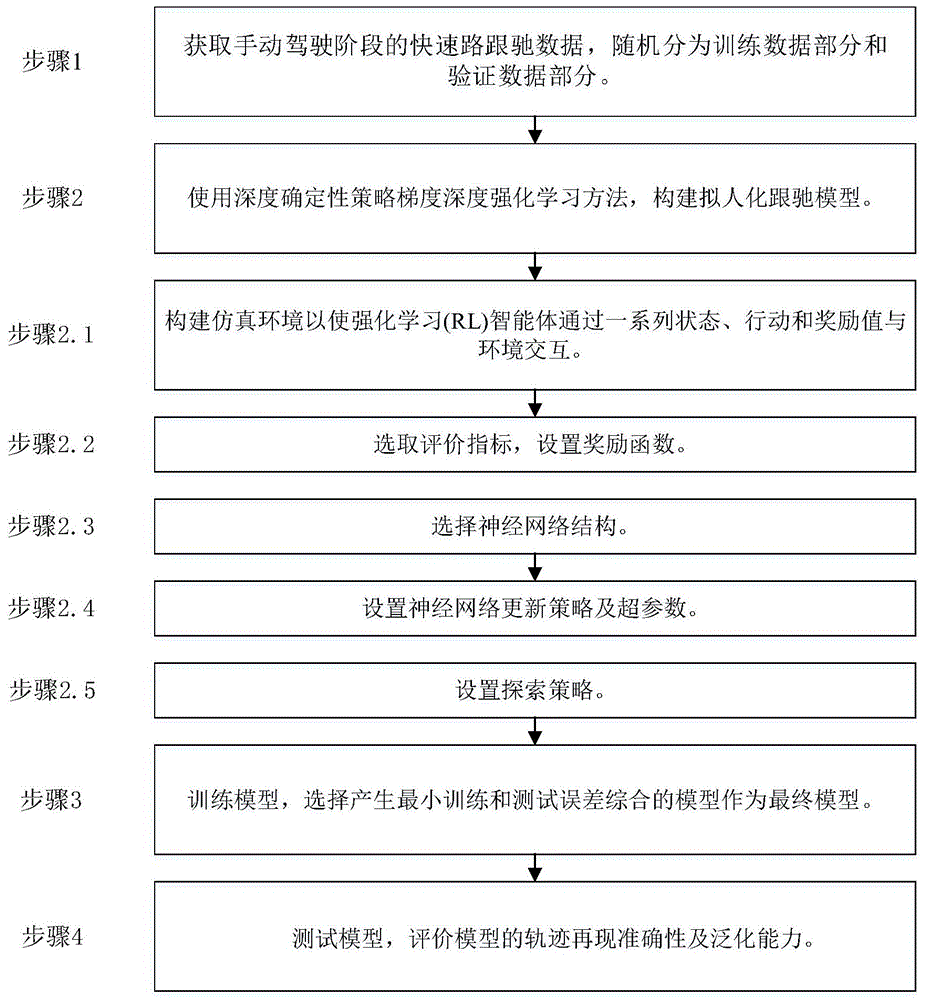
一种基于深度强化学习的拟人化自动驾驶跟驰模型,步骤如下:An anthropomorphic autonomous driving car following model based on deep reinforcement learning, the steps are as follows:
步骤1:采集手动驾驶阶段的数据,作为历史驾驶数据存储在数据库中。在上海自然驾驶实验数据中随机选择多名驾驶员的若干个快速路跟驰片段,从中随机选择一部分作为训练数据,剩余部分作为验证数据。Step 1: Collect the data of the manual driving phase and store it in the database as historical driving data. In the Shanghai natural driving experimental data, several fast-track car-following clips of multiple drivers are randomly selected, a part of which is randomly selected as training data, and the remaining part is used as verification data.
步骤2:使用深度确定性策略梯度(Deep Deterministic Policy Gradient,DDPG)深度强化学习方法,构建拟人化跟驰模型。Step 2: Use the Deep Deterministic Policy Gradient (DDPG) deep reinforcement learning method to build an anthropomorphic car-following model.
步骤2.1:构建仿真环境以使强化学习(Reinforcement Learning,RL)智能体通过一系列状态、行动和奖励值与环境交互。将前车数据作为外部输入,后车速度、相对距离和相对速度用经验数据初始化,由RL智能体计算加速度,根据强化学习定义的状态更新规则迭代生成后车的未来状态,将仿真环境中的车间距、速度与SH-NDS数据的经验车间隔、速度通过设置评价指标设置奖励函数,计算奖励值和模拟误差,当仿真车辆跟随事件在其最大时间步骤终止时,状态用经验数据集重新初始化。Step 2.1: Build a simulated environment so that a Reinforcement Learning (RL) agent interacts with the environment through a series of states, actions, and reward values. Taking the data of the preceding vehicle as external input, the speed, relative distance and relative speed of the following vehicle are initialized with empirical data, the acceleration is calculated by the RL agent, and the future state of the following vehicle is iteratively generated according to the state update rules defined by reinforcement learning, and the simulation environment Vehicle spacing, speed and experience of SH-NDS data Vehicle spacing and speed are set by setting the evaluation index to set the reward function to calculate the reward value and simulation error. When the simulated vehicle following event terminates at its maximum time step, the state is re-initialized with the empirical data set .
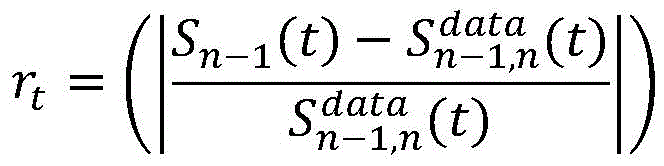
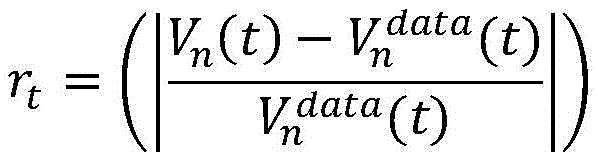
步骤2.2:选取评价指标,设置奖励函数。采用间距和速度的均方根百分比误差(RMSPE,Root Mean Square Percentage Error)作为评估指标,采用间距和速度差异作为奖励函数的DDPG模型。Sn-1(t)和Vn(t)表示时间步t时的仿真环境中的模拟间距和速度,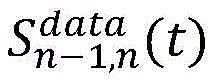

步骤2.3:选择神经网络结构。选择演员和评论家分别代表两个独立的神经网络(演员网络、评论家网络),演员和评论家网络有三层:输入层,输出层和包含30个神经元的隐层。在时间步长t内,演员网络将一个状态st=(vn(t),△vn-1,n(t),△Sn-1,n(t))作为输入,并输出一个连续动作:后车加速度an(t)。评论家网络采用状态st和动作at作为输入,并输出状态动作价值Q(st,at)。其中,Sn-1,n(t)和vn(t)是时间步长t时的仿真环境中的模拟间距和速度。Step 2.3: Select the neural network structure. Actors and critics are chosen to represent two independent neural networks (actor network, critic network), respectively. Actor and critic networks have three layers: an input layer, an output layer, and a hidden layer containing 30 neurons. During time step t, the actor network takes a state s t = (v n (t), Δv n-1, n (t), ΔS n-1, n (t)) as input and outputs a Continuous action: Acceleration of the following vehicle an ( t ). The critic network takes the state s t and the action at as input, and outputs the state-action value Q(s t , at t ) . where Sn-1,n (t) and vn (t) are the simulation spacing and velocity in the simulation environment at time step t.
步骤2.4:设置神经网络更新策略及超参数。评论家网络的权重系数使用随机梯度下降算法进行更新以最小化损失函数,并采用自适应学习算法Adams。演员网络参数更新如下:演员输出的加速度被传递给评论家网络,计算梯度

步骤2.5:设置探索策略。采用Omstein-Uhlenbeck过程(产生以零为中心的时间相关值,从而在物理环境中进行良好探索)在原来的演员政策中增加一个噪音过程,形成探索策略。Omstein-Uhlenbeck过程产生以零为中心的时间相关值,从而在物理环境中进行良好的探索。Step 2.5: Set the exploration strategy. The exploration policy is formed by adding a noise process to the original actor policy using an Omstein-Uhlenbeck process (which yields zero-centered temporal correlation values for good exploration in the physical environment). The Omstein-Uhlenbeck process produces time-correlated values centered around zero, allowing for good exploration in the physical environment.
步骤3:训练模型。基于一个驾驶员的训练数据集对模型进行训练,保存或输出模型参数。将训练数据集中的若干跟驰时间顺序模拟,事件间切换时根据经验数据对状态进行初始化,一次训练结束后分别计算模型在训练和测试数据集上的误差。重复多次训练,并且选择产生最小训练和测试误差综合的模型作为最终模型。Step 3: Train the model. Train the model on a driver's training dataset and save or output the model parameters. Simulate several car-following time sequences in the training data set, initialize the state according to the empirical data when switching between events, and calculate the errors of the model on the training and testing data sets respectively after one training. The training is repeated multiple times, and the model that yields the smallest combination of training and test errors is selected as the final model.
步骤4:测试模型。基于上一步骤选定驾驶员的验证数据对训练后的模型进行验证,其误差用于评价模型的轨迹再现准确性。基于其余驾驶员的驾驶数据集,对模型重复验证,驾驶员间验证误差用来评价模型的泛化能力。Step 4: Test the model. The trained model is verified based on the verification data of the selected driver in the previous step, and the error is used to evaluate the trajectory reproduction accuracy of the model. Based on the driving data set of the remaining drivers, the model is repeatedly validated, and the inter-driver validation error is used to evaluate the generalization ability of the model.
本发明的优点是:The advantages of the present invention are:
1.采用大样本中国驾驶员实际跟驰数据,相较于采用国外数据或小规模试验道路数据,更加符合中国驾驶员跟驰行为的描述。1. Using a large sample of Chinese drivers' actual car-following data is more in line with the description of Chinese drivers' car-following behavior than using foreign data or small-scale test road data.
2.利用深度强化学习构建模型,合理改善了传统跟驰模型应用于自动跟驰控制时的局限性,更加适应自动驾驶场景,更好的模仿人类跟驰行为。2. The use of deep reinforcement learning to build a model reasonably improves the limitations of the traditional car-following model when applied to automatic car-following control, is more suitable for automatic driving scenarios, and better imitates human car-following behavior.
附图说明Description of drawings
图1为动作及评判网络结构图Figure 1 shows the structure of the action and judgment network
图2为本发明的流程图Fig. 2 is the flow chart of the present invention
图3车辆跟随期间最小TTC的累积分布Fig. 3 Cumulative distribution of minimum TTC during vehicle following
图4(a)NGSIM经验数据和(b)DDPG模型跟车头时距分布Figure 4 (a) NGSIM empirical data and (b) DDPG model headway distribution
图5(a)NGSIM经验数据和(b)DDPG模型跟驰Jerk分布Fig. 5 (a) NGSIM empirical data and (b) DDPG model following Jerk distribution
具体实施方式Detailed ways
基于上海自然驾驶实验数据,选取快速路跟驰数据集分为训练数据和验证数据。通过构建仿真环境以使RL智能体通过一系列状态、行动和奖励值与环境交互,选取评价指标,设置奖励函数,选择神经网络结构,设置神经网络跟新策略、超参数及探索策略,构建DRL的拟人化跟驰模型。通过训练并测试模型,进一步优化模型。所发明的模型在模仿人类跟驰行为方面具有更高优越性。Based on the Shanghai natural driving experimental data, the expressway car following data set is selected to be divided into training data and verification data. DRL is constructed by constructing a simulated environment so that the RL agent interacts with the environment through a series of states, actions and reward values, selecting evaluation indicators, setting reward functions, selecting neural network structure, setting neural network and new strategies, hyperparameters and exploration strategies An anthropomorphic car-following model. Further refine the model by training and testing the model. The invented model is more superior in imitating human car-following behavior.
下面结合附图和具体实施例对本发明进行详细说明,步骤如下:The present invention is described in detail below in conjunction with the accompanying drawings and specific embodiments, and the steps are as follows:
步骤1:采集手动驾驶阶段的数据,作为历史驾驶数据存储在数据库中。在上海自然驾驶实验数据中随机选择多名驾驶员的若干个快速路跟驰片段,从中随机选择一部分作为训练数据,剩余部分作为验证数据。Step 1: Collect the data of the manual driving phase and store it in the database as historical driving data. In the Shanghai natural driving experimental data, several fast-track car-following clips of multiple drivers are randomly selected, a part of which is randomly selected as training data, and the remaining part is used as verification data.
步骤2:使用深度确定性策略梯度(DDPG)深度强化学习方法,构建拟人化跟驰模型。Step 2: Build an anthropomorphic car-following model using the Deep Deterministic Policy Gradient (DDPG) deep reinforcement learning method.
步骤2.1:构建仿真环境以使强化学习(RL)智能体通过一系列状态、行动和奖励值与环境交互。将前车数据作为外部输入,后车速度、相对距离和相对速度用经验数据初始化,由RL智能体计算加速度,根据强化学习定义的状态更新规则迭代生成后车的未来状态,将仿真环境中的车间距、速度与SH-NDS数据的经验车间隔、速度通过设置评价指标设置奖励函数,计算奖励值和模拟误差,当仿真车辆跟随事件在其最大时间步骤终止时,状态用经验数据集重新初始化。Step 2.1: Build a simulated environment for a reinforcement learning (RL) agent to interact with the environment through a sequence of states, actions, and reward values. Taking the data of the preceding vehicle as external input, the speed, relative distance and relative speed of the following vehicle are initialized with empirical data, the acceleration is calculated by the RL agent, and the future state of the following vehicle is iteratively generated according to the state update rules defined by reinforcement learning, and the simulation environment Vehicle spacing, speed and experience of SH-NDS data Vehicle spacing and speed are set by setting the evaluation index to set the reward function to calculate the reward value and simulation error. When the simulated vehicle following event terminates at its maximum time step, the state is re-initialized with the empirical data set .
步骤2.2:选取评价指标,设置奖励函数。采用间距和速度的均方根百分比误差(RMSPE,Root Mean Square Percentage Error)作为评估指标,采用间距和速度差异作为奖励函数的DDPG模型。Sn-1(t)和Vn(t)表示时间步t时的仿真环境中的模拟间距和速度,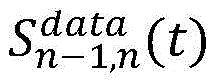
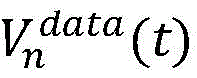

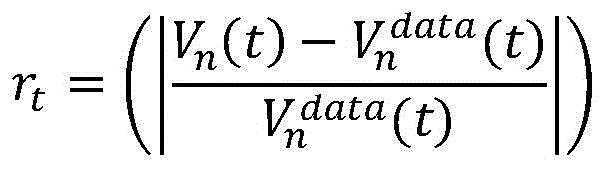
步骤2.3:选择神经网络结构。选择演员和评论家分别代表两个独立的神经网络,分别为演员网络、评论家网络,所述演员网络和评论家网络有三层:输入层,输出层和包含30个神经元的隐层。在时间步长t内,演员网络将一个状态st=(vn(t),△vn-1,n(t),△Sn-1,n(t))作为输入,并输出一个连续动作:后车加速度an(t)。评论家网络采用状态st和动作at作为输入,并输出状态动作价值Q(st,at)。其中,Sn-1,n(t)和vn(t)是时间步长t时的仿真环境中的模拟间距和速度。Step 2.3: Select the neural network structure. Actors and critics are chosen to represent two independent neural networks, respectively, the actor network and the critic network. The actor network and the critic network have three layers: an input layer, an output layer, and a hidden layer containing 30 neurons. During time step t, the actor network takes a state s t = (v n (t), Δv n-1, n (t), ΔS n-1, n (t)) as input and outputs a Continuous action: Acceleration of the following vehicle an ( t ). The critic network takes the state s t and the action at as input, and outputs the state-action value Q(s t , at t ) . where Sn-1,n (t) and vn (t) are the simulation spacing and velocity in the simulation environment at time step t.
步骤2.4:设置神经网络更新策略及超参数。评论家网络的权重系数使用随机梯度下降算法进行更新以最小化损失函数,并采用自适应学习算法Adams。演员网络参数更新如下:演员输出的加速度被传递给评论家网络,计算梯度

步骤2.5:设置探索策略。采用Omstein-Uhlenbeck过程(产生以零为中心的时间相关值,从而在物理环境中进行良好探索)在原来的演员政策中增加一个噪音过程,形成探索策略。Omstein-Uhlenbeck过程产生以零为中心的时间相关值,从而在物理环境中进行良好的探索。Step 2.5: Set the exploration strategy. The exploration policy is formed by adding a noise process to the original actor policy using an Omstein-Uhlenbeck process (which yields zero-centered temporal correlation values for good exploration in the physical environment). The Omstein-Uhlenbeck process produces time-correlated values centered around zero, allowing for good exploration in the physical environment.
步骤3:训练模型。基于一个驾驶员的训练数据集对模型进行训练,保存或输出模型参数。将训练数据集中的若干跟驰时间顺序模拟,事件间切换时根据经验数据对状态进行初始化,一次训练结束后分别计算模型在训练和测试数据集上的误差。重复多次训练,并且选择产生最小训练和测试误差综合的模型作为最终模型。Step 3: Train the model. Train the model on a driver's training dataset and save or output the model parameters. Simulate several car-following time sequences in the training data set, initialize the state according to the empirical data when switching between events, and calculate the errors of the model on the training and testing data sets respectively after one training. The training is repeated multiple times, and the model that yields the smallest combination of training and test errors is selected as the final model.
步骤4:测试模型。基于上一步骤选定驾驶员的验证数据对训练后的模型进行验证,其误差用于评价模型的轨迹再现准确性。基于其余驾驶员的驾驶数据集,对模型重复验证,驾驶员间验证误差用来评价模型的泛化能力。Step 4: Test the model. The trained model is verified based on the verification data of the selected driver in the previous step, and the error is used to evaluate the trajectory reproduction accuracy of the model. Based on the driving data set of the remaining drivers, the model is repeatedly validated, and the inter-driver validation error is used to evaluate the generalization ability of the model.
实施例Example
通过比较经验NGSIM数据和DDPG模型模拟得到的跟驰行为,测试该模型能够安全、高效、舒适的跟随前车。By comparing the car-following behavior obtained from the empirical NGSIM data and the DDPG model simulation, it is tested that the model can follow the preceding vehicle safely, efficiently and comfortably.
所用数据是从美国加利福尼亚州洛杉矶美国高速公路101(好莱坞高速公路)的南行方向获取。依据上述步骤1至步骤4。The data used was taken from southbound directions on US Highway 101 (Hollywood Freeway) in Los Angeles, CA, USA. Follow
驾驶安全性方面,NGSIM经验数据和DDPG模型模拟得到最小碰撞时间的累积分布,由DDPG模型产生的跟驰行为比在NGSIM数据中观察到的驾驶员行为更安全。如图3所示。In terms of driving safety, NGSIM empirical data and DDPG model simulate the cumulative distribution of minimum collision times, and the car-following behavior generated by the DDPG model is safer than the driver behavior observed in the NGSIM data. As shown in Figure 3.
驾驶效率方面,DDPG模型有能力保持高效且安全的跟驰车头时距。如图4所示。In terms of driving efficiency, the DDPG model has the ability to maintain efficient and safe headway. As shown in Figure 4.
驾驶舒适性方面,图5表明DDPG模型产生的加速度波动更低,DDPG模型可以比NGSIM数据中的人类驾驶员以更舒适的方式控制车辆速度。图5如下。In terms of driving comfort, Figure 5 shows that the DDPG model produces lower acceleration fluctuations, and the DDPG model can control the vehicle speed in a more comfortable way than the human driver in the NGSIM data. Figure 5 is as follows.
基于以上,DDPG模型证明了其安全、高效和舒适驾驶的能力。Based on the above, the DDPG model demonstrates its ability to drive safely, efficiently and comfortably.
Claims (1)


Priority Applications (1)
| Application Number | Priority Date | Filing Date | Title |
|---|---|---|---|
| CN201910014636.4A CN109733415B (en) | 2019-01-08 | 2019-01-08 | An anthropomorphic autonomous driving car-following model based on deep reinforcement learning |
Applications Claiming Priority (1)
| Application Number | Priority Date | Filing Date | Title |
|---|---|---|---|
| CN201910014636.4A CN109733415B (en) | 2019-01-08 | 2019-01-08 | An anthropomorphic autonomous driving car-following model based on deep reinforcement learning |
Publications (2)
| Publication Number | Publication Date |
|---|---|
| CN109733415A CN109733415A (en) | 2019-05-10 |
| CN109733415B true CN109733415B (en) | 2020-08-14 |
Family
ID=66363898
Family Applications (1)
| Application Number | Title | Priority Date | Filing Date |
|---|---|---|---|
| CN201910014636.4A Active CN109733415B (en) | 2019-01-08 | 2019-01-08 | An anthropomorphic autonomous driving car-following model based on deep reinforcement learning |
Country Status (1)
| Country | Link |
|---|---|
| CN (1) | CN109733415B (en) |
Cited By (1)
| Publication number | Priority date | Publication date | Assignee | Title |
|---|---|---|---|---|
| US12485911B2 (en) | 2022-09-29 | 2025-12-02 | Toyota Motor Engineering & Manufacturing North America, Inc. | Method and system for modeling personalized car-following driving styles with model-free inverse reinforcement learning |
Families Citing this family (73)
| Publication number | Priority date | Publication date | Assignee | Title |
|---|---|---|---|---|
| SG11202002915SA (en) * | 2019-05-15 | 2020-12-30 | Advanced New Technologies Co Ltd | Determining action selection policies of an execution device |
| US11493926B2 (en) * | 2019-05-15 | 2022-11-08 | Baidu Usa Llc | Offline agent using reinforcement learning to speedup trajectory planning for autonomous vehicles |
| CN110222824B (en) * | 2019-06-05 | 2020-11-17 | 中国科学院自动化研究所 | Intelligent algorithm model autonomous generation and evolution method, system and device |
| CN110414669A (en) * | 2019-07-02 | 2019-11-05 | 四川大学 | A Method to Accelerate the Selection of Neural Network Architecture |
| CN110374804B (en) * | 2019-07-03 | 2020-06-19 | 西安交通大学 | Variable pitch control method based on gradient compensation of depth certainty strategy |
| CN110299008B (en) * | 2019-07-19 | 2020-11-13 | 浙江工业大学 | Traffic flow multi-step prediction method based on reinforcement learning |
| CN110688729B (en) * | 2019-08-26 | 2023-07-14 | 南京航空航天大学 | LSTM-IDM car-following characteristic fusion method, storage medium and equipment based on adaptive Kalman filter |
| CN110647839B (en) * | 2019-09-18 | 2022-08-12 | 深圳信息职业技术学院 | Method, device and computer-readable storage medium for generating automatic driving strategy |
| CN110745136B (en) * | 2019-09-20 | 2021-05-07 | 中国科学技术大学 | A driving adaptive control method |
| US11465650B2 (en) * | 2019-09-20 | 2022-10-11 | Honda Motor Co., Ltd. | Model-free reinforcement learning |
| CN110716562A (en) * | 2019-09-25 | 2020-01-21 | 南京航空航天大学 | Decision-making method for multi-lane driving of driverless cars based on reinforcement learning |
| CN112580795B (en) * | 2019-09-29 | 2024-09-06 | 华为技术有限公司 | A method for acquiring a neural network and related equipment |
| JP6705544B1 (en) * | 2019-10-18 | 2020-06-03 | トヨタ自動車株式会社 | Vehicle control device, vehicle control system, and vehicle learning device |
| DE102019130040A1 (en) | 2019-11-07 | 2021-05-12 | Bayerische Motoren Werke Aktiengesellschaft | Method and system for testing an automated driving function by means of reinforcement learning |
| CN110989576B (en) * | 2019-11-14 | 2022-07-12 | 北京理工大学 | Target following and dynamic obstacle avoidance control method for differential slip steering vehicle |
| CN111010294B (en) * | 2019-11-28 | 2022-07-12 | 国网甘肃省电力公司电力科学研究院 | Electric power communication network routing method based on deep reinforcement learning |
| CN110843746B (en) * | 2019-11-28 | 2022-06-14 | 的卢技术有限公司 | Anti-lock brake control method and system based on reinforcement learning |
| CN111026272B (en) * | 2019-12-09 | 2023-10-31 | 网易(杭州)网络有限公司 | Training method and device for virtual object behavior strategy, electronic equipment and storage medium |
| JP7211375B2 (en) * | 2020-01-09 | 2023-01-24 | トヨタ自動車株式会社 | vehicle controller |
| CN111126605B (en) * | 2020-02-13 | 2023-06-20 | 创新奇智(重庆)科技有限公司 | Data center machine room control method and device based on reinforcement learning algorithm |
| CN111340234B (en) * | 2020-02-27 | 2024-01-30 | 南京星火技术有限公司 | Video data processing method, apparatus, electronic device and computer readable medium |
| CN111353644B (en) * | 2020-02-27 | 2023-04-07 | 成都美云智享智能科技有限公司 | Prediction model generation method of intelligent network cloud platform based on reinforcement learning |
| DE102020202540A1 (en) * | 2020-02-27 | 2021-09-02 | Psa Automobiles Sa | Method for training at least one algorithm for a control unit of a motor vehicle, computer program product and motor vehicle |
| CN113344017B (en) * | 2020-03-02 | 2025-06-03 | 深圳云天励飞技术有限公司 | Selector model training method, image detection method and related equipment |
| US11203361B2 (en) * | 2020-05-05 | 2021-12-21 | StradVision, Inc. | Method for performing on-device learning of machine learning network on autonomous vehicle by using multi-stage learning with adaptive hyper-parameter sets and device using the same |
| CN111562740B (en) * | 2020-05-06 | 2021-04-23 | 清华大学 | Automatic control method based on multi-target reinforcement learning algorithm utilizing gradient |
| CN111679660B (en) * | 2020-06-16 | 2022-08-05 | 中国科学院深圳先进技术研究院 | A deep reinforcement learning method for unmanned driving integrating human-like driving behavior |
| CN111950735B (en) * | 2020-06-30 | 2023-11-17 | 上海交通大学 | Reinforced learning method based on bidirectional model |
| CN111967087A (en) * | 2020-07-16 | 2020-11-20 | 山东派蒙机电技术有限公司 | Neural network-based online vehicle decision control model establishing and evaluating method |
| CN113968242B (en) * | 2020-07-22 | 2023-10-20 | 华为技术有限公司 | Automatic driving scene generation method, device and system |
| CN111845701B (en) * | 2020-08-05 | 2021-03-30 | 重庆大学 | HEV energy management method based on deep reinforcement learning in car following environment |
| CN112052947B (en) * | 2020-08-17 | 2021-06-25 | 清华大学 | Hierarchical reinforcement learning method and apparatus based on policy options |
| CN112201069B (en) * | 2020-09-25 | 2021-10-29 | 厦门大学 | Construction method of driver's longitudinal vehicle following behavior model based on deep reinforcement learning |
| CN112201070B (en) * | 2020-09-29 | 2022-03-01 | 上海交通大学 | Deep learning-based automatic driving expressway bottleneck section behavior decision method |
| CN112172813B (en) * | 2020-10-14 | 2022-03-04 | 长安大学 | Car-following system and method for simulating driving style based on deep inverse reinforcement learning |
| CN112396501B (en) * | 2020-12-10 | 2024-03-19 | 中国科学院深圳先进技术研究院 | Order dispatching method and system based on interactive reinforcement learning |
| CN112614344B (en) * | 2020-12-14 | 2022-03-29 | 中汽研汽车试验场股份有限公司 | Hybrid traffic system efficiency evaluation method for automatic driving automobile participation |
| CN112801149B (en) * | 2021-01-15 | 2024-06-11 | 江苏大学 | Multi-vehicle-queue control method based on deep reinforcement learning |
| CN113033119B (en) * | 2021-03-11 | 2022-03-25 | 山东大学 | Underwater vehicle target area floating control method based on double-critic reinforcement learning technology |
| CN113095500B (en) * | 2021-03-31 | 2023-04-07 | 南开大学 | Robot tracking method based on multi-agent reinforcement learning |
| CN113010967B (en) * | 2021-04-22 | 2022-07-01 | 吉林大学 | Intelligent automobile in-loop simulation test method based on mixed traffic flow model |
| CN113335277B (en) * | 2021-04-27 | 2025-01-21 | 北京工业大学 | Intelligent cruise control method, device, electronic device and storage medium |
| US20220374764A1 (en) * | 2021-05-19 | 2022-11-24 | Volvo Car Corporation | Real-time in-vehicle modeling and simulation updates |
| CN113255893B (en) * | 2021-06-01 | 2022-07-05 | 北京理工大学 | Self-evolution generation method of multi-agent action strategy |
| CN113386790B (en) * | 2021-06-09 | 2022-07-12 | 扬州大学 | Automatic driving decision-making method for cross-sea bridge road condition |
| CN113359771B (en) * | 2021-07-06 | 2022-09-30 | 贵州大学 | An intelligent automatic driving control method based on reinforcement learning |
| CN113569477B (en) * | 2021-07-26 | 2023-06-20 | 北京航空航天大学 | An optimization method for lifting devices based on deep reinforcement learning and transfer learning |
| CN113401132B (en) * | 2021-07-29 | 2022-10-18 | 国汽智控(北京)科技有限公司 | Driving model updating method and device and electronic equipment |
| CN113741464B (en) * | 2021-09-07 | 2022-10-21 | 电子科技大学 | Automatic driving speed control framework based on space-time data reinforcement learning |
| CN113901718A (en) * | 2021-10-11 | 2022-01-07 | 长安大学 | Deep reinforcement learning-based driving collision avoidance optimization method in following state |
| CN113821057B (en) * | 2021-10-14 | 2023-05-30 | 哈尔滨工业大学 | Planetary soft landing control method and system based on reinforcement learning and storage medium |
| CN114328547A (en) * | 2021-11-19 | 2022-04-12 | 清华大学 | Vehicle-mounted high-definition map data source selection method and device |
| CN114118371A (en) * | 2021-11-24 | 2022-03-01 | 同济大学 | A kind of agent deep reinforcement learning method and computer readable medium |
| CN114148349B (en) * | 2021-12-21 | 2023-10-03 | 西南大学 | A vehicle personalized car-following control method based on generative adversarial imitation learning |
| CN114104005B (en) * | 2022-01-26 | 2022-04-19 | 苏州浪潮智能科技有限公司 | Decision-making method, device, device and readable storage medium for automatic driving equipment |
| CN114677837B (en) * | 2022-03-16 | 2023-08-25 | 杭州海康威视数字技术股份有限公司 | Traffic simulation method and device based on radar data and electronic equipment |
| CN114770497B (en) * | 2022-03-31 | 2024-02-02 | 中国人民解放军陆军工程大学 | Search and rescue method, device and storage medium for search and rescue robot |
| CN114771561B (en) * | 2022-03-31 | 2025-05-30 | 中国人民解放军陆军工程大学 | A method, device and storage medium for generating a strategy for autonomous driving |
| CN114997622A (en) * | 2022-05-24 | 2022-09-02 | 南京航空航天大学 | Electrical and electronic experiment teaching intelligent learning situation evaluation system and method based on deep learning |
| CN115081519B (en) * | 2022-06-08 | 2024-12-17 | 中国三峡建工(集团)有限公司 | Automatic star alignment method based on reinforcement learning |
| CN115285135B (en) * | 2022-07-14 | 2025-12-23 | 湖北汽车工业学院 | Construction method of deep reinforcement learning vehicle following model integrating driving style |
| CN115107767A (en) * | 2022-07-21 | 2022-09-27 | 名商科技有限公司 | A control method for automatic driving braking and anti-collision based on artificial intelligence |
| CN115356923B (en) * | 2022-07-28 | 2025-05-13 | 清华大学 | Double-loop application method and system for partially observable Markov decision problems |
| CN115691167B (en) * | 2022-10-13 | 2025-09-02 | 桂林电子科技大学 | A single-point traffic signal control method based on intersection holographic data |
| CN115830863B (en) * | 2022-11-18 | 2024-09-20 | 吉林大学 | Intelligent automobile class person following behavior control method for improving deep reinforcement learning |
| CN116489683B (en) * | 2023-06-21 | 2023-08-18 | 北京邮电大学 | Method and device for unloading computing tasks in space-sky network and electronic equipment |
| CN116822618A (en) * | 2023-08-30 | 2023-09-29 | 北京汉勃科技有限公司 | Deep reinforcement learning exploration method and assembly based on dynamic noise network |
| CN117227763B (en) * | 2023-11-10 | 2024-02-20 | 新石器慧通(北京)科技有限公司 | Automatic driving behavior decision-making method and device based on game theory and reinforcement learning |
| CN117474295B (en) * | 2023-12-26 | 2024-04-26 | 长春工业大学 | Dueling DQN algorithm-based multi-AGV load balancing and task scheduling method |
| CN118343165B (en) * | 2024-06-20 | 2024-09-06 | 华东交通大学 | A humanized car-following method based on driver characteristics |
| CN118733901B (en) * | 2024-06-25 | 2025-02-11 | 中国人民解放军32133部队 | PTZ control path search method based on big data |
| CN119527341A (en) * | 2024-10-29 | 2025-02-28 | 重庆科技大学 | A multi-driving mode autonomous decision-making control method for intelligent connected PHEV based on deep learning |
| CN119647561B (en) * | 2024-11-21 | 2025-11-21 | 吉林大学 | End-to-end automatic driving model training method and device |
Citations (1)
| Publication number | Priority date | Publication date | Assignee | Title |
|---|---|---|---|---|
| CN108288094A (en) * | 2018-01-31 | 2018-07-17 | 清华大学 | Deeply learning method and device based on ambient condition prediction |
-
2019
- 2019-01-08 CN CN201910014636.4A patent/CN109733415B/en active Active
Patent Citations (1)
| Publication number | Priority date | Publication date | Assignee | Title |
|---|---|---|---|---|
| CN108288094A (en) * | 2018-01-31 | 2018-07-17 | 清华大学 | Deeply learning method and device based on ambient condition prediction |
Non-Patent Citations (3)
| Title |
|---|
| Deep Q Learning Based High Level Driving Policy Determination;Kyushik Min et al.;《 2018 IEEE Intelligent Vehicles Symposium (IV)》;20180630;226-231 * |
| Human-like Autonomous Vehicle Speed Control by Deep Reinforcement Learning with Double Q-Learning;Yi Zhang et al.;《2018 IEEE Intelligent Vehicles Symposium (IV)》;20180630;1251-1256 * |
| 陈银银.面向无人驾驶的增强学习算法研究.《 CNKI优秀硕士学位论文全文库》.2018, * |
Cited By (1)
| Publication number | Priority date | Publication date | Assignee | Title |
|---|---|---|---|---|
| US12485911B2 (en) | 2022-09-29 | 2025-12-02 | Toyota Motor Engineering & Manufacturing North America, Inc. | Method and system for modeling personalized car-following driving styles with model-free inverse reinforcement learning |
Also Published As
| Publication number | Publication date |
|---|---|
| CN109733415A (en) | 2019-05-10 |
Similar Documents
| Publication | Publication Date | Title |
|---|---|---|
| CN109733415B (en) | An anthropomorphic autonomous driving car-following model based on deep reinforcement learning | |
| CN110969848B (en) | Automatic driving overtaking decision method based on reinforcement learning under opposite double lanes | |
| CN110745136B (en) | A driving adaptive control method | |
| CN112784485B (en) | Automatic driving key scene generation method based on reinforcement learning | |
| CN113657433B (en) | A multi-modal prediction method for vehicle trajectory | |
| Wu et al. | Framework for control and deep reinforcement learning in traffic | |
| Wang et al. | Cooperative lane changing via deep reinforcement learning | |
| CN113901718A (en) | Deep reinforcement learning-based driving collision avoidance optimization method in following state | |
| Yuan et al. | Prioritized experience replay-based deep q learning: Multiple-reward architecture for highway driving decision making | |
| WO2021258847A1 (en) | Driving decision-making method, device, and chip | |
| CN114074680A (en) | Vehicle lane change behavior decision method and system based on deep reinforcement learning | |
| CN119149978B (en) | Driving training teaching method and system based on imitation learning | |
| CN118887061A (en) | Training assistance method and system based on two-way information feedback in driving training | |
| CN110956851A (en) | A method for cooperative scheduling and lane changing of intelligent networked vehicles | |
| Shi et al. | Efficient lane-changing behavior planning via reinforcement learning with imitation learning initialization | |
| CN117284327A (en) | Behavior decision and planning method for automatic driving vehicle | |
| CN114360290B (en) | Reinforced learning-based method for selecting vehicle group lanes in front of intersection | |
| CN116935669A (en) | Multi-vehicle combined longitudinal control method based on improved MADDPG | |
| CN117227754A (en) | A method for constructing an autonomous driving decision-making model for round-island traffic | |
| CN119568155A (en) | Automatic driving vehicle expressway intelligent lane changing method based on reinforcement learning | |
| Gutiérrez-Moreno et al. | Hybrid decision making for autonomous driving in complex urban scenarios | |
| CN114701517A (en) | Multi-target complex traffic scene automatic driving solution based on reinforcement learning | |
| Guo et al. | Modeling, learning and prediction of longitudinal behaviors of human-driven vehicles by incorporating internal human DecisionMaking process using inverse model predictive control | |
| Ma et al. | Evolving testing scenario generation method and intelligence evaluation framework for automated vehicles | |
| CN114627640B (en) | Dynamic evolution method of intelligent network-connected automobile driving strategy |
Legal Events
| Date | Code | Title | Description |
|---|---|---|---|
| PB01 | Publication | ||
| PB01 | Publication | ||
| SE01 | Entry into force of request for substantive examination | ||
| SE01 | Entry into force of request for substantive examination | ||
| GR01 | Patent grant | ||
| GR01 | Patent grant |