Background
Carbazole (9H-carbazole) and derivatives thereof are important nitrogen-containing aromatic heterocyclic compounds and are widely applied to various fields such as photoelectric materials, dyes, medicines, supramolecular recognition and the like. Halogenated Carbazoles (PHCs) refer to a class of compounds in which hydrogen atoms on the carbazole ring are replaced by halogen atoms (Cl, br, or I). From the chemical structure, PHCs have a similar structure to polychlorinated dibenzofurans (PCDFs). Depending on the position and number of halogen atoms substituted, a single halogen-substituted PHCs has 135 homologs.
The halogenated carbazole is an aromatic compound containing nitrogen heterocyclic ring, is an important raw material in modern daily chemical industry, and has extremely wide application. The halogenated carbazole has teratogenicity, mutagenicity and potential carcinogenicity. The halogenated carbazole has stable structure, is difficult to degrade, and has strong environmental toxicological effect. As a novel persistent organic pollutant, more than 20 kinds of halogenated carbazole have been detected in soil, rivers and lake sediments for the first time in the environment since the 80 th 20 th century. However, the research on the environmental behavior of the halogenated carbazole is few and the related data are very lacking.
Preliminary studies of toxicological experiments indicate that PHCs have persistent, dioxin-like toxicity and bioaccumulation properties. Related researches show that PHCs are similar to PCDFs, and the 1,3,6,8 substituted compound has larger biological toxicity. That is, PHCs may cause skin diseases such as acne vulgaris, cause immunosuppression to the body, disturb the normal function of the endocrine system, affect sex hormones of biological individuals, cause abnormal development of embryos and fetuses, and cause cancers. In addition, soil degradation experiments show that 3-chlorocarbazole and 3,6-dibromocarbazole are not obviously degraded in 450d and show the characteristic of difficult biodegradation. Because the PHCs have the characteristics of environmental persistence, biological accumulation, toxic effect on human bodies and the like, and the PHCs are relatively few in environmental behavior research as a novel pollutant, the understanding of environmental distribution, source and ecological toxicological effect of the PHCs has important significance for correctly knowing the environmental risk of the compounds. Since most PHCs are not chemicals synthesized by humans, environmental PHCs are less likely to be directly emitted from industrial sources, while the production or use of other related carbazole derivatives may be an important human source of PHCs. For example, halogenated indigo dyes are produced as by-products, as intermediates for polymers of photovoltaic materials and as herbicides containing parachloroaniline structures. In fact, there are some biological enzyme-catalyzed reactions in nature that produce PHCs. For example, chloroperoxidase (CPO) extracted from fungi (Caldariomyces fumago) has this particular ability.
Because the halogenated carbazole is difficult to degrade in natural environment, persistent organic pollutants which seriously harm human beings are formed. The main denitrification methods currently used industrially are acid washing, hydrogenation, adsorption and the like, but these nitrogen-containing compounds cannot be removed efficiently. Moreover, compared with other treatment methods, the microbial degradation of organic matters has incomparable advantages: (1) The microorganism can thoroughly decompose the organic matters into carbon dioxide and water, permanently eliminate pollutants and have no secondary pollution; (2) The degradation process is rapid, the cost is low, and is 30 to 50 percent of the cost of the traditional physical and chemical method; (3) The degradation process is low-carbon and energy-saving, and accords with the current environmental protection concept of energy conservation and emission reduction. Therefore, the microbial degradation method has great superiority by considering various factors such as comprehensive degradation effect, treatment cost, applicability range and the like. It has been reported that bromocarbazole such as 3-bromocarbazole has a degradation rate of only about 70% at an initial concentration of 50mg/L after 8 days at a temperature of 30 ℃ and a pH of 7.0 in Stenotrophomonas sp. The 3-chlorocarbazole is a common chlorocarbazole in the halogenated carbazoles, so the method is easy to sample and research, has supply in various large chemical plants, and has the characteristic of wide application range, so the method has important significance in researching the biodegradation of the 3-chlorocarbazole, but the existing 3-chlorocarbazole degradation technology has no report in the aspect of biodegradation.
Disclosure of Invention
The invention aims to solve the technical problem of providing a psychrophilic spore sarcina and application thereof, and fills the blank of microbial degradation of 3-chlorocarbazole.
The cold-philic spore sarcina has the preservation number of CGMCC No.16770.
The Sporosarcina psychrophila is Sporosarcina psychrophilia KX-1, and the nucleotide sequence of the Sporosarcina psychrophilia KX-1 is shown in SEQ ID NO. 1.
The psychrophilic spore sarcina is preserved in the common microorganism center of China Committee for culture Collection of microorganisms, the preservation address is the microorganism research institute of China academy of sciences of West Lu No.1, north Cheng, chaoyang, beijing, and the preservation date is 11 months and 22 days in 2018.
The colony of the psychrophilic spore sarcina is round, neat in edge, yellow, smooth, moist and convex.
The invention also provides application of the Sporosarcina psychrophila in degradation of 3-chlorocarbazole.
The invention also provides a method for degrading 3-chlorocarbazole, which comprises the following steps: inoculating the psychrophilic spore sarcina to a 3-chlorocarbazole degradation culture medium, and culturing in a constant-temperature shaking table.
The invention also provides a 3-chlorocarbazole degradation medium for the psychrophilic spore sarcina, which comprises the following components: (NH) 4 ) 2 SO 4 1.00g、NaCl 1.00g、K 2 HPO 4 1.50g、KH 2 PO 4 0.50g、MgSO 4 ·7H 2 0.20g of O, 1mL of trace elements, 1000mL of distilled water, 25-200mg/L of 3-chlorocarbazole, and the pH is =5.0-9.0; the trace elements comprise the following components: naMoO 4 ·2H 2 O 0.15g、MnSO 4 ·H 2 O 0.13g、AlCl 3 ·6H 2 O 0.05g、ZnCl 2 0.23g、CuSO 4 ·H 2 O 0.03g、CoCl 2 ·6H 2 O0.42 g, deionized water to volume of 1L, and pH =7.0.
The 3-chlorocarbazole degradation culture medium comprises the following components: (NH) 4 ) 2 SO 4 1.00g、NaCl 1.00g、K 2 HPO 4 1.50g、KH 2 PO 4 0.50g、MgSO 4 ·7H 2 0.20g of O, 1mL of trace elements, 1000mL of distilled water, 25-200mg/L of 3-chlorocarbazole, 1g/L of carbon source, and the pH =5.0-9.0; the trace elements comprise the following components: naMoO 4 ·2H 2 O 0.15g、MnSO 4 ·H 2 O 0.13g、AlCl 3 ·6H 2 O 0.05g、ZnCl 2 0.23g、CuSO 4 ·H 2 O 0.03g、CoCl 2 ·6H 2 O0.42 g, deionized water to volume of 1L, and pH =7.0.
The carbon source is glucose, sucrose, yeast or starch. Starch is preferred.
The preferable composition of the 3-chlorocarbazole degradation medium is as follows: (NH) 4 ) 2 SO 4 1.00g、NaCl 1.00g、K 2 HPO 4 1.50g、KH 2 PO 4 0.50g、MgSO 4 ·7H 2 0.20g of O, 1mL of trace elements and 1000mL of distilled water50 mg/L3-chlorocarbazole, 1g/L starch, pH =6.0; the trace elements comprise the following components: naMoO 4 ·2H 2 O 0.15g、MnSO 4 ·H 2 O 0.13g、AlCl 3 ·6H 2 O 0.05g、ZnCl 2 0.23g、CuSO 4 ·H 2 O 0.03g、CoCl 2 ·6H 2 O0.42 g, deionized water to volume of 1L, and pH =7.0.
The inoculation amount of the Sporosarcina psychrophila KX-1 is 10%.
The culture conditions are as follows: culturing at 20-45 deg.C with shaking table rotation speed of 150rpm for 120h.
The culture conditions are as follows: culturing at 30 deg.C with shaking table rotation speed of 150rpm for 120h.
The invention further provides an application of the culture medium.
The invention further provides a microbial preparation for water purification, which comprises the psychrophilic spore sarcina.
Advantageous effects
The optimum degradation conditions for Sporosarcina psychrophilila KX-1 of the present invention are: the concentration of 3-chlorocarbazole is 50mg/L, the inoculation amount is 10%, the pH is 6.0, the temperature is 30 ℃, a 1g/L soluble starch solution is added to serve as a supplementary carbon source, and under the condition, after 5d, the degradation rate of the psychrophilic spore sarcina on 3-chlorocarbazole reaches 90.0%.
Detailed Description
The invention will be further illustrated with reference to the following specific examples. It should be understood that these examples are for illustrative purposes only and are not intended to limit the scope of the present invention. Further, it should be understood that various changes or modifications of the present invention may be made by those skilled in the art after reading the teaching of the present invention, and such equivalents may fall within the scope of the present invention as defined in the appended claims.
1. Culture medium:
(1) LB medium was purchased from Biotechnology, shanghai, inc.
(2) Inorganic salt medium (MSM): (NH) 4 ) 2 SO 4 1.00g、NaCl 1.00g、K 2 HPO 4 1.50g、KH 2 PO 4 0.50g、MgSO 4 ·7H 2 0.20g of O, 1mL of trace elements, 1000mL of distilled water and pH = 6.0-8.0.
(3) Trace elements: naMoO 4 ·2H 2 O 0.15g、MnSO 4 ·H 2 O 0.13g、AlCl 3 ·6H 2 O 0.05g、ZnCl 2 0.23g、CuSO 4 ·H 2 O 0.03g、CoCl 2 ·6H 2 0.42g of O, adding deionized water to the volume of 1L, and keeping the pH value to 7.0.
2. Detection of 3-chlorocarbazole in liquid medium: transferring 10mL of liquid culture solution containing 3-chlorocarbazole into a 250mL separating funnel, extracting with 10mL of dichloromethane for 3 times respectively, combining the lower organic phase in a 250mL flat-bottom flask after absorbing water through anhydrous sodium sulfate, concentrating to about 1mL under reduced pressure on a rotary evaporator, then fixing the volume to 10mL by using chromatographic grade acetone, and analyzing by high performance liquid chromatography.
(1) High performance liquid chromatograph: ultimate 3000 aeronautical flight
(2) Mobile phase: acetonitrile: water (80
(3) And (3) analyzing the column: grace Alltima C18 Column (4.6 mm. Times.250mm, 5 μm)
(4) Detection wavelength: 345nm
(5) Flow rate 0.5m L/min
(6) Sample injection amount: 20 μ L
(7) Column temperature: 25 deg.C
(8) And (3) sample introduction mode: hand sample introduction
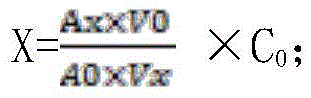
3. The calculation formula of the residual amount of 3-chlorocarbazole is as follows:
wherein X is the concentration (mg/L) of 3-chlorocarbazole in a sample to be detected; a. The X Is the peak area of 3-chlorocarbazole in the sample; a. The 0 Is the peak area of a 3-chlorocarbazole standard sample; v X Sample volume (mL); v 0 Final volume-fixed volume (mL); c 0 The concentration (mg/L) of the 3-chlorocarbazole standard sample is shown.
4. Preparing a 3-chlorocarbazole stock solution: 0.5g of 3-bromocarbazole original drug is weighed and dissolved in 100mL of acetone of chromatographic grade to prepare mother liquor with the concentration of 5000mg/L, and the mother liquor is placed in a brown bottle and stored in a refrigerator at 4 ℃ for later use.
Example 1
1. Strain separation:
(1) Activated sludge of a Jiangsu Lanbo sewage treatment plant is collected and placed in a glass domestication device with the length of 31.2cm, the width of 22.0cm and the height of 22.5cm, and aeration is carried out continuously for 3 days by using an air compressor on the basis of no addition of nutrient substances and no exchange of inlet water and outlet water. Then, water is changed, about 10L of the mud-water mixture in the device is discharged, and nutrient solution is added and continuous aeration is carried out. After culturing for 10 days, adding the nutrient solution and simultaneously adding the 3-chlorocarbazole-acetone solution, keeping the concentration of 3-chlorocarbazole in the device at about 10mg/L, performing acclimation culture according to SBR process (water inlet, aeration, standing, water drainage and idling), changing water every other day, and performing culture acclimation for one month. Preparing a culture solution: 0.6g/L glucose, 0.8g/L anhydrous sodium acetate, 0.3g/L yeast powder, 0.283g/L NH 4 Cl、0.07g/L K 2 HPO 4 ·3H 2 O、0.022g/L KH 2 PO 4 . About 10 liters of nutrient solution is prepared.
(2) After the domesticated water sample is precipitated for 30 minutes, 1mL of supernatant is taken by a pipette under the aseptic condition and put into a 250mL sterilized conical flask filled with 100mL of enrichment medium, and the supernatant is cultured on a shaking table. The rotating speed of the shaking table is 150r/min, and the temperature is 30 ℃. The main components of the Enrichment Medium EM (Enrichment Medium) are: 10g/L peptone, 5g/L yeast powder, 5g/L NaCl, distilled water 1000mL, and pH = 6.8-7.2.
(3) Transferring 1ml of turbid bacterial liquid of an enrichment culture medium under an aseptic condition into a 250ml sterilized erlenmeyer flask filled with 100ml of acclimation culture medium, putting the erlenmeyer flask into a shaking table (the erlenmeyer flask is wrapped by masking paper to avoid the influence of illumination on an experiment), and carrying out acclimation culture by using 3-chlorocarbazole as a carbon source and using a 5-day period as a period and gradually increasing the concentration of pollutants. The rotating speed of the shaking table is 150r/min, and the temperature is 30 ℃. MSM ((NH) in mineral salts medium 4 ) 2 SO 4 1.00g、NaCl 1.00g、K 2 HPO 4 1.50g、KH 2 PO 4 0.50g、MgSO 4 ·7H 2 0.20g of O, 1mL of trace elements, 1000mL of distilled water, and pH = 6.0-8.0; trace elements: naMoO 4 ·2H 2 O 0.15g、MnSO 4 ·H 2 O 0.13g、AlCl 3 ·6H 2 O 0.05g、ZnCl 2 0.23g、CuSO 4 ·H 2 O 0.03g、CoCl 2 ·6H 2 0.42g of O, deionized water is added to the solution to be 1L, and the pH value is 7.0. ) Adding 3-chlorocarbazole-acetone solution to prepare the domestication culture medium with the concentration of 3-chlorocarbazole of 10, 20, 30, 40 and 50 mg/L.
(4) Taking 1ml of liquid acclimation culture medium of the last period, diluting the bacterial liquid into 10 times according to a 10-fold dilution method -1 ,10 -2 ,10 -3 And (3) taking 1ml of the gradient bacterial suspension, coating the gradient bacterial suspension on an inorganic salt solid culture medium containing 50 mg/L3-chlorocarbazole, and uniformly coating the gradient bacterial suspension by using a sterile coater. Culturing in biochemical incubator at 30 deg.C. Observing the morphology of each colony after the independent colony grows, picking colonies with different morphologies by using an inoculating loop, and streaking and separating in a flat plate paved by an LB solid culture medium. The isolation and purification was repeated 5 to 7 times and observed under a microscope to ensure a pure single strain, which was then named KX-1. Subjecting the obtained single colony to 30% glycerol in a refrigerator at-80 deg.CAnd (5) storing.
2. And (3) colony morphology characteristics:
the colony of Sporosarcina psychrophilia KX-1 is round, and has neat, yellow, smooth, moist and convex edges.
The 16S rDNA gene sequence of the Sporosarcina psychrophilia (Sporosarcina) KX-1 is shown in SEQ ID NO. 1; the phylogenetic tree of the population to which the 16S rDNA gene sequence belongs is shown in FIG. 1.
3. Measurement of cell growth curve:
inoculating KX-1 strain to LB solid culture medium, performing amplification culture, inoculating to sterilized LB liquid culture medium, performing shake culture at 30 deg.C and 150r/min, sampling every 2 hr, and measuring absorbance (OD) at 600nm with ultraviolet spectrophotometer 600 ) The growth curve of the psychrophilic spore sarcina KX-1 strain was determined as shown in FIG. 2.
Example 2
In the embodiment, the temperature, the pH value, the 3-chlorocarbazole concentration and an external carbon source are selected, the optimal conditions of single factors of the carbon source are researched, and the influence of each factor on the effect of degrading the 3-chlorocarbazole by the KX-1 strain is judged. Each factor is set with different influence gradients, when the influence of one factor is researched, only different influence levels are set for the factor, other factors are kept unchanged, and the following factors are carried out on the premise of the optimal conditions of the factors obtained in the previous experiment. Three sets of parallel experiments were set up for all experiments.
The results show that: the optimum degradation conditions for Sporosarcina psychrophilia KX-1 are: the concentration of 3-chlorocarbazole is 50mg/L, the inoculation amount is 10%, the pH is 6.0, the temperature is 30 ℃, a 1g/L soluble starch solution is additionally added to serve as a supplementary carbon source, and under the condition, after 5 days, the degradation rate of the psychrophilic sporosarcina sarcina to 3-chlorocarbazole reaches 90.0%.
The specific implementation is as follows:
(1) Effect of temperature on degradation of 3-chlorocarbazole
Adding 100mL of inorganic salt culture medium into a 250mL conical flask, inoculating 10% of inoculum size into the bacterial suspension, adding 50mg/L of 3-chlorocarbazole as a degradation liquid, and simultaneously taking the non-inoculated liquid as a control under the same condition, and respectively setting 3 groups to be parallel. Respectively culturing in shaking tables at 20 deg.C, 25 deg.C, 30 deg.C, 35 deg.C, 40 deg.C and 45 deg.C, pH =6.0, 150r/min, sampling after 5d to detect residual amount of 3-chlorocarbazole, and repeating for 3 times to record average value. The degradation rate of 3-chlorocarbazole was calculated, and as a result, as shown in FIG. 3, it was found that the degradation effect was the best when the temperature was 30 ℃.
(2) Effect of pH on degradation of 3-chlorocarbazole
Adding 100mL of inorganic salt culture medium into a 250mL conical flask, inoculating 10% of inoculum size into the bacterial suspension, adding 50mg/L of 3-chlorocarbazole as a degradation liquid, and simultaneously taking the non-inoculated liquid as a control under the same condition, and respectively setting 3 groups to be parallel. Hydrochloric acid and sodium hydroxide were used as pH adjusting agents to adjust pH values to 5.0, 6.0, 7.0, 8.0 and 9.0, and 3 replicates were set in the same condition without adding any bacteria. The culture was carried out under the optimum temperature conditions, and after 5d, samples were taken and the residual amount of 3-chlorocarbazole was detected by HPLC to calculate the degradation rate of 3-chlorocarbazole, and as a result, as shown in fig. 4, it was found that the degradation effect was optimum when pH = 6.0.
(3) Effect of 3-Chlorocarbazole concentration on degradation
100mL of inorganic salt culture medium is added into a 250mL conical flask, bacterial suspension is inoculated according to 10% of inoculation amount, 3-chlorocarbazole is added to enable the concentrations to be 25mg/L, 50mg/L, 100mg/L, 150mg/L and 200mg/L respectively, the obtained solution is used as degradation liquid, and 3 parallel samples are arranged respectively. Culturing under the conditions of optimal temperature and pH, sampling 5d and detecting the residual amount of 3-chlorocarbazole, thereby calculating the degradation rate of 3-chlorocarbazole, and the result is shown in figure 5, which shows that when the concentration of 3-chlorocarbazole is 50mg/L, the degradation effect is best.
(4) Influence of added glucose on degradation of 3-chlorocarbazole-degrading bacteria
Adding 100mL of inorganic salt culture medium into a 250mL conical flask, inoculating 10% of inoculum size into a bacterial suspension, adding 50mg/L of 3-chlorocarbazole as a degradation liquid, adding 1g/L of glucose into the conical flask, culturing in a shaking table at 150r/min under the conditions of optimal temperature and pH, simultaneously taking the conical flask only added with 3-chlorocarbazole as a control, sampling after 5d and detecting the residual amount of 3-chlorocarbazole, thereby calculating the degradation rate of 3-chlorocarbazole, and the result is shown in FIG. 6.
(5) Influence of added sucrose on degradation of 3-chlorocarbazole degrading bacteria
Adding 100mL of inorganic salt culture medium into a 250mL conical flask, inoculating 10% of inoculum size into a bacterial suspension, adding 50mg/L of 3-chlorocarbazole as a degradation liquid, adding 1g/L of sucrose into the conical flask, culturing in a shaking table at 150r/min under the conditions of optimal temperature and pH, simultaneously taking the conical flask only added with 3-chlorocarbazole as a control, sampling after 5d and detecting the residual amount of 3-chlorocarbazole, thereby calculating the degradation rate of 3-chlorocarbazole, and the result is shown in figure 6.
(6) Influence of additional yeast on degradation of 3-chlorocarbazole degrading bacteria
Adding 100mL of inorganic salt culture medium into a 250mL conical flask, inoculating 10% of inoculum size into a bacterial suspension, adding 50mg/L of 3-chlorocarbazole as a degradation liquid, adding 1g/L of yeast into the conical flask, culturing in a shaking table at 150r/min under the conditions of optimal temperature and pH, simultaneously taking the conical flask only added with 3-chlorocarbazole as a control, sampling after 5d and detecting the residual amount of 3-chlorocarbazole, thereby calculating the degradation rate of 3-chlorocarbazole, and the result is shown in figure 6.
(7) Influence of added starch on degradation of 3-chlorocarbazole degrading bacteria
Adding 100mL of inorganic salt culture medium into a 250mL conical flask, inoculating 10% of inoculation amount into a bacterial suspension, adding 50mg/L of 3-chlorocarbazole as a degradation solution, adding 1g/L of starch solution into the conical flask, culturing in a shaking table at 150r/min under the conditions of optimal temperature and pH, simultaneously taking only 3-chlorocarbazole as a control, sampling after 5d and detecting the residual amount of 3-chlorocarbazole, thereby calculating the degradation rate of 3-chlorocarbazole, and the results are shown in FIGS. 6 and 7.
SEQUENCE LISTING
<110> university of east China
<120> Sporosarcina psychrophilus and application thereof
<130> 1
<160> 1
<170> PatentIn version 3.3
<210> 1
<211> 1300
<212> DNA
<213> Artificial sequence
<400> 1
tgacgggcgg tgtgtacaag acccgggaac gtattcaccg tggcatgctg atccacgatt 60
actagcgatt ccggcttcat ggaggcgagt tgcagcctcc aatccgaact gggaatgatt 120
ttatgggatt ggctccccct cgcgggttgg caaccctctg tatcatccat tgtagcacgt 180
gtgtagccca ggtcataagg ggcatgatga tttgacgtca tccccacctt cctccggttt 240
atcaccggca gtcaccttag agtgcccaac tgaatgctgg caactaagat caagggttgc 300
gctcgttgcg ggacttaacc caacatctca cgacacgagc tgacgacaac catgcaccac 360
ctgtcaccac tgtccccgaa gggaaaggcg tatctctaca ccggtcagtg ggatgtcaag 420
acctggtaag gttcttcgcg ttgcttcgaa ttaaaccaca tgctccaccg cttgtgcggg 480
tccccgtcaa ttcctttgag tttcagcctt gcggccgtac tccccaggcg gagtgcttaa 540
tgcgttagct gcagcactaa ggggcggaaa ccccctaaca cttagcactc atcgtttacg 600
gcgtggacta ccagggtatc taatcctgtt tgctccccac gctttcgcgc ctcagcgtca 660
gttacagacc agaaagccgc cttcgccact ggtgttcctc cacatctcta cgcatttcac 720
cgctacacgt ggaattccgc tttcctcttc tgtactcaag ttctccagtt tccaatgacc 780
ctccacggtt gagccgtggg ctttcacatc agacttaaag aaccgcctgc gcgcgcttta 840
cgcccaataa ttccggacaa cgcttgccac ctacgtatta ccgcggctgc tggcacgtag 900
ttagccgtgg ctttctaata aggtaccgtc atggcacggg cagttactcc cgtacgtgtt 960
cttcccttac aacagagctt tacgatccga aaaccttctt cgctcacgcg gcattgctcc 1020
atcagacttt cgtccattgt ggaagattcc ctactgctgc ctcccgtagg agtctgggcc 1080
gtgtctcagt cccagtgtgg ccgatcaccc tctcaggtcg gctacgcatc gttgccttgg 1140
taggccatta ccccaccaac tagctaatgc gccgcgggcc catcctacag tgacagccga 1200
aaccgtcttt cagagtttgt ccatgcggac aaactgatta ttcggtatta gccccggttt 1260
cccggagtta tccccatctg tagggcaggt tgcccacgtg 1300