[go: up one dir, main page]

CN109542094B - Visual Stabilization Control of Mobile Robots with Unexpected Images - Google Patents

Visual Stabilization Control of Mobile Robots with Unexpected Images Download PDF

Info

Publication number
CN109542094B
CN109542094B CN201710885886.6A CN201710885886A CN109542094B CN 109542094 B CN109542094 B CN 109542094B CN 201710885886 A CN201710885886 A CN 201710885886A CN 109542094 B CN109542094 B CN 109542094B
Authority
CN
China
Prior art keywords
robot
coordinate system
pose
mobile robot
axis
Prior art date
Legal status (The legal status is an assumption and is not a legal conclusion. Google has not performed a legal analysis and makes no representation as to the accuracy of the status listed.)
Expired - Fee Related
Application number
CN201710885886.6A
Other languages
Chinese (zh)
Other versions
CN109542094A (en
Inventor
李宝全
师五喜
宋志伟
郭利进
陈奕梅
Current Assignee (The listed assignees may be inaccurate. Google has not performed a legal analysis and makes no representation or warranty as to the accuracy of the list.)
Tiangong University
Original Assignee
Tianjin Polytechnic University
Priority date (The priority date is an assumption and is not a legal conclusion. Google has not performed a legal analysis and makes no representation as to the accuracy of the date listed.)
Filing date
Publication date
Application filed by Tianjin Polytechnic University filed Critical Tianjin Polytechnic University
Priority to CN201710885886.6A priority Critical patent/CN109542094B/en
Publication of CN109542094A publication Critical patent/CN109542094A/en
Application granted granted Critical
Publication of CN109542094B publication Critical patent/CN109542094B/en
Expired - Fee Related legal-status Critical Current
Anticipated expiration legal-status Critical

Links

Images

Classifications

    • GPHYSICS
    • G05CONTROLLING; REGULATING
    • G05DSYSTEMS FOR CONTROLLING OR REGULATING NON-ELECTRIC VARIABLES
    • G05D1/00Control of position, course, altitude or attitude of land, water, air or space vehicles, e.g. using automatic pilots
    • G05D1/02Control of position or course in two dimensions
    • G05D1/021Control of position or course in two dimensions specially adapted to land vehicles
    • G05D1/0231Control of position or course in two dimensions specially adapted to land vehicles using optical position detecting means
    • G05D1/0246Control of position or course in two dimensions specially adapted to land vehicles using optical position detecting means using a video camera in combination with image processing means
    • GPHYSICS
    • G06COMPUTING OR CALCULATING; COUNTING
    • G06TIMAGE DATA PROCESSING OR GENERATION, IN GENERAL
    • G06T1/00General purpose image data processing
    • G06T1/0014Image feed-back for automatic industrial control, e.g. robot with camera
    • GPHYSICS
    • G06COMPUTING OR CALCULATING; COUNTING
    • G06TIMAGE DATA PROCESSING OR GENERATION, IN GENERAL
    • G06T7/00Image analysis
    • G06T7/70Determining position or orientation of objects or cameras
    • G06T7/73Determining position or orientation of objects or cameras using feature-based methods
    • GPHYSICS
    • G06COMPUTING OR CALCULATING; COUNTING
    • G06TIMAGE DATA PROCESSING OR GENERATION, IN GENERAL
    • G06T2207/00Indexing scheme for image analysis or image enhancement
    • G06T2207/30Subject of image; Context of image processing
    • G06T2207/30241Trajectory

Landscapes

  • Engineering & Computer Science (AREA)
  • Physics & Mathematics (AREA)
  • General Physics & Mathematics (AREA)
  • Computer Vision & Pattern Recognition (AREA)
  • Theoretical Computer Science (AREA)
  • Multimedia (AREA)
  • Robotics (AREA)
  • Electromagnetism (AREA)
  • Aviation & Aerospace Engineering (AREA)
  • Radar, Positioning & Navigation (AREA)
  • Remote Sensing (AREA)
  • Automation & Control Theory (AREA)
  • Manipulator (AREA)
  • Control Of Position, Course, Altitude, Or Attitude Of Moving Bodies (AREA)

Abstract

一种移动机器人的无期望图像视觉伺服方法。本文提出了移动机器人的无期望图像视觉伺服方法,能够在期望图像无法事先获得的情况下,将移动机器人由当前位姿镇定至任意指定位姿处。首先,为了处理期望图像确实的情况,根据目标特征定义了参考坐标系,并引入了比例意义下的临时期望坐标系。镇定过程分为两个阶段,首先求取当前坐标系与临时期望坐标系之间的极坐标关系,即可得到以极坐标表示下的系统误差。之后根据移动机器人的运动学方程,设计基于极坐标的镇定控制律。并根据并发学习策略,设计能辨识未知特征点高度信息的自适应更新律。进而移动机器人的镇定过程中,同时将特征点高度辨识出,并可以得到机器人的全状态信息。此后在第二阶段中,利用移动机器人的全状态信息,根据极坐标控制方法,将其由临时期望坐标系镇定至任意指定的期望坐标系处。

Figure 201710885886

An undesired image visual servoing method for mobile robots. This paper proposes an undesired image visual servoing method for mobile robots, which can stabilize the mobile robot from the current pose to any specified pose when the desired image cannot be obtained in advance. First, in order to deal with the fact that the desired image is true, a reference coordinate system is defined according to the target features, and a temporary desired coordinate system in the sense of scale is introduced. The stabilization process is divided into two stages. First, the polar coordinate relationship between the current coordinate system and the temporary desired coordinate system is obtained, and then the system error expressed in polar coordinates can be obtained. Then, according to the kinematic equation of the mobile robot, a stabilization control law based on polar coordinates is designed. According to the concurrent learning strategy, an adaptive update law that can identify the height information of unknown feature points is designed. Then, during the stabilization process of the mobile robot, the feature points are highly identified at the same time, and the full state information of the robot can be obtained. After that, in the second stage, using the full state information of the mobile robot, according to the polar coordinate control method, it is stabilized from the temporary desired coordinate system to an arbitrarily specified desired coordinate system.

Figure 201710885886

Description

无期望图像的移动机器人视觉镇定控制Visual Stabilization Control of Mobile Robots with Unexpected Images

技术领域technical field

本发明属于计算机视觉与移动机器人的技术领域,特别是涉及一种无期望图像的移动机器人视觉镇定控制方法。The invention belongs to the technical field of computer vision and mobile robots, and in particular relates to a visual stabilization control method of a mobile robot with undesired images.

背景技术Background technique

近年来,通过视觉反馈手段来控制操作臂和轮式移动机器人等智能设备的问题,已经成为控制理论和机器人应用的重要方向。在通常情况下,期望图像在视觉伺服中起到了很重要的作用,其作用是为机器人系统定义期望位姿。然而,对于未提前获取期望图像或机器人在陌生的场景下运行的情况,现有方法无法适用。本文中,我们将研究轮式移动机器人系统的视觉伺服问题,其中目标位姿处对应的期望图像是不存在的。对于机器人来说,一个主要的任务是能够移动到任意指定位姿处。然而,由于非完整性约束和场景深度缺乏等原因,移动机器人的视觉控制是十分困难的。为了完成无期望图像的控制目标,必须充分利用图像信息,辨识出场景模型。当不存在期望图像时,控制问题变得更加复杂,加之目标模型和视觉深度信息是未知的,又考虑到非完整特性的存在,无期望图像视觉伺服在机器人和控制领域是一个非常具有挑战性且有趣的问题。In recent years, the problem of controlling intelligent devices such as manipulators and wheeled mobile robots by means of visual feedback has become an important direction in control theory and robot applications. In general, the desired image plays an important role in visual servoing, and its role is to define the desired pose for the robotic system. However, for situations where the desired image is not acquired in advance or the robot operates in an unfamiliar scene, existing methods cannot be applied. In this paper, we will study the visual servoing problem of wheeled mobile robotic systems, where the desired image corresponding to the target pose does not exist. For robots, a major task is to be able to move to any given pose. However, visual control of mobile robots is very difficult due to non-integrity constraints and lack of scene depth. In order to complete the control objective of undesired images, the image information must be fully utilized to identify the scene model. When the desired image does not exist, the control problem becomes more complicated. In addition, the target model and visual depth information are unknown, and considering the existence of non-holonomic characteristics, the visual servoing of undesired images is a very challenging in the field of robotics and control. and interesting question.

许多研究者把他们的注意力都集中在处理机器人操作臂的视觉控制问题,并得到了许多有意义的研究成果。对于经典的方法,基于位置和基于图像的视觉伺服系统利用当前和期望的图像分别产生位姿误差和图像误差,而混合视觉伺服则包含了从期望和当前图像中提取出的图像特征和旋转运动。通过计算关系矩阵得到所涉及到的整个图像的光度信息来代替点特征的使用,使这些方法在遮蔽和反光的场景下也能适用。然而,也可利用密集的深度图和像素强度增加系统在外部干扰下的鲁棒性。为了满足物理约束和避免碰撞,从初始位姿到期望位姿来规划末端操作器路径是一个好的解决方法。为了处理内部不确定因素,采用一些无标定的视觉伺服方法来处理未知的摄像机内参数和未知的操作臂模型。基于视觉伺服结构,机器人操作臂可以完成目标跟踪和处理目标畸变等多项任务。不幸的是,上述所有方法都需要期望图像来完成视觉伺服任务,而这些任务能够为机器人操作臂提供参考位姿。众所周知,在没有提前捕获期望图的情况下,这种示教模式是无法运作的。Many researchers have focused their attention on the problem of visual control of robotic manipulators, and have obtained many meaningful research results. For classical methods, position-based and image-based visual servoing utilizes the current and desired images to generate pose and image errors, respectively, while hybrid visual servoing incorporates image features and rotational motion extracted from desired and current images . The photometric information of the whole image involved is obtained by calculating the relation matrix instead of the use of point features, so that these methods can also be applied in shading and reflective scenes. However, dense depth maps and pixel intensities can also be utilized to increase the robustness of the system to external disturbances. To meet physical constraints and avoid collisions, planning the end effector path from the initial pose to the desired pose is a good solution. In order to deal with the internal uncertainties, some uncalibrated visual servoing methods are adopted to deal with unknown camera parameters and unknown manipulator model. Based on the visual servo structure, the robot manipulator can complete multiple tasks such as target tracking and target distortion processing. Unfortunately, all of the above methods require expected images to perform visual servoing tasks that provide reference poses for robotic manipulators. It is well known that this teaching mode cannot work without capturing the desired map ahead of time.

相比于机器人操作臂,轮式移动机器人有操作灵活和工作空间宽阔的优势,通过视觉信息控制机器人一直是机器人领域的一个活跃的研究课题。由于期望图像、当前图像和初始图像的存在,移动机器人的状态信息可以由单应性、基本矩阵和三焦张量估计出。为了处理位姿控制中的非完整性约束,采用平滑时变控制、基于极坐标控制和转换控制将机器人镇定到期望位姿处。为了处理未知的信息深度,通常在视觉伺服系统中引入自适应补偿机制。将深度信息作为已知动力学方程的不可测量参数,并引入非线性观测器来辨识视觉调节过程中的特征深度。在自适应更新律识别目标特征位姿之后,移动机器人的位姿是可测量的。为了保持摄像机视野中的图像信息,采用一些基于主动视觉和基于路径规划的方法来使移动机器人进行适当移动。此外,对于视觉轨迹跟踪任务,附加的静态图像是为期望轨迹和当前轨迹提供参考的必要条件。然而,在上述方法中,视觉伺服目标需要期望图像意味着移动机器人可以在预先捕获期望图像的前提下到达目标位姿,并且机器人只能在熟悉的场景中运行。因此,在没有预先获取期望图像的情况下,将基于视觉的移动机器人镇定到期望位姿处,则整个系统将变得更加智能。Compared with robot manipulators, wheeled mobile robots have the advantages of flexible operation and wide working space, and controlling robots through visual information has always been an active research topic in the field of robotics. Due to the existence of the desired image, the current image and the initial image, the state information of the mobile robot can be estimated from the homography, fundamental matrix and trifocal tensor. In order to deal with the non-integrity constraints in pose control, smooth time-varying control, polar coordinate-based control and transformation control are used to stabilize the robot to the desired pose. In order to deal with the unknown depth of information, an adaptive compensation mechanism is usually introduced in the visual servo system. The depth information is taken as an unmeasurable parameter of the known dynamic equation, and a nonlinear observer is introduced to identify the characteristic depth in the process of visual accommodation. After the adaptive update law identifies the target feature pose, the pose of the mobile robot is measurable. In order to keep the image information in the field of view of the camera, some methods based on active vision and based on path planning are adopted to make the mobile robot move properly. Furthermore, for the visual trajectory tracking task, additional static images are necessary to provide a reference for the desired trajectory and the current trajectory. However, in the above method, the vision servoing target needs the desired image, which means that the mobile robot can reach the target pose on the premise of capturing the desired image in advance, and the robot can only operate in the familiar scene. Therefore, if the vision-based mobile robot is stabilized to the desired pose without pre-acquiring the desired image, the entire system will become more intelligent.

为了实现无期望图像的视觉伺服任务,需要在控制算法中实现视觉目标模型的在线学习。最近,关于机器人系统的视觉深度辨识,已经获得了一些研究成果。基于含积分符号的稳定误差,对静态和动态场景分别设计非线性观测器来识别特征深度和摄像机速度。基于成像系统中可测量的运动参数,设计了一种非线性观测器来渐进地估计照相机的坐标。例如操纵器和水下航空器等各种机器人系统,也都应用到了图像数据的深度辨识算法。然而,现有的方法通常需要持续激励的条件,并且不能保证控制器与观测器组合的结构的全局稳定。当配备用于测量视觉目标深度的距离传感器时,系统复杂性和成本将增加,并且传感器也存在一定的误差。因此,无论在实际上还是在理论上,利用图像和运动信息来识别目标模型都是有益的。研究者们开发了一种用于不确定线性动力系统的并发学习自适应控制律,它同时利用历史和当前数据进行未知参数更新,并保证辨识和控制误差同时收敛。对于操作臂的视觉伺服,一些研究者设计了一种并发学习适应机制,可以在没有持续激励的轨迹跟踪过程中重建场景结构。本发明提供了一种新颖的视觉伺服策略,用于将轮式移动机器人镇定到期望位姿处,而不需要在现有方法中提前捕获期望图像。In order to realize the visual servoing task of undesired images, online learning of the visual target model needs to be implemented in the control algorithm. Recently, some research results have been obtained on visual depth recognition for robotic systems. Based on the stable error with integral sign, nonlinear observers are designed to identify feature depth and camera speed for static and dynamic scenes, respectively. Based on the measurable motion parameters in the imaging system, a nonlinear observer is designed to asymptotically estimate the coordinates of the camera. Various robotic systems, such as manipulators and underwater aircraft, are also applied to the depth recognition algorithm of image data. However, existing methods usually require the condition of continuous excitation, and cannot guarantee the global stability of the structure of the combined controller and observer. When equipped with a distance sensor for measuring the depth of a visual target, the system complexity and cost will increase, and the sensor also has certain errors. Therefore, it is beneficial to use image and motion information to identify target models, both in practice and in theory. Researchers have developed a concurrent learning adaptive control law for uncertain linear dynamical systems, which utilizes both historical and current data to update unknown parameters and guarantees the simultaneous convergence of identification and control errors. For visual servoing of manipulators, some researchers have designed a concurrent learning adaptation mechanism that can reconstruct the scene structure during trajectory tracking without continuous excitation. The present invention provides a novel visual servoing strategy for stabilizing a wheeled mobile robot to a desired pose without the need to capture the desired image in advance in existing methods.

发明内容SUMMARY OF THE INVENTION

本发明的目的是解决现有移动机器人视觉镇定控制存在的不足,提供了一种移动机器人的无期望图像视觉伺服方法。The purpose of the present invention is to solve the deficiencies in the visual stabilization control of the existing mobile robots, and to provide an undesired image visual servo method of the mobile robot.

本发明提出了一种新颖的移动机器人的无期望图像视觉伺服方法。该方法最大的特点是能够在期望图像无法事先获得的情况下,将移动机器人由当前位姿镇定至任意指定位姿处。因而,在未提前获取期望图像的情况下或在陌生的场景下,解决了现有的方法无法使机器人运行的问题,并且无需外加距离传感器,不增加系统复杂度和成本。具体而言,由于不存在期望图像,因此首先对于视觉目标定义参考系。然后,引入比例意义下的临时期望坐标系,使整个调节任务分为两个阶段。第一阶段,在当前坐标系和临时期望坐标系之间获得极坐标关系,然后设计自适应镇定控制律将移动机器人镇定至临时坐标系,其中根据基于并发学习结构的历史和当前数据为未知特征高度构建参数更新律。采用李雅普诺夫法严格地证明位姿调节误差和高度辨识误差可以同时收敛到零。之后,可以通过所辨识的特征高度来估计移动机器人的全状态信息,并通过极坐标控制律将移动机器人从临时坐标系驱动到期望坐标系。仿真与实验结果均证明本方法有效可靠。The present invention proposes a novel undesired image visual servoing method for mobile robots. The biggest feature of this method is that it can stabilize the mobile robot from the current pose to any specified pose when the desired image cannot be obtained in advance. Therefore, without obtaining the desired image in advance or in an unfamiliar scene, the problem that the existing method cannot make the robot run is solved, and no additional distance sensor is required, and the system complexity and cost are not increased. Specifically, since there is no desired image, a reference frame is first defined for the visual object. Then, a temporary desired coordinate system in the sense of scale is introduced, so that the entire adjustment task can be divided into two stages. In the first stage, the polar coordinate relationship is obtained between the current coordinate system and the temporary desired coordinate system, and then an adaptive stabilization control law is designed to stabilize the mobile robot to the temporary coordinate system, wherein the unknown features are based on the historical and current data based on the concurrent learning structure Highly build parameter update laws. The Lyapunov method is used to strictly prove that the pose adjustment error and the height identification error can converge to zero at the same time. After that, the full state information of the mobile robot can be estimated through the identified feature heights, and the mobile robot can be driven from the temporary coordinate system to the desired coordinate system by the polar coordinate control law. The simulation and experimental results show that the method is effective and reliable.

本发明主要做出了以下几方面贡献:1.与采用视觉伺服示教模式的现有方法相比,该方法可以在没有预先获取期望图像的情况下将移动机器人镇定到期望位姿处,使移动机器人系统在非结构化场景中的运行变得更加智能可靠;2.当驱动机器人到临时期望坐标系时,通过并发学习结构辨识出特征高度,从而成功地学习了视觉目标模型,并通过视觉系统对外部环境有了很好的认识;3.为了代替期望图像,对视觉目标的所有坐标进行详细定义,为移动机器人定位和位姿调节提供参考。The present invention mainly makes the following contributions: 1. Compared with the existing method using the visual servo teaching mode, the method can stabilize the mobile robot to the desired pose without acquiring the desired image in advance, so that the The operation of the mobile robot system in the unstructured scene becomes more intelligent and reliable; 2. When the robot is driven to the temporary desired coordinate system, the feature height is identified through the concurrent learning structure, and the visual target model is successfully learned, and the visual target model is successfully learned. The system has a good understanding of the external environment; 3. In order to replace the desired image, all coordinates of the visual target are defined in detail to provide a reference for the positioning and pose adjustment of the mobile robot.

本发明提供的移动机器人的无期望图像视觉伺服方法包括:The undesired image visual servoing method of the mobile robot provided by the present invention includes:

第1,定义系统坐标系First, define the system coordinate system

第1.1,系统坐标系的描述Section 1.1, Description of the System Coordinate System

基于视觉目标定义了基准坐标系

Figure BSA0000151251930000021
设置摄像机与移动机器人的坐标系相重合,进而定义在当前位姿处的机器人/摄像机坐标系为
Figure BSA0000151251930000022
其中
Figure BSA0000151251930000023
的原点在摄像机的光心位置处,也即车轮轴线中心点的正上方;
Figure BSA0000151251930000024
的zc轴与摄像机光轴重合,同时也和机器人前进方向重合,xc轴和机器人轮轴平行;yc轴垂直于zcxc平面。定义
Figure BSA0000151251930000025
表示摄像机当前位姿坐标系。The reference coordinate system is defined based on the vision target
Figure BSA0000151251930000021
Set the coordinate system of the camera and the mobile robot to coincide, and then define the coordinate system of the robot/camera at the current pose as
Figure BSA0000151251930000022
in
Figure BSA0000151251930000023
The origin of the camera is at the position of the optical center of the camera, that is, just above the center point of the wheel axis;
Figure BSA0000151251930000024
The z c axis of the camera coincides with the optical axis of the camera, and also coincides with the forward direction of the robot. The x c axis is parallel to the robot wheel axis; the y c axis is perpendicular to the z c x c plane. definition
Figure BSA0000151251930000025
Indicates the current pose coordinate system of the camera.

Figure BSA0000151251930000026
表示未预先获取期望图的期望坐标系,为了便于控制开发,引入
Figure BSA0000151251930000027
表示比例意义下的临时坐标系。by
Figure BSA0000151251930000026
Indicates the desired coordinate system for which the desired graph is not pre-obtained. In order to facilitate control development, introduce
Figure BSA0000151251930000027
Represents a temporary coordinate system in the scale sense.

第1.2,控制方案Section 1.2, Control Scheme

根据坐标系定义,本文的目的是提出一种新颖的视觉伺服方案来驱动移动机器人,使坐标系

Figure BSA0000151251930000028
与坐标系
Figure BSA0000151251930000029
一致。附图2给出了所提供方案的框图。首先,利用视觉目标和平面运动约束来定义坐标系
Figure BSA00001512519300000210
然后利用当前和初始图像来计算相对于坐标系
Figure BSA00001512519300000211
的比例意义下的机器人位姿。According to the coordinate system definition, the purpose of this paper is to propose a novel visual servoing scheme to drive the mobile robot so that the coordinate system
Figure BSA0000151251930000028
and coordinate system
Figure BSA0000151251930000029
Consistent. Figure 2 presents a block diagram of the proposed scheme. First, define a coordinate system with vision targets and planar motion constraints
Figure BSA00001512519300000210
Then use the current and initial images to calculate the relative coordinate system
Figure BSA00001512519300000211
The robot pose in the sense of scale.

在阶段1中,首先为移动机器人的临时镇定设置比例意义下的期望位姿。然后通过极坐标系表示方法设计自适应调节控制器,以将机器人镇定至坐标系

Figure BSA00001512519300000212
处。接着,根据并发学习结构为特征高度辨识构建参数更新律。通过稳定性分析得以证明,在进行位姿调节时,能够同时确定特征高度。In stage 1, the desired pose in the scale sense is first set for the temporal stabilization of the mobile robot. Then an adaptive tuning controller is designed by the polar coordinate system representation method to stabilize the robot to the coordinate system
Figure BSA00001512519300000212
place. Next, a parameter update law is constructed for feature height identification according to the concurrent learning structure. It is proved by stability analysis that the feature height can be determined at the same time when the pose adjustment is performed.

在阶段2中,利用辨识特征高度来获取移动机器人的全状态信息。然后,采用基于极坐标的调节控制器来驱动机器人到

Figure BSA00001512519300000329
表示下的期望位姿处。In stage 2, the full state information of the mobile robot is obtained by using the height of the identified feature. Then, a polar coordinate-based tuning controller is used to drive the robot to
Figure BSA00001512519300000329
represents the desired pose.

第2,构造系统模型Second, construct the system model

第2.1,基准坐标系的定义Section 2.1, Definition of Datum Coordinate System

基于视觉目标定义基准坐标系,其要求特征点

Figure BSA0000151251930000031
应该是共面的,如附图3所示。在不失一般性的情况下,选择
Figure BSA0000151251930000032
来表示参数特征点。利用垂直于机器人运动平面且过点
Figure BSA0000151251930000033
的直线来定义坐标系
Figure BSA0000151251930000034
的yb轴,并且设置yb的方向与坐标系
Figure BSA0000151251930000035
的yc轴的方向一致。其中,
Figure BSA0000151251930000036
的原点是yb与zcxc平面的交点。Define the reference coordinate system based on the visual target, which requires feature points
Figure BSA0000151251930000031
Should be coplanar, as shown in Figure 3. Without loss of generality, choose
Figure BSA0000151251930000032
to represent the parameter feature points. Use a point that is perpendicular to the robot motion plane and passes through the
Figure BSA0000151251930000033
line to define the coordinate system
Figure BSA0000151251930000034
y b axis, and set the direction and coordinate system of y b
Figure BSA0000151251930000035
The directions of the y and c axes are the same. in,
Figure BSA0000151251930000036
The origin of is the intersection of y b with the z c x c plane.

zcxc平面与特征平面的交线定义为xb轴。定义zb的方向与

Figure BSA0000151251930000037
相对于图像平面的方向相反。然后,通过标准右手规则定义xb轴的方向和zb轴。The intersection of the z c x c plane with the feature plane is defined as the x b axis. Define the direction of z b with
Figure BSA0000151251930000037
The direction is opposite relative to the image plane. Then, the orientation of the x b axis and the z b axis are defined by the standard right-hand rule.

基于坐标系

Figure BSA0000151251930000038
的定义,可以用极坐标表示移动机器人的当前位姿。
Figure BSA0000151251930000039
的原点和
Figure BSA00001512519300000310
的原点之间的距离标记为mc(t)。
Figure BSA00001512519300000311
Figure BSA00001512519300000312
下的旋转角度表示为θc(t),即移动机器人的朝向角。以φc(t)表示zb轴与从
Figure BSA00001512519300000313
Figure BSA00001512519300000314
的平移向量之间的角度,αc(t)表示zc轴与从
Figure BSA00001512519300000315
Figure BSA00001512519300000316
的平移向量之间的角度,因此αc(t)=φc(t)-θc(t)。此外,αc(t),φc(t),θc(t)的方向也被标记,并且在附图3中的角度为正值。因此,机器人的位姿可表示为(mc(t),αc(t),φc(t))。based on the coordinate system
Figure BSA0000151251930000038
The definition of , can use polar coordinates to represent the current pose of the mobile robot.
Figure BSA0000151251930000039
the origin and
Figure BSA00001512519300000310
The distance between the origins of is marked as m c (t).
Figure BSA00001512519300000311
exist
Figure BSA00001512519300000312
The rotation angle under θ is denoted as θ c (t), which is the orientation angle of the mobile robot. Denote the z b -axis by φ c (t) and from
Figure BSA00001512519300000313
arrive
Figure BSA00001512519300000314
The angle between the translation vectors of , α c (t) represents the z c axis and the
Figure BSA00001512519300000315
arrive
Figure BSA00001512519300000316
The angle between the translation vectors of , so α c (t) = φ c (t) - θ c (t). In addition, the directions of α c (t), φ c (t), θ c (t) are also marked, and the angles in FIG. 3 are positive values. Therefore, the pose of the robot can be expressed as (m c (t), α c (t), φ c (t)).

第2.2,可测量信号Section 2.2, Measurable Signals

根据基准坐标系的定义,定义

Figure BSA00001512519300000317
Figure BSA00001512519300000318
Figure BSA00001512519300000319
下的坐标分别为:According to the definition of the base coordinate system, define
Figure BSA00001512519300000317
exist
Figure BSA00001512519300000318
and
Figure BSA00001512519300000319
The coordinates below are:

Figure BSA00001512519300000320

利用移动机器人的平面运动约束,可知Y1 b=Y1 c且为恒值。Using the plane motion constraint of the mobile robot, it can be known that Y 1 b =Y 1 c and it is a constant value.

此外,相对于

Figure BSA00001512519300000321
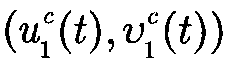
在F0和Fc处捕获的图像分别为初始图像和当前图像。其中,
Figure BSA00001512519300000322
的当前图像坐标由
Figure BSA00001512519300000330
表示。Furthermore, compared to
Figure BSA00001512519300000321
The images captured at F 0 and F c are the initial image and the current image, respectively. in,
Figure BSA00001512519300000322
The current image coordinates of are given by
Figure BSA00001512519300000330
express.

不失一般性,假设

Figure BSA00001512519300000323
在机器人运动平面的上方,即Y1 c<0。根据摄像机的成像原理,可得:Without loss of generality, suppose
Figure BSA00001512519300000323
Above the robot motion plane, ie Y 1 c <0. According to the imaging principle of the camera, we can get:

Figure BSA00001512519300000324

其中(u0,v0)为像素主点,f表示焦距,du,dv为单个像素块分别在xc,yc方向上的长度,经过变换得到:where (u 0 , v 0 ) is the main point of the pixel, f represents the focal length, d u , d v are the lengths of a single pixel block in the x c , y c directions respectively, which are obtained after transformation:

Figure BSA00001512519300000325

其中fu,fv是以像素大小表示的焦距。由于缺乏场景深度,因而无法估计出mc(t),只能估计出比例意义下的值:where f u , f v are focal lengths expressed in pixel size. Due to the lack of scene depth, m c (t) cannot be estimated, only in a scale sense:

Figure BSA00001512519300000326

根据

Figure BSA00001512519300000327
在当前图像上的坐标,通过摄像机的成像原理可以直接计算得到αc(t):according to
Figure BSA00001512519300000327
The coordinates on the current image can be directly calculated by the imaging principle of the camera to obtain α c (t):

Figure BSA00001512519300000328

通过当前和初始图像,可以计算出

Figure BSA0000151251930000041
Figure BSA0000151251930000042
之间的摄影单应矩阵G(t)为:From the current and initial images, it is possible to calculate
Figure BSA0000151251930000041
and
Figure BSA0000151251930000042
The photographic homography matrix G(t) between is:

Figure BSA0000151251930000043

其中

Figure BSA0000151251930000044
分别是相对于
Figure BSA0000151251930000045
Figure BSA0000151251930000046
Figure BSA00001512519300000455
的齐次图像坐标,λi(t)是与深度比有关的系数,并定义G(t)为:in
Figure BSA0000151251930000044
respectively relative to
Figure BSA0000151251930000045
and
Figure BSA0000151251930000046
of
Figure BSA00001512519300000455
The homogeneous image coordinates of , λ i (t) are coefficients related to the depth ratio, and define G(t) as:

Figure BSA0000151251930000047

其中定义

Figure BSA0000151251930000048
为以
Figure BSA0000151251930000049
表示的特征平面的正单位矢量;K是校准摄像机内参数;
Figure BSA00001512519300000410
0Tc(t)分别是
Figure BSA00001512519300000411
相对于
Figure BSA00001512519300000412
的旋转矩阵和平移向量;
Figure BSA00001512519300000413
是从
Figure BSA00001512519300000414
的原点到沿着nc(t)的特征平面的未知距离。然后,nc(t)可以通过单应性分解算法来计算。which defines
Figure BSA0000151251930000048
for
Figure BSA0000151251930000049
The positive unit vector of the represented feature plane; K is the calibration camera internal parameter;
Figure BSA00001512519300000410
and 0 T c (t) are respectively
Figure BSA00001512519300000411
relative to
Figure BSA00001512519300000412
The rotation matrix and translation vector of ;
Figure BSA00001512519300000413
From
Figure BSA00001512519300000414
The unknown distance from the origin of , to the feature plane along nc( t ). Then, n c (t) can be calculated by the homography decomposition algorithm.

由于xb坐标轴定义为特征点平面与机器人运动平面相交线方向,可知nc(t)垂直于xb坐标轴,并且可知nc(t)在机器人运动平面zcxc的投影与zb坐标轴方向一致。进而可以计算出机器人的方向角θc(t)为:Since the x b coordinate axis is defined as the direction of the intersection line between the feature point plane and the robot motion plane, it can be known that n c (t) is perpendicular to the x b coordinate axis, and it can be known that the projection of n c (t) on the robot motion plane z c x c is the same as z The direction of the b coordinate axis is the same. Then, the direction angle θ c (t) of the robot can be calculated as:

Figure BSA00001512519300000415

然后,得到φc(t)为:Then, φ c (t) is obtained as:

φc=αcc (9)φ ccc (9)

因此,可以得到比例意义下的机器人当前位姿

Figure BSA00001512519300000416
Therefore, the current pose of the robot in the proportional sense can be obtained
Figure BSA00001512519300000416

第3,临时坐标系的镇定3. Stabilization of the temporary coordinate system

为将机器人镇定到临时坐标系

Figure BSA00001512519300000417
处,需要在
Figure BSA00001512519300000418
下定义
Figure BSA00001512519300000419
处对应的机器人位姿。此外,由于场景深度的缺失,设置
Figure BSA00001512519300000420
处的位姿为比例形式:
Figure BSA00001512519300000421
其中
Figure BSA00001512519300000422
To stabilize the robot to a temporary coordinate system
Figure BSA00001512519300000417
, need to be in
Figure BSA00001512519300000418
Define
Figure BSA00001512519300000419
the corresponding robot pose. Furthermore, due to the lack of scene depth, setting
Figure BSA00001512519300000420
The pose at is proportional:
Figure BSA00001512519300000421
in
Figure BSA00001512519300000422

要注意的是,设置

Figure BSA00001512519300000423
意味着使机器人运动到与
Figure BSA00001512519300000424
高度的某一比例值处。此外,设置αd1=0,φd1=0时表明机器人将正面面向特征平面,这对于探索未知目标是非常有实际意义的。Note that setting
Figure BSA00001512519300000423
means moving the robot to the
Figure BSA00001512519300000424
at a certain percentage of the height. In addition, setting α d1 =0 and φ d1 =0 indicates that the robot will face the feature plane, which is very meaningful for exploring unknown targets.

在本阶段中,首先求取

Figure BSA00001512519300000425
Figure BSA00001512519300000426
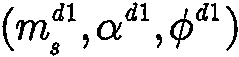
之间的极坐标关系。之后根据移动机器人的运动学方程,设计基于极坐标的镇定控制律。并根据并发学习策略,设计能辨识未知特征点高度Y1 c的自适应更新律。进而在将移动机器人从
Figure BSA00001512519300000427
镇定至
Figure BSA00001512519300000428
处的过程中,同时将特征点高度Y1 c辨识出。In this stage, the first
Figure BSA00001512519300000425
and
Figure BSA00001512519300000426
Polar coordinate relationship between. Then, according to the kinematic equation of the mobile robot, a stabilization control law based on polar coordinates is designed. According to the concurrent learning strategy, an adaptive update law that can identify the unknown feature point height Y 1 c is designed. and then moving the robot from
Figure BSA00001512519300000427
calm to
Figure BSA00001512519300000428
At the same time, the height Y 1 c of the feature point is identified.

第3.1,

Figure BSA00001512519300000429
Figure BSA00001512519300000430
下的极坐标表示Section 3.1,
Figure BSA00001512519300000429
exist
Figure BSA00001512519300000430
The polar coordinates below

设置完

Figure BSA00001512519300000431
的位姿后,可以直接计算出
Figure BSA00001512519300000432
Figure BSA00001512519300000433
下的方向角为:θd1(t)=φd1(t)-αd1(t)。通过坐标变换律,利用
Figure BSA00001512519300000434
Figure BSA00001512519300000435
之间以及
Figure BSA00001512519300000436
Figure BSA00001512519300000437
之间的变换矩阵,可以得到
Figure BSA00001512519300000438
Figure BSA00001512519300000439
之间的变换矩阵
Figure BSA00001512519300000440
set
Figure BSA00001512519300000431
After the pose, it can be directly calculated
Figure BSA00001512519300000432
exist
Figure BSA00001512519300000433
The lower direction angle is: θ d1 (t)=φ d1 (t)−α d1 (t). Through the law of coordinate transformation, using
Figure BSA00001512519300000434
and
Figure BSA00001512519300000435
between and
Figure BSA00001512519300000436
and
Figure BSA00001512519300000437
The transformation matrix between can be obtained
Figure BSA00001512519300000438
and
Figure BSA00001512519300000439
transformation matrix between
Figure BSA00001512519300000440

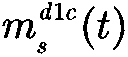
附图4显示了

Figure BSA00001512519300000441
Figure BSA00001512519300000442
之间的坐标变换关系,其中θd1c(t)表示
Figure BSA00001512519300000443
Figure BSA00001512519300000444
下的旋转角,图中的角度为负。φd1c(t)表示zd1轴与从
Figure BSA00001512519300000445
Figure BSA00001512519300000446
的平移向量之间的角度,图中的角度为正。αc(t)表示zc轴与从
Figure BSA00001512519300000447
Figure BSA00001512519300000448
的平移向量之间的角度,在图中为正值。
Figure BSA00001512519300000449
表示比例意义下的
Figure BSA00001512519300000450
原点与
Figure BSA00001512519300000451
原点之间的距离:Figure 4 shows
Figure BSA00001512519300000441
and
Figure BSA00001512519300000442
The coordinate transformation relationship between, where θ d1c (t) represents
Figure BSA00001512519300000443
exist
Figure BSA00001512519300000444
The angle of rotation below, the angle in the figure is negative. φ d1c (t) represents the z d1 axis and from
Figure BSA00001512519300000445
arrive
Figure BSA00001512519300000446
The angle between the translation vectors of , which is positive in the figure. α c (t) represents the z c -axis and from
Figure BSA00001512519300000447
arrive
Figure BSA00001512519300000448
The angle between the translation vectors of , positive in the figure.
Figure BSA00001512519300000449
in the sense of proportion
Figure BSA00001512519300000450
origin with
Figure BSA00001512519300000451
Distance between origins:

Figure BSA00001512519300000452

然后,根据如下公式,可以从

Figure BSA00001512519300000453
中提取θd1c(t),
Figure BSA00001512519300000454
和φd1c(t):Then, according to the following formula, from
Figure BSA00001512519300000453
extract θ d1c (t) from
Figure BSA00001512519300000454
and φ d1c (t):

θd1c=θcd1 (11)θ d1c = θ c - θ d1 (11)

Figure BSA0000151251930000051

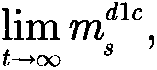
Figure BSA0000151251930000052

并且可以计算出αd1c(t):αd1c(t)=φd1c(t)-θd1c(t)。And α d1c (t) can be calculated: α d1c (t)=φ d1c (t)−θ d1c (t).

因此,可测得

Figure BSA0000151251930000053
Figure BSA0000151251930000054
下的比例意义下极坐标
Figure BSA0000151251930000055
将其设置为阶段一的系统误差。Therefore, it can be measured
Figure BSA0000151251930000053
exist
Figure BSA0000151251930000054
Polar coordinates in the sense of scale under
Figure BSA0000151251930000055
Set it to the systematic error of phase one.

第3.2,建立机器人运动学方程Section 3.2, Establishing Robot Kinematics Equations

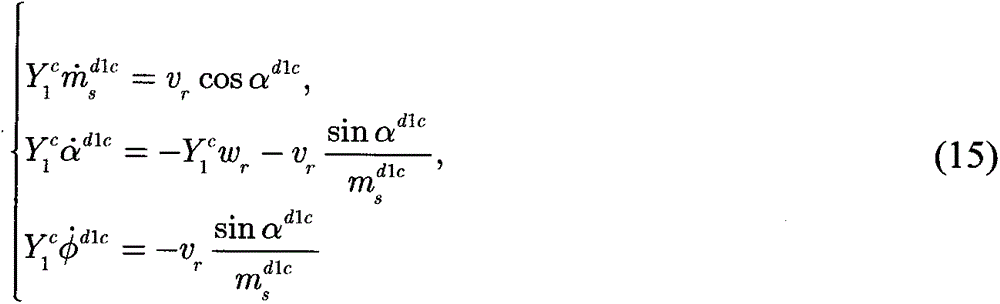
Figure BSA0000151251930000056
下,利用极坐标表示的移动机器人当前位姿(md1c(t),αd1c(t),φd1c(t))的运动学方程为:exist
Figure BSA0000151251930000056
Next, the kinematics equation of the current pose (m d1c (t), α d1c (t), φ d1c (t)) of the mobile robot represented by polar coordinates is:

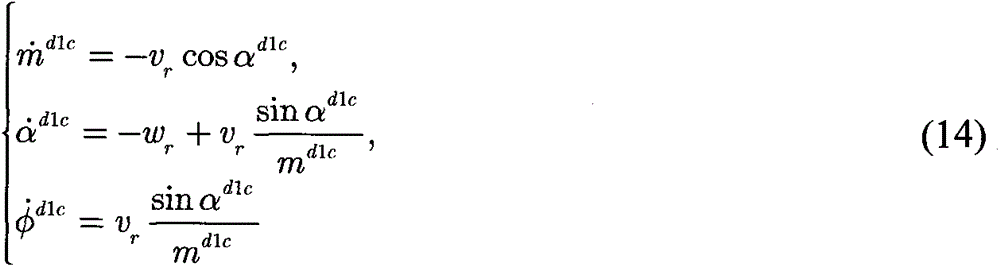
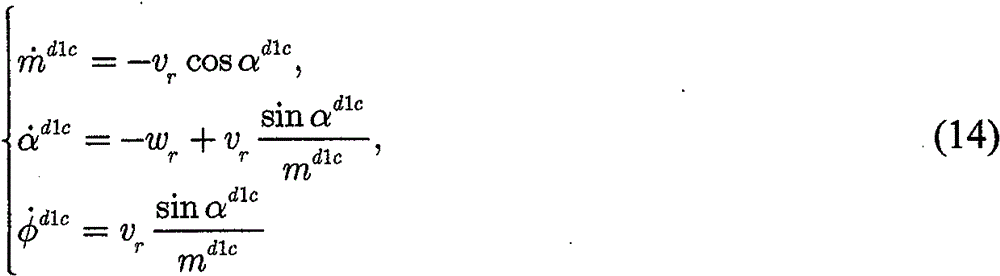
Figure BSA0000151251930000057

其中vr(t)和ωr(t)分别代表机器人的线速度和角速度。where v r (t) and ω r (t) represent the linear and angular velocities of the robot, respectively.

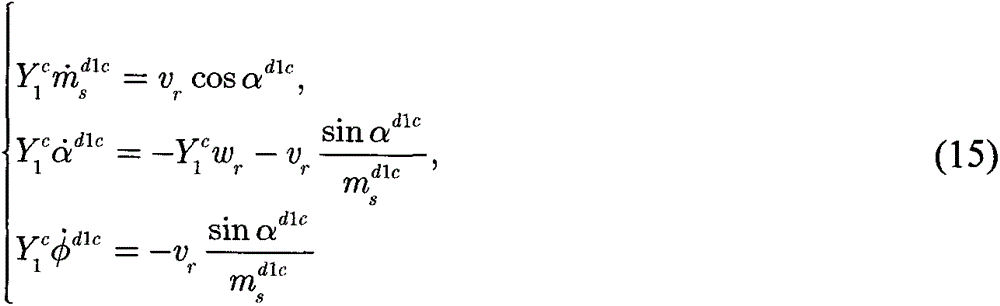
由于机器人位姿只能按比例的方式进行测量,所以可以在(10)带入(14)之后,得到移动机器人模型在比例意义下的运动学方程为:Since the robot pose can only be measured in a proportional way, after (10) is brought into (14), the kinematics equation of the mobile robot model in the sense of scale can be obtained as:

Figure BSA0000151251930000058

易知,当

Figure BSA0000151251930000059
收敛至零时,移动机器人到达临时期望位姿
Figure BSA00001512519300000510
处。easy to know, when
Figure BSA0000151251930000059
When it converges to zero, the mobile robot reaches the temporary desired pose
Figure BSA00001512519300000510
place.

第3.3,自适应控制律设计Section 3.3, Adaptive Control Law Design

为了实现位姿镇定的目标,通过基于李雅普诺夫的控制设计方法构建移动机器人的线速度和角速度如下:In order to achieve the goal of pose stabilization, the linear and angular velocities of the mobile robot are constructed by the control design method based on Lyapunov as follows:

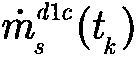
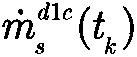
Figure BSA00001512519300000511

Figure BSA00001512519300000512

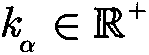
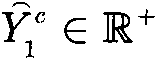
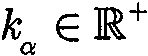
其中km,kφ

Figure BSA00001512519300000513
为正控制增益,
Figure BSA00001512519300000514
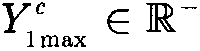
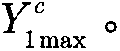
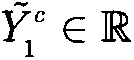
表示特征高度Y1 c(t)的估值。由于sinαd1c(t)/αd1c(t)是有界的,因此没有奇异点。where k m , k φ ,
Figure BSA00001512519300000513
is the positive control gain,
Figure BSA00001512519300000514
represents an estimate of the feature height Y 1 c (t). Since sinα d1c (t)/α d1c (t) is bounded, there are no singularities.

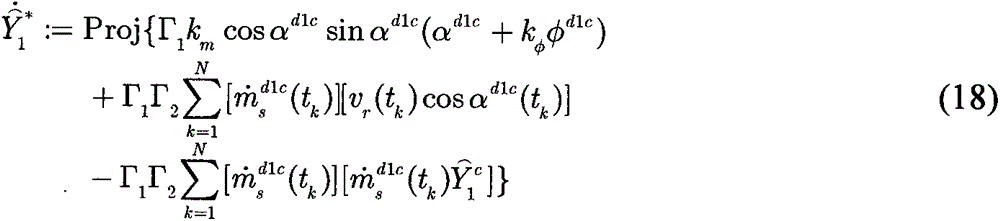
根据并发学习方法,设计自适应更新律为:According to the concurrent learning method, the adaptive update law is designed as:

Figure BSA00001512519300000515

其中

Figure BSA00001512519300000516
为更新增益。在式(18)中,
Figure BSA00001512519300000517
是一个正整数,表示控制系统启动阶段一之后的连续采样周期数,其中记录了系统数据,tk∈[0,t]是每个采样周期对应的时间点。in
Figure BSA00001512519300000516
to update the gain. In formula (18),
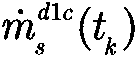
Figure BSA00001512519300000517
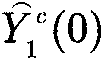
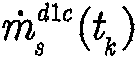
is a positive integer, indicating the number of consecutive sampling periods after the control system start-up phase one, in which system data is recorded, and t k ∈ [0, t] is the time point corresponding to each sampling period.

应该注意的是,由于在自适应更新律的并发学习方法中用到了N个采样周期中记录的数据,所以当使用滤波器时就可以得到

Figure BSA0000151251930000061
的精确估值。因此,可以显著提高参数估计的精度。It should be noted that since the data recorded in N sampling periods is used in the concurrent learning method of the adaptive update law, when using the filter, it is possible to obtain
Figure BSA0000151251930000061
accurate valuation. Therefore, the accuracy of parameter estimation can be significantly improved.

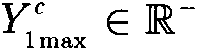
投影函数Proj{χ}定义为:The projection function Proj{χ} is defined as:

Figure BSA0000151251930000062

其中

Figure BSA0000151251930000063
是Y1 c的负下限。in
Figure BSA0000151251930000063
is the negative lower bound of Y 1 c .

首先,选取

Figure BSA0000151251930000064
的初值应小于
Figure BSA0000151251930000065
然后,从式(19)可知
Figure BSA0000151251930000066
最后,可以得出结论:First, choose
Figure BSA0000151251930000064
The initial value should be less than
Figure BSA0000151251930000065
Then, from equation (19), it can be known that
Figure BSA0000151251930000066
Finally, it can be concluded that:

Figure BSA0000151251930000067

其中

Figure BSA0000151251930000068
表示为深度估计误差:in
Figure BSA0000151251930000068
Expressed as depth estimation error:

Figure BSA0000151251930000069

因此,可知当

Figure BSA00001512519300000610
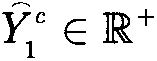
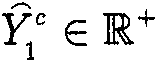
趋于零时,成功识别特征高度。Therefore, it can be seen that when
Figure BSA00001512519300000610
As it approaches zero, the feature height is successfully identified.

定理1:当满足如下条件时,控制律(16)和(17)与参数更新律(18)一起将机器人镇定到临时期望位姿:Theorem 1: The control laws (16) and (17) together with the parameter update law (18) stabilize the robot to a temporary desired pose when the following conditions are met:

Figure BSA00001512519300000611

第4,期望位姿的镇定4. Calmness of the desired pose

在第一阶段后,移动机器人到达临时位姿

Figure BSA00001512519300000612
处,并且同时辨识特征高度Y1 c。因此,根据式(4),(5)和(9)可以得到移动机器人的全状态信息为:(mc(t),αc(t),φc(t))。After the first stage, the mobile robot reaches a temporary pose
Figure BSA00001512519300000612
, and at the same time identify the feature height Y 1 c . Therefore, according to equations (4), (5) and (9), the full state information of the mobile robot can be obtained as: (m c (t), α c (t), φ c (t)).

对于实际使用中,在笛卡尔坐标系下相对于

Figure BSA00001512519300000613
设置
Figure BSA00001512519300000614
的期望位姿为(bTd2zbTd2x,θd2),其中bTd2zbTd2x分别表示在
Figure BSA00001512519300000615
下的
Figure BSA00001512519300000616
原点的z轴和x轴坐标。For practical use, in the Cartesian coordinate system relative to
Figure BSA00001512519300000613
set up
Figure BSA00001512519300000614
The desired pose of is ( b T d2z , b T d2x , θ d2 ), where b T d2z and b T d2x are expressed in
Figure BSA00001512519300000615
down
Figure BSA00001512519300000616
The z- and x-coordinates of the origin.

不失一般性,在此阶段中采用了基于极坐标的控制方法。其中,由(md2,αd2,φd2)表示

Figure BSA00001512519300000617
Figure BSA00001512519300000618
下的极坐标,并根据如下方式从(bTd2zbTd2x,θd2)中获得:Without loss of generality, a polar coordinate based control method is adopted in this stage. where, represented by (m d2 , α d2 , φ d2 )
Figure BSA00001512519300000617
exist
Figure BSA00001512519300000618
and obtained from ( b T d2z , b T d2x , θ d2 ) according to:

Figure BSA00001512519300000619

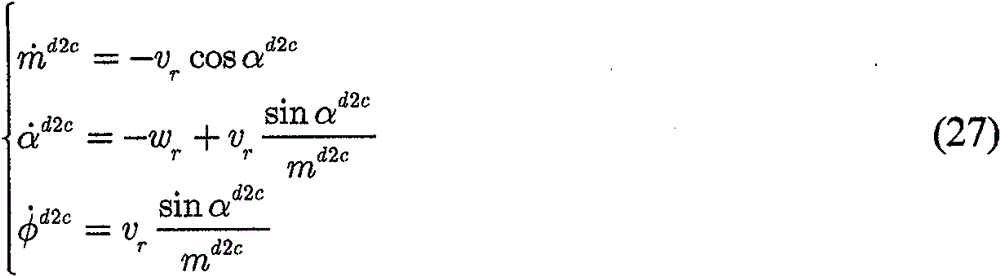
此外,与第3.2中的方法类似,(md2c(t),αd2c(t),φd2c(t))表示

Figure BSA00001512519300000620
Figure BSA00001512519300000621
下的极坐标。类似于(11)、(25)和(26),将其设置为阶段二的系统误差。然后,根据如下公式,可以从(mc(t),αc(t),φc(t))和(md2,αd2,φd2)中得到(md2c(t),αd2c(t),φd2c(t)):Furthermore, similar to the method in Section 3.2, (m d2c (t), α d2c (t), φ d2c (t)) means
Figure BSA00001512519300000620
exist
Figure BSA00001512519300000621
polar coordinates below. Similar to (11), (25) and (26), it is set as the systematic error of stage two. Then, according to the following formula , (m d2c ( t ) , α d2c ( t), φ d2c (t)):

θd2c=θcd2 (24)θ d2c = θ c - θ d2 (24)

Figure BSA00001512519300000622

Figure BSA00001512519300000623

并且可以计算出αd2c(t):αd2c(t)=φd2c(t)-θd2c(t)。And α d2c (t) can be calculated: α d2c (t)=φ d2c (t)−θ d2c (t).

与(14)类似,在

Figure BSA00001512519300000624
下,移动机器人当前位姿(md2c(t),αd2c(t),φd2c(t))的运动学方程为:Similar to (14), in
Figure BSA00001512519300000624
Below, the kinematic equation of the current pose (m d2c (t), α d2c (t), φ d2c (t)) of the mobile robot is:

Figure BSA0000151251930000071

并利用如下控制律将机器人镇定到期望位姿

Figure BSA0000151251930000072
处:And use the following control law to stabilize the robot to the desired pose
Figure BSA0000151251930000072
At:

vr=kmmd2ccosαd2c (28)v r =km m d2c cosα d2c (28)

Figure BSA0000151251930000073

其中系统误差(md2c(t),αd2c(t),φd2c(t))同时收敛至零。where the systematic errors (m d2c (t), α d2c (t), φ d2c (t)) converge to zero at the same time.

本发明的优点和有益效果Advantages and Benefits of the Invention

本发明提供了一种移动机器人的无期望图像视觉伺服方法。本发明主要做出了以下几方面贡献:1.与采用视觉伺服示教模式的现有方法相比,该方案可以在没有预先记录期望图像的情况下将移动机器人镇定到期望位姿处,使移动机器人系统在非结构化场景中的运行变得更加智能可靠;2.当机器人被驱动到临时期望坐标系时,通过并发学习结构辨识特征高度,从而成功地学习了视觉目标模型,并通过视觉系统对外部环境有了很好的认识;3.为了代替期望图像,对视觉目标的所有坐标进行详细定义,为移动机器人定位和位姿镇定提供参考。The present invention provides an undesired image visual servo method for a mobile robot. The present invention mainly makes the following contributions: 1. Compared with the existing method using the visual servo teaching mode, this solution can stabilize the mobile robot to the desired pose without pre-recording the desired image, so that the The operation of the mobile robot system in unstructured scenes becomes more intelligent and reliable; 2. When the robot is driven to the temporary desired coordinate system, the feature height is identified through concurrent learning of the structure, so that the visual target model is successfully learned, and the visual target model is successfully learned. The system has a good understanding of the external environment; 3. In order to replace the desired image, all coordinates of the visual target are defined in detail to provide a reference for the positioning and pose stabilization of the mobile robot.

附图说明:Description of drawings:

图1为无期望图视觉伺服任务的坐标系关系;Fig. 1 is the coordinate system relationship of the undesired graph visual servoing task;

图2为视觉伺服策略框图;Figure 2 is a block diagram of the visual servoing strategy;

图3为基准坐标系的定义;Figure 3 is the definition of the reference coordinate system;

图4为

Figure BSA0000151251930000074
Figure BSA0000151251930000075
之间的坐标变换;Figure 4 is
Figure BSA0000151251930000074
and
Figure BSA0000151251930000075
Coordinate transformation between;

图5为仿真结果:移动机器人的特征点和运动轨迹[加粗三角形:期望和临时期望位姿];Figure 5 shows the simulation results: feature points and motion trajectories of the mobile robot [bold triangle: desired and temporary desired pose];

图6为仿真结果:机器人位姿的变化[实线:机器人位姿;虚线:期望位姿];Figure 6 shows the simulation results: changes in the robot pose [solid line: robot pose; dashed line: desired pose];

图7为仿真结果:由参数更新律(18)得到的

Figure BSA0000151251930000076
变化[实线:
Figure BSA0000151251930000077
的值;虚线:Y1 c(t)的真值];Figure 7 shows the simulation results: obtained by the parameter update law (18)
Figure BSA0000151251930000076
Changes [solid line:
Figure BSA0000151251930000077
value of ; dotted line: true value of Y 1 c (t)];

图8表示实验结果:移动机器人的运动轨迹[加粗三角形:两个阶段的期望和临时期望位姿];Figure 8 shows the experimental results: the motion trajectory of the mobile robot [bold triangle: desired and temporary desired poses in two stages];

图9表示实验结果:机器人位姿的变化[实线:机器人位姿;虚线:期望值(0)];Figure 9 shows the experimental results: the change of the robot pose [solid line: robot pose; dashed line: expected value (0)];

图10表示实验结果:两个阶段的系统误差的变化[实线:误差值;虚线:期望值(0)];Fig. 10 shows the experimental results: the variation of the systematic error in two stages [solid line: error value; dashed line: expected value (0)];

图11表示实验结果:通过参数更新律得到的

Figure BSA0000151251930000078
的变化[实线:
Figure BSA0000151251930000079
的值;虚线:通过视觉估计算法计算的Y1 c];Figure 11 shows the experimental results: obtained by the parameter update law
Figure BSA0000151251930000078
Variation [solid line:
Figure BSA0000151251930000079
The value of ; dotted line: Y 1 c calculated by the visual estimation algorithm];

图12表示实验结果:移动机器人的速度;Figure 12 shows the experimental results: the speed of the mobile robot;

图13表示实验结果:特征点的图像轨迹[星点:阶段一的最终图像;方形点:阶段二的最终图像];Figure 13 shows the experimental results: image trajectories of feature points [star points: final image of stage one; square points: final image of stage two];

具体实施方式:Detailed ways:

实施例1Example 1

第1,定义系统坐标系First, define the system coordinate system

第1.1,系统坐标系的描述Section 1.1, Description of the System Coordinate System

基于视觉目标定义了基准坐标系

Figure BSA00001512519300000710
设置摄像机与移动机器人的坐标系相重合,进而定义在当前位姿处的机器人/摄像机坐标系为
Figure BSA00001512519300000711
其中
Figure BSA00001512519300000712
的原点在摄像机的光心位置处,也即车轮轴线中心点的正上方;
Figure BSA0000151251930000081
的zc轴与摄像机光轴重合,同时也和机器人前进方向重合,xc轴和机器人轮轴平行;yc轴垂直于zcxc平面。定义
Figure BSA0000151251930000082
表示摄像机当前位姿坐标系。The reference coordinate system is defined based on the vision target
Figure BSA00001512519300000710
Set the coordinate system of the camera and the mobile robot to coincide, and then define the coordinate system of the robot/camera at the current pose as
Figure BSA00001512519300000711
in
Figure BSA00001512519300000712
The origin of the camera is at the position of the optical center of the camera, that is, just above the center point of the wheel axis;
Figure BSA0000151251930000081
The z c axis of the camera coincides with the optical axis of the camera, and also coincides with the forward direction of the robot. The x c axis is parallel to the robot wheel axis; the y c axis is perpendicular to the z c x c plane. definition
Figure BSA0000151251930000082
Indicates the current pose coordinate system of the camera.

Figure BSA0000151251930000083
表示未预先获取期望图的期望坐标系,为了便于控制开发,引入
Figure BSA0000151251930000084
表示比例意义下的临时坐标系。by
Figure BSA0000151251930000083
Indicates the desired coordinate system for which the desired graph is not pre-obtained. In order to facilitate control development, introduce
Figure BSA0000151251930000084
Represents a temporary coordinate system in the scale sense.

第1.2,控制方案Section 1.2, Control Scheme

根据坐标系定义,本文的目的是提出一种新颖的视觉伺服方案来驱动移动机器人,使坐标系

Figure BSA0000151251930000085
与坐标系
Figure BSA0000151251930000086
一致。附图2给出了所提供方案的框图。首先,利用视觉目标和平面运动约束来定义坐标系
Figure BSA0000151251930000087
然后利用当前和初始图像来计算相对于坐标系
Figure BSA0000151251930000088
的比例意义下的机器人位姿。According to the coordinate system definition, the purpose of this paper is to propose a novel visual servoing scheme to drive the mobile robot so that the coordinate system
Figure BSA0000151251930000085
and coordinate system
Figure BSA0000151251930000086
Consistent. Figure 2 presents a block diagram of the proposed scheme. First, define a coordinate system with vision targets and planar motion constraints
Figure BSA0000151251930000087
Then use the current and initial images to calculate the relative coordinate system
Figure BSA0000151251930000088
The robot pose in the sense of scale.

在阶段1中,首先为移动机器人的临时镇定设置比例意义下的期望位姿。然后通过极坐标系表示方法设计自适应调节控制器,以将机器人镇定至坐标系

Figure BSA0000151251930000089
处。接着,根据并发学习结构为特征高度辨识构建参数更新律。通过稳定性分析得以证明,在进行位姿调节时,能够同时确定特征高度。In stage 1, the desired pose in the scale sense is first set for the temporal stabilization of the mobile robot. Then an adaptive tuning controller is designed by the polar coordinate system representation method to stabilize the robot to the coordinate system
Figure BSA0000151251930000089
place. Next, a parameter update law is constructed for feature height identification according to the concurrent learning structure. It is proved by stability analysis that the feature height can be determined at the same time when the pose adjustment is performed.

在阶段2中,利用辨识特征高度来获取移动机器人的全状态信息。然后,采用基于极坐标的调节控制器来驱动机器人到

Figure BSA00001512519300000810
表示下的期望位姿处。In stage 2, the full state information of the mobile robot is obtained by using the height of the identified feature. Then, a polar coordinate-based tuning controller is used to drive the robot to
Figure BSA00001512519300000810
represents the desired pose.

第2,构造系统模型Second, construct the system model

第2.1,基准坐标系的定义Section 2.1, Definition of Datum Coordinate System

基于视觉目标定义基准坐标系,其要求特征点

Figure BSA00001512519300000811
应该是共面的,如附图3所示。在不失一般性的情况下,选择
Figure BSA00001512519300000812
来表示参数特征点。利用垂直于机器人运动平面且过点
Figure BSA00001512519300000813
的直线来定义坐标系
Figure BSA00001512519300000814
的yb轴,并且设置yb的方向与坐标系
Figure BSA00001512519300000815
的yc轴的方向一致。其中,
Figure BSA00001512519300000816
的原点是yb与zcxc平面的交点。Define the reference coordinate system based on the visual target, which requires feature points
Figure BSA00001512519300000811
Should be coplanar, as shown in Figure 3. Without loss of generality, choose
Figure BSA00001512519300000812
to represent the parameter feature points. Use a point that is perpendicular to the robot motion plane and passes through the
Figure BSA00001512519300000813
line to define the coordinate system
Figure BSA00001512519300000814
y b axis, and set the direction and coordinate system of y b
Figure BSA00001512519300000815
The directions of the y and c axes are the same. in,
Figure BSA00001512519300000816
The origin of is the intersection of y b with the z c x c plane.

zcxc平面与特征平面的交线定义为xb轴。定义zb的方向与

Figure BSA00001512519300000817
相对于图像平面的方向相反。然后,通过标准右手规则定义xb轴的方向和zb轴。The intersection of the z c x c plane with the feature plane is defined as the x b axis. Define the direction of z b with
Figure BSA00001512519300000817
The direction is opposite relative to the image plane. Then, the orientation of the x b axis and the z b axis are defined by the standard right-hand rule.

基于坐标系

Figure BSA00001512519300000818
的定义,可以用极坐标表示移动机器人的当前位姿。
Figure BSA00001512519300000819
的原点和
Figure BSA00001512519300000820
的原点之间的距离标记为mc(t)。
Figure BSA00001512519300000821
Figure BSA00001512519300000822
下的旋转角度表示为θc(t),即移动机器人的朝向角。以φc(t)表示zb轴与从
Figure BSA00001512519300000823
Figure BSA00001512519300000824
的平移向量之间的角度,αc(t)表示zc轴与从
Figure BSA00001512519300000825
Figure BSA00001512519300000826
的平移向量之间的角度,因此αc(t)=φc(t)-θc(t)。此外,αc(t),φc(t),θc(t)的方向也被标记,并且在附图3中的角度为正值。因此,机器人的位姿可表示为(mc(t),αc(t),φc(t))。based on the coordinate system
Figure BSA00001512519300000818
The definition of , can use polar coordinates to represent the current pose of the mobile robot.
Figure BSA00001512519300000819
the origin and
Figure BSA00001512519300000820
The distance between the origins of is marked as m c (t).
Figure BSA00001512519300000821
exist
Figure BSA00001512519300000822
The rotation angle under θ is denoted as θ c (t), which is the orientation angle of the mobile robot. Denote the z b -axis by φ c (t) and from
Figure BSA00001512519300000823
arrive
Figure BSA00001512519300000824
The angle between the translation vectors of , α c (t) represents the z c axis and the
Figure BSA00001512519300000825
arrive
Figure BSA00001512519300000826
The angle between the translation vectors of , so α c (t) = φ c (t) - θ c (t). In addition, the directions of α c (t), φ c (t), θ c (t) are also marked, and the angles in FIG. 3 are positive values. Therefore, the pose of the robot can be expressed as (m c (t), α c (t), φ c (t)).

第2.2,可测量信号Section 2.2, Measurable Signals

根据基准坐标系的定义,定义

Figure BSA00001512519300000827
Figure BSA00001512519300000828
Figure BSA00001512519300000829
下的坐标分别为:According to the definition of the base coordinate system, define
Figure BSA00001512519300000827
exist
Figure BSA00001512519300000828
and
Figure BSA00001512519300000829
The coordinates below are:

Figure BSA00001512519300000830

利用移动机器人的平面运动约束,可知Y1 b=Y1 c且为恒值。Using the plane motion constraint of the mobile robot, it can be known that Y 1 b =Y 1 c and it is a constant value.

此外,相对于

Figure BSA00001512519300000831
在F0和Fc处捕获的图像分别为初始图像和当前图像。其中,
Figure BSA00001512519300000832
的当前图像坐标由
Figure BSA00001512519300000835
表示。Furthermore, compared to
Figure BSA00001512519300000831
The images captured at F 0 and F c are the initial image and the current image, respectively. in,
Figure BSA00001512519300000832
The current image coordinates of are given by
Figure BSA00001512519300000835
express.

不失一般性,假设

Figure BSA00001512519300000833
在机器人运动平面的上方,即Y1 c<0。根据摄像机的成像原理,可得:Without loss of generality, suppose
Figure BSA00001512519300000833
Above the robot motion plane, ie Y 1 c <0. According to the imaging principle of the camera, we can get:

Figure BSA00001512519300000834

其中(u0,v0)为像素主点,f表示焦距,du,dv为单个像素块分别在xc,yc方向上的长度,经过变换得到:where (u 0 , v 0 ) is the main point of the pixel, f represents the focal length, d u , d v are the lengths of a single pixel block in the x c , y c directions respectively, which are obtained after transformation:

Figure BSA0000151251930000091

其中fu,fv是以像素大小表示的焦距。由于缺乏场景深度,因而无法估计出mc(t),只能估计出比例意义下的值:where f u , f v are focal lengths expressed in pixel size. Due to the lack of scene depth, m c (t) cannot be estimated, only in a scale sense:

Figure BSA0000151251930000092

根据

Figure BSA0000151251930000093
在当前图像上的坐标,通过摄像机的成像原理可以直接计算得到αc(t):according to
Figure BSA0000151251930000093
The coordinates on the current image can be directly calculated by the imaging principle of the camera to obtain α c (t):

Figure BSA0000151251930000094

通过当前和初始图像,可以计算出

Figure BSA0000151251930000095
Figure BSA0000151251930000096
之间的摄影单应矩阵G(t)为:From the current and initial images, it is possible to calculate
Figure BSA0000151251930000095
and
Figure BSA0000151251930000096
The photographic homography matrix G(t) between is:

Figure BSA0000151251930000097

其中

Figure BSA0000151251930000098
分别是相对于
Figure BSA0000151251930000099
Figure BSA00001512519300000910
Figure BSA00001512519300000911
的齐次图像坐标,λi(t)是与深度比有关的系数,并定义G(t)为:in
Figure BSA0000151251930000098
respectively relative to
Figure BSA0000151251930000099
and
Figure BSA00001512519300000910
of
Figure BSA00001512519300000911
The homogeneous image coordinates of , λ i (t) are coefficients related to the depth ratio, and define G(t) as:

Figure BSA00001512519300000912

其中定义

Figure BSA00001512519300000913
为以
Figure BSA00001512519300000914
表示的特征平面的正单位矢量;K是校准摄像机内参数;
Figure BSA00001512519300000915
0Tc(t)分别是
Figure BSA00001512519300000916
相对于
Figure BSA00001512519300000917
的旋转矩阵和平移向量;
Figure BSA00001512519300000918
是从
Figure BSA00001512519300000919
的原点到沿着nc(t)的特征平面的未知距离。然后,nc(t)可以通过单应性分解算法来计算。which defines
Figure BSA00001512519300000913
for
Figure BSA00001512519300000914
The positive unit vector of the represented feature plane; K is the calibration camera internal parameter;
Figure BSA00001512519300000915
and 0 T c (t) are respectively
Figure BSA00001512519300000916
relative to
Figure BSA00001512519300000917
The rotation matrix and translation vector of ;
Figure BSA00001512519300000918
From
Figure BSA00001512519300000919
The unknown distance from the origin of , to the feature plane along nc( t ). Then, n c (t) can be calculated by the homography decomposition algorithm.

由于xb坐标轴定义为特征点平面与机器人运动平面相交线方向,可知nc(t)垂直于xb坐标轴,并且可知nc(t)在机器人运动平面zcxc的投影与zb坐标轴方向一致。进而可以计算出机器人的方向角θc(t)为:Since the x b coordinate axis is defined as the direction of the intersection line between the feature point plane and the robot motion plane, it can be known that n c (t) is perpendicular to the x b coordinate axis, and it can be known that the projection of n c (t) on the robot motion plane z c x c is the same as z The direction of the b coordinate axis is the same. Then, the direction angle θ c (t) of the robot can be calculated as:

Figure BSA00001512519300000920

然后,得到φc(t)为:Then, φ c (t) is obtained as:

φc=αcc (9)φ ccc (9)

因此,可以得到比例意义下的机器人当前位姿

Figure BSA00001512519300000921
Therefore, the current pose of the robot in the proportional sense can be obtained
Figure BSA00001512519300000921

第3,临时坐标系的镇定3. Stabilization of the temporary coordinate system

为将机器人镇定到临时坐标系

Figure BSA00001512519300000922
处,需要在
Figure BSA00001512519300000923
下定义
Figure BSA00001512519300000924
处对应的机器人位姿。此 外,由于场景深度的缺失,设置
Figure BSA00001512519300000925
处的位姿为比例形式:
Figure BSA00001512519300000926
其中
Figure BSA00001512519300000927
To stabilize the robot to a temporary coordinate system
Figure BSA00001512519300000922
, need to be in
Figure BSA00001512519300000923
Define
Figure BSA00001512519300000924
the corresponding robot pose. Furthermore, due to the lack of scene depth, setting
Figure BSA00001512519300000925
The pose at is proportional:
Figure BSA00001512519300000926
in
Figure BSA00001512519300000927

要注意的是,设置

Figure BSA00001512519300000928
意味着使机器人运动到与
Figure BSA00001512519300000929
高度的某一比例值处。此外,设置αd1=0,φd1=0时表明机器人将正面面向特征平面,这对于探索未知目标是非常有实际意义的。Note that setting
Figure BSA00001512519300000928
means moving the robot to the
Figure BSA00001512519300000929
at a certain percentage of the height. In addition, setting α d1 =0 and φ d1 =0 indicates that the robot will face the feature plane, which is very meaningful for exploring unknown targets.

在本阶段中,首先求取

Figure BSA00001512519300000930
Figure BSA00001512519300000931
之间的极坐标关系。之后根据移动机器人的运动学方程,设计基于极坐标的镇定控制律。并根据并发学习策略,设计能辨识未知特征点高度Y1 c的自适应更新律。进而在将移动机器人从
Figure BSA00001512519300000932
镇定至
Figure BSA00001512519300000933
处的过程中,同时将特征点高度Y1 c辨识出。In this stage, the first
Figure BSA00001512519300000930
and
Figure BSA00001512519300000931
Polar coordinate relationship between. Then, according to the kinematic equation of the mobile robot, a stabilization control law based on polar coordinates is designed. According to the concurrent learning strategy, an adaptive update law that can identify the unknown feature point height Y 1 c is designed. and then moving the robot from
Figure BSA00001512519300000932
calm to
Figure BSA00001512519300000933
At the same time, the height Y 1 c of the feature point is identified.

第3.1,

Figure BSA0000151251930000101
Figure BSA0000151251930000102
下的极坐标表示Section 3.1,
Figure BSA0000151251930000101
exist
Figure BSA0000151251930000102
The polar coordinates below

设置完

Figure BSA0000151251930000103
的位姿后,可以直接计算出
Figure BSA0000151251930000104
Figure BSA0000151251930000105
下的方向角为:θd1(t)=φd1(t)-αd1(t)。通过坐标变换律,利用
Figure BSA0000151251930000106
Figure BSA0000151251930000107
之间以及
Figure BSA0000151251930000108
Figure BSA0000151251930000109
之间的变换矩阵,可以得到
Figure BSA00001512519300001010
Figure BSA00001512519300001011
之间的变换矩阵
Figure BSA00001512519300001012
set
Figure BSA0000151251930000103
After the pose, it can be directly calculated
Figure BSA0000151251930000104
exist
Figure BSA0000151251930000105
The lower direction angle is: θ d1 (t)=φ d1 (t)−α d1 (t). Through the law of coordinate transformation, using
Figure BSA0000151251930000106
and
Figure BSA0000151251930000107
between and
Figure BSA0000151251930000108
and
Figure BSA0000151251930000109
The transformation matrix between can be obtained
Figure BSA00001512519300001010
and
Figure BSA00001512519300001011
transformation matrix between
Figure BSA00001512519300001012

附图4显示了

Figure BSA00001512519300001013
Figure BSA00001512519300001014
之间的坐标变换关系,其中θd1c(t)表示
Figure BSA00001512519300001015
Figure BSA00001512519300001016
下的旋转角,图中的角度为负。φd1c(t)表示zd1轴与从
Figure BSA00001512519300001017
Figure BSA00001512519300001018
的平移向量之间的角度,图中的角度为正。αc(t)表示zc轴与从
Figure BSA00001512519300001019
Figure BSA00001512519300001020
的平移向量之间的角度,在图中为正值。
Figure BSA00001512519300001021
表示比例意义下的
Figure BSA00001512519300001022
原点与
Figure BSA00001512519300001023
原点之间的距离:Figure 4 shows
Figure BSA00001512519300001013
and
Figure BSA00001512519300001014
The coordinate transformation relationship between, where θ d1c (t) represents
Figure BSA00001512519300001015
exist
Figure BSA00001512519300001016
The angle of rotation below, the angle in the figure is negative. φ d1c (t) represents the z d1 axis and from
Figure BSA00001512519300001017
arrive
Figure BSA00001512519300001018
The angle between the translation vectors of , which is positive in the figure. α c (t) represents the z c -axis and from
Figure BSA00001512519300001019
arrive
Figure BSA00001512519300001020
The angle between the translation vectors of , positive in the figure.
Figure BSA00001512519300001021
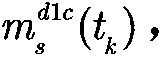
in the sense of proportion
Figure BSA00001512519300001022
origin with
Figure BSA00001512519300001023
Distance between origins:

Figure BSA00001512519300001024

然后,根据如下公式,可以从

Figure BSA00001512519300001025
中提取θd1c(t),
Figure BSA00001512519300001026
和φd1c(t):Then, according to the following formula, from
Figure BSA00001512519300001025
extract θ d1c (t) from
Figure BSA00001512519300001026
and φ d1c (t):

θd1c=θcd1 (11)θ d1c = θ c - θ d1 (11)

Figure BSA00001512519300001027

Figure BSA00001512519300001028

并且可以计算出αd1c(t):αd1c(t)=φd1c(t)-θd1c(t)。And α d1c (t) can be calculated: α d1c (t)=φ d1c (t)−θ d1c (t).

因此,可测得

Figure BSA00001512519300001029
Figure BSA00001512519300001030
下的比例意义下极坐标
Figure BSA00001512519300001031
将其设置为阶段一的系统误差。Therefore, it can be measured
Figure BSA00001512519300001029
exist
Figure BSA00001512519300001030
Polar coordinates in the sense of scale under
Figure BSA00001512519300001031
Set it to the systematic error of phase one.

第3.2,建立机器人运动学方程Section 3.2, Establishing Robot Kinematics Equations

Figure BSA00001512519300001032
下,利用极坐标表示的移动机器人当前位姿(md1c(t),αd1c(t),φd1c(t))的运动学方程为:exist
Figure BSA00001512519300001032
Next, the kinematics equation of the current pose (m d1c (t), α d1c (t), φ d1c (t)) of the mobile robot represented by polar coordinates is:

Figure BSA00001512519300001033

其中vr(t)和ωr(t)分别代表机器人的线速度和角速度。where v r (t) and ω r (t) represent the linear and angular velocities of the robot, respectively.

由于机器人位姿只能按比例的方式进行测量,所以可以在(10)带入(14)之后,得到移动机器人模型在比例意义下的运动学方程为:Since the robot pose can only be measured in a proportional way, after (10) is brought into (14), the kinematics equation of the mobile robot model in the sense of scale can be obtained as:

Figure BSA00001512519300001034

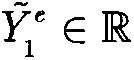
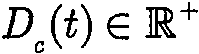
易知,当

Figure BSA00001512519300001035
收敛至零时,移动机器人到达临时期望位姿
Figure BSA00001512519300001036
处。easy to know, when
Figure BSA00001512519300001035
When it converges to zero, the mobile robot reaches the temporary desired pose
Figure BSA00001512519300001036
place.

第3.3,自适应控制律设计Section 3.3, Adaptive Control Law Design

为了实现位姿镇定的目标,通过基于李雅普诺夫的控制设计方法构建移动机器人的线速度和角速度如下:In order to achieve the goal of pose stabilization, the linear and angular velocities of the mobile robot are constructed by the control design method based on Lyapunov as follows:

Figure BSA00001512519300001037

Figure BSA00001512519300001038

其中km,kφ

Figure BSA0000151251930000111
为正控制增益,
Figure BSA0000151251930000112
表示特征高度Y1 c(t)的估值。由于sinαd1c(t)/αd1c(t)是有界的,因此没有奇异点。where k m , k φ ,
Figure BSA0000151251930000111
is the positive control gain,
Figure BSA0000151251930000112
represents an estimate of the feature height Y 1 c (t). Since sinα d1c (t)/α d1c (t) is bounded, there are no singularities.

根据并发学习方法,设计自适应更新律为:According to the concurrent learning method, the adaptive update law is designed as:

Figure BSA0000151251930000113

其中

Figure BSA0000151251930000114
为更新增益。在式(18)中,
Figure BSA0000151251930000115
是一个正整数,表示控制系统启动阶段一之后的连续采样周期数,其中记录了系统数据,tk∈[0,t]是每个采样周期对应的时间点。in
Figure BSA0000151251930000114
to update the gain. In formula (18),
Figure BSA0000151251930000115
is a positive integer, indicating the number of consecutive sampling periods after the control system start-up phase one, in which system data is recorded, and t k ∈ [0, t] is the time point corresponding to each sampling period.

应该注意的是,由于在自适应更新律的并发学习方法中用到了N个采样周期中记录的数据,所以当使用滤波器时就可以得到

Figure BSA0000151251930000116
的精确估值。因此,可以显著提高参数估计的精度。It should be noted that since the data recorded in N sampling periods is used in the concurrent learning method of the adaptive update law, when the filter is used, the
Figure BSA0000151251930000116
accurate valuation. Therefore, the accuracy of parameter estimation can be significantly improved.

投影函数Proj{χ}定义为:The projection function Proj{χ} is defined as:

Figure BSA0000151251930000117

其中

Figure BSA0000151251930000118
是Y1 c的负下限。in
Figure BSA0000151251930000118
is the negative lower bound of Y 1 c .

首先,选取

Figure BSA0000151251930000119
的初值应小于
Figure BSA00001512519300001110
然后,从式(19)可知
Figure BSA00001512519300001111
最后,可以得出结论:First, choose
Figure BSA0000151251930000119
The initial value should be less than
Figure BSA00001512519300001110
Then, from equation (19), it can be known that
Figure BSA00001512519300001111
Finally, it can be concluded that:

Figure BSA00001512519300001112

其中

Figure BSA00001512519300001113
表示为深度估计误差:in
Figure BSA00001512519300001113
Expressed as depth estimation error:

Figure BSA00001512519300001114

因此,可知当

Figure BSA00001512519300001115
趋于零时,成功识别特征高度。Therefore, it can be seen that when
Figure BSA00001512519300001115
As it approaches zero, the feature height is successfully identified.

定理1:当满足如下条件时,控制律(16)和(17)与参数更新律(18)一起将机器人镇定到临时期望位姿:Theorem 1: The control laws (16) and (17) together with the parameter update law (18) stabilize the robot to a temporary desired pose when the following conditions are met:

Figure BSA00001512519300001116

第4,定理1证明Fourth, the proof of Theorem 1

本发明在此给出定理1的证明。The present invention provides a proof of Theorem 1 here.

证明:首先定义Lyapunov候选函数为:Proof: First define the Lyapunov candidate function as:

Figure BSA00001512519300001117

对上式关于时间求导有:The derivative of the above formula with respect to time has:

Figure BSA00001512519300001118

即控制律设计为:That is, the control law is designed as:

Figure BSA00001512519300001119

根据并发学习方法,设计深度辨识的自适应更新律为:According to the concurrent learning method, the adaptive update law for deep identification is designed as:

Figure BSA00001512519300001120

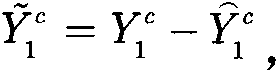
其中定义了深度辨识误差为

Figure BSA0000151251930000121
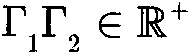
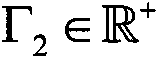
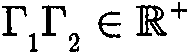
其中Γ1
Figure BSA0000151251930000122
为更新增益,投影函数Proj[χ]定义为:The depth identification error is defined as
Figure BSA0000151251930000121
where Γ 1 ,
Figure BSA0000151251930000122
To update the gain, the projection function Proj[χ] is defined as:

Figure BSA0000151251930000123

因而有

Figure BSA0000151251930000124
Figure BSA0000151251930000125
Figure BSA0000151251930000126
的上界,也就是说
Figure BSA0000151251930000127
的初值的选取要小于
Figure BSA0000151251930000128
进一步,可知:Hence there is
Figure BSA0000151251930000124
which is
Figure BSA0000151251930000125
Yes
Figure BSA0000151251930000126
the upper bound of , that is,
Figure BSA0000151251930000127
The selection of the initial value should be less than
Figure BSA0000151251930000128
Further, it can be seen that:

Figure BSA0000151251930000129

在绝大多数情况下,上式处于“=”状态;符号>出现在Proj[χ]=0的情况。In most cases, the above formula is in the "=" state; the symbol > appears in the case of Proj[χ]=0.

将式(26)代入(24)可得:Substitute equation (26) into (24) to get:

Figure BSA00001512519300001210

将控制律代入,闭环误差方程可写为:Substituting the control law, the closed-loop error equation can be written as:

Figure BSA00001512519300001211

由于设计了投影函数,因而可以保证

Figure BSA00001512519300001233
因此根据式(29)可知V(t)是有界的,即可知
Figure BSA00001512519300001212
αd1c,φd1c
Figure BSA00001512519300001213
进而根据式(25)可知vr,ωr
Figure BSA00001512519300001214
Due to the design of the projection function, it is guaranteed that
Figure BSA00001512519300001233
Therefore, according to formula (29), it can be known that V(t) is bounded, that is, it can be known that
Figure BSA00001512519300001212
α d1c , φ d1c ,
Figure BSA00001512519300001213
Furthermore, according to formula (25), it can be known that v r , ω r ,
Figure BSA00001512519300001214

定义

Figure BSA00001512519300001215
时对应的集合为:
Figure BSA00001512519300001216
根据式(29)可知当
Figure BSA00001512519300001217
时αd1c=0,
Figure BSA00001512519300001218
继而可知
Figure BSA00001512519300001219
根据(26)可知
Figure BSA00001512519300001220
进而
Figure BSA00001512519300001221
之后将这些为0的项代入(30)的第二项,可得Y1 ckekφφd1c=0,因此可以得到φd1c=0。definition
Figure BSA00001512519300001215
The corresponding set is:
Figure BSA00001512519300001216
According to formula (29), it can be seen that when
Figure BSA00001512519300001217
When α d1c =0,
Figure BSA00001512519300001218
then know
Figure BSA00001512519300001219
According to (26) it can be seen that
Figure BSA00001512519300001220
and then
Figure BSA00001512519300001221
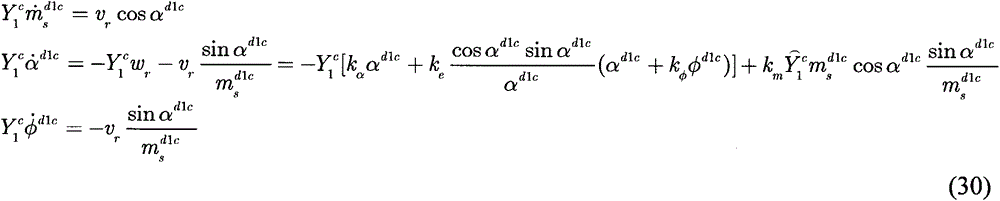
These 0 terms are then substituted into the second term of (30) to obtain Y 1 c k e k φ φ d1c =0, and thus φ d1c =0.

因此可知Θ中的最大不变集M为

Figure BSA00001512519300001222
因此根据拉塞尔不变性原理,可知
Figure BSA00001512519300001223
αd1c,φd1c
Figure BSA00001512519300001224
Therefore, it can be known that the maximum invariant set M in Θ is
Figure BSA00001512519300001222
Therefore, according to the Russell invariance principle, we know that
Figure BSA00001512519300001223
α d1c , φ d1c ,
Figure BSA00001512519300001224

第5,期望位姿的镇定5. Calmness of the desired pose

在第一阶段后,移动机器人到达临时位姿

Figure BSA00001512519300001225
处,并且同时辨识特征高度Y1 c。因此,根据式(4),(5)和(9)可以得到移动机器人的全状态信息为:(mc(t),αc(t),φc(t))。After the first stage, the mobile robot reaches a temporary pose
Figure BSA00001512519300001225
, and at the same time identify the feature height Y 1 c . Therefore, according to equations (4), (5) and (9), the full state information of the mobile robot can be obtained as: (m c (t), α c (t), φ c (t)).

对于实际使用中,在笛卡尔坐标系下相对于

Figure BSA00001512519300001226
设置
Figure BSA00001512519300001227
的期望位姿为(bTd2zbTd2x,θd2),其中bTd2zbTd2x分别表示在
Figure BSA00001512519300001228
下的
Figure BSA00001512519300001229
原点的z轴和x轴坐标。For practical use, in the Cartesian coordinate system relative to
Figure BSA00001512519300001226
set up
Figure BSA00001512519300001227
The desired pose of is ( b T d2z , b T d2x , θ d2 ), where b T d2z and b T d2x are expressed in
Figure BSA00001512519300001228
down
Figure BSA00001512519300001229
The z- and x-coordinates of the origin.

不失一般性,在此阶段中采用了基于极坐标的控制方法。其中,由(md2,αd2,φd2)表示

Figure BSA00001512519300001230
Figure BSA00001512519300001231
下的极坐标,并根据如下方式从(bTd2zbTd2x,θd2)中获得:Without loss of generality, a polar coordinate based control method is adopted in this stage. where, represented by (m d2 , α d2 , φ d2 )
Figure BSA00001512519300001230
exist
Figure BSA00001512519300001231
and obtained from ( b T d2z , b T d2x , θ d2 ) according to:

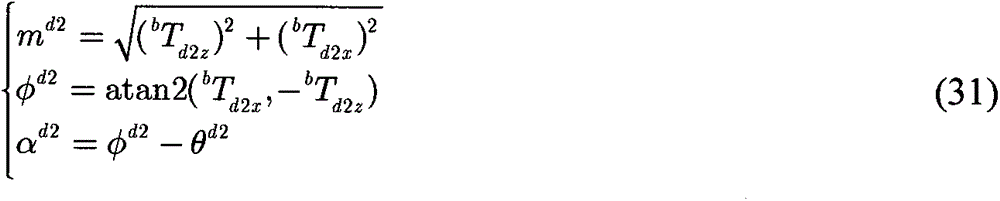
Figure BSA00001512519300001232

此外,与第3.2中的方法类似,(md2c(t),αd2c(t),φd2c(t))表示

Figure BSA0000151251930000131
Figure BSA0000151251930000132
下的极坐标。类似于(11)、(33)和(34),将其设置为阶段二中的系统误差。然后,根据如下公式,可以从(mc(t),αc(t),φc(t))和(md2,αd2,φd2)中得到(md2c(t),αd2c(t),φd2c(t)):Furthermore, similar to the method in Section 3.2, (m d2c (t), α d2c (t), φ d2c (t)) means
Figure BSA0000151251930000131
exist
Figure BSA0000151251930000132
polar coordinates below. Similar to (11), (33) and (34), it is set as the systematic error in stage two. Then, according to the following formula , (m d2c ( t ) , α d2c ( t), φ d2c (t)):

θd2c=θcd2 (32)θ d2c = θ c - θ d2 (32)

Figure BSA0000151251930000133

Figure BSA0000151251930000134

并且可以计算出αd2c(t):αd2c(t)=φd2c(t)-θd2c(t)。And α d2c (t) can be calculated: α d2c (t)=φ d2c (t)−θ d2c (t).

与(14)类似,在

Figure BSA00001512519300001315
下,移动机器人当前位姿(md2c(t),αd2c(t),φd2c(t))的运动学方程为:Similar to (14), in
Figure BSA00001512519300001315
Below, the kinematic equation of the current pose (m d2c (t), α d2c (t), φ d2c (t)) of the mobile robot is:

Figure BSA0000151251930000135

并利用如下控制律将机器人镇定到期望位姿

Figure BSA0000151251930000136
处:And use the following control law to stabilize the robot to the desired pose
Figure BSA0000151251930000136
At:

vr=kmmd2ccosαd2c (36)v r = km m d2c cosα d2c (36)

Figure BSA0000151251930000137

其中系统误差(md2c(t),αd2c(t),φd2c(t))同时收敛至零。where the systematic errors (m d2c (t), α d2c (t), φ d2c (t)) converge to zero at the same time.

第6,仿真和实验结果Section 6. Simulation and experimental results

第6.1,仿真结果Section 6.1, Simulation Results

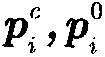
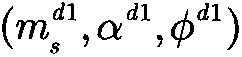
在这部分中,本发明提供了仿真结果来验证所提出的方法的性能。首先,随机设置四个平面特征点,并将

Figure BSA00001512519300001316
的高度设置为-0.42m。其次,虚拟摄像机的内参数设置与后续实验中使用的相同:fu=1003.7,fv=1006.3,u0=376.9,v0=285.3。In this section, the present invention provides simulation results to verify the performance of the proposed method. First, randomly set four plane feature points, and set the
Figure BSA00001512519300001316
The height is set to -0.42m. Second, the intrinsic parameter settings of the virtual camera are the same as those used in subsequent experiments: f u =1003.7, f v =1006.3, u 0 =376.9, v 0 =285.3.

对应于基准坐标系,设置期望位姿为(bTd2zbTd2x,θd2)=(-1.6m,0.1m,0°),且将移动机器人的初始位姿设置为(bT0zbT0x,θ0)=(-6.5m,-0.8m,27°)。在极坐标中设置临时期望位姿为

Figure BSA0000151251930000138
此外,加入标准差为σ=0.15的图像噪音来测试控制器的稳定性和特征高度辨识的抗干扰能力。Corresponding to the reference coordinate system, set the desired pose as ( b T d2z , b T d2x , θ d2 )=(-1.6m, 0.1m, 0°), and set the initial pose of the mobile robot as ( b T 0z , b T 0x , θ 0 )=(-6.5m, -0.8m, 27°). Set the temporary desired pose in polar coordinates as
Figure BSA0000151251930000138
In addition, image noise with a standard deviation of σ=0.15 is added to test the stability of the controller and the anti-interference ability of the feature height identification.

设置控制参数为km=0.1,kα=0.4,kφ=2,Γ1=3,Γ2=0.001。随机选取

Figure BSA0000151251930000139
为-0.1m,并且将
Figure BSA00001512519300001310
设置为-1.0m。在阶段一中,设置N为100,即前100个采样周期所记录的数据。然后,采用三次多项式函数拟合
Figure BSA00001512519300001311
通过这种方式来抑制干扰,并根据对三次多项式关于时间求导得到
Figure BSA00001512519300001312
的精确估计。Set the control parameters as km = 0.1, k α =0.4, k φ =2, Γ 1 =3, Γ 2 =0.001. choose randomly
Figure BSA0000151251930000139
is -0.1m, and will
Figure BSA00001512519300001310
Set to -1.0m. In stage one, set N to 100, that is, the data recorded in the first 100 sampling periods. Then, fitting with a cubic polynomial function
Figure BSA00001512519300001311
In this way, the interference is suppressed, and is obtained by taking the derivation of the cubic polynomial with respect to time
Figure BSA00001512519300001312
exact estimate.

图5给出了移动机器人在笛卡尔空间中的运动路径结果,其中加粗三角形分别表示期望位姿和临时位姿。其特征点也在该图中示出,其中利用圆点作为参考。可以看出机器人有效地移动到期望位姿处,并且路径在两个阶段中都非常平滑。图6表示机器人当前位姿(bTcz(t),bTcx(t),θc(t))的变化,其中虚线表示期望坐标系

Figure BSA00001512519300001313
处的位姿。并且,已知两阶段的稳态误差都足够小。此外,图7中给出了阶段一中特征高度
Figure BSA00001512519300001314
的估算。可以看出,特征高度估计会迅速收敛至其真实值,并且具有足够小的稳态误差,这意味着已成功辨识Y1 c。Figure 5 presents the results of the motion path of the mobile robot in Cartesian space, where the bold triangles represent the desired and temporary poses, respectively. Its characteristic points are also shown in this figure, using the dots as a reference. It can be seen that the robot moves efficiently to the desired pose and the path is very smooth in both stages. Figure 6 shows the changes of the robot's current pose ( b T cz (t), b T cx (t), θ c (t)), where the dotted line represents the desired coordinate system
Figure BSA00001512519300001313
position. Moreover, the steady-state errors of both stages are known to be sufficiently small. In addition, the feature heights in stage one are given in Figure 7
Figure BSA00001512519300001314
's estimate. It can be seen that the feature height estimate converges quickly to its true value with a sufficiently small steady-state error, which means that Y 1 c has been successfully identified.

第6.2,实验结果Section 6.2, Experimental Results

在这部分中,本发明给出了实验结果以验证设计方案的性能,其中采用了携带CCD照相机的Pioneer3-DX移动机器人以及在两个正方形的共顶点处的四个特征平面。整个方案是通过使用Visual Studio环境和OpenCV库实现的。采样频率为50Hz,满足视觉伺服任务的实时性要求。In this section, the present invention presents experimental results to verify the performance of the design scheme using a Pioneer3-DX mobile robot carrying a CCD camera and four feature planes at the common vertices of two squares. The whole scheme is implemented by using the Visual Studio environment and the OpenCV library. The sampling frequency is 50Hz, which meets the real-time requirements of visual servo tasks.

将移动机器人的期望位姿设置为(bTd2zbTd2x,θd2)=(-1.1m,0m,0°),并且初始位姿随机设置在(bT0zbT0x,θ0)=(-3.6m,1.1m,26°)处。将临时期望位姿设置为

Figure BSA0000151251930000141
选择控制参数为km=0.4,kα=0.2,kφ=1,Γ1=4,Γ2=0.001。记录数据和拟合
Figure BSA0000151251930000142
的方式与模拟部分相同。Set the desired pose of the mobile robot as ( b T d2z , b T d2x , θ d2 ) = (-1.1m, 0m, 0°), and the initial pose is randomly set at ( b T 0z , b T 0x , θ 0 ) = (-3.6m, 1.1m, 26°). Set the temporary desired pose to
Figure BSA0000151251930000141
The selected control parameters are km = 0.4, k α =0.2, k φ =1, Γ 1 =4, Γ 2 =0.001. Record data and fit
Figure BSA0000151251930000142
in the same way as the analog part.

图8表示移动机器人两个阶段的混合路径。图9表示机器人当前位姿(bTcz(t),bTcx(t),θc(t))的变化。图10表示阶段一中的系统误差和阶段二中的md2c(t)。可以看出,机器人以较小的稳态误差通过高效的路径到达期望和临时期望位姿。Figure 8 shows the hybrid path of the two phases of the mobile robot. FIG. 9 shows changes in the current pose ( b T cz (t), b T cx (t), θ c (t)) of the robot. Figure 10 shows the systematic error in stage one and m d2c (t) in stage two. It can be seen that the robot reaches the desired and temporary desired poses through an efficient path with a small steady-state error.

此外,为了测试特征高度辨识的精度,本发明根据初始和当前图像信息以及某些特征点之间的已知度量距离来计算Y1 c的真实值。由于

Figure BSA0000151251930000143
Figure BSA0000151251930000144
之间的距离足够大,Y1 c的计算在阶段一的最后几秒内更准确。图11给出了
Figure BSA0000151251930000145
的变化,其中虚线表示Y1 c的计算值。因此,可以看出,特征高度的估值
Figure BSA0000151251930000146
迅速收敛到其真实值Y1 c,并且稳态估计误差足够小。Furthermore, in order to test the accuracy of feature height identification, the present invention calculates the true value of Y 1 c based on the initial and current image information and the known metric distances between certain feature points. because
Figure BSA0000151251930000143
and
Figure BSA0000151251930000144
The distance between is large enough that the calculation of Y 1 c is more accurate in the last few seconds of phase one. Figure 11 gives
Figure BSA0000151251930000145
, where the dotted line represents the calculated value of Y 1 c . Therefore, it can be seen that the estimation of the feature height
Figure BSA0000151251930000146
converges quickly to its true value Y 1 c , and the steady-state estimation error is sufficiently small.

图12表示移动机器人的速度。图13表示特征点的图像轨迹,其中圆点表示初始图像中提取的特征点,星形表示阶段一中的最终图像,正方形是阶段二中的最终图像。Fig. 12 shows the speed of the mobile robot. Figure 13 shows the image trajectories of the feature points, where the circles represent the feature points extracted from the initial image, the stars represent the final images in stage one, and the squares are the final images in stage two.

可以得出结论,这个实验设备适合于探索未知物体,在这种意义上,首先将机器人镇定到相对于目标物体粗略设置的比例意义下的位姿,然后将机器人镇定到易于观察的离目标物体更近的精确的位姿。It can be concluded that this experimental device is suitable for exploring unknown objects, in the sense that the robot is first stabilized to a pose in a sense of scale relative to the target object, which is roughly set, and then the robot is stabilized to an easily observable distance from the target object. Closer precise pose.

Claims (1)

1.一种移动机器人的无期望图像视觉伺服方法,其特征在于包括以下步骤:1. an undesired image visual servoing method of a mobile robot is characterized in that comprising the following steps: 第1,定义系统坐标系First, define the system coordinate system 第1.1,系统坐标系的描述Section 1.1, Description of the System Coordinate System 基于视觉目标定义了基准坐标系
Figure FSB0000192632320000011
设置摄像机与移动机器人的坐标系相重合,进而定义在当前位姿处的机器人/摄像机坐标系为
Figure FSB0000192632320000012
其中
Figure FSB0000192632320000013
的原点在摄像机的光心位置处,也即车轮轴线中心点的正上方;
Figure FSB0000192632320000014
的zc轴与摄像机光轴重合,同时也和机器人前进方向重合,xc轴和机器人轮轴平行;yc轴垂直于zcxc平面;定义
Figure FSB0000192632320000015
表示摄像机当前位姿坐标系;
The reference coordinate system is defined based on the vision target
Figure FSB0000192632320000011
Set the coordinate system of the camera and the mobile robot to coincide, and then define the coordinate system of the robot/camera at the current pose as
Figure FSB0000192632320000012
in
Figure FSB0000192632320000013
The origin of the camera is at the position of the optical center of the camera, that is, just above the center point of the wheel axis;
Figure FSB0000192632320000014
The z c axis coincides with the optical axis of the camera, and also coincides with the forward direction of the robot, the x c axis is parallel to the robot wheel axis; the y c axis is perpendicular to the z c x c plane; definition
Figure FSB0000192632320000015
Indicates the current pose coordinate system of the camera;
Figure FSB0000192632320000016
表示未预先获取期望图的期望坐标系,为了便于控制开发,引入
Figure FSB0000192632320000017
表示比例意义下的临时坐标系;
by
Figure FSB0000192632320000016
Indicates the desired coordinate system for which the desired graph is not pre-obtained. In order to facilitate control development, introduce
Figure FSB0000192632320000017
Represents a temporary coordinate system in the sense of scale;
第1.2,控制方案Section 1.2, Control Scheme 根据坐标系定义,使坐标系
Figure FSB0000192632320000018
与坐标系
Figure FSB0000192632320000019
一致,首先利用视觉目标和平面运动约束来定义坐标系
Figure FSB00001926323200000110
然后利用当前和初始图像来计算相对于坐标系
Figure FSB00001926323200000111
的比例意义下的机器人位姿;
According to the coordinate system definition, make the coordinate system
Figure FSB0000192632320000018
and coordinate system
Figure FSB0000192632320000019
Consistent, first use the visual target and plane motion constraints to define the coordinate system
Figure FSB00001926323200000110
Then use the current and initial images to calculate the relative coordinate system
Figure FSB00001926323200000111
The robot pose in the sense of scale;
在阶段1中,首先为移动机器人的临时镇定设置比例意义下的期望位姿;然后通过极坐标系表示方法设计自适应调节控制器,以将机器人镇定至坐标系
Figure FSB00001926323200000112
处;接着,根据并发学习结构为特征高度辨识构建参数更新律;通过稳定性分析得以证明,在进行位姿调节时,能够同时确定特征高度;
In stage 1, the desired pose in the proportional sense is firstly set for the temporary stabilization of the mobile robot; then an adaptive adjustment controller is designed through the polar coordinate system representation method to stabilize the robot to the coordinate system
Figure FSB00001926323200000112
Then, according to the concurrent learning structure, a parameter update law is constructed for the feature height identification; it is proved by stability analysis that the feature height can be determined at the same time when the pose adjustment is performed;
在阶段2中,利用辨识特征高度来获取移动机器人的全状态信息;然后,采用基于极坐标的调节控制器来驱动机器人到
Figure FSB00001926323200000113
表示下的期望位姿处;
In stage 2, the full state information of the mobile robot is obtained by using the identified feature heights; then, a polar coordinate-based adjustment controller is used to drive the robot to
Figure FSB00001926323200000113
represents the desired pose;
第2,构造系统模型Second, construct the system model 第2.1,基准坐标系的定义Section 2.1, Definition of Datum Coordinate System 基于视觉目标定义基准坐标系,其要求特征点

Figure FSB00001926323200000114
应该是共面的;在不失一般性的情况下,选择
Figure FSB00001926323200000115
来表示参数特征点;利用垂直于机器人运动平面且过点
Figure FSB00001926323200000116
的直线来定义坐标系
Figure FSB00001926323200000117
的yb轴,并且设置yb的方向与坐标系
Figure FSB00001926323200000118
的yc轴的方向一致;其中,
Figure FSB00001926323200000119
的原点是yb与zcxc平面的交点;
Define the reference coordinate system based on the visual target, which requires feature points
Figure FSB00001926323200000114
should be coplanar; without loss of generality, choose
Figure FSB00001926323200000115
to represent the parameter feature points; use the point perpendicular to the motion plane of the robot and pass the point
Figure FSB00001926323200000116
line to define the coordinate system
Figure FSB00001926323200000117
y b axis, and set the direction and coordinate system of y b
Figure FSB00001926323200000118
The directions of the y and c axes are the same; among them,
Figure FSB00001926323200000119
The origin of is the intersection of y b and the z c x c plane;
zcxc平面与特征平面的交线定义为xb轴;定义zb的方向与
Figure FSB00001926323200000120
相对于图像平面的方向相反;然后,通过标准右手规则定义xb轴的方向和zb轴;
The intersection of the z c x c plane and the feature plane is defined as the x b axis; the direction defining z b is the same as
Figure FSB00001926323200000120
The directions are opposite relative to the image plane; then, the direction of the x b axis and the z b axis are defined by the standard right-hand rule;
基于坐标系
Figure FSB00001926323200000121
的定义,可以用极坐标表示移动机器人的当前位姿;
Figure FSB00001926323200000122
的原点和
Figure FSB00001926323200000123
的原点之间的距离标记为mc(t)(为了方便表述,对某一符号X,若其表示变量,在正文中出现时用X(t)表示,在带编号公式中出现时略去时间符号用X表示,这两种情况下所表达的含义相同);
Figure FSB00001926323200000124
Figure FSB00001926323200000125
下的旋转角度表示为θc(t),即移动机器人的朝向角;以φc(t)表示zb轴与从
Figure FSB00001926323200000126
Figure FSB00001926323200000127
的平移向量之间的角度,αc(t)表示zc轴与从
Figure FSB00001926323200000128
Figure FSB00001926323200000129
的平移向量之间的角度,因此αc(t)=φc(t)-θc(t);因此,机器人的位姿可表示为(mc(t),αc(t),φc(t));
based on the coordinate system
Figure FSB00001926323200000121
The definition of , the current pose of the mobile robot can be represented by polar coordinates;
Figure FSB00001926323200000122
the origin and
Figure FSB00001926323200000123
The distance between the origins is marked as m c (t) (for the convenience of expression, for a certain symbol X, if it represents a variable, it is represented by X(t) when it appears in the text, and it is omitted when it appears in a numbered formula. The time symbol is represented by X, and the meaning expressed in both cases is the same);
Figure FSB00001926323200000124
exist
Figure FSB00001926323200000125
The rotation angle under the
Figure FSB00001926323200000126
arrive
Figure FSB00001926323200000127
The angle between the translation vectors of , α c (t) represents the z c axis and the
Figure FSB00001926323200000128
arrive
Figure FSB00001926323200000129
The angle between the translation vectors of c (t));
第2.2,可测量信号Section 2.2, Measurable Signals 根据基准坐标系的定义,定义
Figure FSB00001926323200000130
Figure FSB00001926323200000131
Figure FSB00001926323200000132
下的坐标分别为:
According to the definition of the base coordinate system, define
Figure FSB00001926323200000130
exist
Figure FSB00001926323200000131
and
Figure FSB00001926323200000132
The coordinates below are:
Figure FSB00001926323200000133
利用移动机器人的平面运动约束,可知Y1 b=Y1 c且为恒值;Using the plane motion constraint of the mobile robot, it can be known that Y 1 b = Y 1 c and it is a constant value; 此外,相对于
Figure FSB0000192632320000021
在F0和Fc处捕获的图像分别为初始图像和当前图像;其中,
Figure FSB0000192632320000022
的当前图像坐标由
Figure FSB0000192632320000023
表示;
Furthermore, compared to
Figure FSB0000192632320000021
The images captured at F 0 and F c are the initial image and the current image, respectively; where,
Figure FSB0000192632320000022
The current image coordinates of are given by
Figure FSB0000192632320000023
express;
不失一般性,假设
Figure FSB0000192632320000024
在机器人运动平面的上方,即Y1 c<0;根据摄像机的成像原理,可得:
Without loss of generality, suppose
Figure FSB0000192632320000024
Above the robot motion plane, that is, Y 1 c <0; according to the imaging principle of the camera, we can get:
Figure FSB0000192632320000025
其中(u0,v0)为像素主点,f表示焦距,du,dv为单个像素块分别在xc,yc方向上的长度,经过变换得到:where (u 0 , v 0 ) is the main point of the pixel, f represents the focal length, d u , d v are the lengths of a single pixel block in the x c , y c directions respectively, which are obtained after transformation:
Figure FSB0000192632320000026
其中fu,fv是以像素大小表示的焦距;由于缺乏场景深度,因而无法估计出mc(t),只能估计出比例意义下的值:where f u , f v are the focal lengths expressed in pixel size; due to the lack of scene depth, m c (t) cannot be estimated, but only proportional values:
Figure FSB0000192632320000027
根据
Figure FSB0000192632320000028
在当前图像上的坐标,通过摄像机的成像原理可以直接计算得到αc(t):
according to
Figure FSB0000192632320000028
The coordinates on the current image can be directly calculated by the imaging principle of the camera to obtain α c (t):
Figure FSB0000192632320000029
通过当前和初始图像,可以计算出
Figure FSB00001926323200000210
Figure FSB00001926323200000211
之间的摄影单应矩阵G(t)为:
From the current and initial images, it is possible to calculate
Figure FSB00001926323200000210
and
Figure FSB00001926323200000211
The photographic homography matrix G(t) between is:
Figure FSB00001926323200000212
其中
Figure FSB00001926323200000213
分别是相对于
Figure FSB00001926323200000214
Figure FSB00001926323200000215
Figure FSB00001926323200000216
的齐次图像坐标,λi(t)是与深度比有关的系数,并定义G(t)为:
in
Figure FSB00001926323200000213
respectively relative to
Figure FSB00001926323200000214
and
Figure FSB00001926323200000215
of
Figure FSB00001926323200000216
The homogeneous image coordinates of , λ i (t) are coefficients related to the depth ratio, and define G(t) as:
Figure FSB00001926323200000217
其中定义
Figure FSB00001926323200000218
为以
Figure FSB00001926323200000219
表示的特征平面的正单位矢量;K是校准摄像机内参数;
Figure FSB00001926323200000220
0Tc(t)分别是
Figure FSB00001926323200000221
相对于
Figure FSB00001926323200000222
的旋转矩阵和平移向量;
Figure FSB00001926323200000223
是从
Figure FSB00001926323200000224
的原点到沿着nc(t)的特征平面的未知距离;然后,nc(t)可以通过单应性分解算法来计算;
which defines
Figure FSB00001926323200000218
for
Figure FSB00001926323200000219
The positive unit vector of the represented feature plane; K is the calibration camera internal parameter;
Figure FSB00001926323200000220
and 0 T c (t) are respectively
Figure FSB00001926323200000221
relative to
Figure FSB00001926323200000222
The rotation matrix and translation vector of ;
Figure FSB00001926323200000223
From
Figure FSB00001926323200000224
The unknown distance from the origin of , to the feature plane along n c (t); then, n c (t) can be calculated by the homography decomposition algorithm;
由于xb坐标轴定义为特征点平面与机器人运动平面相交线方向,可知nc(t)垂直于xb坐标轴,并且可知nc(t)在机器人运动平面zcxc的投影与zb坐标轴方向一致;进而可以计算出机器人的方向角θc(t)为:Since the x b coordinate axis is defined as the direction of the intersection line between the feature point plane and the robot motion plane, it can be known that n c (t) is perpendicular to the x b coordinate axis, and it can be known that the projection of n c (t) on the robot motion plane z c x c is the same as z The direction of the b coordinate axis is the same; then the direction angle θ c (t) of the robot can be calculated as:
Figure FSB00001926323200000225
然后,得到φc(t)为:Then, φ c (t) is obtained as: φc=αcc (9)φ ccc (9) 因此,可以得到比例意义下的机器人当前位姿
Figure FSB00001926323200000226
Therefore, the current pose of the robot in the proportional sense can be obtained
Figure FSB00001926323200000226
第3,临时坐标系的镇定3. Stabilization of the temporary coordinate system 为将机器人镇定到临时坐标系
Figure FSB00001926323200000227
处,需要在
Figure FSB00001926323200000228
下定义
Figure FSB00001926323200000229
处对应的机器人位姿;此外,由于场景深度的缺失,设置
Figure FSB00001926323200000230
处的位姿为比例形式:
Figure FSB00001926323200000231
其中
Figure FSB00001926323200000232
To stabilize the robot to a temporary coordinate system
Figure FSB00001926323200000227
, need to be in
Figure FSB00001926323200000228
Define
Figure FSB00001926323200000229
the corresponding robot pose; in addition, due to the lack of scene depth, setting
Figure FSB00001926323200000230
The pose at is proportional:
Figure FSB00001926323200000231
in
Figure FSB00001926323200000232
要注意的是,设置
Figure FSB0000192632320000031
意味着使机器人运动到与
Figure FSB0000192632320000032
高度的某一比例值处;此外,设置αd1=0,φd1=0时表明机器人将正面面向特征平面;
Note that setting
Figure FSB0000192632320000031
means moving the robot to the
Figure FSB0000192632320000032
At a certain proportion of the height; in addition, setting α d1 =0, φ d1 =0 indicates that the robot will face the feature plane;
在本阶段中,首先求取
Figure FSB0000192632320000033
Figure FSB0000192632320000034
之间的极坐标关系;之后根据移动机器人的运动学方程,设计基于极坐标的镇定控制律;并根据并发学习策略,设计能辨识未知特征点高度Y1 c的自适应更新律;进而在将移动机器人从
Figure FSB0000192632320000035
镇定至
Figure FSB0000192632320000036
处的过程中,同时将特征点高度Y1 c辨识出;
In this stage, the first
Figure FSB0000192632320000033
and
Figure FSB0000192632320000034
Then, according to the kinematics equation of the mobile robot, a stabilization control law based on polar coordinates is designed; and according to the concurrent learning strategy, an adaptive update law that can identify the height Y 1 c of the unknown feature point is designed; mobile robot from
Figure FSB0000192632320000035
calm to
Figure FSB0000192632320000036
At the same time, the height of the feature point Y 1 c is identified;
第3.1,
Figure FSB0000192632320000037
Figure FSB0000192632320000038
下的极坐标表示
Section 3.1,
Figure FSB0000192632320000037
exist
Figure FSB0000192632320000038
The polar coordinates below
设置完
Figure FSB0000192632320000039
的位姿后,可以直接计算出
Figure FSB00001926323200000310
Figure FSB00001926323200000311
下的方向角为:
set
Figure FSB0000192632320000039
After the pose, it can be directly calculated
Figure FSB00001926323200000310
exist
Figure FSB00001926323200000311
The direction angle below is:
θd1(t)=φd1(t)-αd1(t);通过坐标变换律,利用
Figure FSB00001926323200000312
Figure FSB00001926323200000313
之间以及
Figure FSB00001926323200000314
Figure FSB00001926323200000315
之间的变换矩阵,可以得到
Figure FSB00001926323200000316
Figure FSB00001926323200000317
之间的变换矩阵
Figure FSB00001926323200000318
θ d1 (t)=φ d1 (t)-α d1 (t); through the coordinate transformation law, using
Figure FSB00001926323200000312
and
Figure FSB00001926323200000313
between and
Figure FSB00001926323200000314
and
Figure FSB00001926323200000315
The transformation matrix between can be obtained
Figure FSB00001926323200000316
and
Figure FSB00001926323200000317
transformation matrix between
Figure FSB00001926323200000318
θd1c(t)表示
Figure FSB00001926323200000319
Figure FSB00001926323200000320
下的旋转角,φd1c(t)表示zd1轴与从
Figure FSB00001926323200000321
Figure FSB00001926323200000322
的平移向量之间的角度,αc(t)表示zc轴与从
Figure FSB00001926323200000323
Figure FSB00001926323200000324
的平移向量之间的角度,
Figure FSB00001926323200000325
表示比例意义下的
Figure FSB00001926323200000326
原点与
Figure FSB00001926323200000327
原点之间的距离:
θ d1c (t) represents
Figure FSB00001926323200000319
exist
Figure FSB00001926323200000320
Rotation angle under, φ d1c (t) represents the z d1 axis and from
Figure FSB00001926323200000321
arrive
Figure FSB00001926323200000322
The angle between the translation vectors of , α c (t) represents the z c axis and the
Figure FSB00001926323200000323
arrive
Figure FSB00001926323200000324
The angle between the translation vectors of ,
Figure FSB00001926323200000325
in the sense of proportion
Figure FSB00001926323200000326
origin with
Figure FSB00001926323200000327
Distance between origins:
Figure FSB00001926323200000328
然后,根据如下公式,可以从
Figure FSB00001926323200000329
中提取θd1c(t),
Figure FSB00001926323200000330
和φd1c(t):
Then, according to the following formula, from
Figure FSB00001926323200000329
extract θ d1c (t) from
Figure FSB00001926323200000330
and φ d1c (t):
θd1c=θcd1 (11)θ d1c = θ c - θ d1 (11)
Figure FSB00001926323200000331
Figure FSB00001926323200000332
并且可以计算出αd1c(t):αd1c(t)=φd1c(t)-θd1c(t);And can calculate α d1c (t): α d1c (t)=φ d1c (t)-θ d1c (t); 因此,可测得
Figure FSB00001926323200000333
Figure FSB00001926323200000334
下的比例意义下极坐标
Figure FSB00001926323200000335
将其设置为阶段一的系统误差;
Therefore, it can be measured
Figure FSB00001926323200000333
exist
Figure FSB00001926323200000334
Polar coordinates in the sense of scale under
Figure FSB00001926323200000335
Set it as the systematic error of phase one;
第3.2,建立机器人运动学方程Section 3.2, Establishing Robot Kinematics Equations
Figure FSB00001926323200000336
下,利用极坐标表示的移动机器人当前位姿(md1c(t),αd1c(t),φd1c(t))的运动学方程为:
exist
Figure FSB00001926323200000336
Next, the kinematics equation of the current pose (m d1c (t), α d1c (t), φ d1c (t)) of the mobile robot represented by polar coordinates is:
Figure FSB00001926323200000337
其中vr(t)和ωr(t)分别代表机器人的线速度和角速度;where v r (t) and ω r (t) represent the linear and angular velocities of the robot, respectively; 由于机器人位姿只能按比例的方式进行测量,所以可以在式(10)带入式(14)之后,得到移动机器人模型在比例意义下的运动学方程为:Since the robot pose can only be measured in a proportional way, the kinematics equation of the mobile robot model in the proportional sense can be obtained after Equation (10) is brought into Equation (14):
Figure FSB00001926323200000338
易知,当
Figure FSB00001926323200000339
收敛至零时,移动机器人到达临时期望位姿
Figure FSB00001926323200000340
处;
easy to know, when
Figure FSB00001926323200000339
When it converges to zero, the mobile robot reaches the temporary desired pose
Figure FSB00001926323200000340
place;
第3.3,自适应控制律设计Section 3.3, Adaptive Control Law Design 为了实现位姿镇定的目标,通过基于李雅普诺夫的控制设计方法构建移动机器人的线速度和角速度如下:In order to achieve the goal of pose stabilization, the linear and angular velocities of the mobile robot are constructed by the control design method based on Lyapunov as follows:

Figure FSB0000192632320000041
Figure FSB0000192632320000042
其中km,kφ
Figure FSB0000192632320000043
为正控制增益,
Figure FSB0000192632320000044
表示特征高度Y1 c(t)的估值;由于sinαd1c(t)/αd1c(t)是有界的,因此没有奇异点;
where k m , k φ ,
Figure FSB0000192632320000043
is the positive control gain,
Figure FSB0000192632320000044
represents an estimate of the characteristic height Y 1 c (t); since sinα d1c (t)/α d1c (t) is bounded, there are no singularities;
根据并发学习方法,设计自适应更新律为:According to the concurrent learning method, the adaptive update law is designed as:
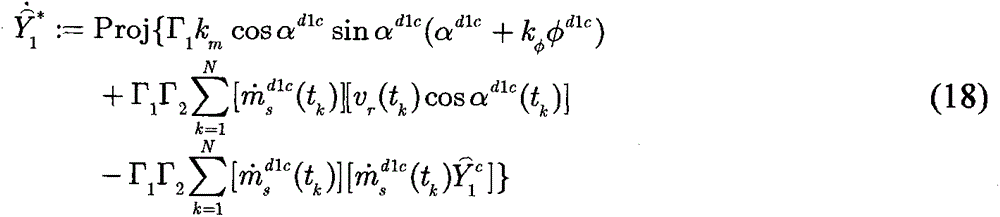
Figure FSB0000192632320000045
其中
Figure FSB0000192632320000046
为更新增益;在式(18)中,
Figure FSB0000192632320000047
是一个正整数,表示控制系统启动阶段一之后的连续采样周期数,其中记录了系统数据,tk∈[0,t]是每个采样周期对应的时间点;
in
Figure FSB0000192632320000046
is the update gain; in equation (18),
Figure FSB0000192632320000047
is a positive integer, indicating the number of consecutive sampling periods after the control system start-up phase 1, in which system data is recorded, t k ∈ [0, t] is the time point corresponding to each sampling period;
应该注意的是,由于在自适应更新律的并发学习方法中用到了N个采样周期中记录的数据,所以当使用滤波器时就可以得到
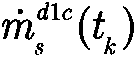
Figure FSB0000192632320000048
的精确估值;
It should be noted that since the data recorded in N sampling periods is used in the concurrent learning method of the adaptive update law, when the filter is used, the
Figure FSB0000192632320000048
accurate valuation;
投影函数Proj{χ}定义为:The projection function Proj{χ} is defined as:

Figure FSB0000192632320000049
其中
Figure FSB00001926323200000410
是Y1 c的负上限;
in
Figure FSB00001926323200000410
is the negative upper limit of Y 1 c ;
首先,选取
Figure FSB00001926323200000411
的初值应小于
Figure FSB00001926323200000412
然后,从式(19)可知
Figure FSB00001926323200000413
最后,可以得出结论:
First, choose
Figure FSB00001926323200000411
The initial value should be less than
Figure FSB00001926323200000412
Then, from equation (19), it can be known that
Figure FSB00001926323200000413
Finally, it can be concluded that:
Figure FSB00001926323200000414
其中
Figure FSB00001926323200000415
表示为深度估计误差:
in
Figure FSB00001926323200000415
Expressed as depth estimation error:
Figure FSB00001926323200000416
因此,可知当
Figure FSB00001926323200000417
趋于零时,成功识别特征高度;
Therefore, it can be seen that when
Figure FSB00001926323200000417
When it tends to zero, the feature height is successfully identified;
当满足如下条件时,控制律式(16)和式(17)与参数更新律式(18)一起将机器人镇定到临时期望位姿:When the following conditions are met, the control laws (16) and (17) together with the parameter update law (18) will stabilize the robot to the temporary desired pose:
Figure FSB00001926323200000418
第4,期望位姿的镇定4. Calmness of the desired pose 在第一阶段后,移动机器人到达临时位姿
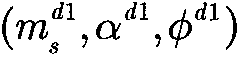
Figure FSB00001926323200000419
处,并且同时辨识特征高度Y1 c;因此,根据式(4),式(5)和式(9)可以得到移动机器人的全状态信息为:
After the first stage, the mobile robot reaches a temporary pose
Figure FSB00001926323200000419
, and identify the feature height Y 1 c at the same time; therefore, according to formula (4), formula (5) and formula (9), the full state information of the mobile robot can be obtained as:
(mc(t),αc(t),φc(t));(m c (t), α c (t), φ c (t)); 对于实际使用中,在笛卡尔坐标系下相对于
Figure FSB00001926323200000420
设置
Figure FSB00001926323200000421
的期望位姿为(bTd2zbTd2x,θd2),其中bTd2zbTd2x分别表示在
Figure FSB00001926323200000422
下的
Figure FSB00001926323200000423
原点的z轴和x轴坐标;
For practical use, in the Cartesian coordinate system relative to
Figure FSB00001926323200000420
set up
Figure FSB00001926323200000421
The desired pose of is ( b T d2z , b T d2x , θ d2 ), where b T d2z and b T d2x are expressed in
Figure FSB00001926323200000422
down
Figure FSB00001926323200000423
The z-axis and x-axis coordinates of the origin;
不失一般性,在此阶段中采用了基于极坐标的控制方法;其中,由(md2,αd2,φd2)表示
Figure FSB00001926323200000424
Figure FSB00001926323200000425
下的极坐标,并根据如下方式从(bTd2zbTd2x,θd2)中获得:
Without loss of generality, a control method based on polar coordinates is adopted in this stage; where, denoted by (m d2 , α d2 , φ d2 )
Figure FSB00001926323200000424
exist
Figure FSB00001926323200000425
and obtained from ( b T d2z , b T d2x , θ d2 ) according to:
Figure FSB0000192632320000051
此外,与第3.2中的方法类似,(md2c(t),αd2c(t),φd2c(t))表示
Figure FSB0000192632320000052
Figure FSB0000192632320000053
下的极坐标;类似于式(11)、式(25)和式(26),将其设置为阶段二的系统误差;然后,根据如下公式,可以从(mc(t),αc(t),φc(t))和(md2,αd2,φd2)中得到(md2c(t),αd2c(t),φd2c(t)):
Furthermore, similar to the method in Section 3.2, (m d2c (t), α d2c (t), φ d2c (t)) means
Figure FSB0000192632320000052
exist
Figure FSB0000192632320000053
The polar coordinates under ; similar to formula (11), formula (25) and formula (26), it is set as the systematic error of stage two; then, according to the following formula, it can be obtained from (m c (t), α c ( t), φ c (t)) and (m d2 , α d2 , φ d2 ) to obtain (m d2c (t), α d2c (t), φ d2c (t)):
θd2c=θcd2 (24)θ d2c = θ c - θ d2 (24)
Figure FSB0000192632320000054
Figure FSB0000192632320000055
并且可以计算出αd2c(t):αd2c(t)=φd2c(t)-θd2c(t);And can calculate α d2c (t): α d2c (t)=φ d2c (t)-θ d2c (t); 与式(14)类似,在
Figure FSB0000192632320000056
下,移动机器人当前位姿(md2c(t),αd2c(t),φd2c(t))的运动学方程为:
Similar to equation (14), in
Figure FSB0000192632320000056
Below, the kinematic equation of the current pose (m d2c (t), α d2c (t), φ d2c (t)) of the mobile robot is:
Figure FSB0000192632320000057
并利用如下控制律将机器人镇定到期望位姿
Figure FSB0000192632320000058
处:
And use the following control law to stabilize the robot to the desired pose
Figure FSB0000192632320000058
At:
vr=kmmd2ccosαd2c (28)v r =km m d2c cosα d2c (28)

Figure FSB0000192632320000059
其中系统误差(md2c(t),αd2c(t),φd2c(t))同时收敛至零。where the systematic errors (m d2c (t), α d2c (t), φ d2c (t)) converge to zero at the same time.
CN201710885886.6A 2017-09-21 2017-09-21 Visual Stabilization Control of Mobile Robots with Unexpected Images Expired - Fee Related CN109542094B (en)

Priority Applications (1)

Application Number Priority Date Filing Date Title
CN201710885886.6A CN109542094B (en) 2017-09-21 2017-09-21 Visual Stabilization Control of Mobile Robots with Unexpected Images

Applications Claiming Priority (1)

Application Number Priority Date Filing Date Title
CN201710885886.6A CN109542094B (en) 2017-09-21 2017-09-21 Visual Stabilization Control of Mobile Robots with Unexpected Images

Publications (2)

Publication Number Publication Date
CN109542094A CN109542094A (en) 2019-03-29
CN109542094B true CN109542094B (en) 2021-06-08

Family

ID=65830739

Family Applications (1)

Application Number Title Priority Date Filing Date
CN201710885886.6A Expired - Fee Related CN109542094B (en) 2017-09-21 2017-09-21 Visual Stabilization Control of Mobile Robots with Unexpected Images

Country Status (1)

Country Link
CN (1) CN109542094B (en)

Families Citing this family (5)

* Cited by examiner, † Cited by third party
Publication number Priority date Publication date Assignee Title
CN112123370B (en) * 2019-06-24 2024-02-06 内蒙古汇栋科技有限公司 Mobile robot vision stabilization control with desired pose change
CN112363528B (en) * 2020-10-15 2022-06-14 北京理工大学 Unmanned aerial vehicle anti-interference cluster formation control method based on airborne vision
US11429112B2 (en) * 2020-12-31 2022-08-30 Ubtech North America Research And Development Center Corp Mobile robot control method, computer-implemented storage medium and mobile robot
CN115502972B (en) * 2022-09-16 2025-06-13 深圳市优必选科技股份有限公司 A control method, a control device, a robot and a storage medium
CN115562304B (en) * 2022-11-01 2026-02-03 河海大学常州校区 Mobile robot vision servo control method and system based on depth point cloud

Citations (4)

* Cited by examiner, † Cited by third party
Publication number Priority date Publication date Assignee Title
CN102855620A (en) * 2012-07-13 2013-01-02 南开大学 Pure rotation camera self-calibration method based on spherical projection model
US9146561B2 (en) * 2013-12-03 2015-09-29 King Fahd University Of Petroleum And Minerals Robotic leader-follower navigation and fleet management control method
CN104950893A (en) * 2015-06-26 2015-09-30 浙江大学 Homography matrix based visual servo control method for shortest path
CN106774309A (en) * 2016-12-01 2017-05-31 天津工业大学 A kind of mobile robot is while visual servo and self adaptation depth discrimination method

Patent Citations (4)

* Cited by examiner, † Cited by third party
Publication number Priority date Publication date Assignee Title
CN102855620A (en) * 2012-07-13 2013-01-02 南开大学 Pure rotation camera self-calibration method based on spherical projection model
US9146561B2 (en) * 2013-12-03 2015-09-29 King Fahd University Of Petroleum And Minerals Robotic leader-follower navigation and fleet management control method
CN104950893A (en) * 2015-06-26 2015-09-30 浙江大学 Homography matrix based visual servo control method for shortest path
CN106774309A (en) * 2016-12-01 2017-05-31 天津工业大学 A kind of mobile robot is while visual servo and self adaptation depth discrimination method

Non-Patent Citations (2)

* Cited by examiner, † Cited by third party
Title
Image Feature based Navigation of Nonholonomic;Satoshi Komada等;《The International Federation of Automatic Control》;20081231;全文 *
移动机器人主动视觉伺服技术研究;刘玺;《中国优秀硕士学位论文全文数据库 信息科技辑》;20110115;全文 *

Also Published As

Publication number Publication date
CN109542094A (en) 2019-03-29

Similar Documents

Publication Publication Date Title
CN109542094B (en) Visual Stabilization Control of Mobile Robots with Unexpected Images
Motlagh et al. Position Estimation for Drones based on Visual SLAM and IMU in GPS-denied Environment
Zhao et al. Vision-based tracking control of quadrotor with backstepping sliding mode control
Gur fil et al. Partial aircraft state estimation from visual motion using the subspace constraints approach
Liu et al. Scale-only visual homing from an omnidirectional camera
Henawy et al. Accurate IMU factor using switched linear systems for VIO
CN109960145B (en) Mobile robot mixed vision trajectory tracking strategy
Xie et al. Dynamic IBVS of a rotary wing UAV using line features
Li et al. Bridging the gap between visual servoing and visual SLAM: A novel integrated interactive framework
Silveira On intensity-based nonmetric visual servoing
MacKunis et al. Unified tracking and regulation visual servo control for wheeled mobile robots
Fahimi et al. An alternative closed-loop vision-based control approach for unmanned aircraft systems with application to a quadrotor
Wang et al. Ego-motion estimation of a quadrotor based on nonlinear observer
Das et al. Calibration of a dynamic camera cluster for multi-camera visual SLAM
Boucheloukh et al. UAV navigation based on adaptive fuzzy backstepping controller using visual odometry
Roque et al. Multi-agent formation control using epipolar constraints
TWI788253B (en) Adaptive mobile manipulation apparatus and method
CN110722547A (en) Robot vision stabilization under model unknown dynamic scene
Elsheikh et al. Practical path planning and path following for a non-holonomic mobile robot based on visual servoing
Scherer et al. DCTAM: Drift-corrected tracking and mapping for autonomous micro aerial vehicles
Keshmiri Image based visual servoing using trajectory planning and augmented visual servoing controller
Siradjuddin et al. An image based visual control law for a differential drive mobile robot
Wang et al. Real-time visual odometry estimation based on principal direction detection on ceiling vision
Shanahan et al. Visual servoing control for robot manipulators
CN120627899B (en) Robot control method, device, computer equipment and storage medium

Legal Events

Date Code Title Description
PB01 Publication
PB01 Publication
SE01 Entry into force of request for substantive examination
GR01 Patent grant
GR01 Patent grant
CF01 Termination of patent right due to non-payment of annual fee

Granted publication date: 20210608