CN109475597B - Pharmaceutical composition for eye - Google Patents
Pharmaceutical composition for eye Download PDFInfo
- Publication number
- CN109475597B CN109475597B CN201780033996.8A CN201780033996A CN109475597B CN 109475597 B CN109475597 B CN 109475597B CN 201780033996 A CN201780033996 A CN 201780033996A CN 109475597 B CN109475597 B CN 109475597B
- Authority
- CN
- China
- Prior art keywords
- pharmaceutical composition
- aflibercept
- formulations
- ophthalmic pharmaceutical
- polyoxyethylene
- Prior art date
- Legal status (The legal status is an assumption and is not a legal conclusion. Google has not performed a legal analysis and makes no representation as to the accuracy of the status listed.)
- Active
Links
Images

Classifications
-
- A—HUMAN NECESSITIES
- A61—MEDICAL OR VETERINARY SCIENCE; HYGIENE
- A61K—PREPARATIONS FOR MEDICAL, DENTAL OR TOILETRY PURPOSES
- A61K38/00—Medicinal preparations containing peptides
- A61K38/16—Peptides having more than 20 amino acids; Gastrins; Somatostatins; Melanotropins; Derivatives thereof
- A61K38/17—Peptides having more than 20 amino acids; Gastrins; Somatostatins; Melanotropins; Derivatives thereof from animals; from humans
- A61K38/177—Receptors; Cell surface antigens; Cell surface determinants
- A61K38/179—Receptors; Cell surface antigens; Cell surface determinants for growth factors; for growth regulators
-
- A—HUMAN NECESSITIES
- A61—MEDICAL OR VETERINARY SCIENCE; HYGIENE
- A61K—PREPARATIONS FOR MEDICAL, DENTAL OR TOILETRY PURPOSES
- A61K47/00—Medicinal preparations characterised by the non-active ingredients used, e.g. carriers or inert additives; Targeting or modifying agents chemically bound to the active ingredient
- A61K47/02—Inorganic compounds
-
- A—HUMAN NECESSITIES
- A61—MEDICAL OR VETERINARY SCIENCE; HYGIENE
- A61K—PREPARATIONS FOR MEDICAL, DENTAL OR TOILETRY PURPOSES
- A61K47/00—Medicinal preparations characterised by the non-active ingredients used, e.g. carriers or inert additives; Targeting or modifying agents chemically bound to the active ingredient
- A61K47/06—Organic compounds, e.g. natural or synthetic hydrocarbons, polyolefins, mineral oil, petrolatum or ozokerite
- A61K47/08—Organic compounds, e.g. natural or synthetic hydrocarbons, polyolefins, mineral oil, petrolatum or ozokerite containing oxygen, e.g. ethers, acetals, ketones, quinones, aldehydes, peroxides
- A61K47/12—Carboxylic acids; Salts or anhydrides thereof
-
- A—HUMAN NECESSITIES
- A61—MEDICAL OR VETERINARY SCIENCE; HYGIENE
- A61K—PREPARATIONS FOR MEDICAL, DENTAL OR TOILETRY PURPOSES
- A61K47/00—Medicinal preparations characterised by the non-active ingredients used, e.g. carriers or inert additives; Targeting or modifying agents chemically bound to the active ingredient
- A61K47/06—Organic compounds, e.g. natural or synthetic hydrocarbons, polyolefins, mineral oil, petrolatum or ozokerite
- A61K47/26—Carbohydrates, e.g. sugar alcohols, amino sugars, nucleic acids, mono-, di- or oligo-saccharides; Derivatives thereof, e.g. polysorbates, sorbitan fatty acid esters or glycyrrhizin
-
- A—HUMAN NECESSITIES
- A61—MEDICAL OR VETERINARY SCIENCE; HYGIENE
- A61K—PREPARATIONS FOR MEDICAL, DENTAL OR TOILETRY PURPOSES
- A61K47/00—Medicinal preparations characterised by the non-active ingredients used, e.g. carriers or inert additives; Targeting or modifying agents chemically bound to the active ingredient
- A61K47/30—Macromolecular organic or inorganic compounds, e.g. inorganic polyphosphates
-
- A—HUMAN NECESSITIES
- A61—MEDICAL OR VETERINARY SCIENCE; HYGIENE
- A61K—PREPARATIONS FOR MEDICAL, DENTAL OR TOILETRY PURPOSES
- A61K9/00—Medicinal preparations characterised by special physical form
- A61K9/0012—Galenical forms characterised by the site of application
- A61K9/0048—Eye, e.g. artificial tears
-
- A—HUMAN NECESSITIES
- A61—MEDICAL OR VETERINARY SCIENCE; HYGIENE
- A61P—SPECIFIC THERAPEUTIC ACTIVITY OF CHEMICAL COMPOUNDS OR MEDICINAL PREPARATIONS
- A61P27/00—Drugs for disorders of the senses
- A61P27/02—Ophthalmic agents
Landscapes
- Health & Medical Sciences (AREA)
- Life Sciences & Earth Sciences (AREA)
- Chemical & Material Sciences (AREA)
- Veterinary Medicine (AREA)
- Public Health (AREA)
- General Health & Medical Sciences (AREA)
- Animal Behavior & Ethology (AREA)
- Medicinal Chemistry (AREA)
- Pharmacology & Pharmacy (AREA)
- Epidemiology (AREA)
- Engineering & Computer Science (AREA)
- General Chemical & Material Sciences (AREA)
- Chemical Kinetics & Catalysis (AREA)
- Oil, Petroleum & Natural Gas (AREA)
- Bioinformatics & Cheminformatics (AREA)
- Ophthalmology & Optometry (AREA)
- Immunology (AREA)
- Zoology (AREA)
- Gastroenterology & Hepatology (AREA)
- Cell Biology (AREA)
- Proteomics, Peptides & Aminoacids (AREA)
- Biochemistry (AREA)
- Molecular Biology (AREA)
- Inorganic Chemistry (AREA)
- Nuclear Medicine, Radiotherapy & Molecular Imaging (AREA)
- Organic Chemistry (AREA)
- Medicinal Preparation (AREA)
- Medicines That Contain Protein Lipid Enzymes And Other Medicines (AREA)
Abstract
本发明提供一种具有一定pH值的眼用药物组合物,其包含作为有效成分的阿柏西普;和醋酸盐缓冲剂,其中该眼用药物组合物不包含离子张力剂。本发明的眼用药物组合物可明显减少二聚体杂质和多聚体杂质的形成,并可在加速条件和胁迫条件下以及在冷藏条件下长时间保持高水平的生物活性。
The present invention provides an ophthalmic pharmaceutical composition with a certain pH value, comprising aflibercept as an active ingredient; and an acetate buffer, wherein the ophthalmic pharmaceutical composition does not contain an ionic tonicity agent. The ophthalmic pharmaceutical composition of the present invention can significantly reduce the formation of dimer impurities and multimer impurities, and can maintain a high level of biological activity for a long time under accelerated conditions and stress conditions as well as under refrigerated conditions.
Description
Technical Field
The invention relates to an ophthalmic pharmaceutical composition comprising aflibercept as an active ingredient. More specifically, the present invention relates to an ophthalmic pharmaceutical composition comprising aflibercept at a pH comprising an acetate buffer and no ionic tonicity agent.
Background
Angiogenesis is known to be involved in the pathogenesis of various diseases such as solid tumors, proliferative retinopathy, age-related macular degeneration (AMD), and rheumatoid arthritis. Vascular Endothelial Growth Factor (VEGF), one of the essential factors for angiogenesis, is expressed in human cancers and plays an important role in tumor neovascularization. Furthermore, the presence of high concentrations of VEGF in the ocular fluid is highly correlated with angiogenic activity in patients with diabetes and other ischemic retinopathies (Aiello LP et al, N Engl J Med 1994; 331: 1480-. Thus, anti-VEGF antibodies or VEGF inhibitors may be promising candidates for the treatment of solid tumors and diseases associated with ocular angiogenesis.
Aflibercept (one of the VEGF inhibitors) is a recombinant fusion protein consisting of a VEGF-binding moiety from the extracellular domain of human VEGF receptors 1 and 2 fused to the Fc portion of a human IgG1 immunoglobulin. In the United states and Europe Abira (trade name Eylea)TM) Has been approved for the treatment of wet macular degeneration.
Under non-optimal conditions, physicochemical modifications can occur in protein-containing pharmaceutical compositions. In particular, factors such as protein concentration, buffer type, type and concentration of stabilizers, type and concentration of organic cosolvents, salt concentration, pH, temperature, and contact with air significantly affect oxidation, deamidation, isomerization, and polymerization of proteins. These modifications cause aggregation of the protein and produce fragments, isomers, of the protein, making it possible to reduce its biological activity. In particular, protein aggregation is a major internal factor in the formation of insoluble microparticles, and may cause side effects such as immune reactions. Furthermore, due to the nature of ophthalmic formulations, insoluble particles should be strictly limited or controlled.
Korean patent No. 10-1406811 (international patent publication No. WO 2007/149334) discloses an ophthalmic preparation and a lyophilized preparation having a pH of 5.8-7.0, which comprises aflibercept; organic cosolvents, such as polysorbates; an ionic tonicity agent selected from sodium chloride or potassium chloride; a sodium phosphate buffer; and a stabilizer, such as sucrose, each at a particular concentration. The formulation disclosed in korean patent No. 10-1406811 can be applied to a pre-filled syringe suitable for intravitreal administration.
It has been described that the ophthalmic preparation and the lyophilized preparation disclosed in korean patent No. 10-1406811 have the effect of inhibiting the generation of impurities and byproducts caused by aggregation, fragmentation and isomerization of aflibercept. However, the formulation has a problem in that the effect of stabilizing aflibercept is significantly reduced under stress conditions, for example, under high temperature conditions of 40 ℃ or more (korean patent publication No. 10-2017-0000356).
Disclosure of Invention
Technical problem
The present inventors have conducted various studies to develop a stable ophthalmic formulation that can minimize the formation of aflibercept-derived impurities (dimeric or multimeric) under accelerated and stressed conditions as well as under refrigerated conditions. In particular, the present inventors have conducted various formulation studies including buffers, isotonic agents, pH ranges and the like. As a result, the present inventors found that the use of an ionic tonicity agent such as NaCl results in the formation of dimeric or multimeric impurities derived from aflibercept. Furthermore, the present inventors found that when the tonicity is adjusted by controlling the amount of sugar or sugar alcohol without using an ionic tonicity agent such as NaCl, the formation of dimer impurities and multimer impurities can be significantly reduced and the biological activity can be maintained at a high level for a long time by adjusting the pH to pH5.2 to 5.7 using a specific buffer (acetate buffer).
Accordingly, the present invention provides an ophthalmic pharmaceutical composition comprising aflibercept at a pH of 5.2 to 5.7, which comprises an acetate buffer and is free of ionic tonicity agents.
Technical scheme
In one aspect, the present invention provides an ophthalmic pharmaceutical composition having a pH in the range of pH5.2 to 5.7 comprising in an aqueous medium (a) a therapeutically effective amount of aflibercept; (b)5-50mM acetate buffer; (c)6-12 w/v% sugar or 3-7 w/v% sugar alcohol; and (d)0.01-0.1 w/v% of a surfactant, wherein the ophthalmic pharmaceutical composition does not contain an ionic tonicity agent.
The concentration of aflibercept may be 20-50 mg/ml.
The acetate buffer may be a sodium acetate buffer. The concentration of acetate buffer may preferably be about 10-20mM, more preferably about 10-15 mM.
The sugar may preferably be sucrose, trehalose or a mixture thereof, more preferably sucrose or trehalose, most preferably sucrose. The concentration of sugar may be about 6-8 w/v%. Further, the sugar alcohol may be sorbitol. The concentration of sugar alcohol may be about 5 w/v%.
The surfactant may be a polyoxyethylene sorbitan fatty acid ester, a polyoxyethylene-polyoxypropylene block copolymer, or a mixture thereof, preferably polyoxyethylene (20) sorbitan monolaurate or polyoxyethylene (20) sorbitan monooleate, more preferably polyoxyethylene (20) sorbitan monolaurate. In one embodiment, the concentration of surfactant may be about 0.03 w/v%.
In one embodiment of the present invention, an ophthalmic pharmaceutical composition is provided having a pH of about 5.5 and consisting of 40mg/ml of aflibercept, 10-15mM sodium acetate buffer, 7 w/v% sucrose, 0.03 w/v% polyoxyethylene (20) sorbitan monolaurate and an aqueous medium.
In another embodiment of the present invention, there is provided an ophthalmic pharmaceutical composition having a pH of about 5.5, consisting of 40mg/ml of aflibercept, 10-15mM sodium acetate buffer, 8 w/v% trehalose, 0.03 w/v% polyoxyethylene (20) sorbitan monolaurate and an aqueous medium.
Advantageous effects
The present inventors have found that the use of an ionic tonicity agent such as NaCl not only results in the formation of dimeric or multimeric impurities derived from aflibercept, but also affects the biological activity of aflibercept. In the ophthalmic pharmaceutical composition of the present invention, tonicity is adjusted by controlling the amount of sugar or sugar alcohol without using an ionic tonicity agent such as NaCl; by adjusting the pH to pH5.2-5.7 using acetate buffer, the formation of dimeric and multimeric impurities can be reduced under accelerated and stressed conditions as well as under refrigerated conditions, and high levels of biological activity can be maintained over a long period of time. Accordingly, the ophthalmic pharmaceutical composition of the present invention has improved physicochemical and biological stability, and thus can be suitably applied to a pre-filled syringe for intravitreal and intraocular administration to patients suffering from various ophthalmic diseases (e.g., wet age-related macular degeneration and diabetic macular edema).
Drawings
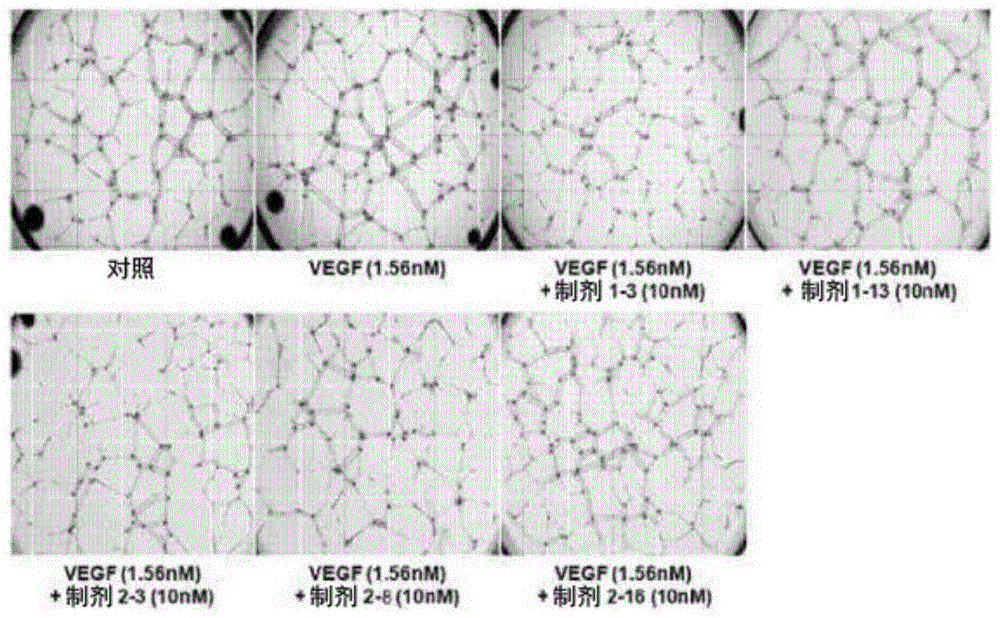
Fig. 1 shows the results obtained by performing an angiogenesis experiment of Human Umbilical Vein Endothelial Cells (HUVECs) using the ophthalmic pharmaceutical composition of the present invention.
Detailed Description
The present invention provides an ophthalmic pharmaceutical composition having a pH in the range of 5.2 to 5.7 comprising in an aqueous medium (a) a therapeutically effective amount of aflibercept; (b)5-50mM acetate buffer; (c)6-12 w/v% sugar or 3-7 w/v% sugar alcohol; and (d)0.01-0.1 w/v% of a surfactant, wherein the ophthalmic pharmaceutical composition does not contain an ionic tonicity agent.
Aflibercept used as an active ingredient in the pharmaceutical composition of the present invention may be contained in the pharmaceutical composition in a therapeutically effective amount. For example, the concentration of aflibercept may be in the range of 10 to 50mg/ml, preferably 20 to 50mg/ml, and more preferably about 40mg/ml, but is not limited thereto.
Aqueous media include any aqueous medium capable of providing a buffer with an acetate buffer. For example, the aqueous medium includes water for injection, sterile distilled water, and the like.
The acetate buffer comprises an alkali metal acetate or an alkaline earth metal acetate. For example, the acetate buffer may be a sodium acetate buffer. By controlling the ratio between acetate and metal (e.g., sodium) in the buffer, the desired pH can be provided. The concentration of acetate buffer may be, but is not limited to, 5-50mM, preferably 5-30mM, more preferably about 10-20mM, and most preferably about 10-15 mM.
The sugar may preferably be sucrose, trehalose or a mixture thereof, more preferably sucrose or trehalose, most preferably sucrose. The concentration of the sugar may be 6-12 w/v%, preferably 6-10 w/v%. In addition, the present inventors have found that the pharmaceutical composition shows an osmolality similar to that of physiological saline (about 290 milliosmoles/kg (i.e., mOsmol/kg)) and excellent stability when the concentration of the sugar is about 6-8 w/v%. Thus, most preferably, the concentration of sugar may be about 6-8 w/v%. Further, the sugar alcohol may be sorbitol. The concentration of sugar alcohol may be about 5 w/v%.
The surfactant can be polyoxyethylene sorbitan fatty acid ester (e.g., polysorbate 20, polysorbate 80, etc.), polyoxyethylene-polyoxypropylene block copolymer (e.g., poloxamer 188)TMEtc.) or a mixture thereof, preferably polyoxyethylene (20) sorbitan monolaurate (polysorbate 20) or polyoxyethylene (20) sorbitan monooleate (polysorbate 80), more preferably polyoxyethylene (20) sorbitan monolaurate. The concentration of the surfactant is 0.01-0.1 w/v%. In one embodiment, the concentration of the polyoxyethylene sorbitan fatty acid ester may preferably be 0.01 to 0.03 w/v%, and more preferably, the concentration is about 0.03 w/v%. In another embodiment, the concentration of the polyoxyethylene-polyoxypropylene block copolymer may preferably be 0.03-0.1 w/v%.
In one embodiment of the present invention, an ophthalmic pharmaceutical composition is provided having a pH of about 5.5 and consisting of 40mg/ml of aflibercept, 10-15mM sodium acetate buffer, 7 w/v% sucrose, 0.03 w/v% polyoxyethylene (20) sorbitan monolaurate and an aqueous medium.
In another embodiment of the present invention, there is provided an ophthalmic pharmaceutical composition having a pH of about 5.5, consisting of 40mg/ml of aflibercept, 10-15mM sodium acetate buffer, 8 w/v% trehalose, 0.03 w/v% polyoxyethylene (20) sorbitan monolaurate and an aqueous medium.
The pharmaceutical composition of the present invention may be filled into glass vials. Furthermore, the pharmaceutical composition of the present invention may be provided in the form of a pre-filled syringe.
The present invention will be described in further detail with reference to the following examples. These examples are for illustrative purposes only and are not intended to limit the scope of the present invention.
Example (b): preparation and evaluation of ophthalmic compositions
(1) Preparation of ophthalmic compositions
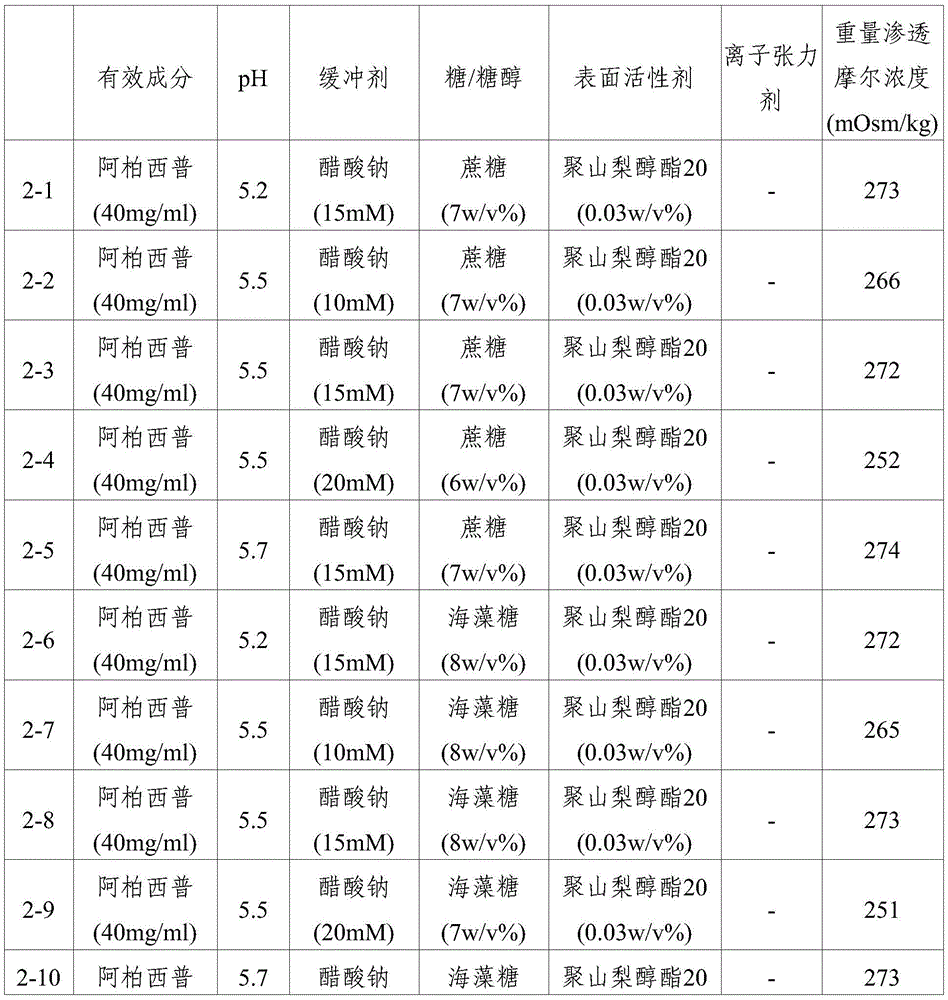
Ophthalmic compositions were prepared according to the components and amounts shown in table 1 and table 2. The respective pH values of the composition are controlled by varying the ratio between sodium and acetate in the sodium acetate buffer or by varying the ratio between sodium and citrate in the sodium citrate buffer. Specifically, after preparing sodium acetate buffer or sodium citrate buffer having each pH value, aflibercept, sugar (sucrose or trehalose), or sugar alcohol (sorbitol), and polysorbate 20 were dissolved therein under stirring to prepare each formulation. Formulations 1-13 were prepared by using sodium phosphate as the buffer and additionally dissolving sodium chloride as the ionic tonicity agent. And, formulations 1 to 14, 2 to 13 and 2 to 14 were prepared by additionally dissolving sodium chloride as an ionic tonicity agent. The osmolality of each of the resulting formulations is shown in tables 1 and 2.
TABLE 1
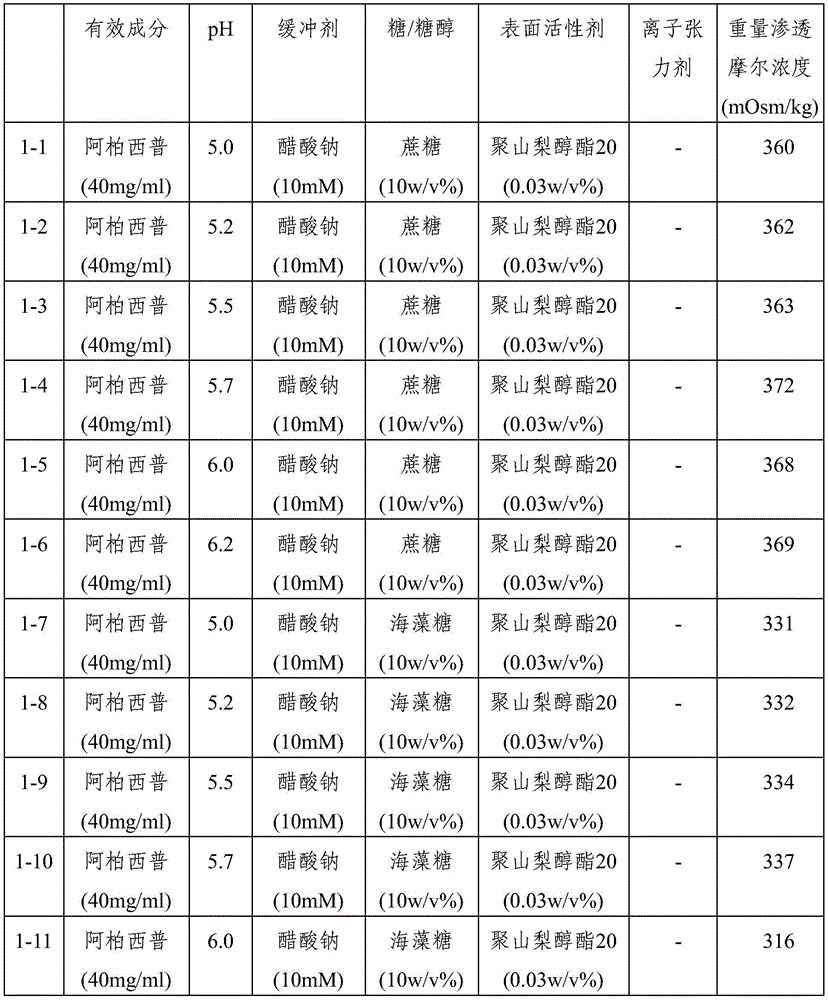

TABLE 2

(2) Evaluation of the formation of fragments, dimers and multimers derived from aflibercept under stress and accelerated conditions
Each of the formulations prepared above was stored for 8 weeks at 25 ℃ or 40 ℃ in 3ml glass vials by size exclusionHigh performance liquid chromatography (SEC-HPLC) and Dynamic Light Scattering (DLS) analysis measure the content of aflibercept (monomer) and fragments, dimers or multimers thereof. The conditions for SEC-HPLC analysis were as follows: column: TSK-GEL G3000SWXL, 7.8X 30(ID mm X L cm) (Tosoh, Japan, Cat #08541), mobile phase: containing 250mM KCl and 0.05% NaN3200mM potassium phosphate buffer (pH 6.2), flow rate: 0.5ml/min, wavelength: 280 nm. DLS analysis was performed by measuring Z-Average particle diameter (Z-Average) and PDI (polydispersity index) with Zetasizer Nano system (Malvern).
The SEC-HPLC analysis results are shown in tables 3 and 4. The DLS analysis results are shown in tables 5 and 6.
TABLE 3
SEC-HPLC analysis (storage at 25 ℃ C. for 8 weeks)
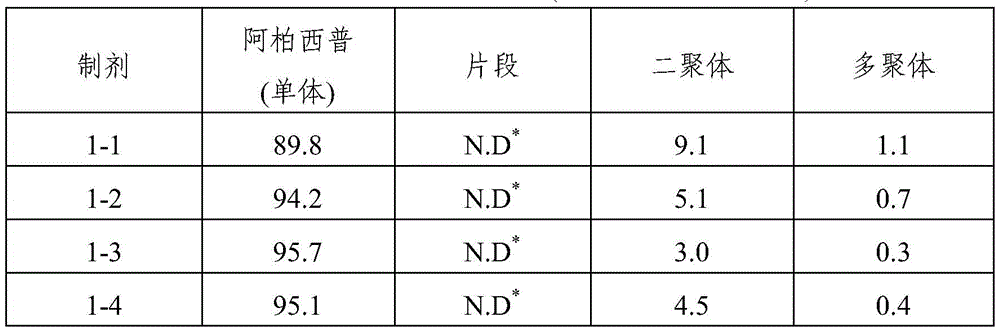

N.d.: not detected
TABLE 4
SEC-HPLC analysis (storage at 40 ℃ C. for 8 weeks)

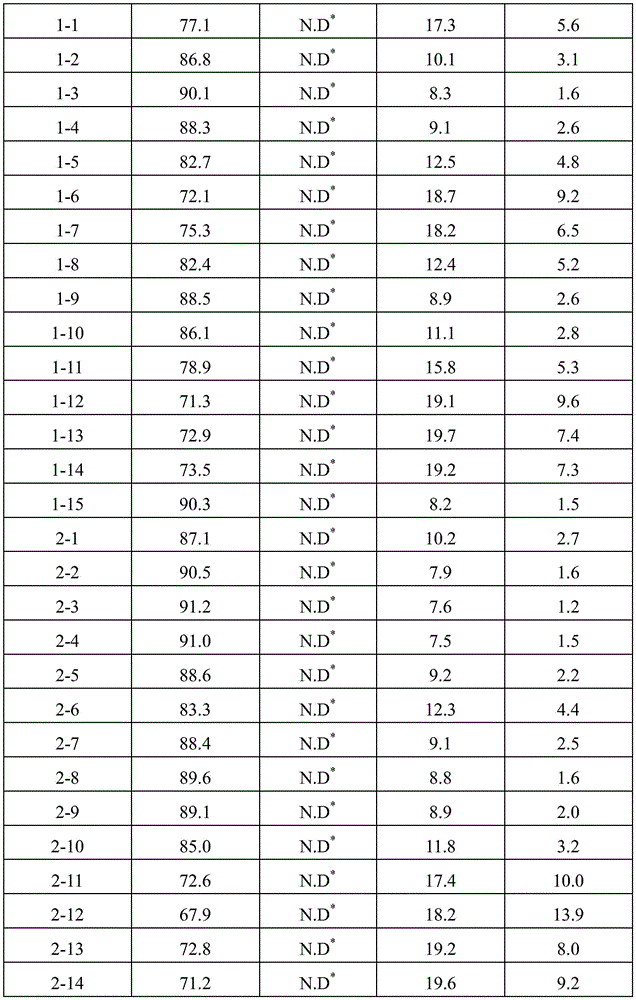
N.d.: not detected
TABLE 5
DLS assay results (8 weeks storage at 25 ℃ C.)

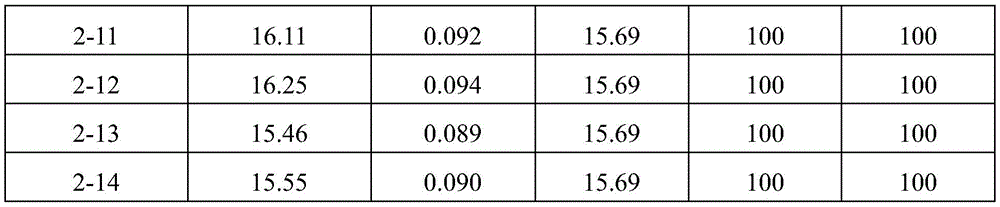
TABLE 6
DLS assay results (8 weeks storage at 40 ℃ C.)
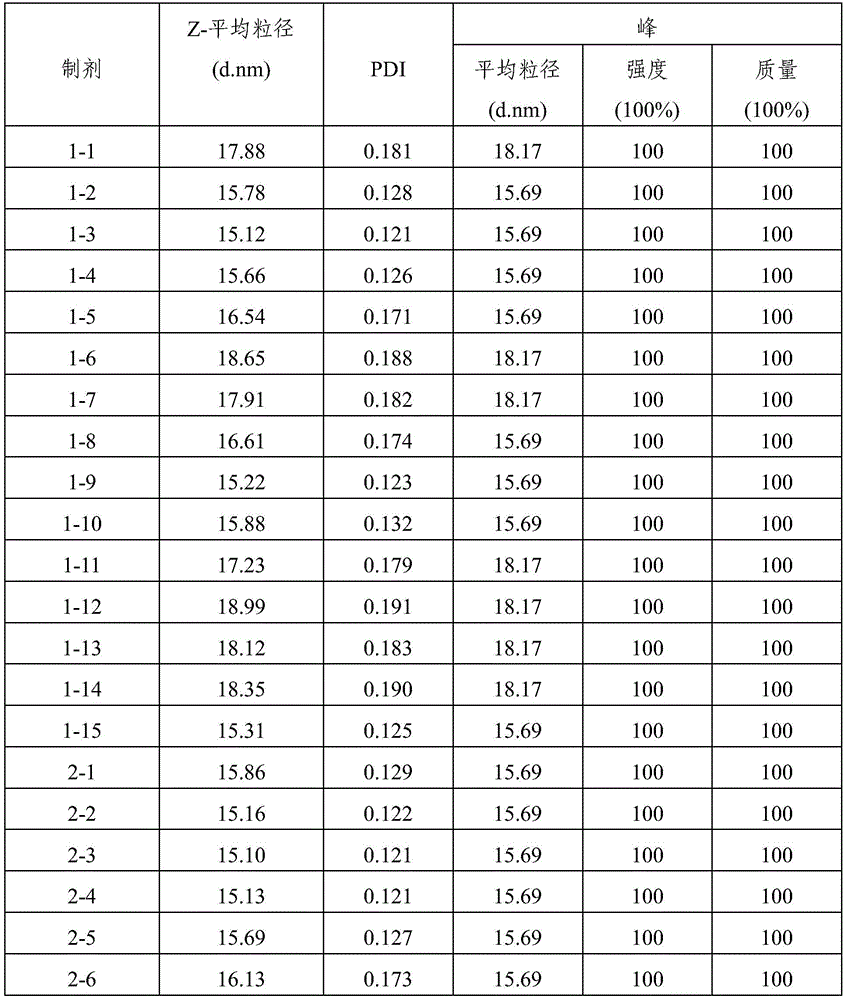
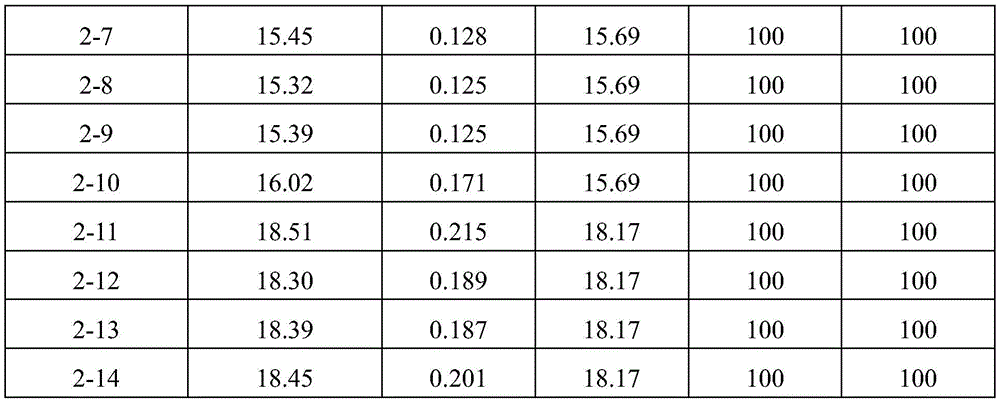
As shown in the results of tables 3 to 6, it can be seen that when the formulations disclosed in WO 2007/149334 (i.e., formulations 1 to 13) were stored for 8 weeks under accelerated conditions (25 ℃) and under stress conditions (40 ℃), dimeric and multimeric impurities derived from aflibercept were formed at high levels. In addition, in formulations 1-14 and 2-13 prepared by using the same ionic tonicity agent and sugar as in the known formulation (i.e., formulations 1-13) and adjusting the pH value using a sodium acetate buffer as used in formulations 1-3, dimer impurities and multimer impurities derived from aflibercept were formed at a level similar to that of the known formulation (i.e., formulations 1-13). From these results, it can be confirmed that the formation of dimeric and multimeric impurities derived from aflibercept is significantly increased by using an ionic tonicity agent (e.g., NaCl). In addition, it was also demonstrated that in the case of formulations containing citrate buffer instead of acetate buffer (i.e., formulations 2-11 and 2-12), citrate acts as an ionic salt, thereby significantly increasing the formation of dimeric and multimeric impurities derived from aflibercept.
Ophthalmic formulations having various pH values (i.e., formulations 1-1 to 1-12 and formulations 2-1 to 2-10) prepared by increasing the amount of sugar without using an ionic tonicity agent were stored under accelerated conditions (25 ℃) and under stress conditions (40 ℃) for 8 weeks, and then dimer impurities and multimer impurities derived from aflibercept were measured. As a result, formulations having a pH of 5.2 to 5.7 and containing no ionic tonicity agent, i.e., formulations 1-2, 1-3, 1-4, 1-8, 1-9, 1-10, and 2-1 to 2-10, showed significantly reduced formation of dimeric and multimeric impurities derived from aflibercept. In particular, formulations having a pH of 5.5 and no ionic tonicity agent, i.e., formulations 1-3, 1-9, 2-2, 2-3, 2-4, 2-7, 2-8, and 2-9, showed significantly reduced formation of dimeric and multimeric impurities derived from aflibercept. Furthermore, formulations 1-15, prepared using the same components as in formulations 1-3, also showed significantly reduced formation of dimeric and multimeric impurities derived from aflibercept, except that sugar alcohol (sorbitol) was used instead of sugar. Among them, the formulations 1-15, 2-2, 2-3, 2-4, 2-7, 2-8 and 2-9 exhibited an effective osmolality range conventionally acceptable in eye drop formulations, i.e., an osmolality of about 230 mOsmol/kg. In particular, since formulations 2-3 and 2-8 exhibited an osmolality range of about 270-310mOsmol/kg, which is compatible with the osmolality of physiological saline (290mOsmol/kg), it can be seen that the formulations are very effective as ophthalmic formulations.
(3) Evaluation of the formation of fragments, dimers and multimers derived from aflibercept under refrigerated conditions (4 ℃ conditions)
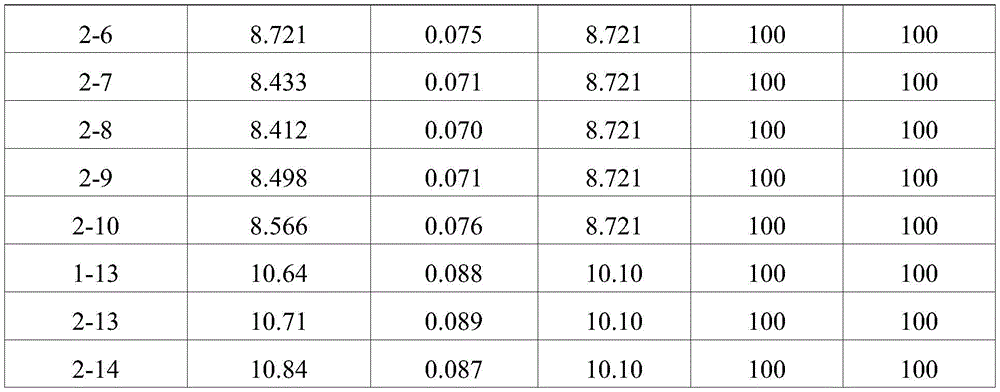
After formulations 2-1 to 2-10, 1-13, 2-13 and 2-14 were stored in 3ml glass vials at 4 ℃ for 6 months and 12 months, the content of aflibercept (monomer) and fragments, dimers or multimers thereof was measured according to the same method as in (2) above. The SEC-HPLC analysis results are shown in Table 7 and Table 8. The DLS analysis results are shown in table 9 and table 10.
TABLE 7
SEC-HPLC analysis result (storage at 4 ℃ C. for 6 months)
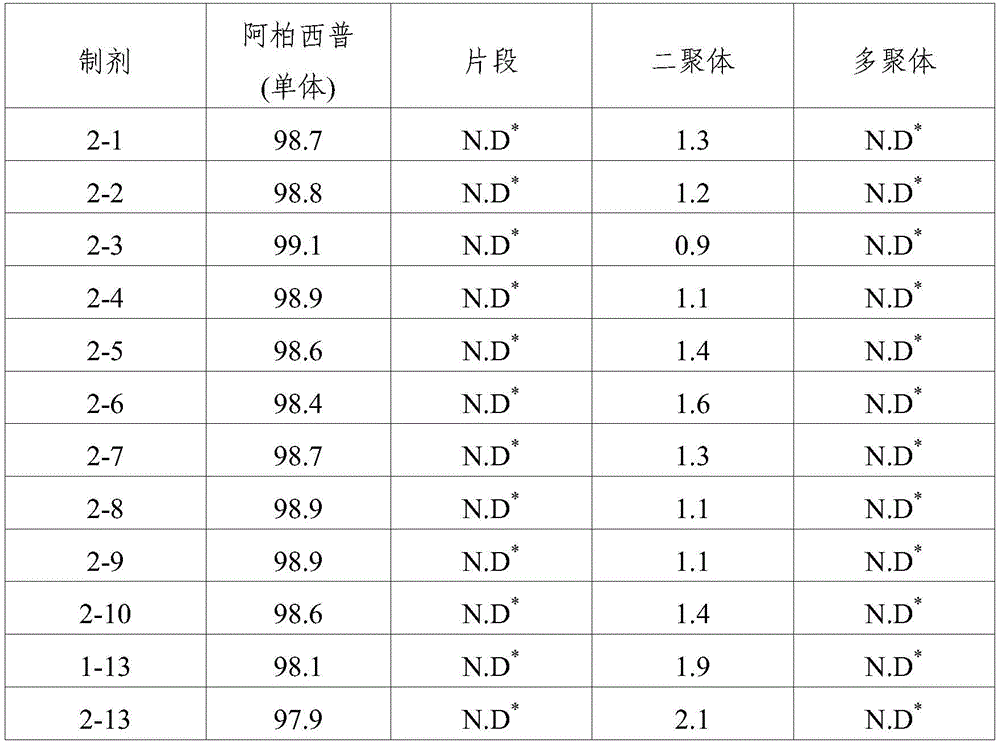

N.D. No detection
TABLE 8
SEC-HPLC analysis result (storage at 4 ℃ C. for 12 months)
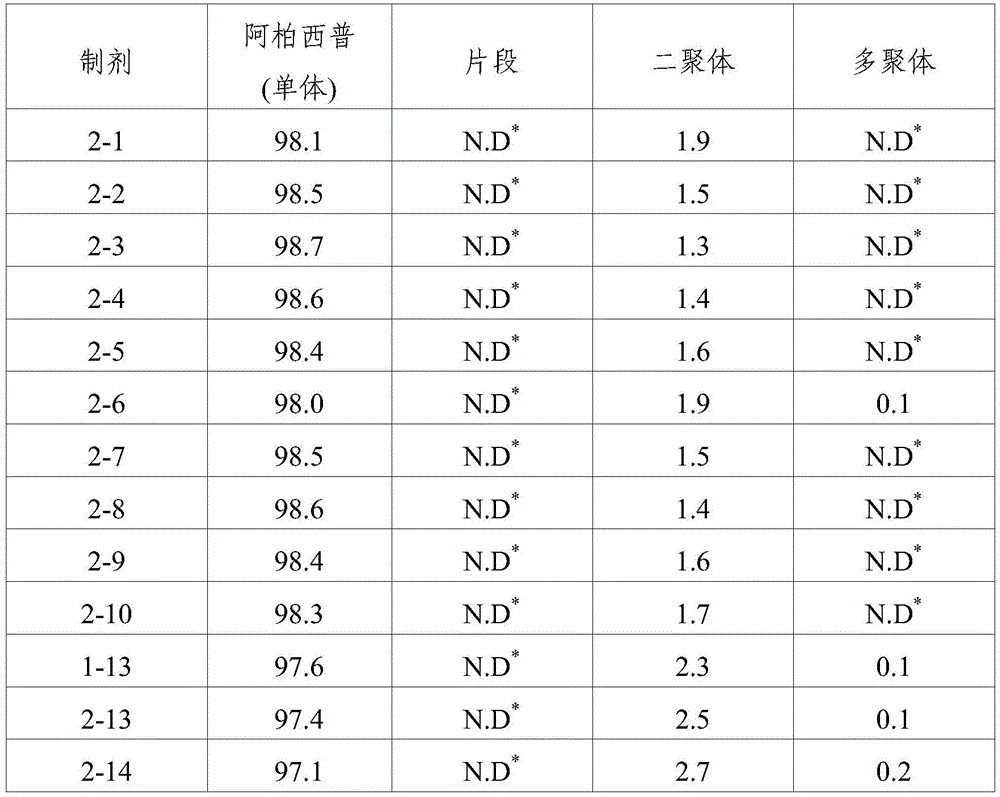
N.D. No detection
TABLE 9
DLS assay results (6 months storage at 4 ℃ C.)

Watch 10
DLS assay results (12 months storage at 4 ℃ C.)
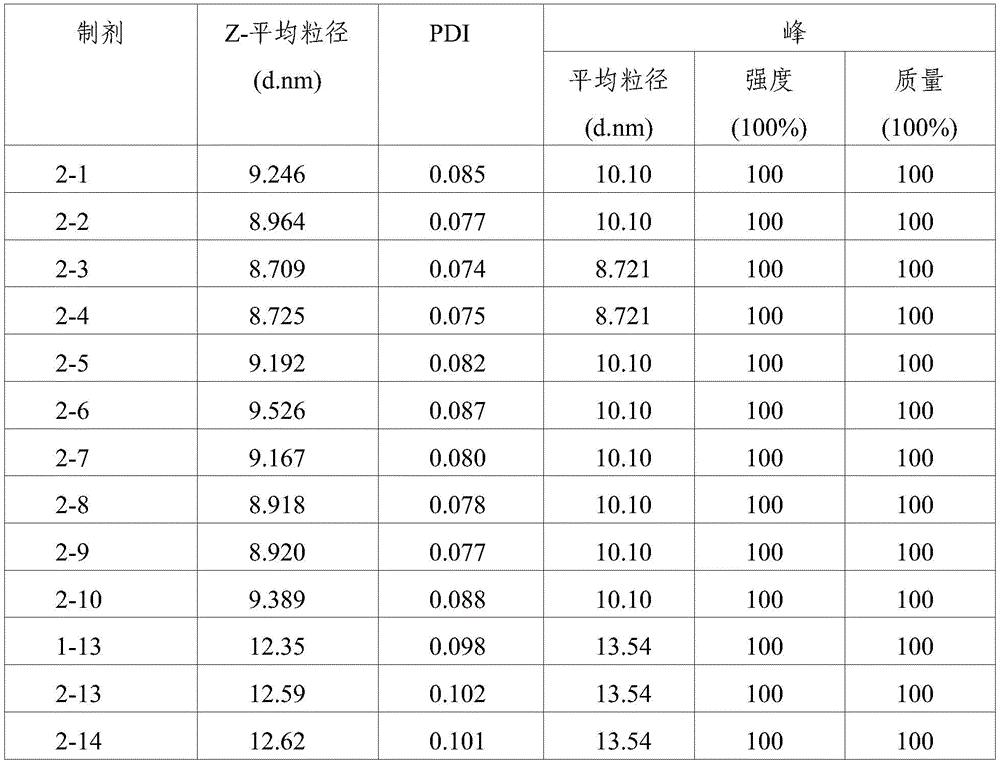
As shown in the results of tables 7 to 10, it can be seen that the formulations without ionic tonicity agent (i.e., formulations 2-1 to 2-10) and the formulations with ionic tonicity agent (i.e., formulations 1-13, 2-13 and 2-14) both formed dimer impurities and multimer impurities derived from aflibercept at lower levels when the formulations were stored at 4 ℃ for 6 months and 12 months. However, the formulation without ionic tonicity agent forms dimeric and polymeric impurities derived from aflibercept at significantly lower levels than the formulation containing ionic tonicity agent.
(4) Asparagine (Asn) deamidation assay
Protein modification was evaluated by performing asparagine (Asn) deamidation analysis, i.e., isoaspartic acid quantitative analysis for quantitative asparagine deamidation, on formulations 1-2, 1-3, 1-4, 1-8, 1-9, 1-10, 1-13, 1-14, 1-15, 2-1 to 2-10, 2-13, and 2-14 stored under accelerated conditions (25 ℃) and stress conditions (40 ℃) for 8 weeks. In addition, the preparations 2-1 to 2-10, 1-13, 2-13 and 2-14 stored at 4 ℃ for 6 months and 12 months were also subjected to isoaspartic acid quantitative analysis, thereby evaluating protein modification.
Using IsoquantTMThe isoaspartic acid detection kit (Promega, cat # MA1010) was used for the asparagine deamidation assay according to the manufacturer's instructions. The results are shown in tables 11 to 14.
TABLE 11
Asn deamidation assay result (storage at 25 ℃ C. for 8 weeks)

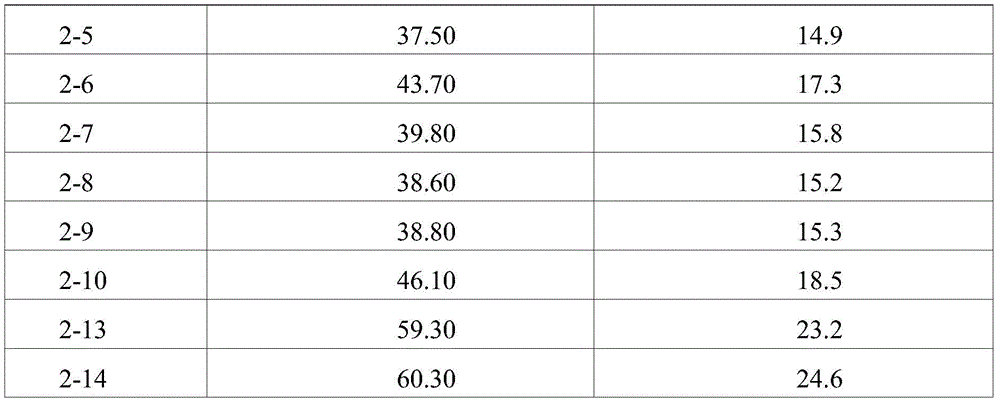
TABLE 12
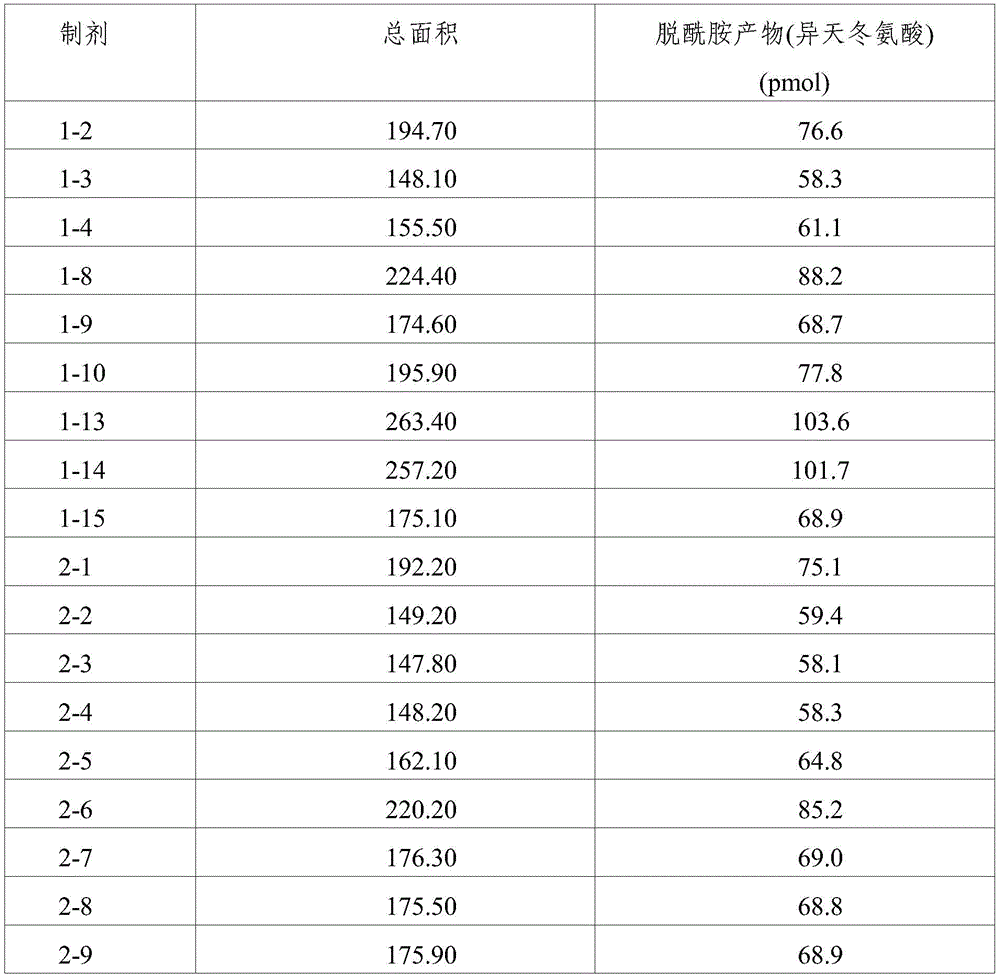
Asn deamidation assay results (8 weeks storage at 40 ℃ C.)

Watch 13
Asn deamidation assay results (6 months of storage at 4 ℃ C.)

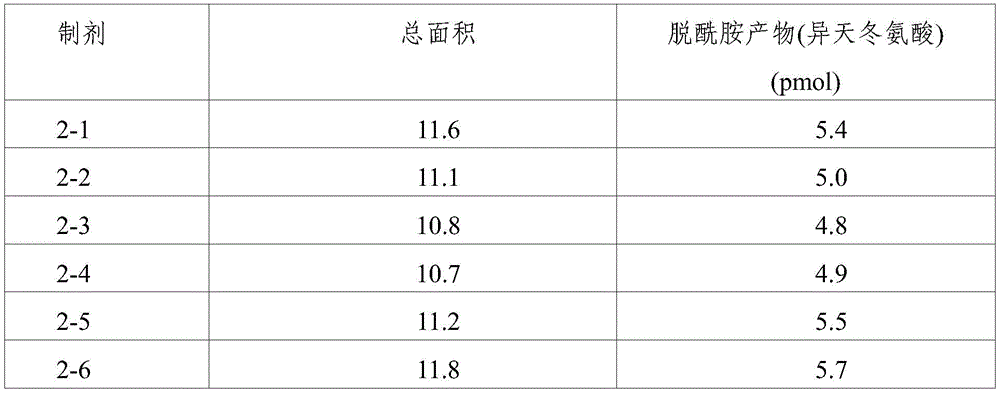
TABLE 14
Asn deamidation assay results (12 months of storage at 4 ℃ C.)

As shown by the results in tables 11 to 14, it can be seen that the compositions of the present invention, i.e., formulations 1-2, 1-3, 1-4, 1-8, 1-9, 1-10 and 2-1 to 2-10, stored under accelerated conditions (25 ℃) and stress conditions (40 ℃) for 8 weeks show significantly reduced formation of deamidation products. In particular, formulations with a pH of 5.5 and no ionic tonicity agent, i.e., formulations 1-3, 1-9, 2-3, and 2-9, showed significantly reduced formation of deamidation products.
In addition, formulations without ionic tonicity agent (i.e., formulations 2-1 to 2-10) and formulations containing ionic tonicity agent (i.e., formulations 1-13, 2-13, and 2-14) both showed formation of deamidation products at lower levels when formulations 2-1 to 2-10, 1-13, 2-13, and 2-14 were stored at 4 ℃ for 6 months and 12 months. However, the formulation without ionic tonicity agent shows the formation of deamidation products at a significantly lower level compared to the formulation with ionic tonicity agent.
(5) Evaluation of cell proliferation inhibition
Formulations 1-3, 1-13, 2-3, 2-8 and 2-13, stored for 8 weeks at accelerated conditions (25 ℃) and 12 months at 4 ℃, were evaluated for biological activity. Cells proliferate if Human Umbilical Vein Endothelial Cells (HUVECs) are treated with Vascular Endothelial Growth Factor (VEGF). Under the conditions described, an in vitro test was performed to assess the inhibition of cell proliferation, based on the aflibercept treatment thereof.
rhVEGF at 50ng/ml165(Promokine, Cat # C-64420) and an Abbescept concentration gradient of 2.4-2500 ng/ml. Humidified 5% CO at 37 deg.C2Neutralization was carried out in an incubator for 3 hours. The cells were treated with the reaction product and then cultured for 3 days. To assess inhibition of cell proliferation, according to CellTiter 96TMThe AQueous single solution cell proliferation assay kit (Promega, catalog # G3580, MTS solution) protocol measures the absorbance at 590nm to determine the concentration required for half (50%) Inhibition (IC)50)。
IC of each preparation obtained from the above cell proliferation inhibition assay50The values are shown in table 15.
Watch 15
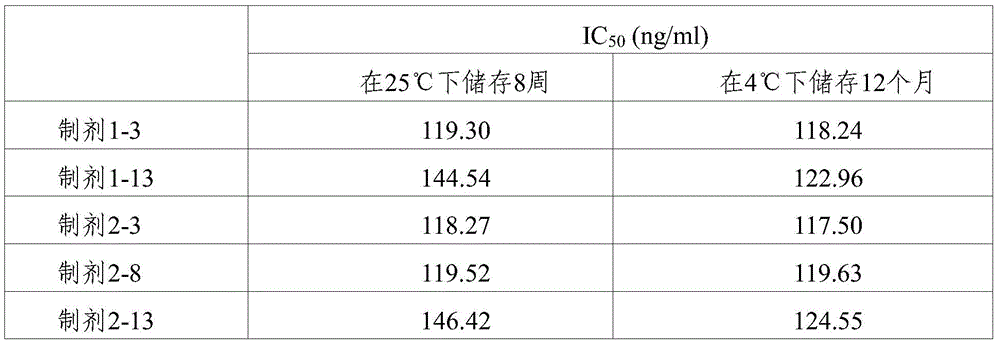
As shown in the results of table 15, it can be seen that the ophthalmic formulation obtained according to the present invention not only has excellent stability but also biological activity thereof is increased by about 20 to 25% as compared to the conventional formulation when stored for a long time under accelerated conditions. Furthermore, it can also be seen that the formulation without ionic tonicity agent has more excellent biological activity when stored under storage conditions of 4 ℃ than the formulation containing ionic tonicity agent.
(6) Evaluation of angiogenesis inhibition
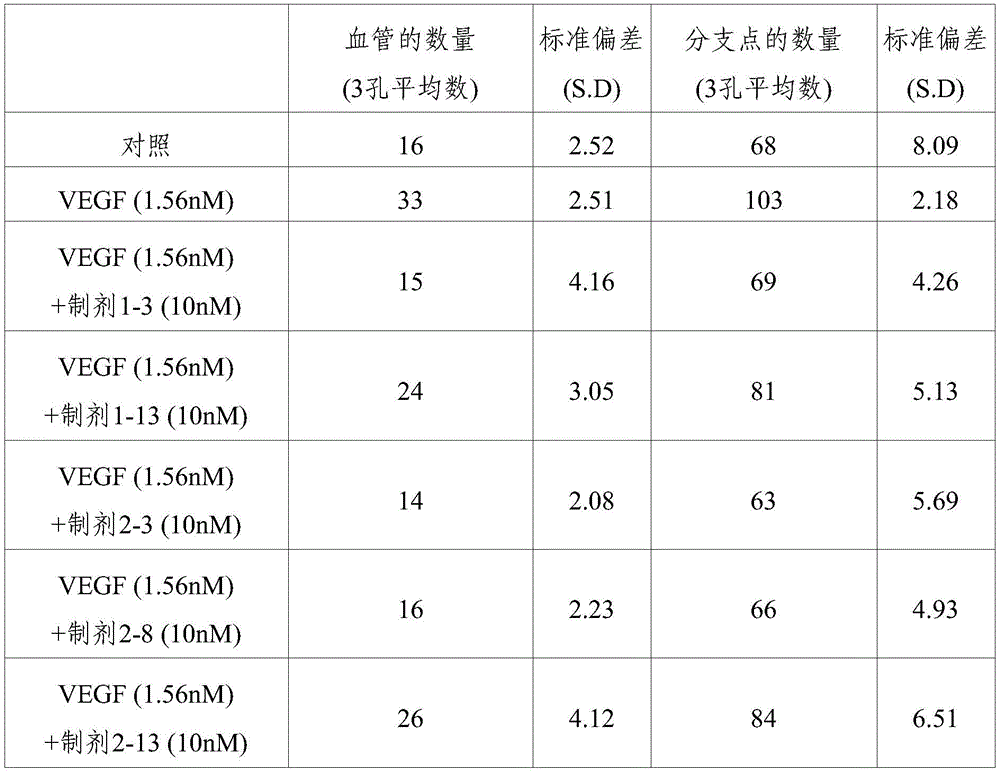
Human Umbilical Vein Endothelial Cells (HUVEC) were subjected to vascularization experiments (tube formation assay) on formulations 1-3, 1-13, 2-3, 2-8 and 2-13 stored for 8 weeks under accelerated conditions (25 ℃). Human Umbilical Vein Endothelial Cells (HUVECs) were vascularized in Matrigel (Matrigel) coated plates. Treatment of HUVECs with Vascular Endothelial Growth Factor (VEGF) increased the angiogenic capacity of HUVECs. Under these conditions, an in vitro test was carried out to evaluate the inhibition of the angiogenic capacity, based on the aflibercept treatment thereof.
Mu.l of Matrigel (Low growth factor BD Matrigel, Cat #356231) was added to each well of an Ibidi. mu. -angiogenic Slide (mu-Slide Angiogenesis) of the ibiTreat (Cat # 81506) kit, followed by polymerization at 37 ℃ for 2 hours. Converting rhVEGF165(Promokine, Cat. # C-64420) was set at a final concentration of 1.56nM (about 60ng/ml) and Abutipu was set at a concentration of 10nM (about 1150 ng/ml). At 37 deg.C, 5% CO in humidified gas2Incubate in incubator for 3 hours. Mixing cells (1X 10)4Individual cells/50 μ Ι) were mixed with the incubation product and then added to each well of a μ -angiogenesis slide coated with matrigel. After about 16 hours, the blood vessel formation was observed.
Angiogenesis of HUVEC was photographed with a microscope and then the extent of angiogenesis was assessed using an angiogenesis analyzer suitable for the Image J program distributed by the National Institutes of Health (NIH). The inhibitory effect on angiogenesis is evaluated by measuring the number of blood vessels and the number of branch points forming the blood vessels.
The results obtained for each formulation from the above inhibition assay for HUVEC angiogenesis are shown in table 16 and fig. 1.
TABLE 16
Evaluation of inhibition of HUVEC angiogenesis (storage at 25 ℃ C. for 8 weeks)
In addition, the same tests as described above were carried out on formulations stored at 4 ℃ for 12 months. The results are shown in Table 17.
TABLE 17
Evaluation of inhibition of HUVEC angiogenesis (12 months of storage at 4 ℃ C.)

As shown in table 16 and the results of fig. 1, it can be seen that the ophthalmic formulation obtained according to the present invention not only has excellent stability as compared with the conventional formulation, but also exhibits a similar level of angiogenesis ability as the control group, i.e., exhibits a significantly increased angiogenesis inhibitory effect as compared with the formulation containing an ionic tonicity agent, when stored for a long period of time under accelerated conditions. Furthermore, it can also be seen that the formulation without ionic tonicity agent has more excellent inhibitory activity on the vascularization of HUVEC when stored under storage conditions at 4 ℃ than the formulation containing ionic tonicity agent.
Claims (7)
1. An ophthalmic pharmaceutical composition having a pH value in the range of pH5.2-5.5 comprising in an aqueous medium (a)20-50mg/ml aflibercept; (b)10-20mM sodium acetate buffer; (c)6-8 w/v% sugar or 5 w/v% sorbitol; and (d)0.01-0.1 w/v% of a surfactant, wherein the ophthalmic pharmaceutical composition does not contain an ionic tonicity agent, the sugar is sucrose, trehalose or a mixture thereof, the surfactant is a polyoxyethylene sorbitan fatty acid ester, a polyoxyethylene-polyoxypropylene block copolymer or a mixture thereof, and the osmolality of the composition is 230-320 mOsmol/kg.
2. The ophthalmic pharmaceutical composition of claim 1, wherein the sugar is sucrose.
3. The ophthalmic pharmaceutical composition according to claim 1, wherein said surfactant is polyoxyethylene (20) sorbitan monolaurate or polyoxyethylene (20) sorbitan monooleate.
4. The ophthalmic pharmaceutical composition of claim 3, wherein said surfactant is polyoxyethylene (20) sorbitan monolaurate.
5. The ophthalmic pharmaceutical composition according to claim 4, wherein the concentration of the surfactant is 0.03 w/v%.
6. The ophthalmic pharmaceutical composition of claim 1, wherein said composition has a pH of 5.5 and consists of 40mg/ml aflibercept, 10-15mM sodium acetate buffer, 7 w/v% sucrose, 0.03 w/v% polyoxyethylene (20) sorbitan monolaurate and an aqueous medium.
7. The ophthalmic pharmaceutical composition of claim 1, wherein said composition has a pH of 5.5 and consists of 40mg/ml aflibercept, 10-15mM sodium acetate buffer, 8 w/v% trehalose, 0.03 w/v% polyoxyethylene (20) sorbitan monolaurate and an aqueous medium.
Applications Claiming Priority (5)
| Application Number | Priority Date | Filing Date | Title |
|---|---|---|---|
| KR10-2017-0053782 | 2017-04-26 | ||
| KR20170053782 | 2017-04-26 | ||
| KR10-2017-0120262 | 2017-09-19 | ||
| KR1020170120262A KR101861163B1 (en) | 2017-04-26 | 2017-09-19 | Ophthalmic pharmaceutical composition |
| PCT/KR2017/011293 WO2018199408A1 (en) | 2017-04-26 | 2017-10-13 | Ophthalmic pharmaceutical composition |
Publications (2)
| Publication Number | Publication Date |
|---|---|
| CN109475597A CN109475597A (en) | 2019-03-15 |
| CN109475597B true CN109475597B (en) | 2022-03-22 |
Family
ID=62299585
Family Applications (1)
| Application Number | Title | Priority Date | Filing Date |
|---|---|---|---|
| CN201780033996.8A Active CN109475597B (en) | 2017-04-26 | 2017-10-13 | Pharmaceutical composition for eye |
Country Status (9)
| Country | Link |
|---|---|
| US (1) | US10646546B2 (en) |
| EP (1) | EP3452075B1 (en) |
| JP (1) | JP6677827B2 (en) |
| KR (1) | KR101861163B1 (en) |
| CN (1) | CN109475597B (en) |
| ES (1) | ES2902325T3 (en) |
| PL (1) | PL3452075T3 (en) |
| TW (1) | TWI763802B (en) |
| WO (1) | WO2018199408A1 (en) |
Families Citing this family (11)
| Publication number | Priority date | Publication date | Assignee | Title |
|---|---|---|---|---|
| KR101406811B1 (en) | 2006-06-16 | 2014-06-12 | 리제너론 파마슈티칼스 인코포레이티드 | Vegf antagonist formulations suitable for intravitreal administration |
| JP7116059B2 (en) * | 2016-11-21 | 2022-08-09 | ジャスト-エヴォテック バイオロジックス、インコーポレイテッド | Aflibercept preparations and their use |
| AU2018368466B2 (en) | 2017-11-17 | 2024-06-20 | Amgen Inc. | VEGFR-Fc fusion protein formulations |
| MX421310B (en) | 2018-05-10 | 2025-03-14 | Regeneron Pharma | High concentration vegf receptor fusion protein containing formulations |
| US20220054586A1 (en) * | 2018-09-10 | 2022-02-24 | Samsung Bioepis Co., Ltd. | Liquid composition comprising protein |
| KR102286892B1 (en) * | 2019-07-08 | 2021-08-06 | 삼천당제약주식회사 | Refining method of ophthalmic protein pharmaceuticals |
| TW202128745A (en) | 2019-12-06 | 2021-08-01 | 美商再生元醫藥公司 | Anti-vegf protein compositions and methods for producing the same |
| WO2021125852A1 (en) * | 2019-12-17 | 2021-06-24 | 주식회사 프로젠 | Novel injectable formulation |
| CN116056688A (en) * | 2020-07-24 | 2023-05-02 | 盼展生物技术有限公司 | ophthalmic liquid composition |
| KR102720956B1 (en) | 2020-12-15 | 2024-10-24 | 삼천당제약주식회사 | Syringe comprising ophthalmic formulation |
| EP4279066A4 (en) * | 2021-01-14 | 2024-11-20 | Hanall Biopharma Co., Ltd. | OPHTHALMIC COMPOSITION WITH TANFARERCEPT AND STABILITY WITHOUT THE USE OF A STABILIZER |
Family Cites Families (10)
| Publication number | Priority date | Publication date | Assignee | Title |
|---|---|---|---|---|
| KR101406811B1 (en) | 2006-06-16 | 2014-06-12 | 리제너론 파마슈티칼스 인코포레이티드 | Vegf antagonist formulations suitable for intravitreal administration |
| ES2457442T3 (en) | 2009-05-08 | 2014-04-25 | Pari Pharma Gmbh | Concentrated pharmaceutical formulations of mast cell stabilizers |
| US20130323242A1 (en) | 2012-06-01 | 2013-12-05 | Ophthotech Corp. | Compositions comprising an anti-pdgf aptamer and a vegf antagonist |
| JP2015519373A (en) | 2012-06-01 | 2015-07-09 | オプソテック コーポレイションOphthotech Corporation | Composition comprising anti-PDGF aptamer and VEGF antagonist |
| RU2683823C2 (en) | 2013-09-27 | 2019-04-02 | Ханми Фарм. Ко., Лтд. | Sustained type human growth hormone preparation |
| AR102494A1 (en) * | 2014-11-07 | 2017-03-01 | Novartis Ag | METHODS TO TREAT EYE DISEASES |
| KR101808234B1 (en) * | 2015-06-23 | 2017-12-12 | (주)알테오젠 | A stable liquid formulation of fusion protein with IgG Fc domain |
| CN105496955A (en) * | 2015-12-11 | 2016-04-20 | 北京蓝丹医药科技有限公司 | Difluprednate ophthalmic emulsion and preparation method thereof |
| JP7116059B2 (en) * | 2016-11-21 | 2022-08-09 | ジャスト-エヴォテック バイオロジックス、インコーポレイテッド | Aflibercept preparations and their use |
| EP3684332A1 (en) * | 2017-09-18 | 2020-07-29 | Amgen Inc. | Vegfr-fc fusion protein formulations |
-
2017
- 2017-09-19 KR KR1020170120262A patent/KR101861163B1/en active Active
- 2017-10-13 ES ES17907584T patent/ES2902325T3/en active Active
- 2017-10-13 PL PL17907584T patent/PL3452075T3/en unknown
- 2017-10-13 EP EP17907584.1A patent/EP3452075B1/en active Active
- 2017-10-13 CN CN201780033996.8A patent/CN109475597B/en active Active
- 2017-10-13 WO PCT/KR2017/011293 patent/WO2018199408A1/en not_active Ceased
- 2017-10-13 JP JP2018563112A patent/JP6677827B2/en active Active
- 2017-10-13 US US16/305,987 patent/US10646546B2/en active Active
-
2018
- 2018-03-21 TW TW107109677A patent/TWI763802B/en active
Also Published As
| Publication number | Publication date |
|---|---|
| KR101861163B1 (en) | 2018-05-25 |
| EP3452075B1 (en) | 2021-11-24 |
| JP6677827B2 (en) | 2020-04-08 |
| EP3452075A1 (en) | 2019-03-13 |
| EP3452075A4 (en) | 2019-12-11 |
| PL3452075T3 (en) | 2022-02-21 |
| WO2018199408A1 (en) | 2018-11-01 |
| US10646546B2 (en) | 2020-05-12 |
| US20190160145A1 (en) | 2019-05-30 |
| TWI763802B (en) | 2022-05-11 |
| JP2019517513A (en) | 2019-06-24 |
| ES2902325T3 (en) | 2022-03-28 |
| TW201838646A (en) | 2018-11-01 |
| CN109475597A (en) | 2019-03-15 |
Similar Documents
| Publication | Publication Date | Title |
|---|---|---|
| CN109475597B (en) | Pharmaceutical composition for eye | |
| US11987623B2 (en) | Stabilized antibody compositions | |
| TWI727279B (en) | Methods for treating ocular diseases | |
| TWI848956B (en) | Liquid composition comprising vegf antagonist | |
| JP2017538674A (en) | Stable protein solution formulation containing high concentration anti-VEGF antibody | |
| US20240182554A1 (en) | Protein solution formulation containing high concentration of an anti-vegf antibody | |
| TW202310873A (en) | Pharmaceutical composition comprising anti-human tslp receptor antibody | |
| KR20210077645A (en) | Novel injectable formulation | |
| WO2023281367A1 (en) | Stable liquid formulations of aflibercept |
Legal Events
| Date | Code | Title | Description |
|---|---|---|---|
| PB01 | Publication | ||
| PB01 | Publication | ||
| SE01 | Entry into force of request for substantive examination | ||
| SE01 | Entry into force of request for substantive examination | ||
| GR01 | Patent grant | ||
| GR01 | Patent grant |