CN109446219B - Authority management method and device - Google Patents
Authority management method and device Download PDFInfo
- Publication number
- CN109446219B CN109446219B CN201811176594.6A CN201811176594A CN109446219B CN 109446219 B CN109446219 B CN 109446219B CN 201811176594 A CN201811176594 A CN 201811176594A CN 109446219 B CN109446219 B CN 109446219B
- Authority
- CN
- China
- Prior art keywords
- identifier
- sql statement
- query
- rls function
- data table
- Prior art date
- Legal status (The legal status is an assumption and is not a legal conclusion. Google has not performed a legal analysis and makes no representation as to the accuracy of the status listed.)
- Active
Links
- 238000007726 management method Methods 0.000 title claims description 33
- 238000001914 filtration Methods 0.000 claims abstract description 66
- 238000013475 authorization Methods 0.000 claims abstract description 31
- 238000000034 method Methods 0.000 claims abstract description 16
- 230000006870 function Effects 0.000 claims description 120
- 238000004458 analytical method Methods 0.000 claims description 11
- 238000010586 diagram Methods 0.000 description 12
- 238000012545 processing Methods 0.000 description 4
- 238000005457 optimization Methods 0.000 description 3
- 238000009472 formulation Methods 0.000 description 2
- 239000000203 mixture Substances 0.000 description 2
- 230000003287 optical effect Effects 0.000 description 2
- 238000005516 engineering process Methods 0.000 description 1
- 238000013507 mapping Methods 0.000 description 1
- 238000012986 modification Methods 0.000 description 1
- 230000004048 modification Effects 0.000 description 1
- 239000007787 solid Substances 0.000 description 1
Images




Landscapes
- Information Retrieval, Db Structures And Fs Structures Therefor (AREA)
- Storage Device Security (AREA)
Abstract
The present disclosure relates to a method and an apparatus for managing permissions, where the method is applied to a driver in Spark, and includes: acquiring a user identifier and an identifier of an RLS function from a received row authorization SQL statement, wherein a return result of the RLS function is a filtering condition of a data table; establishing and storing a first incidence relation between the user identification acquired from the row authorization SQL statement and the identification of the RLS function; when an inquiry SQL statement is received, acquiring a filtering condition corresponding to the inquiry SQL statement according to the first incidence relation; and acquiring a query result of the query SQL statement based on the filtering condition. By obtaining the query result of the query SQL statement based on the filter condition, the method and the device for managing the authority according to the embodiment of the disclosure can realize fine-grained authority management of SparkSQL.
Description
Technical Field
The present disclosure relates to the field of database technologies, and in particular, to a method and an apparatus for rights management.
Background
Spark is a big data computing framework based on memory computing, provides a distributed computing function, reads in data stored in a distributed manner, and distributes tasks to each node for computing. Spark improves the real-time performance of data processing in a big data environment, ensures high fault tolerance and high scalability, and allows users to deploy Spark on a large amount of cheap hardware to form a cluster.
Spark SQL is a Spark-based distributed SQL (Structured Query Language) engine, supports SQL statements, and is greatly convenient for users familiar with relational databases.
The authority management refers to a security rule or a security policy set according to the system. In the database operation, only authorized users can have operation authority on the database, and common users cannot check or modify the data of the database, so that the safety of the data is improved.
The table level permissions may control whether a user can access a data table. The row-level permissions may control that a user can only access a particular row of data in the data table. Row level permissions are finer grained permissions controls than table level permissions. In the related art, SparkSQL does not have a line-level rights management function.
Disclosure of Invention
In view of this, the present disclosure provides an authority management method and apparatus, which can implement fine-grained authority management in spark sql.
According to an aspect of the present disclosure, there is provided a rights management method applied to a drive in Spark, the method including: acquiring a user identifier and an identifier of a row-level security RLS function from a received row authorization Structured Query Language (SQL) statement, wherein a return result of the RLS function is a filtering condition of a data table; establishing and storing a first incidence relation between the user identification acquired from the row authorization SQL statement and the identification of the RLS function; when an inquiry SQL statement is received, acquiring a filtering condition corresponding to the inquiry SQL statement according to the first incidence relation; and acquiring a query result of the query SQL statement based on the filtering condition.
According to another aspect of the present disclosure, there is provided a rights management apparatus applied to a drive in Spark, the apparatus including: the system comprises a first acquisition module, a second acquisition module and a third acquisition module, wherein the first acquisition module is used for acquiring a user identifier and an identifier of a row-level security RLS function from a received row authorization Structured Query Language (SQL) statement, and a return result of the RLS function is a filtering condition of a data table; the first establishing module is used for establishing and storing a first incidence relation between the user identifier acquired from the row authorization SQL statement and the identifier of the RLS function; the second obtaining module is used for obtaining the filtering condition corresponding to the query SQL statement according to the first incidence relation when the query SQL statement is received; and the third acquisition module is used for acquiring the query result of the query SQL statement based on the filtering condition.
In the embodiment of the disclosure, the returned result of the RLS function is the filtering condition of the data table, the user identifier and the RLS function identifier are obtained through the row authorization SQL statement, the association relationship between the user identifier and the RLS function identifier is established, the filtering condition corresponding to the query SQL statement is determined according to the association relationship, the query result of the query SQL statement is obtained based on the filtering condition, when the user queries data through the query SQL statement, only the data meeting the filtering condition in the data table can be queried, the row-level authority management of SparkSQL is realized, and the fine-grained authority control is performed on the data.
Other features and aspects of the present disclosure will become apparent from the following detailed description of exemplary embodiments, which proceeds with reference to the accompanying drawings.
Drawings
The accompanying drawings, which are incorporated in and constitute a part of this specification, illustrate exemplary embodiments, features, and aspects of the disclosure and, together with the description, serve to explain the principles of the disclosure.
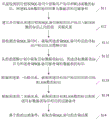
Fig. 1 shows a flowchart of a rights management method according to an embodiment of the present disclosure.
Fig. 2 shows a schematic diagram of a Spark architecture.
Fig. 3 shows a flow diagram of a rights management method according to an embodiment of the present disclosure.
Fig. 4 shows a flow diagram of a rights management method according to an embodiment of the present disclosure.
Fig. 5 illustrates a block diagram of a rights management device according to an embodiment of the present disclosure.
Fig. 6 illustrates a block diagram of a rights management device according to an embodiment of the present disclosure.
Fig. 7 is a block diagram illustrating a method for a rights management device according to an example embodiment.
Detailed Description
Various exemplary embodiments, features and aspects of the present disclosure will be described in detail below with reference to the accompanying drawings. In the drawings, like reference numbers can indicate functionally identical or similar elements. While the various aspects of the embodiments are presented in drawings, the drawings are not necessarily drawn to scale unless specifically indicated.
The word "exemplary" is used exclusively herein to mean "serving as an example, embodiment, or illustration. Any embodiment described herein as "exemplary" is not necessarily to be construed as preferred or advantageous over other embodiments.
Furthermore, in the following detailed description, numerous specific details are set forth in order to provide a better understanding of the present disclosure. It will be understood by those skilled in the art that the present disclosure may be practiced without some of these specific details. In some instances, methods, means, elements and circuits that are well known to those skilled in the art have not been described in detail so as not to obscure the present disclosure.
Fig. 1 shows a flowchart of a rights management method according to an embodiment of the present disclosure.
Fig. 2 shows a schematic diagram of a Spark architecture. As shown in fig. 2, the Spark architecture includes a Driver, a Cluster Manager, and a Worker Node. The driver is responsible for managing application scheduling, task allocation and the like, and the SparkContext is a starting point of the operation of the whole distributed program. The cluster manager is responsible for the allocation and management of the working node resources. The working node is responsible for creating an executer, further allocating resources and tasks to the executer, and synchronizing resource identifiers to the cluster manager. The executor is a process on the working node and is responsible for processing the task allocated to the process.
The rights management method described in fig. 1 can be applied to a drive in the Spark architecture shown in fig. 2. As shown in fig. 1, the rights management method may include:
step S11, obtaining the user identifier and the identifier of the RLS function from the received row grant SQL statement, where the returned result of the RLS function is the filtering condition of the data table.
SQL refers to a structured query language, a database query and programming language, used to access database systems. The access operation to the database may include: insert, query, update, delete, etc., SQL statements may be used to implement the above-described access operations. The SQL statement is a descriptive language and indicates the access task, the driver needs to specify an execution plan according to the SQL statement, the execution plan indicates how to complete the access task, and the executor executes the execution plan to realize the access task.
The processing flow of the SQL statement comprises lexical analysis, grammar analysis, optimization, strategy formulation and execution. In the lexical analysis stage, the SQL statement is analyzed into Unresolved logical plan through a Parse (analyzer); in the grammar parsing stage, an Analyzer binds an Unresolved logical plan by combining a Catalog (data dictionary) to generate a Resolved logical plan; in the optimization stage, an Optimizer (Optimizer) optimizes the solved logical plan to generate an Optimized logical plan; in the strategy formulation phase, SparkPlan (execution planning module) converts Optimized logistic plan into PhysicalPlan (physical plan). Entering an execution phase, the executor converts the PhysicalPlan into an executable physical plan, and executes the executable physical plan to generate RDD (flexible Distributed data sets). Before entering the execution phase, an SQL statement (lexical parsing, syntax parsing, optimization, and policy making) is executed in the driver shown in fig. 2, and when executed, the SQL statement is distributed to the executor in the work node shown in fig. 2 for execution. In the SQL statement processing flow, the Unresolved logical plan, the Resolved logical plan, and the Optimized logical plan are all logical plans.
The identity of the RLS (Row Level Security) function may be used to identify the RLS function, such as the function name, etc. The user identification may be used to identify the user, such as a username, and the like. The driver may obtain the user identification and the identification of the RLS function from the row grant SQL statement.
The RLS function may be used to specify a row-level rights control policy for a data table, and the return result of the RLS function may be a filter condition for the data table. The filtering condition is a boolean expression, the filtering condition can be used to determine the value of one or more data columns in each data row, and when the determination result is true, it indicates that the data row satisfies the filtering condition, and when the determination result is false, it indicates that the data row does not satisfy the filtering condition. For example, the filtering condition may be name ═ zhangsan ', age >20, or name ═ zhangsan' and age >20, or the like. The filter condition name ═ zhangsan' indicates that a data line whose name column has a value zhangsan is selected. The filter condition age >20 indicates that the value of the filter age column is greater than 20. The filter condition name ═ zhangsan' and age >20 indicates that a data row whose name column has a value zhangsan and whose age column has a value greater than 20 is selected.
The administrator can create one or more RLS functions for the data table, and the return result of each RLS function is the filtering condition of the data table. In one possible implementation, the process of creating the RLS function may include: when an RLS function creating SQL statement is received, acquiring an identifier of an RLS function, an identifier of a data table and a filtering condition from the RLS function creating SQL statement; and establishing and storing a second incidence relation of the identifier of the RLS function, the identifier of the data table and the filter condition, which are acquired from the RLS function creating SQL statement.
RLS function creation SQL statements may be used to create RLS functions. When the driver receives the RLS function creating SQL statement, the driver can acquire the identifier of the RLS function, the identifier of the data table and the filtering condition from the RLS function creating SQL statement. Wherein the identification of the data table may be used to identify the data table.
The second association represents an association of the identification of the RLS function, the identification of the data table, and the filter condition. The driver may determine for which data table a certain RLS function is established and what the filtering condition of the data table is, based on the second association.
The row grant SQL statement may be used to grant certain users (users identified corresponding to the user) the right to query the data table for a specified data row. The driver can filter each data row in the data table according to the filtering condition of the data table, and determine the data row in the data table meeting the filtering condition as the specified data row.
Grammar supported by spark SQL is stored in the grammar file of spark SQL, and each grammar is provided with corresponding keywords. In the lexical analysis stage, the driver can find the grammar corresponding to the SQL statement according to the keywords of the SQL statement, and then analyze the SQL statement according to the grammar to determine the meaning of each part of the SQL statement.
In a possible implementation manner, a line authorization syntax and an RLS function creation syntax may be added to the syntax file of SparkSQL, and keywords may be set for the line authorization syntax and the RLS function creation syntax, respectively. Wherein the row authorization syntax defines a user identification and an identification of the RLS function. The RLS function creation syntax defines the identity of the RLS function, the identity of the data table and the filtering conditions.
In a possible implementation manner, the driver may perform lexical analysis on the received SQL statements to obtain keywords; if the keyword is mapped to a row authorization syntax, determining the received SQL statement as a row authorization SQL statement; and if the keywords are mapped to the RLS function creation syntax, determining that the received SQL statement creates the SQL statement for the RLS function.
In the embodiment of the disclosure, in the lexical parsing stage, a parsing function for the RLS function creating statement is added, so that the driver can parse the RLS function creating SQL statement, and obtain the identifier, the table identifier, and the filtering condition of the RLS function from the RLS function creating SQL statement according to the RLS function creating syntax.
In one example, the RLS function creation syntax may be: CREATE RLS FUNCTION fun _ name TO TABLE _ name; RETURN boolean expression. Wherein fun _ name represents the identifier of the RLS function, talbe _ name represents the identifier of the table, and BooleanExpression represents the filtering condition.
In the embodiment of the disclosure, in the lexical parsing stage, the parsing function of the row authorization SQL statement is added, so that the driver can parse the row authorization SQL statement, and obtain the user identifier and the identifier of the RLS function from the row authorization SQL statement according to the row authorization syntax. When determining that the received SQL statement is a row authorization SQL statement, the driver may obtain the user identifier and the identifier of the RLS function from the received SQL statement.
In one example, the row grant syntax may be: GRANT RLS FUNCTION fun _ name TO USER _ name [ USER _ name ]. Wherein, fun _ name represents the identifier of the RLS function, and user _ name represents the user identifier.
Step S12, a first association relationship between the user identifier obtained from the row authorization SQL statement and the identifier of the RLS function is established and stored.
The first association may represent an association between the identity of the user and the identity of the RLS function. The first association may bind the user with the RLS function. Through the first association relation, the RLS function associated with the user can be determined, and then the filtering condition when the user accesses the data representation is determined.
The driver may store the first associative relationship in an arbitrary relational database, such as Oracle, MySQL, or DB2, among others. In one example, the driver may store the first association in a relational DataBase via JDBC (Java DataBase Connectivity).
And step S13, when receiving the query SQL statement, acquiring the filtering condition corresponding to the query SQL statement according to the first incidence relation.
The query SQL statement may be used to query data from a data table. The query SQL statement may be a Select statement. After receiving the query SQL statement, the driver may analyze the query SQL statement to obtain a logic plan corresponding to the query SQL statement, i.e., a Project logic plan. In one possible implementation, lexical analysis is performed on the received SQL statements to obtain keywords, and if the keywords are mapped to the query syntax, lexical analysis is performed according to the query syntax, and the query SQL statements are converted into corresponding logic plans in a lexical analysis stage.
The syntax parsing stage has a series of rules, and the driver can traverse each rule and process the logic plan using the rules.
In the embodiment of the present disclosure, a row right management rule is added and recorded as RLSRule, and the function of the rule is to obtain a filtering condition corresponding to the query SQL statement based on the first association relationship, and obtain a query result of the query SQL statement based on the filtering condition.
Fig. 3 shows a flow diagram of a rights management method according to an embodiment of the present disclosure. As shown in fig. 3, when receiving the query SQL statement, according to the first association relationship, obtaining the filter condition corresponding to the query SQL statement may include:
step S131, when receiving the query SQL statement, acquiring a target user identifier and a logic plan corresponding to the query SQL statement.
The target user identifier may be an identifier of a user who queries data through the query SQL statement, that is, an identifier of a user who currently uses the SparkSQL system. The target user identifier may be a user name or a user ID, etc., and the disclosure is not limited thereto.
The driver can obtain the logic plan of the query SQL statement by analyzing the query SQL statement. The query SQL statement corresponds to a logical plan that is a Project (mapping) logical plan.
Step S132, obtaining a target data table identifier from the logic plan, where the target data table identifier is an identifier of a data table to be queried by the query SQL statement.
In the syntax parsing stage, when the logic plan is processed by using the row authority management rule, the target data table identifier can be obtained from the logic plan. The target data table identifier may be an identifier of a data table to be queried by querying the SQL statement.
Step S133, acquiring an identifier of the target RLS function corresponding to the target user identifier according to the first association relationship.
The target RLS function may identify an RLS function associated with the target user. The first association relationship is an association relationship between the user identity and the identity of the RLS function. The driver may search for a first association relationship matching the user identifier and the target user identifier, and determine an identifier of the RLS function where the first association relationship is found as the identifier of the target RLS function.
Step S134, according to the second association relation, obtaining the identifier of the target RLS function and the filtering condition corresponding to the identifier of the target data table.
The second correlation is the correlation of the identifier of the RLS function, the identifier of the data table and the filter condition. And the driver searches for a second incidence relation that the identifier of the RLS function is matched with the identifier of the target RLS function and the identifier of the data table is matched with the identifier of the target data table, and determines the filtering condition of the searched second incidence relation as the filtering condition corresponding to the identifier of the target RLS function and the identifier of the target data table.
And step S14, acquiring the query result of the query SQL statement based on the filtering condition.
After the driver acquires the filtering condition, the data table to be queried can be filtered based on the filtering condition control, so that the user acquires a query result meeting the filtering condition.
Fig. 4 shows a flow diagram of a rights management method according to an embodiment of the present disclosure. As shown in fig. 4, based on the filtering condition, obtaining the query result of the query SQL statement may include:
step S141, binding the filtering condition in the logic plan.
Step S142, converting the bound logic plan into a physical plan, and sending the physical plan to an executor in Spark.
And step S143, receiving the result returned by the executor.
The logical plan that the driver binds the filter condition in the logical plan is equivalent to the logical plan of a conditional query SQL statement (e.g., select where statement). The driver can convert the bound logic plan into a physical plan, send the physical plan to the executor to execute, and receive a result returned by the executor.
In the embodiment of the disclosure, the returned result of the RLS function is the filtering condition of the data table, the user identifier and the RLS function identifier are obtained through the row authorization SQL statement, the association relationship between the user identifier and the RLS function identifier is established, the filtering condition corresponding to the query SQL statement is determined according to the association relationship, the query result of the query SQL statement is obtained based on the filtering condition, when the user queries data through the query SQL statement, only the data meeting the filtering condition in the data table can be queried, the row-level authority management of SparkSQL is realized, and the fine-grained authority control is performed on the data.
Application example
Assume that the data sheet employee (as shown in table 1) records information for all employees of the company. Xiaowang is a corporate information administrator who has created a data table employee using SparkSQL and entered all employee information in the data table. Companies stipulate that each department supervisor can only view employee information in his own department (department). Zhang and Li are the director of department A.
TABLE 1
| name | age | department | phone | address |
| xx | xx | xx | xx | xx |
Xiaowang controls permissions through the following SQL statements:
SQL statement 1: CREATE RLS FUNCTION parameter part _ a ON TABLE explopoyee
RETURN department=’A’
SQL statement 2: GRANT RLS FUNCTION DEPART _ a TO USER Zhang, Li
When Zhang or Li in charge queries employee information through the following SQL statement:
SQL statement 3: select FROM employee
In the embodiments of the present disclosure:
when the driver receives the SQL statement 1, it is determined that the SQL statement 1 creates an SQL statement for the RLS function, and the identifier part _ a, the table identifier employee, and the filter condition parameter that is 'a' of the RLS function can be obtained from the statement.
The driver may establish an association relationship of department _ a, employee, and department ═ a' as a second association relationship, and store the second association relationship.
When the driver receives the SQL statement 2, the SQL statement 2 is determined to be a row authorization SQL statement, and the user identifiers Zhang and Li and the identifier depart _ a of the RLS function can be obtained from the statement.
The driver may establish an association relationship between Zhang and department _ a as the first association relationship, and an association relationship between Li and department _ a as the first association relationship.
Take the example that the supervisor Zhang queries employee information through SQL statement 3. When the driver receives the SQL statement 3, the SQL statement 3 is determined to be a query SQL statement, and the target user identifier Zhang and the logic plan Project can be obtained.
The drive may retrieve the target data table identification, employee, from the logical plan Project.
The driver may obtain the identifier depart _ a of the target RLS function corresponding to the target user identifier Zhang according to the first association relationship.
The driver may obtain the identifier part _ a of the target RLS function and the filter condition part corresponding to the target data table identifier employee as 'a' according to the second association relationship.
The driver may bind the filter condition "a" in the logical plan Project (the bound logical plan is equivalent to the logical plan of Select "FROM instance WHERE" a ").
The driver can convert the bound logic plan into a physical plan, and send the physical plan to an executor in Spark, and the executor executes the physical plan; and receiving a result returned by the driver.
Thus, Zhang is information of all employees in the query, but can only obtain information of employees in department a.
Fig. 5 illustrates a block diagram of a rights management device according to an embodiment of the present disclosure. The apparatus can be applied to a driver in the Spark architecture shown in fig. 2. As shown in fig. 5, the apparatus 50 may include:
a first obtaining module 51, configured to obtain, from a received row authorization Structured Query Language (SQL) statement, a user identifier and an identifier of a row-level security RLS function, where a return result of the RLS function is a filtering condition of a data table;
a first establishing module 52, configured to establish and store a first association relationship between the user identifier obtained from the row authorization SQL statement and the identifier of the RLS function;
a second obtaining module 53, configured to, when receiving a query SQL statement, obtain, according to the first association relationship, a filtering condition corresponding to the query SQL statement;
and a third obtaining module 54, configured to obtain a query result of the query SQL statement based on the filtering condition.
In the embodiment of the disclosure, the returned result of the RLS function is the filtering condition of the data table, the user identifier and the RLS function identifier are obtained through the row authorization SQL statement, the association relationship between the user identifier and the RLS function identifier is established, the filtering condition corresponding to the query SQL statement is determined according to the association relationship, the query result of the query SQL statement is obtained based on the filtering condition, when the user queries data through the query SQL statement, only the data meeting the filtering condition in the data table can be queried, the row-level authority management of SparkSQL is realized, and the fine-grained authority control is performed on the data.
Fig. 6 illustrates a block diagram of a rights management device according to an embodiment of the present disclosure. As shown in fig. 6, in one possible implementation, the apparatus 50 may further include:
a fourth obtaining module 55, configured to, when receiving the RLS function creating SQL statement, obtain an identifier of the RLS function, an identifier of the data table, and a filtering condition from the RLS function creating SQL statement;
and a second establishing module 56, configured to establish and store a second association relationship between the identifier of the RLS function, the identifier of the data table, and the filter condition, which are obtained from the RLS function creation SQL statement.
In one possible implementation, the apparatus 50 may further include:
a fifth obtaining module 57, configured to perform lexical analysis on the received SQL statement, and obtain a keyword;
a first determining module 58, configured to determine that the received SQL statement is a row grant SQL statement when the keyword is mapped to a row grant syntax;
a second determining module 59, configured to determine that the received SQL statement creates an SQL statement for the RLS function when the keyword is mapped to the RLS function creation syntax.
In a possible implementation manner, the second obtaining module 53 is specifically configured to:
when an SQL query statement is received, acquiring a target user identifier and a logic plan corresponding to the SQL query statement;
acquiring a target data table identifier from the logic plan, wherein the target data table identifier is an identifier of a data table to be queried by querying the SQL statement;
acquiring the identifier of a target RLS function corresponding to the target user identifier according to the first incidence relation;
and acquiring the identifier of the target RLS function and the filtering condition corresponding to the identifier of the target data table according to the second incidence relation.
In a possible implementation manner, the third obtaining module 54 is specifically configured to:
binding the filter criteria in the logical plan;
converting the bound logic plan into a physical plan, and sending the physical plan to an executor in Spark;
and receiving a result returned by the executor.
Fig. 7 is a block diagram illustrating an apparatus 900 for rights management according to an exemplary embodiment. Referring to fig. 7, the apparatus 900 may include a processor 901, a machine-readable storage medium 902 having stored thereon machine-executable instructions. The processor 901 and the machine-readable storage medium 902 may communicate via a system bus 903. Also, the processor 901 performs the above-described rights management method by reading machine-executable instructions in the machine-readable storage medium 902 corresponding to the rights management logic.
The machine-readable storage medium 902 referred to herein may be any electronic, magnetic, optical, or other physical storage device that can contain or store information such as executable instructions, data, and the like. For example, the machine-readable storage medium may be: a RAM (random Access Memory), a volatile Memory, a non-volatile Memory, a flash Memory, a storage drive (e.g., a hard drive), a solid state drive, any type of storage disk (e.g., an optical disk, a dvd, etc.), or similar storage medium, or a combination thereof.
Having described embodiments of the present disclosure, the foregoing description is intended to be exemplary, not exhaustive, and not limited to the disclosed embodiments. Many modifications and variations will be apparent to those of ordinary skill in the art without departing from the scope and spirit of the described embodiments. The terms used herein were chosen in order to best explain the principles of the embodiments, the practical application, or technical improvements to the techniques in the marketplace, or to enable others of ordinary skill in the art to understand the embodiments disclosed herein.
Claims (8)
1. A rights management method applied to a drive in Spark, the method comprising:
acquiring a user identifier and an identifier of a row-level security RLS function from a received row authorization Structured Query Language (SQL) statement, wherein a return result of the RLS function is a filtering condition of a data table;
establishing and storing a first incidence relation between the user identification acquired from the row authorization SQL statement and the identification of the RLS function;
when an inquiry SQL statement is received, acquiring a filtering condition corresponding to the inquiry SQL statement according to the first incidence relation;
acquiring a query result of the query SQL statement based on the filtering condition;
based on the filtering condition, obtaining a query result of the query SQL statement, including:
binding the filter condition in a logic plan;
converting the bound logic plan into a physical plan, and sending the physical plan to an executor in Spark;
and receiving a result returned by the executor.
2. The method of claim 1, further comprising:
when an RLS function creating SQL statement is received, acquiring an identifier of an RLS function, an identifier of a data table and a filtering condition from the RLS function creating SQL statement;
and establishing and storing a second incidence relation of the identifier of the RLS function, the identifier of the data table and the filter condition, which are acquired from the RLS function creating SQL statement.
3. The method of claim 2, further comprising:
performing lexical analysis on the received SQL sentences to obtain keywords;
if the keyword is mapped to a row authorization syntax, determining the received SQL statement as a row authorization SQL statement;
and if the keywords are mapped to the RLS function creation syntax, determining that the received SQL statement creates the SQL statement for the RLS function.
4. The method according to claim 2, wherein when a query SQL statement is received, obtaining the filter condition corresponding to the query SQL statement based on the first association relationship comprises:
when an SQL query statement is received, acquiring a target user identifier and a logic plan corresponding to the SQL query statement;
acquiring a target data table identifier from the logic plan, wherein the target data table identifier is an identifier of a data table to be queried by querying the SQL statement;
acquiring the identifier of a target RLS function corresponding to the target user identifier according to the first incidence relation;
and acquiring the identifier of the target RLS function and the filtering condition corresponding to the identifier of the target data table according to the second incidence relation.
5. A rights management apparatus, applied to a drive in Spark, the apparatus comprising:
the system comprises a first acquisition module, a second acquisition module and a third acquisition module, wherein the first acquisition module is used for acquiring a user identifier and an identifier of a row-level security RLS function from a received row authorization Structured Query Language (SQL) statement, and a return result of the RLS function is a filtering condition of a data table;
the first establishing module is used for establishing and storing a first incidence relation between the user identifier acquired from the row authorization SQL statement and the identifier of the RLS function;
the second obtaining module is used for obtaining the filtering condition corresponding to the query SQL statement according to the first incidence relation when the query SQL statement is received;
a third obtaining module, configured to obtain a query result of the query SQL statement based on the filtering condition;
the third obtaining module is specifically configured to:
binding the filter condition in a logic plan;
converting the bound logic plan into a physical plan, and sending the physical plan to an executor in Spark;
and receiving a result returned by the executor.
6. The apparatus of claim 5, further comprising:
the fourth obtaining module is used for obtaining the identifier of the RLS function, the identifier of the data table and the filtering condition from the RLS function creating SQL statement when the RLS function creating SQL statement is received;
and the second establishing module is used for establishing and storing the second incidence relation of the identifier of the RLS function, the identifier of the data table and the filtering condition, which is obtained from the RLS function creating SQL statement.
7. The apparatus of claim 6, further comprising:
the fifth acquisition module is used for performing lexical analysis on the received SQL sentences to acquire keywords;
the first determining module is used for determining the received SQL statement as a row authorization SQL statement when the keyword is mapped to a row authorization grammar;
and the second determining module is used for determining the received SQL statement to create the SQL statement for the RLS function when the keyword is mapped to the RLS function creation grammar.
8. The apparatus of claim 6, wherein the second obtaining module is specifically configured to:
when an SQL query statement is received, acquiring a target user identifier and a logic plan corresponding to the SQL query statement;
acquiring a target data table identifier from the logic plan, wherein the target data table identifier is an identifier of a data table to be queried by querying the SQL statement;
acquiring the identifier of a target RLS function corresponding to the target user identifier according to the first incidence relation;
and acquiring the identifier of the target RLS function and the filtering condition corresponding to the identifier of the target data table according to the second incidence relation.
Priority Applications (1)
| Application Number | Priority Date | Filing Date | Title |
|---|---|---|---|
| CN201811176594.6A CN109446219B (en) | 2018-10-10 | 2018-10-10 | Authority management method and device |
Applications Claiming Priority (1)
| Application Number | Priority Date | Filing Date | Title |
|---|---|---|---|
| CN201811176594.6A CN109446219B (en) | 2018-10-10 | 2018-10-10 | Authority management method and device |
Publications (2)
| Publication Number | Publication Date |
|---|---|
| CN109446219A CN109446219A (en) | 2019-03-08 |
| CN109446219B true CN109446219B (en) | 2021-06-29 |
Family
ID=65546307
Family Applications (1)
| Application Number | Title | Priority Date | Filing Date |
|---|---|---|---|
| CN201811176594.6A Active CN109446219B (en) | 2018-10-10 | 2018-10-10 | Authority management method and device |
Country Status (1)
| Country | Link |
|---|---|
| CN (1) | CN109446219B (en) |
Families Citing this family (3)
| Publication number | Priority date | Publication date | Assignee | Title |
|---|---|---|---|---|
| CN112084167B (en) * | 2019-06-14 | 2025-02-21 | 北京沃东天骏信息技术有限公司 | A permission filtering method, device and storage medium |
| CN115145891B (en) * | 2022-06-14 | 2025-03-14 | 上海跬智信息技术有限公司 | Multidimensional model automatic merging method and system based on intelligent SQL analysis |
| CN116614279A (en) * | 2023-05-25 | 2023-08-18 | 成都赛力斯科技有限公司 | Vehicle authority management method, device, electronic device and storage medium |
Citations (4)
| Publication number | Priority date | Publication date | Assignee | Title |
|---|---|---|---|---|
| US6363387B1 (en) * | 1998-10-20 | 2002-03-26 | Sybase, Inc. | Database system providing methodology for enhancing concurrency using row update bit and deferred locking |
| CN101221566A (en) * | 2007-07-15 | 2008-07-16 | 杨筑平 | Information Search and Access Authorization Methods |
| CN106777142A (en) * | 2016-12-19 | 2017-05-31 | 武汉虹旭信息技术有限责任公司 | Service layer's system and method based on mobile Internet mass data |
| CN106886558A (en) * | 2016-12-28 | 2017-06-23 | 浙江宇视科技有限公司 | A kind of data processing method and server |
Family Cites Families (5)
| Publication number | Priority date | Publication date | Assignee | Title |
|---|---|---|---|---|
| WO2000046771A1 (en) * | 1999-02-04 | 2000-08-10 | Pinpoint Corporation | Technique for filtering signals in a local positioning system |
| US7661141B2 (en) * | 2004-02-11 | 2010-02-09 | Microsoft Corporation | Systems and methods that optimize row level database security |
| US20150026153A1 (en) * | 2013-07-17 | 2015-01-22 | Thoughtspot, Inc. | Search engine for information retrieval system |
| CN107292188A (en) * | 2016-04-12 | 2017-10-24 | 北京明略软件系统有限公司 | A kind of method and apparatus for controlling access privilege |
| CN109144978B (en) * | 2018-08-15 | 2020-12-01 | 新华三大数据技术有限公司 | Authority management method and device |
-
2018
- 2018-10-10 CN CN201811176594.6A patent/CN109446219B/en active Active
Patent Citations (4)
| Publication number | Priority date | Publication date | Assignee | Title |
|---|---|---|---|---|
| US6363387B1 (en) * | 1998-10-20 | 2002-03-26 | Sybase, Inc. | Database system providing methodology for enhancing concurrency using row update bit and deferred locking |
| CN101221566A (en) * | 2007-07-15 | 2008-07-16 | 杨筑平 | Information Search and Access Authorization Methods |
| CN106777142A (en) * | 2016-12-19 | 2017-05-31 | 武汉虹旭信息技术有限责任公司 | Service layer's system and method based on mobile Internet mass data |
| CN106886558A (en) * | 2016-12-28 | 2017-06-23 | 浙江宇视科技有限公司 | A kind of data processing method and server |
Non-Patent Citations (2)
| Title |
|---|
| Atrak: a MapReduce-based data warehouse for big data;Barkhordari, M 等;《JOURNAL OF SUPERCOMPUTING》;20171031;第73卷(第10期);4596-4610 * |
| 基于Spark的大数据应用开发支持环境研究开发;吴冕冠;《中国优秀硕士学位论文全文数据库 信息科技辑》;20180415(第 04 期);I138-2153 * |
Also Published As
| Publication number | Publication date |
|---|---|
| CN109446219A (en) | 2019-03-08 |
Similar Documents
| Publication | Publication Date | Title |
|---|---|---|
| CN109144978B (en) | Authority management method and device | |
| US9135310B2 (en) | Query routing in a distributed database system | |
| US7409385B2 (en) | Method, system and program for executing a query having a UNION operator | |
| US6360214B1 (en) | Automatic database statistics creation | |
| US9323801B2 (en) | Statistical identification of instances during reconciliation process | |
| US7734615B2 (en) | Performance data for query optimization of database partitions | |
| US7111025B2 (en) | Information retrieval system and method using index ANDing for improving performance | |
| US10438008B2 (en) | Row level security | |
| KR100820306B1 (en) | Security system using data masking and data security method using the same | |
| US20080071769A1 (en) | Efficient Search Result Update Mechanism | |
| US10565201B2 (en) | Query processing management in a database management system | |
| CN102193922A (en) | Method and device for accessing database | |
| CN110659327A (en) | Method and related device for realizing interactive query of data between heterogeneous databases | |
| WO2019206211A1 (en) | Permission management method and device | |
| CN109446219B (en) | Authority management method and device | |
| US20130185280A1 (en) | Multi-join database query | |
| US20200250192A1 (en) | Processing queries associated with multiple file formats based on identified partition and data container objects | |
| US6205576B1 (en) | Method and apparatus for identifying indirect messaging relationships between software entities | |
| CN106815353A (en) | A kind of method and apparatus of data query | |
| US8280869B1 (en) | Sharing intermediate results | |
| JPH05257783A (en) | Replica processing method and apparatus in database | |
| CN112463792B (en) | Data authority control method and device | |
| CN105550342B (en) | A kind of data processing method of the distributed data base of all-transparent | |
| US20090030896A1 (en) | Inference search engine | |
| US7558794B2 (en) | Database system and method with assigned locks |
Legal Events
| Date | Code | Title | Description |
|---|---|---|---|
| PB01 | Publication | ||
| PB01 | Publication | ||
| SE01 | Entry into force of request for substantive examination | ||
| SE01 | Entry into force of request for substantive examination | ||
| GR01 | Patent grant | ||
| GR01 | Patent grant |