Plasma bottle without sealing piece and top cover thereof
Priority
The present patent application claims priority from U.S. provisional patent application No. 62/337,031, filed 2016, 5, 16, entitled "Plasma vial without seal and cap for Same", attorney docket No. 1611/C68, entitled "seal-Less Plasma vial and cap for Same", entitled "serum-Less Plasma vial and cap for Same", entitled "and filed" 2016 ", the disclosure of which is incorporated herein by reference in its entirety.
Technical Field
The present invention relates to blood component storage containers, and more particularly to plasma storage containers.
Background
Plasma is a yellowish liquid component of whole blood in which blood cells such as red and white blood cells, as well as other components of whole blood, are typically suspended. About 55% of the whole blood volume consists of plasma. Plasma plays an important role in the body's circulatory system, including transporting blood cells, conducting heat, and transporting waste products. Pure plasma contains coagulation factors that increase the rate at which blood clots, making it useful for surgery and the treatment of hemophilia. Stored whole blood is sometimes used to replace blood lost by a patient during surgery or due to trauma. However, if stored whole blood matching the patient's blood type is not available, plasma can sometimes be used to replace some of the lost blood. In addition, the plasma can be frozen and stored for relatively long periods of time until such time as the plasma is needed.
To collect plasma, whole blood may be collected from a donor, which may later be separated (e.g., in a laboratory) from the other components of the provided whole blood. In other cases, however, the plasma is separated from the other components of the whole blood at the providing location, and the other components are returned to the circulatory system of the donor. For example, apheresis is a medical technique in which the blood of a donor or patient is passed through a device, such as a centrifuge, which separates out a particular component and returns the remainder to the donor or patient. Plasmapheresis is a medical procedure that involves the separation of plasma from whole blood.
Collected plasma is typically stored in plastic bottles. A typical plasma bottle includes two ports, one for introducing plasma into the bottle and the other for venting air out of the bottle. Each port typically extends from a surface of the plasma bottle (e.g., the top cap of the plasma bottle) and may have a conduit connected thereto. After plasma is collected in the bottle, the catheter is severed using radio frequency sealing jaws, leaving a short (typically about 1-1/2 inches long) sealing spool attached to the port extending from the plasma bottle. These stubs often protrude from the neck of the bottle, which can cause problems during transport and storage. For example, when plasma freezes, the plastic of the nipple and/or port becomes brittle and may crack, violating the requirement to retain plasma in a sealed container.
Disclosure of Invention
In a first embodiment of the present invention, a cap for a plasma storage container is provided. The cap includes a cap body that defines the structure of the cap and seals the opening of the plasma storage container. The cap may also include a first opening extending through the cap body and a vent. The septum may be at least partially located within the first opening and may include a hole therethrough. The septum may allow passage of a blunt cannula through the aperture to access the interior of the plasma storage container. The cap may further include a hydrophobic membrane located on the bottom side of the cap body. The membrane covers the vent opening and can allow air to move through the vent opening during filling of the plasma storage container while preventing entry of unwanted microorganisms.
In some embodiments, the cap may further include a skirt extending downwardly from the bottom side of the cap body around the first opening. The septum may be located and secured (e.g., via a swaged (shock) connection) within the skirt. Alternatively, the diaphragm may be overmolded with the skirt. The skirt and/or the swaged connection may exert a compressive retention force on the bore. When the blunt cannula is not connected, the aperture may be closed and the first opening may be larger than the vent. Additionally or alternatively, the septum may allow the sample collection container holder to pass through the aperture to access the interior of the plasma collection container. For example, the sample collection container holder can be an evacuated blood collection tube holder. The blunt cannula may be part of a tubing set connected to a blood processing device.
The cap body may further include at least one flow channel located on a bottom side of the cap body. The at least one flow channel may be in fluid communication with the vent to allow gas flow into and out of the plasma storage container via the vent. The hydrophobic membrane may have a surface area greater than a cross-sectional area of the vent, and/or the hydrophobic membrane may be sealed and/or ultrasonically welded to the energy director on the underside of the cap body. The cap may include a retaining element (e.g., a clip) on a top surface of the cap body. The holder may hold the blunt cannula in place during filling of the plasma storage container.
According to further embodiments, a plasma storage container includes a container body defining a structure of the plasma storage container and defining an interior. The container includes a cap configured to seal an opening of the plasma storage container. The cap includes a first opening extending through the container cap and a vent. The septum may be at least partially located within the first opening and may include a pre-pierced hole therethrough. The septum/aperture allows the blunt cannula to pass through the aperture to access the interior of the plasma storage container. The container also includes a hydrophobic membrane located on the bottom side of the container top cover. The membrane covers the vent and allows air to pass through the vent during plasma collection. The first opening may be larger than the vent.
In some embodiments, the plasma storage container may include a skirt extending from a bottom side of the container top cap around the first opening. The diaphragm may be located and secured within the skirt, for example, by a swaged connection. Additionally or alternatively, the septum may be overmolded within the skirt. The skirt and/or the swaged connection may exert a radially inward force on the bore that biases the bore closed. The aperture may be closed when the blunt cannula is not connected.
The vessel header may include at least one flow channel located on a bottom side of the vessel header. The flow passage may be in fluid communication with the vent to allow gas flow into and out of the plasma storage container via the vent. The hydrophobic membrane may have a surface area greater than the cross-sectional area of the vent. Additionally or alternatively, the hydrophobic membrane may be ultrasonically welded to the bottom side of the container top and/or may be sealed to the bottom side of the container top.
In a further embodiment, the plasma storage container may include a retainer on a top surface of the container top cap. The retainer may hold the blunt cannula in place during filling of the plasma storage container, and/or the retainer may be a clip. In other embodiments, the septum may allow a sample collection container holder (e.g., an evacuated blood collection tube holder) to pass through the aperture to access the interior of the plasma collection container. The blunt cannula may be part of a tubing set connected to a blood processing device.
Drawings
The foregoing features of the embodiments will be more readily understood by reference to the following detailed description, taken with reference to the accompanying drawings, in which:
fig. 1 schematically shows a perspective view of a plasma storage container according to an embodiment of the invention.
Fig. 2 schematically illustrates a top perspective view of a top cover for the plasma storage container shown in fig. 1, wherein the top cover is not fitted with a septum and a hydrophobic membrane, according to an embodiment of the invention.
Fig. 3 schematically illustrates a bottom perspective view of a top cover for the plasma storage container shown in fig. 1, wherein the top cover is not fitted with a membrane and a hydrophobic membrane, according to an embodiment of the invention.
Fig. 4 schematically illustrates a top perspective view of a top cover for the plasma storage container shown in fig. 1 with a septum and hydrophobic membrane mounted thereto, in accordance with an embodiment of the present invention.
Fig. 5 schematically illustrates a bottom perspective view of a top cover for the plasma storage container shown in fig. 1 with a septum and hydrophobic membrane mounted thereto, in accordance with an embodiment of the present invention.
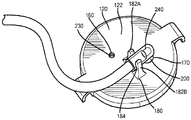
Fig. 6 schematically illustrates a top perspective view of a cap for the plasma storage container shown in fig. 1 with a blunt cannula inserted into the septum, according to an embodiment of the invention.
Fig. 7 schematically illustrates an exemplary blunt cannula for use with the plasma collection container of fig. 1, in accordance with an embodiment of the present invention.
Fig. 8 schematically illustrates an exemplary tube set including the blunt cannula of fig. 7, in accordance with an embodiment of the present invention.
FIG. 9 schematically illustrates an exemplary cap for the tube set of FIG. 8 with a blunt cannula inserted therein, in accordance with an embodiment of the present invention.
Detailed Description
Fig. 1 is a perspective view of a plasma container 100 according to an embodiment of the present invention. The plasma container 100 may have a body portion 110 and a cap 120 that closes an opening 130 (e.g., an open end in the body portion 110 at a proximal end 140 of the plasma container 100). As discussed in more detail below, plasma may be collected within the plasma container 100 and sampled through the cap 120. The body portion 110 defines an interior volume 150 (e.g., interior) in which collected plasma may be stored.
As shown in fig. 2 and 3, the top cover 120 includes a vent 160 through which air may pass bi-directionally during plasma collection 100 and an inlet aperture 170 through which plasma may be transferred into the plasma container 100. The size of the vent 160 and inlet aperture 170 may vary depending on the application, however, in some embodiments, the inlet aperture 170 may be much larger than the vent 160. Additionally, the top cover 120 may include a retainer 180 extending from the top surface 122 of the top cover. As discussed in more detail below, the retainer 180 may be used to secure a blunt cannula (which in turn is used to transfer plasma into the container 100) to the cap 120 of the plasma container 100 while plasma is being collected within the container 100. The retainer 180 may be any number of components capable of securing a blunt cannula. For example, retainer 180 may be a clip having two proximally extending projections 182A/B that define a space 184 therebetween in which a cannula may be positioned. In such an embodiment, the user may push the cannula into retainer/clip 180 until the cannula snaps/snaps into space 184. To hold the cannula in place within the clip 180, the protrusions 182A/B may include inward projections 183A/B that extend over the cannula when the cannula is positioned within the space 184.
On the bottom side 124, the top cap 120 may include a skirt 190 extending distally from the top cap 120 (e.g., downward from the top cap 120) and around the inlet opening 170. To help maintain the sterility of the container 100 and keep the inlet opening 170 closed when the container is not being filled with plasma (e.g., before and after filling), the cap 120 can include a septum 200 located and secured within the skirt 190. As best shown in fig. 4 and 5, the septum 200 may have a hole 210 extending through the body of the septum 200. The aperture 210 may be normally closed (e.g., closed when in its natural state and free of any external pressure), and/or the aperture 210 may be held closed by a radially compressive force applied to the septum 200 by the skirt 190. For example, septum 200 may be swaged into skirt 190. As is known in the art, when septum 200 is swaged within skirt 190, a portion of skirt 190 (e.g., the bottom of the skirt) may be compressed into septum 200. This creates a compressive force that retains septum 200 within skirt 190. Additionally or alternatively, the outer diameter of septum 200 may be greater than the inner diameter of skirt 190, and septum 200 may be press fit into skirt 190. This press fit will create a radially inward force that will hold the bore 210 closed.
It should be noted that although the apertures 210 are shown as slits in fig. 4 and 5, other aperture configurations may be used. For example, the hole 210 may be composed of two slits formed in a cross shape. Alternatively, the aperture 210 may have more than two slits in a star or star shape. It is important to note that the holes 210 (e.g., one or more slits) may be formed, for example, using conventional cutting devices (e.g., razor blades, knives, etc.), needle punched, or using ultrasonic cutting methods. Additionally or alternatively, the hole 210 may also be formed in the mold during or after the injection molding process.
Also on bottom side 124, top cover 120 may include a hydrophobic membrane 230 located below vent 160, such that hydrophobic membrane 230 may provide a sterile barrier for vent 160. During filling of the plasma container 100, the hydrophobic membrane 230 will allow air to pass through the membrane 230 and the vent 160 to prevent the build up of atmospheric pressure differences in the container 100. To facilitate air flow, the top cover may also include a plurality of channels 220 in the surface below hydrophobic membrane 230. For example, even if the membrane 230 is pushed against the bottom side 124 of the top cover 120 (e.g., during high air flow rates), the channels 220 may extend to the edges of the vents 160 and allow air to pass through the membrane 230.
Hydrophobic membrane 230 may be ultrasonically welded to top cover 120 (or otherwise sealed to top cover 120) to prevent air from leaking through hydrophobic membrane 230. To this end, the top cover 120 may include an energy director 222 for use during ultrasonic welding to ensure that the hydrophobic membrane 230 is properly sealed and secured to the bottom side 124 of the top cover 120. Alternatively, the membrane 230 may be secured to the top cover 120 by other attachment methods, including but not limited to adhesives, hot melts, and laser welds.
As shown in fig. 5, in order to maximize the surface area of hydrophobic membrane 230 and ensure that hydrophobic membrane 230 is able to handle the desired air flow into and out of container 100, hydrophobic membrane 230 may be sized such that it is much larger than vent/hole 160. In addition, to further maximize the use of membrane material, the hydrophobic membrane 230 may be square.
It should be noted that the cap 120 and the container body 110 may be formed as two separate pieces and then secured together by ultrasonic welding. To help facilitate ultrasonic welding, the cap 120 can include a distally extending wall 126 that extends over the top of the container body 110 when the cap 120 is placed over the body 110 (e.g., over the proximal end 140 of the body 110). Additionally, on the bottom side 124, the top cover 120 may include an energy director 128 to assist with the ultrasonic welding process (e.g., to secure the top cover 120 to the body 110).
During use and plasma collection, a user may connect the plasma container 100 to a blood processing device through the blunt cannula 240 (fig. 7) and the tubing set 300 (fig. 8), on which the blunt cannula 240 may be located. For example, a user may connect the blood processing device connector 310 at one end of the tube set 300 to a blood processing device (not shown) and connect the blunt cannula 240 at the other end of the tube set 300 to the plasma container 100. To connect the blunt cannula 240 to the plasma container 100, the user may insert the outlet portion 242 of the cannula 240 into the septum 200 and through the aperture 220. This will allow the cannula 240 to enter the interior volume 150 of the container 100 and create fluid communication between the interior volume 150 and the tubing set 300 (e.g., and the outlet of a blood processing device). The user may then snap the body 244 of the cannula 240 into the retainer 180 to hold the cannula 240 in place on the cap 120 (fig. 6).
When the blood processing device separates plasma from whole blood and delivers the plasma to the storage container 100, the plasma may flow through the tubing set 300 and into the interior volume 150 of the container 100 via the blunt cannula 240. As plasma flows into the container 100, air will exit the container 100 through the hydrophobic membrane 230 and the vent/port 160. This in turn will prevent pressure from building up within the container 100. Air may also enter the container 100 through the hydrophobic/antiseptic membrane 230 and the vent/port 160 as needed/desired by the blood processing device. This in turn will prevent vacuum build-up within the container 100.
To facilitate storage and to ensure that the opening in the outlet portion 242 of the cannula 240 is covered and not exposed to the atmosphere, the tubing set 300 may include a cap 320 that can be used for both the blood processing set connector 310 and the outlet portion 242 of the cannula 240. For example, the cap 320 may have an open end 322 that may be placed over the blood processing set connector 310 when not in use. Additionally, the top 324 of the cap 320 may have an opening 326 into which the outlet portion 242 of the cannula 240 may be inserted. In some embodiments, the cap 320 may be tethered to the blood component set connector 310.
Once plasma is collected within the container 100, it may be desirable to sample the collected plasma at various times (e.g., after collection, at some point during storage, before use). To do so, the user may insert a sample collection container holder (e.g., an evacuated blood collection tube holder) into the septum 200/well 210 to access the volume of plasma within the container 100. The user may then invert the container 100 and connect the evacuated blood collection tube to the holder to begin collecting the plasma sample within the evacuated blood collection tube. It should be noted that collecting the plasma sample in this manner may provide as much of the plasma sample as possible in the container 100, and minimize/eliminate any plasma loss that may otherwise be present in a sampling device involving sampling through a conduit external to the cap 120.
Although the above-described embodiments eliminate the port for introducing plasma into the prior art container and the port for venting the prior art container (e.g., the port extending from the plasma container and the tubing segment connected to the port, as described above), some embodiments may eliminate only a single port (e.g., the container may retain one port). For example, some embodiments may use the inlet port 170 and septum 200 but retain a vent port (e.g., a vent port extending from the plasma container and having a tubing segment connected thereto). Alternatively, some embodiments may use the vent 160 and hydrophobic membrane 230 but leave a port for introducing plasma into the bottle (e.g., an inlet port extending from the plasma container and having a tube segment extending therefrom).
It should be noted that the various embodiments of the present invention provide a number of advantages over prior art plasma storage containers. For example, because embodiments of the present invention eliminate one or more of the plastic stubs and ports mentioned above, some embodiments of the present invention can reduce and/or eliminate the risk of breaching and compromising the sterility of the product. In addition, various embodiments of the present invention can eliminate the need for thermal/RF sealing equipment and processes for sealing conduits prior to shipping and storage. In addition, because embodiments of the present invention allow for the collection of samples directly through the septum 200 (e.g., as opposed to first drawing plasma into the tubing segment as in many prior art systems), the present invention enables the collection of highly representative plasma samples with little/no loss.
The above-described embodiments of the present invention are intended to be illustrative only; many variations and modifications will be apparent to those of ordinary skill in the art. All such variations and modifications are intended to be within the scope of the present invention as defined in any appended claims.