CN109119139B - Variable dose dispensing system - Google Patents
Variable dose dispensing system Download PDFInfo
- Publication number
- CN109119139B CN109119139B CN201810932397.6A CN201810932397A CN109119139B CN 109119139 B CN109119139 B CN 109119139B CN 201810932397 A CN201810932397 A CN 201810932397A CN 109119139 B CN109119139 B CN 109119139B
- Authority
- CN
- China
- Prior art keywords
- medication
- amount
- item
- variable dose
- user
- Prior art date
- Legal status (The legal status is an assumption and is not a legal conclusion. Google has not performed a legal analysis and makes no representation as to the accuracy of the status listed.)
- Active
Links
Images



Classifications
-
- G—PHYSICS
- G16—INFORMATION AND COMMUNICATION TECHNOLOGY [ICT] SPECIALLY ADAPTED FOR SPECIFIC APPLICATION FIELDS
- G16H—HEALTHCARE INFORMATICS, i.e. INFORMATION AND COMMUNICATION TECHNOLOGY [ICT] SPECIALLY ADAPTED FOR THE HANDLING OR PROCESSING OF MEDICAL OR HEALTHCARE DATA
- G16H20/00—ICT specially adapted for therapies or health-improving plans, e.g. for handling prescriptions, for steering therapy or for monitoring patient compliance
- G16H20/10—ICT specially adapted for therapies or health-improving plans, e.g. for handling prescriptions, for steering therapy or for monitoring patient compliance relating to drugs or medications, e.g. for ensuring correct administration to patients
- G16H20/13—ICT specially adapted for therapies or health-improving plans, e.g. for handling prescriptions, for steering therapy or for monitoring patient compliance relating to drugs or medications, e.g. for ensuring correct administration to patients delivered from dispensers
-
- G—PHYSICS
- G05—CONTROLLING; REGULATING
- G05B—CONTROL OR REGULATING SYSTEMS IN GENERAL; FUNCTIONAL ELEMENTS OF SUCH SYSTEMS; MONITORING OR TESTING ARRANGEMENTS FOR SUCH SYSTEMS OR ELEMENTS
- G05B15/00—Systems controlled by a computer
- G05B15/02—Systems controlled by a computer electric
-
- G—PHYSICS
- G06—COMPUTING OR CALCULATING; COUNTING
- G06F—ELECTRIC DIGITAL DATA PROCESSING
- G06F17/00—Digital computing or data processing equipment or methods, specially adapted for specific functions
-
- G—PHYSICS
- G07—CHECKING-DEVICES
- G07F—COIN-FREED OR LIKE APPARATUS
- G07F17/00—Coin-freed apparatus for hiring articles; Coin-freed facilities or services
- G07F17/0092—Coin-freed apparatus for hiring articles; Coin-freed facilities or services for assembling and dispensing of pharmaceutical articles
-
- G—PHYSICS
- G16—INFORMATION AND COMMUNICATION TECHNOLOGY [ICT] SPECIALLY ADAPTED FOR SPECIFIC APPLICATION FIELDS
- G16H—HEALTHCARE INFORMATICS, i.e. INFORMATION AND COMMUNICATION TECHNOLOGY [ICT] SPECIALLY ADAPTED FOR THE HANDLING OR PROCESSING OF MEDICAL OR HEALTHCARE DATA
- G16H40/00—ICT specially adapted for the management or administration of healthcare resources or facilities; ICT specially adapted for the management or operation of medical equipment or devices
- G16H40/20—ICT specially adapted for the management or administration of healthcare resources or facilities; ICT specially adapted for the management or operation of medical equipment or devices for the management or administration of healthcare resources or facilities, e.g. managing hospital staff or surgery rooms
Landscapes
- Engineering & Computer Science (AREA)
- Health & Medical Sciences (AREA)
- Physics & Mathematics (AREA)
- General Business, Economics & Management (AREA)
- Business, Economics & Management (AREA)
- General Health & Medical Sciences (AREA)
- Medical Informatics (AREA)
- Primary Health Care (AREA)
- Public Health (AREA)
- Epidemiology (AREA)
- General Physics & Mathematics (AREA)
- Theoretical Computer Science (AREA)
- General Engineering & Computer Science (AREA)
- Biomedical Technology (AREA)
- Chemical & Material Sciences (AREA)
- Bioinformatics & Cheminformatics (AREA)
- Medicinal Chemistry (AREA)
- Software Systems (AREA)
- Mathematical Physics (AREA)
- Databases & Information Systems (AREA)
- Data Mining & Analysis (AREA)
- Automation & Control Theory (AREA)
- Medical Treatment And Welfare Office Work (AREA)
- Medical Preparation Storing Or Oral Administration Devices (AREA)
- Accommodation For Nursing Or Treatment Tables (AREA)
Abstract
A variable dose dispensing system may include a processor and a memory. The processor may receive a request for a variable dose order for a medication, such as from a user. The processor may request an amount of medication to be administered and, in response to the request, receive an indication of the amount to be administered. The processor may verify that the amount to be administered is within the range of the variable dose order. The processor may determine an item in a local inventory that contains at least the amount of medication to be administered and may dispense the item. If the amount of the dispensed item exceeds the amount of medication to be administered, such as by more than a discard amount, the processor may display an indication of the discard amount to a user and may send a notification of the discard amount, such as to a management server.
Description
The present application is a divisional application of a patent application having application number 2014800175220, application date 2014, 1/22, entitled "variable dose dispensing system".
Technical Field
The present invention relates generally to dispensing and more particularly, but not exclusively, to variable dose dispensing.
Background
Medical institutions, such as hospitals, may utilize medication dispensing devices, such as Automated Dispensing Machines (ADMs), to provide healthcare technicians with controlled access to medications. For example, a medication dispensing apparatus may be stocked, for example, by a pharmacy, with a plurality of medications, possibly each having a variety of different doses and a variety of different forms (e.g., tablets, caplets, etc.). The pharmacy communicates an order (order) of the patient's prescribed medication amount (e.g., 2 milligrams (mg) of morphine) to the medication dispensing device, such as over a network. A health technician, such as a nurse, will authenticate with the medication dispensing device and select the order. The medication dispensing device then physically dispenses the ordered amount of medication to the health care professional. The health technician then administers (administers) the dispensed medication to the patient. In some examples, the medication dispensing device may be configured to dispense only the prescribed amount of medication to the healthcare professional, and/or to provide only the healthcare professional with physical access to the prescribed amount of medication. In this way, the amount of medication waste is substantially minimized and the healthcare facility is able to control access to the medication by a healthcare professional.
However, in some cases, the order received from the pharmacy may be for a variable dose of medication, for example, morphine in the range of 2-10 mg. In this case, the medication dispensing device may allow the healthcare professional to select the medication (media) they desire to access, and the medication dispensing device may grant the healthcare professional access to the selected medication as long as the total amount of medication dispensed is within the order range (e.g., within the 2-10mg range of the current example). However, when there are a variety of different forms and/or amounts of medication in a medication dispensing system, selecting which of the various medications should be accessed to minimize waste (e.g., selecting 15 mg vial and one 2mg vial for a 7mg dose, etc.) can be confusing and tedious for a health technician. Furthermore, for variable dose orders, the ability of a medical facility to differentially control access to medications by healthcare professionals can be significantly reduced because healthcare professionals have access to more medications than they would administer to a patient.
Disclosure of Invention
The disclosed subject matter relates to a variable dose dispensing method. The method may include: receiving a request for a variable dose order for a medication; requesting an amount of drug to be administered; and receiving, in response to the request, an indication of an amount of the drug to be administered. The method further comprises the following steps: determining, by a processor, at least one item of a plurality of items (items) in a local inventory, the at least one item including at least an amount of a medication to be administered; and dispensing the at least one item.
The disclosed subject matter also relates to a machine-readable medium embodying instructions that, when executed by a machine, cause the machine to perform a method for managing variable dose dispensing. The method may include: a user indicator associated with a user, a dispensed amount of a medication, and an amount of the medication to be administered by the user is received from a medication dispensing device, wherein the dispensed amount exceeds the amount to be administered by a discard amount. The method may further comprise: in response to the receiving, initializing a timer associated with the user identifier and the medication and storing an indication indicating that the user associated with the user identifier has discarded the discarded amount of the medication if the indication is received from the discarding apparatus before the timer reaches a timeout threshold, otherwise storing a notification that the user associated with the user identifier has not discarded the discarded amount before the timer reaches the timeout threshold.
The disclosed subject matter also relates to a system for managing variable dose dispensing. The system includes one or more processors and a memory including instructions that, when executed by the one or more processors, cause the one or more processors to: providing a list of prescription items; receiving a selection of one of the prescription items; receiving an indication of an amount of another prescription item equivalent to the one prescription item; storing a first correlation between the amount of the other prescription item and the one prescription item; and sending the first correlation to a medication dispensing system.
It is to be understood that other configurations of the subject technology will become readily apparent to those skilled in the art from the following detailed description, wherein various configurations of the subject technology are shown by way of example. As will be realized, the subject technology is capable of other and different configurations and its several details are capable of modification in various other respects, all without departing from the scope of the subject technology. Accordingly, the drawings and detailed description are to be regarded as illustrative in nature and not as restrictive.
Drawings
Certain features of the subject technology are set forth in the claims. However, for purposes of illustration, several embodiments of the subject technology are set forth in the following figures.
Fig. 1 illustrates an example hospital network environment in which a variable dose dispensing system can be implemented in accordance with one or more embodiments.
Fig. 2 shows a flow diagram of an example process of a medication dispensing device in a variable dose dispensing system according to one or more embodiments.
Fig. 3 shows a flow diagram of an example item selection process for a medication dispensing device in a variable dose dispensing system according to one or more embodiments.
FIG. 4 shows a flow diagram of an example item management process in a variable dose dispensing system in accordance with one or more embodiments.
FIG. 5 shows a flow diagram of an example item configuration process in a variable dosing system in accordance with one or more embodiments.
Fig. 6 illustrates an example medication dispensing apparatus in which a variable dose dispensing system may be implemented in accordance with one or more embodiments.
Figure 7 conceptually illustrates an electronic system in which one or more embodiments of the subject technology may be implemented.
Detailed Description
The detailed description set forth below is intended as an illustration of various configurations of the subject technology and is not intended to represent the only configurations in which the subject technology may be practiced. The accompanying drawings are incorporated herein and constitute a part of the detailed description. The detailed description includes specific details for the purpose of providing a thorough understanding of the subject technology. It is apparent and obvious to one skilled in the art, however, that the subject technology is not limited to the specific details set forth herein and may be practiced in one or more embodiments. In one or more instances, well-known structures and components are shown in block diagram form in order to avoid obscuring the concepts of the subject technology.
The subject variable dose dispensing system may enable a medical facility (such as a hospital) to minimize the amount of medication wasted when dispensing variable dose orders. In addition, the subject variable dose dispensing system may simplify the dispensing of variable doses for a health technician by determining which items should be used by the health technician to administer an identified amount of medication. Further, the subject variable dose dispensing system may allow a medical facility to differentially control access by a healthcare professional to medications of a variable dose order and may allow a healthcare facility to quickly identify when a healthcare technician may improperly access a given medication.
For exemplary purposes, the subject variable dose dispensing system is discussed herein with respect to the dispensing of variable dose medications in a medical facility (e.g., hospital). However, the subject variable dose dispensing system is not limited to dispensing variable doses of medication in a medical facility; the concepts discussed herein may be applied to the dispensing of medications in other environments.
Fig. 1 illustrates an example hospital network environment 100 in which a variable dose dispensing system can be implemented in accordance with one or more embodiments. However, not all of the described components are required, and one or more embodiments may include additional components not shown in the figures. Variations in the arrangement and type of the components may be made without departing from the spirit or scope of the claims as set forth herein. Moreover, different or fewer components may be provided.
The network environment 100 may include several medical devices (such as one or more medication dispensing devices 140 and/or one or more waste devices 150) communicatively coupled to each other or to one or more administration servers 110 and/or pharmacy servers 120, for example, over a network 130. Further, there may be several other devices connected to the network 130, such as additional medical devices, additional servers, computing devices, mobile devices, and so forth.
The network 130 may be a public communication network (such as the internet, a cellular data network, a dial-up modem over a telephone network) or a private communication network (such as a private local area network ("LAN"), a private line). Network 130 may also include, but is not limited to, any one or more of the following network topologies, including: bus networks, star networks, ring networks, mesh networks, star-bus networks, tree or hierarchical networks, and the like. The connection may be wired or wireless.
The one or more medication dispensing devices 140 may be devices that store and dispense medication, such as at a nurse's station. In one or more embodiments, one or more of the medication dispensing devices 140 can be a Pyxis MedStationTMAn Automatic Dispensing Machine (ADM). The waste device 150 may be a device that accepts and stores discarded medications (e.g., excess medications) from a health technician and tracks the amount of medications discarded by the health technician. In one or more embodiments, one or more of the waste devices 150 can be Pyxis EcoStationTMProvided is a system.
In one or more embodiments, one or more of each medication dispensing device 140 and/or each waste device 150 may include a processing device (such as a processor) and a memory. The processing device executes instructions stored in the memory, such as to implement one or more processes of the subject variable dose dispensing system. In one or more examples, the computer instructions may be stored on a non-transitory computer readable medium. One or more of each medication dispensing device 140 and/or each waste device 150 may be or include a medication dispensing device 600 discussed below with respect to fig. 6 and/or an electronic system 700 discussed below with respect to fig. 7. Thus, in one or more embodiments, the medication dispensing apparatus 140 and the waste apparatus 150 may be combined into a single apparatus.
In one example, the administration server 110 and/or the pharmacy server 120 may be a single computing device (such as a computer server) and/or the administration server 110 and the pharmacy server 120 may be a single machine. In another example, the management server 110 and/or the pharmacy server 120 may represent one or more separate computing devices (such as a computer cloud and/or distributed system) communicatively coupled (such as communicatively coupled over the network 130) that collectively or independently perform one or more server-side functions. In this example, one or more computing devices of the administration server 110 and/or the pharmacy server 120 may be geographically located and/or not located together. The management server 110 and/or the pharmacy server 120 may be coupled to various databases, storage devices, or other computing devices.
In one or more embodiments, the management server 110 includes a processing device 112 and a data store 114. The processing device 112 executes computer instructions stored in the data storage 114, such as to implement one or more processes of the subject variable dose dispensing system. In one or more examples, data storage 114 may store computer instructions on a non-transitory computer-readable medium. In one or more embodiments, the pharmacy server 120 includes a processing device 122 and a data store 124. The processing device 12 executes computer instructions stored in the data storage 124, such as to implement one or more processes of the subject variable dose dispensing system. In one or more examples, data storage 124 may store computer instructions on a non-transitory computer-readable medium. In one or more embodiments, the management server 110 and/or the pharmacy server 120 may be or may include the electronic system 700 discussed below with respect to fig. 7.
In operation, one or more drug dispensing devices 140 may implement one or more aspects of the subject variable dose dispensing system, such as by performing one or more example processes discussed further below with respect to fig. 2 and 3. Further, one or more of the administration server 110 and/or the pharmacy server 120 may implement one or more aspects of the subject variable dose dispensing system, such as by performing one or more example processes discussed further below with respect to fig. 4 and 5.
Fig. 2 shows a flow diagram of an example process 200 for a medication dispensing device in a variable dose dispensing system according to one or more embodiments. For illustrative purposes, the example process 200 is described herein with reference to one or more of the devices 140, 150 and/or servers 110, 120 of the example hospital network environment 100 of fig. 1; however, the example process 200 is not limited to the devices 140, 150 and/or servers 110, 120 of the example hospital network environment 100 of fig. 1. Further, for illustrative purposes, the blocks of the example process 200 are described herein as occurring in a sequential manner or linearly. However, the blocks of the example process 200 may occur in a parallel manner. Further, the blocks of the example process 200 need not be performed in the order shown and/or one or more blocks of the example process 200 need not be performed.
At block 202, the medication dispensing device 140 receives a variable dose order from a pharmacy (such as from the pharmacy server 120 over the network 130). In one or more embodiments, the variable dose order may indicate a medication (e.g., the same plain generic name or one or more medications of generic name) and a range of amounts of medication that the health technician may administer to the patient (such as 2-10mg of morphine). In one or more embodiments, the variable dose order may also include an indication of the dosage form of the drug to be administered (such as a tablet, caplet, etc.). Alternatively or additionally, the variable dose order may include an identifier of the variable dose group associated with the variable dose order, such as a medical identifier (med identifier). In this case, the variable dose order may or may not indicate the drug, range, and/or dosage form. If the variable dose order does not include a range to be administered, the medication dispensing device 140 may use the range and dosage units defined for the variable dose order, as discussed below with respect to FIG. 5.
At block 204, the medication dispensing device 140 receives a selection of a variable dose order from a user (such as a health technician). For example, a health care professional may authenticate with the medication dispensing device 140, such as by providing login credentials, and the medication dispensing device 140 may display a list of orders that the authenticated health care professional has access to. The health technician may then select a variable dose order for the medication from the displayed list, such as a variable dose order for morphine at 2-10mg every six hours.
At block 206, the medication dispensing device 140 requests the health technician to enter the amount of medication for the variable dose order to be administered to the patient. At block 208, the medication dispensing device 140 receives an indication of an amount to be administered from a health care professional, such as 7mg of morphine for a variable dose order of 2-10mg of morphine. For example, the health technician may enter the amount to be administered, such as using a keyboard, or may indicate the amount to be administered via a touch screen or other input device. At block 210, the medication dispensing device 140 determines whether the amount of medication to be administered by the healthcare professional is within the range of the variable dose order. For example, 7mg of morphine is within the range of a variable dose order of 2-10mg of morphine, whereas 11mg of morphine is outside the above range.
At block 210, if the medication dispensing apparatus 140 determines that the amount to be administered is not within the range of the variable dose order, the medication dispensing apparatus 140 moves to block 212. At block 212, the medication dispensing device 140 provides an alert (audible alert or any other alert) to the health care professional, such as on a display, indicating that the amount to be administered is not within the range of the variable dose order. The medication dispensing apparatus 140 then returns to block 206 and requires the health technician to enter a different amount to be administered. Alternatively or additionally, the medication dispensing apparatus 140 may not allow a health technician to enter an amount to be administered that is outside the range of the variable dose order.
At block 210, if the medication dispensing apparatus 140 determines that the amount to be administered is within the range of the variable dose order, the medication dispensing apparatus 140 moves to block 214. At block 214, the medication dispensing device 140 determines one or more items to dispense based at least in part on the available inventory of the medication dispensing device 140 and the amount of medication to be administered, as indicated, for example, by a health technician. In one or more embodiments, the medication dispensing apparatus 140 may determine the item for dispensing such that the amount of waste medication in the dispensed item will be minimized. Example processes that may be implemented by the medication dispensing apparatus 140 to determine which items to dispense are discussed further below with respect to fig. 3.
In one or more embodiments, the medication dispensing device 140 may receive an indication of a variable dose group associated with a variable dose order from, for example, the pharmacy server 120. The variable dose group may list each item that can be dispensed by the medication dispensing device 140 to satisfy the variable dose order. For example, a variable dose group associated with a variable dose order of 2-10mg morphine may include vials containing various morphine amounts (e.g., 2mg, 5mg, etc.). In this case, the medication dispensing apparatus 140 may fulfill the variable dose order by dispensing items included in the variable dose group such that, for example, the amount of waste medication in the dispensed items will be minimized. The establishment and routing of exemplary variable dose groups to the medication dispensing device 140 is discussed further below with respect to fig. 5.
At block 216, the medication dispensing device 140 dispenses the identified item. At block 218, the medication dispensing apparatus 140 displays an indication of any excess amount of medication being dispensed, e.g., any amount of medication dispensed that exceeds the amount to be administered. In one or more embodiments, the indication may further include an amount of time that a health technician must physically discard the excess amount before the excess amount will be identified as lost. In one or more embodiments, upon removal of the medication from the medication dispensing device 140, if the user does not discard the excess amount, the excess amount may be immediately recorded as unarchived waste. However, the user may still be given a certain amount of time to physically discard the excess before triggering an alarm or notification.
In one or more embodiments, the amount of time provided to the health technician to physically discard the excess amount may be based on one or more of the following characteristics: a characteristic of the dispensed drug, a characteristic of the dosage form of the dispensed drug, a characteristic relating to the manner in which the dispensed drug is to be administered, and/or a characteristic relating to the condition of the patient receiving the dispensed drug. For example, a health technician may be provided with a longer period of time to discard excess medication in a bag of liquid to be infused into a patient, as compared to a syringe to be injected into the patient. In one or more embodiments, the medication dispensing device 140 may determine the amount of time that a health technician must discard the medication. Alternatively or additionally, the medication dispensing apparatus 140 may receive an amount of time from a server (such as from the administration server 110). In one or more embodiments, if the user does not discard the excess amount when removing the medication from the medication dispensing device 140, the timer may be set to zero when the excess amount is recorded as lost.
At block 220, the medication dispensing device 140 sends at least one of an identifier of the healthcare professional, an indication of the item or items being dispensed, and an indication of the amount to be administered and/or an indication of any excess amount dispensed, such as to the management server 110. Alternatively or additionally, if the medication dispensing apparatus 140 has determined an amount of time that the healthcare professional must discard any excess amount of medication, the medication dispensing apparatus 140 may send the amount of time to the management server 110.
Fig. 3 shows a flow diagram of an example item selection process 300 for a medication dispensing device in a variable dose dispensing system according to one or more embodiments. For illustrative purposes, the example item selection process 300 is described herein with reference to one or more of the devices 140, 150 and/or servers 110, 120 of the example hospital network environment 100 of fig. 1; however, the item selection process 300 is not limited to the devices 140, 150 and/or servers 110, 120 of the example hospital network environment 100 of FIG. 1. Further, for illustrative purposes, the blocks of the example item selection process 300 are described herein as occurring in a sequential manner or linearly. However, the multiple blocks of the example item selection process 300 may occur in a parallel manner. Further, the blocks of the example item selection process 300 need not be performed in the order shown and/or one or more blocks of the example item selection process 300 need not be performed.
At block 302, the medication dispensing apparatus 140 receives an indication of an amount of medication to be administered to a patient for a previously selected order (such as a variable dose order). The amount of medication may have been verified to be within the range of the selected variable dose order. Alternatively or additionally, the selected order may be a zero dose order that does not contain a range of dispensable amounts of medication. In this case, the medication dispensing apparatus 140 may dispense any amount of medication requested by a user (such as a health technician).
At block 304, the medication dispensing apparatus 140 determines whether the amount of medication and/or dosage form to be administered is available in the inventory of the medication dispensing apparatus 140. For example, if the medication dispensing apparatus 140 receives a variable dose group associated with a variable dose order, the medication dispensing apparatus 140 may determine whether one or more items of the variable dose group that satisfy the amount and dosage form of medication to be administered are available in inventory.
At block 304, if the medication dispensing apparatus 140 determines that the amount of medication to be administered is available in the inventory of the medication dispensing apparatus 140, the medication dispensing apparatus 140 moves to block 306. At block 306, the medication dispensing apparatus 140 determines one or more items in the inventory that match the dosage form of the variable dose order (or in the same dosage form group) and satisfy the requested quantity with a minimum item quantity without requiring the items to be divided when the medication dispensing apparatus 140 is configured to not divide. For example, a health technician may indicate that 7mg of morphine is to be administered for a variable dose order of 2-10mg of morphine in the form of a vial, and the drug dispensing device 140 may have two 4mg vials, one 8mg vial, and one 9mg vial available in inventory. In this example, two 4mg morphine vials (based on equivalents discussed further below), one 8mg morphine vial, and one 9mg morphine vial each satisfy the amount to be administered and are within the range of a variable dose order. However, one 8mg morphine vial and one 9mg morphine vial have a smaller number of items than two 4mg morphine vials. Thus, in this case the drug dispensing device will determine that an 8mg morphine vial or a 9mg morphine vial can properly fill the order.
At block 308, the medication dispensing apparatus 140 determines whether one or more items or groups of items satisfy the conditions used in block 306, e.g., whether one or more items or groups of items are identified in block 306 as being able to properly satisfy the order. At block 308, if the medication dispensing apparatus 140 determines that there is only one item that satisfies the condition of block 306, the medication dispensing apparatus 140 moves to block 312. At block 312, the medication dispensing apparatus 140 dispenses the item determined in block 306.
At block 308, if the medication dispensing apparatus 140 determines that more than one item (such as 8mg and 9mg morphine vials as discussed in the example above) is present that satisfies the conditions of block 306, the medication dispensing apparatus 140 moves to block 310. At block 310, the medication dispensing device 140 dispenses an article that will result in the smallest amount of waste medication, e.g., an article having an amount closest to the amount to be administered. For example, if the amount to be administered for a 2-10mg variable dose order is 7mg of morphine and the drug dispensing device 140 contains an 8mg vial and a 9mg vial, the drug dispensing device 140 dispenses the 8mg vial because this would result in only 1mg of waste, as opposed to dispensing the 9mg vial would result in 2mg of waste. Alternatively or additionally, the medication dispensing device 140 may dispense an item with the configured minimum dispense order if more than one item meets the condition and has the same dose or is in the same dosage form/dose group. In one or more embodiments, the allocation order for the items may be configured by a pharmacy, as discussed further below with respect to FIG. 5.
At block 304, if the medication dispensing apparatus 140 determines that the amount to be administered is not available in inventory, the medication dispensing apparatus 140 moves to block 314. At block 314, the medication dispensing device 140 determines whether the inventory contains the equivalent of the amount of medication to be administered. For example, the medication dispensing device 140 may receive an indication of one or more items from the pharmacy server 120 as an equivalent of another item, e.g., two 2mg morphine vials may be indicated as an equivalent of one 4mg morphine vial. The creation of exemplary equivalents and their communication to the medication dispensing apparatus 140 will be discussed further below with respect to fig. 5.
In one or more embodiments, the drug dispensing device 140 may consider the equivalent of a ordered drug when one or more of the following conditions are met: ordered items result in an ineffective amount, such as a zero quantity (fractional amount); an ordered item is not provided (inactive); the ordered article is not filled; the ordered article is out of stock; the number of ordered articles is insufficient; or the drawer in which the item is located is not directly accessible to the drawer health technician, as discussed further below with respect to fig. 6.
At block 314, if the medication dispensing apparatus 140 determines that the amount to be administered can be provided by one or more equivalents of the medication, the medication dispensing apparatus 140 moves to block 306. Alternatively or additionally, the medication dispensing apparatus 140 may perform an equivalence determination at block 304. In this case, if the medication dispensing apparatus 140 determines that the amount to be administered is not available in inventory and cannot be provided by the equivalent of a medication, the medication dispensing apparatus 140 may move directly to block 316 (skipping block 314). In one or more embodiments, if there are multiple equivalents available, the medication dispensing apparatus 140 may dispense an equivalent that will not result in discarding the medication and no more than three dispensed items or a minimum number of dispensed items.
At block 314, if the medication dispensing apparatus 140 determines that the amount to be administered cannot be provided by an equivalent, the medication dispensing apparatus 140 moves to block 316. At block 316, the medication dispensing device 140 provides an indication that the amount to be administered is not available in the inventory of the medication dispensing device 140. At block 318, the medication dispensing device 140 receives an indication from, for example, the administration server 110, of the nearest medication dispensing device 140 that can provide the health care professional with the amount of medication to be administered, for example, in the form of a ordered medication and/or by equivalent. At block 320, the medication dispensing device 140 displays an indication of the nearest medication dispensing device 140 that is capable of providing the amount to be administered. The medication dispensing apparatus 140 may further display the location of the nearest medication dispensing apparatus 140 that is capable of providing the amount to be administered, such as on a map of a medical facility. Alternatively or additionally, the medication dispensing apparatus 140 may display guidance navigating to the nearest medication dispensing apparatus 140 that is capable of providing the amount to be administered. In one or more embodiments, the medication dispensing device 140 may also send instructions to the health care professional's mobile device, such as over the network 130 or a local area network connection (e.g., a bluetooth connection).
FIG. 4 illustrates a flow diagram of an example item management process 400 in a variable dose dispensing system in accordance with one or more embodiments. For illustrative purposes, the example item management process 400 is described herein with reference to one or more of the devices 140, 150 and/or servers 110, 120 of the example hospital network environment 100 of fig. 1; however, the example item management process 400 is not limited to the devices 140, 150 and/or servers 110, 120 of the example hospital network environment 100 of fig. 1. Further, for illustrative purposes, the blocks of the example item management process 400 are described herein as occurring in a sequential manner or linearly. However, the blocks of the example item management process 400 may occur in a parallel manner. Further, the blocks of the example article management process 400 need not be performed in the order shown and/or one or more blocks of the example article management process 400 need not be performed.
At block 402, a server (such as the administration server 110) receives an indication of an amount of medication assigned to a healthcare professional, an amount to be administered indicated by the healthcare professional, and an identifier of the healthcare professional from, for example, the medication dispensing device 140. In one or more embodiments, the amount to be administered as indicated by the health technician may be less than the amount to be dispensed, and the difference between the two may be referred to as the amount to be discarded, the amount discarded, or the amount exceeded. Alternatively or additionally, the management server 110 may receive an indication of the amount dispensed, the amount to discard, an identifier of a health technician. The management server 110 may store the received information, such as in the data store 114. At block 403, the management server 110 initializes a timer for the assigned item and the user identifier. The management server 110 can utilize a timer to determine when the health technician has exceeded the amount of time assigned to discard the additional amount of medication dispensed. In one or more embodiments, the management server 110 can manage multiple timers simultaneously for the same healthcare technician (e.g., for different medications that the healthcare technician visits at different times) and/or manage multiple timers simultaneously for multiple healthcare technicians.
At block 404, the management server 110 determines whether an indication is received from, for example, the waste device 150 that a health care professional has discarded an amount of medication. For example, a health technician may place an excess amount of medication in waste device 150. The health technician may provide their login credentials to the waste device 150 so that the waste device 150 can associate the health technician with the amount of medication that was discarded. In one or more embodiments, the waste device 150 may automatically determine the amount of medication that is discarded, for example, by using an item counter (such as a pill counter), by measuring the volume of waste fluid, by determining the weight of the placed item and comparing the measured weight to the weight per unit of the placed item, and so forth. Alternatively or additionally, the health technician may enter the type of medication being discarded and/or the amount of medication being discarded. Alternatively or additionally, the waste device 150 may require a witness to be present by the health technician at the time they discard the excess, and may also require the witness to provide their login credentials to the waste device 150.
At block 304, if the management server 110 determines that the indication is not accepted, the management server 110 moves to block 410. At block 410, the management server 110 determines whether a timer exceeds a timeout threshold, e.g., an amount of time assigned to a health technician to discard an excess amount of the dispensed medication. If, at block 410, the management server 110 determines that the timer has not exceeded the timeout threshold, the management server 110 returns to block 404 and determines whether an indication has been received.
At block 410, if the management server 110 determines that the timer has exceeded the timeout threshold, the management server 110 moves to block 412. At block 412, the management server 110 stores an indication of the amount of the non-discarded medication along with an identifier of the healthcare technician. At block 414, the management server 110 sends a notification to a manager, such as a health technician, security personnel, etc., that the medication has not been discarded. In one or more examples, a notification may also be sent to the medication dispensing device 140 and may further indicate to the medication dispensing device 140 that no additional medication should be dispensed to the healthcare professional. Alternatively or additionally, a notification may be sent to an access control system of the medical facility, and may further indicate to the access control system that the access rights of the healthcare professional, e.g., via a badge, should be revoked. In this way, a health technician may be prevented from leaving the medical facility with an undepended quantity of medication.
At block 404, if the management server 110 determines that it receives an indication that the healthcare worker has discarded the amount of medication, the management server 110 moves to block 406. At block 406, the management server 110 determines whether the amount of healthcare worker discard is greater than or equal to the excess amount assigned to the healthcare worker. At block 406, if the management server 110 determines that the amount of healthcare worker wasting is not greater than or equal to the excess amount of medication, the management server 110 moves to block 410. At block 406, if the management server 110 determines that the amount of healthcare worker discard is equal to or greater than the excess amount of medication, the management server 110 moves to block 408. At block 408, the management server stores an indication that all of the excess medication assigned to the healthcare professional was discarded by the healthcare professional, such as in the data store 114.
In one or more embodiments, the management server 110 can monitor whether the health care professional has given the amount of medication that the health care professional indicates is to be given. For example, the management server 110 may communicate with one or more additional medical devices (e.g., dispensing devices and/or infusion devices, such as pumps) over the network 130. The dispensing and/or infusion device may send an indication of the amount of medication that the health care professional administered to the patient to the administration server 110. For example, an infusion pump or a device coupled thereto may require a health technician to provide their login credentials prior to scheduling the amount of medication to be infused to the patient. After delivering the medication to the patient, the infusion pump or a device coupled thereto may send the amount of medication delivered to the patient to the administration server 110 along with the user identifier of the healthcare professional.
In the one or more embodiments, the management server 110 can send a notification of the lost medication when the amount of medication administered to the patient is less than the amount indicated to be administered by the health technician. Alternatively or additionally, the management server 110 may send a notification of the lost medication when the amount of medication to be administered to the patient plus the amount of discarded medication is less than the amount of medication assigned to the healthcare professional. In any of the foregoing examples, the management server 110 may consolidate one or more thresholds to account for a minimum allowable loss of medication that may occur when the medication is shipped, administered, etc.
Fig. 5 shows a flow diagram of an example item configuration process 500 in a variable dosing system in accordance with one or more embodiments. For illustrative purposes, the example item configuration process 500 is described herein with reference to one or more of the devices 140, 150 and/or servers 110, 120 of the example hospital network environment 100 of fig. 1; however, the example item configuration process 500 is not limited to the devices 140, 150 and/or servers 110, 120 of the example hospital network environment 100 of fig. 1. Further, for illustrative purposes, the blocks of the example article configuration process 500 are described herein as occurring in a sequential manner or linearly. However, the blocks of the example article configuration process 500 may occur in a parallel manner. Further, the blocks of the example item configuration process 500 need not be performed in the order shown and/or one or more blocks of the example item configuration process 500 need not be performed.
At block 502, a server (such as the pharmacy server 120) may provide a list of prescription items to a user (such as a pharmacist). For example, the pharmacist may interact with an application (such as a web application, mobile application, or generally any computing application) provided by the pharmacy server, such as by using a computing device that includes a processor and memory. In this example, a list of prescription items may be displayed to the user on the computing device. At block 504, the pharmacy server 120 receives a selection of the listed pharmacy item. For example, the user may interact with an application provided by the pharmacy server 120 to select one of the listed prescription items, and the user's computing device may send an indication of the selection to the pharmacy server 120.
At block 506, the pharmacy server 120 determines whether the user requests a modification or addition of an equivalent to the selected item. For example, the user may interact with an application provided by the pharmacy server 120 to indicate that they wish to add or modify the equivalent of the selected item, and the user's computing device may send an indication of this to the pharmacy server 120. At block 506, if the pharmacy server 120 determines that the user requested a modification to the equivalent of the selected item, the pharmacy server 120 moves to block 508. At block 508, the pharmacy server 120 receives an indication of the quantity of the one or more items in the pharmacy item list that are equivalents of the selected item. For example, the user may interact with an application provided by the pharmacy server 120 to indicate a quantity of one or more items in the pharmacy item list that are equivalents of the selected item, and the user's computing device may send the indicated quantity to the pharmacy server 120.
In one or more embodiments, the pharmacy server 120 may suggest items that may be equivalent to the selected item. For example, each prescription item may be associated with a common name (such as "morphine"), and the pharmacy server 120 may suggest as equivalents items that satisfy one or more of the following conditions: have the same general name as the selected article, have the same dosage form as the selected article, and/or have an equivalent number below a threshold (e.g., the amount of the article equivalent to the selected article). In one or more embodiments, if the selected item is defined by a potency, the pharmacy server 120 may suggest items that may be equivalents to the selected item based on one or more of the following conditions: the effectiveness of the item and/or the effectiveness of the selected item; whether the effectiveness of the item can be segmented by the effectiveness of the selected item and does not result in a zero quantity; and/or units of measure of the item and/or the selected item. In one or more embodiments, if the selected item is defined by a potency and a total volume, the pharmacy server 120 may suggest the item having the derived concentration as an equivalent based on the potency and the total volume.
In one or more embodiments, if the selected item is defined by a total volume, the pharmacy server 120 may suggest as equivalents an item that satisfies one or more of the following conditions: having a total volume, having a volume amount that can be divided into the selected items without resulting in a zero number, and/or having the same volume units or the same configured base units as the selected items. In one or more embodiments, if the selected item is defined by a concentration, the pharmacy server 120 may suggest as equivalents the item that satisfies one or more of the following conditions: having the same concentration as the selected article; having a concentration potency that can be divided into selected items without incurring a zero amount; a concentration potency having the same units of measure or the same configured base units as the selected article; and/or have the same internal volume or the same configured concentration volume of the base unit as the selected article.
At block 510, the pharmacy server 120 stores the correlation between the item and each indicated equivalent, such as in the data store 124. At block 506, if the pharmacy server 120 determines that the user does not indicate that they wish to modify the equivalent of the selected item, the pharmacy server 120 moves to block 512. In one or more embodiments, if the information matching the item changes (e.g., the common name of any item), the pharmacy server 120 may remove the item that is the equivalent of the selected item.
At block 512, the pharmacy server 120 determines whether the user has requested that the selected item be associated with one or more variable dose groups. For example, the user may interact with an application provided by the pharmacy server 120 to indicate that they wish to associate the selected item with one or more variable dose groups, and the user's computing device may send the indication to the pharmacy server 120. At block 512, if the pharmacy server 120 determines that the user has requested that the selected item be associated with one or more variable dose groups, the pharmacy server 120 moves to block 514.
At block 514, the pharmacy server 120 may receive an indication of one or more variable dose groups that the user wishes to associate with the selected item. For example, the user may interact with an application provided by the pharmacy server 120 to indicate one or more variable dose groups, and the user's computing device may transmit the indicated variable dose groups to the pharmacy server 120. At block 516, the pharmacy server 120 stores the correlation between the item and each indicated variable dose group, such as in the data store 124. In one or more embodiments, the user may also associate a dose range (such as 2-10mg) with a variable dose group.
At block 518, the pharmacy server 120 sends the equivalent of the selected item and/or the variable dose group associated with the selected item to one or more medication dispensing devices 140, such as in one or more medical institutions. For example, the pharmacy server 120 may send the equivalent and variable dose group correlations to one or more medication dispensing devices 140 stocked by the pharmacy. In one or more embodiments, the pharmacy server 120 may send the stored equivalents and variable dose groups on a regular basis (e.g., hourly, daily, weekly, etc.). Alternatively or additionally, the pharmacy server 120 may send the equivalent and variable dose groups as directed by the user.
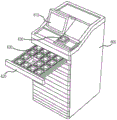
Fig. 6 illustrates an example medication dispensing apparatus 600 in which a variable dose dispensing system may be implemented in accordance with one or more embodiments. However, not all of the described components are required, and one or more embodiments may include additional components not shown in the figures. Variations in the arrangement and type of the components may be made without departing from the spirit or scope of the claims as set forth herein. Moreover, different or fewer components may be provided.
The medication dispensing apparatus 600 may include a display 610 and one or more drawers 620. One or more drawers 620 may include one or more containers 630, each of which may contain one or more drugs. The display 610 of the medication dispensing apparatus 600 may be a touch screen and/or the medication dispensing apparatus 600 may comprise user input means such as a keyboard, pointing device, etc.
In operation, a user may interact with the medication dispensing device 600, such as by using the display 610 (in the case of a touch screen or similar technology) or using a separate human input device, such as a keyboard or pointing device. The drawers 620 of the medication dispensing apparatus 600 may all be closed and/or locked when a user interacts with the medication dispensing apparatus 600 for the first time. The user may provide login credentials to the medication dispensing device 600 and the medication dispensing device 600 may authenticate the user based on the credentials. The medication dispensing apparatus 600 may then display the list of orders to the user, such as on a display. The order displayed to the user may be determined based on login credentials provided by the user. For example, a user may be associated with a particular area of a hospital and the order displayed to the user may be of patients located in the area of the hospital associated with the user.
The user may select a variable dose order from the list of displayed orders, such as by using the display 610 or a separate user input device. Upon receiving the user's selection, the medication dispensing apparatus 600 may ask the user to indicate the amount of the order to be given to the patient. The user may enter the amount to be administered, the medication dispensing device 600 may verify that the amount is within the range of the variable dose order, and the medication dispensing device 600 may determine one or more items in inventory that contain the amount to be administered and minimize the amount to be dispensed and/or discarded. The medication dispensing apparatus 600 may open one or more drawers 620 storing one or more containers 630 containing the determined one or more items. The medication dispensing apparatus 600 may also open and/or release the one or more containers to allow a user to access the items contained therein.
In one or more examples, the items contained in the containers 630 may each include an identifier, such as a barcode or a Radio Frequency Identifier (RFID). In situations such as when the receptacle 630 includes more dispensed amounts than a particular item, the identifier of the item may be used to ensure that the user does not extract more than the dispensed amount of the item from the receptacle 630. For example, the medication dispensing device 600 may automatically track each item removed from a given container based on the RFID and/or other item tracking mechanism that removed the item.
The medication dispensing apparatus 600 may store an indication of the amount of medication dispensed and a user identifier of the user to whom the medication is dispensed. If the amount of medicament dispensed exceeds the amount to be administered, the medication dispensing device 600 may display an indication of the excess amount of medicament to be discarded by the user, such as on display 610. The medication dispensing apparatus 600 may also display the amount of time that the user must discard the excess amount before it will be identified as lost.
The medication dispensing apparatus 600 may send the user's identifier, the amount dispensed, and the amount to be discarded (if any) to an external server such as the administration server 110. Drug-dispensing device 600 may also send the time assigned to the discard excess amount (if the assigned time is determined by drug-dispensing device 600) to an external server.
Figure 7 conceptually illustrates an electronic system 700 with which one or more embodiments of the subject technology may be implemented. The electronic system 700 may be, for example, a medication dispensing device 140, a waste device 150, a server 110, 120, a desktop computer, a laptop computer, a tablet computer, a telephone, a Personal Digital Assistant (PDA), or any general electronic device that transmits signals over a network. Such an electronic system may include various types of computer-readable media and interfaces for various other types of computer-readable media. Electronic system 700 includes bus 708, processing unit 712, system memory 704, Read Only Memory (ROM)710, persistent storage 702, input device interface 714, output device interface 706, and network interface 716, or subsets and variations thereof.
The ROM 710 stores static data and instructions for the processing unit 712 and other modules of the electronic system. Persistent storage 702, on the other hand, is a read-write storage. The device is a non-volatile memory unit that stores instructions and data even when the electronic system 700 is turned off. One or more embodiments of the subject disclosure use a mass storage device (such as a magnetic or optical disk and its corresponding disk drive) as persistent storage 702.
Other embodiments use a removable storage device, such as a floppy disk, flash drive, and their corresponding disk drives, as the permanent storage device 702. Like persistent storage 702, system memory 704 is a read-write storage device. Unlike storage 702, however, system memory 704 is a volatile read-and-write memory, such as a random access memory. System memory 704 stores any instructions and data required by processing unit 712 for operation. In one or more embodiments, the subject disclosed processes are stored in system memory 704, persistent storage 702, and/or ROM 710. Processing unit 712 extracts instructions to be executed and data to be processed from the various storage units described above in order to perform the processing of one or more embodiments.
The bus 708 is also coupled to an input device interface 714 and an output device interface 706. The input device interface 714 enables a user to communicate information and select commands with the electronic system. Input devices used with input device interface 714 include, for example, alphanumeric keyboards and pointing devices (also referred to as "cursor control devices"). The output device interface 706 enables, for example, the display of images generated by the electronic system 700. Output devices used with output device interface 706 include, for example, printers and display devices such as Liquid Crystal Displays (LCDs), Light Emitting Diode (LED) displays, Organic Light Emitting Diode (OLED) displays, flexible displays, flat panel displays, solid state displays, projectors, or any other device for outputting information. One or more embodiments may include a device that acts as both an input and output device, such as a touch screen. In these embodiments, the feedback provided to the user may be any form of sensory feedback, such as visual feedback, auditory feedback, or tactile feedback; and input from the user can be received in any form, including acoustic, speech, or tactile input.
Finally, as shown in FIG. 7, the bus 708 also couples the electronic system 700 to a network (not shown) through a network interface 716. In this manner, the computer may be part of a computer network (such as a local area network ("LAN"), a wide area network ("WAN"), an intranet), or a network of networks (such as the internet). Any or all of the components of electronic system 700 may be used with the subject disclosure.
Many of the above-described features and applications can be implemented as software processes that are specified as a set of instructions recorded on a computer-readable storage medium (alternatively referred to as a computer-readable medium, a machine-readable medium, or a machine-readable storage medium). When executed by one or more processing units (e.g., one or more processors, processor cores, or other processing units), these instructions cause the processing unit to perform the actions indicated in the instructions. Examples of computer readable media include, but are not limited to: RAM, ROM, compact disc read-only memory (CD-ROM), compact disc recordable (CD-R), compact disc rewritable (CD-RW), digital versatile disc read-only memory (e.g., DVD-ROM, dual layer DVD-ROM), various DVD recordable/rewritable (e.g., DVD-RAM, DVD-RW, DVD + RW, etc.), flash memory (e.g., SD card, mini-SD card, micro-SD card, etc.), magnetic and/or solid state hard disks, ultra-density optical disks, any other optical or magnetic media, and floppy disks. In one or more embodiments, the computer-readable medium does not include carrier waves and electrical signals, or any other transitory signals, communicated wirelessly or over a wired connection. For example, a computer-readable medium may be limited in its entirety to a tangible physical object that stores information in a form readable by a computer. In one or more embodiments, the computer-readable medium is a non-transitory computer-readable medium, a computer-readable storage medium, or a non-transitory computer-readable storage medium.
In one or more embodiments, a computer program product (also known as a program, software application, script, or code) can be written in any form of programming language, including compiled or interpreted languages, declarative or procedural languages, and it can be deployed in any form, including as a stand-alone program or as a module, component, subroutine, object, or other unit suitable for use in a computing environment. The computer program may, but need not, correspond to a file in a file system. A program can be stored in a portion of a file that holds other programs or data (e.g., one or more scripts stored in a markup language document); may be stored in a single file dedicated to the program in question; or may be stored in multiple coordinated files (e.g., files that store one or more modules, sub programs, or portions of code). A computer program can be deployed to be executed on one computer or on multiple computers at one site or distributed across multiple sites and interconnected by a communication network.
Although the above discussion has primarily referred to a microprocessor or multi-core processor executing software, one or more embodiments are performed by one or more integrated circuits, such as an Application Specific Integrated Circuit (ASIC) or Field Programmable Gate Array (FPGA). In one or more embodiments, such integrated circuits execute instructions stored on their circuitry.
Those skilled in the art will appreciate that the various illustrative blocks, modules, elements, components, methods, and algorithms described herein may be implemented as electronic hardware, computer software, or combinations of both. To illustrate this interchangeability of hardware and software, various illustrative blocks, modules, elements, components, methods, and algorithms have been described above generally in terms of their functionality. Whether such functionality is implemented as hardware or software depends upon the particular application and design constraints imposed on the overall system. Skilled artisans may implement the described functionality in varying ways for each particular application. The various components and blocks may be arranged differently (e.g., arranged in a different order or divided in a different manner), all without departing from the scope of the subject technology.
It should be understood that any particular order or hierarchy of blocks in the processes disclosed is illustrative of example approaches. It will be appreciated that the particular order or hierarchy of blocks in the process can be rearranged, or all illustrated blocks can be performed, according to design preferences. Any of the blocks may be executed simultaneously. In one or more embodiments, it may be advantageous to perform multitasking and parallel processing. Moreover, the separation of various system components in the embodiments described above should not be considered as requiring such separation in all embodiments, and it should be understood that the described program components and systems can generally be integrated together in a single software product or packaged into multiple software products.
As used herein, the phrase "at least one of" preceding a series of items (any item is separated by the term "and"/"or") modifies the entire list rather than each member of the list (i.e., each item). The phrase "at least one" need not select at least one of each of the items listed; rather, the phrase may have the following meaning: at least one of any of the items, and/or at least one of any combination of the items, and/or at least one of each item. By way of example, the phrases "A, B and at least one of C" or "A, B or at least one of C" each refer to: only a, only B, or only C; A. any combination of B and C; and/or A, B and C.
The terms "configured to," "operable to," "programmed to" do not imply any particular tangible or intangible modification of the subject matter, but rather are intended to be used interchangeably. In one or more embodiments, the configuration of the processor as a monitoring and control operation or component may also mean that the processor is programmed or operable to monitor and control operations. Similarly, a processor configured to execute code may be considered processor programmed or operable to execute code.
A phrase such as "an aspect" does not imply that such aspect is essential to the invention or that such aspect applies to all configurations of the invention. The disclosure of an aspect may also apply to all configurations, or one or more configurations. One aspect may provide one or more examples of the present disclosure. Phrases such as "an aspect" may refer to one or more aspects and vice versa. A phrase such as an "embodiment" does not imply that the embodiment is essential to the invention or that the embodiment applies to all configurations of the invention. A disclosure of an embodiment may also apply to all embodiments, or one or more embodiments. One embodiment may provide one or more examples of the present disclosure. Phrases such as "an embodiment" may refer to one or more embodiments and vice versa. A phrase such as "configuration" does not imply that such configuration is essential to the invention or that such configuration applies to all configurations of the invention. The disclosure of one configuration may also apply to all configurations, or one or more configurations. One configuration may provide one or more examples of the present disclosure. Phrases such as "configuration" may refer to one or more configurations and vice versa.
The word "exemplary" is used herein to mean "serving as an example, instance, or illustration. Embodiments described herein as "exemplary" or "exemplary" are not necessarily to be construed as preferred or advantageous over other embodiments. Furthermore, to the extent that the terms "includes," "has," "having," and the like are used in either the detailed description or the claims, such terms are intended to be inclusive in a manner similar to the term "comprising" as "comprising" is interpreted when employed as a transitional word in a claim.
All equivalent structures and functions of the elements of the various aspects described throughout this disclosure that are known or later come to be known to those of ordinary skill in the art are expressly incorporated herein by reference and are intended to be encompassed by the claims. Furthermore, nothing disclosed herein is intended to be dedicated to the public regardless of whether such disclosure is explicitly recited in the claims. No claim element is to be construed as 35u.s.c. § 112 clause 6, unless the element is explicitly recited with the phrase "means for … …", or in the case of a method claim, with the phrase "step for … …".
The previous description is provided to enable any person skilled in the art to practice the various aspects described herein. Various modifications to these aspects will be readily apparent to those skilled in the art, and the generic principles defined herein may be applied to other aspects. Thus, the claims are not intended to be limited to the aspects shown herein, but is to be accorded the full scope consistent with the language claims, wherein reference to an element in the singular is not intended to mean "one and only one" unless specifically so stated, but rather "one or more. The term "some" means one or more unless specifically stated otherwise. A pronoun for a male (e.g., his) includes a female and a neutral gender (e.g., her and it), and vice versa. Headings and sub-headings, if any, are used for convenience only and do not limit the disclosure.
Claims (26)
1. A method for variable dose dispensing, the method comprising:
receiving a request for a variable dose order for a medication;
requesting an amount of drug to be administered;
receiving, in response to the request, an indication of the amount of medication to be administered;
determining, by a processor, at least one item of a plurality of items in a local inventory, the at least one item including at least the amount of medication to be administered;
causing the dispenser to dispense the at least one item;
determining a discard amount of the at least one item dispensed in excess of the amount of medication to be administered;
providing a notification of the discard amount to be disposed of;
sending an identifier of a user requesting the variable dose order for the medication;
receiving, by an access control system, a notification that a user associated with the identifier has not disposed of the obsolete amount; and
restricting access to a user associated with the identifier.
2. The method of claim 1, further comprising:
sending an identifier of the user requesting the variable dose order for the medication, the amount of medication to be administered, and the amount of the at least one item that is dispensed or the discard amount of the medication to a management system.
3. The method of claim 2, further comprising:
initializing, by the management system, a timer associated with the discard amount of the medication and the identifier.
4. The method of claim 3, further comprising:
determining when a time set for disposal of the waste amount of the drug is exceeded based on the timer.
5. The method of claim 4, further comprising:
sending, by the management system, a notification that a user requesting the variable dose order for the medication is not disposing of the obsolete amount of the medication.
6. The method of claim 4, further comprising:
sending, by the management system, one of the following indications: an indication that no additional medication should be assigned to a user requesting the variable dose order for the medication and an indication that access to the user requesting the variable dose order for the medication should be revoked.
7. The method of claim 1, wherein determining, by a processor, at least one item of a plurality of items in a local inventory, the at least one item including at least the amount of medication to be administered further comprises:
determining, by a processor, at least one item of a plurality of items in a local inventory such that the discard amount of the medication is minimized for the plurality of items in the local inventory.
8. The method of claim 1, wherein dispensing the at least one item further comprises:
allowing a user requesting the variable dose order to physically access the at least one item while preventing the user from accessing other items of the plurality of items in the local inventory.
9. The method of claim 1, further comprising:
receiving an indication of a variable dose group of the variable dose order from a pharmacy system, wherein the variable dose group indicates the plurality of items in the local inventory from which at least one item is determined for the variable dose order.
10. The method of claim 9, wherein the variable dose group comprises a first item, indicated as an equivalent of a plurality of second items.
11. The method of claim 10, wherein the first item comprises the amount of medication to be administered and the first item is not in a local inventory, and dispensing the at least one item further comprises:
dispensing the second article.
12. The method of claim 1, further comprising:
receiving the identifier of the user prior to allocation; and
authenticating the identifier of the user, wherein the at least one item is assigned only if the identifier of the user is authenticated.
13. The method of claim 1, wherein if at least one item that includes at least the amount of medication to be administered is not present in the local inventory, the method further comprises:
requesting an identifier of a dispensing device containing the closest location of the amount of medication to be administered;
receiving the identifier of the nearest located allocation device; and
displaying the identifier of the dispensing device of the closest location to a user requesting the variable dose order.
14. The method of claim 13, further comprising providing navigation instructions to a dispensing device of the proximate location.
15. The method of claim 1, further comprising verifying that the amount of medication to be administered is within a range of a variable dose order.
16. The method of claim 1, further comprising receiving the variable dose order from a pharmacy system.
17. The method of claim 1, further comprising
Upon dispensing the medication, if the discard amount of the medication is not disposed of, recording the discard amount as unarchived waste.
18. The method of claim 1, wherein restricting access to the user associated with the identifier comprises preventing the dispenser from dispensing additional medication to the user associated with the identifier.
19. The method of claim 1, wherein restricting access to the user associated with the identifier comprises preventing the user associated with the identifier from leaving a medical facility.
20. The method of claim 1, further comprising:
receiving one of a credential of a user requesting the variable dose order for the medication and a credential of a witness of the user from a waste device.
21. The method of claim 1, further comprising:
quantity information indicative of a waste amount received by the waste device is received from an item counter of the waste device.
22. The method of claim 21, wherein the quantity information comprises one of: the pill count, liquid volume measurement, and measured weight of the received discard amount are compared to the weight per unit of the item being dispensed.
23. The method of claim 1, further comprising:
receiving a notification of a portion of the discard amount received by a waste device; and
providing an alert if a portion of the discard amount received by a waste device is less than the discard amount to be disposed of.
24. The method of claim 1, placing a portion of the discard amount into the dispenser.
25. A non-transitory computer readable medium embodying instructions that, when executed by a machine, allow the machine to perform the method of any of claims 1 to 24.
26. A system for managing variable dose dispensing, the system comprising:
one or more processors; and
memory comprising instructions which, when executed by the one or more processors, cause the one or more processors to perform the method of any one of claims 1-24.
Applications Claiming Priority (3)
| Application Number | Priority Date | Filing Date | Title |
|---|---|---|---|
| US13/754,724 | 2013-01-30 | ||
| US13/754,724 US9342484B2 (en) | 2013-01-30 | 2013-01-30 | Variable dose dispensing system |
| CN201480017522.0A CN105051740B (en) | 2013-01-30 | 2014-01-22 | variable dose dispensing system |
Related Parent Applications (1)
| Application Number | Title | Priority Date | Filing Date |
|---|---|---|---|
| CN201480017522.0A Division CN105051740B (en) | 2013-01-30 | 2014-01-22 | variable dose dispensing system |
Publications (2)
| Publication Number | Publication Date |
|---|---|
| CN109119139A CN109119139A (en) | 2019-01-01 |
| CN109119139B true CN109119139B (en) | 2022-02-18 |
Family
ID=50102211
Family Applications (2)
| Application Number | Title | Priority Date | Filing Date |
|---|---|---|---|
| CN201480017522.0A Active CN105051740B (en) | 2013-01-30 | 2014-01-22 | variable dose dispensing system |
| CN201810932397.6A Active CN109119139B (en) | 2013-01-30 | 2014-01-22 | Variable dose dispensing system |
Family Applications Before (1)
| Application Number | Title | Priority Date | Filing Date |
|---|---|---|---|
| CN201480017522.0A Active CN105051740B (en) | 2013-01-30 | 2014-01-22 | variable dose dispensing system |
Country Status (8)
| Country | Link |
|---|---|
| US (7) | US9342484B2 (en) |
| EP (1) | EP2951739B1 (en) |
| CN (2) | CN105051740B (en) |
| AU (2) | AU2014212735B2 (en) |
| BR (1) | BR112015018107A2 (en) |
| CA (2) | CA3152606C (en) |
| MX (1) | MX351066B (en) |
| WO (1) | WO2014120533A1 (en) |
Families Citing this family (32)
| Publication number | Priority date | Publication date | Assignee | Title |
|---|---|---|---|---|
| US9342484B2 (en) | 2013-01-30 | 2016-05-17 | Carefusion 303, Inc. | Variable dose dispensing system |
| US9076115B2 (en) | 2013-01-30 | 2015-07-07 | Carefusion 303, Inc. | Component based aggregation of medication orders |
| US9940439B2 (en) * | 2013-11-29 | 2018-04-10 | Atabak Reza Royaee | Method and device for identification and/or sorting of medicines |
| US20170147785A1 (en) * | 2014-06-30 | 2017-05-25 | Touchpoint Medical, Inc. | Systems and methods for tracking inventory and distribution of medications in a healthcare facility |
| US9607261B1 (en) * | 2014-12-03 | 2017-03-28 | Compliance Meds Technologies Llc | Counter using an inductive sensor for determining the quantity of articles in a receptacle |
| WO2016141216A1 (en) | 2015-03-03 | 2016-09-09 | Baxter Corporation Englewood | Pharmacy workflow management with integrated alerts |
| US11282597B2 (en) * | 2015-03-27 | 2022-03-22 | Protenus Inc. | Methods and systems for analyzing accessing of drug dispensing systems |
| US10545048B2 (en) * | 2015-07-23 | 2020-01-28 | Cardinal Health Commercial Technologies, Llc | Medication dispensing device and methods |
| CN113081601A (en) | 2015-11-13 | 2021-07-09 | 休思乐公司 | Medical technology station and use method |
| GB2579451A (en) | 2017-05-22 | 2020-06-24 | Valisure Llc | Methods for validating medication |
| US10522252B2 (en) | 2017-06-16 | 2019-12-31 | Carefusion 303, Inc. | Opioid management system |
| US10596319B2 (en) | 2017-11-23 | 2020-03-24 | Aesynt Incorporated | Compounding device system |
| US10991264B2 (en) | 2017-11-23 | 2021-04-27 | Omnicell, Inc. | Multi-camera imaging for IV compounding |
| US11335444B2 (en) | 2017-11-30 | 2022-05-17 | Omnicell, Inc. | IV compounding systems and methods |
| JP7138171B2 (en) * | 2017-11-30 | 2022-09-15 | オムニセル, インコーポレイテッド | Compounding device system |
| US11348672B2 (en) | 2017-12-29 | 2022-05-31 | Cerner Innovation, Inc. | Medical order entry integration with automated dispensing systems |
| US11081220B2 (en) | 2018-02-02 | 2021-08-03 | Carefusion 303, Inc. | System and method for dispensing medication |
| US11222721B2 (en) | 2018-05-04 | 2022-01-11 | Carefusion 303, Inc. | Peer community based anomalous behavior detection |
| GB2595108B (en) | 2019-01-07 | 2023-05-03 | Carefusion 303 Inc | Machine learning based safety controller |
| US11984212B2 (en) | 2019-01-10 | 2024-05-14 | Carefusion 303, Inc. | System for monitoring dose pattern and patient response |
| CA3126700C (en) | 2019-01-18 | 2025-06-03 | Carefusion 303, Inc. | Medication tracking system |
| US20210027259A1 (en) * | 2019-07-24 | 2021-01-28 | Carefusion 303, Inc. | Smart wasting station for medications |
| US12437862B2 (en) | 2019-09-27 | 2025-10-07 | Carefusion 303, Inc. | Rare instance analytics for diversion detection |
| AU2021226424A1 (en) | 2020-02-24 | 2022-09-15 | Carefusion 303, Inc. | Modular witnessing device |
| US11915834B2 (en) | 2020-04-09 | 2024-02-27 | Salesforce, Inc. | Efficient volume matching of patients and providers |
| US20210319882A1 (en) | 2020-04-09 | 2021-10-14 | Salesforce.Com, Inc. | Machine learning community-based health assessment |
| CN111453885B (en) * | 2020-04-27 | 2022-08-12 | 苏州华新达饮品技术有限公司 | Ultrapure water treatment real-time monitoring method and system |
| WO2021231438A1 (en) | 2020-05-14 | 2021-11-18 | Carefusion 303, Inc. | Wasting station for medications |
| US12482554B2 (en) | 2021-02-26 | 2025-11-25 | Carefusion 303, Inc. | Dosage normalization for detection of anomalous behavior |
| US11273103B1 (en) * | 2021-06-22 | 2022-03-15 | Vmi Holland B.V. | Method, computer program product and dispensing device for dispensing discrete medicaments |
| US20250284784A1 (en) * | 2022-02-01 | 2025-09-11 | Nchain Licensing Ag | Method and system for permission management |
| WO2024096873A1 (en) * | 2022-11-01 | 2024-05-10 | Carefusion 303, Inc. | System for monitoring receptacle fill level |
Citations (2)
| Publication number | Priority date | Publication date | Assignee | Title |
|---|---|---|---|---|
| CN102473173A (en) * | 2009-07-13 | 2012-05-23 | 欧尼赛尔有限公司 | Cabinet with remote integration |
| CN102486845A (en) * | 2010-12-01 | 2012-06-06 | 鸿富锦精密工业(深圳)有限公司 | Resource management system and method |
Family Cites Families (55)
| Publication number | Priority date | Publication date | Assignee | Title |
|---|---|---|---|---|
| US4653010A (en) | 1984-10-26 | 1987-03-24 | Baxter Travenol Laboratories, Inc. | Compounding system |
| US5208762A (en) | 1990-12-06 | 1993-05-04 | Baxter International Inc. | Automated prescription vial filling system |
| US5833599A (en) * | 1993-12-13 | 1998-11-10 | Multum Information Services | Providing patient-specific drug information |
| US7349858B1 (en) * | 1994-12-16 | 2008-03-25 | Automed Technologies, Inc. | Method of dispensing and tracking the giving of medical items to patients |
| US5797515A (en) | 1995-10-18 | 1998-08-25 | Adds, Inc. | Method for controlling a drug dispensing system |
| US5991728A (en) * | 1997-04-30 | 1999-11-23 | Deroyal Industries, Inc. | Method and system for the tracking and profiling of supply usage in a health care environment |
| US6339732B1 (en) | 1998-10-16 | 2002-01-15 | Pyxis Corporation | Apparatus and method for storing, tracking and documenting usage of anesthesiology items |
| US6202923B1 (en) | 1999-08-23 | 2001-03-20 | Innovation Associates, Inc. | Automated pharmacy |
| CO5290346A1 (en) | 1999-12-03 | 2003-06-27 | Baxter Int | METHOD AND APPLIANCE TO CONTROL THE STRATEGY OF MAKING COMPOUNDS WITH PHARMACEUTICAL BLENDS |
| EP1656988B2 (en) | 1999-12-03 | 2017-07-12 | Baxter International Inc. | Method and apparatus for controlling the strategy of compounding pharmaceutical admixtures |
| US9427520B2 (en) | 2005-02-11 | 2016-08-30 | Carefusion 303, Inc. | Management of pending medication orders |
| US20020143434A1 (en) | 2001-03-29 | 2002-10-03 | John Greeven | Method and apparatus for delivering and refilling pharmaceuticals |
| US6597969B2 (en) | 2001-06-22 | 2003-07-22 | Shlomo Greenwald | Hospital drug distribution system |
| US6650964B2 (en) | 2002-04-16 | 2003-11-18 | Mckesson Automation Inc. | Medication dispensing apparatus override check and communication system |
| US20040078231A1 (en) * | 2002-05-31 | 2004-04-22 | Wilkes Gordon J. | System and method for facilitating and administering treatment to a patient, including clinical decision making, order workflow and integration of clinical documentation |
| WO2004036481A2 (en) * | 2002-10-18 | 2004-04-29 | Mckesson Automation Systems, Inc. | Automated drug substitution, verification, and reporting system |
| US7860724B2 (en) | 2002-10-30 | 2010-12-28 | Automed Technologies, Inc. | System and method for management of pharmacy workflow |
| US7753085B2 (en) | 2002-12-03 | 2010-07-13 | Forhealth Technologies, Inc. | Automated drug preparation apparatus including automated drug reconstitution |
| US20130262138A1 (en) | 2003-02-09 | 2013-10-03 | Carefusion 303, Inc. | Medication preparation queue |
| US7119689B2 (en) | 2003-09-19 | 2006-10-10 | Vesta Medical, Llc | System and method for sorting medical waste for disposal |
| US8195328B2 (en) * | 2003-09-19 | 2012-06-05 | Vesta Medical, Llc | Combination disposal and dispensing apparatus and method |
| US7562025B2 (en) | 2003-09-19 | 2009-07-14 | Vesta Medical, Llc | Waste sorting system with query function, and method thereof |
| US20060249423A1 (en) | 2003-11-28 | 2006-11-09 | Mika Reijonen | Method and apparatus to identify and separate medicinal preparations and dosages thereof |
| DK2719368T3 (en) * | 2004-01-05 | 2019-10-07 | Tosho Inc | Drug dispenser and device therefore |
| US7706915B2 (en) * | 2004-12-03 | 2010-04-27 | Saudi Arabian Oil Company | System and software of enhanced pharmacy services and related methods |
| US20100096399A1 (en) * | 2004-12-11 | 2010-04-22 | Novation Science Holding, Llc | Smart Medicine Container |
| US7734478B2 (en) | 2005-10-18 | 2010-06-08 | Walgreen Co. | Method and apparatus for inter-pharmacy workload balancing using resource function assignments |
| US8655676B2 (en) * | 2006-03-28 | 2014-02-18 | Hospira, Inc. | Medication administration and management system and method |
| US7734483B1 (en) * | 2006-05-20 | 2010-06-08 | Medco Health Solutions, Inc. | Computer implemented method and system for analyzing pharmaceutical benefit plans and for providing member specific advice, optionally including lower cost pharmaceutical alternatives |
| US8140351B2 (en) | 2007-02-08 | 2012-03-20 | Fht, Inc. | Centralized sterile drug products distribution and automated management of sterile compounding stations |
| US20080195416A1 (en) | 2007-02-08 | 2008-08-14 | Forhealth Technologies, Inc. | Automated centralized preparation of medications in anticipation of use |
| US20080313103A1 (en) * | 2007-06-14 | 2008-12-18 | Genuity Group, Llc | System for identifying lowest cost prescription |
| US20090012813A1 (en) | 2007-07-06 | 2009-01-08 | Mckesson Financial Holdings Limited | Systems and methods for managing medical information |
| US8215543B2 (en) | 2007-09-21 | 2012-07-10 | Omnicare, Inc. | Methods for filling prescriptions to fulfill a customer order |
| US8660860B2 (en) * | 2007-11-09 | 2014-02-25 | Hospira, Inc. | System and method for synchronizing medication configuration information among systems containing medication configuration information |
| EP2244958B1 (en) | 2007-12-19 | 2020-02-05 | RxSafe, LLC | Method of storing and retrieving pharmaceuticals using a pharmaceutical storage and retrieval system |
| US8165929B2 (en) | 2008-08-04 | 2012-04-24 | Chudy Group, LLC | Adaptive pharmaceutical product management methods and system |
| US8554579B2 (en) | 2008-10-13 | 2013-10-08 | Fht, Inc. | Management, reporting and benchmarking of medication preparation |
| US10916340B2 (en) | 2008-12-05 | 2021-02-09 | Remedi Technology Holdings, Llc | System and methodology for filling prescriptions |
| US8386070B2 (en) | 2009-03-18 | 2013-02-26 | Intelligent Hospital Systems, Ltd | Automated pharmacy admixture system |
| US20110010196A1 (en) | 2009-07-08 | 2011-01-13 | Christopher Nee | Pharmaceutical inventory tracking system and method |
| US8558659B2 (en) * | 2009-07-29 | 2013-10-15 | Carefusion 303, Inc. | Urgent access medication dispensing station |
| US8496432B2 (en) | 2010-03-22 | 2013-07-30 | Hamilton Sundstrand Corporation | Thrust bearing cooling path |
| US8688468B1 (en) * | 2010-03-30 | 2014-04-01 | Mckesson Financial Holdings | Systems and methods for verifying dosages associated with healthcare transactions |
| EP2535035B1 (en) * | 2010-06-09 | 2015-04-01 | JVM Co., Ltd. | Medicine dispenser and method of discharging medicine |
| KR101249528B1 (en) | 2010-12-21 | 2013-04-01 | 한국 한의학 연구원 | Supporting system for prescription and preparation oriental medicine |
| US20120173254A1 (en) | 2010-12-29 | 2012-07-05 | Korhnak Daniel J | Load balancing and assigning medication requests |
| US20120323602A1 (en) | 2011-06-20 | 2012-12-20 | Cerner Innovation, Inc. | Pharmacy work queue |
| US20130018356A1 (en) | 2011-07-13 | 2013-01-17 | Crisi Medical Systems, Inc. | Characterizing medication container preparation, use, and disposal within a clinical workflow |
| US8655751B2 (en) | 2012-07-11 | 2014-02-18 | Animal Health International, Inc. | System and method for control of commodities inventory for animal feed rations |
| US20140098645A1 (en) * | 2012-10-04 | 2014-04-10 | Baidan Pty Ltd | Method, system, and device for a medication regimen |
| US9342484B2 (en) | 2013-01-30 | 2016-05-17 | Carefusion 303, Inc. | Variable dose dispensing system |
| WO2016064786A1 (en) * | 2014-10-25 | 2016-04-28 | Sumner Bluffs, Llc. | Solid pharmaceutical agent dosage form dispensing and biometric data acquisition device |
| WO2017037706A1 (en) * | 2015-08-31 | 2017-03-09 | Zelikman Vadim | An appartus for dispensing a predefined dosage form |
| US11183276B2 (en) * | 2015-12-22 | 2021-11-23 | International Business Machines Corporation | Medication dispenser system with exact personal dosing |
-
2013
- 2013-01-30 US US13/754,724 patent/US9342484B2/en active Active
-
2014
- 2014-01-22 CN CN201480017522.0A patent/CN105051740B/en active Active
- 2014-01-22 CA CA3152606A patent/CA3152606C/en active Active
- 2014-01-22 AU AU2014212735A patent/AU2014212735B2/en active Active
- 2014-01-22 BR BR112015018107A patent/BR112015018107A2/en not_active Application Discontinuation
- 2014-01-22 MX MX2015009589A patent/MX351066B/en active IP Right Grant
- 2014-01-22 CN CN201810932397.6A patent/CN109119139B/en active Active
- 2014-01-22 CA CA2899012A patent/CA2899012C/en active Active
- 2014-01-22 WO PCT/US2014/012594 patent/WO2014120533A1/en not_active Ceased
- 2014-01-22 EP EP14704442.4A patent/EP2951739B1/en active Active
-
2016
- 2016-04-21 US US15/134,962 patent/US9842196B2/en active Active
- 2016-05-16 US US15/155,767 patent/US10210313B2/en active Active
-
2017
- 2017-11-06 US US15/804,100 patent/US11087866B2/en active Active
-
2019
- 2019-02-15 US US16/277,697 patent/US10475534B2/en active Active
- 2019-04-26 AU AU2019202932A patent/AU2019202932B2/en active Active
-
2021
- 2021-07-02 US US17/366,849 patent/US11610658B2/en active Active
-
2023
- 2023-02-13 US US18/108,962 patent/US11923061B2/en active Active
Patent Citations (2)
| Publication number | Priority date | Publication date | Assignee | Title |
|---|---|---|---|---|
| CN102473173A (en) * | 2009-07-13 | 2012-05-23 | 欧尼赛尔有限公司 | Cabinet with remote integration |
| CN102486845A (en) * | 2010-12-01 | 2012-06-06 | 鸿富锦精密工业(深圳)有限公司 | Resource management system and method |
Non-Patent Citations (1)
| Title |
|---|
| 用绿色化学理念对分析实验室进行优化工程设计;何琨;《第四届上海国际分析化学研讨会论文摘要集》;20080901;30-31 * |
Also Published As
| Publication number | Publication date |
|---|---|
| CN109119139A (en) | 2019-01-01 |
| EP2951739C0 (en) | 2023-06-07 |
| US10210313B2 (en) | 2019-02-19 |
| US10475534B2 (en) | 2019-11-12 |
| AU2019202932A1 (en) | 2019-05-16 |
| CA2899012A1 (en) | 2014-08-07 |
| US20230187045A1 (en) | 2023-06-15 |
| MX351066B (en) | 2017-09-29 |
| US9842196B2 (en) | 2017-12-12 |
| BR112015018107A2 (en) | 2017-07-18 |
| CA3152606C (en) | 2024-04-02 |
| US20140214199A1 (en) | 2014-07-31 |
| US11610658B2 (en) | 2023-03-21 |
| CN105051740B (en) | 2018-09-14 |
| US11087866B2 (en) | 2021-08-10 |
| EP2951739A1 (en) | 2015-12-09 |
| WO2014120533A1 (en) | 2014-08-07 |
| AU2014212735A1 (en) | 2015-08-13 |
| US20160259915A1 (en) | 2016-09-08 |
| AU2019202932B2 (en) | 2021-03-18 |
| CA3152606A1 (en) | 2014-08-07 |
| MX2015009589A (en) | 2015-11-25 |
| AU2014212735B2 (en) | 2019-03-28 |
| US11923061B2 (en) | 2024-03-05 |
| US20190180854A1 (en) | 2019-06-13 |
| US20180060528A1 (en) | 2018-03-01 |
| CA2899012C (en) | 2022-05-31 |
| US9342484B2 (en) | 2016-05-17 |
| EP2951739B1 (en) | 2023-06-07 |
| US20160232325A1 (en) | 2016-08-11 |
| CN105051740A (en) | 2015-11-11 |
| US20210335471A1 (en) | 2021-10-28 |
Similar Documents
| Publication | Publication Date | Title |
|---|---|---|
| CN109119139B (en) | Variable dose dispensing system | |
| US11839589B2 (en) | Managing medications at the bedside | |
| AU2019275618B2 (en) | Managing medications at the bedside | |
| US20150302177A1 (en) | Drug dispensing system | |
| Shastay | Transdermal Iontophoretic FentaNYL PCA | |
| AU2012200125A1 (en) | Management of Pending Medication Orders |
Legal Events
| Date | Code | Title | Description |
|---|---|---|---|
| PB01 | Publication | ||
| PB01 | Publication | ||
| SE01 | Entry into force of request for substantive examination | ||
| SE01 | Entry into force of request for substantive examination | ||
| GR01 | Patent grant | ||
| GR01 | Patent grant |