[go: up one dir, main page]

CN109074398B - Mobile device with unified media center user interface - Google Patents

Mobile device with unified media center user interface Download PDF

Info

Publication number
CN109074398B
CN109074398B CN201780026958.XA CN201780026958A CN109074398B CN 109074398 B CN109074398 B CN 109074398B CN 201780026958 A CN201780026958 A CN 201780026958A CN 109074398 B CN109074398 B CN 109074398B
Authority
CN
China
Prior art keywords
mobile device
storage
memory
storage devices
user
Prior art date
Legal status (The legal status is an assumption and is not a legal conclusion. Google has not performed a legal analysis and makes no representation as to the accuracy of the status listed.)
Active
Application number
CN201780026958.XA
Other languages
Chinese (zh)
Other versions
CN109074398A (en
Inventor
S.维鲁萨米
S.拉贾戈帕兰
V.坎内潘
Current Assignee (The listed assignees may be inaccurate. Google has not performed a legal analysis and makes no representation or warranty as to the accuracy of the list.)
SanDisk Technologies LLC
Original Assignee
SanDisk Technologies LLC
Priority date (The priority date is an assumption and is not a legal conclusion. Google has not performed a legal analysis and makes no representation as to the accuracy of the date listed.)
Filing date
Publication date
Application filed by SanDisk Technologies LLC filed Critical SanDisk Technologies LLC
Publication of CN109074398A publication Critical patent/CN109074398A/en
Application granted granted Critical
Publication of CN109074398B publication Critical patent/CN109074398B/en
Active legal-status Critical Current
Anticipated expiration legal-status Critical

Links

Images

Classifications

    • HELECTRICITY
    • H04ELECTRIC COMMUNICATION TECHNIQUE
    • H04MTELEPHONIC COMMUNICATION
    • H04M1/00Substation equipment, e.g. for use by subscribers
    • H04M1/72Mobile telephones; Cordless telephones, i.e. devices for establishing wireless links to base stations without route selection
    • H04M1/724User interfaces specially adapted for cordless or mobile telephones
    • H04M1/72403User interfaces specially adapted for cordless or mobile telephones with means for local support of applications that increase the functionality
    • GPHYSICS
    • G06COMPUTING OR CALCULATING; COUNTING
    • G06FELECTRIC DIGITAL DATA PROCESSING
    • G06F16/00Information retrieval; Database structures therefor; File system structures therefor
    • G06F16/10File systems; File servers
    • G06F16/11File system administration, e.g. details of archiving or snapshots
    • GPHYSICS
    • G06COMPUTING OR CALCULATING; COUNTING
    • G06FELECTRIC DIGITAL DATA PROCESSING
    • G06F16/00Information retrieval; Database structures therefor; File system structures therefor
    • G06F16/10File systems; File servers
    • G06F16/13File access structures, e.g. distributed indices
    • GPHYSICS
    • G06COMPUTING OR CALCULATING; COUNTING
    • G06FELECTRIC DIGITAL DATA PROCESSING
    • G06F3/00Input arrangements for transferring data to be processed into a form capable of being handled by the computer; Output arrangements for transferring data from processing unit to output unit, e.g. interface arrangements
    • G06F3/06Digital input from, or digital output to, record carriers, e.g. RAID, emulated record carriers or networked record carriers
    • G06F3/0601Interfaces specially adapted for storage systems
    • G06F3/0602Interfaces specially adapted for storage systems specifically adapted to achieve a particular effect
    • G06F3/0614Improving the reliability of storage systems
    • G06F3/0619Improving the reliability of storage systems in relation to data integrity, e.g. data losses, bit errors
    • GPHYSICS
    • G06COMPUTING OR CALCULATING; COUNTING
    • G06FELECTRIC DIGITAL DATA PROCESSING
    • G06F3/00Input arrangements for transferring data to be processed into a form capable of being handled by the computer; Output arrangements for transferring data from processing unit to output unit, e.g. interface arrangements
    • G06F3/06Digital input from, or digital output to, record carriers, e.g. RAID, emulated record carriers or networked record carriers
    • G06F3/0601Interfaces specially adapted for storage systems
    • G06F3/0628Interfaces specially adapted for storage systems making use of a particular technique
    • G06F3/0646Horizontal data movement in storage systems, i.e. moving data in between storage devices or systems
    • G06F3/065Replication mechanisms
    • GPHYSICS
    • G06COMPUTING OR CALCULATING; COUNTING
    • G06FELECTRIC DIGITAL DATA PROCESSING
    • G06F3/00Input arrangements for transferring data to be processed into a form capable of being handled by the computer; Output arrangements for transferring data from processing unit to output unit, e.g. interface arrangements
    • G06F3/06Digital input from, or digital output to, record carriers, e.g. RAID, emulated record carriers or networked record carriers
    • G06F3/0601Interfaces specially adapted for storage systems
    • G06F3/0668Interfaces specially adapted for storage systems adopting a particular infrastructure
    • G06F3/0671In-line storage system
    • G06F3/0683Plurality of storage devices
    • G06F3/0685Hybrid storage combining heterogeneous device types, e.g. hierarchical storage, hybrid arrays
    • GPHYSICS
    • G06COMPUTING OR CALCULATING; COUNTING
    • G06FELECTRIC DIGITAL DATA PROCESSING
    • G06F9/00Arrangements for program control, e.g. control units
    • G06F9/06Arrangements for program control, e.g. control units using stored programs, i.e. using an internal store of processing equipment to receive or retain programs
    • G06F9/44Arrangements for executing specific programs
    • G06F9/4401Bootstrapping
    • G06F9/4411Configuring for operating with peripheral devices; Loading of device drivers
    • HELECTRICITY
    • H04ELECTRIC COMMUNICATION TECHNIQUE
    • H04MTELEPHONIC COMMUNICATION
    • H04M1/00Substation equipment, e.g. for use by subscribers
    • H04M1/72Mobile telephones; Cordless telephones, i.e. devices for establishing wireless links to base stations without route selection
    • H04M1/724User interfaces specially adapted for cordless or mobile telephones
    • H04M1/72469User interfaces specially adapted for cordless or mobile telephones for operating the device by selecting functions from two or more displayed items, e.g. menus or icons
    • HELECTRICITY
    • H04ELECTRIC COMMUNICATION TECHNIQUE
    • H04LTRANSMISSION OF DIGITAL INFORMATION, e.g. TELEGRAPHIC COMMUNICATION
    • H04L67/00Network arrangements or protocols for supporting network services or applications
    • H04L67/01Protocols
    • H04L67/10Protocols in which an application is distributed across nodes in the network
    • H04L67/1097Protocols in which an application is distributed across nodes in the network for distributed storage of data in networks, e.g. transport arrangements for network file system [NFS], storage area networks [SAN] or network attached storage [NAS]

Landscapes

  • Engineering & Computer Science (AREA)
  • Theoretical Computer Science (AREA)
  • Physics & Mathematics (AREA)
  • General Engineering & Computer Science (AREA)
  • General Physics & Mathematics (AREA)
  • Human Computer Interaction (AREA)
  • Software Systems (AREA)
  • Databases & Information Systems (AREA)
  • Data Mining & Analysis (AREA)
  • Computer Security & Cryptography (AREA)
  • Computer Networks & Wireless Communication (AREA)
  • Signal Processing (AREA)
  • Information Retrieval, Db Structures And Fs Structures Therefor (AREA)
  • Position Input By Displaying (AREA)
  • User Interface Of Digital Computer (AREA)

Abstract

本发明提供了一种具有统一媒体中心用户界面的移动设备。在一个实施方案中,所述用户界面包含以下特征的一者或多者:home屏幕的统一视图、在各种存储位置之间导航、将项目拖动到集合/文件夹、捏合和缩放特征、针对每个文件类型显示的统计、来自应用程序的存储使用情况视图、手动和自动备份以及神奇移动(在移动时保持所述原始文件的低分辨率版本)。其他实施方案是可能的,并且实施方案中的每一个实施方案可以单独使用或组合在一起。

Figure 201780026958

The present invention provides a mobile device with a unified media center user interface. In one embodiment, the user interface includes one or more of the following features: a unified view of the home screen, navigating between various storage locations, dragging items to collections/folders, pinch and zoom features, Statistics displayed for each file type, storage usage views from apps, manual and automatic backups, and magic moves (keeps a low-res version of the original file while moving). Other embodiments are possible, and each of the embodiments may be used alone or in combination.

Figure 201780026958

Description

Mobile device with unified media center user interface
Priority
This application claims priority from Indian patent application No.201641021755 entitled "Mobile Device with Unified Media-Central User Interface", filed 24/6/2016, the entire disclosure of which is incorporated herein by reference.
Background
Some mobile devices, such as Android smart phones, allow users to save their content in multiple storage locations such as internal memory, removable memory cards (e.g., micro SD cards), external storage devices (e.g., active (OTG) dual USB drives), and various cloud services (e.g., Dropbox, Box, Google Drive, One Drive, etc.). When content is spread across multiple locations, users can easily lose their content because they cannot see comprehensively how and where their content is distributed. Furthermore, there is no simple way to move content between these storage endpoints. Some mobile device user interfaces are limited to a basic folder view that complicates navigating between different locations on the mobile user interface and is frustrating to the user. Furthermore, native library applications on some mobile devices may provide a unified view of internal and external storage (e.g., micro SD) devices, but not a view of the cloud and OTG drivers.
Drawings
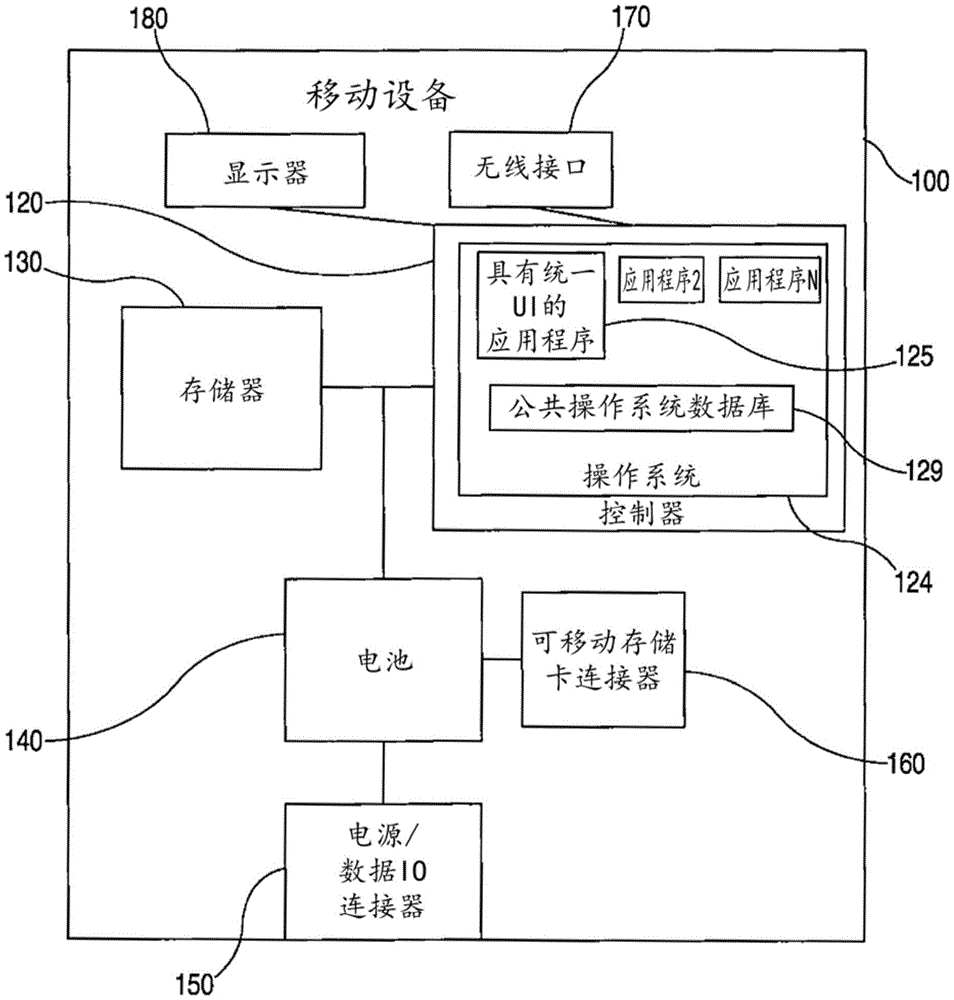
Fig. 1 is a diagram of a mobile device of an embodiment.
FIG. 2 is a block diagram of a storage device of an embodiment.
FIG. 3 is a flow diagram of a method of an embodiment performed when a new storage location is added.
Figure 4 is a flow diagram of a method of an embodiment of a unified media center backend logic.
Fig. 5-15 are screen shots of a unified media center user interface of an embodiment.
FIG. 16 is a flow diagram of a method for an embodiment of a pinch and zoom feature.
17-20 are screen shots of a user interface of a unified media center illustrating an embodiment of the use of a pinch and zoom feature.
FIG. 21 is a flow diagram of a method for displaying an embodiment of statistical back-end logic.
Fig. 22-23 are screen shots illustrating the embodiment of fig. 21.
FIG. 24 is a flow diagram of a method for implementing an embodiment of a storage usage view.
Fig. 25 to 27 are screen shots illustrating the embodiment of fig. 24.
Fig. 28 is a flow chart of a method for an embodiment of magic movement.
FIG. 29 is a screen shot of an embodiment for magic movement.
FIG. 30 is a flow diagram of a method of an embodiment for automatic backup setup.
FIG. 31 is a flow diagram of a method of an embodiment of a manual and automatic backup process.
Fig. 32 to 36 are screen shots showing an automatic backup process.
Fig. 37 to 40 are screen shots showing a manual backup process.
Detailed Description
By way of introduction, the following embodiments are directed to mobile devices having a unified media center user interface. In one embodiment, the user interface includes one or more of the following features: a unified view of the home screen, navigation between various storage locations, dragging items to collections/folders, pinch and zoom features, statistics displayed for each file type, a storage usage view from an application, manual and automatic backups, and magic movement (keeping a low resolution version of the original file when moved). Other embodiments are possible, and each embodiment can be used alone or in combination.
Turning now to the drawings, FIG. 1 is an illustration of a mobile device 100 of an embodiment. The mobile device 100 may take any suitable form, such as, but not limited to, a smartphone (e.g., Apple iPhone, Android phone), a tablet (e.g., Apple iPad), "phablet," a reader (e.g., amazon Kindle), a digital media player (e.g., iPod), a gaming device, a Personal Digital Assistant (PDA), a laptop, a wearable computer (e.g., smart watch or Google glasses), and any other mobile device that may require access to additional memory. As shown in FIG. 1, the mobile device 100 in this embodiment includes a controller 120 that runs an operating system 124 that runs one or more application programs (e.g., computer readable program code executable by the controller 120) that communicate with a common operating system database 129, a battery 140, and a port 150 for power/data IO connectors, a port 160 for a removable memory card, a wireless interface 170, and a touch sensitive display 180, such as application program 125 with a unified user interface. Mobile device 100 may contain different or additional components that are not shown in fig. 1 to simplify the illustration. For example, if mobile device 100 is a mobile smart phone, mobile device 100 may include hardware and/or software components for making phone calls. The mobile device 100 may also have a camera, media player, etc., although this is just a few examples and other implementations may be used.
As shown in fig. 1, the mobile device 100 has a memory 130 that can store content. The content may take any form, including but not limited to photos, videos, music, and data attachments. In addition to the internal memory 130, the contents may be stored on a removable memory device (e.g., a micro SD card) inserted into the removable memory card connector port 160, an external storage device (e.g., an active (OTG) dual USB Drive) connected through the data IO connector port 150, and may be stored in various cloud services (e.g., Dropbox, Box, Google Drive, One Drive, etc.) communicating with the mobile device 100 via the wireless interface 170. Any suitable wireless technology now existing or later developed may be used, including, but not limited to, 802.11WiFi, Near Field Communication (NFC), bluetooth (including bluetooth Low Energy (LE), Nike +, ANT +, ZigBee, radio frequency of consumer electronics (RF4CE), and infrared data association (IrDA).
Figure 2 is a diagram of a storage device 200 of one embodiment. The general diagram may describe a removable memory card, an external storage device, or a cloud-based storage device. Of course, different or other device type specific components may be used. As shown in FIG. 2, a storage device 200 in one embodiment includes a controller 210 and a non-volatile memory 220. In this embodiment, the controller 210 includes a host interface 212 for communicating the storage device 200 with the mobile device 100, and a memory interface 211 for communicating the controller 210 with the memory 220. (as used herein, the phrase "communicate with" (or "operatively communicate with") may mean communicating directly or indirectly through one or more components, which may or may not be shown or described herein.) the host interface 212 may take any suitable form, such as, but not limited to, SATA Express, SAS, fibre channel, USB, PCIe, and NVMe interfaces. The memory interface 211 may also take any suitable form, such as but not limited to a flash memory interface (e.g., switching modes 200, 400, or 800).
The controller 210 also includes a Central Processing Unit (CPU)213, an optional hardware encryption engine 214 operative to provide encryption and/or decryption operations, a Read Access Memory (RAM)215, a Read Only Memory (ROM)216 capable of storing firmware for storing basic operations of the device 240 and application programming interfaces, and a non-volatile memory (NVM)217 which, when used, may store device-specific keys for encryption/decryption operations. The controller 210 may be implemented in any suitable manner. For example, the controller 210 may take the form of a microprocessor or processor and a computer-readable medium storing computer-readable program code (e.g., software or firmware) executable by the (micro) processor, logic gates, switches, Application Specific Integrated Circuits (ASICs), programmable logic controllers, and embedded microcontrollers. Suitable controllers are available from SanDisk or other suppliers. In addition, some components shown as internal to the controller 210 may also be stored external to the controller 210, and other components may be used. For example, RAM 215 (or additional RAM units) may be located external to the controller chip and used as a page buffer for data read from and/or written to memory 220.
The non-volatile memory 220 may also take any suitable form, as may the internal memory 130. For example, in one embodiment, a memory is a solid state (e.g., flash) memory and may be one-time programmable, several-time programmable, or multiple-time programmable. The memory may also use Single Level Cells (SLC) or multi-level cells (MLC). The memory may take the form of NAND flash memory or other memory technologies now known or later developed.
In one embodiment, the application 125 provides a unified media center user interface to view and backup content on the mobile device, the micro SD card, the active drive, and/or the cloud storage service. As discussed above, Android users can save content to multiple storage locations such as internal memory, micro SD card (external), dual USB Drive (OTG), and in various cloud services (e.g., Dropbox, Box, Google Drive, One Drive, etc.). When content is spread across multiple locations, users can easily lose their content because they cannot comprehensively see how and where their content is distributed. It is also not easy to move content between these storage endpoints using a single application. The following embodiments provide a user interface that can be used to help address these issues, for example, by providing a unified view of all storage locations and automatically categorizing user content into photos, videos, music, and documents. This new interface allows users to better understand and manage their storage, and can easily move content between phones, cards, and the cloud. In addition, the application also allows the user to backup content to the cloud or card based on user preferences. This provides an advantage over other solutions. For example, some other solutions currently available to consumers do not follow a media center/unified view, and are typically limited to only a basic folder view. This makes navigating between different locations of the mobile user interface very complicated and frustrating for the user. Furthermore, some native library applications provide a unified view of internal and external storage (micro SD), but do not provide a view of the cloud and OTG drivers. Other solutions do not provide for backup based on user preferences, i.e., card, cloud, and OTG drives.
In one embodiment, a unified media center user interface using a new memory region application allows files from various memory sources to be indexed and categorized into different file types and displayed under a single common user interface. The user can easily switch photos, videos, music, and other file types, and also view files from all storage endpoints in this unified user interface. The backup flow details the procedure that a user will follow to establish his/her preferences when backing up his/her handset content to various storage endpoints.
In one embodiment, a unified view of the home screen is provided. In this embodiment, files from various storage sources are indexed and categorized into different file types and displayed under a single common user interface. This makes it easier to navigate between various file types such as photos, videos, music, and documents. Therefore, it is very simple for non-technical users to use the application.
In another embodiment, the application program allows navigation between various storage locations. As shown, the navigation drawer will accommodate a secondary option of "storage location". Hardware and cloud accounts may be provided in the storage location tab. The tab bar may display all active hardware and authenticated cloud accounts, respectively. The tab bar may then display any inactive hardware (hardware that the user does not have) as well as the cloud account that was not logged in. These will show an empty state as shown in the figure. The hardware may list the first SD card first, then the Dual Drive. The cloud accounts may be listed alphabetically.
In another embodiment, the application allows items to be dragged to collections/folders. The multiple selection attribute allows a user to drag a file into a particular collection or folder. When the user starts dragging, the selected file may be animated in different ways and grouped into a stack, depending on whether it is in a file type view or a storage view, as described below.
For the file type: the stacks can be copied over the selected items because they will not be present in the corresponding file type tabs.
For the storage location: the stack may form and reserve an empty space in which the selected file is located. After the files are placed in the folder, the remaining files in the view may be reorganized to occupy empty space.
In another embodiment, the application provides a pinch and zoom feature. This feature allows the user to view photos monthly and yearly. Upon zooming, the user can view the photos from a 4-column view to a 2-column layout, similarly from an annual view to a monthly view to a daily view. When pinching to the monthly view, the first pinch (zoom out) allows the user to view the photos monthly. Now flick/zoom into the daily view. When again kneaded to the annual view, the second kneading (zooming out) gives the annual view of the photograph. One of which shows a 12-column grid view. The user may tap once or zoom out to return to the monthly view and then view the daily view. Thus, zooming out causes the daily view to switch to a monthly view or a yearly view, and zooming in causes the yearly view to switch to a monthly view to the daily view.
In another embodiment, the application displays statistics for each file type. In this embodiment, the total number of files from each memory location is displayed on top of a list view or grid view along with a specific storage icon.
In another embodiment, there is a view of storage usage from an application. This view will display a list of all storage locations the user has and the current storage usage. Each storage item in the flick list will display data for each individual storage account, including the amount and amount of storage space for each file type.
In another embodiment, the application provides manual and automatic backup. The user may back up his/her phone content to various targets, such as a micro SD card, Dual Drive, and an authenticated cloud storage account. The user can perform manual backup or set automatic backup. The user may select the type of files, such as photos, videos, music, etc., that may be backed up to a particular storage location. The user may also configure when the backup occurs by selecting the date and time in the settings.
In another embodiment, the application provides a magic move, where the application maintains a low resolution version of the original file while moving. In this embodiment, the application may create a low resolution image/video before moving the file from internal memory to Dual Drive. The original file will be moved from internal memory/micro SD card to Dual Drive and a low resolution image/video is created at the same source memory location where the original file is located. Low resolution files have several advantages. For example, a user may view or browse files in his/her phone when the Dual Drive is not connected. Furthermore, this frees up space in the internal memory or in the micro SD card, since the low resolution images/video will only take up less space in the memory.
These are numerous advantages associated with these embodiments. For example, these embodiments may assist users in organizing their content from various storage sources, and may view all files in a common central media user interface. These embodiments also enable a user to easily perform memory management on various memory sources, which may be local memory or cloud storage. Furthermore, since all files of all memory sources are ordered, it is easier for the user to find a particular photo or video. In addition, these embodiments allow users to easily backup their phone content to the cloud, micro SD card, or USB drive.
These embodiments are further illustrated in the accompanying drawings.
Finally, as noted above, any suitable type of memory may be used. Semiconductor memory devices include volatile memory devices such as dynamic random access memory ("DRAM") or static random access memory ("SRAM") devices, non-volatile memory devices such as resistive random access memory ("ReRAM"), electrically erasable programmable read only memory ("EEPROM"), flash memory (which may also be considered a subset of EEPROM), ferroelectric random access memory ("FRAM"), and magnetoresistive random access memory ("MRAM"), as well as other semiconductor elements capable of storing information. Each type of storage device may have a different configuration. For example, flash memory devices may be configured in a NAND or NOR configuration.
The memory device may be formed of passive and/or active elements in any combination. As non-limiting examples, the passive semiconductor memory element includes a ReRAM device element, which in some embodiments includes a resistivity-switching memory element such as an antifuse, a phase change material, or the like, and optionally a steering element such as a diode, or the like. In further non-limiting examples, active semiconductor memory elements include EEPROM and flash memory device elements, which in some embodiments include elements containing charge storage regions such as floating gates, conductive nanoparticles, or charge storing dielectric materials.
Multiple memory elements may be configured such that they are connected in series or such that each element is individually accessible. As a non-limiting example, flash memory storage devices in NAND configurations (NAND memories) typically contain memory elements connected in series. A NAND memory array may be configured such that the array is comprised of multiple memory strings, where a string is comprised of multiple memory elements sharing a single bit line and is accessed as one group. Alternatively, the memory elements may be configured such that each element is individually accessible, such as a NOR memory array. NAND and NOR memory configurations are exemplary, and the memory elements may be configured in other ways.
Semiconductor memory elements located within and/or over a substrate may be arranged in two or three dimensions, such as a two-dimensional memory structure or a three-dimensional memory structure.
In a two-dimensional memory structure, semiconductor memory elements are arranged in a single plane or a single memory device level. Typically, in a two-dimensional memory structure, the memory elements are arranged in a plane (e.g., in the x-z plane) that extends substantially parallel to a major plane of a substrate supporting the memory elements. The substrate may be a wafer on which or in which the memory element layer is formed, or may be a carrier substrate that is attached to the memory element after the memory element is formed. As a non-limiting example, the substrate may comprise a semiconductor such as silicon.
The memory elements may be arranged in an ordered array (such as a plurality of rows and/or columns) in a single hierarchy of memory devices. However, the memory elements may be arranged in a non-regular or non-orthogonal configuration. The memory elements may each have two or more electrodes or contact lines such as bit lines and word lines.
A three-dimensional memory array is arranged such that the memory elements occupy multiple planes or multiple memory device levels, forming a three-dimensional structure (i.e., along x, y, and z directions, where the y direction is substantially perpendicular to a major plane of the substrate and the x and z directions are substantially parallel to the major plane of the substrate).
As a non-limiting example, the three-dimensional memory structure may be vertically arranged as a stack of multiple two-dimensional storage device tiers. As another non-limiting example, a three-dimensional memory array may be arranged as a plurality of vertical columns (e.g., columns that extend substantially perpendicular to a major surface of a substrate, i.e., along the y-direction), with each column having a plurality of memory elements in each column. The columns may be arranged in a two-dimensional configuration, e.g., in an x-z plane, resulting in a three-dimensional arrangement of memory elements, where the elements are located on multiple vertically stacked memory planes. Other configurations of memory elements in three dimensions may also constitute a three-dimensional memory array.
By way of non-limiting example, in a three-dimensional NAND memory array, memory elements can be coupled together to form NAND strings at a single level of horizontal (e.g., x-z) storage. Alternatively, the memory elements can be coupled together to form vertical NAND strings that span multiple horizontal levels of storage devices. Other three-dimensional configurations are contemplated in which some NAND strings contain memory elements in a single memory level, while other strings contain memory elements that span multiple memory levels. Three-dimensional memory arrays can also be designed in NOR and ReRAM configurations.
Typically, in a monolithic three dimensional memory array, one or more levels of storage devices are formed above a single substrate. Optionally, a monolithic three dimensional memory array may also have one or more memory layers at least partially within a single substrate. As a non-limiting example, the substrate may comprise a semiconductor such as silicon. In monolithic three dimensional arrays, the layers making up each memory device level of the array are typically formed on the layers of the bottom memory device level of the array. However, the layers of adjacent memory device levels of the monolithic three dimensional memory array may be shared, or have intermediate layers between memory device levels.
Two-dimensional arrays may then be formed separately and then packaged together to form a non-monolithic memory device with multiple layers of memory. For example, non-monolithic stacked memories may be constructed by forming memory levels on separate substrates and then stacking the memory levels on top of each other. The substrate may be thinned or removed from the memory device level prior to stacking, but since the memory device level is initially formed on a separate substrate, the resulting memory array is not a monolithic three dimensional memory array. Further, multiple two-dimensional or three-dimensional memory arrays (monolithic or non-monolithic) may be formed on separate chips and then packaged together to form a stacked-chip memory device.
The associated circuitry is typically required for operation of and communication with the memory elements. As a non-limiting example, a memory device may have circuitry for controlling and driving the memory elements to perform functions such as programming and reading. The associated circuitry may be on the same substrate as the memory element and/or on a separate substrate. For example, the controller for memory read and write operations may be located on a separate controller chip and/or on the same substrate as the memory elements.
Those skilled in the art will recognize that the present invention is not limited to the two-dimensional and three-dimensional exemplary structures described, but encompasses all related memory structures within the spirit and scope of the invention described herein and understood by those skilled in the art.
It is intended that the foregoing detailed description be understood as an illustration of selected forms that the invention can take and not as a definition of the invention. It is only the following claims, including all equivalents, that are intended to define the scope of the claimed invention. Finally, it should be noted that any aspect of any of the preferred embodiments described herein can be used alone or in combination with one another.

Claims (19)

1. A mobile device, comprising:
a display device; and
a controller in communication with the display device and a plurality of storage devices, wherein the controller is configured to:
classifying files stored in the plurality of storage devices into different file types;
displaying a plurality of user selectable regions on the display device, wherein each user selectable region is associated with a different file type;
receiving a user selection of one of the user selectable regions;
displaying representations of at least some files of the file type associated with the received user selection on the display device, wherein each representation includes an indication of which storage device stores the file represented by the representation; and
displaying a plurality of indicia on the display device, each indicia representing one of the plurality of storage devices and indicating a number of files stored in the storage device of the file type associated with the received user selection.
2. The mobile device of claim 1, wherein the plurality of storage devices comprise one or more of: memory internal to the mobile device, a removable memory device, an external storage device, and a cloud-based storage device.
3. The mobile device of claim 1, wherein the controller is configured to sort the files and display the plurality of labels by executing an application.
4. The mobile device of claim 1, wherein the controller is further configured to provide a pinch and zoom feature to allow a user to view the representations at different time scales.
5. The mobile device of claim 1, wherein the controller is further configured to:
receiving a user selection of one of the plurality of storage devices; and
displaying files stored in the selected one of the plurality of storage devices.
6. The mobile device of claim 5, wherein the controller is further configured to:
receiving a user selection of a plurality of files from a selected one of the plurality of storage devices; and is provided with
An input is received from a user to which storage device the selected plurality of files are to be moved.
7. The mobile device of claim 6, wherein the controller is further configured to:
when the selected file is an image that is moved from an internal memory in the mobile device to another storage device, a low resolution version of the image is created for storage in the internal memory.
8. The mobile device of claim 1, wherein the controller is further configured to provide storage statistics for each of the storage devices.
9. The mobile device of claim 1, wherein the controller is further configured to backup the selected file to the selected storage device.
10. The mobile device of claim 1, wherein at least one of the plurality of storage devices comprises a three-dimensional memory.
11. A method for unifying media center user interfaces, comprising:
performing the following operations in a mobile device comprising a display device:
classifying files stored in a plurality of storage devices into different file types;
displaying a plurality of user selectable regions on the display device, wherein each user selectable region is associated with a different file type;
receiving a user selection of one of the plurality of user selectable regions;
displaying representations of at least some files of the file type associated with the received user selection on the display device, wherein each representation includes an indication of which storage device stores the file represented by the representation; and is
Displaying a plurality of indicia on the display device, each indicia representing one of the plurality of storage devices and indicating a number of files stored in the storage device of the file type associated with the received user selection.
12. The method of claim 11, wherein the plurality of storage devices comprise one or more of: memory internal to the mobile device, a removable memory device, an external storage device, and a cloud-based storage device.
13. The method of claim 11, wherein the method is performed by an application running on the mobile device.
14. The method of claim 11, further comprising creating a low resolution version of the image for storage in an internal memory of the mobile device when a user requests to move the image from the internal memory to another storage device.
15. The method of claim 11, further comprising providing a pinch and zoom feature to allow a user to view a view of a file at different time scales.
16. The method of claim 11, further comprising backing up the selected file to the selected storage device.
17. A mobile device, comprising:
a display device; and
means for classifying files stored in a plurality of storage devices into different file types;
means for displaying a plurality of user selectable regions on the display device, wherein each user selectable region is associated with a different file type;
means for receiving a user selection of one of the user selectable regions;
means for displaying representations of at least some files of the file type associated with the received user selection on the display device, wherein each representation includes an indication of which storage device stores the file represented by the representation; and
means for displaying a plurality of indicia on the display device, each indicia representing one of the plurality of storage devices and indicating a number of files stored in the storage device of the file type associated with the received user selection.
18. The mobile device of claim 17, wherein the means comprises computer readable program code executed by a processor.
19. The mobile device of claim 17, wherein at least one of the storage devices comprises a three-dimensional memory.
CN201780026958.XA 2016-06-24 2017-02-22 Mobile device with unified media center user interface Active CN109074398B (en)

Applications Claiming Priority (5)

Application Number Priority Date Filing Date Title
IN201641021755 2016-06-24
US15/295,613 2016-10-17
US15/295,613 US9986080B2 (en) 2016-06-24 2016-10-17 Mobile device and method for displaying information about files stored in a plurality of storage devices
PCT/US2017/018900 WO2017222608A1 (en) 2016-06-24 2017-02-22 Mobile device with unified media-centric user interface

Publications (2)

Publication Number Publication Date
CN109074398A CN109074398A (en) 2018-12-21
CN109074398B true CN109074398B (en) 2022-09-13

Family

ID=60677768

Family Applications (1)

Application Number Title Priority Date Filing Date
CN201780026958.XA Active CN109074398B (en) 2016-06-24 2017-02-22 Mobile device with unified media center user interface

Country Status (3)

Country Link
US (2) US9986080B2 (en)
CN (1) CN109074398B (en)
WO (1) WO2017222608A1 (en)

Families Citing this family (26)

* Cited by examiner, † Cited by third party
Publication number Priority date Publication date Assignee Title
CN104618574A (en) * 2014-12-29 2015-05-13 北京奇虎科技有限公司 Method and device for achieving APP unified management of intelligent hardware equipment and client
US9986080B2 (en) 2016-06-24 2018-05-29 Sandisk Technologies Llc Mobile device and method for displaying information about files stored in a plurality of storage devices
US10579265B2 (en) * 2017-10-18 2020-03-03 Adobe Inc. Cloud-synchronized local storage management
CN110119235A (en) * 2018-02-07 2019-08-13 阿里巴巴集团控股有限公司 Realize the method, apparatus, signature terminal and signature server of Electronic Signature
US10884769B2 (en) * 2018-02-17 2021-01-05 Adobe Inc. Photo-editing application recommendations
US11036811B2 (en) 2018-03-16 2021-06-15 Adobe Inc. Categorical data transformation and clustering for machine learning using data repository systems
CN109683761B (en) * 2018-12-17 2021-07-23 北京小米移动软件有限公司 Content collection method, device and storage medium
USD968436S1 (en) 2019-01-08 2022-11-01 Sleep Number Corporation Display screen or portion thereof with graphical user interface
US10694309B1 (en) * 2019-02-12 2020-06-23 Sonos, Inc. Systems and methods for authenticating and calibrating passive speakers with a graphical user interface
USD916745S1 (en) 2019-05-08 2021-04-20 Sleep Number Corporation Display screen or portion thereof with graphical user interface
USD927507S1 (en) 2019-08-23 2021-08-10 Google Llc Display screen or portion thereof with transitional graphical user interface
USD928805S1 (en) 2019-09-04 2021-08-24 Sonos, Inc. Display screen or portion thereof with graphical user interface
KR20220162768A (en) 2020-04-01 2022-12-08 유디피 랩스, 인크. Speech Controlled Health Monitoring System and Method
USD1018554S1 (en) * 2020-04-24 2024-03-19 Norton (Waterford) Limited Display screen with a graphical user interface
USD984457S1 (en) * 2020-06-19 2023-04-25 Airbnb, Inc. Display screen of a programmed computer system with graphical user interface
USD985005S1 (en) * 2020-06-19 2023-05-02 Airbnb, Inc. Display screen of a programmed computer system with graphical user interface
USD992593S1 (en) 2021-01-08 2023-07-18 Samsung Electronics Co., Ltd. Display screen or portion thereof with graphical user interface
USD987672S1 (en) 2021-01-13 2023-05-30 Samsung Electronics Co., Ltd. Foldable electronic device with transitional graphical user interface
USD987658S1 (en) * 2021-01-13 2023-05-30 Samsung Electronics Co., Ltd. Electronic device with transitional graphical user interface
USD987660S1 (en) 2021-01-13 2023-05-30 Samsung Electronics Co., Ltd. Electronic device with transitional graphical user interface
USD976272S1 (en) * 2021-01-13 2023-01-24 Samsung Electronics Co., Ltd. Display screen or portion thereof with transitional graphical user interface
USD987661S1 (en) * 2021-01-13 2023-05-30 Samsung Electronics Co., Ltd. Foldable electronic device with transitional graphical user interface
USD987659S1 (en) * 2021-01-13 2023-05-30 Samsung Electronics Co., Ltd. Electronic device with transitional graphical user interface
USD986910S1 (en) 2021-01-13 2023-05-23 Samsung Electronics Co., Ltd. Foldable electronic device with transitional graphical user interface
USD987662S1 (en) 2021-01-13 2023-05-30 Samsung Electronics Co., Ltd. Foldable electronic device with transitional graphical user interface
CN119645290B (en) * 2023-09-18 2025-10-31 长江存储科技有限责任公司 Mobile devices and their operating methods, systems, and computer-readable storage media

Family Cites Families (45)

* Cited by examiner, † Cited by third party
Publication number Priority date Publication date Assignee Title
US6674358B1 (en) 2001-01-04 2004-01-06 Motorola, Inc. Holster with detection for an inserted electronic device
US7780463B2 (en) 2002-06-11 2010-08-24 Henry Milan Selective flash memory drive with quick connector
US6836212B2 (en) 2002-10-10 2004-12-28 Motorola, Inc. Method and apparatus for reducing the likelihood of losing a portable electronic device
US7327255B2 (en) 2005-07-07 2008-02-05 Research In Motion Limited Carrying case for a handheld device and methods thereof
US8295894B2 (en) 2005-07-29 2012-10-23 Research In Motion Limited Portable wireless communications device including pickpocket notification and related methods
US8169185B2 (en) 2006-01-31 2012-05-01 Mojo Mobility, Inc. System and method for inductive charging of portable devices
US7832645B2 (en) 2006-04-10 2010-11-16 Kingston Technology Corporation Flash memory card expander
US7725131B2 (en) 2007-01-23 2010-05-25 Research In Motion Limited Systems and methods for maintaining data integrity of removable media of an electronic device
US7863862B2 (en) 2007-10-12 2011-01-04 Research In Motion Limited Handheld electronic device with holster having a notification device
US9741027B2 (en) 2007-12-14 2017-08-22 Tyfone, Inc. Memory card based contactless devices
US20110050164A1 (en) 2008-05-07 2011-03-03 Afshin Partovi System and methods for inductive charging, and improvements and uses thereof
US20090287636A1 (en) 2008-05-19 2009-11-19 Nokia Corporation User removable memory and associated methods
WO2009145518A2 (en) 2008-05-26 2009-12-03 에스케이텔레콤 주식회사 Memory card supplemented with wireless communication module, terminal for using same, memory card including wpan communication module, and wpan communication method using same
US7877522B2 (en) * 2008-05-27 2011-01-25 Sandisk Il Ltd. Method of monitoring host activity
CN102024171A (en) 2009-09-11 2011-04-20 中芯国际集成电路制造(上海)有限公司 Portable card device and use method thereof
CA2785181C (en) 2010-01-07 2018-01-02 Voxx International Corporation Method and apparatus for harvesting energy
US20110241607A1 (en) 2010-04-06 2011-10-06 Garmin Ltd. Electronic device with integral inductive charging station
US8468146B2 (en) * 2010-04-13 2013-06-18 Infosys Limited System and method for creating search index on cloud database
US8483758B2 (en) 2010-05-19 2013-07-09 Mophie, Inc. Modular mobile accessory for mobile device
US8831509B2 (en) 2011-01-31 2014-09-09 Blackberry Limited Mobile device having enhanced in-holster power saving features using NFC and related methods
US20120287231A1 (en) 2011-05-12 2012-11-15 Sreekanth Ravi Media sharing during a video call
US20130036135A1 (en) * 2011-08-04 2013-02-07 Michael Brockey Cloud data storage
US10706096B2 (en) * 2011-08-18 2020-07-07 Apple Inc. Management of local and remote media items
US8864019B2 (en) 2011-12-22 2014-10-21 Pink Zulu Labs, Inc. Auto configurable transfer and management system
US8891540B2 (en) 2012-05-14 2014-11-18 Juniper Networks, Inc. Inline network address translation within a mobile gateway router
US9490650B2 (en) 2012-08-02 2016-11-08 Sandisk Technologies Llc Wireless power transfer
US9152313B2 (en) * 2012-08-06 2015-10-06 Shutterfly, Inc. Unified picture access across devices
US9917881B2 (en) 2012-10-22 2018-03-13 Samsung Electronics Co., Ltd. Apparatus, system, and method for transferring data across mobile terminals paired using near field communication (NFC)
CN105103512B (en) * 2012-12-04 2020-07-07 英特尔公司 Method and apparatus for distributed graphics processing
US9210733B2 (en) 2013-03-14 2015-12-08 Google Technology Holdings LLC Method and apparatus to facilitate pairing between wireless devices
US20140282938A1 (en) * 2013-03-15 2014-09-18 Adam Moisa Method and system for integrated cloud storage management
US9602645B2 (en) 2013-05-16 2017-03-21 Blackberry Limited Smart covering for mobile communications device
US9167375B2 (en) 2013-06-06 2015-10-20 Blackberry Limited Device for detecting a carrying case using orientation signatures
US9374788B2 (en) 2013-12-19 2016-06-21 Sandisk Technologies Inc. Mobile device peripheral
US9304657B2 (en) * 2013-12-31 2016-04-05 Abbyy Development Llc Audio tagging
US20150258415A1 (en) * 2014-03-14 2015-09-17 Aliphcom Physiological rate coaching by modifying media content based on sensor data
US9531443B2 (en) 2014-03-29 2016-12-27 Intel Corporation Techniques for communication with tag devices
WO2015153698A2 (en) * 2014-04-05 2015-10-08 Azoulai Avi Secured private network and storage device
CN106462541A (en) * 2014-05-13 2017-02-22 关德 Systems and methods for managing, sharing, and organizing information stored on multiple cloud services
US9652465B2 (en) * 2014-10-30 2017-05-16 Lenovo (Singapore) Pte. Ltd. Aggregate service with enhanced cloud device management
US20160125098A1 (en) * 2014-10-30 2016-05-05 Lenovo (Singapore) Pte. Ltd. Aggregate service with search capabilities
US20160179855A1 (en) * 2014-12-23 2016-06-23 Yahoo! Inc. Ubiquitous content access and management
KR102290419B1 (en) * 2015-01-13 2021-08-18 삼성전자주식회사 Method and Appratus For Creating Photo Story based on Visual Context Analysis of Digital Contents
US9521223B1 (en) 2015-10-22 2016-12-13 Sandisk Technologies Llc Mobile device case and method for use therewith
US9986080B2 (en) 2016-06-24 2018-05-29 Sandisk Technologies Llc Mobile device and method for displaying information about files stored in a plurality of storage devices

Also Published As

Publication number Publication date
WO2017222608A1 (en) 2017-12-28
US10122840B2 (en) 2018-11-06
CN109074398A (en) 2018-12-21
US9986080B2 (en) 2018-05-29
US20180248997A1 (en) 2018-08-30
US20170374186A1 (en) 2017-12-28

Similar Documents

Publication Publication Date Title
CN109074398B (en) Mobile device with unified media center user interface
US9521223B1 (en) Mobile device case and method for use therewith
US11061721B2 (en) Task queues
US9977628B2 (en) Storage module and method for configuring the storage module with memory operation parameters
US9760503B2 (en) Operation method of memory controller and nonvolatile memory system including the memory controller
US9003109B1 (en) System and method for distributed computing in non-volatile memory
KR102140788B1 (en) Resistive Memory Device and Operating Method thereof
US10303617B2 (en) Storage device supporting byte accessible interface and block accessible interface and electronic system including the same
US10725697B2 (en) Round robin system with interleaved weighted and priority arbiters to serve on-demand bandwidth of a storage system
KR20100112109A (en) Nonvolatile semiconductor memory device
KR102115427B1 (en) Semiconductor device, processor, system and method for operating semiconductor device
US10055368B2 (en) Mobile device and method for synchronizing use of the mobile device's communications port among a plurality of applications
US9412444B2 (en) Electronic device
US20170031855A1 (en) Movable storage device and method for using the movable storage device in an intelligent terminal
CN105917414A (en) Managing redundancy information in a non-volatile memory
US20150120991A1 (en) Data processing system and operating method thereof
US20140337735A1 (en) Method and apparatus for generating and providing a shortcut
US20140351750A1 (en) Method and system for operating electronic device
KR20170048805A (en) Memory device and the operating method thereof
US9836220B2 (en) Data processing system and method of operating the same
Gupta Could NAND Replace NOR?
US20110255231A1 (en) Portable digital data storage device and analyzing method thereof
KR20150031496A (en) Nonvolatile semiconductor memory device

Legal Events

Date Code Title Description
PB01 Publication
PB01 Publication
SE01 Entry into force of request for substantive examination
GR01 Patent grant
GR01 Patent grant
TR01 Transfer of patent right

Effective date of registration: 20250319

Address after: U.S.A.

Patentee after: SANDISK TECHNOLOGIES Inc.

Country or region after: U.S.A.

Address before: texas

Patentee before: SANDISK TECHNOLOGIES LLC

Country or region before: U.S.A.