CN109068660B - Insecticidal proteins and methods of use thereof - Google Patents
Insecticidal proteins and methods of use thereof Download PDFInfo
- Publication number
- CN109068660B CN109068660B CN201780027600.9A CN201780027600A CN109068660B CN 109068660 B CN109068660 B CN 109068660B CN 201780027600 A CN201780027600 A CN 201780027600A CN 109068660 B CN109068660 B CN 109068660B
- Authority
- CN
- China
- Prior art keywords
- seq
- sequence
- polypeptide
- plant
- proteins
- Prior art date
- Legal status (The legal status is an assumption and is not a legal conclusion. Google has not performed a legal analysis and makes no representation as to the accuracy of the status listed.)
- Active
Links
Images


Classifications
-
- C—CHEMISTRY; METALLURGY
- C12—BIOCHEMISTRY; BEER; SPIRITS; WINE; VINEGAR; MICROBIOLOGY; ENZYMOLOGY; MUTATION OR GENETIC ENGINEERING
- C12N—MICROORGANISMS OR ENZYMES; COMPOSITIONS THEREOF; PROPAGATING, PRESERVING, OR MAINTAINING MICROORGANISMS; MUTATION OR GENETIC ENGINEERING; CULTURE MEDIA
- C12N15/00—Mutation or genetic engineering; DNA or RNA concerning genetic engineering, vectors, e.g. plasmids, or their isolation, preparation or purification; Use of hosts therefor
- C12N15/09—Recombinant DNA-technology
- C12N15/63—Introduction of foreign genetic material using vectors; Vectors; Use of hosts therefor; Regulation of expression
- C12N15/79—Vectors or expression systems specially adapted for eukaryotic hosts
- C12N15/82—Vectors or expression systems specially adapted for eukaryotic hosts for plant cells, e.g. plant artificial chromosomes (PACs)
- C12N15/8241—Phenotypically and genetically modified plants via recombinant DNA technology
- C12N15/8261—Phenotypically and genetically modified plants via recombinant DNA technology with agronomic (input) traits, e.g. crop yield
- C12N15/8271—Phenotypically and genetically modified plants via recombinant DNA technology with agronomic (input) traits, e.g. crop yield for stress resistance, e.g. heavy metal resistance
- C12N15/8279—Phenotypically and genetically modified plants via recombinant DNA technology with agronomic (input) traits, e.g. crop yield for stress resistance, e.g. heavy metal resistance for biotic stress resistance, pathogen resistance, disease resistance
- C12N15/8286—Phenotypically and genetically modified plants via recombinant DNA technology with agronomic (input) traits, e.g. crop yield for stress resistance, e.g. heavy metal resistance for biotic stress resistance, pathogen resistance, disease resistance for insect resistance
-
- C—CHEMISTRY; METALLURGY
- C07—ORGANIC CHEMISTRY
- C07K—PEPTIDES
- C07K14/00—Peptides having more than 20 amino acids; Gastrins; Somatostatins; Melanotropins; Derivatives thereof
- C07K14/195—Peptides having more than 20 amino acids; Gastrins; Somatostatins; Melanotropins; Derivatives thereof from bacteria
- C07K14/21—Peptides having more than 20 amino acids; Gastrins; Somatostatins; Melanotropins; Derivatives thereof from bacteria from Pseudomonadaceae (F)
-
- Y—GENERAL TAGGING OF NEW TECHNOLOGICAL DEVELOPMENTS; GENERAL TAGGING OF CROSS-SECTIONAL TECHNOLOGIES SPANNING OVER SEVERAL SECTIONS OF THE IPC; TECHNICAL SUBJECTS COVERED BY FORMER USPC CROSS-REFERENCE ART COLLECTIONS [XRACs] AND DIGESTS
- Y02—TECHNOLOGIES OR APPLICATIONS FOR MITIGATION OR ADAPTATION AGAINST CLIMATE CHANGE
- Y02A—TECHNOLOGIES FOR ADAPTATION TO CLIMATE CHANGE
- Y02A40/00—Adaptation technologies in agriculture, forestry, livestock or agroalimentary production
- Y02A40/10—Adaptation technologies in agriculture, forestry, livestock or agroalimentary production in agriculture
- Y02A40/146—Genetically Modified [GMO] plants, e.g. transgenic plants
Landscapes
- Health & Medical Sciences (AREA)
- Life Sciences & Earth Sciences (AREA)
- Genetics & Genomics (AREA)
- Chemical & Material Sciences (AREA)
- Organic Chemistry (AREA)
- Engineering & Computer Science (AREA)
- Molecular Biology (AREA)
- Zoology (AREA)
- General Health & Medical Sciences (AREA)
- Biotechnology (AREA)
- Wood Science & Technology (AREA)
- Biomedical Technology (AREA)
- General Engineering & Computer Science (AREA)
- Bioinformatics & Cheminformatics (AREA)
- Biochemistry (AREA)
- Biophysics (AREA)
- Plant Pathology (AREA)
- Microbiology (AREA)
- Pest Control & Pesticides (AREA)
- Proteomics, Peptides & Aminoacids (AREA)
- Physics & Mathematics (AREA)
- Cell Biology (AREA)
- Insects & Arthropods (AREA)
- Medicinal Chemistry (AREA)
- Gastroenterology & Hepatology (AREA)
- Micro-Organisms Or Cultivation Processes Thereof (AREA)
- Agricultural Chemicals And Associated Chemicals (AREA)
- Peptides Or Proteins (AREA)
- Agronomy & Crop Science (AREA)
- Virology (AREA)
- Dentistry (AREA)
- Environmental Sciences (AREA)
Abstract
本发明提供了用于控制有害生物的组合物和方法。这些方法涉及用编码杀昆虫蛋白的核酸序列来转化生物体。具体地,这些核酸序列可用于制备具有杀昆虫活性的植物和微生物。因此,提供了经转化的细菌、植物、植物细胞、植物组织以及种子。组合物是细菌物种的杀昆虫核酸和蛋白。这些序列在用于随后转化到包括植物在内的目的生物体中的表达载体的构建中具有用途,充当用于分离其他同源(或部分同源的)基因的探针。这些杀有害生物蛋白可用于控制鳞翅目、鞘翅目、双翅目、真菌、半翅目和线虫有害生物群体、抑制其生长或将其杀灭,并且可用于生产具有杀昆虫活性的组合物。The present invention provides compositions and methods for controlling pests. These methods involve transforming organisms with nucleic acid sequences encoding insecticidal proteins. Specifically, these nucleic acid sequences can be used to prepare plants and microorganisms with insecticidal activity. Thus, transformed bacteria, plants, plant cells, plant tissues and seeds are provided. The compositions are insecticidal nucleic acids and proteins of bacterial species. These sequences find use in the construction of expression vectors for subsequent transformation into organisms of interest, including plants, as probes for isolating other homologous (or partially homologous) genes. These pesticidal proteins are useful for controlling, inhibiting the growth or killing pest populations of Lepidoptera, Coleoptera, Diptera, fungi, Hemiptera and nematodes and for the production of compositions having insecticidal activity .
Description
相关申请的交叉引用CROSS-REFERENCE TO RELATED APPLICATIONS
本申请要求于2016年5月4日提交的美国临时申请号62/331,708 的权益,将该临时申请以其全文通过引用结合在此。This application claims the benefit of U.S. Provisional Application No. 62/331,708, filed May 4, 2016, which is hereby incorporated by reference in its entirety.
以电子方式提交的序列表的引用References to sequence listings submitted electronically
该序列表的官方副本经由EFS-Web作为ASCII格式的序列表以电子方式提交,文件名为“6441WOPCT_Sequence_Listing”,创建于 2017年5月01日,且具有1,094千字节大小,并与本说明书同时提交。包括在该ASCII格式的文件中的序列表是本说明书的一部分并且以其全文通过引用并入本文。The official copy of the sequence listing is submitted electronically via EFS-Web as an ASCII formatted sequence listing, with the file name "6441WOPCT_Sequence_Listing", created on May 01, 2017, and having a size of 1,094 kilobytes, and submitted simultaneously with this specification. The sequence listing included in the ASCII formatted file is part of this specification and is incorporated herein by reference in its entirety.
技术领域Technical Field
本公开涉及分子生物学领域。提供了编码杀有害生物蛋白的新颖基因。这些杀有害生物蛋白和编码它们的核酸序列可用于制备杀有害生物制剂和生产转基因有害生物抗性植物。The present disclosure relates to the field of molecular biology. Provided are novel genes encoding pesticidal proteins. These pesticidal proteins and nucleic acid sequences encoding them can be used to prepare pesticidal formulations and produce transgenic pest-resistant plants.
背景技术Background Art
使用微生物剂(如真菌、细菌或其他昆虫物种)对具有农业意义的昆虫有害生物进行生物防治,为合成型化学杀有害生物剂提供了环境友好且有商业吸引力的替代方案。一般来说,使用生物杀有害生物剂造成污染和环境危害的风险较低,并且生物杀有害生物剂提供比传统广谱化学杀昆虫剂所特有的靶特异性更强。此外,生物杀有害生物剂往往生产成本较低,并且因此能提高各种作物的经济产量。The use of microbial agents (such as fungi, bacteria or other insect species) to control insect pests with agricultural significance provides an environmentally friendly and commercially attractive alternative to synthetic chemical pesticides. In general, the use of biological pesticides has a lower risk of pollution and environmental damage, and biological pesticides provide a stronger target specificity than traditional broad-spectrum chemical insecticides. In addition, biological pesticides often have lower production costs and can therefore increase the economic yield of various crops.
已知芽孢杆菌属微生物的某些物种对于一系列昆虫有害生物具有杀有害生物活性,这些昆虫有害生物包括鳞翅目(Lepidoptera)、双翅目(Diptera)、鞘翅目(Coleoptera)、半翅目(Hemiptera)等。苏云金芽孢杆菌(Bacillus thuringiensis,Bt)和日本金龟子芽孢杆菌 (Bacillus popilliae)是迄今为止发现的最成功的生物防治剂。昆虫致病性还归因于幼虫芽孢杆菌(B.larvae)、缓病芽孢杆菌(B. lentimorbus)、球形芽孢杆菌(B.sphaericus)和蜡状芽孢杆菌(B.cereus) 的菌株。微生物杀昆虫剂,特别是从芽孢杆菌属菌株获得的那些微生物杀昆虫剂,在农业上作为有害生物化学防治的替代方案起着重要作用。Certain species of Bacillus microorganisms are known to have insecticidal activity against a range of insect pests, including Lepidoptera, Diptera, Coleoptera, Hemiptera, etc. Bacillus thuringiensis (Bt) and Bacillus popilliae are the most successful biological control agents discovered to date. Insect pathogenicity has also been attributed to strains of B. larvae, B. lentimorbus, B. sphaericus, and B. cereus. Microbial insecticides, especially those obtained from strains of Bacillus, play an important role in agriculture as an alternative to chemical control of pests.
通过将作物植物进行遗传工程改造以生产来自芽孢杆菌属 (Bacillus)的杀有害生物蛋白,已经开发出昆虫抗性增强的作物植物。例如,已经对玉米和棉花植物进行遗传工程改造以产生从苏云金芽孢杆菌(Bacillus thuringiensis)株分离的杀有害生物蛋白。现在,这些遗传工程化作物广泛应用于农业中,并且为农民提供了取代传统昆虫防治方法的环境友好型替代方案。虽然它们已被证明在商业上非常成功,但是这些遗传工程化抗昆虫作物植物仅针对窄范围的经济上重要的昆虫有害生物提供抗性。在某些情况下,昆虫可以对不同杀昆虫化合物产生抗性,这就导致需要鉴别用于有害生物防治的替代性生物防治剂。By carrying out genetic engineering to produce the pest killing protein from Bacillus (Bacillus), crop plants with enhanced insect resistance have been developed.For example, corn and cotton plants have been genetically engineered to produce the pest killing protein separated from Bacillus thuringiensis (Bacillus thuringiensis) strain.Now, these genetically engineered crops are widely used in agriculture, and provide farmers with an environmentally friendly alternative to replace traditional insect control methods.Although they have been proven to be very successful commercially, these genetically engineered insect-resistant crop plants only provide resistance to economically important insect pests in a narrow range.In some cases, insects can produce resistance to different insecticide compounds, which just causes the need to identify the alternative biological control agents for pest control.
因此,仍然需要对昆虫有害生物具有不同范围的杀昆虫活性的新颖杀有害生物蛋白质,例如针对鳞翅目和鞘翅目中的各种昆虫具有活性的杀昆虫蛋白质,这些昆虫包括但不限于已对现存杀昆虫剂产生抗性的昆虫有害生物。Thus, there remains a need for novel pesticidal proteins having a diverse range of insecticidal activity against insect pests, such as insecticidal proteins active against a variety of insects in the Lepidoptera and Coleoptera orders, including but not limited to insect pests that have developed resistance to existing insecticides.
发明内容Summary of the invention
在一个方面,提供了用于对细菌、植物、植物细胞、组织以及种子赋予杀有害生物活性的组合物和方法。组合物包含杀有害生物和杀昆虫多肽的核酸分子编码序列、包含那些核酸分子的载体、以及包含这些载体的宿主细胞。组合物还包括这些杀有害生物多肽序列以及针对那些多肽的抗体。组合物还包含经转化的细菌、植物、植物细胞、组织以及种子。In one aspect, compositions and methods for imparting pesticidal activity to bacteria, plants, plant cells, tissues, and seeds are provided. The compositions comprise nucleic acid molecule coding sequences for pesticidal and insecticidal polypeptides, vectors comprising those nucleic acid molecules, and host cells comprising those vectors. The compositions also include these pesticidal polypeptide sequences and antibodies against those polypeptides. The compositions also include transformed bacteria, plants, plant cells, tissues, and seeds.
在另一方面,提供了编码IPD090多肽的分离的或重组的核酸分子,这些多肽包括氨基酸取代、缺失、插入、和其片段。提供了分离的或重组的能够编码SEQ ID NO:2、SEQ IDNO:4、SEQ ID NO:6、 SEQ ID NO:379或SEQ ID NO:384的IPD090多肽的核酸分子,以及氨基酸取代、缺失、插入、其片段,及其组合。还涵盖了与实施例的核酸序列互补或与实施例的序列杂交的核酸序列。这些核酸序列可以在DNA构建体或表达盒中使用,以用于在多种生物体(包括微生物和植物)中进行转化和表达。这些核苷酸或氨基酸序列可以是合成序列,这些合成序列已经被设计用于在生物体中表达,该生物体包括但不限于:微生物或植物。On the other hand, isolated or recombinant nucleic acid molecules encoding IPD090 polypeptides are provided, including amino acid substitutions, deletions, insertions, and fragments thereof. Isolated or recombinant nucleic acid molecules capable of encoding IPD090 polypeptides of SEQ ID NO: 2, SEQ ID NO: 4, SEQ ID NO: 6, SEQ ID NO: 379 or SEQ ID NO: 384, as well as amino acid substitutions, deletions, insertions, fragments thereof, and combinations thereof are provided. Nucleic acid sequences complementary to the nucleic acid sequences of the embodiments or hybridizing with the sequences of the embodiments are also contemplated. These nucleic acid sequences can be used in DNA constructs or expression cassettes for transformation and expression in a variety of organisms, including microorganisms and plants. These nucleotide or amino acid sequences can be synthetic sequences that have been designed for expression in organisms, including but not limited to microorganisms or plants.
在另一方面涵盖IPD090多肽。还提供了分离的或重组的SEQ ID NO:2、SEQ ID NO:4、SEQ ID NO:6、SEQ ID NO:379和SEQ ID NO: 384的IPD090多肽,以及氨基酸取代、缺失、插入、其片段及其组合。In another aspect, IPD090 polypeptides are contemplated. Also provided are isolated or recombinant IPD090 polypeptides of SEQ ID NO: 2, SEQ ID NO: 4, SEQ ID NO: 6, SEQ ID NO: 379, and SEQ ID NO: 384, as well as amino acid substitutions, deletions, insertions, fragments thereof, and combinations thereof.
在另一方面,提供了用于产生多肽和使用那些多肽用来控制或杀死鳞翅目、鞘翅目、线虫、真菌、和/或双翅目有害生物的方法。实施例的转基因植物表达本文公开的杀有害生物序列中的一种或多种。在不同的实施例中,该转基因植物进一步包含一种或多种另外的昆虫抗性基因,例如,用于控制鞘翅目、鳞翅目、半翅目或线虫有害生物的一种或多种另外的基因。本领域技术人员将理解,转基因植物可以包含给予目的农艺性状的任何基因。On the other hand, methods for producing polypeptides and using those polypeptides to control or kill Lepidoptera, Coleoptera, nematodes, fungi, and/or dipteran pests are provided. The transgenic plants of the embodiments express one or more of the pest killing sequences disclosed herein. In various embodiments, the transgenic plants further comprise one or more other insect resistance genes, for example, one or more other genes for controlling Coleoptera, Lepidoptera, Hemiptera or nematode pests. It will be appreciated by those skilled in the art that transgenic plants may comprise any gene that gives agronomic traits of interest.
在另一方面,还包括用于检测在样品中的实施例的这些核酸和多肽的方法。提供了用于检测样品中IPD090多肽的存在或检测编码 IPD090多肽的多核苷酸序列的存在的试剂盒。该试剂盒可以与实施检测预期试剂的方法所需的所有试剂和对照样品,以及使用说明书一起提供。In another aspect, methods for detecting the nucleic acids and polypeptides of the embodiments in a sample are also included. A kit for detecting the presence of an IPD090 polypeptide in a sample or detecting the presence of a polynucleotide sequence encoding an IPD090 polypeptide is provided. The kit can be provided with all reagents and control samples required for implementing the method for detecting the desired agent, as well as instructions for use.
在另一方面,实施例的这些组合物和方法可用于产生具有增强的有害生物抗性或耐受性的生物体。这些生物体以及包含这些生物体的组合物对于农业目的是所希望的。实施例的组合物还可用于产生具有杀有害生物活性的经改变或改进的蛋白质,或用于检测IPD090多肽的存在。On the other hand, these compositions and methods of the embodiments can be used to produce organisms with enhanced pest resistance or tolerance. These organisms and compositions comprising these organisms are desirable for agricultural purposes. The compositions of the embodiments can also be used to produce altered or improved proteins with pesticidal activity, or to detect the presence of IPD090 polypeptides.
附图说明BRIEF DESCRIPTION OF THE DRAWINGS
图1A-1B显示使用Vector



图2显示了反映实例14的SDS-PAGE凝胶的凝胶内荧光的密度测定值的条形图,用于6.3nM IPD090AaAlexa与WCRW BBMV的结合的同源竞争,所述WCRW BBMV在不存在未标记蛋白质(“6nM Alexa-IPD090”)并且存在未标记蛋白质(“+13μM IPD090”)的饱和浓度的情况下标准化为结合信号。条之间的大小差异反映了特异性结合。Figure 2 shows a bar graph reflecting the density of in-gel fluorescence of the SDS-PAGE gel of Example 14, for homologous competition of binding of 6.3nM IPD090Aa Alexa to WCRW BBMV, normalized to the binding signal in the absence of unlabeled protein ("6nM Alexa-IPD090") and in the presence of saturating concentrations of unlabeled protein ("+13μM IPD090"). The size difference between the bars reflects specific binding.
图3显示了来自表达SEQ ID NO:377的IPD090多肽的构建体 PHP73234和PHP73237以及表达SEQ ID NO:10的IPD090多肽的 PHP77372的单个转基因T0玉米事件的玉米根虫节点损伤评分 (CRWNIS)得分。Figure 3 shows the Corn Rootworm Node Injury Score (CRWNIS) scores for individual transgenic TO corn events from constructs PHP73234 and PHP73237 expressing the IPD090 polypeptide of SEQ ID NO:377 and PHP77372 expressing the IPD090 polypeptide of SEQ ID NO:10.
图4显示了通过X射线晶体分析法确定的IPD090Aa(SEQ ID NO: 2)的结构,表明N末端区域的MACPF结构域和C末端结构域区域的β-棱柱结构域。Mg+原子显示为β-棱柱结构域底部的球体。两个螺旋的簇标记为CH1和CH2。Figure 4 shows the structure of IPD090Aa (SEQ ID NO: 2) determined by X-ray crystallography, showing the MACPF domain in the N-terminal region and the β-prism domain in the C-terminal region. The Mg+ atom is shown as a sphere at the bottom of the β-prism domain. The clusters of two helices are labeled CH1 and CH2.
图5显示了IPD090Aa多肽(SEQ ID NO:2)绕垂直轴的90度旋转,显示了中心β-折叠的第5个成员的N-末端β-链。Figure 5 shows a 90 degree rotation of the IPD090Aa polypeptide (SEQ ID NO: 2) about a vertical axis showing the N-terminal β-strand of the fifth member of the central β-sheet.
图6显示了IPD090Aa(SEQ ID NO:2)结构的C末端β-棱柱结构域的特写视图,显示了3倍轴和Mg+2相互作用。Figure 6 shows a close-up view of the C-terminal β-prism domain of the IPD090Aa (SEQ ID NO: 2) structure, showing the 3-fold axis and Mg+2 interactions.
图7显示了精制的IPD090Aa(SEQ ID NO:2)
具体实施方式DETAILED DESCRIPTION
应理解,本公开不局限于所描述的特定方法、方案、细胞系、属、以及试剂,因此可以变化。还应当理解的是在此使用的术语是仅为了描述具体实施例的目的,并且不旨在限制本公开的范围。It is to be understood that the present disclosure is not limited to the particular methodology, protocols, cell lines, genera, and reagents described, as such may vary. It is also to be understood that the terminology used herein is for the purpose of describing particular embodiments only, and is not intended to limit the scope of the present disclosure.
如本文所用,单数形式“一个/种(a/an)”以及“该”包括复数个指示物,除非上下文中另外明确指明。因此,例如,提及“细胞”包括多个这样的细胞,并且提及“蛋白质”包括本领域技术人员已知的一种或多种蛋白质及其等效物等。本文使用的所有技术和科学术语具有与本公开所属领域的普通技术人员通常所理解相同的含义,除非另有明确说明。As used herein, the singular forms "a", "an", and "the" include plural referents unless the context clearly dictates otherwise. Thus, for example, reference to "a cell" includes a plurality of such cells, and reference to "a protein" includes one or more proteins and equivalents thereof known to those skilled in the art, and so forth. All technical and scientific terms used herein have the same meaning as commonly understood by one of ordinary skill in the art to which the present disclosure belongs unless expressly stated otherwise.
本公开涉及用于控制有害生物的组合物和方法。这些方法涉及用编码IPD090多肽的核酸序列转化生物体。具体地,实施例的核酸序列可用于制备具有杀有害生物活性的植物和微生物。因此,提供了经转化的细菌、植物、植物细胞、植物组织以及种子。组合物包含细菌物种的杀有害生物核酸和蛋白。这些核酸序列可用于表达载体的构建,用于随后转化到目的生物体中,作为用于分离其他同源(或部分同源)基因的探针,并且通过本领域已知的方法(如定点诱变、结构域交换或DNA改组)用于生产经改变的IPD090多肽。IPD090多肽可用于控制或杀灭鳞翅目、鞘翅目、双翅目、真菌、半翅目和线虫有害生物群体,并可用于生产具有杀有害生物活性的组合物。感兴趣的昆虫有害生物包括但不限于:鳞翅目物种,这些鳞翅目物种包括但不限于:棉铃虫(CEW)(Helicoverpa zea),欧洲玉米螟(ECB)(Ostrinianubilalis),小菜蛾,例如,玉米穗虫(Helicoverpa zea Boddie);大豆夜蛾,例如,大豆尺夜蛾(Pseudoplusia includens Walker);和黎豆夜蛾(velvet bean caterpillar),例如,梨豆夜蛾(Anticarsia gemmatalis Hübner)和鞘翅目物种,这些鞘翅目物种包括但不限于西方玉米根虫 (玉米根萤叶甲(Diabrotica virgifera))-WCRW、南方玉米根虫(斑点黄瓜甲虫(Diabrottca undecimpunctata howardi))-SCRW和北方玉米根虫(北方玉米根虫(Diabrotica barberi))-NCRW。The present disclosure relates to compositions and methods for controlling harmful organisms. These methods relate to transforming organisms with nucleic acid sequences encoding IPD090 polypeptides. Specifically, the nucleic acid sequences of the embodiments can be used to prepare plants and microorganisms with pesticidal activity. Therefore, transformed bacteria, plants, plant cells, plant tissues and seeds are provided. The composition comprises pesticidal nucleic acids and proteins of bacterial species. These nucleic acid sequences can be used for the construction of expression vectors, for subsequent transformation into target organisms, as probes for isolating other homologous (or partially homologous) genes, and for producing altered IPD090 polypeptides by methods known in the art (such as site-directed mutagenesis, domain exchange or DNA shuffling). The IPD090 polypeptide can be used to control or kill Lepidoptera, Coleoptera, Diptera, fungi, Hemiptera and nematode pest populations, and can be used to produce compositions with pesticidal activity. Insect pests of interest include, but are not limited to, Lepidoptera species, including, but not limited to, cotton bollworm (CEW) (Helicoverpa zea), European corn borer (ECB) (Ostrinianubilalis), diamondback moth, e.g., corn earworm (Helicoverpa zea Boddie); soybean armyworm, e.g., soybean looper (Pseudoplusia includens Walker); and velvet bean caterpillar, e.g., pear bean armyworm (Anticarsia gemmatalis Hübner) and Coleoptera species, including, but not limited to, western corn rootworm (Diabrotica virgifera) - WCRW, southern corn rootworm (Diabrottca undecimpunctata howardi) - SCRW, and northern corn rootworm (Diabrotica barberi) - NCRW.
“杀有害生物毒素”或“杀有害生物蛋白”在此用于是指毒素或与这种蛋白质具有同源性的蛋白质,该毒素具有针对以下一种或多种有害生物的毒性活性,这些有害生物包括但不局限于:鳞翅目、双翅目、半翅目以及鞘翅目或线虫门的成员。已经从生物体中分离出杀有害生物蛋白,这些生物体包括例如,芽孢杆菌属物种(Bacillus sp.)、假单胞菌属物种(Pseudomonas sp.)、发光杆菌属物种(Photorhabdus sp.)、致病杆菌属物种(Xenorhabdus sp.)、双酶梭菌(Clostridium bifermentans)以及鲍比氏类茅孢杆菌(Paenibacillus popilliae)。杀有害生物蛋白包括但不限于:来自假单胞菌属物种的杀昆虫蛋白,如 PSEEN3174(Monalysin,(2011)PLoS Pathogens[PLoS病原体],7:1-13);来自假单胞菌(Pseudomonas protegens)菌株CHA0和Pf-5(以前称为荧光菌(fluorescens))(Pechy-Tarr,(2008)Environmental Microbiology[环境微生物学]10:2368-2386;GenBank登录号 EU400157)的杀昆虫蛋白;来自台湾假单胞菌(Pseudomonas taiwanensis)(Liu等人,(2010)J.Agric.Food Chem.[农业食品化学学报]58:12343-12349)和来自假产碱假单胞菌(Pseudomonas pseudoalcaligenes)(Zhang等人,(2009)Annals ofMicrobiology[微生物学年报]59:45-50和Li等人,(2007)Plant Cell Tiss.Organ Cult.[植物细胞组织和器官培养]89:159-168)的杀昆虫蛋白;来自发光杆菌属物种和致病杆菌属物种(Hinchliffe等人,(2010)The Open Toxicology Journal[开放毒理学杂志],3:101-118和Morgan等人,(2001)Applied and Envir.Micro.[应用与环境微生物学]67:2062-2069)的杀昆虫蛋白;来自美国专利号6,048,838和美国专利号6,379,946的杀昆虫蛋白;美国专利公开US 20140007292的PIP-1多肽;US9,475,847的AfIP-1A 和/或AfIP-1B多肽;美国专利公开号US20140274885和 US20160040184的PHI-4多肽;US公开号US20160186204的PIP-47 多肽、US专利公开号US20160366891的PIP-72多肽;PCT公开号WO2015/120270的PtIP-50多肽和PtIP-65多肽;PCT公开号 WO2015/120276的PtIP-83多肽;PCT序列号PCT/US15/55502的 PtIP-96多肽;PCT公开号WO2017/23486的IPD079多肽;序列号 PCT/US16/65531的IPD082多肽;US序列号62/434020的IPD093多肽;US序列号62/411318的IPD080多肽;和δ-内毒素,包括但不限于δ-内毒素基因的Cry1、Cry2、Cry3、Cry4、Cry5、Cry6、Cry7、 Cry8、Cry9、Cry10、Cry11、Cry12、Cry13、Cry14、Cry15、Cry16、 Cry17、Cry18、Cry19、Cry20、Cry21、Cry22、Cry23、Cry24、Cry25、 Cry26、Cry27、Cry28、Cry29、Cry30、Cry31、Cry32、Cry33、Cry34、 Cry35,Cry36、Cry37、Cry38、Cry39、Cry40、Cry41、Cry42、Cry43、 Cry44、Cry45、Cry46、Cry47、Cry49、Cry50、Cry51、Cry52、Cry53、 Cry54、Cry55、Cry56、Cry57、Cry58、Cry59、Cry60、Cry61、Cry62、 Cry63、Cry64、Cry65、Cry66、Cry67、Cry68、Cry69、Cry70、Cry71、和Cry72类别和苏云金芽孢杆菌溶细胞Cyt1和Cyt2基因。这些类别的苏云金芽孢杆菌杀昆虫蛋白的成员是本领域技术人员熟知的(参见,Crickmore等人,“Bacillus thuringiensis toxin nomenclature[苏云金芽孢杆菌毒素命名法]”(2011),在 lifesci.sussex.ac.uk/home/Neil_Crickmore/Bt/,可以使用“www”前缀在万维网上访问该网址)。"Pesticide toxin" or "pesticide protein" is used herein to refer to a toxin or a protein homologous to such a protein that has toxic activity against one or more pests including, but not limited to, members of the orders Lepidoptera, Diptera, Hemiptera, and Coleoptera or Nematoda. Pesticide proteins have been isolated from organisms including, for example, Bacillus sp., Pseudomonas sp., Photorhabdus sp., Xenorhabdus sp., Clostridium bifermentans, and Paenibacillus popilliae. Pesticide proteins include, but are not limited to, insecticide proteins from Pseudomonas species, such as PSEEN3174 (Monalysin, (2011) PLoS Pathogens, 7: 1-13); insecticide proteins from Pseudomonas protegens strains CHA0 and Pf-5 (formerly known as fluorescens) (Pechy-Tarr, (2008) Environmental Microbiology 10: 2368-2386; GenBank Accession No. EU400157); insecticide proteins from Pseudomonas taiwanensis (Liu et al., (2010) J. Agric. Food Chem. 58: 12343-12349) and from Pseudomonas pseudoalcaligenes (Pseudomonas taiwanensis). pseudoalcaligenes) (Zhang et al., (2009) Annals of Microbiology 59:45-50 and Li et al., (2007) Plant Cell Tiss. Organ Cult. 89:159-168); insecticidal proteins from Photorhabdus species and Xenorhabdus species (Hinchliffe et al., (2010) The Open Toxicology Journal, 3:101-118 and Morgan et al., (2001) Applied and Envir. Micro. 67:2062-2069); insecticidal proteins from U.S. Pat. No. 6,048,838 and U.S. Pat. No. 6,379,946; PIP-1 polypeptide of U.S. Pat. No. US 20140007292; AfIP-1A of U.S. Pat. No. 9,475,847 and/or AfIP-1B polypeptide; PHI-4 polypeptide of US Patent Publication Nos. US20140274885 and US20160040184; PIP-47 polypeptide of US Publication No. US20160186204, PIP-72 polypeptide of US Patent Publication No. US20160366891; PtIP-50 polypeptide and PtIP-65 polypeptide of PCT Publication No. WO2015/120270; PtIP-83 polypeptide of PCT Publication No. WO2015/120276; PtIP-96 polypeptide of PCT Sequence No. PCT/US15/55502; IPD079 polypeptide of PCT Publication No. WO2017/23486; Sequence No. 19, Cry20, Cry21, Cry22, Cry23, Cry24, Cry25, Cry26, Cry27, Cry28, Cry29, Cry30, Cry31, Cry32, Cry33, Cry34, Cry35, Cry36, Cry37, Cry38, Cry39, Cry40, Cry41, Cry42, Cry43, Cry44, Cry45, Cry46, Cry47, Cry48, Cry49, Cry50, Cry51, Cry52, Cry53, Cry54, Cry55, Cry56, Cry57, Cry58, Cry59, Cry60, Cry61, Cry62, Cry63, Cry64, Cry65, Cry66, Cry67, Cry68, Cry69, Cry70, Cry71, Cry72, Cry73, Cry74, Cry75, Cry76, Cry77, Cry78, Cry79, Cry80, Cry81, Cry82, Cry83, Cry84, Cry85, Cry86, Cry87, Cry88, Cry89, Cry90, Cry91, Cry92, Cry93, Cry94, Cry95, Cry96, Cry97, Cry98, Cry99, Cry10 Cry35, Cry36, Cry37, Cry38, Cry39, Cry40, Cry41, Cry42, Cry43, Cry44, Cry45, Cry46, Cry47, Cry49, Cry50, Cry51, Cry52, Cry53, Cry54, Cry55, Cry56, Cry57, Cry58, Cry59, Cry60, Cry61, Cry62, Cry63, Cry64, Cry65, Cry66, Cry67, Cry68, Cry69, Cry70, Cry71, and Cry72 classes and the Bacillus thuringiensis lytic Cyt1 and Cyt2 genes. Members of these classes of Bacillus thuringiensis insecticidal proteins are well known to those skilled in the art (see, Crickmore et al., "Bacillus thuringiensis toxin nomenclature" (2011), at lifesci.sussex.ac.uk/home/Neil_Crickmore/Bt/, which can be accessed on the World Wide Web using the "www" prefix).
δ-内毒素的实例还包括但不限于:美国专利号5,880,275和 7,858,849的Cry1A蛋白;US9,512,187的Cry1Ac突变体;美国专利号8,304,604、8,304,605和8,476,226的DIG-3或DIG-11毒素(cry蛋白(如Cry1A、Cry3A)的α螺旋1和/或α螺旋2变体的N末端缺失);美国专利申请序列号10/525,318、美国专利申请公开号 US20160194364和美国专利号9,404,121和8,772,577的Cry1B;PCT 公开号WO2016/61197和序列号PCT/US17/27160的Cry1B变体;美国专利号6,033,874的Cry1C;美国专利号5,188,960和6,218,188的 Cry1F;美国专利号7,070,982、6,962,705和6,713,063的Cry1A/F嵌合体;美国专利号7,064,249的Cry2蛋白如Cry2Ab蛋白;Cry3A蛋白,包括但不限于:通过融合至少两种不同Cry蛋白的可变区和保守区的独特组合产生的工程化杂合杀昆虫蛋白(eHIP)(美国专利申请公开号2010/0017914);Cry4蛋白;Cry5蛋白;Cry6蛋白;美国专利号7,329,736、7,449,552、7,803,943、7,476,781、7,105,332、7,339,092、 7,378,499、7,462,760和9,593,345的Cry8蛋白;Cry9蛋白,例如像Cry9A、Cry9B、Cry9C、Cry9D、Cry9E和Cry9F家族的成员,包括美国专利9,000,261和8,802,933和美国序列号62/287281的Cry9蛋白质;Cry15蛋白,描述于以下文献中:Naimov等人(2008)Applied and Environmental Microbiology[应用与环境微生物学]74:7145-7151;美国专利号US8,933,299的Cry14蛋白;美国专利号6,127,180、6,624,145 和6,340,593的Cry22、Cry34Ab1蛋白;美国专利号US8,816,157的截短的Cry34蛋白;美国专利号6,248,535、6,326,351、6,399,330、 6,949,626、7,385,107和7,504,229的CryET33和cryET34蛋白;美国专利公开号2006/0191034、2012/0278954,和PCT公开号WO 2012/139004的CryET33和CryET34同源物;美国专利号6,083,499、 6,548,291和6,340,593的Cry35Ab1蛋白;美国专利号9,403,881的 Cry46蛋白、Cry 51蛋白、Cry二元毒素;TIC901或相关毒素;美国专利申请公开号2008/0295207的TIC807;美国专利US8,513,493的 TIC853;PCT US 2006/033867的ET29、ET37、TIC809、TIC810、 TIC812、TIC127、TIC128;美国专利申请公开号US20160150795的工程化的半翅目毒素蛋白,美国专利号8,236,757的AXMI-027、 AXMI-036和AXMI-038;美国专利号7,923,602的AXMI-031、 AXMI-039、AXMI-040、AXMI-049;WO 2006/083891的AXMI-018、 AXMI-020和AXMI-021;WO 2005/038032的AXMI-010;WO 2005/021585的AXMI-003;美国专利申请公开号2004/0250311的 AXMI-008;美国专利申请公开号2004/0216186的AXMI-006;美国专利申请公开号2004/0210965的AXMI-007;美国专利申请号2004/0210964的AXMI-009;美国专利申请公开号2004/0197917的 AXMI-014;美国专利申请公开号2004/0197916的AXMI-004;WO 2006/119457的AXMI-028和AXMI-029;WO 2004/074462的 AXMI-007、AXMI-008、AXMI-0080rf2、AXMI-009、AXMI-014和 AXMI-004;美国专利号8,084,416的AXMI-150;美国专利申请公开号2011/0023184的AXMI-205;美国专利申请公开号2011/0263488的 AXMI-011、AXMI-012、AXMI-013、AXMI-015、AXMI-019、 AXMI-044、AXMI-037、AXMI-043、AXMI-033、AXMI-034、 AXMI-022、AXMI-023、AXMI-041、AXMI-063和AXMI-064;美国专利US8461421和US8,461,422的AXMI046、AXMI048、AXMI050、 AXMI051、AXMI052、AXMI053、AXMI054、AXMI055、AXMI056、 AXMI057、AXMI058、AXMI059、AXMI060、AXMI061、AXMI067、 AXMI069、AXMI071、AXMI072、AXMI073、AXMI074、AXMI075、 AXMI087、AXMI088、AXMI093、AXMI070、AXMI080、AXMI081、 AXMI082、AXMI091、AXMI092、AXMI096、AXMI097、AXMI098、 AXMI099、AXMI100、AXMI101、AXMI102、AXMI103、AXMI104、 AXMI107、AXMI108、AXMI109、AXMI110、AXMI111、AXMI112、 AXMI114、AXMI116、AXMI117、AXMI118、AXMI119、AXMI120、 AXMI121、AXMI122、AXMI123、AXMI124、AXMI125、AXMI126、 AXMI127、AXMI129、AXMI151、AXMI161、AXMI164、AXMI183、 AXMI132、AXMI137、AXMI138;美国专利申请公开号2010/0197592 的AXMI-R1和相关蛋白;WO 2011/103248的AXMI221Z、AXMI222z、AXMI223z、AXMI224z和AXMI225z;WO 2011/103247的AXMI218、 AXMI219、AXMI220、AXMI226、AXMI227、AXMI228、AXMI229、 AXMI230和AXMI231;美国专利号8,334,431的AXMI-115、AXMI-113、AXMI-005、AXMI-163和AXMI-184;美国专利申请公开号2010/0298211的AXMI-001、AXMI-002、AXMI-030、AXMI-035 和AXMI-045;美国专利申请公开号2009/0144852的AXMI-066和 AXMI-076;美国专利号8,318,900的AXMI128、AXMI130、AXMI131、 AXMI133、AXMI140、AXMI141、AXMI142、AXMI143、AXMI144、 AXMI146、AXMI148、AXMI149、AXMI152、AXMI153、AXMI154、 AXMI155、AXMI156、AXMI157、AXMI158、AXMI162、AXMI165、 AXMI166、AXMI167、AXMI168、AXMI169、AXMI170、AXMI171、 AXMI172、AXMI173、AXMI174、AXMI175、AXMI176、AXMI177、 AXMI178、AXMI179、AXMI180、AXMI181、AXMI182、AXMI185、 AXMI186、AXMI187、AXMI188、AXMI189;美国专利US8461421 的AXMI079、AXMI080、AXMI081、AXMI082、AXMI091、AXMI092、 AXMI096、AXMI097、AXMI098、AXMI099、AXMI100、AXMI101、 AXMI102、AXMI103、AXMI104、AXMI107、AXMI108、AXMI109、 AXMI110、dsAXMI111、AXMI112、AXMI114、AXMI116、AXMI117、 AXMI118、AXMI119、AXM1120、AXMI121、AXMI122、AXMI123、 AXMI124、AXMI1257、AXMI1268、AXMI127、AXMI129、AXMI164、 AXMI151、AXMI161、AXMI183、AXMI132、AXMI138、AXMI137;美国专利US8,461,415的AXMI192;美国专利申请公开号 US20160177332的AXMI281;美国专利号US8,252,872的AXMI422;美国专利号8,319,019的具有修饰的蛋白水解位点的Cry蛋白如Cry1A 和Cry3A;美国专利申请公开号2011/0064710的来自苏云金芽孢杆菌菌株VBTS 2528的Cry1Ac、Cry2Aa和Cry1Ca毒素蛋白。美国序列号62/429426的Cry蛋白MP032、MP049、MP051、MP066、MP068、 MP070、MP091S、MP109S、MP114、MP121、MP134S、MP183S、 MP185S、MP186S、MP195S、MP197S、MP208S、MP209S、MP212S、 MP214S、MP217S、MP222S、MP234S、MP235S、MP237S、MP242S、 MP243、MP248、MP249S、MP251M、MP252S、MP253、MP259S、 MP287S、MP288S、MP295S、MP296S、MP297S、MP300S、MP304S、 MP306S、MP310S、MP312S、MP314S、MP319S、MP325S、MP326S、 MP327S、MP328S、MP334S、MP337S、MP342S、MP349S、MP356S、 MP359S、MP360S、MP437S、MP451S、MP452S、MP466S、MP468S、 MP476S、MP482S、MP522S、MP529S、MP548S、MP552S、MP562S、 MP564S、MP566S、MP567S、MP569S、MP573S、MP574S、MP575S、 MP581S、MP590、MP594S、MP596S、MP597、MP599S、MP600S、 MP601S、MP602S、MP604S、MP626S、MP629S、MP630S、MP631S、 MP632S、MP633S、MP634S、MP635S、MP639S、MP640S、MP644S、 MP649S、MP651S、MP652S、MP653S、MP661S、MP666S、MP672S、MP696S、MP704S、MP724S、MP729S、MP739S、MP755S、MP773S、 MP799S、MP800S、MP801S、MP802S、MP803S、MP805S、MP809S、 MP815S、MP828S、MP831S、MP844S、MP852、MP865S、MP879S、MP887S、MP891S、MP896S、MP898S、MP935S、MP968、MP989、 MP993、MP997、MP1049、MP066、MP1067、MP1080、MP1081、 MP1200、MP1206、MP1233和MP1311。Cry蛋白的杀昆虫活性是本领域技术人员所熟知的(回顾参见van Frannkenhuyzen,(2009)J.Invert. Path.[无脊椎动物病理学杂志]101:1-16)。使用Cry蛋白作为转基因植物性状是本领域技术人员所熟知的,并且Cry-转基因植物(包括但不限于表达以下的植物:Cry1Ac、Cry1Ac+Cry2Ab、Cry1Ab、Cry1A.105、Cry1F、Cry1Fa2、Cry1F+Cry1Ac、Cry2Ab、Cry3A、mCry3A、 Cry3Bb1、Cry34Ab1、Cry35Ab1、Vip3A、mCry3A、Cry9c和CBI-Bt) 已获得法规性审批(参见,Sanahuja,(2011)Plant Biotech Journal[植物生物技术杂志]9:283-300和CERA(2010)环境风险评估的转基因作物数据库中心(CERA)(GM Crop Database Center for Environmental RiskAssessment(CERA)),ILSI研究基金会(ILSI Research Foundation),华盛顿特区,网址为cera-gmc.org/index.php?action=gm_crop_database,可以使用“www”前缀在万维网上访问该网址)。本领域技术人员熟知的多于一种杀有害生物蛋白也可以在植物如Vip3Ab和Cry1Fa(US 2012/0317682); Cry1BE和Cry1F(US 2012/0311746);Cry1CA和Cry1AB(US2012/0311745);Cry1F和CryCa(US 2012/0317681);Cry1DA和 Cry1BE(US 2012/0331590);Cry1DA和Cry1Fa(US 2012/0331589); Cry1AB和Cry1BE(US 2012/0324606);Cry1Fa和Cry2Aa以及Cry1I 和Cry1E(US 2012/0324605);Cry34Ab/35Ab以及Cry6Aa(US20130167269);Cry34Ab/VCry35Ab和Cry3Aa(US 20130167268);以及Cry3A和Cry1Ab或Vip3Aa(US9,045,766)。杀有害生物蛋白还包括杀昆虫脂肪酶,这些杀昆虫脂肪酶包括美国专利号7,491,869 的脂质酰基水解酶,和胆固醇氧化酶,如来自链霉菌属(Purcell等人,(1993)Biochem Biophys Res Commun[生物化学与生物物理学研究通讯]15:1406-1413)。杀有害生物蛋白还包括美国专利号5,877,012、 6,107,279、6,137,033、7,244,820、7,615,686和8,237,020中的VIP(营养性杀昆虫蛋白)毒素等。其他VIP蛋白质是本领域技术人员熟知的 (参见,lifesci.sussex.ac.uk/home/Neil_Crickmore/Bt/vip.html,其可以使用“www”前缀在万维网上访问)。杀有害生物蛋白还包括可从如下生物体获得的毒素复合物(TC)蛋白质:致病杆菌、发光杆菌和类芽孢杆菌(参见美国专利号7,491,698和8,084,418)。一些TC蛋白具有“独立”杀昆虫活性并且其他TC蛋白增强由相同给定生物体产生的独立毒素(stand-alone toxin)的活性。可以通过源自不同属的来源生物体的一种或多种TC蛋白“增效剂”来增强“独立”TC蛋白(例如来自发光杆菌属、致病杆菌属或类芽孢杆菌属)的毒性。有三种主要类型的TC蛋白。如本文所提及的,A类蛋白(“蛋白A”)是独立毒素。B类蛋白(“蛋白B”)和C类蛋白(“蛋白C”)提高了 A类蛋白的毒性。A类蛋白的实例是TcbA、TcdA、XptA1和XptA2。 B类蛋白的实例是TcaC、TcdB、XptB1Xb和XptC1Wi。C类蛋白的实例是TccC、XptC1Xb和XptB1Wi。杀有害生物蛋白还包括蜘蛛、蛇和蝎毒蛋白。蜘蛛肽的实例包括但不限于莱科毒素-1肽及其突变体 (美国专利号8,334,366)。Examples of delta-endotoxins also include, but are not limited to: Cry1A proteins of U.S. Pat. Nos. 5,880,275 and 7,858,849; Cry1Ac mutants of U.S. Pat. Nos. 9,512,187; DIG-3 or DIG-11 toxins of U.S. Pat. Nos. 8,304,604, 8,304,605 and 8,476,226 (N-terminal deletion of α-
在一些实施例中,IPD090多肽包含从本文公开的全长核酸序列推导出的氨基酸序列,以及由于使用替代性下游起始位点、或由于加工产生具有杀虫活性的较短蛋白而比全长序列短的氨基酸序列。加工可以在表达该蛋白的生物体内或在摄取蛋白后的有害生物中发生。In some embodiments, the IPD090 polypeptide comprises an amino acid sequence derived from the full-length nucleic acid sequence disclosed herein, and an amino acid sequence that is shorter than the full-length sequence due to the use of an alternative downstream start site, or due to processing to produce a shorter protein with insecticidal activity. Processing can occur in an organism expressing the protein or in a pest after ingestion of the protein.
因此,本文提供了赋予杀有害生物活性的新颖的分离的或重组的核酸序列。还提供了IPD090多肽的氨基酸序列。由这些IPD090基因翻译产生的蛋白允许细胞控制或杀灭摄取该蛋白质的有害生物。Therefore, the present invention provides novel isolated or recombinant nucleic acid sequences that confer pesticidal activity. Also provided is the amino acid sequence of the IPD090 polypeptide. The proteins produced by translation of these IPD090 genes allow cells to control or kill harmful organisms that ingest the protein.
IPD090蛋白及其变体和片段IPD090 protein and its variants and fragments
本公开涵盖了IPD090多肽。本文中可互换地使用的“IPD090多肽”和“IPD090蛋白”是指具有杀昆虫活性(包括但不限于对鳞翅目和/或鞘翅目的一种或多种昆虫有害生物的杀昆虫活性)的多肽,并且与SEQ ID NO:2的IPD090Aa多肽充分同源。多种IPD090多肽是预期的。IPD090多肽的来源或相关的蛋白质包括选自但不限于假单胞菌属(pseudomonas)物种和木洞菌属(Woodsholea)物种的细菌物种。 IPD090多肽同源物的氨基酸序列的比对(例如-图1)允许鉴定该家族中的天然同源物之间高度保守的残基。The present disclosure encompasses IPD090 polypeptides. "IPD090 polypeptide" and "IPD090 protein," used interchangeably herein, refer to polypeptides having insecticidal activity (including but not limited to insecticidal activity against one or more insect pests of the order Lepidoptera and/or Coleoptera) and are sufficiently homologous to the IPD090Aa polypeptide of SEQ ID NO: 2. A variety of IPD090 polypeptides are contemplated. Sources of IPD090 polypeptides or related proteins include bacterial species selected from, but not limited to, species of Pseudomonas and species of Woodsholea. Alignment of the amino acid sequences of IPD090 polypeptide homologs (e.g. - FIG. 1 ) allows identification of residues that are highly conserved between natural homologs in the family.
本文所使用的“充分同源”是指,使用标准参数、使用本文所述的比对程序之一,与参比序列相比,具有至少约40%、45%、50%、 51%、52%、53%、54%、55%、56%、57%、58%、59%、60%、61%、 62%、63%、64%、65%、66%、67%、68%、69%、70%、71%、72%、73%、74%、75%、76%、77%、78%、79%、80%、81%、82%、83%、 84%、85%、86%、87%、88%、89%、90%、91%、92%、93%、94%、 95%、96%、97%、98%、99%或更高序列同一性的氨基酸序列。在一些实施例中,序列同源性针对IPD090多肽的全长序列。在一些实施例中,相比于SEQ ID NO:2、SEQ ID NO:4、SEQ ID NO:6、SEQ ID NO:379或SEQ ID NO:384,该IPD090多肽具有至少约40%、45%、 50%、51%、52%、53%、54%、55%、56%、57%、58%、59%、60%、 61%、62%、63%、64%、65%、66%、67%、68%、69%、70%、71%、 72%、73%、74%、75%、76%、77%、78%、79%、80%、81%、82%、 83%、84%、85%、86%、87%、88%、89%、90%、91%、92%、93%、 94%、95%、96%、97%、98%、99%或更高的序列同一性。在本文中与序列同一性百分比一起使用时,术语“约”意指+/-0.5%。本领域技术人员将认识到,考虑到氨基酸相似性等,可以适当地调整这些值以确定蛋白质的相应同源性。在一些实施例中,使用ClustalW算法在 Vector


如本文所用,术语“蛋白质”、“肽分子”、或“多肽”包括包含五个或更多个氨基酸的任何分子。本领域熟知蛋白质、肽或多肽分子可以进行改性,该改性包括翻译后改性,如但不限于二硫键形成、糖基化、磷酸化或寡聚化。因此,如本文所用,术语“蛋白质”、“肽分子”或“多肽”包括通过任何生物或非生物过程改性的任何蛋白质。术语“氨基酸”是指所有天然存在的L-氨基酸。As used herein, the term "protein", "peptide molecule", or "polypeptide" includes any molecule comprising five or more amino acids. It is well known in the art that protein, peptide or polypeptide molecules can be modified, including post-translational modifications such as but not limited to disulfide bond formation, glycosylation, phosphorylation or oligomerization. Therefore, as used herein, the term "protein", "peptide molecule" or "polypeptide" includes any protein modified by any biological or non-biological process. The term "amino acid" refers to all naturally occurring L-amino acids.
在此使用的“重组蛋白”是指不再在其天然环境中的蛋白质,例如在体外或重组细菌或植物宿主细胞中。基本上不含细胞材料的 IPD090多肽包括具有小于约30%、20%、10%或5%(以干重计)的非杀有害生物蛋白的蛋白质的制品(在此也称为“污染蛋白”)。As used herein, "recombinant protein" refers to a protein that is no longer in its natural environment, for example in vitro or in a recombinant bacterial or plant host cell. IPD090 polypeptides that are substantially free of cellular material include preparations of the protein having less than about 30%, 20%, 10% or 5% (by dry weight) of non-pesticide protein (also referred to herein as "contaminating protein").
“片段”或“生物活性部分”包括包含与IPD090多肽充分同一并且显示杀昆虫活性的氨基酸序列的多肽片段。IPD090多肽的“片段”或“生物活性部分”包括如下片段,这些片段包含与列于SEQ ID NO: 2、SEQ ID NO:4、SEQ ID NO:6、SEQ ID NO:379或SEQ ID NO:384中的氨基酸序列充分同一的氨基酸序列,其中IPD090多肽具有杀昆虫活性。这样的生物活性部分可以通过重组技术制备并评价杀昆虫活性。在一些实施例中,该IPD090多肽片段是通过以下各项来自相对于SEQ ID NO:2、SEQ ID NO:4或SEQ ID NO:6、SEQ ID NO:379 或SEQ ID NO:384的N-末端和/或C-末端的至少1、2、3、4、5、6、 7、8、9、10、11、12、13、14、15、16、17、18、19、20、21、22、 23、24、25、26、27、28、29、30、31或更多个氨基酸的N-末端和/ 或C-末端截短,例如通过蛋白质水解、通过初始密码子的插入、通过编码缺失的氨基酸的密码子的缺失并伴随初始密码子的插入、和/或终止密码子的插入。在一些实施例中,IPD090多肽片段是来自SEQ ID NO:2、SEQ ID NO:4、SEQ ID NO:6、SEQ ID NO:379或SEQ ID NO: 384的N-末端的至少1、2、3、4、5、6、7、8、9、10、11、12、13、 14、15、16、17、18、19、20、21、22、23、24个氨基酸的N-末端截短。在一些实施例中,该IPD090多肽片段是通过以下各项来自相对于SEQ ID NO:2、SEQ ID NO:4或SEQ ID NO:6、SEQ ID NO:379 或SEQ ID NO:384的N-末端和/或C-末端的至少1、2、3、4、5、6、 7、8、9、10、11、12、13、14、15、16、17、18、19、20、21、22、 23、24、25、26、27、28、29、30、31、32、33、34或更多个氨基酸的N-末端和/或C-末端截短。在一些实施例中,IPD090多肽片段包含 SEQ ID NO:2、SEQ ID NO:4、SEQ ID NO:6、SEQ ID NO:379或SEQ ID NO:384中任一个的氨基酸1-315、氨基酸1-330、氨基酸1-349、氨基酸1-450、氨基酸25-315、氨基酸25-330、氨基酸25-349、氨基酸25-450或氨基酸25-483。在一些实施例中,截短的变体是SEQ ID NO:10的多肽。"Fragments" or "biologically active portions" include polypeptide fragments comprising an amino acid sequence that is sufficiently identical to an IPD090 polypeptide and exhibits insecticidal activity. "Fragments" or "biologically active portions" of an IPD090 polypeptide include fragments comprising an amino acid sequence that is sufficiently identical to an amino acid sequence listed in SEQ ID NO: 2, SEQ ID NO: 4, SEQ ID NO: 6, SEQ ID NO: 379 or SEQ ID NO: 384, wherein the IPD090 polypeptide has insecticidal activity. Such biologically active portions can be prepared by recombinant technology and evaluated for insecticidal activity. In some embodiments, the IPD090 polypeptide fragment is by N-terminal and/or C-terminal truncation of at least 1, 2, 3, 4, 5, 6, 7, 8, 9, 10, 11, 12, 13, 14, 15, 16, 17, 18, 19, 20, 21, 22, 23, 24, 25, 26, 27, 28, 29, 30, 31 or more amino acids relative to SEQ ID NO: 2, SEQ ID NO: 4 or SEQ ID NO: 6, SEQ ID NO: 379 or SEQ ID NO: 384, such as by proteolysis, by insertion of an initial codon, by deletion of the codon encoding the deleted amino acid accompanied by insertion of an initial codon, and/or by insertion of a stop codon. In some embodiments, the IPD090 polypeptide fragment is an N-terminal truncation of at least 1, 2, 3, 4, 5, 6, 7, 8, 9, 10, 11, 12, 13, 14, 15, 16, 17, 18, 19, 20, 21, 22, 23, 24 amino acids from the N-terminus of SEQ ID NO: 2, SEQ ID NO: 4, SEQ ID NO: 6, SEQ ID NO: 379 or SEQ ID NO: 384. In some embodiments, the IPD090 polypeptide fragment is N-terminal and/or C-terminal truncations of at least 1, 2, 3, 4, 5, 6, 7, 8, 9, 10, 11, 12, 13, 14, 15, 16, 17, 18, 19, 20, 21, 22, 23, 24, 25, 26, 27, 28, 29, 30, 31, 32, 33, 34 or more amino acids relative to the N-terminus and/or C-terminus of SEQ ID NO: 2, SEQ ID NO: 4 or SEQ ID NO: 6, SEQ ID NO: 379 or SEQ ID NO: 384. In some embodiments, the IPD090 polypeptide fragment comprises amino acids 1-315, amino acids 1-330, amino acids 1-349, amino acids 1-450, amino acids 25-315, amino acids 25-330, amino acids 25-349, amino acids 25-450, or amino acids 25-483 of any one of SEQ ID NO: 2, SEQ ID NO: 4, SEQ ID NO: 6, SEQ ID NO: 379, or SEQ ID NO: 384. In some embodiments, the truncated variant is the polypeptide of SEQ ID NO: 10.
本文使用的“变体”是指具有如下氨基酸序列的蛋白质或多肽,该氨基酸序列与亲本氨基酸序列具有至少约50%、55%、60%、65%、 70%、75%、80%、81%、82%、83%、84%、85%、86%、87%、88%、 89%、90%、91%、92%、93%、94%、95%、96%、97%、98%、99%或更高同一性。As used herein, a "variant" refers to a protein or polypeptide having an amino acid sequence that is at least about 50%, 55%, 60%, 65%, 70%, 75%, 80%, 81%, 82%, 83%, 84%, 85%, 86%, 87%, 88%, 89%, 90%, 91%, 92%, 93%, 94%, 95%, 96%, 97%, 98%, 99% or more identical to the parent amino acid sequence.
在一些实施例中,IPD090多肽包含与SEQ ID NO:2、SEQ ID NO: 4、SEQ ID NO:6、SEQ ID NO:379或SEQ ID NO:384的氨基酸序列具有至少约40%、45%、50%、51%、52%、53%、54%、55%、56%、 57%、58%、59%、60%、61%、62%、63%、64%、65%、66%、67%、68%、69%、70%、71%、72%、73%、74%、75%、76%、77%、78%、 79%、80%、81%、82%、83%、84%、85%、86%、87%、88%、89%、 90%、91%、92%、93%、94%、95%、96%、97%、98%、99%或更高同一性的氨基酸序列,其中该IPD090多肽具有杀昆虫活性。In some embodiments, the IPD090 polypeptide comprises an amino acid sequence having at least about 40%, 45%, 50%, 51%, 52%, 53%, 54%, 55%, 56%, 57%, 58%, 59%, 60%, 61%, 62%, 63%, 64%, 65%, 66%, 67%, 68%, 69%, 70%, 71%, 72%, 73%, 74%, 75%, 76%, 77%, 78%, 79%, 80%, 81%, 82%, 83%, 84%, 85%, 86%, 87%, 88%, 89%, 90%, 91%, 92%, 93%, 94%, 95%, 96%, 97%, 98%, 99%, 100%, 101%, 102%, 103%, 104%, 105%, 106%, 107%, 108%, 109%, 110%, 111%, 112%, 113%, 114%, 115%, 116%, 117%, 118%, 119%, 120%, 121%, 122%, 123%, 124%, 125%, 126%, 127%, 128%, 129%, 130%, 131%, 132%, 133%, 134%, 135%, 136%, 137%, 138%, 90%, 91%, 92%, 93%, 94%, 95%, 96%, 97%, 98%, 99% or more identical amino acid sequence, wherein the IPD090 polypeptide has insecticidal activity.
在一些实施例中,IPD090多肽包含与贯穿SEQ ID NO:2、SEQ ID NO:4、SEQ ID NO:6、SEQ ID NO:379或SEQ ID NO:384的氨基酸序列的整个长度具有至少约80%、81%、82%、83%、84%、85%、86%、 87%、88%、89%、90%、91%、92%、93%、94%、95%、96%、97%、98%、99%或更高同一性的氨基酸序列。In some embodiments, the IPD090 polypeptide comprises an amino acid sequence that is at least about 80%, 81%, 82%, 83%, 84%, 85%, 86%, 87%, 88%, 89%, 90%, 91%, 92%, 93%, 94%, 95%, 96%, 97%, 98%, 99% or more identical to the entire length of the amino acid sequence of SEQ ID NO: 2, SEQ ID NO: 4, SEQ ID NO: 6, SEQ ID NO: 379 or SEQ ID NO: 384.
在一些实施例中,使用ClustalW算法在Vector

在一些实施例中,IPD090多肽包含与贯穿SEQ ID NO:2的氨基酸序列的整个长度具有至少约80%、81%、82%、83%、84%、85%、 86%、87%、88%、89%、90%、91%、92%、93%、94%、95%、96%、 97%、98%、99%或更高同一性的氨基酸序列。In some embodiments, the IPD090 polypeptide comprises an amino acid sequence that is at least about 80%, 81%, 82%, 83%, 84%, 85%, 86%, 87%, 88%, 89%, 90%, 91%, 92%, 93%, 94%, 95%, 96%, 97%, 98%, 99% or more identical to the amino acid sequence of SEQ ID NO:2 throughout the entire length.
在一些实施例中,IPD090多肽包含SEQ ID NO:2、SEQ ID NO:4、 SEQ ID NO:6、SEQID NO:379或SEQ ID NO:384的氨基酸序列,相比于在SEQ ID NO:2、SEQ ID NO:4、SEQ IDNO:6、SEQ ID NO: 379或SEQ ID NO:384的相应位置的天然氨基酸,所述氨基酸序列具有1、2、3、4、5、6、7、8、9、10、11、12、13、14、15、16、17、 18、19、20、21、22、23、24、25、26、27、28、29、30、31、32、 33、34、35、36、37、38、39、40、41、42、43、44、45、46、47、 48、49、50、51、52、53、54、55、56、57、58、59、60、61、62、 63、64、65、66、67、68、69、70、71、72、73、74、75、76、77、 78、79、80、81、82、83、84、85、86、87、88、89、90、91、92、 93、94、95或更多个氨基酸取代。In some embodiments, the IPD090 polypeptide comprises an amino acid sequence of SEQ ID NO: 2, SEQ ID NO: 4, SEQ ID NO: 6, SEQ ID NO: 379, or SEQ ID NO: 384 having 1, 2, 3, 4, 5, 6, 7, 8, 9, 10, 11, 12, 13, 14, 15, 16, 17, 18, 19, 20, 21, 22, 23, 24, 25, 26, 27, 28, 29, 30, 31, 32, 33, 34, 35, 36, 37, 38, 39, 40, 41, 42, 43, 44, 45, 46, 47, 48, 49, 50, 51, 52, 53, 54, 55, 56, 57, 58, 59, 60, 61, 62, 63, 64, 65 84, 85, 86, 87, 88, 89, 90, 91, 92, 93, 94, 95 or more amino acid substitutions.
在一些实施例中,IPD090多肽变体包含对应于SEQ ID NO:2的位置3、4、8、12、15、16、21、23、24、26、28、30、38、46、47、 50、52、55、62、63、67、68、70、73、74、75、76、80、90、91、94、99、100、108、115、127、129、161、169、175、177、178、180、 185、207、213、223、240、241、247、255、266、273、275、277、 278、287、288、302、306、309、310、311、312、316、317、318、319、320、321、322、323、324、325、326、327、328、329、330、 331、332、333、334、335、336、337、338、339、340、341、342、 343、344、345、346、347、348、349、350、351、352、353、354、 355、356、357、358、359、360、361、362、363、364、365、366、 367、368、369、370、371、372、373、374、375、376、377、378、 379、380、381、382、383、384、385、386、387、388、389、391、 392、395、397、400、401、402、405、407、410、423、425、426、 431、433、434、437、438、439、440、441、442、443、444、445、 446、447、448、449、450、451、452、453、454、455、457、458、 459、460、468、或471的一个或多个氨基酸取代的任何组合。In some embodiments, the IPD090 polypeptide variant comprises a residue corresponding to position 3, 4, 8, 12, 15, 16, 21, 23, 24, 26, 28, 30, 38, 46, 47, 50, 52, 55, 62, 63, 67, 68, 70, 73, 74, 75, 76, 80, 90, 91, 94, 99, 100, 108, 115, 127, 129, 161, 169, 175, 177, 178, 180, 185, 207, 213, 223, 240, 241, 247, 255, 266, 273, 275, 277, 278, 287, 288, 302, 306, 309, 310, 311, 312, 316, 317, 318, 319, 320, 321, 322, 323, 324, 325, 326, 327, 328, 329, 330, 331, 332, 333, 334, 335, 336, 3 37, 338, 339, 340, 341, 342, 343, 344, 345, 346, 347, 348, 349, 350, 351, 352, 353, 354, 355, 356, 357, 358, 359, 360, 361, 362, 363, 364, 365, 366, 367, 368, 369, 370, 371, 372, 373, 374, 375, 376, 377, 378, 379, 380, 381, 382, 383, 384, 385, 386, 387, 388, 389, 391, 392, 395, 397, 400, 401, 402, 405, 407, 410, 423, 425, 426, 431, 433, 434, 437, 438, 439, 440, 441, 442, 443, 444, 445, 446, 447, 448, 449, 450, 451, 452, 453, 454, 455, 457, 458, Any combination of one or more amino acid substitutions of 459, 460, 468, or 471.
在一些实施例中,IPD090多肽变体包含表10和/或12的任一个或更多个活性的氨基酸取代。In some embodiments, the IPD090 polypeptide variant comprises any one or more active amino acid substitutions of Tables 10 and/or 12.
这种操作的方法在本领域中是普遍已知的。例如,可以通过DNA 中的突变来制备IPD090多肽的氨基酸序列变体。这还可以通过几种诱变形式之一和/或在定向进化中来完成。在一些方面,在该氨基酸序列中所编码的变化将基本上不影响该蛋白质的功能。这样的变体将具有所希望的杀有害生物活性。然而,应当理解,可以通过在本公开的组合物上使用这些技术改进IPD090多肽赋予杀有害生物活性的能力。The method of this operation is generally known in the art. For example, amino acid sequence variants of the IPD090 polypeptide can be prepared by mutations in DNA. This can also be accomplished by one of several forms of mutagenesis and/or in directed evolution. In some aspects, the changes encoded in the amino acid sequence will not substantially affect the function of the protein. Such variants will have the desired pesticidal activity. However, it should be understood that the ability of the IPD090 polypeptide to confer pesticidal activity can be improved by using these techniques on the compositions of the present disclosure.
例如,可以在一个或多个、预测的、非必需氨基酸残基处做出保守性氨基酸取代。“非必需”氨基酸残基是可以从IPD090多肽的野生型序列改变而来的并且不改变生物活性的残基。通过比对如在图1 中显示的相关的IPD090同源物,可以鉴定非必需氨基酸残基。“保守的氨基酸取代”是其中用具有相似侧链的氨基酸残基替换该氨基酸残基的取代。在本领域中已经限定了具有相似侧链的氨基酸残基的家族。这些家族包括:具有碱性侧链的氨基酸(例如,赖氨酸、精氨酸、组氨酸);具有酸性侧链的氨基酸(例如,天冬氨酸、谷氨酸);具有极性的、带负电荷的残基及其酰胺的氨基酸(例如,天冬氨酸、天冬酰胺、谷氨酸、谷氨酰胺);具有不带电极性侧链的氨基酸(例如,甘氨酸、天冬酰胺、谷氨酰胺、丝氨酸、苏氨酸、酪氨酸、半胱氨酸);具有小脂肪族、非极性或微小极性的残基的氨基酸(例如,丙胺酸、丝氨酸、苏氨酸、脯氨酸、甘胺酸);具有非极性侧链的氨基酸(例如,丙胺酸、缬氨酸、亮氨酸、异亮氨酸、脯氨酸、苯丙氨酸、甲硫氨酸、色氨酸);具有大脂肪族、非极性残基的氨基酸(例如,甲硫氨酸、亮氨酸、异亮氨酸、缬氨酸、胱氨酸);具有β-支链侧链的氨基酸(例如,苏氨酸、缬氨酸、异亮氨酸);具有芳香族侧链的氨基酸(例如,酪氨酸、苯丙氨酸、色氨酸、组氨酸);具有大芳香族侧链的氨基酸(例如,酪氨酸、苯丙氨酸、色氨酸)。For example, conservative amino acid substitutions can be made at one or more, predicted, non-essential amino acid residues. A "non-essential" amino acid residue is a residue that can be changed from the wild-type sequence of the IPD090 polypeptide and does not change the biological activity. By comparing the relevant IPD090 homologues shown in Figure 1, non-essential amino acid residues can be identified. A "conservative amino acid substitution" is a substitution in which the amino acid residue is replaced with an amino acid residue with a similar side chain. Families of amino acid residues with similar side chains have been defined in the art. These families include: amino acids with basic side chains (e.g., lysine, arginine, histidine); amino acids with acidic side chains (e.g., aspartic acid, glutamic acid); amino acids with polar, negatively charged residues and their amides (e.g., aspartic acid, asparagine, glutamic acid, glutamine); amino acids with uncharged polar side chains (e.g., glycine, asparagine, glutamine, serine, threonine, tyrosine, cysteine); amino acids with small aliphatic, nonpolar, or slightly polar residues (e.g., alanine, serine, threonine, proline, , glycine); amino acids with nonpolar side chains (e.g., alanine, valine, leucine, isoleucine, proline, phenylalanine, methionine, tryptophan); amino acids with large aliphatic, nonpolar residues (e.g., methionine, leucine, isoleucine, valine, cysteine); amino acids with β-branched side chains (e.g., threonine, valine, isoleucine); amino acids with aromatic side chains (e.g., tyrosine, phenylalanine, tryptophan, histidine); amino acids with large aromatic side chains (e.g., tyrosine, phenylalanine, tryptophan).
氨基酸取代可以在保留功能的非保守性区域中进行。总体上,此类取代并非针对保守的氨基酸残基、或针对在一个保守基序内的氨基酸残基而进行,其中此类残基是蛋白质活性所必要的。保守的并且对于蛋白质活性可能是必需的残基的实例包括例如,在与实施例的序列相相似或相关的毒素的比对中所包含的全部蛋白质之间是相同的残基(例如,在同源蛋白比对中相同残基)。保守的但可能允许保守的氨基酸取代、并且仍保留活性的残基的实例包括例如,在与实施例的序列相相似或相关的毒素的比对中所包含的全部蛋白质之间仅具有保守性取代的残基(例如,在同源蛋白比对中所包含的全部蛋白质之间仅具有保守性取代的残基)。然而,本领域的技术人员应当理解,功能性变体在保守的残基中可以具有少量的保守的或非保守的改变。关于不影响目的蛋白质的生物活性的适当的氨基酸取代的指导可以发现于Dayhoff等人,(1978),Atlas of Protein Sequence and Structure[蛋白质序列和结构图谱](国家生物医学研究基金会(Natl. Biomed.Res.Found.),华盛顿)的模型中,其通过引用结合在此。Amino acid substitution can be carried out in the non-conservative region of retaining function.In general, this type of substitution is not carried out for conservative amino acid residues or for the amino acid residues in a conservative motif, wherein this type of residue is necessary for protein activity.The example of conservative and may be necessary for protein activity includes, for example, the same residue (for example, the same residue in homologous protein comparison) between all proteins included in the comparison of toxins similar to or related to the sequence of the embodiment.The example of conservative but may allow conservative amino acid substitution and still retain active residues includes, for example, only having conservative substituted residues (for example, only having conservative substituted residues between all proteins included in the comparison of toxins similar to or related to the sequence of the embodiment).However, it will be appreciated by those skilled in the art that functional variants can have a small amount of conservative or non-conservative changes in conservative residues. Guidance on appropriate amino acid substitutions that do not affect the biological activity of the protein of interest can be found in the model of Dayhoff et al., (1978), Atlas of Protein Sequence and Structure (Natl. Biomed. Res. Found., Washington), which is incorporated herein by reference.
在进行这种变化时,可考虑氨基酸的亲水指数。亲水氨基酸指数在赋予蛋白质以交互性生物功能中的重要性在本领域中通常是被理解的(Kyte和Doolittle,(1982),J MolBiol.[分子生物学杂志], 157(1):105-32)。接受的是该氨基酸的相对亲水特征有助于所得蛋白的次级结构,该次级结构进而定义该蛋白与其他分子(例如酶、基质、受体、DNA、抗体、抗原等等)的相互作用。In making such changes, the hydropathic index of amino acids may be considered. The importance of the hydropathic amino acid index in conferring interactive biological function on a protein is generally understood in the art (Kyte and Doolittle, (1982), J Mol Biol., 157(1):105-32). It is accepted that the relative hydropathic character of the amino acids contributes to the secondary structure of the resulting protein, which in turn defines the interaction of the protein with other molecules (e.g., enzymes, substrates, receptors, DNA, antibodies, antigens, etc.).
本领域已知某些氨基酸可以被具有相似亲水指数或评分的其他氨基酸取代,并且仍然产生具有相似生物学活性的蛋白质,即仍然获得生物功能等同的蛋白质。每个氨基酸基于其疏水性和电荷特征被指定亲水指数(Kyte和Doolittle,同上)。它们是:异亮氨酸(+4.5);缬氨酸(+4.2);亮氨酸(+3.8);苯丙氨酸(+2.8);半胱氨酸/胱氨酸(+2.5);甲硫氨酸(+1.9);丙氨酸(+1.8);甘胺酸(-0.4);苏氨酸(-0.7);丝氨酸(-0.8);色氨酸(-0.9);酪氨酸(-1.3);脯氨酸(-1.6);组氨酸(-3.2);谷氨酸(-3.5);谷氨酰胺(-3.5);天冬氨酸(-3.5);天冬酰胺(-3.5);赖氨酸(-3.9)和精氨酸(-4.5)。在进行这种变化时,优选亲水性指数在+2以内的氨基酸取代,特别优选在+1以内的氨基酸取代,并且甚至更特别优选+0.5以内的氨基酸取代。It is known in the art that certain amino acids can be substituted with other amino acids having a similar hydropathic index or score and still produce a protein with similar biological activity, i.e., still obtain a biologically functionally equivalent protein. Each amino acid is assigned a hydropathic index based on its hydrophobicity and charge characteristics (Kyte and Doolittle, supra). They are: isoleucine (+4.5); valine (+4.2); leucine (+3.8); phenylalanine (+2.8); cysteine/cystine (+2.5); methionine (+1.9); alanine (+1.8); glycine (-0.4); threonine (-0.7); serine (-0.8); tryptophan (-0.9); tyrosine (-1.3); proline (-1.6); histidine (-3.2); glutamic acid (-3.5); glutamine (-3.5); aspartic acid (-3.5); asparagine (-3.5); lysine (-3.9) and arginine (-4.5). In making such changes, amino acid substitutions within the hydrophilicity index of +2 are preferred, those within +1 are particularly preferred, and those within +0.5 are even more particularly preferred.
在本领域中也可以理解,可以基于亲水性有效地进行类似氨基酸的取代。美国专利号4,554,101说明蛋白的最大局部平均亲水性(如由其相邻氨基酸的亲水性支配的)与该蛋白的生物特性相关。It is also understood in the art that substitution of similar amino acids can be effectively made based on hydrophilicity. US Patent No. 4,554,101 states that the greatest local average hydrophilicity of a protein (as governed by the hydrophilicity of its neighboring amino acids) correlates with the biological properties of the protein.
如美国专利号4,554,101中所详述的,以下亲水性值已被分配到氨基酸残基:精氨酸(+3.0);赖氨酸(+3.0);天冬氨酸(+3.0.+0.1);谷氨酸(+3.0.+0.1);丝氨酸(+0.3);天冬酰胺(+0.2);谷氨酰胺(+0.2);甘胺酸(0);苏氨酸(-0.4);脯氨酸(-0.5.+0.1);丙氨酸(-0.5);组氨酸(-0.5);半胱氨酸(-1.0);甲硫氨酸(-1.3);缬氨酸(-1.5);亮氨酸(-1.8);异亮氨酸(-1.8);酪氨酸(-2.3);苯丙氨酸(-2.5);色氨酸(-3.4)。As detailed in U.S. Pat. No. 4,554,101, the following hydrophilicity values have been assigned to amino acid residues: arginine (+3.0); lysine (+3.0); aspartic acid (+3.0.+0.1); glutamic acid (+3.0.+0.1); serine (+0.3); asparagine (+0.2); glutamine (+0.2); glycine (0); threonine (-0.4); proline (-0.5.+0.1); alanine (-0.5); histidine (-0.5); cysteine (-1.0); methionine (-1.3); valine (-1.5); leucine (-1.8); isoleucine (-1.8); tyrosine (-2.3); phenylalanine (-2.5); tryptophan (-3.4).
可替代地,可以在氨基或羧基的末端上对多种蛋白质的蛋白质序列进行改变,而基本上不影响活性。这可以包括由现代分子方法所引入的插入、缺失或改变,这些方法如PCR,包括PCR扩增,这些PCR 扩增借助于将氨基酸编码序列包括到在PCR扩增中所使用的寡核苷酸之中而改变或延长了这种蛋白质编码序列。可替代地,所添加的蛋白质序列可以包括完整的蛋白质编码序列,如在本领域内通常用于产生蛋白质融合物的那些序列。此类融合蛋白常常用于(1)增加目的蛋白质的表达;(2)引入结合结构域、酶活性或表位以促进蛋白质纯化、蛋白检测或本领域已知的其他实验用途;(3)将蛋白质的分泌或翻译靶向亚细胞器,如革兰氏阴性菌的周质空间,植物的线粒体或叶绿体或真核细胞的内质网,这些中的后者常常导致蛋白质的糖基化。Alternatively, the protein sequence of various proteins may be altered at the amino or carboxyl termini without substantially affecting activity. This may include insertions, deletions or changes introduced by modern molecular methods such as PCR, including PCR amplification, which alters or extends the protein coding sequence by including the amino acid coding sequence into the oligonucleotides used in the PCR amplification. Alternatively, the added protein sequence may include the entire protein coding sequence, such as those commonly used in the art to produce protein fusions. Such fusion proteins are often used to (1) increase expression of the protein of interest; (2) introduce binding domains, enzymatic activities or epitopes to facilitate protein purification, protein detection or other experimental uses known in the art; (3) target protein secretion or translation to subcellular organelles, such as the periplasmic space of Gram-negative bacteria, mitochondria or chloroplasts of plants or the endoplasmic reticulum of eukaryotic cells, the latter of which often results in glycosylation of the protein.
本公开的变体核苷酸和氨基酸序列还涵盖了由诱变和引起重组的程序(如DNA改组)所衍生的序列。在这样的程序的情况下,可以使用编码区域的一种或多种不同的IPD090多肽来产生具有所需性质的新的IPD090多肽。以此方式,由一群相关的序列多核苷酸产生重组多核苷酸文库,这些多核苷酸包含具有基本序列同一性并且能够在体外或体内同源重组的序列区域。例如,使用这种方法,可以将编码目的结构域的序列基序在杀有害生物基因与其他已知的杀有害生物基因之间进行改组,以获得编码具有改善的目的性质(如增加的杀昆虫活性)的新基因。这种DNA改组的策略在本领域中是已知的。参见例如,Stemmer,(1994)Proc.Natl.Acad.Sci.USA[美国科学院院报]91:10747-10751;Stemmer,(1994)Nature[自然]370:389-391; Crameri等人,(1997)Nature Biotech.[自然生物技术]15:436-438;Moore 等人,(1997)J Mol Biol[分子生物学杂志]272:336-347;Zhang等人,(1997)Proc.Natl.Acad.Sci.USA[美国科学院院报]94:4504-4509; Crameri等人,(1998),Nature[自然],391:288-291;以及美国专利号5,605,793和5,837,458。Variant nucleotides and amino acid sequences disclosed herein also encompass sequences derived from programs (such as DNA shuffling) that induce mutagenesis and cause recombination. In the case of such a program, one or more different IPD090 polypeptides of the coding region can be used to produce new IPD090 polypeptides with desired properties. In this way, a recombinant polynucleotide library is produced by a group of related sequence polynucleotides, which contain sequence regions with basic sequence identity and capable of homologous recombination in vitro or in vivo. For example, using this method, the sequence motifs encoding the target domain can be reorganized between pesticidal genes and other known pesticidal genes to obtain new genes encoding improved target properties (such as increased insecticidal activity). The strategy of this DNA shuffling is known in the art. USA 91:10747-10751; Stemmer, (1994) Nature 370:389-391; Crameri et al., (1997) Nature Biotech. 15:436-438; Moore et al., (1997) J Mol Biol 272:336-347; Zhang et al., (1997) Proc. Natl. Acad. Sci. USA 94:4504-4509; Crameri et al., (1998) Nature 391:288-291; and U.S. Pat. Nos. 5,605,793 and 5,837,458.
结构域交换或改组是用于产生改变的IPD090多肽的另一种机制。可以在IPD090多肽之间交换结构域,导致具有改进的杀昆虫活性或靶谱的杂交或嵌合毒素。用于产生重组蛋白并测试其杀有害生物活性的方法是本领域熟知的(参见例如Naimov等人,(2001)Appl.Environ.Microbiol.[应用环境微生物学]67:5328-5330;de Maagd等人, (1996)Appl.Environ.Microbiol.[应用与环境微生物学]62:1537-1543; Ge等人,(1991)J.Biol.Chem.[生物化学杂志]266:17954-17958; Schnepf等人,(1990)J.Biol.Chem.[生物化学杂志]265:20923-20930; Rang等人,91999)Appl.Environ.Microbiol.[应用与环境微生物学]65:2918-2925)。Domain swapping or shuffling is another mechanism for generating altered IPD090 polypeptides. Domains can be swapped between IPD090 polypeptides, resulting in hybrid or chimeric toxins with improved insecticidal activity or target spectrum. Methods for producing recombinant proteins and testing them for pesticidal activity are well known in the art (see, e.g., Naimov et al., (2001) Appl. Environ. Microbiol. 67:5328-5330; de Maagd et al., (1996) Appl. Environ. Microbiol. 62:1537-1543; Ge et al., (1991) J. Biol. Chem. 266:17954-17958; Schnepf et al., (1990) J. Biol. Chem. 265:20923-20930; Rang et al., (1999) Appl. Environ. Microbiol. 65:2918-2925).
对于杀昆虫蛋白家族的系统发育的、序列基序、和结构分析。可以使用序列和结构分析方法,该方法由四个部分构成:系统发育树构建、蛋白质序列基序发现、二级结构预测、和蛋白质序列与二级结构的比对。关于每个部分的详细信息的描述如下。For the phylogeny, sequence motif, and structural analysis of the insecticidal protein family. A sequence and structural analysis method can be used, which consists of four parts: phylogeny tree construction, protein sequence motif discovery, secondary structure prediction, and comparison of protein sequence and secondary structure. The detailed information about each part is described below.
1)系统发育树构建1) Phylogenetic tree construction
可以使用软件MEGA5进行系统发育分析。将蛋白质序列经受 ClustalW版本2分析(Larkin M.A等人(2007)Bioinformatics[生物信息学]23(21):2947-2948),用于多重序列比对。然后通过基于JTT矩阵的模型的最大似然量法推断进化历史。获得具有最高对数似然值的树,以Newick格式导出,并进一步处理,以与出现在树中的相同顺序提取序列ID。可以为每个杀昆虫蛋白家族手工识别代表亚科的几个进化枝。Phylogenetic analysis can be performed using the software MEGA5. Protein sequences were subjected to
2)蛋白质序列基序发现2) Protein sequence motif discovery
根据先前构建的系统发育树对蛋白质序列进行重新排序,并送入 MOTIF分析工具MEME(多重EM用于MOTIF启发)(Bailey T.L. 和Elkan C.,Proceedings of the SecondInternational Conference on Intelligent Systems for Molecular Biology[第二届国际分子生物学智能系统会议论文集],第28-36页,AAAI出版社,门洛帕克,加利福尼亚,1994)用于鉴定关键序列基序。MEME设置如下:最小位点数2,最小基序宽度5,和最大基序数30。通过视觉观察确定了每个亚家族独有的序列基序。贯穿整个基因家族的MOTIF分布在HTML网页中可以是可视化的。相对于每个MOTIF的E-值的排名对MOTIF进行编号。The protein sequences were reordered according to the previously constructed phylogenetic tree and fed into the MOTIF analysis tool MEME (Multiple EM for MOTIF Elicition) (Bailey T.L. and Elkan C., Proceedings of the Second International Conference on Intelligent Systems for Molecular Biology, pp. 28-36, AAAI Press, Menlo Park, California, 1994) for identification of key sequence motifs. MEME settings were as follows: minimum number of
3)二级结构预测3) Secondary structure prediction
可以将PSIPRED(顶级二级结构预测方法)(Jones DT.(1999)J. Mol.Biol.[分子细胞生物学]292:195-202)用于蛋白质二级结构预测。该工具使用基于PSI-BLAST输出的两个前馈神经网络提供准确的结构预测。通过去除Uniref100中的低复杂度、跨膜和卷曲的螺旋区域来创建PSI-BLAST数据库。PSIPRED结果包含预测的二级结构(α螺旋:H,β链:E,以及卷曲:C)和给定蛋白质序列中每个氨基酸的相应置信度得分。PSIPRED (Top Secondary Structure Prediction Method) (Jones DT. (1999) J. Mol. Biol. [Molecular Cell Biology] 292: 195-202) can be used for protein secondary structure prediction. The tool uses two feed-forward neural networks based on PSI-BLAST output to provide accurate structure predictions. The PSI-BLAST database is created by removing low-complexity, transmembrane and coiled helical regions in Uniref100. The PSIPRED results contain predicted secondary structures (α helix: H, β strand: E, and coil: C) and corresponding confidence scores for each amino acid in a given protein sequence.
4)蛋白质序列与二级结构的比对4) Comparison of protein sequence and secondary structure
可以开发脚本,以根据来自步骤1的所有蛋白质的多重蛋白质序列比对来产生间隙二级结构比对。所有经比对的蛋白质序列和结构都被连接成单个FASTA文件,并然后导入到MEGA中用于可视化和鉴定保守结构。A script can be developed to generate a gapped secondary structure alignment from the multiple protein sequence alignment of all proteins from
在一些实施例中,IPD090多肽具有改性的物理性质。如在此使用的,术语“物理性质”是指适于描述蛋白质的物理化学特征的任何参数。如本文使用的,“目的物理性质”和“目的性质”可互换使用,以指正在研究和/或经修饰的蛋白质的物理性质。物理性质的实例包括但不限于:蛋白质表面上的净表面电荷和电荷分布、蛋白质表面上的净疏水性和疏水残基分布、表面电荷密度、表面疏水密度、表面电离基团的总计数、表面张力、蛋白质大小及其在溶液中的分布、熔融温度、热容量、和第二位力系数。物理性质的实例还包括,IPD090多肽具有增加的表达、增加的溶解度、降低的植物毒性、和蛋白水解片段在昆虫肠道中的可消化性。模拟胃液消化的模型是本领域技术人员已知的(Fuchs,R.L.和J.D.Astwood.FoodTechnology[食品技术]50: 83-88,1996;Astwood,J.D.等人,Nature Biotechnology[生物技术]14: 1269-1273,1996;Fu TJ等人,J.Agric Food Chem.[农业与食品化学杂志]50:7154-7160,2002)。In some embodiments, the IPD090 polypeptide has modified physical properties. As used herein, the term "physical property" refers to any parameter suitable for describing the physicochemical characteristics of a protein. As used herein, "target physical property" and "target property" are used interchangeably to refer to the physical properties of a protein being studied and/or modified. Examples of physical properties include, but are not limited to, net surface charge and charge distribution on the protein surface, net hydrophobicity and hydrophobic residue distribution on the protein surface, surface charge density, surface hydrophobic density, total count of surface ionized groups, surface tension, protein size and its distribution in solution, melting temperature, heat capacity, and second virial coefficient. Examples of physical properties also include that the IPD090 polypeptide has increased expression, increased solubility, reduced phytotoxicity, and digestibility of proteolytic fragments in insect guts. Models simulating gastric digestion are known to those skilled in the art (Fuchs, R.L. and J.D. Astwood. Food Technology 50: 83-88, 1996; Astwood, J.D. et al., Nature Biotechnology 14: 1269-1273, 1996; Fu TJ et al., J. Agric Food Chem. 50: 7154-7160, 2002).
在一些实施例中,变体包括由于诱变而在氨基酸序列方面不同的多肽。本公开所涵盖的变体蛋白质具有生物学活性,即它们仍然具有天然蛋白质所需的生物学活性(即杀有害生物活性)。在一些实施例中,该变体将具有至少约10%、至少约30%、至少约50%、至少约 70%、至少约80%或更高的天然蛋白质的杀昆虫活性。在一些实施例中,变体可以具有比天然蛋白质改进的活性。In some embodiments, variants include polypeptides that differ in amino acid sequence due to mutagenesis. Variant proteins encompassed by the present disclosure are biologically active, i.e., they still have the desired biological activity of the native protein (i.e., pesticidal activity). In some embodiments, the variant will have at least about 10%, at least about 30%, at least about 50%, at least about 70%, at least about 80% or more of the insecticidal activity of the native protein. In some embodiments, variants may have improved activity over the native protein.
细菌基因通常在可读框的起始附近具有多个甲硫氨酸起始密码子。经常,在这些起始密码子中的一个或多个处的翻译起始将导致一种功能蛋白质的产生。这些起始密码子可以包括ATG密码子。然而,细菌(如,芽孢杆菌属物种)还将该密码子GTG识别为起始密码子,并且在GTG密码子处起始翻译的蛋白质在第一个氨基酸处包含甲硫氨酸。在少数情况下,细菌系统中的翻译可以在TTG密码子处启动,尽管在此事件中TTG编码甲硫氨酸。此外,常常不首先确定这些密码子中的哪一些在细菌中自然地使用。因此,应当理解,使用这些可替代的甲硫氨酸密码子之一也可能导致杀有害生物蛋白的产生。这些杀有害生物蛋白涵盖于本公开之中,并且可以在本公开的这些方法中使用。应当理解的是当在植物中表达时将有必要将替代起始密码子改变为ATG以用于正确的翻译。Bacterial genes usually have multiple methionine start codons near the start of the open reading frame. Often, the translation initiation at one or more of these start codons will result in the production of a functional protein. These start codons can include ATG codons. However, bacteria (such as, Bacillus species) also recognize this codon GTG as a start codon, and the protein that starts translation at the GTG codon includes methionine at the first amino acid. In a few cases, the translation in the bacterial system can be started at the TTG codon, although TTG encodes methionine in this event. In addition, it is often not determined which of these codons are used naturally in bacteria. Therefore, it should be understood that the use of one of these alternative methionine codons may also result in the production of pesticidal proteins. These pesticidal proteins are encompassed in the present disclosure, and can be used in these methods of the present disclosure. It should be understood that when expressed in plants, it will be necessary to change the alternative start codon to ATG for correct translation.
在一些实施例中,该IPD090多肽包含SEQ ID NO:2、SEQ ID NO: 4、SEQ ID NO:6、SEQ ID NO:379或SEQ ID NO:384的氨基酸序列。In some embodiments, the IPD090 polypeptide comprises the amino acid sequence of SEQ ID NO:2, SEQ ID NO:4, SEQ ID NO:6, SEQ ID NO:379 or SEQ ID NO:384.
在一些实施例中,该IPD090多肽包含SEQ ID NO:114、SEQ ID NO:115、SEQ ID NO:116、SEQ ID NO:117、SEQ ID NO:118、SEQ ID NO:119、SEQ ID NO:120、SEQ ID NO:121、SEQID NO:122、 SEQ ID NO:123、SEQ ID NO:124、SEQ ID NO:125、SEQ ID NO:126、 SEQ IDNO:127、SEQ ID NO:128、SEQ ID NO:129、SEQ ID NO:130、 SEQ ID NO:131、SEQ ID NO:132、SEQ ID NO:133、SEQ ID NO:134、 SEQ ID NO:135、SEQ ID NO:136、SEQ ID NO:137、SEQ ID NO:138、 SEQ ID NO:139、SEQ ID NO:140、SEQ ID NO:141、SEQ ID NO:142、 SEQID NO:143、SEQ ID NO:144、SEQ ID NO:145、SEQ ID NO:146、 SEQ ID NO:147、SEQ ID NO:148、SEQ ID NO:149、SEQ ID NO:150、 SEQ ID NO:151、SEQ ID NO:152、SEQ ID NO:153、SEQ ID NO:154、 SEQ ID NO:155、SEQ ID NO:156、SEQ ID NO:157、SEQ ID NO:158、 SEQID NO:159、SEQ ID NO:160、SEQ ID NO:161、SEQ ID NO:162、 SEQ ID NO:163、SEQ ID NO:164、SEQ ID NO:165、SEQ ID NO:166、 SEQ ID NO:167、SEQ ID NO:168、SEQ ID NO:169、SEQ ID NO:170、 SEQ ID NO:171、SEQ ID NO:172、SEQ ID NO:173、SEQ ID NO:174、 SEQID NO:175、SEQ ID NO:176、SEQ ID NO:177、SEQ ID NO:178、 SEQ ID NO:179、SEQ ID NO:180、SEQ ID NO:181、SEQ ID NO:182、 SEQ ID NO:183、SEQ ID NO:184、SEQ ID NO:185、SEQ ID NO:186、 SEQ ID NO:187、SEQ ID NO:188、SEQ ID NO:189、SEQ ID NO:190、 SEQID NO:191、SEQ ID NO:192、SEQ ID NO:193、SEQ ID NO:194、 SEQ ID NO:195、SEQ ID NO:196、SEQ ID NO:197、SEQ ID NO:198、 SEQ ID NO:199、SEQ ID NO:200、SEQ ID NO:201、SEQ ID NO:202、 SEQ ID NO:274、SEQ ID NO:275、SEQ ID NO:276、SEQ ID NO:277、 SEQID NO:278、SEQ ID NO:279、SEQ ID NO:280、SEQ ID NO:281、 SEQ ID NO:282、SEQ ID NO:283、SEQ ID NO:284、SEQ ID NO:285、 SEQ ID NO:286、SEQ ID NO:287、SEQ ID NO:288、SEQ ID NO:289、 SEQ ID NO:290、SEQ ID NO:291、SEQ ID NO:292、SEQ ID NO:293、 SEQID NO:294、SEQ ID NO:295、SEQ ID NO:296、SEQ ID NO:297、 SEQ ID NO:298、SEQ ID NO:299、SEQ ID NO:300、SEQ ID NO:301、 SEQ ID NO:302、SEQ ID NO:303、SEQ ID NO:304、SEQ ID NO:305、 SEQ ID NO:306、SEQ ID NO:307、SEQ ID NO:308、SEQ ID NO:309、 SEQID NO:310、SEQ ID NO:311、SEQ ID NO:312、SEQ ID NO:313、 SEQ ID NO:314、SEQ ID NO:315、SEQ ID NO:316、SEQ ID NO:317、 SEQ ID NO:318、SEQ ID NO:319、SEQ ID NO:320、SEQ ID NO:321、 SEQ ID NO:322、SEQ ID NO:323、SEQ ID NO:324、SEQ ID NO:325、 SEQID NO:326、SEQ ID NO:327、SEQ ID NO:328、SEQ ID NO:329、 SEQ ID NO:330、SEQ ID NO:331、SEQ ID NO:332、SEQ ID NO:333、 SEQ ID NO:334、SEQ ID NO:335、SEQ ID NO:336、SEQ ID NO:337、 SEQ ID NO:338、SEQ ID NO:339、SEQ ID NO:340、SEQ ID NO:341、 SEQID NO:342、SEQ ID NO:343、SEQ ID NO:344、SEQ ID NO:377、 SEQ ID NO:379或SEQ IDNO:384的氨基酸序列。In some embodiments, the IPD090 polypeptide comprises SEQ ID NO: 114, SEQ ID NO: 115, SEQ ID NO: 116, SEQ ID NO: 117, SEQ ID NO: 118, SEQ ID NO: 119, SEQ ID NO: 120. SEQ ID NO: 121, SEQ ID NO: 122, SEQ ID NO: 123, SEQ ID NO: 124, SEQ ID NO: 125, SEQ ID NO: 126, SEQ ID NO: 127, SEQ ID NO: 128, SEQ ID NO: 129, SEQ ID NO: 130, SEQ ID NO: 131, SEQ ID NO: 132, SEQ ID NO: 133, SEQ ID NO: 134, SEQ ID NO: 135, SEQ ID NO: 136, SEQ ID NO: 137, SEQ ID NO: 138, SEQ ID NO: 139, SEQ ID NO: 140, SEQ ID NO: 141, SEQ ID NO: 142, SEQ ID NO: 143, SEQ ID NO: 144, SEQ ID NO: 145, SEQ ID NO: 146, SEQ ID NO: 147, SEQ ID NO: 148, SEQ ID NO: 149, SEQ ID NO: 150 , SEQ ID NO: 151, SEQ ID NO: 152, SEQ ID NO: 153, SEQ ID NO: 154, SEQ ID NO: 155, SEQ ID NO: 156, SEQ ID NO: 157, SEQ ID NO: 158, SEQID NO: 159, SEQ ID NO: 160, SEQ ID NO: 161, SEQ ID NO: 162, SEQ ID NO: 163, SEQ ID NO: 164, SEQ ID NO: 165, SEQ ID NO: 166, SEQ ID NO: 167, SEQ ID NO: 168, SEQ ID NO: 169, SEQ ID NO: 170, SEQ ID NO: 171, SEQ ID NO: 172, SEQ ID NO: 173, SEQ ID NO: 174, SEQ ID NO: 175, SEQ ID NO: 176, SEQ ID NO: 177, SEQ ID NO: 178, SEQ ID NO: 179 , SEQ ID NO: 180, SEQ ID NO: 181, SEQ ID NO: 182, SEQ ID NO: 183, SEQ ID NO: 184, SEQ ID NO: 185, SEQ ID NO: 186, SEQ ID NO: 187, SEQ ID NO: 188, SEQ ID NO: 189, SEQ ID NO: 190, SEQ ID NO: 191, SEQ ID NO: 192, SEQ ID NO: 193, SEQ ID NO: 194, SEQ ID NO: 195, SEQ ID NO: 196, SEQ ID NO: 197, SEQ ID NO: 198, SEQ ID NO: 199, SEQ ID NO: 200, SEQ ID NO: 201, SEQ ID NO: 202, SEQ ID NO: 274, SEQ ID NO: 275, SEQ ID NO: 276, SEQ ID NO: 277, SEQ ID NO: 278, SEQ ID NO: 279, SEQ ID NO: 280, SEQ ID NO: 281, SEQ ID NO: 282, SEQ ID NO: 283, SEQ ID NO: 284, SEQ ID NO: 285, SEQ ID NO: 286, SEQ ID NO: 287, SEQ ID NO: 288, SEQ ID NO: 289, SEQ ID NO: 290, SEQ ID NO: 291, SEQ ID NO: 292, SEQ ID NO: 293, SEQ ID NO: 294, SEQ ID NO: 295, SEQ ID NO: 296, SEQ ID NO :297, SEQ ID NO:298, SEQ ID NO:299, SEQ ID NO:300, SEQ ID NO:301, SEQ ID NO: 302, SEQ ID NO: 303, SEQ ID NO: 304, SEQ ID NO: 305, SEQ ID NO: 306, SEQ ID NO: 307, SEQ ID NO: 308, SEQ ID NO: 309, SEQ ID NO :310, SEQ ID NO:311, SEQ ID NO:312, SEQ ID NO:313, SEQ ID NO:314, SEQ ID NO:315, SEQ ID NO:316, SEQ ID NO:317, SEQ ID NO:318 , SEQ ID NO: 319, SEQ ID NO: 320, SEQ ID NO: 321, SEQ ID NO: 322, SEQ ID NO: 323, SEQ ID NO: 324, SEQ ID NO: 325, SEQ ID NO: 326, SEQ ID NO: 327, SEQ ID NO: 328, SEQ ID NO: 329, SEQ ID NO: 330, SEQ ID NO: 331, SEQ ID NO: 332, SEQ ID NO: 333, SEQ ID NO: 334, SEQ ID NO: 335, SEQ ID NO: 336, SEQ ID NO: 337, SEQ ID NO: 338, SEQ ID NO: 339. Amino acid sequence of SEQ ID NO: 340, SEQ ID NO: 341, SEQ ID NO: 342, SEQ ID NO: 343, SEQ ID NO: 344, SEQ ID NO: 377, SEQ ID NO: 379 or SEQ ID NO: 384 .
在一些实施例中,提供了嵌合多肽,其包含本公开的至少两种不同IPD090多肽的区域。In some embodiments, chimeric polypeptides are provided that comprise regions of at least two different IPD090 polypeptides of the present disclosure.
在一些实施方案中,提供了嵌合多肽,其包含选自如下的至少两种不同IPD090多肽的区域:SEQ ID NO:2、SEQ ID NO:4、SEQ ID NO: 6、SEQ ID NO:8、SEQ ID NO:10、SEQ IDNO:114、SEQ ID NO:115、 SEQ ID NO:116、SEQ ID NO:117、SEQ ID NO:118、SEQ ID NO:119、 SEQ ID NO:120、SEQ ID NO:121、SEQ ID NO:122、SEQ ID NO:123、 SEQ ID NO:124、SEQ ID NO:125、SEQ ID NO:126、SEQ ID NO:127、 SEQ ID NO:128、SEQ ID NO:129、SEQ IDNO:130、SEQ ID NO:131、 SEQ ID NO:132、SEQ ID NO:133、SEQ ID NO:134、SEQ ID NO:135、 SEQ ID NO:136、SEQ ID NO:137、SEQ ID NO:138、SEQ ID NO:139、 SEQ ID NO:140、SEQ ID NO:141、SEQ ID NO:142、SEQ ID NO:143、 SEQ ID NO:144、SEQ ID NO:145、SEQ IDNO:146、SEQ ID NO:147、 SEQ ID NO:148、SEQ ID NO:149、SEQ ID NO:150、SEQ ID NO:151、 SEQ ID NO:152、SEQ ID NO:153、SEQ ID NO:154、SEQ ID NO:155、 SEQ ID NO:156、SEQ ID NO:157、SEQ ID NO:158、SEQ ID NO:159、 SEQ ID NO:160、SEQ ID NO:161、SEQ IDNO:162、SEQ ID NO:163、 SEQ ID NO:164、SEQ ID NO:165、SEQ ID NO:166、SEQ ID NO:167、 SEQ ID NO:168、SEQ ID NO:169、SEQ ID NO:170、SEQ ID NO:171、 SEQ ID NO:172、SEQ ID NO:173、SEQ ID NO:174、SEQ ID NO:175、 SEQ ID NO:176、SEQ ID NO:177、SEQ IDNO:178、SEQ ID NO:179、 SEQ ID NO:180、SEQ ID NO:181、SEQ ID NO:182、SEQ ID NO:183、 SEQ ID NO:184、SEQ ID NO:185、SEQ ID NO:186、SEQ ID NO:187、 SEQ ID NO:188、SEQ ID NO:189、SEQ ID NO:190、SEQ ID NO:191、 SEQ ID NO:192、SEQ ID NO:193、SEQ IDNO:194、SEQ ID NO:195、 SEQ ID NO:196、SEQ ID NO:197、SEQ ID NO:198、SEQ ID NO:199、 SEQ ID NO:200、SEQ ID NO:201、SEQ ID NO:202、SEQ ID NO:274、 SEQ ID NO:275、SEQ ID NO:276、SEQ ID NO:277、SEQ ID NO:278、 SEQ ID NO:279、SEQ ID NO:280、SEQ IDNO:281、SEQ ID NO:282、 SEQ ID NO:283、SEQ ID NO:284、SEQ ID NO:285、SEQ ID NO:286、 SEQ ID NO:287、SEQ ID NO:288、SEQ ID NO:289、SEQ ID NO:290、 SEQ ID NO:291、SEQ ID NO:292、SEQ ID NO:293、SEQ ID NO:294、 SEQ ID NO:295、SEQ ID NO:296、SEQ IDNO:297、SEQ ID NO:298、 SEQ ID NO:299、SEQ ID NO:300、SEQ ID NO:301、SEQ ID NO:302、 SEQ ID NO:303、SEQ ID NO:304、SEQ ID NO:305、SEQ ID NO:306、 SEQ ID NO:307、SEQ ID NO:308、SEQ ID NO:309、SEQ ID NO:310、 SEQ ID NO:311、SEQ ID NO:312、SEQ IDNO:313、SEQ ID NO:314、 SEQ ID NO:315、SEQ ID NO:316、SEQ ID NO:317、SEQ ID NO:318、 SEQ ID NO:319、SEQ ID NO:320、SEQ ID NO:321、SEQ ID NO:322、 SEQ ID NO:323、SEQ ID NO:324、SEQ ID NO:325、SEQ ID NO:326、 SEQ ID NO:327、SEQ ID NO:328、SEQ IDNO:329、SEQ ID NO:330、 SEQ ID NO:331、SEQ ID NO:332、SEQ ID NO:333、SEQ ID NO:334、 SEQ ID NO:335、SEQ ID NO:336、SEQ ID NO:337、SEQ ID NO:338、 SEQ ID NO:339、SEQ ID NO:340、SEQ ID NO:341、SEQ ID NO:342、 SEQ ID NO:343、SEQ ID NO:344、SEQ IDNO:377、SEQ ID NO:379 和SEQ ID NO:384。In some embodiments, a chimeric polypeptide is provided that comprises a region of at least two different IPD090 polypeptides selected from the group consisting of SEQ ID NO: 2, SEQ ID NO: 4, SEQ ID NO: 6, SEQ ID NO: 8, SEQ ID NO: 10, SEQ ID NO: 114, SEQ ID NO: 115, SEQ ID NO: 116, SEQ ID NO: 117, SEQ ID NO: 118, SEQ ID NO: 119, SEQ ID NO: 120, SEQ ID NO: 121, SEQ ID NO: 122, SEQ ID NO: 123, SEQ ID NO: 124, SEQ ID NO: 125, SEQ ID NO: 126, SEQ ID NO: 127, SEQ ID NO: 128, SEQ ID NO: 129, SEQ ID NO: 130, SEQ ID NO: 131, SEQ ID NO: 132, SEQ ID NO: 133, SEQ ID NO: 134, SEQ ID NO: 135, SEQ ID NO: 136, NO: 136, SEQ ID NO: 137, SEQ ID NO: 138, SEQ ID NO: 139, SEQ ID NO: 140, SEQ ID NO: 141, SEQ ID NO: 142, SEQ ID NO: 143, SEQ ID NO: 144, SEQ ID NO: 145, SEQ ID NO: 146, SEQ ID NO: 147, SEQ ID NO: 148, SEQ ID NO: 149, SEQ ID NO: 150, SEQ ID NO: 151, SEQ ID NO: 152, SEQ ID NO: 153, SEQ ID NO: 154, SEQ ID NO: 155, SEQ ID NO: 156, SEQ ID NO: 157, SEQ ID NO: 158, SEQ ID NO: 159, SEQ ID NO: 160, SEQ ID NO: 161, SEQ ID NO: 162, SEQ ID NO: 16 3. SEQ ID NO: 164, SEQ ID NO: 165, SEQ ID NO: 166, SEQ ID NO: 167, SEQ ID NO: 168, SEQ ID NO: 169, SEQ ID NO: 170, SEQ ID NO: 171, SEQ ID NO: 172, SEQ ID NO: 173, SEQ ID NO: 174, SEQ ID NO: 175, SEQ ID NO: 176, SEQ ID NO: 177, SEQ ID NO: 178, SEQ ID NO: 179 , SEQ ID NO: 180, SEQ ID NO: 181, SEQ ID NO: 182, SEQ ID NO: 183, SEQ ID NO: 184, SEQ ID NO: 185, SEQ ID NO: 186, SEQ ID NO: 187, SEQ ID NO: 188, SEQ ID NO: 189, SEQ ID NO: 190, SEQ ID NO: 191, SEQ ID NO: 192, SEQ ID NO: 1 93. SEQ ID NO: 194, SEQ ID NO: 195, SEQ ID NO: 196, SEQ ID NO: 197, SEQ ID NO: 198, SEQ ID NO: 199, SEQ ID NO: 200, SEQ ID NO: 201, SEQ ID NO: 202, SEQ ID NO: 274, SEQ ID NO: 275, SEQ ID NO: 276, SEQ ID NO: 277, SEQ ID NO: 278, SEQ ID NO: 279, SEQ ID NO: 2 80. SEQ ID NO: 281, SEQ ID NO: 282, SEQ ID NO: 283, SEQ ID NO: 284, SEQ ID NO: 285, SEQ ID NO: 286, SEQ ID NO: 287, SEQ ID NO: 288, SEQ ID NO: 289, SEQ ID NO: 290, SEQ ID NO: 291, SEQ ID NO: 292, SEQ ID NO: 293, SEQ ID NO :294, SEQ ID NO:295, SEQ ID NO: 296, SEQ ID NO: 297, SEQ ID NO: 298, SEQ ID NO: 299, SEQ ID NO: 300, SEQ ID NO: 301, SEQ ID NO: 302, SEQ ID NO: 303, SEQ ID NO: 304, SEQ ID NO: 305, SEQ ID NO: 306, SEQ ID NO: 307, SEQ ID NO: 308, SEQ ID NO: 309, SEQ ID NO: 310, SEQ ID NO: 311, SEQ ID NO: 312, SEQ ID NO: 313, SEQ ID NO: 314, SEQ ID NO: 315, SEQ ID NO: 316, SEQ ID NO: 317, SEQ ID NO: 318, SEQ ID NO: 319, SEQ ID NO: 320, SEQ ID NO: 321, SEQ ID NO: 322, SEQ ID NO: 32 3. SEQ ID NO: 324, SEQ ID NO: 325, SEQ ID NO: 326, SEQ ID NO: 327, SEQ ID NO: 328, SEQ ID NO: 329, SEQ ID NO: 330, SEQ ID NO: 331, SEQ ID NO: 332, SEQ ID NO: 333, SEQ ID NO: 334, SEQ ID NO: 335, SEQ ID NO: 336, SEQ ID NO: 337, SEQ ID NO: 338, SEQ ID NO: 339 , SEQ ID NO:340, SEQ ID NO:341, SEQ ID NO:342, SEQ ID NO:343, SEQ ID NO:344, SEQ ID NO:377, SEQ ID NO:379 and SEQ ID NO:384.
在一些实施例中,提供嵌合IPD090多肽,其包含与本公开的第二IPD090多肽的C-末端区域可操作地融合的本公开的第一IPD090 多肽的N-末端区域。In some embodiments, a chimeric IPD090 polypeptide is provided that comprises an N-terminal region of a first IPD090 polypeptide of the present disclosure operably fused to a C-terminal region of a second IPD090 polypeptide of the present disclosure.
在一些实施例中,提供嵌合IPD090多肽,其包含与第二IPD090 多肽的C-末端区域可操作地融合的第一IPD090多肽的N-末端区域,其中第一和第二IPD090多肽选自SEQ IDNO:2、SEQ ID NO:4、SEQ ID NO:6、SEQ ID NO:8、SEQ ID NO:10、SEQ ID NO:114、SEQ IDNO:115、SEQ ID NO:116、SEQ ID NO:117、SEQ ID NO:118、SEQ ID NO:119、SEQ ID NO:120、SEQ ID NO:121、SEQ ID NO:122、 SEQ ID NO:123、SEQ ID NO:124、SEQ ID NO:125、SEQ IDNO:126、 SEQ ID NO:127、SEQ ID NO:128、SEQ ID NO:129、SEQ ID NO:130、 SEQ ID NO:131、SEQ ID NO:132、SEQ ID NO:133、SEQ ID NO:134、 SEQ ID NO:135、SEQ ID NO:136、SEQ ID NO:137、SEQ ID NO:138、 SEQ ID NO:139、SEQ ID NO:140、SEQ ID NO:141、SEQ IDNO:142、 SEQ ID NO:143、SEQ ID NO:144、SEQ ID NO:145、SEQ ID NO:146、 SEQ ID NO:147、SEQ ID NO:148、SEQ ID NO:149、SEQ ID NO:150、 SEQ ID NO:151、SEQ ID NO:152、SEQ ID NO:153、SEQ ID NO:154、 SEQ ID NO:155、SEQ ID NO:156、SEQ ID NO:157、SEQ IDNO:158、 SEQ ID NO:159、SEQ ID NO:160、SEQ ID NO:161、SEQ ID NO:162、 SEQ ID NO:163、SEQ ID NO:164、SEQ ID NO:165、SEQ ID NO:166、 SEQ ID NO:167、SEQ ID NO:168、SEQ ID NO:169、SEQ ID NO:170、SEQ ID NO:171、SEQ ID NO:172、SEQ ID NO:173、SEQ IDNO:174、 SEQ ID NO:175、SEQ ID NO:176、SEQ ID NO:177、SEQ ID NO:178、 SEQ ID NO:179、SEQ ID NO:180、SEQ ID NO:181、SEQ ID NO:182、 SEQ ID NO:183、SEQ ID NO:184、SEQ ID NO:185、SEQ ID NO:186、 SEQ ID NO:187、SEQ ID NO:188、SEQ ID NO:189、SEQ IDNO:190、 SEQ ID NO:191、SEQ ID NO:192、SEQ ID NO:193、SEQ ID NO:194、 SEQ ID NO:195、SEQ ID NO:196、SEQ ID NO:197、SEQ ID NO:198、 SEQ ID NO:199、SEQ ID NO:200、SEQ ID NO:201、SEQ ID NO:202、 SEQ ID NO:274、SEQ ID NO:275、SEQ ID NO:276、SEQ IDNO:277、 SEQ ID NO:278、SEQ ID NO:279、SEQ ID NO:280、SEQ ID NO:281、 SEQ ID NO:282、SEQ ID NO:283、SEQ ID NO:284、SEQ ID NO:285、 SEQ ID NO:286、SEQ ID NO:287、SEQ ID NO:288、SEQ ID NO:289、 SEQ ID NO:290、SEQ ID NO:291、SEQ ID NO:292、SEQ IDNO:293、 SEQ ID NO:294、SEQ ID NO:295、SEQ ID NO:296、SEQ ID NO:297、 SEQ ID NO:298、SEQ ID NO:299、SEQ ID NO:300、SEQ ID NO:301、 SEQ ID NO:302、SEQ ID NO:303、SEQ ID NO:304、SEQ ID NO:305、 SEQ ID NO:306、SEQ ID NO:307、SEQ ID NO:308、SEQ IDNO:309、 SEQ ID NO:310、SEQ ID NO:311、SEQ ID NO:312、SEQ ID NO:313、 SEQ ID NO:314、SEQ ID NO:315、SEQ ID NO:316、SEQ ID NO:317、 SEQ ID NO:318、SEQ ID NO:319、SEQ ID NO:320、SEQ ID NO:321、 SEQ ID NO:322、SEQ ID NO:323、SEQ ID NO:324、SEQ IDNO:325、 SEQ ID NO:326、SEQ ID NO:327、SEQ ID NO:328、SEQ ID NO:329、 SEQ ID NO:330、SEQ ID NO:331、SEQ ID NO:332、SEQ ID NO:333、 SEQ ID NO:334、SEQ ID NO:335、SEQ ID NO:336、SEQ ID NO:337、 SEQ ID NO:338、SEQ ID NO:339、SEQ ID NO:340、SEQ IDNO:341、 SEQ ID NO:342、SEQ ID NO:343、SEQ ID NO:344、SEQ ID NO:377、 SEQ ID NO:379和SEQ ID NO:384。In some embodiments, a chimeric IPD090 polypeptide is provided, comprising an N-terminal region of a first IPD090 polypeptide operably fused to a C-terminal region of a second IPD090 polypeptide, wherein the first and second IPD090 polypeptides are selected from the group consisting of SEQ ID NO: 2, SEQ ID NO: 4, SEQ ID NO: 6, SEQ ID NO: 8, SEQ ID NO: 10, SEQ ID NO: 114, SEQ ID NO: 115, SEQ ID NO: 116, SEQ ID NO: 117, SEQ ID NO: 118, SEQ ID NO: 119, SEQ ID NO: 120, SEQ ID NO: 121, SEQ ID NO: 122, SEQ ID NO: 123, SEQ ID NO: 124, SEQ ID NO: 125, SEQ ID NO: 126, SEQ ID NO: 127, SEQ ID NO: 128, SEQ ID NO: 129, SEQ ID NO: 130, SEQ ID NO: 131, SEQ ID NO: 132, SEQ ID NO: 133, SEQ ID NO: 134, SEQ ID NO: 135 NO: 133, SEQ ID NO: 134, SEQ ID NO: 135, SEQ ID NO: 136, SEQ ID NO: 137, SEQ ID NO: 138, SEQ ID NO: 139, SEQ ID NO: 140, SEQ ID NO: 141, SEQ ID NO: 142, SEQ ID NO: 143, SEQ ID NO: 144, SEQ ID NO: 145, SEQ ID NO: 146, SEQ ID NO: 147, SEQ ID NO: 148, SEQ ID NO: 149, SEQ ID NO: 150, SEQ ID NO: 151, SEQ ID NO: 152, SEQ ID NO: 153, SEQ ID NO: 154, SEQ ID NO: 155, SEQ ID NO: 156, SEQ ID NO: 157, SEQ ID NO: 158, SEQ ID NO: 159, SEQ ID NO: 16 0. SEQ ID NO: 161, SEQ ID NO: 162, SEQ ID NO: 163, SEQ ID NO: 164, SEQ ID NO: 165, SEQ ID NO: 166, SEQ ID NO: 167, SEQ ID NO: 168, SEQ ID NO: 169, SEQ ID NO: 170, SEQ ID NO: 171, SEQ ID NO: 172, SEQ ID NO: 173, SEQ ID NO: 174, SEQ ID NO: 175, SEQ ID NO: 1 76. SEQ ID NO: 177, SEQ ID NO: 178, SEQ ID NO: 179, SEQ ID NO: 180, SEQ ID NO: 181, SEQ ID NO: 182, SEQ ID NO: 183, SEQ ID NO: 184, SEQ ID NO: 185, SEQ ID NO: 186, SEQ ID NO: 187, SEQ ID NO: 188, SEQ ID NO: 189, SEQ ID NO :190, SEQ ID NO: 191, SEQ ID NO: 192, SEQ ID NO: 193, SEQ ID NO: 194, SEQ ID NO: 195, SEQ ID NO: 196, SEQ ID NO: 197, SEQ ID NO: 198, SEQ ID NO: 199, SEQ ID NO: 200, SEQ ID NO: 201, SEQ ID NO: 202, SEQ ID NO: 274, SEQ ID NO: 275, SEQ ID NO: 276, SEQ ID NO: 277, SEQ ID NO: 278, SEQ ID NO: 279, SEQ ID NO: 280, SEQ ID NO: 281, SEQ ID NO: 282, SEQ ID NO: 283, SEQ ID NO: 284, SEQ ID NO: 285, SEQ ID NO: 286, SEQ ID NO: 287, SEQ ID NO: 288, SEQ ID NO: 289, SEQ ID NO: 29 0. SEQ ID NO: 291, SEQ ID NO: 292, SEQ ID NO: 293, SEQ ID NO: 294, SEQ ID NO: 295, SEQ ID NO: 296, SEQ ID NO: 297, SEQ ID NO: 298, SEQ ID NO: 299, SEQ ID NO: 300, SEQ ID NO: 301, SEQ ID NO: 302, SEQ ID NO: 303, SEQ ID NO: 304, SEQ ID NO: 305, SEQ ID NO: 306 , SEQ ID NO: 307, SEQ ID NO: 308, SEQ ID NO: 309, SEQ ID NO: 310, SEQ ID NO: 311, SEQ ID NO: 312, SEQ ID NO: 313, SEQ ID NO: 314, SEQ ID NO: 315, SEQ ID NO: 316, SEQ ID NO: 317, SEQ ID NO: 318, SEQ ID NO: 319, SEQ ID NO: 3 20. SEQ ID NO: 321. SEQ ID NO: 322, SEQ ID NO: 323, SEQ ID NO: 324, SEQ ID NO: 325, SEQ ID NO: 326, SEQ ID NO: 327, SEQ ID NO: 328, SEQ ID NO: 329, SEQ ID NO: 330, SEQ ID NO: 331, SEQ ID NO: 332, SEQ ID NO: 333, SEQ ID NO: 334, SEQ ID NO: 335, SEQ ID NO:336, SEQ ID NO:337, SEQ ID NO:338, SEQ ID NO:339, SEQ ID NO:340, SEQ ID NO:341, SEQ ID NO:342, SEQ ID NO:343, SEQ ID NO:344, SEQ ID NO:377, SEQ ID NO:379 and SEQ ID NO:384.
在一些实施例中,嵌合IPD090多肽包含:a)与对应于SEQ ID NO: 2或SEQ ID NO:4的如下的氨基酸残基具有至少90%序列同一性的 N-末端区域:氨基酸1至约144、氨基酸1至约239、氨基酸1至约 296、氨基酸1至约348、氨基酸1至约382、氨基酸1至约422、氨基酸1至约442;以及b)与对应于SEQ ID NO:6的如下的氨基酸残基具有至少90%序列同一性的C-末端区域:约146至约483的氨基酸、约241至约483的氨基酸、约297至约483的氨基酸、约349至约483 的氨基酸、约383至约483的氨基酸、约423至约483的氨基酸、或约443至约483的氨基酸。In some embodiments, the chimeric IPD090 polypeptide comprises: a) an N-terminal region having at least 90% sequence identity to the following amino acid residues corresponding to SEQ ID NO: 2 or SEQ ID NO: 4:
在一些实施例中,嵌合IPD090多肽包含:a)与对应于SEQ ID NO: 2或SEQ ID NO:4的氨基酸1至约144的氨基酸残基具有至少90%序列同一性的N-末端区域;以及b)与对应于SEQ ID NO:6的约146至 483的氨基酸的氨基酸残基具有至少90%序列同一性的C-末端区域。In some embodiments, the chimeric IPD090 polypeptide comprises: a) an N-terminal region having at least 90% sequence identity with amino acid residues corresponding to
在一些实施例中,嵌合IPD090多肽包含:a)与对应于SEQ ID NO:2或SEQ ID NO:4的氨基酸1至约239的氨基酸残基具有至少90%序列同一性的N-末端区域;以及b)与对应于SEQ ID NO:6的约241至 483的氨基酸的氨基酸残基具有至少90%序列同一性的C-末端区域。In some embodiments, the chimeric IPD090 polypeptide comprises: a) an N-terminal region having at least 90% sequence identity with amino acid residues corresponding to
在一些实施例中,嵌合IPD090多肽包含:a)与对应于SEQ ID NO: 2或SEQ ID NO:4的氨基酸1至约296的氨基酸残基具有至少90%序列同一性的N-末端区域;以及b)与对应于SEQ ID NO:6的约297至约483的氨基酸的氨基酸残基具有至少90%序列同一性的C-末端区域。In some embodiments, the chimeric IPD090 polypeptide comprises: a) an N-terminal region having at least 90% sequence identity with amino acid residues corresponding to
在一些实施例中,嵌合IPD090多肽包含:a)与对应于SEQ ID NO: 2或SEQ ID NO:4的氨基酸1至约348的氨基酸残基具有至少90%序列同一性的N-末端区域;以及b)与对应于SEQ ID NO:6的约349至 483的氨基酸的氨基酸残基具有至少90%序列同一性的C-末端区域。In some embodiments, the chimeric IPD090 polypeptide comprises: a) an N-terminal region having at least 90% sequence identity with amino acid residues corresponding to
在一些实施例中,嵌合IPD090多肽包含:a)与对应于SEQ ID NO: 2或SEQ ID NO:4的氨基酸1至约382的氨基酸残基具有至少90%序列同一性的N-末端区域;以及b)与对应于SEQ ID NO:6的约383至 483的氨基酸的氨基酸残基具有至少90%序列同一性的C-末端区域。In some embodiments, the chimeric IPD090 polypeptide comprises: a) an N-terminal region having at least 90% sequence identity with amino acid residues corresponding to
在一些实施例中,嵌合IPD090多肽包含:a)与对应于SEQ ID NO: 2或SEQ ID NO:4的氨基酸1至约422的氨基酸残基具有至少90%序列同一性的N-末端区域;以及b)与对应于SEQ ID NO:6的氨基酸约 423至483的氨基酸残基具有至少90%序列同一性的C-末端区域。In some embodiments, the chimeric IPD090 polypeptide comprises: a) an N-terminal region having at least 90% sequence identity with amino acid residues corresponding to
在一些实施例中,嵌合IPD090多肽包含:a)与对应于SEQ ID NO: 2或SEQ ID NO:4的氨基酸1至约442的氨基酸残基具有至少90%序列同一性的N-末端区域;以及b)与对应于SEQ ID NO:6的氨基酸约 443至483的氨基酸残基具有至少90%序列同一性的C-末端区域。In some embodiments, the chimeric IPD090 polypeptide comprises: a) an N-terminal region having at least 90% sequence identity with amino acid residues corresponding to
在一些实施例中,嵌合IPD090多肽包含:a)N-末端区域,其包含SEQ ID NO:2、SEQID NO:4或SEQ ID NO:6的氨基酸1至约144、氨基酸1至约239、氨基酸1至约296、氨基酸1至约348、氨基酸1 至约382、氨基酸1至约422、氨基酸1至约442;以及b)C-末端区域,其包含SEQ ID NO:2、SEQ ID NO:4或SEQ ID NO:6的约146 至约483的氨基酸、约241至约483的氨基酸、约297至约483的氨基酸、约349至约483的氨基酸、约383至约483的氨基酸、约423 至约483的氨基酸或约443至约483的氨基酸。In some embodiments, the chimeric IPD090 polypeptide comprises: a) an N-terminal region comprising
在一些实施例中,嵌合IPD090多肽包含:a)N-末端区域,其包含SEQ ID NO:2或SEQID NO:4的氨基酸1至约144;以及b)C-末端区域,其包含SEQ ID NO:6的约146至483的氨基酸。In some embodiments, the chimeric IPD090 polypeptide comprises: a) an N-terminal region comprising
在一些实施例中,嵌合IPD090多肽包含:a)N-末端区域,其包含SEQ ID NO:2或SEQID NO:4的氨基酸1至约239;以及b)C-末端区域,其包含SEQ ID NO:6的约241至483的氨基酸。In some embodiments, the chimeric IPD090 polypeptide comprises: a) an N-terminal region comprising
在一些实施例中,嵌合IPD090多肽包含:a)N-末端区域,其包含SEQ ID NO:2或SEQID NO:4的氨基酸1至约296;以及b)C-末端区域,其包含SEQ ID NO:6的约297至约483的氨基酸。In some embodiments, the chimeric IPD090 polypeptide comprises: a) an N-terminal region comprising
在一些实施例中,嵌合IPD090多肽包含:a)N-末端区域,其包含SEQ ID NO:2或SEQID NO:4的氨基酸1至约348;以及b)C-末端区域,其包含SEQ ID NO:6的约349至483的氨基酸。In some embodiments, the chimeric IPD090 polypeptide comprises: a) an N-terminal region comprising
在一些实施例中,嵌合IPD090多肽包含:a)N-末端区域,其包含SEQ ID NO:2或SEQID NO:4的氨基酸1至约382;以及b)C-末端区域,其包含SEQ ID NO:6的约383至483的氨基酸。In some embodiments, the chimeric IPD090 polypeptide comprises: a) an N-terminal region comprising
在一些实施例中,嵌合IPD090多肽包含:a)N-末端区域,其包含SEQ ID NO:2或SEQID NO:4的氨基酸1至约422;以及b)C-末端区域,其包含SEQ ID NO:6的氨基酸约423至483。In some embodiments, the chimeric IPD090 polypeptide comprises: a) an N-terminal region comprising
在一些实施例中,嵌合IPD090多肽包含:a)N-末端区域,其包含SEQ ID NO:2或SEQID NO:4的氨基酸1至约442;以及b)C-末端区域,其包含SEQ ID NO:6的氨基酸约443至483。In some embodiments, the chimeric IPD090 polypeptide comprises: a) an N-terminal region comprising
在其他实施例中,IPD090多肽可以表达为具有催化多步翻译后蛋白质剪接的间插序列的前体蛋白。蛋白质剪接涉及从多肽切除间插序列,并伴随连接侧翼序列以产生新的多肽(Chong等人,(1996), J.Biol.Chem.[生物化学杂志],271:22159-22168)。这种被称为内含肽的间插序列或蛋白质剪接元件,通过在N末端和C末端剪接点处的以下三个协调反应催化其自身的切除:N末端半胱氨酸或丝氨酸的酰基重排;两个末端之间形成支链酯或硫酯中间体的酯交换反应,和与内含肽C末端天冬酰胺的环化相偶联释放内含肽的肽键切割(Evans 等人,(2000),J.Biol.Chem.[生物化学杂志],275:9091-9094)。阐明蛋白质剪接的机制导致了大量基于内含肽的应用(Comb等人,美国专利号5,496,714;Comb等人,美国专利号5,834,247;Camarero 和Muir,(1999)J.Amer.Chem.Soc.[美国化学协会杂志] 121:5597-5598;Chong等人,(1997)Gene[基因]192:271-281,Chong 等人,(1998)NucleicAcids Res.[核酸研究]26:5109-5115;Chong等人, (1998)J.Biol.Chem.[生物化学杂志]273:10567-10577;Cotton等人, (1999)J.Am.Chem.Soc.[美国化学协会杂志]121:1100-1101;Evans等人,(1999)J.Biol.Chem.[生物化学杂志]274:18359-18363;Evans等人,(1999)J.Biol.Chem.[生物化学杂志]274:3923-3926;Evans等人,(1998) Protein Sci.[蛋白质科学]7:2256-2264;Evans等人,(2000)J.Biol. Chem.[生物化学杂志]275:9091-9094;Iwai和Pluckthun,(1999)FEBS Lett.[欧洲生化学会联合会快报]459:166-172;Mathys等人,(1999) Gene[基因],231:1-13;Mills等人,(1998)Proc.Natl.Acad.Sci.USA[美国科学院院报]95:3543-3548;Muir等人,(1998)Proc.Natl.Acad.Sci. USA[美国科学院院报]95:6705-6710;Otomo等人(1999)Biochemistry [生物化学]38:16040-16044;Otomo等人,(1999)J.Biolmol.NMR[生物分子NMR杂志]14:105-114;Scott等人,(1999)Proc.Natl.Acad.Sci. USA[美国科学院院报]96:13638-13643;Severinov和Muir,(1998)J. Biol.Chem.[生物化学杂志]273:16205-16209;Shingledecker等人,(1998) Gene[基因],207:187-195;Southworth等人,(1998)EMBOJ.[欧洲分子生物学学会杂志]17:918-926;Southworth等人,(1999) Biotechniques[生物技术]27:110-120;Wood等人,(1999)Nat Biotechnol.[自然生物技术]17:889-892;Wu等人,(1998a)Proc.Natl. Acad.Sci.USA[美国科学院院报]95:9226-9231;Wu等人,(1998b) Biochim Biophys Acta[生物化学与生物物理学学报]1387:422-432;Xu 等人,(1999)Proc.Natl.Acad.Sci.USA[美国科学院院报]96:388-393; Yamazaki等人,(1998)J.Am.Chem.Soc.[美国化学协会杂志] 120:5591-5592)。针对在植物转基因中应用内含肽,参见,Yang等人,(Transgene Res[转基因研究],15:583-593(2006))和Evans等人,(Annu.Rev.Plant Biol.[植物生物学年评],56:375-392(2005))。In other embodiments, the IPD090 polypeptide can be expressed as a precursor protein with an intervening sequence that catalyzes multi-step post-translational protein splicing. Protein splicing involves the excision of the intervening sequence from the polypeptide and the concomitant attachment of the flanking sequences to produce a new polypeptide (Chong et al., (1996), J. Biol. Chem., 271: 22159-22168). This intervening sequence or protein splicing element, called an intein, catalyzes its own excision by three coordinated reactions at the N-terminal and C-terminal splice sites: acyl rearrangement of the N-terminal cysteine or serine; transesterification between the two ends to form a branched ester or thioester intermediate, and peptide bond cleavage coupled to cyclization of the intein C-terminal asparagine to release the intein (Evans et al., (2000), J. Biol. Chem., 275: 9091-9094). Elucidation of the mechanism of protein splicing has led to a large number of intein-based applications (Comb et al., U.S. Pat. No. 5,496,714; Comb et al., U.S. Pat. No. 5,834,247; Camarero and Muir, (1999) J. Amer. Chem. Soc. 121:5597-5598; Chong et al., (1997) Gene 192:271-281, Chong et al., (1998) Nucleic Acids Res. 26:5109-5115; Chong et al., (1998) J. Biol. Chem. 273:10567-10577; Cotton et al., (1998) J. Chem. 274:10577-10578; Cotton et al., (1999) J. Chem. 265:1061-1063; Cotton et al., (1999) J. Chem. 266:1063-1063; Cotton et al., (1999) J. Chem. 267:1064-1065; Cotton et al., (1999) J. Chem. 268:1065-1063; Cotton et al., (1999) J. Chem. 269:1066-1066; Cotton et al., (1999) J. Chem. 264:1066-1066; Cotton et al., (1999) J. Chem. 265:1066-1066; Cotton et al., (1999) J. Chem. 267:1066-1066; Cot (1999) J. Am. Chem. Soc. 121: 1100-1101; Evans et al. (1999) J. Biol. Chem. 274: 18359-18363; Evans et al. (1999) J. Biol. Chem. 274: 3923-3926; Evans et al. (1998) Protein Sci. 7: 2256-2264; Evans et al. (2000) J. Biol. Chem. 275: 9091-9094; Iwai and Pluckthun (1999) FEBS Lett. 459: 166-172; Mathys et al. (1999) Gene, 231: 1-13; Mills et al. (1998) Proc. Natl. Acad. Sci. USA 95: 3543-3548; Muir et al. (1998) Proc. Natl. Acad. Sci. USA 95: 6705-6710; Otomo et al. (1999) Biochemistry 38: 16040-16044; Otomo et al. (1999) J. Biol. Mol. NMR 14: 105-114; Scott et al. (1999) Proc. Natl. Acad. Sci. USA 96: 13638-13643; Severinov and Muir (1998) J. Biol. Chem. 273: 16205-16209; Shingledecker et al. (1998) Gene, 207: 187-195; Southworth et al. (1998) EMBO J. 17: 918-926; Southworth et al. (1999) Biotechniques 27: 110-120; Wood et al. (1999) Nat Biotechnol. 17: 889-892; Wu et al. (1998a) Proc. Natl. Acad. Sci. USA 95: 9226-9231; Wu et al. (1998b) Biochim Biophys Acta 1387: 422-432; Xu et al. (1998b) Biochim Biophys Acta 1387: 422-432; Xu et al. (1998a) Proc. Natl. Acad. Sci. USA 95: 9226-9231; Xu et al. (1998b) Biochim Biophys Acta 1387: 422-432. et al., (1999) Proc. Natl. Acad. Sci. USA 96:388-393; Yamazaki et al., (1998) J. Am. Chem. Soc. 120:5591-5592). For the use of inteins in plant transgenesis, see Yang et al., (Transgene Res, 15:583-593 (2006)) and Evans et al., (Annu. Rev. Plant Biol., 56:375-392 (2005)).
在另一实施例中,IPD090多肽可以由两个单独的基因编码,其中前体蛋白的内含肽来自两个称为分裂内含肽的基因,并且前体的两部分通过肽键形成而连接起来。该肽键的形成通过内含肽介导的反式剪接实现。为此目的,包含两个单独基因的第一和第二表达盒进一步编码能够介导蛋白质反式剪接的内含肽。通过反式剪接,由第一和第二片段编码的蛋白质和多肽可以通过肽键形成连接。反式剪接内含肽可以选自包括真核生物、古细菌和真细菌在内的不同生物体的核仁和细胞器基因组。可以使用的内含肽列在neb.com/neb/inteins.html上,其可以使用“www”前缀在万维网上访问。编码内含肽的核苷酸序列可以分裂成5’和3’部分,该5’和3’部分分别编码内含肽的5’和3’部分。可能使内含肽剪接不需要的序列部分(例如归巢内切核酸酶结构域)缺失。将内蛋白编码序列分裂,使得5’和3’部分能够进行反式剪接。为了选择内含肽编码序列的合适的分裂位点,可以遵循由 Southworth等人,(1998),EMBO J.[欧洲分子生物学杂志],17:918-926 公开的注意事项。在构建第一和第二表达盒中,5’内含肽编码序列连接到编码IPD090多肽的N末端部分的第一片段的3’末端,并且3’内含肽编码序列连接到编码IPD090多肽的C末端部分的第二片段的5’末端。In another embodiment, the IPD090 polypeptide can be encoded by two separate genes, wherein the intein of the precursor protein comes from two genes called split intein, and the two parts of the precursor are connected by peptide bond formation. The formation of the peptide bond is achieved by intein-mediated trans-splicing. For this purpose, the first and second expression cassettes comprising two separate genes further encode inteins capable of mediating protein trans-splicing. Through trans-splicing, the proteins and polypeptides encoded by the first and second fragments can be connected by peptide bond formation. Trans-splicing inteins can be selected from the nucleolus and organelle genomes of different organisms including eukaryotes, archaea and true bacteria. Inteins that can be used are listed at neb.com/neb/inteins.html, which can be accessed on the World Wide Web using the "www" prefix. The nucleotide sequence encoding the intein can be split into 5' and 3' parts, which encode the 5' and 3' parts of the intein, respectively. It is possible to make the sequence parts (such as homing endonuclease domains) that are not needed for intein splicing missing. The intein coding sequence is split so that the 5' and 3' portions can be trans-spliced. To select an appropriate cleavage site for the intein coding sequence, the considerations disclosed by Southworth et al., (1998), EMBO J. [European Journal of Molecular Biology], 17: 918-926 can be followed. In constructing the first and second expression cassettes, the 5' intein coding sequence is linked to the 3' end of the first fragment encoding the N-terminal portion of the IPD090 polypeptide, and the 3' intein coding sequence is linked to the 5' end of the second fragment encoding the C-terminal portion of the IPD090 polypeptide.
通常,可以使用任何分裂内含肽来设计反式剪接配偶体,包括任何天然存在或人工分裂的分裂内含肽。已知若干种天然存在的分裂内含肽,例如:集胞藻属物种PCC6803的DnaE基因的分裂内含肽(参见,Wu等人,(1998),Proc Natl Acad Sci USA[美国科学院院报], 95(16):9226-31和Evans等人,(2000),J.Biol Chem.[生物化学杂志], 275(13):90914)和来自点状念珠藻的DnaE基因的分裂内含肽(参见, Iwai等人,(2006),FEBS Lett.[欧洲生化学会联盟通讯], 580(7):1853-8)。非分裂内含肽在实验室中人为分裂以产生新的分裂内含肽,例如:人工分裂Ssp DnaB内含肽(参见,Wu等人,(1998), Biochim BiophysActa.[生物化学与生物物理学报],1387:422-32)和分裂Sce VMA内含肽(参见,Brenzel等人,(2006),Biochemistry.[生物化学],45(6):1571-8)和人工分裂的真菌微型内含肽(参见,Elleuche 等人,(2007),Biochem Biophys Res Commun.[生物化学与生物物理学研究通讯],355(3):830-4)。还有把已知的内含肽编入目录的内含肽数据库(参见,例如,可以在bioinformatics.weizmann.ac.il/~pietro/inteins/Inteinstable.html处获得的在线数据库,其可以使用“www”前缀在万维网上访问)。In general, any split intein can be used to design a trans-splicing partner, including any naturally occurring or artificially split split intein. Several naturally occurring split inteins are known, for example: the split intein of the DnaE gene of Synechocystis sp. PCC6803 (see, Wu et al., (1998), Proc Natl Acad Sci USA, 95(16):9226-31 and Evans et al., (2000), J. Biol Chem., 275(13):90914) and the split intein of the DnaE gene from Nostoc punctata (see, Iwai et al., (2006), FEBS Lett., 580(7):1853-8). Non-split inteins are artificially split in the laboratory to generate new split inteins, for example: artificial split Ssp DnaB intein (see, Wu et al., (1998), Biochim Biophys Acta., 1387:422-32) and split Sce VMA intein (see, Brenzel et al., (2006), Biochemistry., 45(6):1571-8) and artificially split fungal mini-inteins (see, Elleuche et al., (2007), Biochem Biophys Res Commun., 355(3):830-4). There are also intein databases that catalog known inteins (see, for example, online databases available at bioinformatics.weizmann.ac.il/~pietro/inteins/Inteinstable.html, which can be accessed on the World Wide Web using the "www" prefix).
天然存在的非分裂内含肽可能具有内切核酸酶活性或其他酶活性,这些活性通常可以在设计人工分裂的分裂内含肽时被去除。这样的迷你内含肽或最小化的分裂内含肽是本领域熟知的,并且通常小于 200个氨基酸残基长(参见,Wu等人,(1998),BiochimBiophys Acta.[生物化学与生物物理学报],1387:422-32)。合适的分裂内含肽可以向其结构添加使其他纯化可行的多肽元件,条件是这些元件不会抑制分裂内含肽的剪接,或以允许它们在拼接之前被去除的方式添加。已经报道了使用包含以下的蛋白质的蛋白质剪接:细菌内含肽样 (BIL)结构域(参见,Amitai等人,(2003)Mol Microbiol.[分子微生物学],47:61-73)和刺猬(Hog)自动加工结构域(当称为Hog/内含肽超家族或HINT家族时,后者与内含肽组合;参见,Dassa等人, (2004),J Biol Chem.[生物化学杂志],279:32001-7))以及结构域如还可用于制备人工分裂的内含肽的这些。特别地,可以通过分子生物学方法来改性这些家族的非剪接成员,以引入或恢复在这些相关物种中的剪接活性。最近的研究表明,当允许N末端分裂内含肽组分与自然界中未发现的C末端裂解内含肽组分反应作为其“配偶体”时,可以观察到剪接;例如,已经观察到使用与“自然”剪接配偶体具有少至30%至50%同源性的配偶体进行剪接(参见,Dassa等人,(2007), Biochemistry.[生物化学],46(1):322-30)。不同分裂内含肽的其他这种混合物已被证明是与另一个不反应的混合物(参见,Brenzel等人, (2006),Biochemistry.[生物化学],45(6):1571-8)。然而,使用常规方法并且酶有运用创造性技能是情况下确定特定的一对多肽是否能够彼此结合以提供功能性内含肽,在相关领域的技术人员的能力范围内。Naturally occurring non-split inteins may have endonuclease or other enzymatic activities, which can generally be removed when designing an artificially split split intein. Such mini-inteins or minimized split inteins are well known in the art and are generally less than 200 amino acid residues long (see, Wu et al., (1998), Biochim Biophys Acta., 1387:422-32). Suitable split inteins may have polypeptide elements added to their structure that make additional purification feasible, provided that these elements do not inhibit splicing of the split intein, or are added in a manner that allows them to be removed prior to splicing. Protein splicing has been reported using proteins containing bacterial intein-like (BIL) domains (see, Amitai et al., (2003) Mol Microbiol., 47: 61-73) and Hedgehog (Hog) autoprocessing domains (the latter combined with inteins when referred to as the Hog/intein superfamily or HINT family; see, Dassa et al., (2004), J Biol Chem., 279: 32001-7)) and domains such as these can also be used to prepare artificially split inteins. In particular, non-splicing members of these families can be modified by molecular biology methods to introduce or restore splicing activity in these related species. Recent studies have shown that when an N-terminal split intein component is allowed to react with a C-terminal cleaved intein component not found in nature as its "partner", splicing can be observed; for example, splicing has been observed using partners with as little as 30% to 50% homology to the "natural" splicing partner (see, Dassa et al., (2007), Biochemistry. [Biochemistry], 46(1): 322-30). Other such mixtures of different split inteins have been shown to be mixtures that are unreactive with one another (see, Brenzel et al., (2006), Biochemistry. [Biochemistry], 45(6): 1571-8). However, it is within the ability of one skilled in the relevant art to determine whether a particular pair of polypeptides are capable of binding to one another to provide a functional intein using routine methods and the ability to exercise creative skill.
在一些实施例中,IPD090多肽是环状排列的变体。在某些实施例中,IPD090多肽是SEQ ID NO:2、SEQ ID NO:4、SEQ ID NO:6、 SEQ ID NO:379或SEQ ID NO:384的多肽的环状排列的变体,或具有氨基酸取代、缺失、添加、或其组合的其变体。重组DNA方法的发展使得有可能研究序列转座对蛋白质折叠、结构和功能的影响。创建新序列中使用的方法类似于通过其氨基酸序列的线性改组对天然存在的蛋白质对进行关联的方法(Cunningham等人,(1979)Proc.Natl. Acad.Sci.U.S.A.[美国科学院院报]76:3218-3222;Teather和Erfle,(1990)J.Bacteriol.[细菌学杂志]172:3837-3841;Schimming等人,(1992)Eur.J.Biochem.[欧洲生物化学杂志]204:13-19;Yamiuchi和 Minamikawa,(1991)FEBSLett.[欧洲生化学会联合会快报] 260:127-130;MacGregor等人,(1996)FEBS Lett.[欧洲生化学会联合会快报]378:263-266)。Goldenberg和Creighton描述了这种类型的重排对蛋白质的第一次体外应用(J.Mol.Biol.[分子生物学杂志], 165:407-413,1983)。在创建环形排列的变体中,在原始序列的内部位点(断点)处选择新的N末端,该新序列从断点与原始序列具有氨基酸相同的次序,直到其达到原始C末端或其附近的氨基酸。在这一点上,新序列直接或通过序列(接头)的另外部分连接到原始N末端或其附近的氨基酸,并且新序列以原始序列相同的序列继续,直到其达到原始序列的断点位点的N末端的氨基酸处于或附近的点,该残基形成链的新C末端。接头的氨基酸序列的长度可以凭经验或以结构信息的指导或通过使用两种方法的组合来选择。当没有结构信息可用时,可以使用设计和采取必要的确认,而不会破坏杀有害生物多肽的构型的能力(构象灵活;Karplus和Schulz,(1985),Naturwissenschaften[自然科学],72:212-213)制备小系列接头用于测试,该设计的长度为了跨越从0至50的范围而变化并且选择该设计的序列以与表面暴露一致(亲水性,Hopp和Woods,(1983), Mol.Immunol.[分子免疫学],20:483-489;Kyte和Doolittle,(1982),J.Mol.Biol.[分子生物学杂志],157:105-132;溶剂暴露表面积,Lee 和Richards,(1971),J.Mol.Biol.[分子生物学杂志],55:379-400)。假设每个残基平均翻译为2.0至

在另一实施例中,提供了在其氨基酸序列中包含氨基酸序列的融合蛋白,该氨基酸序列包含本公开的IPD090多肽或嵌合IPD090多肽。用于设计和构建融合蛋白(以及编码它们的多核苷酸)的方法是本领域技术人员已知的。编码IPD090多肽的多核苷酸可以融合到信号序列,这些信号序列将指导IPD090多肽定位于原核或真核细胞的特定区室和/或指导来自原核或真核细胞的实施例的IPD090多肽的分泌。例如,在大肠杆菌中,人们可能希望指导蛋白质表达至周质空间。 IPD090多肽可以融合以便指导多肽表达至细菌周质空间的信号序列或蛋白质(或其片段)的实例包括但不限于:pelB信号序列、麦芽糖结合蛋白(MBP)信号序列、MBP、ompA信号序列,周质性大肠杆菌不耐热肠毒素B亚基的信号序列和碱性磷酸酶的信号序列。用于构建将指导蛋白质定位的融合蛋白的若干种载体是可商购的,如可从New England Biolabs获得的pMAL系列的载体(特别是pMAL-p系列)。在具体实施例中,IPD090多肽可以与pelB果胶酸裂合酶信号序列融合,以增加革兰氏阴性菌中这些多肽的表达和纯化的效率(参见,美国专利号5,576,195和5,846,818)。植物质体转运肽/多肽融合是本领域熟知的。质外体转运肽如稻或大麦α-淀粉酶分泌信号也是本领域熟知的。质体转运肽通常与待靶向的多肽(例如,融合配偶体) 进行N末端融合。在一个实施例中,融合蛋白基本上由待靶向的质体转运肽和IPD090多肽组成。在另一个实施例中,融合蛋白包含待靶向的质体转运肽和多肽。在这样的实施例中,质体转运肽优选位于融合蛋白的N末端。然而,另外的氨基酸残基可以是在质体转运肽的N 末端,条件是该融合蛋白至少部分地靶向质体。在具体实施例中,质体转运肽在融合蛋白的N末端一半处,N末端三分之一处或N末端四分之一处。当插入质体时,大部分或全部质体转运肽通常从融合蛋白上切割。由于特定的细胞间条件或所使用的转运肽/融合配偶体的具体组合,在不同植物发育阶段,切割位置可能在植物物种之间略有变化。在一个实施例中,质体转运肽切割是均相的,使得切割位点在融合蛋白群体中是相同的。在另一个实施例中,质体转运肽不是均匀的,使得融合蛋白群体中切割位点相差1-10个氨基酸。质体转运肽能以若干种方式之一重组融合到第二种蛋白质。例如,可以将限制性内切核酸酶识别位点引入到其C末端的相应位置的转运肽的核苷酸序列中,并且可以将相同或相容的位点工程化为在其N末端待靶向的蛋白质的核苷酸序列。必须注意设计这些位点,以确保转运肽和第二个蛋白质的编码序列保持“框架”,以允许合成所需的融合蛋白。在一些情况下,当引入新的限制性位点时,优选除去第二种蛋白质的引发剂甲硫氨酸。在两个亲本分子上引入限制性内切核酸酶识别位点,以及它们随后通过重组DNA技术连接可导致在转运肽和第二蛋白质之间添加一个或多个额外的氨基酸。这通常不影响靶向活性,只要转运肽切割位点保持可及,并且通过在其N末端添加这些额外的氨基酸而不改变第二蛋白质的功能。可替代地,本领域技术人员可以使用基因合成 (Stemmer等人,(1995),Gene[基因],164:49-53)或相似的方法在转运肽和第二蛋白质之间产生精确的切割位点(有或没有其引发剂甲硫氨酸)。此外,转运肽融合可以有意地包括切割位点下游的氨基酸。成熟蛋白质N末端的氨基酸可影响转运肽将蛋白质靶向质体的能力和/或蛋白质进入后的切割效率。这可能取决于待靶向的蛋白质。参见,例如,Comai等人,(1988),J.Biol.Chem.[生物化学杂志], 263(29):15104-9。在一些实施例中,IPD090多肽与异源信号肽或异源转运肽融合。In another embodiment, a fusion protein is provided that includes an amino acid sequence in its amino acid sequence, the amino acid sequence including an IPD090 polypeptide or a chimeric IPD090 polypeptide of the present disclosure. Methods for designing and constructing fusion proteins (and polynucleotides encoding them) are known to those skilled in the art. The polynucleotides encoding the IPD090 polypeptide can be fused to a signal sequence that will direct the IPD090 polypeptide to be localized in a specific compartment of a prokaryotic or eukaryotic cell and/or direct the secretion of the IPD090 polypeptide from an embodiment of a prokaryotic or eukaryotic cell. For example, in E. coli, one may wish to direct protein expression to the periplasmic space. Examples of signal sequences or proteins (or fragments thereof) to which the IPD090 polypeptide can be fused in order to direct polypeptide expression to the bacterial periplasmic space include, but are not limited to: pelB signal sequence, maltose binding protein (MBP) signal sequence, MBP, ompA signal sequence, signal sequence of the periplasmic E. coli heat-labile enterotoxin B subunit, and signal sequence of alkaline phosphatase. Several vectors for constructing fusion proteins that will direct protein localization are commercially available, such as the pMAL series of vectors (particularly the pMAL-p series) available from New England Biolabs. In a specific embodiment, the IPD090 polypeptide can be fused to the pelB pectate lyase signal sequence to increase the efficiency of expression and purification of these polypeptides in Gram-negative bacteria (see, U.S. Patent Nos. 5,576,195 and 5,846,818). Plant plastid transit peptide/polypeptide fusions are well known in the art. Apoplast transit peptides such as rice or barley alpha-amylase secretion signals are also well known in the art. The plastid transit peptide is typically fused to the polypeptide to be targeted (e.g., a fusion partner) at the N-terminus. In one embodiment, the fusion protein consists essentially of the plastid transit peptide to be targeted and the IPD090 polypeptide. In another embodiment, the fusion protein comprises the plastid transit peptide to be targeted and the polypeptide. In such an embodiment, the plastid transit peptide is preferably located at the N-terminus of the fusion protein. However, additional amino acid residues can be at the N-terminal of the plastid transit peptide, provided that the fusion protein is at least partially targeted to the plastid. In a specific embodiment, the plastid transit peptide is at the N-terminal half, N-terminal third or N-terminal quarter of the fusion protein. When inserted into the plastid, most or all of the plastid transit peptides are usually cut from the fusion protein. Due to specific intercellular conditions or the specific combination of transit peptides/fusion partners used, the cutting position may vary slightly between plant species at different plant development stages. In one embodiment, the plastid transit peptide cutting is homogeneous, so that the cutting site is the same in the fusion protein population. In another embodiment, the plastid transit peptide is not uniform, so that the cutting site in the fusion protein population differs by 1-10 amino acids. The plastid transit peptide can be recombinantly fused to a second protein in one of several ways. For example, a restriction endonuclease recognition site can be introduced into the nucleotide sequence of the transit peptide at the corresponding position of its C-terminal, and the same or compatible site can be engineered into the nucleotide sequence of the protein to be targeted at its N-terminal. Care must be taken to design these sites to ensure that the coding sequences of the transit peptide and the second protein remain "in frame" to allow the synthesis of the desired fusion protein. In some cases, when a new restriction site is introduced, it is preferred to remove the initiator methionine of the second protein. The introduction of restriction endonuclease recognition sites on the two parent molecules and their subsequent connection by recombinant DNA technology can result in the addition of one or more additional amino acids between the transit peptide and the second protein. This generally does not affect the targeting activity as long as the transit peptide cleavage site remains accessible and the function of the second protein is not altered by adding these additional amino acids at its N-terminus. Alternatively, one skilled in the art can use gene synthesis (Stemmer et al., (1995), Gene [Gene], 164: 49-53) or similar methods to generate a precise cleavage site (with or without its initiator methionine) between the transit peptide and the second protein. In addition, the transit peptide fusion can intentionally include amino acids downstream of the cleavage site. The amino acids at the N-terminus of the mature protein can affect the ability of the transit peptide to target the protein to the plastid and/or the efficiency of cleavage after the protein enters. This may depend on the protein to be targeted. See, for example, Comai et al., (1988), J. Biol. Chem., 263(29): 15104-9. In some embodiments, the IPD090 polypeptide is fused to a heterologous signal peptide or a heterologous transit peptide.
在一些实施例中,提供了包含本公开的IPD090多肽或嵌合 IPD090多肽的融合蛋白,该蛋白由选自下组的式表示,该组由以下组成:In some embodiments, a fusion protein comprising an IPD090 polypeptide or a chimeric IPD090 polypeptide of the present disclosure is provided, the protein being represented by a formula selected from the group consisting of:
R1-L-R2、R2-L-R1、R1-R2或R2-R1 R 1 -LR 2 , R 2 -LR 1 , R 1 -R 2 or R 2 -R 1
其中R1是本公开的IPD090多肽或嵌合IPD090多肽,并且R2是目的蛋白。在一些实施例中,R1和R2是本公开的IPD090多肽或嵌合 IPD090多肽。该R1多肽直接或通过接头(L)区段融合至R2多肽。术语“直接”定义在没有肽接头的情况下多肽连接的融合。因此,“L”表示R1和R2在框架中融合的化学结合或多肽区段,最常见的是,L 是R1和R2通过酰胺键将R1的羧基末端连接到L的氨基末端并且将L 的羧基末端连接到R2的氨基末端的线性肽。“在框内融合”意指R1和R2的阅读框之间没有翻译终止或中断。连接基团(L)通常是长度在1至500个氨基酸之间的多肽。连接两个分子的接头优选设计成(1) 允许两个分子彼此独立地折叠并且起作用,(2)不具有发展可能干扰两种蛋白质的功能结构域的有序二级结构的倾向,(3)具有可与功能性蛋白质结构域相互作用的最小的疏水或带电特征,并且(4)提供 R1和R2的空间分离,使得R1和R2可以与单个细胞上的相应受体同时相互作用。通常,在柔性蛋白质区域中的表面氨基酸包括Gly、Asn 和Ser。期望包含Gly、Asn和Ser的氨基酸序列的几乎任何排列满足上述接头序列的标准。其他中性的氨基酸,如Thr和Ala也可以用于接头序列中。由于在接头序列中添加了独特的限制性位点以便于构建融合体,另外的氨基酸也可以包括在接头中。Wherein R 1 is an IPD090 polypeptide or a chimeric IPD090 polypeptide of the present disclosure, and R 2 is a target protein. In certain embodiments, R 1 and R 2 are IPD090 polypeptides or chimeric IPD090 polypeptides of the present disclosure. The R 1 polypeptide is fused to the R 2 polypeptide directly or through a linker (L) segment. The term "directly" defines the fusion of polypeptide connections in the absence of a peptide linker. Therefore, "L" represents a chemical combination or polypeptide segment that R 1 and R 2 are fused in a framework, and most commonly, L is a linear peptide in which R 1 and R 2 connect the carboxyl terminus of R 1 to the amino terminus of L by an amide bond and the carboxyl terminus of L is connected to the amino terminus of R 2. "In-frame fusion" means that there is no translation termination or interruption between the reading frames of R 1 and R 2. The linking group (L) is typically a polypeptide of 1 to 500 amino acids in length. The linker connecting the two molecules is preferably designed to (1) allow the two molecules to fold and function independently of each other, (2) have no tendency to develop ordered secondary structures that may interfere with the functional domains of the two proteins, (3) have minimal hydrophobic or charged characteristics that can interact with the functional protein domains, and (4) provide spatial separation of R1 and R2 so that R1 and R2 can interact with corresponding receptors on a single cell simultaneously. Typically, surface amino acids in flexible protein regions include Gly, Asn and Ser. It is expected that almost any arrangement of amino acid sequences containing Gly, Asn and Ser will meet the above criteria for linker sequences. Other neutral amino acids, such as Thr and Ala, can also be used in the linker sequence. Additional amino acids can also be included in the linker because unique restriction sites are added to the linker sequence to facilitate the construction of fusions.
在一些实施例中,接头包含选自以下组的化学式的序列: (Gly3Ser)n、(Gly4Ser)n、(Gly5Ser)n、(GlynSer)n或(AlaGlySer)n,其中n 是整数。高度柔性接头的一个实例是存在于丝状噬菌体(例如,噬菌体M13或fd)的pIII蛋白质内的富含(GlySer)的间隔子(Schaller 等人,1975)。该区域在pIII表面蛋白质的两个结构域之间提供长、柔性的间隔子区域。还包括接头,在接头中包括内肽酶识别序列。这样的切割位点对于分离融合物的各个组分以确定它们在体外是否适当折叠和是否具有活性可能是有价值的。各种内肽酶的实例包括但不限于:纤溶酶、肠激酶、激肽释放酶、尿激酶、组织纤溶酶原激活剂、梭菌蛋白酶、凝乳酶、胶原酶、鲁塞尔氏蝰蛇毒蛋白酶、后脯氨酸切割酶、V8蛋白酶、凝血酶和因子Xa。在一些实施例中,接头包含来自多基因表达载体(MGEV)的氨基酸EEKKN(SEQ ID NO:376),其如美国专利申请公开号US 2007/0277263中所公开的被液泡蛋白酶切割。在其他实施例中,来自重链免疫球蛋白IgG、IgA、IgM、IgD 或IgE的铰链区域的肽接头区段在附着的多肽之间提供角度关系。特别有用的是那些半胱氨酸被丝氨酸替换的铰链区域。本公开的接头包括源自鼠IgGγ2b铰链区域的序列,其中半胱氨酸已经被变为丝氨酸。融合蛋白不受所使用的接头序列的形式、大小或数目的限制,并且接头的唯一要求是功能上不会与融合的各个分子的折叠和功能产生不利的干扰。In some embodiments, the linker comprises a sequence of a chemical formula selected from the group consisting of (Gly 3 Ser) n , (Gly 4 Ser) n , (Gly 5 Ser) n , (Gly n Ser) n , or (AlaGlySer) n , wherein n is an integer. An example of a highly flexible linker is the spacer (Schaller et al., 1975) rich in (GlySer) present in the pill protein of a filamentous phage (e.g., phage M13 or fd). This region provides a long, flexible spacer region between two domains of pill surface protein. Also included is a linker comprising an endopeptidase recognition sequence in the linker. Such a cleavage site may be valuable for separating the individual components of the fusion to determine whether they are properly folded and whether they are active in vitro. Examples of various endopeptidases include, but are not limited to, plasmin, enterokinase, kallikrein, urokinase, tissue plasminogen activator, clostripain, chymosin, collagenase, Russell's viper venom protease, post-proline cleavage enzyme, V8 protease, thrombin, and factor Xa. In some embodiments, the linker comprises amino acids EEKKN (SEQ ID NO: 376) from a multigene expression vector (MGEV), which is cleaved by vacuolar proteases as disclosed in U.S. Patent Application Publication No. US 2007/0277263. In other embodiments, a peptide linker segment from the hinge region of a heavy chain immunoglobulin IgG, IgA, IgM, IgD, or IgE provides an angular relationship between the attached polypeptides. Particularly useful are those hinge regions in which cysteine is replaced by serine. The linker disclosed herein includes a sequence derived from the hinge region of mouse IgGγ2b in which cysteine has been changed to serine. The fusion protein is not limited by the form, size or number of linker sequences used, and the only requirement for the linker is that it does not interfere adversely with the folding and function of the individual molecules being fused.
核酸分子及其变体和片段Nucleic acid molecules and variants and fragments thereof
提供了包含编码IPD090多肽或其生物活性部分的核酸序列的分离或重组的核酸分子,以及足以用作杂交探针以识别编码具有序列同源性区域的蛋白质的核酸分子的多种核酸分子。如本文使用的,术语“核酸分子”是指DNA分子(例如,重组DNA、cDNA、基因组DNA、质粒DNA、线粒体DNA)和RNA分子(例如,mRNA)以及使用核苷酸类似物而产生的DNA或RNA的类似物。该核酸分子可以是单链的或双链的,但优选地是双链的DNA。Provided are nucleic acid molecules comprising an isolated or recombinant nucleic acid sequence encoding an IPD090 polypeptide or a biologically active portion thereof, and a variety of nucleic acid molecules sufficient to be used as hybridization probes to identify nucleic acid molecules encoding proteins with regions of sequence homology. As used herein, the term "nucleic acid molecule" refers to a DNA molecule (e.g., recombinant DNA, cDNA, genomic DNA, plasmid DNA, mitochondrial DNA) and an RNA molecule (e.g., mRNA) and an analog of DNA or RNA produced using nucleotide analogs. The nucleic acid molecule can be single-stranded or double-stranded, but is preferably double-stranded DNA.
在此使用的“分离的”核酸分子(或DNA)是指不再处于其天然环境中,例如处于体外的核酸序列(或DNA)。本文使用的“重组”核酸分子(或DNA)是指在重组细菌或植物宿主细胞中的核酸序列(或 DNA)。在一些实施例中,“分离的”或“重组的”核酸是不含有在衍生出该核酸的生物体的基因组DNA中天然地位于该核酸侧翼的序列(即,位于该核酸的5’和3’末端的序列)(优选编码蛋白质的序列)。出于本公开的目的,“分离的”或“重组的”当用于指核酸分子时排除分离的染色体。例如,在不同的实施例中,编码IPD090多肽的重组核酸分子可以包含小于约5kb、4kb、3kb、2kb、1kb、0.5kb或 0.1kb的核酸序列,该核酸序列在衍生出该核酸的细胞的基因组DNA 中天然地位于该核酸分子的侧翼。"Isolated" nucleic acid molecules (or DNA) used herein refer to nucleic acid sequences (or DNA) that are no longer in their natural environment, such as in vitro. "Recombinant" nucleic acid molecules (or DNA) used herein refer to nucleic acid sequences (or DNA) in recombinant bacteria or plant host cells. In some embodiments, "isolated" or "recombinant" nucleic acids do not contain sequences that are naturally located on the flanks of the nucleic acid in the genomic DNA of the organism from which the nucleic acid is derived (i.e., sequences located at the 5' and 3' ends of the nucleic acid) (preferably protein-encoding sequences). For the purposes of this disclosure, "isolated" or "recombinant" excludes isolated chromosomes when used to refer to nucleic acid molecules. For example, in various embodiments, the recombinant nucleic acid molecules encoding IPD090 polypeptides may include less than about 5kb, 4kb, 3kb, 2kb, 1kb, 0.5kb or 0.1kb of nucleic acid sequences that are naturally located on the flanks of the nucleic acid molecules in the genomic DNA of the cell from which the nucleic acid is derived.
在一些实施例中,与天然或基因组核酸序列相比,编码IPD090 多肽的分离的核酸分子在核酸序列中具有一个或多个变化。在一些实施例中,天然或基因组核酸序列的变化包括但不限于:由于遗传密码的简并性造成的核酸序列的变化;与天然或基因组序列相比,由于氨基酸取代、插入、缺失和/或添加造成的核酸序列的变化;一个或多个内含子的去除;一个或多个上游或下游调节区域的缺失;和与基因组核酸序列相关的5’和/或3’非翻译区域的缺失。在一些实施例中,编码 IPD090多肽的核酸分子是非基因组序列。In some embodiments, the isolated nucleic acid molecule encoding the IPD090 polypeptide has one or more changes in the nucleic acid sequence compared to the native or genomic nucleic acid sequence. In some embodiments, changes in the native or genomic nucleic acid sequence include, but are not limited to: changes in the nucleic acid sequence due to the degeneracy of the genetic code; changes in the nucleic acid sequence due to amino acid substitutions, insertions, deletions and/or additions compared to the native or genomic sequence; removal of one or more introns; deletion of one or more upstream or downstream regulatory regions; and deletion of 5' and/or 3' untranslated regions associated with the genomic nucleic acid sequence. In some embodiments, the nucleic acid molecule encoding the IPD090 polypeptide is a non-genomic sequence.
考虑了编码IPD090多肽或相关蛋白质的多种多核苷酸。当可操作地连接到合适的启动子、转录终止和/或聚腺苷酸化序列上时,这类多核苷酸可用于在宿主细胞中生产IPD090多肽。这类多核苷酸还可用作用于分离编码IPD090多肽或相关蛋白的同源或基本上同源的多核苷酸的探针。A variety of polynucleotides encoding IPD090 polypeptides or related proteins are contemplated. Such polynucleotides can be used to produce IPD090 polypeptides in host cells when operably linked to suitable promoters, transcription termination and/or polyadenylation sequences. Such polynucleotides can also be used as probes for isolating homologous or substantially homologous polynucleotides encoding IPD090 polypeptides or related proteins.
编码IPD090多肽的多核苷酸Polynucleotide encoding IPD090 polypeptide
编码IPD090多肽或相关蛋白质的多核苷酸的一种来源是假单胞菌属(Pseudomonas)或木洞菌属(Woodsholea)细菌,其含有SEQ ID NO:1、SEQ ID NO:3、SEQ IDNO:5、SEQ ID NO:378和SEQ ID NO: 380的IPD090多核苷酸,所述多核苷酸分别编码SEQ IDNO:2、SEQ ID NO:4、SEQ ID NO:6、SEQ ID NO:379和SEQ ID NO:384的 IPD090多肽。SEQ IDNO:1、SEQ ID NO:3、SEQ ID NO:5、SEQ ID NO:378或SEQ ID NO:380的多核苷酸在重组细菌宿主细胞中可以用于表达IPD090多肽,这些重组细菌宿主细胞包括但不限于土壤农杆菌属(Agrobacterium)、芽孢杆菌属、埃希氏菌属(Escherichia)、沙门氏菌属(Salmonella)、假单胞菌属和根瘤菌属(Rhizobium)细菌宿主细胞。这些多核苷酸还可用作用于分离编码IPD090多肽或相关蛋白的同源或基本上同源的多核苷酸的探针。这样的探针可用于鉴定源自假单胞菌属物种的同源或基本上同源的多核苷酸。One source of polynucleotides encoding IPD090 polypeptides or related proteins is Pseudomonas or Woodsholea bacteria, which contain IPD090 polynucleotides of SEQ ID NO: 1, SEQ ID NO: 3, SEQ ID NO: 5, SEQ ID NO: 378 and SEQ ID NO: 380, which encode IPD090 polypeptides of SEQ ID NO: 2, SEQ ID NO: 4, SEQ ID NO: 6, SEQ ID NO: 379 and SEQ ID NO: 384, respectively. The polynucleotides of SEQ ID NO: 1, SEQ ID NO: 3, SEQ ID NO: 5, SEQ ID NO: 378 or SEQ ID NO: 380 can be used to express IPD090 polypeptides in recombinant bacterial host cells, including but not limited to Agrobacterium, Bacillus, Escherichia, Salmonella, Pseudomonas and Rhizobium bacterial host cells. These polynucleotides can also be used as probes for isolating homologous or substantially homologous polynucleotides encoding IPD090 polypeptides or related proteins. Such probes can be used to identify homologous or substantially homologous polynucleotides derived from Pseudomonas species.
编码IPD090多肽的多核苷酸也可以从IPD090多肽序列从头合成。该多核苷酸基因的序列可以通过使用遗传密码从IPD090多肽序列中推导出来。计算机程序如“BackTranslate”(GCGTM包,阿克莱瑞公司(Acclerys,Inc.),加利福尼亚州圣迭戈市)可用于将肽序列转换成编码该肽的相应核苷酸序列。用于获得相应的核苷编码序列的 IPD090多肽序列的实例包括但不限于IPD090多肽SEQ ID NO:2、 SEQ ID NO:4、SEQ ID NO:6、SEQID NO:379和SEQ ID NO:384。此外,可以对本公开的合成的IPD090多核苷酸序列进行设计,使其在植物中表达。The polynucleotide encoding the IPD090 polypeptide can also be synthesized de novo from the IPD090 polypeptide sequence. The sequence of the polynucleotide gene can be derived from the IPD090 polypeptide sequence by using the genetic code. Computer programs such as "BackTranslate" (GCG TM package, Acclerys, Inc., San Diego, California) can be used to convert the peptide sequence into the corresponding nucleotide sequence encoding the peptide. Examples of IPD090 polypeptide sequences for obtaining corresponding nucleoside coding sequences include, but are not limited to, IPD090 polypeptide SEQ ID NO: 2, SEQ ID NO: 4, SEQ ID NO: 6, SEQ ID NO: 379 and SEQ ID NO: 384. In addition, the synthetic IPD090 polynucleotide sequence of the present disclosure can be designed to be expressed in plants.
在一些实施例中,编码IPD090多肽的核酸分子是具有列于SEQ ID NO:1、SEQ IDNO:3、SEQ ID NO:5、SEQ ID NO:378或SEQ ID NO:380的序列的多核苷酸、及其变体、片段和互补序列。在本文中使用“互补序列”来指与给定核酸序列充分互补的核酸序列,使得其可以与该给定核酸序列杂交从而形成稳定的双链体。在本文中使用“多核苷酸序列变体”来指除遗传密码的简并性之外编码相同多肽的核酸序列。In some embodiments, the nucleic acid molecule encoding the IPD090 polypeptide is a polynucleotide having a sequence listed in SEQ ID NO: 1, SEQ ID NO: 3, SEQ ID NO: 5, SEQ ID NO: 378 or SEQ ID NO: 380, and variants, fragments and complementary sequences thereof. "Complementary sequence" is used herein to refer to a nucleic acid sequence that is sufficiently complementary to a given nucleic acid sequence so that it can hybridize with the given nucleic acid sequence to form a stable duplex. "Polynucleotide sequence variant" is used herein to refer to a nucleic acid sequence that encodes the same polypeptide except for the degeneracy of the genetic code.
在一些实施例中,编码IPD090多肽的核酸分子是非基因组核酸序列。如在此使用的,“非基因组核酸序列”或“非基因组核酸分子”或“非基因组多核苷酸”是指与天然或基因组核酸序列相比,具有核酸序列的一个或多个变化的核酸分子。在一些实施例中,天然或基因组核酸分子的变化包括但不限于:由于遗传密码的简并性造成的核酸序列的变化;用于在植物中表达的核酸序列的优化;与天然或基因组序列相比,将至少一个氨基酸取代、插入、缺失和/或添加引入的核酸序列的变化;去除与该基因组核酸序列相关的一个或多个内含子;插入一个或多个异源内含子;缺失与该基因组核酸序列相关的一个或多个上游或下游调节区;插入一个或多个异源上游或下游调节区;缺失与该基因组核酸序列相关的5’和/或3’非翻译区;插入异源5’和/或 3’非翻译区;和聚腺苷酸化位点的修饰。在一些实施例中,非基因组核酸分子是合成的核酸序列。In some embodiments, the nucleic acid molecule encoding the IPD090 polypeptide is a non-genomic nucleic acid sequence. As used herein, "non-genomic nucleic acid sequence" or "non-genomic nucleic acid molecule" or "non-genomic polynucleotide" refers to a nucleic acid molecule having one or more changes in a nucleic acid sequence compared to a natural or genomic nucleic acid sequence. In some embodiments, changes in natural or genomic nucleic acid molecules include, but are not limited to: changes in nucleic acid sequences due to the degeneracy of the genetic code; optimization of nucleic acid sequences for expression in plants; changes in nucleic acid sequences introduced by at least one amino acid substitution, insertion, deletion and/or addition compared to a natural or genomic sequence; removal of one or more introns associated with the genomic nucleic acid sequence; insertion of one or more heterologous introns; deletion of one or more upstream or downstream regulatory regions associated with the genomic nucleic acid sequence; insertion of one or more heterologous upstream or downstream regulatory regions; deletion of 5' and/or 3' untranslated regions associated with the genomic nucleic acid sequence; insertion of heterologous 5' and/or 3' untranslated regions; and modification of polyadenylation sites. In some embodiments, the non-genomic nucleic acid molecule is a synthetic nucleic acid sequence.
在一些实施例中,编码IPD090多肽的核酸分子是具有如下核苷酸序列的非基因组多核苷酸,所述核苷酸序列与SEQ ID NO:1、SEQ ID NO:3、SEQ ID NO:5、SEQ ID NO:378或SEQ ID NO:380的核酸序列具有至少50%、51%、52%、53%、54%、55%、56%、57%、58%、59%、60%、61%、62%、63%、64%、65%、66%、67%、68%、69%、 70%、71%、72%、73%、74%、75%、76%、77%、78%、79%、80%、 81%、82%、83%、84%、85%、86%、87%、88%、89%、90%、91%、 92%、93%、94%、95%、96%、97%、98%、99%或更多的同一性,其中IPD090多肽具有杀昆虫活性。In some embodiments, the nucleic acid molecule encoding the IPD090 polypeptide is a non-genomic polynucleotide having a nucleotide sequence that is at least 50%, 51%, 52%, 53%, 54%, 55%, 56%, 57%, 58%, 59%, 60%, 61%, 62%, 63%, 64%, 65%, 66%, 67%, 68%, 69%, 70%, 71%, 72%, 73%, 74%, 75%, 76%, 77%, 78%, 79%, 80%, 81%, 82%, 83%, 84%, 85%, 86%, 87%, 88%, 89%, 90%, 91%, 92%, 93%, 94%, 95%, 96%, 97%, 98%, 99%, 100%, 101%, 102%, 103%, 104%, 105%, 106%, 107%, 108%, 109%, 110%, 111%, 112%, 113%, 114%, 115%, 116%, 117%, 118%, 119%, 120%, 121%, 122%, 123%, 124%, 125%, 126%, 127%, 128%, 129%, 130%, 131%, 132%, 133%, 134%, 135 92%, 93%, 94%, 95%, 96%, 97%, 98%, 99% or more identity, wherein the IPD090 polypeptide has insecticidal activity.
在一些实施例中,核酸分子编码包含SEQ ID NO:2、SEQ ID NO: 4、SEQ ID NO:6、SEQ ID NO:379或SEQ ID NO:384的氨基酸序列的IPD090多肽,相比于在SEQ ID NO:2、SEQID NO:4、SEQ ID NO: 6、SEQ ID NO:379或SEQ ID NO:384的相应位置的天然氨基酸,所述氨基酸序列具有1、2、3、4、5、6、7、8、9、10、11、12、13、 14、15、16、17、18、19、20、21、22、23、24、25、26、27、28、 29、30、31、32、33、34、35、36、37、38、39、40、41、42、43、 44、45、46、47、48、49、50、51、52、53、54、55、56、57、58、 59、60、61、62、63、64、65、66、67、68、69、70、71、72、73、74、75、76、77、78、79、80、81、82、83、84、85、86、87、88、 89、90、91、92、93、94、95或更多个氨基酸取代。In some embodiments, the nucleic acid molecule encodes an IPD090 polypeptide comprising an amino acid sequence of SEQ ID NO: 2, SEQ ID NO: 4, SEQ ID NO: 6, SEQ ID NO: 379, or SEQ ID NO: 384, wherein the amino acid sequence has 1, 2, 3, 4, 5, 6, 7, 8, 9, 10, 11, 12, 13, 14, 15, 16, 17, 18, 19, 20, 21, 22, 23, 24, 25, 26, 27, 28, 29, 30, 31, 32, 33, 34, 35, 36, 37, 38, 39, 40, 41, 42, 43, 44, 45, 46, 47, 48, 49, 50, 51, 52, 53, 54, 55, 56, 57, 58, 59, 60, 61, 62, 63, 64, 65 84, 85, 86, 87, 88, 89, 90, 91, 92, 93, 94, 95 or more amino acid substitutions.
在一些实施例中,编码IPD090多肽变体的核酸分子包含对应于 SEQ ID NO:2的位置3、4、8、12、15、16、21、23、24、26、28、 30、38、46、47、50、52、55、62、63、67、68、70、73、74、75、 76、80、90、91、94、99、100、108、115、127、129、161、169、175、177、178、180、185、207、213、223、240、241、247、255、 266、273、275、277、278、287、288、302、306、309、310、311、312、316、317、318、319、320、321、322、323、324、325、326、 327、328、329、330、331、332、333、334、335、336、337、338、 339、340、341、342、343、344、345、346、347、348、349、350、 351、352、353、354、355、356、357、358、359、360、361、362、 363、364、365、366、367、368、369、370、371、372、373、374、 375、376、377、378、379、380、381、382、383、384、385、386、 387、388、389、391、392、395、397、400、401、402、405、407、 410、423、425、426、431、433、434、437、438、439、440、441、 442、443、444、445、446、447、448、449、450、451、452、453、 454、455、457、458、459、460、468和471的一个或多个氨基酸取代的任何组合。In some embodiments, the nucleic acid molecule encoding the IPD090 polypeptide variant comprises a nucleic acid molecule corresponding to position 3, 4, 8, 12, 15, 16, 21, 23, 24, 26, 28, 30, 38, 46, 47, 50, 52, 55, 62, 63, 67, 68, 70, 73, 74, 75, 76, 80, 90, 91, 94, 99, 100, 108, 115, 127, 129, 161, 169, 175, 177, 178, 180, 185, 207, 213, 223, 240, 241, 247, 255, 266, 273, 275, 277, 278, 287, 288, 302, 306, 309, 310, 311, 312, 316, 317, 318, 319, 320, 321, 322, 323, 324, 325, 326, 327, 328, 329, 330, 331, 332, 3 33, 334, 335, 336, 337, 338, 339, 340, 341, 342, 343, 344, 345, 346, 347, 348, 349, 350, 351, 352, 353, 354, 355, 356, 357, 358, 359, 360, 361, 362, 363, 364, 365, 366, 367, 368, 369, 370, 371, 372, 373, 374, 375, 376, 377, 378, 379, 380, 381, 382, 383, 384, 385, 386, 387, 388, 389, 391, 392, 395, 397, 400, 401, 402, 405, 407, 410, 423, 425, 426, 431, 433, 434, 437, 438, 439, 440, 441, 442, 443, 444, 445, 446, 447, 448, 449, 450, 451, 452, 453, Any combination of one or more amino acid substitutions of 454, 455, 457, 458, 459, 460, 468 and 471.
在一些实施例中,编码IPD090多肽变体的核酸分子包含表10或 12的任一个或更多个氨基酸取代。In some embodiments, the nucleic acid molecule encoding the IPD090 polypeptide variant comprises any one or more amino acid substitutions of Table 10 or 12.
还提供了编码如下转录和/或翻译产物的核酸分子,这些转录和/ 或翻译产物随后被剪接以最终产生功能性IPD090多肽。剪接可以在体外或体内完成,并且可以涉及顺式或反式剪接。用于剪接的底物可以是多核苷酸(例如,RNA转录物)或多肽。多核苷酸的顺式剪接的实例是去除插入到编码序列中的内含子并剪接两个侧翼外显子区域以产生IPD090多肽编码序列。反式剪接的实例是通过将该编码序列分离成两个或更多个片段来对多核苷酸进行加密,这些片段可以单独转录并且然后被剪接以形成全长杀有害生物编码序列。使用可以引入到构建体中的剪接增强子序列可以促进多肽的顺式或反式剪接(美国专利号6,365,377和6,531,316)。因此,在一些实施例中,这些多核苷酸并不直接编码全长IPD090多肽,而是编码IPD090多肽的一个或多个片段。这些多核苷酸可用于通过涉及剪接的机制来表达功能性 IPD090多肽,其中剪接可以在多核苷酸(例如内含子/外显子)和/或多肽(例如内含肽/外显肽)的水平上发生。这可以用于,例如,控制杀有害生物活性的表达,因为如果在允许剪接过程以产生功能性产物的环境中表达所有必需的片段,则仅表达功能性杀有害生物多肽。在另一个实例中,将一个或多个插入序列引入多核苷酸中可促进与低同源性多核苷酸的重组;使用针对该插入序列的内含子或内含肽便于去除该间插序列,从而恢复经编码的变体的功能。Also provided is a nucleic acid molecule encoding the following transcription and/or translation product, which is subsequently spliced to ultimately produce a functional IPD090 polypeptide.Splicing can be completed in vitro or in vivo, and can involve cis or trans-splicing. The substrate for splicing can be a polynucleotide (e.g., RNA transcript) or a polypeptide. The example of the cis-splicing of a polynucleotide is to remove the intron inserted into the coding sequence and splice two flanking exon regions to produce an IPD090 polypeptide coding sequence. The example of trans-splicing is to encrypt the polynucleotide by separating the coding sequence into two or more fragments, which can be transcribed separately and then spliced to form a full-length pest-killing coding sequence. Using a splicing enhancer sequence that can be introduced into a construct can promote cis or trans-splicing of a polypeptide (U.S. Patent number 6,365,377 and 6,531,316). Therefore, in some embodiments, these polynucleotides do not directly encode a full-length IPD090 polypeptide, but one or more fragments of an encoding IPD090 polypeptide. These polynucleotides can be used to express functional IPD090 polypeptides by a mechanism involving splicing, where splicing can occur at the level of polynucleotides (e.g., introns/exons) and/or polypeptides (e.g., inteins/extenes). This can be used, for example, to control the expression of pesticidal activity, since functional pesticidal polypeptides are only expressed if all necessary fragments are expressed in an environment that allows the splicing process to produce a functional product. In another example, the introduction of one or more insertion sequences into a polynucleotide can promote recombination with low homology polynucleotides; the use of introns or inteins directed to the insertion sequence facilitates the removal of the intervening sequence, thereby restoring the function of the encoded variant.
作为编码IPD090多肽的这些核酸序列的片段的核酸分子也涵盖在实施例中。如本文使用的“片段”来指编码IPD090多肽的核酸序列的一部分。核酸序列的片段可以编码IPD090多肽的生物活性部分,或者它可以是可以使用下文公开的方法用作杂交探针或PCR引物的片段。作为编码IPD090多肽的核酸序列的片段的核酸分子包含至少约150、180、210、240、270、300、330或360个连续核苷酸或高至存在于编码本文公开的IPD090多肽的全长核酸序列中的核苷酸数目,这取决于预期用途。“连续核苷酸”在此用于时指彼此紧邻的核苷酸残基。实施例的核酸序列的片段将编码保留IPD090多肽的生物学活性并因此保留杀昆虫活性的蛋白质片段。“保留杀昆虫活性”在本文中用于指具有全长IPD090Aa多肽(SEQ IDNO:2)的至少约10%、至少约30%、至少约50%、至少约70%、80%、90%、95%或更高的杀昆虫活性的多肽。在一些实施例中,该杀昆虫活性针对鳞翅目物种。在一个实施例中,该杀昆虫活性针对鞘翅目物种。在一些实施例中,该杀昆虫活性针对玉米根虫复合物的一种或多种昆虫有害生物:西方玉米根虫,玉米根萤叶甲(Diabrotica virgifera);北方玉米根虫(northern corn rootworm,D.barberi);南方玉米根虫或斑点黄瓜甲虫;斑点黄瓜甲虫,和墨西哥玉米根虫(Mexican corn rootworm,D. virgifera zeae)。在一个实施例中,该杀昆虫活性针对根萤叶甲属物种。Nucleic acid molecules as fragments of these nucleic acid sequences encoding IPD090 polypeptides are also encompassed in the embodiments. "Fragment" as used herein refers to a part of a nucleic acid sequence encoding an IPD090 polypeptide. A fragment of a nucleic acid sequence can encode a biologically active portion of an IPD090 polypeptide, or it can be a fragment that can be used as a hybridization probe or PCR primer using the methods disclosed below. A nucleic acid molecule as a fragment of a nucleic acid sequence encoding an IPD090 polypeptide comprises at least about 150, 180, 210, 240, 270, 300, 330 or 360 consecutive nucleotides or as high as the number of nucleotides present in the full-length nucleic acid sequence encoding an IPD090 polypeptide disclosed herein, depending on the intended use. "Continuous nucleotides" refers to nucleotide residues that are immediately adjacent to each other when used herein. The fragments of the nucleic acid sequences of the embodiments will encode protein fragments that retain the biological activity of the IPD090 polypeptide and therefore retain insecticidal activity. "Retaining insecticidal activity" is used herein to refer to a polypeptide having at least about 10%, at least about 30%, at least about 50%, at least about 70%, 80%, 90%, 95% or more of the insecticidal activity of the full-length IPD090Aa polypeptide (SEQ ID NO: 2). In some embodiments, the insecticidal activity is against a Lepidoptera species. In one embodiment, the insecticidal activity is against a Coleoptera species. In some embodiments, the insecticidal activity is against one or more insect pests of the corn rootworm complex: western corn rootworm, Diabrotica virgifera; northern corn rootworm, D. barberi; southern corn rootworm or spotted cucumber beetle; spotted cucumber beetle, and Mexican corn rootworm, D. virgifera zeae. In one embodiment, the insecticidal activity is against a species of the genus Diabrotica.
在一些实施例中,IPD090多肽由与SEQ ID NO:1、SEQ ID NO:3、 SEQ ID NO:5、SEQID NO:378或SEQ ID NO:380的核酸序列充分同源的核酸序列编码。在本文中使用“充分同源的”来指使用在此所述的这些比对程序中的一个,使用标准参数,与参比序列相比,具有至少约50%、55%、60%、65%、70%、75%、80%、81%、82%、83%、 84%、85%、86%、87%、88%、89%、90%、91%、92%、93%、94%、 95%、96%、97%、98%、99%或更高序列同源性的氨基酸或核酸序列。本领域技术人员将认识到,可以通过考虑简并性、氨基酸相似性、阅读框定位等来适当地调整这些值以确定由两个核酸序列编码的蛋白质的相应同源性。在一些实施例中,该序列同源性是针对编码IPD090 多肽的多核苷酸的全长序列或针对IPD090多肽的全长序列。In some embodiments, the IPD090 polypeptide is encoded by a nucleic acid sequence that is sufficiently homologous to the nucleic acid sequence of SEQ ID NO: 1, SEQ ID NO: 3, SEQ ID NO: 5, SEQ ID NO: 378 or SEQ ID NO: 380. "Sufficiently homologous" is used herein to refer to an amino acid or nucleic acid sequence having at least about 50%, 55%, 60%, 65%, 70%, 75%, 80%, 81%, 82%, 83%, 84%, 85%, 86%, 87%, 88%, 89%, 90%, 91%, 92%, 93%, 94%, 95%, 96%, 97%, 98%, 99% or more sequence homology compared to a reference sequence using one of the alignment programs described herein, using standard parameters. Those skilled in the art will recognize that these values can be appropriately adjusted to determine the corresponding homology of proteins encoded by two nucleic acid sequences by taking into account degeneracy, amino acid similarity, reading frame positioning, etc. In some embodiments, the sequence homology is to the full-length sequence of a polynucleotide encoding an IPD090 polypeptide or to the full-length sequence of an IPD090 polypeptide.
在一些实施例中,编码IPD090多肽的核酸与SEQ ID NO:2、SEQ ID NO:4、SEQ IDNO:6、SEQ ID NO:379或SEQ ID NO:384相比具有至少约50%、55%、60%、65%、70%、75%、80%、81%、82%、 83%、84%、85%、86%、87%、88%、89%、90%、91%、92%、93%、 94%、95%、96%、97%、98%、99%或更高的序列同一性。在一些实施例中,使用ClustalW算法在Vector

为了确定两种氨基酸序列或两种核酸序列的同一性百分比,出于最佳比较目的,将序列进行比对。两个核酸的百分比同一性是这些序列共有相同位置的数目的函数(即,百分比同一性=相同位置的数目/ 位置总数(例如,重叠位置)×100)。在一个实施例中,两个序列具有相同的长度。在另一个实施例中,比较实在整个参考序列中进行 (例如,在整个SEQ ID NO:1中)。可使用类似于上述那些技术的技术,在容许或不容许缺口的情况下确定两个序列之间的百分比同一性。在计算百分比同一性中,典型地计数确切的匹配。To determine the percent identity of two amino acid sequences or two nucleic acid sequences, the sequences are aligned for optimal comparison purposes. The percent identity of two nucleic acids is a function of the number of identical positions shared by these sequences (i.e., percent identity = number of identical positions / total number of positions (e.g., overlapping positions) x 100). In one embodiment, the two sequences have the same length. In another embodiment, the comparison is performed in the entire reference sequence (e.g., in the entire SEQ ID NO: 1). Techniques similar to those described above can be used to determine the percent identity between two sequences with or without tolerance for gaps. In calculating percent identity, exact matches are typically counted.
用于比较序列的数学算法的另一个非限制性实例是如下文献中所述算法:Needleman和Wunsch,(1970)J.Mol.Biol.[分子生物学杂志]48(3):443-453,使用GAP版本10软件来确定序列同一性或相似性,使用以下默认参数:对于核酸序列的同一性%和相似性%,使用GAP 权重为50和长度权重为3,以及nwsgapdna.cmpii评分矩阵;对于氨基酸序列的同一性%或相似性%,使用GAP权重为8和长度权重为2,以及BLOSUM62评分程序。也可采用等效程序。在此使用的“等效的程序”是指任何序列比较程序,该程序对于任何两个所讨论的序列产生一个比对,当与GAP版本10所产生的对应的比对相比较时,该比对具有相同的核苷酸残基配对以及相同的序列同一性百分比。Another non-limiting example of a mathematical algorithm for comparing sequences is the algorithm described in Needleman and Wunsch, (1970) J. Mol. Biol. 48 (3): 443-453, using GAP version 10 software to determine sequence identity or similarity, using the following default parameters: for % identity and % similarity of nucleic acid sequences, using GAP weight of 50 and length weight of 3, and the nwsgapdna.cmpii scoring matrix; for % identity or % similarity of amino acid sequences, using GAP weight of 8 and length weight of 2, and the BLOSUM62 scoring program. Equivalent programs may also be used. As used herein, "equivalent program" refers to any sequence comparison program that produces an alignment for any two sequences in question that has identical nucleotide residue pairings and identical sequence identity percentages when compared to the corresponding alignment produced by GAP version 10.
在一些实施例中,IPD090多核苷酸编码包含与贯穿SEQ ID NO: 2的氨基酸序列的整个长度具有至少约80%、81%、82%、83%、84%、 85%、86%、87%、88%、89%、90%、91%、92%、93%、94%、95%、 96%、97%、98%、99%或更高同一性的氨基酸序列的IPD090多肽。In some embodiments, the IPD090 polynucleotide encodes an IPD090 polypeptide comprising an amino acid sequence that is at least about 80%, 81%, 82%, 83%, 84%, 85%, 86%, 87%, 88%, 89%, 90%, 91%, 92%, 93%, 94%, 95%, 96%, 97%, 98%, 99% or more identical to the amino acid sequence of SEQ ID NO: 2 throughout the entire length.
在一些实施例中,提供了编码嵌合多肽的多核苷酸,其包含本公开的至少两种不同IPD090多肽的区域。In some embodiments, polynucleotides encoding chimeric polypeptides are provided, which comprise regions of at least two different IPD090 polypeptides of the present disclosure.
在一些实施方案中,提供了编码嵌合多肽的多核苷酸,其包含选自如下的至少两种不同IPD090多肽的区域:SEQ ID NO:2、SEQ ID NO:4、SEQ ID NO:6、SEQ ID NO:8、SEQ IDNO:10、SEQ ID NO: 114、SEQ ID NO:115、SEQ ID NO:116、SEQ ID NO:117、SEQ ID NO:118、SEQ ID NO:119、SEQ ID NO:120、SEQ ID NO:121、SEQ ID NO: 122、SEQ ID NO:123、SEQ ID NO:124、SEQ ID NO:125、SEQ ID NO: 126、SEQ ID NO:127、SEQ ID NO:128、SEQ IDNO:129、SEQ ID NO: 130、SEQ ID NO:131、SEQ ID NO:132、SEQ ID NO:133、SEQ ID NO:134、SEQ ID NO:135、SEQ ID NO:136、SEQ ID NO:137、SEQ ID NO: 138、SEQ ID NO:139、SEQ ID NO:140、SEQ ID NO:141、SEQ ID NO: 142、SEQ ID NO:143、SEQ ID NO:144、SEQ IDNO:145、SEQ ID NO: 146、SEQ ID NO:147、SEQ ID NO:148、SEQ ID NO:149、SEQ ID NO:150、SEQ ID NO:151、SEQ ID NO:152、SEQ ID NO:153、SEQ ID NO: 154、SEQ ID NO:155、SEQ ID NO:156、SEQ ID NO:157、SEQ ID NO: 158、SEQ ID NO:159、SEQ ID NO:160、SEQ IDNO:161、SEQ ID NO: 162、SEQ ID NO:163、SEQ ID NO:164、SEQ ID NO:165、SEQ ID NO:166、SEQ ID NO:167、SEQ ID NO:168、SEQ ID NO:169、SEQ ID NO: 170、SEQ ID NO:171、SEQ ID NO:172、SEQ ID NO:173、SEQ ID NO: 174、SEQ ID NO:175、SEQ ID NO:176、SEQ IDNO:177、SEQ ID NO: 178、SEQ ID NO:179、SEQ ID NO:180、SEQ ID NO:181、SEQ ID NO:182、SEQ ID NO:183、SEQ ID NO:184、SEQ ID NO:185、SEQ ID NO: 186、SEQ ID NO:187、SEQ ID N0:188、SEQ ID NO:189、SEQ ID NO: 190、SEQ ID NO:191、SEQ ID NO:192、SEQ IDNO:193、SEQ ID NO: 194、SEQ ID NO:195、SEQ ID NO:196、SEQ ID NO:197、SEQ ID NO:198、SEQ ID NO:199、SEQ ID NO:200、SEQ ID NO:201、SEQ ID NO: 202、SEQ ID NO:274、SEQ ID NO:275、SEQ ID NO:276、SEQ ID NO: 277、SEQ ID NO:278、SEQ ID NO:279、SEQ IDNO:280、SEQ ID NO: 281、SEQ ID NO:282、SEQ ID NO:283、SEQ ID NO:284、SEQ ID NO:285、SEQ ID NO:286、SEQ ID NO:287、SEQ ID NO:288、SEQ ID NO: 289、SEQ ID NO:290、SEQ ID NO:291、SEQ ID NO:292、SEQ ID NO: 293、SEQ ID NO:294、SEQ ID NO:295、SEQ IDNO:296、SEQ ID NO: 297、SEQ ID NO:298、SEQ ID NO:299、SEQ ID NO:300、SEQ ID NO:301、SEQ ID NO:302、SEQ ID NO:303、SEQ ID NO:304、SEQ ID NO: 305、SEQ ID NO:306、SEQ ID NO:307、SEQ ID NO:308、SEQ ID NO: 309、SEQ ID NO:310、SEQ ID NO:311、SEQ IDNO:312、SEQ ID NO: 313、SEQ ID NO:314、SEQ ID NO:315、SEQ ID NO:316、SEQ ID NO:317、SEQ ID NO:318、SEQ ID NO:319、SEQ ID NO:320、SEQ ID NO: 321、SEQ ID NO:322、SEQ ID NO:323、SEQ ID NO:324、SEQ ID NO: 325、SEQ ID NO:326、SEQ ID NO:327、SEQ IDNO:328、SEQ ID NO: 329、SEQ ID NO:330、SEQ ID NO:331、SEQ ID NO:332、SEQ ID NO:333、SEQ ID NO:334、SEQ ID NO:335、SEQ ID NO:336、SEQ ID NO:337、SEQ ID NO:338、SEQID NO:339、SEQ ID NO:340、SEQ ID NO: 341、SEQ ID NO:342、SEQ ID NO:343、SEQ ID NO:344、SEQ ID NO: 377、SEQ ID NO:379和SEQ ID NO:384。In some embodiments, a polynucleotide encoding a chimeric polypeptide is provided, which comprises a region of at least two different IPD090 polypeptides selected from the group consisting of SEQ ID NO: 2, SEQ ID NO: 4, SEQ ID NO: 6, SEQ ID NO: 8, SEQ ID NO: 10, SEQ ID NO: 114, SEQ ID NO: 115, SEQ ID NO: 116, SEQ ID NO: 117, SEQ ID NO: 118, SEQ ID NO: 119, SEQ ID NO: 120, SEQ ID NO: 121, SEQ ID NO: 122, SEQ ID NO: 123, SEQ ID NO: 124, SEQ ID NO: 125, SEQ ID NO: 126, SEQ ID NO: 127, SEQ ID NO: 128, SEQ ID NO: 129, SEQ ID NO: 130, SEQ ID NO: 131, SEQ ID NO: 132, SEQ ID NO: 133, SEQ ID NO: 134, SEQ ID NO: 135, SEQ ID NO: 136, NO: 136, SEQ ID NO: 137, SEQ ID NO: 138, SEQ ID NO: 139, SEQ ID NO: 140, SEQ ID NO: 141, SEQ ID NO: 142, SEQ ID NO: 143, SEQ ID NO: 144, SEQ ID NO: 145, SEQ ID NO: 146, SEQ ID NO: 147, SEQ ID NO: 148, SEQ ID NO: 1 49. SEQ ID NO:150, SEQ ID NO:151, SEQ ID NO:152, SEQ ID NO:153, SEQ ID NO:154, SEQ ID NO:155, SEQ ID NO:156, SEQ ID NO:157, SEQ ID NO:158, SEQ ID NO:159, SEQ ID NO:160, SEQ ID NO:161, SEQ ID NO:162, S EQ ID NO: 163, SEQ ID NO: 164, SEQ ID NO: 165, SEQ ID NO: 166, SEQ ID NO: 167, SEQ ID NO: 168, SEQ ID NO: 169, SEQ ID NO: 170, SEQ ID NO: 171, SEQ ID NO: 172, SEQ ID NO: 173, SEQ ID NO: 174, SEQ ID NO: 175, SEQ ID NO: 176, SEQ ID NO: 177, SEQ ID NO: 178, SEQ ID NO: 1 79. SEQ ID NO:180, SEQ ID NO:181, SEQ ID NO:182, SEQ ID NO:183, SEQ ID NO:184, SEQ ID NO:185, SEQ ID NO:186, SEQ ID NO:187, SEQ ID NO:188, SEQ ID NO:189, SEQ ID NO:190, SEQ ID NO:191, SEQ ID NO:192, S EQ ID NO: 193, SEQ ID NO: 194, SEQ ID NO: 195, SEQ ID NO: 196, SEQ ID NO: 197, SEQ ID NO: 198, SEQ ID NO: 199, SEQ ID NO: 200, SEQ ID NO: 201, SEQ ID NO: 202, SEQ ID NO: 274, SEQ ID NO: 275, SEQ ID NO: 276, SEQ ID NO: 277, SEQ ID NO: 278, SEQ ID NO: 279, SEQ ID NO: 2 S EQ ID NO: 294, SEQ ID NO: 295, SEQ ID NO: 296, SEQ ID NO: 297, SEQ ID NO: 298, SEQ ID NO: 299, SEQ ID NO: 300, SEQ ID NO: 301, SEQ ID NO: 302, SEQ ID NO: 303, SEQ ID NO: 304, SEQ ID NO: 305, SEQ ID NO: 306, SEQ ID NO: 307, SEQ ID NO: 308, SEQ ID NO: 309, SEQ ID NO: 3 10. SEQ ID NO: 311, SEQ ID NO: 312, SEQ ID NO: 313, SEQ ID NO: 314, SEQ ID NO: 315, SEQ ID NO: 316, SEQ ID NO: 317, SEQ ID NO: 318, SEQ ID NO: 319, SEQ ID NO: 320, SEQ ID NO: 321, SEQ ID NO: 322, SEQ ID NO: 323, SEQ ID NO: 317 ID NO: 324, SEQ ID NO: 325, SEQ ID NO: 326, SEQ ID NO: 327, SEQ ID NO: 328, SEQ ID NO: 329, SEQ ID NO: 330, SEQ ID NO: 331, SEQ ID NO: 332, SEQ ID NO: 333, SEQ ID NO: 334, SEQ ID NO: 335, SEQ ID NO: 336, SEQ ID NO: 337, SEQ ID NO: 338, SEQ ID NO: 339, SEQ ID NO: 340 , SEQ ID NO: 341, SEQ ID NO: 342, SEQ ID NO: 343, SEQ ID NO: 344, SEQ ID NO: 377, SEQ ID NO: 379 and SEQ ID NO: 384.
在一些实施例中,提供了编码嵌合多肽的多核苷酸,其包含与本公开的第二IPD090多肽的C-末端区域可操作地融合的本公开的第一 IPD090多肽的N-末端区域。In some embodiments, a polynucleotide encoding a chimeric polypeptide is provided, which comprises the N-terminal region of a first IPD090 polypeptide of the present disclosure operably fused to the C-terminal region of a second IPD090 polypeptide of the present disclosure.
在一些实施例中,提供了编码嵌合多肽的多核苷酸,其包含与第二IPD090多肽的C-末端区域可操作地融合的第一IPD090多肽的N- 末端区域,其中IPD090多肽选自SEQ IDNO:2、SEQ ID NO:4、SEQ ID NO:6、SEQ ID NO:8、SEQ ID NO:10、SEQ ID NO:114、SEQ IDNO:115、SEQ ID NO:116、SEQ ID NO:117、SEQ ID NO:118、SEQ ID NO:119、SEQ ID NO:120、SEQ ID NO:121、SEQ ID NO:122、 SEQ ID NO:123、SEQ ID NO:124、SEQ ID NO:125、SEQ IDNO:126、 SEQ ID NO:127、SEQ ID NO:128、SEQ ID NO:129、SEQ ID NO:130、 SEQ ID NO:131、SEQ ID NO:132、SEQ ID NO:133、SEQ ID NO:134、 SEQ ID NO:135、SEQ ID NO:136、SEQ ID NO:137、SEQ ID NO:138、 SEQ ID NO:139、SEQ ID NO:140、SEQ ID NO:141、SEQ IDNO:142、 SEQ ID NO:143、SEQ ID NO:144、SEQ ID NO:145、SEQ ID NO:146、 SEQ ID NO:147、SEQ ID NO:148、SEQ ID NO:149、SEQ ID NO:150、 SEQ ID NO:151、SEQ ID NO:152、SEQ ID NO:153、SEQ ID NO:154、 SEQ ID NO:155、SEQ ID NO:156、SEQ ID NO:157、SEQ IDNO:158、 SEQ ID NO:159、SEQ ID NO:160、SEQ ID NO:161、SEQ ID NO:162、 SEQ ID NO:163、SEQ ID NO:164、SEQ ID NO:165、SEQ ID NO:166、 SEQ ID NO:167、SEQ ID NO:168、SEQ ID NO:169、SEQ ID NO:170、 SEQ ID NO:171、SEQ ID NO:172、SEQ ID NO:173、SEQ IDNO:174、 SEQ ID NO:175、SEQ ID NO:176、SEQ ID NO:177、SEQ ID NO:178、 SEQ ID NO:179、SEQ ID NO:180、SEQ ID NO:181、SEQ ID NO:182、 SEQ ID NO:183、SEQ ID NO:184、SEQ ID NO:185、SEQ ID NO:186、 SEQ ID NO:187、SEQ ID NO:188、SEQ ID NO:189、SEQ IDNO:190、 SEQ ID NO:191、SEQ ID NO:192、SEQ ID NO:193、SEQ ID NO:194、 SEQ ID NO:195、SEQ ID NO:196、SEQ ID NO:197、SEQ ID NO:198、 SEQ ID NO:199、SEQ ID NO:200、SEQ ID NO:201、SEQ ID NO:202、 SEQ ID NO:274、SEQ ID NO:275、SEQ ID NO:276、SEQ IDNO:277、 SEQ ID NO:278、SEQ ID NO:279、SEQ ID NO:280、SEQ ID NO:281、 SEQ ID NO:282、SEQ ID NO:283、SEQ ID NO:284、SEQ ID NO:285、 SEQ ID NO:286、SEQ ID NO:287、SEQ ID NO:288、SEQ ID NO:289、 SEQ ID NO:290、SEQ ID NO:291、SEQ ID NO:292、SEQ IDNO:293、 SEQ ID NO:294、SEQ ID NO:295、SEQ ID NO:296、SEQ ID NO:297、 SEQ ID NO:298、SEQ ID NO:299、SEQ ID NO:300、SEQ ID NO:301、 SEQ ID NO:302、SEQ ID NO:303、SEQ ID NO:304、SEQ ID NO:305、 SEQ ID NO:306、SEQ ID NO:307、SEQ ID NO:308、SEQ IDNO:309、 SEQ ID NO:310、SEQ ID NO:311、SEQ ID NO:312、SEQ ID NO:313、 SEQ ID NO:314、SEQ ID NO:315、SEQ ID NO:316、SEQ ID NO:317、 SEQ ID NO:318、SEQ ID NO:319、SEQ ID NO:320、SEQ ID NO:321、 SEQ ID NO:322、SEQ ID NO:323、SEQ ID NO:324、SEQ IDNO:325、 SEQ ID NO:326、SEQ ID NO:327、SEQ ID NO:328、SEQ ID NO:329、 SEQ ID NO:330、SEQ ID NO:331、SEQ ID NO:332、SEQ ID NO:333、 SEQ ID NO:334、SEQ ID NO:335、SEQ ID NO:336、SEQ ID NO:337、 SEQ ID NO:338、SEQ ID NO:339、SEQ ID NO:340、SEQ IDNO:341、 SEQ ID NO:342、SEQ ID NO:343、SEQ ID NO:344、SEQ ID NO:377、 SEQ ID NO:379和SEQ ID NO:384。In some embodiments, a polynucleotide encoding a chimeric polypeptide is provided, comprising an N-terminal region of a first IPD090 polypeptide operably fused to a C-terminal region of a second IPD090 polypeptide, wherein the IPD090 polypeptide is selected from the group consisting of SEQ ID NO: 2, SEQ ID NO: 4, SEQ ID NO: 6, SEQ ID NO: 8, SEQ ID NO: 10, SEQ ID NO: 114, SEQ ID NO: 115, SEQ ID NO: 116, SEQ ID NO: 117, SEQ ID NO: 118, SEQ ID NO: 119, SEQ ID NO: 120, SEQ ID NO: 121, SEQ ID NO: 122, SEQ ID NO: 123, SEQ ID NO: 124, SEQ ID NO: 125, SEQ ID NO: 126, SEQ ID NO: 127, SEQ ID NO: 128, SEQ ID NO: 129, SEQ ID NO: 130, SEQ ID NO: 131, SEQ ID NO: 132, SEQ ID NO: 133, SEQ ID NO: 134, SEQ ID NO: 135 ID NO: 134, SEQ ID NO: 135, SEQ ID NO: 136, SEQ ID NO: 137, SEQ ID NO: 138, SEQ ID NO: 139, SEQ ID NO: 140, SEQ ID NO: 141, SEQ ID NO: 142, SEQ ID NO: 143, SEQ ID NO: 144, SEQ ID NO: 145, SEQ ID NO: 146, SEQ ID NO: 147 , SEQ ID NO: 148, SEQ ID NO: 149, SEQ ID NO: 150, SEQ ID NO: 151, SEQ ID NO: 152, SEQ ID NO: 153, SEQ ID NO: 154, SEQ ID NO: 155, SEQ ID NO: 156, SEQ ID NO: 157, SEQ ID NO: 158, SEQ ID NO: 159, SEQ ID NO: 160, SEQ ID NO: 1 61. SEQ ID NO: 162. SEQ ID NO: 163, SEQ ID NO: 164, SEQ ID NO: 165, SEQ ID NO: 166, SEQ ID NO: 167, SEQ ID NO: 168, SEQ ID NO: 169, SEQ ID NO: 170, SEQ ID NO: 171, SEQ ID NO: 172, SEQ ID NO: 173, SEQ ID NO: 174, SEQ ID NO: 175, SEQ ID NO: 176, SEQ ID NO: 177, SEQ ID NO: 178, SEQ ID NO: 179, SEQ ID NO: 180, SEQ ID NO: 181, SEQ ID NO: 182, SEQ ID NO: 183, SEQ ID NO: 184, SEQ ID NO: 185, SEQ ID NO: 186, SEQ ID NO: 187, SEQ ID NO: 188, SEQ ID NO: 189, SEQ ID NO: 19 0. SEQ ID NO: 191, SEQ ID NO: 192, SEQ ID NO: 193, SEQ ID NO: 194, SEQ ID NO: 195, SEQ ID NO: 196, SEQ ID NO: 197, SEQ ID NO: 198, SEQ ID NO: 199, SEQ ID NO: 200, SEQ ID NO: 201, SEQ ID NO: 202, SEQ ID NO: 274, SEQ ID NO: 275, SEQ ID NO: 276, SEQ ID NO: 277 , SEQ ID NO: 278, SEQ ID NO: 279, SEQ ID NO: 280, SEQ ID NO: 281, SEQ ID NO: 282, SEQ ID NO: 283, SEQ ID NO: 284, SEQ ID NO: 285, SEQ ID NO: 286, SEQ ID NO: 287, SEQ ID NO: 288, SEQ ID NO: 289, SEQ ID NO: 290, SEQ ID NO: 2 91. SEQ ID NO: 292, SEQ ID NO: 293, SEQ ID NO: 294, SEQ ID NO: 295, SEQ ID NO: 296, SEQ ID NO: 297, SEQ ID NO: 298, SEQ ID NO: 299, SEQ ID NO: 300, SEQ ID NO: 301, SEQ ID NO: 302, SEQ ID NO: 303, SEQ ID NO: 304, SEQ ID NO: 305, SEQ ID NO: 306, SEQ ID NO: 3 07. SEQ ID NO: 308, SEQ ID NO: 309, SEQ ID NO: 310, SEQ ID NO: 311, SEQ ID NO: 312, SEQ ID NO: 313, SEQ ID NO: 314, SEQ ID NO: 315, SEQ ID NO: 316, SEQ ID NO: 317, SEQ ID NO: 318, SEQ ID NO: 319, SEQ ID NO: 320, SEQ ID NO :321, SEQ ID NO:322, SEQ ID NO: 323, SEQ ID NO: 324, SEQ ID NO: 325, SEQ ID NO: 326, SEQ ID NO: 327, SEQ ID NO: 328, SEQ ID NO: 329, SEQ ID NO: 330, SEQ ID NO: 331, SEQ ID NO: 332, SEQ ID NO: 333, SEQ ID NO: 334, SEQ ID NO: 335, SEQ ID NO: 336, SEQ ID NO:337, SEQ ID NO:338, SEQ ID NO:339, SEQ ID NO:340, SEQ ID NO:341, SEQ ID NO:342, SEQ ID NO:343, SEQ ID NO:344, SEQ ID NO:377, SEQ ID NO:379 and SEQ ID NO:384.
在一些实施例中,提供了编码嵌合多肽的多核苷酸,该多核苷酸包含:a)与对应于SEQ ID NO:2或SEQ ID NO:4的如下的氨基酸残基具有至少90%序列同一性的N-末端区域:氨基酸1至约144、氨基酸1至约239、氨基酸1至约296、氨基酸1至约348、氨基酸1至约 382、氨基酸1至约422、氨基酸1至约442;以及b)与对应于SEQ ID NO:6的如下的氨基酸残基具有至少90%序列同一性的C-末端区域:约146至约483的氨基酸、约241至约483的氨基酸、约297至约483 的氨基酸、约349至约483的氨基酸、约383至约483的氨基酸、约 423至约483的氨基酸、或约443至约483的氨基酸。In some embodiments, a polynucleotide encoding a chimeric polypeptide is provided, the polynucleotide comprising: a) an N-terminal region having at least 90% sequence identity to the following amino acid residues corresponding to SEQ ID NO:2 or SEQ ID NO:4:
在一些实施例中,提供了编码嵌合多肽的多核苷酸,该多核苷酸包含:a)与对应于SEQ ID NO:2或SEQ ID NO:4的氨基酸1至约144 的氨基酸残基具有至少90%序列同一性的N-末端区域;以及b)与对应于SEQ ID NO:6的约146至483的氨基酸的氨基酸残基具有至少90%序列同一性的C-末端区域。In some embodiments, a polynucleotide encoding a chimeric polypeptide is provided, comprising: a) an N-terminal region having at least 90% sequence identity to amino acid residues corresponding to
在一些实施例中,提供了编码嵌合多肽的多核苷酸,该多核苷酸包含:a)与对应于SEQ ID NO:2或SEQ ID NO:4的氨基酸1至约239 的氨基酸残基具有至少90%序列同一性的N-末端区域;以及b)与对应于SEQ ID NO:6的约241至483的氨基酸的氨基酸残基具有至少90%序列同一性的C-末端区域。In some embodiments, a polynucleotide encoding a chimeric polypeptide is provided, comprising: a) an N-terminal region having at least 90% sequence identity to amino acid residues corresponding to
在一些实施例中,提供了编码嵌合多肽的多核苷酸,该多核苷酸包含:a)与对应于SEQ ID NO:2或SEQ ID NO:4的氨基酸1至约296 的氨基酸残基具有至少90%序列同一性的N-末端区域;以及b)与对应于SEQ ID NO:6的约297至约483的氨基酸的氨基酸残基具有至少 90%序列同一性的C-末端区域。In some embodiments, a polynucleotide encoding a chimeric polypeptide is provided, comprising: a) an N-terminal region having at least 90% sequence identity to amino acid residues corresponding to
在一些实施例中,提供了编码嵌合多肽的多核苷酸,该多核苷酸包含:a)与对应于SEQ ID NO:2或SEQ ID NO:4的氨基酸1至约348 的氨基酸残基具有至少90%序列同一性的N-末端区域;以及b)与对应于SEQ ID NO:6的约349至483的氨基酸的氨基酸残基具有至少90%序列同一性的C-末端区域。In some embodiments, a polynucleotide encoding a chimeric polypeptide is provided, comprising: a) an N-terminal region having at least 90% sequence identity to amino acid residues corresponding to
在一些实施例中,提供了编码嵌合多肽的多核苷酸,该多核苷酸包含:a)与对应于SEQ ID NO:2或SEQ ID NO:4的氨基酸1至约382 的氨基酸残基具有至少90%序列同一性的N-末端区域;以及b)与对应于SEQ ID NO:6的约383至483的氨基酸的氨基酸残基具有至少90%序列同一性的C-末端区域。In some embodiments, a polynucleotide encoding a chimeric polypeptide is provided, comprising: a) an N-terminal region having at least 90% sequence identity to amino acid residues corresponding to
在一些实施例中,提供了编码嵌合多肽的多核苷酸,该多核苷酸包含:a)与对应于SEQ ID NO:2或SEQ ID NO:4的氨基酸1至约422 的氨基酸残基具有至少90%序列同一性的N-末端区域;以及b)与对应于SEQ ID NO:6的氨基酸约423至483的氨基酸残基具有至少90%序列同一性的C-末端区域。In some embodiments, a polynucleotide encoding a chimeric polypeptide is provided, comprising: a) an N-terminal region having at least 90% sequence identity to amino acid residues corresponding to
在一些实施例中,提供了编码嵌合多肽的多核苷酸,该多核苷酸包含:a)与对应于SEQ ID NO:2或SEQ ID NO:4的氨基酸1至约442 的氨基酸残基具有至少90%序列同一性的N-末端区域;以及b)与对应于SEQ ID NO:6的氨基酸约443至483的氨基酸残基具有至少90%序列同一性的C-末端区域。In some embodiments, a polynucleotide encoding a chimeric polypeptide is provided, comprising: a) an N-terminal region having at least 90% sequence identity to amino acid residues corresponding to
在一些实施例中,提供了编码嵌合多肽的多核苷酸,该多核苷酸包含:a)N-末端区域,其包含SEQ ID NO:2、SEQ ID NO:4或SEQ ID NO:6的氨基酸1至约144、氨基酸1至约239、氨基酸1至约296、氨基酸1至约348、氨基酸1至约382、氨基酸1至约422、氨基酸1 至约442;以及b)C-末端区域,其包含SEQ ID NO:2、SEQ ID NO:4 或SEQ ID NO:6的约146至约483的氨基酸、约241至约483的氨基酸、约297至约483的氨基酸、约349至约483的氨基酸、约383至约483的氨基酸、约423至约483的氨基酸或约443至约483的氨基酸。In some embodiments, a polynucleotide encoding a chimeric polypeptide is provided, the polynucleotide comprising: a) an N-terminal region comprising
在一些实施例中,提供了编码嵌合多肽的多核苷酸,该多核苷酸包含:a)N-末端区域,其包含SEQ ID NO:2或SEQ ID NO:4的氨基酸1至约144;以及b)C-末端区域,其包含SEQID NO:6的约146 至483的氨基酸。In some embodiments, a polynucleotide encoding a chimeric polypeptide is provided, comprising: a) an N-terminal region comprising
在一些实施例中,提供了编码嵌合多肽的多核苷酸,该多核苷酸包含:a)N-末端区域,其包含SEQ ID NO:2或SEQ ID NO:4的氨基酸1至约239;以及b)C-末端区域,其包含SEQID NO:6的约241 至483的氨基酸。In some embodiments, a polynucleotide encoding a chimeric polypeptide is provided, comprising: a) an N-terminal region comprising
在一些实施例中,提供了编码嵌合多肽的多核苷酸,该多核苷酸包含:a)N-末端区域,其包含SEQ ID NO:2或SEQ ID NO:4的氨基酸1至约296;以及b)C-末端区域,其包含SEQID NO:6的约297 至约483的氨基酸。In some embodiments, a polynucleotide encoding a chimeric polypeptide is provided, comprising: a) an N-terminal region comprising
在一些实施例中,提供了编码嵌合多肽的多核苷酸,该多核苷酸包含:a)N-末端区域,其包含SEQ ID NO:2或SEQ ID NO:4的氨基酸1至约348;以及b)C-末端区域,其包含SEQID NO:6的约349 至483的氨基酸。In some embodiments, a polynucleotide encoding a chimeric polypeptide is provided, comprising: a) an N-terminal region comprising
在一些实施例中,提供了编码嵌合多肽的多核苷酸,该多核苷酸包含:a)N-末端区域,其包含SEQ ID NO:2或SEQ ID NO:4的氨基酸1至约382;以及b)C-末端区域,其包含SEQID NO:6的约383 至483的氨基酸。In some embodiments, a polynucleotide encoding a chimeric polypeptide is provided, comprising: a) an N-terminal region comprising
在一些实施例中,提供了编码嵌合多肽的多核苷酸,该多核苷酸包含:a)N-末端区域,其包含SEQ ID NO:2或SEQ ID NO:4的氨基酸1至约422;以及b)C-末端区域,其包含SEQID NO:6的氨基酸约423至483。In some embodiments, a polynucleotide encoding a chimeric polypeptide is provided, comprising: a) an N-terminal region comprising
在一些实施例中,提供了编码嵌合多肽的多核苷酸,该多核苷酸包含:a)N-末端区域,其包含SEQ ID NO:2或SEQ ID NO:4的氨基酸1至约442;以及b)C-末端区域,其包含SEQID NO:6的氨基酸约443至483。In some embodiments, a polynucleotide encoding a chimeric polypeptide is provided, comprising: a) an N-terminal region comprising
在一些实施例中,IPD090多核苷酸编码包含SEQ ID NO:2、SEQ ID NO:4、SEQ IDNO:6、SEQ ID NO:379或SEQ ID NO:384的氨基酸序列的IPD090多肽,相比于在SEQ ID NO:2、SEQ ID NO:4、SEQ ID NO:6、SEQ ID NO:379或SEQ ID NO:384的相应位置的天然氨基酸,所述氨基酸序列具有1、2、3、4、5、6、7、8、9、10、11、12、 13、14、15、16、17、18、19、20、21、22、23、24、25、26、27、 28、29、30、31、32、33、34、35、36、37、38、39、40、41、42、 43、44、45、46、47、48、49、50、51、52、53、54、55、56、57、 58、59、60、61、62、63、64、65、66、67、68、69、70、71、72、73、74、75、76、77、78、79、80、81、82、83、84、85、85、86、 87、88、89、90或更多个氨基酸取代。In some embodiments, the IPD090 polynucleotide encodes an IPD090 polypeptide comprising an amino acid sequence of SEQ ID NO: 2, SEQ ID NO: 4, SEQ ID NO: 6, SEQ ID NO: 379, or SEQ ID NO: 384, wherein the amino acid sequence has 1, 2, 3, 4, 5, 6, 7, 8, 9, 10, 11, 12, 13, 14, 15, 16, 17, 18, 19, 20, 21, 22, 23, 24, 25, 26, 27, 28, 29, 30, 31, 32, 33, 34, 35, 36, 37, 38, 39, 40, 41, 42, 43, 44, 45, 46, 47, 48, 49, 50, 51, 52, 53, 54, 55, 56, 57, 58, 59, 60, 61, 62, 63, 64, 65 84, 85, 85, 86, 87, 88, 89, 90 or more amino acid substitutions.
在一些实施例中,IPD090多核苷酸编码包含如下氨基酸序列的 IPD090多肽,相比于在SEQ ID NO:2、SEQ ID NO:4、SEQ ID NO:6、 SEQ ID NO:379或SEQ ID NO:384的对应位置的天然氨基酸,所述氨基酸序列具有处于任意组合的1、2、3、4、5、6、7、8、9、1011、 12、13、14、15、16、17、18、19、20、21、22、23、24、25、26、 27、28、29、30、31、32、33、34、35、36、37、38、39、40、41、 42、43、44、45、46、47、48、49、50、51、52、53、54、55、56、 57、58、59、60、61、62、63、64、65、66、67、68、69、70、71或 72个氨基酸取代。34,35,36,37,38,39,40,41, 42,43,44,45,46,47,48,49,50,51,52,53,54,55,56,57,58,59,60,61,62,63,64,65,66,67,68,69,70,71,72,73,74,75,76,77,78,79,80,81,82,83,84,85,86,87,88,89,90,91,92,93,94,95,96,97,98,99,100,101,102,103,104,105,106,107,108,109,110,111,112,113,114,115,116,117,118,119,120,121,122,123,124,125 57, 58, 59, 60, 61, 62, 63, 64, 65, 66, 67, 68, 69, 70, 71 or 72 amino acid substitutions.
在一些实施例中,IPD090多核苷酸编码包含如下氨基酸序列的 IPD090多肽,与在SEQ ID NO:2、SEQ ID NO:4、SEQ ID NO:6、SEQ ID NO:379或SEQ ID NO:384的相应位置处的天然氨基酸相比,所述氨基酸序列具有处于任意组合的1、2、3、4、5、6、7、8、9、10、 11、12、13、14、15、16、17、18、19、20、21、22、23、24、25、 26、27、28、29、30、31、32、33、34、35、36、37、38、39、40、 41、42、43、44、45、46、47或48个氨基酸取代。In some embodiments, the IPD090 polynucleotide encodes an IPD090 polypeptide comprising an amino acid sequence having 1, 2, 3, 4, 5, 6, 7, 8, 9, 10, 11, 12, 13, 14, 15, 16, 17, 18, 19, 20, 21, 22, 23, 24, 25, 26, 27, 28, 29, 30, 31, 32, 33, 34, 35, 36, 37, 38, 39, 40, 41, 42, 43, 44, 45, 46, 47, or 48 amino acid substitutions in any combination compared to the native amino acids at the corresponding positions of SEQ ID NO: 2, SEQ ID NO: 4, SEQ ID NO: 6, SEQ ID NO: 379, or SEQ ID NO: 384.
在一些实施例中,IPD090多核苷酸编码包含如下氨基酸序列的 IPD090多肽,与在SEQ ID NO:2、SEQ ID NO:4、SEQ ID NO:6、SEQ ID NO:379或SEQ ID NO:384的相应位置处的天然氨基酸相比,所述氨基酸序列具有处于任意组合的1、2、3、4、5、6、7、8、9、10、 11、12、13、14、15、16、17、18、19、20、21、22、23或24个氨基酸取代。In some embodiments, the IPD090 polynucleotide encodes an IPD090 polypeptide comprising an amino acid sequence having 1, 2, 3, 4, 5, 6, 7, 8, 9, 10, 11, 12, 13, 14, 15, 16, 17, 18, 19, 20, 21, 22, 23, or 24 amino acid substitutions in any combination compared to the native amino acids at the corresponding positions of SEQ ID NO: 2, SEQ ID NO: 4, SEQ ID NO: 6, SEQ ID NO: 379, or SEQ ID NO: 384.
在一些实施例中,编码IPD090多肽的IPD090多核苷酸包含SEQ ID NO:2、SEQ IDNO:4、SEQ ID NO:6、SEQ ID NO:10、SEQ ID NO: 114、SEQ ID NO:115、SEQ ID NO:116、SEQID NO:117、SEQ ID NO: 118、SEQ ID NO:119、SEQ ID NO:120、SEQ ID NO:121、SEQ ID NO:122、SEQ ID NO:123、SEQ ID NO:124、SEQ ID NO:125、SEQ ID NO: 126、SEQ ID NO:127、SEQ ID NO:128、SEQ ID NO:129、SEQ ID NO: 130、SEQ ID NO:131、SEQ ID NO:132、SEQ IDNO:133、SEQ ID NO: 134、SEQ ID NO:135、SEQ ID NO:136、SEQ ID NO:137、SEQ ID NO:138、SEQ ID NO:139、SEQ ID NO:140、SEQ ID NO:141、SEQ ID NO: 142、SEQ ID NO:143、SEQ ID NO:144、SEQ ID NO:145、SEQ ID NO: 146、SEQ ID NO:147、SEQ ID NO:148、SEQ IDNO:149、SEQ ID NO: 150、SEQ ID NO:151、SEQ ID NO:152、SEQ ID NO:153、SEQ ID NO:154、SEQ ID NO:155、SEQ ID NO:156、SEQ ID NO:157、SEQ ID NO: 158、SEQ ID NO:159、SEQ ID NO:160、SEQ ID NO:161、SEQ ID NO: 162、SEQ ID NO:163、SEQ ID NO:164、SEQ IDNO:165、SEQ ID NO: 166、SEQ ID NO:167、SEQ ID NO:168、SEQ ID NO:169、SEQ ID NO:170、SEQ ID NO:171、SEQ ID NO:172、SEQ ID NO:173、SEQ ID NO: 174、SEQ ID NO:175、SEQ ID NO:176、SEQ ID NO:177、SEQ ID NO: 178、SEQ ID NO:179、SEQ ID NO:180、SEQ IDNO:181、SEQ ID NO: 182、SEQ ID NO:183、SEQ ID NO:184、SEQ ID NO:185、SEQ ID NO:186、SEQ ID NO:187、SEQ ID NO:188、SEQ ID NO:189、SEQ ID NO: 190、SEQ ID NO:191、SEQ ID NO:192、SEQ ID NO:193、SEQ ID NO: 194、SEQ ID NO:195、SEQ ID NO:196、SEQ IDNO:197、SEQ ID NO: 198、SEQ ID NO:199、SEQ ID NO:200、SEQ ID NO:201、SEQ ID NO:202、SEQ ID NO:274、SEQ ID NO:275、SEQ ID NO:276、SEQ ID NO: 277、SEQ ID NO:278、SEQ ID NO:279、SEQ ID NO:280、SEQ ID NO: 281、SEQ ID NO:282、SEQ ID NO:283、SEQ IDNO:284、SEQ ID NO: 285、SEQ ID NO:286、SEQ ID NO:287、SEQ ID NO:288、SEQ ID NO:289、SEQ ID NO:290、SEQ ID NO:291、SEQ ID NO:292、SEQ ID NO: 293、SEQ ID NO:294、SEQ ID NO:295、SEQ ID NO:296、SEQ ID NO: 297、SEQ ID NO:298、SEQ ID NO:299、SEQ IDNO:300、SEQ ID NO: 301、SEQ ID NO:302、SEQ ID NO:303、SEQ ID NO:304、SEQ ID NO:305、SEQ ID NO:306、SEQ ID NO:307、SEQ ID NO:308、SEQ ID NO: 309、SEQ ID NO:310、SEQ ID NO:311、SEQ ID NO:312、SEQ ID NO: 313、SEQ ID NO:314、SEQ ID NO:315、SEQ IDNO:316、SEQ ID NO: 317、SEQ ID NO:318、SEQ ID NO:319、SEQ ID NO:320、SEQ ID NO:321、SEQ ID NO:322、SEQ ID NO:323、SEQ ID NO:324、SEQ ID NO: 325、SEQ ID NO:326、SEQ ID NO:327、SEQ ID NO:328、SEQ ID NO: 329、SEQ ID NO:330、SEQ ID NO:331、SEQ IDNO:332、SEQ ID NO: 333、SEQ ID NO:334、SEQ ID NO:335、SEQ ID NO:336、SEQ ID NO:337、SEQ ID NO:338、SEQ ID NO:339、SEQ ID NO:340、SEQ ID NO: 341、SEQ ID NO:342、SEQ ID NO:343、SEQ ID NO:344、SEQ ID NO: 377、SEQ ID NO:379和SEQ ID NO:384的氨基酸序列。In some embodiments, an IPD090 polynucleotide encoding an IPD090 polypeptide comprises SEQ ID NO: 2, SEQ ID NO: 4, SEQ ID NO: 6, SEQ ID NO: 10, SEQ ID NO: 114, SEQ ID NO: 115, SEQ ID NO: 116, SEQ ID NO: 117, SEQ ID NO: 118, SEQ ID NO: 119, SEQ ID NO: 120, SEQ ID NO: 121, SEQ ID NO: 122, SEQ ID NO: 123, SEQ ID NO : 124, SEQ ID NO: 125, SEQ ID NO: 126, SEQ ID NO: 127, SEQ ID NO: 128, SEQ ID NO: 129, SEQ ID NO: 130, SEQ ID NO: 131, SEQ ID NO: 132 , SEQ ID NO: 133, SEQ ID NO: 134, SEQ ID NO: 135, SEQ ID NO: 136, SEQ ID NO: 137, SEQ ID NO: 138, SEQ ID NO: 139, SEQ ID NO: 140, SEQ ID NO: 141, SEQ ID NO: 142, SEQ ID NO: 143, SEQ ID NO: 144, SEQ ID NO: 145, SEQ ID NO: 146. SEQ ID NO: 147, SEQ ID NO: 148, SEQ ID NO: 149, SEQ ID NO: 150, SEQ ID NO: 151, SEQ ID NO: 152, SEQ ID NO: 153, SEQ ID NO: 154, SEQ ID NO: 155, SEQ ID NO: 156, SEQ ID NO: 157, SEQ ID NO: 158, SEQ ID NO: 159, SEQ ID NO: 160, SEQ ID NO: 161, SEQ ID NO: 162, SEQ ID NO :163, SEQ ID NO: 164, SEQ ID NO: 165, SEQ ID NO: 166, SEQ ID NO: 167, SEQ ID NO: 168, SEQ ID NO: 169, SEQ ID NO: 170, SEQ ID NO: 171, SEQ ID NO: 172, SEQ ID NO: 173, SEQ ID NO: 174, SEQ ID NO: 175, SEQ ID NO: 176. SEQ ID NO: 177, SEQ ID NO: 178, SEQ ID NO: 179, SEQ ID NO: 180, SEQ ID NO: 181, SEQ ID NO: 182, SEQ ID NO: 183, SEQ ID NO: 184, SEQ ID NO: 185, SEQ ID NO: 186, SEQ ID NO: 187, SEQ ID NO: 188, SEQ ID NO: 189, SEQ ID NO: 190, SEQ ID NO: 191, SEQ ID NO: 192, SEQ ID NO : 193, SEQ ID NO: 194, SEQ ID NO: 195, SEQ ID NO: 196, SEQ ID NO: 197, SEQ ID NO: 198, SEQ ID NO: 199, SEQ ID NO: 200, SEQ ID NO: 201, SEQ ID NO: 202, SEQ ID NO: 274, SEQ ID NO: 275, SEQ ID NO: 276, SEQ ID NO: 277, SEQ ID NO: 278, SEQ ID NO: 279, SEQ ID NO: 280, SEQ ID NO: 281, SEQ ID NO: 282, SEQ ID NO: 283, SEQ ID NO: 284, SEQ ID NO: 285, SEQ ID NO: 286, SEQ ID NO: 287, SEQ ID NO: 288, SEQ ID NO: 289, SEQ ID NO: 290, SEQ ID NO: 291, SEQ ID NO: 292, SEQ ID NO: 293, SEQ ID NO : 294, SEQ ID NO: 295, SEQ ID NO: 296, SEQ ID NO: 297, SEQ ID NO: 298, SEQ ID NO: 299, SEQ ID NO: 300, SEQ ID NO: 301, SEQ ID NO: 302, SEQ ID NO: 303, SEQ ID NO: 304, SEQ ID NO: 305, SEQ ID NO: 306, SEQ ID NO: 307 , SEQ ID NO: 308, SEQ ID NO: 309, SEQ ID NO: 310, SEQ ID NO: 311, SEQ ID NO: 312, SEQ ID NO: 313, SEQ ID NO: 314, SEQ ID NO: 315, SEQ ID NO: 316, SEQ ID NO: 317, SEQ ID NO: 318, SEQ ID NO: 319, SEQ ID NO: 320, SEQ ID NO: 321, SEQ ID NO: 322, SEQ ID NO: 323, SEQ ID NO: 324, SEQ ID NO: 325, SEQ ID NO: 326, SEQ ID NO: 327, SEQ ID NO: 328, SEQ ID NO: 329, SEQ ID NO: 330, SEQ ID NO: 331, SEQ ID NO: 332, SEQ ID NO: 333, SEQ ID NO: 334, SEQ ID NO: 335, SEQ ID NO: 336, SEQ ID NO: 337 , SEQ ID NO: 338, SEQ ID NO: 339, SEQ ID NO: 340, SEQ ID NO: 341, SEQ ID NO: 342, SEQ ID NO: 343, SEQ ID NO: 344, SEQ ID NO: 377, SEQ Amino acid sequence of ID NO:379 and SEQ ID NO:384.
这些实施例还涵盖编码IPD090多肽变体的核酸分子。编码核酸序列的IPD090多肽的“变体”包括编码本文公开的IPD090多肽但是由于遗传密码的简并性以及如上所述的充分同一的那些序列而存在保守差异的那些序列。通过使用众所周知的分子生物学技术,例如聚合酶链式反应(PCR)和如下文概述的杂交技术,可以识别天然存在的等位基因变体。变体核酸序列还包括经合成衍生的核酸序列,该核酸序列已经例如通过使用定点诱变而产生,但是仍然编码如下所讨论的所公开的IPD090多肽。These embodiments also encompass nucleic acid molecules encoding variants of the IPD090 polypeptide. "Variants" of the IPD090 polypeptide encoding nucleic acid sequences include those sequences that encode the IPD090 polypeptides disclosed herein but that have conservative differences due to the degeneracy of the genetic code and those sequences that are sufficiently identical as described above. By using well-known molecular biology techniques, such as polymerase chain reaction (PCR) and hybridization techniques as outlined below, naturally occurring allelic variants can be identified. Variant nucleic acid sequences also include synthetically derived nucleic acid sequences that have been generated, for example, by using site-directed mutagenesis, but still encode the disclosed IPD090 polypeptides as discussed below.
本公开提供编码本文公开的IPD090多肽中的任何一个的经分离或重组的多核苷酸。本领域普通技术人员将容易理解,由于遗传密码的简并性,存在许多编码本公开的IPD090多肽的核苷酸序列。The present disclosure provides isolated or recombinant polynucleotides encoding any one of the IPD090 polypeptides disclosed herein. One of ordinary skill in the art will readily appreciate that, due to the degeneracy of the genetic code, there are many nucleotide sequences encoding the IPD090 polypeptides of the present disclosure.
本领域技术人员将进一步了解,可以通过核酸序列的突变来引入变化,从而导致已编码的IPD090多肽的氨基酸序列的改变,而不改变这些蛋白质的生物活性。因此,变体核酸分子可以通过以下方式产生:将一个或多个核苷酸取代、添加和/或缺失引入本文所公开的相应的核苷酸序列中,这样使得将一个或多个氨基酸取代、添加或缺失引入所编码的蛋白质中。通过标准技术可以引入突变,例如定点诱变和 PCR介导的诱变。此类变体核酸序列也被本公开所涵盖。Those skilled in the art will further appreciate that changes can be introduced by mutations in the nucleic acid sequence, thereby resulting in changes in the amino acid sequence of the encoded IPD090 polypeptide without changing the biological activity of these proteins. Therefore, variant nucleic acid molecules can be produced in the following manner: one or more nucleotide substitutions, additions and/or deletions are introduced into the corresponding nucleotide sequences disclosed herein, so that one or more amino acid substitutions, additions or deletions are introduced into the encoded protein. Mutations can be introduced by standard techniques, such as site-directed mutagenesis and PCR-mediated mutagenesis. Such variant nucleic acid sequences are also encompassed by the present disclosure.
可替代地,可以通过沿编码序列的全部或部分随机引入突变(例如通过饱和诱变)来制备变体核酸序列,并且可以筛选所得突变体赋予杀有害生物活性以识别保留活性的突变体的能力。在诱变之后,这种经编码的蛋白质可以进行重组地表达,并且这种蛋白质的活性可以使用标准的测定技术来确定。Alternatively, variant nucleic acid sequences can be prepared by randomly introducing mutations along all or part of the coding sequence (e.g., by saturation mutagenesis), and the resulting mutants can be screened for the ability to confer pesticidal activity to identify mutants that retain activity. After mutagenesis, the encoded protein can be recombinantly expressed, and the activity of the protein can be determined using standard assay techniques.
本公开的多核苷酸及其片段任选用作各种重组和递归(recursive) 重组反应的底物,除了例如Ausubel、Berger和Sambrook所述的标准克隆方法之外,即,以产生具有所需性质的另外的杀有害生物多肽同源物及其片段。各种这样的反应是已知的,包括由诸位发明人及其同事开发的那些反应。用于生产在此列出的任何核酸的变体的方法(这些方法包括将此多核苷酸与第二(或更多)多核苷酸递归重组,从而形成变体多核苷酸文库)也是本公开的实施例,所产生的文库、包括这些文库的细胞和通过这些方法产生的任何重组多核苷酸也是如此。另外,这样的方法任选地包括基于杀有害生物活性从这些文库中选择变体多核苷酸,正如其中这样的递归重组在体外或体内进行。The polynucleotides and fragments thereof disclosed herein are optionally used as substrates for various recombination and recursive recombination reactions, in addition to standard cloning methods such as those described by Ausubel, Berger and Sambrook, i.e., to produce additional pesticidal polypeptide homologues and fragments thereof having desired properties. Various such reactions are known, including those developed by the inventors and their colleagues. Methods for producing variants of any nucleic acid listed herein (these methods include recursive recombination of this polynucleotide with a second (or more) polynucleotide to form a variant polynucleotide library) are also embodiments of the present disclosure, as are the libraries produced, the cells comprising these libraries, and any recombinant polynucleotides produced by these methods. In addition, such methods optionally include selecting variant polynucleotides from these libraries based on pesticidal activity, as where such recursive recombination is performed in vitro or in vivo.
各种多样性产生方案,包括核酸递归重组方案是可获得的并且在本领域中被充分描述。该程序可以单独和/或组合使用以产生核酸或核酸组的一种或多种变体,以及所编码蛋白质的变体。单独地或整体地,这些程序提供了产生多样化核酸和核酸集合(包括例如核酸文库)的稳健且广泛适用的方式,这些方式可用于,例如,具有新的和/或改进的特征的核酸、蛋白质、途径、细胞和/或生物体的工程化或快速进化。Various diversity generation schemes, including nucleic acid recursive recombination schemes are available and fully described in the art. The programs can be used alone and/or in combination to produce one or more variants of nucleic acids or nucleic acid groups, and variants of encoded proteins. Individually or in their entirety, these programs provide robust and widely applicable methods for producing diverse nucleic acids and nucleic acid collections (including, for example, nucleic acid libraries), which can be used, for example, for engineering or rapid evolution of nucleic acids, proteins, pathways, cells and/or organisms with new and/or improved characteristics.
虽然在随后的讨论过程中作出明确的区分和分类,但是应当理解,这些技术通常不是相互排斥的。实际上,各种方法可以单独使用或组合、平行或串联使用,以便取得不同的序列变体。Although clear distinctions and classifications are made in the ensuing discussion, it should be understood that these techniques are generally not mutually exclusive. In fact, various methods can be used alone or in combination, in parallel or in series, so as to obtain different sequence variants.
在此描述的任何多样性产生程序的结果可以是一种或多种核酸的产生,其可以选择或筛选具有或赋予所需性质的核酸或编码具有或者赋予所需性质的蛋白的核酸。通过本领域技术人员可以在此或以其他方式获得的一种或多种方法进行多样化之后,可以针对所需活性或性质,例如,杀有害生物活性或,在所需pH下的这种活性等选择所产生的任何核酸。这可以包括通过本领域任何测定来识别可以例如以自动化或可自动化形式检测的任何活性,参见例如以下的杀昆虫活性筛选的讨论。各种相关(或甚至不相关)的性质可以由执业者酌情串联或平行评估。The result of any diversity generation procedure described herein can be the generation of one or more nucleic acids, which can select or screen for nucleic acids having or conferring desired properties or nucleic acids encoding proteins having or conferring desired properties. After diversification by one or more methods that can be obtained by those skilled in the art here or otherwise, any nucleic acid produced can be selected for a desired activity or property, for example, pesticidal activity or, such activity at a desired pH, etc. This can include identifying any activity that can be detected, for example, in an automated or automatable form, by any assay in the art, see, for example, the following discussion of insecticidal activity screening. Various related (or even unrelated) properties can be evaluated in series or in parallel as appropriate by the practitioner.
用于产生改性的核酸序列的各种多样性产生程序的描述,例如编码具有杀有害生物活性的多肽或其片段的那些可以在以下出版物和其中引用的参考文献中找到:Soong等人,(2000),Nat Genet[自然遗传学],25(4):436-439;Stemmer等人,(1999),TumorTargeting[肿瘤靶向],4:1-4;Ness等人,(1999),Nat Biotechnol[自然生物技术], 17:893-896;Chang等人,(1999)Nat Biotechnol[自然生物技术]17:793-797;Minshull和Stemmer,(1999),Curr Opin Chem Biol[生物化学当代观点],3:284-290;Christians等人,(1999),Nat Biotechnol[自然生物技术],17:259-264;Crameri等人,(1998), Nature[自然],391:288-291;Crameri等人,(1997),Nat Biotechnol[自然生物技术],15:436-438;Zhang等人,(1997),PNAS USA[美国科学院院报],94:4504-4509;Patten等人,(1997),Curr Opin Biotechnol[当前生物技术的观点],8:724-733;Crameri等人,(1996), NatMed[自然医学],2:100-103;Crameri等人,(1996),Nat Biotechnol[自然生物技术],14:315-319;Gates等人,(1996),J Mol Biol[分子生物学杂志],255:373-386;Stemmer,(1996)“Sexual PCR and Assembly PCR”[有性PCR和装配PCR],在:The Encyclopedia ofMolecular Biology.[分子生物学百科全书],VCH出版商,纽约,第 447-457页中;Crameri和Stemmer,(1995)BioTechniques[生物技术]18:194-195;Stemmer等人,(1995),Gene[基因],164:49-53; Stemmer,(1995),Science[科学],270:1510;Stemmer,(1995), Bio/Technology[生物/技术],13:549-553;Stemmer,(1994),Nature[自然],370:389-391和Stemmer,(1994),PNAS USA[美国科学院院报], 91:10747-10751。Descriptions of various diversity generation procedures for generating modified nucleic acid sequences, such as those encoding polypeptides or fragments thereof having pesticidal activity, can be found in the following publications and the references cited therein: Soong et al., (2000), Nat Genet, 25(4):436-439; Stemmer et al., (1999), Tumor Targeting, 4:1-4; Ness et al., (1999), Nat Biotechnol, 17:893-896; Chang et al., (1999) Nat Biotechnol, 17:793-797; Minshull and Stemmer, (1999), Curr Opin Chem Biol, 3:284-290; Christians et al., (1999), Nat Biotechnol, 17:893-896; Biotechnol [Nature Biotechnology], 17: 259-264; Crameri et al., (1998), Nature [Nature], 391: 288-291; Crameri et al., (1997), Nat Biotechnol [Nature Biotechnology], 15: 436-438; Zhang et al., (1997), PNAS USA [Proceedings of the National Academy of Sciences of the United States], 94: 4504-4509; Patten et al., (1997), Curr Opin Biotechnol [Current Opin Biotechnol], 8: 724-733; Crameri et al., (1996), Nat Med [Nature Medicine], 2: 100-103; Crameri et al., (1996), Nat Biotechnol [Nature Biotechnology], 14: 315-319; Gates et al., (1996), J Mol Biol, 255: 373-386; Stemmer, (1996) "Sexual PCR and Assembly PCR", In: The Encyclopedia of Molecular Biology. VCH Publishers, New York, pp. 447-457; Crameri and Stemmer, (1995) BioTechniques, 18: 194-195; Stemmer et al., (1995), Gene, 164: 49-53; Stemmer, (1995), Science, 270: 1510; Stemmer, (1995), Bio/Technology, 13: 549-553; Stemmer, (1994), Nature, 370: 389-391 and Stemmer, (1994), PNAS USA, 91: 10747-10751.
产生多样性的突变方法包括例如定点诱变(Ling等人,(1997)Anal Biochem[分析生物化学]254(2):157-178;Dale等人,(1996)Methods Mol Biol[分子生物学方法]57:369-374;Smith,(1985),Ann Rev Genet[遗传学年评],19:423-462;Botstein和Shortle,(1985),Science[科学], 229:1193-1201;Carter,(1986),Biochem J[生物化学杂志],237:1-7 和Kunkel,(1987),“The efficiency of oligonucleotide directedmutagenesis[寡核苷酸定向诱变的效率]”,在:Nucleic Acids& Molecular Biology[核酸与分子生物学](Eckstein和Lilley主编,施普林格出版公司,柏林));使用含尿嘧啶的模板的诱变(Kunkel,(1985) PNAS USA[美国科学院院报]82:488-492;Kunkel等人,(1987)Methods Enzymol[酶学方法]154:367-382以及Bass等人,(1988)Science[科学] 242:240-245);寡核苷酸定向诱变(Zoller和Smith,(1983)Methods Enzymol[酶学方法]100:468-500;Zoller和Smith,(1987)Methods Enzymol[酶学方法]154:329-350(1987);Zoller和Smith,(1982)Nucleic Acids Res[核酸研究]10:6487-6500);经硫代磷酸改性的DNA诱变(Taylor等人,(1985)Nucl Acids Res[核酸研究]13:8749-8764;Taylor 等人,(1985)NuclAcids Res[核酸研究]13:8765-8787(1985);Nakamaye 和Eckstein,(1986)Nucl AcidsRes[核酸研究]14:9679-9698;Sayers等人,(1988)Nucl Acids Res[核酸研究]16:791-802以及Sayers等人,(1988) Nucl Acids Res[核酸研究]16:803-814);使用有缺口的双链体DNA的诱变(Kramer等人,(1984)Nucl Acids Res[核酸研究]12:9441-9456; Kramer和Fritz,(1987)Methods Enzymol[酶学方法]154:350-367; Kramer等人,(1988)Nucl AcidsRes[核酸研究]16:7207以及Fritz等人, (1988)Nucl Acids Res[核酸研究]16:6987-6999)。Mutational methods for generating diversity include, for example, site-directed mutagenesis (Ling et al., (1997) Anal Biochem 254(2): 157-178; Dale et al., (1996) Methods Mol Biol 57: 369-374; Smith, (1985), Ann Rev Genet, 19: 423-462; Botstein and Shortle, (1985), Science, 229: 1193-1201; Carter, (1986), Biochem J, 237: 1-7 and Kunkel, (1987), "The efficiency of oligonucleotide directed mutagenesis," in: Nucleic Acids & Molecular Biology. Biology (Eckstein and Lilley, eds., Springer-Verlag, Berlin); mutagenesis using uracil-containing templates (Kunkel, (1985) PNAS USA 82:488-492; Kunkel et al., (1987) Methods Enzymol 154:367-382 and Bass et al., (1988) Science 242:240-245); oligonucleotide-directed mutagenesis (Zoller and Smith, (1983) Methods Enzymol 100:468-500; Zoller and Smith, (1987) Methods Enzymol 154:329-350 (1987); Zoller and Smith, (1982) Nucleic Acids Res [Nucleic Acids] 10:6487-6500); mutagenesis using thiophosphate-modified DNA (Taylor et al., (1985) Nucl Acids Res [Nucleic Acids] 13:8749-8764; Taylor et al., (1985) Nucl Acids Res [Nucleic Acids] 13:8765-8787 (1985); Nakamaye and Eckstein, (1986) Nucl Acids Res [Nucleic Acids] 14:9679-9698; Sayers et al., (1988) Nucl Acids Res [Nucleic Acids] 16:791-802 and Sayers et al., (1988) Nucl Acids Res [Nucleic Acids] 16:803-814); mutagenesis using gapped duplex DNA (Kramer et al., (1984 ...4:9679-9698; Sayers et al., (1988) Nucl Acids Res [Nucleic Acids] Res [Nucleic Acids Research] 12:9441-9456; Kramer and Fritz, (1987) Methods Enzymol [Methods Enzymology] 154:350-367; Kramer et al., (1988) Nucl Acids Res [Nucleic Acids Research] 16:7207 and Fritz et al., (1988) Nucl Acids Res [Nucleic Acids Research] 16:6987-6999).
其他合适的方法包括点错配修复(Kramer等人,(1984)Cell[细胞] 38:879-887)、使用有修复缺陷的宿主菌株的诱变(Carter等人,(1985) Nucl Acids Res[核酸研究]13:4431-4443以及Carter,(1987)Methods in Enzymol[酶学方法]154:382-403)、缺失诱变(Eghtedarzadeh和 Henikoff,(1986)Nucl Acids Res[核酸研究]14:5115)、限制性-选择和限制性-纯化(Wells等人,(1986)Phil Trans R Soc Lond A[伦敦皇家学会哲学会刊系列A]317:415-423)、通过全基因合成的诱变(Nambiar 等人,(1984)Science[科学]223:1299-1301;Sakamar和Khorana,(1988) Nucl Acids Res[核酸研究]14:6361-6372;Wells等人,(1985)Gene[基因]34:315-323以及
关于各种多样性产生方法的另外的细节可以在以下美国专利、 PCT公开物和申请和EPO公开物中找到:美国专利号5,723,323、美国专利号5,763,192、美国专利号5,814,476、美国专利号5,817,483、美国专利号5,824,514、美国专利号5,976,862、美国专利号5,605,793、美国专利号5,811,238、美国专利号5,830,721、美国专利号5,834,252、美国专利号5,837,458、WO 1995/22625、WO 1996/33207、WO 1997/20078、WO 1997/35966、WO 1999/41402、WO 1999/41383、WO 1999/41369、WO 1999/41368、EP 752008、EP 0932670、WO 1999/23107、WO 1999/21979、WO 1998/31837、WO 1998/27230、WO 1998/27230、WO 2000/00632、WO 2000/09679、WO 1998/42832、WO 1999/29902、WO 1998/41653、WO 1998/41622、WO1998/42727、WO 2000/18906、WO 2000/04190、WO 2000/42561、WO 2000/42559、WO 2000/42560、WO 2001/23401和PCT/US01/06775。Additional details regarding various diversity generating methods can be found in the following U.S. patents, PCT publications and applications, and EPO publications: U.S. Patent No. 5,723,323, U.S. Patent No. 5,763,192, U.S. Patent No. 5,814,476, U.S. Patent No. 5,817,483, U.S. Patent No. 5,824,514, U.S. Patent No. 5,976,862, U.S. Patent No. 5,605,793, U.S. Patent No. 5,811,238, U.S. Patent No. 5,830,721, U.S. Patent No. 5,834,252, U.S. Patent No. 5,837,458, WO 1995/22625, WO 1996/33207, WO 1997/20078, WO 1997/35966, WO 1999/41402, WO 1999/41383, WO 1999/41369, WO 1999/41368, EP 752008, EP 0932670, WO 1999/23107, WO 1999/21979, WO 1998/31837, WO 1998/27230, WO 2000/00632, WO 2000/09679、WO 1998/42832、WO 1999/29902、WO 1998/41653、WO 1998/41622、WO1998/42727、WO 2000/18906、WO 2000/04190、WO 2000/42561、WO 2000/42559, WO 2000/42560, WO 2001/23401 and PCT/US01/06775.
实施例的核苷酸序列还可以用于从细菌来源分离相应的序列,这些细菌来源包括但不限于假单胞菌属(Pseudomonas)物种。以这种方式,可以使用如PCR、杂交等方法来识别这样的序列(基于其与本文所述序列的序列同源性)。实施例涵盖基于与在此阐明的全部序列或其片段的序列同一性选择的序列。这些序列包含作为公开序列的直向同源物的序列。术语“直向同源物”是指衍生自共同祖先基因并且由于物种形成而在不同物种中发现的基因。当其核苷酸序列和/或其编码的蛋白质序列共有如本文其他地方所定义的实质同一性时,在不同物种中发现的基因被认为是直向同源物。直向同源物的功能通常在物种间是高度保守的。The nucleotide sequence of embodiment can also be used to separate corresponding sequence from bacterial source, and these bacterial sources include but not limited to Pseudomonas (Pseudomonas) species.In this way, such sequence (based on its sequence homology with sequence described herein) can be identified using methods such as PCR, hybridization.Sequences selected based on the sequence identity of the whole sequence or its fragment illustrated here are contained in embodiment.These sequences include the sequence of the straight homologue as disclosed sequence.Term " straight homologue " refers to the gene derived from common ancestor gene and found in different species due to species formation.When its nucleotide sequence and/or its encoded protein sequence have substantial identity as defined elsewhere herein, the gene found in different species is considered to be straight homologue.The function of straight homologue is usually highly conservative between species.
在PCR方法中,可以设计寡核苷酸引物用于PCR反应,以从由任何目的生物体提取的cDNA或基因组DNA扩增相应的DNA序列。用于设计PCR引物以及PCR克隆的方法是本领域通常已知的并且公开于Sambrook等人,(1989)Molecular Cloning:A Laboratory Manual[分子克隆:实验室手册](第2版,冷泉港实验室出版社(Cold Spring Harbor LaboratoryPress),普莱恩维尤市(Plainview),纽约州)),以下为“Sambrook”中。还参见,Innis等人编辑,(1990)PCR Protocols:A Guide to Methods and Applications(Academic Press,NewYork)[PCR方案:方法与应用指南(学术出版社,纽约)];Innis和 Gelfand编辑,(1995)PCRStrategies(Academic Press,New York)[PCR 策略(学术出版社,纽约)];以及Innis和Gelfand编辑,(1999)PCR Methods Manual(Academic Press,New York)[PCR方法手册(学术出版社,纽约)]。已知的PCR方法包括但不限于:使用成对引物、巢式引物、单特异性引物、简并引物、基因特异性引物、载体特异性引物、部分错配引物等的方法。In the PCR method, oligonucleotide primers can be designed for PCR reactions to amplify corresponding DNA sequences from cDNA or genomic DNA extracted from any organism of interest. Methods for designing PCR primers and PCR cloning are generally known in the art and are disclosed in Sambrook et al., (1989) Molecular Cloning: A Laboratory Manual (2nd ed., Cold Spring Harbor Laboratory Press, Plainview, N.Y.), hereinafter "Sambrook". See also, Innis et al., eds., (1990) PCR Protocols: A Guide to Methods and Applications (Academic Press, New York); Innis and Gelfand, eds., (1995) PCR Strategies (Academic Press, New York); and Innis and Gelfand, eds., (1999) PCR Methods Manual (Academic Press, New York). Known PCR methods include, but are not limited to, methods using paired primers, nested primers, single specific primers, degenerate primers, gene specific primers, vector specific primers, partially mismatched primers, and the like.
为了从细菌收集物中鉴定潜在的IPD090多肽,可以使用蛋白质印迹和/或ELISA方法用针对IPD090多肽和/或IPD090多肽产生的抗体筛选细菌细胞裂解物。这种类型的测定能以高通量方式进行。可以通过各种技术(例如基于抗体的蛋白质纯化和识别)进一步分析阳性样品。产生抗体的方法是本领域公知的,如下文所述。In order to identify potential IPD090 polypeptides from bacterial collections, Western blotting and/or ELISA methods can be used to screen bacterial cell lysates with antibodies produced for IPD090 polypeptides and/or IPD090 polypeptides. This type of determination can be performed in a high-throughput manner. Positive samples can be further analyzed by various techniques (e.g., protein purification and recognition based on antibodies). Methods for producing antibodies are well known in the art, as described below.
可替代地,基于质谱的蛋白质识别方法可以使用文献中的方案用于识别IPD090多肽的同源物(Scott Patterson,(1998),10.22,1-24,由约翰威利父子出版公司(JohnWiley&Son Inc)出版的Current Protocol in Molecular Biology[当前分子生物学方案])。具体地,使用基于 LC-MS/MS的蛋白质识别方法将给定细胞裂解物或所需分子量富集样品(从与IPD090多肽的相关分子量带的SDS-PAGE凝胶切除)的 MS数据与SEQ ID NO:2、SEQ ID NO:4、SEQ ID NO:6、SEQ ID NO: 8、SEQ ID NO:10、SEQ ID NO:12、SEQ ID NO:14、SEQ ID NO:16、 SEQ ID NO:18、SEQ ID NO:20、SEQ ID NO:22、SEQ ID NO:24、 SEQ ID NO:26或SEQ ID NO:28的IPD090多肽及其同源物的序列信息结合。肽序列中的任何匹配表明在样品中具有同源蛋白的可能性。可以使用另外技术(蛋白质纯化和分子生物学)来分离蛋白质并识别同源物的序列。Alternatively, mass spectrometry-based protein identification methods can be used to identify homologs of the IPD090 polypeptide using protocols in the literature (Scott Patterson, (1998), 10.22, 1-24, Current Protocol in Molecular Biology, published by John Wiley & Son Inc). Specifically, the MS data of a given cell lysate or a desired molecular weight enriched sample (excised from an SDS-PAGE gel of a molecular weight band associated with an IPD090 polypeptide) is combined with the sequence information of the IPD090 polypeptide of SEQ ID NO: 2, SEQ ID NO: 4, SEQ ID NO: 6, SEQ ID NO: 8, SEQ ID NO: 10, SEQ ID NO: 12, SEQ ID NO: 14, SEQ ID NO: 16, SEQ ID NO: 18, SEQ ID NO: 20, SEQ ID NO: 22, SEQ ID NO: 24, SEQ ID NO: 26 or SEQ ID NO: 28 and its homologues using a LC-MS/MS based protein identification method. Any match in the peptide sequence indicates the possibility of having a homologous protein in the sample. Additional techniques (protein purification and molecular biology) can be used to isolate proteins and identify the sequences of homologues.
在杂交方法中,全部或部分杀有害生物核酸序列可用于筛选 cDNA或基因组文库。用于构建此类cDNA和基因组文库的方法是本领域通常已知的,并且公开于Sambrook和Russell,(2001),同上。所谓的杂交探针可以是基因组DNA片段、cDNA片段、RNA片段或其他寡核苷酸,并且可以用一个可检测基团(如32P或任何其他可检测的标志物,如其他放射性同位素、荧光化合物、酶或酶辅因子)进行标记。用于杂交的探针可以通过标记基于在此公开的编码已知的 IPD090多肽的核酸序列的合成的寡核苷酸来制备。可以另外使用简并引物,这些简并引物是基于在该核酸序列或所编码的氨基酸序列中的保守性核苷酸或氨基酸残基而设计的。这种探针典型地包含以下核酸序列的区域,该核酸序列区域在严格条件下与编码本公开的IPD090 多肽的核酸序列或其片段或变体的至少约12个、至少约25个、至少约50、75、100、125、150、175或200个连续核酸进行杂交。用于制备用于杂交的探针的方法是本领域通常已知的,并且公开于 Sambrook和Russell,(2001),同上,其通过引用结合在此。In hybridization methods, all or part of the pesticidal nucleic acid sequence can be used to screen cDNA or genomic libraries. Methods for constructing such cDNA and genomic libraries are generally known in the art and are disclosed in Sambrook and Russell, (2001), supra. The so-called hybridization probe can be a genomic DNA fragment, a cDNA fragment, an RNA fragment or other oligonucleotide, and can be labeled with a detectable group (such as 32P or any other detectable marker, such as other radioisotopes, fluorescent compounds, enzymes or enzyme cofactors). Probes for hybridization can be prepared by labeling synthetic oligonucleotides based on the nucleic acid sequence disclosed herein encoding the known IPD090 polypeptide. Degenerate primers can be used in addition, which are designed based on conservative nucleotides or amino acid residues in the nucleic acid sequence or the encoded amino acid sequence. Such probes typically comprise a region of nucleic acid sequence that hybridizes under stringent conditions to at least about 12, at least about 25, at least about 50, 75, 100, 125, 150, 175 or 200 consecutive nucleic acids encoding a nucleic acid sequence of an IPD090 polypeptide of the present disclosure or a fragment or variant thereof. Methods for preparing probes for hybridization are generally known in the art and are disclosed in Sambrook and Russell, (2001), supra, which is incorporated herein by reference.
例如,编码本文公开的IPD090多肽的完整核酸序列或者其一个或多个部分可以用作能够与编码IPD090多肽样序列和信使RNA的相应核酸序列特异性杂交的探针。为了实现在不同的条件下的特异性杂交,这样的探针包括以下序列,这些序列是独特的并且长度优选为至少约10个核苷酸、或长度为至少约20个核苷酸。此类探针可以用于通过PCR对来自所选生物体的相应杀有害生物序列进行扩增。可以使用这种技术从所希望的生物体中分离另外的编码序列,或作为用于确定生物体中存在编码序列的诊断试验。杂交技术包括铺板的DNA文库的杂交筛选(斑块或群落;参见,例如,Sambrook等人,(1989) Molecular Cloning:A Laboratory Manual[分子克隆:实验室手册](第2 版,冷泉港实验室出版社(ColdSpring Harbor Laboratory Press),冷泉港,纽约州)。For example, the complete nucleic acid sequence encoding the IPD090 polypeptide disclosed herein or one or more portions thereof can be used as a probe capable of specifically hybridizing with the corresponding nucleic acid sequence encoding the IPD090 polypeptide-like sequence and messenger RNA. In order to achieve specific hybridization under different conditions, such probes include the following sequences, which are unique and preferably at least about 10 nucleotides in length or at least about 20 nucleotides in length. Such probes can be used to amplify the corresponding pesticidal sequences from selected organisms by PCR. This technique can be used to isolate additional coding sequences from a desired organism, or as a diagnostic test for determining the presence of coding sequences in an organism. Hybridization techniques include hybridization screening of plated DNA libraries (plaques or colonies; see, e.g., Sambrook et al., (1989) Molecular Cloning: A Laboratory Manual [Molecular Cloning: Laboratory Manual] (2nd Edition, Cold Spring Harbor Laboratory Press, Cold Spring Harbor, New York).
这样的序列的杂交可以在严格条件下进行。“严格条件”或“严格杂交条件”在此用于是指探针与其靶序列杂交的程度将比它与其他序列杂交的程度可检测地更高(例如,比背景高至少2倍)的条件。严格条件是序列依赖性的,并且在不同情况下将有所不同。通过控制杂交和/或洗涤条件的严格性,可以识别与该探针100%互补的靶序列 (同源探测)。可替代地,也能够调节严格条件以允许序列中的某些错配,以便检测到更低程度的相似性(异源探测)。通常,探针的长度为小于约1000个核苷酸,优选地长度小于500个核苷酸。Hybridization of such sequences can be carried out under stringent conditions. "Stringent conditions" or "stringent hybridization conditions" are used herein to refer to conditions in which the degree to which a probe hybridizes with its target sequence will be detectably higher (e.g., at least 2 times higher than background) than the degree to which it hybridizes with other sequences. Stringent conditions are sequence-dependent and will vary in different situations. By controlling the stringency of hybridization and/or washing conditions, a target sequence that is 100% complementary to the probe can be identified (homologous detection). Alternatively, stringent conditions can also be adjusted to allow certain mismatches in the sequence so that a lower degree of similarity (heterologous detection) is detected. Typically, the length of the probe is less than about 1000 nucleotides, preferably less than 500 nucleotides in length.
组合物Composition
还包括包含至少一种本公开的IPD090多肽或IPD090嵌合多肽的组合物。在一个实施例中,所述组合物包含本公开的IPD090多肽和农业上可接受的载体。Also included are compositions comprising at least one IPD090 polypeptide or IPD090 chimeric polypeptide of the present disclosure. In one embodiment, the composition comprises an IPD090 polypeptide of the present disclosure and an agriculturally acceptable carrier.
本公开的一个实施例涉及一种组合物,所述组合物包含本公开的 IPD090多肽和选自罗伯茨绿僵菌(Metarhizium robertsii)和金龟子绿僵菌(Metarhizium anisoplia)的昆虫病原真菌菌株。在某些实施例中,所述真菌昆虫病原体包含孢子、微菌核、或分生孢子。在一些实施例中,真菌昆虫病原体具有杀昆虫活性。One embodiment of the present disclosure relates to a composition comprising an IPD090 polypeptide of the present disclosure and an insect pathogenic fungal strain selected from Metarhizium robertsii and Metarhizium anisoplia. In certain embodiments, the fungal insect pathogen comprises spores, microsclerotia, or conidia. In some embodiments, the fungal insect pathogen has insecticidal activity.
在一个实施例中,本公开涉及一种用于增加对植物有害生物、病原体、或昆虫的抗性或用于增加植物健康和/或产量的组合物,所述组合物包含本公开的IPD090多肽和一种或多种选自由以下组成的组的昆虫病原真菌菌株:金龟子绿僵菌15013-1(NRRL 67073)、罗伯茨绿僵菌23013-3(NRRL 67075)、金龟子绿僵菌3213-1(NRRL 67074)、或其任何组合。在另一个实施例中,本公开涉及一种组合物,所述组合物包含本公开的IPD090多肽和农业上可接受的载体和选自由以下组成的组的真菌昆虫病原体:金龟子绿僵菌15013-1、罗伯茨绿僵菌 23013-3、金龟子绿僵菌3213-1、或其任何组合。在再一个实施例中,所述真菌昆虫病原体包含孢子、分生孢子、或微菌核。在另一个实施例中,本公开涉及一种组合物,所述组合物包含本公开的IPD090多肽和一种或多种选自由以下组成的组的昆虫病原真菌菌株:金龟子绿僵菌15013-1(NRRL 67073)、罗伯茨绿僵菌23013-3(NRRL 67075)、金龟子绿僵菌3213-1(NRRL 67074)、这些菌株的突变体、由本文公开的菌株(这些菌株针对植物有害生物、病原体或昆虫、或其任何组合表现出杀昆虫活性)产生的代谢物或代谢物的组合。In one embodiment, the present disclosure relates to a composition for increasing resistance to plant pests, pathogens, or insects or for increasing plant health and/or yield, the composition comprising an IPD090 polypeptide of the present disclosure and one or more insect pathogenic fungal strains selected from the group consisting of: Metarhizium anisopliae 15013-1 (NRRL 67073), Metarhizium robertsii 23013-3 (NRRL 67075), Metarhizium anisopliae 3213-1 (NRRL 67074), or any combination thereof. In another embodiment, the present disclosure relates to a composition comprising an IPD090 polypeptide of the present disclosure and an agriculturally acceptable carrier and a fungal insect pathogen selected from the group consisting of: Metarhizium anisopliae 15013-1, Metarhizium robertsii 23013-3, Metarhizium anisopliae 3213-1, or any combination thereof. In yet another embodiment, the fungal insect pathogen comprises spores, conidia, or microsclerotia. In another embodiment, the present disclosure relates to a composition comprising an IPD090 polypeptide of the present disclosure and one or more insect pathogenic fungal strains selected from the group consisting of: Metarhizium anisopliae 15013-1 (NRRL 67073), Metarhizium robertsii 23013-3 (NRRL 67075), Metarhizium anisopliae 3213-1 (NRRL 67074), mutants of these strains, metabolites or combinations of metabolites produced by the strains disclosed herein (these strains exhibit insecticidal activity against plant pests, pathogens or insects, or any combination thereof).
抗体Antibody
还涵盖了针对实施例的IPD090多肽或其变体或片段的抗体。本公开的抗体包括保留其结合昆虫肠道中发现的IPD090多肽的能力的多克隆和单克隆抗体及其片段。据信抗体、单克隆抗体或其片段能够与分子结合,前提是该抗体、单克隆抗体或其片段能够与该分子特异性反应,从而将该分子与抗体、单克隆抗体或其片段结合。术语“抗体”(Ab)或“单克隆抗体”(Mab)意在包括能够结合半抗原的完整分子及其片段或结合区域或结构域(例如,像Fab和F(ab).sub.2片段)。此类片段通常通过蛋白水解切割(例如木瓜蛋白酶或胃蛋白酶) 产生。可替代地,可以通过应用重组DNA技术或通过合成化学来产生半抗原结合片段。制备本公开的抗体的方法是本领域公知的。例如,参见Antibodies,A Laboratory Manual[抗体,实验室手册],Ed Harlow 和David Lane(编辑),冷泉港实验室(Cold SpringHarbor Laboratory),纽约州,(1988),以及其中引用的参考文献。阐述免疫学的一般原则的标准参考文献包括:Klein,J.Immunology:The Science of Cell-NoncellDiscrimination[免疫学:细胞-非细胞鉴别科学],约翰威利父子出版公司(John Wiley&Sons),纽约(1982);Dennett等人, Monoclonal Antibodies,Hybridoma:A New Dimensionin Biological Analyses,Plenum Press,N.Y.[单克隆抗体,杂交瘤:生物分析中的新维度,纽约普莱南出版社](1980)以及Campbell,″Monoclonal Antibody Technology[单克隆抗体技术]″,Laboratory Techniques in Biochemistry and Molecular Biology[生物化学和分子生物学中的实验室技术],第13 卷,Burdon等人(编辑),阿姆斯特丹爱思唯尔出版社(Elsevier, Amsterdam)(1984)。还参见,美国专利号4,196,265;4,609,893; 4,713,325;4,714,681;4,716,111;4,716,117和4,720,459。针对IPD090 多肽或其抗原结合部分的抗体可以通过多种技术产生,这些技术包括常规的单克隆抗体方法,例如以下文献中所述的标准体细胞杂交技术:Kohler和Milstein,(1975)Nature[自然]256:495。还可以使用产生单克隆抗体的其他技术,如B淋巴细胞的病毒或致癌性转化。用于制备杂交瘤的动物系统是小鼠系统。分离用于融合的免疫的脾细胞的免疫方案和技术是本领域已知的。融合配偶体(例如,小鼠骨髓瘤细胞) 和融合方法也是已知的。本公开的抗体和单克隆抗体可以通过利用 IPD090多肽作为抗原来制备。Antibodies to the IPD090 polypeptide of the embodiment or its variant or fragment are also contemplated. Antibodies disclosed herein include polyclonal and monoclonal antibodies and fragments thereof that retain their ability to bind to the IPD090 polypeptide found in the insect gut. It is believed that antibodies, monoclonal antibodies or fragments thereof are capable of binding to molecules, provided that the antibodies, monoclonal antibodies or fragments thereof are capable of reacting specifically with the molecule, thereby binding the molecule to the antibodies, monoclonal antibodies or fragments thereof. The term "antibody" (Ab) or "monoclonal antibody" (Mab) is intended to include complete molecules and fragments thereof or binding regions or domains (e.g., like Fab and F(ab).sub.2 fragments) that are capable of binding to haptens. Such fragments are typically produced by proteolytic cleavage (e.g., papain or pepsin). Alternatively, hapten binding fragments can be produced by applying recombinant DNA technology or by synthetic chemistry. Methods for preparing antibodies disclosed herein are well known in the art. See, for example, Antibodies, A Laboratory Manual, Ed Harlow and David Lane (eds.), Cold Spring Harbor Laboratory, New York, (1988), and references cited therein. Standard reference texts describing the general principles of immunology include: Klein, J. Immunology: The Science of Cell-Noncell Discrimination, John Wiley & Sons, New York (1982); Dennett et al., Monoclonal Antibodies, Hybridoma: A New Dimension in Biological Analyses, Plenum Press, N.Y. (1980) and Campbell, "Monoclonal Antibody Technology", Laboratory Techniques in Biochemistry and Molecular Biology, Vol. 13, Burdon et al. (eds.), Elsevier, Amsterdam (1984). See also, U.S. Pat. Nos. 4,196,265; 4,609,893; 4,713,325; 4,714,681; 4,716,111; 4,716,117 and 4,720,459. Antibodies to IPD090 polypeptides or antigen-binding portions thereof can be produced by a variety of techniques, including conventional monoclonal antibody methods, such as standard somatic cell hybridization techniques described in Kohler and Milstein, (1975) Nature 256:495. Other techniques for producing monoclonal antibodies, such as viral or oncogenic transformation of B lymphocytes, can also be used. The animal system used to prepare hybridomas is the mouse system. Immunization protocols and techniques for isolating immune spleen cells for fusion are known in the art. Fusion partners (e.g., mouse myeloma cells) and fusion methods are also known. The antibodies and monoclonal antibodies disclosed herein can be prepared by utilizing IPD090 polypeptides as antigens.
提供了用于检测样品中IPD090多肽的存在或检测编码IPD090 多肽的核苷酸序列的存在的试剂盒。在一个实施例中,试剂盒提供了用于检测组织样品中IPD090多肽的存在的基于抗体的试剂。在另一个实施例中,试剂盒提供了用于检测编码IPD090多肽的一种或多种多核苷酸的存在的经标记的核酸探针。将试剂盒与用于进行检测方法的适当的试剂和对照物,以及试剂盒的使用说明书一起提供。A kit for detecting the presence of an IPD090 polypeptide in a sample or detecting the presence of a nucleotide sequence encoding an IPD090 polypeptide is provided. In one embodiment, the kit provides an antibody-based reagent for detecting the presence of an IPD090 polypeptide in a tissue sample. In another embodiment, the kit provides a labeled nucleic acid probe for detecting the presence of one or more polynucleotides encoding an IPD090 polypeptide. The kit is provided together with appropriate reagents and controls for performing the detection method, and instructions for use of the kit.
受体鉴别和分离Receptor identification and isolation
还涵盖了针对实施例的IPD090多肽或针对其变体或片段的受体。用于鉴定受体的方法是本领域熟知的(参见,Hofmann等人, (1988),Eur.J.Biochem.[欧洲生物化学杂志],173:85-91;Gill等人,(1995),J.Biol.Chem.[生物化学杂志],27277-27282)可以使用来自易感昆虫的刷状缘膜囊泡用于鉴定和分离识别IPD090多肽的受体。除了引用文献中列出的放射性标记方法之外,可以将IPD090 多肽用荧光染料和其他常见标记如链霉亲和素进行标记。可以根据参考文献中列出的方案制备易感昆虫(如大豆夜蛾和椿象)的刷状缘膜囊泡(BBMV),并在SDS-PAGE凝胶上分离,并在合适的膜上印迹。标记的IPD090多肽可以与BBMV的印迹膜一起孵育,并标记的 IPD090多肽可以用标记的报道基因识别。与IPD090多肽相互作用的一个或多个蛋白质带的鉴定可以通过基于N-末端氨基酸气相测序或基于质谱的蛋白质鉴定方法进行检测(Patterson,(1998),10.22,1-24,由约翰威利父子出版公司(JohnWiley&Son Inc)出版的Current Protocol in Molecular Biology[当前分子生物学方案])。一旦鉴定出蛋白质,可以从易感昆虫的基因组DNA或cDNA文库中克隆相应的基因,并且可以直接用IPD090多肽测量结合亲和力。通过IPD090多肽的杀昆虫活性的受体功能可以通过RNAi型的基因敲除法完成验证 (Rajagopal等人,(2002),J.Biol.Chem.[生物化学杂志], 277:46849-46851)。Also contemplated are receptors for the IPD090 polypeptides of the embodiments or for variants or fragments thereof. Methods for identifying receptors are well known in the art (see, Hofmann et al., (1988), Eur. J. Biochem. [European Journal of Biochemistry], 173: 85-91; Gill et al., (1995), J. Biol. Chem. [Journal of Biological Chemistry], 27277-27282). Brush border membrane vesicles from susceptible insects can be used to identify and isolate receptors that recognize IPD090 polypeptides. In addition to the radioactive labeling methods listed in the references, IPD090 polypeptides can be labeled with fluorescent dyes and other common markers such as streptavidin. Brush border membrane vesicles (BBMVs) of susceptible insects (such as soybean armyworm and stink bugs) can be prepared according to the protocols listed in the references, separated on SDS-PAGE gels, and blotted on suitable membranes. The labeled IPD090 polypeptide can be incubated with the BBMV blot, and the labeled IPD090 polypeptide can be identified with a labeled reporter gene. Identification of one or more protein bands that interact with the IPD090 polypeptide can be detected by N-terminal amino acid gas phase sequencing or mass spectrometry-based protein identification methods (Patterson, (1998), 10.22, 1-24, Current Protocol in Molecular Biology published by John Wiley & Son Inc). Once the protein is identified, the corresponding gene can be cloned from the genomic DNA or cDNA library of susceptible insects, and the binding affinity can be measured directly with the IPD090 polypeptide. The receptor function of the insecticidal activity of the IPD090 polypeptide can be verified by RNAi-type gene knockout methods (Rajagopal et al., (2002), J. Biol. Chem. [Journal of Biological Chemistry], 277: 46849-46851).
核苷酸构建体、表达盒和载体Nucleotide constructs, expression cassettes and vectors
本文使用术语“核苷酸构建体”并不旨在将实施例限制为包含 DNA的核苷酸构建体。本领域普通技术人员将认识到,核苷酸构建体,特别是由核糖核苷酸构成的多核苷酸和寡核苷酸以及核糖核苷酸和脱氧核糖核苷酸的组合也可用于本文公开的方法中。实施例的核苷酸构建体、核酸和核苷酸序列另外涵盖这种构建体、分子和序列的所有互补形式。此外,实施例的核苷酸构建体、核苷酸分子和核苷酸序列涵盖能用于实施例的转化植物方法的所有核苷酸构建体、分子和序列,包括但不限于由脱氧核糖核苷酸、核糖核苷酸及其组合所构成的那些。这种脱氧核糖核苷酸和核糖核苷酸既包括天然存在的分子也包括合成的类似物。实施例的核苷酸构建体、核酸和核苷酸序列还涵盖核苷酸构建体的所有形式,这些形式包括但不限于单链形式、双链形式、发夹、茎环结构等。The term "nucleotide construct" is used herein and is not intended to limit the embodiment to the nucleotide construct comprising DNA. It will be appreciated by those of ordinary skill in the art that nucleotide constructs, particularly polynucleotides and oligonucleotides consisting of ribonucleotides and combinations of ribonucleotides and deoxyribonucleotides, can also be used in the method disclosed herein. The nucleotide constructs, nucleic acids and nucleotide sequences of the embodiments additionally encompass all complementary forms of such constructs, molecules and sequences. In addition, the nucleotide constructs, nucleotide molecules and nucleotide sequences of the embodiments encompass all nucleotide constructs, molecules and sequences that can be used for the plant transformation method of the embodiments, including but not limited to those consisting of deoxyribonucleotides, ribonucleotides and combinations thereof. Such deoxyribonucleotides and ribonucleotides include both naturally occurring molecules and synthetic analogs. The nucleotide constructs, nucleic acids and nucleotide sequences of the embodiments also encompass all forms of nucleotide constructs, including but not limited to single-stranded forms, double-stranded forms, hairpins, stem-loop structures, etc.
另一实施例涉及经转化的生物体,如选自以下的生物体:植物和昆虫细胞、细菌、酵母、杆状病毒、原生动物、线虫和藻的生物体。转化的生物体包含实施例的DNA分子、包含DNA分子的表达盒或包含表达盒的载体,它可以稳定地并入所转化生物体的基因组。Another embodiment relates to a transformed organism, such as an organism selected from the group consisting of plant and insect cells, bacteria, yeast, baculovirus, protozoa, nematodes and algae. The transformed organism comprises a DNA molecule of the embodiment, an expression cassette comprising the DNA molecule, or a vector comprising the expression cassette, which can be stably incorporated into the genome of the transformed organism.
在DNA构建体中提供实施例的序列,用于在目的生物体中表达。该构建体将包括可操作地连接至实施例的序列的5’和3’的调节序列。如本文使用的,术语“可操作地连接”是指启动子和第二序列之间的功能性连接,其中启动子序列启动并介导相应于第二序列的DNA序列的转录。通常,可操作地连接意味着所连接的核酸序列是连续的,并且在必要时在相同阅读框中连接两个蛋白质编码区域。该构建体可以另外包含待共转化进生物体的至少一个另外的基因。可替代地,可以在多个DNA构建体上提供一个或多个另外的基因。The sequence of the embodiment is provided in a DNA construct for expression in a target organism. The construct will include 5' and 3' regulatory sequences operably connected to the sequence of the embodiment. As used herein, the term "operably connected" refers to the functional connection between a promoter and a second sequence, wherein the promoter sequence initiates and mediates the transcription of the DNA sequence corresponding to the second sequence. Typically, being operably connected means that the connected nucleotide sequence is continuous, and connects two protein coding regions in the same reading frame when necessary. The construct may additionally include at least one other gene to be co-transformed into an organism. Alternatively, one or more other genes may be provided on a plurality of DNA constructs.
提供的这种DNA构建体具有用于插入本公开的IPD090多肽基因序列的多个限制性位点,该多肽基因序列将位于调节性区域的转录调节之下。DNA构建体可以另外包含选择性标记基因。This DNA construct is provided with multiple restriction sites for inserting the IPD090 polypeptide gene sequence of the present disclosure, which will be under the transcriptional regulation of the regulatory region. The DNA construct may additionally contain a selectable marker gene.
按5’到3’的转录方向,DNA构建体将通常包括:转录和翻译起始区域(即,启动子)、实施例的DNA序列以及在用作宿主的生物体内具有功能的转录和翻译终止区域(即,终止区域)。针对实施例的宿主生物体和/或序列,转录起始区(即,启动子)可以是天然的、类似的、外源的或异源的。此外,该启动子可以是天然序列或者,可替代地,是合成序列。如本文使用的,术语“外源”表示在引入启动子的天然生物体中没有发现启动子。在启动子对于实施例的序列而言是“外源的”或“异源的”情况下,它是指该启动子对于实施例的可操作地连接的序列而言不是天然的或天然存在的启动子。如本文使用的,嵌合基因包含与转录起始区可操作地连接的编码序列,该转录起始区对于该编码序列是异源的。当启动子是天然或自然的序列时,可操作地连接的序列的表达从野生型表达变化,这导致表型的改变。According to the transcription direction of 5' to 3', the DNA construct will generally include: transcription and translation initiation region (i.e., promoter), the DNA sequence of the embodiment, and transcription and translation termination region (i.e., termination region) that is functional in the organism used as the host. For the host organism and/or sequence of the embodiment, the transcription initiation region (i.e., promoter) can be natural, similar, exogenous or heterologous. In addition, the promoter can be a natural sequence or, alternatively, a synthetic sequence. As used herein, the term "exogenous" means that the promoter is not found in the natural organism into which the promoter is introduced. In the case where the promoter is "exogenous" or "heterologous" for the sequence of the embodiment, it refers to a promoter that is not a natural or naturally occurring promoter for the operably connected sequence of the embodiment. As used herein, a chimeric gene comprises a coding sequence operably connected to a transcription initiation region, and the transcription initiation region is heterologous to the coding sequence. When the promoter is a natural or natural sequence, the expression of the operably connected sequence changes from wild-type expression, which results in a change in phenotype.
在一些实施例中,该DNA构建体包含编码实施例的IPD090多肽的多核苷酸。In some embodiments, the DNA construct comprises a polynucleotide encoding the IPD090 polypeptide of the embodiments.
在一些实施例中,该DNA构建体包含编码实施例的嵌合IPD090 多肽的多核苷酸。In some embodiments, the DNA construct comprises a polynucleotide encoding the chimeric IPD090 polypeptide of the embodiments.
在一些实施例中,该DNA构建体包含多核苷酸,该多核苷酸编码含有实施例的IPD090多肽的融合蛋白。In some embodiments, the DNA construct comprises a polynucleotide encoding a fusion protein comprising the IPD090 polypeptide of the embodiments.
在一些实施例中,该DNA构建体包含多核苷酸,该多核苷酸含有编码本公开的第一IPD090多肽的N-末端区域的第一编码序列和编码本公开的第二IPD090多肽的C-末端区域的第二编码序列。In some embodiments, the DNA construct comprises a polynucleotide containing a first coding sequence encoding the N-terminal region of a first IPD090 polypeptide of the present disclosure and a second coding sequence encoding the C-terminal region of a second IPD090 polypeptide of the present disclosure.
在一些实施例中,该DNA构建体包含编码SEQ ID NO:385、SEQ ID NO:386、SEQ IDNO:387、或SEQ ID NO:388的多肽的多核苷酸。在一些实施例中,该DNA构建体包含SEQ IDNO:381、SEQ ID NO: 382或SEQ ID NO:383的多核苷酸。In some embodiments, the DNA construct comprises a polynucleotide encoding a polypeptide of SEQ ID NO: 385, SEQ ID NO: 386, SEQ ID NO: 387, or SEQ ID NO: 388. In some embodiments, the DNA construct comprises a polynucleotide of SEQ ID NO: 381, SEQ ID NO: 382, or SEQ ID NO: 383.
在一些实施例中,DNA构建体还可以包括转录增强子序列。如本文使用的,术语“增强子”是指可以刺激启动子活性的DNA序列,并且可以是插入以增强启动子的水平或组织特异性的启动子的先天元件或异源元件。各种增强子是本领域已知的,包括例如,在植物中具有基因表达增强特性的内含子(美国专利申请公开号2009/0144863)、泛素内含子(即,玉米泛素内含子1(参见,例如, NCBI序列S94464))、ω增强子或ω主要增强子(Gallie等人,(1989), Molecular Biology of RNA[RNA的分子生物学],编辑:Cech(丽丝,纽约)237-256和Gallie等人,(1987),Gene[基因],60:217-25)、 CaMV 35S增强子(参见,例如,Benfey等人,(1990),EMBO J.[欧洲分子生物学杂志],9:1685-96)和也可以使用的美国专利号7,803,992 的增强子,其中每一个通过引用并入。美国专利号US8,785,612公开了甘蔗杆状病毒(SCBV)转录增强子。以上转录增强子的列表并不意指是限制性的。任何合适的转录增强子都可用于实施例中。In some embodiments, the DNA construct may also include a transcription enhancer sequence. As used herein, the term "enhancer" refers to a DNA sequence that can stimulate promoter activity and may be an innate element or a heterologous element of a promoter inserted to enhance the level or tissue specificity of a promoter. Various enhancers are known in the art, including, for example, introns having gene expression enhancing properties in plants (U.S. Patent Application Publication No. 2009/0144863), ubiquitin introns (i.e., maize ubiquitin intron 1 (see, e.g., NCBI sequence S94464)), ω enhancer or ω major enhancer (Gallie et al., (1989), Molecular Biology of RNA, ed.: Cech (Leeds, New York) 237-256 and Gallie et al., (1987), Gene, 60:217-25), CaMV 35S enhancer (see, e.g., Benfey et al., (1990), EMBO J., 9:1685-96) and enhancers of U.S. Pat. No. 7,803,992, each of which is incorporated by reference, may also be used. U.S. Patent No. 8,785,612 discloses a sugarcane bacilliform virus (SCBV) transcription enhancer. The above list of transcription enhancers is not meant to be limiting. Any suitable transcription enhancer can be used in the embodiments.
终止区对于转录起始区可以是天然的,对于可操作地连接的目的 DNA序列可以是天然的,对于植物宿主可以是天然的,或者可以衍生自另一种来源(即,对于启动子、目的序列、植物宿主、或其任何组合而言是外源的或异源的)。The termination region may be native to the transcription initiation region, may be native to the operably linked DNA sequence of interest, may be native to the plant host, or may be derived from another source (i.e., foreign or heterologous to the promoter, sequence of interest, plant host, or any combination thereof).
方便的终止区可获自根癌农杆菌(A.tumefaciens)的Ti质粒,诸如章鱼碱合酶和胭脂碱合酶终止区。还参见,Guerineau等人,(1991) Mol Gen.Genet.[分子遗传和基因组学]262:141-144;Proudfoot,(1991) Cell[细胞]64:671-674;Sanfacon等人,(1991)GenesDev.[基因与发育] 5:141-149;Mogen等人,(1990)Plant Cell[植物细胞]2:1261-1272;Munroe等人,(1990)Gene[基因],91:151-158;Ballas等人,(1989) Nucleic Acids Res.[核酸研究]17:7891-7903以及Joshi等人,(1987) Nucleic Acid Res.[核酸研究]15:9627-9639。用于在植物中表达转基因的其他有用的转录终止子包括US8,741,634的转录终止子MYB2、 KTI1、PIP1、EF1A2和MTH1。Convenient termination regions are available from the Ti-plasmid of A. tumefaciens, such as the octopine synthase and nopaline synthase termination regions. See also, Guerineau et al., (1991) Mol Gen. Genet. [Molecular Genetics and Genomics] 262:141-144; Proudfoot, (1991) Cell [Cell] 64:671-674; Sanfacon et al., (1991) Genes Dev. [Genes and Development] 5:141-149; Mogen et al., (1990) Plant Cell [Plant Cell] 2:1261-1272; Munroe et al., (1990) Gene [Gene], 91:151-158; Ballas et al., (1989) Nucleic Acids Res. [Nucleic Acids Research] 17:7891-7903 and Joshi et al., (1987) Nucleic Acid Res. [Nucleic Acids Research] 15:9627-9639. Other useful transcription terminators for expressing transgenes in plants include the transcription terminators MYB2, KTI1, PIP1, EF1A2, and MTH1 of US Pat. No. 8,741,634.
适当时可以优化核酸以增加在宿主生物体中的表达。因此,在宿主生物体是植物的情况下,合成核酸可以使用植物偏好性密码子来合成以改进表达。对于宿主偏好性使用的讨论,参见,例如,Campbell 和Gowri,(1990)Plant Physiol.[植物生理学]92:1-11。例如,虽然在单子叶和双子叶植物物种中均可以表达实施例的核酸序列,但是可以改性序列,以解决单子叶或双子叶植物特异的偏好和GC含量偏好,这是因为这些偏好已经表现出了差异(Murray等人,(1989),Nucleic Acids Res.[核酸研究],17:477-498)。因而,特定氨基酸的玉米偏好性密码子可以源自玉米的已知基因序列。来自玉米植物的28种基因的玉米密码子使用在Murray等人(同上)的表4中列出。本领域中可获得用于合成植物偏好的基因的方法。参见,例如,Murray等人, (1989),Nucleic Acids Res.[核酸研究],17:477-498,和LiuH等人, Mol Bio Rep[分子生物学报告],37:677-684,2010,通过引用结合在此。玉蜀黍(Zea maize)密码子使用表也可以在 kazusa.or.jp//cgi-bin/show.cgi?species=4577上找到,其可以使用www 前缀进行访问。When appropriate, the nucleic acid can be optimized to increase expression in the host organism. Therefore, in the case where the host organism is a plant, the synthetic nucleic acid can be synthesized using plant-preferred codons to improve expression. For a discussion of host-preferred usage, see, for example, Campbell and Gowri, (1990) Plant Physiol. [Plant Physiology] 92: 1-11. For example, although the nucleic acid sequences of the embodiments can be expressed in both monocotyledonous and dicotyledonous plant species, the sequences can be modified to address the preferences and GC content preferences specific to monocotyledonous or dicotyledonous plants, because these preferences have shown differences (Murray et al., (1989), Nucleic Acids Res. [Nucleic Acids Research], 17: 477-498). Thus, the maize-preferred codons for specific amino acids can be derived from known gene sequences of maize. The maize codon usage of 28 genes from maize plants is listed in Table 4 of Murray et al. (supra). Methods for synthesizing plant-preferred genes are available in the art. See, e.g., Murray et al., (1989), Nucleic Acids Res., 17:477-498, and Liu H et al., Mol Bio Rep, 37:677-684, 2010, incorporated herein by reference. A Zea maize codon usage table can also be found at kazusa.or.jp//cgi-bin/show.cgi?species=4577, which can be accessed using the www prefix.
大豆使用表可以在 kazusa.or.jp//cgi-bin/show.cgi?species=3847&aa=1&style=N上找到,其可以使用www前缀进行访问。The soybean usage table can be found at kazusa.or.jp//cgi-bin/show.cgi?species=3847&aa=1&style=N, which can be accessed using the www prefix.
在一些实施例中,编码IPD090多肽的重组核酸分子具有玉米优化的密码子。In some embodiments, the recombinant nucleic acid molecule encoding the IPD090 polypeptide has maize optimized codons.
已知另外的序列修饰以增强细胞宿主中的基因表达。这些包括消除以下序列,编码假多腺苷酸化信号、外显子-内含子剪接位点信号、转座子样重复序列和得到充分表征的、可能不利于基因表达的其他序列。可以将序列的GC含量调整至给定细胞宿主的平均水平,如参考在该宿主细胞中表达的已知基因而计算的。如本文使用的,术语“宿主细胞”是指包含载体并支持表达载体的复制和/或表达的细胞。宿主细胞可以是原核细胞如大肠杆菌,或真核细胞如酵母、昆虫、两栖类或哺乳动物细胞、或单子叶或双子叶植物细胞。单子叶宿主细胞的实例是玉米宿主细胞。当可能时,修饰序列以避免出现预测的发夹二级 mRNA结构。Other sequence modifications are known to enhance gene expression in cellular hosts. These include elimination of sequences encoding false polyadenylation signals, exon-intron splice site signals, transposon-like repetitive sequences, and other sequences that are well characterized and may be detrimental to gene expression. The GC content of the sequence can be adjusted to the average level of a given cellular host, as calculated with reference to known genes expressed in the host cell. As used herein, the term "host cell" refers to a cell that contains a vector and supports replication and/or expression of an expression vector. The host cell can be a prokaryotic cell such as Escherichia coli, or a eukaryotic cell such as a yeast, insect, amphibian or mammalian cell, or a monocot or dicot plant cell. An example of a monocot host cell is a corn host cell. When possible, the sequence is modified to avoid the occurrence of predicted hairpin secondary mRNA structures.
表达盒可以另外包含5’前导序列。这些前导序列可以起到增强翻译的作用。翻译前导序列是本领域已知的并且包括:小核糖核酸病毒前导序列,例如,EMCV前导序列(脑心肌炎5’非编码区域) (Elroy-Stein等人,(1989)Proc.Natl.Acad.Sci.USA[美国科学院院报]86:6126-6130);马铃薯Y病毒组前导序列,例如,TEV前导序列 (烟草蚀纹病毒)(Gallie等人,(1995)Gene[基因]165(2):233-238); MDMV前导序列(玉米矮花叶病毒)、人类免疫球蛋白重链结合蛋白(BiP)(Macejak等人,(1991)Nature[自然]353:90-94);来自苜蓿花叶病病毒的外壳蛋白mRNA的非翻译前导序列(AMV RNA 4) (Jobling等人,(1987)Nature[自然]325:622-625);烟草花叶病毒前导序列(TMV)(Gallie等人,(1989)在Molecular Biologyof RNA[RNA 的分子生物学],编辑:Cech(丽丝,纽约),第237-256页);和玉米褪绿斑驳病毒前导序列(MCMV)(Lommel等人,(1991)Virology [病毒学]81:382-385)。还参见,Della-Cioppa等人,(1987),Plant Physiol.[植物生理学],84:965-968。此类构建体还可以包含“信号序列”或“前导序列”,以促进该肽的共翻译成或翻译后运输至某些细胞内结构,如叶绿体(或其他质体)、内质网或高尔基体。The expression cassette may additionally comprise a 5' leader sequence. These leader sequences may serve to enhance translation. Translation leader sequences are known in the art and include: picornavirus leader sequences, e.g., the EMCV leader sequence (encephalomyocarditis 5' noncoding region) (Elroy-Stein et al., (1989) Proc. Natl. Acad. Sci. USA [Proceedings of the National Academy of Sciences of the United States] 86: 6126-6130); potyvirus leader sequences, e.g., the TEV leader sequence (tobacco etch virus) (Gallie et al., (1995) Gene [Gene] 165 (2): 233-238); MDMV leader sequence (maize dwarf mosaic virus), human immunoglobulin heavy chain binding protein (BiP) (Macejak et al., (1991) Nature [Nature] 353: 90-94); the untranslated leader sequence from the coat protein mRNA of the alfalfa mosaic virus (AMV RNA 4) (Jobling et al., (1987) Nature 325: 622-625); tobacco mosaic virus leader sequence (TMV) (Gallie et al., (1989) In Molecular Biology of RNA, ed.: Cech (Leeds, New York), pp. 237-256); and maize chlorotic mottle virus leader sequence (MCMV) (Lommel et al., (1991) Virology 81: 382-385). See also, Della-Cioppa et al., (1987), Plant Physiol., 84: 965-968. Such constructs may also contain a "signal sequence" or "leader sequence" to facilitate co-translational or post-translational transport of the peptide to certain intracellular structures, such as chloroplasts (or other plastids), endoplasmic reticulum or Golgi apparatus.
如本文使用的,“信号序列”是指已知或怀疑导致跨细胞膜的共翻译或翻译后肽运输的序列。在真核生物中,这典型地涉及分泌到高尔基体内,其中具有某些产生的糖基化。细菌的杀昆虫毒素经常被合成为原毒素,它们是在该靶标有害生物的肠中经蛋白水解激活(Chang,(1987),Methods Enzymol.[酶学方法],153:507-516)。在一些实施例中,该信号序列位于该天然的序列中,或可以源自实施例的序列。如本文使用的,术语“前导序列”是指当翻译时产生足以引发肽链与亚细胞器的共翻译转运的氨基酸序列的任何序列。因此,这包括通过进入内质网内、进入液泡、质体(包括叶绿体、线粒体)等中来对运输和/或糖基化进行靶向的前导序列。靶向叶绿体类囊体腔室的核编码蛋白具有由基质靶向信号肽和腔靶向信号肽组成的特征二分转运肽。基质靶向信息位于转运肽的氨基-近端部分。腔靶向信号肽位于转运肽的羧基近端部分,并且包含用于靶向腔的所有信息。最近对高等植物叶绿体的蛋白质组学的研究已经在许多核编码的腔蛋白质的识别中实现(Kieselbach等人,FEBSLETT[欧洲生化学会联盟通讯],480:271-276,2000;Peltier等人,Plant Cell[植物细胞],12:319-341, 2000;Bricker等人,Biochim.Biophys Acta[生物化学与生物物理学报],1503:350-356,2001),根据本公开可能使用该核编码的腔蛋白质的腔靶向信号肽。Kieselbach等人,Photosynthesis Research[光合作用研究], 78:249-264,2003报道了来自拟南芥属约80种蛋白质以及来自菠菜和豌豆的同源蛋白。特别地,该出版物的表2(其通过引用并入本说明书中)公开了通过其登录号鉴别的来自叶绿体腔的85种蛋白质(还参见美国专利申请公开2009/09044298)。此外,最近公开的稻基因组草拟版本(Goff等人,Science[科学],296:92-100,2002)是可以根据本公开使用的用于腔靶向信号肽的合适来源。As used herein, "signal sequence" refers to a sequence known or suspected to cause co-translational or post-translational peptide transport across the cell membrane. In eukaryotes, this typically involves secretion into the Golgi apparatus, with some glycosylation produced. Insecticidal toxins of bacteria are often synthesized as protoxins, which are activated by proteolysis in the intestine of the target pest (Chang, (1987), Methods Enzymol. [Enzyme Methods], 153: 507-516). In some embodiments, the signal sequence is located in the natural sequence, or can be derived from the sequence of the embodiments. As used herein, the term "leader sequence" refers to any sequence that, when translated, produces an amino acid sequence sufficient to initiate co-translational transport of a peptide chain with a subcellular organelle. Therefore, this includes leader sequences that target transport and/or glycosylation by entering the endoplasmic reticulum, entering the vacuole, plastids (including chloroplasts, mitochondria), etc. Nuclear-encoded proteins targeted to the chloroplast thylakoid lumen have a characteristic bipartite transit peptide consisting of a matrix targeting signal peptide and a lumen targeting signal peptide. The matrix targeting information is located in the amino-proximal portion of the transit peptide. The lumen targeting signal peptide is located in the carboxyl-proximal portion of the transit peptide and contains all the information for targeting to the lumen. Recent proteomic studies of higher plant chloroplasts have resulted in the identification of a number of nuclear-encoded lumenal proteins (Kieselbach et al., FEBSLETT [Federation of European Biochemical Societies Newsletter], 480:271-276, 2000; Peltier et al., Plant Cell [Plant Cell], 12:319-341, 2000; Bricker et al., Biochim. Biophys Acta [Biochemistry and Biophysics Acta], 1503:350-356, 2001), whose lumen targeting signal peptides may be used according to the present disclosure. Kieselbach et al., Photosynthesis Research [Photosynthesis Research], 78:249-264, 2003 reported about 80 proteins from Arabidopsis thaliana and homologous proteins from spinach and pea. In particular, Table 2 of the publication, which is incorporated herein by reference, discloses 85 proteins from the chloroplast lumen identified by their accession numbers (see also U.S. Patent Application Publication 2009/09044298). In addition, the recently published draft version of the rice genome (Goff et al., Science, 296:92-100, 2002) is a suitable source for lumen targeting signal peptides that can be used according to the present disclosure.
本领域技术人员熟知的合适的叶绿体转运肽(CTP)还包含嵌合 CT,这些嵌合CT包括但不限于:来自以下的CTP的N末端结构域、中心结构域或C末端结构域:稻1-脱氧-D木酮糖-5-磷酸合酶、稻- 超氧化物歧化酶、稻-可溶性淀粉合酶、稻-NADP-依赖性苹果酸酶、稻-磷酸2-脱氢-3-脱氧庚酸醛缩酶2、稻-L-抗坏血酸过氧化物酶5、稻 -磷酸葡聚糖水二激酶、玉米ssRUBISCO、玉米-β-葡糖苷酶、玉米- 苹果酸脱氢酶、玉米硫氧还蛋白M-型(美国专利9,150,625);美国专利申请公开号US20130210114的叶绿体转运肽。Suitable chloroplast transit peptides (CTPs) well known to those skilled in the art also include chimeric CTs, including but not limited to: N-terminal domains, central domains or C-terminal domains from the following CTPs: rice 1-deoxy-D-xylulose-5-phosphate synthase, rice-superoxide dismutase, rice-soluble starch synthase, rice-NADP-dependent malic enzyme, rice-2-dehydro-3-
可以针对在叶绿体中的表达来优化待靶向该叶绿体的IPD090多肽基因,以解决植物核与该细胞器之间使用的差异。以此方式,可以使用叶绿体偏好的序列合成目的核酸。The IPD090 polypeptide gene to be targeted to the chloroplast can be optimized for expression in the chloroplast to account for differences in use between the plant nucleus and the organelle. In this way, a chloroplast-preferred sequence can be used to synthesize a nucleic acid of interest.
在制备表达盒时,可以操作各种DNA片段,以提供处于适当方向以及合适时,处于适当阅读框中的DNA序列。为此,可采用衔接子(adapter)或接头以连接DNA片段,或可以涉及其他操作以提供方便的限制位点、移除多余的DNA、移除限制位点等。出于这个目的,可以涉及体外诱变、引物修复、限制性酶切(restriction)、退火、再取代(例如转换和颠换)。In preparing the expression cassette, the various DNA fragments may be manipulated to provide a DNA sequence in the proper orientation and, where appropriate, in the proper reading frame. To this end, adapters or linkers may be employed to connect the DNA fragments, or other manipulations may be involved to provide convenient restriction sites, remove excess DNA, remove restriction sites, etc. For this purpose, in vitro mutagenesis, primer repair, restriction, annealing, resubstitution (e.g., conversion and transversion) may be involved.
许多启动子可用于实施这些实施例。可基于所需结果,选择启动子。核酸可与组成性、组织偏好性、可诱导的或其他启动子组合用于在宿主生物体中的表达。用于植物宿主细胞中的合适的组成型启动子包括,例如Rsyn7启动子的核心启动子和其他在WO 1999/43838和美国专利号6,072,050中公开的组成型启动子;核心CaMV 35S启动子 (Odell等人,(1985)Nature[自然]313:810-812);稻肌动蛋白(McElroy 等人,(1990)Plant Cell[植物细胞]2:163-171);泛素(Christensen等人,(1989)Plant Mol.Biol.[植物分子生物学]12:619-632和Christensen 等人,(1992)Plant Mol.Biol.[植物分子生物学]18:675-689);pEMU (Last等人,(1991)Theor.Appl.Genet.[理论与应用遗传学] 81:581-588);MAS(Velten等人,(1984)EMBO J.[欧洲分子生物学学会杂志]3:2723-2730),US8,168,859,US8,420,797;泛素转录调节元件和转录调节表达元件组公开于US9,062,316中;ALS启动子(美国专利号5,659,026)等。大豆ADF1组成型启动子公开于美国专利申请公开US20150184174中。大豆CCP1组成型启动子公开于美国专利申请公开US20150167011中。其他组成型启动子包括例如以下专利文献中所讨论的那些:美国专利号5,608,149;5,608,144;5,604,121; 5,569,597;5,466,785;5,399,680;5,268,463;5,608,142和6,177,611。从蓝莓红环斑病毒(BRRV)分离的转录起始区公开于美国专利 US8,895,716中。从可可肿枝病毒(CSSV)分离的转录起始区公开于美国专利US8,962,916中。Many promoters can be used to implement these embodiments. The promoter can be selected based on the desired results. The nucleic acid can be combined with a constitutive, tissue-preferred, inducible or other promoter for expression in a host organism. Suitable constitutive promoters for use in plant host cells include, for example, the core promoter of the Rsyn7 promoter and other constitutive promoters disclosed in WO 1999/43838 and U.S. Pat. No. 6,072,050; the core CaMV 35S promoter (Odell et al., (1985) Nature 313:810-812); rice actin (McElroy et al., (1990) Plant Cell 2:163-171); ubiquitin (Christensen et al., (1989) Plant Mol. Biol. 12:619-632 and Christensen et al., (1992) Plant Mol. Biol. 18:675-689); pEMU (Last et al., (1991) Theor. Appl. Genet. 81:581-588); MAS (Velten et al., (1984) EMBO J. [Journal of the European Molecular Biology Association] 3:2723-2730), US8,168,859, US8,420,797; ubiquitin transcriptional regulatory elements and transcriptional regulatory expression element groups are disclosed in US9,062,316; ALS promoter (US Pat. No. 5,659,026), etc. The soybean ADF1 constitutive promoter is disclosed in US Patent Application Publication US20150184174. The soybean CCP1 constitutive promoter is disclosed in US Patent Application Publication US20150167011. Other constitutive promoters include, for example, those discussed in the following patent documents: U.S. Patent Nos. 5,608,149; 5,608,144; 5,604,121; 5,569,597; 5,466,785; 5,399,680; 5,268,463; 5,608,142 and 6,177,611. The transcription initiation region isolated from blueberry red ringspot virus (BRRV) is disclosed in U.S. Patent No. 8,895,716. The transcription initiation region isolated from cocoa swollen shoot virus (CSSV) is disclosed in U.S. Patent No. 8,962,916.
根据期望的结果,从诱导型启动子表达基因可能是有益的。用于调节实施例的核苷酸序列在植物中表达的特别引人关注的是伤口诱导型启动子。这种损伤诱导型启动子可以对由昆虫取食引起的损害作出反应,并且包括马铃薯蛋白酶抑制剂(pin II)基因(Ryan,(1990) Aan.Rev.Phytopath.[植物病理学年鉴]28:425-449;Duan等人,(1996) NatureBiotechnology[自然生物技术]14:494-498);wun1和wun2,美国专利号5,428,148;win1和win2(Stanford等人,(1989)Mol.Gen. Genet.[分子遗传和基因组学]215:200-208);系统素(McGurl等人, (1992)Science[科学]225:1570-1573);WIP1(Rohmeier等人,(1993)Plant Mol.Biol.[植物分子生物学]22:783-792;Eckelkamp等人,(1993) FEBS Letters[欧洲生物学化学会联盟通讯]323:73-76);MPI基因 (Corderok等人,(1994)Plant J.[植物杂志]6(2):141-150)等,以上文献通过引用并入本文。Depending on the desired outcome, it may be beneficial to express the gene from an inducible promoter. Of particular interest for use in regulating expression of the nucleotide sequences of the embodiments in plants are wound-inducible promoters. Such damage-inducible promoters respond to damage caused by insect feeding and include the potato proteinase inhibitor (pin II) gene (Ryan, (1990) Aan. Rev. Phytopath. [Annual Rev. Plant Pathology] 28:425-449; Duan et al., (1996) Nature Biotechnology [Nature Biotechnology] 14:494-498); wun1 and wun2, U.S. Pat. No. 5,428,148; win1 and win2 (Stanford et al., (1989) Mol. Gen. Genet. [Molecular Genetics and Genomics] 215:200-208); systemin (McGurl et al., (1992) Science [Science] 225:1570-1573); WIP1 (Rohmeier et al., (1993) Plant Biotechnology [Nature Biotechnology] 14:494-498); Mol. Biol. [Plant Molecular Biology] 22: 783-792; Eckelkamp et al., (1993) FEBS Letters [Federation of European Biological and Chemical Societies Newsletter] 323: 73-76); MPI gene (Corderok et al., (1994) Plant J. [Plant Journal] 6 (2): 141-150), etc., the above documents are incorporated herein by reference.
此外,可以在实施例的方法和核苷酸构建体中使用病原诱导型启动子。这些病原体诱导型启动子包括来自病程相关蛋白(PR蛋白) 的那些启动子,其在被病原体感染后收到诱导;例如,PR蛋白、SAR 蛋白、β-1,3-葡聚糖酶、几丁质酶等。参见,例如Redolfi等人,(1983) Neth.J.Plant Pathol.[荷兰植物病理学杂志]89:245-254;Uknes等人, (1992)Plant Cell[植物细胞]4:645-656;以及Van Loon,(1985)Plant Mol.Virol.[植物分子病毒学]4:111-116。还参见,WO 1999/43819,其通过引用结合在此。In addition, pathogen-inducible promoters can be used in the methods and nucleotide constructs of the embodiments. These pathogen-inducible promoters include those from pathogenesis-related proteins (PR proteins), which are induced after infection by pathogens; for example, PR proteins, SAR proteins, β-1,3-glucanase, chitinase, etc. See, for example, Redolfi et al., (1983) Neth. J. Plant Pathol. [Dutch Journal of Plant Pathology] 89: 245-254; Uknes et al., (1992) Plant Cell [Plant Cell] 4: 645-656; and Van Loon, (1985) Plant Mol. Virol. [Plant Molecular Virology] 4: 111-116. See also, WO 1999/43819, which is incorporated herein by reference.
引人关注的是在病原体侵染部位处或附近局部表达的启动子。参见例如Marineau等人,(1987)Plant Mol.Biol.[植物分子生物学] 9:335-342;Matton等人,(1989)Molecular Plant-Microbe Interactions[分子植物-微生物相互作用]2:325-331;Somsisch等人,(1986)Proc.Natl. Acad.Sci.USA[美国科学院院报]83:2427-2430;Somsisch等人,(1988) Mol.Gen.Genet.[分子遗传和基因组学]2:93-98以及Yang,(1996)Proc. Natl.Acad.Sci.USA[美国科学院院报]93:14972-14977。还参见Chen 等人,(1996)Plant J.[植物杂志]10:955-966;Zhang等人,(1994)Proc. Natl.Acad.Sci.USA[美国科学院院报]91:2507-2511;Warner等人, (1993)Plant J.[植物杂志]3:191-201;Siebertz等人,(1989)Plant Cell[植物细胞]1:961-968;美国专利号5,750,386(线虫诱导型)及其中引用的参考文献。特别令人感兴趣的是玉米PRms基因的诱导型启动子,其表达是由病原体串珠镰刀菌(Fusarium moniliforme)诱导的(参见例如Cordero等人,(1992)Physiol.Mol.Plant Path.[生理学与分子植物病理学]41:189-200)。Of interest are promoters that are expressed locally at or near the site of pathogen infection. See, for example, Marineau et al., (1987) Plant Mol. Biol. 9:335-342; Matton et al., (1989) Molecular Plant-Microbe Interactions 2:325-331; Somsisch et al., (1986) Proc. Natl. Acad. Sci. USA 83:2427-2430; Somsisch et al., (1988) Mol. Gen. Genet. 2:93-98 and Yang, (1996) Proc. Natl. Acad. Sci. USA 93:14972-14977. See also Chen et al., (1996) Plant J. 10:955-966; Zhang et al., (1994) Proc. Natl. Acad. Sci. USA 91:2507-2511; Warner et al., (1993) Plant J. 3:191-201; Siebertz et al., (1989) Plant Cell 1:961-968; U.S. Pat. No. 5,750,386 (nematode inducible) and references cited therein. Of particular interest is the inducible promoter of the maize PRms gene, expression of which is induced by the pathogen Fusarium moniliforme (see, e.g., Cordero et al., (1992) Physiol. Mol. Plant Path. 41:189-200).
可以使用化学调节型启动子以通过应用外源化学调节剂来调节植物中的基因表达。根据目标,启动子可以是化学诱导型启动子,其中施用化学品来诱导基因表达,或化学抑制型启动子,其中施用化学品来抑制基因表达。化学诱导型启动子是本领域已知的,并且包括但不限于由苯磺酰胺除草剂安全剂激活的玉米In2-2启动子、由用作萌前除草剂的疏水亲电子化合物激活的玉米GST启动子、以及由水杨酸激活的烟草PR-1a启动子。其他目的化学品调节型启动子包括类固醇应答启动子(参见,例如,Schena等人,(1991),Proc.Natl.Acad. Sci.USA[美国科学院院报],88:10421-10425和McNellis等人,(1998),Plant J.[植物杂志],14(2):247-257中的糖皮质激素诱导型启动子)以及四环素诱导型和四环素抑制型启动子(参见,例如,Gatz等人, (1991),Mol.Gen.Genet[分子遗传学和基因组学],227:229-237,以及美国专利号5,814,618和5,789,156),其通过引用结合在此。Chemically regulated promoters can be used to regulate gene expression in plants by using exogenous chemical regulators. Depending on the target, the promoter can be a chemically inducible promoter, in which chemicals are used to induce gene expression, or a chemically repressible promoter, in which chemicals are used to repress gene expression. Chemically inducible promoters are known in the art, and include but are not limited to the corn In2-2 promoter activated by benzenesulfonamide herbicide safeners, the corn GST promoter activated by hydrophobic electrophilic compounds used as pre-emergence herbicides, and the tobacco PR-1a promoter activated by salicylic acid. Other chemical-regulated promoters of interest include steroid-responsive promoters (see, e.g., Schena et al., (1991), Proc. Natl. Acad. Sci. USA, 88:10421-10425 and McNellis et al., (1998), Plant J., 14(2):247-257 for glucocorticoid-inducible promoters) and tetracycline-inducible and tetracycline-repressible promoters (see, e.g., Gatz et al., (1991), Mol. Gen. Genet, 227:229-237, and U.S. Pat. Nos. 5,814,618 and 5,789,156), which are incorporated herein by reference.
组织偏好性启动子可以用于靶向特定植物组织内的增强的 IPD090多肽表达。组织偏好性启动子包括描述于以下文献中的那些: Yamamoto等人,(1997)Plant J.[植物杂志]12(2):255-265;Kawamata 等人(1997)Plant Cell Physiol.[植物细胞生理学]38(7):792-803; Hansen等人(1997)Mol.Gen.Genet.[分子和普通遗传学] 254(3):337-343;Russell等人,(1997)Transgenic Res.[转基因研究] 6(2):157-168;Rinehart等人,(1996)Plant Physiol.[植物生理学] 112(3):1331-1341;Van Camp等人,(1996)PlantPhysiol.[植物生理学]112(2):525-535;Canevascini等人,(1996)Plant Physiol.[植物生理学]112(2):513-524;Yamamoto等人,(1994)Plant Cell Physiol. [植物细胞生理学]35(5):773-778;Lam,(1994)Results Probl.Cell Differ.[细胞分化的结果和问题]20:181-196;Orozco等人,(1993) Plant Mol Biol.[植物分子生物学]23(6):1129-1138;Matsuoka等人, (1993)Proc Natl.Acad.Sci.USA[美国科学院院报]90(20):9586-9590和Guevara-Garcia等人,(1993)Plant J.[植物杂志]4(3):495-505。本领域已知另外的组织特异性启动子,包括美国专利号US8,816,152和 US9,150,624的启动子。必要的话,此类启动子可经修饰用于弱表达。Tissue-preferred promoters can be used to target enhanced IPD090 polypeptide expression in specific plant tissues. Tissue-preferred promoters include those described in the following references: Yamamoto et al., (1997) Plant J. [Plant Journal] 12 (2): 255-265; Kawamata et al. (1997) Plant Cell Physiol. [Plant Cell Physiology] 38 (7): 792-803; Hansen et al. (1997) Mol. Gen. Genet. [Molecular and General Genetics] 254 (3): 337-343; Russell et al., (1997) Transgenic Res. [Transgenic Research] 6 (2): 157-168; Rinehart et al., (1996) Plant Physiol. [Plant Physiology] 112 (3): 1331-1341; Van Camp et al. (1996) Plant Physiol. 112(2):525-535; Canevascini et al. (1996) Plant Physiol. 112(2):513-524; Yamamoto et al. (1994) Plant Cell Physiol. 35(5):773-778; Lam (1994) Results Probl. Cell Differ. 20:181-196; Orozco et al. (1993) Plant Mol Biol. 23(6):1129-1138; Matsuoka et al. (1993) Proc. Natl. Acad. Sci. USA 90(20):9586-9590 and Guevara-Garcia et al., (1993) Plant J. 4(3):495-505. Additional tissue-specific promoters are known in the art, including promoters of U.S. Pat. Nos. 8,816,152 and 9,150,624. Such promoters can be modified for weak expression, if necessary.
叶偏好性启动子是本领域已知的。参见,例如,Yamamoto等人, (1997)Plant J.[植物杂志]12(2):255-265;Kwon等人,(1994)Plant Physiol.[植物生理学]105:357-67;Yamamoto等人,(1994)Plant Cell Physiol.[植物细胞生理学]35(5):773-778;Gotor等人,(1993)Plant J.[植物杂志]3:509-18;Orozco等人,(1993)Plant Mol.Biol.[植物分子生物学]23(6):1129-1138以及Matsuoka等人,(1993)Proc.Natl.Acad. Sci.USA[美国科学院院报]90(20):9586-9590。Leaf-preferred promoters are known in the art. See, for example, Yamamoto et al., (1997) Plant J. 12(2):255-265; Kwon et al., (1994) Plant Physiol. 105:357-67; Yamamoto et al., (1994) Plant Cell Physiol. 35(5):773-778; Gotor et al., (1993) Plant J. 3:509-18; Orozco et al., (1993) Plant Mol. Biol. 23(6):1129-1138 and Matsuoka et al., (1993) Proc. Natl. Acad. Sci. USA 90(20):9586-9590.
美国专利申请偏好性或根特异性的启动子是已知的,并且可以从来自文献中的许多可获得的启动子来选择,或者从不同的相容物种从头分离。参见例如Hire等人,(1992)Plant Mol.Biol.[植物分子生物学] 20(2):207-218(大豆根特异性谷氨酰胺合成酶基因);Keller和 Baumgartner,(1991)Plant Cell[植物细胞]3(10):1051-1061(法国菜豆的GRP 1.8基因中的根特异性控制元件);Sanger等人,(1990)Plant Mol.Biol.[植物分子生物学]14(3):433-443(根癌农杆菌的甘露聚糖合成酶(MAS)基因的根特异性启动子)以及Miao等人,(1991)Plant Cell[植物细胞]3(1):11-22(编码细胞溶质谷氨酰胺合成酶(GS)的全长cDNA克隆,其在大豆的根和根瘤中表达)。还参见,Bogusz等人, (1990),Plant Cell[植物细胞],2(7):633-641,其中描述了从来自固氮的非豆科植物榆科山黄麻(Parasponiaandersonii)以及相关的非固氮的非豆科植物山黄麻(Trema tomentosa)的血红蛋白基因分离的两个根特异性启动子。这些基因的启动子被连接至β-葡萄糖醛酸酶报道基因并且被引入非豆科植物烟草(Nicotiana tabacum)以及豆科植物百脉根(Lotus corniculatus)两者中,并且在两个实例中根特异性启动子活性被保留。Leach和Aoyagi(1991)描述了他们对发根土壤杆菌的高表达的roIC和roID根诱导基因的启动子的分析(参见,Plant Science[植物科学](利默里克)79(1):69-76)。他们得出结论,增强子和组织偏好性DNA决定簇在这些启动子中是解离的。Teeri等人 (1989)使用与lacZ的基因融合以显示编码章鱼碱合酶的土壤杆菌属 T-DNA基因尤其是在根尖的表皮中有活性,并且TR2’基因在完整植物中具有根特异性并且被叶组织中的创伤刺激,这是与杀昆虫的或杀幼虫的基因一起使用的特征的特别所希望的组合(参见,EMBO J.[欧洲分子生物学学会杂志],8(2):343-350)。与nptII(新霉素磷酸转移酶II)融合的TR1’基因显示相似的特征。另外的根偏好性启动子包括VfENOD-GRP3基因启动子(Kuster等人,(1995),Plant Mol.Biol.[植物分子生物学],29(4):759-772);和rolB启动子(Capana等人,(1994), Plant Mol.Biol.[植物分子生物学],25(4):681-691)。还参见,美国专利号5,837,876;5,750,386;5,633,363;5,459,252;5,401,836;5,110,732 和5,023,179。在US 20130117883中公开了拟南芥根偏好性调节序列。美国专利申请公开号US20160097054公开了高粱根偏好性启动子 PLTP。美国专利申请公开号US20160145634公开了高粱根偏好性启动子TIP2-3。美国专利号US8,916,377公开了高粱根偏好性启动子 RCc3。US Patent Application Preferential or root-specific promoters are known and can be selected from the many available promoters from the literature or isolated de novo from different compatible species. See, e.g., Hire et al. (1992) Plant Mol. Biol. 20(2):207-218 (soybean root-specific glutamine synthetase gene); Keller and Baumgartner (1991) Plant Cell 3(10):1051-1061 (root-specific control elements in the GRP 1.8 gene of French bean); Sanger et al. (1990) Plant Mol. Biol. 14(3):433-443 (root-specific promoter of the mannan synthase (MAS) gene of Agrobacterium tumefaciens) and Miao et al. (1991) Plant Cell 3(1):11-22 (full-length cDNA clone encoding cytosolic glutamine synthetase (GS) expressed in soybean roots and nodules). See also, Bogusz et al., (1990), Plant Cell, 2(7):633-641, which describes two root-specific promoters isolated from the hemoglobin gene from the nitrogen-fixing non-legume Parasponia andersonii and the related non-nitrogen-fixing non-legume Trema tomentosa. The promoters of these genes were linked to a β-glucuronidase reporter gene and introduced into both the non-legume Nicotiana tabacum and the legume Lotus corniculatus, and in both cases root-specific promoter activity was retained. Leach and Aoyagi (1991) describe their analysis of the promoters of the highly expressed roIC and roID root-inducing genes of Agrobacterium rhizogenes (see, Plant Science (Limerick) 79(1):69-76). They concluded that the enhancer and tissue-preferential DNA determinants are dissociated in these promoters. Teeri et al. (1989) used a gene fusion with lacZ to show that the Agrobacterium T-DNA gene encoding octopine synthase is active especially in the epidermis of the root tip, and that the TR2' gene is root-specific in intact plants and is stimulated by wounding in leaf tissue, a particularly desirable combination of features for use with insecticidal or larvicidal genes (see, EMBO J. [Journal of the European Molecular Biology Association], 8(2): 343-350). The TR1' gene fused to nptII (neomycin phosphotransferase II) showed similar features. Additional root-preferred promoters include the VfENOD-GRP3 gene promoter (Kuster et al., (1995), Plant Mol. Biol. [Plant Molecular Biology], 29(4): 759-772); and the rolB promoter (Capana et al., (1994), Plant Mol. Biol. [Plant Molecular Biology], 25(4): 681-691). See also, U.S. Patent Nos. 5,837,876; 5,750,386; 5,633,363; 5,459,252; 5,401,836; 5,110,732 and 5,023,179. Arabidopsis root-preferred regulatory sequences are disclosed in US 20130117883. U.S. Patent Application Publication No. US20160097054 discloses sorghum root-preferred promoter PLTP. U.S. Patent Application Publication No. US20160145634 discloses sorghum root-preferred promoter TIP2-3. U.S. Patent No. US8,916,377 discloses sorghum root-preferred promoter RCc3.
种子偏好性启动子包括种子特异性启动子(在种子发育期间有活性的那些启动子如种子贮藏蛋白的启动子)以及种子发芽性启动子 (在种子发芽期间有活性的那些启动子)。参见,Thompson等人, (1989),BioEssays[生物测定],10:108,其通过引用结合在此。这样的种子优选的启动子包括但不限于Cim1(细胞分裂素诱导的信息); cZ19B1(玉米19kDa玉米醇溶蛋白);和milps(肌醇-1-磷酸合酶) (参见,美国专利号6,225,529,其通过引用结合在此)。γ-玉米蛋白和Glb-1是胚乳特异性启动子。对于双子叶植物,种子特异性启动子包括但不限于,Kunitz型胰蛋白酶抑制剂3(KTi3)(Jofuku和 Goldberg,(1989)Plant Cell[植物细胞]1:1079-1093)、菜豆β-菜豆素、油菜籽蛋白、β-伴大豆球蛋白、大豆球蛋白1、大豆凝集素、十字花科蛋白等。对于单子叶植物,种子特异性启动子包括但不限于玉米15 kDa玉米醇溶蛋白、22kDa玉米醇溶蛋白、27kDa玉米醇溶蛋白、g- 玉米醇溶蛋白、蜡质、收缩素1、收缩素2、球蛋白1等。还参见WO 2000/12733,其中公开了来自end1和end2基因的种子偏好性启动子;通过引用结合在此。在双子叶植物中,种子特异性启动子包括但不限于:来自拟南芥属的种皮启动子,pBAN;和来自拟南芥属的早期种子启动子,p26、p63、和p63tr(美国专利号7,294,760和7,847,153)。在特定组织中具有“优选”表达的启动子在该组织中比在至少一种其他植物组织中更大程度地表达。一些组织偏好性启动子几乎专门在特定组织中表达。Seed-preferred promoters include seed-specific promoters (those active during seed development, such as promoters of seed storage proteins) and seed-germinating promoters (those active during seed germination). See, Thompson et al., (1989), BioEssays, 10:108, which is incorporated herein by reference. Such seed-preferred promoters include, but are not limited to, Cim1 (cytokinin-induced message); cZ19B1 (maize 19 kDa zein); and milps (inositol-1-phosphate synthase) (see, U.S. Pat. No. 6,225,529, which is incorporated herein by reference). Gamma-zein and Glb-1 are endosperm-specific promoters. For dicots, seed-specific promoters include, but are not limited to, Kunitz-type trypsin inhibitor 3 (KTi3) (Jofuku and Goldberg, (1989) Plant Cell 1: 1079-1093), bean β-phaseolin, napin, β-conglycinin,
当希望低水平表达时,可使用弱启动子。通常,如在此使用的术语“弱启动子”是指以低水平驱动编码序列的表达的启动子。低水平表达旨在约1/1000转录物至约1/100,000转录物至约1/500,000转录物之间的水平。可替代地,应当认识到,术语“弱启动子”还涵盖仅在少数细胞中驱动表达但不在其他细胞中表达以给出完全低表达水平的启动子。当启动子以不可接受的高水平驱动表达时,可以删除或改性部分启动子序列以降低表达水平。When low-level expression is desired, a weak promoter can be used. Generally, as used herein, the term "weak promoter" refers to a promoter that drives the expression of a coding sequence at a low level. Low-level expression is intended to be a level between about 1/1000 transcripts to about 1/100,000 transcripts to about 1/500,000 transcripts. Alternatively, it should be appreciated that the term "weak promoter" also encompasses promoters that drive expression only in a few cells but not in other cells to give a completely low expression level. When a promoter drives expression at an unacceptably high level, a portion of the promoter sequence can be deleted or modified to reduce the expression level.
这样的弱组成型启动子包括,例如,Rsyn7启动子的核心启动子 (WO 1999/43838和美国专利号6,072,050),核心35S CaMV启动子等。其他组成型启动子包括,例如以下专利文献中所公开的那些:美国专利号5,608,149;5,608,144;5,604,121;5,569,597;5,466,785; 5,399,680;5,268,463;5,608,142、6,177,611和8,697,857,通过引用结合在此。Such weak constitutive promoters include, for example, the core promoter of the Rsyn7 promoter (WO 1999/43838 and U.S. Pat. No. 6,072,050), the core 35S CaMV promoter, etc. Other constitutive promoters include, for example, those disclosed in the following patent documents: U.S. Pat. Nos. 5,608,149; 5,608,144; 5,604,121; 5,569,597; 5,466,785; 5,399,680; 5,268,463; 5,608,142, 6,177,611 and 8,697,857, which are incorporated herein by reference.
嵌合或杂合启动子也是本领域已知的,包括美国专利号 US8,846,892、US8,822,666和US9,181,560中公开的那些。Chimeric or hybrid promoters are also known in the art and include those disclosed in U.S. Pat. Nos. 8,846,892, 8,822,666, and 9,181,560.
以上启动子的列表并不意指是限制性的。任何合适的启动子都可用于实施例中。The above list of promoters is not meant to be limiting.Any suitable promoter can be used in the embodiments.
通常,表达盒将包括可选标记基因,用于选择转化的细胞。利用可选标记基因来选择经转化的细胞或组织。标记基因包括编码抗生素抗性的基因,例如编码新霉素磷酸转移酶II(NEO)和潮霉素磷酸转移酶(HPT)的基因,以及赋予除草剂化合物抗性的基因,例如草胺磷、溴草腈、咪唑啉酮和2,4-二氯苯氧乙酸(2,4-D)。合适的选择性标记基因的其他实例包括但不限于编码对如下的耐受性的基因:氯霉素(Herrera Estrella等人,(1983)EMBOJ.[欧洲分子生物学学会杂志] 2:987-992);甲氨蝶呤(Herrera Estrella等人,(1983)Nature[自然] 303:209-213和Meijer等人,(1991)Plant Mol.Biol.[植物分子生物学]16:807-820);链霉素(Jones等人,(1987)Mol.Gen.Genet.[分子遗传和基因组学]210:86-91);壮观霉素(Bretagne-Sagnard等人,(1996) Transgenic Res.[转基因研究]5:131-137);博来霉素(Hille等人,(1990) Plant Mol.Biol.[植物分子生物学]7:171-176);磺酰胺类(Guerineau 等人,(1990)Plant Mol.Biol.[植物分子生物学]15:127-136);溴草腈(Stalker等人,(1988)Science[科学]242:419-423);草甘膦(Shaw 等人,(1986)Science[科学]233:478-481以及美国专利申请序列号 10/004,357和10/427,692);草丁膦(DeBlock等人,(1987)EMBO J.[欧洲分子生物学学会杂志]6:2513-2518)。主要参见Yarranton,(1992) Curr.Opin.Biotech.[生物技术新见]3:506-511;Christopherson等人(1992)Proc.Natl.Acad.Sci.USA[美国科学院院报]89:6314-6318; Yao等人(1992)Cell[细胞]71:63-72;Reznikoff(1992)Mol. Microbiol.[分子微生物学]6:2419-2422;Barkley等人(1980)The Operon [操纵子]中,第177-220页;Hu等人(1987)Cell[细胞]48:555-566; Brown等人(1987)Cell[细胞]49:603-612;Figge等人(1988)Cell[细胞] 52:713-722;Deuschle等人(1989)Proc.Natl.Acad.Sci.USA[美国科学院院报]86:5400-5404;Fuerst等人(1989)Proc.Natl.Acad.Sci.USA[美国科学院院报]86:2549-2553;Deuschle等人(1990)Science[科学] 248:480-483;Gossen,(1993)博士学位论文,University ofHeidelberg [德国海德堡大学];Reines等人(1993)Proc.Natl.Acad.Sci.USA[美国科学院院报]90:1917-1921;Labow等人(1990)Mol.Cell.Biol.[分子细胞生物学]10:3343-3356;Zambretti等人(1992)Proc.Natl.Acad.Sci. USA[美国科学院院报]89:3952-3956;Baim等人(1991)Proc.Natl. Acad.Sci.USA[美国科学院院报]88:5072-5076;Wyborski等人(1991) Nucleic Acids Res.[核酸研究]19:4647-4653;Hillenand-Wissman(1989)Topics Mol.Struc.Biol.[热点分子结构生物学]10:143-162;Degenkolb 等人(1991)Antimicrob.Agents Chemother.[抗微生物剂]35:1591-1595; Kleinschnidt等人(1988)Biochemistry[生物化学]27:1094-1104; Bonin,(1993)博士学位论文,University ofHeidelberg[德国海德堡大学];Gossen等人(1992)Proc.Natl.Acad.Sci.USA[美国科学院院报] 89:5547-5551;Oliva等人(1992)Antimicrob.Agents Chemother.[抗微生物剂]36:913-919;Hlavka等人,(1985)Handbook of Experimental Pharmacology[实验药理学手册],78卷(Springer-Verlag,Berlin[柏林施普林格出版社])和Gill等人,(1988)Nature[自然]334:721-724。此类公开内容通过引用结合在此。Typically, the expression cassette will include a selectable marker gene for selecting transformed cells. Selectable marker genes are used to select transformed cells or tissues. Marker genes include genes encoding antibiotic resistance, such as genes encoding neomycin phosphotransferase II (NEO) and hygromycin phosphotransferase (HPT), and genes conferring resistance to herbicidal compounds, such as glufosinate, bromoxynil, imidazolinone, and 2,4-dichlorophenoxyacetic acid (2,4-D). Other examples of suitable selectable marker genes include, but are not limited to, genes encoding resistance to chloramphenicol (Herrera Estrella et al., (1983) EMBO J. [Journal of the European Molecular Biology Association] 2:987-992); methotrexate (Herrera Estrella et al., (1983) Nature 303:209-213 and Meijer et al., (1991) Plant Mol. Biol. [Plant Molecular Biology] 16:807-820); streptomycin (Jones et al., (1987) Mol. Gen. Genet. [Molecular Genetics and Genomics] 210:86-91); spectinomycin (Bretagne-Sagnard et al., (1996) Transgenic Res. [Transgenic Research] 5:131-137); bleomycin (Hille et al., (1990) Plant Mol. Biol. [Plant Molecular Biology] 16:807-820); Mol. Biol. 7:171-176); sulfonamides (Guerineau et al. (1990) Plant Mol. Biol. 15:127-136); bromoxynil (Stalker et al. (1988) Science 242:419-423); glyphosate (Shaw et al. (1986) Science 233:478-481 and U.S. Patent Application Serial Nos. 10/004,357 and 10/427,692); glufosinate (DeBlock et al. (1987) EMBO J. 6:2513-2518). See primarily Yarranton, (1992) Curr. Opin. Biotech. 3:506-511; Christopherson et al. (1992) Proc. Natl. Acad. Sci. USA 89:6314-6318; Yao et al. (1992) Cell 71:63-72; Reznikoff (1992) Mol. Microbiol. 6:2419-2422; Barkley et al. (1980) The Operon, pp. 177-220; Hu et al. (1987) Cell 48:555-566; Brown et al. (1987) Cell 49:603-612; Figge et al. (1988) Cell 52:713-722; Deuschle et al. (1989) Proc. Natl. Acad. Sci. USA 86:5400-5404; Fuerst et al. (1989) Proc. Natl. Acad. Sci. USA 86:2549-2553; Deuschle et al. (1990) Science 248:480-483; Gossen, (1993) PhD dissertation, University of Heidelberg [University of Heidelberg, Germany]; Reines et al. (1993) Proc. Natl. Acad. Sci. USA 90:1917-1921; Labow et al. (1990) Mol. Cell. Biol. 10:3343-3356; Zambretti et al. (1992) Proc. Natl. Acad. Sci. USA 89:3952-3956; Baim et al. (1991) Proc. Natl. Acad. Sci. USA 88:5072-5076; Wyborski et al. (1991) Nucleic Acids Res. 19:4647-4653; Hillenand-Wissman (1989) Topics Mol. Struc. Biol. 10: 143-162; Degenkolb et al. (1991) Antimicrob. Agents Chemother. 35: 1591-1595; Kleinschnidt et al. (1988) Biochemistry 27: 1094-1104; Bonin, (1993) PhD dissertation, University of Heidelberg; Gossen et al. (1992) Proc. Natl. Acad. Sci. USA 89: 5547-5551; Oliva et al. (1992) Antimicrob. Agents Chemother. 36: 913-919; Hlavka et al. (1985) Handbook of Experimental Pharmacology [Handbook of Experimental Pharmacology], Vol. 78 (Springer-Verlag, Berlin) and Gill et al., (1988) Nature 334: 721-724. Such disclosures are incorporated herein by reference.
以上选择性标记基因的列表并不意味着具有限制性。任何选择性标记基因均可用于这些实施例中。The above list of selectable marker genes is not meant to be limiting. Any selectable marker gene can be used in these embodiments.
植物转化Plant transformation
这些实施例的方法涉及将多肽或多核苷酸引入植物。如本文使用的,“引入”意指将该多核苷酸或多肽呈送给该植物,以这样的方式使得该序列进入该植物细胞的内部。这些实施例的方法不取决于用于将多核苷酸或多肽引入植物中的具体方法,只要该多核苷酸或多肽进入该植物的至少一个细胞的内部即可。将多核苷酸或多肽引入植物的方法是本领域已知的,该方法包括但不限于稳定转化法、瞬时转化法和病毒介导法。The methods of these embodiments relate to introducing a polypeptide or polynucleotide into a plant. As used herein, "introducing" means presenting the polynucleotide or polypeptide to the plant in such a way that the sequence enters the interior of the plant cell. The methods of these embodiments do not depend on a specific method for introducing a polynucleotide or polypeptide into a plant, as long as the polynucleotide or polypeptide enters the interior of at least one cell of the plant. Methods for introducing a polynucleotide or polypeptide into a plant are known in the art, including but not limited to stable transformation methods, transient transformation methods, and virus-mediated methods.
如本文使用的“稳定转化”意指经引入植物中的核苷酸构建体合并到该植物的基因组中,并且能够被其子代遗传。如本文使用的“瞬时转化”意指将多核苷酸引入该植物中并且不合并到该植物的基因组中,或者将多肽引入植物中。如本文使用的“植物”是指整株植物、植物器官(例如叶、茎、根等)、种子、植物细胞、繁殖体、及其胚胎和子代。植物细胞可以是分化的或未分化的(例如愈伤组织、悬浮培养细胞、原生质体、叶子细胞、根细胞、韧皮部细胞和花粉)。As used herein, "stable transformation" means that the nucleotide construct introduced into a plant is incorporated into the genome of the plant and can be inherited by its progeny. As used herein, "transient transformation" means that a polynucleotide is introduced into the plant and is not incorporated into the genome of the plant, or a polypeptide is introduced into the plant. As used herein, "plant" refers to whole plants, plant organs (e.g., leaves, stems, roots, etc.), seeds, plant cells, propagules, and embryos and progeny thereof. Plant cells can be differentiated or undifferentiated (e.g., callus, suspension culture cells, protoplasts, leaf cells, root cells, phloem cells, and pollen).
转化方案以及将核苷酸序列引入植物中的方案可以根据要进行转化的植物或植物细胞的类型(即,单子叶植物或双子叶植物)而异。将核苷酸序列引入到植物细胞中并随后插入到植物基因组中的适合方法包括显微注射(Crossway等人,(1986)Biotechniuques[生物技术] 4:320-334)、电穿孔(Riggs等人,(1986)Proc.Natl.Acad.Sci.USA[美国科学院院报]83:5602-5606)、农杆菌介导的转化(美国专利号 5,563,055和5,981,840)、直接基因转移(Paszkowski等人,(1984)EMBO J[欧洲分子生物学学会杂志]3:2717-2722)以及弹道粒子加速(参见例如,美国专利号4,945,050;5,879,918;5,886,244和5,932,782;Tomes等人(1995),Plant Cell,Tissue,and Organ Culture:Fundamental Methods[植物细胞、组织和器官培养:基本方法],Gamborg和Phillips 编辑(Springer-Verlag,Berlin[德国柏林施普林格出版公司]);和 McCabe等人,(1988)Biotechnology[生物技术]6:923-926);以及Lecl 转化法(WO 00/28058)。对于马铃薯转化法,参见Tu等人,(1998) Plant MolecularBiology[植物分子生物学]37:829-838和Chong等人, (2000)Transgenic Research[转基因研究]9:71-78。可以在以下文献中找到另外的转化方法:Weissinger等人,(1988)Ann.Rev.Genet.[遗传学年鉴]22:421-477;Sanford等人(1987)Particulate Science andTechnology[微粒科学与技术]5:27-37(洋葱);Christou等人,(1988) Plant Physiol.[植物生理学]87:671-674(大豆);McCabe等人,(1988) Bio/Technology[生物/技术]6:923-926(大豆);Finer和McMullen,(1991) In Vitro Cell Dev.Biol.[体外细胞和发育生物学]27P:175-182(大豆); Singh等人,(1998)Theor.Appl.Genet.[理论与应用遗传学]96:319-324 (大豆);Datta等人,(1990)Biotechnology[生物技术]8:736-740(稻); Klein等人,(1988)Proc.Natl.Acad.Sci.USA[美国科学院院报] 85:4305-4309(玉米);Klein等人,(1988)Biotechnology[生物技术] 6:559-563(玉米);美国专利号5,240,855;5,322,783和5,324,646; Klein等人,(1988)Plant Physiol.[植物生理学]91:440-444(玉米); Fromm等人,(1990)Biotechnology[生物技术]8:833-839(玉米); Hooykaas-Van Slogteren等人,(1984)Nature[自然](伦敦)311:763-764;美国专利号5,736,369(谷类);Bytebier等人,(1987)Proc.Natl.Acad. Sci.USA[美国科学院院报]84:5345-5349(百合科);De Wet等人, (1985)The Experimental Manipulation of Ovule Tissues[胚珠组织的实验操作],Chapman等人编辑,(纽约朗文出版社),第197-209页(花粉);Kaeppler等人,(1990)PlantCell Reports[植物细胞报告]9:415-418 和Kaeppler等人,(1992)Theor.Appl.Genet.[理论与应用遗传学] 84:560-566(晶体介导的转化);D’Halluin等人(1992)Plant Cell[植物细胞]4:1495-1505(电穿孔);Li等人,(1993),Plant Cell Reports[植物细胞报道],12:250-255以及Christou和Ford,(1995),Annals of Botany[植物学年报],75:407-413(水稻);Osjoda等人,(1996) Nature Biotechnology[自然生物技术]14:745-750(经由根癌农杆菌 (Agrobacterium tumefaciens)的玉米);将其全部通过引用结合在此。Transformation protocols and protocols for introducing nucleotide sequences into plants can vary depending on the type of plant or plant cell to be transformed (ie, monocot or dicot). Suitable methods for introducing nucleotide sequences into plant cells and subsequent insertion into the plant genome include microinjection (Crossway et al., (1986) Biotechniuques 4:320-334), electroporation (Riggs et al., (1986) Proc. Natl. Acad. Sci. USA 83:5602-5606), Agrobacterium-mediated transformation (U.S. Pat. Nos. 5,563,055 and 5,981,840), direct gene transfer (Paszkowski et al., (1984) EMBO J 3:2717-2722), and ballistic particle acceleration (see, e.g., U.S. Pat. Nos. 4,945,050; 5,879,918; 5,886,244 and 5,932,782; Tomes et al., (1995) Plant Cell, Tissue, and Organ Culture: Fundamental Methods [Plant Cell, Tissue and Organ Culture: Fundamental Methods], Gamborg and Phillips, eds. (Springer-Verlag, Berlin; and McCabe et al., (1988) Biotechnology 6:923-926); and Lecl transformation method (WO 00/28058). For potato transformation methods, see Tu et al., (1998) Plant Molecular Biology 37:829-838 and Chong et al., (2000) Transgenic Research 9:71-78. Additional transformation methods can be found in Weissinger et al., (1988) Ann. Rev. Genet. 22:421-477; Sanford et al., (1987) Particulate Science and Technology 5:27-37 (onion); Christou et al., (1988) Plant Physiol. 87:671-674 (soybean); McCabe et al., (1988) Bio/Technology 6:923-926 (soybean); Finer and McMullen, (1991) In Vitro Cell Dev. Biol. 27P:175-182 (soybean); Singh et al., (1998) Theor. Appl. Genet. 96:319-324 (soybean). (soybean); Datta et al., (1990) Biotechnology 8:736-740 (rice); Klein et al., (1988) Proc. Natl. Acad. Sci. USA 85:4305-4309 (maize); Klein et al., (1988) Biotechnology 6:559-563 (maize); U.S. Patent Nos. 5,240,855; 5,322,783 and 5,324,646; Klein et al., (1988) Plant Physiol. 91:440-444 (maize); Fromm et al., (1990) Biotechnology 8:833-839 (maize); Hooykaas-Van Slogteren et al., (1984) Nature (London) 311:763-764; U.S. Pat. No. 5,736,369 (cereals); Bytebier et al., (1987) Proc. Natl. Acad. Sci. USA 84:5345-5349 (Liliaceae); De Wet et al., (1985) The Experimental Manipulation of Ovule Tissues, Chapman et al., eds. (Longman, New York), pp. 197-209 (pollen); Kaeppler et al., (1990) Plant Cell Reports 9:415-418 and Kaeppler et al., (1992) Theor. Appl. Genet. 84:560-566 (crystal-mediated transformation); D'Halluin et al. (1992) Plant Cell 4:1495-1505 (electroporation); Li et al. (1993) Plant Cell Reports 12:250-255 and Christou and Ford (1995) Annals of Botany 75:407-413 (rice); Osjoda et al. (1996) Nature Biotechnology 14:745-750 (maize via Agrobacterium tumefaciens); all of which are incorporated herein by reference.
在特定实施例中,可以使用各种瞬时转化法向植物提供这些实施例的序列。这种瞬时转化法包括但不限于将IPD090多肽或者其变体和片段直接引入植物中或将IPD090多核苷酸转录物引入植物中。此类方法包括例如显微注射或粒子轰击。参见,例如,Crossway等人, (1986)Mol Gen.Genet.[分子和普通遗传学]202:179-185;Nomura等人,(1986)Plant Sci.[植物科学]44:53-58;Hepler等人,(1994)Proc.Natl. Acad.Sci.[美国科学院院报]91:2176-2180和Hush等人,(1994)The Journal of Cell Science[细胞科学杂志]107:775-784,以上所有文献都通过引用并入本文。可替代地,使用本领域已知的技术可以将IPD090 多核苷酸瞬时地转化至植物中。此类技术包括病毒载体系统,和以阻止DNA后续释放的方式使多核苷酸沉淀。因此,可以从微粒结合的 DNA进行转录,但其被释放以整合至基因组的频率大大降低了。这种方法包括使用包被有聚乙烯亚胺(PEI;西格玛(Sigma)#P3143)的粒子。In certain embodiments, various transient transformation methods can be used to provide the sequences of these embodiments to plants. Such transient transformation methods include, but are not limited to, introducing the IPD090 polypeptide or its variants and fragments directly into the plant or introducing the IPD090 polynucleotide transcript into the plant. Such methods include, for example, microinjection or particle bombardment. See, for example, Crossway et al., (1986) Mol Gen. Genet. [Molecular and General Genetics] 202: 179-185; Nomura et al., (1986) Plant Sci. [Plant Science] 44: 53-58; Hepler et al., (1994) Proc. Natl. Acad. Sci. [Proceedings of the National Academy of Sciences of the United States of America] 91: 2176-2180 and Hush et al., (1994) The Journal of Cell Science [Cell Science Magazine] 107: 775-784, all of which are incorporated herein by reference. Alternatively, the IPD090 polynucleotide can be transiently transformed into plants using techniques known in the art. Such techniques include viral vector systems, and precipitation of polynucleotides in a manner that prevents subsequent release of the DNA. Thus, transcription can be performed from microparticle-bound DNA, but the frequency with which it is released to integrate into the genome is greatly reduced. This method includes the use of particles coated with polyethyleneimine (PEI; Sigma #P3143).
用于在植物基因组的特定位置定向插入多核苷酸的方法是本领域已知的。在一个实施例中,利用位点特异性重组系统实现多核苷酸在所希望的基因组位置处的插入。参见,例如,WO 1999/25821、WO 1999/25854、WO 1999/25840、WO 1999/25855、和WO 1999/25853,其全部通过引用结合在此。简而言之,本实施例的多核苷酸可以包含在侧翼为两个不相同重组位点的转移盒内。将转移盒引入植物中,该植物已经稳定地将靶位点并入其基因组,该靶位点侧接对应转移盒位点的两个不相同重组位点。提供适当的重组酶,并将该转移盒整合到靶位点。由此,目的多核苷酸被整合在植物基因组中的具体染色体位置处。The method for inserting polynucleotides at the specific position of plant genome is known in the art. In one embodiment, the insertion of polynucleotides at the desired genome position is realized by utilizing site-specific recombination system. See, for example, WO 1999/25821, WO 1999/25854, WO 1999/25840, WO 1999/25855 and WO 1999/25853, which are all incorporated herein by reference. In short, the polynucleotides of the present embodiment can be included in the transfer box with two different recombination sites flanking the flank. The transfer box is introduced into the plant, and the target site is stably incorporated into its genome by the plant, and two different recombination sites of the corresponding transfer box site of the target site flank are provided. Suitable recombinase is provided, and the transfer box is integrated into the target site. Thus, the target polynucleotides are integrated into the specific chromosome position in the plant genome.
植物转化载体可以由实现植物转化所需的一种或多种DNA载体组成。例如,本领域常见做法是利用由多于一个连续DNA片段组成的植物转化载体。这些载体在本领域中通常被称为“双元载体”。双元载体以及具有辅助质粒的载体最常用于农杆菌介导的转化,其中实现有效转化所需的DNA片段的大小和复杂性相当大,并且将功能分离到单独的DNA分子上是有利的。双元载体通常含有包含T-DNA转移(如左边界和右边界)所需的顺式作用序列的质粒载体、被设计成能够在植物细胞中表达的可选标记、和“目的基因”(经工程改造成能够在植物细胞(理想的是转基因植物代的细胞)中表达的基因)。此质粒载体上也存在细菌复制所需的序列。将顺式作用序列以允许有效转移到植物细胞中并在其中表达的方式进行排列。例如,该可选标记基因和杀有害生物基因位于左边界和右边界之间。通常第二质粒载体包含反式作用因子,这些反式作用因子介导从农杆菌属到植物细胞的T-DNA转化。如本领域所理解的,该质粒通常含有允许通过农杆菌感染植物细胞、以及通过在边界序列切割进行DNA的转移和vir 介导的DNA转移的毒力功能(Vir基因)(Hellens和Mullineaux,(2000)Trends in Plant Science[植物科学趋势]5:446-451)。几种类型的农杆菌菌株(例如LBA4404、GV3101、EHA101、EHA105等)可用于植物转化。通过其他方法如显微投影、显微镜注射、电穿孔、聚乙二醇等来转化植物不需要第二质粒载体。Plant transformation vectors can be composed of one or more DNA vectors required for plant transformation. For example, common practice in the art is to utilize plant transformation vectors composed of more than one continuous DNA fragment. These vectors are generally referred to as "binary vectors" in the art. Binary vectors and vectors with helper plasmids are most commonly used for Agrobacterium-mediated transformation, in which the size and complexity of the DNA fragments required for effective transformation are quite large, and it is advantageous to separate the functions to separate DNA molecules. Binary vectors usually contain plasmid vectors containing cis-acting sequences required for T-DNA transfer (such as left and right borders), selectable markers designed to be expressed in plant cells, and "target genes" (engineered to be able to express in plant cells (ideally cells of transgenic plant generations)). Sequences required for bacterial replication are also present on this plasmid vector. The cis-acting sequences are arranged in a manner that allows effective transfer to plant cells and expression therein. For example, the selectable marker gene and the pest-killing gene are located between the left and right borders. Usually the second plasmid vector contains trans-acting factors, which mediate the T-DNA transformation from Agrobacterium to plant cells. As is understood in the art, the plasmid typically contains virulence functions (Vir genes) that allow infection of plant cells by Agrobacterium, as well as transfer of DNA by cleavage at border sequences and vir-mediated DNA transfer (Hellens and Mullineaux, (2000) Trends in Plant Science 5: 446-451). Several types of Agrobacterium strains (e.g., LBA4404, GV3101, EHA101, EHA105, etc.) can be used for plant transformation. Transformation of plants by other methods such as microprojection, microinjection, electroporation, polyethylene glycol, etc. does not require a second plasmid vector.
通常,植物转化方法涉及将异源DNA转移到靶植物细胞中(例如未成熟或成熟的胚胎、悬浮培养物、未分化的愈伤组织、原生质体等),随后施用最大阈值水平的适当选择(取决于可选标记基因)以从一组未转化的细胞群中回收经转化的植物细胞。在将异源外源DNA整合到植物细胞中之后,然后在培养基中施用最大阈值水平的适当选择以杀死未转化的细胞,并通过定期转移到新鲜培养基中来分离并增殖从该选择处理中存活的推定已转化的细胞。通过连续传代和使用合适的选择进行攻击,识别并增殖了这些用该质粒载体转化的细胞。然后,可以使用分子和生物化学的方法来证实整合到该转基因植物的基因组中的目的异源基因的存在。Typically, plant transformation methods involve transferring heterologous DNA into target plant cells (e.g., immature or mature embryos, suspension cultures, undifferentiated callus, protoplasts, etc.), followed by application of a maximum threshold level of appropriate selection (depending on the selectable marker gene) to recover transformed plant cells from a group of untransformed cell populations. After the heterologous exogenous DNA is integrated into the plant cells, a maximum threshold level of appropriate selection is then applied in the culture medium to kill the untransformed cells, and the presumed transformed cells that survive the selection treatment are separated and propagated by periodic transfer to fresh culture medium. These cells transformed with the plasmid vector are identified and propagated by continuous passage and attack using appropriate selection. Molecular and biochemical methods can then be used to confirm the presence of the heterologous gene of interest that is integrated into the genome of the transgenic plant.
典型地将外植体转移到新鲜供应的相同培养基中并将其常规培养。随后,在被置于补充有最大阈值水平的选择试剂的再生培养基上之后,这些转化的细胞分化成枝条。然后将这些芽转移到用于回收已生根的芽或小植物的选择性生根培养基上。然后转基因的小植株成长为成熟植物并产生稔性种子(例如Hiei等人(1994)The Plant Journal 6:271-282;Ishida等人,(1996)Nature Biotechnology[自然生物技术]14:745-750)。典型地将外植体转移到新鲜供应的相同培养基中并将其常规培养。用于生产转基因植物的技术和方法的一般描述发现于以下文献中:Ayres和Park,(1994)Critical Reviews in PlantScience[植物科学评论]13:219-239以及Bommineni和Jauhar,(1997)Maydica[美迪卡杂志]42:107-120。由于转化的物质含有许多细胞;在任何一片目的愈伤组织或组织或细胞群中同时存在转化细胞和未转化细胞。杀死未转化细胞并允许转化细胞增殖的能力产生转化植物培养物。通常,去除未转化细胞的能力限制转化植物细胞的快速恢复和转基因植物的成功生成。Typically, the explants are transferred to a fresh supply of the same medium and cultured conventionally. Subsequently, after being placed on a regeneration medium supplemented with a maximum threshold level of a selection agent, the transformed cells differentiate into shoots. These shoots are then transferred to a selective rooting medium for recovering rooted shoots or plantlets. The transgenic plantlets then grow into mature plants and produce fertile seeds (e.g., Hiei et al. (1994) The Plant Journal 6: 271-282; Ishida et al. (1996) Nature Biotechnology 14: 745-750). Typically, the explants are transferred to a fresh supply of the same medium and cultured conventionally. General descriptions of techniques and methods for producing transgenic plants are found in the following literature: Ayres and Park, (1994) Critical Reviews in Plant Science 13: 219-239 and Bommineni and Jauhar, (1997) Maydica 42: 107-120. Since the transformed material contains many cells; there are both transformed and untransformed cells in any one piece of target callus or tissue or cell group. The ability to kill untransformed cells and allow transformed cells to proliferate produces transformed plant cultures. Generally, the ability to remove untransformed cells limits the rapid recovery of transformed plant cells and the successful generation of transgenic plants.
可依据常规方式将已转化的细胞培育成植株。参见,例如, McCormick等人(1986)Plant Cell Reports[植物细胞报告]5:81-84。然后可以培育这些植株,并用相同的经转化株系或者不同的株系授粉,并鉴定出具有所需表型特征的组成型或诱导型表达的所得杂交体。可以培育两代或更多代,以确保所需表型特征的表达稳定地保持并遗传,并且然后收获种子以确保已经实现了所需表型特征的表达。Transformed cells can be grown into plants in conventional manner. See, for example, McCormick et al. (1986) Plant Cell Reports 5:81-84. These plants can then be grown and pollinated with the same transformed strain or a different strain, and the resulting hybrids identified for constitutive or inducible expression of the desired phenotypic characteristic. Two or more generations can be grown to ensure that expression of the desired phenotypic characteristic is stably maintained and inherited, and seeds can then be harvested to ensure that expression of the desired phenotypic characteristic has been achieved.
可以通过使植物与病毒或者病毒核酸接触而向植物提供实施例的核苷酸构建体。通常,这类方法涉及将目的核苷酸构建体掺入病毒 DNA或RNA分子内。应当认识到,实施例的重组蛋白最初可以被合成为病毒多蛋白的一部分,然后该病毒多蛋白的一部分可以通过在体内或体外蛋白水解加工,以产生所希望的IPD090多肽。还认识到,包含实施例的IPD090的至少一部分氨基酸序列的这种病毒多蛋白可具有所需的杀有害生物活性。这类病毒多蛋白和编码它们的核苷酸序列涵盖在这些实施例中。为植物提供核苷酸构建体并在植物中产生编码的蛋白质的方法是本领域已知的,其涉及病毒DNA或RNA分子。参见例如美国专利号5,889,191;5,889,190;5,866,785;5,589,367和 5,316,931;通过引用结合在此。The nucleotide construct of the embodiment can be provided to the plant by contacting the plant with a virus or a viral nucleic acid. Generally, such methods involve incorporating the target nucleotide construct into a viral DNA or RNA molecule. It should be recognized that the recombinant protein of the embodiment can be initially synthesized as part of a viral polyprotein, and then a part of the viral polyprotein can be processed by in vivo or in vitro proteolysis to produce the desired IPD090 polypeptide. It is also recognized that such a viral polyprotein comprising at least a portion of the amino acid sequence of the IPD090 of the embodiment can have the desired pesticidal activity. Such viral polyproteins and the nucleotide sequences encoding them are included in these embodiments. Methods for providing plants with nucleotide constructs and producing encoded proteins in plants are known in the art and involve viral DNA or RNA molecules. See, for example, U.S. Patent Nos. 5,889,191; 5,889,190; 5,866,785; 5,589,367 and 5,316,931; incorporated herein by reference.
用于转化叶绿体的方法是本领域已知的。参见例如,Svab等人, (1990)Proc.Natl.Acad.Sci.USA[美国科学院院报]87:8526-8530; Svab和Maliga,(1993)Proc.Natl.Acad.Sci.USA[美国科学院院报] 90:913-917;Svab和Maliga,(1993)EMBO J.[欧洲分子生物学学会杂志]12:601-606。该方法依赖于粒子枪递送含有可选标记的DNA和通过同源重组将DNA靶向质体基因组。另外,通过利用核编码的和质体导向的RNA合酶的组织偏好性表达,通过反式激活沉默的质体携带的转基因,实现质体转化。这种系统已被报道于以下文献中: McBride等人,(1994)Proc.Natl.Acad.Sci.USA[美国科学院院报] 91:7301-7305。Methods for transforming chloroplasts are known in the art. See, for example, Svab et al., (1990) Proc. Natl. Acad. Sci. USA 87:8526-8530; Svab and Maliga, (1993) Proc. Natl. Acad. Sci. USA 90:913-917; Svab and Maliga, (1993) EMBO J. 12:601-606. The method relies on particle gun delivery of DNA containing a selectable marker and targeting of the DNA to the plastid genome by homologous recombination. In addition, plastid transformation is achieved by transactivating silent plastid-borne transgenes by utilizing tissue-preferred expression of nuclear-encoded and plastid-directed RNA synthases. Such a system has been reported in McBride et al. (1994) Proc. Natl. Acad. Sci. USA 91: 7301-7305.
这些实施例进一步涉及实施例的已转化的植物的植物繁殖材料,包括但不限于种子、块茎、球茎、鳞茎、叶以及根和芽的插条。The embodiments further relate to plant propagation material of the transformed plants of the embodiments, including but not limited to seeds, tubers, corms, bulbs, leaves, and root and shoot cuttings.
这些实施例可用于转化任何植物物种,包括但不限于单子叶植物和双子叶植物。目的植物的实例包括但不限于玉米(玉蜀黍),芸苔属物种(例如,甘蓝型油菜、芜菁、芥菜)(特别是可用作种子油来源的那些芸苔属物种),苜蓿(紫花苜蓿(Medicago sativa)),稻(rice,Oryza sativa),黑麦(rye,Secale cereale),高粱(甜高粱 (Sorghum bicolor),高粱(Sorghum vulgare)),粟(例如,珍珠粟(御谷(Pennisetum glaucum)),黍(粟米(Panicummiliaceum)),粟(谷子(Setaria italica)),穇子(龙爪稷(Eleusine coracana))),向日葵(sunflower,Helianthus annuus),红花(safflower,Carthamus tinctorius),小麦(wheat,Triticum aestivum),大豆(soybean,Glycine max),烟草(tobacco,Nicotianatabacum),马铃薯(potato,Solanum tuberosum),花生(peanut,Arachis hypogaea),棉花(海岛棉(Gossypium barbadense)、陆地棉(Gossypium hirsutum)),甘薯(番薯(Ipomoeabatatas)),木薯(cassava,Manihot esculenta),咖啡(咖啡属(Coffea spp.)),椰子(coconut,Cocos nucifera),菠萝(pineapple,Ananas comosus),柑橘树(柑橘属(Citrusspp.)),可可(cocoa,Theobroma cacao),茶树(tea,Camellia sinensis),香蕉(芭蕉属(Musa spp.)),鳄梨(avocado,Persea americana),无花果(fig或(Ficus casica)),番石榴(guava,Psidium guajava),芒果(mango,Mangifera indica),橄榄(olive,Oleaeuropaea),木瓜(番木瓜(Carica papaya)),腰果(cashew,Anacardium occidentale),澳洲坚果(macadamia, Macadamia integrifolia),巴旦杏(almond,Prunus amygdalus),甜菜(sugar beets,Beta vulgaris),甘蔗(甘蔗属(Saccharum spp.)),燕麦,大麦,蔬菜,观赏植物和针叶树。These embodiments can be used to transform any plant species, including but not limited to monocots and dicots. Examples of plants of interest include, but are not limited to, corn (Zea mays), Brassica species (e.g., Brassica napus, Brassica rapa, Brassica juncea), particularly those Brassica species that can be used as a source of seed oil, alfalfa (Medicago sativa), rice (Oryza sativa), rye (Secale cereale), sorghum (Sorghum bicolor, Sorghum vulgare), millet (e.g., pearl millet (Pennisetum glaucum), millet (Panicum miliaceum), foxtail millet (Setaria italica), millet (Eleusine coracana), sunflower (Helianthus annuus), safflower (Carthamus tinctorius), wheat (Triticum aestivum), soybean (Glycine max, tobacco (Nicotiana tabacum), potato (Solanum tuberosum), peanut (Arachis hypogaea), cotton (Gossypium barbadense, Gossypium hirsutum), sweet potato (Ipomoea batatas), cassava (Manihot esculenta), coffee (Coffea spp.), coconut (Cocos nucifera), pineapple (Ananas comosus), citrus (Citrus spp.), cocoa (Theobroma cacao), tea (Camellia sinensis), banana (Musa spp.), avocado (Persea americana), fig (Ficus casica), guava (Psidium guajava), mango (Mangifera indica), olive (Oleaeuropaea), papaya (Carica papaya), cashew (Anacardium occidentale), macadamia (Macadamia integrifolia), almond (Prunus amygdalus), sugar beets (Beta vulgaris), sugarcane (Saccharum spp.), oats, barley, vegetables, ornamentals and conifers.
蔬菜包括番茄(tomatoes,Lycopersicon esculentum)、莴苣(例如,莴苣(Lactucasativa))、青豆(菜豆(Phaseolus vulgaris))、利马豆(lima bean,Phaseolus limensis)、豌豆(香豌豆属(Lathyrus spp.))和黄瓜属的成员诸如黄瓜(cucumber,C.sativus)、香瓜(cantaloupe,C.cantalupensis)和甜瓜(musk melon,C.melo)。观赏植物包括杜鹃(杜鹃花属(Rhododendron spp.))、绣球花(hydrangea, Macrophylla hydrangea)、木槿(hibiscus,Hibiscus rosasanensis)、玫瑰(蔷薇属(Rosa spp.))、郁金香(郁金香属(Tulipa spp.))、水仙(水仙属(Narcissus spp.))、矮牵牛(petunias,Petunia hybrida)、康乃馨(carnation,Dianthus caryophyllus)、一品红(poinsettia, Euphorbiapulcherrima)和菊花。可以用于实践实施例的针叶树包括 (例如)松树诸如火炬松(loblolly pine,Pinus taeda)、湿地松(slash pine,Pinus elliotii)、西黄松(ponderosa pine,Pinus ponderosa)、黑松(lodgepole pine,Pinus contorta)和辐射松(Monterey pine,Pinus radiata);花旗松(Douglas-fir,Pseudotsuga menziesii);西方铁杉 (Western hemlock,Tsuga canadensis);北美云杉(白云杉(Picea glauca));红杉(北美红杉(Sequoia sempervirens));枞树(true firs)诸如银杉(胶冷杉(Abiesamabilis))和胶枞(香脂冷杉(Abies balsamea));以及雪松,如西方红雪松(北美乔柏(Thuja plicata)) 和阿拉斯加黄雪松(黄扁柏(Chamaecyparis nootkatensis))。这些实施例的植物包括作物植物(例如玉米、苜蓿、向日葵、芸苔属、大豆、棉花、红花、花生、高粱、小麦、粟、烟草等),例如玉米和大豆植物。Vegetables include tomatoes (Lycopersicon esculentum), lettuce (e.g., Lactucasativa), green beans (Phaseolus vulgaris), lima beans (Phaseolus limensis), peas (Lathyrus spp.), and members of the genus Cucumber such as cucumber (C. sativus), cantaloupe (C. cantalupensis), and musk melon (C. melo). Ornamental plants include azaleas (Rhododendron spp.), hydrangea (Macrophylla hydrangea), hibiscus (Hibiscus rosasanensis), roses (Rosa spp.), tulips (Tulipa spp.), daffodils (Narcissus spp.), petunias (Petunia hybrida), carnation (Dianthus caryophyllus), poinsettia (Euphorbia pulcherrima), and chrysanthemum. Conifers that can be used to practice embodiments include, for example, pines such as loblolly pine (Pinus taeda), slash pine (Pinus elliotii), ponderosa pine (Pinus ponderosa), lodgepole pine (Pinus contorta), and Monterey pine (Pinus radiata); Douglas-fir (Pseudotsuga menziesii); Western hemlock (Tsuga canadensis); Sitka spruce (Picea glauca); redwood (Sequoia sempervirens); true firs such as silver fir (Abies amabilis) and balsam fir (Abies balsamea); and cedars such as western red cedar (Thuja plicata) and Alaska yellow cedar (Chamaecyparis nootkatensis). The plants of these embodiments include crop plants (e.g., corn, alfalfa, sunflower, Brassica, soybean, cotton, safflower, peanut, sorghum, wheat, millet, tobacco, etc.), such as corn and soybean plants.
草皮草包括但不限于:一年生早熟禾(annual bluegrass,Poa annua);一年生黑麦草(黑麦草(Lolium multiflorum));加拿大早熟禾(Canada bluegrass,Poacompressa);紫羊茅(Chewing’s fescue, Festuca rubra);细弱翦股颖(colonialbentgrass,Agrostis tenuis);匍匐翦股颖(creeping bentgrass,Agrostis palustris);冰草(沙生冰草(Agropyron desertorum));扁穗冰草(fairway wheatgrass,Agropyroncristatum);硬羊茅(长叶羊茅(Festuca longifolia));草地早熟禾 (Kentuckybluegrass,Poa pratensis);鸭茅(orchardgrass,Dactylis glomerata);多年生黑麦草(perennial ryegrass,Lolium perenne);红狐茅(紫羊茅(Festuca rubra));小糠草(redtop,Agrostis alba);粗茎早熟禾(rough bluegrass,Poa trivialis);羊茅(sheepfescue, Festuca ovina);无芒雀麦(smooth bromegrass,Bromus inermis);高羊茅(tallfescue,Festuca arundinacea);梯牧草(timothy,Phleum pratense);绒毛剪股颖(velvetbentgrass,Agrostis canina);碱茅 (weeping alkaligrass,Puccinellia distans);蓝茎冰草(western wheatgrass,Agropyron smithii);狗牙根(狗牙根属(Cynodon)物种);圣奥古斯丁草(St.Augustine grass,Stenotaphrum secundatum);结缕草(结缕属(Zoysia)物种);百喜草(Bahia grass,Paspalum notatum);地毯草(carpet grass,Axonopusaffinis);假俭草(centipede grass, Eremochloa ophiuroides);隐花狼尾草(kikuyugrass,Pennisetum clandesinum);海滨雀稗(seashore paspalum,Paspalum vaginatum);格兰马草(blue gramma,Bouteloua gracilis);野牛草(buffalo grass, Buchloedactyloids);垂穗草(sideoats gramma,Bouteloua curtipendula)。Turfgrasses include, but are not limited to: annual bluegrass (Poa annua); annual ryegrass (Lolium multiflorum); Canada bluegrass (Poa compressa); Chewing's fescue (Festuca rubra); colonial bentgrass (Agrostis tenuis); creeping bentgrass (Agrostis palustris); wheatgrass (Agropyron desertorum); fairway wheatgrass (Agropyron cristatum); hard fescue (Festuca longifolia); Kentucky bluegrass (Poa pratensis); orchardgrass (Dactylis glomerata; perennial ryegrass (Lolium perenne); red foxgrass (Festuca rubra); redtop (Agrostis alba); rough bluegrass (Poa trivialis); sheepfescue (Festuca ovina); smooth bromegrass (Bromus inermis); tall fescue (Festuca arundinacea); timothy (Phleum pratense); velvet bentgrass (Agrostis canina); weeping alkaligrass (Puccinellia distans); western wheatgrass (Agropyron smithii; bermudagrass (Cynodon species); St. Augustine grass (Stenotaphrum secundatum); Zoysia grass (Zoysia species); Bahia grass (Paspalum notatum); carpet grass (Axonopusaffinis); centipede grass (Eremochloa ophiuroides); kikuyugrass (Pennisetum clandesinum); seashore paspalum (Paspalum vaginatum); blue gramma (Bouteloua gracilis); buffalo grass (Buchloedactyloids); sideoats gramma (Bouteloua curtipendula).
目的植物包括提供目的种子的谷物类植物、油料种子植物和豆科植物。目的种子包括谷物种子,例如玉米、小麦、大麦、稻、高粱、黑麦、粟等。油料种子植物包括棉花、大豆、红花、向日葵、芸苔属、玉米、苜蓿、棕榈、椰子、亚麻、蓖麻、橄榄等。豆科植物包括豆类和豌豆。豆类包括瓜尔豆、槐豆、胡芦巴、大豆、四季豆、豇豆、绿豆、利马豆、蚕豆、小扁豆、鹰嘴豆等。Target plants include cereals, oilseed plants and legumes that provide target seeds. Target seeds include cereal seeds, such as corn, wheat, barley, rice, sorghum, rye, millet, etc. Oilseed plants include cotton, soybeans, safflower, sunflower, Brassica, corn, alfalfa, palm, coconut, flax, castor, olive, etc. Legumes include beans and peas. Legumes include guar beans, locust beans, fenugreek, soybeans, French beans, cowpeas, mung beans, lima beans, broad beans, lentils, chickpeas, etc.
植物转化评估Plant transformation assessment
在将异源外源DNA引入植物细胞后,通过各种方法(例如分析与已整合的基因相关的核酸、蛋白质和代谢物)证实异源基因在该植物基因组中的转化或整合。After the heterologous foreign DNA is introduced into plant cells, the transformation or integration of the heterologous gene into the plant genome is confirmed by various methods (eg, analysis of nucleic acids, proteins and metabolites associated with the integrated gene).
PCR分析是在移植到土壤中之前的早期阶段检查已转化的细胞、组织或芽中已整合的基因存在的快速方法(Sambrook和Russell,(2001) Molecular Cloning:ALaboratory Manual[分子克隆:实验手册],冷泉港实验室出版社(Cold Spring HarborLaboratory Press),冷泉港,纽约州)。使用对目的基因或农杆菌属载体背景等具有特异性的寡核苷酸引物进行PCR。PCR analysis is a rapid method for checking the presence of integrated genes in transformed cells, tissues or shoots at an early stage prior to transplantation into soil (Sambrook and Russell, (2001) Molecular Cloning: A Laboratory Manual, Cold Spring Harbor Laboratory Press, Cold Spring Harbor, NY). PCR is performed using oligonucleotide primers specific for the gene of interest or the Agrobacterium vector background, etc.
植物转化可以通过基因组DNA的Southern印迹分析来证实 (Sambrook和Russell,(2001),同上)。一般来说,从转化体中提取总DNA,用合适的限制性酶消化,在琼脂凝胶中进行分级并转移到硝化纤维或尼龙膜上。然后用例如放射性标记的32P靶DNA片段探测该膜或“印迹”,以证实根据标准技术将引入的基因整合到该植物基因组中(Sambrook和Russell,(2001),同上)。Plant transformation can be confirmed by Southern blot analysis of genomic DNA (Sambrook and Russell, (2001), supra). Generally, total DNA is extracted from transformants, digested with appropriate restriction enzymes, fractionated in agarose gels and transferred to nitrocellulose or nylon membranes. The membrane or "blot" is then probed with, for example, radioactively labeled 32P target DNA fragments to confirm integration of the introduced gene into the plant genome according to standard techniques (Sambrook and Russell, (2001), supra).
在Northern印迹分析中,从转化体的特定组织中分离RNA,在甲醛琼脂凝胶中进行分级,并根据本领域常规使用的标准程序将其印迹到尼龙过滤器上(Sambrook和Russell,(2001),同上)。然后通过本领域已知的方法通过将该过滤器与来自杀有害生物基因的放射性探针杂交来测试由该杀有害生物基因编码的RNA的表达(Sambrook 和Russell,(2001),同上)。In Northern blot analysis, RNA is isolated from specific tissues of the transformants, fractionated in formaldehyde agar gel, and blotted onto nylon filters according to standard procedures routinely used in the art (Sambrook and Russell, (2001), supra). Expression of RNA encoded by the pesticidal gene is then tested by hybridization of the filter with a radioactive probe from the pesticidal gene by methods known in the art (Sambrook and Russell, (2001), supra).
可以对转基因植物进行蛋白质印迹、生物化学测定以及类似测定,以便通过标准程序(Sambrook和Russell,(2001),同上)使用与IPD090多肽上存在的一个或多个表位结合的抗体来证实由该杀有害生物基因所编码的蛋白质的存在。Western blots, biochemical assays, and similar assays can be performed on transgenic plants to confirm the presence of the protein encoded by the pesticidal gene using antibodies that bind to one or more epitopes present on the IPD090 polypeptide by standard procedures (Sambrook and Russell, (2001), supra).
将基因组编辑技术引入植物的方法Methods for introducing genome editing technology into plants
在一些实施例中,可以使用基因组编辑技术将所公开的IPD090 多核苷酸组合物引入植物的基因组中,或者可以使用基因组编辑技术编辑植物基因组中先前引入的IPD090多核苷酸。例如,可以通过使用双链断裂技术(如TALEN、大范围核酸酶、锌指核酸酶、CRISPR-Cas 等)将公开的多核苷酸引入植物基因组中期望的位置上。例如,为了位点特异性插入的目的,可以使用CRISPR-Cas系统将所公开的多核苷酸引入基因组中期望的位置上。植物基因组中期望的位置可以是任何对于插入来说期望的靶标位点,例如适于育种的基因组区域,或者可以是位于具有现有的目的性状的基因组窗口中的靶标位点。现有的目的性状可能是内生性状或先前引入的性状。In some embodiments, the disclosed IPD090 polynucleotide composition can be introduced into the genome of the plant using genome editing technology, or the IPD090 polynucleotide previously introduced into the plant genome can be edited using genome editing technology. For example, the disclosed polynucleotides can be introduced into the desired position in the plant genome using double-strand break technology (such as TALEN, large-range nucleases, zinc finger nucleases, CRISPR-Cas, etc.). For example, for the purpose of site-specific insertion, the disclosed polynucleotides can be introduced into the desired position in the genome using the CRISPR-Cas system. The desired position in the plant genome can be any target site desired for insertion, such as a genomic region suitable for breeding, or it can be a target site located in a genomic window with an existing target trait. The existing target trait may be an endogenous trait or a previously introduced trait.
在一些实施例中,在所公开的IPD090多核苷酸先前已经被引入到基因组中的情况下,可以使用基因组编辑技术来改变或修饰引入的多核苷酸序列。可以将位点特异性修饰引入公开的IPD090多核苷酸组合物中,所述位点特异性修饰包括使用用于引入位点特异性修饰的任何方法产生的修饰,该方法包括但不限于通过使用基因修复寡核苷酸(例如美国公开2013/0019349),或通过使用双链断裂技术,如 TALEN、大范围核酸酶、锌指核酸酶、CRISPR-Cas等。此类技术可用于通过在引入的多核苷酸内的核苷酸的插入、缺失或取代来修饰先前引入的多核苷酸。可替代地,可以使用双链断裂技术向引入的多核苷酸中添加另外的核苷酸序列。可以添加的另外的序列包括另外的表达元件(例如增强子序列和启动子序列)。在另一个实施例中,可以使用基因组编辑技术在植物基因组内定位紧邻本文公开的IPD090多核苷酸组合物的另外的杀昆虫活性蛋白,以产生杀昆虫活性蛋白质的分子堆叠物。In some embodiments, in the case where the disclosed IPD090 polynucleotides have been previously introduced into the genome, genome editing techniques can be used to change or modify the introduced polynucleotide sequence. Site-specific modifications can be introduced into the disclosed IPD090 polynucleotide compositions, and the site-specific modifications include modifications produced using any method for introducing site-specific modifications, including but not limited to using gene repair oligonucleotides (e.g., U.S. Publication 2013/0019349), or by using double-strand break technology, such as TALEN, meganucleases, zinc finger nucleases, CRISPR-Cas, etc. Such techniques can be used to modify the previously introduced polynucleotides by inserting, deleting or replacing the nucleotides in the introduced polynucleotides. Alternatively, double-strand break technology can be used to add additional nucleotide sequences to the introduced polynucleotides. Additional sequences that can be added include additional expression elements (e.g., enhancer sequences and promoter sequences). In another embodiment, genome editing techniques can be used to locate additional insecticidal active proteins adjacent to the IPD090 polynucleotide compositions disclosed herein in the plant genome to produce molecular stacks of insecticidal active proteins.
“改变的靶标位点”、“改变的靶标序列”、“修饰的靶标位点”和“修饰的靶标序列”在本文中可互换地使用,并且意指如本文公开的靶标序列,当与非改变的靶标序列相比时,该靶标序列包括至少一种改变。此类“改变”包括,例如:(i)至少一个核苷酸的替代、(ii)至少一个核苷酸的缺失、(iii)至少一个核苷酸的插入、或(iv)(i)-(iii)的任何组合。"Altered target site", "altered target sequence", "modified target site" and "modified target sequence" are used interchangeably herein and refer to a target sequence as disclosed herein, which comprises at least one change when compared to a non-altered target sequence. Such "changes" include, for example: (i) substitution of at least one nucleotide, (ii) deletion of at least one nucleotide, (iii) insertion of at least one nucleotide, or (iv) any combination of (i)-(iii).
转基因植物中性状的堆叠Trait stacking in transgenic plants
转基因植物可以包含在此公开的一种或多种杀昆虫多核苷酸与一种或多种另外的多核苷酸的堆叠,导致多个多肽序列的产生或抑制。包含多核苷酸序列堆叠的转基因植物可以通过传统育种方法或通过遗传工程方法中的一种或两种获得。这些方法包含但不限于:育种各自包含目的多核苷酸的单个系,将包含在此公开的基因的转基因植物与随后的基因转化并将基因共转化为单个植物细胞。如在此使用的,术语“堆叠”包括在同一植物中存在多个性状(即,将两个性状并入核基因组中,将一个性状并入核基因组中,并且将一个性状并入质体的基因组中,或者这两种性状都被并入质体的基因组中)。在一个非限制性实例中,“堆叠性状”包括其中序列在物理上彼此相邻的分子堆叠物。如本文使用的性状是指源自特定序列或序列组群的表型。可以使用包含多个基因或在多个载体上分别携带的基因的单一转化载体进行基因的共转化。如果通过遗传转化植物来堆叠序列,则目的多核苷酸序列可以在任意时间并以任意顺序组合。可以用共转化方案将这些性状与转化盒的任何组合所提供的目的多核苷酸一起引入。例如,若引入两个序列,则这两个序列可包含在分开的转化盒(反式) 或包含在同一个转化盒(顺式)。这些序列的表达可以通过相同的启动子或通过不同的启动子驱动。在某些情况下,可能所希望的是引入将抑制目的聚核苷酸的表达的转化盒。这可以与其他抑制盒或过度表达盒的任何组合进行组合以在该植物中产生所需性状组合。进一步应当认识到,可以使用位点特异重组系统,来在希望的基因组位置堆叠多核苷酸序列。参见,例如,WO 1999/25821、WO 1999/25854、WO 1999/25840、WO 1999/25855和WO 1999/25853,其全部通过引用结合在此。Transgenic plants can include stacking of one or more insecticidal polynucleotides disclosed herein with one or more additional polynucleotides, resulting in the generation or inhibition of multiple polypeptide sequences. Transgenic plants comprising stacked polynucleotide sequences can be obtained by conventional breeding methods or by one or both of genetic engineering methods. These methods include, but are not limited to: breeding a single line each comprising a target polynucleotide, transforming a transgenic plant comprising a gene disclosed herein with subsequent gene conversion and co-converting the gene into a single plant cell. As used herein, the term "stacked" includes the presence of multiple traits in the same plant (i.e., two traits are incorporated into the nuclear genome, one trait is incorporated into the nuclear genome, and one trait is incorporated into the genome of the plastid, or both traits are incorporated into the genome of the plastid). In a non-limiting example, "stacked traits" include molecular stacks in which sequences are physically adjacent to each other. Traits as used herein refer to phenotypes derived from specific sequences or sequence groups. Co-conversion of genes can be carried out using a single conversion vector comprising multiple genes or genes carried respectively on multiple vectors. If sequences are stacked by genetically transformed plants, target polynucleotide sequences can be combined at any time and in any order. The purpose polynucleotide that any combination of these proterties and transformation boxes provides can be introduced together with the co-transformation scheme.For example, if two sequences are introduced, the two sequences can be contained in the transformation boxes (trans) separated or contained in the same transformation box (cis). The expression of these sequences can be driven by the same promoter or by different promoters. In some cases, it may be desirable to introduce a transformation box that will suppress the expression of the purpose polynucleotide. This can be combined with any combination of other suppression boxes or overexpression boxes to produce a desired proterties combination in the plant. It should be further recognized that a site-specific recombination system can be used to stack polynucleotide sequences in the desired genomic position. See, for example, WO 1999/25821, WO 1999/25854, WO 1999/25840, WO 1999/25855 and WO 1999/25853, all of which are incorporated herein by reference.
在一些实施例中,单独或与一种或多种另外的昆虫抗性性状堆叠的、编码在此公开的IPD090多肽的多核苷酸可以与一种或多种另外的输入性状(例如,除草剂抗性、真菌抗性、病毒抗性、胁迫耐受性、抗病性、雄性不育性、茎强度等)或输出性状(例如,增加的产量、修饰淀粉、改善的油特性、平衡的氨基酸、高赖氨酸或甲硫氨酸、增加的消化性、改善的纤维品质、抗旱性等)堆叠。因此,多核苷酸实施例可用于提供具有灵活地且成本有效地控制任何数量的农艺有害生物的能力的经改善的作物品质的完整农艺学方案。In some embodiments, polynucleotides encoding IPD090 polypeptides disclosed herein, alone or stacked with one or more additional insect resistance traits, can be stacked with one or more additional input traits (e.g., herbicide resistance, fungal resistance, viral resistance, stress tolerance, disease resistance, male sterility, stem strength, etc.) or output traits (e.g., increased yield, modified starch, improved oil properties, balanced amino acids, high lysine or methionine, increased digestibility, improved fiber quality, drought resistance, etc.). Thus, the polynucleotide embodiments can be used to provide a complete agronomic solution for improved crop quality with the ability to flexibly and cost-effectively control any number of agronomic pests.
可用于堆叠的转基因包括但不限于:Transgenes that can be used for stacking include, but are not limited to:
1.赋予昆虫抗性或抗病性并编码以下基因的转基因:1. Transgenics that confer insect resistance or disease resistance and encode genes for:
(A)植物抗病性基因。通常通过植物中抗病性基因(R)的产物与病原体中相应的无毒性(Avr)基因的产物之间的特异性相互作用来活化植物防御。可以用经克隆的抗性基因来转化植物变种,以工程化对特定病原菌株具有抗性的植物。参见,例如Jones等人(1994)Science[科学]266:789(cloning of the tomato Cf-9 gene for resistance toCladosporium fulvum[克隆番茄Cf-9基因以抵抗番茄叶霉病菌]); Martin等人(1993)Science[科学]262:1432(tomato Pto gene for resistance to Pseudomonas syringaepv.tomato encodes a protein kinase[用于抵抗丁香假单胞菌番茄致病变体的番茄Pto基因编码蛋白激酶]);Mindrinos等人,(1994)Cell[细胞]78:1089(Arabidopsis RSP2gene for resistance to Pseudomonas syringae[拟南芥RSP2基因用于对抗丁香假单胞菌]),McDowell和Woffenden,(2003)Trends Biotechnol.[生物科技趋势]21(4):178-83以及Toyoda等人,(2002)Transgenic Res.[转基因研究]11(6):567-82。与野生型植物相比,对疾病具有抗性的植物对病原体更具抗性。(A) Plant disease resistance genes. Plant defenses are generally activated through specific interactions between the products of disease resistance genes (R) in plants and the products of corresponding avirulence (Avr) genes in pathogens. Plant varieties can be transformed with cloned resistance genes to engineer plants that are resistant to specific pathogen strains. See, e.g., Jones et al. (1994) Science 266:789 (cloning of the tomato Cf-9 gene for resistance to Cladosporium fulvum); Martin et al. (1993) Science 262:1432 (tomato Pto gene for resistance to Pseudomonas syringaepv. tomato encodes a protein kinase); Mindrinos et al. (1994) Cell 78:1089 (Arabidopsis RSP2 gene for resistance to Pseudomonas syringae); McDowell and Woffenden (2003) Trends 55:1151-116. Biotechnol. 21(4): 178-83 and Toyoda et al. (2002) Transgenic Res. 11(6): 567-82. Disease-resistant plants are more resistant to pathogens than wild-type plants.
(B)编码苏云金芽孢杆菌蛋白质的基因,其衍生物或其上建模的合成多肽。参见,例如,Geiser等人,(1986)Gene[基因]48:109,其公开了Btδ-内毒素基因的克隆和核苷酸序列。此外,编码δ-内毒素基因的DNA分子可购自美国典型培养物保藏中心(American TypeCulture Collection)(美国马里兰州罗克韦尔市(Rockville,Md.)),例如
也可以堆叠编码杀有害生物蛋白的基因,该基因包括但不限于:来自假单胞菌属的杀昆虫蛋白,如PSEEN3174(Monalysin,(2011) PLoS Pathogens[PLoS病原体],7:1-13),来自假单胞菌蛋白菌菌株 CHA0和Pf-5(此前为荧光假单胞菌(fluorescens))(Pechy-Tarr, (2008)Environmental Microbiology[环境微生物学]10:2368-2386:基因库登录号EU400157);来自台湾假单胞菌(Pseudomonas Taiwanensis) (Liu等人,(2010)J.Agric.Food Chem.[农业与食品化学杂志],58: 12343-12349)和来自假产碱假单胞菌(Pseudomonas pseudoalcligenes) (Zhang等人,(2009)Annals of Microbiology[微生物学杂志]59:45-50 和Li等人,(2007)Plant Cell Tiss.Organ Cult.[植物细胞,组织和器官培养杂志]89:159-168)的杀昆虫蛋白;来自发光杆菌属和致病杆菌属的杀昆虫蛋白(Hinchliffe等人,(2010)The Open Toxinology Journal[开放性毒理学杂志]3:101-118和Morgan等人,(2001)Applied and Envir. Micro.[应用与环境微生物学]67:2062-2069),美国专利号6,048,838 和美国专利号6,379,946;美国专利公开US 20140007292的PIP-1多肽;美国专利公开US 20140033361的AfIP-1A和/或AfIP-1B多肽;美国专利公开号US20140274885和US20160040184的PHI-4多肽; PCT公开号WO 2015/023846的PIP-47多肽、美国公开号 US20160366891的PIP-72多肽;PCT公开号WO2015/120270的PtIP-50 多肽和PtIP-65多肽;PCT公开号WO2015/120276的PtIP-83多肽; PCT序列号PCT/US15/55502的PtIP-96多肽;PCT公开号 WO2017/023486的IPD079多肽;序列号PCT/US16/65531的IPD082多肽;US序列号62/434020的IPD093多肽;US序列号62/411318的 IPD080多肽;以及δ-内毒素包括但不限于Cry1、Cry2、Cry3、Cry4、 Cry5、Cry6、Cry7、Cry8、Cry9、Cry10、Cry11、Cry12、Cry13、Cry14、 Cry15、Cry16、Cry17、Cry18、Cry19、Cry20、Cry21、Cry22、Cry23、Cry24、Cry25、Cry26、Cry27、Cry28、Cry29、Cry30、Cry31、Cry32、 Cry33、Cry34、Cry35、Cry36、Cry37、Cry38、Cry39、Cry40、Cry41、 Cry42、Cry43、Cry44、Cry45、Cry46、Cry47、Cry49、Cry50、Cry51、 Cry52、Cry53、Cry54、Cry55、Cry56、Cry57、Cry58、Cry59、Cry60、Cry61、Cry62、Cry63、Cry64、Cry65、Cry66、Cry67、Cry68、Cry69、 Cry70、Cry71、和Cry 72类的δ-内毒素基因和苏云金芽孢杆菌溶细胞 Cyt1和Cyt2基因。这些类别的苏云金芽孢杆菌杀昆虫蛋白的成员是本领域技术人员熟知的(参见,Crickmore等人,“Bacillusthuringiensis toxin nomenclature[苏云金芽孢杆菌毒素命名法]”(2011),在lifesci.sussex.ac.uk/home/Neil_Crickmore/Bt/,可以使用“www”前缀在万维网上访问该网址)。Genes encoding pesticidal proteins may also be stacked, including but not limited to: insecticidal proteins from Pseudomonas, such as PSEEN3174 (Monalysin, (2011) PLoS Pathogens, 7: 1-13), from Pseudomonas proteobacterial strains CHA0 and Pf-5 (formerly Pseudomonas fluorescens) (Pechy-Tarr, (2008) Environmental Microbiology 10: 2368-2386: GenBank Accession No. EU400157); from Pseudomonas Taiwanensis (Liu et al., (2010) J. Agric. Food Chem., 58: 12343-12349) and from Pseudomonas pseudoalcligenes (Zhang et al., (2009) Annals of Microbiology 59:45-50 and Li et al., (2007) Plant Cell Tiss. Organ Cult. 89:159-168); insecticidal proteins from Photorhabdus and Xenorhabdus (Hinchliffe et al., (2010) The Open Toxinology Journal 3:101-118 and Morgan et al., (2001) Applied and Envir. Micro. 67:2062-2069), U.S. Pat. No. 6,048,838 and U.S. Pat. No. 6,379,946; PIP-1 polypeptides of U.S. Pat. No. US 20140007292; U.S. Pat. No. US 20140033361; AfIP-1A and/or AfIP-1B polypeptides; PHI-4 polypeptides of U.S. Patent Publication Nos. US20140274885 and US20160040184; PIP-47 polypeptides of PCT Publication No. WO 2015/023846, PIP-72 polypeptides of U.S. Publication No. US20160366891; PtIP-50 polypeptides and PtIP-65 polypeptides of PCT Publication No. WO2015/120270; PtIP-83 polypeptides of PCT Publication No. WO2015/120276; PtIP-96 polypeptides of PCT Serial No. PCT/US15/55502; PCT Publication No. WO2017/023486 IPD079 polypeptide; sequence number PCT / US16 / 65531 IPD082 polypeptide; US
δ-内毒素的实例还包括但不限于:美国专利号5,880,275、 7,858,849和8,878,007的Cry1A蛋白;US9,512,187的Cry1Ac突变体;美国专利号8,304,604和8.304.605的DIG-3或DIG-11毒素(α螺旋1 的N-末端缺失和Cry蛋白(如Cry1A)的α螺旋2变体),美国专利号US8,697,857的DIG-10;美国专利申请序列号10/525,318、美国专利申请公开号US20160194364和美国专利号9,404,121和8,772,577的 Cry1B;PCT公开号WO2016/61197和序列号PCT/US17/27160的 Cry1B变体;美国专利号6,033,874的Cry1C;美国专利号5,188,960、 6,218,188的Cry1F;美国专利号7,070,982的Cry1A/F嵌合体;6,962,705 和6,713,063);美国专利号7,064,249的Cry2蛋白如Cry2Ab蛋白; Cry3A蛋白,包括但不限于:通过融合至少两种不同Cry蛋白(例如 Cry3A与Cry1Aa或Cry1Ab)的可变区和保守区的独特组合产生的工程化杂合杀昆虫蛋白(eHIP)(美国专利号US8,309,516和 US9,522,937);Cry4蛋白;Cry5蛋白;Cry6蛋白;美国专利号7,329,736、 7,449,552、7,803,943、7,476,781、7,105,332、7,339,092、7,378,499和 7,462,760的Cry8蛋白;Cry9蛋白,例如像Cry9A、Cry9B、Cry9C、 Cry9D、Cry9E和Cry9F家族的成员,包括美国专利9,000,261和 8,802,933和美国序列号62/287281的Cry9蛋白质;Cry15蛋白,描述于以下文献中:Naimov等人(2008)Appliedand Environmental Microbiology[应用与环境微生物学]74:7145-7151;美国专利号 6,127,180、6,624,145和6,340,593的Cry22、Cry34Ab1蛋白;美国专利号US8,816,157的截短的Cry34蛋白;美国专利号6,248,535、 6,326,351、6,399,330、6,949,626、7,385,107和7,504,229的CryET33 和CryET34蛋白;美国专利公开号2006/0191034、2012/0278954,和 PCT公开号WO 2012/139004的CryET33和CryET34同源物;美国专利号6,083,499、6,548,291和6,340,593的Cry35Ab1蛋白;美国专利号9,403,881的Cry46蛋白、Cry 51蛋白、Cry二元毒素;TIC901或相关毒素;US 2008/0295207的TIC807;美国专利US8,513,493的 TIC853;PCTUS 2006/033867的ET29、ET37、TIC809、TIC810、 TIC812、TIC127、TIC128;美国专利申请公开号US20160150795的工程化的半翅目毒素蛋白;美国专利US9,238,678的TIC1498、TIC1415、TIC1497、TIC1886、TIC1925、TIC1414、TIC1885、TIC1922、 TIC1422、TIC 1974、TIC2032、TIC2120、TIC1362;美国专利申请公开号US20150274786的TIC2463-型蛋白;美国专利申请公开号 US20160319302的TIC3668-型蛋白;美国专利号8,236,757的 AXMI-027、AXMI-036和AXMI-038;US 7,923,602的AXMI-031、 AXMI-039、AXMI-040、AXMI-049;WO2006/083891的AXMI-018、 AXMI-020和AXMI-021;WO 2005/038032的AXMI-010;WO 2005/021585的AXMI-003;US 2004/0250311的AXMI-008;US 2004/0216186的AXMI-006;US 2004/0210965的AXMI-007;US 2004/0210964的AXMI-009;US 2004/0197917的AXMI-014;US2004/0197916的AXMI-004;WO 2006/119457的AXMI-028和 AXMI-029;WO 2004/074462的AXMI-007、AXMI-008、 AXMI-0080rf2、AXMI-009、AXMI-014和AXMI-004;美国专利号 8,084,416的AXMI-150;US 20110023184的AXMI-205;US 2011/0263488的AXMI-011、AXMI-012、AXMI-013、AXMI-015、 AXMI-019、AXMI-044、AXMI-037、AXMI-043、AXMI-033、 AXMI-034、AXMI-022、AXMI-023、AXMI-041、AXMI-063、和 AXMI-064;US 2010/0197592的AXMI-R1和相关蛋白;WO 2011/103248的AXMI221Z、AXMI222z、AXMI223z、AXMI224z和 AXMI225z;美国专利号US9,156,895的AXMI218、AXMI219、 AXMI220、AXMI226、AXMI227、AXMI228、AXMI229、AXMI230 和AXMI231;美国专利号8,334,431的AXMI-115、AXMI-113、 AXMI-005、AXMI-163和AXMI-184;US 2010/0298211的AXMI-001、 AXMI-002、AXMI-030、AXMI-035、和AXMI-045;US2009/0144852 的AXMI-066和AXMI-076;美国专利号8,318,900的AXMI128、 AXMI130、AXMI131、AXMI133、AXMI140、AXMI141、AXMI142、 AXMI143、AXMI144、AXMI146、AXMI148、AXMI149、AXMI152、 AXMI153、AXMI154、AXMI155、AXMI156、AXMI157、AXMI158、 AXMI162、AXMI165、AXM1166、AXMI167、AXMI168、AXMI169、 AXMI170、AXMI171、AXMI172、AXMI173、AXMI174、AXMI175、 AXMI176、AXMI177、AXMI178、AXMI179、AXMI180、AXMI181、 AXMI182、AXMI185、AXMI186、AXMI187、AXMI188、AXMI189;美国US8461421的AXMI079、AXMI080、AXMI081、AXMI082、 AXMI091、AXMI092、AXMI096、AXMI097、AXMI098、AXMI099、 AXMI100、AXMI101、AXMI102、AXMI103、AXMI104、AXMI107、 AXMI108、AXMI109、AXMI110、AXMI111、AXMI112、AXMI114、 AXMI116、AXMI117、AXMI118、AXMI119、AXMI120、AXMI121、 AXMI122、AXMI123、AXMI124、AXMI125、AXMI126、AXMI127、 AXMI129、AXMI164、AXMI151、AXMI161、AXMI183、AXMI132、 AXMI138、AXMI137;美国专利US8,461,415的AXMI192;美国专利申请公开号US20150218583的AXMI234和AXMI235;美国专利申请公开号US20160177332的AXMI281;美国专利号US8,252,872的 AXMI422;和美国专利号8,319,019的具有修饰的蛋白水解位点的Cry 蛋白如Cry1A和Cry3A;美国专利号US9,109,231的修饰的Cry3;以及美国专利申请公开号2011/0064710的来自苏云金芽孢杆菌菌株 VBTS 2528的Cry1Ac、Cry2Aa和Cry1Ca毒素蛋白。美国序列号 62/429426的Cry蛋白MP032、MP049、MP051、MP066、MP068、 MP070、M[P091S、M[P109S、MP14、MP121、MP134S、MP183S、 MP185S、MP186S、MP195S、MP197S、MP208S、MP209S、MP212S、 MP214S、MP217S、MP222S、MP234S、MP235S、MP237S、MP242S、 MP243、MP248、MP249S、MP251M、MP252S、MP253、MP259S、 MP287S、MP288S、MP295S、MP296S、MP297S、MP300S、MP304S、 MP306S、MP310S、MP312S、MP314S、MP319S、MP325S、MP326S、 MP327S、MP328S、MP334S、MP337S、MP342S、MP349S、MP356S、 MP359S、MP360S、MP437S、MP451S、MP452S、MP466S、MP468S、 MP476S、MP482S、MP522S、MP529S、MP548S、MP552S、MP562S、 MP564S、MP566S、MP567S、MP569S、MP573S、MP574S、MP575S、 NP581S、MP590、MP594S、MP596S、MP597、MP599S、MP600S、 MP601S、MP602S、MP604S、MP626S、MP629S、MP630S、MP631S、 MP632S、MP633S、MP634S、MP635S、MP639S、MP640S、MP644S、 MP649S、MP651S、MP652S、MP653S、MP661S、MP666S、MP672S、 MP696S、MP704S、MP724S、MP729S、MP739S、MP755S、MP773S、MP799S、MP800S、MP801S、MP802S、MP803S、MP805S、MP809S、 MP815S、MP828S、MP831S、MP844S、MP852、MP865S、MP879S、 MP887S、MP891S、MP896S、MP898S、MP935S、MP968、MP989、MP993、MP997、MP1049、MP1066、MP1067、MP1080、MP1081、 MP1200、MP1206、MP1233和MP1311。其他Cry蛋白是本领域技术人员熟知的(参见Crickmore等人,“Bacillus thuringiensistoxin nomenclature[苏云金芽孢杆菌毒素命名法]”(2011),网址为lifesci.sussex.ac.uk/home/Neil_Crickmore/Bt/,可以使用“www”前缀在万维网上访问)。Cry蛋白的杀昆虫活性是本领域技术人员所熟知的(回顾参见van Frannkenhuyzen,(2009)J.Invert.Path.[无脊椎动物病理学杂志]101:1-16)。使用Cry蛋白作为转基因植物性状是本领域技术人员所熟知的,并且Cry转基因植物(包括但不限于Cry1Ac、 Cry1Ac+Cry2Ab、Cry1Ab、Cry1A.105、Cry1F、Cry1Fa2、 Cry1F+Cry1Ac、Cry2Ab、Cry3A、mCry3A(美国专利US7,276,583)、 Cry3Bb1、Cry34Ab1、Cry35Ab1、Vip3A、mCry3A(美国专利 US7,276,583)、Cry9c和CBI-Bt)已获得监管部门的批准(参见, Sanahuja,(2011)Plant BiotechJournal[植物生物技术杂志]9:283-300 和CERA(2010)转基因作物数据库环境风险评估中心(CERA)(GM Crop Database Center for Environmental Risk Assessment),ILSI研究基金会,华盛顿特区,网址为 cera-gmc.org/index.php?action=gm_crop_database,可以使用“www”前缀在万维网上访问)。本领域技术人员熟知的多于一种杀有害生物蛋白也可以在植物中表达,这些杀有害生物蛋白如Vip3Ab和Cry1Fa (US 2012/0317682)、Cry1BE和Cry1F(US 2012/0311746)、Cry1CA 和Cry1AB(US 2012/0311745)、Cry1F和CryCa(US 2012/0317681)、 Cry1DA和Cry1BE(US 2012/0331590)、Cry1DA和Cry1Fa(US 2012/0331589)、Cry1AB和Cry1BE(US 2012/0324606)、以及Cry1Fa 和Cry2Aa、Cry1I或Cry1E(US 2012/0324605)。杀有害生物蛋白还包括杀昆虫脂肪酶,这些杀昆虫脂肪酶包括美国专利号7,491,869的脂质酰基水解酶,和胆固醇氧化酶,如来自链霉菌属(Purcell等人, (1993)Biochem Biophys Res Commun[生物化学与生物物理学研究通讯]15:1406-1413)。杀有害生物蛋白还包括美国专利号5,877,012、 6,107,279、6,137,033、7,244,820、7,615,686和8,237,020中的VIP(营养性杀昆虫蛋白)毒素等。其他VIP蛋白质是本领域技术人员熟知的(参见,lifesci.sussex.ac.uk/home/Neil_Crickmore/Bt/vip.html,其可以使用“www”前缀在万维网上访问)。杀有害生物蛋白还包括可从如下生物体获得的毒素复合物(TC)蛋白质:致病杆菌、发光杆菌和类芽孢杆菌(参见美国专利号7,491,698和8,084,418)。一些TC蛋白具有“独立”杀昆虫活性并且其他TC蛋白增强由相同给定生物体产生的独立毒素(stand-alone toxin)的活性。可以通过源自不同属的来源生物体的一种或多种TC蛋白“增效剂”来增强“独立”TC蛋白(例如来自发光杆菌属、致病杆菌属或类芽孢杆菌属)的毒性。有三种主要类型的TC蛋白。如本文所提及的,A类蛋白(“蛋白A”)是独立毒素。B类蛋白(“蛋白B”)和C类蛋白(“蛋白C”)提高了 A类蛋白的毒性。A类蛋白的实例是TcbA、TcdA、XptA1和XptA2。 B类蛋白的实例是TcaC、TcdB、XptB1Xb和XptC1Wi。C类蛋白的实例是TccC、XptC1Xb和XptB1Wi。杀有害生物蛋白还包括蜘蛛、蛇和蝎毒蛋白。蜘蛛肽的实例包括但不限于莱科毒素-1肽及其突变体 (美国专利号8,334,366)。Examples of delta-endotoxins also include, but are not limited to, Cry1A proteins of U.S. Pat. Nos. 5,880,275, 7,858,849, and 8,878,007; Cry1Ac mutants of U.S. Pat. Nos. 9,512,187; DIG-3 or DIG-11 toxins of U.S. Pat. Nos. 8,304,604 and 8.304.605 (N-terminal deletion of
(C)编码昆虫特异性激素或信息素(如蜕化类固醇和保幼激素) 的多核苷酸,其变体,基于其的模拟物,或者其拮抗剂或激动剂。参见,例如Hammock等人,(1990)Nature[自然]344:458,该文献公开了经克隆的保幼激素酯酶的杆状病毒表达是保幼激素的灭活剂。(C) A polynucleotide encoding an insect-specific hormone or pheromone (such as ecdysteroids and juvenile hormone), a variant thereof, a mimetic based thereon, or an antagonist or agonist thereof. See, for example, Hammock et al., (1990) Nature 344:458, which discloses that baculovirus expression of cloned juvenile hormone esterase is an inactivator of juvenile hormone.
(D)编码昆虫特异性肽的多核苷酸,其在表达时破坏受影响有害生物的生理机能。例如,参见Regan,(1994)J.Biol.Chem.[生物化学杂志]269:9的公开内容(表达克隆产生编码昆虫利尿激素受体的 DNA);Pratt等人,(1989)Biochem.Biophys.Res.Comm.[生物化学与生物物理研究通讯]163:1243(在Diploptera puntata中识别出了阿洛斯德汀(allostatin));Chattopadhyay等人,(2004)Critical Reviews in Microbiology[微生物学评论]30(1):33-54;Zjawiony,(2004)J Nat Prod [天然产物杂志]67(2):300-310;Carlini和Grossi-de-Sa,(2002) Toxicon[毒素]40(11):1515-1539;Ussuf等人,(2001)Curr Sci.[当代科学]80(7):847-853以及Vasconcelos和Oliveira,(2004)Toxicon[毒素]44(4):385-403。还参见,美国专利号5,266,317,作者Tomalski等人,他们公开了编码昆虫特异性毒素的基因。(D) A polynucleotide encoding an insect-specific peptide that, when expressed, disrupts the physiological function of an affected pest. See, e.g., Regan, (1994) J. Biol. Chem. 269:9 (expression cloning yields DNA encoding insect diuretic hormone receptor); Pratt et al., (1989) Biochem. Biophys. Res. Comm. 163:1243 (allostatin identified in Diploptera puntata); Chattopadhyay et al., (2004) Critical Reviews in Microbiology 30(1):33-54; Zjawiony, (2004) J Nat Prod 67(2):300-310; Carlini and Grossi-de-Sa, (2002) Toxicon 40(11):1515-1539; Ussuf et al., (2001) Curr. Biol. Chem. 34(13):1514-1539. Sci. [Contemporary Science] 80(7): 847-853 and Vasconcelos and Oliveira, (2004) Toxicon [Toxin] 44(4): 385-403. See also, U.S. Patent No. 5,266,317 to Tomalski et al., who disclose genes encoding insect-specific toxins.
(E)编码如下酶的多核苷酸,该多核苷酸负责单萜、倍半萜烯、类固醇、异羟肟酸、苯丙素衍生物或具有杀昆虫活性的其他非蛋白质分子的超累积。(E) A polynucleotide encoding an enzyme responsible for the hyperaccumulation of monoterpenes, sesquiterpenes, steroids, hydroxamic acids, phenylpropanoid derivatives or other non-protein molecules with insecticidal activity.
(F)编码参与生物活性分子的修饰(包括翻译后修饰)的酶的多核苷酸;例如糖酵解酶、蛋白水解酶、脂肪分解酶、核酸酶、环化酶、转氨酶、酯酶、水解酶、磷酸酶、激酶、磷酸化酶、聚合酶、弹性蛋白酶、几丁质酶和葡聚糖酶,无论是天然还是合成的。参见,PCT申请WO1993/02197,所属人为Scott等人,该文献公开了愈创葡聚糖酶(callase)基因的核苷酸序列。含有几丁质酶编码序列的DNA分子可以例如从登录号39637和67152下的
(G)编码刺激信号转导的分子的多核苷酸。例如,参见Botella 等人,(1994)PlantMolec.Biol.[分子细胞生物学]24:757,该文献公开了绿豆钙调素cDNA克隆的核苷酸序列,以及Griess等人,(1994)Plant Physiol.[植物生理学]104:1467,他们提供了玉米钙调素cDNA克隆的核苷酸序列。(G) A polynucleotide encoding a molecule that stimulates signal transduction. For example, see Botella et al., (1994) Plant Molec. Biol. [Molecular Cell Biology] 24: 757, which discloses the nucleotide sequence of a mung bean calmodulin cDNA clone, and Griess et al., (1994) Plant Physiol. [Plant Physiology] 104: 1467, who provide the nucleotide sequence of a maize calmodulin cDNA clone.
(H)编码疏水力矩肽(hydrophobic moment peptide)的多核苷酸。参见,PCT申请WO 1995/16776和美国专利号5,580,852,速普肽(其抑制真菌植物病原体)的肽衍生物的公开和PCT申请WO 1995/18855 和美国专利号5,607,914(教导了赋予疾病抗性的合成抗微生物肽)。(H) A polynucleotide encoding a hydrophobic moment peptide. See, PCT Application WO 1995/16776 and U.S. Pat. No. 5,580,852, disclosures of peptide derivatives of taupeptide (which inhibit fungal plant pathogens) and PCT Application WO 1995/18855 and U.S. Pat. No. 5,607,914 (teaching synthetic antimicrobial peptides that confer disease resistance).
(I)编码膜通透酶、通道形成剂(channel former)或通道阻断剂的多核苷酸。例如,参见Jaynes等人,(1993)Plant Sci.[植物科学]89:43,该文献公开了天蚕素-β裂解肽类似物的异源表达,以提供对烟草假单胞菌具有抗性的转基因烟草植物。(I) Polynucleotides encoding membrane permeases, channel formers or channel blockers. For example, see Jaynes et al., (1993) Plant Sci. 89:43, which discloses heterologous expression of cecropin-β cleavage peptide analogs to provide transgenic tobacco plants resistant to Pseudomonas nicotianae.
(J)编码病毒侵入性蛋白质或由其衍生的复合毒素的基因。例如,病毒外壳蛋白在转化的植物细胞中的积累赋予由外源蛋白基因来源的病毒以及由相关病毒导致的病毒侵染和/或疾病发展的抗性。参见, Beachy等人,(1990)Ann.Rev.Phytopathol.[植物病理学年评]28:451。外壳蛋白介导的抗性已被赋予至转化植物抵抗:苜蓿花叶病毒、黄瓜花叶病毒、烟草线条病毒、马铃薯x病毒、马铃薯Y病毒、烟草蚀纹病毒、烟草脆裂病毒和烟草花叶病毒。同上。(J) Genes encoding viral invasive proteins or complex toxins derived therefrom. For example, accumulation of viral coat proteins in transformed plant cells confers resistance to viral infection and/or disease development caused by viruses derived from foreign protein genes and by related viruses. See, Beachy et al., (1990) Ann. Rev. Phytopathol. [Annual Review of Plant Pathology] 28: 451. Coat protein-mediated resistance has been conferred to transformed plants against: alfalfa mosaic virus, cucumber mosaic virus, tobacco streak virus, potato virus x, potato virus Y, tobacco etch virus, tobacco rattle virus and tobacco mosaic virus. Same as above.
(K)编码昆虫特异性抗体或由其衍生的免疫毒素的基因。因此,靶向昆虫肠道中关键代谢功能的抗体将使受影响的酶失活,杀灭昆虫。Cf.Taylor等人,摘要#497,SEVENTHINTL SYMPOSIUM ON MOLECULAR PLANT-MICROBE INTERACTIONS[分子植物-微生物相互作用的第七届国际研讨会](爱丁堡,苏格兰,1994)(通过生产单链抗体片段在转基因烟草中酶促失活)。(K) Genes encoding insect-specific antibodies or immunotoxins derived therefrom. Thus, antibodies targeting key metabolic functions in the insect gut will inactivate the affected enzymes, killing the insects. Cf. Taylor et al., Abstract #497, SEVENTHINTL SYMPOSIUM ON MOLECULAR PLANT-MICROBE INTERACTIONS (Edinburgh, Scotland, 1994) (enzymatic inactivation in transgenic tobacco by production of single-chain antibody fragments).
(L)编码病毒特异性抗体的基因。参见,例如Tavladoraki等人, (1993)Nature[自然]366:469,其显示,表达重组抗体基因的转基因植物不受病毒侵袭。(L) Genes encoding virus-specific antibodies. See, for example, Tavladoraki et al., (1993) Nature 366:469, which showed that transgenic plants expressing recombinant antibody genes were not attacked by viruses.
(M)编码由病原体或寄生虫在自然中产生的发育阻滞蛋白的多核苷酸。因此,真菌内α-1,4-D-多聚半乳糖醛酸酶通过溶解植物细胞壁homo-α-1,4-D-半乳糖醛酸酶来促进真菌定植和植物营养释放。参见 Lamb等人,(1992)Bio/Technology[生物技术]10:1436。以下文献描述了编码豆内聚半乳糖醛酸酶抑制蛋白的基因的克隆和表征:Toubart 等人,(1992)Plant J.[植物杂志]2:367。(M) A polynucleotide encoding a developmental arrest protein produced in nature by a pathogen or parasite. Thus, fungal α-1,4-D-polygalacturonase promotes fungal colonization and plant nutrient release by solubilizing plant cell wall homo-α-1,4-D-galacturonase. See Lamb et al., (1992) Bio/Technology 10:1436. The following document describes the cloning and characterization of a gene encoding a bean endopolygalacturonase inhibitory protein: Toubart et al., (1992) Plant J. 2:367.
(N)编码由植物在自然中产生的发育抑制蛋白的多核苷酸。例如,已在以下文献中表明表达大麦核糖体失活基因的转基因植物具有增加的对真菌疾病的抗性:Logemann等人,(1992)Bio/Technology[生物技术]10:305。(N) A polynucleotide encoding a developmental inhibitory protein produced naturally by a plant. For example, transgenic plants expressing a barley ribosome inactivating gene have been shown to have increased resistance to fungal diseases in the following literature: Logemann et al., (1992) Bio/Technology 10:305.
(O)参与系统获得抗性(SAR)应答的基因和/或发病相关基因。 Briggs,(1995)Current Biology[当代生物学]5(2),Pieterse和Van Loon, (2004)Curr.Opin.PlantBio.[植物生物学新观点]7(4):456-64,以及 Somssich,(2003)Cell[细胞]113(7):815-6。(O) Genes involved in the systemic acquired resistance (SAR) response and/or pathogenesis-related genes. Briggs, (1995) Current Biology 5(2), Pieterse and Van Loon, (2004) Curr. Opin. Plant Bio. 7(4): 456-64, and Somssich, (2003) Cell 113(7): 815-6.
(P)抗真菌基因(Cornelissen和Melchers,(1993)Pl.Physiol.[植物生理学]101:709-712,和Parijs等人,(1991)Planta[植物] 183:258-264,以及Bushnell等人,(1998)Can.J.of Plant Path.[加拿大植物病理学杂志]20(2):137-149)。还参见,美国专利申请序列号 09/950,933;11/619,645;11/657,710;11/748,994;11/774,121以及美国专利号6,891,085和7,306,946。用于感知几丁质片段的LysM受体样激酶作为对真菌病原体的植物防御应答中的第一步(US 2012/0110696)。(P) Antifungal genes (Cornelissen and Melchers, (1993) Pl. Physiol. [Plant Physiology] 101: 709-712, and Parijs et al., (1991) Planta [Plant] 183: 258-264, and Bushnell et al., (1998) Can. J. of Plant Path. [Canadian Journal of Plant Pathology] 20 (2): 137-149). See also, U.S. Patent Application Serial Nos. 09/950,933; 11/619,645; 11/657,710; 11/748,994; 11/774,121 and U.S. Patent Nos. 6,891,085 and 7,306,946. LysM receptor-like kinase for sensing chitin fragments as the first step in the plant defense response to fungal pathogens (US 2012/0110696).
(Q)解毒基因,如伏马菌素、白僵菌素、念珠菌素和玉米赤霉烯酮及其结构相关的衍生物的基因。例如,参见美国专利号5,716,820; 5,792,931;5,798,255;5,846,812;6,083,736;6,538,177;6,388,171和 6,812,380。(Q) Detoxification genes, such as genes for fumonisin, beauvericin, candida albicans and zearalenone and their structurally related derivatives. For example, see U.S. Patent Nos. 5,716,820; 5,792,931; 5,798,255; 5,846,812; 6,083,736; 6,538,177; 6,388,171 and 6,812,380.
(R)编码胱抑素和半胱氨酸蛋白酶抑制剂的多核苷酸。参见,美国专利号7,205,453。(R) Polynucleotides encoding cystatins and cysteine protease inhibitors. See, U.S. Patent No. 7,205,453.
(S)防御素基因。参见,WO 2003/000863和美国专利号6,911,577; 6,855,865;6,777,592和7,238,781。(S) Defensin gene. See, WO 2003/000863 and U.S. Patent Nos. 6,911,577; 6,855,865; 6,777,592 and 7,238,781.
(T)赋予对线虫抗性的基因。参见,例如PCT申请WO 1996/30517;PCT申请WO 1993/19181、WO 2003/033651,以及Urwin 等人,(1998)Planta[植物]204:472-479,和Williamson,(1999)Curr Opin Plant Bio.[植物生物学新观点]2(4):327-31;美国专利号6,284,948 和7,301,069以及miR164基因(WO 2012/058266)。(T) Genes that confer resistance to nematodes. See, e.g., PCT Application WO 1996/30517; PCT Application WO 1993/19181, WO 2003/033651, and Urwin et al., (1998) Planta 204:472-479, and Williamson, (1999) Curr Opin Plant Bio. 2(4):327-31; U.S. Pat. Nos. 6,284,948 and 7,301,069 and miR164 gene (WO 2012/058266).
(U)赋予对疫霉根腐病抗性的基因,如Rps 1、Rps 1-a、Rps 1-b、 Rps 1-c、Rps 1-d、Rps 1-e、Rps 1-k、Rps 2、Rps 3-a、Rps 3-b、Rps 3-c、Rps 4、Rps 5、Rps 6、Rps 7和其他Rps基因。参见,例如Shoemaker 等人,Phytophthora Root Rot Resistance Gene Mappingin Soybean[大豆中疫霉根腐病抗性基因图谱],植物基因组第四次会议,加利福尼亚州圣迭戈(San Diego,Calif.)(1995)。(U) Genes that confer resistance to Phytophthora root rot, such as
(V)赋予对褐茎腐病抗性的基因,如美国专利号5,689,035所述,并为此通过引入并入本文。(V) A gene that confers resistance to brown stem rot as described in US Pat. No. 5,689,035, and incorporated herein by reference for this purpose.
(W)赋予对炭疽菌抗性的基因,如美国专利申请公开US 2009/0035765中所述,并为此通过引用并入本文。这包括可以用作单一基因座转化的Rcg基因座。(W) Genes that confer resistance to anthrax as described in U.S. Patent Application Publication No. US 2009/0035765, and incorporated herein by reference for this purpose. This includes Rcg loci that can be used as a single locus transformation.
2.赋予对除草剂的抗性的转基因,例如:2. Genetically modified organisms that confer resistance to herbicides, such as:
(A)编码对如下除草剂的抗性的多核苷酸,该除草剂抑制生长点或分生组织,如咪唑啉酮或磺酰脲。这个类别的实例性基因编码突变体ALS和AHAS酶,分别如以下文献中所述:Lee等人,(1988)EMBO J.[欧洲分子生物学学会杂志]7:1241和Miki等人,(1990)Theor.Appl. Genet.[理论与应用遗传学]80:449。还参见,美国专利号5,605,011; 5,013,659;5,141,870;5,767,361;5,731,180;5,304,732;4,761,373; 5,331,107;5,928,937和5,378,824;美国专利申请序号11/683,737和国际公开WO 1996/33270。(A) A polynucleotide encoding resistance to an herbicide that inhibits the growing point or meristem, such as an imidazolinone or a sulfonylurea. Exemplary genes of this class encode mutant ALS and AHAS enzymes, respectively, as described in Lee et al. (1988) EMBO J. 7:1241 and Miki et al. (1990) Theor. Appl. Genet. 80:449. See also, US Patent Nos. 5,605,011; 5,013,659; 5,141,870; 5,767,361; 5,731,180; 5,304,732; 4,761,373; 5,331,107; 5,928,937 and 5,378,824; US Patent Application Serial No. 11/683,737 and International Publication No. WO 1996/33270.
(B)编码对草甘膦(分别由突变体5-烯醇丙酮酰-3-磷酸合酶 (EPSP)和aroA基因赋予的抗性)和其他膦酰基化合物如草铵膦(草丁膦乙酰转移酶(PAT)和吸水链霉菌草丁膦乙酰转移酶(bar)基因) 和吡啶氧基或苯氧基丙酸和环己酮(ACC酶抑制剂编码基因)有抗性的蛋白质的多核苷酸。参见,例如Shah等人的美国专利号4,940,835,其公开了EPSPS形式的能赋予草甘磷抗性的核苷酸序列。Barry等人的美国专利号5,627,061也描述了编码EPSPS酶的基因。还参见,美国专利号6,566,587;6,338,961;6,248,876;6,040,497;5,804,425; 5,633,435;5,145,783;4,971,908;5,312,910;5,188,642;5,094,945、 4,940,835;5,866,775;6,225,114;6,130,366;5,310,667;4,535,060; 4,769,061;5,633,448;5,510,471;Re.36,449;RE 37,287E和5,491,288 以及国际公开EP 1173580;WO 2001/66704;EP1173581和EP 1173582,为此目的将以上专利通过引用结合在此。还给予植物草甘磷抗性,使该植物表达编码草甘磷氧化还原酶的基因,这在美国专利号5,776,760和5,463,175中进行了更全面地描述,为此目的将这两份专利以引用方式并入本文。另外,可通过过量表达编码草甘磷N-乙酰转移酶的基因,来赋予植物草甘磷抗性。参见例如美国专利号 7,462,481;7,405,074以及美国专利申请公开号2008/0234130。编码突变aroA基因的DNA分子可以在
(C)编码对抑制光合作用的除草剂具有抗性蛋白质的多核苷酸,如三嗪(psbA和gs+基因)和苯基氰(腈水解酶基因)。Przibilla等人,(1991)Plant Cell[植物细胞]3:169,描述了用编码突变体psbA基因的质粒对衣藻进行转化。美国专利号4,810,648至Stalker中披露了腈水解酶基因的核苷酸序列,并且包含这些基因的DNA分子可在
(D)编码已经被引入到各种植物中对乙酰羟酸合酶具有抗性的蛋白质的多核苷酸,已经发现其使表达该酶的植物对多种类型的除草剂具有抗性(参见,例如,Hattori等人,(1995)Mol Gen Genet. 246:419[分子和普通遗传学])。赋予除草剂抗性的其他基因包括:编码大鼠细胞色素P4507A1和酵母NADPH-细胞色素P450氧化还原酶的嵌合蛋白的基因(Shiota等人,(1994)Plant Physiol[植物生理学]106:17),针对谷胱甘肽还原酶和超氧化物歧化酶的基因(Aono 等人,(1995)Plant Cell Physiol[植物细胞生理学]36:1687)和各种磷酸转移酶的基因(Datta等人,(1992)Plant Mol Biol[植物分子生理学] 20:619)。(D) Polynucleotides encoding proteins that confer resistance to acetohydroxyacid synthase have been introduced into various plants and have been found to confer resistance to a variety of herbicides on plants expressing the enzyme (see, e.g., Hattori et al., (1995) Mol Gen Genet. 246:419). Other genes that confer herbicide resistance include genes encoding a chimeric protein of rat cytochrome P4507A1 and yeast NADPH-cytochrome P450 oxidoreductase (Shiota et al., (1994) Plant Physiol. 106:17), genes for glutathione reductase and superoxide dismutase (Aono et al., (1995) Plant Cell Physiol. 36:1687), and genes for various phosphotransferases (Datta et al., (1992) Plant Mol Biol. 20:619).
(E)编码对靶向原卟啉原氧化酶(protox)的除草剂的抗性的多核苷酸,该原卟啉原氧化酶是生产叶绿素所必需的。原卟啉原氧化酶 (protox)作为针对各种除草化合物的靶标。这些除草剂还抑制存在的所有不同种类的植物的生长,导致其完全破坏。美国专利号6,288,306、6,282,83和5,767,373和国际公开WO 2001/12825中描述了包含对这些除草剂具有抗性的改变的原卟啉原氧化酶活性的植物的发育。(E) polynucleotides encoding resistance to herbicides targeting protox, which is necessary for the production of chlorophyll. Protox serves as a target for a variety of herbicidal compounds. These herbicides also inhibit the growth of all different types of plants present, leading to their complete destruction. The development of plants containing altered protox activity that is resistant to these herbicides is described in U.S. Patent Nos. 6,288,306, 6,282,83 and 5,767,373 and International Publication WO 2001/12825.
(F)编码芳氧基链烷酸酯双加氧酶(AAD-1)蛋白的aad-1基因 (最初来自于鞘氨醇除草剂)。该性状赋予对2,4-二氯苯氧基乙酸和芳氧基苯氧基丙酸酯(通常称为“fop”除草剂,例如喹禾灵)除草剂的耐受性。用于植物中除草剂耐受性的aad-1基因本身首先在WO2005/107437中公开(还参见US 2009/0093366)。来自食酸丛毛单胞菌的aad-12基因,其编码芳氧基链烷酸酯双加氧酶(AAD-12)蛋白,该蛋白通过用芳氧基链烷酸酯部分(包括苯氧基生长素(例如2,4-D, MCPA)以及吡啶氧基生长素(例如氯氟吡氧乙酸,三氯吡氧乙酸))使几种除草剂失活来赋予对2,4-二氯苯氧基乙酸和吡啶氧基乙酸酯除草剂的耐受性。(F) The aad-1 gene (originally from sphingosine herbicide) encoding the aryloxyalkanoate dioxygenase (AAD-1) protein. This trait confers tolerance to 2,4-dichlorophenoxyacetic acid and aryloxyphenoxypropionate (commonly referred to as "fop" herbicides, such as quizalofop-ethyl) herbicides. The aad-1 gene itself for herbicide tolerance in plants was first disclosed in WO2005/107437 (see also US 2009/0093366). The aad-12 gene from Comamonas acidovorans encodes an aryloxyalkanoate dioxygenase (AAD-12) protein that confers tolerance to 2,4-dichlorophenoxyacetic acid and pyridyloxyacetate herbicides by inactivating several herbicides with aryloxyalkanoate moieties, including phenoxy auxins (e.g., 2,4-D, MCPA) as well as pyridyloxy auxins (e.g., fluroxypyr, triclopyr).
(G)编码美国专利申请公开2003/0135879中披露的用于赋予麦草畏耐受性的除草剂抗性麦草畏单加氧酶的多核苷酸;(G) a polynucleotide encoding a herbicide-resistant dicamba monooxygenase disclosed in U.S. Patent Application Publication No. 2003/0135879 for conferring dicamba tolerance;
(H)编码美国专利号4,810,648中所披露的用于赋予溴苯腈耐受性的溴草腈腈水解酶(Bxn)的多核苷酸分子;(H) a polynucleotide molecule encoding bromoxynil nitrilase (Bxn) for conferring bromoxynil tolerance disclosed in U.S. Pat. No. 4,810,648;
(I)用于达草灭耐受性的编码八氢番茄红素(crtl)的多核苷酸分子描述于以下文献中:Misawa等人,(1993)Plant J.[植物杂志] 4:833-840和Misawa等人,(1994)Plant J.[植物杂志]6:481-489。(I) Polynucleotide molecules encoding phytoene (crtl) for tolerance to norflurazon are described in Misawa et al., (1993) Plant J. 4:833-840 and Misawa et al., (1994) Plant J. 6:481-489.
3.赋予或贡献于改变的谷物特征的转基因3. Genetically modified organisms that confer or contribute to altered cereal characteristics
如:like:
(A)改变的脂肪酸,例如,通过以下各项:(A) fatty acids that are altered, for example, by:
(1)下调硬脂酰-ACP以增加植物的硬脂酸含量。参见,Knultzon 等人,(1992)Proc.Natl.Acad.Sci.USA[美国科学院院报]89:2624和 WO 1999/64579(Genes to AlterLipid Profiles in Corn[改变玉米脂质谱的基因])。(1) Down-regulation of stearoyl-ACP to increase the stearic acid content of plants. See, Knultzon et al., (1992) Proc. Natl. Acad. Sci. USA 89:2624 and WO 1999/64579 (Genes to Alter Lipid Profiles in Corn).
(2)通过FAD-2基因修饰提高油酸和/或通过FAD-3基因修饰降低亚麻酸(参见,美国专利号6,063,947、6,323,392、6,372,965和WO 1993/11245)。(2) Increasing oleic acid by FAD-2 gene modification and/or decreasing linolenic acid by FAD-3 gene modification (see, U.S. Pat. Nos. 6,063,947, 6,323,392, 6,372,965 and WO 1993/11245).
(3)改变共轭亚麻酸或亚油酸含量,如在WO 2001/12800中。(3) Varying the conjugated linolenic acid or linoleic acid content, as in WO 2001/12800.
(4)改变LEC1,AGP,Dek1,Superal1,mi1 ps和各种Ipa基因如Ipa1、Ipa3、hpt或hggt。例如,参见WO 2002/42424、WO 1998/22604、 WO 2003/011015、WO 2002/057439、WO2003/011015、美国专利号 6,423,886、6,197,561、6,825,397、和美国专利申请公开号US2003/0079247、US 2003/0204870以及Rivera-Madrid等人,(1995)Proc. Natl.Acad.Sci.[国家科学院院报]92:5620-5624。(4) Altering LEC1, AGP, Dek1, Superal1, mi1 ps and various Ipa genes such as Ipa1, Ipa3, hpt or hggt. For example, see WO 2002/42424, WO 1998/22604, WO 2003/011015, WO 2002/057439, WO 2003/011015, U.S. Patent Nos. 6,423,886, 6,197,561, 6,825,397, and U.S. Patent Application Publication Nos. US2003/0079247, US 2003/0204870 and Rivera-Madrid et al., (1995) Proc. Natl. Acad. Sci. [Proceedings of the National Academy of Sciences] 92: 5620-5624.
(5)编码用于制备长链多不饱和脂肪酸的δ-8去饱和酶(美国专利号8,058,571和8,338,152),用于降低饱和脂肪的δ-9去饱和酶(美国专利号8,063,269),用于改进ω-3脂肪酸谱的报春花属Δ6-去饱和酶的基因。(5) Genes encoding delta-8 desaturase for producing long-chain polyunsaturated fatty acids (U.S. Pat. Nos. 8,058,571 and 8,338,152), delta-9 desaturase for reducing saturated fat (U.S. Pat. No. 8,063,269), and primula delta-6-desaturase for improving the ω-3 fatty acid profile.
(6)与脂质和糖代谢调节相关的分离的核酸和蛋白质,特别是用于生产转基因植物和调节种子储存化合物(包括脂质、脂肪酸、淀粉或种子储存蛋白)的水平的方法中以及并用于调节植物种子大小、种子数、种子重量、根长和叶子大小的方法中的脂质代谢蛋白(LMP) (EP 2404499)。(6) Isolated nucleic acids and proteins involved in the regulation of lipid and carbohydrate metabolism, in particular lipid metabolism proteins (LMPs) for use in methods for producing transgenic plants and for regulating the levels of seed storage compounds (including lipids, fatty acids, starch or seed storage proteins) and for use in methods for regulating plant seed size, seed number, seed weight, root length and leaf size (EP 2404499).
(7)改变植物中糖诱导型2(HSI2)蛋白的高水平表达以增加或减少植物中HSI2的表达。增加HSI2的表达增加油含量,然而降低 HSI2的表达降低脱落酸敏感性和/或增加抗旱性(美国专利申请公开号2012/0066794)。(7) Changing the high level expression of sugar inducible 2 (HSI2) protein in plants to increase or decrease the expression of HSI2 in plants. Increasing the expression of HSI2 increases oil content, whereas decreasing the expression of HSI2 decreases abscisic acid sensitivity and/or increases drought resistance (U.S. Patent Application Publication No. 2012/0066794).
(8)细胞色素b5(Cb5)单独或与FAD2一起表达调节植物种子中的油含量,特别是增加ω-3脂肪酸的水平,并改进ω-6与ω-3脂肪酸的比例(美国专利申请公开号2011/0191904)。(8) Expression of cytochrome b5 (Cb5) alone or together with FAD2 regulates the oil content in plant seeds, particularly increasing the level of ω-3 fatty acids and improving the ratio of ω-6 to ω-3 fatty acids (U.S. Patent Application Publication No. 2011/0191904).
(9)编码wrinkled1样多肽的核酸分子用于调节糖代谢(美国专利号8,217,223)。(9) Nucleic acid molecules encoding wrinkled1-like polypeptides are used to regulate sugar metabolism (U.S. Patent No. 8,217,223).
(B)经改变的磷含量,例如,通过(B) modified phosphorus content, e.g., by
(1)引入植酸酶编码基因将增强植酸的分解,向转化的植物添加更多的游离磷酸。例如,参见Van Hartingsveldt等人,(1993)Gene[基因]127:87,该文献公开了黑曲霉植酸酶基因的核苷酸序列。(1) The introduction of a phytase encoding gene will enhance the decomposition of phytic acid and add more free phosphate to the transformed plants. For example, see Van Hartingsveldt et al., (1993) Gene 127:87, which discloses the nucleotide sequence of the Aspergillus niger phytase gene.
(2)调节降低植酸盐含量的基因。例如,这可以在玉米中通过以下方法来完成:克隆然后重新引入与一个或多个等位基因相关联的 DNA,例如在以低水平的植酸为特征的玉米突变体中经识别的LPA 等位基因,例如WO 2005/113778中所述;和/或改变肌醇激酶活性,如WO 2002/059324、美国专利申请公开号2003/0009011、WO 2003/027243、美国专利申请公开号2003/0079247、WO 1999/05298、美国专利号6,197,561、美国专利号6,291,224、美国专利号6,391,348、 WO 2002/059324、美国专利申请公开号2003/0079247、WO 1998/45448、WO 1999/55882、WO 2001/04147中所述。(2) Regulate genes that reduce phytate content. For example, this can be accomplished in maize by cloning and then reintroducing DNA associated with one or more alleles, such as the LPA allele identified in a maize mutant characterized by low levels of phytic acid, such as described in WO 2005/113778; and/or altering inositol kinase activity, such as described in WO 2002/059324, U.S. Patent Application Publication No. 2003/0009011, WO 2003/027243, U.S. Patent Application Publication No. 2003/0079247, WO 1999/05298, U.S. Patent No. 6,197,561, U.S. Patent No. 6,291,224, U.S. Patent No. 6,391,348, WO 2002/059324, U.S. Patent Application Publication No. 2003/0079247, WO 1998/45448, WO 1999/55882, WO Described in 2001/04147.
(C)例如,通过改变影响淀粉分支模式的酶的基因而影响的改变的碳水化合物,或改变硫氧还蛋白如NTR和/或TRX(参见,美国专利号6,531,648,以此目的其通过引用结合)和/或γ玉米蛋白敲除或突变体如cs27或TUSC27或en27的基因(参见,美国专利号6,858,778 和美国专利申请公开号2005/0160488、美国专利申请公开号 2005/0204418,以此目的其通过引用结合)。参见,Shiroza等人, (1988),J.Bacteriol.[细菌学杂志],170:810(链球菌突变果糖基转移酶基因的核苷酸序列),Steinmetz等人,(1985),Mol.Gen.Genet.[分子遗传学和基因组学],200:220(枯草芽孢杆菌果聚糖蔗糖酶基因的核苷酸序列),Pen等人,(1992),Bio/Technology[生物/技术],10:292 (生产表达地衣芽孢杆菌α-淀粉酶的转基因植物),Elliot等人, (1993),Plant Molec.Biol.[植物分子生物学],21:515(番茄转化酶基因的核苷酸序列),
(D)改变的抗氧化剂含量或组成,如改变生育酚或生育三烯酚。例如,参见,涉及操作抗氧化剂水平的美国专利号6,787,683、美国专利申请公开号2004/0034886和WO 2000/68393,和通过改变尿黑酸香叶基转移酶(hggt)的WO 2003/082899。(D) Altered antioxidant content or composition, such as altered tocopherols or tocotrienols. See, for example, U.S. Pat. No. 6,787,683, U.S. Patent Application Publication Nos. 2004/0034886 and WO 2000/68393, which relate to manipulation of antioxidant levels, and WO 2003/082899 by altering homogentisate geranyltransferase (hggt).
(E)改变的必需种子氨基酸。例如,参见美国专利号6,127,600(增加种子中必需氨基酸积累的方法)、美国专利号6,080,913(增加种子中必需氨基酸积累的二元方法)、美国专利号5,990,389(高赖氨酸)、 WO 1999/40209(种子中氨基酸组成的改变)、WO 1999/29882(用于改变蛋白质的氨基酸含量的方法)、美国专利号5,850,016(种子中氨基酸组成的改变)、WO 1998/20133(具有升高水平的必需氨基酸的蛋白质)、美国专利号5,885,802(高甲硫氨酸)、美国专利号5,885,801 (高苏氨酸)、美国专利号6,664,445(植物氨基酸生物合成酶)、美国专利号6,459,019(赖氨酸和苏氨酸增加)、美国专利号6,441,274 (植物色氨酸合酶β亚基)、美国专利号6,346,403(甲硫氨酸代谢酶)、美国专利号5,939,599(高硫)、美国专利号5,912,414(甲硫氨酸增加)、WO 1998/56935(植物氨基酸生物合成酶)、WO1998/45458 (具有较高百分比的必需氨基酸的工程化的种子蛋白)、WO 1998/42831(赖氨酸增加)、美国专利号5,633,436(增加含硫氨基酸含量)、美国专利号5,559,223(具有含可编程水平的必需氨基酸的明确定义的结构的合成储存蛋白,用于改进植物的营养价值)、WO1996/01905(苏氨酸增加)、WO 1995/15392(赖氨酸增加)、美国专利申请公开号2003/0163838、美国专利申请公开号2003/0150014、美国专利申请公开号2004/0068767、美国专利号6,803,498、WO 2001/79516。(E) Altered essential seed amino acids. See, for example, U.S. Pat. No. 6,127,600 (method for increasing accumulation of essential amino acids in seeds), U.S. Pat. No. 6,080,913 (dual method for increasing accumulation of essential amino acids in seeds), U.S. Pat. No. 5,990,389 (high lysine), WO 1999/40209 (alteration of amino acid composition in seeds), WO 1999/29882 (method for altering the amino acid content of proteins), U.S. Pat. No. 5,850,016 (alteration of amino acid composition in seeds), WO 1998/20133 (proteins with elevated levels of essential amino acids), U.S. Pat. No. 5,885,802 (high methionine), U.S. Pat. No. 5,885,801 (high threonine), U.S. Pat. No. 6,664,445 (plant amino acid biosynthetic enzymes), U.S. Pat. No. 6,459,019 (increase in lysine and threonine), U.S. Pat. No. 6,441,274 (plant tryptophan synthase beta subunit), U.S. Patent No. 6,346,403 (methionine metabolic enzymes), U.S. Patent No. 5,939,599 (high sulfur), U.S. Patent No. 5,912,414 (methionine increase), WO 1998/56935 (plant amino acid biosynthetic enzymes), WO 1998/45458 (engineered seed proteins with a higher percentage of essential amino acids), WO 1998/42831 (lysine increase), U.S. Patent No. 5,633,436 (increased sulfur amino acid content), U.S. Patent No. 5,559,223 (synthetic storage proteins with well-defined structures containing programmable levels of essential amino acids for improving the nutritional value of plants), WO 1996/01905 (threonine increase), WO 1995/15392 (lysine increase), U.S. Patent Application Publication No. 2003/0163838, U.S. Patent Application Publication No. 2003/0150014, U.S. Patent Application Publication No. 2004/0068767, U.S. Patent No. 6,803,498, WO 2001/79516.
4.控制雄性不育的基因:4. Genes that control male sterility:
有几种赋予遗传性雄性不育的方法,例如赋予雄性不育的基因组内单独位置处的多个突变基因,如Brar等人在美国专利号4,654,465 和4,727,219中所公开的,以及染色体易位,如Patterson在美国专利号3,861,709和3,710,511中所述。除了这些方法之外,Albertsen等人在美国专利号5,432,068中描述了细胞核雄性不育的系统,该系统包括:识别对雄性能育性至关重要的基因;沉默这种对雄性能育性至关重要的天然基因;从基本的雄性能育性基因中除去天然启动子并用诱导型启动子替换;将该遗传工程化基因插回入植物;并因此产生雄性不育的植物,因为诱导型启动子不是“开”的,导致雄性能育性基因不被转录。通过诱导或打“开”来恢复能育性,启动子进允许赋予雄性能育性的基因被转录。There are several methods for conferring genetic male sterility, such as multiple mutant genes at separate locations within the genome that confer male sterility, as disclosed by Brar et al. in U.S. Pat. Nos. 4,654,465 and 4,727,219, and chromosomal translocations, as described by Patterson in U.S. Pat. Nos. 3,861,709 and 3,710,511. In addition to these methods, Albertsen et al. described a system for nuclear male sterility in U.S. Pat. No. 5,432,068, which includes: identifying a gene that is essential for male fertility; silencing this natural gene that is essential for male fertility; removing the natural promoter from the essential male fertility gene and replacing it with an inducible promoter; inserting the genetically engineered gene back into the plant; and thereby producing a male sterile plant because the inducible promoter is not "on", resulting in the male fertility gene not being transcribed. Fertility is restored by induction or turning "on", and the promoter allows the gene that confers male fertility to be transcribed.
(A)在绒毡层特异性启动子的控制下以及应用化学品N-Ac-PPT 引入脱乙酰酶基因(WO 2001/29237)。(A) Introduction of the deacetylase gene under the control of a tapetum-specific promoter and application of the chemical N-Ac-PPT (WO 2001/29237).
(B)引入各种雄蕊特异性启动子(WO 1992/13956、WO 1992/13957)。(B) Various stamen-specific promoters were introduced (WO 1992/13956, WO 1992/13957).
(C)引入barnase和barstar基因(Paul等人,(1992)Plant Mol. Biol.[植物分子生物学]19:611-622)。(C) Introduction of barnase and barstar genes (Paul et al. (1992) Plant Mol. Biol. 19: 611-622).
关于细胞核雄性和雌性不育系统和基因的另外的实例,也可参见美国专利号5,859,341;6,297,426;5,478,369;5,824,524;5,850,014 和6,265,640,所有这些专利都通过引用结合在此。For additional examples of nuclear male and female sterility systems and genes, see also US Patent Nos. 5,859,341; 6,297,426; 5,478,369; 5,824,524; 5,850,014 and 6,265,640, all of which are incorporated herein by reference.
5.创建用于位点特异性DNA整合的位点的基因。5. Genes that create sites for site-specific DNA integration.
这包括引入可以在FLP/FRT系统中使用的FRT位点和/或可以在 Cre/Loxp系统中使用的Lox位点。例如,参见Lyznik等人(2003)Plant Cell Rep[植物细胞报告]21:925-932和WO 1999/25821,以上文献通过引用结合在此。可以使用的其他系统包括噬菌体Mu的Gin重组酶 (Maeser等人,(1991),Vicki Chandler,The Maize Handbook[玉米手册],第118章(施普林格出版社,1994))、大肠杆菌的Pin重组酶(Enomoto等人,1983)和pSRi质粒的R/RS系统(Araki等人, 1992)。This includes the introduction of FRT sites that can be used in the FLP/FRT system and/or Lox sites that can be used in the Cre/Loxp system. For example, see Lyznik et al. (2003) Plant Cell Rep 21:925-932 and WO 1999/25821, which are incorporated herein by reference. Other systems that can be used include the Gin recombinase of bacteriophage Mu (Maeser et al., (1991), Vicki Chandler, The Maize Handbook, Chapter 118 (Springer, 1994)), the Pin recombinase of Escherichia coli (Enomoto et al., 1983) and the R/RS system of the pSRi plasmid (Araki et al., 1992).
6.影响非生物胁迫抗性的基因6. Genes affecting abiotic stress resistance
包括但不限于开花,穗和种子发育,提高氮利用效率,改变氮反应性,抗旱性或耐旱性,抗寒性或耐寒性,抗盐性或耐盐性以及在胁迫下产量的增加。These include, but are not limited to, flowering, ear and seed development, improved nitrogen use efficiency, altered nitrogen responsiveness, drought resistance or drought tolerance, cold resistance or cold tolerance, salinity resistance or salt tolerance, and increased yield under stress.
(A)例如,参见:WO 2000/73475,其中通过改变苹果酸来改变用水效率;美国专利号5,892,009、5,965,705、5,929,305、5,891,859、 6,417,428、6,664,446、6,706,866、6,717,034、6,801,104、WO 2000/060089、WO 2001/026459、WO 2001/035725、WO 2001/034726、 WO 2001/035727、WO 2001/036444、WO 2001/036597、WO 2001/036598、WO 2002/015675、WO 2002/017430、WO 2002/077185、 WO 2002/079403、WO 2003/013227、WO 2003/013228、WO 2003/014327、WO 2004/031349、WO 2004/076638、WO 199809521。(A) See, for example, WO 2000/73475, in which water use efficiency is altered by varying malic acid; U.S. Pat. Nos. 5,892,009, 5,965,705, 5,929,305, 5,891,859, 6,417,428, 6,664,446, 6,706,866, 6,717,034, 6,801,104, WO 2000/060089, WO 2001/026459, WO 2001/035725, WO 2001/034726, WO 2001/035727, WO 2001/036444, WO 2001/036597, WO 2001/036598, WO 2002/015675, WO 2002/017430, WO 2002/077185, WO 2002/079403, WO 2003/013227, WO 2003/013228, WO 2004/031349, WO 2004/0766 38.WO 199809521.
(B)WO 199938977描述了基因,这些基因包括有效减轻冷冻、高盐度和干旱对植物的负面影响以及赋予植物表型其他积极作用的 CBF基因和转录因子。(B) WO 199938977 describes genes including CBF genes and transcription factors that are effective in alleviating the negative effects of freezing, high salinity and drought on plants and conferring other positive effects on plant phenotypes.
(C)美国专利申请公开号2004/0148654和WO 2001/36596,其中脱落酸在植物中被改变,导致改进的植物表型,如增加的产量和/或增加的对非生物胁迫的耐受性。(C) US Patent Application Publication Nos. 2004/0148654 and WO 2001/36596, wherein abscisic acid is altered in plants, resulting in improved plant phenotypes, such as increased yield and/or increased tolerance to abiotic stress.
(D)WO 2000/006341、WO 2004/090143、美国专利号7,531,723 和6,992,237,其中细胞分裂素表达被修饰,导致具有增加的胁迫耐受性的植物,如耐旱性和/或增加的产量。还可参见,WO 2002/02776、 WO 2003/052063、JP 2002/281975、美国专利号6,084,153、WO2001/64898、美国专利号6,177,275和美国专利号6,107,547(提高氮利用率和改变氮反应性)。(D) WO 2000/006341, WO 2004/090143, U.S. Patent Nos. 7,531,723 and 6,992,237, wherein cytokinin expression is modified, resulting in plants with increased stress tolerance, such as drought tolerance and/or increased yield. See also, WO 2002/02776, WO 2003/052063, JP 2002/281975, U.S. Patent No. 6,084,153, WO2001/64898, U.S. Patent No. 6,177,275 and U.S. Patent No. 6,107,547 (improving nitrogen utilization and altering nitrogen responsiveness).
(E)对于乙烯改变,参见美国专利申请公开号2004/0128719、美国专利申请公开号2003/0166197和WO 2000/32761。(E) For ethylene modifications, see US Patent Application Publication No. 2004/0128719, US Patent Application Publication No. 2003/0166197, and WO 2000/32761.
(F)对于植物转录因子或非生物胁迫的转录调节子,参见,例如,美国专利申请公开号2004/0098764或美国专利申请公开号 2004/0078852。(F) For plant transcription factors or transcriptional regulators of abiotic stress, see, e.g., U.S. Patent Application Publication No. 2004/0098764 or U.S. Patent Application Publication No. 2004/0078852.
(G)增加液泡焦磷酸酶如AVP1表达以提高产量的基因,(美国专利号8,058,515);编码HSFA4或HSFA5的核酸(A4或A5类的热休克因子)多肽,寡肽转运蛋白(OPT4样)多肽;间隔期2样(PLA2 样)多肽或Wuschel相关同同源框1样(WOX1样)多肽(美国专利申请公开号US2011/0283420)。(G) Genes that increase the expression of vacuolar pyrophosphatases such as AVP1 to increase production (U.S. Patent No. 8,058,515); nucleic acids encoding HSFA4 or HSFA5 (heat shock factors of the A4 or A5 class) polypeptides, oligopeptide transporter (OPT4-like) polypeptides; interval period 2-like (PLA2-like) polypeptides or Wuschel-related homeobox 1-like (WOX1-like) polypeptides (U.S. Patent Application Publication No. US2011/0283420).
(H)下调编码聚(ADP-核糖)聚合酶(PARP)蛋白的多核苷酸以调节程序性细胞死亡(美国专利号8,058,510)以增加活力。(H) Down-regulation of polynucleotides encoding poly (ADP-ribose) polymerase (PARP) proteins to modulate programmed cell death (U.S. Pat. No. 8,058,510) to increase viability.
(I)编码用于赋予抗旱性的DTP21多肽的多核苷酸(美国专利申请公开号US 2011/0277181)。(I) A polynucleotide encoding a DTP21 polypeptide for conferring drought resistance (US Patent Application Publication No. US 2011/0277181).
(J)编码用于调节发育,调节对胁迫的应答和调节胁迫耐受性的ACC合酶3(ACS3)蛋白的核苷酸序列(美国专利申请公开号US 2010/0287669)。(J) Nucleotide sequence encoding ACC synthase 3 (ACS3) protein for regulating development, regulating response to stress, and regulating stress tolerance (US Patent Application Publication No. US 2010/0287669).
(K)编码赋予耐旱性表型(DTP)以赋予抗旱性的蛋白质的多核苷酸(WO 2012/058528)。(K) A polynucleotide encoding a protein that confers drought tolerance phenotype (DTP) to confer drought resistance (WO 2012/058528).
(L)用于赋予耐旱性和耐盐性的生育酚环化酶(TC)基因(美国专利申请公开号2012/0272352)。(L) Tocopherol cyclase (TC) gene for conferring drought and salt tolerance (U.S. Patent Application Publication No. 2012/0272352).
(M)针对胁迫耐受性的CAAX氨基末端家族蛋白质(美国专利号8,338,661)。(M) CAAX amino-terminal family proteins for stress tolerance (US Pat. No. 8,338,661).
(N)SAL1编码基因的突变具有增加的胁迫耐受性,包括耐旱性增加(美国专利申请公开号2010/0257633)。(N) Mutations in the gene encoding SAL1 have increased stress tolerance, including increased drought tolerance (U.S. Patent Application Publication No. 2010/0257633).
(O)编码选自下组的多肽的核酸序列的表达,该组由以下组成: GRF多肽、RAA1样多肽、SYR多肽、ARKL多肽、和YTP多肽,增加产量相关性状(美国专利申请公开号2011/0061133)。(O) expression of a nucleic acid sequence encoding a polypeptide selected from the group consisting of a GRF polypeptide, a RAA1-like polypeptide, a SYR polypeptide, an ARKL polypeptide, and a YTP polypeptide, increases yield-related traits (US Patent Application Publication No. 2011/0061133).
(P)调节植物中编码III类海藻糖磷酸酶(TPP)多肽的核酸的表达,用于增强植物中的产量相关性状,特别是增加种子产量(美国专利申请公开号2010/0024067)。(P) Modulating expression in a plant of a nucleic acid encoding a Class III trehalose phosphatase (TPP) polypeptide for enhancing yield-related traits in plants, particularly increasing seed yield (US Patent Application Publication No. 2010/0024067).
影响植物生长和农艺性状(如产量、开花、植物生长和/或植物结构)的其他基因和转录因子可被引入或渐渗到植物中,参见例如WO 1997/49811(LHY)、WO 1998/56918(ESD4)、WO 1997/10339和美国专利号6,573,430(TFL)、美国专利号6,713,663(FT)、WO1996/14414(CON)、WO 1996/38560、WO 2001/21822(VRN1)、 WO 2000/44918(VRN2)、WO1999/49064(GI)、WO 2000/46358 (FR1)、WO 1997/29123、美国专利号6,794,560、美国专利号6,307,126 (GAI)、WO 1999/09174(D8和Rht)以及WO 2004/076638和WO 2004/031349(转录因子)。Other genes and transcription factors that affect plant growth and agronomic traits (such as yield, flowering, plant growth and/or plant architecture) can be introduced or introgressed into plants, see, for example, WO 1997/49811 (LHY), WO 1998/56918 (ESD4), WO 1997/10339 and U.S. Pat. No. 6,573,430 (TFL), U.S. Pat. No. 6,713,663 (FT), WO 1996/14414 (CON), WO 1996/38560, WO 2001/21822 (VRN1), WO 2000/44918 (VRN2), WO 1999/49064 (GI), WO 2000/46358 (FR1), WO 1997/29123, U.S. Pat. No. 6,794,560, U.S. Pat. No. 6,307,126 (GAI), WO 1999/09174 (D8 and Rht) and WO 2004/076638 and WO 2004/031349 (transcription factors).
7.赋予增加的产量的基因7. Genes that confer increased yield
(A)由编码核酸的1-氨基环丙烷-1-羧酸酯脱氨酶样多肽 (ACCDP)转化的转基因作物植物,其中,与该植物的野生型品种相比,在该作物植物中的核酸序列的表达使该植物具有增加的根生长、和/或增加的产量、和/或增加的对环境胁迫的耐受性(美国专利号 8,097,769)。(A) A transgenic crop plant transformed with a 1-aminocyclopropane-1-carboxylate deaminase-like polypeptide (ACCDP) encoding nucleic acid, wherein expression of the nucleic acid sequence in the crop plant confers upon the plant increased root growth, and/or increased yield, and/or increased tolerance to environmental stress, compared to a wild-type variety of the plant (U.S. Pat. No. 8,097,769).
(B)已显示,使用种子偏好性启动子的玉米锌指蛋白基因 (Zm-ZFP1)的过表达能促进植物生长、增加每株植物的核数和总核重量(美国专利申请公开号2012/0079623)。(B) Overexpression of the maize zinc finger protein gene (Zm-ZFP1) using a seed-preferred promoter has been shown to enhance plant growth, increase the number of kernels per plant, and total kernel weight (U.S. Patent Application Publication No. 2012/0079623).
(C)已显示,玉米侧生器官界限(LOB)结构域蛋白 (Zm-LOBDP1)的组成型过表达能增加每株植物的核数和总核重量 (美国专利申请公开号2012/0079622)。(C) Constitutive overexpression of the maize lateral organ boundary (LOB) domain protein (Zm-LOBDP1) has been shown to increase the number of nuclei per plant and total nucleus weight (U.S. Patent Application Publication No. 2012/0079622).
(D)通过调节植物中编码VIM1(甲基化1中的变体)样多肽或VTC2样(GDP-L-半乳糖磷酸化酶)多肽或DUF1685多肽或ARF6 样(生长素应答因子)多肽(WO 2012/038893)的核酸的表达来增强植物中产量相关的性状。(D) Enhancing yield-related traits in plants by modulating expression in a plant of a nucleic acid encoding a VIM1 (variant in methylation 1)-like polypeptide, or a VTC2-like (GDP-L-galactose phosphorylase) polypeptide, or a DUF1685 polypeptide, or an ARF6-like (auxin response factor) polypeptide (WO 2012/038893).
(E)调节植物中编码Ste20样多肽或其同源物的核酸的表达,得到相对于对照植物具有增加的产量的植物(EP 2431472)。(E) Modulating expression in a plant of a nucleic acid encoding a Ste20-like polypeptide or a homologue thereof to give plants having increased yield relative to control plants (EP 2431472).
(F)编码用于修饰植物根系结构的核苷二磷酸酶激酶(NDK) 多肽及其同系物的基因(美国专利申请公开号2009/0064373)。(F) Genes encoding nucleoside diphosphatase kinase (NDK) polypeptides and their homologs for modifying plant root architecture (US Patent Application Publication No. 2009/0064373).
8.赋予植物可消化性的基因。8. Genes that make plants digestible.
(A)通过调节木聚糖合成酶的表达来改变存在于植物细胞壁中的木聚糖水平(美国专利号8,173,866)。(A) The level of xylan present in plant cell walls is altered by modulating the expression of xylan synthase (U.S. Patent No. 8,173,866).
在一些实施例中,堆叠的性状可以是已经获得包括但不限于具有监管许可的事件的监管许可的性状或事件,这些监管许可是本领域技术人员熟知的并且可以在环境风险评估中心 (cera-gmc.org/?action=gm_crop_database,其可以使用www前缀进行访问)和在国际农业生物技术应用服务部门 (isaaa.org/gmapprovaldatabase/default.asp,其可以使用www前缀进行访问)找到。In some embodiments, the stacked traits can be traits or events that have obtained regulatory approval, including but not limited to events with regulatory approval, which are well known to those skilled in the art and can be found at the Center for Environmental Risk Assessment (cera-gmc.org/?action=gm_crop_database, which can be accessed using the www prefix) and at the International Service for the Acquisition of Agri-biotech Applications (isaaa.org/gmapprovaldatabase/default.asp, which can be accessed using the www prefix).
基因沉默Gene silencing
在一些实施例中,堆叠的性状可以处于一种或多种目的多核苷酸沉默的形式,导致抑制一种或多种靶标有害生物多肽。在一些实施例中,通过使用抑制DNA构建体来实现该沉默。In some embodiments, the stacked traits can be in the form of silencing of one or more polynucleotides of interest, resulting in suppression of one or more target pest polypeptides. In some embodiments, the silencing is achieved by using a suppression DNA construct.
在一些实施例中,将编码IPD090多肽的多肽或其片段或变体的一种或多种多核苷酸可以与编码具有如上所述的杀昆虫活性或农艺性状的一种或多种多肽的一种或多种多核苷酸堆叠,并且任选地可以进一步包括提供如下文所述一种或多种靶多核苷酸的基因沉默的一种或多种多核苷酸。In some embodiments, one or more polynucleotides encoding a polypeptide of an IPD090 polypeptide or a fragment or variant thereof may be stacked with one or more polynucleotides encoding one or more polypeptides having insecticidal activity or agronomic traits as described above, and optionally may further include one or more polynucleotides that provide gene silencing of one or more target polynucleotides as described below.
“抑制DNA构建体”是重组DNA构建体,当被转化或稳定整合到植物的基因组中时,导致该植物中靶基因的“沉默”。该靶基因对于该植物可以是内源性的或转基因的。本文中关于靶基因使用的“沉默”通常是指抑制由该靶基因表达的mRNA或蛋白质/酶的水平,和/或酶活性或蛋白质功能性的水平。术语“抑制”包括调低、降低、下降、减少、抑制、消除和预防。“沉默”或“基因沉默”并没有指定机制,并且包括但不限于反义、共抑制、病毒抑制、发夹抑制、茎环抑制、基于RNAi的方法和基于小RNA的方法。"Suppression DNA construct" is a recombinant DNA construct that, when transformed or stably integrated into the genome of a plant, results in "silencing" of a target gene in the plant. The target gene can be endogenous or transgenic to the plant. "Silencing" used herein with respect to a target gene generally refers to inhibiting the level of mRNA or protein/enzyme expressed by the target gene, and/or the level of enzyme activity or protein functionality. The term "inhibition" includes turning down, reducing, decreasing, reducing, inhibiting, eliminating and preventing. "Silencing" or "gene silencing" does not specify a mechanism, and includes, but is not limited to, antisense, co-suppression, viral inhibition, hairpin inhibition, stem-loop inhibition, RNAi-based methods, and small RNA-based methods.
抑制DNA构建体可以包含衍生自目的靶基因的区域,并且可以包含目的靶基因的正义链(或反义链)的全部或部分核酸序列。取决于将要使用的方法,该区域可以与目的基因的全部或部分正义链(或反义链)100%相同或小于100%相同(例如,至少50%或者51%和100%相同之间的任何整数)。The suppression DNA construct can include a region derived from a target gene of interest, and can include all or part of the nucleic acid sequence of the sense strand (or antisense strand) of the target gene of interest. Depending on the method to be used, the region can be 100% identical or less than 100% identical (e.g., at least 50% or any integer between 51% and 100% identical) to all or part of the sense strand (or antisense strand) of the target gene.
抑制DNA构建体是本领域所熟知的,一旦选择了目的靶基因就很容易构建,并且包括但不限于共抑制构建体、反义构建体、病毒抑制构建体、发夹抑制构建体、茎环抑制构建体、产生双链RNA的构建体、以及(更普遍地)RNAi(RNA干扰)构建体和小RNA构建体 (如siRNA(短干扰RNA)构建体和miRNA(微小RNA)构建体)。Suppression DNA constructs are well known in the art and are readily constructed once a target gene of interest has been selected, and include, but are not limited to, co-suppression constructs, antisense constructs, viral suppression constructs, hairpin suppression constructs, stem-loop suppression constructs, constructs that produce double-stranded RNA, and more generally, RNAi (RNA interference) constructs and small RNA constructs (such as siRNA (short interfering RNA) constructs and miRNA (microRNA) constructs).
“反义抑制”是指能够抑制靶蛋白表达的反义RNA转录物的产生。"Antisense inhibition" refers to the production of antisense RNA transcripts that are capable of inhibiting the expression of a target protein.
“反义RNA”是指与靶标初级转录物或mRNA的全部或部分互补、并且阻断靶标分离的核酸片段表达的RNA转录物。反义RNA可与特定基因转录物的任何部分,即5’非编码序列、3’非编码序列、内含子或编码序列互补。"Antisense RNA" refers to an RNA transcript that is complementary to all or part of a target primary transcript or mRNA and blocks the expression of a target isolated nucleic acid fragment. Antisense RNA can be complementary to any part of a specific gene transcript, i.e., 5' non-coding sequence, 3' non-coding sequence, intron or coding sequence.
“共抑制”是指能够抑制靶蛋白表达的正义RNA转录物的产生。“正义”RNA是指包括mRNA并且可在细胞内或体外翻译成蛋白质的RNA转录物。此前,已通过着眼于以正义方向过表达与天然mRNA 具有同源性的核酸序列(其导致与过表达的序列具有同源性的所有 RNA减少)设计出了植物中的共抑制构建体(参见,Vaucheret等人, (1998),Plant J.[植物杂志],16:651-659和Gura,(2000),Nature[自然],404:804-808)。"Cosuppression" refers to the production of positive-sense RNA transcripts that are capable of inhibiting the expression of a target protein. "Positive-sense" RNA refers to RNA transcripts that include mRNA and can be translated into protein in cells or in vitro. Previously, cosuppression constructs in plants have been designed with a view to overexpressing nucleic acid sequences with homology to native mRNA in the positive-sense orientation, which results in a reduction of all RNA with homology to the overexpressed sequence (see, Vaucheret et al., (1998), Plant J., 16: 651-659 and Gura, (2000), Nature, 404: 804-808).
另一个变化描述了植物病毒序列用于指导近端mRNA编码序列的抑制的用途(PCT公开号WO 1998/36083)。Another variation describes the use of plant viral sequences to direct the suppression of proximal mRNA coding sequences (PCT Publication No. WO 1998/36083).
最近的工作已经描述了并入互补方向上的全部或部分mRNA编码序列的“发夹”结构的用途,该“发夹”结构产生了已表达的RNA 的潜在“茎-环”结构(PCT公开WO 1999/53050)。在这种情况下,该茎由对应于相对于启动子在正义或反义方向上插入的目的基因的多核苷酸形成,并且该环由目的基因的一些多核苷酸形成,这些多核苷酸在该构建体中不具有互补序列。这增加了已回收的转基因植物中共抑制或沉默的频率。对于发夹抑制的综述,参见Wesley等人,(2003) Methods in Molecular Biology,Plant FunctionalGenomics:Methods and Protocols[分子生物学中的方法,植物功能基因组:方法和方案]236:273-286。Recent work has described the use of "hairpin" structures that incorporate all or part of the mRNA coding sequence in a complementary orientation, which creates a potential "stem-loop" structure for the expressed RNA (PCT Publication WO 1999/53050). In this case, the stem is formed by a polynucleotide corresponding to the gene of interest inserted in the sense or antisense orientation relative to the promoter, and the loop is formed by some of the polynucleotides of the gene of interest that do not have complementary sequences in the construct. This increases the frequency of co-suppression or silencing in recovered transgenic plants. For a review of hairpin suppression, see Wesley et al., (2003) Methods in Molecular Biology, Plant Functional Genomics: Methods and Protocols 236:273-286.
具有由来自待抑制的基因的至少30个核苷酸形成的茎和由随机核苷酸序列形成环的构建体也已被有效地用于抑制(PCT公开WO 1999/61632)。Constructs having a stem formed from at least 30 nucleotides from the gene to be suppressed and a loop formed from a random nucleotide sequence have also been effectively used for suppression (PCT Publication No. WO 1999/61632).
也已经描述了使用多聚-T和多聚-A序列来产生茎-环结构中的茎(PCT公开WO2002/00894)。The use of poly-T and poly-A sequences to generate the stem in a stem-loop structure has also been described (PCT Publication WO 2002/00894).
另一个变化包括使用合成重复序列促进茎-环结构中的茎的形成。已经显示用这种重组DNA片段制备的转基因生物体中由PCT公开WO 2002/00904中所述的形成环的核苷酸片段编码的蛋白质的水平降低。Another variation involves the use of synthetic repeat sequences to promote the formation of the stem in the stem-loop structure. Transgenic organisms prepared using such recombinant DNA fragments have been shown to have reduced levels of the protein encoded by the loop-forming nucleotide fragments described in PCT Publication WO 2002/00904.
RNA干扰是指由短干扰RNA(siRNA)介导的动物中序列特异性转录后基因沉默的过程(Fire等人,(1998)Nature[自然]391:806)。植物中相应的过程通常称为转录后基因沉默(PTGS)或RNA沉默,并且在真菌中也称为压抑(quelling)。转录后基因沉默的过程被认为是进化上保守的细胞防御机制,用于预防外源基因的表达,并且通常为不同的区系(flora)和门(phyla)所共享(Fire等人,(1999)Trends Genet.[遗传学趋势]15:358)。这种来自外源基因表达的保护可以应答于衍生自病毒感染的双链RNA(dsRNA)的产生或者从通过特异性破坏病毒基因组RNA的同源单链RNA的细胞反应将转座子元件随机整合到宿主基因组中而逐步形成。dsRNA在细胞中的存在通过尚未完全表征的机制来触发RNAi应答。RNA interference refers to the process of sequence-specific post-transcriptional gene silencing in animals mediated by short interfering RNA (siRNA) (Fire et al., (1998) Nature 391: 806). The corresponding process in plants is often referred to as post-transcriptional gene silencing (PTGS) or RNA silencing, and in fungi is also called quelling. The process of post-transcriptional gene silencing is considered to be an evolutionarily conserved cellular defense mechanism that prevents the expression of foreign genes and is often shared by different flora and phyla (Fire et al., (1999) Trends Genet. 15: 358). This protection from foreign gene expression can develop in response to the production of double-stranded RNA (dsRNA) derived from viral infection or from the random integration of transposon elements into the host genome by cellular responses that specifically destroy homologous single-stranded RNAs of viral genomic RNA. The presence of dsRNA in cells triggers the RNAi response by mechanisms that have not yet been fully characterized.
细胞中长dsRNA的存在刺激被称为切丁酶(dicer)的核糖核酸酶III酶的活性。切丁酶参与将dsRNA加工成称为短干扰RNA (siRNA)的dsRNA短片(Berstein等人,(2001)Nature[自然]409:363)。衍生自切丁酶活性的短干扰RNA的长度通常为约21至约23个核苷酸并且包含约19个碱基对双链体(Elbashir等人,(2001)Genes Dev.[基因与发育]15:188)。切丁酶也已经涉及从涉及翻译控制的保守结构的前体RNA中切除21-和22-核苷酸时序小RNA(stRNA)(Hutvagner 等人,(2001)Science[科学]293:834)。RNAi应答也是内切核酸酶复合物的特点,该内切核酸酶复合物通常被称为RNA诱导的沉默复合物(RISC),其介导与siRNA双链体的反义链具有序列互补性的单链RNA的切割。靶RNA的切割发生在与siRNA双链体的反义链互补的区域的中间(Elbashir等人,(2001)Genes Dev.[基因与发育] 15:188)。此外,RNA干扰还可以涉及小RNA(例如miRNA)介导的基因沉默,推测是通过调节染色质结构的细胞机制,并且从而防止靶基因序列的转录(参见例如,Allshire,(2002)Science[科学] 297:1818-1819;Volpe等人,(2002)Science[科学]297:1833-1837; Jenuwein,(2002)Science[科学]297:2215-2218以及Hall等人,(2002) Science[科学]297:2232-2237)。因此,本公开的miRNA分子可用于经由与RNA转录物的相互作用或者通过与特定基因序列的相互作用来介导基因沉默,其中这种相互作用导致转录或转录后水平的基因沉默。The presence of long dsRNA in cells stimulates the activity of a ribonuclease III enzyme called dicer. Dicer is involved in processing dsRNA into short pieces of dsRNA called short interfering RNA (siRNA) (Berstein et al., (2001) Nature 409:363). Short interfering RNAs derived from dicer activity are typically about 21 to about 23 nucleotides in length and contain about 19 base pair duplexes (Elbashir et al., (2001) Genes Dev. 15:188). Dicer has also been implicated in the excision of 21- and 22-nucleotide temporal small RNAs (stRNAs) from precursor RNAs of conserved structures involved in translational control (Hutvagner et al., (2001) Science 293:834). The RNAi response is also a feature of an endonuclease complex, often referred to as the RNA-induced silencing complex (RISC), which mediates the cleavage of a single-stranded RNA having sequence complementarity to the antisense strand of the siRNA duplex. Cleavage of the target RNA occurs in the middle of the region complementary to the antisense strand of the siRNA duplex (Elbashir et al., (2001) Genes Dev. 15: 188). In addition, RNA interference can also involve gene silencing mediated by small RNA (e.g., miRNA), presumably through cellular mechanisms that modulate chromatin structure and thereby prevent transcription of target gene sequences (see, e.g., Allshire, (2002) Science 297:1818-1819; Volpe et al., (2002) Science 297:1833-1837; Jenuwein, (2002) Science 297:2215-2218 and Hall et al., (2002) Science 297:2232-2237). Thus, the miRNA molecules of the present disclosure can be used to mediate gene silencing via interaction with RNA transcripts or by interaction with specific gene sequences, wherein such interaction results in gene silencing at the transcriptional or post-transcriptional level.
进一步提供了允许产生自沉默元件的RNAi增加的方法和组合物。在这类实施例中,这些方法和组合物采用第一多核苷酸,其包含可操作地连接于在植物细胞中有活性的启动子的靶标有害生物序列的沉默元件;以及第二多核苷酸,其包含抑制增强子元件,该抑制增强子元件包含靶标有害生物序列或者与在植物细胞中有活性的启动子可操作地连接的活性变体或其片段。具有抑制增强子元件的沉默元件的组合表达导致从该沉默元件产生的抑制性RNA的扩增增加超过了仅单独通过该沉默元件的表达可实现的增加程度。除了特异性 RNAi物种本身的扩增增加之外,这些方法和组合物进一步允许产生可以增强破坏靶基因表达的有效性的多种RNAi物种群体。正如,当抑制增强子元件在植物细胞中与沉默元件组合表达时,这些方法和组合物可以允许在整个植物内系统地产生RNAi;生产比仅单独用沉默元件构建体所能观察到的更大量的RNAi;以及更多的RNAi加载入植物韧皮部中,从而通过RNAi方法更好地防治取食韧皮部的昆虫。因此,各种方法和组合物提供了将抑制性RNA递送至靶生物体的改进方法。参见例如美国专利申请公开2009/0188008。Further provided are methods and compositions that allow for increased RNAi generated from silencing elements. In such embodiments, these methods and compositions employ a first polynucleotide comprising a silencing element of a target pest sequence operably linked to a promoter active in a plant cell; and a second polynucleotide comprising a suppressive enhancer element comprising a target pest sequence or an active variant or fragment thereof operably linked to a promoter active in a plant cell. The combined expression of a silencing element with a suppressive enhancer element results in an increased amplification of inhibitory RNA generated from the silencing element exceeding the degree of increase that can be achieved by expression of the silencing element alone. In addition to the increased amplification of the specific RNAi species themselves, these methods and compositions further allow for the generation of a variety of RNAi species populations that can enhance the effectiveness of disrupting target gene expression. Just as, when the suppressive enhancer element is expressed in combination with the silencing element in a plant cell, these methods and compositions can allow for the systemic generation of RNAi throughout the plant; the production of greater amounts of RNAi than can be observed with a silencing element construct alone; and more RNAi is loaded into the plant phloem, thereby better controlling phloem-feeding insects through the RNAi method. Thus, various methods and compositions provide improved methods of delivering inhibitory RNA to a target organism.See, e.g., U.S. Patent Application Publication No. 2009/0188008.
如本文使用的,“抑制增强子元件”包含如下多核苷酸,该多核苷酸包含待抑制的靶序列或者其活性片段或变体。应当认识到,抑制增强子元件不需要与靶序列相同,但是该抑制增强子元件可以包含该靶序列的变体,只要该抑制增强子元件与靶序列具有足够的序列同一性,以允许由该沉默元件产生的RNAi的水平增加超过仅通过该沉默元件的表达可达到的增加程度。类似地,该抑制增强子元件可以包含该靶序列的片段,其中该片段具有足够的长度以允许由该沉默元件产生的RNAi的水平增加超过仅通过该沉默元件表达可实现的增加程度。As used herein, a "suppressive enhancer element" comprises a polynucleotide comprising a target sequence to be suppressed or an active fragment or variant thereof. It should be appreciated that the suppressive enhancer element need not be identical to the target sequence, but the suppressive enhancer element may comprise a variant of the target sequence, as long as the suppressive enhancer element has sufficient sequence identity to the target sequence to allow the level of RNAi produced by the silencing element to increase beyond the degree of increase that can be achieved by expression of the silencing element alone. Similarly, the suppressive enhancer element may comprise a fragment of the target sequence, wherein the fragment has sufficient length to allow the level of RNAi produced by the silencing element to increase beyond the degree of increase that can be achieved by expression of the silencing element alone.
应当认识到,可以使用来自相同靶序列或来自不同靶序列或者来自相同靶序列的不同区域的多种抑制增强子元件。例如,所使用的抑制增强子元件可以包含衍生自靶序列的不同区域(即来自3’UTR、编码序列、内含子和/或5’UTR)的靶序列片段。此外,如本文别处所述,该抑制增强子元件可以包含在表达盒中,并且在具体实施例中,该抑制增强子元件在与该沉默元件相同或不同的DNA载体或构建体上。该抑制增强子元件可以可操作地连接到如本文公开的启动子上。应当意识到,可以组成型或替代地表达抑制增强子元件,或可任选地,该元件能以阶段特异性方式使用在此别处讨论的各种可诱导或组织偏好性或发育调节的启动子产生。It should be recognized that a variety of inhibitory enhancer elements from the same target sequence or from different target sequences or from different regions of the same target sequence can be used. For example, the inhibitory enhancer element used can include target sequence fragments derived from different regions of the target sequence (i.e., from 3'UTR, coding sequence, intron and/or 5'UTR). In addition, as described elsewhere herein, the inhibitory enhancer element can be included in an expression cassette, and in a specific embodiment, the inhibitory enhancer element is on a DNA vector or construct that is the same or different from the silencing element. The inhibitory enhancer element can be operably connected to a promoter as disclosed herein. It should be recognized that the inhibitory enhancer element can be expressed constitutively or alternatively, or optionally, the element can be produced in a stage-specific manner using various inducible or tissue-preferred or developmentally regulated promoters discussed elsewhere herein.
在具体实施例中,使用沉默元件和抑制增强子元件两者时,RNAi 的系统性产生发生在整个植物中。在另外的实施例中,本公开的植物或植物部分具有比用单独的沉默元件构建体的表达所能观察到的更多的RNAi加载入植物韧皮部中,并且从而通过RNAi方法更好地防治取食韧皮部的昆虫。在具体实施例中,本公开的植物、植物部分和植物细胞可以进一步被表征为允许产生可以增强破坏靶基因表达的有效性的RNAi物种的多样性。In specific embodiments, when both silencing elements and suppressor enhancer elements are used, systemic production of RNAi occurs throughout the plant. In further embodiments, the plants or plant parts of the present disclosure have more RNAi loaded into the plant phloem than can be observed with expression of the silencing element construct alone, and thereby better control phloem-feeding insects by RNAi methods. In specific embodiments, the plants, plant parts and plant cells of the present disclosure can be further characterized as allowing for the generation of a diversity of RNAi species that can enhance the effectiveness of disrupting target gene expression.
在具体实施例中,沉默元件和抑制增强子元件的组合表达使植物细胞、植物、植物部分、植物组织或韧皮部中抑制性RNA的浓度增加超过单独表达该沉默元件时所能达到的增加水平。In specific embodiments, expression of the combination of a silencing element and a suppressor enhancer element increases the concentration of the inhibitory RNA in a plant cell, plant, plant part, plant tissue, or phloem over that achieved when the silencing element is expressed alone.
如本文使用的,当与适当的对照植物相比时,“抑制性RNA的水平增加”包括在具有该组合表达的植物中产生的RNAi水平的任何统计学上显著的增加。例如,当与适当的对照相比时,植物、植物部分或植物细胞中RNAi水平的增加可以包含植物、植物部分、植物细胞或韧皮部中RNAi水平的至少约1%、约1%-5%、约5%-10%、约 10%-20%、约20%-30%、约30%-40%、约40%-50%、约50%-60%、约60%-70%、约70%-80%、约80%-90%、约90%-100%或更高的增加。在其他实施例中,当与适当的对照相比时,植物、植物部分、植物细胞或韧皮部中RNAi水平的增加可以包含植物、植物部分、植物细胞或韧皮部中RNAi水平的至少约1倍、约1倍-5倍、约5倍-10 倍、约10倍-20倍、约20倍-30倍、约30倍-40倍、约40倍-50倍、约50倍-60倍、约60倍-70倍、约70倍-80倍、约80倍-90倍、约 90倍-100倍或更多倍的增加。美国专利申请公开2011/0301223和美国专利申请公开2009/0192117中可以找到用于防治蝽象和草盲蝽属的沉默元件和抑制增强子元件组合表达的实例。As used herein, "increased levels of inhibitory RNA" include any statistically significant increase in the level of RNAi produced in a plant expressing the combination when compared to an appropriate control plant. For example, an increase in the level of RNAi in a plant, plant part, or plant cell can include an increase of at least about 1%, about 1%-5%, about 5%-10%, about 10%-20%, about 20%-30%, about 30%-40%, about 40%-50%, about 50%-60%, about 60%-70%, about 70%-80%, about 80%-90%, about 90%-100% or more in the level of RNAi in a plant, plant part, plant cell, or phloem when compared to an appropriate control. In other embodiments, the increase in RNAi levels in a plant, plant part, plant cell, or phloem can comprise an increase in RNAi levels in a plant, plant part, plant cell, or phloem by at least about 1-fold, about 1-fold to 5-fold, about 5-fold to 10-fold, about 10-fold to 20-fold, about 20-fold to 30-fold, about 30-fold to 40-fold, about 40-fold to 50-fold, about 50-fold to 60-fold, about 60-fold to 70-fold, about 70-fold to 80-fold, about 80-fold to 90-fold, about 90-fold to 100-fold, or more, when compared to an appropriate control. Examples of silencing elements and suppressor enhancer element combinations for controlling stink bugs and Lygus can be found in U.S. Patent Application Publication Nos. 2011/0301223 and 2009/0192117.
一些实施例涉及通过干扰核糖核酸(RNA)分子下调昆虫有害生物物种中靶基因的表达。PCT公开WO 2007/074405描述了抑制无脊椎动物有害生物(包括科罗拉多马铃薯甲虫)中靶基因表达的方法。PCT公开WO 2005/110068描述了抑制无脊椎动物有害生物(特别是包括西方玉米根虫)中靶基因表达的方法,该方法作为防治昆虫侵染的手段。此外,PCT公开WO 2009/091864描述了用于抑制来自昆虫有害生物物种(包括来自草盲蝽属的有害生物)的靶基因的组合物和方法。核酸分子包括用于靶向液泡ATP酶H亚基的RNAi,可用于控制如美国专利申请公开号2012/0198586中所述的鞘翅目有害生物群体和侵染。PCT公开WO2012/055982描述了抑制或下调如下靶基因的表达的核糖核酸(RNA或双链RNA),所述靶基因编码:昆虫核糖体蛋白,如核糖体蛋白L19、核糖体蛋白L40或核糖体蛋白S27A;昆虫蛋白酶体亚基,如Rpn6蛋白、Pros 25、Rpn2蛋白、蛋白酶体β1 亚基蛋白或Prosβ2蛋白;COPI囊泡的昆虫β-外被体,COPI囊泡的γ-外被体,COPI囊泡的β’-外被体蛋白或ζ-外被体;昆虫跨膜四蛋白 (Tetraspanin)2A蛋白(推定的跨膜结构域蛋白);属于肌动蛋白家族的昆虫蛋白,例如肌动蛋白5C;昆虫泛素-5E蛋白;昆虫Sec23 蛋白,其是参与细胞内蛋白质转运的GTP酶活化剂;涉及运动活性的作为非常规肌球蛋白的昆虫皱纹蛋白质;涉及核替代mRNA剪接调节的昆虫曲颈蛋白;昆虫液泡H+-ATP酶G亚基蛋白和昆虫Tbp-1如 Tat结合蛋白。PCT公开WO2007/035650描述了抑制或下调编码Snf7 的靶基因表达的核糖核酸(RNA或双链RNA)。美国专利申请公开 20150176009描述了靶向赋予对鞘翅目有害生物的抗性的Rnapii-140 的多核苷酸沉默元件。美国专利申请公开2011/0054007描述了靶向 RPS10的多核苷酸沉默元件。美国专利申请公开2014/0275208和US 2015/0257389描述了靶向RyanR和PAT3的多核苷酸沉默元件。美国专利申请公开2012/029750、US 20120297501和2012/0322660描述了干扰核糖核酸(RNA或双链RNA),所述干扰核糖核酸在被昆虫有害生物物种摄取时起作用以下调所述昆虫有害生物中靶基因的表达,其中所述RNA包含至少一个沉默元件,其中所述沉默元件是包含经退火的互补链的双链RNA区域,所述双链RNA区域的一条链包含或由如下核苷酸序列组成,所述核苷酸序列至少部分地与靶基因中的靶标核苷酸序列互补。美国专利申请公开2012/0164205描述了用于干扰双链核糖核酸(用于抑制无脊椎动物有害生物)的潜在靶标,包括: Chd3同源序列、β-微管蛋白同源序列、40kDa V-ATP酶同源序列、 EF1α同源序列、26S蛋白质体亚基p28同源序列、保幼激素环氧化物酶水解酶同源序列、溶胀依赖氯通道蛋白同源序列、葡萄糖-6-磷酸1- 脱氢酶蛋白同源序列、Act42A蛋白同源序列、ADP-核糖因子1同源序列、转录因子IIB蛋白同源序列、几丁质酶同源序列、泛素缀合酶同源序列、甘油醛-3-磷酸脱氢酶同源序列、泛素B同源序列、保幼激素酯酶同源物、和α微管蛋白同源序列。Some embodiments relate to down-regulating the expression of target genes in insect pest species by interfering with ribonucleic acid (RNA) molecules. PCT Publication WO 2007/074405 describes methods for inhibiting the expression of target genes in invertebrate pests, including Colorado potato beetles. PCT Publication WO 2005/110068 describes methods for inhibiting the expression of target genes in invertebrate pests, including, in particular, western corn rootworms, as a means of controlling insect infestations. In addition, PCT Publication WO 2009/091864 describes compositions and methods for inhibiting target genes from insect pest species, including pests from the genus Lygus. Nucleic acid molecules include RNAi for targeting the H subunit of the vacuolar ATPase, which can be used to control coleopteran pest populations and infestations as described in U.S. Patent Application Publication No. 2012/0198586. PCT Publication WO2012/055982 describes ribonucleic acids (RNA or double-stranded RNA) that inhibit or downregulate the expression of the following target genes, the target genes encoding: insect ribosomal proteins, such as ribosomal protein L19, ribosomal protein L40, or ribosomal protein S27A; insect proteasome subunits, such as Rpn6 protein, Pros 25, Rpn2 protein, proteasome β1 subunit protein, or Prosβ2 protein; insect β-coat body of COPI vesicle, γ-coat body of COPI vesicle, β'-coat body protein or ζ-coat body of COPI vesicle; insect tetraspanin 2A protein (putative transmembrane domain protein); insect proteins belonging to the actin family, such as actin 5C; insect ubiquitin-5E protein; insect Sec23 Snf7 is a GTPase activator involved in intracellular protein transport; an insect wrinkle protein as an unconventional myosin involved in motor activity; an insect twisted neck protein involved in the regulation of nuclear alternative mRNA splicing; an insect vacuolar H+-ATPase G subunit protein and an insect Tbp-1 such as a Tat binding protein. PCT Publication WO2007/035650 describes ribonucleic acid (RNA or double-stranded RNA) that inhibits or downregulates the expression of a target gene encoding Snf7. US Patent Application Publication 20150176009 describes a polynucleotide silencing element targeting Rnapii-140 that confers resistance to coleopteran pests. US Patent Application Publication 2011/0054007 describes a polynucleotide silencing element targeting RPS10. US Patent Application Publications 2014/0275208 and US 2015/0257389 describe polynucleotide silencing elements targeting RyanR and PAT3. U.S. Patent Application Publications 2012/029750, US 20120297501, and 2012/0322660 describe interfering ribonucleic acids (RNA or double-stranded RNA) that act when ingested by an insect pest species to downregulate expression of a target gene in the insect pest, wherein the RNA comprises at least one silencing element, wherein the silencing element is a double-stranded RNA region comprising annealed complementary strands, one strand of the double-stranded RNA region comprising or consisting of a nucleotide sequence that is at least partially complementary to a target nucleotide sequence in the target gene. U.S. Patent Application Publication 2012/0164205 describes potential targets for interfering with double-stranded RNA (for suppressing invertebrate pests), including: Chd3 homology sequence, β-tubulin homology sequence, 40 kDa V-ATPase homology sequence, EF1α homology sequence, 26S protein body subunit p28 homology sequence, juvenile hormone epoxidase hydrolase homology sequence, swelling-dependent chloride channel protein homology sequence, glucose-6-phosphate 1-dehydrogenase protein homology sequence, Act42A protein homology sequence, ADP-
在有害生物控制方面的用途Uses in pest control
在有害生物控制或使其他生物体工程化中使用包含实施例的核酸序列或其变体的菌株作为杀有害生物剂的一般方法是本领域已知的。General methods for using strains comprising the nucleic acid sequences of the embodiments or variants thereof as pesticides in pest control or engineering other organisms are known in the art.
可以选择已知占据一种或多种目的作物的“植物圈”(叶面、叶际、根围和/或根面)的微生物宿主。选择这些微生物以便能够在具体环境中成功地与野生型微生物竞争,为表达IPD090多肽的基因供给稳定的维持和表达,并且理想的是,增加对该杀有害生物剂的保护使其不受环境降解和失活的影响。Microbial hosts known to occupy the "plant circle" (foliage, phyllosphere, rhizosphere and/or root surface) of one or more target crops can be selected. These microorganisms are selected so as to be able to successfully compete with wild-type microorganisms in a specific environment, provide stable maintenance and expression of genes expressing IPD090 polypeptides, and ideally, increase protection of the pesticide from environmental degradation and inactivation.
可替代地,通过将异源基因引入细胞宿主中来产生IPD090多肽。异源基因的表达直接或间接地导致杀有害生物剂在细胞内产生和维持。然后当将该细胞应用于一种或多种靶标有害生物的环境中时,在延长该细胞中所产生的毒素的活性的条件下处理这些细胞。所得产物保留该毒素的毒性。然后可以根据常规技术配制这些天然包封的 IPD090多肽,以施用于靶标有害生物所寄宿的环境(例如,土壤、水和植物的叶子)中。参见,例如EPA0192319及其中引用的参考文献。Alternatively, the IPD090 polypeptide is produced by introducing a heterologous gene into a cell host. The expression of the heterologous gene directly or indirectly causes the production and maintenance of the pesticide in the cell. Then when the cell is applied to the environment of one or more target pests, the cells are treated under conditions that prolong the activity of the toxin produced in the cell. The resulting product retains the toxicity of the toxin. These naturally encapsulated IPD090 polypeptides can then be prepared according to conventional techniques to be applied to the environment (e.g., soil, water, and leaves of plants) where the target pests reside. See, for example, EPA0192319 and the references cited therein.
杀有害生物组合物Pesticide composition
在一些实施例中,活性成分能以组合物的形式施用并且可以与其他化合物同时或相继施用于需要处理的作物区域或植物。这些化合物可以是在单次施用该制剂后允许长期对目标区域进行给予的肥料、除草剂、冷冻保护剂、表面活性剂、洗涤剂、杀有害生物肥皂、休眠油、聚合物和/或延时释放的或可生物降解的载体制剂。它们还可以是选择性除草剂、化学杀昆虫剂、杀病毒剂、杀微生物剂、杀变形虫剂、杀有害生物剂、杀真菌剂、杀细菌剂、杀线虫剂、杀软体动物剂或这些制品中的若干种的混合物,如果希望的话,与在制剂领域内通常使用的其他农业上可接受的载体、表面活性剂或促进施用的佐剂一起。合适的载体和佐剂可以是固体或液体,并且相应于在制剂技术中常常采用的物质,例如天然的或再生的矿物质、溶剂、分散剂、湿润剂、增粘剂、粘合剂或肥料。类似地,制剂可以制备成可食用的“诱饵”或者塑成有害生物“陷阱”以允许靶标有害生物进食或摄取该有害生物制剂。In certain embodiments, active component can be used in the form of composition and can be applied to the crop area or plant that needs to be processed simultaneously or successively with other compounds.These compounds can be fertilizers, herbicides, cryoprotectants, surfactants, detergents, pesticidal soaps, dormant oils, polymers and/or delayed release or biodegradable carrier formulations that allow the target area to be given for a long time after the single application of the preparation.They can also be several mixtures in selective herbicides, chemical insecticides, virucides, microbicides, amoebacides, pesticidal agents, fungicides, bactericides, nematicides, molluscicides or these products, if desired, with other agriculturally acceptable carriers, surfactants or the adjuvants that promote the use that are commonly used in the formulation field.Suitable carriers and adjuvants can be solid or liquid, and corresponding to the material that is usually adopted in formulation technology, for example natural or regenerated mineral matter, solvent, dispersant, wetting agent, tackifier, adhesive or fertilizer. Similarly, the formulation may be prepared as an edible "bait" or fashioned into a pest "trap" to allow the target pest to eat or ingest the pest formulation.
施用含有由细菌菌株产生的IPD090多肽中的至少一种的活性成分或农用化学组合物的方法包括叶子施用、种子包衣和土壤施用。施用次数和施用速度取决于相应有害生物侵染的强度。The method of applying the active ingredient or agrochemical composition containing at least one of the IPD090 polypeptides produced by the bacterial strain includes foliar application, seed coating and soil application. The number of applications and the speed of application depend on the intensity of the corresponding pest infection.
可以将组合物配制成粉末、尘剂、丸剂、颗粒、喷雾、乳液、胶体、溶液等,并且可以通过干燥、冻干、匀浆、萃取、过滤、离心、沉降或浓缩包含该多肽的细胞培养物等常规方法进行制备。在所有这类含有至少一种这样的杀有害生物多肽的组合物中,该多肽能以按重量计从约1%至约99%的浓度存在。The composition can be formulated into powders, dusts, pellets, granules, sprays, emulsions, colloids, solutions, etc., and can be prepared by conventional methods such as drying, lyophilization, homogenization, extraction, filtration, centrifugation, sedimentation or concentration of cell cultures containing the polypeptide. In all such compositions containing at least one such pesticidal polypeptide, the polypeptide can be present in a concentration of from about 1% to about 99% by weight.
可以通过本公开的方法在给定区域中杀灭鳞翅目、双翅目、异翅目、线虫、半翅目或鞘翅目有害生物或减少其数量,或者可以预防性地将其施用于环境区域以防止易感有害生物的侵染。优选地,该有害生物摄入杀有害生物有效量的多肽或与其接触。如本文使用的“杀有害生物有效量”是指能够对至少一种有害生物造成死亡或显著减少有害生物生长、取食或正常生理发育的有害生物的量。该量将根据例如待防治的具体靶标有害生物,待处理的特定环境、地点、植物、作物或农业场所,环境条件以及杀有害生物有效的多肽组合物施用的方法、速率、浓度、稳定性和数量等因素而变化。制剂也可以根据气候条件、环境因素和/或施用频率和/或有害生物侵染的严重程度而变化。Can kill lepidoptera, diptera, heteroptera, nematode, hemiptera or coleoptera pests or reduce their number in a given area by the method disclosed herein, or can preventively apply it to the environmental area to prevent the infection of susceptible pests.Preferably, the pest ingests the polypeptide of the pest killing effective amount or contacts it.As used herein, " pest killing effective amount " refers to the amount of the pest that can cause death to at least one pest or significantly reduce the growth, feeding or normal physiological development of the pest.This amount will vary according to factors such as the method, rate, concentration, stability and quantity of the specific target pest to be prevented and treated, the specific environment, location, plant, crop or agricultural site to be treated, environmental conditions and the effective polypeptide composition of the pest killing.Preparation can also vary according to the severity of climatic conditions, environmental factors and/or application frequency and/or pest infestation.
可以通过用所需的农业上可接受的载体配制细菌细胞、晶体和/ 或孢子悬浮液或分离的蛋白组分来制备所需的杀有害生物剂组合物。可以在施用之前以适当方式(如冻干、冷冻干燥、干燥)或者在水性载体、培养基或合适的稀释剂(例如盐水或其他缓冲液)中配制这些组合物。配制的组合物可以是尘剂或颗粒状物质的形式或者在油(植物或矿物)或水或油/水乳液中的悬浮液或者作为可湿性粉剂或者与适用于农业应用的任何其他载体材料组合的形式。合适的农业载体可以是固体或液体,并且是本领域公知的。术语“农业上可接受的载体”涵盖通常用于杀有害生物剂制剂技术的所有佐剂、惰性组分、分散剂、表面活性剂、增粘剂、粘合剂等;这些是杀有害生物剂制剂技术人员所熟知的。制剂可以与一种或多种固体或液体佐剂混合,并通过各种方法(例如通过使用常规制剂技术将杀有害生物组合物与合适的佐剂均匀混合、共混和/或研磨)制备。美国专利号6,468,523中描述了合适的制剂和施用方法,其通过引用并入本文。还可以用一种或多种化学组合物处理植物,该化学组合物包括一种或多种除草剂、杀昆虫剂或杀真菌剂。示例性化学组合物包括:果实/蔬菜除草剂:莠去津、除草定、敌草隆、草甘膦、利谷隆、嗪草酮、西玛津、氟乐灵、吡氟禾草灵、草铵膦、氯吡嘧磺隆Gowan、百草枯、戊炔草胺、烯禾啶、氟丙嘧草酯、氯吡嘧磺隆、茚嗪氟草胺(Indaziflam);果实/蔬菜杀昆虫剂:涕灭威、苏云金芽孢杆菌(Bacillusthuriengiensis)、甲萘威、克百威、毒死蜱、氯氰菊酯、溴氰菊酯、二嗪磷、马拉硫磷、阿维菌素、氟氯氰菊酯/β-氟氯氰菊酯、高氰戊菊酯、λ-氯氟氰菊酯、灭螨醌、联苯肼酯、甲氧虫酰肼、双苯氟脲、环虫酰肼、噻虫啉、呋虫胺、嘧螨酯、唑虫酰胺、噻虫胺、螺螨酯、γ-氯氟氰菊酯、螺甲螨酯、多杀菌素、氯虫酰胺、氰虫酰胺、Spinoteram、杀虫脲、螺虫乙酯、吡虫啉、氯虫双酰胺、硫双威、氰氟虫腙、氟啶虫胺腈、丁氟螨酯、 Cyanopyrafen、吡虫啉、噻虫胺、噻虫嗪、Spinotoram、硫双威、氟啶虫酰胺、甲硫威、因灭汀-苯甲酸盐、茚虫威、噻唑磷、苯线磷、硫线磷、蚊蝇醚、苯丁锡、噻螨酮、灭多威、4-[[(6-氯吡啶-3-基)甲基](2,2- 二氟乙基)氨基]呋喃-2(5H)-酮;果实/蔬菜杀真菌剂:多菌灵、百菌清、 EBDC、硫、甲基硫菌灵、嘧菌酯、霜脲氰、氟啶胺、乙膦酸、异菌脲、醚菌酯、甲霜灵/精甲霜灵、肟菌酯、噻唑菌胺、丙森锌、肟菌酯、环酰菌胺、富马酸噁咪唑、氰霜唑、咪唑菌酮、苯酰菌胺、ZorvecTM、啶氧菌酯、吡唑醚菌酯、环氟菌胺、啶酰菌胺;谷物除草剂:异丙隆、溴苯腈、碘苯腈、苯氧基类、氯磺隆、炔草酸、禾草灵、吡氟草胺、噁唑禾草灵、双氟磺草胺、氟草烟、甲磺隆、醚苯磺隆、氟酮磺隆、碘磺隆、丙苯磺隆、氟吡酰草胺、甲磺胺磺隆、氟丁酰草胺、唑啉草酯、酰嘧磺隆、噻吩磺隆甲基、苯磺隆、氟啶嘧磺隆、磺酰磺隆、磺酰草吡唑、甲氧磺草胺、氟噻草胺、肟草酮、吡咯磺隆;谷物杀 真菌剂:多菌灵、百菌清、嘧菌酯、环唑醇、嘧菌环胺、丁苯吗啉、氟环唑、醚菌酯、喹氧灵、戊唑醇、肟菌酯、硅氟唑、啶氧菌酯、吡唑醚菌酯、醚菌胺、丙硫菌唑、氟嘧菌酯;谷物杀昆虫剂:乐果、λ-氯氟氰菊酯、溴氰菊酯、α-氯氰菊酯、β-氟氯氰菊酯、联苯菊酯、吡虫啉、噻虫胺、噻虫嗪、噻虫啉、啶虫脒、呋虫胺、Clorphyriphos、甲胺磷、乙酰甲胺磷、抗蚜威、甲硫威;玉米 除草剂:莠去津、甲草胺、溴苯腈、乙草胺、麦草畏、二氯吡啶酸、(S-)二甲酚草胺、草铵膦、草甘膦、异噁唑草酮、(S-)异丙甲草胺、甲基磺草酮、烟嘧磺隆、氟嘧磺隆、Revulin
在一些实施例中,除草剂是莠去津、除草定、敌草隆、氯磺隆、甲磺隆、噻吩磺隆甲基、苯磺隆、乙草胺、麦草畏、异噁唑草酮、烟嘧磺隆、砜嘧磺隆、嘧硫草醚钠、丙炔氟草胺、氯嘧磺隆-乙基、嗪草酮、喹禾灵、精异丙甲草胺(S-metolachlor)、环己通(Hexazinne) 或其组合。In some embodiments, the herbicide is atrazine, bromocriptine, diuron, chlorsulfuron, metsulfuron-methyl, thifensulfuron-methyl, bensulfuron-methyl, acetochlor, dicamba, isoxathiapiprolin, nicosulfuron, sulfamethoxam, pyrasulfuron-sodium, fluazifop-butyl, chlorsulfuron-ethyl, metribuzin, quizalofop-ethyl, S-metolachlor, Hexazinne, or a combination thereof.
在一些实施例中,杀昆虫剂是高氰戊菊酯、氯虫苯甲酰胺、灭多威、茚虫威、草氨酰或其组合。In some embodiments, the insecticide is cypermethrin, chlorantraniliprole, methomyl, indoxacarb, oxamyl, or a combination thereof.
杀有害生物和杀昆虫活性Pesticide and insecticide activity
“有害生物”包括但不限于:昆虫、真菌、细菌、线虫、螨、蜱等。昆虫有害生物包括选自以下各目的昆虫:鞘翅目、双翅目、膜翅目、鳞翅目、食毛目、同翅目、半翅目、直翅目、缨翅目、革翅目、等翅目、虱目、蚤目、毛翅目等,特别是鳞翅目和鞘翅目。"Pests" include, but are not limited to: insects, fungi, bacteria, nematodes, mites, ticks, etc. Insect pests include insects selected from the following orders: Coleoptera, Diptera, Hymenoptera, Lepidoptera, Trichophaga, Homoptera, Hemiptera, Orthoptera, Thysanoptera, Dermaptera, Isoptera, Phthisis, Siphonaptera, Trichoptera, etc., especially Lepidoptera and Coleoptera.
本领域的技术人员会知道,不是所有的化合物均对所有有害生物同样有效。实施例的化合物显示针对昆虫有害生物的活性,其可以包括经济上重要的农艺学、森林、温室、苗圃观赏植物、食物和纤维,公共和动物健康,国内和商业结构,家庭和储存产品有害生物。Those skilled in the art will appreciate that not all compounds are equally effective against all pests. The compounds of the Examples show activity against insect pests, which may include economically important agronomy, forest, greenhouse, nursery ornamental, food and fiber, public and animal health, domestic and commercial structures, household and stored product pests.
鳞翅目幼虫包括但不限于:夜蛾科(Noctuidae)中的夜蛾、地老虎、尺蠖和实夜蛾亚科,草地贪夜蛾(Spodoptera frugiperda JE Smith) (秋夜蛾(fall armyworm));甜菜夜蛾(S.exigua Hübner)(甜菜夜蛾(beet armyworm));斜纹夜蛾(S.litura Fabricius)(斜纹夜蛾(tobacco cutworm),茶蚕(cluster caterpillar));蓓带夜蛾(Mamestraconfigurata Walker)(披肩粘虫(bertha armyworm));甘蓝夜蛾(M. brassicaeLinnaeus)(菜夜蛾(cabbage moth));小地老虎(Agrotis ipsilon Hufnagel)(黑切根虫(black cutworm));西方灰地老虎(A. orthogonia Morrison)(西部切根虫(westerncutworm));粒肤地老虎(A.subterranea Fabricius)(粒肤切根虫(granulate cutworm));棉叶波纹夜蛾(Alabama argillacea Hübner)(棉叶虫(cotton leaf worm));粉纹夜蛾(Trichoplusia ni Hübner)(甘蓝银纹夜蛾(cabbage looper));大豆尺夜蛾(大豆夜蛾);梨豆夜蛾(黎豆夜蛾);粗长须夜蛾(Hypena scabra Fabricius)(苜猜绿夜蛾(greencloverworm));烟芽夜蛾(Heliothis virescens Fabricius)(烟青虫 (tobaccobudworm));一星黏虫(Pseudaletia unipuncta Haworth) (夜蛾);粗皮委夜蛾(Athettsmindara Barnes and Mcdunnough)(粗皮切根虫(rough skinned cutworm));暗缘地老虎(Euxoa messoria Harris)(暗黑切根虫(darksided cutworm));棉斑实蛾(Eariasinsulana Boisduval)(多刺螟蛉(spiny bollworm));翠纹钻夜蛾(E.vittellaFabricius)(斑点螟蛉(spotted bollworm));棉铃虫(Helicoverpa armtgera Hübner)(美洲螟蛉(American bollworm));玉米穗虫(玉米穗蛾(corn earworm)或棉螟蛉(cottonbollworm));斑马纹夜蛾 (Melanchra picta Harris)(斑马纹夜蛾(zebracaterpillar));柑橘夜蛾(Egira(Xylomyges)curialis Grote)(柑橘地老虎(citruscutworm));来自螟蛾科欧洲玉米螟(Ostrinia nubilalis Hübner, European cornborer)的螟虫、鞘蛾、结网虫、锥形虫(coneworms)、和雕叶虫(skeletonizers);脐橙螟蛾(Amyelois transitella Walker)(脐橙螟(naval orangeworm));地中海粉螟(Anagastakuehniella Zeller) (地中海粉斑螟(Mediterranean flour moth));干果斑螟(Cadracautella Walker)(粉斑螟(almond moth));二化螟(Chilo suppressalis Walker) (水稻螟虫(rice stem borer));斑禾草螟(C.partellus),(高粱螟(sorghum borer));米螟(Corcyra cephalonica Stainton)(米蛾 (rice moth));玉米根草螟(Crambuscaliginosellus Clemens)(玉米根结网虫(corn root webworm));早熟禾草螟(C.teterrellus Zincken) (早熟禾草螟(bluegrass webworm));稻纵卷叶螟(Cnaphalocrocis medinalis Guenée)(稻纵卷叶螟(rice leaf roller))葡萄里予螟(Desmia funeralis Hübner)(葡萄野螟(grape leaffolder));甜瓜绢野螟 (Diaphaniahyalinata Linnaeus)(甜瓜野螟(melon worm));黄瓜绢野螟(D.nitidalis Stoll)(泡菜虫(pickleworm));巨座玉米螟 (Diatraea grandiosella Dyar)(西南玉米秆草螟(southwestern corn borer))、蔗螟(D.saccharalis Fabricius)(甘蔗螟虫(surgarcaneborer));墨西哥稻螟(Eoreuma loftini Dyar)(墨西哥稻螟(Mexican rice borer));烟草粉斑螟(Ephestia elutella Hübner)(烟草飞蛾(tobacco (cacao)moth));大蜡螟(Galleria mellonella Linnaeus)(大蜡蛾(greater wax moth));水稻切叶野螟(Herpetogramma licarsisalis Walker)(草地螟(sod webworm));向日葵同斑螟(Homoeosoma electellum Hulst) (向日葵螟(sunflower moth));南美玉米苗斑螟(Elasmopalpus lignosellus Zeller)(小玉米茎蛀虫(lesser cornstalk borer));小蜡螟(Achroia grisella Fabricius)(小蜡蛾(lesser wax moth));草地螟(Loxostegesticticalis Linnaeus)(草地螟(beet webworm));茶树螟(Orthaga thyrisalis Walker)(茶树蛾(tea tree web moth));豆荚野螟(Maruca testulalis Geyer)(豆荚蛀螟(beanpod borer));印度谷螟(Plodia interpunctella Hübner)(印度谷螟(Indian mealmoth));三化螟(Scirpophaga incertulas Walker)(三化螟(yellow stem borer));温室螟(Udea rubigalis Guenée)(芹菜卷叶螟(celery leaftier));和卷蛾科(Tortricidae)中的卷叶虫、蚜虫、种实虫以及果实虫,西部黑头长翅卷蛾(Acleris gloveranaWalsingham)(西部黑头蚜虫(Western blackheaded budworm));东部黑头长翅卷蛾(A.variana Fernald)(东部黑头蚜虫(Eastern blackheaded budworm));果树黄卷蛾(Archips argyrospila Walker)(果树卷叶蛾(fruit tree leaf roller));罗萨娜黄卷蛾(A.rosana Linnaeus)(欧洲卷叶蛾(European leaf roller));和其他黄卷蛾属物种,苹小卷叶蛾(Adoxophyes orana Fischer von
鳞翅目中选择的其他农艺学有害生物包括但不限于秋星尺蠖 (Alsophilapometaria Harris)(秋星尺蠖(fall cankerworm));桃条麦蛾(Anarsia lineatellaZeller)(桃条麦蛾(peach twig borer));栎橙纹犀额蛾(Anisota senatoria J.E.Smith)(橙色斑纹橡木虫(orange striped oakworm));柞蚕(Antheraea pernyi Guérin-Méneville)(中橡木柞蚕虫(Chinese Oak Tussah Moth));家蚕(Bombyx mori Linnaeus)(桑蚕(Silkworm));棉潜蛾(Bucculatrixthurberiella Busck)(棉叶潜蛾(cotton leafperforator));纹黄豆粉蝶(Colias eurytheme Boisduval)(苜蓿粉蝶(alfalfacaterpillar));核桃舟蛾(Datana integerrima Grote&Robinson)(核桃天社蛾(walnutcaterpillar));落叶松毛虫(Dendrolimus sibiricus Tschetwerikov)(西伯利亚蚕蛾(Siberian silk moth)),白尺蠖蛾(Ennomos subsignaria Hübner)(榆角尺蠖(elmspanworm));菩提尺蠖(Erannis tiliaria Harris)(椴尺蠖(linden looper));黄毒蛾(Euproctis chrysorrhoea Linnaeus) (棕尾毒蛾(browntail moth));黑拟蛉蛾(Harrisina americana Guérin-Méneville)(野棉花夜蛾(grapeleaf skeletonizer));牧草天蚕蛾(Hemileuca oliviae Cockrell)(牧草天蚕蛾(range caterpillar));美国白蛾(Hyphantria cunea Drury)(美国白蛾(fall webworm));番茄茎麦蛾(Keiferialycopersicella Walsingham)(番茄蛲虫(tomato pinworm));东部铁杉尺蠖(Lambdinafiscellaria fiscellaria Hulst) (东部铁杉尺蠖(Eastern hemlock looper));西部铁杉尺蠖(L. fiscellaria lugubrosa Hulst)(西部铁杉尺蠖(Western hemlock looper));柳毒蛾(Leucoma salicis Linnaeus)(雪毒蛾(satin moth));舞毒蛾(Lymantria disparLinnaeus)(舞毒蛾(gypsy moth));番茄天蛾(Manduca quinquemaculata Haworth,fivespotted hawk moth, tomato hornworm);烟草天蛾(M.sexta Haworth)(番茄天蛾(tomatohornworm)、烟草天蛾(tobacco hornworm));冬尺蠖蛾(Operophtera brumata Linnaeus)(冬尺蠖蛾(winter moth));春尺蠖(Paleacrita vernata Peck)(春尺蠖(springcankerworm));美洲大芷凤蝶(Papilio cresphontes Cramer)(大黄带凤蝶(giantswallowtail),柑桔凤蝶 (orange dog));加州木角斗蛾(Phryganidia californicaPackard) (加州槲蛾(California oakworm));柑桔潜蛾(Phyllocnistis citrellaStainton)(柑桔潜叶蛾(citrus leafminer));斑幕潜叶蛾(Phyllonorycterblancardella Fabricius)(斑幕潜叶虫(spotted tentiform leafminer));欧洲粉蝶(Pieris brassicae Linnaeus)(大白粉蝶(large white butterfly));菜青虫(P.rapaeLinnaeus)(小白粉蝶(small white butterfly));暗脉菜粉蝶(P.napi Linnaeus)(绿脉菜粉蝶(green veined white butterfly));洋蓟葱羽蛾(Platyptilia carduidactylaRiley)(洋蓟羽蛾(artichoke plume moth));小、菜蛾(Plutella xylostella Linnaeus)(小菜蛾(diamondback moth));棉红铃虫(Pectinophora gossypiella Saunders)(粉螟蛉(pink bollworm));多形云粉蝶(Pontia protodice Boisduval and Leconte)(南方菜青虫(Southern cabbageworm));杂食尺蠖(Sabulodes aegrotata Guenée)(杂食尺蠖(omnivorous looper));红抚天社蛾(Schizura concinna J.E.Smith)(红疣天社蛾 (redhumped caterpillar));麦蛾(Sitotroga cerealella Olivier)(麦蛾(Angoumois grainmoth));松异带蛾(Thaumetopoea pityocampa Schiffermuller)(松树列队毛虫(pineprocessionary caterpillar));幕谷蛾(Tineola bissellalla Hummel)(负袋夜蛾(webbing clothesmoth));番茄斑潜蝇(Tuta absoluta Meyrick)(番茄斑潜蝇 (tomatoleafminer));苹果巢蛾(Yponomeuta padella Linnaeus)(巢蛾(ermine moth));Heliothis subflexa Guenée;天幕毛虫属 (Malacosoma)物种和古毒蛾属(Orgyia)物种。Other selected agronomic pests from the order Lepidoptera include, but are not limited to, Alsophilapometaria Harris (fall cankerworm); Anarsia lineatella Zeller (peach twig borer); Anisota senatoria J.E. Smith (orange striped oakworm); Antheraea pernyi Guérin-Méneville (Chinese Oak Tussah Moth); Bombyx mori Linnaeus (Silkworm); Bucculatrix thurberiella Busck (cotton leafperforator); Colias eurytheme Boisduval (alfalfa caterpillar); Datana integerrima Grote & Robinson (walnut caterpillar); Dendrolimus sibiricus Tschetwerikov (Siberian silk moth), Ennomos subsignaria Hübner (elm horn looper); Erannis tiliaria Harris (linden looper); Euproctis chrysorrhoea Linnaeus (browntail moth); Harrisina americana Guérin-Méneville (grapeleaf skeletonizer); Hemileuca oliviae Cockrell (range caterpillar); Hyphantria cunea Drury (fall webworm); Keiferia lycopersicella Walsingham (tomato pinworm); Lambdinafiscellaria fiscellaria Hulst (Eastern hemlock looper); L. fiscellaria lugubrosa Hulst (Western hemlock looper); Leucoma salicis Linnaeus (satin moth); Lymantria dispar Linnaeus (gypsy moth); Manduca quinquemaculata Haworth (fivespotted hawk moth, tomato hornworm); M. sexta Haworth (tomatohornworm, tobacco hornworm); hornworm); Operophtera brumata Linnaeus (winter moth); Paleacrita vernata Peck (spring cankerworm); Papilio cresphontes Cramer (giants wallowtail, orange dog); Phryganidia californica Packard (California oakworm); Phyllocnistis citrella Stainton (citrus leafminer); Phyllonorycterblancardella Fabricius (spotted tentiform leafminer); Pieris brassicae Linnaeus (large white butterfly); P.rapaeLinnaeus(small white butterfly); P.napi Linnaeus(green veined white butterfly); Platyptilia carduidactylaRiley(artichoke plume moth); Plutella xylostella Linnaeus(diamondback moth); Pectinophora gossypiella Saunders(pink bollworm); Pontia protodice Boisduval and Leconte(Southern cabbageworm); Sabulodes aegrotata Guenée(omnivorous looper); Schizura concinna J.E.Smith (redhumped caterpillar); Sitotroga cerealella Olivier (Angoumois grainmoth); Thaumetopoea pityocampa Schiffermuller (pineprocessionary caterpillar); Tineola bissellalla Hummel (webbing clothesmoth); Tuta absoluta Meyrick (tomatoleafminer); Yponomeuta padella Linnaeus (ermine moth); Heliothis subflexa Guenée; Malacosoma species and Orgyia species.
引人关注的是鞘翅目的幼虫和成虫,包括来自长角象虫科、豆象科和象甲科的象鼻虫,包括但不限于:墨西哥棉铃象(Anthonomus grandis Boheman)(棉铃象甲(bollweevil));稻水象甲(Lissorhoptrus oryzophilus Kuschel)(稻水象虫(rice waterweevil));谷象(Sitophilus granarius Linnaeus)(谷象(granary weevil));米象(S.oryzae Linnaeus) (米象(rice weevil));三叶草叶象(Hypera punctata Fabricius)(车轴草叶象虫(clover leaf weevil));密点细枝象(Cylindrocopturus adspersusLeConte)(向日葵茎象鼻虫(sunflower stem weevil));黄褐小爪象(Smicronyx fulvusLeConte)(红葵花籽象甲(red sunflower seed weevil));灰色小爪象(S.sordidusLeConte)(灰葵花籽象甲 (gray sunflower seed weevil));玉米隐啄象(Sphenophorusmaidis Chittenden)(玉米象虫(maize billbug)));叶甲科(Chrysomelidae) 的跳甲、黄瓜叶甲、根虫、叶甲、马铃薯叶甲以及潜叶虫,包括但不限于:马铃薯叶甲(Leptinotarsadecemlineata Say)(科罗拉多马铃薯甲虫);玉米根萤叶甲(Diabrotica virgiferavirgifera LeConte)(西方玉米根虫);北方玉米根虫(D.barberi Smith and Lawrence)(北方玉米根虫(northern corn rootworm));黄瓜十一星叶甲食根亚种(D.undecimpunctata howardi Barber)(南方玉米根虫(southern corn rootworm));玉米铜色跳甲(Chaetocnema pulicaria Melsheimer)(玉米跳甲(corn flea beetle));十字花科跳甲(Phyllotreta cruciferae Goeze) (十字花科蔬菜跳甲(Crucifer fleabeetle));黄曲条跳甲(Phyllotreta striolata)(黄曲条跳甲(stripped flea beetle));肖叶甲褐斑(Colaspis brunnea Fabricius)(葡萄肖叶甲(grape colaspis));橙足负泥虫(Oulema melanopus Linnaeus)(谷叶甲虫(cereal leaf beetle));向日葵叶甲(Zygogramma exclamationis Fabricius)(向日葵叶甲 (sunflower beetle)));来自瓢虫科(Coccinellidae)的甲虫(包括但不限于;墨西哥豆瓢虫(Epilachna varivestisMulsant)(墨西哥豆瓢虫(Mexican bean beetle)));金龟子和来自金龟子科(Scarabaeidae) 的其他甲虫,包括但不限于:日本丽金龟(Popillia japonica Newman)(日本甲虫);北方圆头犀金龟(Cyclocephala borealis Arrow)(北方独角仙(northernmasked chafer),白蛴螬(white grub));南方圆头犀金龟(C.immaculata Olivier)(南方独角仙(southern masked chafer),白蛴螬(white grub));欧洲切根鳃金龟(Rhizotrogusmajalis Razoumowsky)(欧洲金龟子(European chafer));长毛食叶然金龟(Phyllophagacrinita Burmeister)(白蛴螬(white grub));胡萝卜金龟(Ligyrus gibbosus De Geer)(胡萝卜金龟(carrot beetle)));来自皮蠹科的红缘皮蠹(carpet beetle);来自叩甲科,伪金针虫属物种,梳爪叩头虫属物种的金针虫;宽胸叩头虫属物种;叩甲属 (Limonius)物种;缺隆叩甲属物种;特尼塞拉属(Ctenicera)物种;埃俄罗斯属(Aeolus)物种;来自小蠹科(Scolytidae)的树皮甲虫和来自拟步甲科(Tenebrionidae)的甲虫。Of concern are larvae and adults of the order Coleoptera, including weevils from the families Curculionidae, Curculionidae, and Curculionidae, including, but not limited to: Anthonomus grandis Boheman (bollweevil); Lissorhoptrus oryzophilus Kuschel (rice waterweevil); Sitophilus granarius Linnaeus (granary weevil); S. oryzae Linnaeus (rice weevil); Hypera punctata Fabricius (clover leaf weevil); Cylindrocopturus adspersus LeConte (sunflower stem weevil); Smicronyx fulvus LeConte (red sunflower seed weevil); sunflower seed weevil); S. sordidus LeConte (gray sunflower seed weevil); Sphenophorus maidis Chittenden (maize billbug); flea beetles, cucumber beetles, rootworms, leaf beetles, potato beetles, and leaf miners of the family Chrysomelidae, including but not limited to: Leptinotarsa decemlineata Say (Colorado potato beetle); Diabrotica virgifera virgifera LeConte (Western corn rootworm); D. barberi Smith and Lawrence (northern corn rootworm); D. undecimpunctata howardi Barber (southern corn rootworm); Chaetocnema pulicaria Melsheimer (corn flea beetle); Phyllotreta cruciferae Goeze (Crucifer flea beetle); Phyllotreta striolata (stripped flea beetle); Colaspis brunnea Fabricius (grape colaspis); Oulema melanopus Linnaeus (cereal leaf beetle); Zygogramma exclamationis Fabricius (sunflower beetle); beetles from the family Coccinellidae (including, but not limited to; Epilachna varivestis Mulsant (Mexican bean beetle); beetle); chafers and other beetles from the family Scarabaeidae, including but not limited to: Popillia japonica Newman (Japanese beetle); Cyclocephala borealis Arrow (northernmasked chafer, white grub); C. immaculata Olivier (southern masked chafer, white grub); Rhizotrogus majalis Razoumowsky (European chafer); Phyllophagacrinita Burmeister (white grub); Ligyrus gibbosus De Geer (carrot beetle); beetle); carpet beetle from the family Dermestidae; wireworms from the family Beetleidae, species of the genus Pseudocephalus, species of the genus Coleoptera; species of the genus Coleoptera; species of the genus Limonius; species of the genus Ctenicera; species of the genus Aeolus; bark beetles from the family Scolytidae and beetles from the family Tenebrionidae.
感兴趣的是双翅目的成虫和未成熟的虫,包括潜叶虫玉米斑潜蝇 (Agromyzaparvicornis Loew)(玉米斑潜蝇(corn blotch leafminer));摇蚊科(包括但不限于:高粱瘿蚊(Contarinia sorghicola Coquillett) (高梁瘿蚊(sorghum midge));黑森瘿蚊(Mayetiola destructor Say) (黑森蝇(Hessian fly));麦红吸浆虫(Sitodiplosismosellana Géhin) (小麦吸浆虫(wheat midge));葵花籽蚊(Neolasiopteramurtfeldtiana Felt),(向日葵籽瘿蚊(sunflower seed midge)));果蝇(实蝇科(Tephritidae))、瑞典麦秆蝇(Oscinella frit Linnaeus)(果蝇(frit flies));蛆虫(包括但不限于:灰地种蝇(Delia platura Meigen)(种蝇(seedcorn maggot));麦地种蝇(D.coarctata Fallen)(麦种蝇 (wheat bulb fly))和其他地种蝇属,美洲麦秆蝇(Meromyza americana Fitch)(美洲麦秆蝇(wheat stem maggot));家蝇(Muscadomestica Linnaeus)(家蝇(house flies));夏厕蝇(Fannia canicularis Linnaeus)、小舍蝇(F.femoralis Stein)(小家蝇(lesser houseflies));厩螫蝇 (Stomoxyscalcitrans Linnaeus)(螫蝇(stable flies));秋家蝇,角蝇,绿头苍蝇,金蝇属;蝇属物种和其他麝香蝇(muscoid fly)有害生物、马蝇虻属(Tabanus)物种;肤蝇胃蝇属(Gastrophilus)物种;狂蝇属(Oestrus)物种;纹皮蝇皮蝇属(Hypoderma)物种;鹿蝇斑虻属(Chrysops)物种;绵羊虱蝇(Melophagus ovinus Linnaeus)(绵羊蜱)和其他短角亚目,蚊子伊蚊属(Aedes)物种;疟蚊属(Anapheles) 物种;家蚊属(Culex)物种;黑蝇原蚋属(Prosimulium)物种;蚋属(Simulium)物种;吸血蠓、沙蝇、眼菌蚊(sciarid)和其他长角亚目(Nematocera)。Of interest are adults and immatures of the order Diptera, including leaf miners Agromyza parvicornis Loew (corn blotch leafminer); Chironomidae (including, but not limited to, Contarinia sorghicola Coquillett (sorghum midge); Mayetiola destructor Say (Hessian fly); Sitodiplosismosellana Géhin (wheat midge); Neolasiopteramurtfeldtiana Felt, (sunflower seed midge); fruit flies (Tephritidae), Oscinella frit Linnaeus (frit flies); maggots (including, but not limited to, Delia platura Meigen) (seedcorn maggot); D. coarctata Fallen (wheat bulb fly) and other ground flies, Meromyza americana Fitch (wheat stem maggot); Musca domestica Linnaeus (house flies); Fannia canicularis Linnaeus, F. femoralis Stein (lesser houseflies); Stomoxyscalcitrans Linnaeus (stable flies); Fall housefly, horn fly, blowfly, Chrysomelidae; Musca species and other muscoid flies fly, Tabanus species; Gastrophilus species; Oestrus species; Hypoderma species; Chrysops species; Melophagus ovinus Linnaeus (sheep tick) and other Brachycera species, mosquitoes Aedes species; Anapheles species; Culex species; black flies Prosimulium species; Simulium species; blood-sucking midges, sand flies, sciarids and other Nematocera species.
作为目的昆虫包括了半翅目和同翅目的成体和若虫,如但不限于;来自球蚜科(Adelgidae)的球蚜、来自盲蝽科(Miridae)的盲蝽、来自蝉科(Cicadidae)的蝉、叶蝉、小绿叶蝉属(Empoasca)物种;来自叶蝉科的,来自菱蜡蝉科(Cixiidae)、青翅飞虱科(Flatidae)、蜡蝉总科(Fulgoroidea)、瓢蜡蝉科(Issidae)和(Delphacidae)的飞虱,来自角蝉科(Membracidae)的角蝉,来自木虱科(Psyllidae) 的木虱,来自粉虱科(Aleyrodidae)的粉虱,来自蚜科(Aphididae) 的蚜虫,来自根瘤蚜科(Phylloxeridae)的葡萄根瘤蚜,来自粉蚧科 (Pseudococcidae)的粉蚧,来自链介壳虫科(Asterolecanidae)、蚧科(Coccidae)、粉蚧科(Dactylopiidae)、盾蚧科(Diaspididae)、绒蚧科(Eriococcidae)、旌介壳虫科(Ortheziidae)、刺葵介壳虫科 (Phoenicococcidae)和绵蚧科(Margarodidae)的介壳虫,来自网蝽科的网蝽,来自蝽科(Pentatomidae)的椿象,长蝽(cinch bug),土长蝽属物种;和来自长蝽科(Lygaeidae)的其他籽长蝽、来自沫蝉科(Cercopidae)的沫蝉、来自缘蝽科(Coreidae)的南瓜缘蝽和来自红蝽科(Pyrrhocoridae)的秋恙螨和棉蝽。Insects of the order are included as adults and nymphs of the orders Hemiptera and Homoptera, such as, but not limited to; aphids from the family Adelgidae, blind bugs from the family Miridae, cicadas from the family Cicadidae, leafhoppers, Empoasca species; from Cicadidae, planthoppers from the families Cixiidae, Flatidae, Fulgoroidea, Issidae and Delphacidae, treehoppers from the family Membracidae, psyllids from the family Psyllidae, whiteflies from the family Aleyrodidae, aphids from the family Aphididae, phylloxera from the family Phylloxeridae, spores from the family Mealycopodidae. Mealybugs from the Pseudococcidae family, scale insects from the Asterolecanidae, Coccidae, Dactylopiidae, Diaspididae, Eriococcidae, Ortheziidae, Phoenicococcidae, and Margarodidae families, web bugs from the family Pseudococcidae, stink bugs from the family Pentatomidae, cinch bugs from the family Pentatomidae, and other seed bugs from the family Lygaeidae, cicadas from the family Cercopidae, pumpkin bugs from the family Coreidae, and fall chiggers and cotton bugs from the family Pyrrhocoridae.
来自同翅目的农艺重要成员进一步包括但不限于:豌豆蚜 (Acyrthisiphonpisum Harris)(豌豆蚜虫(pea aphid));黑豆蚜(Aphis craccivora Koch)(蚕豆蚜(cowpea aphid));黑豆蚜(A.fabae Scopoli) (蚕豆蚜(black bean aphid));棉蚜(A.gossypii Glover)(棉蚜(cotton aphid),瓜叶菊蚜虫(melon aphid));玉米根蚜(A.maidiradicis Forbes) (玉米根蚜(corn root aphid));苹果黄蚜(A.pomi De Geer)(苹蚜(apple aphid));绣线菊蚜(A.spiraecola Patch)(绣线菊蚜(spirea aphid));茄粗额蚜(Aulacorthum solani Kaltenbach)(指顶花无网长管蚜(foxglove aphid));草莓钉蚜(Chaetosiphon fragaefolii Cockerell)(草莓毛管蚜(strawberry aphid));麦双尾蚜(Diuraphis noxia Kurdjumov/Mordvilko)(俄罗斯小麦蚜虫(Russian wheat aphid));车前圆尾蚜(Dysaphis plantaginea Paaserini)(苹粉红劣蚜(rosy apple aphid));苹果绵蚜(Eriosoma lanigerum Hausmann) (苹果绵蚜(woolly apple aphid));甘蓝蚜(Brevicoryne brassicae Linnaeus)(菜蚜(cabbage aphid));桃粉大尾蚜(Hyalopteruspruni Geoffroy)(桃大尾蚜(mealy plum aphid));萝卜蚜(Lipaphis erysimiKaltenbach)(萝卜蚜(turnip aphid));麦无网长管蚜(Metopolophium dirrhodumWalker)(麦蚜虫(cereal aphid));马铃薯长管蚜 (Macrosiphumeuphorbiae Thomas)(马铃薯蚜(potato aphid));桃蚜(Myzus persicae Sulzer)(桃蚜(peach-potato aphid,green peach aphid));莴苣衲长管蚜(Nasonovia ribisnigri Mosley)(莴苣蚜(lettuceaphid));瘿绵对属(Pemphigus)物种(根蚜虫(root aphids)和倍蚜(gall aphids));玉米蚜(Rhopalosiphum maidis Fitch)(玉米蚜 (corn leaf aphid));禾谷缢管蚜(R.padiLinnaeus)(禾谷缢管蚜 (bird cherry-oat aphid));麦二叉蚜(Schizaphis graminumRondani) (麦二叉蚜(greenbug));牛鞭草蚜(Sipha flava Forbes)(甘蔗黄蚜(yellowsugarcane aphid));麦长管蚜(sitobion avenae Fabricius) (麦长管蚜(English grainaphid));苜蓿斑蚜(Themoaphis maculata Buckton)(苜蓿斑蚜(spotted alfalfaaphid));茶二叉蚜(Toxoptera aurantu Bayer de Fonscolombe)(黑色柑橘蚜(blackcitrus aphid)和褐色橘蚜(T.citricida Kirkaldy)(桔二叉蚜(brown citrus aphid));球属(Adelges)物种(球蚜(adelgids));长山核桃根瘤蚜(Phylloxera devastatrixPergande)(山胡桃根瘤蚜(pecan phylloxera));烟粉虱 (Bemisia tabaci Gennadius)(烟粉虱(tobacco whitefly),甘薯粉虱 (sweetpotato whitefly));银叶粉虱(B.argentifolii Bellows&Perring) (银叶粉虱(silverleaf whitefly));柑橘粉虱(Dialeurodes citri Ashmead)(柑桔粉虱(citrus whitefly));结翅白粉虱(Trialeurodes abutiloneus)(带状翅白粉虱(bandedwinged whitefly)和温室粉虱(T.vaporariorum Westwood)(温室粉虱(greenhouse whitefly));马铃薯小绿叶蝉(Empoascafabae Harris)(马铃薯叶蝉(potato leafhopper));灰飞虱(Laodelphax striatellusFallen)(灰飞虱(smaller brown planthopper));二点叶蝉(Macrolestesquadrilineatus Forbes) (紫菀叶蝉(aster leafhopper));黑尾叶蝉(Nephotettixcinticcps Uhler) (绿叶蝉(green leafhopper));二条斑黑尾叶蝉(N.nigropictus

来自半翅目的目的农艺重要物种包括但不限于;拟绿蝽 (Acrosternum hilareSay)(稻绿蝽(green stink bug));南瓜缘蝽 (Anasa tristis De Geer)(南瓜虫(squashbug));美洲谷长蝽(Blissus leucopterus leucopterus Say)(麦长蝽(chinch bug));方翅网蝽 (Corythuca gossypii Fabricius)(棉网蝽(cotton lace bug));番茄蝽(Cyrtopeltis modesta Distant)(番茄蝽(tomato bug));棉蝽 (Dysdercus suturellus
此外,实施例可以对半翅目有效,如草莓蝽(Calocoris norvegicus Gmelin)(草莓长蝽(strawberry bug));Orthops campestris Linnaeus;苹果盲蝽(Plesiocorisrugicollis Fallen)(苹盲蝽(apple capsid));番茄蝽(Cyrtopeltis modestus Distant)(番茄蝽(tomato bug));黑斑烟盲蝽(Cyrtopeltis notatus Distant)(吸蝇(suckfly));白斑盲蝽(Spanagonicus albofasciatus Reuter)(白斑盲蝽(whitemarkedfleahopper));皂荚蝽(Diaphnocoris chlorionis Say)(皂角蝽 (honeylocust plantbug));洋葱蝽(Labopidicola allii Knight)(葱盲蝽(onion plant bug));棉盲蝽(Pseudatomoscelis seriatus Reuter) (棉盲蝽(cotton fleahopper));苜蓿褐盲蝽(Adelphocoris rapidus Say) (苜蓿褐盲蝽(rapid plant bug));四线盲蝽(Poecilocapsus lineatus Fabricius)(四线叶虫(four-lined plant bug));小长蝽(Nysius ericae Schilling)(多彩长蝽(false chinch bug));假麦长蝽(Nysiusraphanus Howard)(假麦长蝽(false chinch bug));稻绿蝽(Nezara viridula Linnaeus)(南方绿椿象(Southern green stink bug));扁盾蝽属 (Eurygaster spp.)物种;缘蝽科(Coreidae)物种;红蝽科 (Pyrrhocoridae)物种;谷蛾科(Tinidae)物种;负子蝽科(Blostomatidae)物种;猎蝽科(Reduviidae)物种和臭虫科(Cimicidae) 物种。In addition, embodiments may be effective against Hemiptera, such as Calocoris norvegicus Gmelin (strawberry bug); Orthops campestris Linnaeus; Plesiocorisrugicollis Fallen (apple capsid); Cyrtopeltis modestus Distant (tomato bug); Cyrtopeltis notatus Distant (suckfly); Spanagonicus albofasciatus Reuter (whitemarked flyhopper); Diaphnocoris chlorionis Say (honeylocust plantbug); Labopidicola allii Knight (onion plant bug); bug); Pseudatomoscelis seriatus Reuter (cotton fleahopper); Adelphocoris rapidus Say (rapid plant bug); Poecilocapsus lineatus Fabricius (four-lined plant bug); Nysius ericae Schilling (false chinch bug); Nysiusraphanus Howard (false chinch bug); Nezara viridula Linnaeus (Southern green stink bug); Eurygaster spp. species; Coreidae species; Red stink bug species of the families Pyrrhocoridae; Tinidae; Blostomatidae; Reduviidae; and Cimicidae.
另外,包括蜱螨目(Acari)(螨类)的成体和幼虫,如小麦瘤瘿螨(Aceriatosichella Keifer)(小麦卷叶螨(wheat curl mite));麦岩螨(Petrobia latens Müller)(褐色小麦螨(brown wheat mite));在叶螨科(Tetranychidae)中蜘蛛螨和红螨,苹果全爪螨(Panonychus ulmi Koch)(欧洲红螨(European red mite));二斑叶螨(Tetranychus urticae Koch)(二点叶螨(two spotted spider mite));迈叶螨(T.mcdanieli McGregor)(迈叶螨(McDaniel mite));朱砂叶螨(T. cinnabarinusBoisduval)(朱砂叶螨(carmine spider mite));土耳其斯坦叶螨(T.turkestani Ugarov&Nikolski)(土耳其斯坦叶螨 (strawberry spider mite));细须螨科中的葡萄短须螨,桔短须螨 (Brevipalpus lewisi McGregor)桔短须螨(citrus flat mite));瘿螨科(Eriophyidae)中的锈螨和芽瘿螨以及其他食叶螨和对人类和动物健康重要的螨,即表皮螨科(Epidermoptidae)的尘螨、蠕形螨科 (Demodicidae)的毛囊螨、食甜螨科(Glycyphagidae)的谷螨,硬蜱科(Ixodidae)的蜱。黑脚硬蜱(Ixodes scapularis Say)(鹿蜱 (deertick));全环硬蜱(I.holocyclus Neumann)(澳大利亚致瘫痪埤(Australianparalysis tick));变异矩头蜱(Dermacentor variabilis Say)(美洲犬蜱(Anerican dogtick));美洲钝眼蜱(Amblyomma americanum Linnaeus)(孤星蜱(lone star tick))以及在痒螨科、蒲螨科和疥螨科中的痒螨和疥螨。In addition, adults and larvae of the order Acari (Mites) are included, such as Aceriatosichella Keifer (wheat curl mite); Petrobia latens Müller (brown wheat mite); spider mites and red mites in the family Tetranychidae, Panonychus ulmi Koch (European red mite); Tetranychus urticae Koch (two spotted spider mite); T. mcdanieli McGregor (McDaniel mite); T. cinnabarinus Boisduval (carmine spider mite); T. turkestani Ugarov & Nikolski (Turkestani strawberry spider mite); mite); grape short-palped mites, citrus short-palped mites (Brevipalpus lewisi McGregor) and citrus flat mite) in the family Tenuipalpus; rust mites and bud gall mites in the family Eriophyidae as well as other spider-feeding mites and mites important to human and animal health, namely dust mites in the family Epidermoptidae, hair follicle mites in the family Demodicidae, grain mites in the family Glycyphagidae, ticks in the family Ixodidae. Ixodes scapularis Say (deertick); I. holocyclus Neumann (Australian paralysis tick); Dermacentor variabilis Say (American dog tick); Amblyomma americanum Linnaeus (lone star tick) and itch and scabies mites in the families Itch, Pyreniformes and Sarcoptes.
缨尾目(Thysanura)的昆虫有害生物是目的,如衣鱼(Lepisma saccharinaLinnaeus)(蠹虫(silverfish));斑衣鱼(Thermobia domestica Packard)(小灶衣鱼(firebrat))。Insect pests of the order Thysanura are included, eg, Lepisma saccharina Linnaeus (silverfish); Thermobia domestica Packard (firebrat).
所覆盖的另外节肢动物有害生物包括:蛛蛛目中的蜘蛛如褐隐毒蛛(Loxoscelesreclusa Gertsch and Mulaik)(褐皮花蛛(brown recluse spider))和黑寡妇蜘蛛(Latrodectus mactans Fabricius)(黑寡妇毒蛛(black widow spider)),以及蚰蜒目(Scutigeromorpha)中的蜈蚣如蚰蜒(Scutigera coleoptrata Linnaeus)(蚰蜒(housecentipede))。Additional arthropod pests covered include spiders from the order Araneae such as Loxoscelesreclusa Gertsch and Mulaik (brown recluse spider) and Latrodectus mactans Fabricius (black widow spider), and centipedes from the order Scutigeromorpha such as Scutigera coleoptrata Linnaeus (house centipede).
感兴趣的昆虫包括椿象和其他相关昆虫的超家族,包括但不限于属于以下各科的物种:蝽科(稻绿蝽、茶翅蝽(Halyomorpha halys)、 Piezodorus guildini、褐臭蝽、拟绿蝽、英雄美洲蝽(Euschistus heros)、美洲蝽(Euschistus tristigmus)、拟绿蝽、褐蝽(Dichelops melacanthus)、和蓓蝽(Bagrada hilaris)(蓓蝽(Bagrada Bug))),龟蝽科(Plataspidae) (筛豆龟蝽(Megacopta cribraria)-豆平腹蝽蟓(Bean plataspid)) 和土蝽科(Scaptocoris castanea-Root stink bug),以及鳞翅目物种包括但不限于:小菜蛾,例如,玉米穗虫;大豆夜蛾,例如,大豆尺夜蛾和黎豆夜蛾,例如,梨豆夜蛾。Insects of interest include the superfamily of stink bugs and other related insects, including, but not limited to, species belonging to the following families: Pentatomidae (Green stink bug, Halyomorpha halys, Piezodorus guildini, Brown stink bug, Pseudo-green stink bug, Euschistus heros, Euschistus tristigmus, Pseudo-green stink bug, Dichelops melacanthus, and Bagrada hilaris (Bagrada Bug)), Plataspidae (Megacopta cribraria - Bean plataspid) and Scaptocoris castanea - Root stink bug. bug), and Lepidoptera species include, but are not limited to, Plutella xylostella, e.g., H. zea; soybean armyworm, e.g., Spodoptera glycines; and bean armyworm, e.g., Spodoptera peari.
用于测量杀有害生物活性的方法是本领域中所熟知的。参见,例如,Czapla和Lang,(1990)J.Econ.Entomol.[经济昆虫学杂志]83:2480-2485;Andrews等人,(1988)Biochem.J.[生物化学杂志] 252:199-206;Marrone等人,(1985)J.of EconomicEntomology[经济昆虫学杂志]78:290-293以及美国专利号5,743,477,所有这些通过引用一起全文结合在此。总体上,在摄食测定中混合并使用了这种蛋白质。参见,例如,Marrone等人,(1985),J.of Economic Entomology[经济昆虫学杂志],78:290-293。此类测定可以包括将植物与一种或多种有害生物接触,并且确定该植物存活和/或造成这些有害生物死亡的能力。Methods for measuring pesticidal activity are well known in the art. See, for example, Czapla and Lang, (1990) J. Econ. Entomol. 83:2480-2485; Andrews et al., (1988) Biochem. J. 252:199-206; Marrone et al., (1985) J. of Economic Entomology 78:290-293 and U.S. Pat. No. 5,743,477, all of which are incorporated herein by reference in their entirety. In general, the protein is mixed and used in a feeding assay. See, for example, Marrone et al., (1985), J. of Economic Entomology, 78:290-293. Such assays can include contacting a plant with one or more pests and determining the ability of the plant to survive and/or cause death to the pests.
线虫包括寄生线虫如根结线虫、胞囊线虫、和腐线虫,包括异皮线虫属物种、根结线虫属物种、和球异皮线虫属物种;特别是胞囊线虫的成员,包括但不限于:大豆异皮线虫(大豆胞囊线虫);甜菜异皮线虫(甜菜胞囊线虫);燕麦异皮线虫(谷物胞囊线虫(cerealcyst nematode))和马铃薯金线虫(Globodera rostochiensis)和马铃薯白线虫(Globodera pailida)(马铃薯胞囊线虫(potato cyst nematodes))。腐线虫包括短体线虫属物种。Nematodes include parasitic nematodes such as root-knot nematodes, cyst nematodes, and decay nematodes, including species of the genus Heterodera, genus Meloidogyne, and genus Heterodera; in particular, members of the cyst nematodes, including but not limited to: Heterodera glycines (soybean cyst nematode); Heterodera schachtii (beet cyst nematode); Heterodera avenae (cereal cyst nematode) and Globodera rostochiensis and Globodera pailida (potato cyst nematodes). Decay nematodes include species of the genus Pratylenchus.
种子处理Seed treatment
为了保护并提高产量生产和性状技术,种子处理方案可以为昆虫、杂草和疾病提供另外的作物计划灵活性和成本有效的控制。种子材料可以用包含化学或生物除草剂、除草剂安全剂、杀昆虫剂、杀真菌剂、发芽抑制剂和增强剂、营养素、植物生长调节剂和活化剂、杀细菌剂、杀线虫剂、杀鸟剂和/或杀软体动物剂的组合的组合物进行处理,通常进行表面处理。这些化合物通常与制剂领域中通常使用的其他载体、表面活性剂或促进施用的佐剂一起配制。这些包衣可通过用液体制剂浸渍增殖材料或通过用组合的湿或干制剂进行涂覆来施加。在以下提供了可用作种子处理的各种类型的化合物的实例:The PesticideManual:A World Compendium,C.D.S.Tomlin Ed.,Published by the British CropProduction Council[农药手册:世界纲要,C.D.S.汤姆林编辑,由英国作物生产委员会出版],其通过引用结合在此。In order to protect and improve yield production and trait technology, seed treatment schemes can provide additional crop planning flexibility and cost-effective control for insects, weeds and diseases. The seed material can be treated with a composition comprising a combination of chemical or biological herbicides, herbicide safeners, insecticides, fungicides, germination inhibitors and enhancers, nutrients, plant growth regulators and activators, bactericides, nematicides, avicides and/or molluscicides, usually surface treated. These compounds are usually prepared with other commonly used carriers, surfactants or adjuvants for promoting application in the formulation field. These coatings can be applied by impregnating the propagation material with a liquid formulation or by applying with a combined wet or dry formulation. The example of various types of compounds that can be used as seed treatment is provided below: The Pesticide Manual: A World Compendium, C.D.S. Tomlin Ed., Published by the British Crop Production Council [Pesticide Manual: World Compendium, C.D.S. Tomlin edited, published by the British Crop Production Council], which is incorporated herein by reference.
可用于作物种子的一些种子处理包括但不限于下列一种或多种:脱落酸、阿拉酸式苯-S-甲基、阿维菌素、杀草强、阿扎康唑、固氮螺菌属、印楝素、嘧菌酯、芽孢杆菌属物种(包括蜡状芽孢杆菌,坚果芽孢杆菌,巨大芽孢杆菌,短小芽孢杆菌,球形芽孢杆菌,枯草芽孢杆菌和/或苏云金芽孢杆菌物种中的一种或多种),短根瘤菌属物种(包括甜菜慢生根瘤菌(bradyrhizobium betae)、香炉盘慢生根瘤菌 (bradyrhizobium canariense)、埃氏慢生根瘤菌、西表岛慢生根瘤菌、慢生型大豆根瘤菌、bradyrhizobium liaonigense、bradyrhizobium pachyrhizi和/或圆明慢生根瘤菌),克菌丹,萎锈灵,壳聚糖,噻虫胺,铜,溴氰虫酰胺,苯醚甲环唑,氯唑灵,氟虫腈,咯菌腈,氟嘧菌酯,氟喹唑,解草胺,氟草肟,超敏蛋白,抑霉唑,吡虫啉,种菌唑,isoflavenoids,脂质几丁寡糖,代森锰锌,锰,代森锰,精甲霜灵,甲霜灵,叶菌唑,腈菌唑,PCNB,氟唑菌苯胺,青霉菌属,吡噻菌胺,氯菊酯,啶氧菌酯,丙硫菌唑,唑菌胺酯,氯虫苯甲酰胺,精异丙甲草胺,皂苷,氟唑环菌胺,TCMTB,戊唑醇,噻苯咪唑,噻苯哒唑,硫威,福美双,甲基立枯磷,三唑醇,木霉属,肟菌酯,灭菌唑和/或锌。PCNB种皮是指包含喹硫磷和氯唑灵的EPA注册号 00293500419。TCMTB是指2-(硫氰基甲基硫代)苯并噻唑。Some seed treatments that can be used for crop seeds include, but are not limited to, one or more of the following: abscisic acid, acibenzolar-S-methyl, avermectin, cypermethrin, azaconazole, Azospirillum, azadirachtin, azoxystrobin, Bacillus species (including one or more of Bacillus cereus, Bacillus nutans, Bacillus megaterium, Bacillus brevis, Bacillus sphaericus, Bacillus subtilis and/or Bacillus thuringiensis species), Bradyrhizobium species (including bradyrhizobium betae, bradyrhizobium canariense, bradyrhizobium elsdenii, bradyrhizobium ixomonoshima, bradyrhizobium liaonigense, bradyrhizobium pachyrhizi and/or Bradyrhizobium pachyrhizi), captan, carboxin, chitosan, clothianidin, copper, cyantraniliprole, difenoconazole, chlorazole, fipronil, fludioxonil, fluoxastrobin, fluquinconazole, flufenoxam, fluazifop, hypersensitive protein, imazalil, imidacloprid, ipconazole, isoflavvenoids, lipid chito-oligosaccharides, mancozeb, manganese, maneb, metalaxyl-M, metalaxyl-M, metconazole, myclobutanil, PCNB, trifloxystrobin, Penicillium, penthiopyrad, permethrin, picoxystrobin, prothioconazole, pyraclostrobin, chlorantraniliprole, isoprolin, saponin, flutoxacillin, TCMTB, tebuconazole, thiabendazole, thiabendazole, thiocarb, thiram, tolclofos-methyl, triadimenol, Trichoderma, trifloxystrobin, trichlorfonazole and/or zinc. PCNB seed coat refers to EPA registration number 00293500419 containing quinalphos and clozolin. TCMTB refers to 2-(thiocyanatomethylthio)benzothiazole.
可以测试具有特定转基因性状的种子品种和种子以确定哪些种子处理方案和施用率可以补充这些品种和转基因性状以增加产量。例如,具有良好产量潜力但丝黑穗病易感性的品种可以受益于使用提供针对丝黑穗病的保护的种子处理,具有良好产量潜力但胞囊线虫易感性的品种可以受益于使用提供针对胞囊线虫的保护的种子处理等。同样,涵盖赋予昆虫抗性的转基因性状的品种可以从种子处理赋予的第二种作用方式中获益,涵盖赋予除草剂抗性的转基因性状的品种可以从用安全剂的种子处理中获益,这种安全剂增强植物对该除草剂的抗性等。此外,当与种子处理组合时,正确使用种子处理所产生的良好根系建立和早期出苗可能导致更有效的氮利用,更好的抗干旱能力以及包含某种性状的一种或多种品种的产量潜力的总体增加。Seed varieties and seeds with specific transgenic traits can be tested to determine which seed treatment regimens and application rates can complement those varieties and transgenic traits to increase yield. For example, varieties with good yield potential but susceptibility to head smut can benefit from the use of seed treatments that provide protection against head smut, varieties with good yield potential but susceptibility to cyst nematodes can benefit from the use of seed treatments that provide protection against cyst nematodes, etc. Similarly, varieties encompassing transgenic traits that confer insect resistance can benefit from a second mode of action conferred by a seed treatment, varieties encompassing transgenic traits that confer herbicide resistance can benefit from seed treatments with safeners that enhance the plant's resistance to that herbicide, etc. In addition, the good root establishment and early emergence that results from the proper use of seed treatments can lead to more efficient nitrogen utilization, better drought tolerance, and an overall increase in yield potential for one or more varieties containing a certain trait when combined with a seed treatment.
用于杀灭昆虫有害生物和控制昆虫群体的方法Method for killing insect pests and controlling insect populations
在一些实施例中,提供了用于杀灭昆虫有害生物的方法,该方法包括将昆虫有害生物同时地或依次地与杀昆虫有效量的本公开的重组IPD090多肽或IPD090嵌合多肽接触。在一些实施例中,提供了用于杀灭昆虫有害生物的方法,该方法包括将昆虫有害生物与杀昆虫有效量的SEQ ID NO:2、SEQ ID NO:4、SEQ ID NO:6、SEQ ID NO:379、 SEQ ID NO:384的重组杀昆虫蛋白或其变体接触。In some embodiments, a method for killing insect pests is provided, comprising contacting the insect pests with an insecticidal effective amount of a recombinant IPD090 polypeptide or IPD090 chimeric polypeptide of the present disclosure simultaneously or sequentially. In some embodiments, a method for killing insect pests is provided, comprising contacting the insect pests with an insecticidal effective amount of a recombinant insecticidal protein of SEQ ID NO: 2, SEQ ID NO: 4, SEQ ID NO: 6, SEQ ID NO: 379, SEQ ID NO: 384, or a variant thereof.
在一些实施例中,提供了用于控制昆虫有害生物群体的方法,该方法包括使该昆虫有害生物群体同时地或依次地与杀昆虫有效量的本公开的重组IPD090多肽或IPD090嵌合多肽接触。在一些实施例中,提供了用于控制昆虫有害生物群体的方法,该方法包括使该昆虫有害生物群体与杀昆虫有效量的SEQ ID NO:2、SEQ ID NO:4、SEQ ID NO: 6、SEQ IDNO:379、SEQ ID NO:384的重组IPD090多肽或其变体接触。如本文使用的“控制有害生物群体”或“控制有害生物”是指对有害生物的任何影响,导致对有害生物造成的损害的限制。控制有害生物包括但不限于以一定方式杀灭有害生物、抑制有害生物发育、改变有害生物能育性或生长,使得有害生物对植物造成较少的损害,减少所产生后代的数量,产生适应力较弱的有害生物,产生易受捕食者攻击的有害生物或阻止有害生物啃食植物。In some embodiments, a method for controlling an insect pest population is provided, the method comprising contacting the insect pest population with an insecticidal effective amount of a recombinant IPD090 polypeptide or IPD090 chimeric polypeptide of the present disclosure simultaneously or sequentially. In some embodiments, a method for controlling an insect pest population is provided, the method comprising contacting the insect pest population with an insecticidal effective amount of a recombinant IPD090 polypeptide of SEQ ID NO: 2, SEQ ID NO: 4, SEQ ID NO: 6, SEQ ID NO: 379, SEQ ID NO: 384, or a variant thereof. As used herein, "controlling a pest population" or "controlling pests" refers to any effect on a pest, resulting in a limitation of the damage caused to the pest. Controlling pests includes, but is not limited to, killing pests, inhibiting pest development, changing pest fertility or growth in a certain manner, so that pests cause less damage to plants, reduce the number of offspring produced, produce pests with weaker adaptability, produce pests susceptible to predator attacks, or prevent pests from eating plants.
在一些实施例中,提供了用于控制对杀有害生物蛋白具有抗性的昆虫有害生物群体的方法,该方法包括将昆虫有害生物群体同时地或依次地与杀昆虫有效量的本公开的重组IPD090多肽或IPD090嵌合多肽接触。在一些实施例中,提供了用于控制对杀有害生物蛋白具有抗性的昆虫有害生物群体的方法,该方法包括将昆虫有害生物群体与杀昆虫有效量的SEQ ID NO:2、SEQ ID NO:4、SEQ ID NO:6、SEQ ID NO:379、SEQ ID NO:384重组IPD090多肽或其变体接触。In some embodiments, a method for controlling an insect pest population resistant to an insecticidal protein is provided, the method comprising contacting the insect pest population with an insecticidal effective amount of a recombinant IPD090 polypeptide or IPD090 chimeric polypeptide of the present disclosure simultaneously or sequentially. In some embodiments, a method for controlling an insect pest population resistant to an insecticidal protein is provided, the method comprising contacting the insect pest population with an insecticidal effective amount of a recombinant IPD090 polypeptide of SEQ ID NO: 2, SEQ ID NO: 4, SEQ ID NO: 6, SEQ ID NO: 379, SEQ ID NO: 384, or a variant thereof.
在一些实施例中,提供了用于保护植物免受昆虫有害生物侵害的方法,这些方法包括在植物或其细胞中使至少一种编码IPD090多肽或嵌合IPD090多肽的重组多核苷酸表达。在一些实施例中,提供了用于保护植物免受昆虫有害生物侵害的方法,该方法包括在植物或其细胞中使编码SEQ ID NO:2、SEQ ID NO:4、SEQ ID NO:6、SEQ ID NO:379、SEQ IDNO:384的IPD090多肽或其变体的重组多核苷酸表达。In some embodiments, methods for protecting plants from insect pests are provided, the methods comprising expressing in a plant or its cell at least one recombinant polynucleotide encoding an IPD090 polypeptide or a chimeric IPD090 polypeptide. In some embodiments, methods for protecting plants from insect pests are provided, the methods comprising expressing in a plant or its cell a recombinant polynucleotide encoding an IPD090 polypeptide of SEQ ID NO: 2, SEQ ID NO: 4, SEQ ID NO: 6, SEQ ID NO: 379, SEQ ID NO: 384, or a variant thereof.
在一些实施例中,提供了用于保护植物免受昆虫有害生物侵害的方法,该方法包括在植物或其细胞中使编码SEQ ID NO:385、SEQ ID NO:386、SEQ ID NO:387、SEQ ID NO:388的多肽或其变体的重组多核苷酸表达。在一些实施例中,提供了用于保护植物免受昆虫有害生物侵害的方法,这些方法包括在植物或其细胞中使SEQ ID NO: 381、SEQ ID NO:382或SEQ ID NO:383的重组多核苷酸表达。In some embodiments, methods for protecting plants from insect pests are provided, the methods comprising expressing in a plant or a cell thereof a recombinant polynucleotide encoding a polypeptide of SEQ ID NO: 385, SEQ ID NO: 386, SEQ ID NO: 387, SEQ ID NO: 388, or a variant thereof. In some embodiments, methods for protecting plants from insect pests are provided, the methods comprising expressing in a plant or a cell thereof a recombinant polynucleotide of SEQ ID NO: 381, SEQ ID NO: 382, or SEQ ID NO: 383.
昆虫抗性管理(IRM)策略Insect Resistance Management (IRM) Strategies
苏云金芽孢杆菌δ-内毒素在转基因玉米植物中的表达已被证明是控制农业重要昆虫有害生物的有效手段(Perlak等人,1990;1993)。然而,昆虫已经进化,这些昆虫对在转基因植物中表达的苏云金芽孢杆菌δ-内毒素是具有抗性的。如果这种抗性普遍存在,它将明显限制包含编码这种苏云金芽孢杆菌δ-内毒素的基因的种质的商业价值。The expression of Bacillus thuringiensis delta-endotoxins in transgenic corn plants has been shown to be an effective means of controlling agriculturally important insect pests (Perlak et al., 1990; 1993). However, insects have evolved resistance to Bacillus thuringiensis delta-endotoxins expressed in transgenic plants. If such resistance were prevalent, it would significantly limit the commercial value of germplasm containing the gene encoding such Bacillus thuringiensis delta-endotoxins.
增加转基因杀昆虫剂对靶标有害生物的有效性并且同时减少杀昆虫剂抗性有害生物发展的一种方法是提供非转基因(即,非杀昆虫蛋白)庇护所(一部分非杀昆虫作物/玉米),用于与生产对靶标有害生物具有活性的单一杀昆虫蛋白的转基因作物一起使用。美国环境保护局(epa.gov/oppbppdl/biopesticides/pips/bt_corn_refuge_2006.htm,其可以使用www前缀进行访问)发布与生产一种对靶标有害生物具有活性的单一Bt蛋白的转基因作物一起使用的要求。另外,国家玉米种植者协会在他们的网站上也提供了有关庇护所要求的类似指导: (ncga.com/insect-resistance-management-fact-sheet-bt-corn,其可以使用www前缀进行访问)。由于庇护区内的昆虫所造成的损失,较大的庇护所可能会降低总产量。One approach to increasing the effectiveness of transgenic insecticides against target pests while reducing the development of insecticide-resistant pests is to provide non-transgenic (i.e., non-insecticide protein) refuges (a portion of non-insecticide crop/corn) for use with transgenic crops that produce a single insecticide protein active against target pests. The U.S. Environmental Protection Agency (epa.gov/oppbppdl/biopesticides/pips/bt_corn_refuge_2006.htm, which can be accessed using the www prefix) publishes requirements for use with transgenic crops that produce a single Bt protein active against target pests. Additionally, the National Corn Growers Association provides similar guidance on refuge requirements on their website: (ncga.com/insect-resistance-management-fact-sheet-bt-corn, which can be accessed using the www prefix). Larger refuges may reduce overall yields due to losses caused by insects within the refuge area.
增加转基因杀昆虫剂对靶标有害生物的有效性并且同时减少杀昆虫剂抗性有害生物发展的另一种方法是具有杀昆虫基因的储存库,该储存库可以有效地对抗昆虫有害生物的组,并通过不同的作用方式显现其作用。Another approach to increase the effectiveness of transgenic insecticides against target pests and at the same time reduce the development of insecticide-resistant pests is to have a reservoir of insecticidal genes that are effective against groups of insect pests and exert their effects through different modes of action.
在植物中表达对相同昆虫物种有毒的两种或更多种杀昆虫组合物,每种杀昆虫剂以有效水平表达是实现对抗性发展的控制的另一种方法。这是基于以下原则:对两种不同行动模式的抗性演变比仅一种远远更不可能。例如,Rouss概述了用于管理杀昆虫转基因作物的双毒素策略,也称为“金字塔结构”或“堆叠”。(The Royal Society.Phil.Trans.R.Soc.Lond.B.[皇家学会 伦敦皇家学会哲学会刊B系列], (1998)353:1777-1786)。每种都能有效抵抗靶标有害生物并几乎没有或没有交叉抗性的两种不同蛋白质的堆叠或金字塔可以允许使用较小的庇护所。美国环境保护局要求所种植非Bt玉米的结构性庇护所 (通常为5%)比单一性状产品(通常为20%)显著更少。存在提供庇护所的IRM效应的各种方法,包括在田地中的各种几何种植模式和包装好(in-bag)的种子混合物,如进一步通过Roush所讨论的。Expressing two or more insecticidal compositions toxic to the same insect species in a plant, each insecticide expressed at an effective level, is another way to achieve control of resistance development. This is based on the principle that the evolution of resistance to two different modes of action is far less likely than just one. For example, Rouss outlined a dual-toxin strategy for managing insecticidal transgenic crops, also known as "pyramiding" or "stacking." (The Royal Society. Phil. Trans. R. Soc. Lond. B. [Royal Society Philosophical Transactions of the Royal Society of London Series B], (1998) 353: 1777-1786). Stacking or pyramiding of two different proteins, each effective against target pests and with little or no cross-resistance, can allow the use of smaller refuges. The U.S. Environmental Protection Agency requires that the structural refuge of non-Bt corn planted (usually 5%) is significantly less than that of single-trait products (usually 20%). There are various methods of providing the IRM effect of refuge, including various geometric planting patterns in the field and in-bag seed mixtures, as further discussed by Roush.
在一些实施例中,本公开的IPD090多肽可用作与其他杀有害生物蛋白(包括但不限于Bt毒素、致病杆菌属或发光杆菌属杀昆虫蛋白、其他杀昆虫活性蛋白等)组合(即,金字塔化)的昆虫抗性管理策略。In some embodiments, the IPD090 polypeptides of the present disclosure can be used as an insect resistance management strategy in combination (i.e., pyramiding) with other pesticidal proteins (including but not limited to Bt toxins, Xenorhabdus or Photorhabdus insecticidal proteins, other insecticidal active proteins, etc.).
提供了在促进昆虫抗性管理的转基因植物中控制鳞翅目和/或鞘翅目昆虫侵袭的方法,该方法包括在植物中表达具有不同作用模式的至少两种不同的杀昆虫蛋白。A method for controlling lepidopteran and/or coleopteran insect infestation in transgenic plants that promote insect resistance management is provided, the method comprising expressing in the plant at least two different insecticidal proteins having different modes of action.
在一些实施例中,控制转基因植物中鳞翅目和/或鞘翅目昆虫侵染并促进昆虫抗性管理的方法中包括对鳞翅目和/或鞘翅目昆虫呈现至少一种IPD090多肽杀昆虫蛋白。In some embodiments, methods of controlling lepidopteran and/or coleopteran insect infestation and promoting insect resistance management in transgenic plants comprise presenting at least one IPD090 polypeptide insecticidal protein to lepidopteran and/or coleopteran insects.
在一些实施例中,控制转基因植物中鳞翅目和/或鞘翅目昆虫侵染并促进昆虫抗性管理的方法中包括对鳞翅目和/或鞘翅目昆虫呈现至少一种SEQ ID NO:2、SEQ ID NO:4、SEQ ID NO:6、SEQ ID NO:379、 SEQ ID NO:384的IPD090多肽杀昆虫蛋白或其变体。In some embodiments, the method of controlling lepidopteran and/or coleopteran insect infestation in transgenic plants and promoting insect resistance management comprises presenting at least one IPD090 polypeptide insecticidal protein of SEQ ID NO: 2, SEQ ID NO: 4, SEQ ID NO: 6, SEQ ID NO: 379, SEQ ID NO: 384 or a variant thereof to lepidopteran and/or coleopteran insects.
在一些实施例中,控制转基因植物中鳞翅目和/或鞘翅目昆虫侵染并促进昆虫抗性管理的方法包括在该转基因植物中表达IPD090多肽和对具有不同作用模式的鳞翅目和/或鞘翅目昆虫表达Cry蛋白或其他杀昆虫蛋白。In some embodiments, the method of controlling lepidopteran and/or coleopteran insect infestation in transgenic plants and promoting insect resistance management comprises expressing an IPD090 polypeptide in the transgenic plant and expressing a Cry protein or other insecticidal protein against lepidopteran and/or coleopteran insects with different modes of action.
在一些实施例中,控制转基因植物中鳞翅目和/或鞘翅目昆虫侵染并促进昆虫抗性管理的方法包括在该转基因植物中表达SEQ ID NO: 2、SEQ ID NO:4、SEQ ID NO:6、SEQID NO:379、SEQ ID NO:384 的IPD090多肽或其变体,以及对鳞翅目和/或鞘翅目昆虫表达Cry蛋白或其他杀昆虫蛋白,其中IPD090多肽和Cry蛋白具有不同作用模式。In some embodiments, the method for controlling lepidopteran and/or coleopteran insect infestation in transgenic plants and promoting insect resistance management comprises expressing the IPD090 polypeptide of SEQ ID NO: 2, SEQ ID NO: 4, SEQ ID NO: 6, SEQ ID NO: 379, SEQ ID NO: 384 or a variant thereof in the transgenic plant, and expressing Cry protein or other insecticidal protein against lepidopteran and/or coleopteran insects, wherein the IPD090 polypeptide and Cry protein have different modes of action.
还提供了降低鳞翅目和/或鞘翅目昆虫对在这些植物中表达杀昆虫蛋白以控制这些昆虫物种的转基因植物产生抗性的可能性的方法,该方法包括表达与具有不同作用方式的第二种杀昆虫蛋白组合的、对这些昆虫物种具有杀昆虫作用的IPD090多肽。Also provided are methods for reducing the likelihood that lepidopteran and/or coleopteran insects will develop resistance to transgenic plants expressing an insecticidal protein in these plants to control these insect species, the methods comprising expressing an IPD090 polypeptide that has insecticidal effects on these insect species in combination with a second insecticidal protein having a different mode of action.
还提供了用于转基因植物的有效鳞翅目和/或鞘翅目昆虫抗性管理的手段,该手段包括在植物中以高水平共表达对鳞翅目和/或鞘翅目具有毒性的两种或更多种杀昆虫蛋白,但是每种都展现出不同的实行其杀灭活性的模式,其中两种或更多种杀昆虫蛋白包含IPD090多肽和Cry蛋白。还提供了转基因植物的有效鳞翅目和/或鞘翅目昆虫抗性管理的手段,该手段包括在植物中以高水平共表达对鳞翅目和/或鞘翅目具有毒性的两种或更多种杀昆虫蛋白,但是每种都展现出不同的实行其杀灭活性的模式,其中这两种或更多种杀昆虫蛋白包含SEQ ID NO:2、SEQ ID NO:4、SEQ ID NO:6、SEQ ID NO:379、SEQ ID NO: 384的IPD090多肽及其变体以及Cry蛋白或其他杀昆虫蛋白。Also provided is a means for effective lepidopteran and/or coleopteran insect resistance management for transgenic plants, the means comprising co-expressing two or more insecticidal proteins toxic to lepidoptera and/or coleoptera at high levels in the plant, but each exhibiting a different mode of implementing its killing activity, wherein the two or more insecticidal proteins comprise an IPD090 polypeptide and a Cry protein. Also provided is a means for effective lepidopteran and/or coleopteran insect resistance management for transgenic plants, the means comprising co-expressing two or more insecticidal proteins toxic to lepidoptera and/or coleoptera at high levels in the plant, but each exhibiting a different mode of implementing its killing activity, wherein the two or more insecticidal proteins comprise an IPD090 polypeptide of SEQ ID NO: 2, SEQ ID NO: 4, SEQ ID NO: 6, SEQ ID NO: 379, SEQ ID NO: 384 and variants thereof and a Cry protein or other insecticidal protein.
此外,提供了用于获得让监管部门批准种植或商业化表达对鳞翅目和/或鞘翅目昆虫具有杀昆虫作用的蛋白的植物的方法,包括参考、提交或依据昆虫测定结合数据的步骤,该数据显示IPD090多肽不与此类昆虫中的Cry蛋白的结合位点竞争。此外,提供了用于获得让监管部门批准种植或商业化表达对鳞翅目和/或鞘翅目昆虫具有杀昆虫作用的蛋白的植物的方法,包括参考、提交或依据昆虫测定结合数据的步骤,该数据显示SEQ ID NO:2、SEQ ID NO:4、SEQ ID NO:6、 SEQ ID NO:379、SEQ ID NO:384的IPD090多肽或其变体不与此类昆虫中的Cry蛋白质的结合位点竞争。In addition, a method for obtaining a plant that has been approved by regulatory authorities for planting or commercial expression of a protein that has an insecticidal effect on Lepidoptera and/or Coleoptera insects is provided, comprising a step of referring to, submitting or relying on insect assay binding data, which data show that the IPD090 polypeptide does not compete with the binding site of the Cry protein in such insects. In addition, a method for obtaining a plant that has been approved by regulatory authorities for planting or commercial expression of a protein that has an insecticidal effect on Lepidoptera and/or Coleoptera insects is provided, comprising a step of referring to, submitting or relying on insect assay binding data, which data show that the IPD090 polypeptide of SEQ ID NO: 2, SEQ ID NO: 4, SEQ ID NO: 6, SEQ ID NO: 379, SEQ ID NO: 384 or a variant thereof does not compete with the binding site of the Cry protein in such insects.
提高植物产量的方法Ways to increase plant yields
提供了用于提高植物产量的方法。这些方法包括提供表达编码本文公开的杀有害生物多肽序列的多核苷酸的植物或植物细胞,并在有害生物(该多肽对其具有杀有害生物活性)侵染的田地中种植该植物或其种子。在一些实施例中,该多肽对鳞翅目、鞘翅目、双翅目、半翅目或线虫有害生物具有杀有害生物活性,并且用鳞翅目、半翅目、鞘翅目、双翅目或线虫有害生物侵染该田地。Methods for increasing plant yield are provided. These methods include providing a plant or plant cell expressing a polynucleotide encoding a pesticidal polypeptide sequence disclosed herein, and planting the plant or its seeds in a field infested with a pest (the polypeptide has pesticidal activity against it). In some embodiments, the polypeptide has pesticidal activity against a lepidopteran, coleopteran, dipteran, hemiptera, or nematode pest, and the field is infested with a lepidopteran, hemiptera, coleopteran, dipteran, or nematode pest.
如本文所定义的,植物的“产量”是指该植物生产的生物质的质量和/或数量。如本文使用的“生物质”是指任何经测量的植物产物。生物质产量的增加是所测量的植物产物的产量上的任何改进。提高植物产量具有几个商业应用。例如,增加植物叶片生物质可以增加用于人或动物消耗的叶菜类的产量。此外,增加叶片生物质可用于增加植物衍生的药物或工业产品的产量。产量的增加可以包括与不表达该杀有害生物序列的植物相比任何统计学显著的增加,包括但不限于:产量的至少1%的增加、至少3%的增加、至少5%的增加、至少10%的增加、至少20%的增加、至少30%、至少50%、至少70%、至少100%或更大的增加。As defined herein, " output " of plant refers to the quality and/or quantity of the biomass produced by this plant. " Biomass " as used herein refers to any measured plant product. The increase of biomass output is any improvement on the output of the measured plant product. Improving plant yield has several commercial applications. For example, increasing plant leaf biomass can increase the output of the leafy vegetables consumed by people or animals. In addition, increasing leaf biomass can be used to increase the output of plant-derived medicine or industrial products. The increase of output can include any statistically significant increase compared to the plant that does not express this pest-killing sequence, including but not limited to: at least 1% increase of output, at least 3% increase, at least 5% increase, at least 10% increase, at least 20% increase, at least 30%, at least 50%, at least 70%, at least 100% or larger increase.
在具体方法中,由于表达本文公开的IPD090多肽的植物的经改进的有害生物抗性使得植物产量得到提高。IPD090多肽的表达导致有害生物侵染植物或在该植物上取食的能力下降,从而提高植物产量。In a specific method, the plant yield is increased due to the improved pest resistance of the plant expressing the IPD090 polypeptide disclosed herein. The expression of the IPD090 polypeptide results in a decrease in the ability of pests to infect or feed on the plant, thereby increasing the plant yield.
加工方法Processing methods
进一步提供了加工植物、植物部分或种子以从包含IPD090多核苷酸的植物、植物部分或种子获得食物或饲料产品的方法。可以对本文提供的植物、植物部分或种子进行加工以产生通过加工具有商业价值的植物、植物部分或种子获得的衍生物的油、蛋白质产物和/或副产物。非限制性实例包括包含编码IPD090多肽的核酸分子的转基因种子,其可以被加工以产生大豆油、大豆产品和/或大豆副产品。Further provided is a method for processing plants, plant parts or seeds to obtain food or feed products from plants, plant parts or seeds comprising IPD090 polynucleotides. Plants, plant parts or seeds provided herein can be processed to produce oils, protein products and/or by-products of derivatives obtained by processing plants, plant parts or seeds with commercial value. Non-limiting examples include transgenic seeds comprising nucleic acid molecules encoding IPD090 polypeptides, which can be processed to produce soybean oil, soybean products and/or soybean by-products.
“加工”是指用于获得任何大豆产品的任何物理和化学方法,包括但不限于热调节(heat conditioning)、剥落和研磨、挤出、溶剂萃取或水性浸泡以及全部或部分种子萃取。"Processing" refers to any physical and chemical methods used to obtain any soy product, including but not limited to heat conditioning, flaking and grinding, extrusion, solvent extraction or aqueous soaking, and full or partial seed extraction.
以下实例是通过说明的方式但不是通过限制的方式来提供的。The following examples are offered by way of illustration and not by way of limitation.
实验experiment
实例1-鉴定来自菌株JH34071-1的、对西方玉米根虫(玉米根萤叶甲-WCRW)具有活Example 1 - Identification of strains from JH34071-1 that are active against western corn rootworm (Corn rootworm - WCRW) 性的杀昆虫蛋白Insecticidal protein
命名为IPD090Aa的杀昆虫蛋白通过蛋白质纯化、N-末端氨基酸测序和来自如下假单胞菌属物种的菌株JH34071-1的PCR克隆来鉴定。从JH34071-1的细胞裂解物中观察到针对WCRW的杀昆虫活性, JH34071-1的细胞裂解物在大豆胰蛋白酶肉汤(TSB,来自酪蛋白的蛋白胨15g/L,来自豆粕的蛋白胨5.0g/L;NaCl 5.0g/L)中在28℃、在以200rpm的震荡下培养1天。这种杀昆虫活性表现出热和蛋白酶敏感性,表明蛋白质性质。The insecticidal protein designated IPD090Aa was identified by protein purification, N-terminal amino acid sequencing and PCR cloning from the strain JH34071-1 of Pseudomonas sp. Insecticidal activity against WCRW was observed from cell lysates of JH34071-1 cultured in Tryptic Soy Broth (TSB, peptone from casein 15 g/L, peptone from soybean meal 5.0 g/L; NaCl 5.0 g/L) at 28° C. with shaking at 200 rpm for 1 day. This insecticidal activity showed heat and protease sensitivity, indicating the nature of the protein.
使用与Diabrotica饲料(前沿农业科学(Frontier Agricultural Sciences),纽瓦克市,德国)于96孔格式中混合的细胞裂解液样品进行WCRW生物测定。将WCRW新生虫置于96孔板的每个孔中。测定在25℃运行四天,并且然后对昆虫死亡率和昆虫生长发育迟缓进行评分。得分记录为死亡(3)、严重发育迟缓(2)(很少或没有生长,但还活着)、发育迟缓(1)(生长到二龄但不等同于对照) 或没有活性(0)。进一步研究了表现出死亡率或严重发育迟缓的样本。WCRW bioassays were performed using cell lysate samples mixed with Diabrotica feed (Frontier Agricultural Sciences, Newark, Germany) in a 96-well format. WCRW newborns were placed in each well of a 96-well plate. The assay was run at 25°C for four days, and then insect mortality and insect growth retardation were scored. Scores were recorded as death (3), severe stunting (2) (little or no growth, but still alive), stunting (1) (growth to the second instar but not equivalent to the control) or no activity (0). Samples showing mortality or severe stunting were further studied.
根据芦米娜公司(Illumina)开发的文库构建方案制备了分离菌株JH34071-1的基因组DNA,并使用
在含有“完全,无EDTA”蛋白酶抑制剂混合物(罗氏公司 (Roche),印第安纳波利斯,印第安纳州)的20mM Tris缓冲液(pH 8)中再悬浮后,将菌株JH34071-1的细胞沉淀物在约30,000psi下均质化。通过离心澄清粗裂解物并用硫酸铵使其达到75%饱和。然后将75%硫酸铵溶液离心,并弃去上清液。将沉淀部分悬浮在20mM Tris pH 8.0中,然后添加2M硫酸铵,20mM Tris pH 8.0溶液,使溶液实现1.5M硫酸铵。将该溶液澄清并上样到在20mMTris pH 8.0、1.5M 硫酸铵中平衡的TSKgelTM Phenyl-5PW柱(东曹生命科学公司(TosohBioscience),东京,日本)上。用20mM Tris,pH 8的梯度洗脱杀昆虫活性。合并活性级分,在10kDa分子量截止离心浓缩器(赛多利斯斯泰迪生物技术公司(Sartorius StedimBiotech),哥廷根,德国) 上浓缩,并使用Sephadex G25(GE医疗集团,皮斯卡塔韦,新泽西州)柱脱盐至20mM哌嗪pH 9.5中。将脱盐的池加载到在20mM哌嗪(pH 9.5)中平衡的Mono QTM柱(GE医疗集团,皮斯卡塔韦,新泽西州)上,并用0至0.4M NaCl的梯度洗脱。合并活性级分并上样到在磷酸盐缓冲盐水(PBS)中平衡的SuperdexTM 200柱(GE医疗集团)上。级分的SDS-PAGE分析表明,用GelCodeTM蓝染色试剂


实例2-IPD090Aa同系物的鉴定Example 2 - Identification of IPD090Aa homologues
可以通过在默认参数下进行BLASTTM(基本局部比对20搜索工具;Altschul等人,(1993)J.Molec.Biol.[分子生物学杂志]215:403-410;还参见ncbi.nlm.nih.gov/BLAST/,可以通过使用www前缀登录该网址)搜索来确定基因同一性以获得与包含于公开可用的BLAST数据库(包括源自3维结构布鲁克海文数据库和DDBJ数据库的所有非冗余基因库CDS翻译、序列)中的序列的相似性。除了公共数据库之外,还搜索了杜邦先锋公司(DuPontPioneer)的数据库。IPD090Aa(SEQ ID NO:2)显示与具有Pfam ID#PF01823的蛋白质(其具有攻膜复合体/穿孔素(MACPF)结构域)具有远端同源性,(参考Pfam数据库:en.wikipedia.org/wiki/Pfam,其可以使用www前缀进行访问)。鉴定出具有不同百分比同一性的IPD090Aa多肽(SEQ ID NO:2)的几种同源物如表1所示。表2显示了基于ClustalW算法实施的,使用Vector

表1Table 1

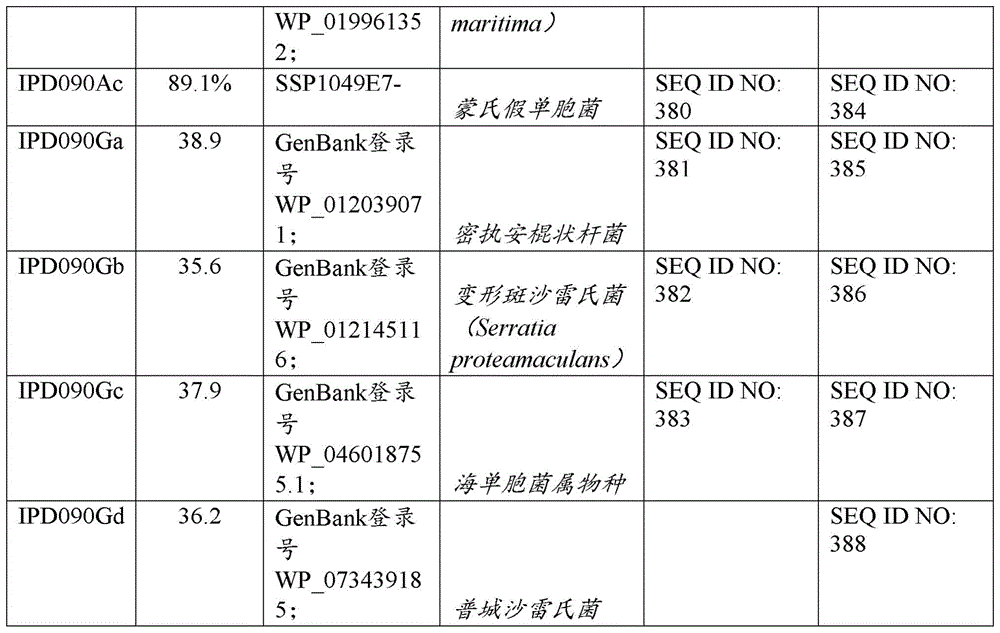
表2Table 2
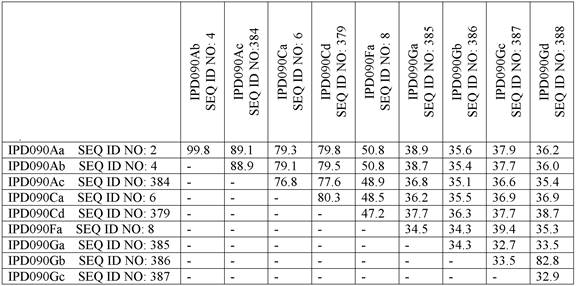
细菌菌株库的基因组测序鉴定了编码IPD090同源物的SEQ ID NO:378的多核苷酸,IPD090Cd(SEQ ID NO:379)与IPD090Ca(SEQ ID NO:6)具有约80%的氨基酸序列同一性。Genome sequencing of a library of bacterial strains identified a polynucleotide of SEQ ID NO: 378 encoding an IPD090 homolog, IPD090Cd (SEQ ID NO: 379) having approximately 80% amino acid sequence identity with IPD090Ca (SEQ ID NO: 6).
实例3-IPD090Aa在大肠杆菌内的表达Example 3 - Expression of IPD090Aa in E. coli
来自MS分析的肽片段用于定位JH34071-1重叠群内的IPD090Aa 编码序列(SEQ IDNO:1)。另外,N-末端测序用于确认预测的起始位点。编码序列用于设计引物CTB54-FOR(SEQID NO:354)和 CTB55-REV(SEQ ID NO:355)以使用NdeI/XhoI位点克隆IPD090Aa 编码序列(SEQ ID NO:1)(具有天然终止密码子TAG)到pET-24a 


将IPD090Aa N-末端6X His(SEQ ID NO:346)和IPD090Aa C- 末端6X-His(SEQ IDNO:348)表达构建体转化到大肠杆菌BL21 (DE3,安捷伦公司(Agilent),圣克拉拉市,加利福尼亚州)表达细胞中。培养一升Luria肉汤培养物(含有适当的抗生素)直至OD600达到约0.6,然后用0.3mM异丙基-β-D-1-硫代半乳糖吡喃糖苷(IPTG) 诱导培养物并使其在16℃、100rpm生长另外18小时。将培养物以 5,000rcf离心15分钟以沉淀细胞。用1/4 B-PERTM II试剂(赛默科技公司)、20mM Tris pH 8.0、OmniCleaveTM核酸内切酶(Epicentre公司)、ReadyLyseTM溶菌酶(Epicentre公司)和HALTTM蛋白酶抑制剂 (生命技术公司(LifeTechnologies))在室温下摇摆裂解细胞沉淀 30分钟。通过在13,000rcf离心10分钟使裂解物澄清,并使上清液升至10mM咪唑,然后施加以分离用PBS,10mM咪唑平衡的2.5mL Ni-NTA(
实例4-重组IPD090Aa多肽的纯化Example 4-Purification of recombinant IPD090Aa polypeptide
将来自表达IPD090Aa多肽(SEQ ID NO:2)的1L大肠杆菌培养物的细胞沉淀悬浮于100mL 20mM Tris pH 8.0+1∶100 HALTTM蛋白酶抑制剂混合物(生命技术公司(LifeTechnologies))中。以30,000 PSI裂解细胞,并将裂解物以30,000g离心30分钟。向上清液中添加硫酸铵至终浓度为1.5M,使溶液平衡过夜。澄清后,将上清液上样到在1.5M硫酸铵、20mM Tris,pH8.0中平衡的苯基-5PW柱(GE 医疗集团,皮斯卡塔韦,新泽西州)上。用4个柱体积(CV)洗涤柱,并用10CV梯度洗脱含有级分的IPD090Aa多肽(SEQ ID NO:2)至 20mMTris,pH 8.0。将用IPD090Aa多肽(SEQ ID NO:2)洗脱,浓缩并通过在PBS中平衡的S200柱(GE医疗集团,皮斯卡塔韦,新泽西州)上的尺寸排阻色谱法进一步纯化。基于SDS-PAGE,合并具有纯化的IPD090Aa多肽(SEQ ID NO:2)的级分。The cell pellet from 1L of E. coli culture expressing the IPD090Aa polypeptide (SEQ ID NO: 2) was suspended in 100mL of 20mM Tris pH 8.0 + 1:100 HALT ™ protease inhibitor cocktail (Life Technologies). The cells were lysed at 30,000 PSI and the lysate was centrifuged at 30,000g for 30 minutes. Ammonium sulfate was added to the supernatant to a final concentration of 1.5M and the solution was equilibrated overnight. After clarification, the supernatant was loaded onto a phenyl-5PW column (GE Healthcare, Piscataway, NJ) equilibrated in 1.5M ammonium sulfate, 20mM Tris, pH 8.0. The column was washed with 4 column volumes (CV) and the IPD090Aa polypeptide (SEQ ID NO: 2) containing fractions were eluted with a 10CV gradient to 20mMTris, pH 8.0. The IPD090Aa polypeptide (SEQ ID NO: 2) was eluted, concentrated and further purified by size exclusion chromatography on an S200 column (GE Healthcare, Piscataway, NJ) equilibrated in PBS. Based on SDS-PAGE, fractions with purified IPD090Aa polypeptide (SEQ ID NO: 2) were pooled.
实例5-具有纯化的IPD090Aa蛋白的鞘翅目测定Example 5 - Coleopteran assay with purified IPD090Aa protein
用纯化的重组IPD090Aa多肽(SEQ ID NO:2)以及N-末端His- 标记的IPD090Aa多肽(SEQ ID NO:347)和C-末端His-标记的 IPD090Aa多肽(SEQ ID NO:349)进行杀昆虫活性生物测定筛选,以评价杀昆虫蛋白对多种鞘翅目幼虫(包括西方玉米根虫(玉米根萤叶甲)-WCRW和北方玉米根虫(北方玉米根虫)-NCRW)的影响,对含有杀昆虫蛋白的人工饲料进行鞘翅目饲养试验。将杀昆虫蛋白掺入鞘翅目特异性人工饲料(前沿农业科学(FrontierAgricultural Scienees),纽瓦克市,德国)中。以从188ppm至6ppm的稀释系列测定蛋白质。在每个孔放置一只新生幼虫,让其任意取食4天。每个生物测定在每个剂量下进行八次重复。结果表示为幼虫反应(如发育迟缓)呈阳性和/或死亡率。如果幼虫与摄食仅施用上述缓冲液的饲料的阴性对照相似,那么结果表示为阴性。来自的IPD090Aa多肽(SEQ ID NO:2)、IPD090Aa N-末端6X His多肽(SEQ ID NO:347)和 IPD090Aa C-末端6X-His多肽(SEQ IDNO:349)的8个测定重复的稀释系列的平均WCRW评分显示在表3中。Purified recombinant IPD090Aa polypeptide (SEQ ID NO: 2) and N-terminal His-tagged IPD090Aa polypeptide (SEQ ID NO: 347) and C-terminal His-tagged IPD090Aa polypeptide (SEQ ID NO: 349) were used to perform bioassay screening for insecticidal activity to evaluate the effects of insecticidal proteins on a variety of coleopteran larvae, including western corn rootworm (Corn rootworm)-WCRW and northern corn rootworm (Northern corn rootworm)-NCRW. Coleopteran feeding trials were conducted on artificial diets containing insecticidal proteins. The insecticidal proteins were incorporated into coleopteran-specific artificial diets (Frontier Agricultural Scienees, Newark, Germany). The protein was assayed in a dilution series from 188 ppm to 6 ppm. One newborn larva was placed in each well and allowed to feed ad libitum for 4 days. Each bioassay was repeated eight times at each dose. Results are expressed as positive larval responses (such as stunting) and/or mortality. If the larvae are similar to the negative control fed with the above buffer alone, the result is indicated as negative. The average WCRW scores from the dilution series of 8 assay replicates of the IPD090Aa polypeptide (SEQ ID NO: 2), the IPD090Aa N-terminal 6X His polypeptide (SEQ ID NO: 347) and the IPD090Aa C-terminal 6X-His polypeptide (SEQ ID NO: 349) are shown in Table 3.
表3Table 3
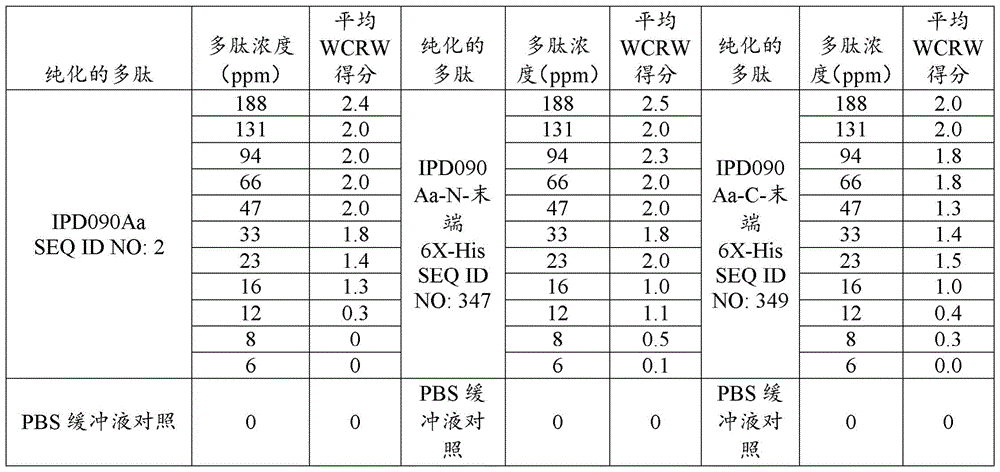
实例6-N-末端截短的IPD090Aa多肽的大肠杆菌表达和杀昆虫活性Example 6 - E. coli expression and insecticidal activity of N-terminally truncated IPD090Aa polypeptide
用胰蛋白酶消化的IPD090Aa多肽(SEQ ID NO:2)进行WCRW 生物测定表明截短的IPD090Aa产物是杀昆虫的。胰蛋白酶消化的 IPD090Aa多肽片段的N-末端测序证明形成了起始于SEQ ID NO:2的丙氨酸25的多肽产物。通过使用引物CTB142-FOR(SEQ ID NO:357)和CTB55-REV(SEQ ID NO:355)扩增IPD090Aa基因(SEQ ID NO: 1)产生编码IPD090Aa(TR1)多肽(SEQ ID NO:10)的多核苷酸(SEQ ID NO:9)以将IPD090Aa(TR1)编码序列(具有天然终止密码子TAG) 克隆到pET-24a(Novagen公司)中以进行无标记翻译。使用KOD热启动预混合液(EMD生物科学公司(EMD Biosciences),圣迭戈,加利福尼亚州)在
将表达IPD090Aa(TR1)多肽(SEQ ID NO:10)的确认克隆转化到BL21-Gold表达细胞中进行以获得1L诱导物。将诱导沉淀在30 mL裂解缓冲液(20mM Tris pH 8,1/4X B-PERTMII、Omni-CleaveTM、 Ready-LyseTM和HALTTM(生命技术公司(Life Technologies))中在室温下摇动1小时裂解。将裂解物以30,000g离心30分钟。向上清液中添加硫酸铵至终浓度为1.5M,使溶液平衡过夜。澄清后,将上清液上样到在1.5M硫酸铵、20mM Tris,pH 8.0中平衡的苯基-5PW 柱(GE医疗集团,皮斯卡塔韦,新泽西州)上。用4个柱体积(CV) 洗涤柱,并用10CV梯度洗脱含有级分的IPD090Aa(TR1)多肽(SEQ ID NO:10)至20mM Tris,pH 8.0。将含有IPD090Aa(TR1)多肽(SEQ ID NO:10)的洗脱级分浓缩并使用SephadexTM G-25(GE医疗集团) 柱脱盐至PBS缓冲液中,并进行针对WCRW的生物测定。来自8个测定重复的IPD090Aa(TR1)多肽(SEQ ID NO:10)稀释系列的平均WCRW评分显示在表4中。The confirmed clones expressing the IPD090Aa (TR1) polypeptide (SEQ ID NO: 10) were transformed into BL21-Gold expressing cells to obtain 1L inducers. The induced pellet was lysed in 30 mL lysis buffer (20
表4Table 4
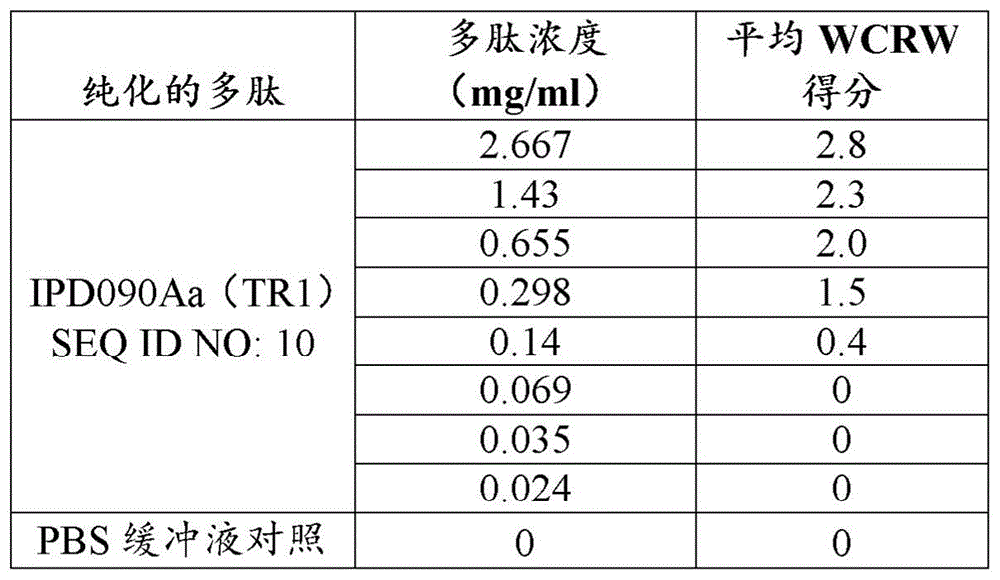
实例7-IPD090Ca多肽在大肠杆菌内的表达Example 7-Expression of IPD090Ca polypeptide in E. coli
使用引物CTB60-FOR(SEQ ID NO:358)和CTB63-REV(SEQ ID NO:359)从菌株JH23959-1分离编码IPD090Ca多肽(SEQ ID NO:6) 的序列以扩增来自菌株JH23959-1的基因,并将IPD090Ca编码序列 (SEQ ID NO:5)(具有天然终止密码子(TAA))克隆到pET-24a(Novagen公司)中用于翻译,以及克隆到pET-14b(Novagen公司) 中用于使用NdeI/BamHI位点的6X-His标签的N-末端翻译。使用KOD 热启动预混合液(EMD生物科学公司(EMDBiosciences),圣迭戈,加利福尼亚州)在Bio-RadTM C1000 TouchTM热循环仪上PCR扩增IPD090Ca基因。循环参数如下:95℃持续2分钟,1个循环;95℃持续20秒,60℃持续10秒,以及70℃持续15秒,35个循环;70℃持续2分钟,1个循环。扩增子进行凝胶纯化,连接(T4DNA连接酶,新英格兰生物实验室(New England Biolabs),伊普斯威奇 (Ipswich),马萨诸塞州)到表达载体(如上述),转化到大肠杆菌的One
将确认表达IPD090Ca(SEQ ID No:5)的克隆在pET-24a/BL21, 50mL LB-CARB和KAN中培养物用500μL过夜培养物接种并在 37℃,200rpm孵育直至达到OD600约为0.8。用0.3mM IPTG诱导培养物并在16℃,100rpm孵育过夜(约20小时)。诱导后,将培养物以5,000rcf离心15分钟以沉淀细胞。在裂解前,将细胞沉淀储存在 -80℃过夜。冷冻/解冻后,用3mL裂解缓冲液(20mM Tris pH 8, 1/4X B-PERTM II、Omni-CleaveTM、Ready-LyseTM和HaltTM蛋白酶抑制剂)裂解细胞沉淀,伴随在室温下摇动1小时。通过在13,000rcf离心10分钟来澄清细胞裂解物。将2.5mL每种澄清的裂解物应用于用 PBS平衡的PD10脱盐柱(GE医疗集团,皮斯卡塔韦,新泽西州)。用3.5mL PBS从PD10柱上洗脱IPD090Ca多肽(SEQ ID NO:6),并将裂解物进行针对WCRW的生物测定。来自8个测定重复的 IPD090Ca多肽(SEQ ID NO:6)稀释系列的平均WCRW评分显示在表5中。The clones expressing IPD090Ca (SEQ ID No: 5) were confirmed to be inoculated with 500 μL overnight cultures in pET-24a/BL21, 50 mL LB-CARB and KAN and incubated at 37°C, 200 rpm until OD 600 reached about 0.8. The cultures were induced with 0.3 mM IPTG and incubated overnight (about 20 hours) at 16°C, 100 rpm. After induction, the cultures were centrifuged at 5,000 rcf for 15 minutes to precipitate cells. Before lysis, the cell pellets were stored at -80°C overnight. After freezing/thawing, the cell pellets were lysed with 3 mL lysis buffer (20
表5Table 5

实例8-IPD090Fa多肽在大肠杆菌内的表达Example 8-Expression of IPD090Fa polypeptide in E. coli
通过BLASTTM搜索NCBI的公共非冗余蛋白质序列数据库(NCBI 参考序列:WP_019961352.1)鉴定IPD090Fa氨基酸序列(SEQ ID NO: 8)。相应的大肠杆菌优化的编码序列(SEQ ID NO:7)作为两个重叠的合成DNA片段(IDT公司,科拉尔维尔,爱荷华州)产生,其末端在NdeI/XhoI位点含有与pET-24a(Novagen公司)同源的30个核苷酸。使用NEBuilderTM(新英格兰生物实验室(New England BioLabs, Ipswich,MA),伊普斯维奇,马萨诸塞州)产生IPD090Fa C-末端6X-His (SEQ ID NO:350)表达载体。通过DNA测序确认阳性克隆。IPD090Fa amino acid sequence (SEQ ID NO: 8) was identified by searching the public non-redundant protein sequence database of NCBI (NCBI reference sequence: WP_019961352.1) by BLAST TM . The corresponding Escherichia coli optimized coding sequence (SEQ ID NO: 7) was produced as two overlapping synthetic DNA fragments (IDT company, Coralville, Iowa), and its end contained 30 nucleotides homologous to pET-24a (Novagen company) in the NdeI/XhoI site. NEBuilder TM (New England BioLabs, Ipswich, MA), Ipswich, Massachusetts) was used to produce IPD090Fa C-terminal 6X-His (SEQ ID NO: 350) expression vector. Positive clones were confirmed by DNA sequencing.
将IPD090Fa C-末端6X-His(SEQ ID NO:350)表达构建体转化到大肠杆菌BL21(DE3,安捷伦公司(Agilent),圣克拉拉市,加利福尼亚州)表达细胞中。250ml的Luria肉汤培养物(含卡那霉素) 在37℃生长直至达到约0.6的OD 600,然后将培养物用1mM异丙基β-D-1-硫代半乳糖苷(IPTG)诱导,并允许其在16℃,250rpm生长另外的18小时。将培养物以5,000rcf离心15分钟以沉淀细胞。用 1/4B-PERTM II试剂(赛默科技公司)、20mM Tris pH8.0、OmniCleaveTM核酸内切酶(Epicentre公司)、ReadyLyseTM溶菌酶(Epicentre公司) 和HALTTM蛋白酶抑制剂(密理博公司(Millipore))在30℃摇摆裂解细胞沉淀120分钟。通过在13,000rcf离心10分钟使裂解物澄清,并使上清液升至10mM咪唑,然后施加以分离用Triss缓冲盐水 (TBS),10mM咪唑平衡的1mL Ni-NTA(
将来自表达IPD090Fa多肽(SEQ ID NO:8)的1L大肠杆菌培养物的细胞沉淀悬浮于5倍体积(体积与重量之比)20mM Tris pH 8.0+1∶100 HALTTM蛋白酶抑制剂混合物(赛默公司)中。以25,000PSI 裂解细胞,并将裂解物以30,000g离心30分钟。向上清液中逐滴添加等体积的3M硫酸铵,同时搅拌至终浓度为1.5M,并允许溶液搅拌至少30分钟。澄清后,将上清液上样到在1.5M硫酸铵、20mM Tris, pH 8.0中平衡的苯基-5PW柱(东曹生命科学事业部(Tosoh Bioscience),普鲁士王村,宾夕法尼亚州)上。用4个柱体积(CV) 洗涤柱,并用15CV梯度洗脱含有级分的IPD090Fa多肽(SEQ ID NO: 8)至20mM Tris,pH 8.0。将具有IPD090Fa多肽(SEQ ID NO:8) 的洗脱液上样到在20mM Tris pH 8.0缓冲液中平衡的Mono QTM柱 (GE医疗集团,皮斯卡塔韦,新泽西州)并将含有IPD090Fa的级分,用40CV至0.5M NaCl、20mMTris pH 8.0梯度洗脱,浓缩,并在PBS 中平衡的SuperdexTM 200柱(GE医疗集团,皮斯卡塔韦,新泽西州) 上通过尺寸排阻色谱进一步纯化。基于SDS-PAGE,合并具有纯化的IPD090Fa多肽(SEQ ID NO:8)的级分。The cell pellet from 1L of E. coli culture expressing IPD090Fa polypeptide (SEQ ID NO: 8) was suspended in 5 volumes (volume to weight ratio) of 20mM Tris pH 8.0 + 1: 100 HALT ™ protease inhibitor cocktail (Thermo). The cells were lysed at 25,000PSI and the lysate was centrifuged at 30,000g for 30 minutes. An equal volume of 3M ammonium sulfate was added dropwise to the supernatant while stirring to a final concentration of 1.5M, and the solution was allowed to stir for at least 30 minutes. After clarification, the supernatant was loaded onto a phenyl-5PW column (Tosoh Bioscience, King of Prussia, Pennsylvania) equilibrated in 1.5M ammonium sulfate, 20mM Tris, pH 8.0. The column was washed with 4 column volumes (CV) and the IPD090Fa polypeptide (SEQ ID NO: 8) containing fractions were eluted with a 15CV gradient to 20 mM Tris, pH 8.0. The eluate with the IPD090Fa polypeptide (SEQ ID NO: 8) was loaded onto a Mono Q TM column (GE Healthcare, Piscataway, NJ) equilibrated in 20 mM Tris pH 8.0 buffer and the fractions containing IPD090Fa were eluted with a 40CV gradient to 0.5 M NaCl, 20 mM Tris pH 8.0, concentrated, and further purified by size exclusion chromatography on a
实例9-用玉米根虫进行基于饲料的生物测定以测定LC50和IC50Example 9 - Feed-Based Bioassays with Corn Rootworm to Determine LC50 and IC50
使用标准化的玉米根虫饲料掺入生物测定来测定IPD090Aa(SEQ ID NO:2)对WCRW活性。根据Diabrotica饲料(前沿公司(Frontier),纽瓦克市,德国)的制造商指南制备玉米根虫饲料。该测试涉及六种不同的IPD090Aa多肽(SEQ ID NO:2)剂量加上缓冲液对照,每种生物测定中每种剂量具有32次观察。将新生虫侵染到含有IPD090Aa 多肽(SEQ ID NO:2)(5μL/孔)和饲料(25μL/孔)的混合物的96 孔板中,每个孔具有约5至8只幼虫(孵化后<24小时)。一天后,将单只幼虫转移到第二个96孔板的每个孔中,所述第二个96孔板含有IPD090Aa多肽(SEQ ID NO:2)(20μL/孔)和饲料(100μL/孔) 的混合物,其与在第一天暴露的昆虫的处理浓度相同。将平板在27℃, 65%RH下在黑暗中孵育6天。基于Probit分析,使用“Dose Response Add-In for Excel[用于Excel的剂量响应插件]”计算生物测定中多肽的 50%致死浓度。对死亡率和严重发育不良的计数进行评分并合并为使用相同方法计算50%个体抑制的总响应。针对WCRW(玉米根萤叶甲)的LC50和IC50分别为16.3ppm和7.4ppm,并且对应的NCRW (北方玉米根虫)分别为35.6ppm和13ppm。针对南美叶甲 (Diabroticaspectosa),LC50>400ppm且IC50=320ppm。使用相同的测定方案评估IPD090Aa C-末端6X-His多肽(SEQ ID NO:349) 和IPD090Fa C-末端6X-His多肽(SEQ ID NO:351)对WCRW和NCRW的毒性。结果示于表6中。The activity of IPD090Aa (SEQ ID NO: 2) against WCRW was determined using a standardized corn rootworm diet incorporation bioassay. Corn rootworm diet was prepared according to the manufacturer's instructions for Diabrotica diet (Frontier, Newark, Germany). The test involved six different IPD090Aa polypeptide (SEQ ID NO: 2) doses plus a buffer control, with 32 observations per dose in each bioassay. Newborn insects were infested into 96-well plates containing a mixture of IPD090Aa polypeptide (SEQ ID NO: 2) (5 μL/well) and diet (25 μL/well), with approximately 5 to 8 larvae per well (<24 hours after hatching). One day later, a single larva was transferred to each well of a second 96-well plate containing a mixture of IPD090Aa polypeptide (SEQ ID NO: 2) (20 μL/well) and diet (100 μL/well) at the same treatment concentration as the insects exposed on the first day. The plates were incubated in the dark at 27°C, 65% RH for 6 days. Based on Probit analysis, the 50% lethal concentration of the polypeptide in the bioassay was calculated using the "Dose Response Add-In for Excel". The counts of mortality and severe stunting were scored and combined to calculate the total response of 50% individual inhibition using the same method. The LC50 and IC50 for WCRW (corn rootworm) were 16.3ppm and 7.4ppm, respectively, and the corresponding NCRW (northern corn rootworm) were 35.6ppm and 13ppm, respectively. For South American leaf beetles (Diabrotica spectosa), LC50>400ppm and IC50=320ppm. The toxicity of IPD090Aa C-terminal 6X-His polypeptide (SEQ ID NO: 349) and IPD090Fa C-terminal 6X-His polypeptide (SEQ ID NO: 351) to WCRW and NCRW was evaluated using the same assay protocol. The results are shown in Table 6.
表6Table 6

实例10-测试mCry3A选择的WCRW的交叉抗性Example 10 - Testing the cross resistance of mCry3A selected WCRW
还测定IPD090Aa多肽(SEQ ID NO:2)针对抗mCry3A的WCRW 的LC50,并使用与上文实例8中所述的WCRW基于饲料的生物测定相同的方法与易感WCRW比较。通过选择具有高水平mCry3A表达的转基因玉米植物(在T0根中>10,000ng/mg的总可溶性蛋白质)和对WCRW的高效力,开发了对mCry3A具有抗性的WCRW菌株。在基于饲料的测定中,基于LC50,菌落的mCry3A的抗性比(RR)>92 倍(专利公开号US 20140033361)。RR的计算方法如下:RR=(抗性WCRW的LC50)/(易感WCRW的LC50)。表7显示了对mCry3A 具有抗性的WCRW菌株与IPD090Aa多肽(SEQ ID NO:2)没有交叉抗性(RR=1.4倍)。The LC50 of the IPD090Aa polypeptide (SEQ ID NO: 2) against mCry3A-resistant WCRW was also determined and compared with susceptible WCRW using the same method as the WCRW feed-based bioassay described in Example 8 above. A WCRW strain resistant to mCry3A was developed by selecting transgenic corn plants with high levels of mCry3A expression (>10,000 ng/mg total soluble protein in T0 roots) and high efficacy against WCRW. In the feed-based assay, the resistance ratio (RR) of mCry3A of the colony was >92 times based on LC50 (Patent Publication No. US 20140033361). The calculation method of RR is as follows: RR = (LC50 of resistant WCRW) / (LC50 of susceptible WCRW). Table 7 shows that the WCRW strain resistant to mCry3A has no cross-resistance to the IPD090Aa polypeptide (SEQ ID NO: 2) (RR = 1.4-fold).
表7Table 7

实例11-IPD090同源物之间的嵌合体Example 11 - Chimeras between IPD090 homologs
为了产生具有多样化序列的IPD090Aa多肽(SEQ ID NO:2)的活性变体,通过多重PCR片段重叠组装产生IPD090Aa(SEQ ID NO: 1)和IPD090Ca(SEQ ID NO:5)之间的嵌合体基因。为此目的, IPD090Ca的核苷酸序列与IPD090Aa的核苷酸序列密码子统一化,使 DNA同源性更高,以允许家族改组和嵌合体构建。密码子修饰的 IPD090Ca编码序列具有SEQ IDNO:345的核酸序列。构建总共七种 IPD090Aa/IPD090Ca嵌合多核苷酸并将其克隆到pET24a中。将构建体转移至BL21 DE3并在48孔板中培养以用于蛋白质表达。通过来自赛默科技公司(Thermo Scientific)(美国伊利诺伊州罗克福德市北子午路3747号(3747 N.MeridianRd.,Rockford,IL USA)61101)的
表8Table 8

实例12-具有多个氨基酸取代的IPD090Aa变体Example 12 - IPD090Aa variants with multiple amino acid substitutions
为了产生具有多个氨基酸改变的IPD090Aa多肽(SEQ ID NO:2) 变体,通过IPD090Aa(SEQ ID NO:2)和IPD090Ca(SEQ ID NO:6) 的多核苷酸的家族改组产生变体文库(Chia-Chun J.Chang等人,1999, Nature Biotechnology[自然生技术]17,793--797)。To generate variants of the IPD090Aa polypeptide (SEQ ID NO: 2) with multiple amino acid changes, a variant library was generated by family shuffling of polynucleotides of IPD090Aa (SEQ ID NO: 2) and IPD090Ca (SEQ ID NO: 6) (Chia-Chun J. Chang et al., 1999, Nature Biotechnology 17, 793-797).
构建了三个文库用于产生IPD090Aa变体。在第一个文库中,SEQ ID NO:1和SEQ IDNO:5的多核苷酸序列用作文库亲本。在第二个文库中,SEQ ID NO:1和SEQ ID NO:5的多核苷酸序列在具有重叠同源性的七个片段中扩增。用于扩增片段的引物总结于表9中。合并重叠片段并组装。Three libraries were constructed for generating IPD090Aa variants. In the first library, the polynucleotide sequences of SEQ ID NO: 1 and SEQ ID NO: 5 were used as library parents. In the second library, the polynucleotide sequences of SEQ ID NO: 1 and SEQ ID NO: 5 were amplified in seven fragments with overlapping homology. The primers used to amplify the fragments are summarized in Table 9. Overlapping fragments were merged and assembled.
表9Table 9

在第三个文库中,编码IPD090Aa多肽(SEQ ID NO:2)的天然多核苷酸序列(SEQ IDNO:1)和编码IPD090Ca多肽(SEQ ID NO:6) 的大肠杆菌密码子优化的多核苷酸序列(SEQID NO:345)被用作文库亲本。In the third library, a native polynucleotide sequence (SEQ ID NO: 1) encoding an IPD090Aa polypeptide (SEQ ID NO: 2) and an E. coli codon-optimized polynucleotide sequence (SEQ ID NO: 345) encoding an IPD090Ca polypeptide (SEQ ID NO: 6) were used as library parents.
将文库变体转化为大肠杆菌细胞后,挑取菌落并在48孔板中培养以进行蛋白质表达。通过来自赛默科技公司(Thermo Scientific)(美国伊利诺伊州罗克福德市北子午路3747号(3747 N Meridian Rd, Rockford,IL USA)61101)的
使用Needleman-Wunsch算法来计算IPD090Aa多肽(SEQ ID NO: 2)的活性IPD090Aa变体的百分比序列同一性,如Needle程序 (EMBOSS工具套件)中所应用的。所得活性IPD090Aa多肽变体的与IPD090Aa多肽(SEQ ID NO:2)相比的同一性百分比、变体命名、核苷酸序列和氨基酸序列示于表10中。表11总结了与IPD090Aa多肽(SEQ ID NO:2)相比的活性变体的同一性%,具有每个百分比同一性的变体数量和变体鉴定。The Needleman-Wunsch algorithm was used to calculate the percent sequence identity of the active IPD090Aa variants of the IPD090Aa polypeptide (SEQ ID NO: 2), as applied in the Needle program (EMBOSS tool suite). The percent identity, variant designation, nucleotide sequence, and amino acid sequence of the resulting active IPD090Aa polypeptide variants compared to the IPD090Aa polypeptide (SEQ ID NO: 2) are shown in Table 10. Table 11 summarizes the percent identity of the active variants compared to the IPD090Aa polypeptide (SEQ ID NO: 2), the number of variants with each percent identity, and the variant identification.
表10Table 10


表11Table 11

实例13-具有改性的物理性质的TPD090Aa变体Example 13 - TPD090Aa variants with modified physical properties
使用QuikChangeTM多位点定向诱变试剂盒(安捷伦公司)通过诱变方法产生具有改性的物理性质的IPD090Aa多肽(SEQ ID NO:2) 的一系列变体。设计并合并寡核苷酸以在IPD090Aa多肽(SEQ ID NO: 2)内的选定位置处引入保守性I至L和Y至F氨基酸变化。该文库在大肠杆菌中表达,筛选204株分离物作为WCRW杀昆虫活性的澄清裂解物。鉴定了71种独特的WCRW活性克隆,并总结在表12中。A series of variants of the IPD090Aa polypeptide (SEQ ID NO: 2) with modified physical properties were generated by mutagenesis using the QuikChange ™ Multisite-Directed Mutagenesis Kit (Agilent). Oligonucleotides were designed and combined to introduce conservative I to L and Y to F amino acid changes at selected positions within the IPD090Aa polypeptide (SEQ ID NO: 2). The library was expressed in E. coli and 204 isolates were screened as clarified lysates for WCRW insecticidal activity. 71 unique WCRW active clones were identified and summarized in Table 12.
表12Table 12


实例14-作用方式Example 14 - Mode of Action
掺入人工饲料中的纯化重组蛋白的生物活性揭示了IPD090Aa多肽(SEQ ID NO:2)对WCRW幼虫的毒性。为了理解IPD090Aa多肽 (SEQ ID NO:2)毒性的机制,通过体外竞争测定评估纯化的蛋白质与WCRW中肠组织的特异性结合。根据Wolfersberger等人修改的方法(Comp Bioch Physiol[比较生物化学生理学]86A:301-308(1987)),使用氨基肽酶活性追踪富集,从三龄WCRW幼虫中分离中肠以制备刷状缘膜囊泡(BBMV)。BBMV代表昆虫中肠组织的上皮细胞衬里的顶膜组分,因此用作模拟系统,用于在摄食后,杀虫蛋白在肠内如何相互作用。The biological activity of the purified recombinant protein incorporated into the artificial diet revealed the toxicity of the IPD090Aa polypeptide (SEQ ID NO: 2) to WCRW larvae. To understand the mechanism of toxicity of the IPD090Aa polypeptide (SEQ ID NO: 2), the specific binding of the purified protein to the midgut tissue of WCRW was evaluated by in vitro competition assay. The midgut was isolated from third instar WCRW larvae to prepare brush border membrane vesicles (BBMVs) according to a modified method of Wolfersberger et al. (Comp Bioch Physiol [Comparative Biochemistry and Physiology] 86A: 301-308 (1987)) using aminopeptidase activity to track enrichment. BBMVs represent the apical membrane component of the epithelial cell lining of the insect midgut tissue and are therefore used as a model system for how insecticidal proteins interact in the intestine after feeding.
使用具有Frac-950级分收集器的AKTATM Purifier 10(GE生命科学公司(GE LifeSciences)),通过阴离子交换色谱法再次纯化 IPD090Aa多肽(SEQ ID NO:2)。取出-80℃储存的来自实例4的 IPD090Aa多肽(SEQ ID NO:2)的纯化等分试样并在4℃透析1个小时针对20mM CAPS pH9.6(’洗脱液A’),并装载到在洗脱液A中饭平衡的1mL的HiTrapTMQ FF柱(GE生命科学公司)中。施加30 柱体积梯度(从0至50%洗脱液B(20mM CAPS pH 9.6+1M NaCl),以1mL/min)。将洗脱峰顶点附近的级分合并,并透析到结合缓冲液 (50mM氯化钠、2.7mM氯化钾、8.1mM磷酸氢二钠和1.47mM磷酸二氢钾,pH 7.5)中。The IPD090Aa polypeptide (SEQ ID NO: 2) was purified again by anion exchange chromatography using an AKTA ™ Purifier 10 (GE Life Sciences) with a Frac-950 fraction collector. A purified aliquot of the IPD090Aa polypeptide (SEQ ID NO: 2) from Example 4 stored at -80°C was removed and dialyzed against 20 mM CAPS pH 9.6 ('Eluent A') at 4°C for 1 hour and loaded onto a 1 mL HiTrap ™ Q FF column (GE Life Sciences) equilibrated in Eluent A. A 30 column volume gradient (from 0 to 50% Eluent B (20 mM CAPS pH 9.6 + 1 M NaCl) at 1 mL/min) was applied. Fractions near the apex of the elution peak were pooled and dialyzed into binding buffer (50 mM sodium chloride, 2.7 mM potassium chloride, 8.1 mM disodium hydrogen phosphate, and 1.47 mM potassium dihydrogen phosphate, pH 7.5).
将纯化的IPD090Aa多肽(SEQ ID NO:2)用

为了证明特异性结合并评估亲和性,将BBMV(5μg)与6.3nM Alexa-标记的IPD090Aa多肽(SEQ ID NO:2)在100μL结合缓冲液中在室温孵育1小时,在13μM未标记的IPD090Aa多肽(SEQ ID NO: 2)的存在和不存在。使用20,000xg离心以沉淀BBMV以分离保留在溶液中的未结合的IPD090Aa多肽(SEQ ID NO:2)。然后将BBMV 沉淀用结合缓冲液洗涤两次以消除剩余的未结合的IPD090Aa多肽 (SEQ ID NO:2)。将最终的BBMV颗粒(具有结合的荧光蛋白)溶于还原Laemmli样品缓冲液中,加热至100℃持续5分钟,并使用 4%-12%Bis-Tris聚丙烯酰胺凝胶(生命技术公司(Life Technologies)) 经受SDS-PAGE。通过数字荧光成像系统(ImageQuantTM LAS4000, GE医疗公司(GE Healthcare))测量来自每个样品的凝胶中Alexa 标记的IPD090Aa多肽(SEQ ID NO:2)的量。数字化的图像通过密度测量软件(PhoretixTM 1D,TotalLab,Ltd.)分析。图2显示了IPD090Aa 多肽(SEQ ID NO:2)特异性结合5μg WCRW BBMV。To demonstrate specific binding and assess affinity, BBMV (5 μg) was incubated with 6.3 nM Alexa-labeled IPD090Aa polypeptide (SEQ ID NO: 2) in 100 μL binding buffer at room temperature for 1 hour in the presence and absence of 13 μM unlabeled IPD090Aa polypeptide (SEQ ID NO: 2). BBMV were pelleted using 20,000 x g centrifugation to separate unbound IPD090Aa polypeptide (SEQ ID NO: 2) remaining in solution. The BBMV pellet was then washed twice with binding buffer to eliminate remaining unbound IPD090Aa polypeptide (SEQ ID NO: 2). The final BBMV pellet (with bound fluorescent protein) was dissolved in reducing Laemmli sample buffer, heated to 100°C for 5 minutes, and subjected to SDS-PAGE using 4%-12% Bis-Tris polyacrylamide gel (Life Technologies). The amount of Alexa-labeled IPD090Aa polypeptide (SEQ ID NO: 2) in the gel from each sample was measured by a digital fluorescent imaging system (ImageQuant ™ LAS4000, GE Healthcare). The digitized images were analyzed by densitometry software (Phoretix ™ ID, TotalLab, Ltd.). FIG. 2 shows that the IPD090Aa polypeptide (SEQ ID NO: 2) specifically binds to 5 μg WCRW BBMV.
实例15-用于在植物中表达IPD090Aa多肽的载体构建体Example 15 - Vector constructs for expressing IPD090Aa polypeptides in plants
在玉米泛素启动子控制下,构建植物表达载体以包括含有编码 SEQ ID NO:377的IPD090多肽的两种不同基因设计和编码SEQ ID NO:10的IPD090多肽的一种基因设计的转基因盒(Christensen等人,1992,Christensen和Quail,1996)并与PINII终止子连接(Keil等, 1986,Nucleic Acids Research[核酸研究]14:5641-5650;An等人,1989, The PlantCell[植物细胞]1:115-122)。所得的构建体,对于SEQ ID NO: 377的IPD090多肽的PHP73234、PHP73237和对于SEQ ID NO:10 的IPD090多肽的PHP77372,用于产生转基因玉米事件,以测试通过这些多肽的表达提供的针对玉米根虫的功效。Plant expression vectors were constructed to include transgenic cassettes containing two different genetic designs encoding the IPD090 polypeptide of SEQ ID NO: 377 and one genetic design encoding the IPD090 polypeptide of SEQ ID NO: 10 under the control of the maize ubiquitin promoter (Christensen et al., 1992, Christensen and Quail, 1996) and linked to the PINII terminator (Keil et al., 1986, Nucleic Acids Research 14: 5641-5650; An et al., 1989, The Plant Cell 1: 115-122). The resulting constructs, PHP73234, PHP73237 for the IPD090 polypeptide of SEQ ID NO: 377 and PHP77372 for the IPD090 polypeptide of SEQ ID NO: 10, were used to generate transgenic maize events to test the efficacy against corn rootworm provided by the expression of these polypeptides.
实例16-玉米的农杆菌介导的转化和转基因植物的再生Example 16 - Agrobacterium-mediated transformation of corn and regeneration of transgenic plants
对于农杆菌介导的具有表达载体PHP73234、PHP73237和 PHP77372的玉米的转化,使用Zhao的方法(美国专利号5,981,840 和PCT专利公开号WO 1998/32326,其内容通过引用结合在此)。简而言之,从玉米中分离未成熟的胚,并且在特定条件下将胚与农杆菌悬浮液接触,借此该细菌能够将PHP73234、PHP73237和PHP77372 载体转移到至少一个未成熟的胚的至少一个细胞中(步骤1:侵染步骤)。在该步骤中,将禾成熟的胚浸泡在农杆菌悬液中,引发接种。使这些胚与农杆菌共培养一段时间(步骤2:共培养步骤)。在侵染步骤后,可以在固体培养基上培养未成熟的胚。在此共同培养期之后,设想任选的“静置”步骤。在该静置步骤中,将这些胚在已知抑制农杆菌生长的至少一种抗生素的存在下孵育,而不添加植物转化子的选择剂(步骤3:静置步骤)。将这些未成熟的胚胎在有抗生素但没有选择剂的固体培养基上培养,以消除农杆菌并用于经侵染的细胞的静置期。接着,在含有选择剂的培养基上培养经接种的胚胎,并且回收生长的经转化的愈伤组织(步骤4:选择步骤)。在含选择剂的固体培养基上培养这些未成熟胚胎,使经转化的细胞选择性生长。然后将愈伤组织再生成植物(步骤5:再生步骤),并使生长在选择培养基上或在固体培养基上培养的愈伤组织以再生植物。For the transformation of corn with expression vectors PHP73234, PHP73237 and PHP77372 mediated by Agrobacterium, the method of Zhao (U.S. Patent No. 5,981,840 and PCT Patent Publication No. WO 1998/32326, the contents of which are incorporated herein by reference) is used. In short, immature embryos are separated from corn, and embryos are contacted with Agrobacterium suspension under specific conditions, whereby the bacteria are able to transfer PHP73234, PHP73237 and PHP77372 vectors to at least one cell of at least one immature embryo (step 1: infection step). In this step, the mature embryos are soaked in the Agrobacterium suspension to induce inoculation. These embryos are co-cultivated with Agrobacterium for a period of time (step 2: co-cultivation step). After the infection step, the immature embryos can be cultivated on solid medium. After this co-cultivation period, an optional "standing" step is envisioned. In the resting step, the embryos are incubated in the presence of at least one antibiotic known to inhibit the growth of Agrobacterium, without the addition of a selection agent for plant transformants (step 3: resting step). The immature embryos are cultured on a solid medium with an antibiotic but without a selection agent to eliminate Agrobacterium and for a resting period of infected cells. Next, the inoculated embryos are cultured on a medium containing a selection agent, and the grown transformed callus is recovered (step 4: selection step). The immature embryos are cultured on a solid medium containing a selection agent to selectively grow the transformed cells. The callus is then regenerated into plants (step 5: regeneration step), and the callus grown on a selection medium or cultured on a solid medium is used to regenerate plants.
为了检测叶组织中的IPD090Aa多肽(SEQ ID NO:2)和PD090Aa (TR1)多肽(SEQ IDNO:10),将4个冻干叶穿孔/样品粉碎并重新悬浮于含有0.1%Tween 20的100μL PBS(PBST)、含有1片/7mL 完整的迷你蛋白酶抑制剂(罗氏公司1183615301)的1%β-巯基乙醇中。将悬浮液超声处理2分钟,并且然后在4℃、20,000g下离心15 分钟。向上清液等份1/3体积的3X


实例17-IPD090多肽事件的温室效力Example 17 - Greenhouse efficacy of IPD090 polypeptide events
图3显示了从PHP73234、PHP73237和PHP77372构建体产生的事件的T0温室效力结果。相对于如通过保护根部免受西方玉米根虫影响所测量的阴性对照事件,观察到源自所有3个构建体的事件的效力。使用由Oleson等人,(2005),[J.Econ Entomol.(经济昆虫学期刊)98(1):1-8]开发的方法,根据损伤的根的节点数测量根保护 (CRWNIS=玉米根虫节点损伤评分)。根损伤评分测量为从“0”到“3”,其中“0”表示无可见根损伤,“1”表示1个根损害节点,“2”表示2个节点或根损害,并且“3”表示3个节点的根损害的最大得分。中间得分(例如1.5)表示损害节点的额外分数(例如一个半损伤的节点)。图3显示了来自PHP73234、PHP73237和PHP77372 的大部分事件比具有<1.0的根虫损伤评分的阴性对照表现更好。Fig. 3 shows the TO greenhouse efficacy results of the events produced from PHP73234, PHP73237 and PHP77372 constructs. Relative to the negative control events measured by protecting roots from western corn rootworm, the efficacy of the events derived from all 3 constructs was observed. Using the method developed by Oleson et al., (2005), [J.Econ Entomol. (Journal of Economic Entomology) 98 (1): 1-8], root protection (CRWNIS=corn rootworm node injury score) was measured according to the number of nodes of damaged roots. The root injury score was measured from "0" to "3", wherein "0" represents no visible root damage, "1" represents 1 root damage node, "2" represents 2 nodes or root damage, and "3" represents the maximum score of root damage at 3 nodes. An intermediate score (e.g., 1.5) represents the extra score of damaged nodes (e.g., a half-damaged node). Figure 3 shows that the majority of events from PHP73234, PHP73237, and PHP77372 performed better than the negative control with a rootworm damage score of <1.0.
实例18-通过X射线晶体分析法测定IPD090Aa的三维结构Example 18 - Determination of the three-dimensional structure of IPD090Aa by X-ray crystallography
通过悬滴蒸气扩散法在25℃生长IPD090Aa变体1167的晶体。通过混合2μl 10mg/ml蛋白质溶液和2μl含有0.2M MgCl2六水合物、 0.1M HEPES pH=7.5和30%PEG 400的结晶溶液获得晶体。将晶体固定在0.5mM环中,并在结晶溶液中添加约20%甘油进行低温防护。将它们在液态N2中快速冷冻并安装在爱荷华州立大学大分子X射线晶体分析法设备的Rigaku Micromax-007 HF X射线源上。使用R-Axis IV++图像板检测器在165.0mM的距离处收集

Murshudov,G.N.等人(1997)Acta Cryst.[晶体学报]D53,240-255) 精制模型得到R-因子=0.236且R-自由度=0.267,在Ramachandran图的允许区域中具有>96%的氨基酸。表13显示了数据收集和精制统计信息。Murshudov, G.N. et al. (1997) Acta Cryst. D53, 240-255) Refining the model yielded R-factor = 0.236 and R-degrees of freedom = 0.267, with > 96% of amino acids in the allowed region of the Ramachandran plot. Table 13 shows data collection and refinement statistics.
表13Table 13


IPD090Aa的整体结构类似于其他含有攻膜复合体/穿孔素 (MACPF)的蚤白质。其N-末端结构域由MACPF结构域组成,而 C-末端结构域包含β-棱柱结构域(图4)。根据Rosado等人(2007 Science[科学]317,1548-1551)标记二级结构。Mg+原子显示为β-棱柱结构域底部的球体。两个螺旋簇(CH1和CH2)在结构上类似于胆固醇依赖性溶细胞素(CDC)毒素家族的跨膜螺旋(TMH1和TMH2)。 N-末端MACPF结构域的整体形状有点盒形(约
对本公开的不同所示实施例的上述描述并不旨在是详尽的或者限制范围于所公开的精确形式。虽然为了说明目的而在此描述了具体实施例和实例,但是在本公开范围内,如相关领域的技术人员将认识到的,不同的等效修饰是可能的。本文提供的教导可以应用于除了上述实例之外的其他目的。根据上述教导,许多修改和变化是可能的,因此它们在所附权利要求书的范围内。The above description of the different illustrated embodiments of the present disclosure is not intended to be exhaustive or to limit the scope to the precise form disclosed. Although specific embodiments and examples are described herein for illustrative purposes, different equivalent modifications are possible within the scope of the present disclosure as will be appreciated by those skilled in the relevant art. The teachings provided herein may be applied to other purposes in addition to the above examples. Based on the above teachings, many modifications and variations are possible, and therefore they are within the scope of the appended claims.
可以根据上述详细描述进行这些改变和其他改变。通常,在以下权利要求书中,所使用的术语不应被解释为将范围限制于说明书和权利要求书中公开的具体实施例。These and other changes can be made in light of the above detailed description.In general, in the following claims, the terms used should not be construed to limit the scope to the specific embodiments disclosed in the specification and the claims.
背景技术、详细描述和实例中引用的每个文献(包括专利、专利申请、杂志文章、摘要、手册、书籍或其他公开内容)的全部公开内容通过引用以其整体结合在此。The entire disclosure of each document (including patents, patent applications, journal articles, abstracts, manuals, books, or other publications) cited in the Background, Detailed Description, and Examples is incorporated herein by reference in its entirety.
就使用的数字(例如量、温度、浓度等)而言,已努力确保其准确性,但仍应允许有一些实验误差和偏差。除非另有说明,份为重量份,分子量为平均分子量;温度是摄氏度;并且压力为大气压或接近大气压。With respect to numbers used (e.g., amounts, temperatures, concentrations, etc.), efforts have been made to ensure accuracy, but some experimental error and deviation should be allowed for. Unless otherwise indicated, parts are parts by weight, molecular weight is average molecular weight; temperature is degrees Celsius; and pressure is at or near atmospheric.

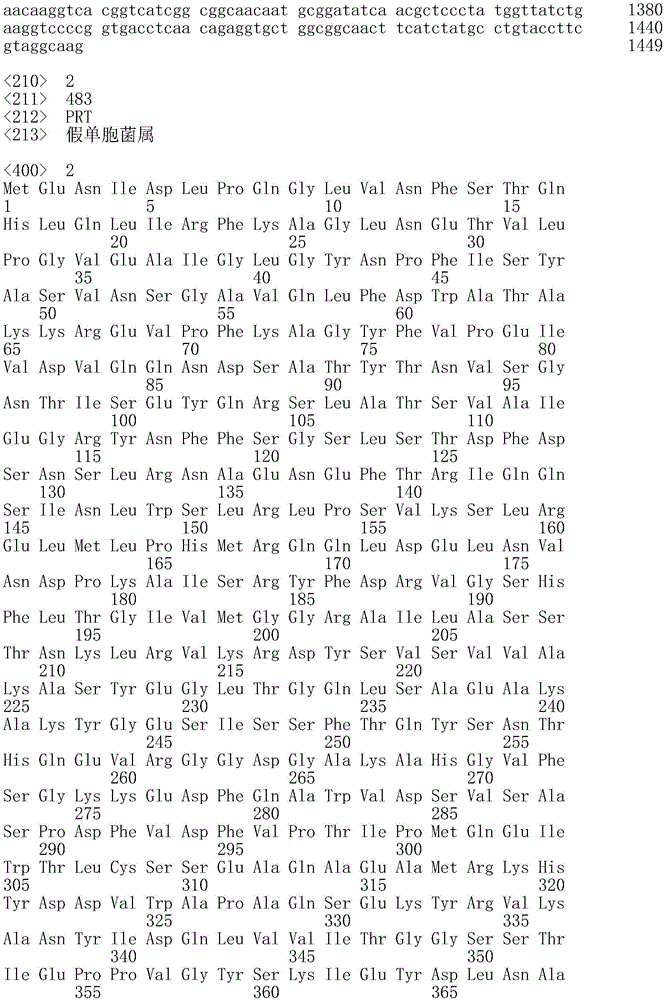


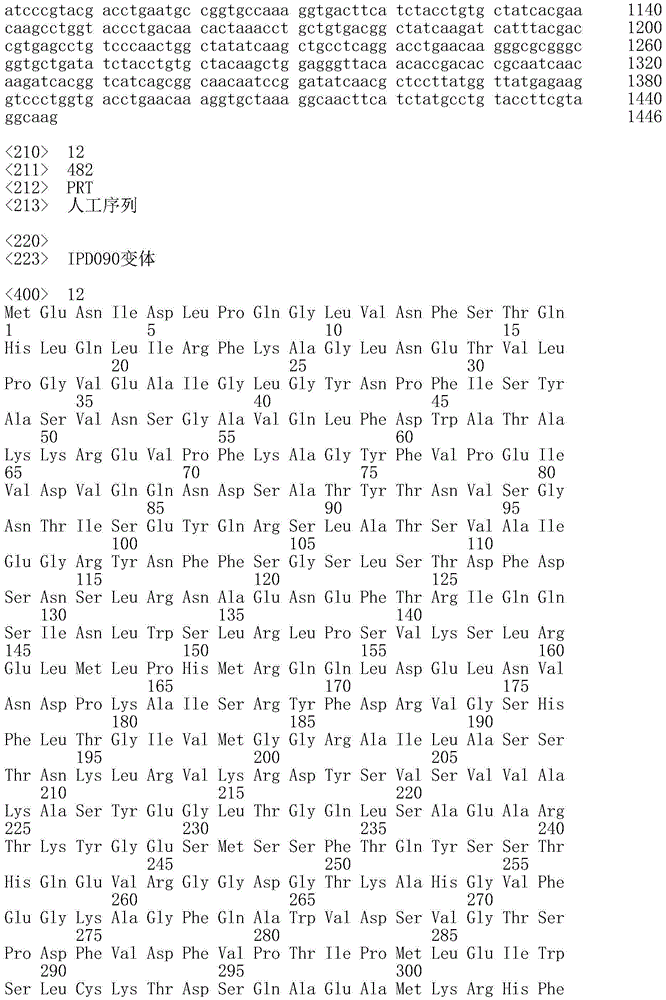


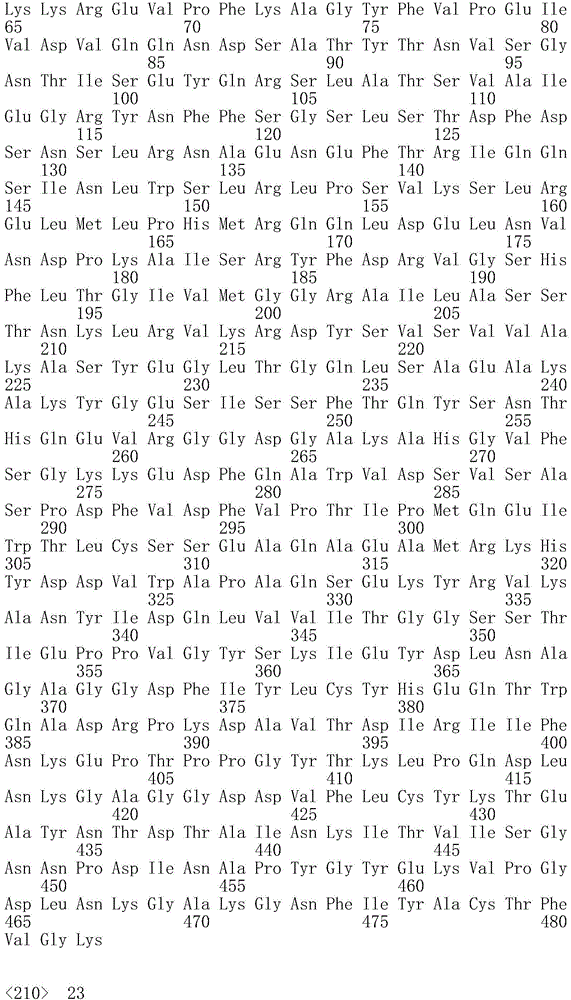

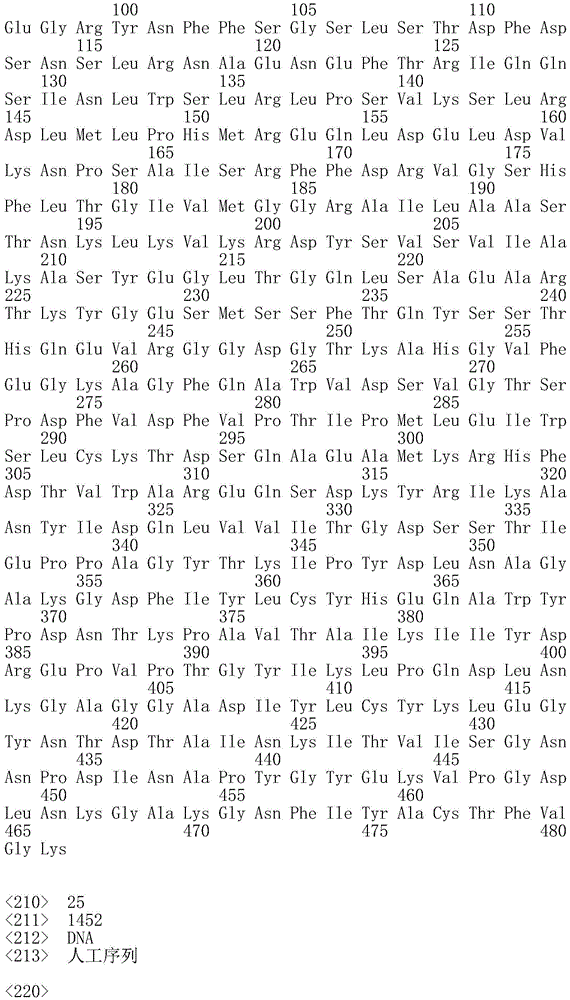

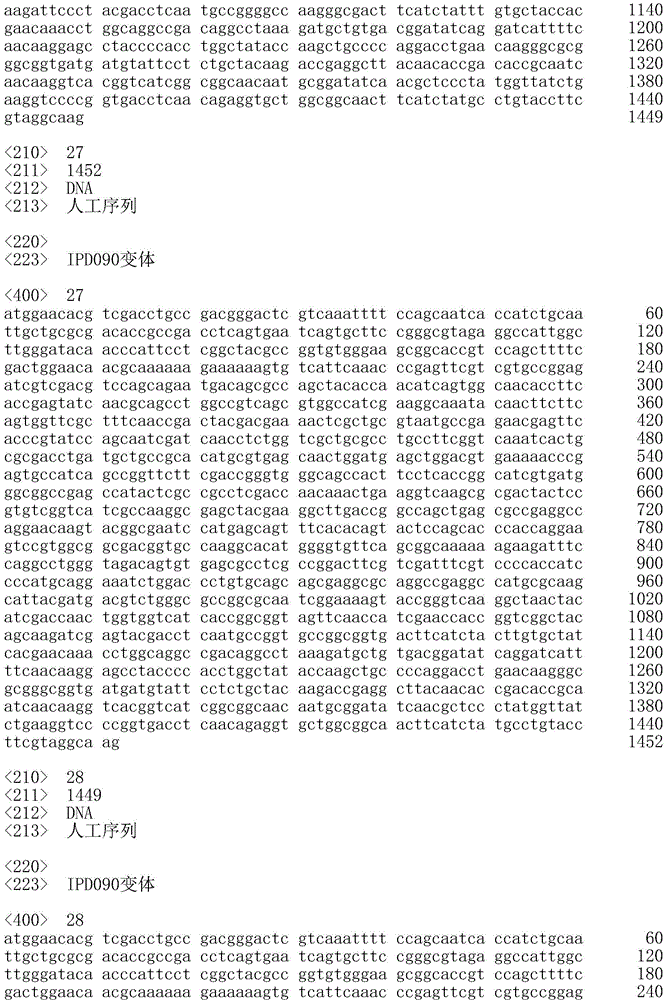

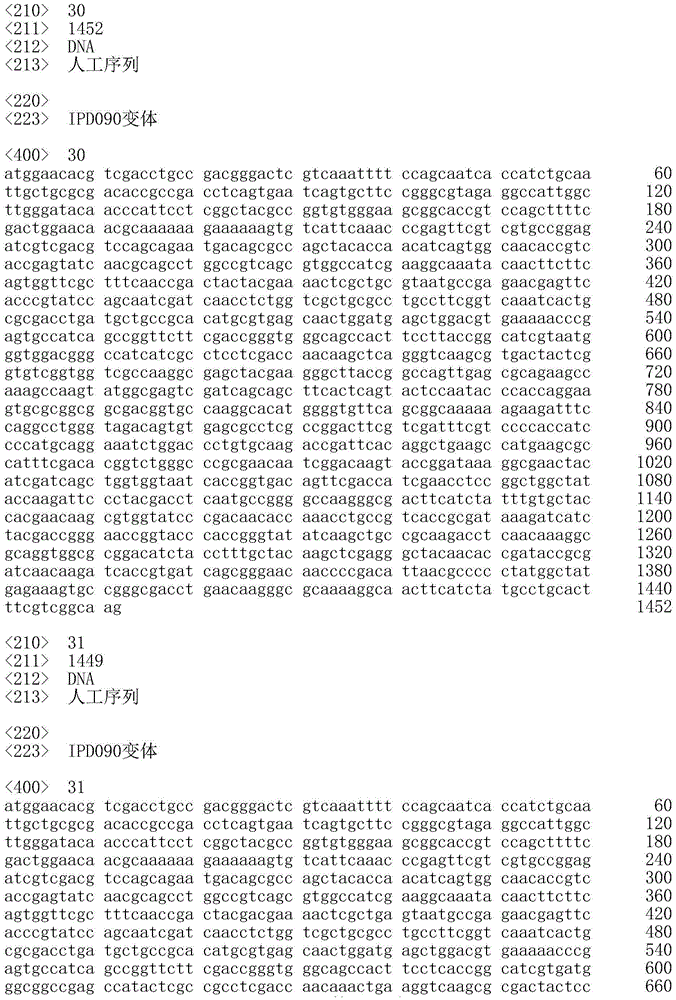


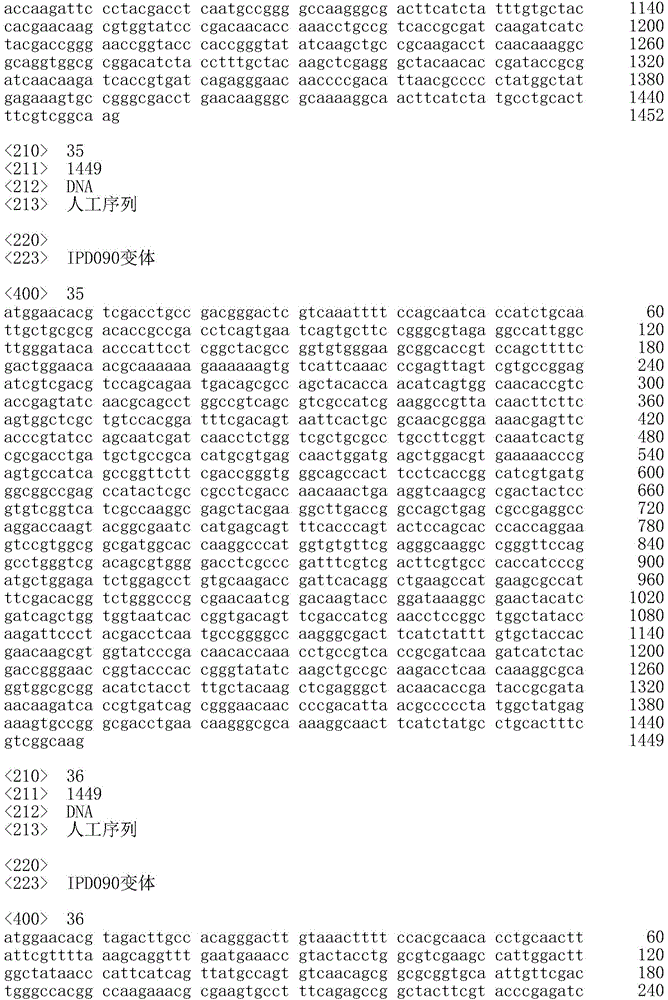


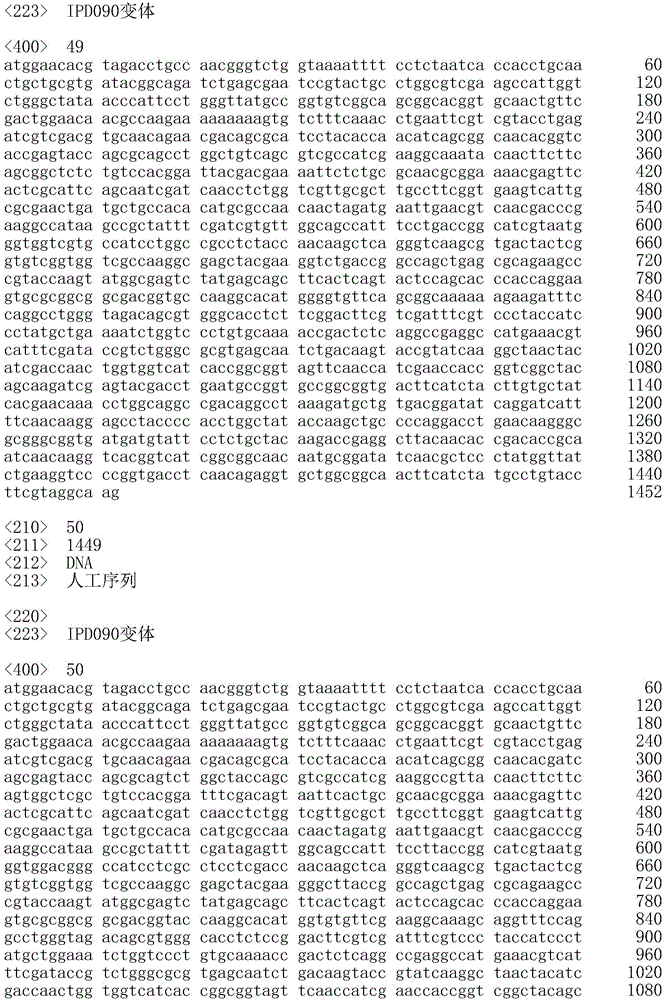

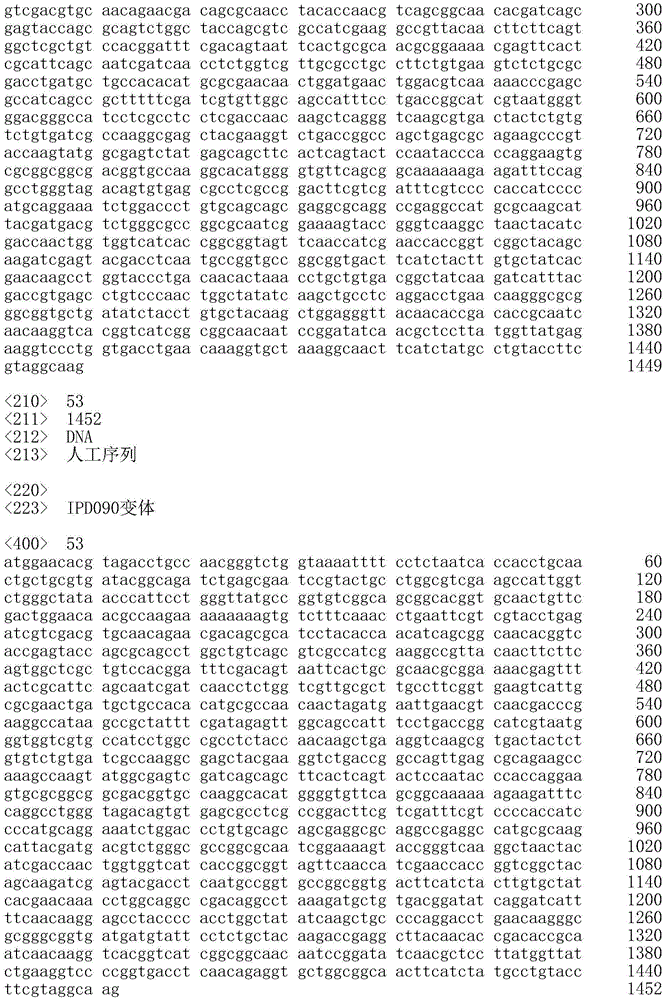
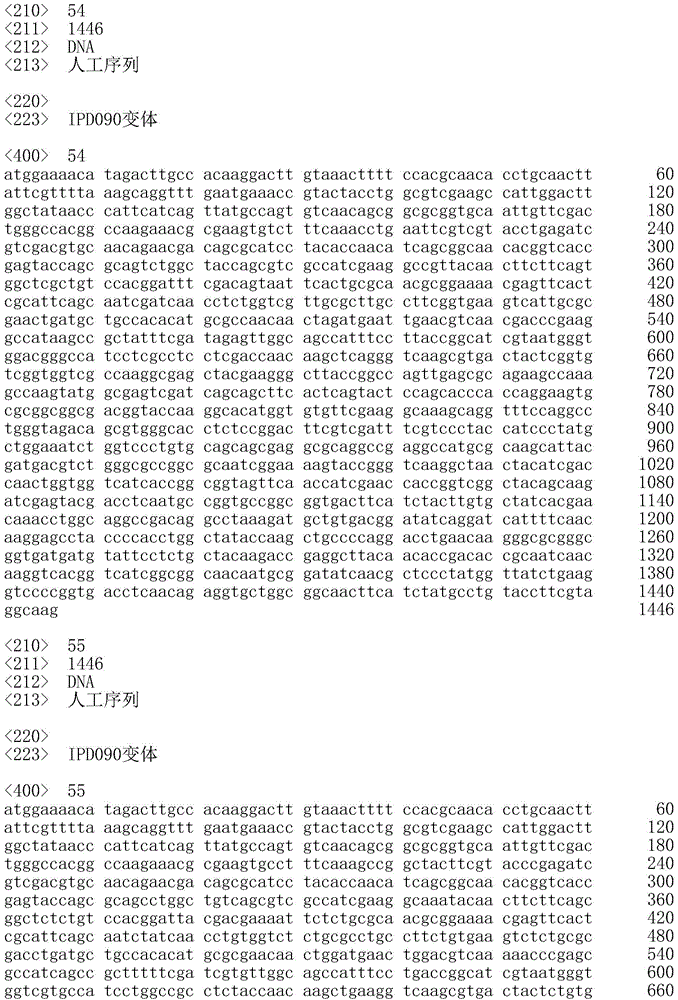


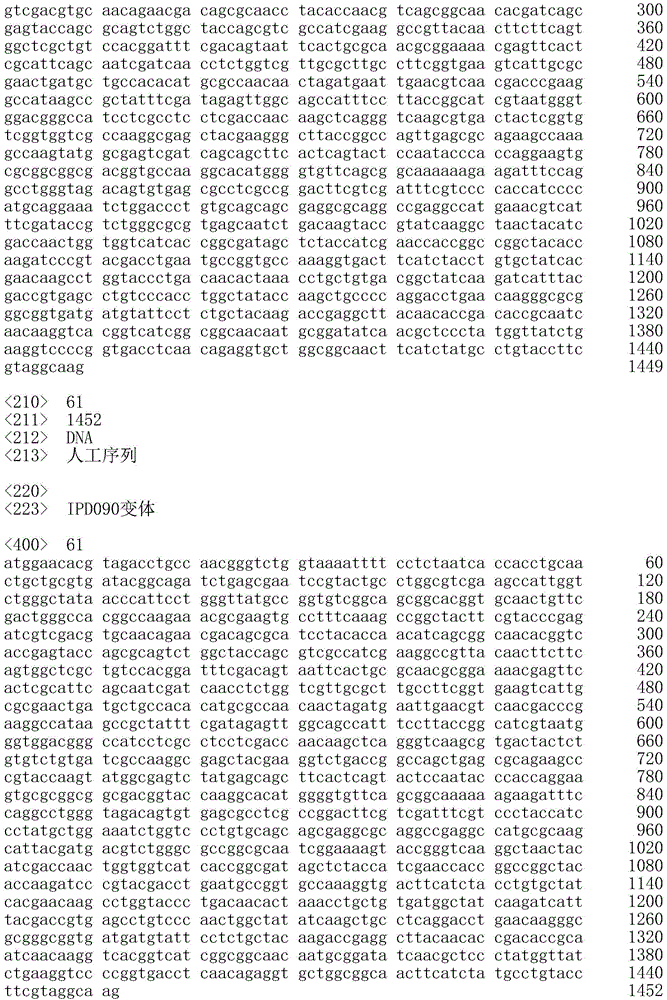


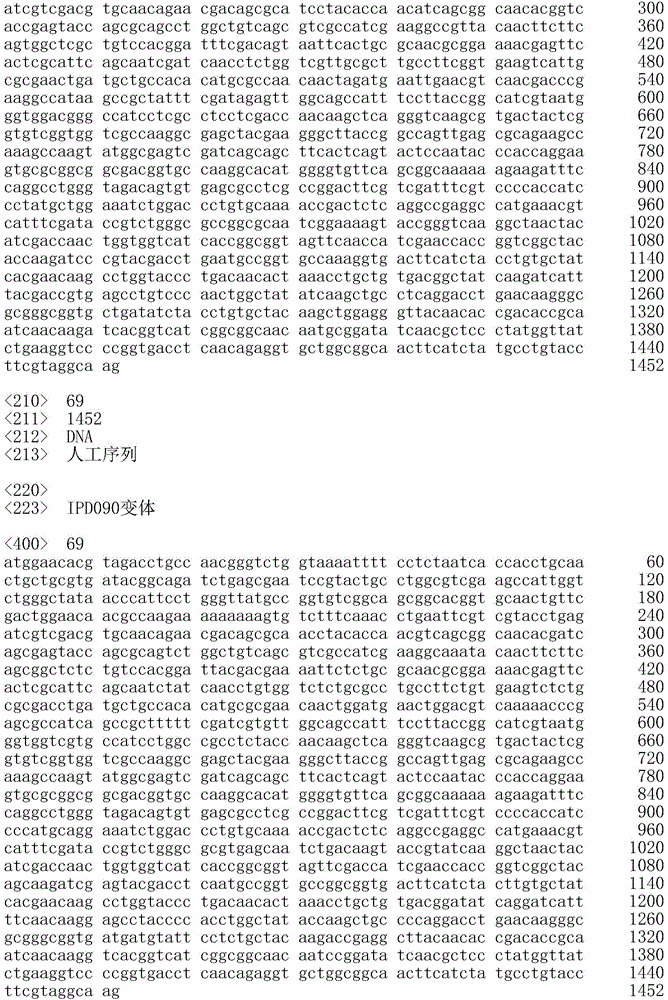


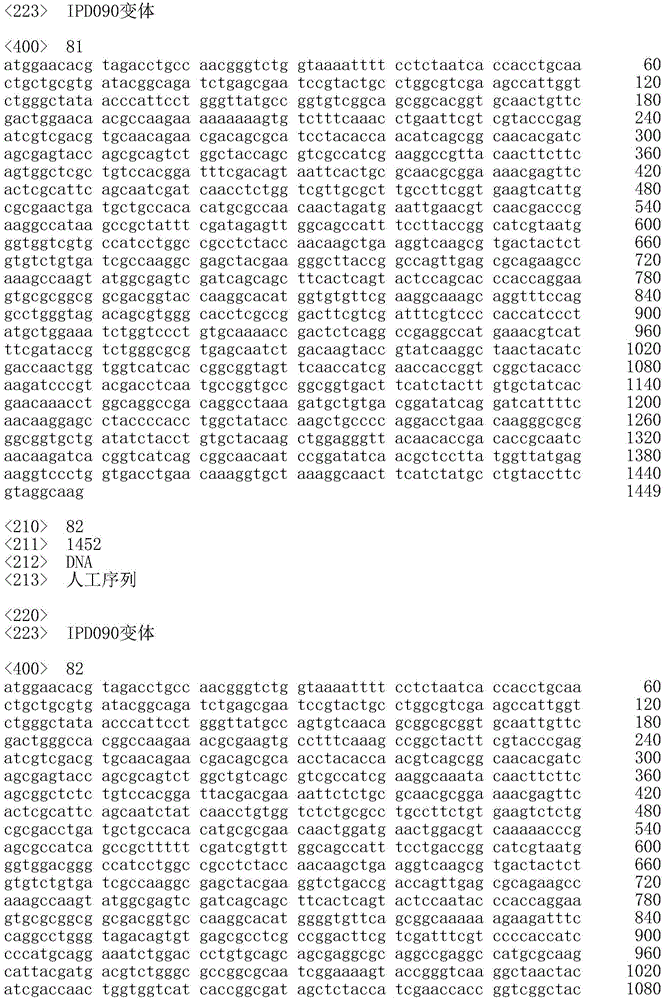


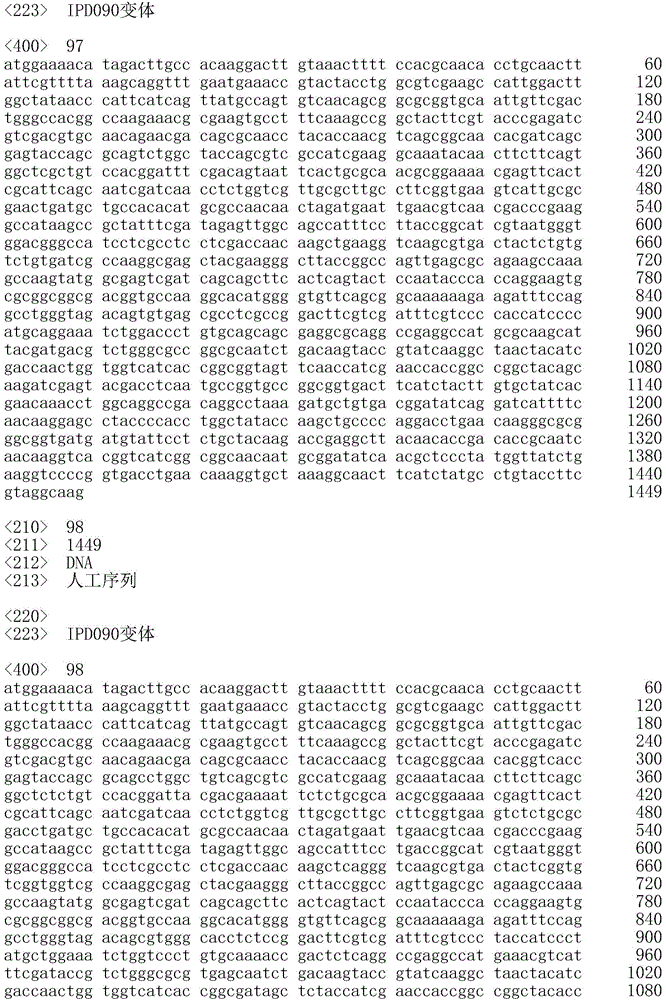
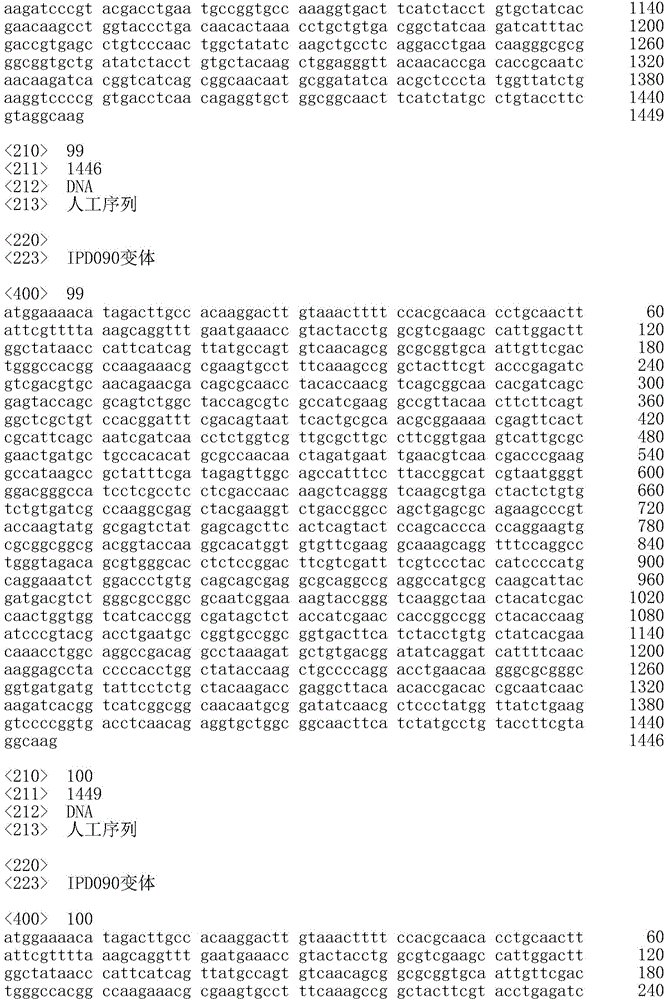


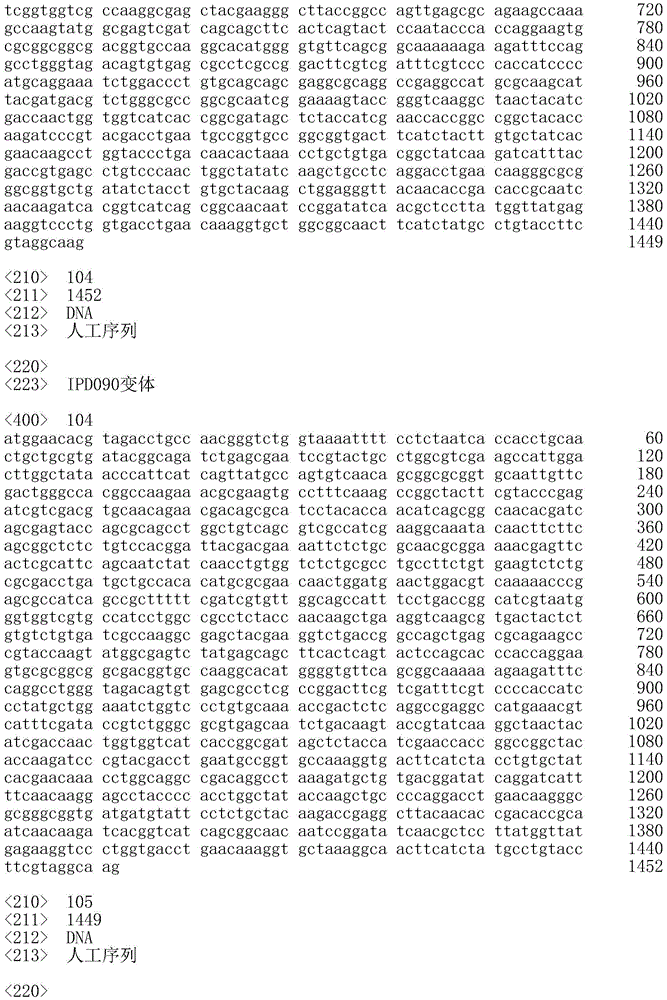


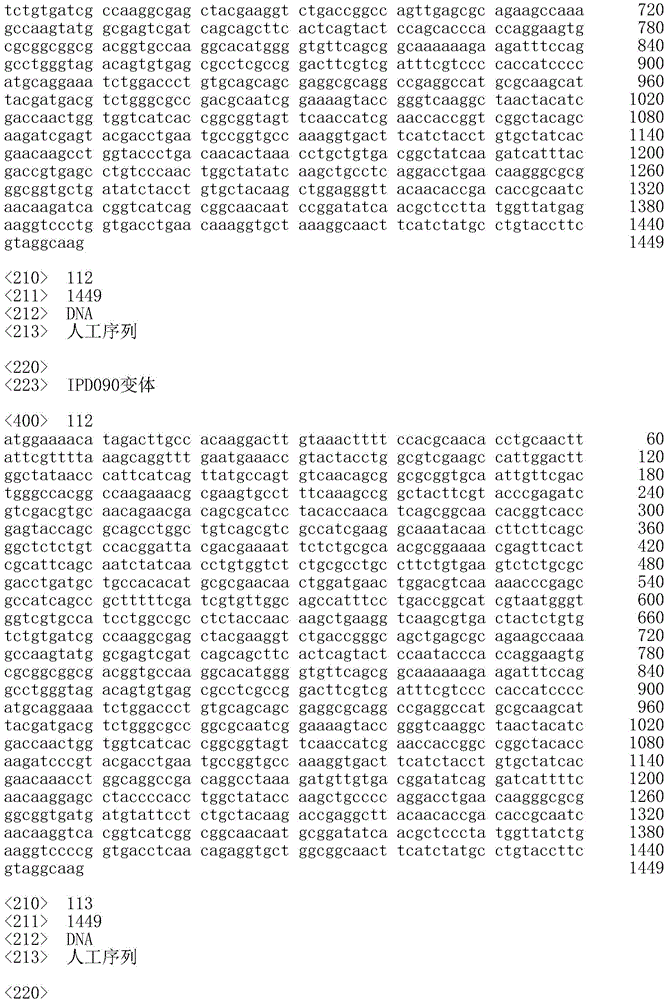


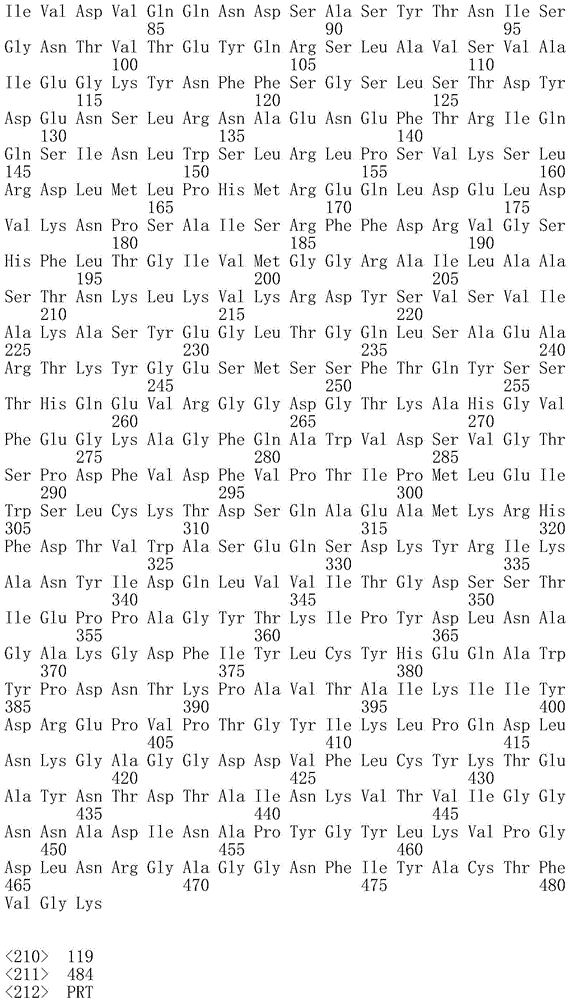

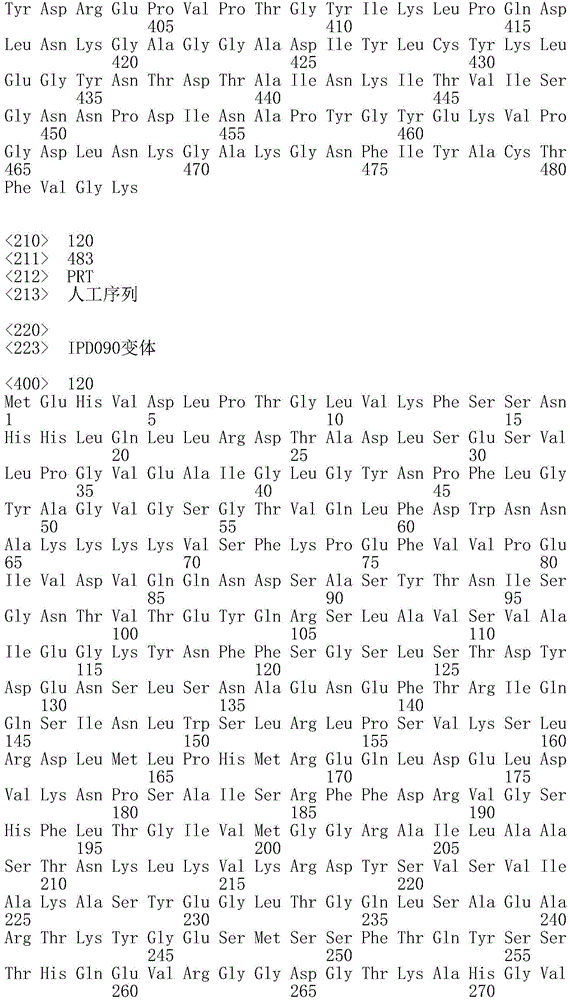


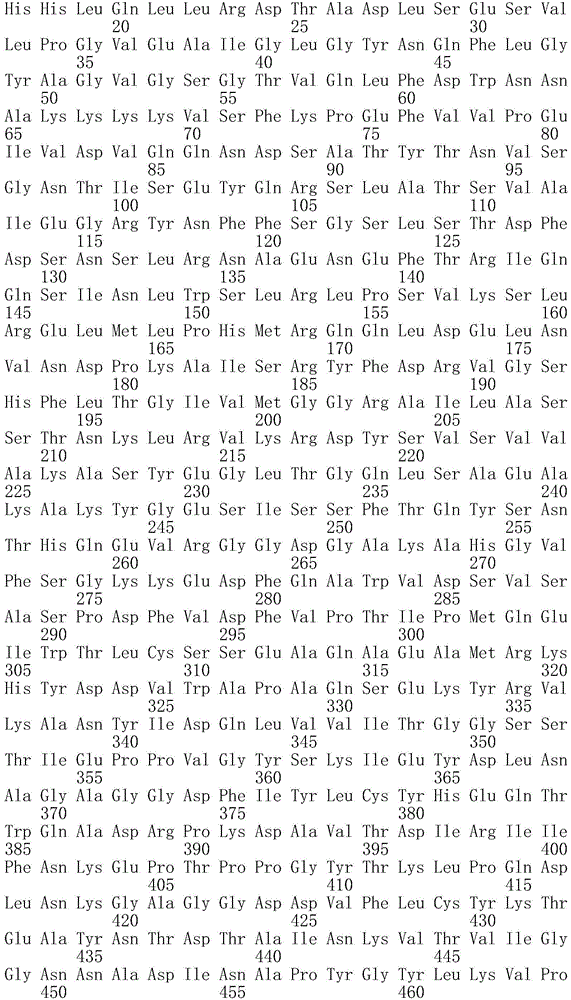


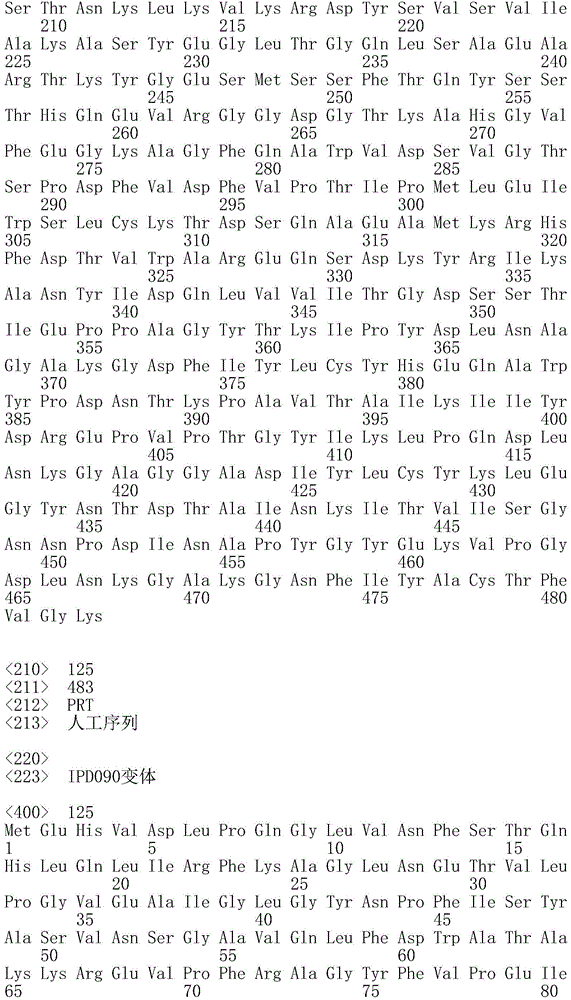

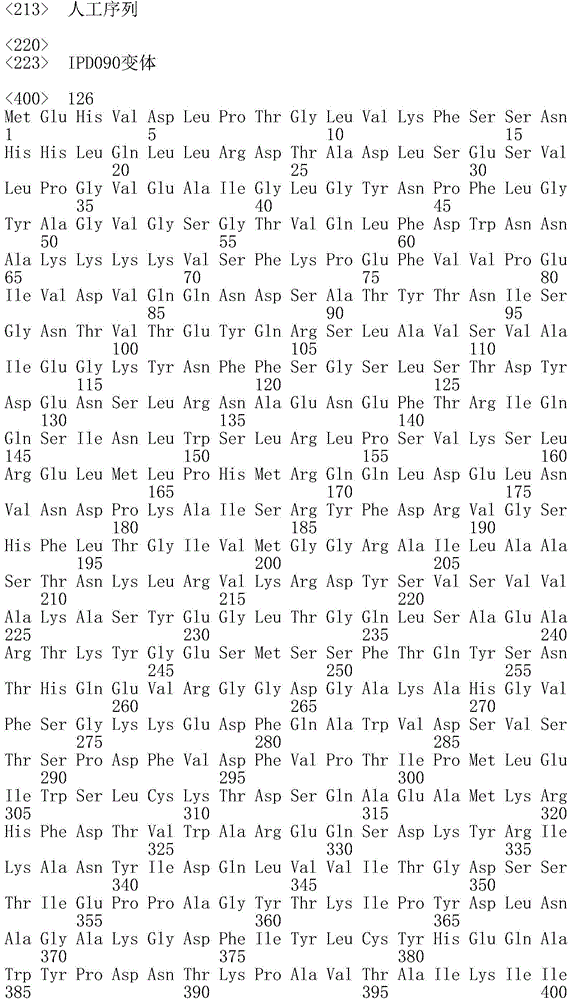


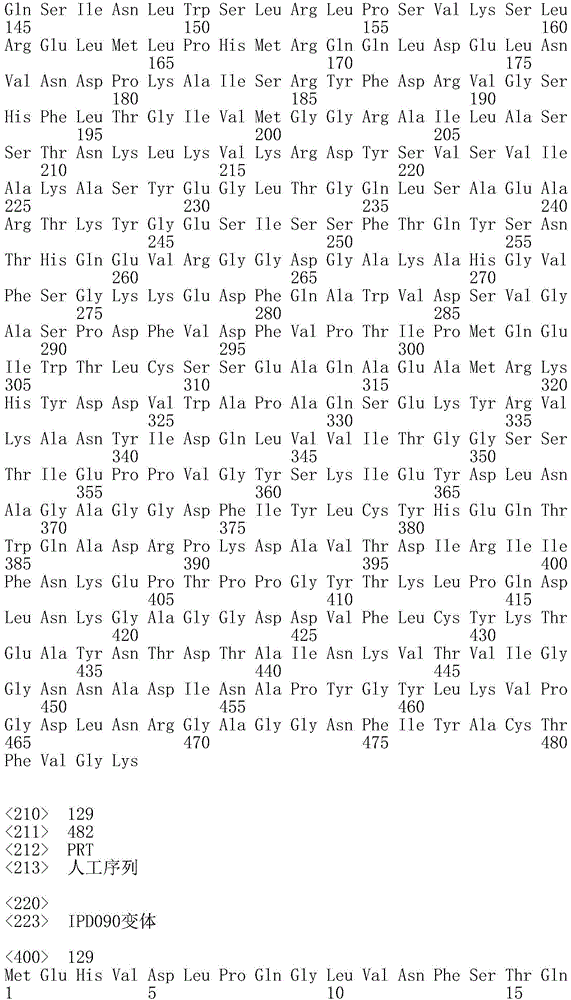


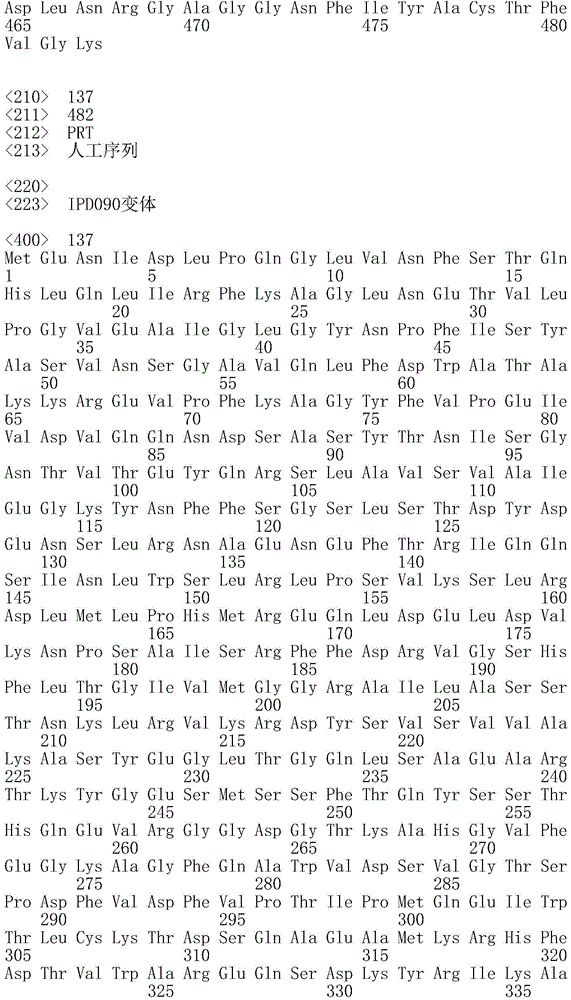


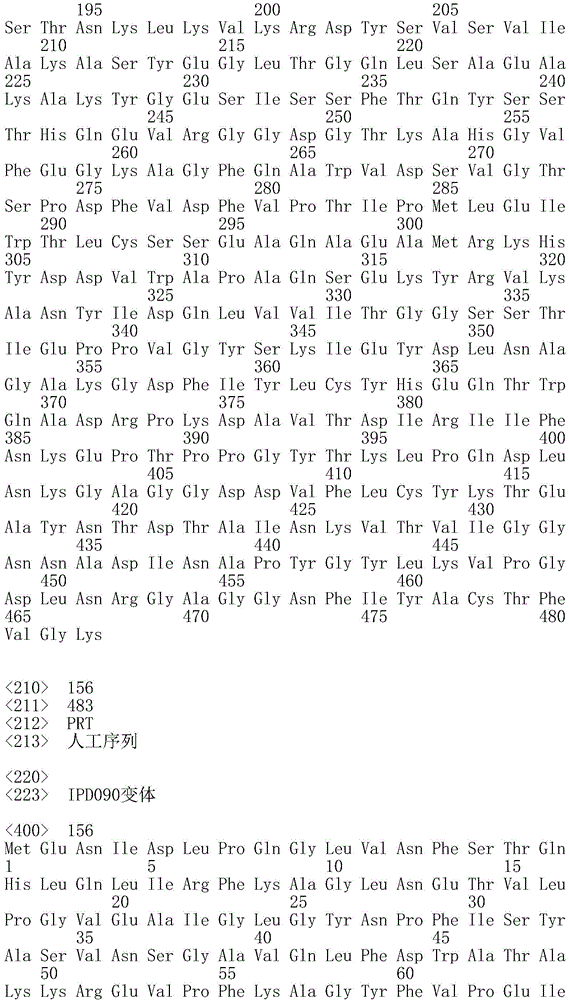


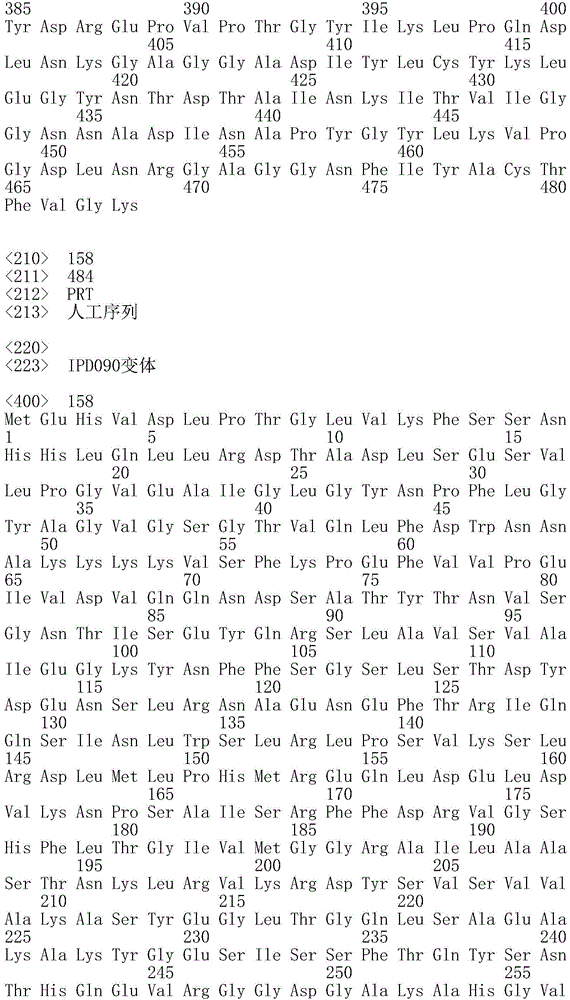


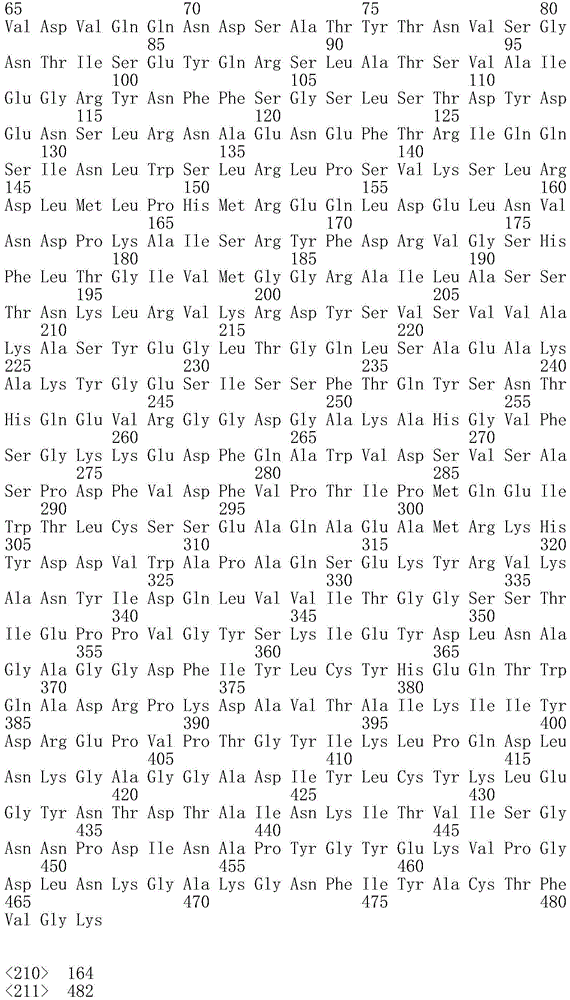


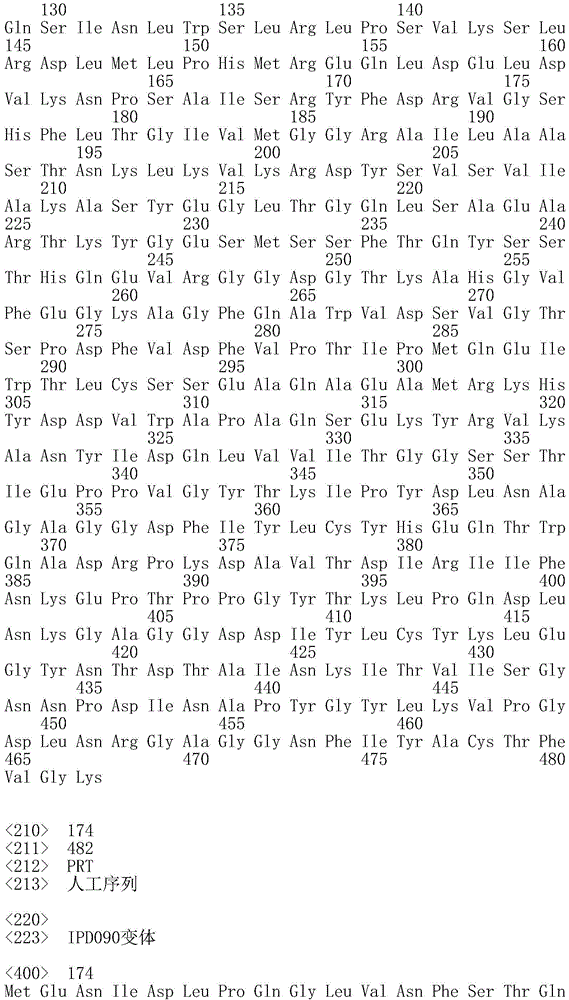
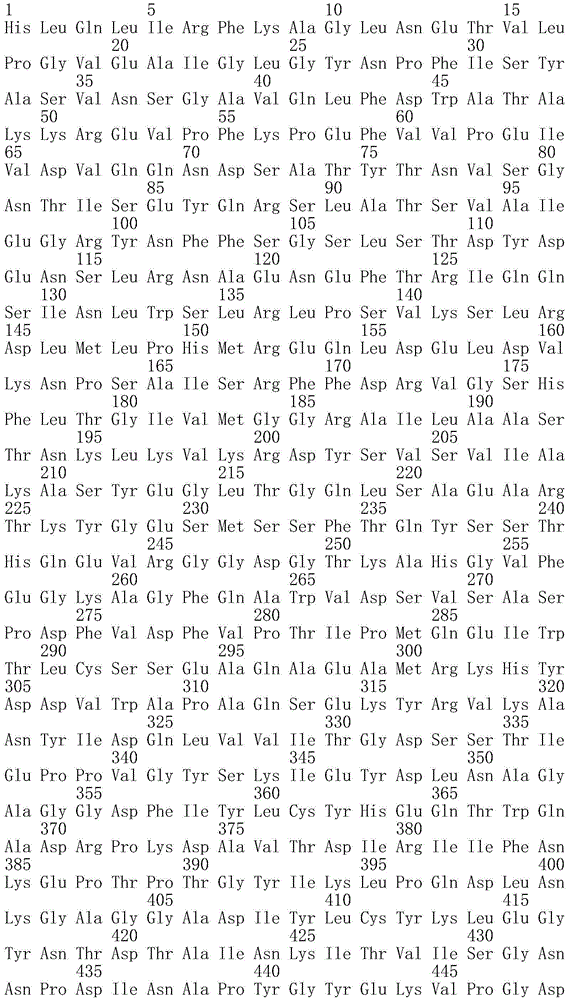


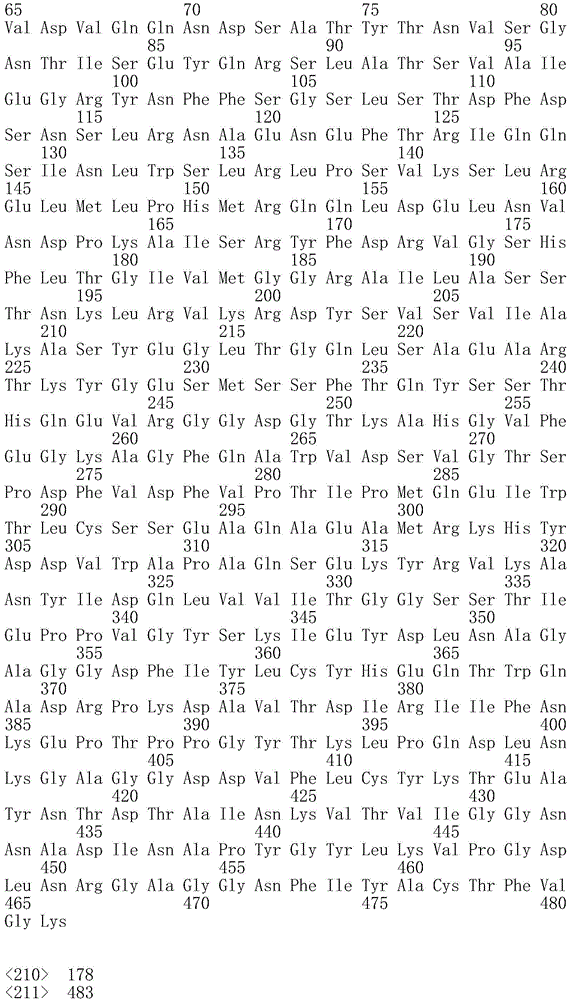


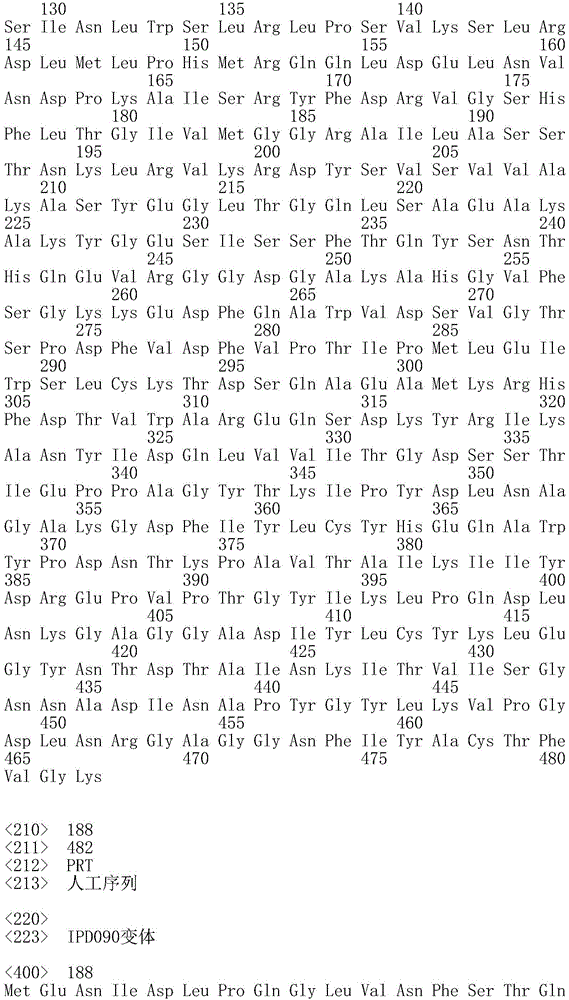

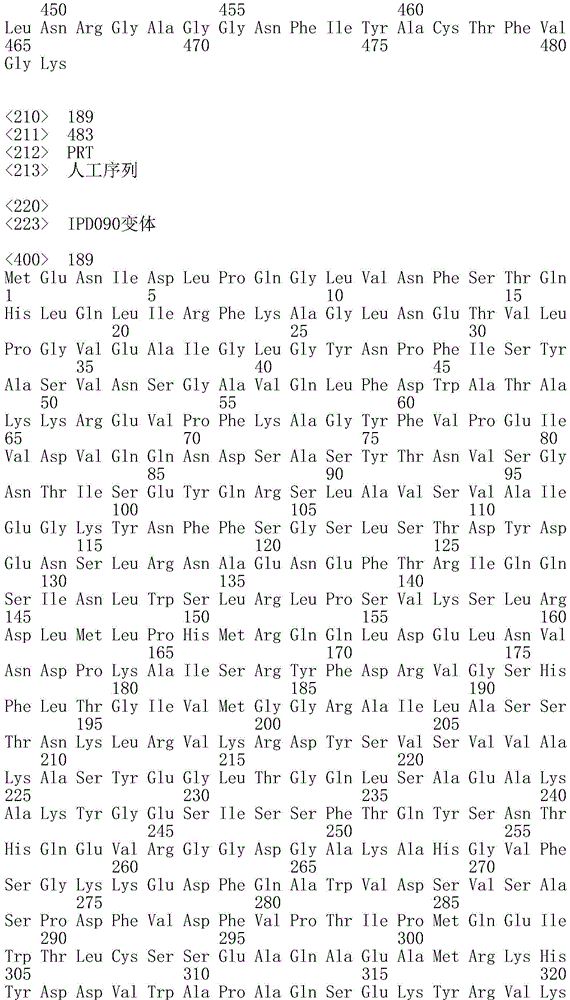


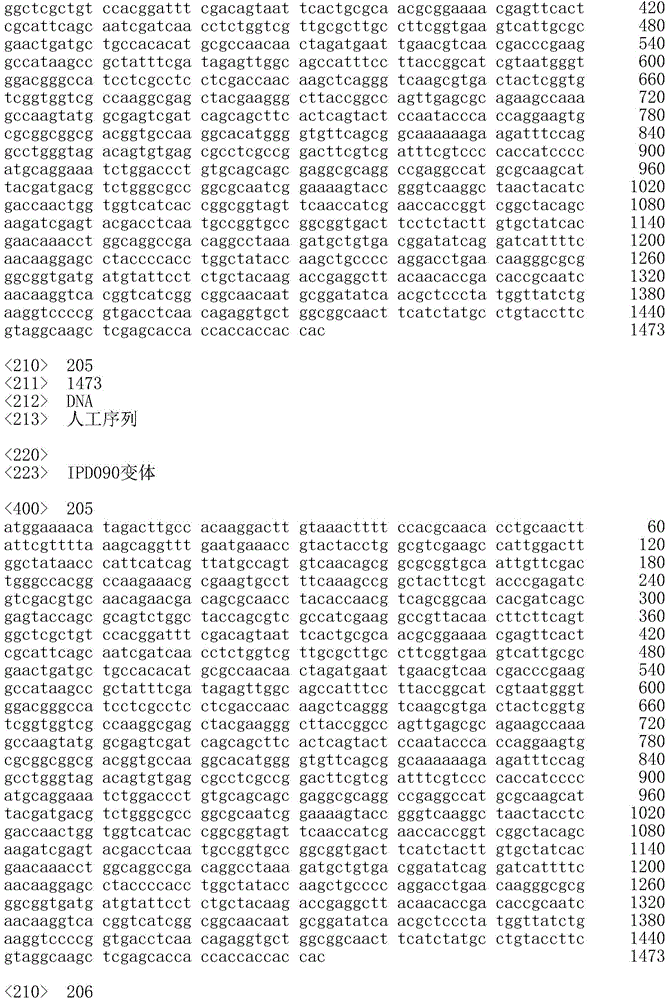


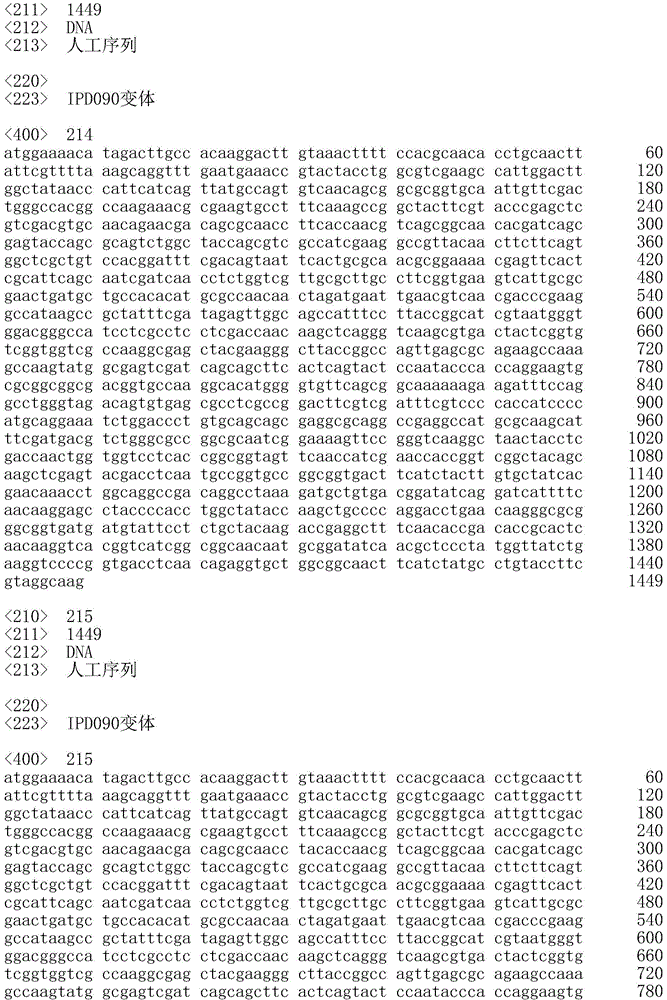


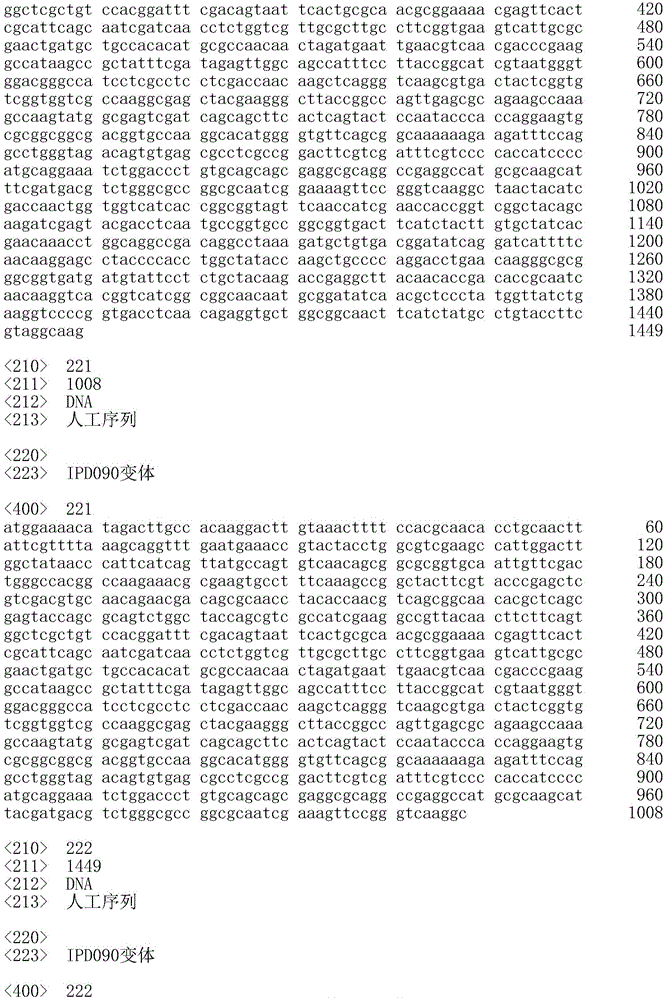


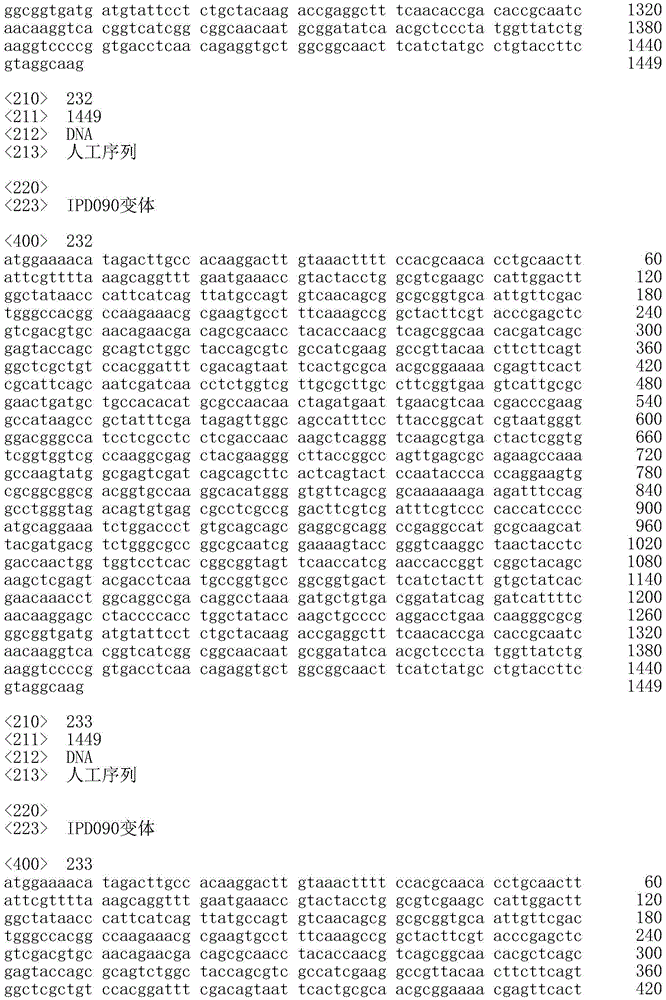


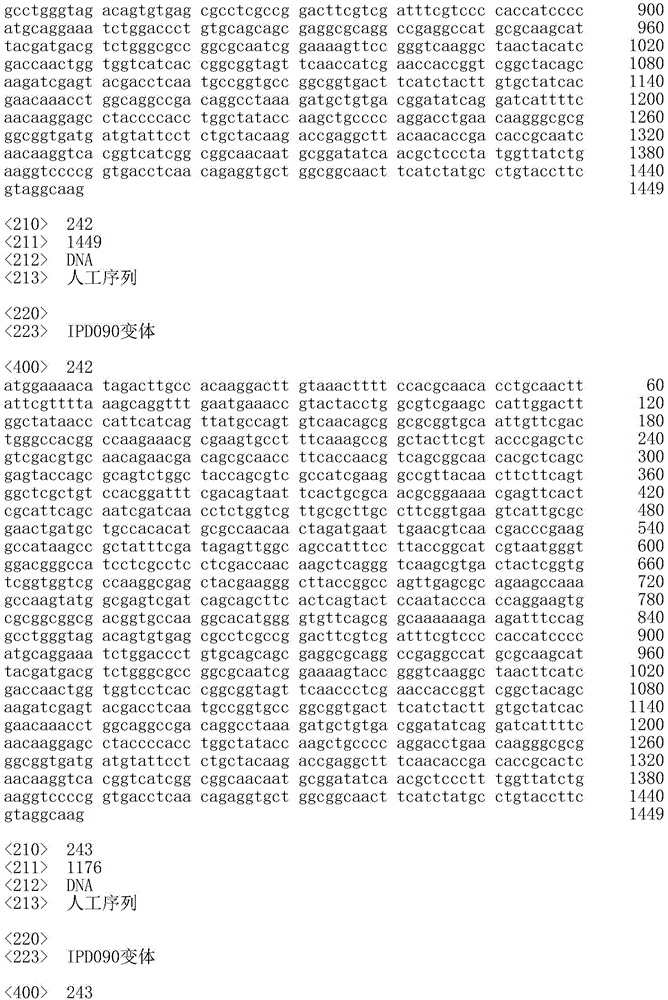









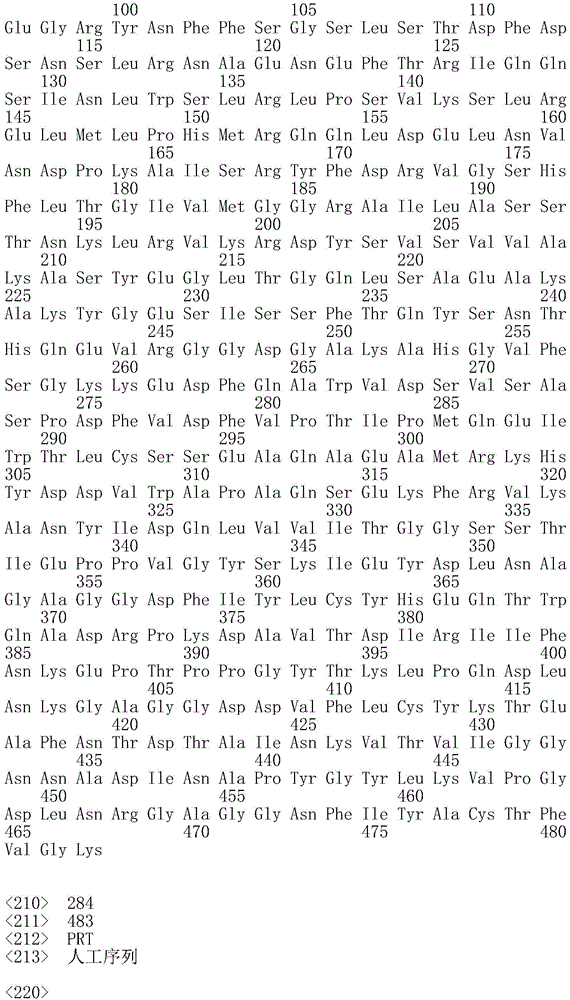


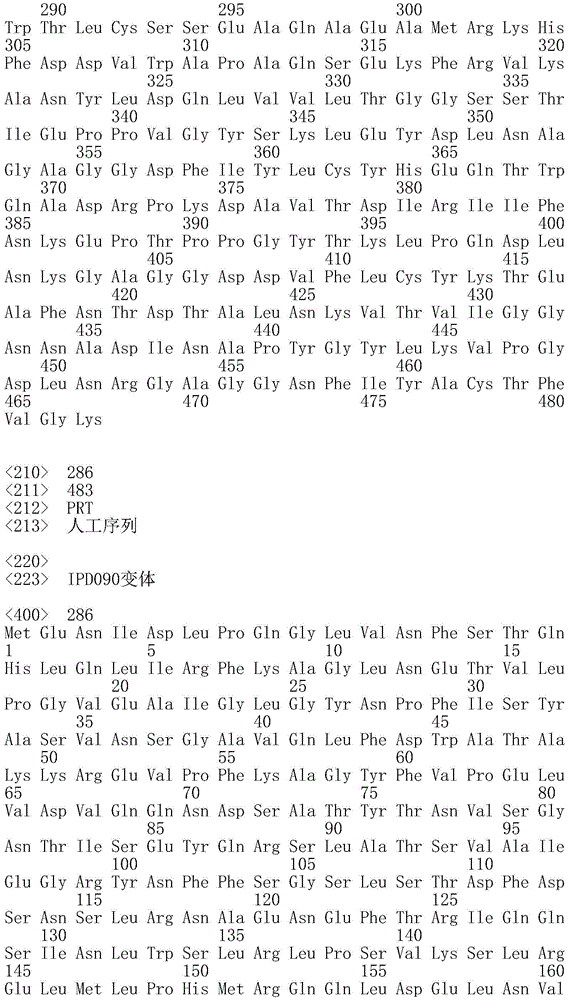


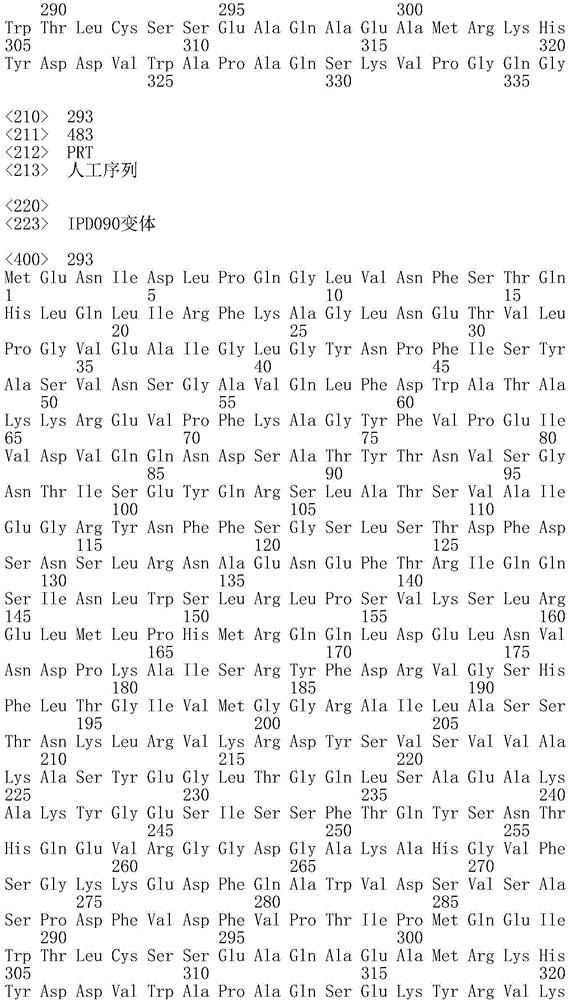


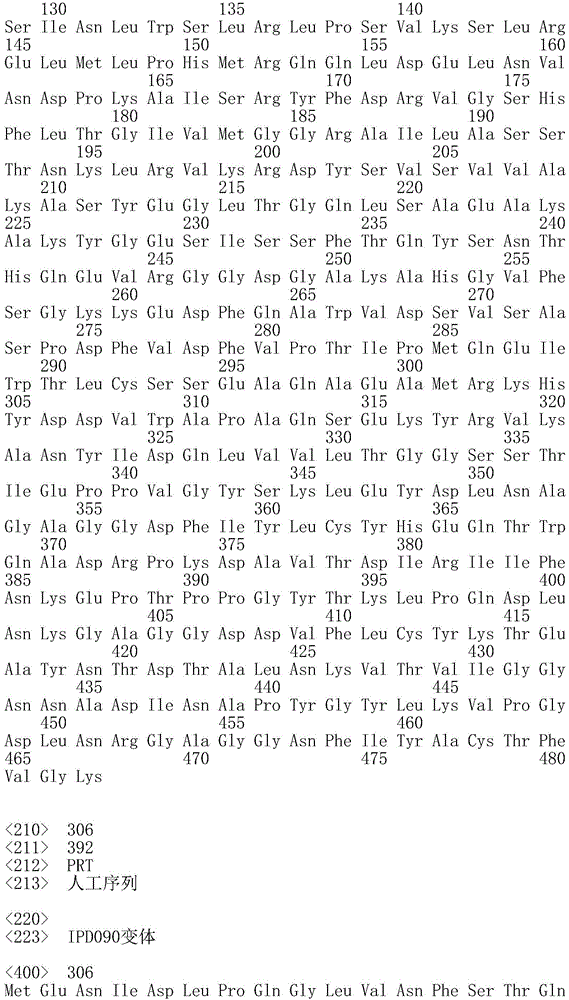


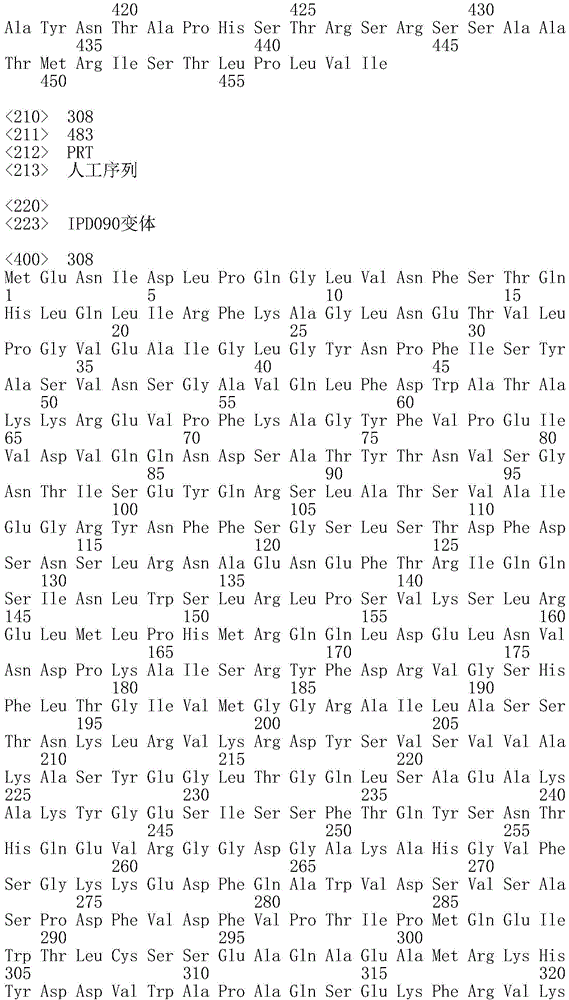
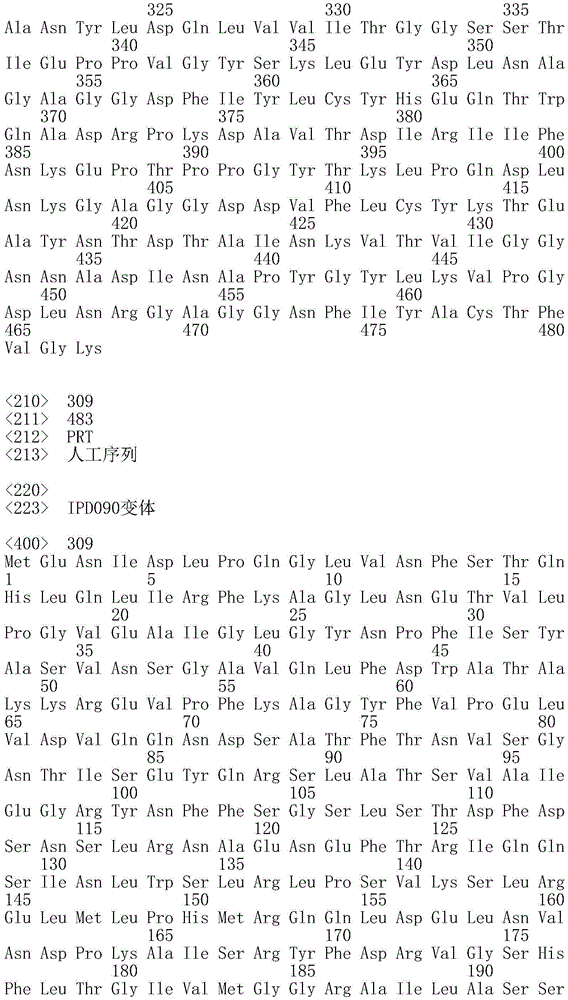

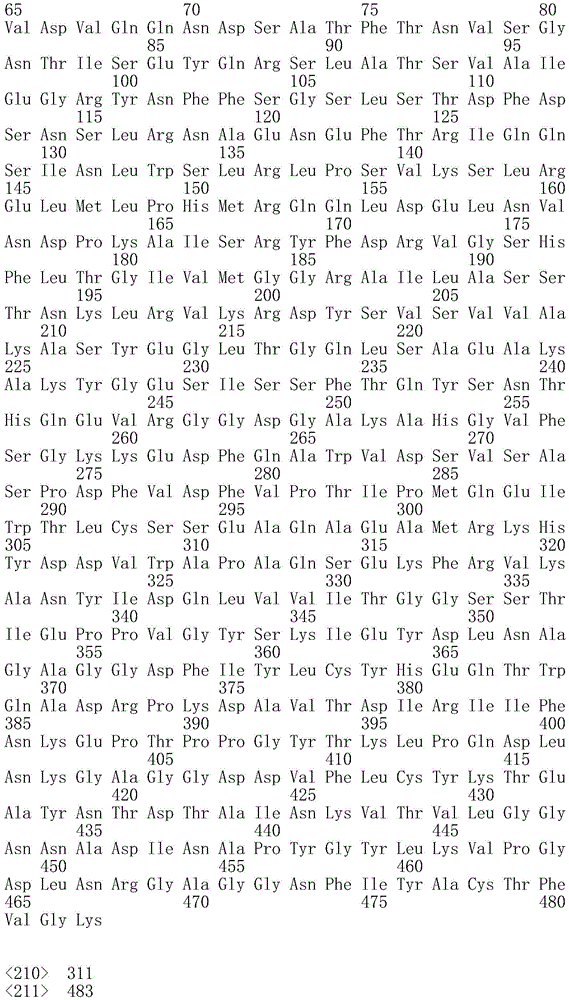


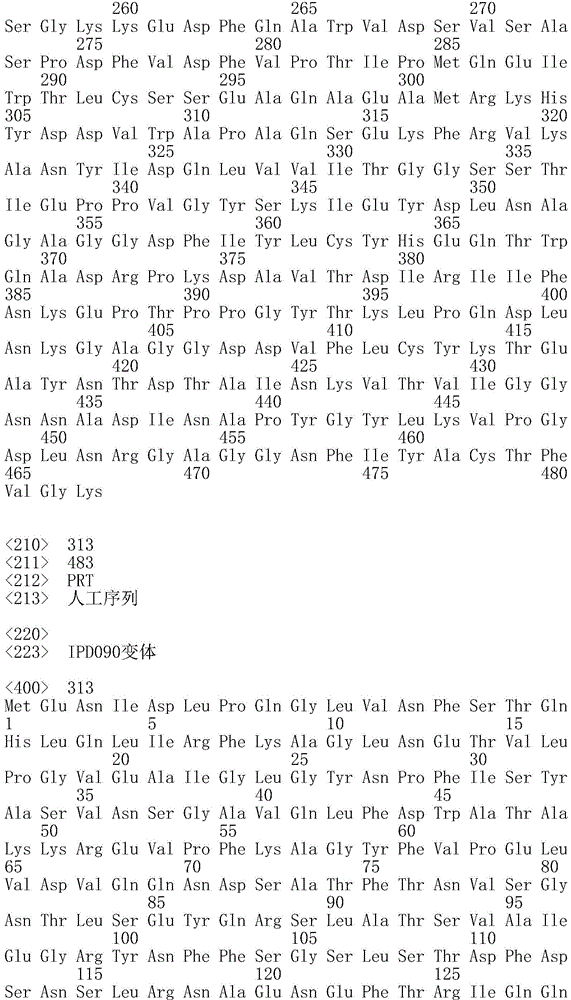


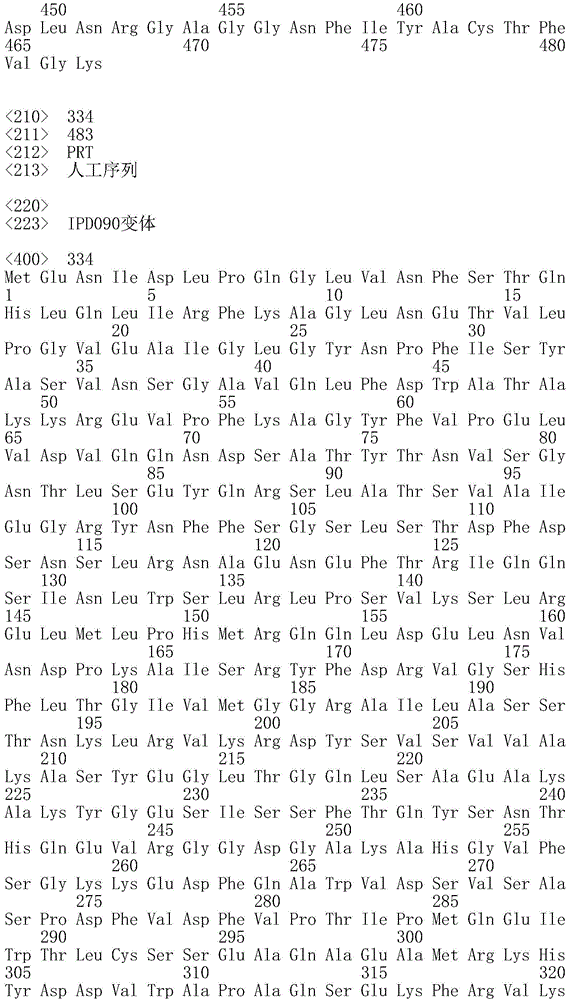


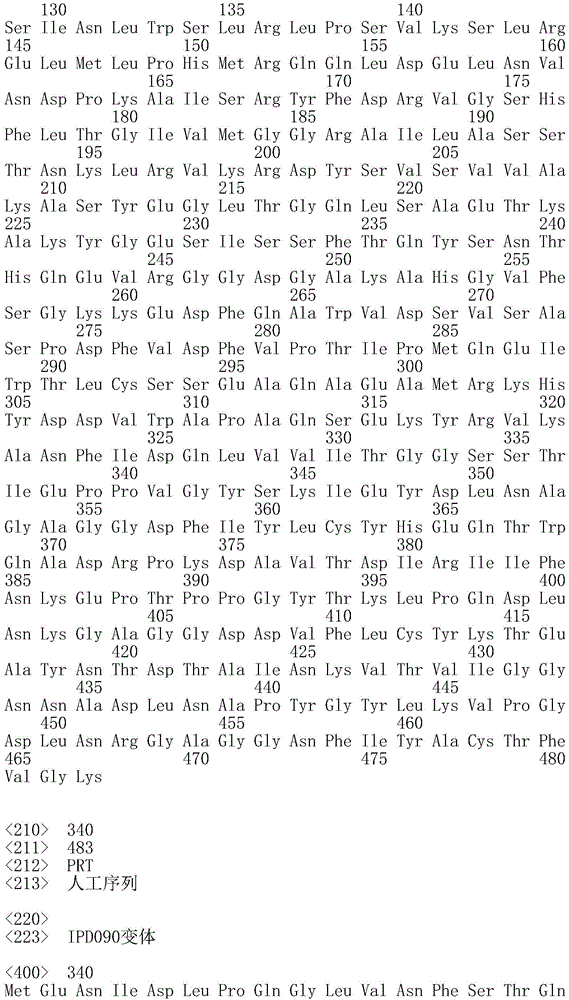
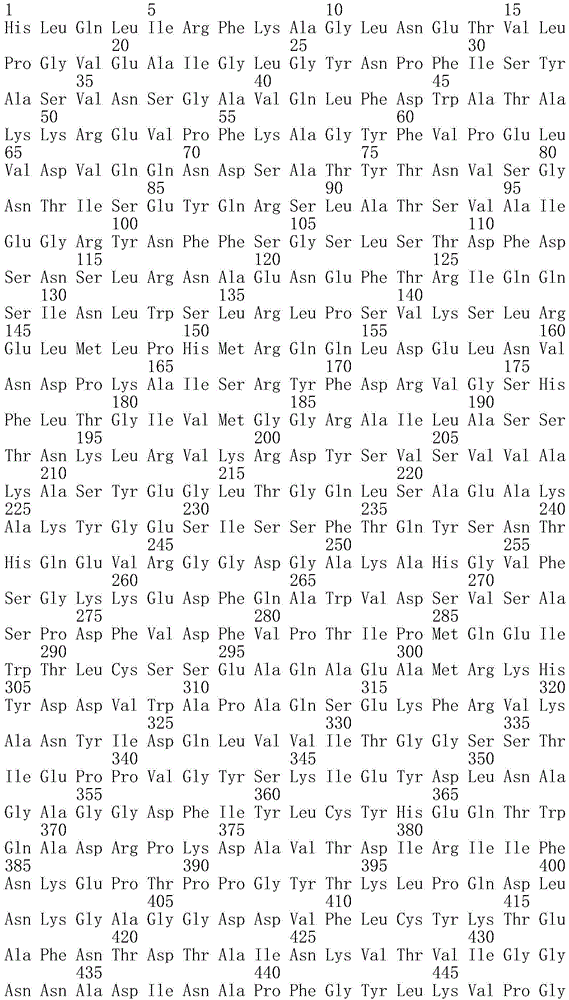






Claims (25)
Applications Claiming Priority (3)
| Application Number | Priority Date | Filing Date | Title |
|---|---|---|---|
| US201662331708P | 2016-05-04 | 2016-05-04 | |
| US62/331708 | 2016-05-04 | ||
| PCT/US2017/030602 WO2017192560A1 (en) | 2016-05-04 | 2017-05-02 | Insecticidal proteins and methods for their use |
Publications (2)
| Publication Number | Publication Date |
|---|---|
| CN109068660A CN109068660A (en) | 2018-12-21 |
| CN109068660B true CN109068660B (en) | 2023-05-02 |
Family
ID=60203433
Family Applications (1)
| Application Number | Title | Priority Date | Filing Date |
|---|---|---|---|
| CN201780027600.9A Active CN109068660B (en) | 2016-05-04 | 2017-05-02 | Insecticidal proteins and methods of use thereof |
Country Status (10)
| Country | Link |
|---|---|
| US (2) | US11008585B2 (en) |
| EP (2) | EP3960863B1 (en) |
| CN (1) | CN109068660B (en) |
| BR (1) | BR112018072417B1 (en) |
| CA (1) | CA3018384A1 (en) |
| EA (1) | EA201892293A1 (en) |
| MX (1) | MX387077B (en) |
| PH (1) | PH12018502306A1 (en) |
| WO (1) | WO2017192560A1 (en) |
| ZA (1) | ZA201806436B (en) |
Families Citing this family (17)
| Publication number | Priority date | Publication date | Assignee | Title |
|---|---|---|---|---|
| EP3568022B1 (en) * | 2017-01-12 | 2022-06-15 | Syngenta Participations AG | Insecticidal proteins |
| EP4122947A1 (en) * | 2017-12-19 | 2023-01-25 | Pioneer Hi-Bred International, Inc. | Insecticidal polypeptides and uses thereof |
| CA3111086A1 (en) * | 2018-10-10 | 2020-04-16 | Pioneer Hi-Bred International, Inc. | Insecticidal proteins and methods for their use |
| MX2021004689A (en) * | 2018-10-30 | 2021-06-04 | Syngenta Participations Ag | Insecticidal proteins. |
| US20220010327A1 (en) * | 2018-10-30 | 2022-01-13 | Syngenta Participations Ag | Insecticidal proteins |
| WO2021016840A1 (en) * | 2019-07-30 | 2021-02-04 | Sinobioway Bio-Agriculture Group Co., Ltd. | Abiotic stress tolerant plants and methods |
| WO2021076346A1 (en) | 2019-10-18 | 2021-04-22 | Pioneer Hi-Bred International, Inc. | Maize event dp-202216-6 and dp-023211-2 stack |
| PE20221284A1 (en) | 2020-02-04 | 2022-09-05 | Corteva Agriscience Llc | COMPOSITIONS HAVING UTILITY AS PESTICIDES AND PROCESSES RELATED THERETO |
| CA3186978A1 (en) | 2020-07-14 | 2022-01-20 | Pioneer Hi-Bred International, Inc. | Insecticidal proteins and methods for their use |
| EP4250927A4 (en) * | 2020-11-30 | 2025-02-19 | Syngenta Crop Protection AG | NOVEL HYDROXYPHENYLPYRUVATE DIOXYGENASE POLYPEPTIDES AND METHODS OF USE THEREOF |
| CN117460834A (en) * | 2021-03-23 | 2024-01-26 | 吉诺尔公司 | antimicrobial peptides |
| TW202345696A (en) | 2022-05-18 | 2023-12-01 | 美商科迪華農業科技有限責任公司 | Compositions having pesticidal utility and processes related thereto |
| WO2024099765A2 (en) * | 2022-11-10 | 2024-05-16 | BASF Agricultural Solutions Seed US LLC | Transcription regulating nucleotide sequences and methods of use |
| CN116024259B (en) * | 2022-12-08 | 2024-07-23 | 山东和正生态农业开发有限公司 | Application of chrysanthemum transcription factor CmMYB gene in dwarfing plants or shortening root length |
| WO2025052302A1 (en) | 2023-09-05 | 2025-03-13 | Mazen Animal Health, Inc. | Methods and compositions for the production of mannanase in plants |
| WO2025074304A1 (en) | 2023-10-03 | 2025-04-10 | Mazen Animal Health, Inc. | Compositions and methods for in planta production of a porcine circovirus vaccine |
| CN117880519B (en) * | 2024-03-12 | 2024-05-14 | 深圳市诚立业科技发展有限公司 | Multimedia short message safety transmission method based on 5G technology |
Citations (4)
| Publication number | Priority date | Publication date | Assignee | Title |
|---|---|---|---|---|
| EP0255311A2 (en) * | 1986-07-28 | 1988-02-03 | Stine Seed Farm, Inc. | Biological control of insects |
| CN101268094A (en) * | 2005-08-31 | 2008-09-17 | 孟山都技术有限公司 | Nucleotide sequences encoding pesticidal proteins |
| WO2009067487A3 (en) * | 2007-11-19 | 2009-09-17 | The United States Of America, As Represented By The Secretary Of Agriculture | Novel cadherin receptor peptide for potentiating bt biopesticides |
| CN101959419A (en) * | 2008-01-10 | 2011-01-26 | 先锋国际良种公司 | Novel bacillus thuringiensis gene with coleopteran activity |
Family Cites Families (457)
| Publication number | Priority date | Publication date | Assignee | Title |
|---|---|---|---|---|
| US3710511A (en) | 1971-04-21 | 1973-01-16 | Univ Illinois | Procedures for use of genic male sterility in production of commercial hybrid maize |
| US3861709A (en) | 1973-07-12 | 1975-01-21 | Amsted Ind Inc | Shiftable fifth wheel construction |
| US4196265A (en) | 1977-06-15 | 1980-04-01 | The Wistar Institute | Method of producing antibodies |
| US4554101A (en) | 1981-01-09 | 1985-11-19 | New York Blood Center, Inc. | Identification and preparation of epitopes on antigens and allergens on the basis of hydrophilicity |
| US4714681A (en) | 1981-07-01 | 1987-12-22 | The Board Of Reagents, The University Of Texas System Cancer Center | Quadroma cells and trioma cells and methods for the production of same |
| US4716111A (en) | 1982-08-11 | 1987-12-29 | Trustees Of Boston University | Process for producing human antibodies |
| US5094945A (en) | 1983-01-05 | 1992-03-10 | Calgene, Inc. | Inhibition resistant 5-enolpyruvyl-3-phosphoshikimate synthase, production and use |
| US4535060A (en) | 1983-01-05 | 1985-08-13 | Calgene, Inc. | Inhibition resistant 5-enolpyruvyl-3-phosphoshikimate synthetase, production and use |
| US4713325A (en) | 1983-06-14 | 1987-12-15 | The Regents Of The University Of California | Hybridomas producing monoclonal antibodies specific for FeLV p27 |
| US4716117A (en) | 1984-10-26 | 1987-12-29 | Chiron Corporation | Monoclonal antibodies to factor VIIIC |
| CA1207852A (en) | 1984-02-29 | 1986-07-15 | William D. Cornish | Non-resonant microwave frequency halver |
| US5331107A (en) | 1984-03-06 | 1994-07-19 | Mgi Pharma, Inc. | Herbicide resistance in plants |
| US4761373A (en) | 1984-03-06 | 1988-08-02 | Molecular Genetics, Inc. | Herbicide resistance in plants |
| US5304732A (en) | 1984-03-06 | 1994-04-19 | Mgi Pharma, Inc. | Herbicide resistance in plants |
| US4945050A (en) | 1984-11-13 | 1990-07-31 | Cornell Research Foundation, Inc. | Method for transporting substances into living cells and tissues and apparatus therefor |
| ATE93542T1 (en) | 1984-12-28 | 1993-09-15 | Plant Genetic Systems Nv | RECOMBINANT DNA THAT CAN BE INTRODUCED INTO PLANT CELLS. |
| US4720459A (en) | 1985-02-14 | 1988-01-19 | Medical College Of Wisconsin Research Foundation, Inc. | Myelomas for producing human/human hybridomas |
| WO1986005803A1 (en) | 1985-03-30 | 1986-10-09 | Marc Ballivet | Method for obtaining dna, rna, peptides, polypeptides or proteins by means of a dna recombinant technique |
| US6492107B1 (en) | 1986-11-20 | 2002-12-10 | Stuart Kauffman | Process for obtaining DNA, RNA, peptides, polypeptides, or protein, by recombinant DNA technique |
| US5569597A (en) | 1985-05-13 | 1996-10-29 | Ciba Geigy Corp. | Methods of inserting viral DNA into plant material |
| US4654465A (en) | 1985-07-18 | 1987-03-31 | Agracetus | Genic male-sterile maize |
| DK175922B1 (en) | 1985-08-07 | 2005-07-04 | Monsanto Technology Llc | Glyphosate-resistant plants |
| US4940835A (en) | 1985-10-29 | 1990-07-10 | Monsanto Company | Glyphosate-resistant plants |
| US5576195A (en) | 1985-11-01 | 1996-11-19 | Xoma Corporation | Vectors with pectate lyase signal sequence |
| US4810648A (en) | 1986-01-08 | 1989-03-07 | Rhone Poulenc Agrochimie | Haloarylnitrile degrading gene, its use, and cells containing the gene |
| ATE57390T1 (en) | 1986-03-11 | 1990-10-15 | Plant Genetic Systems Nv | PLANT CELLS OBTAINED BY GENOLOGICAL TECHNOLOGY AND RESISTANT TO GLUTAMINE SYNTHETASE INHIBITORS. |
| US4975374A (en) | 1986-03-18 | 1990-12-04 | The General Hospital Corporation | Expression of wild type and mutant glutamine synthetase in foreign hosts |
| US5273894A (en) | 1986-08-23 | 1993-12-28 | Hoechst Aktiengesellschaft | Phosphinothricin-resistance gene, and its use |
| US5605011A (en) | 1986-08-26 | 1997-02-25 | E. I. Du Pont De Nemours And Company | Nucleic acid fragment encoding herbicide resistant plant acetolactate synthase |
| US5013659A (en) | 1987-07-27 | 1991-05-07 | E. I. Du Pont De Nemours And Company | Nucleic acid fragment encoding herbicide resistant plant acetolactate synthase |
| US5378824A (en) | 1986-08-26 | 1995-01-03 | E. I. Du Pont De Nemours And Company | Nucleic acid fragment encoding herbicide resistant plant acetolactate synthase |
| US5268463A (en) | 1986-11-11 | 1993-12-07 | Jefferson Richard A | Plant promoter α-glucuronidase gene construct |
| US4727219A (en) | 1986-11-28 | 1988-02-23 | Agracetus | Genic male-sterile maize using a linked marker gene |
| US5608142A (en) | 1986-12-03 | 1997-03-04 | Agracetus, Inc. | Insecticidal cotton plants |
| US5145783A (en) | 1987-05-26 | 1992-09-08 | Monsanto Company | Glyphosate-tolerant 5-endolpyruvyl-3-phosphoshikimate synthase |
| US4971908A (en) | 1987-05-26 | 1990-11-20 | Monsanto Company | Glyphosate-tolerant 5-enolpyruvyl-3-phosphoshikimate synthase |
| US5312910A (en) | 1987-05-26 | 1994-05-17 | Monsanto Company | Glyphosate-tolerant 5-enolpyruvyl-3-phosphoshikimate synthase |
| US5316931A (en) | 1988-02-26 | 1994-05-31 | Biosource Genetics Corp. | Plant viral vectors having heterologous subgenomic promoters for systemic expression of foreign genes |
| EP0333033A1 (en) | 1988-03-09 | 1989-09-20 | Meiji Seika Kaisha Ltd. | Glutamine synthesis gene and glutamine synthetase |
| US5990387A (en) | 1988-06-10 | 1999-11-23 | Pioneer Hi-Bred International, Inc. | Stable transformation of plant cells |
| US5023179A (en) | 1988-11-14 | 1991-06-11 | Eric Lam | Promoter enhancer element for gene expression in plant roots |
| DE69033816T2 (en) | 1989-02-24 | 2002-08-08 | Monsanto Technology Llc., St. Louis | SYNTHETIC PLANT GENES AND METHOD FOR THEIR PRODUCTION |
| US5110732A (en) | 1989-03-14 | 1992-05-05 | The Rockefeller University | Selective gene expression in plants |
| US5879918A (en) | 1989-05-12 | 1999-03-09 | Pioneer Hi-Bred International, Inc. | Pretreatment of microprojectiles prior to using in a particle gun |
| US5240855A (en) | 1989-05-12 | 1993-08-31 | Pioneer Hi-Bred International, Inc. | Particle gun |
| US5188960A (en) | 1989-06-27 | 1993-02-23 | Mycogen Corporation | Bacillus thuringiensis isolate active against lepidopteran pests, and genes encoding novel lepidopteran-active toxins |
| US5310667A (en) | 1989-07-17 | 1994-05-10 | Monsanto Company | Glyphosate-tolerant 5-enolpyruvyl-3-phosphoshikimate synthases |
| US5550318A (en) | 1990-04-17 | 1996-08-27 | Dekalb Genetics Corporation | Methods and compositions for the production of stably transformed, fertile monocot plants and cells thereof |
| US5322783A (en) | 1989-10-17 | 1994-06-21 | Pioneer Hi-Bred International, Inc. | Soybean transformation by microparticle bombardment |
| US5187091A (en) | 1990-03-20 | 1993-02-16 | Ecogen Inc. | Bacillus thuringiensis cryiiic gene encoding toxic to coleopteran insects |
| ES2187497T3 (en) | 1990-04-12 | 2003-06-16 | Syngenta Participations Ag | PROMOTERS PREFERREDLY IN FABRICS. |
| US6297426B1 (en) | 1990-06-12 | 2001-10-02 | Pioneer Hi-Bred International, Inc. | Methods of mediating female fertility in plants |
| US5432068A (en) | 1990-06-12 | 1995-07-11 | Pioneer Hi-Bred International, Inc. | Control of male fertility using externally inducible promoter sequences |
| US5824524A (en) | 1990-06-12 | 1998-10-20 | Pioneer Hi-Bred International, Inc. | Nucleotide sequences mediating fertility and method of using same |
| US5478369A (en) | 1990-06-12 | 1995-12-26 | Pioneer Hi-Bred International, Inc. | Nucleotide sequences mediating male fertility and method of using same |
| US5498830A (en) | 1990-06-18 | 1996-03-12 | Monsanto Company | Decreased oil content in plant seeds |
| WO1992000377A1 (en) | 1990-06-25 | 1992-01-09 | Monsanto Company | Glyphosate tolerant plants |
| US5633435A (en) | 1990-08-31 | 1997-05-27 | Monsanto Company | Glyphosate-tolerant 5-enolpyruvylshikimate-3-phosphate synthases |
| US5866775A (en) | 1990-09-28 | 1999-02-02 | Monsanto Company | Glyphosate-tolerant 5-enolpyruvyl-3-phosphoshikimate synthases |
| US5266317A (en) | 1990-10-04 | 1993-11-30 | University Of Georgia Research Foundation, Inc. | Insect-specific paralytic neurotoxin genes for use in biological insect control: methods and compositions |
| US5932782A (en) | 1990-11-14 | 1999-08-03 | Pioneer Hi-Bred International, Inc. | Plant transformation method using agrobacterium species adhered to microprojectiles |
| US5459252A (en) | 1991-01-31 | 1995-10-17 | North Carolina State University | Root specific gene promoter |
| ES2299172T3 (en) | 1991-02-07 | 2008-05-16 | Bayer Bioscience N.V. | SPECIFIC PROMOTERS OF CORN STAMPS. |
| WO1992013956A1 (en) | 1991-02-08 | 1992-08-20 | Plant Genetic Systems, N.V. | Stamen-specific promoters from rice |
| MX9200621A (en) | 1991-02-14 | 1993-02-01 | Du Pont | GENE OF A PROTEIN WITH HIGH SULFUR CONTENT OF A SEED AND METHOD TO INCREASE THE SULFUR CONTENT IN AMINO ACIDS OF PLANTS. |
| FR2673643B1 (en) | 1991-03-05 | 1993-05-21 | Rhone Poulenc Agrochimie | TRANSIT PEPTIDE FOR THE INSERTION OF A FOREIGN GENE INTO A PLANT GENE AND PLANTS TRANSFORMED USING THIS PEPTIDE. |
| FR2673642B1 (en) | 1991-03-05 | 1994-08-12 | Rhone Poulenc Agrochimie | CHIMERIC GENE COMPRISING A PROMOTER CAPABLE OF GIVING INCREASED TOLERANCE TO GLYPHOSATE. |
| USRE36449E (en) | 1991-03-05 | 1999-12-14 | Rhone-Poulenc Agro | Chimeric gene for the transformation of plants |
| US5399680A (en) | 1991-05-22 | 1995-03-21 | The Salk Institute For Biological Studies | Rice chitinase promoter |
| GB9115909D0 (en) | 1991-07-23 | 1991-09-04 | Nickerson Int Seed | Recombinant dna |
| US5731180A (en) | 1991-07-31 | 1998-03-24 | American Cyanamid Company | Imidazolinone resistant AHAS mutants |
| AU661334B2 (en) | 1991-08-09 | 1995-07-20 | E.I. Du Pont De Nemours And Company | Synthetic storage proteins with defined structure containing programmable levels of essential amino acids for improvement of the nutritional value of plants |
| US5604121A (en) | 1991-08-27 | 1997-02-18 | Agricultural Genetics Company Limited | Proteins with insecticidal properties against homopteran insects and their use in plant protection |
| ZA927576B (en) | 1991-10-04 | 1993-04-16 | Univ North Carolina State | Pathogen-resistant transgenic plants. |
| EP0616644B1 (en) | 1991-12-04 | 2003-07-02 | E.I. Du Pont De Nemours And Company | Fatty acid desaturase genes from plants |
| US5324646A (en) | 1992-01-06 | 1994-06-28 | Pioneer Hi-Bred International, Inc. | Methods of regeneration of Medicago sativa and expressing foreign DNA in same |
| US5773691A (en) | 1992-03-19 | 1998-06-30 | E. I. Du Pont De Nemours And Company | Chimeric genes and methods for increasing the lysine and threonine content of the seeds of plants |
| DK39692D0 (en) | 1992-03-25 | 1992-03-25 | Danisco | BIOLOGICAL MATERIALS |
| US5428148A (en) | 1992-04-24 | 1995-06-27 | Beckman Instruments, Inc. | N4 - acylated cytidinyl compounds useful in oligonucleotide synthesis |
| US5401836A (en) | 1992-07-16 | 1995-03-28 | Pioneer Hi-Bre International, Inc. | Brassica regulatory sequence for root-specific or root-abundant gene expression |
| AU670316B2 (en) | 1992-07-27 | 1996-07-11 | Pioneer Hi-Bred International, Inc. | An improved method of (agrobacterium)-mediated transformation of cultured soybean cells |
| US5743477A (en) | 1992-08-27 | 1998-04-28 | Dowelanco | Insecticidal proteins and method for plant protection |
| US6372965B1 (en) | 1992-11-17 | 2002-04-16 | E.I. Du Pont De Nemours And Company | Genes for microsomal delta-12 fatty acid desaturases and hydroxylases from plants |
| US5834247A (en) | 1992-12-09 | 1998-11-10 | New England Biolabs, Inc. | Modified proteins comprising controllable intervening protein sequences or their elements methods of producing same and methods for purification of a target protein comprised by a modified protein |
| US5496714A (en) | 1992-12-09 | 1996-03-05 | New England Biolabs, Inc. | Modification of protein by use of a controllable interveining protein sequence |
| IL108241A (en) | 1992-12-30 | 2000-08-13 | Biosource Genetics Corp | Plant expression system comprising a defective tobamovirus replicon integrated into the plant chromosome and a helper virus |
| US5607914A (en) | 1993-01-13 | 1997-03-04 | Pioneer Hi-Bred International, Inc. | Synthetic antimicrobial peptides |
| DE69428290T2 (en) | 1993-01-13 | 2002-04-18 | Pioneer Hi-Bred International, Inc. | DERIVATIVES OF ALPHA-HORDOTHIONIN WITH HIGHER LEVELS OF LYSINE |
| IL108814A0 (en) | 1993-03-02 | 1994-06-24 | Du Pont | Improved feedcrops enriched in sulfur amino acids and methods for improvement |
| US5877012A (en) | 1993-03-25 | 1999-03-02 | Novartis Finance Corporation | Class of proteins for the control of plant pests |
| US5814618A (en) | 1993-06-14 | 1998-09-29 | Basf Aktiengesellschaft | Methods for regulating gene expression |
| US5789156A (en) | 1993-06-14 | 1998-08-04 | Basf Ag | Tetracycline-regulated transcriptional inhibitors |
| US6107547A (en) | 1993-10-06 | 2000-08-22 | New York University | Transgenic plants that exhibit enhanced nitrogen assimilation |
| WO1995015392A1 (en) | 1993-11-30 | 1995-06-08 | E.I. Du Pont De Nemours And Company | Chimeric geens and methods for increasing the lysine content of the seeds of corn, soybean and rapeseed plants |
| US5580852A (en) | 1993-12-17 | 1996-12-03 | Pioneer Hi-Bred International, Inc. | Derivatives of tachyplesin having inhibitory activity towards plant pathogenic fungi |
| US5689052A (en) | 1993-12-22 | 1997-11-18 | Monsanto Company | Synthetic DNA sequences having enhanced expression in monocotyledonous plants and method for preparation thereof |
| US6335160B1 (en) | 1995-02-17 | 2002-01-01 | Maxygen, Inc. | Methods and compositions for polypeptide engineering |
| US5605793A (en) | 1994-02-17 | 1997-02-25 | Affymax Technologies N.V. | Methods for in vitro recombination |
| US5837458A (en) | 1994-02-17 | 1998-11-17 | Maxygen, Inc. | Methods and compositions for cellular and metabolic engineering |
| US5834252A (en) | 1995-04-18 | 1998-11-10 | Glaxo Group Limited | End-complementary polymerase reaction |
| US6117679A (en) | 1994-02-17 | 2000-09-12 | Maxygen, Inc. | Methods for generating polynucleotides having desired characteristics by iterative selection and recombination |
| IL113685A0 (en) | 1994-05-13 | 1995-08-31 | Du Pont | Nucleic acid fragments chimeric genes and methods for increasing the methionine content of the seeds of plants |
| US5633363A (en) | 1994-06-03 | 1997-05-27 | Iowa State University, Research Foundation In | Root preferential promoter |
| US5767373A (en) | 1994-06-16 | 1998-06-16 | Novartis Finance Corporation | Manipulation of protoporphyrinogen oxidase enzyme activity in eukaryotic organisms |
| ZA955629B (en) | 1994-07-08 | 1997-01-06 | Du Pont | Chimeric genes and method for increasing the threonine content of the seeds of plants |
| US5736369A (en) | 1994-07-29 | 1998-04-07 | Pioneer Hi-Bred International, Inc. | Method for producing transgenic cereal plants |
| US5608144A (en) | 1994-08-12 | 1997-03-04 | Dna Plant Technology Corp. | Plant group 2 promoters and uses thereof |
| US5792931A (en) | 1994-08-12 | 1998-08-11 | Pioneer Hi-Bred International, Inc. | Fumonisin detoxification compositions and methods |
| GB9422083D0 (en) | 1994-11-02 | 1994-12-21 | Innes John Centre | Genetic control of flowering |
| US5659026A (en) | 1995-03-24 | 1997-08-19 | Pioneer Hi-Bred International | ALS3 promoter |
| US5994627A (en) | 1995-03-31 | 1999-11-30 | Common Wealth Scientific And Industrial Research Organisation | Genetic sequences conferring nematode resistance in plants and uses therefor |
| HU226259B1 (en) | 1995-04-20 | 2008-07-28 | American Cyanamid Co | Structure-based designed herbicide resistant products |
| US5853973A (en) | 1995-04-20 | 1998-12-29 | American Cyanamid Company | Structure based designed herbicide resistant products |
| CN1195377A (en) | 1995-05-31 | 1998-10-07 | 先锋高级育种国际公司 | Method for increasing accumulation of essential amino acids in seeds |
| GB9511196D0 (en) | 1995-06-02 | 1995-07-26 | Innes John Centre | Genetic control of flowering |
| JPH11506329A (en) | 1995-06-02 | 1999-06-08 | パイオニア ハイ−ブレッド インターナショナル,インコーポレイテッド | High methionine derivatives of α-hordothionine |
| CA2222615A1 (en) | 1995-06-02 | 1996-12-05 | Gururaj A. Rao | High threonine derivatives of .alpha.-hordothionin |
| FR2736926B1 (en) | 1995-07-19 | 1997-08-22 | Rhone Poulenc Agrochimie | 5-ENOL PYRUVYLSHIKIMATE-3-PHOSPHATE SYNTHASE MUTEE, CODING GENE FOR THIS PROTEIN AND PROCESSED PLANTS CONTAINING THIS GENE |
| FR2736929B1 (en) | 1995-07-19 | 1997-08-22 | Rhone Poulenc Agrochimie | ISOLATED DNA SEQUENCE THAT MAY SERVE AS A REGULATION ZONE IN A CHIMERIC GENE FOR USE IN PLANT TRANSFORMATION |
| US5837876A (en) | 1995-07-28 | 1998-11-17 | North Carolina State University | Root cortex specific gene promoter |
| GB9518731D0 (en) | 1995-09-13 | 1995-11-15 | Innes John Centre | Flowering genes |
| US5689035A (en) | 1995-09-26 | 1997-11-18 | Pioneer Hi-Bred International, Inc. | Brown stem rot resistance in soybeans |
| GB9602796D0 (en) | 1996-02-12 | 1996-04-10 | Innes John Centre Innov Ltd | Genetic control of plant growth and development |
| US6084153A (en) | 1996-02-14 | 2000-07-04 | The Governors Of The University Of Alberta | Plants having enhanced nitrogen assimilation/metabolism |
| US5850016A (en) | 1996-03-20 | 1998-12-15 | Pioneer Hi-Bred International, Inc. | Alteration of amino acid compositions in seeds |
| US6096548A (en) | 1996-03-25 | 2000-08-01 | Maxygen, Inc. | Method for directing evolution of a virus |
| US6083499A (en) | 1996-04-19 | 2000-07-04 | Mycogen Corporation | Pesticidal toxins |
| US6072050A (en) | 1996-06-11 | 2000-06-06 | Pioneer Hi-Bred International, Inc. | Synthetic promoters |
| GB9613132D0 (en) | 1996-06-21 | 1996-08-28 | Innes John Centre Innov Ltd | Genetic control of flowering |
| US5850026A (en) | 1996-07-03 | 1998-12-15 | Cargill, Incorporated | Canola oil having increased oleic acid and decreased linolenic acid content |
| US6177275B1 (en) | 1996-07-24 | 2001-01-23 | New York University | Plant nitrogen regulatory P-PII genes |
| US6706866B1 (en) | 1996-09-04 | 2004-03-16 | Michigan State University | Plant having altered environmental stress tolerance |
| US5892009A (en) | 1996-09-04 | 1999-04-06 | Michigan State University | DNA and encoded protein which regulates cold and dehydration regulated genes |
| US6417428B1 (en) | 1996-09-04 | 2002-07-09 | Michael F. Thomashow | Plant having altered environmental stress tolerance |
| US6063756A (en) | 1996-09-24 | 2000-05-16 | Monsanto Company | Bacillus thuringiensis cryET33 and cryET34 compositions and uses therefor |
| US6080913A (en) | 1996-09-25 | 2000-06-27 | Pioneer Hi-Bred International, Inc. | Binary methods of increasing accumulation of essential amino acids in seeds |
| AU728086B2 (en) | 1996-11-01 | 2001-01-04 | Pioneer Hi-Bred International, Inc. | Proteins with enhanced levels of essential amino acids |
| US6713063B1 (en) | 1996-11-20 | 2004-03-30 | Monsanto Technology, Llc | Broad-spectrum δ-endotoxins |
| US6017534A (en) | 1996-11-20 | 2000-01-25 | Ecogen, Inc. | Hybrid Bacillus thuringiensis δ-endotoxins with novel broad-spectrum insecticidal activity |
| US6232529B1 (en) | 1996-11-20 | 2001-05-15 | Pioneer Hi-Bred International, Inc. | Methods of producing high-oil seed by modification of starch levels |
| HUP9904074A3 (en) | 1996-11-22 | 2001-10-29 | Pioneer Hi Bred Int | Moniliformin detoxification compositions and methods |
| US5846812A (en) | 1996-11-22 | 1998-12-08 | Pioneer Hi-Bred International, Inc. | Zearalenone detoxification compositions and methods |
| US5798255A (en) | 1996-11-22 | 1998-08-25 | Pioneer Hi-Bred International, Inc. | Beauvericin detoxification compositions and methods |
| US5942664A (en) | 1996-11-27 | 1999-08-24 | Ecogen, Inc. | Bacillus thuringiensis Cry1C compositions toxic to lepidopteran insects and methods for making Cry1C mutants |
| DE19652284A1 (en) | 1996-12-16 | 1998-06-18 | Hoechst Schering Agrevo Gmbh | Novel genes encoding amino acid deacetylases with specificity for N-acetyl-L-phosphinothricin, their isolation and use |
| US5986177A (en) | 1997-01-10 | 1999-11-16 | Agricultural Genetic Engineering Research Institute | Bacillus thuringiensis isolates with broad spectrum activity |
| US6326204B1 (en) | 1997-01-17 | 2001-12-04 | Maxygen, Inc. | Evolution of whole cells and organisms by recursive sequence recombination |
| EP2261373A3 (en) | 1997-01-17 | 2011-12-14 | Codexis Mayflower Holdings, LLC | Evolution of whole cells and organisms by recursive sequence recombination |
| US5981840A (en) | 1997-01-24 | 1999-11-09 | Pioneer Hi-Bred International, Inc. | Methods for agrobacterium-mediated transformation |
| GB9703146D0 (en) | 1997-02-14 | 1997-04-02 | Innes John Centre Innov Ltd | Methods and means for gene silencing in transgenic plants |
| AU6611498A (en) | 1997-03-18 | 1998-10-12 | Novo Nordisk A/S | Method for constructing a library using dna shuffling |
| EP0973940B1 (en) | 1997-03-18 | 2008-07-02 | Novozymes A/S | An in vitro method for the construction of a dna library |
| US5948653A (en) | 1997-03-21 | 1999-09-07 | Pati; Sushma | Sequence alterations using homologous recombination |
| US6153410A (en) | 1997-03-25 | 2000-11-28 | California Institute Of Technology | Recombination of polynucleotide sequences using random or defined primers |
| CN1253584A (en) | 1997-03-27 | 2000-05-17 | 纳幕尔杜邦公司 | Chimeric genes and methods for increasing lysine content of seeds of plants |
| US6040497A (en) | 1997-04-03 | 2000-03-21 | Dekalb Genetics Corporation | Glyphosate resistant maize lines |
| US7105724B2 (en) | 1997-04-04 | 2006-09-12 | Board Of Regents Of University Of Nebraska | Methods and materials for making and using transgenic dicamba-degrading organisms |
| ZA981569B (en) | 1997-04-08 | 1999-08-25 | Du Pont | An engineered seed protein having a higher percentage of essential amino acids. |
| ES2246534T3 (en) | 1997-04-08 | 2006-02-16 | E.I. Du Pont De Nemours And Company | SOY PLANT THAT PRODUCES SEEDS WITH REDUCED LEVELS OF RAFFINOS SACARIDS AND FITIC ACID. |
| DK0915909T3 (en) | 1997-05-05 | 2007-10-08 | Dow Agrosciences Llc | Insecticidal protein toxins from Xenorhabdus |
| WO1998055601A2 (en) | 1997-06-06 | 1998-12-10 | E.I. Du Pont De Nemours And Company | Plant amino acid biosynthetic enzymes |
| WO1998056935A2 (en) | 1997-06-12 | 1998-12-17 | E.I. Du Pont De Nemours And Company | Plant amino acid biosynthetic enzymes |
| GB9712415D0 (en) | 1997-06-13 | 1997-08-13 | Innes John Centre Innov Ltd | Genetic control of flowering |
| US6291224B1 (en) | 1998-07-17 | 2001-09-18 | Pioneer Hi-Bred International, Inc. | Genes controlling phytate metabolism in plants and uses thereof |
| US6197561B1 (en) | 1997-07-22 | 2001-03-06 | Pioneer Hi-Bred International, Inc. | Genes controlling phytate metabolism in plants and uses thereof |
| DE69838613T2 (en) | 1997-07-22 | 2008-08-07 | Pioneer Hi-Bred International, Inc. | GENE, CONTROLLING PHYTATE METABOLISM AND APPLICABLE APPLICATIONS |
| GB9717192D0 (en) | 1997-08-13 | 1997-10-22 | Innes John Centre Innov Ltd | Genetic control of plant growth and development |
| HUP0002477A3 (en) | 1997-08-27 | 2002-09-30 | Pioneer Hi Bred Int | Genes encoding enzymes for lignin biosynthesis and uses thereof |
| US5929305A (en) | 1997-10-14 | 1999-07-27 | Michigan State University | Plant material containing non-naturally introduced binding protein for regulating cold and dehydration regulatory genes |
| US6399383B1 (en) | 1997-10-28 | 2002-06-04 | Maxygen, Inc. | Human papilloma virus vectors |
| EP1030861A4 (en) | 1997-10-31 | 2001-09-05 | Maxygen Inc | MODIFICATION OF VIRAL TROPISM AND THE DIVERSITY OF HOST SPECIES BY RECOMBINATION OF THE VIRAL GENOME |
| US6218188B1 (en) | 1997-11-12 | 2001-04-17 | Mycogen Corporation | Plant-optimized genes encoding pesticidal toxins |
| EP1032693A1 (en) | 1997-11-18 | 2000-09-06 | Pioneer Hi-Bred International, Inc. | A method for directional stable transformation of eukaryotic cells |
| CA2309719A1 (en) | 1997-11-18 | 1999-05-27 | Pioneer Hi-Bred International, Inc. | Targeted manipulation of genes in plants |
| US6262341B1 (en) | 1997-11-18 | 2001-07-17 | Pioneer Hi-Bred International, Inc. | Method for the integration of foreign DNA into eukaryotic genomes |
| EP1034286B1 (en) | 1997-11-18 | 2010-01-06 | Pioneer Hi-Bred International, Inc. | Mobilization of viral genomes from t-dna using site-specific recombination systems |
| CA2313380C (en) | 1997-12-08 | 2008-12-30 | California Institute Of Technology | Method for creating polynucleotide and polypeptide sequences |
| AR017831A1 (en) | 1997-12-10 | 2001-10-24 | Pioneer Hi Bred Int | METHOD FOR ALTERING THE COMPOSITION OF AMINO ACIDS OF A NATIVE PROTEIN OF INTEREST, PREPARED PROTEIN, AND POLINUCLEOTIDE |
| ATE555123T1 (en) | 1997-12-18 | 2012-05-15 | Monsanto Technology Llc | INSECT-RESISTANT TRANSGENIC PLANTS AND METHODS TO IMPROVE DELTA-TOXIN ACTIVITY AGAINST TARGET INSECTS |
| US6060594A (en) | 1997-12-18 | 2000-05-09 | Ecogen, Inc. | Nucleic acid segments encoding modified bacillus thuringiensis coleopteran-toxic crystal proteins |
| US6077824A (en) | 1997-12-18 | 2000-06-20 | Ecogen, Inc. | Methods for improving the activity of δ-endotoxins against insect pests |
| US6023013A (en) | 1997-12-18 | 2000-02-08 | Monsanto Company | Insect-resistant transgenic plants |
| US6063597A (en) | 1997-12-18 | 2000-05-16 | Monsanto Company | Polypeptide compositions toxic to coleopteran insects |
| US7053282B1 (en) | 1998-02-09 | 2006-05-30 | Pioneer Hi-Bred International, Inc. | Alteration of amino acid compositions in seeds |
| AU2674299A (en) | 1998-02-11 | 1999-08-30 | Maxygen, Inc. | Targeting of genetic vaccine vectors |
| WO1999041383A1 (en) | 1998-02-11 | 1999-08-19 | Maxygen, Inc. | Antigen library immunization |
| ATE342985T1 (en) | 1998-02-26 | 2006-11-15 | Pioneer Hi Bred Int | CORN ALPHA-TUBULIN 3-18 PROMOTER |
| CA2315549A1 (en) | 1998-02-26 | 1999-09-02 | Pioneer Hi-Bred International, Inc. | Family of maize pr-1 genes and promoters |
| WO1999049064A2 (en) | 1998-03-20 | 1999-09-30 | Plant Bioscience Limited | Plant control genes |
| JP5015373B2 (en) | 1998-04-08 | 2012-08-29 | コモンウェルス サイエンティフィック アンド インダストリアル リサーチ オーガニゼイション | Methods and means for obtaining an improved phenotype |
| US6225530B1 (en) | 1998-04-15 | 2001-05-01 | The Salk Institute For Biological Studies | Flowering locus T (FT) and genetically modified plants having modulated flower development |
| EP1071789A1 (en) | 1998-04-24 | 2001-01-31 | E.I. Du Pont De Nemours And Company | Phytic acid biosynthetic enzymes |
| US6284948B1 (en) | 1998-05-18 | 2001-09-04 | Pioneer Hi-Bred International, Inc. | Genes and methods for control of nematodes in plants |
| EP0959133A1 (en) | 1998-05-22 | 1999-11-24 | Centrum Voor Plantenveredelings- En Reproduktieonderzoek (Cpro-Dlo) | A process for inhibiting expression of genes |
| US7008664B1 (en) | 1998-06-11 | 2006-03-07 | E. I. Du Pont De Nemours And Company | Method for improving the carcass quality of an animal |
| JP4700805B2 (en) | 1998-06-29 | 2011-06-15 | ブリストル−マイヤーズ スクウィブ カンパニー | How to make a highly diverse library |
| US6538177B1 (en) | 1998-07-15 | 2003-03-25 | Pioneer Hi-Bred International, Inc. | Compositions and methods for fumonisin detoxification |
| US6693185B2 (en) | 1998-07-17 | 2004-02-17 | Bayer Bioscience N.V. | Methods and means to modulate programmed cell death in eukaryotic cells |
| GB9816681D0 (en) | 1998-07-31 | 1998-09-30 | Minnesota Mining & Mfg | Cleaning pads formed from non-woven abrasive web material,especially for domestic use |
| FR2782323B1 (en) | 1998-08-12 | 2002-01-11 | Proteus | PROCESS FOR THE IN VITRO PRODUCTION OF RECOMBINANT POLYNUCLEOTIDE SEQUENCES, SEQUENCE BANKS AND SEQUENCES THUS OBTAINED |
| US7179955B2 (en) | 1998-08-17 | 2007-02-20 | Pioneer Hi-Bred International, Inc. | Maize cellulose synthases genes and uses thereof |
| US6930225B2 (en) | 1998-08-17 | 2005-08-16 | Pioneer Hi-Bred Int'l Inc. | Maize cellulose synthases and uses thereof |
| ATE376060T1 (en) | 1998-08-17 | 2007-11-15 | Pioneer Hi Bred Int | CORN CELLULOSE SYNTHASES AND USES THEREOF |
| US20040068767A1 (en) | 1998-08-17 | 2004-04-08 | Pioneer Hi-Bred International, Inc. | Maize cellulose synthases and uses thereof |
| AU5489099A (en) | 1998-08-20 | 2000-03-14 | Pioneer Hi-Bred International, Inc. | Seed-preferred promoters |
| WO2000012733A1 (en) | 1998-08-28 | 2000-03-09 | Pioneer Hi-Bred International, Inc. | Seed-preferred promoters from end genes |
| US6346403B1 (en) | 1998-09-08 | 2002-02-12 | E.I. Du Pont De Nemours And Company | Methionine metabolic enzymes |
| US20050086718A1 (en) | 1999-03-23 | 2005-04-21 | Mendel Biotechnology, Inc. | Plant transcriptional regulators of abiotic stress |
| US20030041356A1 (en) | 2001-03-27 | 2003-02-27 | Lynne Reuber | Methods for modifying flowering phenotypes |
| US6717034B2 (en) | 2001-03-30 | 2004-04-06 | Mendel Biotechnology, Inc. | Method for modifying plant biomass |
| US6664446B2 (en) | 1999-03-23 | 2003-12-16 | Mendel Biotechnology, Inc. | Transgenic plants comprising polynucleotides encoding transcription factors that confer disease tolerance |
| EP1117777A2 (en) | 1998-09-29 | 2001-07-25 | Maxygen, Inc. | Shuffling of codon altered genes |
| CA2703161C (en) | 1998-10-23 | 2011-12-20 | Mycogen Corporation | Plant-optimized polynucleotides encoding approximately 15 kda and approximately 45 kda pesticidal proteins |
| US6468523B1 (en) | 1998-11-02 | 2002-10-22 | Monsanto Technology Llc | Polypeptide compositions toxic to diabrotic insects, and methods of use |
| US6489542B1 (en) | 1998-11-04 | 2002-12-03 | Monsanto Technology Llc | Methods for transforming plants to express Cry2Ab δ-endotoxins targeted to the plastids |
| EP1131454A2 (en) | 1998-11-09 | 2001-09-12 | Pioneer Hi-Bred International, Inc. | Transcriptional activator nucleic acids, polypeptides and methods of use thereof |
| US6825397B1 (en) | 1998-11-09 | 2004-11-30 | Pioneer Hi-Bred International, Inc. | LEC1 trancriptional activator nucleic acids and methods of use thereof |
| US6391348B1 (en) | 1998-11-20 | 2002-05-21 | Pioneer Hi-Bred International, Inc. | Method of reducing cholesterol in eggs |
| EP1141270A4 (en) | 1998-11-25 | 2002-08-28 | Univ Pennsylvania | ETHYLENE REACTION FACTOR 1 (ERF1) IN PLANTS |
| US6531648B1 (en) | 1998-12-17 | 2003-03-11 | Syngenta Participations Ag | Grain processing method and transgenic plants useful therein |
| US6436675B1 (en) | 1999-09-28 | 2002-08-20 | Maxygen, Inc. | Use of codon-varied oligonucleotide synthesis for synthetic shuffling |
| WO2000042559A1 (en) | 1999-01-18 | 2000-07-20 | Maxygen, Inc. | Methods of populating data structures for use in evolutionary simulations |
| WO2000042561A2 (en) | 1999-01-19 | 2000-07-20 | Maxygen, Inc. | Oligonucleotide mediated nucleic acid recombination |
| GB9901927D0 (en) | 1999-01-28 | 1999-03-17 | John Innes Foundation | Methods and means for modification of plant characteristics |
| GB9902660D0 (en) | 1999-02-05 | 1999-03-31 | Plant Bioscience Ltd | Plant gene |
| US6323392B1 (en) | 1999-03-01 | 2001-11-27 | Pioneer Hi-Bred International, Inc. | Formation of brassica napus F1 hybrid seeds which exhibit a highly elevated oleic acid content and a reduced linolenic acid content in the endogenously formed oil of the seeds |
| US6531316B1 (en) | 1999-03-05 | 2003-03-11 | Maxyag, Inc. | Encryption of traits using split gene sequences and engineered genetic elements |
| AU3391900A (en) | 1999-03-05 | 2000-09-21 | Maxygen, Inc. | Encryption of traits using split gene sequences |
| US6835540B2 (en) | 2001-03-16 | 2004-12-28 | Mendel Biotechnology, Inc. | Biosynthetic pathway transcription factors |
| WO2000056908A2 (en) | 1999-03-24 | 2000-09-28 | Pioneer Hi-Bred International, Inc. | Maize chitinases and their use in enhancing disease resistance in crop plants |
| AU4452800A (en) | 1999-04-07 | 2000-10-23 | Michael Fromm | Genetic trait breeding method |
| US7531723B2 (en) | 1999-04-16 | 2009-05-12 | Pioneer Hi-Bred International, Inc. | Modulation of cytokinin activity in plants |
| US6992237B1 (en) | 1999-04-16 | 2006-01-31 | Pioneer Hi-Bred International Inc. | Regulated expression of genes in plant seeds |
| HUP0300187A3 (en) | 1999-04-29 | 2004-11-29 | Syngenta Ltd Haslemere | Herbicide resistant plants |
| CN1359422A (en) | 1999-04-29 | 2002-07-17 | 辛甄塔有限公司 | Herbicide resistant plants |
| HUP0201018A2 (en) | 1999-04-29 | 2002-07-29 | Syngenta Ltd | Herbicide resistant plants |
| EP1177303A1 (en) | 1999-05-07 | 2002-02-06 | Pioneer Hi-Bred International, Inc. | Phytyl/prenyltransferase nucleic acids, polypeptides and uses thereof |
| US6855865B2 (en) | 1999-05-07 | 2005-02-15 | E.I. Du Pont De Nemours And Company | Nucleic acids encoding plant defensins and methods of use thereof |
| US6653535B1 (en) | 1999-05-28 | 2003-11-25 | Pioneer Hi-Bred International, Inc. | Methods for modulating water-use efficiency or productivity in a plant by transforming with a DNA encoding a NAPD-malic enzyme operably linked to a guard cell or an epidermal cell promoter |
| US6441274B1 (en) | 1999-06-16 | 2002-08-27 | E. I. Du Pont De Nemours & Company | Plant tryptophan synthase beta subunit |
| AU6082600A (en) | 1999-07-12 | 2001-01-30 | E.I. Du Pont De Nemours And Company | Plant inositol polyphosphate phosphatase homologs |
| US6388171B1 (en) | 1999-07-12 | 2002-05-14 | Pioneer Hi-Bred International, Inc. | Compositions and methods for fumonisin detoxification |
| WO2001012825A1 (en) | 1999-08-13 | 2001-02-22 | Syngenta Participations Ag | Herbicide-tolerant protoporphyrinogen oxidase |
| MXPA02001666A (en) | 1999-08-16 | 2002-10-23 | Du Pont | Method for the production of calendic acid, a fatty acid containing delta-8,10,12 conjugated double bonds and related fatty acids having a modification at the delta-9 position. |
| AU6785900A (en) | 1999-08-19 | 2001-03-13 | Ppg Industries Ohio, Inc. | Hydrophobic particulate inorganic oxides and polymeric compositions containing same |
| US6423886B1 (en) | 1999-09-02 | 2002-07-23 | Pioneer Hi-Bred International, Inc. | Starch synthase polynucleotides and their use in the production of new starches |
| GB9922071D0 (en) | 1999-09-17 | 1999-11-17 | Plant Bioscience Ltd | Methods and means for modification of plant characteristics |
| MXPA02003669A (en) | 1999-10-12 | 2003-10-14 | Mendel Biotechnology Inc | Flowering time modification. |
| US6384304B1 (en) | 1999-10-15 | 2002-05-07 | Plant Genetic Systems N.V. | Conditional sterility in wheat |
| AU774837B2 (en) | 1999-10-21 | 2004-07-08 | Fluor Technologies Corporation | Methods and apparatus for high propane recovery |
| US20020178464A1 (en) | 1999-11-10 | 2002-11-28 | Whitehead Institute For Biomedical Research | Proton transporters and uses in plants |
| ATE398182T1 (en) | 1999-11-17 | 2008-07-15 | Mendel Biotechnology Inc | TOLERANCE GENES FOR ENVIRONMENTAL STRESS |
| HU225785B1 (en) | 1999-11-17 | 2007-09-28 | Pioneer Hi Bred Int | Modulation of plant response to abscisic acid |
| CN101311267B (en) | 1999-12-16 | 2016-08-03 | 孟山都技术有限公司 | Novel plant expression constructs |
| US6248535B1 (en) | 1999-12-20 | 2001-06-19 | University Of Southern California | Method for isolation of RNA from formalin-fixed paraffin-embedded tissue specimens |
| US7049115B2 (en) | 2000-02-29 | 2006-05-23 | E. I. Du Pont De Nemours & Company | Genes encoding denitrification enzymes |
| BR0109118A (en) | 2000-03-09 | 2002-11-26 | Monsanto Technology Llc | Methods for producing glyphosate tolerant plants and compositions thereof |
| US6777592B2 (en) | 2000-04-14 | 2004-08-17 | E.I. Du Pont Denemours And Company | Arthropod defensins of Scolopendra canidens, Vaejovis carolinianus, and Argiope spp. |
| MXPA02010012A (en) | 2000-04-14 | 2003-04-25 | Pioneer Hi Bred Int | Maize cellulose synthases and uses thereof. |
| JP2004512020A (en) | 2000-06-23 | 2004-04-22 | イー・アイ・デュポン・ドウ・ヌムール・アンド・カンパニー | Recombinant constructs and methods for using same in reducing gene expression |
| WO2002000894A2 (en) | 2000-06-30 | 2002-01-03 | Cropdesign N.V. | Gene silencing vector |
| CN1137265C (en) | 2000-07-06 | 2004-02-04 | 中国科学院微生物研究所 | Method for raising plant nitrogen assimilation efficiency |
| EP1406483A4 (en) | 2000-08-22 | 2005-05-25 | Mendel Biotechnology Inc | Genes for modifying plant traits iv |
| EP1312132A1 (en) | 2000-08-22 | 2003-05-21 | Paratek Microwave, Inc. | Combline filters with tunable dielectric capacitors |
| US6713259B2 (en) | 2000-09-13 | 2004-03-30 | Monsanto Technology Llc | Corn event MON810 and compositions and methods for detection thereof |
| US7605304B2 (en) | 2000-10-24 | 2009-10-20 | E.I. Du Pont De Nemours And Company | Genes encoding novel bacillus thuringiensis proteins with pesticidal activity against coleopterans |
| EP1346035A2 (en) | 2000-10-24 | 2003-09-24 | E. I. du Pont de Nemours and Company | Plant transcription factors |
| US7462481B2 (en) | 2000-10-30 | 2008-12-09 | Verdia, Inc. | Glyphosate N-acetyltransferase (GAT) genes |
| US6858778B1 (en) | 2000-11-07 | 2005-02-22 | Pioneer Hi-Bred International, Inc. | Plants transformed with a DNA construct comprising a nucleic acid molecule encoding an 18 kD α-globulin |
| US7741533B2 (en) | 2000-11-07 | 2010-06-22 | Pioneer Hi-Bred International, Inc. | Grain quality through altered expression of seed proteins |
| US20050160488A1 (en) | 2000-11-07 | 2005-07-21 | Pioneer Hi-Bred International, Inc. | Grain quality through altered expression of seed proteins |
| US20030024005A1 (en) | 2000-11-17 | 2003-01-30 | Hillyard Jeanna R. | Cotton event PV-GHBK04 (757) and compositions and methods for detection thereof |
| US7122658B1 (en) | 2000-11-22 | 2006-10-17 | Pioneer Hi-Bred International, Inc. | Seed-preferred regulatory elements and uses thereof |
| EP1385961A2 (en) | 2001-01-12 | 2004-02-04 | Pioneer Hi-Bred International Inc. | Novel inositol polyphosphate kinase genes and uses thereof |
| US6812380B2 (en) | 2001-03-27 | 2004-11-02 | Pioneer Hi-Bred International, Inc. | Compositions and methods of zearalenone detoxification |
| JP2002281975A (en) | 2001-03-28 | 2002-10-02 | Yamaguchi Technology Licensing Organization Ltd | Gene belonging to soy nitrate transporter 1 gene family |
| AR035799A1 (en) | 2001-03-30 | 2004-07-14 | Syngenta Participations Ag | INSECTICIDE TOXINS ISOLATED FROM BACILLUS THURINGIENSIS AND ITS USES. |
| US6891085B2 (en) | 2001-04-20 | 2005-05-10 | Pioneer Hi-Bred International, Inc. | Nucleic acid encoding the FUS6 antimicrobial polypeptide of Agrotis ipsilon and its use to enhance disease resistance in a plant |
| US20030166197A1 (en) | 2001-05-10 | 2003-09-04 | Ecker Joseph R. | Ethylene insensitive plants |
| EP2270184A3 (en) | 2001-06-22 | 2012-04-11 | Pioneer Hi-Bred International, Inc. | Defensin polynucleotides and methods of use |
| US7294759B2 (en) | 2001-06-29 | 2007-11-13 | E. I. Du Pont De Nemours And Company | Alteration of oil traits in plants |
| WO2003011015A2 (en) | 2001-08-02 | 2003-02-13 | Pioneer Hi-Bred International, Inc. | Methods for improving seed and grain characteristics |
| WO2003014327A2 (en) | 2001-08-09 | 2003-02-20 | Mendel Biotechnology, Inc. | Stress-related polynucleotides and polypeptides in plants |
| US7230167B2 (en) | 2001-08-31 | 2007-06-12 | Syngenta Participations Ag | Modified Cry3A toxins and nucleic acid sequences coding therefor |
| EP1961293A3 (en) | 2001-09-27 | 2009-01-28 | Pioneer Hi-Bred International, Inc. | Phytate polynucleotides and methods of use |
| AU2002334894A1 (en) | 2001-10-16 | 2003-04-28 | Pioneer Hi-Bred International, Inc. | Compositions and methods for promoting nematode resistance in plants |
| US7087810B2 (en) | 2001-11-07 | 2006-08-08 | Muller Mathis L | Isolated nucleic acids encoding proteins with chitinase activity and uses thereof |
| US7145060B2 (en) | 2001-11-07 | 2006-12-05 | Pioneer Hi-Bred International, Inc. | Nucleic acid encoding a chitinase and methods of using it to make fungal resistant plants |
| US7262038B2 (en) | 2001-12-14 | 2007-08-28 | Nitrate Elimination Co., Inc. | Simplified eukaryotic nitrate reductase |
| US7154029B2 (en) | 2002-03-22 | 2006-12-26 | E.I. Du Pont De Nemours And Company | Compositions and methods for altering tocotrienol content |
| US20040128719A1 (en) | 2002-06-21 | 2004-07-01 | Klee Harry J. | Materials and methods for tissue-specific targeting of ethylene insensitivity in transgenic plants |
| WO2004003148A2 (en) | 2002-06-26 | 2004-01-08 | E.I. Du Pont De Nemours And Company | Genes encoding proteins with pesticidal activity |
| US7462760B2 (en) | 2002-06-26 | 2008-12-09 | Pioneer Hi-Bred International, Inc. | Genes encoding plant protease-resistant pesticidal proteins and method of their use |
| HRP20050134A2 (en) | 2002-07-29 | 2005-06-30 | Monsanto Technology Llc | Corn event pv-zmir13 (mon863) plants and compositions and methods for detection thereof |
| US20040078852A1 (en) | 2002-08-02 | 2004-04-22 | Thomashow Michael F. | Transcription factors to improve plant stress tolerance |
| PT1546336E (en) | 2002-09-18 | 2012-04-09 | Mendel Biotechnology Inc | Polynucleotides and polypeptides in plants |
| US7491698B2 (en) | 2003-01-21 | 2009-02-17 | Dow Agrosciences Llc | Mixing and matching TC proteins for pest control |
| US20040216186A1 (en) | 2003-02-20 | 2004-10-28 | Athenix Corporation | AXMI-006, a delta-endotoxin gene and methods for its use |
| US7351881B2 (en) | 2003-02-20 | 2008-04-01 | Athenix Corporation | AXMI-008, a delta-endotoxin gene and methods for its use |
| US20040197917A1 (en) | 2003-02-20 | 2004-10-07 | Athenix Corporation | AXMI-014, delta-endotoxin gene and methods for its use |
| US20040210965A1 (en) | 2003-02-20 | 2004-10-21 | Athenix Corporation | AXMI-007, a delta-endotoxin gene and methods for its use |
| US20040210964A1 (en) | 2003-02-20 | 2004-10-21 | Athenix Corporation | AXMI-009, a delta-endotoxin gene and methods for its use |
| US7355099B2 (en) | 2003-02-20 | 2008-04-08 | Athenix Corporation | AXMI-004, a delta-endotoxin gene and methods for its use |
| NZ570682A (en) | 2003-02-20 | 2009-08-28 | Athenix Corp | AXMI-006 a delta-endotoxin gene and methods for its use as a pesticide |
| EP1613730A4 (en) | 2003-03-28 | 2007-12-05 | Monsanto Technology Llc | NEW PLANT PROMOTERS FOR USE IN EARLY DEVELOPMENT OF SEEDS |
| CN101220358A (en) | 2003-04-04 | 2008-07-16 | 先锋高级育种国际公司 | Regulation of Cytokinin Activity in Plants |
| DK1620571T3 (en) | 2003-05-02 | 2015-10-05 | Dow Agrosciences Llc | MAJS TD1507 and methods for detecting it |
| WO2005019414A2 (en) | 2003-07-07 | 2005-03-03 | Monsanto Technology, Llc | Insecticidal proteins secreted from bacillus thuringiensis and uses therefor |
| US7253343B2 (en) | 2003-08-28 | 2007-08-07 | Athenix Corporation | AXMI-003, a delta-endotoxin gene and methods for its use |
| WO2005030967A2 (en) | 2003-09-25 | 2005-04-07 | Pioneer Hi-Bred International, Inc. | Crop plant cystatin proteinase inhibitors and methods of use |
| US7524810B1 (en) | 2003-10-03 | 2009-04-28 | Dow Agrosciences Llc | Modified Cry34 proteins |
| US20050183161A1 (en) | 2003-10-14 | 2005-08-18 | Athenix Corporation | AXMI-010, a delta-endotoxin gene and methods for its use |
| CA2450000A1 (en) | 2003-12-18 | 2005-06-18 | Alberta Research Council Inc. | Method of creating plants with reduced level of saturated fatty acid in seed oil |
| US7629504B2 (en) | 2003-12-22 | 2009-12-08 | Pioneer Hi-Bred International, Inc. | Bacillus thuringiensis cry9 nucleic acids |
| BRPI0418365A (en) | 2003-12-23 | 2007-05-15 | Pioneer Hi Bred Int | plant activation of insect toxin |
| BRPI0507896A (en) | 2004-02-20 | 2007-07-24 | Pionner Hi Bred International | lipases and methods of using them to create or increase insect resistance in plants |
| KR101225918B1 (en) | 2004-02-25 | 2013-01-24 | 파이어니어 하이 부렛드 인터내쇼날 인코포레이팃드 | Novel Bacillus thuringiensis crystal polypeptides, polynucleotides, and compositions thereof |
| US7179965B2 (en) | 2004-03-26 | 2007-02-20 | Dow Agrosciences Llc | Cry1F and Cry1Ac transgenic cotton lines and event-specific identification thereof |
| AR048685A1 (en) | 2004-04-09 | 2006-05-17 | Monsanto Technology Llc | METHODS FOR CONTROL OF INSECT INFESTATIONS IN PLANTS. |
| US7405074B2 (en) | 2004-04-29 | 2008-07-29 | Pioneer Hi-Bred International, Inc. | Glyphosate-N-acetyltransferase (GAT) genes |
| PT1740039E (en) | 2004-04-30 | 2012-08-27 | Dow Agrosciences Llc | Novel herbicide resistance genes |
| CA2797972A1 (en) | 2004-05-20 | 2005-12-01 | Pioneer Hi-Bred International, Inc. | Maize multidrug resistance-associated protein polynucleotides and methods of use |
| CA2567764A1 (en) | 2004-06-16 | 2006-01-19 | Basf Plant Science Gmbh | Nucleic acid molecules encoding wrinkled1-like polypeptides and methods of use in plants |
| WO2006085966A2 (en) | 2004-06-30 | 2006-08-17 | Pioneer Hi-Bred International, Inc. | Methods of protecting plants from pathogenic fungi and nematodes |
| DE602005023460D1 (en) | 2004-07-02 | 2010-10-21 | Pioneer Hi Bred Int | ANTIMYCOTIC POLYPEPTIDE |
| CN101031594B (en) | 2004-07-08 | 2010-07-07 | 阿克马法国公司 | Polymeric materials comprising chains with imidazolinone functionalities |
| BRPI0515922B8 (en) | 2004-09-29 | 2022-12-06 | Dow Agrosciences Llc | DNA MOLECULE, KIT, CONSTRUCT, EVENT IDENTIFICATION METHOD, DETECTION METHOD, DNA MOLECULE PAIR, PURITY CONFIRMATION METHOD, SCAN METHOD, DNA SEQUENCE PAIR |
| MX2007009206A (en) | 2005-01-31 | 2008-02-19 | Athenix Corp | Axmi-018, axmi-020, and axmi-021, a family of delta-endotoxin genes and methods for their use. |
| AU2006222012B2 (en) | 2005-03-08 | 2011-03-31 | Basf Plant Science Gmbh | Expression enhancing intron sequences |
| US7601498B2 (en) | 2005-03-17 | 2009-10-13 | Biotium, Inc. | Methods of using dyes in association with nucleic acid staining or detection and associated technology |
| DE602006009239D1 (en) | 2005-04-01 | 2009-10-29 | Athenix Corp | AXMI-027 DELTA ENDOTOXIN GENE FAMILY AND METHOD OF USE THEREOF |
| MX2007012302A (en) | 2005-04-04 | 2008-04-14 | Du Pont | Polynucleotides and methods for making plants resistant to fungal pathogens. |
| WO2006119457A1 (en) | 2005-05-02 | 2006-11-09 | Athenix Corporation | Axmi-028 and axmi-029, family of novel delta-endotoxin genes and methods for their use |
| US8119858B2 (en) | 2005-07-06 | 2012-02-21 | Cropdesign N.V. | Plant yield improvement by Ste20-like gene expression |
| US8097769B2 (en) | 2005-07-18 | 2012-01-17 | Basf Plant Science Gmbh | Yield increase in plants overexpressing the ACCDP genes |
| ATE544861T1 (en) | 2005-08-24 | 2012-02-15 | Pioneer Hi Bred Int | METHODS AND COMPOSITIONS FOR EXPRESSING A POLYNUCLEOTIDE OF INTEREST |
| PT2431473T (en) | 2005-09-16 | 2017-02-15 | Monsanto Technology Llc | Methods for genetic control of insect infestations in plants and compositions thereof |
| ES2545093T3 (en) | 2005-09-16 | 2015-09-08 | Devgen N.V. | Transgenic plant-based methods for plant pests using RNAi |
| AU2006290733B8 (en) | 2005-09-16 | 2012-07-05 | Bayer Intellectual Property Gmbh | Transplastomic plants expressing lumen-targeted protein |
| NZ597682A (en) | 2006-01-12 | 2014-02-28 | Incima Ipco B V | Epsps mutants |
| US7329736B2 (en) | 2006-04-14 | 2008-02-12 | Pioneer Hi-Bred International, Inc. | Bacillus thuringiensis cry gene and protein |
| US7449552B2 (en) | 2006-04-14 | 2008-11-11 | Pioneer Hi-Bred International, Inc. | Bacillus thuringiensis cry gene and protein |
| SG171689A1 (en) | 2006-05-25 | 2011-06-29 | Hexima Ltd | Multi-gene expression vehicle |
| AU2007260716B2 (en) | 2006-06-14 | 2013-05-02 | BASF Agricultural Solutions Seed US LLC | Axmi-031, axmi-039, axmi-040 and axmi-049, a family of delta-endotoxin genes and methods for their use |
| EP2455391A3 (en) | 2006-06-15 | 2012-08-22 | Athenix Corporation | A family of pesticidal proteins and methods for their use |
| US7521235B2 (en) | 2006-07-21 | 2009-04-21 | Pioneer Hi-Bred International, Inc. | Unique novel Bacillus thuringiensis gene with Lepidopteran activity |
| US8148077B2 (en) | 2006-07-21 | 2012-04-03 | Pioneer Hi-Bred International, Inc. | Method for identifying novel genes |
| BRPI0715354A2 (en) | 2006-08-07 | 2015-06-23 | Univ Missouri | Lysm receptor-like kinases to improve plant defense response against pathogenic fungi |
| EA200970559A1 (en) | 2006-12-08 | 2009-12-30 | Пайонир Хай-Бред Интернэшнл, Инк. | NEW CRYSTAL POLYPEPTIDES FROM BACILLUS THURINGIENSIS ENCODING THEIR POLYNUCLEOTIDES AND COMPOSITIONS OF THESE COMPOUNDS |
| EP2069504B1 (en) | 2006-12-15 | 2015-06-03 | CropDesign N.V. | Plants having enhanced seed yield-related traits and a method for making the same |
| WO2008121633A1 (en) | 2007-03-28 | 2008-10-09 | Syngenta Participations Ag | Insecticidal proteins |
| US9522937B2 (en) | 2007-03-28 | 2016-12-20 | Syngenta Participations Ag | Insecticidal proteins |
| US7790156B2 (en) | 2007-04-10 | 2010-09-07 | E. I. Du Pont De Nemours And Company | Δ-8 desaturases and their use in making polyunsaturated fatty acids |
| US8609936B2 (en) | 2007-04-27 | 2013-12-17 | Monsanto Technology Llc | Hemipteran-and coleopteran active toxin proteins from Bacillus thuringiensis |
| WO2008154695A1 (en) | 2007-06-20 | 2008-12-24 | The Australian National University | Method for improving stress resistance in plants and materials therefor |
| US7772465B2 (en) | 2007-06-26 | 2010-08-10 | Pioneer Hi-Bred International, Inc. | Bacillus thuringiensis gene with lepidopteran activity |
| WO2009010460A2 (en) | 2007-07-13 | 2009-01-22 | Basf Plant Science Gmbh | Transgenic plants with increased stress tolerance and yield |
| US20120124697A1 (en) | 2007-08-29 | 2012-05-17 | E.I.Du Pont De Nemours And Company | Plants with altered root architecture, related constructs and methods involving genes encoding nucleoside diphosphatase kinase (ndk) polypeptides and homologs thereof |
| EP2537940A3 (en) | 2007-09-14 | 2013-04-10 | BASF Plant Science GmbH | Plants having increased yield-related traits and a method for making the same |
| EP2201030A2 (en) | 2007-10-16 | 2010-06-30 | Athenix Corporation | Axmi-066 and axmi-076: delta-endotoxin proteins and methods for their use |
| US8697857B2 (en) | 2007-11-20 | 2014-04-15 | E. I. Du Pont De Nemours And Company | Soybean EF1A2 promoter and its use in constitutive expression of transgenic genes in plants |
| US8173866B1 (en) | 2008-01-11 | 2012-05-08 | Pioneer Hi-Bred International, Inc. | Modulation of plant xylan synthases |
| US8809625B2 (en) | 2008-01-17 | 2014-08-19 | Pioneer Hi-Bred International, Inc. | Compositions and methods for the suppression of target polynucleotides from Lygus |
| US20090188008A1 (en) | 2008-01-17 | 2009-07-23 | Pioneer Hi-Bred International, Inc. | Compositions and methods for the suppression of target polynucleotides |
| CL2009000644A1 (en) | 2008-03-17 | 2009-10-09 | Monsanto Tech Llc Sociedad Organizada Bajo Las Leyes Del Estado De Delaware | Chimeric promoters comprising first and second DNA molecules capable of providing increased expression in seeds, DNA construct and transgenic plant cell comprising them. |
| US8080413B2 (en) | 2008-06-18 | 2011-12-20 | E.I Du Pont De Nemours And Company | Soybean transcription terminators and use in expression of transgenic genes in plants |
| EA020327B1 (en) | 2008-06-25 | 2014-10-30 | Атеникс Корпорейшн | Toxin genes and methods for their use |
| WO2010003065A2 (en) | 2008-07-02 | 2010-01-07 | Athenix Corporation | Axmi-115, axmi-113, axmi-005, axmi-163 and axmi-184: insecticidal proteins and methods for their use |
| US8168859B2 (en) | 2008-08-27 | 2012-05-01 | Pioneer Hi Bred International Inc | Ubiquitin regulatory elements |
| WO2010025320A1 (en) | 2008-08-29 | 2010-03-04 | Monsanto Technology Llc | Novel hemipteran and coleopteran active toxin proteins from bacillus thuringiensis |
| WO2010036946A1 (en) | 2008-09-25 | 2010-04-01 | Monsanto Technology Llc | Chimeric plant promoters and their uses in plants |
| ATE497631T1 (en) | 2008-10-08 | 2011-02-15 | Research In Motion Ltd | TWO-STAGE SINGLE BUTTON |
| US8084416B2 (en) | 2008-12-23 | 2011-12-27 | Athenix Corp. | AXMI-150 delta-endotoxin gene and methods for its use |
| MX2011007329A (en) | 2009-01-23 | 2011-08-12 | Pioneer Hi Bred Int | Novel bacillus thuringiensis gene with lepidopteran activity. |
| DE112010000838T5 (en) | 2009-01-28 | 2012-11-29 | Basf Plant Science Gmbh | Plants with enhanced yield-related traits and methods of making the same |
| MX2011008246A (en) | 2009-02-05 | 2011-09-06 | Athenix Corp | Variant axmi-r1 delta-endotoxin genes and methods for their use. |
| CN102421905B (en) | 2009-02-27 | 2018-01-23 | 阿森尼克斯公司 | Insecticidal proteins and use their method |
| MX2011009496A (en) | 2009-03-11 | 2011-10-14 | Athenix Corp | Axmi-001, axmi-002, axmi-030, axmi-035, and axmi-045: insecticidal proteins from bacillus thuringiensis and methods for their use. |
| US8033349B2 (en) | 2009-03-12 | 2011-10-11 | Ford Global Technologies, Inc. | Auto-seek electrical connection for a plug-in hybrid electric vehicle |
| UA108071C2 (en) | 2009-04-14 | 2015-03-25 | Піонер Хай-Бред Інтернешнл, Інк. | Method to improve plants endurance to nitrogen stress |
| CA2758885C (en) | 2009-04-17 | 2018-09-11 | Dow Agrosciences Llc | Dig-3 insecticidal cry toxins |
| US8334366B1 (en) | 2009-04-29 | 2012-12-18 | The United States Of America, As Represented By The Secretary Of Agriculture | Mutant lycotoxin-1 peptide sequences for insecticidal and cell membrane altering properties |
| US20120066794A1 (en) | 2009-05-28 | 2012-03-15 | Nirmala Sharma | Increased Seed Oil and Abiotic Stress Tolerance Mediated by HSI2 |
| MX2011013674A (en) | 2009-06-16 | 2012-01-20 | Dow Agrosciences Llc | Dig-5 insecticidal cry toxins. |
| MX2011013675A (en) | 2009-06-16 | 2012-01-20 | Dow Agrosciences Llc | Dig-11 insecticidal cry toxins. |
| WO2011002992A1 (en) | 2009-07-02 | 2011-01-06 | Athenix Corp. | Axmi-205 pesticidal gene and methods for its use |
| EA035563B1 (en) | 2009-07-31 | 2020-07-08 | Басф Агрикалчерал Солюшнс Сид Юс Ллк | Recombinant nucleic acid molecule encoding a polypeptide having pesticidal activity against lepidopteran, coleopteran or nematode pests, production and use thereof |
| CA2771178A1 (en) | 2009-08-28 | 2011-03-03 | Karen E. Broglie | Compositions and methods to control insect pests |
| MX2012002951A (en) | 2009-09-11 | 2012-07-17 | Valent Biosciences Corp | Novel bacillus thuringiensis isolate. |
| US8916746B2 (en) | 2009-10-30 | 2014-12-23 | Japan Tobacco, Inc. | Drought tolerant plants and related constructs and methods involving genes encoding DTP21 polypeptides |
| US20120272352A1 (en) | 2009-10-30 | 2012-10-25 | Syngenta Participations Ag | Genes Conferring Drought and Salt Tolerance and Uses Thereof |
| US8772577B2 (en) | 2009-11-12 | 2014-07-08 | Pioneer Hi Bred International Inc | Bacillus thuringiensis gene with lepidopteran activity |
| WO2011075587A1 (en) | 2009-12-16 | 2011-06-23 | Dow Agrosciences Llc | Combined use of cry1da and cry1fa proteins for insect resistance management |
| PH12012501437A1 (en) | 2009-12-16 | 2012-10-22 | Dow Agrosciences Llc | Combined use of vip3ab and cry1fa for management of resistant insects |
| AR079506A1 (en) | 2009-12-16 | 2012-02-01 | Dow Agrosciences Llc | USE OF CRY1DA IN COMBINATION OF CRY1BE FOR THE MANAGEMENT OF RESISTANT INSECTS |
| NZ601105A (en) | 2009-12-16 | 2014-10-31 | Dow Agrosciences Llc | Insecticidal protein combination comprising cry1ab and cry2aa for controlling european corn borer, and methods for insect resistance management |
| NZ601092A (en) | 2009-12-16 | 2014-09-26 | Dow Agrosciences Llc | Combined use of cry1ca and cry1fa proteins for insect resistance management |
| WO2011084622A1 (en) | 2009-12-16 | 2011-07-14 | Dow Agrosciences Llc | Combined use of cry1ca and cry1ab proteins for insect resistance management |
| KR101841297B1 (en) | 2009-12-16 | 2018-03-22 | 다우 아그로사이언시즈 엘엘씨 | Use of cry1ab in combination with cry1be for management of resistant insects |
| CN102822344A (en) | 2009-12-17 | 2012-12-12 | 密苏里大学管委会 | Plant genes associated with seed oil content and methods of their use |
| WO2011079197A2 (en) | 2009-12-23 | 2011-06-30 | Grassroots Biotechnology, Inc. | Regulatory polynucleotides and uses thereof |
| BR112012020921A2 (en) | 2010-02-18 | 2015-09-08 | Athenix Corp | delta-endotoxin genes axmi218, axmi219, axmi220, axmi226, axmi227, axmi228, axmi229, axmi230 and axmi231 and methods for their use |
| AU2011218131B2 (en) | 2010-02-18 | 2016-03-17 | BASF Agricultural Solutions Seed US LLC | AXMI221z, AXMI222z, AXMI223z, AXMI224z, and AXMI225z delta-endotoxin genes and methods for their use |
| US9150624B2 (en) | 2010-02-19 | 2015-10-06 | Pioneer Hi-Bred International, Inc. | Green tissue-preferred promoter from maize |
| MX2012012371A (en) | 2010-04-23 | 2014-02-27 | Dow Agrosciences Llc | COMBINATIONS THAT INCLUDE CRY3AA AND CRY6AA PROTEINS TO PREVENT THE DEVELOPMENT OF WORM RESISTANCE IN MAIZ ROOT (DIABROTICA SPP.). |
| WO2011153418A2 (en) | 2010-06-04 | 2011-12-08 | Broglie Karen E | Compositions and methods for insecticidal control of stinkbugs |
| WO2012006426A2 (en) | 2010-07-09 | 2012-01-12 | Grassroots Biotechnology, Inc. | Regulatory polynucleotides and uses thereof |
| WO2012024176A2 (en) | 2010-08-19 | 2012-02-23 | Pioneer Hi-Bred International, Inc. | Novel bacillus thuringiensis gene with lepidopteran activity |
| CN103154248A (en) | 2010-08-20 | 2013-06-12 | 先锋国际良种公司 | Novel bacillus thuringiensis gene with coleopteran activity |
| EP2611925B1 (en) | 2010-08-30 | 2017-11-29 | Dow AgroSciences LLC | Sugarcane bacilliform viral (scbv) enhancer and its use in plant functional genomics |
| CN103249836A (en) | 2010-09-24 | 2013-08-14 | 巴斯夫植物科学有限公司 | Plants having enhanced yield-related traits and methods for producing the same |
| US20120079622A1 (en) | 2010-09-24 | 2012-03-29 | Pioneer Hi-Bred International, Inc. | Yield Enhancement in Plants by Modulation of a ZM-LOBDP1 Protein |
| US8772024B2 (en) | 2010-09-27 | 2014-07-08 | Pioneer Hi Bred International Inc | Yield enhancement in plants by modulation of a ZM-ZFP1 protein |
| EP3587580A1 (en) | 2010-10-27 | 2020-01-01 | Devgen NV | Down-regulating gene expression in insect pests |
| BR112013010238A2 (en) | 2010-10-28 | 2021-07-06 | Du Pont | vegetables, vegetable seed, methods of identifying a dtp6 protein, to increase and assess drought tolerance, to determine a change in biomass yield, to increase triple strain, strain and paraquat tolerance in a plant and isolated polynucleotide |
| EP2633057B1 (en) | 2010-10-29 | 2016-09-28 | Syngenta Participations AG | Overexpression of plant mirnas for parasite control |
| UA114596C2 (en) | 2010-12-16 | 2017-07-10 | Дау Аґросаєнсиз Елелсі | A TRANSGENIC PLANT WHICH PROduces Cry1Ab and Vip3Ab PROTEINS TO PREVENT RESISTANCE IN THE COTTLE MUSHROOM Insect |
| EP2655632A1 (en) | 2010-12-22 | 2013-10-30 | Pioneer Hi-Bred International Inc. | Viral promoter, truncations thereof, and methods of use |
| CA2821154A1 (en) | 2010-12-22 | 2012-06-28 | Pioneer Hi-Bred International, Inc. | Viral promoter, truncations thereof, and methods of use |
| UY33853A (en) | 2010-12-30 | 2012-07-31 | Dow Agrosciences Llc | ? NUCLEIC ACID MOLECULES THAT ARE DIRECTED TO SUBUNITY H OF THE VACUOLAR ATPASA AND CONFERENCE RESISTANCE TO PATHOPHERAL PESTS ?. |
| CN103328637B (en) | 2011-01-24 | 2016-01-27 | 先锋国际良种公司 | There is the novel B. thuringiensis gene of anti-lepidopterous insects activity |
| AU2012214420B2 (en) | 2011-02-11 | 2017-03-02 | Monsanto Technology Llc | Pesticidal nucleic acids and proteins and uses thereof |
| WO2012109515A1 (en) | 2011-02-11 | 2012-08-16 | Pioneer Hi-Bred International, Inc. | Synthetic insecticidal proteins active against corn rootworm |
| CN103476934B (en) | 2011-02-15 | 2016-05-18 | 先锋国际良种公司 | The preferred promoter of root and using method |
| US8878007B2 (en) | 2011-03-10 | 2014-11-04 | Pioneer Hi Bred International Inc | Bacillus thuringiensis gene with lepidopteran activity |
| HUE035893T2 (en) | 2011-03-25 | 2018-05-28 | Monsanto Technology Llc | Plant regulatory elements and their applications |
| MX346662B (en) | 2011-04-07 | 2017-03-27 | Monsanto Technology Llc | Insect inhibitory toxin family active against hemipteran and/or lepidopteran insects. |
| PT2699685T (en) | 2011-04-20 | 2018-05-09 | Devgen Nv | Down-regulating gene expression in insect pests |
| US9150625B2 (en) | 2011-05-23 | 2015-10-06 | E I Du Pont De Nemours And Company | Chloroplast transit peptides and methods of their use |
| EP2809145A4 (en) | 2012-02-01 | 2015-09-16 | Dow Agrosciences Llc | CHLOROPLASTTRANSITPEPTID |
| AR090622A1 (en) | 2012-04-06 | 2014-11-26 | Monsanto Technology Llc | TOXIC PROTEINS FOR HEMIPTER INSECT SPECIES |
| US9688730B2 (en) | 2012-07-02 | 2017-06-27 | Pioneer Hi-Bred International, Inc. | Insecticidal proteins and methods for their use |
| US9475847B2 (en) | 2012-07-26 | 2016-10-25 | Pioneer Hi-Bred International, Inc. | Insecticidal proteins and methods for their use |
| US9719100B2 (en) | 2012-08-10 | 2017-08-01 | E I Du Pont De Nemours And Company | Soybean ADF1 promoter and its use in constitutive expression of transgenic genes in plants |
| BR112015002689A2 (en) | 2012-08-10 | 2017-08-01 | Du Pont | isolated polynucleotide, recombinant DNA construct, vector, cell, transgenic plant, transgenic seed, method of expression of a coding sequence, methods of transgenically altering a marketable aspect of the plant, for altering the expression of at least one heterologous fragment of nucleic acid and to express a stably transformed fluorescent and plant protein. |
| US9758793B2 (en) | 2012-08-30 | 2017-09-12 | Athenix Corp. | AXMI-234 and AXMI-235 delta-endotoxin genes and methods for their use |
| WO2014062540A1 (en) | 2012-10-15 | 2014-04-24 | Pioneer Hi-Bred International, Inc. | Novel bacillus thuringiensis gene with coleopteran activity |
| US9273322B2 (en) | 2013-03-12 | 2016-03-01 | Pioneer Hi Bred International Inc | Root-preferred promoter and methods of use |
| US9243258B2 (en) | 2013-03-12 | 2016-01-26 | Pioneer Hi Bred International Inc | Root-preferred promoter and methods of use |
| US9403881B2 (en) | 2013-03-14 | 2016-08-02 | Pioneer Hi-Bred International, Inc. | Insecticidal proteins and methods of use |
| US9920316B2 (en) | 2013-03-14 | 2018-03-20 | Pioneer Hi-Bred International, Inc. | Compositions and methods to control insect pests |
| MX360160B (en) | 2013-03-15 | 2018-10-24 | Pioneer Hi Bred Int | PHI-4 POLYPEPTIDES and METHODS FOR THEIR USE. |
| US9394345B2 (en) | 2013-03-15 | 2016-07-19 | Pioneer Hi-Bred International, Inc. | PHI-4 polypeptides and methods for their use |
| KR101555124B1 (en) | 2013-03-26 | 2015-09-22 | 서울대학교산학협력단 | Novel Bacillus thuringiensis gene encoding crystal protein having improved insecticidal activity against lepidopteran insects and preparing method thereof |
| CN108823217B (en) | 2013-08-08 | 2022-02-11 | 先锋国际良种公司 | Insecticidal polypeptide with broad-spectrum activity and use thereof |
| US9862967B2 (en) | 2013-08-09 | 2018-01-09 | Athenix Corp. | AXMI281 toxin gene and methods for its use |
| CA2920339C (en) | 2013-08-16 | 2023-10-24 | Pioneer Hi-Bred International, Inc. | Insecticidal proteins and methods for their use |
| ES2776730T3 (en) | 2013-09-13 | 2020-07-31 | Pioneer Hi Bred Int | Insecticidal proteins and methods for their use |
| EP3082469B1 (en) | 2013-12-20 | 2023-09-06 | Fraunhofer-Gesellschaft zur Förderung der angewandten Forschung e.V. | Rnapii-140 nucleic acid molecules that confer resistance to coleopteran pests |
| PH12016501534B1 (en) | 2014-02-07 | 2024-06-05 | Du Pont | Insecticidal proteins and methods for their use |
| WO2015120270A1 (en) | 2014-02-07 | 2015-08-13 | Pioneer Hi Bred International, Inc. | Insecticidal proteins and methods for their use |
| US20150257389A1 (en) * | 2014-03-14 | 2015-09-17 | Pioneer Hi-Bred International, Inc. | Compositions and methods to control insect pests |
| CN106133142B (en) | 2014-03-28 | 2020-10-30 | 孟山都技术公司 | Insecticidal toxin proteins having activity against coleopteran insects |
| CA2963555C (en) | 2014-10-16 | 2024-06-11 | Pioneer Hi-Bred International, Inc. | Insecticidal polypeptides having improved activity spectrum and uses thereof |
| WO2016081618A1 (en) | 2014-11-20 | 2016-05-26 | Monsanto Technology Llc | Novel insect inhibitory proteins |
| CN116003550A (en) | 2015-08-06 | 2023-04-25 | 先锋国际良种公司 | Insecticidal proteins of plant origin and methods of use thereof |
| BR112019015582A2 (en) | 2017-01-30 | 2020-03-10 | AgBiome, Inc. | PESTICIDAL GENES AND METHODS OF USE |
-
2017
- 2017-05-02 CN CN201780027600.9A patent/CN109068660B/en active Active
- 2017-05-02 MX MX2018013249A patent/MX387077B/en unknown
- 2017-05-02 BR BR112018072417-3A patent/BR112018072417B1/en active IP Right Grant
- 2017-05-02 EP EP21183944.4A patent/EP3960863B1/en active Active
- 2017-05-02 EP EP17793141.7A patent/EP3451837B1/en active Active
- 2017-05-02 WO PCT/US2017/030602 patent/WO2017192560A1/en not_active Ceased
- 2017-05-02 EA EA201892293A patent/EA201892293A1/en unknown
- 2017-05-02 CA CA3018384A patent/CA3018384A1/en active Pending
- 2017-05-02 US US16/098,452 patent/US11008585B2/en active Active
-
2018
- 2018-09-27 ZA ZA2018/06436A patent/ZA201806436B/en unknown
- 2018-10-30 PH PH12018502306A patent/PH12018502306A1/en unknown
-
2020
- 2020-12-14 US US17/120,388 patent/US11718859B2/en active Active
Patent Citations (4)
| Publication number | Priority date | Publication date | Assignee | Title |
|---|---|---|---|---|
| EP0255311A2 (en) * | 1986-07-28 | 1988-02-03 | Stine Seed Farm, Inc. | Biological control of insects |
| CN101268094A (en) * | 2005-08-31 | 2008-09-17 | 孟山都技术有限公司 | Nucleotide sequences encoding pesticidal proteins |
| WO2009067487A3 (en) * | 2007-11-19 | 2009-09-17 | The United States Of America, As Represented By The Secretary Of Agriculture | Novel cadherin receptor peptide for potentiating bt biopesticides |
| CN101959419A (en) * | 2008-01-10 | 2011-01-26 | 先锋国际良种公司 | Novel bacillus thuringiensis gene with coleopteran activity |
Non-Patent Citations (6)
| Title |
|---|
| CDC/MACPF家族成孔毒素研究进展;乔旭等;《遗传》;20101130;第32卷(第11期);第1126-1132页 * |
| Cry1Ba3蛋白对亚洲玉米螟杀虫活性测定及其与BBMVs的结合分析;尹凤翔等;《植物保护》;20140228;第40卷(第2期);第22-27页 * |
| hypothetical protein [Woodsholea maritima];genbank;《Genbank》;20130630;第1页,特别是FEATURES和ORIGIN部分 * |
| Purification and characterization of Bacillus thuringiensis vegetative insecticidal toxin protein(s);G Osman等;《Letters in Applied Microbiology》;20131031;第57卷(第4期);第310-316页 * |
| Structure of the full-length insecticidal protein Cry1Ac reveals intriguing details of toxin packaging into in vivo formed crystals;Artem G Evdokimov等;《Protein Science》;20141130;第23卷(第11期);第1491-1497页 * |
| 两株杀鞘翅目害虫Bt菌株的生物活性及杀虫蛋白基因鉴定;初立良等;《华北农学报》;20100331;第25卷(第3期);第235-238页 * |
Also Published As
| Publication number | Publication date |
|---|---|
| PH12018502306A1 (en) | 2019-09-16 |
| US20190136258A1 (en) | 2019-05-09 |
| WO2017192560A1 (en) | 2017-11-09 |
| EP3451837A4 (en) | 2019-12-18 |
| CA3018384A1 (en) | 2017-11-09 |
| MX2018013249A (en) | 2019-02-13 |
| BR112018072417A2 (en) | 2019-02-19 |
| BR112018072417B1 (en) | 2023-03-14 |
| US11718859B2 (en) | 2023-08-08 |
| EP3451837B1 (en) | 2021-08-25 |
| EP3960863A1 (en) | 2022-03-02 |
| EP3960863B1 (en) | 2024-11-13 |
| US11008585B2 (en) | 2021-05-18 |
| MX387077B (en) | 2025-03-19 |
| ZA201806436B (en) | 2019-05-29 |
| CN109068660A (en) | 2018-12-21 |
| US20210108223A1 (en) | 2021-04-15 |
| EA201892293A1 (en) | 2019-04-30 |
| EP3451837A1 (en) | 2019-03-13 |
Similar Documents
| Publication | Publication Date | Title |
|---|---|---|
| US20240409592A1 (en) | Plant derived insecticidal proteins and methods for their use | |
| US11718859B2 (en) | Insecticidal proteins and methods for their use | |
| CN113372421B (en) | Insecticidal proteins and methods of use thereof | |
| US20230348930A1 (en) | Insecticidal proteins from plants and methods for their use | |
| US12297442B2 (en) | Insecticidal proteins from plants and methods for their use | |
| CN116333064A (en) | Insecticidal proteins and methods of use thereof | |
| CN108575091A (en) | Insecticidal proteins and methods of use thereof | |
| CN116003539A (en) | Insecticidal proteins and methods of use thereof | |
| CA3092078A1 (en) | Insecticidal proteins from plants and methods for their use | |
| EP4659582A2 (en) | Insecticidal proteins from plants and methods for their use | |
| CN116333071A (en) | Insecticidal proteins from plants and methods of use thereof | |
| EA040502B1 (en) | INSECTICIDAL PROTEINS AND METHODS OF THEIR APPLICATION |
Legal Events
| Date | Code | Title | Description |
|---|---|---|---|
| PB01 | Publication | ||
| PB01 | Publication | ||
| SE01 | Entry into force of request for substantive examination | ||
| SE01 | Entry into force of request for substantive examination | ||
| GR01 | Patent grant | ||
| GR01 | Patent grant |