CN108777842B - Mobile terminal positioning method, device and system based on beam training - Google Patents
Mobile terminal positioning method, device and system based on beam training Download PDFInfo
- Publication number
- CN108777842B CN108777842B CN201810554703.7A CN201810554703A CN108777842B CN 108777842 B CN108777842 B CN 108777842B CN 201810554703 A CN201810554703 A CN 201810554703A CN 108777842 B CN108777842 B CN 108777842B
- Authority
- CN
- China
- Prior art keywords
- base station
- received signal
- signal strength
- mobile terminal
- positioning
- Prior art date
- Legal status (The legal status is an assumption and is not a legal conclusion. Google has not performed a legal analysis and makes no representation as to the accuracy of the status listed.)
- Expired - Fee Related
Links
Images


Classifications
-
- H—ELECTRICITY
- H04—ELECTRIC COMMUNICATION TECHNIQUE
- H04W—WIRELESS COMMUNICATION NETWORKS
- H04W4/00—Services specially adapted for wireless communication networks; Facilities therefor
- H04W4/02—Services making use of location information
- H04W4/023—Services making use of location information using mutual or relative location information between multiple location based services [LBS] targets or of distance thresholds
-
- H—ELECTRICITY
- H04—ELECTRIC COMMUNICATION TECHNIQUE
- H04W—WIRELESS COMMUNICATION NETWORKS
- H04W64/00—Locating users or terminals or network equipment for network management purposes, e.g. mobility management
- H04W64/006—Locating users or terminals or network equipment for network management purposes, e.g. mobility management with additional information processing, e.g. for direction or speed determination
Landscapes
- Engineering & Computer Science (AREA)
- Computer Networks & Wireless Communication (AREA)
- Signal Processing (AREA)
- Mobile Radio Communication Systems (AREA)
- Position Fixing By Use Of Radio Waves (AREA)
Abstract
Description
技术领域technical field
本发明提供一种基于波束训练的移动终端定位方法、装置及系统,属于无线通信技术领域。The present invention provides a method, device and system for positioning a mobile terminal based on beam training, which belong to the technical field of wireless communication.
背景技术Background technique
随着移动互联网的发展,接入通信网络的移动终端数量不断增加,基于位置的服务越来越流行,对高速率传输以及精确通信的需求日益迫切。毫米波极窄的波束特性及大量的频谱资源使其成为下一代通信网络的研究热点。毫米波的短波长特性使得毫米波通信的天线尺寸变小。天线尺寸减小有利于部署大规模天线阵列,通过阵列增益来弥补毫米波的快衰落问题。With the development of the mobile Internet, the number of mobile terminals accessing the communication network is increasing, location-based services are becoming more and more popular, and the demand for high-speed transmission and precise communication is becoming more and more urgent. The extremely narrow beam characteristics and large amount of spectrum resources of mmWave make it a research hotspot of the next generation communication network. The short wavelength characteristics of millimeter waves make the antenna size of millimeter wave communication smaller. The reduction in antenna size is conducive to the deployment of large-scale antenna arrays, and the fast fading problem of millimeter waves can be compensated for through the array gain.
毫米波通信是一种典型的视距传输方式,其良好的方向特性可用于进行移动终端的空间几何定位。传统的几何定位方法除了需要获取基站的位置信息、方位角信息之外,还需测量用户到基站的距离。对于用户到基站的距离,一般使用RSS(参考信号强度,ReceivedSignal Strength),TOA(到达时间,Time Of Arrival)或者TDOA(到达时间差,TimeDifference Of Arrival)等进行测量。毫米波通信受到大气吸收和降雨衰落的影响严重,利用RSS测距误差大,且不利于全天候工作。而TOA需要基站与移动终端的时钟精准同步,TDOA要求各个基站之间的时间精准同步,这在实际中很难达到。因此,在毫米波通信中,需要一种简单可靠的定位方法。Millimeter wave communication is a typical line-of-sight transmission method, and its good directional characteristics can be used for spatial geometric positioning of mobile terminals. In addition to obtaining the location information and azimuth angle information of the base station, the traditional geometric positioning method also needs to measure the distance from the user to the base station. The distance from the user to the base station is generally measured using RSS (Reference Signal Strength, Received Signal Strength), TOA (Time Of Arrival, Time Of Arrival) or TDOA (Time Difference Of Arrival (Time Difference Of Arrival), etc. Millimeter-wave communication is seriously affected by atmospheric absorption and rainfall fading, and the use of RSS has a large error in ranging, which is not conducive to all-weather work. While TOA requires precise synchronization of the clocks of the base station and the mobile terminal, TDOA requires precise time synchronization between the base stations, which is difficult to achieve in practice. Therefore, in mmWave communication, a simple and reliable positioning method is required.
发明内容SUMMARY OF THE INVENTION
发明目的:为了实现毫米波通信全天候的定位,且降低对时钟精准同步的要求,本发明目的在于提供一种基于波束训练的移动终端定位方法、装置及系统,通过毫米波通信的波束训练过程获得基站的传播主径方位角信息,再利用空间几何关系优化获得移动终端的估计位置。Purpose of the invention: In order to achieve all-weather positioning of millimeter wave communication and reduce the requirement for precise clock synchronization, the purpose of the present invention is to provide a beam training-based mobile terminal positioning method, device and system, which are obtained through the beam training process of millimeter wave communication. The azimuth angle information of the main propagation path of the base station is obtained, and the estimated position of the mobile terminal is obtained by optimizing the spatial geometric relationship.
技术方案:为实现上述发明目的,本发明采用如下技术方案:Technical scheme: In order to realize the above-mentioned purpose of the invention, the present invention adopts the following technical scheme:
一种基于波束训练的移动终端定位方法,包括如下步骤:A method for positioning a mobile terminal based on beam training, comprising the following steps:
向至少两个基站发出定位请求;sending a positioning request to at least two base stations;
接收基站发送的波束训练消息,记下从每个基站接收的最大接收信号强度,并向每个基站反馈最大接收信号强度对应的码字信息;Receive the beam training message sent by the base station, record the maximum received signal strength received from each base station, and feed back the codeword information corresponding to the maximum received signal strength to each base station;
接收基站通过不同测量波束发送的定位信息,并记下每个基站各测量波束的接收信号强度;其中,每个基站的测量波束包括根据最大接收信号强度对应的码字在垂直方向上进行相位偏转形成的至少两个不同测量波束以及根据最大接收信号强度对应的码字在水平方向上进行相位偏转形成的至少两个不同测量波束;所述定位信息包括基站的坐标信息以及计算传播主径垂直方位角和水平方位角需要的天线配置和相位偏转信息;Receive the positioning information sent by the base station through different measurement beams, and record the received signal strength of each measurement beam of each base station; wherein, the measurement beam of each base station includes phase deflection in the vertical direction according to the code word corresponding to the maximum received signal strength At least two different measurement beams formed and at least two different measurement beams formed by phase deflection in the horizontal direction according to the code word corresponding to the maximum received signal strength; the positioning information includes the coordinate information of the base station and the calculation of the vertical azimuth of the main path of propagation Antenna configuration and phase deflection information required for angular and horizontal azimuth;
根据实际的每个基站最大接收信号强度与各个测量波束的接收信号强度之比与理论之比相等建立方程组,结合天线配置信息中的天线摆放角度计算得到每个基站的传播主径垂直方位角和水平方位角;According to the ratio of the actual maximum received signal strength of each base station to the received signal strength of each measurement beam equal to the theoretical ratio, a set of equations is established, and the vertical azimuth of the main propagation path of each base station is calculated by combining the antenna placement angle in the antenna configuration information. angle and horizontal azimuth;
根据每个基站的位置坐标以及传播主径垂直方位角和水平方位角确定移动终端位置坐标。The location coordinates of the mobile terminal are determined according to the location coordinates of each base station and the vertical and horizontal azimuth angles of the main propagation path.
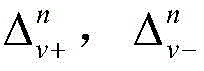
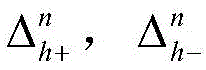
在优选的实施方式中,每个基站形成四个测量波束发送定位信息,分别是将最大接收信号强度对应的码字


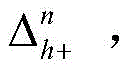


在优选的实施方式中,根据方程组,结合天线配置信息中的天线摆放角度计算传播主径垂直方位角和水平方位角的方法包括:In a preferred embodiment, according to a system of equations, the method for calculating the vertical azimuth angle and the horizontal azimuth angle of the main propagation path in combination with the antenna placement angle in the antenna configuration information includes:
对于每个基站,先令最大接收信号强度与两个垂直相位偏转后形成的测量波束的接收信号强度之比,分别等于最大接收信号强度发射波束对应的码字

再令最大接收信号强度与两个水平相位偏转后形成的测量波束的接收信号强度之比,分别等于最大接收信号强度发射波束对应的码字


求解两组方程组得到相应基站的传播主径相对于天线的垂直方位角和水平方位角,结合天线配置信息中的天线摆放角度获得传播主径的垂直方位角和水平方位角。Solve the two sets of equations to obtain the vertical and horizontal azimuths of the main propagation path of the corresponding base station relative to the antenna, and obtain the vertical azimuth and horizontal azimuth of the main propagation path by combining the antenna placement angle in the antenna configuration information.
在优选的实施方式中,根据基站位置和传播主径方位角确定移动终端位置坐标的方法包括:以每个基站的位置坐标为端点,在传播主径垂直方位角以及水平方位角方向形成一条射线,移动终端位置坐标为空间中与各条射线的距离之和最小的点的位置坐标。In a preferred embodiment, the method for determining the position coordinates of the mobile terminal according to the base station position and the azimuth angle of the main propagation path includes: taking the position coordinates of each base station as an endpoint, forming a ray in the vertical azimuth and horizontal azimuth directions of the main propagation path , the position coordinates of the mobile terminal are the position coordinates of the point in the space with the smallest sum of distances from each ray.
在优选的实施方式中,参与定位的基站为三个或三个以上的基站。In a preferred embodiment, the base stations participating in the positioning are three or more base stations.
本发明另一方面提供的一种基于波束训练的移动终端定位装置,包括:Another aspect of the present invention provides a beam training-based mobile terminal positioning device, comprising:
请求发起模块,用于向至少两个基站发出定位请求;a request initiating module, configured to issue a positioning request to at least two base stations;
训练波束选择模块,用于接收基站发送的波束训练消息,记下从每个基站接收的最大接收信号强度,并向每个基站反馈最大接收信号强度对应的码字信息;The training beam selection module is used to receive the beam training message sent by the base station, record the maximum received signal strength received from each base station, and feed back the codeword information corresponding to the maximum received signal strength to each base station;
定位信息接收模块,用于接收基站通过不同测量波束发送的定位信息,并记下每个基站各测量波束的接收信号强度;其中,每个基站的测量波束包括根据最大接收信号强度对应的码字在垂直方向上进行相位偏转形成的至少两个不同测量波束以及根据最大接收信号强度对应的码字在水平方向上进行相位偏转形成的至少两个不同测量波束;所述定位信息包括基站的坐标信息以及计算传播主径垂直方位角和水平方位角需要的天线配置和相位偏转信息;The positioning information receiving module is used to receive the positioning information sent by the base station through different measurement beams, and record the received signal strength of each measurement beam of each base station; wherein, the measurement beam of each base station includes a code word corresponding to the maximum received signal strength At least two different measurement beams formed by phase deflection in the vertical direction and at least two different measurement beams formed by phase deflection in the horizontal direction according to the codeword corresponding to the maximum received signal strength; the positioning information includes the coordinate information of the base station and the antenna configuration and phase deflection information required to calculate the vertical and horizontal azimuths of the major propagation paths;
传播主径方位角计算模块,用于根据实际的每个基站最大接收信号强度与各个测量波束的接收信号强度之比与理论之比相等建立方程组,结合天线配置信息中的天线摆放角度计算得到每个基站的传播主径垂直方位角和水平方位角;Propagation main path azimuth angle calculation module, which is used to establish a system of equations based on the ratio of the actual maximum received signal strength of each base station to the received signal strength of each measurement beam and the theoretical ratio, and calculate the antenna placement angle in combination with the antenna configuration information. Obtain the vertical azimuth and horizontal azimuth of the main propagation path of each base station;
以及,位置坐标估计模块,用于根据每个基站的位置坐标以及传播主径垂直方位角和水平方位角确定移动终端位置坐标。And, the position coordinate estimation module is used for determining the position coordinate of the mobile terminal according to the position coordinate of each base station and the vertical azimuth angle and the horizontal azimuth angle of the main propagation path.
本发明另一方面提供的一种移动终端,包括存储器、处理器及存储在存储器上并可在处理器上运行的计算机程序,所述计算机程序被加载至处理器时实现所述的基于波束训练的移动终端定位方法。Another aspect of the present invention provides a mobile terminal, comprising a memory, a processor, and a computer program stored in the memory and running on the processor, the computer program being loaded into the processor to implement the beam-based training mobile terminal positioning method.
本发明另一方面提供的一种基于波束训练的移动终端定位系统,包括:Another aspect of the present invention provides a beam training-based mobile terminal positioning system, comprising:
至少两个基站,用于接收移动终端的定位请求,并向移动终端发送波束训练信息;以及根据移动终端反馈的最大接收信号强度对应的码字信息进行相位偏转形成的不同测量波束发送的定位信息;其中,每个基站的测量波束包括根据最大接收信号强度对应的码字在垂直方向上进行相位偏转形成的至少两个不同测量波束以及根据最大接收信号强度对应的码字在水平方向上进行相位偏转形成的至少两个不同测量波束;所述定位信息包括基站的坐标信息以及移动终端计算传播主径垂直方位角和水平方位角需要的天线配置和相位偏转信息;at least two base stations for receiving the positioning request of the mobile terminal and sending beam training information to the mobile terminal; and performing phase deflection according to the codeword information corresponding to the maximum received signal strength fed back by the mobile terminal and forming the positioning information sent by different measurement beams ; Wherein, the measurement beam of each base station includes at least two different measurement beams formed by phase deflection in the vertical direction according to the code word corresponding to the maximum received signal strength and phase-phase in the horizontal direction according to the code word corresponding to the maximum received signal strength at least two different measurement beams formed by deflection; the positioning information includes the coordinate information of the base station and the antenna configuration and phase deflection information required by the mobile terminal to calculate the vertical azimuth and horizontal azimuth of the main propagation path;
移动终端,用于向至少两个基站发出定位请求,接收基站发送的波束训练消息,记下从每个基站接收的最大接收信号强度,并向每个基站反馈最大接收信号强度对应的码字信息;接收基站采用的不同测量波束发送的定位信息,并记下每个基站各测量波束的接收信号强度,根据实际的每个基站最大接收信号强度与各个测量波束的接收信号强度之比与理论之比相等建立方程组,结合天线配置信息中的天线摆放角度计算得到每个基站的传播主径垂直方位角和水平方位角;以及根据每个基站的位置坐标以及传播主径垂直方位角和水平方位角确定移动终端位置坐标。The mobile terminal is used to send a positioning request to at least two base stations, receive beam training messages sent by the base stations, record the maximum received signal strength received from each base station, and feed back the codeword information corresponding to the maximum received signal strength to each base station ; Receive the positioning information sent by the different measurement beams used by the base station, and record the received signal strength of each measurement beam of each base station, according to the ratio of the actual maximum received signal strength of each base station to the received signal strength of each measurement beam and the theoretical Equation system is established with the ratio equal to, combined with the antenna placement angle in the antenna configuration information to calculate the vertical azimuth and horizontal azimuth of the main propagation path of each base station; The azimuth determines the location coordinates of the mobile terminal.
有益效果:本发明提出的基于波束训练的移动终端定位方法,与传统通过测量接收信号强度获得移动终端到基站距离的方法相比,具有如下优点:第一,利用毫米波通信的波束训练过程获取基站的传播主径方位角测量所需的信息,本发明的开销小;第二,利用不同波束的接收信号强度的比值,结合天线配置信息中的天线摆放角度计算基站的传播主径方位角,本发明可消除毫米波受大气吸收以及降雨衰落等影响;第三,在毫米波视距传输的特性下,本发明的定位精度高。Beneficial effects: Compared with the traditional method of obtaining the distance from the mobile terminal to the base station by measuring the received signal strength, the beam training-based mobile terminal positioning method proposed by the present invention has the following advantages: first, the beam training process of millimeter wave communication is used to obtain The information required for the measurement of the azimuth angle of the main propagation path of the base station, the overhead of the present invention is small; secondly, the azimuth angle of the main propagation path of the base station is calculated by using the ratio of the received signal strength of different beams and the antenna placement angle in the antenna configuration information , the present invention can eliminate the influence of millimeter wave by atmospheric absorption and rainfall fading; thirdly, under the characteristic of millimeter wave line-of-sight transmission, the present invention has high positioning accuracy.
附图说明Description of drawings
图1为均匀面阵的波束成型原理图;Figure 1 is a schematic diagram of the beamforming of a uniform area array;
图2为本发明一实施例的方法流程图FIG. 2 is a flowchart of a method according to an embodiment of the present invention
图3为本发明一实施例中基站i生成垂直测量波束的示意图;FIG. 3 is a schematic diagram of generating a vertical measurement beam by base station i in an embodiment of the present invention;
图4为本发明一实施例中基站i生成水平测量波束的示意图;4 is a schematic diagram of generating a horizontal measurement beam by base station i in an embodiment of the present invention;
图5为本发明一实施例中基站位置、基站服务范围与用户分布范围的俯视图;5 is a top view of a base station location, a base station service range, and a user distribution range in an embodiment of the present invention;
图6为本发明一实施例中定位方法的空间描述图;6 is a spatial description diagram of a positioning method in an embodiment of the present invention;
图7为本发明另一实施例的装置示例图;7 is an exemplary diagram of an apparatus according to another embodiment of the present invention;
图8为本发明另一实施例的系统示例图。FIG. 8 is a system example diagram of another embodiment of the present invention.
具体实施方式Detailed ways
下面结合附图和具体实施例,进一步阐明本发明,应理解这些实施例仅用于解释本发明,便于理解而不是用于限制本发明的范围,在阅读了本发明之后,本领域技术人员对本发明进行各种等价形式的修改均属于本申请所附权利要求书所限定的范围。Below in conjunction with the accompanying drawings and specific embodiments, the present invention will be further explained. It should be understood that these embodiments are only used to explain the present invention, and are not used to limit the scope of the present invention for ease of understanding. After reading the present invention, those skilled in the art will Modifications of the invention in various equivalent forms fall within the scope defined by the appended claims of this application.
本发明实施例公开的一种基于波束训练的移动终端定位方法,首先移动终端从基站不同训练波束中确定最大接收信号强度的发射波束,然后基站在最大接收信号强度的发射波束的基础上进行相位偏转形成不同的测量波束,移动终端根据实际的最大接收信号强度与各个测量波束的接收信号强度之比与理论之比的关系,结合天线配置信息中的天线摆放角度,从而求解得到各基站的传播主径方位角信息,最后结合基站位置、传播主径方位角利用空间几何关系进行移动终端位置定位。该方法不受大气吸收以及降雨衰落等影响,具有简单、可靠、定位精度高的优点。The embodiment of the present invention discloses a method for locating a mobile terminal based on beam training. First, the mobile terminal determines the transmission beam with the maximum received signal strength from different training beams of the base station, and then the base station determines the phase on the basis of the transmission beam with the maximum received signal strength. The deflection forms different measurement beams. According to the relationship between the ratio of the actual maximum received signal strength to the received signal strength of each measurement beam and the theoretical ratio, the mobile terminal combines the antenna placement angle in the antenna configuration information to solve the problem of each base station. The azimuth information of the main path is propagated, and finally the position of the mobile terminal is positioned by using the spatial geometric relationship in combination with the base station position and the azimuth of the main path. The method is not affected by atmospheric absorption and rainfall fading, and has the advantages of simplicity, reliability and high positioning accuracy.
为了便于理解本发明的内容,下面介绍一下本发明所涉及的面阵发射阵列响应矢量,MIMO(多输入多输出,Multiple Input Multiple Output)信道表示以及面阵码字等现有技术相关知识。需要说明的是,本发明的方法不受限于下面具体公式的表示形式。In order to facilitate the understanding of the content of the present invention, the related knowledge of the prior art such as the area array transmitting array response vector, the MIMO (Multiple Input Multiple Output) channel representation and the area array codewords involved in the present invention will be introduced below. It should be noted that the method of the present invention is not limited to the representation of the following specific formulas.
如图1所示,将面阵天线放于yOz平面上,其中垂直方位角和水平方位角分别用θ和

其中,

毫米波信道可建模为多条传播路径的叠加和,由于本发明利用的是基站的传播主径方位角,对移动终端的天线数没有要求,此处为了便于理解,以一根天线为例,在当移动终端只有一根天线时,传播主径信道矩阵可表示为:The millimeter wave channel can be modeled as the superposition sum of multiple propagation paths. Since the present invention uses the azimuth angle of the main propagation path of the base station, there is no requirement for the number of antennas of the mobile terminal. Here, for ease of understanding, an antenna is used as an example. , when the mobile terminal has only one antenna, the propagation main path channel matrix can be expressed as:
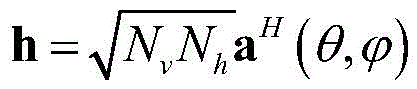
其中,(·)H表示共轭转置操作。这里需要说明的是,当移动终端采用多天线的时候,利用本发明的操作过程,移动终端多天线带来的影响可以被消除。where (·) H represents the conjugate transpose operation. It should be noted here that when the mobile terminal adopts multiple antennas, the influence brought by the multiple antennas of the mobile terminal can be eliminated by using the operation process of the present invention.
根据面阵发射阵列响应矢量,面阵码字的设计可表示为:According to the response vector of the area array transmitting array, the design of the area array codeword can be expressed as:

其中,βv,βh分别表示码字的垂直相位和水平相位。Among them, β v and β h represent the vertical phase and the horizontal phase of the codeword, respectively.
当基站发射信号为x,且满足E{xxH}=1,其中E{·}表示均值,则移动终端接收信号的理论值为y=hw(βv,βh)x,根据天线接收理论,利用等比数列求和公式计算,接收信号强度的理论值可表示为:When the signal transmitted by the base station is x and satisfies E{xx H }=1, where E{·} represents the mean value, the theoretical value of the signal received by the mobile terminal is y=hw(β v ,β h )x, according to the antenna reception theory , calculated using the equation series summation formula, the theoretical value of the received signal strength can be expressed as:

基于上述技术背景说明,如图2所示,本发明实施例公开的一种基于波束训练的移动终端定位方法,通过波束训练获得每个基站的传播主径方位角,进而利用空间几何关系估计移动终端的位置坐标。该方法主要包括如下步骤:首先,移动终端向基站发出定位请求;接着,移动终端接收基站发送的训练消息,记下接收信号强度后向基站反馈码字序号;其次,移动终端接收基站通过根据反馈码字序号生成不同测量波束发送的定位信息,记下测量波束的接收信号强度;然后,移动终端计算每个基站的传播主径方位角;最后,移动终端估计其位置坐标。方法具体包括如下步骤:Based on the above description of the technical background, as shown in FIG. 2 , a beam training-based mobile terminal positioning method disclosed in an embodiment of the present invention obtains the azimuth angle of the main propagation path of each base station through beam training, and then uses the spatial geometric relationship to estimate the movement The location coordinates of the terminal. The method mainly includes the following steps: first, the mobile terminal sends a positioning request to the base station; then, the mobile terminal receives the training message sent by the base station, records the received signal strength, and then feeds back the codeword sequence number to the base station; The codeword sequence number generates the positioning information sent by different measurement beams, and the received signal strength of the measurement beams is recorded; then, the mobile terminal calculates the azimuth of the main propagation path of each base station; finally, the mobile terminal estimates its position coordinates. The method specifically includes the following steps:
步骤S1:移动终端发出定位请求。本步骤中移动终端以广播的形式发出定位请求,接收到定位请求的N(N≥2)个基站参与定位过程,独立从各自预设的发送码字集合


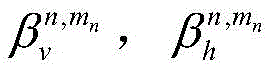
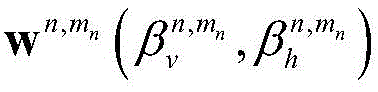
步骤S2:移动终端分别接收N个基站不同发射波束发送的训练消息,选择从第n(n=1,2,…,N)个基站接收到信号强度最大的基站发射波束,将移动终端接收到信号强度最大的基站发射波束对应码字


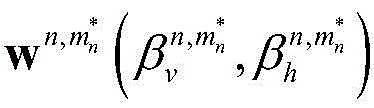
根据前面接收信号强度的理论值表示式可知,对码字相位单独进行垂直(水平)偏转后,将未偏转码字的接收信号强度理论值与偏转码字的接收信号强度理论值相比,比值可以消除接收信号强度水平(垂直)分量的影响,进而至少需要四个方程式可求解传播主径方位角信息,因此基站可将码字


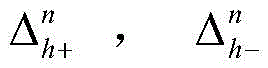

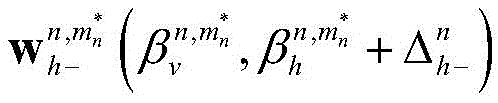
一种较为优选的方式是将


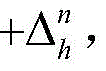


在垂直方向上偏转

在垂直方向上偏转

在水平方向上偏转

在水平方向上偏转

然后依次用所形成的四个测量码字形成的四个测量波束发送定位信息,其中,第n个基站的四个测量波束发送的定位信息包含第n个基站的坐标位置,以及用于移动终端计算传播主径方位角的天线配置和相位偏转信息,如天线摆放角度、垂直方向上天线个数

步骤S3:移动终端分别接收获得N个基站不同测量波束发送的定位信息,并记下每个基站各测量波束的接收信号强度。例如对于步骤S2中各基站通过对称式相位偏转生产的四个测量波束,移动终端分别记下第n(n=1,2,…,N)个基站四个测量波束的接收信号强度



步骤S4:移动终端根据实际的每个基站最大接收信号强度与各个测量波束的接收信号强度之比与理论之比相等建立方程组,计算其处于每个基站的方位角。本例中,对于第n个基站,接收端先令最大接收信号强度与两个垂直测量波束的接收信号强度之比


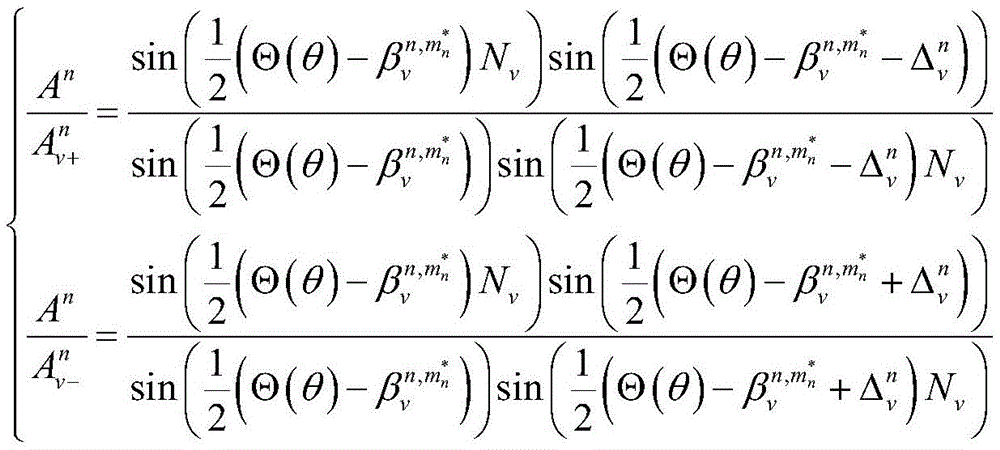
求解方程组获得传播主径相对于天线的垂直方位角θ:Solve the system of equations to obtain the vertical azimuth θ of the main propagation path relative to the antenna:

结合天线垂直摆放角度

再令最大接收信号强度与两个水平测量波束的接收信号强度之比
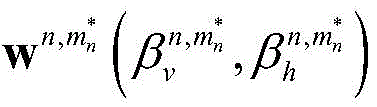


结合传播主径相对于天线的垂直方位角θ并求解方程组可获得传播主径相对于天线的水平方位角

结合天线水平摆放角度


需要说明的是,上述传播主径垂直方位角θn和水平方位角

步骤S5:移动终端根据N个发射基站的位置坐标、传播主径垂直方位角以及传播主径水平方位角估计移动终端的位置坐标。本步骤中,在移动终端获知各参与定位的基站的位置坐标和传播主径方位角信息后,利用空间几何关系即可确定移动终端的位置坐标。可采用的方法为:以每个基站的位置坐标为端点,在传播主径垂直方位角以及水平方位角方向形成一条射线,移动终端位置坐标为空间中与各条射线的距离之和最小的点的位置坐标。如图5,图6所示,该优化求解过程可结合数学模型表示为:Step S5: The mobile terminal estimates the position coordinates of the mobile terminal according to the position coordinates of the N transmitting base stations, the vertical azimuth angle of the main propagation path, and the horizontal azimuth angle of the main propagation path. In this step, after the mobile terminal learns the position coordinates of each base station participating in the positioning and the azimuth angle information of the main radius of propagation, the position coordinates of the mobile terminal can be determined by using the spatial geometric relationship. The method that can be adopted is: take the position coordinates of each base station as the endpoint, form a ray in the vertical azimuth and horizontal azimuth directions of the main propagation path, and the position coordinates of the mobile terminal are the points in the space with the smallest sum of distances from each ray. location coordinates. As shown in Figure 5 and Figure 6, the optimization solution process can be expressed as:
1)分别以每个发射基站的位置坐标


2)设空间一点坐标为p,在第n条射线上找到一点

3)根据p分别与N条射线上一点pn的连线p-pn与对应射线的单位方向向量nn的垂直关系,用N条射线上一点pn到对应射线端点

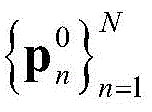

其中,(·)T表示转置运算,[·]-1表示矩阵的伪逆;Among them, ( ) T represents the transpose operation, and [ ] -1 represents the pseudo-inverse of the matrix;
4)求出使得p到pn(n=1,2,…,N)的距离之和

其中,||·||表示向量的二范数,IN×N表示N×N的单位阵。Among them, ||·|| represents the two-norm of the vector, and I N×N represents the N×N identity matrix.
5)通过N条射线上一点pn(n=1,2,…,N)到对应射线端点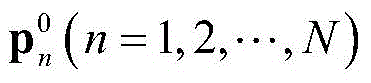


popt即为移动终端的估计位置坐标。p opt is the estimated position coordinate of the mobile terminal.
需要说明的是,为获得移动终端的估计位置坐标,至少需要两个基站参与定位。在优选的实施方式中,一般采用三个基站。It should be noted that, in order to obtain the estimated position coordinates of the mobile terminal, at least two base stations are required to participate in positioning. In the preferred embodiment, three base stations are generally employed.
如图7所示,本发明另一实施例提供的一种基于波束训练的移动终端定位装置,包括:请求发起模块,用于向至少两个基站发出定位请求;训练波束选择模块,用于接收基站发送的波束训练消息,记下从每个基站接收的最大接收信号强度,并向每个基站反馈最大接收信号强度对应的码字信息;定位信息接收模块,用于接收基站通过不同测量波束发送的定位信息,并记下每个基站各测量波束的接收信号强度;传播主径方位角计算模块,用于根据实际的每个基站最大接收信号强度与各个测量波束的接收信号强度之比与理论之比相等建立方程组,结合天线配置信息中的天线摆放角度计算得到每个基站的传播主径垂直方位角和水平方位角;以及,位置坐标估计模块,用于根据每个基站的位置坐标以及传播主径垂直方位角和水平方位角确定移动终端位置坐标。该移动终端定位装置实施例可以用于执行上述移动终端定位方法实施例,其技术原理、所解决的技术问题及产生的技术效果相似,上述描述的移动终端定位的具体工作过程及有关说明,可以参考前述移动终端定位方法实施例中的对应过程,在此不再赘述。As shown in FIG. 7 , a beam training-based mobile terminal positioning apparatus provided by another embodiment of the present invention includes: a request initiating module for sending positioning requests to at least two base stations; a training beam selection module for receiving For the beam training message sent by the base station, record the maximum received signal strength received from each base station, and feed back the codeword information corresponding to the maximum received signal strength to each base station; the positioning information receiving module is used to receive the transmission from the base station through different measurement beams The positioning information of each base station is recorded, and the received signal strength of each measurement beam of each base station is recorded; the propagation main path azimuth angle calculation module is used to calculate the ratio of the actual maximum received signal strength of each base station to the received signal strength of each measurement beam and the theoretical The ratio is equal to establish a system of equations, and the vertical azimuth and horizontal azimuth of the main propagation path of each base station are calculated in combination with the antenna placement angle in the antenna configuration information; And the vertical azimuth and horizontal azimuth of the main path of propagation determine the position coordinates of the mobile terminal. This embodiment of the mobile terminal positioning apparatus can be used to execute the above-mentioned mobile terminal positioning method embodiments, and the technical principles, the technical problems solved and the technical effects produced are similar. Reference is made to the corresponding process in the foregoing mobile terminal positioning method embodiments, which will not be repeated here.
基于相同的技术构思,本发明实施例还提供了一种移动终端,该移动终端包括存储器、处理器及存储在存储器上并可在处理器上运行的计算机程序。其中,计算机程序被加载至处理器时实现上述基于波束训练的移动终端定位方法实施例中的各步骤。Based on the same technical concept, an embodiment of the present invention also provides a mobile terminal, which includes a memory, a processor, and a computer program stored in the memory and running on the processor. Wherein, when the computer program is loaded into the processor, each step in the above embodiments of the beam training-based mobile terminal positioning method is implemented.
如图8所示,本发明另一实施例公开的一种基于波束训练的移动终端定位系统,包括:至少两个基站,用于接收移动终端的定位请求,并向移动终端发送波束训练信息;以及根据移动终端反馈的最大接收信号强度对应的码字信息进行相位偏转形成的不同测量波束发送的定位信息;移动终端,用于向至少两个基站发出定位请求,接收基站发送的波束训练消息,记下从每个基站接收的最大接收信号强度,并向每个基站反馈最大接收信号强度对应的码字信息;接收基站采用的不同测量波束发送的定位信息,并记下每个基站各测量波束的接收信号强度,根据实际的每个基站最大接收信号强度与各个测量波束的接收信号强度之比与理论之比相等建立方程组,结合天线配置信息中的天线摆放角度计算得到每个基站的传播主径垂直方位角和水平方位角;以及根据每个基站的位置坐标以及传播主径垂直方位角和水平方位角确定移动终端位置坐标。基站和移动终端的具体实现过程也参考前述方式实施例的描述,此处不再赘述。As shown in FIG. 8 , a beam training-based mobile terminal positioning system disclosed in another embodiment of the present invention includes: at least two base stations configured to receive a positioning request from a mobile terminal and send beam training information to the mobile terminal; and the positioning information sent by different measurement beams formed by phase deflection according to the codeword information corresponding to the maximum received signal strength fed back by the mobile terminal; the mobile terminal is used to send a positioning request to at least two base stations, and receive the beam training message sent by the base stations, Write down the maximum received signal strength received from each base station, and feed back the codeword information corresponding to the maximum received signal strength to each base station; receive the positioning information sent by different measurement beams used by the base station, and note down each measurement beam of each base station According to the ratio of the actual maximum received signal strength of each base station to the received signal strength of each measurement beam equal to the theoretical ratio, a set of equations is established, and the antenna placement angle in the antenna configuration information is calculated to obtain the received signal strength of each base station. the vertical azimuth angle and the horizontal azimuth angle of the main propagation path; and the position coordinates of the mobile terminal are determined according to the position coordinates of each base station and the vertical azimuth angle and the horizontal azimuth angle of the main propagation path. For the specific implementation process of the base station and the mobile terminal, reference is also made to the description of the foregoing mode embodiments, and details are not repeated here.
Claims (7)






Priority Applications (1)
| Application Number | Priority Date | Filing Date | Title |
|---|---|---|---|
| CN201810554703.7A CN108777842B (en) | 2018-06-01 | 2018-06-01 | Mobile terminal positioning method, device and system based on beam training |
Applications Claiming Priority (1)
| Application Number | Priority Date | Filing Date | Title |
|---|---|---|---|
| CN201810554703.7A CN108777842B (en) | 2018-06-01 | 2018-06-01 | Mobile terminal positioning method, device and system based on beam training |
Publications (2)
| Publication Number | Publication Date |
|---|---|
| CN108777842A CN108777842A (en) | 2018-11-09 |
| CN108777842B true CN108777842B (en) | 2020-04-24 |
Family
ID=64026473
Family Applications (1)
| Application Number | Title | Priority Date | Filing Date |
|---|---|---|---|
| CN201810554703.7A Expired - Fee Related CN108777842B (en) | 2018-06-01 | 2018-06-01 | Mobile terminal positioning method, device and system based on beam training |
Country Status (1)
| Country | Link |
|---|---|
| CN (1) | CN108777842B (en) |
Families Citing this family (8)
| Publication number | Priority date | Publication date | Assignee | Title |
|---|---|---|---|---|
| CN110740452B (en) * | 2018-07-20 | 2024-10-18 | 中兴通讯股份有限公司 | Method, device, receiving device, transmitting device and storage medium for detecting interference |
| CN109541662B (en) * | 2018-11-13 | 2020-07-14 | 中国联合网络通信集团有限公司 | Positioning method and device |
| CN111698008B (en) * | 2019-03-15 | 2022-02-11 | 华为技术有限公司 | Method and device for generating beam |
| CN111917440B (en) * | 2019-11-27 | 2022-03-15 | 南通大学 | A beam selection and limited feedback method for large-scale antenna arrays beyond the horizon |
| CN114487995B (en) * | 2020-10-23 | 2024-10-11 | 上海华为技术有限公司 | Method for determining azimuth angle of cell antenna, related device and equipment |
| CN113055059B (en) * | 2021-02-01 | 2022-08-09 | 厦门大学 | Beam management method for large-scale MIMO millimeter wave communication and millimeter wave base station |
| CN114069205A (en) * | 2021-10-29 | 2022-02-18 | 宁波同讯精密工业有限公司 | Indoor positioning system based on reconfigurable antenna |
| CN114114152A (en) * | 2021-10-29 | 2022-03-01 | 宁波同讯精密工业有限公司 | Indoor positioning system |
Family Cites Families (9)
| Publication number | Priority date | Publication date | Assignee | Title |
|---|---|---|---|---|
| US7313403B2 (en) * | 2003-08-06 | 2007-12-25 | Hong Kong Applied Science And Technology Research Institute Co., Ltd. | Location positioning in wireless networks |
| US7359718B2 (en) * | 2004-04-30 | 2008-04-15 | Hong Kong Applied Science And Technology Research Institute Co., Ltd. | Location determination and location tracking in wireless networks |
| US8519889B2 (en) * | 2009-07-21 | 2013-08-27 | Research In Motion Limited | Method and apparatus for estimating location of a wireless station using multi-beam transmission |
| JP2015527026A (en) * | 2012-08-28 | 2015-09-10 | インターデイジタル パテント ホールディングス インコーポレイテッド | Method for handover of a communication link using a primary beam |
| CN107003378B (en) * | 2014-11-07 | 2020-04-21 | 索尼公司 | Portable electronic device and method of determining geographic location of a portable electronic device |
| CN106817157B (en) * | 2015-11-28 | 2020-09-29 | 华为技术有限公司 | A beam training method and device |
| CN105589086B (en) * | 2016-01-11 | 2017-10-13 | 中国人民解放军理工大学 | Single-satellite positioning method for ground radiation source based on signal intensity multi-beam spatial distribution |
| CN107607918B (en) * | 2017-08-24 | 2020-07-21 | 北京航空航天大学 | A robot-based approach to feed positioning and defocusing of cylindrical near-field measurement |
| CN107861100B (en) * | 2017-11-10 | 2021-09-28 | 西京学院 | Indoor positioning method based on three-dimensional wave beam |
-
2018
- 2018-06-01 CN CN201810554703.7A patent/CN108777842B/en not_active Expired - Fee Related
Also Published As
| Publication number | Publication date |
|---|---|
| CN108777842A (en) | 2018-11-09 |
Similar Documents
| Publication | Publication Date | Title |
|---|---|---|
| CN108777842B (en) | Mobile terminal positioning method, device and system based on beam training | |
| WO2021244532A1 (en) | Communication method and related apparatus | |
| US10511370B2 (en) | Method for beam management for wireless communication system with beamforming | |
| CN111148021B (en) | Millimeter wave single base station positioning method based on switched beam forming | |
| KR101899825B1 (en) | Method of feedback for beamforming in a wireless communication system and apparatus therefor | |
| CN115278526B (en) | Terminal positioning method, device, electronic device and storage medium | |
| Li et al. | Angle-of-arrival estimation for localization and communication in wireless networks | |
| Lu et al. | Positioning-aided 3D beamforming for enhanced communications in mmWave mobile networks | |
| CN105850055A (en) | Localization-based beam forming scheme for systems with multiple antennas | |
| KR20180120164A (en) | Unicast and broadcast protocols for wireless local area network ranging and direction detection | |
| CN101442823A (en) | Method for locating WSN distributed node based on wave arrive direction estimation | |
| WO2021238674A1 (en) | Terminal positioning method and device | |
| KR20170117114A (en) | A Basis Function Transformation Technique for Feedback in Wireless Networks | |
| US20180310127A1 (en) | System and Method for Collaborative Position Determination | |
| WO2019210804A1 (en) | Beam training method, relevant apparatus and system | |
| CN109412723A (en) | A kind of mimo channel analysis model, modeling method and computer readable storage medium | |
| CN103984836B (en) | A kind of stored in association method of 3D mimo antennas polarized gain | |
| US10320457B2 (en) | Beam tracking method, apparatus, and system | |
| WO2018112693A1 (en) | Terminal positioning method and device | |
| US20240340097A1 (en) | Uplink and downlink asymmetric channel model parameter generating method | |
| CN114696882B (en) | Beamforming method, device, system and base station | |
| Peng et al. | Two-step angle-of-arrival estimation for terahertz communications based on correlation of power-angular spectra in frequency | |
| WO2023185407A1 (en) | Communication method and apparatus | |
| CN115225110B (en) | Antenna switching method, device, electronic device and readable storage medium | |
| CN115551080A (en) | Rapid positioning method and device for indoor scene based on millimeter wave large-scale planar array direction angle measurement |
Legal Events
| Date | Code | Title | Description |
|---|---|---|---|
| PB01 | Publication | ||
| PB01 | Publication | ||
| SE01 | Entry into force of request for substantive examination | ||
| SE01 | Entry into force of request for substantive examination | ||
| GR01 | Patent grant | ||
| GR01 | Patent grant | ||
| CF01 | Termination of patent right due to non-payment of annual fee | ||
| CF01 | Termination of patent right due to non-payment of annual fee |
Granted publication date: 20200424 |