CN108770065B - Method, equipment and system for controlling air interface resources - Google Patents
Method, equipment and system for controlling air interface resources Download PDFInfo
- Publication number
- CN108770065B CN108770065B CN201810460291.0A CN201810460291A CN108770065B CN 108770065 B CN108770065 B CN 108770065B CN 201810460291 A CN201810460291 A CN 201810460291A CN 108770065 B CN108770065 B CN 108770065B
- Authority
- CN
- China
- Prior art keywords
- communication device
- communication
- channel
- message
- communication channel
- Prior art date
- Legal status (The legal status is an assumption and is not a legal conclusion. Google has not performed a legal analysis and makes no representation as to the accuracy of the status listed.)
- Active
Links
Images


Classifications
-
- H—ELECTRICITY
- H04—ELECTRIC COMMUNICATION TECHNIQUE
- H04W—WIRELESS COMMUNICATION NETWORKS
- H04W72/00—Local resource management
- H04W72/04—Wireless resource allocation
- H04W72/044—Wireless resource allocation based on the type of the allocated resource
- H04W72/0453—Resources in frequency domain, e.g. a carrier in FDMA
-
- H—ELECTRICITY
- H04—ELECTRIC COMMUNICATION TECHNIQUE
- H04W—WIRELESS COMMUNICATION NETWORKS
- H04W24/00—Supervisory, monitoring or testing arrangements
- H04W24/08—Testing, supervising or monitoring using real traffic
-
- H—ELECTRICITY
- H04—ELECTRIC COMMUNICATION TECHNIQUE
- H04W—WIRELESS COMMUNICATION NETWORKS
- H04W72/00—Local resource management
- H04W72/04—Wireless resource allocation
-
- H—ELECTRICITY
- H04—ELECTRIC COMMUNICATION TECHNIQUE
- H04L—TRANSMISSION OF DIGITAL INFORMATION, e.g. TELEGRAPHIC COMMUNICATION
- H04L45/00—Routing or path finding of packets in data switching networks
- H04L45/02—Topology update or discovery
- H04L45/026—Details of "hello" or keep-alive messages
-
- H—ELECTRICITY
- H04—ELECTRIC COMMUNICATION TECHNIQUE
- H04L—TRANSMISSION OF DIGITAL INFORMATION, e.g. TELEGRAPHIC COMMUNICATION
- H04L67/00—Network arrangements or protocols for supporting network services or applications
- H04L67/14—Session management
- H04L67/143—Termination or inactivation of sessions, e.g. event-controlled end of session
- H04L67/145—Termination or inactivation of sessions, e.g. event-controlled end of session avoiding end of session, e.g. keep-alive, heartbeats, resumption message or wake-up for inactive or interrupted session
-
- H—ELECTRICITY
- H04—ELECTRIC COMMUNICATION TECHNIQUE
- H04W—WIRELESS COMMUNICATION NETWORKS
- H04W72/00—Local resource management
- H04W72/04—Wireless resource allocation
- H04W72/044—Wireless resource allocation based on the type of the allocated resource
-
- H—ELECTRICITY
- H04—ELECTRIC COMMUNICATION TECHNIQUE
- H04W—WIRELESS COMMUNICATION NETWORKS
- H04W72/00—Local resource management
- H04W72/30—Resource management for broadcast services
-
- H—ELECTRICITY
- H04—ELECTRIC COMMUNICATION TECHNIQUE
- H04W—WIRELESS COMMUNICATION NETWORKS
- H04W76/00—Connection management
- H04W76/20—Manipulation of established connections
- H04W76/23—Manipulation of direct-mode connections
-
- H—ELECTRICITY
- H04—ELECTRIC COMMUNICATION TECHNIQUE
- H04W—WIRELESS COMMUNICATION NETWORKS
- H04W76/00—Connection management
- H04W76/20—Manipulation of established connections
- H04W76/25—Maintenance of established connections
-
- H—ELECTRICITY
- H04—ELECTRIC COMMUNICATION TECHNIQUE
- H04W—WIRELESS COMMUNICATION NETWORKS
- H04W76/00—Connection management
- H04W76/30—Connection release
- H04W76/34—Selective release of ongoing connections
- H04W76/36—Selective release of ongoing connections for reassigning the resources associated with the released connections
Landscapes
- Engineering & Computer Science (AREA)
- Computer Networks & Wireless Communication (AREA)
- Signal Processing (AREA)
- Mobile Radio Communication Systems (AREA)
Abstract
本发明实施例提供一种控制空口资源的方法、设备及系统,涉及通信领域,提高了空口资源的利用率,以解决现有技术中存在的空口资源浪费的问题。该方法包括:核心网设备或者用户设备在检测到双方设备之间的通信通道未利用空口资源传输业务数据时,将向对方设备发送hello报文的第一频率切换为第二频率,并发送频率切换消息指示对方设备也将发送hello报文的第一频率切换为第二频率,以便所述接入网设备在报文检测周期内未检测到hello报文时,释放所述第一通信通道占用的空口资源。本发明实施例用于控制空口资源。
Embodiments of the present invention provide a method, device and system for controlling air interface resources, which relate to the field of communications, improve the utilization rate of air interface resources, and solve the problem of wasting air interface resources in the prior art. The method includes: when the core network device or the user equipment detects that the communication channel between the two devices does not use air interface resources to transmit service data, switching the first frequency for sending the hello message to the other device to the second frequency, and sending the frequency The switching message instructs the counterpart device to also switch the first frequency for sending hello packets to the second frequency, so that the access network device releases the occupation of the first communication channel when no hello packet is detected within the packet detection period air interface resources. The embodiments of the present invention are used to control air interface resources.
Description
技术领域technical field
本发明涉及通信领域,尤其涉及一种控制空口资源的方法、设备及系统。The present invention relates to the field of communications, and in particular, to a method, device and system for controlling air interface resources.
背景技术Background technique
在无线通信系统中,接入网设备在接收到核心网设备发送给用户设备的下行业务数据时,为该用户设备分配空口资源,使得该接入网设备能够利用该空口资源将下行业务数据发送给用户设备。例如,在LTE(Long Term Evolution,长期演进)系统中,该接入网设备可以为基站,用户设备可以为手机,该空口资源为该手机与该基站之间用来传输信息的高频频率资源。其中,能够用来传输信息的频率资源是有限的,因此,接入网设备在向用户设备分配空口资源时,应尽可能的节约。In a wireless communication system, the access network device allocates air interface resources to the user equipment when receiving the downlink service data sent by the core network device to the user equipment, so that the access network device can use the air interface resources to send the downlink service data. to the user device. For example, in an LTE (Long Term Evolution, Long Term Evolution) system, the access network device may be a base station, the user equipment may be a mobile phone, and the air interface resource is a high-frequency frequency resource used to transmit information between the mobile phone and the base station . The frequency resources that can be used to transmit information are limited. Therefore, the access network equipment should save as much as possible when allocating air interface resources to the user equipment.
现有技术中,为了保证用户设备与核心网设备之间的通信通道正常可达,用户设备与核心网设备之间通过接入网设备互相发送hello保活报文。其中,该接入网设备若在检测周期内检测到用户设备或者核心网设备发送的hello报文,则保持向该用户设备分配的空口资源。若该接入网设备在检测周期内未检测到用户设备和核心网设备发送的hello报文,则释放向该用户设备分配的空口资源,以便其他用户设备使用该空口资源。In the prior art, in order to ensure that the communication channel between the user equipment and the core network device is normally reachable, the user equipment and the core network device send hello keep-alive messages to each other through the access network device. Wherein, if the access network device detects a hello message sent by the user equipment or the core network device within the detection period, it keeps the air interface resources allocated to the user equipment. If the access network device does not detect the hello packet sent by the user equipment and the core network device within the detection period, it releases the air interface resources allocated to the user equipment so that other user equipment can use the air interface resources.
但是,在实际应用场景中,用户设备在获得空口资源后,可能长时间不使用该空口资源进行业务数据的传输,例如,用户长时间浏览用户设备已经载入好的网页,由于该用户设备未进行新的业务活动,所以该空口资源在该时间内未传输业务数据,造成了空口资源的浪费。However, in a practical application scenario, after the user equipment obtains air interface resources, it may not use the air interface resources to transmit service data for a long time. A new service activity is performed, so the air interface resource does not transmit service data within this time, resulting in a waste of air interface resources.
发明内容SUMMARY OF THE INVENTION
本发明提供一种控制空口资源的方法、设备及系统,提高了空口资源的利用率,以解决现有技术中存在的空口资源浪费的问题。The present invention provides a method, device and system for controlling air interface resources, which improves the utilization rate of air interface resources and solves the problem of air interface resource waste in the prior art.
为达到上述目的,本发明的实施例采用如下技术方案:To achieve the above object, the embodiments of the present invention adopt the following technical solutions:
第一方面,提供一种控制空口资源的方法,所述方法包括:A first aspect provides a method for controlling air interface resources, the method comprising:
在接入网设备将空口资源分配给第一通信通道后,第一通信设备通过所述第一通信通道以第一频率向第二通信设备发送hello报文;所述第一通信通道为所述第一通信设备与所述第二通信设备之间经过所述接入网设备的通信通道;所述第一通信设备为核心网设备或者用户设备;After the access network device allocates the air interface resources to the first communication channel, the first communication device sends a hello packet to the second communication device at the first frequency through the first communication channel; the first communication channel is the a communication channel between the first communication device and the second communication device through the access network device; the first communication device is a core network device or a user equipment;
所述第一通信设备检测所述第一通信通道是否利用所述空口资源传输业务数据;The first communication device detects whether the first communication channel uses the air interface resource to transmit service data;
在检测到所述第一通信通道未利用所述空口资源传输业务数据时,将向所述第二通信设备发送hello报文的第一频率切换为以第二频率向所述第二通信设备发送hello报文,所述第二频率小于所述第一频率;When it is detected that the first communication channel does not use the air interface resource to transmit service data, the first frequency for sending the hello packet to the second communication device is switched to the second frequency for sending the hello packet to the second communication device. hello packet, the second frequency is less than the first frequency;
向所述第二通信设备发送第一频率切换消息,所述第一频率切换消息用于指示所述第二通信设备将向所述第一通信设备发送hello报文的第一频率切换为第二频率。Sending a first frequency switching message to the second communication device, where the first frequency switching message is used to instruct the second communication device to switch the first frequency for sending the hello packet to the first communication device to a second frequency frequency.
在第一方面的第一种可能的实现方式中,所述第一通信设备检测所述第一通信通道是否利用所述空口资源传输业务数据,包括:In a first possible implementation manner of the first aspect, the first communication device detecting whether the first communication channel uses the air interface resource to transmit service data includes:
按照预设的流量检测周期检测所述第一通信通道的流量;Detect the traffic of the first communication channel according to a preset traffic detection period;
在所述流量检测周期内未检测到所述第一通信通道的流量时,确定所述第一通信通道未利用所述空口资源传输业务数据。When the traffic of the first communication channel is not detected within the traffic detection period, it is determined that the first communication channel does not use the air interface resource to transmit service data.
结合第一方面第一种可能的实现方式,在第二种可能的实现方式中,还包括:In combination with the first possible implementation manner of the first aspect, the second possible implementation manner further includes:
在所述流量检测周期内检测到所述第一通信通道的流量时,将向所述第二通信设备发送hello报文的第二频率切换为第一频率;When the flow of the first communication channel is detected within the flow detection period, switching the second frequency for sending the hello packet to the second communication device to the first frequency;
向所述第二通信设备发送第二频率切换消息,所述第二频率切换消息用于指示所述第二通信设备将向所述第一通信设备发送hello报文的第二频率切换为第一频率。Sending a second frequency switching message to the second communication device, where the second frequency switching message is used to instruct the second communication device to switch the second frequency for sending the hello packet to the first communication device to the first frequency frequency.
结合第一方面或者第一种可能的实现方式,在第三种可能的实现方式中,还包括:In combination with the first aspect or the first possible implementation manner, the third possible implementation manner further includes:
在所述第二通信设备检测到所述第一通信通道的流量,并将向所述第一通信设备发送hello报文的第二频率切换为第一频率时,接收所述第二通信设备发送的频率切换消息;When the second communication device detects the traffic of the first communication channel and switches the second frequency for sending the hello packet to the first communication device to the first frequency, the second communication device receives the data sent by the second communication device. the frequency switching message;
根据所述频率切换消息将向所述第二通信设备发送hello报文的第二频率切换为第一频率。The second frequency for sending the hello message to the second communication device is switched to the first frequency according to the frequency switching message.
在第一方面至第三种可能的实现方式中的任一种可能的实现方式,在第四种可能的实现方式中,若所述第一通信设备为核心网设备,所述第二通信设备为用户设备;所述方法还包括,所述核心网设备在接收到建立第二通信通道的请求消息时,确定所述第二通信通道与所述第一通信通道冲突,通过所述第一通信通道向所述用户设备发送通道验证消息;In any possible implementation manner of the first aspect to the third possible implementation manner, in a fourth possible implementation manner, if the first communication device is a core network device, the second communication device is user equipment; the method further includes, when the core network device receives a request message for establishing a second communication channel, determining that the second communication channel conflicts with the first communication channel, and using the first communication channel the channel sends a channel verification message to the user equipment;
所述核心网设备在未接收到所述用户设备发送的通道验证响应消息时,通过所述第一通信通道向所述用户设备重传所述通道验证消息;When the core network device does not receive the channel verification response message sent by the user equipment, retransmit the channel verification message to the user equipment through the first communication channel;
所述核心网设备在N次向所述用户设备重传通道验证响应后,若未接收到所述用户设备发送的通道验证响应消息,则指示所述接入网设备删除所述第一通信通道,N为自然数。After the core network device retransmits the channel verification response to the user equipment for N times, if it does not receive the channel verification response message sent by the user equipment, instruct the access network device to delete the first communication channel , where N is a natural number.
第二方面,提供一种控制空口资源的方法,所述方法包括:在接入网设备将空口资源分配给第一通信通道后,第二通信设备通过所述第一通信通道以第一频率向第一通信设备发送hello报文;所述第一通信通道为所述第一通信设备与所述第二通信设备之间经过所述接入网设备的通信通道;所述第二通信设备为核心网设备或者用户设备;In a second aspect, a method for controlling air interface resources is provided, the method comprising: after an access network device allocates air interface resources to a first communication channel, a second communication device sends a first frequency to the first communication channel through the first communication channel. The first communication device sends a hello message; the first communication channel is a communication channel between the first communication device and the second communication device through the access network device; the second communication device is the core network equipment or user equipment;
在所述第一通信设备检测到所述第一通信通道未利用所述空口资源传输业务数据,并将向所述第二通信设备发送hello报文的第一频率切换为第二频率时,接收所述第一通信设备发送的第一频率切换消息;When the first communication device detects that the first communication channel does not use the air interface resource to transmit service data, and switches the first frequency for sending hello packets to the second communication device to the second frequency, receiving a first frequency switching message sent by the first communication device;
根据所述第一频率切换消息将向所述第一通信设备发送hello报文的第一频率切换为第二频率,所述第一频率大于所述第二频率。According to the first frequency switching message, the first frequency for sending the hello packet to the first communication device is switched to a second frequency, where the first frequency is greater than the second frequency.
在第二方面的第一种可能的实现方式中,还包括:In a first possible implementation manner of the second aspect, it further includes:
在所述第一通信设备检测到所述第一通信通道的流量,并将向所述第二通信设备发送hello报文的第二频率切换为第一频率时,接收所述第一通信设备发送的第二频率切换消息;When the first communication device detects the flow of the first communication channel and switches the second frequency for sending hello packets to the second communication device to the first frequency, the first communication device sends the the second frequency switching message;
根据所述第二频率切换消息将向所述第一通信设备发送hello报文的第二频率切换为第一频率。The second frequency for sending the hello message to the first communication device is switched to the first frequency according to the second frequency switching message.
在第二方面的第二种可能的实现方式中,还包括:In a second possible implementation manner of the second aspect, it further includes:
按照预设的流量检测周期检测到所述第一通信通道的流量,将向所述第一通信设备发送hello报文的第二频率切换为第一频率;Detecting the flow of the first communication channel according to a preset flow detection period, and switching the second frequency for sending hello packets to the first communication device to the first frequency;
向所述第一通信设备发送频率切换消息,所述频率切换消息用于指示所述第一通信设备将向所述第二通信设备发送hello报文的第二频率切换为第一频率。Sending a frequency switching message to the first communication device, where the frequency switching message is used to instruct the first communication device to switch the second frequency for sending the hello packet to the second communication device to the first frequency.
在第二方面至第二种可能的实现方式中的任一种可能的实现方式,在第三种可能的实现方式中,若所述第一通信设备为核心网设备,所述第二通信设备为用户设备;所述方法还包括:In any possible implementation manner of the second aspect to the second possible implementation manner, in a third possible implementation manner, if the first communication device is a core network device, the second communication device is user equipment; the method further includes:
在所述核心网设备接收到建立第二通信通道的请求消息且确定所述第二通信通道与所述第一通信通道冲突时,接收所述核心网设备发送的通道验证消息;When the core network device receives a request message for establishing a second communication channel and determines that the second communication channel conflicts with the first communication channel, receiving a channel verification message sent by the core network device;
根据所述通道验证消息向所述核心网设备发送通道验证响应消息,以便所述核心网设备根据所述通道验证响应消息保持所述第一通信通道占用的空口资源。Send a channel verification response message to the core network device according to the channel verification message, so that the core network device retains the air interface resources occupied by the first communication channel according to the channel verification response message.
第三方面,提供一种通信设备,所述通信设备包括:In a third aspect, a communication device is provided, the communication device comprising:
发送单元,用于在接入网设备将空口资源分配给第一通信通道后,通过所述第一通信通道以第一频率向第二通信设备发送hello报文;所述第一通信通道为所述通信设备与所述第二通信设备之间经过所述接入网设备的通信通道;所述通信设备为核心网设备或者用户设备;A sending unit, configured to send a hello message to a second communication device at a first frequency through the first communication channel after the access network device allocates the air interface resource to the first communication channel; the first communication channel is all a communication channel between the communication device and the second communication device through the access network device; the communication device is a core network device or a user equipment;
检测单元,用于检测所述第一通信通道是否利用所述空口资源传输业务数据;a detection unit, configured to detect whether the first communication channel uses the air interface resource to transmit service data;
处理单元,用于在所述检测单元检测到所述第一通信通道未利用所述空口资源传输业务数据时,将所述发送单元向所述第二通信设备发送hello报文的第一频率切换为第二频率,所述第二频率小于所述第一频率;a processing unit, configured to switch the first frequency of sending the hello message by the sending unit to the second communication device when the detection unit detects that the first communication channel does not use the air interface resource to transmit service data is a second frequency, and the second frequency is less than the first frequency;
所述发送单元还用于,向所述第二通信设备发送第一频率切换消息,所述第一频率切换消息用于指示所述第二通信设备将向所述通信设备发送hello报文的第一频率切换为第二频率。The sending unit is further configured to send a first frequency switching message to the second communication device, where the first frequency switching message is used to instruct the second communication device to send the first frequency of the hello packet to the communication device. A frequency is switched to a second frequency.
在第三方面的第一种可能的实现方式中,所述检测单元具体用于:In a first possible implementation manner of the third aspect, the detection unit is specifically configured to:
按照预设的流量检测周期检测所述第一通信通道的流量;Detect the traffic of the first communication channel according to a preset traffic detection period;
所述通信设备还包括确定单元,用于在所述检测单元未检测到所述第一通信通道的流量时,确定所述第一通信通道未利用所述空口资源传输业务数据。The communication device further includes a determination unit, configured to determine that the first communication channel does not use the air interface resource to transmit service data when the detection unit does not detect the traffic of the first communication channel.
结合第三方面的第一种可能的实现方式中,在第二种可能的实现方式中,所述检测单元还用于,在所述流量检测周期内检测到所述第一通信通道的流量;In combination with the first possible implementation manner of the third aspect, in a second possible implementation manner, the detection unit is further configured to detect the traffic of the first communication channel within the traffic detection period;
所述处理单元还用于,将向所述第二通信设备发送hello报文的第二频率切换为第一频率;The processing unit is further configured to switch the second frequency for sending the hello message to the second communication device to the first frequency;
所述发送单元还用于,向所述第二通信设备发送第二频率切换消息,所述第二频率切换消息用于指示所述第二通信设备将向所述通信设备发送hello报文的第二频率切换为第一频率。The sending unit is further configured to send a second frequency switching message to the second communication device, where the second frequency switching message is used to indicate that the second communication device will send the first part of the hello packet to the communication device. The second frequency is switched to the first frequency.
结合第三方面或者第一种可能的实现方式,在第三种可能的实现方式中,所述通信设备还包括接收单元,用于在所述第二通信设备检测到所述第一通信通道的流量,并将向所述通信设备发送hello报文的第二频率切换为第一频率时,接收所述第二通信设备发送的频率切换消息;With reference to the third aspect or the first possible implementation manner, in a third possible implementation manner, the communication device further includes a receiving unit, configured to detect the first communication channel by the second communication device. When the second frequency for sending hello packets to the communication device is switched to the first frequency, the frequency switching message sent by the second communication device is received;
所述处理单元还用于,根据所述频率切换消息将向所述第二通信设备发送hello报文的第二频率切换为第一频率。The processing unit is further configured to switch the second frequency for sending the hello packet to the second communication device to the first frequency according to the frequency switching message.
在第三方面至第三种可能的实现方式中的任一种可能的实现方式,在第四种可能的实现方式中,若所述通信设备为核心网设备,所述第二通信设备为用户设备;In any possible implementation manner of the third aspect to the third possible implementation manner, in a fourth possible implementation manner, if the communication device is a core network device, the second communication device is a user equipment;
则所述通信设备的所述接收单元,用于接收建立第二通信通道的请求消息;then the receiving unit of the communication device is configured to receive a request message for establishing a second communication channel;
确定单元,用于根据所述请求消息确定所述第二通信通道与所述第一通信通道冲突;a determining unit, configured to determine the conflict between the second communication channel and the first communication channel according to the request message;
所述发送单元还用于,通过所述第一通信通道向所述用户设备发送通道验证消息;The sending unit is further configured to send a channel verification message to the user equipment through the first communication channel;
在未接收到所述用户设备发送的通道验证响应消息时,通过所述第一通信通道向所述用户设备重传所述通道验证消息;When the channel verification response message sent by the user equipment is not received, retransmit the channel verification message to the user equipment through the first communication channel;
所述处理单元还用于,在N次向所述用户设备重传通道验证响应后,若未接收到所述用户设备发送的通道验证响应消息,则删除所述第一通信通道,N为自然数。The processing unit is further configured to, after retransmitting the channel verification response to the user equipment for N times, if the channel verification response message sent by the user equipment is not received, delete the first communication channel, where N is a natural number .
第四方面,提供一种通信设备,所述通信设备包括:In a fourth aspect, a communication device is provided, the communication device comprising:
发送单元,用于在接入网设备将空口资源分配给第一通信通道后,通过所述第一通信通道以第一频率向第一通信设备发送hello报文;所述第一通信通道为所述第一通信设备与所述通信设备之间经过所述接入网设备的通信通道;所述通信设备为核心网设备或者用户设备;A sending unit, configured to send a hello message to the first communication device at a first frequency through the first communication channel after the access network device allocates the air interface resource to the first communication channel; the first communication channel is the a communication channel between the first communication device and the communication device through the access network device; the communication device is a core network device or a user equipment;
接收单元,用于在所述第一通信设备检测到所述第一通信通道未利用所述空口资源传输业务数据,并将向所述通信设备发送hello报文的第一频率切换为第二频率时,接收所述第一通信设备发送的第一频率切换消息;A receiving unit, configured to detect that the first communication channel does not use the air interface resource to transmit service data when the first communication device detects, and switch the first frequency for sending the hello message to the communication device to the second frequency , receiving the first frequency switching message sent by the first communication device;
处理单元,用于根据所述第一频率切换消息将向所述第一通信设备发送hello报文的第一频率切换为第二频率,所述第一频率大于所述第二频率。A processing unit, configured to switch, according to the first frequency switching message, a first frequency for sending a hello packet to the first communication device to a second frequency, where the first frequency is greater than the second frequency.
在第四方面的第一种可能的实现方式中,所述接收单元还用于,在所述第一通信设备检测到所述第一通信通道的流量,并将向所述通信设备发送hello报文的第二频率切换为第一频率时,接收所述第一通信设备发送的第二频率切换消息;In a first possible implementation manner of the fourth aspect, the receiving unit is further configured to detect the traffic of the first communication channel at the first communication device, and send a hello message to the communication device When the second frequency of the communication is switched to the first frequency, receive the second frequency switching message sent by the first communication device;
所述处理单元还用于,根据所述第二频率切换消息将向所述第一通信设备发送hello报文的第二频率切换为第一频率。The processing unit is further configured to switch the second frequency for sending the hello packet to the first communication device to the first frequency according to the second frequency switching message.
在第四方面的第二种可能的实现方式中,所述通信设备还包括检测单元,用于按照预设的流量检测周期检测所述第一通信通道的流量;In a second possible implementation manner of the fourth aspect, the communication device further includes a detection unit, configured to detect the flow of the first communication channel according to a preset flow detection period;
所述处理单元还用于,将向所述第一通信设备发送hello报文的第二频率切换为第一频率;The processing unit is further configured to switch the second frequency for sending the hello message to the first communication device to the first frequency;
所述发送单元还用于,向所述第一通信设备发送频率切换消息,所述频率切换消息用于指示所述第一通信设备将向所述通信设备发送hello报文的第二频率切换为第一频率。The sending unit is further configured to send a frequency switching message to the first communication device, where the frequency switching message is used to instruct the first communication device to switch the second frequency for sending the hello message to the communication device to first frequency.
在第四方面至第二种可能的实现方式中的任一种可能的实现方式,在第三种可能的实现方式中,若所述第一通信设备为核心网设备,所述通信设备为用户设备;所述接收单元还用于,在所述核心网设备接收到建立第二通信通道的请求消息且确定所述第二通信通道与所述第一通信通道冲突时,接收所述核心网设备发送的通道验证消息;In any possible implementation manner of the fourth aspect to the second possible implementation manner, in a third possible implementation manner, if the first communication device is a core network device, the communication device is a user The receiving unit is further configured to, when the core network device receives a request message for establishing a second communication channel and determines that the second communication channel conflicts with the first communication channel, receive the core network device The channel verification message sent;
所述发送单元还用于,根据所述通道验证消息向所述核心网设备发送通道验证响应消息,以便所述核心网设备根据所述通道验证响应消息保持所述第一通信通道占用的空口资源。The sending unit is further configured to send a channel verification response message to the core network device according to the channel verification message, so that the core network device retains the air interface resources occupied by the first communication channel according to the channel verification response message .
第五方面,提供一种空口资源控制系统,所述空口资源控制系统包括接入网设备,其特征在于,所述空口资源控制系统还包括核心网设备和用户设备,其中,所述用户设备与所述接入网设备相连,所述接入网设备与所述核心网设备相连;A fifth aspect provides an air interface resource control system, wherein the air interface resource control system includes access network equipment, wherein the air interface resource control system further includes core network equipment and user equipment, wherein the user equipment and the access network equipment is connected, and the access network equipment is connected with the core network equipment;
所述核心网设备包括第三方面至第四种可能的实现方式中的任一种可能的实现方式所述的通信设备,所述用户设备包括第四方面至第三种可能的实现方式中的任一种可能的实现方式所述的通信设备;或者,The core network device includes the communication device described in any of the third to fourth possible implementations, and the user equipment includes the fourth to third possible implementations. The communication device described in any possible implementation manner; or,
所述核心网设备包括第四方面至第二种可能的实现方式中的任一种可能的实现方式所述的通信设备,所述用户设备包括第三方面至第三种可能的实现方式中的任一种可能的实现方式所述的通信设备。The core network device includes the communication device described in any of the fourth to second possible implementations, and the user equipment includes the third to third possible implementations. The communication device described in any possible implementation manner.
采用上述方案,在检测到占用空口资源的通信通道未利用该空口资源传输业务数据时,通过降低该通信通道两端的通信设备发送hello报文的频率,使得接入网设备在报文检测周期内无法检测到该hello报文,这样,该接入网设备在报文检测周期内未检测到该hello报文时,释放该空口资源,以便该接入网设备可以将该空口资源分配给其他通信通道,从而提高了空口资源的利用率。By adopting the above solution, when it is detected that the communication channel occupying the air interface resource does not use the air interface resource to transmit service data, the frequency of sending hello packets by the communication devices at both ends of the communication channel is reduced, so that the access network device can be detected within the packet detection period. The hello packet cannot be detected. In this way, when the access network device does not detect the hello packet within the packet detection period, the air interface resource is released, so that the access network device can allocate the air interface resource to other communications. channel, thereby improving the utilization of air interface resources.
附图说明Description of drawings
为了更清楚地说明本发明实施例的技术方案,下面将对实施例描述中所需要使用的附图作简单地介绍,显而易见地,下面描述中的附图仅仅是本发明的一些实施例,对于本领域普通技术人员来讲,在不付出创造性劳动的前提下,还可以根据这些附图获得其他的附图。In order to illustrate the technical solutions of the embodiments of the present invention more clearly, the following briefly introduces the accompanying drawings used in the description of the embodiments. Obviously, the drawings in the following description are only some embodiments of the present invention. For those of ordinary skill in the art, other drawings can also be obtained from these drawings without any creative effort.
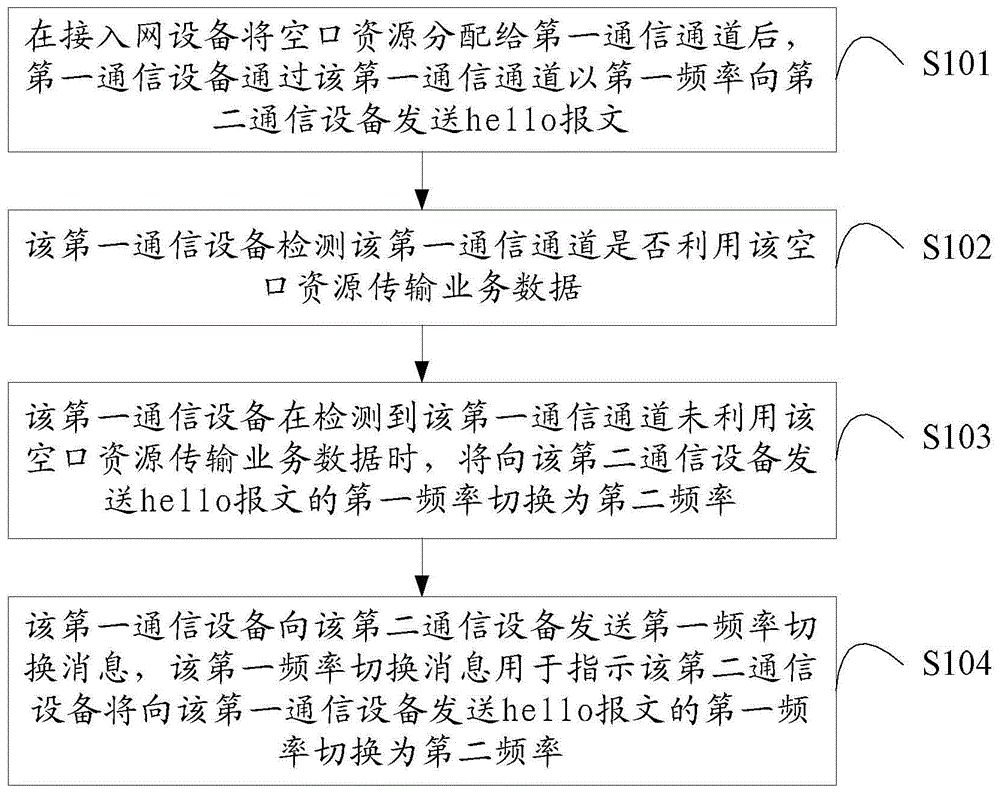
图1为本发明实施例提供的一种控制空口资源的方法的流程图;FIG. 1 is a flowchart of a method for controlling air interface resources according to an embodiment of the present invention;
图2为本发明实施例提供的另一种控制空口资源的方法的流程图;FIG. 2 is a flowchart of another method for controlling air interface resources provided by an embodiment of the present invention;
图3为本发明实施例提供的另一种控制空口资源的方法的流程图;3 is a flowchart of another method for controlling air interface resources provided by an embodiment of the present invention;
图4为本发明实施例提供的一种通信设备的结构示意图;FIG. 4 is a schematic structural diagram of a communication device according to an embodiment of the present invention;
图5为本发明实施例提供的另一种通信设备的结构示意图;FIG. 5 is a schematic structural diagram of another communication device provided by an embodiment of the present invention;
图6为本发明实施例提供的另一种通信设备的结构示意图;FIG. 6 is a schematic structural diagram of another communication device provided by an embodiment of the present invention;
图7为本发明实施例提供的另一种通信设备的结构示意图;FIG. 7 is a schematic structural diagram of another communication device provided by an embodiment of the present invention;
图8为本发明实施例提供的一种空口资源控制系统的结构示意图。FIG. 8 is a schematic structural diagram of an air interface resource control system according to an embodiment of the present invention.
具体实施方式Detailed ways
下面将结合本发明实施例中的附图,对本发明实施例中的技术方案进行清楚地描述,显然,所描述的实施例仅仅是本发明一部分实施例,而不是全部的实施例。基于本发明中的实施例,本领域普通技术人员在没有做出创造性劳动前提下所获得的所有其他实施例,都属于本发明保护的范围。The technical solutions in the embodiments of the present invention will be clearly described below with reference to the accompanying drawings in the embodiments of the present invention. Obviously, the described embodiments are only a part of the embodiments of the present invention, rather than all the embodiments. Based on the embodiments of the present invention, all other embodiments obtained by those of ordinary skill in the art without creative efforts shall fall within the protection scope of the present invention.
本发明以下所有实施例可适用于多种无线通信系统,例如,GSM(Global Systemfor Mobile Communication,全球移动通信系统)、GPRS(General Packet Radio Service,通用分组无线业务)系统和LTE系统等,则对应不同的无线通信系统,该接入网设备可以为GSM或者GPRS系统中的BSC(Base Station Controller,基站控制器),还可以为LTE系统中的eNodeB(Evolved Node B,演进型基站)。All the following embodiments of the present invention are applicable to various wireless communication systems, for example, GSM (Global System for Mobile Communication, global system for mobile communication), GPRS (General Packet Radio Service, general packet radio service) system and LTE system, etc., corresponding to In different wireless communication systems, the access network device may be a BSC (Base Station Controller, base station controller) in a GSM or GPRS system, or an eNodeB (Evolved Node B, evolved base station) in an LTE system.
本发明实施例提供一种控制空口资源的方法,如图1所示,该方法包括:An embodiment of the present invention provides a method for controlling air interface resources. As shown in FIG. 1 , the method includes:
S101、在接入网设备将空口资源分配给第一通信通道后,第一通信设备通过该第一通信通道以第一频率向第二通信设备发送hello报文。S101. After the access network device allocates the air interface resource to the first communication channel, the first communication device sends a hello packet to the second communication device at the first frequency through the first communication channel.
其中,该第一通信通道为该第一通信设备与该第二通信设备之间经过该接入网设备的通信通道。该第一通信设备为核心网设备或者用户设备。在该第一通信设备为核心网设备时,该第二通信设备即为用户设备;在该第一通信设备为用户设备时,该第二通信设备即为核心网设备。Wherein, the first communication channel is a communication channel between the first communication device and the second communication device via the access network device. The first communication device is a core network device or a user equipment. When the first communication device is a core network device, the second communication device is a user equipment; when the first communication device is a user equipment, the second communication device is a core network device.
S102、该第一通信设备检测该第一通信通道是否利用该空口资源传输业务数据。S102. The first communication device detects whether the first communication channel uses the air interface resource to transmit service data.
具体地,该第一通信设备按照预设的流量检测周期检测该第一通信通道的数据流量和/或协议流量,在该流量检测周期内未检测到该第一通信通道的数据流量和/或协议流量时,确定该第一通信通道未利用该空口资源传输业务数据。Specifically, the first communication device detects the data traffic and/or protocol traffic of the first communication channel according to a preset traffic detection period, and does not detect the data traffic and/or the first communication channel during the traffic detection period. When the protocol traffic is used, it is determined that the first communication channel does not use the air interface resource to transmit service data.
示例地,若该第一通信设备为核心网设备,该第二通信设备为用户设备,则该核心网设备可以按照预设的流量检测周期检测是否存在通过该第一通信通道向该用户设备发送的下行数据流量和/或协议流量,若在该流量检测周期内不存在通过该第一通信通道向该用户设备发送的下行数据流量和/或协议流量,此时,可确定该用户设备未进行数据业务,因此,该第一通信设备可确定该第一通信通道未利用该空口资源传输业务数据。若该第一通信设备为用户设备,该第二通信设备为核心网设备,则该用户设备可以按照预设的流量检测周期检测自身是否使用数据流量和/或协议流量,包括上行数据流量和/或协议流量,在该流量检测周期内未检测到数据流量和/或协议流量的使用时,确定该第一通信通道未利用该空口资源传输业务数据。For example, if the first communication device is a core network device and the second communication device is a user equipment, then the core network device may detect whether there is a traffic sent to the user equipment through the first communication channel according to a preset traffic detection cycle. The downlink data traffic and/or protocol traffic, if there is no downlink data traffic and/or protocol traffic sent to the user equipment through the first communication channel within the traffic detection period, at this time, it can be determined that the user equipment has not Therefore, the first communication device can determine that the first communication channel does not use the air interface resource to transmit service data. If the first communication device is a user equipment and the second communication device is a core network device, the user equipment can detect whether it uses data traffic and/or protocol traffic according to a preset traffic detection period, including uplink data traffic and/or or protocol traffic, when the use of data traffic and/or protocol traffic is not detected within the traffic detection period, it is determined that the first communication channel does not use the air interface resource to transmit service data.
S103、该第一通信设备在检测到该第一通信通道未利用该空口资源传输业务数据时,将向该第二通信设备发送hello报文的第一频率切换为第二频率。S103. When detecting that the first communication channel does not use the air interface resource to transmit service data, the first communication device switches the first frequency for sending the hello message to the second communication device to the second frequency.
其中,该第二频率小于该第一频率。Wherein, the second frequency is smaller than the first frequency.
S104、该第一通信设备向该第二通信设备发送第一频率切换消息,该第一频率切换消息用于指示该第二通信设备将向该第一通信设备发送hello报文的第一频率切换为以第二频率向该第一通信设备发送hello报文,以便该接入网设备在报文检测周期内未接收到hello报文时,释放该第一通信通道占用的空口资源。S104: The first communication device sends a first frequency switching message to the second communication device, where the first frequency switching message is used to instruct the second communication device to send the first frequency switching of the hello packet to the first communication device To send a hello message to the first communication device at the second frequency, so that the access network device releases the air interface resources occupied by the first communication channel when the access network device does not receive the hello message within the message detection period.
在本发明一种可能的实现方式中,该核心网设备与该用户设备双方均可以检测该第一通信通道是否利用空口资源传输业务数据,则根据优先原则,在一方设备先检测出该第一通信通道未利用空口资源传输业务数据时,降低自身向对方设备发送hello报文的频率,并发送频率切换消息指示对方设备也降低发送hello报文的频率。In a possible implementation manner of the present invention, both the core network device and the user equipment can detect whether the first communication channel uses air interface resources to transmit service data, then according to the priority principle, the first device detects the first communication channel first. When the communication channel does not use air interface resources to transmit service data, it reduces the frequency of sending hello packets to the other device, and sends a frequency switching message to instruct the other device to also reduce the frequency of sending hello packets.
另外,该第一频率与该第二频率可以由用户预先配置,值得注意的是,该第一频率应使得接入网设备能够在报文检测周期内接收到hello报文,该第二频率应使得接入网设备无法在报文检测周期内接收到hello报文,例如,该报文检测周期为20s,该第一通信设备与该第二通信设备在该第一频率下每10s发送一个hello报文,此时,该接入网设备能够在报文检测周期接收到hello报文。若该第一通信设备与该第二通信设备在该第二频率下每50s发送一个hello报文,则此时,该接入网设备无法在报文检测周期接收到hello报文。这样,由于该接入网设备在报文检测周期内未接收到hello报文时,会释放该第一通信通道占用的空口资源,使得该空口资源可以被其他需要传输业务数据的通信通道占用,从而提高了空口资源的利用率。也就是说,第一频率应大于报文检测频率,第二频率则应小于报文检测频率,报文检测频率=1/报文检测周期。In addition, the first frequency and the second frequency can be pre-configured by the user. It is worth noting that the first frequency should enable the access network device to receive hello packets within the packet detection period, and the second frequency should The access network device cannot receive a hello packet within the packet detection period. For example, the packet detection period is 20s, and the first communication device and the second communication device send a hello every 10s at the first frequency. message, at this time, the access network device can receive the hello message in the message detection period. If the first communication device and the second communication device send a hello message every 50s at the second frequency, then at this time, the access network device cannot receive the hello message in the message detection period. In this way, when the access network device does not receive the hello message within the message detection period, it will release the air interface resources occupied by the first communication channel, so that the air interface resources can be occupied by other communication channels that need to transmit service data. Thus, the utilization rate of air interface resources is improved. That is, the first frequency should be greater than the packet detection frequency, and the second frequency should be less than the packet detection frequency, where the packet detection frequency=1/the packet detection period.
进一步地,在该接入网设备释放该第一通信通道占用的空口资源后,该第一通信设备在该流量检测周期内检测到该第一通信通道的流量时,将向该第二通信设备发送hello报文的第二频率切换为第一频率,同时向该第二通信设备发送第二频率切换消息,该第二频率切换消息用于指示该第二通信设备将向该第一通信设备发送hello报文的第二频率切换为第一频率。Further, after the access network device releases the air interface resources occupied by the first communication channel, when the first communication device detects the traffic of the first communication channel within the traffic detection period, it will send the data to the second communication device. The second frequency for sending the hello message is switched to the first frequency, and at the same time, a second frequency switching message is sent to the second communication device, where the second frequency switching message is used to indicate that the second communication device will send to the first communication device. The second frequency of the hello packet is switched to the first frequency.
可选地,在该接入网设备释放该第一通信通道占用的空口资源后,该第二通信设备检测到该第一通信通道的流量(数据流量和/或协议流量),将向该第一通信设备发送hello报文的第二频率切换为第一频率,并向该第一通信设备发送频率切换消息,该第一通信设备根据该频率切换消息将向该第二通信设备发送hello报文的第二频率切换为第一频率。Optionally, after the access network device releases the air interface resources occupied by the first communication channel, the second communication device detects the traffic (data traffic and/or protocol traffic) of the first communication channel, and sends the data traffic to the first communication channel. A communication device switches the second frequency for sending hello packets to the first frequency, and sends a frequency switching message to the first communication device, and the first communication device sends a hello packet to the second communication device according to the frequency switching message The second frequency is switched to the first frequency.
具体地,该接入网设备在感应到该用户设备的上行流量或者该核心网设备的下行流量时,重新向该第一通信通道分配空口资源,其中,所述流量包括数据流量或者协议流量,以便该第一通信通道重新利用空口资源传输hello报文或者业务数据,这样,该用户设备或者核心网设备在检测到该第一通信设备的流量时,将自身向对方设备发送hello报文的第二频率切换回第一频率,并发送频率切换消息指示对方设备将发送hello报文的第二频率切换回第一频率,从而保证了该第一通信通道的正常使用。Specifically, when sensing the uplink traffic of the user equipment or the downlink traffic of the core network device, the access network device re-allocates air interface resources to the first communication channel, where the traffic includes data traffic or protocol traffic, So that the first communication channel reuses the air interface resources to transmit the hello message or service data, so that when the user equipment or the core network device detects the traffic of the first communication device, it will send the first hello message to the opposite device. The second frequency is switched back to the first frequency, and a frequency switching message is sent to instruct the counterpart device to switch the second frequency for sending the hello message back to the first frequency, thereby ensuring the normal use of the first communication channel.
需要说明的是,本发明实施例可以应用在DSL(Digital Subscriber Line,数字用户专线)和LTE混合组网的场景下。在此场景下,该核心网设备即为HAAP(Hybrid AccessAggregation Point,混合链路聚合节点)服务器,该用户设备即为HG(Home Gateway,家庭网关)。其中,该HAAP服务器配合HA(Hybrid Access,混合链路)部署,实现为每个HG绑定DSL和LTE双隧道,向该HG的终端用户提供更高的带宽。这样,该HG或者该HAAP服务器在确定该LTE通道未使用空口资源传输业务数据时,降低该HG和该HAAP服务器之间相互发送hello报文的频率,使得该LTE通道中的eNodeB在未检测到hello报文时释放该LTE通道占用的空口资源,以便该eNodeB可以将该空口资源分配给其他通道使用,提高了空口资源的利用率。若该HG和HAAP服务器在确定该LTE通道重新利用空口资源传输业务数据或者hello报文,也就是说,该HG或者该HAAP服务器在检测到数据流量或者协议流量时,恢复双方设备发送hello报文的频率,保证该LTE通道的正常使用。It should be noted that the embodiments of the present invention may be applied in a scenario of a DSL (Digital Subscriber Line, digital subscriber line) and LTE hybrid networking. In this scenario, the core network device is a HAAP (Hybrid Access Aggregation Point, hybrid link aggregation node) server, and the user device is a HG (Home Gateway, home gateway). The HAAP server is deployed in conjunction with HA (Hybrid Access, hybrid link), so as to bind DSL and LTE dual tunnels to each HG, and provide higher bandwidth to end users of the HG. In this way, when the HG or the HAAP server determines that the LTE channel does not use air interface resources to transmit service data, the frequency of sending hello packets between the HG and the HAAP server is reduced, so that the eNodeB in the LTE channel does not detect The air interface resources occupied by the LTE channel are released when the hello message is sent, so that the eNodeB can allocate the air interface resources to other channels for use, thereby improving the utilization rate of the air interface resources. If the HG and the HAAP server determine that the LTE channel reuses air interface resources to transmit service data or hello packets, that is, the HG or the HAAP server resumes sending hello packets when the HG or the HAAP server detects data traffic or protocol traffic. frequency to ensure the normal use of the LTE channel.
另外,由于在DSL和LTE混合组网的场景下,HG与HAAP服务器之间存在LTE通道和DSL通道,因此,该HG和该HAAP服务器可以利用DSL通道向对方设备发送hello报文,这样,在该eNodeB释放该LTE通道占用的空口资源后,该HG与该HAAP服务器之间的hello报文仍然可以正常发送,此时,该HG与该HAAP只需检测该LTE通道使用的数据流量,在确定该LTE通道重新利用空口资源传输业务数据时,恢复双方设备发送hello报文的频率。In addition, in the DSL and LTE hybrid networking scenario, there are LTE channels and DSL channels between the HG and the HAAP server. Therefore, the HG and the HAAP server can use the DSL channel to send hello packets to the other device. After the eNodeB releases the air interface resources occupied by the LTE channel, the hello message between the HG and the HAAP server can still be sent normally. At this time, the HG and the HAAP only need to detect the data traffic used by the LTE channel, and after determining When the LTE channel reuses the air interface resources to transmit service data, the frequency of sending hello packets between the two devices is restored.
可选地,若该第一通信设备为核心网设备,该第二通信设备为用户设备,则该核心网设备在接收到建立第二通信通道的请求消息时,若该第二通信通道与该第一通信通道冲突,通过该第一通信通道向该用户设备发送通道验证消息,若该核心网设备未接收到该用户设备发送的通道验证响应消息,则通过该第一通信通道向该用户设备重传该通道验证消息,若在N次向该用户设备重传通道验证响应后,该核心网设备仍未接收到该用户设备发送的通道验证响应消息,则删除该第一通信通道,N为自然数。Optionally, if the first communication device is a core network device and the second communication device is a user equipment, when the core network device receives a request message for establishing a second communication channel, if the second communication channel is connected to the If the first communication channel conflicts, send a channel verification message to the user equipment through the first communication channel; if the core network device does not receive the channel verification response message sent by the user equipment, send a channel verification message to the user equipment through the first communication channel Retransmit the channel verification message. If the core network device has not received the channel verification response message sent by the user equipment after retransmitting the channel verification response to the user equipment N times, delete the first communication channel, where N is Natural number.
需要说明的是,现有技术中,用户设备在关机或者重启的情况下,核心网设备不会立即感知,此时,该用户设备与该核心网设备之间的第一通信通道会继续保持,直到hello报文超时,这样,若检测该hello报文超时的时间过长,则会导致该第一通信通道占用的空口资源浪费,同时,该核心网设备在接收到该用户设备或者其他用户设备发送的建立第二通信通道的请求消息时,若该请求消息请求的第二通信通道与该第一通信通道相冲突,此时,该第二通信通道无法建立,本发明实施例中,该核心网设备在确定第二通信通道与该第一通信通道相冲突时,通过该第一通信通道向该用户设备发送通道验证消息,验证该第一通信通道是否正常使用,若该核心网设备在多次重传通道验证消息后,仍未接收到用户设备发送的通道验证响应消息,则删除该第一通信通道,并释放该第一通信通道占用的空口资源,同时还可以将该空口资源直接分配给该第二通信通道,进一步提高了空口资源的利用率。It should be noted that, in the prior art, when the user equipment is shut down or restarted, the core network device will not immediately perceive it. At this time, the first communication channel between the user equipment and the core network device will continue to be maintained. Until the hello packet times out, if the time for detecting the timeout of the hello packet is too long, the air interface resources occupied by the first communication channel will be wasted. At the same time, the core network device receives the user equipment or other user equipment When sending a request message for establishing a second communication channel, if the second communication channel requested by the request message conflicts with the first communication channel, at this time, the second communication channel cannot be established. In this embodiment of the present invention, the core When the network device determines that the second communication channel conflicts with the first communication channel, it sends a channel verification message to the user equipment through the first communication channel to verify whether the first communication channel is in normal use. After retransmitting the channel verification message for the second time, if the channel verification response message sent by the user equipment has not been received, the first communication channel is deleted, and the air interface resources occupied by the first communication channel are released, and the air interface resources can also be directly allocated. For the second communication channel, the utilization rate of air interface resources is further improved.
示例地,该核心网设备在接收到该第二通信通道的通道建立请求消息时,获取该通道建立请求消息携带的该第二通信通道的IP地址,若该IP地址与该第一通信通道的IP地址相同,则确定该第二通信通道与该第一通信通道冲突。Exemplarily, when receiving the channel establishment request message of the second communication channel, the core network device obtains the IP address of the second communication channel carried in the channel establishment request message, if the IP address is the same as that of the first communication channel. If the IP addresses are the same, it is determined that the second communication channel conflicts with the first communication channel.
需要说明的是,若该第二通信通道是该用户设备请求与该核心网设备之间建立的通信通道,则该核心网设备在接收到该用户设备的通道建立请求消息时,可获取该用户设备的设备标识,在根据该设备标识确定该用户设备对应第一通信通道和第二通信通道时,确定该第二通信通道与该第一通信通道冲突,其中,该核心网设备存储有该用户设备的设备标识与通信通道的对应关系。It should be noted that, if the second communication channel is the communication channel requested by the user equipment to be established with the core network device, the core network device can obtain the user equipment when receiving the channel establishment request message of the user equipment. The device identification of the device, when determining that the user equipment corresponds to the first communication channel and the second communication channel according to the device identification, it is determined that the second communication channel conflicts with the first communication channel, wherein the core network device stores the user equipment The correspondence between the device ID of the device and the communication channel.
采用上述方案,在检测到占用空口资源的通信通道未利用该空口资源传输业务数据时,通过降低该通信通道两端的通信设备发送hello报文的频率,使得接入网设备在报文检测周期内无法检测到该hello报文,这样,该接入网设备在报文检测周期内未检测到该hello报文时,释放该空口资源,以便该接入网设备可以将该空口资源分配给其他通信通道,从而提高了空口资源的利用率。By adopting the above solution, when it is detected that the communication channel occupying the air interface resource does not use the air interface resource to transmit service data, the frequency of sending hello packets by the communication devices at both ends of the communication channel is reduced, so that the access network device can be detected within the packet detection period. The hello packet cannot be detected. In this way, when the access network device does not detect the hello packet within the packet detection period, the air interface resource is released, so that the access network device can allocate the air interface resource to other communications. channel, thereby improving the utilization of air interface resources.
本发明实施例提供一种控制空口资源的方法,如图2所示,该方法包括:An embodiment of the present invention provides a method for controlling air interface resources. As shown in FIG. 2 , the method includes:
S201、在接入网设备将空口资源分配给第一通信通道后,第二通信设备通过该第一通信通道以第一频率向第一通信设备发送hello报文。S201. After the access network device allocates the air interface resource to the first communication channel, the second communication device sends a hello packet to the first communication device at the first frequency through the first communication channel.
其中,该第一通信通道为该接入网设备与第二通信设备之间经过该接入网设备的通信通道。Wherein, the first communication channel is a communication channel between the access network device and the second communication device via the access network device.
另外,该第二通信设备为核心网设备或者用户设备,结合上一实施例,本发明实施例与上一实施例分别描述的是该第一通信通道不同侧的设备,也就是说,若上一实施例中所述第一通信设备为核心网设备,则本发明实施例中的第二通信设备为用户设备,若上一实施例中所述第一通信设备为用户设备,则本发明实施例中的第二通信设备为核心网设备。In addition, the second communication device is a core network device or a user equipment. In combination with the previous embodiment, the embodiments of the present invention and the previous embodiment respectively describe devices on different sides of the first communication channel. In one embodiment, the first communication device is a core network device, then the second communication device in this embodiment of the present invention is a user equipment. If the first communication device in the previous embodiment is a user equipment, the present invention implements The second communication device in the example is a core network device.
S202、在该第一通信设备检测到该第一通信通道未利用该空口资源传输业务数据,并将向该第二通信设备发送hello报文的第一频率切换为第二频率(第二频率小于第一频率)时,该第二通信设备接收该第一通信设备发送的第一频率切换消息。S202. The first communication device detects that the first communication channel does not use the air interface resource to transmit service data, and switches the first frequency for sending hello packets to the second communication device to a second frequency (the second frequency is less than the first frequency), the second communication device receives the first frequency switching message sent by the first communication device.
具体地,步骤S202中,该第一通信设备的动作具体可参照本发明上一实施例中步骤S103对应的描述。Specifically, in step S202, for details of the action of the first communication device, reference may be made to the description corresponding to step S103 in the previous embodiment of the present invention.
S203、该第二通信设备根据该第一频率切换消息将向该第一通信设备发送hello报文的第一频率切换为第二频率,以便该接入网设备在报文检测周期内未接收到hello报文时,释放该第一通信通道占用的空口资源。S203. The second communication device switches the first frequency for sending the hello message to the first communication device to the second frequency according to the first frequency switching message, so that the access network device does not receive the message within the message detection period When the hello message is sent, the air interface resources occupied by the first communication channel are released.
在本发明一种可能的实现方式中,该核心网设备与该用户设备双方均可以检测该第一通信通道是否利用空口资源传输业务数据,则根据优先原则,在一方设备先检测出该第一通信通道未利用空口资源传输业务数据时,降低自身向对方设备发送hello报文的频率,并发送频率切换消息指示对方设备也降低发送hello报文的频率。In a possible implementation manner of the present invention, both the core network device and the user equipment can detect whether the first communication channel uses air interface resources to transmit service data, then according to the priority principle, the first device detects the first communication channel first. When the communication channel does not use air interface resources to transmit service data, it reduces the frequency of sending hello packets to the other device, and sends a frequency switching message to instruct the other device to also reduce the frequency of sending hello packets.
另外,该第一频率与该第二频率可以由用户预先配置,值得注意的是,该第一频率应使得接入网设备能够在报文检测周期内接收到hello报文,该第二频率应使得接入网设备无法在报文检测周期内接收到hello报文,例如,该报文检测周期为20s,该第一通信设备与该第二通信设备在该第一频率下每10s发送一个hello报文,此时,该接入网设备能够在报文检测周期接收到hello报文。若该第一通信设备与该第二通信设备在该第二频率下每50s发送一个hello报文,则此时,该接入网设备无法在报文检测周期接收到hello报文。这样,由于该接入网设备在报文检测周期内未接收到hello报文时,会释放该第一通信通道占用的空口资源,使得该空口资源可以被其他需要传输业务数据的通信通道占用,从而提高了空口资源的利用率。也就是说,第一频率应大于报文检测频率,第二频率则应小于报文检测频率,报文检测频率=1/报文检测周期。In addition, the first frequency and the second frequency can be pre-configured by the user. It is worth noting that the first frequency should enable the access network device to receive hello packets within the packet detection period, and the second frequency should The access network device cannot receive a hello packet within the packet detection period. For example, the packet detection period is 20s, and the first communication device and the second communication device send a hello every 10s at the first frequency. message, at this time, the access network device can receive the hello message in the message detection period. If the first communication device and the second communication device send a hello message every 50s at the second frequency, then at this time, the access network device cannot receive the hello message in the message detection period. In this way, when the access network device does not receive the hello message within the message detection period, it will release the air interface resources occupied by the first communication channel, so that the air interface resources can be occupied by other communication channels that need to transmit service data. Thus, the utilization rate of air interface resources is improved. That is, the first frequency should be greater than the packet detection frequency, and the second frequency should be less than the packet detection frequency, where the packet detection frequency=1/the packet detection period.
进一步地,在该接入网设备释放该第一通信通道占用的空口资源后,该第一通信设备检测到该第一通信通道的流量,并将向该第二通信设备发送hello报文的第二频率切换为第一频率,则该第二通信设备接收该第一通信设备发送的第二频率切换消息,并根据该第二频率切换消息将向该第一通信设备发送hello报文的第二频率切换为第一频率。Further, after the access network device releases the air interface resources occupied by the first communication channel, the first communication device detects the traffic of the first communication channel, and will send the second communication device the first hello message to the second communication device. If the second frequency is switched to the first frequency, the second communication device will receive the second frequency switching message sent by the first communication device, and will send the second frequency switching message to the first communication device according to the second frequency switching message. The frequency is switched to the first frequency.
可选地,在该接入网设备释放该第一通信通道占用的空口资源后,该第二通信设备按照预设的流量检测周期检测该第一通信通道的流量,并在该流量检测周期内检测到该流量时,将向该第一通信设备发送hello报文的第二频率切换为第一频率,向该第一通信设备发送频率切换消息,该频率切换消息用于指示该第一通信设备将向该第二通信设备发送hello报文的第二频率切换为第一频率。Optionally, after the access network device releases the air interface resources occupied by the first communication channel, the second communication device detects the traffic of the first communication channel according to a preset traffic detection period, and within the traffic detection period When the traffic is detected, switch the second frequency for sending the hello message to the first communication device to the first frequency, and send a frequency switching message to the first communication device, where the frequency switching message is used to instruct the first communication device The second frequency for sending the hello message to the second communication device is switched to the first frequency.
可选地,若该第一通信设备为核心网设备,该第二通信设备为用户设备,则在该核心网设备接收到建立第二通信通道的请求消息且确定该第二通信通道与该第一通信通道冲突时,接收该核心网设备发送的通道验证消息,根据该通道验证消息向该核心网设备发送通道验证响应消息,以便该核心网设备根据该通道验证响应消息保持该第一通信通道占用的空口资源。Optionally, if the first communication device is a core network device and the second communication device is a user equipment, then the core network device receives a request message for establishing a second communication channel and determines that the second communication channel is connected to the first communication channel. When a communication channel conflicts, receive a channel verification message sent by the core network device, and send a channel verification response message to the core network device according to the channel verification message, so that the core network device maintains the first communication channel according to the channel verification response message Occupied air interface resources.
需要说明的是,若该核心网设备在多次重传通道验证消息后,仍未接收到用户设备发送的通道验证响应消息,则删除该第一通信通道,并释放该第一通信通道占用的空口资源,同时还可以将该空口资源直接分配给该第二通信通道,进一步提高了空口资源的利用率。It should be noted that, if the core network device has not received the channel verification response message sent by the user equipment after retransmitting the channel verification message multiple times, the first communication channel will be deleted, and the space occupied by the first communication channel will be released. At the same time, the air interface resource can also be directly allocated to the second communication channel, which further improves the utilization rate of the air interface resource.
采用上述方案,在检测到占用空口资源的通信通道未利用该空口资源传输业务数据时,通过降低该通信通道两端的通信设备发送hello报文的频率,使得接入网设备在报文检测周期内无法检测到该hello报文,这样,该接入网设备在报文检测周期内未检测到该hello报文时,释放该空口资源,以便该接入网设备可以将该空口资源分配给其他通信通道,从而提高了空口资源的利用率。By adopting the above solution, when it is detected that the communication channel occupying the air interface resource does not use the air interface resource to transmit service data, the frequency of sending hello packets by the communication devices at both ends of the communication channel is reduced, so that the access network device can be detected within the packet detection period. The hello packet cannot be detected. In this way, when the access network device does not detect the hello packet within the packet detection period, the air interface resource is released, so that the access network device can allocate the air interface resource to other communications. channel, thereby improving the utilization of air interface resources.
具体地,该接入网设备在感应到该用户设备的上行流量或者该核心网设备的下行流量时,重新向该第一通信通道分配空口资源,其中,所述流量包括数据流量或者协议流量,以便该第一通信通道重新利用空口资源传输hello报文或者业务数据,这样,该用户设备或者核心网设备在检测到该第一通信设备的流量时,将自身向对方设备发送hello报文的第二频率切换回第一频率,并发送频率切换消息指示对方设备将发送hello报文的第二频率切换回第一频率,从而保证了该第一通信通道的正常使用。Specifically, when sensing the uplink traffic of the user equipment or the downlink traffic of the core network device, the access network device re-allocates air interface resources to the first communication channel, where the traffic includes data traffic or protocol traffic, So that the first communication channel reuses the air interface resources to transmit the hello message or service data, so that when the user equipment or the core network device detects the traffic of the first communication device, it will send the first hello message to the opposite device. The second frequency is switched back to the first frequency, and a frequency switching message is sent to instruct the counterpart device to switch the second frequency for sending the hello message back to the first frequency, thereby ensuring the normal use of the first communication channel.
需要说明的是,本发明实施例可以应用在DSL(Digital Subscriber Line,数字用户专线)和LTE混合组网的场景下。在此场景下,该核心网设备即为HAAP(Hybrid AccessAggregation Point,混合链路聚合节点)服务器,该用户设备即为HG(Home Gateway,家庭网关)。其中,该HAAP服务器配合HA(Hybrid Access,混合链路)部署,实现为每个HG绑定DSL和LTE双隧道,向该HG的终端用户提供更高的带宽。这样,该HG或者该HAAP服务器在确定该LTE通道未使用空口资源传输业务数据时,降低该HG和该HAAP服务器之间相互发送hello报文的频率,使得该LTE通道中的eNodeB在未检测到hello报文时释放该LTE通道占用的空口资源,以便该eNodeB可以将该空口资源分配给其他通道使用,提高了空口资源的利用率。若该HG和HAAP服务器在确定该LTE通道重新利用空口资源传输业务数据或者hello报文,也就是说,该HG或者该HAAP服务器在检测到数据流量或者协议流量时,恢复双方设备发送hello报文的频率,保证该LTE通道的正常使用。It should be noted that the embodiments of the present invention may be applied in a scenario of a DSL (Digital Subscriber Line, digital subscriber line) and LTE hybrid networking. In this scenario, the core network device is a HAAP (Hybrid Access Aggregation Point, hybrid link aggregation node) server, and the user device is a HG (Home Gateway, home gateway). The HAAP server is deployed in conjunction with HA (Hybrid Access, hybrid link), so as to bind DSL and LTE dual tunnels to each HG, and provide higher bandwidth to end users of the HG. In this way, when the HG or the HAAP server determines that the LTE channel does not use air interface resources to transmit service data, the frequency of sending hello packets between the HG and the HAAP server is reduced, so that the eNodeB in the LTE channel does not detect The air interface resources occupied by the LTE channel are released when the hello message is sent, so that the eNodeB can allocate the air interface resources to other channels for use, thereby improving the utilization rate of the air interface resources. If the HG and the HAAP server determine that the LTE channel reuses air interface resources to transmit service data or hello packets, that is, the HG or the HAAP server resumes sending hello packets when the HG or the HAAP server detects data traffic or protocol traffic. frequency to ensure the normal use of the LTE channel.
另外,由于在DSL和LTE混合组网的场景下,HG与HAAP服务器之间存在LTE通道和DSL通道,因此,该HG和该HAAP服务器可以利用DSL通道向对方设备发送hello报文,这样,在该eNodeB释放该LTE通道占用的空口资源后,该HG与该HAAP服务器之间的hello报文仍然可以正常发送,此时,该HG与该HAAP只需检测该LTE通道使用的数据流量,在确定该LTE通道重新利用空口资源传输业务数据时,恢复双方设备发送hello报文的频率。In addition, in the DSL and LTE hybrid networking scenario, there are LTE channels and DSL channels between the HG and the HAAP server. Therefore, the HG and the HAAP server can use the DSL channel to send hello packets to the other device. After the eNodeB releases the air interface resources occupied by the LTE channel, the hello message between the HG and the HAAP server can still be sent normally. At this time, the HG and the HAAP only need to detect the data traffic used by the LTE channel, and after determining When the LTE channel reuses the air interface resources to transmit service data, the frequency of sending hello packets between the two devices is restored.
为了使本领域技术人员能够更清楚地理解本发明实施例提供的一种控制空口资源的方法的技术方案,下面通过具体的实施例对本发明提供的一种控制空口资源的方法进行详细说明,其中,本实施例以第一通信设备为核心网设备,第二通信设备为用户设备进行说明,如图3所示,包括:In order to enable those skilled in the art to more clearly understand the technical solution of the method for controlling air interface resources provided by the embodiments of the present invention, the method for controlling air interface resources provided by the present invention is described in detail below through specific embodiments, wherein , this embodiment is described by taking the first communication device as the core network device and the second communication device as the user equipment, as shown in FIG. 3 , including:
S301、核心网设备通过第一通信通道按照第一频率向用户设备发送hello报文。S301. The core network device sends a hello packet to the user equipment according to the first frequency through the first communication channel.
需要说明的是,在步骤S301之前,该用户设备向该接入网设备发送通信建立请求消息,该接入网设备将该通信建立请求消息发送至该核心网设备,该核心网设备根据该通信建立请求消息建立与该用户设备之间的第一通信通道,并指示该接入网设备向该第一通信通道分配空口资源。It should be noted that, before step S301, the user equipment sends a communication establishment request message to the access network device, the access network device sends the communication establishment request message to the core network device, and the core network device according to the communication The establishment request message establishes a first communication channel with the user equipment, and instructs the access network device to allocate air interface resources to the first communication channel.
另外,该第一通信通道经过该接入网设备,也就是说,该核心网设备发送给用户设备的hello报文需要经过接入网设备转发。In addition, the first communication channel passes through the access network device, that is, the hello packet sent by the core network device to the user equipment needs to be forwarded through the access network device.
S302、接入网设备在通过该第一通信通道接收到该hello报文时,将该hello报文转发至该用户设备。S302. When receiving the hello packet through the first communication channel, the access network device forwards the hello packet to the user equipment.
需要说明的是,该用户设备在与该核心网设备建立第一通信通道后,同样会向该核心网设备发送hello报文,其中,双方设备发送hello报文的频率需保持一致。It should be noted that, after establishing the first communication channel with the core network device, the user equipment will also send a hello packet to the core network device, wherein the frequency of sending the hello packet by the two devices must be consistent.
S303、该用户设备通过该第一通信通道按照第一频率向核心网设备发送hello报文。S303. The user equipment sends a hello packet to the core network device according to the first frequency through the first communication channel.
S304、该接入网设备在通过该第一通信通道接收到该用户设备发送给该核心网设备的hello报文时,将该hello报文转发至该核心网设备。S304. When receiving the hello packet sent by the user equipment to the core network device through the first communication channel, the access network device forwards the hello packet to the core network device.
S305、该核心网设备在流量检测周期内未检测到发送至用户设备的数据流量,将向用户设备发送hello报文的第一频率切换为第二频率。S305: The core network device does not detect the data traffic sent to the user equipment within the traffic detection period, and switches the first frequency for sending hello packets to the user equipment to the second frequency.
其中,该流量检测周期可以由用户预设,该流量检测周期与允许该空口资源未承载业务数据的时间相关,例如,若希望接入网设备在该空口资源10分钟未承载业务数据时,释放该空口资源,则可预设该流量检测周期为10分钟。The traffic detection period can be preset by the user, and the traffic detection period is related to the time when the air interface resource is not allowed to carry service data. For the air interface resource, the traffic detection period can be preset to be 10 minutes.
S306、该核心网设备通过该第一通信通道向该用户设备发送第一频率切换消息。S306. The core network device sends a first frequency switching message to the user equipment through the first communication channel.
S307、该接入网设备在通过该第一通信通道接收到该第一频率切换消息时,将该第一频率切换消息发送至该用户设备。S307. When receiving the first frequency switching message through the first communication channel, the access network device sends the first frequency switching message to the user equipment.
S308、该用户设备根据该第一频率切换消息将向该核心网设备发送hello报文的第一频率切换为第二频率,第二频率小于第一频率。S308. The user equipment switches the first frequency for sending the hello packet to the core network device to a second frequency according to the first frequency switching message, and the second frequency is smaller than the first frequency.
需要说明的是,该第一频率与该第二频率可以由用户预设,并且该第一频率与该第二频率可以为具体的频率值,也可以为频率范围,本发明对此不做限定。It should be noted that the first frequency and the second frequency can be preset by the user, and the first frequency and the second frequency can be specific frequency values or frequency ranges, which are not limited in the present invention .
另外,由于该接入网设备在报文检测周期内未通过通信通道接收到hello报文时,释放该通信通道占用的空口资源,因此,该第一频率与该第二频率的设置与该报文检测周期相关,例如,该报文检测周期为20s,该核心网设备与该用户设备在该第一频率下每10s发送一个hello报文,此时,该接入网设备能够在报文检测周期接收到hello报文。若该核心网设备与该用户设备在该第二频率下每50s发送一个hello报文,则此时,该接入网设备无法在报文检测周期接收到hello报文。这样,由于该接入网设备在报文检测周期内未接收到hello报文时,会释放该第一通信通道占用的空口资源,使得该空口资源可以被其他需要传输业务数据的通信通道占用,从而提高了空口资源的利用率。也就是说,第一频率应大于报文检测频率,第二频率则应小于报文检测频率,报文检测频率=1/报文检测周期。In addition, since the access network device releases the air interface resources occupied by the communication channel when it does not receive the hello message through the communication channel within the message detection period, the settings of the first frequency and the second frequency are the same as those of the message. The packet detection period is related. For example, the packet detection period is 20s. The core network device and the user equipment send a hello packet every 10s at the first frequency. At this time, the access network device can detect the Receive hello packets periodically. If the core network device and the user equipment send a hello message every 50s at the second frequency, then at this time, the access network device cannot receive the hello message in the message detection period. In this way, when the access network device does not receive the hello message within the message detection period, it will release the air interface resources occupied by the first communication channel, so that the air interface resources can be occupied by other communication channels that need to transmit service data. Thus, the utilization rate of air interface resources is improved. That is, the first frequency should be greater than the packet detection frequency, and the second frequency should be less than the packet detection frequency, where the packet detection frequency=1/the packet detection period.
S309、该接入网设备在报文检测周期内未接收到hello报文时,释放该第一通信通道占用的空口资源。S309: When the access network device does not receive the hello message within the message detection period, it releases the air interface resources occupied by the first communication channel.
S310、该接入网设备重新向该第一通信通道分配空口资源。S310. The access network device re-allocates air interface resources to the first communication channel.
具体地,该接入网设备在在感应到该用户设备的上行流量或者该核心网设备的下行流量时,重新向该第一通信通道分配空口资源,其中,所述流量包括数据流量或者协议流量,以便该第一通信通道重新利用空口资源传输hello报文或者业务数据。Specifically, when sensing the upstream traffic of the user equipment or the downstream traffic of the core network device, the access network device re-allocates air interface resources to the first communication channel, where the traffic includes data traffic or protocol traffic , so that the first communication channel reuses air interface resources to transmit hello packets or service data.
S311、该核心网设备在流量检测周期内检测到该第一通信通道的下行流量时,并将向用户设备发送hello报文的第二频率切换为第一频率。S311. When the core network device detects the downlink traffic of the first communication channel within the traffic detection period, it switches the second frequency for sending the hello packet to the user equipment to the first frequency.
S312、该核心网设备通过该第一通信通道向该用户设备发送第二频率切换消息。S312. The core network device sends a second frequency switching message to the user equipment through the first communication channel.
S313、该接入网设备在通过该第一通信通道接收到该第二频率切换消息时,将该第二频率切换消息发送至该用户设备。S313. When receiving the second frequency switching message through the first communication channel, the access network device sends the second frequency switching message to the user equipment.
S314、该用户设备根据该第二频率切换消息将向该核心网设备发送hello报文的第二频率切换为第一频率。S314: The user equipment switches the second frequency for sending the hello packet to the core network device to the first frequency according to the second frequency switching message.
需要说明的是,用户设备也可以通过检测该第一通信通道的上行流量,发起hello报文发送频率的切换,因此,可选地,根据优先原则,在用户设备首先检测到该第一通信通道的上行流量时,执行步骤S315至步骤S318。It should be noted that the user equipment can also initiate switching of the sending frequency of the hello packet by detecting the upstream traffic of the first communication channel. Therefore, optionally, according to the priority principle, the first communication channel is first detected by the user equipment. When the upstream traffic is received, step S315 to step S318 are executed.
S315、该用户设备在流量检测周期内检测到该第一通信通道的上行流量,将向该核心网设备发送hello报文的第二频率切换为第一频率。S315. The user equipment detects the upstream traffic of the first communication channel within the traffic detection period, and switches the second frequency for sending the hello packet to the core network device to the first frequency.
S316、该用户设备通过该第一通信通道向该核心网设备发送频率切换消息。S316. The user equipment sends a frequency switching message to the core network device through the first communication channel.
S317、该接入网设备在通过该第一通信通道接收到该频率切换消息时,将该频率切换消息发送至该用户设备。S317. When receiving the frequency switching message through the first communication channel, the access network device sends the frequency switching message to the user equipment.
S318、该接入网设备根据该频率切换消息将向该用户设备发送hello报文的第二频率切换为第一频率。S318: The access network device switches the second frequency for sending the hello packet to the user equipment to the first frequency according to the frequency switching message.
这样,在检测到占用空口资源的通信通道未利用该空口资源传输业务数据时,通过降低该通信通道两端的通信设备发送hello报文的频率,使得接入网设备在报文检测周期内无法检测到该hello报文,这样,该接入网设备在报文检测周期内未检测到该hello报文时,释放该空口资源,以便该接入网设备可以将该空口资源分配给其他通信通道,从而提高了空口资源的利用率。In this way, when it is detected that the communication channel occupying the air interface resource does not use the air interface resource to transmit service data, the frequency of sending hello packets by the communication devices at both ends of the communication channel is reduced, so that the access network device cannot detect within the packet detection period. In this way, when the access network device does not detect the hello message within the packet detection period, the air interface resource is released, so that the access network device can allocate the air interface resource to other communication channels, Thus, the utilization rate of air interface resources is improved.
可选地,通过步骤S319至步骤S321,可进一步提高空口资源的利用率。Optionally, through steps S319 to S321, the utilization rate of air interface resources can be further improved.
S319、该核心网设备在接收到请求建立第二通信通道的请求消息时,确定该第二通信通道与该第一通信通道冲突。S319. When receiving the request message requesting to establish the second communication channel, the core network device determines that the second communication channel conflicts with the first communication channel.
其中,向该核心网设备发送该请求消息的可以为该用户设备,也可以是其他的用户设备。Wherein, the user equipment that sends the request message to the core network device may be the user equipment, or other user equipment.
示例地,该核心网设备在接收到该第二通信通道的通道建立请求消息时,获取该通道建立请求消息携带的该第二通信通道的IP地址,若该IP地址与该第一通信通道的IP地址相同,则确定该第二通信通道与该第一通信通道冲突。Exemplarily, when receiving the channel establishment request message of the second communication channel, the core network device obtains the IP address of the second communication channel carried in the channel establishment request message, if the IP address is the same as that of the first communication channel. If the IP addresses are the same, it is determined that the second communication channel conflicts with the first communication channel.
需要说明的是,若该第二通信通道是该用户设备请求与该核心网设备之间建立的通信通道,则该核心网设备在接收到该用户设备的通道建立请求消息时,可获取该用户设备的设备标识,在根据该设备标识确定该用户设备对应第一通信通道和第二通信通道时,确定该第二通信通道与该第一通信通道冲突,其中,该核心网设备存储有该用户设备的设备标识与通信通道的对应关系。It should be noted that, if the second communication channel is the communication channel requested by the user equipment to be established with the core network device, the core network device can obtain the user equipment when receiving the channel establishment request message of the user equipment. The device identification of the device, when determining that the user equipment corresponds to the first communication channel and the second communication channel according to the device identification, it is determined that the second communication channel conflicts with the first communication channel, wherein the core network device stores the user equipment The correspondence between the device ID of the device and the communication channel.
S320、该核心网设备通过第一通信通道向用户设备发送通道验证消息。S320. The core network device sends a channel verification message to the user equipment through the first communication channel.
S321、该核心网设备在N次向用户设备重传该通道验证消息后,若未接收到该用户设备发送的通道验证响应消息,删除该第一通信通道。S321. After the core network device retransmits the channel verification message to the user equipment for N times, if it does not receive the channel verification response message sent by the user equipment, delete the first communication channel.
需要说明的是,现有技术中,用户设备在关机或者重启的情况下,核心网设备不会立即感知,此时,该用户设备与该核心网设备之间的第一通信通道会继续保持,直到hello报文超时,这样,若检测该hello报文超时的时间过长,则会导致该第一通信通道占用的空口资源浪费,同时,该核心网设备在接收到该用户设备或者其他用户设备发送的建立第二通信通道的请求消息时,若该请求消息请求的第二通信通道与该第一通信通道相冲突,此时,该第二通信通道无法建立,本发明实施例中,该核心网设备在确定第二通信通道与该第一通信通道相冲突时,通过该第一通信通道向该用户设备发送通道验证消息,验证该第一通信通道是否正常使用,若该核心网设备在多次重传通道验证消息后,仍未接收到用户设备发送的通道验证响应消息,则指示该接入网设备删除该第一通信通道,并释放该第一通信通道占用的空口资源,同时还可以将该空口资源直接分配给该第二通信通道,进一步提高了空口资源的利用率。It should be noted that, in the prior art, when the user equipment is shut down or restarted, the core network device will not immediately perceive it. At this time, the first communication channel between the user equipment and the core network device will continue to be maintained. Until the hello packet times out, if the time for detecting the timeout of the hello packet is too long, the air interface resources occupied by the first communication channel will be wasted. At the same time, the core network device receives the user equipment or other user equipment When sending a request message for establishing a second communication channel, if the second communication channel requested by the request message conflicts with the first communication channel, at this time, the second communication channel cannot be established. In this embodiment of the present invention, the core When the network device determines that the second communication channel conflicts with the first communication channel, it sends a channel verification message to the user equipment through the first communication channel to verify whether the first communication channel is in normal use. After retransmitting the channel verification message for the second time, if the channel verification response message sent by the user equipment has not been received, the access network device is instructed to delete the first communication channel and release the air interface resources occupied by the first communication channel. The air interface resource is directly allocated to the second communication channel, which further improves the utilization rate of the air interface resource.
另外,对于上述方法实施例,为了简单描述,故将其都表述为一系列的动作组合,但是本领域技术人员应该知悉,本发明并不受所描述的动作顺序的限制,其次,本领域技术人员也应该知悉,说明书中所描述的实施例均属于优选实施例,所涉及的动作和模块并不一定是本发明所必须的。In addition, for the above-mentioned method embodiments, for the sake of simple description, they are all expressed as a series of action combinations, but those skilled in the art should know that the present invention is not limited by the described action sequence. Personnel should also be aware that the embodiments described in the specification are all preferred embodiments, and the actions and modules involved are not necessarily essential to the present invention.
具体地,该接入网设备在感应到该用户设备的上行流量或者该核心网设备的下行流量时,重新向该第一通信通道分配空口资源,其中,所述流量包括数据流量或者协议流量,以便该第一通信通道重新利用空口资源传输hello报文或者业务数据,这样,该用户设备或者核心网设备在检测到该第一通信设备的流量时,将自身向对方设备发送hello报文的第二频率切换回第一频率,并发送频率切换消息指示对方设备将发送hello报文的第二频率切换回第一频率,从而保证了该第一通信通道的正常使用。Specifically, when sensing the uplink traffic of the user equipment or the downlink traffic of the core network device, the access network device re-allocates air interface resources to the first communication channel, where the traffic includes data traffic or protocol traffic, So that the first communication channel reuses the air interface resources to transmit the hello message or service data, so that when the user equipment or the core network device detects the traffic of the first communication device, it will send the first hello message to the opposite device. The second frequency is switched back to the first frequency, and a frequency switching message is sent to instruct the counterpart device to switch the second frequency for sending the hello message back to the first frequency, thereby ensuring the normal use of the first communication channel.
需要说明的是,本发明实施例可以应用在DSL(Digital Subscriber Line,数字用户专线)和LTE混合组网的场景下。在此场景下,该核心网设备即为HAAP(Hybrid AccessAggregation Point,混合链路聚合节点)服务器,该用户设备即为HG(Home Gateway,家庭网关)。其中,该HAAP服务器配合HA(Hybrid Access,混合链路)部署,实现为每个HG绑定DSL和LTE双隧道,向该HG的终端用户提供更高的带宽。这样,该HG或者该HAAP服务器在确定该LTE通道未使用空口资源传输业务数据时,降低该HG和该HAAP服务器之间相互发送hello报文的频率,使得该LTE通道中的eNodeB在未检测到hello报文时释放该LTE通道占用的空口资源,以便该eNodeB可以将该空口资源分配给其他通道使用,提高了空口资源的利用率。若该HG和HAAP服务器在确定该LTE通道重新利用空口资源传输业务数据或者hello报文,也就是说,该HG或者该HAAP服务器在检测到数据流量或者协议流量时,恢复双方设备发送hello报文的频率,保证该LTE通道的正常使用。It should be noted that the embodiments of the present invention may be applied in a scenario of a DSL (Digital Subscriber Line, digital subscriber line) and LTE hybrid networking. In this scenario, the core network device is a HAAP (Hybrid Access Aggregation Point, hybrid link aggregation node) server, and the user device is a HG (Home Gateway, home gateway). The HAAP server is deployed in conjunction with HA (Hybrid Access, hybrid link), so as to bind DSL and LTE dual tunnels to each HG, and provide higher bandwidth to end users of the HG. In this way, when the HG or the HAAP server determines that the LTE channel does not use air interface resources to transmit service data, the frequency of sending hello packets between the HG and the HAAP server is reduced, so that the eNodeB in the LTE channel does not detect The air interface resources occupied by the LTE channel are released when the hello message is sent, so that the eNodeB can allocate the air interface resources to other channels for use, thereby improving the utilization rate of the air interface resources. If the HG and the HAAP server determine that the LTE channel reuses air interface resources to transmit service data or hello packets, that is, the HG or the HAAP server resumes sending hello packets when the HG or the HAAP server detects data traffic or protocol traffic. frequency to ensure the normal use of the LTE channel.
另外,由于在DSL和LTE混合组网的场景下,HG与HAAP服务器之间存在LTE通道和DSL通道,因此,该HG和该HAAP服务器可以利用DSL通道向对方设备发送hello报文,这样,在该eNodeB释放该LTE通道占用的空口资源后,该HG与该HAAP服务器之间的hello报文仍然可以正常发送,此时,该HG与该HAAP只需检测该LTE通道使用的数据流量,在确定该LTE通道重新利用空口资源传输业务数据时,恢复双方设备发送hello报文的频率。In addition, in the DSL and LTE hybrid networking scenario, there are LTE channels and DSL channels between the HG and the HAAP server. Therefore, the HG and the HAAP server can use the DSL channel to send hello packets to the other device. After the eNodeB releases the air interface resources occupied by the LTE channel, the hello message between the HG and the HAAP server can still be sent normally. At this time, the HG and the HAAP only need to detect the data traffic used by the LTE channel, and after determining When the LTE channel reuses the air interface resources to transmit service data, the frequency of sending hello packets between the two devices is restored.
本发明实施例提供一种通信设备40,对应上述图1的方法实施例,该通信设备40的各个功能单元均可用于上述方法步骤。如图4所示,该通信设备40包括:An embodiment of the present invention provides a
发送单元41,用于在接入网设备将空口资源分配给第一通信通道后,通过该第一通信通道以第一频率向第二通信设备发送hello报文。The sending
其中,该第一通信通道为该通信设备与该第二通信设备之间经过该接入网设备的通信通道;该通信设备为核心网设备或者用户设备。Wherein, the first communication channel is a communication channel between the communication device and the second communication device via the access network device; the communication device is a core network device or a user equipment.
检测单元42,用于检测该第一通信通道是否利用该空口资源传输业务数据。The
处理单元43,用于在该检测单元42检测到该第一通信通道未利用该空口资源传输业务数据时,将该发送单元41向该第二通信设备发送hello报文的第一频率切换为第二频率。The
该发送单元41还用于,向该第二通信设备发送第一频率切换消息,该第一频率切换消息用于指示该第二通信设备将向该通信设备发送hello报文的第一频率切换为第二频率。The sending
其中,该第一频率与该第二频率可以由用户预先配置,值得注意的是,该第一频率应使得接入网设备能够在报文检测周期内接收到hello报文,该第二频率应使得接入网设备无法在报文检测周期内接收到hello报文,例如,该报文检测周期为20s,该通信设备与该第二通信设备在该第一频率下每10s发送一个hello报文,此时,该接入网设备能够在报文检测周期接收到hello报文。若该通信设备与该第二通信设备在该第二频率下每50s发送一个hello报文,则此时,该接入网设备无法在报文检测周期接收到hello报文。这样,由于该接入网设备在报文检测周期内未接收到hello报文时,会释放该第一通信通道占用的空口资源,使得该空口资源可以被其他需要传输业务数据的通信通道占用,从而提高了空口资源的利用率。也就是说,第一频率应大于报文检测频率,第二频率则应小于报文检测频率,报文检测频率=1/报文检测周期。The first frequency and the second frequency can be pre-configured by the user. It is worth noting that the first frequency should enable the access network device to receive hello packets within the packet detection period, and the second frequency should The access network device cannot receive a hello packet within the packet detection period. For example, the packet detection period is 20s, and the communication device and the second communication device send a hello packet every 10s at the first frequency. , at this time, the access network device can receive the hello packet in the packet detection period. If the communication device and the second communication device send a hello message every 50s at the second frequency, then at this time, the access network device cannot receive the hello message in the message detection period. In this way, when the access network device does not receive the hello message within the message detection period, it will release the air interface resources occupied by the first communication channel, so that the air interface resources can be occupied by other communication channels that need to transmit service data. Thus, the utilization rate of air interface resources is improved. That is, the first frequency should be greater than the packet detection frequency, and the second frequency should be less than the packet detection frequency, where the packet detection frequency=1/the packet detection period.
可选地,该检测单元42具体用于,按照预设的流量检测周期检测该第一通信通道的数据流量;该通信设备还包括确定单元44,用于在该检测单元42未检测到该第一通道的数据流量时,确定该第一通信通道未利用该空口资源传输业务数据。Optionally, the
示例地,若该通信设备为核心网设备,该第二通信设备为用户设备,则该核心网设备可以按照预设的流量检测周期检测是否存在通过该第一通信通道向该用户设备发送的下行数据流量,若在该流量检测周期内不存在通过该第一通信通道向该用户设备发送的下行数据流量,此时,可确定该用户设备未进行数据业务,因此,该通信设备可确定该第一通信通道未利用该空口资源传输业务数据。若该通信设备为用户设备,该第二通信设备为核心网设备,则该用户设备可以按照预设的流量检测周期检测自身是否使用数据流量,包括上行数据流量,在该流量检测周期内未检测到数据流量的使用时,确定该第一通信通道未利用该空口资源传输业务数据。For example, if the communication device is a core network device and the second communication device is a user equipment, the core network device may detect whether there is a downlink sent to the user equipment through the first communication channel according to a preset traffic detection cycle. Data traffic, if there is no downlink data traffic sent to the user equipment through the first communication channel within the traffic detection period, at this time, it can be determined that the user equipment is not performing data services, therefore, the communication device can determine the first communication channel. A communication channel does not use the air interface resource to transmit service data. If the communication device is a user equipment and the second communication device is a core network device, the user equipment can detect whether it uses data traffic according to a preset traffic detection period, including uplink data traffic, and does not detect within the traffic detection period When the data traffic is used, it is determined that the first communication channel does not use the air interface resource to transmit service data.
可选地,该检测单元42还用于,在该接入网设备释放该第一通信通道占用的空口资源后,在该流量检测周期内检测到该第一通信通道的流量;该处理单元43还用于,将向该第二通信设备发送hello报文的第二频率切换为第一频率;该发送单元41还用于,向该第二通信设备发送第二频率切换消息,该第二频率切换消息用于指示该第二通信设备将向该通信设备发送hello报文的第二频率切换为第一频率。Optionally, the
可选地,该通信设备还包括接收单元45,用于在该接入网设备释放该第一通信通道占用的空口资源后,若该第二通信设备检测到该第一通信通道的流量,并将向该通信设备发送hello报文的第二频率切换为第一频率,则接收该第二通信设备发送的频率切换消息;该处理单元43还用于,根据该频率切换消息将向该第二通信设备发送hello报文的第二频率切换为第一频率。Optionally, the communication device further includes a receiving
具体地,该接入网设备在感应到该用户设备的上行流量或者该核心网设备的下行流量时,重新向该第一通信通道分配空口资源,其中,所述流量包括数据流量或者协议流量,以便该第一通信通道重新利用空口资源传输hello报文或者业务数据,这样,该用户设备或者核心网设备在检测到该通信设备的流量时,将自身向对方设备发送hello报文的第二频率切换回第一频率,并发送频率切换消息指示对方设备将发送hello报文的第二频率切换回第一频率,从而保证了该第一通信通道的正常使用。Specifically, when sensing the uplink traffic of the user equipment or the downlink traffic of the core network device, the access network device re-allocates air interface resources to the first communication channel, where the traffic includes data traffic or protocol traffic, So that the first communication channel reuses the air interface resources to transmit hello packets or service data, so that when the user equipment or core network device detects the traffic of the communication device, it sends the second frequency of hello packets to the opposite device. Switch back to the first frequency, and send a frequency switch message to instruct the counterpart device to switch the second frequency for sending the hello message back to the first frequency, thereby ensuring the normal use of the first communication channel.
可选地,若该通信设备为核心网设备,该第二通信设备为用户设备,则该接收单元45,用于接收建立第二通信通道的请求消息;该确定单元44,用于根据该请求消息确定该第二通信通道与该第一通信通道冲突;该发送单元41还用于,通过该第一通信通道向该用户设备发送通道验证消息,若未接收到该用户设备发送的通道验证响应消息,通过该第一通信通道向该用户设备重传该通道验证消息;该处理单元43还用于,在N次向该用户设备重传通道验证响应后,若未接收到该用户设备发送的通道验证响应消息,则删除该第一通信通道,N为自然数。Optionally, if the communication device is a core network device and the second communication device is a user equipment, the receiving
采用上述通信设备,该通信设备在检测到占用空口资源的通信通道未利用该空口资源传输业务数据时,通过降低该通信通道两端的通信设备发送hello报文的频率,使得接入网设备在报文检测周期内无法检测到该hello报文,这样,该接入网设备在报文检测周期内未检测到该hello报文时,释放该空口资源,以便该接入网设备可以将该空口资源分配给其他通信通道,从而提高了空口资源的利用率。Using the above communication device, when the communication device detects that the communication channel occupying the air interface resource does not use the air interface resource to transmit service data, the communication device at both ends of the communication channel reduces the frequency of sending hello packets, so that the access network device can report The hello packet cannot be detected within the packet detection period. In this way, when the access network device does not detect the hello packet within the packet detection period, the air interface resource is released so that the access network device can use the air interface resource. Allocated to other communication channels, thereby improving the utilization of air interface resources.
本发明实施例提供一种通信设备50,对应上述图2的方法实施例,该通信设备50的各个功能单元均可用于上述方法步骤。如图5所示,该通信设备50包括:An embodiment of the present invention provides a
发送单元51,用于在接入网设备将空口资源分配给第一通信通道后,通过该第一通信通道以第一频率向第一通信设备发送hello报文。The sending
其中,该第一通信通道为该接入网设备与通信设备之间经过该接入网设备的通信通道;该通信设备为核心网设备或者用户设备。Wherein, the first communication channel is a communication channel between the access network device and the communication device via the access network device; the communication device is a core network device or a user equipment.
接收单元52,用于在该第一通信设备检测到该第一通信通道未利用该空口资源传输业务数据,并将向该通信设备发送hello报文的第一频率切换为第二频率时,接收该第一通信设备发送的第一频率切换消息。The receiving
处理单元53,用于根据该第一频率切换消息将向该第一通信设备发送hello报文的第一频率切换为第二频率。The
其中,该第一频率与该第二频率可以由用户预先配置,值得注意的是,该第一频率应使得接入网设备能够在报文检测周期内接收到hello报文,该第二频率应使得接入网设备无法在报文检测周期内接收到hello报文,例如,该报文检测周期为20s,该第一通信设备与该通信设备在该第一频率下每10s发送一个hello报文,此时,该接入网设备能够在报文检测周期接收到hello报文。若该第一通信设备与该通信设备在该第二频率下每50s发送一个hello报文,则此时,该接入网设备无法在报文检测周期接收到hello报文。这样,由于该接入网设备在报文检测周期内未接收到hello报文时,会释放该第一通信通道占用的空口资源,使得该空口资源可以被其他需要传输业务数据的通信通道占用,从而提高了空口资源的利用率。也就是说,第一频率应大于报文检测频率,第二频率则应小于报文检测频率,报文检测频率=1/报文检测周期。The first frequency and the second frequency can be pre-configured by the user. It is worth noting that the first frequency should enable the access network device to receive hello packets within the packet detection period, and the second frequency should The access network device cannot receive a hello packet within the packet detection period. For example, if the packet detection period is 20s, the first communication device and the communication device send a hello packet every 10s at the first frequency. , at this time, the access network device can receive the hello packet in the packet detection period. If the first communication device and the communication device send a hello message every 50s at the second frequency, then at this time, the access network device cannot receive the hello message in the message detection period. In this way, when the access network device does not receive the hello message within the message detection period, it will release the air interface resources occupied by the first communication channel, so that the air interface resources can be occupied by other communication channels that need to transmit service data. Thus, the utilization rate of air interface resources is improved. That is, the first frequency should be greater than the packet detection frequency, and the second frequency should be less than the packet detection frequency, where the packet detection frequency=1/the packet detection period.
可选地,该接收单元52还用于,在该接入网设备释放该第一通信通道占用的空口资源后,若该第一通信设备检测到该第一通信通道的流量,并将向该通信设备发送hello报文的第二频率切换为第一频率,则接收该第一通信设备发送的第二频率切换消息;该处理单元53还用于,根据该第二频率切换消息将向该第一通信设备发送hello报文的第二频率切换为第一频率。Optionally, the receiving
可选地,该通信设备还包括检测单元54,用于在该接入网设备释放该第一通信通道占用的空口资源后,按照预设的流量检测到周期检测该第一通信通道的流量;该处理单元53还用于,将向该第一通信设备发送hello报文的第二频率切换为第一频率;该发送单元51还用于,向该第一通信设备发送频率切换消息,该频率切换消息用于指示该第一通信设备将向该通信设备发送hello报文的第二频率切换为第一频率。Optionally, the communication device further includes a
具体地,该接入网设备在感应到该用户设备的上行流量或者该核心网设备的下行流量时,重新向该第一通信通道分配空口资源,其中,所述流量包括数据流量或者协议流量,以便该第一通信通道重新利用空口资源传输hello报文或者业务数据,这样,该用户设备或者核心网设备在检测到该第一通信设备的流量时,将自身向对方设备发送hello报文的第二频率切换回第一频率,并发送频率切换消息指示对方设备将发送hello报文的第二频率切换回第一频率,从而保证了该第一通信通道的正常使用。Specifically, when sensing the uplink traffic of the user equipment or the downlink traffic of the core network device, the access network device re-allocates air interface resources to the first communication channel, where the traffic includes data traffic or protocol traffic, So that the first communication channel reuses the air interface resources to transmit the hello message or service data, so that when the user equipment or the core network device detects the traffic of the first communication device, it will send the first hello message to the opposite device. The second frequency is switched back to the first frequency, and a frequency switching message is sent to instruct the counterpart device to switch the second frequency for sending the hello message back to the first frequency, thereby ensuring the normal use of the first communication channel.
可选地,若该第一通信设备为核心网设备,该通信设备为用户设备,则该接收单元52还用于,在该核心网设备接收到建立第二通信通道的请求消息且该第二通信通道与该第一通信通道冲突时,接收该核心网设备发送的通道验证消息;该发送单元51还用于,根据该通道验证消息向该核心网设备发送通道验证响应消息,以便该核心网设备根据该通道验证响应消息保持该第一通信通道占用的空口资源。Optionally, if the first communication device is a core network device and the communication device is a user equipment, the receiving
采用上述通信设备,该通信设备在与该通信设备对应的第一通信设备检测到双方设备之间的通信通道未利用空口资源传输业务数据,并将通过该通信通道发送hello报文的第一频率切换为第二频率时,接收该第一通信设备发送的频率切换消息,通过降低该通信通道两端的通信设备发送hello报文的频率,使得接入网设备在报文检测周期内无法检测到该hello报文,这样,该接入网设备在报文检测周期内未检测到该hello报文时,释放该空口资源,以便该接入网设备可以将该空口资源分配给其他通信通道,从而提高了空口资源的利用率。Using the above communication device, the communication device detects that the communication channel between the two devices does not use air interface resources to transmit service data at the first communication device corresponding to the communication device, and will send the first frequency of the hello message through the communication channel. When switching to the second frequency, the frequency switching message sent by the first communication device is received, and the frequency of sending hello packets by the communication devices at both ends of the communication channel is reduced, so that the access network device cannot detect the hello packet within the packet detection period. hello packet, in this way, when the access network device does not detect the hello packet within the packet detection period, it releases the air interface resource, so that the access network device can allocate the air interface resource to other communication channels, thereby improving the utilization of air interface resources.
本发明实施例提供一种通信设备60,该通信设备60为核心网设备或者用户设备,如图6所示,该通信设备60包括:An embodiment of the present invention provides a communication device 60, where the communication device 60 is a core network device or user equipment. As shown in FIG. 6, the communication device 60 includes:
处理器(processor)61、通信接口(Communications Interface)62、存储器(memory)63和通信总线64;其中,所述处理器61、所述通信接口62和所述存储器63通过所述通信总线64完成相互间的通信。A
处理器61可能是一个多核中央处理器CPU,或者是特定集成电路ASIC(Application Specific Integrated Circuit),或者是被配置成实施本发明实施例的一个或多个集成电路。The
存储器63用于存放程序代码,所述程序代码包括计算机操作指令和网络流图。存储器63可能包含高速RAM存储器,也可能还包括非易失性存储器(non-volatile memory),例如至少一个磁盘存储器。The
所述通信接口62,用于实现这些装置之间的连接通信。The
所述处理器61用于执行所述存储器63中的程序代码,以实现以下操作:The
在接入网设备将空口资源分配给第一通信通道后,通过所述第一通信通道以第一频率向第二通信设备发送hello报文;所述第一通信通道为所述通信设备60与所述第二通信设备之间经过所述接入网设备的通信通道;所述通信设备60为核心网设备或者用户设备;After the access network device allocates the air interface resource to the first communication channel, it sends a hello packet to the second communication device at the first frequency through the first communication channel; the first communication channel is the communication device 60 and the communication device a communication channel between the second communication devices through the access network device; the communication device 60 is a core network device or a user equipment;
所述通信设备60检测所述第一通信通道是否利用所述空口资源传输业务数据;The communication device 60 detects whether the first communication channel uses the air interface resource to transmit service data;
在检测到所述第一通信通道未利用所述空口资源传输业务数据时,将向所述第二通信设备发送hello报文的第一频率切换为第二频率;When detecting that the first communication channel does not use the air interface resource to transmit service data, switching the first frequency for sending the hello message to the second communication device to the second frequency;
向所述第二通信设备发送第一频率切换消息,所述第一频率切换消息用于指示所述第二通信设备将向所述通信设备发送hello报文的第一频率切换为第二频率。Sending a first frequency switching message to the second communication device, where the first frequency switching message is used to instruct the second communication device to switch the first frequency for sending the hello packet to the communication device to the second frequency.
可选地,所述通信设备检测所述第一通信通道是否利用所述空口资源传输业务数据,包括:Optionally, the communication device detects whether the first communication channel uses the air interface resource to transmit service data, including:
按照预设的流量检测周期检测所述第一通信通道的数据流量;Detect the data traffic of the first communication channel according to a preset traffic detection period;
在所述流量检测周期内未检测到所述第一通信通道的数据流量时,确定所述第一通信通道未利用所述空口资源传输业务数据。When the data traffic of the first communication channel is not detected within the traffic detection period, it is determined that the first communication channel does not use the air interface resource to transmit service data.
可选地,所述操作还包括:Optionally, the operation further includes:
在所述流量检测周期内检测到所述第一通信通道的流量时,将向所述第二通信设备发送hello报文的第二频率切换为第一频率;When the flow of the first communication channel is detected within the flow detection period, switching the second frequency for sending the hello packet to the second communication device to the first frequency;
向所述第二通信设备发送第二频率切换消息,所述第二频率切换消息用于指示所述第二通信设备将向所述通信设备发送hello报文的第二频率切换为第一频率。Sending a second frequency switching message to the second communication device, where the second frequency switching message is used to instruct the second communication device to switch the second frequency for sending the hello packet to the communication device to the first frequency.
可选地,所述操作还包括:Optionally, the operation further includes:
在所述第二通信设备检测到所述第一通信通道的流量,并将向所述通信设备发送hello报文的第二频率切换为第一频率时,接收所述第二通信设备发送的频率切换消息;When the second communication device detects the traffic of the first communication channel and switches the second frequency for sending hello packets to the communication device to the first frequency, receiving the frequency sent by the second communication device switch message;
根据所述频率切换消息将向所述第二通信设备发送hello报文的第二频率切换为第一频率。The second frequency for sending the hello message to the second communication device is switched to the first frequency according to the frequency switching message.
可选地,若所述通信设备为核心网设备,所述第二通信设备为用户设备;所述操作还包括,所述核心网设备在接收到建立第二通信通道的请求消息时,确定所述第二通信通道与所述第一通信通道冲突,通过所述第一通信通道向所述用户设备发送通道验证消息;Optionally, if the communication device is a core network device, and the second communication device is a user equipment; the operation further includes, when the core network device receives the request message for establishing the second communication channel, determining the The second communication channel conflicts with the first communication channel, and a channel verification message is sent to the user equipment through the first communication channel;
所述核心网设备在未接收到所述用户设备发送的通道验证响应消息时,通过所述第一通信通道向所述用户设备重传所述通道验证消息;When the core network device does not receive the channel verification response message sent by the user equipment, retransmit the channel verification message to the user equipment through the first communication channel;
所述核心网设备在N次向所述用户设备重传通道验证响应后,若未接收到所述用户设备发送的通道验证响应消息,则删除所述第一通信通道,N为自然数。After retransmitting the channel verification response to the user equipment for N times, the core network device deletes the first communication channel if it does not receive the channel verification response message sent by the user equipment, where N is a natural number.
所属领域的技术人员可以清楚地了解到,为描述的方便和简洁,仅以上述各功能模块的划分进行举例说明,实际应用中,可以根据需要而将上述功能分配由不同的功能模块完成,即将装置的内部结构划分成不同的功能模块,以完成以上描述的全部或者部分功能。上述描述的系统,装置和单元的具体工作过程,可以参考前述方法实施例中的对应过程,在此不再赘述。Those skilled in the art can clearly understand that, for the convenience and conciseness of the description, only the division of the above-mentioned functional modules is used for illustration. In practical applications, the above-mentioned functions can be allocated to different functional modules as required. The internal structure of the device is divided into different functional modules to complete all or part of the functions described above. For the specific working process of the system, apparatus and unit described above, reference may be made to the corresponding process in the foregoing method embodiments, and details are not described herein again.
本发明实施例提供一种通信设备70,该通信设备70为核心网设备或者用户设备,如图7所示,该通信设备70包括:An embodiment of the present invention provides a communication device 70, where the communication device 70 is a core network device or user equipment. As shown in FIG. 7, the communication device 70 includes:
处理器(processor)71、通信接口(Communications Interface)72、存储器(memory)73和通信总线74;其中,所述处理器71、所述通信接口72和所述存储器73通过所述通信总线74完成相互间的通信。A
处理器71可能是一个多核中央处理器CPU,或者是特定集成电路ASIC(Application Specific Integrated Circuit),或者是被配置成实施本发明实施例的一个或多个集成电路。The
存储器73用于存放程序代码,所述程序代码包括计算机操作指令和网络流图。存储器73可能包含高速RAM存储器,也可能还包括非易失性存储器(non-volatile memory),例如至少一个磁盘存储器。The
所述通信接口72,用于实现这些装置之间的连接通信。The
所述处理器71用于执行所述存储器73中的程序代码,以实现以下操作:The
在接入网设备将空口资源分配给第一通信通道后,所述通信设备70通过所述第一通信通道以第一频率向第一通信设备发送hello报文;所述第一通信通道为所述第一通信设备与所述通信设备70之间经过所述接入网设备的通信通道;所述通信设备70为核心网设备或者用户设备;After the access network device allocates the air interface resources to the first communication channel, the communication device 70 sends a hello packet to the first communication device at the first frequency through the first communication channel; the first communication channel is the a communication channel between the first communication device and the communication device 70 through the access network device; the communication device 70 is a core network device or a user equipment;
在所述第一通信设备检测到所述第一通信通道未利用所述空口资源传输业务数据,并将向所述通信设备发送hello报文的第一频率切换为第二频率时,接收所述第一通信设备发送的第一频率切换消息;receiving the a first frequency switching message sent by the first communication device;
根据所述第一频率切换消息将向所述第一通信设备发送hello报文的第一频率切换为第二频率。The first frequency for sending the hello message to the first communication device is switched to the second frequency according to the first frequency switching message.
可选地,所述操作还包括:Optionally, the operation further includes:
在所述第一通信设备检测到所述第一通信通道的流量,并将向所述通信设备发送hello报文的第二频率切换为第一频率时,接收所述第一通信设备发送的第二频率切换消息;When the first communication device detects the flow of the first communication channel and switches the second frequency for sending hello packets to the communication device to the first frequency, receiving the first frequency sent by the first communication device Two frequency switching messages;
根据所述第二频率切换消息将向所述第一通信设备发送hello报文的第二频率切换为第一频率。The second frequency for sending the hello message to the first communication device is switched to the first frequency according to the second frequency switching message.
可选地,所述操作还包括:Optionally, the operation further includes:
按照预设的流量检测周期检测到所述第一通信通道的流量,将向所述第一通信设备发送hello报文的第二频率切换为第一频率;Detecting the flow of the first communication channel according to a preset flow detection period, and switching the second frequency for sending hello packets to the first communication device to the first frequency;
向所述第一通信设备发送频率切换消息,所述频率切换消息用于指示所述第一通信设备将向所述通信设备发送hello报文的第二频率切换为第一频率。A frequency switching message is sent to the first communication device, where the frequency switching message is used to instruct the first communication device to switch the second frequency for sending the hello packet to the communication device to the first frequency.
可选地,若所述第一通信设备为核心网设备,所述通信设备为用户设备;所述操作还包括:Optionally, if the first communication device is a core network device, the communication device is a user equipment; the operation further includes:
在所述核心网设备接收到建立第二通信通道的请求消息且确定所述第二通信通道与所述第一通信通道冲突时,接收所述核心网设备发送的通道验证消息;When the core network device receives a request message for establishing a second communication channel and determines that the second communication channel conflicts with the first communication channel, receiving a channel verification message sent by the core network device;
根据所述通道验证消息向所述核心网设备发送通道验证响应消息,以便所述核心网设备根据所述通道验证响应消息保持所述第一通信通道占用的空口资源。Send a channel verification response message to the core network device according to the channel verification message, so that the core network device retains the air interface resources occupied by the first communication channel according to the channel verification response message.
所属领域的技术人员可以清楚地了解到,为描述的方便和简洁,仅以上述各功能模块的划分进行举例说明,实际应用中,可以根据需要而将上述功能分配由不同的功能模块完成,即将装置的内部结构划分成不同的功能模块,以完成以上描述的全部或者部分功能。上述描述的系统,装置和单元的具体工作过程,可以参考前述方法实施例中的对应过程,在此不再赘述。Those skilled in the art can clearly understand that, for the convenience and conciseness of the description, only the division of the above-mentioned functional modules is used for illustration. In practical applications, the above-mentioned functions can be allocated to different functional modules as required. The internal structure of the device is divided into different functional modules to complete all or part of the functions described above. For the specific working process of the system, apparatus and unit described above, reference may be made to the corresponding process in the foregoing method embodiments, and details are not described herein again.
本发明实施例提供一种空口资源控制系统80,如图8所示,该空口资源控制系统80包括接入网设备81,该空口资源控制系统80还包括:核心网设备82和用户设备83,其中,该用户设备83与该接入网设备81相连,该接入网设备81与该核心网设备82相连。An embodiment of the present invention provides an air interface resource control system 80. As shown in FIG. 8, the air interface resource control system 80 includes an
所述接入网设备,用于为该核心网设备82和用户设备83之间的通信通道分配空口资源,并根据The access network device is used to allocate air interface resources for the communication channel between the
该核心网设备82为图4/图6所示的通信设备40/通信设备60,具体描述可参照图4/图6对应的描述,此处不再赘述,此时,该用户设备83为图5/图7所示的通信设备50/通信设备70,具体描述可参照图5/图7对应的描述,此处不再赘述。或者,The
该核心网设备82为图5/图7所示的通信设备50/通信设备70,具体描述可参照图5/图7对应的描述,此处不再赘述,此时,该用户设备83为图4/图6所示的通信设备40/通信设备60,具体描述可参照图4/图6对应的描述,此处不再赘述。The
采用上述空口资源控制系统,在检测到占用空口资源的通信通道未利用该空口资源传输业务数据时,通过降低该通信通道两端的通信设备发送hello报文的频率,使得接入网设备在报文检测周期内无法检测到该hello报文,这样,该接入网设备在报文检测周期内未检测到该hello报文时,释放该空口资源,以便该接入网设备可以将该空口资源分配给其他通信通道,从而提高了空口资源的利用率。By adopting the above air interface resource control system, when it is detected that the communication channel occupying the air interface resource does not use the air interface resource to transmit service data, the frequency of sending hello packets by the communication devices at both ends of the communication channel is reduced, so that the access network device can send the hello message in the message The hello packet cannot be detected within the detection period. In this way, when the access network device does not detect the hello packet within the packet detection period, the air interface resource is released, so that the access network device can allocate the air interface resource. to other communication channels, thereby improving the utilization of air interface resources.
以上所述,仅为本发明的具体实施方式,但本发明的保护范围并不局限于此,任何熟悉本技术领域的技术人员在本发明揭露的技术范围内,可轻易想到的变化或替换,都应涵盖在本发明的保护范围之内。因此,本发明的保护范围应以权利要求的保护范围为准。The above are only specific embodiments of the present invention, but the protection scope of the present invention is not limited thereto. Any person skilled in the art who is familiar with the technical scope disclosed by the present invention can easily think of changes or substitutions. All should be included within the protection scope of the present invention. Therefore, the protection scope of the present invention should be subject to the protection scope of the claims.
Claims (17)
Priority Applications (1)
| Application Number | Priority Date | Filing Date | Title |
|---|---|---|---|
| CN201810460291.0A CN108770065B (en) | 2014-07-22 | 2014-07-22 | Method, equipment and system for controlling air interface resources |
Applications Claiming Priority (2)
| Application Number | Priority Date | Filing Date | Title |
|---|---|---|---|
| CN201810460291.0A CN108770065B (en) | 2014-07-22 | 2014-07-22 | Method, equipment and system for controlling air interface resources |
| CN201410348769.2A CN104159306B (en) | 2014-07-22 | 2014-07-22 | A method, device and system for controlling air interface resources |
Related Parent Applications (1)
| Application Number | Title | Priority Date | Filing Date |
|---|---|---|---|
| CN201410348769.2A Division CN104159306B (en) | 2014-07-22 | 2014-07-22 | A method, device and system for controlling air interface resources |
Publications (2)
| Publication Number | Publication Date |
|---|---|
| CN108770065A CN108770065A (en) | 2018-11-06 |
| CN108770065B true CN108770065B (en) | 2021-10-26 |
Family
ID=51884688
Family Applications (2)
| Application Number | Title | Priority Date | Filing Date |
|---|---|---|---|
| CN201810460291.0A Active CN108770065B (en) | 2014-07-22 | 2014-07-22 | Method, equipment and system for controlling air interface resources |
| CN201410348769.2A Active CN104159306B (en) | 2014-07-22 | 2014-07-22 | A method, device and system for controlling air interface resources |
Family Applications After (1)
| Application Number | Title | Priority Date | Filing Date |
|---|---|---|---|
| CN201410348769.2A Active CN104159306B (en) | 2014-07-22 | 2014-07-22 | A method, device and system for controlling air interface resources |
Country Status (6)
| Country | Link |
|---|---|
| US (2) | US10750499B2 (en) |
| EP (2) | EP3142442B1 (en) |
| CN (2) | CN108770065B (en) |
| ES (1) | ES2758988T3 (en) |
| PL (1) | PL3142442T3 (en) |
| WO (1) | WO2016011849A1 (en) |
Families Citing this family (8)
| Publication number | Priority date | Publication date | Assignee | Title |
|---|---|---|---|---|
| CN108770065B (en) | 2014-07-22 | 2021-10-26 | 华为技术有限公司 | Method, equipment and system for controlling air interface resources |
| CN106817267B (en) * | 2015-11-27 | 2020-05-19 | 华为技术有限公司 | Fault detection method and equipment |
| CN109150644A (en) * | 2017-06-28 | 2019-01-04 | 阿里巴巴集团控股有限公司 | A kind of pair of server carries out the method and device of health detection |
| EP3846538B1 (en) * | 2018-09-04 | 2023-09-27 | Guangdong Oppo Mobile Telecommunications Corp., Ltd. | Method for controlling display of service identifier, and related product |
| CN113518433B (en) * | 2020-04-09 | 2023-08-18 | 成都鼎桥通信技术有限公司 | Resource management method, device and equipment |
| CN111866580B (en) * | 2020-06-09 | 2022-12-20 | 厦门亿联网络技术股份有限公司 | H.239-based auxiliary stream negotiation method and terminal equipment |
| CN114629518B (en) * | 2022-03-31 | 2024-03-01 | 厦门骐俊物联科技股份有限公司 | Dynamic ad hoc network method of digital interphone |
| CN115695546B (en) * | 2022-11-07 | 2023-08-29 | 南方电网数字平台科技(广东)有限公司 | Cloud operation platform multi-message distribution system and method |
Citations (3)
| Publication number | Priority date | Publication date | Assignee | Title |
|---|---|---|---|---|
| EP2088714A1 (en) * | 2008-02-11 | 2009-08-12 | Motorola, Inc. | UMA/GAN keep-alive mechanism in wireless communication networks |
| CN102685768A (en) * | 2011-03-08 | 2012-09-19 | 华为技术有限公司 | Processing method of heartbeat message, acquisition method of heartbeat period and access network equipment |
| CN103563439A (en) * | 2013-06-06 | 2014-02-05 | 华为技术有限公司 | Method, device and system for implementing cache memory in mobile broadband network |
Family Cites Families (49)
| Publication number | Priority date | Publication date | Assignee | Title |
|---|---|---|---|---|
| US5280481A (en) * | 1991-09-20 | 1994-01-18 | Extension Technology Corp. | Local area network transmission emulator |
| US5586121A (en) * | 1995-04-21 | 1996-12-17 | Hybrid Networks, Inc. | Asymmetric hybrid access system and method |
| JP2820919B2 (en) * | 1996-03-25 | 1998-11-05 | 株式会社ワイ・アール・ピー移動通信基盤技術研究所 | CDMA mobile communication system and transceiver |
| JP2004080603A (en) * | 2002-08-21 | 2004-03-11 | Kddi Corp | Packet control device connected between interconnection network and wireless device |
| WO2004098214A1 (en) * | 2003-04-29 | 2004-11-11 | Docomo Communications Laboratories Usa, Inc. | Fast active scanning wireless network apparatus and method |
| DE102004047746A1 (en) * | 2004-09-30 | 2006-04-27 | Siemens Ag | Method for implementing a connection adaptation in a MIMO-OFDM transmission system |
| JP2005168020A (en) * | 2004-11-30 | 2005-06-23 | Nec Corp | Communication path control method and communication terminal for radio multi-hop network |
| EP1708413A1 (en) * | 2005-03-29 | 2006-10-04 | Lg Electronics Inc. | Multimedia broadcast/multicast service (MBMS) cells reconfigurations |
| US8068428B2 (en) * | 2005-11-09 | 2011-11-29 | Meshnetworks, Inc. | System and method for performing topology control in a wireless network |
| FR2894761B1 (en) * | 2005-12-08 | 2008-01-11 | Evolium Sas Soc Par Actions Si | METHOD AND DEVICE FOR MANAGING OVERLOAD IN A CELL OF A RADIO COMMUNICATION NETWORK, USE, COMPUTER PROGRAMMING AND MEDIUM FOR CORRESPONDING STORAGE |
| CA2681590C (en) * | 2007-03-26 | 2014-01-07 | Fujitsu Limited | Pilot signal transmitting method, base station, mobile station and cellular system to which the method is applied |
| CN101699912A (en) * | 2007-07-03 | 2010-04-28 | 卢苇 | Transmission method for connecting server and mobile terminal |
| KR100912825B1 (en) * | 2007-12-18 | 2009-08-18 | 한국전자통신연구원 | Transmitting device, transmitting method, receiving device, receiving method and channel status information updating method of multi-channel based sensor node |
| US8724486B2 (en) * | 2008-05-02 | 2014-05-13 | Pine Valley Investments, Inc. | System and method for heartbeat signal generation |
| CN101465810B (en) * | 2009-01-23 | 2013-04-17 | 华为技术有限公司 | Method, device and system for controlling chip energy consumption |
| US8275017B2 (en) * | 2009-02-05 | 2012-09-25 | Modesat Communications Ou | Method of packet transmission and reception of quadrature amplitude modulated signals in a frequency hopping radio system |
| ES2370108B1 (en) * | 2009-09-21 | 2012-10-26 | Vodafone España S.A.U. | METHOD AND SYSTEM TO ASSIGN DYNAMICALLY CARRIERS IN A MIMO NETWORK USING S-CPIH |
| US8644868B2 (en) * | 2011-03-07 | 2014-02-04 | Spectrum Bridge, Inc. | System and method for managing spectrum allocation |
| JP5665694B2 (en) * | 2011-08-26 | 2015-02-04 | 株式会社東芝 | Wireless communication device |
| US9031033B2 (en) * | 2011-09-27 | 2015-05-12 | Apple Inc. | Wireless radio access network control channel capacity management |
| CN103037394B (en) * | 2011-10-02 | 2017-02-01 | 华为技术有限公司 | Method, device and system for discovering cell |
| US8762546B2 (en) * | 2011-12-13 | 2014-06-24 | Motorola Mobility Llc | Method and apparatus for adaptive network heartbeat message for TCP channel |
| TWI487329B (en) * | 2011-12-27 | 2015-06-01 | Ind Tech Res Inst | Operation method in heterogenous networks and gateway and wireless communication device using the same |
| JP2013211747A (en) * | 2012-03-30 | 2013-10-10 | Fujitsu Ltd | Session management method for mobile communication system, radio base station device, mobile apparatus, and mobile communication system |
| CN103379570B (en) * | 2012-04-20 | 2016-06-22 | 华为技术有限公司 | Method for processing business, base station and subscriber equipment |
| US9936363B2 (en) * | 2013-04-19 | 2018-04-03 | Key2mobile LLC | Multi-standard in building mobile radio access network |
| US8837496B2 (en) * | 2012-05-17 | 2014-09-16 | Cisco Technology, Inc. | IGMP querier down detection using PIM neighborship cache |
| DE102013200845A1 (en) * | 2012-06-08 | 2013-12-12 | Rohde & Schwarz Gmbh & Co. Kg | Method and system for time synchronization in an ad hoc network |
| EP2733996B1 (en) * | 2012-08-17 | 2016-10-26 | Huawei Device Co., Ltd. | Method for reducing power consumption of wireless terminal and wireless terminal |
| US9167042B1 (en) * | 2012-09-10 | 2015-10-20 | Amazon Technologies, Inc. | Maintaining communication channel for device notifications |
| US8971194B2 (en) * | 2012-10-29 | 2015-03-03 | At&T Intellectual Property I, L.P. | Controlling wireless transition timers based on application and content |
| JP5958293B2 (en) * | 2012-11-14 | 2016-07-27 | 富士通株式会社 | COMMUNICATION METHOD, COMMUNICATION PROGRAM, AND NODE DEVICE |
| US9504026B2 (en) * | 2012-12-13 | 2016-11-22 | Nokia Technologies Oy | Keep alive periodicity determination for WiFi networks |
| WO2014101072A1 (en) * | 2012-12-27 | 2014-07-03 | 华为技术有限公司 | Spectrum resource sharing method and base station |
| EP2975883B1 (en) * | 2013-03-10 | 2018-05-02 | LG Electronics Inc. | Method for performing channel switch in network converging plurality of communication systems and apparatus for same |
| JP6171434B2 (en) * | 2013-03-18 | 2017-08-02 | 富士通株式会社 | Node device, communication method, communication program, and network system |
| JPWO2014148318A1 (en) * | 2013-03-18 | 2017-02-16 | シャープ株式会社 | Base station, terminal, communication system, communication method, and integrated circuit |
| EP2997783B1 (en) * | 2013-04-16 | 2020-01-01 | Telefonaktiebolaget LM Ericsson (publ) | Method and radio node for transmitting downlink signals |
| US9521557B2 (en) * | 2013-06-03 | 2016-12-13 | Qualcomm Incorporated | Methods and apparatus for clear channel assessment |
| US10031209B2 (en) * | 2013-08-30 | 2018-07-24 | Hewlett Packard Enterprise Development Lp | Localization using time-of-flight |
| US9667556B2 (en) * | 2013-09-24 | 2017-05-30 | Nicira, Inc. | Adjusting connection validating control signals in response to changes in network traffic |
| US9326230B2 (en) * | 2013-10-08 | 2016-04-26 | Qualcomm Incorporated | Multidimensional algorithm for roaming |
| CN104703146B (en) * | 2013-12-09 | 2019-03-08 | 腾讯科技(深圳)有限公司 | Information push method, client and system |
| CN103875206B (en) * | 2013-12-31 | 2016-09-28 | 华为技术有限公司 | A kind of data transmission method and data transfer equipment and system |
| US9332547B1 (en) * | 2014-03-07 | 2016-05-03 | Sprint Spectrum L.P. | Frequency band selection for wireless device communication |
| US10057757B2 (en) * | 2014-05-09 | 2018-08-21 | Telefonaktiebolaget L M Ericsson (Publ) | Measurement of deactivated secondary component carriers |
| CN104010289B (en) * | 2014-05-21 | 2017-12-29 | 广东工业大学 | The communication means that a kind of wireless self-networking neighbor node is mutually found |
| CN108770065B (en) | 2014-07-22 | 2021-10-26 | 华为技术有限公司 | Method, equipment and system for controlling air interface resources |
| US20170181090A1 (en) * | 2015-12-22 | 2017-06-22 | Intel Corporation | Station (sta), access point (ap), and method for communication of wake-up configuration messages |
-
2014
- 2014-07-22 CN CN201810460291.0A patent/CN108770065B/en active Active
- 2014-07-22 CN CN201410348769.2A patent/CN104159306B/en active Active
-
2015
- 2015-05-30 PL PL15824779T patent/PL3142442T3/en unknown
- 2015-05-30 WO PCT/CN2015/080437 patent/WO2016011849A1/en not_active Ceased
- 2015-05-30 EP EP15824779.1A patent/EP3142442B1/en active Active
- 2015-05-30 ES ES15824779T patent/ES2758988T3/en active Active
- 2015-05-30 EP EP19194352.1A patent/EP3654718A3/en not_active Withdrawn
-
2016
- 2016-12-15 US US15/380,313 patent/US10750499B2/en active Active
-
2020
- 2020-07-09 US US16/925,073 patent/US11337217B2/en active Active
Patent Citations (3)
| Publication number | Priority date | Publication date | Assignee | Title |
|---|---|---|---|---|
| EP2088714A1 (en) * | 2008-02-11 | 2009-08-12 | Motorola, Inc. | UMA/GAN keep-alive mechanism in wireless communication networks |
| CN102685768A (en) * | 2011-03-08 | 2012-09-19 | 华为技术有限公司 | Processing method of heartbeat message, acquisition method of heartbeat period and access network equipment |
| CN103563439A (en) * | 2013-06-06 | 2014-02-05 | 华为技术有限公司 | Method, device and system for implementing cache memory in mobile broadband network |
Also Published As
| Publication number | Publication date |
|---|---|
| EP3654718A2 (en) | 2020-05-20 |
| PL3142442T3 (en) | 2020-06-15 |
| US11337217B2 (en) | 2022-05-17 |
| EP3142442B1 (en) | 2019-10-02 |
| EP3142442A4 (en) | 2017-07-05 |
| US20170099668A1 (en) | 2017-04-06 |
| CN108770065A (en) | 2018-11-06 |
| CN104159306A (en) | 2014-11-19 |
| WO2016011849A1 (en) | 2016-01-28 |
| EP3654718A3 (en) | 2020-07-22 |
| US10750499B2 (en) | 2020-08-18 |
| EP3142442A1 (en) | 2017-03-15 |
| ES2758988T3 (en) | 2020-05-07 |
| CN104159306B (en) | 2018-05-29 |
| US20200383111A1 (en) | 2020-12-03 |
Similar Documents
| Publication | Publication Date | Title |
|---|---|---|
| CN108770065B (en) | Method, equipment and system for controlling air interface resources | |
| EP3965440A1 (en) | Sidelink communication method and apparatus, and storage medium | |
| CN103118417B (en) | Information transmission method and user equipment | |
| CN110831075A (en) | Data transmission method and device, service switching method and device | |
| JP2018514139A (en) | Method for determining, using and apparatus for D2D relay node | |
| US10111210B2 (en) | Method for implementing radio resource control protocol function, macro base station, and micro cell node | |
| WO2013064104A1 (en) | Data transmission method, mobility management entity and mobile terminal | |
| WO2013166670A1 (en) | Method and device for configuring resources of uplink channel | |
| JP2016532337A (en) | Paging method, network device, and communication system | |
| WO2015196393A1 (en) | Data transmission method and device | |
| CN105284081A (en) | Conversion method for transmission mechanism, user equipment and base station | |
| JP2017526296A (en) | Data transmission method and base station | |
| WO2017008701A1 (en) | Data transmission method, apparatus, and user device | |
| CN111869310A (en) | Method and system for performing small data fast path communication | |
| CN109429366B (en) | PDU session processing method and device | |
| CN109644393B (en) | Data sending method and device | |
| CN112235841B (en) | Method and device for switching URLLC (Universal resource level control) session | |
| CN112714484A (en) | Method, system and computer program for transmitting infrequently small data in a telecommunication system | |
| CN107005991B (en) | Uplink data packet transmission method, terminal equipment, base station and communication system | |
| CN109121121B (en) | Communication establishing method, terminal and storage medium | |
| WO2017185368A1 (en) | Signalling transmission method and device | |
| US11805464B2 (en) | Mobile communication system, method and device | |
| CN108200639A (en) | Sending method, device and the terminal of business datum | |
| CN112135329A (en) | Parameter transmission method, device and system | |
| CN105519189A (en) | Method for handover, evolved base station and mobility management entity |
Legal Events
| Date | Code | Title | Description |
|---|---|---|---|
| PB01 | Publication | ||
| PB01 | Publication | ||
| SE01 | Entry into force of request for substantive examination | ||
| SE01 | Entry into force of request for substantive examination | ||
| GR01 | Patent grant | ||
| GR01 | Patent grant |